In this video Thomas Sowell quashes the legacy of slavery argument that liberals use to explain disparities between blacks and whites in the United States. He also shares his thoughts on giving reparations for descendants of slaves.
(Check out the 22 books Thomas Sowell highly recommends)
…Instrumental in establishing slavery in Virginia was an African slave, later known as Anthony Johnson, who was sold in Jamestown as an indentured servant in 1621 to a tobacco farmer with the surname of Bennet. By that time, tobacco had become the highly profitable cash crop of the colony and tobacco farms had begun filling up the hinterland of Jamestown. Johnson was one of the few on the Bennet farm who survived the Massacre of 1622, a surprise Indian attack on the farms surrounding Jamestown that left 347 colonists dead and mutilated. Johnson’s luck held, because the next year the Bennet farm had its first female indentured servant, an African called Mary, whom he married.
By the 1630s, Johnson was free of his indenture and, as was customary, received 50 acres of farmland from the colonial government. Soon he was selling crops of tobacco and importing indentured servants himself. For every servant he brought to Virginia he received 50 acres of land. By 1651, Johnson farmed 250 acres of land and had five indentured servants, four of them white and one black, a man named John Casor.
Claiming Johnson had kept him in servitude long beyond any term of indenture, Casor went to work for a neighboring farmer, Robert Parker. With Parker championing Casor’s cause the dispute went into the courts in 1654. Johnson argued that Casor had been sold in Africa as a slave and Johnson had bought him without Casor having signed a contract of indenture. Therefore, said Johnson, Casor was simply his property.
At first, the court rejected Johnson’s precedent-setting argument but, after an appeal in 1655 declared in Johnson’s favor, Casor was Johnson’s property and would remain so until Johnson sold him or freed him. There had been an indentured servant in Virginia sentenced to lifetime servitude as a punishment for a crime in 1641, but it was the Casor case that formally established the legal precedent for slavery. It is one of the ironies of history that a black African, Anthony Johnson, could be called the Father of American Slavery.
In 1661, the Virginia House of Burgesses, recognizing the Casor decision, enacted a statute that said any free person—white, black, or Indian—could own servants for life. This didn’t mean much to Indians who had practiced slavery for centuries anyway, but it did mean that the Indian tribes of the southeast would eventually own thousands of black slaves…..
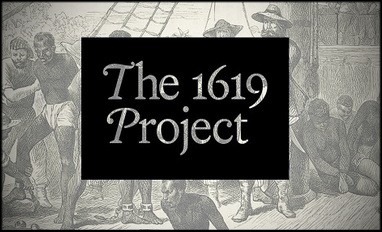
In August of 2019, the New York Times published The 1619 Project. Its goal is to redefine the American experiment as rooted not in liberty but in slavery. In this video, Wilfred Reilly, Associate Professor of Political Science at Kentucky State University, responds to The 1619 Project’s major claims.
Thanksgiving Proclamation New York, 3 October 1789
~ George Washington ~
By the President of the United States of America. a Proclamation.
Whereas it is the duty of all Nations to acknowledge the providence of Almighty God, to obey his will, to be grateful for his benefits, and humbly to implore his protection and favor—and whereas both Houses of Congress have by their joint Committee requested me “to recommend to the People of the United States a day of public thanksgiving and prayer to be observed by acknowledging with grateful hearts the many signal favors of Almighty God especially by affording them an opportunity peaceably to establish a form of government for their safety and happiness.”
Now therefore I do recommend and assign Thursday the 26th day of November next to be devoted by the People of these States to the service of that great and glorious Being, who is the beneficent Author of all the good that was, that is, or that will be—That we may then all unite in rendering unto him our sincere and humble thanks—for his kind care and protection of the People of this Country previous to their becoming a Nation—for the signal and manifold mercies, and the favorable interpositions of his Providence which we experienced in the course and conclusion of the late war—for the great degree of tranquility, union, and plenty, which we have since enjoyed—for the peaceable and rational manner, in which we have been enabled to establish constitutions of government for our safety and happiness, and particularly the national One now lately instituted—for the civil and religious liberty with which we are blessed; and the means we have of acquiring and diffusing useful knowledge; and in general for all the great and various favors which he hath been pleased to confer upon us.
[A]nd also that we may then unite in most humbly offering our prayers and supplications to the great Lord and Ruler of Nations and beseech him to pardon our national and other transgressions—to enable us all, whether in public or private stations, to perform our several and relative duties properly and punctually—to render our national government a blessing to all the people, by constantly being a Government of wise, just, and constitutional laws, discreetly and faithfully executed and obeyed—to protect and guide all Sovereigns and Nations (especially such as have shewn kindness unto us) and to bless them with good government, peace, and concord—To promote the knowledge and practice of true religion and virtue, and the encrease of science among them and us—and generally to grant unto all Mankind such a degree of temporal prosperity as he alone knows to be best.
Given under my hand at the City of New-York the third day of October in the year of our Lord 1789.
(Editor’s note: A recent federal bill memorializing as a National Historic Trail what has come to be known as the Cherokee Indian Trail of Tears is based on false history, argues William R. Higginbotham. In this article, the Texas-based writer delves into the historic record and concludes that about 840 Indians not the 4,000 figure commonly accepted died in the 1837-38 trek west; that the government-financed march was conducted by the Indians themselves; and that the phrase “Trail of Tears” was a label that was added 70 years later under questionable circumstances.) The problem with some of our accounts of history is that they have been manipulated to fit conclusions not borne out by facts. Nothing could be more intellectually dishonest. This is about a vivid case in point.
Happens every Thanksgiving, doesn’t? Some bleeding heart liberal you’re “related to” gets on their moral high Crazy Horse and lectures about how horribly rotten the white man was to the Native Americans. Which is why this year we’re throwing in the tomahawk. Time to scalp the facts about the Indians. Feathers not dots….
MYTH: THE NATIVE AMERICANS WERE A PEACEFUL CULTURE TO WHOM THE CONCEPT OF WAR WAS FOREIGN
FACT: MANY WERE BRUTAL, CONQUERING ***HOLES
Native Americans warred with each other since, forever. Sometimes it was over hunting or farming grounds, sometimes revenge, sometimes to steal, sometimes to kill. I don’t say this to demonize them, they were no different than any other regressive, Neolithic cultures on other continents.
But the truth is that the only way settlers were able to conquer this land was through the help of Native Americans who teamed up with them to settle the score with the other, more assholish tribes. You think Cortes was able to conquer with only 500 Conquisadors. Course not, it took 50,000 ANGRY allied Native Americans who’d had it up to here with being enslaved and forced to carry gold for the other, Native Aztecs.
Some of of the Indian tribes were the most brutal in existence.
They practiced enslavement, rape, cannibalism, would sometimes target women and children, tribes like the Commanchees would butcher babies and roast people alive… and by the way, where do you think we LEARNED scalping?
MYTH: NATIVE AMERICANS WERE AN ADVANCED SOCIETY
TRUTH: NOT EVEN CLOSE
Smell that? It’s your sacred cow being torched. After I scalped her, of course. Unlike Rome, Greece, China, or pretty much any great empire which had already existed at that time, the Native Americans didn’t have advanced plumbing, transportation, mathematics or really… anything that led to the iphone on which you’re currently watching this. That whole beautiful “horseback Indian” culture you read about? It’s a lie because they hadn’t even domesticated horses. Not only that, but they didn’t even use the WHEEL. No really. 1400 AD… no wheel.
Even more reason that, when you’re that far behind, the clash of civilizations is going to be THAT much more drastic when the new wheel-using world catches up to you.
MYTH: THE SETTLERS DELIBERATELY INFECTED NATIVES WITH SMALLPOX BLANKETS TO WHIPE THEM OUT
TRUTH: ONLY IDIOTS COULD POSSIBLY BELIEVE THIS
Think about it. You really believe Europeans waged microbial, biological warfare… long before discovery, mass acceptance or even close to an understanding of advanced germ theory?
So it’s not true. You can look forever for historical accounts of mass smallpox blankets being pajamagrammed to the peaceful Indians, but you won’t find them. But there is SOME truth to the myth, which brings us to our final point.
MYTH: EUROPEANS COMMITTED MASS GENOCIDE. KILLING EVERY NATIVE AMERICAN FOR SPORT
TRUTH: NOT EVEN CLOSE
However, it is estimated that at high as 95% of pre-Columbian Native Americans were in fact killed off by disease, WHY? Because Europeans introduced new diseases to which the Native Americans hadn’t developed an immunity not only with THEMSELVES but now contact with animals like again HORSES which Native Americans hadn’t domesticated. Again, because they were such an archaic, unadvanced society.
Sure there were plenty of bloody, horrendous, unimaginable battles that occurred, and generally when it comes to neoloithic tribes and more advances settlers, the guys with the boom-boom sticks win. This isn’t exclusive to America or all that uncommon.
But Europeans were not hellbent on wiping out Native Americans, they were actually encouraged to bring the people into European culture and convert them to Christianity. Plus, inter-marrying was incredibly common. How else do you explain Johnny Depp, Angalina Jolie, Kid Cudi and even imaginary Elizabeth Warren claiming to be 1/16th Cherokee?
Killing people is bad. But so is milking, misleading and guilting all future generations for crimes they didn’t commit. Yep, Europeans conquered the Native Americans, created a Constitutional Republic, and advanced in mere centuries what Natives couldn’t do for thousands of years here on the plot of land that is America. So close this smartphone window, go enjoy your turkey and tell your social justice warrior cousin at the table to shut that mustached, single-origin-coffee drinking-hole. Or just… hand him a smallpox napkin.
SOURCES
Indigenous Americans didn’t invent the wheel: QUORA
Native Americans were introduced to horses by Spaniards: SCIENCE NEWS
I have for years and years (after years of studying cults and political movements, and personal contacts over the year and almost a half I spent in jail with many involved in these racist movements) noted the proclivity of the KKK and other white supremacist groups to vote Democrat (3 of the 4 largest supremacy groups told their followers to vote for Obama, as one example. Another is the Grand Dragon of California telling his peeps to vote for Hillary. [I have a myriad of them]).
IN FACT, almost the entirety of racist groups (no matter the ethnicity) vote Democrat.
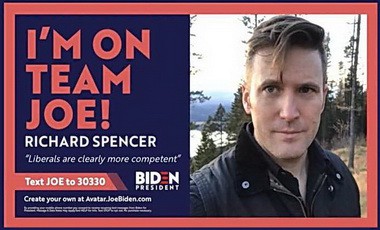
BUT NOW not only have I shown [via Dinesh D’Souza’s interview] that the favorite example of the leader/founder of the “Alt-Right” according to the MSM and Democrats is an avowed socialist Leftie — Richard Spencer. WHO…. has just endorsed…. Joe Biden for President. Of course he has. This from PJ-MEDIA:
Socialist white supremacist Richard Spencer endorsed Democratic presidential nominee Joe Biden over the weekend.
“I plan to vote for Biden and a straight democratic ticket,” Spencer tweeted on Sunday. “It’s not based on ‘accelerationism’ or anything like that; the liberals are clearly more competent people.”
“The MAGA/Alt-Right moment is over. I made mistakes; Trump is an obvious disaster; but mainly the paradigm contained flaws that we now are able to perceive. And it needs to end,” he added. “So be patient. We’ll have another day in the sun. We need to recover and return in a new form.”
[….]
Spencer is known for organizing the Unite the Right rally in 2017, which sparked the Charlottesville protest that resulted in the death of Heather Heyer after she was struck by a car.
“Look, Marx was kinda right. Bourgeoisie capitalism (and not the Soviet Union) created an undiferentiated, alienated proletarian mass,” he tweeted in 2017…..
Here are some of the mistakes that Spencer was unaware of in his trolling…
Trump was pro-Israel, one of the most pro-Israel President’s in this countries history. White Supremicists hate Jews and Israel:
In the summer of 2017, Spencer was the organizer of the march at the University of Virginia that featured Nazis with torches who chanted “Jews will not replace us,” “Blood and Soil,” and “sieg heil.”
The Democrats have been reliably anti-Israel and supportive of anti-Semitic movements such as BDS. Trump has religiously Jewish family members to boot!
Trump helped blacks excel by his policies, for example (Aug of 2018):
…Black entrepreneurship has surged to historic levels under Trump. The small business financier Guidant Financial released a report on small business trends for black business owners, and the results are almost too incredible to believe. “Year over year, we saw a 400% increase in the number of African-American owned small businesses” the report reads.
The report also found that 45% of all small business in the country was owned by minority groups this year. This is a massive increase from 2015 when the total percentage of small businesses owned by minorities was 15%. The largest minority group of small business owners were African American at 19%, followed by Hispanic at 14%, Asian at 8%, and Native American at 4%.
The CEO of Guidant, David Nilssen, credited Trump’s policies for some of the shift. “Growth amongst all minorities including women is promising in America as small business ownership becomes more favorable and easier to attain. We anticipate and hope to see a continued increase as the impact of tax reform and economic growth shape small business ownership moving forward.”…
Democrat taxation and regulation will now hurt these black businesses, not to mention that Trump’s policies lowered black unemployment to record lows. RED STATE also notes that Trump broke with GOP tradition in a bold policy outreach to the black community:
….Trump’s strategy is intended to increase black Americans’ access to capital by nearly $500 billion. Under the plan, black entrepreneurship would rise with the creation of 500,000 new black-owned businesses, and provide 3 million new jobs for black workers.
The administration will achieve these goals with “additional tax cuts to stimulate hiring and investment,” and encouraging “offshoring and development of domestic manufacturing to increase supply chain business development and employment.” It will also “Examine barriers to employment including fees, occupational licensing, arrest record inaccuracy, and expungement.”
Along with the economic improvements, the president will also “prosecute the KKK and ANTIFA as terrorist organizations and make lynching a national hate crime.” He will also push for more a “Second Step Act” to build on the progress of the original criminal justice legislation.
As far as education goes, Trump is vowing to “close failing schools” and replace them with “full school choice and education opportunity.” He will also continue to protect Historically Black Colleges & Universities.
President Trump’s announcement marks the first time in recent memory that a Republican president has laid out a comprehensive plan to spark growth and prosperity for black Americans. While he previously gave a high-level overview of what his administration would put in place for the black community, the Platinum Plan gives a more concrete idea of what he will do if re-elected. ….
Dinesh’s interview can be seen here (see also GATEWAY PUNDIT):
Some of my studies were noted HERE, scroll down past the video seen. Here are a few excerpts from my post:
RPT
EXCERPT
[…..]
After the triumph of the civil rights movement and the introduction of a series of civil rights laws, the Klan broke up into various subgroups. Previously these KKK members were Democrats and they continued being so after.
“…virtually every significant racist in American political history was a Democrat.” — Bruce Bartlett, Wrong on Race: The Democratic Party’s Buried Past (New York, NY: Palgrave MacMillan, 2008), ix;
“…not every Democrat was a KKK’er, but every KKK’er was a Democrat.” — Ann Coulter, Mugged: Racial Demagoguery from the Seventies to Obama (New York, NY: Sentinel [Penguin], 2012), 19.
People do not realize why these groups, especially the KKK, vote Democrat. For instance, out of the four leaders in the “white-power” movement (the KKK subculture) with the most followers, three told their peeps to vote Democrat (Actually, then it was them telling their followers to vote for Obama in 2008).
Here you see some higher ups in this white racist movement telling their people (3-of-the-4) to vote Democrat for the election in 2008:
➤ Tom Metzger: Director, White Aryan Resistance; Career Highlights: Was Grand Dragon of Ku Klux Klan in the 70s; won the Democratic primary during his bid for Congress in 1980… ➤ Ron Edwards: Imperial Wizard, Imperial Klans of America; Career Highlights: Sued in 2007 by the Southern Poverty Law Center for inciting the brutal beating of a Latino teenager; building the IKA into one of the nation’s largest Klan groups by allowing non-Christians to join. ➤ Erich Gliebe: Chairman, National Alliance; Career Highlights: Turning white-power record label, Resistance Records, into a million-dollar-a-year business juggernaut; an 8-0 record as a professional boxer under the nickname, “The Aryan Barbarian.” ➤ Rocky Suhayda: Chairman, American Nazi Party; Career highlights: Being widely quoted bemoaning in the fact that so few Aryan-Americans had the cojones of the 9/11 hijackers: “If we were one-tenth as serious, we might start getting somewhere.”
[…..]
Reason Three They HATE (H-A-T-E) Israel, and this is a reason they tend to support Democrats. For instance, on his YouTube, David Duke endorsed Charles Barron for Congress (video on the left). Another endorsement for Hillary was from a KKK leader here in California (right video).
So attributing racism to the GOP is silly, because as a whole, the almost 8,000 KKK members nation wide vote Democrat. AS DO ALL THE OTHER RACIST CULTS IN AMERICA (*booming megaphone affect in a cave*). NOT TO MENTION where all the hub-bub is when all these hate groups vote for Democrats in years past?
In other words, WHY is it only “newsworthy” when they vote for Republicans and not for Democrats?
I smell something fishy here.
I can continue, but this post is already long enough. On the racial issues, I suggest my page entitled: U.S. RACIAL HISTORY. This page deals with the supposed party switch by racist Democrats to Republicans, slavery, American Indian narratives, some VERY PROUD BLACK HISTORY in our country… and the like.
Recap Again, let’s recap for clarity some of my reasons white racist/nationalists cults vote Democrat:
They are typically socialist in their political views, and thus support the welfare state for personal financial reasons (poor) and ideological reasoning (socialist); or for the reason that it is a way of controlling minorities (racist reasoning). A modern plantation so-to-speak; There is a shared hatred for Israel and supporting of groups wanting to exterminate the Jews (Palestinians for instance).
This is why a majority STILL supported Hillary Clinton over Donald Trump. She is a socialist at heart, wants a big welfare state, and does not like Israel as much as Trump, who has kids practicing the Jewish religion. Thee ONLY issue a racist could want to vote for Trump on is his immigration policies… hardly a racist position. It has only now become an issue of bigotry and racism because the Left has moved the goal post in the use of language. Racists no longer means “genetically superior,” rather, it mean you disagree with a Democrat and/or hurt their feelings. Otherwise, these people would be RACISTS!
END
Here are some other examples (recent as well as old):
Duke has continued his support of Gabbard via social media, updating his Twitter background asking, “Tulsi is being unjustly banned from the Dem Debate. Why?…She opposes the insane Neocon wars!” (NEWSWEEK)
…After repeatedly condemning the nation of Israel and those who support it in a series of anti-Semitic comments, Congresswoman Ilhan Omar has picked up an endorsement from David Duke.
“David Duke, the former Grand Wizard of the Ku Klux Klan and an open racist and antisemite, is publicly defending Rep. Ilhan Omar (D-MN) in the wake of the freshman Democrat’s series of antisemitic statements that have rankled the Democrat Party nationally,” BREITBART reports.
In one tweet, Duke calls Omar “the most important member of the U.S. Congress.”
“Simply stated, she is important because the dared expose the gorilla in Congress that nobody dares speak,” Duke said in another tweet.
Here’s more from Breitbart:
Duke has been a lightning rod in American politics for years, and in recent years the media and left have gone after Republicans–particularly President Trump–for having been praised by him. During the 2016 presidential campaign, the media demanded repeatedly that Trump disavow Duke–which he did. But now Duke has endorsed Rep. Tulsi Gabbard (D-HI)–a Hawaiian Democrat–in the 2020 presidential election.
This is not the first time Duke has taken up Omar’s cause either. Back in early February, when she first came under the national spotlight for anti-Semitism at the beginning of the new Congress, Duke backed her up publicly as well.
Duke’s decision to back Omar now comes in the wake of several Democrats, including House Speaker Nancy Pelosi and presidential candidates like Sens Bernie Sanders (I-VT) and Elizabeth Warren (D-MA), as well as many other Democrats, refusing to demand that Omar apologize and attempting to explain away her comments as somehow not deliberately anti-Semitic.
[…..]
According to the op-ed, mainstream media outlets will undoubtedly treat Duke’s endorsement of a Democrat differently than the way they pounced on Duke’s campaign endorsement of Trump. Trump immediately and repeatedly denounced the endorsement.
Check it out:
First, Omar herself should be repeatedly questioned about whether she accepts Duke’s endorsement and about why her views and his dovetail so nicely. Second, every Democrat should be asked, in light of Duke’s embrace of Omar, why the Democratic caucus shouldn’t be seen as Duke-friendly because it refused to adopt a resolution specifically denouncing Omar’s anti-Semitism.
This bears repeating: If the Duke-Omar embrace isn’t turned into a universal question for all Democratic House members, the media will have failed as an institution to act in a professional, even-handed manner.
If the media will not hold Democrats to the same standard, then it should forever ignore all of Duke’s efforts to thrust himself into the news merely by saying or tweeting something.
The Progressive Assault on Israel: A movement that can detect a racist dog-whistle from miles away is strangely deaf when it comes to some of the barking on its own side of the fence.
It happened again last month in Detroit. Pro-Palestinian demonstrators seized the stage of the National L.G.B.T.Q. Task Force’s marquee conference, “Creating Change” and demanded a boycott of Israel. “From the river to the sea, Palestine will be free,” they chanted — the tediously malign, thinly veiled call to end Israel as a Jewish state.
They were met with sustained applause by the audience at what is the largest annual conference of L.G.B.T.Q. activists in the United States. Conference organizers did nothing to stop the disruption or disavow the demonstrators.
For Tyler Gregory, neither the behavior of the protesters nor the passivity of the organizers came as a surprise.
[…..]
Scenes of the kind that played out at the L.G.B.T.Q. conferences — not to mention college campuses across the United States — are familiar to anyone involved in the politics of the American Jewish community. They have burst into wider consciousness in recent months, thanks to revelations that Jewish organizers of the 2017 Women’s March were deliberately sidelined, excluded and attacked by some of its founders, at least one of whom, activist Tamika Mallory, is an unapologetic admirer of Louis Farrakhan, the Nation of Islam’s unapologetically anti-Semitic leader.
They have also burst into Congress, largely as a result of the election of Democratic Representatives Rashida Tlaib of Michigan and Ilhan Omar of Minnesota. Both women support boycotts of Israel. Both have also written tweets with distinctly anti-Semitic undertones. Far from being reproached or condemned by their party, as Iowa’s Steve King was by Republicans, they have become Democratic rock stars. (Omar, to her credit, recanted her tweet; Tlaib did not.)
Progressives — including presidential hopefuls Cory Booker, Kamala Harris and Elizabeth Warren — also united behind Vermont’s Bernie Sanders in a failed bid to block a Senate bill, passed on Tuesday, that includes an anti-B.D.S. measure prohibiting federal contracts with businesses that boycott Israel, ostensibly on free-speech grounds. One wonders how these same Democrats feel about, say, championing First Amendment protections for bakers who refuse to make cakes for gay couples.
All of this is profoundly unsettling to a Jewish community that has generally seen the Democratic Party as its political home.
[…..]
Martin Luther King Jr. preached nonviolent resistance; Yasir Arafat practiced terrorism. The civil rights movement was about getting America to live up its founding ideals; anti-Zionism is about destroying Israel’s founding ideals.
As for the oft-cited apartheid analogy, black South Africans did not have a place in the old regime’s Parliament, as Israeli Arabs have in the Knesset; nor were they admitted to white universities, as Israeli Arabs are to Israeli universities. Israel can do more to advance the rights of its Arab citizens (just as the United States, France, Britain and other countries can for their own minorities). And Israel can also do more to ease the lives of Palestinians who are not citizens. But the comparison of Israel to apartheid South Africa is unfair to the former and an insult to the victims of the latter.
…It is not entirely clear when the Times deleted its “true founding” claim, but an examination of old cached versions of the 1619 Project text indicates that it probably took place on December 18, 2019.
These deletions are not mere wording changes. The “true founding” claim was the core element of the Project’s assertion that all of American history is rooted in and defined by white racial hatred of blacks….
Another article worth a read is this one
1619 Project Author Nikole Hannah-Jones Now Says She Never Implied That Year Was America’s True Founding (REASON-ORG)
Joe Biden said packing the Supreme Court was a “legitimate questions,” but refuses to give his stance.
Why doesn’t this “wish” get Democrats attention?
Supreme Court Justice Ruth Bader Ginsburg shared her opposition to court-packing proposals that have gained traction among Democratic 2020 contenders in an interview published Wednesday.
Ginsburg said the Court functions well at the current number of personnel in a wide-ranging conversation with NPR, and panned prior efforts to expand the panel as quixotic.
“Nine seems to be a good number,” the justice said. “It’s been that way for a long time.”
“I think it was a bad idea when President Franklin Roosevelt tried to pack the Court,” Ginsburg said elsewhere in her remarks…..
‘A republic, if you can keep it.” Benjamin Franklin’s 1787 quip about the government Americans would have is probably the most popular Founding-era wisdom still with us. Maybe not for long. As if to prove Franklin’s insight about the tendency of republics to self-destruct, a District of Columbia panel has identified Franklin, among other Founders, as a “person of concern,” and recommended his name be removed from D.C. property.
The astonishing proposals come from a Washington, D.C., government committee formed by Mayor Muriel Bowser to re-examine the names of schools, statues and parks in the wake of protests. The committee submitted its report Monday, and Ms. Bowser tweeted “I look forward to reviewing and advancing their recommendations.”
The committee says it hunted for historical figures with “key disqualifying histories, including participation in slavery, systemic racism, mistreatment of, or actions that suppressed equality for, persons of color, women and LGBTQ communities and violation of the DC Human Right Act.” The bureaucrats worked with uncharacteristic dispatch, taking six weeks to render the judgment of history on 1,330 properties named for people.
The committee doesn’t explain its case against Franklin, but we can assume he was judged for once owning slaves. He was later president of the Pennsylvania Society for Promoting the Abolition of Slavery, but anyone who believes the report is a considered historical exercise and not an Orwellian effort in ideological reprogramming has been taken in…
(This is with a hat-tip to Santa Clarita Community Watchdog Group — a Facebook group) In a post on Facebook I came across this linked article to LAW ENFORCEMENT TODAY discussing a Democrat politician from Florida’s 18th Congressional district apparently putting out a “hit list” against Republicans. Here is a portion of that article:
Politics is hardly ever pretty when it comes for folks racing toward an election, and thus that means the election for Florida’s 18th congressional district is not immune from the likes of nasty rhetoric from people trying to get a seat at the table.
But when you have people calling for an “open season” for killing your political opponents, then that is where a line has been crossed.
The person who crafted a hypothetical call for murdering the likes of President Trump, Roger Stone and AG Bill Barr is Pam Keith. This Democrat is vying to land Florida’s congressional seat for the 18th district, but a Twitter post dating back to June 10th of this year puts her disturbing mindset on full display:
“GOP: Yeah he’s dead. But it’s not a big deal because he was a “bad guy.” Is that REALLY the new rule they want? Killing is OK if it’s a “bad guy?” Is it now open season on: Flynn, Manafort, Stone, Gates, Cohen, Trump, Barr, Kavanaugh, Lewandowski, Bolton, Pompeo, Papadopolous, Parscale.”
NATIONAL REVIEW is the original source for the LET article and notes the political struggle in that district, writing that “The race between Mast and Pam Keith for Florida’s 18th district is now considered a toss up by the Niskanen Center.” Continuing they note:
…The district has swung Republican since 2016, however Keith represents a first major challenge to Mast’s tenure.
Mast is a veteran of the Afghanistan War, where he lost both legs after a bomb exploded under him. Keith is herself a former judge in the Navy, and is an African American who has voiced support for the Black Lives Matter movement.
Democratic Congressional Campaign Committee chairwoman Cheri Bustos has said of Keith, “Pam has never backed down from fighting for what’s right. She’s running for Congress to put an end to the petty partisanship that gets in the way of delivering results for Floridians.” However, Keith is not one of the candidates listed as part of the organization’s “Red to Blue” campaign to flip Republican-held districts.
With a competitive election on the horizon, focus has shifted to both candidates’ social media history. Keith was the subject of a profile in the Washington Post on Friday which did not mention her more controversial posts…..
Of course if this were a Republican, WaPo would have included those “controversial” posts. All this led to a humorous aside:
HOWEVER…
This made me think of a connection to the Democrat Party’s historical past. Here is my comment on that part of the group on Facebook:
You know, this reminds me of something from the Democrats past. What this is is a “hit card” that the violent arm [the KKK] of the Democrat Party use to carry around with them. They would use it as an identifier to kill or harass members of the “radical group” (Republicans who thought color did not matter) in order to affect voting outcomes. While we hear of the lynchings of black persons (who did make up a larger percentage of lynchings), there were quite a few white “radicals” lynched for supporting the black vote and arming ex-slaves. It is also ironic that the current Democrat melee is focused on racial differences.
I could go on, but I won’t.
Here is a short video discussing the matter:
“…virtually every significant racist in American political history was a Democrat.” — Bruce Bartlett, Wrong on Race: The Democratic Party’s Buried Past (New York, NY: Palgrave MacMillan, 2008), ix;
“…not every Democrat was a KKK’er, but every KKK’er was a Democrat.” — Ann Coulter, Mugged: Racial Demagoguery from the Seventies to Obama (New York, NY: Sentinel [Penguin], 2012), 19.
(DAILY WIRE) Rep. Louie Gohmert (R-TX) introduced a bill Thursday on the floor of the House of Representatives that would ban the Democratic Party due to the party’s history of having supported slavery and the Confederacy, saying “that is the standard to which they are holding everyone else, so the name change needs to occur.”
“Whereas on June 18, 2020, House Speaker Nancy Pelosi ordered the removal from the capital portraits of four previous speakers of the House who served in the Confederacy, saying that these portraits ‘set back our nation’s work to confront and combat bigotry,’” Gohmert said. “The men depicted in the portraits were Democrat Robert M.T. Hunter, Democrat Howell Cobb, Democrat James L. Orr, and Democrat Charles F. Crisp.”
“Resolved that the speaker of the House of Representatives shall remove any item that named symbolizes or mentions any political organization or party that has ever held a public position that supported slavery or the Confederacy from any area within the House wing of the Capitol or any House office building and shall donate such item or symbol to the Library of Congress, and two, that any political organization or party that has ever held a public position that supported slavery of the Confederacy shall either change its name or be barred from participation in the House of Representatives,” Gohmert concluded. “With that, I would yield back.”…… (read more)
Ice Cream Song & Democrats
The song “Turkey In The Straw” came out in the late 1820’s to early 1830’s. The first part of the song is a contrafactum of the ballad “My Grandmother Lived on Yonder Little Green”, aka “My Grandma Lived on Yonder Little Green”, aka “My Grandma’s Advice”, published in 1857 by Horace Waters, 333 Broadway, New York, which itself is a contrafactum of the Irish ballad “The Old Rose Tree”.(WIKI) The original song was just a favorite tune of fiddle players, it was only started to be used in mistral shows in the early 1900’s. A Democrat changed the song to a racist tune in 1916. I say Democrat because Harry C. Browne had a brief career campaigning for the Democratic Party. In fact, William Jennings Bryan, then the Secretary of State, offered Browne a diplomatic position in February 1914, Brown later declined.(WIKI) As the old saying goes, anything the Left touches it ruins.
Harry C. Browne was born in 1878 in North Adams, Massachusetts. Before his acting career, he served in the Second Massachusetts U.S. Volunteers during the Spanish–American War and had a brief career campaigning for the Democratic Party. In fact, William Jennings Bryan, then the Secretary of State, offered Browne a diplomatic position in February 1914 but the latter declined. Browne later worked for a stock company as an actor, casting him in plays such as Arizona and Rebecca of Sunnybrook Farm in the early 1900s.
A skilled banjo player, Browne performed in vaudeville for seven years before recording a series of songs for Columbia Records, starting in 1916. His first record, perhaps his most well-known, is a re-interpretation of the American folk song “Turkey in the Straw”. Released in March 1916, Browne appropriated the standard as a coon song re-titled “Nigger Love a Watermelon Ha! Ha! Ha!”. It is commonly referred to as one of the most racist songs in American music: the song relied heavily on the watermelon stereotype, a belief popularized in the 19th century that African-Americans had an unusual appetite for watermelons. For the B-side, Browne chose to record the minstrel show favorite “Old Dan Tucker”, marking the tune’s first commercial appearance on a major label.
Between 1906 and 1925, Browne appeared in at least 14 Broadway shows, including Oh, Lady! Lady!!. His film debut is believed to have been in August 1914 with the release of The Eagle’s Mate. During his acting career, Browne had roles in notable films such as The Unwelcome Mrs. Hatch, The Heart of Jennifer, and Closed Doors. Afterwards, he worked as an announcer and production director for CBS radio, a position he resigned from in 1931.
(This was originally posted June of 2016) This is a good small introduction of the influences from the Judeo-Christian faith on the Founding Documents and ethos of our Nation. (Another good read is my letter comparing Locke to Rousseau)
(Video Description) What did the Founding Fathers believe about religion? Were they Christians, or just deists? Did they believe in secularism, or did they want Americans to be religious? Joshua Charles, New York Times bestselling author and researcher at the Museum of the Bible, explains.
“…we have no government, armed with power, capable of contending with human passions, unbridled by morality and religion. Avarice, ambition, revenge and licentiousness would break the strongest cords of our Constitution, as a whale goes through a net. Our Constitution was made only for a moral and religious people. It is wholly inadequate to the government of any other.”
John Adams, first (1789–1797) Vice President of the United States, and the second (1797–1801) President of the United States. Letter to the Officers of the First Brigade of the Third Division of the Militia of Massachusetts, 11 October 1798, in Revolutionary Services and Civil Life of General William Hull (New York, 1848), pp 265-6.
And this great quote and commentary:
And Montesquieu got even more specific when he broke down which Christian religions he believed were better fit for certain governments:
When a religion is introduced and fixed in a state, it is commonly such as is most suitable to the plan of government there established; for those who receive it, and those who are the cause of its being received, have scarcely any other idea of policy than that of the state in which they were born.
When the Christian religion, two centuries ago, became unhappily divided into Catholic and Protestant, the people of the north embraced the Protestant, and those of the south adhered still to the Catholic. The reason is plain: the people of the north have, and will for ever have, a spirit of liberty and independence, which the people of the south have not; and therefore a religion which has no visible head is more agreeable to the independence of the climate than that which has one. In the countries themselves where the Protestant religion became established, the revolutions were made pursuant to the several plans of political government. Luther having great princes on his side would never have been able to make them relish an ecclesiastical authority that had no exterior pre-eminence; while Calvin, having to do with people who lived under republican governments, or with obscure citizens in monarchies, might very well avoid establishing dignities and preferments.
In other words, the Catholic version of Christianity is best for monarchies, while Protestant/Calvin faiths are suited to republics…or so says Montesquieu.
The below if an extended quote from a book that I highly recommend for the beginner if you are truly interested in this endeavor. A list of other resources can be found in my BIBLIOGRAPHY section of a paper for school. I will also include MLA and APA for helping the student to quote. from Joshua Charles book, LIBERTY’S SECRET. Enjoy:
John Eidsmoe, Christianity and the Constitution (Grand Rapids, MI: Baker Book, 1987), 54-61.
[APA] Eidsmoe, J. (1987). Christianity and the Constitution. Grand Rapids, MI: Baker Books.
[MLA] Eidsmoe, John. Christianity and the Constitution. Grand Rapids: Baker Books, 1987. Print.
Charles Louis Joseph de Secondat, the Baron Montesquieu of France (1689-1755), was cited by the founders of this nation more frequently than any other source except the Bible. His best-known work, The Spirit of Laws, distinguished four forms of government: monarchy in which the guiding principle is honor, aristocracy in which the guiding principle is moderation, republican democracy in which the guiding principle is virtue, and despotism in which the guiding principle is fear. His main contribution to the thinking of the founders of this nation was the concept of separation of powers between legislative, executive, and judicial branches of government. This concept is so vital to the American constitutional system.
Because he lived in France and taught in French universities during the time of the philosophes, Montesquieu is sometimes identified as a deist. But he was born a Catholic, and remained a Catholic to his death. He did have some private questions concerning Catholic dogma. Stark suggests that Montesquieu moved closer and closer to Christian orthodoxy as he grew older, noting Montesquieu comment that the establishment of Christianity among the Romans would be an absurdity if it were merely a natural historical event.2 In any event, he received Communion shortly before he died, and he emphatically declared his belief that the elements were the true Body and Blood of Jesus Christ.3
Montesquieu believed all law has its source in God. As he says in the opening of The Spirit of Laws: “God is related to the universe, as Creator and Preserver; the laws by which He created all things are those by which He preserves them.”4These laws apply to the physical world and human beings. Men make their own laws, but these laws must conform to the eternal laws of God.
Particular intelligent beings may have laws of their own making, but they likewise have some which they never made…. Before laws were made, there were relations of possible justice. To say that there is nothing just or unjust but what is commanded or forbidden by positive laws, is the same as saying that before the describing of a circle all the radii were not equal.5
[p.55>]Montesquieu believed man was basically evil and self-centered. His pessimism was due to the fact that he felt intelligent beings do not choose to follow God’s laws:
But the intelligent world is far from being so well governed as the physical. For though the former has also its laws, which of their own nature are invariable, it does not conform to them so exactly as the physical world. This is because, on the one hand, particular intelligent beings are of a finite nature, and consequently liable to error; and on the other, their nature requires them to be free agents. Hence they do not steadily conform to their primitive laws; and even those of their own instituting they frequently infringe….
Man, as a physical being, is like other bodies governed by invariable laws. As an intelligent being, he incessantly transgresses the laws established by God, and changes those of his own instituting. He is left to his private direction, though a limited being, and subject, like all finite intelligences, to ignorance and error: even his imperfect knowledge he loses; and as a sensible creature, he is hurried away by a thousand impetuous passions. Such a being might every instant forget his Creator; God has therefore reminded him of his duty by the laws of religion. Such a being is liable every moment to forget himself; philosophy has provided against this by the laws of morality. Formed to live in society, he might forget his fellow-creatures; legislators have, therefore, by political and civil laws, confined him to his duty.6
He compared Christianity to Islam and declared Christianity superior partly because of the better government it promotes, “a moderate Government is most agreeable to the Christian Religion, and a despotic Government to the Mahommedan”:
The Christian religion, which ordains that men should love each other, would, without doubt, have every nation blest with the best civil, the best political laws; because these, next to this religion, are the greatest good that men can give and receive….
The Christian religion is a stranger to mere despotic power. The mildness so frequently recommended in the gospel is incompatible with the despotic rage with which a prince punishes his subjects, and exercises himself in cruelty….
While the Mahommedan princes incessantly give or receive death, the religion of the Christians renders their princes less timid, and consequently less cruel. The prince confides in his subjects, and the subjects in the prince. How admirable the religion which, while it [p.56>] only seems to have in view the felicity of the other life, continues the happiness of this!7
In addition he explained that “the Catholic Religion is most agreeable to a Monarchy, and the Protestant to a Republic,” because “the people of the north have, and will forever have, a spirit of liberty and independence, which the people of the south have not; and, therefore, a religion which has no visible head is more agreeable to the independence of the climate than that which has one….” This was more true of Calvinist societies than Lutheran societies.8
In his writings, Montesquieu explained the role of religion in fostering values which find expression in civil laws. He pointed out that this is also true in non-Christian societies. He expressed the orthodox conviction that Christianity is a religion revealed by God himself. “In a country so unfortunate as to have a religion that God has not revealed, it is necessary for it to be agreeable to morality; because even a false religion is the best security we can have of the probity of men.“9 Thus, even a false religion can positively affect society if it fosters values which find expression in good laws.
While Montesquieu’s countrymen followed the way of the radical philosophes which ultimately led to destruction, the American founding fathers were receptive to his views. He recognized the value of religion, Christianity in particular, in fostering good laws and good government. Knowing the sinful nature of man, he advocated separation of powers by which power checks power. That was Montesquieu’s main contribution to the thinking of the founders of this nation: the separation of powers between the legislative, executive, and judicial branches of government.
Blackstone
Noted for literary quality and readability as well as for legal and historical scholarship, Sir William Blackstone’s famous Commentaries on the Laws of England are rated as the most famous treatise on common law.
Blackstone (1723-1780) was an English barrister whose talents and inclinations were more suited to teaching law than to practicing law. Harvard Law Professor Duncan Kennedy describes Black-[p.57>]stone’s Commentaries as “an important 18th-century treatise that all legal scholars have heard of but practically no one knows anything about.”10 One reason may be that Blackstone’s God-centered view of law is out of fashion in today’s legal community.
Throughout the latter half of the 1700s and the first half of the 1800s Blackstone’s popularity in America was uneclipsed. It is said that more copies of Blackstone’s Commentaries were sold in America than in England, that his Commentaries were in the offices of every lawyer in the land, that candidates for the bar were routinely examined on Blackstone, that he was cited authoritatively in the courts, and that a quotation from Blackstone settled many a legal argument.11
The founders of the nation read Blackstone with great interest. At least one delegate to the Constitutional Convention, Charles Cotes-worth Pinckney of South Carolina, had been Blackstone’s student at Oxford and was Blackstone’s firm disciple. James Madison wrote in 1821, “I very cheerfully express my approbation of the proposed edition of Blackstone’s Commentaries…”12
The founding fathers drew three major points from Blackstone. The first was his conviction that all law has its source in God. Blackstone wrote about various categories of law, one of which is the law of nature:
Law of Nature. This will of his Maker is called the law of nature. For as God, when He created matter, and endued it with a principle of mobility, established certain rules for the perpetual direction of that motion; so, when He created man, and endued him with free will to conduct himself in all parts of life, He laid down certain immutable laws of human nature, whereby that free will is in some degree regulated and restrained, and gave him also the faculty of reason to discover the purport of those laws.
Considering the Creator only a Being of infinite power, He was able unquestionably to have prescribed whatever laws He pleased to His creature, man, however unjust or severe. But as he is also a Being of infinite wisdom, He has laid down only such laws as were founded in those relations of justice, that existed in the nature of things antecedent to any positive precept. These are the eternal, immutable laws of good and evil, to which the Creator Himself in all his [p.58>] Dispensations conforms; and which He has enabled human reason to discover, so far as they are necessary for the conduct of human actions. Such, among others, are these principles: that we should live honestly, should hurt nobody, and should render to everyone his due; to which three general precepts Justinian has reduced the whole doctrine of law….
This law of nature, being coeval with mankind and dictated by God Himself, is of course superior in obligation to any other. It is binding over all the globe in all countries, and at all times: no human laws are of any validity, if contrary to this…
Blackstone then described revealed law, the law of God as found in the Bible.
Revealed Law. This has given manifold occasion for the interposition of divine providence; which in compassion to the frailty, the imperfection, and the blindness of human reason, hath been pleased, at sundry times and in divers manners, to discover and enforce its laws by an immediate and direct revelation. The doctrines thus delivered we call the revealed or divine law, and they are to be found only in the Holy Scriptures. These precepts, when revealed, are found upon comparison to be really a part of the original law of nature as they tend in all their consequences to man’s felicity. But we are not from thence to conclude that the knowledge of these truths was attainable by reason, in its present corrupted state; since we find that, until they were revealed, they were hid from the wisdom of the ages. As then the moral precepts of this law are indeed of the same original with those of the law of nature, so their intrinsic obligation is of equal strength and perpetuity. Yet undoubtedly the revealed law is of infinitely more authenticity than that moral system, which is framed by ethical writers, and denominated the natural law. Because one is the law of nature, expressly declared so to be by God Himself; the other is only what, by the assistance of human reason, we imagine to be that law. If we could be as certain of the latter as we are of the former, both would have an equal authority; but, till then, they can never be put in any competition together.
Upon these two foundations, the law of nature and the law of revelation, depend all human laws; that is to say, no human law should be suffered to contradict these.13
For the founding fathers, a second significant point in Black-stone’s writings was the role of judges. In Blackstone’s view, judges discover and apply law; they do not “make” law. This closely [p.59>] follows from Blackstone’s underlying view of law as part of the revealed law of God or the law of nature. Judges were not a source of law. There are only three sources of law—general custom, the court precedents which present-day judges are not free to alter; special custom, rights of private parties that had ripened into rights by prescription; and statute law, that which was passed by Parliament. In respect to the latter, the role of the judge is to interpret the will of the legislature, not to substitute his own ideas in their place.14 Blackstone, like Montesquieu, saw three branches of government, but envisioned the legislative as superior to the judiciary.
A third significant point in Blackstone’s Commentaries was his expert systematizing of the common law of England. While this systematizing was needed in England, it was even more necessary in America because America was a new nation that did not have England’s long traditions.
The common law of England is generally founded on biblical principles. The Anglo-Saxon Alfred the Great, for example, started his legal code with a recitation of the Ten Commandments and excerpts from the Mosaic law. There were additions to the Anglo-Saxon law. In the eleventh century Henricus Bracton systematized the common law according to Roman law as revised by the Justinian Code. The result was a Christianized version of the Roman law.
The Jewish interpretation of the Old Testament influenced the commercial law of England and the rest of Europe. Throughout much of the Middle Ages the church prohibited money-lending at interest, based on the interpretation of certain passages of Scripture. The Jews interpreted these Scriptures differently and were willing to lend money at interest. Often the only place one could borrow money was in the Jewish community. Jewish scholars such as Rabbi Moses Ben Maimon (Maimondes) codified the Jewish law and it formed the basis for much of English commercial law.
The canon law of the church and the emphasis on individual rights found in the Viking[p.60>]law from portions of England controlled by Norwegians and Danes also influenced English common law.15 The noblemen who forced King John to sign the Magna Carta in A.D. 1215 came mostly from areas which had been under Viking control. While the Vikings were not Christians until about A.D. 1000, their emphasis on individual rights was consistent with biblical principles.
Although for a time it was popular to belittle Blackstone and his beliefs,16 his views are becoming increasingly valued by legal scholars. One of Blackstone’s former students, Jeremy Bentham, charged that Blackstone was an arch-conservative and an “enemy of reformation.” But, fortunately, Bentham never gained the following in America that he had in England.
The 1986 edition of Encyclopedia Britannica puts it well: “Blackstone’s description of the law as it existed was accurate and comprehensive, and was of great use to those who wished to reform it.”17 The author adds that it is “amusing” (the 1911 edition changes this word to “curious”) that even today Blackstone’s Commentaries “probably express the most profound political convictions of the majority of the English people.”
The common law of England is part of the Christian heritage of America. That so much of it survived the migration to America is due in large part to Sir William Blackstone.
Locke
John Locke (1632-1704) was the British philosopher and political theorist who inspired a generation of Americans to thoughts of independence and the rights of man. His best-known works are his “Essay Concerning Human Understanding” and his two treatises “On Civil Government.”
John Locke was born into a Puritan family, the son of a rural Calvinist lawyer who fought on the side of the Puritans in the English civil war. He was educated at Calvinist institutions and emerged with a Calvinistic world view although he was a bit more moderate than some Calvinists.
Locke, sometimes identified as a deist and freethinker, was actually a staunch and fervent Christian. He placed a higher value[p.61>]on human reason than most orthodox Christians; but he used his powers of reason to arrive at Christian truths. According to his understanding of original sin, children are born neither good nor bad, but rather with a “tabula rosa” or “blank slate” upon which good or bad can be written during life. He wrote a treatise titled “The Reasonableness of Christianity,” in which he attempted to prove the truth of Christianity. Locke believed that if he showed people how logical and reasonable Christianity was, everyone would accept it. He did not realize that most objections to Christianity come from the heart and not the mind.
He was a pious man,18 and always held a high view of Scripture. Locke studied the Bible extensively and wrote paraphrases of St. Paul’s Epistles to the Romans, Corinthians, Galatians, and Ephesians, as well as “An Essay for the Understanding of St. Paul’s Epistles, by consulting St. Paul himself.” These were published after his death. He derived his view of Scripture largely from Richard Hooker’s “On the Laws of Ecclesiastical Polity.” Hooker, an Anglican theologian, took a middle-ground position between the Catholics who placed church tradition on a par with Scripture, and the Puritans who stood for Scripture alone. Hooker argued that where the Scripture is clear, Scripture alone must govern. Where Scripture is unclear, church tradition may be employed to help interpret it; and where both Scripture and church tradition are unclear, or where new circumstances arise, reason may also be employed to apprehend God’s truth.19
Locke frequently cited the Bible in his political writings. In his first treatise on government he cited the Bible eighty times. Forty-two of these citations are from Genesis, mostly chapters 1 and 3. Twenty-two biblical citations appear in his second treatise in which he argued that parents have authority over their children based upon the creation of Adam and Eve and their offspring. He also argued that man has the right to possess property since God gave the earth to Adam and later to Noah. He based the social compact which government is established upon “that Paction which God made with Noah after the Deluge. “(4)20 His basic doctrines of parental authority, private property, and social compact were based on the historical existence of Adam and Noah.
John Locke made two major contributions to the thinking of America’s founding fathers. The first was his doctrine of natural law [p.62>] and natural rights which the founding fathers were acquainted with from other sources but found most clearly expressed in Locke’s writings. He based both of these concepts on Scripture:
Human Laws are measures in respect of Men whose Actions they must direct, albeit such measures they are as have also their higher Rules to be measured by, which Rules are two, the Law of God, and the Law of Nature; so that Laws Human must be made according to the general Laws of Nature, and without contradiction to any positive Law of Scripture, otherwise they are ill made.21
Locke identified the basic natural rights of man as “life, liberty, and property.” This phrase is part of the Fifth and Fourteenth Amendments to the Constitution as well as the Declaration of Independence, where Jefferson expanded “property” to “pursuit of happiness.”
Second, Locke contributed the theory of social compact: the idea that men in a state of nature realize their rights are insecure, and compact together to establish a government and cede to that government certain power so that government may use that power to secure the rest of their rights. The social compact theory is similar to the Calvinist idea of covenant. The social compact theory, like the covenant, allows the government only the power God and/or people delegate. This is the cornerstone of limited government. It finds expression in the Tenth Amendment to the Constitution and in the Declaration of Independence which states that governments exist to secure human rights and “derive their just powers from the consent of the governed.”
References
2)Werner Stark, Montesquieu, Pioneer of the Sociology of Knowledge (Toronto: University of Toronto Press, 1961), pp. 14-16.
3) Robert Shackleton, Montesquieu: A Critical Biography (Oxford: Oxford University Press, 1961), pp. 395-96.
4) Montesquieu, The Spirit of Laws (New York: Hafner, 1949, 1962), 1:1.
5)Ibid., 1:2.
6)Ibid., 1:2-3.
7) Ibid., 24:27-29.
8)Ibid., 26:30-31.
9) Ibid., 24:32.
10)Duncan Kennedy, “The Structure of Blackstone’s Commentaries,” Buffalo Law Review (1979), 28:203-375, 209.
11)Lutz, “Relative Influence of European Writers,” pp. 195-96.
12) Madison, quoted by Verna M. Hall, The Christian History of the Constitution of the United States of America: Christian Self-Government with Union (San Francisco: Foundation for American Christian Education, 1962, 1979), p. 130A.
13) Sir William Blackstone, Commentaries on the Laws of England, quoted by Hall, Christian History of the Constitution, pp. 140-46.
14) Kennedy, “Structure of Blackstone’s Commentaries,” p. 250.
15)Thamar E. Dufwa, The Viking Laws and the Magna Carta: A Study of the Northmen’s Cultural Influence on England and France (New York: Exposition Press, 1963), pp. 32-92. For a general discussion and detailed documentation of the Christian and Jewish influence on the development of English common law, see John Eidsmoe, The Christian Legal Advisor (Grand Rapids: Baker, 1984, 1987), pp. 26-29.
16)“[Blackstone] had only the vaguest possible grasp on the elementary conceptions of law. He evidently regards the law of gravitation, the law of nations, and the law of England, as different examples of the same principle—as rules of action or conduct imposed by a superior power on its subjects. He propounds in terms a fallacy which is perhaps not quite yet expelled from courts of law, viz., that municipal or positive laws derive their validity from their conformity to the so-called law of nature or law of God. ‘No human laws,’ he says, ‘are of any validity or contrary to this”’ (Encyclopedia Britannica, 1896, s.v. “Blackstone, Sir William”; cf. 1911 ed.).
17) Encyclopedia Britannica: Micropedia, 1986, s.v. “Blackstone, Sir William.”
18) Encyclopedia Britannica: Macropaedia: Knowledge in Depth, 1986, s.v. “Locke.”