Discussing Prayer: Muslim vs. Christian (and Much More)

CLICK TO SKIP INTRO!

INTRODUCTION TO ME
For my new readers

(This intro will make sense at the end)

Okay, this is just the beginning of a future discussion/post of a documentary; I have yet to watch it – it is called, “The 13th. I have some assumptions regarding what I know about the documentary so far due to years of that specific topic, or peripheral topics being read or discussed via talk radio. But I try to be even keeled – that being said, we all have our biases. Mine are driven by an online presence since the late 90’s “NET ZERO days” discussing religion and politics at SPACEBATTLE, then at MySpace, then a free blog at BLOGSPOT from 2006 to 2010. Then my .COM from 2010 to current time. I discuss or read the same on Twitter at times (joined 2010) as well as Facebook (joined 2008).

I have over 5,000 books and many documentaries… but do not think it is all lopsided to my view.  I have many hundreds, as an example, of books by evolutionary biologists, archaeologists, anthropologists, chemists, and the like either defending, explaining evolution; likewise, many of the same refuting Intelligent Design or Creationism.

  • Dawkins, K. Nielsen, D. Dennett, Sartre, Camus, Nietzsche, S. Harris, M. Martin, L. Wolpert, D. Barker, W. Provine, C. Hitchens, E. Mayr, S.J. Gould, J. Coyne, E.O. Wilson, C. Darwin, C. Zimmer, K. Miller, J. Loftus, B. Forrest and early A. Flew, etc., etc.,

I likewise have studies almost all the major world religions well. I have studied the cults as well and the occult. Topics I have read over the years include philosophy, economics, history, theology, comparative religion, cults (political and religious), apologetics, current affairs, etc.

Another quick example. Reading a commonly used quote theists used by an atheist philosopher when discussing war and religion. I wanted to see more context regarding the quote, so I purchased the book and read the entire chapter I knew the quote resided. In the end I used a slightly larger portion of the quote as it expanded the thought even further. (See the quote by Walter Sinnott-Armstrong HERE.)

  • Walter Sinnott-Armstrong is an American philosopher specializing in ethics, epistemology, neuroethics, the philosophy of law, and the philosophy of cognitive science. He is the Chauncey Stillman Professor of Practical Ethics in the Department of Philosophy and the Kenan Institute for Ethics at Duke University.

In my media library I have many hundreds of debates between theists and atheists; naturalists and Intelligent Design theorists; Creationists and Evolutionists, etc.  I have 2,057 uploads to my YouTube, the first one dated Apr 6, 2007. (As well as a growing RUMBLE file.) I have 57,994 Files in my Microsoft Word – the bulk of which is writing, or cataloging of debates/discussions since the late 90s I have been involved in.

Very rarely have I come across a detractor of the Christian faith who has – at some point in their life – said,

  • “you know, maybe I should pick up a scholarly book or two by those that I am so passionate in my ‘matter of a fact’ statements against.”

Just one book on FAITH?

  • Is God Just a Human Invention? And Seventeen Other Questions Raised by the New Atheists
  • I Don’t Have Enough Faith to Be an Atheist
  • Why I Am a Christian: Leading Thinkers Explain Why They Believe

Or just one book on POLITICS?

  • The Vision of the Anointed: Self-Congratulation as a Basis for Social Policy
  • Battle for the American Mind: Uprooting a Century of Miseducation
  • The Road to Serfdom
  • What’s Race Got to Do with It?: Why It’s Time to Stop the Stupidest Argument in America

Never do these people think,  “I should know what I am rejecting.” Honest insight and knowledge about those whom you refute should be more common that it is. In a very old conversation I gave these examples:

I often bump into people that have watched some or most of the following “documentaries” I likewise own and have watched all on the following list (one should take note that some of these are shown in public school classrooms):

  • Bowling for Columbine
  • Roger and Me
  • Fahrenheit 9/11
  • Wal-Mart: The High Cost of Low Price
  • Sicko
  • An Inconvenient Truth
  • Loose Change
  • Zeitgeist
  • Religulouse
  • The God Who Wasn’t There
  • Super-Size Me

But rarely do I meet someone of the opposite persuasion from me that have watched any of the following (I own and have watched):

  • 11: The Temperature at Which the Brain Dies
  • FahrenHYPE 9/11
  • Michael & Me
  • Michael Moore Hates America
  • Bullshit! Fifth Season… (where they tear apart the Wal-Mart documentary)
  • Indoctrinate U
  • Mine Your Own Business
  • Screw Loose Change
  • 3-part response to Zeitgeist
  • Fat-Head
  • Privileged Planet
  • Unlocking the Mystery of Life

People do not search out clarity, only confirmation.

….OKAY. MOVING ON….

This will be just a cataloging of some statements and discussion followed by a refutation. The discussion on Facebook started over the SCOTUS decision about the Coach praying. Here is the set up:

  • The former Bremerton football coach sat down for an extended interview to discuss how he started praying on the field and what came of his decision to continue doing so.

The first challenge I wish to illuminate is one regarding “what is the coach had been a Muslim” (I respond sometimes in video as I drive for a living.)

MUSLIM

T.S. — Sean [me, RPT] so do you believe that this supreme Court would rule the same way if this coach was Muslim and brought prayer mats for all the students instead of taking a knee

RPT — that my friend is a non-sequitur

T.S. — agreed only to the point that no one could ever really know unless it happened. However, so far this court has shown more bias towards Christian beliefs, so I would speculate that they wouldn’t have ruled the same. I hope they prove me wrong in the future.

RPT — T.S. I can tell you if a Muslim went to the field, lifted his hands up and gave Allah thanks and prayed for both teams, the Court would rule the same. That is a more consistent analogy.

T.S. — So if Christians are the only ones that would walk out onto a field and pray, how is this ruling un-biased? If only Christians are those that would do something of this nature why should they be granted more rights than another religion? Or am I misinterpreting your video?

[The first of these two didn’t upload till later, but here I put it in order. in other the context is clearer for the reader vs. the flow of the original FB conversation]

[…..]

T.S. — Sean, back to your tangent, let’s say it was a Satanist that wanted to take a knee and praise the devil would that hold muster to your non-sequitur issue? Or should I be more personal and say a 3HO Sikh coach goes out and prays to Yogi Bhajan, would that be a more appropriate analogy?

I respond with a court case that makes it clear and expands upon what a religion is:

Clipped from my: The Cults, Language, Revelation, and Secularism (1999)

Here is a quote from the famous 1961 court case, Torcaso v. Watkins:

  • Among religions in this country which do not teach what would generally be considered a belief in the existence of God are Buddhism, Taoism, Ethical Culture, Secular Humanism and others.

See: Washington Ethical Society v. District of Columbia, 101 U.S.App.D.C. 371, 249 F.2d 127; Fellowship of Humanity v. County of Alameda, 153 Cal.App.2d 673, 315 P.2d 394; II Encyclopedia of the Social Sciences 293; 4 Encyclopedia Britannica (1957 ed.) 325-327; 21 id. at 797; Archer, Faiths Men Live By (2d ed. revised by Purinton), 120-138, 254-313; 1961 World Almanac 695, 712; Year Book of American Churches for 1961, at 29, 47.

The Main points were made. HOWEVER, this great small commentary on the SCOTUS ruling of the coach is made by Matt Walsh

MATT WALSH

BOOM!

See more also at RED STATE.

COLIN KAEPERNICK +

Discussion withing the larger issue also got started on kneeling during the anthem. Two sub-topics in this strain were about Kaepernick’s reasoning for kneeling as well as differences between actions in the “break-room” versus a prayer on the field.

Private vs. Public

Referencing one of the videos I did, T.S. noted this:

T.S. — R.R., listen to Sean’s video as he states private company could fire somebody for talking religion and or politics so yes this teacher could have been fired because it was during school time.

RPT — someone cannot be fired for praying over their lunch T.S., They can be fired for aggressive proselytizing — but SCHOOL IS A GOVERNMENT institution. Not private.

RPT — So R.R., yes, listen to my video, well.

Reason for Kneeling

At the end of this conversation, to which I am adding to and bowing out of on Facebook per my response here, the motive for is “spite” of America, and the flag.” Nothing changes this fact. I will end with a CNN quote to make the point, after the following. (I also highlight the portion that was misstated I believe by T.S., or not known, and is the root of our disagreement):

T.S. — …. How is it disrespectful to kneel for the flag but is respectful to kneel for “God”?

RPT — T.S., Colin wasn’t kneeling for the flag (nor were others, they were kneeling to spite the flag)

T.S. — It was in protest but not against the flag. He was taking a knee because it was brought to his attention by a Green Beret that sitting was disrespecting the flag. I agree with the Green Beret that kneeling isn’t disrespectful, and it turns out so did Colin, but somehow he’s been demonized. Those that also seem to agree that kneeling is respectful is the supreme court, as long as it fits their belief systems.


RPT — honestly I don’t know where you get your ideas to support this and other claims. As usual, the facts (Kaepernicks own words) don’t fit your statement/opinion:

RPT — Dom and I are headed out… but the above was Larry Elder, he does a bang-up job dealing with the issue. But knowing how people react to “conservative libertarians” [irrationally] — even going so far as calling Larry “the black face of white supremacy” — here is another source I am sure you implicitly trust:

Free agent quarterback Colin Kaepernick revealed in a new interview that the 2015 shooting death of Mario Woods in San Francisco pushed him to protest police brutality and injustice, and led to his decision to kneel during the national anthem. The remarks were published online in the magazine Paper on Tuesday…..

(CBS NEWS)

Headed out. Love ya man.


T.S. — I didn’t go back and check my source, turns out he is a Green Beret not a Marine. (NPR: “The Veteran And NFL Player Who Advised Kaepernick To Take A Knee”)

Here is the non-Facebook addition to make my point and show that T.S. is off base a smidge.

As a quarterback for the San Francisco 49ers, Kaepernick sparked controversy when he sat, then knelt, during the National Anthem before several 2016 NFL preseason and regular-season games. He said he did so to protest police shootings of African-American men and other social injustices faced by black people in the United States.

“To me, this is something that has to change,” Kaepernick said in an August 2016 interview. “And when there’s significant change and I feel like that flag represents what it’s supposed to represent and this country is representing people the way that it’s supposed to, I’ll stand.”

Kaepernick also said he could not “show pride in a flag for a country that oppresses black people and people of color.”

So it is “to spite the flag,” based on lies. (More on this in a bit) That is one. Continuing, Kaepernick went from sitting to kneeling because he was disrespecting those who and are serving:

After first, Kaepernick sat during the anthem. Later, he opted instead to kneel “to show more respect for men and women who fight for the country.” The change came at the suggestion of former NFL player and Green Beret Nate Boyer…..

(CNN)

Not to show respect for the flag.

Oppressed

RPT — everything Kaeper said was pretty much not true. So neither he nor the people he said police were oppressing (or the white supremacist and privileged society he espoused) have any connection to reality. So not only is he not oppressed, but neither are his “homiez”

T.S. — Sean I know you’re not saying that people of color have not been and still are being oppressed, or are we just cherry picking to try and discredit one person in hopes that it discredits an entire movement. Remember until we’ve walked in someone’s shoes we can’t know their truth.

RPT — T.S., how are black persons oppressed? … outside of government subsidizing fatherless homes

The oppression mentioned by T.S.? Driving while black:

T.S. — Sean until families of color don’t have to have the talk about driving while black there will always be a state of being subject to unjust treatment or control. Luckily you’ve never HAD to have that conversation. I’ve been on both sides of that talk and when it comes from a white person it’s about how you can get out of it without a ticket rather than with your life.

RPT — T.S.,  …….In Ferguson, Mo., after announcing a federal investigation into the cop-shooting death of an unarmed black teen, Holder said: “I am the attorney general of the United States. But I am also a black man. I can remember being stopped on the New Jersey Turnpike on two occasions and accused of speeding.I remember how humiliating that was and how angry I was and the impact it had on me.”

The New Jersey Turnpike? The long-believed claim of “racism” on that highway has been investigated — and debunked. Twice.

Numerous complaints of DWB — “Driving While Black” — were filed by blacks driving on the New Jersey Turnpike. So the state entered into a consent decree, agreed to federal monitoring and put their officers through, among other things, “sensitivity training.” New Jersey commissioned a study, checking motorists’ speed with laser guns and photographing drivers of vehicles going 15 mph or more over the speed limit.

The result? It turned out that more speeders were black than white, which explained why cops pulled over black motorists so often. The U.S. Justice Department, which requested the study, did not want the results released to the public. Instead they accused the researchers of using a “flawed methodology.” Why shelve a report that disproves racism? Isn’t it good news that Jersey troopers do not pull blacks over willy-nilly? Would this not improve race relations in New Jersey? No — the facts did not fit the script.

The next year, state police “stop data” showed that, on the southern part of the turnpike, 30 percent of the drivers pulled over were minority — almost twice the 16 percent rate of minority stops elsewhere on the turnpike. So amid new allegations that cops were targeting minorities, and to correct the “flawed methodology” of the previous researchers, New Jersey Attorney General Peter Harvey commissioned yet another study. The result? Again, it turned out a disproportionately higher percentage of drivers on that stretch of highway were black, and that blacks were more likely than non-blacks to drive 80 miles per hour or faster. Again, critics called the study’s methodology “flawed.”…..

(WASHINGTON EXAMINER)


RPT — T.S., Some of this and more is found discussed in depth in an upload of mine 7-years ago (50 minutes long: https://youtu.be/tujTPr0SpCM). But the racial break down in New York of the police force is about 1/3rd white, 1/3rd black, and about 1/3rd Hispanic. And ticketing and stops are still heavily black. Why?? Already explained above. 

T.S. — So the study showed that more black people drove on that stretch of highway therefore more were pulled over. It’s like the statistic that people are more likely to get into an accident the closer to home they are. It’s a flawed study if there isn’t an equal base line all ethnicities accounted for. Now that’s just a supposition as I haven’t read their base-line, but you should get the point. I can tell you there are more white people that speed from Ventura to Santa Barbara. Does that mean the CHP aren’t biased against black people because they are pulled over less in this area (sarcastically)? I’ve personally experienced vehicles being pulled over based on the drivers color of skin. Two instances they were driving my car in areas that I drove all the time past officers. The only difference was the color of the skin of the person behind the wheel. None of this has any bearing on their treatment while being pulled over. One instance the driver was pulled out of the car pushed against the police vehicle with hands restrained while being questioned all after respectfully addressing the officer and putting the keys on the dash and hands out the window. All of this was because I had a brake light out. Did they even come talk to me the owner of the vehicle, that’s right they didn’t. He was given a warning after the officers partner heard me calling racial bias. Was I given anything, again the answer was nothing, not even a fix-it ticket or a warning. To re-iterate he was being the respectful one in this situation while I and the officers were acting inappropriately. And yet again we have found ourselves way down a rabbit hole that has no bearing on my original question. How is it disrespectful to kneel for the flag but is respectful to kneel for “God”?

RPT — T.S., as well as they break the law (driving laws) more than other ethnicities:

…..Holder’s own department statistics show that African Americans, on average, violate speeding and other traffic laws at much greater rates than whites.

The Justice Department’s research arm, the National Institute of Justice, explains that differences in traffic stops can simply be attributed to “differences in offending.”……

(IBD)

This is where the INTRO comes into play and will hopefully lead to future conversation over the aforementioned documentary. A.Y. pops in with this:

A.Y. — [speaking to R.R.] the United States government is not Christian. Our country was founded on the concept of freedom of religion and separation of Church and state. Our court is not supposed to make decisions based on religious beliefs.

[….]

Sean, you should watch the documentary the 13th.

RPT — A.Y., Can you please explain where in the Constitution it says, “separation of church and state”? I carry a copy with me and will have time to look later. I have read it for years and miss it each time. The only time that phrase is used is in a letter by Thomas Jefferson (1803?) in response to a Baptist pastor who was worried about his state setting up a Christian denomination as a “state religion.” Jefferson responded that his Baptist denomination would not have to fear because the Constitution protected religion FROM THE STATE. Not the STATE FROM RELIGION. Today people thing the latter was meant. It was not.

I had a very short discussion with TED LEVINE (Silence of the Lambs, Heat, etc.) on the issue. I have noted the longer “paper” I link in the post to — above in Conversation.

In fact, I have read the Federalist Papers, the Articles of Confederation (I even have a modern English version), the Declaration of Independence, and the like. Maybe you can point it out?

Anyhew, off to work (late already). Got a busy day, been working 11-to-12 hours a day. Driving to Arizona on Saturday… so Monday may be my earliest to respond, well. At any rate, I always note the following to preface important conversation:

“By-the-by, for those reading this I will explain what is missing in this type of discussion due to the media used. Genuflecting, care, concern, one being upset (does not entail being “mad”), etc… are all not viewable because we are missing each other’s tone, facial expressions, and the like. I afford the other person I am dialoguing with the best of intentions and read his/her comments as if we were out having a talk over a beer at a bar or meeting a friend at Starbucks. (I say this because there seems to be a phenomenon of etiquette thrown out when talking through email or Face Book, lots more public cussing and gratuitous responses.) You will see that often times I USE CAPS — which in www lingo for YELLING. I am not using it this way, I use it to merely emphasize and often times say as much: *not said in yelling tone, but merely to emphasize*. So in all my discussions I afford the best of thought to the other person as I expect he or she would to me… even if dealing with tough subjects as the above. I have had more practice at this than most, and with half-hour pizza, one hour photo and email vs. ‘snail mail,’ know that important discussions take time to meditate on, inculcate, and to process. So be prepared for a good thought provoking discussion if you so choose one with me.”

RPT — If I watch the documentary, will you discuss some points of it? That is real question. You can message me in FB if you wish to be more private, or, my email is here

A.Y. — sure we may discuss on here or in messenger.

BRAVO. Very rarely do you find a person willing to commit to look at the facts… let us see if it holds true.

…BACK TO THE DISCUSSION BETWEEN T.S. AND MYSELF…

T.S. — Sean until families of color don’t have to have the talk about driving while black there will always be a state of being subject to unjust treatment or control. Luckily you’ve never HAD to have that conversation. I’ve been on both sides of that talk and when it comes from a white person it’s about how you can get out of it without a ticket rather than with your life.

RPT — …….In Ferguson, Mo., after announcing a federal investigation into the cop-shooting death of an unarmed black teen, Holder said: “I am the attorney general of the United States. But I am also a black man. I can remember being stopped on the New Jersey Turnpike on two occasions and accused of speeding. … I remember how humiliating that was and how angry I was and the impact it had on me.”
The New Jersey Turnpike? The long-believed claim of “racism” on that highway has been investigated — and debunked. Twice.

Numerous complaints of DWB — “Driving While Black” — were filed by blacks driving on the New Jersey Turnpike. So the state entered into a consent decree, agreed to federal monitoring and put their officers through, among other things, “sensitivity training.” New Jersey commissioned a study, checking motorists’ speed with laser guns and photographing drivers of vehicles going 15 mph or more over the speed limit.

The result? It turned out that more speeders were black than white, which explained why cops pulled over black motorists so often. The U.S. Justice Department, which requested the study, did not want the results released to the public. Instead they accused the researchers of using a “flawed methodology.” Why shelve a report that disproves racism? Isn’t it good news that Jersey troopers do not pull blacks over willy-nilly? Would this not improve race relations in New Jersey? No — the facts did not fit the script.

The next year, state police “stop data” showed that, on the southern part of the turnpike, 30 percent of the drivers pulled over were minority — almost twice the 16 percent rate of minority stops elsewhere on the turnpike. So amid new allegations that cops were targeting minorities, and to correct the “flawed methodology” of the previous researchers, New Jersey Attorney General Peter Harvey commissioned yet another study. The result? Again, it turned out a disproportionately higher percentage of drivers on that stretch of highway were black, and that blacks were more likely than non-blacks to drive 80 miles per hour or faster. Again, critics called the study’s methodology “flawed.”…..

(WASHINGTON EXAMINER)

[…]

Some of this and more is found discussed in depth in an upload of mine 7-years ago (50 minutes long). But the racial break down in New York of the police force is about 1/3rd white, 1/3rd black, and about 1/3rd Hispanic. And ticketing and stops are still heavily black. Why?? Already explained above.

T.S. — So the study showed that more black people drove on that stretch of highway therefore more were pulled over. It’s like the statistic that people are more likely to get into an accident the closer to home they are. It’s a flawed study if there isn’t an equal base line all ethnicities accounted for. Now that’s just a supposition as I haven’t read their base-line, but you should get the point. I can tell you there are more white people that speed from Ventura to Santa Barbara. Does that mean the CHP aren’t biased against black people because they are pulled over less in this area (sarcastically)? I’ve personally experienced vehicles being pulled over based on the drivers color of skin. Two instances they were driving my car in areas that I drove all the time past officers. The only difference was the color of the skin of the person behind the wheel. None of this has any bearing on their treatment while being pulled over. One instance the driver was pulled out of the car pushed against the police vehicle with hands restrained while being questioned all after respectfully addressing the officer and putting the keys on the dash and hands out the window. All of this was because I had a brake light out. Did they even come talk to me the owner of the vehicle, that’s right they didn’t. He was given a warning after the officers partner heard me calling racial bias. Was I given anything, again the answer was nothing, not even a fix-it ticket or a warning. To re-iterate he was being the respectful one in this situation while I and the officers were acting inappropriately. 


RPT — as well as they break the law (driving laws) more than other ethnicities:

    • …..Holder’s own department statistics show that African Americans, on average, violate speeding and other traffic laws at much greater rates than whites. The Justice Department’s research arm, the National Institute of Justice, explains that differences in traffic stops can simply be attributed to “differences in offending.”…… (IBD)

That is it for now, except that A.Y. did contact me with a meme…

…to which I updated and older post to respond to the part that wasn’t included in the original meme, here:

I have yet to see if she will acknowledge just how bad here meme was. And yes, darn those pesky facts.


Democratic Historic Racism: Rev. Wayne Perryman

12-year Flashback

(March 26, 2010) Rev. Wayne Perryman Speaks With Michael Medved About Historic Democratic Racism

  • My Vimeo account was terminated many years back; this is a recovered audio from it. (Some will be many years old.)

KILLING BLACK & WHITE REPUBLICANS

This made me think of a connection to the Democrat Party’s historical past. Here is my comment on that part of the group on Facebook:

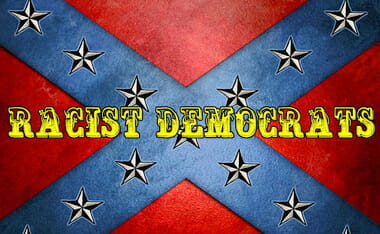
You know, this reminds me of something from the Democrats past. What this is is a “hit card” that the violent arm [the KKK] of the Democrat Party use to carry around with them. They would use it as an identifier to kill or harass members of the “radical group” (Republicans who thought color did not matter) in order to affect voting outcomes. While we hear of the lynchings of black persons (who did make up a larger percentage of lynchings), there were quite a few white “radicals” lynched for supporting the black vote and arming ex-slaves. It is also ironic that the current Democrat melee is focused on racial differences.

I could go on, but I won’t.

Here is a short video discussing the matter:

  • virtually every significant racist in American political history was a Democrat.” — Bruce Bartlett, Wrong on Race: The Democratic Party’s Buried Past (New York, NY: Palgrave MacMillan, 2008), ix;
  • not every Democrat was a KKK’er, but every KKK’er was a Democrat.” — Ann Coulter, Mugged: Racial Demagoguery from the Seventies to Obama (New York, NY: Sentinel [Penguin], 2012), 19.

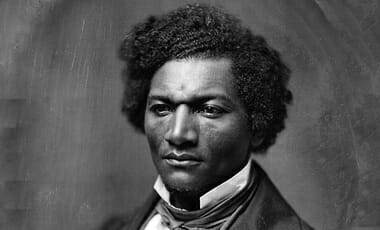
Frederick Douglass: From Slave to Statesman (Updated)

Frederick Douglass was born into slavery, but through his own heroic efforts became one of the most influential advocates for freedom in American history. His journey, a tale both agonizing and inspiring, should be known by everyone. Timothy Sandefur, author of “Frederick Douglass: Self-Made Man,” guides us through Douglass’ amazing life.

I spoke with the owners of the video that I grabbed this clip from. They were kind enough to allow this to stay up — HOWEVER — if you enjoyed this clip, please visit and consider subscribing to EncourageTV. The channel is built with positive, wholesome, and religious viewership in mind. (Which is better than the drivel we get elsewhere.)

(REALLY this is young Douglas vs. old Douglass, Kaepernick merely takes him out of a lifetime of thought)

Kaepernick quoted Frederick Douglas in “bashing” July 4th. FIRST, Ted Cruz does a bang-up job in responding to this here (DAILY WIRE). But the mistake I see here (#TWO) is that people evolve.

Let me explain.

I have heard many people over the years quote St. Augustine to support their understanding of a Church Father supporting old-earth creationism (OEC). But in fact, as Augustine matured in his faith and thought about the competing worldviews (remember, he was a Pagan before being Born Again) he became a solid young earth creationist (YEC). So the quote people choose pre-dates his ending up as a YEC’er. In other words, as he moved further away from his Pagan roots he came closer to God’s clear work. (See my post entitled “Taking Physicist Stephen Barr to Task Over St. Augustine“)

The same applies here, Douglas was newly freed, he fell into being tutored by someone who viewed the Constitution as a “slave document, but after spreading his wings further, reading the Constitution (and the Civil War) — he matured to believe the Constitution was an anti-slavery document.

The book pictured and I highly recommend is this: “Setting the Record Straight: American History in Black & White“. There is a DVD as well.

See as well my page on my site with many resource recommendations on various topics: “U.S. RACIAL HISTORY

Christian Extremists? (Timothy McVeigh Edition)

A combination of a few posts from 2010
that had dead media or bad links
combined and reposted

This is a myth — that Timothy McVeigh was a Christian — that reverberates in the liberal community, never seeing the light of day. Here I will post what CNN’s Ali Velshi said back in August on 2010 via NEWSBUSTERS:

VELSHI: Did you know that, as an American citizen, you have two freedoms granted by the First Amendment of the Constitution, when it comes to religion? The first part is known as the Establishment Clause. The Establishment Clause essentially says the government can’t pass laws that will establish an official religion. This is commonly interpreted as the separation of church and state. The second one is the Free Exercise Clause, and it prevents the government from interfering with or controlling a person’s practice of his or her religion. Religious freedom is an absolute right in this country, and it includes the right to practice any religion, or no religion at all, for all Americans.

After briefly touching on how many of the early American colonists came to North America for religious freedom, the CNN anchor moved on to his morally relativistic argument:

VELSHI: Suppose our government leaders or New York state leaders do step in, in some capacity, whether official or non-official, and assist in moving the mosque elsewhere. Then what? What kind of precedent does that set? Timothy McVeigh was raised Catholic. Do we then entertain petitions of moving Catholic churches away from the Oklahoma bombing site? I’m sure you’re thinking it sounds ridiculous, but ask yourself, is it ridiculous because Catholicism is familiar to you, or, is your argument that what he did was different, or is your argument that Timothy McVeigh didn’t kill in the name in Allah?

Actually, the comparison is ridiculous, because, as his own network acknowledged the morning after McVeigh’s execution, that the murderer was “baptized in the Catholic Church as a boy, but had stopped practicing and recently described himself as agnostic.” Moreover, as the terrorist himself admitted, he bombed the Oklahoma City federal building as a “retaliatory strike; a counter attack, for the cumulative raids (and subsequent violence and damage) that federal agents had participated in over the preceding years (including, but not limited to, Waco).” McVeigh did not carry out the attack in the name of the Christian God or in the name of the Catholic Church. On the other hand, Al Qaeda issued a fatwa in 1998, which declared that killing “Americans and their allies…is an individual duty for every Muslim who can do it in any country in which it is possible to do it…in accordance with the words of Almighty God.”

Velshi concluded his commentary by stating that it didn’t matter whether Americans were for or against the planned mosque: “If you’re an American citizen and choose to remain in this country, then whether you are against or you are for the Islamic center and mosque should be irrelevant. I say ‘should be,’ in an ideal world, because, as an American citizen- well, we should all be for the Constitution that so many have fought, lived, and died for, including the 2,976 souls who died on September 11th at Ground Zero, at the Pentagon, and in a field in western Pennsylvania.”…..

Michael Medved interviewed the Reverend Susan B. Thistlethwaite (PhD, is Professor of Theology Emerita and President Emerita at Chicago Theological Seminary) on his show back in May of 2010. The discussion was initially about Anders Behring Breivik, the racist in Norway that killed 85 people (almost all kids). The conversation then turns to Timothy McVeigh where the Reverend said he was a Christian — this is simply not true:

A Caller into the Michael Medved Show tries to compare Christians to terrorists by bringing up Timothy McVeigh. After that myth is shot down, the caller then tries the “Bush said God told him to go to war.” Another strike.

UPDATED REFERENCES

Human Events Shot This Down — again — many years ago in their article “Timothy McVeigh was not a ‘Christian’ terrorist,” (HUMAN EVENTS, May 6, 2002 by Lofton, John). But the Left likes to attack straw-men. That is they set up a false premise as if its true then they attack it… all the while their opponents are waiting on the sidelines for them to stop circular thinking and engage the world. Here are some of the past contributors to the Liberal Mantra:

  • Objecting to Muslims and Islam being blamed for terrorism, Louis Farrakhan, head of the Nation Of Islam, has said, according to the, Knight Ridder/Tribune News Service (9/17/01): “Timothy McVeigh was from a Christian nation… and nobody said the Christian Timothy McVeigh, they said Timothy McVeigh.”
  • The Boston Herald (10/07/01) quotes convicted rapist/boxer Mike Tyson as saying: “Religion can’t be defined from one single person’s action. Timothy McVeigh was a Christian.”
  • The Providence Journal-Bulletin (9/18/01) quotes Reem Alkurdi, a Muslim, as saying, Timothy McVeigh was a Christian-American.” But, nobody is blaming “all the Christian-Americans.”
  • The St. Louis Post-Dispatch (9/18/01) quotes Suleiman Badwan, a Muslim, as saying: “Don’t target me. . .. Tim McVeigh was a Christian … and he still blew up a federal building.”
  • The Denver Post (9/16/01) quotes Imam Tali Eid of the Islamic Center of New England in Quincy, Mass., as saying, “‘[A]t the time of McVeigh I haven’t seen any minister or priest’ having to defend his faith because McVeigh was a Christian.”
  • The Manchester Union Leader (9/12/01) quotes Shuja U. Saleem, who’s on the board of the Islamic Society of Greater Manchester, as saying that even though McVeigh was a Christian, “nobody points a finger at Christianity.”
  • The Minnesota Daily student newspaper (9/25/01) quotes Sarah Schadegg as saying, “Timothy McVeigh was a Christian but we didn’t label him the Christian bomber.”
  • The Canadian newspaper The Record (9/24/01), in Kitchner-Waterloo, quotes the mayor of Kitchner, Carl Zehr, as saying, “We don’t condemn Christianity because Timothy McVeigh was a Christian.”
  • The Los Angeles New Times newspaper (9/20/01) quotes Naji Harden, president of the Islamic Center of Hawthorne’s board of trustees, as saying, “The bomber of the Oklahoma federal building was a Christian, but we didn’t hear people singling out Christians.”
  • An article in USA Today (11/7/01) says, of many Muslims interviewed, that “several mentioned Timothy McVeigh. The media, they say, did not call McVeigh a Christian terrorist, but simply a terrorist.”
  • Nationally syndicated editorial cartoonist Mike Peters, whose cartoons appear in many newspapers, drew one cartoon labeling Timothy McVeigh as a Christian.
  • And in Reason magazine (12/1/01), Abdulwahab Alkebsi, a Muslim from Yemen, is quoted as saying: “Let’s call bin Laden what he is: He is a terrorist. It has nothing to do with Islam-just as much as you don’t want to call Timothy McVeigh a Christian terrorist or a Christian killer.”

MORE

WINTERY KNIGHT: Actually, according to this CNN interview with a McVeigh biographer, McVeigh was an agnostic.
BREITBART: He told the authors of American Terrorist that he “did not believe in Hell.” If there’s one tenet that’s consistent with Christian religions, it’s a belief in Hell—and Heaven, for that matter.
THE GUARDIAN: In his letter, McVeigh said he was an agnostic but that he would “improvise, adapt and overcome”, if it turned out there was an afterlife. “If I’m going to hell,” he wrote, “I’m gonna have a lot of company.”
TOWNHALL: Reporting on his execution, the Atlanta Journal-Constitution described McVeigh as “an avowed agnostic” whose sudden last-minute decision to see a Catholic priest just before his execution surprised everyone who knew him. As recently as July 2001, even a lefty like Barbara Ehrenreich (writing in the Progressive) did not portray McVeigh as having religious motives. She called McVeigh a “homegrown neo-Nazi mass murderer,” yes; Christian fundamentalist, no.
RELIGIO-POLITICAL TALK: When in fact Timothy McVeigh was an atheist who renounced the Judeo-Christian God and said his “god” was science. So in reality, McVeigh’s motivations line up closer with John’s political (and some would say, religious… because “atheism” is a metaphysical viewpoint) views rather than the “religious-right.” And most of the violence has been committed by people who have left leaning political views.

Rewriting Lincolnian History (Dinesh D’Souza) UPDATED

Both Google and Wikipedia attempt to hide the fact that Lincoln was a Republican by listing him as a member of the “National Union Party.” Is it true that Lincoln left the Republican Party to join some other party?

Now, I don’t know if this has changed within days… but Wiki is on their history [in this example] pretty well (graphic links to Wiki’s article on Abraham Lincoln, and the text is from their article on The National Union Party):

The National Union Party was the temporary name used by the Republican Party and elements of other parties for the national ticket in the 1864 presidential election that was held during the Civil War. For the most part, state Republican parties did not change their name.[1] The temporary name was used to attract War Democrats and border states, Unconditional Unionists and Unionist Party members who would not vote for the Republican Party. The party nominated incumbent Republican President Abraham Lincoln and for Vice President Democrat Andrew Johnson, who were elected in an electoral landslide.

[1] Arthur Schlesinger, Jr., ed. History of U.S. Political Parties: vol II: 1860–1910 (1973) 2:1287.

(WIKI)

Google however doesn’t “CYA” with the “(Republican)” after The National Union Party like Wiki:

And here is a more humorous… although more true look at what our kids are being taught about Lincoln:

NRA: America’s Longest-Standing Civil Rights Organization

African-American leaders speaking out against proposals to restrict gun rights at a Feb. 22, 2013 news conference in Washington, D.C. Among them: Harry Alford, president and chief executive officer of the D.C.-based National Black Chamber of Commerce.

Alford, who spoke in Milwaukee in 2008, said at one point:

“I want to thank the Lord for our Constitution. I also want to thank the NRA for its legacy. The National Rifle Association was started, founded by religious leaders who wanted to protect freed slaves from the Ku Klux Klan.”

Well known as a defender of the right to bear arms, the 5 million-member NRA does describe itself as “America’s Longest-Standing Civil Rights Organization.”

KILLING BLACK & WHITE REPUBLICANS

This made me think of a connection to the Democrat Party’s historical past. Here is my comment on that part of the group on Facebook:

You know, this reminds me of something from the Democrats past. What this is is a “hit card” that the violent arm [the KKK] of the Democrat Party use to carry around with them. They would use it as an identifier to kill or harass members of the “radical group” (Republicans who thought color did not matter) in order to affect voting outcomes. While we hear of the lynchings of black persons (who did make up a larger percentage of lynchings), there were quite a few white “radicals” lynched for supporting the black vote and arming ex-slaves. It is also ironic that the current Democrat melee is focused on racial differences.

I could go on, but I won’t.

Here is a short video discussing the matter:

  • virtually every significant racist in American political history was a Democrat.” — Bruce Bartlett, Wrong on Race: The Democratic Party’s Buried Past (New York, NY: Palgrave MacMillan, 2008), ix;
  • not every Democrat was a KKK’er, but every KKK’er was a Democrat.” — Ann Coulter, Mugged: Racial Demagoguery from the Seventies to Obama (New York, NY: Sentinel [Penguin], 2012), 19.

MORE GUN-CONTROL HISTORY

Today’s gun control advocates tend to paint themselves as concerned with the plight of minorities in America. What they don’t want you to know is that their movement originated as an initiative to deprive African-Americans of the means to defend themselves. In this episode of The DL, Dana Loesch is joined by NRA personalities and gun-rights advocates to delve into the deeply racist history of gun control and to explain how it continues to disproportionately affect minority communities.


Dinesh D’Souza’s 5-Part Prager U Series: Making America

Benjamin Franklin, John Adams, Thomas Jefferson, James Madison, and Alexander Hamilton. You’ve heard their names. You may have even heard them referred to as the Founding Fathers. But what exactly does that mean? In this five-part series, Dinesh D’Souza examines how each of them, in their own particular way, helped to create the great enterprise that is America.

Dennis Prager Interviews Howard Zinn (2006)

A comment on my YouTube regarding the full interview by Dennis Prager of Howard Zinn prompted me to do a search. I isolated a small portion of it for the purpose of accentuating a post on the topic… but this interview was widely available. Until – apparently – very recently. Here is my RUMBLE description:

  • Dennis speaks with Howard Zinn, leading leftist, professor emeritus at Boston University and college campus icon. His newest book is Original Zinn: Conversations on History and Politics. Best of Prager Hour. This has gone away from most video sites, even CONSERVATIVE UNIVERISTY’S version is truncated a bit. So I am making the entire interview available. This interview dates from Sept of 2006.

Did the United States Practice Genocide Against Native-Americans?

(Originally Posted March of 2015 — Updated Today – July 5th, 2021)

ALSO SEE:

SOME PREVIOUS POSTS ON THE NATIVE-AMERICAN MANTRAS:

    1. (Editor’s note: A recent federal bill memorializing as a National Historic Trail what has come to be known as the Cherokee Indian Trail of Tears is based on false history, argues William R. Higginbotham. In this article, the Texas-based writer delves into the historic record and concludes that about 840 Indians not the 4,000 figure commonly accepted died in the 1837-38 trek west; that the government-financed march was conducted by the Indians themselves; and that the phrase “Trail of Tears” was a label that was added 70 years later under questionable circumstances.) The problem with some of our accounts of history is that they have been manipulated to fit conclusions not borne out by facts. Nothing could be more intellectually dishonest. This is about a vivid case in point.

As you read this, keep in mind this is not a polemic saying these United States were in the right in all their dealings with the American Indian. What I am saying is that when looking at history, one needs to do so in full, and not in part.

The book mentioned in the above video is PLAGUES AND PEOPLES, by William H. McNeill. Here is the video description of the above:

  • Here is a quick blurb by Dinesh D’Souza discussing the genocide claim against the American Indian by Settlers. Much like the Black Plague killing an “up-to” estimated 60% of the European population, so to a LARGE percentage (some say 90%) died of contact with traders whom the Native-Populations had no immunities to. Just like when Western traders came into contact with the Asian continent. We don’t say this was an Asian genocide perpetrated on Westerners. Just like we do not say this (well, rational people) of Native-American contact with the West.

“Kill every buffalo you can,” he said; “every buffalo dead is an Indian gone.” ~ Colonel Richard Irving Dodge (1827 – June 16, 1895), United States Army.

I came across the above quote that got me thinking — due to the source… a left leaning website — that the quote was connected to a more complicated history than just simply “genocide” against Native-Americans (N-A from now on). Which the website was implying the quote meant. (BTW, if you are like my wife and can do without all my pomp-and-circumstance and want the bottom line ~ read this quote.) The original hat-tip came from a conservative website Gateway Pundit, referencing a call for Buffalo [New York] to change it’s racist name. (I know, EVERYTHING is racist nowadays.)

One of the graphics Gateway used in his story was this one, note the quote by Col. Dodge:

As I continued my search… this quote from Col. Dodge showed up quite a bit. So I did a Google book search, found some promising books that would lead to the origins of the quote. I subsequently ordered used versions (pictured below).

The American West book led me ultimately to two online resources: one a book from 1911 (the original source of the quote by Col. Dodge used in many resources), Sir William Butler: An Autobiography (London, England: Constable And Company Ltd., 1911); the other resource was an article in the official Journal of the Western History Association entitled, The Frontier Army and the Destruction of the Buffalo: 1865-1883

In these four resources as well as previous posts, I will unravel a fuller picture of the history/ethos behind such a statement. FIRST, however, here is the fuller quote as remembered by Gen. Butler:

At North Platte we found a distinguished officer of the army in command, Colonel Dodge, one of the foremost frontier men of his time, and the descendant of officers who had prepared the road for the army of settlement in the West. He was a mighty hunter too, and had killed every variety of big game from the Rocky Mountains to the Missouri. We told him of the week’s hunting we had had on the Platte prairies. More than thirty buffalo bulls had been shot by us, and I could not but feel some qualms of conscience at the thought of the destruction of so much animal life ; but Colonel Dodge held different views. “Kill every buffalo you can,” he said; “every buffalo dead is an Indian gone.” It sounded hard then, and it seems hard now ; but seven years after this time I crossed by railway from California to New York, and looking out at this same Platte valley I saw it a-smilin’ plain of farms, waving crops, and neat homesteads. The hungry crowd from overcharged Europe had surged into settlement over the old buffalo pastures of the Platte. ‘ Blessed are the meek, for they shall inherit the earth.’ It was right. These Crows, Cheyennes, Sioux, and Blackfeet Indians were no doubt splendid hunters, and fierce raiders, and crafty foemen, but no man could say they were meek.

[Lieut. General The Rt. Hon, G.G.B.] Sir W. F. Butler, Sir William Butler: An Autobiography (London, England: Constable And Company Ltd., 1911), 97.

When I read this fuller quote something stood out: “splendid hunters,” “fierce raiders,” “crafty foemen” [an enemy in war], and “‘not’ meek.” This brought to mind a previous discussion with a person on Facebook about the same issue. Daniel made a similar point that was one-sided… as if the American Indians were angels. I made the following historical point:

One of the most brutal raids of the American Revolution, a Loyalist-Iroquois coalition massacred more than 200 unsuspecting Patriot militiamen. Having raided and scorched dozens of frontier towns in upstate New York and Pennsylvania, the British arrived in Wyoming Valley, Pennsylvania, on July 3rd. The Patriots, inexperienced and outnumbered, were ambushed and subsequently routed following a forty-five minute close combat battle. As the Patriot line crumbled, the Iroquois began brutally hunting down survivors. Only sixty Americans survived to see another day, and only five were taken prisoner. Fleeing soldiers who had surrendered, were tortured to death by Loyalists and Iroquois. It was reported that 227 Patriot scalps were collected. Dozens of bodies were found on the line of retreat, which were all buried in a common grave. In retaliation, the Sullivan Expedition, commissioned by General George Washington, systematically destroyed at least forty Iroquois villages throughout upstate New York, in 1779. Another gruesome massacre would take place against the Continental Army at Cherry Valley. 

This is an important distinction coming up, and is worthy to note. There were massacres from both sides… this is the most basic understanding of this period (“boiling” it down). Now, reports of the massacres of prisoners at Wyoming and atrocities at Cherry Valley enraged the American public.

Did you catch that Daniel? Were the Iroquois ever “enraged” over it’s own actions? Were the French? Understanding history and the ethical foundations of the people involved is key to grasping these very complicated things well.

(Battle of Wyoming 1778)

Another point I pushed with Daniel in this discussion was that after the War of Independence, the Revolutionary War that is, the relationship between the people in this fledgling nation and the American Indian changed dramatically. You see, the Big Five (Five Nation League), the biggest Indian nations, ALL sided with the British.

CHEROKEES and CREEKS (among other TRIBES) in the southern interior and most IROQUOIS nations in the northern interior provided crucial support to the British war effort. With remarkably few exceptions, N-A support for the British was close to universal.

[….]

The MOHAWK chief THAYENDANEGEA (known to Anglo-Americans as JOSEPH BRANT) was the most important Iroquois leader in the Revolutionary Era. He convinced four of the six Iroquois nations to join him in an alliance with the British and was instrumental in leading combined Indian, British, and Loyalist forces on punishing raids in western New York and Pennsylvania in 1778 and 1779. These were countered by a devastating Patriot campaign into Iroquois country that was explicitly directed by General Washington to both engage warriors in battle and to destroy all Indian towns and crops so as to limit the military threat posed by the Indian-British alliance.

When British General John Burgoyne marched from Canada to Albany,

some of the Native American warriors he enlisted began killing settlers.

When the news of Jane McCrea’s murder reached major cities,

many young Americans enlisted to fight.

In spite of significant Native American aid to the British, the European treaty negotiations that concluded the war in 1783 had no native representatives. Although Ohio and Iroquois Indians had not surrendered nor suffered a final military defeat, the United States claimed that its victory over the British meant a victory over Indians as well. Not surprisingly, due to their lack of representation during treaty negotiations, Native Americans received very poor treatment in the diplomatic arrangements. The British retained their North American holdings north and west of the Great Lakes, but granted the new American republic all land between the Appalachian Mountains and the Mississippi River. In fact, this region was largely unsettled by whites and mostly inhabited by Native Americans. As a Wea Indian complained about the failed military alliance with the British, “In endeavoring to assist you it seems we have wrought our own ruin.” Even groups like the ONEIDA, one of the Iroquois nations that allied with the Americans, were forced to give up TRADITIONAL LANDS with other native groups.

(Revolutionary Limits: Native Americans)

This was an interesting dynamic when we beat the British and the Big Five. While the British warriors were sent-a-packin’, the American Indian combatants stayed. This was a tough situation, to say the least. History is tough.

Continuing.

Similarly, the near extinction of the Buffalo had many reasons and participants from both sides. In Settler and the N-A side participated in their demise. These American Indians were NOT angels. When trading routes and goods started to be established, we find that greed and power are a universal trait in all people of the world. The Beaver Wars exemplified just how non-angelic these American Indians were:

When the Mohawks attacked Metacomet instead of supporting him, they were motivated by self-interest. Casting themselves in the role of powerful intermediaries between neighboring Indians and the English colonies, the Mohawks and the other tribes of the Five Nation League of the Iroquois sought to place themselves in a dom­inant position.

European trade goods first began to reach the peoples of the Five Nations through indirect means as early as the mid-fifteenth century. In many Iroquois graves dating to that period archaeologists find brass, iron, and glass items. Their first direct ac­cess to these valuable goods came when Dutch traders established posts along the Hudson River in the 1610s. But the Iroquois had a problem. The best source of beaver pelts came from colder climes to the north. To supply themselves with the means to trade, the Mohawks, Cayugas, Onondagas, Oneidas, and Senecas thus began to raid their northern neighbors, plundering their stores of furs and bringing the pelts south to trade with the Dutch. These raids began a long series of seventeenth-century con­flicts known as the Beaver Wars in which warriors of the Five Nations attacked other Indian peoples as far west as the Illinois country, making themselves into the most powerful Indian confederacy on the North American continent.

But the Beaver Wars were spurred by another factor besides economics. Imported European diseases had hit the Iroquois hard. By the 1640s the population of the Five Nations had been cut nearly in half. Warfare against their neighbors not only gave the Iroquois access to the great fur grounds of the northern Great Lakes but offered the opportunity to take captives.

The Iroquois directed their most furious attacks against the Hurons, allies of the French. [The Hurons were one of the more peaceful tribes] unlike “So far as I can divine,” one Jesuit missionary wrote, “it is the design of the Iroquois to capture all the Hurons, if it is possible; to put the chiefs and great part of the nation to death, and with the rest to form one nation and one country.” In 1647 and 1648 the Mohawks and Senecas massed a brutal attack against the Hurons, de­stroying both Indian towns and Jesuit missionary stations. The Iroquois suffered enormous losses, but they inflicted even greater ones on the Hurons, and they so de­moralized their enemies that those who were not killed or captured dispersed and fled westward. Hundreds of Hurons were marched south to the Seneca and Mohawk towns and were adopted into the villages.

Robert V. Hine and John Mack Faracher, The American West: A New Interpretive History (New Haven, CT, 2000), 67-69.

And in a very recent article (July 4th, 2021), the POST MILLENNIAL counters a bit NPR’s attack on history in this regard:

The Ojibway were a loose confederation of states which, at their peak, had a massive extension throughout North America. They roughly paralleled the Celts in ancient times, preferring to merge peacefully with neighboring civilizations.

Most historians would agree indeed that they were very different from the Iroquois, who at the time were allied with the British Crown, and were very warlike and absolutely feared for their prowess on the battlefield by Europeans and other Indigenous cultures alike.

Choctaws, Chicasaws, Cherokee, Creeks, Mohawks, Iroquois, and Seminoles to name just a few that were in states of war with each-other in some fashion before-and-after the white-man every step foot on the continent.

Here for instance are the killing, scalping, putting into slavery those captured ~ FIGHT over the Black Hills (via: America: Imagine the World Without Her)

Now, however, as the Beaver Wars exemplified… there was a larger “monetary” benefit to these raids, land grabs, and the like.

To wit, *JUST LIKE* with the buffalo.

Here is what I mean.

While there was a concerted effort to get American Indians to become less nomadic (and thus less liable to be: “fierce raiders,” “crafty foemen” [an enemy in war], and “‘not’ meek”), the Indians THEMSELVES played a large roll in this “de-nomaditisation”! American Indians THEMSELVES sought to make a buck off of these new techniques of leather making (see especially the second large quote below):

Until 1871 the fur buffalo robe was the main marketable item, the leather being a far more limited commodity. Leather was used by the British Army in the Crimean War (1854-1856), but only after 1871 did an English firm provide a mass market for the buffalo hides. Previously, when the robes were the main item of value, commercial hunting was confined mainly to the winter when the fur was thick, but with leather as the mass product, the buffalo hunter could kill with profit all year round (Vestal, 1952, 40). The railroads, too, were glad to have the busi­ness. Their progress westward had been stopped by the long depression of the 1870s; with almost no traffic, carrying buffalo meat, hides, and bones to eastern markets was a valued business opportunity. Merchants and freighters welcomed the business that came from buffalo hunting (Vestal, 1952, 38).

Hardly had the market for buffalo hides become widely known than the panic of 1873 began which lasted for five years. During those years most of the buffalo on the southern plains were destroyed [Vestal, 1952, 451]. In 1871 the buffalo were estimated in the millions. Many of the hunters entered the profession expecting it to prove a life work and despaired of killing off more than the annual increase of the herd. Hunters encamped by water holes and rivers where the animals came to drink, built watch fires at night so that the slaughter could go on for twenty-four hours a day [Vestal, 1952, 46].

For maximum efficiency some hunters used the Big Fifty, a gun pro­duced by Sharps to the hunter’s specifications, made to load and fire eight times a minute (Sandoz, 1954, 97; Vestal, 1952, 41). “In a brief two years (1873-1875), where there had been myriads of buffalo, there were only myriads of rotting carcasses. The air was filled with the sicken­ing stench of death. . . .” [Vestal, 1952, 46].

The meat rotted, the bones remained, and then they, too, became a source of commercial profit. They were used in making fertilizer or in making bone china. They brought good prices. A man driving to town to trade would fill his wagon bed with bones and sell them on Front Street, Dodge City (Kansas). There were bones piled up as high as a man’s head, extending all along the track for many yards awaiting shipment. Many of the settlers managed to keep going by selling bones when drought and depression again struck the plains and destroyed their corn crop (Vestal, 1952, 50), before wheat had become a major crop of the area. One bone-buying firm estimated that over seven years (1884-1891) they bought the bones of approximately 5,950,000 buffalo skeletons. This firm was only one of many (Sandoz, 1954, 358).

Eleanor Burke Leacock and Nancy Oestreich Lurie, North American Indians In Historical Perspective (Prospect Heights, IL: Waveland Press, 1971), 219-220.

Supply-and-demand. This doesn’t make the near extinction an ideal goal… but it opened up the Plains for a large movement of settlers. AS WELL AS pointing out that the real push for Buffalo hides was profit during a slow times after the Civil War; not “genocide. Nor was the goal “death” of N-A’s, directly. Indirectly, anything subsidized writ-large is known to cause death in greater numbers.[icon name=”arrow-circle-o-down” class=””] In similar fashion, authors Hine and Faracher make the same historical statement:

Plains Indians had long hunted the buffalo, and the level of their hunting greatly increased with the development of the equestrian Indian tradition in the eighteenth century. From a peak of perhaps thirty million, the number of buffalo had declined to perhaps ten million by the mid-nineteenth century, partly as a result of commercial over-hunting by Indians, but also because of environmental competition from growing herds of wild horses and the spread of bovine diseases introduced by cattle crossing with settlers on the Overland Trail. By overgrazing, cutting timber, and fouling water sources, overland migrants also contributed significantly to the degeneration of habitats crucial for the health and survival of the buffalo. The confluence of these factors created a crisis for buffalo-hunting Indians by the 1860s. Tribal spokesmen protested the practice of hunters who killed for robes, leaving the meat to rot on the plains. “Has the white man become a child,” the Comanche chief Santana complained to an army officer in 1867, “that he should recklessly kill and not eat?” But it was less a case of childish whim than cynical guile. “Kill every buffalo you can!” Colonel Richard Dodge urged a sport hunter in 1867. “Every buffalo dead is an Indian gone.”

The extension of railroad lines onto the Great Plains and the development in 1870 of a technique for converting buffalo hide into commercial leather sealed the buf­falo’s fate. Lured by the profits to be made in hides, swarms of hunters invaded western Kansas. Using a high-powered rifle, a skilled hunter could kill dozens of animals in an afternoon. And unlike the hunter of buffalo robes, who was limited to taking his catch in the winter when the coat was thick, hide hunting was a year-round business. General Philip Sheridan applauded their work. “They are destroying the Indians’ commissary,” he declared. “Let them kill, skin, and sell until the buffaloes are ex terminated.” As the buffalo hunters did their work, Indians also accelerated their kills, attempting to capture their share of the market. At the Santa Fe depot in Dodge City mountainous stacks of buffalo hides awaited shipment to eastern tanneries. Historians estimate that in the five years between 1870 and 1875 five or six million buffalo died on the southern plains, wiping out the southern herds. The war on the animals then shifted to the northern plains, following the advancing tracks of the Northern Pacific. “If I could learn that every Buffalo in the northern herd were killed I would be glad,” Sheridan declared in 1881. “Since the destruction of the southern herd . . . the Indians in that section have given us no trouble.” His hopes were soon fulfilled. “It was in the summer of my twentieth year (1883),” the Sioux holy man Black Elk later testified, that “the last of the bison herds was slaughtered by the Wa-sichus,” the Lakota term for white men. With the exception of a small wild herd in northern Alberta and a few remnant individuals preserved by sentimental ranch-men like Charlie Goodnight, the North American buffalo had been destroyed. “The Wasichus did not kill them to eat,” said Black Elk incredulously. “They killed them for the metal that makes them crazy, and they took only the hides to sell. . . . And when there was nothing left but heaps of bones, the Wasichus came and gathered up even the bones and sold them.” This shameful campaign of extinction remains un­matched in the American annals of nature’s conquest.

Robert V. Hine and John Mack Faracher, The American West: A New Interpretive History (New Haven, CT, 2000), 317-318.

One needs to also keep in historical perspective that yes, these buffalo killed were done so primarily for their skin. And a lot of waste was involved. But even the Plains Indians are no angels in “waste.”

For instance, I wrote a response to an in-class assignment to my sons elementary class lesson about HOW the Settlers treated the New World versus how the Indians treated it. Here is a quote from that post:

From James Fenimore Cooper to Dances with Wolves and Disney’s Pocahontas, American Indians have been mythologized as noble beings with a “spiritual, sacred attitude towards land and animals, not a practical utilitarian one.”[16] Small children are taught that the Plains Indians never wasted any part of the buffalo. They grow up certain that the Indians lived as one with nature, and that white European settlers were the rapists who destroyed it.

In The Ecological Indian: Myth and History, Shepard Krech III, an anthropologist at Brown University, strips away the myth to show that American Indians behaved pretty much like everyone else. When times were bad they used the whole buffalo. When times were good, “whole herds” of buffalo might be killed only for their tongues or their fetuses.[17] Although American Indians adapted to their environment and were intimately familiar with it, they had no qualms about shaping it to their needs.

Indians set fires to promote the growth of grasses and make land more productive for the game and plants that they preferred. Sometimes fire was used carefully. Sometimes it was not. Along with the evidence that Indians used fire to improve habitat are abundant descriptions of carelessly started fires that destroyed all plant life and entire buffalo herds.[18]

Nor were American Indians particularly interested in conserving resources for the future. In the East, they practiced slash and burn agriculture. When soils became infertile, wood for fuel was exhausted, and game depleted, whole villages moved.[19] The Cherokee, along with the other Indians who participated in the Southern deerskin trade, helped decimate white-tailed deer populations.[20] Cherokee mythology believed that deer that were killed in a hunt were reanimated.

In all, contemporary accounts suggest that many Indians treated game as an inexhaustible resource. Despite vague hints in the historical records that some Crees may have tried to conserve beaver populations by allocating hunting territories and sparing young animals, Krech concludes that it was “market forces in combination with the Hudchild’s Bay Company policies [which actively promoted conservation]” that “led to the eventual recovery of beaver populations.”[21]

Those who blame European settlers for genocide because they introduced microbes that ravaged native populations might as well call the Mongols genocidal for creating the plague reservoirs that led to the Black Death in Europe.[22] Microbes travel with their hosts. Trade, desired by Indians as well as whites, created the pathways for disease.


[16] Shepard Krech III, The Ecological Indian: Myth and History, W.W. Norton & Company; New York: NY (1999), p. 22.

[17] Ibid., p. 135.

[18] Ibid., p. 119.

[19] Ibid., p. 76.

[20] Ibid., p. 171.

[21] Ibid., p. 188.

[22] For a discussion of the effect of the Mongol invasions and their effect on European epidemiology see, William H. McNeill, Plagues and Peoples, Doubleday; New York, NY (1977)

You see… when history is looked at in total and not in isolation, a theme comes out. Man is fallen. All men. Indians, Aborigines, Africans, Native-Americans, etc, etc. For history to be twisted, it needs to be viewed in isolation from other parts. History is not pretty, and the good things that come from it should be lauded… because they are rare. And this is not a polemic saying these United States were in the right in all their dealings with N-As. Reading through pages 176-184 in The American West book is heartbreaking. Moving whole groups of people by force has awful consequences, period. In this graphic from page 179 of the aforementioned book shows the undertaking started in this respect ~ even keeping in mind most fought against us in the Revolution. It doesn’t mean innocent men, women, and children were affected:

Alternatively, it is tough to argue that genocide or racism was involved as well. For instance, Colonel Dodge could be said to hate the Buffalo more than Indians. An insightful quote is this one, and, can be argued to be “speciesism” more strongly if Indian genocide is argued from his earlier solitary quote, via the official Journal of the Western History Association:

Lieutenant Colonel Dodge, who fancied himself a bona fide sportsman, regarded buffalo as “the most unwieldy, sluggish, and stupid of all plains animals.” To the hunter on foot, buffalo were by no means difficult to kill in large numbers. “If not alarmed at sight or smell of a foe,” wrote Dodge, “he will stand stupidly gazing at his companions in their death throes until the whole herd is shot down.” To be sure, Dodge regarded buffalo hunting on horseback as exciting and dangerous. But though chasing buffalo was thrilling to the novice, Dodge thought that “frequent repetition is like eating quail on toast every day for a month–monotonous.”

The Frontier Army and the Destruction of the Buffalo: 1865-1883 Author(s): David D. Smits Source: The Western Historical Quarterly, Vol. 25, No. 3 (Autumn, 1994), pp. 325-326; Published by: Western Historical Quarterly, Utah State University on behalf of the The Western History Association.

As Christians we look at all history as providential, run by a “higher hand.” In doing research for this subject something stood out to me.

And it is the idea that God works to make Good out of horrible.

Referring back to the quote above with the Iroquois would battle other tribes for dominance and control, those they didn’t kill and scalp, they would “adopt. Makes slaves, but these slaves would become part of their new found tribe. I will pick up where I left off in that quote:

Hundreds of Hurons were marched south to the Seneca and Mohawk towns and were adopted into the villages. Many of these Hurons were Christians, and they were the first to introduce Eu­ropean religion among the Five Nations. So dependent were the Iroquois on keep­ing their adoptees happy that eventually they were forced to invite Jesuits into their homeland to minister to these Christian Hurons, thus giving the missionaries an op­portunity to work among the Five Nations. Experiencing the same disruption and cultural trauma that had made the Hurons vulnerable to the Jesuit appeal, many Iro­quois converted to Catholicism. Rates of conversion were especially high among the Mohawks—the people most directly affected by their contact with European traders on the Hudson River. By the 1660s there were strong factions of pro-French Chris­tians in all the Iroquois towns of the Five Nations.

WOW! God is good. I also wish to note an early “Republican” American Indian I came across in that 1911 autobiography of In General Butler where he recalls one Native American being pressured by the Canadian government to go live on a reserve as saying this… and note, this Indian sounds like a Tea Partier!

“Why should I go into one place?” he used to ask the Hudson Bay officer and Mr. Dickens. “Do I not see all the Indians who go into one place die off faster than ever they died by the guns and knives of the Blackfeet! Are they not all starving?” They would tell him then that he was old, and that that was the reason why the Canadian Government wished him to be easy and comfortable on a reserve. To which Big Bear would reply, “It is true that I am old, but I have fed myself for seventy years. I can still hunt and feed myself, and I will stay in the open country till I die; then, when I am dead, you can put me into some one place if you like.” 

[Lieut. General The Rt. Hon, G.G.B.] Sir W. F. Butler, Sir William Butler: An Autobiography (London, England: Constable And Company Ltd., 1911), 258. [back]

He understood what many years later C.S. Lewis and then The Gipper stated:

“Of all tyrannies, a tyranny exercised for the good of its victims may be the most oppressive. It may be better to live under robber barons than under omnipotent moral busybodies. The robber baron’s cruelty may sometimes sleep, his cupidity may at some point be satiated; but those who torment us for our own good will torment us without end for they do so with the approval of their own conscience.” ~ C. S. Lewis, God in the Dock, p. 292.


Also, it must be kept in mind that Republicans rejected the bills and legislation leading to the Trail of Tears. The Democrats were the one’s who put forward legislation to remove by force Native Americans from their land and move them to Federal land for subsistence off the State. Here is a smaller excerpt for a great chapter via D’Souza:

Back to our story. Eventually the Jackson Democrats found a small faction of Cherokee who were willing, in exchange for bribes, to sign a removal agreement. This was called the Treaty of New Echota. The leaders of this group were the true Uncle Toms. They were not the recognized leaders of the Cherokee, and more than fifteen thousand Cherokee—led by Ross—signed a petition of protest. Ignoring their pleas, the U.S. government gave the Cherokee two years to migrate voluntarily.

The deadline of 1838 came and went, and most Cherokee had not moved. The Democrats at this point did not hesitate to use force. Those who refused to move were compelled. “The soldiers cleared out one farm at a time, one valley at a time,” Inskeep writes. “Approaching a house, the troops would surround it so that no one would escape, then order out the occupants with no more than they could carry.”

Native Indians unable to travel were rounded up in internment camps, a policy reminiscent of the Japanese internments that a later Democratic administration would enforce during World War II. Reports differ about how bad conditions in the camps were; what no one disputes is that around four thousand Indians died from malnourishment and disease. The Trail of Tears has gone down in American history as cruel and infamous. It certainly was, although its actual perpetrator was not “America” but rather the Jackson Democrats.

The Trail of Tears occurred after Jackson had left the presidency. He was by this time back at his plantation, the Hermitage. His handpicked successor, Martin Van Buren, was president. Yet Van Buren was only continuing the policies of his mentor. From a safe distance, Jackson approvingly watched his Democratic Party carry out his handiwork.

For Jackson, the Trail of Tears represented the culmination of his lifelong efforts. Far from being a disaster, this ugly chapter in U.S. history was one of the original “achievements” of the newly formed Democratic Party. Moreover, the way the Jackson Democrats treated the Indians was not an aberration. Rather, it was only the beginning of a long subsequent Democratic Party history of dispossession, cruelty, bigotry, and theft.

Dinesh D’Souza, Hillary’s America: The Secret History of the Democratic Party (Washington, D.C.: Regnery Publishing, 2016), 63-64.