US History
Is The National Anthem Racist? (Prager U Update)
(Updated 7-3-2021)
I figured this recent “Anthem Protest” would be a good update for the post. This comes to me via RIGHT SCOOP:
Gwen Berry explained today why she reacted with such contempt for the National Anthem over the weekend and it’s absolutely ridiculous (video at Twitter… click pic):

Berry claims that “If you know your history, you know the full song of the National Anthem. The third paragraph speaks to slaves in America, our blood being slang and piltered all over the floor. It’s disrespectful and it does not speak for black Americans. It’s obvious. There’s no question.”
I found this explanation unbelievable. But because I don’t know the verse, I went back and read it anyway:
And where is that band who so vauntingly swore
That the havoc of war and the battle’s confusion,
A home and a country, should leave us no more?
Their blood has washed out their foul footsteps’ pollution.
No refuge could save the hireling and slave
From the terror of flight, or the gloom of the grave:
And the star-spangled banner in triumph doth wave,
O’er the land of the free and the home of the brave.
So it turns out she’s an idiot. Yes, it uses the world ‘slave’, but it doesn’t remotely mean what she claims it means. It’s referring to the British, which is clear from the context. Not American slaves.
Erick Erickson provides us more insight here:

[….]
…the third verse of the National Anthem has nothing to do with slave labor. She’s taking language out of context by using a modern day definition and applying it to a 17th century statement. — Kenny Webster
. . . . . .
(Originally Posted Sep 29, 2017)
✩✩✩ OUR NATIONAL ANTHEM ✩✩✩
(Above video description: The original file AND description can be found here in full — HOWEVER, the audio was horrible. I tried to raise the DBs but couldn’t get rid of the hiss… but it is a must watch!)
UPDATED VIDEO ADDED
The Star-Spangled Banner, long a treasured symbol of national unity, has suddenly become “one of the most racist, pro-slavery songs” in American culture. Why is this happening? And more importantly, is it true? USA Today columnist James Robbins explores the history of the song and its author to answer these questions.
A friend asked a question about a challenge via “The Root” about the National Anthem. This is the “verse” said to be “racist”
No refuge could save the hireling and slave
From the terror of flight or the gloom of the grave,
And the star-spangled banner in triumph doth wave
O’er the land of the free and the home of the brave.
It is said our (yes, OUR) anthem glories in black slaves dying. Here is how it is encapsulated in the NEW YORK TIMES:
The journalist Jon Schwarz, writing in The Intercept, argued yes, denouncing the lyrics, written by Francis Scott Key during the War of 1812, as “a celebration of slavery.” How could black players, Mr. Schwarz asked, be expected to stand for a song whose rarely sung third stanza — which includes the lines “No refuge could save the hireling and slave/From the terror of flight or the gloom of the grave” — “literally celebrates the murder of African-Americans”?
Here is another sport figure’s comments on the flag:
- “And stop trying to sweep it under the rug. But, see, as long as you paint that narrative, oh, it’s the Anthem, I can’t — no — anybody that does something to the Anthem — well, we know what the anthem was originally written for and who it was written by, okay? The flag, okay? We understand what the flag? What does it represent? — SHANNON SHARPE
Here, the SMITHSONIAN helps set the scene for us and how the Anthem came to be:
…A week earlier, Francis Scott Key, a 35-year-old American lawyer, had boarded the flagship of the British fleet on the Chesapeake Bay in hopes of persuading the British to release a friend who had recently been arrested. Key’s tactics were successful, but because he and his companions had gained knowledge of the impending attack on Baltimore, the British did not let them go. They allowed the Americans to return to their own vessel but continued guarding them. Under their scrutiny, Key watched on September 13 as the barrage of Fort McHenry began eight miles away.
“It seemed as though mother earth had opened and was vomiting shot and shell in a sheet of fire and brimstone,” Key wrote later. But when darkness arrived, Key saw only red erupting in the night sky. Given the scale of the attack, he was certain the British would win. The hours passed slowly, but in the clearing smoke of “the dawn’s early light” on September 14, he saw the American flag—not the British Union Jack—flying over the fort, announcing an American victory.
Key put his thoughts on paper while still on board the ship, setting his words to the tune of a popular English song. His brother-in-law, commander of a militia at Fort McHenry, read Key’s work and had it distributed under the name “Defence of Fort M’Henry.” The Baltimore Patriot newspaper soon printed it, and within weeks, Key’s poem, now called “The Star-Spangled Banner,” appeared in print across the country, immortalizing his words—and forever naming the flag it celebrated….
THE DAILY CALLER notes (and so does SNOPES) that this verse was in reference to slaves and mercenaries that fought on the British side:
Francis Scott Key wrote the song the morning after the British bombarded Fort McHenry toward the end of the War of 1812, when he saw the American flag still waving. In these lines of the third verse he’s celebrating the death of slaves and mercenaries who opted to fight for the British in exchange for their freedom following the war.
INDEPENDENT JOURNAL REVIEW puts the idea to bullet points:
- The Star Spangled Banner lyrics “the hireling ” refers to the British use of Mercenaries (German Hessians) in the American War of Independence
- The Star Spangled Banner lyrics “…and slave” is a direct reference to the British practice of Impressment (kidnapping American seamen and forcing them into service on British man-of war ships). This was a Important cause of the War of 1812
- Francis Scott Key then describes the Star Spangled Banner as a symbol of triumph over all adversity
The U.S. CAPITAL HISTORICAL SOCIETY also comments on the added “fifth verse” by Oliver Wendell Holmes at the start of the Civil War:
Fifty years later, in 1861, poet Oliver Wendell Holmes Sr. would write a fifth verse to the National Anthem, reflecting the nation’s strife and looking toward a more peaceable future:
When our land is illum’d with Liberty’s smile,
If a foe from within strike a blow at her glory,
Down, down, with the traitor that dares to defile
The flag of her stars and the page of her story!
By the millions unchain’d who our birthright have gained
We will keep her bright blazon forever unstained!
And the Star-Spangled Banner in triumph shall wave
While the land of the free is the home of the brave.
Here, Wendell, unlike Key, foresaw not only the inevitable emancipation of the nation’s slaves, but also the freed African Americans gaining full citizen rights and ensuring the country’s preservation. Today, this verse is not considered an official part of the National Anthem, but during the Civil War, it was printed in song books throughout the northern United States as an extension of Key’s lyrics. In this way, Francis Scott Key and the War of 1812 bequeathed to the nation not just a song, but a step toward the perpetuating of liberty—just as the Revolutionary War and Civil War did.
Again, the Left views complex history through the lens of a historical Marxist view. Something that Howard Zinn tried to do as well, but did so by rewriting history… as the Modern Left still does.
Francis Scott Key, like many during that time, had a varied history on slavery. He fought for slaves to be free in court – pro bono. But, he also fought to return runaway slaves to owners at some point in his life – probably for money. So he was an opportunistic lawyer to pay bills… nothing has changed. WIKI continues with this:
Key publicly criticized slavery’s cruelties, so much that after his death a newspaper editorial stated “So actively hostile was he to the peculiar institution that he was called ‘The Nigger Lawyer’ …. because he often volunteered to defend the downtrodden sons and daughters of Africa. Mr. Key convinced me that slavery was wrong—radically wrong.” In June 1842, Key attended the funeral of William Costin, a free, mixed race resident who had challenged Washington’s surety bond laws.
The SMITHSONIAN again notes that Key was a founding member and active leader of the American Colonization, of which the primary goal was to send free African-Americans back to Africa. Keys, even though he abhorred slavery, and fought to free slaves at times, was removed from the board in 1833 as its policies shifted toward abolitionist. The mood of the nation as a whole was shifting. While Keys couldn’t envision a multi-ethnic nation, others could. But Keys position wasn’t necessarily “racist,” as some ex-slaves wanted the same. To recall a portion of the above quote from the Capital Historical Society, “…Wendell, unlike Key, foresaw not only the inevitable emancipation of the nation’s slaves, but also the freed African Americans gaining full citizen rights and ensuring the country’s preservation.”
YOU SEE, people change… as do nations (because they, like corporations, are made up of people). I make this point in my post on AUGUSTINE, who is often used to support old-earth positions… but little know that later in his life he rejected the old-earth view and wrote quite a bit on the young earth (creationist) viewpoint.
A man needs to be judged by his life’s journey. As do nations.
Likewise, conservatives believe that Robert Byrd may have sincerely changed his formerly racist beliefs. But when Democrats accuse Republicans of racism because they went to Strom Thurmond’s (one of the only major Dixiecrats to change to Republican – watch here and here) funeral and gave him praise, even though he changed his views on race/racism. All we point out is that if praising an ex Dixiecrat at a funeral makes one racist… then what does lauding a KKK Grand Kleagle at his funeral make Democrats?
A man needs to be judged by his life’s journey.
So does a nation.
Here is the rest of the SMITHSONIAN piece I wish to excerpt:
A religious man, Key believed slavery sinful; he campaigned for suppression of the slave trade. “Where else, except in slavery,” he asked, “was ever such a bed of torture prepared?” Yet the same man, who coined the expression “the land of the free,” was himself an owner of slaves who defended in court slaveholders’ rights to own human property.
Key believed that the best solution was for African-Americans to “return” to Africa—although by then most had been born in the United States. He was a founding member of the American Colonization Society, the organization dedicated to that objective; its efforts led to the creation of an independent Liberia on the west coast of Africa in 1847. Although the society’s efforts were directed at the small percentage of free blacks, Key believed that the great majority of slaves would eventually join the exodus. That assumption, of course, proved to be a delusion. “Ultimately,” says historian Egerton, “the proponents of colonization represent a failure of imagination. They simply cannot envision a multiracial society. The concept of moving people around as a solution was widespread and being applied to Indians as well.”
You see, Americans’ belief then was “not merely in themselves [shocker to millennials] but also in their future…. lying just beyond the western horizon” (ibid). And that is key. As Paul Johnson rightly notes in his history book on America:
“…can a nation rise above the injustices of its origins and, by its moral purpose and performance, atone for them? All nations are born in war, conquest, and crime, usually concealed by the obscurity of a distant past. The United States, from its earliest colonial times, won its title-deeds in the full blaze of recorded history, and the stains on them are there for all to see and censure: the dispossession of a indigenous people, and the securing of self-sufficiency through the sweat and pain of an enslaved race. In the judgmental scales of history, such grievous wrongs must be balanced by the erection of a society dedicated to justice and fairness.”
Paul Johnson, A History of the American People (New York, NY: Harper Perenial, 1997), 3.
Is the Constitution and It’s Signers… Secular? (Fraudulent Memes)
A Facebook friend posts a lot of stuff from the Left. And while I could spend all day refuting in similar fashion much of it (like the below), this topic caught my eye. Here is the FB graphic she posted on her wall:

So, let’s deal with these in order, shall we?
THOMAS JEFFERSON
This is the headline at THE JEFFERSON MONTICELLO site: “Christianity is the most perverted system that ever shone on man (Spurious Quotation)” — spurious indeed. They follow this with the fuller quote:
This comment on Christianity is a somewhat paraphrased excerpt from the following letter written by Thomas Jefferson to Joseph Priestley:
“this was the real ground of all the attacks on you: those who live by mystery & charlatanerie, fearing you would render them useless by simplifying the Christian philosophy, the most sublime & benevolent, but most perverted system that ever shone on man, endeavored to crush your well earnt, & well deserved fame.” – Jefferson to Priestley, March 21, 18011 (entire letter)
There are other useful links at MONTICELLO’S link to this topic. Even CHECK YOUR FACT has this regarding the Jefferson quote:
Verdict: False
There is no evidence that Jefferson ever said or wrote this. His estate at Monticello includes the saying on its list of “spurious quotations.”
Fact Check:
The quote has been frequently attributed to Jefferson on social media, appearing in numerous memes and posts on Facebook.
However, the Daily Caller found no record of Jefferson ever saying or writing this expression. A search of the Papers of Thomas Jefferson returned no results matching the alleged saying. It doesn’t appear in a collection of his quotes and letters either.
His estate at Monticello also includes the statement on its list of “spurious quotations.” The first known appearance in print dates back to 1996, according to the Thomas Jefferson Foundation…..
BENJAMIN FRANKLIN
The fuller quote reads… and note, many say this about their youth as well. I say similar things — as I stayed out of the church as a youth when I could.
- “I have found Christian dogma unintelligible. Early in life I absented myself from Christian assemblies.”
Later in life however, Franklin (and I would say myself) wrestled with religious matters well, and came out on the theistic end of life. Here, for example, is a letter from Benjamin Franklin to the “atheist” Thomas Paine:
TO THOMAS PAINE.
[Date uncertain.]
DEAR SIR,
I have read your manuscript with some attention. By the argument it contains against a particular Providence, though you allow a general Providence, you strike at the foundations of all religion. For without the belief of a Providence, that takes cognizance of, guards, and guides, and may favor particular persons, there is no motive to worship a Deity, to fear his displeasure, or to pray for his protection. I will not enter into any discussion of your principles, though you seem to desire it. At present I shall only give you my opinion, that, though your reasonings are subtile and may prevail with some readers, you will not succeed so as to change the general sentiments of mankind on that subject, and the consequence of printing this piece will be, a great deal of odium drawn upon yourself, mischief to you, and no benefit to others. He that spits against the wind, spits in his own face.
But, were you to succeed, do you imagine any good would be done by it? You yourself may find it easy to live a virtuous life, without the assistance afforded by religion; you having a clear perception of the advantages of virtue, and the disadvantages of vice, and possessing a strength of resolution sufficient to enable you to resist common temptations. But think how great a portion of mankind consists of weak and ignorant men and women, and of inexperienced, inconsiderate youth of both sexes, who have need of the motives of religion to restrain them from vice, to support their virtue, and retain them in the practice of it till it becomes habitual, which is the great point for its security. And perhaps you are indebted to her originally, that is, to your religious education, for the habits of virtue upon which you now justly value yourself. You might easily display your excellent talents of reasoning upon a less hazardous subject, and thereby obtain a rank with our most distinguished authors. For among us it is not necessary, as among the Hottentots, that a youth, to be raised into the company of men, should prove his manhood by beating his mother.
I would advise you, therefore, not to attempt unchaining the tiger, but to burn this piece before it is seen by any other person; whereby you will save yourself a great deal of mortification by the enemies it may raise against you, and perhaps a good deal of regret and repentance. If men are so wicked with religion, what would they be if without it. I intend this letter itself as a proof of my friendship, and therefore add no professions to it; but subscribe simply yours,
B. Franklin
Other interesting items of Mr. Franklin’s faith in God can be found here: “Benjamin Franklin Was Not A Secularist“
I start out this upload with a call into the show this week… after a little back-n-forth it ends. BUT, I include a bit of the show Dennis Prager speaks about during the call. That is from late February. A great topic covered well. Here is the creed spoken of:
✦ I believe in one God, the creator of the universe.
✦ That he governs by his providence.
✦ That he ought to be worshipped.
✦ That the most acceptable service we render to him is doing good to his other children.
✦ That the soul of man is immortal, and will be treated with justice in another life respecting its conduct in this.
For a very good discussion of the influence of the Calvinistic tradition on the thinking of Benjamin, see:
- John Eidsmoe, Christianity and the Constitution: The Faith of Our Founding Fathers (Grand Rapids: Baker Book House, 1987), 191-213.
JOHN ADAMS
The fuller quote from Adam’s sheds some light on Calvinism’ influence on the founders. The quote was taken out of context from a letter from John Adams to Thomas Jefferson, 19 April 1817 (entire letter):
- Twenty times, in the course of my late Reading, have I been upon the point of breaking out, “This would be the best of all possible Worlds, if there were no Religion in it”!!! But in this exclamati[on] I Should have been as fanatical as Bryant or Cleverly. Without Religion this World would be Something not fit to be mentioned in polite Company, I mean Hell. So far from believing in the total and universal depravity on human Nature; I believe there is no Individual totally depraved.
A slightly more English friendly version is this:
“Twenty times, in the course of my late reading, have I been on the point of breaking out, ‘this would be the best of all possible Worlds, if there were no Religion in it!!!’ But in this exclamation, I should have been as fanatical as Bryant or Cleverly. Without religion, this world would be something not fit to be mentioned in public company – I mean hell.” (Charles Francis Adams [ed.], The Works of John Adams, 10 vols. [Boston, 1856], X, p. 254.)
- Taken from They Never Said It: A Book of Fake Quotes, Misquotes, & Misleading Attributions, by Paul F. Boller, Jr. & John George, p. 3.
Adam’s was using the quote as a hyperbolic analogy to make a larger point. The opposite point as displayed in the meme. And the point was the depravity of mankind in a VERY Calvinistic structure. Here, as a way to drive the point home that this topic — that is, religious influences on the founding of America — is a topic I have for seminary studied well. Here is a bibliography of books used for a class. Books that sit on my shelves, I will highlight one in particular I recommend:
BIBLIOGRAPHY
Atkinson, James. The Great Light: Luther and the Reformation (Eugene, OR: Wipf and Stock, 2006).
Barton, David. America’s Godly Heritage (Aledo, TX: Wallbuilders Press, 1993).
___________. Original Intent: The Courts, the Constitution, & Religion, 3rd ed. (Aledo, TX: Wallbuilders Press, 2000).
Belloc, Hilaire. The Protestant Reformation (Rockford, IL: Tan Books and Publishers, 1928).
___________. Characters of the Reformation: Historical Portraits of 23 Men and Women and Their Place in the Great Religious Revolution of the 16th Century (Rockford, IL: Tan Books and Publishers, 1936).
Berman, Harold J. Law and Revolution II: The Impact of the Protestant Reformations on the Western Legal Tradition (Cambridge, MA: Harvard University Press, 2003).
_____________. Law and Revolution: The Formation of the Western Legal Tradition (Cambridge, MA: Harvard University Press, 1983).
Eidsmoe, John. Christianity and the Constitution: The Faith of Our Founding Fathers (Grand Rapids, MI: Baker Books, 1987).
Esolen, Anthony. The Politically Incorrect Guide to Western Civilization (Washington, DC: Regnery, 2008).
Estep, William R. Renaissance and Reformation (Wm B. Eerdmans Publishing Company, 1986).
Evans, M. Stanton. The Theme is Freedom: Religion, Politics, and the American Tradition (Washington, DC: Regnery, 1994).
George, Timothy. Theology of the Reformers (Nashville, TN: Broadman & Holman, 1988).
Hannah, John D. Charts of Reformation and Enlightenment Church History (Grand Rapids, MI: Zondervan Publishing House, 2004).
Hillerbrand, Hans J. The Reformation: A Narrative History Related by Contemporary Observances and Participants (New York, NY: Harper & Row, 1964).
___________. How the Reformation Happened (New York, NY: Harper Perennial, 1968).
Hoffecker, W. Andrew. Revolutions in Worldviews: Understanding the Flow of Western Thought (Phillipsburg, NJ: P & R, 2007).
House, Wayne H. Charts of Christian Theology & Doctrine (Grand Rapids, MI: Zondervan Publishing House, 1992).
_____________. Charts on Systematic Theology ( Grand Rapids, MI: Kregel, 2006).
Lowenthal, David. No Liberty for License: the Forgotten Logic of the First Amendment (Dallas, TX: Spence Publishing, 1997).
MacCullouch, Diarmaid. The Reformation: A History (New York, NY: Penguin, 2004).
Marshall, Paul. God and the Constitution: Christianity and American Politics (Lanham, MD: Rowman & Littlefield, 2002).
McGrath, Alister E. Reformation Thought: An Introduction, 3rd ed. (Malden, MA: Blackwell Publishing, 1999).
______________, ed. The Christian Theology Reader (Malden, MA: Blackwell Publishers, 1995).
Nichols, Stephen J. The Reformation: How a Monk and a Mallet Changed the World (Wheaton, IL: Crossway Books, 2007).
Noll, Mark A. America’s God: From Jonathan Edwards to Abraham Lincoln (New York, NY: Oxford University Press).
Olberman, Heiko A. The Dawn of the Reformation: Essays in Late Medieval and Early Reformation Thought (Wm B. Eerdmans Publishing Company, 1992).
Parker, G.W.H. The Morning Star: Wycliffe and the Dawn of the Reformation (Eugene, OR: Wipf and Stock, 2006).
Pelikan, Jaroslav, Reformation of Church and Dogma (1300-1700), vol. 4 (Chicago, IL: University of Chicago Press, 1984).
Sandoz, Ellis, ed. Political Sermons of the American Founding Era: 1730-1805 (Indianapolis, IN: Liberty Fund, 1991).
Sharansky, Natan. Defending Identity: It’s Indispensible Role In Protecting Democracy (New York, NY: Public Affairs, 2008).
Skinner, Quentin. The Foundations of Modern Political Thought: The Age of Reformation, vol. 2 (New York, NY: Cambridge University Press, 1978).
_____________. The Foundations of Modern Political Thought: The Renaissance, vol. 1 (New York, NY: Cambridge University Press, 1998).
_____________. Liberty Before Liberalism (New York, NY: Cambridge University Press, 1998).
Spellman, W.M. John Locke and the Problem of Depravity (New York, NY: Oxford University Press, 1988).
Stark, Rodney. The Victory of Reason: How Christianity Led to Freedom, Capitalism, and Western Success (, New York, NY: Random House, 2006).
_____________. For the Glory of God: How Monotheism Led to Reformations, Science, Witch-Hunts, and the End of Slavery (Princeton, NJ: Princeton university Press, 2004)
Tomkins, Stephen. A Short History of Christianity (Wm B. Eerdmans Publishing Company, 2005).
Walton, Robert C. Chronological and Background Charts of Church History: Revised and Expanded (Grand Rapids, MI: Zondervan Publishing House, 2005).
Witte, John Jr. Religion and American Constitutional Experiment (Boulder, CO: Westview Press, 2005).
___________. The Reformation of Rights: Law, Religion, and Human Rights in Early Modern Calvinism (New York, NY: Cambridge University Press, 2007).
___________., and Frank s. Alexander, eds. Christianity and Law: An Introduction (New York, NY: Cambridge University Press, 2008).
___________. From Sacrament to Contract: Marriage, Religion, and Law in the Western Tradition (Louisville, KY: WJK, 1997)
___________. God’s Joust, God’s Justice: Law and Religion in the Western Tradition (Wm B. Eerdmans Publishing Company, 2006).
___________. Law and Protestantism: The Legal Teachings of the Lutheran Reformation (New York, NY: Cambridge University Press, 2002).
Woods, Thomas J. Jr. The Politically Incorrect Guide to American History (Washington, DC: Regnery, 2004).
Later in life, Adams wrote:
- “I love and revere the memories of Huss, Wickliff, Luther, Calvin, Zwingli, Melancton, and all the other Reformers, how muchsoever I may differ from them all in many theological metaphysical & philosophical points. As you justly observe, without their great exertions & severe sufferings, the USA had never existed.” — John Adams to F. C. Schaeffer, November 25, 1821, in James Hutson, ed., The Founders on Religion: A Book of Quotations (Princeton: Princeton University Press, 2005), 15–16.
GEORGE WASHINGTON
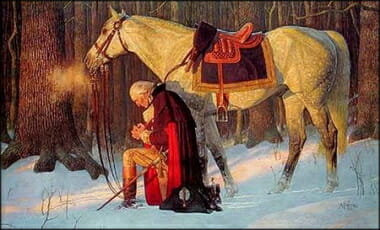
The quote by our first official President does not even hint at secular thought? The entire letter in fact does not. An excellent site recording the non-secular events surrounding the Constitution, also note the following — to use just one example from the many via Is the Constitution a “Secular Document?”
…After being sworn in, George Washington delivered his “Inaugural Address” to a joint session of Congress. In it Washington declared:
[I]t would be peculiarly improper to omit in this first official act my fervent supplications to that Almighty Being who rules over the universe, who presides in the councils of nations, and whose providential aids can supply every human defect, that His benediction may consecrate to the liberties and happiness of the people of the United States a Government instituted by themselves . . . . In tendering this homage to the Great Author of every public and private good, I assure myself that it expresses your sentiments not less than my own, nor those of my fellow-citizens at large less than either. No people can be bound to acknowledge and adore the Invisible Hand which conducts the affairs of men more than those of the United States. Every step by which they have advanced to the character of an independent nation seems to have been distinguished by some token of providential agency; and . . . can not be compared with the means by which most governments have been established without some return of pious gratitude, along with an humble anticipation of the future blessings which the past seem to presage.
[W]e ought to be no less persuaded that the propitious smiles of Heaven can never be expected on a nation that disregards the eternal rules of order and right which Heaven itself has ordained….
-
- Messages and Papers of the Presidents, George Washington, Richardson, ed., vol. 1, p.44-45
Following his address, the Annals of Congress reported that:
The President, the Vice-President, the Senate, and House of Representatives, &c., then proceeded to St. Paul’s Chapel, where Divine service was performed by the chaplain of Congress.
These people obviously didn’t get the memo about the Constitution creating a secular government…..
More on Washington can be found HERE.
Larry Elder Lambasts Joy Reid’s Historical Ineptitude!
Larry sets the record straight. Joy Reid effectively lied to her viewers. Let’s look at the actual history here.
PART ONE
Larry corrects Joy Reid’s ridiculous tirade where she inaccurately accuses Mitch McConnell and the Republicans of engaging in immoral, rotten behavior and blowing up the Filibuster Rule.
PART TWO

“Racist” Filibuster vs. Minimum Wage and Gun Control
Larry Elder made a good point about Democrat’s “concerns” about the origins of something being racist means getting rid of it — which he nor Dems really believe the filibuster to be, rather, just a convenient argument in the use of the race-card in order to grab power. BUT, if the concern is genuine, then we should do away with gun control as well as the minimum wage.
— I use a video from the NRA (The DL l S1 E3: “Gun Control’s Racist History”) and recommend their article: Jim Crow and the Racist Roots of Gun Control
SEE AS WELL:
- Democrats Claim Filibuster Is A Racist Tool — But Only When Republicans Use It (NEW YORK POST)
- Biden’s Argument Against the Filibuster Gets Eviscerated by…Biden, Obama, and a Few Inconvenient Facts (RED STATE)
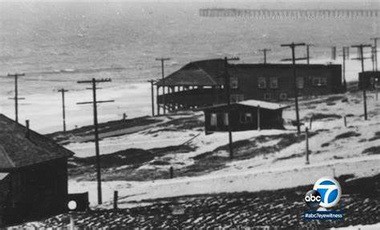
Was Land “Seized” [stolen] From a Black Family 97-Years Ago?
Larry Elder updates an earlier story about the Manhattan Beach Mayor possibly giving back land acquired through eminent domain from a black family 97 years ago. Here is a story on the matter:
Here is the “Letter to the Editor” Larry reads from:
RE: “Bruce’s Beach compensation,” The Beach Reporter, 2/25/21
There is so much “fiction” fanning the flames of the Bruce’s Beach legend and emotions. Last week’s letter to the editor stated the Bruces were 1) “driven out,” 2) “under-compensated,” and 3) “restricted from buying elsewhere in MB.” The facts found by MB’s multi-ethnicity commission on Bruce’s Beach are:
1) the NAACP lawyer representing the Bruce family stated the Bruce’s were “willing to sell the property …for a fair price at any time;”
2) the LA Times documented how the families were “over-compensated,” not under-compensated. Further, MB residents were up in arms against the MB Board of Trustees for giving excessive payments to the families;
3) the majority of Black families impacted bought and relocated elsewhere in MB. And, other Black families stayed in MB, too.
Maybe for effect, the writer of the letter concluded, “the park is a monument to racial hatred … because white supremacists won.” Wow! I concluded, from reading/researching subject, that prejudice played a key role in the eminent domain action and can/should be realized. However, this park should not be a monument for that. Remember, many White families owned 25 of the 30 parcels in the eminent domain action and were impacted. Lastly, the location now is a park and two blocks away from the beach. So, it is NOT a Beach and should not be named “… Beach.” It should have a “park” name. Maybe “Reflection Park.” That could suggest giving serious thought to our lives, other people and more.
—Jon Chaykowski, Manhattan Beach
House Judiciary Hearing on Reparations (Larry Elder – 5-Parts)
Larry Elder brought some facts to a place that is short on them. Here are the portions that include both Larry Elder, Burgess Owens, and Tom McClintock.
OPENING STATEMENT
PART 2
PART 3
PART 4
CONCLUDING COMMENTS
No Past, No Future (1619 Project and Destroying Statues)
Can we judge the past by the standards of the present? Many seem intent on proving not only that we can, but that we must. Social critic Douglas Murray doesn’t agree, and he explains why in this thought-provoking video.
Be Brave – Nikki Haley
[BTW, she is my choice for Prez] Free speech and intellectual freedom are the civil rights issues of our time. Are you ready to defend them? That’s the question that former US Ambassador Nikki Haley poses in this challenging video.
Democrats Were For Challenging Electors, Before Being Against It
UPDATED!
Over the past 20 years, Democrats have on three separate occasions objected to the validity of electoral votes on the floor of Congress. Wednesday, Jan. 6, will mark the first time Republicans choose do so in the past two decades.
My sons and I have discussed the January 6th issues, and, some historical aspects as well. Firstly, people saying Trump should be impeached are just as radical as the people breaking into the Capital. The throwing around of the “sedition” label is funny, and shows how people are not aware of the recent history of the lawful process of debate in Congress about just such topic. Here is one blogger noting Chuck Todd’s biased lack of awareness:
…NBC host Chuck Todd, who is always in the running to overtake CNN’s Brian Stelter as the dumbest newsman in the news media, had it out with Senator Ron Johnson (R-WI) over a number of Republican members of Congress who are planning to dispute the certification of Joe Biden winning the 2020 election due to questions of massive election fraud.
After being accused of trying to thwart the democratic process, Johnson hit back by telling sleepy eyes Todd that they are trying to protect it.
“We are not acting to thwart the democratic process, we are acting to protect it,” Johnson said to Todd.
[….]
Todd and others in the Fake News media are acting like the Republicans contesting the election results is an unprecedented affair.
Let me remind them that the last three times a Republican won a presidential election the Democrats in the House brought objections to the Electoral votes the Republican won.
Lest they forget that the House Democrats contested both elections of former President George W. Bush in 2000 and 2004 and President Trump’s win in 2016.…
(DJ-MEDIA)
PJ-MEDIA however has an excellent notation of this history when they point out Democrats outrage that Republicans objected to the certification of electoral votes. “It’s ‘conspiracy and fantasy,’ says Senate Minority Leader Chuck Schumer.” PJ further states,
“The effort by the sitting president of the United States to overturn the results is patently undemocratic,” the New York Democrat said. “The effort by others to amplify and burnish his ludicrous claims of fraud is equally revolting.”
“This is America. We have elections. We have results. We make arguments based on the fact and reason—not conspiracy and fantasy,” he added.
There’s only one problem with Chucky’s “argument based on fact and reason.” Democrats have been challenging the electoral vote certification for two decades.
The last three times a Republican has been elected president — Trump in 2016 and George W. Bush in both 2000 and 2004 — Democrats in the House have brought objections to the electoral votes in states the GOP nominee won. In early 2005 specifically, Sen. Barbara Boxer, D-Calif., along with Rep. Stephanie Tubbs, D-Ohio, objected to Bush’s 2004 electoral votes in Ohio.
Illinois Senator Dick Durbin appears to be even more incensed at Senator Josh Hawley’s plan to object to the Electoral College vote.
“The political equivalent of barking at the moon,” Sen. Dick Durbin, D-Ill., said of Hawley joining the challenge to electoral slates. “This won’t be taken seriously, nor should it be. The American people made a decision on Nov. 3rd and that decision must and will be honored and protected by the U.S. Senate and House of Representatives.”
Brave Sir Dick seems to forget he was singing a different tune in 2005. Then, it was Democrats questioning the results of the Ohio vote, which went narrowly for George Bush.
Durbin had words of praise for Boxer then:
“Some may criticize our colleague from California for bringing us here for this brief debate,” Durbin said on the Senate floor following Boxer’s objection, while noting that he would vote to certify the Ohio electoral votes for Bush. “I thank her for doing that because it gives members an opportunity once again on a bipartisan basis to look at a challenge that we face not just in the last election in one State but in many States.”
In fact, the Ohio electoral vote challenge was only the beginning. Rumors and conspiracy theories swirled around the outcome on election night that saw Bush winning Ohio by a close, but the surprisingly comfortable margin of 120,000 votes. So why are so many of these headlines familiar to us today?
- Mother Jones: “Recounting the Election: Was Ohio stolen?”
- New York Times: “Glitch Found in Ohio Counting”
- They even included some voting machine controversies.
- National Election Defense Coalition: “PARTISAN TECHNOLOGY FIRM IS IMPLICATED IN JOHN KERRY’S IMPLAUSIBLE LOSS IN OHIO 2004
- NBC News: “Machine Glitch Gave Bush Extra Ohio Votes”
And THE BLAZE also referenced it’s readers to the same issues in their post (BTW, these are the two videos I used for my upload):
TheBlaze’s Chris Enloe noted this weekend that while Democrats are rebuking Republicans for planning Wednesday to oppose the Electoral College certification of Joe Biden’s presidential victory due to fraud concerns, Democrats themselves have a robust history of doing that very thing.
And a damning, resurfaced video underscores what’s already on the public record.
The video is a compilation of clips from congressional sessions following the 2000 and 2004 presidential elections, both won by Republican George W. Bush — and in the clips Democrats launched protests against Bush’s electoral votes.
[….]
That wasn’t all. The Washington Post reported that during the January 2001 session, words such as “fraud” and “disenfranchisement” were heard above Republicans calling for “regular order.”
More from the paper:
The Democratic protest was led by Black Caucus members who share the feeling among black leaders that votes in the largely African American precincts overwhelmingly carried by [then-Democratic presidential nominee Al] Gore were not counted because of faulty voting machines, illicit challenges to black voters and other factors.
“It’s a sad day in America,” Rep. Jesse L. Jackson Jr. (D-Ill.) said as he turned toward Gore. “The chair thanks the gentleman from Illinois, but . . . ” Gore replied.
At the end of their protest, about a dozen members of the Black Caucus walked out of the House chamber as the roll call of the states continued.
Democrats Again Call For The End To The Electoral College
Hillary Clinton again calls for the Electoral College to be nixed:

Mark Levin does a few second response to this idiocy:
CIVICS 101
- “…the possibility that the [Constitutional Republic] in which we live provides us with opportunities for [representation] that… exceed those provided by primitive orders to far fewer people should not be dismissed.”
I wanted to edit/adapt the above HAYEK quote to fit the broader idea that what our Founders created is the most fair to the most people. I will include the larger quote at the end, in context, as, it has nothing to do with what I adapted it to. As I was reading this section of “The Fatal Conceit: The Errors of Socialism,” I thought of the attempt by Democrats to do away with the Electoral College. Which immediately brought to mind that MORE voters will be disenfranchised if it is eliminated. Why? Because the popular vote could be won by almost 4-states alone: California, Texas, Florida, New York. So, let’s take the most recent election as an example:
- The Democrat outpaced President-elect Donald Trump by almost 2.9 million votes, with 65,844,954 (48.2%) to his 62,979,879 (46.1%), according to revised and certified final election results from all 50 states and the District of Columbia. (CNN)
In the Electoral College world, the smaller states had a say and 2.9 million voters were “disenfranchised,” so-to-speak. In a direct democracy, which our Founders specifically wrote against, all a candidate would have to do is campaign in about 11-cities to win the election.
Do you understand what the Electoral College is? Or how it works? Or why America uses it to elect its presidents instead of just using a straight popular vote? Author, lawyer and Electoral College expert Tara Ross does, and she explains that to understand the Electoral College is to understand American democracy.

- James Madison (fourth President, co-author of the Federalist Papers and the “father” of the Constitution) – “Democracies have ever been spectacles of turbulence and contention; have ever been found incompatible with personal security, or the rights of property; and have, in general; been as short in their lives as they have been violent in their deaths.”
- John Adams (American political philosopher, first vice President and second President) – “Remember, democracy never lasts long. It soon wastes, exhausts, and murders itself. There never was a democracy yet that did not commit suicide.”
- Benjamin Rush (signer of the Declaration) – “A simple democracy… is one of the greatest of evils.”
- Fisher Ames (American political thinker and leader of the federalists [he entered Harvard at twelve and graduated by sixteen], author of the House language for the First Amendment) – “A democracy is a volcano which conceals the fiery materials of its own destruction. These will provide an eruption and carry desolation in their way.´ / “The known propensity of a democracy is to licentiousness [excessive license] which the ambitious call, and the ignorant believe to be liberty.”
- Governor Morris (signer and penman of the Constitution) – “We have seen the tumult of democracy terminate… as [it has] everywhere terminated, in despotism…. Democracy! Savage and wild. Thou who wouldst bring down the virtous and wise to thy level of folly and guilt.”
- John Quincy Adams (sixth President, son of John Adams [see above]) – “The experience of all former ages had shown that of all human governments, democracy was the most unstable, fluctuating and short-lived.”
- Noah Webster (American educator and journalist as well as publishing the first dictionary) – “In democracy… there are commonly tumults and disorders….. therefore a pure democracy is generally a very bad government. It is often the most tyrannical government on earth.”
- John Witherspoon (signer of the Declaration of Independence) – “Pure democracy cannot subsist long nor be carried far into the departments of state – it is very subject to caprice and the madness of popular rage.”
- Zephaniah Swift (author of America’s first legal text) – “It may generally be remarked that the more a government [or state] resembles a pure democracy the more they abound with disorder and confusion.”
Take note that as well ArticleIV, Section4 of the Constitution reads:
“The United States shall guarantee to every state in this union a republican form of government…“
Right now, there’s a well-organized, below-the-radar effort to render the Electoral College effectively useless. It’s called the National Popular Vote, and it would turn our presidential elections into a majority-rule affair. Would this be good or bad? Author, lawyer, and Electoral College expert Tara Ross explains.
You vote, but then what? Discover how your individual vote contributes to the popular vote and your state’s electoral vote in different ways–and see how votes are counted on both state and national levels.

Critics have long derided the Electoral College as a fusty relic of a bygone era, an unnecessary institution that one day might undermine democracy by electing a minority president. That day has arrived, assuming Gov. Bush wins the Florida recount as seems likely.
The fact that Bush is poised to become president without a plurality of the vote contravenes neither the letter nor the spirit of the Constitution. The wording of our basic law is clear: The winner in the Electoral College takes office as president. But what of the spirit of our institutions? Are we not a democracy that honors the will of the people? The very question indicates a misunderstanding of our Constitution.
James Madison’s famous Federalist No. 10 makes clear that the Founders fashioned a republic, not a pure democracy. To be sure, they knew that the consent of the governed was the ultimate basis of government, but the Founders denied that such consent could be reduced to simple majority or plurality rule. In fact, nothing could be more alien to the spirit of American constitutionalism than equating democracy will the direct, unrefined will of the people.
Recall the ways our constitution puts limits on any unchecked power, including the arbitrary will of the people. Power at the national level is divided among the three branches, each reflecting a different constituency. Power is divided yet again between the national government and the states. Madison noted that these two-fold divisions — the separation of powers and federalism — provided a “double security” for the rights of the people.
What about the democratic principle of one person, one vote? Isn’t that principle essential to our form of government? The Founders’ handiwork says otherwise. Neither the Senate, nor the Supreme Court, nor the president is elected on the basis of one person, one vote. That’s why a state like Montana, with 883,000 residents, gets the same number of Senators as California, with 33 million people. Consistency would require that if we abolish the Electoral College, we rid ourselves of the Senate as well. Are we ready to do that?
The filtering of the popular will through the Electoral College is an affirmation, rather than a betrayal, of the American republic. Doing away with the Electoral College would breach our fidelity to the spirit of the Constitution, a document expressly written to thwart the excesses of majoritarianism. Nonetheless, such fidelity will strike some as blind adherence to the past. For those skeptics, I would point out two other advantages the Electoral College offers.
First, we must keep in mind the likely effects of direct popular election of the president. We would probably see elections dominated by the most populous regions of the country or by several large metropolitan areas. In the 2000 election, for example, Vice President Gore could have put together a plurality or majority in the Northeast, parts of the Midwest, and California.
The victims in such elections would be those regions too sparsely populated to merit the attention of presidential candidates. Pure democrats would hardly regret that diminished status, but I wonder if a large and diverse nation should write off whole parts of its territory. We should keep in mind the regional conflicts that have plagued large and diverse nations like India, China, and Russia. The Electoral College is a good antidote to the poison of regionalism because it forces presidential candidates to seek support throughout the nation. By making sure no state will be left behind, it provides a measure of coherence to our nation.
Second, the Electoral College makes sure that the states count in presidential elections. As such, it is an important part of our federalist system — a system worth preserving. Historically, federalism is central to our grand constitutional effort to restrain power, but even in our own time we have found that devolving power to the states leads to important policy innovations (welfare reform).
If the Founders had wished to create a pure democracy, they would have done so. Those who now wish to do away with the Electoral College are welcome to amend the Constitution, but if they succeed, they will be taking America further away from its roots as a constitutional republic.
How did the terms “Elector” and “Electoral College” come into usage?
The term “electoral college” does not appear in the Constitution. Article II of the Constitution and the 12th Amendment refer to “electors,” but not to the “electoral college.” In the Federalist Papers (No. 68), Alexander Hamilton refers to the process of selecting the Executive, and refers to “the people of each State (who) shall choose a number of persons as electors,” but he does not use the term “electoral college.”
The founders appropriated the concept of electors from the Holy Roman Empire (962 – 1806). An elector was one of a number of princes of the various German states within the Holy Roman Empire who had a right to participate in the election of the German king (who generally was crowned as emperor). The term “college” (from the Latin collegium), refers to a body of persons that act as a unit, as in the college of cardinals who advise the Pope and vote in papal elections. In the early 1800’s, the term “electoral college” came into general usage as the unofficial designation for the group of citizens selected to cast votes for President and Vice President. It was first written into Federal law in 1845, and today the term appears in 3 U.S.C. section 4, in the section heading and in the text as “college of electors.”
More Common Sense
Who exactly are the “Resistance,” as explored in Kim Strassel’s new book “Resistance (At All Costs): How Trump Haters are Breaking America”?
How are “Trump haters” different from “Trump critics?” How is the Resistance different from past political movements? What are the long-term implications of its activities? And how are the media involved?
And, how can the Trump “impeachment inquiry” be seen as the latest chapter of the Resistance’s efforts?
This is American Thought Leaders??, and I’m Jan Jekielek.
Today we sit down with Kim Strassel, a member of the Wall Street Journal editorial board and a prominent political commentator. She was the recipient of the Bradley Prize in 2014, and she writes the Journal’s long-running “Potomac Watch” column.
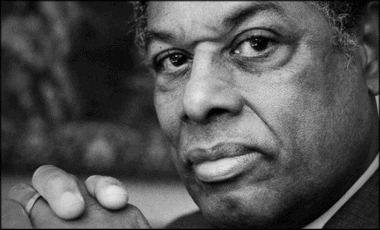
Thomas Sowell DEBUNKS the Legacy of Slavery Argument
In this video Thomas Sowell quashes the legacy of slavery argument that liberals use to explain disparities between blacks and whites in the United States. He also shares his thoughts on giving reparations for descendants of slaves.
(Check out the 22 books Thomas Sowell highly recommends)