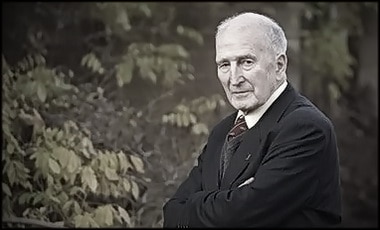
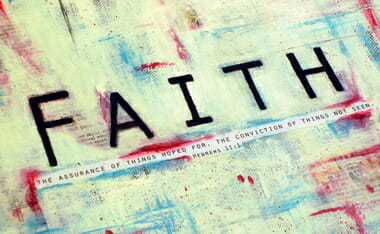
This is an old podcast of Dr. Norman Geisler discussing ex-atheist Antony Flew’s book that detailed his leaving atheism. Here is a “Flewism”
“My whole life has been guided by the principle of Plato’s Socrates: Follow the evidence, wherever it leads.” After chewing on his scientific worldview for more than five decades, Flew concluded, “A super-intelligence is the only good explanation for the origin of life and the complexity of nature.” Previously, in his central work, The Presumption of Atheism (1976), Flew argued that the “onus of proof [of God] must lie upon the theist.” However, at the age of 81, Flew shocked the world when he renounced his atheism because “the argument for Intelligent Design is enormously stronger than it was when I first met it.” (See my DNA post: RNA/DNA = Information | Or, What “IS” Information)
Flew’s God was: immutable, immaterial, omnipotent, omniscient, whole [one, or indivisible, perfectly good and necessary exists.
One of the most deep thinkers of the Founding Fathers, John Adams, noted that even “liberty” ~you know, one of the ideals impregnating our Founding Documents~ would be groundless if naturalism were true [among other things]:
Atheism—pure, unadulterated atheism…. The universe was matter only, and eternal Spirit was a word without a meaning. Liberty was a word without a meaning. There was no liberty in the universe; liberty was a word void of sense. Every thought, word, passion, sentiment, feeling, all motion and action was necessary [determinism]. All beings and attributes were of eternal necessity; conscience, morality, were all nothing but fate. This was their creed, and this was to perfect human nature, and convert the earth into a paradise of pleasure… Why, then, should we abhor the word “God,” and fall in love with the word “fate”? We know there exists energy and intellect enough to produce such a world as this, which is a sublime and beautiful one, and a very benevolent one, notwithstanding all our snarling; and a happy one, if it is not made otherwise by our own fault.
Ever hear an atheist say he’s a freethinker? Well, if atheism is true, an atheist, cannot be free nor would his thinking make any real sense. Frank Turek explains.
If my mental processes are determined wholly by the motions of atoms in my brain, I have no reason to suppose that my beliefs are true…and hence I have no reason for supposing my brain to be composed of atoms. (J.B.S. Haldane)
These are some of my favorite quotes and dealing with “naturalism” and their logical end-result, consequences, or logical conclusions. Merely a combining of MANY quotes and a “not-so-few” videos.
If you read the threads of several of the blog entries on this site, you will see both atheists and Christians charging one another with committing “logical fallacies.” The assumption both sides are making is that there is this objective realm of reason out there that: 1) we all have access to; 2) tells us the truth about the real world; and 3) is something we ought to use correctly if we want to know the truth. I think those are good assumptions. My question for the atheists is how do you justify these assumptions if there is no God?
If atheistic materialism is true, it seems to me that reason itself is impossible. For if mental processes are nothing but chemical reactions in the brain, then there is no reason to believe that anything is true (including the theory of materialism). Chemicals can’t evaluate whether or not a theory is true. Chemicals don’t reason, they react.
This is ironic because atheists– who often claim to be champions of truth and reason– have made truth and reason impossible by their theory of materialism. So even when atheists are right about something, their worldview gives us no reason to believe them because reason itself is impossible in a world governed only by chemical and physical forces.
Not only is reason impossible in an atheistic world, but the typical atheist assertion that we should rely on reason alone cannot be justified. Why not? Because reason actually requires faith. As J. Budziszewski points out in his book What We Can’t Not Know, “The motto ‘Reason Alone!’ is nonsense anyway. Reason itself presupposes faith. Why? Because a defense of reason by reason is circular, therefore worthless. Our only guarantee that human reason works is God who made it.“
Let’s unpack Budziszewski‘s point by considering the source of reason. Our ability to reason can come from one of only two sources: either our ability to reason arose from preexisting intelligence or it did not, in which case it arose from mindless matter. The atheists/Darwinists/materialists believe, by faith, that our minds arose from mindless matter without intelligent intervention. I say “by faith” because it contradicts all scientific observation, which demonstrates that an effect cannot be greater than its cause. You can’t give what you haven’t got, yet atheists believe that dead, unintelligent matter has produced itself into intelligent life. This is like believing that the Library of Congress resulted from an explosion in a printing shop.
I think it makes much more sense to believe that the human mind is made in the image of the Great Mind– God. In other words, our minds can apprehend truth and can reason about reality because they were built by the Architect of truth, reality, and reason itself.
So I have two questions for atheists: 1) What is the source of this immaterial reality known as reason that we are all presupposing, utilizing in our discussions, and accusing one other of violating on occasion?; and 2) If there is no God and we are nothing but chemicals, why should we trust anything we think, including the thought that there is no God?
Let’s consider a basic question: Why does the natural world make any sense to begin with? Albert Einstein once remarked that the most incomprehensible thing about the universe is that it is comprehensible. Why should we be able to grasp the beauty, elegance, and complexity of our universe?
Einstein understood a basic truth about science, namely, that it relies upon certain philosophical assumptions about the natural world. These assumptions include the existence of an external world that is orderly and rational, and the trustworthiness of our minds to grasp that world. Science cannot proceed apart from these assumptions, even though they cannot be independently proven. Oxford professor John C. Lennox asks a penetrating question, “At the heart of all science lies the conviction that the universe is orderly. Without this deep conviction science would not be possible. So we are entitled to ask: Where does the conviction come from?”” Why is the world orderly? And why do our minds comprehend this order?
Toward the end of The God Delusion, Dawkins admits that since we are the product of natural selection, our senses cannot be fully trusted. After all, according to Darwinian evolution, our senses have been formed to aid survival, not necessarily to deliver true belief. Since a human being has been cobbled together through the blind process of natural selection acting on random mutation, says Dawkins, it’s unlikely that our views of the world are completely true. Outspoken philosopher of neuro-science Patricia Churchland agrees:
The principle chore of brains is to get the body parts where they should be in order that the organism may survive. Improvements in sensorimotor control confer an evolutionary advantage: a fancier style of representing [the world] is advantageous so long as it… enhances the organism’s chances for survival. Truth, whatever that is, takes the hindmost.
Dawkins is on the right track to suggest that naturalism should lead people to be skeptical about trusting their senses. Dawkins just doesn’t take his skepticism far enough. In Miracles, C. S. Lewis points out that knowledge depends upon the reliability of our mental faculties. If human reasoning is not trustworthy, then no scientific conclusions can be considered true or false. In fact, we couldn’t have any knowledge about the world, period. Our senses must be reliable to acquire knowledge of the world, and our reasoning faculties must be reliable to process the acquired knowledge. But this raises a particularly thorny dilemma for atheism. If the mind has developed through the blind, irrational, and material process of Darwinian evolution, then why should we trust it at all? Why should we believe that the human brain—the outcome of an accidental process—actually puts us in touch with reality? Science cannot be used as an answer to this question, because science itself relies upon these very assumptions.
Even Charles Darwin was aware of this problem: “The horrid doubt always arises whether the convictions of man’s mind, which has developed from the mind of the lower animals, are of any value or at all trustworthy. Would anyone trust the conviction of a monkey’s mind, if there are any convictions in such a mind?” If Darwinian evolution is true, we should distrust the cognitive faculties that make science possible.
Here is a detailing of the above in a book I recently read:
“There is no need for God,” Atkins declared. “Everything in the world can be understood without needing to evoke a God. You have to accept that’s one possible view to take about the world.”
“Sure, that’s possible,” Craig admitted. “But—”
[Interrupting] “Do you deny that science can account for everything?” challenged Atkins.
“Yes, I do deny that science can account for everything,” said Craig.
“So what can’t it account for?” demanded Atkins.
“I think that there are a good number of things that cannot be scientifically proven, but that we’re all rational to accept,” Craig began.
[Interrupting] “Such as?”
“Let me list five,” Craig continued. “[First,] logical and mathematical truths cannot be proven by science. Science presupposes logic and math so that to try to prove them by science would be arguing in a circle. [Second,] metaphysical truths like there are other minds other than my own, or that the external world is real, or that the past was not created five minutes ago with the appearance of age are rational beliefs that cannot be scientifically proven. [Third,] ethical beliefs about statements of value are not accessible by the scientific method. You can’t show by science that the Nazi scientists in the camps did anything evil as opposed to the scientists in Western democracies. [Fourth,] aesthetic judgments cannot be accessed by the scientific method because the beautiful, like the good, cannot be scientifically proven. And finally, most remarkably, would be science itself. Science cannot be justified by the scientific method, since it is permeated with unprovable assumptions. For example, the special theory of relativity—the whole theory hinges on the assumption that the speed of light is constant in a one-way direction between any two points, A and B, but that strictly cannot be proven. We simply have to assume that in order to hold to the theory!”
Feeling vindicated, Buckley peered over at Atkins and cracked, “So put that in your pipe and smoke it.”
Frank Turek, Stealing from God (Colorado Springs, CO: NavPress, 2014), 162-163.
….Darwin thought that, had the circumstances for reproductive fitness been different, then the deliverances of conscience might have been radically different. “If… men were reared under precisely the same conditions as hive-bees, there can hardly be a doubt that our unmarried females would, like the worker-bees, think it a sacred duty to kill their brothers, and mothers would strive to kill their fertile daughters, and no one would think of interfering” (Darwin, Descent, 82). As it happens, we weren’t “reared” after the manner of hive bees, and so we have widespread and strong beliefs about the sanctity of human life and its implications for how we should treat our siblings and our offspring.
But this strongly suggests that we would have had whatever beliefs were ultimately fitness producing given the circumstances of survival. Given the background belief of naturalism, there appears to be no plausible Darwinian reason for thinking that the fitness-producing predispositions that set the parameters for moral reflection have anything whatsoever to do with the truth of the resulting moral beliefs. One might be able to make a case for thinking that having true beliefs about, say, the predatory behaviors of tigers would, when combined with the understandable desire not to be eaten, be fitness producing. But the account would be far from straightforward in the case of moral beliefs.” And so the Darwinian explanation undercuts whatever reason the naturalist might have had for thinking that any of our moral beliefs is true. The result is moral skepticism.
If our pretheoretical moral convictions are largely the product of natural selection, as Darwin’s theory implies, then the moral theories we find plausible are an indirect result of that same evolutionary process. How, after all, do we come to settle upon a proposed moral theory and its principles as being true? What methodology is available to us?
See also my post on logical conclusions in meta-ethics and evil (like rape), HERE:
…if evolution were true, then there would be selection only for survival advantage; and there would be no reason to suppose that this would necessarily include rationality. After a talk on the Christian roots of science in Canada, 2010, one atheopathic* philosophy professor argued that natural selection really would select for logic and rationality. I responded by pointing out that under his worldview, theistic religion is another thing that ‘evolved’, and this is something he regards as irrational. So under his own worldview he believes that natural selection can select powerfully for irrationality, after all. English doctor and insightful social commentator Theodore Dalrymple (who is a non-theist himself) shows up the problem in a refutation of New Atheist Daniel Dennett:
Dennett argues that religion is explicable in evolutionary terms—for example, by our inborn human propensity, at one time valuable for our survival on the African savannahs, to attribute animate agency to threatening events.
For Dennett, to prove the biological origin of belief in God is to show its irrationality, to break its spell. But of course it is a necessary part of the argument that all possible human beliefs, including belief in evolution, must be explicable in precisely the same way; or else why single out religion for this treatment? Either we test ideas according to arguments in their favour, independent of their origins, thus making the argument from evolution irrelevant, or all possible beliefs come under the same suspicion of being only evolutionary adaptations—and thus biologically contingent rather than true or false. We find ourselves facing a version of the paradox of the Cretan liar: all beliefs, including this one, are the products of evolution, and all beliefs that are products of evolution cannot be known to be true.
* Atheopath or Atheopathy: “Leading misotheist [“hatred of God” or “hatred of the gods”] Richard Dawkins [one can insert many names here] often calls theistic religion a ‘virus of the mind’, which would make it a kind of disease or pathology, and parents who teach it to their kids are, in Dawkins’ view, supposedly practising mental child abuse. But the sorts of criteria Dawkins applies makes one wonder whether his own fanatical antitheism itself could be a mental pathology—hence, ‘atheopath’.” (Taken from the Creation.com article, “The biblical roots of modern science,” by Jonathan Sarfati [published: 19 May 2012] ~ comments in the “[ ]” are mine.)
Even Darwin had some misgivings about the reliability of human beliefs. He wrote, “With me the horrid doubt always arises whether the convictions of man’s mind, which has been developed from the mind of lower animals, are of any value or at all trustworthy. Would any one trust in the convictions of a monkey’s mind, if there are any convictions in such a mind?”
Given unguided evolution, “Darwin’s Doubt” is a reasonable one. Even given unguided or blind evolution, it’s difficult to say how probable it is that creatures—even creatures like us—would ever develop true beliefs. In other words, given the blindness of evolution, and that its ultimate “goal” is merely the survival of the organism (or simply the propagation of its genetic code), a good case can be made that atheists find themselves in a situation very similar to Hume’s.
The Nobel Laureate and physicist Eugene Wigner echoed this sentiment: “Certainly it is hard to believe that our reasoning power was brought, by Darwin’s process of natural selection, to the perfection which it seems to possess.” That is, atheists have a reason to doubt whether evolution would result in cognitive faculties that produce mostly true beliefs. And if so, then they have reason to withhold judgment on the reliability of their cognitive faculties. Like before, as in the case of Humean agnostics, this ignorance would, if atheists are consistent, spread to all of their other beliefs, including atheism and evolution. That is, because there’s no telling whether unguided evolution would fashion our cognitive faculties to produce mostly true beliefs, atheists who believe the standard evolutionary story must reserve judgment about whether any of their beliefs produced by these faculties are true. This includes the belief in the evolutionary story. Believing in unguided evolution comes built in with its very own reason not to believe it.
This will be an unwelcome surprise for atheists. To make things worse, this news comes after the heady intellectual satisfaction that Dawkins claims evolution provided for thoughtful unbelievers. The very story that promised to save atheists from Hume’s agnostic predicament has the same depressing ending.
It’s obviously difficult for us to imagine what the world would be like in such a case where we have the beliefs that we do and yet very few of them are true. This is, in part, because we strongly believe that our beliefs are true (presumably not all of them are, since to err is human—if we knew which of our beliefs were false, they would no longer be our beliefs).
Suppose you’re not convinced that we could survive without reliable belief-forming capabilities, without mostly true beliefs. Then, according to Plantinga, you have all the fixins for a nice argument in favor of God’s existence For perhaps you also think that—given evolution plus atheism—the probability is pretty low that we’d have faculties that produced mostly true beliefs. In other words, your view isn’t “who knows?” On the contrary, you think it’s unlikely that blind evolution has the skill set for manufacturing reliable cognitive mechanisms. And perhaps, like most of us, you think that we actually have reliable cognitive faculties and so actually have mostly true beliefs. If so, then you would be reasonable to conclude that atheism is pretty unlikely. Your argument, then, would go something like this: if atheism is true, then it’s unlikely that most of our beliefs are true; but most of our beliefs are true, therefore atheism is probably false.
Notice something else. The atheist naturally thinks that our belief in God is false. That’s just what atheists do. Nevertheless, most human beings have believed in a god of some sort, or at least in a supernatural realm. But suppose, for argument’s sake, that this widespread belief really is false, and that it merely provides survival benefits for humans, a coping mechanism of sorts. If so, then we would have additional evidence—on the atheist’s own terms—that evolution is more interested in useful beliefs than in true ones. Or, alternatively, if evolution really is concerned with true beliefs, then maybe the widespread belief in God would be a kind of “evolutionary” evidence for his existence.
“Relativists aren’t interested in finding truth but in preserving their own autonomy. This isn’t a logical argument against relativism, of course. I’m just trying to point out that the true(!) basis for relativism is ultimately rooted in its motivation rather than in any good reasons or persuasive arguments.” — Paul Copan
This childish rejection of God in light of the evidence provided through the Book of Nature comes way of True Free Thinker, and shows the juvenile manner in which evidence is rejected in lieu of the ego:
…Lewis Wolpert simplistic dismissal of any and all intelligent design and creationism discoveries as “There is no evidence for them at all” is no less than an intellectual embarrassment and that he insists that “They must be kept out of science lessons” shows why he is the vice-president of an Atheist activism group.
And his dismissal of God is just as unimpressive, “There is absolutely no evidence for the existence of God.”
But what scientific, evidence based, academic, scholarly reasons does Wolpert himself offer for having become an Atheist?:
I stopped believing in God when I was 15 or 16 because he didn’t give me what I asked for. [1]
Keith Ward asked Wolpert, “What sort of evidence would count for you? Would it have to be scientific evidence of some sort?” to which the reply was, “Well, no… I think I read somewhere: If he turned the pond on Hamstead Heath into good champagne, it would be quite impressive”[2]. And yet, the historical record is that Jesus turned water into wine and that is still not good enough, is it?
[My addition: no it isn’t, some people like champaigne and not wine]
Lewis Wolpert also stated, “I used to pray but I gave it up because when I asked God to help me find my cricket bat, he didn’t help.” Thus, Justin Brieley stated, “Right, and that was enough for you to prove that God did not exist” to which Wolpert replied, “Well, yes. I just gave it up completely.”[3]…
[1]Lewis Wolpert, “The Hard Cell,” Third Way, March 2007 AD, p. 17
(For the above audio) Well respected [in evolutionary circles] University College London Professor (Emeritus) of Cell and Developmental Biology answers this, and explains that most people want more. And indeed, the Judeo-Christian God is the only answer to this conundrum. You can see how the answer to the problem actually resonates and responds to the truth of human need.
In other words, if naturalistic evolution is true, reductionism is also in play. Then we are determined by the chemical make-up, firing of synapses, and whole of historical events leading up to us controlling our actions. So one could ask in all seriousness, “how much does love weigh?”
It is a cold world, unbelief.
What is love? Here are two possibilities:
1) chemical reactions in your brain perceived as feelings of loyalty toward a single co-parent for the purpose of rearing a child together, at least until it’s weaned 2) the ultimate good, a reflection of the image of God upon humanity
Arguments often arise by using the same words to mean different things. One worldview (Christianity) views love as the ultimate good in the material world and beyond.
Let’s look at how love is viewed by two different worldviews: Christianity and naturalism.
On Christianity, love is ultimately:
a) the state of affairs existing prior to the creation of the universe, flowing between the Father and the Son via the Holy Spirit, the vehicle of love b) the highest good c) the ultimate goal, an act of worship.
On naturalism, love is ultimately:
a) the evolutionary mechanism to ensure the survival of children and the propagation of our species b) a nice concept, something to distract you from the depressing thought of a meaningless existence c) an amusing illusion
Your worldview will shape how you understand the concept of love…
I wish to start out with an excerpt from a chapter in my book where I use two scholarly works that use Darwinian naturalism as a guide to their ethic:
Dale Peterson and Richard Wrangham, Demonic Males: Apes and the Origins of Human Violence (New York, NY: Houghton Mifflin Harcourt Publishing, 1997).
Randy Thornhill and Craig T. Palmer, A Natural History of Rape: Biological Bases of Sexual Coercion (Cambridge: MIT Press, 2000).
My incorporation of these works into my book (quote):
“Lest one think this line of thinking is insane, that is: sexual acts are something from our evolutionary past and advantageous; rape is said to not be a pathology but an evolutionary adaptation – a strategy for maximizing reproductive success….. The first concept that one must understand is that these authors do not view nature alone as imposing a moral “oughtness” into the situation of survival of the fittest. They view rape, for instance, in its historical evolutionary context as neither right nor wrong ethically. Rape, is neither moral nor immoral vis-à-vis evolutionary lines of thought, even if ingrained in us from our evolutionary paths of survival. Did you catch that? Even if a rape occurs today, it is neither moral nor immoral, it is merely currently taboo. The biological, amoral, justification of rape is made often times as a survival mechanism bringing up the net “survival status” of a species, usually fraught with examples of homosexual worms, lesbian seagulls, and the like.”
Now, hear from other atheist and evolutionary apologists themselves in regard to the matter:
Richard Dawkins
(h/t: TrueFreeThinker) – A Statement Made by an atheist at the Atheist and Agnostic Society:
Some atheists do believe in ethical absolutes, some don’t. My answer is a bit more complicated — I don’t believe that there are any axiological claims which are absolutely true, except within the context of one person’s opinion.
That is, beauty is in the eye of the beholder, and so are ethics. So, why is Adolf Hitler wrong? Because he murdered millions, and his only justification, even if it were valid, was based on things which he should have known were factually wrong. Why is it wrong to do that? Because I said so. Unless you actually disagree with me — unless you want to say that Adolf Hitler was right — I’m not sure I have more to say.
[side note] You may also be aware that Richard Dawkins stated,
…I asked an obvious question: “As we speak of this shifting zeitgeist, how are we to determine who’s right? If we do not acknowledge some sort of external [standard], what is to prevent us from saying that the Muslim [extremists] aren’t right?”
“Yes, absolutely fascinating.” His response was immediate. “What’s to prevent us from saying Hitler wasn’t right? I mean, that is a genuinely difficult question. But whatever [defines morality], it’s not the Bible. If it was, we’d be stoning people for breaking the Sabbath.”
I was stupefied. He had readily conceded that his own philosophical position did not offer a rational basis for moral judgments. His intellectual honesty was refreshing, if somewhat disturbing on this point….
Stated during an interview with Larry Taunton, “Richard Dawkins: The Atheist Evangelist,” by Faith Magazine, Issue Number 18, December 2007 (copyright; 2007-2008)
Lewis Wolpert
From the video description:
Atheists Trying to Have Their Cake and Eat It Too on Morality. This video shows that when an atheist denies objective morality they also affirm moral good and evil without the thought of any contradiction or inconsistency on their part.
Dan Barker
This is from the video Description for the Dan Barker video below:
The atheist’s animal-level view of “morality” is completely skewed by dint of its lack of objectivity. In fact, the atheist makes up his own personal version of “morals” as he goes along, and this video provides an eye-opening example of this bizarre phenomenon of the atheist’s crippled psyche:
During this debate, the atheist stated that he believed rape was morally acceptable, then he actually stated that he would rape a little girl and then kill himself — you have just got to hear his psychotic words with your own ears to believe it!
He then stammered and stumbled through a series of ridiculously lame excuses for his shameful lack of any type of moral compass.
To the utter amazement of his opponent and all present in the audience, the gruesomely amoral atheist even goes so far as to actually crack a sick little joke on the subject of SERIAL CHILD-RAPE!
:::shudders:::
Meanwhile, the Christian in the video gracefully and heroically realizes the clearly objective moral values that unquestionably come to humanity by God’s grace, and yet are far beyond the lower animal’s and the atheist’s tenuous mental grasp. Be sure to keep watching until the very end so that you can hear the Christian’s final word — it’s a real knuckle-duster!
Atheist dogma™ not only fails to provide a stable platform for objective human morality for its adherent — it precludes him even the possibility. It’s this very intellectual inability to apprehend any objective moral values that leads such believers in atheist dogma™ as Hitler, Stalin, Mao, and Dahmer to commit their horrific atheistic atrocities.
Any believer in atheist dogma™, given sufficient power, would take the exact same course of action that Hitler did, without a moment’s hesitation.
Note as well that evolutionary naturalism has very dogmatic implication, IF — that is — the honest atheist/evolutionist follow the matter to their logical conclusions, via the ineffable Dr. Provine:
William Provine
Atheist and staunch evolutionist Dr. William Provine (who is often quoted by Richard Dawkins) admits what life has in stored if Darwinism is true. The quote comes from his debate here with Dr. Phillip E. Johnson at Stanford University, April 30, 1994.
“We must ask first whether the theory of evolution by natural selection is scientific or pseudoscientific …. Taking the first part of the theory, that evolution has occurred, it says that the history of life is a single process of species-splitting and progression. This process must be unique and unrepeatable, like the history of England. This part of the theory is therefore a historical theory, about unique events, and unique events are, by definition, not part of science, for they are unrepeatable and so not subject to test.”
Colin Patterson [1978] (Dr. Patterson was Senior Principal Scientific Officer of the Paleontology Department of the British Museum of Natural History in London.)
People think evolution is “science proper.” It is not, it is both a historical science and a [philosophical] presupposition in its “neo-Darwinian” form. The presupposition that removes it from “science proper and moves it into “scientism” is explained by an atheist philosopher:
If science really is permanently committed to methodological naturalism – the philosophical position that restricts all explanations in science to naturalistic explanations – it follows that the aim of science is not generating true theories. Instead, the aim of science would be something like: generating the best theories that can be formulated subject to the restriction that the theories are naturalistic. More and more evidence could come in suggesting that a supernatural being exists, but scientific theories wouldn’t be allowed to acknowledge that possibility.
In other words, the guy most credited in getting us to the moon used science to get us there, but was a young earth creationist. His view on “origins” (origin science) is separate from his working science. Two categories.
Likewise one of the most celebrated pediatric surgeons in the world, whom a movie was made after, “Gifted Hands,” is a young earth creationist. And the inventor of the MRI, a machine that diagnosed my M.S., is also a young earth creationist.
Evolutionary Darwinism is first and foremost an “historical science” that has many presuppositions that precede it, making it a metaphysical belief, a philosophy, as virulent anti-creationist philosopher of science, Michael Ruse explains:
Evolution is promoted by its practitioners as more than mere science. Evolution is promulgated as an ideology, a secular religion—a full-fledged alternative to Christianity, with meaning and morality. . . . Evolution is a religion. This was true of evolution in the beginning, and it is true of evolution still today.
Michael Ruse, “Saving Darwinism from the Darwinians,” National Post (May 13, 2000), p. B-3. (Via ICR)
The stronger must dominate and not mate with the weaker, which would signify the sacrifice of its own higher nature. Only the born weakling can look upon this principle as cruel, and if he does so it is merely because he is of a feebler nature and narrower mind; for if such a law [natural selection] did not direct the process of evolution then the higher development of organic life would not be conceivable at all…. If Nature does not wish that weaker individuals should mate with the stronger, she wishes even less that a superior race should intermingle with an inferior one; because in such a case all her efforts, throughout hundreds of thousands of years, to establish an evolutionary higher stage of being, may thus be rendered futile.
He thus acknowledged the need for any theory to allow that humans have genuine freedom to recognize the truth. He (again, correctly) saw that if all thought, belief, feeling, and choice are determined (i.e., forced on humans by outside conditions) then so is the determinists’ acceptance of the theory of determinism forced on them by those same conditions. In that case they could never claim to know their theory is true since the theory making that claim would be self-referentially incoherent. In other words, the theory requires that no belief is ever a free judgment made on the basis of experience or reason, but is always a compulsion over which the believer has no control.
If what he says is true, he says it merely as the result of his heredity and environment, and nothing else. He does not hold his determinist views because they are true, but because he has such-and-such stimuli; that is, not because the structure of the structure of the universe is such-and-such but only because the configuration of only part of the universe, together with the structure of the determinist’s brain, is such as to produce that result…. They [determinists – I would posit any philosophical naturalist] want to be considered as rational agents arguing with other rational agents; they want their beliefs to be construed as beliefs, and subjected to rational assessment; and they want to secure the rational assent of those they argue with, not a brainwashed repetition of acquiescent pattern. Consistent determinists should regard it as all one whether they induce conformity to their doctrines by auditory stimuli or a suitable injection of hallucinogens: but in practice they show a welcome reluctance to get out their syringes, which does equal credit to their humanity and discredit to their views. Determinism, therefore, cannot be true, because if it was, we should not take the determinists’ arguments as being really arguments, but as being only conditioned reflexes. Their statements should not be regarded as really claiming to be true, but only as seeking to cause us to respond in some way desired by them.
J. R. Lucas, The Freedom of the Will (New York: NY: Oxford University Press, 1970), 114, 115.
video erased
One of the most intriguing aspects mentioned by Ravi Zacharias of a lecture he attended entitled Determinism – Is Man a Slave or the Master of His Fate, given by Stephen Hawking, who is the Lucasian Professor of Mathematics at Cambridge, Isaac Newton’s chair, was this admission by Dr. Hawking’s, was Hawking’s admission that if “we are the random products of chance, and hence, not free, or whether God had designed these laws within which we are free.”[1]In other words, do we have the ability to make choices, or do we simply follow a chemical reaction induced by millions of mutational collisions of free atoms?[2] Michael Polyni mentions that this “reduction of the world to its atomic elements acting blindly in terms of equilibrations of forces,” a belief that has prevailed “since the birth of modern science, has made any sort of teleological view of the cosmos seem unscientific…. [to] the contemporary mind.”[3]
[1] Ravi Zacharias, The Real Face of Atheism (Grand Rapids, MI: Baker Books, 2004), 118, 119. [2]My own summation. [3]Michael Polanyi and Harry Prosch, Meaning (Chicago, IL: Chicago university Press, 1977), 162.
What merit would attach to moral virtue if the acts that form such habitual tendencies and dispositions were not acts of free choice on the part of the individual who was in the process of acquiring moral virtue? Persons of vicious moral character would have their characters formed in a manner no different from the way in which the character of a morally virtuous person was formed—by acts entirely determined, and that could not have been otherwise by freedom of choice.
If we were free persons, with faculties which we might carelessly use or wilfully misuse, the fact might be explained; but the pre-established harmony excludes this supposition. And since our faculties lead us into error, when shall we trust them? Which of the many opinions they have produced is really true? By hypothesis, they all ought to be true, but, as they contradict one another, all cannot be true. How, then, distinguish between the true and the false? By taking a vote? That cannot be, for, as determined, we have not the power to take a vote. Shall we reach the truth by reasoning? This we might do, if reasoning were a self-poised, self verifying process; but this it cannot be in a deterministic system. Reasoning implies the power to control one’s thoughts, to resist the processes of association, to suspend judgment until the transparent order of reason has been readied. It implies freedom, therefore. In a mind which is controlled by its states, instead of controlling them, there is no reasoning, but only a succession of one state upon another. There is no deduction from grounds, but only production by causes. No belief has any logical advantage over any other, for logic is no longer possible.
“Everything I have said and done in these last years is relativism by intuition…. If relativism signifies contempt for fixed categories and men who claim to be bearers of an objective, immortal truth… then there is nothing more relativistic than fascistic attitudes and activity…. From the fact that all ideologies are of equal value, that all ideologies are mere fictions, the modern relativist infers that everybody has the right to create for himself his own ideology and to attempt to enforce it with all the energy of which he is capable.”
Mussolini, Diuturna (1924) pp. 374-77, quoted in A Refutation of Moral Relativism: Interviews with an Absolutist (Ignatius Press; 1999), by Peter Kreeft, p. 18
I just wanted to update the below a bit with a great explanation of how theists view evidential propositions about God as compared to agnostics and atheists. Tim Stratton makes a great short example of what is being discussed in the below — but clearer: “ATHEISM: LACK OF BELIEF OR BLIND FAITH?“
Many atheists claim that their atheistic beliefs are just as viable as my theistic beliefs. Typically, the following scale (or something similar) is provided:
1- God exists (100% certainty) 2- God probably exists (51%-99% certainty) 3- Neutral Agnostic (50%/50%) 4- God probably does not exist (51%-99% certainty) 5- God does not exist (100% certainty)
I have claimed to hold to proposition (2) as a theist. Because of a cumulative case of coherent reasons (backed up by evidence), I believe theism is probably true with extremely high degrees of certainty (say, 97% certainty). Although I am not 100% certain (but have justification to believe God probably exists), it is quite reasonable to put my faith in what is probably true. This is why Christian theism is a reasonable faith.
Many atheists ignore the plethora of arguments and evidence for God and attempt to make the same move on the other side of the scale. However, they run into the same problems I discussed above. If they claim to hold to proposition (4), then they need to provide coherent reasons (backed up by evidence) as to why they think atheism is “probably true.” Why has the belief needle moved from (3), neutral agnosticism, to proposition (4)? If there are no logical answers then the atheist holds this view for no good reason at all (especially while ignoring the cumulative case for the existence of God). Indeed, their commitment to this definition of atheism is still nothing but a blind faith.
Faith is an evil precisely because it requires no justification and brooks no argument. ~ Richard Dawkins
Richard Dawkins, The God Delusion (New York, NY: Marine Books, 2008), 347.
Faith in the prayer-hearing God is an unproved and outmoded faith. There is no God and there is no soul. Hence, there are no needs for the props of traditional religion. With dogma and creed excluded, the immutable [i.e., unchangeable] truth is also dead and buried. There is no room for fixed, natural law or moral absolutes. ~ John Dewey
John Dewey, “Soul-Searching,” Teacher Magazine, September 1933, p. 33.
There are those who scoff at the schoolboy, calling him frivolous and shallow. Yet it was the schoolboy who said : “Faith is believing what you know ain’t so.” ~ Mark Twain
Caroline Thomas Harnsberger, Mark Twain at Your Fingertips: A Book of Quotations (Mineola, NY: Dover Publications, 2009), 116, cf. faith.
I am as firmly convinced that religions do harm as I am that they are untrue. The harm that is done by a religion is of two sorts, the one depending on the kind of belief which it is thought ought to be given to it, and the other upon the particular tenets believed. As regards the kind of belief: it is thought virtuous to have Faith—that is to say, to have a conviction which cannot be shaken by contrary evidence. Or, if contrary evidence might induce doubt, it is held that contrary evidence must be suppressed. On such grounds, the young are not allowed to hear arguments…. The consequence is that the minds of the young are stunted and are filled with fanatical hostility both to those who have other fanaticisms and, even more virulently, to those who object to all fanaticisms. ~ Bertrand Russell
Bertrand Russell, Why I Am Not a Christian: And Other Essays on Religion and Related Subjects (New York, NY; Simon and Schuster, 1957), vi.
(See response to Russell’s “induce doubt” portion at bottom)
According to the A Manual for Creating Atheists, faith is:
“pretending to know things that you don’t know”
“belief without evidence”
The author calls faith “an unreliable epistemology”
a “virus”
and calls for a process and agenda that will “ultimately eradicate faith”.
The words we use are important. They can help us see clearly, or they can confuse, cloud, or obscure issues. I’ll now offer my two preferred definitions of faith, and then disambiguate faith from hope.’
faith /fāTH/
1. Belief without evidence.
“My definition of faith is that it’s a leap over the probabilities. It fills in the gap between what is improbable to make something more probable than not without faith. As such, faith is an irrational leap over the probabilities.”
—John W. Loftus, “Victor Reppert Now Says He Doesn’t Have Faith!” (Loftus, 2012)
If one had sufficient evidence to warrant belief in a particular claim, then one wouldn’t believe the claim on the basis of faith. “Faith” is the word one uses when one does not have enough evidence to justify holding a belief, but when one just goes ahead and believes anyway.
Another way to think about “belief without evidence” is to think of an irrational leap over probabilities. For example, assume that an historical Jesus existed and was crucified, and that his corpse was placed in a tomb. Assume also that eyewitness accounts were accurate, and days later the tomb was empty.
One can believe the corpse was missing for any number of reasons. For example, one can believe the body arose from the dead and ascended to heaven, one can believe aliens brought the body back to life, or one can believe an ancient spirit trapped in the tomb merged with the corpse and animated it. Belief in any of these claims would require faith because there’s insufficient evidence to justify any one of these particular options.
Belief in any of these claims would also disregard other, far more likely possibilities—for example, that the corpse was stolen, hidden, or moved.
If one claims knowledge either in the absence of evidence, or when a claim is contradicted by evidence, then this is when the word “faith” is used. “Believing something anyway” is an accurate definition of the term “faith.”
faith /fāTH/
2. Pretending to know things you don’t know.
Not everything that’s a case of pretending to know things you don’t know is a case of faith, but cases of faith are instances of pretending to know something you don’t know.’ For example, someone who knows nothing about baking a cake can pretend to know how to bake a cake, and this is not an instance of faith. But if someone claims to know something on the basis of faith, they are pretending to know something they don’t know. For example, using faith would be like someone giving advice about baking cookies who has never been in a kitchen.
As a Street Epistemologist, whenever you hear the word “faith,” just translate this in your head as, “pretending to know things you don’t know.” While swapping these words may make the sentence clunky, “pretending to know things you don’t know” will make the meaning of the sentence clearer.
To start thinking in these terms, the following table contains commonly heard expressions using the word “faith” in column one, and the same expressions substituted with the words “pretending to know things you don’t know” in column two.
Peter Boghossian, A Manual for Creating Atheists (Durham, NC: Pitchstone Publishing, 2013), 23-26
I regard faith as religious belief which is held without evidence. If someone thinks that a bus will arrive on time per its schedule, then that person has trust or confidence, not faith. I don’t use the word faith except to mean non-evidential religious beliefs. I work hard to identify the evidence, so faith for me is an lazy, easy way out.
(See a professor comment on this definition at the bottom)
LETTING CHRISTIANS DEFINE FAITH
faith 1. Objective body of truth in the Bible, the creeds, the definitions of the universal councils, and/or the teachings of the church. 2. Positive, subjective, and personal allegiance to and trust in Jesus Christ as Lord and Savior. Faith exists in constant tension with three other elements: works, reason, and knowledge. In Protestant scholastic theology, faith is viewed as a threefold process: notitia (knowledge of what is to be believed), assensus (intellectual acceptance of the truth of what is believed), and fiducia (personal commitment to that truth).
The first involves reception of the message of the gospel. The second involves objective acceptance of certain theological concepts and historical events. Theologians call this fides quae creditur (the faith that is believed), comprising erkennen (recognition) and assensus (assent). Assensus includes confidence in God’s promises and trust in the events recorded in the Scripture. Peter Lombard pointed out that assensus alone is fides informis (incomplete faith).
Authentic faith must include a second aspect—a personal commitment to Jesus Christ. Theologians variously call this fides qua creditur (faith by which one believes), fides formata caritate (faith formed by love), bekennen (acknowledgment), and fiducia (trust in what is believed). Fiducia also involves obedience to God’s Word, perseverance in God’s will, and love for God’s people (John 3:36; Rom. 5:1-5; 1 Cor. 13:2; 1 John 3:1o). Thus Christians not only live because of faith but they also live according to the faith (Rom. 1:16-17). Faith is in one sense a human act, but it is also at the same time a divine gift.
George Thomas Kurian, ed., Nelson’s New Christian Dictionary (Nashville, TN: Thomas Nelson, 2001), cf. faith, 292-293.
I suspect that most of the individuals who have religious faith are content with blind faith. They feel no obligation to understand what they believe. They may even wish not to have their beliefs disturbed by thought. But if God in whom they believe created them with intellectual and rational powers, that imposes upon them the duty to try to understand the creed of their religion. Not to do so is to verge on superstition.
Morimer J. Adler, “A Philosopher’s Religious Faith,” in, Kelly James Clark, ed., Philosophers Who Believe: The Spiritual Journeys of 11 Leading Thinkers (Downers Grove, IL: InterVarsity Press, 1993), 207.
Certain words can mean very different things to different people. For instance, if I say to an atheist, “I have faith in God,” the atheist assumes I mean that my belief in God has nothing to do with evidence. But this isn’t what I mean by faith at all. When I say that I have faith in God, I mean that I place my trust in God based on what I know about him.
William A. Dembski and Michael R. Licona, Evidence for God: 50 Arguments for Faith from the Bible, History, Philosophy, and Science (Grand Rapids, MI: Baker Books, 2010), 38.
Faith is not a leap in the dark; it’s the exact opposite. It’s a commitment based on evidence… It is irrational to reduce all faith to blind faith and then subject it to ridicule. That provides a very anti-intellectual and convenient way of avoiding intelligent discussion.
Personal saving faith, in the way Scripture understands it, involves more than mere knowledge. Of course it is necessary that we have some knowledge of who Christ is and what he has done, for “how are they to believe in him of whom they have never heard?” (Rom. 10:14). But knowledge about the facts of Jesus’ life, death, and resurrection for us is not enough, for people can know facts but rebel against them or dislike them. (Rom. 1:32; James 2:19)….
In addition to knowledge of the facts of the gospel and approval of those facts, in order to be saved, I must decide to depend on Jesus to save me. In doing this I move from being an interested observer of the facts of salvation and the teachings of the Bible to being someone who enters into a new relationship with Jesus Christ as a living person. We may therefore define saving faith in the following way: Saving faith is trust in Jesus Christ as a living person for forgiveness of sins and for eternal lift with God.
This definition emphasizes that saving faith is not just a belief in facts but personal trust in Jesus to save me…. The unbeliever comes to Christ seeking to have sin and guilt removed and to enter into a genuine relationship with God that will last forever.
The definition emphasizes personal trust in Christ, not just belief in facts about Christ. Because saving faith in Scripture involves this personal trust, the word “trust” is a better word to use in contemporary culture than the word “faith” or “belief.” The reason is that we can “believe” something to be true with no personal commitment or dependence involved in it. I can believe that Canberra is the capital of Australia, or that 7 times 6 is 42, but have no personal commitment or dependence on anyone when I simply believe those facts. The word faith, on the other hand, is sometimes used today to refer to an almost irrational commitment to something in spite of strong evidence to the contrary, a sort of irrational decision to believe something that we are quite sure is not true! (If your favorite football team continues to lose games, someone might encourage you to “have faith” even though all the facts point the opposite direction.) In these two popular senses, the word “belief” and the word “faith” have a meaning contrary to the biblical sense.
The word trust is closer to the biblical idea, since we are familiar with trusting persons in everyday life. The more we come to know a person, and the more we see in that person a pattern of life that warrants trust, the more we find ourselves able to place trust in that person to do what he or she promises, or to act in ways that we can rely on. This fuller sense of personal trust is indicated in several passages of Scripture in which initial saving faith is spoken of in very personal terms, often using analogies drawn from personal relationships. John says, “To all who received him, who believed in his name, he gave power to become children of God” (John 1:12). Much as we would receive a guest into our homes, John speaks of receiving Christ.
John 3:16 tells us that “whoever believes in him should not perish but have eternal life.” Here John uses a surprising phrase when he does not simply say, “whoever believes him” (that is, believes that what he says is true and able to be trusted), but rather, “whoever believes in him.” The Greek phrase pisteuo eis auton could also be translated “believe into him” with the sense of trust or confidence that goes into and rests in Jesus as a person. Leon Morris can say, “Faith, for John, is an activity which takes men right out of themselves and makes them one with Christ.” He understands the Greek phrase pisteuo eis to be a significant indication that New Testament faith is not just intellectual assent but includes a “moral element of personal trust.” Such an expression was rare or perhaps nonexistent in the secular Greek found outside the New Testament, but it was well suited to express the personal trust in Christ that is involved in saving faith.
Wayne Grudem, Systematic Theology: An Introduction To Biblical Doctrine (Grand Rapids, MI: Zondervan, 2000), 709-711.
Although suffering as a prisoner for proclaiming the gospel, Paul was not disillusioned or in despair. Why? Because of his faith. As he testifies to his faith, its essential elements become clear. “And of this gospel I was appointed a herald and an apostle and a teacher. That is why I am suffering as I am. Yet I am not ashamed, because Iknow whom I have believed, and am convinced that he is able to guard what I haveentrusted to him for that day” (2 Tim. 1:11-12). Truth about God can be known. Zeal for God without knowledge (of the Redeemer) did not suffice for monotheistic and moral Jews (Rom. 10:1-2). Neither did worship of an “unknown God” atone for the cultured Athenians (Acts 17:23-31). In contrast, Abraham was “fully persuaded that God had power to do what he had promised” (Rom. 4:21).”
The faith that saves is directed away from human educational, cultural, and religious achievements to the Creator, whose redemptive plan has been preserved and publicized in Scripture. Faith comes by hearing the message of special revelation now affirmed by the written Word of God, the hearer being convinced that “Jesus is Lord” and trusting in him (Rom. 10:4, 8-11, 14). Faith involves knowledge (notitia), persuasion (assensus), and commitment (fiducia). These three elements of faith are operative, not only when one first believes the gospel and trusts the Savior, but also in a growing faith throughout the Christian life.
Gordon R. Lewis and Bruce A. Demerest, Integrative Theology, vol. 1 (Grand Rapids, MI: Zondervan, 1994), 168-169.
There is more than enough evidence on every hand from every department of human experience and knowledge to demonstrate that Christianity is true… It is the faith of the non-Christian [that] is externally and internally groundless. They are the ones who leap in the dark. Some, like Kierkegaard, have admitted this
Robert Morey, Introduction to Defending the Faith (Orange, CA: Christian Scholars Press, 2002), 38.
When I was undertaking my doctoral research in molecular biology at Oxford University, I was frequently confronted with a number of theories offering to explain a given observation. In the end, I had to make a judgment concerning which of them possessed the greatest internal consistency, the greatest degree of predictive ability. Unless I was to abandon any possibility of advance in understanding, I was obliged to make such a judgment… I would claim the right to speak of the ‘superiority’ of Christianity in this explicative sense.
“Response to John Hick,” by Clark Pinnock, in More Than One Way? Four Views on Salvation in a Pluralistic World, Revised ed. (Grand Rapids, MI: Zondervan Publishing, 1996), 68.
See also:
Is Blind Faith Better Than Belief Based on Evidence?
Often, however, the cause of our doubt isn’t what you might think. It isn’t necessarily the strength of the arguments that rattles us, but the way they resonate with the unbeliever in each of us (what the Bible calls the “old self”). We hear Tokyo Rose’s voice and she seems to make pretty good sense sometimes. Yet more often than not, if we look closely at the atheist’s arguments, we find that there is little substance. Seeing this can change the argument’s frequency and therefore break its spell.
Believers often worry that their doubts signify the rapid approach of full-blown unbelief. But as pastor and author Tim Keller puts it,
Faith without some doubts is like a human body without any antibodies in it. People who blithely go through life too busy or indifferent to ask hard questions about why they believe as they do will find themselves defenseless against either the experience of tragedy or the probing questions of a smart skeptic.
All thoughtful believers—even those whose faith is mature—encounter doubt. Not a single person has had unadulterated faith.
In any case, it certainly won’t do to ignore your doubts, and defusing them will only strengthen your faith. To be sure, doubts can be strong enough to become a trial in your life; but like all trials, they’re meant to refine faith, not stifle it.
Mitch Stokes, A Shot of Faith: To the Head (Nashville, TN: Thomas Nelson, 2012), xvii.
Here is the response to Logicel’s position:
…faith isn’t a theory of how to know things: “Faith is not an epistemological category. It is not a way of knowing something. Faith is a way of trusting something.
“Faith is trusting in that which you have reason to believe is true. Once you have come to believe that something is true, using reliable epistemological means, you can then place your faith or trust in those things.”
The definition above of faith is ha-larious! Thanks for posting it. I’m using it to show how ignorant people are about the term, faith. It is totally opposite of the real meaning that it makes quite a contrast. Faith is the substance of things believed based on evidential material, eye witnesses reports, and logical reasons to hold something as true. Those who have “faith” without the evidence are deluded and would believe anything. It is like someone believing that one species evolves into another species without any transitional evidence. Even with no evidence they continue to believe its true! Now that fits your poster’s definition. Anyway, thanks for the post. I am getting a lot of laughs by using it in my presentations.
This is a great — short — piece on the varients [invariably] brought up in conversation about the Bible. AND EXPLAINS why scholarly critics say the following:
The position I argue for in Misquoting Jesus does not actually stand at odds with Prof. Metzger’s position that the essential Christian beliefs are not affected by textual variants in the manuscript tradition of the New Testament. ~ Daniel B. Wallace, Revisiting the Corruption of the New Testament (Grand Rapids, MI: Kregal Publications, 2011), 55.
…First, these are errors in the copies, not the originals. Second, they are minor errors (often in names or numbers) which do not affect any teaching. Third, these copyist errors are relatively few in number. Fourth, usually by the context, or by another Scripture, we know which is in error. For example, Ahaziah must have been 22. Finally, though there is a copyist error, the entire message comes through. For example, if you received a letter with the following statement, would you assume you could collect some money?
#OU HAVE WON $20 MILLION.
Even though there is a mistake in the first word, the entire message comes through-you are 20 million dollars richer! And if you received another letter the next day that read like this, you would be even more sure:
Y#U HAVE WON $20 MILLION.
The more mistakes of this kind there are (each in a different place), the more sure you are of the original message. This is why scribal mistakes in the biblical manuscripts do not affect the basic message of the Bible…
Doug Powell, Holman QuickSource Guide to Christian Apologetics (Nashville, TN: Holman Reference , 2006), 158-162.
Thousands of Errors?
When the original language manuscripts are compared with one another, we find there are about 200,000 variants or errors in 10,000 different places. Variants are, very simply, disagreements between texts. These variants can be divided into two categories: unintentional and intentional.
The vast majority of variants are unintentional and are comprised of misspellings, interpolations of words or lines, or are orthographical in nature.[10] Each time a certain word is misspelled in a certain point in the text, it is counted as an error. For example, if a certain word in a certain verse had the same misspelled word in 537 copies, that would count as 537 errors or variants. Orthographical variants refer to the way words are spelled differently in different places. The difference between “theater” and “theatre” is orthographical. Both spellings are correct, but each is preferred in a different geographical location.
Because they preserve the errors of their exemplars, early translations of the New Testament help locate where certain textual variants were mainly known and probably occurred. Also, the writings of the early church fathers are a great help at this point because when they quote the New Testament, they essentially have tagged the errors they preserved with a time and place. If the oldest occurrence of a variant is found in Augustine, for example, we would know the error was from
no later than the late fourth or early fifth centuries and was known in North African copies. If a different error from the same time period is preserved by Chrysostom, we would know that the error was found in copies in the Byzantine region. And if a variant is found in Justin Martyr’s writings, we know the variant was no later than the mid-second century and known to the Romans.
These observations led scholars to divide the copies into three major text types, each with their own peculiarities. The Western text type is named for the versions found around Rome. The Byzantine text type encompasses modern Turkey, Greece, and the Middle East. The Alexandrian text type is named for the copies found in North Africa.[11]
The Alexandrian text type has the oldest manuscripts. It is the text type found in the almost ninety surviving papyri and date back to the second (and possibly first) century. The vast majority of English translations are based on the Alexandrian text type since it is considered by most experts today to be the oldest form of the New Testament.
The text type with the most copies by far is the Byzantine. These manuscripts were written on vellum, a much more
durable medium than papyri. The Byzantine texts date from the ninth century onward. This text type was used by Erasmus to compile the first published Greek New Testament. The King James Version was based on Erasmus’s work. This accounts for the variation seen between the King James Version and almost any other major English translation.
Whether or not the Byzantine is the latest and the Alexandrian is the oldest text type is still being debated. The majority opinion is that the Byzantine is a combination of the Alexandrian and Western types. But the argument that at least some parts of the Byzantine text date just as far back as the other text types is a strong one.
The other kind of error found in Scripture is an intentional error. These are deliberate changes to the text by the scribes. It was probably not the scribe’s intention, however, to corrupt the text. They would sometimes try to correct what they saw as an error or to improve the text in some other way.
A good example of an intentional error is found in Mark 1:1-3:
The beginning of the gospel of Jesus Christ, the Son of God.
As it is written in Isaiah the prophet:
Look, I am sending My messenger ahead of You,
who will prepare Your way.
A voice of one crying out in the wilderness:
“Prepare the way for the Lord;
make His paths straight!”
The above HCSB translation uses the Alexandrian (also known as Egyptian) text type as its source.[12] Compare its translation with the New King James Version, based on the Byzantine text type:
The beginning of the gospel of Jesus Christ, the Son of God;
As it is written in the prophets,
Behold, I send my messenger before thy face,
which shall prepare thy way before thee.
The voice of one crying in the wilderness,
Prepare ye the way of the Lord, make his paths straight.
Note that the HCSB attributes the quote to Isaiah, but the NKJV attributes the quote to “the prophets.” Apparently at some point a scribe recognized the quote was not just from Isaiah 40:3 but also from Malachi 3:1 and sought to correct the attribution. Whether Mark intentionally, for whatever reason, made the attribution solely to Isaiah is unknown.
This dilemma does, however, illustrate another principle used in recovering the original writing: prefer the more difficult reading. Between the two renderings of Mark 1:1-3, it is easier to explain the difference as a correction from “Isaiah” to “the prophets” than to explain it as a corruption from “the prophets” to “Isaiah.” The more difficult reading is “Isaiah,” therefore it is considered to have a higher probability of being the original.
Regardless of the value of the techniques described above, there are some parts of the New Testament where we are just not sure what the original writing said. About 400 words fall into this category and comprise about forty verses. The content of these verses contain no basis for any essential doctrine of the Christian faith. As a result, scholars can recover 97 to 99 percent of the original content of the New Testament with certainty.[13]
As it turns out, rather than being disadvantaged by not having the original writings, we find ourselves in a position of good fortune. If we had the originals, a critic of the writings would only need to call into question one document. Instead, a critic needs to deal with over 5,300 documents that agree substantially 99.5 percent of the time. This ultimately carries as much or more weight than having the originals.
[10]Bruce Metzger, The New Testament: Its Background, Growth and Content (Nashville: Abingdon Press, 1965), 281.
[11] David Allen Black, “Key Issues in New Testament Textual Criticism,” Biola University lecture, cd; Larry W. Hurtado, “How the New Testament Has Come Down to Us,” in Introduction to the History of Christianity, ed. Tim Dowley (Minneapolis: Fortress, 2002), 132.
[12]The HCSB uses the Novum Testamentum Graece, 27th ed., as the textual base for its translation of the New Testament. The Novum Testamentum Graece is primarily reliant on the Alexandrian text type.
[13] David Allen Black, “Key Issues in New Testament Textual Criticism,” Biola University lecture, cd.
James E. Taylor, Introducing Apologetics: Cultivating Christian Commitment (Grand Rapids, MI: Baker Books, 2006), 257-259.
JESUS AND HINDUISM
Hinduism may be the most metaphysically diverse of all religious traditions, since its practitioners have been polytheists, monotheists, pantheists, panentheists, atheists, and agnostics. This metaphysical diversity is grounded in the widespread Hindu conviction that the truth about ultimate reality is inexpressible and unknowable.
The Hindu name for ultimate reality is Brahman. In spite of the general skepticism just mentioned, many Hindu scholars have studied the Vedic texts (especially the Upanishads, the Bhagavad Gita, and the Brahma-sutra) to articulate an understanding of Brahman and Brahman’s relationship to the universe. The philosophical/theological systems formulated are called Vedanta. The three most influential vedantic thinkers are Sankara (788-820), Ramanuja (1017-1137), and Madhya (thirteenth century AD).
Sankara’s view is called Advaita (non-duality) Vedanta. According to this worldview, reality is one, and the one is Brahman. It follows that the only absolute reality is Brahman, and therefore everything that exists is Brahman. Thus, each individual atman (soul) is identical with Atman (the world soul), and Atman is the same thing as Brahman. Though Brahman may seem to be a personal lord with a variety of divine attributes who is worthy of worship, Brahman is really impersonal (and so not appropriately worshiped) and completely without different and distinct qualities (except for being, consciousness, and bliss). This is clearly a version of pantheism, which accounts for polytheism at the popular level: The allegedly many gods are just manifestations of Brahman. Sankara says that the assumption that there are many real things (human beings, animals, plants, inorganic things, different qualities of things, etc.) is due to ignorance and that this ignorance is caused by maya (illusion). According to his view, salvation comes through eliminating maya and the ignorance based on it by becoming enlightened. Enlightenment involves grasping that everything (including oneself, of course) is really (distinctionless and impersonal) Brahman.
Sankara’s interpretation of the Vedas is philosophically problematic, and because of this, it does not provide a plausible challenge to Christian exclusivism. The main problem with his view is that it says, on the one hand, that there is only one thing and thus no distinctions between different kinds of things, and, on the other hand, that there is a distinction between maya and ultimate reality, ignorance and enlightenment, bondage to samsara and liberation from it, and so on. In short, Sankara’s Hindu theology is self-contradictory. Moreover, it does not help to distinguish, as Sankara does, between absolute reality (Brahman) and conventional reality (maya). This too is a distinction between two different things, and if Brahman is all, then there cannot be two different things. An additional problem is that Sankara’s view is inconsistent with the wisdom of collective human sensory experience, which reveals a world of many real things. An appeal to mystical experience does not save his position. There is no good reason to trust such an experience, since insofar as it supports Sankara’s view, it contradicts both reason and sense perception.
Ramanuja is a later Hindu thinker who tried to improve on Sankara’s theology by attempting to be faithful to the theme of unity between Atman and Brahman in the Vedas while avoiding contradiction. His theology is a qualified nondualism. According to his view, the universe is Brahman’s body, which emerges or emanates eternally out of Brahman and through which Brahman expresses itself. As such, the universe is coeternal with and dependent on Brahman, but it is not the same thing as Brahman. Therefore, the universe can consist in many different things, including souls, which are not identical with Brahman. If we take this to mean that the universe is part of Brahman, then Ramanuja’s theology is a version of panentheism. If instead Brahman’s body is not a part of Brahman, then Ramanuja’s view is a version of contingency monotheism. Either way, Ramanuja avoids Sankara’s pantheism. Moreover, whereas Sankara conceives of Brahman as impersonal, Ramanuja believes Brahman is a personal God who has become incarnate in many forms (such as Rama and Krishna)2 and who gives grace to save human beings who love him and are devoted to him (but this salvation does not involve atonement).i
Though Ramanuja’s picture of reality avoids the contradictory antirealism of Sankara’s approach, and though it includes some Christian themes, it faces a problem of evil that is more serious than the one afflicting the Abrahamic faiths. In the first place, if his view is panentheistic, so that the universe is part of God and the universe contains evil, then a part of God is evil. But Ramanuja says that God is perfect. Therefore, the universe does not contain evil, or God is not perfect, or the universe is not a part of God. Since it seems best to affirm the last of these alternatives, it seems best to reject the panentheistic interpretation of Ramanuja’s theology. Second, since Ramanuja affirms the eternality of souls (a consequence of his denial of creation ex nihilo), then those souls that have not yet been liberated from the cycle of death and rebirth have already suffered eternally. But this is an experience equivalent to eternal suffering in hell—at least with respect to length of time. Therefore, all of us still caught in the cycle of death and rebirth have no freedom of choice in this life to avoid eternal suffering. We have already endured it! According to the Christian view, all human beings suffer only a finite amount during the one earthly existence they are granted, and they are given an opportunity to choose freely whether to suffer eternally apart from God. Moreover, there is consequently a much greater amount of pain and suffering for which Ramanuja needs to account than there is in the Christian view.
The third Hindu theologian is Madhya. According to his view, the universe is eternal and completely independent of God. His theology is a member of the cosmological dualism family. Thus, he avoids the problems facing Sankara’s pantheism and the panentheist interpretation of Ramanuja. Moreover, he says God is the designer of the universe but not the creator. Therefore, his theology does not have to explain why God either created or eternally generates a universe that contains evil, pain, and suffering. Like Ramanuja, he also affirms that God is personal, has become incarnate in different forms, and offers salvation by grace.
But Madhva’s account of God and the world has two serious problems. First, from the standpoint of Hinduism, it does not affirm the close relationship between God and the universe that is taught by the Vedas. Second, it can provide no satisfying philosophical explanation of the existence of the universe. Since Madhva’s position is that the universe is both eternal and independent, the universe’s existence is a brute fact. But the Abrahamic faiths and the other versions of Hinduism can all explain the existence of the universe as identical with God (Sankara), a part of or dependent on God (Ramanuja), or created by God out of nothing (Judaism, Christianity, and Islam). Therefore, these other theologies are superior to Madhva’s theology in this respect.
2. In Hinduism, an incarnation of God is called an avatar.
i. RPT’s note. Ramanuja seems close to some theistic beliefs, but one should be aware that he lived around 1017–1137 AD, and so borrowed from Christianity to try and “fix” the glaring problems in Hinduism.
Here is a look at the non-Biblical version of this view that Jesus descended into hell:
I pray he went to the bottom of Hell, because if he didn’t, you’d have to go. You better hope he took on every sickness and disease. You better hope he suffered every pain that could ever be felt because whatever he didn’t take on you and I would have to take on. But I thank God that he took it all upon his self. (Joyce Meyers also said Jesus went to hell showing her affiliation with this heresy). – Creflo Dollar
Satan conquered Jesus on the Cross…. It wasn’t a physical death on the cross that paid the price for sin…anybody can do that…. He [Jesus] allowed the devil to drag Him into the depths of hell….He allowed Himself to come under Satan’s control…every demon in hell came down on Him to annihilate Him….They tortured Him beyond anything anybody had ever conceived. For three days He suffered everything there is to suffer. – Kenneth Copeland
The main issue with this false doctrine is that it renders the work on the cross null… here is a good clip of Mark Driscoll explaining the issue well. (This was a clip from Mark’s sermon, “Suffering to Learn – 1 Peter 3:17-22“):
Here as well is a quick confrontation by WATCHMAN explaining the core of the deviation,
…Another is the distortion of what Jesus meant on the cross when He said, “It is finished” (John 19:30).
The teachers of this movement emphasize the “spiritual” death of Christ almost to the exclusion of His “physical” death. The problem with this is simply that it is unbiblical. The Bible’s emphasis is on the physical death of Christ, not the spiritual. The teaching of scripture is: “Without shedding of blood (physical) is no remission” (Hebrews 9:22, parenthesis mine).
As regarding Christ’s words, “It is finished”, the word in the Greek is tetelistai and is rendered “to bring to an end” or “paid for in full” (Vine’s Expository Dictionary). What Christ was saying was that the work of redemption (paying for sin and securing salvation) was complete. If Christ did anything else beyond “It is finished,” in order to pay for sin, something is added to His completed work. This is what the Word-Faith teachers have done when they teach that salvation was completed in hell, after Christ died on the cross!…
The implications of Jesus’ words on the cross are eternally positive for those who repent and receive Jesus Christ as Lord and Savior–by the grace of God alone, through faith alone, in Jesus Christ alone. However, the implications of Jesus’ words on the cross are eternally negative for any organization or individual who seeks to add to, detract from, or replace not only Jesus’ words on the cross, but also the work He accomplished to the glory of God the Father.
Every man-made religion and each of their faithful adherents stand, right now, in the cross-hairs of God’s wrath. “For he whom God has sent utters the words of God, for he gives the Spirit without measure. The Father loves the Son and has given all things into his hand. Whoever believes in the Son has eternal life; whoever does not obey the Son shall not see life, but the wrath of God remains on him” (John 3:34-36).
Roman Catholicism denies the efficacy of Jesus’ finished work on the cross through the practice and observance of the mass. During the mass, through the unbiblically magical art of transubstantiation (Jesus literally becoming the bread and the wine), Jesus must sacrifice Himself again and again for sin.
Jehovah’s Witnesses deny the efficacy of Jesus’ finished work on the cross by denying Christ died on the cross and by insisting one must be a member of the Watchtower Society and obey the Law of God to receive their demonic brand of salvation.
Mormonism denies the efficacy of Jesus’ finished work on the cross by adding their perceived righteousness and works to their ungodly salvation process. According to 2 Nephi 25:23, in the Book of Mormon, salvation is by grace, plus works. “For we labor diligently to write, to persuade our children, and also our brethren, to believe in Christ, and to be reconciled to God; for we know that it is by grace that we are saved, after all we can do.”
Islam denies the efficacy of Jesus’ finished work on the cross by seeing Jesus as nothing more than a prophet, second to their false prophet Muhammad. They also believe it was Judas (a treacherous false convert), not Jesus, who died on the cross.
But the implications of Jesus’ words on the cross extend beyond false religions and into American Evangelicalism.
Some churches deny the efficacy of Jesus’ finished work on the cross by spending time and resources wooing the unsaved to the “Christian Club” instead of calling them to repentance and faith in the Lord Jesus Christ. Oh, how many times I have heard the testimonies of professing Christians–testimonies that culminate with happy membership at a church and not with the bending of the knee, in repentance and by faith, at the foot of the cross.
Some churches deny the efficacy of Jesus’ finished work on the cross, diminishing the gospel as the power of God for salvation, by insisting Jesus and the gospel need the help of man’s innovation and perceived ability to make the gospel more palatable. This is demonstrated through gimmicks, sales pitches, bait and switch tactics, and playing to the primal desires of health, wealth, prosperity, ease, comfort, and happiness without accountability.
Some churches deny the efficacy of Jesus’ finished work on the cross by teaching unbiblical mantras such as:
“Christians have to earn the right to share the gospel with someone.”
“Unbelievers need to see Jesus in you before they will hear what you have to say.”
“People need to hear more than ‘Jesus can forgive your sins and give you eternal life.’ They need help with the real problems they’re facing today.”
Some churches deny the efficacy of Jesus’ finished work on the cross by failing to distinguish service, helps, and hospitality from evangelism, which is the actual and literal presentation of the gospel of Jesus Christ to those who are lost and bound for Hell.
A person on my YouTube pointed something out…. and it is this: that there are orthodox views about this “visit” to hell. Period. Here is his comment:
The bible says in 1 peter 3:19 that he went to hell to proclaim his victory, not to suffer. the false doctrine isn’t that he went to hell, it is that it had anything to do with atonement.
HANK HANEGRAAFF reigns is the idea to allow for Biblical views rather than just one narrow view:
After noting the problems in Bart Ehrman’s book, TRUE FREE THINKER notes — using Bart Ehrman’s own methodology — just how many of these variants accumulated over time:
…I do not know how many copies Misquoting Jesus has sold but it is reported that “Within the first three months, more than 100,000 copies were sold.”
The way it works is as simple as it is deceptive: you multiply the 16 variants by how many times they have been reproduced. As the 16 have been reproduced 100,000 (in three months alone) you multiply these and so the total of variants in Misquoting Jesus equals: 1,600,000.
And that, boys and girls, is how Bart Ehrman manages to make sensational claims that gain him notoriety and quite a few shekels….
Which is why this Q&A with Ehrman is so powerful:
In the appendix to Misquoting Jesus, added to the paperback version, there is a Q&A section. I do not know who the questioner is, but it is obviously someone affiliated with the editors of the book. Consider this question asked of Ehrman:
Bruce Metzger, your mentor in textual criticism to whom this book dedicated, has said that there is nothing in these variants of Scripture that challenges any essential Christian beliefs (e.g., the bodily resurrection of Jesus or the Trinity). Why do you believe these core tenets Of Christian orthodoxy to be in jeopardy based on the scribal errors you discovered in the biblical manuscripts?
Note that the wording of the question is not “Do you believe…” but “Why do you believe these core tenets of Christian orthodoxy to be in jeopardy…?” This is a question that presumably came from someone who read the book very carefully. How does Ehrman respond?
The position I argue for in Misquoting Jesus does not actually stand at odds with Prof. Metzger’s position that the essential Christian beliefs are not affected by textual variants in the manuscript tradition of the New Testament.
Suffice it to say that viable textual variants that disturb cardinal doctrines found in the NT have not yet been produced.
Daniel B. Wallace, Revisiting the Corruption of the New Testament (Grand Rapids, MI: Kregal Publications, 2011), 54-55.
DENVER, CO—At a Friday local chapter meeting of anti-religion group Atheist Friends United, skeptic and freethinker Michelle Newberry reportedly delivered a powerful, inspiring testimony, recounting her journey from hoping in God to finally realizing that she is nothing but a carbon-based cosmic accident whose existence is of utterly zero consequence.
“At one time, I foolishly believed I was here for a reason, that there was a higher purpose and plan for me in the midst of joy and even suffering,” Newberry told her fellow atheist and agnostic brothers and sisters in the entirely non-religious meeting. “I am humbled and so grateful that I finally came to believe the soul-crushing idea that my existence is a complete accident with absolutely no ultimate meaning.”
Witnesses say there wasn’t a dry eye in the house as Newberry thoughtfully told the touching story of how she finally “saw the light,” when she realized at long last that her existence is the result of an impossibly complex series of inexplicable, incalculable errors, and that she is nothing but a carbon robot devoid of any hope or meaning, barreling toward the absolute nothingness whence she originated.
“I’m here as a witness to the power of atheism—the only reasonable worldview,” she declared. “Things like right and wrong, love and beauty, passion and empathy, ecstasy and heartbreak—these are but leftover, superfluous, physiological baggage from our completely naturalistic journey to being. They don’t mean anything.”
[….]
…the group was ecstatic to learn that four new converts were won over to the idea that life is meaningless.
I had a wonderful conversation with a very nice fellow at Starbucks (I will simply refer to him at times as John D.). The encounter started because of the book I was reading and an unsolicited question about it. It was only AFTER the conversation that I noted why question about the book was asked. The book was “Undeniable: How Biology Confirms Our Intuition That Life Is Designed.” (Watch the author speak about the book HERE.) After the conversation had concluded, I realized what drew John D. into engaging me. During the conversation, as you will see, he intimated that he was a lawyer. Hence, the large title that drew him in is “Undeniable.”
Light conversation took place about the book, mainly because I am just beginning the book and do not know the content well enough yet to discuss it specifically. I did steer the conversation towards DNA just a tad — with Stephen Meyer’s book in mind.
For the reader of this post, keep in mind that while I did not go in-depth into the discussion of DNA that immediately follows, I did reference briefly the aspects of information being separate from the means of transmission [matter]:
Evolutionary biologist George Williams observed: “Evolutionary biologists have failed to realize that they work with two more or less incommensurable domains: that of information and that of matter…. The gene is a package of information, not an object. The pattern of base pairs in a DNA molecule specifies the gene. But the DNA molecule is the medium, it’s not the message…. These two domains will never be brought together in any kind of the sense usually implied by the term ‘reductionism. Information doesn’t have mass or charge or length in millimeters. Likewise, matter doesn’t have bytes…. This dearth of shared descriptors makes matter and information two separate domains of existence, which have to be discussed separately, in their own terms.”[1]
As the information theorist Hubert Yockey observes, the “genetic code is constructed to confront and solve the problems of communication and recording by the same principles found . . . in modern communication and computer codes.” Yockey notes that “the technology of information theory and coding theory has been in place in biology for at least 3.85 billion years,” or from the time that life first originated on earth. What should we make of this fact? How did the information in life first arise?[2]
Codes are not matter and they’re not energy. Codes don’t come from matter, nor do they come from energy. Codes are information, and information is in a category by itself.[3]
A great example is a newspaper.[4] If you read an article on a topic that is information being passed on to you by another intelligence. The modern roadblock for today’s naturalist is the problem of looking at the molecules that make up the ink printed page stores information via the 26 letters of the alphabet as somehow related to the origin of the information being passed on. The problem is that the newspaper is merely the mediu, for the information. Like a Compact Disc is for music. The CD is merely the medium to carry the information. The
The next question is, how much information can the DNA molecule hold?
a) A pinhead made of DNA: Let us imagine we had enough DNA to fill the volume of a pinhead with a diameter of 2 mm. How many paperbacks (each with 189 pages as in [G19]) could be represented by the information held in that amount of DNA? Answer: about 25 trillion. That would be a pile of these paperback books approximately 920 times the distance from the earth to the moon (384,000 km). In 2011, if we were to equally distribute these paperbacks amongst the approximately 6.93 billion people on Earth, every person would receive about 3,600 copies.
b) Drawing a wire: Now let us stretch the material of the 2 mm diameter pinhead into a wire of the same thickness as the DNA molecule (2 x 10⁻⁶ mm). How long would this wire be? Unbelievably, it would stretch 33 times around the equator, which has a circumference of 24,860 miles (40,000 km).
c) One thousandth of a gram of DNA: If we were to take a milligram (1 mg = 10-3 g) of a (double helix) strand of DNA material, it would almost stretch from the earth to the moon![5]
(Click to enlarge)
Dr. George Church, a pioneering molecular geneticist at Harvard/MIT, informed us in a Sciencexpress article in August of 2012, that the digital-information storage capacity of DNA is “very dense.” How dense? One gram of DNA can store 455 exabytes of information. For those readers like myself whose eyes glaze over as soon as computer nerds start talking about bytes and RAM’s I will put it in simple layman’s terms. One gram of DNA – the weight of two Tylenol – can store the same amount of digitally encoded information as a hundred billion DVD’s. Yes, you read correctly, I said a hundredbillion DVD’s. Every single piece of information that exists on the Earth today; from every single library, from every single data base, from every single computer, could be stored in one beaker of DNA. This is the same DNA/Genetic Information/Self-Replication System that exists in humans and in bacteria (which are the simplest living organisms that exist today and have ever been known to exist). In short, our DNA-based genetic code, the universal system for all life on our planet, is the most efficient and sophisticated digital information storage, retrieval, and translation system known to man.[6]
I will repeat a line from the above graphic description:
“This particularly ingenious storage method reaches the limit of physical possibility.”
Let me give you another example of the same sort of reasoning. Imagine that you have just finished reading a fabulous novel. Wanting to read another book like it, you exclaim to a friend, “Wow! That was quite a book. I wonder where I can get a bottle of that ink?” Of course not! You wouldn’t give the ink and paper credit for writing the book. You’d praise the author, and look for another book by the same writer. By some twist of logic, though, many who read the fabulous DNA script want to give credit to the “ink (DNA base code) and paper (proteins)” for composing the code. In a novel, the ink and paper are merely the means the author uses to express his or her thoughts. In the genetic code, the DNA bases and proteins are merely the means God uses to express His thoughts.[7]
Human DNA is like a computer program but far, far more advanced than any software ever created.[8]
Information is information, neither matter nor energy. No materialism that fails to take account of this can survive the present day. – Norbert Weiner, MIT Mathematician and Father of Cybernetics[9]
[1] This is a fuller quote adapted from two sources: Donald E. Johnson, Probability’s Nature and Nature’s Probability : A Call to Scientific Integrity (Charleston, SC: Booksurge Publishing, 2009), 44; Stephen C. Meyer, Signature in the Cell: DNA and the Evidence for Intelligent Design (New York, NY: Harper One, 2009), 17.
[2] Meyer, ibid.
[3]Perry Marshall, Evolution 2.0: Breaking the Deadlock Between Darwin and Design (Dallas, TX: Benbella Books, 2016), 187.
[4] The graphic to the right of the footnote is from, Werner Gitt, In the Beginning Was Information (Bielefeld, Germany: Christliche Literatur-Verbreitung, 1997), 86.
[5] Werner Gitt, Without Excuse (Atlanta, GA: Creation Book Publishers, 2011), 288 (graph from p. 286).
BTW, Without Excuse is an updated edition of the book in footnote number four.
[6]Moshe Averick, Atheistic Science is Rapidly Sinking in the Quicksand, algemeiner.
[7] Gary Parker, 1.3 The Origin of Life: DNA and Protein, AiG.
[8] Bill Gates, The Road Ahead (New York, NY: Penguin Group, 1995), 188.
[9] Stan Lennard, So Easy a Caveman Could Do It?, RtB.
…Continuing
After relaying the basics of information and DNA, I then went through what I have memorized quite well — here are the bullet points:
Albert Einstein developed his general theory of relativity in 1915;
Around the same time evidence of an expanding universe was being presented to the American Astronomical Society by Vesto Slipher;
In the 1920s using Einstein’s theory, a Russian mathematician (Alexander Friedman) and the Belgium astronomer (George Lemaitre) predicted the universe was expanding;
In 1929, Hubble discovered evidence confirming earlier work on the Red-Light shift showing that galaxies are moving away from us;
In the 1940’s, George Gamow predicted a particular temperature to the universe if the Big Bang happened;
In 1965, two scientists (Arno Penzias and Robert Woodrow Wilson) discovered the universe’s background radiation — and it was only about 3.7 degrees above absolute zero.
I mentioned that this information from science supports the Hebrew Scripture’s account of creation ex nihilo [from nothing], whereas, all the other writings from the Egyptians, Sumerian, Greeks, as well as all the major religious texts all posit an eternal universe or matter in some form or another. I relayed this quote roughly, noting Dr. Wilson’s participation in the Big-Bang becoming a widely accepted:
“Certainly there was something that set it all off. Certainly, if you are religious, I can’t think of a better theory of the origin of the universe to match with Genesis.” ~ Robert Wilson: is an American astronomer, 1978 Nobel laureate in physics, who with Arno Allan Penzias discovered in 1964 the cosmic microwave background radiation.
John D. then steered the conversation towards other matters, giving me some biographical information about himself. He mentioned he was a lawyer. I gave him my card to my site and explained that if you hover over “Home” with your mouse (at the top of my site), to click on “Recommended Reads.” I pulled this page up on my phone and mentioned these top four books are by lawyers or people specialized in evidence… the parameters of which courts use as acceptable. I pointed to the Simon Greenleaf book, and started to explain his background to him…
… I noted that Simon Greenleaf wrote what was a first in American history, giving our court system a 3-volume set on what “is” evidence, thus, divorcing us from the British concepts of what courts should and should not accept as evidence. His work, “A Treatise on the Law of Evidence. 3 Vols.,” is considered a classic of American jurisprudence and is still used in law-schools today as part of the history of law. I included a bit more biographical info before getting to the main part of the point. I mentioned Dr. Greenleaf was an atheist (really I should have said agnostic) as well as a Jew who was skeptical of the Resurrection of Jesus. Continuing I said that Simon Greenleaf took his knowledge of what makes good evidence to respond to a challenge by a student in regards to applying the rules of evidence to the Gospels to prove-or-disprove the Resurrection. After about two-years, Dr. Greenleaf became a Christian and wrote his book, “Testimony of the Evangelists.“
Simon Greenleaf died October 6, 1853. Born of Jewish descent on December 5, 1783, Greenleaf was an agnostic, some say atheist, who believed the resurrection of Jesus Christ was either a hoax or a myth. No stranger to truth, and to the proof of the truth, Greenleaf was a principal founder of the Harvard Law School and a world-renowned expert on evidence. Challenged by one of his students one day to “consider the evidence” for the Resurrection of Jesus Christ, Greenleaf set out to disprove it, but ended up concluding that the Resurrection of Jesus Christ was indeed fact, not fiction. Being a man of conviction and reason, and in accordance with his conclusions, Greenleaf converted from Agnosticism to Christianity. His life and works went on to inspire such scholars as John Warwick Montgomery, Josh McDowell, Ross Clifford and Lee Strobel…. (Biographical Info)
It was when I finished that part of our discussion that he mentioned he was Jewish. “Awesome, I am glad I focused in on Simon Greenleaf then,” I thought to myself. John D. then segued by stating that as a lawyer he would never introduce such hearsay/shabby evidence as what the Old Testament affords people, mentioning specifically the old testament not pre-dating the Dead Sea Scrolls in any written form (they date around 200 B.C. or younger. I did not bring up an earlier example (by 400-years) of a partial scroll of Numbers, instead, I wanted to bring into his court room he was apparently running something along the same lines. Or this recent tech advance allowing the reading of a 2,000 year-old scroll:
Nearly half a century ago, archaeologists found a charred ancient scroll in the ark of a synagogue on the western shore of the Dead Sea. The lump of carbonized parchment could not be opened or read. Its curators did nothing but conserve it, hoping that new technology might one day emerge to make the scroll legible. Just such a technology has now been perfected by computer scientists at the University of Kentucky. Working with biblical scholars in Jerusalem, they have used a computer to unfurl a digital image of the scroll.
So neat! What does the text say?
It turns out to hold a fragment identical to the Masoretic text of the Hebrew Bible and, at nearly 2,000 years old, is the earliest instance of the text. … The scroll’s content, the first two chapters of the Book of Leviticus, has consonants — early Hebrew texts didn’t specify vowels — that are identical to those of the Masoretic text, the authoritative version of the Hebrew Bible and the one often used as the basis for translations of the Old Testament in Protestant Bibles.
So the authoritative 1000 year old Masoretic text is identical to this 2000 year old text found and examined by computer? Those tenth century monks who precisely copied and instituted rules for further copying so as to ensure perfection of the texts is proved 100% reliable by computer forensics in this millennial age? Even more neat!
“We have never found something as striking as this,” Dr. Tov said. “This is the earliest evidence of the exact form of the medieval text,” he said, referring to the Masoretic text.
It is striking, that a 2000 year old text from Leviticus is exact as to the Masoretic texts copied in 1000 AD! So thrilling…
I mentioned that in the Dead Sea Scrolls was an intact copy of Isaiah. At the time the oldest manuscript the Church had was dated at A.D. 980. When the Dead Sea Scrolls were found we had a copy dated to 125 B.C. — that is just about 1,100 years apart. Only one single word was added to the text that was likewise previously confirmed by the LXX.
The word “light”
He will see it[a] out of His anguish, and He will be satisfied with His knowledge. My righteous Servant will justify many, and He will carry their iniquities.
Here we see the ending paragraphs giving an overview of the issue in the excellent book by Dr.’s Geisler and Nix:
With the discovery of the Dead Sea Scrolls, scholars have Hebrew manuscripts one thousand years earlier than the great Masoretic Text manuscripts, enabling them to check on the fidelity of the Hebrew text. The result of comparative studies reveals that there is a word-for-word identity in more than 95 percent of the cases, and the 5 percent variation consists mostly of slips of the pen and spelling. To be specific, the Isaiah scroll (1Q Isa) from Qumran led the Revised Standard Version translators to make only thirteen changes from the Masoretic Text; eight of those were known from ancient versions, and few of them were significant. More specifically, of the 166 Hebrew words in Isaiah 53 only seventeen Hebrew letters in 1Q Isb differ from the Masoretic Text. Ten letters are a matter of spelling, four are stylistic changes, and the other three compose the word for “light” (add in v. 11), which does not affect the meaning greatly. Furthermore that word is also found in that verse in the LXX and 1Q Isa.
CONCLUSION
The [many] thousands of Hebrew manuscripts, with their confirmation by the LXX and the Samaritan Pentateuch, and the numerous other crosschecks from outside and inside the text provide overwhelming support for the reliability of the Old Testament text. Hence, it is appropriate to conclude with Sir Frederic Kenyon’s statement, “The Christian can take the whole Bible in his hand and say without fear or hesitation that he holds in it the true word of God, handed down without essential loss from generation to generation throughout the centuries.”
Norman Geisler and William Nix, A General Interdiction to the Bible (Chicago, IL: Moody, 1986), 382.
I mentioned that in our case the court would not worry about the amount of years between the two documents, rather they would show precedence that very little has changed between the two. So In a court all that would matter to the jury is how these texts are transmitted and if this transmission is done well/accurately. John D. even mentioned the telephone game where one kid whispers into another kids ear… and by the end of circle you are left with something different. I would note as politely as possible that that analogy is a non-sequitur, and leave it at that.
(By the way, introducing Detective Wallace’s work always allows me to give my testimony. While I was one of the early inmates to super-max here in my town, he connected with that in that before it officially opened, he got to tour the facility.)
The odd thing is — at least to me — is that he made a comment about hearsay testimony after I mentioned J. Warner Wallace’sBOOK and discussed some of his biographical background. John D. mentioned that to bring into to court a person that hadn’t had a police officer immediately (or very close to the event) write down the witness’ description of events that the testimony would be thrown out.
I was shocked.
So I brought up a hypothetical crime done in a neighborhood where people typically keep silent, whether out of fear, culture, whatever. Lets say it was a murder. Some months later [even years] some witnesses start coming forward… four of them, and described the events. Each a little different because of recollection, vantage point, their demeanor, and the like. But the witnesses describe something that fit well with the forensic evidence. I was politely blunt with John when I said of course you could easily get a conviction of this murderer. He agreed, mentioning circumstantial evidence. Which is really what we are talking about.
My friends started showing up for the Bible study I was early for… but John had to tell me a story about Jewish tradition and children. “Seders” was the topic and children were the true scribes of tradition. Which is partially true… that is how the Jewish tradition and culture has lasted for all this time – memorization and habit. I even write that Christians should take their Gospel studies as seriously. He discussed how innocent children are not knowing how to even lie to about 4-years old. I did not interrupt him, even though the Bible (see “A”) and studies of children (see “B”) show this not to be the case, I wanted him to say what he needed to say.
Before I said my final statements… as he wanted to get his coffee and go (we had talked almost half-an-hour). I simply reiterated his statement to me near the beginning of the conversation that he had yet to see evidence that he would make him consider or take the Bible seriously (a rough recap of his statement). I got him to admit that he hasn’t gone out of his way to do so, and that if I got him a single book — if he would take it as a gift and consider reading it when he has the time.
To which he agreed.
I then concluded with my final thoughts to close us out. I mainly went over the conversation in bullet point form; mentioning of the evidences we discussed (scientific evidences as well as manuscript evidences) which I added go a long way to build a case for the Bible and the Judeo-Christian faith. I then pointed him back to what he wanted. That is, he shared a colloquial story from his family (which is fine), but his lovely “story” about the innocence of children and their faithful transmission of tradition was no part of what a court would accept.
At that he went his way. John is a regular and I look forward to future discussions with him if he wishes. But more than that, even though I am using a pseudo name for him PLEASE PRAY that the Holy Spirit quicken his heart to His truths. As he reads the book I got him pray that he follows some of the references/resources to further look into the claims of this Jesus.
I hope as well me adding to the conversation and linking out to other resources is a help for your future conversations.
…The total depravity of man is seen throughout the Bible. Man’s heart is “deceitful and desperately wicked” (Jeremiah 17:9). The Bible also teaches us that man is born dead in transgression and sin (Psalm 51:5, Psalm 58:3, Ephesians 2:1-5). The Bible teaches that because unregenerate man is “dead in transgressions” (Ephesians 2:5), he is held captive by a love for sin (John 3:19; John 8:34) so that he will not seek God (Romans 3:10-11) because he loves the darkness (John 3:19) and does not understand the things of God (1 Corinthians 2:14). Therefore, men suppress the truth of God in unrighteousness (Romans 1:18) and continue to willfully live in sin. Because they are totally depraved, this sinful lifestyle seems right to men (Proverbs 14:12) so they reject the gospel of Christ as foolishness (1 Corinthians 1:18) and their mind is “hostile toward God; for it does not subject itself to the law of God, for it is unable to do so” (Romans 8:7).
The Apostle Paul summarizes the total depravity of man in Romans 3:9-18. He begins this passage by saying that “both Jews and Greeks are all under sin.” Simply put, this means that man is under the control of sin or is controlled by his sin nature (his natural tendency to sin)…
Whether lying about raiding the biscuit tin or denying they broke a toy, all children try to mislead their parents at some time. Yet it now appears that babies learn to deceive from a far younger age than anyone previously suspected.
Behavioural experts have found that infants begin to lie from as young as six months. Simple fibs help to train them for more complex deceptions in later life.
Until now, psychologists had thought the developing brains were not capable of the difficult art of lying until four years old.
Following studies of more than 50 children and interviews with parents, Dr Vasudevi Reddy, of the University of Portsmouth’s psychology department, says she has identified seven categories of deception used between six months and three-years-old.
Infants quickly learnt that using tactics such as fake crying and pretend laughing could win them attention. By eight months, more difficult deceptions became apparent, such as concealing forbidden activities or trying to distract parents’ attention.
By the age of two, toddlers could use far more devious techniques, such as bluffing when threatened with a punishment.
Dr Reddy said: “Fake crying is one of the earliest forms of deception to emerge, and infants use it to get attention even though nothing is wrong. You can tell, as they will then pause while they wait to hear if their mother is responding, before crying again.
“It demonstrates they’re clearly able to distinguish that what they are doing will have an effect. This is essentially all adults do when they tell lies, except in adults it becomes more morally loaded.”…
In the appendix to Misquoting Jesus, added to the paperback version, there is a Q&A section. I do not know who the questioner is, but it is obviously someone affiliated with the editors of the book. Consider this question asked of Ehrman:
✦ Bruce Metzger, your mentor in textual criticism to whom this book dedicated, has said that there is nothing in these variants of Scripture that challenges any essential Christian beliefs (e.g., the bodily resurrection of Jesus or the Trinity). Why do you believe these core tenets Of Christian orthodoxy to be in jeopardy based on the scribal errors you discovered in the biblical manuscripts?
Note that the wording of the question is not “Do you believe…” but “Why do you believe these core tenets of Christian orthodoxy to be in jeopardy…?” This is a question that presumably came from someone who read the book very carefully. How does Ehrman respond?
The position I argue for in Misquoting Jesus does not actually stand at odds with Prof. Metzger’s position that the essential Christian beliefs are not affected by textual variants in the manuscript tradition of the New Testament.
Suffice it to say that viable textual variants that disturb cardinal doctrines found in the NT have not yet been produced.
Daniel B. Wallace, Revisiting the Corruption of the New Testament (Grand Rapids, MI: Kregal Publications, 2011), 54-55.
So with all that in mind (one should familiarize themselves with the first part of this), can we then define what we mean by biblical inerrancy, of course my favorite definition comes from the main text I used at the seminary I attended. I will also give definitions from some other main text that other seminaries use as well.
“…inerrancy means that Scripture in the original manuscripts[1] does not affirm anything that is contrary to fact.”[2]
In case you didn’t catch what that sentence meant is “that the Bible always tells the truth, and that it always tells the truth concerning everything it talks about.”[3]
In the index in the back under “inerrancy” you find some of the following topics under that heading: allows for free quotation; allows for ordinary language; allows for round numbers; allows for textual variants; allows for uncommon grammar; allows for vague statements; human language doesn’t prevent. I will choose one example from this list so you can get the “gist” of what Grudem is saying:
A similar consideration applies to numbers when used in measuring or in counting. A reporter can say that 8,000 men were killed in a certain battle without thereby implying that he has counted everyone and that there are not 7,999 or 8,001 dead soldiers. If roughly 8,000 died, it would of course be false to say that 16,000 died, but it would not be false in most contexts for a reporter to say that 8,000 men died when in fact 7,823 or 8,242 had died: the limits of truthfulness would depend on the degree of precision implied by the speaker and expected by his original hearers.
This is also true for measurements. Whether I say, “I don’t live far from my office,” or “I live a little over a mile from my office,” or “I live one mile from my office,” or “I live 1.287 miles from my office” all four statements are still approximations to some degree of accuracy. Further degrees of accuracy might be obtained with more precise scientific instruments, but these would still be approximations to a certain degree of accuracy. Thus, measurements also, in order to be true, should conform to the degree of precision implied by the speaker and expected by the hearers in the original context. It should not trouble us, then, to affirm both that the Bible is absolutely truthful in everything it says and that it uses ordinary language to describe natural phenomena or to give approximations or round numbers when those are appropriate in the context.
We should also note that language can make vague or imprecise statements without being untrue. “I live a little over a mile from my office” is a vague and imprecise statement, but it is also inerrant: there is nothing untrue about it. It does not affirm anything that is contrary to fact. In a similar way, biblical statements can be imprecise and still be totally true. Inerrancy has to do with truthfulness, not with the degree of precision with which events are reported.[4]
Another definition comes from a newer systematic theological 4-volumn set, it reads as follows:
…the inspiration of Scripture is the supernatural operation of the Holy Spirit who, through the different personalities and literary styles of the chosen human authors, invested the very words of the original books of Holy Scripture, alone and in their entirety, as the very Word of God without error in all that they teach (including history and science) and is thereby the infallible rule and final authority for the faith and practice of all believers.[5]
Another popular text in seminaries defines inerrancy in this way:
By “inerrancy” we mean that as a product of supernatural inspiration the information affirmed by the sentences of the original autographs of the sixty-six canonical books of the Bible is true.
By “true” content we mean propositions that correspond to the thought of God and created reality because they are logically noncontradictory, factually reliable, and experientially viable. Therefore, as given, the Bible provides a reliable guide for healthfully experiencing the physical, mental, moral, and spiritual realities that people face in time and eternity.
To grasp the truth that was given, as fully as possible, a passage of Scripture must be taken (interpreted) by a believer in accord with its author’s purpose; degrees of precision appropriate to that purpose at that time; and its grammatical, historical, cultural, and theological contexts (all under the illumination of the Holy Spirit who inspired it).[6]
One of my favorites comes from large theological treatise, I will here only put his definition, however, the author goes on for about four pages defining some of the ideas and words used in that smaller definition:
We may now state our understanding of inerrancy: The Bible, when correctly interpreted in light of the level to which culture and the means of communication had developed at the time it was written, and in view of the purposes for which it was given, is fully truthful in all that it affirms.[7]
One must also keep in mind the psychological foreboding that all of us have. The question is thus: in order to suppress our biases as much as possible, is there a construct and model in which one should view any literary work with in order to test it internal soundness? Besides what I will again post as some rules all persons should follow in order to limit his or her preconceived values and biases they bring to the table, C. Sanders, a famous military historian, in his Introduction to Research in English Literary History, lists and explains the three basic principles of historiography. These are the bibliographical test, the internal evidence test, and the external evidence test.
Bibliographical Test
The bibliographical test is an examination of the textual transmission by which documents reach us. In other words, since we do not have the original documents, how reliable are the copies we have in regard to the number of manuscripts (MSS and the time interval between the original and the extant (currently existing) copies?
Internal Evidence
Internal Evidence, of which John Warwick Montgomery writes that literary critics still follow Aristotle’s dictum that “the benefit of the doubt is to be given to the document itself, not arrogated by the critic to himself.” therefore, one must listen to the claims of the document under analysis, and do not assume fraud or error unless the author disqualified himself by contradictions or known factual inaccuracies. As Dr. Horn continues:
“Think for a moment about what needs to be demonstrated concerning a ‘difficulty’ in order to transfer it into the category of a valid argument against doctrine. Certainly much more is required than the mere appearance of a contradiction. First, we must be certain that we have correctly understood the passage, the sense in which it uses words or numbers. Second, that we possess all available knowledge in this matter. Third, that no further light can possibly be thrown on it by advancing knowledge, textual research, archaeology, etc…. Difficulties do not constitute objections. Unresolved problems are not of necessity errors. This is not to minimize the area of difficulty; it is to see it in perspective. Difficulties are to be grappled with and problems are to drive us to seek clearer light; but until such time as we have total and final light on any issue we are in no position to affirm, ‘Here is a proven error, an unquestionable objection to an infallible Bible.’ It is common knowledge that countless ‘objections’ have fully been resolved since this century began.” (see more)
External Evidence
Do other historical materials confirm or deny the internal testimony provided by the documents themselves? In other words, what sources are there – apart from the literature under analysis – that substantiate its accuracy, reliability, and authenticity?[8]
Of course there will be people who refuse to use the tools that literary critics and legal scholars have devised to keep as much prejudice out as possible. My final story I wish to share with the reader explains what this looks like better than I ever could:
Psychological Prejudice
But even a sound epistemic system, flawless deductive reasoning, and impeccable inductive procedure does not guarantee a proper conclusion. Emotional bias or antipathy might block the way to the necessary conclusion of the research. That thinkers may obstinately resist a logical verdict is humorously illustrated by John Warwick Montgomery’s modern parable:
Once upon a time (note the mystical cast) there was a man who thought he was dead. His concerned wife and friends sent him to the friendly neighborhood psychiatrist determined to cure him by convincing him of one fact that contradicted his beliefs that he was dead. The fact that the psychiatrist decided to use was the simple truth that dead men do not bleed. He put his patient to work reading medical texts, observing autopsies, etc. After weeks of effort the patient finally said, “All right, all right! You’ve convinced me. Dead men do not bleed.” Whereupon the psychiatrist stuck him in the arm with a needle, and the blood flowed. The man looked down with a contorted, ashen face and cried, “Good Lord! Dead men bleed after all!”
Emotional prejudice is not limited to dull-witted, the illiterate, and poorly educated. Philosophers and theologians are not exempt from the vested interests and psychological prejudice that distort logical thinking. The question of the existence of God evokes deep emotional and psychological prejudice. People understand that the question of the existence of God is not one that is of neutral consequence. We understand intuitively, if not in terms of its full rational implication, that the existence of an eternal Creator before whom we are ultimately accountable and responsible is a matter that touches the very core of life.[9]
And I would be remiss to note how the Christian world looks at what “the inspired Word of God” means to the individuals involved in the writing of Scripture. Do these lose their person-hood? Do they become automatons? Losing all ability to self, or control like automatic writing in paganism or the occult? These are important questions:
Orr says that inspiration “must be held to include the insight given by the divine Spirit into the meaning of the history, through which holy men are enabled to write it for the instruction of all ages.” But that is never taught in the Scriptures.
Dr. Edward Young, one of the most careful and devoted scholars on the matter of the inspiration of the Scriptures, makes a slip here, we believe. He strongly teaches the verbal inspiration of the Scripture but says:
According to the Bible, inspiration is a superintendence of God the Holy Spirit over the writers of the Scriptures, as a result of which these Scriptures possess Divine authority and trustworthiness and, possessing such Divine authority and trustworthiness, are free from error.”
He is right that the Scripture has divine authority and is free from error. I do not think, however, that the term “superintendence” is the proper word for the work of the Holy Spirit. The Bible never indicates that the Holy Spirit breathed on men or superintended men as they wrote. Rather, David said, “The Spirit of the Lord spake by me” (II Sam. 23:2). And “God spake in time past unto the fathers by the prophets” (Heb. 1:1). And the men of God who wrote were rather “holy men of God spake as they were moved by the Holy Ghost” (II Pet. 1:21), or literally, “as they were borne along by the Holy Ghost.” Superintendence is too weak a word and leaves the initiative with men, with the Holy Spirit somewhere near and more or less supervising, checking. But according to the Scriptures, the initiative was with God the Holy Spirit and men are His instruments in writing the Scriptures.
Drs. Lindsell and Woodbridge say about the Bible writers:
They retained their own styles, personalities and self-command. Their personal powers were not suspended but sharpened. The Holy Spirit commanded the operation; but Moses, John and Peter remained Moses, John and Peter while writing. Because of the close, sustained, continuous, effective supervision of the Holy Spirit, the Bible is the inspired Word of God.
Now, the end the good doctors declare is correct. The Bible is the inspired Word of God. It is true that the writers were not automata. In some sense they did retain their own style and personalities and self-command. But the Bible never says that “their personal powers were… sharpened.” Whether or not their powers were sharpened we do not know. The unintended indication is that here, if men have enough illumination, enough supervision by the Holy Spirit, they could write the perfect Word of God. But that is not what the Bible teaches and surely not what Lindsell and Woodbridge intended to convey.
But Lindsell and Woodbridge correct themselves on the preceding page:
“Inspiration” is not mere “Illumination.” The Holy Spirit illumines one’s soul before he can understand spiritual truth (See I Cor. 2:10-12.) But when we speak of the inspiration of the Bible, we do not have in mind this sort of spiritual perception. We do not mean merely that the intuitive faculties of the writers were quickened, or their spiritual insights clarified. Their “inspiration” was different, not only in degree but also in kind, from the heightened powers of ordinary men, even of men known for their spiritual genius. The inspiration of the Biblical authors was unique: it was special, direct, reliable, life-giving, inerrant.
That is better. The Bible does not come from “the heightened powers of ordinary men, even of men known for their spiritual genius.” If “the intuitive faculties of the writers were quickened,” the Bible says nothing about it, and it is obviously not necessary to the kind of inspiration the Bible teaches. There is no evidence that the “intuitive faculties” of Balaam were quickened when by inspiration he gave a prophecy he did not want to give nor that the “intuitive faculties” of Caiaphas the high priest were quickened when he prophesied that Christ would die for the people, meaning something else. When God breathed out the words of the Bible, and the Bible discusses it, it never speaks of men’s “intuitive faculties” being quickened nor of their “heightened powers” nor that “their personal powers were… sharened.” I am sure that, without intending to do so and trying to someway explain the human color and imprint in the Scriptures, good men say about this more than the Bible itself says here.
Let us say it again: the Scriptures did not come from heightened powers or quickened senses nor by simple illumination of the Holy Spirit. God Himself gave the Scriptures and inspiration was far more than some superintendence or supervision of spiritually illumined men with heightened faculties.[10]
All this defining and understanding above is key for any person to start dissecting Scripture (or as some would view it, scripture) on a level playing field with others who come to this conversation as well.
….This statement is not only wrong, but completely misunderstands its own argument; ironically, it makes the exact circular assumptions that it accuses believers of.
1. The “Bible” is not one book
When we are talking about “proving” or evidencing the truths of the Gospel message, we have to put our historian hats on (not our religious hats). The argument is meant to place Christians in this rather odd situation where they sound like they are saying the Bible is true because it says it is true. But the Bible is not one book. In fact, the term “Bible” is not in the Bible. The Bible is a collection of works that spans over a thousand years, written by dozens of authors, some who are connected, some who are not. All together there are sixty-six books in the Protestant Bible.
When we are talking about the claims of the “New Testament,” we are talking about the story of Christianity, the very foundation and apex of Christianity as it deals with the incarnation of Christ, who he was, and what he did. But even then, to say one can’t prove the New Testament with the New Testament is quite ill-informed and unreflective. The designation “New Testament” (along with its list of books) is not even in the New Testament. Like with the whole Bible, it is just a name given to a certain related corpus of writings that speaks about the story and implications of the advent of Jesus Christ. There are twenty-seven books in the New Testament.
If one were to look at this with a historian’s eye, to say we cannot use the Bible to prove or evidence the Bible is about the most misguided thing one could possibly say. What does that mean? Are you saying that we cannot use the testimony that the book of Matthew gives to evidence Mark? Or that one cannot attempt to piece together Galatians with the Book of Acts? Of course you can. In fact, you must. These twenty-seven documents, all written around the same time, all telling similar stories, must be used to prove or evidence each other. If not, the historian is not being a historian, but something entirely different.
2. One must assume the inspiration of the Bible to say the Bible can’t prove the Bible
You see, if a person says, “You can’t use the Bible to prove the Bible,” he probably doesn’t realize he is borrowing a bit from the Christian worldview in order to even make such an assertion. What is being borrowed? The idea of the basic unity of Scripture or the single-authorship of the Bible. The only way to say the Bible can’t prove the Bible is to presume the inspiration of Scripture. Otherwise, there is no reason to link the canon of Scripture together in such a way. For the non-Christian especially, the Bible should be seen as sixty-six ancient documents, all of which stand or fall on their own. In order to make them stand or fall together, one must assume a single authorship of some sort. At that point, the argument becomes self-defeating, as the very statement (“You can’t use the Bible to prove the Bible”) proves the Bible!
The significance of the distinction between inerrant autograph and errant apograph may be seen from another angle. What difference would it make, some have asked, if the autographs did contain some of the errors that are present in the copies? Is not the end result of textual criticism and hermeneutics by both nonevangelical and evangelical essentially the same? As far as the results of textual criticism and hermeneutics as such are concerned, the answer to this last query is yes. By sound application of the canons of textual criticism, most by far of the errors in the text may be detected and corrected. And both nonevangelical and evangelical can properly exegete the critically established text. But the nonevangelical who fails to make a distinction between the inerrancy of the autographs and the errancy of the copies, after he has done his textual criticism and grammatical-historical exegesis, is still left with the question, Is the statement which I have now reached by my text-critical work and my hermeneutics true? He can only attempt to determine this on other (extrabiblical) grounds, but he will never know for sure if his determination is correct. The evangelical, however, who draws the distinction between inerrant autograph and errant apograph, once he has done proper text-critical analysis which assures him that he is working with the original text and properly applied the canons of exegesis to that text, rests in the confidence that his labor has resulted in the attainment of truth.
Some critical scholars have suggested that the distinction between inerrant autographs and errant apographs is of fairly recent vintage, indeed, an evangelical ploy to minimize the impact of the “assured results of textual criticism” upon their position. This is erroneous. Augustine’s statement, which represents the opinion generally of the Patristic Age, is a sufficient answer to demonstrate that the distinction is not a recent novelty:
I have learned to defer this respect and honor to the canonical books of Scripture alone, that I most firmly believe that no one of their authors has committed any error in writing. And if in their writings I am perplexed by anything which seems to me contrary to truth, I do not doubt that it is nothing else than either that the manuscript is corrupt, or that the translator has not followed what was said, or that I have myself failed to understand it. But when I read other authors, however eminent they may be in sanctity and learning, I do not necessarily believe a thing is true because they think so, but because they have been able to convince me, either on the authority of the canonical writers or by a probable reason which is not inconsistent with truth. And I think that you, my brother, feel the same way; moreover, I say, I do not believe that you want your books to be read as if they were those of Prophets and Apostles, about whose writings, free of all error, it is unlawful to doubt.
Robert L. Reymond, A New Systematic Theology of the Christian Faith, 2nd ed. (Nashville, TN: Thomas Nelson, 1998), 91-92.
[2] Wayne Grudem, Systematic Theology: An Introduction to Biblical Doctrine (Grand Rapids, MI: Zondervan, 1994), 90.
[3]Ibid., 91.
[4] Ibid., 91-92.
[5] Norman Geisler, Systematic Theology: Introduction: Bible, vol. I (Minneapolis, MN: Bethany House Publishers, 2002), 498.
[6] Gordon R. Lewis and Bruce A. Demarest, Integrative Theology: Three Volumes in One, vol. I (Grand Rapids, MI: Zondervan, 1996), 160-161.
[7] Millard J. Erickson, Christian Theology, 2nd ed. (Grand Rapids, MI: Baker Books/Academic, 1998), 259.
[8] Taken primarily from, Bill Wilson, ed., A Ready Defense: The Best of Josh McDowell (Nashville, TN: Thomas Nelson, 1993), 43.
[9] R.C. Sproul, John Gerstner, and Arthur Lindsley, Classical Apologetics: A Rational Defense of the Christian Faith and a Critique of Presuppositional Apologetics (Grand Rapids, MI: Zondervan, 1984), 69-70.
[10]John R. Rice, Our God Breathed Book – The Bible (Murfreesboro, TN: Sword of the Word Publishers, 1969), 72-74.
This next video is a very interesting video in that it is an argument on a Temple Library and the transmission of Scripture. Great presentation… shows that there are breakthroughs in Biblical history waiting to be correlated.
The Gospel Coalition (Januray 2015) – Lecture by John Meade. Meade speaks on the authenticity of the Bible. This video is part of ‘The Bible: Canon, Texts, and Translations’ playlist: YouTube Playlist.
This next video is a lecture from Masters Seminary, Theology I Lecture 08 “Authority and Canonicity of Scripture”
And a greatr study is with R.C. Sproul, and he makes a point that has eluded me a bit until now, and they are:
Roman Catholic View:
The canon is an infallible collecting of infallible books.
The Protestant view:
The canon is an fallible collecting of infallible books.
A partial portion from my proposed book and an old post elsewhere:
I wish to illustrate with a conversation (unfinished by the way) between myself and a Zen Buddhist. This conversation can almost happen with any religious Hindu, Buddhist, Taoist, or the like. The conversation takes place after an interesting post by the person on his blog about self-defense, the Dalai Lama, WWII, and the Buddha. I will post my reply to his original thought, and then he responds, followed again by me. (Keep in mind I am using our “blog” names, they are almost like “handles” like in the movie Top Gun):[1]
My initial engagement:
Does the idea of “violence” as a moral good or a moral evil truly exist in the Buddhist mindset? What I mean is that according to a major school of Buddhism, isn’t there a denial that distinctions exist in reality… that separate “selves” is really a false perception? Language is considered something the Buddhist must get beyond because it serves as a tool that creates and makes these apparently illusory distinctions more grounded, or rooted in “our” psyche. For instance, the statement that “all statements are empty of meaning,” would almost be self refuting, because, that statement — then — would be meaningless. So how can one go from that teaching inherent to Buddhistic thought and say that self-defense (and using WWII as an example) is really meaningful. Isn’t the [Dalai] Lama drawing distinction by assuming the reality of Aristotelian logic in his responses to questions? (He used at least three Laws of Logic [thus, drawing distinctions using Western principles]: The Law of Contradiction; the Law of Excluded Middle; and the Law of Identity.) Curious.
They Call Him James Ure, responds:
You’re right that language is just a tool and in the end a useless one at that but It’s important to be able run a blog. That or teach people the particulars of the religion. It’s like a lamp needed to make your way through the dark until you reach the lighthouse (Enlightenment, Nirvana, etc.) Then of course the lamp is no longer useful unless you have taken the vow to teach others. Which in my analogy is returning into the dark to bring your brothers and sisters along (via the lamp-i.e. language) to the lighthouse (enlightenment, Nirvana, etc.)
I respond:
Then… if reality is ultimately characterless and distinctionless, then the distinction between being enlightened and unenlightened is ultimately an illusion and reality is ultimately unreal. Whom is doing the leading? Leading to what? These still are distinctions being made, that is: “between knowing you are enlightened and not knowing you are enlightened.” In the Diamond Sutra, ultimately, the Bodhisattva loves no one, since no one exists and the Bodhisattva knows this:
“All beings must I lead to Nirvana, into the Realm of Nirvana which leaves nothing behind; and yet, after beings have been led to Nirvana, no being at all has been led to Nirvana. And why? If in a Bodhisattva[2] the notion of a “being” should take place, he could not be called a ‘Bodhi-being.’ And likewise if the notion of a soul, or a person should take place in him.” (Comparative Religions – Buddhism)
So even the act of loving others, therefore, is inconsistent with what is taught in the Buddhistic worldview, because there is “no one to love.” This is shown quite well (this self-refuting aspect of Buddhism) in the book, The Lotus and the Cross: Jesus Talks with Buddha. A book I recommend with love, from a worldview that can use the word love well. One writer puts it thusly: “When human existence is blown out, nothing real disappears because life itself is an illusion. Nirvana is neither a re-absorption into an eternal Ultimate Reality, nor the annihilation of a self, because there is no self to annihilate. It is rather an annihilation of the illusion of an existing self. Nirvana is a state of supreme bliss and freedom without any subject left to experience it.”
My Final Response
I haven’t seen a response yet. Which is fitting… because whom would be responding to whom? Put another way, would there be one mind trying to actively convince the other mind that no minds exist at all?
Here’s another way to see the same thing, Dan Story weighs in again:
It may be possible that nothing exists. However, it is impossible to demonstrate that nothing exists because to do so would be to deny our own existence. We must exist in order to affirm that reality doesn’t exist. To claim that reality is an illusion is logically impossible because it also requires claiming that the claim itself is unreal—a self-defeating statement. If reality is an illusion, how do we know that pantheism isn’t an illusion too?[3]
Another author put it thusly, “if pantheism is true (and my individuality an illusion), it is false, since there is no basis by which to explain the illusion.”[4] The challenge then becomes this: “if reality is an illusion, how do we know then that pantheism isn’t an illusion as well?”[5] You see…
…most people assume that something exists. There may be someone, perhaps, who believes that nothing exists, but who would that person be? …. no one ever consciously tries to defend the position that nothing exists. It would be a useless endeavor since there would be no one to convince. Even more significantly, it would be impossible to defend that position since, if it were true, there would be no one to make the defense. So to defend the position that nothing exists seems immediately to be absurd and self-contradictory.[6]
Another problem in pantheism is God’s inability to deal with or solve the problem of evil.[7] Dan Story points out what should be becoming obvious, “He is the cause of it (remember, all is God).” Mr. Story continues:
Pantheism and the New Age may try to ignore this problem by claiming that sin and suffering is merely illusion. But let’s bring this philosophy down to the real world. Try to convince a man dying of cancer or a parent who has just lost a child that evil and suffering are illusion. Even if evil is an illusion, the illusion itself is real. In either case, evil exists. As Geisler noted, “If evil is not real, what is the origin of the illusion? Why has it been so persistent and why does it seem so real?… How can evil arise from a ‘God’ who is absolutely and necessarily good?”[8] The answer must be that if pantheism is true, God cannot be good, and He must be the source of evil.[9]
Between karmic destiny and the god[s] of pantheism and its dealing with pain and suffering (and consequently the promotion of it) by claiming everything is an illusion is not an answer at all. Must we not live as if this illusion is reality? In other words, “look both ways:”
As the professor waxed eloquent and expounded on the law of non-contradiction, he eventually drew his conclusion: “This [either/or logic] is a Western way of looking at reality. The real problem is that you are seeing contradictions as a Westerner when you should be approaching it as an Easterner. The both/and is the Eastern way of viewing reality.”
After he belabored these two ideas on either/or and both/and for some time, I finally asked if I could interrupt his unpunctuated train of thought and raise one question.
I said, “Sir, are you telling me that when I am studying Hinduism I either use the both/and system of logic or nothing else?”
There was pin-drop silence for what seemed an eternity. I repeated my question: “Are you telling me that when I am studying Hinduism I either use the both/and logic or nothing else? Have I got that right?”
He threw his head back and said, “The either/or does seem to emerge, doesn’t it?”
“Indeed, it does emerge,” I said. “And as a matter of fact, even in India we look both ways before we cross the street – it is either the bus or me, not both of us.[10]
Pantheists may pawn this inane philosophy on people, but no one can live it out consistently as Ravi pointed out. Moreover, when a large population tries to live it – like in India – one can see the fruits it produces, the destruction of the family a case in point.[11] The promulgation of suffering and the inability of the religious Hindu to stop and help a suffering child or the rampant infestation of disease ridden — crop eating — pests, is all a loud refutation of trying to live an unlivable religious proposition. A lie.
[1]I use quite liberally in this exchange two resources, they are follows: Michael J. Murray, ed., Reason for the Hope Within, 212-214; Ernest Valea, “Possible difficulties in Buddhism,” Many Paths To One Goal? Found at: http://www.comparativereligion.com/Buddhism.html (last accessed 8-11-09), the main site is: http://www.comparativereligion.com/index.html
[2] “One who has taken a vow to become a Buddha.” David Burnett, The Spirit of Buddhism: A Christian Perspective on Buddhist Thought (Grand Rapids, MI: Monarch Books, 2003), 329. “Celestial” Buddha’s and bodhisattvas are said to be able to assist in guiding believers towards salvation as supernatural beings. These bodhisattvas vary in their rolls and offices as the many gods of Hinduism, from which Buddhism comes. See: Michael D. Coogan, Eastern Religions: Hinduism, Buddhism, Toaism, Confucianism, Shinto (New York, NY: Oxford University Press, 2005), 133-139.
[3]Dan Story, Christianity on the Offense, 112-113.
[4]Francis J. Beckwith and Stephen E. Parrish, See the Gods Fall: Four Rivals to Christianity (Joplin, MO: College Press, 1997), 210.
[5]Dan Story, Christianity on the Offense, 112-113.
[6] L. Russ Bush, A Handbook for Christian Philosophy (Grand Rapids, MI: Zondervan, 1991), 70.
[7] Michael J. Murray critiques quickly the Ramanuja and Madhya philosophies:
Stated in terms of Christian terminology, Ramanuja’s view implies that every soul that has ever existed endured an eternity in “hell” (i.e., the cycle of rebirths) before it could enter “heaven” (i.e., union with God). Now unlike Madhya, Ramanuja claims that God freely, and beginninglessly, created the world, and all existing souls, out of his own being. This latter claim, however, presents Ramanuja with a very severe problem of evil: that of reconciling his belief that God is perfectly good and all-loving with God’s ultimate responsibility for the beginningless existence of souls in a state of sin and suffering. The problem of evil faced by Ramanuja here is much more severe than that faced by Western theists. First, unlike Western theists, Ramanuja cannot say that this evil is a necessary consequence of God’s creating creatures with free will. Although the suffering of a soul in any individual life could be blamed on the bad karma resulting from its free choices in previous lives, the fact that the suffering is beginningless — and hence infinite — cannot be blamed on free choice. The reason for this is that, no matter what free choices souls make in this life, or have made in any previous life, they cannot change the fact that they have beginninglessly endured an infinite amount of suffering; but one cannot be responsible for what one was powerless to change. Followers of Ramanuja, therefore, do not seem to have recourse to the traditional free will theodicy invoked in the West to explain evil. Second, the amount of evil that needs to be explained is infinitely larger than that faced by Western versions of theism, since, according to Ramanuja each soul has committed an infinite number of evil acts and endured an infinite period of suffering. Unfortunately, as Julius Lipner points out, neither Ramanuja, nor any other orthodox Hindu theologian, ever attempted to address this particular problem of evil since they took the eternality of the world and souls as an “unquestioned datum for life and thought.” Unlike Ramanuja (and Western theism), however, Madhva’s theology largely avoids the problem of evil. The reason for this is that in his theology God is neither responsible for the beginningless existence of souls in a state of bondage, nor for the fact that they continue to remain in bondage, this being ultimately the result of their inherent, uncreated nature. Nonetheless, his system suffers from two drawbacks when compared to Ramanuja’s view. First, Madhva’s system leaves one with a plurality of ultimates — souls, matter, and God — without accounting for their existence. Although this is not a devastating criticism of Madhya, everything else being equal, views that hypothesize a single, unified source of everything (such as God), are in virtue of their simplicity, philosophically more satisfactory. Second, even though Madhya claimed to base his view on scripture, from the perspective of many orthodox Hindus his theology seems to contradict both those passages of Hindu scripture that appear to imply a deep sort of identity between God and souls and those that appear to imply that the world emerges out of God.
Reason for the Hope Within, 200-202.
[8]Norman Geisler, Christian Apologetics, 189 (emphasis added).
[9]Dan Story, Christianity on the Offense, 113.
[10]Ravi Zacharias, Can Man Live Without God? (Nashville, TN: Thomas Nelson, 1994), 128-129 (emphasis added).
[11] Rabi R. Maharaj, Death of a Guru, 13 and 14:
No matter how fulfilling life becomes, there are always certain regrets when one looks back. My deepest sense of loss involves my father, Chandrabhan Ragbir Sharma Mahabir Maharaj. How I wish he were still alive! Nor does the fact that this extraordinary man died so young and under such mysterious circumstances entirely explain my regret. So much that is even more remarkable has happened since then. I often wonder what it would be like to share it all with him, and what his reaction would be. To share it with him! We never shared anything in our lives. Because of the vows he had taken before I was born, not once did he ever speak to me or pay me the slightest heed. Just two words from him would have made me unspeakably happy. More than anything else in the whole world I wanted to hear him say, “Rabi! Son!” Just once. But he never did. For eight long years he uttered not a word, not even a whispered confidence to my mother…. “Why is Father that way?” I would ask my mother when I was still too young to understand. “He is someone very special—the greatest man you could have for a father,” she would reply, always patient with my persistent questions and puzzled expression. “He is seeking the true Self that lies within us all, the One Being, of which there is no other. And that’s what you are too, Rabi.”
I want to leave the reader with this thought by Robert Hume. In his book, The World’s Living Religions, he comments that there are three features of Christian faith that “cannot be paralleled anywhere among the religions of the world” [I can add here, the cults either]. These include the character of God as a loving Heavenly Father, the character of the founder of Christianity as the Son of God, and the work of the Holy Spirit. Further, he says:
The nine founders among the eleven living religions in the world had characters which attracted many devoted followers during their own lifetime, and still larger numbers during the centuries of subsequent history. They were humble in certain respects, yet they were also confident of a great religious mission. Two of the nine, Mahavira and Buddha, were men so strongminded and self-reliant that, according to the records, they displayed no need of any divine help, though they both taught the inexorable cosmic law of Karma. They are not reported as having possessed any consciousness of a supreme personal deity. Yet they have been strangely deified by their followers. Indeed, they themselves have been worshipped, even with multitudinous idols.
All of the nine founders of religion, with the exception of Jesus Christ, are reported in their respective sacred scriptures as having passed through a preliminary period of uncertainty, or of searching for religious light. Confucius, late in life, confessed his own sense of shortcomings and his desire for further improvement in knowledge and character. All the founders of the non-Christian religions evinced inconsistencies in their personal character; some of them altered their practical policies under change of circumstances.
Jesus Christ alone is reported as having had a consistent God consciousness, a consistent character himself, and a consistent program for his religion. The most remarkable and valuable aspect of the personality of Jesus Christ is the comprehensiveness and universal availability of his character, as well as its own loftiness, consistency, and sinlessness.
Robert Hume, The World’s Living Religions (New York, NY: Charles Scribner’s Sons, 1959), 285-286.
Buddhist/Christian Manuscripts Compared
Dr. Habermas discusses Buddhist and Christian Scriptures compared to original manuscripts:
The Buddha is said to have dies around (using the earliest date) 400 B.C.. The earliest portion of a Buddhist writing is dated at about 179 A.D. So let us compare this:
...Compare/Contrast
References for the above dating of the Buddhist fragments:
Richard Salomon, Ancient Buddhist Scrolls from Gandhara: The British Library Kharosthi Fragments (PDF summation, book);
Ingo Strauch, The Bajaur collection: A new collection of Kharoṣṭhīmanuscripts: A preliminary catalogue and survey (PDF).
Diamond Sutra Compared to Book of John
The most complete copy that dates early is the Gospel of John (Bodmer Papyrus II – 150-200 A.D.). That is 127 years after Christ, for the Gospel of John. The earliest fragment is dated to 120 A.D. And Clement of Rome quoted from it about 95 A.D., and Polycarp quoted from it around 110 A.D. [+]. So we KNOW John is older.
The oldest full book key to Buddhist thought is the Diamond Sutra, dated at about 868AD. That is 1,268-to-1,468 years after Buddha’s death. We KNOW the Diamond Sutra is older… but the fragments and quotes of the Gospel of John match up well with earliest text. The earlier quotes of the Diamond Sutra and it’s fragments show drastic change.
Another example. The earliest copy of Isaiah the church had was dated to about 900AD. They found a copy of Isaiah dated to 1,200 years earlier. Because of how the Jewish scribes copied text… there were only a few letters in the entirety of the text that were different. Most were in a word known to be “light” No meaning or concept was changed in those letters being different. (Sources: here, here, and here.)
The change in meaning in the Diamond Sutra from earlier Buddhist teaching as well as fragments is great:
Since at least the fifth century, generations of Buddhists have memorized and chanted the Diamond Sutra, a short Mahayana Buddhist scripture. The work, which offers meditations on illusion and perception, was originally written in Sanskrit and first translated into Chinese in 402 A.D. Despite the text’s longevity, Stanford religious studies professor Paul Harrison’s latest research suggests that previous translations may have incorrectly interpreted certain words in a way that affects the entire meaning of the text.
For the last seven years Prof. Harrison has been working on re-editing and re-translating the Diamond Sutra. Though he is a professor of religious studies his translation work falls squarely in the field of philology. Harrison is often surrounded by a large semicircle of previous translations and dictionaries that he consults as he combs through the sutra one word at a time.
The Diamond Sutra is one of the most historically important texts in the Buddhist faith, in part because a copy of it is the oldest surviving dated printed book in the world (868 A.D.). Also known by its Sanskrit title Vajracchedika, the Diamond Sutra posits that something is what it is only because of what it is not. The text challenges the common belief that inside each and every one of us is an immovable core, or soul—in favor of a more fluid and relational view of existence. Negative, or seemingly paradoxical statements by the Buddha abound in the text, such as “The very Perfection of Insight which the Buddha has preached is itself perfection-less.”
Professor Harrison elaborated, “I think the Diamond Sutra is undermining our perception that there are essential properties in the objects of our experience….
I write about the early attestation to the New Testament in the first 16-pages of my chapter on Gnosticism and Feminism. But I reworked Kenneth Boa’s graphic on comparing dating of ancient texts with some updated information not only cataloged via the aforementioned chapter from my book, but also from here, and the books:
Norman L. Geisler, Baker Encyclopedia of Christian Apologetics (Grand Rapids, MI: Baker Books/Academic, 1999);
Carsten Peter Theide and Matthew d’Ancona, The Jesus Papyrus: The Most Sensational Evidence on the Origins of the Gospels Since the Discovery of the Dead Sea Scrolls (New York, NY: Galilee DoubleDay, 1996).
(I edited the last column under “Date Written” and “Time Span”)
Below is some of the evidence for the early dating of the New Testament.
More on this from Dr. Geisler:
...Earliest Attested Fragments
[DSS stands for Dead Sea Scrolls]
….Light on the New Testament. Some DSS fragments have been identified as the earliest known pieces of the New Testament. Further, the messianic expectations reveal that the New Testament view of a personal messiah-God who would rise from the dead is in line with first-century Jewish thought.
The New Testament fragments? Jose *O’Callahan, a Spanish Jesuit paleographer, made headlines around the world in 1972 when he announced that he had translated a piece of the Gospel of Mark on a DSS fragment. This was the earliest known piece of Mark. Fragments from cave 7 had previously been dated between 50 B.C. and A.D. 50 and listed under “not identified” and classified as “Biblical Texts.” O’Callahan eventually identified nine fragments. The center column in the following chart uses the numbering system established for manuscripts. For example, “7Q5” means fragment 5 from Qumran cave 7.
[RPT’s Note: 7Q5 matches up well with Mark 6:52-53 ~ see below, sources for graphic: here, here, as well as this chapter and the aforementioned books.]
Both friend and critic acknowledged from the beginning that, if valid, O’Callahan’s conclusions would revolutionize current New Testament theories. The New York Times reported: “If Father O’Callahan’s theory is accepted, it would prove that at least one of the gospels—that of St. Mark—was written only a few years after the death of Jesus.” United Press International (UPI) noted that his conclusions meant that “the people closest to the events—Jesus’ original followers—found Mark’s report accurate and trustworthy, not myth but true history” (ibid., 137). Time magazine quoted one scholar who claimed that, if correct, “they can make a bonfire of 70 tons of indigestible German scholarship” (Estrada, 136).
Of course, O’Callahan’s critics object to his identification and have tried to find other possibilities. The fragmentary nature of the ms. makes it difficult to be dogmatic about identifications. Nonetheless, O’Callahan offers a plausible, albeit revolutionary, possibility. If the identification of even one of these fragments as New Testament is valid, then the implications for Christian apologetics are enormous. It would be shown that the Gospel of Mark was written within the life time of the apostles and contemporaries of the events.
A date before A.D. 50 leaves no time for mythological embellishment of the records. They would have to be accepted as historical. It would also show Mark to be one of the earlier Gospels. Further, since these manuscripts are not originals but copies, it would reveal that the New Testament was “published”—copied and disseminated—during the life time of the writers. It would also reveal the existence of the New Testament canon during this early period, with pieces representing every major section of the New Testament: Gospels, Acts, and both Pauline and General Epistles.
The fragment of 2 Peter would argue for the authenticity of this often disputed epistle. The absence of fragments of John’s writings might indicate that they were written later (A.D. 80-90) in accordance with the traditional dates. With all these revolutionary conclusions it is little wonder that their authenticity is being challenged.
First-Century Jewish Messianic Expectations. The DSS have also yielded text that, while not referring to the Christ of the New Testament, have some interesting parallels, as well as some significant differences. The similarities that confirm the New Testament picture accurately describes Jewish expectation of a personal, individual Messiah who would die and rise from the dead. A fragment called “A Genesis Florilegorium” (4Q252) reflects belief in an individual Messiah who would be a descendant of David. “Column 5 (1) (the) Government shall not pass from the tribe of Judah. During Israel’s dominion, (2) a Davidic descendant on the throne shall [not cease . . until the Messiah of Righteousness, the Branch of (4) David comes” (see Eisenman, 89).
Even the deity of the Messiah is affirmed in the fragment known as “The Son of God” (4Q246), Plate 4, columns one and two: “Oppression will be upon the earth . . . [until] the King of the people of God arises, . . . and he shall become [gre]at upon the earth. [ . . . All w]ill make [peace,] and all will serve [him.] He will be called [son of the Gr]eat [God;] by His name he shall be designated. . . . He will be called the son of God; they will call him son of the Most High” (ibid., 70).
“The Messiah of Heaven and Earth” fragment (4Q521) even speaks of the Messiah raising the dead: “(12) then He will heal the sick, resurrect :he dead, and to the Meek announce glad tidings” (ibid., 23; cf. 63, 95).
The Dead Sea Scrolls also confirm that Qumran was not the source of early Christianity. There are significant differences between their concept of the “Teacher of Righteousness,” apparently an Essene messianic hope, and the Jesus revealed in Scripture and early Christianity. The differences are enough to show that early Christianity was not just an offshoot of the Essenes, as has been theorized (see Billing–ton, 8-10). The Essenes emphasized hating one’s enemies; Jesus stressed love. The Essenes were exclusivistic regarding women, sinners, and outsiders; Jesus was inclusive. The Essenes were legalistic sabbatarians; Jesus was not. The Essenes stressed Jewish purification laws; Jesus attacked them. The Essenes believed two messiahs would come; Christians held that Jesus was the only one (see Charlesworth).
Conclusion. The DSS provide an important apologetic contribution toward establishing the general reliability of the Old Testament Hebrew text, as well as the earliest copies of parts of Old Testament books and even whole books. This is important in showing that the predictive prophecies of the Old Testament were indeed made centuries before they were literally fulfilled. Furthermore, the DSS provide possible support for the New Testament. They may contain the earliest known fragments of the New Testament, and they definitely contain references to messianic beliefs similar to those taught in the New Testament.
Norman L. Geisler, Baker Encyclopedia of Christian Apologetics (Grand Rapids, MI: Baker Books/Academic, 1999), 188-189.
Take note as well that the earliest Church Fathers quoted Scripture… which would need to be completed and widely used by then:
You write “All four gospels are quoted in patristic writings (a technical term which means writings by the early church “fathers.”) before AD 100 in books such as the Epistle of Barnabus, the book of Clement of Rome and the Didache.” There is nothing said about the four Gospels in the “Clement of Rome”. It is really pathetic that you must base supernatural ideas on false evidence and then you show this false evidence to the masses. I’d really like to get a response as to where I can find the gospels mention in the “Clement of Rome”. I’m curious to know what words you rummaged through to come up with this ridiculous accusation.
Answer:
I sense a lot of anger here. The use of words like “pathetic” and “ridiculous” are really not helpful if you want to engage in honest conversations. I want to encourage you to use a more respectful tone, even with those with whom you do not agree. In any case, I just gave a very quick little read of the Letter of Clement to Rome. I found a few quotations from the gospels as well as ones from the letters. Below is a sampling. Besides these, I found a number of allusions to the gospels and other New Testament Books. After each quote, I will have a very short comment.
1Clem 13:1 Let us therefore be lowly minded, brethren, laying aside all arrogance and conceit and folly and anger, and let us do that which is written. For the Holy Ghost saith, Let not the wise man boast in his wisdom, nor the strong in his strength, neither the rich in his riches; but he that boasteth let him boast in the Lord, that he may seek Him out, and do judgment and righteousness most of all remembering the words of the Lord Jesus which He spake, teaching forbearance and long-suffering.
This is a quote from 1 Corinthians 1:31
1Clem 13:2 for thus He spake Have mercy, that ye may receive mercy: forgive, that it may be forgiven to you. As ye do, so shall it be done to you. As ye give, so shall it be given unto you. As ye judge, so shall ye be judged. As ye show kindness, so shall kindness be showed unto you. With what measure ye mete, it shall be measured withal to you.
This is a quote from Matthew 7:2
1Clem 15:2 For He saith in a certain place This people honoreth Me with their lips, but their heart is far from Me.
This is quoting from either Matthew 15:8 or Mark 7:6
1Clem 16:1For Christ is with them that are lowly of mind, not with them that exalt themselves over the flock.
This is an allusion to Luke 22:26 or Matthew 23:11
1Clem 34:8For He saith, Eye hath not seen and ear hath not heard, and it hath not entered into the heart of man what great things He hath prepared for them that patiently await Him.
This is a quote from 1 Cor 2:9
1Clem 36:2Through Him let us look steadfastly unto the heights of the heavens; through Him we behold as in a mirror His faultless and most excellent visage; through Him the eyes of our hearts were opened; through Him our foolish and darkened mind springeth up unto the light; through Him the Master willed that we should taste of the immortal knowledge Who being the brightness of His majesty is so much greater than angels, as He hath inherited a more excellent name. 1Clem 36:3 For so it is written Who maketh His angels spirits and His ministers aflame of fire 1Clem 36:4 but of His Son the Master said thus, Thou art My Son, I this day have begotten thee. Ask of Me, and I will give Thee the Gentiles for Thine inheritance, and the ends of the earth for Thy possession. 1Clem 36:5 And again He saith unto Him Sit Thou on My right hand, until I make Thine enemies a footstool for Thy feet.
Effectively the above information updates this older Josh McDowell graph here. In other words, we know the early history of Christianity because of the wealth of evidence behind certain events. For instance:
“Pharisaic Judaizers come down to Antioch (Acts 15:1, 5) in the late summer of 49 A.D. and teach that circumcision is necessary before a person can be saved. Paul, Barnabas, Titus and certain others (Galatians 2:1-2) are sent to Jerusalem to confer with other apostles, elders and brethren concerning the relationship between circumcision and salvation. This gathering is commonly referred to as the Jerusalem Conference. This conference occurs in the Fall of 49 A.D. around the time of the Feast of Tabernacles (Acts 15:2).”
We know this because of the evidence… the same evidence to say that two letters describing the eruption of Mount Vesuvius are considered history.
Buddhism lacks this historical attestation and predictive power that the New Testament has in that the original texts are much closer to the events that happened. In fact, the New Testament is superior to ALL ancient documents in this respect.
✞ “…but test all things. Hold on to what is good” (I Thessalonians 5:21); ✞ “Dear friends, do not believe every spirit, but test the spirits to determine if they are from God, because many false prophets have gone out into the world” (1 John 4:1); ✞ “Test yourselves to see if you are in the faith. Examine yourselves. Or do you yourselves not recognize that Jesus Christ is in you?—unless you fail the test[a]” (2 Corinthians 13:5 — [a] “unless you are disqualified” or “you are counterfeit”).
Certain words can mean very different things to different people. For instance, if I say to an atheist, “I have faith in God,” the atheist assumes I mean that my belief in God has nothing to do with evidence. But this isn’t what I mean by faith at all. When I say that I have faith in God, I mean that I place my trust in God based on what I know about him.
“Christianity, and many other religions, put forth the concept of Heaven and Hell. Obviously, there is no basis in REALITY for these two locations. You cannot look on a map and pinpoint the physical location of heaven and hell. However the religion gives you the TOOLS NECESSARY to reach this goal. And using these tools requires a large amount of faith, because you are NEVER certain that you will reach your goal.”
You show a very tainted view of what Christianity actually teaches. You seem to clump many beliefs (not just Christianity) into one set or way of thinking. This is not only disrespectful to me (although it really doesn’t bother me), it is disrespectful to others of various faiths. I make it a goal to, at the least, when I deal with other faiths, to really delve into what they actually teach and believe. I will post some stuff here to assist in showing you where you are off the mark in just one area of the Christian faith.
Obviously, if the God of the universe [the Judeo-Christian God] has revealed Himself truly, and if Christ is the only true way of salvation, then we would expect convincing evidence to substantiate this. Not just some evidence, or inferior evidence offering a dozen equally valid options in the choice of their religion; but superior evidence, offering the thinking man only the most logical choice. Dr. John Warwick Montgomery asks:
…I want to insist that there is not a single item in Christianity, upon which our souls’ salvation depends, that is only “probably” true. In each case, the evidence supplied is sufficient to establish conclusive proof regarding the truth of the Christian faith. This is not to say, however, that such a case is psychologically compelling, so that one could not reject the evidence. That would be an abuse of free will. I do argue, however, that one can be absolutely certain (intellectually) of such matters as the existence of God, the deity of Christ, the inspiration of the Bible, etc.
“What if a revelational truth-claim did not turn on questions of theology and religious philosophy-on any kind of esoteric, fideistic method available only to those who are already “true believers” – but on the very reasoning employed in the law to determine questions of fact?… Eastern faiths and Islam, to take familiar examples, ask the uncommitted seeker to discover their truth experientially: the faith-experience will be self-validating…. Christianity, on the other hand, declares that the truth of its absolute claims rests squarely on certain historical facts, open to ordinary investigation…. The advantage of a jurisprudential approach lies in the difficulty of jettisoning it: legal standards of evidence developed as essential means of resolving the most intractable disputes in society … Thus one cannot very well throw out legal reasoning merely because its application to Christianity results in a verdict for the Christian faith.”
Dr. John Warwick Montgomery makes the point again that “the historic Christian claim differs qualitatively from the claims of all other world religions at the epistemological point: on the issue of testability” (“The Jury Returns: A Juridical Defense of Christianity,” in Evidence for Faith: Deciding the God Question, p. 319). A good example of someone taking the faith up on its claims were Viggo Olsen, M.D., author of Daktar: Diplomat in Bangladesh, and his wife, who were both skeptics who…
“decided to embark on a detailed study of Christianity with the intention of rejecting it on intellectual grounds. Little by little, as they studied works that deal with data common to apologetics and evidences… they were led step by step to see the truthfulness of Christianity. Their study was no minor investigation or causal perusal. It was an exhaustive search…” (Frederick R. Howe, The Role of Apologetics and Evangelism).
And this claim to truth includes the possibility of self-defeating constructs within the framework of Christian philosophy, which I have shown to be in the atheists philosophy. Mortimer J. Adler is one of the world’s leading philosophers, chairman of the board of editors for the Encyclopedia Britannica, architect of the Great Books of the Western World series and its remarkable Syntopicon, he is also the director of the prestigious Institute for Philosophical Research in Chicago. Adler says, “I believe Christianity is the only logical, consistent faith in the world” (Christianity Today, Nov. 19, 1990). Did you get that? One of the greatest philosophers of our time said that unlike Christianity, every religion that claims to have an epistemology is self-defeating.
Dr. Drew Trotter, a Cambridge University graduate, argues convincingly that “logic and the evidence both point to the reality of absolute truth….” George F. Gilder, one of our century’s “greatest minds,” and author of Wealth and Poverty and Telecosm, says “Christianity is true, and its truth will be discovered anywhere you look very far”] (David A. Noebel, Understanding the Times: The Religious Worldviews of Our Day and the Search for Truth, p. 13). Principle at Wycliff Hall, Alister McGrath, author of Intellectual Don’t Need God and Other Myths, says the evidence for Christianity is akin to that found in doing good scientific research:
“When I was undertaking my doctoral research in molecular biology at Oxford University, I was frequently confronted with a number of theories offering to explain a given observation. In the end, I had to make a judgment concerning which of them possessed the greatest internal consistency, the greatest degree of predictive ability. Unless I was to abandon any possibility of advance in understanding, I was obliged to make such a judgment… I would claim the right to speak of the ‘superiority’ of Christianity in this explicative sense” (“Response to John Hick,” in More Than One Way? Four Views on Salvation in a Pluralistic World, p. 68).
Noted Christian scholar Dr. Carl F. H. Henry wrote a three thousand page, six volume work on the topic of God, Revelation, and Authority. After his exhaustive [to say the least] analysis, Henry declared that “Truth is Christianity’s most enduring asset…” (Ajith Fernando, The Supremacy of Christ, p. 109).
Dr. Robert A. Morey writes,
“There is more than enough evidence on every hand from every department of human experience and knowledge to demonstrate that Christianity is true… [It is the faith of the non-Christian [that] is externally and internally groundless. They are the ones who leap in the dark. Some, like Kierkegaard, have admitted this”
Robert Morey, Introduction to Defending the Faith (Orange, CA: Christian Scholars Press, 2002), 38.
James Sire points out in his book, Why Should Anyone Believe Anything At All?, that an argument for belief, religious or otherwise, must be secured on the best evidence, validly argued, and able to refute the strongest objections that can be mustered against it (p. 10). Dr. Norman Geisler adds that “In the face of overwhelming apologetic evidence, unbelief becomes perverse” (Baker Encyclopedia of Apologetics, p. 529). Take note, faith is active throughout the believers life and grows and matures as the believer does. It includes some aspects that are well worth mentioning:
Although suffering as a prisoner for proclaiming the gospel, Paul was not disillusioned or in despair. Why? Because of his faith. As he testifies to his faith, its essential elements become clear. “And of this gospel I was appointed a herald and an apostle and a teacher. That is why I am suffering as I am. Yet I am not ashamed, because I know whom I have believed, and am convinced that he is able to guard what I have entrusted to him for that day” (2 Tim. 1:11-12). Truth about God can be known. Zeal for God without knowledge (of the Redeemer) did not suffice for monotheistic and moral Jews (Rom. 10:1-2). Neither did worship of an “unknown God” atone for the cultured Athenians (Acts 17:23-31). In contrast, Abraham was “fully persuaded that God had power to do what he had promised” (Rom. 4:21).”
The faith that saves is directed away from human educational, cultural, and religious achievements to the Creator, whose redemptive plan has been preserved and publicized in Scripture. Faith comes by hearing the message of special revelation now affirmed by the written Word of God, the hearer being convinced that “Jesus is Lord” and trusting in him (Rom. 10:4, 8-11, 14). Faith involves knowledge (notitia), persuasion (assensus), and commitment (fiducia). These three elements of faith are operative, not only when one first believes the gospel and trusts the Savior, but also in a growing faith throughout the Christian life.
Gordon R. Lewis and Bruce A. Demerest, Integrative Theology, vol. 1 (Grand Rapids, MI: Zondervan, 1994), 168-169.
But faith is not just about reason, it involves a “moral element of personal trust,” and often times people are so hurt throughout life that this “leap of faith” is a tough choice because the people they trusted have failed them and they tend to apply this knowledge to their heavenly Father. It is Freud reversed. So what is a well-balanced understanding of faith, or, personal trust? Here, Wayne Grudem deals with this on a seminary level for the student:
Personal saving faith, in the way Scripture understands it, involves more than mere knowledge. Of course it is necessary that we have some knowledge of who Christ is and what he has done, for “how are they to believe in him of whom they have never heard?” (Rom. 10:14). But knowledge about the facts of Jesus’ life, death, and resurrection for us is not enough, for people can know facts but rebel against them or dislike them. (Rom. 1:32; James 2:19)….
In addition to knowledge of the facts of the gospel and approval of those facts, in order to be saved, I must decide to depend on Jesus to save me. In doing this I move from being an interested observer of the facts of salvation and the teachings of the Bible to being someone who enters into a new relationship with Jesus Christ as a living person. We may therefore define saving faith in the following way: Saving faith is trust in Jesus Christ as a living person for forgiveness of sins and for eternal lift with God.
This definition emphasizes that saving faith is not just a belief in facts but personal trust in Jesus to save me…. The unbeliever comes to Christ seeking to have sin and guilt removed and to enter into a genuine relationship with God that will last forever.
The definition emphasizes personal trust in Christ, not just belief in facts about Christ. Because saving faith in Scripture involves this personal trust, the word “trust” is a better word to use in contemporary culture than the word “faith” or “belief.” The reason is that we can “believe” something to be true with no personal commitment or dependence involved in it. I can believe that Canberra is the capital of Australia, or that 7 times 6 is 42, but have no personal commitment or dependence on anyone when I simply believe those facts. The word faith, on the other hand, is sometimes used today to refer to an almost irrational commitment to something in spite of strong evidence to the contrary, a sort of irrational decision to believe something that we are quite sure is not true! (If your favorite football team continues to lose games, someone might encourage you to “have faith” even though all the facts point the opposite direction.) In these two popular senses, the word “belief” and the word “faith” have a meaning contrary to the biblical sense.
The word trust is closer to the biblical idea, since we are familiar with trusting persons in everyday life. The more we come to know a person, and the more we see in that person a pattern of life that warrants trust, the more we find ourselves able to place trust in that person to do what he or she promises, or to act in ways that we can rely on. This fuller sense of personal trust is indicated in several passages of Scripture in which initial saving faith is spoken of in very personal terms, often using analogies drawn from personal relationships. John says, “To all who received him, who believed in his name, he gave power to become children of God” (John 1:12). Much as we would receive a guest into our homes, John speaks of receiving Christ.
John 3:16 tells us that “whoever believes in him should not perish but have eternal life.” Here John uses a surprising phrase when he does not simply say, “whoever believes him” (that is, believes that what he says is true and able to be trusted), but rather, “whoever believes in him.” The Greek phrase pisteuo eis auton could also be translated “believe into him” with the sense of trust or confidence that goes into and rests in Jesus as a person. Leon Morris can say, “Faith, for John, is an activity which takes men right out of themselves and makes them one with Christ.” He understands the Greek phrase pisteuo eis to be a significant indication that New Testament faith is not just intellectual assent but includes a “moral element of personal trust.” Such an expression was rare or perhaps nonexistent in the secular Greek found outside the New Testament, but it was well suited to express the personal trust in Christ that is involved in saving faith.
Wayne Grudem, Systematic Theology: An Introduction To Biblical Doctrine (Grand Rapids, MI: Zondervan, 2000), 709-711.
Here is an in-depth — apologetic dealing with faith and reason by Dr. Geisler:
Evolution vs. Reason, Logic, Love, justice, + more
One of the most deep thinkers of the Founding Fathers, John Adams, noted that even “liberty” ~you know, one of the ideals impregnating our Founding Documents~ would be groundless if naturalism were true [among other things]:
Atheism—pure, unadulterated atheism…. The universe was matter only, and eternal Spirit was a word without a meaning. Liberty was a word without a meaning. There was no liberty in the universe; liberty was a word void of sense. Every thought, word, passion, sentiment, feeling, all motion and action was necessary [determinism]. All beings and attributes were of eternal necessity; conscience, morality, were all nothing but fate. This was their creed, and this was to perfect human nature, and convert the earth into a paradise of pleasure… Why, then, should we abhor the word “God,” and fall in love with the word “fate”? We know there exists energy and intellect enough to produce such a world as this, which is a sublime and beautiful one, and a very benevolent one, notwithstanding all our snarling; and a happy one, if it is not made otherwise by our own fault.
Ever hear an atheist say he’s a freethinker? Well, if atheism is true, an atheist, cannot be free nor would his thinking make any real sense. Frank Turek explains.
If my mental processes are determined wholly by the motions of atoms in my brain, I have no reason to suppose that my beliefs are true…and hence I have no reason for supposing my brain to be composed of atoms. (J.B.S. Haldane)
These are some of my favorite quotes and dealing with “naturalism” and their logical end-result, consequences, or logical conclusions. Merely a combining of MANY quotes and a “not-so-few” videos.
If you read the threads of several of the blog entries on this site, you will see both atheists and Christians charging one another with committing “logical fallacies.” The assumption both sides are making is that there is this objective realm of reason out there that: 1) we all have access to; 2) tells us the truth about the real world; and 3) is something we ought to use correctly if we want to know the truth. I think those are good assumptions. My question for the atheists is how do you justify these assumptions if there is no God?
If atheistic materialism is true, it seems to me that reason itself is impossible. For if mental processes are nothing but chemical reactions in the brain, then there is no reason to believe that anything is true (including the theory of materialism). Chemicals can’t evaluate whether or not a theory is true. Chemicals don’t reason, they react.
This is ironic because atheists– who often claim to be champions of truth and reason– have made truth and reason impossible by their theory of materialism. So even when atheists are right about something, their worldview gives us no reason to believe them because reason itself is impossible in a world governed only by chemical and physical forces.
Not only is reason impossible in an atheistic world, but the typical atheist assertion that we should rely on reason alone cannot be justified. Why not? Because reason actually requires faith. As J. Budziszewski points out in his book What We Can’t Not Know, “The motto ‘Reason Alone!’ is nonsense anyway. Reason itself presupposes faith. Why? Because a defense of reason by reason is circular, therefore worthless. Our only guarantee that human reason works is God who made it.“
Let’s unpack Budziszewski‘s point by considering the source of reason. Our ability to reason can come from one of only two sources: either our ability to reason arose from preexisting intelligence or it did not, in which case it arose from mindless matter. The atheists/Darwinists/materialists believe, by faith, that our minds arose from mindless matter without intelligent intervention. I say “by faith” because it contradicts all scientific observation, which demonstrates that an effect cannot be greater than its cause. You can’t give what you haven’t got, yet atheists believe that dead, unintelligent matter has produced itself into intelligent life. This is like believing that the Library of Congress resulted from an explosion in a printing shop.
I think it makes much more sense to believe that the human mind is made in the image of the Great Mind– God. In other words, our minds can apprehend truth and can reason about reality because they were built by the Architect of truth, reality, and reason itself.
So I have two questions for atheists: 1) What is the source of this immaterial reality known as reason that we are all presupposing, utilizing in our discussions, and accusing one other of violating on occasion?; and 2) If there is no God and we are nothing but chemicals, why should we trust anything we think, including the thought that there is no God?
Let’s consider a basic question: Why does the natural world make any sense to begin with? Albert Einstein once remarked that the most incomprehensible thing about the universe is that it is comprehensible. Why should we be able to grasp the beauty, elegance, and complexity of our universe?
Einstein understood a basic truth about science, namely, that it relies upon certain philosophical assumptions about the natural world. These assumptions include the existence of an external world that is orderly and rational, and the trustworthiness of our minds to grasp that world. Science cannot proceed apart from these assumptions, even though they cannot be independently proven. Oxford professor John C. Lennox asks a penetrating question, “At the heart of all science lies the conviction that the universe is orderly. Without this deep conviction science would not be possible. So we are entitled to ask: Where does the conviction come from?”” Why is the world orderly? And why do our minds comprehend this order?
Toward the end of The God Delusion, Dawkins admits that since we are the product of natural selection, our senses cannot be fully trusted. After all, according to Darwinian evolution, our senses have been formed to aid survival, not necessarily to deliver true belief. Since a human being has been cobbled together through the blind process of natural selection acting on random mutation, says Dawkins, it’s unlikely that our views of the world are completely true. Outspoken philosopher of neuro-science Patricia Churchland agrees:
The principle chore of brains is to get the body parts where they should be in order that the organism may survive. Improvements in sensorimotor control confer an evolutionary advantage: a fancier style of representing [the world] is advantageous so long as it… enhances the organism’s chances for survival. Truth, whatever that is, takes the hindmost.
Dawkins is on the right track to suggest that naturalism should lead people to be skeptical about trusting their senses. Dawkins just doesn’t take his skepticism far enough. In Miracles, C. S. Lewis points out that knowledge depends upon the reliability of our mental faculties. If human reasoning is not trustworthy, then no scientific conclusions can be considered true or false. In fact, we couldn’t have any knowledge about the world, period. Our senses must be reliable to acquire knowledge of the world, and our reasoning faculties must be reliable to process the acquired knowledge. But this raises a particularly thorny dilemma for atheism. If the mind has developed through the blind, irrational, and material process of Darwinian evolution, then why should we trust it at all? Why should we believe that the human brain—the outcome of an accidental process—actually puts us in touch with reality? Science cannot be used as an answer to this question, because science itself relies upon these very assumptions.
Even Charles Darwin was aware of this problem: “The horrid doubt always arises whether the convictions of man’s mind, which has developed from the mind of the lower animals, are of any value or at all trustworthy. Would anyone trust the conviction of a monkey’s mind, if there are any convictions in such a mind?” If Darwinian evolution is true, we should distrust the cognitive faculties that make science possible.
….Darwin thought that, had the circumstances for reproductive fitness been different, then the deliverances of conscience might have been radically different. “If… men were reared under precisely the same conditions as hive-bees, there can hardly be a doubt that our unmarried females would, like the worker-bees, think it a sacred duty to kill their brothers, and mothers would strive to kill their fertile daughters, and no one would think of interfering” (Darwin, Descent, 82). As it happens, we weren’t “reared” after the manner of hive bees, and so we have widespread and strong beliefs about the sanctity of human life and its implications for how we should treat our siblings and our offspring.
But this strongly suggests that we would have had whatever beliefs were ultimately fitness producing given the circumstances of survival. Given the background belief of naturalism, there appears to be no plausible Darwinian reason for thinking that the fitness-producing predispositions that set the parameters for moral reflection have anything whatsoever to do with the truth of the resulting moral beliefs. One might be able to make a case for thinking that having true beliefs about, say, the predatory behaviors of tigers would, when combined with the understandable desire not to be eaten, be fitness producing. But the account would be far from straightforward in the case of moral beliefs.” And so the Darwinian explanation undercuts whatever reason the naturalist might have had for thinking that any of our moral beliefs is true. The result is moral skepticism.
If our pretheoretical moral convictions are largely the product of natural selection, as Darwin’s theory implies, then the moral theories we find plausible are an indirect result of that same evolutionary process. How, after all, do we come to settle upon a proposed moral theory and its principles as being true? What methodology is available to us?
See also my post on logical conclusions in meta-ethics and evil (like rape), HERE:
…if evolution were true, then there would be selection only for survival advantage; and there would be no reason to suppose that this would necessarily include rationality. After a talk on the Christian roots of science in Canada, 2010, one atheopathic* philosophy professor argued that natural selection really would select for logic and rationality. I responded by pointing out that under his worldview, theistic religion is another thing that ‘evolved’, and this is something he regards as irrational. So under his own worldview he believes that natural selection can select powerfully for irrationality, after all. English doctor and insightful social commentator Theodore Dalrymple (who is a non-theist himself) shows up the problem in a refutation of New Atheist Daniel Dennett:
Dennett argues that religion is explicable in evolutionary terms—for example, by our inborn human propensity, at one time valuable for our survival on the African savannahs, to attribute animate agency to threatening events.
For Dennett, to prove the biological origin of belief in God is to show its irrationality, to break its spell. But of course it is a necessary part of the argument that all possible human beliefs, including belief in evolution, must be explicable in precisely the same way; or else why single out religion for this treatment? Either we test ideas according to arguments in their favour, independent of their origins, thus making the argument from evolution irrelevant, or all possible beliefs come under the same suspicion of being only evolutionary adaptations—and thus biologically contingent rather than true or false. We find ourselves facing a version of the paradox of the Cretan liar: all beliefs, including this one, are the products of evolution, and all beliefs that are products of evolution cannot be known to be true.
* Atheopath or Atheopathy: “Leading misotheist [“hatred of God” or “hatred of the gods”] Richard Dawkins [one can insert many names here] often calls theistic religion a ‘virus of the mind’, which would make it a kind of disease or pathology, and parents who teach it to their kids are, in Dawkins’ view, supposedly practising mental child abuse. But the sorts of criteria Dawkins applies makes one wonder whether his own fanatical antitheism itself could be a mental pathology—hence, ‘atheopath’.” (Taken from the Creation.com article, “The biblical roots of modern science,” by Jonathan Sarfati [published: 19 May 2012] ~ comments in the “[ ]” are mine.)
Even Darwin had some misgivings about the reliability of human beliefs. He wrote, “With me the horrid doubt always arises whether the convictions of man’s mind, which has been developed from the mind of lower animals, are of any value or at all trustworthy. Would any one trust in the convictions of a monkey’s mind, if there are any convictions in such a mind?”
Given unguided evolution, “Darwin’s Doubt” is a reasonable one. Even given unguided or blind evolution, it’s difficult to say how probable it is that creatures—even creatures like us—would ever develop true beliefs. In other words, given the blindness of evolution, and that its ultimate “goal” is merely the survival of the organism (or simply the propagation of its genetic code), a good case can be made that atheists find themselves in a situation very similar to Hume’s.
The Nobel Laureate and physicist Eugene Wigner echoed this sentiment: “Certainly it is hard to believe that our reasoning power was brought, by Darwin’s process of natural selection, to the perfection which it seems to possess.” That is, atheists have a reason to doubt whether evolution would result in cognitive faculties that produce mostly true beliefs. And if so, then they have reason to withhold judgment on the reliability of their cognitive faculties. Like before, as in the case of Humean agnostics, this ignorance would, if atheists are consistent, spread to all of their other beliefs, including atheism and evolution. That is, because there’s no telling whether unguided evolution would fashion our cognitive faculties to produce mostly true beliefs, atheists who believe the standard evolutionary story must reserve judgment about whether any of their beliefs produced by these faculties are true. This includes the belief in the evolutionary story. Believing in unguided evolution comes built in with its very own reason not to believe it.
This will be an unwelcome surprise for atheists. To make things worse, this news comes after the heady intellectual satisfaction that Dawkins claims evolution provided for thoughtful unbelievers. The very story that promised to save atheists from Hume’s agnostic predicament has the same depressing ending.
It’s obviously difficult for us to imagine what the world would be like in such a case where we have the beliefs that we do and yet very few of them are true. This is, in part, because we strongly believe that our beliefs are true (presumably not all of them are, since to err is human—if we knew which of our beliefs were false, they would no longer be our beliefs).
Suppose you’re not convinced that we could survive without reliable belief-forming capabilities, without mostly true beliefs. Then, according to Plantinga, you have all the fixins for a nice argument in favor of God’s existence For perhaps you also think that—given evolution plus atheism—the probability is pretty low that we’d have faculties that produced mostly true beliefs. In other words, your view isn’t “who knows?” On the contrary, you think it’s unlikely that blind evolution has the skill set for manufacturing reliable cognitive mechanisms. And perhaps, like most of us, you think that we actually have reliable cognitive faculties and so actually have mostly true beliefs. If so, then you would be reasonable to conclude that atheism is pretty unlikely. Your argument, then, would go something like this: if atheism is true, then it’s unlikely that most of our beliefs are true; but most of our beliefs are true, therefore atheism is probably false.
Notice something else. The atheist naturally thinks that our belief in God is false. That’s just what atheists do. Nevertheless, most human beings have believed in a god of some sort, or at least in a supernatural realm. But suppose, for argument’s sake, that this widespread belief really is false, and that it merely provides survival benefits for humans, a coping mechanism of sorts. If so, then we would have additional evidence—on the atheist’s own terms—that evolution is more interested in useful beliefs than in true ones. Or, alternatively, if evolution really is concerned with true beliefs, then maybe the widespread belief in God would be a kind of “evolutionary” evidence for his existence.
“Relativists aren’t interested in finding truth but in preserving their own autonomy. This isn’t a logical argument against relativism, of course. I’m just trying to point out that the true(!) basis for relativism is ultimately rooted in its motivation rather than in any good reasons or persuasive arguments.” — Paul Copan
This childish rejection of God in light of the evidence provided through the Book of Nature comes way of True Free Thinker, and shows the juvenile manner in which evidence is rejected in lieu of the ego:
…Lewis Wolpert simplistic dismissal of any and all intelligent design and creationism discoveries as “There is no evidence for them at all” is no less than an intellectual embarrassment and that he insists that “They must be kept out of science lessons” shows why he is the vice-president of an Atheist activism group.
And his dismissal of God is just as unimpressive, “There is absolutely no evidence for the existence of God.”
But what scientific, evidence based, academic, scholarly reasons does Wolpert himself offer for having become an Atheist?:
I stopped believing in God when I was 15 or 16 because he didn’t give me what I asked for. [1]
Keith Ward asked Wolpert, “What sort of evidence would count for you? Would it have to be scientific evidence of some sort?” to which the reply was, “Well, no… I think I read somewhere: If he turned the pond on Hamstead Heath into good champagne, it would be quite impressive”[2]. And yet, the historical record is that Jesus turned water into wine and that is still not good enough, is it?
[My addition: no it isn’t, some people like champaigne and not wine]
Lewis Wolpert also stated, “I used to pray but I gave it up because when I asked God to help me find my cricket bat, he didn’t help.” Thus, Justin Brieley stated, “Right, and that was enough for you to prove that God did not exist” to which Wolpert replied, “Well, yes. I just gave it up completely.”[3]…
[1]Lewis Wolpert, “The Hard Cell,” Third Way, March 2007 AD, p. 17
(For the above audio) Well respected [in evolutionary circles] University College London Professor (Emeritus) of Cell and Developmental Biology answers this, and explains that most people want more. And indeed, the Judeo-Christian God is the only answer to this conundrum. You can see how the answer to the problem actually resonates and responds to the truth of human need.
In other words, if naturalistic evolution is true, reductionism is also in play. Then we are determined by the chemical make-up, firing of synapses, and whole of historical events leading up to us controlling our actions. So one could ask in all seriousness, “how much does love weigh?”
It is a cold world, unbelief.
What is love? Here are two possibilities:
1) chemical reactions in your brain perceived as feelings of loyalty toward a single co-parent for the purpose of rearing a child together, at least until it’s weaned 2) the ultimate good, a reflection of the image of God upon humanity
Arguments often arise by using the same words to mean different things. One worldview (Christianity) views love as the ultimate good in the material world and beyond.
Let’s look at how love is viewed by two different worldviews: Christianity and naturalism.
On Christianity, love is ultimately:
a) the state of affairs existing prior to the creation of the universe, flowing between the Father and the Son via the Holy Spirit, the vehicle of love b) the highest good c) the ultimate goal, an act of worship.
On naturalism, love is ultimately:
a) the evolutionary mechanism to ensure the survival of children and the propagation of our species b) a nice concept, something to distract you from the depressing thought of a meaningless existence c) an amusing illusion
Your worldview will shape how you understand the concept of love…
I wish to start out with an excerpt from a chapter in my book where I use two scholarly works that use Darwinian naturalism as a guide to their ethic:
Dale Peterson and Richard Wrangham, Demonic Males: Apes and the Origins of Human Violence (New York, NY: Houghton Mifflin Harcourt Publishing, 1997).
Randy Thornhill and Craig T. Palmer, A Natural History of Rape: Biological Bases of Sexual Coercion (Cambridge: MIT Press, 2000).
My incorporation of these works into my book (quote):
“Lest one think this line of thinking is insane, that is: sexual acts are something from our evolutionary past and advantageous; rape is said to not be a pathology but an evolutionary adaptation – a strategy for maximizing reproductive success….. The first concept that one must understand is that these authors do not view nature alone as imposing a moral “oughtness” into the situation of survival of the fittest. They view rape, for instance, in its historical evolutionary context as neither right nor wrong ethically. Rape, is neither moral nor immoral vis-à-vis evolutionary lines of thought, even if ingrained in us from our evolutionary paths of survival. Did you catch that? Even if a rape occurs today, it is neither moral nor immoral, it is merely currently taboo. The biological, amoral, justification of rape is made often times as a survival mechanism bringing up the net “survival status” of a species, usually fraught with examples of homosexual worms, lesbian seagulls, and the like.”
Now, hear from other atheist and evolutionary apologists themselves in regard to the matter:
Richard Dawkins
(h/t: Atheism Analyzed) – A Statement Made by an atheist at the Atheist and Agnostic Society:
Some atheists do believe in ethical absolutes, some don’t. My answer is a bit more complicated — I don’t believe that there are any axiological claims which are absolutely true, except within the context of one person’s opinion.
That is, beauty is in the eye of the beholder, and so are ethics. So, why is Adolf Hitler wrong? Because he murdered millions, and his only justification, even if it were valid, was based on things which he should have known were factually wrong. Why is it wrong to do that? Because I said so. Unless you actually disagree with me — unless you want to say that Adolf Hitler was right — I’m not sure I have more to say.
[side note] You may also be aware that Richard Dawkins stated,
“What’s to prevent us from saying Hitler wasn’t right? I mean, that is a genuinely difficult question.”
Stated during an interview with Larry Taunton, “Richard Dawkins: The Atheist Evangelist,” by Faith Magazine, Issue Number 18, December 2007 (copyright; 2007-2008)
Lewis Wolpert
From the video description:
Atheists Trying to Have Their Cake and Eat It Too on Morality. This video shows that when an atheist denies objective morality they also affirm moral good and evil without the thought of any contradiction or inconsistency on their part.
This is from the video Description for the Dan Barker video below:
The atheist’s animal-level view of “morality” is completely skewed by dint of its lack of objectivity. In fact, the atheist makes up his own personal version of “morals” as he goes along, and this video provides an eye-opening example of this bizarre phenomenon of the atheist’s crippled psyche:
During this debate, the atheist stated that he believed rape was morally acceptable, then he actually stated that he would rape a little girl and then kill himself — you have just got to hear his psychotic words with your own ears to believe it!
He then stammered and stumbled through a series of ridiculously lame excuses for his shameful lack of any type of moral compass.
To the utter amazement of his opponent and all present in the audience, the gruesomely amoral atheist even goes so far as to actually crack a sick little joke on the subject of SERIAL CHILD-RAPE!
:::shudders:::
Meanwhile, the Christian in the video gracefully and heroically realizes the clearly objective moral values that unquestionably come to humanity by God’s grace, and yet are far beyond the lower animal’s and the atheist’s tenuous mental grasp. Be sure to keep watching until the very end so that you can hear the Christian’s final word — it’s a real knuckle-duster!
Atheist dogma not only fails to provide a stable platform for objective human morality for its adherent — it precludes him even the possibility. It’s this very intellectual inability to apprehend any objective moral values that leads such believers in atheist dogma as Hitler, Stalin, Mao, and Dahmer to commit their horrific atheistic atrocities.
Any believer in atheist dogma, given sufficient power, would take the exact same course of action that Hitler did, without a moment’s hesitation.
Note as well that evolutionary naturalism has very dogmatic implication, IF — that is — the honest atheist/evolutionist follow the matter to their logical conclusions, via the ineffable Dr. Provine:
William Provine
Atheist and staunch evolutionist Dr. William Provine (who is often quoted by Richard Dawkins) admits what life has in stored if Darwinism is true. The quote comes from his debate here with Dr. Phillip E. Johnson at Stanford University, April 30, 1994.
“We must ask first whether the theory of evolution by natural selection is scientific or pseudoscientific …. Taking the first part of the theory, that evolution has occurred, it says that the history of life is a single process of species-splitting and progression. This process must be unique and unrepeatable, like the history of England. This part of the theory is therefore a historical theory, about unique events, and unique events are, by definition, not part of science, for they are unrepeatable and so not subject to test.”
Colin Patterson [1978] (Dr. Patterson was Senior Principal Scientific Officer of the Paleontology Department of the British Museum of Natural History in London.)
People think evolution is “science proper.” It is not, it is both a historical science and a [philosophical] presupposition in its “neo-Darwinian” form. The presupposition that removes it from “science proper and moves it into “scientism” is explained by an atheist philosopher:
If science really is permanently committed to methodological naturalism – the philosophical position that restricts all explanations in science to naturalistic explanations – it follows that the aim of science is not generating true theories. Instead, the aim of science would be something like: generating the best theories that can be formulated subject to the restriction that the theories are naturalistic. More and more evidence could come in suggesting that a supernatural being exists, but scientific theories wouldn’t be allowed to acknowledge that possibility.
In other words, the guy most credited in getting us to the moon used science to get us there, but was a young earth creationist. His view on “origins” (origin science) is separate from his working science. Two categories.
Likewise one of the most celebrated pediatric surgeons in the world, whom a movie was made after, “Gifted Hands,” is a young earth creationist. And the inventor of the MRI, a machine that diagnosed my M.S., is also a young earth creationist.
Evolutionary Darwinism is first and foremost an “historical science” that has many presuppositions that precede it, making it a metaphysical belief, a philosophy, as virulent anti-creationist philosopher of science, Michael Ruse explains:
Evolution is promoted by its practitioners as more than mere science. Evolution is promulgated as an ideology, a secular religion—a full-fledged alternative to Christianity, with meaning and morality. . . . Evolution is a religion. This was true of evolution in the beginning, and it is true of evolution still today.
Michael Ruse, “Saving Darwinism from the Darwinians,” National Post (May 13, 2000), p. B-3. (Via ICR)
The stronger must dominate and not mate with the weaker, which would signify the sacrifice of its own higher nature. Only the born weakling can look upon this principle as cruel, and if he does so it is merely because he is of a feebler nature and narrower mind; for if such a law [natural selection] did not direct the process of evolution then the higher development of organic life would not be conceivable at all…. If Nature does not wish that weaker individuals should mate with the stronger, she wishes even less that a superior race should intermingle with an inferior one; because in such a case all her efforts, throughout hundreds of thousands of years, to establish an evolutionary higher stage of being, may thus be rendered futile.
He thus acknowledged the need for any theory to allow that humans have genuine freedom to recognize the truth. He (again, correctly) saw that if all thought, belief, feeling, and choice are determined (i.e., forced on humans by outside conditions) then so is the determinists’ acceptance of the theory of determinism forced on them by those same conditions. In that case they could never claim to know their theory is true since the theory making that claim would be self-referentially incoherent. In other words, the theory requires that no belief is ever a free judgment made on the basis of experience or reason, but is always a compulsion over which the believer has no control.
If what he says is true, he says it merely as the result of his heredity and environment, and nothing else. He does not hold his determinist views because they are true, but because he has such-and-such stimuli; that is, not because the structure of the structure of the universe is such-and-such but only because the configuration of only part of the universe, together with the structure of the determinist’s brain, is such as to produce that result…. They [determinists – I would posit any philosophical naturalist] want to be considered as rational agents arguing with other rational agents; they want their beliefs to be construed as beliefs, and subjected to rational assessment; and they want to secure the rational assent of those they argue with, not a brainwashed repetition of acquiescent pattern. Consistent determinists should regard it as all one whether they induce conformity to their doctrines by auditory stimuli or a suitable injection of hallucinogens: but in practice they show a welcome reluctance to get out their syringes, which does equal credit to their humanity and discredit to their views. Determinism, therefore, cannot be true, because if it was, we should not take the determinists’ arguments as being really arguments, but as being only conditioned reflexes. Their statements should not be regarded as really claiming to be true, but only as seeking to cause us to respond in some way desired by them.
J. R. Lucas, The Freedom of the Will (New York: NY: Oxford University Press, 1970), 114, 115.
One of the most intriguing aspects mentioned by Ravi Zacharias of a lecture he attended entitled Determinism – Is Man a Slave or the Master of His Fate, given by Stephen Hawking, who is the Lucasian Professor of Mathematics at Cambridge, Isaac Newton’s chair, was this admission by Dr. Hawking’s, was Hawking’s admission that if “we are the random products of chance, and hence, not free, or whether God had designed these laws within which we are free.”[1]In other words, do we have the ability to make choices, or do we simply follow a chemical reaction induced by millions of mutational collisions of free atoms?[2] Michael Polyni mentions that this “reduction of the world to its atomic elements acting blindly in terms of equilibrations of forces,” a belief that has prevailed “since the birth of modern science, has made any sort of teleological view of the cosmos seem unscientific…. [to] the contemporary mind.”[3]
[1] Ravi Zacharias, The Real Face of Atheism (Grand Rapids, MI: Baker Books, 2004), 118, 119. [2]My own summation. [3]Michael Polanyi and Harry Prosch, Meaning (Chicago, IL: Chicago university Press, 1977), 162.
What merit would attach to moral virtue if the acts that form such habitual tendencies and dispositions were not acts of free choice on the part of the individual who was in the process of acquiring moral virtue? Persons of vicious moral character would have their characters formed in a manner no different from the way in which the character of a morally virtuous person was formed—by acts entirely determined, and that could not have been otherwise by freedom of choice.
If we were free persons, with faculties which we might carelessly use or wilfully misuse, the fact might be explained; but the pre-established harmony excludes this supposition. And since our faculties lead us into error, when shall we trust them? Which of the many opinions they have produced is really true? By hypothesis, they all ought to be true, but, as they contradict one another, all cannot be true. How, then, distinguish between the true and the false? By taking a vote? That cannot be, for, as determined, we have not the power to take a vote. Shall we reach the truth by reasoning? This we might do, if reasoning were a self-poised, self verifying process; but this it cannot be in a deterministic system. Reasoning implies the power to control one’s thoughts, to resist the processes of association, to suspend judgment until the transparent order of reason has been readied. It implies freedom, therefore. In a mind which is controlled by its states, instead of controlling them, there is no reasoning, but only a succession of one state upon another. There is no deduction from grounds, but only production by causes. No belief has any logical advantage over any other, for logic is no longer possible.
“Everything I have said and done in these last years is relativism by intuition…. If relativism signifies contempt for fixed categories and men who claim to be bearers of an objective, immortal truth… then there is nothing more relativistic than fascistic attitudes and activity…. From the fact that all ideologies are of equal value, that all ideologies are mere fictions, the modern relativist infers that everybody has the right to create for himself his own ideology and to attempt to enforce it with all the energy of which he is capable.”
Mussolini, Diuturna (1924) pp. 374-77, quoted in A Refutation of Moral Relativism: Interviews with an Absolutist (Ignatius Press; 1999), by Peter Kreeft, p. 18
Lee Strobel does a great job in relaying the evidence that we live in a finite cosmos and not an infinite one in his discussion with Dr. William Lane Craig [I added J. Warner Wallace as well to this presentation]:
When Albert Einstein developed his general theory of relativity in 1915 and started applying it to the universe as a whole, he was shocked to discover it didn’t allow for a static universe. According to his equations, the universe should either be exploding or imploding. In order to make the universe static, he had to fudge his equations by putting in a facto that would hold the universe steady.
In the 1920’s, the Russian mathematician Alexander Friedman and the Belgium astronomer George Lemaitre were able to develop models based on Einstein’s theory. They predicted the universe was expanding. Of course, this meant that if you went backward in time, the universe would go back to a single origin before which it didn’t exist. Astronomer Fred Hoyle derisively called this the Big Bang — and the name stuck! [Later in his career, Fred Hoyle confirmed the expansion through work on the second most plentiful element in the universe, helium.]
Starting in the 1920’s, scientists began to find empirical evidence that supported these purely mathematical models.
LET US TAKE A QUICK BREAK from this excerpt to fill in some information from another excerpt, and then we will continue:
As mathematicians explored the theoretical evidence, astronomers began to make observations confirming the expansion of the universe. Vesto Slipher, an American astronomer working at the Lowell Observatory. in Flagstaff, Arizona, spent nearly ten years perfecting his understanding of spectrograph readings. His observations revealed something remarkable. If a distant object was moving toward Earth, its observable spectrograph colors shifted toward the blue end of the spectrum. If a distant object was moving away from Earth, its colors shifted toward the red end of the spectrum.
Slipher identified several nebulae and observed a redshift in their spectrographic colors. If these nebulae were moving away from our galaxy (and one another), as Slipher observed, they must have once been tightly clustered together. In 1914, he offered these findings at a meeting of the American Astronomical Society, proposing them as evidence the universe was expanding.
A graduate student named Edwin Hubble seas in attendance and realized the implications of Slipher’s work. Hubble later began working at the Mount Wilson Observatory in Los Angeles. Using the Hooker telescope, he eventually proved Slipher’s nebulae were actually galaxies beyond the Milky Way composed of billions of stars. By 1929, Hubble published findings of his own, verifying Slipher’s observations and demonstrating the speed at which a star or galaxy moves away from us increases with its distance from Earth. This once again confirmed the expansion of the universe.
…CONTINUING…
For instance, in 1929, the American astronomer Edwin Hubble discovered that the light coming to us from distant galaxies appears redder than it should be, and this is a universal feature of galaxies in all parts of the sky. Hubble explained this red shift as being due to the fact that the galaxies are moving away from us. He concluded that the universe is literally flying apart at enormous velocities. Hubble’s astronomical observations were the first empirical confirmation of the predictions by Friedman and Lemaitre.
Then in the 1940’s, George Gamow predicted that if the Big Bang really happened, then the background temperature of the universe should be just a few degrees above absolute zero. He said this would be a relic from a very early stage of the universe. Sure enough, in 1965, two scientists accidentally discovered the universe’s background radiation — and it was only about 3.7 degrees above absolute zero. There’s no explanation for this apart from the fact that it is a vestige of a very early and a very dense state of the universe, which was predicted by the Big Bang model.
The third main piece of the evidence for the Big Bang is the origin of light elements. Heavy elements, like carbon and iron, are synthesized in the interior of stars and then exploded through supernova into space. But the very, very light elements, like deuterium and helium, cannot have been synthesized in the interior of the stars, because you would need an even more powerful furnace to create them. These elements must have been forged in the furnace of the Big Bang itself at temperatures that were billions of degrees. There’s no other explanation.
So predictions about the Big Bang have been consistently verified by the scientific data. Moreover, they have been corroborated by the failure of every attempt to falsify them by alternative models. Unquestionably, the Big Bang model has impressive scientific credentials… Up to this time, it was taken for granted that the universe as a whole was a static, eternally existing object…. At the time an agnostic, American astronomer Robert Jastrow was forced to concede that although details may differ, “the essential element in the astronomical and Biblical accounts of Genesis is the same; the chain of events leading to man commenced suddenly and sharply, at a definite moment in time, in a flash of light and energy”…. Einstein admitted the idea of the expanding universe “irritates me” (presumably, said one prominent scientist, “because of its theological implications”)
Lee Strobel, The Case for a Creator: A Journalist Investigates Scientific Evidence that Points Towards God (Grand Rapids, MI: Zondervan, 2004), 105-106, 112;
J. Warner Wallace, God’s Crime Scene: A Cold-Case Detective Examines the Evidence for a Divinely Created Universe (Colorado Springs, CO: David C. Cook, 2015), 32-33.
This should be put in bullet points for easy memorization:
Albert Einstein developed his general theory of relativity in 1915;
Around the same time evidence of an expanding universe was being presented to the American Astronomical Society by Vesto Slipher;
In the 1920s using Einstein’s theory, a Russian mathematician (Alexander Friedman) and the Belgium astronomer (George Lemaitre) predicted the universe was expanding;
In 1929, Hubble discovered evidence confirming earlier work on the Red-Light shift showing that galaxies are moving away from us;
In the 1940’s, George Gamow predicted a particular temperature to the universe if the Big Bang happened;
In 1965, two scientists (Arno Penzias and Robert Woodrow Wilson) discovered the universe’s background radiation — and it was only about 3.7 degrees above absolute zero.
Here I will post a portion of a response to a local author on the issue that part of the above was likewise used:
(You can click top enlarge)
Here are just two (of the many examples I can provide) of an atheist and an agnostic commenting on the above evidence:
✪ “The essential element in the astronomical and biblical accounts of Genesis is the same; the chain of events leading to man commenced suddenly and sharply, at a definite moment in time, in a flash of light and energy…. The Hubble Law is one of the great discoveries in science; it is one of the main supports of the scientific story of Genesis.”
~ Robert Jastrow: American astronomer and physicist. Founding director of NASA’s Goddard Institute for Space Studies, he is the director of the Mount Wilson Institute and Hale Solar Laboratory. He is also the author of Red Giants and White Dwarfs (1967) and God and the Astronomers (2nd ed., 2000).
✪ “Certainly there was something that set it all off. Certainly, if you are religious, I can’t think of a better theory of the origin of the universe to match with Genesis.”
~ Robert Wilson: is an American astronomer, 1978 Nobel laureate in physics, who with Arno Allan Penzias discovered in 1964 the cosmic microwave background radiation (CMB)…. While working on a new type of antenna at Bell Labs in Holmdel Township, New Jersey, they found a source of noise in the atmosphere that they could not explain. After removing all potential sources of noise, including pigeon droppings on the antenna, the noise was finally identified as CMB, which served as important corroboration of the Big Bang theory.
Stephen Joseph Willams, What Your Atheist Professor Doesn’t Know (But Should) — CreateSpace Independent Publishing Platform (May 23, 2013)
Dr. George Smoot, Particle Physicist, Nobel Prize winner, and team leader from the Lawrence-Berkeley Laboratory, regarding the 1992 observations from COBE (the NASA satellite Cosmic Background Explorer): “It’s like looking at God.”(8)
A somewhat more “sober” assessment of the findings was given by Frederick Burnham, a science-historian. He said, “These findings, now available, make the idea that God created the universe a more respectable hypothesis today than at any time in the last 100 years.”(9)
Dr. Stephen Hawking (Theoretical Physicist) described the big bang ripples observations as “the scientific discovery of the century, if not all time.”(10)
Dr. George Greenstein (Professor of Astronomy at Amherst.): “As we survey all the evidence, the thought insistently arises that some supernatural agency – or, rather, Agency – must be involved. Is it possible that suddenly, without intending to, we have stumbled upon scientific proof of the existence of a Supreme Being? Was it God who stepped in and so providentially crafted the cosmos for our benefit?”(11)
Sir Arthur Eddington (British Astrophysicist): “The idea of a universal mind or Logos would be, I think, a fairly plausible inference from the present state of scientific theory.”(12)
Dr. Arno Penzias (Nobel Prize winner in physics, co-discoverer of the microwave background radiation from the Big Bang): “Astronomy leads us to a unique event, a universe which was created out of nothing, one with the very delicate balance needed to provide exactly the conditions required to permit life, and one which has an underlying (one might say ‘supernatural’) plan.”(13)
Sir Roger Penrose (Physicist, Emeritus Rouse Ball Professor of Mathematics at the Mathematical Institute, University of Oxford, and joint developer of the Hawking-Penrose Theorems): “I would say the universe has a purpose. It’s not there just somehow by chance.”(14)
Dr. Robert Jastrow (Founding director of NASA’s Goddard Institute for Space Studies): “For the scientist who has lived by his faith in the power of reason, the story ends like a bad dream. He has scaled the mountains of ignorance; he is about to conquer the highest peak; as he pulls himself over the final rock, he is greeted by a band of theologians who have been sitting there for centuries.”(15)
Dr. Frank Tipler (Professor of Math and Physics at Tulane University): “When I began my career as a cosmologist some twenty years ago, I was a convinced atheist. I never in my wildest dreams imagined that one day I would be writing a book purporting to show that the central claims of Judeo-Christian theology are in fact true, that these claims are straightforward deductions of the laws of physics as we now understand them. I have been forced into these conclusions by the inexorable logic of my own special branch of physics.”(16) Tipler since has actually converted to Christianity, resulting in his latest book, The Physics Of Christianity.
Dr. Alexander Polyakov (String Theorist, Princeton): “We know that nature is described by the best of all possible mathematics because God created it.”(17)
Dr. Edward Milne (British Astrophysicist, former Rouse Ball Professor of Mathematics, Oxford): “As to the cause of the Universe, in context of expansion, that is left for the reader to insert, but our picture is incomplete without Him [God].”(18)
Dr. Arthur L. Schawlow (Professor of Physics at Stanford University, 1981 Nobel Prize in physics): “It seems to me that when confronted with the marvels of life and the universe, one must ask why and not just how. The only possible answers are religious…. I find a need for God in the universe and in my own life.”(19)
Dr. Wernher von Braun (German-American Pioneer Rocket Scientist) “I find it as difficult to understand a scientist who does not acknowledge the presence of a superior rationality behind the existence of the universe as it is to comprehend a theologian who would deny the advances of science.”(20)
Dr. Frank Tipler (Professor of Math and Physics at Tulane University): “From the perspective of the latest physical theories, Christianity is not a mere religion, but an experimentally testable science.”(21)
Footnotes for these quotes
8) Thomas H. Maugh, II (April 24, 1992). “Relics of Big Bang, Seen for First Time”. Los Angeles Times: pp. Al, A30.
9)The Los Angeles Times, Saturday 2nd May 1992.
10) Smoot, George, Wrinkles in Time, 2007 edition , cover.
11)Greenstein, G. 1988. The Symbiotic Universe. New York: William Morrow, p.27.
12)Heeren, F. 1995. Show Me God. Wheeling, IL, Searchlight Publications, p. 233.
13)Margenau, H and R.A. Varghese, ed. 1992. Cosmos, Bios, and Theos. La Salle, IL, Open Court, p. 83.
14) Penrose, R. 1992. A Brief History of Time (movie). Burbank, CA, Paramount Pictures, Inc.
15)Jastrow, R. 1978. God and the Astronomers. New York, W.W. Norton, p. 116.
16)Tipler, F.J. 1994. The Physics Of Immortality. New York, Doubleday, Preface.
17)Gannes, S. October 13, 1986. Fortune. p. 57
18) Heeren, F. 1995. Show Me God. Wheeling, IL, Searchlight Publications, p. 166-167.
19) Margenau, H. and R. A. Varghese, eds. Cosmos, Bios, Theos: Scientists Reflect on Science, God, and the Origins of the Universe, Life, and Homo Sapiens (Open Court Pub. Co., La Salle, IL, 1992).
20)McIver, T. 1986. Ancient Tales and Space-Age Myths of Creationist Evangelism. The Skeptical Inquirer 10:258-276.
21)McIver, T. 1986. Ancient Tales and Space-Age Myths of Creationist Evangelism. The Skeptical Inquirer 10:258-276.
So, far from atheism being supported by science, the theistic worldview has been exemplified above all other models of interpretation (perceptions) of reality. Mind you this isn’t “proof” how the naturalist wrongly interprets the empirical method (scientific positivism), but it is a probability that exceeds others. (I suggest taking time, about an hour, and listen to this presentation by William Lane Craig on the evidences for theism over other worldviews.) Here John makes one of his signature jumps from one topic to a completely different one. I sometimes feel — shot in the dark again — he does this with the idea that he is saying something “scientific” and that everyone should credit his knowledge in on this particular topic (which is not the case), and then he brings that “trust” into a completely different topic.
I hope this helps a little bit to those searching for answers.