This has been updated (7/24/2026)
This is the thumbnail in my “slider” for the curious
This first graph is what got me thinking about this update, and I will fix what I see is wrong with it in a bit:
One of the most common misconceptions about Provisionism—and one of the reasons I’ve updated this post—is the assumption that Provisionists believe the Gospel alone functions as the only means by which God graciously enables people to respond to Him. While the Gospel is God’s supreme and saving revelation, Provisionism has always affirmed that God graciously reveals Himself and calls humanity through multiple means, including creation, conscience, providence, the convicting work of the Holy Spirit, Scripture, and ultimately the proclamation of the Gospel.
The disagreement with Calvinism and Arminianism is not whether God enables, but what Scripture teaches about the nature of that enabling and whether mankind is born with an inherited inability that requires a special grace before one can respond in faith.
The issue is that the above column subtly reduce Provisionism’s doctrine of grace to “the Gospel alone” as though the Gospel were merely information that unaided sinners evaluate. That’s not how Leighton Flowers or most thoughtful Provisionists describe it.
Provisionism doesn’t deny that God enables; it denies that He gives a special, universally distributed prevenient grace that restores a lost faculty of faith. Instead, God has provided a multitude of gracious means by which He reveals Himself and calls sinners.
For example, God’s gracious revelation includes:
Creation (Romans 1:18–20)
Conscience (Romans 2:14–15)
Providence and God’s kindness (Acts 14:17; Romans 2:4)
The convicting ministry of the Holy Spirit (John 16:8–11)
The inspired Word of God (2 Timothy 3:15; Hebrews 4:12)
The preaching of the Gospel (Romans 10:14–17)
The testimony of believers (2 Corinthians 5:20)
God’s patient appeals throughout history (Acts 17:26–31)
The Gospel is the climax of God’s provision, not the entirety of it.
Provisionists argue that God has graciously provided everything necessary for people to respond to Him through His self-revelation in creation, conscience, providence, the convicting ministry of the Holy Spirit, the inspired Scriptures, and especially the proclamation of the Gospel. Rather than a universal prevenient grace restoring an innate inability, Provisionists see these God-ordained means as sufficient to render every person genuinely accountable before Him.
Soteriology 101 is right when they emphasizes the Gospel because Romans 10 and the Great Commission are about how people come to saving faith:
Article Two says:
“We deny that any sinner is saved apart from a free response to the Holy Spirit’s drawing through the Gospel.”
Article Four says:
“…providing atonement, in freely offering the Gospel in the power of the Holy Spirit…“
Article Eight says:
“…accepting or rejecting God’s gracious call to salvation by the Holy Spirit through the Gospel.”
Article Ten says:
“…the proclamation of the Gospel is God’s means of bringing any person to salvation.”
Amen!
I am angling a slightly different question that Soto 101’s Statement of Faith, which simply asks [even if unsaid]: “How does God save people?”
What I am saying retroactively applies to times prior to Calvary and the Gospel and the spread of it across the world, as well as to those who have not heard the Gospel presented. This is RPT’s question:
How has God graciously revealed Himself throughout history so that every person is morally accountable before Him while also providing His saving revelation according to His redemptive plan?
Those are not identical questions. Romans 1 and Romans 2 aren’t explaining how someone is regenerated. They’re explaining why everyone is “without excuse.”
This covers:
Adam through Noah.
Abraham and the patriarchs.
Israel under the Law.
Native Americans before European contact.
Modern unreached people groups.
Those of us who have heard the Gospel.
Your Native American article raises precisely the kind of question that illustrates this continuity: What about those who lived centuries before the Gospel reached the Americas? The New Testament doesn’t give a detailed answer about every case, but it consistently affirms two truths:
God has never left Himself without witness (creation, conscience, providence, etc.). Acts 14:17 is especially explicit: “Yet He did not leave Himself without witness…” Romans 1–2 makes the same point regarding accountability.
The Gospel is God’s appointed means of proclaiming salvation under the New Covenant (Romans 10), while salvation itself has always been through Christ, even for those who lived before His incarnation (Hebrews 11).
What About Those Who’ve Never Heard the Gospel? (Be Thinking)
Are Those Who Have Not Heard the Gospel Damned? RPT Q&A +More (RPT)
Provisionism’s doctrine of divine provision is not limited to the post-Pentecost proclamation of the Gospel. Throughout redemptive history, God has graciously revealed Himself through creation, conscience, providence, and His promises, rendering humanity accountable while progressively revealing His plan of redemption. Though salvation has always been through Christ alone, the Gospel is God’s appointed means of bringing people to saving faith under the New Covenant.
My Re-Write:
Provisionists affirm that the Holy Spirit draws sinners through the Gospel unto salvation. At the same time, Provisionism recognizes that God has never left Himself without witness. Through creation (Rom. 1:18–20), conscience (Rom. 2:14–15), providence (Acts 14:17; 17:24–31), the convicting ministry of the Holy Spirit (John 16:8–11), and ultimately the proclamation of the Gospel, God graciously reveals Himself, rendering every person without excuse and genuinely responsible for his or her response to His revelation. Saving faith comes through the Gospel (Rom. 10:17), but God’s gracious self-revelation is broader than the Gospel alone.
This is how I describe it on my X ARTICLE to bolster the idea:
Throughout history, God has graciously revealed Himself in many ways, including:
Creation
Conscience
Providence
Covenants
The Prophets
The convicting work of the Holy Spirit
The incarnation of Christ
The proclamation of the gospel
These expressions of God’s self-revelation are not rigid stages through which every person passes in the same sequence. Rather, they represent the many ways God has made Himself known throughout redemptive history, often overlapping in a person’s life and always finding their fullest expression in the person and work of Jesus Christ. At Calvary, God’s self-revelation reached its clearest expression, where His holiness, justice, love, and grace were displayed in the sacrificial death and victorious resurrection of His Son.
Physicist Michael Guillen’s testimony illustrates this beautifully. As a committed atheist, it was not one isolated event that brought him to Christ. Rather, his understanding was gradually shaped by the wonder of creation, the limits of scientific materialism, his search through competing worldviews, meaningful relationships, and ultimately the witness of Scripture.
His journey reminds us that God often draws people through many converging streams of revelation, each pointing beyond itself until they find their fulfillment in Jesus Christ.
(I just want to give a shout out to Provisionist Perspective for encouraging me to do an X version of my post)
Within the Non-Calvinist camp, there are at least two nuanced views on how God allows sinners to respond in faith. The first view is the Arminian view — which says that God’s work of grace (prevenient grace) for all people is needed to enable any sinner to freely choose to respond in faith to the Gospel message. The second view is the Provisionist View — which says that the Gospel message itself [see more below] is God’s work of grace so that when it is preached to all people, any sinner can freely choose to respond in faith. The proclamation of the Gospel is powerfully sufficient enough to bring salvation to those who will believe. While the Arminian and the Provisionist each have a different take on why all humans can respond to God’s offer, these two views both affirm the importance of God’s initiative of grace to invite all sinners to salvation. (from the book Grace For All: Understanding God’s Plan of Salvation).
— Michael R. Cariño
The “More Below”
Grace Enablements
Includes but are not limited to: God’s salvific love for all (John 3:16), God’s manifestation of his power so that all may know he is the Sovereign (Isa 45:21–22) and Creator (Rom 1:18–20), which assures that everyone has opportunity to know about him. Christ paying for all sins (John 1:29), conviction of the Holy Spirit (John 16:7–11), working of the Holy Spirit (Heb 6:1–6), enlightening of the Son (John 1:9), God’s teaching (John 6:45), God opening minds and hearts (Luke 24:45; Acts 16:14; 26:17–18;), and the power of the Gospel (Rom 1:16), without such redemptive grace, no one seeks or comes to God (Rom 3:11).
Because of these gracious provisions and workings of God, man can choose to seek and find God (Jer 29:13; Acts 17:11–12). Moreover, no one can come to God without God calling (Acts 2:39), drawing (John 6:44), and that God is drawing all individuals (John 12:32). The same Greek word for draw, helkuō, is used in both verses. “About 115 passages condition salvation on believing alone, and about 35 simply on faith.” Other grace enablements may include providential workings in and through other people, situations, and timing or circumstances that are a part of grace to provide an opportunity for every individual to choose to follow Christ.
These are grace enablements in at least three ways; first, they are provided by God’s grace rather than deserved by mankind; second, the necessary components for each and every individual to have a genuine opportunity to believe unto salvation are provided or restored by God; third, they are provided by God without respect to whether the individual will believe or reject, which response God knew in eternity past.
The offer of the Gospel is unconditional, but God sovereignly determined to condition the reception of the offer upon grace-enabled faith; therefore, faith is not reflective of a work or virtue of man, but of God’s sovereign plan of salvation by grace through faith (Eph 2:8). This indicates faith is the means to being regenerated and saved, not the reason for being saved. This truth of Scripture does not imply God is held captive to the choice of man, but rather it demonstrates God in eternity coextensively determined to create man with otherwise choice and provide a genuine offer of salvation, which can be accepted by grace-enabled faith or rejected. Additionally, to fulfill this plan, God is not obligated to disseminate the Gospel to people he knows have rejected the light he has given them (Rom 1:18–23) and will also reject the Gospel; although he may still send the Gospel to them.
Therefore, they are condemned because they never heard it.
Provisionism does not begin by asking, “What happens to those who never hear the Gospel?”
It first asks, “Has God graciously revealed Himself sufficiently to every person to hold them morally accountable?”
Scripture repeatedly answers that He has. From creation and conscience to providence and the convicting work of the Holy Spirit, God has never left Himself without witness (Acts 14:17). The Gospel is God’s appointed means of proclaiming salvation through Christ, but His gracious self-revelation has never been limited to the Gospel era or to places where missionaries have already arrived.
NAMB says:
“people who never have an opportunity to hear the Gospel stand condemned.”
To which I ask: Are they condemned because they never heard the Gospel?
John Owen’s argument is rhetorically powerful, but it assumes a false dilemma. He presents only two options: either Christ’s death actually secured the salvation of every individual for whom He died, or it merely made salvation possible for everyone while accomplishing nothing in itself. Scripture, however, presents a third category. Christ objectively accomplished redemption through His death, fully satisfying the demands of God’s justice and establishing the basis upon which God can genuinely offer salvation to the world. The question is not whether the atonement accomplished anything—it accomplished everything necessary—but how and when its benefits are applied.
Even Calvinists acknowledge a distinction between accomplishment and application. If Christ literally paid for every sin of the elect in the fullest commercial sense at the cross, why are the elect still described as “children of wrath” (Eph. 2:3) prior to conversion? Why are they justified only when they believe (Rom. 5:1)? Owen’s “double payment” argument seems to require that the elect could never be under condemnation after Calvary, y
et Scripture plainly says they are until they are united with Christ through faith. That demonstrates the New Testament itself distinguishes between what Christ accomplished historically and when individuals come to participate in those benefits.
Nor does this make faith a work that completes an unfinished atonement. Scripture consistently contrasts faith with works (Rom. 4:5). Receiving a gift does not contribute to purchasing the gift. Likewise, believing in Christ does not add to the value or efficacy of His sacrifice; it is simply the God-ordained means by which sinners receive what Christ has already accomplished. The cross is not weakened because its benefits are received through faith any more than the bronze serpent in Numbers 21 was weakened because those who looked upon it were healed.
Finally, the repeated appeal to passages such as Matthew 1:21, John 10, and John 17 demonstrates for whom Christ’s saving work is effective, not necessarily for whom it was intended as a provision. No Provisionist denies that Christ saves His people, lays down His life for His sheep, or intercedes for believers. The disagreement is whether those texts exclude other passages that explicitly speak of Christ dying for “the world” (John 3:16; 1 John 2:2), tasting death “for everyone” (Heb. 2:9), or reconciling “the world” to God (2 Cor. 5:19). Rather than forcing these texts into an either/or framework, it is better to let all of Scripture speak: Christ’s atonement is sufficient for all, genuinely offered to all, and fully effective for all who believe.
This is an audio adaptation of the first chapter of my book, Worldviews. A Click Away from Binary Collisions (originally written in 2010). This reading is from Chapter One, and it is titled: “Technology Junkies. How Ideas Travel the Speed of Light”.Here is the companion chapter referenced; you can jump to the footnote by clicking the number, as well as jump back by clicking the footnote number. (Here is the PDF version if you wish)
CHAPTER ONE
Technology Junkies:
How Ideas Travel the Speed of Light
This is an audio adaptation of the first chapter of my book, Worldviews. A Click Away from Binary Collisions. This reading is from Chapter One, and it is titled: “Technology Junkies. How Ideas Travel the Speed of Light”. You will find links to this chapter in the description of this video.
To quote philosopher Mortimer J. Adler, author and co-founding the Great Books of the Western World program:
“I suspect that most of the individuals who have religious faith are content with blind faith. They feel no obligation to understand what they believe. They may even wish not to have their beliefs disturbed by thought. But if God in whom they believe created them with intellectual and rational powers, then those powers impose upon them the duty to understand the creed of their religion. Not to do so is to verge on superstition.”[1]
The importance of knowing, defining, and dissecting worldviews[2] in our electronic age is more important today than ever. The internet brings a myriad of religious and political opinions right into our living rooms daily. What we were able to confront, and if one so desired, to stop at their doorstep, is now with a touch of a button in our living rooms, children’s bedrooms, our cell phones, and the like, routing the old filter of that doorstep. Facebook, MySpace, Twitter, all these words have entered our vocabulary in less than a decade and they offer a plethora of chances to encounter the world as never before.
My children’s interaction with some of these issues as well as interaction with skeptics prompted me to explain what a worldview is in a more in-depth manner and how to begin to dissect other worldviews.
A modern example of the power of ideas and communication occurred during the disputed Iranian presidential election of June 2009. Following widespread allegations of election fraud, massive protests erupted throughout Iran in what became known as the Green Movement. While social media did not create protests, it enabled demonstrators to communicate with one another, share information with the outside world, and challenge the government’s monopoly on information. Writing in Time magazine during the height of the demonstrations, journalist Lev Grossman observed:
Twitter didn’t start the protests in Iran, nor did it make them possible. But there’s no question that it has emboldened the protesters, reinforced their conviction that they are not alone and engaged populations outside Iran in an emotional, immediate way that was never possible before. President Ahmadinejad — who happened to visit Russia on Tuesday — now finds himself in a court of world opinion where even Khrushchev never had to stand trial. Totalitarian governments rule by brute force, and because they control the consensus worldview of those they rule. Tyranny, in other words, is a monologue. But as long as Twitter is up and running, there’s no such thing.[3]
The importance of such venues should be apparent. These sites are not intended to be religiously or politically driven, yet questions of religion and politics inevitably arise within them. The two often prove difficult to separate because a person’s religious convictions frequently shape his or her understanding of morality, human nature, government, and society. Indeed, one of the recurring themes of American history is the close relationship between religious ideas and political thought.
Historian and author David Barton, founder of WallBuilders and a prominent researcher of America’s founding era, notes in his book Original Intent: The Courts, the Constitution, and Religion, that the Northwest Ordinance is widely regarded as one of the four foundational documents of the early American republic, alongside the Articles of Confederation, the Declaration of Independence, and the Constitution.
The creation and passage of the Northwest Ordinance provides a noteworthy example of the role religious philosophy played in early American political thought. One passage of the Ordinance reads:
This Ordinance was used as a basis for many of the state constitutions that followed the founding of our nation. Ohio, for example, drew upon its language when expressing the importance of education as a means of encouraging religion, morality, and good government:
Religion, morality, and knowledge being essentially necessary to the good government and the happiness of mankind, schools and the means of instruction shall forever be encouraged by legislative provision.[4]
One should keep in mind after reading these early state constitutions that the same producers of them and the Northwest Ordinance were also the authors of the First Amendment – the oft-cited phrase “separation of church and state”. You see, one cannot just take the Constitution as a secular document unless they forego the historical weight of the other three fundamental laws (already mentioned), state constitutions, the Founders own writings, and the like. One would not be able to discuss these early documents without discussing religion, likewise, one cannot seem to discuss religious concepts without interjecting political science into the conversation. The two do indeed seem inseparable and driven ultimately by a worldview.
A poignant example of this comes from the Bolshevik Revolution. While this was an atheistic movement with a view of religion as “the opiate of the masses” used by a few powerful people to control said “masses,” the Soviets themselves tried to use religion to “control the masses.” One early attempt by the Bolshevik Revolution to take over the spiritual was through the Renovated Church (also known as the Living Church Movement) which was meant to reinterpret the teachings of Christ and the Apostles towards a Soviet end. During one of the short-lived attempts here by the Soviets, we find this official “statement of faith:”
The Soviet power does not appear as a persecutor of the Church;
The Constitution of the Soviet state provides full religious liberty;
Church people must not see in the Soviet state a power of the anti-Christ;
The Soviet power is the only one which tempts by state methods to realize the ideals of the Kingdom of God;
Capitalism is the “great lie” and a “mortal sin”;
The Soviet government is the world leader toward fraternity, equality, and international peace.[5]
My point here is that even the most “secular state” known in modern history tried actively to use religion to control political outcomes. Again, my point is the two seem inseparable. From the ancient Egyptian and Grecian days until our own, religion is a powerful social force. People realize this often without necessarily realizing this — if that makes sense.
Now, understanding that this book is an intertwining of the two taboos and that this work isn’t merely a “religious” apologetic. Far from it. It would better be viewed as a religio-political apologetic or commentary, meaning that a theistic (i.e., Judeo-Christian-Western) view of nature is assumed which itself incorporates an understanding of Natural Law as a force that must be “reckoned with” when one approaches religious or political questions. This book should be viewed more properly as a polemic for the conservative evangelical view of current affairs.
This polemic examines how a conservative religious person may respond to some of the questions – honestly asked – bombarding us almost daily from friends, co-workers, family, or the media (in all its manifestations). I say “honestly asked” because often people just ask questions to purposefully deflect their own understanding of the topic. Once you give a reasonably well thought out answer, the dishonest interviewer typically will not inculcate this response and consider changing his or her mind based on the new evidence you just gave them, they typically respond with another question. The problem is not with the topic or evidence that is being discussed, the problem might well be that the person in question just doesn’t want to re-think their position, no matter how much evidence he or she finds or is presented with. Let me explain with an example from the book, Classical Apologetics, it reads:
PSYCHOLOGICAL PREJUDICE
But even a sound epistemic system, flawless deductive reasoning, and impeccable inductive procedure does not guarantee a proper conclusion. Emotional bias or antipathy might block the way to the necessary conclusion of the research. That thinkers may obstinately resist a logical verdict is humorously illustrated by John Warwick Montgomery’s modern parable:
Once upon a time (note the mystical cast) there was a man who thought he was dead. His concerned wife and friends sent him to a friendly neighborhood psychiatrist determined to cure him by convincing him of one fact that contradicted his beliefs that he was dead. The fact that the psychiatrist decided to use was the simple truth that dead men do not bleed. He put his patient to work reading medical texts, observing autopsies, etc. After weeks of effort the patient finally said, “All right, all right! You’ve convinced me. Dead men do not bleed.” Whereupon the psychiatrist stuck him in the arm with a needle, and the blood flowed. The man looked down with a contorted, ashen face and cried, “Good Lord! Dead men bleed after all!”
Emotional prejudice is not limited to dull-witted, illiterate, and poorly educated. Philosophers and theologians are not exempt from the vested interests and psychological prejudice that distort logical thinking. The question of the existence of God evokes deep emotional and psychological prejudice. People understand that the question of the existence of God is not one that is of neutral consequence. We understand intuitively, if not in terms of its full rational implication, that the existence of an eternal Creator before whom we are ultimately accountable and responsible is a matter that touches the very core of life.[6]
You see, the Christian-theistic worldview does not just offer answers in religious areas and is silent in the political arena, rather, it forces one to confront popular culture, which often demands political or cultural change. This can cause religious and non-religious people alike to become very intolerant, especially when the topic combines a person’s religious views and that of current affairs. One such confrontation is taking place today in China where the Church is growing by leaps and bounds; on its heels is economic freedom, which typically follows religious freedom – causing a very intolerant response from this Communist based government. David Aikman makes the point that many Chinese have wondered if capitalism is “just a way of doing business, or did it come with concrete ethical and philosophical foundations?” The author continues:
Christianity itself, which had been such a powerful, if not fully understood, ingredient in the global pre-eminence of Western civilization, may be a worldview, even a metaphysic that could guide China’s pathway into the twenty-first century. Perhaps it could provide a lens for Chinese to understand their own history with greater insight than ever before.[7]
The success or failure of economic systems is often tied to the assumptions they make about human nature. In this respect, economics is not merely a discussion about money, markets, or government policy; it is also a discussion about worldview.
Thomas Sowell, one of the most influential economists and social commentators of the modern era, has argued that many political and economic disputes stem from differing views of human nature. In his book A Conflict of Visions: Ideological Origins of Political Struggles, Sowell reduces these competing outlooks to two broad categories: what he calls “the constrained vision” and “the unconstrained vision.”
Quoting Thomas Sowell:
The constrained vision is a tragic vision of the human condition. The unconstrained vision is a moral vision of human intentions, which are viewed as ultimately decisive. The unconstrained vision promotes pursuit of the highest ideals and the best solutions. By contrast, the constrained vision sees the best as the enemy of the good [as] a vain attempt to reach the unattainable being seen as not only futile but often counterproductive, while the same efforts could have produced a more viable and beneficial trade-off. Adam Smith applied this reasoning not only to economics but also to morality and politics: The prudent reformer, according to Smith, will respect “the confirmed habits and prejudices of the people,” and when he cannot establish what is right, “he will not disdain to ameliorate the wrong.” His goal is not to create the ideal but to “establish the best that the people can bear.”[8]
Dr. Sowell goes on to point out that while not “all social thinkers fit this schematic dichotomy…. the conflict of visions is no less real because everyone has not chosen sides or irrevocably committed themselves.” Continuing, he points out:
Despite necessary caveats, it remains an important and remarkable phenomenon that how human nature is conceived at the outset is highly correlated with the whole conception of knowledge, morality, power, time, rationality, war, freedom, and law which defines a social vision…. The dichotomy between constrained and unconstrained visions is based on whether or not inherent limitations of man are among the key elements included in the vision.[9]
Simply put, Sowell is arguing that the way we view human nature will largely determine how we view everything else. If we believe people are fundamentally limited, flawed, and incapable of creating perfect solutions, we will tend to favor institutions and policies that work within those limitations. If, however, we believe human beings can overcome those limitations through reason, education, or social reform, we will tend to pursue more ambitious visions of what society can become.
In other words, before people debate politics, economics, morality, or law, they have already made assumptions about what human beings are. Those assumptions become the foundation upon which everything else is built. Because the Judeo-Christian worldview offers a distinct understanding of human nature—affirming both the value of mankind as image-bearers of God and the reality of humanity’s fallen condition—it naturally influences the social, political, and economic conclusions that follow.
The Judeo-Christian understanding of human nature is key in this respect. If Sowell is correct that our social and political visions arise from our assumptions about mankind, then Christianity’s view of humanity—as both valuable and fallen—will inevitably influence the social, political, and economic conclusions that follow.
You can almost liken the constrained view of man in economics and conservatism as “the Evangelical position.”
Pulitzer Prize winning political commentator, Walter Lippmann (1889-1974), makes the above point well:
At the core of every moral code there is a picture of human nature, a map of the universe, and a version of history.[10]
A free market, then, is typically closely tied with the Christian worldview with its concrete view of the reality of man balanced with love for your neighbor; some Chinese are catching on to this fact of life. While these types of reflections on current Chinese history and past Soviet history weigh in on the religio-political and socio-economic arena of today’s political mêlée, they are not of key importance to our walk with our Savior. True that we are not saved by whom we vote for, as humans, we have very divergent answers to the many areas of our political/economic lives.
The answers proffered by the Judeo-Christian worldview are, however, important to understanding how we should view reality and respond to social issues that come from worldviews. Whether a Christian understands this or not makes this acting in the world based on views of reality no less real because everyone has not chosen sides or irrevocably committed themselves to understanding this. These ideas are key in responding likewise to religious views steeped in philosophical naturalism, new ageism or neo-paganism, post-modernism. Similarly, the New Atheists, whose critiques of religion are less a novel philosophical development than a contemporary restatement of classical Enlightenment secularism.
If, as a believer, many of your answers about life’s big questions match up with naturalistic, post-modernism, new age answers — then a “faith-check” may be in order.
You see. Christ did not claim to be “a” way or put together “a” religious philosophy that merely works well. He, rather, claimed to be the Creator of the space-time continuum, unlike Buddha, Lao Tzu, Zarathustra, Muhammad, Confucius, Guru Nanak Dev, Joseph Smith, Aristotle, and others.
This claim then, if true, is what separates Christian philosophy and the answers it gives from all the rest.
Just as the apostles and apologists of the early church confronted the competing worldviews that influenced the religious, cultural, and social life of their day, so too should we seek to understand the culture around us and respond confidently from the perspective of a Christian worldview. In fact, most of what has been given to Christians as systematized theology or orthodoxy started first as apologetic responses to the surrounding challenges and confrontations to our faith.
In fact, “The primitive church was not characterized by an explicit unity of doctrine; therefore heresy could sometimes claim greater antiquity than orthodoxy” (Pelikan, 70). A defensive stance is often beneficial, both historically as well as currently. A good place to start is by first defining (not necessarily defending) what a worldview is. This attempt herein should cause serious reflection on the issue of “how one views the world.”
WORLDVIEWS… WHAT ARE THEY? DO THEY EVEN MATTER?
Many people today do not realize what a worldview is or how it affects their everyday life. Let us first define in a general sense what a worldview is. The American Heritage Dictionary defines it this way:
The overall perspective from which one sees and interprets the world;
A collection of beliefs about life and the universe held by an individual or a group.
With these broad definitions, one can see that everyone is caught in a web of defining their relation to the universe and the world, even the atheist. However, this generation does not get much beyond this dictionary definition any longer, as this past study shows which Alexander W. Astin discusses.
Before getting to this summation, however, I feel we must first give a little biographical information on the now deceased scholar, Dr. Astin:
He was the Allan M. Cartter Distinguished Professor of Higher Education and Organizational Change, at the University of California, Los Angeles. He was founding director of the Higher Education Research Institute at UCLA. He has served as Director of Research for both the American Council on Education and the National Merit Scholarship Corporation. He was also the founding director of the Cooperative Institutional Research Program, an ongoing national study of some fifteen million students, 300,000 faculty and staff, and 1,800 higher education institutions.
Here is the point I think is important to our discussion here:
Dr. Astin analyzed data from UCLA’s Cooperative Institutional Research Program (CIRP), a longitudinal study that began in 1966 and eventually surveyed hundreds of thousands of students from more than 500 colleges and universities nationwide. One of the most revealing findings involved a dramatic shift in the priorities of incoming college freshmen. During the late 1960s, more than 80 percent of entering students considered “developing a meaningful philosophy of life” to be an essential objective. In other words, many students enter college seeking answers to life’s larger questions and attempting to understand their place in the world.
Over the following decades, however, those priorities changed significantly. By 1996, a record 75.6 percent of incoming freshmen identified “being very well off financially” as an essential life goal, while the importance attached to developing a meaningful philosophy of life had fallen sharply. Subsequent surveys have shown that this trend did not reverse. In fact, by 2019, 84 percent of incoming students identified financial prosperity as a primary objective, while interest in developing a meaningful philosophy of life remained at historically lower levels.[11],[12]
These findings are revealing. They suggest that many students once viewed higher education as a means of wrestling with life’s deepest questions; questions concerning meaning, purpose, truth, and human existence. Increasingly, however, higher education has come to be viewed primarily as a pathway to economic success. Whether this shift represents progress or loss is open to debate, but it clearly demonstrates that fewer students today enter college with the explicit goal of developing a coherent philosophy of life.
Yet the questions themselves have not disappeared. Every person, whether consciously or unconsciously, lives according to certain assumptions about reality, truth, morality, and human purpose. These assumptions form a worldview. The real question is not whether one has a worldview, but whether that worldview can adequately answer life’s most important questions.
“The unexamined life is not worth living” — Socrates
To be clear, a robust worldview should offer answers to these questions about life (The graphic can be enlarged simply by clicking it, it is adapted from the book [see footnote] [13]).
Ravi Zacharias simplifies the above list by stating that a “coherent worldview must be able to satisfactorily answer four questions:
Ravi says that while every major religion makes exclusive claims about truth, “the Christian faith is unique in its ability to answer all four of these questions.”[15]
These questions are the bedrock of any worldview … that holds any weight at least. So, before we go any further, let us define a bit more for clarity purposes what a worldview is.
Norman Geisler has the best working definition that will help guide us through the maze of religious and non-religious worldviews we will encounter in our daily lives. He says:
A Worldview is how one views or interprets reality. The German word is Weltanschauung, meaning a “world and life view,” or “a paradigm.” It is a framework through which or by which one makes sense of the data of life. A worldview makes a world of difference in one’s view of God, origins, evil, human nature, values, and destiny.[16]
Something is missing from this definition though. In it there is no relational comparison to show that merely knowing of one’s worldview doesn’t, “presto,” make it somehow true. The following definition raises the bar a bit more as to what is at stake
Philosopher and author James W. Sire, whose writings helped popularize worldview studies within evangelical Christianity, expands upon Geisler’s definition in his influential book Naming the Elephant: Worldview as a Concept. Sire broadens the discussion beyond mere intellectual beliefs and emphasizes the role of one’s deepest commitments and assumptions. He writes:
A worldview is a commitment, a fundamental orientation of the heart, that can be expressed as a story or in a set of presuppositions (assumptions which may be true, partially true or entirely false) which we hold (consciously or subconsciously, consistently or inconsistently) about the basic constitution of reality, and that provides the foundation on which we live and move and have our well being.[17]
This definition begins at the most fundamental level by asking a crucial question: What constitutes reality? Before one can meaningfully discuss morality, purpose, truth, or destiny, one must first determine what is ultimately real. The reason is simple: our understanding of reality inevitably shapes every other belief we hold. If our foundational assumptions are mistaken, then the conclusions built upon them will likely be flawed as well.
To wit …
IDEAS HAVE CONSEQUENCES
Worldviews are not merely abstract theories discussed in classrooms or debated in books. They shape how people understand reality, and in turn, how they live, act, and respond to the world around them.
Consider the implications of one’s view of reality. If the material world is ultimately illusory, as certain strands of Eastern thought have maintained, then suffering itself may be understood differently than in a worldview that regards the physical world as fully real and human persons as possessing enduring significance. Conversely, if one begins with the conviction that people are real, that suffering is real, and that human beings possess inherent value, then different moral obligations naturally follow.
This is not to suggest that compassion is entirely absent from non-Christian traditions. Rather, it is to recognize that every worldview provides its own foundation for why people should care for others and how they should respond to human need.
The Christian worldview begins with the belief that human beings are created in the image of God and therefore possess intrinsic dignity and worth. Because suffering is understood to be real and because every person bears God’s image, Christians have historically been motivated to establish hospitals, orphanages, schools, charities, and relief organizations. Mother Teresa’s work among the poor and dying in Calcutta provides one well-known example. Her ministry, supported by countless others who shared her convictions, was an outworking of a worldview that viewed every human life as precious and worthy of care.
This is only one example among many. The larger point is that ideas are never merely ideas. What we believe about reality ultimately influences how we live within it, how we treat others, and the kinds of institutions we build.
I wish to illustrate further with some personal dialogue between some aid workers and author Ron Carlson during the Cambodian massacre under Pol Pot and the Khmer Rouge in the mid-70’s (which is known as the “Killing Fields”) and then subsequently by the invasion of the Vietnamese at the end of the that decade. This comes from the book Fast Facts on False Teachings.
While speaking in Thailand, Ron Carlson was invited to visit some refugee camps along the Cambodian border. Over 300,000 refugees were caught in a no-man’s-land along the border. Here in this Buddhist country of Thailand, with Buddhist refugees coming from Cambodia and Laos, there were no Buddhists taking care of their fellow believers. There likewise were no Atheists, Hindus, or Muslims taking care of these people. The only people there, taking care of these 300,000[+] people in this no-man’s land were Christians from Christian mission organizations and Christian relief organizations. One of the men Ron Carlson was with had lived in Thailand for over twenty-years and was heading up a major portion of the relief effort for one of these organizations. Ron asked him: “Why, in a Buddhist country, with Buddhist refugees are there no Buddhists here taking care of their Buddhist brothers?”
Ron says he will never forget the answer to his question:
Ron, have you ever seen what Buddhism does to a nation or a people? Buddha taught that each man is an island unto himself. Buddha said, “if someone is suffering, that is his karma.” You are not to interfere with another person’s karma because he is purging himself through suffering and reincarnation! Buddha said, “You are to be an island unto yourself.” – Ron, the only people that have a reason to be here today taking care of these 300,000 refugees are Christians. It is only Christianity that people have a basis for human value that people are important enough to educate and to care for. For Christians, these people are of ultimate value, created in the image of God, so valuable that Jesus Christ died for each and every one of them. You find that value in no other religion, in no other philosophy, but in Jesus Christ.[18]
The significance of this account is not necessarily that Christians alone have ever engaged in charitable work, nor that members of other faiths have never cared for the suffering. Rather, it highlights a more fundamental question: What is the basis for human value and moral obligation?
The aid worker’s answer was rooted in the Christian worldview. Because human beings are created in the image of God and because Christ died for them, every person possesses intrinsic worth and dignity. From this perspective, caring for the poor, the sick, and the oppressed is not merely an act of compassion but a moral obligation grounded in the very nature of reality.
Whether one finds this explanation persuasive or not, the larger point remains: ideas have consequences. What we believe about God, humanity, suffering, and ultimate reality inevitably shapes the way we respond to the world around us.
I hope the reader can see what is at stake here in the battle of ideas. Joseph R. Farinaccio, author of Faith with Reason: Why Christianity is True, starts out his excellent book discussing this battle:
This is a book about worldviews. Everybody has one, but most individuals never really pay much attention to their own personal philosophy of life. This is a tragedy because there is no state of awareness so fundamental to living life.[19]
Again, “no state of awareness is so fundamental”! Professor of philosophy, Ronald Nash, supports this idea by saying that “intellectual maturity is closely linked with one’s awareness about worldviews” (Nash, 16), which may explain the lack of intellectual maturity with graduate students today. You must understand that,
Again, quoting Mr. Farinaccio
Every subject we think about is filtered through our worldview. The picture of reality we hold in our minds is what we use at the most basic level to answer every question in life. This is especially true of big questions, like those pertaining to man’s origin, ethics, life’s meaning and ultimate destiny. This makes faith central to every aspect of our lives and being. The bigger question, of course, is whether or not the picture of reality we have is actually true.[20]
An illustration that works well to show the divergence of worldviews is one of prescription eyewear.
I am sure you have at some point in your life put on a pair of prescription glasses from a family member or friend that is not meant for your eyesight. The distorted view one gets when putting on these prescription strength glasses is like a worldview.
What one accepts as truth will affect all aspects of one’s life. Another application of this thinking comes from a story told by Norman Geisler and Peter Bocchino:
PROFESSOR: “Miracles are impossible, don’t you know science has disproved them, how could you believe in them [i.e., answered prayer, a man being raised from the dead, Noah’s Ark, and the like].”
STUDENT: “for clarity purposes I wish to get some definitions straight. Would it be fair to say that science is generally defined as ‘the human activity of seeking natural explanations for what we observe in the world around us’?”
PROFESSOR: “Beautifully put, that is the basic definition of science in every text-book I read through my Doctoral journey.”
STUDENT: “Wouldn’t you also say that a good definition of a miracle would be ‘and event in nature caused by something outside of nature’?”
PROFESSOR: “Yes, that would be an acceptable definition of ‘miracle.’”
STUDENT: “But since you do not believe that anything outside of ‘nature’ exists [materialism, dialectical materialism, empiricism, existentialism, naturalism, and humanism – whatever you wish to call it], you are ‘forced’ to conclude that miracles are impossible”[21]
The professor had a worldview that presupposed naturalism, or, materialism, which is defined as, “the philosophical belief that reality is composed solely of matter and that all phenomena can be explained in terms of natural causes.”
This presupposed belief that guided the professor caused him to be unable to even consider a non-natural event as an actual event.
He begged the question.
Therefore, Jesus couldn’t have risen from the grave by definition, ergo, Christianity is false!
As evidenced by circular reasoning that is.
Another way to see this “begging the question” is in the following example[s]:
ONE:
Premise: Since there is no God,
Conclusion: all theistic proofs are invalid.
TWO:
Premise: Since the theistic proofs are invalid,
Conclusion: there is no God.
I hope one can see how a worldview (pair of prescription glasses) can warp a person’s view of the world around them, or in the case above, even the universe and beyond.
A further example of the above comes from an ex-schoolmate of mine (albeit a bit older than me), Brian Flemming, from Village Christian, who produced a documentary: “The God Who Wasn’t There.”[22]
This “documentary” was an amateur attempt to show that Jesus did not exist historically, something very few in the history of skepticism have tried to defend.
In the section entitled “From Village Christian to Village Atheist,” Brian goes back to Village Christian under false pretenses and interviews on camera the then current principal, Dr. Ronald Sipus, as part of his weaving his biographical loss of faith in with his main thesis.
During the interview Brian’s true intentions were exposed when he asked this question of Dr. Sipus: “What hard, scientific evidence do you have that the world works this way?”
Brian’s question rests upon a philosophical assumption that many people in our culture simply take for granted: that only what can be demonstrated through the scientific method should be accepted as true or rationally believed. It is this assumption, rather than Christianity itself, that I would like to examine more carefully.
On the surface many would hear Brian’s query and think it reasonable… however… Mr. Flemming brings some biases and assumptions to the table that once revealed may help the reader to confront similar challenges to their faith.
Recalling the conversation a few pages back with the student and the professor, Brian’s starting point may be the issue, and not his question.
Let us see if we can ferret out [identify] Mr. Flemming’s starting premise with an interview with Dr. Dean Kenyon,[23] assistant professor of biology at San Francisco State University (Emeritus), when he was asked this question:
“What are the general presuppositions that scientists make who study the origin of life?”[24]
Dr. Kenyon responded to this question thus:
“Well, I think there are two general kinds of presuppositions that people can make, one is that life, in fact, did arise naturalistically on the primitive earth by some kind of chemical evolutionary process. The second presupposition would be that life may or may not have arisen by a naturalistic, chemical process. Now, if you have the first presupposition, then the goal of your research is to work out plausible pathways of chemical development to go to the bio-polymers, then to the protocells; and what would be likely pathways that you could demonstrate in the laboratory by simulation experiment. If you have the second presupposition, your still going to be doing experiments, but you’re going to be more open to the possibility that the data, as they [or, it] come[s] in from those studies may actually be suggesting a different explanation of origins altogether.”[25]
What is noteworthy about Kenyon’s response is that he does not assume the answer before examining the evidence. Rather than presupposing that life must have arisen through a purely naturalistic process,[26] he leaves open the possibility that the evidence could point in another direction when he says, “life may or may not have arisen by a naturalistic, chemical process.”
This approach reflects a willingness to follow the evidence wherever it may lead rather than restricting the range of acceptable conclusions beforehand.
Dr. Kenyon, in other words, did not beg the question.
This philosophical issue came to the forefront during the 2005 Kansas Science Standards controversy. The Kansas Board of Education ignited a national debate when it considered a proposal to modify the working definition of science by removing a single word — “natural.” The original drafting commission defined science as:
“Science is the human activity of seeking ‘NATURAL’ explanations for what we observe in the world around us.”
The Kansas board of education drafting committee defined science as,
“Science is the human activity of seeking ‘LOGICAL’ explanations for what we observe in the world around us.”[27]
This simple word change, and the subsequent fervor it caused, illustrates the embedded philosophy in current science.
Returning to Brian Flemming’s question, Dr. Sipus might first have asked Brian to define what he meant by “science” and what kinds of evidence his definition permits. Once that definition was established, a more fundamental question could be raised:
“If science is limited to investigating natural phenomena, and if God is, by definition, a metaphysical reality that transcends nature, then is science even the proper tool by which to evaluate God’s existence? Are you not, in effect, excluding the very possibility of a metaphysical explanation before the investigation begins?”
To illustrate, one could just as easily demand that Brian disprove God’s existence using the scientific method. Yet if science is restricted to the investigation of natural causes and effects, then it is incapable of either proving or disproving a transcendent being. Such a demand would place science in a realm beyond its proper jurisdiction.
The issue, therefore, is not whether science has disproved God. The issue is whether one has defined science in such a way that only naturalistic explanations are allowed from the outset. If so, the conclusion is embedded within the premise.
What Brian’s question appears to assume is not merely a scientific proposition but a philosophical one:
PREMISE 1: Science investigates only natural causes and phenomena.
PREMISE 2: God is not a natural cause or phenomenon, but a metaphysical reality.
CONCLUSION: Therefore, because God falls outside the scope of scientific investigation, science has effectively affirmed His non-existence.
Yet this conclusion does not follow from the premises. At most, the premises establish that God lies beyond the investigative reach of the scientific method. Science has no more disproved God than a metal detector has disproved the existence of mathematics. In both cases, the instrument being employed is incapable of examining the object in question. The real debate, therefore, is not about the existence of God, but whether scientific investigation is the only valid means of acquiring knowledge about reality.
In order for the conclusion to follow logically, it should read:
“Therefore, science is incapable of either proving or disproving God’s existence, since God is posited as a metaphysical reality rather than a natural phenomenon.”
I would argue that God’s existence is metaphysical and therefore not subject to direct scientific investigation. Nevertheless, knowledge of God may be obtained through philosophical reasoning, inferential evidence drawn from the natural world, and sources beyond empirical science, including personal experience and divine revelation.
Bullet pointed they would be:
Philosophy/reason
Natural evidence
Revelation/experience
This discussion highlights a deeper issue: the type of evidence being requested. Brian’s question assumes that all truth claims must be established through the methods of empirical science. Yet many forms of knowledge are acquired through other means.
For example, no one could discover what Napoleon did at the Battle of Austerlitz by placing him in a laboratory and asking him to fight the battle again under identical conditions—with the same soldiers, the same terrain, the same weather, and in the same historical setting. Historical events are not investigated through repeatable experimentation; they are investigated through historical evidence, eyewitness testimony, documents, artifacts, and other records.
As C. S. Lewis observed, “We have not, in fact, proved that science excludes miracles: we have only proved that the question of miracles, like innumerable other questions, excludes laboratory treatment.”[28]
Christianity presents itself primarily as a historical faith. Its central claims are rooted in events that allegedly occurred in space and time. The resurrection of Jesus, for example, is not proposed as a repeatable laboratory experiment but as a historical event. Consequently, the question is not whether the resurrection can be reproduced under controlled scientific conditions, but whether the historical evidence is sufficient to justify belief that it occurred.
So how, then, do we deal with the historic claims of Christianity? Like any other historical event, we go to the historical records. This should not surprise us. Philosophers have long recognized that much of what we know is not discovered through personal observation but through the testimony of others.
As philosopher Tom Morris points out in Philosophy for Dummies,[29] most of our beliefs about the past come from the testimony of reliable sources. None of us witnessed the signing of the Declaration of Independence, the battles of World War II, or countless other historical events. We know about them because we trust the testimony, records, and memories that have been passed down to us.
Likewise, philosopher Robert Audi notes in The Cambridge Dictionary of Philosophy[30] that modern societies depend heavily upon the testimony of others. Because knowledge is gathered, specialized, and communicated by countless individuals, a significant portion of what any person knows is ultimately derived from the reports and testimony of others.
Ted Honderich makes a similar observation in The Oxford Companion to Philosophy.[31] He argues that most of what any individual knows comes from other people—not only our knowledge of history, geography, and science, but even many of the ordinary facts of daily life, including details about our own origins and early years.
In other words, testimony is not some secondary or inferior form of evidence. It is one of the primary ways human beings acquire knowledge. Without it, very little of what we claim to know about the past—or even the present—would remain.
I have used the preceding examples involving naturalistic and atheistic views of reality not to refute those positions directly, but rather to illustrate how profoundly a worldview shapes the questions we ask and the conclusions we are willing to entertain. Some questions are asked in a genuine pursuit of truth; others contain assumptions that predetermine the answer before the investigation even begins.
Once a person adopts a set of foundational presuppositions — whether through careful examination or uncritical acceptance — he or she will inevitably interpret life through that lens. Those assumptions become the framework through which reality is understood, decisions are made, and evidence is evaluated. In this sense, people live out their worldviews, whether those worldviews are logically consistent or not.
As will be argued throughout this work, not all worldviews provide equally adequate explanations of reality. In my judgment, theism offers a more coherent and comprehensive account of the evidence than its competing alternatives and more faithfully adheres to the principles discussed in the chapters that follow.
As Anglican pastor and theologian John Stott explains, “worldviews do not remain mere ideas in the mind; they inevitably manifest themselves in actions that shape the world around us.”[32]Continuing he says:
Every powerful movement has had its philosophy which has gripped the mind, fired the imagination and captured the devotion of its adherents. One has only to think of the Fascist and the Communist manifestos of this century, of Hitler’s Mein Kampf on the one hand and Marx’s Das Kapital and The Thoughts of Chairman Mao on the other.[33]
This points us toward an apparent problem. If, as David Barrett’s research suggests, there are approximately ten thousand religions in the world,[34] where does one even begin?
The answer is found by looking beneath the surface. While thousands of religious traditions exist, many are variations of the same underlying worldview assumptions. By boiling these systems down to their most basic beliefs, the number of distinct worldview options becomes far more manageable and suitable for comparison. This next quote by Francis Schaeffer is a bit long and to the untrained ear may even be confusing. So, after the long quote, I will offer a “layman’s” breakdown:
People have presuppositions, and they will live more consistently on the basis of these presuppositions than even they themselves may realize. By “presuppositions” we mean the basic way an individual looks at life, his basic worldview, the grid through which he sees the world. Presuppositions rest upon that which a person considers to be the truth of what exists. People’s presuppositions lay a grid for all they bring forth into the external world. Their presuppositions also provide the basis for their values and therefore the basis for their decisions. “As a man thinketh, so he is,” is really profound. An individual is not just the product of the forces around him. He has a mind, an inner world. Then, having thought, a person can bring forth actions into the external world and thus influence it. People are apt to look at the outer theater of action, forgetting the actor who ‘lives in the mind’ and who therefore is the true actor in the external world. The inner thought world determines the outward action. Most people catch their presuppositions from their family and surrounding society the way a child catches measles. But people with more understanding realize that their presuppositions should be chosen after a careful consideration of what worldview is true. When all is done, when all the alternatives have been explored, “not many men are in the room” – that is, although worldviews have many variations, there are not many basic worldviews or presuppositions.[35]
In plain English, Schaeffer is saying that what we believe determines how we behave. Our worldview acts like a filter through which we interpret everything around us. It shapes our values, influences our decisions, and ultimately directs our actions. Most people absorb their worldview from the culture around them without much reflection. Schaeffer challenges us instead to examine our assumptions and ask whether they are actually true, because ideas have consequences and those consequences eventually become visible in the way we live.
It can be summed up this way:
What we believe shapes what we value.
What we value influences how we act.
How we act produces consequences.
In short, our worldview shapes our values, our values guide our actions, and our actions ultimately determine the kind of world we help create.
All of this should encourage us to engage life’s deepest questions rather than avoid them. One individual who chose to do exactly that was L. Cohen. A mathematician, researcher, and author, Cohen approached questions of origins with a rigorous analytical mindset. His professional accomplishments included membership in the New York Academy of Sciences and service as an officer of the Archaeological Institute of America.
Bringing his expertise in mathematics and probability to bear on the origins debate, Cohen examined the likelihood of life’s emergence through purely natural processes. In his book Darwin Was Wrong: A Study in Probabilities, he writes:
In a certain sense, the debate transcends the confrontation between evolutionists and creationists. We now have a debate within the scientific community itself; it is a confrontation between scientific objectivity and ingrained prejudice – between logic and emotion – between fact and fiction…. In the final analysis, objective scientific logic has to prevail — no matter what the final result is – no matter how many time-honored idols have to be discarded in the process…. after all, it is not the duty of science to defend the theory of evolution, and stick by it to the bitter end — no matter what illogical and unsupported conclusions it offers… if in the process of impartial scientific logic, they find that creation by outside superintelligence is the solution to our quandary, then let’s cut the umbilical cord that tied us down to Darwin for such a long time. It is choking us and holding us back…. …every single concept advanced by the theory of evolution (and amended thereafter) is imaginary and it is not supported by the scientifically established facts of microbiology, fossils, and mathematical probability concepts. Darwin was wrong…. The theory of evolution may be the worst mistake made in science.[36]
By applying what he regarded as sound logic, scientific inquiry, and mathematical reasoning, Cohen ultimately rejected Darwinian evolution. Whether one agrees with his conclusions or not, his approach illustrates an important principle: worldviews are not formed in a vacuum. They are shaped by foundational assumptions and by the standards of evidence one considers persuasive.
This observation is especially important when engaging people who do not share a Judeo-Christian worldview. While Scripture and personal testimony remain powerful and indispensable components of the Christian faith, they may not serve as a common starting point for those who reject biblical authority altogether. In such cases, meaningful dialogue often begins with principles that both parties recognize and employ, whether consciously or unconsciously.
For this reason, apologetic discussions frequently start with the foundational assumptions that make rational thought possible in the first place. Before one can meaningfully discuss God, morality, science, history, or human nature, there must first be agreement on the basic principles of reasoning. Among the most important of these is the law of non-contradiction.
LAWS OF LOGIC
This law of logic known as the Law of Noncontradiction (LNC) is often referred to as the most important of the first principles, Aristotle makes the point that,
“Every science begins with them and are the foundations upon which all knowledge rests. First principles are the fundamental truths from which inferences are made and on which conclusions are based. They are self-evident, and they can be thought of as both the underlying and the governing principles of a worldview.”[37]
The law of non-contradiction is one of the most important principles of logical thought. In fact, philosopher Manuel Velasquez, in a widely used university-level philosophy textbook, describes it as “the foundation of logical reasoning.”[38] Likewise, philosopher Ted Honderich notes that “any theory that violates this law is, by definition, an inconsistent theory.”[39]
The importance of this principle becomes evident when examining many popular claims that are frequently repeated in contemporary culture. At first hearing, such statements may sound insightful or sophisticated. Yet when subjected to logical analysis, they often collapse under the weight of their own contradictions.
Philosopher Tom Morris illustrates this point with a statement that has become increasingly common in modern discussions of truth:
STATEMENT: “There is no such thing as absolute truth.”
Before deciding whether this claim is true, we should first ask whether it is logically coherent. Ideas, like buildings, rest upon foundations. By examining the first principles upon which a claim is built, we can determine whether the structure can stand. If the foundation is self-contradictory, no amount of rhetoric can save the conclusion.
The first question should be: Is this itself an absolute statement? In other words, is the speaker making an ultimate claim about the nature of truth? If so, the statement is actually asserting what it seeks to deny. It is self-refuting. As Morris points out, “the statement defeats itself because it claims absolutely that there are no absolutes. Rather than offering a coherent position, it violates the law of non-contradiction.”
Other examples follow the same pattern:
“All truth is relative.” (Is that a relative truth?)
“There are no absolutes.” (Are you absolutely sure?)
“It’s true for you but not for me.” (Is that statement true only for you, or for everyone?)
In short, contrary beliefs are possible, but contrary truths are not.
Many will try to reject logic in order to accept mutually contradictory beliefs; often times religious pluralism is the topic with which many try to suppress these universal laws in separating religious claims that are mutually exclusive. Professor Roy Clouser puts into perspective persons that try to minimize differences by throwing logical rules to the wayside:
The program of rejecting logic in order to accept mutually contradictory beliefs is not, however, just a harmless, whimsical hope that somehow logically incompatible beliefs can both be true… it results in nothing less than the destruction of any and every concept we could possess. Even the concept of rejecting the law of non-contradiction depends on assuming and using that law, since without it the concept of rejecting it could neither be thought nor stated.[40]
Dr. Clouser’s point is profound. The law of non-contradiction is not an arbitrary rule invented by philosophers; it is a necessary precondition for rational thought itself. Attempts to deny or circumvent it do not merely create difficulties for a particular argument—they undermine the very possibility of meaningful reasoning. In short, one cannot consistently reject the law of non-contradiction because the very act of rejecting it already presupposes its validity.
Clouser further observes that contradictions can occur at more than one level. Sometimes a statement defeats itself directly. For example, the claim “There is no absolute truth” is self-refuting because it presents itself as an absolute truth while denying that any such truth exists. At other times, a position depends upon assumptions that undermine its own conclusions. Clouser refers to this latter problem as “self-assumptive incoherency.”
It is in this sense that Clouser critiques the position of psychologist and social philosopher Erich Fromm, one of the twentieth century’s most influential humanistic thinkers and the author of numerous works on psychology, religion, and culture. Clouser argues that the assumptions underlying Fromm’s position ultimately contradict the very conclusions he seeks to defend. More broadly, Clouser contends that many theories cannot even be stated without borrowing concepts they officially deny. Claims about truth assume the existence of truth. Arguments against logic assume the validity of logic. Assertions that all reality is purely physical nevertheless rely upon nonphysical concepts such as meaning, truth, and logical inference in order to be understood.
This is precisely why first principles matter. Ideas must be examined not only for their conclusions but also for the assumptions that make those conclusions possible. If the foundational assumptions of a worldview are self-contradictory, then no amount of sincerity, passion, or intellectual sophistication can rescue the conclusions built upon them. A worldview may appear persuasive on the surface, but if its foundations are incoherent, the entire structure is ultimately unstable.
The challenge posed by religious pluralism has not gone unnoticed by contemporary scholars. One of its most prominent defenders was theologian and philosopher of religion John Hick, who argued that the world’s religions are ultimately different responses to the same transcendent reality.
Responding to Hick’s position, British theologian and historian Alister McGrath, a former atheist and one of the leading Christian intellectuals of our time, highlights the self-defeating nature of this approach in his book Passion for Truth: The Intellectual Coherence of Evangelicalism:
The belief that all religions are ultimately expressions of the same transcendent reality is at best illusory and at worst oppressive – illusory because it lacks any substantiating basis and oppressive because it involves the systematic imposition of the agenda of those in positions of intellectual power on the religions and those who adhere to them. The illiberal imposition of this pluralistic metanarrative on religions is ultimately a claim to mastery – both in the sense of having a Nietzschean authority and power to mold material according to one’s will, and in the sense of being able to relativize all the religions by having access to a privileged standpoint.[41]
As McGrath points out, Hick’s position requires him to make an overarching claim about all religions while simultaneously denying that any one religion possesses a uniquely authoritative perspective on religious reality. In Clouser’s terminology, the position is self-assumptively incoherent.
A similar problem appears in the work of anthropologist William Graham Sumner, one of the early advocates of cultural relativism. Sumner argued that “every attempt to win an outside standpoint from which to reduce the whole to an absolute philosophy of truth and right, based on an unalterable principle, is delusion.”[42]
Philosophers Francis Beckwith and Gregory Koukl respond by noting that Sumner’s conclusion requires precisely the kind of privileged standpoint he claims does not exist:
He says that all claims to know objective moral truth are false because we are all imprisoned in our own culture and are incapable of seeing beyond the limits of our own biases. He concludes, therefore, that moral truth is relative to culture and that no objective standard exists. Sumner’s analysis falls victim to the same error committed by religious pluralists who see all religions as equally valid.[43]
The authors continue:
Sumner’s view, however, is self-refuting. In order for him to conclude that all moral claims are an illusion, he must first escape the illusion himself. He must have a full and accurate view of the entire picture … . Such a privileged view is precisely what Sumner denies. Objective assessments are illusions, he claims, but then he offers his own “objective” assessment. It is as if he were saying, “We’re all blind,” and then adds, “but I’ll tell you what the world really looks like.” This is clearly contradictory.[44]
The point is straightforward. One cannot consistently deny the possibility of objective truth while simultaneously claiming to possess objective knowledge about the impossibility of objective truth.
Philosopher Roger Scruton, one of the most influential conservative thinkers of the modern era, captures the absurdity of such positions with his characteristic wit:
“A writer who says that there are no truths, or that all truth is ‘merely negative,’ is asking you not to believe him. So don’t.”[45]
Another example arises from the claim that morality can be fully explained through naturalistic evolutionary processes such as survival and reproduction. Christian philosopher and apologist Paul Copan, who has written extensively on ethics, philosophy of religion, and the rationality of the Christian faith, observes that one effective way to evaluate such claims is to ask whether they remain coherent when applied to themselves.
A couple of years ago, on a plane to Boston I sat next to a rather hard-nosed atheist. He spoke to me in a rather condescending tone, as though belief in God were old-fashioned and quaint — though intriguing. When I talked with him about objective moral values, he maintained that they do not exist. He said, “What we call morality is nothing more than an attempt to survive and reproduce. In fact, all that we do is nothing more than our struggle to survive and reproduce.” I replied, “Does this mean that your atheistic beliefs are nothing more than an attempt to survive and reproduce? If you take this route, then you’ll have to admit that both your atheism and my theism spring from the same underlying instinct to survive and reproduce, and there’s no way to tell which of us is correct — or if we’re both wrong.”[46]
Copan’s response exposes an important difficulty. If every belief is ultimately reducible to biological survival mechanisms, then that explanation applies equally to atheism, theism, science, philosophy, and every other human belief. The skeptic’s position therefore risks undermining its own claim to rational superiority, since the conclusion itself would be the product of the same evolutionary impulses it seeks to explain.
If atheistic evolution is true, then evolution is not primarily concerned with producing true beliefs; it is concerned with producing behaviors that help an organism survive and reproduce. Belief does not necessarily have to be true to be useful. It only has to help keep the organism alive long enough to pass on its genes.
This creates an interesting problem. If our minds are merely the product of a blind, unguided process aimed at survival rather than truth, then why should we trust that our beliefs are generally reliable? Even Charles Darwin worried about this very issue, wondering whether a mind descended from lower animals could be trusted to arrive at truth.
The challenge is this: if our reasoning abilities are the product of a process that values survival over truth, then we have a reason to doubt all of our beliefs—including our belief in atheism and evolution. In other words, the very worldview that explains our minds may also undermine our confidence in those minds.
By contrast, the Christian worldview maintains that human beings were created by a rational God and endowed with minds capable of discovering truth. While human reasoning is not perfect, it is reliable enough to understand the world because it reflects the rationality of the One who created it.
To illustrate the point further, let us assume for the sake of argument that this evolutionary explanation is correct. If survival and reproduction are the ultimate measures of success, then one may legitimately ask which worldview is more advantageous according to that standard. Historically, religious believers tend to marry at higher rates, have larger families, and produce more offspring than their secular counterparts. If reproductive success is the sole criterion by which beliefs are evaluated, then one could argue that religious belief enjoys an evolutionary advantage. Yet few skeptics would be willing to conclude that a belief is true merely because it reproduces more successfully.
The point should be clear. The Christian need not quote Scripture or appeal to special revelation at this stage of the discussion. Often it is enough to examine whether a position remains coherent when its own assumptions are consistently applied. A worldview may sound persuasive until it is asked to live according to its own first principles.
This principle becomes even clearer in the observations of philosopher and educator L. Russ Bush. In his work A Handbook for Christian Philosophy, Bush discusses the importance of examining the assumptions that underlie every worldview. He writes:
… most people assume that something exists. There may be someone, perhaps, who believes that nothing exists, but who would that person be? How could he or she make such an affirmation? Sometimes in studying the history of philosophy, one may come to the conclusion that some of the viewpoints expressed actually lead to that conclusion, but no one ever consciously tries to defend the position that nothing exists. It would be a useless endeavor since there would be no one to convince. Even more significantly, it would be impossible to defend that position since, if it were true, there would be no one to make the defense. So to defend the position that nothing exists seems immediately to be absurd and self-contradictory.[47]
Notice what Bush has done. He has not pitted Christian theism against Hinduism, Buddhism, atheism, or any other competing worldview. Instead, he simply follows a position to its logical conclusion and asks whether it can consistently sustain itself. The contradiction, if present, arises from within the position itself. It is not Christianity versus another worldview; it is the worldview confronting its own assumptions.
Although this chapter has not sought to refute any particular philosophical or religious system in detail, the attentive reader will already have discovered a powerful tool for evaluating competing truth claims. Before asking whether a worldview is attractive, popular, or emotionally satisfying, one should first ask whether it is coherent. Can it live consistently with its own first principles? That question alone eliminates many positions before the debate has scarcely begun.
It mirrors boxing legend Mike Tyson’s famous quip: “Everybody has plans until they get hit for the first time.” Except for the difference being, the skeptic is fighting himself.
APPENDIX A
The below is taken from Wayne Grudem’s book, Politics According to the Bible[48]
QUOTE
PRIVATE PROPERTY
According to the teachings of the Bible, government should both document and protect the ownership of private property in a nation.
The Bible regularly assumes and reinforces a system in which property belongs to individuals, not to the government or to society as a whole.
We see this implied in the Ten Commandments, for example, because the eighth commandment, “You shall not steal” (Exod. 20:15), assumes that human beings will own property that belongs to them individually and not to other people. I should not steal my neighbor’s ox or donkey because it belongs to my neighbor, not to me and not to anyone else.
The tenth commandment makes this more explicit when it prohibits not just stealing but also desiring to steal what belongs to my neighbor:
“You shall not covet your neighbor’s house; you shall not covet your neighbor’s wife, or his male servant, or his female servant, or his ox, or his donkey, or anything that is your neighbor’s” (Exod. 20:17).
The reason I should not “covet” my neighbor’s house or anything else is that these things belong to my neighbor, not to me and not to the community or the nation.
This assumption of private ownership of property, found in this fundamental moral code of the Bible, puts the Bible in direct opposition to the communist system advocated by Karl Marx. Marx said:
“The theory of the Communists may be summed up in the single sentence: abolition of private property.”
One reason why communism is so incredibly dehumanizing is that when private property is abolished, government controls all economic activity. And when government controls all economic activity, it controls what you can buy, where you will live, and what job you will have (and therefore what job you are allowed to train for, and where you go to school), and how much you will earn. It essentially controls all of life, and human liberty is destroyed. Communism enslaves people and destroys human freedom of choice. The entire nation becomes one huge prison. For this reason, it seems to me that communism is the most dehumanizing economic system ever invented by man.
Other passages of Scripture also support the idea that property should belong to individuals, not to “society” or to the government (except for certain property required for proper government purposes, such as government offices, military bases, and streets and highways). The Bible contains many laws concerning punishments for stealing and appropriate restitution for damage of another person’s farm animals or agricultural fields (for example, see Exod. 21:28-36; 22:1-15; Deut. 22:1-4; 23:24-25). Another commandment guaranteed that property boundaries would be protected: “You shall not move your neighbor’s landmark, which the men of old have set, in the inheritance that you will hold in the land that the LORD your God is giving you to possess” (Deut. 19:14). To move the landmark was to move the boundaries of the land and thus to steal land that belonged to one’s neighbor (compare Prov. 22:28; 23:10).
Another guarantee of the ownership of private property was the fact that, even if property was sold to someone else, in the Year of Jubilee it had to return to the family that originally owned it:
It shall be a Jubilee for you, when each of you shall return to his property and each of you shall return to his clan (Lev. 25:10).
This is why the land could not be sold forever: “The land shall not be sold in perpetuity, for the land is mine. For you are strangers and sojourners with me” (Lev. 25:23).
This last verse emphasizes the fact that private property is never viewed in the Bible as an absolute right, because all that people have is ultimately given to them by God, and people are viewed as God’s “stewards” to manage what he has entrusted to their care.
The earth is the LORD’S and the fullness thereof, the world and those who dwell therein (Ps. 24:1; compare Ps. 50:10-12; Hag. 2:8).
Yet the fact remains that, under the overall sovereign lordship of God himself, property is regularly said to belong to individuals, not to the government and not to “society” or the nation as a whole.
When Samuel warned the people about the evils that would be imposed upon them by a king, he emphasized the fact that the monarch, with so much government power, would “take” and “take” and “take” from the people and confiscate things for his own use:
So Samuel told all the words of the LORD to the people who were asking for a king from him. He said, “These will be the ways of the king who will reign over you: he will take your sons and appoint them to his chariots and to be his horsemen and to run before his chariots. And he will appoint for himself commanders of thousands and commanders of fifties, and some to plow his ground and to reap his harvest, and to make his implements of war and the equipment of his chariots. He will take your daughters to be perfumers and cooks and bakers. He will take the best of your fields and vineyards and olive orchards and give them to his servants. He will take the tenth of your grain and of your vineyards and give it to his officers and to his servants. He will take your male servants and female servants and the best of your young men and your donkeys, and put them to his work. He will take the tenth of your flocks, and you shall be his slaves. And in that day you will cry out because of your king, whom you have chosen for yourselves, but the LORD will not answer you in that day” (1 Sam. 8:10-18).
This prediction was tragically fulfilled in the story of the theft of the vineyard of Naboth the Jezreelite by Ahab the wicked king and Jezebel, his even more wicked queen (see 1 Kings 21:1-29). The regular tendency of human governments is to seek to take control of more and more of the property of a nation that God intends to be owned and controlled by private individuals.
APPENDIX B
Below is an excerpt from Mitch Stokes, A Shot of Faith (to the Head):[49]
Even Darwin had some misgivings about the reliability of human beliefs. He wrote, “With me the horrid doubt always arises whether the convictions of man’s mind, which has been developed from the mind of lower animals, are of any value or at all trustworthy. Would any one trust in the convictions of a monkey’s mind, if there are any convictions in such a mind?”
Given unguided evolution, “Darwin’s Doubt” is a reasonable one. Even given unguided or blind evolution, it’s difficult to say how probable it is that creatures—even creatures like us—would ever develop true beliefs. In other words, given the blindness of evolution, and that its ultimate “goal” is merely the survival of the organism (or simply the propagation of its genetic code), a good case can be made that atheists find themselves in a situation very similar to Hume’s.
The Nobel Laureate and physicist Eugene Wigner echoed this sentiment: “Certainly it is hard to believe that our reasoning power was brought, by Darwin’s process of natural selection, to the perfection which it seems to possess.” That is, atheists have a reason to doubt whether evolution would result in cognitive faculties that produce mostly true beliefs. And if so, then they have reason to withhold judgment on the reliability of their cognitive faculties. Like before, as in the case of Humean agnostics, this ignorance would, if atheists are consistent, spread to all of their other beliefs, including atheism and evolution. That is, because there’s no telling whether unguided evolution would fashion our cognitive faculties to produce mostly true beliefs, atheists who believe the standard evolutionary story must reserve judgment about whether any of their beliefs produced by these faculties are true. This includes the belief in the evolutionary story. Believing in unguided evolution comes built in with its very own reason not to believe it.
This will be an unwelcome surprise for atheists. To make things worse, this news comes after the heady intellectual satisfaction that Dawkins claims evolution provided for thoughtful unbelievers. The very story that promised to save atheists from Hume’s agnostic predicament has the same depressing ending.
It’s obviously difficult for us to imagine what the world would be like in such a case where we have the beliefs that we do and yet very few of them are true. This is, in part, because we strongly believe that our beliefs are true (presumably not all of them are, since to err is human—if we knew which of our beliefs were false, they would no longer be our beliefs).
Suppose you’re not convinced that we could survive without reliable belief-forming capabilities, without mostly true beliefs. Then, according to Plantinga, you have all the fixins for a nice argument in favor of God’s existence For perhaps you also think that—given evolution plus atheism—the probability is pretty low that we’d have faculties that produced mostly true beliefs. In other words, your view isn’t “who knows?” On the contrary, you think it’s unlikely that blind evolution has the skill set for manufacturing reliable cognitive mechanisms. And perhaps, like most of us, you think that we actually have reliable cognitive faculties and so actually have mostly true beliefs. If so, then you would be reasonable to conclude that atheism is pretty unlikely. Your argument, then, would go something like this: if atheism is true, then it’s unlikely that most of our beliefs are true; but most of our beliefs are true, therefore atheism is probably false.
Notice something else. The atheist naturally thinks that our belief in God is false. That’s just what atheists do. Nevertheless, most human beings have believed in a god of some sort, or at least in a supernatural realm. But suppose, for argument’s sake, that this widespread belief really is false, and that it merely provides survival benefits for humans, a coping mechanism of sorts. If so, then we would have additional evidence—on the atheist’s own terms—that evolution is more interested in useful beliefs than in true ones. Or, alternatively, if evolution really is concerned with true beliefs, then maybe the widespread belief in God would be a kind of “evolutionary” evidence for his existence.
You’ve got to wonder.
END NOTES
[1] Morimer J. Adler, “A Philosopher’s Religious Faith,” in, Kelly James Clark, ed., Philosophers Who Believe: The Spiritual Journeys of 11 Leading Thinkers (Downers Grove, IL: InterVarsity Press, 1993), 207; Dr. Adler (1902-2001). He was Chairman and Cofounder with Max Weismann of the Center for the Study of The Great Ideas and Editor in Chief of its journal Philosophy is Everybody’s Business, Founder and Director of the Institute for Philosophical Research, Chairman of the Board of Editors of Encyclopedia Britannica, Editor in Chief of the Great Books of the Western World and The Syntopicon: An Index to the Great Ideas, Editor of The Great Ideas Today (all published by Encyclopedia Britannica), Co-Founder and Honorary Trustee of The Aspen Institute, past Instructor at Columbia University, Professor Emeritus at the University of Chicago (1930-52).
[2] “A worldview is that basic set of assumptions that gives meaning to one’s thoughts. A worldview is the set of assumptions that someone has about the way things are, about what things are, about why things are.” L. Russ Bush, A Handbook for Christian Philosophy (Grand Rapids, MI: Zondervan, 1991), 70.
[4] David Barton, Original Intent: The Courts, the Constitution, & Religion, 3rd ed. (Aledo, TX: Wallbuilders Press, 2004), 439 (note #72).
[5] Edgar C. Bundy, How the Communists Use Religion (Wheaton, IL: Church League of America, 1966), 12.
I will put this caveat here; however, it applies to the whole: I will quote authors with whom I do not necessarily agree with. I often quote authors that are: atheists, pagans, fellow Christians, politicos, homosexuals, evolutionists, and the like… merely because I quote an author, this quotation does not mean that I support their work as a whole.
[6] R.C. Sproul, John Gerstner, and Arthur Lindsley, Classical Apologetics: A Rational Defense of the Christian Faith and a Critique of Presuppositional Apologetics (Grand Rapids, MI: Zondervan, 1984), 69-70.
[7] David Aikman, Jesus in Beijing: How Christianity is Transforming and Changing the Global Balance of Power (Washington, D.C.: Regenry, 2003), 16 (emphasis added).
[8] Thomas Sowell, A Conflict of Visions: Ideological Origins of Political Struggles (New York, NY: basic Books, 2007), 27.
[10] Walter lippmann, Public Opinion (New York, NY: Free Press, 1965), 80.
[11] Alexander W. Astin, “The changing American college student: thirty-year trends, 1966-1996,” Review of Higher Education, 21 (2) 1998, 115-135.
[12] M. Kevin Eagan, Ellen Bara Stolzenberg, Adriana Ramirez Suchard, Melissa C. Aragon, Jose Luis Ramirez Suchard, and Cecilia Rios-Aguilar, The American Freshman: Fifty-Year Trends, 1966–2015 (Los Angeles: Higher Education Research Institute, UCLA, 2016), 1–4, 109–111.
[13] Kenneth Richard Samples, A World of Difference: Putting Christian Truth-Claims to the Worldview Test (Grand Rapids, MI: Baker Books, 2007), 21-22; Kenneth Richard Samples, “What in the World is a Worldview?” Connections, Quarter 1 Volume 9, (Number 1 2007), 7. (Graphic is an adaptation from the text.)
[14] Ravi Zacharias, Deliver Us From Evil (Nashville, TN: Word Publishers, 1997), 219–220.
[21] Norman L. Geisler & Peter Bocchino, Unshakeable Foundations: Contemporary Answers to Crucial Questions About the Christian Faith (Minneapolis: Bethany House, 2001), 63-64.
[22] Brian Flemming, The God Who Wasn’t There, DVD (Los Angeles, CA: Beyond Belief Media, 2005).
[23]Dean H. Kenyon (1939– ) is an American biophysicist, author, and Professor Emeritus of Biology at San Francisco State University. He received his B.S. in Physics with honors from the University of Chicago in 1961 and earned a Ph.D. in Biophysics from Stanford University in 1965. Following his doctoral studies, he served as a National Science Foundation Postdoctoral Fellow in Chemical Biodynamics at the University of California, Berkeley, under Nobel laureate Melvin Calvin and also worked as a Research Associate at NASA’s Ames Research Center. In 1966, Kenyon joined the faculty of San Francisco State University, where he taught biology for more than three decades before being named Professor Emeritus in 2001.
Kenyon first gained prominence in origin-of-life research through his co-authorship, with Gary Steinman, of Biochemical Predestination (1969), a work that argued that the chemical properties of amino acids and proteins could have guided the emergence of life. The book became influential in discussions concerning chemical evolution and the origin of biological information.
During the late 1970s, Kenyon began reexamining his views on chemical evolution and eventually became associated with the creation science and intelligent design movements. He later co-authored, with Percival Davis, the widely discussed textbook Of Pandas and People: The Central Question of Biological Origins (1989), one of the earliest works to popularize the term “intelligent design” in discussions of biological origins.
Throughout his career, Kenyon published research in biophysics, photochemistry, molecular evolution, and origin-of-life studies. He also served as a Fellow of the Discovery Institute’s Center for Science and Culture and became a prominent advocate for the view that biological systems exhibit evidence of intelligent causation.
Kenyon’s career places him among the most recognizable figures in twentieth-century debates concerning the origin of life, biological complexity, and the relationship between science, philosophy, and religion.
[24] Dean H. Kenyon, interview in Focus on Darwinism, Focus on Origin Series, DVD, (Colorado Springs, CO: Access Research Network, 2004), around the 12:34 mark.
[26] I will give yet another example that makes my point for me: “Even if all the data point to an intelligent designer, such an hypothesis is excluded from science because it is not naturalistic.” Kansan State University immunologist, Scott Todd, correspondence to Nature, 410 [6752], 30 September, 1999.
[27] Phillip E. Johnson, The Wedge of Truth: Splitting the Foundations of Naturalism (Downers Grove, IL: InterVarsity Press, 2000), 68 (emphasis added).
[28] C. S. Lewis, God in the Dock: Essays on Theology and Ethics (Grand Rapids, MI: William B. Eerdmans, 1970), 134.
[29] Tom Morris, Philosophy for Dummies (Foster City, CA: IDG Books; 1999), 57-58.
[30] Robert Audi, ed. The Cambridge Dictionary of Philosophy, 2nd edition (New York, NY: Cambridge University Press. 1999), 909.
[31] Ted Honderich, ed., The Oxford Companion to Philosophy (New York, NY: Oxford University Press, 1995), 869.
[32] John R. W. Stott. Your Mind Matters: The Place of the Mind in the Christian Life (Downers Grove, Il: InterVarsity Press, 1972), 12.
[34] David B. Barrett, ed., World Christian Encyclopedia: A Comparative Survey of Churches and Religions in the Modern World (New York, NY: Oxford University Press, 2001), 4-8.
[35] Francis A. Schaeffer, How Should We Then Live? The Rise and Decline of Western Thought and Culture (Crossway Books; 1976), 19-20.
[36] I. L. Cohen, Darwin was Wrong: A Study in Probabilities (New York, NY: New Research Publications, 1984), 6-7, 8, 214-215, 209, 210.
[37] Norman L. Geisler & Peter Bocchino, Unshakeable Foundations, 19.
[38] Manuel Velasquez, Philosophy: A Text with Readings (Belmont, CA: Wadsworth, 2001), p. 51.
[39] Ted Honderich, ed., The Oxford Companion to Philosophy, 625.
[40] Roy A. Clouser, The Myth of Religious Neutrality: An Essay on the Hidden Role of Religious Belief in Theories (Notre Dame, IN: Notre Dame Press, 2005), 178 (emphasis added).
[41] Alister E. McGrath, Passion for Truth: The Intellectual Coherence of Evangelicalism (Downers Grove, IL: IVP, 1996), 239.
[42] William Graham Sumner, Folkways (Chicago, IL: Ginn and Company, 1906), in Francis Beckwith and Gregory Koukl, Relativism: Feet Planted firmly in Mid-Air (Grand Rapids, Michigan: Baker Books, 1998), 46-47.
[43] Francis Beckwith and Gregory Koukl, Relativism, 47.
[45]Modern Philosophy (New York, NY: Penguin, 1996), 6. Found in: John Blanchard, Does God Believe in Atheists? (Darlington, England: Evangelical Press, 2000), 172.
[46] Paul Copan, That’s Just Your Interpretation: Responding to Skeptics Who Challenge Your Faith (Grand Rapids, MI: Baker Books/Academic, 2001), 43.
[47] L. Russ Bush, A Handbook for Christian Philosophy, 70.
[48] Wayne Grudem, Politics According to the Bible (Grand Rapids, MI: Zondervan, 2010), 261-263.
[49] Mitch Stokes, A Shot of Faith: To the Head (Nashville, TN: Thomas Nelson, 2012), 44-45.
BIBLIOGRAPHY FOR THIS CHAPTER:
Adler, Mortimer J. “A Philosopher’s Religious Faith.” In Philosophers Who Believe: The Spiritual Journeys of 11 Leading Thinkers, edited by Kelly James Clark. Downers Grove, Illinois: InterVarsity Press, 1993.
Aikman, David. Jesus in Beijing: How Christianity Is Transforming and Changing the Global Balance of Power. Washington, District of Columbia: Regnery Publishing, 2003.
Astin, Alexander W. “The Changing American College Student: Thirty-Year Trends, 1966–1996.” Review of Higher Education 21, no. 2 (1998): 115–135.
Audi, Robert, ed. The Cambridge Dictionary of Philosophy. 2nd ed. New York, New York: Cambridge University Press, 1999.
Barrett, David B., ed. World Christian Encyclopedia: A Comparative Survey of Churches and Religions in the Modern World. New York, New York: Oxford University Press, 2001.
Barton, David. Original Intent: The Courts, the Constitution, and Religion. 3rd ed. Aledo, Texas: WallBuilders Press, 2004.
Beckwith, Francis J., and Gregory Koukl, Relativism: Feet Firmly Planted in Mid-Air (Grand Rapids, MI: Baker Books, 1998).
Boa, Kenneth D., and Robert M. Bowman Jr. Faith Has Its Reasons: An Integrative Approach to Defending Christianity. Colorado Springs, Colorado: NavPress, 2001.
Bloom, Allan. The Closing of the American Mind. New York, New York: Simon & Schuster, 1987.
Flemming, Brian. The God Who Wasn’t There, DVD (Los Angeles, CA: Beyond Belief Media, 2005).
Bundy, Edgar C. How the Communists Use Religion. Wheaton, Illinois: Church League of America, 1966.
Bush, L. Russ. A Handbook for Christian Philosophy. Grand Rapids, Michigan: Zondervan, 1991.
Clark, C. Stephen. Pocket Dictionary of Apologetics and Philosophy of Religion. Downers Grove, Illinois: InterVarsity Press, 2002.
Clark, Kelly James, Richard Lints, and James K. A. Smith, eds. 101 Key Terms in Philosophy and Their Importance for Theology. Louisville, Kentucky: Westminster John Knox Press, 2004.
Clouser, Roy A. The Myth of Religious Neutrality: An Essay on the Hidden Role of Religious Belief in Theories. Notre Dame, Indiana: University of Notre Dame Press, 2005.
Cohen, I. L. Darwin Was Wrong: A Study in Probabilities. New York, New York: New Research Publications, 1984.
D’Souza, Dinesh. What’s So Great About Christianity. Washington, District of Columbia: Regnery Publishing, 2007.
Evans, C. Stephen. Pocket Dictionary of Apologetics and Philosophy of Religion. Downers Grove, Illinois: InterVarsity Press, 2002.
Farinaccio, Joseph R. Faith with Reason: Why Christianity Is True. Pennsville, New Jersey: BookSpecs Publishing, 2002.
Geisler, Norman L. Baker Encyclopedia of Christian Apologetics. Grand Rapids, Michigan: Baker Books, 1999.
Geisler, Norman L., and Peter Bocchino. Unshakable Foundations: Contemporary Answers to Crucial Questions About the Christian Faith. Minneapolis, Minnesota: Bethany House, 2001.
Geisler, Norman L., and Frank Turek. I Don’t Have Enough Faith to Be an Atheist. Wheaton, Illinois: Crossway Books, 2004.
Geisler, Norman L., and William D. Watkins. Worlds Apart: A Handbook on World Views. Eugene, Oregon: Wipf & Stock Publishers, 2003.
Grossman, Lev. “Iran Protests: Twitter, the Medium of the Movement.” Time Magazine, June 17, 2009.
Habermas, Gary R., and Michael R. Licona. The Case for the Resurrection of Jesus. Grand Rapids, Michigan: Kregel Publications, 2004.
Honderich, Ted, ed. The Oxford Companion to Philosophy. New York, New York: Oxford University Press, 1995.
Johnson, Phillip E. The Wedge of Truth: Splitting the Foundations of Naturalism. Downers Grove, Illinois: InterVarsity Press, 2000.
Kenyon, Dean H. interview in Focus on Darwinism, Focus on Origin Series, DVD, (Colorado Springs, CO: Access Research Network, 2004).
Lewis, C. S. God in the Dock: Essays on Theology and Ethics. Grand Rapids, Michigan: Eerdmans, 1970.
Lewis, C. S. Mere Christianity. New York, New York: Macmillan, 1943.
Lippmann, Walter. Public Opinion. New York, New York: Free Press, 1965.
Kevin Eagan, Ellen Bara Stolzenberg, Adriana Ramirez Suchard, Melissa C. Aragon, Jose Luis Ramirez Suchard, and Cecilia Rios-Aguilar, The American Freshman: Fifty-Year Trends, 1966–2015 (Los Angeles: Higher Education Research Institute, UCLA, 2016).
McDowell, Josh, and Sean McDowell. Evidence for the Resurrection. Ventura, California: Regal Books, 2009.
McDowell, Josh, and Sean McDowell. More Than a Carpenter. Revised and Updated Edition. Carol Stream, Illinois: Tyndale House, 2009.
Morey, Robert A. The New Atheism and the Erosion of Freedom. Phillipsburg, New Jersey: Presbyterian and Reformed Publishing, 1986.
Morris, Tom. Philosophy for Dummies. Foster City, California: IDG Books, 1999.
Nash, Ronald H. Worldviews in Conflict: Choosing Christianity in a World of Ideas. Grand Rapids, Michigan: Zondervan, 1992.
Pelikan, Jaroslav. The Emergence of the Catholic Tradition (100–600). Vol. 1. Chicago, Illinois: University of Chicago Press, 1971.
Pojman, Louis P. Philosophy: The Quest for Truth. 5th ed. New York, New York: Oxford University Press, 2002.
Powell, Doug. The Holman Quick Source Guide to Christian Apologetics. Nashville, Tennessee: Holman Reference, 2006.
Reese, William L. Dictionary of Philosophy and Religion: Eastern and Western Thought. Amherst, New York: Humanity Books, 1999.
Sahakian, William S., and Mabel Lewis Sahakian. Ideas of the Great Philosophers. New York, New York: Barnes & Noble, 1966.
Samples, Kenneth Richard. A World of Difference: Putting Christian Truth-Claims to the Worldview Test. Grand Rapids, Michigan: Baker Books, 2007.
Samples, Kenneth Richard. “What in the World Is a Worldview?” Connections 9, no. 1 (2007).
Schaeffer, Francis A. How Should We Then Live? The Rise and Decline of Western Thought and Culture. Wheaton, Illinois: Crossway Books, 1976.
Sire, James W. Naming the Elephant: Worldview as a Concept. Downers Grove, Illinois: InterVarsity Press, 2004.
Sowell, Thomas. A Conflict of Visions: Ideological Origins of Political Struggles. New York, New York: Basic Books, 2007.
Sproul, R. C. The Consequences of Ideas: Understanding the Concepts That Shaped Our World. Wheaton, Illinois: Crossway Books, 2000.
Sproul, R. C., John Gerstner, and Arthur Lindsley. Classical Apologetics: A Rational Defense of the Christian Faith and a Critique of Presuppositional Apologetics. Grand Rapids, Michigan: Zondervan, 1984.
Stark, Rodney. The Victory of Reason: How Christianity Led to Freedom, Capitalism, and Western Success. New York, New York: Random House, 2005.
Stokes, Mitch. A Shot of Faith (to the Head): Be a Confident Believer in an Age of Cranky Atheists. Nashville, Tennessee: Thomas Nelson, 2012.
Stott, John R. W. Your Mind Matters: The Place of the Mind in the Christian Life. Downers Grove, Illinois: InterVarsity Press, 1972.
Tawney, R. H. Religion and the Rise of Capitalism. New Brunswick, New Jersey: Transaction Publishers, 2000.
Velasquez, Manuel. Philosophy: A Text with Readings. Belmont, California: Wadsworth, 2001.
Weaver, Richard M. Ideas Have Consequences. Chicago, Illinois: University of Chicago Press, 1948.
Weber, Max. The Protestant Ethic and the Spirit of Capitalism. Mineola, New York: Dover Publications, 2003.
Woods, Thomas E., Jr. How the Catholic Church Built Western Civilization. Washington, District of Columbia: Regnery Publishing, 2005.
Zacharias, Ravi. Deliver Us From Evil. Nashville, Tennessee: Word Publishing, 1997.
(NOTE: All graphics are linked to articles by artist or their website.)
After an entire year of studies so far, many more to go, I have come to the conclusion that Calvinism teaches a different Gospel. In fact, Calvinism destroys the Gospel and makes good news into anything but.
The subversion of moral responsibility is one of the most significant developments of recent decades. Though this subversion was originally philosophical, more recent efforts have been based in biology and psychology. Various theorists have argued that our decisions and actions are determined by genetics, environmental factors, or other forces. Now, Scientific American is out with a report on a study linking determinism and moral responsibility.
The diverse theories of determinism propose that our choices and decisions are not an exercise of the will, but simply the inevitable outcome of factors outside our control. As Scientific American explains, determinists argue that “everything that happens is determined by what happened before — our actions are inevitable consequences of the events leading up to the action.”
In other words, free will doesn’t exist. Used in this sense, free will means the exercise of authentic moral choice and agency. We choose to take one action rather than the other, and must then take responsibility for that choice.
This link between moral choice and moral responsibility is virtually instinctive to humans. As a matter of fact, it is basic to our understanding of what it means to be human. We hold each other responsible for actions and choices. But if all of our choices are illusory — and everything is merely the “inevitable consequence” of something beyond our control, moral responsibility is an exercise in delusion.
Scientific American reports on a study performed by psychologists Kathleen Vohs and Jonathan Schooler. The psychologists found that individuals who were told that their moral choices were determined, rather than free, were also more likely to cheat on an experimental examination.
As Shaun Nichols reports:
The Western conception idea of free will seems bound up with our sense of moral responsibility, guilt for misdeads and pride in accomplishment. We hold ourselves responsible precisely when we think that our actions come from free will. In this light, it’s not surprising that people behave less morally as they become skeptical of free will. Further, the Vohs and Schooler result fits with the idea that people will behave less responsibly if they regard their actions as beyond their control. If I think that there’s no point in trying to be good, then I’m less likely to try.
Even if giving up on free will does have these deleterious effects, one might wonder how far they go. One question is whether the effects extend across the moral domain. Cheating in a psychology experiment doesn’t seem too terrible. Presumably the experiment didn’t also lead to a rash of criminal activity among those who read the anti-free will passage. Our moral revulsion at killing and hurting others is likely too strong to be dismantled by reflections about determinism. It might well turn out that other kinds of immoral behavior, like cheating in school, would be affected by the rejection of free will, however.
There are limitations to this kind of research, of course, but the report is both revealing and unsurprising. If we are not responsible for our actions, they why would people do the right thing? The most immediate result of such thinking is the subversion of moral accountability.
Of course, this pattern of thought also renders human existence irrational. How can we understand ourselves, our children, our spouses, our friends, or our neighbors if moral responsibility is undermined by determinism. Our legal system would completely collapse, as would the entire experience of relating to other human beings.
Shaun Nichols explains that “the Western conception of free will seems bound up with our sense of moral responsibility.” That “Western conception” is a product of the Christian inheritance and the biblical worldview. The Bible clearly presents human beings as morally responsible. Christians of virtually all theological traditions — including Reformed theology, Arminianism, and Catholicism — affirm moral and spiritual responsibility and the authenticity of the experience of choice.
As a matter of fact, this capacity and accountability is rooted in the biblical concept of the imago Dei — the image of God. Our Creator made us as moral creatures and planted within us the capacity of conscience. All this refutes the concept of moral determinism.
In its most modern forms, determinism is a product of naturalism — the belief that everything must be explained in purely natural terms. Naturalism explains the human mind (including the experience of moral choice) as a matter of chemical reactions in the brain, and nothing more.
Determinism is implied by naturalism and relieves human beings of moral responsibility. There is no moral revolt against the Creator, no Fall, and no need for the Gospel. This subversion of moral responsibility is both a delusion and a trap. And, as the Scientific American report indicates, even those who say they believe in moral determinism are unable to live consistently with this assumption. We know we are responsible.
If Mohler applies that to his own theological determinism, he would have to reject it. More here: Why Both Atheists and Christians Need to Believe in Free Will. It is this “Exhaustive Divine Determination [EDD]”, or theistic determinism, that really got me studying the issue. Because Calvinist apologists show the self-refuting nature of it when dissecting atheism, but they do not apply it to their determinism.
The implications of strict naturalism are grim or even counterintuitive. For example, Bertrand Russell affirmed that any philosophy hoping to stand must ultimately take for granted the (naturalistic) picture of unguided causes and accidental collocations of atoms and must be built on the “firm foundation of unyielding despair.” When it comes to naturalism’s implications for morality, naturalist Kai Nielsen contends that reason can’t bring us to morality; this picture ”is not a pleasant one,” and that reflecting on it ”depresses me.” When it comes to consciousness, naturalist Daniel Dennett considers it an illusion- -something fellow-atheist Thomas Nagel finds utterly confused:
You may well ask how consciousness can be an illusion, since every illusion is itself a conscious experience …. So it cannot appear to me that I am conscious though I am not … the reality of my own consciousness is the one thing I cannot be deluded about …. The view [of Dennett] is so unnatural that it is hard to convey …. Dennett asks us to turn our backs on what is glaringly obvious. … And he asks us to do this because the reality of such phenomena is incompatible with the scientific materialism that in his view sets the outer bounds of reality. He is, in Aristotle’s words, ”maintaining a thesis at all costs.”
Jaegwon Kim acknowledges the stark picture painted by the naturalistic brush. Naturalism is ”imperialistic; it demands ‘full coverage’ … and exacts a terribly high ontological price.”
Paul Copan and Charles Taliaferro (editors), The Naturalness of Belief: New Essays on Theism’s Rationality (New York, NY: Lexington Books, 2019), viii
Let me restate that last sentence:
Jaegwon Kim acknowledges the stark picture painted by the EDD adherent’s brush. EDD is ”imperialistic; it demands ‘full coverage’ … and exacts a terribly high ontological price.”
Yep.
What are some of the imperialism in theistic determinism? Here is one:
God works all things after the Council of His will. Even keeping those kings who want to commit adultery from committing so! And when He wants to, he orders those to commit adultery when he wants to! (See more: Is God the “devil” Behind Satan? | Sovereign Puppeteer)
This video and the following chapter deal with another aspect of why this “new Calvinism” [really it’s old] is really a degradation of God’s character and trustworthiness. The below is an excerpt of the end of a longer video found over at IDOL KILLER. Here is that videos description:
Author, speaker, debater and self-confessed trouble-maker Phil Bair joins Idol Killer to discuss how to destroy Christian credibility. We discuss the various ways in which Theistic Determinism destroys God’s righteousness, human knowledge, and helps atheists justifiably reject Christian theism. We note how Theistic Determinism is not only in opposition to the Bible, but any reasonable world view and thus should be rejected.
Here is the chapter Phil Bair mentioned in the above video:
To state the problem concisely, anyone who wants to grant God the type of sovereignty proposed by strong Calvinism, which is a causal account of human willing and acting, yet wants to say that the world is not as it should be (sin) is under a particular burden to explain how they can make these claims in conjunction with one another. —Jeremy Evans [245]
I referred earlier to the possibility of whether God can be divided within himself. Calvin is keenly aware of the problem that if God wills that which he condemns, he is indeed a divided being, and worse, is in conflict with himself. Calvin attempts to deal with this objection:
Their first objection—that if nothing happens without the will of God, he must have two contrary wills, decreeing by a secret counsel what he has openly forbidden in his law—is easily disposed of.[246]
How does he “easily dispose of” this objection? Like this:
Still, however, the will of God is not at variance with itself. It undergoes no change. He makes no pretense of not willing what he wills, but while in himself the will is one and undivided, to us it appears manifold, because, from the feebleness of our intellect, we cannot comprehend how, though after a different manner, he wills and wills not the very same thing. Paul terms the calling of the Gentiles a hidden mystery, and shortly after adds, that therein was manifested the manifold wisdom of God (Eph. 3:10). Since, on account of the dullness of our sense, the wisdom of God seems manifold (or, as an old interpreter rendered it, multiform), are we, therefore, to dream of some variation in God, as if he either changed his counsel, or disagreed with himself?[247]
I have observed how Calvin expresses the contradictory postures he attributes to God. For example:
It is God’s will that all come to repentance.
It is God’s will that not all come to repentance.
The two propositions above are indisputably contradictory. Now, Calvin claims that the will of God is not at variance with itself. His will is “one and undivided.” It only “appears manifold” to us. But Calvin affirms both of the above propositions. Therefore he absolutely affirms that the will of God is at variance with itself despite his prior denial of the idea. The only way it isn’t is to define God’s will differently between the two propositions. Calvin alludes to this when he says, “we cannot comprehend how, though after a different manner, he wills and wills not the very same thing.” Note the phrase “though after a different manner.” The obvious question is, how are the two “wills” different? If they are “after a different manner,” how does Calvin explain the two kinds of will, and how does he support that explanation? He doesn’t. Instead, he takes a hard left turn that we would never expect from a dignified biblical scholar. Since he denies that the will of God is “multiform” or “manifold,” and tells us that this perception on our part is due to the “feebleness of our intellect,” he has to explain how there aren’t multiple wills that “disagree with himself.”
But for the moment let’s give him the benefit of the doubt. Let’s assume that the word “will” means something different between the two sides of the dilemma. What alternate definition of will might we apply to one or the other? Consider the first proposition 1 quoted above. It’s God’s will that all come to repentance. How do we justify the term will? Acts 17:30 is where it comes from. That verse reads:
In the past God overlooked such ignorance, but now he commands all people everywhere to repent.
So God commands all people everywhere to repent. If God commands something, is it not his will that the command is obeyed? Is this not intuitively obvious and clear to reason?
Consider the captain of a sea-going vessel. The captain issues a command for the first mate to set a course for the mainland. It’s the captain’s will that the first mate obey that command. But what if the first mate doesn’t obey? It would be a valid observation that the first mate did not do the will of his captain. Would it ever be the captain’s will that the first mate disobey his command? Not in this sense of the word. The captain has what we could call “sovereignty” over the crew. And in that sense, the word sovereignty means authority.[248] If the first mate disobeys the captain’s will (expressed by his commands), he has rebelled against the captain’s authority, and thus against his sovereignty.
In this case, the captain’s will does not causally determine the decisions and actions of the crew. But if the crew disobeys the captain’s will, there will be consequences. Why? Because the captain has the authority to impose those consequences on the disobedient.
Now consider an inventor who builds a ship and a dozen or so robots having the ability to be its pilots. Now suppose that the inventor puts on a captain’s uniform and issues a verbal command to the robot he designated as the first mate. The robot cannot “obey” the captain’s command. Obedience implies will, something a robot does not have. The robot will simply respond to the captain’s command because the captain programmed the robot in such a way that it will execute the captain’s orders and cannot do otherwise (assuming the captain’s engineering is flawless).
In the second case, the will of the captain is causal rather than authoritative. The robot will execute the captain’s command not because it chooses to obey, but because it is programmed that way. The captain could still be said to have “sovereignty” over the robots, but the meaning of the term would not be the same as it was in the first analogy. In this case, rather than authority or lordship, sovereignty means causality. The will of the captain is now the cause of everything the robots do, and in fact, the cause of everything that happens on the automated ship.
Do either of these definitions of will sound familiar? Recall Calvin’s fundamental axiom: the will of God is the sole determining cause of all things. Which of the definitions of will is he referring to? The second, obviously. Since Calvin, as I have frequently observed, routinely identifies God’s will as the cause of all things, does he have the luxury of using the term “God’s will” in the first sense? If God’s will is something that can be disobeyed, it cannot be causal; it must be authoritative. But Calvin rules this out. If a creature is able to disobey God’s will, only two possibilities exist: either the creature has a functioning will that can cause something (namely, the disobedience), or the creature is only doing what God has programmed it to do. And since for Calvin God’s will is the sole cause of all things, the first option must be discarded. This is because Calvin asks the rhetorical question “are we, therefore, to dream of some variation in God, as if he either changed his counsel, or disagreed with himself?”[249] To say we could only “dream of” such a variation seals off all exit routes and guarantees there is no “variation” in God’s will.
Where does this leave us? For Calvin, there can only be one kind of God’s will. That would be the causal kind. What does that do to Calvin’s phrase “though after a different manner?” It obliterates it. So he cannot invoke the idea of God’s will working itself out in a “different manner” since for Calvin there is only one species of God’s will: the causal one. This means that for Calvin, the phrase “he wills and wills not the very same thing” cannot be after a different manner but after the same manner, whether he realizes it or can face it or not. What does this mean? It means that Calvin’s conclusion that God “wills and wills not the very same thin, certified indisputable contradiction.
This is the only way Calvin can say that “the will of God is not at varia with itself.” Notice this refers to the “will” (singular) of God, not being variance “with itself” (singular). Calvin believes, and has always believe that there is only one version of God’s will—the causal one. This is the only kind he can deal with. Any other kind introduces the potential condition that God’s will is not the sole cause of all things, and for Cal vi this is too terrifying to conceive. So even the possibility that we could come up with more varieties of God’s will does not solve the problem. if they are not causal, they have to be ruled out. If they are causal, in terms of their outcomes they are ultimately no different from the first variety.
Now Calvin has a serious problem. He denies what he implies in various places: that there is a secret counsel in God’s will that is beyond the reach of human intellect where he wills that which he condemns. There is no such secret counsel. For if indeed the thesis that “the will of God is not at variance with itself” is true, God’s will must be uniform and undivided.
To put it another way, Calvin has two options:
God’s will is at variance with itself. For Calvin affirms both propositions above. They contradict each other, which is the same thing as variance. Yet Calvin denies this So this option doesn’t work.
God’s will is not at variance with itself, which means that the two contradictory propositions must both be true at the same time and in the same way. For Calvin has no choice but to affirm that it is God’s will that all come to repentance (because the Word of God, namely, Acts 17:30, compels him to affirm this), and in the same way it’s God’s will that not all come to repentance (because according to Calvin God causally determines certain specific individuals of his choosing not to repent, and thus defy his will that they must). It’s God’s will that men must not commit murder, but it’s God’s will that certain men commit murder so as to carry out God’s purposes.[250]
The first option is unreasonable and unacceptable. Why? Because it would mean Calvin is wrong when he says God’s will is not at variance with itself. Calvin can’t admit he’s wrong here or his entire deterministic narrative collapses.
This means Calvin must accept the second option. (There is no third option because of the law of excluded middle.) But accepting the second option means affirming various pairs of propositions that contradict each other. As soon as he writes the words “God’s will is not at variance with itself when he wills and wills not the very same thing,” he is suddenly painfully aware that he has fallen into a trap of his own making. How does he deal with this logical train wreck?
It doesn’t take long to realize that at this point, Calvin has become desperate. He has no choice but to accept a glaring contradiction he can’t pretend isn’t there. His entire ideology has led up to this climax, even though he deals with it in the middle of his Institutes. That doesn’t matter. Two opposing locomotives of thought have been carrying him along the tracks of his thinking and brought him to a point where their hundreds of tons of steel are now fiercely racing toward each other at breakneck speed on the same track. This impending calamity haunts Calvin, knowing that what he is looking at is like the nightmare of an unstoppable force meeting an immovable object. Sooner or later there will be a violent earth-shaking collision. It is only a matter of time.
There is an episode in the original Star Trek series (1966) where Mr. Spock, the champion of logic who has completely suppressed all emotion and passion, finds himself in an impossible situation. He is the pilot of a shuttle craft that has just lifted off to escape a hostile planet. They are in orbit—for now. There is a small handful of passengers On board, all of which know they are doomed. For you see, the ship’s fuel supply is almost gone, the orbit is decaying, and help is nowhere in sight. The situation is hopeless. So Spock makes a decision that defies logic, and the members of the crew are stunned at his irrationality. He jettisons the fuel and ignites it, causing a long luminous trail of burning plasma shooting out of the rear of the shuttle craft. Now they are out of fuel—completely. The shuttle plunges into the atmosphere and begins to incinerate. The cabin fills with toxic smoke and the occupants are choking on it. The dialogue at that moment goes like this:
Doctor McCoy: It may be the last action you’ll ever take, Mister Spock, but it was all human.
Spock: Totally illogical. There was no chance.
McCoy: That’s exactly what I mean.
At the last minute, they are transported out of the shuttle craft and aboard the Enterprise just in the nick of time, where Captain Kirk eventually queries Mr. Spock on the rationale behind his decision:
Kirk: I don’t understand all this, and maybe you can explain, logically of course. When you jettisoned the fuel and ignited it, you knew there was virtually no chance of being seen, and yet you did it anyhow. And that would seem to me to be an act of desperation.
Spock: Quite correct, Captain.
Kirk: Now we all know, and I’m sure the doctor would agree with me, that desperation is a highly emotional state of mind. How does your well-known logic explain that?
Spock: Quite simply, Captain. I examined the problem from all angles, and it was plainly hopeless. Logic informed me that under the circumstances, the only possible action would have to be one of desperation. Logical decision, logically arrived at.
Kirk: Aha. You mean you reasoned that it was time for an emotional outburst.
Spock: Well, I wouldn’t put it in exactly those terms, Captain, but those are essentially the facts.
Kirk: You’re not going to admit that for the first time in your life you committed a purely human, emotional act?
When you combine desperation with stubbornness, it does not end well. You make decisions that baffle your colleagues (or should), and those who see clearly what is really going on lose all remaining respect they ever had for you. In the Star Trek story, the shuttle craft crew is rescued just before their time runs out. There is no such happy ending for Calvin, who will stubbornly cling to his deterministic ideology until it blasts him into catastrophic rational oblivion. His orbit is definitely decaying, and there is no chance of a rescue. He will never give up his self-inflicted deterministic ruin, because he sincerely believes that to do so will rupture his faulty concept of God’s sovereignty.
Calvin is projecting his own insecurity on God himself, and God does not come off very well as a result. Calvin cannot live with the damage he thinks human libertarian free will inflicts on God’s sovereignty. But neither can he live with the loss of God’s righteousness. He therefore denies that God’s goodness dies of a thousand cuts from how he directly perpetrates the multitudes of evil choices and actions of man. But the only way to deny this is to abandon rationality itself and push the issue into the obfuscating obscurity of the “secret counsel” of God. Calvin must either divide God’s will in two, or divide God’s mind in two. Those are the only choices left, and the first one is unthinkable since it incinerates The Precious: Calvin’s unrelenting deterministic worldview. The following is the ultimate expression of Calvin’s overwhelming desperation:
Nay, when we cannot comprehend how God can will that to be done which he forbids us to do, let us call to mind our imbecility, and remember that the light in which he dwells is not without cause termed inaccessible (1 Tim. 6:16), because shrouded in darkness.[252]
This is the point where the two locomotives of God’s will have their ear-bleeding crash. How can God will (i.e. cause) to be done that which he forbids us to do? Multiple scholars and thinkers have attempted to reconcile these contradictory trains of thought, and many still believe this is possible. But Calvin knew beyond any doubt that they couldn’t. If they could, he would not have had to resort to his irrational desperate maneuver of running away[253] and hiding behind “our imbecility.” This is the only option left, and no one knows this better than Calvin.
As I have already said, there are some “reformed” theologians who will tell us that the solution to the problem is quite simple: there are two aspects of God’s will—his decretive will and his preceptive (or prescriptive) will. But if this was such an obvious and simple solution, why didn’t Calvin ultimately invoke it? It would have saved him one horrific train wreck. As we saw before, Calvin tried, but knew it doesn’t work, which is why he had to resort to such desperate measures. If it worked, he would have adopted it as his grand solution, and presto: problem solved. After all, appealing to two aspects of God’s will is quite easy, and presumably removes the necessity to drag our “imbecility” into the formula to solve the problem. But no. Lest we forget, he, like the preponderance of the “reformed” theologians following in his footsteps, is a determinist. There is nothing more central and all-encompassing in his theology than exhaustive divine determinism. It looms over the entire landscape of his thinking like a solar eclipse. If there’s such a thing as man’s libertarian free will, it has the capacity to be causal, and Calvin loses his mind. The appeal to mystery, which is ultimately what Calvin did, and ultimately what his disciples who truly understand the dilemma do, would not be necessary if the contradiction was not real. Since it is unquestionably real, the “solution” mentioned above is no solution at all. It’s nothing more than a theological game all self-respecting theologians should refuse to play.
To review and recap to settle the matter once and for all, if there’s a separate aspect of God’s will one could call preceptive or prescriptive (as opposed to decretive), the possibility that man could obey it or disobey it based on his own volition suddenly appears on the radar, and Calvin has no choice but to hunt it down and torpedo it. Why? Because it introduces additional causality, and therefore blunts God’s causal sovereignty in the caverns of Calvin’s calculus. Even if a case could be made for the “preceptive” will of God, it must also be causal in order to satisfy the demands of determinism. If it’s not causal, but something that can be obeyed or disobeyed by free agents other than God, something could be “left to fortune” and the world “moves at random,” which causes Calvin’s head to explode. It must therefore be sacrificed to the pagan god EDD, lest it get in the way of Calvin’s desperate maneuver and what
subsequently has become a tragically deformed theology.
That Calvin himself ultimately rejected the possibility that there actually are two species of God’s will is decisively settled by reference to his commentary on Matthew:
if it be objected, that it is absurd to suppose the existence of two wills in God, I reply, we fully believe that his will is simple and one; but as our minds do not fathom the deep abyss of secret election, in accommodation to the capacity of our weakness, the will of God is exhibited to us in two ways.[254]
This excerpt from Calvin’s commentary puts the final seal on the issue: God’s will is “simple and one.” It is not divided, and this ontological split of God’s will into two different halves is a myth. It only seems to us that there are “two wills in God.” It is the same will “exhibited to us in two ways” because “our minds do not fathom the deep abyss of secret election” (a restatement of his never-ending fallacy of begging the question).
But suppose we ignore for the moment Calvin’s indisputable affirmation that God’s will is unquestionably simple and one, and that the concept of two versions of God’s will is a fable. If the preceptive will of God is not causal, the decretive will of God, as I stated earlier, still remains the sole determining cause of all things, including the fact of man’s disobedience to God’s moral and soteriological imperatives. In other words, God’s decretive will is directly and unalterably causing man’s disobedience to his “preceptive will,” removing man from the whole equation entirely. So again, adding an additional species of God’s will changes nothing. And if the preceptive will is causal, we are right back where we started—the entire effort to differentiate between the two is futile, and the rational dilemma remains. Therefore the paltry attempt to split God’s will in half like this is a dead end. Calvin would rather take the option of trashing reason than allow his deterministic ideology to disintegrate as he stares down the barrel of a devastating contradiction.
But how valid is this option? Recall my earlier treatment of the cognitive barrier. We saw that the border between God’s intellect and man’s does not lie along the contours of the laws of logic, but between the limits of man’s comprehension and God’s infinite wisdom. But what Calvin is attempting here is to say that God can reconcile a hard logical contradiction behind the curtain of his “inaccessible” intellect ‑- inaccessible because it is “shrouded in darkness.”[255] This means that Calvin rejects the idea that the cognitive barrier is not located where the laws of logic prevail. He thinks logic is the very locus of the cognitive barrier. Beyond the barrier, God can violate the laws of logic to his heart’s content, expressing the agenda of his dark irrational alter ego lurking somewhere in the godhead, ready to burst into the light whenever some confused theologian somewhere feels the need to embrace abject imbecility.
If we recall the discussion of what happens if God or creation can vitiate rationality, I said there was a reason for bringing it up. If there is a part of God’s mind that can circumvent the laws of logic, the door is open to all sorts of contradictions of the central principles of the nature of reality, the relationship between God and creation, and the reliability of revelation. By embracing the concept of God’s dual mental cavities where one is rational and the other is anti-rational, Calvin has opened this door, and released a panoply of disasters from which there is no recovery. Once this door is open, it can never be closed. The entire superstructure of Christian theism completely breaks down.
Most criminals are desperate, and Calvin’s desperation has driven him to commit the perfect rational crime. He breaks the laws of logic by affirming two contradictory propositions, and demands that God cover for him—giving him a bullet-proof alibi: we puny humans are just too stupid to understand how these contradictory propositions can all be true. But God is so brilliant that he can resolve the unresolvable conundrum on Calvin’s behalf. And since the solution God is expected to provide to bail Calvin out of logic jail is allegedly beyond the cognitive barrier, Calvin doesn’t even have to explain how it works. It’s God’s problem now—if you have an objection, talk to him. Of course, if you do, based on Calvin’s misplacement of the boundaries of the cognitive barrier, no one can guarantee which of the divine schizophrenic personalities you’ll be addressing. In this context, Calvin has just removed himself from the category of serious biblical scholar and his move toward a disappointing form of anti-intellectualism is complete.
But desperate times call for desperate measures. I have seen a similar pattern where some theologians (who consider themselves “reformed”) embrace a bewildering array of irrational and mutually contradictory positions that reveal a disturbing trend that is emblematic of a growing contempt for sound philosophical principles within the orbit of hermeneutics and exegesis. What the Body of Christ needs right now is a renewed recognition that the Word of God is never philosophically inept, the protests of certain anti-philosophical debating opponents notwithstanding. / would strongly suggest that there are some aspects of what is called “reformed” theology that are in dire need of reform. To take what is irrational and correct its incoherent errors is one of the highest expressions of reform we can achieve. I must also restate the fundamental principle I articulated earlier in this volume: anything that violates basic rationality by affirming two contradictory propositions is automatically at war with God’s divine Logos.
In his book The God Who Is There, Francis Schaeffer defends his fundamental thesis that the current gap between the generations is caused by a shift in the concept of truth.[256] Prior to the advent of the gap, almost everyone in our society remained loyal to the law of non-contradiction: that A cannot be non-A at the same time in the same way. But since then, the concept of truth has undergone a fundamental transformation. This is partly due to the influence of the dialectic methodology[257] for arriving at what’s true and false—an approach that finds its roots in the ideas of German philosopher GWF Hegel. Hegel influenced Karl Marx, who influenced the West—and especially the modern-day West—to the point where truth and rationality have become so severely weakened that they have almost reached the point of extinction.
On its face, it is difficult to comprehend the widespread popularity of John Calvin’s incoherent deterministic philosophy. I believe the deterioration of the concept of truth in the West that Schaeffer articulated could be a significant part of the answer. How else can we account for the propensity of so many people of faith to swallow the self‑
contradictory sophistry of Calvinism? If truth is no longer truth in the classical sense, the abandonment of the very categories of true and false is not far behind. I am not suggesting that Calvin was influenced by this shift—it occurred long after he departed this vale of tears. He didn’t accept his contradictions because of the modern erosion of the concept of truth. He accepted them for a different reason: misguided as he was, he sincerely believed God could clean up his reckless logical wet spill with divine brute force and mystery. But this recent emergence of postmodernism could easily be part of the reason why his self-contradictory doctrines find so much sympathy in today’s world. For Calvin, to squander the rules of inference grounded in the divine mind can be justified by appealing to the “secret counsel” of God—which here means cheating while no one is looking. For too many souls in our century, it’s not even called cheating any more.
[250] There may be a temptation to challenge this narrative by saying God occasionally commands his people to kill other human beings within the context of God’s judgment against them. But this is not an example of murder. It is therefore irrelevant to the present discussion.
[255] And all along we’ve been led to believe that God is light, and in him there is no darkness at all (1 John 1:5).
[256] Francis Schaeffer, The Cod Who Is There, 33.
[257] The Socratic Method is often referred to in the literature as the “dialectic method.” This is not what I am referring to here.
Calvinism makes the Word of God null and void through this determinism:
I worked with CHATGPT to redesign this next “Calvinist Toon”
This next section is from Ronnie W. Rogers, Reflections of a Disenchanted Calvinist: The Disquieting Realities of Calvinism (Bloomington, IL: WestBow Press, 2016), 86-97. [Chpt 13, “Preaching of the Gospel” | PDF]
As a pastor, I am intensely concerned with what is included in preaching of the gospel. I realize that all Christians are concerned, and rightly so, but because I do this week in and week out, it is of utmost importance not only to understand the gospel, but to articulate the gospel message in such a way that it clearly reflects what the Scripture teaches and what I believe. I offer the following to elucidate my understanding of the call to preach the gospel.
I affirm the mandate to preach the gospel to everyone (John 6:44, 12:32; Revelation 22:17); that “God was well-pleased through the foolishness of the message preached to save those who believe” (1 Corinthians 1:21). Further, I affirm that the proclamation of the gospel that appeals to the heart and mind in persuasiveness, aided by divine enablements of grace, may result in salvation for anyone who hears.
The means of this grace enablement include but are not limited to: Gods’ salvific love for all (John 3:16), God’s manifestation of His power so that all may know He is the Sovereign (Isaiah 45:21-22) and Creator (Romans 1:18-20), which assures that everyone has opportunity to know about Him. Christ paying for all sins (John 1:29), conviction of the Holy Spirit (John 16:7-11), working of the Holy Spirit (Hebrews 6:1-6), enlightening of the Son (John 1:9), God’s teaching (John 6:4S), God opening hearts (Acts 16:14), and the power of the gospel (Romans 1:16), without such redemptive grace, no one seeks or comes to God (Romans 3:11). Further, I believe that man, because of these gracious provisions and workings of God, can choose to seek and find God (Jeremiah 29:13; Acts 17:11-12). Moreover, no one can come to God without God drawing (John 6:44), and that God is drawing all men, individuals (John 12:32). The same Greek word for draw, helkuo, is used in both verses.” About 115 passages condition salvation on believing alone, and about 35 simply on faith.”[96]Other grace enablements may include providential workings in and through other people, situations, and timing or circumstances that are a part of grace to provide an opportunity for every individual to choose to follow Christ.
John Piper asked the question, “What message would missionaries rather take than the message: Be glad in God! Rejoice in God! Sing for joy in God! …God loves to exalt himself by showing mercy to sinners.”[97] My answer to this question, the truth that when anyone hears this glorious message, is that same someone has a chance, by the grace and mercy of God, to receive the truth of the message by faith. Further, without opportunity for all sinners to accept, that message should be changed to say, “some can be glad in God if He predestined you” or “God loves to exalt Himself by showing mercy to some sinners.” This is the actual message of Calvinism, a disquieting reality, and I would appreciate their due diligence always to make that clear.
I affirm that a truly good faith offer seems to necessitate a willingness to tell a person that Christ died for them. For example, Paul said to the Corinthians, “For I delivered to you as of first importance what I also received, that Christ died for our sins according to the Scriptures” (1 Corinthians 15:1-3). Thus, he told them Christ died for “our” sins when they were lost. Peter preached to the Jews saying, “For you first, God raised up His Servant and sent Him to bless you by turning every one of you from your wicked ways” (Acts 3:26). The blessing is the “turning every one of you from your wicked ways,” i.e. salvation. Notice that the blessing is not corporate—Israel—but for “every one” who turns from wickedness, which clearly implies that they can and should. In addition, our Lord said concerning His blood, “And in the same way He took the cup after they had eaten, saying, ‘This cup which is poured out for you is the new covenant in My blood” (Luke 22:20, italics added). When He said that, Judas was sitting there, verse 21.
Commenting on Acts 3:26, John MacArthur says, “All the rich blessings of salvation and all the covenant promises were available. Peter’s hearers could only obtain them, however, by turning from their wicked ways. Repentance was the key that unlocked everything. Peter had clearly shown that the claims of Jesus were consistent with Old Testament prophecy, so that it was a compelling case for his hearers to respond in repentance and belief Tragically, most of Peter’s audience refused to repent. Like their fathers before them, they hardened their hearts and failed to enter God’s rest (Hebrews 3:8; 4:3). As a result, within the lifetime of many in the audience the nation would be destroyed. And those who refused to turn from their sins would find themselves ‘cast out into the outer darkness’ (Matthew 8:12), where they will `pay the penalty of eternal destruction, away from the presence of the Lord and from the glory of His power’ (2 Thessalonians 1:9). Such a fate awaits all those in every age and place who refuse to repent and receive God’s gracious offer of salvation in Jesus Christ.”[98] (italics added)
Now I unconditionally agree with MacArthur’s explanation of this verse; however, his Calvinism turns the otherwise precise interpretation of this verse into double-talk. His comments give every appearance that he believes that, as this Scripture clearly teaches, “All the rich blessings of Salvation…were available” and these could and should repent, but they did not because “[they] refused to repent …. [and] they hardened their hearts.” He deems their refusal to be a tragedy.
From a non-Calvinist interpretation, it is indeed an eternal tragedy, but from a Calvinist perspective, it is not. Because according to Calvinism’s unconditional election, irresistible selective regeneration, and monergistic salvation, their non-repentance was exactly what God desired and predetermined that they could only do; they will spend eternity in torment, as He also desired. They will serve as predetermined monuments of His wrath. Furthermore, they did not refuse to repent, in any sense of being able to have chosen to do otherwise. As an incontrovertible fact of Calvinism, they did the only thing they could do; thereby proving they were not the elect. Moreover, everyone of God’s elect who heard this was selectively regenerated against his will so that he would unavoidably believe in the Messiah. From his Calvinism, there can be nothing tragic about this event, for everything went according to God’s plan, a disquieting reality, whereas, from a non-Calvinist perspective, it is tragic indeed, and heart wrenchingly so. For they have truly rejected “the rich blessings of salvation” which God had made available through grace-enabled faith.
I disaffirm that while I am commanded to preach the power of the gospel—the good news—to the entire world, God has predetermined to make that power unavailable to the entire audience of the message and has limited it to only those chosen by God apart from faith (Acts 16:3132, Romans 10:13). It seems that the message to the Philippian jailer, if Paul were a Calvinist, should have been, “Believe on the Lord Jesus Christ, which is the only thing you can do if you have been selected and the one thing you cannot do if you have not been selectively regenerated; consequently, while belief is necessary for salvation, it is not for you to worry about; you should worry about things you can do something about.” Apart from mere obedience and process, the underlying message of Calvinism allows no room for urgency or passionate and emotional pleading either toward or with the unsaved to repent, because all who are predestined to repent will and those who are not cannot repent, i.e., irresistible grace. This is a disquieting reality.
Calvinism is not devoid of passion for seeing the lost come to Christ. Nevertheless, if logic prevails, it is only a vertical passion. That is to say, it is a passion to carry out the mandate of God, to be used by God to gather His elect. It cannot be a Holy Spirit led horizontal passion, which is a burden, love and hurt for all of the lost of the world, or even each particular individual, to come to know Christ. For God, according to Calvinism, does not even have such passion. A consistent Calvinist’s passion is not actually toward the individual but always toward God, which some Calvinists would revel in as vindicating Calvinism; however, that is only true if the Scripture supports such, and I do not think it does. Further, if Calvinism is true, unless the Calvinist knows that God has truly drawn him to one of His elect—which seems impossible to objectively know—the Calvinist needs to refuse to give in to horizontal passion because it can only be mere human sentiment or satanic influence, both of which would actually be contrary to God’s passion.
Paul clearly had a vertical passion for God, but equally clear was his horizontal passion for the lost. He said, “I am telling the truth in Christ, I am not lying, my conscience testifies with me in the Holy Spirit, that I have great sorrow and unceasing grief in my heart. For I could wish that I myself were accursed, separated from Christ for the sake of my brethren, my kinsmen according to the flesh, who are Israelites” (Romans 9:1-4a).
Paul’s passion for his fellow Jews who were rejecting Christ and therefore headed for hell was inconsolable. Although he knew that he could not relinquish his salvation, and even if he did that would not cause others to receive salvation, he did actually love them so deeply and hurt so profoundly for them that he would have surrendered his own salvation and home in heaven for an eternity in the hollows of hell for their sake. This is truly the love of God ( John 3:16) and of Jesus who died willingly for all (John 1:29). Paul’s love for his lost countrymen was of the sacrificial quality that is seen in God who loved the fallen and rebellious human race and therefore, “He who did not spare His own Son, but delivered Him over for us all (Romans 8:32). It is seen in Jesus “who gave Himself as a ransom for all” (1 Timothy 2:6), and therefore sacrificed everything that was rightfully His for this same undeserving humanity. And it is seen in Paul in that he would willingly give up the greatest love and future ever known for his countrymen.
This kind of passion and desire for the lost is exceedingly convicting and constantly challenges me to unreservedly disdain and resist excusing my own jejune love for the lost. Of course, if God has elected only some of the Jews for whom Paul so passionately grieved, then Paul’s passion and burden seem at best nothing more than a misdirected human sentimentalism that is quite contrary to the heart and love of God; possibly even the sin of arrogance. For how can Paul be led by the Holy Spirit who, according to Calvinism, cares not one whit about the final destiny of some of those Paul is so deeply concerned about.
Calvinism’s passion cannot logically, being consistent with Calvinism, be toward the lost in the same way as the simple reading of the Scripture conveys God’s, Christ’s, Paul’s or others’ passion toward all, each person, the lost of the world. If a Calvinist is so disposed, it is an inconsistency with Calvinism rather than a corollary of Calvinism. This is a disquieting reality. As a Calvinist, I would have denied—double-talked my way out of—the truthfulness of this conclusion, but as a disenchanted Calvinist, its undeniableness is indubitable.
This is not to say that Calvinists do not claim to be justified in having passion for the lost and a sense of urgency in reaching them. Regarding God’s secret will to deliver some by unconditional election, J.I. Packer says, “But this does not help us to determine the nature of the evangelistic task, nor does it affect our duty to evangelize universally and indiscriminately. The doctrine of God’s sovereignty in grace has no bearing on these things.” [99] (italics added)
The proposition that either God loves every individual and grace enables each person with an opportunity to receive forgiveness or that God only loves some enough to unconditionally elect them to salvation and loves the rest of the world to hell, and then saying that this has “no bearing” on evangelism is the apotheosis of double-talk. Furthermore, “indiscriminately” intimating or telling people that God loves them and desires for them to be saved is not a message sanctioned by God, according to Calvinism, since He does not so love everyone. They may well seek to justify their doing so, but they cannot claim that God is leading them to do so.
With regard to urgency, Packer says, “the belief that God is sovereign in grace does not affect the urgency of evangelism …. And we who are Christ’s are sent to tell them of the One—the only One—who can save them from perishing. Is not their need urgent? …. If you knew that a man was asleep in a blazing building, you would think it a matter of urgency to try and get to him, and wake him up, and bring him out. The world is full of people who are unaware that they stand under the wrath of God: is it not similarly a matter of urgency that we should go to them, and try to arouse them, and show them the way of escape?”[100]
My heart is truly saddened each time I read such double-talk. First, if truth prevails, the Calvinist must not only tell the lost that Christ is the only One who can save them from perishing, but also the devastating news that the “only One” may have been more pleased to damn them to hell—time will tell, i.e. que sera sera. Second, I agree that their need is urgent, perilously so, and that it is the good and loving thing to rescue sleeping men from blazing buildings, and analogically to arouse the lost who stand under the wrath of God by showing them the way of escape. However, that is not the gospel of Calvinism because according to Calvinism, God does not love everyone that much. How can the Calvinist be so deluded, or believe we are so credulous, to believe that he can love more than God? All the Calvinist can honestly say is, here is the way of escape for some and the rest must burn. It is indeed odd and misleading for Calvinists to attribute a greater passion to themselves for rescuing people who are perishing than they claim for God.
Packer argues that their being the non-elect “should make no difference in our actions. In the first place, it is always wrong to abstain from doing good for fear that it might not be appreciated …. our calling as Christians is not to love God’s elect, and them only, but to love our neighbor, irrespective of whether he is elect or not. Now, the nature of love is to do good and to relieve need. If, then, our neighbor is unconverted, we are to show love to him as best we can by seeking to share with him the good news without which he must needs perish.”[101] (italics added) That there are non-elect and elect must make a difference in actions if one is going to be led by the Holy Spirit who does not love everyone enough to offer salvation that can be accepted by all. I agree “the nature of love is to do good and to relieve need.” However, the Calvinist cannot claim that it is showing our unconverted neighbors love to share the gospel since God, who is love, does not and actually withholds the very love and deliverance some of our neighbors need. Moreover, the Calvinist gospel is definitely not good news to the non-elect, and no amount of double-talk can make it so, a disquieting reality.
He further claims, “The belief that God is sovereign in grace does not affect the genuineness of the gospel invitations, or the truth of the gospel promises. Whatever we may believe about election, and, for that matter, about the extent of the atonement, the fact remains that God in the gospel really does offer Christ and promise justification and life to ‘whosoever will’. `Whosoever shall call upon the name of the Lord shall be saved.”[102] Actually God, according to Calvinism, does not offer Christ and a genuine promise of justification and life to whosoever because only some whosoevers can actually believe. Moreover, in what meaningful sense can an offer that has been sovereignly predetermined to be absolutely unavailable to some who hear be touted as real and genuine? To do so is to egregiously transmogrify those words into the bafflegab of all bafflegab; therefore, to the non-elect, it is neither a genuine or real offer, but rather a crushing illusion and a disquieting reality.
Piper says, “The doctrine of irresistible grace means that God is sovereign and can overcome all resistance when he wills.”[103] It is vitally important to recognize that the Calvinist, as well as Piper’s position, is actually stronger than this with regard to salvation. Their position is that not only does the doctrine of irresistible grace mean that God can overcome, but it actually means He will or must. And later in the same document Piper says, “Irresistible grace never implies that God forces us to believe against our will ….On the contrary, irresistible grace is compatible with preaching and witnessing that tries to persuade people to do what is reasonable and what will accord with their own best interests.”[104] With all due respect to Piper, this is the very kind of obfuscating verbal gymnastics that causes such confusion about the harsh realities of Calvinism. This is a disquieting reality.
Of course, technically speaking, Piper is correct. God does not force faith upon anyone, and I have never contended that Calvinism teaches that He does. However, He does in fact, according to the doctrine of irresistible grace, invincibly impose a new nature upon the elect against their will by means of “irresistible grace” so they will necessarily choose to believe. Furthermore, persuasion, prayers, preaching, etc., have nothing to do with assuring, aiding or impeding the imposition of a new nature because it is a sovereign monergistic act of God, irrespective of anything done by humans or angels. The Calvinist’s response that what they do is a part of the process, or obedience, does not change the nature of the irresistible imposition of a new nature. Steve Lemke comments, “The Synod of Dort insisted that such attempts at moral persuasion of unsaved persons was wasted time.”[105]
When Calvinists respond that witnessing, praying, persuasion, etc., are a part of the process of God bringing people to salvation, they do not mean the same thing as a disenchanted or non-Calvinist saying that God uses such because we mean that they are actual substantive and integral parts of enabling grace. In contrast, according to Calvinism’s soteriology, nothing contributes one whit to the change of the elect’s nature except the monergistic, selective, irresistible, regenerative act of God. Therefore, as far as the process for what leads up to that act, God could have replaced whatever did happen with having His chosen Calvinists to recite the code of Hammurabi in tongues backwards or the national anthem of Bangladesh in Swahili, because nothing actually substantively matters except unconditional election, followed by irresistible grace in selective regeneration. That is a disquieting reality.
I am well aware of the answers to this by Calvinism, but is it not a little disingenuous to proclaim the message without telling the listeners the all too often undisclosed truth of Calvinism? If I preached to the jailer and said Paul’s words, underlying that message would be the truth that the jailer, or any jailer who heard the message, should and could repent, and that is what I believe Paul clearly believed and meant. However, if a Calvinist said it, the underlying message would be that “although I told you to believe you can’t until you are regenerated and if you are regenerated you will believe” and that is a quite different gospel.[106] This is a disquieting reality.
Again, my concern here has nothing to do with whether someone believes it is a good faith offer on the part of the Calvinist, but whether the person hearing it has a real chance to be saved or not. That is to say, if all of the Scriptures that seem to indicate God really wants everyone to be saved and has provided for that possibility are what they appear to be, and if Calvinists really believe what they say, which is that He really does not want everyone saved because according to irresistible grace, if He did, they would be; they should make sure their message makes that clear because it is an extraordinarily important and an indispensable component of their belief and message. Thus, I am satisfied that Calvinists may possibly make a good faith offer because they do not know who the elect are, and that is not my concern here. I am concerned with the idea that some believe that claim exonerates God from appearing to make a real offer because He does know. Therefore, while it is crucial that my offer of the gospel is in good faith, it is infinitely more vital that God’s offer of the gospel is one of good faith as well.
I further disaffirm that God wants the gospel presented to all, and calls on all to repent, but has no intention of those offers of the gospel being real chances for salvation except for some.[107] I believe we should replace the term general call with the more biblically coherent term sufficient call. The sufficient call, along with God’s grace enablement, is sufficient for anyone and everyone to receive salvation. The sufficient call is simply the proclamation of the good news to the world. It is the call of God on men and women everywhere to heed the call to repent and believe the gospel before it is everlasting too late (Acts 17:30-31). It is the call of the Great Commission (Matthew 28:18-20). It is the message preached by Jesus and His disciples (Mark 6:12, 8:35; Luke 3:18, 4:18; Acts 8:12, 8:37, 13:32, 13:38-40, 16:10, 21:28; Romans 1:16, 10:8; Revelation 22:17). Whereas, the efficacious call is received after the sufficient call is heeded, resulting in regeneration and consummating in salvation for those whom God foreknew, predestined, called, justified, and glorifies (Romans 8:28-30).
The means of this grace enablement include but are not limited to: Gods’ salvific love for all (John 3:16), God’s manifestation of His power so that all may know He is the Sovereign (Isaiah 45:21-22) and Creator (Romans 1:18-20), which assures that everyone has opportunity to know about Him. Christ paying for all sins (John 1:29), conviction of the Holy Spirit (John 16:7-11), working of the Holy Spirit (Hebrews 6:1-6), enlightening of the Son (John 1:9), God’s teaching ( John 6:45), God opening hearts (Acts 16:14), and the power of the gospel (Romans 1:16), without such redemptive grace, no one seeks or comes to God (Romans 3:11). Further, I believe that man, because of these gracious provisions and workings of God, can choose to seek and find God (Jeremiah 29:13; Acts 17:11-12). Moreover, no one can come to God without God drawing (John 6:44), and that God is drawing all men, individuals (John 12:32). The same Greek word for draw, helkuo, is used in both verses.” About 115 passages condition salvation on believing alone, and about 35 simply on faith.”[108] Other grace enablements may include providential workings in and through other people, situations, and timing or circumstances that are a part of grace to provide an opportunity for every individual to choose to follow Christ.
Those whom God foreknew would, once graciously enabled to exercise faith or not exercise faith in Christ, trust His salvation message, quite unlike Adam did in the garden, receive the efficacious call that consummates His gracious and genuine offer of salvation. That God foreknows and predestines those whom He foreknows “to be conformed to the image of His Son” is not a point of contention. Neither is the reality that God efficaciously calls those He predestined to “be conformed to the image of His Son” by sanctification, justification, and glorification because salvation requires not only enabling grace, but also sustaining and completing grace. The point of disagreement with my Calvinist friends is whether foreknowledge means, “to know beforehand” or “determine”. I believe that the evidence points to it meaning to know beforehand rather than to determine beforehand. Further, to use verses such as Romans 8:28 or 1 Corinthians 1:24 in order to prove that the effectual call of God is as the Calvinist explains it is to read into the text more than is warranted. They simply assume their answer rather than prove it.
Thus, in contradistinction to Calvinism, I maintain that God made salvation available to everyone through His grace enablements via the sufficient call of the gospel. As a result, because of God’s grace enablements, anyone can accept by faith the sufficient call or reject it. If a person accepts the sufficient call, he receives the efficacious call that consummates salvation. Therefore, the efficacious call is the consummation of salvation for all who believe rather than the initiation in order for some to believe. God sovereignly determined the order and purpose of the two calls. Consequently, being predestined to salvation is not a requirement for receiving the sufficient call of the gospel; it is a requirement for receiving the efficient call of the gospel.
I also disaffirm that the whole mission enterprise is merely obedience, an endeavor that has no real effect upon anyone’s opportunity to receive or reject the gospel and salvation. This disaffirmation is in direct contrast with Calvinism because from a Calvinist view, it does not matter if anyone ever witnesses—beyond being merely a part of the salvific process or only an act of obedience. Moreover, I disaffirm that the Calvinist’s answer that preaching the gospel is the means by which God saves is either satisfactory or adequate if, as the Calvinist believes, salvation is monergistic, and prior to monergistic regeneration, any and every appeal to the heart and mind is meaningless to the person addressed by the Calvinist. Regeneration is an act totally against the person’s will, mind and heart regardless of what he hears or has not heard. This is a disquieting reality.
The Calvinist is right to say that a person is not forced to trust God against his will because according to the doctrine of “irresistible grace”, along with a compatibilist view of free will, God changes the nature of a person by regenerating him, and the changed person then freely chooses to believe in Christ. However, the irresistible change of the nature via regeneration, which results in the free exercise of faith, is an act that is invincibly forced upon the unsaved. Thus, since regeneration is a part of salvation, and according to Calvinism, regeneration is imposed against the will of the unsaved prior to faith; Calvinists err in saying or implying that salvation is by faith alone. This is a disquieting reality. This is a subtle but crucial distinction in understanding how Calvinists feel free to say that a person freely exercises faith in Christ even though he is also irresistibly drawn. When these two essential components of Calvinism’s salvific process are fully understood, the heraldic sign “saved by faith” becomes tarnished. This is a disquieting reality.
I disaffirm that any person cannot repent, or by the grace of God, answer the call of the gospel, which is in fact the ultimate meaning of Calvinism because Calvinists believe that prior to regeneration a person cannot repent and after regeneration they cannot not repent. Further, I disaffirm that preaching out of mere obedience to God is the picture presented in Scripture, where Jesus (Matthew 23:37-39) and Paul (Acts 17:4, 18:4, 18:13; 2 Corinthians 5:11) passionately sought to persuade and were emotional because they spoke to people who would not repent or might not repent. Their passionate appeals seem disingenuous if they actually knew certain ones could come and they would, and certain ones could not come and they would not, and nothing could ever change that or even affect it in the most infinitesimal degree. Moreover, I disaffirm that it is an escapable reality of Calvinism that God must desire those who go to hell to be in hell because everyone He regenerates is saved from hell and the ones He chooses not to regenerate must go to hell. This is a disquieting reality. I wish they would preach this more often so that it could be compared to the quite contrary picture of God in the Scripture.
Why don’t all true Calvinists regularly stand in the pulpit and celebrate their doctrine that selective regeneration precedes faith by saying repeatedly to those who are listening that you cannot be saved unless God regenerates you: if He does you will be saved, if He doesn’t you will not, and nothing can change that or add to it? To preach repent and believe in any way that steers one away from the aforementioned truth of Calvinism is, at best misleading, and at times even deceptive because people cannot believe prior to regeneration and if they are regenerated, they will believe. This is a disquieting reality.
The Calvinist may answer, “We preach believe and repent because we are commanded to.” I would agree, but God also commands us to “speak the truth in love.” Therefore, Calvinists should tell everything they really believe and guard against misleading people to think that Christ loves all of them and they can really receive salvation. They should at least do this as fiercely as they guard their understanding of God’s sovereignty or the TULIP. Some Calvinists do this, and I appreciate and respect them for doing so. I am not referring to them. That the Scripture says to preach the gospel is true, but it does not affirm irresistible grace or the experience of the new birth prior to exercising faith.
[106] I am not making a reference to Galatians 1:6, nor implying heresy in the Calvinist message. I simply mean that some can be saved and some cannot, in contrast with the message that everyone can be saved by faith, is a very different message.
“…we have no government, armed with power, capable of contending with human passions, unbridled by morality and religion. Avarice, ambition, revenge and licentiousness would break the strongest cords of our Constitution, as a whale goes through a net. Our Constitution was made only for a moral and religious people. It is wholly inadequate to the government of any other.”
John Adams, first (1789–1797) Vice President of the United States, and the second (1797–1801) President of the United States. Letter to the Officers of the First Brigade of the Third Division of the Militia of Massachusetts, 11 October 1798, in Revolutionary Services and Civil Life of General William Hull (New York, 1848), pp 265-6.
It is still true that “if you don’t comply, you may die.” Yes, both Alex Pretti and Renee Good’s lives were preventable tragedies, but the rhetoric from Democrats and their assisting in other’s feeling righteous in breaking the law is the real story!
Megyn Kelly and Adam Carolla discuss, with some additions by RPT. The full Megyn Kelly Show is here at YOUTUBE
(My Facebook post from a few days ago)
Sheriff Grady of Florida says in his state 74% of the illegal immigrants that we’ve detained have had criminal charges against them. The other 26% were riding with them.”
Renee Good was a quasi-trained, anti-ICE protestor getting paid to impede ICE was the cause… having her narcissism fed by Leftist government rapidly led to her death:
Sanctuary states and cities will not allow ICE to detain and walk out of jail safely (handcuffed) a criminal illegal alien.
ICE then must dress in military type garb with bullet proof vests, more powerful weapons, a larger group of persons, to go and capture these criminal illegal aliens at a place of residence or work, where these criminal illegal aliens have access to weapons, they did not have in the jail setting. This requires more men and a possibility of collateral damage.
In the process of entering work and residence of stopping a car with the suspect, this is when non-criminal illegal aliens are often picked up. You know, the abuelas the left says they are so concerned about. If they wanted to give these grandmothers a chance to stay in the country, then hand over the criminal illegal aliens from jail.
In states that co-operate, these aliens are handed over peacefully to one or two ICE officers from jail. Another factor is if ICE, when going into neighborhoods to find the worst of the worst, if they have protestors blocking the way, police are called in to enforce basic traffic laws (yes, at the threat of impound… gasp). Another contributing factor that saves public lives in states that cooperate is that if ICE needs help, they can call 911, and the police respond. In “sanctuary” [for the criminals, not the taxpayers] states, the police are ordered to ignore such calls – making the public causal collateral damage.
Democrat politicians then say such actions – they created the environment for this to happen – are fascist, tyrannical, and should be fought against. In the case of Minnesota, to cover up billions stolen from the coffers of the American taxpayer.
Renee Nicole Good [who believed her state representatives that this is the Third Reich rising – ppl are dumb as bricks!], also, while being given clear orders from law enforcement to get out of her vehicle, put the car into reverse, then gassed it forward towards an officer who was walking around the vehicle. Miss Good’s “wife” egged her on to “drive, baby, drive.”
ALL OF THE ABOVE contributed to this woman committing many felonies throughout the day in her attempt to stop a legal action by law enforcement. That would not have happened if these Democrat politicians cared about their constituents. Well, their American constituents. Miss Good would most definitely still be alive if she was trying this in say, Alabama.
But the Left wants a boogieman, for political reasons — let’s hope the majority of the American public start saying no to such Marxian tactics.
ALL THAT BEING SAID, ICE did disarm Alex Pretti… and so this should have changed the direction of the officers in dealing with Alex Pretti. Also what needs to be said is Alex’s resistance, RATHER THAN COMPLYING, was the key contributing factor to any confusion. At that point “gun, gun” was being yelled, everyone may not have been seeing that he was disarmed, or, if he was reaching for a secondary weapon in the chaos during the yelling of “gun, gun.”
All this chaos – DEMOCRAT FOMENTED…
is the reason this is a tragedy. Add this into the mix:
Another officer removed the man’s sidearm, and then walked away, but it was discharged negligently (see for yourself).
The Sig P320 is notorious for doing, but typically only when dropped. That then triggered the other agents to think that the man on the ground, Alex Pretti, had begun shooting, so they neutralized the perceived threat.
If this is what happened, it’s an incredibly unfortunate accident in Minneapolis.
That does not matter however… Dems shouldn’t have propagandized, Minnesota should have cooperated, thus, Good and Pretti wouldn’t even have been there. LAST SAFETY CHECK? Don’t insert yourself into official law enforcement operations when your state officials fail you.
Which is why this “Twi-X” is so important. Not only would Mister Pretti and Misses Good be alive today [most probably] if my bullet points were the opposite, but they would also be alive if they hadn’t inserted themselves into an operation. Which makes these… “Awful But Lawful”
May be an awful shoot, but still lawful. — Eldest
LIKEWISE, if it weren’t for Biden letting in a minimum of 15-million illegal aliens, the innocent lives taken by illegals wouldn’t also be tragic!
Preventable tragedies:
Renee Good
Alex Pretti
Preventable tragedies:
Brianna Kelson
Karen Diamond
Billy McKellar
Zabar McKellar
Krishaun McKellar
Kason McKellar
Nicole Gregory
Larisha Sharell Thompson
Jimmy Friesenhahn
Ava Moore
Jorge Gonzalez
Aleksandre Modebadze
Jim McCammon
Camillia Williams
Lesbia Mileth Ramirez-Guerra
Ilias “Louie” Mavros
Adan Lopez Lorenzo
Matias Roblero Emanuel
Debrina Kawam
Grayson Christopher Davis
Angel Samaniego
Evangeline Ubaldo-Moreno
Sebastian Ubaldo-Moreno
Fraime Ubaldo
Marangely Moreno-Santiago
Tiger Gutierrez
Rylan Oncale
Taliyah Crochet
Melody Waldecker
Kaitlyn Weaver
Jocelyn Nungaray
Scott Miller
Matthew Carney
Anilson Mauricio Perez Gomez
Kristie Thibodeaux
Lauryn Ni’Kole Leonard
Laken Riley
Shannon Patricia Jungwirth
Mario Alberto Trejo Estrada
Jorge Alexander Reyes-Jungwirth
Riordan Powell
Melissa Powell
Travis Wolfe
Catalina Valdez Andrade
Merced Andrade Bailon
Ruperto Mondragon Salgado
Jario Hernandez-Sanchez
Carmen Unilda Navas Zuniga
Michael Kunovich
Diana Velazquez Alvarado
Julisa Molina Rivera
Jose Jonathan Casarez
Sonia Argentina Guzman
Daniel Enrique Laso
David Breaux
Karim Abou Najm
Matteo Garcia
Erpharo Gilbert
Limber Lopez Funez
Diane Hill Luckett
Maria Rios
Maris Mareen DiGiovanni
Brent Allan Hallett
Martin Iran Carreon Adame
Ned Byrd
Kayla Marie Hamilton
Sandra Vazquez Ceja
Victor Huerta
Terry Aultman
Brenda Aultman
Erin Simanskis
Rachel Morin
Ruby Garcia
George Levin
Lizbeth Medina
Maria Gonzalez
Aiden Antonio Torres De Paz
Luis Jocsan Nanez Lopez
Hallie Helgeson
Brady Heiling
Ivory Smith
Alex “AJ” Wise Jr.
Mustaffa Muhammad
Nicacio Hernandez Gonzalez
Jon Douglas Ratcliffe
Jacques Price
Amalia Coc Choc de Pec
Estrella Anastasia Pec Coc
Maricela Simon Franco
Christopher Gadd
Jeremy Poou-Caceras
Santiago Jacobo
Ni’Kole Leonard
Anjelica Guadelupe
Amaya Briceño
Aiden Clark
Kimberlee Guillory
Gloria Stephanie Palomec
Paul Osokin
Anya Varfolomeev
Jennifer Ann Morton
Dania Cruz-Mejia
Evangeline Ubaldo-Moreno
Sebastian Ubaldo-Moreno
Christopher Gadd
Dennis Buan
David Hang
Colby Brice Compton
Gretchen Gross
Crecensio Rosas De La Rosa
Corbin Wagner
Francisco Javier Cuellar
Douglas R. Cline
Isidro Cortes
Karina Torres
Moussa Fofana
Andi Lynn Blair
Cheston Edwards
Cindy Goulding
Evelyn Falcon
Miguel Ruiz
Francisco Zamora
Victoria Eileen Harwell
One group deliberately put themselves in danger by threatening police officers.
The other includes SOME of the actual victims—people who were harmed by illegal immigrants who aren’t supposed to be in our country at all.
Yet the left directs its outrage selectively, and the hypocrisy is both exhausting and morally bankrupt.
This is an old debate I was involved in at Infoceptor Forums (a defunct site for early gamers via: StarCraft / Warcraft / Diablo — in the Serious Discussions/Religion part of the forum. Similar to SPACE BATTLES)… the reason I do not do this format of debating any longer is because there would be too many people coming in to comment and challenge me… and not enough “Me’s” to respond back. Keep in mind that many here are not Christians, so some foul language is in the mix.
Enjoy… but I warn you… it is long! The debate happened between 05-27-2003 & 06-05-2003 and their are many commentators… it is raw.
[I will add some commentary in these brackets]
METHSNAX SAID:
I am an athiest, but I am always open to learning about new religions and such, so I was wondering if those who have a religion would please explain their religion so that we could better understand that of which we do not partake in.
HERESY RESPONDS:
I am also an atheist… but I have some suggested reading for you.
Will to Power – Nietzsche
Koran (well… not all of it…)
Inferno – Dante
Genesis
PREATOR ANTRAX RESPONDS:
I’m sort of an Agnostic. Although I tend to think God does exist. But as a man of science, I am not prepared to claim for certain until there is reasoning to do it.
But that’s not where it stops, I basically believe that God exists and that I must stand opposed to him. I do what I can to ridicule his religions and find fallacies and contradictions in his teachings. In fact, I have a score board, currently 3:2 (I’m winning), of successful direct stands against one another. It makes for an interesting life. Oh, and I’m not a Satanist, if he was so prevalent then I’d oppose that bastard too.
PAPA GIORGIO [ME]
[QUOTING PREATOR ANTRAX] “But as a man of science I am not prepared to claim for certain until there is reasoning to do it.”
Nor is he prepared to go out and spend a little cash to see if science does indeed point to a Divine Intelligence behind it all.
For any wishing to get the best answers to tough questions, I will take a quote from my “Replying to Human / Ape Proof of Evolution?” strain, for those interested in being unbiased (scientific).
Quote:
I have a few suggestions for your viewing and reading pleasure:
The first is by an atheist, Richard Milton. He wrote a book called Shattering the Myths of Darwinism, and that’s exactly what it does. The author is not opposed to evolution, per se, but he is opposed to how it is currently taught, being that it is more pseudo-science than actual science. Plus, he is not a creationist trying to bury the proverbial axe.
Now, keep in mind that these books I am mentioning are for the introductory reader on this subject… however, if you are a college student taking courses in a particular scientific field, let me know and I will offer a more technical manual.
The next book I recommend is by Ralph Muncaster, and is called, Dismantling Evolution: Building the Case for Intelligent Design. He is a Christian, but the book is written for the irreligious, for the most part.
These two books, one by an atheist, the other by a Christian-theist, would be great – positive – places to start from. I also realize that documentaries of the quality close to, say, The Learning Channel, or the Discovery Channel, would help bring what these books mention to a three-dimensional life. The two DVD’s I will offer for your investigation into this matter are:
The first is a short (30 min) film, but is packed with a large punch. It is called, From a Frog to a Prince, and is well worth the money. The other DVD documentary is called, Unlocking the Mystery of Life: The Scientific Case for Intelligent Design. Both are well done and deserve an honest hearing in front of your viewing pleasure.
These four suggestions will allow you to, over the course of, say a year, if you took your time, to get some of the positive input by doctorate holding scientists and professors in their special fields of science on this matter. This is not me changing someone’s mind, but allowing said person to make up his or her own mind in light of all the evidence. This is all I wish for people.
PREATOR ANTRAX RESPONDS TO ME:
[QUOTING PAPA GIORGIO] “But as a man of science I am not prepared to claim for certain until there is reasoning to do it.” Nor is he prepared to go out and spend a little cash to see if science does indeed point to a Divine Intelligence behind it all.
Oh so you know what I spend my money on, do you? And I know for a fact that there is no reputable scientific theory that proves the existence of a “Divine Intelligence”, there are certainly philosophers that have thought to have proved it, such as Berkeley but they have been met with equally strong opposition. Everytime someone thinks they’ve got proof, someone think about it and provides a reason to reject this proof. And as such I am not going to say for sure that either side is correct. I allow for the existence of God, I think I would be disappointed if he didn’t exist. God is quite and adversary to have. But I’m sorry Papa Giorgio, you don’t get to claim that science has conclusively proved God exists, I know it hasn’t. Anyway it would destroy the religion if it had, because religion is meant to be a question of faith…if you prove it you remove the concept of faith and in effect destroy the religion. Prove that God exists and then believing in him means nothing.
PAPA GIORGIO [ME]
[QUOTING PREATOR ANTRAX] “And I know for a fact that there is no reputable scientific theory that proves the existence of a “Divine Intelligence”
Have you viewed and read the above books/DVD’s? How about reading Darwin’s Black Box: The Biochemical Challenge to Evolution, by Dr. Michael Behe? Or The Natural Limits to Biological Change? How about the two seminal works, The Creation Hypothesis: Scientific Evidence for an Intelligent Designer, and Mere Creation: Science, Faith & Intelligent Design.
Please tell me, Antrax, which creation or intelligent design books or articles HAVE you read? I would love to know — so I wouldn’t have to go around guessing where you spend your money. I would like to know, since you so forcefully claim there is no scientific evidence for design. What made you come to that conclusion? Bias? Or actually looking at the best available evidence?
Do you say, “God doesn’t exist, therefore…“
Or do you say, “I have looked at the best evidence available to me now, and I do not see…“
[….]
Please, again, let me know what books, articles, or media you have taken the time to thoroughly read and meditate on to come to your brazen conclusions that 90% of the world’s population throughout history hasn’t.
CRAZY MOFO JOINS IN:
It’s not that we haven’t looked for the evidence that intelligent design actually took place, it’s that there isn’t any. Seriously I haven’t ever read or heard anything feasible that supports intelligent design. It’s hog wash I tell you :)
And I noticed you referred to “god” as a he. Why does everyone do this? If something created humans and everything why would it be logical to assume he is a human male?
Anyways Papa Giorgio can you please just tell me a few of the best points of why intelligent design is feasible?
PAPA GIORGIO [ME]
[QUOTING MOFO] “I haven’t ever read or heard anything feasible that supports intelligent design.”
This is the point MoFo, when people say, “well, you don’t know what I have read or studied… but I know there is no evidence in this or that,” when pressed about what they have read, silence usually follows. It did with you MoFo [a previous debate], and it did with Antrax. I could sit here and argue your ignorance to the issue of Intelligent Design theory, but I would be hitting up against a brick wall. Because you refuse to even look, let me repeat you again
[QUOTING MOFO] “I haven’t ever read or heard anything feasible that supports intelligent design.”
The point is you haven’t even looked yet, you just assume it not to be so. I don’t reject Mormonism, or Jehovah Witness’, or Islam because I know them to be false based on already assuming Christianity to be true. I have gone out and put the same test I put to the Christian faith. The same goes for science. I go out and put a test to what science currently knows, and what we can see in nature.
I don’t know if you realized yet (I’m sure you do), MoFo, but I quoted you at the beginning of the “Human Evolution” [another debate] post, and I must say (and I do not say this in meanness, or a prideful manner), you ended up looking silly. Why? Because you state something so emphatically, and then cannot back up what you are saying. And then after reading it all, you just shrug it off and say, “Well! I still believe in it!”
I haven’t heard such a haughty tone from Dr. Pangloss [FYI, that is a fictional character in Voltaire’s book Candide], or the others who ask constructive questions? Or maybe some have seen the weakness in what they use to believe were good arguments (basing their beliefs on them), and are now – maybe for the first time in their life (and rightly so) – going to go out and “dig a little deeper.” They, however, haven’t dug quite the deep hole you and Antrax seem to dig.
Again, I just think you should consider — I know, it sounds out-of-this-world — just maybe… possibly, going out of your way and check out just one of the resources I mentioned. Start with the atheist’s book about evolution I recommended.
Don’t say there isn’t, and then go look with that attitude. Say, there’s a possibility (just a shred of one, but a shred nonetheless), but I should look into it to see, for myself.
Are you a
“God doesn’t exist [presupposed], therefore…“
Or,
“I have looked at the best evidence available to me now [open-minded], so I haven’t seen yet…“
One is scientific in nature, the other isn’t.
P.S.,I will get to a few examples later, I want to let the other posts [debates] die down first.
GIADDON ALSO JOINS:
One reason I don’t believe in god is the lack of proof of his existence. I used to be a Christian, but left in disgust when I saw that there was just… Nothing there. A bunch of hypocritical and contradictory pish-tosh that doesn’t stand up to scrutiny.
For example, on Origins.org [I recommended this article to MethSnax, but it is a dead site now] I found a fascinating article on how the burden of proof lies on the atheists. From the beginning, this is illogical. It is impossible to prove that something does not exist, especially when it is as amorphous as god. The whole article seems to say:
“We’re tired of trying to prove that god exists: your turn.”
Furthermore, back in ye olde tymes, God was quite an active fellow. Starting floods, talking to people, sending plagues, burning bushes. Yet all of a sudden he went quiet. Why did he suddenly stop doing things? Did he get bored and wander away? Did he go on a snack run? What? Or maybe he can’t contact us and we can’t contact him for a very simple reason:
He doesn’t exist.
METHSNAX:
Wow, thank you very much. I have read much of the material suggested, except for the books, although I believe they will contain a great deal that I should know to. I have read Genesis, and part of the Koran. I have come to the conclusion that perhaps I should form my own religion. It would be a varied form of atheism that merely questions God existence in a more scientific manner, not completely deny it. This way, people can not believe in God, but still maintain an understanding of other religions. I hope that wasn’t a stupid idea. The only true problem I see with religion is that if you total the deaths caused in the name of God/god(s) compared to all other deaths in the world, you will see that most are in the name of God/god(s) or religions that promote non violence.
CRAZY MOFO:
Right you are, MethSnax. The terrorists behind the nightmares of 9/11 believed they are going to a type of “heaven” for their brave acts.
Bush thinks he is going to a type of “heaven” for protecting america, the “good side”, and destroying “evil” (terrorists and terrorist harboring countries).
It’s the same damn idea on both sides, however each side thinks they are the “good side”! Good going religion :(
KAIGUN NOW JOINS:
So lemme get this straight, because religion is used as an excuse for killing someone, it is the religion’s fault?
Let me pose a question to you. A criminal goes on a shooting spree and attributes his mass murder to video game violence. Do you therefore draw the conclusion that it is video games that are responsible for these murders?
PREATOR ANTRAX:
I actually do read alot of books and articles pertaining to scientific and philosophical evaluations of religion and religious claims. And I have regular conversation with the father of my best friend… who has spent the last 3-4 years of his life evaluating religion, and has spent huge amounts of money on books. So far I have not found anything that works as a sound confirmation of the existence of a divine intelligence. Stop being so pig-headed by assuming because you’ve found something that you see as evidence, that everyone will take it as evidence. Some people take more to convince.
PAPA GIORGIO [ME]
Wasn’t it you, GIADDON, who said there was no logical proof for His existence? Then I posted a response:
This contingent being is caused either (1) by itself, or (2) by another.
If it were caused by itself, it would have to precede itself in existence, which is impossible.
P2) Therefore, this contingent being (2) is caused by another, i.e., depends on something else for its existence.
P3) That which causes (provides the sufficient reason for) the existence of any contingent being must be either (3) another contingent being, or (4) a non-contingent being (necessary) being.
If 3, then this contingent cause must itself be caused by another, and so onto infinity.
P4) Therefore, that which causes (provides the sufficient reason for) the existence of any contingent being must be either (5) an infinite series of contingent beings, or (4) a necessary being.
P5) An infinite series of contingent beings (5) is incapable of yielding a sufficient reason for the existence of any being.
P6) Therefore, a necessary being (4) exists!
Based on the Principle of Existential Causality
Some limited, changing being[s] exist.
The present existence of every limited, changing being is caused by another.
There cannot be an infinite regress of causes of being.
Therefore, there is a first Cause of the present existence of these beings.
This first Cause must be infinite, necessary, eternal, simple, unchangeable and one.
This first uncaused Cause is identical with the God of the Judeo-Christian tradition
A mix of both
Something exists (e.g., I do);
I am a contingent being;
Nothing cannot cause something;
Only a Necessary Being can cause a contingent being;
Therefore, I am caused to exist by a Necessary Being;
But I am personal, rational, and moral kind of being (since I engage in these kinds of activities);
Therefore this Necessary Being must be a personal, rational, and moral kind of being, since I am similar to him by the Principle of Analogy;
But a Necessary Being cannot be contingent (i.e., not necessary) in its being which would be a contradiction;
Therefore, this Necessary Being is personal, rational, and moral in a necessary way, not in a contingent way;
This Necessary Being is also eternal, uncaused, unchanging, unlimited, and one, since a Necessary Being cannot come to be, be caused by another, undergo change, be limited by any possibility of what it could be (a Necessary Being has no possibility to be other than it is), or to be more than one Being (since there cannot be two infinite beings);
Therefore, one necessary, eternal, uncaused, unlimited (=infinite), rational, personal, and moral being exists;
Such a Being is appropriately called “God” in the theistic sense, because he possesses all the essential characteristics of a theistic God;
Therefore, the theistic God exists.
Giaddon, you said:
“It is impossible to prove that something does not exist, especially when it is as amorphous as God”
Amorphous means:
lacking definite form; having no specific shape; formless: the amorphous clouds.
of no particular kind or character; indeterminate; having no pattern or structure; unorganized: an amorphous style; an amorphous personality.
Now, I want either Giaddon to answer this, or anyone else fo that matter… what did Giaddon just do to contradict her/him self??
I will give a hint below with a small portion of a paper I have already posted… and you would think these types of mistakes would be stopped once shown – going to show how much bad-thinking is incorporated into our minds when not honed. My favorite quote is,
“Raising one’s self-consciousness [awareness] about worldviews is an essential part of intellectual maturity” (From the book, World-Views In Conflict: Choosing Christianity In a World of Ideas, by Ronald Nash).
Quote:
What about agnosticism, does the belief that one cannot ultimately know anything about God hold up to rational and logical thought? *Before going any further, I should define the two different types of agnostics:
Agnosticism: The state of not-knowing whether there is a God or not. *The humble [soft] agnostic says that he doesn’t know whether there is a God. *The less humble [hard] agnostic says that you don’t either… [and] thinks that we can’t ever really know (Tom Morris, Philosophy for Dummies. Chicago, Illinois: IDG Books Worldwide (1999), p. 238.)
I am mainly dealing here with the “hard” agnostic. *The “soft” agnostic is open to receiving information about God from others and then tests these claims by the rules and science of logic, history, and experience. *An example that bears striking similarities to the “hard” agnostic is that of a conversation between a teacher and her student:
Teacher: “Welcome, students. This is the first day of class, and so I want to lay down some ground rules. First, since no one person has the truth, you should be open-minded to the opinions of your fellow students. Second… Elizabeth, do you have a question?”
Elizabeth: “Yes I do. If nobody has the truth, isn’t that a good reason for me not to listen to my fellow students? After all, if nobody has the truth, why should I waste my time listening to other people and their opinions? What’s the point? Only if somebody has the truth does it make sense to be open-minded. Don’t you agree?”
Teacher: “No, I don’t. Are you claiming to know the truth? Isn’t that a bit arrogant and dogmatic?”
Elizabeth: “Not at all. Rather I think it’s dogmatic, as well as arrogant, to assert that no single person on earth knows the truth. After all, have you met every single person in the world and quizzed them exhaustively? If not, how can you make such a claim? Also, I believe it is actually the opposite of arrogance to say that I will alter my opinions to fit the truth whenever and wherever I find it. And if I happen to think that I have good reason to believe I do know truth and would like to share it with you, why wouldn’t you listen to me? Why would you automatically discredit my opinion before it is even uttered? I thought we were supposed to listen to everyone’s opinion.”
Teacher: “This should prove to be an interesting semester.”
Another Student: “(blurts out) Ain’t that the truth.” (Students laugh)
(Francis J. Beckwith & Gregory Koukl, Relativism: Feet Planted Firmly In Mid-Air. Grand Rapids, Michigan: Baker Books (1998), p. 74.)
The hard agnostic dismisses the argument even before hearing it. *This type of agnosticism is refuted by the associate professor of philosophy and government at the University of Texas at Austin, J. Budziszewski (Ph.D., Yale University):
“To say that we cannot know anything about God is to say something about God; it is to say that if there is a God, he is unknowable. *But in that case, he is not entirely unknowable, for the agnostic certainly thinks that we can know one thing about him: *That nothing else can be known about him. *Unfortunately, the position that we can know exactly one thing about God – his unknowability in all respects except this – is equally unsupportable, for why should this one thing be an exception? How could we know that any possible God would be of such a nature that nothing else could be known about him? *On what basis could we rule out his knowability in all other respects but this one? The very attempt to justify the claim confutes it, for the agnostic would have to know a great many things about God in order to know he that couldn’t know anything else about him” (Norman Geisler & Paul Hoffman, editors, Why I Am a Christian: Leading Thinkers Explain Why They Believe. Grand Rapids, Michigan: Baker Books (2001), p. 54.)
Agnostics basically claim that nothing can be known about reality (or, Reality). *Norman Geisler points out that “in its ultimate form [agnosticism] claims that all knowledge about reality (i.e., truth) is impossible. *But this itself is offered as a truth about reality” (Josh McDowell, The New Evidence That Demands a Verdict. Nashville: Thomas Nelson (1999), p. 637).
He did contact us, and proved His existence.
KAIGUN, great point, and you clearly show a use of a part of the brain that others seem to not, common sense! Not only do MethSnax and MoFo “blame the video game,” but they would then say the video game does not exist. I know I just simplified it too much, but the premise remains.
[A recent comprehensive compilation of the history of human warfare, Encyclopedia of Wars by Charles Phillips and Alan Axelrod documents 1763 wars, of which 123 have been classified to involve a religious conflict. So, what atheists have considered to be ‘most’ really amounts to less than 7% of all wars. It is interesting to note that 66 of these wars (more than 50%) involved Islam, which did not even exist as a religion for the first 7,000 years of recorded human warfare. COMPARED TO just 100-years where atheistic/dialectical materialistic government were founded and killed more people than all of religion before the 20th century — if you exclude Islam. So atheism in 100-years killed more people than all of the history of Buddhism, Hinduism, Christianity, Jainism, Taoism, etc., combined. So, it seems, you would WANT people to be religious to curtail out nature. I also expanded on this a tad HERE]
Again ANTRAX: What have you read? Give me the articles, names of the books, etc. I want to know… please inform me, as, I may have read it as well. if putting you on the spot is pigheaded, then so be it.
PAPA GIORGIO [ME]
MOFO, you are very apt at showing your youthful “ire.” My hope is you actually make it from the abyss of necessitous thought patterns and join the world of reflective thinking. To pigeonhole the geopolitical landscape into such a neanderthalish comparison of, “good religion vs. bad religion,” is just too much for me to bear. Again, I entreat you to stop focusing on your very-apparent psychological fear of anything Christian – because you apparently cannot even comment on a simple political choice made by a United States president without throwing religion in the mix.
Are you so tainted about the Christian faith (or, religion in general) that you would simply brush it aside by making such child-like comparisons of a complex issue?
I wish to leave the world of religio-political thought (or so inferred by you) for a moment and share an incite with you that I hope (and can only pray), hits home.
Quote:
Instead of thinking of Christianity as a collection of theological bits and pieces to be believed or debated, we should approach our faith as a conceptual system, as a total world-and-life view. Once people understand that both Christianity and its adversaries in the world of ideas are worldviews, they will be in a better position to judge the relative merits of the total Christian system. William Abraham has written:
“Religious belief should be assessed as a rounded whole rather than taken in stark isolation, Christianity, for example, like other world faiths, is a complex, large-scale system of belief which must be seen as a whole before it is assessed. To break it up into disconnected parts is to mutilate and distort its true character. We can, of course, distinguish certain elements in the Christian faith, but we must still stand back and see it as a complex interaction of these elements. We need to see it as a metaphysical system, as a worldview, that is total in its scope and range” (An Introduction to the Philosophy of Religion, p. 104).
The case for or against Christian theism should be made and evaluated in terms of total systems. Christianity is not simply a religion that tells human beings how they may be forgiven, however important this information is. Christianity is also a total world-and-life view. Our faith has important things to say about the whole of human life. Once Christians understand in a systematic way how the options to Christianity are also worldviews, they will be in a better position to justify their choice of Christianity rationally. The reason many people reject our faith is not due to their problems with one or two isolated issues; it is the result of their anti-Christian conceptual scheme, which leads them to reject information and arguments that for believers provide support for the Christian worldview.
Ronald H. Nash, Worldviews in Conflict: Choosing Christianity in a World of Ideas (Grand Rapids, MI: Zondervan, 1992)
“The problem with Christianity is not that it has been tried and found wanting, but that it has been found difficult, and left untried” — G. K. Chesterton (Quote taken from, A Shattered Visage: The Real Face of Atheism)
A book that helps to compare three major worldviews is entitled Understanding the Times: The Religious Worldviews of Our Day and the Search for Truth, by David A. Noebel. It compares Secular Humanism, Marxism/Leninism, and Christianity in the realm of:
1) Theology 2) Philosophy 3) Ethics 4) Biology 5) Psychology 6) Sociology 7) Law 8) Politics 9) Economics 10) History
Until you look at Christianity in a way that includes the whole sum, you are merely making a mockery of my faith, and yourself, when saying such puerile statement about George W’s belief.
SIRZAP:
[SIR ZIP QUOTES GIADDON]
Furthermore, back in ye olde tymes, God was quite an active fellow. Starting floods, talking to people, sending plagues, burning bushes. Yet all of a sudden he went quiet. Why did he suddenly stop doing things? Did he get bored and wander away? Did he go on a snack run? What? Or maybe he can’t contact us and we can’t contact him for a very simple reason:
He doesn’t exist.
Jesus… founded a church… with the guidance of the… Holy Spirit…
GOD did actively intervened in history…
but of course… Jesus told HE will come again… but there will be turbulent times ahead…
Knowledge will increase… and People will travel to and fro… as prophesied by Daniel…
[SIR ZIP QUOTES PREATOR ANTRAX]
I actually do read a lot of books and articles pertaining to scientific and philosophical evaluations of religion and religious claims. And I have regular conversation with the father of my best friend…who has spent the last 3-4 years of his life evaluating religion, and has spent huge amounts of money on books. So far I have not found anything that works as a sound confirmation of the existence of a divine intelligence. Stop being so pig-headed by assuming because you’ve found something that you see as evidence, that everyone will take it as evidence. Some people take more to convince.
Me too… I spent books on other people’s religion and beliefs….
Divine Intelligence…. well let me put it this way… a Story… a true story and was published in Reader’s Digests
One time, an atheist visited his friend, a Christian, both are Astronomers…
The atheist was fascinated with the Solar system Model and asked who made it….
the Christian answered “nobody!!!” jokingly with a smile,
but the atheist persisted, knowing, his Christian friend had to be joking.
The Atheist continued, praising and really admiring the model….
then the Christian said, if somebody made the model, how could the real thing not exist???
end of story….
I looked for the original story as even with my minor edits to smooth out SIR ZIPS telling of it, I did find it in John MacArthur’s book, “The Battle for the Beginning: The Bible on Creation and the Fall of Adam” (p.84).
The story is told of Charles Boyle, the fourth Earl of Orrery, a devoted Christian and brilliant thinker who was fascinated with Kepler’s and Newton’s discoveries about planetary motion and the intricate design of the universe. Boyle hired a watchmaker to design a working mechanical model of the solar system that demonstrated the motion of the planets around the sun. (Such a model is called an orrery, after its designer.) Boyle was showing the model to an atheistic scientist, who was very impressed with the clock¬work model. The atheist said, “That’s a very impressive model. Who made it for you?” “No one made it,” Boyle wryly replied. “It just happened.”
I am assuming the Reader’s Digest retelling of it included the idea tat one could not make a model of something if that “something” didn’t exist.
[SIR ZIP QUOTES METHSNAX]
Wow, thank you very much. I have read much of the material suggested, except for the books, although I believe they will contain a great deal that I should know to. I have read Genisis, and part of the Koran. I have come to the conclusion that perhaps I should form my own religion. It would be a varied form of atheism that mearly questions God existance in a more scientific manner, not completely deny it. This way, people can not believe in God, but still maintain an understanding of other religions. I hope that wasn’t a stupid idea. The only true problem I see with religion is that if you total the deaths caused in the name of God/god(s) compared to all other deaths in the world, you will see that most are in the name of God/god(s) or religions that promote non violence.
Science has limitations…. it depends on senses… but GOD transcends beyond our senses…
You can not just gain religion by intellectual means… Religion is a way of life….
CRAZY MOFO:
First off I didn’t’ blame the video game, of course the person that commits the act is always to blame, but religion helps in fogging their choices.
Secondly I just wanna know why/how people can believe there is a “supernatural” being behind everything we see and do when there is:
Zero evidence,
Zero reason, and finally,
Zero logic for something like this to exist
If a being created the universe who created that being? It is much more logical to assume that the universe is a sea of energy and matter forming stars and planets and sometimes planets that can suit life (earth).
Religion has been wrong time and time again, after all, the churches thought the earth was flat and it was at the center of the universe. We can thank courageous astronomers for discovering the TRUTH and risking torture and ridicule.
HERESY:
Quote:
Zero evidence,
Zero reason, and finally,
Zero logic for something like this to exist
There is also ZERO evidence that there is not a creator.
Seriously… how can so many atheists be blindly one sided?
I’m an atheist, but I still see the argument.
Excuse me while I go vomit.
EL_CHUPACABRA STEPS IN THE RING:
Heretic ur logic is extremely flawed, if there is no divine being how could there be evidence that there is no divine being? Has anyone ever heard of the Schrödinger Cat experiment?
Basically if you put a live cat in a lead box and then you throw in a poisoned cat treat and then you seal the box, you have no way of knowing whether the cat is alive or dead therefore the cat exists in two states alive and dead.
We cannot know whether or not God exists so therefore God both exists and doesn’t exist. Furthermore because the cat is sealed in a box it makes no difference to us whether the cat is alive or dead…
oh and one other thing for those of you who say that there cannot be an infinite cause for the creation of the universe you are quite wrong. There is a relatively new theory concerning time travel and the creation of the universe though I cannot recall the exact details, I think the book I read it in was called Time Travel in Einstein’s Universe. Something about at some point in time the universe creates itself in the past and ur left with the eternal question of which came first the chicken or the egg… I dunno I can’t remember ill try and dig up the book and get back to you
HERESY:
Quote:
if there is no divine being how could there be evidence that there is no divine being?
um great argument….
I’ll just say this.
If there is a divine being, how could there be evidence that there is a divine being?
On both sides, there is a fair amount of theory and such, and although the creation theory has been losing some ground, is it really all that less relevant?
Some may say yes, while many say no. But because there is not sufficient evidence on either side, I choose to accept both as legitimate, although I lean towards atheism.
Is my logic flawed? Hardly. After all, there is no PROOF that there is no god – and that is all I say.
The cat cannot exist in two states. Regardless of what you know… it is in only one. Its like saying. “You don’t know if I am male or female.” I only exist in one state… regardless of how much you know.
Is my logic flawed? No. Are most atheists horribly one sided? Yes. Is yours? Not looking promising.
EL_CHUPACABRA:
To you the cat does exist in two states. The cat is encased in solid lead you can’t see it, it can’t see you. How can you possibly know if the cat is alive or dead? Its all about perspective. And again how can there be proof that something doesn’t exist if it doesn’t exist? I want a 10 legged dog, try and prove to me it doesn’t exist.
HERESY:
No. It doesn’t. The cat exists in one state…. you simply cannot know which. This DOES NOT mean that it exists in two.
Of course, the fact that a dog will have ten legs is scientifically disproven. Or at least highly unlikely. it could happen… but it probably wont.
God has not been disproven.
Try again…
EL_CHUPACABRA:
OK I am not attempting to disprove God I’m attempting to prove that it’s impossible to prove or disprove God and yes, the cat does exist in two states, if you don’t believe so then tell me if the cat is alive or dead.
Oh, and please show me scientific evidence that disproves the existence of a 10-legged dog.
HERESY:
It’s called DNA…. the genetic structure of a dog does not allow for the additional legs to be grown without mutation. Although additional legs have been formed before, iirc.
And basically, what I’m saying is that your 2 existences thing is bullshit. If you know what the existence is or not, there is still only ONE true way that it is. KNOWING has nothing to do with it. Your idea is RETARDED. There. I said it.
Anyway… I’m basically just humoring you now… In my mind I’ve decided that I’ve pretty much pwned you… so I’m gonna go study for a math test….
EL_CHUPACABRA:
I would let you win this one because I am truly just as tired of arguing this point as you are, but I just don’t have it in me to bow to someone who does not even realize that the whole cat thing was not my idea in the first place. I’m in fact citing a well-known and accepted idea that was created by Schrodinger and is used in such fields as quantum mechanics. Also, unless you can show me a complete map of a dog’s genome and show me where the dog is constrained to 4 legs then you had better find some more concrete proof. Anyways study for your math test I’m sure you need to.
HERESY:
I realize that you are citing a few sources… I’m simply saying that I don’t agree with them. Anyway, I was arguing a side which I don’t really support and I have massive finals tomorrow.
CRAZY MOFO:
I like the cat example, it produces the same problem we have here. We can’t prove there is or isn’t a creator. SO we must choose the most logical choice, and that is that there isn’t one.
And don’t say but why is that the most logical choice? Because I’m not gonna repeat myself as I am forced to in almost every thread I’m sick of it, you know how I feel on this…
GIADDON:
Papa Giorgio:Obviously my “contradiction” was that I referred to God as a “he”, then called “him” amorphous. I was simply trying to use the conventional term regarding God, to avoid confusion. It’s mere semantics, and shouldn’t even be up for debate. If you prefer, I can call God “bullshit.”
And as for your “God was required to make humans” argument, my response stands: what made God? And if he just “is” why can’t the whole universe just “be?” That argument falls apart if you spend even a second of time thinking about it.
SirZap: What? I don’t understand what you are saying.
Heretic:Good attitude, and one I wish more people would share, both atheists and believers. As I said, there is no way to prove that there is no God, I just don’t believe in him, and I have presented my reasons.
El_Chupacabra: The cat occupies one stage only. Our observation is irrelevant to the truth.
PAPA GIORGIO [ME]:
MOFO(and others), you essentially said there is
“zero reason, and finally, zero logicfor something like this to exist”
May I refer you again to my already post reasonably logical argument above:
“If a being created the universe who created that being?”
Quote:
The most prominent objection that is ever raised against a form of cosmological argument like this consists in asking, “Then what is the explanation for God’s existence?” This is most effective when done with a smugness of tone and deliberate emphasis of the word “God.”
The objection usually means to imply here that the cosmological argument will generate an infinite regress of explanations. To explain the existence of God, by the reasoning just used, it would seem that we need to postulate the existence of a Super-God. But then that being’s existence would need explaining by the activities of a Super-Duper-God, and so on, ad infinitum and absurdum (to infinity and absurdity).
This objection seems to just assume that God’s existence does not have a scientific or personal explanation, then it is unintelligible. But it should be by now what a defender of the argument will say to this.
The existence of God is intelligible not because it was caused by anything or anyone, but because it flows from his essence. This was the claim that the ontological argument made about God. God cannot fail to exist. God exists necessarily. It is God’s essential nature to exist. And in this regard, God is very different from anything in the universe. God’s existence logically follows from God’s essence. No other explanation for God is either necessary or possible. Thus, we don’t have to worry about postulating (theoretically supposing the existence of) other deities in an infinite regress (or infinite mess) of explanatory postulations.
God, as the ontological argument told us, is fundamentally different from the universe. The very concept of God, it contends, precludes God’s not existing. So we cannot even imagine God’s not existing and know with full detail what we are imagining, without contradiction. But we can with the universe. It does not seem to be at all the sort of thing whose essence is to exist. Its concept does not logically imply its reality in all sets of possible circumstances. And that is different from the concept of God as a greatest possible being.
Notice that the conclusion of this version of the cosmological argument is not “Therefore there is a God.” it is just that, if we are rational, we should believe that there is a God. But this in itself is a surprise to many people who associate religious belief not with rationality but instead with the irrational side of life. This argument contends not just that it is rational to believe, but that it is irrational not to believe.
Excerpted from Philosophy for Dummies, by Tom Morris, p.253.
MOFO, you said:
“Religion has been wrong time and time again, after all the churches thought the earth was flat and it was at the center of the universe.”
All not true Mofo?! In fact, the flat-earth theory is a myth, but you wouldn’t want to actually investigate that, because that would require putting your bias aside and looking into the matter yourself… I mean, you have already presupposed what your saying is true, right? The answer is yes, because you have emphatically stated these things to be true, thus proving the church to be false.
Before I go about taking more of your examples and showing you – and the others here – how you are wrong yet again, I want to make an analogy. Just for a moment, lets say you are right, lets say that the church thought the earth was flat, and also believed a geocentric universe (actually they did, but there is more to this story than simply this, I will shortly explain). What does this have to do with the truth of a matter, like, say, God’s existence? If the Son of Sam killed his victims merely for the fact that 2 + 2 = 4, would that make the equation 2 + 2 = 4 wrong? No it wouldn’t, neither would the hypothetical that the church taught a flat earth. This has nothing to do with whether God exists or not. Even if there were no Christians on earth, this would not falsify the truth claims of Christianity.
Okay, back to business. A very fun read is a book by Jeffrey Russell called, Inventing the Flat Earth: Columbus and Modern History. Two other books worth mentioning are: Not So!: Popular Myths About America from Columbus to Clinton, by Paul Boller; and, 6 Modern Myths About Christianity and Western Civilization, by Philip Sampson.
The Bible clearly states the earth is round (Isaiah 40:22), the Hebrew root word used in this verse literally means sphericity, with the 3-D in mind.
Roundness of the earth (Isaiah 40:22)
Almost infinite extent of the sidereal universe (Isaiah 55:9)
Law of conservation of mass and energy (II Peter 3:7)
Hydrologic cycle (Ecclesiastes 1:7)
Vast number of stars (Jeremiah 33:22)
Law of increasing entropy (Psalm 102:25-27)
Paramount importance of blood in life processes (Leviticus 17:11)
Atmospheric circulation (Ecclesiastes 1:6)
Gravitational field (Job 26:7)
Etc.
As for geocentricism, the church rejected the interpretation of misused Scripture for geocentricism that the secular universities taught. The analogy would be if the church today accepted Darwinism.
Quote:
Creationists are often accused of trying to oppose science on purely theological terms. The argument usually contains a strong warning to remember the persecution of Galileo by the theologians of his own time. It continues, “History has proven that Galileo was correct and that the dogmatic religious authorities who opposed him were wrong.” With one simple illustration, scientists warn that any interference in scientific ideas by religious people is tantamount to religious persecution.
The historical account of Galileo’s struggle for acceptance is not, however, a black and white issue. In fact, it is one of the most interesting and complex historical events recorded. Galileo’s trial was not the simple conflict between science and religion so commonly pictured. It was a complex power struggle, fought upon the foundations of personal and professional pride, envy, and ambition.
The stage for this tragedy had been set a few years earlier during what is commonly referred to as the Protestant reformation. During the reformation, the Catholic Church’s authority had been called into question. Priests and laypeople had judged Rome as having forsaken true Christian beliefs. The reformation shook the Church at its very foundation of authority, causing it to lose much of its world power and influence. Eventually, at the council of Trent, the Catholic Church formed an index of literature which was forbidden to Catholics throughout the world. Included in this censor were any books that challenged traditional interpretations of the scripture.
Ironically, the traditional beliefs that Galileo opposed ultimately belonged to Aristotle, not to biblical exegesis. Pagan philosophy had become interwoven with traditional Catholic teachings during the time of Augustine. Therefore, the Church’s dogmatic retention of tradition was the major seat of controversy, not the Bible. It may also be noted that Pope Urban VIII was himself sympathetic to Galileo but was not willing to stand against the tide of controversy. In reality, the majority of persecution seemed to come from intellectual scientists whose monopoly of educational authority had been threatened. During Galileo’s time, education was primarily dominated by Jesuit and Dominican priests.
One of the most important aspects of Galileo’s “threat” to education is that he published his writings in Italian, rather than Latin, which was the official language of scholarship. Galileo was attempting to have his ideas accepted by common people, hoping that they would eventually filter into the educational institutions. Thus, Galileo was regarded as an enemy of the established scientific authorities and experienced the full weight of their influence and persecution.
In many ways, the historic controversy of creation vs. evolution has been similar to Galileo’s conflict, only with a reversal of roles. In the sixteenth century, Christian theism was the prevailing philosophy and the Catholic Church dominated the educational system. Those, like Galileo, who dedicated themselves to diligently search for truth found themselves at the unmerciful hands of the authorities whose theories they threatened. In the twentieth century, however, the philosophy of naturalism has become dominant, and science occupies the position of influence. Again, we note that the majority (regardless of whether it is right or wrong) will persecute those who dare to dispute their “traditional” theories; today the questionable theory of evolution is being challenged.
The lesson to be learned from Galileo, it appears, is not that the Church held too tightly to biblical truths; but rather that it did not hold tightly enough. It allowed Greek philosophy to influence its theology and held to tradition rather than to the teachings of the Bible. We must hold strongly to Biblical doctrine which has been achieved through sure methods of exegesis. We must never be satisfied with dogmas built upon philosophic traditions.
[Atheist Daniel Dennet likened flat-earthers to creations, however, the president of the Flat Earth Society is a Virginian man named Daniel Shenton. He believes in Evolution as well as Climate Change. See CROSS EXAMINED]
Mofo, again, knowledge is good, your hasty assumptions are not.
SIRZAP:
GIADDON: Of course, you are a non-believer. If you are intelligent enough, or at least knowledgeable about what I said, then you will understand what I’m saying. Nothing personal, just my opinion about you.
GOD is GOD, believe it or not. simple as that.
PAPA GIORGIO [ME]:
GIADDON, you said:
“It is impossible to prove that something does not exist, especially when it is as amorphous as God”
Amorphous means:
lacking definite form; having no specific shape; formless: the amorphous clouds.
of no particular kind or character; indeterminate; having no pattern or structure; unorganized: an amorphous style; an amorphous personality.
Don’t you see?
“To say that we cannot know anything about God is to say something about God; it is to say that if there is a God, he is unknowable. But in that case, he is not entirely unknowable, for the agnostic certainly thinks that we can know one thing about him: That nothing else can be known about him. Unfortunately, the position that we can know exactly one thing about God – his unknowability in all respects except this – is equally unsupportable, for why should this one thing be an exception? How could we know that any possible God would be of such a nature that nothing else could be known about him? On what basis could we rule out his knowability in all other respects but this one? The very attempt to justify the claim confutes it, for the agnostic would have to know a great many things about God in order to know he that couldn’t know anything else about him”
Norman Geisler & Paul Hoffman, editors, Why I Am a Christian: Leading Thinkers Explain Why They Believe (Grand Rapids, MI: Baker Books, 2001), p. 54.
I’m surprised I had to point that out again.
EL_CHUPACABRA:
GIADDON, I will pose to you the same question that I did to Heretic: Is the cat alive or dead? And please note that the box is sealed and there is no way to see in or hear anything or have any sort of interaction with the box. There is also enough oxygen to last for several days. So after say 30 mins is the cat alive or dead?
CRAZY MOFO:
PAPA GIORGIO, the reason you and I cannot communicate is because you already accept that there is a god where I do not.
It just does not make any sense to me. Humans are animals, no other animal on the earth assembles and contemplates this like we do. God is just a term made up by humans. And if there is some sort of creator, wtf would it be? Certainly it would not be a human form right if you say it created humans.
I will tell you what god is, it is energy. Energy and matter in the universe. You go on and on talking about god this god that. Can you define god? Why would a being just create all this **** we have in the universe.
I know my method of arguing is weaker than yours, but that is because I’m just getting frustrated. You keep attacking my intelligence, when you are the high school dropout. I’m currently in college and I talk with my professors regularly about astronomy and philosophy. I also attend free night classes on astronomical events and up comings. Such as the alignment of Mars, which is coming up soon. But anyways I’m getting off track, so I’ll let you respond to what I presented you with.
ANDWARF CHIMES IN:
[ANDWARF QUOTES EL_CHUPACABRA] Giaddon I will pose to you the same question that I did to Heretic: Is the cat alive or dead? And please note that the box is sealed and there is no way to see in or hear anything or have any sort of interaction with the box. There is also enough oxygen to last for several days. So after say 30 mins is the cat alive or dead?
The act of not knowing does not affect the state of the cat!
I don’t know how many people there are in China, but that does not affect the amount that are actually there!
PREATOR ANTRAX:
[PREATOR ANTRAX QUOTES EL_CHUPACABRA] oh and one other thing for those of you who say that there cannot be an infinite cause for the creation of the universe you are quite wrong. There is a relatively new theory concerning time travel and the creation of the universe though i cannot recall the exact details, i think the book i read it in was called Time Travel in Einstein’s Universe. Something about at some point in time the universe creates itself in the past and ur left with the eternal question of which came first the chicken or the egg…i dunno i can’t remember ill try and dig up the book and get back to you
I think what you are referring to is Causal Time Loops. I’ve heard that they have been logically applied to the origin of the universe. Basically it goes like this; the cause of the universe is the effect in an infinite loop. Whilst this is difficult to comprehend it involves no logical fallacies. It is merely experience which brings us to believe that the effect is always caused, and never it’s own cause. It’s an interesting explanation, I really enjoy time-based philosophy, hence why I took a class in it. Causal Time Loops are an incredibly interesting concept. I’d encourage you all to read up on them, since they explore many concepts that are shown in sci-fi movies of today.
[PREATOR ANTRAX QUOTES PAPA GIORGIO] (he quotes my first “Contingent Being” example and then says….)
This argument only works if all premises are correct, and I can’t see any reason why you can’t deny these premises. Both ‘a’ and ‘b’ of P1 can be denied, although ‘b’ requires the introduction of causal time loops as I stated above. You can’t just post an argument and assume that it is correct, the logic is perfect, but the premises aren’t necessary and whilst that makes this argument cogent it doesn’t assure its validity.
KAIGUN:
[KAIGUN QUOTES CRAZY MOFO]I like the cat example, it produces the same problem we have here. We can’t prove there is or isn’t a creator. SO we must choose the most logical choice, and that is that there isn’t one. And don’t say but why is that the most logical choice? Because i’m not gonna repeat myself as I am forced to in almost every thread i’m sick of it, you know how I feel on this…
Ok, I won’t ask you why you think its the most logical choice. I will tell you that you blantantly wrong. It is not the most logical choice. To paraphrase Heretic, if neither side can adequately prove their case, then the most logical choice would not be to side with either.
I used to think I was an atheist, until I discovered the vast majority of atheists were atheists simply because it supposedly gave them justification for their prejudice against Christianity. I didn’t want to be associated with such hatred and ignorance. I don’t see how anyone who values logic and knowledge could blindly believe in anything, be it the existence of God, non-existence of God, love or anything else for that matter.
PAPA GIORGIO [ME]:
No MOFO, the reason you and I cannot communicate is because you state things – over-and-over-again – that just aren’t true. I just showed you in my last post the many examples and misuses you make of the limited information you have. Another reason we cannot communicate is that you refuse to suspend your belief for a little while and look into the matter for yourself (I suggest the book by the atheist). I wasn’t born into a Christian family? I was an atheist (or thought I was) for many years. I didn’t want to stop or suspend my beliefs because this would mean changing my life style – or altering it. I grew up indoctrinated with evolution, all my parents watched were PBS shows and Carl Sagan by-lines.
However, when I started to actually look into the matter myself, I was told that the evidence was so massive that any “intellectual” person would be a fool not to accept it. Naturally I didn’t want to be a fool. So when I finally started to dig for this evidence, all I turned up were a lot of “soft” theories about how things “might have happened.” There was no solid empirical evidence for evolution. And after many years of reading, and looking into the matter, I found more evidence for the creation model and evidence for God’s existence than rock turning into man (the atheists Bible).
As far as God being energy, energy is not eternal; it was made at the Big Bang. Since matter and energy didn’t exist at one point, and everything that comes to exist has a cause, what caused the Big Bang?
MOFO, I am a high school drop out. And all I am pointing out is that you say stuff like, “the church taught a flat-earth/geocentric universe and this is one of the many reasons I don’t believe in God…”, which is what you imply implicitly and explicitly, you are basing your beliefs on something that isn’t true. And I have shown many of these you have brought up in your repertoire of “evidences” you use for, a) evolution; and b) evidences you use against God. I am not attacking you as much as I am challenging you to see that you have accepted a worldview not based on evidence, logic, or rational/evidential prodding, but only on bias against anything metaphysical. You, are a philosophical materialist, a naturalist by choice, not by evidence.
Once you realize this, you may wish to look into the matter more deeply, for yourself, not because Papa GiorgioG says so. What college do you go to (what area), I bet there may be a creationist professor that teaches there that I can find for you (PM me).
PAPA GIORGIO [ME]:
ANTRAX, are you a contingent being? How could this be denied?
PAPA GIORGIO [ME]:
ANTRAX, are you a contingent being? How could this be denied?
I posted this on my Facebook (to the right) and TONY B made the following comment:
That’s not even a little bit true. The Lord rebuke you for, brother in Christ, for equating everyone on “the Left” as atheists. People vote Democrat or Republican for a variety of reasons, economic, social, political, etc. Most Christians aren’t even aware of the news item your meme mentions; are they atheists also? I voted Independent and Republican my entire life until Trump came along because I took the book of James seriously. Did you know the Bible says to mark those who cause division? Have you considered that you may have crossed the line into political idolatry? Respectfully, no man can serve two masters; whose words and methods do your words reflect?
Firstly, TONY B ascribed to me something not in the graphic nor anything I said. It reminded me of Dick Durbin doing the same when Bret Baier mentioned the DNC removing God from the platform.
… Secular members were asked to identify their political persuasion, with 29 percent selecting “Democratic” and 36 percent selecting “progressive/liberal.” While that totals 65 percent, 21 percent selected Independent. On the flip side, only 1 percent identified as Republicans, with 3 percent selecting “Socialist/Marxist” and 3 percent selecting “Green.”
As the Democrat Party lurches more Leftward in their positions, on writer comments on why it may be this way (I will emphasize) – Washington Examiner Archived:
… Given the values and beliefs held dearest by the Democratic Party, it is hard not to agree. Radicals have gradually pushed it further left, which has also been shifting the goalposts of society in a more secular direction ever since the Progressive Era of the late 19th century.
The Democratic Party has fully embraced feminism and its natural descendent, the LGBT movement. Both have propagated the idea that men and women are indistinguishable. This justifies the party’s attempts to mix and match the roles of the two sexes in society. They are opposed to the Christian idea that man and woman were made distinct from yet complementary to one another.
By destroying marriage and the distinctions of the sexes, the party helped craft sexual activity into a vital expression of choice and liberation. These are the party values over the Christian practices of restraint and modesty. It has removed the incentives to abstain from sex and promoted perverse sexual behavior. In doing so, it has helped to normalize sexual depravity.
The idol of abortion also affirms the desire of the Democratic Party to exempt society from taking responsibility for its actions. By dehumanizing children as “parasites” and framing abortion as a right, the party encourages people to blame others for their decisions to have sex. This is despite Christians asserting that all life is sacred and formed by God upon conception.
Intersectionality has had a similar effect. The party has adopted a caste system based on what someone is or claims to be rather than who someone is or what they have done. This places those deemed “victims” over those deemed “oppressors,” while Christians view all humans as made with equal value by God.
All of this derives from one source: pride. The Democratic Party lives and breathes on its prioritization of the self. …
So while all Democrats or Democrat voters are not “atheists” or God haters, neither are a majority of Muslims Jihadists. In a short, spliced up version of the must watch OG video, Raheel Raza discusses the non-violent aspect s of the Muslim faith that support the inner circle of Jihadists. Whether knowingly [intending to] or not.
The same can be said of moderate to even blue-dog Democrats (almost non left in the Party, BTW). Dave Rubin, once of the Young Turks, has for years noted how Bill Maher is evolving, but, all the stuff he complains about on the Left is empowered by who he votes for.
So Bill would be in that outer ring. And when Tony votes Democrat, he is as well. Tony may be “pro-life,” believe in the historicity of Christianity and all the benefits that the Judeo-Christian worldview offers, etc. But all that s shown to not be in fact what he believes when he puts a ticket in for Democrats. (Related video, related post to the Prager vs. Maher thingy.)
And remember, we are talking about the base of the parties. Milton Friedman and Thomas Sowell — even though libertarians, always voted Republican. Because that is where their ideas had the most power and influence … at the root to affect the larger party. And here we are, small government freshman class of GOP and thinkers. Trump has gotten more small government ideas into mainstream and legislation [de-legislation] than Reagan ever did. Awesome.
And concern about killing Christians and the martyrdom in the world of Christians almost fully resides on the right. Why? Because we are packed full of Christians. Or those professing such. More than the atheist Left.
Here’s the full study on this topic from my verse by verse teaching through Romans: Why God Hardens Hearts: Romans 9:17-24This is my best understanding of this topic and I think that it fits really well with a wide variety of Scripture that speaks to the issue. For a fuller defense of my own view please see the video I have linked above. My website https://BibleThinker.org
In a good conversation about Pharoah’s hardened heart, although not in alignment with what I was asking at “SOTO 101” Discussion thread, I got a response to this by MARK H. Here is the convo thus far:
MARK H. Pharaoh stiffened his heart first?
Nope, God hardened Pharaoh’s heart first…Exodus 7:3.
Pharaoh only ‘repented’ because of the plagues God sent upon him and Egypt, God raised Pharaoh up for one reason and one reason only, to show His power and to make His name to be declared throughout the world.
RELIGIO-POLITICAL TALK (RPT): “But I will harden Pharaoh’s heart” Future tense… A strict Calvinist would say God was looking down the corridors of time [a bit of sarcasm there] and seeing the after FX of Pharaohs choices and God allowing and hardening that resolve.
MARK H. Religio-Political Talk (RPT) I believe God hardened Pharaohs heart first. This is what Paul’s argument is in Romans. God could have shown him mercy by softening his heart but He sovereignly chose to harden him so He could display His power and wrath by destroying Egypt. Potter and the clay.
RELIGIO-POLITICAL TALK (RPT): LONG COMMENT
POTTER & CLAY
Also, don’t forget what was said of Israel a few verses later to be able to choose… 𝐼𝑁 𝑂𝑇𝐻𝐸𝑅 𝑊𝑂𝑅𝐷𝑆, keep reading for Scripture to explain Scripture:
“This is the word that came to Jeremiah from the Lord: “Go down to the potter’s house, and there I will give you my message.” So I went down to the potter’s house, and I saw him working at the wheel. But the pot he was shaping from the clay was marred in his hands; so the potter formed it into another pot, shaping it as seemed best to him. Then the word of the Lord came to me. He said, “Can I not do with you, Israel, as this potter does?” declares the Lord. “Like clay in the hand of the potter, so are you in my hand, Israel” (Jer. 18:1–6).
[CALVINISTS STOP AT VERSE 6]
“If at any time I announce that a nation or kingdom is to be uprooted, torn down and destroyed, and if that nation I warned repents of its evil, then I will relent and not inflict on it the disaster I had planned. And if at another time I announce that a nation or kingdom is to be built up and planted, and if it does evil in my sight and does not obey me, then I will reconsider the good I had intended to do for it. “Now therefore say to the people of Judah and those living in Jerusalem, ‘This is what the Lord says: Look! I am preparing a disaster for you and devising a plan against you. So turn from your evil ways, each one of you, and reform your ways and your actions.’ But they will reply, ‘It’s no use. We will continue with our own plans; we will all follow the stubbornness of our evil hearts’” (Jer. 18:7–12).
Some Calvinistic scholars attempt to disassociate this text with Paul’s use of the analogy in Romans. For instance, James White writes, “Where is there a discussion of vessels of honor and dishonor in Jeremiah 18? Where is there a discussion of vessels of wrath and vessels of mercy? There is none.”[1] Only someone set on dismissing human responsibility would be unwilling to acknowledge the clear connection. Richard Coords explains:
The vessels of honor can be seen in God’s fashioning to “bless” (v. 10), “build,” and “plant” (v. 9), while the vessels of dishonor can be seen in the fashioning to “uproot,” “pull down” and “destroy” (v.7) including “fashioning calamity” and “devising a plan against” (v. 11), which is also consistent with the Jewish hardening described in Romans chapter 9 and at Romans 11:25.[2]
Paul is not oblivious to the need of the clay to respond to the expressed will of the Potter, as Paul draws upon this analogy again in his letter to Timothy:
“Now in a large house there are not only gold and silver vessels, but also vessels of wood and of earthenware, and some to honor and some to dishonor. Therefore, if anyone cleanses himself from these things, he will be a vessel for honor, sanctified, useful to the Master, prepared for every good work” (2 Tim. 2:20–21).
Clearly, the biblical authors speak of the clay as if it is able to respond (and thus be held responsible) to the will of the Potter. The vessel must “cleanse himself” so as to be “useful to the Master,” which clearly illustrates that Paul does not necessarily intend to remove man’s part in the process by way of this kind of analogy.
God, a patient and trustworthy Potter who genuinely loves the hardened clay (Rom. 9:1–2; 10:1, 21), has remade some of it to be used for “noble purposes,” such as proclaiming the inspired truth to the lost world. The rest of the lump, still genuinely loved by the Potter despite their turning to other gods (Hos. 3:1), is used to bring about the ignoble purpose of crucifixion and the grafting in of other vessels for redemption (Rom. 11:25). All the while, the Potter is holding out hope for the spoiled lump to turn from its evil and be cleansed through repentance and faith (Rom. 11:11–23).
[1] James White, The Potter’s Freedom (Amityville, NY: Calvary Press, 2000), 225.
[2]Richard Coords, “Jeremiah 18:6,” Examining Calvinism, web page; accessed 08 June 2015.
Take note that PAUL would have been familiar with Isaiah 29:16-19, which as I see it, was a “Messianic prophecy” fulfilled in Jesus and Paul’s discussion of Israel’s true believing remnant:
You have turned things around, as if the potter were the same as the clay. How can what is made say about its maker, “He didn’t make me”? How can what is formed say about the one who formed it, “He doesn’t understand what he’s doing”? Isn’t it true that in just a little while Lebanon will become an orchard, and the orchard will seem like a forest? On that day the deaf will hear the words of a document, and out of a deep darkness the eyes of the blind will see. The humble will have joy after joy in the LORD, and the poor people will rejoice in the Holy One of Israel. (Isaiah 29:16–19, CSB)
THAT BEING SAID, if you come at Scripture with a systematic, I can understand your viewpoint … if you believe in the T, the U, and the I… then every one’s “hard heart” is ultimately by God’s design. Unless He unconditionally through irresistible grace changed your heart by a miracle — against your will. [I add that last part is because of Ronnie W. Rogers. Because of “total depravity “, any good response to God is impossible… our will would not allow for it, so it must be “disallowed” to be saved. Not by the Gospel message, but through the work of God long before you were born… nothing you “responded to.”]
IN OTHER WORDS, if you believe all that…. then yes, each time his heart was hardened, by God or himself, it was God anyways.
However, I enjoyed this Jewish commentary, and, my favorite part is this: “However, as Luzzatto implies, the situation is never permanent” (excerpted below). As Romans agrees and emphasizes… which Calvinism struggles with acknowledging – without breaking apart the smooth flow of 9-11.
… A number of classical sources deal with this question, including the Rabbinic commentary Exodus Rabbah, which observes a critical detail: Exodus 9:12 is the first time that the Torah tells us that God hardened Pharaoh’s heart, but we see evidence of Pharaoh impacting his own heart five times earlier in this portion. Twice (Exodus 7:13 and Exodus 22) in response to Moses’ challenges and requests, the Torah tells us, his heart “hardened.” And three times after that (Exodus 8:11, Exodus 15 and Exodus 28), we’re told that Pharaoh “made his heart heavy.”
Five times Pharaoh turned away from Moses’ call and the suffering of the Israelites. Five times he made his own heart less and less supple and soft. As such, Rabbi Simon ben Lakish claims in Exodus Rabbah, a collection of Midrash compiled in the 10th or 11th century (scholars are unsure of the exact date), “Since God sent [the opportunity for repentance and doing the right thing] five times to him and he sent no notice, God then said, ‘You have stiffened your neck and hardened your heart on your own…. So it was that the heart of Pharaoh did not receive the words of God.’”
In other words, Pharaoh sealed his own fate, for himself and his relationship with God.
As the 18th-century Italian philosopher Rabbi Moshe Chaim Luzzatto wrote, “Our external actions have an effect on our inner feelings. We have more control over our actions than our emotions, and if we utilize what is in our power, we will eventually acquire what is not as much in our power.”
This is true in both directions. When we make the choice to turn away from suffering, when we engage in the action of walking away from others’ pain, we impact our inner life — our own heart is hardened, we become estranged from the divine and from our own holiest self. True, it’s scary to look that pain in the eyes, and then to grapple with the feelings of responsibility it might engender in us. But there’s a cost to that turning away.
However, as Luzzatto implies, the situation is never permanent. Even when you’ve turned away from others and toward your own self-interest to the point that you can no longer hear the still small voice whispering in your direction. Even then, the gates to the divine — and to ourselves — are always open. As the Talmud (Brachot 32b) teaches in the name of Rabbi Elezar, “From the day on which the Temple was destroyed, the gates of prayer have been closed… But though the gates of prayer are closed, the gates of weeping are not closed.”
We can do the work of goodness in the world. It will change us. And when we’re finally ready to let our heart break open, the gates will be there, ready to receive us.
I will clip 1st the actual Scripture, then rewrite it as a Calvinist must see it (if they follow their systematic logically):
You pore over the Scriptures because you think you have eternal life in them, and yet they testify about me. But you are not willing to come to me so that you may have life. (John 5:39–40, CSB)
You pore over the Scriptures because you think you have eternal life in them, but there is no salvation in the book called the Bible unless I irresistible and effectually called you to believe… the Gospel is powerless to effectually save you, and yet they testify about me. But I have not elected you for effectual salvation before the foundation of the world so that you can not irresistibly come to me so that you may have life. (John 5:39–40, Augustinian/Calvinistic determinism – RCSB or HCBV – you choose)
To be clear, Jesus did not say, “I refused to give you life so that you would come to me.” Again, Jesus was not saying, “you refuse to believe because I and the Father rejected you before the foundation of the world and are withholding the grace you need to believe,” which is the necessary implication of the Calvinistic doctrine.
I think I should write a Bible version. 😆 The Revised Calvinistic Standard Bible. The RCSB! Or the HCBV: The Honest Calvinist Bible Version.
If determinism is true then either God is evil and the author of evil or all talk of good and evil, of praise and blame, of moral responsibility, and of justice is meaningless and incomprehensible with reference to God. That is, if God can cause or determine evil and yet remain good, and if God can punish those who do exactly and only what He has meticulously caused and determined them to do and yet remain just, then we have no idea who God is or what He might or might not do or what Scripture could possibly mean when it calls Him “good” and “just.” (Günther H. Juncker, “The Dilemma of Theistic Determinism”)
So, on my Facebook, I posted the following statement:
This actually garnered some attention, some of which I will note below, as, it led to me unfriending someone [PETER DH] because he refused to engage in conversation. Part of the reason he refused was surely a pride issue. Showing that there was no self reflection on his own narcissistic tendencies. [I am using specific language here that will become apparent as you read along.]
However, first I feel I must explain the above. Here is an adapted response to a friend, TODD, whom I would wish to emulate in conversation, unlike PETER.
I do not think people understand, or should I say, follow TULIP to it’s logical end. Calvin did, and Piper and many others have. While they use [warp] language to try and skirt the issue, they would rather bring God’s nature low and introduce not mysteries into theology, but philosophical contradictions. So, God ends up being the author of evil and man has no accountability. He can do no other. Why… not because of mother nature – that would be GAIA paganism. Our nature is because of God [in Calvinism/TULIP]. Romans says we have no excuse… this seems like the perfect one to me.
Again, I honestly do not think ppl understand TULIP. Nor do I think they understand my quoting of Calvin and others. They all think salvation [and damnation] are 100% God’s choice, and 0% mans [as in humankind]. Calvin even taught that Adam and Eve did not have free will. So, Piper, White, Calvin, etc., etc. say that. Not me. I am merely passing on how founders and theologians define it. Again, Wayne Grudem doesn’t even think we pray real – free – prayers.
💥Total Depravity: Sin controls every part of man. He is spiritually dead and blind, and unable to obey, believe, or repent. He continually sins, for his nature is completely evil. We do not believe in mother nature. [adapted from MacArthur] This condition of man is by God’s design. 💥Unconditional Election: God chose the elect solely on the basis of his free grace, not anything in them. He has a special love for the elect. God left the rest to be damned for their sins. [ALSO TRUE: Unconditional Reprobation – which is counter to God’s holiness.] 💥Irresistible Grace: Saving grace is irresistible, for the Holy Spirit is invincible and intervenes in man’s heart. He sovereignly gives the new birth, faith, and repentance to the elect. PPL have to be ontologically changed [given a new heart] first in order to say, “I had a bad heart” [They cannot -on Calvinism’s account- ask for one.]
This is why Calvinism has created second category of many ideas that muddy the water of the simple Gospel: Calvinism requires..
2 types of love expressed by God
2 types of grace via God
2 callings from God
2 wills of God
ETC
“Not one drop of rain falls without God’s sure command.” (Calvin)
“God by his secret bridle so holds and governs (persons) that they cannot move even one of their fingers without it accomplishing the work of God much more than their own.” (Calvin)
In order to understand this better, theologians have come up with the term “compatibilism” to describe the concurrence of God’s sovereignty and man’s responsibility. Compatibilism is a form of determinism and it should be noted that this position is no less deterministic than hard determinism. — John Hendryx
John Hendryx is the creator and editor of Monergism . com). This quote from an article at Hendryx’s site was sent from Phil Johnson to Leighton Flowers during a back n forth on Twitter.
Viewing man from a compatibilist perspective means that while fallen man freely chooses to sin, he cannot freely choose to believe in the Gospel unless God gives him a new nature and past that assures he will “freely choose” to exercise faith in Christ; however, in either state, man cannot choose to do other than he did choose because while freely choosing, he has no salvific choice.
It is God’s choice, call, and changing a person to say yes, irresistibly. So, there is no “offer,” there is only force – for the believer and for the damned.
Now, the person I responded to regarding this, someone different that PETER DH, is someone who can feel obliged to disagree, respond, challenge, and the like. Knowing we are still both lovers of Christ — we just disagree with each others theology [and philosophy] of soteriology…. and the working out of God’s character via TULIP.
I myself believe like article three of the Baptist Faith and Message creed says (pic to the right).
Unlike PETER DH, who came in accusing me of anti-Christian, Marxist, Narcissism and the persecution of the saints… Todd is much better at exchanges, and honestly, I wish to be more like him in such conversations. Todd is gracious and honest, and I am proud to know him — even if only what I term as a “cyber friend” — and battle crazy Leftists with him.
As an example of the crazy shit PETER DH said:
Stop persecuting Christians for faith in Jesus Christ alone. And be honest about yourself; you are no Christian but a narcissist who believes himself superior to everyone else.
And to some extent, the Bible calls everyone, especially those born again, to battle one’s pride. So he is partially right about that. But as you will see, PETER’s broad claims show how many in the “Reformed” tradition think they are elect-elect. Saying they are “humbled by the Doctrines of Grace, but are in fact scared to death [not all] to look down the “corridors of time” and bring statements to their logical conclusions.
Because, if theistic determinism is true, then thought and choice are mere illusions. Al Mohler speaks to this a bit in this article that I excerpt:
The diverse theories of determinism propose that our choices and decisions are not an exercise of the will, but simply the inevitable outcome of factors outside our control. As Scientific American explains, determinists argue that “everything that happens is determined by what happened before — our actions are inevitable consequences of the events leading up to the action.”
In other words, free will doesn’t exist. Used in this sense, free will means the exercise of authentic moral choice and agency. We choose to take one action rather than the other, and must then take responsibility for that choice.
This link between moral choice and moral responsibility is virtually instinctive to humans. As a matter of fact, it is basic to our understanding of what it means to be human. We hold each other responsible for actions and choices. But if all of our choices are illusory — and everything is merely the “inevitable consequence” of something beyond our control, moral responsibility is an exercise in delusion.
This is why books like “Anyone Can Be Saved” are written, to protect the Gospel message of Good News! I agree with the back cover description that says: “that any person who hears the gospel can be saved” – Amen and Amen! [a scan of my copy is to the right]:
Anyone Can Be Saved articulates a biblical-theological explanation of the doctrine of salvation in light of the rise of Calvinistic theology among Southern Baptist churches in the United States. Ten scholars, pastors, and leaders advocate for the ten articles of the Traditional Statement by appealing to Scripture, the Baptist Faith and Message, and a variety of biblical, theological, and philosophical writings. Although many books address the doctrine of salvation, these authors consciously set aside the Calvinist-Arminian presuppositions that have framed this discussion in western theology for centuries. The contributors are unified in their conviction that any person who hears the gospel can be saved, a view that was found among earlier Baptists as well as other Christian groups today.This book is not meant to be the final word on Southern Baptist soteriology, but is offered as a peaceable contribution to the wider conversation on the doctrine of salvation.
Here are some quotes that apply as well to Calvinism and “Reformed” thinking as well as the atheist, all of these are challenges “godly determined outcomes” in Calvinism:
Atheism—pure, unadulterated atheism…. The universe was matter only, and eternal Spirit was a word without a meaning. Liberty was a word without a meaning. There was no liberty in the universe; liberty was a word void of sense. Every thought, word, passion, sentiment, feeling, all motion and action was necessary [determinism]. All beings and attributes were of eternal necessity; conscience, morality, were all nothing but fate. This was their creed, and this was to perfect human nature, and convert the earth into a paradise of pleasure… Why, then, should we abhor the word “God,” and fall in love with the word “fate”? We know there exists energy and intellect enough to produce such a world as this, which is a sublime and beautiful one, and a very benevolent one, notwithstanding all our snarling; and a happy one, if it is not made otherwise by our own fault.
If what he says is true, he says it merely as the result of his heredity and environment, and nothing else. He does not hold his determinist views because they are true, but because he has such-and-such stimuli; that is, not because the structure of the structure of the universe is such-and-such but only because the configuration of only part of the universe, together with the structure of the determinist’s brain, is such as to produce that result…. They [determinists – I would posit any philosophical naturalist] want to be considered as rational agents arguing with other rational agents; they want their beliefs to be construed as beliefs, and subjected to rational assessment; and they want to secure the rational assent of those they argue with, not a brainwashed repetition of acquiescent pattern. Consistent determinists should regard it as all one whether they induce conformity to their doctrines by auditory stimuli or a suitable injection of hallucinogens: but in practice they show a welcome reluctance to get out their syringes, which does equal credit to their humanity and discredit to their views. Determinism, therefore, cannot be true, because if it was, we should not take the determinists’ arguments as being really arguments, but as being only conditioned reflexes. Their statements should not be regarded as really claiming to be true, but only as seeking to cause us to respond in some way desired by them.
J. R. Lucas, The Freedom of the Will (New York: NY: Oxford University Press, 1970), 114, 115.
One of the most intriguing aspects mentioned by Ravi Zacharias of a lecture he attended entitled Determinism – Is Man a Slave or the Master of His Fate, given by Stephen Hawking, who is the Lucasian Professor of Mathematics at Cambridge, Isaac Newton’s chair, was this admission by Dr. Hawking’s, was Hawking’s admission that if “we are the random products of chance, and hence, not free, or whether God had designed these laws within which we are free.”[1]In other words, do we have the ability to make choices, or do we simply follow a chemical reaction induced by millions of mutational collisions of free atoms?[2] Michael Polyni mentions that this “reduction of the world to its atomic elements acting blindly in terms of equilibrations of forces,” a belief that has prevailed “since the birth of modern science, has made any sort of teleological view of the cosmos seem unscientific…. [to] the contemporary mind.”[3]
[1] Ravi Zacharias, The Real Face of Atheism (Grand Rapids, MI: Baker Books, 2004), 118, 119. [2] My own summation. [3] Michael Polanyi and Harry Prosch, Meaning (Chicago, IL: Chicago university Press, 1977), 162.
What merit would attach to moral virtue if the acts that form such habitual tendencies and dispositions were not acts of free choice on the part of the individual who was in the process of acquiring moral virtue? Persons of vicious moral character would have their characters formed in a manner no different from the way in which the character of a morally virtuous person was formed—by acts entirely determined, and that could not have been otherwise by freedom of choice.
Mortimer J. Adler, Ten Philosophical Mistakes (New York, NY: Touchstone, 1985), 154.
If we were free persons, with faculties which we might carelessly use or willfully misuse, the fact might be explained; but the pre-established harmony excludes this supposition. And since our faculties lead us into error, when shall we trust them? Which of the many opinions they have produced is really true? By hypothesis, they all ought to be true, but, as they contradict one another, all cannot be true. How, then, distinguish between the true and the false? By taking a vote? That cannot be, for, as determined, we have not the power to take a vote. Shall we reach the truth by reasoning? This we might do, if reasoning were a self-poised, self verifying process; but this it cannot be in a deterministic system. Reasoning implies the power to control one’s thoughts, to resist the processes of association, to suspend judgment until the transparent order of reason has been readied. It implies freedom, therefore. In a mind which is controlled by its states, instead of controlling them, there is no reasoning, but only a succession of one state upon another. There is no deduction from grounds, but only production by causes. No belief has any logical advantage over any other, for logic is no longer possible.
Borden P Bowne, Metaphysics: A Study In First Principles (originally published in 1882; London: Sampson Low, Searle & Rivington, 2005), 105.
How do leaders like Piper see God’s determining power that controls mankind? Here is a snippet from a book he was co-editor on:
Ephesians 1:11 goes even further by declaring that God in Christ
“works all things according to the counsel of his will.” Here the Greek word for “works” is energeø, which indicates that God not merely carries all of the universe’s objects and events to their appointed ends but that he actually brings about all things in accordance with his will. In other words, it isn’t just that God manages to turn the evil aspects of our world to good for those who love him; it is rather that he himself brings about these evil aspects for his glory (see Ex. 9:13-16; John 9:3) and his people’s good (see Heb. 12:3-11; James 1:2-4). This includes—as incredible and as unacceptable as it may currently seem—God’s having even brought about the Nazis’ brutality at Birkenau and Auschwitz as well as the terrible killings of Dennis Rader and even the sexual abuse of a young child: “The LORD has made everything for its own purpose, even the wicked for the day of evil” (Prov. 16:4, NASB ).14 “When times are good, be happy; but when times are bad, consider: God has made the one as well as the other” (Eccl. 7:14, NIV).
John Piper and Justin Taylor, eds., Suffering and the Sovereignty of God (Wheaton, IL: Crossway Books, 2006), 42.
Reflection on the subject has led me to agree with Ward. The compatibilist view seems (to quote Kant) a “wretched subterfuge”. Our free will is not truly free if determinism is still the bottom line.
There are major problems created by both Christian and atheist determinism. Firstly, there are two major casualties when we dispense with free will in the Calvinist framework. Love and justice.
Love is only truly love when freely given and freely received.
We are familiar with the fairy tale of the enchantress who puts the prince under a spell to make him ‘love’ her. But we know it’s not really love – it’s a delusion. Being manipulated in such a way is the opposite of love. By the same token, if God has pre-contrived our every desire so that we had no other option but to love our wife, love our children and to love him, then we are acting as little more than robots.
Likewise, any meaningful sense of justice is also lost under the deterministic view of God.
Can the person who commits a heinous offence be judged guilty of a crime if they were bound to act in such a way by the divine decree of God? Indeed, it could be argued that God himself is more culpable than they are. Equally, how can those God has predestined to hell be considered guilty of rejecting him, if they had no option to choose him?
Atheist determinists must face exactly the same problems and questions as their Calvinist counterparts. The truth is, it’s difficult to ground love, justice or any of the values that make life meaningful in a purely material universe. As Bertrand Russell, one of the 20th Century’s most renowned atheists, wrote: “Man is the product of causes which had no prevision of the end they were achieving…his origin, his growth, his hopes and fears, his loves and his beliefs, are but the outcome of accidental collocations of atoms.”
Cheery stuff. But the problem is even worse for atheist determinists than they realise. For, in such an accidental universe, how can they even trust in their own choice to be an atheist?
Losing reason
Most atheists I know pride themselves on the use of reason and evidence in their arguments against God. But, in a purely naturalistic worldview, all that’s really happening at a fundamental level is a variety of atoms bumping into other atoms, triggering electrochemical responses in the brain. What’s more, because the universe runs on the deterministic principle of cause and effect, all of those collisions were predetermined in the distant past. You and your beliefs are the product of a long chain of inevitable physical events.
So when you come to the conclusion that there is no God, that’s just the way your brain happens to end up fizzing. And when I claim that there is a God, that’s just the way my brain fizzes. But the atoms aren’t doing any reasoning. It’s all just a series of physical events – snooker balls bouncing off each other. They aren’t the least bit interested in the truth or falsity of the thoughts they are producing.
As CS Lewis wrote: “If minds are wholly dependent on brains, and brains on biochemistry, and biochemistry (in the long run) on the meaningless flux of the atoms, I cannot understand how the thought of those minds should have any more significance than the sound of the wind in the trees.”
I have more in another post, but this excerpt of CS LEWIS is needed here, and it deals with the opening quote at the “tippy-top” of the post from Günther H. Juncker:
“Divine Goodness”
Any consideration of the goodness of God at once threatens us with the following dilemma.
On the one hand, if God is wiser than we His judgement must differ from ours on many things, and not least on good and evil. What seems to us good may therefore not be good in His eyes, and what seems to us evil may not be evil.
On the other hand, if God’s moral judgement differs from ours so that our ‘black’ may be His ‘white’, we can mean nothing by calling Him good; for to say ‘God is good’, while asserting that His goodness is wholly other than ours, is really only to say ‘God is we know not what’. And an utterly unknown quality in God cannot give us moral grounds for loving or obeying Him. If He is not (in our sense) ‘good’ we shall obey, if at all, only through fear—and should be equally ready to obey an omnipotent Fiend. The doctrine of Total Depravity— when the consequence is drawn that, since we are totally depraved, our idea of good is worth simply nothing— may thus turn Christianity into a form of devil-worship.
The escape from this dilemma depends on observing what happens, in human relations, when the man of inferior moral standards enters the society of those who are better and wiser than he and gradually learns to accept their standards—a process which, as it happens, I can describe fairly accurately, since I have undergone it. When I came first to the University I was as nearly without a moral conscience as a boy could be. Some faint distaste for cruelty and for meanness about money was my utmost reach—of chastity, truthfulness, and self-sacrifice I thought as a baboon thinks of classical music. By the mercy of God I fell among a set of young men (none of them, by the way, Christians) who were sufficiently close to me in intellect and imagination to secure immediate intimacy, but who knew, and tried to obey, the moral law. Thus their judgement of good and evil was very different from mine. Now what happens in such a case is not in the least like being asked to treat as ‘white’ what was hitherto called black. The new moral judgements never enter the mind as mere reversals (though they do reverse them) of previous judgements but ‘as lords that are certainly expected’. You can have no doubt in which direction you are moving: they are more like good than the little shreds of good you already had, but are, in a sense, continuous with them. But the great test is that the recognition of the new standards is accompanied with the sense of shame and guilt: one is conscious of having blundered into society that one is unfit for. It is in the light of such experiences that we must consider the goodness of God. Beyond all doubt, His idea of ‘goodness’ differs from ours; but you need have no fear that, as you approach it, you will be asked simply to reverse your moral standards. When the relevant difference between the Divine ethics and your own appears to you, you will not, in fact, be in any doubt that the change demanded of you is in the direction you already call ‘better’. The Divine ‘goodness’ differs from ours, but it is not sheerly different: it differs from ours not as white from black but as a perfect circle from a child’s first attempt to draw a wheel. But when the child has learned to draw, it will know that the circle it then makes is what it was trying to make from the very beginning.
This doctrine is presupposed in Scripture. Christ calls men to repent—a call which would be meaningless if God’s standards were sheerly different from that which they already knew and failed to practise. He appeals to our existing moral judgement—‘Why even of yourselves judge ye not what is right?’ (Luke 12:57) God in the Old Testament expostulates with men on the basis of their own conceptions of gratitude, fidelity, and fair play: and puts Himself, as it were, at the bar before His own creatures—‘What iniquity have your fathers found in me, that they are gone far from me?’ (Jeremiah 2:5.) …
CS Lewis | The Problem of Pain (Chapter 3)
What a horrible view of God if Calvinism is true. And it is this “if God’s moral judgement differs from ours so that our ‘black’ may be His ‘white’, we can mean nothing by calling Him good”, and this is the bottom line. It is not an antinomy to be accepted and inserted into Biblical truth. It is a lie from the pit of hell. AGAIN!
“If determinism is true then either God is evil and the author of evil or all talk of good and evil, of praise and blame, of moral responsibility, and of justice is meaningless and incomprehensible with reference to God. That is, if God can cause or determine evil and yet remain good, and if God can punish those who do exactly and only what He has meticulously caused and determined them to do and yet remain just, then we have no idea who God is or what He might or might not do or what Scripture could possibly mean when it calls Him “good” and “just.” (Günther H. Juncker, “The Dilemma of Theistic Determinism”)
Okay, back to this:
Here is how the conversation started with a friend (click to enlarge), I removed last names for privacy:
Now let’s shift gears to PETER and his train wreck of a response[s]. I am going to be lazy and just have picture of the discussion:
In the matter of a few minutes, PETER managed to post many comments on on other parts of my Facebook wall. This one almost every Christian could say “amen” to, but PETER has the rose colored glasses of Augustinian semi-Gnosticism in view here, so it is tainted to say the least:
However, I wanted to start with the comment I have the red arrow pointing to, because this was a test [in my mind] to see what kind of man I was dealing with. Someone who was honest and humble enough to admit when he was wrong – and so someone worth engaging with? Or was he like the prideful, not willing to admit when in error and correct it. I found out:
At this point PETER [I can only assume] saw the date of the publication of the above and the below source I quoted from. Why? because this was the next “timeline” out of his keyboard — at the bottom of this run:
This is when I knew I was dealing with someone note willing to pause and reassess his plain statement of the origin of the word. So I pressed a bit more…
So I made the point stronger, called out PETER to once again retract his statement, whether he was ignorant of the facts, or so blinded by his worldview (semi-Gnosticism) that his pride was narcissistically holding his tongue hostage. right after the above I posted this as well as part of the above:
He never showed any form of humility and acquiesced to the evidence. His election via Unconditional Election and Irresistible Grace seemingly didn’t move the pendulum on the “T” in TULIP… at all. So I opted to unfriend him rather than he continuing to lie on my FB wall. What was/is the final outcome of the whole “debacle”? I will let PETER DH take us out:
Sean, You are not a Christian. Quit bothering people with anti-social behavior. This is bizarre.
There you have it, the elect-of-the-elect — able to sit in for God and read the heart of man.
APPENDIX
Todd (BTW, a rejection of TULIP is not a rejection of the 5-SOLAS. Just to be clear… it is in fact freeing faith [by faith alone] from deterministic principles. Piper says he literally cried for three days after realizing the implication of this idea. Sproul says it is a dreadful doctrine and was brough kicking into its paradigm. Calvin himself says “The decree is dreadful indeed, I confess.” – as a reminder, the GOSPEL is Good News)
This is a better explanation. God created us to respond to His calling – through nature [natural revelation], and special revelation [the Gospel call from Scripture, preachers, reading it, hearing it, etc.].
How then shall they call on him in whom they have not believed? and how shall they believe in him whom they have not heard? and how shall they hear without a preacher? (Romans 10:14)
The story [not mine] of a person climbing an infinite rope to salvation, after tiring and saying “I cannot go on any longer” he is told to “let go and trust Jesus.” In reformed and Calvinistic presuppositions, even letting go is a work towards salvation. It is as if a guy in shark infested waters, almost drowning with said sharks nipping at his heels is thrown a life preserver that happens to catch him perfectly and he is drug to a boat. That person would never say “look how I saved myself.”
So salvation is 100% a work of God, but we are created to respond. TULIP says we cannot even do that. That makes God’s freedom/sovereignty a slave to gnosis as introduced [church history] by Augustine, a 10-year treasurer and member of Manny’s branch of Gnosticism. The Manichaeans represent the Persian branch of Gnosticism, and they taught both determinism and total depravity. However, their determinism was based upon dualistic mythology. (Hans Jonas, The Gnostic Religion [Beacon Press, 1958], 227.)
✂️ John Calvin admits that his theology was first clearly seen in Augustine. How did Augustine arrive at his views on election and predestination, which were not consistent with the churches teaching for the first 300 years? It should be noted that Augustine was himself a Gnostic Manichaean for nearly a decade before converting to Catholicism. Calvin wrote, “Augustine is so wholly with me, that if I wished to write a confession of my faith, I could do so with all fullness and satisfaction to myself out of his writings.” John Calvin, “A Treatise on the Eternal Predestination of God.”
✂️ Loraine Boettner, writes: “It may occasion some surprise to discover that the doctrine of Predestination was not made a matter of special study until near the end of the fourth century. The earlier church fathers placed chief emphasis on good works such as faith, repentance, almsgiving, prayers, submission to baptism, etc., as the basis of salvation. They of course taught that salvation was through Christ; yet they assumed that man had full power to accept or reject the Gospel. Some of their writings contain passages in which the sovereignty of God is recognized; yet along side of those are others which teach the absolute freedom of the human will. Since they could not reconcile the two they would have denied the doctrine of Predestination and perhaps also that of God’s absolute Foreknowledge. They taught a kind of synergism in which there was a co-operation between grace and free will. It was hard for man to give up the idea that he could work out his own salvation. But at last, as a result of a long, slow process, he came to the great truth that salvation is a sovereign gift which has been bestowed irrespective of merit; that it was fixed in eternity; and that God is the author in all of its stages. This cardinal truth of Christianity was first clearly seen by Augustine, the great Spirit-filled theologian of the West. In his doctrines of sin and grace, he went far beyond the earlier theologians, taught an unconditional election of grace, and restricted the purposes of redemption to the definite circle of the elect.”
I [as do all non-Calvinist Christians] believe in predestination, but not unto salvation. Once saved by the living message of the word that can cut between soul and body, we look forward to the predestined/fulfilled promise of our Savior: “Not only that, but we ourselves who have the Spirit [born again already] as the firstfruits—we also groan within ourselves, eagerly waiting for adoption, the redemption of our bodies.” (Romans 8 ) “In him you also were sealed with the promised Holy Spirit when you heard the word of truth, the gospel of your salvation, and when you believed. The Holy Spirit is the down payment of our inheritance, until the redemption of the possession, to the praise of his glory.” (Ephesians 1:13). Think of all the analogies of Paul and a race:
1 Corinthians 9:24-27:
The Apostle Paul uses the metaphor of a race to emphasize the need for self-discipline and purpose in the Christian life. He writes, “Do you not know that in a race all the runners run, but only one receives the prize? Run in such a way as to take the prize. Everyone who competes in the games trains with strict discipline. They do it for a crown that is perishable, but we do it for a crown that is imperishable. Therefore, I do not run aimlessly; I do not fight like I am beating the air. No, I discipline my body and make it my slave, so that after I have preached to others, I myself will not be disqualified.”
Hebrews 12:1-2:
The author of Hebrews encourages believers to persevere in their spiritual race by looking to Jesus as the ultimate example. “Therefore, since we are surrounded by such a great cloud of witnesses, let us throw off every encumbrance and the sin that so easily entangles, and let us run with endurance the race set out for us. Let us fix our eyes on Jesus, the author and perfecter of our faith, who for the joy set before Him endured the cross, scorning its shame, and sat down at the right hand of the throne of God.”
Philippians 3:12-14:
Paul expresses his personal commitment to pressing on toward the goal of knowing Christ fully. “Not that I have already obtained all this, or have already been perfected, but I press on to take hold of that for which Christ Jesus took hold of me. Brothers, I do not consider myself yet to have taken hold of it. But one thing I do: Forgetting what is behind and straining toward what is ahead, I press on toward the goal to win the prize of God’s heavenly calling in Christ Jesus.”
All races have a finish line, an end goal. That is what is predestined. Believers “wait eagerly for our adoption as sons, the redemption of our bodies” (Romans 8:23). The full revelation of the believer’s adoption is freedom from the corruption present in the world. Being a member of God’s family includes the ultimate privilege of being like him (1 John 3:2) and being conformed to the glorious body of Christ (Philippians 3:21). This is part of the promised inheritance for all God’s children (Romans 8:16-17; Ephesians 1:13).
I am leading at a small group this next week, and this is my outline (PDF) for the group to read. What follows after that is an excerpt from a larger post I put up every Fourth of July.
On April 18, 1775, a British soldier ordered John Hancock and others to “disperse in the name of George the Sovereign King of England”; John Adams responded to him:
“We recognize no sovereign but God, and no king but Jesus!”
Most wars have a motto. The motto of World War II was “Remember Pearl Harbor.” The motto during the Texas war for independence was “Remember the Alamo.” The spiritual emphasis, directed towards King George III who violated God’s laws, gave rise to a motto during the American Revolution: “No King but King Jesus.” Many in the colonies used the phrase to reject the crown in conversation.
KING of the JEWS
After Jesus was born in Bethlehem of Judea in the days of King Herod, wise men from the east arrived in Jerusalem, saying, “Where is he who has been born king of the Jews? For we saw his star at its rising and have come to worship him.” (Matthew 2:1-2a)
Pilate also had a sign made and put on the cross. It said: Jesus of Nazareth, the King of the Jews. Many of the Jews read this sign, because the place where Jesus was crucified was near the city, and it was written in Aramaic, Latin, and Greek. So the chief priests of the Jews said to Pilate, “Don’t write, ‘The king of the Jews,’ but that he said, ‘I am the king of the Jews.’ ” Pilate replied, “What I have written, I have written.” (John 19:19-22)
So, for all time, there stands the truth of God that the Jews crucified their king! God has His way of mocking those who mock Him! In other words, God often fashions what is meant for evil and mockery and creates a good out of it to save those whom He loves: “You planned evil against me; God planned it for good to bring about the present result—the survival of many people” (Genesis 50:20)
At the beginning of the Passion week, the multitudes had cried, “Blessed is the King of Israel!” (John 12:13). Before Pilate, Christ himself bore witness to his “kingdom” (18:36–37). And now His royal title was affixed to His very “gallow.”
Zechariah 9:9 notes the humble form of transportation of the Savior: “… your King is coming to you; he is righteous and victorious, humble and riding on a donkey, on a colt, the foal of a donkey.”
This humble nature of the Sovereign of the Universe is noted in Philippians 2:6-8
PART 1 OF PHIL
… who, existing in the form of God, did not consider equality with God as something to be exploited. Instead, he emptied himself by assuming the form of a servant, taking on the likeness of humanity. And when he had come as a man, he humbled himself by becoming obedient to the point of death— even to death on a cross.
Now before the Passover Festival, Jesus realized that his hour had come to leave this world and return to the Father. Having loved his own who were in the world, he loved them to the end. [….] Because Jesus knew that the Father had given everything into his control, that he had come from God, and that he was returning to God, therefore he got up from the table, removed his outer robe, and took a towel and fastened it around his waist. Then he poured some water into a basin and began to wash the disciples’ feet and to dry them with the towel that was tied around his waist.
Then he came to Simon Peter, who asked him, “Lord, are you going to wash my feet?”
Jesus answered him, “You do not realize now what I am doing, but later on you will understand.”
Peter told him, “You must never wash my feet!”
Jesus answered him, “Unless I wash you, you cannot be involved with me.”
This is another version [the original real story — I contend, told to Paul by the council in Jerusalem and rewritten under Devine guidance] of God disrobing divinity, and coming to die as ransom for us, like Philippians:
Many take the story [John 13:1-2; 4-8] as no more than a lesson in humility, quite overlooking the fact that, in that case, Jesus’ dialogue with Peter completely obscures its significance! But those words, spoken in the shadow of the cross, have to do with cleansing, that cleansing without which no one belongs to Christ, that cleansing which is given by the cross alone. As Hunter says, “The deeper meaning then is that there is no place in his fellowship for those who have not been cleansed by his atoning death. The episode dramatically symbolizes the truth enunciated in I John 1:7, ‘We are being cleansed from every sin by the blood of Jesus’.” *[1]
[1]Leon Morris, The Gospel according to John, The New International Commentary on the New Testament (Grand Rapids, MI: Wm. B. Eerdmans Publishing Co., 1995), 544–545.
In Revelation however, we see a shift – Jesus’ “ride” even got upgraded yo! [“yo” — by Josh Goertzen]
Then I saw heaven opened, and there was a white horse. Its rider is called Faithful and True, and with justice he judges and makes war. His eyes were like a fiery flame, and many crowns were on his head. He had a name written that no one knows except himself. He wore a robe dipped in blood, and his name is called the Word of God. The armies that were in heaven followed him on white horses, wearing pure white linen. A sharp sword came from his mouth, so that he might strike the nations with it. He will rule them with an iron rod. He will also trample the winepress of the fierce anger of God, the Almighty. And he has a name written on his robe and on his thigh: KING OF KINGS AND LORD OF LORDS. (Revelation 19:11-16).
This picture of a returning King is found in the 2nd half of that early church creedal statement we read in part via Philippians:
PART 2 OF PHIL
For this reason, God highly exalted him and gave him the name that is above every name, so that at the name of Jesus every knee will bow— in heaven and on earth and under the earth— and every tongue will confess that Jesus Christ is Lord, to the glory of God the Father. (2:9-11)
“I have installed my king on Zion, my holy mountain.” I will declare the LORD’s decree. He said to me, “You are my Son; today I have become your Father. Ask of me, and I will make the nations your inheritance and the ends of the earth your possession. You will break them with an iron scepter; you will shatter them like pottery.” [….] This is the declaration of the LORD to my Lord: “Sit at my right hand until I make your enemies your footstool.” The LORD will extend your mighty scepter from Zion. Rule over your surrounding enemies. Your people will volunteer on your day of battle. In holy splendor, from the womb of the dawn, the dew of your youth belongs to you.
“Look, the days are coming”—this is the LORD’s declaration— “when I will raise up a Righteous Branch for David. He will reign wisely as king and administer justice and righteousness in the land. In his days Judah will be saved, and Israel will dwell securely. This is the name he will be called: The LORD Is Our Righteousness.
In a book by C.S. Lewis called Prince Caspian, a girl named Lucy sees a lion named Aslan [representing Christ]. She hadn’t seen him in many years. He has changed; he is bigger.
“Aslan, you’re bigger,” she says. The lion can talk. He replies: “That is because you are older, little one.”
“Not because you are?”, she asks. “I am not. But every year you grow, you will find me bigger.”
So it is with Jesus in our lives. The more we trust him, the bigger he gets. Well, he doesn’t get bigger in a physical sense (Hebrews 13:8). But the more we know him, the bigger we know him to be.
In considering last week’s study on faithfulness and obedience….
QUESTIONS
to whom are we being faithful to?
A lowly humble figure or the Lion of Judah?
Is this dichotomy better viewed as-a-whole to meet the needs of the Body of Christ [His subjects] in our fallen world?
Our Healer and Counselor at times; and in others, the conquering King?
Is this Ruler one whom we can be faithful in?
When I say that I have faith in God, I mean that I place my trust in God based on what I know about him.[2] What do we know of our Messiah?
Is He trusted by His words and deeds?
We have a picture of a future ruler and King over a kingdom healed, how does Christ ruling from heaven NOW affect your understanding of your walk?
Your growth?
Your view of our promised land?
[2]“Certain words can mean very different things to different people. For instance, if I say to an atheist, ‘I have faith in God,’ the atheist assumes I mean that my belief in God has nothing to do with evidence. But this isn’t what I mean by faith at all. When I say that I have faith in God, I mean that I place my trust in God based on what I know about him.” — William A. Dembski and Michael R. Licona, Evidence for God: 50 Arguments for Faith from the Bible, History, Philosophy, and Science (Grand Rapids, MI: Baker Books, 2010), 38.
During the 1700s, Philadelphia was an unpleasant place in the summer. Malaria and yellow fever were rampant. There were no cures and no known ways to prevent infection. Most people of means tried to escape the city, if they could.
But in the scorching summer of 1776, scores of our country’s leading men remained behind closed doors in Philadelphia. They were kept there by their work. And what a monumental work it turned out to be.
The 56 leaders, representing all 13 British colonies, signed a declaration that would birth a great nation and illuminate the very future of humankind. It’s this Declaration of Independence that Americans celebrate each July 4.
The document’s first job was to officially announce to the world that all the colonies had decided to declare themselves free and independent states, absolved from any allegiance to Great Britain. That was momentous enough for the years ahead, since in order to make good on that declaration, the colonies would have to defeat the British in a war that stretched until 1783.
But the greater meaning of the Declaration — then as well as now — is as a statement of the conditions that underlie legitimate political authority and as an explanation of the proper ends of government.
The signers proclaimed that political power would spring from the sovereignty of the people, not a crowned hereditary monarch. This idea shook Europe to its very core.
The Declaration appealed not to any conventional law or political contract but to the equal rights possessed by all men and “the separate and equal station to which the Laws of Nature and nature’s God” entitled them.
What is revolutionary about the Declaration of Independence is not that a particular group of Americans declared their independence under particular circumstances. It’s that they did so by appealing to –and promising to base their particular government on — a universal standard of justice.
It is in this sense that Abraham Lincoln praised “the man who, in the concrete pressure of a struggle for national independence by a single people, had the coolness, forecast, and capacity to introduce into a merely revolutionary document, an abstract truth, applicable to all men and all times.”
Of course, it required another war to extend those rights to all Americans, but the fact that they were written down in the Declaration was crucial in 1865, in 1965 and remains so today as well.
“If the American Revolution had produced nothing but the Declaration of Independence,” wrote noted historian Samuel Eliot Morrison, “it would have been worthwhile.”
As Thomas Jefferson, lead author of the Declaration, put it in 1821, “The flames kindled on the 4th of July 1776, have spread over too much of the globe to be extinguished by the feeble engines of despotism; on the contrary, they will consume these engines and all who work them.”
Those flames, the flames of freedom and opportunity, continue to spread. That’s a truth worth celebrating on the Fourth — and all year ’round.
Even the Minutemen reflected strong religious involvement. While they are generally recognized for their exploits as a group, few today know many specifics about them. For example, these men who stood to fight for their liberties and defend their town were often groups of laymen from local congregations led either by their pastor or a deacon! Records even indicate that it was not unusual that following their militia drills they would go to church “where they listened to exhortation and prayer.”
The spiritual emphasis manifested so often by the Americans during the Revolution caused one Crown-appointed British governor to write to Great Britain complaining that:
If you ask an American who is his master, he’ll tell you he has none. And he has no governor but Jesus Christ.
Letters like this, coupled with statements like that delivered by Ethan Allen, and sermons like those preached by the Reverend Peter Powers (“Jesus Christ the King”), gave rise to a motto of the American Revolution. Most of us are unaware that the American Revolution even had a motto, but most wars do (e.g., World War II—”Remember Pearl Harbor”; the Texas’ war for independence—”Remember the Alamo”; etc.). The motto of the American Revolution was directed against King George III—considered the primary source of the conflict; for it was he who was arbitrarily, capriciously, and regularly violated “the laws of nature and of nature’s God.” The motto was very simple and very direct:
Trump is the only dictator I know of that has or is shrinking government.
Just to clarify for those reading this and not picking up what was just laid down. The larger the government the more control over the individual; the smaller the government the larger the individual. In other words, a dictator, fascist, “Pharoah” type would want a means to control the population more easily. In history we see this always as said “dictator” increasing government size, regulatory control, and the like. The opposite is happening under Trump.
Trump Becomes First Fascist In History To Reduce Size Of Government (BABYLON BEE):
WASHINGTON, D.C. — President Donald Trump has just become the first fascist in the history of humankind to use his despotic powers to reduce the size of the government.
While most other fascist leaders throughout history have used their power to increase the scope of government influence in their respective countries, Trump has broken with tradition to become the very first fascist with a focus on dismantling his own government’s overreaches.
“Only time will tell, but Trump must have something extremely nefarious up his sleeve if he’s doing his fascism by making government smaller,” said Lee Glyde-Jennings, who teaches several classes on the history of fascism at Harvard. “It’s entirely unlike every other fascism in history to this point — I’m just waiting to see how he’s going to wind up instituting a fascist dictatorship by carefully picking apart the government bureaucracy.”
“You know who else gave up power and was a fascist?” said Martyn Rogers, a Yale professor. “Hitler. Hitler was a fascist who gave up his power at the end of World War II. Be afraid of Trump. Be very afraid.”
At publishing time, several Democrats had also warned that Trump would soon start World War III by making peace with other nations.
What I wrote under the above picture I embedded on this sites FACEBOOK:
Trump is the only dictator I know of that has or is shrinking government. [Just to clarify for those reading this and not picking up what was just laid down. The larger the government the more control over the individual; the smaller the government the larger the individual. In other words, a dictator, fascist, “Pharoah” type would want a means to control the population more easily. In history we see this always as said “dictator” increasing government size, regulatory control, and the like. The opposite is happening under Trump.]
GUTFELD
So, let’s delve into this issue with some partial past posts of mine discussing the main issue I see between levels 1 and 2 and those of 3 and four. (So I am cutting the pyramid in half essentially.) Here is the main idea via an old post that originally appeared in August 2007 on my old blog, but that eventually got imported and updated to my .com:
…. Let us look at what we are told is suppose to be the political landscape if it were to be put into a line graph.
Really this is misleading. For one, it doesn’t allow for anarchy, which is a form of governance (or lack thereof). Also, it places democracy in the center… as if this is what one should strive for, a sort of balance. (The most popular — college level graph — is wrong and misleading as well):
However, the founding fathers wanted nothing to do with a democracy no matter how many times a New York Times editorialist or you’re teacher says we are in one:
James Madison (fourth President, co-author of the Federalist Papers and the father of the Constitution) Democracies have ever been spectacles of turbulence and contention; have ever been found incompatible with personal security, or the rights of property; and have, in general; been as short in their lives as they have been violent in their deaths.
John Adams (American political philosopher, first vice President and second President) Remember, democracy never lasts long. It soon wastes, exhausts, and murders itself. There never was a democracy yet that did not commit suicide.
Benjamin Rush (signer of the Declaration): “A simple democracy is one of the greatest of evils.”
Fisher Ames (American political thinker and leader of the federalists [he entered Harvard at twelve and graduated by sixteen], author of the House language for the First Amendment): “A democracy is a volcano which conceals the fiery materials of its own destruction. These will provide an eruption and carry desolation in their way…. The known propensity of a democracy is to licentiousness [excessive license] which the ambitious call, and the ignorant believe to be liberty.”
Governor Morris (signer and penman of the Constitution): “We have seen the tumult of democracy terminate as [it has] everywhere terminated, in despotism. Democracy! Savage and wild. Thou who wouldst bring down the virtous and wise to thy level of folly and guilt.”
John Quincy Adams (sixth President, son of John Adams [see above]): “The experience of all former ages had shown that of all human governments, democracy was the most unstable, fluctuating and short-lived.”
Noah Webster (American educator and journalist as well as publishing the first dictionary): “In democracy there are commonly tumults and disorders.. therefore a pure democracy is generally a very bad government. It is often the most tyrannical government on earth.”
John Witherspoon (signer of the Declaration of Independence): “Pure democracy cannot subsist long nor be carried far into the departments of state it is very subject to caprice and the madness of popular rage.”
Zephaniah Swift (author of Americas first legal text): “It may generally be remarked that the more a government [or state] resembles a pure democracy the more they abound with disorder and confusion.”
The Founders obviously knew what a democracy was, which is why in Article IV, Section Four of the Constitution, it says:
The United States shall guarantee to every state in this union a republican form of government.
The following graph includes all political models and better shows where the political beliefs lie e.g., left or right is the following (take note, this graph is from a book I do not support nor recommend… but these visual insights are very useful):
In actuality, during WWII, fascism grew out of socialism, showing how close the ties were. I would argue that the New Left that comprises much of the Democratic Party today is fascistic, or, at least, of a closer stripe than any conservative could ever hope to be. I will end with a model comparing the two forms of governance that the two core values (conservatism/classical liberalism versus a socialist democracy) will produce. Before you view the below though, keep in mind that a few years back the ASA (American Socialist Association) on their own web site said that according to the voting record of United States Congressmen and Women, that 58 of them were social democrats. These are the same that put Hitler and Mussolini in power.
Which Do You Prefer?? Liberal Democrats want more government control, Conservative Republicans want less. In a discussion, I exemplified that minimally “fascism” is growth of government in this way:
[….]
To expand a bit on the Rummel book mentioned above… he shows that both the citizenry and free countries are dealt heavy hands and dedath in greater numbers as the government grows larger. Conservatives want to decrease governments size. Progressives want to increase the size of government.
Which is why I shake my head when I hear about people talking about the libertarian Koch Brothers influencing politics. They are for same-sex marriage as well as wanting to make government smaller, in other words, MORE CONSTUTUTIONAL. When people like billionaire coal magnate Tom Steyer gives millions of dollars to Democrats to increase the size of government, he is praised as a hero. The same goes for George Soros.
The bottom line is that leftist billionaires/millionaires who support more control by government over the affairs of men [like Tom Steyer, George Soros, Bill Gates, etc] are participating in the exponential growth in the chance of it’s citizenry to be killed in order to implement all these new legislative laws and powers that go along with the growth of government. By growth of government the ease to nationalize things becomes easier. Like Obama’s Harvard professor pointed out, above.
Here is a more Constitutional look (clip) at government:
So we see that there is a misunderstanding at the core that doesn’t account for the top half of the pyramid wanting a socialist form of government like Mussolini or Hitler set out to accomplish, versus, the “right” in America that wants a small government and voting brought back to the electorate through what the Constitution clearly enumerates in statehood.
So let us go through the bottom half a bit.
FIRSTLY, I cross out the JOHN BIRCH SOCIETY (JBS)and INFO WARS for a few reasons. I was heavily influenced by JBS through an old bookstore in North Hollywood back in the day. Lots of conspiracy books and VHS documentaries, yada-yada. While many authors and writers for JBS made great points and had insights into communism and the Left… there was a stream of conspiratorial views that I eventually rejected, and thus stopped following the society as a whole. I discuss this a bit in a chapter from my book:
In fact, even though these “conspiracy writers” may drop the ball on some historical facts and their connections, insights — like I said — are still admirable. For instance, some of the graphs I have already used above come from such a book: None Dare Call It Conspiracy, By GARY ALLEN. I wouldn’t recommend the book to a young mind just starting out in parsing good political theory from bad… but I would recommend it to someone who can rightly parse good history from bad…. as there is worthwhile thoughts to glean from such a book. Especially with the World Economic Forum topic and the George Soros‘ of the world.
And my site makes it plain I am no fan of Alex Jones and all he touches. Many on the right glom on to him as some sort of truth teller, when he is anything but. For instance, just one linked story from my site:
And I will admit I feel bad for conservatism proper that so many “of my people” follow such a clown. I also wish to not defend the tactics or actions taken by Patriot Prayer of Proud Boys… also in the bottom half of the pyramid. But I do not cross them out as may of their goals are maligned/distorted by the media and the left.
I also have some recent notes on this idea that the Left maligns everyone who is violent as “white supremists.” Here is my personal thoughts on the matter:
This has been bugging me for quite some time, and I wish to opine. Some here may know my biography a bit… but to catch you up a tad: Thirty-plus-years ago I was incarcerated a few times, mainly for 3-felonies. During my two longest stints in various L.A. County jail system (from Biscailuz, to H.O.J.J., to Super Max and Mira Loma – etc.). My first couple weeks in were a steep learning curve, as are most young persons. But in all my time in the system – about a year and a half – I never met a “white supremacist person of color.” Having met many actual Aryan Brotherhood members, Nazi Low Riders, white pride guys, and other white purists (like an Odinite I met), and the like. Not one was Mexican, Black, Indian (from India), yada-yada.
I also met many racist cult members other than the ones already mentioned who were likewise part of prison gangs, like: Black Guerilla Family (BGF), Barrio Azteca, Mexican Mafia (La Eme), and the like. While there is some cooperation between Whites and Hispanics at times in jail… I slept in what was called the “wood pile.”
I loved [even then] to talk politics and categorize things. The reason, for instance, I was removed from Biscailuz detention center was in my dorm I was asking all the Hispanic, Blacks, and White’s their set or gang affiliation or one’s they knew of. I had a very long list on two double sided legal paper notepad. Well… One guy said I was doing this because I was an undercover “po-po.” THAT caused a BIG problem, and I was removed before I was beaten to a pulp.
In my very long list – ironically confiscated by the Sheriff’s removing me – and although I am sure the Sheriff gang unit were/are aware of them all, maybe I got a sub-set they were not. So, the accusation was a self-fulfilling prophecy by the guy who initially accused me. Lol.
All that to say, studying quite a few religiously racist cults years later and racist origins/history…. I have never, ever met a non-white white supremacist.
Ever.
The cults I have spent some time investigating are [to name a few]:
Christian Identity [defunct for the most part];
the KKK [5,000 members];
British Israelism;
the Nation of Islam [NOI];
Black Hebrew Israelites;
and the Five Percent Nation of Gods and Earths
My studies have included getting original source materials from the founders of these movements, and watching copious amounts of members descriptions of their beliefs.
And in all that, the only time I hear about “white supremacist people of color” is from the “new-new” Democrats and the Left.
I have met and studied a lot about anti-Semitism in my time in jail and my studies. Anti-Semites come in all colors, creeds, and historical movements…
But never a black or brown white supremacist.
~ RPT
So the origin of the Proud Boys (PB) is a bit more innocent than they are painted to be. That doesn’t mean that people in any of these groups do not have people in them (like any group) that abuse the stated goals of these groups. And the “boys” [in America at least], are small government advocates. As are John Birchers as well.
Which brings me to the upper half of the chart. Three and four.
I note on my site, after years of studying racist movements, that all these groups (black or white) almost always vote democrat. Here, for instance is another excerpt from a post of mine detailing this:
First, in the broad sense this has to be true… that is… somewhere in this nation I am sure a racist supports Donald J. Trump. Even if we assume the Klan all voted in unison, he would have gotten 8,000 votes at most! Nationwide.
HOWEVER, as you will see, even the above hypothetical is more complicated than most assume it to be. Let’s just clear the air first on this past charge of Trump not disavowing David Duke (a “famous” racist and past KKK leader) during the run-up-to the nomination: Trump clearly disavowed David Duke’s endorsement. As we will see, the truth about David Duke is more complicated than we often hear. Okay, moving on.
After Trump won the election the media and Hollywood types as well as comedians and Democrat Senators and Representatives all started saying there was a backlash of old-racist-white-men that came out in force and voted for Trump. This just isn’t the case. You can see from just a few of the bullet points from my “Blacks, Hispanics and Gays are Sexist, Xenophobic, Homophobic, Racist” post that this attack on American voters is just a maligning of each and everyone of those peoples character:
…Thirteen percent of Muslims voted for Trump, triple the amount that voted Romney, are they are Islamophobic, bigoted, xenophobic, and racist?
Eight percent of blacks voted for Trump, seven percent more than Romney — not to mention the black men and women who didn’t vote for the president at all in a higher percentage. These same men and women previously voted twice for Obama. These persons of color… if I understand my detractors correctly, are racist bigots?
A higher percentage (almost 30%) of Hispanics voted for Trump, more in fact than voted for Romney. These Hispanic and Latino men and women, like the others, are xenophobic, bigoted, and racist?
One hundred-and-ninety-four counties that voted for Obama once switched to GOP in the 2016 election. And, two-hundred-and-nine counties that voted for Obama twice switched to GOP. Many of these people are union members as well as life-long Democrats. Am I now being told that these Democrats who voted for Obama are: racist. sexist, intolerant, xenophobic, homophobic, Islamophobic, racist, bigoted?
So you can see from the above and the graphic below that the people who really pushed Trump into the “win” section of the electoral count were minorities and voters who previously voted for Obama either once or both times prior to voting for Trump.
Two of the above four racist cults are both telling their followers to vote for Trump… the KKK and the Nation of Islam. Christian Identity as a cohesive movement is all but dead… and the 5% when they do vote always vote Democrat. IN FACT they all primarily vote Democrat.
A quick history point that is important for the next paragraph:
After the triumph of the civil rights movement and the introduction of a series of civil rights laws, the Klan broke up into various subgroups. Previously these KKK members were Democrats and they continued being so after.
“…virtually every significant racist in American political history was a Democrat.” — Bruce Bartlett, Wrong on Race: The Democratic Party’s Buried Past (New York, NY: Palgrave MacMillan, 2008), ix;
“…not every Democrat was a KKK’er, but every KKK’er was a Democrat.” — Ann Coulter, Mugged: Racial Demagoguery from the Seventies to Obama (New York, NY: Sentinel [Penguin], 2012), 19.
People do not realize why these groups, especially the KKK, vote Democrat. For instance, out of the four leaders in the “white-power” movement (the KKK subculture) with the most followers, three told their peeps to vote Democrat (Actually, then it was them telling their followers to vote for Obama in 2008).
Here you see some higher ups in this white racist movement telling their people (3-of-the-4) to vote Democrat for the election in 2008:
➤ Tom Metzger: Director, White Aryan Resistance; Career Highlights: Was Grand Dragon of Ku Klux Klan in the 70s; won the Democratic primary during his bid for Congress in 1980… ➤ Ron Edwards: Imperial Wizard, Imperial Klans of America; Career Highlights: Sued in 2007 by the Southern Poverty Law Center for inciting the brutal beating of a Latino teenager; building the IKA into one of the nation’s largest Klan groups by allowing non-Christians to join. ➤ Erich Gliebe: Chairman, National Alliance; Career Highlights: Turning white-power record label, Resistance Records, into a million-dollar-a-year business juggernaut; an 8-0 record as a professional boxer under the nickname, “The Aryan Barbarian.” ➤ Rocky Suhayda: Chairman, American Nazi Party; Career highlights: Being widely quoted bemoaning in the fact that so few Aryan-Americans had the cojones of the 9/11 hijackers: “If we were one-tenth as serious, we might start getting somewhere.”
Yes, most racist groups — INCLUDING THE KKK — voted for a black nominee.
The next question should be, Why?
Reason One One reason is that these racist white groups are typically socialists. And socialism is a political system that wants the government to run health-care, business, increase central power, etc. Here is a most basic graph of this concept (see to the right – click the graph to go to my combined post on the matter).
“We are socialists, we are enemies of today’s capitalistic economic system for the exploitation of the economically weak, with its unfair salaries, with its unseemly evaluation of a human being according to wealth and property instead of responsibility and performance, and we are determined to destroy this system under all conditions.” — Hitler
John Toland, Adolph Hitler: The Definitive Biography (New York, NY: Anchor Books, 1976), 223-225.
Reason Two Another reason a lot of racist whites vote Democrat is they are very poor and use heavily the social services they support ideologically. This was even evident when less than the typical 80% that vote straight Democrat still voted straight Democrat in their respective states but did not vote for Obama.
The other Black Nationalist cults vote heavier [percentage wise] Democratic.
This year is different. You have both Louis Farrakhan telling his followers to vote for Trump, and you have more people in the disjointed KKK telling their people to vote for him. Why this change? I think it is because he has many similar views on issues with Bernie Sanders, as an example,
Forty-four percent of Sanders supporters surveyed said they would rather back the presumptive GOP nominee in November, with only 23 percent saying they’d support Democratic front-runner Hillary Clinton. And 31 percent said would support neither candidate in the likely general election match-up. (THE HILL)
Keep in mind those are voters in the state that put Sander’s into the Senate!
Here is the kicker though regarding the Nation of Islam (NOI). This cult, unlike the KKK, is VERY structured under a single leader. So what Farrakhan says is followed “religiously” by his adherents. Whereas, in the KKK, these leaders are not looked to in the same way Farrakhan is, as some sort of “messianic” figure. So you might have slightly more vote for Trump in the Klan on the recommendation of their leaders. This is different in the structure of the Nation of Islam, the percentages would be almost unanimous in their “lock-step.”
Many will continue to vote straight Democrat the rest of the ticket, in all groups mentioned.
“Racists Vote Republican,” or, “Republican’s Are Old Racist White Men” may be a convenient (actually evil) political narrative to scare a few voters away from the GOP, surely. But the maligning of every Republican nominee since Nixon just is not factually true.
DON’T accept the comparison. Take their arguments and return them packaged in a nice little bow.
Editor’s Aside:
Democrats want to fundamentally change America. I don’t love my wife if I want to fundamentally change her. Black Life Matters protesters teach their children to burn American flags or march down the street CHANTING “What do we want?!” “Dead Cops!” “When do we want them?!” “NOW!” They argue America was founded on nothing but slavery and greed. Hillary Clinton backed this group even going as far as far as saying (at the NAACP) that “systemic racism” needs to be eliminated. Months later calling Americans all racists: “I think implicit bias is a problem for everyone, not just police. I think unfortunately too many of us in our great country jump to conclusions about each other and therefore I think we need all of us to be asked the hard questions ‘why am I feeling this way?’”
Democrats think I am an imperialist white supremacist Christian cisgender capitalist heteropatriarchal male. Apparently however, these many demographic changes across the board [noted above] seem to agree that Trump’s slogan was acceptable, “Make America Great Again.”
One reason many of these hate groups (black and white) are voting for Trump is for border control. A) There is an animosity towards illegal aliens for racist reasons, and B) reasons related to economics as well. A great example would be this video “CHICAGO’S INNER-CITY POOR BLACK COMMUNITY ABANDONING OBAMA’S LIBERAL AGENDA“
To continue this point, one woman said this:
A resident of the Austin community, Jean Ray, says after 40 years of Democratic party control over the black community, the policies “are hurting,” and if there were Republicans willing to do the right job in her community, she would vote for them. (More at BREITBART)
So a good reason that black racist groups would have voted Trump includes practical economic concerns, i.e., jobs. Which is why we saw a 7% jump in blacks voting for the Republican candidate… but most likely even they voted Democrat the rest of the ticket.
Reason Three They HATE (H-A-T-E) Israel, and this is a reason they tend to support Democrats. For instance, on his YouTube, David Duke endorsed Charles Barron for Congress (video on the left). Another endorsement for Hillary was from a KKK leader here in California (right video).
So attributing racism to the GOP is silly, because as a whole, the almost 8,000 KKK members nation wide vote Democrat. AS DO ALL THE OTHER RACIST CULTS IN AMERICA (*booming megaphone affect in a cave*). NOT TO MENTION where all the hub-bub is when all these hate groups vote for Democrats in years past?
In other words, WHY is it only “newsworthy” when they vote for Republicans and not for Democrats?
I smell something fishy here.
I can continue, but this post is already long enough. On the racial issues, I suggest my page entitled: U.S. RACIAL HISTORY. This page deals with the supposed party switch by racist Democrats to Republicans, slavery, American Indian narratives, some VERY PROUD BLACK HISTORY in our country… and the like.
Recap Again, let’s recap for clarity some of my reasons white racist/nationalists cults vote Democrat:
They are typically socialist in their political views, and thus support the welfare state for personal financial reasons (poor) and ideological reasoning (socialist); or for the reason that it is a way of controlling minorities (racist reasoning). A modern plantation so-to-speak; There is a shared hatred for Israel and supporting of groups wanting to exterminate the Jews (Palestinians for instance).
This is why a majority STILL supported Hillary Clinton over Donald Trump. She is a socialist at heart, wants a big welfare state, and does not like Israel as much as Trump, who has kids practicing the Jewish religion. Thee ONLY issue a racist could want to vote for Trump on is his immigration policies… hardly a racist position. It has only now become an issue of bigotry and racism because the Left has moved the goal post in the use of language. Racists no longer means “genetically superior,” rather, it mean you disagree with a Democrat and/or hurt their feelings. Otherwise, these people would be RACISTS!
So the bottom line is that the top half of the pyramid has more in common with Leftist ideals of a larger government, and should be in a pyramid that includes ANTIFA and the beliefs of Michael Loadenthal.
So, as far as I can tell there are complete idiots at the FBI that follow the bad thinking of places like the Southern Poverty Law Center that further polluting the ideas that are soo easily refuted.
Here are just a couple examples of how the Left distorts reality:
THE SPLC! An example of this infectious disease
The Southern Poverty Law Center bills itself as a watchdog of hate groups. But is this just a cover for its true aims? Journalist and author Karl Zinsmeister explains.
It is SHOCKING that the FBI works with this political cult!
MORE SPLC RADICALISM
GAY PATRIOT [now defunct, sadly] notes the radical attacks from Leftist organizations:
The Southern Poverty Law Center was, perhaps, once a civil rights organization. Then extremists spent its core assets – in this case, SPLC’s good word and reputation – until they were gone. SPLC now routinely mislabels conservative and/or Christian groups as so-called “hate groups”, emptying the term of meaning and making the SPLC a bad joke.
Most famously, SPLC mislabelled the Family Research Council a “hate group” for its stance against gay marriage, and in 2013 that prompted an attempted mass-murder by a gay activist, Floyd Lee Corkins II.
SPLC is still going. Most recently, they mislabelled the D. James Kennedy Ministries:
[…..]
The DJKM plan to fight back with a defamation suit. It will be interesting to see how it goes. I expect it to fail; “that’s our opinion” is a workable defense in many instances, and many in the law profession have a blind spot for the SPLC.
The WASHINGTON EXAMINER goes after the partisan hate-group with this excellent article:
Newsrooms were on fire this week with terrible news: The number of hate groups in the United States has soared to record highs under President Trump.
There are most certainly hate groups in the U.S., and even one is one too many, but I’d encourage everyone to approach the numbers reported this week with calm and caution. There’s nothing partisan operatives would love more than for you to panic and to believe them when they suggest that the problem can be solved by expelling “the other team” from power. That the figures cited by newsrooms come via the decidedly unreliable and hyper-partisan Southern Poverty Law Center also doesn’t help anything.
The New York Times reported, “Over 1,000 Hate Groups Are Now Active in United States, Civil Rights Group Says.”
“Hate groups ‘surge’ across the country since Charlottesville riot, report says,” reads the headline from the Miami Herald.
“Trump ‘Fear-Mongering’ Fuels Rise of U.S. Hate Groups to Record: Watchdog,” U.S. News and World Report said in a headline that sort of gives the game away.
First, let’s keep things in perspective. Remember, for example, that the rise in the number of hate crimes is attributable in some way to the fact that there are more reporting agencies ( hundreds, in fact!) than ever before. It’s easy to say, “Oh, it’s all because of President Trump,” pointing to incidents like his disastrous Charlottesville statement. But the problem of bigotry is far older and deeper than the current administration. That the Trump White House isn’t helping anything is one complaint, but don’t fall for the suggestion that it’s the main driver.
In 2015, for example, the group put Department of Housing and Urban Development Secretary Ben Carson on its “extremist watch list,” citing the one-time presidential candidate’s “anti-LGBT views.” Later, in 2016, the SPLC labeled women’s rights activist, female genital mutilation victim, atheist, and ex-Muslim Ayaan Hirsi Ali an “anti-Muslim extremist” because she opposes Islamic extremism. The British activist and extremist-turned-counterextremist Maajid Nawaz was placed in the same category. The SPLC lumps pro-family and pro-Israel organizations in with actual neo-Nazis.
As for the report the SPLC just released this week, IT CONCEDES THERE IS AN UPTICK IN THE NUMBER OF BLACK NATIONALIST GROUPS SINCE 2017, BUT IT DOWNPLAYS THIS FACT BY CLAIMING THOSE GROUPS “HAVE LITTLE OR NO IMPACT ON MAINSTREAM POLITICS AND NO DEFENDERS IN HIGH OFFICE.” I must’ve just imagined noted-anti-Semite and frequent Democratic guest Louis Farrakhan.
[….]
Hate groups are real. Hate crimes are real. The SPLC is not. It exploits hate groups to raise money and further political interests unrelated to the problem of hate. Don’t fall for the SPLC’s lies.
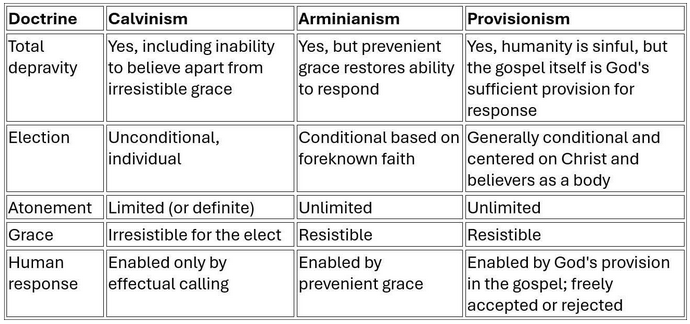


 This is how I describe it on my X ARTICLE to bolster the idea: