God Even Determines Your Prayers | Wayne Grudem & Calvinism

Does the way Jesus teaches prayer fit more naturally with a worldview in which our requests genuinely matter, or with a worldview in which every request and every answer was already unalterably fixed before creation? If every prayer and every answer has already been exhaustively determined, what purpose is served by Jesus spending so much time teaching us how to pray?

The entire SOTERIOLOGY 101 Podcast can be heard HERE. Sot 101’s description:

  • Again we address the impractical implications of Calvinism. This time by unpacking Wayne Grudem’s teaching about the purpose and function of prayer. If God has determined all things then why pray? Does God really respond to us when we pray or is that just an illusion? Let’s dive in.

QUESTIONER – SANDY:

You were so persuasive, Wayne, a few weeks ago that I have become a happy evangelical Calvinist. And so in my mind, this raises the issue of God’s sovereignty. And I wonder if in that illustration on the board, I’m looking at that and I am visually putting a sort of umbrella of God’s transcendent, eternal, immutable sovereignty over all of that. So that, because otherwise, and maybe it’s just my split pea-sized brain not able to understand what you’re saying, but otherwise it sounds like God is vacillating in His intent and plans in response to whether or not we pray. And I doubt that that’s what you’re saying. So tell me now, as a fellow happy, evangelical Calvinist, how God’s transcendent, eternal, immutable sovereignty fits in all.

GRUDEM:

I think God planned before the foundation of the world, I think God planned that Moses would pray and that he would answer. But Moses didn’t know that. Okay? What Moses knew is he’s supposed to pray. I think God planned before the foundation of the world that Amos would pray and that God would answer. But it was still real. I mean, this intercession of Moses is still real. And if you do not have, because you do not ask, that’s true. And asking you will receive. Knock and it will be open. God didn’t set up the world to work in some way that we have to pray for Him to grant things, but He did. And then, yes. In his secret, unchangeable, eternal plan, yes, I think when I look back on all of it, I’ll say that he planned it, but I don’t know that. What I do know is if I pray, he answers, and if I don’t, he won’t.

The central argument can be summarized as:

If God unconditionally decreed both the prayer and the answer, then the prayer cannot be the real cause of the answer in the ordinary sense.

That’s very close to the objection you heard raised against Grudem.

The Moses Problem (Exodus 32)

The commentator makes an interesting point: Grudem says Moses didn’t know the eternal decree. But then Moses’ experience of prayer appears to be more realistic than the Calvinist explanation.

Moses believed:

  • God announced judgment.
  • Moses interceded.
  • God relented.

Exodus presents the narrative exactly that way. The Calvinist explanation becomes:

  • God decreed the announcement.
  • God decreed the intercession.
  • God decreed the relenting.

The question then becomes:

Is the biblical narrative showing what really happened, or is it only describing how it appeared from Moses’ perspective?

Where the Lord’s Prayer Comes In

This is where Calvinists prayer understanding connect:

“Give us this day our daily bread.”

On Grudem’s model:

  • God eternally decreed whether you receive daily bread.
  • God eternally decreed whether you pray for daily bread.
  • God eternally decreed the answer.

The Calvinist answer is:

God ordained prayer as the means.

The non-Calvinist answer is:

The language sounds like a genuine petition affecting a genuinely contingent outcome.

The Lord’s Prayer assumes that God is:

  • Listening.
  • Caring.
  • Responding.
  • Providing.
  • Forgiving.
  • Leading.
  • Delivering.

The entire prayer is relational.

Does the prayer read more naturally as a conversation with a Father who genuinely responds to His children, or as participation in a script whose every line was already fixed before the world began?

Why is the entire prayer structured around requests if requests have no bearing on what occurs? Why teach believers to ask for forgiveness if the granting of forgiveness is already fixed regardless of the request?


THE LORD’S PRAYER


Our Father in heaven,

May Your name be hallowed by those whom You have eternally decreed to hallow it.

May Your kingdom come exactly as You have immutably ordained from before the foundation of the world.

May Your will be done, because it cannot possibly be otherwise.

Give us this day the bread You have already decreed we will receive whether through our asking or not, though You have also decreed that we would ask for it.

Forgive us our debts, because You have already determined from eternity which debts would be forgiven and which sinners would remain under condemnation.

As we forgive our debtors according to the measure of sanctification You have irresistibly produced within us.

Lead us not into the temptations You have eternally ordained for our good and Your glory, though we acknowledge that those temptations cannot fail to occur if You have decreed them.

But deliver us from the evil You have likewise ordained to accomplish Your sovereign purposes.

For Yours is the kingdom, and the power, and the glory, because all things without exception have been decreed by You and come to pass exactly as ordained.

Amen, which You also decreed before the foundation of the world.

GRAPHICS to further elucidate:

Prayer & Calvinism with Ronnie Rogers

Pastor Ronnie Rogers is back with us today to discuss his new book “IF ONLY YOU WOULD ASK: Praying God’s Conditional Promises” This book is a MUST READ for anyone curious, confused, or convinced about Calvinism’s (mistaken) determinism.


R.C. Sproul’s View of Double Predestination (Babies and Hell)

R.C. Sproul’s Statement on Predestination (from Chosen by God):

What predestination means, in its most elementary form, is that our final destination, heaven or hell, is decided by God not only before we get there, but before we are even born. It teaches that our ultimate destiny is in the hands of God. Another way of saying it is this: From all eternity, before we ever live, God decided to save some members of the human race and to let the rest of the human race perish. God made a choice–he chose some individuals to be saved unto everlasting blessedness in heaven and others he chose to pass over, to allow them to follow the consequences of their sins into eternal torment in hell.” (Chosen By God, p.22, emphasis mine)

This is double predestination in practice, even if Sproul calls the active-positive version for reprobation a caricature.

  • If the elect cannot fail to be saved,
  • and the reprobate cannot be saved because God withholds the only grace capable of producing faith,
  • then what practical difference remains between active reprobation and passive reprobation?

Elect infants, dying in infancy, are regenerated, and saved by Christ, through the Spirit, who works when, and where, and how He pleases: so also are all other elect persons who are incapable of being outwardly called by the ministry of the Word.

Westminster Confession of Faith (WCF) 10.3

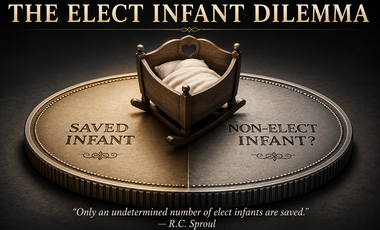
“Holy Spirit can save an infant by changing his heart, giving grace, and applying the merit of Christ to him. The Westminster divines certainly believed that babies can be saved. They did not teach that all infants are necessarily saved; rather, they taught that only an undetermined number of elect infants are saved. Obviously, an elect infant is going to be saved, and any saved infant is elect, but the divines did not speculate on which infants those would be.”

– R.C. Sproul, Truths We Confess: A Systematic Exposition of the Westminster Confession of Faith (Sanford, FL: Reformation Trust, 2019), 321.


Sproul conforms his support for the ideas in the WCF:

One of the most important confessions of faith ever penned, particularly in the English-speaking world, is the Westminster Confession of Faith. By the confession’s own statements, no confession written by uninspired authors is to be taken as having supreme authority over the believer. Confessions cannot bind the conscience in the manner that the Word of God can and does. At the same time, though human confessions and creeds are penned by fallible people without the benefit of the inspiration of the Holy Spirit, the profound level of theological and biblical precision manifest in the Westminster Confession of Faith is awe-inspiring. (Ibid., xvii.)

[….]

The Westminster Confession is the most precise and accurate summary of the content of biblical Christianity ever set forth in a creedal form. Creeds such as the Belgic Confession, the Heidelberg Catechism, and the Scots Confession should be highly regarded, but no historic confession surpasses in eloquence, grandeur, and theological accuracy the Westminster Confession of Faith. (Ibid., xix)


Critiquing the matter via CHAT:

The Internal Tension

Sproul writes:

“The Westminster divines certainly believed that babies can be saved. They did not teach that all infants are necessarily saved; rather, they taught that only an undetermined number of elect infants are saved.”

The immediate question is:

If only elect infants are saved, what happens to non-elect infants?

Historically, Westminster does not explicitly answer that question. Critics argue that the silence is revealing. If the Confession intended to teach universal infant salvation, it could have said:

“All infants dying in infancy are saved.”

Instead it says: “Elect infants.” Sproul defends that wording rather than correcting it.

Critique #1: Election Becomes the Ultimate Divider

Sproul affirms:

  • unconditional election,
  • total inability,
  • monergistic regeneration,
  • and reprobation.

Therefore, infant salvation cannot be based upon:

  • personal faith,
  • conscious belief,
  • repentance,
  • or moral innocence.

It must ultimately rest on election.

Critics respond:

If election alone determines which infants are saved, then election alone determines which infants are not saved.

Thus the question becomes: Why would God elect some infants and not others? Sproul never provides a clear answer.

Critique #2: Original Guilt Creates the Problem

Sproul consistently taught:

  • Adam’s guilt is imputed to humanity,
  • infants are fallen,
  • infants need Christ’s grace.

Critics agree infants need grace but ask:

Does inherited guilt alone make an infant deserving of eternal punishment?

Many opponents argue Scripture consistently ties judgment to:

  • knowledge,
  • personal rebellion,
  • actual transgression.

Examples often cited:

  • Deuteronomy 1:39
  • Isaiah 7:15-16
  • Jonah 4:11
  • Romans 4:15

The criticism is:

Sproul imports Augustine’s doctrine of inherited guilt and then must wrestle with implications Augustine himself embraced.

Critique #3: The Moral Character of God

This is probably the most emotionally and philosophically powerful objection.

If:

  • an infant never consciously sins,
  • never rejects God,
  • never suppresses truth,
  • never commits personal acts of rebellion,

Yet could still be damned, Critics ask:

What meaningful sense of justice remains?

This is where many critics invoke the same concern raised by Juncker regarding determinism:

If moral categories are detached from personal responsibility, words like justice become difficult to understand.

FULLER QUOTE:

“If determinism is true then either God is evil and the author of evil or all talk of good and evil, of praise and blame, of moral responsibility, and of justice is meaningless and incomprehensible with reference to God. That is, if God can cause or determine evil and yet remain good, and if God can punish those who do exactly and only what He has meticulously caused and determined them to do and yet remain just, then we have no idea who God is or what He might or might not do or what Scripture could possibly mean when it calls Him ‘good’ and ‘just.'”

— Günther H. Juncker, “The Dilemma of Theistic Determinism

The objection becomes:

Eternal punishment without personal rebellion appears inconsistent with ordinary moral reasoning and the biblical portrayal of God’s fairness.

Critique #4: Westminster Creates an Unnecessary Problem

Many critics argue Westminster itself created the issue. The Confession says:

“Elect infants.”

Critics ask why not simply say:

“Infants dying in infancy are saved through Christ”?

Mohler, Warfield, and Spurgeon essentially move in that direction. Sproul, however, insists the Westminster divines intentionally did not teach universal infant salvation. Critics argue:

That commitment to confessional precision ends up preserving a theological possibility that Scripture never explicitly teaches.

Critique #5: Sproul’s Loyalty to Westminster

This critique becomes stronger when paired with Sproul’s own statements:

“The Westminster Confession is the most precise and accurate summary of the content of biblical Christianity ever set forth in a creedal form.”

and

“One of the most important confessions of faith ever penned…”

Because Sproul viewed Westminster so highly, critics argue he was reluctant to depart from its language regarding elect infants even when later Reformed theologians moved toward affirming universal infant salvation.

The Strongest One-Sentence Critique

The strongest critique is probably this:

By affirming unconditional election, inherited guilt, and Westminster’s doctrine of “elect infants,” Sproul leaves open the possibility that some infants are not elect and therefore not saved, a conclusion many critics believe is inconsistent with both the justice and goodness of God as revealed in Scripture.

Exhaustive Determinism:

Sproul affirms that God ordains whatsoever comes to pass (echoing Westminster):

He knows all things that will happen because he ordains everything that does happen. This is crucial to our understanding of God’s omniscience. He does not know what will happen by virtue of exceedingly good guesswork about future events. He knows it with certainty because he has decreed it.

The Westminster Confession avers: “God from all eternity, did, by the most wise and holy counsel of His own will, freely, and unchangeably ordain whatsoever comes to pass. . . .

This statement refers to God’s eternal and immutable decretive will. It applies to everything that happens. Does this mean that everything that happens is the will of God? Yes. Augustine qualified this answer by adding the words, “in a certain sense.” That is, God ordains “in some sense” everything that happens. Nothing that takes place is beyond the scope of his sovereign will. The movement of every molecule, the actions of every plant, the falling of every star, the choices of every volitional creature, all of these are subject to his sovereign will. No maverick molecules run loose in the universe, beyond the control of the Creator. If one such molecule existed, it could be the critical fly in the eternal ointment. As one grain of sand in the kidney of Oliver Cromwell changed the course of English history, so one maverick molecule could destroy every promise God has ever made about the outcome of history.

What Is Reformed Theology, p. 172

Sproul’s view functionally equivalent to Calvin’s broader decretive will, even if he rejects “equal ultimacy” (symmetrical positive-positive reprobation where God actively works sin in the reprobate the same way He works faith in the elect). Sproul’s inconsistency is “too embarrassed to follow Calvinism to its logical extreme” and pleading ignorance/mystery on hard questions (e.g., the fall of Adam/Eve).

Calvin (Institutes 3.21.5): Explicitly symmetric language —

“some are preordained to eternal life, others to eternal damnation… created for one or the other of these ends.”

Sproul: Rejects the symmetrical mode (equal ultimacy / positive-positive) as sub-Calvinist or a caricature that makes God the author of sin. He prefers asymmetric (positive election + negative reprobation/preterition: God passes over the non-elect, leaving them in their sin). Yet critics [like myself] argue this is rhetorical softening — because Sproul still affirms:

  • God’s decree covers all events.
  • Reprobation is part of the eternal decree before creation.
  • The non-elect are chosen to be passed over before birth.

Sproul’s distinctions, while rhetorically softer than Calvin’s, do not ultimately escape the force of double predestination or exhaustive determinism.

… The issue here seems to be how one defines “ordains” or “foreordains.” Calvinists I debate on the internet consistently argue that “ordain” means to decree. I ask them, “Did God decree the Holocaust?” “Did God decree the killing fields of Cambodia?” “Did God decree every act of rape, torture and murder that has ever taken place?” And they say yes! Unbelievable.

What about Calvin on this issue? You deny he was supralapsarian, claiming God’s positive-positive, double-predestination, but excerpts from his writings strongly suggest that was his position. Calvin was quite straightforward on saying God decreed the Fall, writing:

whence does it happen that Adam’s fall irremediably involved so many peoples, together with their infant offspring, in eternal death unless because it so pleased God?…The decree is dreadful indeed, I confess. Yet no one can deny that God foreknew what end man was to have before he created him, and consequently foreknew because he so ordained by his decree…God not only foresaw the fall of the first man, and in him the ruin of his descendants, but also meted it out in accordance with his own decision.” (Institutes of the Christian Religion, 3.23.7)

That seems to go beyond mere “permission.” He also wrote:

The predestination by which God adopts some to the hope of life, and adjudges others to eternal death, no man who would be thought pious ventures simply to deny….By predestination we mean the eternal decree of God, by which he determined with himself whatever he wished to happen with regard to every man. All are not created on equal terms, but some are preordained to eternal life, others to eternal damnation; and, accordingly, as each has been created for one or other of these ends, we say that he has been predestinated to life or to death (Institutes of the Christian Religion 3.21.5).

We also read:

From this it is easy to conclude how foolish and frail is the support of divine justice afforded by the suggestion that evils come to be not by [God’s] will, but merely by his permission. Of course, so far as they are evils, which men perpetrate with their evil mind, as I shall show in greater detail shortly, I admit that they are not pleasing to God. But it is a quite frivolous refuge to say that God otiosely [= idly] permits them, when Scripture shows Him not only willing but the author of them…Who does not tremble at these judgments with which God works in the hearts of even the wicked whatever He will, rewarding them nonetheless according to desert. Again, it is quite clear from the evidence of Scripture that God works in the hearts of men to incline their will just as he will, whether to good for his mercy’s sake, or to evil according to their merits.” (Concerning the Eternal Predestination of God, 177)

Other famous Calvinists say, for example,

“The Sovereignty of God over all, and his independency, clearly shew, that whatever is done in time is according to his decrees in eternity.” (John Gill, A Body of Doctrinal and Practical Divinity, p. 173)

Or

“As a builder draws his plan before he begins to build, so the great Architect predestined everything before a single creature was called into existence.” (Arthur Pink, The Doctrines of Election and Justification, p.9)

Or

“Surely if God had not willed the fall, He could, and no doubt would, have prevented it; but he did not prevent it: ergo, He willed it. And if He willed it, He certainly decreed it.” (Jerome Zanchius, The Doctrine of Absolute Predestination, p. 88)

So, by claiming supralapsarianism is “anti-Calvinism,” you are dismissing not only prominent Calvinists from the past, but also Calvin himself. …

(JOHN WAGNER letter to R.C. SPROUL)

Jerry Walls’s observation at this point is apt:

    • [T]heological compatibilists [RPT: like Grudem, Sproul, MacArthur, and the like] often make claims and engage in rhetoric that naturally lead people to conclude that God loves them and desires their salvation in ways that are surely misleading to all but those trained in the subtleties of Reformed rhetoric. . . . Such language loses all meaning, not to mention all rhetorical force, when we remember that on compatibilist premises God could determine the impenitent to freely repent, but has chosen instead to determine things in such a way that they freely persist in their sins.

Why No Classical Theist – Let Alone Orthodox Christian – Should Ever Be a Compatibilist (PDF)

God’s refusal to determine the repentance of sinners when it is within his power to do so can be called nothing other than immoral. Damning certain people by withholding something freely given to others is not glorious.

MORE: Is Double Predestination and Active Reprobation, Equal Ultimacy? (good critique of Sproul)

Sproul and Calvin say it is indeed a horrible decree. Sproul’s honesty at this point would be refreshing if his conclusions weren’t so disturbing:

  • “The nasty problem for the Calvinist [is] . . . . If God can and does choose to insure the salvation of some, why then does he not insure the salvation of all? . . . The only answer I can give to this question is that I don’t know. . . . One thing I do know. If it pleases God to save some and not all, there is nothing wrong with that.” On the contrary, it is the very definition of wrong.” (Fuller Quote)

Here is Sproul’s chapter 58 from his book, Essential Truths of the Christian Faith, I will add some emphasis:

PREDESTINATION AND REPROBATION

Every coin has a flip side. There is also a flip side to the doctrine of election. Election refers to only one aspect of the broader question of predestination. The other side of the coin is the question of reprobation.

God declared that He loved Jacob but hated Esau. How are we to understand this reference to divine hatred?

Predestination is double. The only way to avoid the doctrine of double predestination is to either affirm that God predestinates everybody to election or that He predestinates no one to either election or reprobation.

Since the Bible clearly teaches predestination to election and denies universal salvation, we must conclude that predestination is double. It includes both election and reprobation. Double predestination is unavoidable if we take Scripture seriously. What is crucial, however, is how double predestination is understood.

Some have viewed double predestination as a matter of equal causation, where God is equally responsible for causing the reprobate not to believe as He is for causing the elect to believe. We call this a positive-positive view of predestination.

The positive-positive view of predestination teaches that God positively and actively intervenes in the lives of the elect to work grace in their hearts and bring them to faith. Likewise, in the case of the reprobates, He works evil in the hearts of the reprobate and actively prevents them from coming to faith. This view has often been called “hyper-Calvinism” because it goes beyond the view of Calvin, Luther, and the other Reformers.

The Reformed view of double predestination follows a positive-negative schema. In the case of the elect, God intervenes to positively and actively work grace in their souls and bring them to saving faith. He unilaterally regenerates the elect and insures their salvation. In the case of the reprobate He does not work evil in them or prevent them from coming to faith. Rather, He passes over them, leaving them to their own sinful devices. In this view there is no symmetry of divine action. God’s activity is asymmetrical between the elect and the reprobate. There is, however, a kind of equal ultimacy. The reprobate, who are passed over by God, are ultimately doomed, and their damnation is as certain and sure as the ultimate salvation of the elect.

The problem is linked to biblical statements such as those regarding God’s hardening of Pharaoh’s heart. That the Bible says God hardened Pharaoh’s heart is beyond dispute. The question remains, how did God harden Pharaoh? Luther argued for a passive rather than an active hardening. That is, God did not create fresh evil in Pharaoh’s heart. There was already enough evil present in Pharaoh’s heart to incline him to resist the will of God at every turn. All God ever has to do to harden anybody is to remove His restraining grace from them and give them over to their own evil impulses. This is precisely what God does to the damned in hell. He abandons them to their own wickedness.

In what sense did God “hate” Esau? Two different explanations are offered to solve this problem. The first explains it by defining hate not as a negative passion directed toward Esau but as simply the absence of redemptive love. That God “loved” Jacob simply means that He made Jacob the recipient of His unmerited grace. He gave Jacob a benefit that Jacob did not deserve. Esau did not receive the same benefit and in that sense was hated by God.

The first explanation sounds a bit like special pleading to get God off the hook for hating somebody. The second explanation gives more strength to the word hate. It says simply that God did in fact hate Esau. Esau was odious in the sight of God. There was nothing in Esau for God to love.

Esau was a vessel fit for destruction and altogether worthy of God’s wrath and holy hatred. Let the reader decide.

Summary

  1. Predestination is double; it has two sides to it.
  2. Some teach that God is equally responsible for election and reprobation. This is characteristic of hyper-Calvinism.
  3. The Reformed view of double predestination reflects a positive-negative schema.
  4. God passively, not actively, hardened Pharaoh’s heart.
  5. God hated Esau in the sense of failing to give him a blessing of grace or in the sense of abhorring him as a vessel fit for destruction.

Biblical passages for reflection:

Exodus 7:1-5
Proverbs 16:4
Romans 9
Ephesians 1:3-6
Jude 1:4

In other words, as The Encyclopedia of The Reformed Faith (page 144), and later the The Westminster Handbook to Reformed Theology (page 87) clearly says:

  • Reformed approach to divine freedom is nowhere more apparent than in the doc­trine of the eternal decrees: God freely wills the existence and preservation of the created order and freely determines the eternal destiny of all creatures, solely on the ground of God’s goodness and solely for the sake of God’s ultimate glory. In creation and providence, God encounters no barriers to the exercise of God’s will, and in the work of redemp­tion God acts utterly graciously, apart from any merit belonging to the creature. (Emphasis added.)

JOHN 6:44

Steve Lemke

R. C. Sproul argued at great length that John 6:44 (“No one can come to Me unless the Father who sent Me draws him” [HCSB]) does not refer merely to the necessity that God “woo or entice men to Christ,” such that humans can “resist this wooing” and “refuse the enticement.”11 In philosophical language, Sproul said, this wooing is a necessary but not sufficient condition for salvation “because the wooing does not, in fact, guarantee that we will come to Christ.”12 Sproul stated that such an interpretation is “incorrect” and “does violence to the text of Scripture.”13

Instead, Sproul insists, the term “draw” is “a much more forceful concept than to woo” and means “to compel by irresistible superiority.”14 However, in discussing irresistible grace, Sproul tells of a student who, hearing a lecture on predestination by John Gerstner, rejected it. When Gerstner asked the student how he defined Calvinism, the student described it as the perspective that “God forces some people to choose Christ and prevents other people from choosing Christ.” Gerstner then said, “If that is what a Calvinist is, then you can be sure that I am not a Calvinist either.”15 What is the difference between compelling “by irresistible superiority” and “forcing” people to do something? Sproul likewise chastised a Presbyterian seminary president for rejecting the Calvinist doctrine that “God brings some people, kicking and screaming against their wills, into the kingdom.” Sproul described this Presbyterian theologian’s view as “a gross misconception of his own church’s theology,” as a “caricature,” and “as far away from Calvinism as one could possibly get.”16 So which way is it? If God compels people with “irresistible superiority,” in what way is it inaccurate to say that God forces people to choose Christ? The Synod of Dort insisted that such attempts at moral persuasion of unsaved persons was wasted time. The irresistibility of God’s grace (and not merely the use of strong moral persuasion) was precisely what the Synod of Dort rejected and the Remonstrants affirmed. While the Remonstrants affirmed that the compelling grace of God persuades the lost to receive Christ as Lord and Savior, the Synod of Dort insisted that this was not going far enough. Note their explicit denial that a person can “resist” God. The language used in the Synod of Dort describes God’s omnipotence as being such that God can “potently and infallibly bend man’s will to faith and conversion.”17

Bending the will of a fallible being by an omnipotent Being powerfully and unfailingly is not merely sweet persuasion. It is forcing one to change one’s mind against one’s will. Calvinists often describe their position as monergism as opposed to synergism. In monergism, God works entirely alone, apart from any human role.18

11. Sproul, Chosen by God, 69–70 (see chap. 1, n. 106).
12. Sproul, 69.
13. Sproul, 69.
14. Sproul, 69.
15. Sproul, 122.
16. Sproul, 122.
17. Dennison, Reformed Confessions, 4:143 (III–IV, Rejection of Errors, par. 8).

John Wagner’s Letter to Sproul

Let me deal next with the issue of your concept and use of the Greek word helkō, commonly translated “draws” in John 6:44. Even if you reject everything else I write here, please accept this one. You really did not get this right. And Calvinists who have read CBG have passed on this incorrect information. You quoted Kittel’s Theological Dictionary of the New Testament, and claim because that word means “drag” or “compel” in a physical context such as Acts 16:19 and James 2:6, that therefore it means “drag” or “compel” in the spiritual context of John 6:44.

The evidence indicates it doesn’t. I assume you are aware that a Greek word can have more than one meaning. I looked at Kittel and I see for helkō in regard to John (i.e. 6:44, 12:32) it means, “a beneficent ‘drawing of God…of drawing to oneself in love. This usage is distinctively developed by Jn., perhaps with some influence of Gnosticism. Force or magic may be discounted, but not the supernatural element.” The abridged version of Kittel says, “There is no thought here of force or magic. The term figuratively expresses the supernatural power of the love of God or Christ which goes out to all (12:32) but without which no one can come.”

Did you get that? Both summaries dismiss force, which would be consistent with “drag” or “compel” (though I agree that would be accurate when the word is used in a physical context). Just wondering why you didn’t mention that! Let’s put your position to rest with more citations:

  1. BDAG: has helkō in John 6:44 as “draw, attract.”
  2. Analytical Lexicon to the Greek New Testament by William Mounce says helkō means “to draw mentally and morally, John 6:44; 12:32.”
  3. The Hebrew-Greek Key Study Bible by Calvinist Spiro Zodhiates: “Helko is used of Jesus on the cross drawing by love, not force” (Jn. 6:44; 12:32).
  4. A Critical Lexicon and Concordance to the English and Greek New Testament by Ethelbert W. Bullinger, p. 235: Helko means “to draw, esp. implying a certain attraction mentally or morally; also to draw to a certain point.” This source also mentions surō as a word more consistent with how Calvinists interpret helkō. Surō generally implies a violent dragging. This source defines it as “to draw, drag or trail along as a net; esp. with the notion of force and sometimes with violence.”
  5. The Renaissance New Testament by Randolph Yeager, says about helkō:

It does not necessarily involve coercion, though it does involve persuasion and motivation–John 6:44; 12:32…. [Helkō] does not imply coercion in the two places where it is applied to the elect [the two just-mentioned verses]. Swords, fish nets and political prisoners (John 18:10; 21:6, 11: Acts 16:19) may resist, but the element of resistance is not implicit in the word itself….

  1. Greek and English Lexicon of the New Testament by Edward Robinson, say helkō means “to draw by a moral influence, John 6:44, 12:32.”

Please notice that none of these sources indicate that helkō means drag or compel in John 6:44. And your version is especially problematic for John 12:32. Do you believe God drags all men to himself? So it’s kind of funny that the Arminian professor you debated didn’t need to cite some “obscure Greek poet.” The info is clear in many lexicons and similar sources. And by the way, contrary to what you experienced, in the formal 1999 debate I was in against a Calvinist pastor, he repeated your argument on helkō and I nailed him on this point.

And that ties into the issue of the nature of unsaved man. You write, “If a person who is still in the flesh, who is not reborn by the power of the Holy Spirit, can incline or dispose himself to Christ, what good is rebirth?” This is another strawman. Classical Arminians do not believe man can “incline or dispose himself ” all by himself. Arminius wrote strongly of man being depraved and dead and that man needs the heavy convicting and drawing of the Holy Spirit. However, he completely rejected irresistible grace, the biggest oxymoron I can think of. And as for rebirth, that comes after faith, not before.

You slightly acknowledge the idea of prevenient grace and then ask “If so, where” does the Bible teach this concept? Did you even make any effort toward finding an answer for this? Well, John 6:44, which I have proven is not about “dragging,” is one. Furthermore, let’s recall John 16:8, saying that the paraclete “will convict the world of guilt in regard to sin and righteousness and judgment in regard to sin because men do not believe in me.”

The Greek for “convict” is elenchō, and has the connotation of a trial attorney making a legal and moral argument to a jury. In this case, the Holy Spirit conducts that function in the human heart—but not in irresistible manner. Other verses include John 1:9: “The true light that gives light to every man was coming into the world.” Also, John 12:32, in which Christ says, “When I am lifted up from the earth. I will draw (helkō) all men to myself.” But this is also not irresistible.

Describing prevenient grace, Thomas C. Oden writes:

Prevenient grace antecedes human responsiveness so as to prepare the soul for the effective hearing of the redeeming Word. This preceding grace draws persons closer to God, lessens their blindness to divine remedies, strengthens their will to accept revealed truth, and enables repentance. Only when sinners are assisted by prevenient grace can they begin to yield their hearts to cooperation with subsequent forms of grace….

Does scripture teach the concept of prevenient grace? There is no one passage that lays out a systematic definition of it, however, the concept becomes apparent throughout the overall tenor of scripture. Here are some passages that refer to the different aspects of prevenient grace:

Prevenient Grace Draws:

John 6:44 No one can come to me unless the Father who sent me draws him, and I will raise him up at the last day.

John 12:32 And I, if I am lifted up from the earth, will draw all men to Myself. Prevenient Grace is Universal:

Titus 2:11 For the grace of God that brings salvation has appeared to all men. John 1:9 The true light that gives light to every man was coming into the world.

John 16:7-8 But I tell you the truth: It is for your good that I am going away. Unless I go away, the Counselor will not come to you; but if I go, I will send him to you. When he comes, he will convict the world of guilt in regard to sin and righteousness and judgment:

Romans 1:18-19 The wrath of God is being revealed from heaven against all the godlessness and wickedness of men who suppress the truth by their wickedness, since what may be known about God is plain to them, because God has made it plain to them.

Prevenient Grace Convicts the Non-Believer:

Acts 16:14 One of those listening was a woman named Lydia, a dealer in purple cloth from the city of Thyatira, who was a worshiper of God. The Lord opened her heart to respond to Paul’s message.

Acts 16:29-30 The jailer called for lights, rushed in and fell trembling before Paul and Silas. He then brought them out and asked, “Sirs, what must I do to be saved?”

Prevenient Grace Works in Combination with the Hearing of the Word:

Acts 2:37 When the people heard this, they were cut to the heart and said to Peter and the other apostles, “Brothers, what shall we do?”

Romans 10:17 Consequently, faith comes from hearing the message, and the message is heard through the word of Christ.

Prevenient Grace is Given Generously:

Romans 8:32 He who did not spare His own Son, but delivered Him over for us all, how will He not also with Him freely give us all things?

Romans 2:4 Or do you think lightly of the riches of His kindness and tolerance and patience, not knowing that the kindness of God leads you to repentance?

Acts 17:26-27 From one man he made every nation of men, that they should inhabit the whole earth; and he determined the times set for them and the exact places where they should live. God did this so that men would seek him and perhaps reach out for him and find him, though he is not far from each one of us.

Prevenient Grace Can be Rejected:

Matt. 23:37 O Jerusalem, Jerusalem, you who kill the prophets and stone those sent to you, how often I have longed to gather your children together, as a hen gathers her chicks under her wings, but you were not willing.

John 5:34,39,40 Not that I accept human testimony; but I mention it that you may be saved…You diligently study the Scriptures because you think that by them you possess eternal life. These are the Scriptures that testify about me, yet you refuse to come to me to have life.

Acts 7:51 You stiff-necked people, with uncircumcised hearts and ears! You are just like your fathers: You always resist the Holy Spirit!

Heb 4:2 For we also have had the gospel preached to us, just as they did; but the message they heard was of no value to them, because those who heard did not combine it with faith.

Heb 10:29 How much more severely do you think a man deserves to be punished who has trampled the Son of God under foot, who has treated as an unholy thing the blood of the covenant that sanctified him, and who has insulted the Spirit of grace?

Prevenient Grace Results in Saving Grace when it is Accepted:

Ephesians 5:14 For it is light that makes everything visible. This is why it is said: “Wake up, O sleeper, rise from the dead, and Christ will shine on you.”

Ephesians 2:8-9 For it is by grace you have been saved, through faith—and this not from yourselves, it is the gift of God— not by works, so that no one can boast.

There are actually three very good books on this issue of prevenient grace: The Transforming Power of Grace by Thomas C. Oden, Prevenient Grace by W. Brian Shelton, and Streams of Mercy by J. Gregory Crofford.

BTW, I prefer pastor Rogers understanding vs a straight Arminian:

  • Within the Non-Calvinist camp, there are at least two nuanced views on how God allows sinners to respond in faith. The first view is the Arminian view — which says that God’s work of grace (prevenient grace) for all people is needed to enable any sinner to freely choose to respond in faith to the Gospel message. The second view is the Provisionist View — which says that the Gospel message itself [see more below]  is God’s work of grace so that when it is preached to all people, any sinner can freely choose to respond in faith. The proclamation of the Gospel is powerfully sufficient enough to bring salvation to those who will believe. While the Arminian and the Provisionist each have a different take on why all humans can respond to God’s offer, these two views both affirm the importance of God’s initiative of grace to invite all sinners to salvation. (from the book Grace For All: Understanding God’s Plan of Salvation).

Michael R. Cariño

The “More Below”

Grace Enablements

Includes but are not limited to: God’s salvific love for all (John 3:16), God’s manifestation of his power so that all may know he is the Sovereign (Isa 45:21–22) and Creator (Rom 1:18–20), which assures that everyone has opportunity to know about him. Christ paying for all sins (John 1:29), conviction of the Holy Spirit (John 16:7–11), working of the Holy Spirit (Heb 6:1–6), enlightening of the Son (John 1:9), God’s teaching (John 6:45), God opening minds and hearts (Luke 24:45; Acts 16:14; 26:17–18;), and the power of the gospel (Rom 1:16), without such redemptive grace, no one seeks or comes to God (Rom 3:11).

Because of these gracious provisions and workings of God, man can choose to seek and find God (Jer 29:13; Acts 17:11–12). Moreover, no one can come to God without God calling (Acts 2:39), drawing (John 6:44), and that God is drawing all individuals (John 12:32). The same Greek word for draw, helkuō, is used in both verses. “About 115 passages condition salvation on believing alone, and about 35 simply on faith.” Other grace enablements may include providential workings in and through other people, situations, and timing or circumstances that are a part of grace to provide an opportunity for every individual to choose to follow Christ.

These are grace enablements in at least three ways; first, they are provided by God’s grace rather than deserved by mankind; second, the necessary components for each and every individual to have a genuine opportunity to believe unto salvation are provided or restored by God; third, they are provided by God without respect to whether the individual will believe or reject, which response God knew in eternity past.

The offer of the gospel is unconditional, but God sovereignly determined to condition the reception of the offer upon grace-enabled faith; therefore, faith is not reflective of a work or virtue of man, but of God’s sovereign plan of salvation by grace through faith (Eph 2:8). This indicates faith is the means to being regenerated and saved, not the reason for being saved. This truth of Scripture does not imply God is held captive to the choice of man, but rather it demonstrates God in eternity coextensively determined to create man with otherwise choice and provide a genuine offer of salvation, which can be accepted by grace-enabled faith or rejected. Additionally, to fulfill this plan, God is not obligated to disseminate the gospel to people he knows have rejected the light he has given them (Rom 1:18–23) and will also reject the gospel; although he may still send the gospel to them.

Sproul continues his thinking is an audio message I have audio of here. In it he says:

Augustine said, I still, in my fallenness, have the ability to choose what I want, but in my heart there’s no desire for God. I have lost any desire for the things of God. If I’m left to myself, the desires of my heart are only wicked continuously. My heart and my soul are dead to the things of God.

I can listen to preaching, I can hear hymns, I can see — I can do all those things and see other people weeping and in ecstasy and all moved by all kinds of religious overtones and consideration.

It leaves me cold.

My heart has calluses on it. It’s recalcitrant.

My neck is stiff.

I’m not moved by anything that has anything to do with God. That’s our natural state. The Bible says that we are dead to the things of God in our fallen condition. Original sin deadens the soul to the things of God.

God so loved the world, He gave His only begotten Son, that whosoever believeth should not perish, but have everlasting life. And I have people quote that to me, to say man is not fallen to such a degree that he’s lost his power to choose Christ, because that verse says that whosoever believeth will not perish, but have everlasting life.

Now, what does that verse teach us about the extent of the fall of man? Absolutely nothing. It doesn’t say who will believe in Christ. All it says is, if you do A, if you believe, you will not perish, and you will have everlasting — you will live forever.

But the question still is left, Why does one person believe and another person not believe?

Augustine said, Now, you’re dead in your sins and trespasses. You don’t have any desire for Christ, and the only way you will ever choose Christ is if God melts your heart, if God softens that stone-cold, recalcitrant heart, if God the Holy Spirit rapes your soul and puts in you a desire for Christ.

That’s what has to happen.

According to Augustine.

And many try to do away with this control of God through what is called “compatibilism”, but as MacArthur notes, this is fictitious in the end:


In order to understand this better theologians have come up with the term “compatibilism” to describe the concurrence of God’s sovereignty and man’s responsibility. Compatibilism is a form of determinism, and it should be noted that this position is no less deterministic than hard determinism.

John Hendryx (John Hendryx is the creator and editor of Monergism . com)

And then this is John MacArthur:

So free will trumps evil on God’s value scale, so God had to allow for the possibility of evil in order to protect the more highly prized autonomy; and He had to protect autonomy to protect Himself from this bad press, being responsible for evil. Humans then must have self-determination, freedom to act. If God acted as the primary cause and humans only as a secondary cause moved by the primary cause, then God being the primary cause is responsible; and people are not free, and therefore God decided and God compelled and God coerced, and God actually overturned human will. Then God is responsible for all the evil and all the divine judgment and the determination of eternal punishment. This is a God that some people just can’t live with; they’ve got to get Him off the hook.

(See video to add to the above and Grace To You)

This passage is John MacArthur directly describing (and strongly rejecting) the popular “free will defense” theodicy. He uses it to contrast with his own high Calvinist / compatibilist view of God’s sovereignty.

Some AI convo:

Yes. If we define determinism as:

Every human choice is ultimately rendered certain by God’s decree and providential causation, such that no person could ultimately do otherwise than what God ordained,

then John MacArthur is unquestionably on the deterministic side of the spectrum.

The important thing is that MacArthur would almost certainly reject the label “fatalist”, and he would likely prefer “compatibilist” or “Reformed”, but philosophically speaking, compatibilism is a species of determinism. Hendryx is correct on that point.

The key question is:

Does MacArthur believe humans possess libertarian freedom (the ability to choose A or not-A under identical circumstances)?

The answer is no.


The MacArthur Quote You Posted

The fascinating thing about that quotation is that MacArthur is not denying determinism.

He is describing what he believes his opponents fear determinism entails.

Notice the structure:

“If God acted as the primary cause

“If God compelled

“If God actually overturned human will

“Then God is responsible

MacArthur is setting up the objection.

The question becomes:

Does MacArthur believe God does these things?

Elsewhere he clearly teaches:

  • Total inability
  • Unconditional election
  • Irresistible grace
  • Monergistic regeneration
  • God’s exhaustive sovereignty

Those doctrines require that God determine who will believe.


Compare MacArthur to Sproul

Sproul says:

“The only way you will ever choose Christ is if God melts your heart.”

Then he quotes Augustine:

“God the Holy Spirit rapes your soul and puts in you a desire for Christ.”

Sproul is being more explicit.

MacArthur teaches the same monergistic regeneration, but usually with softer language.

Both affirm:

  • Fallen man cannot come.
  • God must first regenerate.
  • Regeneration guarantees faith.
  • Those not regenerated remain unable.

That is deterministic in the relevant philosophical sense.


The Real Tell: MacArthur on Election

MacArthur repeatedly teaches:

  • God chose the elect before creation.
  • The elect will certainly come.
  • The non-elect will not come.
  • Faith itself is a gift from God.

Once those propositions are accepted, the outcome is fixed.

That is why Hendryx says:

“Compatibilism is a form of determinism.”

Because the certainty of the outcome remains intact.


The Important Distinction

A lot of Calvinists hear:

“determinism”

and immediately think:

“atheistic hard determinism.”

But philosophers don’t define determinism that way.

Determinism simply means:

Given the causes and conditions, only one outcome is possible.

MacArthur’s theology appears to satisfy that definition.


Why Your Argument Finds Tension Here

What’s interesting is that the quotation you cited almost sounds like MacArthur is describing your objection:

If God is the primary cause and humans are merely secondary causes moved by Him, then God becomes responsible.

The difficulty is that Calvin, Sproul, Piper, and many Reformed theologians frequently describe God as:

  • determining wills,
  • inclining hearts,
  • ordaining evil events,
  • governing every detail,
  • and ensuring outcomes.

So critics ask:

If God determines the desires, determines the will, determines the outcome, and determines who receives regenerating grace, how is He not functioning as the primary determining cause?

That is the exact issue your series has been exploring.


In Short

If by determinism you mean:

Human choices are rendered certain by God’s eternal decree and providential governance, with no ultimate ability to do otherwise,

then:

  • Calvin = Determinist
  • Edwards = Determinist
  • Sproul = Determinist
  • Piper = Determinist
  • MacArthur = Determinist
  • Hendryx explicitly admits compatibilism is determinism

The real debate is not whether these men are deterministic.

The real debate is whether compatibilist determinism can preserve meaningful moral responsibility, justice, and divine goodness.

That’s where the battle shifts from historical theology into philosophy.

This video is long, but has turned into one of my favorites!

Calvinist’s Fatal Flaw: Guilty Babies

Dr. Leighton Flowers plays a clip from Jeremiah Notier, aka The Apologetic Dog, in which he accuses Dr. Flowers of being a “Pelagian” because I do not affirm the concept that all babies are born guilty and deserving of Hell.


Saved by Grace Through Faith or Saved by Decree? (Chapter 1)

This is an excerpt from Geoffrey D. Robinson’s book, Saved by Grace Through Faith or Saved by Decree? A Biblical and Theological Critique of Calvinist Soteriology (Eugene, OR: Wipf and Stock, 2022), pages 1-19.

Chapter 1

A Brief History of the Doctrine of Salvation

(The PDF includes the INTRODUCTION)

The history outlined below focuses on those aspects of salvation denoted by TULIP. There are other aspects of salvation that will not be included such as justification, sanctification, and adoption into the family of God. While undoubtedly Christians differ on their understanding of these aspects of salvation also, the differences are not pivotal in the same way as TULIP.

The Early Church1

The early church fathers tended to stress the role of human free will in decision-making in general, and in responding to the gospel call specifically. This emphasis was, at least in part, due to the prevailing philosophies and worldviews of the day that emphasized fatalism and absolute, impersonal determinism.2 “For Origen, as for all the early fathers, freedom was vital as the antithesis of fate or necessity.”3

Of course, the early church’s theologians recognized the references to predestination in the Christian Scriptures, especially in Paul’s writings, and understood predestination to salvation to be based on God’s foreknowledge of how people would respond to the gospel call; those who responded favorably (by exercising faith and repenting of their sins) were predestined to salvation. Justin Martyr (d. AD 163) for example, held that “the people foreknown to believe in [Christ] were foreknown to pursue diligently the fear of the Lord.”4 However predestination was understood, there was the general conviction that it would not entail the overruling of human choice in the matter of salvation.

At this early stage of doctrinal development, the view that subsequently came to be known as synergism—the idea that God and man cooperate in the appropriation of God’s gift of salvation—was naturally dominant. Clement of Alexandria (150-215) is a good example:

And as the physician ministers health to those who co-operate with him in order to health, so also God ministers eternal salvation to those who co-operate for the attainment of knowledge and good conduct; and since what the commandments command are in our own power, along with the performance of them, the promise is accomplished.5

This state of affairs was radically changed around 410 when Pelagius, a British monk and Christian moralist who was distressed by the lax moral conditions prevailing at Rome in his day, took offense at a prayer of Augustine, Bishop of Hippo, in which the latter stated: “Give what thou commandest and command what thou wilt.”6 He believed Augustine’s prayer would lead to a resignation to sin. If God’s grace was such that only God could give what God commanded then this raised the question as to the role of man’s responsibility for his behavior in moral affairs. For Pelagius moral responsibility implied moral ability. If Augustine was right, what room was there for human choices and moral responsibility?

Pelagius opposed the sentiment that a given moral responsibility is “too hard and difficult. We cannot do it. We are only human and hindered by the weakness of the flesh.”7 Such an outlook, argued Pelagius, implied God was unaware of the weaknesses of men in giving commands that men could not consistently fulfill. Also, God was not so unjust as to condemn a man for what he could not help.

With respect to the question of human freedom, Pelagius argued that three elements exist: (1) the possibility to make moral decisions (posse in Latin), (2) the will to make moral decisions (velle), and (3) the capacity to effect or realize the moral decision (esse).8 The first (the possibility) may be ascribed to God and associated with man’s creation by God, the other two elements (will and capacity) he attributed to the human agent. Consequently,

man’s praise lies in his willing and doing a good work; or rather this praise belongs both to man and to God who has granted the possibility of willing and working, and who by the help of his grace, ever assists this very possibility. That a man has this possibility of willing and effecting is due to God alone.9

In addition to ascribing to man significant capacity to do the moral good, Pelagius also denied the view concerning the origin of man’s sinfulness, namely original sin.10 “Everything good and everything evil in respect of which we are either worthy of praise or of blame, is done by us, not born with us.”11

Finally, for our purposes here, Pelagius and his disciple Coelestius also taught the following: (1) that a person can be without sin if he chooses, and (2) that unbaptized infants have eternal life.12 (3) God’s grace is manifested (a) in providing a revelation of his will in the Bible and in (b) forgiving those who repent of their sin. (4) Predestination to salvation was based upon God’s foreknowledge (prescience) of those who would respond favorably to God’s grace of forgiveness and thereby be saved.

Through his writings and his interactions with Augustine, Pelagius raised key issues concerning the doctrine of salvation that reverberated down the centuries to this day. The origin and extent of sin, the origin of the soul, the relationship between grace and human moral freedom, the extent of a person’s ability to do moral good, the nature of grace itself, the basis and nature of God’s predestination, and ultimately the nature of divine sovereignty. Most fundamentally, is salvation monergistic (all of God in every respect) or synergistic (aspects uniquely of God and also aspects that require man’s cooperation)?

Augustine strongly opposed Pelagius. Though, in his disputes with the Manichaean sect, Augustine had stressed the role of free will in being the source of evil, later in his disputes with Pelagius Augustine agreed the will was free—but only to do evil, to sin. The will was in fact in bondage to sin. Furthermore, it was in this state from birth.

While a few of the early church fathers had hinted at a connection between Adam and subsequent humanity’s sin, it was Augustine who almost single-handedly synthesized and developed this notion which he called “original sin.”13 Augustine’s strongly negative view of man’s ability to not sin was strongly influenced by his conversion experience. In his book The Confessions Augustine describes his depravity and struggle with sexual sins. This experience convinced him that human nature is so depraved that an unregenerate person is “not able not to sin.”14 Furthermore, Augustine found justification for this understanding of sin in his view of original sin in Rom 5:12-21, where Paul connects Adam’s disobedience with sin, death, and condemnation. The prevailing common practice of baptizing infants was appealed to as further evidence of the devastating effects of the fall on subsequent humanity.15

Through his emphasis on the corporate solidarity between Adam and the rest of humanity, the tragic situation of original sin into which all people are born, the liability to condemnation for all unbaptized persons because of the guilt of Adam that they bear, and the inheritance of a corrupt nature that spells the inevitability of actual sins whenever unbelievers will to act, Augustine both defeated Pelagius and left a legacy of a robust theology of sin.16

Unlike Pelagius, who ascribed the universal sinfulness of humanity subsequent to Adam as being due to living in a fallen world and in following the example of Adam, Augustine attributed universal sinfulness to original sin.

Before leaving Augustine, it is necessary to briefly summarize other key aspects of his soteriology. Given the inherently sinful state in which every person enters the world, Augustine’s teachings inevitably raised the question concerning how any person could be saved. Since total depravity entailed a total inability to do any morally or spiritually good including, of course, a turning to God in response to the call to repent and believe the gospel then salvation would depend exclusively on the grace of God. For Pelagius grace was conceived objectively in terms of God’s undeserved actions for our good —such as revealing himself to mankind, sending his Son, providing a universal call to salvation. For Augustine, however, grace was understood as some kind of internal, subjective force that acted directly upon the will and was infused into the person.17 This understanding of grace was necessitated by his view of original sin as entailing total depravity, which in turn entailed a total inability to do any good, especially the good of responding in repentance and faith to the gospel call. If anyone was to be saved it would be because God would choose to act supernaturally to provide grace that would free the person’s will from its bondage to sin and enable the desired response of repentance and faith. “Unless this damage [to our moral nature due to sin] were overcome by the assistance of grace, no one would turn to holiness; nor would anyone enjoy the peace of righteousness unless the flaw were mended by the operation of grace.”18

Furthermore, Augustine insisted that this grace is irresistible. If God chooses to apply grace then its actions upon the will cannot be thwarted or resisted. “Grace moves the will, but only through a `soft-violence’ that acts in such a way that the will agrees with it.”19

Intrinsic to the strong monergism developed by Augustine are the issues of election, predestination, and perseverance.20 The logic is clear; since no one is capable of responding to the gospel due to sin (both original and personal), then if anyone is to be saved such salvation must require and be due to the initiative of God. God chooses who will be saved unconditionally.21 Since it is obvious that not everyone is saved, then God’s election of individuals is selective. The basis of the choice made by God is a mystery. God is not subject to the charge of injustice because he is under no obligation to save anyone from the consequences of their sin (divine wrath and judgment)—they are merely getting what they deserve. Since God’s choosing is accomplished “before the foundation of the world” then we may rightly term this sovereign electing act of God as predestination. God predestines those who will be saved. “The elect are pulled out of this `mass of condemnation’ which is humanity through a sovereign act of God, who has predestined them for salvation.”22 Finally, since God has determined a fixed number of the elect then their salvation is assured, and that requires that they persevere to the end of their lives. God grants a persevering grace that guarantees the elect continue in their faith.

Unsurprisingly, given the emphasis until Augustine by the church fathers upon the reality of human freedom as opposed to the deterministic tendencies of the gnostics and prevailing religious cults as noted earlier, and the relatively novel teaching concerning the irresistibility of grace and Augustine’s strong predestinarian thrust, his views were not left unchallenged. As Henry Chadwick remarks: “Augustine’s propositions provoked a quick reaction in several quarters.”23 Julian (380-455), bishop of Eclanum, in Italy, insisted Augustine was wrong to view sex negatively (as concupiscence)24 and a contributing factor in the transmission of original sin.25 As Chadwick comments, “Julian thought . . . Augustine had brought his Manachean ways of thinking into the church, was defaming the good handiwork of the Creator under the influence of a hagridden attitude to sex resulting from the adolescent follies described in the Confessions, and was denying St. Paul’s clear teaching that God wills all men to be saved.”26

John Cassian (360-435), a theologian in one of the monasteries in southern Gaul (France), was likewise distressed to hear of Augustine’s strong predestinarian views, coupled with a grace that was irresistible. He was convinced these emphases in Augustine represented “a most disturbing innovation, quite out of line with `orthodoxy’ . . . that body of belief which is held undeviatingly by the universal church.”27 Wand concurs: Cassian “felt considerable difficulty in accepting Augustine’s teaching, and . . . denied that divine grace was irresistible. He asserted that man’s will always remains free.”28 Cassian’s soteriology accepted Augustine’s stress on the need for divine grace to assist the will; however, he also agreed with Pelagius that the nature of human freedom was such that the will could choose to either do good or evil, and not as Augustine asserted, that the will could only choose to do evil. This mediating view came to be known as semi-Pelagianism (though it could just as easily have been called semi-Augustinianism).

Despite these voices of dissent, Augustine’s views generally prevailed in the church of his day. In AD 416 two African synods condemned the Pelagians. In AD 418 Emperor Honorius ordered Pelagius to be exiled. However, that same year a council met at Carthage in north Africa to condemn Pelagius’s teachings in favor of Augustine’s views of sin and salvation. Again, a few years later, despite the fact that nineteen bishops refused to sign the document of condemnation, Pelagius’s views were formally anathematized by the Council of Ephesus in AD 431.29

Debate in the church continued beyond AD 432, however. Due to the influence of Cassian and others who took a softer, semi-Pelagian, line, the Synod of Arles condemned certain aspects of Augustine’s theology in AD 473. The offending aspects included Augustine’s denial of the need for the human will to cooperate with God’s grace (synergism), and the destruction of free will.30 The latter was viewed as weakened or warped, but not eliminated.31

Finally, in AD 529 another ecumenical council at Orange opposed the tendency toward semi-Pelagianism evident at Arles. This council was more Augustinian in flavor,32 insisting that even beginning moves toward God followed from God’s grace that enlightened the mind and enabled belief. Grace was prior to faith. (This kind of grace was later to be called prevenient grace.) However, the council also strongly condemned any notion of double predestination—the idea that God not only predetermines those whom he would save, but also predetermines those who would be lost.33

The Medieval Church34

The influence of Augustine’s soteriology on subsequent church history cannot be exaggerated. Erickson sums up Augustine’s impact on subsequent centuries thus: “In the fifth century Augustine developed a synthesis of Platonic philosophy and theology (The City of God) which in many ways dominated theology for more than eight hundred years.”35 Gonzales also notes the tremendous influence Augustine has had on the history of Christian theology: Augustine’s “theology was to such an extent responsive to the needs of human existence as well as to the requirements of the human mind that for centuries, and even to this day, Augustine has been, after Paul, the most influential thinker in the history of Christian thought.”36 Noting the influence of Augustine’s conversion experience on the subsequent history of the doctrine of salvation Gonzales likewise notes that “the overwhelming and dynamic experience set forth in the Confessions is being transformed into an entire system of grace—a process that was perhaps inevitable, but nonetheless unfortunate.”37

As far as the doctrine of salvation is concerned Augustine’s views were reinforced, consolidated, and solidified through the various councils noted above that were convened (often at Augustine’s insistence) in response to the Pelagian controversy.38 The significance of all this is that if Augustine’s soteriology is mistaken and does not in fact accurately represent the biblical data then subsequent outworking of church history is likewise, at least to some extent, mistaken in its doctrine of salvation.

As was to be expected, though Augustine’s views did not become immediately universally accepted, his views ultimately prevailed during most of the medieval period.39 Anselm, Archbishop of Canterbury (1033­1109), understood sin in conformity with the notions of his day concerning the relationship between a lord and his serfs. To sin is to dishonor God and to fail to give God the honor due to him as protector and provider. Thomas Aquinas (1225-1274), a giant in medieval church history and a key theologian of Roman Catholic theology, viewed sin as a voluntary act by which people choose a perceived good in the created order rather than the ultimate good, God. For Aquinas then, sin is essentially idolatry. Neither God nor Satan can be held responsible for a person sinning. Aquinas distinguished between two types of sin. There is a form of sin in which a person deliberately chooses to turn his back on God as a willful and defiant act; such sins are termed “mortal” and deserve eternal punishment. Venial sins, on the other hand, occur when a person sins but does so without hostility toward God or a desire to permanently turn away from God. This distinction between mortal and venial sins was to play a significant role in subsequent church practices.40

Aquinas followed Augustine on the question of original sin. “Through origin from the first man, sin entered into the world. According to the Catholic faith, we are bound to hold that the first sin of the first man is transmitted to his descendants by way of origin.”41 In keeping with the traditional view of original sin from Augustine onward, Aquinas understood the sin of Adam to entail a loss of original righteousness, with an associated corruption of human nature. Consequently, men’s sins flow from a “disordered” nature stemming all the way back to Adam. Aquinas argued that the “disorder which is in people born of Adam is voluntary, not by their will but the will of their first parent. By the process of generation, Adam moves all who originate from him, even as the soul’s will moves all the members [of the body] to their actions.”42 In other words, just as a hand or foot does not move independently from the soul (the originating source), so a person’s sins today flow from the original originating source, a corrupt nature inherited from Adam.

The relationship between grace and the human will featured also in the medieval theology of conversion. Was the will completely in bondage to sin so that it played no constructive role in the reception of salvation as Augustine taught? Or was the human will free in some sense to choose to accept the gospel call to salvation? If it was free then to what extent, and in what way did it relate to God’s grace in the gospel?

On the topic of predestination, the Gottschalk debate “shows plainly that the issues raised in the Pelagian controversy had not been satisfactorily settled.”43 Gottschalk (808-867), an astute student of Augustine, was a Saxon monk who soon after ordination preached in Italy. His very strong and uncompromising preaching of Augustinian monergism led to him being condemned in AD 848 and even eventually to his imprisonment in AD 849.

His message included the theses (1) that God foreordained both to the kingdom and also to death those whom he willed, (2) that there is absolute certainty of salvation and perdition, (3) that God does not will the salvation of all, (4) that Christ did die only for the elect, and (5) that fallen man has freedom only for evil.44

The controversy created by Gottschalk’s forthright preaching of Augustinianism was unfortunate and showed his detractors in a poor light, but also serves to show how aspects of Augustine’s soteriology—unconditional election, double predestination, limited atonement, total depravity—were not universally accepted by the church. There were always those who felt Augustine went beyond the bounds of Scripture in these formulations.

Anselm sought to harmonize predestination and free will by positing that God ordains directly all good deeds (by his grace working in the elect) and he ordains evil deeds indirectly by permitting the evil to happen. Starting from the premise “that whatever God decrees to happen in the future shall necessarily happen:’ it is “in the sense that it is by permitting the [evil deed] that God is said to be the cause of evils which he does not actually cause.”45

Aquinas related predestination to providence. Essentially, he argued that since salvation was beyond a rational creature’s natural capabilities its only source must be from God. Such supernatural directing (special providence) he called predestination. Conversely, the predestination of the reprobate (the non-elect) occurs when God permits the punishment justly deserved. It is interesting that Aquinas uses the language of permission to soften the harshness of positive predestination of the non-elect to eternal punishment.

Baptism played a prominent role in medieval views about regeneration and conversion. Generally, newly converted adults were baptized and infants of Christian parents within the church were also baptized. In both cases regeneration—the new (spiritual) birth—was associated with the rite. Baptism of infants was needed to remove the effects of original sin.46

Generally, Augustine’s theology dominated the first centuries of Western theologians.47 Augustine had made use of Neoplatonic thought in developing his theology and Neoplatonism was the dominant philosophy during most of the medieval period.48 In the thirteenth century a more philosophical approach to theology took place under the influence of Aristotelian philosophy. The main impact of this new thought form was in the area of epistemology—how God could be known—rather than soteriology. The next major church period, the Reformation, however, saw a revival of the conflicts seen earlier between Augustine and Pelagius. It is to that tension we now turn.

The Reformation

The Protestant Reformation is formally dated to the time when the Augustinian monk and theologian Martin Luther (1483-1546) pinned his ninety-five theses listing complaints against the church of his day on the Wittenberg church door in Germany in 1517.49 The primary issue for Luther was the sale of indulgences by the Roman church for the purpose of raising money for the rebuilding of St. Peter’s Basilica in Rome.50 As the flames of the Reformation spread throughout Europe other issues quickly came to prominence. Chief among these was the view that a person was justified (declared not guilty by God) only on the basis of faith in God—justification and salvation was not in any way aided or supplemented with good works. The recovery of this important doctrine together with other biblical ideas such as the priesthood of all believers, the unique authority of the Bible, and salvation as a gift of grace alone became the hallmark of the Reformation and was accepted by all the Reformers.51

However, as a student of Augustine and holding to the prevailing Augustinian view of key aspects of salvation, Luther accepted the monergism of his day with respect to predestination, election, human depravity, and the perseverance of the saints in faith. Due to sin and the resulting total inability of man to do good, faith itself must be a gift from God: “It is up to God alone to give faith contrary to nature, and ability to believe contrary to reason.”52 In fact, the will is in bondage to sin, we can only do evil. Luther likens the human will to a horse ridden either by Christ or the devil: “If God rides it, it wills and goes where God wills. . . . If Satan rides it, it wills and goes where Satan wills; nor can it choose to run to either of the two riders or to seek him out, but the riders themselves contend for the possession and control of it.”53 God elects unconditionally those whom he wills to be saved.54 There is such a thing as a general, outward call to salvation and an inward call which effectually saves the elect. The general call cannot be responded to in faith because of sin.55 The close connection between salvation and the (unconditional, secret) electing work of God naturally tends to raise questions of uncertainty regarding the reality of one’s own salvation. Luther countered this by encouraging believers to assurance of salvation by continuing to trust God’s word.56 He taught that the elect would persevere in faith to the end.57

The great Genevan Reformer John Calvin (1509-1564), like Luther, imbibed deeply of Augustinian soteriology.58 Calvin, like Augustine, held to the doctrine of original sin. The original righteousness of Adam prior to the fall was replaced by “those dire pests, blindness, impotence, vanity, impurity, and unrighteousness [which] involved his [Adam’s] posterity also, and plunged them in the same wretchedness.”59 This resulted in the propagation of a corrupted human nature in all of Adam’s posterity: “We are not corrupted by acquired wickedness, but by an innate corruption from the very womb.”60 Consequently, “before we behold the light of the sun we are in God’s sight defiled and polluted.”61 The will is “enchained as the slave of sin, it cannot make a movement towards goodness, far less steadily pursue it.”62 The elect are those chosen by God unconditionally for salvation. In fact, the saved have been predestined for salvation and the reprobate have been destined for judgment:

As the Lord by the efficacy of his calling accomplishes towards his elect the salvation to which he had by his eternal counsel destined them, so he has judgments against the reprobate, by which he executes his counsel concerning them. . . . The Supreme Disposer then makes way for his own predestination, when depriving those whom he has reprobated of the communication of his light, he leaves them in blindness.63

Thus, Calvin did not shy away from the notion of double predestination; both the saved and the lost were predestined for their respective ends. For Calvin, the predestination of the reprobate is for the glory of God: the reprobate “were raised up by the just but inscrutable judgment of God, to show forth his glory by their condemnation.” And all this is the outworking of an unchangeable and eternal decree of God: “[God’s] immutable decree had once for all doomed them to destruction.”64 Since the sinner cannot believe, then faith itself must be a gift given by God.65

Quite consistently, Calvin (citing Augustine) taught that God’s grace acted continuously to prevent the believer from failing to persevere in the faith: “To meet the infirmity of the human will, and prevent it from failing, how weak soever it might be, divine grace was made to act on it inseparably and uninterruptedly.”66

While Luther’s view on the extent of the atonement was that the work of the cross was intended for the whole world, Calvin’s position has been debated among scholars. However, there can be no doubt that subsequent Calvinism held to a limited atonement—Christ’s death was only intended for the elect.67

In the years following Calvin’s death in AD 1564, a certain hardening of Calvin’s teachings toward a rigorously consistent position developed. This came to be known as Protestant Scholasticism. A pioneer of this more rigorous approach to Augustinian soteriology was the contemporary of Calvin, Peter Martyr Vermigli (1499-1562), who, under the influence of Aristotelian philosophy,

introduced into Reformed theology a methodological approach that would have profound influence on the later development of that theology. Whereas Calvin started from the concrete revelation of God, and always retained an awesome sense of the mystery of God’s will, later Reformed theology tended more and more to proceed from the divine decrees down to particulars in a deductive fashion.68

As during the Pelagian controversy, and for similar reasons, not all agreed with the determinism associated with Calvinism.69 A famous dispute arose between the Dutch theologian Jacobus Arminius (1560-1609) and the Reformed soteriology of his day. Arminius was a pastor of a church in Amsterdam until AD 1603 and then a professor of theology at Leiden until his death. Arminius was very much a thinker in the Reformed tradition in which he had been educated and moved.70 His teacher at Geneva had at one time been Calvin’s son-in-law Theodore Beza.

Arminius’s distinct teaching relative to certain key aspects of Reformed soteriology began soon after he began his teaching position at the University of Leiden in Holland. The occasion that prompted dispute involved the teachings of his colleague at Leiden, Franciscus Gomarus (1563-1641) concerning the doctrine of predestination, specifically the supralapsarianism taught by Gomarus. Supralapsarianism is the view that God decreed not only who would be saved (the elect), but that God also decreed the fall of Adam and Eve and the entrance of sin into the world.71 Arminius thought Gomarus’s view of predestination too detached from a Christ-focused understanding and argued for a doctrine of predestination that was less rationalistic, more christocentric, and which served to edify God’s people. But the distinctive aspect of Arminius’s teaching on this subject was that predestination was not, as Gomarus and the other strict Calvinists taught, unconditional, simply following from God’s decree to save some, but rather was conditional on the foreseen faith of those who would come to believe the gospel.

Gomarus and his followers sought to pressure Leiden University for the removal of all theologians that were of an Arminian persuasion. This in turn prompted a reaction by forty-six pastors who signed a Remonstrance in AD 1610 upholding Arminius’s views. It is easiest to summarize the Arminian perspective by examining the five points of the Remonstrance:

Article #1: Addresses the issue of predestination. It affirms God’s predestination but makes it apply to “those who . . . shall believe on [God’s] son Jesus . . . and shall persevere in this faith.”72 God predestines those to salvation who believe the gospel.

Article #2: The atonement is not limited to the elect only, but rather the Savior “died for all men, and for every man . . . yet so that no one is partaker of this remission [of sins] except the believers.”73

Article #3: With Calvinism, Arminius agreed that human depravity is total in the sense that the human will is so corrupted that, unaided by grace, no one would be saved.

Article #4: God does provide a grace that is prevenient—it goes before and enables the person to believe the gospel. However, unlike Calvinism, this grace is resistible. (Though not stated in this Article #4, Arminianism understands prevenient grace to be universal.)

Article #5: This article addressed the issue of the perseverance of the saints—that those once truly saved cannot fall away from the faith. Unlike Arminius himself who felt that it was indeed possible for a Christian to fall away from the faith, the fifth article did not reach a conclusion on this point and asserted that it “must be the subject of more exact inquiry in the Holy Scriptures before we can teach it with full confidence of our minds.”74

Eventually, and after some political tussle involving the cities of Rotterdam, which was supportive of the Remonstrants, and Amsterdam, which opposed the Remonstrants, and in response to the Remonstrance,75 a synod was called for at Dort in the Netherlands to consider the teaching of Arminianism generally and these articles specifically. It was from Dort that the acrostic TULIP emerged. The synod met from 1618 to 1619 and adopted the classic Calvinist position on these contentious aspects of the doctrine of salvation. Predestination is not based on God’s foreknowledge of those who would respond to the gospel but rather is based unconditionally on God’s sovereign choice. This choice would be put into effect through a grace that was irresistible, and which would inevitably result in faith being granted the elect person. Whereas the Arminians viewed grace as a necessary prerequisite to overcome the effects of human depravity (prevenient grace) and thus make it possible for a believer to choose to respond to the gospel, the synod viewed grace to be irresistible in order to ensure the salvation of the elect. The synod rejected the possibility of a believer falling away and insisted that such a person would persevere to the end. By God’s design the atonement would be limited only to the elect; the death of Christ was not intended for everyone.

The synod members required the Remonstrant ministers at that time to refrain from preaching and conducting other ministerial duties. They agreed to this demand when ministering in state churches, but insisted on the right to continue teaching Arminianism among those churches that met and held to the teachings of the Remonstrants.

Post-Reformational Developments

The broad contours of evangelical soteriology as outlined so far have remained surprisingly constant down the centuries following the Reformation. That is because evangelical Christianity traces its heritage back to the Reformation and with the key stands made back then: sola Scriptura (the Bible alone as a source of divine authority), sola gratia (grace alone as the basis for salvation, not meritorious works), sola fide (by faith alone, not faith plus works). These essentials have not changed for all expressions of evangelical faith. In addition, the key aspects of the doctrine of salvation argued over first by Augustine and the Pelagians, and then by Arminius and scholastic Calvinism have remained surprisingly persistent—right up to the present day. These include predestination, election, the resistibility of grace, the extent of the atonement, and the perseverance of the saints. For this reason, I will only very briefly sketch the development of this doctrine in subsequent church history, slanting the focus toward the people and movements influenced by these aspects of salvation. We will see that, broadly speaking, the two positions, Calvinism and Arminianism, have largely crystallized into denominational movements holding to their respective theologies.

In England, the struggle over Christian expression in the land involved mainly the Protestant / Roman Catholic division, with the form of Protestantism being decidedly Calvinistic. In AD 1534 King Henry VIII proclaimed himself the head of the church in England (not the pope). This was done for personal and political reasons, not religious, and Henry himself remained somewhat sympathetic to Roman Catholicism. Subsequently civil war broke out in England as various monarchies tried to impose either their Catholicism or their (Calvinistic) Protestantism. It was from within this turbulent period of English church history that the Puritans were formed. These Christians were staunch Calvinists and were not happy with the compromise with Rome that the Church of England represented. They sought to “purify” the church. Most of the Puritans sought to work within the Anglican church to reform it. However, a small separatist movement was formed that chose to seek reform exclusively outside the established church. The Separatists, led by Robert Browne (1550-1633), were persecuted and many fled to Holland. Eventually, a small group of these Puritan Separatists (subsequently known as the Pilgrim Fathers) led by John Robinson (1576-1625) emigrated to the New World (America) crossing the Atlantic in the Mayflower in AD 1620. In this manner early American Christian expression was decidedly Calvinistic. Beginning around the 1730s a revival, known as the First Great Awakening, occurred among the nominal Christians at that time. A key figure who played an instrumental role in the early stages of the revival was the Puritan pastor-theologian Jonathan Edwards (1703-1758), who ministered at a Congregational church in Northampton, Massachusetts.

Edwards, in addition to furthering the revival through his preaching and writings, was a highly intellectual Calvinist and his impact on subsequent church history—especially in providing Calvinism with a strong philosophical and theological rationale—cannot be overestimated. Interestingly Edwards, like Augustine, had a dramatic conversion experience which he recounted in his work Personal Narrative (AD 1739). Sainsbury remarks concerning Edwards that he “had an experience which gave him a new awareness of God’s absolute sovereignty, and on his own dependence on God.”76

In addition to a strong sense of God’s sovereignty Edwards also had a keen sense of human depravity and the bondage of the will. “Edwards produced his most important work at Stockbridge on the Freedom of the Will (AD 1754). In it he denies that man is free to choose. This viewpoint fitted with his Calvinistic doctrines of election, predestination and the fallenness of man in every respect.”77

Another significant church figure associated with the First Awakening was the English Anglican priest and outstanding Calvinist outdoor evangelistic preacher George Whitfield (1714-1770). His outdoor preaching alienated him from the Church of England and later he became associated with a Calvinistic form of Methodism. In fact, he founded the English Calvinistic Methodist Connexion, later absorbed into Congregationalism. In addition to preaching in England, Scotland, and Wales, he also visited America (Georgia) on several occasions on evangelistic trips. “Whitfield centered his theology on the old English Puritan themes of original sin, justification by faith and regeneration.”78

Contemporary with Whitfield and Edwards were the Wesley brothers, John (1703-1791) and Charles (1707-1788). Both were members of the Church of England and were heavily involved with the English Revival that occurred in the early 1740s. Charles Wesley is most famous for his many devotional hymns that he wrote—many of which endure to this day. John Wesley, however, had great organizational abilities and spearheaded what initially were called societies—groups of Christians touched by the revival and who tended to meet in one another’s homes for methodical study of the Bible. Later these societies evolved into the Methodist Church.

Unlike Edwards and Whitfield, however, John Wesley strongly opposed the doctrine of unconditional election. Instead, he made election conditional on faith in Christ. Similarly, the reprobate were such because of their refusal to trust Christ for salvation, not because of a supposed unconditional decree of God; “God proceeds according to the known rules of his justice and mercy, but never assigns his sovereignty as the cause why any man is punished with everlasting destruction.”79 Wesley agreed with Augustinians in the idea of original sin-thus all babies are born with a sinful devilish nature and subject to divine condemnation. On this basis Wesley justified infant baptism. The corrupted human nature that follows from Adam’s sin (as well as the guilt of Adam), results inevitably in sinful human acts, and it is for these personal sins that one can be justly punished by God. So Wesley, along with the Calvinists, held to total depravity. To counter the total inability for any good that results from original sin, Wesley taught the idea of prevenient grace. This grace is provided to all men and removes the fatal disablement associated with original sin and thereby enabling the sinner to believe the gospel. Unlike the Calvinist’s irresistible grace, prevenient grace can be resisted and so does not guarantee salvation —it merely removes any impediments to the sinner hearing and responding to the gospel call to be saved. Not surprisingly, Wesley denied the Calvinist view that it is impossible for one of the elect to fail to persevere to the end. Not only was it possible for a true believer to turn his back on God, but also to be reconciled if that person subsequently repents and exercises faith again.80

In the first half of the nineteenth century another revival broke out in America. This time, the Second Great Awakening was more directed toward the saving of the unconverted (as opposed to the convicting of those professing Christian faith). A key figure during this period was the Arminian Congregationalist minister Charles G. Finney (1792-1875). Finney is best known as an innovative revivalist, especially during the years 18 25 -18 3 5 in the New York area.

Finney’s anthropology was more Pelagian than typically Arminian. For example, Finney denied original sin, viewing it as unjust of God to hold subsequent humanity guilty for the sin of Adam. He also denied that human nature was fundamentally corrupted by the fall of Adam into sin. He viewed sin as only an external matter—a willful disobedience to God’s moral law—not an inevitable consequence of an inherited corrupted human nature.

Moral depravity is not then to be accounted for by ascribing it to a nature or constitution sinful in itself. To talk of a sinful nature, or sinful constitution, in the sense of physical sinfulness, is to ascribe sinfulness to the Creator, who is the author of nature. It is to overlook the essential nature of sin, and to make sin a physical virus, instead of a voluntary and responsible choice.81

Finney, while denying that all people would be saved (universal election), denied the Calvinistic view of unconditional election. Rather election was conditioned upon foreseen faith: “The elect were chosen to salvation, upon condition that God foresaw that he could secure their repentance, faith, and final perseverance.”82

While Augustinians83 separated regeneration (the new birth) from conversion (turning to God), arguing that the latter was only possible due to the former because of total human depravity, Finney denied such a separation, viewing both as two sides of the same coin. “The fact that a new heart is the thing done, demonstrates the activity of the subject [God]; and the word regeneration . . . asserts the Divine agency. The same is true of conversion, or the turning of the sinner to God. God is said to turn him, and he is said to turn himself. God draws him, and he follows.”84

Finney held to what is known as the governmental theory of the atonement. In this understanding of the significance of Christ’s death there was not penal substitution, but rather “the atonement is a governmental expedient to sustain law without the execution of its penalty on the sinner.”85 The concern is with the preservation of public order—the sustenance of law. It was public, not retributive justice that mattered—it would not be just for God to punish an innocent person for the crimes of another. In this understanding of the atonement God’s intent in putting forth his Son was not limited to an elect few, but rather to all sinners; Finney held to a universal understanding of the extent of the atonement.

Not surprisingly Finney held to perseverance as conditional on faithful obedience to the end: “Perseverance in obedience to the end of life is also a condition of justification.”86 Apostasy is a real possibility even for the true Christian: “It must be naturally possible for all moral agents to sin at any time. Saints on earth and in heaven can by natural possibility apostatize and fall, and be lost.”87

While the doctrines of sin and salvation developed, especially following the Renaissance and the rise of liberal Protestantism, as far as evangelical theology is concerned the broad contours of the debate between Calvinism and non-Calvinists had been set by the end of the Second Great Awakening noted above. Subsequent American church history has been a history of denominations that are essentially Calvinistic in outlook and those that are more Arminian. Among the former denominations may be listed the Presbyterian, Congregationalist, Lutheran, Episcopalian, and varieties of Reformed churches (Dutch—including the Christian Reformed Church, German, Baptist, and Charismatic). Among the latter would be the United Methodist Church, Wesleyan Church, the Free Methodist Church, Pentecostal churches, Holiness churches (Nazarene, Christian 8r Missionary Alliance, etc.), some Baptist churches (e.g., Free Will Baptist), Christian Churches and Churches of Christ, and the Salvation Army.

Having briefly sketched the historical background to the doctrine of salvation, with a focus on human depravity, election, the extent of the atonement, the role of grace in an individual’s salvation, and the nature of Christian perseverance in the faith, we are now positioned to critically examine both biblically and theologically the Calvinist understanding of these aspects of salvation.

NOTES

  1. The early church period is roughly the time between the apostles and the death of Augustine of Hippo in AD 430.
  2. Stoicism would be an example. Burke writes concerning this worldview: “Fate also plays a key role and underlies the belief in the cyclical character of the natural order, in which each cycle is identical to all the others:’ Burke, “Stoics,” 1055.
  3. Bromiley, Historical Theology,
  4. Cited by Allison, Historical Theology,
  5. Clement of Alexandria, Writings of Clement,
  6. Augustine, Confessions, 29.298.
  7. Henry Bettenson, Documents of the Christian Church,
  8. Bettenson, Documents of the Christian Church,
  9. Bettenson, Documents of the Christian Church,
  10. Original sin is the doctrine that every person born subsequent to Adam and Eve is born with a sinful nature and with the associated (original) guilt before God due to Adam’s sin. This doctrine relies heavily on Paul’s teaching in Rom 5:12-21.
  11. Bettenson, Documents of the Christian Church, 53, emphasis mine.
  12. Bettenson, Documents of the Christian Church,
  13. See Toews, Story of Original Sin.
  14. Allison, Historical Theology, Ridderbos also notes that “in [Augustine’s] own experience he had known the meaning of moral impotence. It seemed to him quite unreal to speak with the Pelagians of a free will and an uncorrupted nature:’ Churches of Galatia, 234. Similarly, Wand, History of the Early Church, 231, also notes the influence of Augustine’s conversion experience upon his view of sin and grace: Augustine “relied upon his own experience of special grace, without which he was sure that he could never have recovered from his evil ways.” Augustine is known for saying that before the fall Adam was able to not sin, Jesus Christ was not able to sin, fallen man is not able to not sin.
  15. Allison, Historical Theology, 232: “The practice of infant baptism for the remission of sins presupposes that infants arrive polluted by sin; since they have committed no actual sin, remission must be for the guilt attaching to a fault in their nature. Therefore, if babies die unbaptized they are damned.”
  16. Allison, Historical Theology,
  17. “Augustine understood grace as a divine power or fluid that is infused into us. For him grace is no longer an attitude on God’s part, but rather the manner in which God acts in us.” Gonzalez, History of Christian Thought, 2:49.
  18. Augustine, Retractions,
  19. Gonzalez, History of Christian Thought, 2:47.
  20. Monergism is the belief that every aspect of salvation originates in, is accomplished and applied by, God alone. That Augustine was a pioneer in this respect is seen in the Calvinist Loraine Boettner when he remarked concerning the early church before Augustine’s day: “The earlier church fathers placed chief emphasis on good works such as faith, repentance, almsgiving, prayers, submission to baptism, etc., as the basis of salvation. They of course taught that salvation was through Christ; yet they assumed that man had full power to accept or reject the gospel. . . . They taught a kind of synergism in which there was a cooperation between grace and free will.” Boettner, “Reformed Doctrine of Predestination:’ 364,432. This coheres with our earlier observation that the early church fathers emphasized the reality of human free will in the role of salvation; Boettner, like all Calvinists, denied the will an ability to freely choose “to accept or reject” the gospel.
  21. There is nothing outside of God that conditions whom God chooses to save. If there were any condition, such as repentance and faith originating as a human response, then God’s choice would be conditioned on such faith and salvation would not be viewed as all of God.
  22. Gonzalez, History of Christian Thought, 2:48.
  23. Chadwick, Early Church, 232.
  24. The inclination and tendency to long for fleshly, often proscribed, appetites.
  25. “The sex instinct is only wrong when used in a way outside the limits laid down by God, and [Augustine] is quite wrong to confuse original sin with concupiscence:’ Chadwick, Early Church, 233.
  26. Chadwick, Early Church, 233.
  27. Chadwick, Early Church, 233.
  28. Wand, History of the Early Church,
  29. Wand, History of the Early Church,
  30. Understood as a human capacity to choose either good or evil.
  31. Allison, Historical Theology,
  32. Though Gonzales comments, “The synod itself, while condemning Pelagianism .. . did not adopt more than a diluted form of Augustinianism:’ Gonzales, History of Christian Thought, 2:61.
  33. “Both those who are saved and those who are lost are so predetermined:’ Geisler, “Augustine:’ io6. See also Allison, Historical Theology, 458: “On the doctrine of predestination it was reluctant to embrace Augustine’s theology:’ Bromiley also notes Augustine’s double predestination: “Augustine, in The City of God and the Enchiridion, teaches predestination to both salvation and perdition:’ Historical Theology,
  34. Approximately the time between Augustine’s death in 43o and the beginning of the Reformation in 1517.
  35. Erickson, Christian Theology,
  36. Gonzales, History of Christian Thought, 1:55.
  37. Gonzales, History of Christian Thought, 2:63. Gonzales is here remarking upon the conclusions of the Council of Orange in 529 on the brink of the medieval period. The reference to Augustine’s view of grace on subsequent church history as “unfortunate” is all the more significant since Gonzales himself is quite sympathetic to Augustinian theology.
  38. There was also, to some extent, a softening of rigid Augustinianism during the medieval period associated with leaders such as Pope Gregory the Great (590-604), Peter Abelard (1079-1142), and John Duns Scotus (1266-1308)—all taking a more semi-Pelagian view of the effects of original sin; Adam’s sin weakened human nature but did not fatally corrupt it.
  39. Those who opposed some parts of Augustinian soteriology became known as semi-Pelagians. Though, as Gonzales notes, “the so-called semi-Pelagians were in truth `semi-Augustinians’ who, while rejecting the doctrines of Pelagius and admiring and respecting Augustine, were not willing to follow the Bishop of Hippo to the last consequences of this theology:’ Gonzales, History of Christian Thought, 2:57.
  40. Allison, Historical Theology, I am indebted to Allison for much in this section on medieval soteriology.
  41. Allison, Historical Theology, Note the appeal to church tradition here, not to biblical exegesis or even appeal to a biblical passage.
  42. Cited by Allison, Historical Theology, The idea of a voluntary action on the part of a contemporary person that flows inevitably from the actions of a past event or person seems dubious to me.
  43. Bromiley, Historical Theology,
  44. Bromiley, Historical Theology, Bromiley inadvertently says, “Christ did not die only for the elect.” But in his later elaboration makes it clear that Gottschalk taught limited atonement in keeping with his teacher Augustine. I have omitted the word “not” for clarity. The second point means that the elect can never perish and that the reprobate can never be saved.
  45. Anselm, The Compatibility of God’s Foreknowledge, Predestination, and Grace with Human Freedom 1, 2.2, cited by Allison, Historical Theology, 459.
  46. Infant baptism preceded Augustine and was generally viewed as the initiation rite into the church. Augustine later appealed to the rite to justify his view of original sin—baptism washed away the guilt of Adam’s sin in the newborn.
  47. The Eastern, Greek-speaking church was relatively uninfluenced by Augustine’s teachings in contrast to the Western, Latin-speaking church.
  48. Gonzales, History of Christian Thought, 2:244. The Greek philosopher Plato taught that Forms represent the ideal copies from which realities in the sense world are patterned.
  49. There had been predecessors to Luther in the decades up to 1517. For example, the English scholastic philosopher John Wycliffe (1331-1384) anticipated the central role of the Bible in the Reformation by insisting that the Bible needed to be translated from the Latin to the vernacular so that all people could have access to the word of God.
  50. An indulgence was a declaration by the church that a loved one’s soul would spend less time in purgatory or even be released altogether to heaven.
  51. Luther made a big distinction between grace and law, and gospel and law. Not all followed him in such a radical disjunction.
  52. Cited by Gonzales, History of Christian Thought, 3:45. 5.3.
  53. Gordon Rupp and Watson, Luther and Erasmus,
  54. There is nothing outside of God himself that conditions his choice of whom to save. This is in contrast to the idea of conditional election which holds that salvation is conditioned on faith and that God elects those whom he foresees meets the condition, i.e., believes.
  55. Allison, Historical Theology,
  56. Allison, Historical Theology,
  57. Allison, Historical Theology,
  58. Han notes that “Calvin frequently referred to and quoted Augustine in his writings. Augustine undoubtedly exerted an influence on Calvin’s views and arguments:’ Han, “Investigation into Calvin’s Use of Augustine:’ 1. According to Han, Calvin cites Augustine about 1214 times in Calvin’s Institutes of the Christian Religion.
  59. Calvin, Institutes, 1.5.
  60. Calvin, Institutes, 1.5.
  61. Calvin, Institutes, 1.5.
  62. Calvin, Institutes, 3.5.
  63. Calvin, Institutes, 24.12.
  64. Calvin, Institutes, 24.14.
  65. Calvin, Institutes, 3.8.
  66. Calvin, Institutes, 3.13.
  67. Allison, Historical Theology,
  68. Gonzales, History of Christian Thought, 3:268.
  69. I am using the term Calvinism here to refer primarily to the theology of Protestant Scholasticism. Determinism is the belief that God determines all events and outcomes.
  70. “By sixteenth century standards, Arminius and the Remonstrants would have been seen as Calvinists by both Catholics and Lutherans:’ Gonzales, History of Christian Thought, 3:286. The Remonstrants were those who sided with Arminius.
  71. This view is in contrast to an alternative Calvinist notion called infralapsarianism, which holds that God decreed who the elect would be but only did so after the fall.
  72. Bettenson, Documents of the Christian Church,
  73. Bettenson, Documents of the Christian Church,
  74. Bettenson, Documents of the Christian Church,
  75. Gonzales, History of Christian Thought, 3:283.
  76. Sainsbury, “Jonathan Edwards,” 438.
  77. Sainsbury, “Jonathan Edwards,” 438. Actually, Edwards didn’t deny man’s freedom outright, merely the freedom to choose either x or y (known as libertarian freedom). In fact, as we shall see later, Edwards developed another form of freedom that was compatible with Calvinism’s determinism.
  78. Sainsbury, “Jonathan Edwards,” 441.
  79. Wesley, Predestination Calmly Considered,
  80. Allison, Historical Theology, 558•
  81. Finney, Moral Depravity, 8.4.
  82. Finney, Election, 4.
  83. That is, those who followed Augustine’s soteriology, including Lutherans and Calvinists and all of Reformed persuasion.
  84. Finney, Election, 4.
  85. Finney, “Atonement:’ line 19.
  86. Finney, Justification,
  87. Finney, Systematic Theology,

________________

Geoffrey D. Robinson, Saved by Grace Through Faith or Saved by Decree? A Biblical and Theological Critique of Calvinist Soteriology (Eugene, OR: Wipf and Stock, 2022), 1-19.

The Tale Of A Tower | Leighton Flowers

Previous Posts:

Pastor Cucuzza on Election, Foreknowledge, and Predestination

Correcting the “Reformed” Interpretation of Ephesians 2:8-9 (+)

Ephesians 1:4-5 explained without Exhaustive Divine Determinism (EDD), and free will involvement.

[….]

Whosoever Believes in Christ Will Become Chosen IN CHRIST (Ephesians 1:3-14) | By Dr. Leighton Flowers, Soteriology101

How one comes to be in Christ is by hearing the Gospel and believing, and then you’re marked in Christ. God has destined beforehand that if you are in Christ (i.e. if you believe in Christ), you will be saved.

This analogy really helps people to see it from this vantage point.

If a storm was coming and a messenger was sent from God saying that a huge storm like no other was coming through and everybody was going to perish. God has placed a Fortress in the middle of the city, and anybody who gets into this Fortress will live. Anybody who stays outside The Fortress will surely die.

The storm comes. Everybody who believes the messenger and gets into The Fortress lives, and everybody outside The Fortress dies. So you could rightly say that it was predestined that those people in The Fortress would live, and it was predestined (and determined beforehand) that everybody outside The Fortress would die.

Notice I have not said anything about God destining who would and would not get into The Fortress. Choosing to run to The Fortress, that is your responsibility.

Well, Christ is our Fortress. So the warning is, if you get into Christ through faith, here are the spiritual blessings that he has destined beforehand: (1) he will save you, (2) he will conform you, (3) he will bring you to where he wants you to be in your Christian walk through circumstances in life, and (4) he will let you live a life participating in the Spirit. But it’s your responsibility to put your faith in him, to trust in him.

It so valuable to understand we do hold to a robust teaching of the doctrine of predestination. We believe the doctrine of predestination. Our source of hope is in the fact that I know my adoption is coming because God has predestined for my adoption according to Romans 8:23, and that God has predestined for those who choose to believe in Christ to be adopted. We eagerly await for our adoption and the redemption of our bodies.

So how do I know I am going to be adopted, and will be brought up to the mansion God has prepared for me? I know that because God has predestined beforehand that spiritual blessing for those who put their faith in Christ. So your responsibility is to put your faith in Christ, get into His Fortress, and then you will live. If you remain outside The Fortress then you will surely die but that’s your fault, not because God didn’t really love you, not because you were created from the womb to be destined for destruction, not because God is demonstrating his wrath through you or created you to to be an object of his wrath. Those teachings are just baggage that’s been added on to the teachings of the Church years after the first century. They were not even introduced into the Church until Augustine, in the fifth century, taught these concepts.

And when you begin to just tear that wrong stuff off that baggage that’s been put on to the Scripture, the Gospel is so much more simple it is so clear, it is so beautiful, and yes it maintains God’s sovereignty and his goodness and his grace, and your responsibility in the whole process. Doesn’t it show the love that God has for everyone by giving them the same Fortress to come into.

The people did not build the Fortress themselves by entering it. God provides the Fortress for all the world. You choose to come in that Fortress, or you choose to stay outside where death and destruction are certain.

RPT’s Views on Calvinism…

(NOTE: All graphics are linked to articles by artist or their website.)

After an entire year of studies so far, many more to go, I have come to the conclusion that Calvinism teaches a different Gospel. In fact, Calvinism destroys the Gospel and makes good news into anything but.

Calvinism: A Different Gospel

Among other things TULIP / Calvinist Reformational thinking distorts or undermines:

The biggest issue however, that got me thinking differently on this issue a year ago was an article by Albert Mohler.

Here is the full Al Mohler article: “So… Why Did I Write This? The Delusion of Determinism

The subversion of moral responsibility is one of the most significant developments of recent decades. Though this subversion was originally philosophical, more recent efforts have been based in biology and psychology. Various theorists have argued that our decisions and actions are determined by genetics, environmental factors, or other forces. Now, Scientific American is out with a report on a study linking determinism and moral responsibility.

The diverse theories of determinism propose that our choices and decisions are not an exercise of the will, but simply the inevitable outcome of factors outside our control. As Scientific American explains, determinists argue that “everything that happens is determined by what happened before — our actions are inevitable consequences of the events leading up to the action.”

In other words, free will doesn’t exist. Used in this sense, free will means the exercise of authentic moral choice and agency. We choose to take one action rather than the other, and must then take responsibility for that choice.

This link between moral choice and moral responsibility is virtually instinctive to humans. As a matter of fact, it is basic to our understanding of what it means to be human. We hold each other responsible for actions and choices. But if all of our choices are illusory — and everything is merely the “inevitable consequence” of something beyond our control, moral responsibility is an exercise in delusion.

Scientific American reports on a study performed by psychologists Kathleen Vohs and Jonathan Schooler. The psychologists found that individuals who were told that their moral choices were determined, rather than free, were also more likely to cheat on an experimental examination.

As Shaun Nichols reports:

The Western conception idea of free will seems bound up with our sense of moral responsibility, guilt for misdeads and pride in accomplishment. We hold ourselves responsible precisely when we think that our actions come from free will. In this light, it’s not surprising that people behave less morally as they become skeptical of free will. Further, the Vohs and Schooler result fits with the idea that people will behave less responsibly if they regard their actions as beyond their control. If I think that there’s no point in trying to be good, then I’m less likely to try.

Even if giving up on free will does have these deleterious effects, one might wonder how far they go. One question is whether the effects extend across the moral domain. Cheating in a psychology experiment doesn’t seem too terrible. Presumably the experiment didn’t also lead to a rash of criminal activity among those who read the anti-free will passage. Our moral revulsion at killing and hurting others is likely too strong to be dismantled by reflections about determinism. It might well turn out that other kinds of immoral behavior, like cheating in school, would be affected by the rejection of free will, however.

There are limitations to this kind of research, of course, but the report is both revealing and unsurprising. If we are not responsible for our actions, they why would people do the right thing? The most immediate result of such thinking is the subversion of moral accountability.

Of course, this pattern of thought also renders human existence irrational. How can we understand ourselves, our children, our spouses, our friends, or our neighbors if moral responsibility is undermined by determinism. Our legal system would completely collapse, as would the entire experience of relating to other human beings.

Shaun Nichols explains that “the Western conception of free will seems bound up with our sense of moral responsibility.” That “Western conception” is a product of the Christian inheritance and the biblical worldview. The Bible clearly presents human beings as morally responsible. Christians of virtually all theological traditions — including Reformed theology, Arminianism, and Catholicism — affirm moral and spiritual responsibility and the authenticity of the experience of choice.

As a matter of fact, this capacity and accountability is rooted in the biblical concept of the imago Dei — the image of God. Our Creator made us as moral creatures and planted within us the capacity of conscience. All this refutes the concept of moral determinism.

In its most modern forms, determinism is a product of naturalism — the belief that everything must be explained in purely natural terms. Naturalism explains the human mind (including the experience of moral choice) as a matter of chemical reactions in the brain, and nothing more.

Determinism is implied by naturalism and relieves human beings of moral responsibility. There is no moral revolt against the Creator, no Fall, and no need for the Gospel. This subversion of moral responsibility is both a delusion and a trap. And, as the Scientific American report indicates, even those who say they believe in moral determinism are unable to live consistently with this assumption. We know we are responsible.

If Mohler applies that to his own theological determinism, he would have to reject it. More here: Why Both Atheists and Christians Need to Believe in Free Will. It is this “Exhaustive Divine Determination [EDD]”, or theistic determinism, that really got me studying the issue. Because Calvinist apologists show the self-refuting nature of it when dissecting atheism, but they do not apply it to their determinism.

The implications of strict naturalism are grim or even counterintuitive. For example, Bertrand Russell affirmed that any philosophy hoping to stand must ultimately take for granted the (naturalistic) picture of unguided causes and accidental collocations of atoms and must be built on the “firm foundation of unyielding despair.” When it comes to naturalism’s implications for morality, naturalist Kai Nielsen contends that reason can’t bring us to morality; this picture ”is not a pleasant one,” and that reflecting on it ”depresses me.” When it comes to consciousness, naturalist Daniel Dennett considers it an illusion- -something fellow-atheist Thomas Nagel finds utterly confused:

  • You may well ask how consciousness can be an illusion, since every illusion is itself a conscious experience …. So it cannot appear to me that I am conscious though I am not … the reality of my own consciousness is the one thing I cannot be deluded about …. The view [of Dennett] is so unnatural that it is hard to convey …. Dennett asks us to turn our backs on what is glaringly obvious. … And he asks us to do this because the reality of such phenomena is incompatible with the scientific materialism that in his view sets the outer bounds of reality. He is, in Aristotle’s words, ”maintaining a thesis at all costs.”

Jaegwon Kim acknowledges the stark picture painted by the naturalistic brush. Naturalism is ”imperialistic; it demands ‘full coverage’ … and exacts a terribly high ontological price.”

Paul Copan and Charles Taliaferro (editors), The Naturalness of Belief: New Essays on Theism’s Rationality (New York, NY: Lexington Books, 2019), viii

Let me restate that last sentence:

  • Jaegwon Kim acknowledges the stark picture painted by the EDD adherent’s brush. EDD is ”imperialistic; it demands ‘full coverage’ … and exacts a terribly high ontological price.”

Yep.

What are some of the imperialism in theistic determinism? Here is one:

And there is more:

Divine Rape | Exhaustive Divine Determinism at It’s “Best”?

The Origin of Evil… Calvinist’s Say God, Same as the Atheist

Is Divine Determinism a Different Gospel?

John Piper’s Theistic “Dust Particle” Determinism (Soto 101)

Is God the “devil” Behind Satan? | Sovereign Puppeteer (Updated)

Logical Ends of TULIP (No Rebellious Creatures)

Calvinism: God Meticulously Controls Everything | even this post

Dumbing Down John Calvin via GROK (Romans Edition)

However, one of the best dealing with the topic can be found in in the book “Calvin’s Desperation: How John Calvin’s Unbiblical Divine Determinism Destroys the Credibility of the Christian Faith

This video and the following chapter deal with another aspect of why this “new Calvinism” [really it’s old] is really a degradation of God’s character and trustworthiness. The below is an excerpt of the end of a longer video found over at IDOL KILLER. Here is that videos description:

Author, speaker, debater and self-confessed trouble-maker Phil Bair joins Idol Killer to discuss how to destroy Christian credibility. We discuss the various ways in which Theistic Determinism destroys God’s righteousness, human knowledge, and helps atheists justifiably reject Christian theism. We note how Theistic Determinism is not only in opposition to the Bible, but any reasonable world view and thus should be rejected.

Here is the chapter Phil Bair mentioned in the above video:

  • To state the problem concisely, anyone who wants to grant God the type of sovereignty proposed by strong Calvinism, which is a causal account of human willing and acting, yet wants to say that the world is not as it should be (sin) is under a particular burden to explain how they can make these claims in conjunction with one another. —Jeremy Evans [245]

I referred earlier to the possibility of whether God can be divided within himself. Calvin is keenly aware of the problem that if God wills that which he condemns, he is indeed a divided being, and worse, is in conflict with himself. Calvin attempts to deal with this objection:

Their first objection—that if nothing happens without the will of God, he must have two contrary wills, decreeing by a secret counsel what he has openly forbidden in his law—is easily disposed of.[246]

How does he “easily dispose of” this objection? Like this:

Still, however, the will of God is not at variance with itself. It undergoes no change. He makes no pretense of not willing what he wills, but while in himself the will is one and undivided, to us it appears manifold, because, from the feebleness of our intellect, we cannot comprehend how, though after a different manner, he wills and wills not the very same thing. Paul terms the calling of the Gentiles a hidden mystery, and shortly after adds, that therein was manifested the manifold wisdom of God (Eph. 3:10). Since, on account of the dullness of our sense, the wisdom of God seems manifold (or, as an old interpreter rendered it, multiform), are we, therefore, to dream of some variation in God, as if he either changed his counsel, or disagreed with himself?[247]

I have observed how Calvin expresses the contradictory postures he attributes to God. For example:

  • It is God’s will that all come to repentance.
  • It is God’s will that not all come to repentance.

The two propositions above are indisputably contradictory. Now, Calvin claims that the will of God is not at variance with itself. His will is “one and undivided.” It only “appears manifold” to us. But Calvin affirms both of the above propositions. Therefore he absolutely affirms that the will of God is at variance with itself despite his prior denial of the idea. The only way it isn’t is to define God’s will differently between the two propositions. Calvin alludes to this when he says, “we cannot comprehend how, though after a different manner, he wills and wills not the very same thing.” Note the phrase “though after a different manner.” The obvious question is, how are the two “wills” different? If they are “after a different manner,” how does Calvin explain the two kinds of will, and how does he support that explanation? He doesn’t. Instead, he takes a hard left turn that we would never expect from a dignified biblical scholar. Since he denies that the will of God is “multiform” or “manifold,” and tells us that this perception on our part is due to the “feebleness of our intellect,” he has to explain how there aren’t multiple wills that “disagree with himself.”

But for the moment let’s give him the benefit of the doubt. Let’s assume that the word “will” means something different between the two sides of the dilemma. What alternate definition of will might we apply to one or the other? Consider the first proposition 1 quoted above. It’s God’s will that all come to repentance. How do we justify the term will? Acts 17:30 is where it comes from. That verse reads:

In the past God overlooked such ignorance, but now he commands all people everywhere to repent.

So God commands all people everywhere to repent. If God commands something, is it not his will that the command is obeyed? Is this not intuitively obvious and clear to reason?

Consider the captain of a sea-going vessel. The captain issues a command for the first mate to set a course for the mainland. It’s the captain’s will that the first mate obey that command. But what if the first mate doesn’t obey? It would be a valid observation that the first mate did not do the will of his captain. Would it ever be the captain’s will that the first mate disobey his command? Not in this sense of the word. The captain has what we could call “sovereignty” over the crew. And in that sense, the word sovereignty means authority.[248] If the first mate disobeys the captain’s will (expressed by his commands), he has rebelled against the captain’s authority, and thus against his sovereignty.

In this case, the captain’s will does not causally determine the decisions and actions of the crew. But if the crew disobeys the captain’s will, there will be consequences. Why? Because the captain has the authority to impose those consequences on the disobedient.

Now consider an inventor who builds a ship and a dozen or so robots having the ability to be its pilots. Now suppose that the inventor puts on a captain’s uniform and issues a verbal command to the robot he designated as the first mate. The robot cannot “obey” the captain’s command. Obedience implies will, something a robot does not have. The robot will simply respond to the captain’s command because the captain programmed the robot in such a way that it will execute the captain’s orders and cannot do otherwise (assuming the captain’s engineering is flawless).

In the second case, the will of the captain is causal rather than authoritative. The robot will execute the captain’s command not because it chooses to obey, but because it is programmed that way. The captain could still be said to have “sovereignty” over the robots, but the meaning of the term would not be the same as it was in the first analogy. In this case, rather than authority or lordship, sovereignty means causality. The will of the captain is now the cause of everything the robots do, and in fact, the cause of everything that happens on the automated ship.

Do either of these definitions of will sound familiar? Recall Calvin’s fundamental axiom: the will of God is the sole determining cause of all things. Which of the definitions of will is he referring to? The second, obviously. Since Calvin, as I have frequently observed, routinely identifies God’s will as the cause of all things, does he have the luxury of using the term “God’s will” in the first sense? If God’s will is something that can be disobeyed, it cannot be causal; it must be authoritative. But Calvin rules this out. If a creature is able to disobey God’s will, only two possibilities exist: either the creature has a functioning will that can cause something (namely, the disobedience), or the creature is only doing what God has programmed it to do. And since for Calvin God’s will is the sole cause of all things, the first option must be discarded. This is because Calvin asks the rhetorical question “are we, therefore, to dream of some variation in God, as if he either changed his counsel, or disagreed with himself?”[249]  To say we could only “dream of” such a variation seals off all exit routes and guarantees there is no “variation” in God’s will.

Where does this leave us? For Calvin, there can only be one kind of God’s will. That would be the causal kind. What does that do to Calvin’s phrase “though after a different manner?” It obliterates it. So he cannot invoke the idea of God’s will working itself out in a “different manner” since for Calvin there is only one species of God’s will: the causal one. This means that for Calvin, the phrase “he wills and wills not the very same thing” cannot be after a different manner but after the same manner, whether he realizes it or can face it or not. What does this mean? It means that Calvin’s conclusion that God “wills and wills not the very same thin, certified indisputable contradiction.

This is the only way Calvin can say that “the will of God is not at varia with itself.” Notice this refers to the “will” (singular) of God, not being variance “with itself” (singular). Calvin believes, and has always believe that there is only one version of God’s will—the causal one. This is the only kind he can deal with. Any other kind introduces the potential condition that God’s will is not the sole cause of all things, and for Cal vi this is too terrifying to conceive. So even the possibility that we could come up with more varieties of God’s will does not solve the problem. if they are not causal, they have to be ruled out. If they are causal, in terms of their outcomes they are ultimately no different from the first variety.

Now Calvin has a serious problem. He denies what he implies in various places: that there is a secret counsel in God’s will that is beyond the reach of human intellect where he wills that which he condemns. There is no such secret counsel. For if indeed the thesis that “the will of God is not at variance with itself” is true, God’s will must be uniform and undivided.

To put it another way, Calvin has two options:

  1. God’s will is at variance with itself. For Calvin affirms both propositions above. They contradict each other, which is the same thing as variance. Yet Calvin denies this So this option doesn’t work.
  2. God’s will is not at variance with itself, which means that the two contradictory propositions must both be true at the same time and in the same way. For Calvin has no choice but to affirm that it is God’s will that all come to repentance (because the Word of God, namely, Acts 17:30, compels him to affirm this), and in the same way it’s God’s will that not all come to repentance (because according to Calvin God causally determines certain specific individuals of his choosing not to repent, and thus defy his will that they must). It’s God’s will that men must not commit murder, but it’s God’s will that certain men commit murder so as to carry out God’s purposes.[250]

The first option is unreasonable and unacceptable. Why? Because it would mean Calvin is wrong when he says God’s will is not at variance with itself. Calvin can’t admit he’s wrong here or his entire deterministic narrative collapses.

This means Calvin must accept the second option. (There is no third option because of the law of excluded middle.) But accepting the second option means affirming various pairs of propositions that contradict each other. As soon as he writes the words “God’s will is not at variance with itself when he wills and wills not the very same thing,” he is suddenly painfully aware that he has fallen into a trap of his own making. How does he deal with this logical train wreck?

It doesn’t take long to realize that at this point, Calvin has become desperate. He has no choice but to accept a glaring contradiction he can’t pretend isn’t there. His entire ideology has led up to this climax, even though he deals with it in the middle of his Institutes. That doesn’t matter. Two opposing locomotives of thought have been carrying him along the tracks of his thinking and brought him to a point where their hundreds of tons of steel are now fiercely racing toward each other at breakneck speed on the same track. This impending calamity haunts Calvin, knowing that what he is looking at is like the nightmare of an unstoppable force meeting an immovable object. Sooner or later there will be a violent earth-shaking collision. It is only a matter of time.

There is an episode in the original Star Trek series (1966) where Mr. Spock, the champion of logic who has completely suppressed all emotion and passion, finds himself in an impossible situation. He is the pilot of a shuttle craft that has just lifted off to escape a hostile planet. They are in orbit—for now. There is a small handful of passengers On board, all of which know they are doomed. For you see, the ship’s fuel supply is almost gone, the orbit is decaying, and help is nowhere in sight. The situation is hopeless. So Spock makes a decision that defies logic, and the members of the crew are stunned at his irrationality. He jettisons the fuel and ignites it, causing a long luminous trail of burning plasma shooting out of the rear of the shuttle craft. Now they are out of fuel—completely. The shuttle plunges into the atmosphere and begins to incinerate. The cabin fills with toxic smoke and the occupants are choking on it. The dialogue at that moment goes like this:

Doctor McCoy: It may be the last action you’ll ever take, Mister Spock, but it was all human.

Spock: Totally illogical. There was no chance.

McCoy: That’s exactly what I mean.

At the last minute, they are transported out of the shuttle craft and aboard the Enterprise just in the nick of time, where Captain Kirk eventually queries Mr. Spock on the rationale behind his decision:

Kirk: I don’t understand all this, and maybe you can explain, logically of course. When you jettisoned the fuel and ignited it, you knew there was virtually no chance of being seen, and yet you did it anyhow. And that would seem to me to be an act of desperation.

Spock: Quite correct, Captain.

Kirk: Now we all know, and I’m sure the doctor would agree with me, that desperation is a highly emotional state of mind. How does your well-known logic explain that?

Spock: Quite simply, Captain. I examined the problem from all angles, and it was plainly hopeless. Logic informed me that under the circumstances, the only possible action would have to be one of desperation. Logical decision, logically arrived at.

Kirk: Aha. You mean you reasoned that it was time for an emotional outburst.

Spock: Well, I wouldn’t put it in exactly those terms, Captain, but those are essentially the facts.

Kirk: You’re not going to admit that for the first time in your life you committed a purely human, emotional act?

Spock: No, sir.

Kirk: Mr. Spock, you’re a stubborn man.

Spock: Yes, sir.[251]

When you combine desperation with stubbornness, it does not end well. You make decisions that baffle your colleagues (or should), and those who see clearly what is really going on lose all remaining respect they ever had for you. In the Star Trek story, the shuttle craft crew is rescued just before their time runs out. There is no such happy ending for Calvin, who will stubbornly cling to his deterministic ideology until it blasts him into catastrophic rational oblivion. His orbit is definitely decaying, and there is no chance of a rescue. He will never give up his self-inflicted deterministic ruin, because he sincerely believes that to do so will rupture his faulty concept of God’s sovereignty.

Calvin is projecting his own insecurity on God himself, and God does not come off very well as a result. Calvin cannot live with the damage he thinks human libertarian free will inflicts on God’s sovereignty. But neither can he live with the loss of God’s righteousness. He therefore denies that God’s goodness dies of a thousand cuts from how he directly perpetrates the multitudes of evil choices and actions of man. But the only way to deny this is to abandon rationality itself and push the issue into the obfuscating obscurity of the “secret counsel” of God. Calvin must either divide God’s will in two, or divide God’s mind in two. Those are the only choices left, and the first one is unthinkable since it incinerates The Precious: Calvin’s unrelenting deterministic worldview. The following is the ultimate expression of Calvin’s overwhelming desperation:

Nay, when we cannot comprehend how God can will that to be done which he forbids us to do, let us call to mind our imbecility, and remember that the light in which he dwells is not without cause termed inaccessible (1 Tim. 6:16), because shrouded in darkness.[252]

This is the point where the two locomotives of God’s will have their ear-bleeding crash. How can God will (i.e. cause) to be done that which he forbids us to do? Multiple scholars and thinkers have attempted to reconcile these contradictory trains of thought, and many still believe this is possible. But Calvin knew beyond any doubt that they couldn’t. If they could, he would not have had to resort to his irrational desperate maneuver of running away[253] and hiding behind “our imbecility.” This is the only option left, and no one knows this better than Calvin.

As I have already said, there are some “reformed” theologians who will tell us that the solution to the problem is quite simple: there are two aspects of God’s will—his decretive will and his preceptive (or prescriptive) will. But if this was such an obvious and simple solution, why didn’t Calvin ultimately invoke it? It would have saved him one horrific train wreck. As we saw before, Calvin tried, but knew it doesn’t work, which is why he had to resort to such desperate measures. If it worked, he would have adopted it as his grand solution, and presto: problem solved. After all, appealing to two aspects of God’s will is quite easy, and presumably removes the necessity to drag our “imbecility” into the formula to solve the problem. But no. Lest we forget, he, like the preponderance of the “reformed” theologians following in his footsteps, is a determinist. There is nothing more central and all-encompassing in his theology than exhaustive divine determinism. It looms over the entire landscape of his thinking like a solar eclipse. If there’s such a thing as man’s libertarian free will, it has the capacity to be causal, and Calvin loses his mind. The appeal to mystery, which is ultimately what Calvin did, and ultimately what his disciples who truly understand the dilemma do, would not be necessary if the contradiction was not real. Since it is unquestionably real, the “solution” mentioned above is no solution at all. It’s nothing more than a theological game all self-respecting theologians should refuse to play.

To review and recap to settle the matter once and for all, if there’s a separate aspect of God’s will one could call preceptive or prescriptive (as opposed to decretive), the possibility that man could obey it or disobey it based on his own volition suddenly appears on the radar, and Calvin has no choice but to hunt it down and torpedo it. Why? Because it introduces additional causality, and therefore blunts God’s causal sovereignty in the caverns of Calvin’s calculus. Even if a case could be made for the “preceptive” will of God, it must also be causal in order to satisfy the demands of determinism. If it’s not causal, but something that can be obeyed or disobeyed by free agents other than God, something could be “left to fortune” and the world “moves at random,” which causes Calvin’s head to explode. It must therefore be sacrificed to the pagan god EDD, lest it get in the way of Calvin’s desperate maneuver and what

subsequently has become a tragically deformed theology.

That Calvin himself ultimately rejected the possibility that there actually are two species of God’s will is decisively settled by reference to his commentary on Matthew:

if it be objected, that it is absurd to suppose the existence of two wills in God, I reply, we fully believe that his will is simple and one; but as our minds do not fathom the deep abyss of secret election, in accommodation to the capacity of our weakness, the will of God is exhibited to us in two ways.[254]

This excerpt from Calvin’s commentary puts the final seal on the issue: God’s will is “simple and one.” It is not divided, and this ontological split of God’s will into two different halves is a myth. It only seems to us that there are “two wills in God.” It is the same will “exhibited to us in two ways” because “our minds do not fathom the deep abyss of secret election” (a restatement of his never-ending fallacy of begging the question).

But suppose we ignore for the moment Calvin’s indisputable affirmation that God’s will is unquestionably simple and one, and that the concept of two versions of God’s will is a fable. If the preceptive will of God is not causal, the decretive will of God, as I stated earlier, still remains the sole determining cause of all things, including the fact of man’s disobedience to God’s moral and soteriological imperatives. In other words, God’s decretive will is directly and unalterably causing man’s disobedience to his “preceptive will,” removing man from the whole equation entirely. So again, adding an additional species of God’s will changes nothing. And if the preceptive will is causal, we are right back where we started—the entire effort to differentiate between the two is futile, and the rational dilemma remains. Therefore the paltry attempt to split God’s will in half like this is a dead end. Calvin would rather take the option of trashing reason than allow his deterministic ideology to disintegrate as he stares down the barrel of a devastating contradiction.

But how valid is this option? Recall my earlier treatment of the cognitive barrier. We saw that the border between God’s intellect and man’s does not lie along the contours of the laws of logic, but between the limits of man’s comprehension and God’s infinite wisdom. But what Calvin is attempting here is to say that God can reconcile a hard logical contradiction behind the curtain of his “inaccessible” intellect ‑- inaccessible because it is “shrouded in darkness.”[255] This means that Calvin rejects the idea that the cognitive barrier is not located where the laws of logic prevail. He thinks logic is the very locus of the cognitive barrier. Beyond the barrier, God can violate the laws of logic to his heart’s content, expressing the agenda of his dark irrational alter ego lurking somewhere in the godhead, ready to burst into the light whenever some confused theologian somewhere feels the need to embrace abject imbecility.

If we recall the discussion of what happens if God or creation can vitiate rationality, I said there was a reason for bringing it up. If there is a part of God’s mind that can circumvent the laws of logic, the door is open to all sorts of contradictions of the central principles of the nature of reality, the relationship between God and creation, and the reliability of revelation. By embracing the concept of God’s dual mental cavities where one is rational and the other is anti-rational, Calvin has opened this door, and released a panoply of disasters from which there is no recovery. Once this door is open, it can never be closed. The entire superstructure of Christian theism completely breaks down.

Most criminals are desperate, and Calvin’s desperation has driven him to commit the perfect rational crime. He breaks the laws of logic by affirming two contradictory propositions, and demands that God cover for him—giving him a bullet-proof alibi: we puny humans are just too stupid to understand how these contradictory propositions can all be true. But God is so brilliant that he can resolve the unresolvable conundrum on Calvin’s behalf. And since the solution God is expected to provide to bail Calvin out of logic jail is allegedly beyond the cognitive barrier, Calvin doesn’t even have to explain how it works. It’s God’s problem now—if you have an objection, talk to him. Of course, if you do, based on Calvin’s misplacement of the boundaries of the cognitive barrier, no one can guarantee which of the divine schizophrenic personalities you’ll be addressing. In this context, Calvin has just removed himself from the category of serious biblical scholar and his move toward a disappointing form of anti-intellectualism is complete.

But desperate times call for desperate measures. I have seen a similar pattern where some theologians (who consider themselves “reformed”) embrace a bewildering array of irrational and mutually contradictory positions that reveal a disturbing trend that is emblematic of a growing contempt for sound philosophical principles within the orbit of hermeneutics and exegesis. What the Body of Christ needs right now is a renewed recognition that the Word of God is never philosophically inept, the protests of certain anti-philosophical debating opponents notwithstanding. / would strongly suggest that there are some aspects of what is called “reformed” theology that are in dire need of reform. To take what is irrational and correct its incoherent errors is one of the highest expressions of reform we can achieve. I must also restate the fundamental principle I articulated earlier in this volume: anything that violates basic rationality by affirming two contradictory propositions is automatically at war with God’s divine Logos.

In his book The God Who Is There, Francis Schaeffer defends his fundamental thesis that the current gap between the generations is caused by a shift in the concept of truth.[256] Prior to the advent of the gap, almost everyone in our society remained loyal to the law of non-contradiction: that A cannot be non-A at the same time in the same way. But since then, the concept of truth has undergone a fundamental transformation. This is partly due to the influence of the dialectic methodology[257] for arriving at what’s true and false—an approach that finds its roots in the ideas of German philosopher GWF Hegel. Hegel influenced Karl Marx, who influenced the West—and especially the modern-day West—to the point where truth and rationality have become so severely weakened that they have almost reached the point of extinction.

On its face, it is difficult to comprehend the widespread popularity of John Calvin’s incoherent deterministic philosophy. I believe the deterioration of the concept of truth in the West that Schaeffer articulated could be a significant part of the answer. How else can we account for the propensity of so many people of faith to swallow the self‑

contradictory sophistry of Calvinism? If truth is no longer truth in the classical sense, the abandonment of the very categories of true and false is not far behind. I am not suggesting that Calvin was influenced by this shift—it occurred long after he departed this vale of tears. He didn’t accept his contradictions because of the modern erosion of the concept of truth. He accepted them for a different reason: misguided as he was, he sincerely believed God could clean up his reckless logical wet spill with divine brute force and mystery. But this recent emergence of postmodernism could easily be part of the reason why his self-contradictory doctrines find so much sympathy in today’s world. For Calvin, to squander the rules of inference grounded in the divine mind can be justified by appealing to the “secret counsel” of God—which here means cheating while no one is looking. For too many souls in our century, it’s not even called cheating any more.

FOOTNOTES

[245] Jeremy A. Evans, Whosoever Will, 266.

[246] Calvin, Institutes, Book 1, Chapter 18, Section 3, Paragraph 2.

[247] Ibid.

[248] Or lordship.

[249] Calvin, Institutes, Book 1, Chapter 18, Section 3, Paragraph 2.

[250] There may be a temptation to challenge this narrative by saying God occasionally commands his people to kill other human beings within the context of God’s judgment against them. But this is not an example of murder. It is therefore irrelevant to the present discussion.

[251] Star Trek, The Galileo Seven (1967).

[252] Calvin, Institutes, Book 1, Chapter 18, Section 3, Paragraph 2, emphasis mine.

[253] Calvin’s maneuver is a sad reminder of the strategy of the cowardly knights in Monty Python and the Holy Grail: “RUN AWAY!”

[254] John Calvin, Commentary on Matthew, 631.

[255] And all along we’ve been led to believe that God is light, and in him there is no darkness at all (1 John 1:5).

[256] Francis Schaeffer, The Cod Who Is There, 33.

[257] The Socratic Method is often referred to in the literature as the “dialectic method.” This is not what I am referring to here.

Calvinism makes the Word of God null and void through this determinism:


I worked with CHATGPT to redesign this next “Calvinist Toon”

This next section is from Ronnie W. Rogers, Reflections of a Disenchanted Calvinist: The Disquieting Realities of Calvinism (Bloomington, IL: WestBow Press, 2016), 86-97. [Chpt 13, “Preaching of the Gospel” | PDF]

As a pastor, I am intensely concerned with what is included in preaching of the gospel. I realize that all Christians are concerned, and rightly so, but because I do this week in and week out, it is of utmost importance not only to understand the gospel, but to articulate the gospel message in such a way that it clearly reflects what the Scripture teaches and what I believe. I offer the following to elucidate my understanding of the call to preach the gospel.

  1. I affirm the mandate to preach the gospel to everyone (John 6:44, 12:32; Revelation 22:17); that “God was well-pleased through the foolishness of the message preached to save those who believe” (1 Corinthians 1:21). Further, I affirm that the proclamation of the gospel that appeals to the heart and mind in persuasiveness, aided by divine enablements of grace, may result in salvation for anyone who hears.

The means of this grace enablement include but are not limited to: Gods’ salvific love for all (John 3:16), God’s manifestation of His power so that all may know He is the Sovereign (Isaiah 45:21-22) and Creator (Romans 1:18-20), which assures that everyone has opportunity to know about Him. Christ paying for all sins (John 1:29), conviction of the Holy Spirit (John 16:7-11), working of the Holy Spirit (Hebrews 6:1-6), enlightening of the Son (John 1:9), God’s teaching (John 6:4S), God opening hearts (Acts 16:14), and the power of the gospel (Romans 1:16), without such redemptive grace, no one seeks or comes to God (Romans 3:11). Further, I believe that man, because of these gracious provisions and workings of God, can choose to seek and find God (Jeremiah 29:13; Acts 17:11-12). Moreover, no one can come to God without God drawing (John 6:44), and that God is drawing all men, individuals (John 12:32). The same Greek word for draw, helkuo, is used in both verses.” About 115 passages condition salvation on believing alone, and about 35 simply on faith.”[96]Other grace enablements may include providential workings in and through other people, situations, and timing or circumstances that are a part of grace to provide an opportunity for every individual to choose to follow Christ.

John Piper asked the question, “What message would missionaries rather take than the message: Be glad in God! Rejoice in God! Sing for joy in God! …God loves to exalt himself by showing mercy to sinners.”[97] My answer to this question, the truth that when anyone hears this glorious message, is that same someone has a chance, by the grace and mercy of God, to receive the truth of the message by faith. Further, without opportunity for all sinners to accept, that message should be changed to say, “some can be glad in God if He predestined you” or “God loves to exalt Himself by showing mercy to some sinners.” This is the actual message of Calvinism, a disquieting reality, and I would appreciate their due diligence always to make that clear.

I affirm that a truly good faith offer seems to necessitate a willingness to tell a person that Christ died for them. For example, Paul said to the Corinthians, “For I delivered to you as of first importance what I also received, that Christ died for our sins according to the Scriptures” (1 Corinthians 15:1-3). Thus, he told them Christ died for “our” sins when they were lost. Peter preached to the Jews saying, “For you first, God raised up His Servant and sent Him to bless you by turning every one of you from your wicked ways” (Acts 3:26). The blessing is the “turning every one of you from your wicked ways,” i.e. salvation. Notice that the blessing is not corporate—Israel—but for “every one” who turns from wickedness, which clearly implies that they can and should. In addition, our Lord said concerning His blood, “And in the same way He took the cup after they had eaten, saying, ‘This cup which is poured out for you is the new covenant in My blood” (Luke 22:20, italics added). When He said that, Judas was sitting there, verse 21.

Commenting on Acts 3:26, John MacArthur says, “All the rich blessings of salvation and all the covenant promises were available. Peter’s hearers could only obtain them, however, by turning from their wicked ways. Repentance was the key that unlocked everything. Peter had clearly shown that the claims of Jesus were consistent with Old Testament prophecy, so that it was a compelling case for his hearers to respond in repentance and belief Tragically, most of Peter’s audience refused to repent. Like their fathers before them, they hardened their hearts and failed to enter God’s rest (Hebrews 3:8; 4:3). As a result, within the lifetime of many in the audience the nation would be destroyed. And those who refused to turn from their sins would find themselves ‘cast out into the outer darkness’ (Matthew 8:12), where they will `pay the penalty of eternal destruction, away from the presence of the Lord and from the glory of His power’ (2 Thessalonians 1:9). Such a fate awaits all those in every age and place who refuse to repent and receive God’s gracious offer of salvation in Jesus Christ.”[98] (italics added)

Now I unconditionally agree with MacArthur’s explanation of this verse; however, his Calvinism turns the otherwise precise interpretation of this verse into double-talk. His comments give every appearance that he believes that, as this Scripture clearly teaches, “All the rich blessings of Salvation…were available” and these could and should repent, but they did not because “[they] refused to repent …. [and] they hardened their hearts.” He deems their refusal to be a tragedy.

From a non-Calvinist interpretation, it is indeed an eternal tragedy, but from a Calvinist perspective, it is not. Because according to Calvinism’s unconditional election, irresistible selective regeneration, and monergistic salvation, their non-repentance was exactly what God desired and predetermined that they could only do; they will spend eternity in torment, as He also desired. They will serve as predetermined monuments of His wrath. Furthermore, they did not refuse to repent, in any sense of being able to have chosen to do otherwise. As an incontrovertible fact of Calvinism, they did the only thing they could do; thereby proving they were not the elect. Moreover, everyone of God’s elect who heard this was selectively regenerated against his will so that he would unavoidably believe in the Messiah. From his Calvinism, there can be nothing tragic about this event, for everything went according to God’s plan, a disquieting reality, whereas, from a non-Calvinist perspective, it is tragic indeed, and heart wrenchingly so. For they have truly rejected “the rich blessings of salvation” which God had made available through grace-enabled faith.

  1. I disaffirm that while I am commanded to preach the power of the gospel—the good news—to the entire world, God has predetermined to make that power unavailable to the entire audience of the message and has limited it to only those chosen by God apart from faith (Acts 16:31­32, Romans 10:13). It seems that the message to the Philippian jailer, if Paul were a Calvinist, should have been, “Believe on the Lord Jesus Christ, which is the only thing you can do if you have been selected and the one thing you cannot do if you have not been selectively regenerated; consequently, while belief is necessary for salvation, it is not for you to worry about; you should worry about things you can do something about.” Apart from mere obedience and process, the underlying message of Calvinism allows no room for urgency or passionate and emotional pleading either toward or with the unsaved to repent, because all who are predestined to repent will and those who are not cannot repent, i.e., irresistible grace. This is a disquieting reality.

Calvinism is not devoid of passion for seeing the lost come to Christ. Nevertheless, if logic prevails, it is only a vertical passion. That is to say, it is a passion to carry out the mandate of God, to be used by God to gather His elect. It cannot be a Holy Spirit led horizontal passion, which is a burden, love and hurt for all of the lost of the world, or even each particular individual, to come to know Christ. For God, according to Calvinism, does not even have such passion. A consistent Calvinist’s passion is not actually toward the individual but always toward God, which some Calvinists would revel in as vindicating Calvinism; however, that is only true if the Scripture supports such, and I do not think it does. Further, if Calvinism is true, unless the Calvinist knows that God has truly drawn him to one of His elect—which seems impossible to objectively know—the Calvinist needs to refuse to give in to horizontal passion because it can only be mere human sentiment or satanic influence, both of which would actually be contrary to God’s passion.

Paul clearly had a vertical passion for God, but equally clear was his horizontal passion for the lost. He said, “I am telling the truth in Christ, I am not lying, my conscience testifies with me in the Holy Spirit, that I have great sorrow and unceasing grief in my heart. For I could wish that I myself were accursed, separated from Christ for the sake of my brethren, my kinsmen according to the flesh, who are Israelites” (Romans 9:1-4a).

Paul’s passion for his fellow Jews who were rejecting Christ and therefore headed for hell was inconsolable. Although he knew that he could not relinquish his salvation, and even if he did that would not cause others to receive salvation, he did actually love them so deeply and hurt so profoundly for them that he would have surrendered his own salvation and home in heaven for an eternity in the hollows of hell for their sake. This is truly the love of God ( John 3:16) and of Jesus who died willingly for all (John 1:29). Paul’s love for his lost countrymen was of the sacrificial quality that is seen in God who loved the fallen and rebellious human race and therefore, “He who did not spare His own Son, but delivered Him over for us all (Romans 8:32). It is seen in Jesus “who gave Himself as a ransom for all” (1 Timothy 2:6), and therefore sacrificed everything that was rightfully His for this same undeserving humanity. And it is seen in Paul in that he would willingly give up the greatest love and future ever known for his countrymen.

This kind of passion and desire for the lost is exceedingly convicting and constantly challenges me to unreservedly disdain and resist excusing my own jejune love for the lost. Of course, if God has elected only some of the Jews for whom Paul so passionately grieved, then Paul’s passion and burden seem at best nothing more than a misdirected human sentimentalism that is quite contrary to the heart and love of God; possibly even the sin of arrogance. For how can Paul be led by the Holy Spirit who, according to Calvinism, cares not one whit about the final destiny of some of those Paul is so deeply concerned about.

Calvinism’s passion cannot logically, being consistent with Calvinism, be toward the lost in the same way as the simple reading of the Scripture conveys God’s, Christ’s, Paul’s or others’ passion toward all, each person, the lost of the world. If a Calvinist is so disposed, it is an inconsistency with Calvinism rather than a corollary of Calvinism. This is a disquieting reality. As a Calvinist, I would have denied—double-talked my way out of—the truthfulness of this conclusion, but as a disenchanted Calvinist, its undeniableness is indubitable.

This is not to say that Calvinists do not claim to be justified in having passion for the lost and a sense of urgency in reaching them. Regarding God’s secret will to deliver some by unconditional election, J.I. Packer says, “But this does not help us to determine the nature of the evangelistic task, nor does it affect our duty to evangelize universally and indiscriminately. The doctrine of God’s sovereignty in grace has no bearing on these things.” [99] (italics added)

The proposition that either God loves every individual and grace enables each person with an opportunity to receive forgiveness or that God only loves some enough to unconditionally elect them to salvation and loves the rest of the world to hell, and then saying that this has “no bearing” on evangelism is the apotheosis of double-talk. Furthermore, “indiscriminately” intimating or telling people that God loves them and desires for them to be saved is not a message sanctioned by God, according to Calvinism, since He does not so love everyone. They may well seek to justify their doing so, but they cannot claim that God is leading them to do so.

With regard to urgency, Packer says, “the belief that God is sovereign in grace does not affect the urgency of evangelism …. And we who are Christ’s are sent to tell them of the One—the only One—who can save them from perishing. Is not their need urgent? …. If you knew that a man was asleep in a blazing building, you would think it a matter of urgency to try and get to him, and wake him up, and bring him out. The world is full of people who are unaware that they stand under the wrath of God: is it not similarly a matter of urgency that we should go to them, and try to arouse them, and show them the way of escape?”[100]

My heart is truly saddened each time I read such double-talk. First, if truth prevails, the Calvinist must not only tell the lost that Christ is the only One who can save them from perishing, but also the devastating news that the “only One” may have been more pleased to damn them to hell—time will tell, i.e. que sera sera. Second, I agree that their need is urgent, perilously so, and that it is the good and loving thing to rescue sleeping men from blazing buildings, and analogically to arouse the lost who stand under the wrath of God by showing them the way of escape. However, that is not the gospel of Calvinism because according to Calvinism, God does not love everyone that much. How can the Calvinist be so deluded, or believe we are so credulous, to believe that he can love more than God? All the Calvinist can honestly say is, here is the way of escape for some and the rest must burn. It is indeed odd and misleading for Calvinists to attribute a greater passion to themselves for rescuing people who are perishing than they claim for God.

Packer argues that their being the non-elect “should make no difference in our actions. In the first place, it is always wrong to abstain from doing good for fear that it might not be appreciated …. our calling as Christians is not to love God’s elect, and them only, but to love our neighbor, irrespective of whether he is elect or not. Now, the nature of love is to do good and to relieve need. If, then, our neighbor is unconverted, we are to show love to him as best we can by seeking to share with him the good news without which he must needs perish.”[101] (italics added) That there are non-elect and elect must make a difference in actions if one is going to be led by the Holy Spirit who does not love everyone enough to offer salvation that can be accepted by all. I agree “the nature of love is to do good and to relieve need.” However, the Calvinist cannot claim that it is showing our unconverted neighbors love to share the gospel since God, who is love, does not and actually withholds the very love and deliverance some of our neighbors need. Moreover, the Calvinist gospel is definitely not good news to the non-elect, and no amount of double-talk can make it so, a disquieting reality.

He further claims, “The belief that God is sovereign in grace does not affect the genuineness of the gospel invitations, or the truth of the gospel promises. Whatever we may believe about election, and, for that matter, about the extent of the atonement, the fact remains that God in the gospel really does offer Christ and promise justification and life to ‘whosoever will’. `Whosoever shall call upon the name of the Lord shall be saved.”[102] Actually God, according to Calvinism, does not offer Christ and a genuine promise of justification and life to whosoever because only some whosoevers can actually believe. Moreover, in what meaningful sense can an offer that has been sovereignly predetermined to be absolutely unavailable to some who hear be touted as real and genuine? To do so is to egregiously transmogrify those words into the bafflegab of all bafflegab; therefore, to the non-elect, it is neither a genuine or real offer, but rather a crushing illusion and a disquieting reality.

Piper says, “The doctrine of irresistible grace means that God is sovereign and can overcome all resistance when he wills.”[103] It is vitally important to recognize that the Calvinist, as well as Piper’s position, is actually stronger than this with regard to salvation. Their position is that not only does the doctrine of irresistible grace mean that God can overcome, but it actually means He will or must. And later in the same document Piper says, “Irresistible grace never implies that God forces us to believe against our will ….On the contrary, irresistible grace is compatible with preaching and witnessing that tries to persuade people to do what is reasonable and what will accord with their own best interests.”[104] With all due respect to Piper, this is the very kind of obfuscating verbal gymnastics that causes such confusion about the harsh realities of Calvinism. This is a disquieting reality.

Of course, technically speaking, Piper is correct. God does not force faith upon anyone, and I have never contended that Calvinism teaches that He does. However, He does in fact, according to the doctrine of irresistible grace, invincibly impose a new nature upon the elect against their will by means of “irresistible grace” so they will necessarily choose to believe. Furthermore, persuasion, prayers, preaching, etc., have nothing to do with assuring, aiding or impeding the imposition of a new nature because it is a sovereign monergistic act of God, irrespective of anything done by humans or angels. The Calvinist’s response that what they do is a part of the process, or obedience, does not change the nature of the irresistible imposition of a new nature. Steve Lemke comments, “The Synod of Dort insisted that such attempts at moral persuasion of unsaved persons was wasted time.”[105]

When Calvinists respond that witnessing, praying, persuasion, etc., are a part of the process of God bringing people to salvation, they do not mean the same thing as a disenchanted or non-Calvinist saying that God uses such because we mean that they are actual substantive and integral parts of enabling grace. In contrast, according to Calvinism’s soteriology, nothing contributes one whit to the change of the elect’s nature except the monergistic, selective, irresistible, regenerative act of God. Therefore, as far as the process for what leads up to that act, God could have replaced whatever did happen with having His chosen Calvinists to recite the code of Hammurabi in tongues backwards or the national anthem of Bangladesh in Swahili, because nothing actually substantively matters except unconditional election, followed by irresistible grace in selective regeneration. That is a disquieting reality.

I am well aware of the answers to this by Calvinism, but is it not a little disingenuous to proclaim the message without telling the listeners the all too often undisclosed truth of Calvinism? If I preached to the jailer and said Paul’s words, underlying that message would be the truth that the jailer, or any jailer who heard the message, should and could repent, and that is what I believe Paul clearly believed and meant. However, if a Calvinist said it, the underlying message would be that “although I told you to believe you can’t until you are regenerated and if you are regenerated you will believe” and that is a quite different gospel.[106] This is a disquieting reality.

Again, my concern here has nothing to do with whether someone believes it is a good faith offer on the part of the Calvinist, but whether the person hearing it has a real chance to be saved or not. That is to say, if all of the Scriptures that seem to indicate God really wants everyone to be saved and has provided for that possibility are what they appear to be, and if Calvinists really believe what they say, which is that He really does not want everyone saved because according to irresistible grace, if He did, they would be; they should make sure their message makes that clear because it is an extraordinarily important and an indispensable component of their belief and message. Thus, I am satisfied that Calvinists may possibly make a good faith offer because they do not know who the elect are, and that is not my concern here. I am concerned with the idea that some believe that claim exonerates God from appearing to make a real offer because He does know. Therefore, while it is crucial that my offer of the gospel is in good faith, it is infinitely more vital that God’s offer of the gospel is one of good faith as well.

I further disaffirm that God wants the gospel presented to all, and calls on all to repent, but has no intention of those offers of the gospel being real chances for salvation except for some.[107] I believe we should replace the term general call with the more biblically coherent term sufficient call. The sufficient call, along with God’s grace enablement, is sufficient for anyone and everyone to receive salvation. The sufficient call is simply the proclamation of the good news to the world. It is the call of God on men and women everywhere to heed the call to repent and believe the gospel before it is everlasting too late (Acts 17:30-31). It is the call of the Great Commission (Matthew 28:18-20). It is the message preached by Jesus and His disciples (Mark 6:12, 8:35; Luke 3:18, 4:18; Acts 8:12, 8:37, 13:32, 13:38-40, 16:10, 21:28; Romans 1:16, 10:8; Revelation 22:17). Whereas, the efficacious call is received after the sufficient call is heeded, resulting in regeneration and consummating in salvation for those whom God foreknew, predestined, called, justified, and glorifies (Romans 8:28-30).

The means of this grace enablement include but are not limited to: Gods’ salvific love for all (John 3:16), God’s manifestation of His power so that all may know He is the Sovereign (Isaiah 45:21-22) and Creator (Romans 1:18-20), which assures that everyone has opportunity to know about Him. Christ paying for all sins (John 1:29), conviction of the Holy Spirit (John 16:7-11), working of the Holy Spirit (Hebrews 6:1-6), enlightening of the Son (John 1:9), God’s teaching ( John 6:45), God opening hearts (Acts 16:14), and the power of the gospel (Romans 1:16), without such redemptive grace, no one seeks or comes to God (Romans 3:11). Further, I believe that man, because of these gracious provisions and workings of God, can choose to seek and find God (Jeremiah 29:13; Acts 17:11-12). Moreover, no one can come to God without God drawing (John 6:44), and that God is drawing all men, individuals (John 12:32). The same Greek word for draw, helkuo, is used in both verses.” About 115 passages condition salvation on believing alone, and about 35 simply on faith.”[108] Other grace enablements may include providential workings in and through other people, situations, and timing or circumstances that are a part of grace to provide an opportunity for every individual to choose to follow Christ.

Those whom God foreknew would, once graciously enabled to exercise faith or not exercise faith in Christ, trust His salvation message, quite unlike Adam did in the garden, receive the efficacious call that consummates His gracious and genuine offer of salvation. That God foreknows and predestines those whom He foreknows “to be conformed to the image of His Son” is not a point of contention. Neither is the reality that God efficaciously calls those He predestined to “be conformed to the image of His Son” by sanctification, justification, and glorification because salvation requires not only enabling grace, but also sustaining and completing grace. The point of disagreement with my Calvinist friends is whether foreknowledge means, “to know beforehand” or “determine”. I believe that the evidence points to it meaning to know beforehand rather than to determine beforehand. Further, to use verses such as Romans 8:28 or 1 Corinthians 1:24 in order to prove that the effectual call of God is as the Calvinist explains it is to read into the text more than is warranted. They simply assume their answer rather than prove it.

Thus, in contradistinction to Calvinism, I maintain that God made salvation available to everyone through His grace enablements via the sufficient call of the gospel. As a result, because of God’s grace enablements, anyone can accept by faith the sufficient call or reject it. If a person accepts the sufficient call, he receives the efficacious call that consummates salvation. Therefore, the efficacious call is the consummation of salvation for all who believe rather than the initiation in order for some to believe. God sovereignly determined the order and purpose of the two calls. Consequently, being predestined to salvation is not a requirement for receiving the sufficient call of the gospel; it is a requirement for receiving the efficient call of the gospel.

I also disaffirm that the whole mission enterprise is merely obedience, an endeavor that has no real effect upon anyone’s opportunity to receive or reject the gospel and salvation. This disaffirmation is in direct contrast with Calvinism because from a Calvinist view, it does not matter if anyone ever witnesses—beyond being merely a part of the salvific process or only an act of obedience. Moreover, I disaffirm that the Calvinist’s answer that preaching the gospel is the means by which God saves is either satisfactory or adequate if, as the Calvinist believes, salvation is monergistic, and prior to monergistic regeneration, any and every appeal to the heart and mind is meaningless to the person addressed by the Calvinist. Regeneration is an act totally against the person’s will, mind and heart regardless of what he hears or has not heard. This is a disquieting reality.

The Calvinist is right to say that a person is not forced to trust God against his will because according to the doctrine of “irresistible grace”, along with a compatibilist view of free will, God changes the nature of a person by regenerating him, and the changed person then freely chooses to believe in Christ. However, the irresistible change of the nature via regeneration, which results in the free exercise of faith, is an act that is invincibly forced upon the unsaved. Thus, since regeneration is a part of salvation, and according to Calvinism, regeneration is imposed against the will of the unsaved prior to faith; Calvinists err in saying or implying that salvation is by faith alone. This is a disquieting reality. This is a subtle but crucial distinction in understanding how Calvinists feel free to say that a person freely exercises faith in Christ even though he is also irresistibly drawn. When these two essential components of Calvinism’s salvific process are fully understood, the heraldic sign “saved by faith” becomes tarnished. This is a disquieting reality.

I disaffirm that any person cannot repent, or by the grace of God, answer the call of the gospel, which is in fact the ultimate meaning of Calvinism because Calvinists believe that prior to regeneration a person cannot repent and after regeneration they cannot not repent. Further, I disaffirm that preaching out of mere obedience to God is the picture presented in Scripture, where Jesus (Matthew 23:37-39) and Paul (Acts 17:4, 18:4, 18:13; 2 Corinthians 5:11) passionately sought to persuade and were emotional because they spoke to people who would not repent or might not repent. Their passionate appeals seem disingenuous if they actually knew certain ones could come and they would, and certain ones could not come and they would not, and nothing could ever change that or even affect it in the most infinitesimal degree. Moreover, I disaffirm that it is an escapable reality of Calvinism that God must desire those who go to hell to be in hell because everyone He regenerates is saved from hell and the ones He chooses not to regenerate must go to hell. This is a disquieting reality. I wish they would preach this more often so that it could be compared to the quite contrary picture of God in the Scripture.

Why don’t all true Calvinists regularly stand in the pulpit and celebrate their doctrine that selective regeneration precedes faith by saying repeatedly to those who are listening that you cannot be saved unless God regenerates you: if He does you will be saved, if He doesn’t you will not, and nothing can change that or add to it? To preach repent and believe in any way that steers one away from the aforementioned truth of Calvinism is, at best misleading, and at times even deceptive because people cannot believe prior to regeneration and if they are regenerated, they will believe. This is a disquieting reality.

The Calvinist may answer, “We preach believe and repent because we are commanded to.” I would agree, but God also commands us to “speak the truth in love.” Therefore, Calvinists should tell everything they really believe and guard against misleading people to think that Christ loves all of them and they can really receive salvation. They should at least do this as fiercely as they guard their understanding of God’s sovereignty or the TULIP. Some Calvinists do this, and I appreciate and respect them for doing so. I am not referring to them. That the Scripture says to preach the gospel is true, but it does not affirm irresistible grace or the experience of the new birth prior to exercising faith.

FOOTNOTES

[96] Chafer, Systematic Theology, vol. VII, 273-274.

[97] Piper, Let the Nations Be Glad, 33.

[98] John MacArthur, Acts (Chicago: Moody Press, 1994, c1996), 123.

[99] J.I Packer, Evangelism and the Sovereignty of God (Downers Grove, IL., InterVarsity Press, 1961), 97.

[100] Ibid., 98-99.

[101] Ibid., 99.

[102] Ibid., 100.

[103] J. Piper and the Bethlehem Baptist Church staff, “What We Believe About the Five Points of Calvinism,” as quoted in Allen and Lemke, Whosoever Will, 112. [RPT: the full fifth chapter is here for an excellent read.]

[104] Ibid.

[105] Allen and Lemke, Whosoever Will, 113.

[106] I am not making a reference to Galatians 1:6, nor implying heresy in the Calvinist message. I simply mean that some can be saved and some cannot, in contrast with the message that everyone can be saved by faith, is a very different message.

[107] Thomas R. Edgar has written an extensive article on this issue which is worth reading: THE MEANING OF PROGINWSKW (“FOREKNOWLEDGE”). Found at Chafer Theological Seminary | and at Evangelical Arminians | as well as RPT.

[108] Chafer, Systematic Theology, vol. VII, 273-274.

Much of Calvinism Found in Augustinianism

UPDATED QUOTE!

An updated excerpt from the book “The Dark Side of Calvinism: The Calvinist Caste System” (PDF) – part of a Calvary Chapel “series” (3 books) on Calvinism [back cover at bottom of quote – click to enlarge]:

THE AUGUSTINIANISM OF CALVINISM

Although the five points of Calvinism are most closely associated with the sixteenth century Protestant Reformer John Calvin (and for good reason), they did not originate with him. Calvinists would, first and foremost, contend that the five points faithfully represent the teaching of the New Testament in general, and of the apostle Paul in particular. Obviously, I do not agree with this contention. I do, however, agree with Calvinists when they point out that Calvin was not the first notable figure in church history to champion the views that led to what is today the Calvinist or Reformed system of theology. Just as the Synod of Dort, which first formally presented these points as the five points of Calvinism, was a Calvinist synod, so John Calvin was an Augustinian.

This is especially true with regard to the later Augustinian view of predestination and its bearing upon the salvation of the elect and the damnation of the reprobate. Norman Geisler makes the point that Augustine held two contradictory views, reflecting a change of thought over time. According to Geisler, it is the views of Augustine in the latter part of his Christian life that had such an influence on Calvin and many other Calvinists down through the centuries. This is especially so with regard to the Reformed view of salvation and damnation.59 Lawrence Vance makes the case that Augustine was at once both the father of Roman Catholicism and of Reformed Theology.60

Because of Augustine’s association with the Roman Catholic Church, there are some uninformed Calvinists who believe that Calvin was not influenced by Augustine and that to make this connection is nothing more than a smear tactic on the part of anti-Calvinists. Calvin’s repeated references to Augustine, however, reveal that he gave a lot of weight to what Augustine taught and was in fact echoing Augustine on the most central tenets of Reformed doctrine. Because some Calvinists object to the assertion that Calvin relied upon Augustine to develop and defend his doctrinal distinctives, I will quote from a wide variety of leading Calvinists to establish this statement. Herman Hanko, as non-Roman Catholic as one can be, says:

In fact, our fathers at Dordrecht knew well that these truths set forth in the Canons could not only be traced back to the Calvin Reformation; they could be traced back to the theology of Saint Augustine who lived almost a millennium before Calvin did his work in Geneva. For it was Augustine who had originally defined these truths. Calvin himself, again and again, pays tribute to the work of Augustine and points out that what he is saying has been said before him by the Bishop of Hippo. The Synod of Dordrecht was conscious of this.61

In agreement, Loraine Boettner says:

It was Calvin who wrought out this system of theological thought with such logical clearness and emphasis that it has ever since borne his name. He did not, of course, originate the system but only set forth what appeared to him to shine forth so clearly from the pages of Holy Scripture. Augustine had taught the essentials of the system a thousand years before Calvin was born, and the whole body of the leaders of the Reformation movement taught the same. But it was given to Calvin with his deep knowledge of Scripture, his keen intellect and systematizing genius, to set forth and defend these truths more clearly and ably than had ever been done before.62

Calvinist theologian, R. Laird Harris, also agrees when he points out that:

Although Calvin gave the Reformed doctrine its most thorough formulation, the theology had long been held. Calvin would have been the first to deny its novelty. … Indeed Calvinism is often called Augustinianism.63

Boettner went so far as to say:

The Reformation was essentially a revival of Augustinianism … ,64

  1. I. Packer echoes this sentiment saying:

The Reformation was an Augustinian Revival.65

Edwin Palmer explains:

The name Calvinism has often been used, not because Calvin was the first or sole teacher, but because after the long silence of the Middle Ages, he was the most eloquent and systematic expositor of these truths.66

For these reasons and some others, Calvin gets the lion’s share of credit for what he did with the teachings of Augustine. According to Boettner:

Inasmuch as it was Calvin who first formulated these principles into a more or less complete system, that system, or creed, if you will, and likewise those principles which are embodied in it, came to bear his name.67

Boettner explains the Reformed view of Calvin’s role in Calvinism as follows:

Calvin’s active and powerful intellect led him to sound the depths of every subject which he touched. In his investigations about God and the plan of redemption he went very far, penetrating into mysteries concerning which the average man seldom if ever dreams. He brought to light a side of Scripture which has as yet been very much in the shade and stressed those deep truths which in the ages preceding the Reformation had comparatively escaped notice in the Church. He brought to light forgotten doctrines of the apostle Paul and fastened them in their full and complete sense upon one great branch of the Christian Church.68

Spurgeon probably speaks for all authentic Calvinists when he says:

That doctrine which is called “Calvinism” did not spring from Calvin; we believe that it sprang from the great founder of all truth. Perhaps Calvin himself derived it mainly from the writings of Augustine. Augustine obtained his views, without doubt, through the Spirit of God, from the diligent study of the writings of Paul, and Paul received them of the Holy Ghost, from Jesus Christ the great founder of the Christian dispensation. We use the term then, not because we impute any extraordinary importance to Calvin having taught these doctrines. We would be just as willing to call them by any other name, if we could find one which would be better understood, and which on the whole would be as consistent with fact.69

William S. Reid, in the Evangelical Dictionary of Theology, says:

John Calvin, often regarded as “the systematizer of the Reformation,” was a second generation Protestant Reformer of the sixteenth century who brought together biblical doctrine systematically, in a way that no other Reformer before him had done … all Reformed and Presbyterian churches look back to him as the founder of their biblical-theological doctrinal position. … Although Calvin was the systematizer of the Reformation theology, since his day those who have accepted his structure of theology have continued to develop many of his ideas. During his own lifetime he himself developed his thought in the successive editions of his Institutes of the Christian Religion. With the writing of various Calvinistic confessions as the Heidelberg Catechism (1563), and the Canons of Dort (1618), and the Westminster Confession and Catechisms (1647-48) additions to and further developments in theological thought have appeared.70

While Reformed Theology—the theology of Calvin and Calvinism itself—is often thought of as the theology of the Reformation, this is imprecise at best. In fact, church historian Bruce Shelly says:

Calvin’s leadership … shaped a third reformation tradition. Today we call it Reformed or Calvinistic Christianity. It includes all Presbyterians, Dutch and German Reformed Churches, and many Baptists and Congregationalists.71

In fairness, I should point out that when Reformed denominations become liberal they lose their Calvinism along with their part in biblical Christianity. Thus, one could qualify the Calvinists among these groups as Evangelical or even Conservative Presbyterians, Congregationalists, etc. I should also point out that while there have always been Calvinist Baptists, variously called Reformed, Particular, or even Sovereign Baptists, etc., Baptists as a whole tend not to buy in to Reformed Theology. Still, in all of the mainstream Baptist denominations, there are those who are mounting a major effort to turn all Baptists (or as many as possible) into Reformed or Calvinist Baptists. Some even believe that a non-Reformed Baptist is not a true Baptist. One only needs to read The Other Side of Calvinism to see how wrong it is to equate Reformed Theology with the theology of mainstream Baptists.

NOTES

59 Norman Geisler, Predestination and Free Will (Downers Grove, 111.: InterVarsity Press, 1986), 68.

60 Vance, The Other Side of Calvinism, 37-68.

61 Hanko, Hoeksema, and VanBaren, The Five Points of Calvinism, 10.

62 Boettner, The Reformed Doctrine of Predestination, 3-4.

63 Charles F. Pfeiffer, Howard F. Vos, and John Rea, eds. The Wyclijfe Bible Encyclopedia A-J. R. Laird Harris, “Calvinism.” (Chicago, 111.: Moody Press, 1975), 293.

64 Boettner, The Reformed Doctrine of Predestination, 367.

65 J. I. Packer, “The Love of God: Universal and Particular.” Schreiner and Ware, eds. The Grace of God, the Bondage of the Will, 420.

66 Palmer, The Five Points of Calvinism, Foreword.

67 Boettner, The Reformed Doctrine of Predestination, 4.

68 Ibid, 5.

69 Spurgeon, The Spurgeon Sermon Collection, Vol. 2, 216.

70 William S. Reid, “Calvinism,” Evangelical Dictionary of Theology, Ed. Walter A. Elwell (Grand Rapids, Mich.: Baker Book House, 1984), 186-188.

71 Bruce L. Shelley, Church History in Plain Language (Dallas, Tex.: Word Publishing, 1995), 257.

(PDF of the above)

(Video Description – below) The provided text, excerpts from “AntiCALVIN The Gnostic Origins of Calvinism” by Ken Johnson, Th.D., establishes a detailed argument tracing the theological origins of Calvinism, particularly the doctrines codified in TULIP (Total Depravity, Unconditional Election, Limited Atonement, Irresistible Grace, and Perseverance of the Saints), back to ancient Gnostic and Manichaean heresies rather than scriptural orthodoxy. The author contends that concepts such as predestination and the denial of free will were first espoused by groups like the Valentinian Gnostics and were later incorporated by thinkers like Augustine of Hippo during debates against Pelagianism. A significant portion of the material contrasts the Calvinist definitions of these core theological points with the Arminian and “biblical” positions, often appealing to the writings and testimonies of the Ancient Church Fathers to support the idea that early Christianity affirmed free will and resisted doctrines leading to double predestination. Ultimately, the work aims to dismantle Calvinist theology by exposing its claimed “Gnostic origins” and demonstrating its contradiction with the beliefs of the immediate successors to the apostles.

MORE HERE.

A simplistic understanding of church history claims:

  • “Augustine introduced a dozen novel Doctrines in the course of his writing one short letter; then, he developed amnesia on his new doctrines for the next fifteen years.”

However, we know from his going back in time and changing [rewriting portions of] his views (for instance in Ad Simplicianum [2.5-22] and Lib. arb.3.47-54) that his reverting back to his neo platonic/Gnostic roots is clearly earmarked at the AD 412 mark.

His changes included not acceptance of,

  1. Total Inability
  2. Double Predestination
  3. No choice in choosing spiritual goodness
  4. God is just despite creating people intended for an eternal torture in hell with no ability to choose the good even when offered it.

Calvin (and to a lesser degree, Luther) plumed these later changes and incorporated them specifically into their reformational undercutting of the early Baptists and the SOLAs.

ADDITION: to be clear, we possess no writings from any prior Christian author who held such pagan views – which were plentiful in Platonism, Stoicism, and Gnosticism before AD 412.

I wish every person interested could at least read chapter 6 of “Calvinism: A Biblical and Theological Critique” WOWZA.

Here are a few pages (& PDF)

Why Did Augustine Revert to Pagan Salvific Determinism in AD 412?

The major influence on Augustine’s AD 412 reversion to his prior deterministic Manichaean interpretations of Scripture was the arrival of Pelagius and Caelestius near his North African home in late AD 411. Augustine previously admitted (AD 405) he did not know why infant baptism was practiced (Quant.80). But the conflict with Caelestius and Pelagius forced him to rethink the church’s infant baptismal tradition and precipitated his reversion to his pagan DUPED.26 Caelestius had argued that infants did not receive baptism for salvation from sin but only for inheritance of the kingdom. Augustine’s polemical response to Caelestius in AD 412 was logical: (1) Infants are baptized by church tradition; (2) water baptism is for forgiveness of sin and reception of the Holy Spirit; (3) some dying infants are rushed by their Christian parents to the bishop for baptism but die before baptism occurs, while other infants born of prostitutes are found abandoned on the streets by a church virgin who rushes them to the baptismal font where the bishop baptizes them; (4) these infants have no “will” and no control over whether or not they are baptized to receive the Holy Spirit to become Christians. Therefore, God must unilaterally and unconditionally predetermine which infants are saved by baptism and which are eternally damned without baptism (unconditional election).27 God’s election must be unconditional since infants have no personal sin, no merit, no good works, no functioning free will (incognizant due to the inability to understand at their age), and therefore, no choice.

In his next work that same year, Augustine concluded if this is true for infants, then unbaptized adults also have no choice or free will (Sp. et litt.54– 56). The Holy Spirit was received in water baptism, transforming the person into a Christian with a free will. Since humans have no free will before baptism, God must unilaterally choose who will be saved and infuse faith into those persons. Augustine taught even when “ministers prepared for giving baptism to the infants, it still is not given, because God does not choose [those infants for salvation]” (persev.31). Infant baptism became the impetus for Augustine’s novel theology when he reinterpreted that church tradition and reached a logical conclusion. By doing this he abandoned over three hundred years of church teaching on free will. According to the famous scholar Jaroslav Pelikan, Augustine departed from traditional Christian theology by incorporating his prior pagan teachings and thereby developed inconsistencies in his new anthropology and theology of grace, especially his “idiosyncratic theory of predestination.”28

Augustine Reverted to His Prior Pagan Philosophies in AD 412

The controversy over infant baptismal regeneration propelled Augustine to revert to his pagan training. Augustine’s reading of the Neoplatonism of Plotinus (Enneads) and Porphyry provided vital concepts he would incorporate from philosophy into his new theology.29 Evil produced an incapacitating fall with a total loss of the image of God in humans (Enn.1.1.12; 1.8.5; 4.3.12). In Neoplatonism, all humans were created as pure spirits (no physical body). Their voluntary choice to become physical resulted in the loss of free will.

By this choice humanity lost the “good will” and became inextricably chained in universal wickedness from an “evil will” (Enn.3.2.10; cf. Stoicism). This required the Spirit to implant the desired love and restore the “good will” by divine infusion (Enn.3.5.4; 1.7.9; 3.2.9.1; 2.3.1.1; 3.3.19–21; 4.8.5.1– 4). Although human souls do not possess genuine free will, (somehow) neither do they act by compulsion (Enn.4.3.13).30 The Neoplatonic “Reason-Principle” (god) purposefully created only a few individuals to whom he would gift a “good will” but created many more evil individuals who would remain devoid of personal choice. These evil persons were created as predestined to damnation. Nevertheless, those created for damnation remain inexcusably culpable and guilty, because the universe is just and good when each person accepts his or her god-imposed role, including those eternally tortured screaming in pain (Enn.3.2.17). Because “The One” (god) can only do good, he is exonerated by doctrinal definition from committing any injustice. These pagan philosophical teachings were the warp and woof of Augustine’s earlier studies, and these buttressed his theological answers to the Pelagian challenge.

Augustine utilized all these Neoplatonic doctrines after AD 411: (1) humanity’s fall resulted in total inability to respond with loss of free will (leaving only an evil will); (2) individuals were created for the purpose of damnation unto God’s glory; (3) individuals were culpable despite the lack of any choice to do good or respond positively; and (4) God was just, despite deliberately creating persons for eternal torture. After AD 412 Augustine regurgitated these pagan doctrines. “This absolutely obvious truth by which we see that so many are not saved because God does not will this, though human beings do” (Ep.217.19). God purposefully created persons to damn them eternally (Nupt. et conc.2.31–32). We possess no writings from any prior Christian author who held such pagan views.

Similarly, in AD 412, Manichaean Divine Unilateral Predetermination of Eternal Destinies (DUPED) invaded Christianity through Augustine. Foreknowledge now resulted from God unilaterally predetermining the elect (in other words, divine foreordination preceded divine foreknowledge). This was a Gnostic requirement. “Present a command to us to see Thee, so that we may be saved. Knowledge of Thee, it is the salvation of us all! Present a command! When Thou dost command, we have been saved” (The Three Steles of Seth, 125). Augustine wrote a similar line: “Give what you command, and command what you will” (Conf.10.40).

Thus, Augustine abandoned the unanimous consensus of the earlier Christian view and reverted to his Gnostic-Manichaean deterministic interpretations of Christian Scripture in AD 412. This can be best visualized by examining the following chart that compares the different interpretations of key Scripture passages by early Christians, Gnostic-Manichaeans, and Augustinian-Calvinists.

*Greek eudokias; the five other texts (Ps 5:13, 68:14, 144:16; Sir 15:15; Luke 2:14) containing eudokia refer to favor, acceptance, or good pleasure; “good willer” is my pejorative term for the pagan concept of a formal faculty that can “will good” (Stoic/ Neoplatonic/ Manichaean). It must be gifted by god/ the One to overcome the “evil will” in spiritually dead persons incapable of a positive response to god/ the One’s offer of salvation. The same passages the Gnostics and Manichaeans had interpreted as deterministic are now used by modern Calvinists to prove total depravity and unconditional election (the essential elements of Divine Unilateral Predetermination of Eternal Destinies, DUPED).

Gnostics and Manichaeans had used these same Christian Scriptures (listed above) for centuries to promote their unilateral determinism. Before Augustine, orthodox Christians had refuted heretical Gnostic and Manichaean DUPED and “interpreted proorizō [election] as depending upon proginoskō (foreknow)—those whom God foreknew would believe he decided upon beforehand to save. Their chief concern was to combat the concept of fatalism and affirm that humans are free to do what is righteous.”31

Augustine’s move toward DUPED was recognized by his peers, so he was accused of reverting to his prior Manichaean theology.32 But as a splendid rhetorician, Augustine defended himself brilliantly by creating a subtle distinction. He modified Gnostic/Manichaean “created human corrupt nature” (producing damnation) into a Christianized “fallen human corrupt nature” in Adam with inherited guilt (producing damnation; Nupt. et conc.2.16). Augustine’s novel nuanced “fallen” nature borrowed a key Gnostic/Manichaean and Neoplatonic doctrine: humans have total inability to respond to God until divinely awakened from spiritual death.

Furthermore, to avoid violating centuries of unanimous Christian teaching, Augustine had to redefine the Christian meaning of free will. He concluded God must micromanage and manipulate the circumstances that guarantee a person would “freely” respond to the invitation of God’s calling to eternal life.33 This should be compared to placing a mouse in a maze, then opening and closing doors so the mouse could “freely” reach the cheese. (In Christian theology that emphasized free will, all doors remained open for the maze traveler to choose his or her own path.) Augustine’s redefined free will was Stoic “non-free free will.” A millennium later, Calvinists would label this divine manipulation of the human free will by the term irresistible grace (God forcing a person to “love” him).

NOTES

26 Wilson, 285. See also Chadwick, Early Christian Thought, 110–11.

27 Augustine, Pecc.mer.1.29–30. In contrast, ca. AD 200, Tertullian had rejected infant baptism, stating one should wait until personal faith was possible (De bapt.18).

28 Jaroslav Pelikan, The Christian Tradition: A History of the Development of Doctrine, vol. 1, The Emergence of the Catholic Tradition (100–600) (Chicago: University of Chicago Press, 1975), 278327, quotation at 325.

29 O’Daly, Platonism Pagan and Christian, 719.

30 This equivocation was also practiced by the ardently deterministic Stoics, since a total absence of free will was untenable to many among the ancient populace.

31 Carl Thomas McIntire, “Free Will and Predestination: Christian Concepts,” in The Encyclopedia of Religion, 15 vols., ed. Lindsay Jones, 2nd ed. (Farmington Hills, MI: Macmillan Reference USA, 2005), 5:3206–9.

32 C. Jul. imp.1.52. His ordination as a bishop was blocked and almost prevented due to his prior Manichaeism. See Jason D. BeDuhn, “Augustine Accused: Megalius, Manichaeism, and the Inception of the Confessions,” Journal of Early Christian Studies 17, no. 1 (2009): 85–124; and Henry Chadwick, “Self-Justification in Augustine’s Confessions,” English Historical Review 178 (2003): 1168. As in the chart above, see Augustine’s Manichaean interpretations of Romans 9–11 (Pecc. merit.29–31, Spir. et litt.50, 60, 66; Nupt.2.31–32, C. du ep. Pelag.2.15, Enchir.98, C. Jul. 3.37,4.15, Corrept. 28); Eph 2:8–10 (Spir. et litt.56, C. du ep. Pelag., Enchir.31, Praed.12); John 14:6 and 6:44, 65 (C. du ep. Pelag.1.7, Grat.3–4,10); and Phil 2:13 (Spir. et litt.42, Grat. Chr.1.6, C. Jul.3.37, 4.15, Grat.32, 38).

33 Burns, “From Persuasion to Predestination,” 307.

David L. Allen (Editor), Steve W Lemke (Editor), Calvinism: A Biblical and Theological Critique (Nashville, TN: B & H Academic, 2022), 222-226.

A Recent Sermon Maligning God’s Character/Holiness

Originally posted January 1st, 2026

My visual video response:

Yes, this is from the church I attend. A wonderful place to attend, but definitely Calvinistic. This is a newer pastor, and I must say, even though I vehemently disagree, at least he is preaching honestly. Another pastor months before preached a sermon where he quoted Joshua 24:15 and said:

  • “Make a choice. Choose this day. In fact, you can choose one of the… He’s not saying that he’s happy if you choose the pagan gods, but he says, in fact, pick one of the pagan gods. Do you know that something that God is extremely kind and gracious to us and that he gave us free will? Did you know that? He didn’t force a relationship on us. He gave us free will. Do you remember what he gave Adam and Eve? Free will. You can make a choice. I’m not gonna force it. Hey, you choose, yeah, you, make the choice.”

When I asked an elder if this pastor really believed this statement he made regarding free will from the pulpit, I got an honest answer of “No.”

So I love the almost Provisionist preaching and call to come to God in faith — but this is not what is REALLY believed as these pastors overlay TULIP on to their understanding of Biblical text. I struggle with the good that can come from the “alter call” type preaching of the “Armininian style” while they sleep as a Calvinist. That being said, it is a duplicitous preaching like they make God out to be by overlaying a 16th century philosophy onto God. A Jaundiced view at best. AND, I can truly appreciate the rawness of the logical outcomes being honestly preached from the pulpit. Although even this pastor does not follow his own thinking to their ends without hemming and hawing with a myriad of qualifiers and nuances.

Here is my FACEBOOK comments on this sermon:

So, in the past I have praised good sermons from my church… if I do that, should I at times not critique [as publicly] a bad one? I will be clipping the main idea of it from the video for my site [like I have uploaded some clips from the good ones], but that is in the future tense. I am thankful, however, that this pastor was so forthright, and didn’t hide behind the “preaching as an Arminian, sleep as a Calvinist” idea.

Honest preaching is laudable. This was essentially the sermon:

(a) God decrees and ordains all evil for His glory
(b) God saves us from the evil He decreed and ordained…. for His glory.

In other words, while this pastor didn’t follow his sermon to its logical conclusion, it is essentially God saving us from Himself. So, all the pain and suffering mentioned in stories and text are all God caused. Remember, this pastor chose AW Pink’s book for the last Monday men’s service series. [It could have been more in the pastorate choosing Pink’s book, as far as I know — because I do not actually know how these books are approved.] Pink is a hyper Calvinist, like this Pastor publicly is.

All I was thinking was,

  • “well, people who don’t get the raw [5-point, Calvinist] truth from other pastors are hearing it now.”

On the flip side of that “positive”, the new people on the “faith fence” — which only makes sense to those of the non-Calvinist soteriological bent — may have wrote off Crossroads as their home. Or worse yet, wrote off God.

Which in this pastor’s view, was also ordained.

The same pastor here eisegetes into Scripture a 16th century doctrine not understood as being the Bible before Calvin popularized it via his doctrinal hero:

  • The reason I added the SNL skit was to note that right when the sermon was starting to state some good position or truth, it was dashed shortly after by the “doctrines of grace.”

UPDATED CONVO

In another example, after a wonderful, Gospel oriented presentation by a senior pastor at the men’s Monday night class, I was perplexed. I thought I was crazy in fact. I was just about to tender my separation letter to the elders, pastors, and peeps at church. So I asked a question in text of the pastor (again, no names):

Ouch. That confirmed and upset me a bit. Did you catch it? This pastor admits that in order to convert people with the Gospel message, he withholds parts of his systematic because it would interfere with his evangelism.

Um… yeah it would.

But again, it is duplicitous in nature, as stated earlier.

How?

There is no Gospel in Calvinism.

See also: “Logical Ends of TULIP (No Rebellious Creatures)

This illustration [via NotWilliangThatAny] is aiming to reflect a real tension in Calvinist theology, not exaggerate it. It takes the idea of election and shows it visually in terms of proportion. One petal represents the elect, while many “nots” represent those passed over. The focus is on how small the number of the elect might be compared to everyone else.

First, this connects to limited atonement. In this view, Christ’s death is effective only for the elect, not for every individual. Passages like John 10:26, “you do not believe because you are not among my sheep,” and John 17:9, “I am not praying for the world but for those whom you have given me,” are often used to support this. The illustration reflects that by showing a small number who are truly loved in a saving sense, and many who are not.

Second, it ties to unconditional election and reprobation. God chooses some to receive mercy while others are passed over. Romans 9:13 says, “Jacob I loved, but Esau I hated,” and Romans 9:22 speaks of “vessels of wrath prepared for destruction.” The many “nots” in the image visually represent this larger group who are not chosen, emphasizing the imbalance.

Third, it reflects the idea that salvific love is not universal. While Calvinists affirm that God shows a kind of general love or kindness to all (Matthew 5:45), His saving love is reserved for a specific people. The illustration presses on that distinction by asking what it means in practice. If most people are not recipients of that saving love, then the experience of humanity is largely outside of it.

This leads to a key question. If Scripture says God “so loved the world” (John 3:16) and desires “all people to be saved” (1 Timothy 2:4), how should we understand the scope of His love? Does the picture of a few loved and many not align with the overall tone and message of the Bible, or should we rethink how we define God’s saving love?


An Open Letter a 5-Point Church (Introduction Added)

New introduction:

From a comment when I posted this elsewhere:

  • “Don’t be afraid to abandon a point of doctrine that the Bible opposes. Don’t be afraid to go to the *No Opinion* option on a topic the Bible does not address. Don’t be afraid to fight or leave, as God directs, any church or Christian fellowship group that is drawing you away from the Bible as it draws you closer to its members, doctrinal statement, or literature.”

I made this more generic, under advisement that I took to heart. While I shared the letter with many (elders, friends, etc.) so they would know why I disappeared. I am making the public letter less specific.

I love the men I became friends with, most of the teaching… but the stated goals and positions from the pulpit are not really believed. There is “double-talk” going on.

All [A] are [B] but in such a way that some [A] are not [B]

It’s the whole “preach as an Arminian and sleep like a Calvinist” thingy. Even Spurgeon softened on this a bit later in his life*. I did use the initials, but there are 1,500 to 2,000 churches with them.

I love the guys I sit with, but the other day I had to keep my thoughts to myself when they were speaking about the deleterious FX of Satan. I felt like David Attenborough narrating a scene in his calm British accent:

  • “Look at these fine specimens, many not realizing the redundancy of what they are saying regarding the horned one. Through first causes and secondary causes God has already made it impossible at all — video below — to respond to the Gospel. Following to their logical ends a systematized thought is not being taught here it is as if they think Satan can go to a grave sight and dig up corpses and place blind folds on them.” (2 Corinthians 4:4 – Hat-Tip to Doc Flowers for the graveyard analogy.)

So while I have had a few people genuinely and heart filled try and talk me out of leaving, I would go bonkers trying to respect conversation and not draw it to logical, reasonable ends.

Just to note, I am not Arminian

* This is what I mean by early or late Spurgeon. When he was a young pastor taking over the now famous Park Street Chapel at 19 he would say stuff like, “Calvinism is the gospel, and nothing else.” [22 years old], or, “A mutable god may be the god for the Arminian—he is not the god for me.” [24 years old]. Later in life, as he matured in his faith, he softened a bit.

At age 28, after having been a shepherd of a flock and rubbing shoulder with people in his congregation for a while, he changed a bit, saying this:

  • There is some truth in Calvinism and some in Arminianism, and he who would hold the whole Truth of God must neither be cramped by the one system nor bound by the other, but take Truth wherever he can find it in the Bible.

When he was 42 in 1876, he noted the long history of “preaching like an Arminian but sleeping as a Calvinist”:

  • There has long been a great doctrinal discussion between the Calvinists and the Arminians upon many important points. I am myself persuaded that the Calvinist alone is right upon some points, and the Arminian alone is right upon others. There is a great deal of truth in the positive side of both systems, and a great deal of error in the negative side of both. If I was asked, “Why is a man damned?” I should answer as an Arminian answers, “He destroys himself.”

Finally, by 1881, when Spurgeon is now 47 years old, he says that he has been called “an Arminian Calvinist or a Calvinistic Arminian” and he does not seem to mind either label:

What a host of revised versions we have! Everybody has one of his own. Certain texts which will not fit into our system must be planed and cut down. Have you ever seen the hard work that some Brethren have to shape a Scripture to their mind? One text is not Calvinistic, it looks rather Arminian—of course it cannot be so and, therefore, they twist and tug to get it right. As for our Arminian Brethren, it is wonderful to see how they hammer away at the 9th Chapter of Romans—steam-hammers and screw-jacks are nothing to their appliances for getting rid of Election from that chapter! We have all been guilty of racking Scripture, more or less, and it will be well to have done with the evil, forever! We had far better be inconsistent with ourselves than with the Inspired Word of God.

I have been called an Arminian Calvinist or a Calvinistic Arminian and I am quite content so long as I can keep close to my Bible. I desire to preach what I find in this Book whether I find it in anybody else’s book or not.

From Cage-stage to “Arminian Calvinist or a Calvinistic Arminian”: Charles Spurgeon’s theological journey (BEYOND CALVINISM)

Dear Church Family,

After much prayer, study, and reflection, I want to share something personal with you. I have decided to begin attending another church whose theological direction more closely aligns with my own convictions—particularly in the area of soteriology.

This has not been a quick or emotional decision. CCC has been home to me for many years, through different seasons, buildings, friendships, and growth. I am deeply grateful for the pastors, elders, and members who have invested in my life. Many of my most meaningful conversations, lessons, and spiritual milestones have happened here. I care deeply for this church and its people, and I will always value the time I’ve spent among you.

Over the past year, I have spent considerable time revisiting the doctrines surrounding salvation—especially divine sovereignty, human responsibility, election, calling, and assurance. As I have listened carefully to the direction of recent teaching and re-examined my own convictions in light of Scripture and church history, I’ve come to recognize that my theological understanding is no longer fully aligned with the trajectory of CCC.

More specifically, I hold to the conviction that God genuinely desires all people to be saved (1 Timothy 2:4; 2 Peter 3:9), that Christ’s atonement is sufficient for and sincerely offered to all (John 3:16–17), and that individuals are truly responsible for accepting or rejecting the gospel (John 1:12; Romans 10:9–13). I understand these invitations as reflecting a real capacity to respond—not merely an outward call accompanied only by an inward, effectual call for some.

In wrestling through these matters, I have reflected on the distinction often made between God’s revealed will—what He commands and expresses in Scripture—and His decretive or secret will—what He ordains in His eternal purposes. My concern is that when emphasis shifts too heavily toward the hidden decree of God, it can overshadow the plain force of His revealed invitations and commands. The universal call of the gospel can begin to feel less like a genuine appeal to all and more like a formal proclamation intended only for those already determined to respond.

For me, it is essential to maintain that the gospel call truly applies to all who hear it, that faith in Jesus’ promises is the responsibility of every sinner, that Christ is sincerely offered to all without qualification, that God displays real common grace toward the world, and that His love extends in a meaningful way even to those who ultimately reject Him. While I am not suggesting that CCC embraces what is commonly labeled hyper-Calvinism, I do find myself increasingly concerned when theological formulations appear to narrow the scope of the gospel’s free and universal offer.

While I affirm God’s sovereignty in salvation, I do not believe Scripture teaches that God unconditionally determines who will believe and who will not, nor that His decree stands as the ultimate explanation for unbelief. As A.W. Tozer eloquently states:

Here is my view: God sovereignly decreed that man should be free to exercise moral choice, and man from the beginning has fulfilled that decree by making his choice between good and evil. When he chooses to do evil, he does not thereby countervail the sovereign will of God but fulfills it, inasmuch as the eternal decree decided not which choice the man should make but that he should be free to make it. If in His absolute freedom God has willed to give man limited freedom, who is there to stay His hand or say, What doest thou? Mans will is free because God is sovereign. A God less than sovereign could not bestow moral freedom upon His creatures. He would be afraid to do so.

I struggle with formulations that make divine determinism the governing framework—particularly when they risk portraying God as causally ordaining evil (1, 2, 3) or withholding saving grace from those whom He commands to repent.

Additionally, I am persuaded that assurance of salvation ultimately rests in Christ’s finished work and the promise of the gospel, rather than primarily in evaluating the consistency or degree of one’s perseverance. Good works are the fruit of genuine faith, but they are not the foundation of our confidence before God.

I want to say clearly: this decision is not about questioning anyone’s faith, sincerity, or love for the Lord. Faithful believers have long differed on these matters, and I do not doubt that God is at work wherever the gospel is proclaimed. My departure is not a declaration that others are unbiblical or insincere. Rather, it is an acknowledgment that convictions about the character of God and the nature of the gospel are not peripheral—they shape how we preach, invite, disciple, and offer hope.

One of the moments that clarified this for me was realizing that I hesitated to invite an unbelieving young man to CCC —not because of the people here, whom I love, but because I felt I might need to explain or reconcile theological distinctions that, in my understanding, complicate the straightforward and universal nature of the gospel invitation in Scripture. That tension made me recognize it would be more honest and spiritually healthy for me to worship and serve in a church where my convictions are fully aligned with the pulpit, and where I can invite others with complete clarity and confidence.

Please know this decision comes with affection, not frustration. I am thankful for the friendships we’ve built and the ways we’ve sharpened one another. I have no desire for division—only integrity in following my conscience as I seek to grow in Christ.

I leave with gratitude and with prayers for continued faithfulness, unity, and fruitfulness at CCC. I hope our relationships will continue, even as I worship elsewhere.

With appreciation and brotherly love,

Sean G

Calvinism: God Meticulously Controls Everything | even this post

  • God from all eternity did, by the most wise and holy counsel of his own will, freely and unchangeably ordain whatsoever comes to pass; yet so as thereby neither is God the author of sin, nor is violence offered to the will of the creatures, nor is the liberty or contingency of second causes taken away, but rather established. – Westminster Confession, III.I. 
  • Although in relation to the foreknowledge and decree of God, the first cause, all things come to pass immutably and infallibly, yet by the same providence he ordereth them to fall out, according to the nature of second causes, either necessarily, freely, or contingently. – Westminster Confession, V.II. 

  • “So here I see that God’s command is that the sons of Eli ought to listen to and obey their father, yet the will of God was that they would not listen so that He would put them to death.” – Peter Pike
  • “Nothing has ever come to pass, or ever will, merely because God knew it. The cause of all things is the will of God.” – Arthur Pink
  • “The question, though, is whether God merely permits evil, or whether in addition he actually brings evil about in some sense. I think the latter is true. Scripture often says that God brings about sinful decisions of human beings If evil comes from some source other than God, that would be pretty scary.” – John Frame
  • “That men do nothing save at the secret instigation of God, and do not discuss or deliberate on anything but what he has previously decreed with himself, and brings to pass by his secret direction, is proved by numberless passages of Scripture.” – John Calvin
  • “But where it is a matter of men’s counsels, wills, endeavours, and exertions, there is greater difficulty in seeing how the providence of God rules here too, so that nothing happens but by His assent and that men can deliberately do nothing unless He inspire it.” – John Calvin

John MacArthur Tells Us There Is No Free Will

God controls first as well as secondary causes… in the determinism that has infected the Christian church. This idea is extra Biblical, brought in by Augustinian gnosis and ramped up by Calvin.

Neoplatonism (ca. AD 250) had invented this crucial theodicy by appealing to the inscrutable secret counsels of God, who is fair by definition, regardless of whatever apparent evils he desires and ordains. Prior Christians had never required this implausible and disingenuous attempt at a defense for their God.

Page 235 of “Calvinism: A Biblical and Theological Critique” (excerpt here)

I asked GROK the following:

Can you dumb this down like we are discussion this over coffee

  • how foolish and frail is the support of divine justice afforded by the suggestion that evils come to be, not by His will but by His permission. . . . It is a quite frivolous refuge to say that God otiosely permits them, when Scripture shows Him not only willing, but the author of them. . . . Who does not tremble at these judgments with which God works in the hearts of even the wicked whatever He will, rewarding them nonetheless according to desert? Again it is quite clear from the evidence of Scripture that God works in the hearts of men to incline their wills just as he will, whether to good for His mercy’s sake, or to evil according to their merits.

John Calvin, The Eternal Predestination of God, 10:11

Here is GROK’s input:

Alright, let’s grab that coffee and talk this through like normal people—no big theology words unless we have to, and I’ll explain them right away.

So John Calvin (the 1500s guy who shaped a lot of Protestant thinking) is basically saying: “Look, some people try to defend God by saying He doesn’t want evil stuff to happen—He just kinda allows it or ‘permits’ it, like He’s hands-off. But that’s weak sauce, in Calvin’s view. He thinks the Bible shows God is way more involved: God actually wills (decides and makes happen) even the bad things, and in some sense He’s behind them as their ultimate ‘author’ or source.”

He calls the “God just permits it” idea a flimsy excuse (“frivolous refuge”) because Scripture (in his reading) pictures God actively steering everything—including hardening hearts, inclining people’s wills toward evil when they deserve it, and using wicked people to carry out His judgments.

The key bits:

  • God doesn’t just sit back and go “Eh, okay, let that sin happen if you want.” Nope—He actively works in people’s hearts to turn their desires one way or another.
  • For good people/actions: God does this out of mercy (He chooses to make someone want good).
  • For bad people/actions: He does it “according to their merits” (they deserve judgment, so He inclines them toward evil as part of punishing them fairly).
  • Even so, God still judges and punishes them for what they did—He rewards “according to desert” (what they deserve).

In coffee terms: Imagine you’re watching a movie where the director not only lets the villain do villainous things but actually scripts and directs every move the villain makes—down to the thoughts in their head. The villain is still 100% guilty and evil for choosing/doing it, but nothing happened outside the director’s plan. Calvin’s saying God is that ultimate Director over everything, including the evil plot twists. The “He just permitted it” line feels like downplaying how in control the Director really is.

This ties into his bigger idea of predestination: God has already decided from eternity who gets saved (by His mercy) and who doesn’t (left to their deserved fate), and He sovereignly shapes everything—including sins—to bring that about.

A lot of people (then and now) hear this and go “Whoa, that makes God sound like the author of evil!” Calvin would push back hard: No, because the evil comes from the person’s wicked heart and desires (they really want it, they’re not robots forced against their will). God just sovereignly uses and directs it for His purposes, without being tainted by it Himself. But yeah—he’s not shy about saying God is behind it all, not merely watching from the sidelines.

Modern Calvinists sometimes soften this a bit (they talk more about “permission” but insist it’s not “bare” or passive permission—God ordains what He permits). But Calvin himself? In this passage, he’s pretty blunt:

  • the permission idea is foolish if it pretends God isn’t willing and authoring these things in some real sense.

Heavy stuff over coffee, right? Makes you wonder about free will, justice, and how a good God runs a world with so much darkness. What’s your take—does that framing help, or does it still feel off?

In a wonderful article, I excerpt a long clip from the end of it:

  • Chapter 3 – The Calvinist Theological and Soteriological Doctrines

(from GOOD NEWS APOLOGETICS)

…. Predestination refers to what God will surely do for the believer once that choice is made. Believers are predestined to adoption, sanctification, salvation, and eternal life. Unbelievers are predestined to alienation from God, eternal death, and hell. God has not predestined or predetermined the “obedience of faith” for certain unconditionally elected individuals and the “love of darkness,” “rebellion,” “spiritual alienation,” and “eternal death” for all others.  No doubt, the Bible teaches that there are special divine predeterminations regarding God’s plans and purposes for the world, especially concerning salvation history.  God is personal.  Therefore, we would expect God to act personally in his world with creatures made in his image.  These divine predeterminations apply in special ways to certain individuals and groups.  These individuals are divinely appointed to certain tasks, as in the case of Jesus himself, to be the Christ, our Savior.  The nation of Israel was established by God through the revelation of Himself to Abraham, Isaac, and Jacob (i.e., Israel) and therefore “chosen” by God to fulfill a certain role in salvation history.  Israel is spoken of as God’s “chosen people,” and yet the group was obviously comprised of individuals with free moral agency.  The church also is comprised of individuals designated as “a chosen race, a royal priesthood, a holy nation, a people for his own possession” (1 Pet. 2:9) because they believe in God and Christ as the way of salvation.  These believers are referred to in terminology corresponding to the descriptions used of Israel in the Old Testament. The relationship God had with Israel, of which Abraham’s faith is paradigmatic, is now applied to Gentiles who are of the faith of Abraham.  Only now Christ has come, and New Testament believers live on this side of an unfolding salvation history.  Therefore, these New Testament believers – both Jew and Gentile – are now among “the elect” by virtue of being “in Christ” by faith; a faith like that of Abraham, exercised freely upon hearing from God (OT) or the gospel message (NT).  These believers, spoken of in language reminiscent of Israel’s status in the Old Testament, were once “not a people, but now you are God’s people; once you had not received mercy, but now you have received mercy.” (I Pet. 2:10)  Sinners are among “the elect” because they believe in Christ who is the Chosen One, that is, as they “come to him, a living stone rejected by men but in the sight of God chosen and precious” (1 Pet. 2:4).

The point is that Scripture testifies to the fact that divine sovereignty cannot mean that God predetermined the minutest details of all human thought and action, along with each person’s eternal destiny, which lands us in an inevitable and nonsensical theistic determinism.  This is not the biblical meaning of “election” or “predestination.”  We know this by virtue of the logical and moral incoherence of the Calvinist interpretations.  An objective, rational, moral assessment of Scripture and human history, from the past to the present, makes evident that theistic determinism is false.  Rather than looking through the lens of theistic determinism, we can see that God’s purposes are realized through his divine actions in relation to submissive and cooperative persons as well as through indifferent or hostile persons.  All that occurs is not decreed to happen as it does by the will of God and therefore caused by God, for this would logically indict God as the author and doer of evil.  Rather, certain actions and events occur by the free decisions of human beings, especially evil doings.  But God is still sovereign.  He can incorporate what he sees fit into his ultimate plans and purposes for the world and mankind by either his direct intervention and spiritual activity and influence, or his final judgment. But the believer has this promise – “And we know that in all things God works for the good of those who love him, who have been called according to his purpose.” (Rom. 8:28, NIV). Those who love him are those who put their faith in God and Christ as savior when they heard the call of the message of “good news.”  Those “called according to his purpose” refer to all those who, having heard the “good news” of Jesus Christ, believed it, and have received eternal life. All this was the result of God’s purpose to save mankind in Christ.  It has been God’s purpose to save sinners by sending Christ to die and bring this good news to all from the very beginning (Gen. 3:15).  And this salvation is for everyone. “For God has bound everyone over to disobedience so that he may have mercy on them all.” (Rom. 11:32, NIV)

In addition, God will also bring about a final conquering of all his enemies.  Not all things are good, and God is not responsible for evil acts.  Therefore, God has not ordained “whatsoever comes to pass” as stated in the Westminster Confession of Faith.  This is evident in that at Christ’s second coming, he will judge, punish, and rectify evil and injustice.  Again, to believe that God predetermined and is the ultimate cause of the evil he will one day judge and punish would be nonsense.  Furthermore, it impugns the character of God.

The point to note is that divine sovereignty, election, predestination, and foreknowledge do not require theistic determinism.  The scriptures everywhere affirm both God’s sovereignty and substantial, meaningful human freedom and responsibility.  Therefore, God’s sovereignty, biblically defined, cannot be understood as divine determinism but rather should be understood as God’s personal and authoritative involvement in human affairs and his creation.  The scope of divine providence certainly extends to the minutest details regarding his care and concern for his creatures, especially believers.  But divine providence is not divine determinism.  Providence includes God’s ability to intervene in the affairs of this world and on behalf of believers as he wills.  It includes his ability to employ actions that are evil and wrong to serve his purposes (Gen. 50:15-31). This certainly is the biblical testimony regarding divine sovereignty and providence.  If there is “mystery” to be had, it lies here. It does not lie in accepting what we know to be incoherent, inconsistent, and contradictory interpretations of the Bible. That is just to ignore the God-given rules of logic and our moral intuitions in one’s hermeneutic. Hence, biblical sovereignty and providence cannot be defined as the universal divine causal determinism of Calvinism.  Therefore, Calvinism is untenable and a misinterpretation of Scripture. It is to be rejected.

Conclusions

We have seen that the Calvinists’ interpretation of the eternal divine decree and God’s sovereignty amounts to a universal divine causal determinism.  Hopefully, you may have begun to grasp the negative logical and moral implications of this theistic determinism.  In a world that is predetermined by God down to the minutest details, which includes everyone’s thoughts, beliefs, desires, and actions, what happens to human freedom, decision-making, and choices?  What happens to personal moral responsibility, culpability, judgment, and justice?  And what do we do with the fact that everyone’s eternal destiny is already decided unilaterally by God himself and has absolutely nothing to do with you, me, or anyone else?  What do human beings become in a world in which God predetermined every detail? Robots? Puppets? These analogies are appropriate. Furthermore, who is among the elect, and who is among the non-elect, remains unknown to us.  The Calvinist will respond that, regardless of these problematic implications, we need to accept these Calvinist tenets because the Bible teaches them.

But how do we know the Bible teaches them, especially when they do not square with the fact that the Bible overwhelmingly testifies to a contingent reality and human responsibility?  How do we know this is what the Bible teaches when theistic determinism wreaks logical and moral havoc with other things that this same Bible clearly teaches, especially regarding the definition of the gospel as “good news,” the nature of faith, and God’s character as loving and just? Where has the gospel gone? You may also be asking, if God is the sole agent and cause of everything that occurs, doesn’t that make him the source and doer of all evil?  If not, why not? Moreover, if you cannot know that God loves you, desires that you be saved, and has provided for your salvation, how does that influence your relationship to God and the meaning and purpose of life?  These questions are profound and therefore need answers. Calvinists need to answer them. We will deal with them in due course.

Having reviewed the Reformed Calvinist doctrines, we can conclude that Calvinism amounts to a theistic determinism.  That theistic determinism, by virtue of being a determinism, is contrary to Scripture. As such, Calvinism is unbiblical.

How Calvinists Get God’s Sovereignty Wrong
Leighton Flowers | Calvinism | Soteriology 101

Calvinists love to talk about God’s sovereignty, but do they define sovereignty correctly? Calvinists typically choose to define sovereignty as meticulous determinism, i.e. that God controls and/or brings about everything that happens…including all evil. Check out the full video here:    Calvinism is Determinism  

Of course there is a fatal flaw involved in this thinking, one “I” point out here in this post on Al Mohler… however, the flaw, in short, is this:

  • Thus in a world governed by meticulous, divine determinism, beliefs are not the product of examination, analysis, reason and contemplation whereby we search for truth and weigh various options and make informed decisions. Rather they are just the spin-offs of God’s universal, exhaustive, meticulous divine decrees. White would have to concede that a person who believes in meticulous, divine determinism does so for the same reason that another person disbelieves meticulous, divine determinism. It has nothing to do with evaluation, truth and reason—and everything to do with what has been determined for them to believe! — A Theology in Tension (hat-tip to SOTO 101, “Calvinism’s Greatest Fallacy“)

The following is with a Hat-Tip to Brian H.W. — adding to a thought I had:

Religio-Political Talk (RPT), Here’s enough that should get Calvinists to rethink! Unfortunately too many are now too heavily invested in defending it, their pride keeps them from rejecting it.

Those who call themselves “Calvinist” – On which of the following do you DISAGREE with Calvin and why label yourself after the name of a fallible man? Would Jesus want you to?

  1. Evanescent Grace: God making some reprobates think they are elect to better convict them
  2. Impassibility: God did not grieve in his heart for the lost in Noah’s day
  3. Capital Punishment for heretics: Including those who write against his doctrine of predestination
  4. Born to Burn: Some are damned by God from birth, to be tormented in hell for God’s glory and pleasure.
  5. Scripture’s Description of God can not be known from His perspective: but only as a false one, not as He really is.
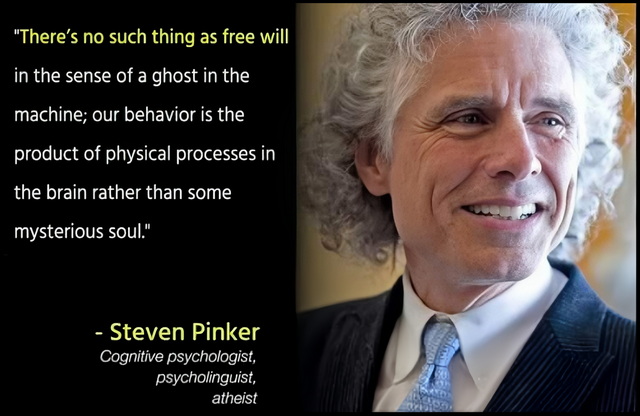
  6. Disproving Calvin’s predestination doctrine: according to Calvin is only attempted by those who think they are wiser than the Holy Spirit.

1)experience shows that the reprobate are sometimes affected in a way so similar to the elect, that even in their own judgment there is no difference between them. a taste of heavenly gifts, a temporary faith, is ascribed to them. Not that they truly perceive the power of spiritual grace and the sure light of faith; but the Lord, the better to convict them, and leave them without excuse, instills into their minds such a sense of his goodness as can be felt without the Spirit of adoption.” (Institutes – 3.2.11)

2) “The repentance which is here ascribed to God does not properly belong to him…. The same reasoning, and remark, applies to what follows, that God was affected with grief. Certainly God is not sorrowful or sad; but remains forever like himself in his celestial and happy repose….” (Comm. Gen 6:6)

3) In his letter to the church in Poitiers, #389 SLW6 – “papers and books of his Castalion [former reformer in Geneva with Calvin], in which an attempt was made to impugn our doctrine touching predestination, have been condemned with a prohibition to publish them 👉on pain of death👈…. that indeed the least we can expect is that the Seigneurs, to whom have been entrusted the sword and authority, should not permit the faith in which they are instructed to be lightly spoken of in their own city. “

4)he arranges all things by his sovereign counsel, in such a way that individuals are born, who are 👉doomed from the womb👈 to certain death and are to glorify him by their destruction.” (Institutes – 3.23.6) And – “We say, then, that Scripture clearly proves this much, that God by his eternal and immutable counsel determined once for all those whom it was his pleasure one day to admit to salvation, and those whom, on the other hand, it was 👉his pleasure to doom👈 to destruction.” Calvin, ICR, 3.21.7

5)any description which we receive of him must be lowered to our capacity in order to be intelligible. And the mode of lowering is 👉to represent him not as he really is👈, but as we conceive of him.” (Institutes – 1.17.13)

6) “The observation with which I opened this discussion, I now repeat at its close: that no one will ever attempt to disprove the doctrine which I have set forth herein, but he who may imagine himself to be 👉wiser than the Spirit of God👈.” (Eternal Predestination of God, trans. Cole, p. 170, the translation by Reid says – “no one can disprove”, p.162)

The Fatal Error of Calvinists | Augustine

AN EXCERPT FROM:

Calvinism: A Biblical and Theological Critique,
by David L. Allen (Editor), Steve W Lemke (Editor),
CHAPTER 6 by Ken Wilson — pages 230-237.


The Fatal Error of Calvinists


A Critique of Augustine’s Reversion to Pagan Concepts

When he redefined Christian terms and concepts, Augustine misrepresented earlier Christian authors. Lewis Ayres politely noted, “Augustine was an attentive reader of his forebears, but one whose interpretations of them were frequently very much his own.”44 As a result, Luther and Calvin mistakenly believed that Augustine was merely teaching what all of the earlier church fathers had taught.45 But in fact, Augustine himself admitted that he had tried but failed to continue in the Christian doctrine of free will of the first four centuries. He consistently utilized the same Christian terms but inserted new meanings into those terms.46 Roger Haight wrote, “Grace for Augustine was delight in the good, a new form of liberty that required an internal modification of the human will. No one [Christian] prior to Augustine had really asserted anything like this need for an inner working of God within human freedom.”47 Augustine redefined free will, utilizing Stoic concepts, deformed original sin with Manichaean dualism, and mutilated faith into a divine gift to match Gnostic and Manichaean unilateral election.48 Augustinian scholar Eugene TeSelle noted:

Augustine always reacted vigorously to the suggestion that he taught what amounted to a doctrine of fate. Now it is undeniable that he did hold to something like what is usually meant by fate. . . . To him fate meant something precise: the doctrine that external occurrences, bodily actions, even thoughts and decisions are determined by the position of the heavenly bodies [C. dua ep Pel., II,6,12] or more broadly, universal material determinism [C. dua ep Pel. II, 6,12; De Civ. Dei. IV.33, V.1,8].49

Augustine said if anyone “calls the will of God or the power of God itself by the name of fate, let him keep his opinion but correct his language” (C. dua ep. Pel.1.2.4). Over a thousand years later, Augustine’s novel and syncretistic reinterpretations of Christian Scripture (TULIP) would be faithfully replicated by Calvin and his followers.

Similarly, modern Calvinists (such as the contributing authors of Whomever He Wills) vehemently defend their theology using Scripture. But they refuse to admit their own interpretations are based on the pagan philosophies and Manichaean religion deeply imbedded into their current syncretistic scriptural interpretations by Augustine.50 God as micromanager of the universe (Stoic sovereignty) stands foremost and paramount: total depravity (Manichaean) follows logically from it (using the same pagan arguments).51 For Calvinists like Andrew Davis, “Romans 9:11–13 is the mortal wound for conditional election.”52 This replicates the “biblical” arguments by Gnostics and Manichaeans for unconditional election (determinism); but all pre-Augustinian Christian writings opposed this pagan doctrine. Thomas Schreiner claimed all Christians will inevitably persevere. This assumes the perfect divine gift of faith unilaterally infused by (the Gnostic/Manichaean) God cannot fail, because ultimate salvation requires perseverance—faith plus works (i.e., not our own but fruit God produces, per Augustine). This includes Schreiner’s appeal to Phil 1:6, repeating Augustine’s tortured interpretation.53 Bruce Ware’s chapter on the compatibility of determinism and freedom could have been argued by a Stoic or Manichaean who was familiar with Scripture. His argument for compatibility was unnecessary in pre-Augustinian Christian theology.54 Likewise, Stephen Wellum repeated Augustine’s appeal to “mystery” that was not required until his Stoic god unilaterally desired, predetermined, and ordained all things, including monstrous evils (such as genocide, rape, torture, and child sacrifice).55 Matthew Barrett’s “The Scriptural Affirmation of Monergism” would have shocked all pre-Augustinian Christians, while making the ancient monergistic Manichaeans proud.56

For Calvinists, the only reasonable theological choice must be Calvinism, since in Arminianism, “God is robbed of his glory at the expense of demanding libertarian freedom.”57 This false disjunction (limited to two poor choices of Calvinism and Arminianism) ignores the centuries of unanimous pre-Augustinian Christian theology on human free will and God’s general sovereignty. Calvinism’s God is puny. Calvinism limits God’s sovereignty.

Calvinists must either ignore these facts or attempt to marginalize them. The vast majority of Christianity—Catholics, Orthodox, Protestants, and other Christian groups—have been unsuccessful in using these facts to convince Calvinists of their errors. We cannot seem to break through the resilient barrier of indoctrinated self-deception to reach adherents of modern Calvinism. In Calvinism, tradition has triumphed over truth.

Conclusion

Augustine of Hippo subverted Christian theology in AD 412 by incorporating his prior Stoic view of meticulous providence and his prior Manichaean doctrine of Divine Unilateral Predetermination of Eternal Destinies (DUPED). All prior Christians had fought against Stoic meticulous providence and Gnostic/Manichaean DUPED. They taught the Christian God is relational and exercises general (not specific) sovereignty for the purpose of allowing human freedom. The Christian God chooses persons for salvation based upon his foreknowledge of their free choices. Augustine reverted to his Manichaean deterministic interpretations of Scripture when attempting to explain infant baptism against the Pelagians. For twenty-five years he had refuted those interpretations as heresy.

After AD 411, Augustine’s final eighteen years of theology was DUPED as the Manicheans had claimed—monergistic, to the glory of Augustine’s new inscrutable sovereign God who creates then damns innocent babies to hell.58 He confessed, “I cannot find a satisfactory and worthy explanation— because I can’t find one, not because there isn’t one” (Serm.294.7). After 1,600 years, no philosopher or theologian has found a “satisfactory and worthy explanation” to salvage Augustine’s syncretism of pagan ideas into Christianity that damns innocent babies to hell. It will forever remain a “mystery.”

Cicero (ca. 50 BC), one of Augustine’s favorite authors, had argued for the in-compatibility between divine omniscience and human free will. Augustine’s final answer was to claim that divine foreknowledge of the future occurs only through God’s unilateral predetermination and ordaining of every event, both good and evil (Civ.5). By this move he departed from all prior Christian teaching and syncretized a concept common in Stoicism: “God foreordains human wills.”59 The Stoic scholar John Rist concluded that Augustine’s novel Christian determinism produced “a theology which fails to do justice to his own theory of God’s love.”60 In contrast, Jerome succeeded in refuting the Pelagians without adopting the extremes of Augustinianism (Against the Pelagians 3) and retained the traditional Christian beliefs in God’s general sovereignty, grace, and free will.61

Harry Wolfson, historian and philosopher at Harvard University’s Judaic Studies Center, concluded, “Augustine’s doctrine of grace is only a Christianization of the Stoic doctrine of fate.”62 Because of Augustine’s AD 412 reversion to pagan ideas, the exalted justice of the relational Christian God (used to combat pagan philosophies and heresies) was instantly transformed into inscrutable theology—deformed theology. Augustine overtly wrote of God’s predestination of the ones he purposefully created for damnation in eternal torment (“double predestination”; Nat. orig.1.14, Civ.14.26, 15.1; Serm.229S, Serm.260D.1; An.et or.4.16).63 Augustine borrowed his prior Neoplatonic inscrutable mystery as his defense for this horrendous divine injustice (Serm.D.29.10 and Serm.294.7). Neoplatonism (ca. AD 250) had invented this crucial theodicy by appealing to the inscrutable secret counsels of God, who is fair by definition, regardless of whatever apparent evils he desires and ordains. Prior Christians had never required this implausible and disingenuous attempt at a defense for their God.

Modern Calvinists teach Augustine’s theology. Calvinists appeal to the same deterministic interpretations of the same Scripture passages taught by Manichaeans. Calvinism’s historical foundation is dangerously unstable. Its foundation relies on the Manichaean interpretations of Scripture by a single man in the ancient church who rejected three hundred years of unanimous church teaching of free will, a teaching that had refuted Stoic and Gnostic/Manichaean determinism. This man was indoctrinated for decades in extremely deterministic pagan philosophies and heretical Manichaeism. Augustine admitted he changed his theology regarding free will: he abandoned the Christian rule of faith regarding free choice. “In the solution of this question I struggled in behalf of free choice of the will, but the grace of God won out” (Retr.2.1).

But the grace that “won out” was not Christian grace: it was Manichaean grace. According to Augustine (Conf.7.5), he only escaped the philosophical prison of Manichaean DUPED by accepting Christian free choice. This freed him from viewing God as punishing unjustly. But ironically, after finally escaping, Augustine’s later “inscrutable justice” of Christianized pagan DUPED reimprisoned both himself and his followers.

In contrast, the prior nearly unanimous Christian teaching (that God offers his grace to every human equally) persisted throughout the Patristic period into the eighth century with John of Damascus (d. ca. AD 760): “We ought to understand that while God knows all things beforehand, yet He does not predetermine all things. . . . So that predetermination is the work of the divine command based on foreknowledge” (Exp. fid.44). Eleonore Stump astutely concluded, “Unless Augustine is willing to accept that God’s giving of grace is responsive to something in human beings, even if that something is not good or worthy of merit, I don’t see how he can be saved from the imputation of theological determinism with all its infelicitous consequences.”64

A willingness to return to the universal Christian theology that God gives grace as a response to human choice would never come for Augustine. The famous rhetorician never looked back in his resolve to win his debate against the Pelagians at all costs. William Frend explained, “Augustine could not concede a single point to his adversaries and this was his undoing.”65 Augustine died eighteen years after reverting to his pagan monergistic determinism, still trusting in his self-crafted syncretistic theology.

As we observed in the introduction, Calvinists address the blatant absence of their theology in the pre-Augustinian centuries in one of two possible ways. The less scholarly Calvinists invent proto-Calvinists among early Christian authors. Scholarly Calvinists claim Augustine was the first theologian since the apostle Paul to interpret Scripture correctly. Benjamin Warfield opined Augustine’s “doctrine was not new” but was lost for four centuries between the time the apostle Paul wrote it and Augustine “ recovered” it for the church (the Calvinist Gap Theory).66 These scholars appear oblivious to the enormous chasm separating Paul from Augustine. This formidable chasm is Augustine’s Stoicism, Neoplatonism, and Manichaeism. It separates Paul from Augustine by hundreds of years and thousands of miles. Calvinists attempt to bridge this insurmountable gap by using the “hermeneutical” lens of Augustine’s Manichaeism to reinterpret Pauline (and other) Scriptures within their own paradigm.

Calvinism’s alleged “biblical foundation” rests on Augustine’s deterministic interpretations of Scripture from his decade of Gnostic/Manichaean training (John 6:44–66; 14:6; Rom 9–11; Eph 2:1–3, 8–9; Phil 2:13; etc.). Such a dangerous foundation requires a precarious “faith” in Augustine’s “Sovereign God,” caricatured through syncretism with Stoic and Neoplatonic philosophy and the heretical Manichaean religion.67 He baptized his prior pagan philosophies and religion into Christianity, resulting in an unrecognizable doctrinal conglomeration. Calvinism is Augustinianism. Augustinianism is Christian theology scrambled with Gnostic/Manichaean theology and Stoic/Neoplatonic philosophy. As John Rist concluded, Augustinianism is “Ancient [pagan] Thought Baptized.”68

Nevertheless, these serious syncretistic errors did not make Augustine a heretic or a non-Christian. Augustine still embraced the essential doctrines of the Christian faith. Modern Calvinists also embrace the major tenets of Christianity regarding Jesus Christ as God in the flesh and Savior from sin. Despite their divergent views (sovereignty, total depravity/inability, and DUPED determinism) imported from Augustine’s paganism, Calvinists remain Christian brothers and sisters worthy of respect, love, and fellowship —contrary to the opinion of one extreme evangelical sect.69 In this anti-Christian period of history, Christians of all persuasions must be unified, despite our internal disagreements.

NOTES

44 Lewis Ayres, Augustine and the Trinity (Cambridge: Cambridge University Press, 2010), 86.

45 See Martin Luther, “To George Spalatin—Wittenberg, October 19, 1516,” in Luther’s Works, 48:23 (see chap. 5, n. 13); Luther, “Lectures on Romans: Glosses and Scholia,” in Luther’s Works, vol. 25; Calvin, Institutes, trans. Battles, 1:158–59 (I.xiii.29) (see chap. 4, n. 85); Harry Wolfson, Religious Philosophy: A Group of Essays (Cambridge, MA: Belknap Press of Harvard University Press, 1961), 158– 76, in which he explained the centuries-old traditional Judeo-Christian understanding of free will (despite the sinful inclination) that persisted until the “later Augustine” introduced Stoic ideas into Judeo-Christian theology, and especially Augustine’s misunderstanding of concupiscentia in his Latin translation of Wisdom of Solomon 8:21.

46 This included the terms original sin, grace, predestination, free will, and so forth. “For example, in the early patristic writers we find references to the origin of sin, to a fall, and to the inheritance of sin, but what is meant is often different from the meaning given to those terms in the later classical tradition influenced by Augustine.” Tatha Wiley, Original Sin: Origins, Developments, Contemporary Meanings (New York: Paulist Press, 2002), 53; italics in the original; Ralph Mathiesen, “For Specialists Only: The Reception of Augustine and His Teachings in the Fifth Century Gaul” in Collectanea Augustina: Presbyter Factus Sum, ed. Joseph Lienhard, Earl Muller, and Roland Teske (New York: Peter Lang, 1993), 30–31; Rebecca Weaver, s.v. “Predestination,” in Encyclopedia of Early Christianity, 2nd ed., ed. Everett Ferguson (New York: Garland, 1998): “The now centuries-old characterization of the human being as capable of free choice and thus accountable at the last judgment had been retained, but the meaning of its elements had been considerably altered”; Peter J. Leithart, “Review of Adam, Eve, and the Serpent” by Elaine Pagels, Westminster Theological Seminary Journal 51, no. 1 (Spring 1989): 186. “Augustine’s concept of free will certainly differs from that of earlier theologians.”

47 Roger Haight, The Experience of Language of Grace (New York: Paulist, 1979), 36.

48 In Stoicism, fate controls every minute occurrence in the universe (Cicero, Div.1, 125–26), and although a person has no possibility of actuating an opportunity, “free will” remains solely by definition (Cicero, Fat.12–15). See Margaret Reesor, “Fate and Possibility in Early Stoic Philosophy,” Phoenix 19, no. 4 (1965): 285–97, esp. 201; Stoics, “took elaborate precautions to protect their system from rigid determinism.” Neoplatonists did the same.

49 TeSelle, Augustine the Theologian, 313; emphasis in the original.

50 Barrett and Nettles, Whomever He Wills (see intro., n. 22).

51 Steven Lawson, “Our Sovereign Savior,” 3–15; and Mark DeVine, “Total Depravity,” 16–36, in Whomever He Wills.

52 Andrew Davis, “Unconditional Election: A Biblical and God-Glorifying Doctrine,” in Whomever He Wills, 51.

53 Thomas Schreiner, “Promises of Preservation and Exhortations to Persevere,” in Whomever He Wills, 188–211, esp. 192. His “biblical” arguments all rest on those pagan assumptions inherited from Augustine. Distinguishing works as necessary fruit for final salvation but not the basis of it mimics Roman Catholicism’s theology. Calvinists merely replace (Faith + Works ➡ Salvation) with (Faith ➡ Works ➡ Salvation). Neither Roman Catholics nor Calvinists believe in faith alone for salvation—both require good works.

54 Bruce Ware, “The Compatibility of Determinism and Human Freedom,” in Whomever He Wills, 212–30. There was no Christian tension between general sovereignty and free will for centuries before Augustine; Fergusson, s.v. “Predestination,” Oxford Companion.

55 Stephen Wellum, “God’s Sovereignty over Evil,” in Barrett and Nettles, Whomever He Wills, 256.

56 Barrett, “Monergism,” 120–87 (see intro., n. 22).

57 Barrett and Nettles, introduction to Whomever He Wills, xxvi.

58 See Augustine, Serm.294.7: “Here too I like to exclaim with Paul, Oh the depths of the riches! (Rom 11:33). Unbaptized infants go to damnation; they are like the apostles’ words, after all: From one to condemnation (Rom 5:16). I cannot find a satisfactory and worthy explanation . . . [he cited all of Rom 11:33–36].” See The Works of Saint Augustine, III/8, 196n8, with Hill’s comments: “Babies who die unbaptized therefore go to hell. . . . It is precisely this assumption that renders his whole argument weak, and his conclusion highly questionable.”

59 Christopher Kirwan, Augustine, The Arguments of the Philosophers (New York: Routledge, 1989), 98–103.

60 John Rist, Augustine: Ancient Thought Baptized (Cambridge: Cambridge University Press, 1994), 307.

61 See Vít Hušek, “Human Freedom According to the Earliest Latin Commentaries on Paul’s Letters,” Studia Patristica 44 (2010): 385–90.

62 Harry Wolfson, Religious Philosophy: A Group of Essays (Cambridge, MA: Belknap Press of Harvard University Press, 1961), 176. See also Michael Frede and Halszka Osmolska, A Free Will: Origins of the Notion in Ancient Thought (Berkley, CA: University of California Press, 2011), especially 153–174, “Chapter Nine—Augustine: A Radically New Notion of a Free Will?”

63 Gerard O’Daly, “Predestination and Freedom in Augustine’s Ethics,” in The Philosophy in Christianity, ed. Godfrey Vesey (Cambridge: Cambridge University Press, 1989), 90.

64 Eleonore Stump, “Augustine on Free Will,” in The Cambridge Companion to Augustine, ed. Eleonore Stump and Norman Kretzmann (Cambridge: Cambridge University Press, 2001), 124–147 at 142.

65 William H. C. Frend, “Doctrine of Man in the Early Church: An Historical Approach,” Modern Churchman 45, no. 3 (1955): 227.

66 Warfield, Tertullian and Augustine, 129.

67 Wilson, Foundation of Augustinian-Calvinism, 97–103. Translated into Spanish—Fundación del Calvinismo Agustiniano; into German—War Augustin der erste Calvinist?; and into Portuguese —Fundamento do Calvinismo-Agostiniano.

68 See note 60. Rist’s focus was pagan Stoicism.

69 Some Christian groups can press anti-Calvinism too far, so much that they themselves violate the limits of historical orthodoxy. See, e.g., Kenneth Wilson, Heresy of the Grace Evangelical Society: Become a Christian without Faith in Jesus as God and Savior (Montgomery, TX: Regula Fidei Press, 2020). Bob Wilkin and his Grace Evangelical Society teach “assurance is of the essence of saving faith.” Calvinists cannot have assurance of their own eternal security because Calvinists teach perseverance in faith and works until physical death is required for final salvation. Therefore, Calvinists are not Christians. This GES heresy requires absolute assurance in Jesus’s promise of personal eternal security to become a Christian, yet does not require faith in Jesus as God and Savior.

How To Pray Like An Honest Calvinist | IDOL KILLER (+RPT)

The 2nd video is Idol Killer’s original, the first is my reimagining it:

Praying Like A Consistent Calvinist | Adapted from Idol Killer >>> I rejiggered it into a better order [IMHO], added some graphics/quotes, and uploaded it a second time finding an edit error on my part.

Not for the faint of heart!

Somewhere outside the city of Geneva, on Earth 1689, it happened that a Calvinist Theologian was praying, and when he had finished, one of his disciples said to him, “Pastor, teach us to pray, just as John also taught his disciples.” and he said to them:

“Oh Sovereign God, whom from all eternity, freely and unchangeably ordained whatsoever comes to pass, I thank you I know you bring about all things in accordance with your will, I know the evils of this world have NOT arisen by your mere permission, (or as a result of your patient call to repentance), but that YOU yourself bring about all evils for your glory and good pleasure,…

I thank you for bringing evil into the world. I thank you for the brutality at Birkenau and at Auschwitz.

I thank you for the terrible killings of Dennis Rader.

I thank you for the brutality of war, and the countless widows and orphans it creates. I thank you for the perverse abuse of young children. I know these evil men were perfectly obeying your Sovereign will.

I thank you. I see your gracious hand in the hurts others do to me, (like the Ford Focus that cut me off at the light this afternoon).

I thank you. I thank you for my wife, and the abuse she inflicts upon our children while I’m away from the home. I know you did this to build mine and my children’s character. I thank you that its only been bruises and bloody noses. I know you saw fit to have my boss fire me from my job, during the holiday season, just as I know it was your Sovereign will that he hire Stephanie this past Spring and that we have an affair.

I thank you for giving me an irresistible desire for red heads. Above all, I know it was your Sovereign hand keeping my wife ignorant of our illicit love making, (during our lunch break at the motel six).

I thank you. I know that it was your perfect will that my neighbor got drunk and took his own life this morning, just as it was your perfect will that I was distracted on my cell phone and backed the car over his son last week.

I thank you. I know you’ve regenerated me and elected me unto salvation, and while I’m unsure about my wife and children’s eternal destiny, I thank you. Please bless this food to the nourishment of our bodies and bless the hands that prepared it, or don’t. Whatever your Sovereign will is. Thank you, and amen!”

Total Depravity Defined (Soteriology 101)

What you will find below:

The long debate [which I won’t replicate here] from Soteriology 101 Discussion’s Facebook Page, is over — essentially — this portion of Leighton Flower’s’ book, “Drawn by Jesus.” BUT FIRST, what I will reproduce is the extent of the debate summed up in these two back-n-forths:

ROGER H. responds to Jason R.

[Jason R said] “This is a clear logical impasse you are confronted with

What is the logical impasse? A person is born with no ability to choose God. This requires that the person be regenerated. Once regenerated, a person can desire God and can choose God.

[Jason R said] “and there is no compatibilism that can harmonize this faulty logic.”

Once a person is regenerated, he has new desires. He can choose according to his greatest desire.

I don’t see a problem.

JASON R. responds to ROGER H.

it is fascinating to observe how you see no problem with the fact that God ultimately judges the majority of humanity for not receiving Christ when He determined that they never could do so in the first place. You seem content to accept that God can judge someone for their sin of non-repentance even though they have no way of repenting. This is blatantly unjust. You admit that God necessarily has to regenerate someone so that they can believe which equates to conceding that man cannot choose God unless God first chooses and changes them. Man is born into a hopeless state of inability and you cannot see a problem with God judging and condemning man for this inability when he has no way of escaping its pre-determined inevitabilities. I have never heard a sound defense against this Achilles heel of Calvinism only concessions such as yours.

The entire discussion is enlightening, as it is a real working out of the issue. But this is the portion that Roger H. started out with, mistakenly saying it was from chapter 3:

Chapter 5

The Calvinistic Presupposition of Total Inability

A presupposition is “a thing tacitly assumed beforehand at the beginning of a line of argument.”23 We all have presuppositions. Some of them are right, but others are wrong. Wrong presuppos­itions brought to a passage can influence people to draw erroneous conclusions about the meaning of the text in question. This is why objectively evaluating our presuppositions is so important when any passage is in dispute between well-intending brethren.

Your theological opponents have every right to challenge your presuppositions. After all, wrong presuppositions lead to bad exe­gesis. And assuming your presuppositions are correct is just a falla­cious game of question-begging. Unfortunately, this has been James White’s bread and butter. When non-Calvinists have challenged one of his presuppositions in the past, he accuses us of either “changing the topic,” “running off to other scriptures,” or “doing improper exe­gesis.” This is ironic, given that proper exegesis requires biblically correct presuppositions.

Calvinism’s underlying premise is that God decreed for all people since the Fall to be born morally unable to believe what He Himself teaches, so unless you were unconditionally chosen before you were born and irresistibly regenerated into a new creation by a supernat­ural intervening work of God, you will never be morally capable of believing in Him.24 Needless to say, that premise will greatly influence how you understand the Bible regardless of the hermeneutical methodologies, grammatical nuances, contextual considerations, or semantic word studies. A wrong premise skews everything and, therefore, must be evaluated objectively prior to getting into the other pertinent matters. So, let’s start by looking at these three major presuppositions White brings into John 6 based primarily upon his Calvinistic interpretation of Paul.25

Total Inability26

The entire sixth chapter in White’s book on the topic, titled “Human Inability,” sets out to establish this doctrine. Based on his in­terpretation of other scripture, White presupposes that God decreed for all people (since the Fall) to be born unable to believe His own teachings, but God still punishes all who do not believe. Therefore, when White reads John 6 through those presuppositional lenses, he understands the phrase “no one can come” to mean that the natural condition of everyone from birth is such that they cannot under­stand and believe what God teaches.27 For instance, White wrote,

In response to the crowd’s disbelief, Jesus also gives forth a clear explanation of their inability to understand and their inability to come to Him as the one and only source of spiritual life.

Notice that White assumes that the reason the crowds cannot come to Christ is due to a universal inherent condition in which they were born, something God Himself decreed and the individuals had absolutely no control over. In other words, in White’s view, the crowd remains in unbelief because they were born inherently blinded to divinely revealed truth, and God has not intervened to irresistibly change their inherent “default” condition. This is the root of what is known as theistic determinism, a primarily philosophical commitment to the idea that God unchangeably brings to pass (or deter­mines) every meticulous detail, including all moral evil.28

NOTES

23 Oxford Languages Online Dictionary (Oxford University Press)

24 This represents the T,U and I of the Calvinistic TULIP, which will be ex­plored further in the following pages.

25 White wrote, “When the doctrine of election is discussed, most people think immediately of the discussions provided by the Apostle Paul in such great passages as Romans 8-9 and Ephesians 1.” James R. White, The Sovereign Grace of God (New York: Great Christian Books, 2003), 68.

26 White wrote, “Some Reformed writers like others names for this doctrine. One of the best alternatives is `total inability.” Ibid., 48.

27 White wrote, “[Man] is utterly incapable of coming to Christ, incapable of accepting and understanding spiritual things” Ibid., 59. Given that White also affirms the 1689 London Baptist Confession of Faith, we know that he affirms God’s universal exhaustive decree of whatsoever comes to pass, which must necessarily include mankind’s innate “default” inability to believe.

28 White wrote, “God’s knowledge of the future is related to His role as Creator —He knows the future because He ordained the future! The course of the future is certain because God created it.” Ibid., 68. Vicens wrote, “We might, for instance, take Feinberg’s definition of an `unconditional’ decree as one `based on nothing out­side of God that move[s] Him to choose one thing or another’ (2001, p. 527) and then characterize theological determinism as the view that God unconditionally decrees every event that occurs in the history of the world. Such a view would ex­clude the possibility that God merely permits some events which He foresees will happen in some circumstances but which He does not Himself determine.” Leigh Vicens, Theological Determinism (Internet Encyclopedia of Philosophy: A Peer-Reviewed Academic Resource) accessed online on 12/19/2023. [RPT: 1/29/2026]

Leighton [Charles] Flowers, Drawn By Jesus (Trinity Academic Press, 2024), 47-49.

ROMANS 3:11

A common verse I hear from my fellow believers is “…there is no one who understands; there is no one who seeks God.” – Romans 3:11

SOTERIOLOGY 101 posts combined are from:

In an effort to demonstrate that all people have fallen short of the glory of God and broken His law, Paul quotes from Psalm 14:2-3, which says:

“The Lord looks down from heaven on all mankind to see if there are any who understand, any who seek God. All have turned away, all have become corrupt; there is no one who does good, not even one.”

There are basically two theological approaches for interpreting this passage:

(1) Calvinistic Approach: Apart from a Divine irresistible work of regeneration (by which God changes a chosen individual’s nature and desires), mankind cannot willingly seek to know, understand, or follow God.
(2) Non-Calvinistic (Traditionalist) Approach: Apart from God’s gracious initiative in bringing His Son, the Holy Spirit, and the inspired gospel appeal, no one can merit salvation or consistently seek to obey God in a way that will attain his own righteousness.

The contrast between these two perspectives can be illustrated by this simple question: Does proof that I am incapable of calling the president on the telephone also prove that I am incapable of answering the telephone if the president were to call me? Of course not, yet that is essentially the principle a Calvinist is assuming in their theological approach to this text.

Calvinists read this text to mean that our lack of initiative somehow proves our inability to respond positively to His initiative. They presume that God’s work in sending His Son, the Holy Spirit, and the inspired gospel, calling for all to be reconciled through faith in Christ, is insufficient to enable the lost to respond in faith. But the text simply never says this.

In Romans chapter 3:10-20 the apostle is seeking to prove that no one can attain righteousness by means of the law. But in verse 21 he shifts to reveal a righteousness that can be obtained by means of grace through faith in Christ.

Calvinists seem to think that because mankind is unable to attain righteousness by means of the law that they must equally be unable to obtain righteousness by means of grace through faith in Christ. This, however, is never established anywhere in the pages of Scripture.

Of course, we all can affirm that no one is righteous with regard to the demands of the law. But there have been many throughout the pages of Scripture who have been declared righteous by means of grace through faith.

Calvinists wrongly assume that because mankind is unable to fully keep the demands of the law that they are equally unable to admit their inability to keep those demands and trust in the One who has. Again, this is simply never established in the Bible. HERE>

THE “HERE>” EXCERPT

If I told my son to clean up his room it would strongly imply that I believed it was within his abilities to do so, especially if I punished him for failure to do so. No decent parent would tell their two day old infant to clean up a mess and then punish them for not doing so. Such an action would expose the parent as insane or completely immoral.

This is basic common sense, but is it applicable to how God deals with humanity? Is the implication in scripture of “you should” mean that “you could?” I think we can all agree that “ought” strongly implies moral ability for all practical purposes, but is that a biblical reality? Sometimes the Bible defies our practical sensibilities and turns our reality up on its ear. Is that the case here? Do God’s expressions of what we SHOULD do imply that we actually COULD do it.[1]

Could the “Rich Young Ruler” have willingly given up his wealth to follow Christ as Zacchaeus does in the very next chapter? Or was Zacchaeus granted an ability that was withheld from the Rich Young Ruler? (Note: I’m speaking of man’s moral/spiritual abilities to repent in faith, not their physical ability or mental assent, so please don’t try to rebut this article with the all too often “catch all” phrase of, “He is able but not willing.”)

Calvinists would agree with the Traditionalists that both Zacchaeus and Rich Young Ruler SHOULD have given up everything to follow Christ, but only the Traditionalist maintains that both of them COULD have willingly done so.

Why do Calvinists insist that COULD doesn’t imply SHOULD when it comes to the Biblical revelation?

Dr. Wayne Grudem, a Calvinistic scholar, explains the issue in this manner:

“Advocates of the Arminian position draw attention to the frequency of the free offer of the gospel in the New Testament. They would say that these invitations to people to repent and come to Christ for salvation, if bona fide, must imply the ability to respond to them. Thus, all people without exception have the ability to respond, not just those who have been sovereignly given that ability by God in a special way.” [2]

Grudem, like John Hendryx of mongerism.com, rebuts this perspective by making arguments such as:

“What the Scriptures say we ‘ought’ to do does not necessarily imply what we ‘can’ do. The Ten Commandments, likewise, speak of what we ought to do but they do not imply that we have the moral ability to carry them out. The law of God was given so that we would be stripped of having any hope from ourselves. Even faith itself is a divine command that we cannot fulfill without the application of God’s regenerative grace by the Holy Spirit.”[3]

Are you following the Calvinistic argument? Here it is put very simply:

  1. God tells man they SHOULD keep all the commandments.
  2. Man CANNOT keep all the commandments.
  3. God also tells man they SHOULD believe and repent for breaking commandments.
  4. Therefore man also CANNOT believe and repent for breaking commandments.[4]

If the fallacy in this argument is not obvious to you, please allow me to explain in this way:

Back when my kids were younger we did a family activity that our church had suggested. I stood at the top of the stairs with my four children at the bottom.

I said to them, “Here are the rules. You must get from the bottom of the stairs to the top of the stairs without touching any of the railing, the wall or even the stairs. Ready, go!”

My kids looked at me and then each other and then back at their mother. With bewilderment in their eyes, they immediately began to whine and complain saying, “Dad, that is impossible!”

I told them to stop whining and figure it out.

The youngest stood at the bottom and started trying to jump, slamming himself into the steps over and over. The more creative one of the bunch began looking for tools to help build some kind of contraption. Another set down on the floor while loudly declaring, “This is just stupid, no one can do that!”

Finally, in exasperation one of the kids yelled out, “Dad, why don’t you just help us?” I raised my eyebrows as if to give them a clue that they may be on the right track. The eldest caught on quickly.

“Can you help us dad?” he shouted.

I replied quietly, “No one even asked me.”

“Can you carry us up the stairs?” he asked.

“I will if you ask me,” I said.

And one by one, I carried each child to the top after they simply asked.

Then, we sat down and talked about salvation. We talked about how it is impossible for us to get to heaven by our own efforts, but if we ask Christ for help then He will carry us. It was a great visual lesson of God’s grace in contrast with man’s works.

But suppose that my children’s inability to get to the top the stairs also meant they were incapable of asking me for help. Imagine how this story would’ve played out if it was impossible for my children not only to get to the top of the stairs but equally impossible for them to recognize that inability and request help when it was offered.

This illustrates the mistake of Calvinism. Let’s go back to their fallacy above as it relates to my story:

  1. Dad tells his kids they SHOULD get to the top of stairs.
  2. Kids CANNOT complete this task as requested.
  3. Dad also tells the kids they SHOULD ask for help.
  4. Therefore the kids CANNOT ask for help.

Do you see the problem now? The whole purpose of presenting my kids with that dilemma was to help them to discover their need for help. To suggest that they cannot realize their need and ask for help on the basis that they cannot get to the top of stairs completely undermines the very purpose of the giving them that dilemma. ….

George C. Scott Explains Calvinism

A scene from the 1979 movie Hardcore, in which an old Calvinist elder goes to find his runaway daughter in the porn underbelly of Los Angeles. This scene with George C. Scott inspired Richard Mouw’s book “Calvinism in the Las Vegas Airport.” HEADS UP: there’s some saucy language. And the rest of the film is what you’d expect from a movie about the porn industry in the 70’s.

And here is that promised chapter:


DISHENCHANTED CALVINIST


Chapter 9, GRACE (PDF)

  1. I affirm that the grace of God can be and is at times resisted, and this includes but is not limited to the genuine offer of salvation and resisting the Holy Spirit. The Bible says in 2 Thessalonians 2:10 that reprobates “perish because they refused to love the truth and so be saved.” (italics added) Of course, I am rejecting the Calvinist and compatibilist answer that a person refuses because, as a sinner, that is all that he can do. It seems crystal clear in reading the passage without Calvinist spectacles on that the context and language clearly imply that they “should not have refused” and therefore could have believed which entails the idea of otherwise choice, exactly what Calvinism denies.

Further, I affirm that the ability of man to accept or to resist God’s genuine offer of salvation is a part of God’s plan and redounds to His glory; moreover, this genuine offer of the gospel is more than “a good faith offer” as taught by the Calvinist. It is an actual offer from God through His chosen medium, which can be accepted by faith or rejected unto damnation. Finally, this includes the reality that God has given the gift of repentance, and that the clear call of Scripture is for everyone everywhere (Acts 17:30) to repent and be saved, which implies that those called upon to repent can, by the grace of God, repent (Matthew 3:2, 4:17, 11:20; Mark 6:12; Luke 5:32, 13:3, 13:5, 24:47; Acts 2:38, 3:19, 5:31, 11:18, 20:21, 26:20; Romans 2:4; 2 Peter 3:9).

Jesus pronounced woe upon all the people of Chorazin and Bethsaida because they did not repent, obviously indicating He believed they had the capacity to repent (see Matthew 11:21). The book of Revelation leaves believers stunned that unregenerate people refuse to repent even when they are suffering from the wrath of God (see Revelation 9:20-21, 16:9, 11). Acts 17:30 reminds us that the call of God to repent is for everyone. Paul said, “and with all the deception of wickedness for those who perish, because they did not receive the love of the truth so as to be saved” (2 Thessalonians 2:10). The implication obviously means that they could have received the love of the truth and been saved.

In like manner, Stephen preached, “You men who are stiff-necked and uncircumcised in heart and ears are always resisting the Holy Spirit; you are doing just as your fathers did”(Acts 7:51). The writer of Hebrews said of those who draw back unto destruction, “How much severer punishment do you think he will deserve who has trampled underfoot the Son of God, and has regarded as unclean the blood of the covenant by which he was sanctified, and has insulted the Spirit of grace”? (Hebrews 10:29, italics added). In Noah’s day, God said, “My Spirit shall not strive with man forever” (Genesis 6:3), clearly implying that He was then. Also why did God bring judgment upon leaders and Jews so they could not hear and see and return if that in fact was their state already? (Isaiah 6:9-10 and Matthew 13:10-17).

Lastly, I affirm the biblical doctrines of grace. Calvinists refer to their beliefs as “The Doctrines of Grace,” which is fine, but it actually does not tell us much. That is to say, the doctrines of any Biblicist are all “doctrines of Grace.” There simply are no other kinds. It is similar to the Calvinist’s continual reference to the sovereignty of God. It tells us nothing since all believers with any biblical fidelity and understanding of God believe in His sovereignty. Further, disavowal of the Calvinist’s definition of the doctrines of grace and sovereignty is not a denial or undermining of the doctrines of grace or the sovereignty of God, but it is what it is, a denial of Calvinism’s definition.

  1. I disaffirm that the Bible teaches that God carries out His salvation plan through selective “irresistible grace.” John Piper describes irresistible grace thusly, “When a person hears a preacher call for repentance he can resist that call. But if God gives him repentance he cannot resist because the gift is the removal of the resistance. Not being willing to repent is the same as resisting the Holy Spirit. So if God gives repentance it is the same as taking away the resistance. This is why we call this work of God “irresistible grace.”63 Note that those who receive this act of grace against their will can only believe and those who don’t receive this cannot be saved; therefore, any talk from a Calvinist that God loves people, the lost, hurting, etc., is double-talk because He, according to Calvinism, actually only loves some lost and hurting people enough to offer help. This is a disquieting reality.

Piper says also, “The doctrine of irresistible grace means that God is sovereign and can overcome all resistance when he wills.”” I would note that the Calvinist, as well as Piper’s position, is actually stronger than this in that, not only does the doctrine of irresistible grace mean that God can overcome, but it actually means He will or must. Further, I disaffirm that all verses that say, teach, or imply that man can resist are merely reiterating the position of compatibilism—sure they resist salvation because that is all, according to their nature, that they can do. Moreover, I disaffirm that an offer of salvation through proclamation of the gospel by anyone who views salvation through the grid of Calvinism constitutes a real offer of salvation from God if it can be resisted; because according to Calvinism and compatibilism the real offer of salvation, in any meaningful sense to the person, cannot be resisted because the real offer of salvation from God always results in regeneration. This is a disquieting reality. An example of my point is, in what sense can a person be said to be offered a job if it is impossible for him to accept it, and not only is there no intent to actually give it to him, but in reality there was a predetermined unalterable decision by the CEO not to give it to him; this is in spite of the personnel manager’s sincerity in offering the job. The answer seems obvious, NONE!

Let me elucidate this further. Calvinists seek to emphasize the positive of irresistible grace, e.g., God saves some unworthy sinners who otherwise would perish in hell. But the dark side of irresistible grace is that although the “good faith offer” of a Calvinist seems to exonerate him from being guilty of making an artificial offer of salvation (as long as he is careful not to say specifically to someone things like “God loves you or God cares about you or God wants you to go to heaven”) to sinners who cannot, according to Calvinism, really repent, believe, and be saved, because the Calvinist can never be sure who God has selected to regenerate. However, even if the Calvinist is vindicated, it does not exonerate God from using language, commands, parables, etc., which clearly picture God as wanting all to be saved even though, according to Calvinism, He is the sole determiner and only reason they cannot be saved. Therefore, Calvinism’s irresistible grace makes God the sole determiner of who goes to heaven and who goes to hell because He could have saved everyone. This truth is dramatically contrary to the picture of God and His offer of salvation as drawn in Scripture, a disquieting reality.

We all seek to emphasize what we deem to be the positives of our message or position. However, it is morally incumbent upon every messenger to quest for full disclosure and to shun any appearance of obscuring the negative or harsher teachings of our position. The Calvinist emphasis that irresistible grace assures salvation for some, while minimizing the truth that irresistible grace just as assuredly and irrevocably destines some to eternal torment in hell, reminds me of the Darwinist obsession with the beauty of natural selection’s determination that the strong and healthy survive, while they seldom with the same clarity and enthusiasm speak of the dark side of natural selection that requires the brutal and merciless elimination of the weak.

Consequently, the insurmountable obstacle to irresistible grace determining who receives eternal salvation—besides the fact that it is not taught in Scripture—is that it puts God the Father, the Lord Jesus, and the Holy Spirit in the position of appearing to offer deliverance from the wrath to come to all who cry for mercy while, actually, God has no intention of doing so. For, according to Calvinism, He predetermined, contrary to what the gospel and the Scriptures say, to offer salvation to only a few. In other words, it makes God the CEO who allows, yea commands, and says He wants all to be hired, but He has in reality predetermined long ago that they cannot ever be hired even though his personnel managers continue to offer jobs to them. This is a disquieting reality. In order to sustain the idea of irresistible grace, it appears that we must turn common language upon its head, take the obvious and simple meaning of language as seen in Scripture and used in everyday life, and subject it to biblically unnecessary restrictions and meanings, which is one of the pervasive problems in Calvinism. This is a disquieting reality.

For example, Christ felt love for the rich young ruler and out of that love told him how to receive salvation, but the young man refused; after which Jesus noted how difficult it was for a rich person to “enter the kingdom of heaven.” The passage clearly indicates that the young man could have been saved if he had chosen to follow Christ, and part of the reason that he chose not to follow Christ was that he was rich (Mark 10:21-23). From the standpoint of Calvinism, whether he was rich or poor had no bearing on whether he would come or not because the draw is irresistible. Christ’s encounter with this young man also demonstrates that Christ loves the lost and loves them enough to tell them how to have eternal life. By every normal meaning, those words meant he could have received salvation at that time had he chosen to believe. The idea of a “good faith offer” may relieve the human Calvinist of malicious deception, but it cannot be so of Jesus or the Trinity. The statement that “all things are possible with God” is exactly my point and in no way proves Calvinism true, but is actually contrary to their system. This is a disquieting reality. Therefore, I absolutely disaffirm that the Scripture teaches or logic demands that God’s sovereignty is undermined or minimized when He grants the opportunity to resist His genuine offer of salvation because He sovereignly chose to grant that choice.

Finally, I disaffirm that the doctrine of irresistible grace applied to some in salvation is what the Scriptures teach, or that it is consistent with what God reveals about Himself. The truth is that God revealed Himself in Scripture as actually loving the world—human race—so much that He sent His own Son to die for them (John 3:16), thereby providing for their salvation. And any human can receive this salvation if he will obey God’s command and repent and believe, which he can do by God’s grace. I do not believe that God offers what cannot be accepted or what He has no intention of providing. Nor do I believe that God condemns people for rejecting what He predetermined that they could not accept.

NOTES

  1. John Piper, “Irresistible Grace” in What We Believe About the Five Points of Calvinism, copyright Desiring God.org, revised March 1998.
  2. J. Piper and the Bethlehem Baptist Church staff, “What We Believe About the
    Five Points of Calvinism,” #Grace