Calvinism: A Different Gospel

It is hard for me to sit quiet and hear person’s I adore talk about the gospel and salvation, and they put meaning behind these ideas/words when ultimately they reject these meanings. One of the [many] reasons I reject TULIP [theistic determinism] is because IT rejects the sufficiency of the living Word of God (the Gospel), as well as Calvary (the lynchpin to the Gospel).

The Gospel of God vs. The Gospel of Calvinism (Ronnie Rogers)

…. Calvinists may respond that they believe the gospel is the “power of God to everyone who believes.” By which they seem to mean, when you believe, you will experience the power of God, and that is true for everyone who believes. But, hidden in this explanation is that while this is trivially true, it is not an actualizable truth as it stands (that the listener can benefit from or by simple faith) without UE, IG, and SR, so one can and will believe, all of which is reserved for the elect and withheld from the non-elect.

As it stands in Scripture, the gospel is portrayed and understood by those who hear it to be sufficiently imbued by God’s power to save the most wretched of sinners if they only believe. Therefore, I beseech Calvinists to be more forthcoming in their gospel encounters with the lost about the other Calvinist requirements, by telling the listener what else must happen before they can believe and experience the power of the gospel—that is, the whole nature of the gospel according to Calvinism. Please fully explain to those who reject the gospel why they did so according to Calvinism. Do not let them leave with a false notion that it was because they rejected the gospel when they should have, and could have, accepted it. It was not just an act of the grace-enabled will, as they think and Scripture testifies.

The biblical gospel is simple and clear (John 3:16; 1 Cor 15:1–4). Anyone can believe and be saved by simply believing this revelation—the gospel—in which resides the power of God almighty to overcome any and all obstacles to salvation by faith. Calvinists should be equally clear about their quite different full understanding of the gospel of Christ. As Calvinists, please tell those whom you evangelize that belief in the gospel is the effect of God’s eternal and unconditional election, the internal efficacious call of God reserved for only the elect, and the renewing pre-faith work of God (regeneration or some form of renewal) of some, rather than what it is in Scripture and the minds of most, if not all, that hear the good news; that believing the gospel is the activating event that results in salvation and all that entails. Contrary to the biblical simple gospel, Calvinism’s gospel should only be shared in a way that listeners understand the gospel is not good news for everyone, and its real good news is that if you accept it, you can know you are one of the elect.

Therefore, according to Calvinism, hearing and believing in the gospel is not the sufficient call to move sinners from being a lost hell-bound sinner to being a child of God by faith. That requires the person to be elected in eternity past, a recipient of the internal efficacious call, and selectively regenerated by God. All of that empowers one to respond positively to the external call of the gospel, without which the gospel is incapable of doing anything except confirming the irreversible state of the damned.

Any veneer of Calvinism that even suggests, or leaves the listener thinking they have a choice to believe or not believe the gospel, is deception, because only after those monergistic renewal works can one truly believe the gospel unto salvation. Moreover, believing the gospel is not the turning point in a person’s eternal destination; it is actually the conduit that brings the truth to a person whose turning point in their life was being unconditionally elected in eternity past, from which believing the gospel is a result. Calvinism undermines the intelligibility of God so that the message derived from a normal reading of Scripture in light of Calvinism makes God appear indecipherable unless one possesses the Calvinist code. …..

Is God’s Word Enough?

Billy Wendeln, of the Bible Brodown is back to talk about God’s witness of Himself to the world and what the Bible teaches us about the sufficiency of the Divine revelation made known to all people.

FREE THINKING MINISTRIES discussed if “Calvinism a Different Gospel?“, to which they discussed the lowering of God’s

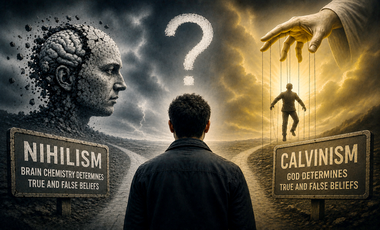
… Notable Calvinist scholar, Matthew J. Hart, is clear: “Calvinists . . . are theological determinists. They hold that God causes every contingent event, either directly . . . or indirectly.” Since human thoughts and states of belief are contingent events, this means that God, according to Calvinistic determinism, causes each and every thought and belief, including all of our false and evil beliefs. In his work titled The Providence of God, Paul Helm — who many consider to be the world’s leading Calvinist philosopher — explains where our thoughts come from according to his Calvinistic view:

  • “Not only is every atom and molecule, every thought and desire, kept in being by God, but every twist and turn of each of these is under the direct control of God. He has not, as far as we know, delegated that control to anyone else.”

If these scholars are correct in their assessment of Calvinism (that Calvinism entails exhaustive determinism), then I contend that Calvinism — the view that God determines all things about humanity — promotes the following incorrect views:

1- A low view of God.

As I’ve explained elsewhere, if exhaustive divine determinism is true, then God is a deity of deception and an untrustworthy source of theological beliefs. 

2- A low view of God’s word.

Based on the transfer of trust principle, if God is an untrustworthy source of theological beliefs, then why should we trust a book authored by a deity of deception that is full of theological statements you are supposed to believe?  If God is untrustworthy, so is a book he inspired. Thus, appealing to Bible verses or to the original Greek does nothing to escape this presupposed false and low view of God and His word. 

3- A low view of man.

Man does not have the ability to reason free from antecedent conditions which are sufficient to necessitate all of his thoughts and beliefs. Man is nothing but a caused cause or a passive cog (a puppet) who is always tethered to prior deterministic forces. 

Thus, on this view, man does not have the active power to infer better beliefs in a deliberative circumstance. He is merely a passive cog who is determined (by something or someone else) to believe truth or to believe falsities.  

4- A low view of sin.

The definition of sin is to “miss the mark.” However, there is no missing the mark if God determines all things about humanity. Everyone always hits the mark perfectly — exactly as God determined. 

5- A low view of the gospel.

This, in my opinion, is the deal-breaker. Calvinism is a low view of the gospel. The gospel literally means “the good news.” Here’s how Christianity has traditionally understood this “good news” with the help of the G.O.S.P.E.L. acronym:

G – God–a perfect being–created all people to be in an eternal loving relationship with Him (that is the objective purpose of life – this is why humanity exist).(Psalm 100:3)

O – Our sins (emphasis on “our”) infect us and separate us from God (like oil and water, necessary perfection and infection do not mix). (Romans 3:23)

S – Sins cannot be removed by good deeds (there’s nothing we as infected people can do about it – we need a miracle). (Isaiah 64:6)

P – Paying the price for sin, Jesus died and rose again (this is that miracle – Jesus paid it all). (Romans 5:8)

E – Everyone who freely trusts in Christ alone – and has not rejected His offer of love and grace – has eternal life (John 3:16).

L – Life with Jesus starts now and lasts forever (to infinity . . . and beyond). (John 10:28)

But Calvinism literally preaches a different gospel. Consider Paul’s words in Galatians 1: 6-8:

  • “I am astonished that you are so quickly deserting him who called you in the grace of Christ and are turning to a different gospel— not that there is another one, but there are some who trouble you and want to distort the gospel of Christ. But even if we or an angel from heaven should preach to you a gospel contrary to the one we preached to you, let him be accursed.”

Here’s the Calvinist’s different G.O.S.P.E.L.*:

G* – God created a few people to be with him. Most people were created for the specific purpose of eternal suffering in Hell.

Right off the bat, we see that this is not the Gospel message that has been preached in Scripture or through the history of the Christian Church. At the least, it’s a radically different message than what most Christians have had in mind over the past 2,000 years when sharing the good news.

It gets worse . . .

O* – Our separation from God is caused and determined by God.

Let that sink in! 

S* – Sins are illusory.

As noted above, no one ever misses the mark (the definition of sin), but everyone does exactly what God determines us to do. Every arrow hits the bulls eye. 

P* – Paying the price for what God caused and determined all people to do, Jesus died and rose again.

At least Calvinists and non-Calvinist Christians all affirm the historical resurrection (but so do Mormons). 

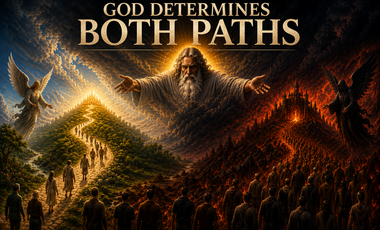
E* – Everyone who God determines to go to heaven goes to heaven; everyone else (the majority of humanity) is determined to suffer in the fires of hell.

Unless, of course, the Calvinist affirms universalism and argue that allpeople are given irresistible grace and determined to go to heaven. Calvinists can also affirm annihilationism and contend that eternal separation from God is still determined by God (so the problem still remains), but there is no eternal conscious suffering. Both views are typically rejected by most Calvinists. 

L* – Life in hell lasts forever.

Does this sound like “good news”? No, in fact, it’s horrible news to the vast majority of humanity. Calvinism is not the message of Christianity. It is a distorted understanding of the gospel that ought to be rejected by Christ followers. ….

(READ MORE VIA FTM!)

Calvinism: A Different Gospel

If Calvinists, Molinists, and Arminians are all Christians, why does Tim Stratton spend so much time arguing about free will, divine providence, and salvation? The answer might make some angry or uncomfortable. But if we are committed to truth, we should have an open dialogue and respectful conversations. Stratton believes that Calvinism contains within itself several problems that must be addressed. He agues that Calvinism presents us with a low view of God, a low view of God’s word, and a low view of the Gospel! (To name a few.) Because of this and other reasons, it is reasonable to conclude that Calvinism presents a different Gospel, which we ought to vehemently reject.


God’s Holiness, the LDS, and the Ontological Argument

(My paper on how the Mormon “god” is not big enough is titled “Infinitely Finite: Mormon Materialism” – PDF) Here is an update via Tim Stratton on this older post [December 2023]. I am only carving out the beginning of his post over at FREE THINKING MINISTRIES, Enjoy the update!

UPDATE

Step One: The Ontological Argument

Let’s begin with one of the most discussed arguments in philosophy of religion: the Ontological Argument.

Here is a standard version based on the laws and rules of modal logic:

The Ontological Argument

  1. It is possible that a Maximally Great Being exists.
  2. If it is possible that a Maximally Great Being exists, then it exists in some possible world.
  3. If a Maximally Great Being exists in some possible world, then it exists in every possible world.
  4. If a Maximally Great Being exists in every possible world, then it exists in the actual world.
  5. If a Maximally Great Being exists in the actual world, then a Maximally Great Being exists.
  6. Therefore, a Maximally Great Being exists.

This isn’t some philosophical Jedi mind trick—it’s a logically deductive argument based on the laws of logic, the rules of reason, and the rules of modal logic. So, if the premises are true, the conclusion must follow. If it’s even possible for a maximally great being (the definition of God) to exist, then God must exist.

(For a fuller explanation of these premises, see Chapter 16 in the forthcoming second edition of Human Freedom, Divine Knowledge, and Mere Molinism.)

In Plain English

Here’s what that means in everyday language:

If it’s even possible that a maximally perfect, all-powerful (omnipotent), all-knowing (omniscient), perfectly good and loving (omnibenevolent) being exists…

Then that being wouldn’t be limited, temporary, dependent, or contingent upon anything else. It would exist necessarily—meaning: It cannot fail to exist.

And if such a being exists necessarily, then: It doesn’t just exist in our minds—it exists in reality.

Why This Matters for the LDS View

The LDS view of God does not affirm a maximally great being in this sense.

Instead, it teaches:

  • The being we refer to as “God” (along with each and every one of us) was once not a god, but still a necessarily existing imperfect “intelligence”
  • This “intelligence” somehow progressed to divinity (and is now a contingently existing deity)
  • All humans can also become gods (exalted beings in the celestial realm)
  • There is an infinite past chain of divine beings

That creates a serious philosophical problem:

  • There is no ultimate, necessary foundation
  • Only an infinite regress of dependent beings

But an infinite regress of contingent beings does not explain reality. It postpones the question (infinitely)—it doesn’t answer it. It never answers it! It continually and endlessly sweeps the problem under the rug or kicks the can down the road.

So at a deeper level, the LDS view—while perhaps easier to understand—does not “make more sense”—at least if we are discussing logical sense.

The LDS view fails to provide a final explanation at all.

(READ IT ALL)

[/unupdate]

Just thought of this today. I have dealt with in the past the “sinfulness” of “god,” in Mormon theology. See my main post on the issue just updated with PDF inks to resources and video to help explain this fact of LDS theology — as well as GOD NEVER SINNED website.

And in conversation as to whether Jehovah’s Witnesses AND Mormons are Christian “denomination’s.” (Not an official denomination like Lutheran or Baptist, rather, should they be considered as part of the Christian faith in their essence.) Here is some of my responses — if they make sense:

Mark is closer in thinking J-Dubs are a “christian” theological cult…. they AT LEAST posit Jehovah as the Creator of the space-time continuum. Creation ex nihilo. Mormons believe Heavenly Father was born [through sexual congress] into this cosmos…. and thus, natural laws impose laws of nature on these gods. In fact, there was no time material did not exist apart from these spirits, and then men, and then exalted men. After my routine with Mormons, I always end with, your “god” is too small.

[….]

Jeff, I guess the easiest way to categorize this in a quip like fashion is to say Jehovah’s Witnesses could incorporate the Ontological Argument into their understanding/apologetic. However, the LDS cannot use that philosophical apologetic. The Mormons cannot be included or acclimated into the theistic understanding of the Judeo-Christian God. YHWH. The I AM. And is not Holy, Holy, Holy. In Mormon theology there is nothing “maximal” about their “god”

The Ontological Argument

BONUS via …

Dictionary of the Later New Testament and Its Developments

2. The Old Testament Background

2.1. The Fundamental Character of God. The starting point for an understanding of these words in the NT and other early Christian writings is the OT. The OT writers reiterate that the Lord God is holy (Lev 19:2; 21:8; Josh 24:19; Ps 22:3; Is 57:15, passim)—“holy” being the fundamental characteristic of God under which all other characteristics are subsumed—and that humans are sinful (Gen 18:20; 1 Kings 8:46; Ps 51:3; Eccles 7:20, passim).

As holy, God is transcendent above, different from, opposite to, Wholly Other (Otto, 6, 25), separate from sin and sinful people (Is 6:1–9; 55:8, 9; cf. Ex 19:20–24; Num 18:3; Heb 7:26). Sinful people, who have become so by their own choice against God (Gen 2:16, 17; 3:1–7; cf. Rom 5:12), are thereby alienated from God and powerless in that they are incapable of closing the chasm that exists between themselves and God, between the holy and the unholy (Is 50:1; 59:1, 2). God, the Holy, is also the “I am, the One who is” (Ex 3:14): God is Life. For people to be separated from God because of their sin is for them to be separated from Life. Those who were made for the purpose of living (cf. Gen 1:26) are faced with its opposite—death (Ezek 18:4).

2.2. The Actions of God. God, however, did what humans could not do. The holiness of God cannot be described merely as a state of being indicative of what God is, but also as purposeful, salvific action indicative of what God plans and carries out. The OT viewed God as transcendent in that he was distinct from sinful humans but not remote or indifferent to them (Snaith, 47). God took the initiative to make the unholy holy, to make the alien a friend, to reconcile sinners to himself (see Salvation).

An example of this is when God the holy One took the initiative to reveal himself to Israel at Sinai and to call this people out from among other nations into a special personal relationship with himself through covenant, law and sacrifice (Ex 20, 24:1–8; Lev 16). Thus, it was God who made Israel a priestly kingdom and a holy nation (Ex 19:6; Deut 7:6), a people that must preserve its distinctiveness by pursuing a way of life different from that practiced by other peoples (Deut 7:5–6; see Levine, 256), a people fit for the service of God and dedicated to do his will, a light to the nations around them (Is 49:6).

Because of God’s special relation to parts of his creation it was possible even for things to be called holy—holy only in the strict sense that they were different from the profane—wholly given over to divine purposes: the ground around a burning bush (Ex 3:5), Jerusalem (Is 48:2), the temple (Is 64:10), the Sabbath (Ex 16:23), priestly garments (Ex 31:10), and so on.

2.3. The Ethical Response to God. The OT meaning of “holy/holiness,” however, is not exhausted with such ideas as “separate from,” “dedicated to,” “sacred” and the like, although these may have been the primary meanings of the words. There are also ethical and moral meanings attached to them. Again such meanings find their origin in the nature of God, for the nature of God is the determining factor that gives meaning to everything (2.1 above). Leviticus 19:1–18 clearly illustrates the moral side of God’s holiness. Here it becomes clear that to be holy as God is holy is not simply to be pure and righteous, but to act toward others with purity and goodness, with truthfulness and honesty, with generosity, justice and love, particularly toward the poor and those who are in no position to help themselves (see esp. Lev 19:9–10, 14). Religion and ethics, the sacred and moral, belong together in the OT; relationship to the Lord God of the OT demands an ethical/moral response. God’s people must not only be like God but also act like God.

3. The Idea of the Holy in the New Testament and Apostolic Fathers

The meaning of the words holy and holiness, although expanded in the literature under study, is squarely based on the writings of the OT. The primary meaning of holy as “separate from” is to be found in the actions of Paul and others who engaged in purification/sanctification rites (hagnizō, hagnismos) by which they ceremoniously separated themselves from the profane so as to be considered fit to enter the sacred precincts of the house of a holy God (Acts 21:24, 26; 24:18; cf. Num 6:5, 13–18; see Douglas, passim; also Barn. 8.1; 15.1, 3, 6–7). That narrow but fundamental meaning of “holy” is nevertheless inadequate to interpret all the texts that treat this concept.

3.1. The Holiness of God. In our early Christian writings “the holiness of God the Father is everywhere presumedthough seldom stated” (Procksch, 101). Nevertheless it is stated: God’s name, the very essence of his person, is holy (Did. 10.2; 1 Clem. 64). Making use of the vocabulary of Leviticus, especially the Holiness Code in Leviticus 19–26, Peter tells those to whom he writes that it is incumbent upon them to be holy as God is holy (hagios, 1 Pet 1:15–16; cf. Lev 19:2; see Selwyn).

The writer of Hebrews explains the disciplinary action of God as his creative work in human lives so that they may share in his holiness (hagiotēs, Heb 12:10). Once again the trisagion (see Liturgical Elements) is sung to God (cf. Is 6:3), this time by the four living creatures of the Seer’s vision—hagios, hagios, hagios (holy, holy, holy). They acclaim that God is holy to the ultimate degree and as such is the Almighty, the Pantokratōr, the one who is, who was and who is to come, eternal and omnipotent, transcendent, Wholly Other (Rev 4:8; see also 1 Clem. 34.6; 59.3). Those who were victorious over the beast sang, “Great and amazing are your deeds, Lord God the Almighty!For you alone are holy” (hosios [hagios] Rev 15:3–4; 1 Clem. 59.3), and the angel of the waters, “You are just, O Holy One” (ho hosios, Rev 16:5). The martyrs, asking for vengeance upon those who slaughtered them for serving God, address God as “Sovereign Lord, holy and true (ho hagios kai alēthinos),” because they know that God, as holy, stands apart from and opposed to sin and evil and that he alone is able to administer justice and judge rightly (Rev 6:10).

God as holy is to be feared (cf. Ps 89:7; 99:3; 111:9); he is a consuming fire (Heb 12:29). He owns the right to judge and to take vengeance (cf. Deut 32:35). But in the NT and other early Christian writings God takes no delight in banishing sinners from him. He delights instead in making them holy, in creating a people fit for his presence, in bringing them close to himself and in giving them sacred work to do (cf. Is 6:1–8). As a consequence God sends his good news (see Gospel) out into the world so that sinful people may “turn from darkness to light and from the power of Satan to God, so that they may receive forgiveness of sins and a place among those who are sanctified [hēgiasmenoi],” i.e., among those who have been made holy and have been set apart to God (Acts 26:18; cf. 20:32). It is important to note here that the expression “those who are sanctified” is a passive participle (from hagiazō, make holy, consecrate, sanctify) that has been termed a “divine passive.” That is, God is the agent of the action. He has taken the initiative not to destroy sinners but to make them holy (cf. Herm. Vis. 3.9.1).

It is God’s will that sinful people be made holy (Heb 10:10). But it was costly for God to realize this wish. Under the old covenant sinners were made holy on the basis of animals being properly sacrificed year after year in their behalf (Lev 16)—tentatively made holy (cf. Rom 3:25; Heb 10:4). Under the new covenant sinners are made holy or sanctified (hēgiasmenoi/hagiazomenous) by a much more profound act—the conscious, deliberate choice of Jesus Christ, God’s Son, radically to obey his Father and offer his body in death as a single sacrifice for sins forever (Heb 10:5–10, 12, 14, 29; cf. Phil 2:8; Diogn. 9.2; see Death of Christ). The blood of Jesus (an expression that refers to the self-determined action of Jesus to die on behalf of sinful human beings) is that by which sinful persons are made holy. The explicit purpose of his suffering and death was that the unclean might become clean, that he might make unholy people holy (hagiasē, Heb 13:12; see also 9:13; 1 Clem. 32.4; 59.3; Barn. 5.1).

In the writings under consideration, as in the OT, places and things as well as persons can be considered holy. Thus the temple is called “the holy place” (Acts 6:13; 21:28). The two tents of the tabernacle are referred to as “the holy place” (hagia, Heb 9:1) and “the Holy of Holies” (hagia hagiōn, Heb 9:3; see also 9:1, 12, 24, 25; 10:19; 13:11). The mountain on which Jesus was transfigured is designated as “the holy [hagios] mountain” (2 Pet 1:18; cf. Barn. 11.3). The Christian faith is termed “the most holy [hagiōtatē faith” (Jude 20). Jerusalem is called “the holy [hagian] city” (Rev 11:2; 21:2, 10; 22:11, 19). Presbyters are holy (Ign. Magn. 3.1), the Eucharist is holy (Did. 9.5), the church is holy (Herm. Vis. 1.1.6; Mart. Pol. presc.), prophets are holy (Acts 3:21; 2 Pet 3:2), angels are holy (Acts 10:22; cf. Jude 14; Rev 14:10; 1 Clem. 39:7; Herm. Sim. 5.4.4; Herm. Vis. 5.5.3).

3.2. The Holiness of Jesus Christ. The NT describes Jesus as holy, a person set apart to God, anointed by him (Acts 4:27; see Anointing), dedicated to God and designated as his unique instrument to carry out his predestined plan in the world (Acts 4:28). But holy is also used of Jesus as it is used of God the Father.

The early church understood Psalm 16:10, said to be written by David and about David, to have had its fulfillment in the resurrected Jesus—“You will not let your Holy [hosion] One experience corruption” (Acts 2:27; 13:35). Peter referred to Jesus as “the Holy [ton hagion] and Righteous One” (Acts 3:14), seemingly in the moral sense of innocent since he linked the word so closely with the anarthrous dikaion (“righteous”—ton hagion kai dikaion; cf. Lk 23:47 and see Conzelmann, 28). In a later sermon Peter speaks of Jesus as God’s “holy [hagion] servant/son” (pais, Acts 4:27; 30).

But the NT and early Fathers say more than this about Jesus. He is the one who makes others holy (ho hagiazōn, Heb 2:11; 13:12), who consecrates them to God and his service that they might be admitted into his presence (cf. Procksch, 89–97). “Jesus is here [in Heb 2:11] exercising a divine function since, according to the OT, it is God who consecrates” (Montefiore, 62; cf. Ex 31:13; Lev 20:8; 21:15; 22:9, 16, 32; Ezek 20:12; 37:28; but see Attridge, 88 n. 107).

Borrowing the language of Isaiah 8:12–13 Peter calls upon Christians to “sanctify [hagiasate] Christ as Lord” (1 Pet 3:15). They are to acknowledge that he is holy (cf. Is 29:23; Ezek 20:41; Ecclus 36:4, Mt 6:9)—holy in the sense that God is holy—for as J. N. D. Kelly has remarked, this verse “has a bearing on 1 Peter’s Christology.… [As] in ii,3 the title ‘the Lord’, which in the Hebrew original denotes God, is unhesitatingly attributed to Christ” (Kelly, 142; see Christology; 1 Peter).

“The Holy One,” a frequent name of God in the OT (2 Kings 19:22; Ps 71:22; 78:41; Is 1:4, passim), appears also in 1 John 2:20 (“you have been anointed by the Holy One [tou hagiou]).” Although there is debate over whether this expression refers to God the Father or to Jesus Christ, in light of the context and especially in light of 2:27–28 it seems more likely that it is a title given to Jesus (see also Diogn. 9.2).

In his vision the Seer reads a letter addressed to the church at Philadelphia. It begins, “These are the words of the Holy One” (ho hagios, Rev 4:7). From the context of this letter (see Rev 2:18; 3:1) this Holy One is none other than the crucified, dead and risen Christ, the one who was and is and will forever be (Rev 1:17–18; cf. Rev 4:8; Diogn. 9.2). These writers want everyone to understand that Jesus is holy in the sense that God is holy—“holy [hosios, a word chosen to emphasize the moral dimension of holiness], blameless, undefiled, separated from sinners, and exalted above the heavens” (Heb 7:26). In naming him “the Holy One” they claim for him the title of deity.

Gerald F. Hawthorne, “Holy, Holiness,” in Dictionary of the Later New Testament and Its Developments, ed. Ralph P. Martin and Peter H. Davids (Downers Grove, IL: InterVarsity Press, 1997), 485–488.


The Ninth Wave (Assisting Grace)

“The Ninth Wave”
(1850 painting by Ivan Aivazovsky)

The above painting is mentioned in the below excerpt of “Calvinism: A Biblical and Theological Critique” by David L. Allen (Editor), Steve W Lemke (Editor), pages 175-182

All images added by RPT

The Alternative of Prevenient or Assisting Grace. What alternative is there to affirming irresistible grace? The most common alternative to irresistible grace is usually called prevenient or assisting grace.107 In assisting or enabling grace, God through the Holy Spirit convicts, convinces, and impels the unsaved toward repentance and faith. God can exert powerful influences through the Holy Spirit to incline unbelievers toward faith and obedience without literally forcing them to do so or changing their wills (John 15:26–27; 16:7–15; 1 Thess 1:5).

Humans cannot save themselves. This situation was depicted powerfully in an 1850 painting by Ivan Aivazovsky, “The Ninth Wave,” which hangs in the Russian Museum in St. Petersburg. The painting on an enormous canvas depicts the aftermath of a sunken sailing ship. Only the mast of the ship remains afloat. The survivors of the sunken ship cling to the mast of the ship, buffeted by high waves. Like much of earlier Russian art, the painting communicates a powerful spiritual message. Like most sailing ship masts, this mast is in the shape of a cross. Only those who cling to the cross will be saved. No one can save themselves. It is only by the grace of God that the mast can save them, though they must take hold of it.

While driving home from preaching one Sunday night years ago, I experienced a terrible wreck. The car rolled off the road out of my control, making me feel as if I was being tossed round and round like clothes in a dryer. The airbag crushed my glasses, so I could not find the brake as the vehicle rolled. Since I knew I had been going at interstate highway speed and never touched the brake, I simply waited for the last crash that I thought would end my life. However, when the vehicle stopped rolling, I was alive but in pain. I crawled out of the car into the ditch. I was hurting and alone on this cold night in a remote area. But drivers who saw the wreck called 911, and an ambulance came to get me. I couldn’t even get up myself because of the pain. They put me on a stretcher and took me to the hospital. There the doctors ministered to me, diagnosed the problem, and put me on a path toward healing. But before the medical staff helped me, they first asked me to sign a consent form. I had to consent before I could receive care. I was delighted to receive from them what I could not do for myself!108

Eternal salvation has some similarities to my physical rescue. We cannot save ourselves. We can do no good “works” to rescue ourselves (Eph 2:8–9). The only thing humans can do is assent to be rescued, or at least not resist being rescued. Giving one’s assent to be saved is not a “good work.” Unfortunately, in the world of salvation, all too many refuse to accept Jesus’s gracious offer of salvation. Most do not even recognize they are drowning and reject all efforts to warn them. Some foolishly think they can save themselves, but they cannot. In the end, because of their rejection of the persistent witness of the Holy Spirit and the salvation proffered through Christ, God reluctantly allows them to drown eternally in their own sins (Matt 12:32; Mark 3:29; Luke 12:10; Rom 1:21–32; 5:6–21).

Billy Graham put it so well:

There is also volitional resolution. The will is necessarily involved in conversion. People can pass through mental conflicts and emotional crises without being converted. Not until they exercise the prerogative of a free moral agent and will to be converted are they actually converted. This act of will is an act of acceptance and commitment. They willingly accept God’s mercy and receive God’s Son and then commit themselves to do God’s will. In every true conversion the will of man comes into line with the will of God. Almost the last word of the Bible is this invitation: “And whosoever will, let him take of the water of life freely” (Rev 22:17). It is up to you. You must will to be saved. It is God’s will, but it must become your will, too.109

We have it from God’s own Word—God chooses how he wants to exercise his sovereignty. We should understand sovereignty from God’s perspective, not from a sinful human perspective. If we truly believe in the sovereignty of God, we must be obedient to the criteria he has laid down. We should let God be God and rule the world and bring about salvation as he has sovereignly established in his Word.

Irresistible Grace Gives God More Glory

Non-Calvinists are happy to affirm the strong emphasis that glorifying God should be our primary vocation, as John Piper has articulated so well.110 However, while agreeing that God’s people should give him the praise he rightfully deserves, we should be mindful that (a) God does not need our praise, and (b) our praise does not make God more glorious. God is glorious! His shekinah glory radiates from him every moment of eternity. There is nothing you or I could do to make him more glorious. We can and should simply join in the heavenly chorus giving him the praise and glory he rightfully deserves. Praising God is one of our responsibilities and privileges as believers, but he is already perfectly glorious. The key question is, what gives God maximal glory?

Moral Problems with Monergism. Many Calvinists believe that only monergistic salvation gives God the maximal glory. According to Matthew Barrett, “Monergism preserves God’s glory”:111

If God’s work in calling and regenerating the sinner is conditioned upon man’s will, then God cannot receive all the glory in salvation. But if God works alone, effectually to call and regenerate dead sinners, then He does receive all of the glory in our salvation. . . . [O]nly monergism can do justice to the glory of God in salvation.112

Let there be no doubt what monergism entails. It entails God’s culpability for reprobation because he predestines a few to heaven and most to hell. Hear the words of John Calvin himself:

God not only foresaw the fall of the first man, and in him the ruin of his posterity, but also at His own pleasure arranged it.113

We say, then, that Scripture clearly proves this much, that God by his eternal and immutable counsel determined once for all those whom it was his pleasure one day to admit to salvation, and those whom, on the other hand, it was his pleasure to doom to destruction.114

First, how do Calvin’s words align with God’s Word? Calvin’s words stand in sharp contrast to the words of God recorded in Ezek 33:11: “Tell them, ‘As I live—this is the declaration of the Lord GOD—I take no pleasure in the death of the wicked, but rather that the wicked person should turn from his way and live. Repent, repent of your evil ways! Why will you die, house of Israel?’” as well as the repeated assertions in the New Testament that God desires that all persons be saved (Matt 18:14; 1 Tim 2:4; 2 Pet 3:9; 1 John 2:2).

Second, is God’s refusal to save the majority of persons praiseworthy for God? I think not! Imagine a fireman who goes into a burning orphanage to save some young children because they are unable to escape by themselves and can be saved only if he rescues them. Only the fireman can save them because he has an asbestos suit. He comes back in a few minutes, bringing out three of the thirty children; but rather than going back in to save more children, the fireman goes over to the news media and brags about how praiseworthy he is for saving the three children. He believes he should be glorified for saving a few. Indeed, saving the three children was a good, heroic deed. But the pressing question on everyone’s mind is, What about the other twenty-seven children? Since he has the means to rescue the children and, indeed, is the only one who can save the children since they cannot save themselves, do we view the fireman as morally praiseworthy? We would not. In fact, probably he would be charged with depraved indifference homicide. He had the means to help them, but he would not. If we do not find that praiseworthy in a human, why would we find it praiseworthy in God? If God deliberately decided not to save (i.e., give irresistible grace to) anyone in your family (your parents, siblings, spouse, or children), indeed, if he took a pernicious pleasure in dooming them to destruction, would that make him more glorious for you? For most of us, it would make him less glorious.

[….]

[….]

Questions about Conflict within God’s Will. Second, the notion of irresistible grace also creates questions about the character of God that present him as less glorious. The two callings (the outward and inward, effectual and ineffectual, serious and not serious callings) correspond to two apparently contradictory wills within God (the revealed and secret wills of God). The revealed will of God issues the Great Commission that the gospel should be preached to all nations, but the secret will is that only a small group of elect will be saved through irresistible grace. The revealed will commands the general, outward call to be proclaimed, but the secret will knows that only a few will receive the effectual, serious calling from the Holy Spirit. The God of hard Calvinism is either disingenuous, cynically making a pseudo-offer of salvation to persons whom he has not given the means to accept, or there is a deep inner conflict within the will of God. If he has extended a general call to all persons to be saved, but has given the effectual call irresistibly to just a few, the general call seems rather misleading. This conflict between the wills of God portrays him as having a divided mind. In response to this challenge, Calvinists appeal to mystery. Is that a successful move? No, because God’s revealed will is not a mystery; it is revealed in his Word.

The Remonstrants, against whom the Synod of Dort was directed, raised the concern that the hard Calvinist perspective advocated by the Synod of Dort portrayed God as riddled by inner conflict. The Remonstrants later affirmed in a response written after the Synod of Dort:

  1. All those whom God calls to salvation, those he calls seriously, that is, with an upright and altogether unfeigned purpose and will to save. And we do not agree with those who hold that God externally calls some whom He does not will to call internally, that is, does not will that they be actually converted, even before they have rejected the grace of the calling.
  2. There is not in God such a hidden will which stands over against His will which is revealed in the Word, that He according to that will (that is, the hidden will) does not will the conversion and the salvation of the greater part of those whom He through the Word of the gospel, and according to the revealed will, is seriously calling and inviting unto faith and salvation; neither do we here acknowledge, as some speak, a holy dissimulation, or a double person in God.115

Some Calvinists attempt to downplay this criticism by advocating the “well-meant offer” or “free offer” of the gospel to the lost. As the Synod of Dort affirmed in Doctrine 2, article 5:

Moreover, the promise of the gospel is, that whosoever believes in Christ crucified shall not perish, but have everlasting life. This promise, together with the command to repent and believe, ought to be declared and published to all nations, and to all persons promiscuously and without distinction, to whom God out of His good pleasure sends the gospel.116

However, such a claim appears to be not only logically contradictory but also mean-spirited to proclaim a false offer of salvation to persons who have no possible chance to receive it because they were not one of the lucky ones to get irresistible grace. Obviously, portraying God as having a divided mind and will is not the way we want to go. It seems disingenuous for God to offer a definitive, serious calling to some but not at all offer a serious calling to others. This does not make God appear more glorious!

Irresistible Grace Is Impersonal. The biblical image of God is based on God as love (1 John 4:7–8) and God as holy (1 Pet 1:16). A God who says he loves all people and desires to save all people but intentionally saves just a few is not the God of the New Testament. The God of the Bible deals with persons as persons, as F. Leroy Forlines articulated; for us to be in a relationship with God, we must be dealt with as persons rather than as machines:

In the relationship of the physical to the physical, or the relationship of the parts of a machine to one another, we are dealing with cause and effect relationships. . . . When a hammer hits a nail, the hammer is active and the nail is passive. The hammer causes the nail to be driven into the wood. The nail had no choice. A force outside the nail caused the nail to be driven into the wood. Interpersonal relationships do not submit to such a simple analysis. Influence and response provide more appropriate terms. . . . [T]he inability of one person to cause another person to do something grows out of the nature of what it means to be a person. . . . There is no such thing as a person doing or not doing something without having made a decision. . . . [I]t has been a mistake over the centuries to focus the conflict between Calvinists and Arminians on whether fallen or redeemed man has a free will. The real question is: Is fallen man a personal being, or is he sub-personal? Human beings are personal beings, by God’s design, and were made for a personal relationship with a personal God. God will not violate His own plan.117

The same concern pertains to the distinction that Calvinists make between the “universal” (ineffective) call and the “particular” (effective) call. Suppose we had a “will changer” machine or pill that turned its victim into a mindless robot who always did what he or she was instructed. The 1975 cult movie The Stepford Wives told this story, often repeated with variations in various science fiction story lines. The Stepford, Connecticut Men’s Association had the technology to turn their wives into subservient, robotic women who existed only to please their husbands. If taken to court, the Men’s Association members would definitely not be held up for praise. They would be accused and tried for crimes such as kidnapping, enslavement, and brainwashing. We would not consider the men to be glorious. We would consider them to be depraved. Is this not how Calvinists are portraying God? He is changing people’s will so they will glorify him? Why would the omnipotent Lord of the universe even care about that? To even suggest such a thing is to view the Bible from a radically anthropocentric point of view in which God desperately needs people to give their approval to him, even if he has to force them to do so. Love is only meaningful when it is chosen. Therefore, if we are concerned about God’s greater glory, it would be in a world of free persons, not persons whose will was mechanically overridden.

What understanding of sovereignty gives God greater glory? Does this notion of sovereignty as total control bring the greatest glory to God? No. Suppose a couple desires to have a baby. They have at least two options. Option one is that they can go down to Walmart and purchase a doll. That plastic doll, for every time they pull its string, will say, “Daddy, I love you!” Now that is total control. They can have that doll say, “I love you” anytime they want. They just pull its string; the doll has no decision but to react the way it has been programmed to react. Option two, however, is to have a real baby. Now, they know from the beginning that the baby is going to be more trouble. Babies do not come home from the hospital housebroken. They cry all night. They break their toes, and they break your hearts. But when that child of his or her own volition says, “Daddy, I love you,” it really means something. The parents are more glorified with a real child than with a doll that could not have praised them had they not pulled its string. So, then, which gives God the greater glory—a view that the only persons who can praise God are those whose wills he changes without their permission, or the view that persons respond to the gracious invitation of God and the conviction of the Holy Spirit to praise God truly of their own volition?

NOTES

[107] Although “prevenient grace” is the term most often used in the non-Calvinist tradition, I prefer to use the term “assisting grace,” “enabling grace,” or to simply use the biblical language as in John 16:7–15. For further exploration of the concept of prevenient grace see W. Brian Shelton, Prevenient Grace: God’s Provision for Humanity (Wilmore, KY: Francis Asbury Press, 2014).

[108] For another version of this “ambulatory” model, see Cross, “Resistibility of Grace,” 199–210; and Keathley, Salvation and Sovereignty, 103–5. Cross and Keathley use this example to argue that one can affirm both that salvation is monergistically brought about by God and that God’s grace is resistible. My position adds to their view that a positive response is necessary, which, regarding salvation, requires responding in faith to Jesus Christ.

[109] Billy Graham, The World Aflame (Minneapolis: Billy Graham Evangelistic Association, 1967), 134.

[110] John Piper, God’s Passion for His Glory: Living the Vision of Jonathan Edwards (Wheaton, IL: Crossway, 1998).

[111] Barrett, “Monergism,” 186.

[112] Barrett, 120–21.

[113] Calvin, Institutes, trans. H. Beveridge, 232 (3.23.7); emphasis added.

[114] Calvin, 210 (3.21.7); emphasis added.

[115] “The Opinions of the Remonstrants,” Responses to article 3 of the Synod of Dort, comments 8– 9, in Vance, The Other Side of Calvinism, rev. ed. (Pensacola, FL: Vance Publications, 1999), appendix 3, 604; also available online at “C. The Opinion of the Remonstrants regarding the third and fourth articles, concerning the grace of God and the conversion of man,” The Arminian Opinions (Heretical), A Puritans Mind.

[116] “The Canons of the Synod of Dort,” in Schaff, Creeds of Christendom, 3:586 (II, art. 5); available online.

[117] F. Leroy Forlines, The Quest for Truth: Answering Life’s Inescapable Questions (Nashville: Randall House, 2001), 313; italics in the original.

Is Divine Determinism a Different Gospel?

See my related post: “Why Both Atheists and Christians Need to Believe in Free Will

Dr. Tim Stratton and Phil Kallberg present their paper at the Evangelical Philosophy Society on whether or not Divine Determinism (or EDD) is a different gospel, and if so, is it a heresy?

There is a rough patch around the 16:45 mark, here is that text:

  • including the passages of scripture appealed to supporting ed. The entire project crumbles. This is epistemic meltdown. We can build on this with an adapted version of CS Lewis’s argument from reason. Premise one, no theological belief is justified if it can be fully explained as the result of untrustworthy antecedent conditions. Two, if that is true, then all theological beliefs can be fully explained as the result of untrustworthy anticedent conditions. Three, therefore, if Ed is true, then no theological belief is justified.

The paper that kicked off the topic in the video above is here: An Explanation and Defense of the Free-Thinking Argument, by Timothy A. Stratton and J. P. Moreland (PDF download here). Here is the Abstract:

This paper is a defense of the big ideas behind the free-thinking argument. This argument aims to demonstrate that determinism is incompatible with epistemic responsibility in a desert sense (being praised or blamed for any thought, idea, judgment, or belief). This lack of epistemic responsibility is problematic for the naturalist. It seems to be an even worse problem, however, for the exhaustive divine determinist because not only would humanity not stand in a position to be blamed for any of our thoughts and beliefs, but it also surfaces a “problem of epistemic evil”, which can be raised against the knowledge of God, the rationality of humans, and the trustworthiness of Scripture.

A couple syllogisms from a questioner via: “Is the God of EDD Deceptive?“:

  1. E1- If EDD is true, then God determines all Christians to affirm some false theological beliefs.
  2. E2- If God determines all Christians to affirm some false theological beliefs, then God is deceptive and His Word (the Bible) cannot be trusted.
  3. E3- God is not deceptive and His Word can be trusted.
  4. E4- Therefore, God does not determine all Christians to affirm some false theological beliefs.
  5. E5- Therefore, EDD is false.

Here is another (Ibid.):

  1. If God determines all things about humanity, then God determines all Christians to have some false theological intuitions and to hold some false theological beliefs.
  2. If God determines all Christians to have some false theological intuitions and to hold some false theological beliefs, then God is [an untrustworthy source of theological beliefs].
  3. If God is [an untrustworthy source of theological beliefs], then, there is reason to doubt God’s inspired word.
  4. There is never reason to doubt God’s inspired word.
  5. Therefore, God is not [an untrustworthy source of theological beliefs].
  6. Therefore, God does not determine all Christians to have some false theological intuitions and to hold some false theological beliefs.
  7. Therefore, God does not determine all things about humanity.

In another challenge proffered to Tim, here is a question/challenge after the person watched this video, found here: “Epistemic Meltdown“:

The key premise of the Deity of Deception Argument reads like this: “If God determines all Christians to affirm some false theological beliefs, then God is deceptive, and His Word cannot be trusted.” The committed determinist will try to provide some counter-examples to try to defeat the argument. The examples involve some sort of machine or process that are generally reliable but can fail on a handful of occasions. Listen to Tim while he examines this response to the argument! Hint: It misses the point!

A few more challenges/questions, and even a “chat” with ChatGPT”:

I will end with the opening by Doc Stratton from a debate. The full debate is linked at the videos YouTube

Tim Stratton’s Apologetic Journey: Minimizing Atheism in the Church

A video letter to Reasonable Faith Ministries that is important:

Imagine being the youth pastor at your church, leading a Bible study for two years, only to have an elder’s son tell you that he’s decided to become an atheist. Tim Stratton was shocked. “Why would you believe that?” he exclaimed. The student responded, “I’ll tell you what. If you can answer just one of these questions, just one of these objections, I’ll stick around.” However, Tim was not equipped to answer any of the objections the young man had found reading the New Atheists.

Tim was shaken, but he realized that as a shepherd of God’s people, he needed to learn how to defend the sheep. That’s when he discovered the resources of Reasonable Faith. Tim says, “Wow! My life was transformed by the renewing of my mind. Now, I had reasons to believe!”