Is God the “devil” Behind Satan? | Sovereign Puppeteer (Updated)

I sent a friend the video of Dr. Theodore Zachariades stating that God wills [causes, not just permits] a man to be unfaithful to his wife.

  • God works all things after the Council of His will. Even keeping those kings who want to commit adultery from committing so! And when He wants to, he orders those to commit adultery when he wants to! (Video)

My friend dismissed this person as a hyper-Calvinist. But as the video below notes, using his definition of a “hyper Calvinist,” A.W. Pink, John Piper, Jeff Durbin, James White, and many-many more, would thus be considered the same. Because of the age restriction, the video must be watch on YouTube, link in pic.

When I asked him: “Question RW, is Piper, Calvin, White and Durbin hyper-Calvinists?” He simply replied “Fishing Bait.” But this is an interesting phenomena… and after decades of encountering Mormons and J-Dubs, the disconnect is the same. I get links and not actualizing on statements made when challenged. When shown a person who follows to the end the logical conclusion of theistic determinism found in Calvinism, the person who is the Calvinist is dismissed as a “hyper-Calvinist” by their fellow Calvinist’s if they are challenged. When that label is then applied rightly to others for the same reason — meaning, using RW’s definition of what a hyper-Calvinist is — then all these others have said worse; and would be by definition, hyper-Calvinists.

Two quick examples. 1st John Calvin, then, John Piper:

John CALVIN:

how foolish and frail is the support of divine justice afforded by the suggestion that evils come to be, not by His will but by His permission. . . . It is a quite frivolous refuge to say that God otiosely permits them, when Scripture shows Him not only willing, but the author of them. . . . Who does not tremble at these judgments with which God works in the hearts of even the wicked whatever He will, rewarding them nonetheless according to desert? Again it is quite clear from the evidence of Scripture that God works in the hearts of men to incline their wills just as he will, whether to good for His mercy’s sake, or to evil according to their merits.

John Calvin, “The Eternal Predestination of God,” 10:11

John Piper:

Ephesians 1:11 goes even further by declaring that God in Christ

“works all things according to the counsel of his will.” Here the Greek word for “works” is energeø, which indicates that God not merely carries all of the universe’s objects and events to their appointed ends but that he actually brings about all things in accordance with his will. In other words, it isn’t just that God manages to turn the evil aspects of our world to good for those who love him; it is rather that he himself brings about these evil aspects for his glory (see Ex. 9:13-16; John 9:3) and his people’s good (see Heb. 12:3-11; James 1:2-4). This includes—as incredible and as unacceptable as it may currently seem—God’s having even brought about the Nazis’ brutality at Birkenau and Auschwitz as well as the terrible killings of Dennis Rader and even the sexual abuse of a young child: “The LORD has made everything for its own purpose, even the wicked for the day of evil” (Prov. 16:4, NASB ).14 “When times are good, be happy; but when times are bad, consider: God has made the one as well as the other” (Eccl. 7:14, NIV).

John Piper and Justin Taylor, eds., Suffering and the Sovereignty of God (Wheaton, IL: Crossway Books, 2006), 42. (FULLER QUOTE VIA THIS PDF)

John Lennox notes in his wonderful book,  Determined to Believe? The Sovereignty of God, Freedom, Faith, and Human Responsibility,” that Martin Luther struggled with the consequences of this form of thought:

Martin Luther at the time of the Reformation. In his book The Bondage of the Will, written in response to Erasmus’ essay On Free Will, Luther said:

[The] omnipotence and foreknowledge of God, I repeat, utterly destroy the doctrine of “free-will” Doubtless it gives the greatest possible offence to common sense or natural reason, that God, Who is proclaimed as being full of mercy and goodness, and so on, should of His own mere will abandon, harden and damn men, as though He delighted in the sins and great eternal torments of such poor wretches. It seems an iniquitous, cruel, intolerable thought to think of God; and it is this that has been such a stumbling block to so many great men down through the ages. And who would not stumble at it? I have stumbled at it myself more than once, down to the deepest pit of despair, so that I wished I had never been made a man. (That was before I knew how health-giving that despair was, and how close to grace.)

In this passage Luther seems to be aware that there is a deep moral problem with aspects of his view [RPT: before redefining “grace” that is – almost like what is, is.]

Calvinism’s [T.U.L.I.P.] Logical Conclusion Displayed

In a reference in that above book is this paper:I Believe In Divine Sovereignty,” by Thomas H. McCall in Trinity Journal (TRINJ 29:2 [Fall 2008]), 209-210. Of which I excerpt:

He [John Piper] works long and hard to illustrate this [theistic determinism] from Rom 9:1-23, which he concludes is about the purposes of God being preserved “by means of the predestination of individuals to their respective eternal destines.”11 And we are not to think that God is righteous in spite of such action—instead we are to see that God is righteous because of this action, for the “heart of Paul’s defense” is this: “in choosing unconditionally those on whom he will have mercy and those whom he will harden God is not unrighteous, for in this ‘electing purpose’ he is acting out of a full allegiance to his name and esteem of his glory.12

This all-determining action of God notably includes predestination and election, but it extends far beyond—it extends to everything. God determines all events that occur in the universe, including all demonic and satanic action.13 As Mark R. Talbot puts it, God creates, sends, instigates, and moves others to do evil, because “nothing that exists or occurs falls outside God’s ordaining will.”14 Talbot makes the point with relentless and unmistakable clarity:

Nothing, including no evil person or thing or event or deed. God’s foreordination is the ultimate reason why everything comes about, including the existence of all evil persons and things and the occurrence of any evil acts or events.15

Make no mistake: “when even the worst of evils befall us, they do not ultimately come from anywhere other than God’s hand.”16

NOTES:

11. John Piper, The Justification of God: An Exegetical and Theological Study of Romans 9:1-23 (Grand Rapids: Baker, 1993), 218, cf. 56-73.

12. Ibid., 219.

13. On this see John Piper, “Suffering and the Sovereignty of God: Ten Aspects of God’s Sovereignty Over Satan and Satan’s Hand in It,” in Suffering and the Sovereignty of God, 19-30. Piper here uses the rather confusing (given his determinism) language of “permission.” By my lights, what he means when he says that God “permits” something is this (a) God determines it to occur and then (b) does not act so as to override his previous ordination. Regarding talk of “permission,” I think that John Calvin’s approach is more consistent, [….]  see John Calvin, Institutes of the Christian Religion I.xviii.1, and John S. Feinberg, No One Like Him: The Doctrine of God (Wheaton: Crossway, 2001), 696.

14. Mark R. Talbot, “‘All the Good That Is Ours in Christ: Seeing God’s Gracious Hand in the Hurts Others Do to Us,” in Suffering and the Sovereignty of God, 43 (41-43), emphasis original.

15. Ibid., 43-44.

16. lbid., 47.

Dave Hunt is right to say that Calvin uses unbiblical positions in dealing with this Augustinian determinism:

There is yet another question that troubles many: If man is free to choose between options, would that not in itself deny both God’s sovereignty and His foreknowledge? Luther claimed that this question was the very heart of the Reformation and of the gospel itself. In fact, Luther dogmatically insisted that it was impossible for God to foreknow the future and for man at the same time to be a free agent to act as he wills.

Believing firmly in God’s foreknowledge, Luther wrote an entire book titled The Bondage of the Will, to prove that the very idea of man’s free will is a fallacy and an illusion. Several reasons have already been given as to why Luther was wrong on this point, and that issue will be dealt with further in the next chapter.

Though Calvin took so much from Augustine, like Luther he also rejected the Augustinian belief that God could foreknow the future, while at the same time man could have a free will. According to Calvin, foreknowledge leaves no room whatsoever for free will, because foreknowledge is the same as predestination:

If God merely foresaw human events, and did not also arrange and dispose of them at his pleasure, there might be room for agitating the question [of free will] but since he foresees the things which are to happen, simply because he has decreed them, they are so to happen, it is vain to debate about prescience. …

If this frigid fiction [of free will] is received, where will be the omnipotence of God, by which, according to his secret counsel on which everything depends, he rules over all? (Calvin, Institutes, III: xxiii, 6–7.)

Calvin repeatedly uses such unbiblical and utterly fallacious reasoning.

The Calvinist assumes a contradiction between sovereignty and free will that doesn’t exist. The fact that God is able to allow man freedom of choice, while still effecting His purposes unhindered, is all the more glorifying to His sovereign wisdom, power, and foreknowledge.

And one last point on this via MONERGISM.COM:

  • In order to understand this better theologians have come up with the term “compatibilism” to describe the concurrence of God’s sovereignty and man’s responsibility. Compatibilism is a form of determinism and it should be noted that this position is no less deterministic than hard determinism. — John Hendryx (John Hendryx is the creator and editor of Monergism.com | SEE: “We are not Determinists!” for more)

Here is A.W. Tozer’s take of the above:

  • Here is my view: God sovereignly decreed that man should be free to exercise moral choice, and man from the beginning has fulfilled that decree by making his choice between good and evil. When he chooses to do evil, he does not thereby countervail the sovereign will of God but fulfills it, inasmuch as the eternal decree decided not which choice the man should make but that he should be free to make it. If in His absolute freedom God has willed to give man limited freedom, who is there to stay His hand or say, What doest thou? Mans will is free because God is sovereign. A God less than sovereign could not bestow moral freedom upon His creatures. He would be afraid to do so.

Tozer is saying that the Calvinist God is too small. Something I run through with Mormon Elders if they decide to come into my home to discuss further their “mission.” In a similar vein, philosophical determinism (atheism/evolutionary paradigms). In what follows — quote’wise — if this is true fore secular forms of determinism, then so to it applies to THEISTIC DETERMINISM:

Atheists reject evidence as illusory…

Why?

Because they “have to.”

Donald C. Abel in his book, Fifty Readings in Philosophy, asks us to imagine for a moment that you walking along and come to a fork in the road. One street is called Divinity Avenue, the other Oxford Street. Assuming you have to walk down one of them, there is a confrontation of choice.  Continuing he says,

  • Now, I ask you seriously to suppose that this ambiguity of my choice is real; and then to make the impossible hypothesis that the choice is made twice over, and each time falls on a different street. In other words, imagine that I first walk through Divinity Avenue, and then imagine that the powers governing the universe annihilate ten minutes of time with all that it contained, and set me back at the door of this hall just as I was before the choice was made. Imagine then that, everything else being the same, I now make a different choice and traverse Oxford Street. You, as passive spectators, look on and see the two alternative universes; one of them with me walking through Divinity Avenue in it, the other with the same me walking through Oxford Street. Now, if you are determinists, you believe one of these universes eternally impossible, because of the intrinsic irrationality or accidentality somewhere involved in it. However, looking outwardly at these universes, can you say which is the impossible and accidental one, and which the rational and necessary one?

Donald C. Abel, Fifty Readings in Philosophy (New York, NY: McGraw-Hill, 1994), 296.

  • “He thus acknowledged the need for any theory to allow that humans have genuine freedom to recognize the truth. He (again, correctly) saw that if all thought, belief, feeling, and choice are determined (i.e., forced on humans by outside conditions) then so is the determinists’ acceptance of the theory of determinism forced on them by those same conditions. In that case they could never claim to know their theory is true since the theory making that claim would be self-referentially incoherent. In other words, the theory requires that no belief is ever a free judgment made on the basis of experience or reason, but is always a compulsion over which the believer has no control.”

Roy A. Clouser, The Myth of Religious Neutrality: An Essay on the Hidden Role of Religious Belief in Theories (Notre Dame, IN: Notre Dame University Press, 2005), 174.

The implications of strict naturalism are grim or even counterintuitive. For example, Bertrand Russell affirmed that any philosophy hoping to stand must ultimately take for granted the (naturalistic) picture of unguided causes and accidental collocations of atoms and must be built on the “firm foundation of unyielding despair.” When it comes to naturalism’s implications for morality, naturalist Kai Nielsen contends that reason can’t bring us to morality; this picture ”is not a pleasant one,” and that reflecting on it ”depresses me.” When it comes to consciousness, naturalist Daniel Dennett considers it an illusion- -something fellow-atheist Thomas Nagel finds utterly confused:

  • You may well ask how consciousness can be an illusion, since every illusion is itself a conscious experience …. So it cannot appear to me that I am conscious though I am not the reality of my own consciousness is the one thing I cannot be deluded about …. The view [of Dennett] is so unnatural that it is hard to convey …. Dennett asks us to turn our backs on what is glaringly obvious. … And he asks us to do this because the reality of such phenomena is incompatible with the scientific materialism that in his view sets the outer bounds of reality. He is, in Aristotle’s words, ”maintaining a thesis at all costs.”

Jaegwon Kim acknowledges the stark picture painted by the naturalistic brush. Naturalism is ”imperialistic; it demands ‘full coverage’ … and exacts a terribly high ontological price.”

Paul Copan and Charles Taliaferro (editors), The Naturalness of Belief: New Essays on Theism’s Rationality (New York, NY: Lexington Books, 2019), viii

I could go on, but you get the point. To fashion the issue for you to see, Jaegwon Kim could have said:

  • Theistic determinism is ”imperialistic; it demands ‘full coverage’ and exacts a terribly high ontological price.” (added for emphasis) 

What is this price? Here is just one example… God vs. God:

Here is a Facebook post I recently posted:

  • “What is there for God to harden, provoke, or restrain if not the autonomous will of creatures?”

If God knows the future because He planned the future [Sproul, Piper, MacArthur, etc.], when God hardens, provokes, or restraines…. is He working against Himself?

If the “T” of TULIP [total depravity] is a reality, wouldn’t hardening, provoking, or restraining someone be the same thing as digging up bodies in a cemetery and putting blindfolds on the rotting cadavers?

In other words, does He plan the abuse of a child just to redeem that act in some way to bring glory to Himself? Is Satan superfluous?

Are all the prescriptions in the Bible making God out to be duplicitous – since he has planned our actions thru determinitive means?

You could not argue that “evil” is really “evil.” Eastern philosophies run into the same problems as the atheist’s/evolutionist’s I just noted above. The Calvinist runs into the same issue. And it is a distortion of Christianity (T.U.L.I.P.):

(Eph 1:11) “works all things according to the counsel of his will.” Here the Greek word for “works” is 𝑒𝑛𝑒𝑟𝑔𝑒ø, which indicates that God not merely carries all of the universe’s objects and events to their appointed ends but that he actually 𝑏𝑟𝑖𝑛𝑔𝑠 𝑎𝑏𝑜𝑢𝑡 all things in accordance with his will. In other words, it isn’t just that God manages to turn the evil aspects of our world to good for those who love him; it is rather that he himself brings about these evil aspects for his glory (see Ex. 9:13-16; John 9:3) and his people’s good (see Heb. 12:3-11; James 1:2-4). This includes—as incredible and as unacceptable as it may currently seem—God’s having even brought about the Nazis’ brutality at Birkenau and Auschwitz as well as the terrible killings of Dennis Rader and even the sexual abuse of a young child: “The LORD has made everything for its own purpose, even the wicked for the day of evil” (Prov. 16:4, NASB ).14 “When times are good, be happy; but when times are bad, consider: God has made the one as well as the other” (Eccl. 7:14, NIV).

John Piper and Justin Taylor, eds., Suffering and the Sovereignty of God (Wheaton, IL: Crossway Books, 2006), 42.

Or…

Is it more like Tozer notes — which lowers man’s position by making him/her responsible to God’s law; and keeps God’s holiness and glory intact as He truly redeems or judges such actions (is He judging Himself in Calvinism? Working against His own will? Secretly?)

TOZER:

God sovereignly decreed that man should be free to exercise moral choice, and man from the beginning has fulfilled that decree by making his choice between good and evil. When he chooses to do evil, he does not thereby countervail the sovereign will of God but fulfills it, inasmuch as the eternal decree decided not which choice the man should make but that he should be free to make it. If in His absolute freedom God has willed to give man limited freedom, who is there to stay His hand or say, ‘What doest thou?’ Man’s will is free because God is sovereign. A God less than sovereign could not bestow moral freedom upon His creatures. He would be afraid to do so.

There is an analogy of two chess players. As you walk up on one professional chess player, he is sitting on one side of the bench, and at the end of his move he gets up walks to the other side, sits down, thinks a moment and makes his move. This process is repeated until the game is over and the chess player wins.

Guaranteed.

When you ask him why he is playing chess alone, he says to ensure his victory. Or as Piper notes in his book astonished by God: “…the reason God knows the future is because he plans the future and accomplishes it.”

You wouldn’t think too highly of his skills, would you? As you walk down the road a bit further, you come across another chess master. This time however, there is a line of players, world famous chess players, lined up as far as the eye could see. As you watched, the one chess player was handily beating every player that sat before him. Player after player.

With whom would you be more impressed with?

And it is this perceived contradiction that leads Calvinists to a polluting of God’s character, which A.W. Tozer tackles in his book, Knowledge of the Holy. Here is a excerpt…. I changed a couple words to read better:

While a complete explanation of the origin of sin eludes us, there are a few things we do know. In His sovereign wisdom God has permitted evil to exist in carefully restricted areas of His creation, a kind of fugitive outlaw whose activities are temporary and limited in scope. In doing this God has acted according to His infinite wisdom and goodness. More than that no one knows at present; and more than that no one needs to know. The name of God is sufficient guarantee of the perfection of His works.

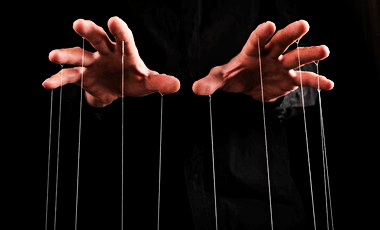
Another real problem created by the doctrine of the divine sovereignty has to do with the will of man. If God rules His universe by His sovereign decrees, how is it possible for man to exercise free choice? And if he cannot exercise freedom of choice, how can he be held responsible for his conduct? Is he not a mere puppet whose actions are determined by a behind-the-scenes God who pulls the strings as it pleases Him?

The attempt to answer these questions has divided the Christian church neatly into two camps which have borne the names of two distinguished theologians, Jacobus Arminius and John Calvin. Most Christians are content to get into one camp or the other and deny either sovereignty to God or free will to man. It appears possible, however, to reconcile these two positions without doing violence to either, although the effort that follows may prove deficient to partisans of one camp or the other.

Here is my view: God sovereignly decreed that man should be free to exercise moral choice, and man from the beginning has fulfilled that decree by making his choice between good and evil. When he chooses to do evil, he does not thereby countervail the sovereign will of God but fulfills it, inasmuch as the eternal decree decided not which choice the man should make but that he should be free to make it. If in His absolute freedom God has willed to give man limited freedom, who is there to stay His hand or say, What doest thou? Mans will is free because God is sovereign. A God less than sovereign could not bestow moral freedom upon His creatures. He would be afraid to do so.

Perhaps a homely illustration might help us to understand. An ocean liner leaves New York bound for Liverpool. Its destination has been determined by proper authorities. Nothing can change it. This is at least a faint picture of sovereignty.

On board the liner are several scores of passengers. These are not in chains, neither are their activities determined for them by decree. They are completely free to move about as they will. They eat, sleep, play, lounge about on the deck, read, talk, altogether as they please; but all the while the great liner is carrying them steadily onward toward a predetermined port.

Both freedom and sovereignty are present here and they do not contradict each other. So it is, I believe, with mans freedom and the sovereignty of God. The mighty liner of Gods sovereign design keeps its steady course over the sea of history. God moves undisturbed and unhindered toward the fulfilment of those eternal purposes which He purposed in Christ Jesus before the world began. We do not know all that is included in those purposes, but enough has been disclosed to furnish us with a broad outline of things to come and to give us good hope and firm assurance of future well-being.

We know that God will fulfil every promise made to the prophets; we know that sinners will some day be cleansed out of the earth; we know that a ransomed company will enter into the joy of God and that the righteous will shine forth in the kingdom of their Father; we know that Gods perfections will yet receive universal acclamation, that all created intelligences will own Jesus Christ Lord to the glory of God the Father, that the present imperfect order will be done away, and a new heaven and a new earth be established forever.

Toward all this God is moving with infinite wisdom and perfect precision of action. No one can dissuade Him from His purposes; nothing turn Him aside from His plans. Since He is omniscient, there can be no unforeseen circumstances, no accidents. As He is sovereign, there can be no countermanded orders, no breakdown in authority; and as He is omninpotent, there can be no want of power to achieve His chosen ends. God is sufficient unto Himself for all these things.

In the meanwhile things are not as smooth as this quick outline might suggest. The mystery of iniquity doth already work. Within the broad field of Gods sovereign, permissive will the deadly conflict of good with evil continues with increasing fury. God will yet have His way in the whirlwind and the storm, but the storm and the whirlwind are here, and as responsible beings we must make our choice in the present moral situation.

Certain things have been decreed by the free determination of God, and one of these is the law of choice and consequences. God has decreed that all who willingly commit themselves to His Son Jesus Christ in the obedience of faith shall receive eternal life and become sons of God. He has also decreed that all who love darkness and continue in rebellion against the high authority of heaven shall remain in a state of spiritual alienation and suffer eternal death at last.

Reducing the whole matter to individual terms, we arrive at some vital and highly personal conclusions. In the moral conflict now raging around us whoever is on Gods side is on the winning side and cannot lose; whoever is on the other side is on the losing side and cannot win. Here there is no chance, no gamble. There is freedom to choose which side we shall be on but no freedom to negotiate the results of the choice once it is made. By the mercy of God we may repent a wrong choice and alter the consequences by making a new and right choice. Beyond that we cannot go.

The whole matter of moral choice centers around Jesus Christ. Christ stated it plainly: He that is not with me is against me, and No man cometh unto the Father, but by me. The gospel message embodies three distinct elements: an announcement, a command, and a call. It announces the good news of redemption accomplished in mercy; it commands all men everywhere to repent and it calls all men to surrender to the terms of grace by believing on Jesus Christ as Lord and Saviour.

We must all choose whether we will obey the gospel or turn away in unbelief and reject its authority. Our choice is our own, but the consequences of the choice have already been determined by the sovereign will of God, and from this there is no appeal.

Is Jesus a Copycat Savior?

(Originally posted December of 2015, Refreshed June of 2022)

OTHER POSTS DEALING WITH THIS IN SOME WAY:

In this inaugural Cold-Case Christianity video broadcast / podcast, J. Warner re-examines an atheist objection related to the historicity of Jesus. Is Jesus merely a copycat of prior mythologies like Mithras, Osiris or Horus? How can we, as Christians, respond to such claims? Jim provides a five point response to this common atheist claim. (For more information, please visit www.ColdCaseChristianity.com)

Here are three segments of a pretty thorough refutation of the “copy-cat messiah” myth many in the gen Y and X generation have been influenced by.

Full Video Response HERE

I wish to point something out.

Very rarely do you find someone who is an honest enough skeptic that after watching the above 3 short videos asks questions like: “Okay, since my suggestion was obviously false, what would be the driving presuppositions/biases behind such a production?” “What are my driving biases/presuppositions that caused me to grab onto such false positions?” You see, few people take the time and do the hard work to compare and contrast ideas and facts. A good example of this is taken from years of discussing various topics with persons of opposing views, I often ask if they have taken the time to “compare and contrast.” Here is my example:


I own and have watched (some of the below are shown in high-school classes):

• Bowling for Columbine
• Roger and Me
• Fahrenheit 9/11
• Wal-Mart: The High Cost of Low Price
• Sicko
• An Inconvenient Truth
• Loose Change
• Zeitgeist
• Religulouse
• The God Who Wasn’t There
• Super-Size Me

But rarely [really never] do I meet someone of the opposite persuasion from me that have watched any of the following (I own and have watched):

• Celsius41.11: The Temperature at Which the Brain Dies
• FahrenHYPE 9/11
• Michael & Me
• Michael Moore Hates America
• Bullshit! Fifth Season… Read More (where they tear apart the Wal-Mart documentary)
• Indoctrinate U
• Mine Your Own Business
• Screw Loose Change
• 3-part response to Zeitgeist
• Fat-Head
• Privileged Planet
• Unlocking the Mystery of Life

Continuing. Another point often overlooked is the impact the person who suggests the believer watch Zeitgeist thinks it will have.

Now that Zeitgeist has been shown to be very unsound and the history distorted, does the skeptic apply the same intended impact back upon him or herself? In other words, what is good for the goose is also good for the gander. Remember, the skeptic expects the Christian to watch this and come face-to-face with truth that undermines his or her’s faith, showing that they have a faith founded on something other than what they previously thought, an untruth. However, this intended outcome backfires and crumbles. The skeptic then has a duty [yes a duty] to apply intended impact onto one’s own biases and presuppositions and start to impose their own skepticism inward.

Christian historian and scholar Gary Habermas debates atheist Tim Callahan on the resurrection of Jesus. Callahan claims the resurrection of Jesus was influenced by pagan and Greek mythology, like Osiris, Dionysus, Adonis, Attis, etc. Of course, Callahan’s views are typical among so many young gullible atheists influenced by Richard Carrier and Robert Price. Habermas rips his claims to shreds in this debate.

A small excerpt from Mary Jo Sharp’s chapter, “Does the Story of Jesus Mimic Pagan Stories,” via, Paul Copan & William Lane Craig, eds.,  Come Let Us Reason: New Essays in Christian Apologetics (pp. 154-160, 164). Mary Jo has a website, CONFIDENT CHRISTIANITY.

OSIRIS

1. Osiris
While some critics of Christ’s story utilize the story of Osiris to demonstrate that the earliest followers of Christ copied it, these critics rarely acknowledge how we know the story of Osiris at all. The only full account of Osiris’s story is from the second-century Al) Greek writer, Plutarch: “Concerning Isis and Osiris.”[4] The other information is found piecemeal in Egyptian and Greek sources, but a basic outline can be found in the Pyramid Texts (c. 2686-c. 2160 BC). This seems problematic when claiming that a story recorded in the second century influenced the New Testament accounts, which were written in the first century. Two other important aspects to mention are the evolving nature of the Osirian myth and the sexual nature of the worship of Osiris as noted by Plutarch. Notice how just a couple of details from the full story profoundly strain the comparison of Osiris with the life of Christ.

Who was Osiris? He was one of five offspring born of an adulterous affair between two gods—Nut, the sky-goddess, and Geb earth-god.[5] Because of Nut’s transgression, the Sun curses her and will not allow her to give birth on any day in any month. However, the god Thoth[6] also loves Nut. He secures five more days from the Moon to add to the Egyptian calendar specifically for Nut to give birth. While  inside his mother’s womb, Osiris falls in love with his sister, Isis. The two have intercourse inside the womb of Nut, and the resultant child is Horus.[7] Nut gives birth to all five offspring: Osiris, Horus, Set, Isis, and Nephthys.

Sometime after his birth, Osiris mistakes Nephthys, the wife of hisbrother Set, for his own wife and has intercourse with her. Enraged, Set plots to murder Osiris at a celebration for the gods. During the festivi­ties, Set procures a beautiful, sweet-smelling sarcophagus, promising it as a gift to the attendee whom it might fit. Of course, this is Osiris. Once Osiris lies down in the sarcophagus, Set solders it shut and then heaves it into the Nile. There are at least two versions of Osiris’s fate: (a) he suffocates in the sarcophagus as it floats down the Nile, and (b) he drowns in the sarcophagus after it is thrown into the Nile.

Grief-stricken Isis searches for and eventually recovers Osiris’s corpse. While traveling in a barge down the Nile, Isis conceives a child by cop­ulating with the dead body.[8] Upon returning to Egypt, Isis attempts to conceal the corpse from Set but fails. Still furious, Set dismembers his brother’s carcass into 14 pieces, which he then scatters throughout Egypt. A temple was supposedly erected at each location where a piece of Osiris was found.

Isis retrieves all but one of the pieces, his phallus. The body is mum­mified with a model made of the missing phallus. In Plutarch’s account of this part of the story, he noted that the Egyptians “presently hold a festival” in honor of this sexual organ.[9] Following magical incantations, Osiris is raised in the netherworld to reign as king of the dead in the land of the dead. In The Riddle of Resurrection: Dying and Rising Gods in the Ancient Near East, T. N. D. Mettinger states: “He both died and rose. But, and this is most important, he rose to continued life in the Netherworld, and the general connotations are that he was a god of the dead.”[10] Mettinger quotes Egyptologist Henri Frankfort:

Osiris, in fact, was not a dying god at all but a dead god. He never returned among the living; he was not liberated from the world of the dead, on the contrary, Osiris altogether belonged to the world of the dead; it was from there that he bestowed his blessings upon Egypt. He was always depicted as a mummy, a dead king.[11]

This presents a very different picture from the resurrection of Jesus, which was reported as a return to physical life.

HORUS

2. Horus
Horus’s story is a bit difficult to decipher for two main reasons. Generally, his story lacks the amount of information for other gods, such as Osiris. Also, there are two stories concerning Horus that develop and then merge throughout Egyptian history: Horus the Sun-god, and Horus the child of Isis and Osiris. The major texts for Horus’s story are the Pyramid Texts, Coffin Texts, the Book of the Dead, Plutarch, and Apuleius-all of which reflect the story of Horus as the child of Isis and Osiris.[12] The story is routinely found wherever the story of Osiris is found.

Who was Horus? He was the child of Isis and Osiris. His birth has several explanations as mentioned in Isis and Osiris’s story: (1) the result of the intercourse between Isis and Osiris in Nut’s womb; (2) conceived by Isis’s sexual intercourse with Osiris’s dead body; (3) Isis is impregnated by Osiris after his death and after the loss of his phallus; or (4) Isis is impregnated by a flash of lightning.[13] To protect Horus from his uncle’s rage against his father, Isis hides the child in the Delta swamps. While he is hiding, a scorpion stings him, and Isis returns to find his body lifeless. (In Margaret Murray’s account in The Splendor That Was Egypt, there is no death story here, but simply a poisoned child.) Isis prays to the god Ra to restore her son. Ra sends Thoth, another Egyptian god, to impart magical spells to Isis for the removal of the poison. Thus, Isis restores Horus to life. The lesson for worshippers of Isis is that prayers made to her will protect their children from harm and illness. Notice the outworking of this story is certainly not a hope for resurrection to new life, in which death is vanquished forever as is held by followers of Jesus.[14] Despite this strain on the argument, some still insist that Horus’s scorpion poisoning is akin to the death and resurrection of Jesus.

In a variation of Horus’s story, he matures into adulthood at an accel­erated rate and sets out to avenge his father’s death. In an epic battle with his uncle Set, Horus loses his left eye, and his uncle suffers the loss of one part of his genitalia. The sacrifice of Horus’s eye, when given as an offering before the mummified Osiris, is what brings Osiris new life in the underworld.[15] Horus’s duties included arranging the burial rites of his dead father, avenging Osiris’s death, offering sacrifice as the Royal Sacrificer, and introducing recently deceased persons to Osiris in the netherworld as depicted in the Hunefer Papyrus (1317-1301 BC). One aspect of Horus’s duties as avenger was to strike down the foes of Osiris. This was ritualized through human sacrifice in the first dynasty, and then, eventually, animal sacrifice by the eighteenth dynasty. In the Book of the Dead we read of Osiris, “Behold this god, great of slaughter, great of fear! He washes in your blood, he bathes in your gore!”[16] So Horus, in the role of Royal Sacrificer, bought his own life from this Osiris by sacrificing the life of other. There is no similarity here to the sacrificial death of Jesus.

MITHRA
(MORE BELOW – JUMP)

3. Mithras
There are no substantive accounts of Mithras’s story, but rather a pieced-together story from inscriptions, depictions, and surviving Mithraea (man-made caverns of worship). According to Rodney Stark, professor of social sciences at Baylor University, an immense amount of “nonsense” has been inspired by modern writers seeking to “decode the Mithraic mysteries.”[17] The reality is we know very little about the mystery of Mithras or its doctrines because of the secrecy of the cult initiates. Another problematic aspect is the attempt to trace the Roman military god, Mithras, back to the earlier Persian god, Mithra, and to the even earlier Indo-Iranian god, Mitra. While it is plausible that the latest form of Mithraic worship was based on antecedent Indo-Iranian traditions, the mystery religion that is compared to the story of Christ was a “genuinely new creation?”[18] Currently, some popular authors utilize the Roman god’s story from around the second century along with the Iranian god’s dates of appearance (c. 1500-1400 BC).

This is the sort of poor scholarship employed in popular renditions of Mithras, such as in Zeitgeist: The Movie. For the purpose of summary, we will utilize the basic aspects of the myth as found in Franz Cumont’s writing and note variations, keeping in mind that many Mithraic schol­ars question Cumont, as well as one another, as to interpretations and aspects of the story.[19] Thus, we will begin with Cumont’s outline.

Who was Mithra? He was born of a “generative rock,” next to a river bank, under the shade of a sacred tree. He emerged holding a dagger in one hand and a torch in the other to illumine the depths from which he came. In one variation of his story, after Mithra’s emergence from the rock, he clothed himself in fig leaves and then began to test his strength by subjugating the previously existent creatures of the world. Mithra’s first activity was to battle the Sun, whom he eventually befriended. His next activity was to battle the first living creature, a bull created by Ormazd (Ahura Mazda). Mithra slew the bull, and from its body, spine, and blood came all useful herbs and plants. The seed of the bull, gathered by the Moon, produced all the useful animals. It is through this first sacrifice of the first bull that beneficent life came into being, including human life. According to some traditions, this slaying took place in a cave, which allegedly explains the cave-like Mithraea.[20]

Mit(h)ra’s name meant “contract” or “compact.”[21] He was known in the Avesta—the Zoroastrian sacred texts—as the god with a hundred ears and a hundred eyes who sees, hears, and knows all. Mit(h)ra upheld agreements and defended truth. He was often invoked in solemn oaths that pledged the fulfillment of contracts and which promised his wrath should a person commit perjury. In the Zoroastrian tradition, Mithra was one of many minor deities (yazatas) created by Ahura Mazda, the supreme deity. He was the being who existed between the good Ahura Mazda and the evil Angra Mainyu—the being who exists between light and darkness and mediates between the two. Though he was considered a lesser deity to Ahura Mazda, he was still the “most potent and most glorious of the yazata.”[22]

The Roman version of this deity (Mithras) identified him with the light and sun. However, the god was not depicted as one with the sun, rather as sitting next to the sun in the communal meal. Again, Mithras was seen as a friend of the sun. This is important to note, as a later Roman inscription (c. AD 376) touted him as “Father of Fathers” and “the Invincible Sun God Mithras.”[23] Mithras was proclaimed as invin­cible because he never died and because he was completely victorious in all his battles. These aspects made him an attractive god for soldiers of the Roman army, who were his chief followers. Pockets of archaeologi­cal evidence from the outermost parts of the Roman Empire reinforce this assumption. Obviously, some problems arise in comparing Mithras to Christ, even at this level of simply comparing stories. Mithras lacks a death and therefore also lacks a resurrection.

Now that we have a more comprehensive view of the stories, it is quite easy to discern the vast difference between the story of Jesus and even the basic story lines of the commonly compared pagan mystery gods. One must only use the very limited, general aspects of the stories to make the accusation of borrowing, while ignoring the numerous aspects having nothing in common with Jesus’ story, such as missing body parts, sibling sexual intercourse inside the womb of a goddess-mother, and being born from a rock. This is why it is important to get the whole story. The sup­posed similarities are quite flimsy in the fuller context.

Just three excerpts from Edwin Yamauchi’s book, Persia and the Bible, These three pics are a bit unrelated… but the topic is on Mithras and their dating of the reliefs known to us. If you take the time to read Dr. Yamauchi’s chapter linked, you can see the connection to the above portion by Mary Jo. (The entire chapter on MITHRAISM can be read HERE.)


FOOTNOTES FROM BOXES “A” “B” “C”

[4] Plutarch, “Concerning Isis and Osiris,” in Hellenistic Religions: The Age of Syncretism, ed. Frederick C. Grant (Indianapolis: Liberal Arts Press, 1953), 80-95.

[5] In some depictions, Nut and Geb are married. Plutarch’s account insinuates that they have committed adultery because of the anger of the Sun at Nut’s transgression.

[6] Plutarch refers to Thoth as Hermes in “Concerning Isis and Osiris.”

[7] Plutarch’s “Concerning Isis and Osiris” appears to be the only account with this story of Horus’s birth.

[8] This aspect of the story, which was a variation of Horus’s conception story, is depicted in a drawing from the Osiris temple in Dendara.

[9] Plutarch, “Concerning Isis and Osiris,” 87.

[10] N. D. Mettinger, The Riddle of Resurrection: Dying and Rising Gods in the Ancient Near East (Stockholm: Almqvist & Wiksell, 2001), 175.

[11] Henri Frankfort, Kingship and the Gods: A Study of Ancient Near Eastern Religion as the Integration of Society and Nature (Chicago: Oriental Institute of the University of Chicago, 190, 289; cf. 185; cited in Mettinger, Riddle of Resurrection, 172.

[12] For the purposes of this chapter, I use the following sources and translations: E. A. Wallis Budge’s translation of the Book of the Dead; Plutarch’s “Concerning Isis and Osiris”; Joseph Campbell’s piecing together of the story in The Mythic Image; as well as other noted interpreta­tions of the story.

[13] The latter two versions of Horus’s birth can be found in Rodney Stark, Discovering God: The Origins of the Great Religions and the Evolution of Belief (New York: Harper Collins, 2007), 204. However, Stark does not reference the source for these birth stories.

[14] The development of Isis’s worship as a protector of children is a result of this instance; Margaret A. Murray, The Splendor That Was Egypt, rev. ed. (Mineola: Dover, 2004), 106.

[15] Joseph Campbell, The Mythic Image (Princeton, NJ: Princeton University Press, 1974), 29, 450.

[16] Murray, The Splendor That Was Egypt, 103.

[17] Stark, Discovering God, 141.

[18] Roger Beck, “The Mysteries of Mithras: A New Account of Their Genesis,” Journal of Roman Studies 88 (1998): 123.

[19] Roger Beck, M. J. Vermaseren, David Ulansey, N. M. Swerdlow, Bruce Lincoln, John R Hinnells, and Reinhold Merkelbach, for example.

[20] More corecontemporary Mithraic scholars have pointed to the lack of a bull-slaying story in the Iranian version of Mithra’s story: “there is no evidence the Iranian god ever had anything to do with a bull-slaying.” David Ulansey, The Origins of the Mithraic Mysteries (New York: Oxford University Press, 1989), 8; see Bruce Lincoln, “Mitra, Mithra, Mithras: Problems of a Multiform Deity,” review of John R. Hinnells, Mithraic Studies: Proceedings of the First International Congress of Mithraic Studies, in History of Religions 17 (1977): 202-3. For an interpretation of the slaying of the bull as a cosmic event, see Luther H. Martin, “Roman Mithrraism and Christianity,” Numen 36 (1989): 8.

[21] “For the god is clearly and sufficiently defined by his name. `Mitra means ‘con-tract’, as Meillet established long ago and D. [Professor G. Dumezi] knows but keeps forgetting.” Ilya Gershevitch, review of Mitra and Aryaman and The Western Response to Zoroaster, in the Bulletin of the School of Oriental and African Studies 22 (1959): 154. See Paul Thieme, “Remarks on the Avestan Hymn to Mithra,”Bulletin of the School of Oriental and African Studies 23 (1960): 273.

[22] Franz Cumont, The Mysteries of Mithra: The Origins of Mithraism (1903). Accessed on May 3,2008, http://www.sacred-texts.com/cla/mom/index.htm.

[23] Corpus Inscriptionum Latinarum VI. 510; H. Dessau, Inscriptions Latinae Selectae II. 1 (1902), No. 4152, as quoted in Grant, Hellenistic Religions, 147. This inscription was found at Rome, dated August 13, AD 376. Notice the late date of this title for Mithras—well after Christianity was firmly established in Rome.


Another good source is: “Jesus Vs Mithra – Debunking The Alleged Parallels

Dr. William Lane Craig

On Thursday, April 10th, 2014 Dr William Lane Craig spoke on the “Objective Evidence for the Resurrection of Jesus” at Yale University. Dr. Craig is one of the leading theologians and defenders of Jesus’ resurrection, demonstrating the veracity of his divinity. This is the biggest claim in history! After the lecture, Dr Craig had a lengthy question and answer time with students from Yale. In this video, Dr Craig answers the question, “What about pre-Christ resurrection myths?”

Dr. William Lane Craig answers the question: Is Jesus’ life parallel to the story of Osiris and Horus?

Edwin Yamauchi (education), wrote one of the best books about Biblical history I have read. Persia and the Bible. Beneath the Bill Maher critique is a photocopy portion of his chapter on Mithraism. Enjoy.

BILL MAHER

PURCHASE THE BOOK, it is a must for a Christian scholars library: Amazon | LOGOS

Atheists Challenge to Biblical Ethics (2 Kings 2:23-25)

Originally Posted July of 2014

~ Jump to the bottom: Joshua and the Canaanites ~

“Cursed them – Nor was this punishment too great for the offence, if it be considered, that their mocking proceeded from a great malignity of mind against God; that they mocked not only a man, and an ancient man, whose very age commanded reverence; and a prophet; but even God himself, and that glorious work of God, the assumption of Elijah into heaven; that they might be guilty of many other heinous crimes, which God and the prophet knew; and were guilty of idolatry, which by God’s law deserved death; that the idolatrous parents were punished in their children; and that, if any of these children were more innocent, God might have mercy upon their souls, and then this death was not a misery, but a real blessing to them, that they were taken away from that education which was most likely to expose them not only to temporal, but eternal destruction. In the name – Not from any revengeful passion, but by the motion of God’s Spirit, and by God’s command and commission. God did this, partly, for the terror and caution of all other idolaters and prophane persons who abounded in that place; partly, to vindicate the honour, and maintain the authority of his prophets; and particularly, of Elisha, now especially, in the beginning of his sacred ministry. Children – This Hebrew word signifies not only young children, but also those who are grown up to maturity, as Genesis 32:22, 34:4, 37:30, Ruth 1:5.”

~ Explanatory Notes on the Whole Bible by John Wesley [1754-65] (Source)

I was in a recent [now not so recent] debate about Biblical cruelty/ethics and the person brought up a verse that has not been brought up in conversation with me yet. It provided a fun learning curve on a specific verse and topic that opened up culture and manners of the early Biblical leaders and prophets of Israel. Mind you the person — involved in the debate — could not ground his presumed premise that this act would be morally wrong. In other words, without a Divine Law that both he and I can access to know an act was truly wrong, so I pointed to the idea that rape is really [if this skeptics position was correct] a natural outgrowth of a species surviving. I speak to this a bit in a chapter from my book:

How does the “carnal” person deal with the unnatural order of the homosexual lifestyle? Since it is a reality it is incorporated into their epistemological system of thought or worldview.[1] Henry Morris points out that the materialist worldview looks at homosexuality as nature’s way of controlling population numbers as well as a tension lowering device.[2] Lest one think this line of thinking is insane, that is: sexual acts are something from our evolutionary past and advantageous;[3] rape is said to not be a pathology but an evolutionary adaptation – a strategy for maximizing reproductive success.[4]

[….]

Ethical Evil?

The first concept that one must understand is that these authors do not view nature alone as imposing a moral “oughtness” into the situation of survival of the fittest. They view rape, for instance, in its historical evolutionary context as neither right nor wrong ethically.[5] Rape, is neither moral nor immoral vis-à-vis evolutionary lines of thought, even if ingrained in us from our evolutionary paths of survival.[6] Did you catch that? Even if a rape occurs today, it is neither moral nor immoral, it is merely currently taboo.[7]


[1] Worldview: “People have presuppositions, and they will live more consistently on the basis of these presuppositions than even they themselves may realize. By ‘presuppositions’ we mean the basic way an individual looks at life, his basic worldview, the grid through which he sees the world. Presuppositions rest upon that which a person considers to be the truth of what exists. People’s presuppositions lay a grid for all they bring forth into the external world. Their presuppositions also provide the basis for their values and therefore the basis for their decisions. ‘As a man thinketh, so he is,’ is really profound. An individual is not just the product of the forces around him. He has a mind, an inner world. Then, having thought, a person can bring forth actions into the external world and thus influence it. People are apt to look at the outer theater of action, forgetting the actor who ‘lives in the mind’ and who therefore is the true actor in the external world. The inner thought world determines the outward action. Most people catch their presuppositions from their family and surrounding society the way a child catches measles. But people with more understanding realize that their presuppositions should be chosen after a careful consideration of what worldview is true. When all is done, when all the alternatives have been explored, ‘not many men are in the room’ — that is, although worldviews have many variations, there are not many basic worldviews or presuppositions.” Francis A. Schaeffer, How Should We Then Live? The Rise and Decline of Western Thought and Culture (Wheaton: Crossway Books, 1976), 19-20.

[2] Henry M. Morris, The Long War Against God: The History and Impact of the Creation/Evolution Conflict (Grand Rapids: Baker Books, 1989), 136.

[3] Remember, the created order has been rejected in the Roman society as it is today. This leaves us with an Epicurean view of nature, which today is philosophical naturalism expressed in the modern evolutionary theories such as neo-Darwinism and Punctuated Equilibrium.

[4] Randy Thornhill and Craig T. Palmer, A Natural History of Rape: Biological Bases of Sexual Coercion (Cambridge: MIT Press, 2000), 71, 163. See also: Dale Peterson and Richard Wrangham, Demonic Males: Apes and the Origins of Human Violence (New York, NY: Houghton Mifflin Harcourt Publishing, 1997).

[5] Nancy Pearcy, Total Truth: Liberating Christianity from Its Cultural Captivity (Wheaton: Crossway Books, 2004), 208-209.

[6] Steven Pinker, The Blank Slate: The Modern Denial of Human Nature (New York: Penguin, 2002), 162-163.

[7] Norman L. Geisler and Frank Turek, I Don’t Have Enough Faith to be an Atheist (Wheaton: Crossway Books, 2004), 176-180.

Scientism, materialism, empiricism, existentialism, naturalism, and humanism – whatever you want to call it… it is still a metaphysical position as it assumes or presumes certain things about the entire universe. D’Souza points this a priori commitment out:

Naturalism and materialism are not scientific conclusions; rather, they are scientific premises. They are not discovered in nature but imposed upon nature. In short, they are articles of faith. Here is Harvard biologist Richard Lewontin: “We take the side of science in spite of the patent absurdity of some of its constructs, in spite of its failure to fulfill many of its extravagant promises of health and life, in spite of the tolerance of the scientific community for unsubstantiated just-so stories, because we have a priori commitment, a commitment — a commitment to materialism [matter is all that exists, nothing beyond nature exists]. It is not that the methods and institutions of science somehow compel us to accept a material explanation of the phenomenal world, but, on the contrary, that we are forced by our a priori adherence to material causes to create an apparatus of investigation and a set of concepts that produce material explanations, no matter how counter-intuitive, no matter how mystifying to the uninitiated. Moreover, that materialism is an absolute, for we cannot allow a Divine Foot in the door.”

Dinesh D’Souza points to this in his recent book, What’s So Great about Christianity (Washington, DC: Regnery Publishing, 2007), 161 (emphasis added).

The debater never engaged his a priori assumptions. This being said, I want to deal with the verse at hand we discussed. The important presumptive idea behind dealing with any literary work is to understand how one is to approach a text of antiquity. I deal with this quite well in a paper on the matter, and any apologist should become familiar with this idea (click the latte). Using the principles involved in the Aristotelian dictum, let us try and figure this seemingly horrid verse.

2Kings 2:23-25

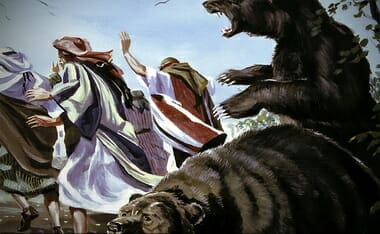
He went up from there to Bethel, and while he was going up on the way, some small boys came out of the city and jeered at him, saying, “Go up, you baldhead! Go up, you baldhead!” And he turned around, and when he saw them, he cursed them in the name of the LORD. And two she-bears came out of the woods and tore forty-two of the boys. From there he went on to Mount Carmel, and from there he returned to Samaria.

Here the skeptic posits God’s wrath on 42 children, presumably innocent in that their greatest offense was calling someone a “bald-head.” It would be similar to a guy being called “four-eyes” by a bunch of kids and then whipping out an AK-47 and mowing them down… and then expecting you to view him as a moral agent. In accessing the following books,

✦ The New Manners & Customs of Bible Times;
✦ Manners and Customs in the Bible: An Illustrated Guide to Daily Life in Bible Times;
✦ An Introduction to the Old Testament;
✦ The IVP Bible Background Commentary: Old Testament;
✦ Old Testament Survey: The Message, Form, and Background of the Old Testament;
✦ A Popular Survey of the Old Testament;
✦ New International Encyclopedia of Bible Difficulties;
✦ Hard Sayings of the Bible;
✦ When Critics Ask: A Popular Handbook on Bible Difficulties.

I noticed something was missing. That is, a bit more of what is not said in the text, but we can assume using and accessing what any historical literary critic would with the principles that predate Christ — mentioned in the above “latte” link. Mind you, many of the responses in my home library that I came across were great, and, in fact they made me dig a bit further. (I do not want the reader to think that I place myself on a higher academic level that these fine theologians and professors.)

The word Hebrew translated here as “children” (na’ar) often means official or servant and doesn’t necessarily even refer to age at all. Mephibosheth’s servant Ziba is referred to as na’ar (2 Samuel 16:1), yet he has fifteen sons. The man that Boaz has positioned as boss over his fieldworkers is na’ar—not a position one grants to children (Ruth 2:5-6). The word na’ar is translated as “servant” over fifty times (roughly a fifth of the times it appears in Scripture).

(Source)

Three big points stuck out from texts I reviewed:


1) “LITTLE KIDS”

“Little children” is an unfortunate translation. The Hebrew expression neurim qetannim is best rendered “young lads” or “young men.” From numerous examples where ages are specified in the Old Testament, we know that these were boys from twelve to thirty years old. One of these words described Isaac at his sacrifice in Genesis 22:12, when he was easily in his early twenties. It described Joseph in Genesis 37:2 when he was seventeen years old. In fact, the same word described army men in 1 Kings 20:14-15…these are young men ages between twelve and thirty.” (Hard Sayings of the Bible)

2) HARMLESS TEASING/PUBLIC SAFETY

A careful study of this incident in context shows that it was far more serious than a “mild personal offense.” It was a situation of serious public danger, quite as grave as the large youth gangs that roam the ghetto sections of our modern American cities. If these young hoodlums were ranging about in packs of fifty or more, derisive toward respectable adults and ready to mock even a well-known man of God, there is no telling what violence they might have inflicted on the citizenry of the religious center of the kingdom of Israel (as Bethel was), had they been allowed to continue their riotous course. (Encyclopedia of Bible Difficulties)

The harmless “teasing” was hardly that–they were direct confrontation between the forces of Baal and the prophet of YHWH that had just healed the water supply (casting doubt on the power and beneficence of Baal!). This was a mass demonstration (if 42 were mauled, how many people were in the crowd to begin with? 50? 100? 400?):

“As Elisha was traveling from Jericho to Bethel several dozen youths (young men, not children) confronted him. Perhaps they were young false prophets of Baal. Their jeering, recorded in the slang of their day, implied that if Elisha were a great prophet of the Lord, as Elijah was, he should go on up into heaven as Elijah reportedly had done. The epithet baldhead may allude to lepers who had to shave their heads and were considered detestable outcasts. Or it may simply have been a form of scorn, for baldness was undesirable (cf. Isa. 3:17, 24). Since it was customary for men to cover their heads, the young men probably could not tell if Elisha was bald or not. They regarded God’s prophet with contempt….Elisha then called down a curse on the villains. This cursing stemmed not from Elisha pride but from their disrespect for the Lord as reflected in their treatment of His spokesman (cf. 1:9-14). Again God used wild animals to execute His judgment (cf., e.g., 1 Kings 13:24). That 42 men were mauled by the two bears suggests that a mass demonstration had been organized against God and Elisha.” (Bible Knowledge Commentary)

3) ELISHA’S MISSION-HELPING NEEDY

The chapter closes with two miracles of Elisha. These immediately established the character of his ministry–his would be a helping ministry to those in need, but one that would brook no disrespect for God and his earthly representatives. In the case of Jericho, though the city had been rebuilt (with difficulty) in the days of Ahab (1 Kings 16:34, q.v.), it had remained unproductive. Apparently the water still lay under Joshua’s curse (cf. Josh 6:26), so that both citizenry and land suffered greatly (v. 19). Elisha’s miracle fully removed the age-old judgment, thus allowing a new era to dawn on this area (vv. 20-22). Interestingly Elisha wrought the cure through means supplied by the people of Jericho so that their faith might be strengthened through submission and active participation in God’s cleansing work. (Encyclopedia of Bible Difficulties)

MORE CAN BE FOUND HERE:


All good stuff, but something is missing. During the course of the debate I pieced together some truths, using culture and history as keys to a “crime scene.” Again, I want to stress what some of the habits were in this small town where this group of people came from:

Molech was a Canaanite underworld deity represented as an upright, bull-headed idol with human body in whose belly a fire was stoked and in whose arms a child was placed that would be burnt to death. It was not just unwanted children who were sacrificed. Plutarch reports that during the Phoenician (Canaanite) sacrifices, “the whole area before the statue was filled with a loud noise of flutes and drums so that the cries and wailing should not reach the ears of the people.”

Sean McDowell and Jonathan Morrow, Is God Just a Human Invention? And Seventeen Other Questions Raised by the New Atheists (Grand Rapids, MI: Kregel Publications, 2010), 177.

This crowd of persons was older than what is typically posited by skeptics. Secondly, this group was a very bad lot. But didn’t explain why bald-head was egregious enough for God to call 42 scurvy bastards to judgement. To be fair, I sympathize with the skeptic here. That being said, there is more to the story.

I want us to view some artistic drawings of historical figures from Israels history: priests, prophets, spiritual leaders, and even Flavius Josephus.


What did you notice above in the cover to an A&E documentary? Yup, a turban as well as a cloak which covers the heads of the priests and prophets. “Biblical Dress” is mentioned pretty well in these few sentences: “The Bible tells how fine linen was wrapped around the head of the High Priest as a turban or mitre — the saniph or kidaris (Exodus 28:39). Ordinary people wore a kerchief over the head, held tight by a cord reminiscent of the Arab headdress commonly worn today, the ‘aggal.”

Christian Standard Bible [CSB], Exodus 28:1–5

And this:

  • In public the Jews always wore a turban, for at certain seasons of the year it is dangerous in Palestine to expose the head to the rays of the sun. This turban was of thick material and passed several times around the head. It was somewhat like our handkerchief and was made of linen, or recently of cotton. The patriarch Job and the prophet Isaiah mention the use of the turban as a headdress (Job 29:14, A. R. V. margin; Isa. 3:23, A. R. V.). In place of the turban, the Palestinian Arabs today, for the most part, wear a head veil called “Kaffieh” which hangs down over part of their garment.

— Fred H. Wight, Manners and Customs of Bible Lands (Moody Press, 1953 | PDF)

  • Head Covering. Something used to cover one’s head either for protection or for religious reasons. Men wore either a cap, turban, or headscarf to protect against the sun. The cap was similar to a modern skullcap and was sometimes worn by the poor. The turban (Isaiah 3:23) was made of thick linen wound around the head with the ends tucked inside the folds. The priest’s turban had a plate strapped to it bearing the inscription “Holy to the Lord” (Ex 28:36). The head-scarf was made from a square yard of cloth, folded in half to form a triangle. The sides fell over the shoulders and the V-point down the back, and it was held in place by a headband made of cord. About the 2nd century BC. male Jews began to wear phylacteries on their foreheads, small leather boxes containing special scripture passages, at morning prayers and at festivals, but not on the Sabbath.

— Walter A. Elwell and Barry J. Beitzel, “Head Covering,” in Baker Encyclopedia of the Bible (Grand Rapids, MI: Baker Book House, 1988), 936.

Take note of the below as well.

The Jewish High Priests Annas (Ananus) and Caiaphas

Samuel anointing Saul

King David

I posted multiple images to drive a point home in our mind. The prophet Elisha would have had a couple cultural accoutrements that changes this story from simple name calling to an assault. He wouldn’t have been alone either, in other words, he would have had some people attached to him that would lay down their lives to protect him. And secondly, he would have had a head covering on, especially since he was returning from a “priestly” intervention. So we know from cultural history the following:

  1. He would have had a head dressing on — some sort of turbin;
  2. and he would have had an entourage of men to dissuade any attack or mistreatment of a priest of Israel on a journey.

One last point before we bullet point the complete idea behind the Holy and Rightful judgement from the Judge of all mankind. There were 42 persons killed by two bears. Obviously this would require many more than 42 people. Why? What happens when you have a group of ten people and a bear comes crashing out of the bushes in preparation to attack? Every one will immediately scatter! In the debate I pointed out that freezing 42 people and allowing the bears time to go down the line to kill each one would be even more of a miracle than this skeptic would want to allow. So the common sense position would require a large crowd and some sort of terrain to cut off escape. So the crowd would probably have been at least a few hundred.

Also, this holy man of God was coming back from a “mission,” he would have had an entourage with him ~ as already mentioned, as well as having some sort of head-covering on as pictured above ~ as already mentioned.

QUESTION:
So, what do these cultural and historical points cause us to rightly assume?

ANSWER:
That the crowd could not see that the prophet was bald.

Which means they would have had to of gotten physical — forcefully removing the head covering. Which means also that the men with the prophet Elisha would have also been overpowered. So lets bullet point the points that undermine the skeptics viewpoint.

✔ The crowd was in their late teens to early twenties;
✔ they were antisemitic (this is known from most of the previous passages and books);
✔ they were from a violently cultic city;
✔ the crowd was large;
✔ the crowd had already turned violent.

These points caused God in his foreknowledge to protect the prophet and send in nature to disperse the crowd. Nature is not kind, and the death of these men were done by a just Judge. This explains the actions of a just God better than many of the references I read.

Your welcome.

I do want to end this post by inviting you to read an excellent treatment of this topic over at TrueFreeThinker: “Positive Atheism – Cliff Walker : Weak Bible Week Poster, part 4 of 7.


Joshua and the Canaanites


This is an update of sorts, and it deals with the idea that God ordered ALL persons to be destroyed (men, women, and children) in the book of Joshua. But is this the directive from God? Scripture does not support this idea as a whole, and we shall take this journey together to find a solution to a seemingly tough subject.

There is a very important principle involved with reading the Bible… it is one of the first things taught to seminarians as well as layman. And it is this:

  • “The Bible interprets the Bible.”

It is that simple. Now of course there are some other basics one must account for as they mature as a Christian, see my post on hermeneutics for instance. But let’s start with that simple sentence above. We will take a short quote from the larger portions that will end this small caveat. The book is by Paul Copan, and is entitled: Is God a Moral Monster? Making Sense of the Old Testament God.

(May I also recommend this article, a summary of Copan’s three chapters from his book: “How Could God Command Killing the Canaanites?“)

Here is the excerpt with the portion highlighted:

The books of Joshua and Judges suggest that taking the land included less-than-dramatic processes of infiltration and internal struggle. Israel’s entrance into Canaan included more than the military motif. Old Testament scholar Gordon McConville comments on Joshua: we don’t have “a simple conquest model, but rather a mixed picture of success and failure, sudden victory and slow, compromised progress.”

Likewise, Old Testament scholar David Howard firmly states that the conquest model needs modification. Why? Because “the stereotypical model of an all-consuming Israelite army descending upon Canaan and destroying everything in its wake cannot be accepted. The biblical data will not allow for this.” He adds that the Israelites entered Canaan and did engage militarily “but without causing extensive material destruction.”

I will repeat that: “The Biblical data will not allow for this.” Another short excerpt taken from pages 170-171 reads thus:

Notice first the sweeping language in Joshua 10:40: “Thus Joshua struck all the land, the hill country and the Negev and the lowland and the slopes and all their kings. He left no survivor, but he utterly destroyed all who breathed, just as the LORD, the God of Israel, had commanded.” Joshua used the rhetorical bravado language of his day, asserting that all the land was captured, all the kings defeated, and all the Canaanites destroyed (cf. 10:40-42; 11:16-23: “Joshua took the whole land . . . and gave . . . it for an inheritance to Israel”). Yet, as we will see, Joshua himself acknowledged that this wasn’t literally so.

Scholars readily agree that Judges is literarily linked to Joshua. Yet the early chapters of Judges (which, incidentally, repeat the death of Joshua) show that the task of taking over the land was far from complete. In Judges 2:3, God says, “I will not drive them out before you.” Earlier, Judges 1:21, 27-28 asserted that “[they] did not drive out the Jebusites”; “[they] did not take possession”; “they did not drive them out completely.” These nations remained “to this day” (Judg. 1:21). The peoples who had apparently been wiped out reappear in the story. Many Canaanite inhabitants simply stuck around.

Some might accuse Joshua of being misleading or of getting it wrong. Not at all. He was speaking the language that everyone in his day would have understood.

As you read on you will notice that God seems to contradict Himself, so does Joshua. UNLESS there is a cultural explanation that 21st century geeks do not notice. Again, I write more in-depth on this here.

That all being said, here are a few pages from the selected chapter. And may I say that the three chapters on the Canaanites were so enlightening. Why? Because they opened up the Scriptures more by dealing with what seem to be inconsistencies in Scripture but are explained well by Scripture. the following few pages show this to be the case, that is, exegesis (click each page to enlarge… if you right click your mouse and choose, “Open Lin In New Tab,” you will be able to enlarge the text dramatically — for older eyes):

(AGAIN, click to enlarge)

Are Those Who Have Not Heard the Gospel Damned? RPT Q&A +More

UPDATED WITH WRETCHED… originally posted August 2014

This evangelism encounter is POWERFUL. Watch an intelligent college student PRESS street-preacher Todd Friel on the requirements to enter Heaven, then receive a biblical explanation.

This post is a response to a question posed to me via my email by an atheist.

I see that you do some apologetics. Here are a few sincere questions that I’ve tried to get answered from Christians like Greg Koukl, but I never seem to get a response. I’m not baiting you by sending you these questions. If you have any thoughts on these issues, I’d appreciate getting to read your opinion.

1. The New Testament makes it clear that its only through faith in Jesus and his sacrifice that humans can enter heaven. Anyone who lived before Jesus started his ministry had no way of having faith in Jesus. Maybe the people of ancient Israel could piece together what they needed to believe to achieve salvation, but for the gentiles or even humans who lived in North America before the birth of Jesus, they would have no knowledge of the nation of Israel. And most certainly they would have no knowledge of a coming messiah or a future person named Jesus and his sacrifice. What I can conclude is that God allowed humans to be born that would have absolutely no chance of avoiding eternal torment in the fires of hell. I’ve been told that human morality proves that God must be a moral being. However, we have an enormous contradiction here. The God in this scenario is not worthy of respect or love because he is not moral. Hitler and Stalin would have to be quite envious of the amount of torment this God would have allowed.

I brought up the idea of Native-Americas (N-A) not hearing the Gospel with my dad. It seemed, to me, unfair that they should not be afforded at least some clarity in an opportunity to be judged before their maker. My dad shared his thoughts on the matter, and it started with a reading from Romans:

  • 18 For God’s wrath  is revealed from heaven against all godlessness and unrighteousness of people who by their unrighteousness suppress the truth,  19 since what can be known  about God is evident among them,  because God has shown it to them. 20 For His invisible attributes, that is, His eternal power and divine nature, have been clearly seen since the creation of the world,  being understood through what He has made.  As a result, people are without excuse. (The Holy Bible: Holman Christian Standard Version. [Nashville: Holman Bible Publishers, 2009], Ro 1:18–20.)
  • But God’s angry displeasure erupts as acts of human mistrust and wrongdoing and lying accumulate, as people try to put a shroud over truth. But the basic reality of God is plain enough. Open your eyes and there it is! By taking a long and thoughtful look at what God has created, people have always been able to see what their eyes as such can’t see: eternal power, for instance, and the mystery of his divine being. So nobody has a good excuse. (Eugene H. Peterson, The Message: The Bible in Contemporary Language [Colorado Springs, CO: NavPress, 2005], Ro 1:18–20.)

He explained that the tribes that were very “war-like,” like the Comanches, acted in rejection of what they knew to be God’s creation and how they should treat their fellow man and nature via the attributes they could clearly interpret via nature. The Sioux were at other times feared as well.

Peaceful tribes – not perfect mind you, but they had a deep understanding of their Creator and how to care for their own and other Native-American tribes they encountered — would interpret nature’s revelatory aspect of Whom they were to worship, and how. The Hopi tribe is one example.

To be clear, when theologians say that God is ultimately sovereign in his decisions over his creation, I am down with this. God — in classical understanding — IS the “Good” and would have a larger view of the panoply of history (since God would be outside of it and viewing it as a whole… the Eternal Now type stuff). So His judgement would necessarily be a Just one. I am not questioning this. I am saying that there are views within orthodoxy that struggle with the boundaries of those who have lived by law seeing that redemption of nature and themselves was somehow woven into nature and never hearing the Gospel (Hebrews 11:9-11). continuing….

So using the Romans understanding of “The Book of Nature,” and the basis for “unsaved” people seeing – yes, even God’s attributes – something metaphysical and not just material, and looked forward to this hope. Also, these stories of creation and serving a God were handed down from the beginning of mankind. Some people across the earth held close these ancient stories although changed with time.

Combine this with the story of Abraham’s Bosom (Luke 16:19-31) and what Peter tells us about Jesus preaching to these lost souls (I Peter 3:18-20). I would posit — staying within the lane-lines of orthodoxy — that those in the world [pre and post Calvary] who have not been afforded a good explanation of the Gospel message may be afforded an opportunity to respond. This is not me arguing for universalism, but for justice being metered out in some form that was communicated to the Hebraic peoples that is hinted to in the New Testament.

Some Commentary On 1 Peter 3:18-19

This verse raises the two most difficult questions in the letter. When did Jesus preach to the spirits in prison, and who were they? Some take the verse to refer to the chronological sequel to Jesus’ death, when his spirit passed into the realms of the departed. Then, with Acts 2:31 and Eph. 4:9, this verse establishes the clause in the Creeds about Jesus’ descent to the dead. In that case he must have preached to all the dead in one of three ways: to offer them a second chance of salvation; to proclaim his victory over death and triumph over the power of evil and so confirm the sentence on unbelievers and announce deliverance for believers; to proclaim release from purgatory to those who had repented just before they perished in the flood (a popular interpretation among Roman Catholic writers).

Neither the first nor the last of these can be supported from Scripture, but the second has been held by many commentators as fitting in with the NT evidence above. E.G. Selwyn (The First Epistle of Peter [Macmillan, 1949]), and others see the spirits in prison as the fallen angels of Gn. 6:1–8 referred to in 2 Pet. 2:4–10 and Jude 6 as well as in the apocryphal 1 Enoch. Peter’s aim in this context is to demonstrate that God’s purpose is being worked out even in times of suffering. So it would seem best to understand the preaching as a declaration of Christ’s triumph, in order to assert (22) that all angels, authorities and powers [are] in submission to him. Grudem (TNTC) in an appendix summarizes the views and claims that the spirits were Noah’s contemporaries who rejected the preaching of the Spirit of Christ through Noah (see 2 Pet. 2:5) and are now in the prison of the abode of the dead. The interpretation of made alive by the Spirit (18) as a reference to the resurrection, and the spirits in prison as a reference to the fallen angels is cogently argued by R. T. France in New Testament Interpretation, ed. I. H. Marshall (Paternoster Press, 1979), pp. 264–281. He claims that NT and contemporary usage favour this understanding of the word spirits when used by itself, rather than applying it to men and women who had died before Jesus came to bring the gospel.

No view is free of problems, but the use of a verb implying steady and purposeful progression (went [19] and has gone [22] are both the same Gk. word poreutheis) suggests that Peter is recounting what Jesus accomplished between his death and exaltation.

D. A. Carson et al., eds., New Bible Commentary: 21st Century Edition, 4th ed. (Leicester, England; Downers Grove, IL: Inter-Varsity Press, 1994), 1380–1381.

I marry this understanding to a view via William Lane Craig, a name you may be familiar with is on the opposing side of Christian apologetics. He has a view on Molinism I enjoy a bit. [“Enjoy a bit” – I believe is still in the pale of orthodoxy] Here is what he says, and I will emphasize the important aspect I wish to highlight:

The doctrine of Molinism seeks to reconcile God’s sovereign predestination with man’s free will. Through His divine middle knowledge, God can know all possible outcomes of any world that is feasible for Him to create, including all the circumstances required for an individual to come to a saving knowledge of Him. But what if the saving of one individual means the loss of another? Does Molinism provide answers to such a dilemma? In this article, Dr. Craig answers questions on the how God would act if his choices were bound by damning either person A or person B arbitrarily.

Read more: http://www.reasonablefaith.org/molinism

I see the solution to your query in your first question in the above. [And the few videos immediately below.]

And it is the same question[s] I struggled with and struggle with. This does away with the contradiction you see. I do wish to note however, that you are taking a moral position in your premise, Saby. And without God, this cannot be the case. Jesus would HAVE to be intimately involved in all of the above scenarios… intimately. None of the above take away from this fact.

I do not know your worldview you operate from, but I can assume atheistic in its presuppositions. But truth (absolute ethical statements are included in this understanding of truth) is something of a fiction to the atheistic evolutionist. Here are some quotes and audio/videos to make my point:


Let’s consider a basic question: Why does the natural world make any sense to begin with? Albert Einstein once remarked that the most incomprehensible thing about the universe is that it is comprehensible. Why should we be able to grasp the beauty, elegance, and complexity of our universe?

Einstein understood a basic truth about science, namely, that it relies upon certain philosophical assumptions about the natural world. These assumptions include the existence of an external world that is orderly and rational, and the trustworthiness of our minds to grasp that world. Science cannot proceed apart from these assumptions, even though they cannot be independently proven. Oxford professor John C. Lennox asks a penetrating question, “At the heart of all science lies the conviction that the universe is orderly. Without this deep conviction science would not be possible. So we are entitled to ask: Where does the conviction come from?”” Why is the world orderly? And why do our minds comprehend this order?

Toward the end of The God Delusion, Dawkins admits that since we are the product of natural selection, our senses cannot be fully trusted. After all, according to Darwinian evolution, our senses have been formed to aid survival, not necessarily to deliver true belief. Since a human being has been cobbled together through the blind process of natural selection acting on random mutation, says Dawkins, it’s unlikely that our views of the world are completely true. Outspoken philosopher of neuro-science Patricia Churchland agrees:

The principle chore of brains is to get the body parts where they should be in order that the organism may survive. Improvements in sensorimotor control confer an evolutionary advantage: a fancier style of representing [the world] is advantageous so long as it… enhances the organism’s chances for survival. Truth, whatever that is, takes the hindmost.

Dawkins is on the right track to suggest that naturalism should lead people to be skeptical about trusting their senses. Dawkins just doesn’t take his skepticism far enough. In Miracles, C. S. Lewis points out that knowledge depends upon the reliability of our mental faculties. If human reasoning is not trustworthy, then no scientific conclusions can be considered true or false. In fact, we couldn’t have any knowledge about the world, period. Our senses must be reliable to acquire knowledge of the world, and our reasoning faculties must be reliable to process the acquired knowledge. But this raises a particularly thorny dilemma for atheism. If the mind has developed through the blind, irrational, and material process of Darwinian evolution, then why should we trust it at all? Why should we believe that the human brain—the outcome of an accidental process—actually puts us in touch with reality? Science cannot be used as an answer to this question, because science itself relies upon these very assumptions.

Even Charles Darwin was aware of this problem: “The horrid doubt always arises whether the convictions of man’s mind, which has developed from the mind of the lower animals, are of any value or at all trustworthy. Would anyone trust the conviction of a monkey’s mind, if there are any convictions in such a mind?” If Darwinian evolution is true, we should distrust the cognitive faculties that make science possible.

Sean McDowell and Jonathan Morrow, Is God Just a Human Invention? And Seventeen Other Questions Raised by the New Atheists (Grand Rapids, MI: Kregel Publications, 2010), 37-38.


….Darwin thought that, had the circumstances for reproductive fitness been different, then the deliverances of conscience might have been radically different. “If . . . men were reared under precisely the same conditions as hive-bees, there can hardly be a doubt that our unmarried females would, like the worker-bees, think it a sacred duty to kill  their brothers, and mothers would strive to kill their fertile daughters, and no one would think of interfering” (Darwin, Descent, 82). As it happens, we weren’t “reared” after the manner of hive bees, and so we have widespread and strong beliefs about the sanctity of human life and its implications for how we should treat our siblings and our offspring.

But this strongly suggests that we would have had whatever beliefs were ultimately fitness producing given the circumstances of survival. Given the background belief of naturalism, there appears to be no plausible Darwinian reason for thinking that the fitness-producing predispositions that set the parameters for moral reflection have anything whatsoever to do with the truth of the resulting moral beliefs. One might be able to make a case for thinking that having true beliefs about, say, the predatory behaviors of tigers would, when combined with the understandable desire not to be eaten, be fitness producing. But the account would be far from straightforward in the case of moral beliefs.” And so the Darwinian explanation undercuts whatever reason the naturalist might have had for thinking that any of our moral beliefs is true. The result is moral skepticism.

If our pretheoretical moral convictions are largely the product of natural selection, as Darwin’s theory implies, then the moral theories we find plausible are an indirect result of that same evolutionary process. How, after all, do we come to settle upon a proposed moral theory and its principles as being true? What methodology is available to us?

Paul Copan and William Lane Craig [Mark D. Linville], eds., Contending With Christianity’s Critics: Answering the New Atheists & Other Objections (Nashville, TN: B&H Publishing, 2009), 70.


What about human actions? They are of no more value or significance than the actions of any other material thing. Consider rocks rolling down a hill and coming to rest at the bottom. We don’t say that some particular arrangement of the rocks is right and another is wrong. Rocks don’t have a duty to roll in a particular way and land in a particular place. Their movement is just the product of the laws of physics. We don’t say that rocks “ought” to land in a certain pattern and that if they don’t then something needs to be done about it. We don’t strive for a better arrangement or motion of the rocks. In just the same way, there is no standard by which human actions can be judged. We are just another form of matter in motion, like the rocks rolling down the hill.

We tend to think that somewhere “out there” there are standards of behaviour that men ought to follow. But according to Dawkins there is only the “natural, physical world”. Nothing but particles and forces. These things cannot give rise to standards that men have a duty to follow. In fact they cannot even account for the concept of “ought”. There exist only particles of matter obeying the laws of physics. There is no sense in which anything ought to be like this or ought to be like that. There just is whatever there is, and there just happens whatever happens in accordance with the laws of physics.

Men’s actions are therefore merely the result of the laws of physics that govern the behaviour of the particles that make up the chemicals in the cells and fluids of their bodies and thus control how they behave. It is meaningless to say that the result of those physical reactions ought to be this or ought to be that. It is whatever it is. It is meaningless to say that people ought to act in a certain way. It is meaningless to say (to take a contemporary example) that the United States and its allies ought not to have invaded Iraq. The decision to invade was just the outworking of the laws of physics in the bodies of the people who governed those nations. And there is no sense in which the results of that invasion can be judged as good or bad because there are no standards to judge anything by. There are only particles reacting together; no standards, no morals, nothing but matter in motion.

Dawkins finds it very hard to be consistent to this system of belief. He thinks and acts as if there were somewhere, somehow standards that people ought to follow. For example in The God Delusion, referring particularly to the Christian doctrine of atonement, he says that there are “teachings in the New Testament that no good person should support”. And he claims that religion favours an in-group/out-group approach to morality that makes it “a significant force for evil in the world”.

According to Dawkins, then, there are such things as good and evil. We all know what good and evil mean. We know that if no good person should support the doctrine of atonement then we ought not to support that doctrine. We know that if religion is a force for evil then we are better off without religion and that, indeed, we ought to oppose religion. The concepts of good and evil are innate in us. The problem for Dawkins is that good and evil make no sense in his worldview. “There is nothing beyond the natural, physical world.” There are no standards out there that we ought to follow. There is only matter in motion reacting according to the laws of physics. Man is not of a different character to any other material thing. Men’s actions are not of a different type or level to that of rocks rolling down a hill. Rocks are not subject to laws that require them to do good and not evil; nor are men. Every time you hear Dawkins talking about good and evil as if the words actually meant something, it should strike you loud and clear as if he had announced to the world, “I am contradicting myself”.

Please note that I am not saying that Richard Dawkins doesn’t believe in good and evil. On the contrary, my point is that he does believe in them but that his worldview renders such standards meaningless.

____________
The Dawkins Proof, chapter one.


Even Darwin had some misgivings about the reliability of human beliefs. He wrote, “With me the horrid doubt always arises whether the convictions of man’s mind, which has been developed from the mind of lower animals, are of any value or at all trustworthy. Would any one trust in the convictions of a monkey’s mind, if there are any convictions in such a mind?”

Given unguided evolution, “Darwin’s Doubt” is a reasonable one. Even given unguided or blind evolution, it’s difficult to say how probable it is that creatures—even creatures like us—would ever develop true beliefs. In other words, given the blindness of evolution, and that its ultimate “goal” is merely the survival of the organism (or simply the propagation of its genetic code), a good case can be made that atheists find themselves in a situation very similar to Hume’s.

The Nobel Laureate and physicist Eugene Wigner echoed this sentiment: “Certainly it is hard to believe that our reasoning power was brought, by Darwin’s process of natural selection, to the perfection which it seems to possess.” That is, atheists have a reason to doubt whether evolution would result in cognitive faculties that produce mostly true beliefs. And if so, then they have reason to withhold judgment on the reliability of their cognitive faculties. Like before, as in the case of Humean agnostics, this ignorance would, if atheists are consistent, spread to all of their other beliefs, including atheism and evolution. That is, because there’s no telling whether unguided evolution would fashion our cognitive faculties to produce mostly true beliefs, atheists who believe the standard evolutionary story must reserve judgment about whether any of their beliefs produced by these faculties are true. This includes the belief in the evolutionary story. Believing in unguided evolution comes built in with its very own reason not to believe it.

This will be an unwelcome surprise for atheists. To make things worse, this news comes after the heady intellectual satisfaction that Dawkins claims evolution provided for thoughtful unbelievers. The very story that promised to save atheists from Hume’s agnostic predicament has the same depressing ending.

It’s obviously difficult for us to imagine what the world would be like in such a case where we have the beliefs that we do and yet very few of them are true. This is, in part, because we strongly believe that our beliefs are true (presumably not all of them are, since to err is human—if we knew which of our beliefs were false, they would no longer be our beliefs).

Suppose you’re not convinced that we could survive without reliable belief-forming capabilities, without mostly true beliefs. Then, according to Plantinga, you have all the fixins for a nice argument in favor of God’s existence For perhaps you also think that—given evolution plus atheism—the probability is pretty low that we’d have faculties that produced mostly true beliefs. In other words, your view isn’t “who knows?” On the contrary, you think it’s unlikely that blind evolution has the skill set for manufacturing reliable cognitive mechanisms. And perhaps, like most of us, you think that we actually have reliable cognitive faculties and so actually have mostly true beliefs. If so, then you would be reasonable to conclude that atheism is pretty unlikely. Your argument, then, would go something like this: if atheism is true, then it’s unlikely that most of our beliefs are true; but most of our beliefs are true, therefore atheism is probably false.

Notice something else. The atheist naturally thinks that our belief in God is false. That’s just what atheists do. Nevertheless, most human beings have believed in a god of some sort, or at least in a supernatural realm. But suppose, for argument’s sake, that this widespread belief really is false, and that it merely provides survival benefits for humans, a coping mechanism of sorts. If so, then we would have additional evidence—on the atheist’s own terms—that evolution is more interested in useful beliefs than in true ones. Or, alternatively, if evolution really is concerned with true beliefs, then maybe the widespread belief in God would be a kind of “evolutionary” evidence for his existence.

You’ve got to wonder.

Mitch Stokes, A Shot of Faith: To the Head (Nashville, TN: Thomas Nelson, 2012), 44-45.


AND THE BELOW is taken from another post of mine:

I wish to start out with an excerpt from a chapter in my book where I use two scholarly works that use Darwinian naturalism as a guide to their ethic:

  • Dale Peterson and Richard Wrangham, Demonic Males: Apes and the Origins of Human Violence (New York, NY: Houghton Mifflin Harcourt Publishing, 1997).
  • Randy Thornhill and Craig T. Palmer, A Natural History of Rape: Biological Bases of Sexual Coercion (Cambridge: MIT Press, 2000).

My incorporation of these works into my book (quote):

“Lest one think this line of thinking is insane, that is: sexual acts are something from our evolutionary past and advantageous; rape is said to not be a pathology but an evolutionary adaptation – a strategy for maximizing reproductive success….. The first concept that one must understand is that these authors do not view nature alone as imposing a moral “oughtness” into the situation of survival of the fittest. They view rape, for instance, in its historical evolutionary context as neither right nor wrong ethically. Rape, is neither moral nor immoral vis-à-vis evolutionary lines of thought, even if ingrained in us from our evolutionary paths of survival. Did you catch that? Even if a rape occurs today, it is neither moral nor immoral, it is merely currently taboo. The biological, amoral, justification of rape is made often times as a survival mechanism bringing up the net “survival status” of a species, usually fraught with examples of homosexual worms, lesbian seagulls, and the like.”

(pp. 7-9 of  Roman-Epicurean-ism-Natural-Law-and-Homosexuality)

Now, hear from other atheist and evolutionary apologists themselves in regard to the matter:

Richard Dawkins

(h/t: TrueFreeThinker) – A Statement Made by an atheist at the Atheist and Agnostic Society:

Some atheists do believe in ethical absolutes, some don’t. My answer is a bit more complicated — I don’t believe that there are any axiological claims which are absolutely true, except within the context of one person’s opinion.

That is, beauty is in the eye of the beholder, and so are ethics. So, why is Adolf Hitler wrong? Because he murdered millions, and his only justification, even if it were valid, was based on things which he should have known were factually wrong. Why is it wrong to do that? Because I said so. Unless you actually disagree with me — unless you want to say that Adolf Hitler was right — I’m not sure I have more to say.

[side note] You may also be aware that Richard Dawkins stated,

I asked an obvious question: “As we speak of this shifting zeitgeist, how are we to determine who’s right? If we do not acknowledge some sort of external [standard], what is to prevent us from saying that the Muslim [extremists] aren’t right?”

“Yes, absolutely fascinating.” His response was immediate. “What’s to prevent us from saying Hitler wasn’t right? I mean, that is a genuinely difficult question. But whatever [defines morality], it’s not the Bible. If it was, we’d be stoning people for breaking the Sabbath.”

I was stupefied. He had readily conceded that his own philosophical position did not offer a rational basis for moral judgments. His intellectual honesty was refreshing, if somewhat disturbing on this point….

Stated during an interview with Larry Taunton, “Richard Dawkins: The Atheist Evangelist,” by Faith Magazine, Issue Number 18, December 2007 (copyright; 2007-2008)

Lewis Wolpert

From the video description:

Atheists Trying to Have Their Cake and Eat It Too on Morality. This video shows that when an atheist denies objective morality they also affirm moral good and evil without the thought of any contradiction or inconsistency on their part.

Dan Barker

This is from the video Description for the Dan Barker video below:

The atheist’s animal-level view of “morality” is completely skewed by dint of its lack of objectivity. In fact, the atheist makes up his own personal version of “morals” as he goes along, and this video provides an eye-opening example of this bizarre phenomenon of the atheist’s crippled psyche:

During this debate, the atheist stated that he believed rape was morally acceptable, then he actually stated that he would rape a little girl and then kill himself — you have just got to hear his psychotic words with your own ears to believe it!

He then stammered and stumbled through a series of ridiculously lame excuses for his shameful lack of any type of moral compass.

To the utter amazement of his opponent and all present in the audience, the gruesomely amoral atheist even goes so far as to actually crack a sick little joke on the subject of SERIAL CHILD-RAPE!

:::shudders:::

Meanwhile, the Christian in the video gracefully and heroically realizes the clearly objective moral values that unquestionably come to humanity by God’s grace, and yet are far beyond the lower animal’s and the atheist’s tenuous mental grasp. Be sure to keep watching until the very end so that you can hear the Christian’s final word — it’s a real knuckle-duster!

Atheist dogma™ not only fails to provide a stable platform for objective human morality for its adherent — it precludes him even the possibility. It’s this very intellectual inability to apprehend any objective moral values that leads such believers in atheist dogma™ as Hitler, Stalin, Mao, and Dahmer to commit their horrific atheistic atrocities.

Any believer in atheist dogma™, given sufficient power, would take the exact same course of action that Hitler did, without a moment’s hesitation.

Note as well that evolutionary naturalism has very dogmatic implication, IF — that is — the honest atheist/evolutionist follow the matter to their logical conclusions, via the ineffable Dr. Provine:

William Provine

Atheist and staunch evolutionist Dr. William Provine (who is often quoted by Richard Dawkins) admits what life has in stored if Darwinism is true. The quote comes from his debate here with Dr. Phillip E. Johnson at Stanford University, April 30, 1994.

Sam Harris denies completely free will: “In fact, the concept of free will is a non-starter, both philosophically and scientifically.” This is important — as Stephen Hawking points out in his lecture entitled Determinism: Is Man a Slave or the Master of His Fate — who admitted that if “we are the random products of chance, and hence, not free, or whether God had designed these laws within which we are free.”[1] In other words, do we have the ability to make choices, or do we simply follow a chemical reaction induced by millions of mutational collisions of free atoms? Michael Polyni mentions that this “reduction of the world to its atomic elements acting blindly in terms of equilibrations of forces,” a belief that has prevailed “since the birth of modern science, has made any sort of teleological view of the cosmos seem unscientific…. [to] the contemporary mind.”[2]

Which is why in Hawkings most recent book he says “This book is rooted in the concept of scientific determinism, which implies that the answer to [the question of miracles] is that there are no miracles, or exceptions to the laws of nature.”[3] And hence the spiral from scientism, to determinism, to reductionism: “so it seems that we are no more than biological machines and that free will is just an illusion.”[4] 


[1] Ravi Zacharias, The Real Face of Atheism (Grand Rapids, MI: Baker Books, 2004), 118, 119.

[2] Michael Polanti and Harry Prosch, Meaning (Chicago, IL: Chicago university Press, 1977), 162.

[3] Stephen Hawking and Leonard Mlodinow, The Grand Design (London, England: Bantam Press, 2010), 34.

[4] Ibid., 32.

Ethics and propositions that include ethical choice is one that rejects naturalistic origins. Some more quotes to make the point:


What merit would attach to moral virtue if the acts that form such habitual tendencies and dispositions were not acts of free choice on the part of the individual who was in the process of acquiring moral virtue? Persons of vicious moral character would have their characters formed in a manner no different from the way in which the character of a morally virtuous person was formed—by acts entirely determined, and that could not have been otherwise by freedom of choice.

Mortimer J. Adler, Ten Philosophical Mistakes (New York, NY: Touchstone, 1985), 154.


If what he says is true, he says it merely as the result of his heredity and environment, and nothing else. He does not hold his determinist views because they are true, but because he has such-and-such stimuli; that is, not because the structure of the structure of the universe is such-and-such but only because the configuration of only part of the universe, together with the structure of the determinist’s brain, is such as to produce that result…. They [determinists – I would posit any philosophical naturalist] want to be considered as rational agents arguing with other rational agents; they want their beliefs to be construed as beliefs, and subjected to rational assessment; and they want to secure the rational assent of those they argue with, not a brainwashed repetition of acquiescent pattern. Consistent determinists should regard it as all one whether they induce conformity to their doctrines by auditory stimuli or a suitable injection of hallucinogens: but in practice they show a welcome reluctance to get out their syringes, which does equal credit to their humanity and discredit to their views. Determinism, therefore, cannot be true, because if it was, we should not take the determinists’ arguments as being really arguments, but as being only conditioned reflexes. Their statements should not be regarded as really claiming to be true, but only as seeking to cause us to respond in some way desired by them.

J. R. Lucas, The Freedom of the Will (New York: NY: Oxford University Press, 1970), 114, 115.


He thus acknowledged the need for any theory to allow that humans have genuine freedom to recognize the truth. He (again, correctly) saw that if all thought, belief, feeling, and choice are determined (i.e., forced on humans by outside conditions) then so is the determinists’ acceptance of the theory of determinism forced on them by those same conditions. In that case they could never claim to know their theory is true since the theory making that claim would be self-referentially incoherent. In other words, the theory requires that no belief is ever a free judgment made on the basis of experience or reason, but is always a compulsion over which the believer has no control.

Roy A. Clouser, The Myth of Religious Neutrality: An Essay on the Hidden Role of Religious Belief in Theories (Notre Dame, IN: Notre Dame University Press, 2005), 174.


Determinism is self-stultifying.  If my mental processes are totally determined, I am totally determined either to accept or to reject determinism.  But if the sole reason for my believing or not believing X is that I am causally determined to believe it I have no ground for holding that my judgment is true or false.

J. P. Moreland & William Lane Craig, Philosophical Foundations for a Christian Worldview (Downers Grove, IL: IVP Academic, 2003), 241; Quoting: H.P. Owen, Christian Theism (Edinburgh: T&T Clark, 1984), 118.


Frank Zindler (Editor of American Atheist Magazine and Director of American Atheists Press), denies the existence of free will. In an article he wrote for the American Atheist magazine, he writes this:

Although I risk inciting to disaffection many of the people who have expressed admiration for some of my previous articles, I must now focus my ‘Probing Mind’ upon the question, “Can will be free?” Let me answer the question straightaway with a firm “no,” and then attempt to support my conclusion.

The Center for Naturalism is strongly advocating for widespread rejection of free will:

We should doubt the little god of free will on the very same grounds that atheists doubt the big god of traditional religions: there’s no evidence for it.

(Reasons for God)

I hope this helped and challenged you to know the variability within faith (while remaining orthodox) as well as bringing you face-to-face with your own premises in your worldview. Remember, if you disagree with the above ethics portion, you are not arguing against me but arguing against fellow atheists (if you are an atheist… I would hope you are a soft-agnostic). I also hope you asked your questions in a manner that is in line with you truly seeking a solution to these sticky issues. I will respond to your other challenges (honest questions) at a later date,

Finally, it is objected that the ultimate loss of a single soul means the defeat of omnipotence. And so it does. In creating beings with free will, omnipotence from the outset submits to the possibility of such defeat. What you call defeat, I call miracle: for to make things which are not Itself, and thus to become, in a sense, capable of being resisted by its own handiwork, is the most astonishing and unimaginable of all the feats we attribute to the Deity. I willingly believe that the damned are, in one sense, successful, rebels to the end; that the doors of hell are locked on the inside. I do not mean that the ghosts may not wish to come out of hell, in the vague fashion wherein an envious man “wishes” to be happy: but they certainly do not will even the first preliminary stages of that self-abandonment through which alone the soul can reach any good. They enjoy forever the horrible freedom they have demanded, and are therefore self-enslaved just as the blessed, forever submitting to obedience, become through all eternity more and more free.

C.S. Lewis, The Problem of Pain (New York, NY: Simon & Shuster, 1996), 113-114.

Papa Giorgio

James Lindsay Anchorless At Sea | Based Manifesto

I wanted to share a response to a great, simple question. But first, here is the set up… The Renegade Institute for Liberty at Bakersfield College (whom I will refer to as RENEGADE), a movement of like minded peeps I fully endorse, posted the following on their Facebook:

James Lindsay, a leading critic of the philosophy of the totalitarian left and their politics, penned a manifesto outlying the key moral virtue essential to the preservation of liberty: being based. As used by Lindsay, “based” is a technical term meaning fidelity to truth. He defines it as “the trait of character [is] the willingness to resist lies, be yourself, and tell the truth even when people won’t like you (or will kill you) for it.” Unless most of us become based, totalitarianism is inevitable.

Firstly. The manifesto is well worth it’s weight in salt. I am not saying don’t read it or inculcate some of it’s meaning and ways to approach the issues of our day. Remember the 80/20 rule:

  • “The person who agrees with you 80 percent of the time is an 80 percent friend and not a 20 percent enemy” – Ronald Wilson Reagan

But as a friend noted today in a Bible study, atheist’s must steal from God – even mentioning the wonderful book by Frank Turek, “Stealing from God.” That is the deeper issue here that I pointed to.

James Lindsay invokes Aleksandr Solzhenitsyn no less than 10-times by name. But James being an ardent atheist/naturalist, never explains to his audience the final conclusion of how Aleksandr Solzhenitsyn believed they got to this miserable place in human history.

Here is my post to the article being linked by RENEGADE, with a longer Solzhenitsyn quote:

RPT NOTE TO POST:

I will read this later today, however, Lindsay could never bring himself to say the following [as a committed atheist, ant-theist]:

“More than half a century ago, while I was still a child, I recall hearing a number of older people offer the following explanation for the great disasters that had befallen Russia: ‘Men have forgotten God; that’s why all this has happened.’ Since then I have spent well-nigh fifty years working on the history of our Revolution; [and] if I were asked today to formulate as concisely as possible the main cause of the ruinous Revolution that swallowed up some sixty million of our people, I could not put it more accurately than to repeat: ‘Men have forgotten God; that’s why all this has happened.'”

Quoted in Ericson, Edward E. Jr. and Daniel J. Mahoney, The Solzhenitsyn Reader: New and Essential Writings 1947-2005. Wilmington, Del.: ISI Books, 2006, page 577.
____
In other words, the American manifesto acknowledge and remembered God. Any manifesto which does not ends like the Jacobins.

The longer quote is for more context to the video, which I found while doing this post:

….More than half a century ago, while I was still a child, I recall hearing a number of older people offer the following explanation for the great disasters that had befallen Russia: “Men have forgotten God; that’s why all this has happened.”

Since then I have spent well-nigh 50 years working on the history of our Revolution; in the process I have read hundreds of books, collected hundreds of personal testimonies, and have already contributed eight volumes of my own toward the effort of clearing away the rubble left by that upheaval. But if I were asked today to formulate as concisely as possible the main cause of the ruinous Revolution that swallowed up some 60 million of our people, I could not put it more accurately than to repeat: “Men have forgotten God; that’s why all this has happened.”

What is more, the events of the Russian Revolution can only be understood now, at the end of the century, against the background of what has since occurred in the rest of the world. What emerges here is a process of universal significance. And if I were called upon to identify briefly the principal trait of the entire 20th century, here too, I would be unable to find anything more precise and pithy than to repeat once again: “Men have forgotten God.”

(NATIONAL REVIEW)

You see, in the end, James Lindsay thinks “God” is part of the problem, not the solution. Which is why I posted that. The totalitarianism Lindsay writes against thrives in godless attire. However, this paragraph I really loved. For one it references “Truth,” something I respond to. And another is this is the reason many comedians are sounding the alarm… the freedom to do even stand up comedy is under attack by the Left.

  • There are, in the end, only two things that can tear such a regime down, and they are, as it happens, interrelated. They are the two most powerful weapons against tyranny in the human arsenal: telling the truth, including by refusing the lie, and laughter. Both are based, and to win both are necessary. While Solzhenitsyn tells us that the whole of a tyrannical regime can be brought down in the end by a single person repeatedly telling the truth, the fact is that the USSR that tyrannized him actually fell when its subjects—for citizens they were not—began to laugh at it. So, where being based begins in a certain stoicism, it’s the most based when it’s stoicism with a sense of humor. (THE BASE MANIFESTO)

Renegade’s Question:

RENEGADE, for reasons of keeping thought alive, being thorough, a fan of conversation and deeper thinking, asked this simple question:

  • Sean G, do you think that being based implies believing in God? Or is it consistent with disbelief, as well as belief, in God?

THE REST IS ME, as well as some additions, which I will note.

Great question. Lindsay has a lot of moral pronouncements in the manifesto. A lot. All he has to enforce such things is the power of government. So, in a healthy society, government protects Natural Rights… government does not bestow them. Free speech and thought is a Natural Right, or law, if you will.

  • the separate and equal station to which the Laws of Nature (LN) and of Nature’s God (NG) entitle them…. ‘oh, you know, the thing’.” (Declaration + Joe Biden)

The first (LN) cannot subsist separated from the later (NG) for long.

Having read all three Secular Manifestos, I see similar attributions to “how humans ‘should’ act,” with no reasoning behind it. Utilitarianism? Yes, many aspects therein could be helpful to society as a whole. But if that is it, someone will eventually come along to point out another “utility” as being better.

Take for instance rape. Something you would think everyone would understand as an egregious, absolute, evil.

  • theism: evil, wrong at all times and places in the universe — absolutely;
  • atheism: taboo, it was used in our species in the past for the survival of the fittest, and is thus a vestige of evolutionary progress… and so may once again become a tool for survival — it is in every corner of nature;
  • pantheism: illusion, all morals and ethical actions and positions are actually an illusion (Hinduism – maya; Buddhism – sunyata). In order to reach some state of Nirvana one must retract from this world in their thinking on moral matters, such as love and hate, good and bad. Not only that, but often times the person being raped has built up bad karma and thus is the main driver for his or her state of affairs (thus, in one sense it is “right” that rape happens).

In a bit of an addition here, I will note that some of the four horseman of the New Atheists note that our feeling of being conscience, is illusory. Much like pantheists… which is why many atheists embrace a form of pantheism.

Consciousness an Illusion (Addition)

Below are examples of atheists and theists agreeing that if atheism is true, truth is no longer a category to be trusted (find many more or fuller quotes and videos HERE):

  • Determinism is self-stultifying. If my mental processes are totally determined, I am totally determined either to accept or to reject determinism. But if the sole reason for my believing or not believing X is that I am causally determined to believe it I have no ground for holding that my judgment is true or false. (H.P. Owen)
  • If my mental processes are determined wholly by the motions of atoms in my brain, I have no reason to suppose that my beliefs are true…and hence I have no reason for supposing my brain to be composed of atoms. (J.B.S. Haldane)
  • The principle chore of brains is to get the body parts where they should be in order that the organism may survive. Improvements in sensorimotor control confer an evolutionary advantage: a fancier style of representing [the world] is advantageous so long as it enhances the organism’s chances for survival. Truth, whatever that is, takes the hindmost. (Patricia Churchland)
  • He thus acknowledged the need for any theory to allow that humans have genuine freedom to recognize the truth. He (again, correctly) saw that if all thought, belief, feeling, and choice are determined (i.e., forced on humans by outside conditions) then so is the determinists’ acceptance of the theory of determinism forced on them by those same conditions. In that case they could never claim to know their theory is true since the theory making that claim would be self-referentially incoherent. In other words, the theory requires that no belief is ever a free judgment made on the basis of experience or reason, but is always a compulsion over which the believer has no control. (Roy A. Clouser)
  • If what he says is true, he says it merely as the result of his heredity and environment, and nothing else. He does not hold his determinist views because they are true, but because he has such-and-such stimuli; that is, not because the structure of the structure of the universe is such-and-such but only because the configuration of only part of the universe, together with the structure of the determinist’s brain, is such as to produce that result…. They [determinists – I would posit any philosophical naturalist] want to be considered as rational agents arguing with other rational agents; they want their beliefs to be construed as beliefs, and subjected to rational assessment; and they want to secure the rational assent of those they argue with, not a brainwashed repetition of acquiescent pattern. Consistent determinists should regard it as all one whether they induce conformity to their doctrines by auditory stimuli or a suitable injection of hallucinogens: but in practice they show a welcome reluctance to get out their syringes, which does equal credit to their humanity and discredit to their views. Determinism, therefore, cannot be true, because if it was, we should not take the determinists’ arguments as being really arguments, but as being only conditioned reflexes. Their statements should not be regarded as really claiming to be true, but only as seeking to cause us to respond in some way desired by them. (J. R. Lucas)
  • a lecture he attended entitled “Determinism – Is Man a Slave or the Master of His Fate,” given by Stephen Hawking, who is the Lucasian Professor of Mathematics at Cambridge, Isaac Newton’s chair, was this admission by Dr. Hawking’s, was Hawking’s admission that if “we are the random products of chance, and hence, not free, or whether God had designed these laws within which we are free.” In other words, do we have the ability to make choices, or do we simply follow a chemical reaction induced by millions of mutational collisions of free atoms? Michael Polanyi mentions that this “reduction of the world to its atomic elements acting blindly in terms of equilibrations of forces,” a belief that has prevailed “since the birth of modern science, has made any sort of teleological view of the cosmos seem unscientific…. [to] the contemporary mind.”
  • If we were free persons, with faculties which we might carelessly use or willfully misuse, the fact might be explained; but the pre-established harmony excludes this supposition. And since our faculties lead us into error, when shall we trust them? Which of the many opinions they have produced is really true? By hypothesis, they all ought to be true, but, as they contradict one another, all cannot be true. How, then, distinguish between the true and the false? By taking a vote? That cannot be, for, as determined, we have not the power to take a vote. Shall we reach the truth by reasoning? This we might do, if reasoning were a self-poised, self verifying process; but this it cannot be in a deterministic system. Reasoning implies the power to control one’s thoughts, to resist the processes of association, to suspend judgment until the transparent order of reason has been readied. It implies freedom, therefore. In a mind which is controlled by its states, instead of controlling them, there is no reasoning, but only a succession of one state upon another. There is no deduction from grounds, but only production by causes. No belief has any logical advantage over any other, for logic is no longer possible. (Borden P Bowne)
  • What merit would attach to moral virtue if the acts that form such habitual tendencies and dispositions were not acts of free choice on the part of the individual who was in the process of acquiring moral virtue? Persons of vicious moral character would have their characters formed in a manner no different from the way in which the character of a morally virtuous person was formed—by acts entirely determined, and that could not have been otherwise by freedom of choice. (Mortimer J. Adler)

Frank Turek notes Daniel Dennett’s dilemma when he says:

Atheist Daniel Dennett, for example, asserts that consciousness is an illusion. (One wonders if Dennett was conscious when he said that!) His claim is not only superstitious, it’s logically indefensible. In order to detect an illusion, you’d have to be able to see what’s real. Just like you need to wake up to know that a dream is only a dream, Daniel Dennett would need to wake up with some kind of superconsciousness to know that the ordinary consciousness the rest of us mortals have is just an illusion. In other words, he’d have to be someone like God in order to know that.

Dennett’s assertion that consciousness is an illusion is not the result of an unbiased evaluation of the evidence. Indeed, there is no such thing as “unbiased evaluation” in a materialist world because the laws of physics determine everything anyone thinks, including everything Dennett thinks. Dennett is just assuming the ideology of materialism is true and applying its implications to consciousness. In doing so, he makes the same mistake we’ve seen so many other atheists make. He is exempting himself from his own theory. Dennett says consciousness is an illusion, but he treats his own consciousness as not an illusion. He certainly doesn’t think the ideas in his book are an illusion. He acts like he’s really telling the truth about reality.

When atheists have to call common sense “an illusion” and make self-defeating assertions to defend atheism, then no one should call the atheistic worldview “reasonable.” Superstitious is much more accurate.

Stealing from God (Colorado Springs, CO: NavPress, 2014), 46-47.

if evolution were true, then there would be selection only for survival advantage; and there would be no reason to suppose that this would necessarily include rationality. After a talk on the Christian roots of science in Canada, 2010, one atheopathic* philosophy professor argued that natural selection really would select for logic and rationality. I responded by pointing out that under his worldview, theistic religion is another thing that ‘evolved’, and this is something he regards as irrational. So under his own worldview he believes that natural selection can select powerfully for irrationality, after all. English doctor and insightful social commentator Theodore Dalrymple (who is a non-theist himself) shows up the problem in a refutation of New Atheist Daniel Dennett:

Dennett argues that religion is explicable in evolutionary terms—for example, by our inborn human propensity, at one time valuable for our survival on the African savannahs, to attribute animate agency to threatening events.

For Dennett, to prove the biological origin of belief in God is to show its irrationality, to break its spell. But of course it is a necessary part of the argument that all possible human beliefs, including belief in evolution, must be explicable in precisely the same way; or else why single out religion for this treatment? Either we test ideas according to arguments in their favour, independent of their origins, thus making the argument from evolution irrelevant, or all possible beliefs come under the same suspicion of being only evolutionary adaptations—and thus biologically contingent rather than true or false. We find ourselves facing a version of the paradox of the Cretan liar: all beliefs, including this one, are the products of evolution, and all beliefs that are products of evolution cannot be known to be true.

Jonathan D. Sarfati, The Genesis Account: A Theological, Historical, And Scientific Commentary On Genesis 1-11 (Powder Springs, GA: Creation Book Publishers, 2015), 259-259.

Back to the Facebook Exchange

Let us take the secularist’s [atheist] view of rape. Here is a conversation between Richard Dawkins and Justin Brierley. Brierley asks this question, “When you make a value judgement don’t you immediately step yourself outside of this evolutionary process and say that the reason this is good is that it’s good. And you don’t have any way to stand on that statement.” Here is the rest of the conversation:

RICHARD DAWKINS: My value judgement itself could come from my evolutionary past.
JUSTIN BRIERLEY: So therefore it’s just as random in a sense as any product of evolution.
RICHARD DAWKINS: You could say that, it doesn’t in any case, nothing about it makes it more probable that there is anything supernatural.
JUSTIN BRIERLEY: Ultimately, your belief that rape is wrong is as arbitrary as the fact that we’ve evolved five fingers rather than six.
RICHARD DAWKINS: You could say that, yeah.

Again, at first Lindsay’s manifesto sounds great, but not lasting in the world he would like to see in reality. He is riding on the fumes of the Judeo-Christian West to expect people to read it and say, “Yeah!”

ADDITION

I asked an obvious question: “As we speak of this shifting zeitgeist, how are we to determine who’s right? If we do not acknowledge some sort of external [standard], what is to prevent us from saying that the Muslim [extremists] aren’t right?”

“Yes, absolutely fascinating.” His response was immediate. “What’s to prevent us from saying Hitler wasn’t right? I mean, that is a genuinely difficult question. But whatever [defines morality], it’s not the Bible. If it was, we’d be stoning people for breaking the Sabbath.”

I was stupefied. He had readily conceded that his own philosophical position did not offer a rational basis for moral judgments. His intellectual honesty was refreshing, if somewhat disturbing on this point….

Stated during an interview with Larry Taunton, “Richard Dawkins: The Atheist Evangelist,” by Faith Magazine, Issue Number 18, December 2007 (copyright; 2007-2008)

Again, at first Lindsay’s manifesto sounds great, but not lasting in the world he would like to see in reality. He is riding on the fumes of the Judeo-Christian West to expect people to read it and say, “Yeah!”

What thinking in the end — without Nature’s God — could bring us to a lasting consensus?

Here is a favored quote of mine regarding “Beehive Ethics”

….Darwin thought that, had the circumstances for reproductive fitness been different, then the deliverances of conscience might have been radically different. “If . . . men were reared under precisely the same conditions as hive-bees, there can hardly be a doubt that our unmarried females would, like the worker-bees, think it a sacred duty to kill their brothers, and mothers would strive to kill their fertile daughters, and no one would think of interfering” (Darwin, Descent, 82). As it happens, we weren’t “reared” after the manner of hive bees, and so we have widespread and strong beliefs about the sanctity of human life and its implications for how we should treat our siblings and our offspring.

But this strongly suggests that we would have had whatever beliefs were ultimately fitness producing given the circumstances of survival. Given the background belief of naturalism, there appears to be no plausible Darwinian reason for thinking that the fitness-producing predispositions that set the parameters for moral reflection have anything whatsoever to do with the truth of the resulting moral beliefs. One might be able to make a case for thinking that having true beliefs about, say, the predatory behaviors of tigers would, when combined with the understandable desire not to be eaten, be fitness producing. But the account would be far from straightforward in the case of moral beliefs.” And so the Darwinian explanation undercuts whatever reason the naturalist might have had for thinking that any of our moral beliefs is true. The result is moral skepticism.

If our pretheoretical moral convictions are largely the product of natural selection, as Darwin’s theory implies, then the moral theories we find plausible are an indirect result of that same evolutionary process. How, after all, do we come to settle upon a proposed moral theory and its principles as being true? What methodology is available to us?

Paul Copan and William Lane Craig, eds., Contending with Christianity’s Critics: Answering the New Atheists & Other Objections (Nashville, TN: B&H Publishing, 2009), 70.

Using these ideas, one can understand how atheism/atheists cannot justify any “ought” in their ethical construct. And I point out as well that if rape and murder were adventitious for our species and its divisions in the past — for survival means — then logically it can be again for the future. (I use examples like these books: A Natural History of Rape: Biological Bases of Sexual Coercion | Demonic Males: Apes and the Origins of Human Violence.)

I also note that for our species to survive, well, the atheist/evolutionist has no way to determine [evaluate] if the best way for our species to live on is through Western mores and values or if nature prefers the more barbaric aspect of radical Islam.

In another long excerpt, atheistic “ethics” is something temporal, not permanent….

What about human actions? They are of no more value or significance than the actions of any other material thing. Consider rocks rolling down a hill and coming to rest at the bottom. We don’t say that some particular arrangement of the rocks is right and another is wrong. Rocks don’t have a duty to roll in a particular way and land in a particular place. Their movement is just the product of the laws of physics. We don’t say that rocks “ought” to land in a certain pattern and that if they don’t then something needs to be done about it. We don’t strive for a better arrangement or motion of the rocks. In just the same way, there is no standard by which human actions can be judged. We are just another form of matter in motion, like the rocks rolling down the hill.

We tend to think that somewhere “out there” there are standards of behaviour that men ought to follow. But according to Dawkins there is only the “natural, physical world”. Nothing but particles and forces. These things cannot give rise to standards that men have a duty to follow. In fact they cannot even account for the concept of “ought”. There exist only particles of matter obeying the laws of physics. There is no sense in which anything ought to be like this or ought to be like that. There just is whatever there is, and there just happens whatever happens in accordance with the laws of physics.

Men’s actions are therefore merely the result of the laws of physics that govern the behaviour of the particles that make up the chemicals in the cells and fluids of their bodies and thus control how they behave. It is meaningless to say that the result of those physical reactions ought to be this or ought to be that. It is whatever it is. It is meaningless to say that people ought to act in a certain way. It is meaningless to say (to take a contemporary example) that the United States and its allies ought not to have invaded Iraq. The decision to invade was just the outworking of the laws of physics in the bodies of the people who governed those nations. And there is no sense in which the results of that invasion can be judged as good or bad because there are no standards to judge anything by. There are only particles reacting together; no standards, no morals, nothing but matter in motion.

Dawkins finds it very hard to be consistent to this system of belief. He thinks and acts as if there were somewhere, somehow standards that people ought to follow. For example in The God Delusion, referring particularly to the Christian doctrine of atonement, he says that there are “teachings in the New Testament that no good person should support”. And he claims that religion favours an in-group/out-group approach to morality that makes it “a significant force for evil in the world”.

According to Dawkins, then, there are such things as good and evil. We all know what good and evil mean. We know that if no good person should support the doctrine of atonement then we ought not to support that doctrine. We know that if religion is a force for evil then we are better off without religion and that, indeed, we ought to oppose religion. The concepts of good and evil are innate in us. The problem for Dawkins is that good and evil make no sense in his worldview. “There is nothing beyond the natural, physical world.” There are no standards out there that we ought to follow. There is only matter in motion reacting according to the laws of physics. Man is not of a different character to any other material thing. Men’s actions are not of a different type or level to that of rocks rolling down a hill. Rocks are not subject to laws that require them to do good and not evil; nor are men. Every time you hear Dawkins talking about good and evil as if the words actually meant something, it should strike you loud and clear as if he had announced to the world, “I am contradicting myself”.

Please note that I am not saying that Richard Dawkins doesn’t believe in good and evil. On the contrary, my point is that he does believe in them but that his worldview renders such standards meaningless.

(THE DAWKINS PROOF – CHAPTER ONE

In the end, it will take a hyper-intrusively large government to make people see this as the right way to think, if divorced from an “ontological ‘ought’.”

  • “Twenty times, in the course of my late reading, have I been on the point of breaking out, ‘this would be the best of all possible worlds, if there were no religion in it!!!!’ But in this exclamation, I should have been as fanatical as Bryant or Cleverly. Without religion, this world would be something not fit to be mentioned in public company – I mean hell.”

Charles Francis Adams [ed.], The Works of John Adams, 10 vols. [Boston, 1856], X, p. 254. | Taken from They Never Said It: A Book of Fake Quotes, Misquotes, & Misleading Attributions, by Paul F. Boller, Jr. & John George, p. 3.

  • we have no government, armed with power, capable of contending with human passions, unbridled by morality and religion. Avarice, ambition, revenge and licentiousness would break the strongest cords of our Constitution, as a whale goes through a net. Our Constitution was made only for a moral and religious people. It is wholly inadequate to the government of any other.”

John Adams, first (1789–1797) Vice President of the United States, and the second (1797–1801) President of the United States. Letter to the Officers of the First Brigade of the Third Division of the Militia of Massachusetts, 11 October 1798, in Revolutionary Services and Civil Life of General William Hull (New York, 1848), pp 265-6.

I gave this last parting quote from Mitch Stokes to drive the point home:

Even Darwin had some misgivings about the reliability of human beliefs. He wrote, “With me the horrid doubt always arises whether the convictions of man’s mind, which has been developed from the mind of lower animals, are of any value or at all trustworthy. Would any one trust in the convictions of a monkey’s mind, if there are any convictions in such a mind?”

Given unguided evolution, “Darwin’s Doubt” is a reasonable one. Even given unguided or blind evolution, it’s difficult to say how probable it is that creatures—even creatures like us—would ever develop true beliefs. In other words, given the blindness of evolution, and that its ultimate “goal” is merely the survival of the organism (or simply the propagation of its genetic code), a good case can be made that atheists find themselves in a situation very similar to Hume’s.

The Nobel Laureate and physicist Eugene Wigner echoed this sentiment: “Certainly it is hard to believe that our reasoning power was brought, by Darwin’s process of natural selection, to the perfection which it seems to possess.” That is, atheists have a reason to doubt whether evolution would result in cognitive faculties that produce mostly true beliefs. And if so, then they have reason to withhold judgment on the reliability of their cognitive faculties. Like before, as in the case of Humean agnostics, this ignorance would, if atheists are consistent, spread to all of their other beliefs, including atheism and evolution. That is, because there’s no telling whether unguided evolution would fashion our cognitive faculties to produce mostly true beliefs, atheists who believe the standard evolutionary story must reserve judgment about whether any of their beliefs produced by these faculties are true. This includes the belief in the evolutionary story. Believing in unguided evolution comes built in with its very own reason not to believe it.

This will be an unwelcome surprise for atheists. To make things worse, this news comes after the heady intellectual satisfaction that Dawkins claims evolution provided for thoughtful unbelievers. The very story that promised to save atheists from Hume’s agnostic predicament has the same depressing ending.

It’s obviously difficult for us to imagine what the world would be like in such a case where we have the beliefs that we do and yet very few of them are true. This is, in part, because we strongly believe that our beliefs are true (presumably not all of them are, since to err is human—if we knew which of our beliefs were false, they would no longer be our beliefs).

Suppose you’re not convinced that we could survive without reliable belief-forming capabilities, without mostly true beliefs. Then, according to Plantinga, you have all the fixins for a nice argument in favor of God’s existence For perhaps you also think that—given evolution plus atheism—the probability is pretty low that we’d have faculties that produced mostly true beliefs. In other words, your view isn’t “who knows?” On the contrary, you think it’s unlikely that blind evolution has the skill set for manufacturing reliable cognitive mechanisms. And perhaps, like most of us, you think that we actually have reliable cognitive faculties and so actually have mostly true beliefs. If so, then you would be reasonable to conclude that atheism is pretty unlikely. Your argument, then, would go something like this: if atheism is true, then it’s unlikely that most of our beliefs are true; but most of our beliefs are true, therefore atheism is probably false.

Notice something else. The atheist naturally thinks that our belief in God is false. That’s just what atheists do. Nevertheless, most human beings have believed in a god of some sort, or at least in a supernatural realm. But suppose, for argument’s sake, that this widespread belief really is false, and that it merely provides survival benefits for humans, a coping mechanism of sorts. If so, then we would have additional evidence—on the atheist’s own terms—that evolution is more interested in useful beliefs than in true ones. Or, alternatively, if evolution really is concerned with true beliefs, then maybe the widespread belief in God would be a kind of “evolutionary” evidence for his existence.

You’ve got to wonder.

Mitch Stokes, A Shot of Faith: To the Head (Nashville, TN: Thomas Nelson, 2012), 44-45.

Biblical Memes

(Originally Posted June of 2017 – Updated Media)

(Updated! This post is now married — ha — to this post of dietary laws in Leviticus. Also, posted some excerpts from a book at bottom.) After posting the above graphic, Jonathan Lewis [I believe Jonathan closed his FB down since last checked] said this in response to a friends post.

Here is his initial post.

The point of this, for me, is that marriage has been something that changes. I hate when people use the bibles example to deny my friends the right to get married when marriage today is nothing like marriage was in the bible. On top of all this, almost all marriages where arranged. Just as it used to be illegal for a black man to marry a white women. That had to change and it did. And people used the bible to try to stop it from changing. It’s just here to show that marriage has changed. And needs to change again to allow the LGBT community rights.

There are a few things wrong with how Jonathan has come at this issue. The first is how one should approach any historical document, this is called Hermeneutics. This way of approaching any document of antiquity pre-dates Christ [by about 500-years] and can be summed up in the “eight rules.”

Rule of Definition.
Define the term or words being considered and then adhere to the defined meanings.

Rule of Usage.
Don’t add meaning to established words and terms. What was the common usage in the cultural and time period when the passage was written?

Rule of Context.
Avoid using words out of context. Context must define terms and how words are used.

Rule of Historical Background.
Don’t separate interpretation and historical investigation.

Rule of Logic.
Be certain that words as interpreted agree with the overall premise.

Rule of Precedent.
Use the known and commonly accepted meanings of words, not obscure meanings for which their is no precedent.

Rule of Unity.
Even though many documents may be used there must be a general unity among them.

Rule of Inference.
Base conclusions on what is already known and proven or can be reasonably implied from all known facts.

Another important term that is often missed in a post like Jonathan’s to engender emotional responses and not critical thinking, is Etymology:

  • “the study of the origins of words or parts of words and how they have arrived at their current form and meaning” (Encarta Dictionary).

So, what does a historical thinker say about the above?

They [the critics] start with some improbable presumption; and having so decreed it themselves, proceed to draw inferences, and censure the poet as though he had actually said whatever they happen to believe, if his statement conflicts with their notion of things…. Whenever a word seems to imply some contradiction, it is necessary to reflect how many ways there may be of understanding it in the passage in question…. So it is probably the mistake of the critics that has given rise to the Problem…. See whether he [the author] means the same thing, in the same relation, and in the same sense, before admitting that he has contradicted something he has said himself or what a man of sound sense assumes as true…. The objections, then, of critics start with faults of five kinds: the alle­gation is always that something is either (1) impossible, (2) improbable, (3) corrupting, (4) contradictory, or (5) against technical correctness. The answers to these objections must be sought under one or other of the above–mentioned heads, which are twelve in number.

(Source)

So taking the above from Aristotle and applying this thinking to one area, say, language, will afford us a great deal of help:

LANGUAGE GAP

Consider how confused a foreigner must be when he reads in a daily newspaper: “The prospectors made a strike yesterday up in the mountains.” “The union went on strike this morning.” “The batter made his third strike and was called out by the umpire.” “Strike up with the Star Spangled Ban­ner.” “The fisherman got a good strike in the middle of the lake.” Presum­ably each of these completely different uses of the same word go back to the parent and have the same etymology. But complete confusion may re­sult from misunderstanding how the speaker meant the word to be used…. We must engage in careful exegesis in order to find out what he meant in light of contemporary conditions and usage.

(Source)

So these are just some quick, higher educational deep-thinking skills/points, to apply to the graph. There is a history gap not mentioned in the graph or following conversations about the graph. For instance, King David in the Old Testament had many wives. Why would someone take this event (fact) and rip it from its historical context and apply modern day thinking to it? If this is done then there is another purpose behind doing so, an agenda. Sure, the Bible states that God “gave David Saul’s wives” (2 Samuel 12:8),but that is just a figure of speech. In ancient times, it was commonplace for a new king to take possession of everything owned by the former king, including his wives. So let’s take the “cultural gap” here and open it up a bit:

Jamieson-Fausset-Brown Bible Commentary

8. I gave thee thy master’s house, and thy master’s wives-The phraseology means nothing more than that God in His providence had given David, as king of Israel, everything that was Saul’s. The history furnishes conclusive evidence that he never actually married any of the wives of Saul. But the harem of the preceding king belongs, according to Oriental notions, as a part of the regalia to his successor.

Knowing now that culturally speaking (using the understanding of idioms and ideas as known in a particular time-period) that it was commonplace for a new king to take possession of everything owned by the former king, including his wives, is not the same as God saying go out and take many wives to fulfill the lust of man. In-other-words, just because a great man in the Bible had more than one wife does not mean we should. The Bible faithfully records — as a true history book would — both the advances and the failures of people. Not only that (e.g., ripping something from its historical, cultural, geographic, etymological, and theological understanding), but context is important as well, context in a book recording evil deeds done along side righteous ones, and how to regulate man’s inhibitions.

The only direct command against polygamy is given to the kings that were to rule Israel, as they are told not to “multiply wives” to themselves (Deuteronomy 17:17). It is also interesting to note that polygamous relationships seem to be regulated in the commands Moses gave to the nation of Israel. Leviticus 18:18 instructs that a man should not marry sisters, and Deuteronomy 21:15 talks of assigning an heir to a man with two wives. Many commentators suggest that the passages do not endorse polygamy but rather prohibit it. Deuteronomy 21:15 may also be translated as “has had two wives” in succession rather than at the same time. The sisters in Leviticus 18:18 are understood by some to be any Israelite women. Regardless of the interpretation of these passages, the taking of multiple wives is not in accord with God’s design from the beginning.

(Source)

An analogous understanding is that the Bible gives commands on how to treat slaves, even having an entire New Testament book written with regards to this understanding. Does this mean the Bible supports slavery? Of course not, however, slavery was an institution around almost as long as man, so the Bible treats the reality of this institution in a way that will create the most fair actions of “owners” of slaves towards the humanity of current affairs. The Bible was the first historical document to say such a radical thing as “There is neither Jew nor Greek, slave nor free, male nor female, for you are all one in Christ Jesus” (Galatians 3:28). And this radical change in direction led to women and slavery being defeated (see my chapter in my book on Feminism, and, Listen to Thomas Sowell’s chapter from his book on slavery).

Now, in Christian thinking, Christ is understood to be God, bringing something new to man. He taught on many aspects of this “something new,” and even dealt with this topic – marriage.

In Matthew 19:4 (and Mark 10:2) we find the Pharisees challenging Him by asking if it is lawful for a man to put away his wife:

(vv. 3-8) Some Pharisees came to him. In order to test him, they said, “Does the Law allow a man to divorce his wife for just any reason?” Jesus answered, “Haven’t you read that at the beginning the creator made them male and female? And God said, ‘Because of this a man should leave his father and mother and be joined together with his wife, and the two will be one flesh.’ So they are no longer two but one flesh. Therefore, humans must not pull apart what God has put together.” The Pharisees said to him, “Then why did Moses command us to give a divorce certificate and divorce her?” Jesus replied, “Moses allowed you to divorce your wives because your hearts are unyielding. But it wasn’t that way from the beginning. I say to you that whoever divorces his wife, except for sexual unfaithfulness, and marries another woman commits adultery.”

Christ took it back to Adam and Eve one man one woman as did Paul in 1st Corinthians 7:1-2 ~

(vv 1-2) Now, about what you wrote: “It’s good for a man not to have sex with a woman.” Each man should have his own wife, and each woman should have her own husband because of sexual immorality.

Oneness is clear here as is it here Malachi 2:14 ~

But you say, “Why?” Because the LORD testifies about you and the wife of your youth against whom you cheated. She is your partner, the wife of your covenant.

Notice how the practice of many wives just does not fit into the passage? Context. We know that God intended for one man, one woman and that this relationship was to be for the duration (Matthew 19:4) the only allowable cause for divorce is fornication God then sought to regulate the polygamous practice (Exodus 21:10). So, again I reference my thinking on the matter of regulating versus abolishing institutions:

In Scripture, God sometimes allowed what was less than ideal because people’s hard hearts made the ideal unattainable (e.g., Ex 13:17; 1 Sam 12:12-13). To be able to exercise some degree of restraint over human injustice, Moses’ civil laws regulated some institutions rather than seeking to abolish them altogether: divorce, polygyny, the avengers of blood, and slavery (Keener 1992: 192-96). Jewish lawyers in fact recognized that God had allowed some behavior (marrying a Gentile captive in Deut 21:11-13; according to some, slavery) as a concession to human weakness (Daube 1959); some of their own rulings, such as the prosbul, conceded human weakness in hopes of improving the situation of justice (Daube 1959: 10). Nevertheless, Jesus’ opponents here assume that whatever the law addressed it permitted (19:7; cf. ARN 24, §49B); Jesus responds that Moses permitted this merely as a concession to Israel’s hard hearts.14 That his questioners exploit this concession thereby implies their own hardness of hearts, a charge ancients would easily enough apply to those deficient in love toward family members (Epict. Disc. 3.3.5). Thus in Matthew (in contrast to Mark), the Pharisees even exploit Moses’ concession as a command (Gundry 1982: 380). Jesus, by contrast, uses Scripture differently (cf. 12:7), here probably seeking to protect an innocent Jewish wife from her husband wrongfully divorcing her….

Craig S. Keener, The Gospel of Matthew: A Socio-Rhetorical Commentary (Grand Rpids, MI: Eerdmans Publishing, 2009), 465.

I wish also to posit another idea completely missed by this chart, or the conversation that insued, and that is “is it wrong?” For instance, Christopher Wolfe makes the point that “arguments about whether homosexuality is biological or inherited are secondary to arguments about whether or not it is moral.” He continues,

Dallas declares that “even if it can be proven that genetic or biological influences predispose people toward homosexuality, that will never prove that homosexuality is in and of itself normal.” I have argued elsewhere that “it is an epistemological error to base value decisions on empirical data alone. For example, parents may reject dishonesty or homosexual behavior on moral grounds, regardless of what percentage of the population happily engages in those behaviors.”

Christopher Wolfe, ed., Homosexuality and American Public Life (Dallas, TX: Spence Publishing, 1999), 83-84.

Not only this, but the chart points out another fact, that is, no where in the Bible or in all religious history and cultural history, that homosexuality was never normalized. Therefore, the radical change is coming from those who support this idea. that is, that homosexuality should be normalized via marriage “rights.” In fact, this is one of the main strains of thought in comparing political worldviews. In the book A Conflict of Visions, Thomas Sowell makes this point in comparing the two models for coming to decisions:

While the constrained vision sees human nature as essentially unchanged across the ages and around the world, the particular cultural expressions of human needs peculiar to specific societies are not seen as being readily and beneficially changeable by forcible intervention. By contrast, those with the unconstrained vision tend to view human nature as beneficially changeable and social customs as expendable holdovers from the past. Ideals are weighed against the cost of achieving them, in the unconstrained vision. But in the unconstrained vision, every closer approximation to the ideal should be preferred….

Continuing Dr. Sowell quotes Hayek and then makes his point:

The growth of knowledge and the growth of civilization are the same only if we interpret knowledge to include all the human adaptations to environment in which past experience has been incorporated. Not all knowledge in this sense is part of our intellect, nor is our intellect the whole of our knowledge. Our habits and skills, our emotional attitudes, our tools, and our institutions— all are in this sense adaptations to past experience which have grown up by selective elimination of less suitable conduct. They are as much an indispensable foundation of successful action as is our conscious knowledge.

In this vision, it is not simply that individuals rationally choose what works from what does not work, but also — and more fundamentally — that the competition of institutions and whole societies leads to a general survival of more effective collections of cultural traits, even if neither the winners nor the losers rationally understand what was better or worse about one set or the other. Values which may be effective at the tribal level will tend to be overwhelmed by values that permit or promote the functioning of larger aggregations of people. From this perspective, “man has certainly more often learnt to do the right thing without comprehending why it was the right thing, and he still is better served by ‘ custom than understanding.” There is thus “more ‘intelligence’ incorporated in the system of rules of conduct than in man’s thoughts about his surroundings.”

Thomas Sowell, A Conflict of Visions: Ideological Origins of Political Struggles (New York, NY: basic Books, 2007), 28, 37-38.

Which explains the almost elitist “knowing better than all of human history” — mentality:

The following are excerpts are from the following book, click to enlarge:

[….]


Where Do Ethics Come From? Atheist Convo (Bonus Material)

(Originally posted Sept 2017)

A chap in a Facebook group posted a few points in a post, of which I took this point up to respond to.

  • My moral values have a simple rootif an action causes harm to another person, that act is immoral. If my inaction causes harm to another person, that inaction is immoral

I first posted this as a response:

  • You would have to define and then implement this definition in a way that non-theistic governments would accept (like the many Eastern-block countries of our past for example). Some countries would view the disabled and farmers as harming society, and thus view the moral rout for said society as a whole to rid themselves of these persons/groups. They would say to NOT do so causes harm.

BUT, I didn’t have to really do any heavy lifting… this person did it for me. After reading through the discussion, the same person said this:

  • Morality actually derives from human self interest in preserving the group they needed to be part of to survive in a hostile world. It had to be a feature in the lives of the earliest human ancestor species

To which I replied:

Oh, this comment refutes you OP [original post]. “Morality actually derives from human self interest in preserving the group they needed to be part of to survive in a hostile world.”

So another group’s morality to survive in a hostile world (say, Pol-Pot, Stalin, Hitler, Caesars, etc) are just as “moral” then. Unless you are saying that there is a universal code you are tapping into to compare/contrast, and put on a higher plane? Not only that, but you would need to argue that another person would have to have that same ability…. At least if you are expecting your OP to carry any weight.

Otherwise you are merely here expressing your preference (emoting), like my children telling me they prefer chocolate ice cream over vanilla.

Not only that, but the majority group, whether in a country or in the world, would decide this ethos (what it “means” to survive). And thus, to speak out against this consensus (whether is science or in morality) would be immoral.


BONUS!


A couple examples of this ethos at work:

“Everything I have said and done in these last years is relativism by intuition….  If relativism signifies contempt for fixed categories and men who claim to be bearers of an objective, immortal truth then there is nothing more relativistic than fascistic attitudes and activity….  From the fact that all ideologies are of equal value, that all ideologies are mere fictions, the modern relativist infers that everybody has the right to create for himself his own ideology and to attempt to enforce it with all the energy of which he is capable.”

Mussolini, Diuturna (1924) pp. 374-77, quoted in A Refutation of Moral Relativism: Interviews with an Absolutist (Ignatius Press; 1999), by Peter Kreeft, p. 18.


“The stronger must dominate and not mate with the weaker, which would signify the sacrifice of its own higher nature.  Only the born weakling can look upon this principle as cruel, and if he does so it is merely because he is of a feebler nature and narrower mind; for if such a law [natural selection] did not direct the process of evolution then the higher development of organic life would not be conceivable at all….  If Nature does not wish that weaker individuals should mate with the stronger, she wishes even less that a superior race should intermingle with an inferior one; because in such a case all her efforts, throughout hundreds of thousands of years, to establish an evolutionary higher stage of being, may thus be rendered futile.”

Adolf Hitler, Mein Kampf, translator/annotator, James Murphy (New York: Hurst and Blackett, 1942), pp. 161-162; found in: Norman L. Geisler & Peter Bocchino, Unshakeable Foundations: Contemporary Answers to Crucial Questions About the Christian Faith (Minneapolis: Bethany House, 2001), 206.


“What’s to prevent us from saying Hitler wasn’t right? I mean, that is a genuinely difficult question.” — Richard Dawkins

Stated during an interview with Larry Taunton, “Richard Dawkins: The Atheist Evangelist,” by Faith Magazine, Issue Number 18, December 2007.


Atheist Daniel Dennett, for example, asserts that consciousness is an illusion. (One wonders if Dennett was conscious when he said that!) His claim is not only superstitious, it’s logically indefensible. In order to detect an illusion, you’d have to be able to see what’s real. Just like you need to wake up to know that a dream is only a dream, Daniel Dennett would need to wake up with some kind of superconsciousness to know that the ordinary consciousness the rest of us mortals have is just an illusion. In other words, he’d have to be someone like God in order to know that.

Dennett’s assertion that consciousness is an illusion is not the result of an unbiased evaluation of the evidence. Indeed, there is no such thing as “unbiased evaluation” in a materialist world because the laws of physics determine everything anyone thinks, including everything Dennett thinks. Dennett is just assuming the ideology of materialism is true and applying its implications to consciousness. In doing so, he makes the same mistake we’ve seen so many other atheists make. He is exempting himself from his own theory. Dennett says consciousness is an illusion, but he treats his own consciousness as not an illusion. He certainly doesn’t think the ideas in his book are an illusion. He acts like he’s really telling the truth about reality.

When atheists have to call common sense “an illusion” and make self-defeating assertions to defend atheism, then no one should call the atheistic worldview “reasonable.” Superstitious is much more accurate.

Frank Turek, Stealing from God (Colorado Springs, CO: NavPress, 2014), 46-47.


….Darwin thought that, had the circumstances for reproductive fitness been different, then the deliverances of conscience might have been radically different. “If men were reared under precisely the same conditions as hive-bees, there can hardly be a doubt that our unmarried females would, like the worker-bees, think it a sacred duty to kill  their brothers, and mothers would strive to kill their fertile daughters, and no one would think of interfering” (Darwin, Descent, 82). As it happens, we weren’t “reared” after the manner of hive bees, and so we have widespread and strong beliefs about the sanctity of human life and its implications for how we should treat our siblings and our offspring.

But this strongly suggests that we would have had whatever beliefs were ultimately fitness producing given the circumstances of survival. Given the background belief of naturalism, there appears to be no plausible Darwinian reason for thinking that the fitness-producing predispositions that set the parameters for moral reflection have anything whatsoever to do with the truth of the resulting moral beliefs. One might be able to make a case for thinking that having true beliefs about, say, the predatory behaviors of tigers would, when combined with the understandable desire not to be eaten, be fitness producing. But the account would be far from straightforward in the case of moral beliefs.” And so the Darwinian explanation undercuts whatever reason the naturalist might have had for thinking that any of our moral beliefs is true. The result is moral skepticism.

If our pretheoretical moral convictions are largely the product of natural selection, as Darwin’s theory implies, then the moral theories we find plausible are an indirect result of that same evolutionary process. How, after all, do we come to settle upon a proposed moral theory and its principles as being true? What methodology is available to us?

Paul Copan and William Lane Craig, eds., Contending With Christianity’s Critics: Answering the New Atheists & Other Objections (Nashville, TN: B&H Publishing, 2009), 70.

DAWKINS (44-Seconds):

PROVINE (43-Seconds):

BARKER (Almost 5-Minutes):

Wolpert (About 5-mins)


Rolling Rock Ethics


Paul Copan and Matthew Flannagan, Did God Really Command Genocide? Coming to Terms with the Justice of God (Grand Rapids, MI: Baker Books, 2014), fn.2, 319 [added linked reference from Evolution News for context]:

Dawkins spells out the contradiction: “As an academic scientist, I am a passionate Darwinian, believing that natural selection is, if not the only driving force in evolution, certainly the only known force capable of producing the illusion of purpose which so strikes all who contemplate nature. But at the same time as I support Darwinism as a scientist, I am a passionate anti-Darwinian when it comes to politics and how we should conduct our human affairs.” A Devils Chaplain: Reflections on Hope, Lies, Science, and Love (New York: Houghton Mifflin, 2003), 10-11.

In another place, he admits to the logic of his own determinism (that people cannot be held responsible for their actions), but emotionally he cannot accept this. See the Dawkins interview by Logan Gage, Who Wrote Richard Dawkins’s New Book?,” Evolution News (website), October 28, 2006:

Manzari: Dr. Dawkins thank you for your comments. The thing I have appreciated most about your comments is your consistency in the things I’ve seen you’ve written. One of the areas that I wanted to ask you about, and the place where I think there is an inconsistency, and I hoped you would clarify, is that in what I’ve read you seem to take a position of a strong determinist who says that what we see around us is the product of physical laws playing themselves out; but on the other hand it would seem that you would do things like taking credit for writing this book and things like that. But it would seem, and this isn’t to be funny, that the consistent position would be that necessarily the authoring of this book, from the initial conditions of the big bang, it was set that this would be the product of what we see today. I would take it that that would be the consistent position but I wanted to know what you thought about that.

Dawkins: The philosophical question of determinism is a very difficult question. It’s not one I discuss in this book, indeed in any other book that I’ve ever talked about. Now an extreme determinist, as the questioner says, might say that everything we do, everything we think, everything that we write has been determined from the beginning of time in which case the very idea of taking credit for anything doesn’t seem to make any sense. Now I don’t actually know what I actually think about that, I haven’t taken up a position about that, it’s not part of my remit to talk about the philosophical issue of determinism. What I do know is that what it feels like to me, and I think to all of us, we don’t feel determined. We feel like blaming people for what they do or giving people the credit for what they do. We feel like admiring people for what they do. None of us ever actually as a matter of fact says, “Oh well he couldn’t help doing it, he was determined by his molecules.” Maybe we should… I sometimes… Um… You probably remember many of you would have seen Fawlty Towers. The episode where Basil where his car won’t start and he gives it fair warning, counts up to three, and then gets out of the car and picks up a tree branch and thrashes it within an edge of his life. Maybe that’s what we all ought to… Maybe the way we laugh at Basil Fawlty, we ought to laugh in the same way at people who blame humans. I mean when we punish people for doing the most horrible murders, maybe the attitude we should take is “Oh they were just determined by their molecules.” It’s stupid to punish them. What we should do is say “This unit has a faulty motherboard which needs to be replaced.” I can’t bring myself to do that. I actually do respond in an emotional way and I blame people, I give people credit, or I might be more charitable and say this individual who has committed murders or child abuse of whatever it is was really abused in his own childhood. And so again I might take a…

Manzari: But do you personally see that as an inconsistency in your views?

Dawkins: I sort of do. Yes. But it is an inconsistency that we sort of have to live with otherwise life would be intolerable. But it has nothing to do with my views on religion it is an entirely separate issue.

Manzari: Thank you.

2 Peter 1:5-8:

“For this very reason, make every effort to add to your faith goodness; and to goodness, knowledge; and to knowledge, self-control; and to self-control, perseverance; and to perseverance, godliness; and to godliness, mutual affection; and to mutual affection, love. For if you possess these qualities in increasing measure, they will keep you from being ineffective and unproductive in your knowledge of our Lord Jesus Christ.”

In other words, there is no absolute moral ethic, Dawkins wants to have a consensus of people agreeing what is “right” and “wrong” — he says as much in the audio above. Which means that rape and murder are only taboo… not really wrong.

Secondly, there can be no concept of “ought”

What about human actions? They are of no more value or significance than the actions of any other material thing. Consider rocks rolling down a hill and coming to rest at the bottom. We don’t say that some particular arrangement of the rocks is right and another is wrong. Rocks don’t have a duty to roll in a particular way and land in a particular place. Their movement is just the product of the laws of physics. We don’t say that rocks “ought” to land in a certain pattern and that if they don’t then something needs to be done about it. We don’t strive for a better arrangement or motion of the rocks. In just the same way, there is no standard by which human actions can be judged. We are just another form of matter in motion, like the rocks rolling down the hill.

We tend to think that somewhere “out there” there are standards of behaviour that men ought to follow. But according to Dawkins there is only the “natural, physical world”. Nothing but particles and forces. These things cannot give rise to standards that men have a duty to follow. In fact they cannot even account for the concept of “ought”. There exist only particles of matter obeying the laws of physics. There is no sense in which anything ought to be like this or ought to be like that. There just is whatever there is, and there just happens whatever happens in accordance with the laws of physics.

Men’s actions are therefore merely the result of the laws of physics that govern the behaviour of the particles that make up the chemicals in the cells and fluids of their bodies and thus control how they behave. It is meaningless to say that the result of those physical reactions ought to be this or ought to be that. It is whatever it is. It is meaningless to say that people ought to act in a certain way. It is meaningless to say (to take a contemporary example) that the United States and its allies ought not to have invaded Iraq. The decision to invade was just the outworking of the laws of physics in the bodies of the people who governed those nations. And there is no sense in which the results of that invasion can be judged as good or bad because there are no standards to judge anything by. There are only particles reacting together; no standards, no morals, nothing but matter in motion.

Dawkins finds it very hard to be consistent to this system of belief. He thinks and acts as if there were somewhere, somehow standards that people ought to follow. For example in The God Delusion, referring particularly to the Christian doctrine of atonement, he says that there are “teachings in the New Testament that no good person should support”.(6) And he claims that religion favours an in-group/out-group approach to morality that makes it “a significant force for evil in the world”.(7)

According to Dawkins, then, there are such things as good and evil. We all know what good and evil mean. We know that if no good person should support the doctrine of atonement then we ought not to support that doctrine. We know that if religion is a force for evil then we are better off without religion and that, indeed, we ought to oppose religion. The concepts of good and evil are innate in us. The problem for Dawkins is that good and evil make no sense in his worldview. “There is nothing beyond the natural, physical world.” There are no standards out there that we ought to follow. There is only matter in motion reacting according to the laws of physics. Man is not of a different character to any other material thing. Men’s actions are not of a different type or level to that of rocks rolling down a hill. Rocks are not subject to laws that require them to do good and not evil; nor are men. Every time you hear Dawkins talking about good and evil as if the words actually meant something, it should strike you loud and clear as if he had announced to the world, “I am contradicting myself”.

Please note that I am not saying that Richard Dawkins doesn’t believe in good and evil. On the contrary, my point is that he does believe in them but that his worldview renders such standards meaningless.

(Nothing Beyond the Natural Physical World)

We know Dawkins’ position is not science, so… what is it? Here begins the journey for the truly curious.

Reflections from My Local Bucks (Coffee, Books, and Father Figures)

Freud took this psychological argument and made it a very popular and influential one. He didn’t argue the truth value of the belief; he just argued that you couldn’t trust most thoroughly in a short book, The Future of an Illusion. Of course, the illusion was religion. He didn’t consider religion true or false, he just considered it a psychological illusion that arose from our primitive needs for protection. Our basic infantile unconscious desires a father who would look after us and to satisfy these needs we create the illusion of God.

Freud claimed that one of the oldest psychological needs of the human race is that for a loving, protecting, all-powerful father, or divine providence.

Paul Vitz, Paul Copan and Charles Taliaferro [editors], The Naturalness of Belief: New Essays on Theism’s Rationality (New York, NY: Lexington Books, 2019), p.177.

(See my previous excerpt from this book, HERE)

??????’? ????: This is true regarding secularism more so than religious belief… although it runs through all mankind in general. C.S. Lewis noted that “Creatures are not born with desires unless satisfaction of those desires exist…”. This particular desire is one that cannot be fulfilled in total, or completeness in this realm. We look towards the finish line in heavenly hope…. what Blaise Pascal in his Pensees (10.148) mentions as a “God shaped vacuum or void”:

  • What else does this craving, and this helplessness, proclaim but that there was once in man a true happiness, of which all that now remains is the empty print and trace? This he tries in vain to fill with everything around him, seeking in things that are not there the help he cannot find in those that are, though none can help, since this infinite abyss can be filled only with an infinite and immutable object; in other words, by God himself.

A friend noted the following:
  • In Healing the Masculine Soul: God’s Restoration of Men to Real Manhood, by Gordon Dalbey, the author speaks of Christ addressing the disciples’ father hunger.

When secularism tries to fill this void, we often end up with death on a grand scale. Take for instance Stalin, who, was often referred to as “Papa.” Here is one recollection fitting the Freudian narrative of the human need for “loving, protecting, all-powerful father, or divine providence” – the State is the “all-powerful aspect” here:

My first impressions of Stalin came when I was little. I listened to stories my Dad told of his life. They were always short, just a few compressed sentences, and never judgmental. Never did he say a word against the Soviet rule. Many times, when he mentioned Stalin, he called him otéts rodnói (“caring father”). And every time, a steely caustic smile flashed on his face.

Now, pushing 60, I know smiles. I’m sure my Dad would have put a bullet between his eyes if he had a smallest chance.

The poster below says: “Hail our teacher, our father, our leader Comrade Stalin!”

Similar stories are told of Mao, Lenin, Pol-Pot, and the like. Persons seeking power by manipulation take advantage of this void. (Likewise, a political Party’s – or jaundiced religions overly promising health and wealth Think of the televangelist TBN types or Buddhist/new age offerings expecting wealth in return. Alternatively, those promising “universal” health care and student loans paid as well as housing. Etc)

We often refer to this “need” in varying ways, like: “she is looking for a father figure” to describe the emotionally harmed woman/girl from a broken home. We all suffer from a distorted need[s] that in our fallen nature we imperfectly try to fill on our own (male or female).

God, fellowship with his Word, and the Christian worldview — as well as relationships in His Body are the best prescribed medicines to begin to fill this void well, only having it complete when we see how He sees us (reunion in Heaven).

Just some thoughts via my local Bucks’ coffee, and reading contemplatively.

The Impossibility Of Neutral [Natural] Methodology

I am reading a book entitled, “The Naturalness of Belief: New Essays on Theism’s Rationality.”  There was a section that prompted me last week to buy another book to mark up a larger section. I will reprint the portion, its foot note excerpt — followed by the larger section or larger quote that the authors chose to us. An interesting read to say the least. Enjoy (I have a new OCR converter… it is not the best program in the world… so there may be a couple jumbled words that I missed, please feel free to let me know: SeanG@reagan.com):


Copan & Taliaferro


[p. 91>] A basic problem with the claim that scientific practice can be neatly sepa­rated from other areas of belief and inquiry is the assumption that the meth­odology one employs has no links to one’s beliefs about the nature or possible nature of reality. Not only is this assumption far from self-evidently true; it appears simply false.21 If, for example, I believe that there exist, or may possibly exist, mental states which play a causal role in determining bodily behavior, it makes no sense to adopt methodological behaviorism, since its option guarantees the development of psychological theories in which mental states either do not exist or play no causal role in bodily behavior. Only if I have already established beyond plausible doubt that mental states do not exist or, if they do exist, play no causal role does it make sense to insist on methodological behaviorism as a prerequisite of developing psychological theories. To insist on its employment in the absence of sound reasons for is believing in the existence of mental states or their causal powers is to beg the question of whether its adoption is justified.

[p. 99>] 21. E. A. Burtt, commenting on the presumption that methodology need have no links to metaphysics, notes that:

there is no escape from metaphysics, that is, from the final implications of any proposition or set of propositions. The only way to avoid becoming a metaphysician is to say nothing…. If you cannot avoid metaphysics, what kind of metaphysics are you likely to cherish when you sturdily suppose yourself to be free from the abomination. Of course, it goes without saying that in this case your metaphysics will be held uncritically because it is unconscious; moreover, it will be passed on to others far more readily than your other notions, inasmuch as it will be propagated by insinuation rather than by direct argument. [p. 100>] The history of mind reveals pretty clearly that the thinker who decries metaphysics will actually hold metaphysical notions of three main types. For one thing, he will share the ideas of his age on ultimate questions, so far as such ideas do not run counter to his interests or awaken his criticism…. In the second place, if he be a man engaged in any important inquiry, he must have a method, and he will be under a strong and constant temptation to make a metaphysics out of his method, that is, to suppose the universe ulti­mately of such a sort that his method must he appropriate and successful.

(The Metaphysi­cal Foundations of Modern Physical Science. rev. 2nd edn. [London: Routledge & Kegan Paul, 1932], 224-226 [emphasis added]).

Paul Copan and Charles Taliaferro (editors), The Naturalness of Belief: New Essays on Theism’s Rationality (New York, NY: Lexington Book, 2019), 91, 99-100.

Here is the EXTENDED quote:


E.A. Burtt


[p. 223>] Section 2. The Doctrine of Positivism

Now, someone will ask, if this be a correct portrayal of Newton’s method, is there not a flagrant contradiction in such a phrase as the metaphysics of Newton’? Was not this rejection of hypothesis his most distinctive attainment, and did he not measurably succeed, at least in the main body of his works, in banning ideas about the nature of the universe at large? Is there not full justification for his claim to have discovered and used a method by which a realm of certain truth might be opened up and gradually widened quite independently of assumed solutions of ultimate problems? Newton, we are told, was the first great positivist. Following Galileo and Boyle, but more consistently, he turned his back on metaphysics in favour of a small but growing body of exact knowledge. With his work the era of great speculative systems ended and a new day of exactitude and promise for man’s intellectual conquest of nature dawned. How, then, speak of him as a metaphysician?

[p. 224>] The main outlines of the answer. to this criticism must be apparent from the whole course of our discussion. To answer it somewhat in detail, however, will furnish a helpful introduction and outline to our analysis of Newton’s metaphysics.

To begin with, there is no escape from metaphysics, that is, from the final implications of any proposition or set of propositions. The only way to avoid becoming a- metaphysician is to say nothing. This can be illustrated by analysing any statement you please; suppose we take the central position of positivism itself as an example. This can perhaps be fairly stated in some such form as the following: it is possible to acquire truths about things without presupposing any theory of their ultimate nature; or, more simply, it is possible to have a correct knowledge of the part without knowing the nature of the whole. Let us look at this position closely. That it is in some sense correct would seem to be vouched for by the actual successes of science, particularly mathematical science; we can discover regular relations among certain pieces of matter without knowing anything further about them. The question is not about its truth or falsity, but whether there is metaphysics in it. Well, subject it to a searching analysis, and does it not swarm with metaphysical assumptions? In the first place it bristles with phrases which lack precise definition, such as ‘ultimate nature’, ‘correct knowledge’, ‘nature of the whole’, and assumptions of moment are always lurking in phrases which are thus carelessly used. In the second place, defining these phrases as you will, does not the statement reveal highly interesting and exceedingly important implications about the universe? Taking it in any meaning which would be generally accepted, does it not imply, for example, that the universe is essentially pluralistic (except, of course, for thought and language), that is, that some things happen [p. 225>] without any genuine dependence on other happenings; and can therefore be described in universal terms without reference to anything else? Scientific positivists testify in various ways to this pluralistic metaphysic; as when they insist that there are isolable systems in nature, whose behaviour, at least in all prominent respects, can be reduced to law without any fear that the investigation of other happenings will do more than place that knowledge in a larger setting. Doubtless, strictly speaking, we could not say that we knew what would happen to our solar system if the fixed stars were of a sudden to vanish, but we do know that it is possible to reduce the major phenomena of our solar system to mathematical law on principles that do not depend on the presence of the fixed stars, and hence with no reason to suppose that their disappearance would upset our formulations in the least. Now this is certainly an important presumption about the nature of the universe, suggesting many further considerations. Let us forbear, however, to press our reasoning further at this point; the lesson is that even the attempt to escape metaphysics is no sooner put in the form of a proposition than it is seen to involve highly significant metaphysical postulates.

For this reason there is an exceedingly subtle and insidious danger in positivism. If you cannot avoid metaphysics, what kind of metaphysics are you likely to cherish when you sturdily suppose yourself to be free from the abomination? Of course it goes without saying that in this case your metaphysics will be held uncritically because it is unconscious ; moreover, it will be passed on to others far more readily than your other notions inasmuch as it will be propagated by insinuation rather than by direct argument. That a serious student of Newton fails to see that his master had a most important metaphysic, is an exceedingly interesting testimony to the pervading influence, [p. 226>] throughout modern thought, of the Newtonian first philosophy.

Now, the history of mind reveals pretty clearly that the thinker who decries metaphysics will actually hold metaphysical notions of three main types. For one thing, he will share the ideas of his age on ultimate questions, so far as such ideas do not run counter to his interests or awaken his criticism. No one has yet appeared in human history, not even the most pro­foundly critical intellect, in whom no important idola theatri can be detected, but the metaphysician will at least be superior to his opponent in this respect, in that he will be constantly on his guard against the surreptitious entrance and unquestioned influence of such notions. In the second place, if he be a man engaged in any important inquiry, he must· have a method, and he will, be under a strong and constant temptation· to make a metaphysics out of his method, that is, to suppose the universe ultimately of such a sort that his method must be appropriate and success­ful. Some of the consequences of succumbing to such a temptation have· been abundantly evident in our discussion of the work of Kepler, Galileo, and Descartes. Finally since human nature demands metaphysics for its full intellectual satisfaction, no great mind can wholly avoid playing with ultimate questions, especially where they are powerfully thrust upon it by considerations arising from its positivistic investigations, or by, certain vigorous extra-scientific interests, such as religion. But inasmuch as the positivist mind has failed to school itself in careful metaphysical thinking, its ventures at such points will be apt to appear pitiful, inadequate, or even fantastic. Each Of these three types is exemplified in. Newton. His general concep­tion of the physical world and of man’s relation to it, including the revolutionary doctrine of causality and the Cartesian dualism in its final ambiguous outcome (which were the two central features of the new [p. 227>] ontology) with their somewhat less central corollaries about the nature and process of sensation, primary and secondary qualities, the imprisoned seat and petty powers of the human soul, was taken over without examination as an assured result of the victorious movement whose greatest champion he was destined to become. His views on space and time belong in part to the same category, but were in part given a most interesting turn by convictions of the. third sort. To the second type belongs his treatment of mass, that is, it gains its metaphysical importance from a tendency to extend the implications of his method. Of the third type, mainly, are his ideas of the nature and function of the ether, and of God’s existence and relation to the world uncovered by science. We can hardly do better than allow this analysis of the three types to furnish us with an outline of the succeeding sections.

The theology of Newton received in the generation after him a severe battering at the hands of Hume and the French radicals; somewhat later by the keen analysis of Kant. Also his scientific reasons offered for the existence of God appeared no longer cogent after the brilliant discoveries of subsequent investi­gators like Laplace. The rest of the new metaphysics, however, as further developed at his hands, passed with his scientific exploits into the general current of intelligent opinion in Europe, was taken for granted because insinuated without defensive argument, and borrowing an unquestioned certainty from the clear demonstrability of the mechanical or optical theorems to which it was attached, it became the settled back­ground for all important further developments in science and philosophy. Magnificent, irrefutable achievements gave Newton authority over the modern world, which, feeling itself to have become free from metaphysics· through Newton the positivist, has become shackled and controlled by a very definite [p. 228>] metaphysics through Newton the metaphysician.

E.A. Burtt, The Metaphysi­cal Foundations of Modern Physical Science, reprint of the revised 2nd edition 1932 (Kettering, OH: Angelico Press, 2016), 223-228.

Evolution Cannot Account for: Logic, Reasoning, Love, Truth, or Justice

(Recently Updated – Originally Posted 12-2015)

(H/T ~ Debunking Atheists)

One of the most deep thinkers of the Founding Fathers, John Adams, noted that even “liberty” ~you know, one of the ideals impregnating our Founding Documents~ would be groundless if naturalism were true [among other things]:

Atheism—pure, unadulterated atheism…. The universe was matter only, and eternal Spirit was a word without a meaning. Liberty was a word without a meaning. There was no liberty in the universe; liberty was a word void of sense. Every thought, word, passion, sentiment, feeling, all motion and action was necessary [determinism]. All beings and attributes were of eternal necessity; conscience, morality, were all nothing but fate. This was their creed, and this was to perfect human nature, and convert the earth into a paradise of pleasure Why, then, should we abhor the word “God,” and fall in love with the word “fate”? We know there exists energy and intellect enough to produce such a world as this, which is a sublime and beautiful one, and a very benevolent one, notwithstanding all our snarling; and a happy one, if it is not made otherwise by our own fault.

(See more context)

Ever hear an atheist say he’s a freethinker? Well, if atheism is true, an atheist, cannot be free nor would his thinking make any real sense. Frank Turek explains.

  • If my mental processes are determined wholly by the motions of atoms in my brain, I have no reason to suppose that my beliefs are true…and hence I have no reason for supposing my brain to be composed of atoms. (J.B.S. Haldane)

These are some of my favorite quotes and dealing with “naturalism” and their logical end-result, consequences, or logical conclusions. Merely a combining of MANY quotes and a “not-so-few” videos.

If you read the threads of several of the blog entries on this site, you will see both atheists and Christians charging one another with committing “logical fallacies.”  The assumption both sides are making is that there is this objective realm of reason out there that: 1) we all have access to; 2) tells us the truth about the real world; and 3) is something we ought to use correctly if we want to know the truth. I think those are good assumptions.  My question for the atheists is how do you justify these assumptions if there is no God?

If atheistic materialism is true, it seems to me that reason itself is impossible. For if mental processes are nothing but chemical reactions in the brain, then there is no reason to believe that anything is true (including the theory of materialism). Chemicals can’t evaluate whether or not a theory is true. Chemicals don’t reason, they react.

This is ironic because atheists– who often claim to be champions of truth and reason– have made truth and reason impossible by their theory of materialism. So even when atheists are right about something, their worldview gives us no reason to believe them because reason itself is impossible in a world governed only by chemical and physical forces.

Not only is reason impossible in an atheistic world, but the typical atheist assertion that we should rely on reason alone cannot be justified. Why not? Because reason actually requires faith. As J. Budziszewski points out in his book What We Can’t Not Know, “The motto ‘Reason Alone!’ is nonsense anyway. Reason itself presupposes faith. Why? Because a defense of reason by reason is circular, therefore worthless. Our only guarantee that human reason works is God who made it.“

Let’s unpack Budziszewski‘s point by considering the source of reason. Our ability to reason can come from one of only two sources: either our ability to reason arose from preexisting intelligence or it did not, in which case it arose from mindless matter. The atheists/Darwinists/materialists believe, by faith, that our minds arose from mindless matter without intelligent intervention. I say “by faith” because it contradicts all scientific observation, which demonstrates that an effect cannot be greater than its cause. You can’t give what you haven’t got, yet atheists believe that dead, unintelligent matter has produced itself into intelligent life. This is like believing that the Library of Congress resulted from an explosion in a printing shop.

I think it makes much more sense to believe that the human mind is made in the image of the Great Mind– God. In other words, our minds can apprehend truth and can reason about reality because they were built by the Architect of truth, reality, and reason itself.

So I have two questions for atheists:  1) What is the source of this immaterial reality known as reason that we are all presupposing, utilizing in our discussions, and accusing one other of violating on occasion?; and 2) If there is no God and we are nothing but chemicals, why should we trust anything we think, including the thought that there is no God?

(Cross Examined)

Let’s consider a basic question: Why does the natural world make any sense to begin with? Albert Einstein once remarked that the most incomprehensible thing about the universe is that it is comprehensible. Why should we be able to grasp the beauty, elegance, and complexity of our universe?

Einstein understood a basic truth about science, namely, that it relies upon certain philosophical assumptions about the natural world. These assumptions include the existence of an external world that is orderly and rational, and the trustworthiness of our minds to grasp that world. Science cannot proceed apart from these assumptions, even though they cannot be independently proven. Oxford professor John C. Lennox asks a penetrating question, “At the heart of all science lies the conviction that the universe is orderly. Without this deep conviction science would not be possible. So we are entitled to ask: Where does the conviction come from?”” Why is the world orderly? And why do our minds comprehend this order?

Toward the end of The God Delusion, Dawkins admits that since we are the product of natural selection, our senses cannot be fully trusted. After all, according to Darwinian evolution, our senses have been formed to aid survival, not necessarily to deliver true belief. Since a human being has been cobbled together through the blind process of natural selection acting on random mutation, says Dawkins, it’s unlikely that our views of the world are completely true. Outspoken philosopher of neuro-science Patricia Churchland agrees:

The principle chore of brains is to get the body parts where they should be in order that the organism may survive. Improvements in sensorimotor control confer an evolutionary advantage: a fancier style of representing [the world] is advantageous so long as it… enhances the organism’s chances for survival. Truth, whatever that is, takes the hindmost.

Dawkins is on the right track to suggest that naturalism should lead people to be skeptical about trusting their senses. Dawkins just doesn’t take his skepticism far enough. In Miracles, C. S. Lewis points out that knowledge depends upon the reliability of our mental faculties. If human reasoning is not trustworthy, then no scientific conclusions can be considered true or false. In fact, we couldn’t have any knowledge about the world, period. Our senses must be reliable to acquire knowledge of the world, and our reasoning faculties must be reliable to process the acquired knowledge. But this raises a particularly thorny dilemma for atheism. If the mind has developed through the blind, irrational, and material process of Darwinian evolution, then why should we trust it at all? Why should we believe that the human brain—the outcome of an accidental process—actually puts us in touch with reality? Science cannot be used as an answer to this question, because science itself relies upon these very assumptions.

Even Charles Darwin was aware of this problem: “The horrid doubt always arises whether the convictions of man’s mind, which has developed from the mind of the lower animals, are of any value or at all trustworthy. Would anyone trust the conviction of a monkey’s mind, if there are any convictions in such a mind?” If Darwinian evolution is true, we should distrust the cognitive faculties that make science possible.

Sean McDowell and Jonathan Morrow, Is God Just a Human Invention? And Seventeen Other Questions Raised by the New Atheists (Grand Rapids, MI: Kregel Publications, 2010), 37-38.

Here is a detailing of the above in a book I recently read:

“There is no need for God,” Atkins declared. “Everything in the world can be understood without needing to evoke a God. You have to accept that’s one possible view to take about the world.”

“Sure, that’s possible,” Craig admitted. “But—”

[Interrupting] “Do you deny that science can account for everything?” challenged Atkins.

“Yes, I do deny that science can account for everything,” said Craig.

“So what can’t it account for?” demanded Atkins.

“I think that there are a good number of things that cannot be scientifically proven, but that we’re all rational to accept,” Craig began.

[Interrupting] “Such as?”

“Let me list five,” Craig continued. “[First,] logical and mathematical truths cannot be proven by science. Science presupposes logic and math so that to try to prove them by science would be arguing in a circle. [Second,] metaphysical truths like there are other minds other than my own, or that the external world is real, or that the past was not created five minutes ago with the appearance of age are rational beliefs that cannot be scientifically proven. [Third,] ethical beliefs about statements of value are not accessible by the scientific method. You can’t show by science that the Nazi scientists in the camps did anything evil as opposed to the scientists in Western democracies. [Fourth,] aesthetic judgments cannot be accessed by the scientific method because the beautiful, like the good, cannot be scientifically proven. And finally, most remarkably, would be science itself. Science cannot be justified by the scientific method, since it is permeated with unprovable assumptions. For example, the special theory of relativity—the whole theory hinges on the assumption that the speed of light is constant in a one-way direction between any two points, A and B, but that strictly cannot be proven. We simply have to assume that in order to hold to the theory!”

Feeling vindicated, Buckley peered over at Atkins and cracked, “So put that in your pipe and smoke it.”


Frank Turek, Stealing from God (Colorado Springs, CO: NavPress, 2014), 162-163.

….Darwin thought that, had the circumstances for reproductive fitness been different, then the deliverances of conscience might have been radically different. “If… men were reared under precisely the same conditions as hive-bees, there can hardly be a doubt that our unmarried females would, like the worker-bees, think it a sacred duty to kill  their brothers, and mothers would strive to kill their fertile daughters, and no one would think of interfering” (Darwin, Descent, 82). As it happens, we weren’t “reared” after the manner of hive bees, and so we have widespread and strong beliefs about the sanctity of human life and its implications for how we should treat our siblings and our offspring.

But this strongly suggests that we would have had whatever beliefs were ultimately fitness producing given the circumstances of survival. Given the background belief of naturalism, there appears to be no plausible Darwinian reason for thinking that the fitness-producing predispositions that set the parameters for moral reflection have anything whatsoever to do with the truth of the resulting moral beliefs. One might be able to make a case for thinking that having true beliefs about, say, the predatory behaviors of tigers would, when combined with the understandable desire not to be eaten, be fitness producing. But the account would be far from straightforward in the case of moral beliefs.” And so the Darwinian explanation undercuts whatever reason the naturalist might have had for thinking that any of our moral beliefs is true. The result is moral skepticism.

If our pretheoretical moral convictions are largely the product of natural selection, as Darwin’s theory implies, then the moral theories we find plausible are an indirect result of that same evolutionary process. How, after all, do we come to settle upon a proposed moral theory and its principles as being true? What methodology is available to us?


Paul Copan and William Lane Craig, eds., Contending With Christianity’s Critics: Answering the New Atheists & Other Objections (Nashville, TN: B&H Publishing, 2009), 70.

See also my post on logical conclusions in meta-ethics and evil (like rape), HERE:

if evolution were true, then there would be selection only for survival advantage; and there would be no reason to suppose that this would necessarily include rationality. After a talk on the Christian roots of science in Canada, 2010, one atheopathic* philosophy professor argued that natural selection really would select for logic and rationality. I responded by pointing out that under his worldview, theistic religion is another thing that ‘evolved’, and this is something he regards as irrational. So under his own worldview he believes that natural selection can select powerfully for irrationality, after all. English doctor and insightful social commentator Theodore Dalrymple (who is a non-theist himself) shows up the problem in a refutation of New Atheist Daniel Dennett:

Dennett argues that religion is explicable in evolutionary terms—for example, by our inborn human propensity, at one time valuable for our survival on the African savannahs, to attribute animate agency to threatening events.

For Dennett, to prove the biological origin of belief in God is to show its irrationality, to break its spell. But of course it is a necessary part of the argument that all possible human beliefs, including belief in evolution, must be explicable in precisely the same way; or else why single out religion for this treatment? Either we test ideas according to arguments in their favour, independent of their origins, thus making the argument from evolution irrelevant, or all possible beliefs come under the same suspicion of being only evolutionary adaptations—and thus biologically contingent rather than true or false. We find ourselves facing a version of the paradox of the Cretan liar: all beliefs, including this one, are the products of evolution, and all beliefs that are products of evolution cannot be known to be true.

Jonathan D. Sarfati, The Genesis Account: A Theological, Historical, And Scientific Commentary On Genesis 1-11 (Powder Springs, GA: Creation Book Publishers, 2015), 259-259.

* Atheopath or Atheopathy: “Leading misotheist [“hatred of God” or “hatred of the gods”] Richard Dawkins [one can insert many names here] often calls theistic religion a ‘virus of the mind’, which would make it a kind of disease or pathology, and parents who teach it to their kids are, in Dawkins’ view, supposedly practising mental child abuse. But the sorts of criteria Dawkins applies makes one wonder whether his own fanatical antitheism itself could be a mental pathology—hence, ‘atheopath’.” (Taken from the Creation.com article, “The biblical roots of modern science,” by Jonathan Sarfati [published: 19 May 2012] ~ comments in the “[ ]” are mine.)

Even Darwin had some misgivings about the reliability of human beliefs. He wrote, “With me the horrid doubt always arises whether the convictions of man’s mind, which has been developed from the mind of lower animals, are of any value or at all trustworthy. Would any one trust in the convictions of a monkey’s mind, if there are any convictions in such a mind?”

Given unguided evolution, “Darwin’s Doubt” is a reasonable one. Even given unguided or blind evolution, it’s difficult to say how probable it is that creatures—even creatures like us—would ever develop true beliefs. In other words, given the blindness of evolution, and that its ultimate “goal” is merely the survival of the organism (or simply the propagation of its genetic code), a good case can be made that atheists find themselves in a situation very similar to Hume’s.

The Nobel Laureate and physicist Eugene Wigner echoed this sentiment: “Certainly it is hard to believe that our reasoning power was brought, by Darwin’s process of natural selection, to the perfection which it seems to possess.” That is, atheists have a reason to doubt whether evolution would result in cognitive faculties that produce mostly true beliefs. And if so, then they have reason to withhold judgment on the reliability of their cognitive faculties. Like before, as in the case of Humean agnostics, this ignorance would, if atheists are consistent, spread to all of their other beliefs, including atheism and evolution. That is, because there’s no telling whether unguided evolution would fashion our cognitive faculties to produce mostly true beliefs, atheists who believe the standard evolutionary story must reserve judgment about whether any of their beliefs produced by these faculties are true. This includes the belief in the evolutionary story. Believing in unguided evolution comes built in with its very own reason not to believe it.

This will be an unwelcome surprise for atheists. To make things worse, this news comes after the heady intellectual satisfaction that Dawkins claims evolution provided for thoughtful unbelievers. The very story that promised to save atheists from Hume’s agnostic predicament has the same depressing ending.

It’s obviously difficult for us to imagine what the world would be like in such a case where we have the beliefs that we do and yet very few of them are true. This is, in part, because we strongly believe that our beliefs are true (presumably not all of them are, since to err is human—if we knew which of our beliefs were false, they would no longer be our beliefs).

Suppose you’re not convinced that we could survive without reliable belief-forming capabilities, without mostly true beliefs. Then, according to Plantinga, you have all the fixins for a nice argument in favor of God’s existence For perhaps you also think that—given evolution plus atheism—the probability is pretty low that we’d have faculties that produced mostly true beliefs. In other words, your view isn’t “who knows?” On the contrary, you think it’s unlikely that blind evolution has the skill set for manufacturing reliable cognitive mechanisms. And perhaps, like most of us, you think that we actually have reliable cognitive faculties and so actually have mostly true beliefs. If so, then you would be reasonable to conclude that atheism is pretty unlikely. Your argument, then, would go something like this: if atheism is true, then it’s unlikely that most of our beliefs are true; but most of our beliefs are true, therefore atheism is probably false.

Notice something else. The atheist naturally thinks that our belief in God is false. That’s just what atheists do. Nevertheless, most human beings have believed in a god of some sort, or at least in a supernatural realm. But suppose, for argument’s sake, that this widespread belief really is false, and that it merely provides survival benefits for humans, a coping mechanism of sorts. If so, then we would have additional evidence—on the atheist’s own terms—that evolution is more interested in useful beliefs than in true ones. Or, alternatively, if evolution really is concerned with true beliefs, then maybe the widespread belief in God would be a kind of “evolutionary” evidence for his existence.

You’ve got to wonder.

Mitch Stokes, A Shot of Faith (to the Head): Be a Confident Believer in an Age of Cranky Atheists (Nashville, TN: Thomas Nelson, 2012), 44-45.

  • “Relativists aren’t interested in finding truth but in preserving their own autonomy. This isn’t a logical argument against relativism, of course. I’m just trying to point out that the true(!) basis for relativism is ultimately rooted in its motivation rather than in any good reasons or persuasive arguments.” — Paul Copan

This childish rejection of God in light of the evidence provided through the Book of Nature comes way of True Free Thinker, and shows the juvenile manner in which evidence is rejected in lieu of the ego:

Lewis Wolpert simplistic dismissal of any and all intelligent design and creationism discoveries as “There is no evidence for them at all” is no less than an intellectual embarrassment and that he insists that “They must be kept out of science lessons” shows why he is the vice-president of an Atheist activism group.

And his dismissal of God is just as unimpressive, “There is absolutely no evidence for the existence of God.”

But what scientific, evidence based, academic, scholarly reasons does Wolpert himself offer for having become an Atheist?:

I stopped believing in God when I was 15 or 16 because he didn’t give me what I asked for. [1]

Keith Ward asked Wolpert, “What sort of evidence would count for you? Would it have to be scientific evidence of some sort?” to which the reply was, “Well, no… I think I read somewhere: If he turned the pond on Hamstead Heath into good champagne, it would be quite impressive”[2]. And yet, the historical record is that Jesus turned water into wine and that is still not good enough, is it?

[My addition: no it isn’t, some people like champaigne and not wine]

Lewis Wolpert also stated, “I used to pray but I gave it up because when I asked God to help me find my cricket bat, he didn’t help.” Thus, Justin Brieley stated, “Right, and that was enough for you to prove that God did not exist” to which Wolpert replied, “Well, yes. I just gave it up completely.”[3]

[1] Lewis Wolpert, “The Hard Cell,” Third Way, March 2007 AD, p. 17

[2] Ibid., p. 16

[3] From an interview on the Unbelievable show titled, What Does Science Tell Us About God?

…read more…

(For the above audio) Well respected [in evolutionary circles] University College London Professor (Emeritus) of Cell and Developmental Biology answers this, and explains that most people want more. And indeed, the Judeo-Christian God is the only answer to this conundrum. You can see how the answer to the problem actually resonates and responds to the truth of human need.

In other words, if naturalistic evolution is true, reductionism is also in play. Then we are determined by the chemical make-up, firing of synapses, and whole of historical events leading up to us controlling our actions. So one could ask in all seriousness, “how much does love weigh?”

It is a cold world, unbelief.

What is love? Here are two possibilities:

1) chemical reactions in your brain perceived as feelings of loyalty toward a single co-parent for the purpose of rearing a child together, at least until it’s weaned
2) the ultimate good, a reflection of the image of God upon humanity

Arguments often arise by using the same words to mean different things. One worldview (Christianity) views love as the ultimate good in the material world and beyond.

Let’s look at how love is viewed by two different worldviews: Christianity and naturalism.

On Christianity, love is ultimately:

a) the state of affairs existing prior to the creation of the universe, flowing between the Father and the Son via the Holy Spirit, the vehicle of love
b) the highest good
c) the ultimate goal, an act of worship.

On naturalism, love is ultimately:

a) the evolutionary mechanism to ensure the survival of children and the propagation of our species
b) a nice concept, something to distract you from the depressing thought of a meaningless existence
c) an amusing illusion

Your worldview will shape how you understand the concept of love…

…read more…

I wish to start out with an excerpt from a chapter in my book where I use two scholarly works that use Darwinian naturalism as a guide to their ethic:

  • Dale Peterson and Richard Wrangham, Demonic Males: Apes and the Origins of Human Violence (New York, NY: Houghton Mifflin Harcourt Publishing, 1997).
  • Randy Thornhill and Craig T. Palmer, A Natural History of Rape: Biological Bases of Sexual Coercion (Cambridge: MIT Press, 2000).

My incorporation of these works into my book (quote):

“Lest one think this line of thinking is insane, that is: sexual acts are something from our evolutionary past and advantageous; rape is said to not be a pathology but an evolutionary adaptation – a strategy for maximizing reproductive success….. The first concept that one must understand is that these authors do not view nature alone as imposing a moral “oughtness” into the situation of survival of the fittest. They view rape, for instance, in its historical evolutionary context as neither right nor wrong ethically. Rape, is neither moral nor immoral vis-à-vis evolutionary lines of thought, even if ingrained in us from our evolutionary paths of survival. Did you catch that? Even if a rape occurs today, it is neither moral nor immoral, it is merely currently taboo. The biological, amoral, justification of rape is made often times as a survival mechanism bringing up the net “survival status” of a species, usually fraught with examples of homosexual worms, lesbian seagulls, and the like.”

(pp. 7-9 of  Roman-Epicurean-ism-Natural-Law-and-Homosexuality)

Now, hear from other atheist and evolutionary apologists themselves in regard to the matter:

Richard Dawkins

(h/t: TrueFreeThinker) – A Statement Made by an atheist at the Atheist and Agnostic Society:

Some atheists do believe in ethical absolutes, some don’t. My answer is a bit more complicated — I don’t believe that there are any axiological claims which are absolutely true, except within the context of one person’s opinion.

That is, beauty is in the eye of the beholder, and so are ethics. So, why is Adolf Hitler wrong? Because he murdered millions, and his only justification, even if it were valid, was based on things which he should have known were factually wrong. Why is it wrong to do that? Because I said so. Unless you actually disagree with me — unless you want to say that Adolf Hitler was right — I’m not sure I have more to say.

[side note] You may also be aware that Richard Dawkins stated,

I asked an obvious question: “As we speak of this shifting zeitgeist, how are we to determine who’s right? If we do not acknowledge some sort of external [standard], what is to prevent us from saying that the Muslim [extremists] aren’t right?”

“Yes, absolutely fascinating.” His response was immediate. “What’s to prevent us from saying Hitler wasn’t right? I mean, that is a genuinely difficult question. But whatever [defines morality], it’s not the Bible. If it was, we’d be stoning people for breaking the Sabbath.”

I was stupefied. He had readily conceded that his own philosophical position did not offer a rational basis for moral judgments. His intellectual honesty was refreshing, if somewhat disturbing on this point….

Stated during an interview with Larry Taunton, “Richard Dawkins: The Atheist Evangelist,” by Faith Magazine, Issue Number 18, December 2007 (copyright; 2007-2008)

Lewis Wolpert

From the video description:

Atheists Trying to Have Their Cake and Eat It Too on Morality. This video shows that when an atheist denies objective morality they also affirm moral good and evil without the thought of any contradiction or inconsistency on their part.

Dan Barker

This is from the video Description for the Dan Barker video below:

The atheist’s animal-level view of “morality” is completely skewed by dint of its lack of objectivity. In fact, the atheist makes up his own personal version of “morals” as he goes along, and this video provides an eye-opening example of this bizarre phenomenon of the atheist’s crippled psyche:

During this debate, the atheist stated that he believed rape was morally acceptable, then he actually stated that he would rape a little girl and then kill himself — you have just got to hear his psychotic words with your own ears to believe it!

He then stammered and stumbled through a series of ridiculously lame excuses for his shameful lack of any type of moral compass.

To the utter amazement of his opponent and all present in the audience, the gruesomely amoral atheist even goes so far as to actually crack a sick little joke on the subject of SERIAL CHILD-RAPE!

:::shudders:::

Meanwhile, the Christian in the video gracefully and heroically realizes the clearly objective moral values that unquestionably come to humanity by God’s grace, and yet are far beyond the lower animal’s and the atheist’s tenuous mental grasp. Be sure to keep watching until the very end so that you can hear the Christian’s final word — it’s a real knuckle-duster!

Atheist dogma™ not only fails to provide a stable platform for objective human morality for its adherent — it precludes him even the possibility. It’s this very intellectual inability to apprehend any objective moral values that leads such believers in atheist dogma™ as Hitler, Stalin, Mao, and Dahmer to commit their horrific atheistic atrocities.

Any believer in atheist dogma™, given sufficient power, would take the exact same course of action that Hitler did, without a moment’s hesitation.

Note as well that evolutionary naturalism has very dogmatic implication, IF — that is — the honest atheist/evolutionist follow the matter to their logical conclusions, via the ineffable Dr. Provine:

William Provine

Atheist and staunch evolutionist Dr. William Provine (who is often quoted by Richard Dawkins) admits what life has in stored if Darwinism is true. The quote comes from his debate here with Dr. Phillip E. Johnson at Stanford University, April 30, 1994.

“We must ask first whether the theory of evolution by natural selection is scientific or pseudoscientific …. Taking the first part of the theory, that evolution has occurred, it says that the history of life is a single process of species-splitting and progression. This process must be unique and unrepeatable, like the history of England. This part of the theory is therefore a historical theory, about unique events, and unique events are, by definition, not part of science, for they are unrepeatable and so not subject to test.”

Colin Patterson [1978] (Dr. Patterson was Senior Principal Scientific Officer of the Paleontology Department of the British Museum of Natural History in London.)

People think evolution is “science proper.” It is not, it is both a historical science and a [philosophical] presupposition in its “neo-Darwinian” form. The presupposition that removes it from “science proper and moves it into “scientism” is explained by an atheist philosopher:

If science really is permanently committed to methodological naturalism – the philosophical position that restricts all explanations in science to naturalistic explanations – it follows that the aim of science is not generating true theories. Instead, the aim of science would be something like: generating the best theories that can be formulated subject to the restriction that the theories are naturalistic. More and more evidence could come in suggesting that a supernatural being exists, but scientific theories wouldn’t be allowed to acknowledge that possibility.

Bradley Monton, author of Seeking God in Science: An Atheist Defends Intelligent Design ~ Apologetics315 h/t

In other words, the guy most credited in getting us to the moon used science to get us there, but was a young earth creationist. His view on “origins” (origin science) is separate from his working science. Two categories.

Likewise one of the most celebrated pediatric surgeons in the world, whom a movie was made after, “Gifted Hands,” is a young earth creationist. And the inventor of the MRI, a machine that diagnosed my M.S., is also a young earth creationist.

Evolutionary Darwinism is first and foremost an “historical science” that has many presuppositions that precede it, making it a metaphysical belief, a philosophy, as virulent anti-creationist philosopher of science, Michael Ruse explains:

Evolution is promoted by its practitioners as more than mere science. Evolution is promulgated as an ideology, a secular religion—a full-fledged alternative to Christianity, with meaning and morality. . . . Evolution is a religion. This was true of evolution in the beginning, and it is true of evolution still today.

Michael Ruse, “Saving Darwinism from the Darwinians,” National Post (May 13, 2000), p. B-3. (Via ICR)

The stronger must dominate and not mate with the weaker, which would signify the sacrifice of its own higher nature. Only the born weakling can look upon this principle as cruel, and if he does so it is merely because he is of a feebler nature and narrower mind; for if such a law [natural selection] did not direct the process of evolution then the higher development of organic life would not be conceivable at all…. If Nature does not wish that weaker individuals should mate with the stronger, she wishes even less that a superior race should intermingle with an inferior one; because in such a case all her efforts, throughout hundreds of thousands of years, to establish an evolutionary higher stage of being, may thus be rendered futile.

Adolf Hitler, Mein Kampf, translator/annotator, James Murphy [New York: Hurst and Blackett, 1942], pp. 161-162. Found in: Norman L. Geisler & Peter Bocchino, Unshakable Foundations: Contemporary Answers to Crucial Questions About the Christian Faith [Minneapolis: Bethany House, 2001], 206.

He thus acknowledged the need for any theory to allow that humans have genuine freedom to recognize the truth. He (again, correctly) saw that if all thought, belief, feeling, and choice are determined (i.e., forced on humans by outside conditions) then so is the determinists’ acceptance of the theory of determinism forced on them by those same conditions. In that case they could never claim to know their theory is true since the theory making that claim would be self-referentially incoherent. In other words, the theory requires that no belief is ever a free judgment made on the basis of experience or reason, but is always a compulsion over which the believer has no control.

Roy A. Clouser, The Myth of Religious Neutrality: An Essay on the Hidden Role of Religious Belief in Theories (Notre Dame, IN: Notre Dame University Press, 2005), 174.

If what he says is true, he says it merely as the result of his heredity and environment, and nothing else. He does not hold his determinist views because they are true, but because he has such-and-such stimuli; that is, not because the structure of the structure of the universe is such-and-such but only because the configuration of only part of the universe, together with the structure of the determinist’s brain, is such as to produce that result…. They [determinists – I would posit any philosophical naturalist] want to be considered as rational agents arguing with other rational agents; they want their beliefs to be construed as beliefs, and subjected to rational assessment; and they want to secure the rational assent of those they argue with, not a brainwashed repetition of acquiescent pattern. Consistent determinists should regard it as all one whether they induce conformity to their doctrines by auditory stimuli or a suitable injection of hallucinogens: but in practice they show a welcome reluctance to get out their syringes, which does equal credit to their humanity and discredit to their views. Determinism, therefore, cannot be true, because if it was, we should not take the determinists’ arguments as being really arguments, but as being only conditioned reflexes. Their statements should not be regarded as really claiming to be true, but only as seeking to cause us to respond in some way desired by them.

J. R. Lucas, The Freedom of the Will (New York: NY: Oxford University Press, 1970), 114, 115.

video erased

One of the most intriguing aspects mentioned by Ravi Zacharias of a lecture he attended entitled Determinism – Is Man a Slave or the Master of His Fate, given by Stephen Hawking, who is the Lucasian Professor of Mathematics at Cambridge, Isaac Newton’s chair, was this admission by Dr. Hawking’s, was Hawking’s admission that if “we are the random products of chance, and hence, not free, or whether God had designed these laws within which we are free.”[1] In other words, do we have the ability to make choices, or do we simply follow a chemical reaction induced by millions of mutational collisions of free atoms?[2] Michael Polyni mentions that this “reduction of the world to its atomic elements acting blindly in terms of equilibrations of forces,” a belief that has prevailed “since the birth of modern science, has made any sort of teleological view of the cosmos seem unscientific…. [to] the contemporary mind.”[3]

[1] Ravi Zacharias, The Real Face of Atheism (Grand Rapids, MI: Baker Books, 2004), 118, 119.
[2] My own summation.
[3] Michael Polanyi and Harry Prosch, Meaning (Chicago, IL: Chicago university Press, 1977), 162.

What merit would attach to moral virtue if the acts that form such habitual tendencies and dispositions were not acts of free choice on the part of the individual who was in the process of acquiring moral virtue? Persons of vicious moral character would have their characters formed in a manner no different from the way in which the character of a morally virtuous person was formed—by acts entirely determined, and that could not have been otherwise by freedom of choice.

Mortimer J. Adler, Ten Philosophical Mistakes (New York, NY: Touchstone, 1985), 154.

If we were free persons, with faculties which we might carelessly use or wilfully misuse, the fact might be explained; but the pre-established harmony excludes this supposition. And since our faculties lead us into error, when shall we trust them? Which of the many opinions they have produced is really true? By hypothesis, they all ought to be true, but, as they contradict one another, all cannot be true. How, then, distinguish between the true and the false? By taking a vote? That cannot be, for, as determined, we have not the power to take a vote. Shall we reach the truth by reasoning? This we might do, if reasoning were a self-poised, self verifying process; but this it cannot be in a deterministic system. Reasoning implies the power to control one’s thoughts, to resist the processes of association, to suspend judgment until the transparent order of reason has been readied. It implies freedom, therefore. In a mind which is controlled by its states, instead of controlling them, there is no reasoning, but only a succession of one state upon another. There is no deduction from grounds, but only production by causes. No belief has any logical advantage over any other, for logic is no longer possible.

Borden P Bowne, Metaphysics: A Study In First Principles (originally published in 1882; London: Sampson Low, Searle & Rivington, 2005), 105.

“Everything I have said and done in these last years is relativism by intuition…. If relativism signifies contempt for fixed categories and men who claim to be bearers of an objective, immortal truth… then there is nothing more relativistic than fascistic attitudes and activity…. From the fact that all ideologies are of equal value, that all ideologies are mere fictions, the modern relativist infers that everybody has the right to create for himself his own ideology and to attempt to enforce it with all the energy of which he is capable.”

Mussolini, Diuturna (1924) pp. 374-77, quoted in A Refutation of Moral Relativism: Interviews with an Absolutist (Ignatius Press; 1999), by Peter Kreeft, p. 18

Question: Isn’t God Infinite?

(POSTED Jan 10, 2011)

Challenge:

1: actual infinites are impossible
2: god is actually infinite
3: therefore god is impossible

In the Rationality of Theism, by Paul K. Moser and Paul Copan (page 122), Dr. Craig, in similar fashion to his response above, points out that there is somewhat of a category mistake going on here in what traditional theism has historically understood and how this is defined here:

Finally, it is sometimes objected that God’s existence entails the existence of an actual infinite. But this seems far from inevitable. In general, God’s infinity is a qualitative, not a quantitative, notion. It has nothing to do with an infinite number of definite and discrete finite particulars. Attributes like omnipotence, moral perfection, timelessness, amity, omnipresence, and so on just are not quantitative notions.  Even omniscience need not entail that God has an actually infinite number of true beliefs if, with William Alston and in line with Christian tradition, we take God’s knowledge to be non-propositional in nature, though represented by finite cognizers [finite knower] as knowledge of individual propositions.

This can be seen in a slightly different form as found by questions raised to Dr. Craig on his Reasonable Faith site/podcast:

Question 1:

Dear Mr. Craig,

As I am always debating and defending the Kalam, I am always refuting the possibility of a past-eternal universe, by simple explaining the difference between actual and potential infinites. Now it’s quite simple to “disprove” an actual infinite, but the question always pops up “how is God infinite if actual infinites cannot exist?”. I do my best to answer, but it never seems to get the job done the way I want it to. I usually say that actual infinites don’t exist in the physical universe; God is actually infinite but transcends the physical universe and is not bound there-in or there-by. Any respone would be greatly appreciated.

Russ

Question 2:

If actual infinites do not exist as you argue, do you not agree that God knows an infinite amount of things?

Clearly there are an immeasurable but finite number of things in the universe for him to know, but what about his own thoughts? Are there not an infinite amount of thoughts in his own mind within the trinity?

Alan

Dr. Craig responds:

I would answer your question differently, Russ. Whether something is physical or not seems to me irrelevant to the question of its quantity so long as the things can be numbered or counted. Thus, it is, for example, perfectly intelligible to ask whether there are an actually infinite number of angels or an actually infinite number of souls. Things don’t have to be physical in order to be countable. (Mathematically, there are also non-denumerable infinites, but these don’t come into the picture here.)

Rather the key to your question is to understand that the mathematical notion of an actual infinite is a quantitative concept. It concerns a collection of definite and discrete elements that are members of the collection. But when theologians speak of the infinity of God, they are not using the word in a mathematical sense to refer to an aggregate of an infinite number of elements. God’s infinity is, as it were, qualitative, not quantitative. It means that God is metaphysically necessary, morally perfect, omnipotent, omniscient, eternal, and so on.

Really “infinity” is just a sort of umbrella term used to cover all of God’s superlative attributes. If you abstract away all of those attributes, there really isn’t any distinct attribute called “infinity” left over. But none of those attributes need involve an infinite number of things. To take your example, Alan, omniscience need not entail knowing an infinite number of, say, propositions, much less having an infinite number of thoughts; nor need we think of omnipotence as entailing the ability to do an infinite number of actions. When we define omniscience as knowledge of only and all true propositions, we are expressing the extent of God’s knowledge, not its mode. The mode of God’s knowledge has traditionally been taken to be non-propositional in nature. God has a single undivided intuition of reality, which we finite knowers break up into individual bits of information called propositions. Thus, the number of propositions is at best potentially infinite. Similarly, omnipotence is not defined in terms of quanta of power possessed by God or number of actions God can perform but in terms of His ability to actualize states of affairs. As such it involves no commitment to an actual infinity of things. Therefore, there’s no reason to think that God is susceptible to the sort of quantitative analysis imagined by the objection.

Thus, denying that God is actually infinite in the quantitative sense in no way implies that God is finite. This inference does not follow, since the quantitative sense of infinity may be simply inapplicable to God.

…(read more)…

The footnote from this Q&A refers to a William P. Alston Cambridge Journal article (I am ordering this when $$ flows well), but the jist of this article was mentioned in a boo by Quentin Smith and William Lane Craig. On page 94 of Theism, Atheism, and Big Bang Cosmology we read this:

William Alston has recently defended the view that God’s knowledge is non-propositional in nature. His is a simple, intuitive knowledge that embraces all truth. Finite creatures break up the whole of what God knows into propositions which they know. But the fact that God’s simple intuition can be broken down into a potentially infinite number of propositions does not entail that what God knows is an actually infinite number of propositions. His simple, intuitive knowledge can be endlessly expressed in propositional forms without there being an actually infinite number of propositions which He knows. In the same way one can admit potential infinities of extendability or divisibility without entailing actual infinites of positions of extension or division.

This view is looked to in-depth in the chapter “Atemporality: Contemporary Statements” in the book God and the Nature of Time.