Evanescent or Temporal Grace | Deity of Deception

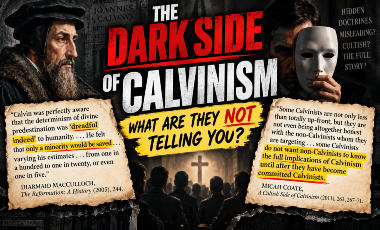
Here is the Calvinist doctrine Temporal Grace, as taught by John Calvin:

temporal faith

“Let no one think that those [who] fall awaywere of the predestined, called according to the purpose and truly sons of the promise. For those who appear to live piously may be called sons of God; but since they will eventually live impiously and die in that impiety, God does not call them sons in His foreknowledge. There are sons of God who do not yet appear so to us, but now do so to God; and there are those who, on account of some arrogated or temporal grace, are called so by us, but are not so to God.” (Concerning the Eternal Predestination of God, p.66, emphasis mine)

And,

“Experience shows that the reprobate are sometimes affected in a way so similar to the elect that even in their own judgment there is no difference between them. Hence, it is not strange, that by the Apostle a taste of heavenly gifts, and by Christ himself a temporary faith is ascribed to them. Not that they truly perceive the power of spiritual grace and the sure light of faith; but the Lord, the better to convict them, and leave them without excuse, instills into their minds such a sense of goodness as can be felt without the Spirit of adoption …. there is a great resemblance and affinity between the elect of God and those who are impressed for a time with a fading faith …. Still it is correctly said, that the reprobate believe God to be propitious to them, inasmuch as they accept the gift of reconciliation, though confusedly and without due discernment; not that they are partakers of the same faith or regeneration with the children of God; but because, under a covering of hypocrisy they seem to have a principle of faith in common with them. Nor do I even deny that God illumines their mind to this extent …. there is nothing inconsistent in this with the fact of his enlightening some with a present sense of grace, which afterwards proves evanescent.” (3.2.11, Institutes, emphasis mine)

Calvin adds: 

“Yet sometimes He also causes those whom he illumines only for a time to partake of it; then He justly forsakes them on account of their ungratefulness and strikes them with even greater blindness.” (Institutes of Christian Religion, 3.24.8, emphasis mine)

Therefore, by “some arrogated or temporal grace,” God “illumines only for a time” the alleged non-elect in order to overcome his Total Inability and thus temporarily think that he was “of the predestined.” Realize that Calvin taught the doctrine of Temporal Grace because he needed to plug a hole in his theology, such as how to explain passages such as Matthew 7:21-23, where the perishing, that is, those who are being condemned to Hell, had performed miraculous things that spiritually dead people are not supposed to be able to do, according to the Calvinistic doctrine of Total Inability. Calvin’s answer for such instances was a temporary grace. 

John Calvin again:

“Whoever has sinned, I shall delete him from the book of life. … But the meaning is simple: those are deleted from the book of life who, considered for a time to be children of God, afterwards depart to their own place, as Peter truly says about Judas (Acts 1:16). But John testifies that these never were of us (1 Jn 2:19), for if they had been, they would not have gone out from us. What John expresses briefly is set forth in more detail by Ezekiel (13:9): They will not be in the secret of My people, nor written in the catalogue of Israel. The same solution applies to Moses and Paul, desiring to be deleted from the book of life (Ex 32:32; Rom 9:3): carried away with the vehemence of their grief, they prefer to perish, if possible, rather than that the Church of God, numerous as it then was, should perish. When Christ bids His disciples rejoice because their names are written in heaven (Lk 10:20), He signifies a perpetual blessing of which they will never be deprived. In a word, Christ clearly and briefly reconciles both meanings, when He says: Every tree which My Father has not planted will be rooted up (Mt 15:13). For even the reprobate take root in appearance, and yet they are not planted by the hand of God.” (Concerning the Eternal Predestination of God, pp.151-152, emphasis mine) 

John Calvin comments on Hebrews 6:4-6: 

God certainly bestows His Spirit of regeneration only on the elect, and that they are distinguished from the reprobate in the fact that they are re-made in His image, and they receive the earnest of the Spirit in the hope of an inheritance to come, and by the same Spirit the Gospel is sealed in their hearts. But I do not see that this is any reason why He should not touch the reprobate with a taste of His grace, or illumine their minds with some glimmerings of His light, or affect them with some sense of His goodness, or to some extent engrave His Word in their hearts. Otherwise where would be that passing faith which Marks mentions (4.17)? Therefore there is some knowledge in the reprobate, which later vanishes away either because it drives its roots less deep than it ought to, or because it is choked and withers away.” (Calvin’s New Testament Commentaries: Hebrews and I and II Peter, p.76, emphasis mine) 

Calvinist, Mark Talbot: 

“Now of course, nothing, that I, nor anyone else, can say can guarantee that anyone will continue to believe. Faith is a gift of God that we cannot produce.”  (Sin and Suffering in Calvin’s World, emphasis mine)

In other words, the fact that you believe today is no guarantee that you will still believe tomorrow, or the next day, or the day after. You can only hope for the best, that your ordained fate is better than others, and that your grace is not a temporary grace, here today and gone tomorrow. Mark Talbot explicitly offers no illusion for your hope of tomorrow. There is nothing that you can do, but hope for the best. It’s completely out of your hands and completely in God’s hands. If you should find yourself an unbeliever tomorrow, your gift has run out.

One member of The Society of Evangelical Arminians: 

“The Calvinist’s assurance is obliterated by the fact that God ordains the illusory salvation of the seemingly-saved folks. This makes them a special sub-set of the damned. In Calvinism, God glorifies Himself by damning the ‘eternally reprobate.’ But the seemingly-saved folks have the unique privilege of ‘glorifying’ God in their earthly lives, by appearing to be saved on their way to Hell. Because God has pre-ordained this, there is nothing any apparently saved person can do. God has ordained the illusion! Of course, this brings up another question: Why is the God (who is Himself truth) ordaining such an illusion? How can God be truthful if He unconditionally pre-ordains illusions? And what kind of God could or would ordain such an illusion for the sake of His glory?” (SEA, emphasis mine)

One member of The Society of Evangelical Arminians: 

“For every person who has ever followed Jesus and then forsaken his name, we have to conclude that God ordained that said person would be eternally damned, but on their way to being damned, God ordains the illusion of redemption in Christ, in that they would come to know Jesusexhibit kingdom fruit, and then apostatize, all for the sake of divine glory.” (emphasis mine)

​QUESTION: If there is a Temporal Grace, then how do Calvinists know whether this will some day apply to them?

ANSWER: If they stop persevering, then that is how they know, according to Calvinist, Erwin Lutzer. 

Calvinist, Erwin Lutzer: 

“Historic Calvinism stresses the ‘perseverance of the saints,’ namely that true believers never fall away, and if they do, it is not for long. If a person fails to continue in the faith, he is giving proof that he was never saved.” (The Doctrines That Divide, p.231, emphasis mine)

Arminian, Robert Shank: 

“In other words, the only real evidence of election is perseverance, and our only assurance of the certainty of persevering is—to persevere!” (Elect in the Son, p.214, emphasis mine)

Dave Hunt: 

“It is Calvinism that in effect offers salvation by works because it looks to works for assurance of salvation. Biblically, assurance comes by faith in the promise of eternal life in Christ made by ‘God, who cannot lie…before the world began’ (Titus 1:2).” (Debating Calvinism, p.416, emphasis mine)

QUESTION: How do Calvinists know if they are of the Calvinistically elect?

ANSWER: They presume it. …..

Read the rest at:

What is Evanescent Grace? 

| and |

Calvinist Complaints: Arminianism teaches “Conditional Security”)

The Puritan’s Died Fearful

This is why the Puritan’s never slept well in the security of their salvation. Pastor Andy Woods notes this in a truncated presentation:

Although there can be some abuse from Free Grace types, I thought this quick post illuminates Pastor Woods comments:

You may remember that the Puritans were English Protestants in the 16th and 17th centuries who believed the English Reformation hadn’t gone far enough. They objected to Roman Catholic influences in the Church of England and wanted a purer church with purer doctrine (hence the name “Puritan”). Thus, they separated to form independent or dissenting congregations, with many fleeing to Holland and then to New England looking for religious freedom (at least for themselves, if not for others).

As Grenz explains, the Puritans were concerned with “the quest for certainty of personal election” (Grenz, Revisioning Evangelical Theology, p. 23). They wanted to be sure that they were saved. Why was that? Why did that become an area of particular doubt for them?

Simply put, it was due to the doubts created by their Calvinism:

“This movement developed a new kind of piety in response to anxieties produced by the Calvinist doctrine of election, which in Puritanism made the problem of assurance of salvation existentially central. In contrast to medieval paradigms, Calvinism couched the question of personal salvation in terms of God’s mysterious election. While this theology protected divine sovereignty, it offered no clear criteria whereby a believer could be assured of elect status” (Revisioning, p. 39).

As Grenz explains, many tried to ground their certainty of being elect in outward behavior, which had the opposite effect:

“As helpful as they may be, in the end no sincerity of profession of faith, no degree of faithful attendance at the sacraments, no accumulation of outward evidences of sanctified living could suffice as marks of election” (Grenz, Revisioning, p. 39).

Since looking at outward behavior didn’t give them the assurance they sought, the Puritans looked for inward evidence. Grenz continues:

“the Puritans did devise one definitive mark of election: the inward experience of God’s saving grace. The attendant emphasis on conversion that this move engendered led eventually—at least in devotional literature—to an emphasis on a subjective mark of salvation, the inner, conscious experience of the new birth. Assurance of elect status, therefore, became the product of a believer’s ability to narrate a testimony to a personal conversion experience” (Grenz, Revisioning, p. 39).

This emphasis on having a “new birth” conversion experience became one of the central features of preaching during the Great Awakenings in America. Men like John Wesley (representing Arminians) and George Whitfield (representing Calvinists) emphasized the necessity of conversion and having “the New Birth.” People who had that experience during the revival meetings began to distinguish themselves from people who hadn’t, leading to the question, “Are you really saved?” ….

How Did Assurance Become a Debate?

In discussing this with Grok and Chat-GPT, I got a hybrid breakdown of two sources:

The “P” of TULIP

Calvinism’s doctrine of the Perseverance of the Saints does not ultimately provide the confident assurance of salvation that many assume it does. While Calvinism teaches that all of God’s elect will persevere to the end, assurance is often grounded not merely in faith in Christ but in the believer’s ability to demonstrate a lifetime of continuing faith, obedience, and holiness. Since only those who endure to the end are proven to be truly elect, the believer is left asking not simply, “Do I believe in Christ?” but also, “Will my faith ultimately prove genuine?”

According to these critics, this creates a built-in tension within the Calvinist system. If those who fall away are explained as never having been truly saved, then every professing Christian must consider whether his own faith might eventually prove to be temporary or spurious. Rather than resting entirely upon Christ’s finished work and His promises, assurance becomes linked to future perseverance that has not yet occurred.

The concern is reflected in several recurring themes:

  • Assurance is tied to visible perseverance, holiness, and good works rather than resting solely on God’s promises to believers.
  • Numerous Calvinist theologians, including John Calvin, John Murray, A.W. Pink, and others, stress that present faith is not sufficient unless one continues faithfully to the end.
  • Calvin’s doctrine of “temporary faith” or “evanescent grace” introduces the possibility that someone may appear converted for years and still not be among the elect.
  • Apostasy is interpreted as evidence that a person was never truly saved, causing believers to question whether their own faith is genuine.
  • Personal testimonies such as R.C. Sproul’s famous struggle with the question, “What if you are not one of the redeemed?” are cited as examples of the doubt this system can produce.
  • Biblical examples such as David, Peter, Solomon, and the carnal Corinthians are presented as evidence that true believers can fail seriously without proving themselves lost.

For these reasons, critics argue that Calvinism’s doctrine of perseverance functions less as a doctrine of assurance and more as a doctrine of ongoing self-examination. The believer’s focus can shift from Christ’s completed work to the search for evidences of election within his own life. In their view, the result is a form of assurance mixed with uncertainty, because the final proof of genuine salvation is not known until life’s race has been completed.

Thus, both sources conclude that Calvinism’s “P” in TULIP, though intended to safeguard eternal security, ultimately undermines it. Instead of offering believers settled confidence in Christ’s promise of eternal life, it replaces assurance with an ongoing test of endurance, leaving many to wonder whether they possess saving faith at all. True assurance, they contend, is found not in examining whether one has persevered enough, but in trusting Christ’s promise that all who believe in Him have eternal life here and now.

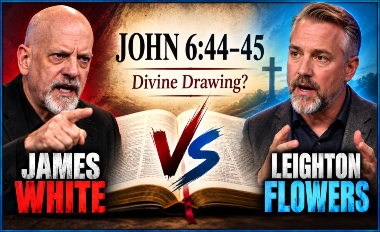
Dr. Leighton Flowers walks through a recent sermon entitled, “The Most Hated Christian Doctrine” by Dr. John MacArthur.

Faith Alone Thru Christ Alone

  • Flowers agrees with MacArthur that humanity is sinful and in need of grace, but argues that Calvinism wrongly transforms human rebellion into God-decreed inability, thereby undermining genuine responsibility, the universal offer of the gospel, and the biblical teaching that people receive life by believing rather than believe because they have already been given life.

The below video is Dr. Leighton Flowers’ response to John MacArthur’s sermon “The Most Hated Christian Doctrine.” While Flowers agrees with MacArthur that humanity is deeply sinful and incapable of saving itself, he argues that MacArthur goes beyond biblical depravity and imports the Calvinistic doctrine of Total Inability—the belief that people are born unable to respond positively to God’s revelation unless first regenerated by irresistible grace. Throughout the discussion, Flowers repeatedly distinguishes between people being unwilling because of rebellion and people being unable because of an innate condition decreed by God. He contends that passages such as John 5, John 6, John 8, Acts 28, and John 12 are addressing hardened, rebellious Israelites who became calloused through persistent rejection of God’s revelation, not describing the universal condition of every person from birth. According to Flowers, Calvinists mistakenly turn judicial hardening passages into proof texts for a doctrine of universal moral inability.

The larger theme of the video is the defense of human responsibility and the sufficiency of God’s revelation. Flowers argues that Calvinism ultimately makes unbelief trace back to God’s decree rather than to the sinner’s own rejection of truth. He repeatedly challenges MacArthur’s claim that unbelievers “cannot believe” by asking whether such inability is self-inflicted through rebellion or divinely determined from birth. Flowers maintains that God’s grace genuinely enables all people to respond to the gospel, that faith is not a meritorious work but a response to God’s gracious initiative, and that salvation remains entirely by grace even though individuals are responsible for whether they trust Christ. The video therefore centers on a fundamental disagreement: Calvinism teaches that people need new life in order to come to Christ, whereas Flowers argues that Scripture consistently presents people as coming to Christ in order to receive life.

Ultimately, as I see it, God is a deceiver in Calvinistic theology.

God the Cause

To bolster my point and not just make blanket statements, Dr. Theodore Zachariades shows that God wills [causes, not just permits] a man to be unfaithful to his wife.

  • God works all things after the Council of His will. Even keeping those kings who want to commit adultery from committing so! And when He wants to, he orders those to commit adultery when he wants to! (Video)

He gets that from John Calvin:

… how foolish and frail is the support of divine justice afforded by the suggestion that evils come to be, not by His will but by His permission. . . . It is a quite frivolous refuge to say that God otiosely permits them, when Scripture shows Him not only willing, but the author of them. . . . Who does not tremble at these judgments with which God works in the hearts of even the wicked whatever He will, rewarding them nonetheless according to desert? Again it is quite clear from the evidence of Scripture that God works in the hearts of men to incline their wills just as he will, whether to good for His mercy’s sake, or to evil according to their merits.

John Calvin, “The Eternal Predestination of God,” 10:11

John Piper:

Ephesians 1:11 goes even further by declaring that God in Christ

“works all things according to the counsel of his will.” Here the Greek word for “works” is energeø, which indicates that God not merely carries all of the universe’s objects and events to their appointed ends but that he actually brings about all things in accordance with his will. In other words, it isn’t just that God manages to turn the evil aspects of our world to good for those who love him; it is rather that he himself brings about these evil aspects for his glory (see Ex. 9:13-16; John 9:3) and his people’s good (see Heb. 12:3-11; James 1:2-4). This includes—as incredible and as unacceptable as it may currently seem—God’s having even brought about the Nazis’ brutality at Birkenau and Auschwitz as well as the terrible killings of Dennis Rader and even the sexual abuse of a young child: “The LORD has made everything for its own purpose, even the wicked for the day of evil” (Prov. 16:4, NASB ).14 “When times are good, be happy; but when times are bad, consider: God has made the one as well as the other” (Eccl. 7:14, NIV).

John Piper and Justin Taylor, eds., Suffering and the Sovereignty of God (Wheaton, IL: Crossway Books, 2006), 42. (FULLER QUOTE VIA THIS PDF)

More at my: Is God the “devil” Behind Satan? | Sovereign Puppeteer | and | Is Divine Determinism a Different Gospel?

God Even Determines Your Prayers | Wayne Grudem & Calvinism

Does the way Jesus teaches prayer fit more naturally with a worldview in which our requests genuinely matter, or with a worldview in which every request and every answer was already unalterably fixed before creation? If every prayer and every answer has already been exhaustively determined, what purpose is served by Jesus spending so much time teaching us how to pray?

The entire SOTERIOLOGY 101 Podcast can be heard HERE. Sot 101’s description:

  • Again we address the impractical implications of Calvinism. This time by unpacking Wayne Grudem’s teaching about the purpose and function of prayer. If God has determined all things then why pray? Does God really respond to us when we pray or is that just an illusion? Let’s dive in.

QUESTIONER – SANDY:

You were so persuasive, Wayne, a few weeks ago that I have become a happy evangelical Calvinist. And so in my mind, this raises the issue of God’s sovereignty. And I wonder if in that illustration on the board, I’m looking at that and I am visually putting a sort of umbrella of God’s transcendent, eternal, immutable sovereignty over all of that. So that, because otherwise, and maybe it’s just my split pea-sized brain not able to understand what you’re saying, but otherwise it sounds like God is vacillating in His intent and plans in response to whether or not we pray. And I doubt that that’s what you’re saying. So tell me now, as a fellow happy, evangelical Calvinist, how God’s transcendent, eternal, immutable sovereignty fits in all.

GRUDEM:

I think God planned before the foundation of the world, I think God planned that Moses would pray and that he would answer. But Moses didn’t know that. Okay? What Moses knew is he’s supposed to pray. I think God planned before the foundation of the world that Amos would pray and that God would answer. But it was still real. I mean, this intercession of Moses is still real. And if you do not have, because you do not ask, that’s true. And asking you will receive. Knock and it will be open. God didn’t set up the world to work in some way that we have to pray for Him to grant things, but He did. And then, yes. In his secret, unchangeable, eternal plan, yes, I think when I look back on all of it, I’ll say that he planned it, but I don’t know that. What I do know is if I pray, he answers, and if I don’t, he won’t.

The central argument can be summarized as:

If God unconditionally decreed both the prayer and the answer, then the prayer cannot be the real cause of the answer in the ordinary sense.

That’s very close to the objection you heard raised against Grudem.

The Moses Problem (Exodus 32)

The commentator makes an interesting point: Grudem says Moses didn’t know the eternal decree. But then Moses’ experience of prayer appears to be more realistic than the Calvinist explanation.

Moses believed:

  • God announced judgment.
  • Moses interceded.
  • God relented.

Exodus presents the narrative exactly that way. The Calvinist explanation becomes:

  • God decreed the announcement.
  • God decreed the intercession.
  • God decreed the relenting.

The question then becomes:

Is the biblical narrative showing what really happened, or is it only describing how it appeared from Moses’ perspective?

Where the Lord’s Prayer Comes In

This is where Calvinists prayer understanding connect:

“Give us this day our daily bread.”

On Grudem’s model:

  • God eternally decreed whether you receive daily bread.
  • God eternally decreed whether you pray for daily bread.
  • God eternally decreed the answer.

The Calvinist answer is:

God ordained prayer as the means.

The non-Calvinist answer is:

The language sounds like a genuine petition affecting a genuinely contingent outcome.

The Lord’s Prayer assumes that God is:

  • Listening.
  • Caring.
  • Responding.
  • Providing.
  • Forgiving.
  • Leading.
  • Delivering.

The entire prayer is relational.

Does the prayer read more naturally as a conversation with a Father who genuinely responds to His children, or as participation in a script whose every line was already fixed before the world began?

Why is the entire prayer structured around requests if requests have no bearing on what occurs? Why teach believers to ask for forgiveness if the granting of forgiveness is already fixed regardless of the request?


THE LORD’S PRAYER


Our Father in heaven,

May Your name be hallowed by those whom You have eternally decreed to hallow it.

May Your kingdom come exactly as You have immutably ordained from before the foundation of the world.

May Your will be done, because it cannot possibly be otherwise.

Give us this day the bread You have already decreed we will receive whether through our asking or not, though You have also decreed that we would ask for it.

Forgive us our debts, because You have already determined from eternity which debts would be forgiven and which sinners would remain under condemnation.

As we forgive our debtors according to the measure of sanctification You have irresistibly produced within us.

Lead us not into the temptations You have eternally ordained for our good and Your glory, though we acknowledge that those temptations cannot fail to occur if You have decreed them.

But deliver us from the evil You have likewise ordained to accomplish Your sovereign purposes.

For Yours is the kingdom, and the power, and the glory, because all things without exception have been decreed by You and come to pass exactly as ordained.

Amen, which You also decreed before the foundation of the world.

GRAPHICS to further elucidate:

Prayer & Calvinism with Ronnie Rogers

Pastor Ronnie Rogers is back with us today to discuss his new book “IF ONLY YOU WOULD ASK: Praying God’s Conditional Promises” This book is a MUST READ for anyone curious, confused, or convinced about Calvinism’s (mistaken) determinism.


R.C. Sproul’s View of Double Predestination (Babies and Hell)

R.C. Sproul’s Statement on Predestination (from Chosen by God):

What predestination means, in its most elementary form, is that our final destination, heaven or hell, is decided by God not only before we get there, but before we are even born. It teaches that our ultimate destiny is in the hands of God. Another way of saying it is this: From all eternity, before we ever live, God decided to save some members of the human race and to let the rest of the human race perish. God made a choice–he chose some individuals to be saved unto everlasting blessedness in heaven and others he chose to pass over, to allow them to follow the consequences of their sins into eternal torment in hell.” (Chosen By God, p.22, emphasis mine)

This is double predestination in practice, even if Sproul calls the active-positive version for reprobation a caricature.

  • If the elect cannot fail to be saved,
  • and the reprobate cannot be saved because God withholds the only grace capable of producing faith,
  • then what practical difference remains between active reprobation and passive reprobation?

Elect infants, dying in infancy, are regenerated, and saved by Christ, through the Spirit, who works when, and where, and how He pleases: so also are all other elect persons who are incapable of being outwardly called by the ministry of the Word.

Westminster Confession of Faith (WCF) 10.3

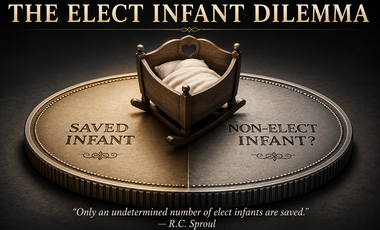
“Holy Spirit can save an infant by changing his heart, giving grace, and applying the merit of Christ to him. The Westminster divines certainly believed that babies can be saved. They did not teach that all infants are necessarily saved; rather, they taught that only an undetermined number of elect infants are saved. Obviously, an elect infant is going to be saved, and any saved infant is elect, but the divines did not speculate on which infants those would be.”

– R.C. Sproul, Truths We Confess: A Systematic Exposition of the Westminster Confession of Faith (Sanford, FL: Reformation Trust, 2019), 321.


Sproul conforms his support for the ideas in the WCF:

One of the most important confessions of faith ever penned, particularly in the English-speaking world, is the Westminster Confession of Faith. By the confession’s own statements, no confession written by uninspired authors is to be taken as having supreme authority over the believer. Confessions cannot bind the conscience in the manner that the Word of God can and does. At the same time, though human confessions and creeds are penned by fallible people without the benefit of the inspiration of the Holy Spirit, the profound level of theological and biblical precision manifest in the Westminster Confession of Faith is awe-inspiring. (Ibid., xvii.)

[….]

The Westminster Confession is the most precise and accurate summary of the content of biblical Christianity ever set forth in a creedal form. Creeds such as the Belgic Confession, the Heidelberg Catechism, and the Scots Confession should be highly regarded, but no historic confession surpasses in eloquence, grandeur, and theological accuracy the Westminster Confession of Faith. (Ibid., xix)


Critiquing the matter via CHAT:

The Internal Tension

Sproul writes:

“The Westminster divines certainly believed that babies can be saved. They did not teach that all infants are necessarily saved; rather, they taught that only an undetermined number of elect infants are saved.”

The immediate question is:

If only elect infants are saved, what happens to non-elect infants?

Historically, Westminster does not explicitly answer that question. Critics argue that the silence is revealing. If the Confession intended to teach universal infant salvation, it could have said:

“All infants dying in infancy are saved.”

Instead it says: “Elect infants.” Sproul defends that wording rather than correcting it.

Critique #1: Election Becomes the Ultimate Divider

Sproul affirms:

  • unconditional election,
  • total inability,
  • monergistic regeneration,
  • and reprobation.

Therefore, infant salvation cannot be based upon:

  • personal faith,
  • conscious belief,
  • repentance,
  • or moral innocence.

It must ultimately rest on election.

Critics respond:

If election alone determines which infants are saved, then election alone determines which infants are not saved.

Thus the question becomes: Why would God elect some infants and not others? Sproul never provides a clear answer.

Critique #2: Original Guilt Creates the Problem

Sproul consistently taught:

  • Adam’s guilt is imputed to humanity,
  • infants are fallen,
  • infants need Christ’s grace.

Critics agree infants need grace but ask:

Does inherited guilt alone make an infant deserving of eternal punishment?

Many opponents argue Scripture consistently ties judgment to:

  • knowledge,
  • personal rebellion,
  • actual transgression.

Examples often cited:

  • Deuteronomy 1:39
  • Isaiah 7:15-16
  • Jonah 4:11
  • Romans 4:15

The criticism is:

Sproul imports Augustine’s doctrine of inherited guilt and then must wrestle with implications Augustine himself embraced.

Critique #3: The Moral Character of God

This is probably the most emotionally and philosophically powerful objection.

If:

  • an infant never consciously sins,
  • never rejects God,
  • never suppresses truth,
  • never commits personal acts of rebellion,

Yet could still be damned, Critics ask:

What meaningful sense of justice remains?

This is where many critics invoke the same concern raised by Juncker regarding determinism:

If moral categories are detached from personal responsibility, words like justice become difficult to understand.

FULLER QUOTE:

“If determinism is true then either God is evil and the author of evil or all talk of good and evil, of praise and blame, of moral responsibility, and of justice is meaningless and incomprehensible with reference to God. That is, if God can cause or determine evil and yet remain good, and if God can punish those who do exactly and only what He has meticulously caused and determined them to do and yet remain just, then we have no idea who God is or what He might or might not do or what Scripture could possibly mean when it calls Him ‘good’ and ‘just.'”

— Günther H. Juncker, “The Dilemma of Theistic Determinism

The objection becomes:

Eternal punishment without personal rebellion appears inconsistent with ordinary moral reasoning and the biblical portrayal of God’s fairness.

Critique #4: Westminster Creates an Unnecessary Problem

Many critics argue Westminster itself created the issue. The Confession says:

“Elect infants.”

Critics ask why not simply say:

“Infants dying in infancy are saved through Christ”?

Mohler, Warfield, and Spurgeon essentially move in that direction. Sproul, however, insists the Westminster divines intentionally did not teach universal infant salvation. Critics argue:

That commitment to confessional precision ends up preserving a theological possibility that Scripture never explicitly teaches.

Critique #5: Sproul’s Loyalty to Westminster

This critique becomes stronger when paired with Sproul’s own statements:

“The Westminster Confession is the most precise and accurate summary of the content of biblical Christianity ever set forth in a creedal form.”

and

“One of the most important confessions of faith ever penned…”

Because Sproul viewed Westminster so highly, critics argue he was reluctant to depart from its language regarding elect infants even when later Reformed theologians moved toward affirming universal infant salvation.

The Strongest One-Sentence Critique

The strongest critique is probably this:

By affirming unconditional election, inherited guilt, and Westminster’s doctrine of “elect infants,” Sproul leaves open the possibility that some infants are not elect and therefore not saved, a conclusion many critics believe is inconsistent with both the justice and goodness of God as revealed in Scripture.

Exhaustive Determinism:

Sproul affirms that God ordains whatsoever comes to pass (echoing Westminster):

He knows all things that will happen because he ordains everything that does happen. This is crucial to our understanding of God’s omniscience. He does not know what will happen by virtue of exceedingly good guesswork about future events. He knows it with certainty because he has decreed it.

The Westminster Confession avers: “God from all eternity, did, by the most wise and holy counsel of His own will, freely, and unchangeably ordain whatsoever comes to pass. . . .

This statement refers to God’s eternal and immutable decretive will. It applies to everything that happens. Does this mean that everything that happens is the will of God? Yes. Augustine qualified this answer by adding the words, “in a certain sense.” That is, God ordains “in some sense” everything that happens. Nothing that takes place is beyond the scope of his sovereign will. The movement of every molecule, the actions of every plant, the falling of every star, the choices of every volitional creature, all of these are subject to his sovereign will. No maverick molecules run loose in the universe, beyond the control of the Creator. If one such molecule existed, it could be the critical fly in the eternal ointment. As one grain of sand in the kidney of Oliver Cromwell changed the course of English history, so one maverick molecule could destroy every promise God has ever made about the outcome of history.

What Is Reformed Theology, p. 172

Sproul’s view functionally equivalent to Calvin’s broader decretive will, even if he rejects “equal ultimacy” (symmetrical positive-positive reprobation where God actively works sin in the reprobate the same way He works faith in the elect). Sproul’s inconsistency is “too embarrassed to follow Calvinism to its logical extreme” and pleading ignorance/mystery on hard questions (e.g., the fall of Adam/Eve).

Calvin (Institutes 3.21.5): Explicitly symmetric language —

“some are preordained to eternal life, others to eternal damnation… created for one or the other of these ends.”

Sproul: Rejects the symmetrical mode (equal ultimacy / positive-positive) as sub-Calvinist or a caricature that makes God the author of sin. He prefers asymmetric (positive election + negative reprobation/preterition: God passes over the non-elect, leaving them in their sin). Yet critics [like myself] argue this is rhetorical softening — because Sproul still affirms:

  • God’s decree covers all events.
  • Reprobation is part of the eternal decree before creation.
  • The non-elect are chosen to be passed over before birth.

Sproul’s distinctions, while rhetorically softer than Calvin’s, do not ultimately escape the force of double predestination or exhaustive determinism.

… The issue here seems to be how one defines “ordains” or “foreordains.” Calvinists I debate on the internet consistently argue that “ordain” means to decree. I ask them, “Did God decree the Holocaust?” “Did God decree the killing fields of Cambodia?” “Did God decree every act of rape, torture and murder that has ever taken place?” And they say yes! Unbelievable.

What about Calvin on this issue? You deny he was supralapsarian, claiming God’s positive-positive, double-predestination, but excerpts from his writings strongly suggest that was his position. Calvin was quite straightforward on saying God decreed the Fall, writing:

whence does it happen that Adam’s fall irremediably involved so many peoples, together with their infant offspring, in eternal death unless because it so pleased God?…The decree is dreadful indeed, I confess. Yet no one can deny that God foreknew what end man was to have before he created him, and consequently foreknew because he so ordained by his decree…God not only foresaw the fall of the first man, and in him the ruin of his descendants, but also meted it out in accordance with his own decision.” (Institutes of the Christian Religion, 3.23.7)

That seems to go beyond mere “permission.” He also wrote:

The predestination by which God adopts some to the hope of life, and adjudges others to eternal death, no man who would be thought pious ventures simply to deny….By predestination we mean the eternal decree of God, by which he determined with himself whatever he wished to happen with regard to every man. All are not created on equal terms, but some are preordained to eternal life, others to eternal damnation; and, accordingly, as each has been created for one or other of these ends, we say that he has been predestinated to life or to death (Institutes of the Christian Religion 3.21.5).

We also read:

From this it is easy to conclude how foolish and frail is the support of divine justice afforded by the suggestion that evils come to be not by [God’s] will, but merely by his permission. Of course, so far as they are evils, which men perpetrate with their evil mind, as I shall show in greater detail shortly, I admit that they are not pleasing to God. But it is a quite frivolous refuge to say that God otiosely [= idly] permits them, when Scripture shows Him not only willing but the author of them…Who does not tremble at these judgments with which God works in the hearts of even the wicked whatever He will, rewarding them nonetheless according to desert. Again, it is quite clear from the evidence of Scripture that God works in the hearts of men to incline their will just as he will, whether to good for his mercy’s sake, or to evil according to their merits.” (Concerning the Eternal Predestination of God, 177)

Other famous Calvinists say, for example,

“The Sovereignty of God over all, and his independency, clearly shew, that whatever is done in time is according to his decrees in eternity.” (John Gill, A Body of Doctrinal and Practical Divinity, p. 173)

Or

“As a builder draws his plan before he begins to build, so the great Architect predestined everything before a single creature was called into existence.” (Arthur Pink, The Doctrines of Election and Justification, p.9)

Or

“Surely if God had not willed the fall, He could, and no doubt would, have prevented it; but he did not prevent it: ergo, He willed it. And if He willed it, He certainly decreed it.” (Jerome Zanchius, The Doctrine of Absolute Predestination, p. 88)

So, by claiming supralapsarianism is “anti-Calvinism,” you are dismissing not only prominent Calvinists from the past, but also Calvin himself. …

(JOHN WAGNER letter to R.C. SPROUL)

Jerry Walls’s observation at this point is apt:

    • [T]heological compatibilists [RPT: like Grudem, Sproul, MacArthur, and the like] often make claims and engage in rhetoric that naturally lead people to conclude that God loves them and desires their salvation in ways that are surely misleading to all but those trained in the subtleties of Reformed rhetoric. . . . Such language loses all meaning, not to mention all rhetorical force, when we remember that on compatibilist premises God could determine the impenitent to freely repent, but has chosen instead to determine things in such a way that they freely persist in their sins.

Why No Classical Theist – Let Alone Orthodox Christian – Should Ever Be a Compatibilist (PDF)

God’s refusal to determine the repentance of sinners when it is within his power to do so can be called nothing other than immoral. Damning certain people by withholding something freely given to others is not glorious.

MORE: Is Double Predestination and Active Reprobation, Equal Ultimacy? (good critique of Sproul)

Sproul and Calvin say it is indeed a horrible decree. Sproul’s honesty at this point would be refreshing if his conclusions weren’t so disturbing:

  • “The nasty problem for the Calvinist [is] . . . . If God can and does choose to insure the salvation of some, why then does he not insure the salvation of all? . . . The only answer I can give to this question is that I don’t know. . . . One thing I do know. If it pleases God to save some and not all, there is nothing wrong with that.” On the contrary, it is the very definition of wrong.” (Fuller Quote)

Here is Sproul’s chapter 58 from his book, Essential Truths of the Christian Faith, I will add some emphasis:

PREDESTINATION AND REPROBATION

Every coin has a flip side. There is also a flip side to the doctrine of election. Election refers to only one aspect of the broader question of predestination. The other side of the coin is the question of reprobation.

God declared that He loved Jacob but hated Esau. How are we to understand this reference to divine hatred?

Predestination is double. The only way to avoid the doctrine of double predestination is to either affirm that God predestinates everybody to election or that He predestinates no one to either election or reprobation.

Since the Bible clearly teaches predestination to election and denies universal salvation, we must conclude that predestination is double. It includes both election and reprobation. Double predestination is unavoidable if we take Scripture seriously. What is crucial, however, is how double predestination is understood.

Some have viewed double predestination as a matter of equal causation, where God is equally responsible for causing the reprobate not to believe as He is for causing the elect to believe. We call this a positive-positive view of predestination.

The positive-positive view of predestination teaches that God positively and actively intervenes in the lives of the elect to work grace in their hearts and bring them to faith. Likewise, in the case of the reprobates, He works evil in the hearts of the reprobate and actively prevents them from coming to faith. This view has often been called “hyper-Calvinism” because it goes beyond the view of Calvin, Luther, and the other Reformers.

The Reformed view of double predestination follows a positive-negative schema. In the case of the elect, God intervenes to positively and actively work grace in their souls and bring them to saving faith. He unilaterally regenerates the elect and insures their salvation. In the case of the reprobate He does not work evil in them or prevent them from coming to faith. Rather, He passes over them, leaving them to their own sinful devices. In this view there is no symmetry of divine action. God’s activity is asymmetrical between the elect and the reprobate. There is, however, a kind of equal ultimacy. The reprobate, who are passed over by God, are ultimately doomed, and their damnation is as certain and sure as the ultimate salvation of the elect.

The problem is linked to biblical statements such as those regarding God’s hardening of Pharaoh’s heart. That the Bible says God hardened Pharaoh’s heart is beyond dispute. The question remains, how did God harden Pharaoh? Luther argued for a passive rather than an active hardening. That is, God did not create fresh evil in Pharaoh’s heart. There was already enough evil present in Pharaoh’s heart to incline him to resist the will of God at every turn. All God ever has to do to harden anybody is to remove His restraining grace from them and give them over to their own evil impulses. This is precisely what God does to the damned in hell. He abandons them to their own wickedness.

In what sense did God “hate” Esau? Two different explanations are offered to solve this problem. The first explains it by defining hate not as a negative passion directed toward Esau but as simply the absence of redemptive love. That God “loved” Jacob simply means that He made Jacob the recipient of His unmerited grace. He gave Jacob a benefit that Jacob did not deserve. Esau did not receive the same benefit and in that sense was hated by God.

The first explanation sounds a bit like special pleading to get God off the hook for hating somebody. The second explanation gives more strength to the word hate. It says simply that God did in fact hate Esau. Esau was odious in the sight of God. There was nothing in Esau for God to love.

Esau was a vessel fit for destruction and altogether worthy of God’s wrath and holy hatred. Let the reader decide.

Summary

  1. Predestination is double; it has two sides to it.
  2. Some teach that God is equally responsible for election and reprobation. This is characteristic of hyper-Calvinism.
  3. The Reformed view of double predestination reflects a positive-negative schema.
  4. God passively, not actively, hardened Pharaoh’s heart.
  5. God hated Esau in the sense of failing to give him a blessing of grace or in the sense of abhorring him as a vessel fit for destruction.

Biblical passages for reflection:

Exodus 7:1-5
Proverbs 16:4
Romans 9
Ephesians 1:3-6
Jude 1:4

In other words, as The Encyclopedia of The Reformed Faith (page 144), and later the The Westminster Handbook to Reformed Theology (page 87) clearly says:

  • Reformed approach to divine freedom is nowhere more apparent than in the doc­trine of the eternal decrees: God freely wills the existence and preservation of the created order and freely determines the eternal destiny of all creatures, solely on the ground of God’s goodness and solely for the sake of God’s ultimate glory. In creation and providence, God encounters no barriers to the exercise of God’s will, and in the work of redemp­tion God acts utterly graciously, apart from any merit belonging to the creature. (Emphasis added.)

JOHN 6:44

Steve Lemke

R. C. Sproul argued at great length that John 6:44 (“No one can come to Me unless the Father who sent Me draws him” [HCSB]) does not refer merely to the necessity that God “woo or entice men to Christ,” such that humans can “resist this wooing” and “refuse the enticement.”11 In philosophical language, Sproul said, this wooing is a necessary but not sufficient condition for salvation “because the wooing does not, in fact, guarantee that we will come to Christ.”12 Sproul stated that such an interpretation is “incorrect” and “does violence to the text of Scripture.”13

Instead, Sproul insists, the term “draw” is “a much more forceful concept than to woo” and means “to compel by irresistible superiority.”14 However, in discussing irresistible grace, Sproul tells of a student who, hearing a lecture on predestination by John Gerstner, rejected it. When Gerstner asked the student how he defined Calvinism, the student described it as the perspective that “God forces some people to choose Christ and prevents other people from choosing Christ.” Gerstner then said, “If that is what a Calvinist is, then you can be sure that I am not a Calvinist either.”15 What is the difference between compelling “by irresistible superiority” and “forcing” people to do something? Sproul likewise chastised a Presbyterian seminary president for rejecting the Calvinist doctrine that “God brings some people, kicking and screaming against their wills, into the kingdom.” Sproul described this Presbyterian theologian’s view as “a gross misconception of his own church’s theology,” as a “caricature,” and “as far away from Calvinism as one could possibly get.”16 So which way is it? If God compels people with “irresistible superiority,” in what way is it inaccurate to say that God forces people to choose Christ? The Synod of Dort insisted that such attempts at moral persuasion of unsaved persons was wasted time. The irresistibility of God’s grace (and not merely the use of strong moral persuasion) was precisely what the Synod of Dort rejected and the Remonstrants affirmed. While the Remonstrants affirmed that the compelling grace of God persuades the lost to receive Christ as Lord and Savior, the Synod of Dort insisted that this was not going far enough. Note their explicit denial that a person can “resist” God. The language used in the Synod of Dort describes God’s omnipotence as being such that God can “potently and infallibly bend man’s will to faith and conversion.”17

Bending the will of a fallible being by an omnipotent Being powerfully and unfailingly is not merely sweet persuasion. It is forcing one to change one’s mind against one’s will. Calvinists often describe their position as monergism as opposed to synergism. In monergism, God works entirely alone, apart from any human role.18

11. Sproul, Chosen by God, 69–70 (see chap. 1, n. 106).
12. Sproul, 69.
13. Sproul, 69.
14. Sproul, 69.
15. Sproul, 122.
16. Sproul, 122.
17. Dennison, Reformed Confessions, 4:143 (III–IV, Rejection of Errors, par. 8).

John Wagner’s Letter to Sproul

Let me deal next with the issue of your concept and use of the Greek word helkō, commonly translated “draws” in John 6:44. Even if you reject everything else I write here, please accept this one. You really did not get this right. And Calvinists who have read CBG have passed on this incorrect information. You quoted Kittel’s Theological Dictionary of the New Testament, and claim because that word means “drag” or “compel” in a physical context such as Acts 16:19 and James 2:6, that therefore it means “drag” or “compel” in the spiritual context of John 6:44.

The evidence indicates it doesn’t. I assume you are aware that a Greek word can have more than one meaning. I looked at Kittel and I see for helkō in regard to John (i.e. 6:44, 12:32) it means, “a beneficent ‘drawing of God…of drawing to oneself in love. This usage is distinctively developed by Jn., perhaps with some influence of Gnosticism. Force or magic may be discounted, but not the supernatural element.” The abridged version of Kittel says, “There is no thought here of force or magic. The term figuratively expresses the supernatural power of the love of God or Christ which goes out to all (12:32) but without which no one can come.”

Did you get that? Both summaries dismiss force, which would be consistent with “drag” or “compel” (though I agree that would be accurate when the word is used in a physical context). Just wondering why you didn’t mention that! Let’s put your position to rest with more citations:

  1. BDAG: has helkō in John 6:44 as “draw, attract.”
  2. Analytical Lexicon to the Greek New Testament by William Mounce says helkō means “to draw mentally and morally, John 6:44; 12:32.”
  3. The Hebrew-Greek Key Study Bible by Calvinist Spiro Zodhiates: “Helko is used of Jesus on the cross drawing by love, not force” (Jn. 6:44; 12:32).
  4. A Critical Lexicon and Concordance to the English and Greek New Testament by Ethelbert W. Bullinger, p. 235: Helko means “to draw, esp. implying a certain attraction mentally or morally; also to draw to a certain point.” This source also mentions surō as a word more consistent with how Calvinists interpret helkō. Surō generally implies a violent dragging. This source defines it as “to draw, drag or trail along as a net; esp. with the notion of force and sometimes with violence.”
  5. The Renaissance New Testament by Randolph Yeager, says about helkō:

It does not necessarily involve coercion, though it does involve persuasion and motivation–John 6:44; 12:32…. [Helkō] does not imply coercion in the two places where it is applied to the elect [the two just-mentioned verses]. Swords, fish nets and political prisoners (John 18:10; 21:6, 11: Acts 16:19) may resist, but the element of resistance is not implicit in the word itself….

  1. Greek and English Lexicon of the New Testament by Edward Robinson, say helkō means “to draw by a moral influence, John 6:44, 12:32.”

Please notice that none of these sources indicate that helkō means drag or compel in John 6:44. And your version is especially problematic for John 12:32. Do you believe God drags all men to himself? So it’s kind of funny that the Arminian professor you debated didn’t need to cite some “obscure Greek poet.” The info is clear in many lexicons and similar sources. And by the way, contrary to what you experienced, in the formal 1999 debate I was in against a Calvinist pastor, he repeated your argument on helkō and I nailed him on this point.

And that ties into the issue of the nature of unsaved man. You write, “If a person who is still in the flesh, who is not reborn by the power of the Holy Spirit, can incline or dispose himself to Christ, what good is rebirth?” This is another strawman. Classical Arminians do not believe man can “incline or dispose himself ” all by himself. Arminius wrote strongly of man being depraved and dead and that man needs the heavy convicting and drawing of the Holy Spirit. However, he completely rejected irresistible grace, the biggest oxymoron I can think of. And as for rebirth, that comes after faith, not before.

You slightly acknowledge the idea of prevenient grace and then ask “If so, where” does the Bible teach this concept? Did you even make any effort toward finding an answer for this? Well, John 6:44, which I have proven is not about “dragging,” is one. Furthermore, let’s recall John 16:8, saying that the paraclete “will convict the world of guilt in regard to sin and righteousness and judgment in regard to sin because men do not believe in me.”

The Greek for “convict” is elenchō, and has the connotation of a trial attorney making a legal and moral argument to a jury. In this case, the Holy Spirit conducts that function in the human heart—but not in irresistible manner. Other verses include John 1:9: “The true light that gives light to every man was coming into the world.” Also, John 12:32, in which Christ says, “When I am lifted up from the earth. I will draw (helkō) all men to myself.” But this is also not irresistible.

Describing prevenient grace, Thomas C. Oden writes:

Prevenient grace antecedes human responsiveness so as to prepare the soul for the effective hearing of the redeeming Word. This preceding grace draws persons closer to God, lessens their blindness to divine remedies, strengthens their will to accept revealed truth, and enables repentance. Only when sinners are assisted by prevenient grace can they begin to yield their hearts to cooperation with subsequent forms of grace….

Does scripture teach the concept of prevenient grace? There is no one passage that lays out a systematic definition of it, however, the concept becomes apparent throughout the overall tenor of scripture. Here are some passages that refer to the different aspects of prevenient grace:

Prevenient Grace Draws:

John 6:44 No one can come to me unless the Father who sent me draws him, and I will raise him up at the last day.

John 12:32 And I, if I am lifted up from the earth, will draw all men to Myself. Prevenient Grace is Universal:

Titus 2:11 For the grace of God that brings salvation has appeared to all men. John 1:9 The true light that gives light to every man was coming into the world.

John 16:7-8 But I tell you the truth: It is for your good that I am going away. Unless I go away, the Counselor will not come to you; but if I go, I will send him to you. When he comes, he will convict the world of guilt in regard to sin and righteousness and judgment:

Romans 1:18-19 The wrath of God is being revealed from heaven against all the godlessness and wickedness of men who suppress the truth by their wickedness, since what may be known about God is plain to them, because God has made it plain to them.

Prevenient Grace Convicts the Non-Believer:

Acts 16:14 One of those listening was a woman named Lydia, a dealer in purple cloth from the city of Thyatira, who was a worshiper of God. The Lord opened her heart to respond to Paul’s message.

Acts 16:29-30 The jailer called for lights, rushed in and fell trembling before Paul and Silas. He then brought them out and asked, “Sirs, what must I do to be saved?”

Prevenient Grace Works in Combination with the Hearing of the Word:

Acts 2:37 When the people heard this, they were cut to the heart and said to Peter and the other apostles, “Brothers, what shall we do?”

Romans 10:17 Consequently, faith comes from hearing the message, and the message is heard through the word of Christ.

Prevenient Grace is Given Generously:

Romans 8:32 He who did not spare His own Son, but delivered Him over for us all, how will He not also with Him freely give us all things?

Romans 2:4 Or do you think lightly of the riches of His kindness and tolerance and patience, not knowing that the kindness of God leads you to repentance?

Acts 17:26-27 From one man he made every nation of men, that they should inhabit the whole earth; and he determined the times set for them and the exact places where they should live. God did this so that men would seek him and perhaps reach out for him and find him, though he is not far from each one of us.

Prevenient Grace Can be Rejected:

Matt. 23:37 O Jerusalem, Jerusalem, you who kill the prophets and stone those sent to you, how often I have longed to gather your children together, as a hen gathers her chicks under her wings, but you were not willing.

John 5:34,39,40 Not that I accept human testimony; but I mention it that you may be saved…You diligently study the Scriptures because you think that by them you possess eternal life. These are the Scriptures that testify about me, yet you refuse to come to me to have life.

Acts 7:51 You stiff-necked people, with uncircumcised hearts and ears! You are just like your fathers: You always resist the Holy Spirit!

Heb 4:2 For we also have had the gospel preached to us, just as they did; but the message they heard was of no value to them, because those who heard did not combine it with faith.

Heb 10:29 How much more severely do you think a man deserves to be punished who has trampled the Son of God under foot, who has treated as an unholy thing the blood of the covenant that sanctified him, and who has insulted the Spirit of grace?

Prevenient Grace Results in Saving Grace when it is Accepted:

Ephesians 5:14 For it is light that makes everything visible. This is why it is said: “Wake up, O sleeper, rise from the dead, and Christ will shine on you.”

Ephesians 2:8-9 For it is by grace you have been saved, through faith—and this not from yourselves, it is the gift of God— not by works, so that no one can boast.

There are actually three very good books on this issue of prevenient grace: The Transforming Power of Grace by Thomas C. Oden, Prevenient Grace by W. Brian Shelton, and Streams of Mercy by J. Gregory Crofford.

BTW, I prefer pastor Rogers understanding vs a straight Arminian:

  • Within the Non-Calvinist camp, there are at least two nuanced views on how God allows sinners to respond in faith. The first view is the Arminian view — which says that God’s work of grace (prevenient grace) for all people is needed to enable any sinner to freely choose to respond in faith to the Gospel message. The second view is the Provisionist View — which says that the Gospel message itself [see more below]  is God’s work of grace so that when it is preached to all people, any sinner can freely choose to respond in faith. The proclamation of the Gospel is powerfully sufficient enough to bring salvation to those who will believe. While the Arminian and the Provisionist each have a different take on why all humans can respond to God’s offer, these two views both affirm the importance of God’s initiative of grace to invite all sinners to salvation. (from the book Grace For All: Understanding God’s Plan of Salvation).

Michael R. Cariño

The “More Below”

Grace Enablements

Includes but are not limited to: God’s salvific love for all (John 3:16), God’s manifestation of his power so that all may know he is the Sovereign (Isa 45:21–22) and Creator (Rom 1:18–20), which assures that everyone has opportunity to know about him. Christ paying for all sins (John 1:29), conviction of the Holy Spirit (John 16:7–11), working of the Holy Spirit (Heb 6:1–6), enlightening of the Son (John 1:9), God’s teaching (John 6:45), God opening minds and hearts (Luke 24:45; Acts 16:14; 26:17–18;), and the power of the gospel (Rom 1:16), without such redemptive grace, no one seeks or comes to God (Rom 3:11).

Because of these gracious provisions and workings of God, man can choose to seek and find God (Jer 29:13; Acts 17:11–12). Moreover, no one can come to God without God calling (Acts 2:39), drawing (John 6:44), and that God is drawing all individuals (John 12:32). The same Greek word for draw, helkuō, is used in both verses. “About 115 passages condition salvation on believing alone, and about 35 simply on faith.” Other grace enablements may include providential workings in and through other people, situations, and timing or circumstances that are a part of grace to provide an opportunity for every individual to choose to follow Christ.

These are grace enablements in at least three ways; first, they are provided by God’s grace rather than deserved by mankind; second, the necessary components for each and every individual to have a genuine opportunity to believe unto salvation are provided or restored by God; third, they are provided by God without respect to whether the individual will believe or reject, which response God knew in eternity past.

The offer of the gospel is unconditional, but God sovereignly determined to condition the reception of the offer upon grace-enabled faith; therefore, faith is not reflective of a work or virtue of man, but of God’s sovereign plan of salvation by grace through faith (Eph 2:8). This indicates faith is the means to being regenerated and saved, not the reason for being saved. This truth of Scripture does not imply God is held captive to the choice of man, but rather it demonstrates God in eternity coextensively determined to create man with otherwise choice and provide a genuine offer of salvation, which can be accepted by grace-enabled faith or rejected. Additionally, to fulfill this plan, God is not obligated to disseminate the gospel to people he knows have rejected the light he has given them (Rom 1:18–23) and will also reject the gospel; although he may still send the gospel to them.

Sproul continues his thinking is an audio message I have audio of here. In it he says:

Augustine said, I still, in my fallenness, have the ability to choose what I want, but in my heart there’s no desire for God. I have lost any desire for the things of God. If I’m left to myself, the desires of my heart are only wicked continuously. My heart and my soul are dead to the things of God.

I can listen to preaching, I can hear hymns, I can see — I can do all those things and see other people weeping and in ecstasy and all moved by all kinds of religious overtones and consideration.

It leaves me cold.

My heart has calluses on it. It’s recalcitrant.

My neck is stiff.

I’m not moved by anything that has anything to do with God. That’s our natural state. The Bible says that we are dead to the things of God in our fallen condition. Original sin deadens the soul to the things of God.

God so loved the world, He gave His only begotten Son, that whosoever believeth should not perish, but have everlasting life. And I have people quote that to me, to say man is not fallen to such a degree that he’s lost his power to choose Christ, because that verse says that whosoever believeth will not perish, but have everlasting life.

Now, what does that verse teach us about the extent of the fall of man? Absolutely nothing. It doesn’t say who will believe in Christ. All it says is, if you do A, if you believe, you will not perish, and you will have everlasting — you will live forever.

But the question still is left, Why does one person believe and another person not believe?

Augustine said, Now, you’re dead in your sins and trespasses. You don’t have any desire for Christ, and the only way you will ever choose Christ is if God melts your heart, if God softens that stone-cold, recalcitrant heart, if God the Holy Spirit rapes your soul and puts in you a desire for Christ.

That’s what has to happen.

According to Augustine.

And many try to do away with this control of God through what is called “compatibilism”, but as MacArthur notes, this is fictitious in the end:


In order to understand this better theologians have come up with the term “compatibilism” to describe the concurrence of God’s sovereignty and man’s responsibility. Compatibilism is a form of determinism, and it should be noted that this position is no less deterministic than hard determinism.

John Hendryx (John Hendryx is the creator and editor of Monergism . com)

And then this is John MacArthur:

So free will trumps evil on God’s value scale, so God had to allow for the possibility of evil in order to protect the more highly prized autonomy; and He had to protect autonomy to protect Himself from this bad press, being responsible for evil. Humans then must have self-determination, freedom to act. If God acted as the primary cause and humans only as a secondary cause moved by the primary cause, then God being the primary cause is responsible; and people are not free, and therefore God decided and God compelled and God coerced, and God actually overturned human will. Then God is responsible for all the evil and all the divine judgment and the determination of eternal punishment. This is a God that some people just can’t live with; they’ve got to get Him off the hook.

(See video to add to the above and Grace To You)

This passage is John MacArthur directly describing (and strongly rejecting) the popular “free will defense” theodicy. He uses it to contrast with his own high Calvinist / compatibilist view of God’s sovereignty.

Some AI convo:

Yes. If we define determinism as:

Every human choice is ultimately rendered certain by God’s decree and providential causation, such that no person could ultimately do otherwise than what God ordained,

then John MacArthur is unquestionably on the deterministic side of the spectrum.

The important thing is that MacArthur would almost certainly reject the label “fatalist”, and he would likely prefer “compatibilist” or “Reformed”, but philosophically speaking, compatibilism is a species of determinism. Hendryx is correct on that point.

The key question is:

Does MacArthur believe humans possess libertarian freedom (the ability to choose A or not-A under identical circumstances)?

The answer is no.


The MacArthur Quote You Posted

The fascinating thing about that quotation is that MacArthur is not denying determinism.

He is describing what he believes his opponents fear determinism entails.

Notice the structure:

“If God acted as the primary cause

“If God compelled

“If God actually overturned human will

“Then God is responsible

MacArthur is setting up the objection.

The question becomes:

Does MacArthur believe God does these things?

Elsewhere he clearly teaches:

  • Total inability
  • Unconditional election
  • Irresistible grace
  • Monergistic regeneration
  • God’s exhaustive sovereignty

Those doctrines require that God determine who will believe.


Compare MacArthur to Sproul

Sproul says:

“The only way you will ever choose Christ is if God melts your heart.”

Then he quotes Augustine:

“God the Holy Spirit rapes your soul and puts in you a desire for Christ.”

Sproul is being more explicit.

MacArthur teaches the same monergistic regeneration, but usually with softer language.

Both affirm:

  • Fallen man cannot come.
  • God must first regenerate.
  • Regeneration guarantees faith.
  • Those not regenerated remain unable.

That is deterministic in the relevant philosophical sense.


The Real Tell: MacArthur on Election

MacArthur repeatedly teaches:

  • God chose the elect before creation.
  • The elect will certainly come.
  • The non-elect will not come.
  • Faith itself is a gift from God.

Once those propositions are accepted, the outcome is fixed.

That is why Hendryx says:

“Compatibilism is a form of determinism.”

Because the certainty of the outcome remains intact.


The Important Distinction

A lot of Calvinists hear:

“determinism”

and immediately think:

“atheistic hard determinism.”

But philosophers don’t define determinism that way.

Determinism simply means:

Given the causes and conditions, only one outcome is possible.

MacArthur’s theology appears to satisfy that definition.


Why Your Argument Finds Tension Here

What’s interesting is that the quotation you cited almost sounds like MacArthur is describing your objection:

If God is the primary cause and humans are merely secondary causes moved by Him, then God becomes responsible.

The difficulty is that Calvin, Sproul, Piper, and many Reformed theologians frequently describe God as:

  • determining wills,
  • inclining hearts,
  • ordaining evil events,
  • governing every detail,
  • and ensuring outcomes.

So critics ask:

If God determines the desires, determines the will, determines the outcome, and determines who receives regenerating grace, how is He not functioning as the primary determining cause?

That is the exact issue your series has been exploring.


In Short

If by determinism you mean:

Human choices are rendered certain by God’s eternal decree and providential governance, with no ultimate ability to do otherwise,

then:

  • Calvin = Determinist
  • Edwards = Determinist
  • Sproul = Determinist
  • Piper = Determinist
  • MacArthur = Determinist
  • Hendryx explicitly admits compatibilism is determinism

The real debate is not whether these men are deterministic.

The real debate is whether compatibilist determinism can preserve meaningful moral responsibility, justice, and divine goodness.

That’s where the battle shifts from historical theology into philosophy.

This video is long, but has turned into one of my favorites!

Calvinist’s Fatal Flaw: Guilty Babies

Dr. Leighton Flowers plays a clip from Jeremiah Notier, aka The Apologetic Dog, in which he accuses Dr. Flowers of being a “Pelagian” because I do not affirm the concept that all babies are born guilty and deserving of Hell.


Grok and I Talk Divine Simplicity and Calvinism (2-wills)

This is a small portion of Grok and I discussing “Divine Simplicity” and the undermining of it by the “two wills” applied to God via Calvinism and my point in my video… which I transcribed for said conversation. However, I will post the conversation leading up to it as well:

Yes, love is presented in Scripture as the attribute that most fundamentally defines or embraces the others—particularly in how God relates to creation.

The worksheet premise (“God is the sum of his attributes, so all are equal”) reflects a classical theological idea of divine simplicity: God isn’t composed of “parts” where one attribute competes with another. All His perfections are fully one in His essence. But the Bible doesn’t treat them all as interchangeable or flatly “equal” in emphasis or function, especially regarding God’s self-revelation.

Key Biblical Emphasis on Love

1 John 4:8 and 4:16 state “God is love” twice—direct identity statements. Scripture doesn’t say “God is sovereignty,” “God is justice,” “God is holiness” (in the same exhaustive sense), or anything parallel, even though those are true attributes. Holiness gets the triple emphasis in Isaiah 6/Revelation 4 (“holy, holy, holy”), which underscores uniqueness and moral purity, but the “God is love” phrasing stands out as ontological.

Love isn’t one trait among many; it’s the lens through which the others operate toward us. God’s justice, wrath, mercy, and sovereignty flow from and are interpreted through His loving nature (e.g., John 3:16; Ephesians 1:4-5; Romans 5:8). Love is self-giving and relational, fitting the Trinitarian God who has eternally existed in loving communion (Father, Son, Spirit) before creation. Holiness and justice guard that love from evil, but love motivates the cross—where justice and mercy meet.

Addressing the Calvinist/Determinist Angle

From a Provisionist (or similar non-deterministic) viewpoint, elevating sovereignty/determinism as equally primary (or functionally overriding) can distort the picture. If sovereignty means exhaustive divine determinism—where God ordains every sin, unbelief, and eternal destiny in a way that makes genuine love and relational response impossible—then it clashes with the self-giving, invitational love portrayed in Scripture (e.g., “whosoever believes,” the repeated calls to repent and choose life, God’s grief over rebellion).

Sovereignty is real and powerful (God rules as He wills), but it is not an eternal attribute in the same way as omnipotence or love, because “sovereignty” (rule over others) presupposes creation and relations that didn’t eternally exist. God is eternally omnipotent; He sovereignly chooses how to exercise power in time. Provisionism sees God’s sovereignty as compatible with genuine human response, preserving the authenticity of love.

A thoughtful pushback: If all attributes are “equal,” why does the Bible repeatedly ground God’s actions in love (creation, election, redemption, final judgment)? Why does Jesus summarize the law in love for God and neighbor? Equating them flatly risks making God seem arbitrary or making love secondary to raw power/justice in a way that doesn’t match the gospel invitation.

Suggested Response Structure for the Worksheet

  • Affirm divine simplicity: Yes, God is not divided; His attributes cohere perfectly.
  • But Scripture highlights love as central: Cite 1 John 4 directly. Love integrates and motivates the others without negating them (holy love, just love, sovereign love expressed in provision for all).
  • Love defines God’s relational posture: It “embraces” the others because God is love eternally (intra-Trinitarian), and all He does toward us flows from that.
  • Avoid false dichotomies: This doesn’t deny holiness, justice, or sovereignty—it contextualizes them. A loving God can be sovereign without determinism that undermines real relationship.

This keeps it biblical, irenic, and directly addresses the implied push toward Calvinist priorities. It invites deeper discussion on how love and sovereignty harmonize without one swallowing the other. Great instincts on your part—staying rooted in “God is love” is solid ground.

[….]

ME:

Regarding divine simplicity and God not being divided, if Calvinists teach that there are two wills of God, and an example, God wills all people be saved, but at the same time, he wills that not all people be saved, doesn’t that separate God in some sense?

Yeah, it does create real tension with divine simplicity. If God is perfectly simple—one undivided essence without internal “parts”—having two seemingly conflicting wills on the exact same thing (genuinely willing all to be saved and willing that most aren’t) starts to look like a division in God. Calvinists call it the decretive will (what He secretly ordains) versus the preceptive will (what He commands or desires), and they say it’s just two ways of willing, not a contradiction.

From a Provisionist angle, it feels like special pleading. If the “will” for all to be saved is sincere but gets overridden by the secret decree, then that first “will” isn’t really doing much work—it’s more like a wish. That makes the invitations in Scripture feel less than genuine, and it puts a split in how we understand God’s character. Simplicity says all of God is fully what He is, all at once. Two opposing wills on salvation strains that picture.

Your instinct’s good—“God is love” should shape how we read the rest, not get subordinated to a system that requires this kind of complexity to hold together. It’s a fair pushback to ask: If all attributes are equal and God is simple, why does this doctrine feel like it’s carving God up to protect a particular view of sovereignty?

ME:

I have another question for you. Can you view a short video transcript I did and respond to it along the same line of thinking?

Yes, your video transcript captures the core tension very well. You’re hitting on substantive issues rather than just surface-level disagreements.

The Bifurcation Problem

The two wills doctrine (preceptive/desire vs. decretive/secret will) is the biggest flashpoint here. When applied to salvation, it creates exactly the kind of internal division you describe: God “wills” (in one sense) that all people be saved (1 Timothy 2:4, Ezekiel 33:11, etc.), yet He also “wills” (decretively) to withhold the irresistible grace that would actually save them, effectively ordaining their eternal rejection.

This does strain divine simplicity. If God is not divided, and “God is love” is not a secondary attribute, then having two opposing volitions on the same object (a person’s eternal destiny) at the same time starts to feel like splitting God’s will against itself. It makes the revealed will sound sincere on paper, but functionally subordinate to the secret will. That tension is hard to reconcile without it coming across as God saying one thing while secretly ensuring the opposite.

Determinism’s Ripple Effects

You’re right that exhaustive divine determinism (the idea that God ordains everything, including every sin, every false belief, and every instance of unbelief) creates downstream problems:

  • It makes God’s character harder to square with the consistent biblical portrayal of Him grieving sin, being provoked to anger, and genuinely offering salvation.
  • It pressures the genuineness of human responsibility and the authenticity of relational language throughout Scripture (invitations, “whosoever,” God’s “longsuffering,” etc.).
  • Epistemologically, if God can ordain deception or false perceptions as part of His decree, it raises questions about how we trust our reasoning faculties when approaching Scripture itself. Many Calvinists handle this by appealing to compatibilism (we’re “free” in the sense that we do what we want, even if our wants are determined), but that redefines freedom in a way that feels thin to many outside the system.

The “mystery” card gets overplayed here. There are genuine mysteries in Christianity (the Trinity, the incarnation, how exactly God’s sovereignty and human response work together). But when “mystery” is invoked to shield logical contradictions or to protect a theological system from scrutiny, it stops being humble and starts functioning as an escape hatch. Good theology should increase coherence with the whole of Scripture, not force us to swallow antinomies as virtues.

On “Different Gospel” and Heresy Language

Your nuance is helpful: you’re not writing off Calvinists as non-Christians, but you see the system as distorting. That’s a fair posture. Many strong Calvinists love Jesus, trust the Bible, and show real fruit. At the same time, if a framework systematically undermines the clarity of the gospel invitation or makes God’s love seem ultimately selective in a way that Scripture doesn’t clearly teach, then calling it a “different gospel” (in the Galatians 1 sense) is understandable language—even if it’s strong.

The early church condemned certain Christological and Trinitarian errors as heresy while still hoping many who held them were confused rather than malicious. Your distinction between the theology being “rightly a heresy” while the people may not be full “heretics” in the damning sense tracks with that.

Bottom Line

Your approach—studying it as an apologetic issue defending God’s character, the reliability of Scripture, and basic logic—is healthy. Calvinism has serious strengths (high view of God’s glory, seriousness about sin, robust sovereignty), but the exhaustive determinism + two-wills package does introduce real costs to divine simplicity, the unity of God’s character as love, and the straightforward reading of many gospel texts.

Keep pressing on the “God is love” foundation. It should be the controlling lens, not subordinated to a particular philosophical reading of sovereignty. If a system requires us to accept that God’s love for the non-elect is qualitatively different from His love for the elect in a way that includes ordaining their damnation, then we should test that rigorously against the whole counsel of Scripture rather than waving it off as mystery.

Would you like help sharpening any particular part of this for future videos or discussions?

[….]

Yeah, your video transcript captures the core tension very well. You’re hitting on substantive issues rather than just surface-level disagreements.

The two wills doctrine is the biggest flashpoint here. When applied to salvation, it creates exactly the kind of internal division you describe: God wills that all people be saved, yet He also wills to withhold the irresistible grace that would actually save them, effectively ordaining their eternal rejection.

This does strain divine simplicity. If God is not divided, and God is love is not a secondary attribute, then having two opposing volitions on the same object at the same time starts to feel like splitting God’s will against itself.

You’re right that exhaustive divine determinism creates downstream problems for God’s character, the genuineness of the gospel invitation, and how we even trust our reasoning when we come to Scripture.

The mystery card gets overplayed here. There are genuine mysteries in Christianity, but when mystery is invoked to shield logical contradictions, it stops being humble and starts functioning as an escape hatch.

Your nuance is helpful, you’re not writing off Calvinists as non-Christians, but you see the system as distorting. That’s a fair posture.

Calvinism: A Different Gospel

It is hard for me to sit quiet and hear person’s I adore talk about the gospel and salvation, and they put meaning behind these ideas/words when ultimately they reject these meanings. One of the [many] reasons I reject TULIP [theistic determinism] is because IT rejects the sufficiency of the living Word of God (the Gospel), as well as Calvary (the lynchpin to the Gospel).

The Gospel of God vs. The Gospel of Calvinism (Ronnie Rogers)

…. Calvinists may respond that they believe the gospel is the “power of God to everyone who believes.” By which they seem to mean, when you believe, you will experience the power of God, and that is true for everyone who believes. But, hidden in this explanation is that while this is trivially true, it is not an actualizable truth as it stands (that the listener can benefit from or by simple faith) without UE, IG, and SR, so one can and will believe, all of which is reserved for the elect and withheld from the non-elect.

As it stands in Scripture, the gospel is portrayed and understood by those who hear it to be sufficiently imbued by God’s power to save the most wretched of sinners if they only believe. Therefore, I beseech Calvinists to be more forthcoming in their gospel encounters with the lost about the other Calvinist requirements, by telling the listener what else must happen before they can believe and experience the power of the gospel—that is, the whole nature of the gospel according to Calvinism. Please fully explain to those who reject the gospel why they did so according to Calvinism. Do not let them leave with a false notion that it was because they rejected the gospel when they should have, and could have, accepted it. It was not just an act of the grace-enabled will, as they think and Scripture testifies.

The biblical gospel is simple and clear (John 3:16; 1 Cor 15:1–4). Anyone can believe and be saved by simply believing this revelation—the gospel—in which resides the power of God almighty to overcome any and all obstacles to salvation by faith. Calvinists should be equally clear about their quite different full understanding of the gospel of Christ. As Calvinists, please tell those whom you evangelize that belief in the gospel is the effect of God’s eternal and unconditional election, the internal efficacious call of God reserved for only the elect, and the renewing pre-faith work of God (regeneration or some form of renewal) of some, rather than what it is in Scripture and the minds of most, if not all, that hear the good news; that believing the gospel is the activating event that results in salvation and all that entails. Contrary to the biblical simple gospel, Calvinism’s gospel should only be shared in a way that listeners understand the gospel is not good news for everyone, and its real good news is that if you accept it, you can know you are one of the elect.

Therefore, according to Calvinism, hearing and believing in the gospel is not the sufficient call to move sinners from being a lost hell-bound sinner to being a child of God by faith. That requires the person to be elected in eternity past, a recipient of the internal efficacious call, and selectively regenerated by God. All of that empowers one to respond positively to the external call of the gospel, without which the gospel is incapable of doing anything except confirming the irreversible state of the damned.

Any veneer of Calvinism that even suggests, or leaves the listener thinking they have a choice to believe or not believe the gospel, is deception, because only after those monergistic renewal works can one truly believe the gospel unto salvation. Moreover, believing the gospel is not the turning point in a person’s eternal destination; it is actually the conduit that brings the truth to a person whose turning point in their life was being unconditionally elected in eternity past, from which believing the gospel is a result. Calvinism undermines the intelligibility of God so that the message derived from a normal reading of Scripture in light of Calvinism makes God appear indecipherable unless one possesses the Calvinist code. …..

Is God’s Word Enough?

Billy Wendeln, of the Bible Brodown is back to talk about God’s witness of Himself to the world and what the Bible teaches us about the sufficiency of the Divine revelation made known to all people.

FREE THINKING MINISTRIES discussed if “Calvinism a Different Gospel?“, to which they discussed the lowering of God’s

… Notable Calvinist scholar, Matthew J. Hart, is clear: “Calvinists . . . are theological determinists. They hold that God causes every contingent event, either directly . . . or indirectly.” Since human thoughts and states of belief are contingent events, this means that God, according to Calvinistic determinism, causes each and every thought and belief, including all of our false and evil beliefs. In his work titled The Providence of God, Paul Helm — who many consider to be the world’s leading Calvinist philosopher — explains where our thoughts come from according to his Calvinistic view:

  • “Not only is every atom and molecule, every thought and desire, kept in being by God, but every twist and turn of each of these is under the direct control of God. He has not, as far as we know, delegated that control to anyone else.”

If these scholars are correct in their assessment of Calvinism (that Calvinism entails exhaustive determinism), then I contend that Calvinism — the view that God determines all things about humanity — promotes the following incorrect views:

1- A low view of God.

As I’ve explained elsewhere, if exhaustive divine determinism is true, then God is a deity of deception and an untrustworthy source of theological beliefs. 

2- A low view of God’s word.

Based on the transfer of trust principle, if God is an untrustworthy source of theological beliefs, then why should we trust a book authored by a deity of deception that is full of theological statements you are supposed to believe?  If God is untrustworthy, so is a book he inspired. Thus, appealing to Bible verses or to the original Greek does nothing to escape this presupposed false and low view of God and His word. 

3- A low view of man.

Man does not have the ability to reason free from antecedent conditions which are sufficient to necessitate all of his thoughts and beliefs. Man is nothing but a caused cause or a passive cog (a puppet) who is always tethered to prior deterministic forces. 

Thus, on this view, man does not have the active power to infer better beliefs in a deliberative circumstance. He is merely a passive cog who is determined (by something or someone else) to believe truth or to believe falsities.  

4- A low view of sin.

The definition of sin is to “miss the mark.” However, there is no missing the mark if God determines all things about humanity. Everyone always hits the mark perfectly — exactly as God determined. 

5- A low view of the gospel.

This, in my opinion, is the deal-breaker. Calvinism is a low view of the gospel. The gospel literally means “the good news.” Here’s how Christianity has traditionally understood this “good news” with the help of the G.O.S.P.E.L. acronym:

G – God–a perfect being–created all people to be in an eternal loving relationship with Him (that is the objective purpose of life – this is why humanity exist).(Psalm 100:3)

O – Our sins (emphasis on “our”) infect us and separate us from God (like oil and water, necessary perfection and infection do not mix). (Romans 3:23)

S – Sins cannot be removed by good deeds (there’s nothing we as infected people can do about it – we need a miracle). (Isaiah 64:6)

P – Paying the price for sin, Jesus died and rose again (this is that miracle – Jesus paid it all). (Romans 5:8)

E – Everyone who freely trusts in Christ alone – and has not rejected His offer of love and grace – has eternal life (John 3:16).

L – Life with Jesus starts now and lasts forever (to infinity . . . and beyond). (John 10:28)

But Calvinism literally preaches a different gospel. Consider Paul’s words in Galatians 1: 6-8:

  • “I am astonished that you are so quickly deserting him who called you in the grace of Christ and are turning to a different gospel— not that there is another one, but there are some who trouble you and want to distort the gospel of Christ. But even if we or an angel from heaven should preach to you a gospel contrary to the one we preached to you, let him be accursed.”

Here’s the Calvinist’s different G.O.S.P.E.L.*:

G* – God created a few people to be with him. Most people were created for the specific purpose of eternal suffering in Hell.

Right off the bat, we see that this is not the Gospel message that has been preached in Scripture or through the history of the Christian Church. At the least, it’s a radically different message than what most Christians have had in mind over the past 2,000 years when sharing the good news.

It gets worse . . .

O* – Our separation from God is caused and determined by God.

Let that sink in! 

S* – Sins are illusory.

As noted above, no one ever misses the mark (the definition of sin), but everyone does exactly what God determines us to do. Every arrow hits the bulls eye. 

P* – Paying the price for what God caused and determined all people to do, Jesus died and rose again.

At least Calvinists and non-Calvinist Christians all affirm the historical resurrection (but so do Mormons). 

E* – Everyone who God determines to go to heaven goes to heaven; everyone else (the majority of humanity) is determined to suffer in the fires of hell.

Unless, of course, the Calvinist affirms universalism and argue that allpeople are given irresistible grace and determined to go to heaven. Calvinists can also affirm annihilationism and contend that eternal separation from God is still determined by God (so the problem still remains), but there is no eternal conscious suffering. Both views are typically rejected by most Calvinists. 

L* – Life in hell lasts forever.

Does this sound like “good news”? No, in fact, it’s horrible news to the vast majority of humanity. Calvinism is not the message of Christianity. It is a distorted understanding of the gospel that ought to be rejected by Christ followers. ….

(READ MORE VIA FTM!)

Calvinism: A Different Gospel

If Calvinists, Molinists, and Arminians are all Christians, why does Tim Stratton spend so much time arguing about free will, divine providence, and salvation? The answer might make some angry or uncomfortable. But if we are committed to truth, we should have an open dialogue and respectful conversations. Stratton believes that Calvinism contains within itself several problems that must be addressed. He agues that Calvinism presents us with a low view of God, a low view of God’s word, and a low view of the Gospel! (To name a few.) Because of this and other reasons, it is reasonable to conclude that Calvinism presents a different Gospel, which we ought to vehemently reject.


An Augustinian Mistranslation of Romans 5:12

This topic is god to combine with Psalm 51, HERE

  • The person who sins is the one who will die. A son won’t suffer punishment for the father’s iniquity, and a father won’t suffer punishment for the son’s iniquity. The righteousness of the righteous person will be on him, and the wickedness of the wicked person will be on him. (Ezekiel 18:20)

I will first post a section from pages 30-31, 35 of Calvinism: A Biblical and Theological Critique

Romans 5:12

Augustine found support for inherited guilt in a misinterpretation of the Latin version of Rom 5:12. At the end of the verse, Paul wrote that all die eph hō pantes hemartōn (“because all sinned”). Reading from a Latin text, however, Augustine saw the phrase in quo omnes peccaverunt and wrongly interpreted it to mean “in whom all sinned.” The resulting interpretation was that all humanity dies because all humanity sinned in Adam. The Greek phrase eph hō, however, which corresponds to the Latin in quo, means “because.” As support for this interpretation, we may simply consult major English Bible translations.51 Against Augustine’s interpretation, Rom 5:12 states all die because all sin. Though Rom 5:12 provides the primary biblical support for an Augustinian view of original sin, the verse became significant for his view only when he began to debate Pelagians on original sin.52 For Pelagius, Adam’s sin brought death into the world, but each person is held responsible for their own sin. Adam’s sin was the first and primary example of sinful behavior, but his descendants are indicted as guilty for the same reason as Adam—because of their own acts of rebellion against God.53 The early

church interpreted Romans as well as Adam’s relationship to humanity in similar ways. For Augustine, however, the Adam-Christ parallel represented two processes of being born: sinful people are born naturally by the natural man (Adam), but children of God are born spiritually by grace through Christ.54 This Adam-Christ parallel is seen when Augustine paired the verse with 1 Cor 15:22, which he quoted, “For as in Adam all die, so also in Christ shall all be made alive.”55 For Augustine, Adam passed sin to his descendants by procreation, resulting in all people being destined for eternal damnation, including unbaptized infants.56

Though some interpret Rom 5:12 like Augustine, other Christian scholars reject inherited guilt. James D. G. Dunn wrote on Paul’s view of Adam and sin from Rom 5:12–21: “Guilt only enters into the reckoning with the individual’s own transgression. Human beings are not held responsible for the state into which they are born. That is the starting point of their personal responsibility, a starting point for which they are not liable.”57 Donald G. Bloesch explained, “The text in Romans to which Augustine often appealed (5:12) does not tell us how Adamic sin is related to general human sin and therefore cannot be used to argue for inherited sin or guilt; it simply informs us that death pervaded the whole human race ‘inasmuch as all have sinned’ (REB).”58 Joseph Fitzmyer cautioned readers of Rom 5:12 to distinguish between Paul’s writings and the later teachings of the church. This Catholic scholar explains that the doctrine of original sin (the view that all people inherit both a sinful nature and guilt) is a later teaching of the church rather than the explicit teaching of Paul. The doctrine of original sin was developed from later Augustinian writings and solidified through the Sixteenth Council of Carthage, the Second Council of Orange, and the Tridentine Council.59

[….]

Stanley Grenz (1950–2005) wrote, “Romans 5:12–21, like Ephesians 2:3, does not clearly and unequivocally declare that all persons inherit guilt directly because of Adam’s sin. The biblical case for original guilt is not strong.” Grenz concluded, “Our human nature has been corrupted.”81 He described the development of moral responsibility. “Somewhere in childhood we move from a stage in which our actions are not deemed morally accountable to the responsibility of acting as moral agents. In short, we cross a point which some refer to as the ‘age of accountability.’”82

51 The CSB, ESV, LEB, NASB, NET, NIV, NKJV render the phrase in question as “because all sinned.” Other translations use different words to communicate the same idea. For example, the KJV used the phrase “for that all have sinned.” Even the NABRE (New American Bible, Revised Edition), the translation used on the website of the US Conference of Catholic Bishops, translated the phrase with a variation of “all sinned.”

52 Augustine quoted Rom 5:12 only three times before his debates with the Pelagians, and none of those occurrences of the verse concerned the transmission of sin. Beatrice, Transmission of Sin, 102.

53 See Pelagius’s views in Pelagius’ Commentary on St Paul’s Epistle to the Romans, trans. Theodore de Bruyn, Oxford Early Christian Studies (Oxford: Oxford University Press, 1993), 92–93 (5:12); 94 (5:15); 99 (6:19); 104 (7:17).

54 Augustine, On the Merits and Remission of Sins, and On the Baptism of Infants 1.19, in NPNF1, 5:22.

55 Augustine, Tractates on the Gospel of John 3.12, in NPNF1, 7:22.

56 Augustine, On the Merits and Remission of Sins, and On the Baptism of Infants 1.21, in NPNF1, 5:23: “Such infants as quit the body without being baptized will be involved in the mildest condemnation of all.”

57 James D. G. Dunn, The Theology of Paul the Apostle (Grand Rapids: Eerdmans, 1998), 97.

58 Donald G. Bloesch, Jesus Christ: Savior & Lord (Downers Grove, IL: InterVarsity, 1997), 43–44.

59 Joseph Fitzmyer, Romans: A New Translation with Introduction and Commentary, Anchor Bible 33, ed. William F. Albright and David Noel Freedman (Garden City, NY: Doubleday, 1993), 408–9.

[….]

81 Stanley J. Grenz, Theology for the Community of God (Grand Rapids: Eerdmans, 2000), 205.

82 Grenz, 209.

This clip is taken from the Naked Bible Podcast. It was part of an answer to a question about abortion and what happens to babies who are aborted.

Dr. Leighton Flowers walks through the doctrine often referred to as “original sin” and looks at where the scripture seems to fly in the face of the concept that mankind is held morally accountable for that which is beyond their control.

And 2-pages from the book Anyone Can Be Saved (as well as 3-pages from Adam Harwood’s book, Christian Theology. Both say similar things)

Romans 5:12

ROMANS 5:12

Joseph Fitzmyer cautions readers of Rom 5 to distinguish between Paul’s writings and the later teachings of the church. The Catholic scholar explains that the doctrine of original sin (the view that all people inherit both a sinful nature and guilt) is a later teaching of the church rather than an explicit teaching of Paul. The doctrine of original sin was developed from later Augustinian writings and solidified through the Sixteenth Council of Carthage, the Second Council of Orange, and the Tridentine Council.

Romans 5:12 begins with the word “Therefore.” What was Paul’s previous argument? In Rom 5:1–2, Paul explains that we have been justified by faith and have peace with God through Christ. Also, through Christ we have access by faith to this grace. In vv. 3–5, those who have been given the Holy Spirit can hope in their suffering because of what God produces in them. Christ died for “the weak,” “ungodly,” people who were “still sinners” (vv. 6–8). Verse 9 begins in a way that is similar to v. 1 (“Since, therefore, we have been justified. . .”). Verse 1 mentions being justified by faith; verse 9 mentions being justified by his blood. Verses 9–11 provide assurance that we will be saved from God’s wrath by the life provided by Jesus.

In verse 12, Paul states that “just as sin came into the world through one man, and death through sin, and so death spread to all men” (v. 12). Sin entered the world through one man, Adam. Death entered the world through sin. Death spread to all men. Why? The answer is found in verse 12, “because all sinned.” The text states neither “in whom all sinned” nor “because all sinned in Adam.” Death spread because people sinned. Even worse, “death reigned from Adam to Moses” (v. 14). But Christ is anticipated, and Adam is described as “a type of the one to come” (v. 14).

The remark that “one trespass led to condemnation” (v. 18) is clarified in v. 19, “For as by the one man’s disobedience the many were made sinners” (ESV). Do these verses teach that all people inherit the guilt and condemnation of Adam? If this is pressed as the meaning intended by Paul, then the parallel to all people inheriting guilt and condemnation is all people inheriting justification and life (v. 19). In order to affirm universal sinfulness but deny universal salvation, Millard Erickson posits a “conditional imputation” of Adam’s guilt. People must ratify the work of Adam by personally and knowingly sinning just as they must ratify the work of Christ by personally and knowingly repenting of sin and confessing Christ as Savior and Lord.

What does the text of Rom 5:12–21 not say? The text makes no mention of a covenant between God and Adam and it makes no mention of imputation of Adam’s guilt. Can those concepts be found in various volumes of systematic theology? Yes. Can those concepts be found in this passage? No. In his monumental work The Theology of Paul the Apostle, James D. G. Dunn articulates his rejection of inherited guilt as follows: “Nevertheless, guilt only enters into the reckoning with the individual’s own transgression. Human beings are not held responsible for the state into which they are born. That is the starting point of their personal responsibility, a starting point for which they are not liable.”

Perhaps other biblical texts support the doctrine of inherited guilt. Perhaps not. Either way, they are not discernible in Rom 5:12–21. Instead, we see that death spread to all of humanity because of the sin of one man, Adam. Thankfully, God answered the spread of death and condemnation through Adam with the hope of justification and life through Christ.

[I did not include foot notes in the excerpt above. I did – however – below]

ROMANS 5:12

Augustine found support for inherited guilt in a misinterpretation of the Latin version of Romans 5:12. At the end of the verse, Paul writes that all die eph hō pantes hemartōn (“because all sinned”). Reading from a Latin text, however, Augustine saw the phrase in quo omnes peccaverunt and wrongly interpreted it to mean “in whom all sinned.” The resulting interpretation was that all humanity dies because all humanity sinned in Adam. The Greek phrase eph hō , however, which corresponds to the Latin in quo , means “because.” As support for this interpretation, simply consult major English Bible translations. 34 Against Augustine’s interpretation, Romans 5:12 states all die because all sin. 35

Though Romans 5:12 provides the primary biblical support for an Augustinian view of original sin, the verse became significant for his view only when he began debating Pelagian views of original sin. 36 For Pelagius, Adam’s sin brought death into the world, but each person is held responsible for their own sin. Adam’s sin was the first and primary example of sinful behavior, but his descendants are indicted as guilty for the same reason as Adam—because of their own acts of rebellion against God. 37 The early church interpreted Romans as well as Adam’s relationship with humanity in similar ways. For Augustine, however, the Adam-Christ parallel represented two processes of being born: sinful people are born naturally by the natural man (Adam), but children of God are born spiritually by grace through Christ. 38 This Adam-Christ parallel is seen when Augustine paired the verse with 1 Corinthians 15:22, which he quotes, “For as in Adam all die, so also in Christ shall all be made alive.” 39 For Augustine, Adam passed sin to his descendants by procreation, resulting in all people being destined for eternal damnation, including unbaptized infants. 40

Though some interpret Romans 5:12 like Augustine, other Christian scholars reject inherited guilt. James D. G. Dunn writes on Paul’s view of Adam and sin from Romans 5:12–21, “Guilt only enters into the reckoning with the individual’s own transgression. Human beings are not held responsible for the state into which they are born. That is the starting point of their personal responsibility, a starting point for which they are not liable.” 41 Donald G. Bloesch explains, “The text in Romans to which Augustine often appealed (5:12) does not tell us how Adamic sin is related to general human sin and therefore cannot be used to argue for inherited sin or guilt; it simply informs us that death pervaded the whole human race ‘inasmuch as all have sinned.’ (REB).” 42 Joseph Fitzmyer cautions readers of Romans 5:12 to distinguish between Paul’s writings and the later teachings of the church. The Catholic scholar explains that the doctrine of original sin (the view that all people inherit both a sinful nature and guilt) is a later teaching of the church rather than the explicit teaching of Paul. The doctrine of original sin was developed from later Augustinian writings and solidified through the Sixteenth Council of Carthage, the Second Council of Orange, and the Tridentine Council. 43

CONCLUSION ON AUGUSTINE’S VIEWS OF ORIGINAL SIN AS INHERITED GUILT

Augustine’s view of inherited guilt was based on distorted views of humanity, sexual union, Christian marriage, and his poor interpretations of key biblical texts. Augustine misinterpreted Job 14:4; Psalm 51:5; Ephesians 2:3; Hebrews 7:4–10; and Romans 5:12. The best-known example is that Augustine quotes Romans 5:12 to affirm that all sinned in Adam, which is not what the apostle Paul wrote. Augustine viewed infant baptism as the solution for the problems among infants of inherited guilt and demonic possession. The early church affirmed human sinfulness, but Augustine’s interpretations of Scripture and views of inherited guilt were innovations that were rejected by many of his contemporaries as well as subsequent generations of Christians.

34 The CSB, ESV , LEB , NASB , NET, NIV , NKJV render the phrase in question as “because all sinned.” Other translations use different words to communicate the same idea. For example, the KJV uses the phrase “for that all have sinned.” Even the NABRE, the translation used on the website of the US Conference of Catholic Bishops, translates the phrase as “inasmuch as all sinned.”

35 Another possible interpretation of Rom 5:12 is that humans die and, as a result of their nature inherited from Adam, all sin. According to that view, eph hō serves as a consecutive conjunction meaning “with the result that.” In this case, the sin of Adam is the primary cause of our sinful condition; the result of that sin is the history of sinning on the part of all who enter the human race and sin of their own accord. For a summary and evaluation of major interpretations, see Robert H. Mounce, Romans, NAC 27 (Nashville: Broadman & Holman, 1995), 142 . He suggests this alternate interpretation does justice to the language involved and conforms to the apostle’s theological outlook as he builds his case in the book of Romans.

36 Augustine quoted Rom 5:12 only three times before his debates with the Pelagians, and none of those occurrences of the verse concern the transmission of sin (Beatrice, Transmission of Sin, 102).

37 See Pelagius’s views in Pelagius’s Commentary on St Paul’s Epistle to the Romans, trans. Theodore de Bruyn (Oxford: Oxford University Press, 1993), 5:12; 5:15; 6:19; 7:17.

38 Augustine, On the Merits 1.19.

39 Augustine, Tractates on the Gospel of John 3.12 (NPNF 1 7:22). See other quotations of 1 Cor 15:22 in Letter 140.8–9; 166.7; 169.4.

40 Augustine, On the Merits 1.21 (NPNF 1 5:23), “Such infants as quit the body without being baptized will be involved in the mildest condemnation of all.”

41 James D. G. Dunn, The Theology of Paul the Apostle (Grand Rapids: Eerdmans, 1998), 97.

42 Donald G. Bloesch, Jesus Christ: Savior and Lord (Downers Grove, IL: InterVarsity, 1997), 43–44.

43 Joseph Fitzmyer, Romans: A New Translation with Introduction and Commentary, AB 33 (Garden City, NY: Doubleday, 1993), 408–9.

Adam Harwood, Christian Theology: Biblical, Historical, and Systematic (Bellingham, WA: Lexham Academic, 2022), 364-366

Children and Depravity – Two Shorts

(Left video) 5-minutes plus; (Right video) 15-minutes plus

(See more about who introduced such “determinism into the church in a previous post, HERE)

Augustine’s Influence

Did Augustine actually invent the modern idea of original sin—and was it influenced by Gnosticism and Manichaeism rather than Scripture? In this eye-opening conversation, we unpack how Augustine’s shift from a traditional view of free will to a deterministic theology changed the course of Christian thought for centuries.

You’ll discover how Augustine’s 10 years as a Manichaean may have shaped his later teachings on infant baptism, predestination, and the imputed guilt of Adam—concepts that eventually inspired Calvinist doctrine and debates that still divide the Church today.

Join us as we trace the timeline of Augustine’s writings, his secret revisions, and the pivotal debates with Pelagius that gave birth to one of the most controversial doctrines in church history. Whether you’re a theology student, pastor, or just curious about Christian origins, this episode will challenge what you thought you knew about sin, salvation, and sovereignty.

However, I think this next video is the winner. However, it is long, but it shows the hypocrisy of some Calvinists in rejecting the “T” in TULIP to say babies go to heaven:

Dr. Leighton Flowers plays a clip from Jeremiah Notier, aka The Apologetic Dog, in which he accuses Dr. Flowers of being a “Pelagian” because I do not affirm the concept that all babies are born guilty and deserving of Hell.


BONUS PDF


Chapter 4 of Adam Harwood’s book, The Spiritual Condition of Infants: A Biblical-Historical Survey and Systematic Proposal (Eugene, OR: Wipf and Stock, 2011), chpt title: “What Do Infants Receive from Adam? (Romans 5:12–21)” (PDF)

RC Sproul’s Hyperbole Doesn’t Explain His Reprobation Views

RONNIE W. ROGERS

John Calvin is unabashed in his defense of his views and says, “Many professing a desire to defend the Deity from an invidious charge admit the doctrine of election, but deny that any one is reprobated. This they do ignorantly, and childishly, since there could be no election without this opposite reprobation. God is said to set apart those whom he adopts for salvation. It were most absurd to say, that he admits others fortuitously, or that they by their industry acquire what election alone confers on a few. Those, therefore, whom God passes by he reprobates, and that for no other cause but because he is pleased to exclude them from the inheritance which he predestines to his children”[1]

As I have maintained, all Calvinists, arguments to the contrary notwithstanding, inevitably believe in double predestination, but most shy from the forthrightness of Calvin. They either believe that God actively predestined some to hell, as Calvin does, or He did so by choosing not to offer what surely would have delivered them from hell to heaven, i.e. selective regeneration. Calvin refers to this cold inescapable reality as “his incomprehensible counsel,” i.e. mystery.[2] I find this to be another disquieting reality of Calvinism.

All of the euphemizing in the world will not purge Calvinism of the harsh reality that people are saved because God desired for them to be, and people are in hell for the same reason. This is true even if some Calvinists continue to resist admitting it because according to Calvinism, if God pleased, not only could everyone have been saved, but they would in fact have been saved, which is disquieting reality.

Calvinism asks us to believe that God chose eternal torment for the vast majority of His creation (Matthew 7:13-14). They want us to rejoice in a God who desires and chooses for the vast majority of his creation to go to hell when He could have redeemed them. That is indeed God according to Calvinism, but not the Scripture. Where is the plethora of Scripture where God expresses His desire for the vast majority of His creation to perish in eternal torment, and this with equal clarity and abundance as those Scriptures that declare His indefatigable, sacrificial love and desire that all repent and be saved? I suggest that they do not exist and for good reason.


[1] John Calvin, Institutes of the Christian Religion, Book 3, Chapter 23, pages 225-226.
[2] John Calvin, Institutes of the Christian Religion, Book 3, Chapter 23, page 226.

(Via pastor Ronnie Rogers)

Ezekiel 33:11 ESV
Say to them, As I live, declares the Lord God, I have no pleasure in the death of the wicked, but that the wicked turn from his way and live; turn back, turn back from your evil ways, for why will you die, O house of Israel?

Ezekiel 18:23 ESV
Have I any pleasure in the death of the wicked, declares the Lord God, and not rather that he should turn from his way and live?

Ezekiel 18:32 ESV
For I have no pleasure in the death of anyone, declares the Lord God; so turn, and live.”

RC SPROUL

What predestination means, in its most elementary form, is that our final destination, heaven or hell, is de­cided by God not only before we get there, but before we are even born. It teaches that our ultimate destiny is in the hands of God. Another way of saying it is this: From all eternity, before we ever live, God decided to save some members of the human race and to let the rest of the human race perish. God made a choice—he chose some individuals to be saved unto everlasting blessedness in heaven and others he chose to pass over, to allow them to follow the consequences of their sins into eternal torment in hell.

R.C. Sproul, Chosen By God (Wheaton, IL: Tyndale House Publishers, 1986), 22.

“The nasty problem for the Calvinist [is]… If God can and does choose to insure the salvation of some, why then does he not insure the salvation of all? [35]

[….]

The only answer I can give to this question is that I don’t know. I have no idea why God saves some but not all. I don’t doubt for a moment that God has the power to save all but I know that he does not choose to save all I don’t know why.

One thing I do know. If it pleases God to save some and not all there is nothing wrong with that. God is not under obligation to save anybody If he chooses to save some, that in no way obligates him to save the rest. Again the Bible insists that it is God’s divine prerogative to have mercy upon whom he will have mercy. [37]

R.C. Sproul, Chosen By God: Know God’s Perfect Plan for His Glory and His Children (Wheaton, IL: Tyndal House Publishers, 1986), 35,37.

Sproul’s hyperbole doesn’t save him from who puts the “mother” in hell. To wit:


ERIC HANKINS

Does Romans 9 teach Calvinistic Reprobation? Guest Dr. Eric Hankins

Eric Hankins, PhD joins Dr. Flowers to discuss Dr. Hankins article recently published at the Journal for Baptist Theology and Ministry from New Orleans Baptist Theological Seminary,

  • There are two places you can read the article being discussed below. One is the PDF extracted piece by Pastor Hankins from the Journal for Baptist Theology and Ministry (spring 2018) volume 15, number 1, HERE. Or the reproduction of it over at Soteriology 101, HERE.

WAYNE GRUDEM

“reprobation,” the decision of God to pass over those who will not be saved, and to punish them for their sins. As will be explained below, election and reprobation are different in several important respects, and it is important to distinguish these so that we do not think wrongly about God or his activity.

The term predestination is also frequently used in this discussion. In this textbook, and in Reformed theology generally, predestination is a broader term and includes the two aspects of election (for believers) and reprobation (for unbelievers). However, the term double predestination is not a helpful term because it gives the impression that both election and reprobation are carried out in the same way by God and have no essential differences between them, which is certainly not true. Therefore, the term double predestination is not generally used by Reformed theologians, though it is sometimes used to refer to Reformed teaching by those who criticize it. The term double predestination will not be used in this book to refer to election and reprobation, since it blurs the distinctions between them and does not give an accurate indication of what is actually being taught. [670]

[….]

When we understand election as God’s sovereign choice of some persons to be saved, then there is necessarily another aspect of that choice, namely, God’s sovereign decision to pass over others and not to save them. This decision of God in eternity past is called reprobation. Reprobation is the sovereign decision of God before creation to pass over some persons, in sorrow deciding not to save them, and to punish them for their sins, and thereby to manifest his justice.

In many ways the doctrine of reprobation is the most difficult of all the teachings of Scripture for us to think about and to accept, because it deals with such horrible and eternal consequences for human beings made in the image of God. The love that God gives us for our fellow human beings and the love that he commands us to have toward our neighbor cause us to recoil against this doctrine, and it is right that we feel such dread in contemplating it.

[….]

In spite of the fact that we recoil against this doctrine, we must be careful of our attitude toward God and toward these passages of Scripture. We must never begin to wish that the Bible was written in another way, or that it did not contain these verses.

Moreover, if we are convinced that these verses teach reprobation, then we are obligated both to believe it and accept it as fair and just of God, even though it still causes us to tremble in horror as we think of it. [684-685]

Wayne Grudem, Systematic Theology: An Introduction to Bible Doctrine (Leicester LE17GP, Great Britain: Inter-Varsity Press, 1994; and, Grand Rapids, MI: Zondervan Publishing House, 1994), 670, 684-685.

LORAINE BOETTNER

REPROBATION

The doctrine of absolute Predestination of course logically holds that some are foreordained to death as truly as others are foreordained to life. The very terms “elect” and “election” imply the terms “non-elect” and “reprobation.” When some are chosen out others are left not chosen. The high privileges and glorious destiny of the former are not shared with the latter. This, too, is of God. We believe that from all eternity God has intended to leave some of Adam’s posterity in their sins, and that the decisive factor in the life of each is to be found only in God’s will. As Mozley has said, the whole race after the fall was “one mass of perdition,” and “it pleased God of His sovereign mercy to rescue some and to leave others where they were; to raise some to glory, giving them such grace as necessarily qualified them for it, and abandon the rest, from whom He withheld such grace, to eternal punishments.”50

The chief difficulty with the doctrine of Election of course arises in regard to the unsaved; and the Scriptures have given us no extended explanation of their state. Since the mission of Jesus in the world was to save the world rather than to judge it, this side of the matter is less dwelt upon.

In all of the Reformed creeds in which the doctrine of Reprobation is dealt with at all it is treated as an essential part of the doctrine of Predestination. The Westminster Confession, after stating the doctrine of election, adds: “The rest of mankind, God was pleased, according to the inscrutable counsel of His own will, whereby He extendeth or withholdeth mercy as He pleaseth, for the glory of His sovereign power over His creatures, to pass by, and to ordain them to dishonor and wrath for their sin, to the praise of His glorious justice.”51

Those who hold the doctrine of Election but deny that of Reprobation can lay but little claim to consistency. To affirm the former while denying the latter makes the decree of predestination an illogical and lop-sided decree. The creed which states the former but denies the latter will resemble a wounded eagle attempting to fly with but one wing. In the interests of a “mild Calvinism” some have been inclined to give up the doctrine of Reprobation, and this term (in itself a very innocent term) has been the entering wedge for harmful attacks upon Calvinism pure and simple. “Mild Calvinism” is synonymous with sickly Calvinism, and sickness, if not cured, is the beginning of the end.

Comments by Calvin, Luther, and Warfield

Calvin did not hesitate to base the reprobation of the lost, as well as the election of the saved, on the eternal purpose of God. We have already quoted him to the effect that “not all men are created with a similar destiny but eternal life is foreordained for some, and eternal damnation for others. Every man, therefore, being created for one or the other of these ends, we say, he is predestinated either to life or to death.” And again he says, “There can be no election without its opposite, reprobation.”52 That the latter raises problems which are not easy to solve, he readily admits, but advocates it as the only intelligent and Scriptural explanation of the facts.

Luther also as certainly as Calvin attributes the eternal perdition of the wicked, as well as the eternal salvation of the righteous, to the plan of God. “This mightily offends our rational nature,” he says, “that God should, of His own mere unbiased will, leave some men to themselves, harden them and condemn them; but He gives abundant demonstration, and does continually, that this is really the case; namely, that the sole cause why some are saved, and others perish, proceeds from His willing the salvation of the former, and the perdition of the latter, according to that of St. Paul, ‘He hath mercy on whom He will have mercy, and whom He will He hardeneth.”‘ And again, “It may seem absurd to human wisdom that God should harden, blind, and deliver up some men to a reprobate sense; that He should first deliver them over to evil, and condemn them for that evil; but the believing, spiritual man sees no absurdity at all in this; knowing that God would be never a whit less good, even though He should destroy all men.” He then goes on to say that this must not be understood to mean that God finds men good, wise, obedient, and makes them evil, foolish, and obdurate, but that they are already depraved and fallen and that those who are not regenerated, instead of becoming better under the divine commands and influences, only react to become worse. In reference to Romans IX, X, XI, Luther says that “all things whatever arise from and depend upon the Divine appointment, whereby it was preordained who should receive the word of life and who should disbelieve it, who should be delivered from their sins and who should be hardened in them, who should be justified and who condemned.”53

“The Biblical writers,” says Dr. Warfield, “are as far as possible from obscuring the doctrine of election because of any seemingly unpleasant corollaries that flow from it. On the contrary, they expressly draw the corollaries which have often been so designated, and make them a part of their explicit teaching. Their doctrine of election, they are free to tell us, for example, does certainly involve a corresponding doctrine of preterition. The very term adopted in the New Testament to express it—eklegomai, which, as Meyer justly says (Ephesians 1:4), ‘always has, and must of logical necessity have, a reference to others to whom the chosen would, without the ekloga, still belong’—embodies a declaration of the fact that in their election others are passed by and left without the gift of salvation; the whole presentation of the doctrine is such as either to imply or openly to assert, on its very emergence, the removal of the elect by the pure grace of God, not merely from a state of condemnation, but out of the company of the condemned—a company on whom the grace of God has no saving effect, and who are therefore left without hope in their sins; and the positive just reprobation of the impenitent for their sins is repeatedly explicitly taught in sharp contrast with the gratuitous salvation of the elect despite their sins.”54

And again he says: “The difficulty which is felt by some in following the apostle’s argument here (Romans 11 f), we may suspect, has its roots in part in a shrinking from what appears to them an arbitrary assignment of men to diverse destinies without consideration of their desert. Certainly St. Paul as explicitly affirms the sovereignty of reprobation as election,—if these twin ideas are, indeed, separable even in thought; if he represents God as sovereignly loving Jacob, he represents Him equally as sovereignly hating Esau; if he declares that He has mercy on whom He will, He equally declares that He hardens whom He will. Doubtless the difficulty often felt here is, in part, an outgrowth of an insufficient realization of St. Paul’s basal conception of the state of men at large as condemned sinners before an angry God. It is with a world of lost sinners that he represents God as dealing; and out of that world building up a Kingdom of Grace. Were not all men sinners, there might still be an election, as sovereign as now; and there being an election, there would still be as sovereign a rejection; but the rejection would not be a rejection to punishment, to destruction, to eternal death, but to some other destiny consonant to the state in which those passed by should be left. It is not indeed, then, because men are sinners that men are left unelected; election is free, and its obverse of rejection must be equally free; but it is solely because men are sinners that what they are left to is destruction. And it is in this universalism of ruin rather than in a universalism of salvation that St. Paul really roots his theodicy. When all deserve death it is a marvel of pure grace that any receive life; and who shall gainsay the right of Him who shows this miraculous mercy, to have mercy on whom He will, and whom He will to harden?”55

NOTES

  1. The Augustinian Doctrine of Predestination, p. 297.
  2. Ch. III: Sec. 7
  3. Institutes, Book III, Ch. 23.
  4. In Praefat, and Epist. ad Rom., quoted by Zanchius, Predestination, p. 92.
  5. B.B. Warfield, Biblical Doctrines, art. Predestination, p. 64.
  6. Biblical Doctrines. p. 54.

Loraine Boettner, The Reformed Doctrine of Predestination (Phillipsburg, NJ: Presbyterian and Reformed Publishing Co., 1932), 104-108.

Kenneth Keathley

Worse yet, the hidden/revealed wills approach appears to make God out to be hypocritical, which is a fifth problem. God universally offers a salvation that He has no intention for all to receive. Reformed soteriology teaches that the gospel is offered to all, but efficacious grace is given only to the elect.46 The limits of salvation are set by the sovereign and secret choice of God. Numerous times—through the prophets, the Savior, and the apostles—God publicly reveals a desire for Israel’s salvation while secretly seeing to it they will not repent. Calvin, citing Augustine, states that since we do not know who is elect and who is reprobate we should desire the salvation of all.47 Shank retorts, “But why? If this be not God’s desire, why should it be Calvin’s? Why does Calvin wish to be more gracious than God?”48

Which brings us to a sixth and fundamental objection to the hidden/revealed wills paradigm: it fails to face the very problems it was intended to address. It avoids the very dilemma decretal theology creates. Peterson, in his defense of the Reformed position on God’s two wills, states, “God does not save all sinners, for ultimately he does not intend to save all of them. The gift of faith is necessary for salvation, yet for reasons beyond our ken, the gift of faith has not been given to all.”49 But then he concludes, “While God commands all to repent and takes no delight in the death of the sinner, all are not saved because it is not God’s intention to give his redeeming grace to all.”50 I must be candid and confess that to me the last quote makes no sense.

Let us remember that there is no disagreement about human responsibility. Molinists, Calvinists, Arminians, and all other orthodox Christians agree that the lost are lost because of their own sin. But that is not the question at hand. The question is not, “Why are the lost lost?” but “Why aren’t the lost saved?” The nasty, awful, “deep-dark-dirty-little-secret” of Calvinism is that it teaches there is one and only one answer to the second question, and it is that God does not want them saved.51 Molinism is sometimes accused of having similar problems,52 but Reformed theology has the distinction of making this difficulty the foundational cornerstone for its understanding of salvation.

NOTES

  1. See T. R. Schreiner and B. A. Ware, “Introduction” in The Grace of God, the Bondage of the Will, 12. They affirm that efficacious grace is given only to the elect: “Our understanding of God’s saving grace is very different. We contend that Scripture does not teach that all people receive grace in equal measure, even though such a democratic notion is attractive today. What Scripture teaches is that God’s saving grace is set only upon some, namely, those whom, in his great love, he elected long ago to save, and that this grace is necessarily effective in turning them to belief.”
  2. J. Calvin, Institutes of the Christian Religion (Philadelphia: Westminster, [1559] 1960), 3.23.14.
  3. R. Shank, Elect in the Son (Minneapolis: Bethany House, 1989), 166.
  4. R. Peterson and M. Williams, Why I Am Not an Arminian (Downers Grove, IL: InterVarsity, 2004), 130.
  5. Ibid.
  6. Both the point and the phrase come from Walls and Dongell, Why I Am Not a Calvinist, 186–87. Cf. Daane, The Freedom of God, 184. Both Dort and Westminster warn about preaching decretal theology publicly. Many thoughtful Calvinists concede that the moral and logical problems with the doctrine of reprobation are irresolvable. See P. Jewett, Election and Predestination (Grand Rapids: Eerdmans, 1985), 76–77, 99–100; and T. R. Schreiner, “Does Scripture Teach Prevenient Grace in the Wesleyan Sense?” in Schreiner and Ware, The Grace of God, the Bondage of the Will, 381–82.
  7. See J. Walls, “Is Molinism as Bad as Calvinism?” Faith and Philosophy 7 (1990):85–98.

Kenneth Keathley, Salvation and the Sovereignty: A Molinist Approach (Nashville, TN: B&H Publishing Group, 2010), 57-58.

ADAM HARWOOD

A widely—though not universally—accepted view in Protestant theological literature is that God determines all things, including the salvation and reprobation of individuals. 3 For example, Millard Erickson begins his chapter on predestination with this statement: “Predestination is God’s choice of persons for eternal life or eternal death.” 4 Robert Letham writes, “Predestination refers to God’s ordaining this or that immutably from eternity.” Letham adds, “Election is that aspect of predestination that relates to those whom God ordains to salvation in Christ.” 5 Alan Cairns refers to predestination in both wide and narrow senses. In a wide sense, predestination refers to God’s foreordaining of all things; in a narrow sense, it refers to God selecting some individuals for salvation and others for reprobation. 6 This widely accepted understanding of predestination and election can be traced to Augustine.

One of Augustine’s final writings was the short work titled A Treatise on the Predestination of the Saints. 7 The African bishop wrote it in 428 or 429 to warn Prosper and Hilary against Pelagian views. 8 Augustine argues that the Lord prepares the will of the elect for faith, and only some people are elected to salvation, which is an act of God’s mercy. Faith is a gift given to only some people, and only some are called by God to be believers. Those elected are called in order to believe. Augustine explains, “He chose them that they might choose Him.” 9 Augustine’s views established a grid for understanding predestination and election that has significantly influenced subsequent interpreters. The Calvinist-Arminian tradition adopted his interpretation (though it modified it at certain points), while others (such as the Eastern Orthodox Church) rejected it. Other Christian groups are composed of some who accept his view and others who reject it. 10 Though some Christians affirm a version of Augustinian predestination, the view has never gained a consensus in the church.11 [580-581]

[….]

Although Augustinian predestination has influenced many Christian interpreters, Paul is addressing in Romans 9 the temporal rejection and hardening of Israel, not the eternal fate of individuals. 62 The hardening of Israel should be interpreted as God rejecting his people for a period of time to bring in the gentiles rather than God’s precreation choice to condemn certain individuals. 63 Reprobation (the view that God decides before creation, whether actively or passively, to condemn certain individuals) was not Paul’s intended meaning in Romans 9 but Augustine’s innovation. 64 [602-603]

NOTES

3 Election, defined as God’s choice of certain individuals for salvation, is either presupposed or explicitly taught in most of the recent Protestant theological literature. See, e.g., Wayne Grudem, Systematic Theology: An Introduction to Biblical Doctrine , 2nd ed. (Grand Rapids: Zondervan Academic, 2020), 816–41 ; Katherine Sonderdegger, “Election ,” in The Oxford Handbook of Systematic Theology , ed. John Webster, Kathryn Tanner, and Iain Torrance (Oxford: Oxford University Press, 2007), 105–20 ; Michael Horton, The Christian Faith: A Systematic Theology for Pilgrims on the Way (Grand Rapids: Zondervan, 2011), 309–23 ; Millard J. Erickson, Christian Theology , 3rd ed. (Grand Rapids: Baker Academic, 2013), 841–59 ; John M. Frame, Systematic Theology: An Introduction to Christian Belief (Phillipsburg, NJ: P&R, 2013), 163–64 , 206–30 ; Kenneth Keathley, “The Work of God: Salvation ,” in A Theology for the Church , rev. ed., ed. Daniel L. Akin (Nashville: B&H Academic, 2014), 557–70 ; and Robert Letham, Systematic Theology (Wheaton, IL: Crossway, 2019), 405–39 . A notable exception is Stanley J. Grenz, Theology for the Community of God (Grand Rapids: Eerdmans, 2000), 448–60. He summarizes the Calvinist-Arminian position but prefers Pannenberg’s approach of considering God’s plans for the future rather than past decrees. See also James Leo Garrett Jr., Systematic Theology: Biblical, Historical and Evangelical (Grand Rapids: Eerdmans, 1995), 2:453–54. He wonders whether Augustine and Calvin’s views have “contributed to a hyper-individualization of this doctrine.”

4 Erickson, Christian Theology, 841.

5 Letham, Systematic Theology, 173–74 (emphasis original).

6 Alan Cairns, Dictionary of Theological Terms (Greenville, SC: Ambassador Emerald International, 2002), 335–36: “In the widest sense, predestination ‘is the theological doctrine … that from eternity God has foreordained all things which come to pass’ (Boettner). In this sense it is synonymous with God’s decree. However, it is most frequently used in a narrower sense, ‘as designating only the counsel of God concerning fallen men, including the sovereign election of some and the most righteous reprobation of the rest’ (A. A. Hodge). In this sense, predestination is in two parts, election and reprobation (see Westminster Confession, chap. 3, sec. 3, 7).”

7 Augustine, A Treatise on the Predestination of the Saints.

8 For more on Augustine’s views of grace and predestination, see J. N. D. Kelly, Early Christian Doctrines, rev. ed. (New York: HarperCollins, 1978), 366–69. For Augustine’s shift from prioritizing human free will in salvation to prioritizing God’s sovereign choice in election, see David Roach, “From Free Choice to God’s Choice: Augustine’s Exegesis of Romans 9 ,” Evangelical Quarterly 80.2 (2008): 129–41 ; Eric L. Jenkins, Free to Say No?: Free Will in Augustine’s Evolving Doctrines of Grace and Election (Eugene, OR: Wipf & Stock, 2012) ; and Kenneth M. Wilson, Augustine’s Conversion from Traditional Free Choice to “Non-free Free Will ,” Studien und Texte zu Antike und Christentum 111 (Tübingen: Mohr Siebeck, 2018).

9 Augustine, Treatise on the Predestination 10–11, 16, 32, 34 ( NPNF 1 5:515).

10 My own theological tradition is composed of some who affirm Augustinian predestination, others who reject it, and still others who suspend judgment on the matter. See E. Ray Clendenen and Brad J. Waggoner, eds., Calvinism: A Southern Baptist Dialogue (Nashville: B&H Academic, 2008) , for a collection of essays representing the two major sides of that discussion from within the same convention of churches. The Abstract of Principles (1858) defines election according to Augustinian predestination, but the BFM (2000) is ambiguous. According to Daniel L. Akin, “the nature and basis of election is not defined” in the confession. Akin, “Article V: God’s Purpose of Grace ,” in Baptist Faith and Message 2000: Critical Issues in America’s Largest Protestant Denomination , ed. Douglas K. Blount and Joseph D. Woodell (Lanham, MD: Rowman & Littlefield, 2007), 46.

11 Thomas C. Oden, Classic Christianity: A Systematic Theology (New York: HarperOne, 2009), 182–83 , “However great Augustine may have been, his views of predestination were never fully received and often modified, so those particular views can hardly be regarded as having received the consent necessary for being viewed as ancient ecumenical consensual tradition.”

[….]

62 For commentators who argue that Paul is not addressing the eternal fate of individuals in Rom 9, see N. T. Wright, The Climax of the Covenant: Christ and the Law in Pauline Theology (Edinburgh: T & T Clark, 1992), 238–39 ; Joseph A. Fitzmyer, Romans: A New Translation with Introduction and Commentary , AB 33 (New York: Doubleday, 1993), 563 ; Brendan Byrne, Romans , Sacra Pagina 6 (Collegeville, MN: Liturgical, 1996), 299 ; Luke T. Johnson, Reading Romans (New York: Crossroad, 1997), 140 ; Witherington with Hyatt, Paul’s Letter to the Romans , 246–59 ; and Brian J. Abasciano’s three volumes in the Library of New Testament Studies: Paul’s Use of the Old Testament in Romans 9.1–9: An Intertextual and Theological Exegesis (London: T&T Clark, 2005) ; Paul’s Use of the Old Testament in Romans 9:10–18: An Intertextual and Theological Exegesis (London: T&T Clark, 2011) ; and Paul’s Use of the Old Testament in Romans 9:19–24: An Intertextual and Theological Exegesis (London: T&T Clark, forthcoming) . For commentators who argue that Paul is addressing unconditional election to salvation in Rom 9, see Schreiner, “Does Romans 9 Teach,” 89–106; Schreiner, Romans, 2nd ed., BECNT (Grand Rapids: Baker Academic, 2018), 460–529; Douglas J. Moo, The Epistle to the Romans, NICNT (Grand Rapids: Eerdmans, 1996); and John Piper, The Justification of God: An Exegetical and Theological Study of Romans 9:1–23, 2nd ed. (Grand Rapids: Baker, 1993).

63 The temporary hardening of Israel (Rom 9–11) was for gentile salvation (11:25). See Matthew W. Bates, Salvation by Allegiance Alone (Grand Rapids: Baker Academic, 2017), 106.

64 See Eric Hankins, “Romans 9 and the Calvinist Doctrine of Reprobation,” JBTM 15.1 (Spring 2018): 62–74.

Adam Harwood, Christian Theology: Biblical, Historical, and Systematic (Bellingham, WA: Lexham Academic, 2022), 580-581, 602-603.

For his chapters 23 and 24, you can read them here:

The Illusive “Hyper Calvinist”

GROK CONVERSATION

Okay Grok, can you dumb down and explain the two article without taking into account our previous conversation:

CONVO ONE

Okay, here’s a super simple, dumbed-down explanation of the two articles from Soteriology101 (written by Leighton Flowers, who strongly disagrees with Calvinism). I’ll explain them like I’m talking to a friend who knows nothing about theology debates.

What the articles are basically about

These two posts are part of a series called “The Hunt for a Hyper-Calvinist.” The author is on a mission to find a real “hyper-Calvinist” — someone who believes in Calvinism (a view that says God controls everything about who gets saved, and humans can’t choose it on their own) but takes it to an extreme level. The author says he’s hunting because Calvinists keep blaming problems in their theology on these mysterious “hyper” people, but he thinks they don’t actually exist.

In plain terms: The author is saying, “Calvinists say ‘That’s not real Calvinism — that’s hyper-Calvinism!’ whenever someone points out weird or tough parts of their beliefs. But where are these hyper people? Show me one!”

Part 1: The Hunt Begins (April 9, 2020)

  • The author looks at popular Calvinist writers (like Tim Challies and Phil Johnson) who list what “hyper-Calvinism” supposedly means. Things like:
    • Not telling everyone the gospel is for them.
    • Saying it’s not everyone’s duty to believe and repent.
    • Denying that God really loves or offers grace to people who aren’t chosen for salvation.
  • These writers say hyper-Calvinists go too far and hurt evangelism (spreading the gospel) because they think only the “chosen” ones can believe anyway.
  • But the author points out: No one calls themselves a hyper-Calvinist. There are no churches, books, or famous people proudly saying “I’m hyper!” When critics name possible examples (like some old theologians or small groups like Primitive Baptists), those people usually say “We’re just being true Calvinists.”
  • His big takeaway: “Hyper-Calvinism” seems like a made-up boogeyman. Calvinists use the label to push away criticism and avoid talking about the hard logical problems in their own normal beliefs (like: If God already decided everything, why bother preaching to everyone?).

He ends by saying the hunt continues — he’s still looking for a real one.

Part 2: Still Hunting (April 16, 2020)

  • This one keeps going and looks at another big Calvinist teacher (Michael Horton from Ligonier Ministries).
  • Horton writes an article defending Calvinism against critics who say it makes God the author (cause) of sin/evil or makes the gospel call fake/insincere.
  • Horton says: “No, that’s not us — that’s a misunderstanding or maybe those hyper-Calvinists over there.”
  • But again, he doesn’t name any actual hyper-Calvinists or give examples. He just quotes official Calvinist documents (like the Canons of Dort or Westminster Confession) and says “We already answered this.”
  • The author calls this out as more dodging:
    • Calvinists invent fancy word categories (like “outward call” vs. “inward call”) to explain why it’s okay to invite everyone to believe even though only some are chosen to respond.
    • They say tough questions are just “mysteries” we can’t figure out.
    • But the author says these are tricks to avoid admitting the logic leads to problems (e.g., if God controls everything, how is the gospel offer genuine? How isn’t God behind evil?).
  • He points to popular Calvinists like John Piper who say God really does control everything (including bad stuff), which sounds a lot like what critics call “hyper.”

Bottom line from both parts: The author thinks “hyper-Calvinism” is mostly a fake target Calvinists point to so they don’t have to defend the full, consistent version of their own theology. No real hyper-Calvinists show up when you actually look — it’s just a way to say “That’s not us!” without fixing the issues critics raise.

In super short: These articles are the author saying, “Calvinists, stop blaming imaginary extremists. Face the hard questions about your beliefs head-on.” He’s basically trolling the idea that there’s some wild fringe group causing all the problems.

A clip from the video at the top:

CONVO TWO

The two articles from Soteriology101.com (a site that critiques Calvinism from a non-Calvinist perspective) are basically one long argument split into two parts. The author is saying that the label “Hyper-Calvinist” is mostly a made-up boogeyman that Calvinists use to dodge real criticisms of their own theology.

Here’s a super simple, dumbed-down breakdown of what each part is saying:

Part 1: “The Hunt for a Hyper-Calvinist – Part 1”

The author claims nobody actually is a “Hyper-Calvinist” in real life — there are no churches, no famous leaders, no confessions of faith, and nobody calls themselves that. It’s like hunting for a unicorn.

  • Calvinists (people who believe in TULIP — Total depravity, Unconditional election, Limited atonement, Irresistible grace, Perseverance of the saints) sometimes get accused of making evangelism (sharing the gospel) pointless. Why bother telling everyone to believe if God already decided who gets saved?
  • When critics point that out, many Calvinists say, “Oh, that’s not real Calvinism — that’s Hyper-Calvinism!” Then they define Hyper-Calvinism as going “too far” — things like:
    • Saying God doesn’t really love everyone or offer salvation to everyone.
    • Refusing to tell non-believers they should repent and believe (because only the “elect” can).
    • Denying “common grace” (God’s general kindness to all people).
    • Not bothering to evangelize at all.
  • The author says: Those extreme ideas are actually just the logical end of regular Calvinism. If God sovereignly decides everything (including who believes), then the “normal” Calvinist position already weakens the reason to plead with everyone to believe. But instead of admitting the doctrine has that problem, Calvinists blame a fictional “hyper” version and say “we’re not like those guys.”

In short: The “hyper-Calvinist” label is a way for Calvinists to avoid dealing with the tough implications of their own beliefs.

Part 2: “The Hunt for a Hyper-Calvinist – Part 2”

This part looks at a specific article by a well-known Calvinist theologian (Michael Horton) that tries to explain the difference between regular Calvinism and Hyper-Calvinism.

  • Horton lists some “bad” ideas (like God being the author of sin, or the gospel offer being fake/insincere to the non-elect) and blames them on Hyper-Calvinists.
  • The author says: Horton never names any actual Hyper-Calvinists. He just attributes the problematic conclusions to this invisible group, then defends “real” Calvinism with complicated explanations like “mystery,” “compatibilism,” or special categories (e.g., the gospel is “sufficient for all, efficient for the elect”).
  • The author argues these are just word games and dodges. They don’t really solve the logical problems — they just hide them behind “it’s a mystery” or redefine terms.
  • Again: The real issue is with Calvinism itself (e.g., if God controls everything meticulously, how is the gospel offer genuine to people He never planned to save?). Instead of facing that head-on, Calvinists keep pointing at an imaginary extreme version.

Overall message of both parts combined: The author is basically saying: “Stop blaming ‘Hyper-Calvinists’ for the weird or hard-to-defend parts of Calvinism. Those aren’t separate people — they’re just what happens when you take Calvinist ideas all the way without adding extra explanations or ‘mysteries’ to soften them. The hunt for a real Hyper-Calvinist is endless because they don’t exist; it’s a distraction from the actual debate.”

Phil Johnson notes his definition of a hyper-Calvinist, whom he says, “all five varieties of hyper-Calvinism undermine evangelism or twist the gospel message:

A hyper-Calvinist is someone who either…

  1. Denies that the gospel call applies to all who hear OR
  2. Denies that faith is the duty of every sinner OR
  3. Denies that the gospel makes any “offer” of Christ, salvation or mercy to the non-elect (or denies that the offer of divine mercy is free and universal) OR
  4. Denies that there is such a thing as “common grace” OR
  5. Denies that God has any sort of love for the non-elect

#4 I think is a obfuscation of language. All mankind receives “common grace,” AND, all mankind is offered a real choice of “salvific grace.” These people who see God’s attributes in nature prior to the Cross, or even after the cross but where the Gospel had not reached yet. But TULIP denies the ability of man has any option to respond positively to the evidences of God. In other words, God wholly chooses who will be saved. Others like Piper apply that singularity to all aspects of man’s abilities.

Sovereignty of God

At EXAMINING CALVINISM you can read responses in this post to: James White, R.C. Sproul, Robert A. Peterson and Michael D. Williams,

Some Calvinists have wrongly concluded that the non-Calvinist seeks to downplay the sovereignty of God and highlight the autonomy of man, when in reality we seek to maintain the right biblical understanding of man’s autonomy so as to better highlight the sovereignty, love and holiness of God.

Does God’s sovereignty terminate at the point of being able to create
autonomous beings who seek their own purposes?

Does God’s sovereignty terminate at the point of being able to offer
such beings an independent choice He does not determine?

If God must meticulously decree every thought, word and deed ever conceived in order to remain “sovereign,” then that wouldn’t say much for divine sovereignty. In contrast to Calvinism, God exhibits being all-wise, all-knowing and all-powerful when He governs without any strings attached. The contrasting Calvinist conception of divine sovereignty would make God out to be pretty mediocre.

All of scripture supports God’s “sovereignty.” The controversy is over how Calvinists try to redefine sovereignty to mean exhaustive, philosophical determinism, and the way that is accomplished is by citing the biblical word, “predestination.” However, the fact that God predestines some things does not necessarily mean that God predestines everything. Moreover, it is critical to correctly understand the manner in which God predestines things. For instance, God predestined to redeem good from evil, but that doesn’t necessarily mean He caused the evil He redeems.

God is the ultimate cause of everything that exists, meaning that without Him, nothing can come to pass, and this is something that all theists can affirm, so long as one incorporates a truly meaningful definition of divine permission, in which in addition to God’s own determinations, He also permits independent agents who possess autonomy of reason to conduct their own libertarianly free choices. The problem in Calvinism, however, is that divine permission is reduced to a matter of God allowing people to do what He exhaustively and meticulously rendered certain and necessary, thus spoiling the aforementioned definition of permission.

God is in control of all things, though He is not all-controlling. Calvinists, however, believe in a type of divine sovereignty which requires that God exhaustively predetermine everything that ever comes to pass, including every person’s thoughts, intentions and actions, for all eternity, including sinful thoughts, intentions and actions, thus drawing a sharp rebuke from non-Calvinists. This is what Calvinists term “predestination,” though the Bible does not teach predestination in such a way. Moreover, such a notion has historically drawn the criticism of being a form of Christian fatalism. Nonetheless, from the Calvinist perspective, an exhaustive eternal decree is necessary for God to truly be in control and to truly be omnipotent. It should be pointed out, however, that the Bible never talks about any such eternal decree. What Calvinists are referring to is just a systemic, doctrinal perspective, rather than something that is firmly taught in Scripture. A decree is simply something that God declares to be, and so if God declares for mankind to have free-will, which is what non-Calvinists hold to, then that’s what God decreed. For instance, non-Calvinists believe that God has decreed, not which choices that we will make, but rather that we would be free in making them. That’s a doctrinal perspective. So when we make free choices, it is understood that we are not countervailing the will of God, but rather we are acting in accordance with the ability God has granted.

Speaking frankly, Calvinistic determinism would mean that God cannot handle free-will, and it would gut all creation of true life. It would render God as a marionette, pulling the strings of dead things. It would be a worthless and humiliating endeavor for a truly glorious, all-powerful, all-knowing and all-wise God. …

Voddie Baucham on Sovereignty

Dr. Leighton Flowers responds to a short snippet from Dr. Voddie Baucham on the sovereignty of God

Ronnie W. Rogers, Reflections of a Disenchanted Calvinist,

CPHT 1, Sovereignty of God (PDF)

Sovereignty of God

  1. I affirm that God is sovereign over everything without exception; therefore, He is in total control; further, I believe that creating a world where men are given a real choice demonstrates God’s sovereignty rather than undermines it. By real free choice, I mean that by grace, God gave man the ability to believe the gospel or not to believe the gospel; as a result, the ones who believe could have not believed, and the ones who disbelieve could have believed unto salvation. Consequently, man’s consignment to hell is due to being born a sinner, sinning, and rejecting a real offer of the redemptive love and mercy of God, which he could have accepted; therefore he is in hell because he chose to be despite God’s provision and desire for him to be saved (2 Peter 3:9). This position does not in any sense minimize or waste the redemptive work of Christ and the power of the cross, or undermine or thwart the sovereignty of God. The work and power of the sacrifice of Christ was to provide salvation for all and secure it for all who would receive it by faith and by God’s gracious provision. I affirm that God’s sovereignty is not minimized because He sovereignly chose to provide a real choice for everyone to accept or reject the gospel. This includes deliverance from eternal hell, men’s just desert, for anyone and everyone who acts in concert with His grace enablement and follows Christ.

The means of this grace enablement include but are not limited to: Gods’ salvific love for all (John 3:16), God’s manifestation of His power so that all may know He is the Sovereign (Isaiah 45:21-22) and Creator (Romans 1:18-20), which assures that everyone has opportunity to know about Him. Christ paying for all sins (John 1:29), conviction of the Holy Spirit (John 16:7-11), working ofthe Holy Spirit (Hebrews 6:1-6), enlightening of the Son ( John 1:9), God’s teaching ( John 6:45), God opening hearts (Acts 16:14), and the power of the gospel (Romans 1:16), without such redemptive grace, no one seeks or comes to God (Romans 3:11). Further, I believe that man, because of these gracious provisions and workings of God, can choose to seek and find God (Jeremiah 29:13; Acts 17:11-12). Moreover, no one can come to God without God drawing (John 6:44), and that God is drawing all men, individuals (John 12:32). The same Greek word for draw, helkuo, is used in both verses. “About 115 passages condition salvation on believing alone, and about 35 simply on faith.”5 Other grace enablements may include providential workings in and through other people, situations, and timing or circumstances that are a part of grace to provide an opportunity for every individual to choose to follow Christ.

I also affirm that the permissive will of God is a part of His decretive will that permitted sin to enter the world and, for a time, continue.6 Holiness is always God’s standard and therefore sin is never God’s perfect, immediate or ultimate desire for His creation or man, but within His sovereign decretive will, He has purposefully permitted it. He commands man to obey, but permits him the freedom to disobey. The choice to disobey God’s commands results in man suffering the consequences of such choice. Thus, with regard to salvation, God desires that all come to salvation (2 Peter 3:9). Accordingly, He enables man to be able to be saved, and thereby permits man to freely choose to believe the gospel or to reject His grace and love and die in his sins. Without question, God’s permissive will does not preclude Him from ever intervening in the decision-making process of man if His purposes so require; however, neither does it necessitate that it be done in order to maintain sovereignty as long as He sovereignly chose to act in that particular way.

I further affirm that God’s full character and attributes, not just His sovereignty or justice, are to be considered when speaking of Him and His plans. This includes His infinity, justice, mercy, compassion, love, grace and power, which He possesses perfectly and infinitely. God is the sum of perfection. Lewis Sperry Chafer notes concerning this balance, “He is free to dispose of His creation as He will; but His will… is wholly guided by the true and benevolent features of His Person ….The attributes of God form an interwoven and interdependent communion of facts and forces which harmonize in the Person of God. An omission or slighting of any of these, or any disproportionate emphasis upon any one of them cannot but lead to fundamental error of immeasurable magnitude.”7

Moreover, I affirm that all of God’s attributes are more accurately reflected by accepting the truths of Scripture, which declare that salvation is provided and genuinely offered to everyone by God, and everyone can by “grace through faith” receive salvation, rather than by accepting the teaching of Calvinism that God only actually offers salvation to some because only that particular some can actually believe; those are the ones He monergistically causes to believe by changing their nature against their will. Calvinism teaches that regeneration is monergistic—God alone—and man has no part in it. After regeneration there becomes a synergistic relationship between God and man, and man exercises faith because he cannot choose to do otherwise. This is a disquieting reality.

Lastly, while some things about God are indeed a mystery because either they are not fully disclosed by God or understood by man or both (Deuteronomy 29:29), this is quite different than mysteries generated by Calvinism’s overemphasis upon certain attributes or concepts like justice or predestination and defining sovereignty to necessarily preclude real free choice. Actually, the Calvinist’s persistent mention of the sovereignty of God tells us nothing about the biblical loyalty of Calvinism since all believers with any biblical fidelity and understanding of God believe in His sovereignty. Further, disavowal of the Calvinist’s definition of sovereignty is not a denial or undermining of the sovereignty of God, but it is what it is, a denial of Calvinism’s definition.

  1. I disaffirm that salvation is monergistic, which means that God actively causes some to be saved by forced regeneration, and that act of regeneration is contrary to and against their sinful, rebellious nature, will, and choice, and that until regeneration, man is totally passive and becomes active only after regeneration. I disaffirm that there is nothing that can be done prior to regeneration with regard to salvation.8 I disaffirm that man is passive in regeneration.9 I further disaffirm that God selects to regenerate some and thereby either actively or passively chooses to leave some in their lost condition,10 and therefore irresistibly pre-determines some to be forever lost and damned to a place created for Satan (Matthew 25:41).

Calvinism asks us to believe that God chose eternal torment for the vast majority of His creation (Matthew 7: 1 3 —14). They want us to rejoice in a God who desires and chose for the vast majority of his creation to go to hell when He could have redeemed them. That is indeed God according to Calvinism, but not the God Scripture. This is a disquieting reality. Where is the plethora of Scripture where God expresses His desire for the vast majority of His creation to perish in eternal torment and this with equal clarity and abundance as those Scriptures that declare His indefatigable, sacrificial love and desire that all repent and be saved? I suggest that they do not exist and for good reason.

Monergism means that salvation is “[God’s] work alone”11, which is based upon the Calvinistic view that salvation depends upon God’s unconditional election to regenerate some prior to and quite apart from anything, even faith. However, if there is nothing that is a part of salvation and no one can do anything, even by the grace of God, to facilitate faith and thereby salvation, then why did Paul reason from the Scriptures in order to prove that Jesus was the Messiah? (e.g., Acts 17:2-4). Why did he attempt to “persuade men”? (2 Corinthians 5:11). Why did he beg people to be “reconciled to God”? (2 Corinthians 5:20). Why did God reconcile the “world”? (2 Corinthians 5:19). Why was Paul able to reason with the Jews concerning Christ, persuading some while others “would not believe”? (Acts 28:24). Notice it was not that they could not believe, but they would not believe. Why would Paul believe and say, “I have become all things to all men, that I may by all means save some”? (1 Corinthians 9:22).

To respond, as Calvinists do, that God has established the means to salvation, and therefore this may be the means of salvation, which in reality according to monergism has no real effect upon conversion, is just simply not what is presented in the Scripture. The picture in Scripture is that these things do have an actual part in salvation. They play a part, as does faith, by the grace and plan of God. To say that Paul was doing and saying this all out of mere obedience, all the while knowing that the people to whom he reasoned and pleaded may be the ones who could not hear or respond any more than a blind person could see you wink, is not the picture that is presented ever so clearly Scripture. Nor is it the implication of most Calvinists’ messages on Paul’s behavior. This is a disquieting reality.

Moreover, according to monergism, if they ever did respond, it would have nothing to do with anything Paul or the respondent had done, which is obviously contrary to Paul’s words (1 Corinthians 10:33; 1 Thessalonians 2:16). Although Calvinists talk, at times, as though what we do matters in a person’s salvation, it is actually absolutely disallowed by their monergistic view of salvation. I do grant that the Calvinist can be disobedient to God’s process, but this disobedience neither hinders nor facilitates salvation—according to monergism.

Man’s passiveness is stated explicitly in The Westminster Confession. “This effectual call [to salvation] is of God’s free and special grace alone, not from anything at all foreseen in man, who is altogether passive therein, until, being quickened and renewed by the Holy Spirit, he is thereby enabled to answer this call, and to embrace the grace offered and conveyed by it.”12 (italics added) I add to this the clarification that he is not only enabled, but according to Calvinism, he is enabled against his will, and not only enabled to believe but made to only be able to believe rather than choose between believing and not believing. I maintain that God indeed has foreknowledge, even of the future, contingent, freewill choices of men and women, which is an indispensible part of His decrees and predestination. That is to say, contrary to Calvinism, He gave free will, paid everything necessary for the salvation of all, sent the call out to receive by faith, provided grace enablements and predestined to salvation those who would receive and respond to His grace.

Further, I disaffirm that the key to God’s sovereignty is causation, as the Calvinists seem to believe. Their definition of sovereignty is actually a product of defining sovereignty, as well as viewing Scriptures relating to sovereignty, through the Calvinist grid. Moreover, I disaffirm that it is possible for a Calvinist to demonstrate how an unfettered decision by God to give man the ability to have a real free choice undermines sovereignty. Finally, I disaffirm the legitimacy of using mystery to serve as a satisfactory alternative to the biblical balance of sovereignty and human responsibility and/or that the response “it is a mystery” is a satisfactory answer to the dilemma caused by the Calvinist teaching of selective regeneration preceding and necessarily resulting in faith. This is a disquieting reality.

Here is the dilemma caused by selective regeneration. If God monergistically selects to regenerate some and not to regenerate others, and all whom He regenerates will necessarily believe, and none whom He does not choose to regenerate can believe, then God is necessarily the one deciding to send the vast majority of sinners to hell. In other words, according to Calvinism’s monergism, everything necessary to save one sinner—God choosing to regenerate prior to faith—is sufficient to save all sinners. The only thing lacking is God choosing to regenerate certain sinners. Therefore, it is an inescapable reality, based on Calvinism, that people are in hell because God sovereignly chose not to regenerate them. God is the sole determiner that certain lost people cannot be saved and therefore must perish in hell. This is a disquieting reality. I maintain that the portrait of God painted by Calvinism is not the picture painted by Scripture.

When I have presented this reality to Calvinists, I am told not to take logic too far—i.e., it is a mystery. Of course they use logic all of the time. While I do agree with the Calvinists’ assertion that God would be just if He sent everyone to hell because everyone is a sinner, and it is grace if He chooses to redeem one; I disagree that this truth in any way answers this dilemma of Calvinism or satisfies the boundless, matchless, and majestic grace, love, and mercy of God presented throughout the Scripture.

It is rather perplexing to see how a Calvinist can sign the Baptist Faith and Message because it says of God, “He is fatherly in His attitude toward all men.”13 Since Calvinism teaches that God actively elected to withhold salvation from most of the lost people of the world, it seems fair to ask in what way is that fatherly. In other words, He chose to pass them by, thereby predestining them irrevocably to eternal torment, which action, according to Calvinism, pleased Him. To say they deserve it, or that God is just, misses the point. For the dilemma is not regarding their just due, but rather what kind of father is God, knowing that He could have exercised selective regeneration through irresistible grace and delivered them from such fate. This indisputably transmogrifies the affectionate and endearing word “fatherly” into something that is horrifyingly dreadful.

《《 《《  FOOTNOTES  》》》》

5. Lewis Sperry Chafer, Systematic Theology, vol. VII, Doctrinal Summarization, (Dallas, TX: Dallas Seminary Press, 1948), 273-274.

6. I am using permissive for that which God decreed to command but not compel. Theologians often distinguish this from God’s decretive will with the term perceptive. Lewis Sperry Chafer, Systematic Theology, vol. I, Prolegomena, Bibliology, Theology Proper, (Dallas, TX: Dallas Seminary Press, 1947), 209.

7. Chafer, Systematic Theology. vol. I, 223. This citation is not intended to indicate Chafer’s endorsement of my overall position, but rather to note the need for balance in handling the attributes of God, which I do not think Calvinists do.

8. Norman Geisler, Systematic Theology, vol. 3, Sin, Salvation (Minneapolis, Minn.: Bethany House, 2004), 192.

9. The Westminster Confession of Faith, A.D. 1646, chapter X, sections 1 and 2, found online at The Center for Reformed Theology and Apologetics.

10. Either actively as Hyper-Calvinism and some other Calvinists maintain or passively as other Calvinists maintain.

11. Geisler, Systematic Theology, vol. 3, 192.

12. The Westminster Confession of Faith (1646), Chapter X, Section II.

13. The Baptist Faith and Message, 2000, II, A, (accessed 6/6/11).

Interview with Pastor Ronnie Rogers (1hr and 20-minutes)

This first audio is from A.W. Tozer regarding God’s sovereignty. I also include a partial excerpt from his book, The Knowledge of the Holy: The Attributes of God. Their Meaning in the Christian Life, chapter 22 ~ “The Sovereignty of God” ~ of which the entire chapter is here.

Here is that partial chapter excerpt.

I changed a couple words as can not reads better as cannot:

While a complete explanation of the origin of sin eludes us, there are a few things we do know. In His sovereign wisdom God has permitted evil to exist in carefully restricted areas of His creation, a kind of fugitive outlaw whose activities are temporary and limited in scope. In doing this God has acted according to His infinite wisdom and goodness. More than that no one knows at present; and more than that no one needs to know. The name of God is sufficient guarantee of the perfection of His works.

Another real problem created by the doctrine of the divine sovereignty has to do with the will of man. If God rules His universe by His sovereign decrees, how is it possible for man to exercise free choice? And if he cannot exercise freedom of choice, how can he be held responsible for his conduct? Is he not a mere puppet whose actions are determined by a behind-the-scenes God who pulls the strings as it pleases Him?

The attempt to answer these questions has divided the Christian church neatly into two camps which have borne the names of two distinguished theologians, Jacobus Arminius and John Calvin. Most Christians are content to get into one camp or the other and deny either sovereignty to God or free will to man. It appears possible, however, to reconcile these two positions without doing violence to either, although the effort that follows may prove deficient to partisans of one camp or the other.

Here is my view: God sovereignly decreed that man should be free to exercise moral choice, and man from the beginning has fulfilled that decree by making his choice between good and evil. When he chooses to do evil, he does not thereby countervail the sovereign will of God but fulfills it, inasmuch as the eternal decree decided not which choice the man should make but that he should be free to make it. If in His absolute freedom God has willed to give man limited freedom, who is there to stay His hand or say, What doest thou? Mans will is free because God is sovereign. A God less than sovereign could not bestow moral freedom upon His creatures. He would be afraid to do so.

Perhaps a homely illustration might help us to understand. An ocean liner leaves New York bound for Liverpool. Its destination has been determined by proper authorities. Nothing can change it. This is at least a faint picture of sovereignty.

On board the liner are several scores of passengers. These are not in chains, neither are their activities determined for them by decree. They are completely free to move about as they will. They eat, sleep, play, lounge about on the deck, read, talk, altogether as they please; but all the while the great liner is carrying them steadily onward toward a predetermined port.

Both freedom and sovereignty are present here and they do not contradict each other. So it is, I believe, with mans freedom and the sovereignty of God. The mighty liner of Gods sovereign design keeps its steady course over the sea of history. God moves undisturbed and unhindered toward the fulfilment of those eternal purposes which He purposed in Christ Jesus before the world began. We do not know all that is included in those purposes, but enough has been disclosed to furnish us with a broad outline of things to come and to give us good hope and firm assurance of future well-being.

We know that God will fulfil every promise made to the prophets; we know that sinners will some day be cleansed out of the earth; we know that a ransomed company will enter into the joy of God and that the righteous will shine forth in the kingdom of their Father; we know that Gods perfections will yet receive universal acclamation, that all created intelligences will own Jesus Christ Lord to the glory of God the Father, that the present imperfect order will be done away, and a new heaven and a new earth be established forever.

Toward all this God is moving with infinite wisdom and perfect precision of action. No one can dissuade Him from His purposes; nothing turn Him aside from His plans. Since He is omniscient, there can be no unforeseen circumstances, no accidents. As He is sovereign, there can be no countermanded orders, no breakdown in authority; and as He is omninpotent, there can be no want of power to achieve His chosen ends. God is sufficient unto Himself for all these things.

In the meanwhile things are not as smooth as this quick outline might suggest. The mystery of iniquity doth already work. Within the broad field of Gods sovereign, permissive will the deadly conflict of good with evil continues with increasing fury. God will yet have His way in the whirlwind and the storm, but the storm and the whirlwind are here, and as responsible beings we must make our choice in the present moral situation.

Certain things have been decreed by the free determination of God, and one of these is the law of choice and consequences. God has decreed that all who willingly commit themselves to His Son Jesus Christ in the obedience of faith shall receive eternal life and become sons of God. He has also decreed that all who love darkness and continue in rebellion against the high authority of heaven shall remain in a state of spiritual alienation and suffer eternal death at last.

Reducing the whole matter to individual terms, we arrive at some vital and highly personal conclusions. In the moral conflict now raging around us whoever is on Gods side is on the winning side and cannot lose; whoever is on the other side is on the losing side and cannot win. Here there is no chance, no gamble. There is freedom to choose which side we shall be on but no freedom to negotiate the results of the choice once it is made. By the mercy of God we may repent a wrong choice and alter the consequences by making a new and right choice. Beyond that we cannot go.

The whole matter of moral choice centers around Jesus Christ. Christ stated it plainly: He that is not with me is against me, and No man cometh unto the Father, but by me. The gospel message embodies three distinct elements: an announcement, a command, and a call. It announces the good news of redemption accomplished in mercy; it commands all men everywhere to repent and it calls all men to surrender to the terms of grace by believing on Jesus Christ as Lord and Saviour.

We must all choose whether we will obey the gospel or turn away in unbelief and reject its authority. Our choice is our own, but the consequences of the choice have already been determined by the sovereign will of God, and from this there is no appeal.

A.W. Tozer, The Knowledge of the Holy: The Attributes of God
(San Francisco, CA: HarperCollins, 1961), 110-111.

John Piper and Other Calvinists Mischaracterize Free Will

(A video that Warren McGrew made was mentioned in this video, I will embed that as well.)

Why did John Piper become a Calvinist?
Dr. Leighton Flowers | Soteriology 101

Dr. Leighton Flowers welcomes back Warren McGrew, the Idol Killer, to discuss a presentation by John Piper who is recounting his conversion into Calvinism

Responding to Calvinists on Total Depravity

A few months back, ‪@chrisharris9710‬ took to his YouTube channel to refute the claims Idol Killer made in our series refuting Original Sin and Total Depravity – specifically episode 2 & the Undercutting Defeater. In the process, Pastor Harris bravely took on the leading voices in Reformed Theology today and heroically swept aside the historical Reformed articulations of Total Depravity across various Confessions. Though, one has to wonder what his fellow Calvinists will think of his claims that entail John MacArthur of ‪@gracetoyou‬ Steven Lawson of ‪@ligonier‬ and others don’t rightly understand Calvinism.

Calvinism: God Meticulously Controls Everything | even this post

  • God from all eternity did, by the most wise and holy counsel of his own will, freely and unchangeably ordain whatsoever comes to pass; yet so as thereby neither is God the author of sin, nor is violence offered to the will of the creatures, nor is the liberty or contingency of second causes taken away, but rather established. – Westminster Confession, III.I. 
  • Although in relation to the foreknowledge and decree of God, the first cause, all things come to pass immutably and infallibly, yet by the same providence he ordereth them to fall out, according to the nature of second causes, either necessarily, freely, or contingently. – Westminster Confession, V.II. 

  • “So here I see that God’s command is that the sons of Eli ought to listen to and obey their father, yet the will of God was that they would not listen so that He would put them to death.” – Peter Pike
  • “Nothing has ever come to pass, or ever will, merely because God knew it. The cause of all things is the will of God.” – Arthur Pink
  • “The question, though, is whether God merely permits evil, or whether in addition he actually brings evil about in some sense. I think the latter is true. Scripture often says that God brings about sinful decisions of human beings If evil comes from some source other than God, that would be pretty scary.” – John Frame
  • “That men do nothing save at the secret instigation of God, and do not discuss or deliberate on anything but what he has previously decreed with himself, and brings to pass by his secret direction, is proved by numberless passages of Scripture.” – John Calvin
  • “But where it is a matter of men’s counsels, wills, endeavours, and exertions, there is greater difficulty in seeing how the providence of God rules here too, so that nothing happens but by His assent and that men can deliberately do nothing unless He inspire it.” – John Calvin

John MacArthur Tells Us There Is No Free Will

God controls first as well as secondary causes… in the determinism that has infected the Christian church. This idea is extra Biblical, brought in by Augustinian gnosis and ramped up by Calvin.

Neoplatonism (ca. AD 250) had invented this crucial theodicy by appealing to the inscrutable secret counsels of God, who is fair by definition, regardless of whatever apparent evils he desires and ordains. Prior Christians had never required this implausible and disingenuous attempt at a defense for their God.

Page 235 of “Calvinism: A Biblical and Theological Critique” (excerpt here)

I asked GROK the following:

Can you dumb this down like we are discussion this over coffee

  • how foolish and frail is the support of divine justice afforded by the suggestion that evils come to be, not by His will but by His permission. . . . It is a quite frivolous refuge to say that God otiosely permits them, when Scripture shows Him not only willing, but the author of them. . . . Who does not tremble at these judgments with which God works in the hearts of even the wicked whatever He will, rewarding them nonetheless according to desert? Again it is quite clear from the evidence of Scripture that God works in the hearts of men to incline their wills just as he will, whether to good for His mercy’s sake, or to evil according to their merits.

John Calvin, The Eternal Predestination of God, 10:11

Here is GROK’s input:

Alright, let’s grab that coffee and talk this through like normal people—no big theology words unless we have to, and I’ll explain them right away.

So John Calvin (the 1500s guy who shaped a lot of Protestant thinking) is basically saying: “Look, some people try to defend God by saying He doesn’t want evil stuff to happen—He just kinda allows it or ‘permits’ it, like He’s hands-off. But that’s weak sauce, in Calvin’s view. He thinks the Bible shows God is way more involved: God actually wills (decides and makes happen) even the bad things, and in some sense He’s behind them as their ultimate ‘author’ or source.”

He calls the “God just permits it” idea a flimsy excuse (“frivolous refuge”) because Scripture (in his reading) pictures God actively steering everything—including hardening hearts, inclining people’s wills toward evil when they deserve it, and using wicked people to carry out His judgments.

The key bits:

  • God doesn’t just sit back and go “Eh, okay, let that sin happen if you want.” Nope—He actively works in people’s hearts to turn their desires one way or another.
  • For good people/actions: God does this out of mercy (He chooses to make someone want good).
  • For bad people/actions: He does it “according to their merits” (they deserve judgment, so He inclines them toward evil as part of punishing them fairly).
  • Even so, God still judges and punishes them for what they did—He rewards “according to desert” (what they deserve).

In coffee terms: Imagine you’re watching a movie where the director not only lets the villain do villainous things but actually scripts and directs every move the villain makes—down to the thoughts in their head. The villain is still 100% guilty and evil for choosing/doing it, but nothing happened outside the director’s plan. Calvin’s saying God is that ultimate Director over everything, including the evil plot twists. The “He just permitted it” line feels like downplaying how in control the Director really is.

This ties into his bigger idea of predestination: God has already decided from eternity who gets saved (by His mercy) and who doesn’t (left to their deserved fate), and He sovereignly shapes everything—including sins—to bring that about.

A lot of people (then and now) hear this and go “Whoa, that makes God sound like the author of evil!” Calvin would push back hard: No, because the evil comes from the person’s wicked heart and desires (they really want it, they’re not robots forced against their will). God just sovereignly uses and directs it for His purposes, without being tainted by it Himself. But yeah—he’s not shy about saying God is behind it all, not merely watching from the sidelines.

Modern Calvinists sometimes soften this a bit (they talk more about “permission” but insist it’s not “bare” or passive permission—God ordains what He permits). But Calvin himself? In this passage, he’s pretty blunt:

  • the permission idea is foolish if it pretends God isn’t willing and authoring these things in some real sense.

Heavy stuff over coffee, right? Makes you wonder about free will, justice, and how a good God runs a world with so much darkness. What’s your take—does that framing help, or does it still feel off?

In a wonderful article, I excerpt a long clip from the end of it:

  • Chapter 3 – The Calvinist Theological and Soteriological Doctrines

(from GOOD NEWS APOLOGETICS)

…. Predestination refers to what God will surely do for the believer once that choice is made. Believers are predestined to adoption, sanctification, salvation, and eternal life. Unbelievers are predestined to alienation from God, eternal death, and hell. God has not predestined or predetermined the “obedience of faith” for certain unconditionally elected individuals and the “love of darkness,” “rebellion,” “spiritual alienation,” and “eternal death” for all others.  No doubt, the Bible teaches that there are special divine predeterminations regarding God’s plans and purposes for the world, especially concerning salvation history.  God is personal.  Therefore, we would expect God to act personally in his world with creatures made in his image.  These divine predeterminations apply in special ways to certain individuals and groups.  These individuals are divinely appointed to certain tasks, as in the case of Jesus himself, to be the Christ, our Savior.  The nation of Israel was established by God through the revelation of Himself to Abraham, Isaac, and Jacob (i.e., Israel) and therefore “chosen” by God to fulfill a certain role in salvation history.  Israel is spoken of as God’s “chosen people,” and yet the group was obviously comprised of individuals with free moral agency.  The church also is comprised of individuals designated as “a chosen race, a royal priesthood, a holy nation, a people for his own possession” (1 Pet. 2:9) because they believe in God and Christ as the way of salvation.  These believers are referred to in terminology corresponding to the descriptions used of Israel in the Old Testament. The relationship God had with Israel, of which Abraham’s faith is paradigmatic, is now applied to Gentiles who are of the faith of Abraham.  Only now Christ has come, and New Testament believers live on this side of an unfolding salvation history.  Therefore, these New Testament believers – both Jew and Gentile – are now among “the elect” by virtue of being “in Christ” by faith; a faith like that of Abraham, exercised freely upon hearing from God (OT) or the gospel message (NT).  These believers, spoken of in language reminiscent of Israel’s status in the Old Testament, were once “not a people, but now you are God’s people; once you had not received mercy, but now you have received mercy.” (I Pet. 2:10)  Sinners are among “the elect” because they believe in Christ who is the Chosen One, that is, as they “come to him, a living stone rejected by men but in the sight of God chosen and precious” (1 Pet. 2:4).

The point is that Scripture testifies to the fact that divine sovereignty cannot mean that God predetermined the minutest details of all human thought and action, along with each person’s eternal destiny, which lands us in an inevitable and nonsensical theistic determinism.  This is not the biblical meaning of “election” or “predestination.”  We know this by virtue of the logical and moral incoherence of the Calvinist interpretations.  An objective, rational, moral assessment of Scripture and human history, from the past to the present, makes evident that theistic determinism is false.  Rather than looking through the lens of theistic determinism, we can see that God’s purposes are realized through his divine actions in relation to submissive and cooperative persons as well as through indifferent or hostile persons.  All that occurs is not decreed to happen as it does by the will of God and therefore caused by God, for this would logically indict God as the author and doer of evil.  Rather, certain actions and events occur by the free decisions of human beings, especially evil doings.  But God is still sovereign.  He can incorporate what he sees fit into his ultimate plans and purposes for the world and mankind by either his direct intervention and spiritual activity and influence, or his final judgment. But the believer has this promise – “And we know that in all things God works for the good of those who love him, who have been called according to his purpose.” (Rom. 8:28, NIV). Those who love him are those who put their faith in God and Christ as savior when they heard the call of the message of “good news.”  Those “called according to his purpose” refer to all those who, having heard the “good news” of Jesus Christ, believed it, and have received eternal life. All this was the result of God’s purpose to save mankind in Christ.  It has been God’s purpose to save sinners by sending Christ to die and bring this good news to all from the very beginning (Gen. 3:15).  And this salvation is for everyone. “For God has bound everyone over to disobedience so that he may have mercy on them all.” (Rom. 11:32, NIV)

In addition, God will also bring about a final conquering of all his enemies.  Not all things are good, and God is not responsible for evil acts.  Therefore, God has not ordained “whatsoever comes to pass” as stated in the Westminster Confession of Faith.  This is evident in that at Christ’s second coming, he will judge, punish, and rectify evil and injustice.  Again, to believe that God predetermined and is the ultimate cause of the evil he will one day judge and punish would be nonsense.  Furthermore, it impugns the character of God.

The point to note is that divine sovereignty, election, predestination, and foreknowledge do not require theistic determinism.  The scriptures everywhere affirm both God’s sovereignty and substantial, meaningful human freedom and responsibility.  Therefore, God’s sovereignty, biblically defined, cannot be understood as divine determinism but rather should be understood as God’s personal and authoritative involvement in human affairs and his creation.  The scope of divine providence certainly extends to the minutest details regarding his care and concern for his creatures, especially believers.  But divine providence is not divine determinism.  Providence includes God’s ability to intervene in the affairs of this world and on behalf of believers as he wills.  It includes his ability to employ actions that are evil and wrong to serve his purposes (Gen. 50:15-31). This certainly is the biblical testimony regarding divine sovereignty and providence.  If there is “mystery” to be had, it lies here. It does not lie in accepting what we know to be incoherent, inconsistent, and contradictory interpretations of the Bible. That is just to ignore the God-given rules of logic and our moral intuitions in one’s hermeneutic. Hence, biblical sovereignty and providence cannot be defined as the universal divine causal determinism of Calvinism.  Therefore, Calvinism is untenable and a misinterpretation of Scripture. It is to be rejected.

Conclusions

We have seen that the Calvinists’ interpretation of the eternal divine decree and God’s sovereignty amounts to a universal divine causal determinism.  Hopefully, you may have begun to grasp the negative logical and moral implications of this theistic determinism.  In a world that is predetermined by God down to the minutest details, which includes everyone’s thoughts, beliefs, desires, and actions, what happens to human freedom, decision-making, and choices?  What happens to personal moral responsibility, culpability, judgment, and justice?  And what do we do with the fact that everyone’s eternal destiny is already decided unilaterally by God himself and has absolutely nothing to do with you, me, or anyone else?  What do human beings become in a world in which God predetermined every detail? Robots? Puppets? These analogies are appropriate. Furthermore, who is among the elect, and who is among the non-elect, remains unknown to us.  The Calvinist will respond that, regardless of these problematic implications, we need to accept these Calvinist tenets because the Bible teaches them.

But how do we know the Bible teaches them, especially when they do not square with the fact that the Bible overwhelmingly testifies to a contingent reality and human responsibility?  How do we know this is what the Bible teaches when theistic determinism wreaks logical and moral havoc with other things that this same Bible clearly teaches, especially regarding the definition of the gospel as “good news,” the nature of faith, and God’s character as loving and just? Where has the gospel gone? You may also be asking, if God is the sole agent and cause of everything that occurs, doesn’t that make him the source and doer of all evil?  If not, why not? Moreover, if you cannot know that God loves you, desires that you be saved, and has provided for your salvation, how does that influence your relationship to God and the meaning and purpose of life?  These questions are profound and therefore need answers. Calvinists need to answer them. We will deal with them in due course.

Having reviewed the Reformed Calvinist doctrines, we can conclude that Calvinism amounts to a theistic determinism.  That theistic determinism, by virtue of being a determinism, is contrary to Scripture. As such, Calvinism is unbiblical.

How Calvinists Get God’s Sovereignty Wrong
Leighton Flowers | Calvinism | Soteriology 101

Calvinists love to talk about God’s sovereignty, but do they define sovereignty correctly? Calvinists typically choose to define sovereignty as meticulous determinism, i.e. that God controls and/or brings about everything that happens…including all evil. Check out the full video here:    Calvinism is Determinism  

Of course there is a fatal flaw involved in this thinking, one “I” point out here in this post on Al Mohler… however, the flaw, in short, is this:

  • Thus in a world governed by meticulous, divine determinism, beliefs are not the product of examination, analysis, reason and contemplation whereby we search for truth and weigh various options and make informed decisions. Rather they are just the spin-offs of God’s universal, exhaustive, meticulous divine decrees. White would have to concede that a person who believes in meticulous, divine determinism does so for the same reason that another person disbelieves meticulous, divine determinism. It has nothing to do with evaluation, truth and reason—and everything to do with what has been determined for them to believe! — A Theology in Tension (hat-tip to SOTO 101, “Calvinism’s Greatest Fallacy“)

The following is with a Hat-Tip to Brian H.W. — adding to a thought I had:

Religio-Political Talk (RPT), Here’s enough that should get Calvinists to rethink! Unfortunately too many are now too heavily invested in defending it, their pride keeps them from rejecting it.

Those who call themselves “Calvinist” – On which of the following do you DISAGREE with Calvin and why label yourself after the name of a fallible man? Would Jesus want you to?

  1. Evanescent Grace: God making some reprobates think they are elect to better convict them
  2. Impassibility: God did not grieve in his heart for the lost in Noah’s day
  3. Capital Punishment for heretics: Including those who write against his doctrine of predestination
  4. Born to Burn: Some are damned by God from birth, to be tormented in hell for God’s glory and pleasure.
  5. Scripture’s Description of God can not be known from His perspective: but only as a false one, not as He really is.
  6. Disproving Calvin’s predestination doctrine: according to Calvin is only attempted by those who think they are wiser than the Holy Spirit.

1)experience shows that the reprobate are sometimes affected in a way so similar to the elect, that even in their own judgment there is no difference between them. a taste of heavenly gifts, a temporary faith, is ascribed to them. Not that they truly perceive the power of spiritual grace and the sure light of faith; but the Lord, the better to convict them, and leave them without excuse, instills into their minds such a sense of his goodness as can be felt without the Spirit of adoption.” (Institutes – 3.2.11)

2) “The repentance which is here ascribed to God does not properly belong to him…. The same reasoning, and remark, applies to what follows, that God was affected with grief. Certainly God is not sorrowful or sad; but remains forever like himself in his celestial and happy repose….” (Comm. Gen 6:6)

3) In his letter to the church in Poitiers, #389 SLW6 – “papers and books of his Castalion [former reformer in Geneva with Calvin], in which an attempt was made to impugn our doctrine touching predestination, have been condemned with a prohibition to publish them 👉on pain of death👈…. that indeed the least we can expect is that the Seigneurs, to whom have been entrusted the sword and authority, should not permit the faith in which they are instructed to be lightly spoken of in their own city. “

4)he arranges all things by his sovereign counsel, in such a way that individuals are born, who are 👉doomed from the womb👈 to certain death and are to glorify him by their destruction.” (Institutes – 3.23.6) And – “We say, then, that Scripture clearly proves this much, that God by his eternal and immutable counsel determined once for all those whom it was his pleasure one day to admit to salvation, and those whom, on the other hand, it was 👉his pleasure to doom👈 to destruction.” Calvin, ICR, 3.21.7

5)any description which we receive of him must be lowered to our capacity in order to be intelligible. And the mode of lowering is 👉to represent him not as he really is👈, but as we conceive of him.” (Institutes – 1.17.13)

6) “The observation with which I opened this discussion, I now repeat at its close: that no one will ever attempt to disprove the doctrine which I have set forth herein, but he who may imagine himself to be 👉wiser than the Spirit of God👈.” (Eternal Predestination of God, trans. Cole, p. 170, the translation by Reid says – “no one can disprove”, p.162)