“Dead Men Don’t Grab” | The Irresistible and Effectual Call

(One almost used Sliding Thumbnail that I rejected, but like. Here is the one I chose to use, just bigger than the slider one.)

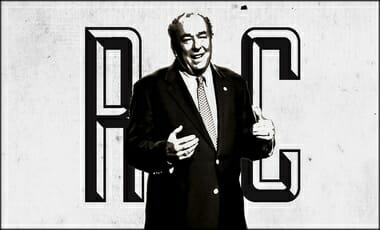
A friend on the Effe Bee (Facebook) asked a good question about the premise the graphic you see directly to the right:

  • There’s some truth to Sproul’s finished statement is there not?

(And for those not in the thick of the theological weeds, it may seem a somewhat tenable position.) So I wanted to share a longer response with him as well as discuss some other recent graphics I have made for the larger audience.

I actually agree with the first half of Sproul’s statement. Salvation is entirely dependent upon God’s grace from beginning to end. Where I disagree is with his definition of that grace.

Sproul says I must first be regenerated by an effectual act of the Spirit before I can believe.

Traditional Baptists and Provisionists say God graciously initiates salvation, provides Christ, gives the gospel, convicts and draws the sinner, and enables the response — but the sinner’s faith is genuinely a response that can be either accepted or resisted.

So the disagreement isn’t whether salvation is of the Lord. It’s whether God’s grace determines the response or graciously enables the response.

This is really dealing with the Calvinist’s twisting of Total Depravity into an ontological form of Total Inability. Dr. Leighton Flowers deals with this in this older video titled “The Biblical use of the term ‘DEAD'”

Which brings me to another graphic I made:

Again, this is ripping a 1st century idiom out of context. It is almost “Cultish” in how it is done. Here Micah Coate explains this idea a little:

Despite Calvinism’s highly acclaimed standard of quality exegesis, the account of Jesus raising Lazarus from the dead is often used as a textual illustration supporting Calvin’s doctrine of Total Depravity. This is a hermeneutical mistake. The student of the Bible should beware when any doctrine, let alone essential doctrine, is supported from a narrative story that lacks any instruction, especially when a particular belief is set against a number of other clear teachings. This reading of Scripture is comparable to the practice of Jehovah’s Witnesses, who pull a number of erroneous doctrines from the poetic books of Proverbs and Ecclesiastes.

This way of using Scripture is one of the characteristics of a cult. Josh McDowell writes that cults often claim that:

. . . the Scriptures are their final source of authority; [however,] we find they [cults] consistently misuse the Scriptures to establish their own peculiar beliefs. This is accomplished chiefly by quoting texts out of context while omitting other passages relevant to the subject.

Calvinist R. C. Sproul actually validates McDowell’s statement, in his book What Is Reformed Theology? In the chapter “Monergistic Regeneration,” Sproul fails to cite a single verse showing that the Bible supports this belief. Instead, Sproul gives the reader a class in Latin and Greek terminology with such words as monergism, synergism, operative grace, and cooperative grace. Instead of making a sound case for monergistic regeneration, all Sproul does is pull a heretical doctrine of salvation from the simple story of Lazarus, saying, “Perhaps a good illustration of Monergistic, life-giving power is the raising of Lazarus from the dead.” Sproul tries to provide a biblical foundation for his peculiar belief at the expense of “quoting texts out of context while omitting other passages relevant to the subject.” Because of this hermeneutical mistake, his example and thoughts on the monergistic resurrection are incorrect.


The usual argument given in defense of Total Depravity lies in a question: Because the Bible depicts man as being dead apart from God, how can he choose to have faith in the Gospel of Jesus on his own? Although many Calvinist authors pose this question as a foundation for their doctrine, it is not logically or biblically sound. By pulling doctrine from the Lazarus account, Calvinists have dug themselves into a mess of unanswerable theological questions.

The Lazarus Problem:
When a Narrative Becomes a Doctrine

One of the most familiar Calvinist illustrations of Total Depravity and regeneration is the raising of Lazarus in John 11. The argument is easy to understand: Lazarus was physically dead, therefore he could do nothing to contribute to his resurrection. Jesus alone called him from death to life. R.C. Sproul explicitly uses Lazarus in this way, explaining that regeneration is the sovereign work of the Holy Spirit and comparing the effectual call to Jesus’ command, “Lazarus, come out.”

Sproul then gives the Reformed order of salvation as:

effectual calling → regeneration → faith → justification → sanctification → glorification

That is an important distinction because Sproul is not merely saying that Lazarus illustrates God’s power to give life. He is using the Lazarus narrative to illustrate a particular doctrine of the order of salvation. According to this system, the sinner is spiritually dead and therefore cannot believe until God first regenerates him. Regeneration produces the faith by which the person believes. Sproul himself contrasts this with the more common evangelical understanding that a person believes in Christ and is then born again, which I picture here:.

JOHN 11:1-40 (CSB)

LAZARUS DIES AT BETHANY

1 Now a man was sick—Lazarus from Bethany, the village of Mary and her sister Martha. Mary was the one who anointed the Lord with perfume and wiped his feet with her hair, and it was her brother Lazarus who was sick. So the sisters sent a message to him: “Lord, the one you love is sick.”

When Jesus heard it, he said, “This sickness will not end in death but is for the glory of God, so that the Son of God may be glorified through it.” Now Jesus loved Martha, her sister, and Lazarus. So when he heard that he was sick, he stayed two more days in the place where he was. Then after that, he said to the disciples, “Let’s go to Judea again.”

“Rabbi,” the disciples told him, “just now the Jews tried to stone you, and you’re going there again?”

“Aren’t there twelve hours in a day?” Jesus answered. “If anyone walks during the day, he doesn’t stumble, because he sees the light of this world. 10 But if anyone walks during the night, he does stumble, because the light is not in him.”

11 He said this, and then he told them, “Our friend Lazarus has fallen asleep, but I’m on my way to wake him up.”

12 Then the disciples said to him, “Lord, if he has fallen asleep, he will get well.”

13 Jesus, however, was speaking about his death, but they thought he was speaking about natural sleep. 14 So Jesus then told them plainly, “Lazarus has died. 15 I’m glad for you that I wasn’t there so that you may believe. But let’s go to him.”

16 Then Thomas (called “Twin”) said to his fellow disciples, “Let’s go too so that we may die with him.”

THE RESURRECTION AND THE LIFE

17 When Jesus arrived, he found that Lazarus had already been in the tomb four days. 18 Bethany was near Jerusalem (less than two miles away). 19 Many of the Jews had come to Martha and Mary to comfort them about their brother. 20 As soon as Martha heard that Jesus was coming, she went to meet him, but Mary remained seated in the house.

21 Then Martha said to Jesus, “Lord, if you had been here, my brother wouldn’t have died. 22 Yet even now I know that whatever you ask from God, God will give you.”

23 “Your brother will rise again,” Jesus told her.

24 Martha said to him, “I know that he will rise again in the resurrection at the last day.”

25 Jesus said to her, “I am the resurrection and the life. The one who believes in me, even if he dies, will live. 26 Everyone who lives and believes in me will never die. Do you believe this?”

27 “Yes, Lord,” she told him, “I believe you are the Messiah, the Son of God, who comes into the world.”

JESUS SHARES THE SORROW OF DEATH

28 Having said this, she went back and called her sister Mary, saying in private, “The Teacher is here and is calling for you.”

29 As soon as Mary heard this, she got up quickly and went to him. 30 Jesus had not yet come into the village but was still in the place where Martha had met him. 31 The Jews who were with her in the house consoling her saw that Mary got up quickly and went out. They followed her, supposing that she was going to the tomb to cry there.

32 As soon as Mary came to where Jesus was and saw him, she fell at his feet and told him, “Lord, if you had been here, my brother wouldn’t have died!”

33 When Jesus saw her crying, and the Jews who had come with her crying, he was deeply moved in his spirit and troubled. 34 “Where have you put him?” he asked.

“Lord,” they told him, “come and see.”

35 Jesus wept.

36 So the Jews said, “See how he loved him!” 37 But some of them said, “Couldn’t he who opened the blind man’s eyes also have kept this man from dying?”

THE SEVENTH SIGN: RAISING LAZARUS FROM THE DEAD

38 Then Jesus, deeply moved again, came to the tomb. It was a cave, and a stone was lying against it. 39 “Remove the stone,” Jesus said.

Martha, the dead man’s sister, told him, “Lord, there is already a stench because he has been dead four days.”

40 Jesus said to her, “Didn’t I tell you that if you believed you would see the glory of God?”

In other words, the stated emphasis surrounding the miracle is belief. The miracle is presented as a revelation of Christ’s identity and glory that calls people to faith. That is quite different from using the event as a technical illustration that regeneration must occur before anyone can believe. (SOTERIOLOGY 101)

The problem becomes even more apparent when we recognize that Scripture uses “dead” in several different metaphoric contexts. The material in Calvinism: A Biblical and Theological Critique identifies people as spiritually dead, sick, blind, lovers of darkness, and dead, but argues that Scripture does not require “dead” to mean an inability to repent and believe. It specifically points to Adam and Eve hearing and responding to God after their fall, the prodigal son being described as dead and lost while returning to his father, and Jesus’ statement in John 5:24 concerning the spiritually dead who hear and believe.

That brings us directly to the Prodigal Son. Jesus says of the son, “This son of mine was dead and is alive again; he was lost and is found.” Yet the “dead” son is not portrayed as a motionless corpse. He comes to his senses. He recognizes his condition. He changes his mind. He decides to return. He gets up and goes to his father. Then his father receives him and restores him. The point isn’t that the son saved himself—he didn’t. The father is the one who restores the relationship. But the story certainly doesn’t require us to understand “dead” as meaning incapable of responding.

If you right click with your mouse and “Open Link In New Tab”, that is an expandible graphic.

This is exactly the point made in the Soteriology 101 material. The argument isn’t that “dead doesn’t mean dead.” The argument is that dead is being used idiomatically, and therefore we need to determine what the biblical metaphor means rather than automatically equating spiritual death with a physical corpse. The Prodigal is called “dead/lost” and then “alive/found,” which is presented as an illustration of separation through rebellion rather than innate moral inability. The same article points to Revelation 3, James 1, Romans 7, Ephesians 2, and Colossians 2 as passages that complicate the assumption that “dead” means an inability to respond positively to God. (SOTERIOLOGY 101)

The Colossians passage is particularly interesting. Paul says that believers were “raised up with Him through faith.” The argument drawn from this is that being made alive and faith are not necessarily related in the Calvinist sequence of regeneration → faith. Likewise, the broader biblical material repeatedly commands people to repent and believe. Acts 17:30 says that God “commands all people everywhere to repent.” The critique argues that these commands make better sense as genuine calls to sinners who, through God’s gracious enablement, can respond, rather than as commands that only become possible after an irresistible regeneration that God grants to some and withholds from others.

And this is where the “dead men don’t grab” illustration becomes less decisive than it first appears. Of course a literal corpse cannot grab a life preserver. But nobody is claiming that spiritually dead people are physically dead. The question is what spiritual death means. If “dead” automatically means the total inability to respond to God, then that definition needs to be demonstrated from Scripture rather than simply assumed from the Lazarus story. Ronnie Rogers’ formulation is useful here: God’s sufficient call, together with His grace enablement, is sufficient for anyone to receive salvation. He identifies those enablements as including God’s love, the revelation of His power, Christ’s provision, the conviction of the Holy Spirit, God’s teaching, the gospel, and God’s drawing.

There is also a fascinating internal problem with using Lazarus as the complete picture of the unregenerate sinner. Lazarus did absolutely nothing to help Jesus raise him from the dead—but he also did absolutely nothing to resist Jesus. If Lazarus is the perfect picture of the spiritually dead sinner, then the analogy would seem to demonstrate an inability to do anything in response to God, whether positive or negative. Yet Calvinism simultaneously describes the unregenerate person as actively rebelling against God, loving darkness, following sinful desires, and committing acts that displease Him. The Lazarus analogy therefore cannot, by itself, establish all of the conclusions Calvinism wants to draw from it. The narrative demonstrates Christ’s sovereign power over death; it does not explain every aspect of the sinner’s moral response to God’s grace.

So the real issue isn’t whether God gives life. He does. It isn’t whether salvation is dependent upon God’s grace. It is. And it certainly isn’t whether anyone can save himself. Nobody can. The actual question is much narrower and much more important:

Does “dead in sin” mean that a sinner is incapable of responding to God’s gracious revelation until after regeneration, or does it describe the sinner’s lost, separated, rebellious condition while God’s grace enables him to respond?

That is where the two systems part company.

AGAIN:

The Calvinism: A Biblical and Theological Critique material explicitly frames the distinction as Total Depravity understood as the inability to save oneself versus Total Depravity understood as the inability to repent and believe. To be clear, Calvinists appeal to the doctrine of total depravity to claim that sinners are unable to repent and trust Christ apart from the monergistic work of regeneration.

The distinction is not between believing that humanity is sinful and believing that humanity is not sinful. Both sides affirm the devastating effects of sin and humanity’s absolute dependence upon God’s grace. The real question is what “Total Depravity” means with respect to a person’s response to the gospel. As Adam Harwood explains, the Traditional Statement denies that Adam’s sin resulted in the “incapacitation” of anyone’s free will. It does not claim that sinners can save themselves; rather, it affirms that no sinner can achieve salvation through his own effort and that salvation is received through a response to the Holy Spirit’s drawing through the gospel.

That distinction is critical to the Lazarus argument. Calvinism takes spiritual death to mean that sinners cannot repent and believe until God first regenerates them. The Traditional Baptist position instead understands sinners as genuinely lost and unable to save themselves, while God’s grace calls and enables them to respond. Harwood notes the significance of the Bible’s repeated calls for people to repent and believe: if God calls all people to repent and gives open invitations to respond in faith, the Traditional Statement argues that people must actually be capable of responding. In other words, “dead in sin” does not have to mean “incapable of responding to God’s gracious invitation.” It can describe the sinner’s desperate, lost, and sinful condition while still leaving room for God’s grace to enable a genuine response.

And that is why I think the Lazarus argument deserves much more scrutiny than it usually receives.

Jesus certainly raised Lazarus from the dead.

But Lazarus was not raised to teach us the mechanics of regeneration.

He was raised as a sign revealing who Jesus is, and Jesus explicitly connected the event with belief.

Harwood’s chapter explicitly says the disagreement is not whether salvation is by grace. The Traditional Statement says no sinner is remotely capable of achieving salvation through his own effort. The disagreement is whether God’s grace enables a response or must first regenerate the person so that the response becomes inevitable.

PDF

CLICK TO ENLARGE

When we take that narrative and make it the foundation for a doctrine that says regeneration must precede faith, we have moved from what the text says to what a theological system wants the text to illustrate. That is precisely the hermeneutical question raised by Micah Coate’s critique:

  • Are we allowing Scripture to establish the doctrine, or are we taking a narrative and making it carry a doctrine that the narrative itself never teaches?

The issue, then, isn’t whether Lazarus was really dead.

He was.

The issue is whether every spiritually dead person is therefore a spiritual Lazarus—unable to hear, unable to respond, and unable to believe until God first regenerates him.

That conclusion has to come from Scripture. Lazarus doesn’t say it.

You want an example of how a healthy theology uses the Lazarus even? Remember Jesus said:

“This sickness will not end in death but is for the glory of God, so that the Son of God may be glorified through it.”

“I’m glad for you that I wasn’t there so that you may believe.”

“I am the resurrection and the life. The one who believes in me, even if he dies, will live. Everyone who lives and believes in me will never die. Do you believe this?”

“Didn’t I tell you that if you believed you would see the glory of God?”

Here is how the story of Lazarus is used in Professor Harwood’s systematic work:

SIGNS AND MIRACLES

Another means of special revelation attested in Scripture is signs and miracles, which are sometimes called God’s mighty acts or signs and wonders. 18 Signs and miracles were acts of God that occurred outside God’s normative providential care and were meant to testify that God was at work. The Bible is filled with examples of signs and miracles. For example, God intervened to provide children to women such as Sarah, Hannah, and Mary, who otherwise would not have become pregnant. 19 God demonstrated signs through Moses so people would know God had appeared to Moses and was speaking through him (Exod 4:1–9). When Pharaoh refused to listen to Moses despite God’s many signs and wonders, Egypt experienced “mighty acts of judgment” (Exod 7:4).

Signs and wonders characterized the events surrounding Jesus’s conception and birth as well as his public ministry. Mark records an episode that demonstrates a reason for miracles during Jesus’s ministry. While Jesus was teaching in a home crowded with listeners, a paralytic man was lowered through the roof. Jesus declared the man’s sins were forgiven and explained the reason he healed the man was to demonstrate his authority to forgive sin —something only God can do (Mark 2:1–12). This episode of physical healing reveals how the miracle brought more than physical relief and a demonstration of God’s compassion for the individual; the miracle pointed people to a greater truth, that Jesus had the authority to forgive sin. John’s Gospel contains several miracles called “signs” (Grk. sēmeia ), which revealed Jesus’s glory (John 2:11), including turning water to wine (John 2:1–11), healing an official’s son (4:43–54), healing a man at Bethesda (5:1– 15), feeding five thousand (6:1–14), walking on water (6:16–21), restoring a man’s sight (9:1–12), and raising Lazarus (11:1–44). The greatest sign in John’s Gospel, as in the other Gospels, is the resurrection of Jesus from the grave.

[….]

The person and work of Christ can be seen in a variety of ways in John’s Gospel. Jesus is the preexistent and divine Word who became flesh, was rejected by his creation, in whom is life, and who reveals the Father (1:1–18). The Gospel presents eight witnesses to the divinity of Christ: John the Baptist (1:34), the works of Christ (5:36), the Father (v. 37), the Scriptures (v. 39), Christ himself (8:14), the Holy Spirit (15:26), believers (v. 27), and the author of the Gospel (19:35). 15 The seven miracles, also called signs, revealed God’s glory in Jesus and resulted in the disciples trusting him (2:11). The seven signs are changing water into wine (2:1–11), healing the official’s son (4:43–54), healing the man at Bethesda (5:1–15), feeding the five thousand (6:1–14), walking on water (vv. 16–21), healing the man born blind (9:1–12), and raising Lazarus (11:1–44). Jesus identified himself in seven “I am” statements with Yahweh, the covenant name of God: the bread of life (6:35); the light of the world (8:12); the door (10:7); the good shepherd (vv. 11–14); the resurrection and the life (11:25); the way, the truth, and the life (14:6); and the true vine (15:1).

Adam Harwood, Christian Theology: Biblical, Historical, and Systematic (Bellingham, WA: Lexham Academic, 2022), 88–89, 398.

Professor Harwood used the story as Jesus intended it; R.C. Sproul, John MacArthur, James White, and others, did and do not..

More from Professor Flowers book, Drawn by Jesus:

Dead In Sin

Are we born dead like Lazarus, a corpse rotting in the tomb (a link scripture never draws), or are we dead like the Prodigal, a loved one separated due to his own rebellion? Scripture seems to support the latter, not the former (Luke 15:32).

The fact is that the scriptures metaphorically address our condi­tion as a sickness far more than as deadness. (Jer 17:9, 23; Mk 2:17; Lk 5:31; Mt 9:12; Ps 38:3; Is 64:6; etc) And when speaking metaphoric­ally of deadness, it is never described as a morally incapacitated con­dition from birth due to the Fall, but instead as a condition of being separated from God by our own rebellion.

For instance, the Prodigal was “dead” or “lost” then “alive” or “found,” demonstrating that the term “dead” is idiomatic for “separ­ated by rebellion,” not “innate moral inability” (Luke 15:24). Just as our soul is separated from our body when we die so too sinful hu­manity is separated from God by his rebellion. Look what scripture teaches,

When tempted, no one should say, “God is tempting me.” For God cannot be tempted by evil, nor does he tempt anyone; but each person is tempted when they are dragged away by their own evil desire and enticed. Then, after desire has conceived, it gives birth to sin; and sin, when it is full-grown, gives birth to death. (James 1 :1 3-1 5)

Are we born “dead,” according to James? Or is death birthed in those who sin after it is “full grown?” What did Paul say?

What shall we say, then? Is the law sinful? Certainly not! Never­theless, I would not have known what sin was had it not been for the law. For I would not have known what coveting really was if the law had not said, “You shall not covet.” But sin, seizing the op­portunity afforded by the commandment, produced in me every kind of coveting. For apart from the law, sin was dead. Once I was alive apart from the law; but when the commandment came, sin sprang to life and I died. I found that the very commandment that was intended to bring life actually brought death. For sin, seizing the opportunity afforded by the commandment, deceived me, and through the commandment, put me to death. (Romans 7:7-11)

Are we born “dead,” according to Paul? Or was it through the com­mandment, after “sin sprang to life,” that death came? In contrast, the metaphor of illness is quite prevalent throughout the scriptures:

For while we were still weak, at the right time Christ died for the ungodly. (Romans 5:6)

The heart is more deceitful than all else. And is desperately sick; Who can understand it? (Jeremiah 1 7:9)

And hearing this, Jesus said to them, “It is not those who are healthy who need a physician, but those who are sick; I did not come to call the righteous, but sinners. (Mark 2:1 7)

There is no soundness in my flesh because of Your indignation; There is no health in my bones because of my sin. (Psalms 38:3)

For all of us have become like one who is unclean, And all our righteous deeds are like a filthy garment; And all of us wither like a leaf, And our iniquities, like the wind, take us away. (Isaiah 64:6)

We are sick and in need of a Physician. We are cursed and in need of His cure. His life-giving truth is sufficient to accomplish the pur­pose for which He sent it, “…so that you may believe…and by believ­ing may have life in His name” (John 20:31).

Is Not Able By His Own Strength

Given that we cannot draw our next breath if not by the gracious good pleasure of our Sovereign Lord, I’m not sure how this qualifica­tion helps clarify our point of contention. God gives us all we have, including our ability to make choices. In other words, we all affirm that God must enable choice. We do not all agree that such enabling will dictate which choice will be made. As A.W. Tozer so eloquently taught,

God sovereignly decreed that man should be free to exercise moral choice, and man, from the beginning, has fulfilled that decree by making his choice between good and evil. When he chooses to do evil, he does not thereby countervail the sovereign will of God but fulfills it, inasmuch as the eternal decree decided not which choice the man should make but that he should be free to make it. If in His absolute freedom, God has willed to give man limited freedom, who is there to stay His hand or say, “What doest thou?” Man’s will is free because God is sovereign. A God less than sov­ereign could not bestow moral freedom upon His creatures. He would be afraid to do so.

To Convert Himself

In response to a doctor’s diagnosis, is recognizing your need for a heart transplant and submitting to the doctor’s will to perform the surgery equal to performing the surgery yourself? Of course not. An Ethiopian cannot change his own skin, nor can a leopard change his own spots (Jeremiah 13:23), but that does not even imply that they cannot recognize and submit to this needed change when confronted by the only One who is able to bring about such change.

Or Prepare Himself Thereunto

Can the powerful, Spirit-wrought truth of God’s inspired Word prepare him thereunto? Does one’s ability to resist such preparation and enabling work somehow negate that the work is sufficient to accomplish its given purpose?

Here is a brief rebuttal of the most common proof texts used by Calvinists to support their teaching on “Total Inability.” Much more could be and has been written on each of these texts from the non-Calvinistic perspective, but for the sake of brevity, here is a summary of the rebuttals:

The LORD saw that the wickedness of man was great in the earth, and that every intention of the thoughts of his heart was only evil continually. (Genesis 6:5)

Nothing at all is stated about man’s inability to respond to God’s own revelation. Please read all of Genesis chapter 6 and make a case as to how that supports the Calvinistic premise. Here is just a taste of the context:

The Lord saw how great the wickedness of the human race had become on the earth, and that every inclination of the thoughts of the human heart was only evil all the time. The Lord regretted that he had made human beings on the earth, and his heart was deeply troubled.

As one Calvinist on a recent podcast inquired in response to this passage, “Why didn’t God just elect more people instead of becoming `deeply troubled?'” That is a good question that every Calvinist must deal with when confronted with a text like this. The natural reading simply does not align with deterministic philosophy.

None is righteous, no, not one; no one understands; no one seeks for God. (Romans 3:1O-11)

No one is righteous according to the works of the law. No one is able to attain righteousness by law through works. But how does that prove no one is able to obtain righteousness by grace through faith? In verse 21 of this same chapter, Paul introduces the means for man to obtain righteousness, which is separate from the law. Calvin­ists seem to think that proof of our inability to earn righteousness through our own works likewise proves our inability to trust in the imputed righteousness of Christ. Proving that the lost cannot seek God does not prove that they are unable to respond to a God who is ac­tively seeking to save the lost.

For the mind that is set on the flesh is hostile to God, for it does not submit to God’s law; indeed, it cannot. Those who are in the flesh cannot please God. You, however, are not in the flesh but in the Spirit, if in fact the Spirit of God dwells in you. Anyone who does not have the Spirit of Christ does not belong to him. (Romans 8:7-9)

Mankind’s inability to submit to God’s law does not prove their inability to trust in Christ, who fulfilled the law for mankind. Man­kind’s inability to please God while acting in the flesh does not prove mankind’s inability to respond to the spiritual appeal of God so as to receive His Spirit.

If I warn my rebellious son, saying, “You cannot please me by acting selfishly,” does that suggest the child is unable to heed my warning, humble himself, and repent of acting selfishly? Of course not. It only suggests that as long as my child continues to rebel and act according to his pride, he will not please me.

This verse says nothing of our innate inability to respond to God’s powerful truth and appeal to humble ourselves so as to be reconciled. Each individual has the choice to remain in their fleshly pride or respond to the Spirit’s call to humble themselves. If you choose the former, you cannot please God.

The natural person does not accept the things of the Spirit of God, for they are folly to him, and he is not able to understand them because they are spiritually discerned. (1 Corinthians 2:14)

So, the lost man needs someone to spiritually discern the “deep things of God” (vs. 10), right? What are the means God uses to help us discern spiritual truths? Is not the very epistle that Paul is writing to the carnal believers in Corinth a means for “spiritual discernment?” And since the “brethren” in the Corinthian church are “not able to receive” these same “deep things of God” (1 Corinthians 3:1-3), one would be hard-pressed to suggest that Paul intended to teach that no one is able to understand the simple “milk” of the gospel’s appeal for reconciliation (2 Corinthians 5:20).

Again, this text never suggests that mankind is born unable to respond positively to God’s clearly revealed gospel appeal. It only affirms that the mystery of the gospel must be revealed to us in order for us to understand it, which it has been. As Paul states, “When you read this, you can perceive my insight into the mystery of Christ, which was not made known to the sons of men in other generations as it has now been revealed to his holy apostles and prophets by the Spirit” (Ephesians 3:4).

Neither side of this soteriological debate suggests that lost men can understand the deep spiritual truths of God apart from the means God has chosen to reveal these mysteries. So, the question is whether God’s means of discernment through the apostle’s writings is a sufficient work of discernment that enables those who hear it to understand and respond.

No one can come to me unless the Father who sent me draws him. (John 6:44a)

We all agree with this statement. But what are the means that God draws men to Himself? Even White agrees that God draws them by teaching them. As mentioned earlier, in Romans 10:14-15 Paul asks:

How, then, can they call on the one they have not believed in? And how can they believe in the one of whom they have not heard? And how can they hear without someone preaching to them? And how can anyone preach unless they are sent?

Follow the Order:

God Sends: Who does He send? His apostles, the remnant reserved from Israel to be His inspired messengers (Acts 10:40-41). The rest of the Israelites are being judicially hardened in their rebellion tem­porarily while Christ is on earth (Romans 11:7; 25). Jesus speaks to them in parables so that they cannot understand and repent (Mark 4:11-12). He does this to ensure the crucifixion that He has predeter­mined will come to pass (Acts 2:23). It is not until after Christ is lifted up that he sends out His Spirit-filled messengers to preach the gospel to all peoples (Acts 1:8) in order to draw all men to Himself (John 12:3 2).

Apostles Preach: What do they preach? The powerful gospel ap­peal (Romans 1:16; 10:8; 2 Corinthians 5:20), which is alive, active and able to cut through to the soul of man (Hebrews 4:12). Remem­ber this is the powerful gospel that is being hidden in parables from most of Israel while Christ is on earth in order to prevent them from repenting before the right time (Matthew 13:11; 16:20). Proof that God used persuasive means to convince chosen messengers from Is­rael to go and proclaim His message is not proof that God uses inward irresistible means to convince preselected hearers to believe their message (John 20:30-31).

Hearers Hear: Who are the hearers? Anyone who is not being judicially hardened, like Israel was at that time. Only those who are being blinded from seeing the light are unable to see the light, and that blinding (judicially hardening) is not a condition from birth but a condition unique to Israel at that time as judgment for their rebel­lion.

Hearing is how they can believe: As Paul states in the following verses, “faith comes from hearing the message,” which parallels what John taught in John 20:31: “…these are written that you may believe that Jesus is the Messiah, the Son of God and that by believing, you may have life in his name.” The only reason that a hearer would not be enabled to respond to the life-giving truth of God’s appeal is if they are being prevented from seeing, hearing, or understanding the mes­sage, a condition of someone being judicially hardened by God (“hid­den from their eyes”).

Believing is how they can call: One who has heard the powerful gospel appeal calling us to repentance and faith is able to believe. The believer is able to call on Christ in repentance in order to find forgive­ness and life. Mankind must repent in order to live! (Ezekiel 18:32)

The historical context of John 6 must be in view to understand the author’s intention. Jesus is purposefully blinding most Israelites, due to their self-righteous rebellion, from the truth of His identity to prevent their repentance for a time. All the while, He is drawing His preselected apostles and genuine believers from Israel to be the foundation for His church. In other words, in Christ’s audience, there are some who are being judicially hardened from Israel for a good reason (unbelief) and others who are being drawn from Israel for a good reason (belief) in order to ensure God’s purpose in electing Israel would be fulfilled.

Support Drawn from Other Passages In John’s Gospel

And I, if I am lifted up from the earth, will draw all men to Myself. (John 12:32)

The differentiation between the Father’s drawing in John 6 and the Son’s drawing in John 12, as expounded upon earlier, is a signifi­cant contextual point that must be considered in this discussion. The emphasis on the Father’s drawing in John 6 highlights the divine ac­tion of God inviting and enabling faithful God-fearing individuals to come to Jesus.

On the other hand, in John 12:32, Jesus emphasizes His own agency in drawing all people to Himself, but only after His res­urrection. This distinction highlights the harmonious collaboration between the Father and the Son in their work of salvation, underscor­ing the unity and purpose within the Godhead given at the proper time. By emphasizing His role in drawing people to Himself, Jesus reinforces His divinity and authority as the central figure in the re­demptive plan of God, offering all people the means to be reconciled with God through His sacrificial death and resurrection.

Jesus answered them, “I told you, and you do not believe; the works that I do in My Father’s name, these testify of Me. “But you do not believe because you are not of My sheep. “My sheep hear My voice, and I know them, and they follow Me; and I give eternal life to them, and they will never perish; and no one will snatch them out of My hand. “My Father, who has given them to Me, is greater than all; and no one is able to snatch them out of the Father’s hand. “I and the Father are one.” (John 10:25-30)

If we understand “My sheep” to refer to “those I have uncondi­tionally elected for effectual salvation before the foundation of the world,” then this passage might appear to support the Calvinistic doctrine. However, there is nothing in this context to indicate that is what Jesus is referring to by using the analogy of being His “sheep.” The intended audience of Jesus’ words in John 10:26 are Israelites who have become hardened and indifferent to the voice of God. It is because of their refusal to listen and respond to the Father’s voice that they are now unable to recognize and accept the voice of Jesus, who speaks the same truth (John 6:45).

This is not due to an inherent condition from birth that predis­poses them to hate and reject God’s appeals for reconciliation, nor is it because God is withholding the necessary grace for them to believe. On the contrary, the Jews had become calloused through persistent unbelief; otherwise, they could have seen, heard, understood, and turned to God for healing (as demonstrated in John 12:39-40 and Acts 28:23-28). Jesus describes their spiritual condition in this con­text as follows:

You pore over the Scriptures because you think you have eternal life in them, and yet they testify about me. But you are not willing to come to me so that you may have life (John 5:39-40).

It is important to observe the sequence of events here: the Jews chose to reject the Scriptures, resulting in their denial of the oppor­tunity for life. Jesus did not imply, “I have refused to make you alive so that you would be compelled to come to me.” He put the blame solely upon them for their unwillingness to come when they were presented with that opportunity.

During that time, the Jewish people had become stubborn and entrenched in their rebellion, which explains why they were unable to perceive, hear, and respond to their own Messiah. However, those who had not succumbed to this hardening of heart, and instead listened to and learned from the Father (like Cornelius in Acts 10) would believe in the Son and follow Him – recognizing His voice, much like a sheep responds to its shepherd (see also John 6:45).

Prior to Christ’s coming, if someone believed the Father, they would also believe His Son, for the Father and Son are One. Con­versely, if one refused to listen to the Father before the incarnation, they would likewise be unresponsive to the teachings of the Son. The followers of the Father (often referred to as “sheep” during that era) also became followers of the Son. Those who rejected the guidance of the Father were not considered among His sheep, and that is why they refused to follow the Son. This clarifies Jesus’ statement to them, “But you do not believe because you are not of my sheep” (John 10:26).

In essence, Jesus is conveying this message: “Because you have chosen not to follow the Father, you will not follow me, His Son, either.” When Jesus says, “You are not my sheep,” He is essentially saying, “You do not align yourself with God, nor have you listened and learned from Him (as referenced in John 6:45). Hence, you will not heed my calling as the Shepherd sent by Him, who represents the very same truth.” This is reflected in the following statement by Jesus:

If God were your Father, you would love Me, because I came from God and I am here. For I didn’t come on my own, but He sent me (John 8:42).

Jesus is not implying, as the Calvinistic doctrine would suggest, that their unbelief stems from both Him and the Father rejecting them and withholding the necessary grace to believe since before the world was established. This notion contradicts Luke 19:41-42, where

 Jesus weeps over Israel because they are now unable to see the truth of His identity as their Messiah.

Why would God need to conceal the truth of Christ from those who were born unable to believe? Additionally, why would Jesus urge those who were not His followers to ponder the implications of His miracles if they were utterly incapable of accepting the truth?

If I am not doing my Father’s works, don’t believe me. But if I am doing them and you don’t believe me, believe the works. This way, you will know and understand that the Father is in me and I in the Father (John 10:37-38, emphasis added).

God was not withholding some special grace necessary for them to believe. This notion gives them too much credit and portrays them as victims rather than morally accountable rebellious sinners. They reject a loving God who declares, “all day long I have held out my hands” (Romans 10:21) and “wanted to gather your children to­gether, as a hen gathers her chicks under her wings” (Matthew 23:37; Isaiah 30:15).

I came across this first graphic, and this is the “Calvinist ‘front’ story”… I explain the rest of the story behind the scenes with the second one that follows:

An Augustinian Mistranslation of Romans 5:12

This topic is god to combine with Psalm 51, HERE

  • The person who sins is the one who will die. A son won’t suffer punishment for the father’s iniquity, and a father won’t suffer punishment for the son’s iniquity. The righteousness of the righteous person will be on him, and the wickedness of the wicked person will be on him. (Ezekiel 18:20)

I will first post a section from pages 30-31, 35 of Calvinism: A Biblical and Theological Critique

Romans 5:12

Augustine found support for inherited guilt in a misinterpretation of the Latin version of Rom 5:12. At the end of the verse, Paul wrote that all die eph hō pantes hemartōn (“because all sinned”). Reading from a Latin text, however, Augustine saw the phrase in quo omnes peccaverunt and wrongly interpreted it to mean “in whom all sinned.” The resulting interpretation was that all humanity dies because all humanity sinned in Adam. The Greek phrase eph hō, however, which corresponds to the Latin in quo, means “because.” As support for this interpretation, we may simply consult major English Bible translations.51 Against Augustine’s interpretation, Rom 5:12 states all die because all sin. Though Rom 5:12 provides the primary biblical support for an Augustinian view of original sin, the verse became significant for his view only when he began to debate Pelagians on original sin.52 For Pelagius, Adam’s sin brought death into the world, but each person is held responsible for their own sin. Adam’s sin was the first and primary example of sinful behavior, but his descendants are indicted as guilty for the same reason as Adam—because of their own acts of rebellion against God.53 The early

church interpreted Romans as well as Adam’s relationship to humanity in similar ways. For Augustine, however, the Adam-Christ parallel represented two processes of being born: sinful people are born naturally by the natural man (Adam), but children of God are born spiritually by grace through Christ.54 This Adam-Christ parallel is seen when Augustine paired the verse with 1 Cor 15:22, which he quoted, “For as in Adam all die, so also in Christ shall all be made alive.”55 For Augustine, Adam passed sin to his descendants by procreation, resulting in all people being destined for eternal damnation, including unbaptized infants.56

Though some interpret Rom 5:12 like Augustine, other Christian scholars reject inherited guilt. James D. G. Dunn wrote on Paul’s view of Adam and sin from Rom 5:12–21: “Guilt only enters into the reckoning with the individual’s own transgression. Human beings are not held responsible for the state into which they are born. That is the starting point of their personal responsibility, a starting point for which they are not liable.”57 Donald G. Bloesch explained, “The text in Romans to which Augustine often appealed (5:12) does not tell us how Adamic sin is related to general human sin and therefore cannot be used to argue for inherited sin or guilt; it simply informs us that death pervaded the whole human race ‘inasmuch as all have sinned’ (REB).”58 Joseph Fitzmyer cautioned readers of Rom 5:12 to distinguish between Paul’s writings and the later teachings of the church. This Catholic scholar explains that the doctrine of original sin (the view that all people inherit both a sinful nature and guilt) is a later teaching of the church rather than the explicit teaching of Paul. The doctrine of original sin was developed from later Augustinian writings and solidified through the Sixteenth Council of Carthage, the Second Council of Orange, and the Tridentine Council.59

[….]

Stanley Grenz (1950–2005) wrote, “Romans 5:12–21, like Ephesians 2:3, does not clearly and unequivocally declare that all persons inherit guilt directly because of Adam’s sin. The biblical case for original guilt is not strong.” Grenz concluded, “Our human nature has been corrupted.”81 He described the development of moral responsibility. “Somewhere in childhood we move from a stage in which our actions are not deemed morally accountable to the responsibility of acting as moral agents. In short, we cross a point which some refer to as the ‘age of accountability.’”82

51 The CSB, ESV, LEB, NASB, NET, NIV, NKJV render the phrase in question as “because all sinned.” Other translations use different words to communicate the same idea. For example, the KJV used the phrase “for that all have sinned.” Even the NABRE (New American Bible, Revised Edition), the translation used on the website of the US Conference of Catholic Bishops, translated the phrase with a variation of “all sinned.”

52 Augustine quoted Rom 5:12 only three times before his debates with the Pelagians, and none of those occurrences of the verse concerned the transmission of sin. Beatrice, Transmission of Sin, 102.

53 See Pelagius’s views in Pelagius’ Commentary on St Paul’s Epistle to the Romans, trans. Theodore de Bruyn, Oxford Early Christian Studies (Oxford: Oxford University Press, 1993), 92–93 (5:12); 94 (5:15); 99 (6:19); 104 (7:17).

54 Augustine, On the Merits and Remission of Sins, and On the Baptism of Infants 1.19, in NPNF1, 5:22.

55 Augustine, Tractates on the Gospel of John 3.12, in NPNF1, 7:22.

56 Augustine, On the Merits and Remission of Sins, and On the Baptism of Infants 1.21, in NPNF1, 5:23: “Such infants as quit the body without being baptized will be involved in the mildest condemnation of all.”

57 James D. G. Dunn, The Theology of Paul the Apostle (Grand Rapids: Eerdmans, 1998), 97.

58 Donald G. Bloesch, Jesus Christ: Savior & Lord (Downers Grove, IL: InterVarsity, 1997), 43–44.

59 Joseph Fitzmyer, Romans: A New Translation with Introduction and Commentary, Anchor Bible 33, ed. William F. Albright and David Noel Freedman (Garden City, NY: Doubleday, 1993), 408–9.

[….]

81 Stanley J. Grenz, Theology for the Community of God (Grand Rapids: Eerdmans, 2000), 205.

82 Grenz, 209.

This clip is taken from the Naked Bible Podcast. It was part of an answer to a question about abortion and what happens to babies who are aborted.

Dr. Leighton Flowers walks through the doctrine often referred to as “original sin” and looks at where the scripture seems to fly in the face of the concept that mankind is held morally accountable for that which is beyond their control.

And 2-pages from the book Anyone Can Be Saved (as well as 3-pages from Adam Harwood’s book, Christian Theology. Both say similar things)

Romans 5:12

ROMANS 5:12

Joseph Fitzmyer cautions readers of Rom 5 to distinguish between Paul’s writings and the later teachings of the church. The Catholic scholar explains that the doctrine of original sin (the view that all people inherit both a sinful nature and guilt) is a later teaching of the church rather than an explicit teaching of Paul. The doctrine of original sin was developed from later Augustinian writings and solidified through the Sixteenth Council of Carthage, the Second Council of Orange, and the Tridentine Council.

Romans 5:12 begins with the word “Therefore.” What was Paul’s previous argument? In Rom 5:1–2, Paul explains that we have been justified by faith and have peace with God through Christ. Also, through Christ we have access by faith to this grace. In vv. 3–5, those who have been given the Holy Spirit can hope in their suffering because of what God produces in them. Christ died for “the weak,” “ungodly,” people who were “still sinners” (vv. 6–8). Verse 9 begins in a way that is similar to v. 1 (“Since, therefore, we have been justified. . .”). Verse 1 mentions being justified by faith; verse 9 mentions being justified by his blood. Verses 9–11 provide assurance that we will be saved from God’s wrath by the life provided by Jesus.

In verse 12, Paul states that “just as sin came into the world through one man, and death through sin, and so death spread to all men” (v. 12). Sin entered the world through one man, Adam. Death entered the world through sin. Death spread to all men. Why? The answer is found in verse 12, “because all sinned.” The text states neither “in whom all sinned” nor “because all sinned in Adam.” Death spread because people sinned. Even worse, “death reigned from Adam to Moses” (v. 14). But Christ is anticipated, and Adam is described as “a type of the one to come” (v. 14).

The remark that “one trespass led to condemnation” (v. 18) is clarified in v. 19, “For as by the one man’s disobedience the many were made sinners” (ESV). Do these verses teach that all people inherit the guilt and condemnation of Adam? If this is pressed as the meaning intended by Paul, then the parallel to all people inheriting guilt and condemnation is all people inheriting justification and life (v. 19). In order to affirm universal sinfulness but deny universal salvation, Millard Erickson posits a “conditional imputation” of Adam’s guilt. People must ratify the work of Adam by personally and knowingly sinning just as they must ratify the work of Christ by personally and knowingly repenting of sin and confessing Christ as Savior and Lord.

What does the text of Rom 5:12–21 not say? The text makes no mention of a covenant between God and Adam and it makes no mention of imputation of Adam’s guilt. Can those concepts be found in various volumes of systematic theology? Yes. Can those concepts be found in this passage? No. In his monumental work The Theology of Paul the Apostle, James D. G. Dunn articulates his rejection of inherited guilt as follows: “Nevertheless, guilt only enters into the reckoning with the individual’s own transgression. Human beings are not held responsible for the state into which they are born. That is the starting point of their personal responsibility, a starting point for which they are not liable.”

Perhaps other biblical texts support the doctrine of inherited guilt. Perhaps not. Either way, they are not discernible in Rom 5:12–21. Instead, we see that death spread to all of humanity because of the sin of one man, Adam. Thankfully, God answered the spread of death and condemnation through Adam with the hope of justification and life through Christ.

[I did not include foot notes in the excerpt above. I did – however – below]

ROMANS 5:12

Augustine found support for inherited guilt in a misinterpretation of the Latin version of Romans 5:12. At the end of the verse, Paul writes that all die eph hō pantes hemartōn (“because all sinned”). Reading from a Latin text, however, Augustine saw the phrase in quo omnes peccaverunt and wrongly interpreted it to mean “in whom all sinned.” The resulting interpretation was that all humanity dies because all humanity sinned in Adam. The Greek phrase eph hō , however, which corresponds to the Latin in quo , means “because.” As support for this interpretation, simply consult major English Bible translations. 34 Against Augustine’s interpretation, Romans 5:12 states all die because all sin. 35

Though Romans 5:12 provides the primary biblical support for an Augustinian view of original sin, the verse became significant for his view only when he began debating Pelagian views of original sin. 36 For Pelagius, Adam’s sin brought death into the world, but each person is held responsible for their own sin. Adam’s sin was the first and primary example of sinful behavior, but his descendants are indicted as guilty for the same reason as Adam—because of their own acts of rebellion against God. 37 The early church interpreted Romans as well as Adam’s relationship with humanity in similar ways. For Augustine, however, the Adam-Christ parallel represented two processes of being born: sinful people are born naturally by the natural man (Adam), but children of God are born spiritually by grace through Christ. 38 This Adam-Christ parallel is seen when Augustine paired the verse with 1 Corinthians 15:22, which he quotes, “For as in Adam all die, so also in Christ shall all be made alive.” 39 For Augustine, Adam passed sin to his descendants by procreation, resulting in all people being destined for eternal damnation, including unbaptized infants. 40

Though some interpret Romans 5:12 like Augustine, other Christian scholars reject inherited guilt. James D. G. Dunn writes on Paul’s view of Adam and sin from Romans 5:12–21, “Guilt only enters into the reckoning with the individual’s own transgression. Human beings are not held responsible for the state into which they are born. That is the starting point of their personal responsibility, a starting point for which they are not liable.” 41 Donald G. Bloesch explains, “The text in Romans to which Augustine often appealed (5:12) does not tell us how Adamic sin is related to general human sin and therefore cannot be used to argue for inherited sin or guilt; it simply informs us that death pervaded the whole human race ‘inasmuch as all have sinned.’ (REB).” 42 Joseph Fitzmyer cautions readers of Romans 5:12 to distinguish between Paul’s writings and the later teachings of the church. The Catholic scholar explains that the doctrine of original sin (the view that all people inherit both a sinful nature and guilt) is a later teaching of the church rather than the explicit teaching of Paul. The doctrine of original sin was developed from later Augustinian writings and solidified through the Sixteenth Council of Carthage, the Second Council of Orange, and the Tridentine Council. 43

CONCLUSION ON AUGUSTINE’S VIEWS OF ORIGINAL SIN AS INHERITED GUILT

Augustine’s view of inherited guilt was based on distorted views of humanity, sexual union, Christian marriage, and his poor interpretations of key biblical texts. Augustine misinterpreted Job 14:4; Psalm 51:5; Ephesians 2:3; Hebrews 7:4–10; and Romans 5:12. The best-known example is that Augustine quotes Romans 5:12 to affirm that all sinned in Adam, which is not what the apostle Paul wrote. Augustine viewed infant baptism as the solution for the problems among infants of inherited guilt and demonic possession. The early church affirmed human sinfulness, but Augustine’s interpretations of Scripture and views of inherited guilt were innovations that were rejected by many of his contemporaries as well as subsequent generations of Christians.

34 The CSB, ESV , LEB , NASB , NET, NIV , NKJV render the phrase in question as “because all sinned.” Other translations use different words to communicate the same idea. For example, the KJV uses the phrase “for that all have sinned.” Even the NABRE, the translation used on the website of the US Conference of Catholic Bishops, translates the phrase as “inasmuch as all sinned.”

35 Another possible interpretation of Rom 5:12 is that humans die and, as a result of their nature inherited from Adam, all sin. According to that view, eph hō serves as a consecutive conjunction meaning “with the result that.” In this case, the sin of Adam is the primary cause of our sinful condition; the result of that sin is the history of sinning on the part of all who enter the human race and sin of their own accord. For a summary and evaluation of major interpretations, see Robert H. Mounce, Romans, NAC 27 (Nashville: Broadman & Holman, 1995), 142 . He suggests this alternate interpretation does justice to the language involved and conforms to the apostle’s theological outlook as he builds his case in the book of Romans.

36 Augustine quoted Rom 5:12 only three times before his debates with the Pelagians, and none of those occurrences of the verse concern the transmission of sin (Beatrice, Transmission of Sin, 102).

37 See Pelagius’s views in Pelagius’s Commentary on St Paul’s Epistle to the Romans, trans. Theodore de Bruyn (Oxford: Oxford University Press, 1993), 5:12; 5:15; 6:19; 7:17.

38 Augustine, On the Merits 1.19.

39 Augustine, Tractates on the Gospel of John 3.12 (NPNF 1 7:22). See other quotations of 1 Cor 15:22 in Letter 140.8–9; 166.7; 169.4.

40 Augustine, On the Merits 1.21 (NPNF 1 5:23), “Such infants as quit the body without being baptized will be involved in the mildest condemnation of all.”

41 James D. G. Dunn, The Theology of Paul the Apostle (Grand Rapids: Eerdmans, 1998), 97.

42 Donald G. Bloesch, Jesus Christ: Savior and Lord (Downers Grove, IL: InterVarsity, 1997), 43–44.

43 Joseph Fitzmyer, Romans: A New Translation with Introduction and Commentary, AB 33 (Garden City, NY: Doubleday, 1993), 408–9.

Adam Harwood, Christian Theology: Biblical, Historical, and Systematic (Bellingham, WA: Lexham Academic, 2022), 364-366

Children and Depravity – Two Shorts

(Left video) 5-minutes plus; (Right video) 15-minutes plus

(See more about who introduced such “determinism into the church in a previous post, HERE)

Augustine’s Influence

Did Augustine actually invent the modern idea of original sin—and was it influenced by Gnosticism and Manichaeism rather than Scripture? In this eye-opening conversation, we unpack how Augustine’s shift from a traditional view of free will to a deterministic theology changed the course of Christian thought for centuries.

You’ll discover how Augustine’s 10 years as a Manichaean may have shaped his later teachings on infant baptism, predestination, and the imputed guilt of Adam—concepts that eventually inspired Calvinist doctrine and debates that still divide the Church today.

Join us as we trace the timeline of Augustine’s writings, his secret revisions, and the pivotal debates with Pelagius that gave birth to one of the most controversial doctrines in church history. Whether you’re a theology student, pastor, or just curious about Christian origins, this episode will challenge what you thought you knew about sin, salvation, and sovereignty.

However, I think this next video is the winner. However, it is long, but it shows the hypocrisy of some Calvinists in rejecting the “T” in TULIP to say babies go to heaven:

Dr. Leighton Flowers plays a clip from Jeremiah Notier, aka The Apologetic Dog, in which he accuses Dr. Flowers of being a “Pelagian” because I do not affirm the concept that all babies are born guilty and deserving of Hell.


BONUS PDF


Chapter 4 of Adam Harwood’s book, The Spiritual Condition of Infants: A Biblical-Historical Survey and Systematic Proposal (Eugene, OR: Wipf and Stock, 2011), chpt title: “What Do Infants Receive from Adam? (Romans 5:12–21)” (PDF)

RC Sproul’s Hyperbole Doesn’t Explain His Reprobation Views

RONNIE W. ROGERS

John Calvin is unabashed in his defense of his views and says, “Many professing a desire to defend the Deity from an invidious charge admit the doctrine of election, but deny that any one is reprobated. This they do ignorantly, and childishly, since there could be no election without this opposite reprobation. God is said to set apart those whom he adopts for salvation. It were most absurd to say, that he admits others fortuitously, or that they by their industry acquire what election alone confers on a few. Those, therefore, whom God passes by he reprobates, and that for no other cause but because he is pleased to exclude them from the inheritance which he predestines to his children”[1]

As I have maintained, all Calvinists, arguments to the contrary notwithstanding, inevitably believe in double predestination, but most shy from the forthrightness of Calvin. They either believe that God actively predestined some to hell, as Calvin does, or He did so by choosing not to offer what surely would have delivered them from hell to heaven, i.e. selective regeneration. Calvin refers to this cold inescapable reality as “his incomprehensible counsel,” i.e. mystery.[2] I find this to be another disquieting reality of Calvinism.

All of the euphemizing in the world will not purge Calvinism of the harsh reality that people are saved because God desired for them to be, and people are in hell for the same reason. This is true even if some Calvinists continue to resist admitting it because according to Calvinism, if God pleased, not only could everyone have been saved, but they would in fact have been saved, which is disquieting reality.

Calvinism asks us to believe that God chose eternal torment for the vast majority of His creation (Matthew 7:13-14). They want us to rejoice in a God who desires and chooses for the vast majority of his creation to go to hell when He could have redeemed them. That is indeed God according to Calvinism, but not the Scripture. Where is the plethora of Scripture where God expresses His desire for the vast majority of His creation to perish in eternal torment, and this with equal clarity and abundance as those Scriptures that declare His indefatigable, sacrificial love and desire that all repent and be saved? I suggest that they do not exist and for good reason.


[1] John Calvin, Institutes of the Christian Religion, Book 3, Chapter 23, pages 225-226.
[2] John Calvin, Institutes of the Christian Religion, Book 3, Chapter 23, page 226.

(Via pastor Ronnie Rogers)

Ezekiel 33:11 ESV
Say to them, As I live, declares the Lord God, I have no pleasure in the death of the wicked, but that the wicked turn from his way and live; turn back, turn back from your evil ways, for why will you die, O house of Israel?

Ezekiel 18:23 ESV
Have I any pleasure in the death of the wicked, declares the Lord God, and not rather that he should turn from his way and live?

Ezekiel 18:32 ESV
For I have no pleasure in the death of anyone, declares the Lord God; so turn, and live.”

RC SPROUL

What predestination means, in its most elementary form, is that our final destination, heaven or hell, is de­cided by God not only before we get there, but before we are even born. It teaches that our ultimate destiny is in the hands of God. Another way of saying it is this: From all eternity, before we ever live, God decided to save some members of the human race and to let the rest of the human race perish. God made a choice—he chose some individuals to be saved unto everlasting blessedness in heaven and others he chose to pass over, to allow them to follow the consequences of their sins into eternal torment in hell.

R.C. Sproul, Chosen By God (Wheaton, IL: Tyndale House Publishers, 1986), 22.

“The nasty problem for the Calvinist [is]… If God can and does choose to insure the salvation of some, why then does he not insure the salvation of all? [35]

[….]

The only answer I can give to this question is that I don’t know. I have no idea why God saves some but not all. I don’t doubt for a moment that God has the power to save all but I know that he does not choose to save all I don’t know why.

One thing I do know. If it pleases God to save some and not all there is nothing wrong with that. God is not under obligation to save anybody If he chooses to save some, that in no way obligates him to save the rest. Again the Bible insists that it is God’s divine prerogative to have mercy upon whom he will have mercy. [37]

R.C. Sproul, Chosen By God: Know God’s Perfect Plan for His Glory and His Children (Wheaton, IL: Tyndal House Publishers, 1986), 35,37.

Sproul’s hyperbole doesn’t save him from who puts the “mother” in hell. To wit:


ERIC HANKINS

Does Romans 9 teach Calvinistic Reprobation? Guest Dr. Eric Hankins

Eric Hankins, PhD joins Dr. Flowers to discuss Dr. Hankins article recently published at the Journal for Baptist Theology and Ministry from New Orleans Baptist Theological Seminary,

  • There are two places you can read the article being discussed below. One is the PDF extracted piece by Pastor Hankins from the Journal for Baptist Theology and Ministry (spring 2018) volume 15, number 1, HERE. Or the reproduction of it over at Soteriology 101, HERE.

WAYNE GRUDEM

“reprobation,” the decision of God to pass over those who will not be saved, and to punish them for their sins. As will be explained below, election and reprobation are different in several important respects, and it is important to distinguish these so that we do not think wrongly about God or his activity.

The term predestination is also frequently used in this discussion. In this textbook, and in Reformed theology generally, predestination is a broader term and includes the two aspects of election (for believers) and reprobation (for unbelievers). However, the term double predestination is not a helpful term because it gives the impression that both election and reprobation are carried out in the same way by God and have no essential differences between them, which is certainly not true. Therefore, the term double predestination is not generally used by Reformed theologians, though it is sometimes used to refer to Reformed teaching by those who criticize it. The term double predestination will not be used in this book to refer to election and reprobation, since it blurs the distinctions between them and does not give an accurate indication of what is actually being taught. [670]

[….]

When we understand election as God’s sovereign choice of some persons to be saved, then there is necessarily another aspect of that choice, namely, God’s sovereign decision to pass over others and not to save them. This decision of God in eternity past is called reprobation. Reprobation is the sovereign decision of God before creation to pass over some persons, in sorrow deciding not to save them, and to punish them for their sins, and thereby to manifest his justice.

In many ways the doctrine of reprobation is the most difficult of all the teachings of Scripture for us to think about and to accept, because it deals with such horrible and eternal consequences for human beings made in the image of God. The love that God gives us for our fellow human beings and the love that he commands us to have toward our neighbor cause us to recoil against this doctrine, and it is right that we feel such dread in contemplating it.

[….]

In spite of the fact that we recoil against this doctrine, we must be careful of our attitude toward God and toward these passages of Scripture. We must never begin to wish that the Bible was written in another way, or that it did not contain these verses.

Moreover, if we are convinced that these verses teach reprobation, then we are obligated both to believe it and accept it as fair and just of God, even though it still causes us to tremble in horror as we think of it. [684-685]

Wayne Grudem, Systematic Theology: An Introduction to Bible Doctrine (Leicester LE17GP, Great Britain: Inter-Varsity Press, 1994; and, Grand Rapids, MI: Zondervan Publishing House, 1994), 670, 684-685.

LORAINE BOETTNER

REPROBATION

The doctrine of absolute Predestination of course logically holds that some are foreordained to death as truly as others are foreordained to life. The very terms “elect” and “election” imply the terms “non-elect” and “reprobation.” When some are chosen out others are left not chosen. The high privileges and glorious destiny of the former are not shared with the latter. This, too, is of God. We believe that from all eternity God has intended to leave some of Adam’s posterity in their sins, and that the decisive factor in the life of each is to be found only in God’s will. As Mozley has said, the whole race after the fall was “one mass of perdition,” and “it pleased God of His sovereign mercy to rescue some and to leave others where they were; to raise some to glory, giving them such grace as necessarily qualified them for it, and abandon the rest, from whom He withheld such grace, to eternal punishments.”50

The chief difficulty with the doctrine of Election of course arises in regard to the unsaved; and the Scriptures have given us no extended explanation of their state. Since the mission of Jesus in the world was to save the world rather than to judge it, this side of the matter is less dwelt upon.

In all of the Reformed creeds in which the doctrine of Reprobation is dealt with at all it is treated as an essential part of the doctrine of Predestination. The Westminster Confession, after stating the doctrine of election, adds: “The rest of mankind, God was pleased, according to the inscrutable counsel of His own will, whereby He extendeth or withholdeth mercy as He pleaseth, for the glory of His sovereign power over His creatures, to pass by, and to ordain them to dishonor and wrath for their sin, to the praise of His glorious justice.”51

Those who hold the doctrine of Election but deny that of Reprobation can lay but little claim to consistency. To affirm the former while denying the latter makes the decree of predestination an illogical and lop-sided decree. The creed which states the former but denies the latter will resemble a wounded eagle attempting to fly with but one wing. In the interests of a “mild Calvinism” some have been inclined to give up the doctrine of Reprobation, and this term (in itself a very innocent term) has been the entering wedge for harmful attacks upon Calvinism pure and simple. “Mild Calvinism” is synonymous with sickly Calvinism, and sickness, if not cured, is the beginning of the end.

Comments by Calvin, Luther, and Warfield

Calvin did not hesitate to base the reprobation of the lost, as well as the election of the saved, on the eternal purpose of God. We have already quoted him to the effect that “not all men are created with a similar destiny but eternal life is foreordained for some, and eternal damnation for others. Every man, therefore, being created for one or the other of these ends, we say, he is predestinated either to life or to death.” And again he says, “There can be no election without its opposite, reprobation.”52 That the latter raises problems which are not easy to solve, he readily admits, but advocates it as the only intelligent and Scriptural explanation of the facts.

Luther also as certainly as Calvin attributes the eternal perdition of the wicked, as well as the eternal salvation of the righteous, to the plan of God. “This mightily offends our rational nature,” he says, “that God should, of His own mere unbiased will, leave some men to themselves, harden them and condemn them; but He gives abundant demonstration, and does continually, that this is really the case; namely, that the sole cause why some are saved, and others perish, proceeds from His willing the salvation of the former, and the perdition of the latter, according to that of St. Paul, ‘He hath mercy on whom He will have mercy, and whom He will He hardeneth.”‘ And again, “It may seem absurd to human wisdom that God should harden, blind, and deliver up some men to a reprobate sense; that He should first deliver them over to evil, and condemn them for that evil; but the believing, spiritual man sees no absurdity at all in this; knowing that God would be never a whit less good, even though He should destroy all men.” He then goes on to say that this must not be understood to mean that God finds men good, wise, obedient, and makes them evil, foolish, and obdurate, but that they are already depraved and fallen and that those who are not regenerated, instead of becoming better under the divine commands and influences, only react to become worse. In reference to Romans IX, X, XI, Luther says that “all things whatever arise from and depend upon the Divine appointment, whereby it was preordained who should receive the word of life and who should disbelieve it, who should be delivered from their sins and who should be hardened in them, who should be justified and who condemned.”53

“The Biblical writers,” says Dr. Warfield, “are as far as possible from obscuring the doctrine of election because of any seemingly unpleasant corollaries that flow from it. On the contrary, they expressly draw the corollaries which have often been so designated, and make them a part of their explicit teaching. Their doctrine of election, they are free to tell us, for example, does certainly involve a corresponding doctrine of preterition. The very term adopted in the New Testament to express it—eklegomai, which, as Meyer justly says (Ephesians 1:4), ‘always has, and must of logical necessity have, a reference to others to whom the chosen would, without the ekloga, still belong’—embodies a declaration of the fact that in their election others are passed by and left without the gift of salvation; the whole presentation of the doctrine is such as either to imply or openly to assert, on its very emergence, the removal of the elect by the pure grace of God, not merely from a state of condemnation, but out of the company of the condemned—a company on whom the grace of God has no saving effect, and who are therefore left without hope in their sins; and the positive just reprobation of the impenitent for their sins is repeatedly explicitly taught in sharp contrast with the gratuitous salvation of the elect despite their sins.”54

And again he says: “The difficulty which is felt by some in following the apostle’s argument here (Romans 11 f), we may suspect, has its roots in part in a shrinking from what appears to them an arbitrary assignment of men to diverse destinies without consideration of their desert. Certainly St. Paul as explicitly affirms the sovereignty of reprobation as election,—if these twin ideas are, indeed, separable even in thought; if he represents God as sovereignly loving Jacob, he represents Him equally as sovereignly hating Esau; if he declares that He has mercy on whom He will, He equally declares that He hardens whom He will. Doubtless the difficulty often felt here is, in part, an outgrowth of an insufficient realization of St. Paul’s basal conception of the state of men at large as condemned sinners before an angry God. It is with a world of lost sinners that he represents God as dealing; and out of that world building up a Kingdom of Grace. Were not all men sinners, there might still be an election, as sovereign as now; and there being an election, there would still be as sovereign a rejection; but the rejection would not be a rejection to punishment, to destruction, to eternal death, but to some other destiny consonant to the state in which those passed by should be left. It is not indeed, then, because men are sinners that men are left unelected; election is free, and its obverse of rejection must be equally free; but it is solely because men are sinners that what they are left to is destruction. And it is in this universalism of ruin rather than in a universalism of salvation that St. Paul really roots his theodicy. When all deserve death it is a marvel of pure grace that any receive life; and who shall gainsay the right of Him who shows this miraculous mercy, to have mercy on whom He will, and whom He will to harden?”55

NOTES

  1. The Augustinian Doctrine of Predestination, p. 297.
  2. Ch. III: Sec. 7
  3. Institutes, Book III, Ch. 23.
  4. In Praefat, and Epist. ad Rom., quoted by Zanchius, Predestination, p. 92.
  5. B.B. Warfield, Biblical Doctrines, art. Predestination, p. 64.
  6. Biblical Doctrines. p. 54.

Loraine Boettner, The Reformed Doctrine of Predestination (Phillipsburg, NJ: Presbyterian and Reformed Publishing Co., 1932), 104-108.

Kenneth Keathley

Worse yet, the hidden/revealed wills approach appears to make God out to be hypocritical, which is a fifth problem. God universally offers a salvation that He has no intention for all to receive. Reformed soteriology teaches that the gospel is offered to all, but efficacious grace is given only to the elect.46 The limits of salvation are set by the sovereign and secret choice of God. Numerous times—through the prophets, the Savior, and the apostles—God publicly reveals a desire for Israel’s salvation while secretly seeing to it they will not repent. Calvin, citing Augustine, states that since we do not know who is elect and who is reprobate we should desire the salvation of all.47 Shank retorts, “But why? If this be not God’s desire, why should it be Calvin’s? Why does Calvin wish to be more gracious than God?”48

Which brings us to a sixth and fundamental objection to the hidden/revealed wills paradigm: it fails to face the very problems it was intended to address. It avoids the very dilemma decretal theology creates. Peterson, in his defense of the Reformed position on God’s two wills, states, “God does not save all sinners, for ultimately he does not intend to save all of them. The gift of faith is necessary for salvation, yet for reasons beyond our ken, the gift of faith has not been given to all.”49 But then he concludes, “While God commands all to repent and takes no delight in the death of the sinner, all are not saved because it is not God’s intention to give his redeeming grace to all.”50 I must be candid and confess that to me the last quote makes no sense.

Let us remember that there is no disagreement about human responsibility. Molinists, Calvinists, Arminians, and all other orthodox Christians agree that the lost are lost because of their own sin. But that is not the question at hand. The question is not, “Why are the lost lost?” but “Why aren’t the lost saved?” The nasty, awful, “deep-dark-dirty-little-secret” of Calvinism is that it teaches there is one and only one answer to the second question, and it is that God does not want them saved.51 Molinism is sometimes accused of having similar problems,52 but Reformed theology has the distinction of making this difficulty the foundational cornerstone for its understanding of salvation.

NOTES

  1. See T. R. Schreiner and B. A. Ware, “Introduction” in The Grace of God, the Bondage of the Will, 12. They affirm that efficacious grace is given only to the elect: “Our understanding of God’s saving grace is very different. We contend that Scripture does not teach that all people receive grace in equal measure, even though such a democratic notion is attractive today. What Scripture teaches is that God’s saving grace is set only upon some, namely, those whom, in his great love, he elected long ago to save, and that this grace is necessarily effective in turning them to belief.”
  2. J. Calvin, Institutes of the Christian Religion (Philadelphia: Westminster, [1559] 1960), 3.23.14.
  3. R. Shank, Elect in the Son (Minneapolis: Bethany House, 1989), 166.
  4. R. Peterson and M. Williams, Why I Am Not an Arminian (Downers Grove, IL: InterVarsity, 2004), 130.
  5. Ibid.
  6. Both the point and the phrase come from Walls and Dongell, Why I Am Not a Calvinist, 186–87. Cf. Daane, The Freedom of God, 184. Both Dort and Westminster warn about preaching decretal theology publicly. Many thoughtful Calvinists concede that the moral and logical problems with the doctrine of reprobation are irresolvable. See P. Jewett, Election and Predestination (Grand Rapids: Eerdmans, 1985), 76–77, 99–100; and T. R. Schreiner, “Does Scripture Teach Prevenient Grace in the Wesleyan Sense?” in Schreiner and Ware, The Grace of God, the Bondage of the Will, 381–82.
  7. See J. Walls, “Is Molinism as Bad as Calvinism?” Faith and Philosophy 7 (1990):85–98.

Kenneth Keathley, Salvation and the Sovereignty: A Molinist Approach (Nashville, TN: B&H Publishing Group, 2010), 57-58.

ADAM HARWOOD

A widely—though not universally—accepted view in Protestant theological literature is that God determines all things, including the salvation and reprobation of individuals. 3 For example, Millard Erickson begins his chapter on predestination with this statement: “Predestination is God’s choice of persons for eternal life or eternal death.” 4 Robert Letham writes, “Predestination refers to God’s ordaining this or that immutably from eternity.” Letham adds, “Election is that aspect of predestination that relates to those whom God ordains to salvation in Christ.” 5 Alan Cairns refers to predestination in both wide and narrow senses. In a wide sense, predestination refers to God’s foreordaining of all things; in a narrow sense, it refers to God selecting some individuals for salvation and others for reprobation. 6 This widely accepted understanding of predestination and election can be traced to Augustine.

One of Augustine’s final writings was the short work titled A Treatise on the Predestination of the Saints. 7 The African bishop wrote it in 428 or 429 to warn Prosper and Hilary against Pelagian views. 8 Augustine argues that the Lord prepares the will of the elect for faith, and only some people are elected to salvation, which is an act of God’s mercy. Faith is a gift given to only some people, and only some are called by God to be believers. Those elected are called in order to believe. Augustine explains, “He chose them that they might choose Him.” 9 Augustine’s views established a grid for understanding predestination and election that has significantly influenced subsequent interpreters. The Calvinist-Arminian tradition adopted his interpretation (though it modified it at certain points), while others (such as the Eastern Orthodox Church) rejected it. Other Christian groups are composed of some who accept his view and others who reject it. 10 Though some Christians affirm a version of Augustinian predestination, the view has never gained a consensus in the church.11 [580-581]

[….]

Although Augustinian predestination has influenced many Christian interpreters, Paul is addressing in Romans 9 the temporal rejection and hardening of Israel, not the eternal fate of individuals. 62 The hardening of Israel should be interpreted as God rejecting his people for a period of time to bring in the gentiles rather than God’s precreation choice to condemn certain individuals. 63 Reprobation (the view that God decides before creation, whether actively or passively, to condemn certain individuals) was not Paul’s intended meaning in Romans 9 but Augustine’s innovation. 64 [602-603]

NOTES

3 Election, defined as God’s choice of certain individuals for salvation, is either presupposed or explicitly taught in most of the recent Protestant theological literature. See, e.g., Wayne Grudem, Systematic Theology: An Introduction to Biblical Doctrine , 2nd ed. (Grand Rapids: Zondervan Academic, 2020), 816–41 ; Katherine Sonderdegger, “Election ,” in The Oxford Handbook of Systematic Theology , ed. John Webster, Kathryn Tanner, and Iain Torrance (Oxford: Oxford University Press, 2007), 105–20 ; Michael Horton, The Christian Faith: A Systematic Theology for Pilgrims on the Way (Grand Rapids: Zondervan, 2011), 309–23 ; Millard J. Erickson, Christian Theology , 3rd ed. (Grand Rapids: Baker Academic, 2013), 841–59 ; John M. Frame, Systematic Theology: An Introduction to Christian Belief (Phillipsburg, NJ: P&R, 2013), 163–64 , 206–30 ; Kenneth Keathley, “The Work of God: Salvation ,” in A Theology for the Church , rev. ed., ed. Daniel L. Akin (Nashville: B&H Academic, 2014), 557–70 ; and Robert Letham, Systematic Theology (Wheaton, IL: Crossway, 2019), 405–39 . A notable exception is Stanley J. Grenz, Theology for the Community of God (Grand Rapids: Eerdmans, 2000), 448–60. He summarizes the Calvinist-Arminian position but prefers Pannenberg’s approach of considering God’s plans for the future rather than past decrees. See also James Leo Garrett Jr., Systematic Theology: Biblical, Historical and Evangelical (Grand Rapids: Eerdmans, 1995), 2:453–54. He wonders whether Augustine and Calvin’s views have “contributed to a hyper-individualization of this doctrine.”

4 Erickson, Christian Theology, 841.

5 Letham, Systematic Theology, 173–74 (emphasis original).

6 Alan Cairns, Dictionary of Theological Terms (Greenville, SC: Ambassador Emerald International, 2002), 335–36: “In the widest sense, predestination ‘is the theological doctrine … that from eternity God has foreordained all things which come to pass’ (Boettner). In this sense it is synonymous with God’s decree. However, it is most frequently used in a narrower sense, ‘as designating only the counsel of God concerning fallen men, including the sovereign election of some and the most righteous reprobation of the rest’ (A. A. Hodge). In this sense, predestination is in two parts, election and reprobation (see Westminster Confession, chap. 3, sec. 3, 7).”

7 Augustine, A Treatise on the Predestination of the Saints.

8 For more on Augustine’s views of grace and predestination, see J. N. D. Kelly, Early Christian Doctrines, rev. ed. (New York: HarperCollins, 1978), 366–69. For Augustine’s shift from prioritizing human free will in salvation to prioritizing God’s sovereign choice in election, see David Roach, “From Free Choice to God’s Choice: Augustine’s Exegesis of Romans 9 ,” Evangelical Quarterly 80.2 (2008): 129–41 ; Eric L. Jenkins, Free to Say No?: Free Will in Augustine’s Evolving Doctrines of Grace and Election (Eugene, OR: Wipf & Stock, 2012) ; and Kenneth M. Wilson, Augustine’s Conversion from Traditional Free Choice to “Non-free Free Will ,” Studien und Texte zu Antike und Christentum 111 (Tübingen: Mohr Siebeck, 2018).

9 Augustine, Treatise on the Predestination 10–11, 16, 32, 34 ( NPNF 1 5:515).

10 My own theological tradition is composed of some who affirm Augustinian predestination, others who reject it, and still others who suspend judgment on the matter. See E. Ray Clendenen and Brad J. Waggoner, eds., Calvinism: A Southern Baptist Dialogue (Nashville: B&H Academic, 2008) , for a collection of essays representing the two major sides of that discussion from within the same convention of churches. The Abstract of Principles (1858) defines election according to Augustinian predestination, but the BFM (2000) is ambiguous. According to Daniel L. Akin, “the nature and basis of election is not defined” in the confession. Akin, “Article V: God’s Purpose of Grace ,” in Baptist Faith and Message 2000: Critical Issues in America’s Largest Protestant Denomination , ed. Douglas K. Blount and Joseph D. Woodell (Lanham, MD: Rowman & Littlefield, 2007), 46.

11 Thomas C. Oden, Classic Christianity: A Systematic Theology (New York: HarperOne, 2009), 182–83 , “However great Augustine may have been, his views of predestination were never fully received and often modified, so those particular views can hardly be regarded as having received the consent necessary for being viewed as ancient ecumenical consensual tradition.”

[….]

62 For commentators who argue that Paul is not addressing the eternal fate of individuals in Rom 9, see N. T. Wright, The Climax of the Covenant: Christ and the Law in Pauline Theology (Edinburgh: T & T Clark, 1992), 238–39 ; Joseph A. Fitzmyer, Romans: A New Translation with Introduction and Commentary , AB 33 (New York: Doubleday, 1993), 563 ; Brendan Byrne, Romans , Sacra Pagina 6 (Collegeville, MN: Liturgical, 1996), 299 ; Luke T. Johnson, Reading Romans (New York: Crossroad, 1997), 140 ; Witherington with Hyatt, Paul’s Letter to the Romans , 246–59 ; and Brian J. Abasciano’s three volumes in the Library of New Testament Studies: Paul’s Use of the Old Testament in Romans 9.1–9: An Intertextual and Theological Exegesis (London: T&T Clark, 2005) ; Paul’s Use of the Old Testament in Romans 9:10–18: An Intertextual and Theological Exegesis (London: T&T Clark, 2011) ; and Paul’s Use of the Old Testament in Romans 9:19–24: An Intertextual and Theological Exegesis (London: T&T Clark, forthcoming) . For commentators who argue that Paul is addressing unconditional election to salvation in Rom 9, see Schreiner, “Does Romans 9 Teach,” 89–106; Schreiner, Romans, 2nd ed., BECNT (Grand Rapids: Baker Academic, 2018), 460–529; Douglas J. Moo, The Epistle to the Romans, NICNT (Grand Rapids: Eerdmans, 1996); and John Piper, The Justification of God: An Exegetical and Theological Study of Romans 9:1–23, 2nd ed. (Grand Rapids: Baker, 1993).

63 The temporary hardening of Israel (Rom 9–11) was for gentile salvation (11:25). See Matthew W. Bates, Salvation by Allegiance Alone (Grand Rapids: Baker Academic, 2017), 106.

64 See Eric Hankins, “Romans 9 and the Calvinist Doctrine of Reprobation,” JBTM 15.1 (Spring 2018): 62–74.

Adam Harwood, Christian Theology: Biblical, Historical, and Systematic (Bellingham, WA: Lexham Academic, 2022), 580-581, 602-603.

For his chapters 23 and 24, you can read them here:

Balthasar Hubmaier: Baptist History in the Reformation (Updated)

Balthasar Hubmaier (1480–1528) was an influential German Anabaptist leader and one of the most well-known and respected Anabaptist theologians of the Reformation.

Balthasar Hubmaier

It is important that we remember, not only those who were martyred for preaching the truth of salvation by faith in Christ alone, but also those within our Baptist heritage who were martyred for their convictions in Scripture as the final authority and believers’ baptism. Balthasar Hubmaier was one of these men. Learn more about his courageous stand for Christ in this short video.

While he was an early martyr by fellow Reformationists… the firsts were:

The Martyrdom of Felix Manz & George Blaurock

In the closing of his work entitled “Freedom of the Will” he laid out a very strong argument against theistic determinism and fatalism which are the undercurrent of Augustinian philosophy and Calvinist “Sovereignty”.

BAPTIST MARTYRS

This Baptist History is brought to you by Steve Brady at Fairhaven Baptist Church in Chesterton, Indiana. (Full playlist of 50 Baptists You Should Know here)

A little more history on Hubmaier…

Here, you can find more information about our online class program, and how you can earn your Associate in Bible degree online. Whether you are a pastor or a layman wanting to increase your Bible knowledge, a teacher desiring to refine your teaching methods, or someone who is curious about a certain course being offered, we encourage you to register today and begin working toward your degree, and more importantly, furthering your knowledge of the Bible. (Full playlist of Baptist History here)

One of Hubmaier’s best works was his “On The Sword,” sort of his “95-thesis” – so to speak. Here is some discussion of the history of his views on violence.

Shawn sits down with Drew from the Provisionist Perspective to discuss Balthasar Hubmaier’s two works on violence: On Heretics and Those Who Burn Them and On the Sword. This discussion covers how we should treat Christians who disagree with us (don’t burn them at the stake) and how we should relate to government (be a part of it if you can!).

Other worthwhile watches:

Many will simply dismiss people like this with labels, especially the modern movement of Provisionists/Baptist traditionalism.

LABELS

Let me say something to ppl who do not take the time to know what something is and dismiss with labels. Stalin called Lenin a fascist

In similar fashion, we find this “labeling” among the Reformers: See Leighton’e Full Interview of Professor Harwood

Which brings me to an excerpt from a book I have a PDF form of… so the pages and the footnotes will not be properly marked.

As I am going thru this book (pictured), I am rejecting more of my compatibilism and drilling down on a more solid foundation.

Note also how Paul wheels the argument of Romans 1—11 to a climactic conclusion: “For God has bound all men over to disobedience so that he may have mercy on them all” (Rom 11:32, emphasis added). Here the scope of God’s intention to have mercy matches the scope of human sinfulness, as indicated by the repeated all. If Paul has already established in Romans 1—3 that all human beings without exception have been consigned to disobedience, then the symmetry of Paul’s expression in Romans 11:32 strongly implies that God intends to have mercy in a similar scope: on all human beings without exception. Even if we allow that Paul may here be referring to Jews and Gentiles as people groups, we must not imagine that God’s desire to show mercy fails to apply to every individual within each group. After all, Paul establishes that all humans are under sin by arguing that both Gentiles (Rom 1:18-32) and Jews (Rom 2:1—3:20) as people groups are under sin. If we accept Paul’s strategy of indicting every individual through indictment of the group, then consistency requires that we allow the same extension to hold with regard to God’s mercy, as Romans 11:32 seems to say.

The Pastoral Epistles abound with passages pointing toward God’s universal saving intentions: “God our Savior, who wants all men to be saved and to come to a knowledge of the truth” (1 Tim 2:3-4); “Christ Jesus, who gave himself as a ransom for all” (1 Tim 2:5-6); “We have put our hope in the living God, who is the Savior of all men, and especially of those who believe” (1 Tim 4:10); “For the grace of God that brings salvation has appeared to all” (Tit 2:11). Given the unqualified use of all in these passages to identify those whom God desires to save, the burden of proving otherwise is on those who hold that biblical writers assumed a limitation on those who would be saved.1

Of course Calvinists have offered their own accountings of these passages. Some argue, for example, that the “world” loved by God in John 3:16 must refer only to “the elect within the world.”2 Similarly, they read the unqualified all in restricted senses (e.g., “all types of people” or “all the elect”). Accordingly, the scriptural claim that Jesus died not only for our sins but also for the sins of the whole world means that Jesus died not only for the sins of (some) Jews but also for the sins of (some) Gentiles. But D. A. Carson, certainly no Arminian sympathizer, considers such moves to be clever but unconvincing exegetical ploys that feebly attempt to overcome “simply too many texts on the other side of the issue.”3 These restrictive interpretations of all require such textual gymnastics that they condemn themselves as invalid.

[….]

 compatibilism is a popular position among Calvinists, particularly among the philosophically informed, we want to stress that not all Calvinists embrace it. Some Reformed theologians have argued for another option. These writers do not agree with Feinberg that a Calvinist must either give up freedom altogether or accept compatibilism. To the contrary, they hold that we are required by Scripture to accept both God’s control of all things and human freedom, but they insist that it is not up to us to find a way to reconcile these truths. Popular evangelical author J. I. Packer is a proponent of this view. He endorses this position in his widely read book Evangelism and the Sovereignty of God.

As he notes, divine sovereignty and human responsibility are both clearly taught in Scripture. And he understands sovereignty in the Calvinistic sense that God unconditionally determines everything that happens. “Man is a responsible moral agent, though he is also divinely controlled; man is divinely controlled, though he is also a responsible moral agent.”4 Packer identifies this pair of claims as an “antinomy” because he believes we cannot dispense with either one of them, nor can we understand how they are compatible. From the standpoint of finite human reason, it may seem contradictory to affirm both of these claims and therefore impossible to do so. Here is Packer’s advice for dealing with such antinomies.

Accept it for what it is, and learn to live with it. Refuse to regard the apparent inconsistency as real; put down the semblance of contradiction to the deficiency of your own understanding; think of the two principles as, not rival alternatives, but, in some way that at present you do not grasp, complementary to each other.5

Apparently Packer means to affirm that both determinism and freedom in the libertarian sense are true. It is the affirmation of both of these that produces antinomy. By contrast, the affirmation of determinism and the compatibilist account of freedom produces no such intellectual tension. The resolution of antinomy will need the perspective of eternity, but it is easy to see here and now how freedom and determinism can be held together if one accepts a compatibilist account of freedom.

[….]

Second, we believe that there are large stretches of Scripture that are hard to make sense of if humans aren’t free in the libertarian sense of the word. In chapter two we examined some of these, but now let us consider another one, namely, Jeremiah 7:1-29. In this passage God calls his people to repentance. God enumerates the sins of his people and reminds them that while they were doing such things, he spoke to them again and again (Jer 7:13). But instead of repenting, they persist in idolatry and other self-destructive behavior. God promises to punish them for their sin, but he again reiterates that he repeatedly sent his prophets to them to urge them to obedience (Jer 7:20-26).

This passage is hardly unusual. The book of Jeremiah contains several other similar passages, as do most of the Prophets as well as some other biblical texts. Now the question we want to raise is, what view of freedom is implied in such texts? Of course, as we have already noted, Scripture does not expressly define the nature of our freedom or draw philosophical distinctions for us. But it is still worth asking what sort of freedom is implied by various texts of Scripture.

  1. For a helpful treatment of such terms as all and every in the Pastoral Epistles, see I. Howard Marshall, “Universal Grace and Atonement in the Pastoral Epistles,” in The Grace of God and the Will of Man: A Case for Arminianism, ed. Clark H. Pinnock (Grand Rapids, Mich.: Zondervan, 1989), pp. 57-63.
  2. See D. A. Carson’s characterization of this point of view in The Difficult Doctrine of the Love of God (Wheaton, Ill.: Crossway, 2000), p. 17.
  3. Ibid., p. 75.
  4. John S. Feinberg, “God, Freedom and Evil in Calvinist Thinking,” in The Grace of God, the Bondage of the Will, ed. Thomas R. Schreiner and Bruce A. Ware (Grand Rapids, Mich.: Baker, 1995), 2:465.
  5. J. I. Packer, Evangelism and the Sovereignty of God (Downers Grove, Ill.: InterVarsity Press, 1961), p. 23. […] 21.

So there is wiggle room in orthodoxy – is my main point. Spurgeon is wrong:

And I have my own private opinion, that there is no such thing as preaching Christ and him crucified, unless you preach what now-a-days is called Calvinism.  I have my own ideas, and those I always state boldly.  It is a nickname to call it Calvinism.  Calvinism is the gospel, and nothing else.

— Charles Spurgeon, Spurgeon’s Sermons, vol. I (Baker Books, reprinted 2007), 88-89.

And, I can disagree with Pink:

  • When we say that God is Sovereign in the exercise of His love, we mean that He loves whom He chooses. God does not love everybody. — A.W. Pink