
Reacting With Faith Is a Work?

Memevangelist’s (FACEBOOK) meme (see here) inspired the above. They have great ideas and thoughts that I love to expand on.

  1. Calvinists Believe Faith Is a Gift from God

Synopsis

This article argues that one of Calvinism’s foundational doctrines is that saving faith is not something sinners exercise on their own but is a supernatural gift sovereignly implanted by God only in the elect. Jeremy Myers surveys numerous Calvinist theologians—including Calvin, Sproul, Piper, MacArthur, White, and others—to demonstrate that this is not merely an isolated belief but a defining feature of Reformed soteriology. He then challenges the common appeal to Ephesians 2:8–9, arguing that the “gift of God” is salvation by grace rather than faith itself, and contends that Scripture consistently portrays faith as the human response to God’s gracious revelation rather than a special endowment given only to certain individuals.

  1. Calvinists Believe Faith Is a Work

Synopsis

Jeremy Myers argues that although Calvinists insist they do not believe faith is a work, their theological system implicitly treats it as one. Because Calvinism reasons that if faith originated with the sinner it would become a meritorious work, Calvinists conclude that God must first create faith in the elect. Myers contends that this reasoning misunderstands the biblical nature of faith, which Scripture repeatedly contrasts with works rather than equating with them. The article documents numerous Calvinist statements showing that their concern is preventing faith from becoming a human contribution to salvation.

  1. Faith Is Not a Work

Synopsis

This article develops the biblical case that faith is fundamentally different from works. Myers examines Romans 4, Ephesians 2, John 6, and other passages to show that faith is the empty hand receiving God’s gift rather than a meritorious act earning salvation. Faith contributes nothing to the accomplishment of redemption; it simply trusts Christ’s finished work. Therefore, allowing sinners to believe freely does not diminish grace or provide grounds for boasting because faith receives rather than accomplishes salvation.

  1. On Faith – The Calvinist Misunderstanding of Faith as a “Work” or “Meritorious”

Synopsis

This article argues that Calvinism’s understanding of total inability and exhaustive divine determinism leads it to redefine faith as something that must be sovereignly caused by God lest it become a human work. The author maintains that this conclusion rests upon a misunderstanding of both human responsibility and the biblical definition of faith. Scripture consistently portrays faith as humble trust and surrender in response to the gospel—not as a meritorious achievement. The article further argues that Ephesians 2:8–9 teaches that salvation is God’s gift, not faith itself, and that holding sinners responsible to believe does not make faith a work or diminish God’s glory.

Calvinism concludes that faith must be irresistibly given because it assumes that if faith originates in the sinner, faith would become a work that contributes to salvation. The article argues this assumption is mistaken because Scripture defines faith as trust, surrender, and reliance upon Christ—not as merit. Christ’s death is the ground of salvation; faith is simply the means by which that completed salvation is received. Therefore, requiring sinners to believe neither diminishes grace nor gives them grounds for boasting.

  1. Faith

Synopsis

This article examines the Calvinistic doctrine of gifted faith by tracing its theological assumptions and comparing them with biblical teaching. It argues that Reformed theology makes regeneration logically precede faith because sinners are viewed as incapable of believing apart from irresistible grace. The author responds that throughout Scripture people are commanded to believe, are held accountable for unbelief, and are never told that faith itself must first be implanted by God. Faith is presented as trusting God’s promises rather than as a supernatural substance infused into the elect.

  1. The Fallacies of Calvinist Apologetics – Fallacy #10: “Wait… Now Faith Is a Work?”

Synopsis

This article critiques the Calvinist claim that allowing sinners to exercise faith would make salvation partly dependent upon human effort. The author argues that this commits a false dilemma by assuming faith must either be God’s unilateral gift or else become a meritorious work. Scripture repeatedly distinguishes faith from works, especially in Romans 4, where Paul intentionally contrasts the two. Therefore, believing God’s promise cannot simultaneously be treated as the sort of work Paul excludes from justification.

  1. What Is Faith?

Synopsis

Jeremy Myers argues that biblical faith is not intellectual assent, mystical certainty, or a supernatural force implanted by God. Instead, faith is relational trust—relying upon the character and promises of God revealed in Jesus Christ. Faith functions like trust in everyday human relationships: it responds to evidence, grows through experience, and involves personal reliance rather than meritorious effort. Understanding faith this way removes the false tension between grace and human responsibility, since faith contributes nothing to salvation except receiving what Christ has already accomplished.

Taken together, these articles advance one central thesis:

  • The Calvinist system concludes that faith must be sovereignly given because, if faith originated with the sinner, it would function as a work or human contribution to salvation.

The authors challenge that premise by arguing instead that:

  • Scripture consistently contrasts faith with works.
  • Faith is trust, not merit.
  • Faith receives salvation rather than earns
  • God commands all people to believe and holds them responsible for unbelief.
  • Therefore, allowing faith to be the sinner’s genuine response to God’s gracious revelation does not compromise salvation by grace alone.
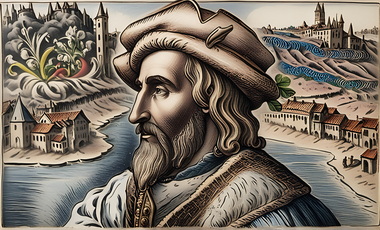
 

Balthasar Hubmaier: Baptist History in the Reformation (Updated)

Balthasar Hubmaier (1480–1528) was an influential German Anabaptist leader and one of the most well-known and respected Anabaptist theologians of the Reformation.

Balthasar Hubmaier

It is important that we remember, not only those who were martyred for preaching the truth of salvation by faith in Christ alone, but also those within our Baptist heritage who were martyred for their convictions in Scripture as the final authority and believers’ baptism. Balthasar Hubmaier was one of these men. Learn more about his courageous stand for Christ in this short video.

While he was an early martyr by fellow Reformationists… the firsts were:

The Martyrdom of Felix Manz & George Blaurock

In the closing of his work entitled “Freedom of the Will” he laid out a very strong argument against theistic determinism and fatalism which are the undercurrent of Augustinian philosophy and Calvinist “Sovereignty”.

BAPTIST MARTYRS

This Baptist History is brought to you by Steve Brady at Fairhaven Baptist Church in Chesterton, Indiana. (Full playlist of 50 Baptists You Should Know here)

A little more history on Hubmaier…

Here, you can find more information about our online class program, and how you can earn your Associate in Bible degree online. Whether you are a pastor or a layman wanting to increase your Bible knowledge, a teacher desiring to refine your teaching methods, or someone who is curious about a certain course being offered, we encourage you to register today and begin working toward your degree, and more importantly, furthering your knowledge of the Bible. (Full playlist of Baptist History here)

One of Hubmaier’s best works was his “On The Sword,” sort of his “95-thesis” – so to speak. Here is some discussion of the history of his views on violence.

Shawn sits down with Drew from the Provisionist Perspective to discuss Balthasar Hubmaier’s two works on violence: On Heretics and Those Who Burn Them and On the Sword. This discussion covers how we should treat Christians who disagree with us (don’t burn them at the stake) and how we should relate to government (be a part of it if you can!).

Other worthwhile watches:

Many will simply dismiss people like this with labels, especially the modern movement of Provisionists/Baptist traditionalism.

LABELS

Let me say something to ppl who do not take the time to know what something is and dismiss with labels. Stalin called Lenin a fascist

In similar fashion, we find this “labeling” among the Reformers: See Leighton’e Full Interview of Professor Harwood

Which brings me to an excerpt from a book I have a PDF form of… so the pages and the footnotes will not be properly marked.

As I am going thru this book (pictured), I am rejecting more of my compatibilism and drilling down on a more solid foundation.

Note also how Paul wheels the argument of Romans 1—11 to a climactic conclusion: “For God has bound all men over to disobedience so that he may have mercy on them all” (Rom 11:32, emphasis added). Here the scope of God’s intention to have mercy matches the scope of human sinfulness, as indicated by the repeated all. If Paul has already established in Romans 1—3 that all human beings without exception have been consigned to disobedience, then the symmetry of Paul’s expression in Romans 11:32 strongly implies that God intends to have mercy in a similar scope: on all human beings without exception. Even if we allow that Paul may here be referring to Jews and Gentiles as people groups, we must not imagine that God’s desire to show mercy fails to apply to every individual within each group. After all, Paul establishes that all humans are under sin by arguing that both Gentiles (Rom 1:18-32) and Jews (Rom 2:1—3:20) as people groups are under sin. If we accept Paul’s strategy of indicting every individual through indictment of the group, then consistency requires that we allow the same extension to hold with regard to God’s mercy, as Romans 11:32 seems to say.

The Pastoral Epistles abound with passages pointing toward God’s universal saving intentions: “God our Savior, who wants all men to be saved and to come to a knowledge of the truth” (1 Tim 2:3-4); “Christ Jesus, who gave himself as a ransom for all” (1 Tim 2:5-6); “We have put our hope in the living God, who is the Savior of all men, and especially of those who believe” (1 Tim 4:10); “For the grace of God that brings salvation has appeared to all” (Tit 2:11). Given the unqualified use of all in these passages to identify those whom God desires to save, the burden of proving otherwise is on those who hold that biblical writers assumed a limitation on those who would be saved.1

Of course Calvinists have offered their own accountings of these passages. Some argue, for example, that the “world” loved by God in John 3:16 must refer only to “the elect within the world.”2 Similarly, they read the unqualified all in restricted senses (e.g., “all types of people” or “all the elect”). Accordingly, the scriptural claim that Jesus died not only for our sins but also for the sins of the whole world means that Jesus died not only for the sins of (some) Jews but also for the sins of (some) Gentiles. But D. A. Carson, certainly no Arminian sympathizer, considers such moves to be clever but unconvincing exegetical ploys that feebly attempt to overcome “simply too many texts on the other side of the issue.”3 These restrictive interpretations of all require such textual gymnastics that they condemn themselves as invalid.

[….]

 compatibilism is a popular position among Calvinists, particularly among the philosophically informed, we want to stress that not all Calvinists embrace it. Some Reformed theologians have argued for another option. These writers do not agree with Feinberg that a Calvinist must either give up freedom altogether or accept compatibilism. To the contrary, they hold that we are required by Scripture to accept both God’s control of all things and human freedom, but they insist that it is not up to us to find a way to reconcile these truths. Popular evangelical author J. I. Packer is a proponent of this view. He endorses this position in his widely read book Evangelism and the Sovereignty of God.

As he notes, divine sovereignty and human responsibility are both clearly taught in Scripture. And he understands sovereignty in the Calvinistic sense that God unconditionally determines everything that happens. “Man is a responsible moral agent, though he is also divinely controlled; man is divinely controlled, though he is also a responsible moral agent.”4 Packer identifies this pair of claims as an “antinomy” because he believes we cannot dispense with either one of them, nor can we understand how they are compatible. From the standpoint of finite human reason, it may seem contradictory to affirm both of these claims and therefore impossible to do so. Here is Packer’s advice for dealing with such antinomies.

Accept it for what it is, and learn to live with it. Refuse to regard the apparent inconsistency as real; put down the semblance of contradiction to the deficiency of your own understanding; think of the two principles as, not rival alternatives, but, in some way that at present you do not grasp, complementary to each other.5

Apparently Packer means to affirm that both determinism and freedom in the libertarian sense are true. It is the affirmation of both of these that produces antinomy. By contrast, the affirmation of determinism and the compatibilist account of freedom produces no such intellectual tension. The resolution of antinomy will need the perspective of eternity, but it is easy to see here and now how freedom and determinism can be held together if one accepts a compatibilist account of freedom.

[….]

Second, we believe that there are large stretches of Scripture that are hard to make sense of if humans aren’t free in the libertarian sense of the word. In chapter two we examined some of these, but now let us consider another one, namely, Jeremiah 7:1-29. In this passage God calls his people to repentance. God enumerates the sins of his people and reminds them that while they were doing such things, he spoke to them again and again (Jer 7:13). But instead of repenting, they persist in idolatry and other self-destructive behavior. God promises to punish them for their sin, but he again reiterates that he repeatedly sent his prophets to them to urge them to obedience (Jer 7:20-26).

This passage is hardly unusual. The book of Jeremiah contains several other similar passages, as do most of the Prophets as well as some other biblical texts. Now the question we want to raise is, what view of freedom is implied in such texts? Of course, as we have already noted, Scripture does not expressly define the nature of our freedom or draw philosophical distinctions for us. But it is still worth asking what sort of freedom is implied by various texts of Scripture.

  1. For a helpful treatment of such terms as all and every in the Pastoral Epistles, see I. Howard Marshall, “Universal Grace and Atonement in the Pastoral Epistles,” in The Grace of God and the Will of Man: A Case for Arminianism, ed. Clark H. Pinnock (Grand Rapids, Mich.: Zondervan, 1989), pp. 57-63.
  2. See D. A. Carson’s characterization of this point of view in The Difficult Doctrine of the Love of God (Wheaton, Ill.: Crossway, 2000), p. 17.
  3. Ibid., p. 75.
  4. John S. Feinberg, “God, Freedom and Evil in Calvinist Thinking,” in The Grace of God, the Bondage of the Will, ed. Thomas R. Schreiner and Bruce A. Ware (Grand Rapids, Mich.: Baker, 1995), 2:465.
  5. J. I. Packer, Evangelism and the Sovereignty of God (Downers Grove, Ill.: InterVarsity Press, 1961), p. 23. […] 21.

So there is wiggle room in orthodoxy – is my main point. Spurgeon is wrong:

And I have my own private opinion, that there is no such thing as preaching Christ and him crucified, unless you preach what now-a-days is called Calvinism.  I have my own ideas, and those I always state boldly.  It is a nickname to call it Calvinism.  Calvinism is the gospel, and nothing else.

— Charles Spurgeon, Spurgeon’s Sermons, vol. I (Baker Books, reprinted 2007), 88-89.

And, I can disagree with Pink:

  • When we say that God is Sovereign in the exercise of His love, we mean that He loves whom He chooses. God does not love everybody. — A.W. Pink