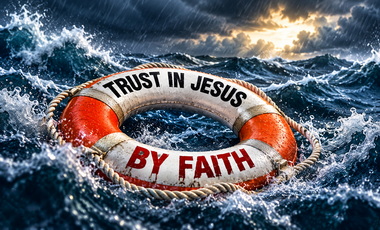
Dead Men Don’t Grab

(One almost used Sliding Thumbnail that I rejected, but like. Here is the one I chose to use, just bigger than the slider one.)

A friend on the Effe Bee (Facebook) asked a good question about the premise the graphic you see directly to the right:

  • There’s some truth to Sproul’s finished statement is there not?

(And for those not in the thick of the theological weeds, it may seem a somewhat tenable position.) So I wanted to share a longer response with him as well as discuss some other recent graphics I have made for the larger audience.

I actually agree with the first half of Sproul’s statement. Salvation is entirely dependent upon God’s grace from beginning to end. Where I disagree is with his definition of that grace.

Sproul says I must first be regenerated by an effectual act of the Spirit before I can believe.

Traditional Baptists and Provisionists say God graciously initiates salvation, provides Christ, gives the gospel, convicts and draws the sinner, and enables the response — but the sinner’s faith is genuinely a response that can be either accepted or resisted.

So the disagreement isn’t whether salvation is of the Lord. It’s whether God’s grace determines the response or graciously enables the response.

This is really dealing with the Calvinist’s twisting of Total Depravity into an ontological form of Total Inability. Dr. Leighton Flowers deals with this in this older video titled “The Biblical use of the term ‘DEAD'”

Which brings me to another graphic I made:

Again, this is ripping a 1st century idiom out of context. It is almost “Cultish” in how it is done. Here Micah Coate explains this idea a little:

Despite Calvinism’s highly acclaimed standard of quality exegesis, the account of Jesus raising Lazarus from the dead is often used as a textual illustration supporting Calvin’s doctrine of Total Depravity. This is a hermeneutical mistake. The student of the Bible should beware when any doctrine, let alone essential doctrine, is supported from a narrative story that lacks any instruction, especially when a particular belief is set against a number of other clear teachings. This reading of Scripture is comparable to the practice of Jehovah’s Witnesses, who pull a number of erroneous doctrines from the poetic books of Proverbs and Ecclesiastes.

This way of using Scripture is one of the characteristics of a cult. Josh McDowell writes that cults often claim that:

. . . the Scriptures are their final source of authority; [however,] we find they [cults] consistently misuse the Scriptures to establish their own peculiar beliefs. This is accomplished chiefly by quoting texts out of context while omitting other passages relevant to the subject.

Calvinist R. C. Sproul actually validates McDowell’s statement, in his book What Is Reformed Theology? In the chapter “Monergistic Regeneration,” Sproul fails to cite a single verse showing that the Bible supports this belief. Instead, Sproul gives the reader a class in Latin and Greek terminology with such words as monergism, synergism, operative grace, and cooperative grace. Instead of making a sound case for monergistic regeneration, all Sproul does is pull a heretical doctrine of salvation from the simple story of Lazarus, saying, “Perhaps a good illustration of Monergistic, life-giving power is the raising of Lazarus from the dead.” Sproul tries to provide a biblical foundation for his peculiar belief at the expense of “quoting texts out of context while omitting other passages relevant to the subject.” Because of this hermeneutical mistake, his example and thoughts on the monergistic resurrection are incorrect.

The usual argument given in defense of Total Depravity lies in a question: Because the Bible depicts man as being dead apart from God, how can he choose to have faith in the Gospel of Jesus on his own? Although many Calvinist authors pose this question as a foundation for their doctrine, it is not logically or biblically sound. By pulling doctrine from the Lazarus account, Calvinists have dug themselves into a mess of unanswerable theological questions.

The Lazarus Problem:
When a Narrative Becomes a Doctrine

One of the most familiar Calvinist illustrations of Total Depravity and regeneration is the raising of Lazarus in John 11. The argument is easy to understand: Lazarus was physically dead, therefore he could do nothing to contribute to his resurrection. Jesus alone called him from death to life. R.C. Sproul explicitly uses Lazarus in this way, explaining that regeneration is the sovereign work of the Holy Spirit and comparing the effectual call to Jesus’ command, “Lazarus, come out.”

Sproul then gives the Reformed order of salvation as:

effectual calling → regeneration → faith → justification → sanctification → glorification

That is an important distinction because Sproul is not merely saying that Lazarus illustrates God’s power to give life. He is using the Lazarus narrative to illustrate a particular doctrine of the order of salvation. According to this system, the sinner is spiritually dead and therefore cannot believe until God first regenerates him. Regeneration produces the faith by which the person believes. Sproul himself contrasts this with the more common evangelical understanding that a person believes in Christ and is then born again, which I picture here:.

JOHN 11:1-40 (CSB)

LAZARUS DIES AT BETHANY

1 Now a man was sick—Lazarus from Bethany, the village of Mary and her sister Martha. 2 Mary was the one who anointed the Lord with perfume and wiped his feet with her hair, and it was her brother Lazarus who was sick. 3 So the sisters sent a message to him: “Lord, the one you love is sick.”

4 When Jesus heard it, he said, “This sickness will not end in death but is for the glory of God, so that the Son of God may be glorified through it.” 5 Now Jesus loved Martha, her sister, and Lazarus. 6 So when he heard that he was sick, he stayed two more days in the place where he was. 7 Then after that, he said to the disciples, “Let’s go to Judea again.”

8 “Rabbi,” the disciples told him, “just now the Jews tried to stone you, and you’re going there again?”

9 “Aren’t there twelve hours in a day?” Jesus answered. “If anyone walks during the day, he doesn’t stumble, because he sees the light of this world. 10 But if anyone walks during the night, he does stumble, because the light is not in him.”

11 He said this, and then he told them, “Our friend Lazarus has fallen asleep, but I’m on my way to wake him up.”

12 Then the disciples said to him, “Lord, if he has fallen asleep, he will get well.”

13 Jesus, however, was speaking about his death, but they thought he was speaking about natural sleep. 14 So Jesus then told them plainly, “Lazarus has died. 15 I’m glad for you that I wasn’t there so that you may believe. But let’s go to him.”

16 Then Thomas (called “Twin”) said to his fellow disciples, “Let’s go too so that we may die with him.”

THE RESURRECTION AND THE LIFE

17 When Jesus arrived, he found that Lazarus had already been in the tomb four days. 18 Bethany was near Jerusalem (less than two miles away). 19 Many of the Jews had come to Martha and Mary to comfort them about their brother. 20 As soon as Martha heard that Jesus was coming, she went to meet him, but Mary remained seated in the house.

21 Then Martha said to Jesus, “Lord, if you had been here, my brother wouldn’t have died. 22 Yet even now I know that whatever you ask from God, God will give you.”

23 “Your brother will rise again,” Jesus told her.

24 Martha said to him, “I know that he will rise again in the resurrection at the last day.”

25 Jesus said to her, “I am the resurrection and the life. The one who believes in me, even if he dies, will live. 26 Everyone who lives and believes in me will never die. Do you believe this?”

27 “Yes, Lord,” she told him, “I believe you are the Messiah, the Son of God, who comes into the world.”

JESUS SHARES THE SORROW OF DEATH

28 Having said this, she went back and called her sister Mary, saying in private, “The Teacher is here and is calling for you.”

29 As soon as Mary heard this, she got up quickly and went to him. 30 Jesus had not yet come into the village but was still in the place where Martha had met him. 31 The Jews who were with her in the house consoling her saw that Mary got up quickly and went out. They followed her, supposing that she was going to the tomb to cry there.

32 As soon as Mary came to where Jesus was and saw him, she fell at his feet and told him, “Lord, if you had been here, my brother wouldn’t have died!”

33 When Jesus saw her crying, and the Jews who had come with her crying, he was deeply moved in his spirit and troubled. 34 “Where have you put him?” he asked.

“Lord,” they told him, “come and see.”

35 Jesus wept.

36 So the Jews said, “See how he loved him!” 37 But some of them said, “Couldn’t he who opened the blind man’s eyes also have kept this man from dying?”

THE SEVENTH SIGN: RAISING LAZARUS FROM THE DEAD

38 Then Jesus, deeply moved again, came to the tomb. It was a cave, and a stone was lying against it. 39 “Remove the stone,” Jesus said.

Martha, the dead man’s sister, told him, “Lord, there is already a stench because he has been dead four days.”

40 Jesus said to her, “Didn’t I tell you that if you believed you would see the glory of God?”

In other words, the stated emphasis surrounding the miracle is belief. The miracle is presented as a revelation of Christ’s identity and glory that calls people to faith. That is quite different from using the event as a technical illustration that regeneration must occur before anyone can believe. (SOTERIOLOGY 101)

The problem becomes even more apparent when we recognize that Scripture uses “dead” in several different metaphoric contexts. The material in Calvinism: A Biblical and Theological Critique identifies people as spiritually dead, sick, blind, lovers of darkness, and dead, but argues that Scripture does not require “dead” to mean an inability to repent and believe. It specifically points to Adam and Eve hearing and responding to God after their fall, the prodigal son being described as dead and lost while returning to his father, and Jesus’ statement in John 5:24 concerning the spiritually dead who hear and believe.

That brings us directly to the Prodigal Son. Jesus says of the son, “This son of mine was dead and is alive again; he was lost and is found.” Yet the “dead” son is not portrayed as a motionless corpse. He comes to his senses. He recognizes his condition. He changes his mind. He decides to return. He gets up and goes to his father. Then his father receives him and restores him. The point isn’t that the son saved himself—he didn’t. The father is the one who restores the relationship. But the story certainly doesn’t require us to understand “dead” as meaning incapable of responding.

If you right click with your mouse and “Open Link In New Tab”, that is an expandible graphic.

This is exactly the point made in the Soteriology 101 material. The argument isn’t that “dead doesn’t mean dead.” The argument is that dead is being used idiomatically, and therefore we need to determine what the biblical metaphor means rather than automatically equating spiritual death with a physical corpse. The Prodigal is called “dead/lost” and then “alive/found,” which is presented as an illustration of separation through rebellion rather than innate moral inability. The same article points to Revelation 3, James 1, Romans 7, Ephesians 2, and Colossians 2 as passages that complicate the assumption that “dead” means an inability to respond positively to God. (SOTERIOLOGY 101)

The Colossians passage is particularly interesting. Paul says that believers were “raised up with Him through faith.” The argument drawn from this is that being made alive and faith are not necessarily related in the Calvinist sequence of regeneration faith. Likewise, the broader biblical material repeatedly commands people to repent and believe. Acts 17:30 says that God “commands all people everywhere to repent.” The critique argues that these commands make better sense as genuine calls to sinners who, through God’s gracious enablement, can respond, rather than as commands that only become possible after an irresistible regeneration that God grants to some and withholds from others.

And this is where the “dead men don’t grab” illustration becomes less decisive than it first appears. Of course a literal corpse cannot grab a life preserver. But nobody is claiming that spiritually dead people are physically dead. The question is what spiritual death means. If “dead” automatically means the total inability to respond to God, then that definition needs to be demonstrated from Scripture rather than simply assumed from the Lazarus story. Ronnie Rogers’ formulation is useful here: God’s sufficient call, together with His grace enablement, is sufficient for anyone to receive salvation. He identifies those enablements as including God’s love, the revelation of His power, Christ’s provision, the conviction of the Holy Spirit, God’s teaching, the gospel, and God’s drawing.

There is also a fascinating internal problem with using Lazarus as the complete picture of the unregenerate sinner. Lazarus did absolutely nothing to help Jesus raise him from the dead—but he also did absolutely nothing to resist Jesus. If Lazarus is the perfect picture of the spiritually dead sinner, then the analogy would seem to demonstrate an inability to do anything in response to God, whether positive or negative. Yet Calvinism simultaneously describes the unregenerate person as actively rebelling against God, loving darkness, following sinful desires, and committing acts that displease Him. The Lazarus analogy therefore cannot, by itself, establish all of the conclusions Calvinism wants to draw from it. The narrative demonstrates Christ’s sovereign power over death; it does not explain every aspect of the sinner’s moral response to God’s grace.

VIA CONSISTENT CALVINIST

My description of the above [important] Meme:

DEAD MEN DON’T GRAB — BUT DOES LAZARUS PROVE TOTAL INABILITY?

One of the most common Calvinist arguments for Total Inability appeals to the raising of Lazarus in John 11:

  • Lazarus was physically dead.
  • A dead man cannot respond.
  • Jesus called Lazarus to life.
  • Therefore, the spiritually dead sinner cannot respond to the Gospel until God first regenerates him.

But there is a fundamental problem with that argument:

John 11 is a narrative about Jesus raising a physically dead man—not a theological explanation of the sinner’s ability or inability to believe.

The text itself tells us what the miracle was intended to reveal. Jesus identifies Himself as “the resurrection and the life” and asks Martha, “Do you believe this?” The miracle functions as a sign pointing people to Christ and His glory.

The question, then, is whether we are justified in taking the details of that physical resurrection and turning them into a systematic doctrine about spiritual inability.

And notice the problem with the methodology. If the Lazarus narrative can be used to establish Total Inability because Lazarus was dead and could not respond until Jesus gave him life, then why couldn’t someone take Matthew 14:30 and construct the opposite doctrine?

  • Peter was drowning.
  • Peter recognized his condition.
  • Peter cried, “Lord, save me!”
  • Jesus saved him.

Does that narrative establish “Total Ability”?

Obviously not.

And that is the point.

Neither narrative, by itself, establishes a doctrine of spiritual ability or inability. The theological conclusion has to come from the broader teaching of Scripture—not simply from importing a doctrinal system into the details of a narrative.

The issue isn’t whether sinners need God’s grace. They do.

It isn’t whether salvation is God’s work. It is.

It isn’t whether anyone can save himself. He cannot.

The real question is:

Does the biblical metaphor of being “dead in sin” mean a sinner is incapable of responding to God’s gracious revelation until after regeneration—or does it describe humanity’s lost, separated, and rebellious condition while God graciously calls, draws, convicts, and enables people to respond?

That’s the debate.

The Lazarus story demonstrates Christ’s power to give life. It does not establish the entire Calvinistic doctrine of Total Inability. And the new graphic makes the point visually: if we’re going to turn biblical narratives into systematic doctrines by analogy, then consistency would require us to do the same thing with Peter crying out, “Lord, save me!” The question at the bottom is therefore the real issue:

Do either of these narratives establish a doctrine of spiritual ability?

So the real issue isn’t whether God gives life. He does. It isn’t whether salvation is dependent upon God’s grace. It is. And it certainly isn’t whether anyone can save himself. Nobody can. The actual question is much narrower and much more important:

Does “dead in sin” mean that a sinner is incapable of responding to God’s gracious revelation until after regeneration, or does it describe the sinner’s lost, separated, rebellious condition while God’s grace enables him to respond?

That is where the two systems part company.

AGAIN:

The Calvinism: A Biblical and Theological Critique material explicitly frames the distinction as Total Depravity understood as the inability to save oneself versus Total Depravity understood as the inability to repent and believe. To be clear, Calvinists appeal to the doctrine of total depravity to claim that sinners are unable to repent and trust Christ apart from the monergistic work of regeneration.

The distinction is not between believing that humanity is sinful and believing that humanity is not sinful. Both sides affirm the devastating effects of sin and humanity’s absolute dependence upon God’s grace. The real question is what “Total Depravity” means with respect to a person’s response to the gospel. As Adam Harwood explains, the Traditional Statement denies that Adam’s sin resulted in the “incapacitation” of anyone’s free will. It does not claim that sinners can save themselves; rather, it affirms that no sinner can achieve salvation through his own effort and that salvation is received through a response to the Holy Spirit’s drawing through the gospel.

That distinction is critical to the Lazarus argument. Calvinism takes spiritual death to mean that sinners cannot repent and believe until God first regenerates them. The Traditional Baptist position instead understands sinners as genuinely lost and unable to save themselves, while God’s grace calls and enables them to respond. Harwood notes the significance of the Bible’s repeated calls for people to repent and believe: if God calls all people to repent and gives open invitations to respond in faith, the Traditional Statement argues that people must actually be capable of responding. In other words, “dead in sin” does not have to mean “incapable of responding to God’s gracious invitation.” It can describe the sinner’s desperate, lost, and sinful condition while still leaving room for God’s grace to enable a genuine response.

And that is why I think the Lazarus argument deserves much more scrutiny than it usually receives.

Jesus certainly raised Lazarus from the dead.

But Lazarus was not raised to teach us the mechanics of regeneration.

He was raised as a sign revealing who Jesus is, and Jesus explicitly connected the event with belief.

Harwood’s chapter explicitly says the disagreement is not whether salvation is by grace. The Traditional Statement says no sinner is remotely capable of achieving salvation through his own effort. The disagreement is whether God’s grace enables a response or must first regenerate the person so that the response becomes inevitable.

PDF

CLICK TO ENLARGE

When we take that narrative and make it the foundation for a doctrine that says regeneration must precede faith, we have moved from what the text says to what a theological system wants the text to illustrate. That is precisely the hermeneutical question raised by Micah Coate’s critique:

  • Are we allowing Scripture to establish the doctrine, or are we taking a narrative and making it carry a doctrine that the narrative itself never teaches?

The issue, then, isn’t whether Lazarus was really dead.

He was.

The issue is whether every spiritually dead person is therefore a spiritual Lazarus—unable to hear, unable to respond, and unable to believe until God first regenerates him.

That conclusion has to come from Scripture. Lazarus doesn’t say it.

You want an example of how a healthy theology uses the Lazarus even? Remember Jesus said:

“This sickness will not end in death but is for the glory of God, so that the Son of God may be glorified through it.”

“I’m glad for you that I wasn’t there so that you may believe.”

“I am the resurrection and the life. The one who believes in me, even if he dies, will live. Everyone who lives and believes in me will never die. Do you believe this?”

“Didn’t I tell you that if you believed you would see the glory of God?”

Here is how the story of Lazarus is used in Professor Harwood’s systematic work:

SIGNS AND MIRACLES

Another means of special revelation attested in Scripture is signs and miracles, which are sometimes called God’s mighty acts or signs and wonders. 18 Signs and miracles were acts of God that occurred outside God’s normative providential care and were meant to testify that God was at work. The Bible is filled with examples of signs and miracles. For example, God intervened to provide children to women such as Sarah, Hannah, and Mary, who otherwise would not have become pregnant. 19 God demonstrated signs through Moses so people would know God had appeared to Moses and was speaking through him (Exod 4:1–9). When Pharaoh refused to listen to Moses despite God’s many signs and wonders, Egypt experienced “mighty acts of judgment” (Exod 7:4).

Signs and wonders characterized the events surrounding Jesus’s conception and birth as well as his public ministry. Mark records an episode that demonstrates a reason for miracles during Jesus’s ministry. While Jesus was teaching in a home crowded with listeners, a paralytic man was lowered through the roof. Jesus declared the man’s sins were forgiven and explained the reason he healed the man was to demonstrate his authority to forgive sin —something only God can do (Mark 2:1–12). This episode of physical healing reveals how the miracle brought more than physical relief and a demonstration of God’s compassion for the individual; the miracle pointed people to a greater truth, that Jesus had the authority to forgive sin. John’s Gospel contains several miracles called “signs” (Grk. sēmeia ), which revealed Jesus’s glory (John 2:11), including turning water to wine (John 2:1–11), healing an official’s son (4:43–54), healing a man at Bethesda (5:1– 15), feeding five thousand (6:1–14), walking on water (6:16–21), restoring a man’s sight (9:1–12), and raising Lazarus (11:1–44). The greatest sign in John’s Gospel, as in the other Gospels, is the resurrection of Jesus from the grave.

[….]

The person and work of Christ can be seen in a variety of ways in John’s Gospel. Jesus is the preexistent and divine Word who became flesh, was rejected by his creation, in whom is life, and who reveals the Father (1:1–18). The Gospel presents eight witnesses to the divinity of Christ: John the Baptist (1:34), the works of Christ (5:36), the Father (v. 37), the Scriptures (v. 39), Christ himself (8:14), the Holy Spirit (15:26), believers (v. 27), and the author of the Gospel (19:35). 15 The seven miracles, also called signs, revealed God’s glory in Jesus and resulted in the disciples trusting him (2:11). The seven signs are changing water into wine (2:1–11), healing the official’s son (4:43–54), healing the man at Bethesda (5:1–15), feeding the five thousand (6:1–14), walking on water (vv. 16–21), healing the man born blind (9:1–12), and raising Lazarus (11:1–44). Jesus identified himself in seven “I am” statements with Yahweh, the covenant name of God: the bread of life (6:35); the light of the world (8:12); the door (10:7); the good shepherd (vv. 11–14); the resurrection and the life (11:25); the way, the truth, and the life (14:6); and the true vine (15:1).

Adam Harwood, Christian Theology: Biblical, Historical, and Systematic (Bellingham, WA: Lexham Academic, 2022), 88–89, 398.

Professor Harwood used the story as Jesus intended it; R.C. Sproul, John MacArthur, James White, and others, did and do not..

More from Professor Flowers book, Drawn by Jesus:

Dead In Sin

Are we born dead like Lazarus, a corpse rotting in the tomb (a link scripture never draws), or are we dead like the Prodigal, a loved one separated due to his own rebellion? Scripture seems to support the latter, not the former (Luke 15:32).

The fact is that the scriptures metaphorically address our condi­tion as a sickness far more than as deadness. (Jer 17:9, 23; Mk 2:17; Lk 5:31; Mt 9:12; Ps 38:3; Is 64:6; etc) And when speaking metaphoric­ally of deadness, it is never described as a morally incapacitated con­dition from birth due to the Fall, but instead as a condition of being separated from God by our own rebellion.

For instance, the Prodigal was “dead” or “lost” then “alive” or “found,” demonstrating that the term “dead” is idiomatic for “separ­ated by rebellion,” not “innate moral inability” (Luke 15:24). Just as our soul is separated from our body when we die so too sinful hu­manity is separated from God by his rebellion. Look what scripture teaches,

When tempted, no one should say, “God is tempting me.” For God cannot be tempted by evil, nor does he tempt anyone; but each person is tempted when they are dragged away by their own evil desire and enticed. Then, after desire has conceived, it gives birth to sin; and sin, when it is full-grown, gives birth to death. (James 1 :1 3-1 5)

Are we born “dead,” according to James? Or is death birthed in those who sin after it is “full grown?” What did Paul say?

What shall we say, then? Is the law sinful? Certainly not! Never­theless, I would not have known what sin was had it not been for the law. For I would not have known what coveting really was if the law had not said, “You shall not covet.” But sin, seizing the op­portunity afforded by the commandment, produced in me every kind of coveting. For apart from the law, sin was dead. Once I was alive apart from the law; but when the commandment came, sin sprang to life and I died. I found that the very commandment that was intended to bring life actually brought death. For sin, seizing the opportunity afforded by the commandment, deceived me, and through the commandment, put me to death. (Romans 7:7-11)

Are we born “dead,” according to Paul? Or was it through the com­mandment, after “sin sprang to life,” that death came? In contrast, the metaphor of illness is quite prevalent throughout the scriptures:

For while we were still weak, at the right time Christ died for the ungodly. (Romans 5:6)

The heart is more deceitful than all else. And is desperately sick; Who can understand it? (Jeremiah 1 7:9)

And hearing this, Jesus said to them, “It is not those who are healthy who need a physician, but those who are sick; I did not come to call the righteous, but sinners. (Mark 2:1 7)

There is no soundness in my flesh because of Your indignation; There is no health in my bones because of my sin. (Psalms 38:3)

For all of us have become like one who is unclean, And all our righteous deeds are like a filthy garment; And all of us wither like a leaf, And our iniquities, like the wind, take us away. (Isaiah 64:6)

We are sick and in need of a Physician. We are cursed and in need of His cure. His life-giving truth is sufficient to accomplish the pur­pose for which He sent it, “…so that you may believe…and by believ­ing may have life in His name” (John 20:31).

Is Not Able By His Own Strength

Given that we cannot draw our next breath if not by the gracious good pleasure of our Sovereign Lord, I’m not sure how this qualifica­tion helps clarify our point of contention. God gives us all we have, including our ability to make choices. In other words, we all affirm that God must enable choice. We do not all agree that such enabling will dictate which choice will be made. As A.W. Tozer so eloquently taught,

God sovereignly decreed that man should be free to exercise moral choice, and man, from the beginning, has fulfilled that decree by making his choice between good and evil. When he chooses to do evil, he does not thereby countervail the sovereign will of God but fulfills it, inasmuch as the eternal decree decided not which choice the man should make but that he should be free to make it. If in His absolute freedom, God has willed to give man limited freedom, who is there to stay His hand or say, “What doest thou?” Man’s will is free because God is sovereign. A God less than sov­ereign could not bestow moral freedom upon His creatures. He would be afraid to do so.

To Convert Himself

In response to a doctor’s diagnosis, is recognizing your need for a heart transplant and submitting to the doctor’s will to perform the surgery equal to performing the surgery yourself? Of course not. An Ethiopian cannot change his own skin, nor can a leopard change his own spots (Jeremiah 13:23), but that does not even imply that they cannot recognize and submit to this needed change when confronted by the only One who is able to bring about such change.

Or Prepare Himself Thereunto

Can the powerful, Spirit-wrought truth of God’s inspired Word prepare him thereunto? Does one’s ability to resist such preparation and enabling work somehow negate that the work is sufficient to accomplish its given purpose?

Here is a brief rebuttal of the most common proof texts used by Calvinists to support their teaching on “Total Inability.” Much more could be and has been written on each of these texts from the non-Calvinistic perspective, but for the sake of brevity, here is a summary of the rebuttals:

The LORD saw that the wickedness of man was great in the earth, and that every intention of the thoughts of his heart was only evil continually. (Genesis 6:5)

Nothing at all is stated about man’s inability to respond to God’s own revelation. Please read all of Genesis chapter 6 and make a case as to how that supports the Calvinistic premise. Here is just a taste of the context:

The Lord saw how great the wickedness of the human race had become on the earth, and that every inclination of the thoughts of the human heart was only evil all the time. The Lord regretted that he had made human beings on the earth, and his heart was deeply troubled.

As one Calvinist on a recent podcast inquired in response to this passage, “Why didn’t God just elect more people instead of becoming `deeply troubled?'” That is a good question that every Calvinist must deal with when confronted with a text like this. The natural reading simply does not align with deterministic philosophy.

None is righteous, no, not one; no one understands; no one seeks for God. (Romans 3:1O-11)

No one is righteous according to the works of the law. No one is able to attain righteousness by law through works. But how does that prove no one is able to obtain righteousness by grace through faith? In verse 21 of this same chapter, Paul introduces the means for man to obtain righteousness, which is separate from the law. Calvin­ists seem to think that proof of our inability to earn righteousness through our own works likewise proves our inability to trust in the imputed righteousness of Christ. Proving that the lost cannot seek God does not prove that they are unable to respond to a God who is ac­tively seeking to save the lost.

For the mind that is set on the flesh is hostile to God, for it does not submit to God’s law; indeed, it cannot. Those who are in the flesh cannot please God. You, however, are not in the flesh but in the Spirit, if in fact the Spirit of God dwells in you. Anyone who does not have the Spirit of Christ does not belong to him. (Romans 8:7-9)

Mankind’s inability to submit to God’s law does not prove their inability to trust in Christ, who fulfilled the law for mankind. Man­kind’s inability to please God while acting in the flesh does not prove mankind’s inability to respond to the spiritual appeal of God so as to receive His Spirit.

If I warn my rebellious son, saying, “You cannot please me by acting selfishly,” does that suggest the child is unable to heed my warning, humble himself, and repent of acting selfishly? Of course not. It only suggests that as long as my child continues to rebel and act according to his pride, he will not please me.

This verse says nothing of our innate inability to respond to God’s powerful truth and appeal to humble ourselves so as to be reconciled. Each individual has the choice to remain in their fleshly pride or respond to the Spirit’s call to humble themselves. If you choose the former, you cannot please God.

The natural person does not accept the things of the Spirit of God, for they are folly to him, and he is not able to understand them because they are spiritually discerned. (1 Corinthians 2:14)

So, the lost man needs someone to spiritually discern the “deep things of God” (vs. 10), right? What are the means God uses to help us discern spiritual truths? Is not the very epistle that Paul is writing to the carnal believers in Corinth a means for “spiritual discernment?” And since the “brethren” in the Corinthian church are “not able to receive” these same “deep things of God” (1 Corinthians 3:1-3), one would be hard-pressed to suggest that Paul intended to teach that no one is able to understand the simple “milk” of the gospel’s appeal for reconciliation (2 Corinthians 5:20).

Again, this text never suggests that mankind is born unable to respond positively to God’s clearly revealed gospel appeal. It only affirms that the mystery of the gospel must be revealed to us in order for us to understand it, which it has been. As Paul states, “When you read this, you can perceive my insight into the mystery of Christ, which was not made known to the sons of men in other generations as it has now been revealed to his holy apostles and prophets by the Spirit” (Ephesians 3:4).

Neither side of this soteriological debate suggests that lost men can understand the deep spiritual truths of God apart from the means God has chosen to reveal these mysteries. So, the question is whether God’s means of discernment through the apostle’s writings is a sufficient work of discernment that enables those who hear it to understand and respond.

No one can come to me unless the Father who sent me draws him. (John 6:44a)

We all agree with this statement. But what are the means that God draws men to Himself? Even White agrees that God draws them by teaching them. As mentioned earlier, in Romans 10:14-15 Paul asks:

How, then, can they call on the one they have not believed in? And how can they believe in the one of whom they have not heard? And how can they hear without someone preaching to them? And how can anyone preach unless they are sent?

Follow the Order:

God Sends: Who does He send? His apostles, the remnant reserved from Israel to be His inspired messengers (Acts 10:40-41). The rest of the Israelites are being judicially hardened in their rebellion tem­porarily while Christ is on earth (Romans 11:7; 25). Jesus speaks to them in parables so that they cannot understand and repent (Mark 4:11-12). He does this to ensure the crucifixion that He has predeter­mined will come to pass (Acts 2:23). It is not until after Christ is lifted up that he sends out His Spirit-filled messengers to preach the gospel to all peoples (Acts 1:8) in order to draw all men to Himself (John 12:3 2).

Apostles Preach: What do they preach? The powerful gospel ap­peal (Romans 1:16; 10:8; 2 Corinthians 5:20), which is alive, active and able to cut through to the soul of man (Hebrews 4:12). Remem­ber this is the powerful gospel that is being hidden in parables from most of Israel while Christ is on earth in order to prevent them from repenting before the right time (Matthew 13:11; 16:20). Proof that God used persuasive means to convince chosen messengers from Is­rael to go and proclaim His message is not proof that God uses inward irresistible means to convince preselected hearers to believe their message (John 20:30-31).

Hearers Hear: Who are the hearers? Anyone who is not being judicially hardened, like Israel was at that time. Only those who are being blinded from seeing the light are unable to see the light, and that blinding (judicially hardening) is not a condition from birth but a condition unique to Israel at that time as judgment for their rebel­lion.

Hearing is how they can believe: As Paul states in the following verses, “faith comes from hearing the message,” which parallels what John taught in John 20:31: “…these are written that you may believe that Jesus is the Messiah, the Son of God and that by believing, you may have life in his name.” The only reason that a hearer would not be enabled to respond to the life-giving truth of God’s appeal is if they are being prevented from seeing, hearing, or understanding the mes­sage, a condition of someone being judicially hardened by God (“hid­den from their eyes”).

Believing is how they can call: One who has heard the powerful gospel appeal calling us to repentance and faith is able to believe. The believer is able to call on Christ in repentance in order to find forgive­ness and life. Mankind must repent in order to live! (Ezekiel 18:32)

The historical context of John 6 must be in view to understand the author’s intention. Jesus is purposefully blinding most Israelites, due to their self-righteous rebellion, from the truth of His identity to prevent their repentance for a time. All the while, He is drawing His preselected apostles and genuine believers from Israel to be the foundation for His church. In other words, in Christ’s audience, there are some who are being judicially hardened from Israel for a good reason (unbelief) and others who are being drawn from Israel for a good reason (belief) in order to ensure God’s purpose in electing Israel would be fulfilled.

Support Drawn from Other Passages In John’s Gospel

And I, if I am lifted up from the earth, will draw all men to Myself. (John 12:32)

The differentiation between the Father’s drawing in John 6 and the Son’s drawing in John 12, as expounded upon earlier, is a signifi­cant contextual point that must be considered in this discussion. The emphasis on the Father’s drawing in John 6 highlights the divine ac­tion of God inviting and enabling faithful God-fearing individuals to come to Jesus.

On the other hand, in John 12:32, Jesus emphasizes His own agency in drawing all people to Himself, but only after His res­urrection. This distinction highlights the harmonious collaboration between the Father and the Son in their work of salvation, underscor­ing the unity and purpose within the Godhead given at the proper time. By emphasizing His role in drawing people to Himself, Jesus reinforces His divinity and authority as the central figure in the re­demptive plan of God, offering all people the means to be reconciled with God through His sacrificial death and resurrection.

Jesus answered them, “I told you, and you do not believe; the works that I do in My Father’s name, these testify of Me. “But you do not believe because you are not of My sheep. “My sheep hear My voice, and I know them, and they follow Me; and I give eternal life to them, and they will never perish; and no one will snatch them out of My hand. “My Father, who has given them to Me, is greater than all; and no one is able to snatch them out of the Father’s hand. “I and the Father are one.” (John 10:25-30)

If we understand “My sheep” to refer to “those I have uncondi­tionally elected for effectual salvation before the foundation of the world,” then this passage might appear to support the Calvinistic doctrine. However, there is nothing in this context to indicate that is what Jesus is referring to by using the analogy of being His “sheep.” The intended audience of Jesus’ words in John 10:26 are Israelites who have become hardened and indifferent to the voice of God. It is because of their refusal to listen and respond to the Father’s voice that they are now unable to recognize and accept the voice of Jesus, who speaks the same truth (John 6:45).

This is not due to an inherent condition from birth that predis­poses them to hate and reject God’s appeals for reconciliation, nor is it because God is withholding the necessary grace for them to believe. On the contrary, the Jews had become calloused through persistent unbelief; otherwise, they could have seen, heard, understood, and turned to God for healing (as demonstrated in John 12:39-40 and Acts 28:23-28). Jesus describes their spiritual condition in this con­text as follows:

You pore over the Scriptures because you think you have eternal life in them, and yet they testify about me. But you are not willing to come to me so that you may have life (John 5:39-40).

It is important to observe the sequence of events here: the Jews chose to reject the Scriptures, resulting in their denial of the oppor­tunity for life. Jesus did not imply, “I have refused to make you alive so that you would be compelled to come to me.” He put the blame solely upon them for their unwillingness to come when they were presented with that opportunity.

During that time, the Jewish people had become stubborn and entrenched in their rebellion, which explains why they were unable to perceive, hear, and respond to their own Messiah. However, those who had not succumbed to this hardening of heart, and instead listened to and learned from the Father (like Cornelius in Acts 10) would believe in the Son and follow Him – recognizing His voice, much like a sheep responds to its shepherd (see also John 6:45).

Prior to Christ’s coming, if someone believed the Father, they would also believe His Son, for the Father and Son are One. Con­versely, if one refused to listen to the Father before the incarnation, they would likewise be unresponsive to the teachings of the Son. The followers of the Father (often referred to as “sheep” during that era) also became followers of the Son. Those who rejected the guidance of the Father were not considered among His sheep, and that is why they refused to follow the Son. This clarifies Jesus’ statement to them, “But you do not believe because you are not of my sheep” (John 10:26).

In essence, Jesus is conveying this message: “Because you have chosen not to follow the Father, you will not follow me, His Son, either.” When Jesus says, “You are not my sheep,” He is essentially saying, “You do not align yourself with God, nor have you listened and learned from Him (as referenced in John 6:45). Hence, you will not heed my calling as the Shepherd sent by Him, who represents the very same truth.” This is reflected in the following statement by Jesus:

If God were your Father, you would love Me, because I came from God and I am here. For I didn’t come on my own, but He sent me (John 8:42).

Jesus is not implying, as the Calvinistic doctrine would suggest, that their unbelief stems from both Him and the Father rejecting them and withholding the necessary grace to believe since before the world was established. This notion contradicts Luke 19:41-42, where

 Jesus weeps over Israel because they are now unable to see the truth of His identity as their Messiah.

Why would God need to conceal the truth of Christ from those who were born unable to believe? Additionally, why would Jesus urge those who were not His followers to ponder the implications of His miracles if they were utterly incapable of accepting the truth?

If I am not doing my Father’s works, don’t believe me. But if I am doing them and you don’t believe me, believe the works. This way, you will know and understand that the Father is in me and I in the Father (John 10:37-38, emphasis added).

God was not withholding some special grace necessary for them to believe. This notion gives them too much credit and portrays them as victims rather than morally accountable rebellious sinners. They reject a loving God who declares, “all day long I have held out my hands” (Romans 10:21) and “wanted to gather your children to­gether, as a hen gathers her chicks under her wings” (Matthew 23:37; Isaiah 30:15).

I came across this first graphic, and this is the “Calvinist ‘front’ story”… I explain the rest of the story behind the scenes with the second one that follows:

Sovereignty of God

At EXAMINING CALVINISM you can read responses in this post to: James White, R.C. Sproul, Robert A. Peterson and Michael D. Williams,

… Some Calvinists have wrongly concluded that the non-Calvinist seeks to downplay the sovereignty of God and highlight the autonomy of man, when in reality we seek to maintain the right biblical understanding of man’s autonomy so as to better highlight the sovereignty, love and holiness of God.

Does God’s sovereignty terminate at the point of being able to create
autonomous beings who seek their own purposes?

Does God’s sovereignty terminate at the point of being able to offer
such beings an independent choice He does not determine?

If God must meticulously decree every thought, word and deed ever conceived in order to remain “sovereign,” then that wouldn’t say much for divine sovereignty. In contrast to Calvinism, God exhibits being all-wise, all-knowing and all-powerful when He governs without any strings attached. The contrasting Calvinist conception of divine sovereignty would make God out to be pretty mediocre.

All of scripture supports God’s “sovereignty.” The controversy is over how Calvinists try to redefine sovereignty to mean exhaustive, philosophical determinism, and the way that is accomplished is by citing the biblical word, “predestination.” However, the fact that God predestines some things does not necessarily mean that God predestines everything. Moreover, it is critical to correctly understand the manner in which God predestines things. For instance, God predestined to redeem good from evil, but that doesn’t necessarily mean He caused the evil He redeems.

God is the ultimate cause of everything that exists, meaning that without Him, nothing can come to pass, and this is something that all theists can affirm, so long as one incorporates a truly meaningful definition of divine permission, in which in addition to God’s own determinations, He also permits independent agents who possess autonomy of reason to conduct their own libertarianly free choices. The problem in Calvinism, however, is that divine permission is reduced to a matter of God allowing people to do what He exhaustively and meticulously rendered certain and necessary, thus spoiling the aforementioned definition of permission.

God is in control of all things, though He is not all-controlling. Calvinists, however, believe in a type of divine sovereignty which requires that God exhaustively predetermine everything that ever comes to pass, including every person’s thoughts, intentions and actions, for all eternity, including sinful thoughts, intentions and actions, thus drawing a sharp rebuke from non-Calvinists. This is what Calvinists term “predestination,” though the Bible does not teach predestination in such a way. Moreover, such a notion has historically drawn the criticism of being a form of Christian fatalism. Nonetheless, from the Calvinist perspective, an exhaustive eternal decree is necessary for God to truly be in control and to truly be omnipotent. It should be pointed out, however, that the Bible never talks about any such eternal decree. What Calvinists are referring to is just a systemic, doctrinal perspective, rather than something that is firmly taught in Scripture. A decree is simply something that God declares to be, and so if God declares for mankind to have free-will, which is what non-Calvinists hold to, then that’s what God decreed. For instance, non-Calvinists believe that God has decreed, not which choices that we will make, but rather that we would be free in making them. That’s a doctrinal perspective. So when we make free choices, it is understood that we are not countervailing the will of God, but rather we are acting in accordance with the ability God has granted.

Speaking frankly, Calvinistic determinism would mean that God cannot handle free-will, and it would gut all creation of true life. It would render God as a marionette, pulling the strings of dead things. It would be a worthless and humiliating endeavor for a truly glorious, all-powerful, all-knowing and all-wise God. …

Voddie Baucham on Sovereignty

Dr. Leighton Flowers responds to a short snippet from Dr. Voddie Baucham on the sovereignty of God

Ronnie W. Rogers, Reflections of a Disenchanted Calvinist,

CPHT 1, Sovereignty of God (PDF)

Sovereignty of God

  1. I affirm that God is sovereign over everything without exception; therefore, He is in total control; further, I believe that creating a world where men are given a real choice demonstrates God’s sovereignty rather than undermines it. By real free choice, I mean that by grace, God gave man the ability to believe the gospel or not to believe the gospel; as a result, the ones who believe could have not believed, and the ones who disbelieve could have believed unto salvation. Consequently, man’s consignment to hell is due to being born a sinner, sinning, and rejecting a real offer of the redemptive love and mercy of God, which he could have accepted; therefore he is in hell because he chose to be despite God’s provision and desire for him to be saved (2 Peter 3:9). This position does not in any sense minimize or waste the redemptive work of Christ and the power of the cross, or undermine or thwart the sovereignty of God. The work and power of the sacrifice of Christ was to provide salvation for all and secure it for all who would receive it by faith and by God’s gracious provision. I affirm that God’s sovereignty is not minimized because He sovereignly chose to provide a real choice for everyone to accept or reject the gospel. This includes deliverance from eternal hell, men’s just desert, for anyone and everyone who acts in concert with His grace enablement and follows Christ.

The means of this grace enablement include but are not limited to: Gods’ salvific love for all (John 3:16), God’s manifestation of His power so that all may know He is the Sovereign (Isaiah 45:21-22) and Creator (Romans 1:18-20), which assures that everyone has opportunity to know about Him. Christ paying for all sins (John 1:29), conviction of the Holy Spirit (John 16:7-11), working ofthe Holy Spirit (Hebrews 6:1-6), enlightening of the Son ( John 1:9), God’s teaching ( John 6:45), God opening hearts (Acts 16:14), and the power of the gospel (Romans 1:16), without such redemptive grace, no one seeks or comes to God (Romans 3:11). Further, I believe that man, because of these gracious provisions and workings of God, can choose to seek and find God (Jeremiah 29:13; Acts 17:11-12). Moreover, no one can come to God without God drawing (John 6:44), and that God is drawing all men, individuals (John 12:32). The same Greek word for draw, helkuo, is used in both verses. “About 115 passages condition salvation on believing alone, and about 35 simply on faith.”5 Other grace enablements may include providential workings in and through other people, situations, and timing or circumstances that are a part of grace to provide an opportunity for every individual to choose to follow Christ.

I also affirm that the permissive will of God is a part of His decretive will that permitted sin to enter the world and, for a time, continue.6 Holiness is always God’s standard and therefore sin is never God’s perfect, immediate or ultimate desire for His creation or man, but within His sovereign decretive will, He has purposefully permitted it. He commands man to obey, but permits him the freedom to disobey. The choice to disobey God’s commands results in man suffering the consequences of such choice. Thus, with regard to salvation, God desires that all come to salvation (2 Peter 3:9). Accordingly, He enables man to be able to be saved, and thereby permits man to freely choose to believe the gospel or to reject His grace and love and die in his sins. Without question, God’s permissive will does not preclude Him from ever intervening in the decision-making process of man if His purposes so require; however, neither does it necessitate that it be done in order to maintain sovereignty as long as He sovereignly chose to act in that particular way.

I further affirm that God’s full character and attributes, not just His sovereignty or justice, are to be considered when speaking of Him and His plans. This includes His infinity, justice, mercy, compassion, love, grace and power, which He possesses perfectly and infinitely. God is the sum of perfection. Lewis Sperry Chafer notes concerning this balance, “He is free to dispose of His creation as He will; but His will… is wholly guided by the true and benevolent features of His Person ….The attributes of God form an interwoven and interdependent communion of facts and forces which harmonize in the Person of God. An omission or slighting of any of these, or any disproportionate emphasis upon any one of them cannot but lead to fundamental error of immeasurable magnitude.”7

Moreover, I affirm that all of God’s attributes are more accurately reflected by accepting the truths of Scripture, which declare that salvation is provided and genuinely offered to everyone by God, and everyone can by “grace through faith” receive salvation, rather than by accepting the teaching of Calvinism that God only actually offers salvation to some because only that particular some can actually believe; those are the ones He monergistically causes to believe by changing their nature against their will. Calvinism teaches that regeneration is monergistic—God alone—and man has no part in it. After regeneration there becomes a synergistic relationship between God and man, and man exercises faith because he cannot choose to do otherwise. This is a disquieting reality.

Lastly, while some things about God are indeed a mystery because either they are not fully disclosed by God or understood by man or both (Deuteronomy 29:29), this is quite different than mysteries generated by Calvinism’s overemphasis upon certain attributes or concepts like justice or predestination and defining sovereignty to necessarily preclude real free choice. Actually, the Calvinist’s persistent mention of the sovereignty of God tells us nothing about the biblical loyalty of Calvinism since all believers with any biblical fidelity and understanding of God believe in His sovereignty. Further, disavowal of the Calvinist’s definition of sovereignty is not a denial or undermining of the sovereignty of God, but it is what it is, a denial of Calvinism’s definition.

  1. I disaffirm that salvation is monergistic, which means that God actively causes some to be saved by forced regeneration, and that act of regeneration is contrary to and against their sinful, rebellious nature, will, and choice, and that until regeneration, man is totally passive and becomes active only after regeneration. I disaffirm that there is nothing that can be done prior to regeneration with regard to salvation.8 I disaffirm that man is passive in regeneration.9 I further disaffirm that God selects to regenerate some and thereby either actively or passively chooses to leave some in their lost condition,10 and therefore irresistibly pre-determines some to be forever lost and damned to a place created for Satan (Matthew 25:41).

Calvinism asks us to believe that God chose eternal torment for the vast majority of His creation (Matthew 7: 1 3 —14). They want us to rejoice in a God who desires and chose for the vast majority of his creation to go to hell when He could have redeemed them. That is indeed God according to Calvinism, but not the God Scripture. This is a disquieting reality. Where is the plethora of Scripture where God expresses His desire for the vast majority of His creation to perish in eternal torment and this with equal clarity and abundance as those Scriptures that declare His indefatigable, sacrificial love and desire that all repent and be saved? I suggest that they do not exist and for good reason.

Monergism means that salvation is “[God’s] work alone”11, which is based upon the Calvinistic view that salvation depends upon God’s unconditional election to regenerate some prior to and quite apart from anything, even faith. However, if there is nothing that is a part of salvation and no one can do anything, even by the grace of God, to facilitate faith and thereby salvation, then why did Paul reason from the Scriptures in order to prove that Jesus was the Messiah? (e.g., Acts 17:2-4). Why did he attempt to “persuade men”? (2 Corinthians 5:11). Why did he beg people to be “reconciled to God”? (2 Corinthians 5:20). Why did God reconcile the “world”? (2 Corinthians 5:19). Why was Paul able to reason with the Jews concerning Christ, persuading some while others “would not believe”? (Acts 28:24). Notice it was not that they could not believe, but they would not believe. Why would Paul believe and say, “I have become all things to all men, that I may by all means save some”? (1 Corinthians 9:22).

To respond, as Calvinists do, that God has established the means to salvation, and therefore this may be the means of salvation, which in reality according to monergism has no real effect upon conversion, is just simply not what is presented in the Scripture. The picture in Scripture is that these things do have an actual part in salvation. They play a part, as does faith, by the grace and plan of God. To say that Paul was doing and saying this all out of mere obedience, all the while knowing that the people to whom he reasoned and pleaded may be the ones who could not hear or respond any more than a blind person could see you wink, is not the picture that is presented ever so clearly Scripture. Nor is it the implication of most Calvinists’ messages on Paul’s behavior. This is a disquieting reality.

Moreover, according to monergism, if they ever did respond, it would have nothing to do with anything Paul or the respondent had done, which is obviously contrary to Paul’s words (1 Corinthians 10:33; 1 Thessalonians 2:16). Although Calvinists talk, at times, as though what we do matters in a person’s salvation, it is actually absolutely disallowed by their monergistic view of salvation. I do grant that the Calvinist can be disobedient to God’s process, but this disobedience neither hinders nor facilitates salvation—according to monergism.

Man’s passiveness is stated explicitly in The Westminster Confession. “This effectual call [to salvation] is of God’s free and special grace alone, not from anything at all foreseen in man, who is altogether passive therein, until, being quickened and renewed by the Holy Spirit, he is thereby enabled to answer this call, and to embrace the grace offered and conveyed by it.”12 (italics added) I add to this the clarification that he is not only enabled, but according to Calvinism, he is enabled against his will, and not only enabled to believe but made to only be able to believe rather than choose between believing and not believing. I maintain that God indeed has foreknowledge, even of the future, contingent, freewill choices of men and women, which is an indispensible part of His decrees and predestination. That is to say, contrary to Calvinism, He gave free will, paid everything necessary for the salvation of all, sent the call out to receive by faith, provided grace enablements and predestined to salvation those who would receive and respond to His grace.

Further, I disaffirm that the key to God’s sovereignty is causation, as the Calvinists seem to believe. Their definition of sovereignty is actually a product of defining sovereignty, as well as viewing Scriptures relating to sovereignty, through the Calvinist grid. Moreover, I disaffirm that it is possible for a Calvinist to demonstrate how an unfettered decision by God to give man the ability to have a real free choice undermines sovereignty. Finally, I disaffirm the legitimacy of using mystery to serve as a satisfactory alternative to the biblical balance of sovereignty and human responsibility and/or that the response “it is a mystery” is a satisfactory answer to the dilemma caused by the Calvinist teaching of selective regeneration preceding and necessarily resulting in faith. This is a disquieting reality.

Here is the dilemma caused by selective regeneration. If God monergistically selects to regenerate some and not to regenerate others, and all whom He regenerates will necessarily believe, and none whom He does not choose to regenerate can believe, then God is necessarily the one deciding to send the vast majority of sinners to hell. In other words, according to Calvinism’s monergism, everything necessary to save one sinner—God choosing to regenerate prior to faith—is sufficient to save all sinners. The only thing lacking is God choosing to regenerate certain sinners. Therefore, it is an inescapable reality, based on Calvinism, that people are in hell because God sovereignly chose not to regenerate them. God is the sole determiner that certain lost people cannot be saved and therefore must perish in hell. This is a disquieting reality. I maintain that the portrait of God painted by Calvinism is not the picture painted by Scripture.

When I have presented this reality to Calvinists, I am told not to take logic too far—i.e., it is a mystery. Of course they use logic all of the time. While I do agree with the Calvinists’ assertion that God would be just if He sent everyone to hell because everyone is a sinner, and it is grace if He chooses to redeem one; I disagree that this truth in any way answers this dilemma of Calvinism or satisfies the boundless, matchless, and majestic grace, love, and mercy of God presented throughout the Scripture.

It is rather perplexing to see how a Calvinist can sign the Baptist Faith and Message because it says of God, “He is fatherly in His attitude toward all men.”13 Since Calvinism teaches that God actively elected to withhold salvation from most of the lost people of the world, it seems fair to ask in what way is that fatherly. In other words, He chose to pass them by, thereby predestining them irrevocably to eternal torment, which action, according to Calvinism, pleased Him. To say they deserve it, or that God is just, misses the point. For the dilemma is not regarding their just due, but rather what kind of father is God, knowing that He could have exercised selective regeneration through irresistible grace and delivered them from such fate. This indisputably transmogrifies the affectionate and endearing word “fatherly” into something that is horrifyingly dreadful.

《《 《《  FOOTNOTES  》》》》

5. Lewis Sperry Chafer, Systematic Theology, vol. VII, Doctrinal Summarization, (Dallas, TX: Dallas Seminary Press, 1948), 273-274.

6. I am using permissive for that which God decreed to command but not compel. Theologians often distinguish this from God’s decretive will with the term perceptive. Lewis Sperry Chafer, Systematic Theology, vol. I, Prolegomena, Bibliology, Theology Proper, (Dallas, TX: Dallas Seminary Press, 1947), 209.

7. Chafer, Systematic Theology. vol. I, 223. This citation is not intended to indicate Chafer’s endorsement of my overall position, but rather to note the need for balance in handling the attributes of God, which I do not think Calvinists do.

8. Norman Geisler, Systematic Theology, vol. 3, Sin, Salvation (Minneapolis, Minn.: Bethany House, 2004), 192.

9. The Westminster Confession of Faith, A.D. 1646, chapter X, sections 1 and 2, found online at The Center for Reformed Theology and Apologetics.

10. Either actively as Hyper-Calvinism and some other Calvinists maintain or passively as other Calvinists maintain.

11. Geisler, Systematic Theology, vol. 3, 192.

12. The Westminster Confession of Faith (1646), Chapter X, Section II.

13. The Baptist Faith and Message, 2000, II, A, (accessed 6/6/11).

Interview with Pastor Ronnie Rogers (1hr and 20-minutes)

This first audio is from A.W. Tozer regarding God’s sovereignty. I also include a partial excerpt from his book, The Knowledge of the Holy: The Attributes of God. Their Meaning in the Christian Life, chapter 22 ~ “The Sovereignty of God” ~ of which the entire chapter is here.

Here is that partial chapter excerpt.

I changed a couple words as can not reads better as cannot:

… While a complete explanation of the origin of sin eludes us, there are a few things we do know. In His sovereign wisdom God has permitted evil to exist in carefully restricted areas of His creation, a kind of fugitive outlaw whose activities are temporary and limited in scope. In doing this God has acted according to His infinite wisdom and goodness. More than that no one knows at present; and more than that no one needs to know. The name of God is sufficient guarantee of the perfection of His works.

Another real problem created by the doctrine of the divine sovereignty has to do with the will of man. If God rules His universe by His sovereign decrees, how is it possible for man to exercise free choice? And if he cannot exercise freedom of choice, how can he be held responsible for his conduct? Is he not a mere puppet whose actions are determined by a behind-the-scenes God who pulls the strings as it pleases Him?

The attempt to answer these questions has divided the Christian church neatly into two camps which have borne the names of two distinguished theologians, Jacobus Arminius and John Calvin. Most Christians are content to get into one camp or the other and deny either sovereignty to God or free will to man. It appears possible, however, to reconcile these two positions without doing violence to either, although the effort that follows may prove deficient to partisans of one camp or the other.

Here is my view: God sovereignly decreed that man should be free to exercise moral choice, and man from the beginning has fulfilled that decree by making his choice between good and evil. When he chooses to do evil, he does not thereby countervail the sovereign will of God but fulfills it, inasmuch as the eternal decree decided not which choice the man should make but that he should be free to make it. If in His absolute freedom God has willed to give man limited freedom, who is there to stay His hand or say, What doest thou? Mans will is free because God is sovereign. A God less than sovereign could not bestow moral freedom upon His creatures. He would be afraid to do so.

Perhaps a homely illustration might help us to understand. An ocean liner leaves New York bound for Liverpool. Its destination has been determined by proper authorities. Nothing can change it. This is at least a faint picture of sovereignty.

On board the liner are several scores of passengers. These are not in chains, neither are their activities determined for them by decree. They are completely free to move about as they will. They eat, sleep, play, lounge about on the deck, read, talk, altogether as they please; but all the while the great liner is carrying them steadily onward toward a predetermined port.

Both freedom and sovereignty are present here and they do not contradict each other. So it is, I believe, with mans freedom and the sovereignty of God. The mighty liner of Gods sovereign design keeps its steady course over the sea of history. God moves undisturbed and unhindered toward the fulfilment of those eternal purposes which He purposed in Christ Jesus before the world began. We do not know all that is included in those purposes, but enough has been disclosed to furnish us with a broad outline of things to come and to give us good hope and firm assurance of future well-being.

We know that God will fulfil every promise made to the prophets; we know that sinners will some day be cleansed out of the earth; we know that a ransomed company will enter into the joy of God and that the righteous will shine forth in the kingdom of their Father; we know that Gods perfections will yet receive universal acclamation, that all created intelligences will own Jesus Christ Lord to the glory of God the Father, that the present imperfect order will be done away, and a new heaven and a new earth be established forever.

Toward all this God is moving with infinite wisdom and perfect precision of action. No one can dissuade Him from His purposes; nothing turn Him aside from His plans. Since He is omniscient, there can be no unforeseen circumstances, no accidents. As He is sovereign, there can be no countermanded orders, no breakdown in authority; and as He is omninpotent, there can be no want of power to achieve His chosen ends. God is sufficient unto Himself for all these things.

In the meanwhile things are not as smooth as this quick outline might suggest. The mystery of iniquity doth already work. Within the broad field of Gods sovereign, permissive will the deadly conflict of good with evil continues with increasing fury. God will yet have His way in the whirlwind and the storm, but the storm and the whirlwind are here, and as responsible beings we must make our choice in the present moral situation.

Certain things have been decreed by the free determination of God, and one of these is the law of choice and consequences. God has decreed that all who willingly commit themselves to His Son Jesus Christ in the obedience of faith shall receive eternal life and become sons of God. He has also decreed that all who love darkness and continue in rebellion against the high authority of heaven shall remain in a state of spiritual alienation and suffer eternal death at last.

Reducing the whole matter to individual terms, we arrive at some vital and highly personal conclusions. In the moral conflict now raging around us whoever is on Gods side is on the winning side and cannot lose; whoever is on the other side is on the losing side and cannot win. Here there is no chance, no gamble. There is freedom to choose which side we shall be on but no freedom to negotiate the results of the choice once it is made. By the mercy of God we may repent a wrong choice and alter the consequences by making a new and right choice. Beyond that we cannot go.

The whole matter of moral choice centers around Jesus Christ. Christ stated it plainly: He that is not with me is against me, and No man cometh unto the Father, but by me. The gospel message embodies three distinct elements: an announcement, a command, and a call. It announces the good news of redemption accomplished in mercy; it commands all men everywhere to repent and it calls all men to surrender to the terms of grace by believing on Jesus Christ as Lord and Saviour.

We must all choose whether we will obey the gospel or turn away in unbelief and reject its authority. Our choice is our own, but the consequences of the choice have already been determined by the sovereign will of God, and from this there is no appeal.

A.W. Tozer, The Knowledge of the Holy: The Attributes of God
(San Francisco, CA: HarperCollins, 1961), 110-111.

How To Pray Like An Honest Calvinist | IDOL KILLER (+RPT)

The 2nd video is Idol Killer’s original, the first is my reimagining it:

Praying Like A Consistent Calvinist | Adapted from Idol Killer >>> I rejiggered it into a better order [IMHO], added some graphics/quotes, and uploaded it a second time finding an edit error on my part.

Not for the faint of heart!

Somewhere outside the city of Geneva, on Earth 1689, it happened that a Calvinist Theologian was praying, and when he had finished, one of his disciples said to him, “Pastor, teach us to pray, just as John also taught his disciples.” and he said to them:

“Oh Sovereign God, whom from all eternity, freely and unchangeably ordained whatsoever comes to pass, I thank you… I know you bring about all things in accordance with your will,… I know the evils of this world have NOT arisen by your mere permission, (or as a result of your patient call to repentance), but that YOU yourself bring about all evils for your glory and good pleasure,…

I thank you for bringing evil into the world. I thank you for the brutality at Birkenau and at Auschwitz.

I thank you for the terrible killings of Dennis Rader.

I thank you for the brutality of war, and the countless widows and orphans it creates. I thank you for the perverse abuse of young children. I know these evil men were perfectly obeying your Sovereign will.

I thank you. I see your gracious hand in the hurts others do to me, (like the Ford Focus that cut me off at the light this afternoon).

I thank you. I thank you for my wife, and the abuse she inflicts upon our children while I’m away from the home. I know you did this to build mine and my children’s character. I thank you that its only been bruises and bloody noses. I know you saw fit to have my boss fire me from my job, during the holiday season, just as I know it was your Sovereign will that he hire Stephanie this past Spring and that we have an affair.

I thank you for giving me an irresistible desire for red heads. Above all, I know it was your Sovereign hand keeping my wife ignorant of our illicit love making, (during our lunch break at the motel six).

I thank you. I know that it was your perfect will that my neighbor got drunk and took his own life this morning, just as it was your perfect will that I was distracted on my cell phone and backed the car over his son last week.

I thank you. I know you’ve regenerated me and elected me unto salvation, and while I’m unsure about my wife and children’s eternal destiny, I thank you. Please bless this food to the nourishment of our bodies and bless the hands that prepared it, or don’t. Whatever your Sovereign will is. Thank you, and amen!”

The Biblically Informed Case Against Homosexuality | Voddie Baucham

SECOND PART

The second session from Semper Reformanda 2014, Dr. Voddie Baucham follows his presentation of “Gay is NOT the New Black” with a call to defend the Bible from the cultural onslaught that comes from those promoting the homosexual agenda. Dr. Baucham teaches believers how to apply the Scriptures to the homosexual debate in a winsome and powerful way.

About the 2014 Semper Reformanda Conference:

The debate over homosexuality is arguably the most important moral issue of our day. Unfortunately, there isn’t much of a debate anymore. Even those who oppose things like “Same Sex Marriage” still hold to views and ideas that undermine the very foundation of their biblical worldview. Moreover, the call for tolerance and ‘being nice’ only serve to further alienate those Christians who dare to expose and confront the truth. Something has to change! And that’s exactly why we did this series. In it, you will learn just how far-reaching this issue is. You’ll also learn where, why, and how the current trends started, and why they’ve been so successful. Finally, you will learn how to address this issue in conversations with those who oppose biblical truth using a clear, cogent, winsome apologetic. This series won’t answer all your questions; that’s not the goal. It will, however, set you on firm ground and open your eyes. It will also point you to Christ and the Gospel as our hope. — Voddie Baucham Jr.

SEE MY POSTS FOR MORE

FIRST PART

Here is the 1st part to the above video: The debate over homosexuality is arguably the most important moral issue of our day. Unfortunately, there isn’t much of a debate anymore. Even those who oppose things like “Same Sex Marriage” still hold to views and ideas that undermine the very foundation of their biblical worldview. In this sermon, Pastor Voddie Baucham introduces this topic and shows us how we have arrived at the false idea that “Gay is the new black”.

“Tolerant” Christianity Demands Rejecting the Bible

This is an excellent video showing how “Christians” have to distort the clear Word of God [the Bible for you dummies] to be inclusive to adopting Transgender ideology. The latter trumps the former to these apostates.

Here is a play off the WHATEVER episode:

How Christianity Was Infiltrated by Woke Politics | Voddie Baucham

What does the future hold for Christianity? Is it actually in decline, or is the cultural depravity that’s entered even our churches just another trial for Christians? While these are troubling times, Pastor Voddie Baucham believes they should also be “hopeful times.” He joins Glenn to break down how we got here, where we’re heading, and what the Church must do next. Voddie and Glenn dive into how woke politics infiltrated Christianity and debunk the media’s fearmongering about “Christian nationalism.” Voddie also describes the “brutal attacks” his family faced after he was nominated to be president of the Southern Baptist Convention, reveals his top three most important books for these times, and advises Christians on how to peacefully stand up for their faith against a government that’s hostile to it.

Royal Gnosticism Displayed By the “Religious Left”

Clay Travis and Buck Sexton cover the recent Microsoft Employee Introductions during the company’s recent “Ignite” conference. This is a shorter version of a longer clip (LONG VERSION HERE), but the point of introducing “royalty” I thought deserved a segment of its own. I include the call by the blind gentleman.

A couple posts on the topic for the people who want to follow up on this:

  • ‘I’m a Caucasian Woman:’ Microsoft Event Highlights the Future of Woke Capitalism (VOICES OF A NATION)
  • ‘WTF Is This’? Microsoft Security Podcasters Introduce Themselves By Race, Gender, And Hairstyle (In Case You Couldn’t Tell By Looking At Them) (TWITCHY)
  • Microsoft Mocked for ‘Utterly Bananas’ Employee Introductions (RED STATE)

And a few weeks ago I heard something by Michael Knowles said at a DAILY WIRE symposium (DAILY WIRE BACKSTAGE: LIVE AT THE RYMAN) that really hit home with me. You always hear about “Leftism” being “religious,” or environmentalism being a “stand in religion,” and the like. This in my mind’s eye give the Postmodernist/Gnostic combo a real metaphysical “umph.”

Michael Horton defines some of the old vs. new aspects of “Gnosticism” (WAYBACK MACHINE). And Voddie Baucham describes how the Critical Race Theorists use it to “know” what is racist: “Voddie Baucham – What Is Ethnic Gnosticism?”

  • (Reform Wiki) In this clip, Pastor Voddie Baucham explains his phrase, “Ethnic Gnosticism,” which is the concept that certain people have a secret knowledge about racism because of their ethnicity.

Voddie Baucham On The Gospel Centered Marriage

A couple friends and I are going though Voddie Baucham’s book, and we added some media to the mix. I wanted to post the sermon from the 2012 Shepherd’s Conference that we watched. And to give you a taste of how wide and diverse the Body is… one of us has been married for 22-years (not easy though!), another is getting married soon, and the other is divorced and working through being a father and preparing for a real relationship in the future. WE ALL are all student’s of our Lord, and are being challenged and learning from Voddie’s work, a fellow lover of our Lord.

Here are some quotes from the Reformers that were stolen from THE CHRISTIAN BRIDE RESOURCE (no posts since 2013). Take note this should be combined with this post, “The Office of Marriage,” enjoy:

Martin Luther, Preaching on Marriage

“How I dread preaching on the estate of marriage! I am reluctant to do it because I am afraid if I once get really involved in the subject it will make a lot of work for me and for others. … I would much prefer neither to look into the matter nor to hear of it. But timidity is no help in an emergency; I must proceed. I must try to instruct poor bewildered consciences, and take up the matter boldly….

In order that we may not proceed as blindly, but rather conduct ourselves in a Christian manner, hold fast first of all to this, that man and woman are the work of God. Keep a tight rein on your heart and your lips; do not criticize His work, or call that evil which He himself has called good. He knows better than you yourself what is good and to your benefit, as he says in Genesis 1 [2:18], “It is not good that the man should be alone; I will make him a helper fit for him.” There you see that He calls the woman good, a helper. If you deem it otherwise, it is certainly your own fault, you neither understand nor believe God’s word and work. See, with this statement of God one stops the mouths of all those who criticise and censure marriage.

For this reason young men should be on their guard when they read pagan books and hear the common complaints about marriage, lest they inhale poison. For the estate of marriage does not set well with the devil, because it is God’s good will and work. This is why the devil has contrived to have so much shouted and written in the world against the institution of marriage, to frighten men away from this godly life and entangle them in a web of fornication and secret sins. Indeed, it seems to me that even Solomon, although he amply censures evil women, was speaking against just such blasphemers when he said in Proverbs 18 [:22], “He who finds a wife finds a good thing, and obtains favour from the Lord.” What is this good thing and this favour? Let us see.

The world says of marriage, “Brief is the joy, lasting the bitterness.” Let them say what they please; what God wills and creates is bound to be a laughingstock to them. The kind of joy and pleasure they have outside of wedlock they will be most acutely aware of, I suspect, in their consciences. To recognise the estate of marriage is something quite different from merely being married. He who is married but does not recognise the estate of marriage cannot continue in wedlock without bitterness, drudgery, and anguish; he will inevitably complain and blaspheme like the pagans and blind, irrational men. But he who recognises the estate of marriage will find therein delight, love, and joy without end; as Solomon says, “He who finds a wife finds a good thing,” etc.

Now the ones who recognise the estate of marriage are those who firmly believe that God himself instituted it, brought husband and wife together, and ordained that they should beget children and care for them. For this they have God’s word, Genesis 1 [:28], and they can be certain that he does not lie. They can therefore also be certain that the estate of marriage and everything that goes with it in the way of conduct, works, and suffering is pleasing to God. Now tell me, how can the heart have greater good, joy, and delight than in God, when one is certain that his estate, conduct, and work is pleasing to God?

Now observe that when that clever harlot, our natural reason (which the pagans followed in trying to be most clever), takes a look at married life, she turns up her nose and says, “Alas, must I rock the baby, wash its diapers, make its bed, smell its stench, stay up nights with it, take care of it when it cries, heal its rashes and sores, and on top of that care for my wife, provide for her, labour at my trade, take care of this and take care of that, do this and do that, endure this and endure that, and whatever else of bitterness and drudgery married life involves? What, should I make such a prisoner of myself? O you poor, wretched fellow, have you taken a wife? Fie, fie upon such wretchedness and bitterness! It is better to remain free and lead a peaceful, carefree life; I will become a priest or a nun and compel my children to do likewise.”

What then does Christian faith say to this? It opens its eyes, looks upon all these insignificant, distasteful, and despised duties in the Spirit, and is aware that they are all adorned with divine approval as with the costliest gold and jewels. It says, “O God, because I am certain that thou hast created me as a man and hast from my body begotten this child, I also know for a certainty that it meets with thy perfect pleasure. I confess to thee that I am not worthy to rock the little babe or wash its diapers. or to be entrusted with the care of the child and its mother. How is it that I, without any merit, have come to this distinction of being certain that I am serving thy creature and thy most precious will? O how gladly will I do so, though the duties should be even more insignificant and despised. Neither frost nor heat, neither drudgery nor labour, will distress or dissuade me, for I am certain that it is thus pleasing in thy sight.”

A wife too should regard her duties in the same light, as she suckles the child, rocks and bathes it, and cares for it in other ways; and as she busies herself with other duties and renders help and obedience to her husband. These are truly golden and noble works. This is also how to comfort and encourage a woman in the pangs of childbirth, not by repeating St Margaret legends and other silly old wives’ tales, but by speaking thus, “Dear Grete, remember that you are a woman, and that this work of God in you is pleasing to him. Trust joyfully in his will, and let him have his way with you. Work with all your might to bring forth the child. Should it mean your death, then depart happily, for you will die in a noble deed and in subservience to God. If you were not a woman you should now wish to be one for the sake of this very work alone, that you might thus gloriously suffer and even die in the performance of God’s work and will. For here you have the word of God, who so created you and implanted within you this extremity.” Tell me, is not this indeed (as Solomon says) “to obtain favour from the Lord,” even in the midst of such extremity?”

John Calvin’s Writing on Marrying and Marriage

(On what he looked for in a wife…)

“Always keep in mind what I seek to find in her, for I am none of those insane lovers who embrace also the vices of those with whom they are in love, where they are smitten at first with a fine figure. This is the only beauty that allures me: if she is chaste, if not too fussy or fastidious, if economical, if patient, if there is hope that she will be interested in my health.”

(In a letter to a new convert…)

“…I might wish that you were a little more sparing in your approval of celibacy. (Please pardon my naivete, in that I do not hesitate to tell you freely what I do not like.)

I see that your advice is not without a reasonable basis. Those who are involved in marriage are less free for the Lord’s work, and it is expedient for those who want to consecrate themselves altogether to the Lord to be free of this hindrance. Then too, continence itself lends not a little dignity to the holy ministry. Lastly, you do not use pressure or tyranny to force celibacy upon those who hold ecclesiastical office, but you counsel with them simply and convince them of what you judge to be in the best interests of the church.

And yet, although I confess that marriage brings with it many different impediments, and that it is desirable for the servants of Christ to be free of these, nevertheless I do no concede that the impediments are of a sort to call them away from their duty. I would argue, on the contrary, that celibacy has its own disadvantages, and that these are considerable and not all of one type. I am not speaking yet of the difficulty of sexual continence. I say that celibate men are distracted by no slighter and fewer distractions than married men…“

John Knox

“Brethren, you are ordained of God to rule your own houses in his true fear, and according to his word. Within your houses, I say, in some cases, you are bishops and kings; your wife, children, servants, and family are your bishopric and charge. Of you it shall be required how carefully and diligently you have instructed them in God’s true knowledge, how you have studied to plant virtue in them, and [to] repress vice. And therefore I say, you must make them partakers in reading, exhorting, and in making common prayers, which I would in every house were used once a day at least.”

Martin Bucer

“Now the proper and ultimate end of marriage is not copulation, or children… but the full and proper and main end of marriage is the communicating of all duties both divine and human, each to other with utmost benevolence and affection.”

[….]

“There should be the most intimate unity in marriage in accord with its divine institution.”

[….]

“Therefore, let Christians be mindful of the purpose of the institution of marriage, and let them remember that to regard for any reason as unlawful what is commended by God’s voice as good—as indeed we read that marriage is so commended—is to impugn the goodness of God.”

[….]

“Let us notice here also the commendation of the wonderful dignity of marriage: God is its author, and he it is who unites those who come together in marriage. What way of life, what regimen of the holiest of monks and nuns enjoys such an encomium? Therefore, let husbands and wives nourish their confidence on this truth, that God has joined them together. Though they complain when any adversity befalls them, he cannot possibly abandon them in the estate in which he himself has placed them, provided they depend upon him. Moreover, let them nourish also their love on this truth, for if God has joined them together in such a way that they become one person and cleave to each other after leaving their parents, the husband should obviously be happy with whatever wife the Lord has assigned him, and love her as his own flesh. The wife in turn must honor her husband for the Lord’s sake, whatever kind of man he may be, because God has given him to her. Each of them, indeed, ought not to doubt that whatever he or she does for the other partner is done for the Lord.”

BTW, I love how Voddie expresses early that a) he is speaking of the “ideal,” and b) no one is living the ideal. BUT, that doesn’t mean we do not strive towards it. Scripture says we are to “run with patience (endurance, persistence) the race set before us, looking unto Jesus the Author and Finisher of our faith… For consider Him that endured… lest ye be wearied and faint in your minds” (Hebrews 12:1-3).

The DAILY SIGNAL has this summary:

….In the same way Scripture commands us to love God and love others as we love ourselves, perhaps marriage can be thought of as an act to love God and others, and to grow ourselves.

Talk to any happily married couple, and they will tell you marriage has humbled them, highlighted their weaknesses, and expanded their capacity to love. In short, marriage has forced them to grow as people. And couples in healthy marriages often express a deep joy that they have found in having a companion to walk through the highs and lows of life with.

Marriage is a gift to the betterment of self. 

But marriage viewed only as a means to make you and your spouse happier and healthier is like Leonardo da Vinci painting the body of the Mona Lisa without the face: It’s beautiful, but incomplete. 

Studies, such as those reported by the National Library of Medicine, find that married men are less likely to commit crime when married to women without a criminal record, and children who have two parents, whether biological or adopted, are less likely to live in poverty and are more likely to reach higher levels of education and occupational attainment.

Marriage even decreases alcohol use, according to studies. 

Marriage gives individuals something to live for that is bigger than self-fulfillment, and that in turn benefits society, aka “others.” It’s no stretch to say a marriage boom across America would do more to reduce crime, end child poverty, and raise living standards than any government program ever could. 

The full picture of the purpose of marriage can only be completed in light of God and Christ’s sacrifice on the cross. Even if one is not a believer in God, the following may still prove helpful to understanding why marriage is so important to faith-filled communities across the world. 

Scripture refers to the Church, those who believe in and follow Jesus, as Christ’s “bride.” Marriage between a man and woman on Earth is intended to be a reflection of Christ’s love and commitment to His bride, the Church. 

As the book of Ephesians advises, “And walk in love, as Christ loved us and gave himself up for us, a fragrant offering and sacrifice to God.”….

A good BIBLE.ORG lesson is this one: “Faith to Run the Christian Marathon” — remember, a race has a goal. Jesus life and finished work is our ideal, our goal, so train well (1 Corinthians 9:24-27).

BIBLICAL WOMANHOOD

BIBLICAL MANHOOD