“By the Numbers” | Left and Right Religious Affiliation

I posted this on my Facebook (to the right) and TONY B made the following comment:

That’s not even a little bit true. The Lord rebuke you for, brother in Christ, for equating everyone on “the Left” as atheists. People vote Democrat or Republican for a variety of reasons, economic, social, political, etc. Most Christians aren’t even aware of the news item your meme mentions; are they atheists also? I voted Independent and Republican my entire life until Trump came along because I took the book of James seriously. Did you know the Bible says to mark those who cause division? Have you considered that you may have crossed the line into political idolatry? Respectfully, no man can serve two masters; whose words and methods do your words reflect?

Firstly, TONY B ascribed to me something not in the graphic nor anything I said. It reminded me of Dick Durbin doing the same when Bret Baier mentioned the DNC removing God from the platform.

However, let us compare the base of the left and the base of the right. As previously stated, the DNC did remove God from their Party platform, removed Jerusalem as Israel’s capital, and put in taxpayer funded abortions as a foundational fight. I assume it is because they have such a high number of atheists in the party. To wit… Pew has this:

In a post a few years back I noted this:

Secular members were asked to identify their political persuasion, with 29 percent selecting “Democratic” and 36 percent selecting “progressive/liberal.” While that totals 65 percent, 21 percent selected Independent. On the flip side, only 1 percent identified as Republicans, with 3 percent selecting “Socialist/Marxist” and 3 percent selecting “Green.”

As the Democrat Party lurches more Leftward in their positions, on writer comments on why it may be this way (I will emphasize) – Washington Examiner Archived:

Given the values and beliefs held dearest by the Democratic Party, it is hard not to agree. Radicals have gradually pushed it further left, which has also been shifting the goalposts of society in a more secular direction ever since the Progressive Era of the late 19th century. 

The Democratic Party has fully embraced feminism and its natural descendent, the LGBT movement. Both have propagated the idea that men and women are indistinguishable. This justifies the party’s attempts to mix and match the roles of the two sexes in society. They are opposed to the Christian idea that man and woman were made distinct from yet complementary to one another. 

By destroying marriage and the distinctions of the sexes, the party helped craft sexual activity into a vital expression of choice and liberation. These are the party values over the Christian practices of restraint and modesty. It has removed the incentives to abstain from sex and promoted perverse sexual behavior. In doing so, it has helped to normalize sexual depravity. 

The idol of abortion also affirms the desire of the Democratic Party to exempt society from taking responsibility for its actions. By dehumanizing children as “parasites” and framing abortion as a right, the party encourages people to blame others for their decisions to have sex. This is despite Christians asserting that all life is sacred and formed by God upon conception. 

Intersectionality has had a similar effect. The party has adopted a caste system based on what someone is or claims to be rather than who someone is or what they have done. This places those deemed “victims” over those deemed “oppressors,” while Christians view all humans as made with equal value by God. 

All of this derives from one source: pride. The Democratic Party lives and breathes on its prioritization of the self. …

Yep… self is what ends up being the case in secularism. One begins to act as God, and the Democrats are proving this in spades: from killing and selling baby parts on an open market, supporting an organization that kills babies even though they are modern day ethnic eugenicists, to banning free speech [by violence] and books, lowering fitness standards for the military, to nixing patriotism, creating anxiety by the failure to change climate, they celebrate murder, want more of it, the hubris of the left can be seen as well in thinking that they [politicians] can control weather (the sun) by legislation. Or changing gender by the stroke of a pen. Pride predates the fall.

I mark those division causers well…. What Does The Lesser of Two Evils Mean? (An Open Letter)

So while all Democrats or Democrat voters are not “atheists” or God haters, neither are a majority of Muslims Jihadists. In a short, spliced up version of the must watch OG video, Raheel Raza discusses the non-violent aspect s of the Muslim faith that support the inner circle of Jihadists. Whether knowingly [intending to] or not.

The same can be said of moderate to even blue-dog Democrats (almost non left in the Party, BTW). Dave Rubin, once of the Young Turks, has for years noted how Bill Maher is evolving, but, all the stuff he complains about on the Left is empowered by who he votes for.

So Bill would be in that outer ring. And when Tony votes Democrat, he is as well. Tony may be “pro-life,” believe in the historicity of Christianity and all the benefits that the Judeo-Christian worldview offers, etc. But all that s shown to not be in fact what he believes when he puts a ticket in for Democrats. (Related video, related post to the Prager vs. Maher thingy.)

And remember, we are talking about the base of the parties. Milton Friedman and Thomas Sowell — even though libertarians, always voted Republican. Because that is where their ideas had the most power and influence … at the root to affect the larger party. And here we are, small government freshman class of GOP and thinkers. Trump has gotten more small government ideas into mainstream and legislation [de-legislation] than Reagan ever did. Awesome.

And concern about killing Christians and the martyrdom in the world of Christians almost fully resides on the right. Why? Because we are packed full of Christians. Or those professing such. More than the atheist Left.

THE LEFT IS EVERYTHING PPL CALL THE GOP!

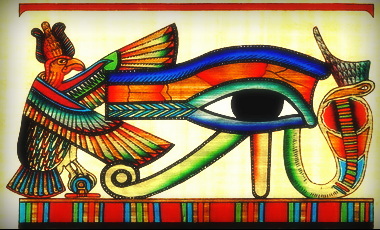
Bill Maher Goes 4-Rounds with Truth and Loses (Horus Edition)

This is the longest refutation of the others I am doing from Bill Maher’s “Religulous.” The Horus myth is a favorite of the se “Jesus Mythers,” and this collection of four refutations are clear in their rebuttal of this narrative. Quite literally a lie.

  • The first refutation came via Inspiring Philosophy’s video, “Jesus vs. Horus” (YOUTUBE)
  • The second refutation is by a long video that refutes the entire “Zeitgeist the Movie” “” It is titled, “Zeitgeist Refuted- Final Cut Full Movie” (YOUTUBE). Unfortunately, like the refutations of Loose Change, these videos are old and a very low resolution being that these were made in the infancy of YouTube and minimal editing tools available at the time.
  • The third video excerpt was taken from something I just grabbed and tweaked for my RUMBLE: “Refuting Zeitgeist, the Movie | Dr. Mark Foreman”
  • The fourth video is via Dr. Craigs YouTube Channel, “Jesus and the Story of Osiris and Horus (William Lane Craig)” (YOUTUBE)


Bill Maher Gets “Religulouse” About Mithra (Oops A Daisy)

The opening is from Bill Maher’s “documentary,” Religulous. This response to the charge of Christianity borrowing from Mithraism is a combination of two video sources:

FIRST: The first refutation comes via Inspiring Philosophy’s video, “Jesus vs. Mithra” (YOUTUBE)
SECOND: Zeitgeist Refuted- Final Cut Full Movie (YOUTUBE)

PURCHASE THE BOOK, it is a must for a Christian scholars library: Amazon | LOGOS

Evidence OUTSIDE the Bible for Jesus (Bill Maher Added)

(Updated Graphics Below – JUMP)

(For video description and links, GO HERE)

More videos/articles like this:

Shattering the Christ Myth (J. P. Holding) — Buy Holding’s book, Shattering the Christ Myth; Tektonics.org articles on Jesus Mythicism and CopycatsJesus Never Existed?: Give Me a Break! (with Paul L. Maier); Jesus of Testimony (a documentary defending the historical existence of Jesus); Debunking Robert M. Price ~ 6-Part Series (leading Christ Mythicist is refuted by Phil Fernandes); Debunking Richard Carrier ~ 2-Part Series (another leading proponent of the Jesus Myth theory); The God Who Wasn’t There, Refuted (Tektonics); Jesus Legend (by Greg Boyd) — Buy Boyd’s book on the, The Jesus Legend: A Case for the Historical Reliability of the Synoptic Jesus Tradition — and his book, Lord or Legend?: Wrestling with the Jesus Dilemma; Is Jesus a Legend? (Phil Fernandes) — Part 1 and Part 2; Is the Movie Zeitgeist Accurate? ~ Larry Wessels and Steve Morrison || Dr. Mark Foreman || and Michael Boehm.

See my pages on the topic of mystery religion and Jesus:

Here is some information from a wonderful book, Jesus Under Fire: Modern Scholarship Reinvents the Historical Jesus, in my “Evidence” paper:

  • The fact that the early church fathers lived at the same time as these 500 [+] witnesses who saw the resurrected Christ and his ascension (believers: Clement of Rome, Ignatius, Papius, Polycarp, Quadratus.) (Non-believers [some were contemporaries]: Tacitus, Suetonius, Josephus, Thallus, Pliny the Younger, Emperor Trajan, Talmudic writings [A.D. 70-200], Lucian, Mara Bar-Serapion, the Gospel of Truth, the Acts of Pontius Pilate.)

Even if we did not have the New Testament or Christian writings, we would be able to conclude from such non-Christian writings as Josephus, the Talmud, Tacitus, and Pliny the Younger that: 1) Jesus was a Jewish teacher; 2) many people believed that he performed healings and exorcisms; 3) he was rejected by the Jewish leaders; 4) he was crucified under Pontius Pilot in the reign of Tiberius; 5) despite this shameful death, his followers, who believed that he was still alive, spread beyond Palestine so that there were multitudes of them in Rome by A.D. 64; 6) all kinds of people from the cities and countryside – men and women, slave and free – worshipped him as God by the beginning of the second century (100 A.D.)

Michael J. Wilkins and J. P. Moreland, eds, Jesus Under Fire: Modern Scholarship Reinvents the Historical Jesus (Grand Rapids, MI: Zondervan, 1996), 221-222

This is the MEAT from a larger — must read — article via STAND TO REASON:

Hostile Non-Biblical Pagan Witnesses
There are a number of ancient classical accounts of Jesus from pagan Greek sources. These accounts are generally hostile to Christianity and try to explain away the miraculous nature of Jesus and the events that surrounded his life. Let’s look at these hostile accounts and see what they tell us about Jesus:

Thallus (52AD)
Thallus is perhaps the earliest secular writer to mention Jesus and he is so ancient that his writings don’t even exist anymore. But Julius Africanus, writing around 221AD does quote Thallus who had previously tried to explain away the darkness that occurred at the point of Jesus’ crucifixion:

“On the whole world there pressed a most fearful darkness; and the rocks were rent by an earthquake, and many places in Judea and other districts were thrown down. This darkness Thallus, in the third book of his History, calls, as appears to me without reason, an eclipse of the sun.” (Julius Africanus, Chronography, 18:1)

If only more of Thallus’ record could be found, we would see that every aspect of Jesus’ life could be verified with a non-biblical source. But there are some things we can conclude from this account: Jesus lived, he was crucified, and there was an earthquake and darkness at the point of his crucifixion.

Pliny the Younger (61-113AD)
Early Christians are also described in secular history. Pliny the Younger, in a letter to the Roman emperor Trajan, describes the lifestyles of early Christians:

“They (the Christians) were in the habit of meeting on a certain fixed day before it was light, when they sang in alternate verses a hymn to Christ, as to a god, and bound themselves by a solemn oath, not to any wicked deeds, but never to commit any fraud, theft or adultery, never to falsify their word, nor deny a trust when they should be called upon to deliver it up; after which it was their custom to separate, and then reassemble to partake of food—but food of an ordinary and innocent kind.”

This EARLY description of the first Christians documents several facts: the first Christians believed that Jesus was GOD, the first Christians upheld a high moral code, and these early followers et regularly to worship Jesus.

Suetonius (69-140AD)
Suetonius was a Roman historian and annalist of the Imperial House under the Emperor Hadrian. His writings about Christians describe their treatment under the Emperor Claudius (41-54AD):

“Because the Jews at Rome caused constant disturbances at the instigation of Chrestus (Christ), he (Claudius) expelled them from the city (Rome).” (Life of Claudius, 25:4)

This expulsion took place in 49AD, and in another work, Suetonius wrote about the fire which destroyed Rome in 64 A.D. under the reign of Nero. Nero blamed the Christians for this fire and he punished Christians severely as a result:

“Nero inflicted punishment on the Christians, a sect given to a new and mischievous religious belief.” (Lives of the Caesars, 26.2)

There is much we can learn from Suetonius as it is related to the life of early Christians. From this very EARLY account, we know that Jesus had an immediate impact on his followers. They believed that Jesus was God enough to withstand the torment and punishment of the Roman Empire. Jesus had a curious and immediate impact on his followers, empowering them to die courageously for what they knew to be true.

Tacitus (56-120AD)
Cornelius Tacitus was known for his analysis and examination of historical documents and is among the most trusted of ancient historians. He was a senator under Emperor Vespasian and was also proconsul of Asia. In his “Annals’ of 116AD, he describes Emperor Nero’s response to the great fire in Rome and Nero’s claim that the Christians were to blame:

“Consequently, to get rid of the report, Nero fastened the guilt and inflicted the most exquisite tortures on a class hated for their abominations, called Christians by the populace. Christus, from whom the name had its origin, suffered the extreme penalty during the reign of Tiberius at the hands of one of our procurators, Pontius Pilatus, and a most mischievous superstition, thus checked for the moment, again broke out not only in Judea, the first source of the evil, but even in Rome, where all things hideous and shameful from every part of the world find their centre and become popular.”

In this account, Tacitus confirms for us that Jesus lived in Judea, was crucified under Pontius Pilate, and had followers who were persecuted for their faith in Christ.

Mara Bar-Serapion (70AD)
Sometime after 70AD, a Syrian philosopher named Mara Bar-Serapion, writing to encourage his son, compared the life and persecution of Jesus with that of other philosophers who were persecuted for their ideas. The fact that Jesus is known to be a real person with this kind of influence is important. As a matter of fact, Mara Bar-Serapion refers to Jesus as the “Wise King”:

“What benefit did the Athenians obtain by putting Socrates to death? Famine and plague came upon them as judgment for their crime. Or, the people of Samos for burning Pythagoras? In one moment their country was covered with sand. Or the Jews by murdering their wise king?…After that their kingdom was abolished. God rightly avenged these men…The wise king…Lived on in the teachings he enacted.”

From this account, we can add to our understanding of Jesus. We can conclude that Jesus was a wise and influential man who died for his beliefs. We can also conclude that his followers adopted these beliefs and lived lives that reflected them to the world in which they lived.

Phlegon (80-140AD)
In a manner similar to Thallus, Julius Africanus also mentions a historian named Phlegon who wrote a chronicle of history around 140AD. In this history, Phlegon also mentions the darkness surrounding the crucifixion in an effort to explain it:

“Phlegon records that, in the time of Tiberius Caesar, at full moon, there was a full eclipse of the sun from the sixth to the ninth hour.” (Africanus, Chronography, 18:1)

Phlegon is also mentioned by Origen (an early church theologian and scholar, born in Alexandria):

“Now Phlegon, in the thirteenth or fourteenth book, I think, of his Chronicles, not only ascribed to Jesus a knowledge of future events . . . but also testified that the result corresponded to His predictions.” (Origen Against Celsus, Book 2, Chapter 14)

“And with regard to the eclipse in the time of Tiberius Caesar, in whose reign Jesus appears to have been crucified, and the great earthquakes which then took place … ” (Origen Against Celsus, Book 2, Chapter 33)

“Jesus, while alive, was of no assistance to himself, but that he arose after death, and exhibited the marks of his punishment, and showed how his hands had been pierced by nails.” (Origen Against Celsus, Book 2, Chapter 59)

From these accounts, we can add something to our understand of Jesus and conclude that Jesus had the ability to accurately predict the future, was crucified under the reign of Tiberius Caesar and demonstrated his wounds after he was resurrected!

Lucian of Samosata: (115-200 A.D.)
Lucian was a Greek satirist who spoke sarcastically of Christ and Christians, but in the process, he did affirm that they were real people and never referred to them as fictional characters:

“The Christians, you know, worship a man to this day—the distinguished personage who introduced their novel rites, and was crucified on that account….You see, these misguided creatures start with the general conviction that they are immortal for all time, which explains the contempt of death and voluntary self-devotion which are so common among them; and then it was impressed on them by their original lawgiver that they are all brothers, from the moment that they are converted, and deny the gods of Greece, and worship the crucified sage, and live after his laws. All this they take quite on faith, with the result that they despise all worldly goods alike, regarding them merely as common property.” (Lucian, The Death of Peregrine. 11-13)

From this account we can add to our description and conclude that Jesus taught about repentance and about the family of God. These teachings were quickly adopted by Jesus’ followers and exhibited to the world around them.

Celsus (175AD)
This is the last hostile ‘pagan’ account we will examine (although there are many other later accounts in history). Celsus was quite hostile to the Gospels, but in his criticism, he unknowingly affirms and reinforces the authors and their content. His writing is extensive and he alludes to 80 different Biblical quotes, confirming their early appearance in history. In addition, he admits that the miracles of Jesus were generally believed in the early 2nd century! Here is a portion of his text:

“Jesus had come from a village in Judea, and was the son of a poor Jewess who gained her living by the work of her own hands. His mother had been turned out of doors by her husband, who was a carpenter by trade, on being convicted of adultery [with a soldier named Panthéra (i.32)]. Being thus driven away by her husband, and wandering about in disgrace, she gave birth to Jesus, a bastard. Jesus, on account of his poverty, was hired out to go to Egypt. While there he acquired certain (magical) powers which Egyptians pride themselves on possessing. He returned home highly elated at possessing these powers, and on the strength of them gave himself out to be a god.”

Celsus admits that Jesus was reportedly born of a virgin, but then argues that this could supernatural account could not be possible and offers the idea that he was a bastard son of a man named Panthera (an idea borrowed from Jews who opposed Jesus at the time). But in writing this account, Celsus does confirm that Jesus had an earthly father who was a carpenter, possessed unusual magical powers and claimed to be God.

Hostile Non-Biblical Jewish Witnesses
In addition to classical ‘pagan’ sources that chronicle the life of Jesus and his followers, there are also a number of ancient hostile Jewish sources that talk about Jesus. These are written by Jewish theologians, historians and leaders who were definitely NOT sympathetic to the Christian cause. Their writings are often VERY harsh, critical and even demeaning to Jesus. But there is still much that these writings confirm.

Josephus (37-101AD)
In more detail than any other non-biblical historian, Josephus writes about Jesus in his “the Antiquities of the Jews” in 93AD. Josephus was born just four years after the crucifixion. He was a consultant for Jewish rabbis at age thirteen, was a Galilean military commander by the age of sixteen, and he was an eyewitness to much of what he recorded in the first century A.D. Under the rule of roman emperor Vespasian, Josephus was allowed to write a history of the Jews. This history includes three passages about Christians, one in which he describes the death of John the Baptist, one in which he mentions the execution of James and describes him as the brother of Jesus the Christ, and a final passage which describes Jesus as a wise man and the messiah. Now there is much controversy about the writing of Josephus, because the first discoveries of his writings are late enough to have been re-written by Christians, who are accused of making additions to the text. So to be fair, let’s take a look at a scholarly reconstruction that has removed all the possible Christian influence from the text related to Jesus:

“Now around this time lived Jesus, a wise man. For he was a worker of amazing deeds and was a teacher of people who gladly accept the truth. He won over both many Jews and many Greeks. Pilate, when he heard him accused by the leading men among us, condemned him to the cross, (but) those who had first loved him did not cease (doing so). To this day the tribe of Christians named after him has not disappeared” (This neutral reconstruction follows closely the one proposed in the latest treatment by John Meier, Marginal Jew 1:61)

Now there are many other ancient versions of Josephus’ writing which are even more explicit about the nature of his miracles, his life and his status as the Christ, but let’s take this conservative version and see what we can learn. From this text, we can conclude that Jesus lived in Palestine, was a wise man and a teacher, worked amazing deeds, was accused buy the Jews, crucified under Pilate and had followers called Christians!

Jewish Talmud (400-700AD)
While the earliest Talmudic writings of Jewish Rabbis appear in the 5th century, the tradition of these Rabbinic authors indicates that they are faithfully transmitting teachings from the early “Tannaitic” period of the first century BC to the second century AD. There are a number of writings from the Talmud that scholars believe refer to Jesus and many of these writings are said to use code words to describe Jesus (such as “Balaam” or “Ben Stada” or “a certain one”). But let’s be very conservative here. Let’s ONLY look at the passages that refer to Jesus in a more direct way. If we do that, there are still several ancient Talmudic passages we can examine:

“Jesus practiced magic and led Israel astray” (b. Sanhedrin 43a; cf. t. Shabbat 11.15; b. Shabbat 104b)

“Rabbi Hisda (d. 309) said that Rabbi Jeremiah bar Abba said, ‘What is that which is written, ‘No evil will befall you, nor shall any plague come near your house’? (Psalm 91:10)… ‘No evil will befall you’ (means) that evil dreams and evil thoughts will not tempt you; ‘nor shall any plague come near your house’ (means) that you will not have a son or a disciple who burns his food like Jesus of Nazareth.” (b. Sanhedrin 103a; cf. b. Berakhot 17b)

“Our rabbis have taught that Jesus had five disciples: Matthai, Nakai, Nezer, Buni and Todah. They brought Matthai to (to trial). He said, ‘Must Matthai be killed? For it is written, ‘When (mathai) shall I come and appear before God?’” (Psalm 92:2) They said to him, “Yes Matthai must be killed, for it is written, ‘When (mathai) he dies his name will perish’” (Psalm 41:5). They brought Nakai. He said to them, “Must Nakai be killed? For it is written, “The innocent (naqi) and the righteous will not slay’” (Exodus 23:7). They said to him, “Yes, Nakai must be kille, for it is written, ‘In secret places he slays the innocent (naqi)’” (Psalm 10:8). (b. Sanhedrin 43a; the passage continues in a similar way for Nezer, Buni and Todah)

And this, perhaps the most famous of Talmudic passages about Jesus:

“It was taught: On the day before the Passover they hanged Jesus. A herald went before him for forty days (proclaiming), “He will be stoned, because he practiced magic and enticed Israel to go astray. Let anyone who knows anything in his favor come forward and plead for him.” But nothing was found in his favor, and they hanged him on the day before the Passover. (b. Sanhedrin 43a)

From just these passages that mention Jesus by name, we can conclude that Jesus had magical powers, led the Jews away from their beliefs, had disciples who were martyred for their faith (one of whom was named Matthai), and was executed on the day before the Passover.

The Toledot Yeshu (1000AD)
The Toledot Yeshu is a medieval Jewish retelling of the life of Jesus. It is completely anti-Christian, to be sure. There are many versions of these ‘retellings’, and as part of the transmitted oral and written tradition of the Jews, we can presume their original place in antiquity, dating back to the time of Jesus’ first appearance as an influential leader who was drawing Jews away from their faith in the Law. The Toledot Yeshu contains a determined effort to explain away the miracles of Jesus, and to deny the virgin birth. In some places, the text is quite vicious, but it does confirm many elements of the New Testament writings. Let’s take a look at a portion of the text (Jesus is refered to as ‘Yehoshua’):

“In the year 3671 (in Jewish reckonging, it being ca 90 B.C.) in the days of King Jannaeus, a great misfortune befell Israel, when there arose a certain disreputable man of the tribe of Judah, whose name was Joseph Pandera. He lived at Bethlehem, in Judah. Near his house dwelt a widow and her lovely and chaste daughter named Miriam. Miriam was betrothed to Yohanan, of the royal house of David, a man learned in the Torah and God-fearing. At the close of a certain Sabbath, Joseph Pandera, attractive and like a warrior in appearance, having gazed lustfully upon Miriam, knocked upon the door of her room and betrayed her by pretending that he was her betrothed husband, Yohanan. Even so, she was amazed at this improper conduct and submitted only against her will. Thereafter, when Yohanan came to her, Miriam expressed astonishment at behavior so foreign to his character. It was thus that they both came to know the crime of Joseph Pandera and the terrible mistake on the part of Miriam… Miriam gave birth to a son and named him Yehoshua, after her brother. This name later deteriorated to Yeshu (“Yeshu” is the Jewish “name” for Jesus. It means “May His Name Be Blotted Out”). On the eighth day he was circumcised. When he was old enough the lad was taken by Miriam to the house of study to be instructed in the Jewish tradition. One day Yeshu walked in front of the Sages with his head uncovered, showing shameful disrespect. At this, the discussion arose as to whether this behavior did not truly indicate that Yeshu was an illegitimate child and the son of a niddah. Moreover, the story tells that while the rabbis were discussing the Tractate Nezikin, he gave his own impudent interpretation of the law and in an ensuing debate he held that Moses could not be the greatest of the prophets if he had to receive counsel from Jethro. This led to further inquiry as to the antecedents of Yeshu, and it was discovered through Rabban Shimeon ben Shetah that he was the illegitimate son of Joseph Pandera. Miriam admitted it. After this became known, it was necessary for Yeshu to flee to Upper Galilee. After King Jannaeus, his wife Helene ruled over all Israel. In the Temple was to be found the Foundation Stone on which were engraven the letters of God’s Ineffable Name. Whoever learned the secret of the Name and its use would be able to do whatever he wished. Therefore, the Sages took measures so that no one should gain this knowledge. Lions of brass were bound to two iron pillars at the gate of the place of burnt offerings. Should anyone enter and learn the Name, when he left the lions would roar at him and immediately the valuable secret would be forgotten. Yeshu came and learned the letters of the Name; he wrote them upon the parchment which he placed in an open cut on his thigh and then drew the flesh over the parchment. As he left, the lions roared and he forgot the secret. But when he came to his house he reopened the cut in his flesh with a knife an lifted out the writing. Then he remembered and obtained the use of the letters. He gathered about himself three hundred and ten young men of Israel and accused those who spoke ill of his birth of being people who desired greatness and power for themselves. Yeshu proclaimed, “I am the Messiah; and concerning me Isaiah prophesied and said, ‘Behold, a virgin shall conceive, and bear a son, and shall call his name Immanuel.’” He quoted other messianic texts, insisting, “David my ancestor prophesied concerning me: ‘The Lord said to me, thou art my son, this day have I begotten thee.’” The insurgents with him replied that if Yeshu was the Messiah he should give them a convincing sign. They therefore, brought to him a lame man, who had never walked. Yeshu spoke over the man the letters of the Ineffable Name, and the leper was healed. Thereupon, they worshipped him as the Messiah, Son of the Highest. When word of these happenings came to Jerusalem, the Sanhedrin decided to bring about the capture of Yeshu. They sent messengers, Annanui and Ahaziah, who, pretending to be his disciples, said that they brought him an invitation from the leaders of Jerusalem to visit them. Yeshu consented on condition the members of the Sanhedrin receive him as a lord. He started out toward Jerusalem and, arriving at Knob, acquired an ass on which he rode into Jerusalem, as a fulfillment of the prophecy of Zechariah. The Sages bound him and led him before Queen Helene, with the accusation: “This man is a sorcerer and entices everyone.” Yeshu replied, “The prophets long ago prophesied my coming: ‘And there shall come forth a rod out of the stem of Jesse,’ and I am he; but as for them, Scripture says ‘Blessed is the man that walketh not in the counsel of the ungodly.’” Queen Helene asked the Sages: “What he says, is it in your Torah?” They replied: “It is in our Torah, but it is not applicable to him, for it is in Scripture: ‘And that prophet which shall presume to speak a word in my name, which I have not commanded him to speak or that shall speak in the name of other gods, even that prophet shall die.’ He has not fulfilled the signs and conditions of the Messiah.” Yeshu spoke up: “Madam, I am the Messiah and I revive the dead.” A dead body was brought in; he pronounced the letters of the Ineffable Name and the corpse came to life. The Queen was greatly moved and said: “This is a true sign.” She reprimanded the Sages and sent them humiliated from her presence. Yeshu’s dissident followers increased and there was controversy in Israel. Yeshu went to Upper Galilee. the Sages came before the Queen, complaining that Yeshu practiced sorcery and was leading everyone astray. Therefore she sent Annanui and Ahaziah to fetch him. The found him in Upper Galilee, proclaiming himself the Son of God. When they tried to take him there was a struggle, but Yeshu said to the men of Upper Galilee: “Wage no battle.” He would prove himself by the power which came to him from his Father in heaven. He spoke the Ineffable Name over the birds of clay and they flew into the air. He spoke the same letters over a millstone that had been placed upon the waters. He sat in it and it floated like a boat. When they saw this the people marveled. At the behest of Yeshu, the emissaries departed and reported these wonders to the Queen. She trembled with astonishment. Then the Sages selected a man named Judah Iskarioto and brought him to the Sanctuary where he learned the letters of the Ineffable Name as Yeshu had done. When Yeshu was summoned before the queen, this time there were present also the Sages and Judah Iskarioto. Yeshu said: “It is spoken of me, ‘I will ascend into heaven.’” He lifted his arms like the wings of an eagle and he flew between heaven and earth, to the amazement of everyone…Yeshu was seized. His head was covered with a garment and he was smitten with pomegranate staves; but he could do nothing, for he no longer had the Ineffable Name. Yeshu was taken prisoner to the synagogue of Tiberias, and they bound him to a pillar. To allay his thirst they gave him vinegar to drink. On his head they set a crown of thorns. There was strife and wrangling between the elders and the unrestrained followers of Yeshu, as a result of which the followers escaped with Yeshu to the region of Antioch; there Yeshu remained until the eve of the Passover. Yeshu then resolved to go the Temple to acquire again the secret of the Name. That year the Passover came on a Sabbath day. On the eve of the Passover, Yeshu, accompanied by his disciples, came to Jerusalem riding upon an ass. Many bowed down before him. He entered the Temple with his three hundred and ten followers. One of them, Judah Iskarioto apprised the Sages that Yeshu was to be found in the Temple, that the disciples had taken a vow by the Ten Commandments not to reveal his identity but that he would point him out by bowing to him. So it was done and Yeshu was seized. Asked his name, he replied to the question by several times giving the names Mattai, Nakki, Buni, Netzer, each time with a verse quoted by him and a counter-verse by the Sages. Yeshu was put to death on the sixth hour on the eve of the Passover and of the Sabbath. When they tried to hang him on a tree it broke, for when he had possessed the power he had pronounced by the Ineffable Name that no tree should hold him. He had failed to pronounce the prohibition over the carob-stalk, for it was a plant more than a tree, and on it he was hanged until the hour for afternoon prayer, for it is written in Scripture, “His body shall not remain all night upon the tree.” They buried him outside the city. On the first day of the week his bold followers came to Queen Helene with the report that he who was slain was truly the Messiah and that he was not in his grave; he had ascended to heaven as he prophesied. Diligent search was made and he was not found in the grave where he had been buried. A gardener had taken him from the grave and had brought him into his garden and buried him in the sand over which the waters flowed into the garden. Queen Helene demanded, on threat of a severe penalty, that the body of Yeshu be shown to her within a period of three days. There was a great distress. When the keeper of the garden saw Rabbi Tanhuma walking in the field and lamenting over the ultimatum of the Queen, the gardener related what he had done, in order that Yeshu’s followers should not steal the body and then claim that he had ascended into heaven. The Sages removed the body, tied it to the tail of a horse and transported it to the Queen, with the words, “This is Yeshu who is said to have ascended to heaven.” Realizing that Yeshu was a false prophet who enticed the people and led them astray, she mocked the followers but praised the Sages.

Now in spite of the fact that the ancient Jews who wrote this did their best to argue for another interpretation of the Life of Jesus, they did make several claims here about Jesus. This passage, along with several others from the Toledot tradition, confirms that Jesus claimed to be the Messiah, healed the lame, said that Isaiah foretold of his life, was worshipped as God, arrested by the Jews, beaten with rods, given vinegar to drink, wore a crown of thorns, rode into Jerusalem on a donkey, was betrayed by a man named Judah Iskarioto, and had followers who claimed he was resurrected and ascended, leaving an empty tomb!

UPDATE via FACEBOOK


Here are some pictures via a Facebook Group (HERE):


Concepts: “Is Reality Merely a Perception?”

Originally posted July of 2012 ~ Links and Media Updated

(As usual you can enlarge the article by clicking on it.) I enjoyed this weeks Concepts by John Van Huizum. While he showed the usual lack of deep study and merely expresses opinion as such, he is right about one thing… reality is perception. In Planned Parenthood v. Casey (1996), the 9th District Appeals Court wrote:

At the heart of liberty is the right to define one’s own concept of existence, of meaning, of the universe and of the mystery of human life. Beliefs about these matters could not define the attributes of personhood were they formed under compulsion of the State.”

 I have a feeling that John would agree with the following statement:

“If relativism signifies contempt for fixed categories and men who claim to be bearers of an objective, immortal truth From the fact that all ideologies are of equal value, that all ideologies are mere fictions, the modern relativist infers that everybody has the right to create for himself his own reality

More on Johns Relativism (cultural relativism/subjectivism, relativism, pluralism) later.

In Christian apologetics, often times the person doing the perceiving is said to have a pair of colored glasses on:

The right eyeglasses can put the world into clearer focus, and the correct worldview can function in much the same way. When someone looks at the world from the perspective of the wrong worldview, the world won’t make much sense to him. Or what he thinks makes sense will, in fact, be wrong in important respects. Putting on the right conceptual scheme, that is, viewing the world through the correct worldview, can have important repercussions for the rest of the person’s understanding of events and ideas… Raising one’s self-consciousness [awareness] about worldviews is an essential part of intellectual maturity.

Ronald H. Nash, Worldviews in Conflict: Choosing Christianity in a World of Ideas (Grand Rapids, MI: Zondervan, 1992), 17-18, 9.

After this mentioning of “perceptions,” or, really one’s worldview, John starts down his normal rabbit trail of ideas stuck together, his straw-men “set-ups,” and the like. For instance, perceptions are often changed… usually when an unprepared youth of faith goes off to college and finds a university teaming with…

evolutionary psychology (for instance, atheist defender Sam Harris makes the Darwinian psychological statement that “…there’s nothing more natural than rape. Human beings rape, chimpanzees rape, orangutans rape, rape clearly is part of an evolutionary strategy to get your genes into the next generation if you’re a male.” [more]);

ϟ science (often put forward in the classroom as “scientism“);

and militant skepticism.

…they will typically reject their childhood faith, and not set foot into a church till their thirties/forties. It is said that men stop going to church at 18 when their mom stops dragging them, and start back up when their wife drags em’ back (why men hate church).

People first became aware of the problem after hearing the results of a Barna Research Group study that said that between 67% and 94% of Christian students (depending on denomination), within 18 months of graduating high school, are no longer at church. This report was given in 2002 and showed that the largest protestant denomination, the Southern Baptist Convention, was losing an average of 88% of their students while in college. (Cold Case Christianity)

Typically though, later in life the person in question will start reading some scholarly Christian works, or family harkens them to their childhood faith, someone close dies, life hits em’ hard, something happens that draws them back into their faith. Even within someone’s faith there are levels of trust in believing. Professor Stokes points out that such doubt is natural to a person,

Often, however, the cause of our doubt isn’t what you might think. It isn’t necessarily the strength of the arguments that rattles us, but the way they resonate with the unbeliever in each of us (what the Bible calls the “old self”). We hear Tokyo Rose’s voice and she seems to make pretty good sense sometimes. Yet more often than not, if we look closely at the atheist’s arguments, we find that there is little substance. Seeing this can change the argument’s frequency and therefore break its spell. Believers often worry that their doubts signify the rapid approach of full-blown unbelief. But as pastor and author Tim Keller puts it,

Faith without some doubts is like a human body without any antibodies in it. People who blithely go through life too busy or indifferent to ask hard questions about why they believe as they do will find themselves defenseless against either the experience of tragedy or the probing questions of a smart skeptic.

All thoughtful believers—even those whose faith is mature—encounter doubt. Not a single person has had unadulterated faith. In any case, it certainly won’t do to ignore your doubts, and defusing them will only strengthen your faith. To be sure, doubts can be strong enough to become a trial in your life; but like all trials, they’re meant to refine faith, not stifle it.

Mitch Stokes, A Shot of Faith: To the Head (Nashville, TN: Thomas Nelson, 2012), xvii. (Emphasis added!)

So people are a bit more complicated than space could allow John to state, or that he cares to ponder. I will also agree with him that this conversation has been going on a very long time.* Cicero is a great example, he was born in 106 BC and died in 43 BC, and said the following in response to the skeptics of his day:

But if the structure of the world in all its parts is such that it could not have been better whether in point of utility or beauty, let us consider whether this is the result of chance, or whether on the contrary the parts of the world are in such a condition that they could not possibly have cohered together if they were not controlled by intelligence and by divine providence. If then the products of nature are better than those of art, and if art produces nothing without reason, nature too cannot be deemed to be without reason. When you see a statue or a painting, you recognize the exercise of art; when you observe from a distance the course of a ship, you do not hesitate to assume that its motion is guided by reason and by art; when you look at a sun-dial or a water-clock, you infer that it tells the time by art and not by chance; how then can it be consistent to suppose that the world, which includes both the works of art in question, the craftsmen who made them, and everything else besides, can be devoid of purpose and of reason? Suppose a traveller to carry into Scythia or Britain the orrery recently constructed by our friend Posidonius, which at each revolution reproduces the same motions of the sun, the moon and the five planets that take place in the heavens every twenty-four hours, would any single native doubt that this orrery was the work of a rational being? These thinkers however raise doubts about the world itself from which all things arise and have their being, and debate whether it is the product of chance or necessity of some sort, or of divine reason and intelligence;

Cicero, Nature of the Gods, Translated by H. Rackam, pp. 207-209

So yes, important topics and questions are new to every generation, but these queries have been asked for a very long time, and should continue to be. Believing that mankind will outgrow their “superstitious” faith is merely someone displaying their metaphysical naturalist presuppositions. Now on to another aspect of a statement by John. He said,

“Atheism has been aided by scientific discoveries and rigorous questioning.”

I think this is true if one looks at the situation wrongly. When people do not try on other pairs of glasses, become skeptical of their skepticism, do not use self-refuting propositions (similar to Vincent Bugliosi), or study to see which worldview offers a better explanation, they can become ideologues (religious or secular):

a “coherent worldview must be able to satisfactorily answer four questions: that of origin, meaning, morality, and destiny.” He says that while every major religion makes exclusive claims about truth, “the Christian faith is unique in its ability to answer all four of these questions.” These questions are the bedrock of any worldview… that holds any weight at least.

Ravi Zacharias, Deliver Us From Evil (Nashville, TN: Word Publishers, 1997), 219–220; taken from the first chapter of my book.

For example, apologist Lee Strobel talks to a philosopher about the evidence that culminated in many atheists rejecting [video] (or wanting to reject) science because of its implications FOR God, or origins [Side note… Einstein introduced the Special Theory of Relativity in 1905, when applied to the universe as a whole in 1915, it became known as the General Theory of Relativity]:

When Albert Einstein developed his general theory of relativity in 1915 and started applying it to the universe as a whole, he was shocked to discover it didn’t allow for a static universe. According to his equations, the universe should either be exploding or imploding. In order to make the universe static, he had to fudge his equations by putting in a facto that would hold the universe steady.

In the 1920’s, the Russian mathematician Alexander Friedman and the Belgium astronomer George Lemaitre were able to develop models based on Einstein’s theory. They predicted the universe was expanding. Of course, this meant that if you went backward in time, the universe would go back to a single origin before which it didn’t exist. Astronomer Fred Hoyle derisively called this the Big Bang — and the name stuck!

Starting in the 1920’s, scientists began to find empirical evidence that supported these purely mathematical models. For instance, in 1929, the American astronomer Edwin Hubble discovered that the light coming to us from distant galaxies appears redder than it should be, and this is a universal feature of galaxies in all parts of the sky. Hubble explained this red shift as being due to the fact that the galaxies are moving away from us. He concluded that the universe is literally flying apart at enormous velocities. Hubble’s astronomical observations were the first empirical confirmation of the predictions by Friedman and Lemaitre.

Then in the 1940’s, George Gamow predicted that if the Big Bang really happened, then the background temperature of the universe should be just a few degrees above absolute zero. He said this would be a relic from a very early stage of the universe. Sure enough, in 1965, two scientists accidentally discovered the universe’s background radiation — and it was only about 3.7 degrees above absolute zero. There’s no explanation for this apart from the fact that it is a vestige of a very early and a very dense state of the universe, which was predicted by the Big Bang model.

The third main piece of the evidence for the Big Bang is the origin of light elements. Heavy elements, like carbon and iron, are synthesized in the interior of stars and then exploded through supernova into space. But the very, very light elements, like deuterium and helium, cannot have been synthesized in the interior of the stars, because you would need an even more powerful furnace to create them. These elements must have been forged in the furnace of the Big Bang itself at temperatures that were billions of degrees. There’s no other explanation.

So predictions about the Big Bang have been consistently verified by the scientific data. Moreover, they have been corroborated by the failure of every attempt to falsify them by alternative models. Unquestionably, the Big Bang model has impressive scientific credentials …. Up to this time, it was taken for granted that the universe as a whole was a static, eternally existing object …. At the time an agnostic, American astronomer Robert Jastrow was forced to concede that although details may differ, “the essential element in the astronomical and Biblical accounts of Genesis is the same; the chain of events leading to man commenced suddenly and sharply, at a definite moment in time, in a flash of light and energy”…. Einstein admitted the idea of the expanding universe “irritates me” (presumably, said one prominent scientist, “because of its theological implications”).

Lee Strobel, The Case for a Creator: A Journalist Investigates Scientific Evidence that Points Towards God (Grand Rapids, MI: Zondervan, 2004), 105-106, 112.

Also, see my post: “Scientific and Anecdotal Evidence for the Beginning of the Universe

Here are just two (of the many examples I can provide) of an atheist and an agnostic commenting on the above evidence:

“The essential element in the astronomical and biblical accounts of Genesis is the same; the chain of events leading to man commenced suddenly and sharply, at a definite moment in time, in a flash of light and energy…. The Hubble Law is one of the great discoveries in science; it is one of the main supports of the scientific story of Genesis.”

— Robert Jastrow: American astronomer and physicist. Founding director of NASA’s Goddard Institute for Space Studies, he is the director of the Mount Wilson Institute and Hale Solar Laboratory. He is also the author of Red Giants and White Dwarfs (1967) and God and the Astronomers (2nd ed., 2000).

“Certainly there was something that set it all off. Certainly, if you are religious, I can’t think of a better theory of the origin of the universe to match with Genesis.”

— Robert Wilson: is an American astronomer, 1978 Nobel laureate in physics, who with Arno Allan Penzias discovered in 1964 the cosmic microwave background radiation (CMB)…. While working on a new type of antenna at Bell Labs in Holmdel Township, New Jersey, they found a source of noise in the atmosphere that they could not explain. After removing all potential sources of noise, including pigeon droppings on the antenna, the noise was finally identified as CMB, which served as important corroboration of the Big Bang theory.

Dr. George Smoot, Particle Physicist, Nobel Prize winner, and team leader from the Lawrence-Berkeley Laboratory, regarding the 1992 observations from COBE (the NASA satellite Cosmic Background Explorer): “It’s like looking at God.”(8)

A somewhat more “sober” assessment of the findings was given by Frederick Burnham, a science-historian. He said, “These findings, now available, make the idea that God created the universe a more respectable hypothesis today than at any time in the last 100 years.”(9)

Dr. Stephen Hawking (Theoretical Physicist) described the big bang ripples observations as “the scientific discovery of the century, if not all time.”(10)

Dr. George Greenstein (Professor of Astronomy at Amherst.): “As we survey all the evidence, the thought insistently arises that some supernatural agency – or, rather, Agency – must be involved. Is it possible that suddenly, without intending to, we have stumbled upon scientific proof of the existence of a Supreme Being? Was it God who stepped in and so providentially crafted the cosmos for our benefit?”(11)

Sir Arthur Eddington (British Astrophysicist): “The idea of a universal mind or Logos would be, I think, a fairly plausible inference from the present state of scientific theory.”(12)

Dr. Arno Penzias (Nobel Prize winner in physics, co-discoverer of the microwave background radiation from the Big Bang): “Astronomy leads us to a unique event, a universe which was created out of nothing, one with the very delicate balance needed to provide exactly the conditions required to permit life, and one which has an underlying (one might say ‘supernatural’) plan.”(13)

Sir Roger Penrose (Physicist, Emeritus Rouse Ball Professor of Mathematics at the Mathematical Institute, University of Oxford, and joint developer of the Hawking-Penrose Theorems): “I would say the universe has a purpose. It’s not there just somehow by chance.” (14)

Dr. Robert Jastrow (Founding director of NASA’s Goddard Institute for Space Studies): “For the scientist who has lived by his faith in the power of reason, the story ends like a bad dream. He has scaled the mountains of ignorance; he is about to conquer the highest peak; as he pulls himself over the final rock, he is greeted by a band of theologians who have been sitting there for centuries.”(15)

Dr. Frank Tipler (Professor of Math and Physics at Tulane University): “When I began my career as a cosmologist some twenty years ago, I was a convinced atheist. I never in my wildest dreams imagined that one day I would be writing a book purporting to show that the central claims of Judeo-Christian theology are in fact true, that these claims are straightforward deductions of the laws of physics as we now understand them. I have been forced into these conclusions by the inexorable logic of my own special branch of physics.”(16). Tipler since has actually converted to Christianity, resulting in his latest book, The Physics Of Christianity.

Dr. Alexander Polyakov (String Theorist, Princeton): “We know that nature is described by the best of all possible mathematics because God created it.”(17)

Dr. Edward Milne (British Astrophysicist, former Rouse Ball Professor of Mathematics, Oxford): “As to the cause of the Universe, in context of expansion, that is left for the reader to insert, but our picture is incomplete without Him [God].”(18)

Dr. Arthur L. Schawlow (Professor of Physics at Stanford University, 1981 Nobel Prize in physics): “It seems to me that when confronted with the marvels of life and the universe, one must ask why and not just how. The only possible answers are religious…. I find a need for God in the universe and in my own life.”(19)

Dr. Wernher von Braun (German-American Pioneer Rocket Scientist) “I find it as difficult to understand a scientist who does not acknowledge the presence of a superior rationality behind the existence of the universe as it is to comprehend a theologian who would deny the advances of science.”(20)

Dr. Frank Tipler (Professor of Math and Physics at Tulane University): “From the perspective of the latest physical theories, Christianity is not a mere religion, but an experimentally testable science.”(21)


Footnotes for this quote


8) Thomas H. Maugh, II (April 24, 1992). “Relics of Big Bang, Seen for First Time”. Los Angeles Times: pp. Al, A30.

9) The Los Angeles Times, Saturday 2nd May 1992.

10) Smoot, George, Wrinkles in Time, 2007 edition , cover.

11) Greenstein, G. 1988. The Symbiotic Universe. New York: William Morrow, p.27.

12) Heeren, F. 1995. Show Me God. Wheeling, IL, Searchlight Publications, p. 233.

13) Margenau, H and R.A. Varghese, ed. 1992. Cosmos, Bios, and Theos. La Salle, IL, Open Court, p. 83.

14) Penrose, R. 1992. A Brief History of Time (movie). Burbank, CA, Paramount Pictures, Inc.

15) Jastrow, R. 1978. God and the Astronomers. New York, W.W. Norton, p. 116.

16) Tipler, F.J. 1994. The Physics Of Immortality. New York, Doubleday, Preface.

17) Gannes, S. October 13, 1986. Fortune. p. 57

18) Heeren, F. 1995. Show Me God. Wheeling, IL, Searchlight Publications, p. 166-167.

19) Margenau, H. and R. A. Varghese, eds. Cosmos, Bios, Theos: Scientists Reflect on Science, God, and the Origins of the Universe, Life, and Homo Sapiens (Open Court Pub. Co., La Salle, IL, 1992).

20) McIver, T. 1986. Ancient Tales and Space-Age Myths of Creationist Evangelism. The Skeptical Inquirer 10:258-276.

21) McIver, T. 1986. Ancient Tales and Space-Age Myths of Creationist Evangelism. The Skeptical Inquirer 10:258-276.

So, far from atheism being supported by science, the theistic worldview has been exemplified above all other models of interpretation (perceptions) of reality. Mind you this isn’t “proof” how the naturalist wrongly interprets the empirical method (scientific positivism: Right Reason | Apologetics.com), but it is a probability that exceeds others. (I suggest taking time, about an hour, and listen to this presentation by William Lane Craig on the evidences for theism over other worldviews.) Here John makes one of his signature jumps from one topic to a completely different one. I sometimes feel — shot in the dark again — he does this with the idea that he is saying something “scientific” and that everyone should credit his knowledge in on this particular topic (which is not the case), and then he brings that “trust” into a completely different topic.

Odd, to say the least. At any rate, freedom is something atheism does not account for, determinism is (enjoy the John Cleese video to the right). But that is a subject left for another day.

At this pivot point regarding freedom in one sentence to abortion in the following deserves some attention. Mr. Van Huizum seems to think that those who stand against abortion are doing so because God says. There are many atheists who are pro-life. How do they make their argument then? Science! Oooooh DRAT! Foiled by his own premise. If John had a grave to roll over in, he would. Here, for example, is model Kathy Ireland using the scientific laws to make her point:

Kathy Ireland, many years ago, was on Bill Mahers Politically Incorrectand the discussion that ensued shows the frailty of the liberal/relativistic position:

Bill Maher: Kathy, why do you oppose a women’s right to choose

Kathy Ireland: Bill, when my husband was going to medical school I underwent a transformation. Because I used to be in favor of abortion. But I noticed when I was reading through some of his medical teaching books, that according to a law in science known as the law of biogenesis, every living thing reproduces after it own kind. That means dog produce dogs, cats produce cats, humans produce humans. If we want to know what something is we simply ask what are its parents. If we know what the parents are, we know what the thing in question is. And I reasoned from that because human parents can only produce human offspring, unborn human fetuses could be nothing but human beings, because the law of biogenesis rules out every other alternative. And I concluded therefore that because human fetuses were part of our family, we should not harm them without justification.

Bill Maher: Well Kathy, that’s just your opinion!

In October 2002, Kathy Ireland made a compelling argument against abortion on the Fox News Channel’s Hannity and Colmes political debate show. Alan Colmes described Ireland’s opinions as religious, but Ireland said that her views on abortion do not stem from faith. She asserted that even atheists could realize that abortion is wrong. Kathy told Alan that her belief is founded in science and technology, which she says, “has come a long way since Roe vs. Wade.”

Ireland also defended her values as being pro-women, stating, “We need to support these women who are in crisis pregnancy situations.” She claimed that because scientific evidence proves that abortion is murder, “I have no choice but to defend the most vulnerable among us.”

Here is one the best presentations detailing some of the above by Scott Klusendorf, a guy who’s specialty is the pro-life position in contradistinction to the pro-choice one. [Actually, since one position is “pro-life,” the other one is rightfully the “pro-death” position.] (Audio presentation to the right, 30-minutes.) So John Van Huizum’s statement that the pro-life position is merely based on “God says so” seems to be — either out of ignorance or bias — a straw-man argument of what the other side truly believes. Again, John seems to cheapen these important issues, not giving the other side its proper due.

Right when you think Mr. Huizum is staying on one topic, he switches again in his last paragraph by quoting a verse about taxes, as if this verse has something to do with a letter from Jefferson to the Danbury Baptists. I dissect this position quite a bit in my paper found here, but this quote from a seminary level text that touches on the idea (separating the religious realm from the secular) John expresses:

Such “exclude religion” arguments are wrong because marriage is not a religion! When voters define marriage, they are not establishing a religion. In the First Amendment, “Congress shall make no law respecting an establishment of religion, or prohibiting the free exercise thereof,” the word “religion” refers to the church that people attend and support. “Religion” means being a Baptist or Catholic or Presbyterian or Jew. It does not mean being married. These arguments try to make the word “religion” in the Constitution mean something different from what it has always meant.

These arguments also make the logical mistake of failing to distinguish the reasons for a law from the content of the law. There were religious reasons behind many of our laws, but these laws do not “establish” a religion. All major religions have teachings against stealing, but laws against stealing do not “establish a religion.” All religions have laws against murder, but laws against murder do not “establish a religion.” The campaign to abolish slavery in the United States and England was led by many Christians, based on their religious convictions, but laws abolishing slavery do not “establish a religion.” The campaign to end racial discrimination and segregation was led by Dr. Martin Luther King Jr., a Baptist pastor, who preached against racial injustice from the Bible. But laws against discrimination and segregation do not “establish a religion.”

If these “exclude religion” arguments succeed in court, they could soon be applied against evangelicals and Catholics who make “religious” arguments against abortion. Majority votes to protect unborn children could then be invalidated by saying these voters are “establishing a religion.” And, by such reasoning, all the votes of religious citizens for almost any issue could be found invalid by court decree! This would be the direct opposite of the kind of country the Founding Fathers established, and the direct opposite of what they meant by “free exercise” of religion in the First Amendment.

Wayne Grudem, Politics According to the Bible (Grand Rapids, MI: Zondervan, 2010), 31.

So you see that — again — John’s understating of theology, culture, philosophy and science is one that is the culmination (I suspect) of a life lived rejecting the other side of the issue as mere opinion… or worse yet, as delusional, without really taking into consideration the best of the opposing views scholarly arguments. All this evidence being shown I suspect that john rejects faith, God, conservative ideals for psychological reasons more than evidential. I will begin to end this critique with a presentation by Dr. Paul C. Vitz, Professor of Psychology at New York University (emeritus?).

Now, I promised to end with more on a quote I used from the 9th District Court that I thought John would agree with. Let’s compare a portion from both statements:

1) “At the heart of liberty is the right to define one’s own concept of existence, of meaning, of the universe and of the mystery of human life

2)the modern relativist infers that everybody has the right to create for himself his own reality

Whether you’re an Atheist, Buddhist, Hindu, Christian or Muslim, agnostic, [Democrat, Republican, Libertarian], it doesn’t matter. Your reality is just that… your reality, or opinion, or personal dogma. I want to now complete one of the quotes that I left somewhat edited, not only that, but I want to ask you if you still agree with it after you find out who wrote it.

Ready?

“Everything I have said and done in these last years is relativism by intuition…. If relativism signifies contempt for fixed categories and men who claim to be bearers of an objective, immortal truth… then there is nothing more relativistic than fascistic attitudes and activity…. From the fact that all ideologies are of equal value, that all ideologies are mere fictions, the modern relativist infers that everybody has the right to create for himself his own ideology and to attempt to enforce it with all the energy of which he is capable.”

Mussolini, Diuturna pp. 374-77, quoted in A Refutation of Moral Relativism: Interviews with an Absolutist (Ignatius Press; 1999), by Peter Kreeft, p. 18.

______________________________________________________

*As the link points out, intelligent design is not a recent invention of creationists and their response to “lost” court case. Here is more:

Is intelligent design based on the Bible?

No. The idea that human beings can observe signs of intelligent design in nature reaches back to the foundations of both science and civilization. In the Greco-Roman tradition, Plato and Cicero both espoused early versions of intelligent design. In the history of science, most scientists until the latter part of the nineteenth century accepted some form of intelligent design, including Alfred Russel Wallace, the co-discoverer with Charles Darwin of the theory of evolution by natural selection. In the Judeo-Christian tradition, meanwhile, the idea that design can be discerned in nature can be found not only in the Bible but among Jewish philosophers such as Philo and in the writings of the Early Church Fathers. The scientific community largely rejected design in the early twentieth century after neo-Darwinism claimed to be able to explain the emergence of biological complexity through the unintelligent process of natural selection acting on random mutations. In recent decades, however, new research and discoveries in such fields as physics, cosmology, biochemistry, genetics, and paleontology have caused a growing number of scientists and science theorists to question neo-Darwinism and propose intelligent design as the best explanation for the existence of specified complexity throughout the natural world.

Tough Love Truths for the Democrats | Bill Maher’s New Rule

This comes by way of RIGHT SCOOP

BTW, LANGAUGE WARNING… and … while I don’t necessarily agree with all Bill Maher’s thoughts — in general and below — he is truth telling in a high percentile range:

Staunch Democrat but realist Bill Maher went after Democrats last night who are already attacking the incoming Trump administration while continuing to ignore the reasons why they lost the election.

Maher wrote in a tweet “It’s amazing how an election loss, even as big as this one, still doesn’t put a dent in the thinking that lost it.”

He goes after the woke Democrat orthodoxy and says “Democrats run for office as if the voters don’t live here”, suggesting just how out of touch Democrats have become with the very voters they demand vote for them.”

He even suggests that Democrats must make “too woke a cancelable offense” after describing how Seth Moulton’s campaign manager resigned after Moulton suggested he doesn’t want his daughters to play against a “formerly male athlete.”

It’s time for Democrats to stop screaming at people to “get with the program,” and instead make a program worth getting with.

Marxist-Kamala’ism

Part 2 of Rita Panahi added below.

Rita Panahi

PART ONE >>

Sky News Australia host Rita Panahi has roasted some of Kamala Harris’ most outlandish public moments stating the presumptive Democratic nominee will say “just about anything” to get ahead. “One thing you can say about Kamala Harris is that despite her far-left belief system, she’s willing to say just about anything to get ahead,” Ms Panahi commented. “One minute she’s the defund the police, BLM, bail money raiser, and the next she’s presenting herself as the tough prosecutor that criminals fear.”

PART TWO >> 

Sky News host Rita Panahi exposes the media’s attempts to “re-write” Kamala Harris’ history. “Apparently she was never the border czar, she never had the most left-wing voting record in the senate, and she was never considered a liability in the Biden administration,” Ms Panahi said.

BTW, it was because of this awesome SKY NEWS video that I added to that VEEP comparison:

RPT SHITE

Bill Maher notes that Kamala is not liked all that much:

DAVE RUBIN & Bill Maher

Dave Rubin & Mark Levin

Dave Rubin and Mark Levin discuss the most liberal senator and radical Presidential nominee yet.

Jesse Watters

Fox News host Jesse Watters says Americans cannot trust the vice president on ‘Jesse Watters Primetime.’

Andrew Cuomo and Bill Maher Lament Trump’s Conviction

Crowd Goes Dead Silent as Bill Maher Realizes “Hush Money” Trial Was a BIG MISTAKE – via VIGILANT FOX:

BILL MAHER: “The trial in New York, the one he [Trump] got convicted for, was the greatest fundraising bonanza ever. He was lagging behind Biden, and now he’s pulled quite a bit ahead. That trial was the greatest reason people had to send their checks for $5, $10, 2$5, whatever dollars to Donald Trump. So I was always with you [Andrew Cuomo] on the one in New York, the hush money trial. I don’t think they should have brought that one.”

ANDREW CUOMO: “That case, the attorney general’s case in New York, frankly, should have never been brought. If his name was not Donald Trump and if he wasn’t running for president. I’m the former AG in New York. I’m telling you, that case would have never been brought. And that’s what is offensive to people. And it should be!”

Menstruating “Men” | + Freedom Toons

(UPDATED TODAY, MAY 2023, ORIGINALLY POSTED IN MAY 2017)

See: Men Can Menstruate? (#Science) and | Helping Men Menstruate… No, Really!

Just some examples of the Leftist lunacy by people who lecture us about “following the science”

We hit the streets to ask people if they think men can menstruate. The college kids think yes and the streets beg to differ, watch the video to find out why!

This particular update comes by way of PJ-MEDIA, and has an example of a Democrat candidates (plural) running for the 2020 nomination for his party. Here are some examples:

And yes, it appears that the Menstrual Equity Act is a real thing. H.R. 1882, otherwise known as the Menstrual Equity For All Act of 2019. Apparently Beto thinks women across America have never heard of a pharmacy. Oh but wait, this absurd legislation isn’t just for women! According to GovTrack, this legislation will “increase the availability and affordability of menstrual hygiene products for individuals with limited access, and for other purposes.”

Individuals. Because men have periods too! Duh! Beto may not have gotten that memo, but Cory Booker and Julián Castro did.

Here is the bit by Julian Castro that got those who love science scratching their heads:

Here is the above in print via THE DAILY WIRE:

On Wednesday, during the Democratic presidential debate, Julian Castro, the Secretary of Housing and Urban Development under former President Barack Obama, decided biological men should be given the same rights to an abortion as biological women, stating, “Let’s also not forget someone in the trans community, a trans female, is poor, doesn’t mean they shouldn’t have the right to exercise that right to choose.”

Trans females are biological men who claim identity as women.

Castro’s answer was triggered by NBC News’ Lester Holt, who asked, “Secretary Castro, this one is for you. All of you on stage support a woman’s right to an abortion. You all support some version of a government health care option. Would your plan cover abortion, Mr. Secretary?”

Castro answered, “Yes, it would. I don’t believe only in reproductive freedom, I believe in reproductive justice. And, you know, what that means is that just because a woman — or let’s also not forget someone in the trans community, a trans female, is poor, doesn’t mean they shouldn’t have the right to exercise that right to choose. And so I absolutely would cover the right to have an abortion.”

One comment from a Facebook post noted the “obvious,” (lol)

  • Why are MEN advocating for this??? That’s nothing less than gender appropriation! (TM) What’s more, it’s absolutely unacceptable male privilege! (TM) HOW DARE THEY! (sarc)

Here is the earlier post on the topic (posted May 2017)

I had to laugh at this… but it is sad at the same time that (a) people think this is a normal thing, and (b) watching this little girl struggle with the FACT that a man could never menstruate or have periods (cramps, mood swings, headaches, tender breasts, bloating, various food cravings, etc). Apparently she even did a Google search on the topic… how much do you want to bet this household leans progressively left. She seemed truly disappointed there was not a way to make a man menstruate [which will never happen — just like a vagina is not made out of a man’s penis.]

 This is with thanks to THE LIFE AND TIMES blog.

This should be combined with the lunacy exemplified in this recent story:

  • Brown University’s student body president will be hand-delivering menstrual products to all nonresidential bathrooms on campus, including men’s rooms, with the help of 20 other students.
  • The initiative is intended to communicate the message that “pads and tampons are a necessity, not a luxury,” and that not all people who menstruate are women.

(CAMPUS REFORM)

L&T notes this in his post: “The movement in the ‘Trans-‘” world is a bubble. The bubble is a dome of protection that guards you from truth, facts, and anything that makes you feel any slight discomfort.”

Here is the girls video that is attempting to help men with sex-changes to have “periods.” And note this girls struggle to not find anything online saying a man could menstruate, even after the mutilation done to his body.

Women use tampons to — essentially — remove blood in a controlled manner as to not ruin clothes, stay dry, and the like. NOW people will be inserting blood to simulate what my wife tells me is a hassle that allows for the miracle of life.

Like Life & Times, I am a Christian, and so have a religious matrix I view this topic through. But this should be just as black-and-white to the atheist evolutionist. That is, it has taken millions of years of survival-of-the-fittest to hone through natural selection and population growth the ability to procreate… the menstrual cycle being a part of that. Of course I don’t think the irreducible complexity of such a thing could ever be cobbled together by chance. That is another argument for another time. But assuming the sexes and reason for them from a strictly evolutionary and biological viewpoint should be just as perplexing [absolute] to those people.

We hit the streets to ask people if they think Men Can Have Babies. Some think yes and some no, watch the video to find out why!

Juneteenth Celebrates the Grand Ol’ Party’s Proud History

(The “Black National Anthem” is related to this holiday… JUMP TO THAT.) The BABYLON BEE hits the nail on the head! They use sarcasm to show the way to the GOP’s proud history!

WASHINGTON, D.C. – The Senate has unanimously passed a resolution to recognize Juneteenth as a federal holiday, commemorating the glorious day Republicans freed the last of the Democrats’ slaves. 

“We are so proud to show the world how not racist we are by officially recognizing the day the Republicans came charging in to free all our slaves,” said Senate Democrat Chuck Schumer. “Yeah– we Democrats did a little ‘whoopsie’ with that whole slavery thing, but the Republicans corrected it. Thanks, Republicans!” 

During this year’s Juneteenth, the nation will gather to celebrate the American political party that was founded on protecting human rights of people of all skin colors. Democrats around the country will write letters of apology and organize celebrations for the vast network of Christians, Catholics, Quakers, and Republicans who fought and died to end the scourge of slavery in America. 

Congress has also approved the building of a giant elephant statue in D.C. to honor the party responsible for the freeing of slaves from Democrat plantations. 

Biden has confirmed he will organize a celebration at the White House after he lays a wreath on the grave of his best friend Robert Byrd.

FIRST, two 5-minute videos on the Republican’s proud history that led to JUNETEENTH

The Inconvenient Truth
About the Democrat Party

The Inconvenient Truth
About the Republican Party

Last year, President Joe Biden made Juneteenth the newest federal holiday. The day is said to commemorate slaves in Texas hearing the news of Abraham Lincoln’s Emancipation Proclamation and of their impending freedom on June 19, 1865. Let’s set aside the fact the 13th Amendment wasn’t ratified until December 1865 and was not officially banned in President Biden’s home state of Delaware until 1901. June 19, 2020, was the first time that many Americans heard the word Juneteenth, but it wasn’t in connection with freed slaves from a century and a half ago, it was a part of the protests following the death of George Floyd. Jason believes the connection to Floyd is problematic. “I suspect most people don’t fully comprehend or get Juneteenth. It’s a national holiday because of the death of George Floyd, not because our political leaders had a sincere interest in celebrating the emancipation of slaves in Texas or across the South.” Jason has an alternative to the polarizing, over-politicized holiday. “Fearless” contributor Delano Squires shares his thoughts and discusses the problem with the colors red, green, and black being associated with Juneteenth. “Fearless” soldier Dave Shannon answers the question of whether America will ever accept the holiday as a legitimate one. Plus, Shemeka Michelle has some words for Joy Reid.

The following comes by way of AMERICAN DEFENSE NEWS:

ANALYSIS – While the Left wants to make the heretofore little-known date of June 19, 1965, a new holiday to bash America due to its partial history of slavery, Juneteenth (as it is now known) is not the date slavery ended in the United States.

Or the day the last slaves were freed.

[….]

Juneteenth is actually only a day to celebrate a great Republican president’s historic message freeing the slaves finally reaching the Confederate state of Texas.

That great Republican president was of course, Abraham Lincoln, and his historic message was the Emancipation Proclamation of January 1, 1863.

As the nation approached its third year of bloody civil war, Lincoln’s proclamation declared “that all persons held as slaves” within the rebellious states “are, and henceforward shall be free.”

So, January 1, 1963, could be a great day to celebrate. But despite Lincoln’s’ message, the reality or ending slavery took a while longer.

So, what exactly is Juneteenth about?

Well, this latest federal holiday, created last year when President Biden signed legislation that made Juneteenth a federal holiday in the wake of the Black Lives Matters’ (BLM) 2020 ‘summer of love’ and riots, marks the day residents of Galveston received General Orders No. 3, which freed slaves in Texas.

On June 19, 1865, about two months after the Confederate general Robert E. Lee surrendered at Appomattox, Va., Gordon Granger, a Union general, arrived in Galveston, Texas, the last remaining Confederate state, to inform enslaved black Americans of their freedom and that the Civil War had ended.

That is the day slavery officially ended in the Confederate South.

However, that wasn’t the end of slavery in America. That didn’t come until a full six months later on December 6, 1865.

And that is another great day to celebrate.

That is the date the last American slaves in two remaining Union states (Kentucky which was nominally part of the Union and Biden’s home state of Delaware) were officially freed when the 13th Amendment was ratified and officially proclaimed.

That’s the real date slavery fully ended in America.

So, while Juneteenth has some significance for Texas and the Confederacy, it’s neither the day announcing the end of slavery by a great Republican President on January 1, 1963, nor the date slavery was finally ended in the entire United States on December 6, 1865.

It is the date Lincoln’s freeing of the slaves finally reached Texas though. The last Confederate state standing.

JUNETEENTH is related to the …

BLACK NATIONAL ANTHEM:

BILL MAHER

New Rule: We need to unite as one nation, who come together and sing one anthem. It doesn’t have to be the one we currently use, but it has to be just one.

HODGE TWINS

NFL To Play “BLACK NATIONAL ANTHEM” Before National Anthem


MORE Proud History!


Hat-tip to GATEWAY PUNDIT:

September 22, 1862: Republican President Abraham Lincoln issues preliminary Emancipation Proclamation

January 1, 1863: The Emancipation Proclamation, implementing the Republicans’ Confiscation Act of 1862, takes effect

The Democratic Party continues to Support Slavery.

February 9, 1864: Susan B. Anthony and Elizabeth Cady Stanton deliver over 100,000 signatures to U.S. Senate supporting Republicans’ plans for constitutional amendment to ban slavery

June 15, 1864: Republican Congress votes equal pay for African-American troops serving in U.S. Army during Civil War

June 28, 1864: Republican majority in Congress repeals Fugitive Slave Acts

October 29, 1864: African-American abolitionist Sojourner Truth says of President Lincoln: “I never was treated by anyone with more kindness and cordiality than were shown to me by that great and good man”

January 31, 1865: 13th Amendment banning slavery passed by U.S. House with unanimous Republican support, intense Democrat opposition

Republican Party Support: 100% Democratic Party Support: 23%

March 3, 1865: Republican Congress establishes Freedmen’s Bureau to provide health care, education, and technical assistance to emancipated slaves

April 8, 1865: 13th Amendment banning slavery passed by U.S. Senate

Republican support 100% Democrat support 37%

June 19, 1865: On “Juneteenth,” U.S. troops land in Galveston, TX to enforce ban on slavery that had been declared more than two years before by the Emancipation Proclamation

November 22, 1865: Republicans denounce Democrat legislature of Mississippi for enacting “black codes,” which institutionalized racial discrimination

1866: The Republican Party passes the Civil Rights Act of 1866 to protect the rights of newly freed slaves

December 6, 1865: Republican Party’s 13th Amendment, banning slavery, is ratified

*1865: The KKK launches as the “Terrorist Arm” of the Democratic Party

February 5, 1866: U.S. Rep. Thaddeus Stevens (R-PA) introduces legislation, successfully opposed by Democrat President Andrew Johnson, to implement “40 acres and a mule” relief by distributing land to former slaves

April 9, 1866: Republican Congress overrides Democrat President Johnson’s veto; Civil Rights Act of 1866, conferring rights of citizenship on African-Americans, becomes law

April 19, 1866: Thousands assemble in Washington, DC to celebrate Republican Party’s abolition of slavery

May 10, 1866: U.S. House passes Republicans’ 14th Amendment guaranteeing due process and equal protection of the laws to all citizens; 100% of Democrats vote no

June 8, 1866: U.S. Senate passes Republicans’ 14th Amendment guaranteeing due process and equal protection of the law to all citizens; 94% of Republicans vote yes and 100% of Democrats vote no

July 16, 1866: Republican Congress overrides Democrat President Andrew Johnson’s veto of Freedman’s Bureau Act, which protected former slaves from “black codes” denying their rights

July 28, 1866: Republican Congress authorizes formation of the Buffalo Soldiers, two regiments of African-American cavalrymen

July 30, 1866: Democrat-controlled City of New Orleans orders police to storm racially-integrated Republican meeting; raid kills 40 and wounds more than 150

January 8, 1867: Republicans override Democrat President Andrew Johnson’s veto of law granting voting rights to African-Americans in D.C.

July 19, 1867: Republican Congress overrides Democrat President Andrew Johnson’s veto of legislation protecting voting rights of African-Americans

March 30, 1868: Republicans begin impeachment trial of Democrat President Andrew Johnson, who declared: “This is a country for white men, and by God, as long as I am President, it shall be a government of white men”

May 20, 1868: Republican National Convention marks debut of African-American politicians on national stage; two – Pinckney Pinchback and James Harris – attend as delegates, and several serve as presidential electors

1868 (July 9): 14th Amendment passes and recognizes newly freed slaves as U.S. Citizens

Republican Party Support: 94% Democratic Party Support: 0%

September 3, 1868: 25 African-Americans in Georgia legislature, all Republicans, expelled by Democrat majority; later reinstated by Republican Congress

September 12, 1868: Civil rights activist Tunis Campbell and all other African-Americans in Georgia Senate, every one a Republican, expelled by Democrat majority; would later be reinstated by Republican Congress

September 28, 1868: Democrats in Opelousas, Louisiana murder nearly 300 African-Americans who tried to prevent an assault against a Republican newspaper editor

October 7, 1868: Republicans denounce Democratic Party’s national campaign theme: “This is a white man’s country: Let white men rule”

October 22, 1868: While campaigning for re-election, Republican U.S. Rep. James Hinds (R-AR) is assassinated by Democrat terrorists who organized as the Ku Klux Klan

November 3, 1868: Republican Ulysses Grant defeats Democrat Horatio Seymour in presidential election; Seymour had denounced Emancipation Proclamation

December 10, 1869: Republican Gov. John Campbell of Wyoming Territory signs FIRST-in-nation law granting women right to vote and to hold public office

February 3, 1870: The US House ratifies the 15th Amendment granting voting rights to all Americans regardless of race

Republican support: 97% Democrat support: 3%

February 25, 1870: Hiram Rhodes Revels becomes the first Black seated in the US Senate, becoming the First Black in Congress and the first Black Senator.

May 19, 1870: African American John Langston, law professor and future Republican Congressman from Virginia, delivers influential speech supporting President Ulysses Grant’s civil rights policies

May 31, 1870: President U.S. Grant signs Republicans’ Enforcement Act, providing stiff penalties for depriving any American’s civil rights

June 22, 1870: Republican Congress creates U.S. Department of Justice, to safeguard the civil rights of African-Americans against Democrats in the South

September 6, 1870: Women vote in Wyoming, in FIRST election after women’s suffrage signed into law by Republican Gov. John Campbell

December 12, 1870: Republican Joseph Hayne Rainey becomes the first Black duly elected by the people and the first Black in the US House of Representatives

In 1870 and 1871, along with Revels (R-Miss) and Rainey (R-SC), other Blacks were elected to Congress from Alabama, Florida, Georgia, Louisiana, Mississippi, North Carolina and Virginia – all Republicans.

A Black Democrat Senator didn’t show up on Capitol Hill until 1993. The first Black Congressman was not elected until 1935.

February 28, 1871: Republican Congress passes Enforcement Act providing federal protection for African-American voters

March 22, 1871: Spartansburg Republican newspaper denounces Ku Klux Klan campaign to eradicate the Republican Party in South Carolina

April 20, 1871: Republican Congress enacts the (anti) Ku Klux Klan Act, outlawing Democratic Party-affiliated terrorist groups which oppressed African-Americans

*** You get the picture. MORE AT FREE REPUBLIC

PART 1 – Revealing the Truth About The Democratic Party!!

PART 2 – Revealing the Truth about the Democratic Party Part 2: The Parties Switched


The Hush Money Trial

LANGUAGE WARNING!

Bill Maher destroys credibility of Alvin Bragg’s sham Trump lawsuit following release of 2018 Stormy Daniels interview:

The hush money trial has been quite entertaining. The judge seemed to have lost control of his courtroom while Stormy Daniels was giving a very detailed account of her sexual encounter with Donald Trump. Retired Superior Court Judge Larry Goodman, who served on the bench for 31 years in the San Francisco Bay Area, joins Armstrong & Getty to discuss.

Bill Maher’s Monologue on the Democrat’s Sexualization of Children

Even though Bill Maher is anything but a conservative, he has been pushed by the Left to the center. I will again post the TWIX by Elon — CLICK TO ENLARGE:

Here is a recent monologue by Bill discussing the sexualization of our children… something I [and others] have been noting for many years.

LANGAUGE WARNING:

Bill Maher – It turns out for pedophiles in Hollywood