Before the excerpt, here are some short videos with the author, who happens to be the son of MADALYN MURRAY O’HAIR:
Here is an excellent excerpt from a book a friend got me reading:
- William J. Murray, Utopian Road to Hell: Enslaving America and the World With Central Planning (Washington, D.C.: WND Books, 2016), 112-119.
…As Hayek noted back in 1944: “There can be no doubt that planning necessarily involves deliberate discrimination between particular needs of different people, and allowing one man to do what another must be prevented from doing. It must lay down by a legal rule how well off particular people shall be and what different people are to be allowed to have and do.”
From these examples you can see that the totalitarian nature of government does not suddenly appear in a democracy. First there must be social acceptance among the elite, who then persuade the rest of society to go along with them. Hayek noted this progress in his 1944 essay “The Intellectuals and Socialism”:
The political development of the Western World during the last hundred years furnishes the clearest demonstration. Socialism has never and nowhere been at first a working-class movement. It is by no means an obvious remedy for the obvious evil which the interests of that class will necessarily demand. It is a construction of theorists, deriving from certain tendencies of abstract thought with which for a long time only the intellectuals were familiar; and it required long efforts by the intellectuals before the working classes could be persuaded to adopt it as their program.
TYRANNY THROUGH THE BALLOT BOX
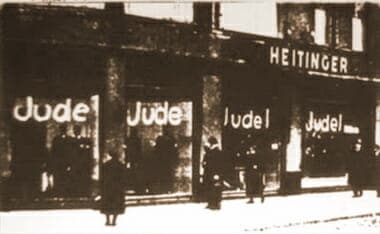
Hayek reminded us that socialist tyrannies can come through legal means in the democratic process just as easily as through abrupt totalitarianism. Adolf Hitler, for example, was elected to office, unlike Cambodia’s Pol Pot, who seized power. Thus, democracies aren’t necessarily a protection against utopian central planners taking away the liberties of individuals.
Quite often, democratically elected representatives can delegate authority to bureaucrats who have the authority to impose the draconian policies on an unwilling populace. Hayek wrote, “By giving the government unlimited powers, the most arbitrary rule can be made legal; and in this way a democracy may set up the most complete despotism imaginable.”
Hayek isn’t the only philosopher or economist to warn about the dangers of tyranny being imposed through the democratic process. Alexis de Tocqueville, the famous French philosopher who visited the United States in the mid-1800s to study the democratic system and culture, warned that democratic systems could become despotic.
In Democracy in America, in his classic chapter “What Sort of Despotism Democratic Nations Have to Fear” (volume 2), Tocqueville accurately predicted the rise of bureaucratic czars and webs of legislation that would stifle human freedom and productivity. It is as if he were writing prophetically about the Environmental Protection Agency, which has imposed so many irrational rules on industry that our nation is in danger of losing its ability to compete in many industries, such as energy.
Tocqueville compared the ancient tyrannies of the past and noted that Roman emperors had tremendous power over the lives of their subjects who were scattered throughout the world, but that the “details of social life and private occupations lay for the most part beyond his control.” However, Tocqueville warned:
It would seem that if despotism were to be established amongst the democratic nations of our days, it might assume a different character; it would be more extensive and more mild; it would degrade men without tormenting them. I do not question, that in an age of instruction and equality like our own, sovereigns might more easily succeed in collecting all political power into their own hands, and might interfere more habitually and decidedly within the circle of private interests, than any sovereign of antiquity could ever do. But this same principle of equality which facilitates despotism, tempers its rigour.
He continued: “I think then that the species of oppression by which democratic nations are menaced is unlike anything which ever before existed in the world: our contemporaries will find no prototype of it in their memories. I am trying myself to choose an expression which will accurately convey the whole of the idea I have formed of it, but in vain; the old words ‘despotism’ and ‘tyranny’ are inappropriate: the thing itself is new; and since I cannot name it, I must attempt to define it.”
According to Tocqueville, this kind of democratic oppression is
absolute, minute, regular, provident, and mild. It would be like the authority of a parent, if, like that authority, its object was to prepare men for manhood; but it seeks on the contrary to keep them in perpetual childhood: it is well content that the people should rejoice, provided they think of nothing but rejoicing. For their happiness such a government willingly labors, but it chooses to be the sole agent and the only arbiter of that happiness: it provides for their security, foresees and supplies their necessities, facilitates their pleasures, manages their principal concerns, directs their industry, regulates the descent of property, and subdivides their inheritances—what remains, but to spare them all the care of thinking and all the trouble of living? Thus it every day renders the exercise of the free agency of man less useful and less frequent; it circumscribes the will within a narrower range, and gradually robs a man of all the uses of himself.
America’s schoolchildren today are educated under policies of “no tolerance” that demand they become automatons. Showing various emotions, such as anger or love, can lead to expulsion from school, or worse. Children have been arrested for pointing a finger and saying, “Bang!” and suspended from classes for sharing a hug in the hallways. Currently, some high school students, thanks to legislation promoted by First Lady Michelle Obama, are not allowed to eat more than 750 calories for lunch, even boys on the football team, who require upwards of 3,000 calories a day. This is exactly the type of democratic oppression that both Tocqueville and Hayek discussed, and it continues to spread in Western nations.
Tocqueville described what happens to citizens when they’re slowly enslaved by an all-powerful central government:
It [the statist] covers the surface of society with a network of small complicated rules, minute and uniform, through which the most original minds and the most energetic characters cannot penetrate, to rise above the crowd. The will of man is not shattered, but softened, bent, and guided: men are seldom forced by it to act, but they are constantly restrained from acting: such a power does not destroy, but it prevents existence; it does not tyrannize, but it compresses, enervates, extinguishes, and stupefies a people, till each nation is reduced to be nothing better than a flock of timid and industrious animals, of which the government is the shepherd.
I have always thought that servitude of the regular, quiet, and gentle kind which I have just described, might be combined more easily than is commonly believed with some of the outward forms of freedom; and that it might even establish itself under the wing of the sovereignty of the people.
Like a frog placed in cold water, and then the temperature is increased slowly until the frog is cooked, the populace do not notice the melting away of individual liberty. For instance, the American people were placed in the cold water of a “small” income tax imposed by President Woodrow Wilson that has become today almost total control of the economy by the central government. Hayek and Tocqueville both described accurately the destruction of individual liberty, not only through absolute dictatorships, but by democratic totalitarianism as well.
THE END OF TRUTH
Hayek devoted a full chapter in The Road to Serfdom to the function of propaganda in a socialist welfare state. He pointed out that in such a totalitarian system, it isn’t enough just to force everyone to work for the end desired; they must also be convinced that those ends are actually theirs and that they are obtainable. Thus, the propagandist must be able to brainwash the populace into believing that the central planners are benevolent and that their goals are actually those of the people.
As Hayek observed, “The skilful propagandist then has power to mold their minds in any direction he chooses, and even the most intelligent and independent people cannot entirely escape that influence if they are long isolated from all other sources of information.”
According to Hayek, the moral consequence of totalitarian propaganda is that it undermines the sense of and respect for the truth. In fact, the totalitarian propagandist isn’t concerned with the truth. He only wants to convince the populace that the rulers are acting in the best interest of the enslaved citizens, to achieve their utopian dreams. Lying becomes the standard of utopian governments.
FREDERIC BASTIAT’S WARNINGS AGAINST SOCIALIST UTOPIANISM
French economist and politician Frederic Bastiat’s writings aren’t well known in the United States these days, but they certainly should be. Bastiat was the deputy to the Legislative Assembly in France during the mid-1800s, when that nation was rapidly turning into a socialist state.
Alarmed by the trend, Bastiat spent his time and energies debunking all of the excuses that were used to impose statism on the French people. His classic, The Law, was published in 1850 and followed some of the similar lines of logic as did Hayek’s later work. It was his desire to convince his fellow Frenchmen that socialism would inevitably lead to slavery and Communism. Regrettably, his warnings were mostly ignored, but his prophetic writings against socialism are very timely, as our own nation’s leaders play with totalitarian ideas about how to turn us into dependent serfs.
Bastiat began The Law by clearly asserting that God gave us life, including physical, intellectual, and moral life. In addition, God gave each person the ability to use resources to create value and to own property. He further asserted, “Each of us has a natural right—from God—to defend his person, his liberty, and his property. These are the three basic requirements of life, and the preservation of any one of them is completely dependent upon the preservation of the other two. For what are our faculties but the extension of our individuality? And what is property but an extension of our faculties?”
He defined law as the “organization of the natural right of lawful defense. It is the substitution of a common force for individual forces. And this common force is to do only what the individual forces have a natural and lawful right to do: to protect persons, liberties, and properties; to maintain the right of each, and to cause justice to reign over us all.”
But what happens when the state uses the law to destroy freedom? It is engaging in what Bastiat rightly called “lawful plunder.”
When a state legalizes plunder, wrote Bastiat, one of the first effects is to erase “from everyone’s conscience the distinction between justice and injustice. No society can exist unless the laws are respected to a certain degree. The safest way to make laws respected is to make them respectable. When law and morality contradict each other, the citizen has the cruel alternative of either losing his moral sense or losing his respect for the law.”
When legalized plunder becomes commonplace in a socialist government, noted Bastiat, every group in society will want to get their share of it. Everyone will begin plundering from everyone else: “Under the pretense of organization, regulation, protection, or encouragement, the law takes property from one person and gives it to another; the law takes the wealth of all and gives it to a few, whether farmers, manufacturers, ship owners, artists, or comedians. Under these circumstances, then certainly every class will aspire to grasp the law, and logically so.”
Bastiat clearly shows us how we can determine if a law is actually legalized plunder. His definition perfectly fits much of the transfer of wealth that occurs in Western nations today, including in the United States.
See if the law takes from some persons what belongs to them, and gives it to other persons to whom it does not belong. See if the law benefits one citizen at the expense of another by doing what the citizen himself cannot do without committing a crime.
Then abolish this law without delay, for it is not only an evil itself, but also it is a fertile source for further evils because it invites reprisals. If such a law—which may be an isolated case—is not abolished immediately, it will spread, multiply, and develop into a system.
Sadly, when Woodrow Wilson introduced the income tax, the people had the opportunity to stop just such an evil, but out of the promise that it would benefit the many at the expense of the few rich of the time, a constitutional amendment was approved to allow the theft of the income of those who produce value through labor or investment. The result is massive government today, which takes from virtually everyone’s earnings to some degree.
Bastiat continued: “Socialists desire to practice legal plunder, not illegal plunder. Socialists, like all other monopolists, desire to make the law their own weapon. And when once the law is on the side of socialism, how can it be used against socialism? For when plunder is abetted by the law, it does not fear your courts, your gendarmes, and your prisons. Rather, it may call upon them for help.”
Augustine of Hippo made a similar statement regarding government plundering in the fifth century:
Justice being taken away, then, what are kingdoms but great robberies? For what are robberies themselves, but little kingdoms? The band itself is made up of men; it is ruled by the authority of a prince, it is knit together by the pact of the confederacy; the booty is divided by the law agreed on. If, by the admittance of abandoned men, this evil increases to such a degree that it holds places, fixes abodes, takes possession of cities, and subdues peoples, it assumes the more plainly the name of a kingdom, because the reality is now manifestly conferred on it, not by the removal of covetousness, but by the addition of impunity.
Following a road to serfdom as described by Hayek inevitably leads to what might be called a benign authoritarian system, where everyone is brainwashed into docile obedience, or to a brutal dictatorship that includes a police state, a reign of terror, and gulags to keep the populace under control. Authors George Orwell and Aldous Huxley have described these two kinds of societies, but the result is the same in both: freedom of the individual is destroyed and the state rules from cradle to the grave.