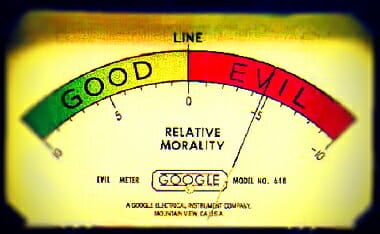
The reason for bringing two older posts (2022 and 2021) together and combining them with this Forbesarticle about Trump’s promise is simple… the Republican base wants less government interference – that is me, the GOP base. The Democrat base wants increased government interference in our daily lives.
Why this “adding of the FORBES article” as a preface of these other posts?
I was asked on the way out of a gathering by a family friend over this past weekend “why I [she] should vote for Trump?” I believe the question COULD HAVE BEEN asked for varying reasons, and as I write a couple of them, keep in mind the opposite could be true:
She is a diehard Democrat who is honestly is trying to understand the opposing view of almost half of the voting public. (Alternatively, she thinks that there is no foundation or good reason to vote for Trump and is trying to show the superiority of being “anti-racist” [in modern parlance] or progressive to the point that her vision of caring for the downtrodden is a way to “show up” [so-to-speak] the other side by being on the side of angels.);
She is a life-long Democrat who sees the attacks on things such as free-speech and gender and is dismayed on how quickly the political culture of her party has changed and is struggling with where her vote should land. (Alternatively, she supports these agendas, whether in good faith or not [based on false agendas and political propaganda] and is dismayed by the Republican Party — which is defined with these ideas in mind:
“You know, to just be grossly generalistic, you could put half of Trump’s supporters into what I call the basket of deplorables. Right? The racist, sexist, homophobic, xenophobic, Islamophobic—you name it. And unfortunately, there are people like that. And he [Trump] has lifted them up.”
Etc, etc.
I think, as human beings – me included – are as complicated as the day is long and we battle many influences and experiences and habits… it would be in some measure a combination of all of the above and much more. I carry many prejudices and experiences that I try to temper with faith, accountability, and checking myself through reading and discussion [putting my viewpoint out in the public to be peer reviewed – sorta].
The largest difference I can point out between her political and economic viewpoint vs. my demographic of religiously conservatarianism is that she thinks mankind and men/women in general are good people… and I believe they are corrupted and fallen in the real sense of original sin.
These two opposite views come out in different senses, say, economics by way of example. Keynsian Economics, the guiding principle founder of much of the Democrat Party’s direction of their economic planning:
John Maynard Keynes hailed the Soviet Union in a 1936 radio interview as,
“engaged in a vast administrative task of making a completely new set of social and economic institutions work smoothly and successfully.”
And in a preface he wrote to the 1936 German edition of his General Theory of Employment, Interest, and Money, Keynes stated that his economic theory,
“is much more easily adapted to the conditions of a totalitarian state” than to “conditions of free competition and a large measure of laissez-faire.” (this quote and the above is from James Bovard’s book Freedom in Chains: The Rise of the State and the Demise of the Citizen, pp. 14,20,21)
Another Keynes quote lets the individual in on the result of his theories, which most nations use (i.e., central banking; e.g., the Federal Reserve Bank):
“By a continuous process of inflation, governments can confiscate, secretly and unobserved, an important part of the wealth of their citizens. By this method, they not only confiscate, but they confiscate arbitrarily; and while the process impoverishes many, it actually enriches some . . .. The process engages all of the hidden forces of economic law on the side of destruction, and does it in a manner that not one man in a million can diagnose.” (Partially quoted from Money Mischief: Episodes in Monetary History, by Noble Prize holder in economics, Milton Friedman.)
This last quote is what happens with Keynesian economics! An unseen taxation of citizens, on top of normal taxation.
Versus
According to Adam Smith, it is when the businessman “intends only his own gain” that he contributes— via the process of competition— to promote the social good “more effectually than when he really intends to promote it.” Smith added: “I have never known much good done by those who affected to trade for the public good.”
Adam Smith, An Inquiry into the Nature and Causes of the Wealth of Nations (New York: Modern Library, 1937), p. 423; from, Thomas Sowell, A Conflict of Visions: Ideological Origins of Political Struggles (New York, NY: basic Books, 2007), 57.
I can imagine no man who will look with more horror on the End than a conscientious revolutionary who has, in a sense sincerely, been justifying cruelties and injustices inflicted on millions of his contemporaries by the benefits which he hopes to confer on future generations: generations who, as one terrible moment now reveals to him, were never going to exist. Then he will see the massacres, the faked trials, the deportations, to be all ineffaceably real, an essential part, his part, in the drama that has just ended: while the future Utopia had never been anything but a fantasy.
C.S. Lewis, The World’s Last Night, p. 131.
Of all tyrannies, a tyranny exercised for the good of its victims may be the most oppressive. It may be better to live under robber barons than under omnipotent moral busybodies. The robber baron’s cruelty may sometimes sleep, his cupidity may at some point be satiated; but those who torment us for our own good will torment us without end for they do so with the approval of their own conscience. They may be more likely to go to Heaven yet at the same time likelier to make a Hell of earth. Their very kindness stings with intolerable insult. To be ‘cured’ against one’s will and cured of states which we may not regard as disease is to be put on a level of those who have not yet reached the age of reason or those who never will; to be classed with infants, imbeciles, and domestic animals.
S. Lewis, God in the Dock, p. 292.
My own affections have been deeply wounded by some of the martyrs to this cause [the French Revolution], but rather than it should have failed, I would have seen half the earth desolated.
Thomas Jefferson, Letter of January 3, 1793, The Portable Thomas Jefferson, ed. Merrill D. Peterson (New York: Penguin Books, 1975), p. 465; from, Thomas Sowell, A Conflict of Visions: Ideological Origins of Political Struggles (New York, NY: basic Books, 2007), 29.
Simply put, one side thinks mankind can qualitatively guide by elitism our economy and lives, whereas the other side does not. “The larger the government the smaller the individual.”
So, with this unnecessarily long introduction, let us get into the FORBES article:
Bookending four years of its infamous one-in, two-out requirement for issuing significant new regulations, the Trump administration quietly just released its status roundup called “Regulatory Reform Results for Fiscal Year 2020.”
According to the administration, agencies in the 2020 fiscal year issued 145 deregulatory actions and 45 significant regulatory actions, for an out-to-in ratio of 3.2 to one.
Of those deregulatory actions, 58 were deemed “significant” by agencies and the administration. Comparing significant-in to significant-out still gives a ratio of 1.3 to one.
[….]
The overall ratio for the entire four-year stretch is 2.5 to one. And since rules considered non-significant may be used to offset significant rules added per E.O. 13,771, the ratios are actually better, as each year’s respective roundup at the White House shows.
We are not engaging here the debates over whether the cuts in regulations are genuinely highly significant or overblown. Employing different methodologies, the Council of Economic Advisers for its part estimated far more savings from a separate set of Trump-era reforms than the OMB’s year-end reports have claimed.
But nor does this survey address the warning signs of Trump’s own regulatory actions taken, sometimes of the sort that do not appear in White House Office of Management and Budget compilations. Examples include antitrust regulation, regulation of online content (or the pursuit of it), federal guidance on artificial intelligence, trade restrictions and more. These are capable of swamping regulatory savings.
Note also that E.O. 13771 did not apply to non-significant rules added (although in the year-end updates and in the new Unified Agenda editions, these “Regulatory” actions were also identified). Nor did the Trump order apply to rules mandated by Congress as opposed to ones driven by agency discretion; nor to rules from the so-called independent agencies like the Federal Communications Commission and the Consumer Financial Protection Bureau.
In any event, the leading edge of the one-in, two-out has been the claimed capping of spending rather than the ratio of cuts to additions. Criticisms notwithstanding, other presidents have not implemented a program as ambitious as Trump’s.
We know the generation of new regulations dropped significantly under Trump. But in terms of rollbacks, it would naturally become harder for an administration acting alone (with no help from Congress) to pick the “significant deregulatory action” fruit over time capable of generating rapid rule and cost rollbacks. Major rollbacks like those involving Clean Power Plan and Waters of the United States rules entail years of public consultation, writing, and legal challenges.
So, for the record and for posterity, Table 1 below presents the inventory of the significant regulatory actions eliminated by the Trump administration per E.O. 13,771, broken down by agency as derived from the administration’s fiscal year 2020 chart. Table 2 presents the significant regulations added….
So, was it as “successful” as Trump said or hoped it to be.
No.
Sounds like a politician or contractor to me – no surprise there.
Was it successful in shrinking control over the American business man/woman?
Yes….
which leads into why we should all want to shrink the role of government in our every-day lives:
TWO OLDER POSTS
Here are the two articles mentioned in the below audio by Armstrong and Getty (Hour 1 Thursday, and Hour 3 – same day):
America’s Welfare State Is on Borrowed Time — Biden has fully embraced the mad goal of giving 98% of the population lavish benefits at no cost. (WALL STREET JOURNAL | THE RED LINE [no pay wall])
Democrats Are Killing the American Dream — Joe Biden’s American Families Plan replaces individual striving with middle class entitlements. (WALL STREET JOURNAL | BLACK REPUBLICAN)
Since the start of the Covid crisis, the American economy has been turned on its head. Times are good for the big guys — Big Business and Big Government. But what about for the small business owner, the personification of the American dream? Carol Roth discusses Crony Corporatism/Capitalism and is the author of, “The War on Small Business: How the Government Used the Pandemic to Crush the Backbone of America“
Jump to Bradley Monton’s Isaac Newton and the methodological method.
... LAWS!
Newton is a leading contributor to the scientific worldview, and yet he does not bind himself by the assumption of uninterruptible natural law ~ Bradley Monton
The divine art of miracle is not an art of suspending the pattern to which events conform but of feeding new events into that pattern ~ CS Lewis
Meredith’s whole argument about ID, miracles, and the so-called “breaking” of natural laws is nothing but a red herring. Again, the real issue is about the nature of causation not about natural law ~ Michael Flannery
In the most recent issue of FIRST THINGS (February 2014), Stephen Meredith attempted to critique Intelligent Design theory, by, essentially creating straw-men arguments or by debating issues others have dealt with well.
Later in this “short” review of topics that caught my critical eye, we will see the similar vein John Derbyshire takes in the January/February (2014) issue of The American Spectator in comparing ID to Islam.
AT LEAST American Spectator had the foresight to have an alternative view side-by-side, so you get to see what an erudite, idea filled presentation looks like (Stephen Meyer’s)…
— a portion of which I will publish at the bottom from a magazine I recommend highly —
…alongside another filled with fallacious arguments, non-sequiturs, and a lack of intelligence in laying out a positive case (John Derbyshire).
First, however, my mind went immediately to David Hume and CS Lewis after reading the following from Stephen Meredith in the First Things article:
If God is omnipotent—that is, can do all that is possible without self-contradiction—what is the relationship between God and causality? Is there any causality outside an omnipotent God? Or is anything in nature that seems to act as an efficient cause only carrying out the causality of God, with no agency of its own? These questions get to the heart of a philosophical problem posed by Intelligent Design: It supposes that natural law, which is the basis for science, operates most of the time but is periodically suspended, as in the Cambrian “explosion” and the origin of life itself.
As well as reading John Derbyshire in the American Spectator article:
…IT IS THE religious aspect that causes most scientists to shy away from ID. Not that scientists all hate God. Many of them are devout.…
…The metaphysics of ID is occasionalist. It holds, to abbreviate the doctrine rather drastically, that causation is an illusion; that everything happens because God makes it happen.
Why does ice float on water? Aristotle thought it was a matter of shape (see On the Heavens, IV.6). Science says it’s because ice is less dense than water. The occasionalist says it’s because God wills it so….
…But: Ice floats on water because God wills it so? Oh.
This straw-man built up by Mr. Derbyshire seems likewise heavily influenced by Hume, who said in his well known essay entitled, An Enquiry Concerning Human Understanding, the following:
“A miracle is a violation of the laws of nature; and as a firm and unalterable experience has established these laws, the proof against a miracle, from the very nature of the fact, is as entire as any argument from experience as can be imagined … It is no miracle that a man, seemingly in good health, should die on a sudden: because such a kind of death, though more unusual than any other, has yet been frequently observed to happen. But it is a miracle that a dead man should come to life; because that has never been observed, in any age or country. There must, therefore, be a uniform experience against every miraculous event, otherwise the event would not merit that appellation.”
(David Hume: The Essential Philosophical Works, eBook, [2012], pages 662 and 663)
1. Miracles are violations of the laws of nature 2. These laws have been established by ‘firm and unalterable’ experience 3. Therefore, the argument against miracle is as good as any argument from experience can be
B. Argument from the uniformity of experience:
1. Unusual, yet frequently observed, events are not miracles – like a healthy person suddenly dropping dead 2. A resurrection would be a miracle because it has never been observed anywhere at any time 3. There is uniform experience against every miraculous event, otherwise it would not be called miraculous
Dr. Lennoxcontinues:
Are miracles ‘violations of the laws of nature’
Argument 1. Hume says that accounts of miracles ‘are observed chiefly to abound among ignorant and barbarous nations’ (op.cit. p.79).
Fallacy. In order to recognize some event as a miracle, there must be some perceived regularity to which that event is an apparent exception! You cannot recognize something which is abnormal, if you do not know what is normal. Example: 1) virgin conception of Jesus; 2) conception of John the Baptist.
Argument 2. Now that we know the laws of nature, belief in miracles is impossible.
Fallacy. The danger of confusionbetween legal and scientific use of word law. Why it is inaccurate and misleading to say that miracles ‘violate’ the laws of nature. It is rather, that God feeds new events into the system from time to time. There is no alteration to or suspension of the laws themselves.
‘If God annihilates or creates or deflects a unit of matter, He has created a new situation at that point. Immediately all nature domiciles this new situation, makes it at home in her realm, adapts all other events to it. It finds itself conforming to all the laws. If God creates a miraculous spermatozoon in the body of a virgin, it does not proceed to break any laws. The laws at once take over. Nature is ready. Pregnancy follows, according to all the normal laws, and nine months later a child is born’ (C.S Lewis, Miracles. p.63).
Continuing with CS Lewis and his relating to us this “red herring” of naturalism in rejecting the miraculous/metaphysical aspects of reality:
The first Red Herring is this. Any day you may hear a man (and not necessarily a disbeliever in God) say of some alleged miracle, “No. Of course I don’t believe that. We know it is contrary to the laws of Nature. People could believe it in olden times because they didn’t know the laws of Nature. We know now that it is a scientific impossibility.”
By the “laws of Nature” such a man means, I think, the observed course of Nature. If he means anything more than that he is not the plain man I take him for but a philosophic Naturalist and will be dealt with in the next chapter. The man I have in view believes that mere experience (and specially those artificially contrived experiences which we call Experiments) can tell us what regularly happens in Nature. And he finks that what we have discovered excludes the possibility of Miracle. This is a confusion of mind.
Granted that miracles can occur, it is, of course, for experience to say whether one has done so on any given occasion. But mere experience, even if prolonged for a million years, cannot tell us whether the thing is possible. Experiment finds out what regularly happens in Nature: the norm or rule to which she works. Those who believe in miracles are not denying that there is such a norm or rule: they are only saying that it can be suspended. A miracle is by definition an exception.
[….]
The idea that the progress of science has somehow altered this question is closely bound up with the idea that people “in olden times” believed in them “because they didn’t know the laws of Nature.” Thus you will hear people say, “The early Christians believed that Christ was the son of a virgin, but we know that this is a scientific impossibility.” Such people seem to have an idea that belief in miracles arose at a period when men were so ignorant of the cause of nature that they did not perceive a miracle to be contrary to it. A moment’s thought shows this to be nonsense: and the story of the Virgin Birth is a particularly striking example. When St. Joseph discovered that his fiancee was going to have a baby, he not unnaturally decided to repudiate her. Why? Because he knew just as well as any modern gynaecologist that in the ordinary course of nature women do not have babies unless they have lain with men. No doubt the modern gynaecologist knows several things about birth and begetting which St. Joseph did not know. But those things do not concern the main point—that a virgin birth is contrary to the course of nature. And St. Joseph obviously knew that. In any sense in which it is true to say now, “The thing is scientifically impossible,” he would have said the same: the thing always was, and was always known to be, impossible unless the regular processes of nature were, in this particular case, being over-ruled or supplemented by something from beyond nature. When St. Joseph finally accepted the view that his fiancee’s pregnancy was due not to unchastity but to a miracle, he accepted the miracle as something contrary to the known order of nature. All records
[….]
It is therefore inaccurate to define a miracle as something that breaks the laws of Nature. It doesn’t. If I knock out my pipe I alter the position of a great many atoms: in the long run, and to an infinitesimal degree, of all the atoms there are. Nature digests or assimilates this event with perfect ease and harmonises it in a twinkling with all other events. It is one more bit of raw material for the laws to apply to, and they apply. I have simply thrown one event into the general cataract of events and it finds itself at home there and conforms to all other events. If God annihilates or creates or deflects a unit of matter He has created a new situation at that point. Immediately all Nature domiciles this new situation, makes it at home in her realm, adapts all other events to it. It finds itself conforming to all the laws. If God creates a miraculous spermatozoon in the body of a virgin, it does not proceed to break any laws. The laws at once take it over. Nature is ready. Pregnancy follows, according to all the normal laws, and nine months later a child is born. We see every day that physical nature is not in the least incommoded by the daily inrush of events from biological nature or from psychological nature. If events ever come from beyond Nature altogether, she will be no more incommoded by them. Be sure she will rush to the point where she is invaded, as the defensive forces rush to a cut in our finger, and there hasten to accommodate the newcomer. The moment it enters her realm it obeys all her laws. Miraculous wine will intoxicate, miraculous conception will lead to pregnancy, inspired books will suffer all the ordinary processes of textual corruption, miraculous bread will be digested. The divine art of miracle is not an art of suspending the pattern to which events conform but of feeding new events into that pattern.
[….]
A miracle is emphatically not an event without cause or without results. Its cause is the activity of God: its results follow according to Natural law. In the forward direction (i.e. during the time which follows its occurrence) it is interlocked with all Nature just like any other event. Its peculiarity is that it is not in that way interlocked backwards, interlocked with the previous history of Nature. And this is just what some people find intolerable. The reason they find it intolerable is that they start by taking Nature to be the whole of reality. And they are sure that all reality must be interrelated and consistent. I agree with them. But I think they have mistaken a partial system within reality, namely Nature, for the whole.
CS Lewis, Miracles (New York, NY: Touchstone Publishers, 1996), 62-63, 64-65, 80-81, 81-82.
1) a faulty view of ID’s relationship to nature, miracles, and the supernatural;
2) no clear definition of what ID really is; and
3) an erroneous view of much of the history related to ID, evolution, and theology.
In company with John Derbyshire, Meredith, insists that ID proponents are “occasionalists,” holding to a particular theological understanding of causation. As occasionalists they do “not credit natural or physical law with enough causal power to enact evolution on its own.” Instead they “educe supernatural causes to do most of the heavy lifting in worldly events.” This is a fundamental misunderstanding. ID does not require the “breaking” of natural law or the notion that a natural law would have done X but instead Y happened. As William A. Dembski has pointed out, ID doesn’t need this “counterfactual substitution.” People act, for example, as intelligent agents not by “breaking” or “suspending” natural laws but by arranging or front-loading laws to suite particular ends (The Design Revolution, pp. 181-182). Meredith seems to argue that ID is incongruous with modern science because it invokes miracles and yields to supernatural causes. Here Meredith is making an old mistake, called out again by Dembski: “The contrast between natural law and supernatural causes is the wrong contrast. The proper contrast is between undirected natural causes on the one hand and intelligent causes on the other” (p. 189).
Furthermore, Meredith’s concern regarding miracles contravening natural laws seems to suggest a position of tension between the miraculous and science itself. However, this is not a scientific position. It is a philosophical one suggestive of methodological naturalism. “Scientists, as scientists,” Norman Geisler explains, “need not be so narrow as to believe that nothing can ever count as a miracle. All a scientist needs to hold is the premise that every event has a cause and that the observable universe operates in an orderly way” (Baker Encyclopedia of Christian Apologetics, p. 467). Meredith’s whole argument about ID, miracles, and the so-called “breaking” of natural laws is nothing but a red herring. Again, the real issue is about the nature of causation not about natural law…
Even atheist philosophers refute the idea that to incorporate a theistic view into nature is NOT anti-science, and works within the scientific paradigm:
FOLLOWING SUPERNATURALISM MAKES THE SCIENTIST’S TASK TOO EASY
Here’s the first of Pennock’s arguments against methodological naturalism that I’ll consider:
allowing appeal to supernatural powers in science would make the scientist’s task too easy, because one would always be able to call upon the gods for quick theoretical assistance…. Indeed, all empirical investigation beyond the purely descriptive could cease, for scientists would have a ready-made answer for everything.
This argument strikes me as unfair. Consider a particular empirical phenomenon, like a chemical reaction, and imagine that scientists are trying to figure out why the reaction happened. Pennock would say that scientists who allow appeal to supernatural powers would have a ready-made answer: God did it. While it may be that that’s the only true explanation that can be given, a good scientist-including a good theistic scientist—would wonder whether there’s more to be said. Even if God were ultimately the cause of the reaction, one would still wonder if the proximate cause is a result of the chemicals that went into the reaction, and a good scientist—even a good theistic scientist—would investigate whether such a naturalistic account could be given.
To drive the point home, an analogy might be helpful. With the advent of quantum mechanics, scientists have become comfortable with indeterministic events. For example, when asked why a particular radioactive atom decayed at the exact time that it did, most physicists would say that there’s no reason it decayed at that particular time; it was just an indeterministic event!’ One could imagine an opponent of indeterminism giving an argument that’s analogous to Pennock’s:
allowing appeal to indeterministic processes in science would make the scientist’s task too easy, because one would always be able to call upon chance for quick theoretical assistance…. Indeed, all empirical investigation beyond the purely descriptive could cease, for scientists would have a ready-made answer for everything.
It is certainly possible that, for every event that happens, scientists could simply say “that’s the result of an indeterministic chancy process; there’s no further explanation for why the event happened that way.” But this would clearly be doing bad science: just because the option of appealing to indeterminism is there, it doesn’t follow that the option should always be used. The same holds for the option of appealing to supernatural powers.
As further evidence against Pennock, it’s worth pointing out that prominent scientists in the past have appealed to supernatural powers, without using them as a ready-made answer for everything. Newton is a good example of this—he is a devout theist, in addition to being a great scientist, and he thinks that God sometimes intervenes in the world. Pennock falsely implies that this is not the case:
God may have underwritten the active principles that govern the world described in [Newton’s] Principia and the Opticks, but He did not interrupt any of the equations or regularities therein. Johnson and other creationists who want to dismiss methodological naturalism would do well to consult Newton’s own rules of reasoning….
But in fact, Newton does not endorse methodological naturalism. In his Opticks, Newton claims that God sometimes intervenes in the world. Specifically, Newton thinks that, according to his laws of motion, the orbits of planets in our solar system are not stable over long periods of time, and his solution to this problem is to postulate that God occasionally adjusts the motions of the planets so as to ensure the continued stability of their orbits. Here’s a relevant passage from Newton. (It’s not completely obvious that Newton is saying that God will intervene but my interpretation is the standard one.)
God in the Beginning form’d Matter in solid, massy, hard, impenetrable, moveable Particles … it became him who created them to set them in order. And if he did so, it’s unphilosophical to seek for any other Origin of the World, or to pretend that it might arise out of a Chaos by the mere Laws of Nature; though being once form’d, it may continue by those Laws for many Ages. For while Comets move in very excentrick Orbs in all manner of Positions, blind Fate could never make all the Planets move one and the same way in Orbs concentrick, some inconsiderable Irregularities excepted, which may have risen from the mutual Actions of Comets and Planets upon one another, and which will be apt to increase, till this System wants a Reformation…. [God is] able by his Will to move the Bodies within his boundless uniform Sensorium, and thereby to form and reform the Parts of the Universe….
A scientist who writes this way does not sound like a scientist who is following methodological naturalism.
It’s worth noting that some contemporaries of Newton took issue with his view of God occasionally intervening in the universe. For example, Leibniz writes:
Sir Isaac Newton and his followers also have a very odd opinion concerning the work of God. According to them, God Almighty needs to wind up his watch from time to time; otherwise it would cease to move. He had not, it seems, sufficient foresight to make it a perpetual motion.”
Note, though, that Leibniz also thought that God intervened in the world:
I hold that when God works miracles, he does not do it in order to supply the wants of nature, but those of grace.
Later investigation revealed that in fact planetary orbits are more stable than Newton thought, so Newton’s appeal to supernatural powers wasn’t needed. But the key point is that Newton is willing to appeal to supernatural powers, without using the appeal to supernatural powers as a ready-made answer for everything.
Pennock says that “Without the binding assumption of uninterruptible natural law there would be absolute chaos in the scientific worldview.” Newton’s own approach to physics provides a good counterexample to this—Newton is a leading contributor to the scientific worldview, and yet he does not bind himself by the assumption of uninterruptible natural law.
How one can go from the above rational positions by a Christian (CS Lewis), and an atheist (Bradley Monton), to comparing floating ice as an unnatural event held in situ by God’s continuous miraculous intervention. And then compare this straw-man to the Islamic understanding of extreme fideistic occasionalism?
The claim that there is a God raises metaphysical questions about the nature of reality and existence. In general, it can be said that there is not one concept of God but many, even among monotheistic traditions. The Abrahamic religions are theistic; God is both the creator of the world and the one who sustains it. Theism, with its equal stress on divine transcendence of the universe and immanence within it, constitutes a somewhat uneasy conceptual midpoint between deism and pantheism. Deist conceptions of the divine see God as the creator of a universe that continues to exist, without his intervention, under the physical impulses that he first imparted to it. In pantheism, God is identified with the universe as a whole. Theism itself has numerous subvarieties, such as occasionalism, which holds that the only real cause in the universe is God; thus, all other causes are simply signs of coincidence and conjunction between kinds of events occurring within the created order. For example, heat is not what causes the water in a teakettle to boil but is simply what uniformly occurs before the water boils. God himself is the cause of the boiling.
An important object of metaphysical reflection is God’s nature, or the properties of that nature. Is God simple or complex? If omniscience, omnipotence, and beauty are part of the divine perfection, what exactly are these properties? Is timeless eternity part of God’s perfection? Can an omnipotent being will that there be a four-sided triangle or change the past? Does an omniscient being know the future actions of free agents? (If so, how can they be free?) Does an omniscient being who is timelessly eternal know what time it is now?
Nor do Christians suspend belief or do not question their own understanding or nature’s causes for events, like Islam has, historically:
We humans have an inner balance with which we weigh good and evil. This balance, in Muslims stopped working. The indicator is stuck on zero. Muhammad’s companions could no longer register right and wrong. Because it’s hard to envision how a human being could be this ruthless, they persuaded themselves that he must be from God. As for why this god is so demonic, they fooled themselves with the lies that he told them. He told them that it is not up to man to question God. This absurd explanation satisfied his benighted followers. They resorted to fideism and argued that reason is irrelevant to religious belief. The great Imam Ghazali (1058 – 1111) said: “Where the claims of reason come into conflict with revelation, reason must yield to revelation.” A similar thesis in defense of foolishness is presented by Paul in 1 Cor. 1:20-25 where he argues “the foolishness of God is wiser than (the wisdom of) men”. The statement “Credo quia absurdum” (I believe because it is absurd), often attributed to Tertullian, is based on this passage of Paul. In DCC 5 he said: “The Son of God died; it is by all means to be believed, because it is absurd.” Upon this belief in absurdity fideism is founded and it is the position that has been adopted by Muslims. This fideistic attitude allowed the early believers to abandon reason and accept whatever Muhammad did, even his blatant crimes, without questioning him.
And when something “unnatural” is introduced into nature, this does not interfere one iota with science or the natural order of events, causality, or the like. As CS Lewis said many years ago, this is a Red Herring. Not to mention, that in reality, neo-Darwinian thinking IS A METAPHYSICAL PREMISE at its core. So often times it is the kettle calling the pot… well, you know.
IN a great presentation from True U. (Focus on the Family store | Discovery Institute), Dr. Stephen Meyer shows how — by using the supposition from Hinduism that the earth sits atop a turtle used by Stephen Hawking’s — the materialist position differs little from this religious supposition. This video is to replace an old, defunct, MRCTV video uploaded early 2014, but here today (11/4/2023). I added a William Provine clip from his 1994 debate with Phillip Johnson at Stanford. The entire debate can be see HERE.
“We must ask first whether the theory of evolution by natural selection is scientific or pseudoscientific …. Taking the first part of the theory, that evolution has occurred, it says that the history of life is a single process of species-splitting and progression. This process must be unique and unrepeatable, like the history of England. This part of the theory is therefore a historical theory, about unique events, and unique events are, by definition, not part of science, for they are unrepeatable and so not subject to test.”
Colin Patterson [1978] (Dr. Patterson was Senior Principal Scientific Officer of the Paleontology Department of the British Museum of Natural History in London.)
People think evolution is “science proper.” It is not, it is both a historical science and a [philosophical] presupposition in its “neo-Darwinian” form. The presupposition that removes it from “science proper and moves it into “scientism” is explained by an atheist philosopher:
If science really is permanently committed to methodological naturalism – the philosophical position that restricts all explanations in science to naturalistic explanations – it follows that the aim of science is not generating true theories. Instead, the aim of science would be something like: generating the best theories that can be formulated subject to the restriction that the theories are naturalistic. More and more evidence could come in suggesting that a supernatural being exists, but scientific theories wouldn’t be allowed to acknowledge that possibility.
In other words, the guy most credited in getting us to the moon used science to get us there, but was a young earth creationist. His view on “origins” (origin science) is separate from his working science. Two categories.
Likewise one of the most celebrated pediatric surgeons in the world, whom a movie was made after, “Gifted Hands,” is a young earth creationist. And the inventor of the MRI, a machine that diagnosed my M.S., is also a young earth creationist.
Evolutionary Darwinism is first and foremost an “historical science” that has many presuppositions that precede it, making it a metaphysical belief, a philosophy, as virulent anti-creationist philosopher of science, Michael Ruse explains:
Evolution is promoted by its practitioners as more than mere science. Evolution is promulgated as an ideology, a secular religion—a full-fledged alternative to Christianity, with meaning and morality. . . . Evolution is a religion. This was true of evolution in the beginning, and it is true of evolution still today.
Michael Ruse, “Saving Darwinism from the Darwinians,” National Post (May 13, 2000), p. B-3. (Via ICR)
….Nevertheless, there is a second, and arguably deeper, mystery associated with the Cambrian explosion: the mystery of how the neo-Darwinian mechanism of natural selection and random mutation could have given rise to all these fundamentally new forms of animal life, and done so quickly enough to account for the pattern in the fossil record. That question became acute in the second half of the twentieth century as biologists learned more about what it takes to build an animal.
In 1953 when Watson and Crick elucidated the structure of the DNA molecule, they made a startling discovery, namely, its ability to store information in the form of a four-character digital code. Strings of precisely sequenced chemicals called nucleotide bases store and transmit the assembly instructions—the information—for building the crucial protein molecules that the cell needs to survive. Just as English letters may convey a particular message depending on their arrangement, so too do certain sequences of chemical bases along the spine of a DNA molecule convey precise information. As Richard Dawkins has acknowledged, “the machine code of the genes is uncannily computer-like.” Or as Bill Gates has noted, “DNA is like a computer program, but far, far more advanced than any software ever created.”
The Cambrian period is marked by an explosion of new animals exemplifying new body plans. But building new animal body plans requires new organs, tissues, and cell types. And new cell types require many kinds of specialized or dedicated proteins (e.g., animals with gut cells require new digestive enzymes). But building each protein requires genetic information stored on the DNA molecule. Thus, building new animals with distinctive new body plans requires, at the very least, vast amounts of new genetic information. Whatever happened during the Cambrian not only represented an explosion of new biological form, but it also required an explosion of new biological information.
Is it plausible that the neo-Darwinian mechanism of natural selection acting on random mutations in DNA could produce the highly specificarrangements of bases in DNA necessary to generate the protein building blocks of new cell types and novel forms of life?
According to neo-Darwinian theory, new genetic information arises first as random mutations occur in the DNA of existing organisms. When mutations arise that confer a survival advantage, the resulting genetic changes are passed on to the next generation. As such changes accumulate, the features of a population change over time. Nevertheless, natural selection can only “select” what random mutations first generate. Thus the neo-Darwinian mechanism faces a kind of needle-in-the-haystack problem—or what mathematicians call a “combinatorial” problem. The term “combinatorial” refers to the number of possible ways that a set of objects can be arranged or combined. Many simple bike locks, for example, have four dials with 10 digits on each dial. A bike thief encountering one of these locks faces a combinatorial problem because there are 10 × 10 × 10 × 10, or 10,000 possible combinations and only one that will open the lock. A random search is unlikely to yield the correct combination unless the thief has plenty of time.
Similarly, it is extremely difficult to assemble a new information-bearing gene or protein by the natural selection/random mutation process because of the sheer number of possible sequences. As the length of the required gene or protein grows, the number of possible base or amino-acid sequences of that length grows exponentially.
Here’s an illustration that may help make the problem clear. Imagine that we encounter a committed bike thief who is willing to search the “sequence space” of possible bike combinations at a rate of about one new combination per two seconds. If our hypothetical bike thief had three hours and took no breaks he could generate more than half (about 5,400) of the 10,000 total combinations of a four-dial lock. In that case, the probability that he will stumble upon the right combination exceeds the probability that he will fail. More likely than not, he will open the lock by chance.
But now consider another case. If that thief with the same limited three hour time period available to him confronted a lock with ten dials and ten digits per dial (a lock with ten billion possible combinations) he would now have time only to explore a small fraction of the possible combinations—5,400 of ten billion—far fewer than half. In this case, it would be much more likely than not that he would fail to open the lock by chance.
These examples suggest that the ultimate probability of the success of a random search—and the plausibility of any hypothesis that affirms the success of such a search—depends upon both the size of the space that needs to be searched and the number of opportunities available to search it.
In Darwin’s Doubt, I show that the number of possible DNA and amino acid sequences that need to be searched by the evolutionary process dwarfs the time available for such a search—even taking into account evolutionary deep time. Molecular biologists have long understood that the size of the “sequence space” of possible nucleotide bases and amino acids (the number of possible combinations) is extremely large. Moreover, recent experiments in molecular biology and protein science have established that functional genes and proteins are extremely rare within these huge combinatorial spaces of possible arrangements. There are vastly more ways of arranging nucleotide bases that result in non-functional sequences of DNA, and vastly more ways of arranging amino acids that result in non-functional amino-acid chains, than there are corresponding functionalgenes or proteins. One recent experimentally derived estimate places that ratio—the size of the haystack in relation to the needle—at 1077non-functional sequences for every functional gene or protein. (There are only something like 1065 atoms in our galaxy.)
All this suggests that the mutation and selection mechanism would only have enough time in the entire multi-billion year history of life on Earth to generate or “search” but a miniscule fraction (one ten trillion, trillion trillionth, to be exact) of the total number of possible nucleotide base or amino-acid sequences corresponding to a single functional gene or protein. The number of trials available to the evolutionary process turns out to be incredibly small in relation to the number of possible sequences that need to be searched. Thus, the neo-Darwinian mechanism, with its reliance on random mutation, is much more likely to fail than to succeed in generating even a single new gene or protein in the known history of life on earth. In other words, the neo-Darwinian mechanism is not an adequate mechanism to generate the information necessary to produce even a single new protein, let alone a whole new Cambrian animal….
[….]
Of course, many scientists dismiss intelligent design as “religion masquerading as science.” But the case for intelligent design is not based upon religious or scriptural authority. Instead it is based upon scientific evidence and the same method of scientific reasoning that Darwin himself used in the Origin of Species.
In rejecting the theory as unscientific by definition, evolutionary biologists reveal a deep a priori commitment to methodological naturalism—the idea that scientists must limit themselves to materialistic explanations for all things. Yet, we know from experience that certain types of events and structures—in particular, information-rich structures—invariably arise from minds or personal agents. Indeed, no thinking person would insist that the inscriptions on the Rosetta stone, for example, were produced by strictly materialistic forces such as wind and erosion. Yet, by insisting that all events in the history of life must be explained by reference to strictly materialistic processes evolutionary biologists preclude consideration of a designing intelligence in the history of life, regardless of what the evidence might indicate.
This commitment to a wholly materialistic account of the origins of life also helps to explain the reluctance to criticize the Darwinian theory publicly. Many evolutionary biologists fear that if they do so they will aid and abet the case for intelligent design—a theory they disdain as inherently unscientific. Those of us who support the theory of intelligent design advocate a more open approach to scientific investigation. Not only do we think the public has a right to know about the problems with evolutionary theory, we also think that the rules of science should allow scientists to “follow the evidence wherever it leads”—even if it leads to conclusions that raise deep and unwelcome metaphysical questions.
Can you believe in God and science at the same time? Many claim that belief in religion is at odds with “the science” of today. But is that really true? In this five-part series, Stephen Meyer, Senior Fellow at the Discovery Institute, attempts to answer this existential question.
Series “Broken Out”
Are Religion and Science in Conflict? — Science and God | Does belief in God get in the way of science? The idea that science and religion are inevitably in conflict is a popular way of thinking today. But the history of science tells a different story.
How Did the Universe Begin? — Science and God | Was the universe always here, or did it have a beginning? If so, how did it start? Mankind has debated these questions for centuries and has only recently begun to find some answers. And those answers may point to some even more intriguing conclusions.
Aliens, the Multiverse, or God? — Science and God | Even staunch Darwinists have acknowledged that life in the universe displays an appearance of design, rather than being created out of random chance. If that’s true, where did that design come from? In other words, does a design require a designer?
What Is Intelligent Design? — Science and God | Chances are if you’ve heard anything about intelligent design, you’ve heard that it’s faith-based, not science-based. Is that true? Or does modern science, in fact, point us in the direction of a designing intelligence?
What’s Wrong with Atheism? — Science and God | Is there any meaning to life? Or is life nothing more than a cosmic accident? Scientific atheists claim the latter, but ironically, it’s science itself that suggests the former.
…“Monogamy seems to direct male motivations in ways that create lower crime rates, greater wealth (GDP) per capita and better outcomes for children,” Henrich concludes. But what’s more surprising than his conclusions is his speculation that monogamy is at the root of democracy and equality.”…. ~ Canadian scholar Joseph Henrich
In talking to a few people, I have noticed that they simply assume that polygamy is a valid lifestyle… that no harm, when compared to the ideal of one-man-and-one-woman in a marriage raising children. They do not know any history and why empires and countries have devolved in the past, nor do they follow logical arguments to their conclusions. (Here is the TinyURL for this post: http://tinyurl.com/k3o247o)
For instance, I had a conversation with a man I know (he is a man, but speaks on topics of importance as a boy) who simply stated, “I see no problem with it [being legalized], it doesn’t harm me personally.” He then asked what would “harm him.
A liberal society might, then, find it prudent to ignore homosexuality. It might well deem it unwise to peer into private bedrooms. However, this is not the issue before us. Today the demand is that homosexuality be endorsed and promoted with the full power of the law. This would require us to abandon the standard of nature, the one standard that can teach us the difference between freedom and slavery, between right and wrong…. (Read More)…. In Reynolds v. United States (1878) the Court rejected the Mormons’ free exercise argument on the grounds that even though “Congress was deprived of all legislative power over mere opinion,… [it] was left free to reach actions [such as polygamy] which were in violation of social duties or subversive to the public good.” What the Court meant by this is that certain institutions and ways of life, such as marriage and the family, are essential to the preservation of civil society. (Read More)
I made multiple points throughout the conversation that many things he does “harms him” that he would not think do. For instance, he knows people personally affected by legislating laws via a vote towards a specific party. He knows two people, personally, that he works with that because of Obamacare lost their policies. One can afford to pay substantially more for his new coverage (thus, having less capital to invest in the company), and the other cannot afford a new policy. The point being that any change in legislation (small or large) has direct consequences to many.
Let us say that single-motherhood brought on by the father walking out on his responsibility and is rewarded for this action by being subsidized for his choice (seeThomas Sowell’sclassic 1980 debate about the dynamics of welfare with Pennsylvania Secretary of Welfare, Helen O’Banion). Now, we KNOW the many consequences of fatherless homes (crime, delinquency, drug use, not finishing education, etc), even Obama admits this… higher tax rates and land taxes are incurred to pay for the jails, these persons also creating at a higher rate fatherless homes, and the like. Our co-worker in the shop had his biological father killed at an ATM… any bets on the murderers family structure? The statistics are on my side. So the question becomes this: “which of the two should government support in order to have a society that is best for the safety, well being, productivity, of its citizens?”
Another legislative act talked about in the shop after this conversation about polygamy took place, are politicians listening to environmental activists and legislating the regular light-bulb illegal. In January it will be officially against the law to sell most forms of the standard — incandescent — light-bulb (BREITBART). The idea is that if we use higher efficiency bulbs we will “save the planet” from thoseevil* fossil fuel emissions. (*I picture blood dripping from the word as well as evil laughter off in the distance somewhere.)
The problem? In every bulb that researchers tested they found that the protective coating around the light creating ‘phosphor’ was cracked, allowing dangerous ultraviolet rays to escape (RPT). You got it… through legislation, the power of government has made many people, in their own homes mind you, at a far greater risk for skin-cancer. A risk that this Irish-man knows all too well. What sounded good and altruistic, “saving the planet,” ironically has deadly consequences.
The question[s] coming from this event that made my home more dangerous is this: “Is a government big enough to tell me, the consumer, what light-bulb I can-and-cannot buy… is this good for liberty, or bad for liberty?”; “Is this a threat to or a bolstering of this experiment in freedom and self-governance the Founders started?”
“Of all tyrannies, a tyranny exercised for the good of its victims may be the most oppressive. It may be better to live under robber barons than under omnipotent moral busybodies. The robber baron’s cruelty may sometimes sleep, his cupidity may at some point be satiated; but those who torment us for our own good will torment us without end for they do so with the approval of their own conscience.” — CS Lewis
“The nine most terrifying words in the English language are, ‘I’m from the government and I’m here to help’.” — Ronald Reagan
I pointed out as well that society, while not outlawing same-sex relationships (see quote to the right), should not raise these relationships to the status of the ideal, that is, heterosexual, monogamous, marriages. Whether you believe in evolution or creation… the best environment for children to be raised is the hetero one[all things being equal]. This doesn’t mean there are not great single or gay parents… but there is an ideal that we know works… and was honed throughout mankind’s time on earth (naturally or Divinely inspired). We know. for instance, that polygamy increases “crime, prostitution and anti-social behavior. Greater inequality between men and women. Less parental investment in children. And, a general driving down of the age of marriage for all women” (Canadian study used in court, quoted more further below).
So the question becomes this: “which of the two should government support in order to have a society that is best for the safety, well being, productivity, of its citizens?” In other words, when society puts its stamp of approval on something, making other forms of “marriage” equal in worth to society as the hetero one, is that a net benefit to the health of society, or a net detraction from it?
I made a few points as found in my Cumalative Case against same-sex marriage which likewise apply to polygamy. In other words, we can see some detrimental aspects to relationships that are “less than” the ideal, and the results have different effects on society.
The conservative asks three questions the liberal, as we will see, does not ask:
1) compared to what? 2) at what cost? 3) what hard-evidence do you have?
I mentioned statistics of the jail population being from a less than ideal family structure, the jealousies in polygamous marriages and broken families. I asked as well if he (this person I know) knew about what philosophical/family structures the liberty he enjoys came from. After all this, I think he missed the point, because he told me, “this is MY belief… you can’t laugh [fault me] at my beliefs.” And the point is this:
A person may think polygamy (or other legislative rulings/laws) do not affect them, but when given evidence on how it can or does effect them AND the people involved — more negatively than the traditional family structure… you cannot then substitute your opinion in the place of facts. Society should support that structure that is best to raise children in, period. Same-sex “marriages,” single-motherhood/fatherhood, show devolution when compared to [everything being equal] the nuclear family structure.
Honesty is sometimes the best policy. One could say have said, “you know what, I never heard that before, let me think this over.” Or one can even say, “You are right… it does affect me, and it harms specifically the people involved… I don’t care.” So my friend should really have said this entering into to adults talking about a recent ruling in our United States:
“I see no problem with it [being legalized], it doesn’t harm me personally… and no matter what evidence you can show me of how the less than ideal family structure [traditional marriage] causes more incarceration, drug use, torn families, stresses on liberty, and the like… I am firm in ‘my opinion that opinion‘ trumps reality. MY reality IS fact. I do not wish to participate in possibly being wrong on a position [based only in my immediate understanding with no input from history, social scientists, statistics, or the like], or being mature enough to enter adulthood by taking in previously unknown evidence and testing it against my opinion, thus evolving or changing/challenging my previously held [actually — newly found] position based on evidence or differing points of conclusions based on others knowledge of history, social scientists, statistics, the cults, or the like.”
Or, put another way: “These are my unfounded, unassailable thoughts that I am sharing with you.” To engage in this type of conversation with a person who holds to this form of firm-absolutism is more a commentary on said person than the topic brought up in the shop.
...Politically Correct Emoting
Political correctness is the invention of Western intellectuals who feel guilty about the universal triumph of Western values and economic prosperity…. “In the long run of history, political correctness will be seen as an aberration in Western thought. The product of the uniquely unchallenged position of the West and unrivalled affluence, the comparative decline of the West compared to the East is likely to spell its demise. Finally, Western minds may be free again to reason rather than just emote, to pursue objective truth rather than subjective virtue.” — The Retreat of Reason, page 87
A person who practices this way of thinking is like a child telling the group of adults they like chocolate cake (or turtles). It is a form of emoting oneself to others. To which I would simply respond,
➯“thank-you for sharing [emote, act-out] your unassailable position with us, but please, in the future abstain from adult conversation.”
Alternatively, if you do wish to emote, be prepared to not be taken seriously, ignored… or even derided a bit.
What advice do I have? Cut down on video games and pick up a goddamn book! “…growing into a mature man with a stature measured by Christ’s fullness. Then we will no longer be little children, tossed by the waves and blown around by every wind of pop-culture and shallow thinking…” (Ephesians 4;14, PapaG’s version).
An adult would formulate Sowell’s questions something like this:
1) How do polygamous marriages compare to traditional marriages? 2) What are the costs incurred by such choices? Are there any harmful effects to the
a.) persons involved as well as to the b.) society and c.) societies founding principles that have given us the freedoms we currently enjoy?
Is there a loss of or a gain in freedom in this indigenous structure? Are young girls more or less protected from predators or exploitation or used to gain affluence? 3) I have come to a firm conclusion on a subject I just heard of, HOW have I come to my conclusion? Is this new to mankind, or have past cultures practiced this? What were their outcomes?
The above is just an example of where “Stage-Two“ thinking can get you.
This thinking ~ thank God! ~is the keystone to a healthy/well-balanced faith that is separate from but that interacts and can even change the culture it finds itself in (link in pic).
Lets see if we can shed some light on the history behind many freedoms assumed or freedoms not realized today, under-girded by the family structure via this “ethos” we speak of, Christianity:
Paul, who often gets a bad rap for his perceived low view of women, considered at least twelve women coworkers in his ministry.* Paul clearly had a high view of women: “There is neither Jew nor Greek, slave nor free, male nor female, for you are all one in Christ Jesus.” The earliest Christians recited these remarkable, countercultural words as a baptismal confession. Widows, far from being abandoned, were cared for, and older women were given a place of honor. In light of all of this, is it any wonder “the ancient sources and modern historians agree that primary conversion to Christianity was far more prevalent among females than males”?
In recent history, Christians were responsible for the banning of three despicable practices inflicted upon women around the world. Christian missionaries pressured the Chinese government to abolish foot binding in 1912. This practice was done for the sole reason of pleasing men— “it made a woman with her feet bound in an arch walk tiptoe and sway seductively.” In 1829 the English outlawed the Indian practice of suttee, in which widows were burned alive on the funeral pyres of their husbands, because of Christianity’s teaching regarding widows and women. Finally, Western countries influenced by a Christian view of women and sexuality have condemned clitoridectomy (female genital mutilation), a gruesome practice that is still common in Muslim countries in Africa and the Middle East.
AGAIN:
“But what’s more surprising than his conclusions is his speculation that monogamy is at the root of democracy and equality” — Canadian scholarJoseph Henrich
Historian Alvin Schmidt points out how the spread of Christianity and Christian influence on government was primarily responsible for outlawing infanticide, child abandonment, and abortion in the Roman Empire (in AD 374); outlawing the brutal battles-to-the-death in which thousands of gladiators had died (in 404); outlawing the cruel punishment of branding the faces of criminals (in 315); instituting prison reforms such as the segregating of male and female prisoners (by 361); stopping the practice of human sacrifice among the Irish, the Prussians, and the Lithuanians as well as among other nations; outlawing pedophilia; granting of property rights and other protections to women; banning polygamy (which is still practiced in some Muslim nations today); prohibiting the burning alive of widows in India (in 1829); outlawing the painful and crippling practice of binding young women’s feet in China (in 1912); persuading government officials to begin a system of public schools in Germany (in the sixteenth century); and advancing the idea of compulsory education of all children in a number of European countries.
During the history of the church, Christians have had a decisive influence in opposing and often abolishing slavery in the Roman Empire, in Ireland, and in most of Europe (though Schmidt frankly notes that a minority of “erring” Christian teachers have supported slavery in various centuries). In England, William Wilberforce, a devout Christian, led the successful effort to abolish the slave trade and then slavery itself throughout the British Empire by 1840.
In the United States, though there were vocal defenders of slavery among Christians in the South, they were vastly outnumbered by the many Christians who were ardent abolitionists, speaking, writing, and agitating constantly for the abolition of slavery in the United States. Schmidt notes that two-thirds of the American abolitionists in the mid-1830s were Christian clergymen, and he gives numerous examples of the strong Christian commitment of several of the most influential of the antislavery crusaders, including Elijah Lovejoy (the first abolitionist martyr), Lyman Beecher, Edward Beecher, Harriet Beecher Stowe (author of Uncle Tom’s Cabin), Charles Finney, Charles T. Torrey, Theodore Weld, William Lloyd Garrison, “and others too numerous to mention.” The American civil rights movement that resulted in the outlawing of racial segregation and discrimination was led by Martin Luther King Jr., a Christian pastor, and supported by many Christian churches and groups.
There was also strong influence from Christian ideas and influential Christians in the formulation of the Magna Carta in England (1215) and of the Declaration of Independence (1776) and the Constitution (1787) in the United States. These are three of the most significant documents in the history of governments on the earth, and all three show the marks of significant Christian influence in the foundational ideas of how governments should function.
Social commentator and radio show host, Dennis Prager, takes note that males tend to be “rule oriented.” The implication being that Western culture is heavily influenced in the Judeo-Christian standards of moral code — this, he says, is ironic… that, in the name of feminism women are attempting to emasculate the God of Western religious morality. “For if their goal is achieved, it is women who will suffer most from lawless males.”[1] This is seen in the history of pagan cultures and their tendency to crumble under the weight of licentiousness and the lowly place women had in it. Christianity raised women out of these “pagan cultures in which polygamy, arranged marriages, and oppression of women predominated, the church promoted the idea of monogamous marriage by free consent of both spouses.”[2]
…what [if any] are the negative affects of polygamy on society? Are there any secular, progressive, arguments against it? We will explore this a bit here as the main topic of this post. To wit, the later point is the first I wish to deal with right now… and it shows a lack of asking the above three questions any conservatively minded libertarian would. Take note that equality is the guiding force in this short — honest — look by a group of decidedly progressive persons:
That’s right. Trying to argue against something as arbitrary as a number (e.g., marriage is between two people) once you have argued against a clear delineation that nature has honed, such as gender… is useless. Gay Patriot eruditely explains that is one, then the other (take note the emphasized portion near the end):
Interestingly, the judge’s 91-page opinion cites a series of legal precedents that have gradually redefined marriage, and limited the ability of the state to define it. Almost as though there had been some kind of negative gradient, and the law had been gravitationally drawn to the lower end of the gradient as a result of the lack of adhesion on that gradient.
(Breitbart) In his 91-page opinion in Brown v. Buhman, on Dec. 13, U.S. District Judge Clark Waddoups struck down Utah’s law making polygamy a crime. In so doing, he may have opened Pandora’s Box.
As a condition for becoming a state in 1896, Congress required Utah to outlaw polygamy, which is marriage between three or more persons. This case involved a family of fundamentalist offshoots of nineteenth-century Mormonism. The Church of Jesus Christ of Latter-Day Saints disavowed polygamy in 1890, and again in 1904, but some splinter groups continue the practice.
Waddoups’ opinion would not only cover such groups, however, but also Muslims or anyone else who claims a right—religious or otherwise—to have multiple-person marriages. He notes that the Supreme Court ruled against polygamy in its 1878 case Reynolds v. U.S., but said he cannot simply rest upon that decision “without seriously addressing the much developed constitutional jurisprudence that now protects individuals from the criminal consequences intended by legislatures to apply to certain personal choices.” (read more)
Since marriage is no longer about creating a stable environment for children, and has become (and this mainly the fault of heterosexual liberals) about personal fulfillment, validation, and access to social benefits, there literally is no constraint on how much more broadly it can be redefined.
Take note that religious freedom IS enumerated specifically in the Constitution, whereas… marriage between same genders and multiple partners is not. Why mention this? Because in order to get “equality” as the progressive left sees it, religious positions will need to be expunged. In doing so, one ends without liberty, freedom, and the like.
The American Trinity:
“Socialism values equality more than liberty” ~ Prager
Here you find agreement between people who you would assume would be at odds with each-other, but share a love for both:
✂ tradition of [all] cultures (“tradition means giving a vote to most obscure of all classes, our ancestors. It is the democracy of the dead” ~ G.K. Chesterton) [even Grecian thinkers argued for heterosexual unions]; ✂ what made societies collapse in the past (our Founders were students of history); ✂ and what is the best ideal for our experiment in freedom.
This next great commentary comes from two people who you would never think would be in such agreement… a conservative evangelical apologist, and a libertarian gay-man. The commentary is about a different case, but is similar in many ways. Here is conservative apologist, Frank Turek, making a point about a similar case:
“…imagine a homosexual videographer being forced to video a speech that a conservative makes against homosexual behavior and same sex marriage. Should that homosexual videographer be forced to do so? Of course not! Then why Elane Photography?….”
Now, here is the libertarian, conservative, guy[s] I know who blogs — GayPatriot:
“…it’s a bad law, a law that violates natural human rights to freedom of association and to freely-chosen work. It is not good for gays; picture a gay photographer being required by law to serve the wedding of some social conservative whom he or she despises.”
Again, if “for ‘a’,” it must be applied to “b.” What comes from this ILLIBERAL EGALITARIANISM is a TOTALITARIAN view that all must think alike. But lets get to some of the harms this does to our society. Lets start with a well-known Canadian [gay] sociologist who is against raising same-sex marriage to that of equal status of heterosexual marriage. I am not here arguing against same-sex marriage, I do that elsewhere… but we are taking Paul Nathanson’s premise and applying it to polygamy:
One of the most respected Canadian sociologist/scholar/homosexual, Paul Nathanson, writes that there are at least five functions that marriage serves–things that every culture must do in order to survive and thrive. They are:
1. Foster the bonding between men and women 2. Foster the birth and rearing of children 3. Foster the bonding between men and children 4. Foster some form of healthy masculine identity 5. Foster the transformation of adolescents into sexually responsible adults
Note that Nathanson considers these points critical to the continued survival of any culture. He continues “Because heterosexuality is directly related to both reproduction and survival, … every human societ[y] has had to promote it actively . … Heterosexuality is always fostered by a cultural norm” that limits marriage to unions of men and women. He adds that people “are wrong in assuming that any society can do without it.”
Polygamy, likewise, breaks down this OH-SO-IMPORTANT aspect that is crucial to a healthy society.
Unmentioned Boys:
This is from the documentary “Banking on Heaven: Polygamy in Heartland of the American West,” and is a small portion that talks about the harm of polygamy to boys. We know of the harm to women and girls… but this aspect is often not realized. Boys who have no fathers because the men need less boys to get more wives.
We know about the damages to women in these polygamous families (see some resources below), but these family structures have consequences for men as well. This “trickle up” negative affect, then, brings us to this larger question involved in this “rubber stamp of approval” by society on “less than” the ideal:
➯ “is polygamy good or bad for the liberty, freedom [and the like], for the following generations?”
There are many resources showing the deleterious effects of polygamy on men and women. Two resources not pictured in my resources are Sons of Perdition(which is a digital download and follows the lives of three boys) and a movie(YouTube) from a ministry I highly recommend, Sacred Groves. What is pictured above are:
(For the above video) This is a combination of excerpts, both audio and video from the following sources:
NPR: Talk of the Nation | “’Sons Of Perdition,’ Exiles From Jeffs’ Church” (June 24, 2010)
LAW & CRIME | Sexy Darling: Polygamist Cult Leader Allegedly Had Phone Sex with Underage Wives in Jail (March 8, 2023)
LAW & CRIME | Polygamist Cult ‘Prophet’ Faces Kidnapping Charges for Towing Underage Girls in Trailer with Wives (February 1, 2023)
Here is a great interview with a woman who was in a polygamous community for many years, it is long, but to understand why something is or may be bad to society’s “net goals,” one needs to spend time reading, watching, reflecting, and the like (see more interviews of people personally impacted by polygamy and the cults, here):
In a recent dealing with this in our neighbor to the north, well known Canadian scholar Joseph Henrich pointed out the following facts about this “net benefit” in regards to the traditional understanding of hetero marriages involving one-man-and-one-woman:
POLYGAMY IS HARMFUL TO SOCIETY, SCHOLAR FINDS
…Increased crime, prostitution and anti-social behaviour. Greater inequality between men and women. Less parental investment in children. And, a general driving down of the age of marriage for all women.
These are some of the harms of polygamy (or more correctly, polygyny, since it is almost always men marrying more than once) that are outlined in a 45-page research paper by noted Canadian scholar Joseph Henrich, filed Friday in B.C. Supreme Court.
Henrich is uniquely qualified to look at polygamy’s harm. He’s a member of the departments of economics, psychology and anthropology at the University of British Columbia and holds the Canada Research Chair in Culture, Cognition and Coevolution.
But he’d never really thought about it until this year when Craig Jones approached him. Jones is the lead lawyer in the B.C. government’s constitutional reference case, which will be heard in November by B.C. Supreme Court Chief Justice Robert Bauman.
[….]
Another social harm that Henrich says is consistent regardless of whether researchers use data from 19th-century Mormon communities or contemporary African societies is that children from polygynous families have considerably lower survival rates. It seems polygynous men, rather than investing in their offspring, use their money to add wives.
“Monogamy seems to direct male motivations in ways that create lower crime rates, greater wealth (GDP) per capita and better outcomes for children,” Henrich concludes.
But what’s more surprising than his conclusions is his speculation that monogamy is at the root of democracy and equality.
He argues that as the idea of monogamy spread through Europe during the 15th century, king and peasant alike had the same rules and the idea of equality gained a foothold — at least among men.
With reduced competition for women, men began loosening their tight control over wives and daughters.
And with fewer unmarried men, the pool of soldiers that had previously been harnessed by warring rulers was reduced.
Even though this compelling argument goes far beyond the scope of the trial, it may make it even harder for polygamy’s advocates to convince the judge that its practice is benign.
When the above debate was happening in Canada, our radio talk-shows here in the states discussed the matter in-depth. Here is one such show from Michael Medved on the topic This is either from 2009 or 2011’ish:
I think the below is applicable to many things. Like masks, mandatory vaccines for colds. etc. But I can also see how the below will be used to counter life and the freedom the Founding Documents of this nation afford. This is to say I like the quote, but can see it being misused as well.
That is the reason for the post — just to counter what I can see others using it for.
So, how does this play out with the Left? [Or, strict Libertarians.] Below I will use some personal experience as well as some legal interpretation and thought experiments – with a dash of religious philosophy to get us started.
WORLDVIEWS IN THE MIX
Before we begin, many who know the site know that I speak with informed knowledge in my Judeo-Christian [theistic] worldview to those of other adopted worldviews [known or unknown] to change hearts and minds. Often people do not know what a worldview is or if they hold one, or that knowing of it even has purpose. Nor do they know that higher education just a couple generations ago thought it educations purpose to instill it. A quote I came across in seminary that I kept discusses this:
Alexander W. Astin dissected a longitudinal study conducted by UCLA started in 1966 for the Review of Higher Education [journal] in which 290,000 students were surveyed from about 500 colleges. The main question was asked of students why study or learn? “Seeking to develop ‘a meaningful philosophy of life’” [to develop a meaningful worldview] was ranked “essential” by the majority of entering freshmen. In 1996 however, 80% of the college students barely recognized the need for “a meaningful philosophy of life” and ranked “being very well off financially” [e.g., to not necessarily develop a meaningful worldview] as paramount. [1 & 2]
[1] Alexander W. Astin, “The changing American college student: thirty year trends, 1966-1996,” Review of Higher Education, 21 (2) 1998, 115-135.
[2] Some of what is here is adapted and with thanks to Dr. Stephen Whatley, Professor of Apologetics & Worldviews at Faith International University… as, they are in his notes from one of his classes.
I wish to highlight the “a meaningful philosophy of life.” This is known as a worldview, or, tools to dissect life and define reality. So the question becomes, what then is a worldview? Why do we need a coherent one?
WORLDVIEW:People have presuppositions, and they will live more consistently based on these presuppositions than even they themselves may realize. By “presuppositions” we mean the basic way an individual looks at life, his basic worldview, the grid through which he sees the world. Presuppositions rest upon that which a person considers to be the truth of what exists. People’s presuppositions lay a grid for all they bring forth into the external world. Their presuppositions also provide the basis for their values and therefore the basis for their decisions. “As a man thinketh, so he is,” is profound. An individual is not just the product of the forces around him. He has a mind, an inner world. Then, having thought, a person can bring forth actions into the external world and thus influence it. People are apt to look at the outer theater of action, forgetting the actor who “lives in the mind” and who therefore is the true actor in the external world. The inner thought world determines the outward action. Most people catch their presuppositions from their family and surrounding society the way a child catches measles. But people with more understanding realize that their presuppositions should be chosen after careful consideration of what worldview is true. When all is done, when all the alternatives have been explored, “not many men are in the room” — that is, although worldviews have many variations, there are not many basic worldviews or presuppositions.
— Francis A. Schaeffer, How Should We Then Live? The Rise and Decline of Western Thought and Culture (Wheaton: Crossway Books, 1976), 19-20.
So, even if one isn’t necessarily aware they have a worldview, they operate as if they do — borrowing from what they perceive as truths but are often a patchwork of interpretations that if questioned on, the self-refuting nature of these personally held beliefs are easy to dissect and show the person is living incoherently. The American Heritage Dictionary defines “worldview” this way:
1) The overall perspective from which one sees and interprets the world; 2) A collection of beliefs about life and the universe held by an individual or a group.”
What are these self-refuting aspects people find themselves moving in-between? What are the worldviews? Here are some listed, and really, that first list of seven is it. That is as broad as one can expand the worldview list:
theism
atheism
deism
finite godism
pantheism
panentheism
polytheism[1]
Others still reduce it further: Idealism, naturalism, and theism.[2] C.S Lewis dealt with religious worldviews much the same way, comparing: philosophical naturalism (atheism), pantheism, and theism.[3]
[1]Doug Powell, The Holman Quick Source Guide to Christian Apologetics (Nashville, TN: Holman Publishers, 2006); and Norman L. Geisler and William D. Watkins, Worlds Apart: A Handbook on World Views (Eugene, OR: Wipf and Stock Publishers);
[2] L. Russ Bush, A Handbook for Christian Philosophy (Grand Rapids, MI: Zondervan, 1991).
[3]Mere Christianity (New York, NY: Macmillan Inc, 1943).
Knowing what “rose-colored-glasses” you are wearing and if you are being internally coherent in your dissecting of reality is important because of the cacophony of what is being offered:
Faith Founded on Fact: Essays in Evidential Apologetics (Newburgh, IN: Trinity Press, 1978), 152-153.
Joseph R. Farinaccio, author of “Faith with Reason: Why Christianity is True,” starts out his excellent book pointing a way to this truth that a well-informed public should know some of:
This is a book about worldviews. Everybody has one, but most individuals never really pay much attention to their own personal philosophy of life. This is a tragedy because there is no state of awareness so fundamental to living life. — (Pennsville, NJ: BookSpecs Publishing, 2002), 10 (emphasis added).
“A worldview is a commitment, a fundamental orientation of the heart, that can be expressed as a story or in a set of presuppositions (assumptions which may be true, partially true or entirely false) which we hold (consciously or subconsciously, consistently or inconsistently) about the basic constitution of reality, and that provides the foundation on which we live and move and have our well being.” — James W. Sire, Naming the Elephant: Worldview as a Concept (Downers Grove, IL: IVP, 2004), 122 (emphasis added).
Is this part of the reason so many today, especially young people, do not have “well-being”?
I bet many reading this will have used the phrases or ideas below without realizing it was incoherent at best. I link to my chapter above, but here is an excerpt from it to better explain why a person’s worldview should be internally sound:
The law of non-contradiction is one of the most important laws of logical thought, in fact, one textbook author goes so far as to say that this law “is considered the foundation of logical reasoning.”[1] Another professor of philosophy at University College London says that “a theory in which this law fails…is an inconsistent theory.”[2] A great example of this inconsistency can be found in the wonderful book Philosophy for Dummies that fully expresses the crux of the point made throughout this work:
Statement: There is no such thing as absolute truth.[3]
By applying the law of non-contradiction to this statement, one will be able to tell if this statement is coherent enough to even consider thinking about. Are you ready? The first question should be, “is this an absolute statement?” Is the statement making an ultimate, absolute claim about the nature of truth? If so, it is actually asserting what it is trying to deny, and so is self-deleting – more simply, it is logically incoherent as a comprehensible position[4] as it is in violation of the law of non-contradiction. Some other examples are as follows, for clarity’s sake:
“All truth is relative!” (Is that a relative truth?); “There are no absolutes!” (Are you absolutely sure?); “It’s true for you but not for me!” (Is that statement true just for you or is it for everyone?)[5] In short, contrary beliefs are possible, but contrary truths are not possible.[6]
Many will try to reject logic in order to accept mutually contradictory beliefs; often times religious pluralism[7]is the topic with which many try to suppress these universal laws in separating religious claims that are mutually exclusive. Professor Roy Clouser puts into perspective persons that try to minimize differences by throwing logical rules to the wayside:
The program of rejecting logic in order to accept mutually contradictory beliefs is not, however, just a harmless, whimsical hope that somehow logically incompatible beliefs can both be true… it results in nothing less than the destruction of any and every concept we could possess. Even the concept of rejecting the law of non-contradiction depends on assuming and using that law, since without it the concept of rejecting it could neither be thought nor stated.[8]
Dr. Clouser then goes on to show how a position of psychologist Erich Fromm is “self-assumptively incoherent.”[9] What professor Clouser is saying is that this is not a game. Dr. Alister McGrath responds to the religious pluralism of theologian John Hick by showing just how self-defeating this position is:
The belief that all religions are ultimately expressions of the same transcendent reality is at best illusory and at worst oppressive – illusory because it lacks any substantiating basis and oppressive because it involves the systematic imposition of the agenda of those in positions of intellectual power on the religions and those who adhere to them. The illiberal imposition of this pluralistic metanarrative[10] on religions is ultimately a claim to mastery – both in the sense of having a Nietzschean authority and power to mold material according to one’s will, and in the sense of being able to relativize all the religions by having access to a privileged standpoint.[11]
As professor McGrath points out above, John Hick is applying an absolute religious claim while at the same time saying there are no absolute religious claims to religious reality. It is self-assumptively incoherent. Anthropologist William Sumner argues against the logical position when he says that “every attempt to win an outside standpoint from which to reduce the whole to an absolute philosophy of truth and right, based on an unalterable principle, is delusion.”[12] Authors Francis Beckwith and Gregory Koukl respond to this self-defeating claim by showing that Sumner is making a strong claim here about knowledge:
He says that all claims to know objective moral truth are false because we are all imprisoned in our own cultural and are incapable of seeing beyond the limits of our own biases. He concludes, therefore, that moral truth is relative to culture and that no objective standard exists. Sumner’s analysis falls victim to the same error committed by religious pluralists who see all religions as equally valid.[13]
The authors continue:
Sumner’s view, however, is self-refuting. In order for him to conclude that all moral claims are an illusion, he must first escape the illusion himself. He must have a full and accurate view of the entire picture…. Such a privileged view is precisely what Sumner denies. Objective assessments are illusions, he claims, but then he offers his own “objective” assessment. It is as if he were saying, “We’re all blind,” and then adds, “but I’ll tell you what the world really looks like.” This is clearly contradictory.[14]
Philosopher Roger Scruton drives this point home when he says, “A writer who says that there are no truths, or that all truth is ‘merely negative,’ is asking you not to believe him. So don’t.”[15]
[1]Manuel Velasquez, Philosophy: A Text with Readings (Belmont, CA: Wadsworth, 2001), p. 51.
[2] Ted Honderich, ed., The Oxford Companion to Philosophy (New York, NY: Oxford Univ Press, 1995), p. 625.
[3]Tom Morris, Philosophy for Dummies, 46.
[4]Ibid.
[5] Norman L. Geisler and Frank Turek, I Don’t Have Enough Faith to Be an Atheist (Wheaton, IL: Crossway Books, 2004), 40.
[6]Ibid., 38.
[7]Religious Pluralism – “the belief that every religion is true. Each religion provides a genuine encounter with the Ultimate.” Norman L. Geisler, Baker Encyclopedia of Apologetics (Grand Rapids, MI: Baker Books, 1999), 598.
[8]Roy A. Clouser, The Myth of Religious Neutrality: An Essay on the Hidden Role of Religious Belief in Theories (Notre Dame, IN: Notre Dame Press, 2005), 178 (emphasis added).
[9] A small snippet for clarity’s sake:
Fromm’s position is also an example of this same dogmatic selectivity. He presents his view as though there are reasons for rejecting the law of non-contradiction, and then argues that his view of the divine (he calls it “ultimate reality”) logically follows from that rejection. He ignores the fact that to make any logical inference — to see that one belief “logically follows from” another — means that the belief which is said to “follow” is required on pain of contradicting oneself. Having denied all basis for any inference, Fromm nevertheless proceeds to infer that reality itself must be an all-encompassing mystical unity which harmonizes all the contradictions which logical thought takes to be real. He then further infers that since human thought cannot help but be contradictory, ultimate reality cannot be known by thought. He gives a summary of the Hindu, Buddhist, and Taoist expressions of this same view, and again infers that accepting their view of the divine requires him to reject the biblical idea of God as a knowable, individual, personal Creator. He then offers still another logical inference when he insists that:
Opposition is a category of man’s mind, not itself an element of reality…. Inasmuch as God represents the ultimate reality, and inasmuch as the human mind perceives reality in contradictions, no positive statement can be made about God.
In this way Fromm ends by adding self-referential incoherency to the contradictions and self-assumptive incoherency already asserted by his theory. For he makes the positive statement about God that no positive statements about God are possible.
Ibid., 178-179. In this excellent work Dr. Clouser shows elsewhere the impact of logic on some major positions of thought:
As an example of the strong sense of this incoherency, take the claim sometimes made by Taoists that “Nothing can be said of the Tao.” Taken without qualification (which is not the way it is intended), this is self-referentially incoherent since to say “Nothing can be said of the Tao” is to say something of the Tao. Thus, when taken in reference to itself, the statement cancels its own truth. As an example of the weak version of self-referential incoherency, take the claim once made by Freud that every belief is a product of the believer’s unconscious emotional needs. If this claim were true, it would have to be true of itself since it is a belief of Freud’s. It therefore requires itself to be nothing more than the product of Freud’s unconscious emotional needs. This would not necessarily make the claim false, but it would mean that even if it were true neither Freud nor anyone else could ever know that it is. The most it would allow anyone to say is that he or she couldn’t help but believe it. The next criterion says that a theory must not be incompatible with any belief we have to assume for the theory to be true. I will call a theory that violates this rule “self-assumptively incoherent.” As an example of this incoherence, consider the claim made by some philosophers that all things are exclusively physical [atheistic-naturalism]. This has been explained by its advocates to mean that nothing has any property or is governed by any law that is not a physical property or a physical law. But the very sentence expressing this claim, the sentence “All things are exclusively physical,” must be assumed to possess a linguistic meaning. This is not a physical property, but unless the sentence had it, it would not be a sentence; it would be nothing but physical sounds or marks that would not) linguistically signify any meaning whatever and thus could not express any claim — just as a group of pebbles, or clouds, or leaves, fails to signify any meaning or express any claim. Moreover, to assert this exclusivist materialism is the same as claiming it is true, which is another nonphysical property; and the claim that it is true further assumes that its denial would have to be false, which is a relation guaranteed by logical, not physical, laws. (Indeed, any theory which denies the existence of logical laws is instantly and irredeemably self-assumptively incoherent since that very denial is proposed as true in a way that logically excludes its being false.) What this shows is that the claim “All things are exclusively physical” must itself be assumed to have nonphysical properties and be governed by nonphysical laws or it could neither be understood nor be true. Thus, no matter how clever the supporting arguments for this claim may seem, the claim itself is incompatible with assumptions that are required for it to be true. It is therefore self-assumptively incoherent in the strong sense.
Ibid., 84-85 (emphasis added).
[10]Metanarratives, or, Grand Narratives – “big stories, stories of mythic proportions – that claim to be able to account for, explain and subordinate all lesser, little, local, narratives.” Jim Powell, Postmodernism for Beginners (New York, NY: Writers and Readers, 1998), 29.
[11] Alister E. McGrath, Passion for Truth: the Intellectual Coherence of Evangelicalism (Downers Grove, IL: IVP, 1996), 239.
[12]William Graham Sumner, Folkways (Chicago, IL: Ginn and Company, 1906), in Francis Beckwith and Gregory Koukl, Relativism: Feet Planted firmly in Mid-Air (Grand Rapids, Michigan: Baker Books, 1998), 46-47.
[13]Francis Beckwith and Gregory Koukl, Relativism: Feet Planted Firmly in Mid-Air (Grand Rapids, Michigan: Baker Books, 1998), 47.
[14]Ibid., 48
[15]Modern Philosophy (New York, NY: Penguin, 1996), 6. Found in: John Blanchard, Does God Believe in Atheists? (Darlington, England: Evangelical Press, 2000), 172.
Okay, that should get us all prepped for the next section…
….which is slightly more historical.
THEISM & AMERICA’S FOUNDING
Theism was the basis for our Founding Documents that undergirded our nations birth. For instance the phrase in the Declaration of Independence, “Law of Nature and Nature’s God.”AMERICAN HERITAGE EDUCATION FOUNDATION discusses this phrase a bit, of which I excerpta portion of:
The Declaration of Independence of 1776 tells much about the founding philosophy of the United States of America. One philosophical principle that the American Founders asserted in the Declaration was the “Law of Nature and Nature’s God.” This universal moral law served as their moral and legal basis for creating a new, self-governing nation. One apparent aspect of this law is that it was understood in Western thought and by early Americans to be revealed by God in two ways—in nature and in the Bible—and thus evidences the Bible’s influence in America’s founding document.
The “Law of Nature” is the moral or common sense embedded in man’s heart or conscience (as confirmed in Romans 2:14-15). It tells one to live honestly, hurt no one, and render to everyone his due. The law of “Nature’s God” as written in the Bible and spoken by Jesus Christ consists of two great commandments—to love God and love others (as found in Deuteronomy 6:5, Leviticus 19:18, Matthew 7:12, Matthew 22:36-40, Mark 12:28-31, and Luke 10:25-28). The first commandment, first found in Deuteronomy 6:5, is to “love the Lord your God with all your heart, soul, and strength.” The second commandment, often referred to as the Golden Rule and first found in Leviticus 19:18, is to “love your neighbor as yourself” or, as expressed by Jesus in Matthew 7:12, to “do to others as you would have them do to you.” Thus the content for both the natural and written laws is the same.
The law of Nature and God can be traced through the history and writings of Western Civilization. This principle is found, for example, in medieval European thought. In his 1265-1274 Summa Theologica, published in 1485, Italian theologian Thomas Aquinas acknowledged a “two-fold” moral law that is both general and specific:
The natural law directs man by way of certain general precepts, common to both the perfect [faithful] and the imperfect [non-faithful]: wherefore it is one and the same for all. But the Divine law directs man also in certain particular matters…. Hence the necessity for the Divine law to be twofold.[1]
Aquinas explained that the written law in the Bible was given by God due to the fallibility of human judgment and the perversion of the natural law in the hearts of many. In the 1300s, medieval Bible scholars referred to the “Law of Nature and God” as a simple way to describe God’s natural and written law, its two expressions. The phrase presented this law in the same order and timing in which God revealed it to mankind in history—first in creation and then in Holy Scripture.
During the Reformation period, French religious reformer John Calvin affirmed this two-fold moral law in his 1536 Institutes of the Christian Religion, observing, “It is certain that the law of God, which we call the moral law, is no other than a declaration of natural law, and of that conscience which has been engraven by God on the minds of men.”[2] He further explains, “The very things contained in the two tables [or commandments in the Bible] are…dictated to us by that internal law which…is…written and stamped on every heart.”[3] Incidentally, Puritan leader John Winthrop, who led a large migration of Calvinist Puritans from England to the American colonies, identified God’s two-fold moral law in his well-known 1630 sermon, A Model of Christian Charity, delivered to the Puritans as they sailed to America. He taught,
There is likewise a double law by which we are regulated in our conversation one towards another: …the law of nature and the law of grace, or the moral law and the law of the Gospel…. By the first of these laws, man…is commanded to love his neighbor as himself. Upon this ground stands all the precepts of the moral law which concerns our dealings with men.[4]
During the Enlightenment period, British philosopher John Locke, who was influential to the Founders, wrote of the “law of God and nature” in his 1689 First Treatise of Civil Government.[5] This law, he further notes in his 1696 Reasonableness of Christianity, “being everywhere the same, the Eternal Rule of Right, obliges Christians and all men everywhere, and is to all men the standing Law of Works.”[6] English legal theorist William Blackstone, another oft-cited thinker of the American founding era, recognized the two-fold moral law in his influential 1765-1769 Commentaries on the Laws of England. This law, he believed, could be known partially by man’s imperfect natural reason and completely by the Bible. Due to man’s imperfect reason, Blackstone like Aquinas observed, the Bible’s written revelation is necessary:
If our reason were always, as in our first ancestor [Adam] before his transgression, clear and perfect, unruffled by passions, unclouded by prejudice, unimpaired by disease or intemperance, the task [of discerning God’s law and will] would be pleasant and easy. We should need no other guide but this [reason]. But every man now finds the contrary in his own experience, that his reason is corrupt and his understanding is full of ignorance and error.
This [corruption] has given manifold occasion for the benign interposition of divine providence which, in compassion to the frailty, imperfection, and blindness of human reason, has been pleased, at sundry times and in divers manners, to discover and enforce its laws by an immediate and direct revelation. The doctrines thus delivered we call the revealed or divine law, and they are to be found only in the holy scriptures.[7]
[1] Thomas Aquinas, The Summa Theologica, trans. Fathers of the English Dominican Province, pt 2/Q 91, Article 5, trans Fathers of the English Dominican Province (Benziger Bros., 1947) in Christian Classics Ethereal Library, ccel.org <https://www.ccel.org/a/aquinas/summa/home.html>.
[2] John Calvin, The Institutes of the Christian Religion, vol. 3, bk. 4, trans. John Allen (Philadelphia, PA: Philip H. Nicklin, 1816), 534-535.
[3] John Calvin, The Institutes of the Christian Religion: A New Translation, vol. 1, trans. Henry Beveridge (Edinburgh, Scotland: Printed for Calvin Translation Society, 1845), 430.
[4] John Winthrop, A Model of Christian Charity, 1630, in Puritan Political Ideas, 1558-1794, ed. Edmund S. Morgan (Indianapolis, IN: Hackett Publishing, 2003), 75-93.
[5] John Locke, First Treatise of Civil Government, in Two Treatises on Government, bk. 1 (London: George Routledge and Sons, 1884), 142, 157, 164.
[6] John Locke, The Reasonableness of Christianity, as delivered in the Scriptures, Second Edition (London: Printed for Awnsham and John Churchil, 1696), 21-22.
[7]William Blackstone, Blackstone’s Commentaries in Five Volumes, ed. George Tucker (Union, NJ: Lawbook Exchange, 1996, 2008), 41.
I also wish to commend to you an article by James N. Anderson (Professor of Theology and Philosophy, at Reformed Theological Seminary, Charlotte) in the Reformed Faith & Practice Journal (Volume 4 Issue 1, May 2019).
Abraham Williams preached a sermon where he drilled down on the idea at an “election day sermon” in Boston Massachusetts’s, New-England, May 26. 1762.
“The law of nature (or those rules of behavior which the Nature God has given men, … fit and necessary to the welfare of mankind) is the law and will of the God of nature, which all men are obliged to obey…. The law of nature, which is the Constitution of the God of nature, is universally obliging. It varies not with men’s humors or interests, but is immutable as the relations of things.”
Amen pastor.
A good resource for resources on this topic is my bibliography in a paper for my class on Reformation Church History in seminary — and I steered the topic to the Reformations influence on America. The paper is titled, “REFORMING AMERICA“(PDF), the bibliography is from pages 16-19. I commend to the serious reader Mark Noll’s book, “America’s God: From Jonathan Edwards to Abraham Lincoln.“
Moving on from the “do you even worldview bro?” section to the application process.
One area I see the Left saying YES!to Zuby is on Same-Sex Marriage (SSM).
SAME-SEX MARRIAGE
SSM, I argue, flouts Natural Law in many respects, and becomes an utennable special right.
The “potentials” in the male-female union becoming a separate organism is not found in the male-male or female-female sexual union. Nor is this non-potentiality able to be the foundation [pre-exist] for society (“Is Marriage Hetero?”). The ideal environment – whether from Nature or Nature’s God – to rear children, sorry Hillary. Etc. Or religious: “No Religious or Ethical Leader in History Supported SSM” (does wisdom from the past matter?). [I would add until very, very recently.] Even gay men and women oppose SSM being normalized LIKE hetero-marriage: “Another Gay Man That Opposes Same-Sex Marriage #SSM”.
Another Example via Personal Experience.
Many Gays Reject Court Forced Same-Sex Marriage
For some time, a few years back, I and about 10-20 gay men and women… and at times their extended family would meet monthly. All were lovers of the Constitution — what brought us together was the website GAY PATRIOT (gaypatriot[dot]net – now defunct, sadly) and admiration of what Bruce Carroll and other gay writers boldly forged in countering current cultural trends.
Some of these people I met with and have communicated with over the years [friends] held the position that same-sex marriage should not be placed on the same level in society as heterosexual marriage, as, the family pre-dates and is the foundation for society. All, however, held that what is not clearly enumerated in the Constitution for the federal government to do should be left for the states. And thus, they would say each state has the right to define marriage themselves. Speaking out against high-court interference – as they all did about Roe v. Wade. (All were pro-life.)
As an aside, we met once-a-month at either the Sizzler in Hollywood or the Outback in Burbank, exclusively on Mondays. (All coordinated by “GayPatriotWest” – Daniel Blatt). Why? Those two CEOs gave to Mitt Romney’s campaign. And on Mondays because the L.A. City Council asked people not to eat meat on Mondays to help the planet.
A joint hetero [me]/gay [them] “thumb in LA City Councils eye.” Lol.
What I respect are men and women (gay or not) who protect freedom of thought/speech. Like these two-freedom loving lesbian women I post about on my site.
“…. Imagine a homosexual videographer being forced to video a speech that a conservative makes against homosexual behavior and same sex marriage. Should homosexual videographers be forced to do so? Of course not! Then why Elane Photography?”
Now, here is a gay “Conservatarian” site, Gay Patriot’s, input (in a post, “New Mexico Gets It Wrong” – now gone in the ether of the WWW):
“… it’s a bad law, a law that violates natural human rights to freedom of association and to freely chosen work. It is not good for gays; picture a gay photographer being required by law to serve the wedding of some social conservative whom he or she despises.”
However, I also live in a Constitutional Republic — even if by a thread. So, items not clearly enumerated in the Constitution are reverted to the States to hash out. So, I get an opportunity to vote on items or influence state legislatures to come down on, say, marriage being between a man and a woman. So, as a Conservatarian, what I call a “paleo-liberal,” I get to force my morals on others for lack of a better term. (See my “Where Do Ethics Come From? Atheist Convo | Bonus Material” | and Norman Geisler and Frank Turek’s book, “Legislating Morality: Is It Wise? Is It Legal? Is It Possible?”)
What those freedom loving gay men and women and I have in common is the rejection of Judicial Activism. We all agreed that in California, the H8 bill passed by a slight majority of Californians should have been law defining marriage as between male and female. Why? Because this is what the Constitution in the 10th Amendment clearly stated:
The powers not delegated to the United States by the Constitution, nor prohibited by it to the States, are reserved to the States respectively, or to the people.
And that like Roe v. Wade, the courts interfering with the body politic hashing these things out on the state level. This Court interference created more division and lawfare down the road. As well as bad law. Some examples of this rather than just my statement:
Roe v. Wade — which ruled that the U.S. Constitution effectively mandates a nationwide policy of abortion on demand — is one of the most widely criticized Supreme Court decisions in America history.
As Villanova law professor Joseph W. Dellapenna writes,
“The opinion [in Roe] is replete with irrelevancies, non-sequiturs, and unsubstantiated assertions. The Court decides matters it disavows any intention of deciding—thereby avoiding any need to defend its conclusion. In the process the opinion simply fails to convince.”
Even many scholars sympathetic to the results of Roe have issued harsh criticisms of its legal reasoning. In the Yale Law Journal, eminent legal scholar John Hart Ely, a supporter of legal abortion, complained that Roe is “bad constitutional law, or rather … it is not constitutional law and gives almost no sense of an obligation to try to be.” He wrote:
“What is unusual about Roe is that the liberty involved is accorded … a protection more stringent, I think it is fair to say, than that the present Court accords the freedom of the press explicitly guaranteed by the First Amendment. What is frightening about Roe is that this super-protected right is not inferable from the language of the Constitution, the framers’ thinking respecting the specific problem in issue, any general value derivable from the provisions they included, or the nation’s governmental structure. Nor is it explainable in terms of the unusual political impotence of the group judicially protected vis-a-vis the interests that legislatively prevailed over it. And that, I believe … is a charge that can responsibly be leveled at no other decision of the past twenty years. At times the inferences the Court has drawn from the values the Constitution marks for special protection have been controversial, even shaky, but never before has its sense of an obligation to draw one been so obviously lacking.”
Below are criticisms of Roe from other supporters of legal abortion.
“One of the most curious things about Roe is that, behind its own verbal smokescreen, the substantive judgment on which it rests is nowhere to be found.” — Laurence H. Tribe, Harvard law professor
“As a matter of constitutional interpretation and judicial method, Roe borders on the indefensible. I say this as someone utterly committed to the right to choose. … Justice Blackmun’s opinion provides essentially no reasoning in support of its holding. And in the … years since Roe’s announcement, no one has produced a convincing defense of Roe on its own terms.” — Edward Lazarus, former clerk to Justice Harry Blackmun
“The failure to confront the issue in principled terms leaves the opinion to read like a set of hospital rules and regulations. … Neither historian, nor layman, nor lawyer will be persuaded that all the prescriptions of Justice Blackmun are part of the Constitution.” — Archibald Cox, Harvard law professor, former U.S. Solicitor General
“[I]t is time to admit in public that, as an example of the practice of constitutional opinion writing, Roe is a serious disappointment. You will be hard-pressed to find a constitutional law professor, even among those who support the idea of constitutional protection for the right to choose, who will embrace the opinion itself rather than the result. This is not surprising. As a constitutional argument, Roe is barely coherent. The court pulled its fundamental right to choose more or less from the constitutional ether.” — Kermit Roosevelt, University of Pennsylvania law professor
“Roe, I believe, would have been more acceptable as a judicial decision if it had not gone beyond a ruling on the extreme statute before the Court. … Heavy-handed judicial intervention was difficult to justify and appears to have provoked, not resolved, conflict.” — Ruth Bader Ginsburg, Associate Justice of the U.S. Supreme Court
“In the Court’s first confrontation with the abortion issue, it laid down a set of rules for legislatures to follow. The Court decided too many issues too quickly. The Court should have allowed the democratic processes of the states to adapt and to generate sensible solutions that might not occur to a set of judges.” — Cass Sunstein, University of Chicago law professor
“Judges have no special competence, qualifications, or mandate to decide between equally compelling moral claims (as in the abortion controversy). … [C]lear governing constitutional principles … are not present [in Roe].” — Alan Dershowitz, Harvard law professor
“[O]verturning [Roe] would be the best thing that could happen to the federal judiciary. … Thirty years after Roe, the finest constitutional minds in the country still have not been able to produce a constitutional justification for striking down restrictions on early-term abortions that is substantially more convincing than Justice Harry Blackmun’s famously artless opinion itself.” — Jeffrey Rosen, legal commentator, George Washington University law professor
“Blackmun’s [Supreme Court] papers vindicate every indictment of Roe: invention, overreach, arbitrariness, textual indifference.” — William Saletan, Slate columnist, writing in Legal Affairs
“In the years since the decision an enormous body of academic literature has tried to put the right to an abortion on firmer legal ground. But thousands of pages of scholarship notwithstanding, the right to abortion remains constitutionally shaky. … [Roe] is a lousy opinion that disenfranchised millions of conservatives on an issue about which they care deeply.” — Benjamin Wittes, Brookings Institution fellow
“Although I am pro-choice, I was taught in law school, and still believe, that Roe v. Wade is a muddle of bad reasoning and an authentic example of judicial overreaching.” — Michael Kinsley, columnist, writing in the Washington Post.
Abortion and Gays… Why Manny Are Pro-Life
Some gay men and women oppose abortion for religious reasons. Other view this as a life issue. Here is an example of what I am thinking of:
“If homosexuality is really genetic, we may soon be able to tell if a fetus is predisposed to homosexuality, in which case many parents might choose to abort it. Will gay rights activists continue to support abortion rights if this occurs?”
— Dale A. Berryhill, The Liberal Contradiction: How Contemporary Liberalism Violates Its Own Principles and Endangers Its Own Goals (Lafayette, LA: Vital Issues Press, 1994), 172.
THE BLAZE has a flashback of Ann Coulter saying pretty much the same thing: “The gays have got to be pro-life. As soon as they find the gay gene, guess who the liberal yuppies are gonna start aborting” — yep
Ann Coulter has a penchant for making controversial statements that often lead to snickers, jeers and plenty of other reactionary responses. In an upcoming episode of Logo’s “A List: Dallas,” the well-known conservative pundit told Taylor Garrett, a gay Republican and a cast member on the show, some things about liberals and abortion that will surely get people talking.
The general premise of her words: Gays and lesbians should become pro-life, because liberals may start aborting their unborn gay children once a homosexual gene is discovered.
“The gays have got to be pro-life. As soon as they find the gay gene, guess who the liberal yuppies are gonna start aborting,” she said. Watch her comments, below: ….
“All Gays Should Be Republican” | Ann Coulter Flashback
The rule of nature in this situation would be to always promote and protect innocent life. Once you start deviating from that rule that is the foundation of our Constitution found in the Declaration:
We hold these Truths to be self-evident, that all Men are created equal, that they are endowed by their Creator with certain unalienable Rights, that among these are Life, Liberty, and the Pursuit of Happiness
You start to create “special rights,” and these “special rights” are then put under the jurisdiction of politicians and special interest groups. And we all know what happens to the integrity of an issue or topic when that happens. Here is one example:
Feminists, Gays, Abortion and Gendercide | Ezra Levant Flashback
So as much as the quote by Zuby at the outset is a good one in a universe governed by reason and natural law and Nature’s God…. the progressive Left will always destroy what it touches… life and family being two issues exemplified above. So to adopt a quote wrongly is on the easier side of the Left ruining an idea.
From the Boy Scouts to literature, from the arts to universities: the left ruins everything it touches. Dennis Prager explains.
…. Take the Boy Scouts. For generations, the Boy Scouts, founded and preserved by Americans of all political as well as ethnic backgrounds, has helped millions of American boys become good, productive men. The left throughout America — its politicians, its media, its stars, its academics — have ganged up to deprive the Boy Scouts of oxygen. Everywhere possible, the Boy Scouts are vilified and deprived of places to meet.
But while the left works to destroy the Boy Scouts — unless the Boy Scouts adopt the left’s views on openly gay scouts and scout leaders — the left has created nothing comparable to the Boy Scouts. The left tries to destroy one of the greatest institutions ever made for boys, but it has built nothing for boys. There is no ACLU version of the Boy Scouts; there is only the ACLU versus the Boy Scouts.
The same holds true for the greatest character-building institution in American life: Judeo-Christian religions. Once again, the left knows how to destroy. Everywhere possible the left works to inhibit religious institutions and values — from substituting “Happy Holidays” for “Merry Christmas” to removing the tiny cross from the Los Angeles County Seal to arguing that religious people must not bring their values into the political arena.
And, then there is education. Until the left took over American public education in the second half of the 20th century, it was generally excellent — look at the high level of eighth-grade exams from early in the 20th century and you will weep. The more money the left has gotten for education — America now spends more per student than any country in the world — the worse the academic results. And the left has removed God and dress codes from schools — with socially disastrous results.
Of course, it is not entirely accurate to say that the left builds nothing. It has built vast government bureaucracies, MTV, and post-1960s Hollywood, for example. But these are, to say the least, not positive achievements.
In his column this week, Thomas Friedman describes General Motors Corp., as “a giant wealth-destruction machine.” That perfectly describes the left many times over. It is both a wealth-destruction machine and an ennobling-institution destruction machine.
This is via a long interview of N.M. McCarthy by Lawrence Krauss.
“….there’s no direction to evolution, and, and people think , ‘oh yes things evolve to always get better,’ but it, they just evolve to circumstances – there’s no foresight, there’s no-we have foresight, but, but, but evolution doesn’t…..” – Lawrence Krauss
C.S. Lewis makes the relevant point/critique:
“If the solar system was brought about by an accidental collision, then the appearance of organic life on this planet was also an accident, and the whole evolution of Man was an accident too. If so, then all our thought processes are mere accidents – the accidental by-product of the movement of atoms. And this holds for the materialists and astronomers as well as for anyone else’s. But if their thoughts — i.e. of Materialism and — are merely accidental by-products, why should we believe them to be true? I see no reason for believing that one accident should be able to give a correct account of all the other accidents. It’s like expecting that the accidental shape taken by the splash when you upset a milk-jug should give you a correct account of how the jug was made and why it was upset.”
C. S. Lewis, God In the Dock (Grand Rapids: Eerdmans Publishing Co., 1970), pp. 52–53.
Even if we did not have the New Testament or Christian writings, we would be able to conclude from such non-Christian writings as Josephus, the Talmud, Tacitus, and Pliny the Younger that: 1) Jesus was a Jewish teacher; 2) many people believed that he performed healings and exorcisms; 3) he was rejected by the Jewish leaders; 4) he was crucified under Pontius Pilot in the reign of Tiberius; 5) despite this shameful death, his followers, who believed that he was still alive, spread beyond Palestine so that there were multitudes of them in Rome by A.D. 64; 6) all kinds of people from the cities and countryside – men and women, slave and free – worshipped him as God by the beginning of the second century (100 A.D.)
Michael J. Wilkins, ed., Jesus Under Fire: Modern Scholarship Reinvents the Historical Jesus (Grand Rapids, MI: Zondervan, 1996), 221-222.
The nine founders among the eleven living religions in the world had characters which attracted many devoted followers during their own lifetime, and still larger numbers during the centuries of subsequent history. They were humble in certain respects, yet they were also confident of a great religious mission. Two of the nine, Mahavira and Buddha, were men so strong-minded and self-reliant that, according to the records, they displayed no need of any divine help, though they both taught the inexorable cosmic law of Karma. They are not reported as having possessed any consciousness of a supreme personal deity. Yet they have been strangely deified by their followers. Indeed, they themselves have been worshipped, even with multitudinous idols.
All of the nine founders of religion, with the exception of Jesus Christ, are reported in their respective sacred scriptures as having passed through a preliminary period of uncertainty, or of searching for religious light. Confucius, late in life, confessed his own sense of shortcomings and his desire for further improvement in knowledge and character. All the founders of the non-Christian religions evinced inconsistencies in their personal character; some of them altered their practical policies under change of circumstances.
Jesus Christ alone is reported as having had a consistent God consciousness, a consistent character himself, and a consistent program for his religion. The most remarkable and valuable aspect of the personality of Jesus Christ is the comprehensiveness and universal availability of his character, as well as its own loftiness, consistency, and sinlessness.
Robert Hume, The World’s Living Religions (New York, NY: Charles Scribner’s Sons, 1959), 285-286.
I want to first deal with the “authorship of Mark” challenge. I may deal with the video authors challenge about the Old Testament God — but really this is old news by the “new atheists.” This has been thoroughly dealt with by many, many fine apologists over the years. If I do it will be in a “PART 2” But for now, this will suffice:
Missing The Moral Mark
“If the solar system was brought about by an accidental collision, then the appearance of organic life on this planet was also an accident, and the whole evolution of Man was an accident too. If so, then all our thought processes are mere accidents – the accidental by-product of the movement of atoms. And this holds for the materialists and astronomers as well as for anyone else’s. But if their thoughts — i.e. of Materialism and — are merely accidental by-products, why should we believe them to be true? I see no reason for believing that one accident should be able to give a correct account of all the other accidents. It’s like expecting that the accidental shape taken by the splash when you upset a milk-jug should give you a correct account of how the jug was made and why it was upset.”
C.S. Lewis, God In the Dock (Grand Rapids: Eerdmans Publishing Co., 1970), pp. 52–53.
If a good God made the world why has it gone wrong? And for many years I simply refused to listen to the Christian answers to this question, because I kept on feeling “whatever you say and however clever your arguments are, isn’t it much simpler and easier to say that the world was not made by any intelligent power? Aren’t all your arguments simply a complicated attempt to avoid the obvious?” But then that threw me back into another difficulty.
My argument against God was that the universe seemed so cruel and unjust. But how had I gotten this idea of just and unjust? A man does not call a line crooked unless he has some idea of a straight line. What was I comparing this universe with when I called it unjust? If the whole show was bad and senseless from A to Z, so to speak, why did I, who was supposed to be part of the show, find myself in such violent reaction against it? A man feels wet when he falls into water, because man is not a water animal: a fish would not feel wet. Of course I could have given up my idea of justice by saying it was nothing but a private idea of my own. But if I did that, then my argument against God collapsed too — for the argument depended on saying that the world was really unjust, not simply that it did not happen to please my private fancies. Thus in the very act of trying to prove that God did not exist — in other words, that the whole of reality was senseless — I found I was forced to assume that one part of reality — namely my idea of justice — was full of sense. Consequently, atheism turns out to be too simple. If the whole universe has no meaning, we should never have found out that it has no meaning: just as, if there were no light in the universe and therefore no creatures with eyes, we should never know it was dark. Dark would be without meaning.
C.S. Lewis, Mere Christianity (San Francisco, CA: Harper San Francisco, 1952), 38-39.
In the VIDEO, the author tries to make a connection between the zealots who died following Jim Jones, and what Jesus has called people to in Mark 8:34-35:
34 Calling the crowd along with his disciples, he said to them, “If anyone wants to follow after me, let him deny himself, take up his cross, and follow me.35For whoever wants to save his life will lose it, but whoever loses his life because of me and the gospel will save it. 36 For what does it benefit someone to gain the whole world and yet lose his life?37What can anyone give in exchange for his life?38For whoever is ashamed of me and my words in this adulterous and sinful generation, the Son of Man will also be ashamed of him when he comes in the glory of his Father with the holy angels.”
— Christian Standard Bible (Nashville, TN: Holman Bible Publishers, 2020), Mk 8:34–38.
What are the KEY THEMES via the ESV Study Bible?
But to sum up the people willing to die after Jesus’ ascension, you have a myriad of martyrs being burned alive, fed to lions, and the like. They did not poison themselves or die fighting to convert others. For instance, in 2016 about 90,000 Christians were killed for their faith worldwide. Christians are the most martyred group in the world. Maybe Jesus was foreshadowing this reality’s in His omniscience? (I will post a commentary at the end to show the slightly more complex idea than the simpleton one in the video.)
AUTHORSHIP!
This first – short – video is by J. Warner Wallace, followed by a quick blurb I assume many do not know well… followed still by some more of the same. I wanted to post on this topic because of a video by , the part that got me thinking was the section from the 10:32 mark to the 12:05 time stamps.
LEARN RELIGIONS has this interesting blurb for the uninitiated:
John Mark in the Bible
John Mark was not one of the 12 apostles of Jesus. He is first mentioned by name in the book of Acts in connection with his mother. Peter had been thrown in prison by Herod Antipas, who was persecuting the early church. In answer to the church’s prayers, an angel came to Peter and helped him escape. Peter hurried to the house of Mary, the mother of John Mark, where she was holding a prayer gathering of many of the church members (Acts 12:12).
Both the home and household of John Mark’s mother Mary were important in the early Christian community of Jerusalem. Peter seemed to know that fellow believers would be gathered there for prayer. The family was presumably wealthy enough to have a maidservant (Rhoda) and host large worship meetings.
The earliest manuscripts tell us Mark wrote the Gospel: “according to Mark.” But who was Mark?
Mark, or John Mark, as he was known, lived in Jerusalem, and his mother owned a home where the earliest followers of Jesus gathered. He worked with Paul and Barnabas on their first missionary journey. Later, he joined Peter in Rome. It was in Rome, according to church tradition, where Mark wrote Peter’s version of the Gospel.
Despite this anonymity, there is strong and early tradition identifying the author of the Third Gospel as John Mark, part-time associate of both Paul and Peter. The earliest tradition is reported by the church historian Eusebius (c. AD 263 – 339), who quotes Papias, bishop of Hierapolis, in the latter’s five-volume work known as Interpretation of the Sayings of the Lord (Λογίων κυριακῶν ἑξήγησις). Papias, likely writing around AD 95 – 110,37 quotes John “the Elder” concerning the authorship of the Second Gospel:
The Presbyter used to say this also: “Mark became Peter’s interpreter and wrote down accurately, but not in order, all that he remembered of the things said and done by the Lord. For he had not heard the Lord or been one of his followers, but later, as I said, a follower of Peter. Peter used to teach as the occasion demanded, without giving systematic arrangement to the Lord’s sayings, so that Mark did not err in writing down some things just as he recalled them. For he had one overriding purpose: to omit nothing that he had heard and to make no false statements in his account.”2
Eusebius points out that though Papias did not himself know the apostles, he was in direct contact with those who had heard them, including John the Elder, Aristion, Polycarp, and the daughters of Philip the Evangelist (Eusebius, Hist. eccl. 3.39.1 – 9; cf. Acts 21:8 – 9).3 We thus have a first-century tradition claiming that Mark accurately interpreted (or translated) Peter’s eyewitness accounts, turning Peter’s anecdotal stories into a connected narrative, though not necessarily in chronological order.4
Mark’s authorship in the second century
Second-century sources make similar claims. The Anti-Marcionite Prologue to Mark (c. 160 – 180) identifies Mark as the author and links him to Peter: “Mark . . . who was called ‘stump-fingered’ because for the size of the rest of his body he had fingers that were too short. He was Peter’s interpreter. After the departure [or ‘death’] of Peter himself, the same man wrote his Gospel in the regions of Italy.”5 The odd statement about Mark’s disfigured fingers may point to a reliable tradition, since the church is unlikely to have invented such a disparaging remark.6We find here two additional pieces of information: that Mark wrote after Peter’s death and that he wrote in Italy.
Irenaeus (c. 180), referring to Peter and Paul, similarly asserts, “Now Matthew published a written Gospel among the Hebrews in their own tongue, while Peter and Paul were evangelizing and founding the church in Rome. But after their departure [ἔξοδος; death?], Mark, the disciple and interpreter of Peter, himself also handed over to us, in writing, the things preached by Peter.”7 The implication is that Mark is writing from Rome after the deaths of Peter and Paul.
Clement of Alexandria (c. 180) specifically refers to Rome: “When, by the Spirit, Peter had publicly proclaimed the Gospel in Rome, his many hearers urged Mark, as one who had followed him for years and remembered what was said, to put it all in writing. This he did and gave copies to all who asked. When Peter learned of it, he neither objected nor promoted it.”8Peter’s apparent indifference to Mark’s work suggests that this statement was not created as an apologetic defense of the Petrine tradition, since, if that were the case, one would expect a much more positive affirmation by Peter. Other early church writers, including Tertullian (Marc. 4.5), Origen (Eusebius, Hist. eccl. 6.25.5), and Jerome (Comm. Matt., prologue 6), affirm Mark’s role as author and that he was dependent on the eyewitness accounts of Peter.
How many of these early witnesses are dependent on one another is not known. Yet their unanimity is impressive. No competing claims to authorship are found in the early church. Since John Mark was a relatively obscure figure, it seems unlikely that a gospel would have been attributed to him if he had not in fact written it. We could add to this the evidence of the titles to the Gospels, which, as noted above, appear in nearly all of our extant manuscripts.
Internal evidence for Markan authorship
Although internal evidence does not provide direct evidence for authorship, it can be used to help corroborate the external claims. (1) The author’s many Aramaisms (Mark 3:17; 5:41; 7:11, 34; 10:45; 14:36) are compatible with a Palestinian Jew like John Mark (cf. Acts 12:12). (2) The large number of Latinisms would also fit a Roman provenance (place of origin). (3) The identification of Rufus and Alexander as sons of Simon of Cyrene (15:21) is also significant, since it confirms that the author was known to his readers. It seems unlikely that the title “according to Mark” (κατὰ Μάρκον) could have been attached to the gospel so early if the original readers knew it came from someone else. Furthermore, if this Rufus is the same one mentioned in Rom 16:13, we have incidental confirmation of a Roman provenance.
2) Eusebius, Hist. eccl. 3.39.15 (translation from P. Maier, Eusebius: The Church History (Grand Rapids: Kregel, 1999), 129 – 30. 3)“Papias thus admits that he learned the words of the apostles from their followers but says that he personally heard Aristion and John the presbyter. He often quotes them by name and includes their traditions in his writings” (Eusebius, Hist. eccl. 3.39.7; trans. Maier, Eusebius, 127). 4)The connection to Peter is also indirectly made by Justin Martyr (c. AD 150), who refers to Mark 3:16 – 17 ( Jesus’ naming of Simon as “Peter,” and James and John as “Sons of Thunder”) as coming from the memoirs of Peter (Dial. 106). For strong defenses of the authenticity of the Papias tradition, see Hengel, Studies, 47 – 53; Robert H. Gundry, Mark: A Commentary on His Apology for the Cross (Grand Rapids: Eerdmans, 1993), 1026 – 45. 5)Cited by C. Black, Mark: Images of an Apostolic Interpreter (Columbia, SC: University of South Carolina Press, 1994), 119. The date of the Anti-Marcionite prologues is disputed, with some scholars placing them in the third century. 6)The same description is found in Hippolytus, Haer. 7.30.1 (see Black, Mark, 115 – 18). 7) Ireneaus, Haer. 3.1.1; translation from Black, Mark, 99 – 100. 8) Cited by Eusebius, Hist. eccl. 6.14.6 – 7 (trans. Maier, Eusebius, 218).
Author: Although the Gospel of Mark does not name its author, it is the unanimous testimony of early church fathers that Mark was the author. He was an associate of the Apostle Peter, and evidently his spiritual son (1 Peter 5:13). From Peter he received first-hand information of the events and teachings of the Lord, and preserved the information in written form.
It is generally agreed that Mark is the John Mark of the New Testament (Acts 12:12). His mother was a wealthy and prominent Christian in the Jerusalem church, and probably the church met in her home. Mark joined Paul and Barnabas on their first missionary journey, but not on the second because of a strong disagreement between the two men (Acts 15:37-38). However, near the end of Paul’s life he called for Mark to be with him (2 Timothy 4:11).
Date of Writing: The Gospel of Mark was likely one of the first books written in the New Testament, probably in A.D. 55-59.
Commentary 1
T. France, The Gospel of Mark: A Commentary on the Greek Text, New International Greek Testament Commentary (Grand Rapids, MI; Carlisle: W.B. Eerdmans; Paternoster Press, 2002), 339–341.
34 Mark uses προσκαλέομαι to alert the reader to expect something new or emphatic to be revealed, or some new instruction to be delivered to the disciples (cf. 3:13, 23; 6:7; 7:14; 10:42; 12:43). What is surprising here is that the object of the verb is not just the disciples, whom one would expect, but τὸν ὄχλον σὺν τοῖς μαθηταῖς αὐτοῦ. We have gained from vv. 27–33 the impression that the setting is a private retreat in the countryside in the far north of Palestine, where Jesus was presumably little known and the population probably largely non-Jewish. A crowd of people in this area who were at least potentially followers of Jesus seems incongruous, and they will play no further part in the narrative. From the narrator’s point of view, however, the introduction of the ὄχλος serves here, rather like οἱ περὶ αὐτὸν σὺν τοῖς δώδεκα in 4:10, to widen the audience for a key pronouncement; their inclusion in the audience asserts that the harsh demands of the following verses apply not only to the Twelve but to anyone else who may wish to join the movement. The introductory phrases εἴ τις θέλει and ὃς γὰρ ἐάν (vv. 35, 38) further generalise the scope of the paragraph; this is not a special formula for the elite, but an essential element in discipleship.
ὀπίσω μου is used here not as in v. 33 but in its more normal NT sense (see 1:17, 20 etc.), and the double use alongside it of ἀκολουθέω (cf. 1:18; 2:14) confirms that we have here a basic condition of discipleship. It is to join Jesus on the way to execution. This is the first use of σταυρός by Mark, and neither noun nor verb will occur again before chapter 15. Jesus’ predictions of his death in 8:31; 9:31; 10:33–34 do not spell out the means of death, and this specifically Roman form of execution would not be the first to come to a Jewish mind when hearing of death at the behest of the Jewish authorities. By the time Mark wrote his gospel, of course, Jesus’ crucifixion was well known, and his readers would need no explanation for the σταυρός here. But at the beginning of the journey to Jerusalem such language is calculated to shock, and evokes a vivid and horrifying image of the death march with all its shameful publicity. The preservation of so specific an image at more than one point in the gospel tradition (see also the Q saying Mt. 10:38; Lk. 14:27) may suggest that it originates from Jesus’ own awareness of how he would die rather than from Mark’s reading back the later event.
The metaphor of taking up one’s own cross is not to be domesticated into an exhortation merely to endure hardship patiently. In this context, following 8:31, it is an extension of Jesus’ readiness for death to those who follow him, and the following verses will fill it out still in terms of the loss of life, not merely the acceptance of discomfort. While it may no doubt be legitimately applied to other and lesser aspects of the suffering involved in following Jesus, the primary reference in context must be to the possibility of literal death.
The call to take up the cross is preceded by ἀπαρνησάσθω ἑαυτόν, a phrase not paralleled in the gospel tradition. The verb ἀπαρνέομαι is particularly associated with Peter’s eventual denial not of himself but of his master; in that context it means to dissociate oneself completely from someone, to sever the relationship. So the reflexive use implies perhaps to refuse to be guided by one’s own interests, to surrender control of one’s own destiny. In 2 Tim. 2:13 ἀρνήσασθαι ἑαυτόν (of God as subject) means to act contrary to his own nature, to cease to be God. What Jesus calls for here is thus a radical abandonment of one’s own identity and self-determination, and a call to join the march to the place of execution follows appropriately from this. Such ‘self-denial’ is on a different level altogether from giving up chocolates for Lent. ‘It is not the denial of something to the self, but the denial of the self itself.’
35–37 The talk of losing and gaining the ψυχή in these verses depends on the range of meaning of ψυχή, and poses problems for the translator. The same noun denotes both the ‘being alive’ (as opposed to dead; cf. 3:4; 10:45) which one might seek to preserve by escaping persecution and martyrdom, and the ‘real life’ which may be the outcome of such martyrdom, and therefore is to be found beyond earthly life. It is in this latter sense that the English word ‘soul’ is traditionally used here, but the wordplay is better preserved by retaining ‘life’ but where necessary qualifying it with ‘true/eternal’ or ‘earthly’.
The immediate subject of these verses, following as they do the imagery of taking up one’s cross in v. 34, is surely the literal loss of (earthly) life which the disciple is called to accept as a potential result of following Jesus. Only that sense fully does justice to the wordplay. To extend this sense to the loss of privilege, advantage, reputation, comfort, and the like may be legitimate in principle, but only so long as this primary and more radical sense is not set aside. To cling to the things of this life, the things which humanity naturally values most, is the way to forfeit true life; clinging to life itself is the ultimate example of this concern, and is set in contrast with the acceptance of death (for the right reason) as the way to real life. Jesus himself, in his death and resurrection, will be the supreme example of this new perspective.
The promise of true life is not attached to death in itself, but to the loss of life ἕνεκεν [ἐμοῦ καὶ] τοῦ εὐαγγελίου (see Textual Note). The possibility of literal martyrdom as the outcome of Christian discipleship is clearly envisaged here; cf. 13:9 (ἕνεκεν ἐμοῦ). Jesus’ expectation of his own death must have raised this possibility, and the experiences of the early church from Acts 7 onwards would add weight to it. The specific mention of the εὐαγγέλιον as the cause of loss of life indicates that the disciples are to play an active role in mission rather than merely privately following the teaching of Jesus, and that it is in this missionary work that they are likely to meet with persecution and death. Best rightly emphasises that the addition of this phrase indicates the inadequacy of a view of discipleship as merely the imitation of Jesus.
In the Synoptic Gospels κόσμος does not carry the negative connotation it has elsewhere in the NT, and especially in John; it denotes the created world in a neutral sense. κερδῆσαι τὸν κόσμον ὅλον therefore simply expresses the height of human ambition and achievement, measured in terms of earthly life. While ζημιόω sometimes carries a juridical sense of penalty or punishment, the context here does not require that nuance. Its more normal sense is simply loss or disadvantage. ζημιωθῆναι in v. 36 therefore denotes the opposite of κερδῆσαι; this is a profit and loss account, and it is clearly understood that the loss of the ψυχή (here ‘true life’) far outweighs any gain in terms of earthly advantage.
The same idea is differently expressed in the rhetorical question of v. 37, where again the assumption is made that the ψυχή is all that ultimately matters, and that nothing else can compensate for its loss. The ἀντάλλαγμα (cf. LXX Job 28:15) is the ‘exchange rate’ at which the ψυχή is valued; it is beyond price. The language of exchange echoes Ps. 49:7–9 (though LXX there uses λυτρόω/λύτρωσις, not ἀνταλλάσσομαι/ἀντάλλαγμα), but whereas the psalm speaks of a payment to avoid physical death, here the focus has moved to ‘true life’, which is even more beyond the reach of human valuation. There is no reason in this context to read into the question any developed theology of redemption; it is simply a statement of comparative value.
Commentary 2
David Smith, Mark: A Commentary for Bible Students (Indianapolis, IN: Wesleyan Publishing House, 2007), 157–169
Insight into the Messiah’s Task
Mark 8:[31]–33
…….3. Jesus’ First Passion Prediction 8:31–33
Coupled with the immediately preceding command to silence, the core of Jesus’ self-revelation began with a redirection of the disciples’ choice of titles. They chose Messiah; Jesus offered another, more enigmatic title: the Son of Man (8:31). What Jesus was about to say regarding suffering and death might have been incomprehensible if He had retained the disciples’ more victorious-sounding title: “Christ.” Jesus would not allow himself to be categorized. For Jesus, the title “Christ” carried too much militaristic and nationalistic baggage; it had to be tempered with the less familiar “Son of Man” designation. He went on to teach His disciples the essential issues with reference to His identity.
The “Son of Man must suffer many things” (8:31). The disciples had seen nothing but power and victory in the acts of Jesus thus far. So these words had no place to take root. Moreover, the suffering and death of the Messiah raised huge theological problems. If Jesus was indeed the Messiah, why would God allow Him to be rejected and be killed (8:31)? Though the answer is not fully elucidated in the gospel of Mark, it is part of a plan found in the Old Testament. Mark reported that the Son of Man must suffer many things. The word must is often used of divine necessity as spelled out later in 9:12 and 14:21, 49. Thus, Jesus’ rejection and death are to find their source in Scripture and the heart of the Father’s will and not in the violence of Palestinian politics. Mark would not allow Jesus’ death to be read as a sociological mistake but rather as an act of divine redemption.
The wording of each of the three passion predictions is just a bit different. It is only in this passage that the reader of Mark sees the word suffer. But with rejected, Mark draws attention to Psalm 118:22, where Christians identify in Jesus’ fate that the “stone the builders rejected has become the capstone” and His following vindication. Each of the three passion predictions ends with the same climax: the resurrection of Jesus from the dead. The disciples were no more attentive to this aspect of Jesus’ teaching than any other.
No matter how much explanation He provided, the disciples never achieved complete clarity. This unveiling of the messianic mission demanded a response from the disciples. And it came from Peter as he took [Jesus] aside and began to rebuke him (8:32). Peter displayed that he was at cross-purposes with Jesus’ agenda. The word “rebuke” connotes a command by one taking authority over another. Jesus, without hesitation, turned and looked at his disciples (8:33), implicating them as coconspirators, as he rebuked Peter. The repetition of the same verb (8:31, command of Jesus to disciples; 8:32, Peter’s rebuke of Jesus; 8:33, Jesus’ rebuke to Peter) demonstrates irreconcilable perspectives. Jesus settled the issue when He ordered Peter to get behind Him. Note how this short statement is spatially as well as relationally oriented. First, Jesus said, “Get behind me.” This is the same language used by Jesus in His initial call of His disciples in 1:17 and could be translated, “Come, behind Me.” This might be understood as Jesus calling Peter to get back in step with Him. Further, there is another occurrence of the word in the next verse, where the phrase is translated, “If anyone would come after me” (8:34), cementing Peter’s call to follower-ship based not on his notion of power or might, but on Jesus’ revelation of rejection, shame, and death.
Relationally, Jesus called Peter “Satan.” In short order, Jesus completed His own counter-rebuke of Peter. Peter’s plan, which avoided the cross, placed him in league with Jesus’ archenemy. This is partially why Jesus commanded (rebukes) the disciples to silence, for the proclamation of a Messiah without the cross is satanic in its message. This exchange was brought to a culmination with Jesus’ closing reproof: “You do not have in mind the things of God, but the things of men” (8:33). The NIV makes this a separate sentence, while in actuality it is a dependent clause, specifically a result clause: “for you do not have in mind the things of God but the things of people.” The plain teaching of Jesus (8:31) cannot be grasped on a merely human level.
The vision for ministry that Jesus is teaching is irreconcilable with the vision Peter and the other disciples have for Him as the Messiah. The misguided vision of the disciples and their determined refusal to adopt Jesus’ revelation precludes them from full comprehension. Teaching, even from such a skilled educator as Jesus, would not adequately overcome humanity’s blindness. Thus, Mark conveys a truth that became Christian doctrine: Men and women must not merely become educated (or catechized) in the Church; they must initially be transformed.
The Demands of Discipleship
Mark 8:34–9:1
The Cost of Following Jesus 8:34–35
The call to discipleship is comprehensive in its reach (disciples and crowds), but it immediately takes on a conditional nature: “If anyone would come after me” (8:34). The phrase literally translated reads, “If someone wishes/wants after me to follow.…” Jesus demands a heartfelt choice, which eliminates other, possibly more appealing, choices.
Jesus set the agenda according to His spiritual compass; a follower must “deny himself.” Powerfully, the insertion of the reflexive pronoun himself implies the first aspect of discipleship is to refuse to be guided by one’s own interests. Moreover, self-denial is not to be confused with asceticism (the denial of things one desires) or even with self-discipline. Self-denial is the denial of the self itself (see Phil. 2:3–4). The second requirement of a follower is to “take up his cross.” This is the first use of the word in the Gospel, certainly creating a link back to Jesus’ earlier prediction of His own death. In the first century, a cross indicated punishment of a shamed criminal at the hands of the Romans. Moreover, this Roman form of execution might be heard by the listeners as a call to rebel against Rome and to risk their lives. Yet, the word will not reoccur until chapter 15. This provided Jesus with ample time to define the impact and meaning of His own death and the cross-bearing imagery associated with His followers. For in summary, the self-denial to which Jesus calls one is abandonment of one’s autonomy and adoption of Jesus’ leadership and lordship.
Finally, Jesus beckoned His disciples to “follow me” (8:34). Jesus’ initial thrust into discipleship-making seems more directional than doctrinal. His call is bracketed with terms of motion. “Mark is rich in verbs of motion. Jesus is on the move; he summons disciples to come after him” Each time Jesus called His disciples, He was in motion (1:16, 19; 2:14; 10:17). Further, His call was to get in step directly behind Him. Thus, for one to be a disciple, one must follow. The mark of a faithful disciple is to be seen not in fully comprehending all the theological nuances of the person of Jesus, but in setting one’s sight unwaveringly on the path laid out by Jesus. The path to the cross is costly and counterintuitive, yet Jesus clearly laid out the directional markers for all who are willing to follow.
The demands of discipleship are further refined. “For whoever wants to save his life will lose it, but whoever loses his life for me and for the gospel will save it” (8:35). Jesus offered this paradoxical principle for savings one’s life, using two meanings of “life.” The word implies physical life in its first use (as opposed to death; see 3:4; 10:45). In this sense, people might think they can preserve their lives by avoiding conflict and persecution. However, Jesus’ other meaning was that by losing one’s physical life, one receives (saves) eternal life. More precisely, this call to a loss of life is not a morbid acceptance of death. Rather, it is an adoption of Jesus (for me) and His mission agenda (for the gospel) around which one reorients one’s focus and through which one discovers true life. A disciple is to follow Jesus by publicly adhering to the gospel, proclaiming it to the world, and dying if necessary.
Keeping an Eternal Perspective 8:36–9:1
“What good is it for a man to gain the whole world, yet forfeit his soul?” (8:36). Here the contrast between this world and the next (soul) is made more explicit. In this Gospel, “world” represents the created order in a neutral sense. Gain implies human ambition and drive for worldly success. Thus, one should not connote an evil intent on the part of the pursuer, but the explicit contrast as the loss of one’s life or soul far exceeds any profit in terms of earthly gain. This contrast is continued in the rhetorical question “Or what can a man give in exchange for his soul?” (8:37). This passage continues with the theme that we cannot grasp the priceless value of one life or soul, and that there is another way to categorize value apart from what we can see, hear, smell, touch, and taste.
Verse 38 repeats the conditional emphasis begun in 8:34: “If anyone is ashamed of me and my words in this adulterous and sinful generation, the Son of Man will be ashamed of him when he comes in his Father’s glory with the holy angels.” The contrast of honor and shame was a primary value of the first century. So, if anyone was ashamed of Jesus (of me) and His authoritative demands (and my words), she or he might have received worldly honor, but forfeited honor in the future, coming Kingdom. David Garland summarizes it this way:
Jesus uses the threat of judgment to induce his followers to be faithful. To be put to shame is the opposite of vindication (Ps. 25:3; 119:6; Isa. 41:10–11; Jer. 17:18). Those who may be frightened by the edicts of earthly courts (represented in the Gospel by Herod Antipas, the high priest’s Sanhedrin, and the Roman governor, Pilate) should fear even more the decision of the heavenly tribunal, which determines their eternal destiny.
The use of the adjective adulterous reminds the reader of the frequent Old Testament charges against the nation of Israel as she constantly committed spiritual adultery and went out after other gods (Isa. 1:4, 21; Ezek. 16:32; Hos. 2:4).
The traditional early church understanding of the Son of Man “coming” was that of the parousia or the second coming. Yet the imagery and background in this material comes from the visions of Daniel 7: “… one like a son of man, coming with the clouds of heaven.” He is presented before the throne of the Ancient of Days (Dan. 7:13–14), and “He was given authority, glory and sovereign power; all peoples, nations and men of every language worshiped him. His dominion is an everlasting dominion that will not pass away, and his kingdom is one that will never be destroyed.” The scene is clearly set in heaven, and His “coming” is better described as an entrance into the throne room of God, not the “second coming” to earth. One must keep in mind that Jesus’ teaching in 8:31 is an intricate series of contrasts between this world and the next, with the Son of Man prophecy as its climax. Thus, the shaming of the Son of Man on earth by people will result in their judgment in the heavenly realm.
There is an interesting combination of Son of Man language and the Father’s glory. The voice at Jesus’ baptism directly referred to Jesus as His Son (1:11). Jesus only referred to God as His Father again in 13:23 and in His prayer in Gethsemane (14:36). Yet the importance is not simply familial but theological. For here the Son of Man and Son of God concepts are closely linked with each other and with the messianic overtones of the entire passage. This would not happen again until Jesus’ confession before the high priest in 14:62.
And he said to them, “I tell you the truth, some who are standing here will not taste death before they see the kingdom of God come with power” (9:1). Seemingly, 9:1 assures the first-century disciples (and subsequent readers) that for all they abandon in this lifetime, they will indeed see the kingdom of God come and share in His exaltation. The implication is that the event being referred to is near enough that a privileged few will catch a glimpse of this unveiling. Numerous suggestions have been offered regarding the fulfillment of Jesus’ prediction. The most prominent suggestions include (1) the death of Jesus and the resultant tearing of the Temple curtain, (2) victory over death in His resurrection, (3) His ascension and enthronement in heaven, (4) the coming of the Holy Spirit at Pentecost, and (5) the destruction of Jerusalem in a.d. 70. All of these would certainly be viable options within the lifetime of the original hearers. Yet nearly all except the first option fall outside the narrative of the gospel of Mark. Possibly the most text-centered line of interpretation would be to look forward to the Transfiguration (9:2–13). The events are linked temporally and precisely—after six days—a highly unusual practice for Mark outside of the passion narrative. Additionally, the Transfiguration narrative reports what the disciples saw, and the cloud appearing and enveloping the disciples is suggestive of the Mount Sinai theophany (Exod. 19), leaving the reader with the impression of Jesus coming in power. One could feel less than satisfied with seeing Jesus transfigured on a mountain being equated with seeing the kingdom of God come with power. Yet throughout the Gospel of Mark, the kingdom of God and the person of Jesus are inseparably linked. The Kingdom was brought near with the coming of Jesus and the proclaiming of the good news of God (1:14–15). Later, the secret of the Kingdom was revealed in Jesus’ parabolic instruction (4:10–12). Thus, it seems appropriate for Mark to make known the joining of the Kingdom of God and the person of Jesus as a signal of the real, though not yet fully revealed, presence.
(This was originally posted Jun 27, 2015 — I make a prediction herein [also HERE~n~HERE])
I wanted to post some of my early thoughts [rant] on the decision, followed by more rantings:
Two… yes, the number two, has now become an objective concept in law over and above millions of years of evolution (Natures Law), or God’s Law (Natural Law) honing or creating the ideal that is the “male-female” relation. Both of these ideas, Natures Law and natures God (from the Declaration), under-girded the philosophy of the movement that wrote the greatest document/contract in human history. [Take away that philosophy and you lose the document.]
The mission of the church in the West has just changed. Soon the number 2 will fall by the relativistic roadside to plural marriages. All these non-ideal familial structures (according to Nature or natures God) will erode the religious freedom the Founders set up.
But we have a generation that neither looks to history for guidance or to any religious/moral authority outside themselves.
This experiment will eventually fall into the edict of the French (Jacobin) idea of equality in outcome… And to be clear, the guillotine soon followed. Tyranny never follows far behind forced outcomes.
The priority of the male-female relationship is just a larger piece to the puzzle called “deconstructionism.”
My other thoughts for here is something I have said for quite a while now: “
“Leftism” eats itself
It always has. We have seen socialist groups fight for their agenda to be paramount (thinking of Russian and German historical hegemony that led to many deaths to accomplish this goal… before the end result of the power structure and well-known leaders took power — which caused even more deaths — Pol Pot, Mao, Lenin, Stalin, Hitler, just to name a few well known 20th century Lefties). To Wit,
Because of the flag issue, already there is talk of the Jefferson Memorial (the founder of the party running around from activist issue-to-issue ~ they do this because they replace the God shaped vacuum with politics)… banning Gone with the Wind (even though a black woman [the first time in our history] won “Best Supporting Actress)… etc.
The hubris of the left can be seen as well in thinking that they [politicians] can control weather (the sun) by legislation. Or changing gender by the stroke of a pen. Pride predates the fall.
In the “rights” area I always point out that these “special rights” [not equal rights] are shown in conflict. Here is one example theorized by Dale Berryhill:
“If homosexuality is really genetic, we may soon be able to tell if a fetus is predisposed to homosexuality, in which case many parents might choose to abort it. Will gay rights activists continue to support abortion rights if this occurs?”
Another example comes from an activist site:
“The gay rights movement has won rights and recognition that largely serve the interests of white, wealthy cisgender* gay men to the detriment of poor queers and queer people of color, and to the detriment of racial and economic justice more generally.” (*…related types of gender identity perceptions, where individuals’ experiences of their own gender agree with the sex they were assigned at birth.)
So you can see when you move from equal under the law to special interest groups getting special protections, these camps begin to battle each-other. They “eat” each-other.
This is how I see it.
On one level it shows a proclivity to self destruct when you remove God from the equation.
The God that includes 100% justice, 100% love, 100% grace, 100% hatred for sin, etc. (not emphasizing parts of God one agrees with or on and demphasizing or muting aspects of God one disagrees with). You know, the Judeo-Christian concept of God, the bedrock to our Republic.
GK Chesterton said, “When a man ceases to believe in God he does not believe in nothing, he believes almost in anything.”
So I like it because the chaos of the secular world shows the Christian-theistic worldview works. I also like it because this dysmorphism exists primarily on the left of the political spectrum ~ which makes sense because they are a) more secular, and when religious they b) have more of a proclivity to emphasize one aspect of God over another in their theology (pick-and-choose the God they serve).
So I like it because it shows that while the GOP is also chaotic to some extent, it works better when its ideals are leaned on (trade-offs). (The Utopian ideal of the lefts base do not believe in trade-offs.)
(RPT PREDICTION) ALL THAT BEING SAID… there is a dangerous aspect to this. As the left eats itself, they have historically looked for scape-goats. Jews and Christians are typically the fall-guy… especially in the 20th and 21st Century. More violence will follow.
The left “KNOWS” its goals are well meaning, and so find acknowledgment that they are true and society “NEEDS” them ~ again, based on the “well meaningfulness.”
“Of all tyrannies, a tyranny exercised for the good of its victims may be the most oppressive. It may be better to live under robber barons than under omnipotent moral busybodies. The robber baron’s cruelty may sometimes sleep, his cupidity may at some point be satiated; but those who torment us for our own good will torment us without end for they do so with the approval of their own conscience. They may be more likely to go to Heaven yet at the same time likelier to make a Hell of earth. Their very kindness stings with intolerable insult. To be ‘cured’ against one’s will and cured of states which we may not regard as disease is to be put on a level of those who have not yet reached the age of reason or those who never will; to be classed with infants, imbeciles, and domestic animals. But to be punished, however severley, because we have deserved it, because ‘ought to have known better,’ is to be treated as a human persons in God’s image.”
C.S. Lewis, God in the Dock (Grand Rapids, MI: W.B. Eerdmans, 2002), 292 (Full text).
So, in the West as these “well-meaning” ideals works themselves out, expect more legal, cultural, and violent expression against those who hold to a historical, conserving theology and expressing this in public life.
This is the downside, and as RJ Rummel pointed out in his fourth book in his series, “Death by Government,” that as democracies become more undemocratic, policies begin that cause more death to its own citizens. Of course this is not an immediate happenstance, but legal and jail-time pre-date these outcomes. For instance, the next move will be gay-couples demanding to be married in churches and bringing those cases to the courts.
I will end this rant with a quote from a man who knows personally about this “secularization”
“More than half a century ago, while I was still a child, I recall hearing a number of older people offer the following explanation for the great disasters that had befallen Russia: ‘Men have forgotten God; that’s why all this has happened.’ Since then I have spent well-nigh fifty years working on the history of our Revolution; … [and] if I were asked today to formulate as concisely as possible the main cause of the ruinous Revolution that swallowed up some sixty million of our people, I could not put it more accurately than to repeat: ‘Men have forgotten God; that’s why all this has happened.'”
Quoted in Ericson, Edward E. Jr. and Daniel J. Mahoney, The Solzhenitsyn Reader: New and Essential Writings 1947-2005. Wilmington, Del.: ISI Books, 2006, page 577.
Tulsi Gabbard uploaded a clip of her responding to Sean Hannity’s question regarding the newly created Department of Homeland Security’s “Ministry of Truth”. Her original clip can be found on her RUMBLE channel here.
MAYORKAS: We have just established a mis-and-disinformation governance board in the Department of Homeland Security to more effectively combat this threat, not only to election security, but to our homeland security.
A wonderful [warning] TUCKER CARLSON TONIGHT commentary:
REVEALED: Biden’s new disinformation czar shared misleading tweets about Covid masks, claimed Trump presidency would ’embolden ISIS’ and praised British spy behind the debunked Russian dossier- but she STILL hasn’t apologized
….Musk, who is now the owner of the platform, has said that his aim is to make it a more open ‘digital town square.’
‘Free speech is the bedrock of a functioning democracy, and Twitter is the digital town square where matters vital to the future of humanity are debated,’ Musk wrote in a statement upon the purchase approval.
In an interview with NPR prior to her appointment as disinformation czar, Jankowicz expressed her concerns about that, saying: ‘I shudder to think about if free speech absolutists were taking over more platforms, what that would look like for the marginalized communities.’
She said these groups are ‘already shouldering… disproportionate amounts of this abuse’ and said free speech and lack of censoring on social media would make it worse.
Musk has now called the creation of Biden’s new ‘disinformation’ board ‘discomforting.’
He was responding to a tweet from conservative political commentator, comedian and media personality Steven Crowder.
‘The government is creating a misinformation governance board,’ Crowder tweeted on Thursday.
‘Who else did something like that?’ he continued. ‘Oh I remember, the Nazi’s. And there’s some data showing some interesting things going on post- @elonmusk’s Twitter takeover!’
Several other conservatives have also spoken out against the new disinformation board, with Republican Senator Josh Hawley demanding that the White House ‘dissolve’ it, claiming that it would only ‘monitor Americans’ free speech’.
‘I write with deep concern about the Department of Homeland Security’s decision to create a new Disinformation Governance Board,’ he penned in a letter to DHS Secretary Alejandro Mayorkas.
‘I confess I at first thought this announcement was satire,’ he continued. ‘Surely no American Administration would ever use the power of Government to sit in judgment on the First Amendment speech of its own citizens.’
‘Sadly, I was mistaken.’
He then demanded that DHS provide more information on this new board, including how it will function and be monitored.
Hawley also questioned why the announcement was made just following billionaire Elon Musk’s acquisition of Twitter.
Biden rolls out his “Disinformation Board” with Hunter denier as its leader. 1984 is here. The Ministry of Truth is out to criminalize your thoughts. Paul Joseph Watson reports. Great commentary, but I had to remove the “Info Wars” shite! While I like their rants (Paul Watson, Mark Dice, and others) and these commentaries hold much truth in them, I do wish to caution you… he is part of Info Wars/Prison Planet and Summit News network of yahoos, a crazy conspiracy arm of Alex Jones shite. Also, I bet if I talked to him he would reveal some pretty-crazy conspiratorial beliefs that would naturally undermine and be at-odds-with some of his rants. Just to be clear, I do not endorse these people or orgs.
Dr. Drew ~ “Centralization” (Medicine and Censorship)
A bit long, but worth a listen. But the key point is that when entities are “centrlized,” widespread abuse of the “stated goals” tends to follow — that is, helping humanity is distorted to impossible realms.
“One thing our Founding Fathers could not foresee…was a nation governed by professional politicians who had a vested interest in getting reelected. They probably envisioned a fellow serving a couple of hitches and then looking…forward to getting back to the farm.” — Ronald Reagan
The most terrifying words in the English language are: I’m from the government and I’m here to help. — Ronald Reagan
“Of all tyrannies, a tyranny exercised for the good of its victims may be the most oppressive. It may be better to live under robber barons than under omnipotent moral busybodies. The robber baron’s cruelty may sometimes sleep, his cupidity may at some point be satiated; but those who torment us for our own good will torment us without end for they do so with the approval of their own conscience.” — C.S. Lewis, God in the Dock.
Despite his vocal support of vaccines and science, this week YouTube deleted Dr. Drew’s #2 most-viewed show, put another strike on his channel & locked it for a week. Should “Big Tech” have the power to censor debates between doctors… and how can social platform moderators correctly identify “medical misinformation” unless they are doctors themselves?
(Originally posted September 2013; updated June 2021)
My title, “An Atheist Response Turns Into Evidence of God,” is worded that way because if the evidence used against God is said to be proof against His existence… and later it is shown that such evidence actually support the God hypothesis, it doesn’t cease being evidence, it just changes columns (or can be in both). Much to the skeptics chagrin. (In other words, “natural evil” turns out not to be so evil.)
First order of business: God Talk
Mind you, these are consequences of a fallen world, i.e., things that must happen via entropy in order for life to continue when not sustained directly — like before the fall. One commentator put it thus:
The question then becomes how do we know if a particular natural disaster is directly from God. The answer is simple. We don’t know. What we do know is that the ratio of the very small number of God-announced natural disasters compared to the total number of naturally occurring natural disasters is very, very small. So we can safely assume that a natural disaster is probably just that, a naturally occurring phenomena that happens because we live in a fallen world [….] So let’s stop blaming God for something that He didn’t directly cause…. (DAVE MAYNARD)
However, as an aside, “fullness of history” itself is known by God alone, so verses like this make known a great mystery that all of it bends to the “arch of God,” if you will:
He made known to us the mystery of His will, according to His good pleasure that He planned in Him for the administration [dispensation] of the days of fulfillment [of times]—to bring everything together in the Messiah, both things in heaven and things on earth in Him. (Ephesians 1:9-10)
While Christian thinkers often have used speculative methods in an attempt to explain the interplay of God’s sovereignty and human responsibility, finite creatures likely will never fully understand this mystery. Yet believers can live in the full confidence that God is in control and that the Lord of the universe always does what is right (Genesis 18:25b).
Hurricanes
Another example is that hurricanes help to regulate the earths temperature, and cause “sea deserts” to bloom… assisting in many ways earth’s climate:
“Some parts of the ocean are like deserts, because there isn’t enough food for many plants to grow. A hurricane’s high winds stir up the ocean waters and help bring nutrients and phytoplankton to the surface, where they get more sunlight, allowing the plants to bloom,” Babin said. (NASA | NASA)
OXYGEN
Why are these “blooms” important, you ask? Well, the blooms produces most of the worlds oxygen, one old article I noted said 90% — but in fact it is closer to 50% (NATGEO says %50… still, that’s the lions share!), and revitalizes what is known as “Dead Zones” in the ocean. Which bring life in “blooms” to the ocean which feed its inhabitants. To wit:
In the process of photosynthesis, phytoplankton release oxygen into the water. Half of the world’s oxygen is produced via phytoplankton photosynthesis. The other half is produced via photosynthesis on land by trees, shrubs, grasses, and other plants.
….“Most certainly,” says Steve DiMarco, a Texas A&M University oceanography professor who for 16 years has studied the Gulf of Mexico, which has a “dead zone”where oxygen-depleted water can kill marine life.
In early July, most of the Texas-Louisiana shelf from Freeport, Texas, to the Mississippi River Delta was hypoxic – meaning the salt water has lost large amounts of oxygen. Later in July, Hurricane Dolly disrupted the dead zone and re-oxygenated the shallow waters south of Louisiana and the entire shelf off Texas. Oxygen levels started to drop again within days after the storm.
In early August, Hurricane Eduard re-oxygenated the Louisiana shelf, but by mid-August oxygen concentrations dropped to hypoxic levels.
And guess what?
Hurricane Ike re-oxygenated the shelf when it made landfall Sept. 12 in Texas. The latest data collected in October showed oxygen concentrations nearly all at normal levels, DiMarco said….
…New research provides yet another component that appears fine-tuned for life. In a letter in the September 27, 2007 issue of Nature together with a corresponding news release from the University of Bonn, Arno Rohrbach and his colleagues have discussed another mechanism similar to the carbonate-silicate cycle. It also depends on plate tectonics but, in this case, the mechanism controls the amount of oxygen on the surface of the Earth.
Oxygen becomes bound up in various oxides which are then drawn into the Earth’s interior, where various processes result in its being incorporated into an exotic mineral called majorite. The results reported in this letter established that majorite functions as a kind of “reservoir” for oxygen, and when the majorite ascends nearer to the surface of the Earth it breaks down and releases its oxygen. Some of this oxygen also binds with hydrogen released from the interior of the Earth to form water. The authors have referred to the whole process as an “oxygen elevator.”
They go on to say that “without the ‘oxygen elevator’ in its mantle the Earth would probably be a barren planet hostile to life. According to our findings, planets below a certain size hardly have any chance of forming a stable atmosphere with a high water content.”
This research confirms the existence of one more finely tuned mechanism that depends on plate tectonics and contributes to an environment that can support life. It also gives humans one more reason to be appreciative rather than dismayed when we experience an earthquake that breaks some precious possessions beyond repair.
In other words, the skeptic should be THANKING God for the environment that allows life. The gift of life and the opportunity to know and have a relationship with your Creator is a miracle! And is why God is a jealous God and burns with righteous anger at the rejection of giving Him alms — instead the non-regenerate use even their breath to curse Him.
C.S. Lewis:
If a good God made the world why has it gone wrong? And for many years I simply refused to listen to the Christian answers to this question, because I kept on feeling “whatever you say and however clever your arguments are, isn’t it much simpler and easier to say that the world was not made by any intelligent power? Aren’t all your arguments simply a complicated attempt to avoid the obvious?” But then that threw me back into another difficulty.
My argument against God was that the universe seemed so cruel and unjust. But how had I gotten this idea of just and unjust? A man does not call a line crooked unless he has some idea of a straight line. What was I comparing this universe with when I called it unjust? If the whole show was bad and senseless from A to Z, so to speak, why did I, who was supposed to be part of the show, find myself in such violent reaction against it? A man feels wet when he falls into water, because man is not a water animal: a fish would not feel wet. Of course I could have given up my idea of justice by saying it was nothing but a private idea of my own. But if I did that, then my argument against God collapsed too — for the argument depended on saying that the world was really unjust, not simply that it did not happen to please my private fancies. Thus in the very act of trying to prove that God did not exist — in other words, that the whole of reality was senseless — I found I was forced to assume that one part of reality — namely my idea of justice — was full of sense. Consequently, atheism turns out to be too simple. If the whole universe has no meaning, we should never have found out that it has no meaning: just as, if there were no light in the universe and therefore no creatures with eyes, we should never know it was dark. Dark would be without meaning.
C.S. Lewis, Mere Christianity (San Francisco, CA: Harper San Francisco, 1952), 38-39.
The Screwtape Letters by C.S. Lewis Animated Book Review/Summary — Lewis really makes you think about how the demonic may be apart of your own life. I’d highly suggest any Christian to read this book, and figure out their opinion on demonic things. Plus, Diabolic Ventriloquism is just an awesome thing to say.
….Easter Saturday Greetings! I think this is a good time for reflection. We remember three men who died on November 22, 1963: JFK, C.S. Lewis, and Aldous Huxley. A book, Between Heaven and Hell, imagined their meeting in the afterlife.
This week, Jared Whitley wrote about a piece Lewis wrote shortly before he died:
“We now have an intelligentsia which, though very small, is very useful to the cause of Hell.” -C.S. Lewis, The Screwtape Letters
A masterful piece of religious prose disguised as satire, C.S. Lewis’s The Screwtape Letters is a series of messages from senior devil Screwtape to his protege Wormwood on how best to corrupt mortals. Originally released during World War II, its tight 175 pages provide charming, timeless wisdom.
In an addendum released shortly before the author’s death in 1963 – Screwtape Proposes a Toast – Lewis pivots from dispensing universal wisdom to directly criticizing social trends of his day, trends which have gone from mere whispers on college campuses 60 years ago to become orthodoxy with the power of law today. Reading it today, it feels like the author was more prophet than professor.
WHY DIDN’T I KNOW ABOUT THIS?
In the 15-page essay – full text available here – the devil Screwtape outlines how the term democracy can be warped into destroying excellence, first in the halls of education then to society at large to make sure everyone stays “equal.”
Go ahead and read it. It’s not too long.
“Democracy is the word with which you must lead them by the nose,” Screwtape tells his fellow devils. “The basic principle of the new education is to be that dunces and idlers must not be made to feel inferior to intelligent and industrious pupils. That would be ‘undemocratic.’ “
“Democracy is the word with which you must
lead them by the nose,”
Several examples are given at the link, with some not-too-obvious warnings about the wiles of tempting demons. And notes on the abolition of the middle class. Remarkable. And this (full of hyperlinks):
“For ‘democracy’ or the ‘democratic spirit’ (diabolical sense) leads to a nation without great men, a nation mainly of subliterates, full of the cocksureness which flattery breeds on ignorance, and quick to snarl or whimper at the first sign of criticism. And that is what Hell wishes every democratic people to be. For when such a nation meets in conflict a nation where children have been made to work at school, where talent is placed in high posts, and where the ignorant mass are allowed no say at all in public affairs, only one result is possible.”
Editor’S Note: this is a prime example of when the Left says “we want to help protect you” they often use language to get you to think they are helping… when in fact they are hurting the same people they purport to wish to help. Which is why President Reagan’s quip is so true — because it enumerates what our Constitutional republic was founded to protect us from:
The most terrifying words in the English language are: I’m from the government and I’m here to help. — Ronald Reagan
I truly believe Reagan was influenced partially by C.S. Lewis in this thinking:
“Of all tyrannies, a tyranny exercised for the good of its victims may be the most oppressive. It may be better to live under robber barons than under omnipotent moral busybodies. The robber baron’s cruelty may sometimes sleep, his cupidity may at some point be satiated; but those who torment us for our own good will torment us without end for they do so with the approval of their own conscience. They may be more likely to go to Heaven yet at the same time likelier to make a Hell of earth. Their very kindness stings with intolerable insult. To be ‘cured’ against one’s will and cured of states which we may not regard as disease is to be put on a level of those who have not yet reached the age of reason or those who never will; to be classed with infants, imbeciles, and domestic animals.”
C.S. Lewis, God in the Dock (Grand Rapids, MI: W.B. Eerdmans, 2002), 292.
What’s the best way to protect the rights of workers? Let them determine their own job preferences, or mandate that companies provide them with certain protections? California has chosen to take the latter path. Has it worked? Is it a victory for workers, or a debilitating defeat? Patrice Onwuka of the Independent Women’s Forum looks into these questions. Her findings may surprise you. For more information on Independent Women’s Forum, go to iwf.org/AB5
[There was a funny video — no longer available — showing some kids arguing almost identically to the example CS LEWIS give in his book, “Mere Christianity.” Sorry for the missing intro, but I do not control YouTube.]
How would you rewrite, or should I say, add to CS Lewis’ examples after seeing this video?
These two men seem to be referring to not only the law as in the penal code/system… but they resolved this act with reference to some “fair standard” that is above the written law of man. IMHO that is.
CS Lewis:
EVERY ONE HAS HEARD people quarreling. Sometimes it sounds funny and sometimes it sounds merely unpleasant; but however it sounds, I believe we can learn something very important from listening to the kinds of things they say. They say things like this: “How’d you like it if anyone did the same to you?”–‘That’s my seat, I was there first”–“Leave him alone, he isn’t doing you any harm”–“Why should you shove in first?”–“Give me a bit of your orange, I gave you a bit of mine”–“Come on, you promised.” People say things like that every day, educated people as well as uneducated, and children as well as grown-ups.
Now what interests me about all these remarks is that the man who makes them is not merely saying that the other man’s behavior does not happen to please him. He is appealing to some kind of standard of behavior which he expects the other man to know about. And the other man very seldom replies: “To hell with your standard.” Nearly always he tries to make out that what he has been doing does not really go against the standard, or that if it does there is some special excuse. He pretends there is some special reason in this particular case why the person who took the seat first should not keep it, or that things were quite different when he was given the bit of orange, or that some thing has turned up which lets him off keeping his promise. It looks, in fact, very much as if both parties had in mind some kind of Law or Rule of fair play or decent behavior or morality or whatever you like to call it, about which they really agreed. And they have. If they had not, they might, of course, fight like animals, but they could not quarrel in the human sense of the word. Quarreling means trying to show that the other man is in the wrong. And there would be no sense in trying to do that unless you and he had some sort of agreement as to what Right and Wrong are; just as there would be no sense in saying that a footballer had committed a foul unless there was some agreement about the rules of football.
(accuser) “How’d you like it if anyone did the same to you?”
(responder) “Your right, I apologize.”
(accuser) “That’s my seat, I was there first!”
(responder) “Your right, you were. Here you go.”
(accuser) “Give me a bit of your orange, I gave you a bit of mine.”
(responder) “Oh gosh, I forgot, here you go.”
(accuser) “Come on, you promised.” (responder)
“Your right, lets go to the movies.”
These examples are similar to what the Tosh.0 video showed.
The fairness we know deep down was adhered to.
Now this Law or Rule about Right and Wrong used to be called the Law of Nature. Nowadays, when we talk of the “laws of nature” we usually mean things like gravitation, or heredity, or the laws of chemistry. But when the older thinkers called the Law of Right and Wrong “the Law of Nature,” they really meant the Law of Human Nature. The idea was that, just as all bodies are governed by the law of gravitation and organisms by biological laws, so the creature called man also had his law–with this great difference, that a body could not choose whether it obeyed the law of gravitation or not, but a man could choose either to obey the Law of Human Nature or to disobey it.
This law was called the Law of Nature because people thought that every one knew it by nature and did not need to be taught it. They did not mean, of course, that you might not find an odd individual here and there who did not know it, just as you find a few people who are color-blind or have no ear for a tune. But taking the race as a whole, they thought that the human idea of decent behavior was obvious to every one. And I believe they were right. If they were not, then all the things we said about the war were nonsense. What was the sense in saying the enemy were in the wrong unless Right is a real thing which the Nazis at bottom knew as well as we did and ought to have practiced! If they had no notion of what we mean by right, then, though we might still have had to fight them, we could no more have blamed them for that than for the color of their hair.
I know that some people say the idea of a Law of Nature or decent behavior known to all men is unsound, because different civilizations and different ages have had quite different moralities.
But this is not true. There have been differences between their moralities, but these have never amounted to anything like a total difference. If anyone will take the trouble to compare the moral teaching of, say, the ancient Egyptians, Babylonians, Hindus, Chinese, Creeks and Romans, what will really strike him will be how very like they are to each other and to our own. Some of the evidence for this I have put together in the appendix of another book called The Abolition of Man; but for our present purpose I need only ask the reader to think what a totally different morality would mean. Think of a country where people were admired for running away in battle, or where a man felt proud of double-crossing all the people who had been kindest to him. You might just as well try to imagine a country where two and two made five. Men have differed as regards what people you ought to be unselfish to–whether it was only your own family, or your fellow countrymen, or everyone. But they have always agreed that you ought not to put Yourself first. selfishness has never been admired. Men have differed as to whether you should have one wife or four. But they have always agreed that you must not simply have any woman you liked.
But the most remarkable thing is this. Whenever you find a man who says he does not believe in a real Right and Wrong, you will find the same man going back on this a moment later. He may break his promise to you, but if you try breaking one to him he will be complaining “It’s not fair” before you can say Jack Robinson. A nation may say treaties do not matter; but then, next minute, they spoil their case by saying that the particular treaty they want to break was an unfair one. But if treaties do not matter, and if there is no such thing as Right and Wrong–in other words, if there is no Law of Nature–what is the difference between a fair treaty and an unfair one? Have they not let the cat out of the bag and shown that, whatever they say, they really know the Law of Nature just like anyone else?
It seems, then, we are forced to believe in a real Right and Wrong People may be sometimes mistaken about them, just as people sometimes get their sums wrong; but they are not a matter of mere taste and opinion any more than the multiplication table. Now if we are agreed about that, I go on to my next point, which is this. None of us are really keeping the Law of Nature. If there are any exceptions among you, 1 apologize to them. They had much better read some other work, for nothing I am going to say concerns them. And now, turning to the ordinary human beings who are left:
I hope you will not misunderstand what I am going to say. I am not preaching, and Heaven knows I do not pretend to be better than anyone else. I am only trying to call attention to a fact; the fact that this year, or this month, or, more likely, this very day, we have failed to practice ourselves the kind of behavior we expect from other people. There may be all sorts of excuses for us. That time you were so unfair to the children was when you were very tired. That slightly shady business about the money–the one you have almost forgotten-came when you were very hard up. And what you promised to do for old So-and-so and have never done–well, you never would have promised if you had known how frightfully busy you were going to be. And as for your behavior to your wife (or husband) or sister (or brother) if I knew how irritating they could be, I would not wonder at it–and who the dickens am I, anyway? I am just the same. That is to say, I do not succeed in keeping the Law of Nature very well, and the moment anyone tells me I am not keeping it, there starts up in my mind a string of excuses as long as your arm. The question at the moment is not whether they are good excuses. The point is that they are one more proof of how deeply, whether we like it or not, we believe in the Law of Nature. If we do not believe in decent behavior, why should we be so anxious to make excuses for not having behaved decently? The truth is, we believe in decency so much–we feel the Rule of Law pressing on us so–that we cannot bear to face the fact that we are breaking it, and consequently we try to shift the responsibility. For you notice that it is only for our bad behavior that we find all these explanations. It is only our bad temper that we put down to being tired or worried or hungry; we put our good temper down to ourselves.
These, then, are the two points I wanted to make. First, that human beings, all over the earth, have this curious idea that they ought to behave in a certain way, and cannot really get rid of it. Secondly, that they do not in fact behave in that way. They know the Law of Nature; they break it. These two facts are the foundation of all clear thinking about ourselves and the universe we live in.
C.S. Lewis, Mere Christianity (New York, NY: Simon & Schuster, 1996), 17-21.
After reading that portion of CLASSIC Lewis, here is some thoughts from a philosopher that I disagree with on many points (he is an atheist), but he argues well for the following, even if later rejecting it:
If the reader is not familiar with Mere Christianity, I would urge him or her to buy it. The first chapter alone is worth the cost of the book. It is a brilliant piece of psychology. In it, Lewis sums up two crucial aspects of the human condition. We can see the first aspect in the passage quoted. Human beings do quarrel in the way Lewis describes. We are moral agents who cannot help feeling that there are some things we ought to do, and that there are other things we ought not to do. We believe, sometimes despite ourselves, that there is such a thing as right and wrong, and that there are certain principles of conduct to which we and all other human beings ought to adhere. In our dealings with other people we constantly appeal to those principles. We are quick to notice when others violate them. We get defensive and make excuses when it appears that we have violated them ourselves. We get defensive even when no one else is around. We accuse ourselves when no else does, and we rationalize our behavior in front of our consciences just as we would in front of another person. We cannot help applying to ourselves the principles we firmly believe apply to all. To use Alvin Plantinga’s term, the belief in morality is basic. Even when we reject that belief in our theoretical reasoning, it comes back to haunt us at every turn. We can never really get away from it. There is a reason why our legal system defines insanity as the inability to tell right from wrong: people who lack that ability have lost an important part of their humanity. They have taken a step down towards the level of beasts.
Even if, in our heart of hearts, we all believe in morality, we do not necessarily share the exact same moral values. Differences regarding values are at least a part of what we quarrel about. Yet Lewis correctly recognizes that our differences in this area never amount to a total difference. The moral beliefs human beings entertain display broad cross-cultural similarities. Ancient Egyptians did not appreciate having their property stolen any more than we do. A brother’s murder, a wife’s infidelity, or a friend’s betrayal would have angered them, just as it angers us. Human nature has not changed much for tens of thousands of years. It does not change at all when one travels to the other side of the globe.
I did not believe Lewis the first time I read him, or even the second time. This idea, that there is a fundamental underlying unity to the moral fabric of humanity, is a hard one to accept. Think about those suicidal fanatics who crashed planes into the World Trade Center. They “knew” they were doing the right thing, that Allah would reward them in heaven with virgins galore. How radically different from our own values the values of some Muslims must seem! Yet there is common ground. Even the most militant Muslims despise thieves, cheats, and liars, just as Christians. Jews, and atheists do. They value loyalty and friendship. just as we do. They love their children and their parents. just as we do. They even condemn murder, at least within their own societies. It is only when they deal with outsiders like us that some of them may seem like (and in fact, be) monsters. To distinguish between insiders and outsiders, and to treat the latter horribly, is actually not so unusual in human history. Expanding one’s “inside group” until it encompasses all of humanity is something of an innovation. When we consider all this, the moral gulf between us and them does not seem so unbridgeable. Our admittedly great differences occur against a background of fundamental similarities. Similarities guaranteed by the fact that we are all stuck being human. So it seems Lewis was right, despite my earlier skepticism. Universal moral themes can and do underpin the diversity of our moral opinions.
[….]
Moral statements, then, cannot be mere matters of taste and opinion. They essentially involve an appeal to principles that transcend both the wishes of any one individual, and the customs of any one culture or society. That there are such principles, and that we cannot really escape from them, are points Lewis successfully illuminates. It thus seems very plausible to suppose that when our moral statements appeal to these principles in an appropriate and rational manner, they deserve to be called truths.