Watch em all… will auto play next “Doodle”:
CS Lewis

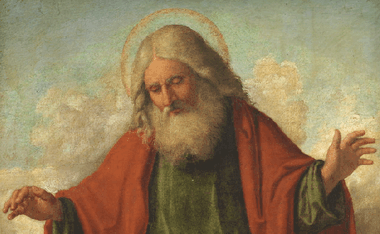
Is There Life After This Life?
What happens after we die? Does everything just end? Or, is there something that comes after this life? Who hasn’t asked themselves these questions? In this compelling video, Dennis Prager deals with the issue of the afterlife head on.
 Here is a quote I love from Grant Jeffrey’s book[s] on heaven:
A Hypothetical Test on Your Desire For Heaven
To illustrate this lack of awareness of the reality of Heaven’s glories, I have often during the last few years challenged congregations to participate in an experiment. I ask my audience to imagine for a moment that there is a button on the back of the pew in front of their seat. Then I suggest that they imagine that, if they pushed that button, they and their loved ones would be instantaneously transferred to Heaven to live forever. Then I ask the question, “Would you press the button?” The response of the congregation is fascinating. Usually about one-half of the church audience smile in anticipation of what awaits them in Heaven if their button actually translated them to the presence of Jesus Christ. However, at least half of the audience reveal a perplexed expression on their faces that showing that they have little interest in pushing that hypothetical button. Ask yourself this question: Would I want to go to Heaven today with all my loved ones? If the answer is NO; why not?
Your Mental Image of Heaven
I have asked congregation members in private conversations their real reasons why they would either “push the button” or not. Their responses were quite revealing. Your personal mental image of Heaven will determine to a great degree your attitude and longing for the eternal city. Those Christians who would press this hypothetical button are usually mature believers who are strong in their faith due to many hours spent studying the promises of God. As a result of personal Bible study, reading a book, or attending a church where the pastor taught these great truths, the Christians who would choose to press the button have obtained a strong conviction of the reality of God’s promise. They are not suicidal; nor do they lack plans for their future. They simply believe that Heaven is as real as this Earth and they are prepared to joyfully go home whenever Jesus Christ calls them. On the other hand, those Christians who would not choose to push the button almost invariably had received little teaching about the reality of Paradise. When I asked these believers to describe the mental image that went through their mind when they thought about Heaven their answers were very revealing about why they wanted to avoid this as long as possible. They didn’t want to avoid Heaven forever; they just had no desire to go there now because of their mental image of it. They would prefer to wait until they were ninety-seven years old with one foot in the grave before they pushed that button and went to the heavenly city.
What was the mental image of Heaven held by those who didn’t want to go there now? Many of them told me that they thought they would spend eternity sitting on a cloud playing a harp in an endless eternal church service that would never, ever, ever end. In other words, if they were honest, they thought of Heaven as being an incredibly boring place with nothing worth doing, nowhere to go and an eternity of passivity with no activity. Naturally their vision of the New Jerusalem was about as exciting as watching the grass grow on your back lawn. It is no wonder that such Christians have little interest or motivation regarding God’s promises about our eternal home. Does their description resemble your own present view of Heaven? If it does, then you are in for a delightful journey of discovery as we examine the true reality of what the Bible teaches us about the glories of Heaven.
CONSEQUENCES OF BELIEF IN HEAVEN/HELL
From Video Description:
In this “Ultimate Issues Hour,” Dennis Prager (a conservative Jew) discusses “Ultimate Justice” (God’s Justice and otherwise) and justice’s involvement/affect in/on behavior. A new study reveals that belief in hell [and heaven] predicted a lower crime rate; belief in heaven predicted more crimes. Dennis tackles this hard to explain — or is it — issue. This is uploaded because of an article by a detective and Christian apologist that likewise deals head-on with these questions as well (Cold Case). Detective Wallace says, “Criminals who justify their actions with religious doctrines are typically woefully ignorant of (or purposefully distorting) these doctrines,” I concur. Having been in jail for almost a full year-and-a-half with three felonies, I know first hand the psychological crutch religion can play, rather than the Refiner’s Fire Christianity is meant to be (Zechariah 13:9, 1 Peter 1:7, Job 23:10, Isaiah 48:10). I will add that “Liberalism,” wherever it is applied (politics, economics, faith, ethics, and the like), harms immeasurably the actions of those involved in it. Theology is no less hurt by this progressive matrix. Just the latest example of this are those that are opposed to pro-lifers support of a bill that will stop late-term abortions. They can be heard chanting “hail Satan” in response to others singing “Amazing Grace.” As well as “fu*k the church!” The Democrats that once supported and made up John F. Kennedy’s base would not recognize the liberal Democratic party of today. Which is why Dennis says (as well as Reagan) that the Democratic Party left them, not the other way around.
- A University of Oregon psychologist has found that a country’s belief in heaven and hell is related to its crime rates, and that a belief in a punitive God equals less crime while a belief in a forgiving savior means more crime. (CHRISTIAN POST)
And of course…
The LEWIS!
Finally, it is objected that the ultimate loss of a single soul means the defeat of omnipotence. And so it does. In creating beings with free will, omnipotence from the outset submits to the possibility of such defeat. What you call defeat, I call miracle: for to make things which are not Itself, and thus to become, in a sense, capable of being resisted by its own handiwork, is the most astonishing and unimaginable of all the feats we attribute to the Deity. I willingly believe that the damned are, in one sense, successful, rebels to the end; that the doors of hell are locked on the inside. I do not mean that the ghosts may not wish to come out of hell, in the vague fashion wherein an envious man “wishes” to be happy: but they certainly do not will even the first preliminary stages of that self-abandonment through which alone the soul can reach any good. They enjoy forever the horrible freedom they have demanded, and are therefore self-enslaved just as the blessed, forever submitting to obedience, become through all eternity more and more free.
C.S. Lewis, The Problem of Pain (New York, NY: Simon & Shuster, 1996), 113-114.
This is an illustration of C.S Lewis’ third talk of the third radio series called ‘What Christians Believe’. This became Chapter 3 of Book 2, in the book called ‘Mere Christianity’.

C.S. Lewis: From Theism to Christianity
C.S. Lewis: It must be understood that my conversion at that point was only to theism pure and simple. I knew nothing yet about the incarnation. The God to whom I surrendered was sheerly non-human.
C.S. Lewis: [Reading from Chesterton] A great man knows he is not God and the greater he is, the better he knows it. The gospels declare that this mysterious maker of the world has visited his world in person. The most that any religious prophet has said was that he was the true servant of such a being. But if the creator was present in the daily life of the Roman empire, that is something unlike anything else in nature. It is the one great startling statement that man has made since he spoke his first articulate word. It makes dust and nonsense of comparative religion.
C.S. Lewis: As I drew near to Christianity, I felt a resistance almost as strong as my previous resistance to theism. As strong but shorter lived for I understood it better. But each step, one had less chance to call one’s soul one’s own.
C.S. Lewis: What Tolkien showed me was this — that if I met the idea of sacrifice in a pagan story I didn’t mind it at all — I was mysteriously moved by it. The reason was that in pagan stories I was prepared to feel the myth as profound. Now the story of Christ is simply a true myth.
C.S. Lewis: I know very well when but hardly how the final step was taken. I went with my brother to have a picnic at Whipsnade Zoo. We started in fog, but by the end of our journey the sun was shining. When we set out I did not believe that Jesus Christ is the Son of God and when we reached the zoo I did. I had not exactly spent the journey in thought. Nor in great emotion. It was more like when a man, after a long sleep, becomes aware that he is now awake.

The State of the Union ~ RPT has Decided NOT to Vote Trump
The Trump people are very similar to the social justice warriors (like #trigglpuff) that drown out reasoned discussion in the arena of free speech. In one call into the Medved Show (on my YOUTUBE CHANNEL) a Trumper said if there were a brokered convention (which gave us Lincoln BTW) he would resort to violence. As society becomes more secular and moves away from a classical type of education that teaches people “how to think well,” we will see more emotive reasoning thrown behind opinions. One person told me Cruz did not have “compassion.” I mentioned that acting compassionately with government has gotten us our ever-growing unconstitutional nanny-state. I could care less if Cruz likes me… As long as he is doing his duty according to the document that runs our country and has a plan to curb it’s growth to date (for instance, his flat tax program, whereas Trump said he will raise taxes). Plus this gentleman was wrong (see the FEDERALIST for instance). My view is that if Ted is following and acting oon the spirit of the Constitution… which may, to the modern feminized society seem uncharitable (un loving), it will be in fact the MOST compassionate thing Ted Cruz could do.
I hope another (if it is not Cruz) will be supplemented at the Convention. It is in the hands of the delegates.
Dennis Prager speaks to “American Philosophy” and then has the Carmack Waterhouse Professor of Legal Theory at the Georgetown University Law Center where he teaches constitutional law and contracts, and is Director of the Georgetown Center for the Constitution–Randy Barnett–on:
“If we are to be mothered, mother must know best…. In every age the men who want us under their thumb, if they have any sense, will put forward the particular pretension which the hopes and fears of that age render most potent. They ‘cash in.’ It has been magic, it has been Christianity. Now it will certainly be science…. Let us not be deceived by phrases about ‘Man taking charge of his own destiny.’ All that can really happen is that some men will take charge of the destiny of others…. The more completely we are planned the more powerful they will be.”
[….]
“Of all tyrannies, a tyranny exercised for the good of its victims may be the most oppressive. It may be better to live under robber barons than under omnipotent moral busybodies. The robber baron’s cruelty may sometimes sleep, his cupidity may at some point be satiated; but those who torment us for our own good will torment us without end for they do so with the approval of their own conscience. They may be more likely to go to Heaven yet at the same time likelier to make a Hell of earth. Their very kindness stings with intolerable insult. To be ‘cured’ against one’s will and cured of states which we may not regard as disease is to be put on a level of those who have not yet reached the age of reason or those who never will; to be classed with infants, imbeciles, and domestic animals. But to be punished, however severley, because we have deserved it, because ‘ought to have known better,’ is to be treated as a human persons in God’s image.”
C.S. Lewis, God in the Dock (Grand Rapids, MI: W.B. Eerdmans, 2002), 292.
- (See some helpful links via the INDEPENDENT INSTITUTE. Also p. 82 WALTER WILLAIMS section quoting Lewis. As well as [updated May 20, 2020] PHILOSOPHY OF MOTHERHOOD)
This disconnect is amazing to me. What this exchange did for me was solidify that I cannot vote for Trump. Period.
Malcolm Muggeridge (a British journalist, author, satirist, media personality, soldier-spy and, in his later years, a Catholic convert and writer)said it best:
- “If God is ‘dead,’ somebody is going to have to take his place. It will be megalomania or erotomania, the drive for power or the drive for pleasure, the clenched fist or the phallus, Hitler or Hugh Heffner.”
Ravi Zacharias, The Real Face of Atheism (Grand Rapids, MI: Baker Books, 2004), 32.
Here is a great interview with Professor Randy Barnett:
Here is the video description from REASON.ORG:
In his forthcoming book Our Republican Constitution: Securing the Liberty and Sovereignty of We the People, Randy E. Barnett, the intellectual leader of a consciously libertarian legal movement that has hugely reshaped how courts interpret the law, lays out his case for “judicial engagement,” in which judges actively challenge and invalidate laws and policies that infringe on individual rights and freedom. Our Republican Constitution is a powerful rebuke to democratic majoritarianism, which holds that legislators have b
A professor at Georgetown Law School, Barnett has also been at the center of two major Supreme Court cases in the 21st century. He was the lead in 2005’s Raich case, in which the Court ruled that Congress’ power under the Commerece Clause was immense. And, as he recounts in gripping and compelling fashion in his new book, Barnett helped to create the nearly successful (and in his telling, partly successful) challenge to the individual mandate at the heart of President Obama’s controversial health care reform.
Born in 1952, Barnett grew up in the Chicago area, attended Northwestern as an undergad (he majored in philosophy), and went to law school at Harvard, where he was a classmate of Supreme Court nominee Merrick Garland. Garland, he says, is a smart, nice guy who would be terrible from a libertarian perspective because of his reflexive deference to lawmakers under virtually any circumstance. “As a matter of judicial philosophy,” says Barnett. I think he would not be a good justice for us to have”. In the early 1970s, he was associated with the Center for Libertarian Studes and economist Murray Rothbard, whom he says continues to shape his thinking in important ways.
An alumnus of the Institute for Humane Studies and an active participant in the Federalist Society, Barnett is the author the highly regarded and controversial academic books The Structure of Liberty (1998) and Restoring the Lost Constitution (2004). Intended for a general audience, Our Republican Constitution is simultaneously intellectually rigorous and a real page-turner, filled with dramatic anecdotes that illustrate Barnett’s powerful and provocative argument that routine deference to elected legislators is the wrong way to interpret the Constitution or create a rich and flourishing society.
Barnett sat down with Nick Gillespie at Reason’s D.C. headquarters for a wide-ranging conversation about his experiences working in his father’s laundry, his favorite Supreme Court case (that would be Lochner), how he developed his nascent libertarianism at a time when few people called themselves such, why he thinks a new political party may be a necessity, why he thinks Donald Trump is an authoritarian, and why he believes Ted Cruz understands how the Constitution limits government power.
God’s Gender ~ Theology
Just to temper the first point of the three via the above video, I wanted to add these explanations of Biblical patriarchy and the male/female relationship by Nora Hale:
- God does not have a gender. He is neither male nor female. Gender is a biological characteristic, and God is not a biological being. God is Spirit (John 4:24), and spirit does not have flesh and blood (Luke 24:39). However, in the Bible God is always referred to in the masculine. This is most probably because of how God “the Father” relates to Jesus, who is the Son of God. He was born a male, and in the Biblical culture the male is the one who represents his descendants (1 Cor. 15:22) and has the authority in the family (Gen. 27:1-29, 48:13-14). When Adam and Eve were in the Garden of Eden, Eve sinned first, but sin entered the world through Adam (Romans 5:12). This means it was the man Adam who possessed representative authority, not Eve. This phenomena is called Federal Headship…. (CARM)
Christianity Today explains well the main idea with this topic. While they have an excellent article as a whole, this doctrine of offices withing the Trinity and how we should revere these distinctions in the Godhead are what made the Jewish survival possible. Most ancient Near-East views of creation and of their sustenance were through fertility goddesses:
Not an Invention
Feminine images are used throughout Scripture to describe God’s compassionate and loving nature. Examples include the frequent images of God protecting and comforting his children (Isa. 66:12–13; Hos. 11:1–4). But it’s important to note that God is never addressed as Mother. This phenomenon is unique compared with the cultures surrounding the original biblical writers. Most ancient Near Eastern societies had a goddess as the main cult figure or at least to complement a male god—Asherah in Canaan, Isis in Egypt, Tiamat in Babylon. If patriarchy is responsible for cultures portraying God as male, then we would expect goddess worship to reflect a matriarchal society—one in which women are given superior status or at least are equal to men. But this is not the case. Even today, many societies devoted to goddess worship remain oppressive toward women. Devotion to the goddess Kali in Hinduism, for instance, has never resulted in better treatment of women, even among Kali devotees.
We could even say that Israel succumbed to an idea of God that was rather against her natural disposition. Left to themselves, the Israelites would have ended up worshiping the Baals and Asherahs—Canaanite fertility gods and goddesses. Israel’s prophets singled out idolatry for fierce denunciation because its people were constantly tempted to do just that. But Israel’s idea of God’s fatherhood bucked a common trend in the ancient world. Hence, it could not have been an Israelite invention, but rather the result of a long history of living under the revelation of God. It is the church’s continuity with this narrative of Israel that would lead eventually to the uniquely Christian doctrine of God as Father, Son, and Holy Spirit.
In the New Testament, God’s fatherhood conveys two distinct ideas. First, it refers primarily to the internal relationship within the Trinity. This is how the first article of the Apostles’ Creed puts it: “I believe in God, the Father Almighty, the Maker of heaven and earth, and in Jesus Christ, his only Son, our Lord.” Even as early as Paul’s writings, the phrase “God and Father of our Lord Jesus Christ” had become commonplace. God is first and foremost the Father of our Lord Jesus Christ. This is not an invention of later church leaders, but comes directly from Christ, who refers to God as “Father.” In doing so, Jesus reveals a unique relationship between the Father and Son that constitutes the beginning of the Trinitarian doctrine.
Jesus taught his disciples to call God “our heavenly Father.” Therefore, the loving relationship he has with the Father from eternity now extends to those adopted into God’s family (Rom. 8:15). The father-son relationship is the most intimate personal relationship, one marked by reciprocal love and respect, and it is God’s supremely personal and loving nature that the term father is meant to underscore.
To claim, as many feminist theologians do, that the very presence of masculine metaphors for God excludes women simply does not square with the way Scripture uses them. Masculine images of God do not always convey exclusively “masculine” qualities. For example, Isaiah 54:5–7 refers to God as the Husband who with “deep compassion” (a stereotypically “feminine” quality) called estranged Israel back to himself (see also Isa. 49:13). The term father, then, excludes not feminine qualities, but rather the idea of a distant and impersonal deity, which is precisely the picture of the supreme being still seen in many primal religions.
Second, the father metaphor points to God as the Creator (e.g., Isa. 64:8; Mal. 2:10) “from whom every family in heaven and on earth derives its name” (Eph. 3:15). Father captures in one word two seemingly contrasting characteristics: God’s love for his creatures and his lordship over all creation. Here again, we see the difference between Israel and ancient Near Eastern cultures. In the Judeo-Christian faith, God the Father created the world as something separate from himself, whereas in Near Eastern societies, the mother metaphor pictures the mother-goddess giving birth to the world (which makes it an extension of the deity’s body). Calling God Mother undermines the Christian doctrine of creation by implying that God and the world are made of the same stuff and virtually indistinguishable. So, we need Father in order to get to the right doctrine of creation….
Apologetic Press (AP) goes on to quote CS Lewis’ excellent understanding of the larger idea at stake here. AP then quotes Peter Kreeft and Ronald Tacelli book…. which I will include the entire section of after this quote:
But must we refer to God via masculine terms? The question has nothing to do with what we would like to do, but rather with what God tells us to do. C.S. Lewis addressed this point in his book, God in the Dock:
Goddesses have, of course, been worshipped: many religions have had priestesses. But they are religions quite different in character from Christianity…. Since God is in fact not a biological being and has no sex, what can it matter whether we say He orShe, Father or Mother, Son or Daughter?
Christians think that God Himself has taught us how to speak of Him. To say that it does not matter is to say either that all the masculine imagery is not inspired, is merely human in origin, or else that, though inspired, it is quite arbitrary and unessential. And this is surely intolerable (1970, p. 237, emp. in orig.).
Scripture makes it clear: “O Jehovah, thou art our Father; we are the clay, and thou our potter; and we all are the work of thy hand…. Shall the potter be esteemed as clay; that the thing made should say of him that made it, ‘He made me not’; or the thing formed say of him that formed it, ‘He hath no understanding’?” (Isaiah 64:8; 29:16). Since when does the clay have the right to dictate to the potter or override his decisions? As a believer in God and His inspired Word, and yet as one speaking from an inherently masculine viewpoint, Lewis went on to say:
We have no authority to take the living and semitive figures which God has painted on the canvas of our nature and shift them about as if they were mere geometrical figures…. It is painful, being a man, to have to assert the privilege which Christianity lays upon my own sex. I am crushingly aware how inadequate most of us are, in our actual and historical individualities, to fill the place prepared for us. But it is an old saying in the army that you salute the uniform not the wearer…. A given man may make a very bad husband; you cannot mend matters by trying to reverse the roles… (1970, pp. 237-238, emp. added).
It is not man’s (or woman’s!) place to question God’s sovereign authority or divine will; neither falls under mankind’s jurisdiction.
Here is the fuller quote via Kreeft & Tacelli:
Is God a “He”?
The hottest controversy today about God concerns the traditional exclusive use of the pronoun he. Nearly all Christians admit that (1) God is not literally male, since he has no biological body, and (2) women are not essentially inferior to men. Those are red herrings.
There are, however, two reasons for defending the exclusive use of masculine pronouns and imagery for God. One issue is whether we have the authority to change the names of God used by Christ, the Bible and the church. The traditional defense of masculine imagery for God rests on the premise that the Bible is divine revelation, not culturally relative, negotiable and changeable. As C. S. Lewis put it, “Christians believe God himself has told us how to speak of him.”
The other reason for calling God “he” is historical. Except for Judaism, all other known ancient religions had goddesses as well as gods. The Jewish revelation was distinctive in its exclusively masculine pronoun because it was distinctive in its theology of the divine transcendence. That seems to be the main point of the masculine imagery. As a man comes into a woman from without to make her pregnant, so God creates the universe from without rather than birthing it from within and impregnates our souls with grace or supernatural life from without. As a woman cannot impregnate herself, so the universe cannot create itself, nor can the soul redeem itself.
Surely there is an inherent connection between these two radically distinctive features of the three biblical or Abramic religions (Judaism, Christianity and Islam): their unique view of a transcendent God creating nature out of nothing and their refusal to call God “she” despite the fact that Scripture ascribes to him feminine attributes like compassionate nursing (Is 49:15), motherly comfort (Is 66:13) and carrying an infant (Is 46:3). The masculine pronoun safeguards (1) the transcendence of God against the illusion that nature is born from God as a mother rather than created and (2) the grace of God against the illusion that we can somehow save our-selves—two illusions ubiquitous and inevitable in the history of religion.
Peter Kreeft and Ronald K. Tacelli, Handbook of Christian Apologetics (Downers Grove, IL: IVP Academic, 1994), 97-98.
Below will be a couple theological expansions of this thinking on a level of the seminarian. Enjoy the input as I have:
- Michael F. Bird, Evangelical Theology (Grand Rapids, MI: Zondervan, 2013), 137-138.
2.3.2 DOES GOD HAVE A GENDER?
Does the fact that God is depicted as male in the Scriptures create an androcentric conception of God that is oppressive to women? Is God really male in his essence? Are men more in the image of God than women because they are male? Does describing God as male provide religious sanction to patriarchal oppression and cultural imperialism? These are the questions about God and gender raised by feminist theologians. A few thoughts to consider here.
We can readily admit the sociolinguistic link between language and power. We can also recognize the injustices and inequalities in society perpetuated by gender discrimination. Yet retaining the maleness of God language as given in Scripture is not an automatic validation of an oppressive and abusive patriarchalism. The God who reveals himself as Father is the loving Father of all men and women. Those who receive Jesus Christ as Savior become “sons of God” (Rom 8:14, 19; Gal 3:26; 4:6 NIV [1984]) but also more generally “children of God” (John 1:12; Rom 8:16-17, 21; Phil 2:15; 1 John 3:10; 5:2). God will always remain a “he,” since God is a personal being, and the substitution of the noun “God” for the personal pronoun inevitably makes him impersonal in his speech and actions. The fact that God is described as “he” does not mean that God is intrinsically male, but he relates to us primarily in the masculine mode, as Father, Son, and Lord.”
It is notable that it is maleness and femaleness that constitutes the image of God according to Genesis 1:26-27. It is humanity created as male and female that marks the image and likeness of God. That means that God’s being cannot be confined to masculine qualities. Our humanity has a divine character expressed in the union of male and female. God is the sum of both genders because humanity as male and female are equally rooted in God’s divine being.
What is more, God is also described with maternal language and feminine imagery at several points in Scripture. Moses indicts the Hebrews for their rebellion in the wilderness: “You deserted the Rock, who fathered you; you forgot the God who gave you birth” (Deut 32:18). God is depicted like a nurse or mother in his care for his people (Ps 131:2). The love of God is compared to the love of a mother for her child (Isa 49:15; 66:13). God’s wisdom is considered one of the primary personifications of his work in the world (e.g., Prov 8:1-12; Jer 10:12; 51:15), and it is expressed in words that are grammatically feminine in both Hebrew (hokmâ) and Greek (sophia). Jesus could even depict himself like a mother hen protecting her chicks from a barnyard fire (Matt 23:37).
In the biblical witness, God’s fatherhood is not an oppressive or authoritarian persona that he adopts to force his will on others. Instead, we are to see the imagery of a father’s deep love for his children. Jesus taught his disciples to pray to the Father with the intimate term of abba (Matt 6:9; Mark 14:36; Rom 8:15; Gal 4:6). Jesus declared that God’s fatherhood is why he is so eager to answer prayer (Matt 7:9-11), for God’s love is like a father’s love for his children. And this is why the image of being “children of God” is so powerful. The God from whom we were formerly estranged on account of our sin has adopted us into his own family (John 1:12-13; Rom 8:13-17; Gal 3:26). If there is something good about a human father’s love for his children, then there is something infinitely good about the heavenly Father’s love for his children too.
I think it worth pointing out as well that all theological language is analogical since the finiteness of human language cannot contain the entirety of God in all his infinite being. Human language for God brings us only partial and incomplete analogies, parables, similes, and images of what God is like. All God language, including that freighted with connotations of human gender, male or female, and sonship, is only analogous to God’s being and not an absolute description of his person. Shirley Guthrie writes:
With respect to the doctrine of the Trinity … when we speak about God as “Father,” when we speak about the eternal “Son” who comes to us in the man Jesus (who taught us to call his Father “our Father”), and when he speaks about the “Spirit” who is the Spirit of the Father and of the Son, we are not talking about the gender of God (for God is neither male nor female). We are using analogical language from human experience to talk about the kind of relationship that exists between the members of the Trinity and between the triune God and us human beings—a relationship that is like the intimate relationship between parents and their children.
- William G. T. Shedd, edited by Alan W. Gomes, Dogmatic Theology, 3rd Edition (Phillipsburg, NJ: Presbyterian and Reformed Publishing, 2003), 253-257.
Deity of God the Father
The deity of God the Father is undisputed, and hence there is less need of presenting the proof of it. Divine names, attributes, works, and adorableness are ascribed to him.
The term father denotes an immanent and eternal relation of the first trinitarian person. God in himself and irrespective of any reference to the created universe is a father: the Father of the Son. Were God primarily the Father because of his relation to men and angels and not because of his relation to the second person in the Godhead, his fatherhood would begin in time and might consequently end in time. If there was once a time when God was not the Father of the Son, there may be a time when he will cease to be so. “It is the greatest impiety,” says Cyril of Jerusalem (Catecheses 11.8), “to say that after deliberation held in time God became a Father. For God was not at first without a Son and afterward in time became a Father.”
The hypostatic or trinitarian paternity of God the Father as related to the Son must not be confounded with the providential paternity of God the Trinity as related to the creation. Only one of the divine persons is the trinitarian Father; but the three persons in one essence constitute the providential and universal Father. The triune God is generally the Father of men and angels by creation and specially of the elect by redemption. Hence, the term father applied to God has two significations. It may denote divine essence in all three modes or in only one mode. The first clause in the Lord’s prayer is an example of the former. When men say, “Our Father who is in heaven,” they do not address the first person of the Godhead to the exclusion of the second and third. They address, not the untriune God of deism and natural religion, but the God of revelation, who is triune and as such the providential Father of all men and the redemptive Father of believers. If a man deliberately and consciously intends in his supplication to exclude from his worship the Son and the Holy Spirit, his petition is not acceptable: “He that honors not the Son honors not the Father” (John 5:23). A man may not have the three persons distinctly and formally in his mind when he utters this petition, and in this case he does not intentionally exclude any trinitar-ian person or persons; but the petition, nevertheless, ascends to the divine three, not to a single person exclusively; and the answer returns to him from the triune God, not from any solitary person exclusively. Says Witsius (Lord’s Prayer, diss. 7):
It is a doctrine firmly maintained by all orthodox divines, that the Father cannot be invoked in a proper manner, without at the same time invoking the Son and Holy Spirit, because they are one in nature and in honor. Nor can it, I think, be denied that, laying out of view the distinction of persons and looking only at what is common to all three persons in the Godhead, God may be denominated our Father. Yet I cheerfully concur with those interpreters who maintain that the Father of our Lord Jesus Christ is particularly addressed in the first petition.
Says Augustine (On the Trinity 5.2), “That which is written, ‘Hear, 0 Israel: the Lord our God is one Lord,’ ought not to be understood as if the Son were excepted or the Holy Spirit were excepted. This one Lord our God, we rightly call, also, our Father.” (See supplement 3.4.10.)
The term father denotes the Trinity in John 4:21, 23-24: “The hour comes when you shall neither in this mountain nor yet at Jerusalem worship the Father. The true worshipers shall worship the Father in spirit and in truth.” Here the term father is synonymous with “God” who “is a Spirit,” the true object of worship. But Christ, in mentioning the object of worship, had in his mind the God of revelation, not of deism—trinal as he is in Scripture, not single as he is in natural religion—the very same God in whose trinal name and being he commanded all men to believe and be baptized. Christ’s idea of God as the universal Father was trinitarian, not deistic. In intuition and theology, the Father, Son, and Holy Spirit are one God and the heavenly Father of angels and men:
The appellation father, descriptive of the connection between God and his creatures, is true of every one of the divine persons and of the three divine persons, one God. The [paternal] relation to the creatures is as true of the Son and Holy Spirit as of the Father in respect to divine nature; for all these persons are respectively, and in union, the Father of the universe; the Father in creation, in government, and in protection. The Son as Messiah is foretold in his protecting kindness and mercy as “a Father to the fatherless” (Ps. 68:5-6; Isa. 9:6). (Kidd, Eternal Sonship, chap. 13)
A believer in the Trinity, in using the first petition of the Lord’s prayer, may have the first person particularly in his mind and may address him; but this does not make his prayer antitrinitarian. He addresses that person as the representative of the Trinity. And the same is true whenever he particularly addresses the Son or the Spirit. If he addresses God the Son, God the Son implies God the Father. Each divine person supposes and suggests the others. Each represents the others. Consequently, to pray to any one of the divine three is by implication and virtually to pray to all three. No man can honor the Son without honoring the Father also. Says Christ, “He that has seen me has seen the Father also” (John 14:9). In like manner, he that prays to the Son prays to the Father also. Says Turretin (3.25.27):
The mind of the worshiper will not be distracted by the consideration that there are three divine persons, if he remembers that the whole divine essence is in each of the persons, so that if he worships one he worships all. With Gregory of Nazianzus, he may say: “I cannot think of the one Supreme Being without being encompassed with the glory of the three persons; and I cannot discern the three persons without recurring to the unity of the essence.”
The hypostatic or trinitarian paternity of God, in distinction from the providential, is mentioned in John 17:5: “Now, 0 Father, glorify me with your own self.” Here, Christ addresses the Father alone, the first person of the Godhead exclusively. He did not address the Trinity, for he died not address himself or the Holy Spirit. Respecting this trinitarian fatherhood, the Son says “my Father,” not “our Father” (14:27; 15:1, 8; and other passages).
The baptismal formula and the doxologies indisputably prove that paternity is an immanent and eternal relation of God. The rite that initiates into the kingdom of God would not be administered in three names denoting only certain temporal and assumed attitudes of the Supreme Being. Neither would a divine blessing be invoked through three titles signifying only these. Baptism and invocation are acts of worship, and worship relates to the essential and eternal being of God.
The hypostatic or trinitarian character of the first person is that he possesses the essence “originally,” in the sense that it is not communicated to him by one of the other persons. Augustine (On the Trinity 2.1) thus speaks of the “original” or unbegotten possession of the essence by the Father: “We call the Son, God of God; but the Father, God only, not of God. Whence it is plain that the Son has another of whom he is and to whom he is Son; but the Father has not a Son of whom he is, but only to whom he is Father. For every son is what he is, of his father, and is son to his father; but no father is what he is, of his son, but is father to his son.” A common term applied to God in the patristic age to denote this peculiarity was “unbegotten”: “Next to God, we worship and love the Word, who is from the unbegotten and ineffable God”; “we have the unbegotten and ineffable God”; “we have dedicated ourselves to the unbegotten and impassible God”; “he is the firstborn of the unbegotten God” (Justin Martyr, Apology 1.25, 53; 2.12-13); “there are also some dissertations concerning the unbegotten God” (Rufinus, Preface to the Clementine Recognitions). In the writings of Athanasius, the Father is denominated agennētos”‘ (ingenerate or unbegotten) and the Son gennētos (generate or begotten). (See supplement 3.4.11.)
The phrase unbegotten God implies and suggests the phrase begotten God. This denotes no more than the phrase God the Son, the latter containing the substantive, the former the adjective. Clement of Alexandria (Miscellaneous Writings 5.12) remarks that “John the apostle says no man has seen God at any time. The only begotten God who is in the bosom of the Father, he has declared him.” Irenaeus (Against Heresies 4.20.11) quotes this text in the same form: “The only begotten God who is in the bosom of the Father, he has declared him.” This patristic employment of the phrase begotten God strongly supports the reading monogenēs theos in John 1:18, which has the support of א, B, C, L, Peshitta, Coptic, and Ethiopic and respecting which Tischendorf (8th ed.) says, “Without a doubt [this reading] carries the weight of the testimonies.” Westcott and Hort adopt this reading.
In the controversy between the English trinitarians and Arians, conducted by Waterland and Samuel Clarke in the beginning of the eighteenth century, a distinction made by the former between “necessary existence” and “self-existence” is liable to misconception and requires notice. The Father, says Waterland, is both necessarily existent and self-existent; the Son is necessarily existent, but not self-existent. In this use of terms, which is uncommon, the term self-existent was employed not with reference to the essence, as is usually the case, but to the person only. In this sense, self-existence denotes what the Nicene trinitarians meant by “unbegotten” or “ingenerate.” The Father is self-existent in Waterland’s sense because divine essence is not communicated to or with him; he has it of himself. The Son is not self-existent in Waterland’s sense because divine essence is communicated; he has it not from himself but from the Father. But the Son is necessarily existent, says Water-land, because he possesses an essence that is necessarily existent. The fact that the essence is communicated by eternal generation does not make it any the less an infinite, eternal, and unchangeable essence. In brief, according to Waterland, the Son is necessarily existent because the divine essence is his essence; but he is not self-existent, because his personal characteristic of filiation, his peculiar “self,” is not from himself but from another person.
If no distinction be made between necessary existence and self-existence, as is the case in the Nicene statements, Waterland would attribute both necessary existence and self-existence to the Son. He would concede self-existence in the sense in which it is attributed to the Son in John 5:26: “As the Father has life in himself, so has he given to the Son to have life in himself.” Here, “life in himself” denotes the self-existence of divine essence, which is also necessary existence. The Father has this uncommunicated. The Son has it communicated or “given” from the Father, by eternal generation.
The Father was sometimes denominated pēgētēs theotētos or rhiza pases theotētos. This phraseology is used with qualification by accurate trinitarians. Some orthodox writers employ the phrase fons trinitatis’ to denote the hypostatic character of the Father, which is better than fons deitatis. Says Howe (Trinity, lect. 14):
If we do suppose the Son and the Holy Spirit to be from the Father by a necessity of nature, an eternal necessity of nature, and not by a dependence upon his will, they will not be creatures, because nothing is creature but what depends upon the will and pleasure of the Creator. And if they be not creatures, what are they then? Then, they must be God, and yet both of them from the Father, too; for all that do assert the Trinity do acknowledge the Father to be fonts trinitatis, the fountain of the Trinity: and if from this fountain the Son be in one way, and the Holy Spirit be in another way, both from the Father; that is, the Son from the Father immediately, and the Holy Spirit from the Father and the Son, and this not by choice, but by an eternal necessity of nature, here is this doctrine as easily conceivable as any that I know of whatsoever, the lies not within the compass of our manifest demonstration.
Turretin (3.30.1) says that the Father is fons deitatis “if the mode of subsisting is in view.”‘ Owen (Saints’ Communion, 3) remarks that “the Father is the fountain of the deity.” Hooker (Polity 5.54) quotes Augustine as saying that “the Father is the source [fountain] of the Godhead.”” In these cases, deitas is loosely put for trinitas. Strictly speaking, however, deity denotes the divine essence; and the first person is not the Father of the essence. But Trinity denotes the essence personalized by trinalizing. In this reference, the first person is the father and fountain. “We teach,” says Calvin (1.13.23, 25), “according to the Scriptures, that there is essentially but one God; and therefore that the essence of both the Son and the Spirit is unbegotten. But since the Father is first in order and has himself begotten his Wisdom, therefore… he is justly esteemed the original and fountain of the whole divinity [Trinity].”
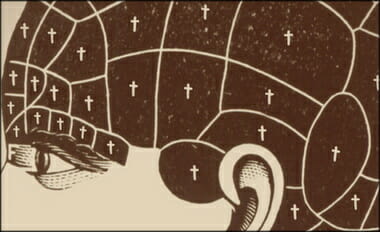
Reason and Logic are Transcendent (A Debate and Sylogism)
Video description:
J. Warner Wallace describes the Transcendental Argument (TAG) and it being one of the many pieces in the quiver of our cumulative case. For more, see his posts on the matter:
See also Got Questions: What is the transcendental argument for the existence of God?
And CARM’s, The Transcendental Argument for the Existence of God
^ ^ ^ Updated file above ^ ^ ^
From a debate many years ago
Can I point something out to you that will take us momentarily from this conversation, but explain why you are assuming my worldview in this conversation? I hope you can pick up what I am about to lay down.
First though, I wish to point out that the Lord’s Resistance Army (a person with a “tag,” like truck drivers on CB radios) is acting in opposition to Jesus’ teachings (you cannot say their actions are morally wrong because you equate moral actions to either society or yourself. If 51% of the world body said such actions were moral, then magically the 49% who think otherwise would themselves become immoral for believing differently). But not in opposition to naturalism’s teachings and assumptions.
However, in making your distinction, and I quote you:
- Their belief in Christianity stands in stark contradiction to your own.
You are assuming the Law of Non-Contradiction and the Law of Excluded Middle in your above statement. This has consequences for you, even though you may not realize it.
In our unfolding conversation here, I am sure we can agree that you are using logic and reason in your argument, as I pointed out. You are expecting me to be able to delineate between false and correct arguments and come to a conclusion based on delineating between truth and untruth, false argument and true argument, by the Laws of Logic by using reason, correct? Otherwise you are a masochist, a person who argues for arguments sake.
So by engaging me in conversation you are asking me to give you some reasons or evidences by which you may observe and examine so that you might come to the conclusion as to the truthfulness of my claims or the falsity of my claims. But the moment that you ask me to give you some evidence that you might prove something…. you have assumed my worldview. You’ve done that because you are assuming that my mind is wired exactly like your mind is wired and are assuming that all men reason logically. But my worldview is the only worldview that gives an answer to why men reason logically.
So the question is this: are the laws of logic binding to us, all men. We all observe gravity, so we experience the Law of Gravity. We can never reach out and touch or experience the Law of gravity with our senses, we can only experience the effect of the Law. Likewise, Logic is not a physical function, yet we experience it. The laws of logic are non-tangible, they can’t be seen, they can’t be touched, yet they are binding on all men (you proved this point when you used logic by assuming the Law of non-Contradiction and the Law of Excluded Middle, and expected me to be bound by them as well as understand them). Can you touch, taste, or see the Law of Non-Contradiction? Where do these laws of logic/rationality come from?
Naturalism is a world view that requires all existing entities to be physical entities or reducible to entities in the physical world. Thus naturalism cannot account for rationality because it cannot give the right kind of causes (The Law of Causality, “cause and effect”) necessary for rational thought. In theism we are taught that these rational causes explain the reasons why one holds some beliefs. That bold part is very important. Let me explain.
To see the above point clearly, consider the following claims:
(1) All Ps are Qs.
(2) X is a P.
(3) X is a Q.
When one understands the claims in (1) and (2), then one understands that (3) must follow from the other premises. In order for one to grasp why (3) follows from (1) and (2), one needs more than natural, physical laws of cause-and-effect. To draw the right conclusion, one needs the ground and consequent (C. S. Lewis) type of reasoning. But it is precisely this kind of reasoning that seems unavailable to the naturalist worldview.
Rationality requires rational causes; this is a problem for naturalism. A naturalist could explain someone’s belief entirely in terms of behaviorist psychology (e.g., certain factors caused this person to hold this belief), for example, but it cannot analyze the rational causes that support someone’s belief. For someone to do that, they would need something beyond physical causes. In fact, naturalism describes all beliefs in terms of physical, natural causes, which in turn, has no room for mental causes. C.S. Lewis closes a chapter in his book Miracles with this conclusion:
Reason is given before Nature and on reason our concept of Nature depends. Our acts of inference are prior to our picture of Nature almost as the telephone is prior to the friend’s voice we hear by it. When we try to fit these acts into the picture of nature we fail. The item which we put into that picture and label “Reason” always turns out to be somehow different from the reason we ourselves are enjoying and exercising as we put it in. . . . . . But the imagined thinking which we put into the picture depends – because our whole idea of Nature depends – on thinking we are actually doing, not vice versa. This is the prime reality, on which the attribution of reality to anything else rests. If it won’t fit into Nature, we can’t help it. We will certainly not, on that account, give it up. If we do, we should be giving up Nature too.
Even though the above is somewhat long, trying to get such a hard subject across requires space. The below is not required reading and you may forego it, but it may explain what I couldn’t (for the other Christians here in this board watching this discussion, you may want to save this article and learn its premises, as they are powerful refutations of the naturalist point of view). I will post an example of this in action in a hypothetical found in a really intelligently argued article found at Leader U called, Methodological Naturalism?:
First, then, some examples that suggest that science is not religiously neutral.3 I begin with Herbert Simon’s article, “A Mechanism for Social Selection and Successful Altruism.”4 This article is concerned with the problem of altruism: Why, asks Simon, do people like Mother Teresa do the things that they do? Why do they devote their time and energy and indeed their entire lives to the welfare of other people? Of course it isn’t only the great saints of the world that display this impulse; most of us do so to one degree or another.
How, says Simon, can we account for this kind of behavior? The rational way to behave, he says, is to act or try to act in such a way as to increase one’s personal fitness; i.e., to act so as to increase the probability that one’s genes will be widely disseminated in the next and subsequent generation, thus doing well in the evolutionary derby.5 A paradigm of rational behavior, so conceived, was reported in the South Bend Tribune of December 21, l991 (dateline Alexandria (Va.)). “Cecil B. Jacobson, an infertility specialist, was accused of using his own sperm to impregnate his patients; he may have fathered as many as 75 children, a prosecutor said Friday.” Unlike Jacobson, however, such people as Mother Teresa and Thomas Aquinas cheerfully ignore the short- or long-term fate of their genes. What is the explanation of this behavior?
The answer, says Simon, is two mechanisms: “docility” and “bounded rationality”:
Docile persons tend to learn and believe what they perceive others in the society want them to learn and believe. Thus the content of what is learned will not be fully screened for its contribution to personal fitness (p. 1666).
Because of bounded rationality, the docile individual will often be unable to distinguish socially prescribed behavior that contributes to fitness from altruistic behavior [i. e., socially prescribed behavior that does not contribute to fitness–AP]. In fact, docility will reduce the inclination to evaluate independently the contributions of behavior to fitness. …. By virtue of bounded rationality, the docile person cannot acquire the personally advantageous learning that provides the increment, d, of fitness without acquiring also the altruistic behaviors that cost the decrement, c. (p. 1667).
The idea is that a Mother Teresa or a Thomas Aquinas displays bounded rationality; they are unable to distinguish socially prescribed behavior that contributes to fitness from altruistic behavior (socially prescribed behavior which does not). As a result, they fail to acquire the personally advantageous learning that provides that increment d of fitness without, sadly enough, suffering that decrement c exacted by altruistic behavior. They acquiesce unthinkingly in what society tells them is the right way to behave; and they aren’t quite up to making their own independent evaluation of the likely bearing of such behavior on the fate of their genes. If they did make such an independent evaluation (and were rational enough to avoid silly mistakes) they would presumably see that this sort of behavior does not contribute to personal fitness, drop it like a hot potato, and get right to work on their expected number of progeny.
No Christian could accept this account as even a beginning of a viable explanation of the altruistic behavior of the Mother Teresas of this world. From a Christian perspective, this doesn’t even miss the mark; it isn’t close enough to be a miss. Behaving as Mother Teresa does is not a display of bounded rationality–as if, if she thought through the matter with greater clarity and penetration, she would cease this kind of behavior and instead turn her attention to her expected number of progeny. Her behavior displays a Christ-like spirit; she is reflecting in her limited human way the magnificent splendor of Christ’s sacrificial action in the Atonement. (No doubt she is also laying up treasure in heaven). Indeed, is there anything a human being can do that is more rational than what she does? From a Christian perspective, the idea that her behavior is irrational (and so irrational that it needs to be explained in terms of such mechanisms as unusual docility and limited rationality!) is hard to take seriously. For from that perspective, behavior of the sort engaged in by Mother Teresa is anything but a manifestation of ‘limited rationality’. On the contrary: her behavior is vastly more rational than that of someone who, like Cecil Jacobson, devotes his best efforts to seeing to it that his genes are represented in excelsis in the next and subsequent generations.
Simon suggests or assumes that the rational course for a human being to follow is to try to increase her fitness. Rationality, however, is a deeply normative notion; the rational course is the right course, the one to be recommended, the one you ought to pursue. Simon, therefore, seems to be making a normative claim, or perhaps a normative assumption; it is a vital and intrinsic part of what he means to put forward. If so, however, can it really be part of science? Science is supposed to be non-evaluative, non-normative, non-prescriptive: it is supposed to give us facts, not values. Can this claim that the rational course is to pursue fitness then be part of science, of a scientific explanation, or a scientific enterprise?
But perhaps there is a reply. What, exactly, does Simon mean here by such terms as ‘rational’ and ‘rationality’? At least two things; for when he says that the rational course, for a human being, is to try to increase her fitness, he isn’t using the term in the same way as when he says Mother Teresa and people like her suffer from bounded rationality. The latter means simply that people like this aren’t quite up to snuff when it comes to intelligence, perspicacity, and the like; they are at least slightly defective with respect to acuteness. It is because of the lack of acuity that they fail to see that the socially prescribed behavior in question is really in conflict with their own best interests or the achievement of their own goals. This limited rationality is a matter of running a quart low, of playing with less than a full deck, of being such that the elevator doesn’t go all the way to the top floor.
When he says that the rational course for a human being is to strive to promote fitness, he presumably means something different by the term ‘rational’, namely, that a properly functioning human being, one not subject to malfunction (one that isn’t insane, or retarded, or reacting to undue stress, or in the grip of some other malfunction or dysfunctional state) will as a matter of fact have certain goals, try to attain certain conditions, aim to bring about certain states of affairs. Presumably survival would be one of these goals; but another one, says Simon, is promoting or maximizing fitness.
And there are two things to say about this claim. In the first place, we might ask what the evidence is that, as a matter of fact, properly functioning human beings do indeed all or nearly all display this goal. It isn’t easy to see precisely how to answer this question. One suspects that a study done by way of the usual polling and questionnaire techniques wouldn’t yield this result; most of the properly functioning people I know, anyway, wouldn’t give as one of their main goals that of increasing their fitness. (Perhaps you will retort that this is because most of the people I know are past childbearing age, so that directly increasing their genetic representation in the next generations is no longer a live option. Of course they could do their best to see that they have a lot of grandchildren–judiciously distributed bribes, perhaps, or arranging circumstances so that their daughters will become pregnant, or encouraging their younger relatives to drop out of school and have children). But obviously there is always another option: we can say that the goals or aims in question aren’t conscious, are not available to conscious inspection. They are rather to be determined by behavior. It is your behavior that reveals and demonstrates your goals, no matter what you say (and, indeed, no matter what you think).
Well, perhaps so. It would still remain to be shown or argued that properly functioning human persons do as a matter of fact display in their behavior this goal of increasing their fitness–where, of course, we couldn’t sensibly take their displaying this goal as a criterion of normality or proper function. As a matter of fact, Simon doesn’t proceed in this way; his procedure, with respect to this question, is a priori rather than a posteriori. He doesn’t tell us what it is that leads him to think that properly functioning human beings will have this goal, but one suspects his answer would be that human beings acquire this goal somehow by virtue of our evolutionary history. I suspect he thinks it would follow from any proper evolutionary account of human beings (and for many other species as well) that they have maximizing fitness as a goal. How exactly this story would go is perhaps not entirely clear; but for the moment we can ignore the difficulties.
The second thing to say about this claim is that the same question arises with respect to it: isn’t the idea of proper function itself a normative notion? There is a connected circle of notions here: proper function, health, normality (in the normative, not the descriptive sense) dysfunction, damage, design (a properly functioning lung is working the way lungs are designed to work), purpose, and the like. Perhaps none of these notions can be analyzed in terms of notions outside the charmed circle (so that this circle would resemble that involving the notions of necessity, possibility, entailment, possible worlds, and so on). And aren’t these notions normative? Indeed, there is a use of ‘ought’ to go with them. When the starter button is pressed, the engine ought to turn over–i.e., if the relevant parts are functioning properly, the engine will turn over when the starter button is pressed. When you suffer a smallish laceration, a scab ought to form over the wound; that is, if the relevant parts of your body are functioning properly, a scab will form over the wound. A six-month-old baby ought to be able to raise its head and kick its feet simultaneously; that is, a healthy, normal (in the normative, not the statistical sense) six-month-old baby can do these things. Must we not concede, therefore, that this notion of proper function is itself a normative notion, so that if Simon uses ‘rationality’ in a way explicable only in terms of proper function, then what he says is indeed normative and thus not properly a part of science?
Perhaps; but if the employment of the notion of normality or proper function is sufficient to disqualify a discourse from the title of science, then a lot more than Simon’s account of altruism will turn out not to be science. Consider functional generalizations–the sorts of generalizations to be found in biological and psychological descriptions of the way in which human beings or other organic creatures work. As John Pollock points out, such generalizations seem to involve an implicit presupposition:
when we formulate similar generalizations about machines, the generalizations we formulate are really about how machines work when they work properly; or when they are not broken. Similarly it seems that generalizations about organisms should be understood as being about the way they work when they are ‘working normally.’6
Here ‘working normally’ and ‘not being broken’ mean something like ‘subject to no dysfunction’ or ‘working properly’ or ‘not malfunctioning’. Functional generalizations about organisms, therefore, say how they work when they are functioning properly. But of course biological and social science is full of functional generalizations. Thus, if Simon is appealing to the notion of proper function in his idea of rationality, he may be appealing to a kind of normativity; but that kind of normativity is widely found in science. Or, at any rate, it is widely found in what is called science. Some will maintain that the notion of proper function doesn’t belong in science unless it can be explained, somehow, in other terms–finally, perhaps, in terms of the regularities studied in physics and chemistry. We need not enter that disputatious territory here; it is sufficient to note that if Simon is appealing to the notion of proper function, then what he does appeal to is in fact to be found over the length and breadth of the social and biological sciences. Therefore, we should not deny the title ‘science’ to what Simon does unless we are prepared to raise the same strictures with respect to most of the rest of what we think of as social and biological science. And even if we do say that Simonian science isn’t really science, nothing substantive changes; my point will then be, not that religious considerations bear on science properly so-called, but rather that they bear on what is in fact called science, which is a very important, indeed, dominant part of our intellectual and cultural life.
I shall therefore assume that Simonian science is science. So in Simon’s account of altruism we have an example of a scientific theory that is clearly not neutral with respect to Christian commitment; indeed, it is inconsistent with it. Simon’s theory also illustrates another and quite different way in which religious considerations are relevant to science; they bear on what we take it needs explanation. From Simon’s perspective, it is altruism that needs explanation; from a Christian or theistic perspective, on the other hand, it is only to be expected that humans beings would sometimes act altruistically. Perhaps what needs explanation is the way in which human beings savage and destroy each other.

This is an attempt to demonstrate the existence of God using logical absolutes. The oversimplified argument, which is expanded in outline form below, goes as follows:
Logical absolutes exist. Logical absolutes are conceptual by nature, are not dependent on space, time, physical properties, or human nature. They are not the product of the physical universe (space, time, matter), because if the physical universe were to disappear, logical absolutes would still be true. Logical Absolutes are not the product of human minds, because human minds are different, not absolute. But, since logical absolutes are always true everywhere, and not dependent upon human minds, it must be an absolute transcendent mind that is authoring them. This mind is called God.
Law of Identity (LID)
- Something is what it is, and isn’t what it is not. Something that exists has a specific nature.
- For example, a cloud is a cloud, not a rock. A fish is a fish, not a car.
Law of Non-Contradiction (LNC)
- Something cannot be both true and false at the same time in the same sense.
- For example, to say that the cloud is not a cloud would be a contradiction since it would violate the first law. The cloud cannot be what it is and not what it is at the same time.
Law of Excluded Middle (LEM)
- A statement is either true or false, without a middle ground.
- “I am alive” is either true or false. “You are pregnant” is either true or false.
- Note one: “This statement is false” is not a valid statement (not logically true) since it is self-refuting and is dealt with by the Law of Non-contradiction. Therefore, it does not fall under the LEM category since it is a self-contradiction.
- Note two: If we were to ignore note one, then there is a possible paradox here. The sentence “this statement is false” does not fit this Law since if it is true, then it is false. Paradoxes occur only when we have absolutes. Nevertheless, the LEM is valid except for the paradoxical statement cited.
- Note three: If we again ignore note one and admit a paradox, then we must acknowledge that paradoxes exist only within the realm of absolutes.
Logical absolutes are truth statements such as:
- That which exists has attributes and a nature.
- A cloud exists and has the attributes of whiteness, vapor, etc. It has the nature of water and air.
- A rock is hard, heavy, and is composed of its rock material (granite, marble, sediment, etc.).
- Something cannot be itself and not itself at the same time.
- It cannot be true to state that a rock is not a rock.
- Something cannot bring itself into existence.
- In order for something to bring itself into existence, it has to have attributes in order to perform an action. But if it has attributes, then it already has existence. If something does not exist, it has no attributes and can perform no actions. Therefore, something cannot bring itself into existence.
- Truth is not self-contradictory.
- It could not be true that you are reading this and not reading this at the same time in the same sense. It is either true or false that you are reading this.
- Therefore, Logical Absolutes are absolutely true. They are not subjectively true; that is, they are not sometimes true and sometimes false, depending on preference or situation. Otherwise, they would not be absolute.
Logical Absolutes form the basis of rational discourse.
- If the Logical Absolutes are not absolute, then truth cannot be known.
- If the Logical Absolutes are not absolute, then no rational discourse can occur.
- For example, I could say that a square is a circle (violating the law of identity), or that I am and am not alive in the same sense at the same time (violating the law of non-contradiction).
- But no one would expect to have a rational conversation with someone who spoke in contradictory statements.
- If Logical Absolutes are not always true, then it might be true that something can contradict itself, which would make truth unknowable and rational discourse impossible. But, saying that something can contradict itself can’t be true.
- But since we know things are true (I exist, you are reading this), then we can conclude that logical statements are true. Otherwise, we would not be able to rationally discuss or know truth.
- If they are not the basis of rational discourse, then we cannot know truth or error since the laws that govern rationality are not absolute. This would allow people to speak irrationally, i.e., blue sleeps faster than Wednesday.
Logical Absolutes are transcendent.
- Logical Absolutes are not dependent on space.
- They do not stop being true dependent on location. If we travel a million light years in a direction, logical absolutes are still true.
- Logical Absolutes are not dependent on time.
- They do not stop being true dependent on time. If we travel a billion years in the future or past, logical absolutes are still true.
- Logical Absolutes are not dependent on people. That is, they are not the product of human thinking.
- People’s minds are different. What one person considers to be absolute may not be what another considers to be absolute. People often contradict each other. Therefore, Logical Absolutes cannot be the product of human, contradictory minds.
- If Logical Absolutes were the product of human minds, they would cease to exist if people ceased to exist, which would mean they would be dependent on human minds. But this cannot be so per the previous point.
Logical Absolutes are not dependent on the material world.
- Logical Absolutes are not found in atoms, motion, heat, under rocks, etc.
- Logical Absolutes cannot be photographed, frozen, weighed, or measured.
- Logical Absolutes are not the product of the physical universe, since that would mean they were contingent on atoms, motion, heat, etc., and that their nature was dependent on physical existence.
- If their nature were dependent upon physical existence, they would cease to exist when the physical universe ceases to exist.
- If they were properties of the universe then they could be measured the same way heat, motion, mass, etc., are measured. Since they cannot be measured, they are not properties of the universe.
- But, if the universe did not exist, logical absolutes are still true.
- For example, if the universe did not exist, it would still be true that something cannot bring itself into existence. The condition of the universe does not effect the truth that “Something cannot bring itself into existence.”
- For example, if the universe did not exist, it would still be true that something cannot be itself and not itself at the same time.
- Therefore, Logical Absolutes are not dependent on the material world.
Logical Absolutes are conceptual by nature.
- Logic is a process of the mind. Logical absolutes provide the framework for logical thought processes. Therefore, Logical Absolutes are conceptual by nature.
- Expanded: Logical absolutes are either conceptual by nature or they are not.
- If they are conceptual by nature, then they are not dependent upon the physical universe for their existence.
- If they are conceptual by nature, then they depend on mind for their existence.
- If they are non-conceptual by nature, then:
- What is their nature?
- If it is denied that Logical Absolutes are either conceptual or not conceptual, then there must be a 3rd (or 4th…) option. But this is impossible because “conceptual or not conceptual” is an antonymic pair (pair of opposites). There are no other possible options. Either Logical Absolutes are conceptual by nature or they are not.
- If they are conceptual by nature, then they are not dependent upon the physical universe for their existence.
Thoughts reflect the mind
- A person’s thoughts reflect what he or she is.
- Absolutely perfect thoughts reflect an absolutely perfect mind.
- Since the Logical Absolutes are transcendent, absolute, are perfectly consistent, and are independent of the universe, then they reflect a transcendent, absolute, perfect, and independent mind.
- We call this transcendent, absolute, perfect, and independent mind God.
Objections Answered
- Logical Absolutes are the result of natural existence.
- In what sense are they the result of natural existence? How do conceptual absolutes form as a result of the existence of matter?
- If they are a part of natural existence (the universe) then they would cease to exist if the universe ceased.
- This has not been proven to be true.
- It implies that logic is a property of physical matter, but this is addressed in point 5 above.
- Logical Absolutes simply exist.
- This is begging the question and does not provide an explanation for their existence. Simply saying they exist is not an answer.
- Logical Absolutes are axioms
- An axiom is a truth that is self evident. To say that Logical Absolutes are axioms is to beg the question and does not account for them.
- Logical Absolutes are conventions.
- A convention, in this context, is an agreed upon principle. But since people differ on what is and is not true, then logical absolutes cannot be the product of human minds, and therefore are not human conventions; that is, of human agreements.
- This would mean that logical absolutes were invented upon an agreement by a sufficient number of people. But this would mean that logical absolutes are a product of human minds, which cannot be the case since human minds differ and are often contradictory. Furthermore, the nature of logical absolutes is that they transcend space and time (not dependent on space and time for their validity) and are absolute (they don’t change) by nature. Therefore, they could not be the product of human minds which are finite and not absolute.
- This would mean that if people later disagreed on what was a Logical Absolute, then the absolutes would change based on “vote”.
- Logical Absolutes are eternal.
- What is meant by stating they are eternal?
- If a person says that logical absolutes have always existed, then how is it they could exist without a mind (if the person denies the existence of an absolute and transcendent mind)? After all, logic is a process of the mind.
- Logical Absolutes are uncaused.
- Since the nature of logic is conceptual, and logical absolutes form the framework of this conceptual process known as logic, it would be logical to conclude that the only way logical absolutes could be uncaused is if there was an uncaused and absolute mind authoring them.
- Logical Absolutes are self-authenticating.
- This means that logical absolutes validate themselves. While this is true, it does not explain their existence.
- It is begging the question. It just says they are because they are.
- Logical Absolutes are like rules of chess, which are not absolute and transcendent.
- The rules of chess are human inventions since Chess is a game invented by people. In fact, the rules of chess have changed over the years, but logical absolutes have not. So, comparing the rules of chess to logical absolutes is invalid.
- There are different kinds of logic.
- Saying there are different kinds of logic does not explain the existence of logical absolutes.
- In different systems of logic, there must be undergirding, foundational principles upon which those systems are based. How are those foundational principles accounted for? The same issue applies to them as it does to Logical Absolutes in classical logic.
- “Logical absolutes need no transcendental existence: saying ‘they would be true even if matter didn’t exist’ is irrelevant, because we’re concerned with their existence, not their logical validity. Saying ‘the idea of a car would still exist even if matter didn’t exist’ doesn’t imply that your car is transcendental (reductio ad absurdum).”
- Why do logical absolutes need no transcendental existence? Simply saying they don’t need a transcendental existence doesn’t make it so nor does it account for their existence. “Need” deals with desire and wants, which are irrelevant to the discussion of the nature of logical absolutes.
- Also, why is it irrelevant to say they would be true even if matter didn’t exist? On the contrary, it is precisely relevant to the discussion since we’re dealing with the nature of logical absolutes which are conceptual realities, not physical ones.
- The illustration that a car would still exist if matter did not exist is illogical. By definition, a car is made of matter and if matter did not exist, a car could not logically exist. By contrast, logical absolutes are not made of matter. The objection is invalid.
- “Logical abstractions do not have existence independent of our minds. They are constructs in our minds (i.e. brains), and we use them to carry out computations via neural networks, silicon networks, etc., suggested by the fact that logic – like language – is learned, not inbuilt (ball’s in your court to demonstrate an independent existence, or problem with this).” (…continued in next objection…)
- How do you know that logical abstractions do not have existence independent of our minds? Saying so doesn’t make it so. This is precisely one of the points about the nature of logical absolutes; namely, that they are a process of the mind, but are not dependent upon human bodies because human minds contradict each other and are also self-contradictory. This would preclude our minds from being the authors of what is logically absolute. Furthermore, if they are constructions of our minds, then all I have to do is claim victory in any argument because that is how I construct my logical abstractions. But, of course, you wouldn’t accept this as being valid. Therefore, this demonstrates that your assertion is incorrect.
- How can an atheist logically claim that one chemical state in the brain which leads to another state necessitates proper logical inference? It seems quite unlikely and without proof of some sort, saying that Logical Absolutes are abstractions of (human) minds doesn’t account for them.
- (continued from previous objection…) “Logical absolutes are absolute, not because of some special quality, but because we judge them using logic. Therefore, their absoluteness doesn’t arise from any special ontological quality (category error on your part).”
- You are begging the question. You use logic to demonstrate that logical absolutes are absolute. You are not giving a rational reason for their existence. Instead, you assume their existence and argue accordingly.
- Furthermore, when you presuppose the validity of logical absolutes to demonstrate they are absolute, you contradict your statement in your previous objection about them being constructs of human minds. They cannot be constructs of human minds, because human minds contradict each other and themselves where Logical Absolutes do not.
- Where is the category mistake? The nature of logical absolutes is that they are conceptual. This is something I have brought out before so that their categories do not get mixed. The nature of logical absolutes is exactly relevant to the question.
- (continued from previous objection…) “Logical absolutes can be accurately described as conventions in communication. The fact that they are widely employed does not imply anything transcendental, anymore than the wide employment of the word “lolly” as something small and yummy implies that the word “lolly” is transcendental (non sequitor).”
- Saying that they are “widely employed does not imply anything transcendental” is inaccurate. Something that is transcendental, as in logical absolutes, would naturally be widely employed because they are valid and transcendent; otherwise, they wouldn’t be universally used. You have recognized that they are widely used, but they are because they are transcendent. They do not become transcendent because they are widely used.
- This still does not account for the existence of logical absolutes.
- (continued from previous objection…) “Logical processes are clearly carried out by material constructs, usually neural or electrical. They do this without any known “input” or “guidance” from anything transcendental, which makes you wonder why anything transcendental is needed in the equation at all (reality check).”
- You haven’t defined “material construct” or what you mean by neural or electrical (constructs). If you mean a computer or something of that kind, this doesn’t help you because humans designed them using logic. If you mean that they are the process of the human brain, you still haven’t solved the problem of their existence; since the implication would be that if our minds do not exist, logical absolutes would not exist either. But this would mean that logical absolutes were not absolute, but dependent upon human minds. Again, the problem would be that human minds are different and contradict each other. Therefore, logical absolutes, which are not contradictory, cannot be the product of minds that are contradictory.
- As stated above how does one establish that one chemical state in the brain which leads to another state necessitates proper logical inference? Asserting it doesn’t make it so and concluding that chemical reactions lead to logical inferences has not yet been established to be true, or even that it could be at all.
- You don’t have to know the input or understand the guidance from anything transcendental for the transcendentals to be true.
- “Logic is one of those characteristics that any healthy human ‘has.’ It’s not free to vary from one person to the next for the same kind of reason that ‘number of eyes’ is a value that doesn’t vary between healthy humans.”
- Saying that logic is something that everyone “has” does not explain its existence. Essentially, this is begging the question, stating that something exists because it exists.
- The analogy of “eyes” is a category mistake. Eyes are organs. Different organisms have different kinds of eyes and different numbers of eyes. Logic is consistent and independent of biological structures.
- Logic is the result of the semantics of the language which we have chosen: a statement is a theorem of logic if and only if it is valid in all conceivable worlds. If the language is trivalent (true/indetermined/false), tertium non datur is invalid. Uniformity of the universe can be rationally expected in a non-theistic universe. If there is no one around with the transcendental power to change it, why should the behavior of the universe tomorrow differ from its behavior today?
- “Semantics of the language.” Semantics deals with the study of the meaning of words, their development, changes in meaning, and the interpretation of words, etc. But semantics by nature deals with the changing meaning of words and the often subjective nature of language and its structures. To say the absolutes of logic are a result of the use of the subjective meanings of words is problematic. How do you derive logical absolutes from the non-absolute semantic structures of non-absolute languages?
Furthermore, simply asserting that logic is a result of the semantics of the language does not explain the transcendent nature of logic. Remember, the TAG argument asserts that Logical Absolutes are independent of human existence — reasons given at the beginning of the paper. Since language, in this context, is a result of human existence, the argument would suggest that logic came into existence when language came into existence. But this would invalidate the nature of logical absolutes and their transcendent characteristics. Therefore, this objection is invalid. - If logic is the result of language, then logic came into existence with language. This cannot be for the reasons stated above.
- If logic is the result of language, and since language rules change, then can we conclude that the laws of logic would also change? If so, then the laws of logic are not laws, they are not absolute.
- Saying that “a statement is a theorem of logic” does not account for logic, but presupposes existence of logic. This is begging the question.
- “Semantics of the language.” Semantics deals with the study of the meaning of words, their development, changes in meaning, and the interpretation of words, etc. But semantics by nature deals with the changing meaning of words and the often subjective nature of language and its structures. To say the absolutes of logic are a result of the use of the subjective meanings of words is problematic. How do you derive logical absolutes from the non-absolute semantic structures of non-absolute languages?
Exclude Religion Arguments Fail Miserable ~ Illusory Neutrality
In conversations since the decision I get the, “you are defending your religious point of view… what about others religious or non-religious viewpoints?” Firstly, I use — typically — non-Biblical responses. My Same-Sex Marriage Page makes one point using the Bible, the other five and secular worries that should make one consider the issue. I have written an entire chapter in my book dealing with the natural law response to the issue. I also note that at no time in history has this idea of same-sex marriage ever been even contemplated to be of equal value to society. No religious leader or major moral thinker that helped shape sour society or others ever thought different.
So, while I try to stay away from either expressly or even using my faith in the majority of the argument… lets say I were to do so? So What! Here is [lesbian] Tammy Bruce:
Even if one does not necessarily accept the institutional structure of “organized religion,” the “Judeo-Christian ethic and the personal standards it encourages do not impinge on the quality of life, but enhance it. They also give one a basic moral template that is not relative,” which is why the legal positivists of the Left are so threatened by the Natural Law aspect of the Judeo-Christian ethic…
…these problems don’t remain personal and private. The drive, especially since this issue is associated with the word “gay rights,” is to make sure your worldview reflects theirs. To counter this effort, we must demand that the medical and psychiatric community take off their PC blinders and treat these people responsibly. If we don’t, the next thing you know, your child will be taking a “tolerance” class explaining how “transexuality” is just another “lifestyle choice”…. After all, it is the only way malignant narcissists will ever feel normal, healthy, and acceptable: by remaking society – children – in their image.
Tammy Bruce, The Death of Right and Wrong: Exposing the Left’s Assault on Our Culture and Values (Roseville: Prima, 2003), 35; 92, 206.
Justice Without Absolutes?
The French Revolution was fueled by rhetoric about the “rights of man.” Yet without a foundation in the Judeo-Christian teaching of creation, there is no way to say what human nature is. Who defines it? Who says how it ought to be treated? As a result, life is valued only as much as those in power choose to value it. Small wonder that the French Revolution – with its slogan, “Neither God Nor Master,” quickly led to tyranny accompanied by the guillotine. The American Revolution had its slogan as well, and it goes to show how different the understanding of human nature was in these two revolutions. The end result of our freedom also goes to show the validity in “the eternal foundation of righteousness” in which they were set. (Tellingly, the Revolutionary slogan of the U. S. was, “No King But King Jesus!”)
According to C. S. Lewis (professor of medieval and Renaissance literature at Oxford and Cambridge universities, and a philosopher in his own right) one source of the “poison of subjectivism,” as he called it, is the belief that man is the product of blind evolutionary process:
“After studying his environment man has begun to study himself. Up to that point, he had assumed his own reason and through it seen all other things. Now, his own reason has become the object: it is as if we took out our eyes to look at them. Thus studied, his own reason appears to him as the epiphenomenon which accompanies chemical or electrical events in a cortex which is itself the by-product of a blind evolutionary process. His own logic, hitherto the king whom events in all possible worlds must obey, becomes merely subjective. There is no reason for supposing that it yields truth.”
First mock Conversation
- First Person: “You shouldn’t force your morality on me.”
- Second Person: “Why not?”
- First Person: “Because I don’t believe in forcing morality.”
- Second Person: “If you don’t believe in it, then by all means, don’t do it. Especially don’t force that moral view of yours on me.”
Second Mock Conversation
- First Person: “You shouldn’t push your morality on me.”
- Second Person: “I’m not entirely sure what you mean by that statement. Do you mean I have no right to an opinion?”
- First Person: “You have a right to you’re opinion, but you have no right to force it on anyone.”
- Second Person: “Is that your opinion?”
- First Person: “Yes.”
- Second Person: “Then why are you forcing it on me?”
- First Person: “But your saying your view is right.”
- Second Person: “Am I wrong?”
- First Person: “Yes.”
- Second Person: “Then your saying only your view is right, which is the very thing you objected to me saying.”
Third Mock Conversation
- First Person: “You shouldn’t push your morality on me.”
- Second Person: “Correct me if I’m misunderstanding you here, but it sounds to me like your telling me I’m wrong.”
- First Person: “You are.”
- Second Person: “Well, you seem to be saying my personal moral view shouldn’t apply to other people, but that sounds suspiciously like you are applying your moral view to me. Why are you forcing your morality on me?”
(Francis Beckwith & Gregory Koukl, Relativism: Feet Planted in Mid-Air (Baker Books; 1998), p. 144-146.)
SELF-DEFEATING
“Most of the problems with our culture can be summed up in one phrase: ‘Who are you to say?’” ~ Dennis Prager
So lets unpack this phrase and see how it is self-refuting, or as Tom Morris[1] put it, self-deleting.
➤ When someone says, “Who are you to say?” answer with, “Who are you to say ‘Who are you to say’?”
This person is challenging your right to correct another, yet she is correcting you. Your response to her amounts to “Who are you to correct my correction, if correcting in itself is wrong?” or “If I don’t have the right to challenge your view, then why do you have the right to challenge mine?” Her objection is self-refuting; you’re just pointing it out.
…Such “exclude religion” arguments are wrong because marriage is not a religion! When voters define marriage, they are not establishing a religion. In the First Amendment, “Congress shall make no law respecting an establishment of religion, or prohibiting the free exercise thereof,” the word “religion” refers to the church that people attend and support. “Religion” means being a Baptist or Catholic or Presbyterian or Jew. It does not mean being married. These arguments try to make the word “religion” in the Constitution mean something different from what it has always meant.
These arguments also make the logical mistake of failing to distinguish the reasons for a law from the content of the law. There were religious reasons behind many of our laws, but these laws do not “establish” a religion. All major religions have teachings against stealing, but laws against stealing do not “establish a religion.” All religions have laws against murder, but laws against murder do not “establish a religion.” The campaign to abolish slavery in the United States and England was led by many Christians, based on their religious convictions, but laws abolishing slavery do not “establish a religion.” The campaign to end racial discrimination and segregation was led by Dr. Martin Luther King Jr., a Baptist pastor, who preached against racial injustice from the Bible. But laws against discrimination and segregation do not “establish a religion.”
If these “exclude religion” arguments succeed in court, they could soon be applied against evangelicals and Catholics who make “religious” arguments against abortion. Majority votes to protect unborn children could then be invalidated by saying these voters are “establishing a religion.” And, by such reasoning, all the votes of religious citizens for almost any issue could be found invalid by court decree! This would be the direct opposite of the kind of country the Founding Fathers established, and the direct opposite of what they meant by “free exercise” of religion in the First Amendment.
Wayne Grudem, Politics According to the Bible (Grand Rapids, MI: Zondervan, 2010), 31.
Historian Alvin Schmidt points out how the spread of Christianity and Christian influence on government was primarily responsible for outlawing infanticide, child abandonment, and abortion in the Roman Empire (in AD 374); outlawing the brutal battles-to-the-death in which thousands of gladiators had died (in 404); outlawing the cruel punishment of branding the faces of criminals (in 315); instituting prison reforms such as the segregating of male and female prisoners (by 361); stopping the practice of human sacrifice among the Irish, the Prussians, and the Lithuanians as well as among other nations; outlawing pedophilia; granting of property rights and other protections to women; banning polygamy (which is still practiced in some Muslim nations today); prohibiting the burning alive of widows in India (in 1829); outlawing the painful and crippling practice of binding young women’s feet in China (in 1912); persuading government officials to begin a system of public schools in Germany (in the sixteenth century); and advancing the idea of compulsory education of all children in a number of European countries.
During the history of the church, Christians have had a decisive influence in opposing and often abolishing slavery in the Roman Empire, in Ireland, and in most of Europe (though Schmidt frankly notes that a minority of “erring” Christian teachers have supported slavery in various centuries). In England, William Wilberforce, a devout Christian, led the successful effort to abolish the slave trade and then slavery itself throughout the British Empire by 1840.
In the United States, though there were vocal defenders of slavery among Christians in the South, they were vastly outnumbered by the many Christians who were ardent abolitionists, speaking, writing, and agitating constantly for the abolition of slavery in the United States. Schmidt notes that two-thirds of the American abolitionists in the mid-1830s were Christian clergymen, and he gives numerous examples of the strong Christian commitment of several of the most influential of the antislavery crusaders, including Elijah Lovejoy (the first abolitionist martyr), Lyman Beecher, Edward Beecher, Harriet Beecher Stowe (author of Uncle Tom’s Cabin), Charles Finney, Charles T. Torrey, Theodore Weld, William Lloyd Garrison, “and others too numerous to mention.” The American civil rights movement that resulted in the outlawing of racial segregation and discrimination was led by Martin Luther King Jr., a Christian pastor, and supported by many Christian churches and groups.
There was also strong influence from Christian ideas and influential Christians in the formulation of the Magna Carta in England (1215) and of the Declaration of Independence (1776) and the Constitution (1787) in the United States. These are three of the most significant documents in the history of governments on the earth, and all three show the marks of significant Christian influence in the foundational ideas of how governments should function.
Wayne Grudem, Politics According to the Bible (Grand Rapids, MI: Zondervan, 2010), 49-50.

CS Lewis Doodles (3 Videos): The Moral Law and Subjectivism
This talk became Chapter 3 of Lewis’ book ‘Mere Christianity’ and was called ‘The Reality of the [universal] Moral Law’
This third talk became Chapter 4 of Lewis’ book ‘Mere Christianity’ and was originally called ‘Materialism or Religion’
This essay contains the essence of Lewis’ arguments in his fascinating short book ‘The Abolition of Man/Humanity’

Jason Riley on Good Intentions ~ “Stop Helping Us” (Stossel)
Jason Riley, author of “Please Stop Helping Us,” joins John to explain how well-intended government program have damaged blacks in America.
“If we are to be mothered, mother must know best…. In every age the men who want us under their thumb, if they have any sense, will put forward the particular pretension which the hopes and fears of that age render most potent. They ‘cash in.’ It has been magic, it has been Christianity. Now it will certainly be science…. Let us not be deceived by phrases about ‘Man taking charge of his own destiny.’ All that can really happen is that some men will take charge of the destiny of others…. The more completely we are planned the more powerful they will be.”
[….]
“Of all tyrannies, a tyranny exercised for the good of its victims may be the most oppressive. It may be better to live under robber barons than under omnipotent moral busybodies. The robber baron’s cruelty may sometimes sleep, his cupidity may at some point be satiated; but those who torment us for our own good will torment us without end for they do so with the approval of their own conscience. They may be more likely to go to Heaven yet at the same time likelier to make a Hell of earth. Their very kindness stings with intolerable insult. To be ‘cured’ against one’s will and cured of states which we may not regard as disease is to be put on a level of those who have not yet reached the age of reason or those who never will; to be classed with infants, imbeciles, and domestic animals. But to be punished, however severley, because we have deserved it, because ‘ought to have known better,’ is to be treated as a human persons in God’s image.”
C.S. Lewis, God in the Dock (Grand Rapids, MI: W.B. Eerdmans, 2002), 292 (Full text).
Is God All Powerful? Can He Make A Rock He Can’t Lift?
Video Description:
The above video is a presentation I have done at church as well as in front of high school’ers at a Christian school.
For a less than 2-minute treatment of my above 23-minute presentation [e.g., save time], watch this DR. CRAIG VIDEO:
★ Dr. William Lane Craig answers a question about God’s attribute. In this case, His omnipotence.
BOOK:
★ One of the best books to introduce people to “first principles” and how to apply them to worldviews: “Unshakable Foundations: Contemporary Answers to Crucial Questions about the Christian Faith“.
BOOK:
★ Much of what I spoke of was from chapter four, “The Nature of God.” it is the book, “Handbook of Christian Apologetics“.
CARM RESPONDS (article):
★ Can God make a rock so big He can’t pick it up?
GOD & SCIENCE RESPONDS (article):
★ Can God Create a Rock So Heavy He Can’t Lift It? – Can God Truly Be Omnipotent?
CRI in EQUIP RESPONDS (article):
★ Can God create a rock so heavy He can’t move it?
[ME]-DOCUMENT:
★ Can God Make A Rock So Big He Cannot Lift It?
[ME]-POWER POINT:
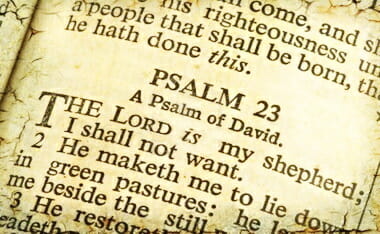
Sunday Morning Reflections ~ Psalm 23:6
Most Sunday’s, early morning, I do a Sunday cartoons for my [this] site. One particular cartoonist I follow and have enjoyed over the years is retiring and starting a business venture using his talents. I was perusing his portfolio and found this gem tucked away… it is a quick visual of Psalm 23:
I love this verse tucked away in Psalm 23:6:
| Only goodness and faithful love will pursue me all the days of my life, and I will dwell in the house of the LORD as long as I live. (HCSB) |
Your beauty and love chase after me every day of my life. I’m back home in the house of God for the rest of my life. |
This verse is a promise that God (Christ) chases after His own, those who were given to Him (Romans 8:29-30; Ephesians 1:4-5; John 17:6-26, …etc.). He will finish the good work He started in them (Philippians 1:6):
|
And I am sure of this, that he who began a good work in you will bring it to completion at the day of Jesus Christ. (ESV) |
There has never been the slightest doubt in my mind that the God who started this great work in you would keep at it and bring it to a flourishing finish on the very day Christ Jesus appears. |
I don’t know about you, but God chased me to the end of my rope (via an obedient Sheriff in super-max at Wayside). And He is doing “Yeoman’s Work,” as, I am owned by Him (Acts 20:28), and, it is work (a cultivation, John 15:5) only He can accomplish. CS Lewis touches on this when he wrote:
“You must picture me alone in that room in Magdalen, night after night, feeling, whenever my mind lifted even for a second from my work, the steady, unrelenting approach of Him whom I so earnestly desired not to meet. That which I greatly feared had at last come upon me. In the Trinity Term of 1929 I gave in, and admitted that God was God, and knelt and prayed: perhaps, that night, the most dejected and reluctant convert in all England. I did not then see what is now the most shining and obvious thing; the Divine humility which will accept a convert even on such terms. The Prodigal Son at least walked home on his own feet. But who can duly adore that Love which will open the high gates to a prodigal who is brought in kicking, struggling, resentful, and darting his eyes in every direction for a chance of escape? The words ‘compelle intrare,’ compel them to come in, have been so abused be wicked men that we shudder at them; but, properly understood, they plumb the depth of the Divine mercy. The hardness of God is kinder than the softness of men, AND HIS COMPULSION IS OUR LIBERATION.” (Emphasis added.)
Surprised by Joy: The Shape of My Early Life
REMEMBER ~ the Apostle Paul mentioned the same — many years before — Lewis penned the Chronicles of Narnia:
I give thanks to Christ Jesus our Lord who has strengthened me, because He considered me faithful, appointing me to the ministry — one who was formerly a blasphemer, a persecutor, and an arrogant man. But I received mercy because I acted out of ignorance in unbelief. And the grace of our Lord overflowed, along with the faith and love that are in Christ Jesus. This saying is trustworthy and deserving of full acceptance: “Christ Jesus came into the world to save sinners”—and I am the worst of them. But I received mercy for this reason, so that in me, the worst of them, Christ Jesus might demonstrate His extraordinary patience as an example to those who would believe in Him for eternal life.
1Timothy 1:12-16 (HCSB)
Continuing this chasing God does of those that belong to Him. His “sheep”
…My sheep hear my voice, and I know them, and they follow me. I give them eternal life, and they will never perish, and no one will snatch them out of my hand. My Father, who has given them to me, is greater than all, and no one is able to snatch them out of the Father’s hand.
John 10:27-29 (HCSB)
A scene that beautifully captures Lewis’ experience is in his The Voyage of the Dawn Treader (The Chronicles of Narnia, Book 5). One of the main characters—a boy named Eustace—has developed an evil heart and becomes a dragon. He wants to be a boy again, so Aslan leads him to a pristine fountain of water. Listen to Eustace (and behind him, C.S. Lewis), describe his experience:
The water was as clear as anything and I thought if I could get in there and bathe it would ease the pain. But the lion [Aslan] told me I must undress first.
So I started scratching myself and my scales began coming off all over the place. And then I scratched a little deeper and, instead of just scales coming off here and there, my whole skin started peeling off beautifully. In a minute or two I just stepped out of it. I could see it lying there beside me, looking rather nasty. It was a most lovely feeling. So I started to go down into the well for my bathe.
But just as I was going to put my feet into the water I looked down and saw that [the skin on my feet was] all hard and rough and wrinkled and scaly just as it had been before.
[Eustace then repeats the process a second and third time, growing increasingly despairing.]
Then the lion said, ‘You will have to let me undress you.’ I was afraid of his claws, I can tell you, but I was pretty nearly desperate now. So I just lay flat down on my back to let him do it.
The very first tear he made was so deep that I thought it had gone right into my heart. And when he began pulling the skin off, it hurt worse than anything I’ve ever felt. The only thing that made me able to bear it was just the pleasure of feeling the stuff peel off.
Well, he peeled the beastly stuff right off – just as I thought I’d done it myself the other three times, only they hadn’t hurt – and there it was lying on the grass: only ever so much thicker, and darker, and more knobbly-looking than the others had been. Then he caught hold of me – I didn’t like that much for I was very tender underneath now that I’d no skin on – and threw me into the water. It smarted like anything, but only for a moment. After that it became perfectly delicious and as soon as I started swimming and splashing I found that all the pain had gone. And then I saw why. I’d turned into a boy again.
If you’re feeling God’s pursuit like the “claws” of a lion, know that while it may be painful, it’s not punishment. God never desires to pay you back, but to bring you back. Will you let him?
CS Lewis as well as the Apostle Paul were essentially “chased by God,” and in a lot of ways I was chased as well. As I was writing this and thinking on this miracle that God has wrought in my life as well as others… a friend posted this on FaceBook. And I wish to note that this boy was CHASED by God into a foster-care system and brought into His fold by the Body of Christ (via an obedient uncle and aunt). You see, Christopher Duffley was one of those given to Jesus — set-aside — by the Father, and God will finish the good work (salvation) in him:
I will end with this very personal insight into why Philippians 1:6 is a favorite of the much missed J. Vernon McGee:
Because this is my life verse and therefore very meaningful to me, I hope you won’t mind if I tell you about it. I was a very poor boy when I went away to college. My dad had been killed in an accident in a cotton gin when I was fourteen years old. My mother took my sister and me to Nashville, Tennessee. I had to get a permit that allowed a boy of fourteen to go to work, and I worked for a wholesale hardware concern. I had to be up by five o’clock in the morning to pick up the mail and have it sorted and on the desks of all the officials in each department. I should have been in school, and I wanted to go to school. Later I had the privilege of going back to school because a wonderful friend acted as a father to me. He had a son who was a drunkard. He had wanted his son to get a college education, but he didn’t; so the man helped me get a job, and I was able to go to college. Every year I thought it would be my last year. I never thought God would see me through—I had very little faith. The last year I was in college was during the depression; 1928 and 1929 were bad years. I couldn’t get a job and had no money.
On graduation day, after receiving my degree, I returned to my room in the dormitory, still in my cap and gown, and sat dejectedly on the edge of my bed. My roommate came and asked, “What in the world—did somebody die?” I said, “Just as well to. I thought God had called me to the ministry. I’m through college, the depression has hit, and I don’t even have a job for this summer. I haven’t a dime to go to seminary next year.” While we were still talking, the phone rang. It was for me. On the other end of the line was a dear little lady who asked me to stop by her home where she lived with her sister. They were both widows, and they looked as if they had come out of the antebellum days. They attended the church where I taught a class of intermediate boys, and I herded the boys into the church service every Sunday morning. The sisters sat in the pew behind us, and I always thought they disapproved. But in their home that day each handed me an envelope in memory of her husband. I left as soon as it was polite to go, hurried around the corner, and opened the envelopes. The first contained a check for $250; I hurriedly opened the other envelope and found another check for $250. Do you know what $500 was like during the depression? I felt like a millionaire!
That night the Sunday school had a banquet for me, a farewell banquet, and they gave me a check for $100. So now I had $600! That is the money with which I went to seminary the next year. That night at the banquet someone gave me this verse: “Being confident of this very thing, that he which hath begun a good work in you will perform it until the day of Jesus Christ.” That has been my life verse ever since that night.
Now let’s consider this verse for a moment.
“Being confident” is causative and could be translated, “Since I am confident of this very thing”—Paul knew what he was talking about.
“He which hath begun … will perform.” The word for “perform” means to carry through. He will consummate what He began.
“Until the day of Jesus Christ.” You and I today are not living in the Day of the Lord; we are not living in the day of the Old Testament; we are not living in the day of the Millennium; we are not living in the day of eternity; we are living in the day of Jesus Christ. That day will be consummated when He comes to take His own out of this world. And the Holy Spirit has sealed you and me until the day of redemption. Paul wrote to the Ephesian believers, “And grieve not the Holy Spirit of God, whereby ye are sealed unto the day of redemption” (Eph. 4:30). And until then, you can count upon God to consummate whatever He intends for you. He is going to see it through. How wonderful!
Now, my friend, let me ask you this: Is this practical for you and me? I don’t know what your circumstances are, but if you are a child of God, I am sure you can testify that God has brought you up to the present moment, hasn’t He? Can’t you look back over your life and see how He has led you and provided for you? Then why should you be concerned about tomorrow? Do you think He is going to let you down now? I confess that this was my thinking when I finished college.
You see, I went through college, but I didn’t enjoy it as I should have. I never had joy because I always was afraid I couldn’t go on. I just didn’t believe God would see me through. So many times we Christians act like unbelievers. In fact, we live and act like practical atheists. The graduation was a happy experience for my classmates. I could see those rich kids being hugged by their parents. No one was there to throw their arms around me, but it wouldn’t have made any difference if there had been a whole delegation of well-wishers, because I thought I was through. I felt called to the ministry, but there was no possible way for me to go on to seminary. However, I had a wonderful heavenly Father who, through Philippians 1:6, put His arms around me and said, “I’ll see you through.”
And I want to testify today that He is still keeping His promise. It has been a comfort to me since I have had several bouts with cancer to know that my heavenly Father said, “Being confident of this very thing, that he which hath begun a good work in you will perform it until the day of Jesus Christ.” He is a good Doctor also; in fact, He is the Great Physician, and He has said, “Whatever I have in store for you, I’m going to see you through until the day of Jesus Christ.” So I am in His hands.
This is a great verse of Scripture. Oh, I have held onto this during many a dark night when the storm outside was beating against my little bark. My, how wonderful to have a heavenly Father like this!
J. Vernon McGee, Thru the Bible Commentary, electronic ed., vol. 5 (Nashville: Thomas Nelson, 1997), 292–293.
The Cultural Impact of Darwinian Evolution ~ John West, PhD
One of the philosophical implications mentioned (via Darwin) of “Beehive Ethics”
….Darwin thought that, had the circumstances for reproductive fitness been different, then the deliverances of conscience might have been radically different. “If . . . men were reared under precisely the same conditions as hive-bees, there can hardly be a doubt that our unmarried females would, like the worker-bees, think it a sacred duty to kill their brothers, and mothers would strive to kill their fertile daughters, and no one would think of interfering” (Darwin, Descent, 82). As it happens, we weren’t “reared” after the manner of hive bees, and so we have widespread and strong beliefs about the sanctity of human life and its implications for how we should treat our siblings and our offspring.
But this strongly suggests that we would have had whatever beliefs were ultimately fitness producing given the circumstances of survival. Given the background belief of naturalism, there appears to be no plausible Darwinian reason for thinking that the fitness-producing predispositions that set the parameters for moral reflection have anything whatsoever to do with the truth of the resulting moral beliefs. One might be able to make a case for thinking that having true beliefs about, say, the predatory behaviors of tigers would, when combined with the understandable desire not to be eaten, be fitness producing. But the account would be far from straightforward in the case of moral beliefs.” And so the Darwinian explanation undercuts whatever reason the naturalist might have had for thinking that any of our moral beliefs is true. The result is moral skepticism.
If our pretheoretical moral convictions are largely the product of natural selection, as Darwin’s theory implies, then the moral theories we find plausible are an indirect result of that same evolutionary process. How, after all, do we come to settle upon a proposed moral theory and its principles as being true? What methodology is available to us?
Paul Copan and William Lane Craig, eds., Contending With Christianity’s Critics: Answering the New Atheists & Other Objections (Nashville, TN: B&H Publishing, 2009), 70.
Read more in these posts:
- Hear Evolutionists/Atheists Themselves on Evil & Ethics (like Rape for Instance)
- Concepts: “Is Reality Merely a Perception?” (Perceptions of Truth)
Another concept often lost on the average person:
Let’s consider a basic question: Why does the natural world make any sense to begin with? Albert Einstein once remarked that the most incomprehensible thing about the universe is that it is comprehensible. Why should we be able to grasp the beauty, elegance, and complexity of our universe?
Einstein understood a basic truth about science, namely, that it relies upon certain philosophical assumptions about the natural world. These assumptions include the existence of an external world that is orderly and rational, and the trustworthiness of our minds to grasp that world. Science cannot proceed apart from these assumptions, even though they cannot be independently proven. Oxford professor John C. Lennox asks a penetrating question, “At the heart of all science lies the conviction that the universe is orderly. Without this deep conviction science would not be possible. So we are entitled to ask: Where does the conviction come from?”” Why is the world orderly? And why do our minds comprehend this order?
Toward the end of The God Delusion, Dawkins admits that since we are the product of natural selection, our senses cannot be fully trusted. After all, according to Darwinian evolution, our senses have been formed to aid survival, not necessarily to deliver true belief. Since a human being has been cobbled together through the blind process of natural selection acting on random mutation, says Dawkins, it’s unlikely that our views of the world are completely true. Outspoken philosopher of neuro-science Patricia Churchland agrees:
- The principle chore of brains is to get the body parts where they should be in order that the organism may survive. Improvements in sensorimotor control confer an evolutionary advantage: a fancier style of representing [the world] is advantageous so long as it… enhances the organism’s chances for survival. Truth, whatever that is, takes the hindmost.
Dawkins is on the right track to suggest that naturalism should lead people to be skeptical about trusting their senses. Dawkins just doesn’t take his skepticism far enough. In Miracles, C. S. Lewis points out that knowledge depends upon the reliability of our mental faculties. If human reasoning is not trustworthy, then no scientific conclusions can be considered true or false. In fact, we couldn’t have any knowledge about the world, period. Our senses must be reliable to acquire knowledge of the world, and our reasoning faculties must be reliable to process the acquired knowledge. But this raises a particularly thorny dilemma for atheism. If the mind has developed through the blind, irrational, and material process of Darwinian evolution, then why should we trust it at all? Why should we believe that the human brain—the outcome of an accidental process—actually puts us in touch with reality? Science cannot be used as an answer to this question, because science itself relies upon these very assumptions.
Even Charles Darwin was aware of this problem: “The horrid doubt always arises whether the convictions of man’s mind, which has developed from the mind of the lower animals, are of any value or at all trustworthy. Would anyone trust the conviction of a monkey’s mind, if there are any convictions in such a mind?” If Darwinian evolution is true, we should distrust the cognitive faculties that make science possible.
Sean McDowell and Jonathan Morrow, Is God Just a Human Invention? And Seventeen Other Questions Raised by the New Atheists (Grand Rapids, MI: Kregel Publications, 2010), 37-38.
- 3 of 4
- « Previous
- 1
- 2
- 3
- 4
- Next »