Jesse Watters: “Derek Chauvin was shivved 22 times in the library by another inmate, and now we know who the other inmate was. His name is John Turscak… Turscak is also a member of the Mexican mafia and are you ready? An FBI informant.”
Author: Papa Giorgio

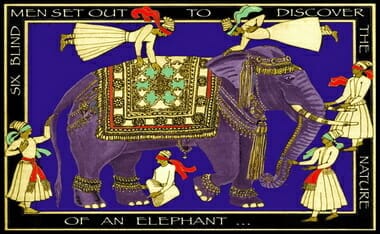
Icons of Pluralism Examined: Elephants and Geography Fallacies
ORIGINALLY POSTED FEBRUARY 2015, UPDATED TODAY (11/30/2023)
AS A QUICK ASIDE: Christianity was born/founded on the Asian Continent, and more Christians today are residing on said Continent than anyplace in the world. In fact, just in China alone, there is said to be 100-million believers or more. In other words, there have been more Christians on the Asian Continent from the churches founding to this day. Christianity has always been an “Asian religion.” Of course the West has influenced the expression of faith just as other geographical areas have influenced expression of the Christian faith. But Christianity is not “American.”
JOHN PIIPPO has this great insight from Dinesh D’Souza:
Dinesh D’Souza, in his new book Life After Death: The Evidence, talks about the genetic fallacy as used, he feels, by certain atheists. For example, it is a sociological fact that the statement religious diversity exists is true. If you were born in India, as D.Souza was, you would most likely be a Hindu rather than a Christian or a Jew (as D’Souza was). While that sociological statement is true, its truth has (watch closely…) no logical relevance as regards the statements such as The Hindu worldview is true, or Christian theism is true. D’ Souza writes:
“The atheist is simply wrong to assume that religious diversity undermines the truth of religious claims… [T]he fact that you learned your Christianity because you grew up in the Bible Belt [does not] imply anything about whether those beliefs are true or false. The atheist is guilty here of what in logic is called the “genetic fallacy.” The term does not refer to genes; it refers to origins. Think of it this way. If you are raised in New York, you are more likely to believe in Einstein’s theory of relativity than if you are raised in New Guinea. Someone from Oxford, England, is more likely to be an atheist than someone from Oxford, Mississippi. The geographical roots of your beliefs have no bearing on the validity of your beliefs.” (38-39, emphasis mine)
[Dinesh D’Souza, Life After Death: The Evidence (Washington, DC: Regnery Publishing, 2009), 38-39.]
In this debate with atheist John Loftus, Dinesh D’Souza demonstrates the multiplicity of religions is no argument against religion as an enterprise.
Here is the transcript of the above:
To address what seems to me the one point, the glimmer of a point that emerged in [John Loftus’] … opening statement. Essentially, John Loftus said that we “can’t really know if our religion is true because there happen to be many of them. If you happen to be born in Afghanistan, you’d be a Muslim. If you happen to be born in Tibet, you’d be a Buddhist.”
That’s true.
But what on Earth does that prove?
I happen to have been born in Bombay, India, which happens to be a Hindu country, the second largest group is Muslim. Even so, by choice, I am a Christian. Just because the majority religion is one thing doesn’t make it right or wrong.
By the way, what he says about Christianity or Islam, is equally true about beliefs in history or science.
If you are born in Oxford, England, you are more likely to believe the theory of evolution than if you are born in Oxford, Missouri.
If you are born in New Guinea, you are less likely to accept Einstein’s theory of relativity than if you are born in New York City.
What does this say about whether Einstein’s theory of relativity Is true?
Absolutely nothing.
In other words, John Loftus is guilty of what, in logic, is called the genetic fallacy.
It’s the fallacy of confusing the origin of an idea with its veracity, the origin of an idea has absolutely nothing to do with its veracity.
A rational handling of the idea that all religions are basically the same or that all religions are true paths to God. Unfortunately, many people hold to those misconceptions (recently featured in the “Life of Pi”) merely because they haven’t yet though carefully about it.
…and this from THEO-SOPHICAL RUMINATIONS:
Religious pluralists often claim that religious beliefs are culturally relative: the religion you adopt is determined by where you live, not the rationality/truth of the religion itself. If you live in India you will probably be a Hindu; if you live in the U.S. you will probably be a Christian. One’s personal religious beliefs are nothing more than a geographic accident, so we should not believe that our religion is true while others are not.
This argument is a double-edged sword. If the religious pluralist had been born in Saudi Arabia he would have been a Muslim, and Muslims are religious particularists! His pluralistic view of religion is dependent on his being born in 20th century Western society!
A more pointed critique of this argument, however, comes from the realm of logic. The line of reasoning employed by the pluralist commits the genetic fallacy (invalidating a view based on how a person came to hold that view). The fact of the matter is that the truth of a belief is independent of the influences that brought you to believe in it….
(See also GOT QUESTIONS)
Ravi Zacharias responds with “precise language” to a written question. With his patented charm and clarity, Ravi responds to the challenge of exclusivity in Christianity that skeptics challenge us with.
See more at WINTERY KNIGHT and APOLOGETICS INDEX:
(Mainly from Paul Copan’s “True for You, But not for Me“)
People have used this old parable to share their opinion or viewpoint that no one religion is the only route to God (pluralism). Pluralists believe that the road to God is wide. The opposite of this is that only one religion is really true (exclusivism).
What could a thoughtful person say in response?
- Just because there are many different religious answers and systems doesn’t automatically mean pluralism is correct.
- Simply because there are many political alternatives in the world (monarchy, fascism, communism, democracy, etc.) doesn’t mean that someone growing up in the midst of them is unable to see that some forms of government are better than others.
- That kind of evaluation isn’t arrogant or presumptuous. The same is true of grappling with religion.
- The same line of reasoning applies to the pluralist himself. If the pluralist grew up in Madagascar or medieval France, he would not have been a pluralist!
- If we are culturally conditioned regarding our religious beliefs, then why should the religious pluralist think his view is less arbitrary or conditioned than the exclusivist’s?
- If Christian faith is true, then the Christian would be in a better position than the pluralist to assess the status of other religions
- How does the pluralist know he is correct? Even though he claims others don’t know Ultimate Reality as it really is, he implies that he does. (To say that the Ultimate Reality can’t be known is a statement of knowledge.)
- If the Christian needs to justify Christianity’s claims, the pluralist’s views need just as much substantiation.
If we can’t know Reality as it really is, why think one exists at all? Why not simply try to explain religions as purely human or cultural manifestations without being anything more?
[….]
If you had been born in another country, is it at all likely that you would be a Christian?
Eric looks back at his family—devoutly Christian for four generations in Europe and America, twelve pastors among his relatives, an inner-city schoolteacher and Christian writer for parents—and readily acknowledges that his environment made it easy for him to become a Christian. Still, his faith was exposed to severe challenges as he rose to the top of his university class and as he lived in Asia as a college student. And he knows it took a conscious series of wrenching decisions in his teens and early adult years for him to choose to remain a Christian. Oddly, one of the biggest influences on his faith came from outside his culture through Chinese Christian friends.
John Hick has asserted that in the vast majority of cases, an individual’s religious beliefs will be the conditioned result of his geographical circumstances.1 Statistically speaking, Hick is correct. But what follows from that scenario? We saw in an earlier chapter that the bare fact that individuals hold different views about a thing doesn’t make relativism the inevitable conclusion. Similarly, the phenomenon of varying religious beliefs hardly entails religious pluralism. Before becoming a religious pluralist, an exclusivist has a few equally reasonable options:
- One could continue to accept the religion one grew up with because it has the ring of truth.
- One could reject the view one grew up with and become an adherent to a religion believed to be true.
- One could opt to embrace a less demanding, more convenient religious view.
- One could become a religious skeptic, concluding that, because the process of belief-formation is unreliable, no religion appears to really save.
Why should the view of pluralism be chosen instead of these other options?
An analogy from politics is helpful.2 As with the multiple religious alternatives in the world, there are many political alternatives—monarchy, Fascism, Marxism, or democracy. What if we tell a Marxist or a conservative Republican that if he had been raised in Nazi Germany, he would have belonged to the Hitler Youth? He will probably agree but ask what your point is. What is the point of this analogy? Just because a diversity of political options has existed in the history of the world doesn’t obstruct us from evaluating one political system as superior to its rivals. Just because there have been many political systems and we could have grown up in an alternate, inferior political system doesn’t mean we are arrogant for believing one is simply better.3
Furthermore, when a pluralist asks the question about cultural or religious conditioning, the same line of reasoning applies to the pluralist himself. The pluralist has been just as conditioned as his religious exclusivist counterparts have. Alvin Plantinga comments:
Pluralism isn’t and hasn’t been widely popular in the world at large; if the pluralist had been born in Madagascar, or medieval France, he probably wouldn’t have been a pluralist. Does it follow that he shouldn’t be a pluralist or that his pluralistic beliefs are produced in him by an unreliable belief-producing process? I doubt it.4
If all religions are culturally conditioned responses to the Real, can’t we say that someone like Hick himself has been culturally conditioned to hold a pluralistic view rather than that of an exclusivist? If that is the case, why should Hick’s view be any less arbitrary or accidental than another’s? Why should his perspective be taken as having any more authority than the orthodox Christian’s?
There is another problem: The exclusivist likely believes he has better basis for holding to his views than in becoming a religious pluralist; therefore he is not being arbitrary. John Hick holds that the religious exclusivist is arbitrary: “The arbitrariness of [the exclusivist position] is underlined by the consideration that in the vast majority of cases the religion to which a person adheres depends upon the accidents of birth.”5 But the exclusivist believes he is somehow justified in his position—perhaps the internal witness of the Holy Spirit or a conversion experience that has opened his eyes so that now he sees what his dissenters do not—even if he can’t argue against the views of others. Even if the exclusivist is mistaken, he can’t be accused of arbitrariness. Hick wouldn’t think of his own view as arbitrary, and he should not level this charge against the exclusivist.
A third problem emerges: How does the pluralist know that he is correct? Hick says that the Real is impossible to describe with human words; It transcends all language. But how does Hick know this? And what if the Real chose to disclose Itself to human beings in a particular form (i.e., religion) and not another? Why should the claims of that religion not be taken seriously?6 As Christians, who lay claim to the uniqueness of Christ, we are often challenged to justify this claim—and we rightly should. But the pluralist is also making an assertion that stands in just as much need of verification. He makes a claim about God, truth, the nature of reality. We ought to press the pluralist at this very point: “How do you know you are right? Furthermore, how do you know anything at all about the Ultimate Reality, since you think all human attempts to portray It are inadequate?”7
At this point we see cracks in Hick’s edifice.8 Although Hick claims to have drawn his conclusions about religion from the ground up, one wonders how he could arrive at an unknowable Ultimate Reality. In other words, if the Real is truly unknowable and if there is no common thread running through all the world religions so that we could formulate certain positive statements about It (like whether It is a personal being as opposed to an impersonal principle, monotheistic as opposed to polytheistic, or trinitary as opposed to unitary), then why bother positing Its existence at all? If all that the world religions know about God is what they perceive—not what they know of God as he really is, everything can be adequately explained through the human forms of religion. The Ultimate becomes utterly superfluous. And while It could exist, there is no good reason to think that It does. One could even ask Hick what prevents him from going one step further and saying that religion is wholly human.
Furthermore, when Hick begins at the level of human experience, this approach almost inevitably winds up treating all religions alike. The German theologian Wolfhart Pannenberg writes, “If everything comes down to human experiences, then the obvious conclusion is to treat them all on the same level.”9
In contrast to Hick, the Christian affirms that the knowledge of God depends on his gracious initiative to reveal himself.10 We read in Scripture that the natural order of creation (what we see) actually reveals the eternal power and nature of the unseen God. He has not left himself without a witness in the natural realm (Rom. 1:20; also Acts 14:15–18; 17:24–29; Ps. 19:1). God’s existence and an array of his attributes can be known through his effects. His fingerprints are all over the universe. The medieval theologian-philosopher Thomas Aquinas, for instance, argued in this way: “Hence the existence of God, insofar as it is not self-evident to us, can be demonstrated from those of His effects which are known to us.”11 What we know about God and an overarching moral law in light of his creation, in fact, means we are without excuse (Rom. 2:14–15). (We’ll say more about general revelation in Part IV.) So rather than dismissing the observable world as inadequate, why can’t we say that what we see in the world serves as a pointer toward God?
Thus there is a role for Christian apologetics to play in defending the rationality and plausibility of the Christian revelation.12 This role—especially in the face of conflicting worldviews—shouldn’t be underestimated.13 While Christians should be wary of furnishing arguments as “proofs,” which tend to imply a mathematical certainty, a modest and plausible defense of Christianity—carried out in dependence on God’s Spirit—often provides the mental evidence people need to pursue God with heart, soul, and mind.
Deflating “If You Grew Up in India, You’d Be a Hindu.”
The phenomenon of differing religious beliefs doesn’t automatically entail religious pluralism. There are other options.
Simply because there are many political alternatives in the world (monarchy, Fascism, communism, democracy, etc.) doesn’t mean someone growing up in the midst of them is unable to see that some forms of government are better than others. That kind of evaluation isn’t arrogant or presumptuous. The same is true of grappling with religion.
The same line of reasoning applies to the pluralist himself. If the pluralist grew up in Madagascar or medieval France, he would not have been a pluralist!
If we are culturally conditioned regarding our religious beliefs, then why should the religious pluralist think his view is less arbitrary or conditioned than the exclusivist’s?
If Christian faith is true, then the Christian would be in a better position than the pluralist to assess the status of other religions.
How does the pluralist know he is correct? Even though he claims that others don’t know Ultimate Reality as It really is, he implies that he does. (To say that the Ultimate Reality can’t be known is to make at least one statement of knowledge.)
If the Christian needs to justify Christianity’s claims, the pluralist’s views need just as much substantiation.
If we can’t know Reality as It really is, why think one exists at all? Why not simply try to explain religions as purely human or cultural manifestations without being anything more?
NOTES
1. An Interpretation of Religion, 2.
2. Van Inwagen, ”Non Est Hick,” 213-214.
3. John Hick’s reply to this analogy is inadequate, thus leaving the traditional Christian view open to the charge of arrogance: ”The Church’s claim is not about the relative merits of different political systems, but about the eternal fate of the entire human race” (”The Epistemological Challenge of Religious Pluralism,” Faith and Philosophy 14 [July 1997]: 282). Peter van Inwagen responds by saying that Hick’s accusation is irrelevant to the charge of arrogance. Whether in the political or religious realm, I still must figure out which beliefs to hold among a number of options. So if I adopt a certain set of beliefs, then ”I have to believe that I and those who agree with me are right and that the rest of the world is wrong…. What hangs on one’s accepting a certain set of beliefs, or what follows from their truth, doesn’t enter into the question of whether it is arrogant to accept them” (”A Reply to Professor Hick,” Faith and Philosophy 14 [July 1997]: 299-300).
4. ”Pluralism,” 23-24.
5. This citation is from a personal letter from John Hick to Alvin Plantinga. See Alvin Plantinga’s article, ”Ad Hick,” Faith and Philosophy 14 (July 1997): 295. The critique of Hick in this paragraph is taken from Plantinga’s article in Faith and Philosophy (295-302).
6. D’Costa, “The Impossibility of a Pluralist View of Religions,” 229.
7. Hick has claimed that he does not know but merely presents a ”hypothesis” (see his rather unilluminating essay ”The Possibility of Religious Pluralism,” Religious Studies 33 [1997]: 161-166). However, his claims that exclusivism is ”arbitrary” or has ”morally or religiously revolting” consequences (in More Than One Way?, 246) betrays his certainty.
8. This and the following paragraphs are based on Paul R. Eddy’s argument in ”Religious Pluralism and the Divine,” 470-78.
9. ”Religious Pluralism and Conflicting Truth Claims,” in Gavin D’Costa, ed., Christian Uniqueness Reconsidered: The Myth of a Pluralistic Theology of Religions (Maryknoll, N.Y.: Orbis Books, 1990), 102.
10. On this point, I draw much from D. A. Carson, The Gagging of God, 182-189.
11. Summa Theologiae I.2.3c.
12. Two fine popular-level apologetics books are William Lane Craig, Reasonable Faith (Wheaton, Ill.: Crossway Books, 1994) and J. P. Moreland, Scaling the Secular City (Grand Rapids, Mich.: Baker Book House, 1987). A bit more rigorous but rewarding is Stuart C. Hackett, The Reconstruction of the Christian Revelation Claim (Grand Rapids, Mich.: Baker, 1984). Three other apologetics books worth noting are Peter Kreeft and Ronald K. Tacelli, Handbook of Christian Apologetics (Downers Grove, Ill.: InterVarsity Press, 1994); Norman Geisler, Christian Apologetics (Grand Rapids, Mich.: Baker, 1976); and Winfried Corduan, Reasonable Faith.
13. Some well-meaning Christians have minimized the place of Christian apologetics for a number of reasons. But their reasons, discussed by C. Stephen Evans, tend to be inadequate: (1) ”Human reason has been damaged by sin,” but reason is not worthless, only defective. (2) ”Trying to use general revelation is presumptuous”: Seeking to persuade a person with arguments from general revelation doesn’t assume unassisted and autonomous reason (after all, reason is a gift from God); any such approach ought to rely upon God–just as presenting the gospel message should. (3) ”Natural revelation is unnecessary since special revelation is sufficient”: This argument wrongly assumes that God cannot use the world he created and the reason he gave us to interpret that creation to draw people to himself. (4) ”The arguments for God’s existence aren’t very good”: The Christian apologist should recognize that God has made the world in such a way that if a person is looking for loopholes to avoid God’s existence, he may do so, but it is not due to a lack of evidence. It seems that God would permit evidence for his existence to be resistible and discountable so that humans do not look like utter nitwits if they reject God. There is more to belief than mere intellectual reasons; people often have moral reasons for rejecting God. (See Evans’ fine essay, ”Apologetics in a New Key,” in Craig and McLeod, The Logic of Rational Theism, 65-75.)
The story of the six blind men and the elephant is one you hear then and again. In this short response you will see how this story collapses under its own weight.
Example of the failure of the Genetic Fallacy:
Even if they are skeptical of their faith, which should be/is a natural human tendency and should be encouraged in an environment where one feels safe. I do wish, before the larger post of studies below, that there was another fallacy presented in the above video. And it deals with the genetic fallacy (WIKI). It was pointed out that some people are born in places where Christianity is the dominant philosophy, and so they are Christian. Others are born in places where they have a Hindu influence, a Buddhist influence, or like in many parts of Europe, a secular influence. This however does nothing to disprove a religious belief as true or not true. I will give an example.
In the West we accept the truth of Einstein relativity as a scientific fact (or close to a fact). In fact, many theories based on this are shown to work out with these assumptions of fact in mind. Fine, we are born into a culture that believes this truth to be true. Now, if you were born in Papua New Guinea, the general populace may reject the truth of this since as a whole their culture is not steeped in this belief or the scientific method. This has or says nothing about the truth of Einstein’s theory. Which is why this is a fallacy and should be rejected.
MORE:
The above is an example of relativism run-amock with young people in downtown Durham after the Pride Festival at Duke University Sept 28th 2013. Another interview here.
(This post is updated, as the video from the “Thrive Apologetics Conference” was deleted. New information was substituted in its place.) Posted below are three presentations. The first presentation (audio) is Dr. Beckwith’s classic presentation where high school and college kids get a 2-week crash course in the Christian worldview.
The following two presentations are by Gregory Koukle. The first is a UCLA presentation, the second is an excellent presentation ay Biola University entitled “The Intolerance of Tolerance.” Enjoy this updated post.
Here is — firstly — a classic presentation by Greg Koukl of Stand to Reason.
Moral Relativism: Feet Firmly Planted in Midair from Veritas [3] on Vimeo.
Below this will be another presentation that is one of Koukl’s best yet, and really is a video update to the excellent book, Relativism: Feet Planted Firmly in Mid-Air… a phrase common to Francis Schaeffer, “feet planted firmly in mid-air.”
To wit, Humanism:
Since present day Humanism vilifies Judeo-Christianity as backward, its goal to assure progress through education necessitates an effort to keep all mention of theism out of the classroom. Here we have the irony of twentieth century Humanism, a belief system recognized by the Supreme Court as a non-theistic religion, foisting upon society the unconstitutional prospect of establishment of a state-sanctioned non-theistic religion which legislates against the expression of a theistic one by arguing separation of church & state. To dwell here in more detail is beyond the scope of this article, but to close, here are some other considerations:
“We should note this curious mark of our own age: the only absolute allowed is the absolute insistence that there is no absolute” (Schaeffer)
In the earlier spirit of cooperation with the Christian church the ethics or values of the faith were “borrowed” by the humanists. In their secular framework, however, denying the transcendent, they negated the theocentric foundation of those values, (the character of God), while attempting to retain the ethics. So it can be said that the Humanist, then, lives on “borrowed capital”. In describing this situation, Francis Schaeffer observed that: “…the Humanist has both feet firmly planted in mid-air.” His meaning here is that while the Humanist may have noble ideals, there is no rational foundation for them. An anthropocentric view says that mankind is a “cosmic accident”; he comes from nothing, he goes to nothing, but in between he’s a being of supreme dignity. What the Humanist fails to face is that with no ultimate basis, his ideals, virtues and values are mere preferences, not principles. Judging by this standard of “no ultimate standard”, who is to say whose preferences are to be “dignified”, ultimately?
See more quotes HERE

Leftists Smear 9-Year Old As a Racist
(I hope this kid sues!)
UPDATED VIDEO:
- “Now things may be changing thanks to the left’s Great Satan, Elon Musk creating community notes. A kid’s life won’t be destroyed. See, Musk created a way to prevent small false smears from taking root. He disabled the one weapon that the left so desperately embraced. Taking something out of context, sharing it with like minded creeps and letting it spread. Musk killed that. No wonder they hate his guts. They should.”
I tried to post this video on Facebook, and it will not allow it — in comments or on a wall. In other words, Facebook is banning a Native-American from dressing and representing his ancestors. They are doing it either to say this is cultural appropriation, and so, Facebook is acting like a SAVIOR of people’s [possible hurt] feelings. Or they are the arbiters of what a Native-American can do publicly. They are the judge in saying an American Indian cannot dress like their ancestors at a football game, but they will allow videos from a dance on a reservation.
[Mmm. Maybe Facebook is trying to minimize their exposure to a defamation lawsuit by the kid?]
‘Outnumbered’ panel discuss a young Chiefs fan attacked for dressing in support of his team
Bubba Armenta and his son Holden join ‘Jesse Watters Primetime’ to discuss a Deadspin reporter smearing the 9-year-old as racist for wearing a Native headdress and ‘blackface’ to a Kansas City Chiefs game.
BONUS!
Essentially, CNN Is Years Behind FOX NEWS’ Reporting
OOPS! CNN sent a reporter to the border, accidentally proved Trump was RIGHT all along after reporter left in SHOCK over open-border:
“They couldn’t believe it!” pic.twitter.com/pgjjKvuftB
— Benny Johnson (@bennyjohnson) November 29, 2023

A Holiday to Remember | A Heartwarming Chevrolet Ad
A very sweet Chevy commercial Wayne at Bible study this morning said was a must watch:
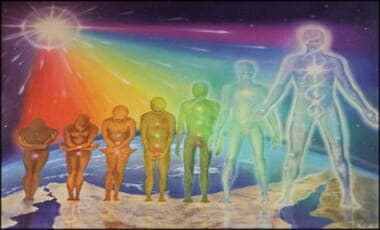
The Mormon “god” Is Captive To The Cosmos
(I just reedited an old [already edited] fix I uploaded to my [now nixed] Vimeo account. In this version I play with the audio more via LALAL.AI, and added subtitles via CHECKSUB.)
This original video can be found on YouTube, HERE.
(Video Description) Shannon asked me at the 2 minute mark: “Could it be possible that God was also saved, and also became a new creature, and therefore was fully capable of becoming a god?” August 29, 2019, at the BYU vs Utah game
(GOD NEVER SINNED) Multiple women that I spoke to from the anti-vax group promoted conspiracy theories. The last conversation of the night I have was, no joke, with a flat-earther who supposed we hadn’t landed on the moon. I encouraged her to read my article, “Christians, Don’t Waste Your Life on Conspiracy Theories”
- Joseph Smith said, “We have imagined and supposed that God was God from all eternity. I will refute that idea and take the veil away…. God Himself was once as we are now, and is an exalted man”” (Teachings of the Prophet Joseph Smith, p. 345-346).
- Brigham Young said “It appears ridiculous to the world, under their darkened and erroneous traditions, that God has once been a finite being” (Desert News, November 16, 1859, page 290).
- Lorenzo Snow‘s famous quip: “As man is, God once was; and as God is, man may become.”
I have pointed out the “sin” aspect of this since reading a book titled, “The Mormon Concept of God: A Philosophical Analysis (Studies in American Religion),” by Francis J. Beckwith and Stephen E. Parrish. But Aaron Shafovaloff’s description of a “regional god,” a “most high god over a region of the cosmos” is a great added description to make a point with a Mormon.
Below is a portion of my chapter on the matter
I will add one thing, if I were to update that chapter today, I would shy away from … or, rather, add to the dialectical materialism aspect of the end and include the pantheistic connections as well, as part 2 of this Stanford article notes. The main point being that the Christian/Jewish understanding of the world and nature and gods/God are wholly rejected in LDS philosophy.
INFINITELY FINITE:
MORMON MATERIALISM
I had a Saturday off and was watching my nephews as well as my boys (not watching as much as making sure serious injury did not occur as oft happens with young boys); my wife was off shopping at Sam’s Club and Wal-Mart. Just prior to her getting back my nephews were picked up (not by child protective services, by their mother) and I came out to help unload the car when my wife pulled up. As I was doing so she asked who the guys with name tags on their shirts and ties were that go door to door.
Wondering why after almost twenty years of discussing such matters and having hundreds of books on both Mormon’s and Jehovah’s Witnesses lining our walls she would be asking such a question, I responded, “Mormon elders.” She responded, “Well, they just walked around the corner of our building.” Giddy, I started gathering my thoughts just in case they came to our door. I had compiled a new “routine” to use with Mormons that I thought would be an effective dismantling of their worldview and make them hunger for the truth. Sure enough, as I was carrying in a heavier item I could see through our kitchen window two clean cut guys come to the door. I directed their attention through the screen of the opened kitchen window by telling them I would be with them in a moment. I gave the wife a glance and she gave me that “go get’em Tiger” “look” that Spiderman gets from M.J.
After inviting them in, getting settled, with some small talk and the ritual offering of something for them to drink, they asked if I had any questions for them. I said, “I do in fact have a question, and the question stems from the previous election year and the exchange between Mike Huckabee and Mitt Romney (via the media) who were both running for the Republican nomination.” They were quick to say that the church does not support any one candidate, that they are politically neutral. After their disclaimer I continued, “in an off-cuff remark to a reporter, Mike Huckabee mentioned that Mitt Romney and Mormons believe that Jesus and Lucifer are literal brothers. When Mitt Romney heard about this comment from Huckabee, he responded that this is a canard used by people against the church” (rough quote).
- “So, my question is this gentlemen, maybe you can answer it, are Lucifer and Jesus brothers?”[1]
I got a decidedly more open answer than I expected, but they fell short of getting to the point I was fishing for, which is: that Heavenly Father (whom they consider God) and one of his wives had celestial sex in order to produce children whom relate to each other as siblings, making us all at least half-brothers and sisters (as there are many wives/goddesses in the Mormon heaven), and this god and goddesses were themselves conceived in much the same way.[2]One author makes the point that due to this heavenly progeny we are all children of these beings, so “Jesus, Joseph Smith, Noah, Adam, John the Baptist…. Lucifer, who would become the Devil (a.k.a. Satan), Napoleon, George Washington, Joseph Smith, Louis Armstrong, Donny and Marie Osmond, Senator Orrin Hatch, U.S. President George W. Bush, and everyone else who has ever lived on this planet”[3] are siblings.
I retrieved off of one of my bookshelves a manual meant for preparing young Mormons for marriage in the temple on a seminary level. It is entitled, Achieving Celestial Marriage.[4] (HERE IS THE DOWNLOADABLE PDF.) Reading from this should be short and sweet; all you are doing is making sure they understand the church’s stance on the issue, thus, clearing up any misconceived ideas on their part.
“If you gentlemen will indulge me, I want to read from the church’s own understanding of this topic,” I then typically show them that this manual is indeed printed and published by the church, and then I read:
“By definition, exaltation includes the ability to procreate the family unit throughout eternity. This our Father in heaven has power to do. His marriage partner is our mother in heaven. We are their spirit children, born to them in the bonds of celestial marriage.”[5]
Continuing, I read just the headings and subheadings of the next sections:
- GOD WAS ONCE A MORTAL MAN
-
- (1-2) He Lived on an Earth like Our Own
- (1-3) He Experienced Conditions Similar to Our Own and Advanced Step by Step
- GOD IS NOW AN EXALTED MAN WITH POWERS OF ETERNAL INCREASE
-
- (1-4) Our Father in Heaven Lives in an Exalted Marriage Relationship
- (1-5) We Are Literal Children of God, Part of His Family Unit
This quick and simple reading from their own church’s seminary level publication gets us both on the same page quickly.[6] I do not argue this point with them, I merely move on with this assumption in mind, that their god at some point in the finite past did not exist in bodily form (at all actually) — was born in a heaven similar to ours, born again on the earth, and was exalted into the position he is in now. In other words, at one point in the finite past, Heavenly Father did not exist as we know him today. It is from this premise I continue without missing a beat. “So, according to official church doctrine, Mormon theologians, and Mormon apologists, there is an infinite regress of gods being born and giving birth to other gods. So ‘Heavenly Father’ himself was given birth to in a similar fashion we were, and that father of your ‘heavenly father,’ in turn had a father as well. So in a sense there is a great grandfather god, and so on as you regress backward into time.” Again, this is not a point to argue, if they try, just point to the manual and say you are going off of official Mormon understanding of the issue, and then continue.
Make the point next then, that this differs from the historic, theistic understanding of God.[7] In the Judeo-Christian understanding of creation, even the space-time continuum was created.[8] The Mormon concept has gods being born into an already established, eternally, existing space with an already eternally existing form of matter. In other words, natural laws, moral laws, mathematical parameters and concepts, spatial components, logic, and the like, must have pre-dated Heavenly Father (the Mormon god of this world). The eye, kidney, inner ear, were not created like the Christian understands that God created them. The Christian has in mind that God created DNA and its accompanying RNA, the coccyx, brain, epidermis, the ability to pro-create, when He spoke Adam and Eve into existence. Prior to that these “items,” if I can flippantly refer to them as such, did not exist.
In Mormon theology, on the other hand, DNA pre-dated Heavenly Father, and in fact, he only passes on these as traits to his offspring as they were passed on to him by his father in a sexual act with other goddesses. These forces, the laws of biogenesis, inheritance, gravity, math, moral laws, all impose onto these gods then.[9] The God in Christianity is above these. Actually, the God of the Judeo-Christian reality authored or is the genesis of these concepts; the god in Mormonism is in a sense secondary to these forces or laws imposing upon him in some fashion.[10] Author and pastor Mike Robinson adeptly points this out when he writes:
The Latter-day Saint god lacks eternal omniscience, aseity, supremacy, sovereignty, and omnipotence…. The god of Mormonism does not need to exist for the intelligibility of human experience. He cannot supply the transcendental conditions that are needed for the laws of logic, love, and morality. Van Til contended that “the general precedes the particular” in our reality. This implies that the particular exalted man of Mormon theology cannot supply the general and universal realities that must be, for the necessary and unavoidable transcendental conditions listed above. A restricted and fixed exalted man cannot be the indispensable foundation for the unity of experience and knowledge.[11]
As we will see, even the potentiality of all of us becoming gods is connected to the primordial “sea” — if you will, of “souls” which Mormons refer to as our preexistence — that when used in connection with the birth of these spirit children allow them to be able to become gods in exaltation. This makes these gods, however, dependent on something that is either co-eternal or preexistent to their godhood being conferred on them; or, alternatively, their godhood being realized. This again makes the Mormon gods secondary and dependent on that which precedes them or is co-eternal with them.[12]
Here we will step away from the general conversational points one can make with these young Mormon missionaries and get into the knitty gritty for the readers edification, if we haven’t already done so. We will pick up the more general talking point in a bit. James Talmage, Mormon Apostle and theologian, in his very important Mormon text, Articles of Faith, says the following:
The Father and The Son: A Doctrinal Exposition by The First Presidency and The Twelve — The scriptures plainly and repeatedly affirm that God is the Creator of the earth and the heavens and all things that in them are. In the sense so expressed, the Creator is an Organizer. God created the earth as an organized sphere; but He certainly did not create, in the sense of bringing into primal existence, the ultimate elements of the materials of which the earth consists, for “the elements are eternal” (D. & C. 93:33)[13]
What are these infinite properties that pre-date and in some sense coexist eternally in some form with these gods from which they derive their “eternality” from? Richard Abanes points out some of these ideas in his exhaustive history of the Mormon Church:
…there is a “limitless” amount of cosmic spirit matter known as “intelligence,” out of which Elohim and Heavenly Mother made countless spirit babies via celestial sex. Their ethereal unions somehow siphoned off portions of that great ocean of cosmic “intelligence” and clothed each of these portions with a spirit body. The resulting offspring not only bore their image, but had resident within them the potential for godhood, an attribute of Heavenly Father and Mother…. Countless souls, say LDS leaders, have already attained godhood. Orson Pratt theorized: “If we should take a million of worlds like this and number their particles, we should find that there are more Gods than there are particles of matter in those worlds.”i Brigham Young, much less willing to calculate the number of gods, admitted: “How many Gods there are, I do not know. But there never was a time when there were not Gods.”ii These teachings inspired the popular Mormons couplet: “As man is, God once was; as God is, man may become.”iii[14]
To make this point further, Francis Beckwith mentions that “[s]ince [g]od the Father of Mormonism was himself organized (or spirit-birthed) by his [g]od, who himself is the offspring of yet another [g]od, and so on ad infinitum, Mormon theology therefore implies that the [g]od over this world is a contingent being[15] in an infinite lineage of gods.”[16] Concurring, Mormon theologian B. H. Roberts, a member of the First Council of Seventy, writes:
Not even God may place himself beyond the boundary of space: nor on the outside of duration. Nor is it conceivable to human thought he can create space, or annihilate matter. These are things that limit even God’s omnipotence. What then, is meant by the ascription of the attribute of Omnipotence to God? Simply that all that may or can be done by power conditioned by other eternal existences—duration, space, matter, truth, justice—God can do. But even he may not act out of harmony with the other eternal existences which condition or limit him.[17]
This is very important, because it makes the god Mormons here on this world worship contingent on other beings and parameters for his being and godhood, which has deep ethical consequences:
Hence, when a Mormon says that god is omnipresent he is asserting that god’s influence, power, and knowledge is all-pervasive, but that the focal point of God’s being (that is, his body) exists at a particular place in time and space. Because the Mormons do not believe that the universe is contingent upon God to sustain its continued existence,[18] there is no need for the Mormons to defend the classical view of omnipresence…. Since God Himself came into being as God (although he existed in some state eternally), He cannot be the source and sanction of values. He Himself obeys laws and affirmed values for whose existence he is not responsible.[19]
However, this gets beyond even the debate between Christian theology and Mormon theology, as we will soon see. Returning now to the conversation a bit. I often ask these Mormon elders, if the conversation allows, “why they think that whenever an atheist debates the issue of God in a university setting or formal debate, they never debate against the Mormon concept of god?” Of course they do not know because this question is rarely — if ever — posed to them. “I will tell you,” continuing, “It is because the atheist would be arguing against himself.” This always gets inquisitive looks and they always will ask why this is.
“Let me explain why this is,” and so I continued. I mentioned that when a person who is a lifelong atheist is born here on earth, matter (atoms, quarks, dirt, water, air, etc) doesn’t then begin to exist at the same time they are conceived; matter predated the birth of any person here on earth. The earth, the stars, and the like were here long before the not too hypothetical 45-year old atheist. Not only that, but natural laws such as the law of gravity, the laws of motion were also before this person being born and so, this person is subject to them, and in fact, lives under their sway and effects on the entire cosmos. In the same way when Heavenly Father was birthed in his heaven first by his “godley” parents he was born into an environment that worked with laws in place, even granting he was born with a “spiritual body.” (Here one may grant that in the Mormon heaven the laws may be a bit different than here on earth — hypothetically speaking — but that laws had to be in place nonetheless, even genetic parameters [DNA, amino acids, etc] were in place and that this god was subject to them, much like the “gods” of Grecian lore, even being controlled by wild emotions.) So here are two important definitions to express to these young men in some form or fashion:
Heavenly Father
Born into an environment that imposes forces on him that are both older than him and because of there (these laws) imposing forces on him (gravity, causality, entropy… whatever) while he has to live in a body that can only take up that space where he is, is, well, more powerful than he.
Atheist
Born into an environment that imposes forces on him that are both older than him and because of their (these laws) imposing on him (gravity, causality, entropy… whatever) while he has to live in a body that can only take up that space where he is, is, well, more powerful than he.
Again I point to the classical Judeo-Christian theistic thinking on matters such as these: God created even the laws of the weak and strong nuclear force and the like, matter, energy, even the space-time were brought into existence at some point in the finite past by my God. I will right about now mention that this little presentation I just gave them is what I like to call “the ‘your god is too small’ presentation.”
[1] This has become my standard opener in steering these young men down the “rabbit-trail,” so-to-speak. Often times they are not aware of the whole dynamic of their own faith, theology, and all that it entails.
[2] John Ankerberg and John Weldon, What Do Mormons Really Believe? (Eugene, OR: Harvest House, 2002), 54-59
[3] Richard Abanes, One Nation Under Gods: A History of the Mormon Church (New York, NY: Four Walls Eight Windows, 2002), 285.
[4] (Salt Lake City, UT: Church Educational System Department of Seminaries and Institutes of Religion, 1998), 129. I WILL ATTACH THIS ENTIRE PAGE IN THE APPENDIX.
[6] Usually I make this point – that Heavenly Father was a mortal man – early in the conversation, and, will revisit this idea of Heavenly Father being a man born into a world of his own by stating the argument another way. I will point out that it is possible that their god owned a gas station, worked at a grocery store as a clerk, went to college, or, even like myself, could have been convicted of crimes and done jail time before becoming “exalted.”
[7] A definition here is warranted:
Theism is the worldview that an infinite, personal God created the universe and miraculously intervenes in it from time to time…. God is both transcendent over the universe and immanent in it. The three great theistic religions are Judaism, Islam, and Christianity…. The World Was Created Ex Nihilo. [In-other-words] The world is not eternal. It came into existence by God’s fiat (decree). Its existence is totally contingent and dependent. The universe was not created from pre-existing material (ex materia), as in … materialism, nor was it made out of God’s essence (ex Deo), as in pantheism. It was brought into existence by God, but from nothing.
Norman L. Geisler, Baker Encyclopedia of Christian Apologetics (Grand Rapids: Baker Books, 1999), 722-723.
[8] Another short definition of this “before time” concept:
Time and space are creations of God that began at the Big Bang. If you go back beyond the beginning of time itself, there is simply eternity. By that, I mean eternity in the sense of timelessness. God, the eternal, is timeless in his being. God did not endure through an infinite amount of time up to the moment of creation; that would be absurd. God transcends time. He’s beyond time. Once God creates the universe, he could enter time, but that’s a different topic altogether.
Lee Strobel, The Case for a Creator: A Journalist Investigates Scientific Evidence that Points Towards God (Grand Rapids, MI: Zondervan, 2004), 104.
[9] Francis J. Beckwith, Carl Mosser, and Paul Owen, gen.ed. The New Mormon Challenge: Responding to the Latest Defenses of a Fast-Growing Movement (Grand Rapids, MI: Zondervan, 2002), 148.
[10] Ibid., 223
[11] Presuppositional Apologetics Examines Mormonism: How Van Til’s Apologetic Refutes Mormon Theology (Denver, CO: Outskirts Press, 2007), 71-72.
[12] This idea of derivative or dependent deity in polytheism is explained by professor Roy Clouser:
In many polytheistic traditions there are accounts of how the gods came into existence. This means that the divinity of such gods is clearly regarded as derived and secondary as compared to whatever is divine in the sense of having unconditional reality and accounts for their origins (from now on I will call this the status of being divine per se). Take, for example, the account of the gods of ancient Greece as found in Hesiod and Homer. In Hesiod’s account, the natural world in an undifferentiated state is what just is; it exists unconditionally and gave rise to everything else after it generated a gap between the earth and the heavens he called Chaos. Following that initial change, all other specific forms of existence were generated including the gods. According to Homer the primordial reality was Okeanos, a vast expanse of watery stuff from which arose all else including the gods. Despite their differences, then, both accounts agree that the gods are dependent on a more basic reality so the gods are themselves derivative realities. This is why no one of them — nor all of them together — could be called “creator” in the sense that God is in Genesis. Moreover, the gods are not only secondary divinities because of their optic dependency upon something else that is divine per se. They are also secondary in the noetic sense, since the beliefs about them depend upon the belief in Okeanos or Chaos. For no individual being could be believed to be a god — that is, a being with more divine power than humans possess — unless it was already believed that there is a per se divine source of all other things which confers varying degrees of power upon them. The same is true of the myths of ancient Babylonia. In them, too, the gods acquire their divine status and power derivatively.
-
- For according to them, the origin of all things was the primeval watery chaos, represented by the pair Apsu and Tiamat…. With them the cosmogenic theogony begins.
The Myth of Religious Neutrality: An Essay on the Hidden Role of Religious Belief in Theories (Notre Dame, IN: Uviversity of Notre Dame Press, 2005), 17-18 (emphasis added).
[13] James E. Talmage, A Study of the Articles of Faith (Salt Lake City, UT: The Church of Jesus Christ of Latter-day Saints, 1959) 465-466. (Emphasis added.)
[14] Richard Abanes, One Nation Under Gods, 285, 286-287.
i Orson Pratt, February 18, 1855, Journal of Discourses (Liverpool, F.D. Richards, 1855; lithographed reprint of original edition, 1966), vol. 2, 345. In The Seer, Pratt wrote: “We were begotten by our Father in Heaven; the person of our Father in Heaven was begotten on a previous heavenly world by His Father; and again He was begotten by a still more ancient Father, and so on, from generation to generation, from one heavenly world to another still more ancient, until our minds are wearied and lost in the multiplicity of generations and successive worlds, and as a last resort, we wonder in our minds, how far back the genealogy extends, and how the first world was formed, and the first Father was begotten” (Orson Pratt, “The Pre-Existence of Man,” The Seer, September 1853, vol. 1, no. 9, 132; cf. Orson Pratt, “The Pre-Existence of Man,” The Seer, February, 1853, vol. I, no. 2, 23-24).
ii Brigham Young, October 8, 1859, Journal of Discourses (Liverpool: Amass Lyman, 1860; lithographed reprint of original edition, 1966), vol. 7, 333.
iii Lorenzo Snow, MS, vol. 54, 404. Quoted in Hunter, 105-106.
These footnotes for the quotes within the quote are taken from One Nation Under Gods, 577.
[15] Concept of contingent being:
Contingent beings have their explanation or sufficient reason in something other than themselves. A contingent being is anything that depends on something else for its existence.
Ronald H. Nash, Faith & Reason: Searching for a Rational Faith (Grand Rapids, MI: Zondervan, 1988), 127.
[16] The New Mormon Challenge, 224.
[17] B.H. Roberts, Seventy’s Course in Theology: Third and Fourth Year (Salt Lake City, UT: Caxton Press, 1910), 4:70; quoted in The New Mormon Challenge, 225:
[B.H. Roberts] added that “even [God] may not act out of harmony with the other external existences [such as duration, space, matter, truth, justice] which condition or limit him. “ Mormon theologian John Widtsoe maintains that belief in creation out of nothing does nothing but cause confusion: “Much inconsistency of thought has come from the notion that things may be derived from an immaterial state, that is, from nothingness.” In addition to this assertion, Widtsoe asserts that God cannot create matter [out of nothing] nor can he destroy it: “God, possessing the supreme intelligence of the universe, can cause energy in accomplishing his ends, but create it, or destroy it, he cannot.” The sum of matter and energy, whatever their form, always remains the same.
The New Mormon Challenge, 104.
[18] The Bible has a different view on this ,matter, let’s read from Colossians 1:16-17, first from the NASB, then from the Message Bible:
For by Him all things were created, both in the heavens and on earth, visible and invisible, whether thrones or dominions or rulers or authorities—all things have been created through Him and for Him. He is before all things, and in Him all things hold together.
New American Standard Bible: 1995 Update (LaHabra, CA: The Lockman Foundation, 1995)
We look at this Son and see the God who cannot be seen. We look at this Son and see God’s original purpose in everything created. For everything, absolutely everything, above and below, visible and invisible, rank after rank after rank of angels—everything got started in him and finds its purpose in him. He was there before any of it came into existence and holds it all together right up to this moment. And when it comes to the church, he organizes and holds it together, like a head does a body.
Eugene H Peterson, The Message: The Bible in Contemporary Language (Colorado Springs, CO: NavPress, 2002).
[19] Francis J. Beckwith and Stephen E. Parrish, The Mormon Concept of God: A Philosophical Analysis (Lewiston, NY: Edwin Mellen Press, 1991), 43, 44. (Emphasis added.)

Teachers’ Unions Push Progressive Ideology | Armstrong & Getty
Armstrong and Getty read from the WASHINGTON FREE BEACON’S article titled “From Court Packing to Climate Change, Teachers’ Unions Push Progressive Priorities as Test Scores Plummet”
MUST WATCH:
The Machine: The Truth Behind Teachers Unions
NEA general counsel Bob Chanin explained it well in July 2009:
- It is not because we care about children, and it is not because we have a vision of a great public school for every child. NEA and its affiliates are effective advocates because we have power. And we have power because there are more than 3.2 million people who are willing to pay us hundreds of millions of dollars in dues …”
This upload of mine will marry well wit my post found here:

Sarah Isgur’s Federalist Society Video on SCOTUS | Armstrong & Getty
Armstrong and Getty play audio [I add the video portion] of Federalist Society contributor, Sarah Isgur, setting the record straight on the current Supreme Court being fair. More even-keeled than the previous decades of rulings. Enjoy.
- Armstrong & Getty on Twitter/X
- Watch the full video via The Federalist Society Tweet/X
- Federalist Society Twitter/X
- Sarah Isgur Twitter/X: https://twitter.com/whignewtons

Homeless Policies vs. Small Businesses | Armstrong & Getty
Armstrong and Getty read from a good New York Times piece titled: “A Sandwich Shop, a Tent City and an American Crisis: As homelessness overwhelms downtown Phoenix, a small business wonders how long it can hang on” — Here is the link to the NYT’s article itself — Here is a PDF version of it.

The State of the Black Family (Nicholas Kristof) | Armstrong & Getty
- Among the many wise things said by the late Senator Daniel Patrick Moynihan was that you are entitled to your own opinion, but not to your own facts. — Thomas Sowell
Armstrong & Getty read from honest lefty New York Times contributor regarding the state of the [esp.] black family. The article’s author is Nicholas Kristof, and the title is “The One Privilege Liberals Ignore” (link to the article – reproduced below in appendix). Milton Friedman and Thomas Sowell, as well as Larry Elder and Walter Williams have been talking about this for many decades. So Kristof is standing on the vapors of giants.
THOMAS SOWELL: His 1982 book Race and Economics mentions Moynihan’s report, and in 1998 he asserted that the report “may have been the last honest government report on race.” In 2015 Sowell argued that time had proved correct Moynihan’s core idea that African-American poverty was less a result of racism and more a result of single-parent families: “One key fact that keeps getting ignored is that the poverty rate among black married couples has been in single digits every year since 1994.”
SOME OF MY VIDEO UPLOADS:
- Larry Elder Quotes Obama on Fatherless Homes (YOUTUBE | Uploaded November 26, 2014)
- Fatherless Homes and Poverty – Europe and America: Larry Elder and Thomas Sowell (YOUTUBE | Uploaded September 21, 2016)
- Fatherless (Black) Homes in Milwaukee – 85% (YOUTUBE | Uploaded June 26, 2017) – the percentages is more now. Sadly.
- Fatherless Homes The Problem – Denzel Washington (YOUTUBE | Uploaded April 4, 2018)
- Boys Need Fathers – Warren Farrell (YOUTUBE | Uploaded March 4, 2019)
Fatherless Homes The Problem – Denzel Washington
(Uploaded April 4, 2018)
SOME ARTICLES:
- Fatherless Households: A National Crisis (Larry Elder, CREATORS | October 2020)
- To Truly Reduce Racial Disparities, We Must Acknowledge Black Fathers Matter (FEDERALIST | June 2020)
- The Black Family: 40 Years of Lies: Rejecting the Moynihan report caused untold, needless misery (CITY JOURNAL | Summer 2005)
- How Much Does Politics Count? (Walter Willaims, CREATORS SYNDICATE | November 2006)
- Random thoughts (Thomas Sowell, WAYBACKMACHINE | April 1999)
The below is taken from Walter Williams “Race and Economics: How Much Can Be Blamed on Discrimination?”
[The source I got this from mislabeled/lost a few footnotes. So, a couple numbered referenced footnotes notes may be placed a sentence or two too early or late. I could correct it, however, I am not digging through thousands of books to find my copy.]
While material poverty in its historical or global form is nonexistent in the U.S., what I call behavioral poverty has skyrocketed. Female-headed households increased from 18 percent of the black population in 1950 to well over 68 percent by 2000.[5] As of 2002, 53 percent of black children lived in single-parent households, compared to 20 percent for whites.[6] As of 2006, roughly 45 percent of blacks fifteen or older had never been married, in addition to 17 percent who had been divorced or widowed; that contrasts with only 27 percent of whites fifteen and older never married and 16 percent divorced or widowed.[7]
Some argue that today’s weak black-family structure is a “legacy” of slavery. Such an explanation loses credibility when one examines evidence from the past. Even during slavery, where marriage was forbidden, most black
children lived in biological two-parent families. One study of nineteenth-century slave families found that in as many as three-fourths of them, all the children had the same mother and father.[8] In New York City, in 1925, 85 percent of kin-related black households were two-parent households.[9] In fact, “Five in six children under the age of six lived with both parents.” [10]
A study of 1880 family structure in Philadelphia shows that threequarters of all black families were nuclear (composed of two parents and children). What is significant, given today’s arguments that slavery and discrimination decimated the black family, is the fact that years ago there were only slight differences in family structure between racial groups. The percentages of nuclear families were: black (75.2 percent), Irish (82.2), German (84.5), and native white American (73.1).[11] Only one-quarter of black families were headed by females. Female-headed families among Irish, German, and native white Americans averaged 11 percent.
Also significant was the fact that, in 1847, just one of ten Philadelphia blacks had been born in slavery. However, those ex-slave families were more likely than free-born blacks to be two-parent families.[12] Theodore Hershberg found that 90 percent of households in which the head purchased his freedom included two parents. He found that those households existed 80 percent of time among ex-slaves in general and 77 percent of the time among free-born blacks.[13] Historian Herbert Gutman found, in analyzing data on families in Harlem between 1905 and 1925, that only 3 percent of all families “were headed by a woman under thirty.”[14]
Thomas Sowell reported that, “Going back a hundred years, when blacks were just one generation out of slavery, we find that census data of that era showed that a slightly higher percentage of black adults had married than white adults. This fact remained true in every census from 1890 to 1940.”[15]
Coupled with a dramatic breakdown in the black-family structure has been an astonishing growth in the rate of illegitimacy. The black rate was only 19 percent in 1940, but skyrocketed in the late 1960s, reaching 49 percent in 1975.[16] As of 2000, black illegitimacy stood at 68 percent and in some cities over 80 percent.[17] High illegitimacy rates not only spell poverty and dependency but also contribute to the social pathology seen in many black communities: high incidences of adolescent violence and predatory sex, and as sociologist Charles Murray has noted, a community not unlike that portrayed in Lord of the Flies.[18]
Several studies point to welfare programs as a major contributor to several aspects of behavioral poverty. One of these early studies was the Seattle/Denver Income Maintenance Experiment, also known as the “SIME/DIME” study. Among its findings: for each dollar increase in welfare payment, low-income persons reduced labor earning by eighty cents.[19] Using 1979 National Longitudinal Survey of Youth data, Ann Hill and June O’Neill found that a 50 percent increase in the monthly value of welfare benefits led to a 43 percent increase in the number of out of wedlock births.[20]
FOOTNOTES
- cdc.gov/nchs/data/statab/t001x17.pdf. See also Thomas Sowell, Ethnic America (New York: Basic Books, 1981), 222; and June O’Neill, “The Changing Status of Black Americans;’ The American Enterprise, vol. 3, no. 5 (September/ October 1992): 72.
- Census Bureau, “Marital Status and Living Arrangements,” Current Population Survey (Washington, D.C.: Government Printing Office, March 1998 Update), Series P-1, 20-514.
- Census Bureau, Current Population Reports, Series P-20, no. 468 (Washington, D.C.: Government Printing Office, 1992), vi, cited in Thomas Sowell, The Vision of the Anointed (New York: Basic Books, 1995), 80.
- Herbert Gutman, The Black Family in Slavery and Freedom: 1750-1925 (New York: Pantheon Books, 1976), 10.
- The Black Family, ix.
- , xix.
- Frank F. Furstenberg Jr., Theodore Hershberg, and John Modell, “The Origins of the Female-Headed Black Family: The Impact of the Urban Experience,” Journal of Interdisciplinary History VI:2 (1975): 211-233. Originally published in Kenneth L. Kusmer, ed., From Reconstruction to the Great Migration, 1877-1917, vol. 4, part II, (NewYork: Garland Publishing, 1991), 72-96.
- “The Origins,” 180.
- Theodore Hershberg, “Free Blacks in Antebellum Philadelphia: A Study of Ex-Slaves, Freeborn, and Socioeconomic Decline,” Journal of Social History 5:2 (1971-72): 194.
- Gutman, The Black Family, 449-56.
- Sowell, The Vision, 81. Prior to 1890, this question was not included in the census.
- Rector, “Why Expanding Welfare Will Not Help the Poor,” (lecture no. 450, The Heritage Foundation, Washington, D.C., 1993), 6.
- National Center for Health Statistics, National Vital Statistics Report, vol. 50, no. 5 (Hyattsville, Md.: 2002), 49.
- Charles Murray, “The Coming White Underclass,” The Wall Street Journal, October 29,1993.
- Gregory B. Christensen and Walter E. Williams, “Welfare Family Cohesiveness and Out of Wedlock Birth,” The American Family and the State, ed. Joseph Peden and Fred Glahe (San Francisco: Pacific Institute for Public Policy Research, 1986), 398.
- Anne Hill and June O’Neill, “Underclass Behavior in the United States: Measurement and Analysis of Determinants,” cited in Rector, “Why Expanding Welfare,” 6.
Here are some similar — more recent stats:
Fatherlessness is the root issue beneath so many ills that plague society today. Statistically speaking, a child who grows up without a father in the home is more likely to experience homelessness, commit crime, serve time in prison, abuse drugs, drop out of school, be obese, suffer from poverty, and so much more. And the United States has the highest share of single parenting in the world. How did we get here, and is there anything that can be done to reverse this trend? PragerU personality Amala Ekpunobi breaks it down.
A police officer and a protestor teach two young men that there is a better way than rioting. Black America needs fathers and good role models. Broken homes lead to broken communities. Larry Elder takes over from there:
APPENDIX | NYT’s Article
The One Privilege Liberals Ignore
Sept. 13, 2023 | Nicholas Kristof
American liberals have led the campaign to reduce child poverty since Franklin Roosevelt, and it’s a proud legacy. But we have long had a blind spot.
We are often reluctant to acknowledge one of the significant drivers of child poverty — the widespread breakdown of family — for fear that to do so would be patronizing or racist. It’s an issue largely for working-class whites, Blacks and Hispanics, albeit most prevalent among African Americans. But just as you can’t have a serious conversation about poverty without discussing race, you also can’t engage unless you consider single-parent households. After all:
- Families headed by single mothers are five times as likely to live in poverty as married-couple families.
- Children in single-mother homes are less likely to graduate from high school or earn a college degree. They are more likely to become single parents themselves, perpetuating the cycle.
- Almost 30 percent of American children now live with a single parent or with no parent at all. One reason for the sensitivities is large racial disparities: Single parenting is less common in white and Asian households, but only 38 percent of Black children live with married parents.
“The data present some uncomfortable realities,” writes Melissa S. Kearney, an economist at the University of Maryland, in an important book on this topic to be published next week. “Two-parent families are beneficial for children,” she adds. “Places that have more two-parent families have higher rates of upward mobility. Not talking about these facts is counterproductive.”
We liberals often perceive the world through prisms of privilege, but we rarely discuss one of the most important privileges of all — and it’s the title of Kearney’s book, “The Two-Parent Privilege.”
Let me interrupt this column with a shower of caveats. Many children raised in part by single moms do extraordinarily well; one was a two-term president in the 1990s and another served two terms until 2017. And I think the big driver for the rise in single-parent households is bad decisions by policymakers that led to mass incarceration and a collapse of earnings for working-class men.
Yet this is still so wrenching to discuss.
That goes back to 1965, when Daniel Patrick Moynihan wrote a prescient report about the decline of marriage among Black Americans. Moynihan, who himself had been raised mostly in poverty by a single mother, warned that family breakdown would exacerbate social problems, but he was denounced by liberals for racism and victim-blaming.
Scholars ran for cover. It helped greatly that the eminent African American sociologist William Julius Wilson of Harvard later conducted research in this area and praised Moynihan’s work as “prophetic.” But even today there is a deep discomfort in liberal circles about acknowledging these realities.
A scholarly organization in the field published a call in 2021 to “dismantle family privilege” (such as championing two-parent families), which it warned was embedded in “white supremacist society.” And while 91 percent of college-educated conservatives agree that “children are better off if they have married parents,” only 30 percent of college-educated liberals agree, according to a report to be released next week by the Institute for Family Studies.
In fact, children simply do better on average in school and typically earn more in adulthood if they have married parents, and this is particularly true of boys. It doesn’t seem to matter if the two parents are a mom and dad or a same-sex couple.
One advantage of a two-parent family is simply a function of arithmetic: Two parents can earn two incomes, meaning less poverty.
Two-parent households seem to benefit not just their own kids but the neighborhood as well. Harvard’s Opportunity Insights group found that upward mobility was more likely for Black boys in neighborhoods with a higher share of Black dads living with their children.
One stunning and depressing gauge of racial inequity in the United States: The study found that 62 percent of white children live in low-poverty areas with fathers present in most homes, while only 4 percent of Black children do.
The collapse of marriage has happened mostly among less-educated Americans, including those who are white, Black or Hispanic. While many college graduates in theory embrace all kinds of family relationships, they remain traditional in their personal behaviors, mostly having children after marriage and raising their own kids in two-parent households. Brad Wilcox, a sociologist and family expert at the University of Virginia, calls this “talk left, walk right.”
The United States is an outlier in family breakdown. A Pew study of 130 countries found that American children were more likely to live with a single parent than those of any other nation. Conservatives sometimes argue that increases in welfare benefits undermined marriage, but this appears not to be a major factor — partly because European countries have both stronger social welfare programs and more two-parent families.
The proposed solutions from conservatives, such as marriage promotion efforts tried under the George W. Bush administration, likewise have had little impact. What does appear to strengthen marriage is lifting earnings of low-education men. This makes them more “marriageable,” researchers find.
Lifting earnings is where liberals have the solutions: strengthened labor unions, community college support, skills training initiatives such as high school career academies and groups that provide technical training like Per Scholas.
The breakdown of family primarily among low-income Americans may be uncomfortable to talk about, but it is part of the apparatus of inequality in the United States. It doesn’t help when we avert our eyes, ignore the data and deny the existence of two-parent privilege.
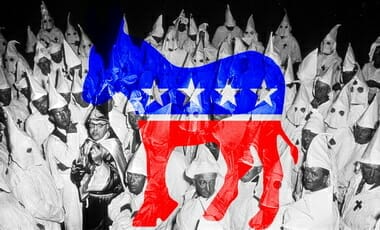
The Left Calls the GOP Fascist (Lol)
This is from a guy involved in a conspiracy org, so I will not mention him… but I do have a broad disclaimer of sorts:
- While I like their rants (Paul Watson, Mark Dice, and others) and these commentaries hold much truth in them, I do wish to caution you… he is part of Info Wars/Prison Planet and Summit News network of yahoos, a crazy conspiracy arm of Alex Jones shite. Also, I bet if I talked to him he would reveal some pretty-crazy conspiratorial beliefs that would naturally undermine and be at-odds-with some of his rants. Just to be clear, I do not endorse these people or orgs.
1-minute video:
This is a good fit with my following posts (Oldest to Newest):

BBC Admits Hamas Used Shifa Hospital As An Operations Base
The BBC and other MSM outlets have been horrible on their reporting of many topics during this newer war between Islamic-Nazis and Israel. Here is the BBC [finally] admitting that there was a Hamas command center underneath the Shifa Hospital – as Israel originally reported by the IDF.
BBC Finally Admits Hamas Used People in Shifa Hospital as Human Shields
The NEW YORK SUN has an excellent article detailing some of the past claims which are ignored presently:
As Evidence Mounts of Hamas Using Shifa Hospital as a Military Base, Human Rights Groups Turn Sullenly Silent
…..A Dutch journalist who reported from Gaza and a British doctor who worked at Al Shifa hospital have both corroborated IDF claims. The doctor told a reporter from France 24 news that there was a section of the hospital leading to the basement that he was instructed not to go near or he’d “be in danger of being shot.”
The doctor added that “there were dodgy non-medical characters going in and out all the time,” and that discussion of this was made in “hushed tones about which Hamas was discussed. You know, people were genuinely fearful.”
In 2014, the Washington Post also reported that Al Shifa hospital had become “a de facto headquarters for Hamas leaders, who can be seen in the hallways and offices.”
“This was not a secret. This was an open secret,” a human rights advocate and executive director of UN Watch, Hillel Neuer, tells the Sun. “Certainly all the international organizations that have a constant presence on the ground knew about it.”
Organizations such as Human Rights Watch, Amnesty International, the World Health Organization, and committees within the United Nations, though, are not convinced — or at least won’t say so publicly now. This matters because, while Israel can win this war militarily, the war for international public support is a major challenge, and Hamas knows how to fight this battle. This is evident in protests on college campuses and in the streets across the United States and in European capitals.
It’s also evident in statements from these groups. “Amnesty International has so far not seen any credible evidence to support Israel’s claim that al-Shifa is housing a military command center — and indeed Israel has repeatedly failed to produce any evidence to substantiate this claim,” the executive director of Amnesty International USA, Paul O’Brien, tells the Sun in a statement.
“In their stated intent to use all means to destroy Hamas, Israeli forces have shown a shocking disregard for civilian lives,” Mr. O’Brien says. “These unlawful attacks, including indiscriminate attacks that caused mass civilian casualties, must be investigated as war crimes.”
This contrasts sharply with Amnesty International reports released in 2007 and 2015, in which the organization describes Hamas using Al Shifa hospital for interrogations, torture, and launching attacks. The harsh condemnation of Israel also contrasts to the language Mr. O’Brien uses to condemn Hamas’s terrorist attacks on October 7.
“The abduction of civilians and hostage-taking and deliberate attacks on civilians are prohibited by international law and can constitute war crimes,” Mr. O’Brien says.
“Can constitute war crimes” doesn’t have the force of Israel “must be investigated for war crimes.” Amnesty International’s X feed displays the same imbalance: for every 10 posts on Israel’s “chilling indifference to the catastrophic toll on civilians,” there is maybe one post about the hostages Hamas is still holding.
Human Rights Watch is also not ready to say whether Hamas used Al Shifa hospital as an operations base. This contrasts to 2007, when Human Rights Watch released a report that details Hamas’s use of hospitals in its battle with Fatah.
“Human Rights Watch takes seriously allegations by Israeli authorities that armed groups are operating inside or below hospitals. We are not, however, in a position to corroborate these claims presently,” the Israel and Palestine director of the Middle East division of Human Rights Watch, Omar Shakir, tells the Sun.
“If accurate, the use of medical facilities by Palestinian armed groups for military operations is alarming and violates the laws of war,” Mr. Shakir says. Yet he adds, “Attacks on hospitals being used to commit ‘acts harmful to the enemy’ are still unlawful if indiscriminate or disproportionate.”
The United Nations declined to comment about Hamas’s use of Al Shifa hospital but directed the Sun to a World Health Organization press conference held Friday. When asked at this press conference whether Hamas used Al Shifa as a base, the executive director of the WHO Health Emergencies Program, Michael Ryan, said that his team’s focus was solely on doctors and evacuating patients.…..
Other noteworthy articles are below:
Videos: Inside The Hamas Shifa Hospital Underground Command Center
- …Behind the hatch door that was breached, war rooms, an air-conditioned living room and hiding place, as well as toilets and a kitchen for extended stays were discovered. [….]the images suggest that the labyrinthine tunnels were used not just for transporting materials or people, but as something of an extended-stay base. The Israel Defense Forces referred to it as “Hamas’ underground city.”…. (LEGAL INSURRECTION)
Media Minimize Evidence of Hamas Activity in Gaza’s Shifa Hospital
- …[by] minimizing the evidence by suggesting that what Israel has exposed is not enough or fake, while relying on the denials of a deceitful terror organization, is nothing less than a complete ethical and journalistic collapse.” (HONEST REPORTING)
BBC Says Israel Targeted Hospital Staff, Forced To Apologize (Again)
- On Wednesday [15th of November, 2023], the globally influential BBC was forced to apologize yet again for an anti-Israel smear from one of its anchors. This time, the BBC accused Israel of intentionally targeting Al-Shifa Hospital staff and Arab speakers during its operations in Gaza, which was exactly the opposite of what the cited Reuters report said. (NEWSBUSTERS)
FLASHBACK: Media Mislabels LaRouche Activists Right-Wing
(A GOOD PORTION OF THIS DATES FROM 2010)
(BTW, Lyndon LaRouche died in February 2019 at 96-years old.) This is the political cult I always forget about, Lyndon LaRouche (pronounced le-ru). She won her candidacy even with the fact that “during the campaign, she was photographed carrying an oversized portrait of the President with a Hitler-style mustache penciled on his lip.” Remember the news broadcasts on the poster with Obama and a Hitler mustache? Well, all the posters that say this on them:
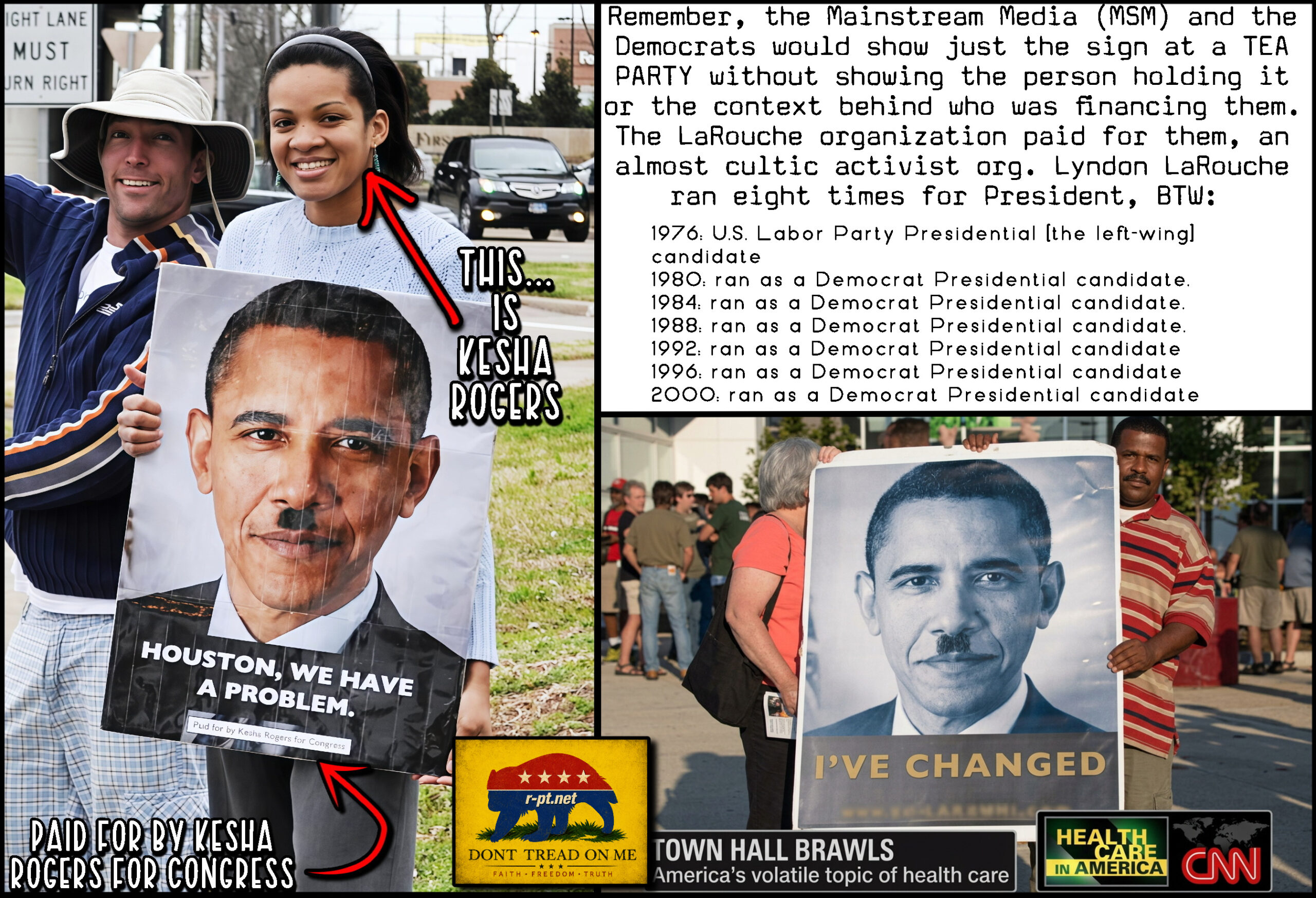
OBAMA NAZI SIGNS
Life is truly stranger than fiction. Not only does this picture show Kesha Rogers holding the Obama/Hitler sign, but it even says it is paid for by her campaign on the bottom (click to enlarge):
“Houston, We Have A Problem”
is so appropriate
This story (the LaRouche movement and recent political activity) is an old one… one that I commented on quite a while ago. These person’s even visited my old job once (Whole Foods).
NAZI OBAMA @DEMOCRAT CAMPAIGN
Here is the BREITBART post on her:
…the state-run media won’t run this photo.
They won’t publish this photo because it doesn’t fit their narrative. Remember last year when the Democratic-Media Complex reported that the tea party protesters were waving Obama-Hitler signs? What the media purposely omitted from their stories was the fact that the protesters waving these astroturfed Obama-Hitler signs were radical left-wing extremists. They were radical activists from the LaRouche organization. But, this didn’t fit the state-run media’s narrative that tea party activists were radicals and racists so they omitted this from their reports.
Earlier this year, the corrupt media and prominent democrats continued to smear tea party activists by reporting that the conservative protesters on Capitol Hill harassed Black Caucus members, called them the n-word, and spit at these Dems as they paraded though the tea party crowd on their way to ram nationalized health care through Congress. This was a lie. It never happened as video later revealed. However, the corrupt national media never retracted their story nor did they apologize despite the overwhelming amount of evidence that proved their racist accusations were complete fiction.
That’s why the media won’t show this photo of Democrat Kesha Rogers. It doesn’t fit their narrative.
Kesha won her primary last week. This Texas Democrat wants to impeach Obama and “take our troops out of the war zone and put them into space.” This makes about as much sense as the Obama-Pelosi “spend your way to wealth” plan, only not as dangerous. Don’t look for the media to give this Texas loon much attention in the months ahead.
Could you imagine the outrage if this was at a Tea Party? And if it is, it is because of a LaRouchite! Do you not know who Lyndon Lerouche is, there is a good WIKI ARTICLE on him. Here is the HOTAIR’s dig on this story:
The nominee for the Texas’ CD-22 has publicly called for Barack Obama’s impeachment and wants to abolish the UN. Democrats would have a field day making Kesha Rogers the face of the Republican Party across the entire nation … if it weren’t for the fact that Rogers is a Democrat (TIME MAGAZINE):
South Carolina’s unexpected Democratic nominee for the US Senate, mystery man Alvin Greene, says he wants to play golf with Barack Obama. But in Texas, another surprise Democratic primary winner, congressional nominee Kesha Rogers, wants to impeach the President. So while South Carolina party officials are still unsure of what to do about Greene’s success at the ballot box, Texas Democrats have no such reservations — they wasted little time in casting Rogers into exile and offering no support or recognition of her campaign to win what once was Republican Majority Leader Tom DeLay’s old seat.
Rogers, 33, told TIME she is a “full time political activist” in the Lyndon LaRouche Youth Movement, a recruiting arm of the LaRouche political organization that is active on many college campuses. The LYM espouses LaRouche opposition to free trade and “globalism” (the UN, the World Bank, the International Monetary Fund) and it also calls for a return to a humanist classical education, emphasizing the works of Plato and Leibnitz. On her professional looking campaign website, kesharogers.com, she touts the LaRouche political philosophy — a mix of support for the economic policies of President Franklin D. Roosevelt and the impeachment of President Obama — and calls Obama a “London and Wall Street backed puppet” whose policies will destroy the Democratic Party.
Well, maybe Texas Democrats in the 22nd district just got fooled from another Greene-like stealth candidacy. I’m sure they didn’t hear about Rogers’ nutty, LaRouchian politics before casting their ballots. Rogers probably got listed first on the ballot, right? Actually she was, but that’s not why she won:
Unlike South Carolina’s Greene, Rogers ran a high profile campaign, staking out a corner on a major intersection in the district to appear almost daily with a large sign: “Save NASA. Impeach Obama.” She garnered 7,467 votes, 53% of the vote, in a three way race that included a local information systems analyst Doug Blatt, who gained endorsements from local Democratic clubs and labor groups, and Freddie John Weider Jr., a preacher and onetime Libertarian candidate; Blatt came in second with 28% of the vote and Weider won 20%.
Now Democrats have refused to provide her any support, Time reports, accusing her of racism because of her connection to the LaRouche movement — which is an interesting allegation, considering that Rogers is African-American. Maybe someone should have looked at her picture before leaping immediately to the race-baiting smear. They would have been better off questioning her sanity…..
…(read more)…
Here is a video preserved by me for this post update (7-17-2026)
MORE EXAMPLES OF SIGNS
The below signs are from the Democratic Linden LaRouche camp. There was one photo that made it into the mainstream media that was at times cropped so you wouldn’t see the race of the young man, but as you can see, the guy holding this sign up is a young black man:
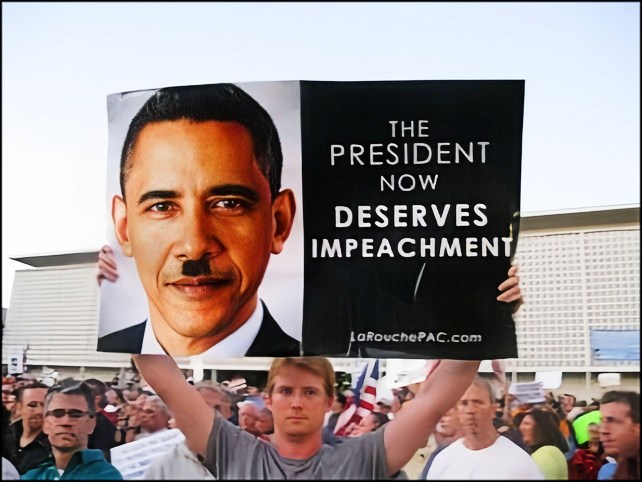
Kesha is in a political cult, and putting a LaRouchite into office, considering their across the board acceptance of just about every conspiracy theory available, is an option I will campaign against. There is also concerted cultish aspects of brainwashing as well. The reason you here this push to support NASA is that the LaRouchite’s want to (or wanted to) have a permanent colony on Mars by 2025, this is now pushed back to 2027.
One thing I wish to supplant is the idea that this is some sort of “Right Wing” group.
LAROUCHE PRESIDENTIAL RUNS
NEWSBUSTERS “busted” this liberal myth when they pointed out the following:
….For written at the poster’s bottom is the web address “LaRouchePAC.com,” the political action committee website for Communist and perpetual Presidential candidate Lyndon LaRouche.
No right-winger he. And neither he nor his acolytes are likely ones to be “stoked by the provocative megaphone of Rush Limbaugh.” In fact (from Wikipedia):
In 1979, LaRouche formed a Political Action Committee called the National Democratic Policy Committee (NDPC). LaRouche has run for the Democratic nomination for President of the United States seven times, beginning in 1980….
…(read more)…
CROOKS & LIARS
I think the mainstream media and bloggers who think themselves erudite enough to broadly claim political affiliation of this movement, should think twice. For instance, CROOKS & LIARS (a Leftist site) said this after showing Bill O’Reilly’s comments on it (sorry for the cuss word, typical though of the Left) [I combined this old Bill O’Reilly with two other videos]:
Crooks & Liars “did an interesting thing the day after last night,” they lied about the LaRouche’ites!
Bill O’Reilly did an interesting thing last night when he reran that footage of Barney Frank castigating that woman carrying an Obama-as-Hitler sign at his town-hall meeting on health care: He completely omitted the fact that the woman who Frank was castigating was in fact a member of the FAR-RIGHT Lyndon Larouche cult.
All O’Reilly could muster was to mention that the woman was “a political activist.” But that’s like calling a Great White Shark a fish.
No, right-wingers like O’Reilly have been eagerly airbrushing out the existence of right-wing extremists from their worldview for some time now, embodied by their reaction to that DHS bulletin. But it’s getting harder and harder to do all the time now.
Because, as we’ve noted, the far-right extremists are bubbling up everywhere in supposedly mainstream conservative circles these days — particularly at the tea parties and their associated health-care protests.
Most recently, it turns out that the guys who brought those guns to a health-care forum in Arizona in fact were longtime members of the old Arizona Vipers Militia. These were characters who, prior to their arrests in 1996, had stockpiled close to 2,000 pounds of ammonium nitrate and conducted field training exercises, practiced bomb-making, and trained with illegal automatic weapons.
Now, all the Fox talkers have been in heavy denial about extremists showing up for their tea-party protests, even making a regular joke out of it by asking the protesters they have on their show if they’re Klan members and the like.
But it’s becoming clearer all the time that, while not everyone at these events is an extremist, the percentages of them keep going up and up. And with them, so does the threat to public safety.
AGAIN:
- He completely omitted the fact that the woman who Frank was castigating was in fact a member of the FAR-RIGHT Lyndon Larouche cult.
(*Annoying Buzzer Noise*) Nope, this needs a rewrite.
The medias lack of care for the LaRouchites showing up at meetings with Obama/Hitler signs is pointed out by the WEEKLY STANDARD as well:
CNN’s Larry King showed the above video of Barney Frank laying the smack down on a woman at a townhall meeting who compared Obama to Hitler. CNN left out the fact that this woman is a Lyndon LaRouche Democrat.
[….]
No one disputes that LaRouchites are on the fringe — but it’s indisputable that they are fringe Democrats. They oppose Obamacare because they want a single-payer plan.
While Nancy Pelosi and liberal talk-show host Bill Press have been smearing protesters as fascists and Nazis, left-wing bloggers have been attacking protesters for comparing Obama to Hitler. It seems townhall attendees just can’t win….
AGAIN, RAN 8-TIMES AS LEFTY
Lyndon LaRouche Presidential/political runs:
- LaRouche was a presidential candidate from 1976 to 2004. He campaigned for one such election while serving his sentence for fraudulence. He had run once for his ‘US Labor Party’ and seven times for the ‘Democratic Party.’ (THE FAMOUS PEOPLE)
Some “Right-Wing” guy? Ran first for a self made Marxist Organization, then seven more times as a Democrat.
FASCIST? OR SOCIALIST?
Ideological Swings:
In 1977-78, LaRouche initiated an ideological change, an evolution from “socialism” to “nationalism”, well documented by Denis King and Chip Berlet.
This “evolution” was marked by a radical re-definition of “Fascism”. To this purpose he wrote in 1977 “What Actually Is Fascism?” where he said:
“The Nazi propaganda emphasis on “Krupp steel” and other symbols of industrial development points up the fact that to rule Germany the Nazis were obliged to play upon the deep desire for industrial and technological progress within even the ranks of numerous layers of nominal Nazi supporters and party members. There was a profound discrepancy between the systematic destruction of industry and the labor force under Schacht and the nationalist impulses of important varieties of German citizens who went over to support of the Nazis largely on the basis of hatred of Versailles and a commitment to restoration of Germany’s industrial progress.” “In short, all of those features of Nazi Germany’s policy which are generally attributed to fascism are not the ideological excretion of a fascist “sociological phenomenon” but are properly termed Schachtianism in its natural course and consequences. The essence of fascism, if we mean by fascism the deprecated features of the Nazi order, is Schachtian economics.”
In other words there are “good” and “bad” Nazis:
“The majority of Nazi supporters were not fascists, but nationalists.”
and consequentially:
“What is to be stressed most emphatically in this connection is the fallacy of the “conservatism tends to fascism” argument.”
To confirm his ideological move from “socialism” to “nationalism”, he wrote that year:
“I never had the conception of founding a “true Marxist” association. […] We have never been Marxists, except as regarding Marx as the highest preceding advancement of essential human knowledge. […] More profoundly, as we change we do not change.”
contradicting himself from what he wrote a year earlier:
“Labor Committee and allied Communist forces within the capitalist sector generally are working overnight, constantly, to bring into being a new Marxist International throughout the capitalist sector.”
when he wanted to establish “socialism” world-wide:
“The important point to be added to that, is that such a form of society is within reach during this century. We have before us the immediate need and possibility to establish an intermediate form of society known as workers’ government, out of which in approximately a generation’ s time, an actual socialist form of human existence can emerge.”
LaRouche redefined Marxism from a “higher”, philosophical standpoint; “higher” Marxism meant “good” industrial Capitalism, Marx and Benjamin Franklin were said to share the same, common ancestry and philosophical outlook: Plato’s Republic, trying to combine “socialism” (Soviet Republics) and… the Republican party! ({“republican” in LaRouche’s code-words, meaning Plato’s “Republic”).
In his “Creating a Republican Labor Party” pamphlet, LaRouche wrote:
“The republican party is thousands of years old. It is traced in terms of formal historical knowledge available to us today to the writings of Plato and Plato’s Academy at Athens, and to Alexander the Great’s city-building policies.”
The “new” Karl Marx was redefined in “The Karl Marx Karl Marx Did Not Know” (Fall 1977).
His 1980 U.S. presidential election was based on an alliance between “labor” (socialist) forces and “republican” (nationalist) forces and geopolitically between the “East” (USSR) and the “West”.
This ideological and philosophical reshaping can be measured with help of three key-documents during that period: 1/ “The Case of Walter Lippmann” (May 1977), 2/ “Two Tactics of the Inner PCI” (April 1978) and 3/ “The Secret Known Only to the Inner Elites” (May-June 1978). This last document is still considered by the LaRouchies as the real founding document of LaRouche’s Organisation.
In this 1977 revisionist document “What Actually Is Fascism?” he explained that “Fascism” was in fact synonymous with… “financial austerity” imposed by Hjalmar Schacht, a “cannibalization” of the German economy which led to Hitler’s war!
Capitalism therefore still leads to Fascism/Imperialism…
The “real enemy” is still “Capitalism” or rather “Capitalists”, not Fascists who are victims of these “Capitalists”.
But who was Schacht? What really happened to the German economy under his influence? Why does LaRouche focuses exclusively on somebody who was a German financial expert and Minister of Economics from 1935 until 1937 only (and who began to lose power after the implementation of the Four Year Plan in 1936 by Hermann Göring which put Germany on the brink of bankruptcy)?
Because by reducing “nazism” only to one single cause: “Hjalmar Schacht”, it is more convenient to re-write History. Forget about Hitler’s and the Nazis’ open intentions to start a war against their neighbors from the onset…\\ LaRouche only needs to claim Hjalmar Schacht was a “British agent”, an “environmentalist” or a “Jewish protege” and then, LaRouche could conclude that “Nazism” was an “ecologist”, a “British” or a “Jewish” conspiracy (and vice-versa)! Consequently, any economic policy or economist or politician could be labeled as “schachtian” or “nazi”!…
SOME HISTORY ON WHO JOINED FASCIST MOVEMENT
…on March 23, 1919, one of the most famous socialists in Italy founded a new party, the Fasci di Combattimento, a term that means “fascist combat squad.” This was the first official fascist party and thus its founding represents the true birth of fascism. By the same token, this man was the first fascist. The term “fascism” can be traced back to 1914, when he founded the Fasci Rivoluzionari d’Azione Internazionalista, a political movement whose members called themselves fascisti or fascists.
In 1914, this founding father of fascism was, together with Vladimir Lenin of Russia, Rosa Luxemburg of Germany, and Antonio Gramsci of Italy, one of the best known Marxists in the world. His fellow Marxists and socialists recognized him as a great leader of socialism. His decision to become a fascist was controversial, yet he received congratulations from Lenin who continued to regard him as a faithful revolutionary socialist. And this is how he saw himself.
That same year, because of his support for Italian involvement in World War I, he would be expelled from the Italian Socialist Party for “heresy,” but this does not mean he ceased to be a socialist. It was common practice for socialist parties to expel dissenting fellow socialists for breaking on some fine point with the party line. This party reject insisted that he had been kicked out for making “a revision of socialism from the revolutionary point of view.” For the rest of his life—right until his lifeless body was displayed in a town square in Milan—he upheld the central tenets of socialism which he saw as best reflected in fascism.
Who, then, was this man? He was the future leader of fascist Italy, the one whom Italians called Il Duce, Benito Mussolini.
Mussolini’s socialist credentials were impeccable. He had been raised in a socialist family and made a public declaration in 1901, at the age of eighteen, of his convictions. By twenty-one, he was an orthodox Marxist familiar not only with the writings of Marx and Engels but also of many of the most influential German, Italian, and French Marxists of the fin de siecle period. Like other orthodox Marxists, Mussolini rejected religious faith and authored anti-Catholic pamphlets repudiating his native Catholicism.
Mussolini embarked on an active career as a writer, editor, and political organizer. Exiled to Switzerland between 1902 and 1904, he collaborated with the Italian Socialist Party weekly issued there and also wrote for Il Proletario, a socialist weekly published in New York. In 1909 Mussolini made another foreign sojourn to Trento—then part of Austria-Hungary—where he worked for the socialist party and edited its newspaper. Returning the next year to his hometown of Forli, he edited the weekly socialist publication La Lotta di Classe (The Class War). He wrote so widely on Marxism, socialist theory, and contemporary politics that his output now fills seven volumes.
Mussolini wasn’t just an intellectual; he organized workers’ strikes on behalf of the socialist movement both inside and outside of Italy and was twice jailed for his activism. In 1912, Mussolini was recognized as a socialist leader at the Socialist Congress at Reggio Emilia and was appointed to the Italian Socialist Party’s board of directors. That same year, at the age of twenty-nine, he became editor of Avanti!, the official publication of the party.
From the point of view of the progressive narrative—a narrative I began to challenge in the previous chapter—Mussolini’s shift from Marxian socialism to fascism must come as a huge surprise. In the progressive paradigm, Marxian socialism is the left end of the spectrum and fascism is the right end of the spectrum. Progressive incredulity becomes even greater when we see that Mussolini wasn’t just any socialist; he was the recognized head of the socialist movement in Italy. Moreover, he didn’t just climb aboard the fascist bandwagon; he created it.
Today we think of fascism’s most famous representative as Adolf Hitler. Yet as I mentioned earlier, Hitler didn’t consider himself a fascist. Rather, he saw himself as a National Socialist. The two ideologies are related in that they are both based on collectivism and centralized state power. They emerge, one might say, from a common point of origin. Yet they are also distinct; fascism, for instance, had no intrinsic connection with anti-Semitism in the way that National Socialism did.
In any event, Hitler was an obscure local organizer in Germany when Mussolini came to power and, following his famous March on Rome, established the world’s first fascist regime in Italy in 1922. Hitler greatly admired Mussolini and aspired to become like him. Mussolini, Hitler said, was “the leading statesman in the world, to whom none may even remotely compare himself.” Hitler modeled his failed Munich Putsch in November 1923 on Mussolini’s successful March on Rome.
When Hitler first came to power he kept a bust of Mussolini in his office and one German observer termed him “Germany’s Mussolini.” Yet later, when the two men first met, Mussolini was not very impressed by Hitler. Mussolini became more respectful after 1939 when Hitler conquered Austria, Poland, Czechoslovakia, Belgium, Norway, and France. Hitler continued to uphold Mussolini as “that unparalleled statesman” and “one of the Caesars” and confessed that without Italian fascism there would not have been a German National Socialism: “The brown shirt would probably not have existed without the black shirt.”
Hitler was, like Mussolini, a man of the Left. Hitler too was a socialist and a labor leader who founded the German Socialist Workers’ Party with a platform very similar to that of Mussolini’s fascist party. Yet Hitler came to power in the 1930s while Mussolini ruled through most of the 1920s. Mussolini was, during those years, much more famous than Hitler. He was recognized as the founding father of fascism. So any account of the origin of fascism must focus not on Hitler but on Mussolini. Mussolini is the original and prototypical fascist.
From Socialism to Fascism
So how—to return to the progressive paradigm—do progressives account for Mussolini’s conversion from socialism to fascism, or more precisely for Mussolini’s simultaneous embrace of both? The problem is further deepened by the fact that Mussolini was not alone. Hundreds of leading socialists, initially in Italy but subsequently in Germany, France, and other countries, also became fascists. In fact, I will go further to say that all the leading figures in the founding of fascism were men of the Left. “The first fascists,” Anthony James Gregor tells us, “were almost all Marxists.”
I will cite a few examples. Jean Allemane, famous for his role in the Dreyfus case, one of the great figures of French socialism, became a fascist later in life. So did the socialist Georges Valois. Marcel Deat, the founder of the Parti Socialiste de France, eventually quit and started a pro-fascist party in 1936. Later, he became a Nazi collaborator during the Vichy regime. Vacques Doriot a French communist, moved his Parti Populaire Francais into the fascist camp.
The Belgian socialist theoretician Henri de Man transitioned to becoming a fascist theoretician. In England. Oswald Mosley, a socialist and Labor Party Member of Parliament, eventually broke with the Labor Party because he found it insufficiently radical. He later founded the British Union of Fascists and became the country’s leading Nazi sympathizer. In Germany, the socialist playwright Gerhart Hauptmann embraced Hitler and produced plays during the Third Reich. After the war, he became a communist and staged his productions in Soviet-dominated East Berlin
In Italy, philosopher Giovanni Gentile moved from Marxism to fascism, as did a host of Italian labor organizers: Ottavio Dinale, Tullio Masotti, Carlo Silvestri, and Umberto Pasella. The socialist writer Agostino Lanzillo joined Mussolini’s parliament as a member of the fascist party Nicola Bombacci, one of the founders of the Italian Communist Party, became Mussolini’s top adviser in Salo. Gentile’s disciple Ugo Spirito, who also served Mussolini at Salo, moved from Marxism to fascism and then back to Marxism. Like Hauptmann, Spirito became a communist sympathizer after World War II and called for a new “synthesis” between communism and fascism.
Others who made the same journey from socialism to fascism will be named in this chapter, and one thing that will become very clear is that these are not “conversion” stories. These men didn’t “switch” from socialism to fascism. Rather, they became fascists in the same way that Russian socialists became Leninist Bolsheviks. Like their Russian counterparts, these socialists believed themselves to be growing into fascism, maturing into fascism, because they saw fascism as the most well thought out, practical form of socialism for the new century.
Progressivism simply cannot account for the easy traffic from socialism to fascism. Consequently, progressives typically maintain complete silence about this whole historical relationship which is deeply embarrassing to them. In all the articles comparing Trump to Mussolini I searched in vain for references to Mussolini’s erstwhile Marxism and lifelong attachment to socialism. Either from ignorance or from design, these references are missing.
Progressive biographical accounts that cannot avoid Mussolini’s socialist past nevertheless turn around and accuse Mussolini—as the Socialist Party of Italy did in 1914—of “selling out” to fascism for money and power. Other accounts contend that whatever Mussolini’s original convictions, the very fact that his fascists later battled the Marxists and traditional socialists clearly shows that Mussolini did not remain a socialist or a man of the Left.
But these explanations make no sense. When Mussolini “sold out” he became an outcast. He had neither money nor power. Nor did any of the first fascists embrace fascism for this reason. Rather, they became fascists because they saw fascism as the only way to rescue socialism and make it viable. In other words, their defection was within socialism—they sought to create a new type of socialism that would actually draw a mass following and produce the workers’ revolution that Marx anticipated and hoped for.
Vicious fights among socialist and leftist factions are a recognized feature of the history of socialism. In Russia, for example, there were bloody confrontations between the rival Bolsheviks and Mensheviks. Later the Bolsheviks split into Leninists and Trotskyites, and Trotsky ended up dead on Lenin’s orders. These were all men of the Left. What these bloody rivalries prove is that the worst splits and conflicts sometimes arise among people who are ideologically very similar and differ on relatively small—though not small to them—points of doctrine.
In this chapter I will trace the development of fascism by showing precisely how it grew out of a doctrinal division within the community of Marxian socialists. In short, I will prove that fascism is exclusively a product of the Left. This is not a case of leftists who moved right. On the contrary, the fascists were on the left end of the socialist movement. They saw themselves not as jettisoning Marxism but as saving it from obsolescence. From their perspective, Marxism and socialism were too inert and needed to be adjusted leftward. In other words, they viewed fascism as more revolutionary than traditional socialism.
[….]
Mussolini didn’t believe in race and he wasn’t initially a nationalist; rather, he was a revolutionary syndicalist. The term syndicalism refers to the associations or syndicates to which workers belonged. These were autonomous workers organizations that resembled unions, but they were not unions because the syndicates were organized regionally rather than by corporation or occupation. As dedicated Marxists, the revolutionary syndicalists agreed with Marx that class associations were primary, and that they must be the organizing principle of socialist revolution.
Very much in keeping with this class emphasis that was so central to Marx, the syndicalists, strongly influenced by Sorel, sought to rally the labor syndicates through a general strike that would overthrow the ruling class and establish socialism in Italy. This is what made them “revolutionary.” They intended to foment revolution, not wait for it to happen. They were considered the smartest, most dedicated people in the Italian Socialist Party and they occupied the left wing of the party.
The big names in revolutionary syndicalism were Giuseppe Prezzolini, Angelo O. Olivetti, Arturo Labriola, Filippo Corridoni, Paolo Orano, Michele Bianchi, and Sergio Panunzio. Most of them were writers or labor organizers. All of them were socialists, and shortly all of them would be camelascists, even though Labriola opposed Mussolini’s regime when it came to power and Corridoni, who was killed in World War I, didn’t live to see it.
Mussolini was their acknowledged leader. He knew them well and conspired with them at meetings and rallies. He read their books and articles and published in their magazines like the Avanguardia Socialista, founded by Laboriola, which was the leading journal of syndicalist thought. Mussolini also reviewed and published the leading syndicalists in his own socialist publications.
Like all revolutionary socialists, the syndicalists had little faith in democratic parliamentary procedures and, consistent with Sorel and Lenin, they sought a charismatic leader who would inspire the workers to action. Mussolini, more than anyone else, fit their prescription. Mussolini was the one who led the syndicalists into a union with the nationalists in order to form the new socialist hybrid called fascism in Italy and (with some modifications) National Socialism in Germany.
The syndicalists organized three general strikes in Italy in 1904, 1911, and 1913. Mussolini supported the strikes. The 1904 strike began in Milan and spread across the country. Five million workers walked off their jobs. The nation was paralyzed: there was no public transportation, and no one could buy anything. Even so, the strike ended without causing either the fall of the government or the installation of socialism.
Dinesh D’Souza, The Big Lie: Exposing the NAZI Roots of the American Left (Washington, DC: Regnery Publishing, 2017), 65-70, 82-83.