At EXAMINING CALVINISM you can read responses in this post to: James White, R.C. Sproul, Robert A. Peterson and Michael D. Williams,
… Some Calvinists have wrongly concluded that the non-Calvinist seeks to downplay the sovereignty of God and highlight the autonomy of man, when in reality we seek to maintain the right biblical understanding of man’s autonomy so as to better highlight the sovereignty, love and holiness of God.
Does God’s sovereignty terminate at the point of being able to create
autonomous beings who seek their own purposes?
Does God’s sovereignty terminate at the point of being able to offer
such beings an independent choice He does not determine?
If God must meticulously decree every thought, word and deed ever conceived in order to remain “sovereign,” then that wouldn’t say much for divine sovereignty. In contrast to Calvinism, God exhibits being all-wise, all-knowing and all-powerful when He governs without any strings attached. The contrasting Calvinist conception of divine sovereignty would make God out to be pretty mediocre.
All of scripture supports God’s “sovereignty.” The controversy is over how Calvinists try to redefine sovereignty to mean exhaustive, philosophical determinism, and the way that is accomplished is by citing the biblical word, “predestination.” However, the fact that God predestines some things does not necessarily mean that God predestines everything. Moreover, it is critical to correctly understand the manner in which God predestines things. For instance, God predestined to redeem good from evil, but that doesn’t necessarily mean He caused the evil He redeems.
God is the ultimate cause of everything that exists, meaning that without Him, nothing can come to pass, and this is something that all theists can affirm, so long as one incorporates a truly meaningful definition of divine permission, in which in addition to God’s own determinations, He also permits independent agents who possess autonomy of reason to conduct their own libertarianly free choices. The problem in Calvinism, however, is that divine permission is reduced to a matter of God allowing people to do what He exhaustively and meticulously rendered certain and necessary, thus spoiling the aforementioned definition of permission.
God is in control of all things, though He is not all-controlling. Calvinists, however, believe in a type of divine sovereignty which requires that God exhaustively predetermine everything that ever comes to pass, including every person’s thoughts, intentions and actions, for all eternity, including sinful thoughts, intentions and actions, thus drawing a sharp rebuke from non-Calvinists. This is what Calvinists term “predestination,” though the Bible does not teach predestination in such a way. Moreover, such a notion has historically drawn the criticism of being a form of Christian fatalism. Nonetheless, from the Calvinist perspective, an exhaustive eternal decree is necessary for God to truly be in control and to truly be omnipotent. It should be pointed out, however, that the Bible never talks about any such eternal decree. What Calvinists are referring to is just a systemic, doctrinal perspective, rather than something that is firmly taught in Scripture. A decree is simply something that God declares to be, and so if God declares for mankind to have free-will, which is what non-Calvinists hold to, then that’s what God decreed. For instance, non-Calvinists believe that God has decreed, not which choices that we will make, but rather that we would be free in making them. That’s a doctrinal perspective. So when we make free choices, it is understood that we are not countervailing the will of God, but rather we are acting in accordance with the ability God has granted.
Speaking frankly, Calvinistic determinism would mean that God cannot handle free-will, and it would gut all creation of true life. It would render God as a marionette, pulling the strings of dead things. It would be a worthless and humiliating endeavor for a truly glorious, all-powerful, all-knowing and all-wise God. …
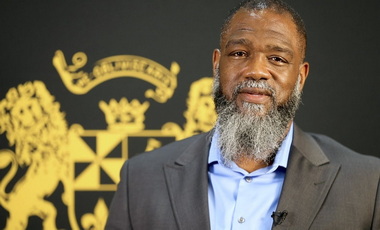
Voddie Baucham on Sovereignty
Dr. Leighton Flowers responds to a short snippet from Dr. Voddie Baucham on the sovereignty of God
Ronnie W. Rogers, Reflections of a Disenchanted Calvinist,
CPHT 1, Sovereignty of God (PDF)
Sovereignty of God
- I affirm that God is sovereign over everything without exception; therefore, He is in total control; further, I believe that creating a world where men are given a real choice demonstrates God’s sovereignty rather than undermines it. By real free choice, I mean that by grace, God gave man the ability to believe the gospel or not to believe the gospel; as a result, the ones who believe could have not believed, and the ones who disbelieve could have believed unto salvation. Consequently, man’s consignment to hell is due to being born a sinner, sinning, and rejecting a real offer of the redemptive love and mercy of God, which he could have accepted; therefore he is in hell because he chose to be despite God’s provision and desire for him to be saved (2 Peter 3:9). This position does not in any sense minimize or waste the redemptive work of Christ and the power of the cross, or undermine or thwart the sovereignty of God. The work and power of the sacrifice of Christ was to provide salvation for all and secure it for all who would receive it by faith and by God’s gracious provision. I affirm that God’s sovereignty is not minimized because He sovereignly chose to provide a real choice for everyone to accept or reject the gospel. This includes deliverance from eternal hell, men’s just desert, for anyone and everyone who acts in concert with His grace enablement and follows Christ.
The means of this grace enablement include but are not limited to: Gods’ salvific love for all (John 3:16), God’s manifestation of His power so that all may know He is the Sovereign (Isaiah 45:21-22) and Creator (Romans 1:18-20), which assures that everyone has opportunity to know about Him. Christ paying for all sins (John 1:29), conviction of the Holy Spirit (John 16:7-11), working ofthe Holy Spirit (Hebrews 6:1-6), enlightening of the Son ( John 1:9), God’s teaching ( John 6:45), God opening hearts (Acts 16:14), and the power of the gospel (Romans 1:16), without such redemptive grace, no one seeks or comes to God (Romans 3:11). Further, I believe that man, because of these gracious provisions and workings of God, can choose to seek and find God (Jeremiah 29:13; Acts 17:11-12). Moreover, no one can come to God without God drawing (John 6:44), and that God is drawing all men, individuals (John 12:32). The same Greek word for draw, helkuo, is used in both verses. “About 115 passages condition salvation on believing alone, and about 35 simply on faith.”5 Other grace enablements may include providential workings in and through other people, situations, and timing or circumstances that are a part of grace to provide an opportunity for every individual to choose to follow Christ.
I also affirm that the permissive will of God is a part of His decretive will that permitted sin to enter the world and, for a time, continue.6 Holiness is always God’s standard and therefore sin is never God’s perfect, immediate or ultimate desire for His creation or man, but within His sovereign decretive will, He has purposefully permitted it. He commands man to obey, but permits him the freedom to disobey. The choice to disobey God’s commands results in man suffering the consequences of such choice. Thus, with regard to salvation, God desires that all come to salvation (2 Peter 3:9). Accordingly, He enables man to be able to be saved, and thereby permits man to freely choose to believe the gospel or to reject His grace and love and die in his sins. Without question, God’s permissive will does not preclude Him from ever intervening in the decision-making process of man if His purposes so require; however, neither does it necessitate that it be done in order to maintain sovereignty as long as He sovereignly chose to act in that particular way.
I further affirm that God’s full character and attributes, not just His sovereignty or justice, are to be considered when speaking of Him and His plans. This includes His infinity, justice, mercy, compassion, love, grace and power, which He possesses perfectly and infinitely. God is the sum of perfection. Lewis Sperry Chafer notes concerning this balance, “He is free to dispose of His creation as He will; but His will… is wholly guided by the true and benevolent features of His Person ….The attributes of God form an interwoven and interdependent communion of facts and forces which harmonize in the Person of God. An omission or slighting of any of these, or any disproportionate emphasis upon any one of them cannot but lead to fundamental error of immeasurable magnitude.”7
Moreover, I affirm that all of God’s attributes are more accurately reflected by accepting the truths of Scripture, which declare that salvation is provided and genuinely offered to everyone by God, and everyone can by “grace through faith” receive salvation, rather than by accepting the teaching of Calvinism that God only actually offers salvation to some because only that particular some can actually believe; those are the ones He monergistically causes to believe by changing their nature against their will. Calvinism teaches that regeneration is monergistic—God alone—and man has no part in it. After regeneration there becomes a synergistic relationship between God and man, and man exercises faith because he cannot choose to do otherwise. This is a disquieting reality.
Lastly, while some things about God are indeed a mystery because either they are not fully disclosed by God or understood by man or both (Deuteronomy 29:29), this is quite different than mysteries generated by Calvinism’s overemphasis upon certain attributes or concepts like justice or predestination and defining sovereignty to necessarily preclude real free choice. Actually, the Calvinist’s persistent mention of the sovereignty of God tells us nothing about the biblical loyalty of Calvinism since all believers with any biblical fidelity and understanding of God believe in His sovereignty. Further, disavowal of the Calvinist’s definition of sovereignty is not a denial or undermining of the sovereignty of God, but it is what it is, a denial of Calvinism’s definition.
- I disaffirm that salvation is monergistic, which means that God actively causes some to be saved by forced regeneration, and that act of regeneration is contrary to and against their sinful, rebellious nature, will, and choice, and that until regeneration, man is totally passive and becomes active only after regeneration. I disaffirm that there is nothing that can be done prior to regeneration with regard to salvation.8 I disaffirm that man is passive in regeneration.9 I further disaffirm that God selects to regenerate some and thereby either actively or passively chooses to leave some in their lost condition,10 and therefore irresistibly pre-determines some to be forever lost and damned to a place created for Satan (Matthew 25:41).
Calvinism asks us to believe that God chose eternal torment for the vast majority of His creation (Matthew 7: 1 3 —14). They want us to rejoice in a God who desires and chose for the vast majority of his creation to go to hell when He could have redeemed them. That is indeed God according to Calvinism, but not the God Scripture. This is a disquieting reality. Where is the plethora of Scripture where God expresses His desire for the vast majority of His creation to perish in eternal torment and this with equal clarity and abundance as those Scriptures that declare His indefatigable, sacrificial love and desire that all repent and be saved? I suggest that they do not exist and for good reason.
Monergism means that salvation is “[God’s] work alone”11, which is based upon the Calvinistic view that salvation depends upon God’s unconditional election to regenerate some prior to and quite apart from anything, even faith. However, if there is nothing that is a part of salvation and no one can do anything, even by the grace of God, to facilitate faith and thereby salvation, then why did Paul reason from the Scriptures in order to prove that Jesus was the Messiah? (e.g., Acts 17:2-4). Why did he attempt to “persuade men”? (2 Corinthians 5:11). Why did he beg people to be “reconciled to God”? (2 Corinthians 5:20). Why did God reconcile the “world”? (2 Corinthians 5:19). Why was Paul able to reason with the Jews concerning Christ, persuading some while others “would not believe”? (Acts 28:24). Notice it was not that they could not believe, but they would not believe. Why would Paul believe and say, “I have become all things to all men, that I may by all means save some”? (1 Corinthians 9:22).
To respond, as Calvinists do, that God has established the means to salvation, and therefore this may be the means of salvation, which in reality according to monergism has no real effect upon conversion, is just simply not what is presented in the Scripture. The picture in Scripture is that these things do have an actual part in salvation. They play a part, as does faith, by the grace and plan of God. To say that Paul was doing and saying this all out of mere obedience, all the while knowing that the people to whom he reasoned and pleaded may be the ones who could not hear or respond any more than a blind person could see you wink, is not the picture that is presented ever so clearly Scripture. Nor is it the implication of most Calvinists’ messages on Paul’s behavior. This is a disquieting reality.
Moreover, according to monergism, if they ever did respond, it would have nothing to do with anything Paul or the respondent had done, which is obviously contrary to Paul’s words (1 Corinthians 10:33; 1 Thessalonians 2:16). Although Calvinists talk, at times, as though what we do matters in a person’s salvation, it is actually absolutely disallowed by their monergistic view of salvation. I do grant that the Calvinist can be disobedient to God’s process, but this disobedience neither hinders nor facilitates salvation—according to monergism.
Man’s passiveness is stated explicitly in The Westminster Confession. “This effectual call [to salvation] is of God’s free and special grace alone, not from anything at all foreseen in man, who is altogether passive therein, until, being quickened and renewed by the Holy Spirit, he is thereby enabled to answer this call, and to embrace the grace offered and conveyed by it.”12 (italics added) I add to this the clarification that he is not only enabled, but according to Calvinism, he is enabled against his will, and not only enabled to believe but made to only be able to believe rather than choose between believing and not believing. I maintain that God indeed has foreknowledge, even of the future, contingent, freewill choices of men and women, which is an indispensible part of His decrees and predestination. That is to say, contrary to Calvinism, He gave free will, paid everything necessary for the salvation of all, sent the call out to receive by faith, provided grace enablements and predestined to salvation those who would receive and respond to His grace.
Further, I disaffirm that the key to God’s sovereignty is causation, as the Calvinists seem to believe. Their definition of sovereignty is actually a product of defining sovereignty, as well as viewing Scriptures relating to sovereignty, through the Calvinist grid. Moreover, I disaffirm that it is possible for a Calvinist to demonstrate how an unfettered decision by God to give man the ability to have a real free choice undermines sovereignty. Finally, I disaffirm the legitimacy of using mystery to serve as a satisfactory alternative to the biblical balance of sovereignty and human responsibility and/or that the response “it is a mystery” is a satisfactory answer to the dilemma caused by the Calvinist teaching of selective regeneration preceding and necessarily resulting in faith. This is a disquieting reality.
Here is the dilemma caused by selective regeneration. If God monergistically selects to regenerate some and not to regenerate others, and all whom He regenerates will necessarily believe, and none whom He does not choose to regenerate can believe, then God is necessarily the one deciding to send the vast majority of sinners to hell. In other words, according to Calvinism’s monergism, everything necessary to save one sinner—God choosing to regenerate prior to faith—is sufficient to save all sinners. The only thing lacking is God choosing to regenerate certain sinners. Therefore, it is an inescapable reality, based on Calvinism, that people are in hell because God sovereignly chose not to regenerate them. God is the sole determiner that certain lost people cannot be saved and therefore must perish in hell. This is a disquieting reality. I maintain that the portrait of God painted by Calvinism is not the picture painted by Scripture.
When I have presented this reality to Calvinists, I am told not to take logic too far—i.e., it is a mystery. Of course they use logic all of the time. While I do agree with the Calvinists’ assertion that God would be just if He sent everyone to hell because everyone is a sinner, and it is grace if He chooses to redeem one; I disagree that this truth in any way answers this dilemma of Calvinism or satisfies the boundless, matchless, and majestic grace, love, and mercy of God presented throughout the Scripture.
It is rather perplexing to see how a Calvinist can sign the Baptist Faith and Message because it says of God, “He is fatherly in His attitude toward all men.”13 Since Calvinism teaches that God actively elected to withhold salvation from most of the lost people of the world, it seems fair to ask in what way is that fatherly. In other words, He chose to pass them by, thereby predestining them irrevocably to eternal torment, which action, according to Calvinism, pleased Him. To say they deserve it, or that God is just, misses the point. For the dilemma is not regarding their just due, but rather what kind of father is God, knowing that He could have exercised selective regeneration through irresistible grace and delivered them from such fate. This indisputably transmogrifies the affectionate and endearing word “fatherly” into something that is horrifyingly dreadful.
《《 《《 FOOTNOTES 》》》》
5. Lewis Sperry Chafer, Systematic Theology, vol. VII, Doctrinal Summarization, (Dallas, TX: Dallas Seminary Press, 1948), 273-274.
6. I am using permissive for that which God decreed to command but not compel. Theologians often distinguish this from God’s decretive will with the term perceptive. Lewis Sperry Chafer, Systematic Theology, vol. I, Prolegomena, Bibliology, Theology Proper, (Dallas, TX: Dallas Seminary Press, 1947), 209.
7. Chafer, Systematic Theology. vol. I, 223. This citation is not intended to indicate Chafer’s endorsement of my overall position, but rather to note the need for balance in handling the attributes of God, which I do not think Calvinists do.
8. Norman Geisler, Systematic Theology, vol. 3, Sin, Salvation (Minneapolis, Minn.: Bethany House, 2004), 192.
9. The Westminster Confession of Faith, A.D. 1646, chapter X, sections 1 and 2, found online at The Center for Reformed Theology and Apologetics.
10. Either actively as Hyper-Calvinism and some other Calvinists maintain or passively as other Calvinists maintain.
11. Geisler, Systematic Theology, vol. 3, 192.
12. The Westminster Confession of Faith (1646), Chapter X, Section II.
13. The Baptist Faith and Message, 2000, II, A, (accessed 6/6/11).
Interview with Pastor Ronnie Rogers (1hr and 20-minutes)
This first audio is from A.W. Tozer regarding God’s sovereignty. I also include a partial excerpt from his book, The Knowledge of the Holy: The Attributes of God. Their Meaning in the Christian Life, chapter 22 ~ “The Sovereignty of God” ~ of which the entire chapter is here.
Here is that partial chapter excerpt.
I changed a couple words as can not reads better as cannot:
… While a complete explanation of the origin of sin eludes us, there are a few things we do know. In His sovereign wisdom God has permitted evil to exist in carefully restricted areas of His creation, a kind of fugitive outlaw whose activities are temporary and limited in scope. In doing this God has acted according to His infinite wisdom and goodness. More than that no one knows at present; and more than that no one needs to know. The name of God is sufficient guarantee of the perfection of His works.
Another real problem created by the doctrine of the divine sovereignty has to do with the will of man. If God rules His universe by His sovereign decrees, how is it possible for man to exercise free choice? And if he cannot exercise freedom of choice, how can he be held responsible for his conduct? Is he not a mere puppet whose actions are determined by a behind-the-scenes God who pulls the strings as it pleases Him?
The attempt to answer these questions has divided the Christian church neatly into two camps which have borne the names of two distinguished theologians, Jacobus Arminius and John Calvin. Most Christians are content to get into one camp or the other and deny either sovereignty to God or free will to man. It appears possible, however, to reconcile these two positions without doing violence to either, although the effort that follows may prove deficient to partisans of one camp or the other.
Here is my view: God sovereignly decreed that man should be free to exercise moral choice, and man from the beginning has fulfilled that decree by making his choice between good and evil. When he chooses to do evil, he does not thereby countervail the sovereign will of God but fulfills it, inasmuch as the eternal decree decided not which choice the man should make but that he should be free to make it. If in His absolute freedom God has willed to give man limited freedom, who is there to stay His hand or say, What doest thou? Mans will is free because God is sovereign. A God less than sovereign could not bestow moral freedom upon His creatures. He would be afraid to do so.
Perhaps a homely illustration might help us to understand. An ocean liner leaves New York bound for Liverpool. Its destination has been determined by proper authorities. Nothing can change it. This is at least a faint picture of sovereignty.
On board the liner are several scores of passengers. These are not in chains, neither are their activities determined for them by decree. They are completely free to move about as they will. They eat, sleep, play, lounge about on the deck, read, talk, altogether as they please; but all the while the great liner is carrying them steadily onward toward a predetermined port.
Both freedom and sovereignty are present here and they do not contradict each other. So it is, I believe, with mans freedom and the sovereignty of God. The mighty liner of Gods sovereign design keeps its steady course over the sea of history. God moves undisturbed and unhindered toward the fulfilment of those eternal purposes which He purposed in Christ Jesus before the world began. We do not know all that is included in those purposes, but enough has been disclosed to furnish us with a broad outline of things to come and to give us good hope and firm assurance of future well-being.
We know that God will fulfil every promise made to the prophets; we know that sinners will some day be cleansed out of the earth; we know that a ransomed company will enter into the joy of God and that the righteous will shine forth in the kingdom of their Father; we know that Gods perfections will yet receive universal acclamation, that all created intelligences will own Jesus Christ Lord to the glory of God the Father, that the present imperfect order will be done away, and a new heaven and a new earth be established forever.
Toward all this God is moving with infinite wisdom and perfect precision of action. No one can dissuade Him from His purposes; nothing turn Him aside from His plans. Since He is omniscient, there can be no unforeseen circumstances, no accidents. As He is sovereign, there can be no countermanded orders, no breakdown in authority; and as He is omninpotent, there can be no want of power to achieve His chosen ends. God is sufficient unto Himself for all these things.
In the meanwhile things are not as smooth as this quick outline might suggest. The mystery of iniquity doth already work. Within the broad field of Gods sovereign, permissive will the deadly conflict of good with evil continues with increasing fury. God will yet have His way in the whirlwind and the storm, but the storm and the whirlwind are here, and as responsible beings we must make our choice in the present moral situation.
Certain things have been decreed by the free determination of God, and one of these is the law of choice and consequences. God has decreed that all who willingly commit themselves to His Son Jesus Christ in the obedience of faith shall receive eternal life and become sons of God. He has also decreed that all who love darkness and continue in rebellion against the high authority of heaven shall remain in a state of spiritual alienation and suffer eternal death at last.
Reducing the whole matter to individual terms, we arrive at some vital and highly personal conclusions. In the moral conflict now raging around us whoever is on Gods side is on the winning side and cannot lose; whoever is on the other side is on the losing side and cannot win. Here there is no chance, no gamble. There is freedom to choose which side we shall be on but no freedom to negotiate the results of the choice once it is made. By the mercy of God we may repent a wrong choice and alter the consequences by making a new and right choice. Beyond that we cannot go.
The whole matter of moral choice centers around Jesus Christ. Christ stated it plainly: He that is not with me is against me, and No man cometh unto the Father, but by me. The gospel message embodies three distinct elements: an announcement, a command, and a call. It announces the good news of redemption accomplished in mercy; it commands all men everywhere to repent and it calls all men to surrender to the terms of grace by believing on Jesus Christ as Lord and Saviour.
We must all choose whether we will obey the gospel or turn away in unbelief and reject its authority. Our choice is our own, but the consequences of the choice have already been determined by the sovereign will of God, and from this there is no appeal.
A.W. Tozer, The Knowledge of the Holy: The Attributes of God
(San Francisco, CA: HarperCollins, 1961), 110-111.