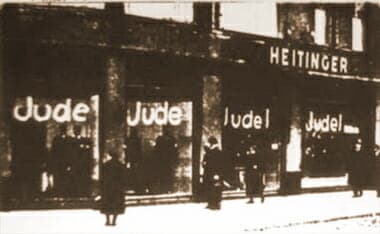
If You Are Juden’s, er, Conservatives, You Need Not Apply

If you are a Republican, you need not speak at a university commencement or convocation.
If you are a conservative Republican you need not apply for a job, as a waiter or an CEO

Totalitarian thinking is rampant on the left (http://youtu.be/6Hm6Le4pDM8), lesbian author Tammy Bruce wrote about this many years ago in her book, “The New Thought Police: Inside the Left’s Assault on Free Speech and Free Minds.” As the book “The Shadow University: The Betrayal Of Liberty On America’s Campuses” pointed out many years ago, as well as many others.

Martin Niemöller

When the Nazis came for the communists,
I remained silent;
I was not a communist.

When they locked up the social democrats,
I remained silent;
I was not a social democrat.

When they came for the trade unionists,
I did not speak out;
I was not a trade unionist.

When they came for the Jews,
I remained silent;
I wasn’t a Jew.

When they came for me,
there was no one left to speak out.

  • True for You, But Not for Me: Overcoming Objections to Christian Faith
  • True Tolerance: Liberalism and the Necessity of Judgment
  • Coloring the News: How Political Correctness Has Corrupted American Journalism
  • The Intolerance of Tolerance
  • The New Tolerance
  • Natural Law and Public Reason
  • Natural Law, Liberalism, and Morality: Contemporary Essays
  • Making Men Moral: Civil Liberties and Public Morality
  • Clash Of Orthodoxies: Law Religion & Morality In Crisis
  • Natural Law and Natural Rights
  • The Death of Right and Wrong: Exposing the Left’s Assault on Our Culture and Values
  • The Disuniting of America: Reflections on a Multicultural Society
  • Liberalism: Fatal Consequences
  • Death by Liberalism: The Fatal Outcome of Well-Meaning Liberal Policies
  • At War with the Word
  • Political Correctness The Cloning of the American Mind
  • Muzzled: From T-Ball to Terrorism-True Stories That Should Be Fiction
  • Are You Politically Correct?: Debating America’s Cultural Standards
  • Relativism: Feet Firmly Planted in Mid-Air
  • A Refutation of Moral Relativism: Interviews with an Absolutist
  • Moral Choices: An Introduction to Ethics
  • Moral Apologetics for Contemporary Christians: Pushing Back Against Cultural and Religious Critics
  • The Assault: Liberalism’s Attack on Religion, Freedom, and Democracy
  • The Liberal Contradiction: How Contemporary Liberalism Violates Its Own Principles and Endangers Its Own Goals
  • Give Me a Break: How I Exposed Hucksters, Cheats, and Scam Artists and Became the Scourge of the Liberal Media

The Left has a propensity for totalitarian thinking. Leftist movements throughout the twentieth century are harbingers (http://youtu.be/iQcUkd1w_TY) to the idea that inside every progressive/liberal there is a tyrant waiting to get out. Mao Zedong, Joseph Stalin, Adolf Hitler, Vladimir Lenin, Pol Pot, Ho Chi Minh City, Che Guevara, Fidel Castro, etc., these were men not pushing a conservative ideal, but a leftist ideology. A “total” way of thinking.

They just didn’t — overnight — come and take Jews, priests, pastors, gypsies, and the like and kill them in NAZI Germany. [NAZI means: National Socialist (Nationalsozialismus) Party of Germany — again, leftist ideology.] There was years of demonization, firing from jobs, shouting down of rather than dialogue, and the like.

History is a harbinger, who will stand up on the Left and say, “Whoa, enough-is-enough?” Black sports writers cannot dissent from the liberal mantra (http://youtu.be/LKXKccyb2e8), to Democrates changing names of fish [the Asian Carp, which came from Asia] to the “Evasive Carp,” because it is somehow less derogatory.

Democratic Senators on the floor of the Senate calling for the name of the Redskins to be changed (why not Oklahoma? That is Choctaw for “Red-Man”), to saying swastika flags were at T.E.A. Party rallies (http://youtu.be/M58Wewdaurc), to yet others saying opposition to Obama-care is racist (http://tinyurl.com/mmad43o) — or that Obama-care, the term, should be outlawed (https://vimeo.com/20273419).

This is some older commentary by me explaining What Fascism Is:


…a librarian at Ohio University recommended the book, The Marketing of Evil: How Radicals, Elitists, and Pseudo-Experts Sell Us Corruption Disguised as Freedom, and was voted on by his fellow professors 21-0 [with nine abstentions, so kinda like 30-0] as being a sexual harasser for recommending a conservative book. Sounds somewhat fascist to me.

See blog for Friday, April 14, 2006 (political commentary): TigerHawk – “Shame of Ohio State Univesity”

Another example:

The political commentators of the same political philosophy, when on campuses are shouted down and threatened with bodily harm (Ann Coulter), when opposing viewpoints are not shouted down on university campuses, and the guests dont need bodyguards (Cindy Sheehan).

See blog (political commentary): Audacious Epigone – “Fascism in Connecticut”

Let us look at what we are told is suppose to be the political landscape if it were to be put into a line graph. Again, the following graph is wrong:

Really this is misleading. For one, it doesn’t allow for anarchy, which is a form of governance (or lack thereof). Also, it places democracy in the center… as if this is what one should strive for, a sort of balance. (The most popular — college level graph — is wrong and misleading as well):

[….]

The following graph includes all political models and better shows where the political beliefs lie e.g., left or right is the following (take note, this graph is from a book I do not support nor recommend… but these visual insights are very useful):

In actuality, during WWII, fascism grew out of socialism, showing how close the ties were. I would argue that the New Left that comprises much of the Democratic Party today is fascistic, or, at least, of a closer stripe than any conservative could ever hope to be. I will end with a model comparing the two forms of governance that the two core values (conservatism/classical liberalism versus a socialist democracy) will produce. Before you view the below though, keep in mind that a few years back the ASA (American Socialist Association) on their own web site said that according to the voting record of United States Congressmen and Women, that 58 of them were social democrats. These are the same that put Hitler and Mussolini in power.

…read more…

Sweden Goes Insane (the latest from Pat Condell)

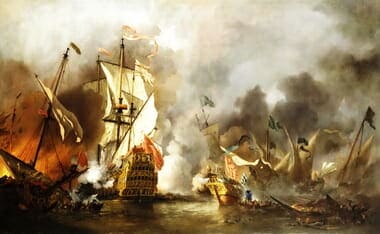
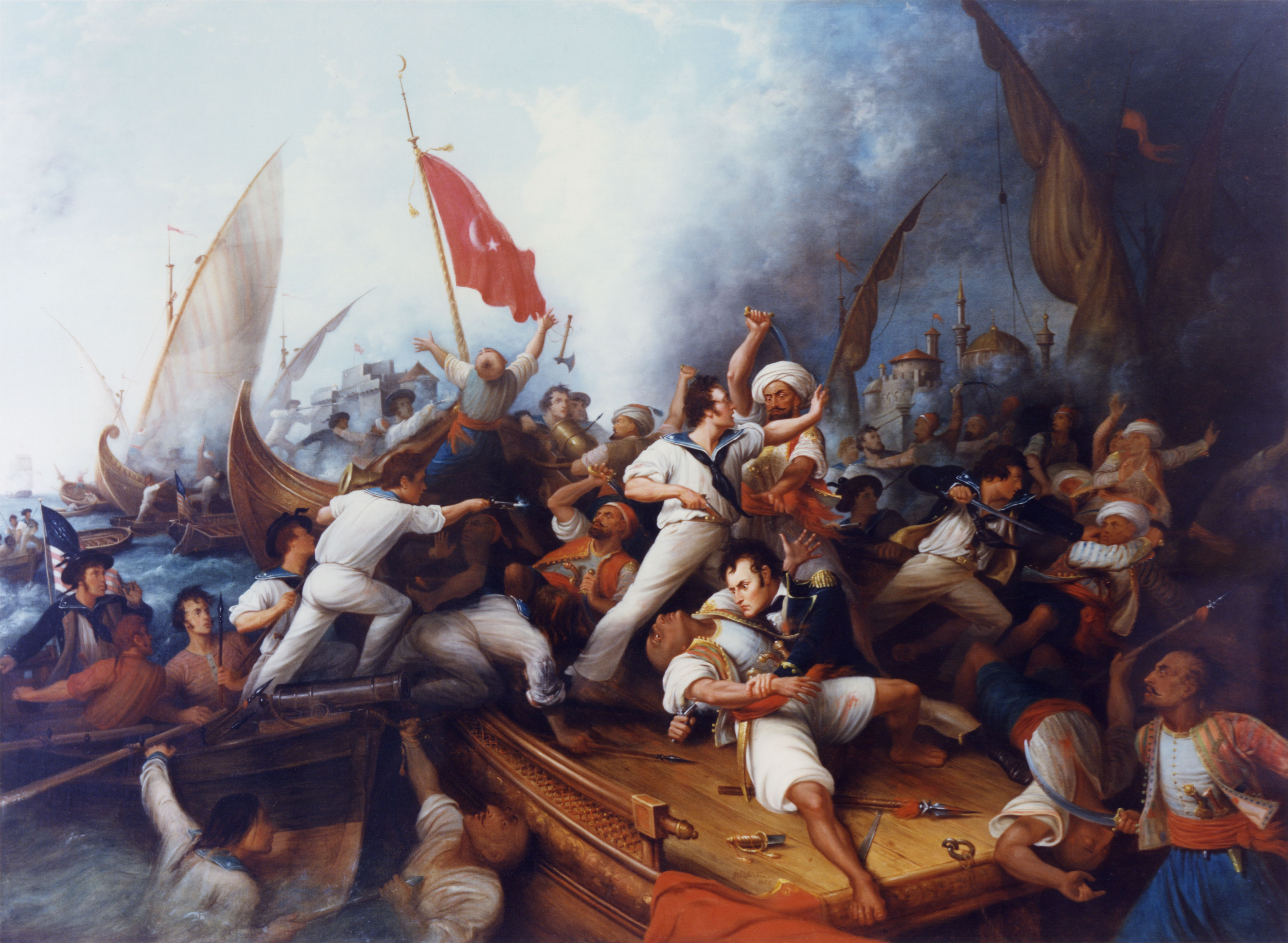
Some Barbary Pirates History and the Creation of Our Military

This was to be the first of many times that an American president would plot to overthrow a foreign government–a dangerous game but one that the Jefferson administration found as hard to pass up as many of its successors would. Wrote Madison:

“Although it does not accord with the general sentiments or views of the United States to intermiddle in the domestic contests of other countries, it cannot be unfair, in the prosecution of a just war, or the accomplishment of a reasonable peace, to turn to their advantage, the enmity and pretensions of others against a common foe.”

Max Boot, The Savage Wars of Peace: Small Wars and the Rise of American Power (New York, NY: Basic Books, 2002), 23-24.

This audio is with a h/t to The Religion of Conquest:

America’s first foreign war: lessons learned from fighting muslim pirates, by Michael Medved:

Most Americans remain utterly ignorant of this nation’s first foreign war but that exotic, long-ago struggle set the pattern for nearly all the many distant conflicts that followed. Refusal to confront the lessons of the First Barbary War (1801-1805) has led to some of the silliest arguments concerning Iraq and Afghanistan, and any effort to apply traditional American values to our future foreign policy requires an understanding of this all-but-forgotten episode from our past.

The war against the Barbary States of North Africa (Algiers, Tunis and Tripoli—today’s Libya) involved commitment and sacrifice far from home and in no way involved a defense of our native soil. For centuries, the Islamic states at the southern rim of the Mediterranean relied upon piracy to feed the coffers of their corrupt rulers. The state sponsored terrorists of that era (who claimed the romantic designation, “corsairs”) seized western shipping and sold their crews into unimaginably brutal slavery.

By the mid-eighteenth century, European powers learned to save themselves a great deal of trouble and wealth by bribing the local authorities with “tribute,” in return for which the pirates left their shipping alone. Until independence, British bribes protected American merchant ships in the Mediterranean since they traveled under His Majesty’s flag; after 1783, the new government faced a series of crises as Barbary pirates seized scores of civilian craft (with eleven captured in 1793 alone). Intermittently, the United States government paid tribute to escape these depredations: eventually providing a bribe worth more than $1,000,000—a staggering one-sixth of the total federal budget of the time – to the Dey of Algiers alone.

When Jefferson became president in 1801, he resolved to take a hard line against the terrorists and their sponsors. “I know that nothing will stop the eternal increase of demands from these pirates but the presence of an armed force, and it will be more economical & more honorable to use the same means at once for suppressing their insolencies,” he wrote.

The president dispatched nearly all ships of the fledgling American navy to sail thousands of miles across the Atlantic and through the straits of Gibraltar to do battle with the North African thugs. After a few initial reverses, daring raids on sea and land (by the new Marine Corps, earning the phrase in their hymn “….to the shores of Tripoli”) won sweeping victory. A decade later, with the U.S. distracted by the frustrating and inconclusive War of 1812 against Great Britain, the Barbary states again challenged American power, and President Madison sent ten new ships to restore order with another decisive campaign (known as “The Second Barbary War, 1815).

Continuing with the article:

The records of these dramatic, all-but-forgotten conflicts convey several important messages for the present day:

  1. The U.S. often goes to war when it is not directly attacked. One of the dumbest lines about the Iraq War claims that “this was the first time we ever attacked a nation that hadn’t attacked us.” Obviously, Barbary raids against private shipping hardly constituted a direct invasion of the American homeland, but founding fathers Jefferson and Madison nonetheless felt the need to strike back. Of more than 140 conflicts in which American troops have fought on foreign soil, only one (World War II, obviously) represented a response to an unambiguous attack on America itself. Iraq and Afghanistan are part of a long-standing tradition of fighting for U.S. interests, and not just to defend the homeland.
  2. Most conflicts unfold without a Declaration of War. Jefferson informed Congress of his determination to hit back against the North African sponsors of terrorism (piracy), but during four years of fighting never sought a declaration of war. In fact, only five times in American history did Congress actually declare war – the War of 1812, the Mexican War, The Spanish American War, World War I and World War II. None of the 135 other struggles in which U.S. troops fought in the far corners of the earth saw Congress formally declare war—and these undeclared conflicts (including Korea, Vietnam, the First Gulf War, and many more) involved a total of millions of troops and more than a hundred thousand total battlefield deaths.
  3. Islamic enmity toward the US is rooted in the Muslim religion, not recent American policy. In 1786, America’s Ambassador to France, Thomas Jefferson, joined our Ambassador in London, John Adams, to negotiate with the Ambassador from Tripoli, Sidi Haji Abdrahaman. The Americans asked their counterpart why the North African nations made war against the United States, a power “who had done them no injury”, and according the report filed by Jefferson and Adams the Tripolitan diplomat replied: “It was written in their Koran, that all nations which had not acknowledged the Prophet were sinners, whom it was the right and duty of the faithful to plunder and enslave; and that every mussulman who was slain in this warfare was sure to go to paradise.”
  4. Cruel Treatment of enemies by Muslim extremists is a long-standing tradition. In 1793, Algerian pirates captured the merchant brig Polly and paraded the enslaved crewmen through jeering crowds in the streets of Algiers. Dey Hassan Pasha, the local ruler, bellowed triumphantly: “Now I have got you, you Christian dogs, you shall eat stones.” American slaves indeed spent their years of captivity breaking rocks. According to Max Boot in his fine book The Savage Wars of Peace: “A slave who spoke disrespectfully to a Muslim could be roasted alive, crucified, or impaled (a stake was driven through the arms until it came out at the back of the neck). A special agony was reserved for a slave who killed a Muslim – he would be cast over the city walls and left to dangle on giant iron hooks for days before expiring of his wounds.”
  5. There’s nothing new in far-flung American wars to defend U.S. economic interests. Every war in American history involved an economic motivation – at least in part, and nearly all of our great leaders saw nothing disgraceful in going to battle to defend the commercial vitality of the country. Jefferson and Madison felt no shame in mobilizing – and sacrificing – ships and ground forces to protect the integrity of commercial shipping interests in the distant Mediterranean.  Fortunately for them, they never had to contend with demonstrators who shouted “No blood for shipping!”
  6. Even leaders who have worried about the growth of the U.S. military establishment came to see the necessity of robust and formidable armed forces. Jefferson and Madison both wanted to shrink and restrain the standing army and initially opposed the determination by President Adams to build an expensive new American Navy. When Jefferson succeeded Adams as president, however, he quickly and gratefully used the ships his predecessor built. The Barbary Wars taught the nation that there is no real substitute for military power, and professional forces that stand ready for anything.
  7. America has always played “the cop of the world.” In part, Jefferson and Madison justified the sacrifices of the Barbary Wars as a defense of civilization, not just the protection of U.S. interests – and the European powers granted new respect to the upstart nation that finally tamed the North African pirates. Jefferson and Madison may not have fought for a New World Order but they most certainly sought a more orderly world. Many American conflicts over the last 200 years have involved an effort to enfort to enforce international rules and norms as much as to advance national interests. Wide-ranging and occasionally bloody expeditions throughout Central America, China, the Philippines, Africa and even Russia after the Revolution used American forces to prevent internal and international chaos.

The Barbary Wars cost limited casualties for the United States (only 35 sailors and marines killed in action) but required the expenditure of many millions of dollars – a significant burden for the young and struggling Republic. Most importantly, these difficult battles established a long, honorable tradition of American power projected many thousands of miles beyond our shores. Those who claim that our engagements in Iraq and Afghanistan represent some shameful, radical departure from an old tradition of pacifism and isolation should look closely at the reality of our very first foreign war—and all the other conflicts in the intervening 200 years.

Religious Implications of the Treaty of Tripoli

A friend recently quoted this:

“As the government of the United States is not, in any sense, founded on the Christian religion; as it has in itself no character of enmity against the laws, religion or tranquility of Musselmen [Muslims]… it is declared… that no pretext arising from religious opinion shall ever produce an interruption of the harmony existing between the two countries” …. “The United States is not a Christian nation any more than it is a Jewish or a Mohammedan nation.” 

Firstly, those who cite the Treaty of Tripoli as evidence that this nation was not founded on the Christian religion, usually ignore the Treaty of Paris of 1783. This Treaty, negotiated by Ben Franklin and John Adams among others, is truly a foundational document for the United States, because by this Treaty Britian recognized the independence of the United States. The Treaty begins with the words, “In the Name of the most holy and undivided Trinity… ,” and there is no dispute about its validity or its wording. This “disputed validity” can be seen in the article by Tekton. A fuller dealing with the treaty can also be found at the Wall Builder’s site.

The United States Constitution and the American political system were based on Christian principles.  Included in those Christian principles are the following theological and moral imperatives:

  • Government power and sovereignty should be limited to the specific theological and moral commands of the Christian God.
  • There should be a balance and separation of powers within the government so that a small group of evil people will be unable to tyrannize others.
  • All citizens should have the right to own property and to buy and sell freely, according to the moral law of the Christian God.
  • The right to life and property cannot be abridged without due process.
  • The ultimate source of all authority lies with the God of the Bible.
  • The American Government was designed to be a sacred covenant between the people, the state, and God.  If the state breaks this covenant, then the people have the right, and the duty, to oppose the state but to use violence only as a last resort.
  • As the Constitution clearly states, Jesus Christ is our Lord because He is the second member of the “most Holy and undivided Trinity.”
  • Although the Constitution affirms a belief in the deity of Christ and in the Holy Trinity, neither the church nor the state is allowed to physically force people to believe these biblical teachings.  The state should, however, do everything it can to facilitate the spread of the Christian Gospel and to place moral limits on the behavior of people.

For instance, one of many examples the Left gives for a secular founding of our nation is Benjamin Franklin. However, we can see his advice to his own kin in these quotes, he wrote to his daughter in 1764,

“Go constantly to church, whoever preaches. The act of devotion to the common prayer book is your principle business there, and if properly attended to, will do more towards amending the heart than sermons generally can do. For they were composed by men of much greater piety and wisdom, than our common composers of sermons can pretend to be; and therefore I wish you would never miss the prayer days; yet I do not mean you should despise sermons, even of the preachers you dislike, for the discourse is often much better than the man, as sweet and clear waters come through very dirty earth. I am the pore particular on this head, as you learned to express a little before I came away, some inclination to leave our church, which I would not have you do.”

And at age 84, when the President of Yale asked his opinion of Jesus of Nazareth, he replied that “I think his system of morals and his religion, as he left them to us, the best the world ever saw or is likely to see.” Something in all the quotes on the atheist monument that are assumed to be “set in stone” (answered here in part 1):

Other posts in this series:

Below, however, is my dealing with a signature (every time someone posts a response in a forum, you/they can choose to have the same “signature” display at the end of their comment — similar to email) of a person in a forum I was in a decade[+] ago. Enjoy, but again, I recommend the above linked articles as well as the one by Apologetic Press. You may ask why many apologetic sites deal with this? It is because atheists primarily latch on to this as an argument against the religious history of this nation. See also my paper on the Separation of Church and State.

Blancho’s signature states:

“‘As the government of the United States of America is not in any sense founded on the Christian Religion…’ – Article XI of the English text of the Treaty of Tripoli, approved by the U.S. Senate on June 7, 1797 and ratified by President John Adams on June 10, 1797.”

(I have been wanting to address this quote for some time now, just haven’t had the time, sorry.)

How does this quote that Blancho uses fly in the face of other quotes by John Adams? What is the background to this treaty that caused such a signing to enter the record books of our hallowed halls. Let us first see a few quotes by Adams before we enter into the proper context of this treaty.

[speaking on why Christmas and the Fourth of July were out two top holidays] “Is it not that, in the chain of human events, the birthday of the nation is indissolubly linked with the birthday of the Saviour? That it forms a leading event in the progress of the gospel dispensation? Is it not that the Declaration of Independence first organized the social compact on the foundation of the Redeemer’s mission upon earth? That it laid the cornerstone of human government upon the first precepts of Christianity?”

“Religion and virtue are the only foundations… of republicanism and of all free governments.”

Okay, the Treaty of Tripoli, one of several with Tripoli, was negotiated during the “Barbary Powers Conflict,” which began shortly after the Revolutionary War and continued through the Presidencies of Washington, Adams, Jefferson, and Madison. The Muslim Barbary Powers (Tunis, Morocco, Algiers, Tripoli, and Turkey) were warring against what they claimed to be the “Christian” nations (England, France, Spain, Denmark, and the United States). In 1801, Tripoli even declared war against the United States, thus constituting America’s first official war as an established independent nation.

Throughout this long conflict, the five Barbary Powers regularly attacked undefended American merchant ships. Not only were their cargoes easy prey but the Barbary Powers were also capturing and enslaving “Christian” seamen in retaliation for what had been done to them by the “Christians” of previous centuries (e.g., the Crusades and Ferdinand and Isabella’s expulsion of Muslims from Grenada).

In an attempt to secure a release of captured seamen and a guarantee of unmolested shipping in the Mediterranean, President Washington dispatched envoys to negotiate treaties with the Barbary nations. (Concurrently, he encouraged the construction of American naval warships to defend the shipping and confront the Barbary “pirates” – a plan not seriously pursued until President John Adams created a separate Department of the Navy in 1798.)

The American envoys negotiated numerous treaties of “Peace and Amity” with the Muslim Barbary nations to ensure “protection” of American commercial ships sailing in the Mediterranean. However, the terms of the treaty frequently were unfavorable to America, either requiring her to pay hundreds of thousands of dollars of “tribute” (i.e., official extortion) to each country to receive a guarantee” of safety or to offer other “considerations” (e.g., providing a warship as a gift to Tripoli, a gift frigate to Algiers, paying 525,000 to ransom captured American seamen from Algiers, etc.)

The 1797 treaty with Tripoli was one of the many treaties in which each country officially recognized the religion of the other in an attempt to prevent further escalation of a “Holy War” between Christians and Muslims. Consequently, Article XI of that treaty stated:

“As the government of the United States of America is not in any sense founded on the Christian religion AS it has in itself no character of enmity [hatred] against the laws, religion or tranquility of Musselmen [Muslims] and as the said States [America] have never entered into any war or act of hostility against any Mahometan [Mohammedan] nation, it is declared by the parties that no pretext arising from religious opinions shall ever produce an interruption of the harmony existing between the two countries.”

This article may be read in two manners. It may, as its critics do, be concluded after the clause “Christian religion”; or it may be read in its entirety and concluded when the punctuation so indicates. But even if shortened and cut abruptly (“the government of the united states is not in any sense founded on the Christian religion”), this is not an untrue statement since it is referring to the Federal government.

Recall that while the Founders themselves openly described America as a Christian nation, they did include a constitutional prohibition against a federal establishment; religion was a matter left solely to the individual states. Therefore, if the article is read as a declaration that the federal government of the United States was not in any sense founded on the Christian religion, such a statement is not a repudiation of the fact that America was considered a Christian nation.

Reading the clause of the treaty in its entirety also fails to weaken this fact. Article XI simply distinguished America from those historical strains of European Christianity which held an inherent hatred of Muslims; it simply assured the Muslims that the United States was not a Christian nation like those of previous centuries (with whose practices the Muslims were very familiar) and thus would not undertake a religious holy war against them.

This latter reading is, in fact, supported by the attitude prevalent among numerous American leaders. The Christianity practiced in America was described by John Jay as “enlightened,” by John Quincy Adams as “civilized,” and by John Adams as “rational.” A clear distinction was drawn between American Christianity and that of European in earlier centuries.

As Noah Webster explained:

“The ecclesiastical establishments of Europe which serve to support tyrannical governments are not the Christian religion but abuses and corruption’s of it.”

Daniel Webster similarly explained that American Christianity was:

“Christianity to which the sword and the fagot [burning stake or hot branding iron] are unknown – general tolerant Christianity is the law of the land!”

While discussing the Barbary conflict with Jefferson, Adams declared:

“The policy of Christendom has made cowards of all their sailors before the standard of Mahomet. It would be heroical and glorious in us to restore courage to ours.”

Furthermore, it was Adams who declared:

“The general principles on which the fathers achieved independence were… the general principles of Christianity…. I will avow that I then believed, and now believe, that those general principles of Christianity are as eternal and immutable as the existence and attributes of God; and that those principles of liberty are as unalterable as human nature.”

Adams’ own words confirm that he rejected any notion that America was less than a Christian nation. Additionally, the writing’s of General William Eaton, a major figure in the Barbary Powers conflict, provide even more irrefutable testimony of how the conflict was viewed at that time. Eaton was first appointed by President John Adams a “Consul to Tunis,” and President Thomas Jefferson later advanced him to the position of “U. S. Naval Agent to the Barbary States,” authorizing him to lead a military expedition against Tripoli. Eaton’s official correspondence during his service confirms that the conflict was a Muslim war against a Christian America.

For example, when writing to Secretary of State Timothy Pickering, Eaton apprised him of why the Muslims would be such dedicated foes:

“Taught by revelation [the Koran] that war with the Christians will guarantee the salvation of their souls, and finding so great secular advantages in the observance of this religious duty [the secular advantage of keeping captured cargo], their [the Muslims’] inducements to desperate fighting are very powerful.”

Eaton later complained that after Jefferson had approved his plan for military action, he sent him the obsolete warship “Hero.” Eaton reported the impression of America made upon the Tunis Muslims when they saw the old warship and its few cannons:

“[T]he weak, the crazy situation of the vessel and equipage [armaments] tended to confirm an opinion long since conceived and never fairly controverted among the Tunisians, that the Americans are a feeble sect of Christianity.”

In a letter to Pickering, Eaton reported how pleased one Barbary ruler had been when he received the extortion compensations from America which had been promised him in one of the treaties, he said:

“To speak truly and candidly…. we must acknowledge to you that we have never received articles of the kind of so excellent a quality from any Christian nation.”

When John Marshall became the new Secretary of State, Eaton informed him:

“It is a maxim of the Barbary States, that ‘The Christians who would be on good terms with them must fight well or pay well.”

And when General Eaton finally commenced his military action against Tripoli, his personal journal noted:

“April 8th. We find it almost impossible to inspire these wild bigots with confidence in us or to persuade then that, being Christians, we can be otherwise than enemies to Musselmen. We have a difficult undertaking!”

May 23rd. Hassien Bey, the commander in chief of the enemy’s forces, has offered by private insinuation for my head six thousand dollars and double the sum for me as prisoner; and $30 per head for Christians. Why don’t he come and take it?”[/i][/list]Shortly after the military excursion against Tripoli was successfully terminated, its account was written and published. What was the title?

  • The Life of the Late Gen. William Eaton… commander of the Christian and other forces… which Led to the Treaty of Peace Between The United States and The Regency of Tripoli

Context Blancho… context.

Here is the appendix from John Eidsmoe, Christianity and the Constitution: The Faith of Our Founding Fathers (Grand Rapids: Baker Books, 1987), 413-415, that will shed more light on this:

Josh McDowell Shares His Struggle With Circumstances and Coming to Faith

We have had some great commencement and convocation speeches these past few weeks, and some really horrible ones. But Liberty University — I don’t think — was ready for this honest, and at times, raw, testimony. Josh McDowell’s struggle against the odds and his hatred/blame of God creating seemingly insurmountable hurdles in his life that made coming to faith in Jesus Christ impossible to the natural mind. But we deal with a miraculous God:

Matthew 19:26

  • But Jesus looked at them and said, With men this is impossible, but with God all things are possible.” (Holman Christian Standard Bible)
  • Jesus looked hard at them and said, “No chance at all if you think you can pull it off yourself. Every chance in the world if you trust God to do it.” (The Message)

Josh McDowell is a prolific apologetic writer who has written classics in the defense of the Christian faith, based on his own skepticism. But only recently has he talked about his childhood and expanded on what drove him to this skepticism. The movie of this is called Undaunted (2012), and it is a must watch.

I wish to thank Pastor Matt in bringing this speech to my attention. And I ask you settle in and enjoy the huge dose of God’s hand working in one man’s life:

Fireman Reunited w/ Abandoned Baby He Rescued 18-Years Earlier

Via The Blaze:

After authorities got the anonymous 911 call, police and firefighters fanned out quickly to try locating an infant abandoned under a pine tree in a graveyard.

They looked and looked around Mt. Hope Cemetery in Champaign, Illinois on that chilly morning and couldn’t find the baby.

But on a whim, local firefighter Charlie Heflin — listening to the developing drama over his scanner — figured he’d take a different approach.

He simply went to a different cemetery.

But again, no luck. After not locating the infant, either, Heflin started to walk back to his truck…when he got the sense he should try again.

“I heard a little whimper when I got close to the tree,” Heflin told WFIE-TV in Evansville, Indiana. “I dug down inside this real huge pine tree and found her.”…


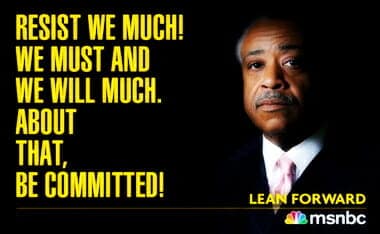
[HA!] Al Sharpton Defends Racist Rants: “It Was Only One Jew”

Video with h/t to Weasel Zippers:

Some quotes via Young Conservatives:

…He disparaged Jews as “diamond merchants” during the unrest of the infamous Crown Heights riots?

…He tried goading NYC’s Jewish community into an all-out fistfight, saying “If the Jews want to get it on, tell them to pin their yarmulkes back and come over to my house”?

…He referred to the Jewish owner of Freddy’s Fashion Mart, Fred Harari, as a “white interloper” for seeking to expand his business in Harlem? (You may have heard of Freddy’s. It was also known as the Harlem Massacre. One of Sharpton’s followers also disapproved of the “white interloper” and burned the store to the ground, murdering eight people including himself.)

But those tirades were just Sharpton’s anti-semitic ones. He’s also sermonized on “Greek homos” and “crackas” as well as bombarded former NYC Mayor David Dinkins with a barrage of N-bombs.

Democrats See Racists Under Every Bed (Sen. Rockefeller vs. Sen. Johnson)

Via HotAir:

Two noteworthy details here. One: Rockefeller couldn’t be more casual in lobbing his grenade. He’s not out at a fundraiser with a drink in his hand, mindlessly babbling to some reporter with his guard down. He’s at an actual Senate hearing with a Republican senator sitting right in front of him, and yet it’s bombs away — and not for the first time. Congressional rules of decorum forbid swearing and personal insults, but if you want to charge the other side with racism for questioning Obama’s pet boondoggle, fire away. Two: Unlike most instances where this accusation is made, the target was present and eager to respond. Watch the very beginning and then the last few minutes of the second clip to see Johnson hit back. I would have walked out if I were him, but admittedly, his approach is smarter.

Listening to Dr. Ben Carson on the talk show circuit, and he said something interesting, which we see an over-doing of via the above video:

…this type of infantile adolescent behavior is still quite prevalent in our current political environment. Instead of “capping” their opponents, many in the political class engage in hyperbolic demagoguery in an attempt to demonize those who disagree with them. This is not surprising, because in his book “Rules For Radicals,” Saul Alinsky, the original radical community organizer and societal change agent, says you should never have a rational discussion with your opponent. Doing so would humanize him, and your goal is to demonize him. With this tactic, he states that you can incur your opponent’s wrath, causing him to respond angrily, and in many cases, irrationally, which then provides an opportunity to use that irrational response against him.

What was Doc Carson speaking of? in part, one of the 12-Rules of Radicals is used by Democrats, here is the rule:

  • RULE 5: “Ridicule is man’s most potent weapon.” There is no defense. It’s irrational. It’s infuriating. It also works as a key pressure point to force the enemy into concessions (Glen Beck);

Here is more of it explained… and exploited:

Ridicule is man’s most potent weapon. Conservatives have a tendency to try to win every debate with logic and recitations of facts which, all too often, fail to get the job done because emotions and mockery are often just as effective as reason. The good news is that liberals almost never have logic on their side; so they’re incapable of rationally making the case for their policies while conservatives can become considerably more effective debaters by simply adding some emotion-based arguments and sheer scorn to their discourse. This has certainly worked on Twitter, where conservatives keep making the Obama campaign look like buffoons by taking over its hashtags. (TownHall)

We see Democrats and liberals using this tactic all the time, in more-and-more frequency in fact. Well, that aside, here is the response by Republican Senator Ron Johnson to this smear:

“You Have Become What You Hated” ~ Opie & Anthony on the Left

(CAUTION: Strong Language)

Via The Blaze:

Radio hosts Gregg “Opie” Hughes, Anthony Cumia and comedian Jim Norton, of the popular “Opie and Anthony Show” on SiriusXM, went on a fiery tirade Tuesday against “trigger warnings” and the current culture on college campuses, which they argue is producing childish adults unprepared to deal with the “real world.”

Norton also scolded the progressive left for becoming “exactly what you hated.”

“You have become exactly [like] the conservative, religious book burners of the 40s and the 50s and the 60s. You are it!” he said. “You are the speech repressors, you are the hypersensitive ones, you are the ones who want people fired immediately, you are the ones calling for people’s jobs. You have become what you hated.”

The discussion that preluded his rant got heated after Norton brought up a recent story out of Wellesley College where “hundreds” of outrage college students objected after a lifelike sculpture of a sleepwalking man in his underwearwas erected on campus. Students ended up creating a petition to have it removed.

“Oh my god,” Hughes responded. “We are raising a nation of pu***es, we’ve been saying it for years.”

…read more…

Going Against the Consensus ~ New Wave of IPCC Heretics

All the links associated with this recent story are dead (too much traffic… I was dealing with this here at RPT a few weeks ago — so I sympathizese), so I am working with this larger excerpt found at What’s Up With That (h/t to Climate Depot):

Doing science by consensus is not science at all, says the climatologist all the alarmists love to hate. Not that the enmity bothers Judith Curry too much — and certainly not as much as the debasement of impartial inquiry by which the warmist establishment keeps all those lovely grants coming.

When climatologist Judith Curry visited Melbourne last week she took the time to chat with Quadrant Online contributor Tony Thomas. The professor and chair of the School of Earth and Atmospheric Sciences at the Georgia Institute of Technology is something of a stormy petrel in the climate-change community, as she has broken ranks with alarmist colleagues to question the articles and ethics of the warmist faith. This has made her less than popular in certain circles, even inspiring Scientific American, house journal of the catastropharians, to brand her “a heretic” who has “turned on her colleagues.” [excerpt below]

Excerpts:

THOMAS: What empirical evidence is there, as distinct from modelling, that ‘missing heat’ has gone into the deep oceans?

CURRY: Basically, none.  Observations below 2 km in the ocean are exceedingly rare, and it is only since 2005 that we have substantial coverage below 700 metres.

THOMAS:  Are you supportive of the line that the ‘quiet sun’ presages an era of global cooling in the next few decades?

CURRY:
One of the unfortunate consequences of the focus on anthropogenic forcing of climate is that solar effects on climate have been largely neglected.  I think that solar effects, combined with the large scale ocean-circulation regimes, presage continued stagnation in global temperatures for the next two decades.

THOMAS: If the skeptic/orthodox spectrum is a range from 1 (intense skeptic) to 10 (intensely IPCC orthodox), where on the scale would you put yourself

(a) as at 2009

(b) as at 2014,

and why has there been a shift (if any)?

CURRY: In early 2009, I would have rated myself as 7; at this point I would rate myself as a 3.  Climategate and the weak response of the IPCC and other scientists triggered a massive re-examination of my support of the IPCC, and made me look at the science much more sceptically.

The story mentioned above from Scientific American likewise is found elsewhere in full, at the journal Nature:

In trying to understand the Judith Curry phenomenon, it is tempting to default to one of two comfortable and familiar story lines.

For most of her career, Curry, who heads the School of Earth and Atmospheric Sciences at the Georgia Institute of Technology, has been known for her work on hurricanes, Arctic ice dynamics and other climate-related topics. But over the past year or so she has become better known for something that annoys, even infuriates, many of her scientific colleagues. Curry has been engaging actively with the climate change skeptic community, largely by participating on outsider blogs such as Climate Audit, the Air Vent and the Black¬board. Along the way, she has come to question how climatologists react to those who question the science, no matter how well established it is. Although many of the skeptics recycle critiques that have long since been disproved, others, she believes, bring up valid points—and by lumping the good with the bad, climate researchers not only miss out on a chance to improve their science, they come across to the public as haughty. “Yes, there’s a lot of crankology out there,” Curry says. “But not all of it is. If only 1 percent of it or 10 percent of what the skeptics say is right, that is time well spent because we have just been too encumbered by groupthink.”

She reserves her harshest criticism for the Intergovernmental Panel on Climate Change (IPCC). For most climate scientists the major reports issued by the United Nations–sponsored body every five years or so constitute the consensus on climate science. Few scientists would claim the IPCC is perfect, but Curry thinks it needs thoroughgoing reform. She accuses it of “corruption.” “I’m not going to just spout off and endorse the IPCC,” she says, “because I think I don’t have confidence in the process.”

Whispered discreetly at conferences or in meeting rooms, these claims might be accepted as part of the frequently contentious process of a still evolving area of science. Stated publicly on some of the same Web sites that broke the so-called Climategate e-mails last fall, they are considered by many to be a betrayal, earning Curry epithets from her colleagues ranging from “naive” to “bizarre” to “nasty” to worse.

All of which sets up the two competing story lines, which are, on the surface at least, equally plausible. The first paints Curry as a peacemaker—someone who might be able to restore some civility to the debate and edge the public toward meaningful action. By frankly acknowledging mistakes and encouraging her colleagues to treat skeptics with respect, she hopes to bring about a meeting of the minds.

…read more…

Climate Depot has another story linked to that Marco Morano entitles: UN IPCC Lead Author Dr. Richard Tol admits no global warming for 17 years – Rips bias in IPCC – UN’s ‘inbuilt alarmism made me step down’ – ‘By the time the report was finished, however, it hadn’t warmed for 17 years’ — in it we find nuggets like:

….The report also illustrates just how outmoded the IPCC has become since it was founded in 1988. Its reports are written over a period of three years, and finished months before publication.

When preparations started on AR5, the world hadn’t warmed for 13 years. That is a bit odd, if you believe the models, but not odd enough to merit a lot of attention.

By the time the report was finished, however, it hadn’t warmed for 17 years. That is decidedly odd, but hard to accommodate in a near-final draft that has been through three rounds of review.

After the report was finalized, but before it was published, a number of papers appeared with hypotheses about the pause in warming. AR5 was out of date before it was released.

The IPCC model… is broken.

[….]

Authors who want to see their long hours of IPCC work recognized should thus present their impact as worse than the next one.

It was this inbuilt alarmism that made me step down from the team that drafted the Summary for Policy Makers of Working Group 2. And indeed, the report was greeted by the four horsemen of the apocalypse: famine, pestilence, war, death all made headlines.

…read more…

Richard Tol, Leslie WoodcockJames Lovelock, and others all feel the sting of the machine they were a part of.

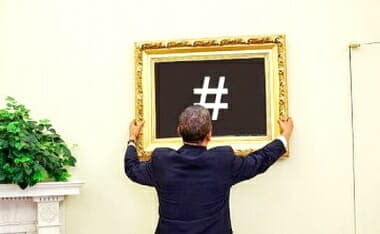
Hashtag Diplomacy ~ #BringBackOurBalls (Updated w/ Dan Joseph)

Dan Joseph adds a bit to the understanding of the political nature of the Nigerian government.

(Some cartoons added at the end)

I just think this pop-culture, feel good diplomacy in our current administration is horrible!

Richochet has this:

Russia is invading its neighbors, China is expanding its claims over the western Pacific, and Islamic militants are terrorizing Syria, Libya, Yemen, Nigeria and other nations. But fear not, America: President Barack Obama has ordered his forces to deploy high-yield tactical hashtags across social media.

As the administration drastically cuts the U.S. military, the State Department’s Jen Psaki launched a brutal fussilade of tweets at Vladimir Putin, complaining that Moscow wasn’t living up to “the promise of hashtag.” Today, a pouty Michelle Obama is facing down Nigeria’s murderous Boko Haram with a hashtagged photo uploaded to Instagram.

Let’s all pray North Korea doesn’t march south or Chuck Hagel will have to curate an anti-Juche Pinterest board.

Steyn Online has this GREAT story that puts it all in perspective:

Obama administration foreign policy long ago passed the stage of self-parody. Yet it has written a new chapter in self-parody as State Department spokesman Jen Psaki engaged last week in “hashtag diplomacy” on Twitter to counter Russian aggression in Ukraine. ABC News picks up the story in “#That’sCold! Russians, US in hashtag battle.” Long story short: the Obama administration has opened up another front in which it is losing to Russia. (Powerline)

(To Wit)

I become more and more embarrassed on a daily basis by these Progressive imbeciles who populate the State Department and other U.S. Government agencies, who probably really believe that Vlad Putin cares about someone’s Twitter hashtag and whether or not living up to it will send bad optics to the rest of the world. Jen Psaki seems to believe that Russia can be shamed into cooperating in the Ukrainian crisis simply because they aren’t living up to a “binding” hashtag.

Which of course, isn’t binding at all. It’s actually quite stupid. Jen Psaki declared that Russia hasn’t been following up their hashtag with action.  So, there’s that.

If anyone wonders why we’re in such trouble it’s because you can bet that Jen Psaki and the rest of the brain trust at the State Department, up to and including John Kerry, go to bed every night thinking that they’ve outwitted Putin and every other world leader that they deal with.

Poor Jen. (Rotten to the Core)

#BringBackOurBalls

It is hard not to have total contempt for a political culture that thinks the picture at right is a useful contribution to rescuing 276 schoolgirls kidnapped by jihadist savages in Nigeria. Yet some pajama boy at the White House evidently felt getting the First Lady to pose with this week’s Hashtag of Western Impotence would reflect well upon the Administration. The horrible thing is they may be right: Michelle showed she cared – on social media! – and that’s all that matters, isn’t it?

Just as the last floppo hashtag, #WeStandWithUkraine, didn’t actually involve standing with Ukraine, so #BringBackOurGirls doesn’t require bringing back our girls. There are only a half-dozen special forces around the planet capable of doing that without getting most or all of the hostages killed: the British, the French, the Americans, Israelis, Germans, Aussies, maybe a couple of others. So, unless something of that nature is being lined up, those schoolgirls are headed into slavery, and the wretched pleading passivity of Mrs Obama’s hashtag is just a form of moral preening.

But then what isn’t? The blogger Daniel Payne wrote this week that “modern liberalism, at its core, is an ideology of talking, not doing”. He was musing on a press release for some or other “Day of Action” that is, as usual, a day of inaction:

✦ Diverse grassroots groups are organizing and participating in events such as walks, rallies and concerts and calling on government to reduce climate pollution, transition off fossil fuels and commit to a clean energy future.

It’s that easy! You go to a concert and someone “calls on government” to do something, and the world gets fixed.

There’s something slightly weird about taking a hashtag – which on the Internet at least has a functional purpose – and getting a big black felt marker and writing it on a piece of cardboard and holding it up, as if somehow the comforting props of social media can be extended beyond the computer and out into the real world. Maybe the talismanic hashtag never required a computer in the first place. Maybe way back during the Don Pacifico showdown all Lord Palmerston had to do was tell the Greeks #BringBackOurJew.

As Mr Payne notes, these days progressive “action” just requires “calling on government” to act. But it’s sobering to reflect that the urge to call on someone else to do something is now so reflexive and ingrained that even “the government” – or in this case the wife of “the government” – is now calling on someone else to do something…

~Arguments about why Hillary Clinton refused to put Boko Haram on the State Department terror list are about as useful as an Obama hashtag right now. But it is worth remembering that the group’s first terrorism attack was a recent as 2011. They are, therefore, part of the same metastasization of jihadist violence throughout the northern half of the African continent as the Benghazi assault and the Kenyan shopping-mall attack. This growth of al-Qaeda affiliates went on throughout almost the entirety of Obama’s first term, but because Joe Biden had a cute line (“bin Laden is dead and General Motors is alive”) nobody paid any attention to it. #NothingToSeeHere.

…READ IT ALL…