The Forgotten 1st Amendment | René Diaz

BEFORE THE VIDEO LECTURE… WHO IS RENE DIAZ?

Former District Judge Rene Diaz is a speaker for WallBuilders, a national pro-family organization that presents America’s forgotten history and heroes, with an emphasis on our moral, religious and constitutional heritage.

WallBuilders is a name taken from the Old Testament story of Nehemiah, who led a grassroots movement to rebuild the walls of Jerusalem and restore its strength and honor. In the same way, WallBuilders seeks to energize people today to become involved in strengthening their communities, states, and nation. WallBuilders has been nationally recognized for its work in education, history, law, and public policy, integrating the elements of Biblical faith and morality throughout all aspects of American life and culture.

Rene is the CEO of the Diaz Mediation & Arbitration Center, and works as a peacemaker by trying to amicably resolve legal disputes referred to him by the courts or directly by the parties. With over twenty-eight years of civil litigation experience in state and federal courts, he has handled a wide variety of cases all over the State of Texas. In 2004, he was appointed by Texas Governor, Rick Perry as the Presiding Judge for the 224th District Court of Bexar County. Judge Diaz has achieved the highest possible peer review rating of “AV – Preeminent” by Martindale-Hubbell for his ethical standards and legal ability, and he has been repeatedly listed as among the Best Lawyers in San Antonio, Texas by the Scene in SA Magazine for the last ten years.

Before becoming a judge, he served as a Texas Commissioner of the OneStar National Service Commission, the state agency that oversees AmeriCorp Volunteers as well as the Texas Office of Faith Based and Community Initiatives. He also served as General Counsel for the Republican Party of Texas and currently serves as Chairman of Habitat for Humanity of San Antonio and as a Board Member for the Bexar County Dispute Resolution Center. A frequent lecturer for the State Bar of Texas and San Antonio Bar Association, he has also volunteered with the Community Justice Program and the San Antonio Young Lawyers, who awarded him the “Honorary Young Lawyer of the Year Award” as the jurist who contributed most to the professional development of the young attorneys.

Born in Virginia, Judge Diaz attended the University of Virginia for his Bachelor’s Degree in International Relations and Latin American Studies and received both his Master’s Degree in Public Policy and his Law Degree from Regent University. During law school he met and married the love of his life, Cynthia Smith. They have been married for thirty years and currently reside in San Antonio, Texas.

Adapted but pretty close transcript.


WallBuilders — Session 2 of 3

November 20, 2021 — René Diaz

In the last session, I introduced WallBuilders and explained that our name comes from the Book of Nehemiah. When the children of Israel returned from Babylon, they found Jerusalem in ruins, and Nehemiah proved to be a remarkable leader. He brought the Jewish families together, and each family worked on the portion of the wall in front of its house while carrying weapons because they were attacked as they built. By cooperating and following Nehemiah’s leadership, they rebuilt the wall in 52 days. I like to say that Nehemiah tells the story of patriots who loved their country and were willing to defend it by rebuilding the foundations and protections of their homeland after they had been torn down, neglected, and forgotten.

That theme runs through today’s presentation because much of what I will share has been neglected or forgotten in elementary schools, high schools, universities, and even law schools. I am going to discuss the separation of church and state and what the founders actually meant by that concept. First Amendment cases over the last 50 years have been groundbreaking, but they have also departed dramatically from the founders’ intentions. During that period, the text of the First Amendment to the U.S. Constitution has been cited in roughly 3,000 cases, while the metaphor “separation of church and state,” which does not appear in the amendment, has been cited in roughly 4,000 cases.

Courts often rely more heavily on the separation metaphor they encountered in law school and university than on the actual text of the First Amendment. The religion clauses have two parts: “Congress shall make no law respecting an establishment of religion, or prohibiting the free exercise thereof.” The first part is called the Establishment Clause, and it prohibits Congress from establishing a national religion. The second part is called the Free Exercise Clause, and “thereof” refers to religion. Together, the clauses prohibit Congress from establishing religion or restricting its free exercise.

I became fascinated by the First Amendment in law school while earning both a Juris Doctor and a master’s degree in public policy. Because the joint-degree program required a thesis combining law and public policy, I chose the First Amendment and devoted two full chapters to its legislative history. The amendment was proposed by the First Congress, whose official proceedings were recorded as required by Article I of the Constitution. Court reporters used reporting machines to record members’ speeches, and everything that occurred during an official session of the House of Representatives had to be written down. To understand what Congress meant, I read every recorded word that the 90 members of the First Congress said about the Bill of Rights and the First Amendment.

The amendment we now call the First Amendment was originally the third of 12 proposed amendments; the first two were not ratified by the states, so the remaining 10 became the Bill of Rights. Congress debated the proposal from June 7 through September 25, 1789, a period of about four months that included committee work and debate on the floor. In that entire record, no one arguing for or against the amendment used the phrase “separation of church and state.” That absence made a great impression on me and challenged me to determine what the members of Congress actually intended.

A biblical principle is that one can understand people by examining the fruit of their lives, so let us examine the actions of the First Congress. One of its earliest laws was the Northwest Ordinance, which set rules for admitting future states from the territory extending through the Ohio River Valley toward Illinois, Minnesota, Wisconsin, and Michigan. President George Washington signed the ordinance on August 7, 1789, and its text remains part of the U.S. Code. I encourage you to verify what I am saying by reading it for yourself. The ordinance states that “religion, morality, and knowledge” are necessary to good government and human happiness and that schools and the means of education should therefore be encouraged.

The ordinance provided for schools throughout the territory and reflected the view that religion should be taught in the schools of the future United States. The same 90 members of Congress who passed the Northwest Ordinance also passed the Bill of Rights. At about the time the amendments were sent to Washington, he prepared one of the nation’s first Thanksgiving proclamations. In it, he called on citizens to set aside a day to pray, give thanks for God’s blessings, and remember divine guidance through the Revolutionary War and the establishment of the new constitutional government.

Washington declared that it is the duty of all nations “to acknowledge the providence of Almighty God, to obey His will, to be grateful for His benefits, and humbly to implore His protection and favor.” The word “duty” carried a strong sense of obligation for Washington, a military man; it described something mandatory rather than merely a personal preference. He identified four duties: to acknowledge God, obey His will, express gratitude, and seek His protection and favor. He also described these as duties of nations, not merely of individuals. In my view, this shows that Washington believed religion belonged in the public square and that a nation should publicly acknowledge God.

The legislative purpose of the First Amendment was therefore clear: Congress was to establish no national religion and enact no law restricting, inhibiting, or prohibiting the free exercise of religion. The question is how to establish legislative intent. Thomas Jefferson advised that, when interpreting a law, we should return to the time of its adoption, recall the spirit expressed in the debates, and conform our interpretation to the most probable meaning in which the law was passed rather than inventing a meaning against its text. James Madison likewise wrote that the Constitution is legitimate in the sense in which it was accepted and ratified by the nation. Without that historical guide, he warned, there can be no secure, consistent, stable, and faithful exercise of constitutional power.

For roughly the first 150 years of the nation, the U.S. Supreme Court followed a comparatively uniform approach to the First Amendment. In Church of the Holy Trinity v. United States (1892), the Court explained that constitutional interpretation requires identifying the evil a law was intended to remedy. The key question, then, is what evil the First Amendment was designed to address. To answer it, we must examine the history the founders themselves read.

From the seventeenth into the eighteenth century, one influential work was John Wise’s treatise, A Vindication of the Government of New England Churches, Drawn from Antiquity, the Light of Nature, Holy Scriptures, Its Noble Nature, and the Dignity Divine Providence Has Put upon It. Wise wrote it in Ipswich and also preached on the subject. The speaker hesitated over the printed date, reading it first as 1720 and then correcting himself to “72.” Wise described three broad periods of church history, and I am presenting his interpretation because it was widely understood during the founding era, not because every listener must share it. He called the first three centuries of Christianity the “period of purity,” when the church dealt with theology and doctrine while civil government enforced civil law. In his account, these distinct roles most faithfully followed Christ’s teachings.

Wise taught that the roles became confused and then reversed from the fourth century through roughly the fifteenth century, a period he called the “period of apostasy” and associated with the Dark Ages. Civil government began determining theology, while church authority became entangled with the enforcement of civil law. The state declared Christianity its official religion, and rulers placed the sword at the service of the church. Government enforced attendance, doctrine, and participation in practices such as Holy Communion. This merger became brutal because civil power was used to enforce doctrinal conformity.

During the Reformation, reformers promoted literacy so individual believers could read Scripture for themselves, an idea that was illegal in some jurisdictions. William Tyndale, Martin Luther, John Wycliffe, Thomas Cranmer, and others taught that each believer should have a copy of Scripture, be able to read and understand it, and have a direct relationship with God without relying on church leaders to read Scripture or mediate communion with God. Many kings resisted these teachings and persecuted reformers. In England, people were required to acknowledge Henry VIII as head of both church and government, while those who refused were labeled dissenters. Figures such as Erasmus, Zwingli, John Knox, and John Calvin became associated with dissent; some were martyred, and Henry VIII was responsible for the martyrdom of some of these believers.

Later English monarchs continued efforts to suppress dissent, and John Wise described cruel tortures and persecutions intended to stop renewed biblical teaching. These pressures contributed to mass migration to America, including an estimated 400,000 Huguenots who fled France. In England, Edward VI, Mary I, Elizabeth I, and later monarchs continued policies that punished dissenters. James I advanced the divine right of kings and demanded complete submission and nonresistance to royal authority. The Pilgrims, followed by the Puritans, were among the dissenting groups that settled New England, where Wise later preached and published.

This history explains what the founders sought to prevent through the Establishment Clause: a union of civil government with a single church or denomination like the one they knew from England. The concise point is that Congress could not elevate one denomination above the others or make it the national church. Several colonies, and even some states after independence, still maintained official churches. In Virginia, for example, the Anglican, later Episcopal, Church received public support, and tax dollars helped fund its institutions and teaching.

In the 1850s, the National Liberal League promoted a much broader separation of religion from the federal government. A League flyer called for a constitutional amendment guaranteeing total separation of church and state, equitable taxation of church property, secularization of public schools, repeal of Sabbatarian laws, abolition of government chaplaincies, prohibition of public appropriations for religious purposes, and other measures toward the same end. The movement gained enough influence that Congress held hearings on whether this program reflected the First Amendment’s original intent. An 1853 U.S. Senate report concluded that the founders meant to prohibit an establishment like the English church, not to foster hostility or indifference toward religion. The report said they neither feared religion itself nor wished the United States to become an irreligious people, and that they did not intend to spread over public authority “the dead and revolting spectacle” of atheistic apathy.

A House report the following year likewise concluded that, when the Constitution and its amendments were adopted, the prevailing sentiment was that Christianity should be encouraged without preferring any denomination. It stated that an effort to discard religion would have met widespread indignation and that religion was regarded as foundational to the national structure. This parallels Washington’s description of religion and morality as indispensable supports of constitutional government. Yet today, I believe this understanding is often dismissed or turned upside down.

Modern courts frequently treat Thomas Jefferson as the chief authority on the First Amendment, even though he did not frame either the Constitution or the amendment. Jefferson told Dr. Joseph Priestley that he had been serving as an ambassador in Europe when the Constitutional Convention was planned and did not see the Constitution until after it was published. He appears prominently in the famous painting of the signing of the Declaration of Independence because he was its principal author, but he is not among the signers depicted at the Constitutional Convention. He did not claim to be the controlling authority on the Constitution or the First Amendment.

Jefferson nevertheless played a role in planning Washington, D.C., and his religious practices are instructive. Congressional records show that chaplains proposed holding divine services in the Capitol. On January 1, 1802, Jefferson wrote his famous letter to the Danbury Baptist Association, a document now held by the University of Virginia. When I attended the university in the 1980s, students could request supervised access to examine the letter while wearing protective gloves.

The Danbury Baptists admired Jefferson because he had authored the Virginia Statute for Religious Freedom and opposed state support for the Anglican Church. They nevertheless worried that the First Amendment might give Congress power over religious practice. Jefferson reassured them that Congress could never enact a law restricting their free exercise of religion, describing an enduring wall of separation between church and state. Read in full, I believe the letter refers to the Free Exercise Clause and describes a wall protecting religious exercise. Later courts, however, extracted the metaphor from its context and applied it to the Establishment Clause.

The full Danbury letter was first quoted in Reynolds v. United States (1878), not in Church of the Holy Trinity v. United States (1892), as I misspoke earlier; Church of the Holy Trinity later discussed the same history. In Everson v. Board of Education (1947), however, the Court quoted only the sentence about a wall of separation rather than reproducing the whole letter. The dates surrounding Jefferson’s letter are also revealing. He wrote it on Friday, January 1, 1802, and on Sunday, January 3, he attended a religious service in the Hall of the House of Representatives. Because the Danbury letter, the Congressional Record, and the published Capitol sermons are dated, we know what Jefferson was doing on that Friday, Saturday, and Sunday. The sermon that Sunday was preached by the Reverend John Leland, who published it as a sermon delivered in the House chamber on January 3, 1802.

We know about Jefferson’s attendance partly from the diary of Manasseh Cutler, a Federalist minister and political opponent of Jefferson. Cutler sarcastically remarked that Jefferson’s “ardent zeal” brought him through the rain on horseback to worship in the House chamber, and he recorded that Jefferson and his family regularly attended services there. Jefferson reportedly explained that no nation had existed or been governed without religion, that Christianity was the best religion given to humanity, and that as chief magistrate he was bound to sanction it by his example. He also considered the music inadequate and directed the Marine Band to provide music for services in the Capitol.

Public worship in the Capitol began shortly after the building opened in 1800 and continued for nearly 70 years, until 1867. At its height, about 2,000 people attended weekly, and four congregations met in different parts of the building. WallBuilders holds copies of sermons preached in the Hall of the House of Representatives, including examples from 1822, 1826, 1860, and 1864. These records raise an important question: if Jefferson meant separation as modern courts often define it, why did his public conduct look so different?

The turning point came with Everson v. Board of Education (1947), an opinion written by Justice Hugo Black. Black was appointed by Franklin Roosevelt. He had been Roosevelt’s political lawyer, had represented his campaign, and was serving in Congress at the time. His appointment to the U.S. Supreme Court was highly controversial because he had been a lawyer for and a member of the Ku Klux Klan. Let me say that again: the justice nominated by Franklin Roosevelt was Hugo Black, who had been a lawyer for and a member of the Ku Klux Klan. He wrote the opinion that, in my view, misquoted and took out of context Jefferson’s letter to the Danbury Baptists, applying the wall-of-separation metaphor to the Establishment Clause rather than the Free Exercise Clause. He did not publish the complete letter; he published only that one sentence. So, in my view, he knew what he was doing.

That precedent was later taken up by Earl Warren, the longtime governor of California. The speaker noted that Warren served four terms, was unopposed in his first two reelection campaigns, and in 1947 was nominated for governor by both the Republican and Democratic parties. Warren had been educated nearby at Stanford University and Stanford Law School. Fifteen years after Hugo Black’s Everson opinion, Warren wrote that the Constitution “must draw its meaning from the evolving standards that mark the progress of a maturing society.” The speaker described this as the living-Constitution approach taught in many law schools and contrasted it with a biblical view of law as fixed, uniform, and universal.

Did the justices know what they were doing? I think they did. Anyone researching whether Jefferson’s letter had been quoted before would have been directed by law clerks to Reynolds v. United States (1878), Church of the Holy Trinity v. United States (1892), and the other First Amendment opinions issued during the nation’s first 150 years. In the speaker’s view, those precedents showed that the wall metaphor had been turned on its head under an evolving-standards approach.

This approach shaped Engel v. Vitale (1962), which prohibited state-sponsored prayer in public schools, and Abington School District v. Schempp (1963), which prohibited school-sponsored Bible reading. In my view, those decisions relied on a wall-of-separation metaphor that had been taken out of context. The justices and their clerks could have reviewed Reynolds, Church of the Holy Trinity, and other earlier First Amendment cases, yet the Court adopted a different interpretation. Those rulings became the foundation for later restrictions involving Bible classes, Bibles in school libraries, displays of the Ten Commandments, religious artwork, student religious expression, prayers at graduations and athletic events, Christmas displays, and Christmas cards in public schools.

The modern position is often summarized as a wall between Christian faith and the public square, with faith permitted inside a church but excluded from public life. I call this compartmentalization: practice faith privately, but never publicly. In my view, that is the opposite of Jefferson’s assurance to the Danbury Baptists and of the founders’ purpose. The text says that Congress shall make no law respecting an establishment of religion or prohibiting its free exercise; by its terms, it speaks specifically to Congress. Courts and legislatures have often moved away from that text and from Jefferson’s instruction to interpret a law according to the historical debates and the meaning understood when it was adopted.

Like Jerusalem’s walls while Israel was in Babylon, the foundations of our religious liberty have, in my view, been neglected and abandoned by many courts, legislatures, and even churches. When I was in law school, we watched Ronald Reagan’s farewell address on January 11, 1989. He warned, “If we forget what we did, we won’t know who we are,” and spoke of an eradication of American memory that could erode the American spirit. Too many judges, lawyers, and patriots have forgotten the history of the First Amendment. ….
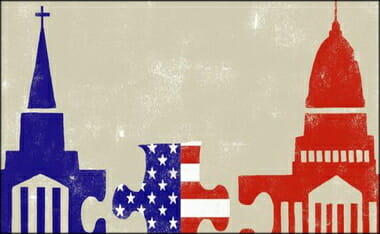

Separation of Church and State

Nearly every American knows the phrase “separation of church and state.” Do you know where it’s from? Here’s a hint: it’s not in the Constitution. John Eastman, professor of law at Chapman University, explains how and why this famous phrase has played such an outsized role in American life and law.

An excerpt from a larger paper (the below was originally posted Jul 26, 2015):

…The First Amendment never intended to separate Christian principles from government.  Yet today we so often hear the First Amendment coupled with the phrase “separation of church and state.  The First Amendment simply states: “Congress shall make no law respecting an establishment of religion or prohibiting the free exercise thereof.”

Obviously, the words “separation,” “church,” or “state” are not found in the First Amendment; furthermore, that phrase appears in no founding document!  While most recognize the phrase “separation of church and state,” few know its source; but it is important to understand the origins of that phrase.  What is the history of the First Amendment?

The process of drafting the First Amendment made the intent of the Founders abundantly clear; for before they approved the final wording, the First Amendment went through nearly a dozen different iterations and extensive discussions.

Those discussions – recorded in the Congressional Records from June 7 through September 25, 1789 – make clear their intent for the First Amendment.  For example, the original version (followed by later versions) introduced in the Senate on September 3, 1789, stated:

  • “Congress shall not make any law establishing any religious denomination.”
  • “Congress shall make no law establishing any particular denomination.”
  • “Congress shall make no law establishing any particular denomination in preference to another.”
  • “Congress shall make no law establishing religion [denomination] or prohibiting the free exercise there of.”

By it, the Founders were saying: “We do not want in America what we had in Great Britain: we don’t want one denomination running the nation.  We will not have Catholics, or Anglicans, or any other single denomination. We do want God’s principles, but we don’t want one denomination running the nation.”

Of interest is the proposal that George Mason – a member of the Constitutional Convention and “The Father of the Bill of Rights” – put forth for the First Amendment:

  • “All men have equal, natural and unalienable right to the free exercise of religion, according to the dictates of conscience; and that no particular sect or society of Christians [denomination] ought to be favored or established by law in preference to others.”

Their intent was well understood, as evidence by court rulings after the First Amendment.  For example, a 1799 court declared:

  • “By our form of government, the Christian principles – we do want God’s principles – but we don’t want one denomination to run the nation.”

Again, note the emphasis: “We do want Christian principles – we do want God’s principles – but we don’t want one denomination to run the nation.”

[….]

On the day the Founding Fathers signed the Declaration of Independence, they underwent an immediate transformation.  The day before, each of them had been a British citizen, living in a British colony, with thirteen crown-appointed British state governments.  However, when they signed that document and separated from Greta Britain, they lost all of their State governments.

Consequently, they returned home from Philadelphia to their own States and began to create new State constitutions.  Samuel Adams and John Adams helped write the Massachusetts constitution; Benjamin Rush and James Wilson helped write Pennsylvania’s constitution; George Read and Thomas McKean helped write Delaware’s constitution; the same is true in other States as well.  The Supreme Court in Church of Holy Trinity v. United States (1892) pointed to these State constitutions as precedents to demonstrate the Founders’ intent.

Notice, for example, what Thomas McKean and George Read placed in the Delaware constitution:

  • “Every person, who shall be chosen a member of either house, or appointed to any office or place of trust… shall… make and subscribe the following declaration, to wit: ‘I do profess faith in God the Father, and in Jesus Christ, his only Son, and in the Holy Ghost, one God, blessed forever more, and I acknowledge the Holy Scripture of the Old and New Testament to be given by divine inspiration.’”

Take note of some other State constitutions.  The Pennsylvania constitution authored by Benjamin Rush and James Wilson declared:

  • “And each member [of the legislature], before he takes his seat, shall make and subscribe the following declaration, viz: ‘I do believe in one God, the Creator and Governor of the Universe, the rewarded of the good and the punisher of the wicked, and I do acknowledge the Scriptures of the Old and New Testament to be given by Divine Inspiration.’”

The Massachusetts constitution, authored by Samuel Adams – the Father of the American Revolution – and John Adams, stated:

  • “All persons elected must make and subscribe the following declaration, viz. ‘I do declare that I believe the Christian religion and have firm persuasions of its truth.’”

North Carolina’s constitution required that:

  • “No person, who shall deny the being of God, or the truth of the [Christian] religion, or the Divine authority either of the Old or New Testaments, or who shall hold religious principles incompatible with the freedom and safety of the State, shall be capable of holding any office, or place of trust or profit in the civil department, within this State.”

You had to apply God’s principles to public service, otherwise you were not allowed to be a part of the civil government.  In 1892, the Supreme Court (Church of Holy Trinity v. United States) pointed out that of the forty-four States that were then in the Union, each had some type of God-centered declaration in its constitution.  Not just any God, or a general God, say a “higher power,” but thee Christian God as understood in the Judeo-Christian principles and Scriptures.  This same Supreme Court was driven to explain the following:

  • “This is a religious people.  This is historically true.  From the discovery of this continent to the present hour, there is a single voice making this affirmation….  These are not individual sayings, declarations of private persons: they are organic utterances; they speak the voice of the entire people….  These and many other matters which might be noticed, add a volume of unofficial declarations to the mass of organic utterances that this is a Christian nation.”

…READ MORE… [PDF]

JOHN ADAMS

  • “…we have no government, armed with power, capable of contending with human passions, unbridled by morality and religion. Avarice, ambition, revenge and licentiousness would break the strongest cords of our Constitution, as a whale goes through a net. Our Constitution was made only for a moral and religious people. It is wholly inadequate to the government of any other.”

John Adams, first (1789–1797) Vice President of the United States, and the second (1797–1801) President of the United States. Letter to the Officers of the First Brigade of the Third Division of the Militia of Massachusetts, 11 October 1798, in Revolutionary Services and Civil Life of General William Hull (New York, 1848), pp 265-6. (PDF found here)


The Left Rejects Separation of Church and State

(July 7, 2016)


GAY PATRIOT notes that at one time the left wanted a strict separation of church and state. Now they wish to regulate it! In the NATIONAL REVIEW article GP links to, we read:

I’m old enough to remember when Christians who expressed concern that LGBT activists would attempt to regulate church services were dismissed as paranoid nutjobs. Well, welcome to our new paranoid future. My friends and colleagues at the Alliance Defending Freedom announced today that they were filing suit against the Iowa Civil Rights Commission to block enforcement of gender identity guidelines that purport to regulate “a church service open to the public.” News flash — virtually every church service is open to the public.

[….]

Incredibly, the document contains an FAQ specifically directed at churches. Here it is:

DOES THIS LAW APPLY TO CHURCHES?

Sometimes. Iowa law provides that these protections do not apply to religious institutions with respect to any religion-based qualifications when such qualifications are related to a bona fide religious purpose. Where qualifications are not related to a bona fide religious purpose, churches are still subject to the law’s provisions. (e.g. a child care facility operated at a church or a church service open to the public).

It’s unclear to me how a branch of the Iowa state government has determined that a “church service open to the public” does not have a “bona fide religious purpose,” but there it is. Under current guidance, churches in Iowa must become “members only” to exercise their religious liberty. It’s tough to imagine this guidance surviving even liberal judicial review, but even if struck down it shows where some on the Left want to take the law. Not even the sanctuary is safe.

The Left Rejects Separation of Church and State

GAY PATRIOT notes that at one time the left wanted a strict separation of church and state. Now they wish to regulate it! In the NATIONAL REVIEW article GP links to, we read:

I’m old enough to remember when Christians who expressed concern that LGBT activists would attempt to regulate church services were dismissed as paranoid nutjobs. Well, welcome to our new paranoid future. My friends and colleagues at the Alliance Defending Freedom announced today that they were filing suit against the Iowa Civil Rights Commission to block enforcement of gender identity guidelines that purport to regulate “a church service open to the public.” News flash — virtually every church service is open to the public.

[….]

Incredibly, the document contains an FAQ specifically directed at churches. Here it is:

DOES THIS LAW APPLY TO CHURCHES?

Sometimes. Iowa law provides that these protections do not apply to religious institutions with respect to any religion-based qualifications when such qualifications are related to a bona fide religious purpose. Where qualifications are not related to a bona fide religious purpose, churches are still subject to the law’s provisions. (e.g. a child care facility operated at a church or a church service open to the public).

It’s unclear to me how a branch of the Iowa state government has determined that a “church service open to the public” does not have a “bona fide religious purpose,” but there it is. Under current guidance, churches in Iowa must become “members only” to exercise their religious liberty. It’s tough to imagine this guidance surviving even liberal judicial review, but even if struck down it shows where some on the Left want to take the law. Not even the sanctuary is safe.

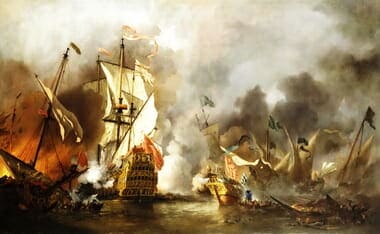
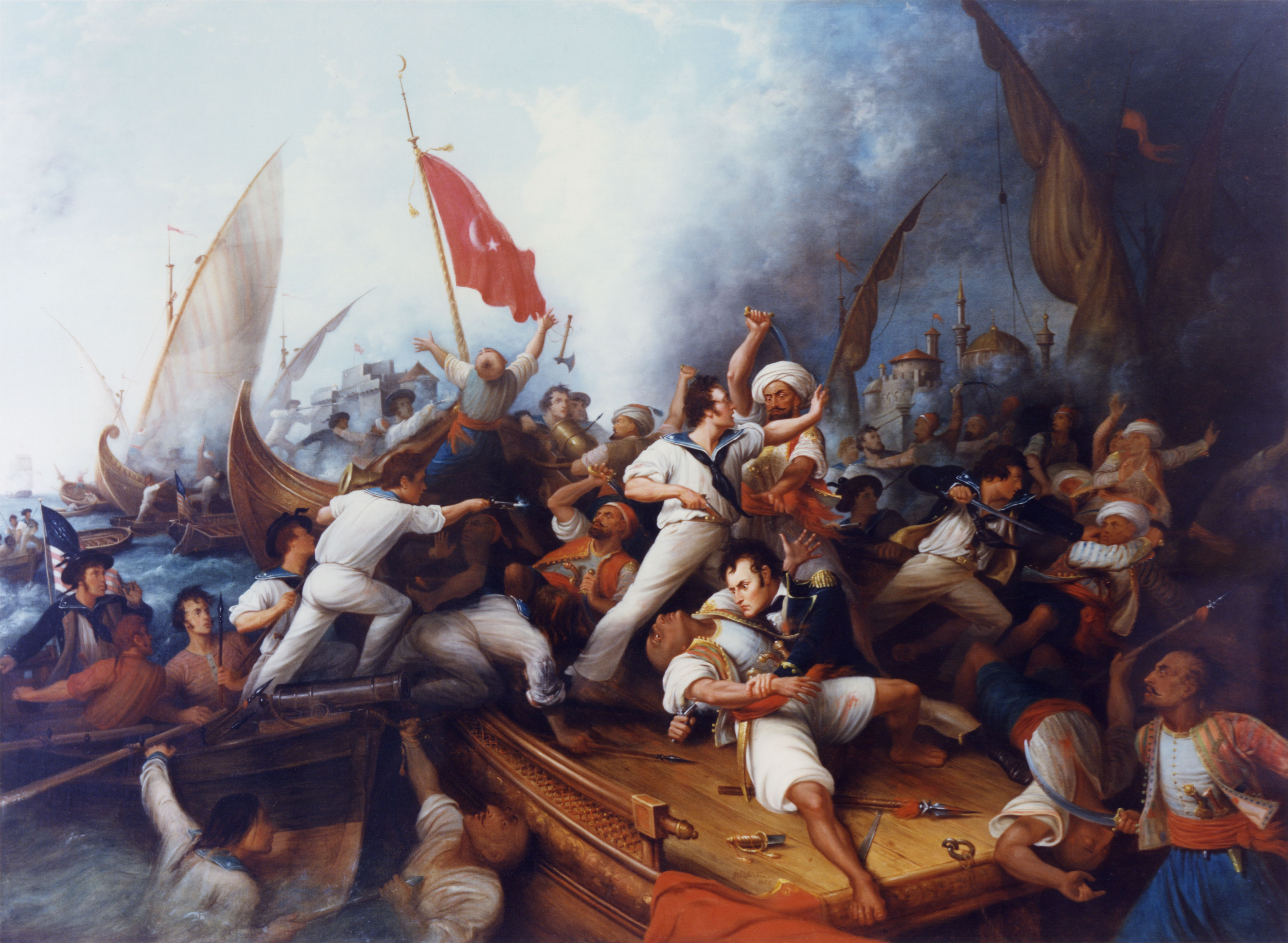
Some Barbary Pirates History and the Creation of Our Military

This was to be the first of many times that an American president would plot to overthrow a foreign government–a dangerous game but one that the Jefferson administration found as hard to pass up as many of its successors would. Wrote Madison:

“Although it does not accord with the general sentiments or views of the United States to intermiddle in the domestic contests of other countries, it cannot be unfair, in the prosecution of a just war, or the accomplishment of a reasonable peace, to turn to their advantage, the enmity and pretensions of others against a common foe.”

Max Boot, The Savage Wars of Peace: Small Wars and the Rise of American Power (New York, NY: Basic Books, 2002), 23-24.

This audio is with a h/t to The Religion of Conquest:

America’s first foreign war: lessons learned from fighting muslim pirates, by Michael Medved:

Most Americans remain utterly ignorant of this nation’s first foreign war but that exotic, long-ago struggle set the pattern for nearly all the many distant conflicts that followed. Refusal to confront the lessons of the First Barbary War (1801-1805) has led to some of the silliest arguments concerning Iraq and Afghanistan, and any effort to apply traditional American values to our future foreign policy requires an understanding of this all-but-forgotten episode from our past.

The war against the Barbary States of North Africa (Algiers, Tunis and Tripoli—today’s Libya) involved commitment and sacrifice far from home and in no way involved a defense of our native soil. For centuries, the Islamic states at the southern rim of the Mediterranean relied upon piracy to feed the coffers of their corrupt rulers. The state sponsored terrorists of that era (who claimed the romantic designation, “corsairs”) seized western shipping and sold their crews into unimaginably brutal slavery.

By the mid-eighteenth century, European powers learned to save themselves a great deal of trouble and wealth by bribing the local authorities with “tribute,” in return for which the pirates left their shipping alone. Until independence, British bribes protected American merchant ships in the Mediterranean since they traveled under His Majesty’s flag; after 1783, the new government faced a series of crises as Barbary pirates seized scores of civilian craft (with eleven captured in 1793 alone). Intermittently, the United States government paid tribute to escape these depredations: eventually providing a bribe worth more than $1,000,000—a staggering one-sixth of the total federal budget of the time – to the Dey of Algiers alone.

When Jefferson became president in 1801, he resolved to take a hard line against the terrorists and their sponsors. “I know that nothing will stop the eternal increase of demands from these pirates but the presence of an armed force, and it will be more economical & more honorable to use the same means at once for suppressing their insolencies,” he wrote.

The president dispatched nearly all ships of the fledgling American navy to sail thousands of miles across the Atlantic and through the straits of Gibraltar to do battle with the North African thugs. After a few initial reverses, daring raids on sea and land (by the new Marine Corps, earning the phrase in their hymn “….to the shores of Tripoli”) won sweeping victory. A decade later, with the U.S. distracted by the frustrating and inconclusive War of 1812 against Great Britain, the Barbary states again challenged American power, and President Madison sent ten new ships to restore order with another decisive campaign (known as “The Second Barbary War, 1815).

Continuing with the article:

The records of these dramatic, all-but-forgotten conflicts convey several important messages for the present day:

  1. The U.S. often goes to war when it is not directly attacked. One of the dumbest lines about the Iraq War claims that “this was the first time we ever attacked a nation that hadn’t attacked us.” Obviously, Barbary raids against private shipping hardly constituted a direct invasion of the American homeland, but founding fathers Jefferson and Madison nonetheless felt the need to strike back. Of more than 140 conflicts in which American troops have fought on foreign soil, only one (World War II, obviously) represented a response to an unambiguous attack on America itself. Iraq and Afghanistan are part of a long-standing tradition of fighting for U.S. interests, and not just to defend the homeland.
  2. Most conflicts unfold without a Declaration of War. Jefferson informed Congress of his determination to hit back against the North African sponsors of terrorism (piracy), but during four years of fighting never sought a declaration of war. In fact, only five times in American history did Congress actually declare war – the War of 1812, the Mexican War, The Spanish American War, World War I and World War II. None of the 135 other struggles in which U.S. troops fought in the far corners of the earth saw Congress formally declare war—and these undeclared conflicts (including Korea, Vietnam, the First Gulf War, and many more) involved a total of millions of troops and more than a hundred thousand total battlefield deaths.
  3. Islamic enmity toward the US is rooted in the Muslim religion, not recent American policy. In 1786, America’s Ambassador to France, Thomas Jefferson, joined our Ambassador in London, John Adams, to negotiate with the Ambassador from Tripoli, Sidi Haji Abdrahaman. The Americans asked their counterpart why the North African nations made war against the United States, a power “who had done them no injury”, and according the report filed by Jefferson and Adams the Tripolitan diplomat replied: “It was written in their Koran, that all nations which had not acknowledged the Prophet were sinners, whom it was the right and duty of the faithful to plunder and enslave; and that every mussulman who was slain in this warfare was sure to go to paradise.”
  4. Cruel Treatment of enemies by Muslim extremists is a long-standing tradition. In 1793, Algerian pirates captured the merchant brig Polly and paraded the enslaved crewmen through jeering crowds in the streets of Algiers. Dey Hassan Pasha, the local ruler, bellowed triumphantly: “Now I have got you, you Christian dogs, you shall eat stones.” American slaves indeed spent their years of captivity breaking rocks. According to Max Boot in his fine book The Savage Wars of Peace: “A slave who spoke disrespectfully to a Muslim could be roasted alive, crucified, or impaled (a stake was driven through the arms until it came out at the back of the neck). A special agony was reserved for a slave who killed a Muslim – he would be cast over the city walls and left to dangle on giant iron hooks for days before expiring of his wounds.”
  5. There’s nothing new in far-flung American wars to defend U.S. economic interests. Every war in American history involved an economic motivation – at least in part, and nearly all of our great leaders saw nothing disgraceful in going to battle to defend the commercial vitality of the country. Jefferson and Madison felt no shame in mobilizing – and sacrificing – ships and ground forces to protect the integrity of commercial shipping interests in the distant Mediterranean.  Fortunately for them, they never had to contend with demonstrators who shouted “No blood for shipping!”
  6. Even leaders who have worried about the growth of the U.S. military establishment came to see the necessity of robust and formidable armed forces. Jefferson and Madison both wanted to shrink and restrain the standing army and initially opposed the determination by President Adams to build an expensive new American Navy. When Jefferson succeeded Adams as president, however, he quickly and gratefully used the ships his predecessor built. The Barbary Wars taught the nation that there is no real substitute for military power, and professional forces that stand ready for anything.
  7. America has always played “the cop of the world.” In part, Jefferson and Madison justified the sacrifices of the Barbary Wars as a defense of civilization, not just the protection of U.S. interests – and the European powers granted new respect to the upstart nation that finally tamed the North African pirates. Jefferson and Madison may not have fought for a New World Order but they most certainly sought a more orderly world. Many American conflicts over the last 200 years have involved an effort to enfort to enforce international rules and norms as much as to advance national interests. Wide-ranging and occasionally bloody expeditions throughout Central America, China, the Philippines, Africa and even Russia after the Revolution used American forces to prevent internal and international chaos.

The Barbary Wars cost limited casualties for the United States (only 35 sailors and marines killed in action) but required the expenditure of many millions of dollars – a significant burden for the young and struggling Republic. Most importantly, these difficult battles established a long, honorable tradition of American power projected many thousands of miles beyond our shores. Those who claim that our engagements in Iraq and Afghanistan represent some shameful, radical departure from an old tradition of pacifism and isolation should look closely at the reality of our very first foreign war—and all the other conflicts in the intervening 200 years.

Religious Implications of the Treaty of Tripoli

A friend recently quoted this:

“As the government of the United States is not, in any sense, founded on the Christian religion; as it has in itself no character of enmity against the laws, religion or tranquility of Musselmen [Muslims]… it is declared… that no pretext arising from religious opinion shall ever produce an interruption of the harmony existing between the two countries” …. “The United States is not a Christian nation any more than it is a Jewish or a Mohammedan nation.” 

Firstly, those who cite the Treaty of Tripoli as evidence that this nation was not founded on the Christian religion, usually ignore the Treaty of Paris of 1783. This Treaty, negotiated by Ben Franklin and John Adams among others, is truly a foundational document for the United States, because by this Treaty Britian recognized the independence of the United States. The Treaty begins with the words, “In the Name of the most holy and undivided Trinity… ,” and there is no dispute about its validity or its wording. This “disputed validity” can be seen in the article by Tekton. A fuller dealing with the treaty can also be found at the Wall Builder’s site.

The United States Constitution and the American political system were based on Christian principles.  Included in those Christian principles are the following theological and moral imperatives:

  • Government power and sovereignty should be limited to the specific theological and moral commands of the Christian God.
  • There should be a balance and separation of powers within the government so that a small group of evil people will be unable to tyrannize others.
  • All citizens should have the right to own property and to buy and sell freely, according to the moral law of the Christian God.
  • The right to life and property cannot be abridged without due process.
  • The ultimate source of all authority lies with the God of the Bible.
  • The American Government was designed to be a sacred covenant between the people, the state, and God.  If the state breaks this covenant, then the people have the right, and the duty, to oppose the state but to use violence only as a last resort.
  • As the Constitution clearly states, Jesus Christ is our Lord because He is the second member of the “most Holy and undivided Trinity.”
  • Although the Constitution affirms a belief in the deity of Christ and in the Holy Trinity, neither the church nor the state is allowed to physically force people to believe these biblical teachings.  The state should, however, do everything it can to facilitate the spread of the Christian Gospel and to place moral limits on the behavior of people.

For instance, one of many examples the Left gives for a secular founding of our nation is Benjamin Franklin. However, we can see his advice to his own kin in these quotes, he wrote to his daughter in 1764,

“Go constantly to church, whoever preaches. The act of devotion to the common prayer book is your principle business there, and if properly attended to, will do more towards amending the heart than sermons generally can do. For they were composed by men of much greater piety and wisdom, than our common composers of sermons can pretend to be; and therefore I wish you would never miss the prayer days; yet I do not mean you should despise sermons, even of the preachers you dislike, for the discourse is often much better than the man, as sweet and clear waters come through very dirty earth. I am the pore particular on this head, as you learned to express a little before I came away, some inclination to leave our church, which I would not have you do.”

And at age 84, when the President of Yale asked his opinion of Jesus of Nazareth, he replied that “I think his system of morals and his religion, as he left them to us, the best the world ever saw or is likely to see.” Something in all the quotes on the atheist monument that are assumed to be “set in stone” (answered here in part 1):

Other posts in this series:

Below, however, is my dealing with a signature (every time someone posts a response in a forum, you/they can choose to have the same “signature” display at the end of their comment — similar to email) of a person in a forum I was in a decade[+] ago. Enjoy, but again, I recommend the above linked articles as well as the one by Apologetic Press. You may ask why many apologetic sites deal with this? It is because atheists primarily latch on to this as an argument against the religious history of this nation. See also my paper on the Separation of Church and State.

Blancho’s signature states:

✂ “‘As the government of the United States of America is not in any sense founded on the Christian Religion…’ – Article XI of the English text of the Treaty of Tripoli, approved by the U.S. Senate on June 7, 1797 and ratified by President John Adams on June 10, 1797.”

(I have been wanting to address this quote for some time now, just haven’t had the time, sorry.)

How does this quote that Blancho uses fly in the face of other quotes by John Adams? What is the background to this treaty that caused such a signing to enter the record books of our hallowed halls. Let us first see a few quotes by Adams before we enter into the proper context of this treaty.

[speaking on why Christmas and the Fourth of July were out two top holidays] “Is it not that, in the chain of human events, the birthday of the nation is indissolubly linked with the birthday of the Saviour? That it forms a leading event in the progress of the gospel dispensation? Is it not that the Declaration of Independence first organized the social compact on the foundation of the Redeemer’s mission upon earth? That it laid the cornerstone of human government upon the first precepts of Christianity?”

“Religion and virtue are the only foundations… of republicanism and of all free governments.”

Okay, the Treaty of Tripoli, one of several with Tripoli, was negotiated during the “Barbary Powers Conflict,” which began shortly after the Revolutionary War and continued through the Presidencies of Washington, Adams, Jefferson, and Madison. The Muslim Barbary Powers (Tunis, Morocco, Algiers, Tripoli, and Turkey) were warring against what they claimed to be the “Christian” nations (England, France, Spain, Denmark, and the United States). In 1801, Tripoli even declared war against the United States, thus constituting America’s first official war as an established independent nation.

Throughout this long conflict, the five Barbary Powers regularly attacked undefended American merchant ships. Not only were their cargoes easy prey but the Barbary Powers were also capturing and enslaving “Christian” seamen in retaliation for what had been done to them by the “Christians” of previous centuries (e.g., the Crusades and Ferdinand and Isabella’s expulsion of Muslims from Grenada).

In an attempt to secure a release of captured seamen and a guarantee of unmolested shipping in the Mediterranean, President Washington dispatched envoys to negotiate treaties with the Barbary nations. (Concurrently, he encouraged the construction of American naval warships to defend the shipping and confront the Barbary “pirates” – a plan not seriously pursued until President John Adams created a separate Department of the Navy in 1798.)

The American envoys negotiated numerous treaties of “Peace and Amity” with the Muslim Barbary nations to ensure “protection” of American commercial ships sailing in the Mediterranean. However, the terms of the treaty frequently were unfavorable to America, either requiring her to pay hundreds of thousands of dollars of “tribute” (i.e., official extortion) to each country to receive a guarantee” of safety or to offer other “considerations” (e.g., providing a warship as a gift to Tripoli, a gift frigate to Algiers, paying 525,000 to ransom captured American seamen from Algiers, etc.)

The 1797 treaty with Tripoli was one of the many treaties in which each country officially recognized the religion of the other in an attempt to prevent further escalation of a “Holy War” between Christians and Muslims. Consequently, Article XI of that treaty stated:

“As the government of the United States of America is not in any sense founded on the Christian religion AS it has in itself no character of enmity [hatred] against the laws, religion or tranquility of Musselmen [Muslims] and as the said States [America] have never entered into any war or act of hostility against any Mahometan [Mohammedan] nation, it is declared by the parties that no pretext arising from religious opinions shall ever produce an interruption of the harmony existing between the two countries.”

This article may be read in two manners. It may, as its critics do, be concluded after the clause “Christian religion”; or it may be read in its entirety and concluded when the punctuation so indicates. But even if shortened and cut abruptly (“the government of the united states is not in any sense founded on the Christian religion”), this is not an untrue statement since it is referring to the Federal government.

Recall that while the Founders themselves openly described America as a Christian nation, they did include a constitutional prohibition against a federal establishment; religion was a matter left solely to the individual states. Therefore, if the article is read as a declaration that the federal government of the United States was not in any sense founded on the Christian religion, such a statement is not a repudiation of the fact that America was considered a Christian nation.

Reading the clause of the treaty in its entirety also fails to weaken this fact. Article XI simply distinguished America from those historical strains of European Christianity which held an inherent hatred of Muslims; it simply assured the Muslims that the United States was not a Christian nation like those of previous centuries (with whose practices the Muslims were very familiar) and thus would not undertake a religious holy war against them.

This latter reading is, in fact, supported by the attitude prevalent among numerous American leaders. The Christianity practiced in America was described by John Jay as “enlightened,” by John Quincy Adams as “civilized,” and by John Adams as “rational.” A clear distinction was drawn between American Christianity and that of European in earlier centuries.

As Noah Webster explained:

“The ecclesiastical establishments of Europe which serve to support tyrannical governments are not the Christian religion but abuses and corruption’s of it.”

Daniel Webster similarly explained that American Christianity was:

“Christianity to which the sword and the fagot [burning stake or hot branding iron] are unknown – general tolerant Christianity is the law of the land!”

While discussing the Barbary conflict with Jefferson, Adams declared:

“The policy of Christendom has made cowards of all their sailors before the standard of Mahomet. It would be heroical and glorious in us to restore courage to ours.”

Furthermore, it was Adams who declared:

“The general principles on which the fathers achieved independence were… the general principles of Christianity…. I will avow that I then believed, and now believe, that those general principles of Christianity are as eternal and immutable as the existence and attributes of God; and that those principles of liberty are as unalterable as human nature.”

Adams’ own words confirm that he rejected any notion that America was less than a Christian nation. Additionally, the writing’s of General William Eaton, a major figure in the Barbary Powers conflict, provide even more irrefutable testimony of how the conflict was viewed at that time. Eaton was first appointed by President John Adams a “Consul to Tunis,” and President Thomas Jefferson later advanced him to the position of “U. S. Naval Agent to the Barbary States,” authorizing him to lead a military expedition against Tripoli. Eaton’s official correspondence during his service confirms that the conflict was a Muslim war against a Christian America.

For example, when writing to Secretary of State Timothy Pickering, Eaton apprised him of why the Muslims would be such dedicated foes:

“Taught by revelation [the Koran] that war with the Christians will guarantee the salvation of their souls, and finding so great secular advantages in the observance of this religious duty [the secular advantage of keeping captured cargo], their [the Muslims’] inducements to desperate fighting are very powerful.”

Eaton later complained that after Jefferson had approved his plan for military action, he sent him the obsolete warship “Hero.” Eaton reported the impression of America made upon the Tunis Muslims when they saw the old warship and its few cannons:

“[T]he weak, the crazy situation of the vessel and equipage [armaments] tended to confirm an opinion long since conceived and never fairly controverted among the Tunisians, that the Americans are a feeble sect of Christianity.”

In a letter to Pickering, Eaton reported how pleased one Barbary ruler had been when he received the extortion compensations from America which had been promised him in one of the treaties, he said:

“To speak truly and candidly…. we must acknowledge to you that we have never received articles of the kind of so excellent a quality from any Christian nation.”

When John Marshall became the new Secretary of State, Eaton informed him:

“It is a maxim of the Barbary States, that ‘The Christians who would be on good terms with them must fight well or pay well.”

And when General Eaton finally commenced his military action against Tripoli, his personal journal noted:

“April 8th. We find it almost impossible to inspire these wild bigots with confidence in us or to persuade then that, being Christians, we can be otherwise than enemies to Musselmen. We have a difficult undertaking!”

May 23rd. Hassien Bey, the commander in chief of the enemy’s forces, has offered by private insinuation for my head six thousand dollars and double the sum for me as prisoner; and $30 per head for Christians. Why don’t he come and take it?”[/i][/list]Shortly after the military excursion against Tripoli was successfully terminated, its account was written and published. What was the title?

  • The Life of the Late Gen. William Eaton… commander of the Christian and other forces… which Led to the Treaty of Peace Between The United States and The Regency of Tripoli

Context Blancho… context.

Here is the appendix from John Eidsmoe, Christianity and the Constitution: The Faith of Our Founding Fathers (Grand Rapids: Baker Books, 1987), 413-415, that will shed more light on this: