Most of us learned the key ideas of the Declaration of Independence in school: that “all men are created equal,” “endowed by their Creator with certain unalienable rights,” that government’s job is “to secure these rights.” This was a radical departure from the way things had always been. Where did these revolutionary ideas come from? Ben Shapiro explains in this illuminating video.
INTRO
When I read the title of this FEDERALIST article, it made me think back to an introduction letter to a co-worker who had left to go to San Francisco State University. The title is, “Seattle Anarchists Holding Capitol Hostage Demand Complete Return To State Of Nature.” You see, years ago I worked as the Special Order Clerk at Borders Books and Music. If there were harder to find books, I was the man to track them down for the customer. (This was around 1999 to 2001’ish.)
I had a co-worker that leaned Left and we set up a correspondence to exchange ideas about the roots or differences of Left and Right philosophies in the political parties. When I mentioned, for instance Rousseau being in a sense the philosophical founder for Western Leftism, he disagreed, but agreed that this should be our first subject. And Rousseau thought man should return to a state of nature, which is why thee FEDERALIST article rang a bell with me. At any rate, my co-worker…
…went away to school.
I mailed him the intro topic.
Never heard a peep.
I always wondered what happen to that [then] kid. Was the letter too long? Was he already partying and not caring a wit about the topic? Was his mailing address changed? Did he die? Whatever the case was, this was the first and only interaction I had with him when he left for college. So I figured I would put the paper here as an ode to the headline above and to save publicly some of my mediocre writing.
Here is a PDF of the below [letter] — Enjoy. BTW, this section allows you to JUMP to a section or appendix of your choice. Just hit the back arrow on your browser to return.
Rousseau’s Philosophy Of “Nothing”
In Retrospect To Locke’s Philosophy
Of “Ordered Statesmanship.”
SECTION ONE — deals with Rousseau and his social contract.
SECTION TWO — touches on the topic of Locke’s work, second treatise of civil government and more.
CONCLUSION— I will reference the self refuting nature of Rousseau’s philosophy… when put into a logical framework, it is un-workable!
APPENDIX A — discusses what was meant by the “general will” in Rousseau’s work and what Locke was referring to when mentioning “natural law.”
APPENDIX B — is a “investigation” into who Rousseau was, the inner man.
APPENDIX C — uses two examples of social compacts years before Lockean principles were formed.
APPENDIX D — is the journey of a French statesman hired by his government to find the key to the American Revolution.
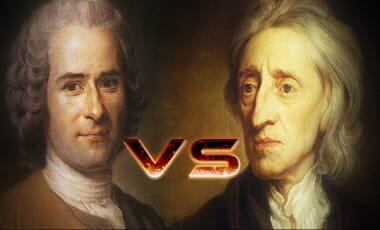
LOCKE vs. ROUSSEAU
SECTION ONE
“I have received your new book against the human race, and I thank you for it. Never was such cleverness used in the design of making us all stupid. One longs, in reading your book, to walk on all fours. But as I have lost that habit more than sixty years ago, I feel unhappily the impossibility of resuming it.” — Voltaire on Rousseau’s Social Contract
“Everything I have said and done in these last years is relativism by intuition…. If relativism signifies contempt for fixed categories and men who claim to be bearers of an objective, immortal truth… then there is nothing more relativistic than fascistic attitudes and activity…. From the fact that all ideologies are of equal value, that all ideologies are mere fictions, the modern relativist infers that everybody has the right to create for himself his own ideology and to attempt to enforce it with all the energy of which he is capable.” — Mussolini
“The most horrid and cruel blow that can be offered to civil society is through atheism,” — Edmund Burke, British Statesman
According to Locke, people are better off in the properly constituted state than they are or were in the “state of nature.” Quite a different point of view was expressed by Jean-Jacques Rousseau (1721-1778). In the state of nature, in which there was neither state nor civilization, people were essentially innocent, good, happy, and healthy, maintained Rousseau in his Discourse on the Origin and Foundation of the Inequality among Men (1754). Further, in the state of nature, he said, people enjoyed perfect freedom. But with the advent of private property, this all changed. “The first man who, having enclosed a piece of ground, bethought himself of saying ‘This is mine,’ and found people simple enough to believe him, was the real founder of civil society,” which brought with it the destruction of natural liberty and which, “for the advantage of a few ambitious individuals, subjected all mankind to perpetual labor, slavery and wretchedness.”
To put this in some sort of perspective, Rousseau wrote this indictment of civilization in 1754. This was fully sixty-seven years after Newton had published his Principia. It was two years after Benjamin Franklin, with key and kite, had proved that lightning is electricity. Thirty years earlier, Daniel Gabriel Fahrenheit had devised his thermometer. Bach had been dead four years, and it had been twenty-three years since he had completed the Brandenburg Concertos, a masterpiece of mathematical reasoning expressed in music. This, in short, was the eighteenth century, the Enlightenment, the age of light, the Age of Reason. Civilization was stuffed with benefits. Philosophers were (as always) critical, but this critical? Civilization a step in retrograde?
But Rousseau later came to think that, in proper society, people would surrender their individual liberty for a different and more important collective liberty. Through a social compact a people may agree, in effect, to unite into a collective whole, called “the state” or “the sovereign,” and through the state sovereign enact laws reflective of the general will. An important point to be aware of here is that, for Rousseau, the state or sovereign is an entity in its own right, a “moral person” (as Rousseau says), a nonbiological organism that has its own life and its own will. Rousseau’s concept of the general will – that is, the will of a politically united people, the will of the state – is his most important contribution to political philosophy (see appendix A for a further discussion on the general will).
Plato viewed the state as a person or organic entity as well, a sort of organism. Alternatively, think of a football team, which can easily be regarded as something “over and beyond” the individual players that make it up, or a corporation, which the law regards as a person.
The general will, according to Rousseau, defines what is to common good, and thus determines what is right and wrong and should not be done. And the state or sovereign (i.e., the people as a collective agent) expresses this general will by passing laws. Further, the general will, the will of the people taken collectively, represents the true will of each person. Thus, insofar as the individuals actions coincide with the common will, he is acting as he really wants to act – and to act as you really want to act is to be free, said Rousseau. “Compelling (*by force?) a person to accept the general will by obeying the laws of the state is forcing him to be free,” Rousseau wrote in a famous passage. So we may lose individual or “natural” liberty when we unite to form a collective whole, but we gain this new type of “civil” liberty, “the freedom to obey a law which we prescribe for ourselves.” Thus, Rousseau wrote, “it is to law alone that men owe justice and [civil] liberty.”
The question arises, of course, just how do we know what the general will is? Rousseau’s answer: If we, the citizens, are enlightened and are not allowed to influence one another, then a majority determines what the general will is: “The general will is found by counting votes. When, therefore, the opinion which is contrary to my own prevails, this proves neither more nor less than that I was mistaken, and that what I thought to be the general will was not so.”
Rousseau, however, distinguishes between the “will of all” and “the general will.” On the former of the two, Rousseau wrote, “is indeed but a sum of private wills: but remove from these same wills the pluses and minuses that cancel each other, and then the general will remains as the sum of the differences.”
According to Rousseau, it makes no sense to think of either delegating or dividing the general will. Therefore, he calculated, in the state, there cannot validly be a division of powers (in contrast to what Locke thought), and, though we may commission some person or persons to administer or enforce the law, these individuals act only as our deputies, not as our representatives. Rousseau maintained that the citizens of the state have the right at any time to terminate the social contract (explained more in the conclusion). He also held that they have the right at any time to depose the officials of the state. The implication of the right of the citizenry to terminate the social contract at any time and of their to remove officials of the state at any time is that the citizenry have a right of revolution and a right to resume anarchy at any time. Thus Rousseau is thought to have provided a philosophical justification for anarchy and revolution.
Did Rousseau also unwittingly establish a philosophical basis for totalitarianism? Some think that is the case because he said that “the articles of the social contract [reduce] to this single point: the total alienation of each associate, and all his rights, to the whole community.” If the community is regarded not just as the sum total of its members but as an entity somehow over and above the individuals in it, an entity with its own life and will that can itself do no wrong and must always be obeyed, then Rousseau’s words do have an ominous ring and invoke concepts that are incorporated wholesale in the philosophy of fascism. – (Hitler’s claim that the Fuhrer instinctively knows the desires of the Volk and is therefore due absolute obedience is an appeal to the general will.)
Also ominous is what Rousseau wrote near the end of The Social Contract (1792): “If any one, after he has publicly subscribed to these dogmas [which dispose a person to love his duties and be a good citizen], shall conduct himself as if he did not believe them, he is to be punished by death.” (*ahh, …by force!)
[Editor’s Note: before heading into section two, years after this I read a book by the son of famous atheist Madalyn Murray O’Hair, William J. Murray. In his book, Utopian Road to Hell: Enslaving America and the World with Central Planning (KINDLE), he discusses the origins of Communism in Plato and the Spartan’s. That was an interesting addition to this thinking. But here I am speaking to a more modern Leftism found in the West]
SECTION TWO
“I do not know whether all Americans have a sincere faith in their religion [Christianity] – for who can know the human heart? – but I am certain that they hold it to be indispensable for the maintenance of republican institutions. This opinion is not peculiar to a class or to a party, but it belongs to the whole rank of society.” America, Tocqueville added, is “the place where the Christian religion has kept the greatest power over men’s souls; And nothing better demonstrates how useful and natural it is to man, Since the country where it now has the widest sway is both the most Enlightened and the freest.” — Alex de Tocqueville, French Statesman.
“[A] true patriot must be a religious man… [H]e who neglects his duty to his Maker, may well be expected to be deficient and insincere in his duty towards the public.” — Abigail Adams agreeing with John Witherspoon
“…we have no government, armed with power, capable of contending with human passions, unbridled by morality and religion. Avarice, ambition, revenge and licentiousness would break the strongest cords of our Constitution, as a whale goes through a net. Our Constitution was made only for a moral and religious people. It is wholly inadequate to the government of any other.” — John Adams, first (1789–1797) Vice President of the United States, and the second (1797–1801) President of the United States.
In this section on the musings of John Locke, I must confess that I have to break the mold in which I was told I must write this paper. Some of the reasons being that a proper understanding of the “law of nature” or “natural law” is foundational to Locke’s writings and political philosophy. So I turn our attention first towards the French Revolution and it’s Constitution, whose announced aim was to duplicate the American Revolution, which had been such an obvious success. In fact, Thomas Jefferson traveled to Paris in order to assist Lafayette and his associates to draft their own Declaration of Rights.
“Everyone here is trying their hands at forming a declaration of rights,” Jefferson wrote in a letter to Madison, and included in his correspondence several drafts. “As you will see,” Jefferson observed, “it contains the essential principles of ours accommodated as much as could be to the actual state of things here.” Article Four of the French Declaration of the Rights of Man, drafted in August of 1789, for example, states that “liberty consists in the ability to do whatever does not harm another.” France’s Declaration abolished slavery, titles of nobility, and the remnants of feudalism and serfdom. In many respects, the French Declaration appeared superior to Jefferson’s Declaration of Independence. But whereas the American Revolution ended in the establishment of a constitutional democracy, a government under law, the French Revolution ended in tyranny and government by the guillotine, followed by the rise of Napoleon.
~ The obvious question is what went wrong in France? ~
The French Declaration did not acknowledge that the source of man’s rights is man’s “Creator,” as Jefferson had affirmed in America’s Declaration of Independence. The French Declaration did not even mention that rights are inherent, inalienable, or derived from any transcendent authority. This is why in China today the communist government persecutes the followers of the Christian faith. Not because communism is atheistic in it’s philosophy, but because Christians believe that earthly kings are answerable to the “King of the Earth.” A transcendent right giver, so to speak. Rights, for the Frenchman, were granted by an enlightened government. George Washington inadvertently commented on such an enlightened government: “[L]et us with caution indulge the supposition that morality can be maintained without religion. Whatever may be concede to the influence of refined education on minds… reason and experience both forbid us to expect that national morality can prevail in exclusion of religious principle.”
Locke’s two Treatise of Civil Government contained 102 Biblical citations. Locke even began his argument with the proposition that God intended man to own private property, and referred the reader to Genesis: “God gave the world to Adam and his posterity in common,” He then went on cite Paul’s first letter Timothy: “God… richly supplies us all things….” But, Locke added hastily, this was by no means a prescription for socialism, as man also possesses property in the form of his own exertions. Thus, any individual who takes what God has provided equally to all and tailors it to his purposes becomes sole owner of that property. A farmer, for example, who builds a fence and cultivates the land for the production of food, becomes the legitimate owner of the land.
According to Locke’s view: “God, when He gave the World in common to all mankind, commanded man also to labor… God in His reason commanded him to subdue the earth, subdue it for the benefit of life, and therein lay out something upon it that was his own, his labor. He that in obedience to this command of God subdued, tilled and sowed any part of it, thereby annexed to it something that was his property, which another had no title to, and could not without injury take it from him.” Moreover, “thou shalt not steal” and “thou shalt not covet” are commandments (unchanging moral law that is Locke’s [God’s] general will) of God designed to protect private property, which includes labor and the fruits thereof.
Another vast difference between Rousseaulean doctrine and that of Locke’s is Original Sin. From his reading of Genesis, Locke noted that man at one time existed outside the bounds of civil government, was in a “state of nature” and completely free. But once sin entered into the world through Adam’s indiscretion, the safety of men and their property became tenuous. Man’s fallen state required that he give up some of his freedom and prudently subject himself to civil government, without which his ability to enjoy the fruits of his labor and defend his rights “is very uncertain and constantly exposed to invasion of others.”
Locke adds, “For all men being kings such as he, every man his equal and the greater part no strict observers of equity and justice, the enjoyment of the property he has in this state [of nature] is very unsafe, very insecure. This makes him willing to quite this condition, which however free, is full of fears and continual dangers.”
Frail and defenseless individuals, in Locke’s view, were forced by the brutish circumstances (i.e., original sin = man inherently evil; no original sin = man inherently good) of existence (which man creates) to band together for their own mutual protection to form civil societies, entrusting to some sovereign agent the power to wield the sword against bandits and foreign invaders. But Locke, wanting to confine the duties of government to a narrow compass, was quick to add that the power of government is by no means absolute; the people had entered into a mutual and binding trust with each other and had established a regime with precisely defined obligations. If this trust or “compact” – precisely defined obligations – is at any time broken, the people have the right to withdraw their allegiance… even to rebel and depose their ruler, an astonishing notion to those who believe the monarch’s authority flowed from divine right.
To the question: Who shall judge the king? Locke replied,
“The people shall be the judge,” though in the end, said Locke, “God in Heaven is Judge. He alone, ‘tis true, is Judge of the right. But every man is judge for himself… whether he should appeal to the Supreme Judge, as Jephthah did” and wage war (Judges 11:27-33). “I will not dispute now whether princes are exempt from the laws of their country,” wrote Locke, “but this I am sure, they owe subjection to the laws of God,” and added: “No body, no power, can exempt them from the obligations of that Eternal Law [caps in the original]… Whatever some flatterers say to princes of the world, who all together, with their people joined to them, are, in comparison to the Great God, but a drop of a bucket, or a dust on the balance, inconsiderable, nothing” (Isaiah 40:15).
Locke’s argument for disobeying a king was actually a conservative one. While Royalists believed rejection of the monarch’s authority was the same as disobeying God. Locke thought little harm would come from acknowledging the people’s prerogative to exercise their ultimate right to reject the civil authority, because “people are not so easily got out of old forms as some are apt to suggest.” “Great mistakes,” said Locke, “will be born by people without mutiny or murmur” (see conclusion). Only “a long train of abuses, prevarications and artifices, all tending the same way,” that is towards subverting the people’s God-given liberties, could make people “rouse themselves.”
Locke was merely applying Protestant religious principles to the world of politics (see appendix C). If the individual has the authority to interpret Scripture for himself, without a human agent acting as intermediary, isn’t it also up to the individual to determine his own relationship to the government and indeed to the rest of society? Under extreme circumstances, thought Locke, the conscience of the individual, informed by scripture, and right reason, can supersede the government and even the collective judgment of the group because society is a voluntary union, from which anyone can exit if he so chooses. Unlike Rousseau who said, “Further, the general will, the will of the people taken collectively, represents the true will of each person. Thus, insofar as the individuals actions coincide with the common will, he is acting as he really wants to act – and to act as you really want to act is to be free.” Neither are you free to exit at any time according to Rousseaulean philosophy: “If any one, after he has publicly subscribed to these dogmas [which dispose a person to love his duties and be a good citizen], shall conduct himself as if he did not believe them, he is to be punished by death.”
CONCLUSION
Society As the “Whole”
(Excerpted from the book, Relativism: Feet Planted Firmly In Mid-Air)
If Society, the will of all or the will of the majority [society says], is the final measure of morality, then all its judgements are moral by definition. Such a concept is an oxymoron – a contradiction in terms. An attorney once called a radio talk show with a challenge. “When are you going to accept the fact that abortion is the law of the land?” she asked. “You may not like it, but it’s the law.” Her point was simple. The Supreme Court has spoken, so there is nothing left to discuss. Since there is no higher law, there are no further grounds for rebuttal. This lawyer’s tacit acceptance of conventionalism suffers because it confuses what is right with what is legal.
When reflecting on any law, it seems sensible to ask, “it’s legal, but is it moral? It’s law , but is the law good; is it just?” There appears to be a difference between what a person has the liberty to do under the law and what a person should do. Conventionalism renders this distinction meaningless. There is no “majority of one” to take the higher moral ground. As Pojman puts it, “Truth is with the crowd and error with the individual” (much like Rousseau). This is tyranny of the majority.
When any human court is the highest authority, then morality is reduced to mere power – either power of the government or power of the majority. If the courts and laws define what is moral, then neither laws nor governments can ever be immoral, even in principle.
Another absurd consequence follows from the society says line of thought. This view makes it impossible to reform the morals of a society. There are actually two problems here; the first is called the reformer’s dilemma. Moral reformers typically judge society from the inside. They challenge their culture’s standard of behavior and then campaign for change. But when morality is defined by the present society’s standard, then challenging the standard would be an act of immorality. Social reformers would be made moral outcasts precisely because they oppose the status quo.
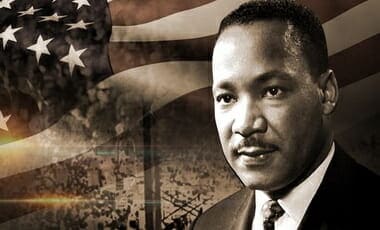
Corrie ten Boom and other “righteous gentiles” risked their own lives to save Jews during the Holocaust. William Wilberforce sought the abolition of slavery in the late eighteenth century in the United Kingdom. Martin Luther King Jr. fought for civil rights in the United States in the 50’s and 60’s. in Germany during World War II, Martin Niemoller and Dietrich Bonhoeffer challenged Christians to oppose Hitler.
We count these people as moral heroes precisely because they had the courage to fight for freedom. According to Society Says thought, however, they are the worst kind of moral criminals because they challenged the moral consensus of their own society. This view faces another difficulty with moral improvement of society. If society’s laws and cultural values are the ultimate standards of behavior, then the notion of moral improvement on a legal or cultural level is nonsense. A social code can never be improved; it can only be changed.
Think of what it means to improve something. Improvement means an increase in excellence by raising to a better quality or condition. How do we know if we have increased the quality of something? Only by noting that some change has brought it closer to an external standard of improvement. A bowler improves when she raises her average closer to 300, the perfect game. A baseball pitcher increases his skill by decreasing the number of batters he allows on base. If he strikes out every batter, he’s attained perfection. In either case, an outside standard is used as the measure of improvement.
To improve a society’s moral code means that the society changes its laws and values to more closely approximate an external moral ideal. If no such standard exists, if cultural values are the highest possible law, then there is no way for those standards to be better than what they are at any given moment. They can only be different. A society can abolish apartheid in favor of equality. It can adopt policies of habeas corpus protecting citizens against unjustified imprisonment; it can guarantee freedom of speech and the press. But according to this view, no one could ever claim that these are moral improvements but only that society changed its tastes. There is no moral ideal to emulate. Moral change is possible, but not moral improvement. Improvement means getting better, and there’s nothing better – in this view – than any society’s current assessment of morality. And moral reformers actually turn out to be unethical.
APPENDIX A
“By offering evolution in place of God as a cause of history, Darwin removed the theological basis of the moral code of Christendom. And the moral code that has no fear of God is very shaky. That’s the condition we are in.” — Will Durant, the preeminent historian and author of The Story of Civilization
Speaking of his native born Russia, “But if I were asked today to formulate as possible the main cause of the ruinous revolution that swallowed some 60 million of our people, I could not put it more accurately than to repeat: ‘Men have forgotten God; that’s why all this has happened.’“ — Nobel Prize winner, Alexander Solzhenitsyn
“I have been alternately called an aristocrat and a democrat. I am… neither. I am a Christocrat…. I believe all power… will always fail of producing order and happiness in the hands of man. He alone who created and redeemed man is qualified to govern him.” — Founding Father Benjamin Rush
A Critique of the “General Will”
Rousseau’s concept of the general will is essentially the same as such familiar concepts as the “sentiment of a nation” and the “aspirations of a people.” The idea is that a group of people may collectively or as a group desire or wish or want something, and that this collective desire, though it may coincide with the desires of the individuals in the group, is a metaphysically distinct entity.
Two questions about the general will, and all similar notion of a collective sentiment, are controversial to this day. First, what is it? Let’s suppose, for example, that every member of a group of people believes that the federal deficit should be reduced. We may say, then, that the federal deficit should be reduced. But can saying this possibly mean otherwise than simply that every individual in the group believes that it should be reduced? In this instance, that is, the general will seems no different from the wills of all individuals.
Let’s suppose now that 60 percent of the group believes that the deficit should be reduced. If we now say that the general will is that the federal deficit should be reduced, can we mean anything other than that 60 percent believes that way? In this instance, then, the general will seems no different from the individual wills of the 60 percent.
Suppose, finally, that 50 percent believes in raising taxes to reduce the federal deficit and 50 percent believes in cutting taxes to reduce the federal deficit. If we ignore the differences about how the deficit should be reduced (these, Rousseau might say, are “pluses and minuses that cancel each other”) and say that the general will is that the deficit should be reduced, do we mean anything other than what we did in the first instance, namely, that everyone believes that it should be reduced?
Thus, if the general will is supposedly something other than the will of all or the will of the majority – which clearly is Rousseau’s view because he envisions circumstances in which the majority will and the will of all may actually run counter to the general will – the question is: What is it?
And the second question is: Even granting that a group may have a general will that is distinct from the will of the majority, how is one to determine the specific propositions it endorses? Polls and elections disclose the will of all and the will of the majority; what discloses the general will? Through the will of all the general will could feasibly be changed since “the freedom to obey a law which we prescribe for ourselves.” Thus, Rousseau wrote, “it is to law alone that men owe justice and [civil] liberty.” Man is the end to a means, this general will then is subjected to his will as opposed to His Will!
This is why an unconstitutional democracy will never work. Founding Father Fisher Ames said, “A democracy is a volcano which conceals the fiery materials of its own destruction. These will produce an eruption, and carry desolation in their way,” (legally, I might add). Founding Father Benjamin Rush was equally pointed when he noted, “A simple democracy is the devil’s own government.” Founding Father and President John Adams stated that, “Remember, democracy never lasts long. It soon wastes, exhausts, and murders itself. There has never been a democracy yet that did not commit suicide.”
So strongly did the Founders oppose democracy that when they created the Constitution, they included a provision to keep America from becoming a democracy. Article 4, Section 4 of the Constitution requires that “each State maintain a republican form of government” – a republican form as opposed to a democratic one. One of our most thoroughly educated Founding Fathers was Noah Webster, who illuminated us as to what a “republican form of government was,” keeping in mind that Webster was the author of Article 1, Section 8, of the Constitution:
“[O]ur citizens should early understand that the genuine source of correct republican principles is the Bible, particularly the New Testament, or the Christian religion.”
The Judeo-Christian moral standard will never change because the basis for it is Divine in nature. This is the general will that a properly constituted government can refer to in order to stay within the lane lines of freedom and liberty. This is something that Rousseau’s general will cannot, and will never be able to, accomplish!
APPENDIX B
“As a man thinkith in his heart, so he is” — Proverbs 23:7
“If the moral character of a people once degenerate, their political character must soon follow…. These considerations should lead to an attentive solicitude… to be religiously careful in our choice of all public officers… and judge of the tree by its fruit.” — Founding Father Elias Boudinot
As the quotes above give a clue as to what this appendix is, I would want to first say that a man can change, but Rousseau never showed that change that can so inspire men to renounce their past beliefs, like Abraham Maslow. So lets delve into the mind of Rousseau with a conglomeration of quotes by him from various sources. This is done in order that we may see who the real Rousseau is.
Rousseau actually enjoyed the lavish lifestyle and considerable success even in his lifetime. To the unprejudiced modern eye he does not seem to have had much to grumble about. Yet Rousseau was one of the greatest grumblers in the history of literature. He insisted that his life had been one of misery and persecution. He reiterates the complaint so often and in such harrowing terms, that one feels obligated to believe him. On one point he was adamant: he suffered from chronic ill health. He was “an unfortunate wretch worn out by illness… struggling every day of my life between pain and death.” He had “not been able to sleep for thirty years.”
“Nature,” he added, “which has shaped me for suffering, has given me a constitution proof against pain in order that, unable to exhaust my forces, it may always make itself felt with the same intensity.”
It is true that he always had trouble with his penis. In a letter to his friend Dr. Tronchin, written in 1755, he refers to “the malformation of an organ, with which I was born.” His biographer Lester Crocker, after careful diagnoses, writes: “I am convinced that Jean-Jacques was born a victim of hypospadias, a deformity of the penis in which the urethra opens somewhere on the ventral surface.” In adult life this became a stricture, necessitating painful use of a catheter, which aggravated the problem both psychologically and physically. He constantly felt the urge to urinate and this raised difficulties when he was living in high society: “I still shudder to think of myself, in a circle of women, compelled to wait until some fine talk had finished… When at last I find a well-lit staircase there are other ladies who delay me, then a courtyard full of constantly moving carriages ready to crush me, ladies’ maids who are looking at me, lackeys who line the walls and laugh at me. I do not find a single wall or wretched little corner that is suitable for my purpose. In short I can urinate only in full view of everybody and on some noble white-stockinged leg.”
The passage is self-pitying and suggests, along with much other evidence, that Rousseau’s health was not as bad as he makes out. At times, when it suites his argument, he points to his good health. His insomnia was partly fantasy, since various people testify to his snoring. David Hume, who was with him on the voyage to England, wrote, “He is one of the most robust men I have ever known. He passes ten hours in the night-time above deck in the most severe weather, where all the seamen were almost frozen to death, and he took no harm.”
Rousseau called himself the “unhappiest of mortals,” spoke of the “grim fate which dogs my footsteps,” claimed “few men have shed so many tears” and insisted: “my destiny is such that no one would dare describe it, and no one would believe it.” In fact he described it often and many did believe, that is until they learned more about his character. Even then some sympathy remained. Madame d’Epinay, a patroness whom he treated abominably, remarked, even after her eyes were opened: “I still feel moved by the simple and original way in which he recounted his misfortunes.” He was what armies call an Old Soldier, a practiced psychological con-man. One is not surprised to find that, as a young man, he wrote begging letters, one of which has survived. It was written to the Governor of Savoy and demands a pension on the grounds that he suffers from a dreadful disfiguring disease and will soon be dead.
But behind all this self-pity lay an overpowering egoism, a feeling that he was quite unlike other men, both in his sufferings and his qualities. He wrote: “What could your miseries have in common with mine? My situation is unique, unheard of since the beginning of time.…” Equally, “The person who can love me as I can love is still to be born.” “No one ever had more talent for loving.” “I was born to be the best friend that ever existed.” “I would leave this life with apprehension if I knew a better man than me.” “show me a better man than me, a heart more loving, more tender, more sensitive…” “Posterity will honor me… because it is my due.” “I rejoice in myself.” “…my consolation lies in my self-esteem.” “…if there were a single enlightened government in Europe, it would have erected statues of me.”
No wonder why Burke declared: “Vanity was the vice he possessed to a degree little short of madness.” It was part of Rousseau’s vanity that he believed himself incapable of base emotions. “I feel too superior to hate.” “I love myself too much to hate anybody.” “Never have I known the hateful passions, never did jealousy, wickedness, vengeance enter my heart… anger occasionally but I am never crafty and never bear a grudge.” In fact he frequently bore grudges and was crafty in pursuing them. Men noticed this. Rousseau was the first intellectual to proclaim himself, repeatedly, the friend of all mankind. But loving as he did humanity in general, he developed a strong propensity for quarreling with human beings in particular. One of his victims, his former friend Dr. Tronchin of Geneva, protested: “How is it possible that the friend of mankind is no longer the friend of men, or so scarcely so?”
In 1743 he was given what seemed to plush post of secretary to the French Ambassador in Venice, the Comte de Montaigu. This lasted eleven months and ended in his dismissal and flight to avoid arrest by the Venetian Senate. Montaigu stated (and his version is to be preferred to Rousseau’s own) that his secretary was doomed to poverty on account of his “vile disposition” and “unspeakable insolence,” the product of his “insanity” and “high opinion of himself.”
Rousseau was a madman impassioned only with his best interests in mind. Granted he did reapply some beliefs that had already existed, much like Locke, but the difference between the two men in lifestyle and philosophy shows, that in all, Locke was a man to be measured by his deeds and his words.
APPENDIX C
“Being a lover of freedom, when the [Nazi] revolution came, I looked to the universities to defend it, knowing that they had always boasted of their devotion to the cause of truth; but no, the universities were immediately silenced. Then I looked to the great editors of the newspapers, whose flaming editorials in days gone had proclaimed their love of freedom; but they, like the universities, were silenced in a few short weeks…” “Only the Church stood squarely across the path of Hitler’s campaign for suppressing the truth. I never had any special interest in the Church before, but now I feel a great affection and admiration for it because the Church alone has had the courage and persistence to stand for intellectual and moral freedom. I am forced to confess that what I once despised I now praise unreservedly.” — Albert Einstein
I wanted to quickly debunk the feeling that Locke and Rousseau were the originators of the social contract. Just a couple examples will suffice, but others throughout Christian history are available. The Mayflower Compact is a prime example of what a community with Godly principles and the welfare of all in mind can do.
“In the name of God, amen. We whose names are underwritten, the loyal subjects of our dread Sovereign, Lord King James, by the grace of God, of Great Britain, France, and Ireland, King, Defender of the Faith, & c., having undertaken for the glory of our king and country, a voyage to plant the first colony in the northern parts of Virginia; do by these presents, solemnly and mutually, in the presence of God and one another, covenant and combine ourselves together into a civil body politick, for our better ordering and preservation, and furtherance of the ends aforesaid.”
This agreement was executed on November 11, 1620 – predating Locke’s Second Treatise by seven decades. It proved to be an accurate precursor of the Plymouth polity, which thereafter featured annual elections for governor, deputy governor, and legislature. As with the churches of that era, the pattern was repeated often in the experience of New England. Here, for example, are the words of the Fundamental Orders of Conneticut (1639), the colony established and led by Thomas Hooker:
“…well knowing where a people are gathered together the word of God requires that to maintain the peace and union of such people there should be an orderly and decent government established according to God, [we] do therefore associate and conjoin ourselves to be as one public state or commonwealth; and… enter into combination and confederation together, to maintain and pursue the liberty and purity of the gospel of our Lord Jesus which we now profess…”
Appendix D
Alex de Tocqueville on the American Revolution
Alex de Tocqueville in the early 1800’s was commissioned to by the French government to travel throughout the United States in order to discover the secret of the astounding success of this experiment in democracy. The French were puzzled at the conditions of unparalleled freedom and social tranquility that prevailed in America. Previously, it was thought that where there was liberty, anarchy would inevitably follow because of the inability of the people to govern themselves. But in America people were free – and also well behaved. In fact, nowhere on earth was there so little social discord.
When the French jurist, Alexis de Tocqueville, visited the United States in 1831, he became so impressed with what he saw that he went home and wrote one of the best definitive studies on the American culture and Constitutional system that had been published up to that time. His book was called Democracy in America. Concerning religion in America, de Tocqueville said: “On my arrival in the United States the religious aspect of the country was the first thing that struck my attention; and the longer I stayed there, the more I perceived the great political consequences resulting from this new state of things” (emphasis added).
He described the situation as follows: “Religion in America takes no direct part in the government of society, but it must be regarded as the first of their political institutions … I do not know whether all Americans have a sincere faith in their religion – for who can search the human heart? – but I am certain that they hold it to be indispensable to the maintenance of republican institutions. This opinion is not peculiar to a class of citizens or to a party, but it belongs to the whole nation and to every rank of society.”
In Europe, it had been popular to teach that religion and liberty were enemies of each other. De Tocqueville saw the very opposite happening in America. He wrote: “The philosophers of the 18th century explained in a very simple manner the gradual decay of religious faith. Religious zeal, said they, must necessarily fail the more generally liberty is established and knowledge diffused. Unfortunately, the facts by no means accord with their theory. There are certain populations in Europe whose unbelief is only equaled by their ignorance and debasement; while in America, one of the freest and most enlightened nations in the world, the people fulfill with fervor all the outward duties of religion”….
The Greatest Influence [De Tocqueville] emphasized the fact that this religious undergirding of the political structure was a common denominator of moral teachings in different denominations and not the political pressure of some national church hierarchy. Said he: “The sects [different denominations] that exist in the United States are innumerable. They all differ in respect to the worship which is due to the Creator; but they all agree in respect to the duties which are due from man to man. Each sect adores the Deity in its own peculiar manner, but all sects preach the same moral law in the name of God…. All the sects of the United States are comprised within the great unity of Christianity, and Christian morality is everywhere the same … There is no country in the world where the Christian religion retains a greater influence over the souls of men than in America.”
It was astonishing to de Tocqueville that liberty and religion could be combined in such a balanced structure of harmony and good order. He wrote: “The revolutionists of America are obliged to profess an ostensible respect for Christian morality and equity, which does not permit them to violate wantonly the laws that oppose their designs … Thus while the law permits the Americans to do what they please, religion prevents them from conceiving, and forbids them to commit, what is rash or unjust”….
In one of de Tocqueville’s most frequently quoted passages, he stated: “I sought for the greatness and genius of America in her commodious harbors and her ample rivers, and it was not there; in her fertile fields and boundless prairies, and it was not there; in her rich mines and her vast world commerce, and it was not there. Not until I went to the churches of America and heard her pulpits aflame with righteousness did I understand the secret of her genius and power.”
BIBLIOGRAPHY
- Two Treatises of Government, John Locke, edited by Edited by Thomas I. Cook.
- Rousseau’s Political Writings, Jean-Jacques Rousseau, edited by Alan Ritter. Translated by Julia C. Bondanella.
- Intellectuals, by Paul Johnson.
- The Betrayal of Liberalism: How the Disciples of Freedom & Equality Helped Foster the Illiberal Politics of Coercion & Control, edited by Hilton Kramer and Roger Kimball.
- Christianity & the Constitution: The Faith of Our Founding Fathers, by John Eidsmoe.
- Intellectuals Don’t Need God & Other Modern Myths: Christian Apologetics for Today, by Alister E. McGrath.
- Faith & Freedom: The Christian Roots of American Liberty, by Benjamin Hart.
- Refutation of Moral Relativism: Interviews With An Absolutist, by Peter Kreeft.
- America’s Thirty-Year War: Who Is Winning?, by Balint Vazsonyi.
- Relativism: Feet Firmly Planted in Mid-Air, Francis J. Beckwith and Gregory Koukl.
- The Oxford Companion to Philosophy, edited by Ted Honderich.
- Philosophy for Dummies, by Tom Morris.
- Introduction To Ethics, by Robert van Wyk.
- The Passion of the Western Mind: Understanding the Ideas That Have Shaped Our World View, by Richard Tarnas.
- America’s God & Country Encyclopedia of Quotations, by William Federer.
- The Theme Is Freedom: Religion, Politics, & the American Tradition, M. Stanton Evans.
- How Now Shall We Live?, by Charles Colson.
- Keys to Good Government: According to the Founding Fathers, by David Barton.
- The Foundations of American Government, by David Barton.
- Philosophy: The Power of Ideas, Brooke N. Moore and Kenneth Bruder.
- The Oxford History of Western Philosophy, edited by Anthony Kenny.
- The Concise Conservative Encyclopedia; 200 of the Most Important Ideas, Individuals, Incitements, &
Institutions That Have Shaped the Movement, by Brad Miner. - The Character of Nations: How Politics Makes & Breaks Prosperity, Family & Civility, by Angelo M. Codevilla.