John Piper’s Theistic “Dust Particle” Determinism (Soto 101)

A definition from that fits Calvinism via the Stanford Encyclopedia of Philosophy and the current understanding of reformed theologies …. “Reformed” theologies:

  • I hate using “Reformed” because many Reformers (like Philip Melanchthon and Balthasar Hubmaier as some examples) thought differently than the “Pipers,” MacArthur’s,” and “Calvins” of their time and today. So Calvinism is a better term: John MacArthur was a “Calvinist Baptist,” not a “Reformed Baptist.” Understand the difference with a distinction? — RPT

Foreknowledge and Free Will (Stanford Encyclopedia of Philosophy)

Fatalism is the thesis that human acts occur by necessity and hence are unfree. Theological fatalism is the thesis that infallible foreknowledge of a human act makes the act necessary and hence unfree. If there is a being who knows the entire future infallibly, then no human act is free.

Fatalism seems to be entailed by infallible foreknowledge by the following informal line of reasoning:

For any future act you will perform, if some being infallibly believed in the past that the act would occur, there is nothing you can do now about the fact that he believed what he believed since nobody has any control over past events; nor can you make him mistaken in his belief, given that he is infallible. Therefore, there is nothing you can do now about the fact that he believed in a way that cannot be mistaken that you would do what you will do. But if so, you cannot do otherwise than what he believed you would do. And if you cannot do otherwise, you will not perform the act freely.

The same argument can be applied to any infallibly foreknown act of any human being. If there is a being who infallibly knows everything that will happen in the future, no human being has any control over the future.

This theological fatalist argument creates a dilemma for anyone who thinks it important to maintain both (1) there is a deity who infallibly knows the entire future, and (2) human beings have free will in the strong sense usually called libertarian. But it has also fascinated many who have not shared either of these commitments, because taking the argument’s full measure requires rethinking some of the most fundamental questions in philosophy, especially ones concerning time, truth, and modality. Those philosophers who think there is a way to consistently maintain both (1) and (2) are called compatibilists about infallible foreknowledge and human free will. Compatibilists must either identify a false premise in the argument for theological fatalism or show that the conclusion does not follow from the premises. 

Another recent example that came across my desk (earbuds at work). Dr. Theodore Zachariades stating that God wills [causes, not just permits] a man to be unfaithful to his wife in his comment on becoming a Calvinist via Ephesians 1.

  • God works all things after the Council of His will. Even keeping those kings who want to commit adultery from committing so! And when He wants to, he orders those to commit adultery when he wants to! (Video)

Now that that is out of the way, on to the videos… I isolated the Piper quote from the video that follows it:

QUESTION: Has God predetermined every tiny detail in the universe, such as dust particles in the air? And then I should add here, including all our besetting sins.

PIPER RESPONDS: Yes, which means yes, every horrible thing and every sinful thing is ultimately governed by God and. That’s a problem, but the center of the solution to the problem is a choice. You have to make about the cross

(BTW, more on Piper can be found in this excellent journal article title (PDF), “I Believe In Divine Sovereignty,” by Thomas H. McCall)

Here are some of the comments on the original SOTERIOLOGY 101 video on their YouTube Channel [below]:

  • God determines every single thing even dust but you have to make the decision about the cross What????
  • So Calvinism teaches , “God commands you to obey, but has SECRETLY predestined you to DISOBEY, so He can burn you forever because you were a reprobate ‘before you were born, or had done anything either good or bad’.”
  • Piper who doesn’t believe in free will choice says “the solution to the problem is a CHOICE you have to make about a cross” 😂😂 how anyone can listen to this incoherent nonsense I’ll never know.
  • Piper: ” the center of the solution is a choice YOU have to make about the cross”? Does he mean I make a choice? Or God determines what choice I make??
  • If God is determining what man wants to do then also blinding and hardening doesn’t Jesus refute that reasoning when talking about how a kingdom divided against itself cannot stand? Matt. 12:25,26
  • Piper didn’t look like he wholeheartedly believed what he was saying.

Dr. Leighton Flowers, Director of Evangelism and Apologetics for Texas Baptists, confronts the Calvinist’s appeal to the Crucifixion as their proof that God predetermines all moral evil, specifically playing off John Piper’s use of Acts 4:27-28 as justification for his deterministic interpretation of the Bible.

Here is the descriptive story told at SOTO 101:

When we object to the concept of divine determinism (God’s sovereign work to bring about all things whatsoever that come to pass) and you appeal to the crucifixion as your proof that God brings about all moral evil, are you saying that God is sovereignly working so as to redeem the very sins He sovereignly worked to bring about? Is Calvary just about God cleaning up His own mess — redeeming His own determinations?

Appealing to God’s sovereign work to ensure the redemption of sin so as to prove that God sovereignly works to bring about all the sin that was redeemed is a self-defeating argument. It would be tantamount to arguing that because a police department set up a sting operation to catch a notorious drug dealer, that the police department is responsible for every single intention and action of all drug dealers at all times. Proof that the police department worked in secretive ways to hide their identities, use evil intentions, and work out the circumstances in such a way that the drug dealer would do what they wanted him to do (sell drugs) at that particular moment in time does not suggest that the police are in anyway responsible for all that drug dealer has done or ever will do. We celebrate and reward the actions of this police department because they are working to stop the drug activity, not because they are secretly causing all of it so as to stop some of it. Teaching that God brings about all sin based on how He brought about Calvary is like teaching that the police officer brings about every drug deal based on how he brought about one sting operation.

Yes, at times the scriptures do speak of God “hardening” men’s hearts (Ex. 7; Rm. 9), blinding them with a “spirit of stupor” (Rm. 11:8) and delaying their healing by use of parabolic language (Mk. 4:11-12, 34; Matt. 16:20), and He always does so for a redemptive good. But the reason such passages stand out so distinctly from the rest of scripture is because of their uniqueness. If God worked this way in every instance these texts would make no sense. After all, what is there for God to harden, provoke, or restrain if not the autonomous will of creatures?

If everything is under the meticulous control of God’s sovereign work what is left to permit and/or restrain except that which He is already controlling? Is God merely restraining something that He previously determined? Why blind eyes from seeing something the were “naturally” predetermined not to see? Why put a parabolic blind fold on a corpse-like dead sinner incapable of seeing spiritual truth? These are questions many Calvinists seem unwilling to entertain at any depth.

Augustinian Determinism VS. The Early Church (Updated)

I updated this post with some more early church father “stuff.” Feel free to jump to the excerpt/graph and additional info. Jump to my other posts so far on the topic of Calvinism:

To go to all my posts on Calvinism and related issues, click the graphic to the right.

Enjoy the rest

Ken Wilson Rebuts James White

Description from the above video on SOTERIOLOGY 101’s YouTube:

Dr. Leighton Flowers welcomes back Dr. Ken Wilson to defend his Oxford Thesis from over 15 hours of mostly fallacious and unfounded attacks by Dr. James White of Alpha and Omega Ministries.

The Common Misconceptions in this Debate So Far:

  1. Wilson’s argument rests on Manicheanism and Augustinianism being the same worldview: This is untrue. It is not at all unreasonable to suggest that just one aspect of Manicheanism (i.e. its adherence to theistic determinism) might have influenced Augustine’s interpretation of the scripture.
  2. Wilson is saying Augustinianism is untrue because of its similarities with Manicheanism: This is inaccurate. It is possible for false worldviews to adhere to some aspects of truth, therefore proving that Calvinism has some link to Manicheanism doesn’t prove Calvinism is false. Wilson is saying Augustinianism is not rooted or founded in the early church writings therefore it most likely originated from other gnostic, neoplatonic and Manichean roots, which brings into question its validity as the correct interpretive grid.
  3. Wilson is arguing Augustinianism imports Manicheanism into Christianity because it uses similar words: This is also untrue. Just because Mani spoke of “the elect” and Calvinists also emphasize “the elect” does not mean they are necessarily linked, or even have the same definitions. Wilson is not attempting to argue that all aspects or jargon of the Manichean worldview are linked to the all aspects or jargon within the Calvinistic worldview. Wilson is only looking at the one common point of connection, namely deterministic philosophy, which was first introduced by Augustine, a former Manichean.
  4. James White’s criticism has accurately portrayed Wilson’s arguments and showed Wilson’s bias: This is demonstrably untrue as will be shown in this video and in many of the articles posted at www.soteriology101.com.
  5. If it can be proven that Wilson held to preconception of the ECFs and Augustine’s beliefs before doing his research, then his subsequent research is invalid: Again this is false. Even if it could be proven beyond all reasonable doubt that Wilson firmly believed the ECFs denied TULIP theology and that Augustine was the first to introduce it, this does not make his findings invalid. One would still need to demonstrate that Wilson’s bias lead to poor research.

Here are quotes from Reformed historians who validate the foundational claims of Wilson’s work:

Herman Bavinck:

  • In the early church, at a time when it had to contend with pagan fatalism and gnostic naturalism, its representatives focused exclusively on the moral nature, freedom, and responsibility of humans and could not do justice, therefore, to the teaching of Scripture concerning the counsel of God. Though humans had been more or less corrupted by sin, they remained free and were able to accept the proffered grace of God. The church’s teaching did not include a doctrine of absolute predestination and irresistible grace.

Loraine Boettner:

  • “It may occasion some surprise to discover that the doctrine of Predestination was not made a matter of special study until near the end of the fourth century….They of course taught that salvation was through Christ; yet they assumed that man had full power to accept or reject the gospel. Some of their writings contain passages in which the sovereignty of God is recognized; yet along side of those are others which teach the absolute freedom of the human will. Since they could not reconcile the two they would have denied the doctrine of PredestinationThey taught a kind of synergism in which there was a co-operation between grace and free  this cardinal truth of Christianity was first clearly seen by Augustine

Robert Peterson and Michael Williams of Covenant Theological Seminary:

  • “The Semi-Pelagians were convinced that Augustine’s monergistic emphasis upon salvation by grace alone represented a significant departure from the traditional teaching of the church. And a survey of the thought of the apostolic father’s shows that the argument is validIn comparison to Augustine’s monergistic doctrine of grace, the teachings of the apostolic fathers tended toward a synergistic view of redemption” (36).

Louis Berkhof [in The History of Christian Doctrines]:

  • “Their representations are naturally rather indefinite, imperfect, and incomplete, and sometimes even erroneous and self-contradictory. Says Kahnis: “It stands as an assured fact, a fact knowing no exceptions, and acknowledged by all well versed in the matter, that all of the pre-Augustinian Fathers taught that in the appropriation of salvation there is a co-working of freedom and grace.”

Berkhof goes on to admit that “they do not hold to an entire corruption of the human will, and consequently adhere to the synergistic theory of regeneration” (130).

In other words, despite White’s assertions to the contrary, there were no “monergists” before Augustine.

An additional — fuller quote of Loraine Boettner from above:

  • “It may occasion some surprise to discover that the doctrine of Predestination was not made a matter of special study until near the end of the fourth century. The earlier church fathers placed chief emphasis on good works such as faith, repentance, almsgiving, prayers, submission to baptism, etc., as the basis of salvation. They of course taught that salvation was through Christ; yet they assumed that man had full power to accept or reject the Gospel. Some of their writings contain passages in which the sovereignty of God is recognized; yet along side of those are others which teach the absolute freedom of the human will. Since they could not reconcile the two they would have denied the doctrine of Predestination and perhaps also that of God’s absolute Foreknowledge. They taught a kind of synergism in which there was a co-operation between grace and free will. It was hard for man to give up the idea that he could work out his own salvation. But at last, as a result of a long, slow process, he came to the great truth that salvation is a sovereign gift which has been bestowed irrespective of merit; that it was fixed in eternity; and that God is the author in all of its stages. This cardinal truth of Christianity was first clearly seen by Augustine, the great Spirit-filled theologian of the West. In his doctrines of sin and grace, he went far beyond the earlier theologians, taught an unconditional election of grace, and restricted the purposes of redemption to the definite circle of the elect.” — from Loraine Boettner’s “Calvinism in History”

Here is chapter two from Ken Wilson’s book, “The Foundation of Augustinian-Calvinism” (PDF as well)

Here is a good review of the book via the South African Theological Seminary.

See also my first post commenting on this issue.


Chapter 2

Early Christian Authors 95–400 CE


Early Christian authors unanimously taught relational divine eternal predetermination. God elected persons to salvation based upon foreknowledge of their faith (predestination). These Christians vigorously opposed the unilateral determinism of Stoic Providence, Gnosticism, and Manichaeism.[48] So early Christians taught predestination,[49] but refuted Divine Unilateral Predetermination of Individuals’ Eternal Destinies (unilateral determinism). This unilateral determinism can be identified in ancient Iranian religion, then chronologically in the Qumranites, Gnosticism, Neoplatonism, and Manichaeism. “Christian” heretics such as Basilides who taught God unilaterally bestowed the gift of faith to only some persons (and withheld that salvific gift to others) were condemned. Of the eighty-four pre-Augustinian authors studied from 95–430 CE, over fifty addressed this topic. All of these early Christian authors championed traditional free choice and relational predestination against pagan and heretical Divine Unilateral Predetermination of Individuals’ Eternal Destinies.[50]

This can only be understood and appreciated by reading comprehensively through the sizeable number of works by these authors. Some persons triumphantly cite ancient Christian authors claiming they believe Augustine’s deterministic interpretations of scripture, but without reading the entire context or without understanding the way in which words were being used.[51] I am not aware of any Patristics (early church fathers) scholar who would or could make a claim that even one Christian author prior to Augustine taught Divine Unilateral Predetermination of Individuals’ Eternal Destinies (DUPIED, i.e., non-relational determinism unrelated to foreknowledge of human choices).

I. Apostolic Fathers and Apologists 95–180 CE

Most of these works do not directly address God’s sovereignty or free will.[52] The Epistle of Barnabas (100–120 CE) admits the corruption of human nature (Barn.16.7) but only physical death (not spiritual) results from Adam’s fall. Personal sins cause a wicked heart (Barn.12.5). Divine foreknowledge of human choices allowed the Jews to make choices and remain within God’s plan, resulting in their own self-determination (Barn.3.6). God’s justice is connected with human responsibility (Barn.5.4). Therefore, God’s foreknowledge of human choices should affect God’s actions regarding salvation.

In The Epistle of Diognetus (120–170 CE) God does not compel anyone. Instead, God foreknows choices by which he correspondingly chooses his responses to humans. Meecham writes of Diogn.10.1–11.8, “Free-will is implied in his capacity to become ‘a new man’ (ii,I), and in God’s attitude of appeal rather than compulsion (vii, 4).”[53] Aristides (ca.125–170 CE) taught newborns enter the world without sin or guilt: only personal sin incurs punishment.[54]

II. Justin Martyr and Tatian

The first author to write more specifically on divine sovereignty and human free will is Justin Martyr (ca.155 CE). Erwin Goodenough explained:

Justin everywhere is positive in his assertion that the results of the struggle are fairly to be imputed to the blame of each individual. The Stoic determinism he indignantly rejects. Unless man is himself responsible for his ethical conduct, the entire ethical scheme of the universe collapses, and with it the very existence of God himself.[55]

Commenting on Dial.140.4 and 141.2, Barnard concurred, saying God “foreknows everything—not because events are necessary, nor because he has decreed that men shall act as they do or be what they are; but foreseeing all events he ordains reward or punishment accordingly.”[56] After considering 1 Apol.28 and 43, Chadwick also agreed. “Justin’s insistence on freedom and responsibility as God’s gift to man and his criticism of Stoic fatalism and of all moral relativism are so frequently repeated that it is safe to assume that here he saw a distinctively Christian emphasis requiring special stress.”[57] Similarly, Barnard wrote: “Justin, in spite of his failure to grasp the corporate nature of sin, was no Pelagian blindly believing in man’s innate power to elevate himself. All was due, he says, to the Incarnation of the Son of God.”[58]

Tatian (ca.165) taught that free choice for good was available to every person. “Since all men have free will, all men therefore have the potential to turn to God to achieve salvation.”[59] This remains true even though Adam’s fall enslaved humans to sin (Or.11.2). The fall is reversed through a personal choice to receive God’s gift in Christ (Or.15.4). Free choice was the basis of God’s rewards and punishments for both angels and humans (Or.7.1–2).

II. Theophilus, Athenagoras, and Melito

Theophilus (ca.180), all creation sinned in Adam and received the punishment of physical decay, not eternal death or total inability (Autol.2.17). Theophilus’ insistence upon a free choice response to God (Autol.2.27) occurs following his longer discussion of the primeval state in the Garden and subsequent fall of Adam. Christianity’s gracious God provides even fallen Adam with opportunity for repentance and confession (Autol.2.26). Theophilus exhorts Christians to overcome sin through their residual free choice (Autol.1.2, 1.7).

Athenagoras (ca.170 CE) believed infants were innocent and therefore could not be judged and used them as a proof for a bodily resurrection prior to judgment (De resurr.14). For God’s punishment to be just, free choice stands paramount. Why?—because God created both angels and persons with free choice for the purpose of assuming responsibility for their own actions (De resurr.24.4–5)[60] Humans and angels can live virtuously or viciously: “This, says Athenagoras, is a matter of free choice, a free will given the creature by the creator.”[61] Without free choice, the punishment or rewarding of both humans and angels would be unjust.

In Peri Pascha 326–388, Melito (ca.175 CE) possibly surpassed any extant Christian author in an extended description depicting the devastation of Adam’s fall.[62] The scholar Lynn Cohick explained: “The homilist leaves no doubt in the reader’s mind that humans have degenerated from a pristine state in the garden of Eden, where they were morally innocent, to a level of complete and utter perversion.”[63] Despite this profound depravity, all persons remain capable of believing in Christ through their own God-given free choice. No special grace is needed. A cause and effect relationship exists between human free choice and God’s response (P.P.739–744). “There is no suggestion that sinfulness is itself communicated to Adam’s progeny as in later Augustinian teaching.”[64]

B. Christian Authors 180–250 CE

I. Irenaeus of Lyons

Irenaeus of Lyons (ca.185) wrote primarily against Gnostic deterministic salvation in his famous work Adversus Haereses. “One position fundamental to Irenaeus is that man should come to moral good by the action of his own moral will, and not spontaneously and by nature.”[65] Physical death for the human race from Adam’s sin was not so much a punishment as God’s gracious gift to prevent humans from living eternally in a perpetual state of struggling with sin (Adv. haer.3.35.2).

Irenaeus championed humanity’s free will for four reasons: (1) to refute Gnostic Divine Unilateral Predetermination of Individuals’ Eternal Destinies, (2) because humanity’s persisting imago Dei (image of God within humans) demands a persisting free will, (3) scriptural commands demand free will for legitimacy, and (4) God’s justice becomes impugned without free will (genuine, not Stoic “non-free free will”). These were non-negotiable “apostolic doctrines.” Scholars Wingren and Donovan both identify Irenaeus’ conception of the imago Dei as freedom of choice itself. As Donovan relates: “This strong affirmation of human liberty is at the same time a clear rejection of the Gnostic notion of predetermined natures.”[66]

Andia clarified that God’s justice requires free choice since Irenaeus believed God’s providence created all persons equally.[67] In refuting Gnostic determinism (Divine Unilateral Predetermination of Individuals’ Eternal Destinies), Irenaeus argues that God determines persons’ eternal destinies through foreknowledge of the free choices of persons (Adv. haer.2.29.1; 4.37.2–5; 4.29.1–2; 3.12.2,5,11; 3.32.1; 4.14, 4.34.1, 4.61.2). Irenaeus attacked both Stoicism and Gnostic heresies because DUPIED made salvation by faith superfluous, and made Christ’s incarnation unnecessary.[68] Irenaeus taught God’s predestination. This was based on God’s foreknowledge of human choices without God constraining the human will as in Gnostic determinism.[69]

Irenaeus denied that any event could ever occur outside of God’s sovereignty (Adv. haer.2.5.4), but simultaneously emphasized residual human free choice to receive God’s gift, which only then results in regeneration. “The essential principle in the concept of freedom appears first in Christ’s status as the sovereign Lord, because for Irenaeus man’s freedom is, strangely enough, a direct expression of God’s omnipotence, so direct in fact, that a diminution of man’s freedom automatically involves a corresponding diminution of God’s omnipotence.”[70] Although he exalted God’s sovereignty, it was not (erroneously) defined as God receiving everything he desires.[71] The scholar Denis Minns correctly states, “Irenaeus would insist as vigorously as Augustine that nothing could be achieved without grace. But he would have been appalled at the thought that God would offer grace to some and withhold it from others.”[72]

II. Clement of Alexandria and Tertullian

Clement of Alexandria (ca.190) strongly defends a residual human free choice after Adam (Strom.1.1; cf. 4.24, 5.14). Divine foreknowledge determines divine election (Strom.1.18; 6.14). Clement understood that God calls all (lläv1ωv iοίvuv àvOρdrnωv)—every human, not a few of every kind of human —whereas, “the called” are those who respond. He believed that if God exercised Divine Unilateral Predetermination of Individuals’ Eternal Destinies (as the Marcionites and Gnostics believed), then he would not be the just and good Christian God but the heretical God of Marcion (Strom.5.1).

Clement refuted the followers of the Gnostic Marcion who believed initial faith was God’s gift. Why?—it robbed humans of free choice (Strom.2.3–4; cf. Strom.4.11, Quis dives Salvetur 10). Yet Clement does not believe free choice saves persons as a human work (cf. John 1:13). He teaches God must first draw and call every human to himself, since all have the greatest need for the power of divine grace (Strom.5.1). God does not initiate a mystical (i.e., Neoplatonic) inward draw to each of his elect. Instead, the Father previously revealed himself and drew every human through Old Testament scripture, but now reveals himself and draws all humanity equally to himself through Christ and the New Testament (cf. John 12:32; Strom.7.1–2).[73]

Tertullian (ca.205) wrote that despite a corrupted nature, humans possess a residual capacity to accept God’s gift based upon the good divine image (the “proper nature”) still resident within every human (De anima 22). Every person retains the capacity to believe. He refuted Gnosticism’s discriminatory deterministic salvation (Val.29). God remains sovereign while he permits good and evil, because he foreknows what will occur by human free choice (Cult. fem.2.10). Humans can and should respond to God by using their God-given innate imago Dei free choice. Therefore, Tertullian did not approve of an “innocent” infant being baptized before responding personally to God’s gift of grace through hearing and believing the gospel (De baptismo 18). He believed that children should await baptism until they are old enough to personally believe in Christ.

III. Origen of Alexandria

Origen (ca.185–254) advances scriptural arguments for free choice that fill the third book of De principiis (P. Arch.3.1.6). “This also is definite in the teaching of the Church, every rational soul is possessed of free-will and volition” that can choose the good (Princ., Pref.5). God does not coerce humans or directly influence individuals but instead only invites. Why?—because God desires willing lovers. Just as Paul asked Philemon to voluntarily (κατὰ Eκοuσιοv) act in goodness (Phlm. 1.14), so God desires uncoerced lovers (Hom. Jer.20.2). Origen explains how God hardens Pharaoh’s heart. God sends divine signs/events that Pharaoh rejects and hardens his own heart. God’s hardening is indirect. “Now these passages are sufficient of themselves to trouble the multitude, as if man were not possessed of free will, but as if it were God who saves and destroys whom he will” (Princ. 3.1.7). Origen distinguishes between God’s temporal blessings and eternal destinies in Romans 9–11, rejecting the Gnostic eternal salvation view from these chapters.

Initial faith is human faith, not a divine gift. “The apostles, once understanding that faith which is only human cannot be perfected unless that which comes from God should be added to it, they say to the Savior, ‘Increase our faith.'” (Com.Rom.4.5.3). God desires to give the inheritance of the promises not as something due from debt but through grace. Origen says that the inheritance from God is granted to those who believe, not as the debt of a wage but as a gift of [human] faith (Com.Rom.4.5.1).[74]

Election is based upon divine foreknowledge. “For the Creator makes vessels of honor and vessels of dishonor, not from the beginning according to His foreknowledge, since He does not pre-condemn or pre-justify according to it; but (He makes) those into vessels of honor who purged themselves, and those into vessels of dishonor who allowed themselves to remain unpurged” (P.Arch.3.1.21). Origen does not refute divine foreknowledge resulting in election but refutes the philosophical view of foreknowledge as necessarily causative, which Celsus taught:

Celsus imagines that an event, predicted through foreknowledge, comes to pass because it was predicted; but we do not grant this, maintaining that he who foretold it was not the cause of its happening, because he foretold it would happen; but the future event itself, which would have taken place though not predicted, afforded the occasion to him, who was endowed with foreknowledge, of foretelling its occurrence (C.Cels.2.20).

Origen explains the Christian interpretation of Rom 9:16.[75] The Gnostic and heretical deterministic interpretations render God’s words superfluous, and invalidate Paul’s chastisements and approbations to Christians. Nevertheless, the human desire/will is insufficient to accomplish salvation, so Christians must rely upon God’s grace (P. Arch.3.1.18). Origen does not minimize the innate human sin principle that incites persons to sin. Rather, he chastises immature Christians who blame their sins on the devil instead of their own passions (Princ.3.2.1–2; P. Arch.3.1.15).

IV. Cyprian and Novatian

Cyprian (d.254 CE) taught God stands sovereign (Treat.3.19; 5.56.8; 12.80). Yet, God rewards or punishes based upon his foreknowledge of human choices and responses (Treat.7.17, 19; Ep.59.2). Humans retain free choice despite Adam’s sin (Treat.7.17, 19).[76] “That the liberty of believing or of not believing is placed in freedom of choice” (Treat.12.52). Jesus utilized persuasion, not force (Treat.9.6). Obedience resulting in martyrdom should arise from free choice, not necessity (Treat. 7.18), especially since imitating Christ restores God’s likeness.

Novatian (ca.250 CE) teaches a personal responsibility for sin instead of guilt from Adam, because a person who is pre-determined due to (even fallen) nature cannot be held liable. Only a willful decision can incur guilt (De cib. Jud.3). Lactantius (ca.315 CE) taught Adam’s fall produced only physical death (not eternal death) through the loss of God’s perpetually gifted immortality (Inst.2.13), as Williams correctly identified.[77] Yet, mortality in a corrupted human body predisposed the human race to sin (Inst.6.13). God loves every person equally, offers immortality equally to each person, and every human is capable of responding to God’s offer—without divine intervention (Div.inst.5.15) “God, who is the guide of that way, denies immortality to no human being” but offers salvation equally to every person (Div.inst.6.3). Humanity must contend with its propensity to sin, but the corrupted nature provides no excuse since free choice persists (Inst.2.15; 4.24; 4.25; 5.1). He consistently teaches Christian free choice (Inst.5.10, 13, 14).

C. Christian Authors 250–400 CE

I. Hilary of Poitiers

Hilary (d.368 CE) referred to John 1:12–13 as God’s offer of salvation that is equally offered to everyone. “They who do receive Him by virtue of their faith advance to be sons of God, being born not of the embrace of the flesh nor of the conception of the blood nor of bodily desire, but of God […] the Divine gift is offered to all, it is no heredity inevitably imprinted but a prize awarded to willing choice” (Trin.1.10–11). Human nature has a propensity to evil (Trin.3.21; Hom. Psa.1.4) that is located in the physical body (Hom. Psa.1.13). Human free choice elicits the divine gift, yet the divine birth (through faith) belongs solely to God. A human ‘will’ cannot create the birth (Trin.12.56) yet that birth occurs through human faith.

II. The Cappadocians

Gregory of Nazianzus (ca.329–389 CE) writes frequently of the “fall of sin” from Adam (Or.1; 33.9; 40.7), including the evil consequence of that original sin (Or.45.12). “We were detained in bondage by the Evil One, sold under sin, and receiving pleasure in exchange for wickedness” (Or.45.22). Salvation (not faith) is God’s gift. “We call it the Gift, because it is given to us in return for nothing on our part” (Or.40.4). “This, indeed, was the will of Supreme Goodness, to make the good even our own, not only because it was sown in our nature, but because cultivated by our own choice, and by the motions of our free will to act in either direction.” (Or.2.17). “Our soul is self-determining and independent, choosing as it will with sovereignty over itself that which is pleasing to it” (Ref.Conf. Eun.139). Children are born blameless (Ep.206). God is sovereign, and Christ died for all humankind, including the ‘non-elect.’ (Or.45.26; cf. Or.38.14). Nevertheless, in matters of personal salvation, God limits himself, allowing humans free choice (Or.32.25, 45.8).

Basil of Caesarea (ca.330–379 CE) believed humans do not inherit sin or evil, but choose to sin resulting in death. We control our own actions, proved by God’s payment and punishment (Hom. Hex.2.4). He promotes God’s sovereignty over human temporal (not eternal) destinies, including our time of death by “God who ordains our lots” (Ep.269) yet he refutes micromanaging Stoic Providence (Ep.151). God empowers human faith for great works because mere human effort cannot accomplish divine good (Ep.260.9). Basil allowed no place for either Chaldean astrological fatalism (Hom. Hex.6.5; Ep.236), or Divine Unilateral Predetermination of Individuals’ Eternal Destinies. Righteous judgment resulting in reward and punishment demands Christian traditional free choice. In contrast, any concept of inevitable evil in humans necessarily destroys Christian hope (Hom. Hex.6.7) because all humans have an innate natural reason with the ability to do good and avoid evil (Hom. Hex.8.5; cf. Ep.260.7). Basil refuted a dozen heresies, but reserved his strongest denunciation for the one teaching determinism—”the detestable Manichaean heresy” (Hom. Hex.2.4).

Gregory of Nyssa (ca.335–395 CE) pervasively teaches a post-Adamic congenital weakness, inclined to evil and in slavery to sin but without guilt (C. Eun.1.1; 3.2–3; 3.8; De opificio hom.193; Cat. mag.6, 35; Ep.18; Ref. conf. Eun.; Dial. anim. et res., etc.). Each person’s alienation from God occurs through personal sin and vice, not Adam’s sin (C. Eun.3.10). Despite an inherited tendency to evil, the divine image within humans retains goodness, just as Tertullian and others had taught (Opif. hom.164; cf. Ep.3.17).[78] Humanity’s ruin and inability to achieve eternal life by self-effort demanded God initiate the rescue through Christ (Ref. conf. Eun.418–20). But Gregory refutes the idea of a human nature so corrupted that it would render an individual incapable of a genuine choice to receive God’s readily available gift of grace offered to everyone equally.

By appealing to the justice of God’s recompenses, Gregory refutes those [e.g., Manichaeans] who believe humans are born sinful and thus culpable (De anim.120). The choice for salvation belongs to humans, apart from God’s manipulation, coercion, or unilateral intervention (C. Eun.3.1.116–18; cf. Adv. Mac. spir. sancto 105–6; De virginitate 12.2–3). Gregory upholds Christian [not Stoic] divine sovereignty (Ref. conf. Eun. 169; cf. 126–27; Opif. hom.185).

III. Methodius, Theodore, and Ambrose

Methodius (d.312 CE) believed all humans retain genuine free will even after Adam’s fall since Christian free choice was necessary for God to be just in rewarding the good and punishing the wicked (Symp.8.16; P G 18:168d). He championed traditional Christian free choice in a major work against Gnostic determinism (Peri tou autexousiou, 73–77).[79] Cyril of Jerusalem (ca.348–386 CE) taught humans enter this world sinless (Cat.4.19) and God’s foreknowledge of human responses determines the divine choosing of them for service (Cat.1.3).

Theodore of Mopsuestia (ca.350–428 CE) defended traditional original sin against Manichaean damnable inherited guilt (Adv. def. orig. pecc.), so that, “Man’s freedom takes the first step, which is afterwards made effective by God … [with] the will of each man as being absolutely free and unbiased and able to choose either good or evil.”[80] Humans retain the ability to choose good and evil (Comm. Ioh.5.19).

Ambrose of Milan (d.397 CE) baptized Augustine in Milan on Easter in 387 CE. He taught traditional (not Augustinian) original sin (De fide 5.5, 8, 60; Exc. Satyri 2.6; cf. 1.4). Ambrose believed slavery to sin [the sin propensity] was inherited, but this was not literal sin that produced personal culpability and damnation (De Abrah.2.79). The scholar Paul Blowers noted, “Ambrosiaster (Rom.5:12ff) and Ambrose (Enar.in Ps.38.29) … both authors concluded that individuals were ultimately accountable only for their own sins.”[81]

Ambrose emphasized God predestined individuals based upon his foreknowledge of the future, concerning which God was omniscient (Ep.57; De fide 2.11, 97). God compels no one, but patiently waits for a human response in order that He may provide grace, preferring pity over punishment (Paen.1.5). He insisted upon residual free choice and views an increase in a person’s faith (not initial faith) as a divine gift given in response to faithfulness. (Paen.1.48; Ep.41.6).

D. Conclusion

Not even one early church father writing from 95–430 CE—despite abundant acknowledgement of inherited human depravity—considered Adam’s fall to have erased human free choice to independently respond to God’s gracious invitation.[82] God did not give initial faith as a gift. Humans could do nothing to save themselves—only God’s grace could save. Total inability to do God’s good works without God’s grace did not mean inability to believe in Christ and prepare for baptism. No Christian author embraced deterministic Divine Unilateral Predetermination of Individuals’ Eternal Destinies (DUPIED): all who considered it rejected DUPIED as an erroneous pagan Stoic or Neoplatonic philosophy, or a Gnostic or Manichaean heresy, unbefitting Christianity’s gracious relational God. God’s gift was salvation by divine grace through human faith (cf. Eph. 2:8), not a unilateral initial faith gift, as the Gnostics and Manichaean heretics were claiming. Early Christian literature could be distinguished from Gnostic and Manichaean literature by this essential element.

In a seemingly rare theological unanimity over hundreds of years and throughout the entire Mediterranean world, a Christian regula fidei (rule of faith) of free choice (advocated by Origen as the rule of faith) combated the Divine Unilateral Predetermination of Individuals’ Eternal Destinies espoused in Stoicism’s “non-free free will” and Gnosticism’s divine gift of infused initial faith into a “dead will.” The loving Christian God allowed humans to exercise their God-given free will.

Graph
Click To Enlarge

Footnotes
Abbreviations from Ken Wilsons Augustine Book (PDF)

[48] Sarah Stroumsa and Guy. G. Stroumsa, “Anti-Manichaean Polemics in Late Antiquity and under Early Islam,” HTR 81 (1988): 48.

[49] Wallace wrongly claims, “In spite of the numerous New Testament references to predestination, patristic writers, especially the Greek fathers, tended to ignore the theme before Augustine of Hippo. This was probably partly the result of the early church’s struggle with the fatalistic determinism of the Gnostics”; Dewey Wallace, Jr. “Free Will and Predestination: An Overview,” in Lindsay Jones, ed. The Encyclopedia of Religion. 2nd edn., vol.5. (Farmington Hills, MI: Macmillan Reference USA, 2005), 3203. He obviously had not read Irenaeus and other early authors. For a cogent refutation of this absurd claim, see in the same volume C.T. McIntire (2005), “Free Will and Predestination: Christian Concepts,” vol.5, 3207.

[50] Wilson, Augustine’s Conversion, Appendix III, 307–309.

[51] Wilson, Augustine’s Conversion, 41–94, and see other comments in the work revealing how this occurs.

[52] For The Shepherd of Hermas and other works not covered here see Wilson, Augustine’s Conversion, 41–50.

[53] Henry Meecham, The Epistle to Diognetus: The Greek Text (Manchester: Manchester University Press, 1949), 29–30.

[54] Harold Forshey, “The doctrine of the fall and original sin in the second century,” Restoration Quarterly 3 (1959): 1122, “But in this instance the doctrinal presupposition shows through clearly—a child comes into the world with a tabula rasa.

[55] Erwin Goodenough, The Theology of Justin Martyr (Jena: Verlag Frommannsche Buchhandlung, 1923), 219.

[56] Leslie Barnard, Justin Martyr: His Life and Thought (Cambridge: Cambridge University Press, 1967), 78.

[57] Henry Chadwick, “Justin Martyr’s Defence of Christianity,” Bulletin of the John Rylands Library 47.2 (1965): 284; cf., 291–292.

[58] Barnard (1967), 156.

[59] Emily Hunt, Christianity in the Second Century: The Case of Tatian (New York, NY: Routledge, 2003), 49.

[60] Bernard Pouderon, Athénagore d’Athênes, philosophie chrétien (Paris: Beauchesne, 1989), 177– 178. Pouderon highlighted this requisite for God’s law and justice: “La liberté humaine se tire de la notion de responsabilité: ‘L’homme est responsable (lllóöικοc) en tant qu’ensemble, de toutes ses actions’ (D.R.XVIII, 4).” “Human freedom results from the concept of responsibility: ‘Man is generally responsible (lllóöικοc) for all his actions.'” (my translation)

[61] David Rankin, Athenagoras: Philosopher and Theologian. Surrey: Ashgate, 2009), 180.

[62] Stuart Hall, Melito of Sardis: On Pascha and Fragments in Henry Chadwick, ed. Oxford Early Christian Texts (Oxford: Oxford University Press, 1978), xvi, where The Petition To Antonius “is now universally regarded as inauthentic.”

[63] Lynn Cohick, The Peri Pascha Attributed to Melito of Sardis: Setting, Purpose, and Sources (Providence, RI: Brown Judaic Studies, 2000), 115.

[64] Hall (1978), xlii.

[65] John Lawson, The Biblical Theology of Saint Irenaeus (London: The Epworth Press, 1948), 203.

[66] Gustaf Wingren, Man and the Incarnation, trans. by Ross Mackenzie (Lund: C.W.K. Gleerup, 1947; repr., London: Oliver and Boyd, 1959), 36; Mary Ann Donovan, “Alive to the Glory of God: A Key Insight in St. Irenaeus,” TS 49 (1988): 291 citing Adv. haer.4.37.

[67] Ysabel de Andia, Homo vivens: incorruptibilité et divinisation de l’homme selon Irénée de Lyons (Paris: Études Augustiniennes, 1986), 131.

[68] E.P. Meijering, “Irenaeus’ relation to philosophy in the light of his concept of free will,” in E.P. Meijering, ed. God Being History: Studies in Patristic Philosophy (Amsterdam: North Holland Publishing, 1975), 23.

[69] James Beaven, An Account of the Life and Times of S. Irenaeus (London: Gilbert and Rivington, 1841), 165–166; F. Montgomery Hitchcock, Irenaeus of Lugdunum: A Study of His Teaching (Cambridge: Cambridge University Press, 1914), 260; Wingren (1947; repr., 1959), 35–36.

[70] Wingren (1947; repr., 1959), 35–36.

[71] Explained later when discussing Augustine’s later specific sovereignty view.

[72] Denis Minns, Irenaeus (Washington, DC: Georgetown University Press, 1994), 136.

[73] Modern commentaries on this gospel rarely connect God’s drawing as being through scripture and Christ (John 6:44–45; 5.38–47; 8.19, 31, 47; 12.32). Cf. 1 Pet. 2.2.

[74] This serves as an excellent example of a passage removed from its context by which some persons erroneously attempt to prove an early church father taught faith was God’s gift.

[75] Rom. 9:16, “So it depends not upon man’s will or exertion, but upon God’s mercy.”

[76] For a refutation of Cyprian as teaching Augustine’s inherited guilt unto damnation see Wilson, Augustine’s Conversion, 77–82.

[77] Norman Williams, The Ideas of the Fall and Original Sin from the Bampton Lectures, Oxford University, 1924 (London: Longmans, Green and Co., 1927), 297.

[78] C. Eunomium 24 (on the soul’s ability to see Christ) is probably post-baptismal.

[79] Patrologia orientalis 22:797–801. Cf. Roberta Franchi, Metodio di Olimpo: Il libero arbitrio (Milano: Paoline, 2015).

[80] Henry Wace, A Dictionary of Christian Biography and Literature to the End of the Sixth Century A.D., with an Account of the Principal Sects and Heresies (London: Murray, 1911), “Theodore, III.B.f.” This suggests Macarius was incorrect when he assumed that this work by Theodore was anti-Augustinian. It is defending traditional freedom of choice versus eternal damnation by inherited sin from being born physically, a Manichaean doctrine. The quotation is from Reginald Moxon, The Doctrine of Sin (London: George Allen and Unwin, 1922), 40.

[81] Paul Blowers, “Original Sin,” in Everett Ferguson, ed. Encyclopedia of Early Christianity. 2nd edn. (New York, NY: Routledge, 1999), 839–840.

In discussion with a friend who seemed like he did not watch the below video, I noted:

Calvinistic historian, Loraine Boettner, concedes that the concept of individual effectual election to salvation “was first clearly seen by Augustine” in the fifth century. John Calvin admits that his theology was first clearly seen in Augustine. Many reformers stood against many of these ideas… the scholar/Greek reader of the bunch, Phillipe Melanchthon, as well. Others were killed, like my homeboy Hubmaier.  

We know currently – not standing in heaven after we pass, by Scripture  –  that God has allowed His prevenient grace to work thru Scripture [sharper than any two-edged sword] to change minds.

For the word of God is living and effective and sharper than any double-edged sword, penetrating as far as the separation of soul and spirit, joints and marrow. It is able to judge the thoughts and intentions of the heart.

In the 5-point system God chooses wholly who believes and who does not. In other words, I do not believe God chose before creation who would be saved and who would not. It would be like the evil guy in the Incredibles – Omnidroid – who made the evil robots to destroy them in order to look like the good guy. When people realize the 5-points do this to the God of the Bible [Augustinianism], they understand how shallow the God of those points are.

Dr. Leighton Flowers, Director of Evangelism and Apologetics for Texas Baptists, gives a history lesson on the soteriological influence of Augustine and the Reformers in contrast to the Earlier church leaders and apologists. For more on Dr Ken Wilson’s work: Did the Early Church Fathers teach “Calvinism?”

There has been an attempt to respond to this, however, as you will see some misquoting is going on

Dr. Leighton Flowers, Director of Evangelism and Apologetics for Texas Baptists, is joined by Dr. Ken Wilson to discuss the history of Determinism in the church.

Dr. Leighton Flowers, Director of Evangelism and Apologetics for Texas Baptists, answers a listener submitted question about whether Calvinism is a form of Gnosticism.

UPDATED:

David L. Allen & Steve W. Lemke (gen editors), Calvinism: A Biblical and Theological Critique (Nashville, TN: B&H Academic, 2022), 220-221, 225-226. From Kenneth Wilson’s chapter titled, “Calvinism is Augustinianism.”

  • Acronym below you need to know, DUPED: Divine Unilateral Predetermination of Eternal Destinies (unconditional election)

Gnostics and Manichaeans Abused Christian
Scriptures to Prove Determinism

Gnostics and Manichaeans usurped Christian Scriptures to argue for their deterministic theologies. They were able to interpret certain passages through their own deterministic lenses and discover their own doctrines (eisegesis). Irenaeus (ca. AD 180) warned Christians about these heretical misuses of Scripture by Gnostics in his major book Against All Heresies.

Gnostics/Manichaeans had cited Rom 9:18–31 to prove DUPED (Divine Unilateral Predetermination of Eternal Destinies | unconditional election) with humans having no choice (Augustine, De Genesi ad litteram, 11.10–12 and Origen, Peri Archon, 3.1.21). Gnostics taught that divine foreknowledge proved pagan absolute determinism (Origen, Contra Celsum, 2.20; Philocalia, 23.7). They used Phil 2:13 to teach God gifted the “good will” only to the unilaterally chosen elect, resulting in salvation (Peri Archon, 3.1.20). The Valentinian Gnostics taught divine determinism without human free choice by using Romans 11 in a Stoic interpretation of sovereignty (Clement, Excerpta ex Theodoto, 56.3–27).[20]

The Manichaeans appealed to John 6:44–45 and 14:6. “No one can come to me unless the Father who sent me draws him” (6:44) proved DUPED devoid of human choice/will (Contra litteras Petiliani, 2.185–186; Contra Fortunatum Manichaeum, 3; Ibid., 16–22). Manichaeans used Psalm 51:5 to prove all humans were damned at birth due to Adam’s sin (that Augustine refuted in Contra litteras Petiliani, 2.232). The 1 John 2:2 text had been used to argue Christ died only for the elect (Origen, Commentarii in evangelium Iohannis, 6.59; Commentarii Romanos, 3.8.13). Fortunatus the Manichaean cited Eph 2:3, 8–10 to support meticulous providence. Since spiritually dead persons cannot respond positively, God must unilaterally choose only the elect in rigid determinism by infusing faith (Contra Fortunatum Manichaeum, 14–21). Augustine, however, following the lead of all prior Christian authors, refuted the fatalistic determinism of Fortunatus and these Manichaean abuses of Scripture for twenty-five years. But, as we will now discover, he later reverted to his prior Manichaean deterministic interpretations [his later 18 years].

[….]

Thus, Augustine abandoned the unanimous consensus of the earlier Christian view and reverted to his Gnostic-Manichaean deterministic interpretations of Christian Scripture in AD 412. This can be best visualized by examining the following chart that compares the different interpretations of key Scripture passages by early Christians, Gnostic-Manichaeans, and Augustinian-Calvinists.

Gnostics and Manichaeans had used these same Christian Scriptures (listed above) for centuries to promote their unilateral determinism. Before Augustine, orthodox Christians had refuted heretical Gnostic and Manichaean DUPED and “interpreted proorizō [election] as depending upon proginoskō (foreknow)—those whom God foreknew would believe he decided upon beforehand to save. Their chief concern was to combat the concept of fatalism and affirm that humans are free to do what is righteous.”31

Augustine’s move toward DUPED was recognized by his peers, so he was accused of reverting to his prior Manichaean theology.32 But as a splendid rhetorician, Augustine defended himself brilliantly by creating a subtle distinction. He modified Gnostic/Manichaean “created human corrupt nature” (producing damnation) into a Christianized “fallen human corrupt nature” in Adam with inherited guilt (producing damnation; Nupt. et conc.2.16). Augustine’s novel nuanced “fallen” nature borrowed a key Gnostic/Manichaean and Neoplatonic doctrine: humans have total inability to respond to God until divinely awakened from spiritual death.

Furthermore, to avoid violating centuries of unanimous Christian teaching, Augustine had to redefine the Christian meaning of free will. He concluded God must micromanage and manipulate the circumstances that guarantee a person would “freely” respond to the invitation of God’s calling to eternal life.33 This should be compared to placing a mouse in a maze, then opening and closing doors so the mouse could “freely” reach the cheese. (In Christian theology that emphasized free will, all doors remained open for the maze traveler to choose his or her own path.) Augustine’s redefined free will was Stoic “non-free free will.” A millennium later, Calvinists would label this divine manipulation of the human free will by the term irresistible grace (God forcing a person to “love” him).

FOOTNOTES

[20] Jeffrey Bingham, “Irenaeus Reads Romans 8: Resurrection and Renovation,” in Early Patristic Readings of Romans, Romans Through History and Culture Series, ed. Kathy L. Gaca and L. L. Welborn (London: T&T Clark, 2005), 114–32.

[….]

[31] Carl Thomas McIntire, “Free Will and Predestination: Christian Concepts,” in The Encyclopedia of Religion, 15 vols., ed. Lindsay Jones, 2nd ed. (Farmington Hills, MI: Macmillan Reference USA, 2005), 5:3206–9.

[32] C. Jul. imp.1.52. His ordination as a bishop was blocked and almost prevented due to his prior Manichaeism. See Jason D. BeDuhn, “Augustine Accused: Megalius, Manichaeism, and the Inception of the Confessions,” Journal of Early Christian Studies 17, no. 1 (2009): 85–124; and Henry Chadwick, “Self-Justification in Augustine’s Confessions,” English Historical Review 178 (2003): 1168. As in the chart above, see Augustine’s Manichaean interpretations of Romans 9–11 (Pecc. merit.29–31, Spir. et litt.50, 60, 66; Nupt.2.31–32, C. du ep. Pelag.2.15, Enchir.98, C. Jul. 3.37,4.15, Corrept. 28); Eph 2:8–10 (Spir. et litt.56, C. du ep. Pelag., Enchir.31, Praed.12); John 14:6 and 6:44, 65 (C. du ep. Pelag.1.7, Grat.3–4,10); and Phil 2:13 (Spir. et litt.42, Grat. Chr.1.6, C. Jul.3.37, 4.15, Grat.32, 38).

[33] Patout Burns, “From Persuasion to Predestination: Augustine on Freedom in Rational Creatures,” in In Dominico Eloquio—In Lordly Eloquence: Essays on Patristic Exegesis in Honour of Robert Louis Wilken, ed. Paul M. Blowers, Angela R. Christman, David G. Hunter, and Robin D. Young (Grand Rapids: Eerdmans, 2002), 307.

Allie Beth Stuckey’s High Calvinism | Leighton Flowers

These videos are almost a picture perfect response to Calvinism — responding to Allie Stuckey

Dr Leighton Flowers, Director of Evangelism and Apologetics for Texas Baptists, breaks down an interview between Ben Shapiro, an Orthodox Jew, and Allie Beth Stuckey, a Calvinist. The full video is here: Ben Shapiro Questions Calvinism as defined by Allie Stuckey (1 hour).

Ben Shapiro On Calvinism (12-minutes)

The 5 Points of Calvinism by Allie Stuckey: A Critique (Pt 1) 58-minutes

Dr. Leighton Flowers, Director of Evangelism and Apologetics for Texas Baptists, walks through Allie Beth Stuckey’s recent broadcast over the 5 points of Calvinistic soteriology (TULIP). This is part 1 of 2.

Allie Stuckey’s Calvinism: A Critique (part 2) 52-minutes

Dr. Leighton Flowers, Director of Evangelism and Apologetics for Texas Baptists, walks through Allie Beth Stuckey’s recent broadcast over the 5 points of Calvinistic soteriology (TULIP). This is part 2.

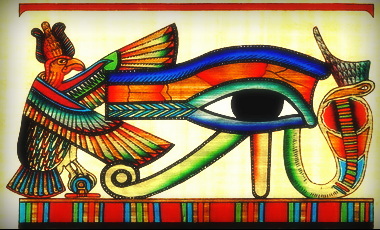
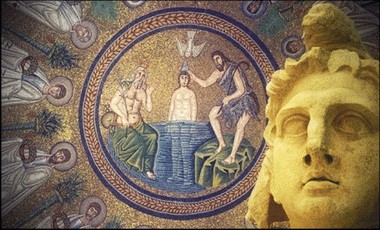
Bill Maher Goes 4-Rounds with Truth and Loses (Horus Edition)

This is the longest refutation of the others I am doing from Bill Maher’s “Religulous.” The Horus myth is a favorite of the se “Jesus Mythers,” and this collection of four refutations are clear in their rebuttal of this narrative. Quite literally a lie.

  • The first refutation came via Inspiring Philosophy’s video, “Jesus vs. Horus” (YOUTUBE)
  • The second refutation is by a long video that refutes the entire “Zeitgeist the Movie” “” It is titled, “Zeitgeist Refuted- Final Cut Full Movie” (YOUTUBE). Unfortunately, like the refutations of Loose Change, these videos are old and a very low resolution being that these were made in the infancy of YouTube and minimal editing tools available at the time.
  • The third video excerpt was taken from something I just grabbed and tweaked for my RUMBLE: “Refuting Zeitgeist, the Movie | Dr. Mark Foreman”
  • The fourth video is via Dr. Craigs YouTube Channel, “Jesus and the Story of Osiris and Horus (William Lane Craig)” (YOUTUBE)


Bill Maher Gets “Religulouse” About Mithra (Oops A Daisy)

The opening is from Bill Maher’s “documentary,” Religulous. This response to the charge of Christianity borrowing from Mithraism is a combination of two video sources:

FIRST: The first refutation comes via Inspiring Philosophy’s video, “Jesus vs. Mithra” (YOUTUBE)
SECOND: Zeitgeist Refuted- Final Cut Full Movie (YOUTUBE)

PURCHASE THE BOOK, it is a must for a Christian scholars library: Amazon | LOGOS

Zeitgeist Refuted by Dr. Mark Foreman (RIP to the Z)

In putting this post together to “house” the above video, I found out the sad news that Mark Foreman passed a couple years back (Liberty University). So, if any of his family or friends come across this video description, know that his work has lasted and affected the apologetic discourse and response for years to come. I look forward to meeting him in the “great-by-n-by.” This is from the book, “Come Let Us Reason: New Essays in Christian Apologetics” (AMAZON)

See my, Is Jesus a Copycat Savior?“, for more.


Chapter 11

CHALLENGING THE ZEITGEIST MOVIE

Parallelomania on Steroids

Mark W. Foreman


A few semesters back, a student approached me after class and wanted to know whether he could meet with me. He was having some doubts about his faith because of a movie he had seen on the Internet called Zeitgeist (pronounced “tzaiyt-gaiyst“). He shared with me how this movie had made claims that Christianity was a total fiction—that it was completely made up from a combination of other religious claims—and that all world religions were just different expressions of sun worship. He blurted out, “They really backed up their claims with all sorts of evidence, Dr. Foreman. I don’t know what to believe anymore. Is it true? Is all this stuff I was taught in church just a big hoax?” I had not seen the film at the time, but I had heard there was something out there on the web and decided to investigate it. What I found was a very polished film that might come across to the uninformed at first glance as well argued but actually was full of fallacious arguments and false claims. In fact, they weren’t even new bad arguments. Some of them go back to the late nineteenth century.

In this essay, I want to briefly examine some of the arguments and claims of Zeitgeist. My purpose will be to show that these arguments are replete with poor reasoning and that the argument that Christianity is just a rehash of old pagan myths does not hold up under close scrutiny.

The Zeitgeist Movie

Zeitgeist (a German word meaning “spirit of the age”) was produced and written by Peter Joseph and was released online in June of 2007. The film is a two-hour documentary conspiracy theory that attempts to show a connection among three supposed frauds: Christianity, the terrorist attacks of 9/11, and the domination of world events by international bankers. The film is made up of three parts, each part dedicated to one of these three supposed frauds. For purposes of this essay, we will only discuss the claims from part 1 about Christianity.

This first portion of the film is divided into two main arguments: (1) Christianity is a myth based on teachings from earlier pagan myths; (2) all these myths, including Christianity, are in essence astrologically based—a view called “astrotheology.” Because of space constraints, I shall examine only the first argument. The basic thesis of this argument is well stated in The Companion Guide to Zeitgeist: Part 1. The book was written by Acharya S, the periodic pen name of Dorothy M. Murdock, who was a primary consultant for the film and whose book, The Christ Conspiracy: The Greatest Story Ever Sold, was one of the main sources for many of the claims in the film. She writes:

Indeed, it is my contention and that of others deemed “Jesus mythicists” that the creators of the gospel tale picked various themes and motifs from the pre-Christian religions and myths, including and especially the Egyptian, and wove them together, using also the Jewish scriptures, to produce a unique version of the “mythos and ritual.” In other words, the creators of the Christ myth did not simply take an already formed story, scratch out the name Osiris or Horus and replace it with Jesus. They chose their motifs carefully, out of the most popular religious symbols, myths and rituals, making sure they fit to some degree with the Jewish “messianic scriptures” as they are termed, and created a new story that hundreds of millions since have been led to believe really and truly took place in history. . . . In other words, we are convinced that “Jesus Christ” is a fictional character created out of older myths, rituals and symbols.1

The idea that the early church of the first century borrowed its beliefs from other pagan religions is often referred to as the copycat theory. The main tactic employed in supporting this claim is to cite parallels between the pagan religions and Christianity. Here is an example from the film:

Broadly speaking, the story of Horus is as follows: Horus was born on December 25th of the virgin Isis-Meri. His birth was accompanied by  a star in the east, which in turn, three kings followed to locate and adorn the new-born savior. At the age of 12, he was a prodigal child teacher, and at the age of 30 he was baptized by a figure known as Anup and thus began his ministry. Horus had 12 disciples he traveled about with, performing miracles such as healing the sick and walking on water. Horus was known by many gestural names such as The Truth, The Light, God’s Anointed Son, The Good Shepherd, The Lamb of God, and many others. After being betrayed by Typhon, Horus was crucified, buried for 3 days, and thus, resurrected.

These attributes of Horus, whether original or not, seem to permeate in many cultures of the world, for many other gods are found to have the same general mythological structure.

Attis, of Phrygia, born of the virgin Nana on December 25th, crucified, placed in a tomb and after 3 days, was resurrected.

Krishna, of India, born of the virgin Devaki with a star in the east signaling his coming, performed miracles with his disciples, and upon his death was resurrected.

Dionysus of Greece, born of a virgin on December 25th, was a traveling teacher who performed miracles such as turning water into wine, he was referred to as the “King of Kings,” “God’s Only Begotten Son,” “The Alpha and Omega,” and many others, and upon his death, he was resurrected.

Mithra, of Persia, born of a virgin on December 25th, he had 12 disciples and performed miracles, and upon his death was buried for 3 days and thus resurrected, he was also referred to as “The Truth,” “The Light,” and many others. Interestingly, the sacred day of worship of Mithra was Sunday.2

This tactic of citing parallels is not new. In fact, in a 1962 article in the Journal of Biblical Literature, Samuel Sandmel referred to such sloppy scholarship as “parallelomania,” which he defined as “that extravagance among scholars which first overdoes the supposed similarity in passages and then proceeds to describe source and derivation as if implying literary connection flowing in an inevitable or predetermined direction.”3 Zeitgeist is parallelomania on steroids.

In addressing the copycat charge, I do not intend to examine every parallel being claimed, though I will comment on some of them.4 Instead, my approach is to look at the overall method used in making the arguments in the film and by other supporters of the copycat theory. I will argue that these arguments are baseless, and poorly argued, and most of them are rejected by all but a tiny percentage of scholars in the field.

Assessing the Copycat Theory

Before examining the specific fallacies involved in the copycat theory, I need to make some general comments. First, while the ideas portrayed in Zeitgeist may be new to many viewers, the basic charge is an old one. The copycat theory emerged in the mid-nineteenth century and was popularized mostly through James Frazer’s The Golden Bough (1890). It continued until the early twentieth century, when its methods and conclusions were rejected by critical scholars.5 In fact, the vast majority of sources cited in the online Zeitgeist transcript to support its claims come either from these late-nineteenth- and early-twentieth-century authors or from more recent writings that depend heavily on these sources.6 While the copycat theory is largely ignored by critical scholars, the movement has gained some new momentum more recently, in part owing to films such as this.7 While the view is regaining popularity, however, no new evidence has been presented in its support. The same old sources are just being dusted off and repackaged as slickly produced films like Zeitgeist. Arguments don’t stop being bad simply because of their upgraded, flashy attire.

Another point to note is that certain similarities between pagan religions and Christianity are inevitable. The simple fact that we categorize them under the same term—”religion”—means that they will have some things in common. Many religions believe in and worship a godlike figure, have rites and ceremonies that express this belief, and deal with the universal struggles of the human condition. These are often conveyed in a shared language and analogous symbols.8 Ronald Nash comments, “After all, religious rituals can assume only a limited number of forms, and they naturally relate to important or common aspects of human life. Alleged similarities might reflect only common features of a time or culture, rather than genetic dependence.”9 Similarity, we see, does not imply dependence. In order to better understand this, we need to make “a clear distinction between dependence in the genetic sense and the dependence of ‘adaptation.'”10 A “genetic” dependence is one where we can trace an idea or belief back to an original earlier source. A dependence of “adaptation” occurs when one borrows words, symbols, or concepts to convey an idea or belief, the substance of which does not originate in another religion. For example, the apostle Paul adapts the Athenians’ belief in an unknown God in the speech on Mars Hill to talk about the Christian God. The church father Clement of Rome (d. AD 110) does the same thing when he says, “Come, I shall show you the Logos, and the mysteries of the Logos, and I shall explain them to you in images that are known to you.”11 The adaptation sense of dependence is still used today by Christian missionaries to communicate the gospel message in foreign cultures.

Is there any evidence of genetic dependence of Christian beliefs on pagan religions? Yes and no. There is strong evidence that the pagan religions did have some influence over certain beliefs and practices of the Christian church. However, as biblical scholar Bruce Metzger comments, “A distinction must be made between the faith and practice of the earliest Christians and that of the Church during subsequent centuries. One cannot deny that post-Constantinian Christianity [fourth and fifth centuries AD], both Eastern and Western, adopted not a few pagan rites and practices.”12 For example, mystery religions may well have influenced the selection of December 25 as the celebration of the birth of Christ, but this date was not widely observed until the fourth century.13 We do not deny such late influences. What is missing, though, is evidence to suggest that any pagan religion influenced basic Christian teaching or the Gospel accounts of Jesus written in the first century. There are two reasons for this. First, there is no evidence of pagan mystery religions existing in Palestine in the first century.14 Second, Judaism was an extremely exclusive monotheistic religion and would not have tolerated the syncretism of the mystery religions. Christianity was even more exclusivistic and has often been referred to as the “anti-mystery” religion.15

A third point has to do with the overall fallacy behind these arguments: post hoc, ergo propter hoc—a form of the fallacy of the false cause. It is committed when a causal connection is drawn between two events or ideas without adequate evidence of such a connection. While Zeitgeist is full of individual examples of post hoc fallacies,16 my point is that the entire argument based on parallels is one flagrant post hoc fallacy. For even if it is true that these parallels between pagan religions and Christianity exist, that fact alone does not constitute evidence that Christianity was influenced or based on these pagan mystery religions. While one might speculate and assert a causal connection, speculation and assertion are not evidence of a causal connection between the two.17 Correlation does not entail causation.

Finally, Zeitgeist makes clear that its producers believe the entire story of Jesus is fictional: “Once the evidence is weighed, there are very high odds that the figure known as Jesus, did not even exist. . . . The reality is, Jesus was the Solar Deity of the Gnostic Christian sect, and like all other Pagan gods, he was a mythical figure.”18 The nonexistence of Jesus is essential to the theory behind the Zeitgeist movie, for it wants to argue that every major aspect in the life of Jesus—his birth, teachings, baptism, followers, miracles, crucifixion, and resurrection—is based not on real historical events but on previous pagan religious myths that were around long before the time of Jesus. Before one can reasonably make that case, however, one must address something more basic: There are a massive number of New Testament critical historical scholars, holding a wide range of theological perspectives, still confidently affirming the historicity of Jesus. The film simply ignores this scholarship. It is outside the scope of this article to present such evidence, but it can be categorically stated that, while there are certainly widely divergent views concerning certain specific events in the life of Jesus, the vast majority of critical scholars acknowledge the existence of the historical Jesus and most of the major aspects of His life in some form.19 The historical evidence for Jesus is a major argument against the whole theory behind Zeitgeist.20

Zeitgeist Fallacies

Space constraints preclude a discussion of all but a few of the many specific fallacies Zeitgeist commits. One of the most blatant is the terminology fallacy. That is, events in the lives of the mythical gods, for example, are expressed using Christian terminology in order subtly to manipulate viewers into accepting that the same events in the life of Jesus also happened in the lives of mythical gods. We are told, for instance, that Horus, Krishna, Dionysius, and others were “baptized,” “born of a virgin,” “crucified,” and “resurrected”—just to mention a few. Examples of such locutions, however, involve assertions with no evidence, are ripped out of their Christian context, or are obtained from post-first-century sources. Nash observes: “One frequently encounters scholars who first use Christian terminology to describe pagan beliefs and practices and then marvel at the awesome parallels that they think they have discovered.”21 A few examples will suffice.

It is claimed that Horus was “born of the virgin Isis-Meri.”22 In the most common version of the Osiris-Isis-Horus myth, Osiris has been murdered by Set and cut into 14 pieces. Isis, his wife (so we can assume she is not a virgin), retrieves all but one of the pieces and reconstructs Osiris. She cannot find the fourteenth piece (his sexual organ); so she fashions one out of wood and then has sexual relations with him. She later gives birth to Horus. Here are other alleged “virgin births.” Attis is conceived when Zeus spilled his seed on the side of a mountain which eventually became a pomegranate tree. Nana, mother of Attis, is sitting under the tree when a pomegranate falls in her lap and she becomes pregnant with the child of Zeus. Devaki, the mother of Krishna, had seven children before Krishna.23 Dionysius’s mother, Semele, was impregnated by Zeus. In fact, none of the mythical gods experienced a “virginal” conception even close to the manner that Scripture claims of Jesus.24

What of the claim that these figures were “crucified”? Krishna was shot in the foot with an arrow and died from his wounds. Attis castrated himself in a jealous rage, fled into the wilderness, and died. Depending on which version of the myth one reads, Horus either (1) did not die, (2) was merely stung by a scorpion, or (3) his death is conflated with the death of Osiris.25 Adonis was gored by a wild boar. Yet, Acharya S justifies the use of the term “crucify” to describe the death of Horus as follows:

When it is asserted that Horus (or Osiris) was “crucified” it should be kept in mind that it was not part of the Horus/Osiris myth that the murdered god was held down and nailed on a cross, as we perceive the meaning of “crucified” to be, based on the drama we believe allegedly took place during Christ’s purported passion. Rather in one myth Osiris is torn to pieces before being raised from the dead, while Horus is stung by a scorpion prior to his resurrection. However, Egyptian deities, including Horus, were depicted in cruciform with arms extended or outstretched, as in various images that are comparable to crucifixes.26

So, according to Murdock, anytime deities are depicted with arms outstretched, we are justified in claiming they were crucified.

A final example is the claim that all of these gods were “resurrected” from the dead. While the idea that the resurrection of Jesus was borrowed from the “dying and rising gods” of the pagan mystery religions was very popular at one time, almost all scholars have abandoned this view today. Jonathan Z. Smith writes:

All of the deities that have been identified as belonging to the class of dying and rising deities can be subsumed under the two larger classes of disappearing deities or dying deities. In the first case, the deities return but have not died; in the second case, the gods die but do not return. There is no unambiguous instance in the history of religions of a dying and rising deity.27

The best known example of a resurrection claim is the Horus/Osiris myth, but Osiris did not rise from the dead and return to this world as did Jesus.

Instead, he was made king of the underworld.28 After his death, Attis eventually turns into a pine tree. Many sources claiming resurrections were written long after the first-century sources for Christianity and therefore could not have influenced the Gospel accounts or Paul’s teaching in letters such as 1 Corinthians. A second-century source tells us of the resurrection of Adonis. Claims of Krishna’s resurrection do not emerge until the sixth or seventh century.29 Older tradition holds he simply entered the spirit world where he is always present. This is not a resurrection in the manner in which the Gospels claim Jesus rose from the dead.

A second fallacy is the nonbiblical fallacy. This is where a parallel is claimed about some aspect of Jesus that is not even reported in the Gospel accounts. One example is where Zeitgeist claims a parallel between the three stars in the belt of Orion called the “three kings” and the three kings who visited the baby Jesus. The problem is that the Gospels never call them kings and never state how many there are.30 Another example, mentioned above, is the oft-claimed parallel of the birth date of all these deities, December 25, with the birth date of Christ.

A third fallacy is the chronological fallacy. In order for the copycat charge of borrowing to succeed, one needs to provide evidence that the parallel preceded the writing of the Gospel accounts and the letters of Paul— all written in the first century. However, this simply is not the case. First, as mentioned above, there is no evidence that there was any pagan mystery influence in first-century Palestine.31 Second, the mystery religions evolved over time, and as they did, their beliefs and narratives changed. This results in several versions of the various pagan myths. Most of the evidence we have of their narratives comes from sources dated in the second and third centuries, a time when they were experiencing the peak of their influence in the Mediterranean world. We have little evidence of the beliefs of these religions from the first century. Nash comments:

Far too many writers on the subject use the available sources to form the plausible reconstructions of the third-century mystery experience and then uncritically reason back to what they think must have been the earlier nature of the cults. We have plenty of information about the mystery religions of the third century. But important differences exist between these religions and earlier expressions of the mystery experience (for which adequate information is extremely slim).32

A fourth fallacy closely connected with this last one is the source fallacy. One of the comments often made in praise of Zeitgeist is how well the claims are documented. It is true that, in the transcript of the movie, many of the claims are documented; some by multiple sources. The brief section quoted above has 44 citations from 11 different sources to support its claims. At first glance this may seem impressive. As scholars will insist, however, it is not the number of sources that matter but their quality—and the quality of these sources is highly questionable. Not one of them is a primary source of the religion under discussion. They are all secondary, and most of them are the older, discredited sources that have been abandoned by most critical scholars. These sources often make undocumented assertions, speculate on causal relationships, and offer selective interpretations of some texts (of which there is much unrevealed disagreement). Often the authors are not experts in the field of religion, or they are experts in a related field (such as Egyptology), neither of which is a qualification over which to drape a cloak of scholarship. What inevitably results is rabid and unprincipled speculation on the origin of Christianity.

One reason why primary sources are not relevant is that they are not as conclusive as copycat theorists would lead one to believe. Because these ancient religions evolved over time, often no one authoritative story exists to which one may appeal. For example, the story of Horus in Zeitgeist is pieced together from a number of sources, some of which conflict. It is like playing “connect the dots,” but interpreting how to connect those dots is a slippery, unscholarly enterprise. These writers seem to use the life of Jesus as a guide for how to connect the dots for the life of Horus and then proclaim that the story of Jesus is based on Horus—when actually it is the other way around! Other religions don’t fare much better. For example, there is no text for Mithraism; everything we know about the religion comes either from interpreting reliefs and statues or from brief comments by other ancient writers, almost all of whom are post-first century. Metzger comments, “It goes without saying that alleged parallels which are discovered by pursuing such methodology evaporate when they are confronted with the original texts. In a word, one must beware of what have been called ‘parallels made plausible by selective description.'”33

The final fallacy to mention is the difference fallacy, which is committed by an overemphasis on (supposed) similarities between two things while ignoring the vast and relevant differences between them. Again, Metzger observes, “In arriving at a just estimate of the relation of the Mysteries to Christianity as reflected in the New Testament, attention must be given to their differences as well as resemblances.”34 The differences between Christianity and the pagan religions are enormous, and yet Zeitgeist ignores them.

Here are a few examples. First, whereas all of the mystery religions are tied into the vegetative cycle of birth-death-rebirth and continue to follow this cycle year after year ad infinitum, Christianity is linear, viewing all of history as headed on a trajectory culminating in God’s transforming this world into a renewed creation—the new heaven and new earth. Second, mystery religions are secretive. One has to go through secret initiation rites to become a member. They are full of secret knowledge, available only to some, which is one reason we don’t know a lot about them. By contrast, Christianity is open to all to scrutinize and to embrace. It is a “mystery of revelation.”35 Third, doctrine and beliefs are totally unimportant in pagan mystery religions. In fact, a characteristic hallmark is their syncretism: you can hold almost any belief and still become a member of their religion. They emphasize feeling and experience over doctrine and belief.36 In diametric contrast, doctrine and beliefs are the heart and soul of Christianity, which is highly exclusivistic. That is one of the major reasons Christians were so persecuted in the Roman Empire. They held that there was only one way to God. Fourth, the pagan mystery religions are almost completely void of almost any ethical element. Rahner comments:

At no stage [of their development] do the mysteries bear comparison with the ethical commandments of the new Testaments and their realization in early Christianity. The two terms are truly incommensurable—and this is not the foregone conclusion of apologists but results from an unbiased examination of the sources by scholars who cannot be accused of denominational commitment.37

Fifth, even if one accepts the “dying and rising gods” concept, the meaning of the death of Christ is completely different. Christ died for the sins of mankind; none of the pagan gods died for someone else. Pagan gods died under compulsion, but Jesus died willingly. Jesus died and was raised once; the pagan gods die cyclically. Jesus’ death was not tragic or a defeat; it was a victory. Pagans mourn and lament the death of their gods.38 Finally, and most importantly, the view of the church from the very beginning is that Jesus was a real person who lived in history. His death and resurrection were actual events of history. Metzger states, “Unlike the deities of the Mysteries, who were nebulous figures of an imaginary past, the Divine being whom the Christian worshipped as Lord was known as a real Person on earth only a short time before the earliest documents of the New Testament were written.”39 It is the historicity of Jesus’ life, death, and resurrection that makes Christianity the true anti-mystery.

Conclusion

Imagine we are 2,000 years in the future. Through some sort of cataclysmic event only a handful of documents of the history of the United States are available, and these are just fragments. After sifting through these fragments, a small group of historical enthusiasts come to a radical conclusion: The myth of President John F. Kennedy is based on the earlier myth of Abraham Lincoln. Their reason for such a conclusion: “Just look at all the parallels!”

  • Lincoln was elected to Congress in 1846; Kennedy was elected to Congress in 1946.
  • Lincoln was elected president in 1860; Kennedy was elected President in 1960.
  • “Lincoln” and “Kennedy” each have seven letters in their names.
  • Lincoln had a secretary named Kennedy; Kennedy had a secretary named Lincoln.40
  • Both married, in their thirties, a 24-year-old socially prominent girl who could speak fluent French.
  • Both presidents dealt with civil rights movements for African Americans.
  • Both presidents were assassinated on a Friday, in the back of the head, before a major holiday, while sitting next to their wives.
  • Both their assassins were known by three names consisting of 15 letters (John Wilkes Booth, Lee Harvey Oswald).
  • Oswald shot Kennedy from a warehouse and was captured in a theater; Booth shot Lincoln in a theater and was captured in a warehouse.41
  • Both assassins were shot and killed with a Colt revolver days after they assassinated the president and before they could be brought to trial.
  • Both presidents were succeeded by vice presidents named Johnson, from the South, born in 1808 and 1908 respectively.42

This example shows that insignificant, spurious, false, and misleading parallels can be used to argue just about anything.

When one considers the fallacies that permeate the “parallelomania” of Zeitgeist, one is left agreeing with Rahner: “It is and remains a riddle how in the period of unrestricted ‘comparative religion’ scholars should even have ventured a comparison, not to speak of trying to derive the basic doctrines of Christ from the mystery religions.”43 But it is Adolf von Harnack, writing in 1911, who deserves the last word here:

We must reject the comparative mythology which finds a causal connection between everything and everything else, which tears down solid barriers, bridges chasms as though it were child’s play, and spins combinations from superficial similarities. . . . By such methods one can turn Christ into a sun god in the twinkling of an eye, or transform the Apostles into the twelve months; in connection with Christ’s nativity one can bring up the legends attending the birth of every conceivable god or one can catch all sorts of mythological doves to keep company with the baptismal dove; and find any number of celebrated asses to follow the ass on which Jesus rode into Jerusalem; and thus with the magic wand of “comparative religion,” triumphantly eliminate every spontaneous trait in any religion.44

FOOTNOTES

1 Acharya S, The Companion to Zeitgeist: Part 1 (Seattle, WA: Stellar House Publishing, 2009), 8 (emphasis hers).

2 Peter Joseph, Zeitgeist : The Movie. Online Transcript (2007). Accessed Sept. 23, 2011, http://en.wikiversity.org/wiki/Zeitgeist_the_movie/Transcript.

3 Samuel Sandmel, “Parallelomania,” Journal of Biblical Literature 81 (1962): 1. Sandmel admits that he did not originate the term “parallelomania” but does not remember where he first came across it.

4 Unfortunately, space does not allow me to do more than offer a short overview of the main problems of the copycat theory. I encourage the reader to seek out the sources cited in this article (especially Rahner, Metzger, Nash, and Komoszewski et al.) for a more thorough treatment.

5 The Religionsgeschichtliche Schule, or history of religions school, coming out of Germany, was one of the instigators of this line of thinking, but was abandoned by the early 1930s because of its radical methodology and approach. See Kurt Rudolph, “Religionsgeschichtliche Schule,” The Encyclopedia of Religion, ed. Mircea Eliade (New York: Macmillan, 1987), 12:293–96.

6 Forty percent of the citations offered come from only three sources: Gerald Massey, a nineteenth-century amateur Egyptologist, author of The Historical Jesus and the Mythical Christ (1886); Thomas Doane, Bible Myths and Their Parallels in Other Religions (1882); and James Frazer, The Golden Bough (1890). My argument is not that age makes a work necessarily inferior. It is simply to point out that this is an old theory that has been abandoned by all but a tiny handful of scholars, a fact of which viewers of the film are likely to be unaware.

7 One writer suggests that much of the resurgence is because of a “ready access to unfiltered information via the internet and the influential power of this medium. The result is junk food for the mind—a pseudointellectual meal that is as easy to swallow as it is devoid of substance.” J. Ed Komoszewski, M. James Sawyer, and Daniel B. Wallace, Reinventing Jesus: How Contemporary Skeptics Miss the Real Jesus and Mislead Popular Culture (Grand Rapids: Kregel, 2006), 221–22.

8 Hugo Rahner writes, “A vast number of ideas, words, rites, which formerly were designated offhand as ‘borrowings’ of Christianity from the mysteries, grew to life in the early church from a root that has indeed no bearing on a historical-genetic dependence, but that did spring from the universal depths of man, from the psychological nature common to heathen and Christian alike—’from below,’ as we have said. Every religion forms sensory images of spiritual truths: we call them symbols.” Hugo Rahner, “The Christian Mystery and the Pagan Mysteries,” in Pagan and Christian Mysteries: Papers from the Eranos Yearbooks, ed. Joseph Campbell (New York: Harper Torchbooks, 1955), 171–72.

9 Ronald H. Nash, The Gospel and the Greeks: Did the New Testament Borrow from Pagan Thought? (Phillipsburg, NJ: P&R Publishing, 2003), 140.

10 Rahner, “Christian Mystery,” 152; Nash, Gospel, 8–9; and Komoszewski, et al., Reinventing Jesus, 227–28, refer to this distinction as strong (genetic) and weak (adaptation) dependence.

11 Clement, Protrepticus 12.119.1, cited in Rahner, “Christian Mystery,”146. Much has been made about Justin Martyr’s defense of the virgin birth of Jesus by referencing the belief in the virgin birth of Perseus. However, the “adaptation” concept of dependence accounts for what Justin is doing here. He is not affirming Perseus’s virgin birth but just using this widespread belief to communicate his message.

12 Bruce M. Metzger, “Methodology in the Study of the Mystery Religions and Early Christianity,” Historical and Literary Studies: Pagan, Jewish, and Christian (Grand Rapids: Eerdmans, 1968), 4. Every student interested in this topic should read Metzger’s and Rahner’s essays.

13 Zeitgeist makes the point of claiming that all of the pagan gods were born on December 25. Of course, this is moot when it comes to Jesus, as the New Testament makes no mention of the date of his birth. Acharya S is aware of this response and states:

“Nevertheless it has been argued that this comparison is erroneous because Jesus Christ was not born on December 25th, an assertion in itself that would come as a surprise to many, since up until just a few years ago only a miniscule percentage of people knew such a fact. In any event, this argument constitutes a logical fallacy, because over the centuries since the holiday was implemented by Christian authorities, hundreds of millions of people have celebrated Jesus’ birthday on December 25th, or Christmas, so named after Christ. Moreover, hundreds of millions continue to celebrate the 25th of December as the birth of Jesus Christ, completely oblivious to the notion that this date does not represent the ‘real’ birthday of the Jewish son of God” (Acharya S, Companion, 24, emphasis hers).

I am not sure how this strengthens the parallel or where the “logical fallacy” is. Just because Christians have celebrated the birth of Jesus on December 25 has nothing to do with the origin of the belief and, hence, the parallel.

14 According to Metzger, “Unlike other countries bordering the Mediterranean Sea, Palestine has been extremely barren in yielding archaeological remains of the paraphernalia and places of worship connected with Mysteries” (Metzger, “Methodology,” 8). He cites one second-century source that contains a detailed list of places where Isis was worshipped: 67 in Egypt and 55 outside Egypt, only one of which is in Palestine—namely, Strato’s Tower in Caesarea, which was built by the wicked king Herod.

15 “In the matter of intolerance Christianity differed from all pagan religions, and surpassed Judaism; in that respect it stood in direct opposition to the spirit of that age. . . . It frowned upon the hospitality of the competing cults. The rites of pagans were in her eyes performed to devils; pagan worship was founded by demons and maintained in the interest of demons.” Samuel Angus, The Mystery Religions: A Study in the Early Religious Background of Early Christianity (New York: Dover Publications, 1975 [1928]), 279.

16 To offer just one example: “The Virgin Mary is the constellation Virgo, also known as Virgo the Virgin. Virgo in Latin means virgin. The ancient glyph for Virgo is the altered ‘m.’ This is why Mary along with other virgin mothers, such as Adonis’s mother Myrrha or Buddha’s mother Maya, begin [sic] with an M” (Zeitgeist transcript).

The film is suggesting a causal connection between the astrological symbol for the constellation Virgo and the names of the mothers of pagan gods as if the symbol is the cause of the names. However, there is no evidence for such a connection.

17 In the Companion to Zeitgeist: Part 1, Acharya S offers this as an explanation for the parallels:

“In essence, when studying this situation, the scenario that reveals itself is that the creators of the gospel story in large part appear to have been scouring the vast Library of Alexandria in Egypt and elsewhere, such as Antioch and Rome, and picking out various attributes of the pre-Christian religion to be used in their creation of a cohesive Christian mythical tale that was later fallaciously set into history and presented to the gullible masses as a ‘true story'” (Companion, 16).

No evidence is offered for this charge of calculated and intentional deception on the part of the early church, and the inherent implausibility of the stipulated scenario strains the credulity of the most gullible indeed.

18 Zeitgeist transcript.

19 John Dominic Crossan, certainly no conservative scholar, comments on the crucifixion of Jesus: “That he was crucified is sure as anything historical can ever be.” John Dominic Crossan, Jesus: A Revolutionary Biography (San Francisco: HarperCollins), 145.

20 Among the plethora of scholars affirming the historicity of Jesus are N. T. Wright, Jesus and the Victory of God (Minneapolis: Augsburg/Fortress Press, 1997); E. P. Sanders, The Historical Person of Jesus (New York: Penguin, 1996); John P. Meier, A Marginal Jew: Rethinking the Historical Jesus, 4 vols., Anchor Bible Reference Library (New York: Doubleday, 1991–2009); Craig Keener, The Historical Jesus of the Gospels (Grand Rapids: Eerdmans, 2009). This list barely scratches the surface.

21 Nash, Gospel, 116.

22 The term “Isis-Meri” is specifically used to associate Isis with Mary the mother of Jesus. Actually the term “meri” is used of almost all of the gods of Egypt, as Acharya S herself admits: “In reality, the epithet meri/mery [meaning ‘beloved’] was so commonly used in regards to numerous figures in ancient Egypt, such as gods, kings, priests, government officials and others that we could not list here all the instances in which it appears.” So the term has no substantive connection with Isis.

23 I read one online post that claimed: “In the Krishna tale we are not talking about real people but about myths. In the world of mythology, gods and goddesses can have a number of children and still be considered ‘chaste’ and ‘virginal.'” If one can use language so equivocally, I suppose one can claim just about anything.

24 New Testament scholar Raymond Brown comments, “These ‘parallels’ consistently involve a type of hieros gamos where a divine male, in human or other form, impregnates a woman, either through normal sexual intercourse or through some substitute form of penetration. They are not really similar to the non-sexual virginal conception that is at the core of the infancy narratives, a conception where there is no male deity or element to impregnate.” Raymond E. Brown, The Virginal Conception and Bodily Resurrection of Jesus (New York: Paulist Press, 2003), 64.

25 It is common in the development of Egyptian myth to conflate the gods. This is a major way copycats draw many of the parallels with Horus/Osiris.

26 D. M. Murdock, Christ in Egypt: The Jesus-Horus Connection (Seattle: Stellar House, 2009), 335. It is interesting to note that even Murdock states that there are other reasons gods are depicted with arms outstretched: “The god Ptah is the very ancient Father-Creator who in ‘suspending the sky’ resembles other Egyptian deities such as Isis and Horus with arms outstretched in the vault of heaven, as well as the Greek god Atlas supporting the world on his shoulders” (Companion, 32).

27 Jonathan Z. Smith, “Dying and Rising Gods,” in Encyclopedia of Religion, ed. Eliade, 1:522 (emphasis mine). Until recently this view was close to unanimous by critical scholars. In 2001, T. N. D. Mettinger published a monograph titled The Riddle of the Resurrection: Dying and Rising Gods in the Ancient Near East (Stockholm: Almquist & Wiksell International, 2001); in it he argued that there is some evidence of at least three cases of pre-Christian belief in dying and rising gods (none of whom are those highlighted in Zeitgeist). Copycat supporters have made much of Mettinger’s book, but (1) his evidence is largely circumstantial; (2) he is the only scholar who supports the view (a point he concedes); and (3) he does not believe such ancient belief led to the early church’s proclamation of Jesus’ resurrection. He writes, “There is, as far as I am aware, no prima facie evidence that the death and resurrection of Jesus is a mythological construct, drawing on the myths and rites of the dying and rising gods of the surrounding world. While studied with profit against the background of Jewish resurrection belief, the faith in the death and resurrection of Jesus retains its unique character in the history of religions” (Mettinger, Riddle, 221).

28 “Whether this can be rightly called a resurrection is questionable, especially since, according to Plutarch, it was the pious desire of devotees to be buried in the same ground where, according to local tradition, the body of Osiris was still lying” (Metzger, “Methodology,” 21).

29 A number of scholars point to evidence that these late sources may actually have borrowed from Christianity rather than the other way around. Rahner comments, “As modern scholars have become more objective in this field, they have turned with increasing interest to another aspect, namely the possible influence of Christianity on the Greek mysteries” (Rahner, “Christian Mystery,” 176). See also Metzger, “Methodology,” 11; Nash, Gospel, 187; and Komoszewski, et al., Reinventing Jesus, 232–33.

30 In fact, the film states that the three stars have been called the “three kings” from ancient times but offers no ancient text naming them so. It could very well be that they received this nickname from the Christian nonbiblical tradition of the three kings and not the other way around.

31 “There is no evidence whatever, that I know of, that the mystery religions had any influence in Palestine in the early decades of the first century”; Norman Anderson, Christianity and World Religions (Downers Grove, IL: InterVarsity, 1984), 53–54.

32 Nash, Gospel, 116.

33 Metzger, “Methodology,” 9.

34 Ibid., 12.

35 Rahner, “Christian Mystery,” 167.

36 “They are a religion of feeling. They do not address themselves to the perplexed intellect of man, they are no ‘doctrine’ or ‘dogma,’ and the cult legend with its thousands of variations has no bearing upon religious action.” Ibid., 159.

37 Ibid., 169.

38 See Nash, Gospel, 160–61, for a further development of the contrasts.

39 Metzger, “Methodology,” 13. He then quotes Plutarch, “Whenever you hear the traditional tales which the Egyptians tell about the gods, their wanderings, dismemberments, and many experiences of this sort, . . . you must not think any of these tales actually happened in the manner in which they are related” (Plutarch, De Isede at Osiride, trans. Frank Cole Babbitt, Loeb Classical Library [Cambridge, MA: Harvard University Press, 1936], 11).

40 While this is often asserted, there is absolutely no evidence that Lincoln had a secretary named “Kennedy.”

41 Well, not really. Booth was actually captured in a barn. “But it’s kind of a warehouse.”

42 These parallels are available from a number of sources and have become part of our American folklore even though they prove absolutely nothing.

43 Rahner, “Christian Mystery,” 168.

44 Translated by and cited in Rahner, “Christian Mystery,” 153. From Adolf von Harnack, Wissenschaft und Leben (Giessen, Germany: Töplemann, 1911) 2:191.

Is Jesus a Copycat Savior?

(Originally posted December of 2015, Refreshed June of 2022)

OTHER POSTS DEALING WITH THIS IN SOME WAY:

In this inaugural Cold-Case Christianity video broadcast / podcast, J. Warner re-examines an atheist objection related to the historicity of Jesus. Is Jesus merely a copycat of prior mythologies like Mithras, Osiris or Horus? How can we, as Christians, respond to such claims? Jim provides a five point response to this common atheist claim. (For more information, please visit www.ColdCaseChristianity.com)

Here are three segments of a pretty thorough refutation of the “copy-cat messiah” myth many in the gen Y and X generation have been influenced by.

Full Video Response HERE

I wish to point something out.

Very rarely do you find someone who is an honest enough skeptic that after watching the above 3 short videos asks questions like: “Okay, since my suggestion was obviously false, what would be the driving presuppositions/biases behind such a production?” “What are my driving biases/presuppositions that caused me to grab onto such false positions?” You see, few people take the time and do the hard work to compare and contrast ideas and facts. A good example of this is taken from years of discussing various topics with persons of opposing views, I often ask if they have taken the time to “compare and contrast.” Here is my example:


I own and have watched (some of the below are shown in high-school classes):

• Bowling for Columbine
• Roger and Me
• Fahrenheit 9/11
• Wal-Mart: The High Cost of Low Price
• Sicko
• An Inconvenient Truth
• Loose Change
• Zeitgeist
• Religulouse
• The God Who Wasn’t There
• Super-Size Me

But rarely [really never] do I meet someone of the opposite persuasion from me that have watched any of the following (I own and have watched):

• Celsius41.11: The Temperature at Which the Brain Dies
• FahrenHYPE 9/11
• Michael & Me
• Michael Moore Hates America
• Bullshit! Fifth Season… Read More (where they tear apart the Wal-Mart documentary)
• Indoctrinate U
• Mine Your Own Business
• Screw Loose Change
• 3-part response to Zeitgeist
• Fat-Head
• Privileged Planet
• Unlocking the Mystery of Life

Continuing. Another point often overlooked is the impact the person who suggests the believer watch Zeitgeist thinks it will have.

Now that Zeitgeist has been shown to be very unsound and the history distorted, does the skeptic apply the same intended impact back upon him or herself? In other words, what is good for the goose is also good for the gander. Remember, the skeptic expects the Christian to watch this and come face-to-face with truth that undermines his or her’s faith, showing that they have a faith founded on something other than what they previously thought, an untruth. However, this intended outcome backfires and crumbles. The skeptic then has a duty [yes a duty] to apply intended impact onto one’s own biases and presuppositions and start to impose their own skepticism inward.

Christian historian and scholar Gary Habermas debates atheist Tim Callahan on the resurrection of Jesus. Callahan claims the resurrection of Jesus was influenced by pagan and Greek mythology, like Osiris, Dionysus, Adonis, Attis, etc. Of course, Callahan’s views are typical among so many young gullible atheists influenced by Richard Carrier and Robert Price. Habermas rips his claims to shreds in this debate.

A small excerpt from Mary Jo Sharp’s chapter, “Does the Story of Jesus Mimic Pagan Stories,” via, Paul Copan & William Lane Craig, eds.,  Come Let Us Reason: New Essays in Christian Apologetics (pp. 154-160, 164). Mary Jo has a website, CONFIDENT CHRISTIANITY.

OSIRIS

1. Osiris
While some critics of Christ’s story utilize the story of Osiris to demonstrate that the earliest followers of Christ copied it, these critics rarely acknowledge how we know the story of Osiris at all. The only full account of Osiris’s story is from the second-century Al) Greek writer, Plutarch: “Concerning Isis and Osiris.”[4] The other information is found piecemeal in Egyptian and Greek sources, but a basic outline can be found in the Pyramid Texts (c. 2686-c. 2160 BC). This seems problematic when claiming that a story recorded in the second century influenced the New Testament accounts, which were written in the first century. Two other important aspects to mention are the evolving nature of the Osirian myth and the sexual nature of the worship of Osiris as noted by Plutarch. Notice how just a couple of details from the full story profoundly strain the comparison of Osiris with the life of Christ.

Who was Osiris? He was one of five offspring born of an adulterous affair between two gods—Nut, the sky-goddess, and Geb earth-god.[5] Because of Nut’s transgression, the Sun curses her and will not allow her to give birth on any day in any month. However, the god Thoth[6] also loves Nut. He secures five more days from the Moon to add to the Egyptian calendar specifically for Nut to give birth. While  inside his mother’s womb, Osiris falls in love with his sister, Isis. The two have intercourse inside the womb of Nut, and the resultant child is Horus.[7] Nut gives birth to all five offspring: Osiris, Horus, Set, Isis, and Nephthys.

Sometime after his birth, Osiris mistakes Nephthys, the wife of hisbrother Set, for his own wife and has intercourse with her. Enraged, Set plots to murder Osiris at a celebration for the gods. During the festivi­ties, Set procures a beautiful, sweet-smelling sarcophagus, promising it as a gift to the attendee whom it might fit. Of course, this is Osiris. Once Osiris lies down in the sarcophagus, Set solders it shut and then heaves it into the Nile. There are at least two versions of Osiris’s fate: (a) he suffocates in the sarcophagus as it floats down the Nile, and (b) he drowns in the sarcophagus after it is thrown into the Nile.

Grief-stricken Isis searches for and eventually recovers Osiris’s corpse. While traveling in a barge down the Nile, Isis conceives a child by cop­ulating with the dead body.[8] Upon returning to Egypt, Isis attempts to conceal the corpse from Set but fails. Still furious, Set dismembers his brother’s carcass into 14 pieces, which he then scatters throughout Egypt. A temple was supposedly erected at each location where a piece of Osiris was found.

Isis retrieves all but one of the pieces, his phallus. The body is mum­mified with a model made of the missing phallus. In Plutarch’s account of this part of the story, he noted that the Egyptians “presently hold a festival” in honor of this sexual organ.[9] Following magical incantations, Osiris is raised in the netherworld to reign as king of the dead in the land of the dead. In The Riddle of Resurrection: Dying and Rising Gods in the Ancient Near East, T. N. D. Mettinger states: “He both died and rose. But, and this is most important, he rose to continued life in the Netherworld, and the general connotations are that he was a god of the dead.”[10] Mettinger quotes Egyptologist Henri Frankfort:

Osiris, in fact, was not a dying god at all but a dead god. He never returned among the living; he was not liberated from the world of the dead, on the contrary, Osiris altogether belonged to the world of the dead; it was from there that he bestowed his blessings upon Egypt. He was always depicted as a mummy, a dead king.[11]

This presents a very different picture from the resurrection of Jesus, which was reported as a return to physical life.

HORUS

2. Horus
Horus’s story is a bit difficult to decipher for two main reasons. Generally, his story lacks the amount of information for other gods, such as Osiris. Also, there are two stories concerning Horus that develop and then merge throughout Egyptian history: Horus the Sun-god, and Horus the child of Isis and Osiris. The major texts for Horus’s story are the Pyramid Texts, Coffin Texts, the Book of the Dead, Plutarch, and Apuleius-all of which reflect the story of Horus as the child of Isis and Osiris.[12] The story is routinely found wherever the story of Osiris is found.

Who was Horus? He was the child of Isis and Osiris. His birth has several explanations as mentioned in Isis and Osiris’s story: (1) the result of the intercourse between Isis and Osiris in Nut’s womb; (2) conceived by Isis’s sexual intercourse with Osiris’s dead body; (3) Isis is impregnated by Osiris after his death and after the loss of his phallus; or (4) Isis is impregnated by a flash of lightning.[13] To protect Horus from his uncle’s rage against his father, Isis hides the child in the Delta swamps. While he is hiding, a scorpion stings him, and Isis returns to find his body lifeless. (In Margaret Murray’s account in The Splendor That Was Egypt, there is no death story here, but simply a poisoned child.) Isis prays to the god Ra to restore her son. Ra sends Thoth, another Egyptian god, to impart magical spells to Isis for the removal of the poison. Thus, Isis restores Horus to life. The lesson for worshippers of Isis is that prayers made to her will protect their children from harm and illness. Notice the outworking of this story is certainly not a hope for resurrection to new life, in which death is vanquished forever as is held by followers of Jesus.[14] Despite this strain on the argument, some still insist that Horus’s scorpion poisoning is akin to the death and resurrection of Jesus.

In a variation of Horus’s story, he matures into adulthood at an accel­erated rate and sets out to avenge his father’s death. In an epic battle with his uncle Set, Horus loses his left eye, and his uncle suffers the loss of one part of his genitalia. The sacrifice of Horus’s eye, when given as an offering before the mummified Osiris, is what brings Osiris new life in the underworld.[15] Horus’s duties included arranging the burial rites of his dead father, avenging Osiris’s death, offering sacrifice as the Royal Sacrificer, and introducing recently deceased persons to Osiris in the netherworld as depicted in the Hunefer Papyrus (1317-1301 BC). One aspect of Horus’s duties as avenger was to strike down the foes of Osiris. This was ritualized through human sacrifice in the first dynasty, and then, eventually, animal sacrifice by the eighteenth dynasty. In the Book of the Dead we read of Osiris, “Behold this god, great of slaughter, great of fear! He washes in your blood, he bathes in your gore!”[16] So Horus, in the role of Royal Sacrificer, bought his own life from this Osiris by sacrificing the life of other. There is no similarity here to the sacrificial death of Jesus.

MITHRA
(MORE BELOW – JUMP)

3. Mithras
There are no substantive accounts of Mithras’s story, but rather a pieced-together story from inscriptions, depictions, and surviving Mithraea (man-made caverns of worship). According to Rodney Stark, professor of social sciences at Baylor University, an immense amount of “nonsense” has been inspired by modern writers seeking to “decode the Mithraic mysteries.”[17] The reality is we know very little about the mystery of Mithras or its doctrines because of the secrecy of the cult initiates. Another problematic aspect is the attempt to trace the Roman military god, Mithras, back to the earlier Persian god, Mithra, and to the even earlier Indo-Iranian god, Mitra. While it is plausible that the latest form of Mithraic worship was based on antecedent Indo-Iranian traditions, the mystery religion that is compared to the story of Christ was a “genuinely new creation?”[18] Currently, some popular authors utilize the Roman god’s story from around the second century along with the Iranian god’s dates of appearance (c. 1500-1400 BC).

This is the sort of poor scholarship employed in popular renditions of Mithras, such as in Zeitgeist: The Movie. For the purpose of summary, we will utilize the basic aspects of the myth as found in Franz Cumont’s writing and note variations, keeping in mind that many Mithraic schol­ars question Cumont, as well as one another, as to interpretations and aspects of the story.[19] Thus, we will begin with Cumont’s outline.

Who was Mithra? He was born of a “generative rock,” next to a river bank, under the shade of a sacred tree. He emerged holding a dagger in one hand and a torch in the other to illumine the depths from which he came. In one variation of his story, after Mithra’s emergence from the rock, he clothed himself in fig leaves and then began to test his strength by subjugating the previously existent creatures of the world. Mithra’s first activity was to battle the Sun, whom he eventually befriended. His next activity was to battle the first living creature, a bull created by Ormazd (Ahura Mazda). Mithra slew the bull, and from its body, spine, and blood came all useful herbs and plants. The seed of the bull, gathered by the Moon, produced all the useful animals. It is through this first sacrifice of the first bull that beneficent life came into being, including human life. According to some traditions, this slaying took place in a cave, which allegedly explains the cave-like Mithraea.[20]

Mit(h)ra’s name meant “contract” or “compact.”[21] He was known in the Avesta—the Zoroastrian sacred texts—as the god with a hundred ears and a hundred eyes who sees, hears, and knows all. Mit(h)ra upheld agreements and defended truth. He was often invoked in solemn oaths that pledged the fulfillment of contracts and which promised his wrath should a person commit perjury. In the Zoroastrian tradition, Mithra was one of many minor deities (yazatas) created by Ahura Mazda, the supreme deity. He was the being who existed between the good Ahura Mazda and the evil Angra Mainyu—the being who exists between light and darkness and mediates between the two. Though he was considered a lesser deity to Ahura Mazda, he was still the “most potent and most glorious of the yazata.”[22]

The Roman version of this deity (Mithras) identified him with the light and sun. However, the god was not depicted as one with the sun, rather as sitting next to the sun in the communal meal. Again, Mithras was seen as a friend of the sun. This is important to note, as a later Roman inscription (c. AD 376) touted him as “Father of Fathers” and “the Invincible Sun God Mithras.”[23] Mithras was proclaimed as invin­cible because he never died and because he was completely victorious in all his battles. These aspects made him an attractive god for soldiers of the Roman army, who were his chief followers. Pockets of archaeologi­cal evidence from the outermost parts of the Roman Empire reinforce this assumption. Obviously, some problems arise in comparing Mithras to Christ, even at this level of simply comparing stories. Mithras lacks a death and therefore also lacks a resurrection.

Now that we have a more comprehensive view of the stories, it is quite easy to discern the vast difference between the story of Jesus and even the basic story lines of the commonly compared pagan mystery gods. One must only use the very limited, general aspects of the stories to make the accusation of borrowing, while ignoring the numerous aspects having nothing in common with Jesus’ story, such as missing body parts, sibling sexual intercourse inside the womb of a goddess-mother, and being born from a rock. This is why it is important to get the whole story. The sup­posed similarities are quite flimsy in the fuller context.

Just three excerpts from Edwin Yamauchi’s book, Persia and the Bible, These three pics are a bit unrelated… but the topic is on Mithras and their dating of the reliefs known to us. If you take the time to read Dr. Yamauchi’s chapter linked, you can see the connection to the above portion by Mary Jo. (The entire chapter on MITHRAISM can be read HERE.)


FOOTNOTES FROM BOXES “A” “B” “C”

[4] Plutarch, “Concerning Isis and Osiris,” in Hellenistic Religions: The Age of Syncretism, ed. Frederick C. Grant (Indianapolis: Liberal Arts Press, 1953), 80-95.

[5] In some depictions, Nut and Geb are married. Plutarch’s account insinuates that they have committed adultery because of the anger of the Sun at Nut’s transgression.

[6] Plutarch refers to Thoth as Hermes in “Concerning Isis and Osiris.”

[7] Plutarch’s “Concerning Isis and Osiris” appears to be the only account with this story of Horus’s birth.

[8] This aspect of the story, which was a variation of Horus’s conception story, is depicted in a drawing from the Osiris temple in Dendara.

[9] Plutarch, “Concerning Isis and Osiris,” 87.

[10] N. D. Mettinger, The Riddle of Resurrection: Dying and Rising Gods in the Ancient Near East (Stockholm: Almqvist & Wiksell, 2001), 175.

[11] Henri Frankfort, Kingship and the Gods: A Study of Ancient Near Eastern Religion as the Integration of Society and Nature (Chicago: Oriental Institute of the University of Chicago, 190, 289; cf. 185; cited in Mettinger, Riddle of Resurrection, 172.

[12] For the purposes of this chapter, I use the following sources and translations: E. A. Wallis Budge’s translation of the Book of the Dead; Plutarch’s “Concerning Isis and Osiris”; Joseph Campbell’s piecing together of the story in The Mythic Image; as well as other noted interpreta­tions of the story.

[13] The latter two versions of Horus’s birth can be found in Rodney Stark, Discovering God: The Origins of the Great Religions and the Evolution of Belief (New York: Harper Collins, 2007), 204. However, Stark does not reference the source for these birth stories.

[14] The development of Isis’s worship as a protector of children is a result of this instance; Margaret A. Murray, The Splendor That Was Egypt, rev. ed. (Mineola: Dover, 2004), 106.

[15] Joseph Campbell, The Mythic Image (Princeton, NJ: Princeton University Press, 1974), 29, 450.

[16] Murray, The Splendor That Was Egypt, 103.

[17] Stark, Discovering God, 141.

[18] Roger Beck, “The Mysteries of Mithras: A New Account of Their Genesis,” Journal of Roman Studies 88 (1998): 123.

[19] Roger Beck, M. J. Vermaseren, David Ulansey, N. M. Swerdlow, Bruce Lincoln, John R Hinnells, and Reinhold Merkelbach, for example.

[20] More corecontemporary Mithraic scholars have pointed to the lack of a bull-slaying story in the Iranian version of Mithra’s story: “there is no evidence the Iranian god ever had anything to do with a bull-slaying.” David Ulansey, The Origins of the Mithraic Mysteries (New York: Oxford University Press, 1989), 8; see Bruce Lincoln, “Mitra, Mithra, Mithras: Problems of a Multiform Deity,” review of John R. Hinnells, Mithraic Studies: Proceedings of the First International Congress of Mithraic Studies, in History of Religions 17 (1977): 202-3. For an interpretation of the slaying of the bull as a cosmic event, see Luther H. Martin, “Roman Mithrraism and Christianity,” Numen 36 (1989): 8.

[21] “For the god is clearly and sufficiently defined by his name. `Mitra means ‘con-tract’, as Meillet established long ago and D. [Professor G. Dumezi] knows but keeps forgetting.” Ilya Gershevitch, review of Mitra and Aryaman and The Western Response to Zoroaster, in the Bulletin of the School of Oriental and African Studies 22 (1959): 154. See Paul Thieme, “Remarks on the Avestan Hymn to Mithra,”Bulletin of the School of Oriental and African Studies 23 (1960): 273.

[22] Franz Cumont, The Mysteries of Mithra: The Origins of Mithraism (1903). Accessed on May 3,2008, http://www.sacred-texts.com/cla/mom/index.htm.

[23] Corpus Inscriptionum Latinarum VI. 510; H. Dessau, Inscriptions Latinae Selectae II. 1 (1902), No. 4152, as quoted in Grant, Hellenistic Religions, 147. This inscription was found at Rome, dated August 13, AD 376. Notice the late date of this title for Mithras—well after Christianity was firmly established in Rome.


Another good source is: “Jesus Vs Mithra – Debunking The Alleged Parallels

Dr. William Lane Craig

On Thursday, April 10th, 2014 Dr William Lane Craig spoke on the “Objective Evidence for the Resurrection of Jesus” at Yale University. Dr. Craig is one of the leading theologians and defenders of Jesus’ resurrection, demonstrating the veracity of his divinity. This is the biggest claim in history! After the lecture, Dr Craig had a lengthy question and answer time with students from Yale. In this video, Dr Craig answers the question, “What about pre-Christ resurrection myths?”

Dr. William Lane Craig answers the question: Is Jesus’ life parallel to the story of Osiris and Horus?

Edwin Yamauchi (education), wrote one of the best books about Biblical history I have read. Persia and the Bible. Beneath the Bill Maher critique is a photocopy portion of his chapter on Mithraism. Enjoy.

BILL MAHER

PURCHASE THE BOOK, it is a must for a Christian scholars library: Amazon | LOGOS

Evidence OUTSIDE the Bible for Jesus (Bill Maher Added)

(Updated Graphics Below – JUMP)

(For video description and links, GO HERE)

More videos/articles like this:

Shattering the Christ Myth (J. P. Holding) — Buy Holding’s book, Shattering the Christ Myth; Tektonics.org articles on Jesus Mythicism and CopycatsJesus Never Existed?: Give Me a Break! (with Paul L. Maier); Jesus of Testimony (a documentary defending the historical existence of Jesus); Debunking Robert M. Price ~ 6-Part Series (leading Christ Mythicist is refuted by Phil Fernandes); Debunking Richard Carrier ~ 2-Part Series (another leading proponent of the Jesus Myth theory); The God Who Wasn’t There, Refuted (Tektonics); Jesus Legend (by Greg Boyd) — Buy Boyd’s book on the, The Jesus Legend: A Case for the Historical Reliability of the Synoptic Jesus Tradition — and his book, Lord or Legend?: Wrestling with the Jesus Dilemma; Is Jesus a Legend? (Phil Fernandes) — Part 1 and Part 2; Is the Movie Zeitgeist Accurate? ~ Larry Wessels and Steve Morrison || Dr. Mark Foreman || and Michael Boehm.

See my pages on the topic of mystery religion and Jesus:

Here is some information from a wonderful book, Jesus Under Fire: Modern Scholarship Reinvents the Historical Jesus, in my “Evidence” paper:

  • The fact that the early church fathers lived at the same time as these 500 [+] witnesses who saw the resurrected Christ and his ascension (believers: Clement of Rome, Ignatius, Papius, Polycarp, Quadratus.) (Non-believers [some were contemporaries]: Tacitus, Suetonius, Josephus, Thallus, Pliny the Younger, Emperor Trajan, Talmudic writings [A.D. 70-200], Lucian, Mara Bar-Serapion, the Gospel of Truth, the Acts of Pontius Pilate.)

Even if we did not have the New Testament or Christian writings, we would be able to conclude from such non-Christian writings as Josephus, the Talmud, Tacitus, and Pliny the Younger that: 1) Jesus was a Jewish teacher; 2) many people believed that he performed healings and exorcisms; 3) he was rejected by the Jewish leaders; 4) he was crucified under Pontius Pilot in the reign of Tiberius; 5) despite this shameful death, his followers, who believed that he was still alive, spread beyond Palestine so that there were multitudes of them in Rome by A.D. 64; 6) all kinds of people from the cities and countryside – men and women, slave and free – worshipped him as God by the beginning of the second century (100 A.D.)

Michael J. Wilkins and J. P. Moreland, eds, Jesus Under Fire: Modern Scholarship Reinvents the Historical Jesus (Grand Rapids, MI: Zondervan, 1996), 221-222

This is the MEAT from a larger — must read — article via STAND TO REASON:

Hostile Non-Biblical Pagan Witnesses
There are a number of ancient classical accounts of Jesus from pagan Greek sources. These accounts are generally hostile to Christianity and try to explain away the miraculous nature of Jesus and the events that surrounded his life. Let’s look at these hostile accounts and see what they tell us about Jesus:

Thallus (52AD)
Thallus is perhaps the earliest secular writer to mention Jesus and he is so ancient that his writings don’t even exist anymore. But Julius Africanus, writing around 221AD does quote Thallus who had previously tried to explain away the darkness that occurred at the point of Jesus’ crucifixion:

“On the whole world there pressed a most fearful darkness; and the rocks were rent by an earthquake, and many places in Judea and other districts were thrown down. This darkness Thallus, in the third book of his History, calls, as appears to me without reason, an eclipse of the sun.” (Julius Africanus, Chronography, 18:1)

If only more of Thallus’ record could be found, we would see that every aspect of Jesus’ life could be verified with a non-biblical source. But there are some things we can conclude from this account: Jesus lived, he was crucified, and there was an earthquake and darkness at the point of his crucifixion.

Pliny the Younger (61-113AD)
Early Christians are also described in secular history. Pliny the Younger, in a letter to the Roman emperor Trajan, describes the lifestyles of early Christians:

“They (the Christians) were in the habit of meeting on a certain fixed day before it was light, when they sang in alternate verses a hymn to Christ, as to a god, and bound themselves by a solemn oath, not to any wicked deeds, but never to commit any fraud, theft or adultery, never to falsify their word, nor deny a trust when they should be called upon to deliver it up; after which it was their custom to separate, and then reassemble to partake of food—but food of an ordinary and innocent kind.”

This EARLY description of the first Christians documents several facts: the first Christians believed that Jesus was GOD, the first Christians upheld a high moral code, and these early followers et regularly to worship Jesus.

Suetonius (69-140AD)
Suetonius was a Roman historian and annalist of the Imperial House under the Emperor Hadrian. His writings about Christians describe their treatment under the Emperor Claudius (41-54AD):

“Because the Jews at Rome caused constant disturbances at the instigation of Chrestus (Christ), he (Claudius) expelled them from the city (Rome).” (Life of Claudius, 25:4)

This expulsion took place in 49AD, and in another work, Suetonius wrote about the fire which destroyed Rome in 64 A.D. under the reign of Nero. Nero blamed the Christians for this fire and he punished Christians severely as a result:

“Nero inflicted punishment on the Christians, a sect given to a new and mischievous religious belief.” (Lives of the Caesars, 26.2)

There is much we can learn from Suetonius as it is related to the life of early Christians. From this very EARLY account, we know that Jesus had an immediate impact on his followers. They believed that Jesus was God enough to withstand the torment and punishment of the Roman Empire. Jesus had a curious and immediate impact on his followers, empowering them to die courageously for what they knew to be true.

Tacitus (56-120AD)
Cornelius Tacitus was known for his analysis and examination of historical documents and is among the most trusted of ancient historians. He was a senator under Emperor Vespasian and was also proconsul of Asia. In his “Annals’ of 116AD, he describes Emperor Nero’s response to the great fire in Rome and Nero’s claim that the Christians were to blame:

“Consequently, to get rid of the report, Nero fastened the guilt and inflicted the most exquisite tortures on a class hated for their abominations, called Christians by the populace. Christus, from whom the name had its origin, suffered the extreme penalty during the reign of Tiberius at the hands of one of our procurators, Pontius Pilatus, and a most mischievous superstition, thus checked for the moment, again broke out not only in Judea, the first source of the evil, but even in Rome, where all things hideous and shameful from every part of the world find their centre and become popular.”

In this account, Tacitus confirms for us that Jesus lived in Judea, was crucified under Pontius Pilate, and had followers who were persecuted for their faith in Christ.

Mara Bar-Serapion (70AD)
Sometime after 70AD, a Syrian philosopher named Mara Bar-Serapion, writing to encourage his son, compared the life and persecution of Jesus with that of other philosophers who were persecuted for their ideas. The fact that Jesus is known to be a real person with this kind of influence is important. As a matter of fact, Mara Bar-Serapion refers to Jesus as the “Wise King”:

“What benefit did the Athenians obtain by putting Socrates to death? Famine and plague came upon them as judgment for their crime. Or, the people of Samos for burning Pythagoras? In one moment their country was covered with sand. Or the Jews by murdering their wise king?…After that their kingdom was abolished. God rightly avenged these men…The wise king…Lived on in the teachings he enacted.”

From this account, we can add to our understanding of Jesus. We can conclude that Jesus was a wise and influential man who died for his beliefs. We can also conclude that his followers adopted these beliefs and lived lives that reflected them to the world in which they lived.

Phlegon (80-140AD)
In a manner similar to Thallus, Julius Africanus also mentions a historian named Phlegon who wrote a chronicle of history around 140AD. In this history, Phlegon also mentions the darkness surrounding the crucifixion in an effort to explain it:

“Phlegon records that, in the time of Tiberius Caesar, at full moon, there was a full eclipse of the sun from the sixth to the ninth hour.” (Africanus, Chronography, 18:1)

Phlegon is also mentioned by Origen (an early church theologian and scholar, born in Alexandria):

“Now Phlegon, in the thirteenth or fourteenth book, I think, of his Chronicles, not only ascribed to Jesus a knowledge of future events . . . but also testified that the result corresponded to His predictions.” (Origen Against Celsus, Book 2, Chapter 14)

“And with regard to the eclipse in the time of Tiberius Caesar, in whose reign Jesus appears to have been crucified, and the great earthquakes which then took place … ” (Origen Against Celsus, Book 2, Chapter 33)

“Jesus, while alive, was of no assistance to himself, but that he arose after death, and exhibited the marks of his punishment, and showed how his hands had been pierced by nails.” (Origen Against Celsus, Book 2, Chapter 59)

From these accounts, we can add something to our understand of Jesus and conclude that Jesus had the ability to accurately predict the future, was crucified under the reign of Tiberius Caesar and demonstrated his wounds after he was resurrected!

Lucian of Samosata: (115-200 A.D.)
Lucian was a Greek satirist who spoke sarcastically of Christ and Christians, but in the process, he did affirm that they were real people and never referred to them as fictional characters:

“The Christians, you know, worship a man to this day—the distinguished personage who introduced their novel rites, and was crucified on that account….You see, these misguided creatures start with the general conviction that they are immortal for all time, which explains the contempt of death and voluntary self-devotion which are so common among them; and then it was impressed on them by their original lawgiver that they are all brothers, from the moment that they are converted, and deny the gods of Greece, and worship the crucified sage, and live after his laws. All this they take quite on faith, with the result that they despise all worldly goods alike, regarding them merely as common property.” (Lucian, The Death of Peregrine. 11-13)

From this account we can add to our description and conclude that Jesus taught about repentance and about the family of God. These teachings were quickly adopted by Jesus’ followers and exhibited to the world around them.

Celsus (175AD)
This is the last hostile ‘pagan’ account we will examine (although there are many other later accounts in history). Celsus was quite hostile to the Gospels, but in his criticism, he unknowingly affirms and reinforces the authors and their content. His writing is extensive and he alludes to 80 different Biblical quotes, confirming their early appearance in history. In addition, he admits that the miracles of Jesus were generally believed in the early 2nd century! Here is a portion of his text:

“Jesus had come from a village in Judea, and was the son of a poor Jewess who gained her living by the work of her own hands. His mother had been turned out of doors by her husband, who was a carpenter by trade, on being convicted of adultery [with a soldier named Panthéra (i.32)]. Being thus driven away by her husband, and wandering about in disgrace, she gave birth to Jesus, a bastard. Jesus, on account of his poverty, was hired out to go to Egypt. While there he acquired certain (magical) powers which Egyptians pride themselves on possessing. He returned home highly elated at possessing these powers, and on the strength of them gave himself out to be a god.”

Celsus admits that Jesus was reportedly born of a virgin, but then argues that this could supernatural account could not be possible and offers the idea that he was a bastard son of a man named Panthera (an idea borrowed from Jews who opposed Jesus at the time). But in writing this account, Celsus does confirm that Jesus had an earthly father who was a carpenter, possessed unusual magical powers and claimed to be God.

Hostile Non-Biblical Jewish Witnesses
In addition to classical ‘pagan’ sources that chronicle the life of Jesus and his followers, there are also a number of ancient hostile Jewish sources that talk about Jesus. These are written by Jewish theologians, historians and leaders who were definitely NOT sympathetic to the Christian cause. Their writings are often VERY harsh, critical and even demeaning to Jesus. But there is still much that these writings confirm.

Josephus (37-101AD)
In more detail than any other non-biblical historian, Josephus writes about Jesus in his “the Antiquities of the Jews” in 93AD. Josephus was born just four years after the crucifixion. He was a consultant for Jewish rabbis at age thirteen, was a Galilean military commander by the age of sixteen, and he was an eyewitness to much of what he recorded in the first century A.D. Under the rule of roman emperor Vespasian, Josephus was allowed to write a history of the Jews. This history includes three passages about Christians, one in which he describes the death of John the Baptist, one in which he mentions the execution of James and describes him as the brother of Jesus the Christ, and a final passage which describes Jesus as a wise man and the messiah. Now there is much controversy about the writing of Josephus, because the first discoveries of his writings are late enough to have been re-written by Christians, who are accused of making additions to the text. So to be fair, let’s take a look at a scholarly reconstruction that has removed all the possible Christian influence from the text related to Jesus:

“Now around this time lived Jesus, a wise man. For he was a worker of amazing deeds and was a teacher of people who gladly accept the truth. He won over both many Jews and many Greeks. Pilate, when he heard him accused by the leading men among us, condemned him to the cross, (but) those who had first loved him did not cease (doing so). To this day the tribe of Christians named after him has not disappeared” (This neutral reconstruction follows closely the one proposed in the latest treatment by John Meier, Marginal Jew 1:61)

Now there are many other ancient versions of Josephus’ writing which are even more explicit about the nature of his miracles, his life and his status as the Christ, but let’s take this conservative version and see what we can learn. From this text, we can conclude that Jesus lived in Palestine, was a wise man and a teacher, worked amazing deeds, was accused buy the Jews, crucified under Pilate and had followers called Christians!

Jewish Talmud (400-700AD)
While the earliest Talmudic writings of Jewish Rabbis appear in the 5th century, the tradition of these Rabbinic authors indicates that they are faithfully transmitting teachings from the early “Tannaitic” period of the first century BC to the second century AD. There are a number of writings from the Talmud that scholars believe refer to Jesus and many of these writings are said to use code words to describe Jesus (such as “Balaam” or “Ben Stada” or “a certain one”). But let’s be very conservative here. Let’s ONLY look at the passages that refer to Jesus in a more direct way. If we do that, there are still several ancient Talmudic passages we can examine:

“Jesus practiced magic and led Israel astray” (b. Sanhedrin 43a; cf. t. Shabbat 11.15; b. Shabbat 104b)

“Rabbi Hisda (d. 309) said that Rabbi Jeremiah bar Abba said, ‘What is that which is written, ‘No evil will befall you, nor shall any plague come near your house’? (Psalm 91:10)… ‘No evil will befall you’ (means) that evil dreams and evil thoughts will not tempt you; ‘nor shall any plague come near your house’ (means) that you will not have a son or a disciple who burns his food like Jesus of Nazareth.” (b. Sanhedrin 103a; cf. b. Berakhot 17b)

“Our rabbis have taught that Jesus had five disciples: Matthai, Nakai, Nezer, Buni and Todah. They brought Matthai to (to trial). He said, ‘Must Matthai be killed? For it is written, ‘When (mathai) shall I come and appear before God?’” (Psalm 92:2) They said to him, “Yes Matthai must be killed, for it is written, ‘When (mathai) he dies his name will perish’” (Psalm 41:5). They brought Nakai. He said to them, “Must Nakai be killed? For it is written, “The innocent (naqi) and the righteous will not slay’” (Exodus 23:7). They said to him, “Yes, Nakai must be kille, for it is written, ‘In secret places he slays the innocent (naqi)’” (Psalm 10:8). (b. Sanhedrin 43a; the passage continues in a similar way for Nezer, Buni and Todah)

And this, perhaps the most famous of Talmudic passages about Jesus:

“It was taught: On the day before the Passover they hanged Jesus. A herald went before him for forty days (proclaiming), “He will be stoned, because he practiced magic and enticed Israel to go astray. Let anyone who knows anything in his favor come forward and plead for him.” But nothing was found in his favor, and they hanged him on the day before the Passover. (b. Sanhedrin 43a)

From just these passages that mention Jesus by name, we can conclude that Jesus had magical powers, led the Jews away from their beliefs, had disciples who were martyred for their faith (one of whom was named Matthai), and was executed on the day before the Passover.

The Toledot Yeshu (1000AD)
The Toledot Yeshu is a medieval Jewish retelling of the life of Jesus. It is completely anti-Christian, to be sure. There are many versions of these ‘retellings’, and as part of the transmitted oral and written tradition of the Jews, we can presume their original place in antiquity, dating back to the time of Jesus’ first appearance as an influential leader who was drawing Jews away from their faith in the Law. The Toledot Yeshu contains a determined effort to explain away the miracles of Jesus, and to deny the virgin birth. In some places, the text is quite vicious, but it does confirm many elements of the New Testament writings. Let’s take a look at a portion of the text (Jesus is refered to as ‘Yehoshua’):

“In the year 3671 (in Jewish reckonging, it being ca 90 B.C.) in the days of King Jannaeus, a great misfortune befell Israel, when there arose a certain disreputable man of the tribe of Judah, whose name was Joseph Pandera. He lived at Bethlehem, in Judah. Near his house dwelt a widow and her lovely and chaste daughter named Miriam. Miriam was betrothed to Yohanan, of the royal house of David, a man learned in the Torah and God-fearing. At the close of a certain Sabbath, Joseph Pandera, attractive and like a warrior in appearance, having gazed lustfully upon Miriam, knocked upon the door of her room and betrayed her by pretending that he was her betrothed husband, Yohanan. Even so, she was amazed at this improper conduct and submitted only against her will. Thereafter, when Yohanan came to her, Miriam expressed astonishment at behavior so foreign to his character. It was thus that they both came to know the crime of Joseph Pandera and the terrible mistake on the part of Miriam… Miriam gave birth to a son and named him Yehoshua, after her brother. This name later deteriorated to Yeshu (“Yeshu” is the Jewish “name” for Jesus. It means “May His Name Be Blotted Out”). On the eighth day he was circumcised. When he was old enough the lad was taken by Miriam to the house of study to be instructed in the Jewish tradition. One day Yeshu walked in front of the Sages with his head uncovered, showing shameful disrespect. At this, the discussion arose as to whether this behavior did not truly indicate that Yeshu was an illegitimate child and the son of a niddah. Moreover, the story tells that while the rabbis were discussing the Tractate Nezikin, he gave his own impudent interpretation of the law and in an ensuing debate he held that Moses could not be the greatest of the prophets if he had to receive counsel from Jethro. This led to further inquiry as to the antecedents of Yeshu, and it was discovered through Rabban Shimeon ben Shetah that he was the illegitimate son of Joseph Pandera. Miriam admitted it. After this became known, it was necessary for Yeshu to flee to Upper Galilee. After King Jannaeus, his wife Helene ruled over all Israel. In the Temple was to be found the Foundation Stone on which were engraven the letters of God’s Ineffable Name. Whoever learned the secret of the Name and its use would be able to do whatever he wished. Therefore, the Sages took measures so that no one should gain this knowledge. Lions of brass were bound to two iron pillars at the gate of the place of burnt offerings. Should anyone enter and learn the Name, when he left the lions would roar at him and immediately the valuable secret would be forgotten. Yeshu came and learned the letters of the Name; he wrote them upon the parchment which he placed in an open cut on his thigh and then drew the flesh over the parchment. As he left, the lions roared and he forgot the secret. But when he came to his house he reopened the cut in his flesh with a knife an lifted out the writing. Then he remembered and obtained the use of the letters. He gathered about himself three hundred and ten young men of Israel and accused those who spoke ill of his birth of being people who desired greatness and power for themselves. Yeshu proclaimed, “I am the Messiah; and concerning me Isaiah prophesied and said, ‘Behold, a virgin shall conceive, and bear a son, and shall call his name Immanuel.’” He quoted other messianic texts, insisting, “David my ancestor prophesied concerning me: ‘The Lord said to me, thou art my son, this day have I begotten thee.’” The insurgents with him replied that if Yeshu was the Messiah he should give them a convincing sign. They therefore, brought to him a lame man, who had never walked. Yeshu spoke over the man the letters of the Ineffable Name, and the leper was healed. Thereupon, they worshipped him as the Messiah, Son of the Highest. When word of these happenings came to Jerusalem, the Sanhedrin decided to bring about the capture of Yeshu. They sent messengers, Annanui and Ahaziah, who, pretending to be his disciples, said that they brought him an invitation from the leaders of Jerusalem to visit them. Yeshu consented on condition the members of the Sanhedrin receive him as a lord. He started out toward Jerusalem and, arriving at Knob, acquired an ass on which he rode into Jerusalem, as a fulfillment of the prophecy of Zechariah. The Sages bound him and led him before Queen Helene, with the accusation: “This man is a sorcerer and entices everyone.” Yeshu replied, “The prophets long ago prophesied my coming: ‘And there shall come forth a rod out of the stem of Jesse,’ and I am he; but as for them, Scripture says ‘Blessed is the man that walketh not in the counsel of the ungodly.’” Queen Helene asked the Sages: “What he says, is it in your Torah?” They replied: “It is in our Torah, but it is not applicable to him, for it is in Scripture: ‘And that prophet which shall presume to speak a word in my name, which I have not commanded him to speak or that shall speak in the name of other gods, even that prophet shall die.’ He has not fulfilled the signs and conditions of the Messiah.” Yeshu spoke up: “Madam, I am the Messiah and I revive the dead.” A dead body was brought in; he pronounced the letters of the Ineffable Name and the corpse came to life. The Queen was greatly moved and said: “This is a true sign.” She reprimanded the Sages and sent them humiliated from her presence. Yeshu’s dissident followers increased and there was controversy in Israel. Yeshu went to Upper Galilee. the Sages came before the Queen, complaining that Yeshu practiced sorcery and was leading everyone astray. Therefore she sent Annanui and Ahaziah to fetch him. The found him in Upper Galilee, proclaiming himself the Son of God. When they tried to take him there was a struggle, but Yeshu said to the men of Upper Galilee: “Wage no battle.” He would prove himself by the power which came to him from his Father in heaven. He spoke the Ineffable Name over the birds of clay and they flew into the air. He spoke the same letters over a millstone that had been placed upon the waters. He sat in it and it floated like a boat. When they saw this the people marveled. At the behest of Yeshu, the emissaries departed and reported these wonders to the Queen. She trembled with astonishment. Then the Sages selected a man named Judah Iskarioto and brought him to the Sanctuary where he learned the letters of the Ineffable Name as Yeshu had done. When Yeshu was summoned before the queen, this time there were present also the Sages and Judah Iskarioto. Yeshu said: “It is spoken of me, ‘I will ascend into heaven.’” He lifted his arms like the wings of an eagle and he flew between heaven and earth, to the amazement of everyone…Yeshu was seized. His head was covered with a garment and he was smitten with pomegranate staves; but he could do nothing, for he no longer had the Ineffable Name. Yeshu was taken prisoner to the synagogue of Tiberias, and they bound him to a pillar. To allay his thirst they gave him vinegar to drink. On his head they set a crown of thorns. There was strife and wrangling between the elders and the unrestrained followers of Yeshu, as a result of which the followers escaped with Yeshu to the region of Antioch; there Yeshu remained until the eve of the Passover. Yeshu then resolved to go the Temple to acquire again the secret of the Name. That year the Passover came on a Sabbath day. On the eve of the Passover, Yeshu, accompanied by his disciples, came to Jerusalem riding upon an ass. Many bowed down before him. He entered the Temple with his three hundred and ten followers. One of them, Judah Iskarioto apprised the Sages that Yeshu was to be found in the Temple, that the disciples had taken a vow by the Ten Commandments not to reveal his identity but that he would point him out by bowing to him. So it was done and Yeshu was seized. Asked his name, he replied to the question by several times giving the names Mattai, Nakki, Buni, Netzer, each time with a verse quoted by him and a counter-verse by the Sages. Yeshu was put to death on the sixth hour on the eve of the Passover and of the Sabbath. When they tried to hang him on a tree it broke, for when he had possessed the power he had pronounced by the Ineffable Name that no tree should hold him. He had failed to pronounce the prohibition over the carob-stalk, for it was a plant more than a tree, and on it he was hanged until the hour for afternoon prayer, for it is written in Scripture, “His body shall not remain all night upon the tree.” They buried him outside the city. On the first day of the week his bold followers came to Queen Helene with the report that he who was slain was truly the Messiah and that he was not in his grave; he had ascended to heaven as he prophesied. Diligent search was made and he was not found in the grave where he had been buried. A gardener had taken him from the grave and had brought him into his garden and buried him in the sand over which the waters flowed into the garden. Queen Helene demanded, on threat of a severe penalty, that the body of Yeshu be shown to her within a period of three days. There was a great distress. When the keeper of the garden saw Rabbi Tanhuma walking in the field and lamenting over the ultimatum of the Queen, the gardener related what he had done, in order that Yeshu’s followers should not steal the body and then claim that he had ascended into heaven. The Sages removed the body, tied it to the tail of a horse and transported it to the Queen, with the words, “This is Yeshu who is said to have ascended to heaven.” Realizing that Yeshu was a false prophet who enticed the people and led them astray, she mocked the followers but praised the Sages.

Now in spite of the fact that the ancient Jews who wrote this did their best to argue for another interpretation of the Life of Jesus, they did make several claims here about Jesus. This passage, along with several others from the Toledot tradition, confirms that Jesus claimed to be the Messiah, healed the lame, said that Isaiah foretold of his life, was worshipped as God, arrested by the Jews, beaten with rods, given vinegar to drink, wore a crown of thorns, rode into Jerusalem on a donkey, was betrayed by a man named Judah Iskarioto, and had followers who claimed he was resurrected and ascended, leaving an empty tomb!


UPDATE via FACEBOOK


Here are some pictures via a Facebook Group (HERE):


Balthasar Hubmaier: Baptist History in the Reformation (Updated)

Balthasar Hubmaier (1480–1528) was an influential German Anabaptist leader and one of the most well-known and respected Anabaptist theologians of the Reformation.

Balthasar Hubmaier

It is important that we remember, not only those who were martyred for preaching the truth of salvation by faith in Christ alone, but also those within our Baptist heritage who were martyred for their convictions in Scripture as the final authority and believers’ baptism. Balthasar Hubmaier was one of these men. Learn more about his courageous stand for Christ in this short video.

While he was an early martyr by fellow Reformationists… the firsts were:

The Martyrdom of Felix Manz & George Blaurock

In the closing of his work entitled “Freedom of the Will” he laid out a very strong argument against theistic determinism and fatalism which are the undercurrent of Augustinian philosophy and Calvinist “Sovereignty”.

BAPTIST MARTYRS

This Baptist History is brought to you by Steve Brady at Fairhaven Baptist Church in Chesterton, Indiana. (Full playlist of 50 Baptists You Should Know here)

A little more history on Hubmaier…

Here, you can find more information about our online class program, and how you can earn your Associate in Bible degree online. Whether you are a pastor or a layman wanting to increase your Bible knowledge, a teacher desiring to refine your teaching methods, or someone who is curious about a certain course being offered, we encourage you to register today and begin working toward your degree, and more importantly, furthering your knowledge of the Bible. (Full playlist of Baptist History here)

One of Hubmaier’s best works was his “On The Sword,” sort of his “95-thesis” – so to speak. Here is some discussion of the history of his views on violence.

Shawn sits down with Drew from the Provisionist Perspective to discuss Balthasar Hubmaier’s two works on violence: On Heretics and Those Who Burn Them and On the Sword. This discussion covers how we should treat Christians who disagree with us (don’t burn them at the stake) and how we should relate to government (be a part of it if you can!).

Other worthwhile watches:

Many will simply dismiss people like this with labels, especially the modern movement of Provisionists/Baptist traditionalism.

LABELS

Let me say something to ppl who do not take the time to know what something is and dismiss with labels. Stalin called Lenin a fascist

In similar fashion, we find this “labeling” among the Reformers: See Leighton’e Full Interview of Professor Harwood

Which brings me to an excerpt from a book I have a PDF form of… so the pages and the footnotes will not be properly marked.

As I am going thru this book (pictured), I am rejecting more of my compatibilism and drilling down on a more solid foundation.

Note also how Paul wheels the argument of Romans 1—11 to a climactic conclusion: “For God has bound all men over to disobedience so that he may have mercy on them all” (Rom 11:32, emphasis added). Here the scope of God’s intention to have mercy matches the scope of human sinfulness, as indicated by the repeated all. If Paul has already established in Romans 1—3 that all human beings without exception have been consigned to disobedience, then the symmetry of Paul’s expression in Romans 11:32 strongly implies that God intends to have mercy in a similar scope: on all human beings without exception. Even if we allow that Paul may here be referring to Jews and Gentiles as people groups, we must not imagine that God’s desire to show mercy fails to apply to every individual within each group. After all, Paul establishes that all humans are under sin by arguing that both Gentiles (Rom 1:18-32) and Jews (Rom 2:1—3:20) as people groups are under sin. If we accept Paul’s strategy of indicting every individual through indictment of the group, then consistency requires that we allow the same extension to hold with regard to God’s mercy, as Romans 11:32 seems to say.

The Pastoral Epistles abound with passages pointing toward God’s universal saving intentions: “God our Savior, who wants all men to be saved and to come to a knowledge of the truth” (1 Tim 2:3-4); “Christ Jesus, who gave himself as a ransom for all” (1 Tim 2:5-6); “We have put our hope in the living God, who is the Savior of all men, and especially of those who believe” (1 Tim 4:10); “For the grace of God that brings salvation has appeared to all” (Tit 2:11). Given the unqualified use of all in these passages to identify those whom God desires to save, the burden of proving otherwise is on those who hold that biblical writers assumed a limitation on those who would be saved.1

Of course Calvinists have offered their own accountings of these passages. Some argue, for example, that the “world” loved by God in John 3:16 must refer only to “the elect within the world.”2 Similarly, they read the unqualified all in restricted senses (e.g., “all types of people” or “all the elect”). Accordingly, the scriptural claim that Jesus died not only for our sins but also for the sins of the whole world means that Jesus died not only for the sins of (some) Jews but also for the sins of (some) Gentiles. But D. A. Carson, certainly no Arminian sympathizer, considers such moves to be clever but unconvincing exegetical ploys that feebly attempt to overcome “simply too many texts on the other side of the issue.”3 These restrictive interpretations of all require such textual gymnastics that they condemn themselves as invalid.

[….]

 compatibilism is a popular position among Calvinists, particularly among the philosophically informed, we want to stress that not all Calvinists embrace it. Some Reformed theologians have argued for another option. These writers do not agree with Feinberg that a Calvinist must either give up freedom altogether or accept compatibilism. To the contrary, they hold that we are required by Scripture to accept both God’s control of all things and human freedom, but they insist that it is not up to us to find a way to reconcile these truths. Popular evangelical author J. I. Packer is a proponent of this view. He endorses this position in his widely read book Evangelism and the Sovereignty of God.

As he notes, divine sovereignty and human responsibility are both clearly taught in Scripture. And he understands sovereignty in the Calvinistic sense that God unconditionally determines everything that happens. “Man is a responsible moral agent, though he is also divinely controlled; man is divinely controlled, though he is also a responsible moral agent.”4 Packer identifies this pair of claims as an “antinomy” because he believes we cannot dispense with either one of them, nor can we understand how they are compatible. From the standpoint of finite human reason, it may seem contradictory to affirm both of these claims and therefore impossible to do so. Here is Packer’s advice for dealing with such antinomies.

Accept it for what it is, and learn to live with it. Refuse to regard the apparent inconsistency as real; put down the semblance of contradiction to the deficiency of your own understanding; think of the two principles as, not rival alternatives, but, in some way that at present you do not grasp, complementary to each other.5

Apparently Packer means to affirm that both determinism and freedom in the libertarian sense are true. It is the affirmation of both of these that produces antinomy. By contrast, the affirmation of determinism and the compatibilist account of freedom produces no such intellectual tension. The resolution of antinomy will need the perspective of eternity, but it is easy to see here and now how freedom and determinism can be held together if one accepts a compatibilist account of freedom.

[….]

Second, we believe that there are large stretches of Scripture that are hard to make sense of if humans aren’t free in the libertarian sense of the word. In chapter two we examined some of these, but now let us consider another one, namely, Jeremiah 7:1-29. In this passage God calls his people to repentance. God enumerates the sins of his people and reminds them that while they were doing such things, he spoke to them again and again (Jer 7:13). But instead of repenting, they persist in idolatry and other self-destructive behavior. God promises to punish them for their sin, but he again reiterates that he repeatedly sent his prophets to them to urge them to obedience (Jer 7:20-26).

This passage is hardly unusual. The book of Jeremiah contains several other similar passages, as do most of the Prophets as well as some other biblical texts. Now the question we want to raise is, what view of freedom is implied in such texts? Of course, as we have already noted, Scripture does not expressly define the nature of our freedom or draw philosophical distinctions for us. But it is still worth asking what sort of freedom is implied by various texts of Scripture.

  1. For a helpful treatment of such terms as all and every in the Pastoral Epistles, see I. Howard Marshall, “Universal Grace and Atonement in the Pastoral Epistles,” in The Grace of God and the Will of Man: A Case for Arminianism, ed. Clark H. Pinnock (Grand Rapids, Mich.: Zondervan, 1989), pp. 57-63.
  2. See D. A. Carson’s characterization of this point of view in The Difficult Doctrine of the Love of God (Wheaton, Ill.: Crossway, 2000), p. 17.
  3. Ibid., p. 75.
  4. John S. Feinberg, “God, Freedom and Evil in Calvinist Thinking,” in The Grace of God, the Bondage of the Will, ed. Thomas R. Schreiner and Bruce A. Ware (Grand Rapids, Mich.: Baker, 1995), 2:465.
  5. J. I. Packer, Evangelism and the Sovereignty of God (Downers Grove, Ill.: InterVarsity Press, 1961), p. 23. […] 21.

So there is wiggle room in orthodoxy – is my main point. Spurgeon is wrong:

And I have my own private opinion, that there is no such thing as preaching Christ and him crucified, unless you preach what now-a-days is called Calvinism.  I have my own ideas, and those I always state boldly.  It is a nickname to call it Calvinism.  Calvinism is the gospel, and nothing else.

— Charles Spurgeon, Spurgeon’s Sermons, vol. I (Baker Books, reprinted 2007), 88-89.

And, I can disagree with Pink:

  • When we say that God is Sovereign in the exercise of His love, we mean that He loves whom He chooses. God does not love everybody. — A.W. Pink


No King But King Jesus! The Revolutionary War Motto

I am leading at a small group this next week, and this is my outline (PDF) for the group to read. What follows after that is an excerpt from a larger post I put up every Fourth of July.

On April 18, 1775, a British soldier ordered John Hancock and others to “disperse in the name of George the Sovereign King of England”; John Adams responded to him:

“We recognize no sovereign but God, and no king but Jesus!”

Most wars have a motto. The motto of World War II was “Remember Pearl Harbor.” The motto during the Texas war for independence was “Remember the Alamo.” The spiritual emphasis, directed towards King George III who violated God’s laws, gave rise to a motto during the American Revolution: “No King but King Jesus.” Many in the colonies used the phrase to reject the crown in conversation.

KING of the JEWS

  • After Jesus was born in Bethlehem of Judea in the days of King Herod, wise men from the east arrived in Jerusalem, saying, “Where is he who has been born king of the Jews? For we saw his star at its rising and have come to worship him.” (Matthew 2:1-2a)
  • Pilate also had a sign made and put on the cross. It said: Jesus of Nazareth, the King of the Jews. Many of the Jews read this sign, because the place where Jesus was crucified was near the city, and it was written in Aramaic, Latin, and Greek. So the chief priests of the Jews said to Pilate, “Don’t write, ‘The king of the Jews,’ but that he said, ‘I am the king of the Jews.’ ” Pilate replied, “What I have written, I have written.” (John 19:19-22)

So, for all time, there stands the truth of God that the Jews crucified their king! God has His way of mocking those who mock Him! In other words, God often fashions what is meant for evil and mockery and creates a good out of it to save those whom He loves: “You planned evil against me; God planned it for good to bring about the present result—the survival of many people” (Genesis 50:20)

At the beginning of the Passion week, the multitudes had cried, “Blessed is the King of Israel!” (John 12:13). Before Pilate, Christ himself bore witness to his “kingdom” (18:36–37). And now His royal title was affixed to His very “gallow.”

Zechariah 9:9 notes the humble form of transportation of the Savior: “ your King is coming to you; he is righteous and victorious, humble and riding on a donkey, on a colt, the foal of a donkey.”

This humble nature of the Sovereign of the Universe is noted in Philippians 2:6-8

PART 1 OF PHIL

who, existing in the form of God, did not consider equality with God as something to be exploited. Instead, he emptied himself by assuming the form of a servant, taking on the likeness of humanity. And when he had come as a man, he humbled himself by becoming obedient to the point of death— even to death on a cross.

As well as in John 13:1-2; 4-8

Now before the Passover Festival, Jesus realized that his hour had come to leave this world and return to the Father. Having loved his own who were in the world, he loved them to the end.  [….] Because Jesus knew that the Father had given everything into his control, that he had come from God, and that he was returning to God, therefore he got up from the table, removed his outer robe, and took a towel and fastened it around his waist. Then he poured some water into a basin and began to wash the disciples’ feet and to dry them with the towel that was tied around his waist.

Then he came to Simon Peter, who asked him, “Lord, are you going to wash my feet?”

Jesus answered him, “You do not realize now what I am doing, but later on you will understand.”

Peter told him, “You must never wash my feet!”

Jesus answered him, “Unless I wash you, you cannot be involved with me.”

This is another version [the original real story — I contend, told to Paul by the council in Jerusalem and rewritten under Devine guidance] of God disrobing divinity, and coming to die as ransom for us, like Philippians:

Many take the story [John 13:1-2; 4-8] as no more than a lesson in humility, quite overlooking the fact that, in that case, Jesus’ dialogue with Peter completely obscures its significance! But those words, spoken in the shadow of the cross, have to do with cleansing, that cleansing without which no one belongs to Christ, that cleansing which is given by the cross alone. As Hunter says, “The deeper meaning then is that there is no place in his fellowship for those who have not been cleansed by his atoning death. The episode dramatically symbolizes the truth enunciated in I John 1:7, ‘We are being cleansed from every sin by the blood of Jesus’.” *[1]


* See my post for further notes on this verse: “The Totality of God’s Work at Calvary (Grace)

[1] Leon Morris, The Gospel according to John, The New International Commentary on the New Testament (Grand Rapids, MI: Wm. B. Eerdmans Publishing Co., 1995), 544–545.

In Revelation however, we see a shift – Jesus’ “ride” even got upgraded yo! [“yo” — by Josh Goertzen]

Then I saw heaven opened, and there was a white horse. Its rider is called Faithful and True, and with justice he judges and makes war. His eyes were like a fiery flame, and many crowns were on his head. He had a name written that no one knows except himself. He wore a robe dipped in blood, and his name is called the Word of God. The armies that were in heaven followed him on white horses, wearing pure white linen. A sharp sword came from his mouth, so that he might strike the nations with it. He will rule them with an iron rod. He will also trample the winepress of the fierce anger of God, the Almighty. And he has a name written on his robe and on his thigh: KING OF KINGS AND LORD OF LORDS. (Revelation 19:11-16).

This picture of a returning King is found in the 2nd half of that early church creedal statement we read in part via Philippians:

PART 2 OF PHIL

For this reason, God highly exalted him and gave him the name that is above every name, so that at the name of Jesus every knee will bow— in heaven and on earth and under the earth— and every tongue will confess that Jesus Christ is Lord, to the glory of God the Father. (2:9-11)

Psalm 2:6-9; 110:1-3 reads:

“I have installed my king on Zion, my holy mountain.” I will declare the LORD’s decree. He said to me, “You are my Son; today I have become your Father. Ask of me, and I will make the nations your inheritance and the ends of the earth your possession. You will break them with an iron scepter; you will shatter them like pottery.” [….] This is the declaration of the LORD to my Lord: “Sit at my right hand until I make your enemies your footstool.” The LORD will extend your mighty scepter from Zion. Rule over your surrounding enemies. Your people will volunteer on your day of battle. In holy splendor, from the womb of the dawn, the dew of your youth belongs to you.

Jeremiah 23:5-6 reads,

“Look, the days are coming”—this is the LORD’s declaration— “when I will raise up a Righteous Branch for David. He will reign wisely as king and administer justice and righteousness in the land. In his days Judah will be saved, and Israel will dwell securely. This is the name he will be called: The LORD Is Our Righteousness.

He who gives his testimony to all this says,

“Yes indeed! I am coming soon!”

So be it. Come, Lord Jesus!

Revelation 22:20-21

In a book by C.S. Lewis called Prince Caspian, a girl named Lucy sees a lion named Aslan [representing Christ]. She hadn’t seen him in many years. He has changed; he is bigger.

“Aslan, you’re bigger,” she says. The lion can talk. He replies: “That is because you are older, little one.”

“Not because you are?”, she asks. “I am not. But every year you grow, you will find me bigger.”

So it is with Jesus in our lives. The more we trust him, the bigger he gets. Well, he doesn’t get bigger in a physical sense (Hebrews 13:8). But the more we know him, the bigger we know him to be.

In considering last week’s study on faithfulness and obedience….

QUESTIONS

  • to whom are we being faithful to?
  • A lowly humble figure or the Lion of Judah?
  • Is this dichotomy better viewed as-a-whole to meet the needs of the Body of Christ [His subjects] in our fallen world?
  • Our Healer and Counselor at times; and in others, the conquering King?
  • Is this Ruler one whom we can be faithful in?
  • When I say that I have faith in God, I mean that I place my trust in God based on what I know about him.[2] What do we know of our Messiah?
  • Is He trusted by His words and deeds?
  • We have a picture of a future ruler and King over a kingdom healed, how does Christ ruling from heaven NOW affect your understanding of your walk? 
  • Your growth?
  • Your view of our promised land?

[2] “Certain words can mean very different things to different people. For instance, if I say to an atheist, ‘I have faith in God,’ the atheist assumes I mean that my belief in God has nothing to do with evidence. But this isn’t what I mean by faith at all. When I say that I have faith in God, I mean that I place my trust in God based on what I know about him.” — William A. Dembski and Michael R. Licona, Evidence for God: 50 Arguments for Faith from the Bible, History, Philosophy, and Science (Grand Rapids, MI: Baker Books, 2010), 38.

CORONATION OF THE SON (Psalm 2)

Why do the nations rage

and the peoples plot in vain?

The kings of the earth take their stand,

and the rulers conspire together

against the Lord and his Anointed One:

“Let’s tear off their chains

and throw their ropes off of us.”

The one enthroned in heaven laughs;

the Lord ridicules them.

Then he speaks to them in his anger

and terrifies them in his wrath:

“I have installed my king

on Zion, my holy mountain.”

I will declare the Lord’s decree.

He said to me, “You are my Son;

today I have become your Father.

Ask of me,

and I will make the nations your inheritance

and the ends of the earth your possession.

You will break them with an iron scepter;

you will shatter them like pottery.”

10 So now, kings, be wise;

receive instruction, you judges of the earth.

11 Serve the Lord with reverential awe

and rejoice with trembling.

12 Pay homage to the Son or he will be angry

and you will perish in your rebellion,

for his anger may ignite at any moment.

All who take refuge in him are happy.

MORE VIA PREVIOUS POST:

With thanks to the Heritage Foundation:

During the 1700s, Philadelphia was an unpleasant place in the summer. Malaria and yellow fever were rampant. There were no cures and no known ways to prevent infection. Most people of means tried to escape the city, if they could.

But in the scorching summer of 1776, scores of our country’s leading men remained behind closed doors in Philadelphia. They were kept there by their work. And what a monumental work it turned out to be.

The 56 leaders, representing all 13 British colonies, signed a declaration that would birth a great nation and illuminate the very future of humankind. It’s this Declaration of Independence that Americans celebrate each July 4.

The document’s first job was to officially announce to the world that all the colonies had decided to declare themselves free and independent states, absolved from any allegiance to Great Britain. That was momentous enough for the years ahead, since in order to make good on that declaration, the colonies would have to defeat the British in a war that stretched until 1783.

But the greater meaning of the Declaration — then as well as now — is as a statement of the conditions that underlie legitimate political authority and as an explanation of the proper ends of government.

The signers proclaimed that political power would spring from the sovereignty of the people, not a crowned hereditary monarch. This idea shook Europe to its very core.

The Declaration appealed not to any conventional law or political contract but to the equal rights possessed by all men and “the separate and equal station to which the Laws of Nature and nature’s God” entitled them.

What is revolutionary about the Declaration of Independence is not that a particular group of Americans declared their independence under particular circumstances. It’s that they did so by appealing to –and promising to base their particular government on — a universal standard of justice.

It is in this sense that Abraham Lincoln praised “the man who, in the concrete pressure of a struggle for national independence by a single people, had the coolness, forecast, and capacity to introduce into a merely revolutionary document, an abstract truth, applicable to all men and all times.”

Of course, it required another war to extend those rights to all Americans, but the fact that they were written down in the Declaration was crucial in 1865, in 1965 and remains so today as well.

“If the American Revolution had produced nothing but the Declaration of Independence,” wrote noted historian Samuel Eliot Morrison, “it would have been worthwhile.”

As Thomas Jefferson, lead author of the Declaration, put it in 1821, “The flames kindled on the 4th of July 1776, have spread over too much of the globe to be extinguished by the feeble engines of despotism; on the contrary, they will consume these engines and all who work them.”

Those flames, the flames of freedom and opportunity, continue to spread. That’s a truth worth celebrating on the Fourth — and all year ’round.

From, The Spirit of the American Revolution:

Even the Minutemen reflected strong religious involvement. While they are generally recognized for their exploits as a group, few today know many specifics about them. For example, these men who stood to fight for their liberties and defend their town were often groups of laymen from local congregations led either by their pastor or a deacon!  Records even indicate that it was not unusual that following their militia drills they would go to church “where they listened to exhortation and prayer.”

The spiritual emphasis manifested so often by the Americans during the Revolution caused one Crown-appointed British governor to write to Great Britain complaining that:

If you ask an American who is his master, he’ll tell you he has none. And he has no governor but Jesus Christ.

Letters like this, coupled with statements like that delivered by Ethan Allen, and sermons like those preached by the Reverend Peter Powers (“Jesus Christ the King”), gave rise to a motto of the American Revolution. Most of us are unaware that the American Revolution even had a motto, but most wars do (e.g., World War II—”Remember Pearl Harbor”; the Texas’ war for independence—”Remember the Alamo”; etc.). The motto of the American Revolution was directed against King George III—considered the primary source of the conflict; for it was he who was arbitrarily, capriciously, and regularly violated “the laws of nature and of nature’s God.” The motto was very simple and very direct:

No King but King Jesus!

See also

Were the Founders Religious? Was America Founded to Be Secular?

The Reading[s] Of The Declaration of Independence

George Washington Reads The Declaration of Independence

The VOLOKH CONSPIRACY has a must read post!

Senator John F. Kennedy Reading Declaration of Independence, 4 July 1957

Sound recording of Senator John F. Kennedy of Massachusetts reading the Declaration of Independence. A recording of Senator Kennedy’s reading was broadcast on WQXR Radio in New York, on July 4, 1957, as part of the station’s observance of the Fourth of July.

This is with a hat-tip to RED HEADED LIBERTARIAN passing along MICHAEL W. SMITH’S post:

Happy July 4 to everyone here in America. Just a reminder of the price that was paid for our freedom. I honestly just did not know the great sacrifices that these men paidMakes me love this country even more.

What happened to the signers of the Declaration of Independence?

This is the Price They Paid

Have you ever wondered what happened to the 56 men who signed the Declaration of Independence?

Five signers were captured by the British as traitors, and tortured before they died. Twelve had their homes ransacked and burned. Two lost their sons in the revolutionary army, another had two sons captured. Nine of the 56 fought and died from wounds or hardships of the revolutionary war.

They signed and they pledged their lives, their fortunes, and their sacred honor.

What kind of men were they? Twenty-four were lawyers and jurists. Eleven were merchants, nine were farmers and large plantation owners, men of means, well educated. But they signed the Declaration of Independence knowing full well that the penalty would be death if they were captured.

Carter Braxton of Virginia, a wealthy planter and trader, saw his ships swept from the seas by the British Navy. He sold his home and properties to pay his debts, and died in rags.

Thomas McKeam was so hounded by the British that he was forced to move his family almost constantly. He served in the Congress without pay, and his family was kept in hiding. His possessions were taken from him, and poverty was his reward.

Vandals or soldiers or both, looted the properties of Ellery, Clymer, Hall, Walton, Gwinnett, Heyward, Ruttledge, and Middleton.

At the battle of Yorktown, Thomas Nelson Jr., noted that the British General Cornwallis had taken over the Nelson home for his headquarters. The owner quietly urged General George Washington to open fire. The home was destroyed, and Nelson died bankrupt.

Francis Lewis had his home and properties destroyed. The enemy jailed his wife, and she died within a few months.

John Hart was driven from his wife’s bedside as she was dying. Their 13 children fled for their lives. His fields and his gristmill were laid to waste. For more than a year he lived in forests and caves, returning home to find his wife dead and his children vanished. A few weeks later he died from exhaustion and a broken heart. Norris and Livingston suffered similar fates.

Such were the stories and sacrifices of the American Revolution. These were not wild eyed, rabble-rousing ruffians. They were soft-spoken men of means and education. They had security, but they valued liberty more. Standing tall, straight, and unwavering, they pledged: “For the support of this declaration, with firm reliance on the protection of the divine providence, we mutually pledge to each other, our lives, our fortunes, and our sacred honor.”

Should we celebrate the Fourth of July?

Progressivism vs. Declaration (4th of July Primer)

(School is in!) Mark Levin shares his study of the U.S. Constitution and it’s Founding. The American Founding. Levin discusses the miracle of the death of the two men key to the Declaration’s appearance (Jefferson and Adams) on the Fourth of July. He then treads into progressive waters and the current dislike of our American Founding as compared to history. He reads from Woodrow Wilson (our first Ph.D. President) and his disdain for the Founding document and Principles. Then a reading from — really a counter point — Calvin Coolidge to cement the idea that these are eternal principles. Levin wonders aloud how Leftists can even celebrate the 4th in good conscience.

About the Declaration there is a finality that is exceedingly restful. It is often asserted that the world has made a great deal of progress since 1776, that we have had new thoughts and new experiences which have given us a great advance over the people of that day, and that we may therefore very well discard their conclusions for something more modern. But that reasoning can not be applied to this great charter. If all men are created equal, that is final. If they are endowed with inalienable rights, that is final. If governments derive their just powers from the consent of the governed, that is final. No advance, no progress can be made beyond these propositions. If anyone wishes to deny their truth or their soundness, the only direction in which he can proceed historically is not forward, but backward toward the time when there was no equality, no rights of the individual, no rule of the people. Those who wish to proceed in that direction can not lay claim to progress. They are reactionary. Their ideas are not more modern, but more ancient, than those of the Revolutionary fathers. — Calvin Coolidge (POWERLINE)

BTW, if one does not know the history of the fourth in regard to Jefferson and Adams, or the eternal principles BEHIND the Declaration, here are some decent videos: