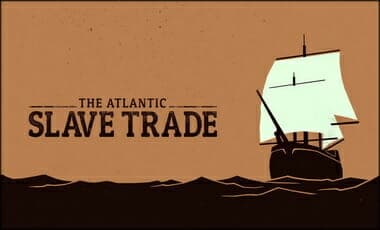
Percentages Of Slaves Brought To America (UPDATED)

(The above video is a bit off in it’s numbers in the graph)

Here is a quote to fill in the reference by MICHAEL MEDVED in a previous post:

In the mid to late 1500s the Portuguese gradually transferred the system of sugar plantations worked by slaves from their Atlantic islands such as Madeira, Sao Tome, and Principe to northeastern Brazil. The plantation system involved everything from long-term capital investment and the African slave trade to the technology and economic organization for cultivating and harvesting sugarcane and then manufacturing sugar and eventually molasses and rum. It was largely because of the expanding international market for sugar, molasses, syrup, and rum that regions south of what became the United States imported some 95 percent of the African slaves brought to the New World.

During the first decades of the sixteenth century the small Portuguese settlements in Brazil exported little more than brazilwood, parrots, and monkeys, at a time when the Portuguese islands of São Tomé and Madeira produced much of Europe’s sugar, which was still a rare luxury and traditional medication.  But Portugal became increasingly alarmed by French and British gestures toward founding settlements in Brazil, and in the 1530s and 1540s Portuguese expeditions attempted to chase off foreign ships and then succeeded in establishing sugar plantations or engenhos in northeastern Brazil. By the late 1500s sugar mills had multiplied, African slaves were replacing forced Indian labor, and Brazil was producing more sugar than the Atlantic islands combined with regions like the Algarve, in southern Portugal. These developments represented the first stage of the unforeseen and unprecedented expansion of economic and cultural boundaries initiated by New World slavery.

[p. 104>] The sugar mill and surrounding plantation land came to epitomize New World slavery and “inhuman bondage” in its most extreme form. Sugar plan­tations also gave rise to the central problem of reconciling traditional Euro­pean and African cultures with a highly modern, systematized, and profitable form of labor exploitation. In many ways it was sugar that shaped the desti­nation of slave ships and the very nature of the Atlantic Slave System. In the long era from 1500 to 1870, according to a recent estimate, it was sugar-producing Brazil that absorbed over 45 percent of all African slaves and the sugar-producing British, French, Dutch, Danish, and Spanish Caribbean that imported nearly 46 percent more. The Spanish mainland in South America took just over 5 percent of the Africans brought into the Americas, and the British mainland in North America less than 4 percent—despite the later millions of African Americans who appeared as a result of unprecedented natural population growth.

David Brion Davis, Inhuman Bondage: The Rise and Fall of Slavery in the New World (New York, NY: Oxford University Press, 2006), 103-105. (Emphasis added.)


[APA] Davis, D. (2006). Inhuman Bondage: The Rise and Fall of Slavery in the New World. New York, NY: Oxford University Press.

[MLA] Davis, David Brion. Inhuman Bondage: The Rise and Fall of Slavery in the New World. New York: Oxford University Press, 2006. Print.

[Chicago] Davis, David Brion. Inhuman Bondage: The Rise and Fall of Slavery in the New World. New York: Oxford University Press, 2006.

Here is a good synopsis of the costs in blood and GDP to stop slavery in the Atlantic and beyond:

[p. 122>] Slavery was destroyed within the United States at staggering costs in blood and treasure, but the struggle was over within a few ghastly years of warfare. Nevertheless, the Civil War was the blood­iest war ever fought in the Western Hemisphere, and more Americans were killed in that war than in any other war in the country’s history. But this was a highly atypical—indeed, unique—way to end slavery. In most of the rest of the world, unremitting efforts to destroy the institution of slavery went on for more than a century, on a thousand shifting fronts, and in the face of deter­mined and ingenious efforts to continue the trade in human beings.

Within the British Empire, the abolition of slavery was accompanied by the payment of compensation to slave owners for what was legally the confiscation of their property. This cost the British government £20 million—a huge sum in the nine­teenth century, about 5 percent of the nation’s annual output. A similar plan to have the federal government of the United States buy up the slaves and then set them free was proposed in Con­gress, but was never implemented. The costs of emancipating the millions of slaves in the United States would have been more than half the annual national output—but still less than the economic costs of the Civil War, quite aside from the cost in blood and lives, and a legacy of lasting bitterness in the South, growing out of its defeat and the widespread destruction it suffered during that conflict.

While the British could simply abolish slavery in their West­ern Hemisphere colonies, they faced a more daunting and longer-lasting task of patrolling the Atlantic off the coast of Africa, in order to prevent slave ships of various nationalities from con- [p. 123>] tinuing to supply slaves illegally. Even during the Napoleonic wars, Britain continued to keep some of its warships on patrol off West Africa. Moreover, such patrols likewise tried to interdict the ship­ments of slaves from East Africa through the Indian Ocean, the Red Sea, and the Persian Gulf. Brazil capitulated to British demands that it end its slave trade, after being publicly humiliated by British war­ships that seized and destroyed slave ships within Brazil’s own waters. In 1873, two British cruisers appeared off the coast of Zanzibar and threatened to blockade the island unless the slave market there shut down. It was shut down.

It would be hard to think of any other crusade pursued so relentlessly for so long by any nation, at such mounting costs, with­out any economic or other tangible benefit to itself. These costs included bribes paid to Spain and Portugal to get their cooperation with the effort to stop the international slave trade and the costs of maintaining naval patrols and of resettling freed slaves, not to mention dangerous frictions with France and the United States, among other countries. Captains of British warships who detained vessels suspected of carrying slaves were legally liable if those vessels turned out to have no slaves on board. The human costs were also large:

The heavy drain, physical and mental, in keeping squadrons on the East African coast was reflected in the loss of 282 officers and men in the ten years 1875-85; and this did not include these invalidated home. Naval personnel, wracked by fever, sunstroke and dysentery, were forced to retire prematurely and live on a small pittance. The cost of upkeep of the squadron over the twenty years prior to 1890 was estimated at four millions ster­ling, and this did not take into account the large amount of work imposed on consular and judicial staff at Zanzibar in trying cases and dealing with reports, etc.

Even so, the results were slow in coming. More streamlined slave ships were designed, in hopes of being able to outrun the ships of the Royal Navy in the Atlantic. Nevertheless, the dogged persistence of the British eventually reduced the shipment of slaves across the Atlantic and across the waters of the Islamic world. Although the French flag was for many years widely used as protection from the boarding of ships on the high seas by the [p. 124>] British navy, even by slave traders who were neither French nor authorized to fly the French flag, eventually France itself turned against slavery, outlawed the institution and sent some of its own warships to patrol the Atlantic off the coast of Africa to intercept and deter the shipment of slaves to the Western Hemisphere. The American flag was likewise so used and the United States, like France, eventually turned against the slave trade and sent warships to join the Atlantic patrols to interdict slave shipments.

Although by 1860 the Atlantic slave trade had been effec­tively stopped, the slave trade from East Africa across the Indian Ocean, the Red Sea and the Persian Gulf took longer to be reduced significantly. Off the east coast of Africa, smaller Arab vessels called dhows hugged the coastlines, in waters too shallow for the British warships to enter. One British commodore estimated that he cap­tured one dhow for every eight that escaped. Nevertheless, during the period from 1866 to 1869, 129 slave vessels were cap­tured and 3,380 slaves were freed. When the threat of being boarded seemed imminent, the Arabs would throw slaves over­board to drown, rather than have them be found on board, which could lead to British seizure of the vessel and punishment of those who manned it:

The worst that could befall the slaves was when the slaver was overhauled by a British cruiser, and they might then be flung overboard to dispose of all evidence. Devereaux mentions a case where the Arabs, when pursued by an English cruiser, cut the throats of 24 slaves and threw them overboard. Cololm also states that Arabs would not hesitate to knock slaves on the head and throw them overboard to avoid capture.

Because there were only a few naval ships available to cover a vast expanse of water in this region, British warships would often launch smaller boats to engage the Arab slave dhows. In these cases, as one study put it, “the slave traffickers frequently did not hesitate to attack boat crews in defence of their profits.” Battles between the Arabs’ vessels and the smaller British craft were especially likely when the larger ships that launched them were too far away to reach the scene in time to join the battle. In other cases, the Arabs fled even from the smaller British vessels. An episode in 1866 was typical:

[p. 125>] On 26 April 1866, the Penguin set out after a dhow and fired several shots in an effort to make the crew come to. When the dhow failed to lower its sail, Gartorth felt certain that she was a slaver and ceased firing for the sake of the slaves onboard. How­ever, he managed to close with the dhow which then made for the rocks through a heavy surf. By the time the ship’s boats could be lowered to follow, the Arab crew had fled but the pounding surf made any attempt by the slavers to salvage the human cargo too dangerous. To their horror, the boat crew found that they, too, could not reach the dhow which was rap­idly filling with water drowning the slaves. The boat officer decided that he could not risk coming in close to the dhow but several of the crewmen of the cutter recklessly dived in and swam through the surf to the dhow. In a remarkable display of courage, the sailors managed to bring 28 of the slaves back to the boat. But the dhow appeared to have had more [than] 200 slaves on board and most died in the pounding waves.

In another episode, the Arabs’ ruthlessness toward the slaves was further revealed:

When the Daphne’s cutter captured a dhow with 156 slaves on board many were found to be in the final stages of starvation and dysentery. One woman was brought out of the dhow with a month-old infant in her arms. The baby’s forehead was crushed and when she was asked how the injury had happened she explained to the ship’s interpreter that as the boat came along­side the baby began to cry. One of the dhowmen, fearing that the sailors would hear the cries, picked up a stone and crushed the child’s head.

This was not a unique act. British missionary and explorer David Livingstone related a similar incident on land: “One woman, who was unable to carry both her load and young child, had the child taken from her and saw its brains dashed out on a stone.” Dr. Livingstone also reported having nightmares for weeks after encountering Arab slave traders and their victims. Not only was this Christian missionary shocked by the brutality of the Arab slave traders, so was Mohammed Ali, the ruler of Egypt, who was a bat­tle-hardened military commander.

None of this means that the horrors of the transatlantic slave trade should be ignored, downplayed, or excused. Nor have they [p. 126>] been. A vast literature has detailed the vile conditions under which slaves from Africa lived—and died—during their voyages to the Western Hemisphere. But the much less publicized slave trade to the Islamic countries had even higher mortality rates en route, as well as involving larger numbers of people over the centuries, even though the Atlantic slave trade had higher peaks while it lasted. By a variety of accounts, most of the slaves who were marched across the Sahara toward the Mediterranean died on the way. While these were mostly women and girls, the males faced a special danger—castration to produce the eunuchs in demand as harem attendants in the Islamic world.

Because castration was forbidden by Islamic law, the opera­tion tended to be performed—usually crudely—in the hinterlands, before the slave caravans reached places within the effective con­trol of the Ottoman Empire. The great majority of those operated on died as a result, but the price of eunuchs was so much higher than the prices of other slaves that the practice was still profitable on net balance.

The British governor-general of the Sudan, C.G. Gordon, esti­mated that, between 1875 and 1879, from 80,000 to 100,000 slaves were exported through his region. General Gordon imposed the death penalty on those convicted of castrating slave men to market them as eunuchs. His attempt to stamp out slave trading in the Sudan cost him his own life as an opposing army, raised and led by Mohammad Mahad, defeated his troops at Khartoum in 1885 and killed Gordon—after which the slave trade flourished again. British control in the region was firmly re-established in 1898 by the crushing victory of troops led by Lord Kitchener at Omdur­man and including a young officer named Winston Churchill.

On the issue of slavery, it was essentially Western civilization against the world. At the time, Western civilization had the power to prevail against all other civilizations. That is how and why slav­ery was destroyed as an institution in almost the whole world. But it did not happen all at once or even within a few decades. When the British finally stamped out slavery in Tanganyika in 1922 it was more than half a century after the Emancipation Proclama­tion in the United States, and vestiges of slavery still survived in parts of Africa into the twenty-first century.

[p. 127>] The unique position of the Western world in the history—and especially the destruction—of slavery need not imply that there was unanimity within the West on this institution. In addition to whites who defended the enslavement of Africans on racial grounds, or who opposed general emancipation on social grounds, there were many whites—and even blacks—who defended slavery as a matter of self-interest as slaveowners. Although most black owners of slaves in the United States were only nominal owners of members of their own families, there were thousands of other blacks in the antebellum South who were commercial slaveowners, just like their white counterparts. An estimated one-third of the “free persons of color” in New Orleans were slaveowners and thousands of these slaveowners volunteered to fight for the Con­federacy during the Civil War. Black slaveowners were even more common in the Caribbean. In short, there were many defenders of slavery in the West, even in the nineteenth century—and, out­side the West, slavery was too widely accepted to require defense.

Thomas Sowell, Black Rednecks and White Liberals (San Francisco, CA: Encounter Books, 2005), 122-127.


[APA] Sowell, T. (2005). Black Rednecks and White Liberals. San Francisco, CA: Basic Books.

[MLA] Sowell, Thomas. Black Rednecks and White Liberals. San Francisco: Basic Books, 2005. Print.

[Chicago] Sowell, Thomas. Black Rednecks and White Liberals. San Francisco: Basic Books, 2005.
Old, Rich, White (Obstructionist) Men

The Republicans are the Party of the rich, and run by old, rich white guys who like to say “no” all the time.

NO…


Here are a few stories on Harry Reid’s obstructionism:

It took a while, but the media seem to have finally noticed Senate majority leader Harry Reid’s unprecedented obstructionism.

The New York Times reported last week on Reid’s “brutish style” and “uncompromising control” over the amendments process in the Senate. Why are more people finally catching on to Reid’s flagrant disregard for Senate customs? In part because conservatives aren’t the only ones complaining.

[….]

Moderate Republicans who occasionally vote with Democrats and help broker bipartisan compromise are annoyed as well. Senator Lisa Murkowki of Alaska told the New York Times she was “kind of fed up” with Reid’s obstructionism. “He’s a leader. Why is he not leading this Senate? Why is he choosing to ignore the fact that he has a minority party that he needs to work with, that actually has some decent ideas? Why is he bringing down the institution of the Senate?”

[….]

Some of Reid’s defenders have justified his hostility toward amendments by arguing that he is simply trying to protect vulnerable Democrats from having to vote on politically challenging but ultimately meaningless ones, such as a GOP proposal to repeal Obamacare’s individual mandate. In order to avoid these votes, they argue, Reid has been forced to block all amendments through a process known as “filling the tree.”

(NATIONAL REVIEW)

Again, the main point is that Harry Reid was trying to make the Democrat Senators up for revote to only have to deal with local issues in their state… and not for them to be “burdened” with defending bills passed in the Senate:

This is one big reason (the unpopular president is another) that Democrats are desperate to make the election about local issues. The more nationalized the election, the more voters will be inclined to sweep the do-nothing Democrats aside. But those local issues and the big major issues aren’t going to be solved so long as Reid thinks his job is to block and tackle for the White House. These very same Democratic senators who now plead for reelection voted him in and keep him there; they are therefore responsible for the current state of affairs. (Frankly, the one thing that might help Democrats would be for Reid to resign before November. We know that’s not going to happen.)…

(WASHINGTON POST)

Here is another example of Reid’s obstructionism:

Here is an update via AMAC:

Under the control of Senate Democrats, “The Senate went three months this spring without voting on a single legislative amendment, the nitty-gritty kind of work usually at the heart of congressional lawmaking,” The Washington Post reports. “So few bills have been approved this year, and so little else has gotten done, that many senators say they are spending most of their time on insignificant and unrewarding work.”

Check out the stats. Even Democrats have complained about the Senate’s obstruction, and one actually said he was “furious.” When President Obama tried to blame Republicans, his rhetoric didn’t match reality and fact-checkers called him out for it, noting the dozens of jobs bills listed on speaker.gov/jobs that Senate  Democrats are currently blocking.

Here are just 10 of them, ranked in order of bipartisan support:

  • The Hire More Heroes Act (H.R. 3474) passed the House on March 11, 2014, with support from 183 Democrats. The Senate has done nothing.
  • The Success and Opportunity through Quality Charter Schools Act (H.R. 10) passed the House on May 9, 2014, with support from 158 Democrats. The Senate has done nothing.
  • The Innovation Act (H.R. 3309) passed the House on December 5, 2013, with support from 130 Democrats. The Senate has done nothing.
  • The Cybersecurity Information Sharing and Protection Act (H.R. 624) passed the House on April 18, 2013, with support from 92 Democrats. The Senate has done nothing.
  • The American Research and Competitiveness Act (H.R. 4438) passed the House on May 9, 2014, with support from 62 Democrats. The Senate has done nothing.
  • The America’s Small Business Tax Relief Act (H.R. 4457) passed the House on June 12, 2014, with support from 53 Democrats. The Senate has done nothing.
  • The Domestic Prosperity and Global Freedom Act (H.R. 6) passed the House on June 25, 2014, with support from 46 Democrats. The Senate has done nothing.
  • The S Corporation Permanent Tax Relief Act (H.R. 4453) passed the House on June 12, 2014, with support from 42 Democrats. The Senate has done nothing.
  • The Coal Residuals Reuse and Management Act (H.R. 2218) passed the House on July 25, 2013, with support from 39 Democrats. The Senate has done nothing.
  • The Small Business Capital Access and Job Preservation Act (H.R. 1105) passed the House on December 4, 2013, with support from 36 Democrats. The Senate has done nothing.

OLD…


Thinking through leftist mantras:

The top three Democrats in leadership are 76 (Pelosi), 77 (Steny Hoyer) and 76 (Jim Clyburn). The average age of the Democratic party leadership is 76.

The top three Republican leaders, in contrast, are 46 (Paul Ryan), 51 (Kevin McCarthy) and 51 (Steve Scalise).

(Gateway Pundit)

“I could run 20 years from now and still be about the same age as the former Secretary of State (Hillary Clinton) is right now” ~ Rep. Governor Scott Brown

Average age of Democrat’s in the House (average age): 74

Average age of House Republicans? 53

(New York Times)

AS AN ASIDE… I wrote the above years ago when these accusations were all the rage. TODAY the stats are pretty even ~ as of January 2025:

  • Overall, the median age of House Democrats is 57.6, while the median age of House Republicans is 57.5.  
  • In the Senate, the median age of all Democrats is 66.0, a bit higher than the median for Republicans (64.5).

RICH…


Seven of the top ten richest people in Congress are Democrats. The top five donors to unrestricted super PACs reads like a billionaire boys club and are Democratic donors/supporters.

ERGO: the Democratic Party are run by old, rich, white,

obstructionist, men. Not the Republican Party.


CALLS


Biased Professors (@ C.O.C.)

The students would tell Professor Laura Freberg after finding out she was a Republican that they could tell. It was because of what she WAS NOT SAYING.

To wit:

My oldest son’s English professor at C.O.C. talked positively about Bernie Sanders as well as socialism, how Republicans were bigoted, talked approvingly of #BlackLivesMatter, about how religion causes most wars, talked about global warming, the [fictitious] plastic trash island, on-and-on-and-on. He barely taught English.

During the comments about Christianity being behind many of histories wars, my son spoke up and mentioned that only 7% of the world’s wars were religious, and almost a third of them were done in the name of Muhammad (HJBUH). The professor countered… since they have WI-FI on campus, my son pulled up my post on it to clarify the issue (“Causes of Wars“).

Mind you, in the post I quote from an atheist professor, an encyclopedia written by 9-history professors, and another book by a religious author specifically about the Thirty Years War (he is Professor of Theology at DePaul University; his book was published by Oxford University Press).

The next class was an entire class on why you cannot trust books.

CRAZY!

If I were there, I would note that I agree with him in regards to history books written without footnotes, like Howard Zinn’s book about American history (which I would guess is a book the “professor” emphatically trusts).

My only admonition to the professors like my son’s is that if you put this passion into the material and class goals, you would be an excellent teacher of minds in that subject.

The Health Hits (Lies) Keep Coming for Hillary Clinton

With the recent issues regarding some reports about Hillary Clinton’s health as well as what many are calling seizures due to her brain injury and subsequent brain clot… we have this bit of news after yesterdays episode.

YOUNG CONSERVATIVES have a great story regarding the glasses Hillary was wearing that day. Here is their partial comments:

If you saw pictures of Hillary Clinton from yesterday at the 9/11 commemoration ceremony before, during, or after her fainting spell, you noticed she was wearing her pneumonia glasses.

Wait, I have that wrong.

Those weren’t pneumonia glasses at all.

In fact, Hillary’s John Lennon-inspired glasses are given to seizure victims with hopes they’ll happen less often.

Say it with me, everyone…

HILLARY 4 PRESIDENT!

As a side-note, the Hillary campaign said she was dealing with pneumonia in regards to yesterdays episode. Why would they give her anti-seizure glasses for this? This information and these recent episodes have made me revisit two previous videos I have watched, and a few other mentioned in this video:

(The very last video in the above video was not discussed… but it is here.) At any rate, all this is getting Dems to talk about replacing Hillary. Here is an example via David Shuster:

This election season is wilder than Mr Toads Wild Ride!

Darwin vs. Population Genetics (Of Rabbits and Illusions)

Mind you, Philip Cunningham may be a bit tough to listen to… but his attention to detail — even if he cannot pronounce “intelligentsia” — are a must. Enjoy.

(Above video description) “Darwinism provided an explanation for the appearance of design, and argued that there is no Designer — or, if you will, the designer is natural selection. If that’s out of the way — if that (natural selection) just does not explain the evidence — then the flip side of that is, well, things appear designed because they are designed.” ~ Richard Sternberg – Living Waters documentary

Whale Evolution vs. Population Genetics – Richard Sternberg and Paul Nelson – (excerpt from Living Waters video) [POSTED BELOW]

The abject failure of Natural Selection on two levels of physical reality – VIDEO (2016) (princess and the pea paradox & quarter power scaling)

(Above video description) THE ORIGIN OF MAN AND THE “WAITING TIME” PROBLEM – John Sanford – August 10, 2016

Excerpt: My colleagues and I recently published a paper in Theoretical Biology and Medical Modeling, “The Waiting Time Problem in a Model Hominin Population.” It is one of the journal’s “highly accessed” articles. A pre-human hominin population of roughly 10,000 individuals is thought to have evolved into modern man, during a period of less than six million years. This would have required the establishment of a great deal of new biological information. That means, minimally, millions of specific beneficial mutations, and a large number of specific beneficial sets of mutations, selectively fixed in this very short period of time. We show that there is simply not enough time for this type of evolution to have occurred in the population from which we supposedly arose.

Historically, Darwin-defenders have argued that time is on their side. They have claimed that given enough time, any evolutionary scenario is feasible. They have consistently argued that given millions of years, very large amounts of new biologically meaningful information can arise by the Darwinian process of mutation/selection. However, careful analysis of what is required to establish even a single genetic “word” (a short functional string of genetic letters) within a hominin genome shows just the opposite. Even given tens of millions of years, there is not enough time to generate the genetic equivalent of the simplest “word” (two or more nucleotides). Even in a hundred billion years, much longer than the age of the universe, there is not enough time to establish the genetic equivalent of a very simple “sentence” (ten or more nucleotides). This problem is so fundamental that it justifies a complete re-assessment of the basic Darwinian mechanism.

The Skeptic’s Case on Global Warming Alarmism

This video is based on David E.W. Evans work over at MISES DAILY

  • We check the main predictions of the climate models against the best and latest data. Fortunately the climate models got all their major predictions wrong. Why? Every serious skeptical scientist has been consistently saying essentially the same thing for over 20 years, yet most people have never heard the message. Here it is, put simply enough for any lay reader willing to pay attention.

(BIO) Dr. David M.W. Evans consulted full time for the Australian Greenhouse Office (now the Department of Climate Change) from 1999 to 2005, and part time 2008 to 2010, modeling Australia’s carbon in plants, debris, mulch, soils, and forestry and agricultural products. Evans is a mathematician and engineer, with six university degrees including a PhD from Stanford University in electrical engineering. The area of human endeavor with the most experience and sophistication in dealing with feedbacks and analyzing complex systems is electrical engineering, and the most crucial and disputed aspects of understanding the climate system are the feedbacks. The evidence supporting the idea that CO2 emissions were the main cause of global warming reversed itself from 1998 to 2006, causing Evans to move from being a warmist to a skeptic.

Some Super Sized Glacier Myths via Climate Change (Updated)

  • “The scientist behind the bogus claim in a Nobel Prize-winning UN report that Himalayan glaciers will have melted by 2035 last night admitted it was included purely to put political pressure on world leaders…. Dr. Lal’s admission will only add to the mounting furor over the melting glaciers assertion, which the IPCC was last week forced to withdraw because it has no scientific foundation.” (David Rose, The Daily Mail, January 24, 2010)

David Mamet, The Secret Knowledge: On the Dismantling of American Culture (New York, NY: Sentinel Publishing, 2011), [FN] 161.

Alarmist Assertion via CLIMATE DISPATCH:


“Shrinking Glaciers – In 2013, an iceberg larger than the city of Chicago broke off the Pine Island Glacier, the most important glacier of the West Antarctic Ice Sheet. And at Montana’s Glacier National Park glaciers have gone from 150 to just 35 over the past century.”


Response:

Calling attention to anecdotal incidents of icebergs breaking off the Antarctic ice sheet, while deliberately ignoring the overall growth of the Antarctic ice sheet, is a misleading and favorite tactic of global warming alarmists. Icebergs break off the Antarctic ice sheet every year, with or without global warming, particularly in the Antarctic summer. However, a particular iceberg – no matter how large – breaking off the Antarctic ice sheet does not necessarily result in “Shrinking Glaciers” as EDF alleges. To the contrary, the Antarctic Ice Sheet has been growing at a steady and substantial pace ever since NASA satellites first began measuring the Antarctic ice sheet in 1979. Indeed, during the same year that the EDF claims “an iceberg larger than the city of Chicago” broke off the Antarctic ice sheet and caused “Shrinking Glaciers,” the Antarctic ice sheet repeatedly set new records for its largest extent in recorded history. Those 2013 records were repeatedly broken again in 2014. The Antarctic ice sheet in 2013 and 2014 was more extensive than any time in recorded history, and yet the EDF pushes the lie that the Antarctic Ice Sheet is shrinking.

The EDF’s assertion about Glacier National Park is also misleading. Alpine glaciers at Glacier National Park and elsewhere have been receding for over 300 years, since the Earth’s temperature bottomed out during the depths of the Little Ice Age. The warming of the past 300 years and the resulting recession of alpine glaciers predated humans building coal-fired power plants and driving SUVs. Moreover, opening up more of the Earth’s surface to vegetation and plant and animal life would normally be considered a beneficial change, if global warming alarmists had not so thoroughly politicized the global warming discussion.

grinnell-glacier

Hockey Schtick piles on with this historical look back on Glacier National Park:

A new paper published in Quaternary Science Reviews finds that alpine glaciers in Glacier National Park, Montana retreated up to 6 times faster during the 1930’s and 1940’s than over the past 40 years.  The “Multi-proxy study of sediment cores retrieved from lakes below modern glaciers supports the first detailed Neoglacial chronology for Glacier National Park (GNP)” and shows “maximum reconstructed retreat rates [in] 1930” of about 125 meters per year, compared to near zero in ~1975 and about 20 meters/year at the end of the record in ~2005.  The authors report, “Results indicate that alpine glaciers in Glacier National Park advanced and retreated numerous times during the Holocene after the onset of Neoglaciation 6,500 years before the present” and “Retreat from the Little Ice Age maximum was the most dramatic episode of ice retreat in at least the last 1000 years.”

Some more in-depth studies on Glacier National Park detailing the rapid recession before man started to insert in earnest CO2 into the atmosphere can be found here:

  • Testimony of Dr. Syun-Ichi Akasofu before the united states senate committee on commerce (PDF)… (BIO — Dr. Akasofu is the founding director of the International Arctic Research Center of the University of Alaska Fairbanks, serving in that position from the center’s establishment in 1998 until January 2007.)
  • A lacustrine-based Neoglacial record for Glacier National Park, Montana, USA (PEER REVIEWED)

Another blow to the glacier myth comes from WATTS UP WITH THAT and notes that the “receding Swiss glaciers inconveniently reveal 4000 year old forests – and make it clear that glacier retreat is nothing new,” …continuing:

Dr. Christian Schlüchter’s discovery of 4,000-year-old chunks of wood at the leading edge of a Swiss glacier was clearly not cheered by many members of the global warming doom-and-gloom science orthodoxy.

This finding indicated that the Alps were pretty nearly glacier-free at that time, disproving accepted theories that they only began retreating after the end of the little ice age in the mid-19th century. As he concluded, the region had once been much warmer than today, with “a wild landscape and wide flowing river.”….

Continuing via NEWSMAX:

…Other evidence exists that there is really nothing new about dramatic glacier advances and retreats. In fact the Alps were nearly glacier-free again about 2,000 years ago. Schlüchter points out that “the forest line was much higher than it is today; there were hardly any glaciers. Nowhere in the detailed travel accounts from Roman times are glaciers mentioned.”

Schlüchter criticizes his critics for focusing on a time period which is “indeed too short.” His studies and analyses of a Rhone glacier area reveal that “the rock surface had [previously] been ice-free 5,800 of the last 10,000 years.”

Such changes can occur very rapidly. His research team was stunned to find trunks of huge trees near the edge of Mont Miné Glacier which had all died in just a single year. They determined that time to be 8,200 years ago based upon oxygen isotopes in the Greenland ice which showed marked cooling.

Casting serious doubt upon alarmist U.N.-IPCC projections that the Alps will be nearly glacier-free by 2100, Schlüchter poses several challenging questions: “Why did the glaciers retreat in the middle of the 19th century, although the large CO2 increase in the atmosphere came later? Why did the Earth ‘tip’ in such a short time into a warming phase? Why did glaciers again advance in the 1880s, 1920s, and 1980s? . . . Sooner or later climate science will have to answer the question why the retreat of the glacier at the end of the Little Ice Age around 1850 was so rapid.”

Although we witness ongoing IPCC attempts to blame such developments upon evil fossil-fueled CO2 emissions, that notion fails to answer these questions. Instead, Schlüchter believes that the sun is the principal long-term driver of climate change, with tectonics and volcanoes acting as significant contributors….

Regarding IPCC integrity with strong suspicion, Schlüchter recounts a meeting in England that he was “accidentally” invited to which was led by “someone of the East Anglia Climate Center who had come under fire in the wake of the Climategate e-mails.”

As he describes it: “The leader of the meeting spoke like some kind of Father. He was seated at a table in front of those gathered and he took messages. He commented on them either benevolently or dismissively.”

(read more…)

Were the Founders Religious? (Joshua Charles)

Very happy for my “cyber friend” to be in the Prager-U mix!

What did the Founding Fathers believe about religion? Were they Christians, or just deists? Did they believe in secularism, or did they want Americans to be religious? Joshua Charles, New York Times bestselling author and researcher at the Museum of the Bible, explains.

NEVER FORGET ~ A Yearly Tribute That Grows |Sticky Post|

911 - LIGHTS

“There will even come a time when anyone who kills you
will think he’s doing God a favor”
(John 16:2 – The Message)

a911-12

Remember … Meditate … Pray

911 - 2

Throughout the day on 911, but typically the following Sunday, I will add political cartoons as they are released.

I am splitting the post into sections:

I am a BIG fan of editorial cartoons/cartoonists and will let these talented people memorialize this solemn day ~ their talent to catch a big-idea in one image is unrivaled. New frames will be added under the GOLD moniker just below. The newer cartoons will be larger than the older ones. The parameters of the old blog did not allow for bigger. Likewise, the videos embedded throughout work here as they stopped at the old site. Enjoy.

911 - 3

Continue right [Note: this does not mean the newer cartoons directly below are themselves “new,” it just means that I recently found them… they in fact may be old.]

~~~~~~~~~~~~~~~~~
Newer Tributes Below
~~~~~~~~~~~~~~~~~

Twin-towers

Missing 2

Missing 1

9-11 2016 Ramirez

Bridge 9-11 2

Never Again

Towers

ppdn-091116-edtoon-number-2

9-11-memory-c-patriot-post

9-11 6

9-11 4

Lights Clouds

Ramirez AIR-Force One Gitmo

ISIL NY

isis-911

Never Forget a Poll

911-Breen 1

Never-Forget

Varv 911 new

Breen 911 2014

POWNED OSAMA

9-11_in_memoriam

Family Circus 9-11 cartoon

osamabeeler2

scars-of-9-11

9-11 Anniversary
91112

carlsonr

911_color

orl-dana-summers

Draw

Images-Oklahoma NY

stahler.smoke.has.cleared

Silence911

9-11hug

PeaceNick

911c11

brookins

God

Big Shoes 2

Joint Effort

Stripe Smoke

varvel 911 salute

a911 - 201

911 -w4

911 -w3

911 -w2

911 -w1

911 - 4
a911 - 5
a911 - 6
911 - 7
911 - 8
911 - 9
911 - 10
911 - 11
a911 - 12
911 - 13
911 - 14

911 - 15

911 - 16

911 - 17

911 - 18

911 - 19

911 - 20

911 - 21

911 - 22

911 - 23

9-11

911 - 25

911 - 26

911 - 27

911 - 28

911 - 29

911 - 30

PWNED

911 - 31

911 - 32

911 - 33

911 - 34

911 - 35

911 - 36

911 - 37

911 - 38

911 - 39

911 - 40

911 - 41

911 - 42

911 - 43

911 - 44

911 - 45

911 - 46

911 - 47

911 - 48

911 - 49

911 - 50

911 - 51

911 - 52

911 - 53

911 - 54

911 - 55

911 - 56

911 - 57

911 - 58

911 - 59

911 - 60

911 - 61

911 - 62

911 - 63

911 - 64

911 - 65

911 - 66

911 - 67

a911 - 68

911 - 69

911 - 70

911 - 71


911 - 72

911 - 73

911 - 74

911 - 75

911 - 76

The Hour of Islam 9-11-01

911 - 78

911 - 79

9-11 1

911 - 81

911 - 83

911 - 84

911 - 85

911 - 86

911 - 87

911 - 89

911 - 90

911 - 91

911 - 92

911 - 93

911 - 94

911 - 95

911 - 96

911 - 97

911 - 98

911 - 99

911 - 100

a911 - 104

911 - 106

911 - 107

911 - 108

911 - 109

911 - 110

911 - 111

911 - 112

911 - 113

911 - 114

911 - 115

911 - 116

911 - 117

911 - 118

911 - 119

911 - 120

911 - 121

911 - 122

911 - 123

911 - 124

911 - 125

911 - 126

911 - 127

911 - 128

911 - 129

911 - 130

911 - 131

911 - 132

911 - 133

911 - 134

911 - 135

Varvel Carry

911 - 137

COLORdayFLAG

911 - 139


TATTOOS

These are mainly by fireman/port authority guys in remembrance of those lost


911 - 101

911 - 102

911 - 103

911 - 105

911 - 140

911 - 141

911 - 142

911 - 143

911 - 144

911 - 145

911 - 146

911 - 147

911 - 148

911 - 149

911 - 150


BEAMS

Just a few pictures of steel beams and info


911 - 151

You are looking at what some people believe is a miracle.

Two days after the disaster, a construction worker found several perfectly formed crosses planted upright in a pit in the rubble of the heavily damaged 6 World Trade Center.

The large, cross-shaped metal beams just happened to fall that way when one of the towers collapsed. An FBI chaplain who has spent days at ground zero says he has not seen anything like it on the vast site.

As word of the find has spread at ground zero, exhausted and emotionally overwhelmed rescue workers have been flocking to the site to pray and meditate.

“People have a very emotional reaction when they see it,” says the Rev. Carl Bassett, an FBI chaplain. “They are amazed to see something like that in all the disarray. There’s no symmetry to anything down there, except those crosses.”

This is the Ground Zero cross seen Friday, October 4, 2002, in New York. Father Brian Jordan and a group representing construction workers and victims of the World Trade Center are asking the governor to preserve the ground zero cross and use it as part of the eventual memorial that will be erected at Ground Zero.

911 - 153

911 - 154

911 - 155


VIDEOS


From Cox & Forkum’s Site (cartoonists):

In the excellent book Never Forget: An Oral History of September 11, 2001, authors Mitchell Fink and Lois Mathias collected stories from eyewitnesses. Here’s an excerpt from what David Kravette, a Cantor Fitzgerald broker, told the authors about his experience at the World Trade Center:

On the morning of September 11, I was on floor 105, tower 1. I had an 8 a.m. meeting set up with a client. He was bringing by some tech people to do some due diligence on our technology company called E-Speed. I get to work usually around seven, seven-fifteen. At eight, the client called to tell me they were running late. And I said fine. But I reminded him to bring photo ID downstairs. Ever since the last terrorist attack in ’93, the building requires photo ID downstairs. He’s been there before, so he knew the drill. He said, “Fine. No problem.”

At 8:40, I get a phone call from the security desk downstairs, asking me if I’m expecting visitors. I said yes. “Well, they’re here,” they said. “But one of them forgot their ID.”

I’m 105 flights up. The commute to get downstairs takes about five minutes, especially around that time. So I’m annoyed, obviously, because I have to go down now to sign these people in after I just told them to bring ID. I look at this desk assistant across from me, thinking maybe she’ll help out and go down, but she’s on the phone. She’s also about eight months pregnant. She’s a few weeks from maternity leave and she’s on the phone talking to a friend and she’s on a website looking at bassinets and cribs. A very nice girl expecting her first child. So how lazy am I? I decide to go myself. …

… I take these two elevator rides down. I take the elevator from 105 to 78, change, and take the express down to the ground. I got down to the lobby. Our elevator banks actually face the visitors’ gallery. And I started walking over to the visitors’ gallery, I’d say it’s about thirty yards, and they’re standing there waiting for me. And I remember yelling, “Which one of you knuckleheads forgot your ID?”

And as I say this, you hear this really loud screeching sound. I turn around and it’s kind of coming from the elevators. So I run away from it, like ten steps, and look back. And the elevators are free-falling. Then, from the middle elevator bank, not the one I came down on, but from the middle one, a huge fireball explodes in the lobby. This huge fireball is coming right toward me. People got incinerated. And I remember just looking at this thing, not feeling scared, but just sad because I knew I was going to die. But as quickly as it came toward me, it actually sucked back in on itself, and it was gone. It left a lot of smoke and everything was blown out, all the glass and revolving doors leading into the shopping area. All I felt was a big wave of heat come over me, like when you put your face too close to a fireplace. My customer and my general counsel and I just ran out. The three of us ran over the overpass to where the Financial Center is. We went down to where the marina is, where the yachts are. And that’s when we found out what happened, that a plane had hit the building.

I looked up and saw this big gaping hole. I said, “What’s that falling out of the window?”

My general counsel looks at me like I’m nuts. And he says, “That’s people jumping out.” …

Cantor Fitzgerald had four floors in the North Tower — 101, 103, 104, and 105. Nobody got out on those floors. Everyone who was upstairs perished. There were a lot of phone calls to wives and husbands at around nine o’clock saying good-bye, as though they knew they were going to die.


Remembering The Jumpers


On another note, there is an old SNL skit where, coincidentally, John Belushi explains how the Twin Towers will come down via SkyLab:


WHERE WAS GOD?


Where was God at 9/11? Columbia asks the tough questions to an Oxford scholar on 9/11 at a Veritas event:


GROUND ZERO MOSQUE


.

tattoo ground zero

911 - 156

911 - 157

911 - 158

a911 - 11111

911 - 160

911 - 161

911 - 162

911 - 163

911 - 164

911 - 165

911 - 166

911 - 167

911 - 168

911 - 169

911 - 170

911 - 171

911 - 172

911 - 173

911 - 174

911 - 175

911 - 176

911 - 177

911 - 178

911 - 179

911 - 180

911 - 181

MFT20100830

911 - 183