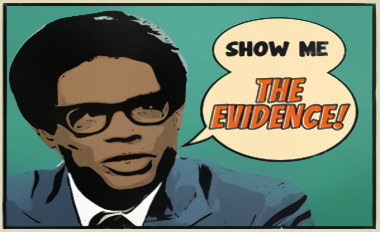
Thomas Sowell explains how the concept of social justice (or cosmic justice) is wholly incompatible with traditional justice (everyone treated the same) and how the proponents of the philosophy must conflate the two to sell the notion.
Here is a PDF of the original speech in New Zealand, that he mentioned finishing his thoughts in a book form.
The Ethnic Flaw – Part 1 (Affirmative Action Debunked, Race & Racism, Social Justice)
The Ethnic Flaw -Part 2 (Affirmative Action Debunked, Race & Racism, Social Justice)
Called “the most prodigious classical liberal scholar of the 20th century,” Milton Friedman explained his importance:
“Over the years, I have again and again asked fellow believers in a free society how they managed to escape the contagion of their collectivist intellectual environment. No name has been mentioned more often as the source of enlightenment than Friedrich Hayek’s.” (source)
Fifty years ago, Friedrich Hayek won the Nobel Prize in economics. However, the road that got him there was filled with skepticism and unheard warnings. Why were they ignored, and what makes them especially relevant today? Rediscover the ideas of F. A. Hayek and the historical context in which they were developed in this Libertarianism.org documentary.
00:00 Introduction | 01:45 Historical Context | 03:06 Hayek’s Early Work | 04:40 Hayek vs. Keynes | 07:44 The Complexity of Society | 09:30 The Knowledge Problem | 11:11 The Road to Serfdom | 13:41 Mont Pelerin Society | 14:31 Hayek & Libertarianism | 16:48 The Nobel Prize | 18:47 Last Years
(More at Econ Library) If any twentieth-century economist was a Renaissance man, it was Friedrich Hayek. He made fundamental contributions in political theory, psychology, and economics. In a field in which the relevance of ideas often is eclipsed by expansions on an initial theory, many of his contributions are so remarkable that people still read them more than fifty years after they were written. Many graduate economics students today, for example, study his articles from the 1930s and 1940s on economics and knowledge, deriving insights that some of their elders in the economics profession still do not totally understand. It would not be surprising if a substantial minority of economists still read and learn from his articles in the year 2050. In his book Commanding Heights, Daniel Yergin called Hayek the “preeminent” economist of the last half of the twentieth century.
Hayek was the best-known advocate of what is now called Austrian economics. He was, in fact, the only major recent member of the Austrian school who was actually born and raised in Austria. After World War I, Hayek earned his doctorates in law and political science at the University of Vienna. Afterward he, together with other young economists Gottfried Haberler, Fritz Machlup, and Oskar Morgenstern, joined Ludwig von Mises’s private seminar—the Austrian equivalent of John Maynard Keynes’s “Cambridge Circus.” In 1927 Hayek became the director of the newly formed Austrian Institute for Business Cycle Research. In the early 1930s, at the invitation of Lionel Robbins, he moved to the faculty of the London School of Economics, where he stayed for eighteen years. He became a British citizen in 1938.
Most of Hayek’s work from the 1920s through the 1930s was in the Austrian theory of business cycles, capital theory, and monetary theory. Hayek saw a connection among all three. The major problem for any economy, he argued, is how people’s actions are coordinated. He noticed, as Adam Smith had, that the price system—free markets—did a remarkable job of coordinating people’s actions, even though that coordination was not part of anyone’s intent. The market, said Hayek, was a spontaneous order. By spontaneous Hayek meant unplanned—the market was not designed by anyone but evolved slowly as the result of human actions. But the market does not work perfectly. What causes the market, asked Hayek, to fail to coordinate people’s plans, so that at times large numbers of people are unemployed?
One cause, he said, was increases in the money supply by the central bank. Such increases, he argued in Prices and Production, would drive down interest rates, making credit artificially cheap. Businessmen would then make capital investments that they would not have made had they understood that they were getting a distorted price signal from the credit market. But capital investments are not homogeneous. Long-term investments are more sensitive to interest rates than short-term ones, just as long-term bonds are more interest-sensitive than treasury bills. Therefore, he concluded, artificially low interest rates not only cause investment to be artificially high, but also cause “malinvestment”—too much investment in long-term projects relative to short-term ones, and the boom turns into a bust. Hayek saw the bust as a healthy and necessary readjustment. The way to avoid the busts, he argued, is to avoid the booms that cause them.
Hayek and Keynes were building their models of the world at the same time. They were familiar with each other’s views and battled over their differences. Most economists believe that Keynes’s General Theory of Employment, Interest and Money (1936) won the war. Hayek, until his dying day, never believed that, and neither do other members of the Austrian school. Hayek believed that Keynesian policies to combat unemployment would inevitably cause inflation, and that to keep unemployment low, the central bank would have to increase the money supply faster and faster, causing inflation to get higher and higher. Hayek’s thought, which he expressed as early as 1958, is now accepted by mainstream economists (see phillips curve).
In the late 1930s and early 1940s, Hayek turned to the debate about whether socialist planning could work. He argued that it could not. The reason socialist economists thought central planning could work, argued Hayek, was that they thought planners could take the given economic data and allocate resources accordingly. But Hayek pointed out that the data are not “given.” The data do not exist, and cannot exist, in any one mind or small number of minds. Rather, each individual has knowledge about particular resources and potential opportunities for using these resources that a central planner can never have. The virtue of the free market, argued Hayek, is that it gives the maximum latitude for people to use information that only they have. In short, the market process generates the data. Without markets, data are almost nonexistent.
Mainstream economists and even many socialist economists (see socialism) now accept Hayek’s argument. Columbia University economist Jeffrey Sachs noted: “If you ask an economist where’s a good place to invest, which industries are going to grow, where the specialization is going to occur, the track record is pretty miserable. Economists don’t collect the on-the-ground information businessmen do. Every time Poland asks, Well, what are we going to be able to produce? I say I don’t know.”
In 1944 Hayek also attacked socialism from a very different angle. From his vantage point in Austria, Hayek had observed Germany very closely in the 1920s and early 1930s. After he moved to Britain, he noticed that many British socialists were advocating some of the same policies for government control of people’s lives that he had seen advocated in Germany in the 1920s. He had also seen that the Nazis really were National Socialists; that is, they were nationalists and socialists. So Hayek wrote The Road to Serfdom to warn his fellow British citizens of the dangers of socialism. His basic argument was that government control of our economic lives amounts to totalitarianism. “Economic control is not merely control of a sector of human life which can be separated from the rest,” he wrote, “it is the control of the means for all our ends.”
To the surprise of some, John Maynard Keynes praised the book highly. On the book’s cover, Keynes is quoted as saying: “In my opinion it is a grand book…. Morally and philosophically I find myself in agreement with virtually the whole of it; and not only in agreement with it, but in deeply moved agreement.”
Although Hayek had intended The Road to Serfdom only for a British audience, it also sold well in the United States. Indeed, Reader’s Digest condensed it. With that book Hayek established himself as the world’s leading classical liberal; today he would be called a libertarian or market liberal. A few years later, along with Milton Friedman, George Stigler, and others, he formed the Mont Pelerin Society so that classical liberals could meet every two years and give each other moral support in what appeared to be a losing cause. …
Firing Line with William F. Buckley Jr.: Is There a Case for Private Property? (1977) (YouTube)
The second part of Hayek’s trilogy Law, Legislation, and Liberty, covers the concept of “social justice”—not without a reason it is called The Mirage of Social Justice. But on this topic, a rare video footage of Hayek is available, namely an episode of William F. Buckley’s discussion show Firing Line.
Here Hayek explains that the concept that a society as a whole can be just or unjust is simply a myth or sometimes even a pretext to expand government competences. Only an individual can be just or unjust in his actions.
By a continuing process of inflation, governments can confiscate, secretly and unobserved, an important part of the wealth of their citizens. – John Maynard Keynes
Originally posted in October 2011 ~ Updated the media files
Failed Policy: The Nobel Prize for Economics goes to two Americans who have separately exposed the flaws in government stimulus spending. For a Keynesian president, it’s the Anti-Peace Prize.
When President Obama was awarded the Nobel Peace Prize during his first year in office, detractors said it was for doing nothing.
That can’t be said for Thomas Sargent of New York University and Princeton’s Christopher Sims, whose macroeconomics work has been of invaluable help to central bankers and other economic policymakers, and for which they now share this year’s economics Nobel.
Sargent’s discoveries in particular echo the rationale Republican leaders in Congress have presented in opposing the massive Democratic stimulus spending during the first two years of the Obama administration — that such spending seeks to give the economy nothing more than what House Budget Chairman Rep. Paul Ryan over the weekend aptly called a “sugar high.”
This is an old accumulation of quotes via Bovard, Keynes, and Friedman regarding the “hidden tax”::
John Maynard Keynes hailed the Soviet Union in a 1936 radio interview as,
“engaged in a vast administrative task of making a completely new set of social and economic institutions work smoothly and successfully.”
And in a preface he wrote to the 1936 German edition of his General Theory of Employment, Interest, and Money, Keynes stated that his economic theory,
“is much more easily adapted to the conditions of a totalitarian state” than to “conditions of free competition and a large measure of laissez-faire.”
The two above quotes are from James Bovard’s book, Freedom in Chains: The Rise of the State and the Demise of the Citizen, (New York, NY: St. Martin’s Press, 1999), 14, 20-21.
Another Keynes quote lets the individual in on the result of his theories, which most nations use (i.e., central banking; e.g., the Federal Reserve Bank):
“Lenin is said to have declared that the best way to destroy the capitalist system was to debauch the currency. By a continuing process of inflation, governments can confiscate, secretly and unobserved, an important part of the wealth of their citizens. By this method they not only confiscate, but they confiscate arbitrarily; and, while the process impoverishes many, it actually enriches some. The sight of this arbitrary rearrangement of riches strikes not only at security but [also] at confidence in the equity of the existing distribution of wealth.
Those to whom the system brings windfalls, beyond their deserts and even beyond their expectations or desires, become “profiteers,” who are the object of the hatred of the bourgeoisie, whom the inflationism has impoverished, not less than of the proletariat. As the inflation proceeds and the real value of the currency fluctuates wildly from month to month, all permanent relations between debtors and creditors, which form the ultimate foundation of capitalism, become so utterly disordered as to be almost meaningless; and the process of wealth-getting degenerates into a gamble and a lottery.
Lenin was certainly right. There is no subtler, no surer means of overturning the existing basis of society than to debauch the currency. The process engages all the hidden forces of economic law on the side of destruction, and does it in a manner which not one man in a million is able to diagnose.”
John Maynard Keynes, The Economic Consequences Of The Peace (New York, NY: Harcourt, Brace, and Howe, 1920), 235-236
Milton Friedman quoted this in Money Mischief: Episodes in Monetary History:
“By a continuous process of inflation, governments can confiscate, secretly and unobserved, an important part of the wealth of their citizens. By this method, they not only confiscate, but they confiscate arbitrarily; and while the process impoverishes many, it actually enriches some . . .. The process engages all of the hidden forces of economic law on the side of destruction, and does it in a manner that not one man in a million can diagnose.”
This last quote IS what happens with Keynesian economics! An unseen taxation of citizens, on top of normal taxation.
Here is a good (as good as an economist’s presentation can be) presentation by Thomas Sargent:
Speaker: Professor Thomas J Sargent Chair: Professor Francesco Caselli
This event was recorded on 10 February 2010 in Old Theatre, Old Building
Combining an historical approach with macroeconomic theory, Thomas Sargent will discuss ways of thinking about American fiscal and monetary policies – exploring how contradictions have developed and how they have been resolved. Thomas Sargent is professor of economics at New York University and senior fellow at Hoover Institution at Stanford University.
Thomas Sargent was awarded, along with Christopher Sims, the 2011 Nobel Prize in Economic Sciences. The Nobel committee cited their “empirical research on cause and effect in the macroeconomy.” The Swedish economists who spoke at the press conference announcing the award emphasized the importance of Sargent’s and Sims’ thinking about the role of people’s expectations.
Sargent was an early and important contributor to the rational expectations revolution in macroeconomics, an area for which his sometime collaborator, Robert E. Lucas, Jr. won the Nobel Prize in 1995. One of Sargent’s key early contributions, along with University of Minnesota economist Neil Wallace, was the “Policy-ineffectiveness proposition”—the idea that people’s expectations about government fiscal and monetary policy make it difficult for government officials to affect the macroeconomy in the ways they intend to. If, for example, people get used to the Federal Reserve increasing the money supply when unemployment rises, they will expect higher inflation and, thus, will adjust their wage demands higher. Therefore, the lower unemployment rate that the Fed was trying to achieve with looser monetary policy will not occur.
This conclusion was at odds with the Keynesian model, which dominated economic thinking from the late 1930s to the early 1970s. The Keynesian model posited a stable tradeoff between inflation and unemployment. In 1970, major U.S. econometric models, built on Keynesian assumptions, predicted that the government could get the unemployment rate down to 4 percent if it accepted an increase in inflation to 4 percent. In a 1977 article, “Is Keynesian Economics a Dead End?” Sargent wrote: “[I]nstead of 4-4, in the mid-1970s we got 9-9, a very improbable occurrence if econometric models of 1969 had been correct.”
In the 1980s, Sargent explored expectations in other contexts. Sargent and Wallace argue in their highly influential paper, “Some Unpleasant Monetarist Arithmetic,” that good monetary policy requires good fiscal policy. Building on this, Sargent detailed how a government can end high inflation in “The Ends of Four Big Inflations.” Sargent studied four countries that had hyperinflation in the early 1920s: Germany, Austria, Hungary, and Poland. All used inflation to finance high government deficits. They all succeeded in eliminating hyperinflation, but to do so, they had to be credible. They had to affect people’s expectations by committing to substantially lower budget deficits or even balanced budgets. All four governments did so.
Sargent is actually quite ecumenical. In a 2010 interview, Sargent praised articles by left-wing economists Joseph Stiglitz and Jeffrey Sachs. Stiglitz and Sachs, he pointed out, “executed a rational expectations calculation to compute the rewards to prospective buyers” of toxic assets under President Obama’s Public-Private Investment Program of 2009. “Those calculations,” said Sargent, “showed that the administration’s proposal represented a large transfer of taxpayer funds to owners of toxic assets.”
Although the Nobel committee did not cite his work on unemployment insurance, Sargent, with Swedish economist Lars Ljungqvist, found that high, long-lasting unemployment benefits in Europe have caused many European workers who lost their jobs to stay unemployed for years and, thereby, erode their human capital. This makes them less employable in the long run. The fact that the U.S. government extended unemployment benefits in many U.S. states to 99 weeks, said Sargent in the 2010 interview referenced earlier, “fills me with dread.”
One of the main ways that Sargent has had influence is through his many, many students. An image of the students he has influenced, with Sargent in the middle of a flower, is worth a thousand words.
Thomas Sargent earned his B.A. from the University of California, Berkeley in 1964 and his Ph.D. from Harvard in 1968. He taught at the University of Pennsylvania from 1970 to 1971, the University of Minnesota from 1971 to 1987, the University of Chicago from 1991 to 1998, and Stanford University from 1998 to 2002. In 2002, Sargent began teaching at New York University, where he has since remained. Sargent was a Research Associate for the National Bureau of Economic Research From 1970 to 1973, and has been again from 1979 to the present. Between 1971 and 1987, Sargent was an Advisor to the Federal Reserve Bank of Minneapolis. He has been a fellow of the Econometric Society since 1976, a member of the National Academy of Sciences and American Academy of Arts and Sciences since 1983, and a senior fellow at the Hoover Institution since 1987. He was President of the American Economic Association in 2007.
About the Author
David R. Henderson is the editor of The Concise Encyclopedia of Economics. He is also an emeritus professor of economics with the Naval Postgraduate School and a research fellow with the Hoover Institution at Stanford University. He earned his Ph.D. in economics at UCLA.
I just will drop this here that the #1 the Foundation for Economic Education (FEE) recommends from their top five books is:
1. Economics in One Lesson (Henry Hazlitt, 1946)
The fact that I recently dedicated an article to this masterpiece shows the special attachment I have to Henry Hazlitt and this work in particular. In Economics in One Lesson, the author debunks a series of widespread economic fallacies using a simple and accessible language. If you wish to learn more about some basic, though important, economic principles, this is your book. One piece of advice before starting to read it: get rid of your prejudices and preconceptions so that you can make the most of it.
Stossel
John Stossel investigates a New York City park bathroom that cost $2 million to build. (This video was made 7-years ago… factor in inflation [printing money].)
For that price you might expect gold-plated fixtures—but it’s just a tiny building with four toilets and two sinks. New York City Parks Commissioner Mitchell Silver says $2 million was a good deal because “New York City is the most expensive place to build.” He estimates that future bathrooms will cost more than $3 million. Commissioner Silver argues that this park, on the outskirts of Brooklyn, will get so much use that it must be built to last, and that can be expensive. Yet privately managed Bryant Park, in the middle of Manhattan, gets much more use and its recent bathroom renovation cost just $271,000. Since government spends other people’s money, it doesn’t need to worry about cost or speed. Every decision is bogged down by time-wasting “public engagement,” inflated union wages, and productivity-killing work rules. Two million dollars for a bathroom. That’s your government at work.
Prager-U
Few people have had as profound an impact on modern economics as economist Milton Friedman. His Nobel Prize-winning ideas on free enterprise resonated throughout the world and continue to do so. Johan Norberg, Senior Fellow at the Cato Institute, tells Friedman’s fascinating story.
O.G. No Free Lunch
Milton Friedman gives his thoughts on something called the “free lunch myth”. The idea is that the government can provide stuff for free at nobodies expense. Milton Friedman thinks this is false and he tells us why. Share with Bernie Sanders supporters you know.
Father Robert Sirico | No Free Lunch with David Bahnsen
David L. Bahnsen and Father Sirico discuss the philosophical and theological foundations of American free enterprise. Father Robert Sirico is a Priest, Author, and the Cofounder and President of the Acton Institute.
Dr. Hunter Baker | No Free Lunch with David Bahnsen
In Episode 2, David and guest Dr. Hunter Baker define human action, defend the dignity of work, and dissect the dangers of collectivism. Hunter Baker, J.D., Ph.D. serves as dean of arts and sciences and professor of political science at Union University in Jackson, Tennessee.
Dennis Prager | No Free Lunch with David Bahnsen
David speaks with guest Dennis Prager, author, host of The Dennis Prager Show and founder of PragerU, about the many ways covetousness and class envy corrode good economics, the nature of inequality, and how the Left’s culture of entitlement destroys the American value system.
Larry Kudlow | No Free Lunch with David Bahnsen
Bahnsen speaks with Larry Kudlow, former director of the National Economic Council and host of Kudlow on Fox Business, about why incentives are the heart of economics. The two discuss the history of supply-side economics, discuss the regulatory policies and problems that disincentivize businesses and households, and address the disease of wokeness in American boardrooms.
Ryan T. Anderson | No Free Lunch with David Bahnsen
Thanks to the Left’s culture of class envy, private property has become a four-letter word in popular culture. In this episode of No Free Lunch, Ryan Anderson, author and president of the Ethics and Public Policy Center, joins host David Bahnsen to examine the theological justification for accumulating private property, discuss how private property creates prosperity and encourages compassion, and debate the State’s role in private-property protection.
Doug Wilson | No Free Lunch with David Bahnsen
David hosts Pastor Doug Wilson to discuss virtue and discipline not simply as desirable moral characteristics in economics, but as the very necessity of free markets.
(BONUS EP.) Sen. Ted Cruz | No Free Lunch with David Bahnsen
David Bahnsen speaks with guest Senator Ted Cruz about the government’s role in free markets and the conservative vision for sound economic policy.
However, the PHRASE “There ain’t no such thing as free lunch,” is made into an acronym (TANSTAAFL). And it is used to great delight in various and sundry ways: here, here, here, here, here, and here, as some examples. It’s origin dates back quite some time. But QUOTE ORIGIN did some bang up work on the matter. LIBERTARIANISM.ORG has the intro to the fable:
“There ain’t no such thing as a free lunch” has been a popular libertarian slogan since the 1960s. The slogan’s meaning is simple: you cannot make something from nothing. In a political context, the state cannot promise fantastical benefits without eventually increasing taxes.
Although Robert Heinlein is responsible for popularizing the slogan, he is not its creator. The phrase might seem a little alien because it is associated with an old business practice that diminished over time following the Great Depression. Between 1870 and 1920, bars and taverns served free lunches with the purchase of a drink to entice new customers. Salty food was served to get customers to drink more beer and spend more money.
The first use of TANSTAAFL in its modern context can be found in an article entitled “Economics in Eight Words” in the El Paso Herald-Post from 1938, likely written by a man named Walter Morrow, editor-in-chief of The Southwestern Group of Scripps-Howard Newspapers.
“Economics in Eight Words”
Once upon a time a great and wise king ruled a populous and prosperous land. The width and breadth of his kingdom were measured in thousands of leagues.
But a plague of poverty came upon that land, and no man knew its cause. There were mighty and inconclusive arguments in the halls of government, and learned graybeards in the schools advocated this remedy or that.
The king, seeing that his people were starving and distressed in the midst of plenty, called his wisest counsellors from the four quarters of the kingdom.
Seated on his golden throne and arrayed in his royal robes, he commanded them to lend him their wisdom. Then began an argument that lasted all through the night, until the King’s head drooped wearily with the weight of the sapphires and diamonds in his golden crown. As dawn was breaking he arose and said:
“Here is only confusion of tongues. I have heard many of you speak of a science called economics, which may prove the key to my people’s troubles.
“Mark well my words: One month hence let all the economists of my kingdom assemble here, bringing with them a short and simple text on this subject of economics, so that I may find light and my people may be saved.”
A month passed. The economists assembled, and their number was two thousand and ten.
“Where is my short text on economics?” asked the king.
“O, sire,” replied the chief economist, “we have it not. To prepare such a text will require at least a year.”
“That,” said the king, “is a long time, and my people languish. But go, now, and get to work without delay.” A twelvemonth later the economists took their places in the great audience hall, around the crystal walls of which stood the palace guards, armed with spears and crossbows. Then stood forth the gray-bearded chief economist.
“O, King,” he said, “We have labored with all diligence and have prepared the short text on economics for which you asked. We have it here in 87 volumes of 600 pages each, profusely illustrated with charts and graphs.”
The king, exceedingly wroth, raised his scepter and let it fall with a crash, so that the great sapphire in its tip bit deeply into the table top before him. And the guards, raising their crossbows, shot one thousand and five of the economists.
“Now,” thundered the king, “get you gone, and return not until you have written me a really brief text on economics.”
And the remaining economists fled down the long hall, and the iron doors of the palace clanged behind them.
But, another year having passed, they returned, and the aged spokesman spoke with prideful voice:
“Sire, at last we have just what you want. We have reduced our work on economics to 63 volumes by eliminating the graphs and charts.”
Again the king raised his scepter and brought it down, with such force this time that the great sapphire remained embedded in the walnut and the pearl of the table top. Again the guards shot their crossbows, and again the number of economists was reduced by half. And those left alive fled once more from the king’s wrath.
Year after year they returned to the palace, bringing each time a slightly more condensed version of the text on economics. But never was the king satisfied, and each time the palace guards shot more economists until at last only one remained alive.
He was a man of profound wisdom, but aged and feeble, so that never had he been able to make his voice heard above the disputations of his colleagues.
And a day came when this last economist plodded slowly to the palace and sought audience with the king, himself now a graybeard, sad and bent with pondering the troubles of his people. Trembling, the last economist approached the throne, prostrated himself before the king, and spoke:
“Your majesty, I have reduced the subject of economics to a single sentence, so brief and so easily remembered that it was not necessary to put it on paper. Yet I will wager my head that you will find my text a true one, and not to be disputed.”
“Speak on,” cried the king, and the palace guards leveled their crossbows. But the old economist rose fearlessly to his feet, stood face to face with the king and said:
“Sire, in eight words I will reveal to you all the wisdom that I have distilled through all these years from all the writings of all the economists who once practiced their science in your kingdom. Here is my text:
There’s No Such Thing as a Free Lunch (Milton Friedman) – The Turney Collection
Milton Friedman, recipient of the 1976 Nobel Prize for Economic Science, was one of the most recognizable and influential proponents of liberty and markets in the 20th century, and the leader of the Chicago School of economics. In this video from the grand opening of the Cato Institute’s headquarters in Washington, D.C. in 1993, Milton Friedman gives a talk about popular political aphorisms, one of his favorites being the one he helped popularize in the title of his 1975 book, “There’s no such thing as a free lunch.”
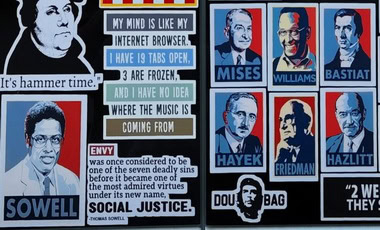
Often I am asked who the pictured persons are on the back of my van. So I figured I would explain a few of them in bio form and what books by them are classics.
All books and pictures will be linked.
Milton Friedman
(More at Econ Library) Milton Friedman was the twentieth century’s most prominent advocate of free markets. Born in 1912 to Jewish immigrants in New York City, he attended Rutgers University, where he earned his B.A. at the age of twenty. He went on to earn his M.A. from the University of Chicago in 1933 and his Ph.D. from Columbia University in 1946. In 1951 Friedman received the John Bates Clark Medal honoring economists under age forty for outstanding achievement. In 1976 he was awarded the Nobel Prize in economics for “his achievements in the field of consumption analysis, monetary history and theory, and for his demonstration of the complexity of stabilization policy.” Before that time he had served as an adviser to President Richard Nixon and was president of the American Economic Association in 1967. After retiring from the University of Chicago in 1977, Friedman became a senior research fellow at the Hoover Institution at Stanford University.
Friedman established himself in 1945 with Income from Independent Professional Practice, coauthored with Simon Kuznets. In it he argued that state licensing procedures limited entry into the medical profession, thereby allowing doctors to charge higher fees than they would be able to do if competition were more open.
His landmark 1957 work, A Theory of the Consumption Function, took on the Keynesian view that individuals and households adjust their expenditures on consumption to reflect their current income. Friedman showed that, instead, people’s annual consumption is a function of their “permanent income,” a term he introduced as a measure of the average income people expect over a few years.
In Capitalism and Freedom, Friedman wrote arguably the most important economics book of the 1960s, making a case for relatively free markets to a general audience. He argued for, among other things, a volunteer army, freely floating exchange rates, abolition of licensing of doctors, a negative income tax, and education vouchers. (Friedman was a passionate foe of the military draft: he once stated that the abolition of the draft was almost the only issue on which he had personally lobbied Congress.) Many of the young people who read it were encouraged to study economics themselves. His ideas spread worldwide with Free to Choose (coauthored with his wife, Rose Friedman), the best-selling nonfiction book of 1980, written to accompany a TV series on the Public Broadcasting System. This book made Milton Friedman a household name.
F.A. Hayek
(More at Econ Library) If any twentieth-century economist was a Renaissance man, it was Friedrich Hayek. He made fundamental contributions in political theory, psychology, and economics. In a field in which the relevance of ideas often is eclipsed by expansions on an initial theory, many of his contributions are so remarkable that people still read them more than fifty years after they were written. Many graduate economics students today, for example, study his articles from the 1930s and 1940s on economics and knowledge, deriving insights that some of their elders in the economics profession still do not totally understand. It would not be surprising if a substantial minority of economists still read and learn from his articles in the year 2050. In his book Commanding Heights, Daniel Yergin called Hayek the “preeminent” economist of the last half of the twentieth century.
Hayek was the best-known advocate of what is now called Austrian economics. He was, in fact, the only major recent member of the Austrian school who was actually born and raised in Austria. After World War I, Hayek earned his doctorates in law and political science at the University of Vienna. Afterward he, together with other young economists Gottfried Haberler, Fritz Machlup, and Oskar Morgenstern, joined Ludwig von Mises’s private seminar—the Austrian equivalent of John Maynard Keynes’s “Cambridge Circus.” In 1927 Hayek became the director of the newly formed Austrian Institute for Business Cycle Research. In the early 1930s, at the invitation of Lionel Robbins, he moved to the faculty of the London School of Economics, where he stayed for eighteen years. He became a British citizen in 1938.
Most of Hayek’s work from the 1920s through the 1930s was in the Austrian theory of business cycles, capital theory, and monetary theory. Hayek saw a connection among all three. The major problem for any economy, he argued, is how people’s actions are coordinated. He noticed, as Adam Smith had, that the price system—free markets—did a remarkable job of coordinating people’s actions, even though that coordination was not part of anyone’s intent. The market, said Hayek, was a spontaneous order. By spontaneous Hayek meant unplanned—the market was not designed by anyone but evolved slowly as the result of human actions. But the market does not work perfectly. What causes the market, asked Hayek, to fail to coordinate people’s plans, so that at times large numbers of people are unemployed?
One cause, he said, was increases in the money supply by the central bank. Such increases, he argued in Prices and Production, would drive down interest rates, making credit artificially cheap. Businessmen would then make capital investments that they would not have made had they understood that they were getting a distorted price signal from the credit market. But capital investments are not homogeneous. Long-term investments are more sensitive to interest rates than short-term ones, just as long-term bonds are more interest-sensitive than treasury bills. Therefore, he concluded, artificially low interest rates not only cause investment to be artificially high, but also cause “malinvestment”—too much investment in long-term projects relative to short-term ones, and the boom turns into a bust. Hayek saw the bust as a healthy and necessary readjustment. The way to avoid the busts, he argued, is to avoid the booms that cause them.
Hayek and Keynes were building their models of the world at the same time. They were familiar with each other’s views and battled over their differences. Most economists believe that Keynes’s General Theory of Employment, Interest and Money (1936) won the war. Hayek, until his dying day, never believed that, and neither do other members of the Austrian school. Hayek believed that Keynesian policies to combat unemployment would inevitably cause inflation, and that to keep unemployment low, the central bank would have to increase the money supply faster and faster, causing inflation to get higher and higher. Hayek’s thought, which he expressed as early as 1958, is now accepted by mainstream economists (see phillips curve).
In the late 1930s and early 1940s, Hayek turned to the debate about whether socialist planning could work. He argued that it could not. The reason socialist economists thought central planning could work, argued Hayek, was that they thought planners could take the given economic data and allocate resources accordingly. But Hayek pointed out that the data are not “given.” The data do not exist, and cannot exist, in any one mind or small number of minds. Rather, each individual has knowledge about particular resources and potential opportunities for using these resources that a central planner can never have. The virtue of the free market, argued Hayek, is that it gives the maximum latitude for people to use information that only they have. In short, the market process generates the data. Without markets, data are almost nonexistent.
Mainstream economists and even many socialist economists (see socialism) now accept Hayek’s argument. Columbia University economist Jeffrey Sachs noted: “If you ask an economist where’s a good place to invest, which industries are going to grow, where the specialization is going to occur, the track record is pretty miserable. Economists don’t collect the on-the-ground information businessmen do. Every time Poland asks, Well, what are we going to be able to produce? I say I don’t know.”
In 1944 Hayek also attacked socialism from a very different angle. From his vantage point in Austria, Hayek had observed Germany very closely in the 1920s and early 1930s. After he moved to Britain, he noticed that many British socialists were advocating some of the same policies for government control of people’s lives that he had seen advocated in Germany in the 1920s. He had also seen that the Nazis really were National Socialists; that is, they were nationalists and socialists. So Hayek wrote The Road to Serfdom to warn his fellow British citizens of the dangers of socialism. His basic argument was that government control of our economic lives amounts to totalitarianism. “Economic control is not merely control of a sector of human life which can be separated from the rest,” he wrote, “it is the control of the means for all our ends.”
To the surprise of some, John Maynard Keynes praised the book highly. On the book’s cover, Keynes is quoted as saying: “In my opinion it is a grand book…. Morally and philosophically I find myself in agreement with virtually the whole of it; and not only in agreement with it, but in deeply moved agreement.”
Although Hayek had intended The Road to Serfdom only for a British audience, it also sold well in the United States. Indeed, Reader’s Digest condensed it. With that book Hayek established himself as the world’s leading classical liberal; today he would be called a libertarian or market liberal. A few years later, along with Milton Friedman, George Stigler, and others, he formed the Mont Pelerin Society so that classical liberals could meet every two years and give each other moral support in what appeared to be a losing cause. …
Thomas Sowell
(More at Famous Economists) Thomas Sowell is a renowned economist, theorist and writer hailing from the United States of America. He is known for his old-fashioned assessments of economic theory, often drawing criticism from his liberal counterparts, but still attracting appreciation from fellow conservatives for encouraging hard work and self-sufficiency.
Sowell is an African American born in North Carolina on 30 June, 1930. He spent a lot of his early childhood migrating between cities due to family issues which required him to drop out of his high school. His family’s financial predicament forced him to work different jobs at a very young age; his endeavors saw him work at a machine shop and as a delivery boy for Western Union. He was soon inducted in to the Marine Corps as an aspiring photographer, where he also learned how to operate pistols. He managed this job whilst simultaneously continuing his education, attending night classes at his high school.
After enrolling in Howard University, Sowell soon obtained a transfer to Harvard University on the back of impressive results in College Board examinations and positive recommendations from professors. Sowell graduated with a degree in economics in 1958, and then moved to Columbia University for his Masters program, after which he completed is Ph.D. studies from the University of Chicago in 1968.
TRANSCRIPT
Dave Rubin: You were a Marxist at one time in your life. Most people will find this hard to believe, but, It is true.
Thomas Sowell: But it’s not that unusual. Ahhh, most of the leading conservative thinkers around time did not start off as conservatives. You had a couple like Bill Buckley and George Will [that did start off conservative]. But, Milton Friedman was a liberal and a Keynesian. Hayek was a socialist. Ronald Reagan was so far left at one point the FBI was following him.
Dave Rubin: So then, what was your wake up to what was wrong with that line of thinking?
Thomas Sowell:Facts
PICTURED: Thomas Sowell’s book on Marxist Economics, David Horowitz, Whittaker Chambers, Frank Meyer, William F. Buckley Jr., George Will, Milton Friedman, F.A. Hayek, Ronald Reagan
Thomas Sowell occupied a number of teaching positions at various universities after completing his education. After teaching at Rutgers and Howard universities in the early 60’s, he held the title of assistant professor of economics at Cornell and the University of California, Los Angeles where he was given full professor status in 1974. Sowell has also been part of the faculty at Brandeis University and Amherst College. In 1980, he moved to Stanford University which granted him the title of Senior Fellow at its Hoover Institution. He has held this position there ever since.
Sowell initially subscribed to the Marxist school of thought in economics theory, an approach he renounced after his experience working as an intern for the U.S. Department of Labor in 1960, instead opting for free market principles. His research in his time there also made him critical of minimum wage laws, which he felt not only perpetuated unemployment, but were introduced by bureaucrats only to secure their status in the government. He orchestrated the Black Alternatives Conference in San Francisco during the Reegan regime to oppose minimum wages and call for more black representation in the government. In 1969 however, Sowell defended Cornell University against allegations of racism after observing the rebellion by black students.
Sowell also boasts remarkable credentials in the field or journalism and writing, expressing opinion on a multitude of topics such as state policies on social and racial groups, Marxist economic theory and education. He has published a number of works since 1971, with some of his best-selling books being ‘Basic Economics: A Common Sense Guide to the Economy‘, ‘Black Rednecks and White Liberals‘, and ‘Intellectuals and Society‘. Besides publishing books Sowell has written for prominent magazines and academic journals. These include the New York Times, Forbes and the Spectator. He also managed a column for the Scripps-Howard news service in the years 1984-1990.
During is elaborate career, Thomas Sowell was no stranger to controversy. His claims that inequality which persists across ethnic groups bears no connection with discrimination, but is to do with the characteristics and attitudes intrinsic to these groups was not received well by some sects. His resistance towards government assistance of economically and socially challenged groups, which he believes discourages self-sufficiency and dependence, has also been criticized. But he still remains one of the great African American thinkers of his generation given his contributions not only towards the economics, but political philosophy and social theory as well. …
Ludwig von Mises
Ludwig von Mises was one of the last members of the original austrian school of economics. He earned his doctorate in law and economics from the University of Vienna in 1906. One of his best works, The Theory of Money and Credit, was published in 1912 and was used as a money and banking textbook for the next two decades. In it Mises extended Austrian marginal utility theory to money, which, noted Mises, is demanded for its usefulness in purchasing other goods rather than for its own sake.
In that same book Mises also argued that business cycles are caused by the uncontrolled expansion of bank credit. In 1926 Mises founded the Austrian Institute for Business Cycle Research. His most influential student, Friedrich Hayek, later developed Mises’s business cycle theories.
Another of Mises’s notable contributions is his claim that socialism must fail economically. In a 1920 article, Mises argued that a socialist government could not make the economic calculations required to organize a complex economy efficiently. Although socialist economists Oskar Lange and Abba Lerner disagreed with him, modern economists agree that Mises’s argument, combined with Hayek’s elaboration of it, is correct (see socialism).
Mises believed that economic truths are derived from self-evident axioms and cannot be empirically tested. He laid out his view in his magnum opus, Human Action, and in other publications, although he failed to persuade many economists outside the Austrian school. Mises was also a strong proponent of laissez-faire; he advocated that the government not intervene anywhere in the economy. Interestingly, though, even Mises made some striking exceptions to this view. For example, he believed that military conscription could be justified in wartime.
From 1913 to 1934 Mises was an unpaid professor at the University of Vienna while working as an economist for the Vienna Chamber of Commerce, in which capacity he served as the principal economic adviser to the Austrian government. To avoid the Nazi influence in his Austrian homeland, in 1934 Mises left for Geneva, where he was a professor at the Graduate Institute of International Studies until he emigrated to New York City in 1940. He was a visiting professor at New York University from 1945 until he retired in 1969.
Mises’s ideas—on economic reasoning and on economic policy—were out of fashion during the Keynesian revolution that took over American economic thinking from the mid-1930s to the 1960s. Mises’s upset at the Keynesian revolution and at Hitler’s earlier destruction of his homeland made Mises bitter from the late 1940s on. The contrast between his early view of himself as a mainstream member of his profession and his later view of himself as an outcast shows up starkly in The Theory of Money and Credit. The first section, written in 1912, is calmly argued; the last section, added in the 1940s, is strident. ….
Frederic Bastiat
Joseph Schumpeter described Bastiat nearly a century after his death as “the most brilliant economic journalist who ever lived.” Orphaned at the age of nine, Bastiat tried his hand at commerce, farming, and insurance sales. In 1825, after he inherited his grandfather’s estate, he quit working, established a discussion group, and read widely in economics.
Bastiat made no original contribution to economics, if we use “contribution” the way most economists use it. That is, we cannot associate one law, theorem, or pathbreaking empirical study with his name. But in a broader sense Bastiat made a big contribution: his fresh and witty expressions of economic truths made them so understandable and compelling that the truths became hard to ignore.
Bastiat was supremely effective at popularizing free-market economics. When he learned of Richard Cobden’s campaign against the British Corn Laws (restrictions on the import of wheat, barley, rye, and oats), Bastiat vowed to become the “French Cobden.” He subsequently published a series of articles attacking protectionism that brought him instant acclaim. In 1846 he established the Association of Free Trade in Paris and his own weekly newspaper, in which he waged a witty assault against socialists and protectionists.
Bastiat’s “A Petition,” usually referred to now as “The Petition of the Candlemakers,” displays his rhetorical skill and rakish tone, as this excerpt illustrates:
We are suffering from the ruinous competition of a foreign rival who apparently works under conditions so far superior to our own for the production of light, that he is flooding the domestic market with it at an incredibly low price…. This rival … is none other than the sun….
We ask you to be so good as to pass a law requiring the closing of all windows, dormers, skylights, inside and outside shutters, curtains, casements, bull’s-eyes, deadlights and blinds; in short, all openings, holes, chinks, and fissures.
This reductio ad absurdum of protectionism was so effective that one of the most successful postwar economics textbooks, Economics by Paul A. Samuelson, quotes the candlemakers’ petition at the head of the chapter on protectionism.
Bastiat also emphasized the unintended consequences of government policy (he called them the “unseen” consequences). Friedrich Hayek credits Bastiat with this important insight: if we judge economic policy solely by its immediate effects, we will miss all of its unintended and longer-run effects and will undermine economic freedom, which delivers benefits that are not part of anyone’s conscious design. Much of Hayek’s work, and some of Milton Friedman’s, was an exploration and elaboration of this insight.
Henry Hazlitt, a journalist, writer, and economist, was born in Philadelphia. His father died soon after his birth, and he attended a school for poor, fatherless boys. His mother remarried, and the family moved to Brooklyn, New York. When he graduated from high school, Hazlitt’s ambition was to go to Harvard and write books on philosophy. But his stepfather died, and he started attending the no-tuition College of the City of New York. However, he soon left school to support himself and his mother. In those years, it was not hard for a young man to get a job. With no government- imposed obstacles to hiring or firing, no minimum wage laws, no workday or workweek restrictions, and no unemployment or social security taxes, employer and potential employee needed only to agree on the terms of employment. If things did not work out, the employee could quit or be fired. Hazlitt’s first jobs lasted only a few days each.
When Hazlitt realized that with shorthand and typing skills he could earn two or three times the $5 per week he was being paid as an unskilled office boy, he studied stenography. Determined to become a writer, he looked for a newspaper job and soon took a job with the Wall StreetJournal, then a small limited-circulation publication. Its executives dictated editorials to him, and reporters phoned in their stories. At first he knew nothing about Wall Street. On one assignment, Hazlitt was informed that a company had passed its dividend. Hazlitt thought this meant the company had approved it. But in stock market terminology, passing a dividend meant skipping it. Fortunately, in reporting the story, Hazlitt used the company’s original verb. He was learning about the market.
Having missed out on college, Hazlitt determined to study on his own. He started reading college economics texts, but was not misled by their anticapitalist flavor. Experience had taught him that businessmen did not always earn profits; they sometimes suffered losses. Hazlitt’s uncle had been forced to close his Coney Island enterprise when it rained heavily over a Fourth of July holiday and customers stayed away in droves. Hazlitt’s stepfather lost his business making children’s hats when this custom went out of fashion.
Hazlitt’s real economic education began with his study of Philip H. Wicksteed’s The Common Sense of PoliticalEconomy, which introduced him to the subjective theory of value, only recently developed by Austrian economists Carl Menger and Eugen von Böhm-Bawerk. Hazlitt continued his self-study program and persisted in his ambition to write. His first book, Thinking as a Science, appeared in 1916 before his 22nd birthday.
In 1916, Hazlitt left the Wall Street Journal for the New York Evening Post. He was forced to leave during World War I, serving in the Army Air Corps in Texas. However, when the war ended, the Post wired Hazlitt that he could have his job back if he was in the office in 5 days. He entrained immediately, went directly to the newspaper, and worked that day in uniform.
From the Post, Hazlitt went on to become either financial or literary editor of various New York papers. From 1934 to 1946, Hazlitt was an editorial writer for The NewYork Times. Hazlitt and the Times parted company over the Bretton Woods Agreement, against which Hazlitt had been editorializing. The Times supported the agreement, which had been endorsed by 43 nations, but Hazlitt claimed it would only lead to monetary expansion and refused to support it. Hazlitt secured a position with Newsweek and left the Times. From 1946 to 1966, he wrote Newsweek’s Business Tides column.
An analysis of Hazlitt’s libertarian sympathies must mention his association with Ludwig von Mises, the leading exponent of the Austrian School of Economics. Hazlitt first heard of Mises through Benjamin M. Anderson’s TheValue of Money, published in 1917. Anderson criticized many writers on monetary theory, but said he found in Mises’s works “very noteworthy clarity and power. His Theorie des Geldes und der Umlaufsmittel [later translated into English as The Theory of Money and Credit] is an exceptionally excellent book.” Although Mises had been widely respected in Europe, he was little known in this country when he arrived as a wartime refugee in 1940. When Mises’s Socialism appeared in English in 1937, Hazlitt remembered Anderson’s remark about Mises and reviewed Socialism in the Times, describing it as “the most devastating analysis of socialism yet penned … an economic classic in our time.” He sent his review to Mises in Switzerland and, 2 years later, when Mises came to this country, he phoned Hazlitt. Hazlitt recalled Mises’s call as if coming from an economic ghost of centuries past. Hazlitt and Mises soon met and became close friends. Hazlitt’s contacts helped establish Mises on this side of the Atlantic, enabling him to continue his free-market teaching, writing and lecturing. Hazlitt was instrumental in persuading Yale University to publish Mises’s Omnipotent Government and Bureaucracy in 1944 and then his major opus, HumanAction, in 1949. As a founding trustee of the FEE, Hazlitt also was responsible for Mises’s appointment as economic advisor to that Foundation.
In 1946, Hazlitt wrote and published his most popular book, Economics in One Lesson. It became a best-seller, was translated into 10 languages, and still sells thousands of copies each year. Its theme—that economists should consider not only the seen but also the unseen consequences of any government action or policy—was adopted from 19th-century free-market economist Frédéric Bastiat. Thanks to Economics in One Lesson’s short chapters and clear, lucid style, countless readers were able to grasp its thesis that government intervention fails to attain its hoped-for objectives.
While still at Newsweek, Hazlitt edited the libertarian biweekly, The Freeman—as coeditor from 1950 to 1952 and as editor-in-chief from 1952 to 1953. When the left-liberal Washington Post bought Newsweek, Hazlitt became a columnist from 1966 to 1969 for the international LosAngeles Times syndicate. ….
Walter Williams
Walter E. Williams, prominent economist, commentator, and professor at George Mason University, died on Tuesday, December 1. He was 84.
Williams was a national fellow at the Hoover Institution in the academic year 1975-1976. He also served on the Board of Overseers from 1983 to 2004 and was a member of its executive committee from 1994 to 2004.
The highly esteemed Williams was born in 1936 to humble origins in Philadelphia. A onetime taxi driver, he went on to earn a BA in economics from California State University (Cal State)– Los Angeles, and an MA and PhD in economics from University of California, Los Angeles.
He has served on the economic faculties of Los Angeles City College, Cal State Los Angeles, Temple University, and Grove City (Pennsylvania) College. Since 1980, he has been the John M. Olin Distinguished Professor at George Mason University (GMU), Fairfax, Virginia, where he was also the chair of the economics department from 1995 to 2001.
“The economics profession boasts many excellent, but it has precious few with the ability and interest to do rigorous research and to engage the public with its results,” said Donald J. Boudreaux, Williams’s GMU colleague, in Wall Street Journal tribute.
A prolific writer of widely read syndicated columns, academic papers, and best-selling books, Williams authored the seminal 1982 book The State against Blacks, about how the regulatory state negatively impacts African Americans. He was also known for his concise arguments about how minimum-wage laws can result in employment discrimination.
“What minimum-wage laws do is lower the cost of, and hence subsidize, racial preference indulgence. After all, if an employer must pay the same wage no matter whom he hires, the cost of discriminating in favor of the people he prefers is cheaper,” Williams held.
Williams has also made countless appearances on radio and television shows including Firing Line, Free to Choose, Face the Nation, and Crossfire. In 2014, he produced Suffer No Fools, a PBS documentary criticizing antipoverty programs and based on his autobiography, Up from the Projects, published in 2010 by Hoover Institution Press. Among his other thirteen books are More Liberty Means Less Government, also published by Hoover Institution Press in 1999. The collection of thoughtful, hard-hitting essays explores issues including minimum wage, the Americans with Disabilities Act, affirmative action, and racial and gender quotas.
Williams was also a perennial substitute host of TheRush Limbaugh Show, on which he would frequently invite Milton and Rose Friedman Senior Fellow Thomas Sowell for conversations on economics, politics, and a wide range of contemporary social issues.
“He was my best friend for half a century. There was no one I trusted more or whose integrity I respected more,” Sowell said.
The conservative base of the Republican Party are filled with people like me and all the peeps I know. We are well read, present answers to questions with facts. Correct peoples opinions with a more reality based view. Etc. The books above [and more] helped form my opinions on economics and government, and assisted in a total worldview. A coherent worldview must be able to satisfactorily answer four questions: that of origin, meaning, morality, and destiny. All those are based in the Christian worldview and have a more coherent view within the Biblical, Judeo-Christian worldview. Meaning and direction in life are salted with the laws of economics and self governance. And church history plays a role in all this. Just one example:
A WILDERNESS OF CASUISTRY
In 1957, the great Reformation historian Johannes Heckel called Luther’s two-kingdoms theory a veritable Irrgarten, literally “garden of errors,” where the wheats and tares of interpretation had grown indiscriminately together. Some half a century of scholarship later, Heckel’s little garden of errors has become a whole wilderness of confusion, with many thorny thickets of casuistry to ensnare the unsuspecting. It is tempting to find another way into Lutheran contributions to legal theory. But Luther’s two-kingdoms theory was the framework on which both he and many of his followers built their enduring views of law and authority, justice and equity, society and politics. We must wander in this wilderness at least long enough to get our legal bearings.
Luther was a master of the dialectic — of holding two doctrinal opposites in tension and of exploring ingeniously the intellectual power of this tension. Many of his favorite dialectics were set out in the Bible and well rehearsed in the Christian tradition: spirit and flesh, soul and body, faith and works, heaven and hell, grace and nature, the kingdom of God versus the kingdom of Satan, the things that are God’s and the things that are Caesar’s, and more. Some of the dialectics were more uniquely Lutheran in accent: Law and Gospel, sinner and saint, servant and lord, inner man and outer man, passive justice and active justice, alien righteousness and proper righteousness, civil uses and theological uses of the law, among others.
Luther developed a good number of these dialectical doctrines separately in his writings from 1515 to 1545 — at different paces, in varying levels of detail, and with uneven attention to how one doctrine fit with others. He and his followers eventually jostled together several doctrines under the broad umbrella of the two-kingdoms theory. This theory came to describe at once: (I) the distinctions between the fallen realm and the redeemed realm, the City of Man and the City of God, the Reign of the Devil and the Reign of Christ; (2) the distinctions between the sinner and the saint, the flesh and the spirit, the inner man and the outer man; (3) the distinctions between the visible Church and the invisible Church, the Church as governed by civil law and the Church as governed by the Holy Spirit; (4) the distinctions between reason and faith, natural knowledge and spiritual knowledge; and (5) the distinctions between two kinds of righteousness, two kinds of justice, two uses of law.
When Luther, and especially his followers, used the two-kingdoms terminology, they often had one or two of these distinctions primarily in mind, sometimes without clearly specifying which. Rarely did all of these distinctions come in for a fully differentiated and systematic discussion and application, especially when the jurists later invoked the two-kingdoms theory as part of their jurisprudential reflections. The matter was complicated even further because both Anabaptists and Calvinists of the day eventually adopted and adapted the language of the two kingdoms as well — each with their own confessional accents and legal applications that were sometimes in sharp tension with Luther’s and other Evangelical views. It is thus worth spelling out Luther’s understanding of the two kingdoms in some detail, and then drawing out its implications for law, society, and politics.
John Witte, Jr., Law and Protestantism: The Legal Teachings of the Lutheran Reformation (Cambridge, United Kingdom: Cambridge University Press, 2002), 94-95.
iPencil
Starring comedian Andrew Heaton, EconPop takes a surprisingly deep look at the economic themes running through classic films, new releases, TV shows and more from the best of pop culture and entertainment. Heaton brings a unique mix of dry wit and whimsy to bear on the dismal science of economics and the result is always entertaining, educational and irreverent. It’s Econ 101 meets At The Movies, with a dash of Monty Python.
“For some, even catastrophe under Obama can be blamed on George Bush. After all, Franklin D. Roosevelt was elected to an unprecedented third term in 1940, after two terms in which the unemployment rate never fell below 10 percent and was above 20 percent for 21 consecutive months. FDR also inspired the will to believe— and he also had Herbert Hoover on whom to blame all the country’s troubles.”
— Thomas Sowell —
The video plays, the thumbnail [the picture that is suppose to show in the non-playing mode]does not work for some reason.
A new history of the Great Depression is emerging. One that acknowledges the role that government played in causing and prolonging it, and the constructive role that free enterprise could have played, if it were given the chance. In this video, UCLA economist Lee Ohanian explains how Herbert Hoover, widely misunderstood as a champion of the free market, actually turned what should have just been a recession into a depression due to his mistrust of the market.
…Let’s start at square one, with the stock market crash in October 1929. Was this what led to massive unemployment?
Official government statistics suggest otherwise. So do new statistics on unemployment by two current scholars, Richard Vedder and Lowell Gallaway, in their book “Out of Work.”
The Vedder and Gallaway statistics allow us to follow unemployment month by month. They put the unemployment rate at 5 percent in November 1929, a month after the stock market crash. It hit 9 percent in December— but then began a generally downward trend, subsiding to 6.3 percent in June 1930.
That was when the Smoot-Hawley tariffs were passed, against the advice of economists across the country, who warned of dire consequences.
Five months after the Smoot-Hawley tariffs, the unemployment rate hit double digits for the first time in the 1930s.
This was more than a year after the stock market crash. Moreover, the unemployment rate rose to even higher levels under both Presidents Herbert Hoover and Franklin D. Roosevelt, both of whom intervened in the economy on an unprecedented scale.
Before the Great Depression, it was not considered to be the business of the federal government to try to get the economy out of a depression. But the Smoot-Hawley tariff— designed to save American jobs by restricting imports— was one of Hoover’s interventions, followed by even bigger interventions by FDR.
The rise in unemployment after the stock market crash of 1929 was a blip on the screen compared to the soaring unemployment rates reached later, after a series of government interventions.
For nearly three consecutive years, beginning in February 1932, the unemployment rate never fell below 20 percent for any month before January 1935, when it fell to 19.3 percent, according to the Vedder and Gallaway statistics.
In other words, the evidence suggests that it was not the “problem” of the financial crisis in 1929 that caused massive unemployment but politicians’ attempted “solutions.” Is that the history that we seem to be ready to repeat?
The stock market crash, which has been blamed for the widespread suffering during the Great Depression of the 1930s, created no unemployment rate that was even half of what was created in the wake of the government interventions of Hoover and FDR….
“Governments are good at creating work, but they are not good at creating value-generating jobs,” is the conclusion from this insightful 3-minute clip from Professor Steve Horwitz. Too often the jobs that politicians ‘create’ are simply to their own benefit. Critically, Horwitz explains that transitions (from agriculture to manufacturing to service to information for instance) are temporarily painful but relatively quickly re-allocated. If, however, politicians attempt to prevent this transition – to stall the free market’s signals – this will halt innovation, growth, and create more poverty (ring any bells). Creating meaningful valuable jobs (something we saw earlier today is not occurring) does not appear too complex – “the best job-creation program in human history is the free market and the entrepreneurship it generates” – it simply means our politicians must get out of the way.
…In “FDR’s Folly,” author Jim Powell spells out just what the Roosevelt administration did and what consequences followed. It tried to raise farm prices by destroying vast amounts of produce — at a time when hunger was a serious problem in the United States. It imposed minimum wage rates that priced unskilled labor out of jobs, at a time of massive unemployment.
Behind both policies was the belief that what was needed was more purchasing power and that this could be achieved by government policies to raise the prices received by farmers and workers. But prices do not automatically translate into greater purchasing power, unless people buy as much at higher prices as they would at lower prices — which they seldom do.
Then there were the monetary authorities contracting the money supply in the midst of the biggest depression in history — when the economy was showing some signs of revival, until their monetary contraction touched off another big downturn.
With policy after policy and program after program, “FDR’s Folly” traces the high hopes and disastrous consequences. It would be funny, like the Keystone cops running into one another and falling down, except that millions of people were in economic desperation while this farce was being played out in Washington.
Perhaps worse than any specific policy under FDR was the atmosphere of uncertainty generated by incessant new experiments. Billions of dollars of investment were needed to create millions of jobs for the unemployed. But investors were reluctant to risk their money while the rules of the game were constantly being changed in Washington, amid strident anti-business rhetoric.
Some of the people who most admired and almost worshipped FDR — poor people and blacks, for example — were hurt the most by amateurish tinkering with the economy by Roosevelt’s New Deal administration…
Milton Friedman explodes the myth that the Great Depression was produced by a failure of private enterprise.
Uncommon Knowledge: The Great Depression with Amity Shlaes
Amity Shlaes challenges the received wisdom that the Great Depression occurred because capitalism broke and that it ended because FDR, and government in general, came to the rescue. According to Shlaes, it was the government that made the Great Depression worse. And was FDRs progressivism, as evident in the New Deal, really all that new, or was it a step along a progressive continuum that already had been established?
Speaking about government guarantees and especially “protections” (regulations) like Dodd-Frank, George Gilder enumerated the following Law:
“A fundamental principle of information theory is that you can’t guarantee outcomes… in order for an experiment to yield knowledge, it has to be able to fail. If you have guaranteed experiments, you have zero knowledge”
Across the Atlantic, Americans see European economies faltering under enormous debt, overburdened welfare states, governments controlling close to fifty percent of the economy, high taxation, heavily regulated labor markets, aging populations, and large numbers of public sector workers. They also see a European political class that is unable — and, in many cases, unwilling — to implement economic reform.
This timely and sobering video explains why Americans cannot ignore the “canary in the coalmine” across the pond in determining our future. We must ask the question: “Is America becoming Europe?”
“This is a book that every economist, historian, and politician should read.” ~ Amity Shlaes, syndicated Bloomberg News columnist
“Europe is a terrifying example of what happens when the state gets too large and the money runs out. Don’t imagine that it couldn’t happen to you.” ~ Daniel Hannan, British Conservative Member of the European Parliament
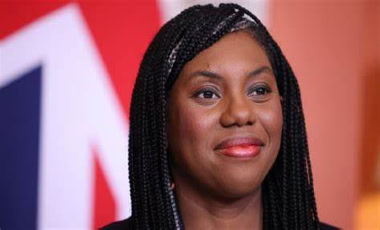
The entire interview can be watched over at POWERLINE. These are the books leader Badenoch mentioned being key to her political evolution:
… Bari asks Badenoch if she read any books that influenced her intellectual evolution. Good question!
If Thomas Sowell came to mind, as it did to mine, you are correct. Badenoch found Sowell’s Basic Economics on a Google search for books about the subject and, she declares, “My whole world changed.” It’s a powerful moment that is worth taking in.
I loved the commentary on the last portion of this verse… first the verse in a few different versions:
1 PETER 1:12
It was revealed to them that they were not serving themselves but you. These things have now been announced to you through those who preached the gospel to you by the Holy Spirit sent from heaven—angels long to catch a glimpse of these things (CSB)
It was revealed to them that they were not serving themselves but you in regard to the things that have now been announced to you by those who brought you the good news through the Holy Spirit sent from heaven.These are things that even the angels desire to look into. (ISV)
It was revealed to them that they were not serving themselves but you, when they spoke of the things that have now been told you by those who have preached the gospel to you by the Holy Spirit sent from heaven. Even angels long to look into these things. (NIV)
It was revealed to them that they were serving not themselves but you, in the things that have now been announced to you through those who preached the good news to you by the Holy Spirit sent from heaven, things into which angels long to look. (ESV)
1 Peter 1:12 was mentioned in a recent sermon at my church, and I was fiddling with my Logos app and came across this (I kept the footnotes for the seminary grad):
The final clause with its reference to angelic desire (ἐπιθυμοῦσιν)91and activity (παρακύψαι)92poses the riddle of how these ἄγγελοι (“angels”) are to be understood. While there was a tradition that angelic knowledge about redemption was superior to that of human beings,93 the thrust of this clause seems rather to reflect an equally widespread tradition of the angels’ lack of knowledge94 and of their resultant inferiority to human beings.95 Hence they desire merely to glimpse96 what is now openly proclaimed in the gospel.97 Whether this further implies an envy on the part of the angels,98 who can only see but not share in those salvific events, or whether the import is angelic fascination with these divine events now playing themselves out among human beings,99 is difficult to determine on the basis of the limited evidence presented in the text. What does seem to be implied is that this angelic desire points to the greatness of what Christians now hear announced to them,100 and further underlines one of the author’s main purposes for writing the letter: the readers live in a time firmly under God’s control when history is about to reach its climax. They therefore have reason rather to rejoice than to despair.101
The import of the verse as a whole serves to reinforce the idea of the unity of the origin and content of the witness of the OT and the Christian gospel: as the Spirit of Christ informed the message of the prophets, the Holy Spirit impels the proclamation of the gospel.102 That unity centers in Jesus Christ, the announcement of whose appearance (ἃ νῦν ἀνηγγέλη) is the fulfillment of the prophets’ message103 and is itself the beginning of the eschatological fulfillment they foresaw.104 That that new reality can already shape the lives of those who live within it is the thrust of the ethical admonitions that commence in the next section of the letter.
Paul J. Achtemeier, 1 Peter: A Commentary on First Peter, ed. Eldon Jay Epp, Hermeneia—a Critical and Historical Commentary on the Bible (Minneapolis, MN: Fortress Press, 1996), 112–113.
91 Chevallier (“1 Pierre 1/1 à 2/10,” 140) identifies it as a word whose precise meaning is hard to determine; he thinks it was chosen to serve as catchword with the ἐπιθυμίαις in v. 14*.
92 The “things” (ἅ) that they desire to glimpse are the τὰ … δόξας of v. 11*, which function as the antecedent of the other two pronouns (αὐτά, ἅ) in this verse as well.
93It is reflected in such passages as Dan 7:16*; Zech 1:9*; 1 Enoch 1.2; 72.1; 108.5–7; Philo Fug. 203; cf. Kelly, 63.
94 It is reflected in such passages as Mark 13:32*; Rom 16:25*; 1 Cor 2:8*; 1 Enoch 16.3; 2 Enoch 24.3; Ignatius Eph. 19.1; they learn of redemption from the church, Eph 3:10*.
95 On angelic inferiority, see 1 Cor 6:3*; Heb 1:14*; 2:16*; as messengers, see Gal 1:8*; on their language, see 1 Cor 13:1*. That that implies that the angels here being discussed are the “dark spiritual forces that hold sway over the lower realms of being” (so Beare, 94) is unlikely, however; Eph 3:10* is probably a closer analogy than 1 Cor 2:8*.
96The word παρακύψαι probably emphasizes here less the act of “peeping into” (as, e.g., John 20:5*) than the looking forth (a use Hart [48] notes it has assumed in LXX Greek) by the angels from heaven (e.g., 1 Enoch 9.1). Michaels (49) notes correctly that the point is their intense interest in the salvific events, with the implied limitations on their knowledge; more than that our author does not wish to say about angelic beings.
97 Kühschelm, “Lebendige Hoffnung,” 205; cf. Reicke, 81. See also n. 44 on 1:7* above.
98 So, e.g., Kühschelm, “Lebendige Hoffnung,” 205; Hillyer (“Servant,” 147) notes a tradition of angelic envy of humans as a result of the dignity that the Aqedah (sacrifice of Isaac) confers upon humanity, but none of the references cited (n. 35: Tanḥuma Wayyera 18; Soṭa 6.5; Gen. Rab. 56.3) even remotely supports this point.
99 So, e.g., Moffatt, 102; Calvin (43) thought it meant the angelic desire to see the kingdom of Christ, a living image of which is set forth in the gospel; Thomas Aquinas thought it meant that angels, rather than being frustrated at their lack of knowledge, never weary of knowing God’s plans (cited in Spicq, 57).
100So, e.g., Leaney, 22; de Villiers, “Joy,” 74; Spicq, “La Ia Petri” 55; Scharlemann, “Descant,” 16.
101 So also Goppelt, 108–9. To find with Schweizer (30) that it means that the future glory of the return of Christ is greater than any angelic glory is perhaps to find more than is in the text.
102So also Kelly, 62; Schweizer, 29. We are probably not to understand differing origins for the message of prophets (πνεῦμα Χριστοῦ) and evangelists (πνεῦμα ἅγιον) so much as to see the common origin of both in the divine Spirit who underlies both activities. The emphasis in v. 11* on the Spirit of Christ points to that figure as the center of both witnesses, something obvious in the case of the gospel. On this point see also Schelkle, 42; Hiebert, “Peter’s Thanksgiving,” 102.
… this is an admission by JUST BY THE FBINot only that, but this is aSPECIFIC type of resource the FBI uses. They have others. But the DOJ has other resources that do the same thing. As one example, the U.S. Department of the Treasury probably had undercover members in the crowd, as well as other federal government resources. Easily over a hundred may have been in place leading the crowd into violence.
I WANT TO SAY AS WELL that many a black person I have watched video admissions from have come to the same conclusion as Stephen Smith, but based on the CHARLOTTESVILLE LIE the current “president” [eat your pudding Joe] and most Democrats as well as many friends I have who are on the Left believe to be true and spread this lie incessantly.
When these fine men and women are exposed to another part of the story — breaking the NYT, WaPo, LA Times, ABC, CBS, NBC, MSNBC, CNN, Chicago Tribune, NPR, on and on… spell over them or the word-of-mouth info friends or family regurgitate — they have left the Democrat Party.
Keep lying and labeling through the media and universities via CRT and DEI regular, hard working Americans as “sexist, intolerant, xenophobic, transphobic, homophobic, Islamophobic, racist, bigoted (S.I.X.T.H.I.R.B.)” The GOP will continue to make gains as the O.G. freedom party [At least the base is all about freedom, compare me and others to the Left’s base.]
I say WORD-OF-MOUTH for a reason. I will give an example of a similar situation regarding the Bible I have encountered often. Here is an old response from me via the dial-up-internet days.
SOULCANNON SAID: “The fact of the matter is that the Bible is a document that is nearly 2000 years old (if you count the current calendar, which itself has been corrupted, warped, and stretched so many times) and the events and persons written within may have had a high probability of being fact.”
This is one of my favorite skeptical questions to deal with. Reason being is that the statement made is that the Bible being changed over time is “the fact of the matter is” (quoting SoulCannon, but not exclusively). SoulCannon, I will be talking to you for the simple fact that you made the statement, but I will really be speaking to the hundreds of people who really believe the above. So bear with me, okay.
Question posed to you: “Can you tell me where you got the information about the Bible being considerably changed and corrupted?”
MANUSCRIPT EVIDENCE
The Book of Isaiah! The Christian church’s earliest manuscript, of the book of Isaiah in complete form, it held in its grasp was dated at 900A.D.. But thanks to a shepherd boy, the Qumran caves coughed up a load of Biblical manuscripts and papyri fragments. One was a complete book of Isaiah that was dated at 100B.C.. After many textual scholars and critics went through this particular scroll, they found eleven letters different than the manuscript dated at 900A.D.. All the changes in the letter style did not change any of the meanings of the words they were found in. so after more than 1,100 years, a perfect example of the unchanging Word of God is exemplified.
The Jewish Masoretic scribes who would copy, say the book of Genesis, would know how many letters were in that book (76,064 Hebrew letters), he would literally count out the precise number of times each of the twenty-two letters in the Hebrew alphabet occurred in the text. He would also make notations on the margin of the page to assure that no letters were added or taken away. If even one letter was missed or added improperly, the master scribe would destroy the imperfect copy, lest an error creep into the holy text of the Word of God. This same process is still used in Israel to this day.
Some people think the Bible has been copied from the older manuscripts and papyri fragments and then copied into the Latin Vulgate; then into the Wycliff; then the Tyndale; then the Coverdale; then the Matthew Bible; then into the Great Bible, the Geneva Bible, the Bishops Bible, the Rheims, Douai, Authorized King James (KJV), American Standard (AS), New American Standard (NAS), New International Version (NIV), New King James Version (NKJV).
This is not the case. I will show two different ways of putting this controversy, which is nothing, more than not knowing the facts of the matter:
Greek and Hebrew Latin Vulgate = a = b = c = d = e = etc., etc. = New International Version (NIV); so by the time we reach our present age the Bible has been changed, much like the telling of a secret in a circle of children.
The New International Version actually used all the available (earliest) manuscripts and papyri fragments as their bases (which we will discuss later). They added [+] that information to the Rabbinical priests quoting scripture as well as the early church fathers. They then added that to the notes and commentaries on the Hebrew and Greek translators commentaries on the (still used) manuscripts they used to make past versions and copies.
So its: Early Greek Manuscripts + Early Translated Copies + Early Christian Quotes + Papyri Fragments + Early Notes and Commentaries = New International Version (NIV)
In other words, such playing the “game of telephone” thinking is easily overturned with facts. Such myopic beliefs are easily refuted, and many people begin to question their sources of information that warp their thinking. The same is happening in the political spectrum. Which is why my site is called RELIGIO-POLITICAL TALK
Stephen A. Smith revealed on his show that there were 26 FBI informants in the crowd on January 6th when the Capitol was stormed and says that he’s sick and tired of finding something else that the Democrats have lied about.
He highlights Kamala and Democrats claiming that Trump was a threat to democracy when it turns out Trump was right about this all along being rigged.
Stephen A Smith is sick of defending Democrats after ‘conspiracy theories’ continue to come true, like FBI informants instigating violence during January 6th:
“The news comes amidst a bombshell report from the Justice Department that revealed the FBI had at least 26 confidential… pic.twitter.com/q8xskoMp6H
I [Craig Gottwals] had a quick visit with Armstrong & Getty this morning to discuss the UHC CEO murder, America’s reaction thereto, why so much of the ire on this topic is off base, Obamacare’s medical loss ratio mandate, the Medicare cost shift, and some super simple advice on purchasing insurance products. Since 2009, I’ve been on air with Jack and Joe well over 100 times. It’s always an honor to be on their show. (The fuller interview can be found at Craig’s site, HERE)