Okay, here’s a super simple, dumbed-down explanation of the two articles from Soteriology101 (written by Leighton Flowers, who strongly disagrees with Calvinism). I’ll explain them like I’m talking to a friend who knows nothing about theology debates.
What the articles are basically about
These two posts are part of a series called “The Hunt for a Hyper-Calvinist.” The author is on a mission to find a real “hyper-Calvinist” — someone who believes in Calvinism (a view that says God controls everything about who gets saved, and humans can’t choose it on their own) but takes it to an extreme level. The author says he’s hunting because Calvinists keep blaming problems in their theology on these mysterious “hyper” people, but he thinks they don’t actually exist.
In plain terms: The author is saying, “Calvinists say ‘That’s not real Calvinism — that’s hyper-Calvinism!’ whenever someone points out weird or tough parts of their beliefs. But where are these hyper people? Show me one!”
Part 1: The Hunt Begins (April 9, 2020)
The author looks at popular Calvinist writers (like Tim Challies and Phil Johnson) who list what “hyper-Calvinism” supposedly means. Things like:
Not telling everyone the gospel is for them.
Saying it’s not everyone’s duty to believe and repent.
Denying that God really loves or offers grace to people who aren’t chosen for salvation.
These writers say hyper-Calvinists go too far and hurt evangelism (spreading the gospel) because they think only the “chosen” ones can believe anyway.
But the author points out: No one calls themselves a hyper-Calvinist. There are no churches, books, or famous people proudly saying “I’m hyper!” When critics name possible examples (like some old theologians or small groups like Primitive Baptists), those people usually say “We’re just being true Calvinists.”
His big takeaway: “Hyper-Calvinism” seems like a made-up boogeyman. Calvinists use the label to push away criticism and avoid talking about the hard logical problems in their own normal beliefs (like: If God already decided everything, why bother preaching to everyone?).
He ends by saying the hunt continues — he’s still looking for a real one.
Part 2: Still Hunting (April 16, 2020)
This one keeps going and looks at another big Calvinist teacher (Michael Horton from Ligonier Ministries).
Horton writes an article defending Calvinism against critics who say it makes God the author (cause) of sin/evil or makes the gospel call fake/insincere.
Horton says: “No, that’s not us — that’s a misunderstanding or maybe those hyper-Calvinists over there.”
But again, he doesn’t name any actual hyper-Calvinists or give examples. He just quotes official Calvinist documents (like the Canons of Dort or Westminster Confession) and says “We already answered this.”
The author calls this out as more dodging:
Calvinists invent fancy word categories (like “outward call” vs. “inward call”) to explain why it’s okay to invite everyone to believe even though only some are chosen to respond.
They say tough questions are just “mysteries” we can’t figure out.
But the author says these are tricks to avoid admitting the logic leads to problems (e.g., if God controls everything, how is the gospel offer genuine? How isn’t God behind evil?).
He points to popular Calvinists like John Piper who say God really does control everything (including bad stuff), which sounds a lot like what critics call “hyper.”
Bottom line from both parts: The author thinks “hyper-Calvinism” is mostly a fake target Calvinists point to so they don’t have to defend the full, consistent version of their own theology. No real hyper-Calvinists show up when you actually look — it’s just a way to say “That’s not us!” without fixing the issues critics raise.
In super short: These articles are the author saying, “Calvinists, stop blaming imaginary extremists. Face the hard questions about your beliefs head-on.” He’s basically trolling the idea that there’s some wild fringe group causing all the problems.
The two articles from Soteriology101.com (a site that critiques Calvinism from a non-Calvinist perspective) are basically one long argument split into two parts. The author is saying that the label “Hyper-Calvinist” is mostly a made-up boogeyman that Calvinists use to dodge real criticisms of their own theology.
Here’s a super simple, dumbed-down breakdown of what each part is saying:
Part 1: “The Hunt for a Hyper-Calvinist – Part 1”
The author claims nobody actually is a “Hyper-Calvinist” in real life — there are no churches, no famous leaders, no confessions of faith, and nobody calls themselves that. It’s like hunting for a unicorn.
Calvinists (people who believe in TULIP — Total depravity, Unconditional election, Limited atonement, Irresistible grace, Perseverance of the saints) sometimes get accused of making evangelism (sharing the gospel) pointless. Why bother telling everyone to believe if God already decided who gets saved?
When critics point that out, many Calvinists say, “Oh, that’s not real Calvinism — that’s Hyper-Calvinism!” Then they define Hyper-Calvinism as going “too far” — things like:
Saying God doesn’t really love everyone or offer salvation to everyone.
Refusing to tell non-believers they should repent and believe (because only the “elect” can).
Denying “common grace” (God’s general kindness to all people).
Not bothering to evangelize at all.
The author says: Those extreme ideas are actually just the logical end of regular Calvinism. If God sovereignly decides everything (including who believes), then the “normal” Calvinist position already weakens the reason to plead with everyone to believe. But instead of admitting the doctrine has that problem, Calvinists blame a fictional “hyper” version and say “we’re not like those guys.”
In short: The “hyper-Calvinist” label is a way for Calvinists to avoid dealing with the tough implications of their own beliefs.
Part 2: “The Hunt for a Hyper-Calvinist – Part 2”
This part looks at a specific article by a well-known Calvinist theologian (Michael Horton) that tries to explain the difference between regular Calvinism and Hyper-Calvinism.
Horton lists some “bad” ideas (like God being the author of sin, or the gospel offer being fake/insincere to the non-elect) and blames them on Hyper-Calvinists.
The author says: Horton never names any actual Hyper-Calvinists. He just attributes the problematic conclusions to this invisible group, then defends “real” Calvinism with complicated explanations like “mystery,” “compatibilism,” or special categories (e.g., the gospel is “sufficient for all, efficient for the elect”).
The author argues these are just word games and dodges. They don’t really solve the logical problems — they just hide them behind “it’s a mystery” or redefine terms.
Again: The real issue is with Calvinism itself (e.g., if God controls everything meticulously, how is the gospel offer genuine to people He never planned to save?). Instead of facing that head-on, Calvinists keep pointing at an imaginary extreme version.
Overall message of both parts combined: The author is basically saying: “Stop blaming ‘Hyper-Calvinists’ for the weird or hard-to-defend parts of Calvinism. Those aren’t separate people — they’re just what happens when you take Calvinist ideas all the way without adding extra explanations or ‘mysteries’ to soften them. The hunt for a real Hyper-Calvinist is endless because they don’t exist; it’s a distraction from the actual debate.”
Denies that the gospel call applies to all who hear OR
Denies that faith is the duty of every sinner OR
Denies that the gospel makes any “offer” of Christ, salvation or mercy to the non-elect (or denies that the offer of divine mercy is free and universal) OR
Denies that there is such a thing as “common grace” OR
Denies that God has any sort of love for the non-elect
#4 I think is a obfuscation of language. All mankind receives “common grace,” AND, all mankind is offered a real choice of “salvific grace.” These people who see God’s attributes in nature prior to the Cross, or even after the cross but where the Gospel had not reached yet. But TULIP denies the ability of man has any option to respond positively to the evidences of God. In other words, God wholly chooses who will be saved. Others like Piper apply that singularity to all aspects of man’s abilities.
(A video that Warren McGrew made was mentioned in this video, I will embed that as well.)
Why did John Piper become a Calvinist? Dr. Leighton Flowers | Soteriology 101
Dr. Leighton Flowers welcomes back Warren McGrew, the Idol Killer, to discuss a presentation by John Piper who is recounting his conversion into Calvinism
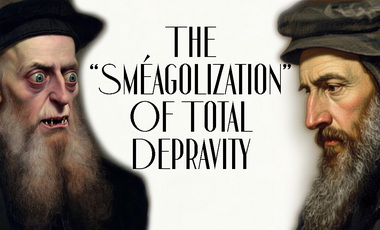
Responding to Calvinists on Total Depravity
A few months back, @chrisharris9710 took to his YouTube channel to refute the claims Idol Killer made in our series refuting Original Sin and Total Depravity – specifically episode 2 & the Undercutting Defeater. In the process, Pastor Harris bravely took on the leading voices in Reformed Theology today and heroically swept aside the historical Reformed articulations of Total Depravity across various Confessions. Though, one has to wonder what his fellow Calvinists will think of his claims that entail John MacArthur of @gracetoyou Steven Lawson of @ligonier and others don’t rightly understand Calvinism.
God from all eternity did, by the most wise and holy counsel of his own will, freely and unchangeably ordain whatsoever comes to pass; yet so as thereby neither is God the author of sin, nor is violence offered to the will of the creatures, nor is the liberty or contingency of second causes taken away, but rather established. – Westminster Confession, III.I.
Although in relation to the foreknowledge and decree of God, the first cause, all things come to pass immutably and infallibly, yet by the same providence he ordereth them to fall out, according to the nature of second causes, either necessarily, freely, or contingently. – Westminster Confession, V.II.
“So here I see that God’s command is that the sons of Eli ought to listen to and obey their father, yet the will of God was that they would not listen so that He would put them to death.” – Peter Pike
“Nothing has ever come to pass, or ever will, merely because God knew it. The cause of all things is the will of God.” – Arthur Pink
“The question, though, is whether God merely permits evil, or whether in addition he actually brings evil about in some sense. I think the latter is true. Scripture often says that God brings about sinful decisions of human beings… If evil comes from some source other than God, that would be pretty scary.” – John Frame
“That men do nothing save at the secret instigation of God, and do not discuss or deliberate on anything but what he has previously decreed with himself, and brings to pass by his secret direction, is proved by numberless passages of Scripture.” – John Calvin
“But where it is a matter of men’s counsels, wills, endeavours, and exertions, there is greater difficulty in seeing how the providence of God rules here too, so that nothing happens but by His assent and that men can deliberately do nothing unless He inspire it.” – John Calvin
John MacArthur Tells Us There Is No Free Will
God controls first as well as secondary causes… in the determinism that has infected the Christian church. This idea is extra Biblical, brought in by Augustinian gnosis and ramped up by Calvin.
Neoplatonism (ca. AD 250) had invented this crucial theodicy by appealing to the inscrutable secret counsels of God, who is fair by definition, regardless of whatever apparent evils he desires and ordains. Prior Christians had never required this implausible and disingenuous attempt at a defense for their God.
Page 235 of “Calvinism: A Biblical and Theological Critique” (excerpt here)
I asked GROKthe following:
Can you dumb this down like we are discussion this over coffee…
… how foolish and frail is the support of divine justice afforded by the suggestion that evils come to be, not by His will but by His permission. . . . It is a quite frivolous refuge to say that God otiosely permits them, when Scripture shows Him not only willing, but the author of them. . . . Who does not tremble at these judgments with which God works in the hearts of even the wicked whatever He will, rewarding them nonetheless according to desert? Again it is quite clear from the evidence of Scripture that God works in the hearts of men to incline their wills just as he will, whether to good for His mercy’s sake, or to evil according to their merits.
John Calvin, The Eternal Predestination of God, 10:11
Here is GROK’s input:
Alright, let’s grab that coffee and talk this through like normal people—no big theology words unless we have to, and I’ll explain them right away.
So John Calvin (the 1500s guy who shaped a lot of Protestant thinking) is basically saying: “Look, some people try to defend God by saying He doesn’t want evil stuff to happen—He just kinda allows it or ‘permits’ it, like He’s hands-off. But that’s weak sauce, in Calvin’s view. He thinks the Bible shows God is way more involved: God actually wills (decides and makes happen) even the bad things, and in some sense He’s behind them as their ultimate ‘author’ or source.”
He calls the “God just permits it” idea a flimsy excuse (“frivolous refuge”) because Scripture (in his reading) pictures God actively steering everything—including hardening hearts, inclining people’s wills toward evil when they deserve it, and using wicked people to carry out His judgments.
The key bits:
God doesn’t just sit back and go “Eh, okay, let that sin happen if you want.” Nope—He actively works in people’s hearts to turn their desires one way or another.
For good people/actions: God does this out of mercy (He chooses to make someone want good).
For bad people/actions: He does it “according to their merits” (they deserve judgment, so He inclines them toward evil as part of punishing them fairly).
Even so, God still judges and punishes them for what they did—He rewards “according to desert” (what they deserve).
In coffee terms: Imagine you’re watching a movie where the director not only lets the villain do villainous things but actually scripts and directs every move the villain makes—down to the thoughts in their head. The villain is still 100% guilty and evil for choosing/doing it, but nothing happened outside the director’s plan. Calvin’s saying God is that ultimate Director over everything, including the evil plot twists. The “He just permitted it” line feels like downplaying how in control the Director really is.
This ties into his bigger idea of predestination: God has already decided from eternity who gets saved (by His mercy) and who doesn’t (left to their deserved fate), and He sovereignly shapes everything—including sins—to bring that about.
A lot of people (then and now) hear this and go “Whoa, that makes God sound like the author of evil!” Calvin would push back hard: No, because the evil comes from the person’s wicked heart and desires (they really want it, they’re not robots forced against their will). God just sovereignly uses and directs it for His purposes, without being tainted by it Himself. But yeah—he’s not shy about saying God is behind it all, not merely watching from the sidelines.
Modern Calvinists sometimes soften this a bit (they talk more about “permission” but insist it’s not “bare” or passive permission—God ordains what He permits). But Calvin himself? In this passage, he’s pretty blunt:
the permission idea is foolish if it pretends God isn’t willing and authoring these things in some real sense.
Heavy stuff over coffee, right? Makes you wonder about free will, justice, and how a good God runs a world with so much darkness. What’s your take—does that framing help, or does it still feel off?
In a wonderful article, I excerpt a long clip from the end of it:
Chapter 3 – The Calvinist Theological and Soteriological Doctrines
…. Predestination refers to what God will surely do for the believer once that choice is made. Believers are predestined to adoption, sanctification, salvation, and eternal life. Unbelievers are predestined to alienation from God, eternal death, and hell. God has not predestined or predetermined the “obedience of faith” for certain unconditionally elected individuals and the “love of darkness,” “rebellion,” “spiritual alienation,” and “eternal death” for all others. No doubt, the Bible teaches that there are special divine predeterminations regarding God’s plans and purposes for the world, especially concerning salvation history. God is personal. Therefore, we would expect God to act personally in his world with creatures made in his image. These divine predeterminations apply in special ways to certain individuals and groups. These individuals are divinely appointed to certain tasks, as in the case of Jesus himself, to be the Christ, our Savior. The nation of Israel was established by God through the revelation of Himself to Abraham, Isaac, and Jacob (i.e., Israel) and therefore “chosen” by God to fulfill a certain role in salvation history. Israel is spoken of as God’s “chosen people,” and yet the group was obviously comprised of individuals with free moral agency. The church also is comprised of individuals designated as “a chosen race, a royal priesthood, a holy nation, a people for his own possession…” (1 Pet. 2:9) because they believe in God and Christ as the way of salvation. These believers are referred to in terminology corresponding to the descriptions used of Israel in the Old Testament. The relationship God had with Israel, of which Abraham’s faith is paradigmatic, is now applied to Gentiles who are of the faith of Abraham. Only now Christ has come, and New Testament believers live on this side of an unfolding salvation history. Therefore, these New Testament believers – both Jew and Gentile – are now among “the elect” by virtue of being “in Christ” by faith; a faith like that of Abraham, exercised freely upon hearing from God (OT) or the gospel message (NT). These believers, spoken of in language reminiscent of Israel’s status in the Old Testament, were once “not a people, but now you are God’s people; once you had not received mercy, but now you have received mercy.” (I Pet. 2:10) Sinners are among “the elect” because they believe in Christ who is the Chosen One, that is, as they “come to him, a living stone rejected by men but in the sight of God chosen and precious…” (1 Pet. 2:4).
The point is that Scripture testifies to the fact that divine sovereignty cannot mean that God predetermined the minutest details of all human thought and action, along with each person’s eternal destiny, which lands us in an inevitable and nonsensical theistic determinism. This is not the biblical meaning of “election” or “predestination.” We know this by virtue of the logical and moral incoherence of the Calvinist interpretations. An objective, rational, moral assessment of Scripture and human history, from the past to the present, makes evident that theistic determinism is false. Rather than looking through the lens of theistic determinism, we can see that God’s purposes are realized through his divine actions in relation to submissive and cooperative persons as well as through indifferent or hostile persons. All that occurs is not decreed to happen as it does by the will of God and therefore caused by God, for this would logically indict God as the author and doer of evil. Rather, certain actions and events occur by the free decisions of human beings, especially evil doings. But God is still sovereign. He can incorporate what he sees fit into his ultimate plans and purposes for the world and mankind by either his direct intervention and spiritual activity and influence, or his final judgment. But the believer has this promise – “And we know that in all things God works for the good of those who love him, who have been called according to his purpose.” (Rom. 8:28, NIV). Those who love him are those who put their faith in God and Christ as savior when they heard the call of the message of “good news.” Those “called according to his purpose” refer to all those who, having heard the “good news” of Jesus Christ, believed it, and have received eternal life. All this was the result of God’s purpose to save mankind in Christ. It has been God’s purpose to save sinners by sending Christ to die and bring this good news to all from the very beginning (Gen. 3:15). And this salvation is for everyone. “For God has bound everyone over to disobedience so that he may have mercy on them all.” (Rom. 11:32, NIV)
In addition, God will also bring about a final conquering of all his enemies. Not all things are good, and God is not responsible for evil acts. Therefore, God has not ordained “whatsoever comes to pass” as stated in the Westminster Confession of Faith. This is evident in that at Christ’s second coming, he will judge, punish, and rectify evil and injustice. Again, to believe that God predetermined and is the ultimate cause of the evil he will one day judge and punish would be nonsense. Furthermore, it impugns the character of God.
The point to note is that divine sovereignty, election, predestination, and foreknowledge do not require theistic determinism. The scriptures everywhere affirm both God’s sovereignty and substantial, meaningful human freedom and responsibility. Therefore, God’s sovereignty, biblically defined, cannot be understood as divine determinism but rather should be understood as God’s personal and authoritative involvement in human affairs and his creation. The scope of divine providence certainly extends to the minutest details regarding his care and concern for his creatures, especially believers. But divine providence is not divine determinism. Providence includes God’s ability to intervene in the affairs of this world and on behalf of believers as he wills. It includes his ability to employ actions that are evil and wrong to serve his purposes (Gen. 50:15-31). This certainly is the biblical testimony regarding divine sovereignty and providence. If there is “mystery” to be had, it lies here. It does not lie in accepting what we know to be incoherent, inconsistent, and contradictory interpretations of the Bible. That is just to ignore the God-given rules of logic and our moral intuitions in one’s hermeneutic. Hence, biblical sovereignty and providence cannot be defined as the universal divine causal determinism of Calvinism. Therefore, Calvinism is untenable and a misinterpretation of Scripture. It is to be rejected.
Conclusions
We have seen that the Calvinists’ interpretation of the eternal divine decree and God’s sovereignty amounts to a universal divine causal determinism. Hopefully, you may have begun to grasp the negative logical and moral implications of this theistic determinism. In a world that is predetermined by God down to the minutest details, which includes everyone’s thoughts, beliefs, desires, and actions, what happens to human freedom, decision-making, and choices? What happens to personal moral responsibility, culpability, judgment, and justice? And what do we do with the fact that everyone’s eternal destiny is already decided unilaterally by God himself and has absolutely nothing to do with you, me, or anyone else? What do human beings become in a world in which God predetermined every detail? Robots? Puppets? These analogies are appropriate. Furthermore, who is among the elect, and who is among the non-elect, remains unknown to us. The Calvinist will respond that, regardless of these problematic implications, we need to accept these Calvinist tenets because the Bible teaches them.
But how do we know the Bible teaches them, especially when they do not square with the fact that the Bible overwhelmingly testifies to a contingent reality and human responsibility? How do we know this is what the Bible teaches when theistic determinism wreaks logical and moral havoc with other things that this same Bible clearly teaches, especially regarding the definition of the gospel as “good news,” the nature of faith, and God’s character as loving and just? Where has the gospel gone? You may also be asking, if God is the sole agent and cause of everything that occurs, doesn’t that make him the source and doer of all evil? If not, why not? Moreover, if you cannot know that God loves you, desires that you be saved, and has provided for your salvation, how does that influence your relationship to God and the meaning and purpose of life? These questions are profound and therefore need answers. Calvinists need to answer them. We will deal with them in due course.
Having reviewed the Reformed Calvinist doctrines, we can conclude that Calvinism amounts to a theistic determinism. That theistic determinism, by virtue of being a determinism, is contrary to Scripture. As such, Calvinism is unbiblical.
How Calvinists Get God’s Sovereignty Wrong Leighton Flowers | Calvinism | Soteriology 101
Calvinists love to talk about God’s sovereignty, but do they define sovereignty correctly? Calvinists typically choose to define sovereignty as meticulous determinism, i.e. that God controls and/or brings about everything that happens…including all evil.Check out the full video here: Calvinism is Determinism
Thus in a world governed by meticulous, divine determinism, beliefs are not the product of examination, analysis, reason and contemplation whereby we search for truth and weigh various options and make informed decisions. Rather they are just the spin-offs of God’s universal, exhaustive, meticulous divine decrees. White would have to concede that a person who believes in meticulous, divine determinism does so for the same reason that another person disbelieves meticulous, divine determinism. It has nothing to do with evaluation, truth and reason—and everything to do with what has been determined for them to believe! — A Theology in Tension (hat-tip to SOTO 101, “Calvinism’s Greatest Fallacy“)
The following is with a Hat-Tip to Brian H.W. — adding to a thought I had:
Religio-Political Talk (RPT), Here’s enough that should get Calvinists to rethink! Unfortunately too many are now too heavily invested in defending it, their pride keeps them from rejecting it.
Those who call themselves “Calvinist” – On which of the following do you DISAGREE with Calvin… and why label yourself after the name of a fallible man? Would Jesus want you to?
Evanescent Grace: God making some reprobates think they are elect to better convict them
Impassibility: God did not grieve in his heart for the lost in Noah’s day
Capital Punishment for heretics: Including those who write against his doctrine of predestination
Born to Burn: Some are damned by God from birth, to be tormented in hell for God’s glory and pleasure.
Scripture’s Description of God can not be known from His perspective: but only as a false one, not as He really is.
Disproving Calvin’s predestination doctrine: according to Calvin is only attempted by those who think they are wiser than the Holy Spirit.
1) “… experience shows that the reprobate are sometimes affected in a way so similar to the elect, that even in their own judgment there is no difference between them. … a taste of heavenly gifts, … a temporary faith, is ascribed to them. Not that they truly perceive the power of spiritual grace and the sure light of faith; but the Lord, the better to convict them, and leave them without excuse, instills into their minds such a sense of his goodness as can be felt without the Spirit of adoption.” (Institutes – 3.2.11)
2) “The repentance which is here ascribed to God does not properly belong to him…. The same reasoning, and remark, applies to what follows, that God was affected with grief. Certainly God is not sorrowful or sad; but remains forever like himself in his celestial and happy repose….” (Comm. Gen 6:6)
3) In his letter to the church in Poitiers, #389 SLW6 – “…papers and books of his Castalion [former reformer in Geneva with Calvin], in which an attempt was made to impugn our doctrine touching predestination, have been condemned with a prohibition to publish them 👉on pain of death👈…. that indeed the least we can expect is that the Seigneurs, to whom have been entrusted the sword and authority, should not permit the faith in which they are instructed to be lightly spoken of in their own city. “
4) “…he arranges all things by his sovereign counsel, in such a way that individuals are born, who are 👉doomed from the womb👈 to certain death and are to glorify him by their destruction.” (Institutes – 3.23.6) And – “We say, then, that Scripture clearly proves this much, that God by his eternal and immutable counsel determined once for all those whom it was his pleasure one day to admit to salvation, and those whom, on the other hand, it was 👉his pleasure to doom👈 to destruction.” Calvin, ICR, 3.21.7
5) “…any description which we receive of him must be lowered to our capacity in order to be intelligible. And the mode of lowering is 👉to represent him not as he really is👈, but as we conceive of him.” (Institutes – 1.17.13)
6) “The observation with which I opened this discussion, I now repeat at its close: that no one will ever attempt to disprove the doctrine which I have set forth herein, but he who may imagine himself to be 👉wiser than the Spirit of God👈.” (Eternal Predestination of God, trans. Cole, p. 170, the translation by Reid says – “… no one can disprove…”, p.162)
The long debate [which I won’t replicate here] from Soteriology 101 Discussion’s Facebook Page, is over — essentially — this portion of Leighton Flower’s’ book, “Drawn by Jesus.” BUT FIRST, what I will reproduce is the extent of the debate summed up in these two back-n-forths:
ROGER H. responds to Jason R.
[Jason R said] “This is a clear logical impasse you are confronted with…“
What is the logical impasse? A person is born with no ability to choose God. This requires that the person be regenerated. Once regenerated, a person can desire God and can choose God.
[Jason R said] “and there is no compatibilism that can harmonize this faulty logic.”
Once a person is regenerated, he has new desires. He can choose according to his greatest desire.
I don’t see a problem.
JASON R. responds to ROGER H.
it is fascinating to observe how you see no problem with the fact that God ultimately judges the majority of humanity for not receiving Christ when He determined that they never could do so in the first place. You seem content to accept that God can judge someone for their sin of non-repentance even though they have no way of repenting. This is blatantly unjust. You admit that God necessarily has to regenerate someone so that they can believe which equates to conceding that man cannot choose God unless God first chooses and changes them. Man is born into a hopeless state of inability and you cannot see a problem with God judging and condemning man for this inability when he has no way of escaping its pre-determined inevitabilities. I have never heard a sound defense against this Achilles heel of Calvinism… only concessions such as yours.
The entire discussion is enlightening, as it is a real working out of the issue. But this is the portion that Roger H. started out with, mistakenly saying it was from chapter 3:
Chapter 5
The Calvinistic Presupposition of Total Inability
A presupposition is “a thing tacitly assumed beforehand at the beginning of a line of argument.”23 We all have presuppositions. Some of them are right, but others are wrong. Wrong presuppositions brought to a passage can influence people to draw erroneous conclusions about the meaning of the text in question. This is why objectively evaluating our presuppositions is so important when any passage is in dispute between well-intending brethren.
Your theological opponents have every right to challenge your presuppositions. After all, wrong presuppositions lead to bad exegesis. And assuming your presuppositions are correct is just a fallacious game of question-begging. Unfortunately, this has been James White’s bread and butter. When non-Calvinists have challenged one of his presuppositions in the past, he accuses us of either “changing the topic,” “running off to other scriptures,” or “doing improper exegesis.” This is ironic, given that proper exegesis requires biblically correct presuppositions.
Calvinism’s underlying premise is that God decreed for all people since the Fall to be born morally unable to believe what He Himself teaches, so unless you were unconditionally chosen before you were born and irresistibly regenerated into a new creation by a supernatural intervening work of God, you will never be morally capable of believing in Him.24 Needless to say, that premise will greatly influence how you understand the Bible regardless of the hermeneutical methodologies, grammatical nuances, contextual considerations, or semantic word studies. A wrong premise skews everything and, therefore, must be evaluated objectively prior to getting into the other pertinent matters. So, let’s start by looking at these three major presuppositions White brings into John 6 based primarily upon his Calvinistic interpretation of Paul.25
Total Inability26
The entire sixth chapter in White’s book on the topic, titled “Human Inability,” sets out to establish this doctrine. Based on his interpretation of other scripture, White presupposes that God decreed for all people (since the Fall) to be born unable to believe His own teachings, but God still punishes all who do not believe. Therefore, when White reads John 6 through those presuppositional lenses, he understands the phrase “no one can come” to mean that the natural condition of everyone from birth is such that they cannot understand and believe what God teaches.27 For instance, White wrote,
In response to the crowd’s disbelief, Jesus also gives forth a clear explanation of their inability to understand and their inability to come to Him as the one and only source of spiritual life.
Notice that White assumes that the reason the crowds cannot come to Christ is due to a universal inherent condition in which they were born, something God Himself decreed and the individuals had absolutely no control over. In other words, in White’s view, the crowd remains in unbelief because they were born inherently blinded to divinely revealed truth, and God has not intervened to irresistibly change their inherent “default” condition. This is the root of what is known as theistic determinism, a primarily philosophical commitment to the idea that God unchangeably brings to pass (or determines) every meticulous detail, including all moral evil.28
NOTES
23 Oxford Languages Online Dictionary (Oxford University Press)
24 This represents the T,U and I of the Calvinistic TULIP, which will be explored further in the following pages.
25 White wrote, “When the doctrine of election is discussed, most people think immediately of the discussions provided by the Apostle Paul in such great passages as Romans 8-9 and Ephesians 1.” James R. White, The Sovereign Grace of God (New York: Great Christian Books, 2003), 68.
26 White wrote, “Some Reformed writers like others names for this doctrine. One of the best alternatives is `total inability.” Ibid., 48.
27 White wrote, “[Man] is utterly… incapable of coming to Christ, incapable of accepting and understanding spiritual things…” Ibid., 59. Given that White also affirms the 1689 London Baptist Confession of Faith, we know that he affirms God’s universal exhaustive decree of whatsoever comes to pass, which must necessarily include mankind’s innate “default” inability to believe.
28White wrote, “God’s knowledge of the future is related to His role as Creator —He knows the future because He ordained the future! The course of the future is certain because God created it.” Ibid., 68. Vicens wrote, “We might, for instance, take Feinberg’s definition of an `unconditional’ decree as one `based on nothing outside of God that move[s] Him to choose one thing or another’ (2001, p. 527) and then characterize theological determinism as the view that God unconditionally decrees every event that occurs in the history of the world. Such a view would exclude the possibility that God merely permits some events which He foresees will happen in some circumstances but which He does not Himself determine.” Leigh Vicens, Theological Determinism (Internet Encyclopedia of Philosophy: A Peer-Reviewed Academic Resource) accessed online on 12/19/2023. [RPT: 1/29/2026]
Leighton [Charles] Flowers, Drawn By Jesus (Trinity Academic Press, 2024), 47-49.
ROMANS 3:11
A common verse I hear from my fellow believers is “…there is no one who understands; there is no one who seeks God.” – Romans 3:11
In an effort to demonstrate that all people have fallen short of the glory of God and broken His law, Paul quotes from Psalm 14:2-3, which says:
“The Lord looks down from heaven on all mankind to see if there are any who understand, any who seek God. All have turned away, all have become corrupt; there is no one who does good, not even one.”
There are basically two theological approaches for interpreting this passage:
(1) Calvinistic Approach: Apart from a Divine irresistible work of regeneration (by which God changes a chosen individual’s nature and desires), mankind cannot willingly seek to know, understand, or follow God. (2) Non-Calvinistic (Traditionalist) Approach: Apart from God’s gracious initiative in bringing His Son, the Holy Spirit, and the inspired gospel appeal, no one can merit salvation or consistently seek to obey God in a way that will attain his own righteousness.
The contrast between these two perspectives can be illustrated by this simple question: Does proof that I am incapable of calling the president on the telephone also prove that I am incapable of answering the telephone if the president were to call me? Of course not, yet that is essentially the principle a Calvinist is assuming in their theological approach to this text.
Calvinists read this text to mean that our lack of initiative somehow proves our inability to respond positively to His initiative. They presume that God’s work in sending His Son, the Holy Spirit, and the inspired gospel, calling for all to be reconciled through faith in Christ, is insufficient to enable the lost to respond in faith. But the text simply never says this.
In Romans chapter 3:10-20 the apostle is seeking to prove that no one can attain righteousness by means of the law. But in verse 21 he shifts to reveal a righteousness that can be obtained by means of grace through faith in Christ.
Calvinists seem to think that because mankind is unable to attain righteousness by means of the law that they must equally be unable to obtain righteousness by means of grace through faith in Christ. This, however, is never established anywhere in the pages of Scripture.
Of course, we all can affirm that no one is righteous with regard to the demands of the law. But there have been many throughout the pages of Scripture who have been declared righteous by means of grace through faith.
Calvinists wrongly assume that because mankind is unable to fully keep the demands of the law that they are equally unable to admit their inability to keep those demands and trust in the One who has. Again, this is simply never established in the Bible. HERE>
THE “HERE>” EXCERPT
… If I told my son to clean up his room it would strongly imply that I believed it was within his abilities to do so, especially if I punished him for failure to do so. No decent parent would tell their two day old infant to clean up a mess and then punish them for not doing so. Such an action would expose the parent as insane or completely immoral.
This is basic common sense, but is it applicable to how God deals with humanity? Is the implication in scripture of “you should” mean that “you could?” I think we can all agree that “ought” strongly implies moral ability for all practical purposes, but is that a biblical reality? Sometimes the Bible defies our practical sensibilities and turns our reality up on its ear. Is that the case here? Do God’s expressions of what we SHOULD do imply that we actually COULD do it.[1]
Could the “Rich Young Ruler” have willingly given up his wealth to follow Christ as Zacchaeus does in the very next chapter? Or was Zacchaeus granted an ability that was withheld from the Rich Young Ruler? (Note: I’m speaking of man’s moral/spiritual abilities to repent in faith, not their physical ability or mental assent, so please don’t try to rebut this article with the all too often “catch all” phrase of, “He is able but not willing.”)
Calvinists would agree with the Traditionalists that both Zacchaeus and Rich Young Ruler SHOULD have given up everything to follow Christ, but only the Traditionalist maintains that both of them COULD have willingly done so.
Why do Calvinists insist that COULD doesn’t imply SHOULD when it comes to the Biblical revelation?
Dr. Wayne Grudem, a Calvinistic scholar, explains the issue in this manner:
“Advocates of the Arminian position draw attention to the frequency of the free offer of the gospel in the New Testament. They would say that these invitations to people to repent and come to Christ for salvation, if bona fide, must imply the ability to respond to them. Thus, all people without exception have the ability to respond, not just those who have been sovereignly given that ability by God in a special way.” [2]
Grudem, like John Hendryx of mongerism.com, rebuts this perspective by making arguments such as:
“What the Scriptures say we ‘ought’ to do does not necessarily imply what we ‘can’ do. The Ten Commandments, likewise, speak of what we ought to do but they do not imply that we have the moral ability to carry them out. The law of God was given so that we would be stripped of having any hope from ourselves. Even faith itself is a divine command that we cannot fulfill without the application of God’s regenerative grace by the Holy Spirit.”[3]
Are you following the Calvinistic argument? Here it is put very simply:
God tells man they SHOULD keep all the commandments.
Man CANNOT keep all the commandments.
God also tells man they SHOULD believe and repent for breaking commandments.
Therefore man also CANNOT believe and repent for breaking commandments.[4]
If the fallacy in this argument is not obvious to you, please allow me to explain in this way:
Back when my kids were younger we did a family activity that our church had suggested. I stood at the top of the stairs with my four children at the bottom.
I said to them, “Here are the rules. You must get from the bottom of the stairs to the top of the stairs without touching any of the railing, the wall or even the stairs. Ready, go!”
My kids looked at me and then each other and then back at their mother. With bewilderment in their eyes, they immediately began to whine and complain saying, “Dad, that is impossible!”
I told them to stop whining and figure it out.
The youngest stood at the bottom and started trying to jump, slamming himself into the steps over and over. The more creative one of the bunch began looking for tools to help build some kind of contraption. Another set down on the floor while loudly declaring, “This is just stupid, no one can do that!”
Finally, in exasperation one of the kids yelled out, “Dad, why don’t you just help us?” I raised my eyebrows as if to give them a clue that they may be on the right track. The eldest caught on quickly.
“Can you help us dad?” he shouted.
I replied quietly, “No one even asked me.”
“Can you carry us up the stairs?” he asked.
“I will if you ask me,” I said.
And one by one, I carried each child to the top after they simply asked.
Then, we sat down and talked about salvation. We talked about how it is impossible for us to get to heaven by our own efforts, but if we ask Christ for help then He will carry us. It was a great visual lesson of God’s grace in contrast with man’s works.
But suppose that my children’s inability to get to the top the stairs also meant they were incapable of asking me for help. Imagine how this story would’ve played out if it was impossible for my children not only to get to the top of the stairs but equally impossible for them to recognize that inability and request help when it was offered.
This illustrates the mistake of Calvinism. Let’s go back to their fallacy above as it relates to my story:
Dad tells his kids they SHOULD get to the top of stairs.
Kids CANNOT complete this task as requested.
Dad also tells the kids they SHOULD ask for help.
Therefore the kids CANNOT ask for help.
Do you see the problem now? The whole purpose of presenting my kids with that dilemma was to help them to discover their need for help. To suggest that they cannot realize their need and ask for help on the basis that they cannot get to the top of stairs completely undermines the very purpose of the giving them that dilemma. ….
George C. Scott Explains Calvinism
A scene from the 1979 movie Hardcore, in which an old Calvinist elder goes to find his runaway daughter in the porn underbelly of Los Angeles. This scene with George C. Scott inspired Richard Mouw’s book “Calvinism in the Las Vegas Airport.” HEADS UP: there’s some saucy language. And the rest of the film is what you’d expect from a movie about the porn industry in the 70’s.
I affirm that the grace of God can be and is at times resisted, and this includes but is not limited to the genuine offer of salvation and resisting the Holy Spirit. The Bible says in 2 Thessalonians 2:10 that reprobates “perish because they refused to love the truth and so be saved.” (italics added) Of course, I am rejecting the Calvinist and compatibilist answer that a person refuses because, as a sinner, that is all that he can do. It seems crystal clear in reading the passage without Calvinist spectacles on that the context and language clearly imply that they “should not have refused” and therefore could have believed which entails the idea of otherwise choice, exactly what Calvinism denies.
Further, I affirm that the ability of man to accept or to resist God’s genuine offer of salvation is a part of God’s plan and redounds to His glory; moreover, this genuine offer of the gospel is more than “a good faith offer” as taught by the Calvinist. It is an actual offer from God through His chosen medium, which can be accepted by faith or rejected unto damnation. Finally, this includes the reality that God has given the gift of repentance, and that the clear call of Scripture is for everyone everywhere (Acts 17:30) to repent and be saved, which implies that those called upon to repent can, by the grace of God, repent (Matthew 3:2, 4:17, 11:20; Mark 6:12; Luke 5:32, 13:3, 13:5, 24:47; Acts 2:38, 3:19, 5:31, 11:18, 20:21, 26:20; Romans 2:4; 2 Peter 3:9).
Jesus pronounced woe upon all the people of Chorazin and Bethsaida because they did not repent, obviously indicating He believed they had the capacity to repent (see Matthew 11:21). The book of Revelation leaves believers stunned that unregenerate people refuse to repent even when they are suffering from the wrath of God (see Revelation 9:20-21, 16:9, 11). Acts 17:30 reminds us that the call of God to repent is for everyone. Paul said, “and with all the deception of wickedness for those who perish, because they did not receive the love of the truth so as to be saved” (2 Thessalonians 2:10). The implication obviously means that they could have received the love of the truth and been saved.
In like manner, Stephen preached, “You men who are stiff-necked and uncircumcised in heart and ears are always resisting the Holy Spirit; you are doing just as your fathers did”(Acts 7:51). The writer of Hebrews said of those who draw back unto destruction, “How much severer punishment do you think he will deserve who has trampled underfoot the Son of God, and has regarded as unclean the blood of the covenant by which he was sanctified, and has insulted the Spirit of grace”? (Hebrews 10:29, italics added). In Noah’s day, God said, “My Spirit shall not strive with man forever” (Genesis 6:3), clearly implying that He was then. Also why did God bring judgment upon leaders and Jews so they could not hear and see and return if that in fact was their state already? (Isaiah 6:9-10 and Matthew 13:10-17).
Lastly, I affirm the biblical doctrines of grace. Calvinists refer to their beliefs as “The Doctrines of Grace,” which is fine, but it actually does not tell us much. That is to say, the doctrines of any Biblicist are all “doctrines of Grace.” There simply are no other kinds. It is similar to the Calvinist’s continual reference to the sovereignty of God. It tells us nothing since all believers with any biblical fidelity and understanding of God believe in His sovereignty. Further, disavowal of the Calvinist’s definition of the doctrines of grace and sovereignty is not a denial or undermining of the doctrines of grace or the sovereignty of God, but it is what it is, a denial of Calvinism’s definition.
I disaffirm that the Bible teaches that God carries out His salvation plan through selective “irresistible grace.” John Piper describes irresistible grace thusly, “When a person hears a preacher call for repentance he can resist that call. But if God gives him repentance he cannot resist because the gift is the removal of the resistance. Not being willing to repent is the same as resisting the Holy Spirit. So if God gives repentance it is the same as taking away the resistance. This is why we call this work of God “irresistible grace.”63 Note that those who receive this act of grace against their will can only believe and those who don’t receive this cannot be saved; therefore, any talk from a Calvinist that God loves people, the lost, hurting, etc., is double-talk because He, according to Calvinism, actually only loves some lost and hurting people enough to offer help. This is a disquieting reality.
Piper says also, “The doctrine of irresistible grace means that God is sovereign and can overcome all resistance when he wills.”” I would note that the Calvinist, as well as Piper’s position, is actually stronger than this in that, not only does the doctrine of irresistible grace mean that God can overcome, but it actually means He will or must. Further, I disaffirm that all verses that say, teach, or imply that man can resist are merely reiterating the position of compatibilism—sure they resist salvation because that is all, according to their nature, that they can do. Moreover, I disaffirm that an offer of salvation through proclamation of the gospel by anyone who views salvation through the grid of Calvinism constitutes a real offer of salvation from God if it can be resisted; because according to Calvinism and compatibilism the real offer of salvation, in any meaningful sense to the person, cannot be resisted because the real offer of salvation from God always results in regeneration. This is a disquieting reality. An example of my point is, in what sense can a person be said to be offered a job if it is impossible for him to accept it, and not only is there no intent to actually give it to him, but in reality there was a predetermined unalterable decision by the CEO not to give it to him; this is in spite of the personnel manager’s sincerity in offering the job. The answer seems obvious, NONE!
Let me elucidate this further. Calvinists seek to emphasize the positive of irresistible grace, e.g., God saves some unworthy sinners who otherwise would perish in hell. But the dark side of irresistible grace is that although the “good faith offer” of a Calvinist seems to exonerate him from being guilty of making an artificial offer of salvation (as long as he is careful not to say specifically to someone things like “God loves you or God cares about you or God wants you to go to heaven”) to sinners who cannot, according to Calvinism, really repent, believe, and be saved, because the Calvinist can never be sure who God has selected to regenerate. However, even if the Calvinist is vindicated, it does not exonerate God from using language, commands, parables, etc., which clearly picture God as wanting all to be saved even though, according to Calvinism, He is the sole determiner and only reason they cannot be saved. Therefore, Calvinism’s irresistible grace makes God the sole determiner of who goes to heaven and who goes to hell because He could have saved everyone. This truth is dramatically contrary to the picture of God and His offer of salvation as drawn in Scripture, a disquieting reality.
We all seek to emphasize what we deem to be the positives of our message or position. However, it is morally incumbent upon every messenger to quest for full disclosure and to shun any appearance of obscuring the negative or harsher teachings of our position. The Calvinist emphasis that irresistible grace assures salvation for some, while minimizing the truth that irresistible grace just as assuredly and irrevocably destines some to eternal torment in hell, reminds me of the Darwinist obsession with the beauty of natural selection’s determination that the strong and healthy survive, while they seldom with the same clarity and enthusiasm speak of the dark side of natural selection that requires the brutal and merciless elimination of the weak.
Consequently, the insurmountable obstacle to irresistible grace determining who receives eternal salvation—besides the fact that it is not taught in Scripture—is that it puts God the Father, the Lord Jesus, and the Holy Spirit in the position of appearing to offer deliverance from the wrath to come to all who cry for mercy while, actually, God has no intention of doing so. For, according to Calvinism, He predetermined, contrary to what the gospel and the Scriptures say, to offer salvation to only a few. In other words, it makes God the CEO who allows, yea commands, and says He wants all to be hired, but He has in reality predetermined long ago that they cannot ever be hired even though his personnel managers continue to offer jobs to them. This is a disquieting reality. In order to sustain the idea of irresistible grace, it appears that we must turn common language upon its head, take the obvious and simple meaning of language as seen in Scripture and used in everyday life, and subject it to biblically unnecessary restrictions and meanings, which is one of the pervasive problems in Calvinism. This is a disquieting reality.
For example, Christ felt love for the rich young ruler and out of that love told him how to receive salvation, but the young man refused; after which Jesus noted how difficult it was for a rich person to “enter the kingdom of heaven.” The passage clearly indicates that the young man could have been saved if he had chosen to follow Christ, and part of the reason that he chose not to follow Christ was that he was rich (Mark 10:21-23). From the standpoint of Calvinism, whether he was rich or poor had no bearing on whether he would come or not because the draw is irresistible. Christ’s encounter with this young man also demonstrates that Christ loves the lost and loves them enough to tell them how to have eternal life. By every normal meaning, those words meant he could have received salvation at that time had he chosen to believe. The idea of a “good faith offer” may relieve the human Calvinist of malicious deception, but it cannot be so of Jesus or the Trinity. The statement that “all things are possible with God” is exactly my point and in no way proves Calvinism true, but is actually contrary to their system. This is a disquieting reality. Therefore, I absolutely disaffirm that the Scripture teaches or logic demands that God’s sovereignty is undermined or minimized when He grants the opportunity to resist His genuine offer of salvation because He sovereignly chose to grant that choice.
Finally, I disaffirm that the doctrine of irresistible grace applied to some in salvation is what the Scriptures teach, or that it is consistent with what God reveals about Himself. The truth is that God revealed Himself in Scripture as actually loving the world—human race—so much that He sent His own Son to die for them (John 3:16), thereby providing for their salvation. And any human can receive this salvation if he will obey God’s command and repent and believe, which he can do by God’s grace. I do not believe that God offers what cannot be accepted or what He has no intention of providing. Nor do I believe that God condemns people for rejecting what He predetermined that they could not accept.
Originally posted April of 2013, UPDATED(1/15/2026) with Calvinist distortions.
I am including this here because in my now closing in on a year of studies, I clearly saw this “faith distortion” a few months ago. So I am including this video with my Facebook description here:
This was awesome to hear — listened to today (1-14-2026). I made this point in my small group, which was: having been raised in the Word Faith/”name it and claim it” type Christianity, I noticed that Calvinist’s adopt a view of faith that is the same, when describing their opponents. That is, “Faith in your faith”, to wit:
Many of the WOFM’s doctrines are linked directly to the mistaken concept that faith is a literal substance, “a power force … a tangible force … a conductive force.”
— According to Kenneth E. Hagin, faith in one’s own faith is the secret to getting every desire of the heart.
This delapitated/false view of faith is what Calvinists think all non-Calvinists express. And that is a wrong supposition, or view of what faith is. It is a straw man. I was happy to hear that connection I thought of from Doc Flowers.
Originally posted April of 2013, UPDATED(2/8/2024) with the NET Bible and commentary at the end.
Here is a quick 101 on the history of the Word Faith via GOT QUESTIONS:
The Word of Faith movement grew out of the Pentecostal movement in the late 20th century. Its founder was E. W. Kenyon, who studied the metaphysical New Thought teachings of Phineas Quimby. Mind science (where “name it and claim it” originated) was combined with Pentecostalism, resulting in a peculiar mix of orthodox Christianity and mysticism. Kenneth Hagin, in turn, studied under E. W. Kenyon and made the Word of Faith movement what it is today. Although individual teachings range from completely heretical to completely ridiculous, what follows is the basic theology most Word of Faith teachers align themselves with.
At the heart of the Word of Faith movement is the belief in the “force of faith.” It is believed words can be used to manipulate the faith-force, and thus actually create what they believe Scripture promises (health and wealth). Laws supposedly governing the faith-force are said to operate independently of God’s sovereign will and that God Himself is subject to these laws. This is nothing short of idolatry, turning our faith—and by extension ourselves—into god.
From here, its theology just strays further and further from Scripture: it claims that God created human beings in His literal, physical image as little gods. Before the fall, humans had the potential to call things into existence by using the faith-force. After the fall, humans took on Satan’s nature and lost the ability to call things into existence. In order to correct this situation, Jesus Christ gave up His divinity and became a man, died spiritually, took Satan’s nature upon Himself, went to hell, was born again, and rose from the dead with God’s nature. After this, Jesus sent the Holy Spirit to replicate the Incarnation in believers so they could become little gods as God had originally intended.
Following the natural progression of these teachings, as little gods we again have the ability to manipulate the faith-force and become prosperous in all areas of life. Illness, sin, and failure are the result of a lack of faith, and are remedied by confession—claiming God’s promises for oneself into existence. Simply put, the Word of Faith movement exalts man to god-status and reduces God to man-status. Needless to say, this is a false representation of what Christianity is all about. Obviously, Word of Faith teaching does not take into account what is found in Scripture. Personal revelation, not Scripture, is highly relied upon in order to come up with such absurd beliefs, which is just one more proof of its heretical nature.
[….]
The Word of Faith movement is deceiving countless people, causing them to grasp after a way of life and faith that is not biblical. At its core is the same lie Satan has been telling since the Garden: “You shall be as God” (Genesis 3:5). Sadly, those who buy into the Word of Faith movement are still listening to him. Our hope is in the Lord, not in our own words, not even in our own faith (Psalm 33:20-22). Our faith comes from God in the first place (Ephesians 2:8; Hebrews 12:2) and is not something we create for ourselves. So, be wary of the Word of Faith movement and any church that aligns itself with Word of Faith teachings.
Here is an example of one verse striped of context via the Word Faith movement:
Geisler & Rhodes opine:
JOSHUA 1:8—Is this verse a key to financial prosperity, as Word-Faith teachers suggest?
MISINTERPRETATION: Joshua 1:8 says, “This book of the law shall not depart from your mouth, but you shall meditate on it day and night, so that you may be careful to do according to all that is written in it; for then you will make your way prosperous, and then you will have success” (NASB). Word-Faith teachers say this verse is a key to financial prosperity.
CORRECTING THE MISINTERPRETATION: Word-Faith teachers are reading a meaning into this verse that is not there. The context of this verse is military, not financial. In fact, finances are nowhere in sight in this entire chapter of Joshua.
In the conquest of the Promised Land, God promised Joshua that his military efforts would prosper if he maintained his commitment to meditate upon and obey God’s Word. The prospering also no doubt includes the full outworking of the land promises that were given unconditionally by God in the Abrahamic Covenant (Gen. 12:1-3). Later, just before his death, Joshua urged the people to continue living in submission to the Scriptures (Josh. 23:6).
What a healthy view of this Joshua verse is this:
… Sometimes we misunderstand what it means, ‘to succeed’ or ‘to prosper’ which has given rise to a prosperity teaching which places the emphasis on temporal, worldly prosperity rather than eternal spiritual wealth. God may choose to bestow worldly wealth on His children or He may permit the alternative, but the goods and chattel of this world are passing away, and like Paul we need to be content in all things.
What is important, is to know the Word of God, to trust the Word of God, and to apply the Word of God in every circumstance of life, knowing that to do so will lead to success in the Christian life; for all things work together for good to those that love the Lord and trust His Word.
We should read, mark, learn, and inwardly digest the Word of the Lord. We should study God’s Book of instruction, particularly those passages that relate specifically to the Church, and we should continually feed on His Word in our hearts by faith with thanksgiving.
We should meditate on His Word, memorize His Word, trust His Word, and love His Word, and we should be sure to obey His Word and apply His Word in our daily lives, for in so doing we will certainly prosper and succeed in all we do, to His praise and glory….
1:8 This law scroll must not leave your lips! You must memorize it day and night so you can carefully obey all that is written in it. Then you will prosper and be successful.
1:9 I repeat, be strong and brave! Don’t be afraid and don’t panic, for I, the LORD your God, am with you in all you do.”
Biblical Studies Press, The NET Bible First Edition; Bible. English. NET Bible.; The NET Bible (Biblical Studies Press, 2005), Jos 1:7–9.
A decent extended commentary can be found here to help separate the wheat from the Chaff, as competing theologies fight over interpreting verses:
1:6–9. The second half of God’s speech also begins with two imperatives (“Be strong and courageous”), though these two are effectively synonyms. These imperatives follow logically from the promise of verse 5—if no one could resist Joshua, then there was no basis for fear. Instead, as leader he was to distribute the land that God had sworn to give to their ancestors (adapting phrasing found five times in Deuteronomy). The land is thus simultaneously God’s gift and something to be claimed and allotted. Verse 7 provides a more specific focus for Joshua: He was to be strong and very courageous in carefully observing all the instruction (תּוֹרָה) that God had given through Moses. This was not simply a set of facts to be known but rather a life that was to be lived—and living this life would take effort. Drawing on the common metaphor of life as a journey, the idea is that Joshua should stay on the path that this instruction provides rather than take alternative routes, for this is the means by which he would succeed. This success is related to the task that God had given Joshua, so walking faithfully in the Mosaic instruction was the means by which Joshua could lead the people into the land that God had promised.
Joshua was to meditate (הָגָה) on this instruction. The verb, with a similar promise of success, also occurs in Ps 1:2 and means something like “growl” or “mutter.” This verbal element is more apparent in Ps 2:1, where it is translated “plot.” It is difficult to match this word to a single English verb since “meditate” is often thought of as a silent activity. That the instruction was to be in Joshua’s “mouth” is an idiom that goes naturally with the verb. Thus, he would continue reflecting on its meaning, with such reflection being verbal. This relates to the fact that reading in the ancient world meant reading aloud. In the same way, reflection on it was verbal. But what matters in particular is that Joshua’s life was to be shaped by faithfulness to God’s instruction. At this stage in the book we might think of this as unproblematic, but as the ensuing chapters unfold it becomes clear that Joshua would need to wrestle with the intent of the instruction in order to determine how it was to be applied in a range of circumstances. This would require seeing the instruction as guidance for situations that would be faced rather than as a comprehensive set of rules that could simply be applied. Joshua would need a deep knowledge of God’s instruction, which meant both knowing its content and reflecting on how it could be applied. Therefore, it could not depart from his mouth, because only by continued recitation/meditation could he both know it and understand how to apply it. Psalm 1 then broadens out this possibility for all believers.
God’s speech then concludes with a reminder of the command to be strong and courageous so that Joshua would understand there is no place for fear because Yahweh would go with him. Joshua could succeed and lead his people to success when he understood that his role as a leader was to journey with God, know God’s instruction, and shape his life by it. Success here does not mean something financial but to receive the things that God is giving. We might perhaps think of “success” as flourishing in the life God has prepared—which is the way it is developed in Psalm 1. Here, that flourishing would be military, as Israel received the land God gave.
David G. Firth, JOSHUA, ed. T. Desmond Alexander, Thomas R. Schreiner, and Andreas J. Köstenberger, Evangelical Biblical Theology Commentary (Bellingham, WA: Lexham Press, 2021), 72–74.
This from CROSS WISE (2011) explaining a bit about the above:
In light of another Calvary Chapel pastor making an appearance on TBN’s Praise-the-Lord program, I thought it apropos to share a tape in my collection of how a Bible believer should behave when invited onto TBN or any of the other errant “Christian” networks. What sort of message is communicated when a solid Bible teacher shares the platform with heretics and does not bring reproof? Certainly it gives the impression that the guest endorses the teaching of the hosts and /or founder of the Christian network.
Some argue that if they can’t go on TBN due to its corruption, then they couldn’t show up on ABC, NBC or CBS either. They don’t understand the distinction between being salt and light to the unsaved world and practicing biblical separation from so-called Christians who are spreading false teaching against Jesus Christ. To the unsaved, we can use their media to spread the Gospel, but to the errant brother we are to bring correction and divide if they do not stop their false teaching. For a proof-text consider 1 Corinthians 5:11:
But actually, I wrote to you not to associate with any so-called a brother if he is an immoral person, or covetous, or ban idolater, or a reviler, or a drunkard, or a swindler—not even to eat with such a one. (NASB)
When Calvary Chapel Albuquerque’s pastor Skip Heitzig went on TBN last week acting like he and his host Phil Munsey were old friends, it was a shame to the spirit of that passage. Phil Munsey and his brother Steve Munsey are two of the most infamous extortioners in the field of Christian television. Munsey has used new age ideas of paradigm shifts and panentheism to spread his unbiblical dominionist views.
In contrast to the compromisers, the late Walter Martin tried to bring correction the last time he made an appearance on TBN. This video tape has never circulated and has not been available anywhere until now that I have posted it to YouTube.
Back in 1985 my younger sister was Martin’s secretary. She and my older sister and I all regularly attended his weekly Bible study. I used to share my research with him and also with my friend author Dave Hunt. Walter and Dave disagreed on many things regarding their styles of apologetics and discernment. Whenever there was a difference of opinion between the two of them, I usually agreed with Dave.
I had had some discussion with Dr. Martin over Dave’s book, The Seduction of Christianity. Walter had been critical about it on the radio having never read it but based his criticisms upon what his personal editor had told him.
One day my older sister was watching Praise-the-Lord when Hal Lindsey was a guest. He was her pastor at that time. Back then Hal used to challenge the teaching of other TBN regulars and Paul Crouch put up with it. However, that got old with the Crouches and when Hal wouldn’t stop criticizing the Kingdom Now doctrine, he was put on the shelf until he learned to kow-tow to them. When my sister heard Hal bring up Walter’s name in the show, Paul and Jan agreed that he was a brilliant man and Hal said you should have him on some time. They both responded – oh sure we will.
So she informed our little sister who told Walter and Walter told her to call TBN and arrange it which she did. However, the Crouches wouldn’t host him so they got prophecy teacher Doug Clark to do so. My younger sister called me on the day of the taping saying that Walter wanted me to go through Dave Hunt’s book, The Seduction of Christianity and highlight things he would be in agreement with. I was happy to do so for him. He used that information to challenge TBN’s blackballing of Dave Hunt and other whistle-blowers.
I stayed home to work the VCR I didn’t know how to program, while my two sisters attended, one in the green room and one in the audience we had stacked with many friends. Walter gave it to them with both barrels. Not only was the program not replayed at its regular slot, but the tapes were not available when people followed up to request one. Back in those days any Praise-the-Lord program could be bought on audio cassette for a small fee. And both Walter Martin and Doug Clark were never invited back. We had heard years later from Doug Clark that during the interview he kept receiving notes from the stage manager telling him to “shut that guy up” and other nasty notes….
Dr. Flowers welcomes Pastor Scott Mitchell, of Calvary Chapel in Boston, who has authored a new book titled, “Rediscovering Romans 9: How Calvinism Distorts the Nature & Character of God” (FULL VIDEO EMBEDDED BELOW)
Leighton read this section from Pastor Scott’s book:
Disrespect through misrepresentation is nothing new; it happens among people all the time. I cannot count the number of times I have had people misrepresent me, or put words in my mouth that I never said. I have had people tell me what I believe, when in fact I do not. Even when I attempt to correct their claim, many refuse to listen and continue to tell me what I believe. The point here is, if I am disrespected because someone misrepresents me, though frustrating, it is not necessarily going to affect me and I typically do not take it personally. What others claim I believe does not actually change me, it just makes me aware of their opinion. People are always going to have their opinions and I cannot correct everyone’s perspective of what they think I believe. I have taught enough Bible studies over the past 30 plus years so people can know what I believe and why I believe it. There will always be detractors; as they say, it goes with the territory.
Sometimes disrespectful statements can hurt those beyond the one targeted. If someone makes a disrespectful or inaccurate statement about me and it results in hurt to others, then you have my attention. Affecting others causes the stakes of the case to rise. Moreover, if the claim is against my character and it results in a damaged relationship with someone dear to me (including those God has placed under my care as a pastor) this requires my undivided attention. Not because of how I feel about the personal disrespect, but because of how it affects others who are innocent victims and vulnerable to unnecessary hurt. This issue corresponds to the intention of this book. I believe that Calvinism misrepresents God’s character. Though I do not believe Calvinists do this intentionally, the resulting effect is still the same.
When any Christian misrepresents God, it can result in hurt or confusion to believers and effect the presentation of the gospel to unbelievers. Calvinism has a particular problem in this area since their doctrines are notoriously controversial. When a neophyte Calvinist begins to realize the incongruity of the “doctrines of grace” with the clear teachings of Scripture, it can certainly result in confusion. The real problem in this case can be a distrust in the Bible instead of the Calvinistic teachings, since there may not be enough previous Bible education for a fair comparison to take place.
Calvinists typically reject any presentation of the gospel to large groups or crusades because they believe it is deceptive to offer the gospel to those in the crowd who are not the elect. Their actions in rejection of these events spans from refusing involvement to outright picketing as unbelievers enter these events. What does that say to unbelievers? Any concern Calvinists have with the gospel preached to the “non-elect” (in their minds) is a result of their own theological bias and is both unbiblical and illogical. First, in the Bible Jesus and the apostles preach the gospel to groups. We are told that some or many believed, implying naturally that not all believed, or that others rejected. Peter’s sermon on the day of Pentecost (Acts 2) is a classic example along with the multiple cities Paul visited on his missionary journeys. His efforts involved crowds of people he preached to, not to mention his visit to Jerusalem (Acts 22). Second, it is illogical to hold the gospel back from anyone through concern they are not one of the elect. Whether it is one or one hundred thousand to whom the gospel is shared, no one knows who will respond positively until after the presentation is made. Moreover, an initial positive response may not be genuine faith; this is only discoverable over time no matter whether it is one or more. There is never a biblical or logical reason to prevent sharing the gospel with anyone when the opportunity presents itself. No one knows or can assume a person will receive or reject the truth.
God has big shoulders and can certainly handle people who do not accurately understand Him because they do not know Him. But, when false or misleading statements made about Him are by those who know Him, this presents a different picture. This can affect the relationship between God and His people, and when this occurs, I think you will have His attention. There is a particular responsibility assigned to pastors, Bible teachers, and Christian leaders to represent Him reverently and biblically. All Christians have the responsibility to engage in “casting down imaginations, and every high thing that exalteth itself against the [accurate} knowledge of God” (2 Cor. 10:5), but those whom God has specifically tasked with overseeing and caring for His flock (1 Peter 5:2-3; Titus 1:9-11) must pay particular attention for the sake of His flock. “The flock of God” (1 Peter 5:2) are His blood-bought people!
False statements and claims about God can easily result in unbelievers rejecting Christ. This however is also a problem in the church among God’s people. If there is a place people should be able to go and get a clear understanding of God’s self-revelation through His word, it is the church, “the pillar and ground of the truth” (1 Tim. 3:15). His word accurately represents His nature and character; thus, a poor exposition of His word can easily result in misrepresenting Him in the congregation. Paul was well-aware of this problem and spent much of the New Testament (NT) instructing about God and correcting misrepresentations or misunderstandings related to Him. Therefore, this issue requires our utmost attention. Misrepresenting God kept Moses from entering the Promised Land (Num. 20:7-13) after a life of faithful service (Heb. 3:5)—it is a serious matter with God for sure.
Pages 5-7 of Scott Mitchell’s book, Rediscovering Romans 9: How Calvinism Distorts The Nature And Character Of God
Here’s the full study on this topic from my verse by verse teaching through Romans: Why God Hardens Hearts: Romans 9:17-24This is my best understanding of this topic and I think that it fits really well with a wide variety of Scripture that speaks to the issue. For a fuller defense of my own view please see the video I have linked above. My website https://BibleThinker.org
In a good conversation about Pharoah’s hardened heart, although not in alignment with what I was asking at “SOTO 101” Discussion thread, I got a response to this by MARK H. Here is the convo thus far:
MARK H. Pharaoh stiffened his heart first?
Nope, God hardened Pharaoh’s heart first…Exodus 7:3.
Pharaoh only ‘repented’ because of the plagues God sent upon him and Egypt, God raised Pharaoh up for one reason and one reason only, to show His power and to make His name to be declared throughout the world.
RELIGIO-POLITICAL TALK (RPT): “But I will harden Pharaoh’s heart” Future tense… A strict Calvinist would say God was looking down the corridors of time [a bit of sarcasm there] and seeing the after FX of Pharaohs choices and God allowing and hardening that resolve.
MARK H. Religio-Political Talk (RPT) I believe God hardened Pharaohs heart first. This is what Paul’s argument is in Romans. God could have shown him mercy by softening his heart but He sovereignly chose to harden him so He could display His power and wrath by destroying Egypt. Potter and the clay.
RELIGIO-POLITICAL TALK (RPT): LONG COMMENT
POTTER & CLAY
Also, don’t forget what was said of Israel a few verses later to be able to choose… 𝐼𝑁 𝑂𝑇𝐻𝐸𝑅 𝑊𝑂𝑅𝐷𝑆, keep reading for Scripture to explain Scripture:
“This is the word that came to Jeremiah from the Lord: “Go down to the potter’s house, and there I will give you my message.” So I went down to the potter’s house, and I saw him working at the wheel. But the pot he was shaping from the clay was marred in his hands; so the potter formed it into another pot, shaping it as seemed best to him. Then the word of the Lord came to me. He said, “Can I not do with you, Israel, as this potter does?” declares the Lord. “Like clay in the hand of the potter, so are you in my hand, Israel” (Jer. 18:1–6).
[CALVINISTS STOP AT VERSE 6]
“If at any time I announce that a nation or kingdom is to be uprooted, torn down and destroyed, and if that nation I warned repents of its evil, then I will relent and not inflict on it the disaster I had planned. And if at another time I announce that a nation or kingdom is to be built up and planted, and if it does evil in my sight and does not obey me, then I will reconsider the good I had intended to do for it. “Now therefore say to the people of Judah and those living in Jerusalem, ‘This is what the Lord says: Look! I am preparing a disaster for you and devising a plan against you. So turn from your evil ways, each one of you, and reform your ways and your actions.’ But they will reply, ‘It’s no use. We will continue with our own plans; we will all follow the stubbornness of our evil hearts’” (Jer. 18:7–12).
Some Calvinistic scholars attempt to disassociate this text with Paul’s use of the analogy in Romans. For instance, James White writes, “Where is there a discussion of vessels of honor and dishonor in Jeremiah 18? Where is there a discussion of vessels of wrath and vessels of mercy? There is none.”[1] Only someone set on dismissing human responsibility would be unwilling to acknowledge the clear connection. Richard Coords explains:
The vessels of honor can be seen in God’s fashioning to “bless” (v. 10), “build,” and “plant” (v. 9), while the vessels of dishonor can be seen in the fashioning to “uproot,” “pull down” and “destroy” (v.7) including “fashioning calamity” and “devising a plan against” (v. 11), which is also consistent with the Jewish hardening described in Romans chapter 9 and at Romans 11:25.[2]
Paul is not oblivious to the need of the clay to respond to the expressed will of the Potter, as Paul draws upon this analogy again in his letter to Timothy:
“Now in a large house there are not only gold and silver vessels, but also vessels of wood and of earthenware, and some to honor and some to dishonor. Therefore, if anyone cleanses himself from these things, he will be a vessel for honor, sanctified, useful to the Master, prepared for every good work” (2 Tim. 2:20–21).
Clearly, the biblical authors speak of the clay as if it is able to respond (and thus be held responsible) to the will of the Potter. The vessel must “cleanse himself” so as to be “useful to the Master,” which clearly illustrates that Paul does not necessarily intend to remove man’s part in the process by way of this kind of analogy.
God, a patient and trustworthy Potter who genuinely loves the hardened clay (Rom. 9:1–2; 10:1, 21), has remade some of it to be used for “noble purposes,” such as proclaiming the inspired truth to the lost world. The rest of the lump, still genuinely loved by the Potter despite their turning to other gods (Hos. 3:1), is used to bring about the ignoble purpose of crucifixion and the grafting in of other vessels for redemption (Rom. 11:25). All the while, the Potter is holding out hope for the spoiled lump to turn from its evil and be cleansed through repentance and faith (Rom. 11:11–23).
[1] James White, The Potter’s Freedom (Amityville, NY: Calvary Press, 2000), 225.
[2]Richard Coords, “Jeremiah 18:6,” Examining Calvinism, web page; accessed 08 June 2015.
Take note that PAUL would have been familiar with Isaiah 29:16-19, which as I see it, was a “Messianic prophecy” fulfilled in Jesus and Paul’s discussion of Israel’s true believing remnant:
You have turned things around, as if the potter were the same as the clay. How can what is made say about its maker, “He didn’t make me”? How can what is formed say about the one who formed it, “He doesn’t understand what he’s doing”? Isn’t it true that in just a little while Lebanon will become an orchard, and the orchard will seem like a forest? On that day the deaf will hear the words of a document, and out of a deep darkness the eyes of the blind will see. The humble will have joy after joy in the LORD, and the poor people will rejoice in the Holy One of Israel. (Isaiah 29:16–19, CSB)
THAT BEING SAID, if you come at Scripture with a systematic, I can understand your viewpoint … if you believe in the T, the U, and the I… then every one’s “hard heart” is ultimately by God’s design. Unless He unconditionally through irresistible grace changed your heart by a miracle — against your will. [I add that last part is because of Ronnie W. Rogers. Because of “total depravity “, any good response to God is impossible… our will would not allow for it, so it must be “disallowed” to be saved. Not by the Gospel message, but through the work of God long before you were born… nothing you “responded to.”]
IN OTHER WORDS, if you believe all that…. then yes, each time his heart was hardened, by God or himself, it was God anyways.
However, I enjoyed this Jewish commentary, and, my favorite part is this: “However, as Luzzatto implies, the situation is never permanent” (excerpted below). As Romans agrees and emphasizes… which Calvinism struggles with acknowledging – without breaking apart the smooth flow of 9-11.
… A number of classical sources deal with this question, including the Rabbinic commentary Exodus Rabbah, which observes a critical detail: Exodus 9:12 is the first time that the Torah tells us that God hardened Pharaoh’s heart, but we see evidence of Pharaoh impacting his own heart five times earlier in this portion. Twice (Exodus 7:13 and Exodus 22) in response to Moses’ challenges and requests, the Torah tells us, his heart “hardened.” And three times after that (Exodus 8:11, Exodus 15 and Exodus 28), we’re told that Pharaoh “made his heart heavy.”
Five times Pharaoh turned away from Moses’ call and the suffering of the Israelites. Five times he made his own heart less and less supple and soft. As such, Rabbi Simon ben Lakish claims in Exodus Rabbah, a collection of Midrash compiled in the 10th or 11th century (scholars are unsure of the exact date), “Since God sent [the opportunity for repentance and doing the right thing] five times to him and he sent no notice, God then said, ‘You have stiffened your neck and hardened your heart on your own…. So it was that the heart of Pharaoh did not receive the words of God.’”
In other words, Pharaoh sealed his own fate, for himself and his relationship with God.
As the 18th-century Italian philosopher Rabbi Moshe Chaim Luzzatto wrote, “Our external actions have an effect on our inner feelings. We have more control over our actions than our emotions, and if we utilize what is in our power, we will eventually acquire what is not as much in our power.”
This is true in both directions. When we make the choice to turn away from suffering, when we engage in the action of walking away from others’ pain, we impact our inner life — our own heart is hardened, we become estranged from the divine and from our own holiest self. True, it’s scary to look that pain in the eyes, and then to grapple with the feelings of responsibility it might engender in us. But there’s a cost to that turning away.
However, as Luzzatto implies, the situation is never permanent. Even when you’ve turned away from others and toward your own self-interest to the point that you can no longer hear the still small voice whispering in your direction. Even then, the gates to the divine — and to ourselves — are always open. As the Talmud (Brachot 32b) teaches in the name of Rabbi Elezar, “From the day on which the Temple was destroyed, the gates of prayer have been closed… But though the gates of prayer are closed, the gates of weeping are not closed.”
We can do the work of goodness in the world. It will change us. And when we’re finally ready to let our heart break open, the gates will be there, ready to receive us.
(Video Description from YouTube) Dr. Leighton Flowers, Director of Personal Evangelism and Apologetics for Texas Baptists, responds to some critics of Billy Graham’s views on Inclusivism and some unfounded accusations leveled against his own perspective as it is very similar to that of John MacArthur in a 1981 sermon, in which he said,
““Creation, conduct, conscience, contemplation, what they do, how they deal with the good and bad in their own life and how they deal with it in the lives of others indicates that they know the law of God as written in them. Now, here is the most important thing I’ve said yet. The sum of it is this: If they live up to that much light, and they accept that much light, God will reveal to them the full light of Jesus Christ. I believe that with all my heart. You see, that’s what it says in Acts 17, ‘He is not far from us if we would feel after Him.’ You see? If they would just take what they have and accept that. John 7:17 – mark it down. ‘If any man wills to do My Father’s Will, he shall know of the teaching.’ If the willing heart is there, he’ll know. ” – John MacArthur
SOTERIOLOGY 101 has an excellent post encapsulating this presentation as well.
Here is the original short clip of Matt Slick saying God saw what his “good works” were and chose him based on his study habits, I guess? Apparently through the corridor of time?
It is really important that we correctly represent Calvinists when we are arguing with them. You have incorrectly represented Matt Slick. He is NOT talking about God saving him because of his good works. He is talking about God giving him specific skills and tasks because he knew what his plan for Matt Slick was. This much of the problem with using short snippets to refute people. Use their entire context to be sure that you are actually on topic. Slick is not speaking soteriologically here, and so this is a fallacy called a strawman.
The “I freely chose…” is immediately mitigated with his Calvinist doctrine of election, BTW.
TROY M. Thank you. I wasn’t tracking with that. I will give it a listen again [….] Okay, the best route is to say maybe Matt Slick, upon further reflection would say he misspoke. But here is what I am hearing, and it was all about soteriology — but please, give me a time-stamp and I will revisit (emphasis added – time stamped to my clip):
MATT SLICK
(00:00:00) Responsibility. OK, you said give us the ability to relate via faith, not signs and wonders. The signs and wonders were done to demonstrate who Jesus was, but you’re basically implying he wants relationship over salvation. The question is if God wants every individual to be saved, all he has to do, you would agree all he’s got to do is just let his kind of presence shine.
(00:00:20) I know this now. (00:00:21) I’m not trying to be unfair. You can’t execute my experience and I’m not trying to use in that way. Now. See, you prove me wrong. It’s not fair thing for me to do it. I’m not trying to be unfair in that. (00:00:31) I’m just saying that I know of this and it reflects in, excuse me, Act 9:15 when Paul was riding along, this is what happened to Paul the Apostle, the whole Jesus himself, bam, knocked him off his horse knocked, knocked him down. I understand what that means. Not to the extent I’m sure that it happened there because you heard an audible voice.
(00:00:51) I didn’t, but I’m telling you, I know what it means to be in the presence of incredible holiness, and the only thing you can do is put your face to the ground and weep because you are in the presence of, of, of, of purity, and you’re a Sinner. I freely chose to believe in him right there at that moment when I was 17.
(00:01:10) Why doesn’t God do that? Calvinist would say, because God Sovereignly chooses not to do that. I believe the reason he gave that to me was because he knew what I’d be doing for a living. [Thru the corridors of time?] He had to have something very powerful, very strong, to keep me strong through all the cult crap I gotta study – and everything for hours and years and years. That’s what, that’s what my opinion [is], but whatever. (00:01:22) The thing is, all he’s got to do. (00:01:30) Is do the same kind of (00:01:31) thing he did to Paul the (00:01:32) Apostle, he can just sit there and go Wham! (00:01:37) He’s a chosen vessel of mine. Why is it good to everybody? I have an answer cause God chooses not to. You don’t.
[….]
LEIGHTON FLOWERS
(00:01:37) So your answer… (00:01:42) OK, so your your answer is God’s decree. Did you know? That’s my answer to. Yeah. (00:01:47) I believe that God sovereignly decrees not which choice will make, but that will be free to make a choice that is his choice, which he chooses to grant you responsibility and the choice. Yeah. And acts. Paul actually says that he could resist it. The, the the call upon his heart. And so….
Due to the overwhelming popularity of this passage when it comes to the defense of Calvinistic soteriology, I feel it is necessary to provide a verse by verse exegetical commentary from a traditional non-Calvinistic perspective.
Romans 8:28
And we know that in all things God works for the good of those who love Him, who have been called according to His purpose.
The Greek verb oida (“we know”) is a perfect active indicative form of the verb, which may simply refer to knowledge gained by observance or remembrance of the past. This is paralleled earlier in verse 22 (using the same Greek verb tense of oida) when speaking about their observation of creation “groaning as in the pains of child birth right up to the present time.”
Paul seems to be saying “we have observed” and “therefore we know.” The context and grammar appear to indicate a reference not to an intuitive knowledge of Paul’s readers, but to that which comes from observation of the past, or a remembrance.[73]
Paul means that believers know, from observation of God’s past dealings with those who love Him, that he has a mysterious way of working things out for the greatest good. By observing the stories of the saints of old —those called to accomplish His redemptive purposes—believers can rest in knowledge of this truth. God can take whatever evil may come our way and redeem it for good. Believers can know this because God has been doing it for generations.
Paul does not say that his readers should intuitively know how God works things out for those who love Him in the present. He is saying believers know what is true of God by observing what He has done in the past for those who have loved Him. The New Testament saints have a great cloud of witnesses that have gone before them (Heb. 12:1), giving evidence of God’s trustworthiness toward all who enter into a covenant with Him.
A simple survey of the verses leading up to this point reveals that Paul is reflecting on the problem of the evil and suffering in our world since the beginning:
Rom. 8:20-22: “For the creation was subjected to futility, not willingly, but because of Him who subjected it, in hope that the creation itself also will be set free from its slavery to corruption into the freedom of the glory of the children of God. For we know that the whole creation groans and suffers the pains of childbirth together until now.”
N.T. Wright comments on Rom. 8:28–30, saying in part:
“[This passage] is a sharp, close-up, compressed telling of the story of Israel, as the chosen people, whose identity and destiny is then brought into sharp focus on Jesus. Jesus, in a sense, is the one ‘chosen One.’ But, then that identity is shared with all of those who are ‘in Christ.’ And he [Paul] is not talking primarily there about salvation. He is talking primarily about the way God is healing the whole creation. There is a danger here. What has happened in so many theological circles over the years is that people have come to the text assuming that it is really saying how we are to get to heaven, and what is the mechanism and how does that work. And if you do that, interestingly, many exegetes will more or less skip over Romans 8:18–27, which is about the renewing of creation.”[74]
In verses 28 and 29 the focus shifts to providing comfort for those in suffering by reminding them to observe God’s dealings with others who loved God throughout history. Notice that this truth is not applicable to everyone. The passage is specifically an observation of those who “love God,” or as Wright notes, “those who are in Christ.”
The point is not that God causes everything for a good purpose, but that God redeems occurrences of evil for a good purpose in the lives of those who love Him. Therefore, it would be inaccurate to use this passage to support the concept of divine meticulous determinism of all things.[75] Again, God does not cause occurrences of evil for His purposes; instead, He redeems moral evil for a good purpose. Traditionalists would typically agree with what John MacArthur, a Calvinistic pastor, wrote on this point:
“But God’s role with regard to evil is never as its author. He simply permits evil agents to work, then overrules evil for His own wise and holy ends. Ultimately He is able to make all things—including all the fruits of all the evil of all time—work together for a greater good.”[76]
The focus of the apostle’s observation is on the saints of old, those from the elect nation of Israel who were called to fulfill God’s plan to redeem His creation from its groans and sufferings. This passage does not mean that the truth being revealed is not applicable to those of other nations. Rather, it means that what is proven to be true of God by observing His dealings with those called out from Israel throughout history must also be true of anyone who comes to follow and love the God of Israel.
Consider this analogy: Suppose a new pastor is called to a church. The staff members are nervous about his leadership style and how they might be treated, but a letter of reference which reflects on his past relationships might ease their fears. The pastor’s reference might say something like, I have observed this pastor’s dealings with the staff members he knew before, and he has always worked to lovingly support anyone who gets behind the vision and direction of the church. By reflecting on the pastor’s history, the new staff can know what to expect in their future dealings with him. So too, Paul gives a divine reference by reflecting on the trustworthiness of God in His dealings with the saints of old so as to ensure his readers of what they may expect of Him.
Romans 8:29
For those God foreknew He also predestined to be conformed to the image of His Son, that He might be the firstborn among many brothers and sisters.
Here the apostle reveals his focus on the saints of old, “those God foreknew.” Paul seeks to provide evidence of his claim in verse 28 by reflecting on God’s faithfulness to His chosen nation, those beloved who were known before. Paul provides a reference of sorts to ease the fears of those who are now coming to faith. This point continues to be the apostle’s focus for the next three chapters.
Much debate centers on the meaning of the word proginōskō (“to know beforehand”).[77]Many popular authors fail to recognize all the available options for consideration. For example, John Piper lists only two options for interpreting this verse:
Option #1: God foresaw our self-determined faith. We remain the decisive cause of our salvation. God responds to our decision to believe.
Option #2: God chose us—not on the basis of foreseen faith, but on the basis of nothing in us. He called us, and the call itself creates the faith for which it calls.[78]
Piper overlooks the most basic meaning of this word, which is “to know beforehand” or to have known in the past. The same Greek word is used by Peter and Paul in the following passages,
2 Pet. 3:17: “Therefore, dear friends, since you have been forewarned, be on your guard so that you may not be carried away by the error of the lawless and fall from your secure position.”
Acts 26:4–5: “The Jewish people all know the way I have lived ever since I was a child, from the beginning of my life in my own country, and also in Jerusalem. They have known me for a long time and can testify, if they are willing, that I conformed to the strictest sect of our religion, living as a Pharisee.”
Clearly, this word can be understood simply as knowing someone or something in the past, as in those known previously (i.e. the saints of old). Non-Calvinistic scholars, Roger Forster and Paul Marston, convincingly argue,
“God ‘foreknew them’ or ‘knew them of old’ thus it does not mean that God entered in some former time into a relationship with the Israelites of today, it means that he entered a (two-way) relationship with the Israel that existed in early Old Testament times, and he regards the present Israelites as integral with it.”[79]
If Paul intended to use the word proginōskō in this sense, then he meant simply that because we have seen how God worked all things to the good for those whom He knew before, we know that He will do the same for those who love and are called by Him now.
Some Calvinists contend that the word foreknew is equivalent to fore-loved. That use of the word generally fits this interpretation since the Israelites of the past who loved God certainly would have been loved by God before (i.e. fore-loved). Of course, the Calvinistic interpretation differs because they insist this passage is about God unconditionally setting His “effectual” salvific love upon certain individuals before the foundation of the world. Calvinists go to great lengths to show that God did not merely foresee the behavior and choices of the elect by looking down the corridors of time. Rather, God knew them intimately and set His effectual love on them before the foundation of the world.[80]
This argument might address the classical Arminian approach (Piper’s first option),[81] but it fails to rebut the approach being advocated here. Fore-loved is a viable and even likely meaning of the term proginōskō, yet it does not clarify who might be the intended target of that divine love.
Was Paul intending to introduce for the first time in this epistle a particular group of people out of the mass of humanity who were unconditionally elected to be effectually saved before the world began? Or, was he simply referencing those from the past whom God had known and faithfully cared for throughout the generations?
Romans 8:29b states “He (God) also predestined to become conformed to the image of His Son.” Who was “predestined” and to what ends were they predestined, according to this passage? Remember the point of the apostle leading up to this verse. He began speaking about the futility and suffering that has come into this world due to the fall of humanity into sin (vv. 20–22). In verse 28-29a, Paul provides comfort to lovers of God in his audience by reminding them of God’s trustworthiness for those who have loved Him throughout the generations.
Paul reminds his readers that God will redeem the suffering and evil for a good purpose in their lives just as he has done in the lives of those known before and loved throughout the previous generations. It is these whom God previously knew (Israelites whom loved God in the past) who were predestined to be conformed into the image of Christ so as to make the way for His coming.
God planned to accomplish salvation for those who were previously known and loved (i.e. Abraham, Moses, David, etc) by conforming them into the image of the One who would come to purchase their redemption. This is the ultimate example of God causing “all things to work for the good” of those saints of old who loved God. Paul is saying that God brings about the redemption of their souls and He will do the same for whoever loves Him. N. T. Wright states,
“Here is the note of hope which has been sounded by implication so often since it was introduced in 5:2: hope for the renewal of all creation, in a great act of liberation for which the exodus from Egypt was simply an early type. As a result, all that Israel hoped for, all that it based its hope on, is true of those who are in Christ.”[82]
Romans 8:29c states “that He (the Son) might be the firstborn among many brothers and sisters.” Consider the fact that he is speaking about what Christ might be, which strongly implies that Paul still has the saints of old in focus here. Why would Paul speak of future generations being conformed to the image of Christ so that He “might be the firstborn among many brothers and sisters” if He were already the firstborn prior to this discourse?
The term prōtotokos (“firstborn”) can simply refer to the one who is first to be born in a family, which carries much significance in the Jewish culture (Luke 2:7). Typically, the birthright given to the firstborn son signified a place of preeminence, by which he would receive the father’s inheritance and blessing. For instance, Psalm 89:20, 27 states, “I have found David my servant; with my sacred oil I have anointed him. . . And I will appoint him to be my firstborn, the most exalted of the kings of the earth.” David, who was the last one born in his family, was called by God the firstborn. David was given a place of preeminence.[83]
The term firstborn also speaks of Christ’s preexistence as the eternal Creator.[84] God created the world through Christ and redeemed the world through Christ (John 1:3, 10; Heb. 1:2–4). The former speaks of His eternal nature and the latter of His temporal role as the redeemer of the world.
Yet, even when speaking of our preexistent Lord, the biblical authors addressed Him as “becoming” or “fulfilling” His role as our Messiah within the temporal world. For example, the Psalmist writes, “And I will appoint Him to be my firstborn, the most exalted of the kings of the earth” (Ps. 89:27). For the Old Testament saints, the firstborn Savior was the expected One that was yet to come. From their view, the long-awaited Messiah was the future hope, not a past and completed reality.
In contrast to the Old Testament saints, a modern-day preacher would not teach that we are being conformed to Christ’s image so that Jesus might be the firstborn among many brethren, because we know Him to already be the firstborn of many brethren. Our being conformed into Christ’s image today has nothing to do with the future coming of Christ’s birth, whereas the saints of old were part of His very lineage. It is through the life of men like Abraham, Isaac, Jacob, David, and many other saints of old that Christ is brought into this world “that He might be the firstborn among many brothers and sisters (Rom. 8:29c).”
Paul is reflecting on God’s redemptive purpose being accomplished through those who loved God in former generations. That redemptive purpose included bringing the Messiah into this world through Israel (Rom. 9:4-5), or those Israelites set apart for that noble purpose (Rom. 9:21). This was God’s predestined plan of redemption, which was brought to pass through those who loved God and were called according to His purpose. Tim Warner describes this purpose,
“Paul was not referring to some prior knowledge in the mind of God before creation. Nor was He speaking about predetermining their fate. He was referring to those whom God knew personally and intimately, men like Abraham and David.
The term ‘foreknew’ does not mean to have knowledge of someone before they were conceived. The verb προεγνω is the word for ‘know’ (in an intimate sense) with the preposition προ (before) prefixed to it. It refers to having an intimate relationship with someone in the past… Literally, we could render Rom. 8:29 as follows: ‘For those God formerly knew intimately, He previously determined them to be conformed to the image of His Son.’
The individual saints of old, with whom God had a personal relationship, were predestined by Him to be conformed to the image of Christ. That is, God predetermined to bring their salvation to completion by the sacrifice of Christ on their behalf.” [85]
Likewise, William R. Newell, a colleague of D.L. Moody and a notable teacher at the Bible Moody College, explained that God “had acquaintanceship” with the Israelites of the past. So, it was not “mere Divine pre-knowledge” of certain individuals, but a real intimate “pre-acquaintanceship.”[86]
Romans 8:30
And those He predestined, He also called; those He called, He also justified; those He justified, He also glorified.
Notice the apostle’s use of the past tense in this verse. If Paul intended to speak about the future salvation of every elect individual, then why would he use these past tense verbs? When writing these words, Paul and his readers had not yet been glorified, so there is no explicit reason to use the past tense. Thus, there is no reason to assume Paul has in mind the future glorification of all believers.
The past tense suggests that Paul is referring to former generations of those who have loved God and were called to fulfill His redemptive purpose. They were known in the past generations and predestined by God to be made in the very image of the One to come, “the firstborn among many brothers and sisters,” which is something already completed in the past through the working of God in former generations. These are the individuals whom God called, justified, and who now, even as Paul was writing these words, are already glorified in the presence of God.
If indeed Paul was referencing the saints formerly known and loved by God, he would have communicated the certainty of their being justified, sanctified and finally glorified in a way that some might describe as a “golden chain of redemption.”[87] To presume, however, that Paul’s unbroken chain of past tense verbs is not in reference to people of the past is a linguistic stretch. [88]
Calvinists must explain away the use of the past tense verbs in order to maintain their interpretation of Paul’s intent. For instance, The Bible Knowledge Commentary, a Calvinistic source, provides this explanation, “Glorified is in the past tense because this final step is so certain that in God’s eyes it is as good as done.”[89]
Calvinists must interpret Paul’s use of the past tense (aorist indicative) as meaning “it is as good as done” because it was predestined. But this is a very rare usage in the original language and the immediate context does not clearly support a Calvinistic rendering.
We must take into account Paul’s usage of the same term earlier in the chapter as a future hope for believers. Romans 8:17:
“Now if we are children, then we are heirs—heirs of God and co-heirs with Christ, if indeed we share in His sufferings in order that we may also share in His glory” (emphasis added).
Paul does not speak of glorification as a past and completed action in reference to the believers in his day. Rather, he seems to qualify their being glorified upon the condition that they persevere through the suffering that is to come. If it is “as good as done” due to God’s predetermination, then why would Paul make such a qualification and use the future tense of the same verb? Further, Paul speaks of the eager expectation of the glorification that is to come in verses 22–25:
“We know that the whole creation has been groaning as in the pains of childbirth right up to the present time. Not only so, but we ourselves, who have the firstfruits of the Spirit, groan inwardly as we wait eagerly for our adoption to sonship, the redemption of our bodies. For in this hope we were saved. But hope that is seen is no hope at all. Who hopes for what they already have? But if we hope for what we do not yet have, we wait for it patiently” (emphasis added).
Is the reader to believe that Paul shifts from speaking of glorification as a future hope for those who persevere, to speaking of it as a past and already-completed act for those who have not yet been glorified? Or, could it simply be that Paul has the Old Testament saints in view as he makes his case for the trustworthiness of God throughout all generations? The latter seems to be the most basic understanding of the apostle’s words in their context.
This interpretation may seem foreign to some Western readers because of the philosophical and theological baggage that has been attached to the concept of divine foreknowledge over the years, but to the first century reader the simple concept of proginōskō, understood as “previously known,” would have been far more likely. In fact, if one can objectively back away from their presuppositions and approach this passage with fresh eyes, I believe they will discover the utter simplicity and clarity of this perspective.
Instead of introducing a complex concept of divine prescience, unconditional election, and effectual salvation never once clearly expounded upon in the Scriptures, could it be that Paul may intend simply to communicate that those who were previously loved and known by God were also predestined to be conformed to the image of the One to come? Paul seems to be giving a brief history lesson of what God had done in former generations as a reference for God’s trustworthiness for all who come to Him in faith. Wright explains it this way:
“The creation is not god, but it is designed to be flooded with God: The Spirit will liberate the whole creation. Underneath all this, of course, remains Christology: the purpose was that the Messiah ‘might be the firstborn among many siblings’ (8.29). Paul is careful not to say, or imply, that the privileges of Israel are simply ‘transferred to the church,’ even though, for him, the church means Jews-and-gentiles-together in Christ. Rather, the destiny of Israel has devolved, entirely appropriately within the Jewish scheme, upon the Messiah. All that the new family inherit, they inherit in Him.”[90]
Those who object to the suggestion that Paul’s use of the term proginōskō is limited to the beloved of Israel’s past should consider the apostle’s use of the same word just three chapters later, Rom. 10:21-11:2a:
“But concerning Israel he says, ‘All day long I have held out my hands to a disobedient and obstinate people.’ I ask then: Did God reject His people? By no means! I am an Israelite myself, a descendant of Abraham, from the tribe of Benjamin. God did not reject His people, whom he foreknew” (emphasis added).
Notice that Paul uses the term proginōskō in reference to God’s intimate relationship with the faithful Israelites of old. Paul continues to make his case, Rom. 11:2b-4:
“Don’t you know what Scripture says in the passage about Elijah—how he appealed to God against Israel: ‘Lord, they have killed your prophets and torn down your altars; I am the only one left, and they are trying to kill me?’ And what was God’s answer to him? ‘I have reserved for myself seven thousand who have not bowed the knee to Baal.’”
Elijah and those who refused to bow a knee were among the ones who were previously known (foreknown/fore-loved) by God. To foreknow refers to God’s intimate relationship with people who loved Him in the past (like Abraham in Rom. 4:22–5:5). Nothing in this or any other text supports the concept of God in eternity past preselecting certain individuals out of the mass of humanity for effectual salvation. It would be difficult to substantiate this meaning of the term foreknow in reference to the Israelites who were in covenant with God. It is best interpreted in reference to those known by God in former times. William Lane Craig explains,
“In certain cases, proginōskō and prooraō mean simply that one has known or seen (someone or something) previously. For example, in Acts 26:5 Paul states that the Jews had previously known for a long time the strictness of his life a Pharisee, and in Acts 21:29 Luke mentions that the Jews had previously seen (prooraō) Trophimus in Paul’s company. This sense is probably operative in Romans 11:2 as well, where Paul states of apostate Israel that ‘God has not rejected His people whom He foreknew [proginōskō],’ that is, whom He had previously known in an intimate way.”[91]
Romans 8:31–39
Returning to the analogy above, the pastor had former staff members whom he intimately knew and loved. The new staff would be comforted to know of the pastor’s prior relationships. Likewise, those being grafted into covenant with the God of Israel for the first time (i.e. the Gentiles) would be thrilled to learn of God’s faithfulness to those He formerly knew and loved (i.e. men like Abraham and David, etc.). What can the readers say in response to these teachings of Paul about God’s faithfulness toward the saints of old?
That is the very question the apostle poses in Rom. 8:31a as he transitions to the application of His message,
“What, then, shall we say in response to these things?”
This interpretation is consistent with the view that present-day saints who love God and are called according to His purposes (vs. 28) have nothing to fear, for…
“If God is for us, who can be against us?” (vs. 31b).
God, who gave up His Son, justifies, intercedes, and places His undying love upon all who love Him and are called according to His purposes (vv. 32–39).
The objector in Paul’s mind asks: Paul, you have made a good case regarding God’s faithfulness to the Israelites in the past, but what about the Israelites today? Have God’s promises for Israel failed? Why are the Israelites today refusing to accept their own Messiah? The apostle attempts to answer these questions in Romans 9 and following.
NOTES:
[73] Johannes P. Louw and Eugene A. Nida, Lexicon of the New Testament: Based on Semantic Domains, Second Edition (New York: United Bible Societies, 1989), 29.6.
[74]N.T. Wright in a question and answer session at Oklahoma Christian University on April 1, 2014. Samuel Selvin, “Dr. N. T. Wright on predestination,”
[75]This is also true of Eph. 1:11, which is often misapplied to support the idea of meticulous determinism.
[76]John MacArthur, “Is God Responsible for Evil?” Grace To You Ministries web page. Quote taken from: http://www.gty.org/ resources /articles/A189/is-god-responsible-for-evil; [date accessed: 5/19/15]
[76] The definition of progin-osk-o is from The Lexham Analytical Lexicon to the Greek New Testament (Bellingham, WA: Logos Bible Software, 2011), 30.100.
[78] Roger T. Forster and V. Paul Marston, God’s Strategy in Human History (Wheaton: Tyndale, 1973), 179–90.
[79]John Murray, The Epistle to the Romans, Volume I (Grand Rapids, MI: Eerdmans Publishing, 1959), 316-318.
[80]Frederic Godet’s commentary on Romans 8:29, inquires: “In what respect did God thus foreknow them?” and answers that they were “foreknown as sure to fulfill the conditions of salvation, viz. faith; so: foreknown as His by faith.” The word “foreknew” is thus understood by Godet, a classical Arminian, to mean that God knew beforehand which sinners would believe, and on the basis of this knowledge He predestined them unto salvation. Frederic Godet, Commentary on the Epistle to the Romans (New York: Messrs Clark, 1880), 325.
[81]N.T. Wright, Pauline Theology, Volume III, ed. David M. Hay & E. Elizabeth Johnson (Minneapolis: Fortress, 1995), 30–67.
[82]James D. G. Dunn, Romans 1-8, Word Biblical Commentary, David A. Hubbard and Glenn W. Barker, vol. 38a (Dallas: Word, 1988), 1: 484.
[83] Theologian Bernard Ramm noted that “It has been standard teaching in historic Christology that the Logos, the Son, existed before the incarnation. That the Son so existed before the incarnation has been called the pre-existence of Christ.” Bernard Ramm, An Evangelical Christology: Ecumenic and Historic (Vancouver, BC: Regent College Publishing, 1993) 47.
[86]Some Calvinistic scholars describe this as the unbreakable “golden chain of redemption” meant to communicate the unchangeable plan of God to irrevocably justify, sanctify and glorify those He elected before the world began.
[87] Greek scholars teach that while the aorist indicative can be used to describe an event that is not yet past as though it were already completed, this usage is “not at all common.” Daniel B. Wallace, Greek Grammar Beyond the Basics (Grand Rapids, MI: Zondervan Publishing, 1997) 564.
[88] John F. Walvoord and Roy B. Zuck, eds. The Bible Knowledge Commentary (Dallas: Victor Books, 1983), 474.
[89] “And all this is viewed as past; because, starting from the past decree of ‘predestination to be conformed to the image of God’s Son’ of which the other steps are but the successive unfoldings—all is beheld as one entire, eternally completed salvation.” Jamieson-Fausset-Brown Bible Commentary, “Romans 8.”
[90] Wright, Pauline Theology, 20.
[91] William Lane Craig, The Only Wise God: The Compatibility of Divine Foreknowledge and Human Freedom (Grand Rapids: Baker, 1987), 31–32.
God is the Creator – there would not be a universe or human beings without him. God is the sovereign upholder of the universe – none of its history is outside his control. Christ is the Saviour and Redeemer – apart from him there would be no salvation.
Furthermore, we have seen that God’s initiative is expressed in Scripture in terms like election, foreknowledge, predestination, and calling, all of which occur together at the climax of one of the major sections of the letter to the Romans in chapter 8. By this stage Paul has already argued universal human guilt and the consequent need of salvation. He has explained that salvation is by faith in Christ and not of works. He has developed the theme of human responsibility to live a holy life in the power of God’s Holy Spirit. He has described the inner battle against our human nature (the flesh) that we all experience as we seek to walk after the Spirit.
The inner battle is not the only battle, however. Paul himself was no stranger to suffering – he had lived with persecution for many years. And so in Romans 8 Paul addresses suffering directly. He describes the provision that God has made for him and his fellow believers to remain firm in their faith when the winds of adversity blow. Here is the wonderful passage in full:
I consider that our present sufferings are not worth comparing with the glory that will be revealed in us. The creation waits in eager expectation for the sons of God to be revealed. For the creation was subjected to frustration, not by its own choice, but by the will of the one who subjected it, in hope that the creation itself will be liberated from its bondage to decay and brought into the glorious freedom of the children of God.
We know that the whole creation has been groaning as in the pains of childbirth right up to the present time. Not only so, but we ourselves, who have the firstfruits of the Spirit, groan inwardly as we wait eagerly for our adoption as sons, the redemption of our bodies. For in this hope we were saved. But hope that is seen is no hope at all. Who hopes for what he already has? But if we hope for what we do not yet have, we wait for it patiently.
In the same way, the Spirit helps us in our weakness. We do not know what we ought to pray for, but the Spirit himself intercedes for us with groans that words cannot express. And he who searches our hearts knows the mind of the Spirit, because the Spirit intercedes for the saints in accordance with God’s will.
And we know that in all things God works for the good of those who love him, who have been called according to his purpose. For those God foreknew he also predestined to be conformed to the likeness of his Son, that he might be the firstborn among many brothers. And those he predestined, he also called; those he called, he also justified; those he justified, he also glorified.
What, then, shall we say in response to this? If God is for us, who can be against us? He who did not spare his own Son, but gave him up for us all – how will he not also, along with him, graciously give us all things? Who will bring any charge against those whom God has chosen? It is God who justifies. Who is he that condemns? Christ Jesus, who died – more than that, who was raised to life – is at the right hand of God and is also interceding for us. Who shall separate us from the love of Christ? Shall trouble or hardship or persecution or famine or nakedness or danger or sword? As it is written:
“For your sake we face death all day long;
we are considered as sheep to be slaughtered.”
No, in all these things we are more than conquerors through him who loved us. For I am convinced that neither death nor life, neither angels nor demons, neither the present nor the future, nor any powers, neither height nor depth, nor anything else in all creation, will be able to separate us from the love of God that is in Christ Jesus our Lord.
(Romans 8:18–39.)
In all of Scripture this is one of the most magnificent statements of the love of God in taking the initiative to provide salvation in all of its aspects, so that nothing whatsoever can separate us from his love for us in Christ Jesus – not even death itself. I have emphasised the passage that is relevant to our discussion. In the context of suffering, weakness, and uncertainty, we are to know that God is working in all things for the good of those who love him. Paul describes them as those who have been called according to his purpose. What that grand purpose is, he is about to explain. But not before he gives another description of believers as those whom God foreknew, which (as we have seen) does not imply that God caused or forced them to do anything in advance. It is a great encouragement to believers under pressure to know that they have experienced the call of God; God has known them, and knows all about them – and he has a purpose for them. What is that purpose? He has predestined them to be conformed to the image of his Son.
Under the pressure of an assumed paradigm it is all too easy to read into this that Paul is saying that God has predestined them to be believers, and then using this statement to buttress theistic determinism. However, Paul is saying something completely different: that God has predestined those who are believers to be conformed to the image of his Son. That is, he plans to confer unimaginable dignity upon believers. As creatures of God they were made in the image of God. But now that they have put their faith in Christ and received his salvation, a destiny of almost indescribable glory awaits them. In his love for them God has determined that they should be like his Son. The sheer wonder of this purpose now defines the illimitable nature of God’s grace and glory. In one sense, God could have predestined us to anything glorious that he willed, but he has chosen this ultimate accolade. The objective is that the Lord Jesus should be the firstborn (first to be glorified and also first in rank) among many brothers.
This is God’s staggeringly gracious goal. Achieving it involves all of God’s provision in the gospel that Paul has been expounding up to this point – calling, justification by faith, and glorification. It is the sheer glory of the achievement that calls forth Paul’s triumphant and confident conclusion – If God is for us, who can be against us?
Arising directly from these glorious thoughts, however, there comes a question that deeply disturbs and concerns the apostle. In light of such a magnificent and gracious message, how is it that his fellow Israelites, Paul’s own kith and kin, mainly reject such a wonderfully gracious message and deny that Jesus is the Messiah, the Son of God? Paul’s pain is palpable as he explains:
I speak the truth in Christ – I am not lying, my conscience confirms it in the Holy Spirit – I have great sorrow and unceasing anguish in my heart. For I could wish that I myself were cursed and cut off from Christ for the sake of my brothers, those of my own race, the people of Israel. Theirs is the adoption as sons; theirs the divine glory, the covenants, the receiving of the law, the temple worship and the promises. Theirs are the patriarchs, and from them is traced the human ancestry of Christ, who is God over all, for ever praised! Amen.
(Romans 9:1–5.)
Paul faces an apparent contradiction. His nation of Israel by and large rejected Christ, who was also their own flesh and blood, even though as a nation they were uniquely privileged. God had adopted them as his people – as his sons, even, those who inherit the family assets; he had visited them in his glory at Sinai, and in the tabernacle, given them the covenants, the law, and the worship programme of the temple; he had lavished his promises on them. Not only that, it was God who had given them the patriarchs, from whom the ancestry of the Messiah would be traced – the Messiah who is none less than God himself. And they don’t believe in him!
This was no new issue for Paul. He faced it many times as he sought to persuade men and women of the truth of the Christian message. For instance, he held lectures in the synagogue at Thessalonica on three sabbath days:
As his custom was, Paul went in to the synagogue, and on three Sabbath days he reasoned with them from the Scriptures, explaining and proving that the Christ had to suffer and rise from the dead. “This Jesus I am proclaiming to you is the Christ,” he said.
(Acts 17:2–3.)
One can easily imagine some intelligent Jew saying, “That was a very interesting talk, Paul, and I find it impressive that a rabbi with your undoubtedly high qualifications, having studied under Gamaliel, is prepared to argue in this way. However, what bothers me is that you seem to be on your own in this. Or am I mistaken? Can you tell me of any other senior rabbis who believe that your interpretations are correct?”
And Paul might reply, “Well there’s Nicodemus, and Joseph of Arimathea, both on the Sanhedrin Council in Jerusalem.”
“Is that all? If what you say is true – and I admit I was moved by it – surely one might expect the majority of the Jewish thinkers to accept it? After all, on the basis of our Scriptures you are claiming that Jesus is the Messiah expected by our nation, yet the experts in the interpretation of those Scriptures don’t agree with you. Surely you can see why I am puzzled!”
Paul could see it, and it affected him deeply. He got the same question from Gentiles as well. “If something is really authentically Jewish, the Jews should be the first to accept it. And yet most of them reject it. How can that be?”
Paul was heartbroken about the situation and desperately wanted to do something about it. It threatened to become a serious stumbling block in the way of people taking the gospel seriously. As he writes in chapter 8, how can he believe that nothing shall separate us from the love of God, when it appears to many that something has separated Israel from God? How can Israel have lost her way so dramatically?
So Paul writes Romans 9–11 in order to show that, far from being an objection to the Christian message, what has happened historically with Israel, in their rejection of the Lord Jesus, in fact confirms the truth of it.
At this point some interpreters of Scripture argue that the ultimate answer to this question is given by Paul in his letter to the Galatians. There he abolishes all distinctions between Jews and non-Jews in his famous statement, that in Christ there is neither Jew nor Greek… (Galatians 3:28). Surely this means (it is argued) that all the promises given to Israel in the Old Testament are now to be understood as fulfilled in the church. Hence God has not cast off his people, since “his people” now equates to “the church” which is alive and thriving.
However, Paul’s statement in Galatians is not relevant to his problem in Romans. In Galatians 3:21–29 Paul is discussing the basis of salvation, and he stresses that it is the same for everyone, whatever their ethnicity, social status, or gender – Jew, Greek, slave, free, man, woman. That common basis is faith in Christ alone. Paul is not talking there about the question of roles in history or in the world, which for obvious reasons might well be different for each of these groups. To deduce from these verses that, now that Christ has come, there is absolutely no difference between the roles of Jews and Gentiles, would be as absurd as saying that, since Christ has come, there is absolutely no difference between the roles of slave and free or between the roles of male and female. Their roles can remain the same without prejudice to their status in Christ.
By contrast Paul’s concern in Romans 9–11 is not the basis of the gospel but why it is that the very nation that was privileged by God to be the vehicle of his revelation to the world now mainly rejects the gospel of the Messiah. That is the problem he has to address, and it is so complex that he takes three chapters to do it.
The first main argument is based on the fact that not all ethnic Israelites are the genuine people of God. His discussion involves considering the sovereignty of God in history regarding the role of different individuals and the nations descended from them.
The second main argument is that Israel’s unbelief is culpable. God has made every provision for them. Paul goes through every excuse that might be raised to let Israel off the hook and concludes in each case that they are responsible for their unbelief.
The third main argument concentrates on the fact that there are some Israelites, like Paul, who do believe in Jesus. Indeed, all through history there has been a “remnant” of true believers within Israel, whose number has at times been underestimated. Paul then discusses the historical roles that Israel and then the Gentiles have had in witnessing for God in the world, and concludes with the glorious hope for his nation that one day “all Israel will be saved”. Paul is in no doubt that there remains a role for his nation in the future, but not until they come to faith in Jesus as Messiah.
For He says to Moses, “I will have mercy on whomever I will have mercy, and I will have compassion on whomever I will have compassion.”
Dr. Leighton Flowers confronts Dr. James White’s faulty critique of Dr. William Lane Craig (and other non-Calvinists).
This is a condensed critique. To see the longer video going through each of Dr. White’s points go here: • What about those who never hear about Jesus?
Often we hear the objection that God is not obligated to have mercy on anyone. That’s true. However, the fact that God is not obligated to be merciful towards all people is what makes the display of His mercy to all people so amazingly gracious and abundantly glorious. That God does what He is not obligated to do for no other reason than He desires to be merciful to all is glorious.
Anyone suggesting this display of mercy isn’t genuine (or that’s it’s just an outward/external “prescriptive” will of God, but that His real secret desire is only to show mercy to a preselected few) is diminishing the abundance of His mercy and the glory of His grace extended to every person.
Also, I think sometimes there is an assumption that mercy is weakness. But that could not be further from the truth. Mercy can only be handed down by someone in a place of judgement over another. If it is not within my power to pass condemnation on someone, then it is also not within my power to have mercy on them. Mercy is an expression of power, not of weakness.
“The Lord is gracious and compassionate, slow to anger and rich in love. The Lord is good to all; he has compassion on all he has made.” -Ps 145:8-9
“For God has bound everyone over to disobedience so that he may have mercy on them all.” -Rom 11:32
V. WHY GOD IS JUST IN SHOWING MERCY TO UNFAITHFUL ISRAELITES TO ACCOMPLISH HIS PROMISE IN BRINGING THE WORD (14-16)
Does God’s choosing to bless one descendant over another descendant make God unrighteous? What shall we say then? Is there unrighteousness with God? Certainly not!
The descendants of Abraham in Paul’s day had two false perceptions:
Every descendant deserves the benefit of bringing God’s Word. However, the truth is that God has only selected a remnant through whom to bring His Word.
Every descendant deserves eternal life on the basis of their being of Israel. However, no one is saved based on nationality but only upon grace through faith. Those nations, and the individuals therein, who oppose God’s Word remain under the curse (hatred), as illustrated by Edom (direct descendants of Isaac himself).
There is no unrighteousness with God for choosing some descendants for a noble cause and not others, nor is it unjust to condemn a descendant of Abraham who stands in opposition to the Word of God.
For He says to Moses, “I will have mercy on whomever I will have mercy, and I will have compassion on whomever I will have compassion.”
Paul’s reference to Moses’ encounter with God in Exodus 32-33 gives a perfect historical example of when God was merciful to Israel when they deserved to be destroyed for their unfaithfulness (worshipping a golden calf).
This example also parallels Moses’ self-sacrificial Christ-like love for Israel as reflected by Paul in the opening verses of this chapter… “forgive their sin—and if not blot me out…” (Ex. 32:31-32).
Certainly God may choose to save whosoever He is pleased to save (scripture teaches He chooses to save those who humble themselves and repent in faith – 1 Pt. 5:5-6), but this passage is in reference to God showing mercy to unfaithful Israel so as to fulfill His original promise through them even though they deserve condemnation.
So then it is not of him who wills, nor of him who runs, but of God who shows mercy.
“It” refers to the fulfillment of God’s promise to bring His Word despite Israel’s unfaithfulness (Rom. 3:3-4).
The promise depends on our merciful God, not on the faithfulness (“willing and running”) of Abraham or his descendants.
Abraham “willed and ran” in the flesh to produce a son through Hagar (who Paul used symbolically to represent the covenant of law and works, Gal. 4:24).
God, by his mercy, provided Isaac through the free woman, Sarah (who Paul used symbolically to represent the covenant of grace by faith in the call of God, Gal. 4:21-26).
VI. WHY GOD IS JUST TO HARDEN UNFAITHFUL ISRAELITES TO ACCOMPLISH HIS PROMISE IN BRINGING THE WORD (17-18)
For the Scripture says to Pharaoh, “For this very purpose I have raised you up, that I may show My power in you, and that My name may be declared in all the earth.”
In the same way God hardened the already rebellious will of Pharaoh in order to accomplish the first Passover, so too God hardened the already rebellious wills of Israelites to accomplish the real Passover.
God’s power and goodness was displayed in mercy-ing unfaithful Israelites in the day of Moses and in hardening the unfaithful Israelites in the day of the Messiah.
Therefore He has mercy on whom He wills, and whom He wills He hardens.
Sometimes God will fulfill His promises by showing Israelites mercy, but His Word will never fail.
Sometimes God will fulfill His promises by hardening Israelites, but His Word will never fail.
Note: Those judicially hardened or cut off are not born in this condition, but have “grown hardened” over years of rebellion (Acts 28:27), they are cut off for unbelief (11:20) and the hope of the apostle is that they may be grafted back in and saved (11:11-32).
VII. IF THE ISRAELITES’ UNRIGHTEOUSNESS ACCOMPLISHES GOD’S PROMISE TO BRING HIS WORD, WHY ARE THEY TO BLAME? (19-21)
“You will say to me then, “Why does He still find fault? For who has resisted His will? But indeed, O man, who are you to reply against God?”
You (an Israelite hardened to accomplish God’s promise) will say to me (an Israelite shown mercy to accomplish God’s promise), why are we to blame if God’s will is being fulfilled?
As the apostle already indicated in 3:5, this is a man-made argument that reveals a heart that has become calloused in its rebellion, otherwise they might see, hear, understand and repent (Acts 17:30; 28:27).
“Will the thing formed say to him who formed it, “Why have you made me like this?” Does not the potter have power over the clay, from the same lump to make one vessel for honor and another for dishonor?”
The lump of hardened clay represents Israel who is had grown calloused in rebellion (Acts 28:27) and who are now being remolded into two kinds of vessels:
Those unfaithful Israelites remolded, by means of signs from the incarnate Messiah Himself, to bring the Word.
Those unfaithful Israelites remolded, by means of judicially hardening, to accomplish the ignoble purpose of bringing redemption on the cross and the grafting in of the Gentiles (yet they still may be saved, Rom. 11:11-32).
Romans 9 explained. This video is very relevant in today’s world as we see believers departing from the faith while only the chosen ones will be able to stand by God and God will also provide and have mercey on them. God is able to raise leaders and kings so His Name is exalted among the nations. just like He did with the Pharaoh.
Romans 9:21-23 says, “Has the potter no right over the clay, to make out of the same lump one vessel for honorable use and another for dishonorable use? What if God, desiring to show his wrath and to make known his power, has endured with much patience vessels of wrath prepared for destruction, in order to make known the riches of his glory for vessels of mercy, which he has prepared beforehand for glory…”
RC Sproul, a notable Calvinist, interprets this to mean that God creates some people for salvation and the rest for damnation, but is that what the Apostle Paul really had in mind? Let’s explore!
A definition from that fits Calvinism via the Stanford Encyclopedia of Philosophy and the current understanding of reformed theologies …. “Reformed” theologies:
I hate using “Reformed” because many Reformers (like Philip Melanchthon and Balthasar Hubmaier as some examples) thought differently than the “Pipers,” MacArthur’s,” and “Calvins” of their time and today. So Calvinism is a better term: John MacArthur was a “Calvinist Baptist,” not a “Reformed Baptist.” Understand the difference with a distinction? — RPT
Fatalism is the thesis that human acts occur by necessity and hence are unfree. Theological fatalism is the thesis that infallible foreknowledge of a human act makes the act necessary and hence unfree. If there is a being who knows the entire future infallibly, then no human act is free.
Fatalism seems to be entailed by infallible foreknowledge by the following informal line of reasoning:
For any future act you will perform, if some being infallibly believed in the past that the act would occur, there is nothing you can do now about the fact that he believed what he believed since nobody has any control over past events; nor can you make him mistaken in his belief, given that he is infallible. Therefore, there is nothing you can do now about the fact that he believed in a way that cannot be mistaken that you would do what you will do. But if so, you cannot do otherwise than what he believed you would do. And if you cannot do otherwise, you will not perform the act freely.
The same argument can be applied to any infallibly foreknown act of any human being. If there is a being who infallibly knows everything that will happen in the future, no human being has any control over the future.
This theological fatalist argument creates a dilemma for anyone who thinks it important to maintain both (1) there is a deity who infallibly knows the entire future, and (2) human beings have free will in the strong sense usually called libertarian. But it has also fascinated many who have not shared either of these commitments, because taking the argument’s full measure requires rethinking some of the most fundamental questions in philosophy, especially ones concerning time, truth, and modality. Those philosophers who think there is a way to consistently maintain both (1) and (2) are called compatibilists about infallible foreknowledge and human free will. Compatibilists must either identify a false premise in the argument for theological fatalism or show that the conclusion does not follow from the premises.
Another recent example that came across my desk (earbuds at work). Dr. Theodore Zachariades stating that God wills [causes, not just permits] a man to be unfaithful to his wife in his comment on becoming a Calvinist via Ephesians 1.
God works all things after the Council of His will. Even keeping those kings who want to commit adultery from committing so! And when He wants to, he orders those to commit adultery when he wants to! (Video)
Now that that is out of the way, on to the videos… I isolated the Piper quote from the video that follows it:
QUESTION: Has God predetermined every tiny detail in the universe, such as dust particles in the air? And then I should add here, including all our besetting sins.
PIPER RESPONDS: Yes, which means yes, every horrible thing and every sinful thing is ultimately governed by God and. That’s a problem, but the center of the solution to the problem is a choice. You have to make about the cross
(BTW, more on Piper can be found in this excellent journal article title (PDF), “I Believe In Divine Sovereignty,” by Thomas H. McCall)
Here are some of the comments on the original SOTERIOLOGY 101 video on their YouTube Channel [below]:
God determines every single thing even dust but you have to make the decision about the cross What????
So Calvinism teaches , “God commands you to obey, but has SECRETLY predestined you to DISOBEY, so He can burn you forever because you were a reprobate ‘before you were born, or had done anything either good or bad’.”
Piper who doesn’t believe in free will choice says “the solution to the problem is a CHOICE you have to make about a cross” 😂😂 how anyone can listen to this incoherent nonsense I’ll never know.
Piper: ” the center of the solution is a choice YOU have to make about the cross”? Does he mean I make a choice? Or God determines what choice I make??
If God is determining what man wants to do then also blinding and hardening doesn’t Jesus refute that reasoning when talking about how a kingdom divided against itself cannot stand? Matt. 12:25,26
Piper didn’t look like he wholeheartedly believed what he was saying.
Dr. Leighton Flowers, Director of Evangelism and Apologetics for Texas Baptists, confronts the Calvinist’s appeal to the Crucifixion as their proof that God predetermines all moral evil, specifically playing off John Piper’s use of Acts 4:27-28 as justification for his deterministic interpretation of the Bible.
…When we object to the concept of divine determinism (God’s sovereign work to bring about all things whatsoever that come to pass) and you appeal to the crucifixion as your proof that God brings about all moral evil, are you saying that God is sovereignly working so as to redeem the very sins He sovereignly worked to bring about? Is Calvary just about God cleaning up His own mess — redeeming His own determinations?
Appealing to God’s sovereign work to ensure the redemption of sin so as to prove that God sovereignly works to bring about all the sin that was redeemed is a self-defeating argument. It would be tantamount to arguing that because a police department set up a sting operation to catch a notorious drug dealer, that the police department is responsible for every single intention and action of all drug dealers at all times. Proof that the police department worked in secretive ways to hide their identities, use evil intentions, and work out the circumstances in such a way that the drug dealer would do what they wanted him to do (sell drugs) at that particular moment in time does not suggest that the police are in anyway responsible for all that drug dealer has done or ever will do. We celebrate and reward the actions of this police department because they are working to stop the drug activity, not because they are secretly causing all of it so as to stop some of it. Teaching that God brings about all sin based on how He brought about Calvary is like teaching that the police officer brings about every drug deal based on how he brought about one sting operation.
Yes, at times the scriptures do speak of God “hardening” men’s hearts (Ex. 7; Rm. 9), blinding them with a “spirit of stupor” (Rm. 11:8) and delaying their healing by use of parabolic language (Mk. 4:11-12, 34; Matt. 16:20), and He always does so for a redemptive good. But the reason such passages stand out so distinctly from the rest of scripture is because of their uniqueness. If God worked this way in every instance these texts would make no sense. After all, what is there for God to harden, provoke, or restrain if not the autonomous will of creatures?
If everything is under the meticulous control of God’s sovereign work what is left to permit and/or restrain except that which He is already controlling? Is God merely restraining something that He previously determined? Why blind eyes from seeing something the were “naturally” predetermined not to see? Why put a parabolic blind fold on a corpse-like dead sinner incapable of seeing spiritual truth? These are questions many Calvinists seem unwilling to entertain at any depth.