It’s been seven decades since the 1948 Arab-Israeli, and yet there are still an estimated 4 million Palestinian refugees…and zero Jewish refugees. With so many nearby Arab allies of the Palestinians, how did this happen? What does it say about Israel? What does it say about its Arab neighbors? Dumisani Washington, Diversity Outreach Coordinator for Christians United for Israel, explains.
Author: Papa Giorgio

Cruz Is In Control of Stats and Facts (i.e., Presidential)
After watching this twice, I wish to note how similar Trump supporters are to the SJWs yelling vacuous statements/bumper sticker slogans and trying to drowned out the opposition.
Cruz handled himself in a way that Trump will never be able to. He took a discussion that opposed his views/positions and had factual responses to each point and countered with information PERTENANT to the discussion — unlike Trump.
Video description:
Cruz confronts Trump supporters in Indiana Ted Cruz tells a Donald Trump supporter in Marion, Indiana that he is being played “for a chump.” at a meet and greet in indiana ted cruz took on some “trump supporters” for about a 10 minute debate on who is better for the country cruz or trump. to be honest, this looked staged and fake as fuck. While campaigning in Indiana Monday afternoon, Sen. Ted Cruz confronted a throng of Trump supporters, enduring taunts of “Lyin’Ted” and challenging them to name a single thing they liked about the GOP frontrunner. “You are the problem,” a Trump supporter repeated, while demanding that the Texas senator drop out of the race. Cruz repeated his usual talking points against Trump. “With all respect, Donald Trump is deceiving you. He is playing you for a chump,” Cruz said — to little avail.
Here is another Presedential exchange between Cruz and the MSNBC where Cruz calls out the bias involved — well (via NewsBusters):
Ted Cruz continued his verbal war on the liberal media, Monday, sparring with NBC’s Hallie Jackson over the mainstream media’s excitement to crown Donald Trump the Republican nominee. Cruz, standing next to Indiana Governor Mike Pence, endured a barrage of questions about the businessman. The Texas Senator finally shot back: “I guarantee you if we were here and a Democratic governor actually endorsed Hillary Clinton, the first question would be, ‘Governor, tell me how Hillary Clinton is fantastic.’”
Cruz explained that a successful, conservative governor “is barnstorming the state, campaigning with me. And yet the first question you ask him is, ‘So, tell me about Donald Trump.’”…

Reflections On #TrigglyPuff
Gay Patriot notes soo well the following:
One of Trigglypuff’s fellow Socialist Juicebox Wankers was “triggered” by the media attention spawned when their deranged screaming, obscenity shouting, and bingo-wing flapping was made public. The SJW wrote a very long email threatening a website that made her feel “unsafe” by publishing things she actually said on her Facebook account.By reading her letter, we can gain an insight into the concept of “Free Speech” as it is understood by Juicebox Wankers.
- Free Speech is protected by law, but those laws don’t apply to “hate speech.”
- “Hate speech” is defined as speech that makes any LGBT, a Muslim, hypersensitive left-wing feminist, or member of a designated protected racial minority victim group feel “unsafe.”
- Determining what is and what is not “Hate Speech” is the exclusive province of LGBTs, hypersensitive feminists, and selected members of designated racial minority and victim groups.
- White males can be made to feel unsafe because SJW’s have designated them as members of the White Supremacist Patriarchy
- Hate Speech, as defined above, may be banned from college campuses; if anyone dares express it anyway, it is okay for SJW’s to harass, threaten, and disrupt them because harassment, threats, and disruption are acceptable forms of “free speech.”
And let me preface this video with my normal comment that while I thoroughly enjoy Paul Watson’s work ~ I wholly reject Alex Jones, InfoWars, and Prison Planet:

Five Reasons Why You Can Believe God Exists
One in five Americans now identify as atheist, agnostic or nothing in particular. How would you identify yourself? Philosopher and apologist Dr. William Lane Craig presents five reasons why belief in God makes good rational sense.
- For more resources visit: http://www.reasonablefaith.org
- For more resources from the John Ankerberg Show visit: http://www.jashow.org
The Beginning of Culture

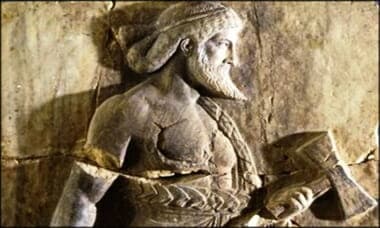
The Forge of Vulcan by Diego Velazquez, (1630). While some commentators have connected
the name of the Roman metalworking god Vulcan with the biblical Tubal-cain, the link is tenuous.
~ The Genesis Account (Powder Springs, GA: Creation Book Publishers, 2015), 435.
Genesis 4:17-26, The Line of Cain:
(17) Cain was intimate with his wife, and she conceived and gave birth to Enoch. Then Cain became the builder of a city, and he named the city Enoch after his son. (18) Irad was born to Enoch, Irad fathered Mehujael, Mehujael fathered Methushael, and Methushael fathered Lamech. (19) Lamech took two wives for himself, one named Adah and the other named Zillah. (20) Adah bore Jabal; he was the father of the nomadic herdsmen. (21) His brother was named Jubal; he was the father of all who play the lyre and the flute. (22) Zillah bore Tubal-cain, who made all kinds of bronze and iron tools. Tubal-cain’s sister was Naamah.
(23) Lamech said to his wives:
Adah and Zillah, hear my voice;
wives of Lamech, pay attention to my words.
For I killed a man for wounding me,
a young man for striking me.
(24) If Cain is to be avenged seven times over,
then for Lamech it will be seventy-seven times!
(25) Adam was intimate with his wife again, and she gave birth to a son and named him Seth, for she said, “God has given me another child in place of Abel, since Cain killed him.” (26) A son was born to Seth also, and he named him Enosh. At that time people began to call on the name of Yahweh.
The following are a couple commentaries about these verses. The first commentary is sort-of an introduction to these verses that detail the culture emerging in our most ancient civilizations, after the video is a more detailed commentary on Tubal-Cain:
- Victor Harold Matthews, Mark W. Chavalas, and John H. Walton, The IVP Bible Background Commentary: Old Testament, electronic ed. (Downers Grove, IL: InterVarsity Press, 2000), Ge 4:15–22.
4:17-26 ~ The Line of Cain
4:17. city building. Because the founding of a city is tied so intimately to the founding of a nation or people in the ancient world, stories about the founder and the circumstances surrounding its founding are a part of the basic heritage of the inhabitants. These stories generally include a description of the natural resources which attracted the builder (water supply, grazing and crop land, natural defenses), the special attributes of the builder (unusual strength and/or wisdom) and the guidance of the patron god. Cities were constructed along or near rivers or springs. They served as focal points for trade, culture and religious activity for a much larger region and thus eventually became political centers or city states. The organization required to build them and then to keep their mud-brick and stone walls in repair helped generate the development of assemblies of elders and monarchies to rule them.
4:19. polygamy. The practice of a man marrying more than one wife is known as polygamy. This custom was based on several factors: (1) an imbalance in the number of males and females, (2) the need to produce large numbers of children to work herds and/or fields, (3) the desire to increase the prestige and wealth of a household through multiple marriage contracts and (4) the high rate of death of females in childbirth. Polygamy was most common among pastoral nomadic groups and in rural farming communities, where it was important that every female be attached to a household and be productive. Monarchs also practiced polygamy, primarily as a means of making alliances with powerful families or other nations. In such situations the wives might also end up as hostages if the political relationship soured.
4:20. animal domestication. Raising livestock is the first stage in animal domestication, which involves human control of breeding, food supply and territory. Sheep and goats were the first livestock to be domesticated, with the evidence extending back to the ninth millennium b.c. Larger cattle came a bit later, and evidence for pig domestication begins in the seventh millennium.
4:21. musical instruments. Musical instruments were among the first inventions of early humans. In Egypt the earliest end-blown flutes date to the fourth millennium b.c. A number of harps and lyres as well as a pair of silver flutes were found in the royal cemetery at Ur dating to the early part of the third millennium. Flutes made of bone or pottery date back at least to the fourth millennium. Musical instruments provided entertainment as well as background rhythm for dances and ritual performances, such as processions or cultic dramas. Other than simple percussion instruments (drums and rattles), the most common instruments used in the ancient Near East were harps and lyres. Examples have been found in excavated tombs and painted on the walls of temples and palaces. They are described in literature as a means of soothing the spirit, invoking the gods to speak and providing the cadence for a marching army. Musicians had their own guilds and were highly respected.
4:22. ancient metal technology. As part of the account of the emergence of crafts and technology in the genealogy of Cain, it is appropriate that the origin of metalworking would be mentioned. Assyrian texts mention Tabal and Musku as the early metalworking regions in the Taurus Mountains (of eastern Turkey). Copper tools, weapons and implements began to be smelted and forged in the fourth millennium b.c. Subsequently, alloys of copper, principally bronze, were introduced in the early third millennium as sources of tin were discovered outside the Near East and trade routes expanded to bring them to Egypt and Mesopotamia. Iron, a metal which requires much higher temperatures and skin bellows (portrayed in the Egyptian Beni Hasan tomb paintings) to refine and work, was the last to be introduced, toward the end of the second millennium b.c. Hittite smiths seem to have been the first to exploit it, and then the technology spread east and south. Meteorite iron was cold-forged for centuries prior to its smelting. That would not represent as large an industry as the forging of terrestrial deposits, but it would explain some of the early references to iron prior to the Iron Age.
The following presentation by Dr. Chittick details some advanced technology of ancient man. If man evolved up from an animal as evolutionism teaches, then ancient civilizations should be “primitive.” However, science/archaeology indicates that ancient cultures were technologically advanced, perhaps even rivaling or surpassing our own technical achievements. Here is a quick bio on him:
Dr. Donald E. Chittick received a Ph.D. in Physical Chemistry from Oregon State University in Corvallis, Oregon, and a Bachelor of Science from Willamette University in Salem, Oregon. His resume includes the following: Chairman of the Division of Natural Sciences at George Fox University in Oregon, adjunct professor of chemistry at the Institute for Creation Research in California, and Associate Professor of Chemistry at the University of Puget Sound in Washington, as well as being an active lecturer for thirty years. Chittick is also an active inventor and has received several patents for alternative fuels and “programmed instruction,” i.e. homeschooling. He has a member of the American Chemical Society, and the Creation Research Society.
Here is Jonathan Sarfati’s commentary on Tubal-Cain:
- Jonathan D. Sarfati, The Genesis Account: A Theological, Historical, And Scientific Commentary On Genesis 1-11 (Powder Springs, GA: Creation Book Publishers, 2015), 429-430, 436-438.
THE LINE OF CAIN (4:17B-24)
4:17b-24—When he [Cain] built a city, he called the name of the city after the name of his son, Enoch. To Enoch was born Irad, and Irad fathered Mehujael, and Mehujael fathered Methushael, and Methushael fathered Lamech.
And Lamech took two wives. The name of the one was Adah, and the name of the other Zillah. Adah bore Jabal; he was the father of those who dwell in tents and have livestock. His brother’s name was Jubal; he was the father of all those who play the lyre and pipe. Zillah also bore Tubal-cain; he was the forger of all instruments of bronze and iron. The sister of Tubal-cain was Naamah
Lamech said to his wives:
“Adah and Zillah, hear my voice;
you wives of Lamech, listen to what I say:
I have killed a man for wounding me,
a young man for striking me.
If Cain’s revenge is sevenfold,
then Lamech’s is seventy-sevenfold.”
This section of Genesis is quite brief. But this is a pattern in Genesis: God is working out His Messianic program throughout history, but Genesis first narrates the history of the ‘side branches’ before disposing of them in the narrative. This section disposes of the history of the Cainites before moving on to the Messianic line of Seth. Then in Chapter 10, Genesis explains the history of the Gentile nations before moving on to Terah then his son Abraham, with whom God made a covenant. After this, Genesis 25 provides a brief history of Ishmael’s line before moving on to the covenant line in Isaac. Genesis 36 does the same for Esau’s line before a detailed explanation of the descendants of Jacob, the ancestor of the Messianic nation of Israel.
We also see how this line is involved in worldly pursuits, trying to alleviate the effects of the Curse. In itself, this is not a bad thing, and consistent with the Dominion Mandate (1:28, see Ch. 10). As Kidner says:
A biased account would have ascribed nothing good to Cain. The truth is more complex: God was to make much use of Cainite techniques for his people, from the semi-nomadic discipline itself (20; cf. Heb. 11:9) to the civilized arts and crafts (e.g. Exod. 35:35).
But in this case, the improvements were made apart from God, and merely show that “the sons of this world are more shrewd in dealing with their own generation than the sons of light” (Jesus, Luke 16:8).
THE FIRST RECORDED CITY (4:17B)
The English translation implies that Cain built a city, which would entail that he could defy his punishment of perpetual wandering. However, the Hebrew provides a different impression.
First, the word for ‘city’ is ‘îr (עִ֔יר). In the Bible, this certainly doesn’t mean something like modem London or New York, but can refer to something as small as a protected encampment. Keil and Delitzsch explain that this word “does not necessarily presuppose a large town, but simply an enclosed space with fortified dwellings, in contradistinction to the isolated tents of shepherds.”
Second, the Hebrew verb, wayǝhi bōneh (some Hebrew that did not scan over), which is participial, “he was engaged in building.” So it seems that Cain started the city, but had to wander again, so left it for Enoch to finish. This could be why the city was named after Enoch.
[….]
Tubal-cain (4:22a)
The above two brothers had an equally inventive half-brother, via Lamech’s other wife, Zillah. This was Tubal-cain, Hebrew Tubal Qayin (תּוּבַל). He was “the forger of all instruments of bronze and iron.” Thus Keil and Delitzsch suggest a reason for the dual name, “Cain, from קָ֫יִן to forge, is probably to be regarded as the surname which Tubal received on account of his inventions.” However, Henry Morris suggests an alternative:
The meaning of his name is uncertain but does seem etymologically to be the progenitor of the Roman god Vulcan.
Indeed, this view has had eminent support. For instance, John Gill elaborated on this idea much more in his monumental commentary series:
And Zillah, she also bare Tubalcain, … Thought by many to be the same with Vulcan, his name and business agreeing; for the names are near in sound, Tubalcain may easily pass into Vulcan; and who, with the Heathens, was the god of the smiths, and the maker of Jupiter’s thunderbolts, as this was an artificer in iron and brass, as follows: his name is compounded of two words, the latter of which was no doubt put into his name in memory of Cain his great ancestor; [Josephus] says of him, that he exceeded all in strength, and had great skill in military affairs.
An instructor of every artificer in brass and iron; he taught men the way of melting metals, and of making armour and weapons of war, and other instruments, for various uses, out of them; and he seems to be the same with the Chrysor of Sanchoniatho; for he says (w) of them (Agreus and Halieus) were begotten two brothers, the inventors of iron, and of working of it: one of these, called Chrysor, is said to be Hephaestus or Vulcan; and Chrysor, as Bochartus (x) seems rightly to conjecture, is `Choresh-Ur, a worker in fire’; that, by means of fire, melted metals, and cast them into different forms, and for different uses; and one of these words is used in the text of Tubalcain; and so, according to Diodorus Siculus (y), Vulcan signifies fire, and was not only the inventor of fire, but he says he was the inventor of all works in iron, brass, gold, and silver, and of all other things wrought by fire, and of all other uses of fire, both by artificers and all other men, and therefore he was called by all ‘fire’. Clemens of Alexandria ascribes the invention of brass and iron to the Idaeans or priests of Cybele in Cyprus; and so Sophocles in Strabo.
Vulcan was indeed the Roman god of fire and metalwork, often depicted with a blacksmith’s hammering. However, I have my doubts. Latin and Hebrew are from different language families—Indo-European and Semitic. Vulcan was functionally the same as the Greek god of metalworking, ‘Hephaestus’ (Hēphaistos – Ἥφαιστος), and linguistically similar to the Cretan nature and fire god Velchanos. Also, all this is prior to the Flood, so he could not have been the inventor of post-flood metal-working unless that technology was carried on the Ark and preserved through the first several generations. It is more likely that many things were re-invented by the descendants of Noah, even if through memory of the antediluvian world.
The word ‘all’, kol, in this case means ‘all kinds of’, so it means that Tubal-cain invented a wide variety of metal tools. So all these brothers produced useful technology that would make life easier and alleviate effects of the Curse. This is good in itself, and illustrates God’s grace even in the line of the murderer Cain.
But after a parenthetical statement about a sister, we see that the tools were not always used for good. Metal tools, like music, can have both God-honouring and God-defying applications.
Can Someone Be Glad for God’s Non-Existence?

- May I say that as our country was more religious, free speech was always understood well. Today, as society becomes more secular/atheistic… students need safe spaces to have a place to display their infantilization and routinely shut down dissenting ideas/speech. Religion (esp. the Judeo-Christian faith) creates courage in character expressed in community… secularism/atheism creates selfish ideals of a reality lived in a bubble. Even Richard Dawkins (famed atheist) said this of Christianity: “I have mixed feelings about the decline of Christianity, in so far as Christianity might be a bulwark against something worse.”
After someone posted this meme, a person said:
- “Amen! There is no God!”
(He meant no Christian God specifically as it is a predominately Christian Facebook group).
Now, I realize the original poster of the meme was not aware that this cuts both ways… and the atheist was merely pointing this out humorously. But this serves as a lesson EVEN FOR ATHEISTS.
So I replied:
I don’t know how someone could say “amen” to there not being a Judeo-Christian God? When comparing it to other worldview (say, pantheism, panentheism, finite godism, polytheism, etc), they have done almost zip for their respective societies.
Healthcare (nurses, hospitals, and is still the largest healthcare provider in the world), tackling the illiteracy problems as well as drunkeness (for instance the YMCA and Salvation ARMY and AA), education (all the leading universities like: Harvard, Yale, William and Mary, Princeton, Cambridge, and Westminster, etc… were founded as seminaries — so-to-speak — same goes for the medieval universities: University of Bologna, Oxford, University of Paris, etc.), languages unified in many nations across the globe by missionaries (Bengali is one example, other indigenous languages were preserved by [one example] William Carey, who because he unified the languages in India… the government formed for the first time a language that could include the general population in being involved), Historian Alvin Schmidt points out how the spread of Christianity and Christian influence on government was primarily responsible for outlawing infanticide, child abandonment, and abortion in the Roman Empire (in AD 374); outlawing the brutal battles-to-the-death in which thousands of gladiators had died (in 404); outlawing the cruel punishment of branding the faces of criminals (in 315); instituting prison reforms such as the segregating of male and female prisoners (by 361); stopping the practice of human sacrifice among the Irish, the Prussians, and the Lithuanians as well as among other nations; outlawing pedophilia; granting of property rights and other protections to women; banning polygamy (which is still practiced in some Muslim nations today); prohibiting the burning alive of widows in India (in 1829); outlawing the painful and crippling practice of binding young women’s feet in China (in 1912); persuading government officials to begin a system of public schools in Germany (in the sixteenth century); and advancing the idea of compulsory education of all children in a number of European countries.
Etc., etc., etc….
There was also strong influence from Christian ideas and influential Christians in the formulation of the Magna Carta in England (1215) and of the Declaration of Independence (1776) and the Constitution (1787) in the United States. These are three of the most significant documents in the history of governments on the earth, and all three show the marks of significant Christian influence in the foundational ideas of how governments should function.
This is important because….
The World Forum on Democracy reports that in 1950 there were 22 democracies accounting for 31% of the world population and a further 21 states with restricted democratic practices, accounting for 11.9% of the globe’s population. Since the turn of the century, electoral democracies now represent 120 of the 192 existing countries and constitute 58.2% of the world’s population.
The impact of this Christian founded nation and Christians on Democracy and the ending of slavery for the first time in world history is nothing short of miraculous.
What have non-God [atheistic worldview] type governments done????????
They have done in one century what all of the worlds religions could not accomplish in the previous 19-centuries… kill a record number of people.
[Yes, that includes the newest and most deadly religion in the stats — Islam. Out of all the religious wars in written world history… Islam claims almost 2/3rds of them. But this can be expected from it’s founder who slit the throats of men, women, and children.]
THREE Books To Read:
✦ How the West Won: The Neglected Story of the Triumph of Modernity, by Rodney Stark;
✦ How Christianity Changed the World, by Alvin Schmidt;
✦ The Book that Made Your World: How the Bible Created the Soul of Western Civilization, by Vishal Mangalwadi.
The above was my quick response on Facebook… here is another great short list from Life Coach for Coach:
- Hospitals, which essentially began during the Middle Ages.
- Universities, which also began during the Middle Ages. In addition, most of the world’s greatest universities were started for Christian purposes.
- Literacy and education for the masses.
- Capitalism and free enterprise.
- Representative government, particularly as it has been seen in the American experiment.
- The separation of political powers.
- Civil liberties.
- The abolition of slavery, both in antiquity and in more modern times.
- Modern science.
- The discovery of the New World by Columbus.
- The elevation of women.
- Benevolence and charity; the good Samaritan ethic.
- Higher standards of justice.
- The elevation of common man.
- The condemnation of adultery, homosexuality, and other sexual perversions. This has helped to preserve the human race, and it has spared many from heartache.
- High regard for human life.
- The civilizing of many barbarian and primitive cultures.
- The codifying and setting to writing of many of the world’s languages.
- Greater development of art and music. The inspiration for the greatest works of art.
- The countless changed lives transformed from liabilities into assets to society because of the gospel.
[And Twenty-One:]
The eternal salvation of countless souls.
The last one mentioned, the salvation of souls, is the primary goal of the spread of Christianity. All the other benefits listed are basically just by-products of what Christianity has often brought when applied to daily living.
When Jesus Christ took upon Himself the form of a man, He imbued mankind with dignity and inherent value that had never been dreamed of before. Whatever Jesus touched or whatever He did transformed that aspect of human life.
Many are familiar with the 1946 film classic It’s a Wonderful Life, wherein the character played by Jimmy Stewart gets a chance to see what life would be like had he never been born. The main point of the film is that each person’s life has an impact on everybody else’s life. Had they never been born, there would be gaping holes left by their absence. Jesus has had an enormous impact—more than anybody else—in history. Had he never come, the hole would be a canyon about the size of a continent.
Another great (downloadable in PDF or .DOC) can be found at Journey of Cross and Quill. Here is one paragraph as an example of the excellent post:
Schmidt quotes Lynn White, historian of medieval science, as saying “From the thirteenth century onward into the eighteenth every major scientist, in effect, explained his motivations in religious terms” (222). William Occam (1280-1349) had a great influence on the development of modern science. His concept known as “Occam’s Razor” was the scientific principle that states that what can be done or explained with the fewest assumptions should be used. It is the principle of parsimony. As was common with almost all medieval natural philosophers, Occam did not confine himself to scientific matters and wrote two theological treatises, one dealing with the Lord’s Supper and the other with the body of Christ, both of which had a tremendous impact on Martin Luther’s thinking (Schmidt 222). Leonardo Da Vinci (1452-1519), while a great artist and painter was also a scientific genius who analyzed and theorized in the areas of botany, optics, physics, hydraulics, and aeronautics. However, his greatest benefit to science was in the study of physiology in which he produced meticulous drawings of the human body (Schmidt 223). Andreas Vesalius (1514-64) followed in Da Vinci’s footsteps. In his famous work, De humani corpis fabrica (Fabric of the Human Body), published in 1543, he corrects over two hundred errors in Galen’s physiological writings. (Galen was a Greek physician of the second century) The errors were largely found by dissecting cadavers (Schmidt 223). The branch of genetics flourished under the work of Gregor Johann Mendel (1822-1884), an Augustinian monk, who after studying Darwin’s theory of evolution rejected it (Schmidt 224). In the field of astronomy great advances were made under devout Christian men Copernicus, Brahe, Kepler, and Galileo. In physics we encounter Isaac Newton (1642-1727), Gottfried Leibniz (1646-1716), Blaise Pascal (1623-62), Alessandro Volta (1745-1827), Georg Simon Ohm (1787-1854), Andre Ampere (1775-1836), Michael Faraday (1791-1867), and William Thompson Kelvin (1824-1907). These men held to a strong Christian faith as evidenced by their writings. Before he died, Kepler was asked by an attending Lutheran pastor where he placed his faith. Kepler replied, “Solely and alone in the work of our redeemer Jesus Christ.” Kepler, who only tried “thinking God’s thoughts after him,” died with the Christian faith planted firmly in his mind and heart. His epitaph, penned four months before his death stated:
I used to measure the heavens,
Now I must measure the earth.
Though sky-bound was my spirit,
My earthly body rests here (Schmidt 230).
A Few Lectures
Rodney Stark on the Dennis Prager Show:
A LONG lecture by historian Alvin Schmidt:
Vishal Mangalwadi on the Bible’s Influence of India (1st video) and the West (2nd):

Trump Is An Idiot!
Stolen from Moonbattery:


Michael Medved Opines Well on Cruz/Fiorina and the Donald
Video Description:
Medved fields some calls both from Trump supporters as well as those who are not rooting for Trump. He brings some historical context (as usual) to the calls (Taft v. Roosevelt; Humphrey, etc).
BUT MOST IMPORTANTLY he distinguishes the nonsense of Trump compared to “Republican ideals.” It amazes me that many of the same people that accused “Dubya” of being a “neo-con” are today rooting for someone far more entrenched in expanding government’s role as well as getting us involved in military operations. Here is a commentary by yours truly on my FaceBook:
I still do not understand what people do not like about Cruz’s positions as compared to Trump’s mess of positions. I would be happy if Rand Paul was put in on the third ballot, because he and Cruz are closest to the Founders idealism. I would be less happy but still pleased if Rubio were put in on the third ticket. Why? Because most ppl that ran were truly Republicans that leaned right in their ideology (except Kasich and more-so Trump).
So I view it as maybe being desperate, but only because many today do not think through these basic (101) delineations today. All the people that complained about Bush being a neo-con and who now like Trump (a crony-capitalist’s capitalists) are stuck between a rock and a hard place. He is more about large government than “Dubya” ever was.
For more clear thinking like this from Michael Medved… I invite you to visit: http://www.michaelmedved.com/

Carly Fiorina’s VP Acceptance Speech
Ted’s Carly intro is well worth the watch.
Curt Schilling Unplugged (ESPN Shite)

Negative Returns of Investment — Alternative Energy Fail!
Hot Air has this wonderful story with it’s said humorous point at the end of my excerpt of the Hot Air excerpt:
This week’s installment of how renewable energy will save America is brought to you by Watts Up With That. It’s the heartwarming tale of Lake Land College in Illinois, where the administration decided to save some money and strike a blow for clean energy back in 2012 by installing a pair of wind turbines to produce clean, renewable power for the school. Putting up equipment like that isn’t cheap, though, so they arranged for some help from Uncle Sam (read: you the taxpayers) in the form of a $987,697.20 grant. The towers went up and the blades began turning.
That, however, was when the story (unexpectedly!) took a turn…
The turbines were funded by a $2.5 million grant from the U.S. Department of Labor, but the turbines lasted for less than four years and were incredibly costly to maintain.
“Since the installation in 2012, the college has spent $240,000 in parts and labor to maintain the turbines,” Kelly Allee, Director of Public Relations at Lake Land College, told The Daily Caller News Foundation.
The college estimates it would take another $100,000 in repairs to make the turbines function again after one of them was struck by lightning and likely suffered electrical damage last summer. School officials’ original estimates found the turbine would save it $44,000 in electricity annually, far more than the $8,500 they actually generated. Under the original optimistic scenario, the turbines would have to last for 22.5 years just to recoup the costs, not accounting for inflation. If viewed as an investment, the turbines had a return of negative 99.14 percent.
[….]
It’s reminiscent of another story from the same part of the country. Going back roughly six years we learned that their neighbors in Minnesota put up a major wind turbine installation only to find out that the bearings in the turbines froze up in the winter and were similarly taken out of service. For the slower readers in the green energy movement, allow me to spell that out a bit more clearly.
The wind turbines were essentially destroyed because they froze…
In the winter…
…In Minnesota….
While these parts can be used for future engineering classes and the like… the whole venture is better suited for the econ classes to use as an example that without the government confiscating money and propping up ventures that do not work… they would be (in a free-market) thrown into the heap-bin of history. See my post: Government Investing A Recipe for Failure

A Republican Icon to Grace the $20-Bill
(As usual, all pics are linked to articles)
Our money is changing… get ready to know all about many of these ladies to be up on history and that they were VERY faithful.


A list of early pro-life [1st wave] feminists can be found here at Feminists for Life:
…A passage in Susan B. Anthony’s newspaper states:
★ Guilty? Yes, no matter what the motive, love of ease, or a desire to save from suffering the unborn innocent, the woman is awfully guilty who commits the deed. It will burden her conscience in life, it will burden her soul in death; but oh, thrice guilty is he who drove her to the desperation which impelled her to the crime! [see also Faith Street]
Victoria Woodhull, the first woman to run for president (in 1872), concurred. In her own newspaper, Woodhull and Claflin’s Weekly, Woodhull wrote: “The rights of children, then, as individuals, begin while they yet remain the foetus.” Woodhull and her sister, Tennessee Claflin, declared, “Pregnancy is not a disease, but a beautiful office of nature.”…
Many of these ladies grew up in the church and had careers started by the church and their gracious funding ~ like Union Baptist Church of Marian Anderson… again, the church led the way in breaking barriers. Some, like Sojourner Truth, had to learn the hard way what true faith is (see Christianity Today).
Even Martin Luther King, Jr. does not fit the leftist viewpoint. He was VERY pro-Second Amendment… when reporters would come into his home they would “sit” on guns. While MLK chose to not carry a gun while marching in places like Selma, he had them in his home. MLK also foresaw the racist movements involved in black nationalism (like the kind taught at Obama’s church during the entire 20-years he attended).
Martin Luther King Jr. shortly before he dies saw this stuff coming and spoke out against it:
King’s influence was tempered by the increasingly caustic tone of black militancy of the period after 1965. Black radicals increasingly turned away from the Gandhian precepts of King toward the Black Nationalism of Malcolm X, whose posthumously published autobiography and speeches reached large audiences after his assassination in February 1965. King refused to abandon his firmly rooted beliefs about racial integration and nonviolence.
In his last book, Where Do We Go from Here: Chaos or Community?, King dismissed the claim of Black Power advocates “to be the most revolutionary wing of the social revolution taking place in the United States,” but he acknowledged that they responded to a psychological need among African Americans he had not previously addressed. “Psychological freedom, a firm sense of self-esteem, is the most powerful weapon against the long night of physical slavery,” King wrote. “The Negro will only be free when he reaches down to the inner depths of his own being and signs with the pen and ink of assertive manhood his own emancipation proclamation.”
MLK also believed in a literal Adam and Eve.

So learn American history and use these people in honor of their past — to enlighten the future generations.
SOME BOOKS
✦ Great Women in American History, by Rebecca Price Janney;
✦ Harriet Tubman (Women of Faith), by Rebecca Price Janney;
✦ Sojourner Truth (Heroes of the Faith), by W. Terry Whalin;

- Ashley Herzog, Feminism vs. Women (Xulon Press, 2008), 85-91.
“They [the women] are never allowed to look at the ultrasound because we knew that if they so much as heard the heart beat, they wouldn’t \want to have an abortion.” – Abortion doctor quoted in New Dimensions magazine, 1990
Invariably, the feminist position on abortion is portrayed as the “pro-woman” position—mostly because feminist leaders have convinced their followers that this procedure is essential to women’s liberty. As Gloria Feldt, former president of Planned Parenthood, said, “‘abortion’ became a symbol of our independence, because reproductive freedom is fundamental to a woman’s aspirations.”
This is also known as the “pro-choice” position. But how do feminists feel about women who don’t choose abortion—and, more importantly, the women who assist them in making that choice?
Don’t be fooled by the deceptive labels and euphemisms. When it comes to “reproductive rights,” feminists have a very specific agenda—one that involves a lot more abortions, but not necessarily more choice.
At Temple University in Philadelphia, Serrin Foster, president of Feminists for Life of America, faced a tough crowd. As Crisis magazine described the scene, “The 40 or so students gathered to hear Foster are mostly women. Not even the pro-lifers are smiling. The student who introduced her asked those with differing opinions to be respectful. It set an ominous tone. Would they start chanting soon? Blowing whistles? Would they get violent?”
But then, somehow, Foster performed a miracle. She threw the cover off “the dirty little secret of women’s studies departments” — America’s earliest feminists were anti-abortion. In the words of courageous suffragette Susan B. Anthony, abortion was “child murder,” and “no matter what the motive, love of ease, or a desire to save from suffering the unborn innocent the woman is awfully guilty who commits the deed. It will burden her conscience in life, it will burden her soul in death; but oh, thrice guilty is he who drove her to the desperation which impelled her to the crime!”
Foster then asked the crowd, “If women were fighting for the right not to be considered property, what gives them the right to consider their baby property?”
It was something to think about. From that moment on, even students who had showed up to protest couldn’t help but nod in agreement.
That night, Foster raised a point that feminists dare not discuss: before the women’s movement was hijacked by leftists in the 1960s, abortion was never viewed as a good thing for women. In fact, the practice was unthinkable to individuals like Elizabeth Cady Stanton, the mastermind behind the historic Seneca Falls Convention and mother of seven children. (If Stanton applied for a teaching position in a women’s studies department today, she would be labeled a “Jesus freak” and promptly dismissed.)
“When we consider that women are treated as property, it is degrading to women that we should treat our children as property to be disposed of as we see fit,” Stanton wrote to her friend Julia Ward Howe in 1873.
She wasn’t the only one.
Victoria Woodhull, the first female stockbroker on Wall Street, also became the first woman to run for President in 1870. An early suffragette with a flair for the outrageous, Woodhull epitomized the modern feminist slogan “well-behaved women rarely make history.” (She was repeatedly arrested for her political activities.) And she too hated abortion.
“A human life is a human life and equally to be held sacred whether it be a day or a century old,” Woodhull wrote. “Wives…to prevent becoming mothers…deliberately murder [children] while yet in their wombs. Can there be a more demoralized condition than this? “
Alice Paul, who authored the original Equal Rights Amendment, was willing to face arrests, harassment, and physical assaults in order to win the right to vote. Later, when 1960s feminists began advocating the repeal of abortion laws, Paul asked, “How can one protect and help women by killing them as babies?” She considered abortion “the ultimate exploitation of women.”
Who are the modern descendents of Anthony, Stanton, Woodhull, and Paul? They can be found at Feminists for Life of America, whose founder, Pat Goltz, was kicked out of NOW for her anti-abortion views. On its website, FFL issues a challenge: “If you believe in the strength of women and the potential for every human life…If you refuse to choose between women and children…If you reject violence and exploitation, join us in challenging the status quo. There is a better way.”
FFL reaches out to women facing crisis pregnancies and opposes any legislation that might make it harder for them to keep their children—much of which has been proposed by Republicans, proving that FFL hardly deserves the “right- wing” label assigned to it by pro-abortion feminists. In 1996, FFL attempted to dissuade President Clinton from signing a Republican-backed welfare reform bill that eliminated additional assistance for babies born to girls under 18. Their rationale? If a pregnant girl couldn’t afford to raise her child, she would have no choice but to abort.
FFL also pressures universities to provide special resources for pregnant and parenting students, a move opposed by many conservatives on the principle that pregnant women aren’t entitled to handouts. But FFL refuses to compromise its mission: to make motherhood a viable option for women facing unwanted pregnancies.
FFL is not actively involved in efforts to outlaw abortion. Instead, the group is interested in “systematically eliminating the root causes that drive women to abortion — primarily lack of practical resources and support — through holistic, woman-centered solutions.”
This is a truly “pro-choice” position—the one that groups like NOW and NARAL claim to uphold. But evidently a lot of feminists do not believe that women deserve better than abortion.
“Who are the Feminists for Life? In a word, dangerous,” began an article in the online magazine Nerve.
“Feminists for what?” the author gasped. “Not a typo: Feminists for Life. As in, against abortion.” The horror!
As the article explained, the women of FFL “aren’t really feminists—a feminist could not force another woman to bear a child.”
Feminist hysteria over FFL indicates that the only “choice” they deem acceptable is the decision to terminate a pregnancy. The way FFL was treated by the Lilith Fair, a feminist music festival organized by singer Sarah McLachlan in the late 90’s, proved that different views on abortion will not be tolerated.
“Women are everywhere. Walking in groups, laughing and talking. Sitting on the grass. Playing the guitar. Reading pamphlets on women’s issues picked up from booths in the Village area,” a reporter described Lilith Fair’s stop in my hometown of Cleveland, Ohio. “There is also a woman with a gag in her mouth standing in front of one of the booths, wearing a T-shirt reading, ‘Peace begins in the womb, Sarah.’“
That woman was Marilyn Kopp, the director of Ohio Feminists for Life. Lilith Fair, despite its stated mission of “raising consciousness of women’s issues,” denied booth space to any group that did not wholeheartedly support abortion as the ultimate catalyst of gender equality.
Naturally, Lilith Fair’s feminist organizers were outraged that FFL had the gall to show up at their concert.
“This isn’t a democracy. This is a tyranny,” fumed singer Sheryl Crow, justifying Lilith’s ban on pro-life groups.
However, some ordinary concertgoers were unimpressed with the notion of tyranny in the name of women’s advancement.
“As Kopp’s friend Denise Mackura stands gagged in front of the NOW booth, a group of teenage girls walk up to her. When they find out what’s going on, they’re shocked,” reporter Laura Demarco wrote. “They see the situation as a violation of civil rights, not a defense of women’s rights. ‘This is wrong,’ says Casey Patton, 17.”
The sight of FFL members standing in front of NOW’s booth with gags in their mouths spoke volumes about the authoritarian nature of the modern feminist movement. As DeMarco observed, “It’s hard to miss the hypocrisy of feminists censoring other women like this… they patronizingly assume women aren’t smart enough to hear all sides on an issue and decide for themselves.”
The prospect of women deciding for themselves is terribly threatening to the feminist establishment—which might also explain their fanatical opposition to Crisis Pregnancy Centers.