Author: Papa Giorgio

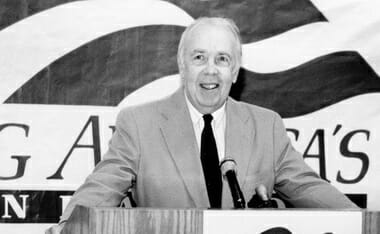
A Conservative Giant Passes ~ RIP M. Stanton Evans
Mr. Evans will be missed. His impact and legacy will live on however. Here are two tributes worth reading:
✪ The Washington Times
✪ Powerline
He was known as well for his humor:
“We have two parties here, and only two — one is the evil party, and the other is the stupid party,” he said. “I’m very proud to be a member of the stupid party. Occasionally, the two parties get together to do something that’s both evil and stupid. That’s called bipartisanship.”
You can hear his humorous side work it’s way out in the lecture at the bottom of this tribute.
One of my favorite books by Stanton is, “Blacklisted by History: The Untold Story of Senator Joe McCarthy and His Fight Against America’s Enemies.” My first book I read by him was “The Theme is Freedom: Religion, Politics, and the American Traditions.” Very impactful. And really makes you aware of the many streams of thought and history that converged in the settler life to form such wonderful Founding documents. Here is a taste of his writing style:
Even so, constitutional government as we conceive it was not attained in England. On the contrary, the principal lesson English Whigs derived from struggling with the Stuarts was that Parliament should wield the supreme, unchecked authority that had been wrested from the crown. While constitutional-ism and the rule of law continued to be talked of, the British concluded, in so many words, that Parliament could do whatever it wished, up to and including making changes in the constitution. The king accordingly was “under the law,” but Parliament wasn’t—since law was whatever Parliament decided.
As we have seen, this idea was never accepted by the Americans, and it became the focus of bitter conflict with the English. In the American theory, all political power was subject to a higher law, and this included legislatures as well as monarchs. In constitutional terms, the War of Independence was fought about this issue, and the political arrangements arrived at in the aftermath of fighting reflected the identical thesis. “In all free states,” Sam Adams put it, “the constitution is fixed.” Hence the method of establishing and tightly controlling power through conventions, the written Constitution, federalism, the doctrine of “enumerated powers,” and other techniques for limiting all authority whatsoever.
Why the Americans arrived at these particular notions, as opposed to the purely common law approach, is an intriguing question, though one omitted in the usual treatment. Part of it no doubt is the “freezing” effect of colonial living, which tends to keep political (and other) thought close to the baseline at the era of departure. Also important was the reliance of the settlers on written documents: colonial charters, the New England compacts, the constitutions and bills of rights adopted in the revolutionary era. While certainly not immune to change, as we well know, a document defining government powers is less susceptible to slippage than an evolving scheme of precedents and customs.
Undergirding this reliance on written agreements, also, was the habit of consulting Scripture. And while this too is open to variant readings, the Scriptural-theological element was a major prop of “fixity” in colonial doctrine. By keeping the original sources of the tradition to the forefront, this axiomatic stress restrained the drift inherent in a purely common law approach, which goes wherever precedent leads it. “Fixity” thus became the distinguishing feature of our founding epoch, and in limited-government terms was as much an advance beyond the British system as that was beyond the absolutism of the French. Rather than affirming the “rule of law” as a sentiment or theory, the Americans made it a definite principle of statecraft, enforced and strengthened by as many devices as they could muster.
Viewed this way, American constitutional doctrine is the product of an immensely long development, unfolding over two millennia of Western thought and practice. It starts with the religious insight that there is a higher law above the state; finds backing for this stricture in the church, and thereafter in the feudal order; deduces from these a system of contractual statecraft, representative bodies, and written guarantees of freedom—all translated to our shores and undergirded by the methods we have examined. Taken as a whole, this history tracks a series of ever-narrowing and more definite limits on, the reach of secular power—of which the American Constitution is (or was) the ultimate expression.
So construed, the measures adopted at our founding were an extension of the medieval outlook—though modified by religious changes, the colonial setting, and years of struggle with the British. Self-professed traditionalists that they were, the framers were more conservative than they knew. They were in a sense the last survivors of the feudal-medieval order, insisting that all earthly power must be subject to some limit. And, like their medieval forebears, they backed this up with pluralist, decentralized arrangements that gave practical content to the doctrine.
If this reading be accepted, a number of important conclusions are in order. One is that the chief political tradition of our culture is, above all else, a tradition of limited government, in the interest of protecting personal freedom. Those who profess this view today accordingly defend a legacy passed down to us, at considerable hazard, through many generations. The oft-stated conflict between traditional values and libertarian practice in our politics is therefore an illusion—a misreading of the record, or an artifact of special pleading. In the Anglo-American context, “big government conservatism” is the oxymoron—whatever its vogue among paternalists in Europe.
Also, it is worth repeating that this tradition is rooted in religious faith, not secular abstraction. The very concepts of the limited state and personal liberty, and the institutions that gave these practical force, grew from the religious vision of the West. Likewise, the specific ideas and political methods of our republic were products of this background—as seen in the theology of the early settlers, the arrangements they derived from this, and the religious customs of the founding era. All this is irrespective of whether Americans have always lived up to their faith, whether religious people have resorted to oppression, and other charges brought (sometimes correctly) in the conventional treatment. The point is rather that the conceptual building blocks and main political features of the free society were derived from these religious sources.
Stanton Evans, The Theme is Freedom: Religion, Politics, and the American Traditions (Washington, DC: Regnery, 1994), 310-313.
If you have the time and can stomach silver ware hitting plates as people eat, this Alger Hiss lecture is a fun watch:

Wisconsin Sheriff David Clarke Talks Civil Rights and Conservatism
More at the Daily Caller, the Sheriff’s Twitter, and his blog:
“[N]one of these individuals deserves to have been killed, but the fact is they were co-conspirators in their own demise,” Clarke said. “They engaged in some behavior that took them to a very dark place. Things weren’t going to turn out for them and didn’t. However, how can the civil rights movement in 2014 cloak themselves around criminal behavior, people who engage in criminal behavior and say this is the face of the civil rights movement? I’ve heard people say, ‘This is a new civil rights movement.’ No it’s not. That is an embarrassment.”
“That is a desecration of the legacy of people like Rosa Parks, people like Dr. Martin Luther King,” he continued. “You know again, Condi Rice’s story – two parents, education. That’s the key. That’s the traditional vehicle for upward mobility in the United States for everybody. You got to embrace it. You got to grind it out. We’re not offering the best schools for blacks in some of these urban centers, which is a very big issue for me.”

Michael Beasley Reviews Hitchens Book, “God Is Not Great”
Michael John Beasley speaks on atheist Christopher Hitchens’ completely shallow views of God and Christianity from his book God Is Not Great: How Religion Poisons Everything.
I want to deal a bit with Hitchens worldview that is the drive for such a book that uses bad-thinking to get an emotional response (e.g., propaganda). Here Hitchens hat-tips Karl Marx by saying that this [Marx’s Manifesto] was “…OUR first attempt at philosophy, just as it was OUR first attempt at healthcare, cosmology… astronomy, and so on….”
Here is a wonderful documentary (15-parts, they will load automatically) about the Marxist/Leninist philosophy. Before watching the documentary, consider this by a former leader in the 60’s communist movement here in the states:
…To transform society, you need the power of the state; it is the only way their future can be achieved. That is why they are willing to follow the marching orders of a party that can control the state, and that is why they want to advance its fortunes. The Democrats’ perennial campaign message — Republicans are conducting a war on minorities, women, working Americans, and the poor — rests on the central idea that unites progressives behind the party: We are for equality, they are against it.
The reasoning behind such behavior was revealed by Leon Trotsky when he explained why he would not leave the Bolshevik party even after Stalin — who would eventually murder him — became its absolute leader: “We can only be right with and by the Party,” Trotsky said, “for history has provided no other way of being in the right.” “If the Party adopts a decision which one or other of us thinks unjust, he will say, just or unjust, it is my party, and I shall support the consequences of the decision to the end.”
Non-Bolsheviks may not share Trotsky’s metaphysical certitude, but they will recognize the principle. If the cause is about changing the world and there is only one party that can acquire the means to do it, then even though it may be wrong on this or that matter, its fortunes must be advanced and its power defended. This commitment is magnified when the opposition party is viewed as the enemy of the noble cause. If Republicans are seen as the party of privilege at war with minorities, women, and the poor, then their ideas are not only wrong but evil. As President Obama’s political mentor, Saul Alinsky, put it in Rules for Radicals: “One acts decisively only in the conviction that all of the angels are on one side and the devils are on the other.”
Here is another statement from Rules for Radicals: “We are always moral and our enemies always immoral.” The issue is never the issue. The issue is always the immorality of the opposition, of conservatives and Republicans. If they are perceived as immoral and indecent, their policies and arguments can be dismissed, and even those constituencies that are non-political or “low-information” can be mobilized to do battle against an evil party. In 1996 Senator Bob Dole — a moderate Republican and deal-maker — ran for president against the incumbent, Bill Clinton. At the time, Dick Morris was Clinton’s political adviser. As they were heading into the election campaign, Clinton — a centrist Democrat — told Morris, “You have to understand, Dick, Bob Dole is evil.” That is how even centrist Democrats view the political battle.
Because Democrats and progressives regard politics as a battle of good versus evil, their focus is not on policies that work and ideas that make sense, but on what will make their party win. Demonizing the opposition is one answer; unity is another. If we are divided, we will fail, and that means evil will triumph…
Enjoy this tour of worldviews:

“Paternalistic” Racism of White Liberals (Real White Privileged)
(See also the middle video here about “buying votes.”) The below is a great example of how this “paternalism” has destroyed the black family and left the black community blaming scapegoats. However, to note, this leftist… sorry… Leftist Progressive ideology IS the white privilege you hear about. But it is masked in such a way that those on the Left bolster it while railing against it. It is akin to the atheist without a ground for morals borrowing from the theistic worldview to paint act done as morally wrong… when there is not ontological grounding for them to say such things. Unless God exists, that is.
Dr. Christina Greer, a professor of Political Science at Fordham University said that the US is “a patriarchal, white supremacist country” on Thursday’s Nightly Show With Larry Wilmore on Comedy Central. (Breitbart)
Discover the Networks has this wonderful article, and as much as the above political science professor is a disgrace… the below is mainly geared towards the “slavery” remarks of the host on his way out of the segment:
The rise of the welfare state in the 1960s contributed greatly to the demise of the black family as a stable institution. The out-of-wedlock birth rate among African Americans today is 73%, three times higher than it was prior to the War on Poverty. Children raised in fatherless homes are far more likely to grow up poor and to eventually engage in criminal behavior, than their peers who are raised in two-parent homes. In 2010, blacks (approximately 13% of the U.S. population) accounted for 48.7% of all arrests for homicide, 31.8% of arrests for forcible rape, 33.5% of arrests for aggravated assault, and 55% of arrests for robbery. Also as of 2010, the black poverty rate was 27.4% (about 3 times higher than the white rate), meaning that 11.5 million blacks in the U.S. were living in poverty.
When President Lyndon Johnson in 1964 launched the so-called War on Poverty, which enacted an unprecedented amount of antipoverty legislation and added many new layers to the American welfare state, he explained that his objective was to reduce dependency, “break the cycle of poverty,” and make “taxpayers out of tax eaters.” Johnson further claimed that his programs would bring to an end the “conditions that breed despair and violence,” those being “ignorance, discrimination, slums, poverty, disease, not enough jobs.” Of particular concern to Johnson was the disproportionately high rate of black poverty. In a famous June 1965 speech, the president suggested that the problems plaguing black Americans could not be solved by self-help: “You do not take a person who, for years, has been hobbled by chains and liberate him, bring him up to the starting line in a race and then say, ‘you are free to compete with all the others,’” said Johnson.
Thus began an unprecedented commitment of federal funds to a wide range of measures aimed at redistributing wealth in the United States.[1] From 1965 to 2008, nearly $16 trillion of taxpayer money (in constant 2008 dollars) was spent on means-tested welfare programs for the poor.
The economic milieu in which the War on Poverty arose is noteworthy. As of 1965, the number of Americans living below the official poverty line had been declining continuously since the beginning of the decade and was only about half of what it had been fifteen years earlier. Between 1950 and 1965, the proportion of people whose earnings put them below the poverty level, had decreased by more than 30%. The black poverty rate had been cut nearly in half between 1940 and 1960. In various skilled trades during the period of 1936-59, the incomes of blacks relative to whites had more than doubled. Further, the representation of blacks in professional and other high-level occupations grew more quickly during the five years preceding the launch of the War on Poverty than during the five years thereafter.
Despite these trends, the welfare state expanded dramatically after LBJ’s statement. Between the mid-Sixties and the mid-Seventies, the dollar value of public housing quintupled and the amount spent on food stamps rose more than tenfold. From 1965 to 1969, government-provided benefits increased by a factor of 8; by 1974 such benefits were an astounding 20 times higher than they had been in 1965. Also as of 1974, federal spending on social-welfare programs amounted to 16% of America’s Gross National Product, a far cry from the 8% figure of 1960. By 1977 the number of people receiving public assistance had more than doubled since 1960.
The most devastating by-product of the mushrooming welfare state was the corrosive effect it had (along with powerful cultural phenomena such as the feminist and Black Power movements) on American family life, particularly in the black community. As provisions in welfare laws offered ever-increasing economic incentives for shunning marriage and avoiding the formation of two-parent families, illegitimacy rates rose dramatically.
For the next few decades, means-tested welfare programs such as food stamps, public housing, Medicaid, day care, and Temporary Assistance to Needy Families penalized marriage. A mother generally received far more money from welfare if she was single rather than married. Once she took a husband, her benefits were instantly reduced by roughly 10 to 20 percent. As a Cato Institute study noted, welfare programs for the poor incentivize the very behaviors that are most likely to perpetuate poverty.[2] Another Cato report observes:
“Of course women do not get pregnant just to get welfare benefits…. But, by removing the economic consequences of out-of-wedlock birth, welfare has removed a major incentive to avoid such pregnancies. A teenager looking around at her friends and neighbors is liable to see several who have given birth out-of- wedlock. When she sees that they have suffered few visible consequences … she is less inclined to modify her own behavior to prevent pregnancy…. Current welfare policies seem to be designed with an appalling lack of concern for their impact on out-of-wedlock births. Indeed, Medicaid programs in 11 states actually provide infertility treatments to single women on welfare.”
The marriage penalties that are embedded in welfare programs can be particularly severe if a woman on public assistance weds a man who is employed in a low-paying job. As a FamilyScholars.org report puts it: “When a couple’s income nears the limits prescribed by Medicaid, a few extra dollars in income cause thousands of dollars in benefits to be lost. What all of this means is that the two most important routes out of poverty—marriage and work—are heavily taxed under the current U.S. system.”[3]
The aforementioned FamilyScholars.org report adds that “such a system encourages surreptitious cohabitation,” where “many low-income parents will cohabit without reporting it to the government so that their benefits won’t be cut.” These couples “avoid marriage because marriage would result in a substantial loss of income for the family.”
A 2011 study conducted jointly by the Institute for American Values’ Center for Marriage and Families and the University of Virginia’s National Marriage Project suggests that “the rise of cohabiting households with children is the largest unrecognized threat to the quality and stability of children’s family lives.” The researchers conclude that cohabiting relationships are highly prone to instability, and that children in such homes are consequently less likely to thrive, more likely to be abused, and more prone to suffering “serious emotional problems.”…
[1] Hoover Institution senior fellow Thomas Sowell writes: “Never had there been such a comprehensive program to tackle poverty at its roots, to offer more opportunities to those starting out in life, to rehabilitate those who had fallen by the wayside, and to make dependent people self-supporting…. The War on Poverty represented the crowning triumph of the liberal vision of society—and of government programs as the solution to social problems.”
[2] For instance, “a 1 percent increase in the welfare-dependent population in a state increases the number of births to single mothers by about 0.5 percent,” and “an increase in AFDC benefits by 1 percent of average income increases the number of births to single mothers by about 2.1 percent.”
[3] The marriage penalties that are embedded in welfare programs can be particularly severe if a woman on public assistance weds a man who is employed in a low-paying job. Consider the hypothetical case, as outlined in May 2006 by Urban Institute senior fellow Eugene Steuerle, of a single mother with two children who earns $15,000 and enjoys an Earned Income Tax Credit (EITC) benefit of approximately $4,100. If she marries a man earning $10,000, thereby boosting the total household income to $25,000, the EITC benefit, which decreases incrementally for every dollar a married couple earns above a certain level, would drop precipitously to $2,200. Similarly, consider the case (also outlined by Eugene Steuerle in May 2006) of a mother of two children who earns $20,000 and thus qualifies for Medicaid. If she marries someone earning just $6,000, resulting in a combined household income of $26,000, her children’s Medicaid benefits are cut off entirely.
Thomas Sowell talks about how the black family was intact and wealthy up until the welfare state:
The black family, which had survived centuries of slavery and discrimination, began rapidly disintegrating in the liberal welfare state that subsidized unwed pregnancy and changed welfare from an emergency rescue to a way of life.
Government social programs such as the War on Poverty were considered a way to reduce urban riots. Such programs increased sharply during the 1960s. So did urban riots. Later, during the Reagan administration, which was denounced for not promoting social programs, there were far fewer urban riots.
Neither the media nor most of our educational institutions question the assumptions behind the War on Poverty. Even conservatives often attribute much of the progress that has been made by lower-income people to these programs.
For example, the usually insightful quarterly magazine City Journal says in its current issue: “Beginning in the mid-sixties, the condition of most black Americans improved markedly.”
That is completely false and misleading.
The economic rise of blacks began decades earlier, before any of the legislation and policies that are credited with producing that rise. The continuation of the rise of blacks out of poverty did not — repeat, did not — accelerate during the 1960s.
The poverty rate among black families fell from 87 percent in 1940 to 47 percent in 1960, during an era of virtually no major civil rights legislation or anti-poverty programs. It dropped another 17 percentage points during the decade of the 1960s and one percentage point during the 1970s, but this continuation of the previous trend was neither unprecedented nor something to be arbitrarily attributed to the programs like the War on Poverty.
In various skilled trades, the incomes of blacks relative to whites more than doubled between 1936 and 1959 — that is, before the magic 1960s decade when supposedly all progress began. The rise of blacks in professional and other high-level occupations was greater in the five years preceding the Civil Rights Act of 1964 than in the five years afterwards.
While some good things did come out of the 1960s, as out of many other decades, so did major social disasters that continue to plague us today. Many of those disasters began quite clearly during the 1960s.

“This is a Christian Holocaust” ~ And Obama Brings Up Crusades?
But… but… we shouldn’t forget the Crusades!
They’re massacring every Christian they see and we face extinction, the oldest Christians in the world. Early today I spoke with White House officials and I told them if they keep not doing anything to protect Christians around the world, they’re sentencing my people to death. And, they’re not acting, so we have to put the pressure on… The American government and the White House are not doing enough… This is a Christian holocaust. …The absence of leadership in the White House is leading to more and more Christians to be persecuted and beheaded. Our churches are being bombed. Nobody’s acting. This is, as we keep saying, a full-blown Christian genocide and Washington isn’t doing anything. This is a Christian holocaust.

Do the Rich Pay Their Fair Share? (UCLA Professor Lee Ohanian)
Do the rich pay their fair share of taxes? It’s not a simple question. First of all, what do you mean by rich? And how much is fair? What are the rich, whoever they are, paying now? Is there any tax rate that would be unfair? UCLA Professor of Economics, Lee Ohanian, has some fascinating and unexpected answers.

Videos on Israel: BDS, Apartheid, History, etc. (UPDATED)
Here are almost all the videos and audios I have either posted on my blog or uploaded to my YouTube & Vimeo dealing with the Palestinian Conflict or Israel. New videos will be added at the top. UPDATES appear just underneath.
Does Israel discriminate against Arabs? Is it today’s version of apartheid South Africa? Olga Meshoe, herself a South African whose family experienced apartheid, settles the question once and for all.
Why don’t the Palestinians have their own country? Is it the fault of Israel? Of the Palestinians? Of both parties? David Brog, Executive Director of the Maccabee Task Force, shares the surprising answers.
When the state of Israel was founded in 1948, it was done so with the approval of the United Nations. But today, Israel’s enemies routinely challenge the legitimacy of its very existence. So, under international law, who’s right? Israel? Or its enemies?
As Israel is under attack from Hamas in the Gaza strip and BDS — Boycott, Divestment and Sanctions — right here in America, Bill Whittle makes the historical and moral case for Israel, and shows just who, indeed, are the tyrants and aggressors in the Middle East
In which our host, Andrew Klavan, points out that the leftists behind the current Boycott, Divestment and Sanction, or BDS, efforts against the State of Israel are not at all anti-semitic. They just hate Jews and want to kill them…
Israel is a vibrant democracy with full rights for women and gays, a free press and independent judiciary. You would think that the United Nations would celebrate such a country. Instead, the UN condemns Israel at every turn to the point of obsession. How did this happen? Anne Bayefsky, director of the Touro Institute on Human Rights, explains in five eye-opening minutes.
Are Israeli Settlements the Barrier to Peace?
Is Israel’s policy of building civilian communities in the West Bank the reason there’s no peace agreement with the Palestinians? Or would there still be no peace even if Israel removed all of its settlements and evicted Israeli settlers, as it did in Gaza in 2005? Renowned Harvard professor and legal scholar Alan Dershowitz explains.
Kenneth Meshoe – Black South African Member of Parliament, Talks About Israel and Apartheid
Is Israel an Apartheid State?
Kenneth Meshoe, Member of Parliament in South Africa, Talks Israel
The History of the Middle East Conflict in 11 Minutes:
Why Israel can’t withdraw to its pre ’67 borders line:
Larry Elder On Israel (Plus: “Son of Hamas”)
A Challenge To Medved on Jewish/Israeli History
Medved Makes Short Order of Some Tired Ol’ Mantras
BDS: The Attempt to Strangle Israel ~ Dershowitz
The Boycott, Divestment and Sanctions (BDS) movement says it’s fighting for Palestinian rights, but it’s really just trying to destroy Israel. Jonathan Sacks, author and former Chief Rabbi of the United Kingdom, explains how.
The Middle East Problem ~ Prager
UN vs Israel ~ Dr. Anne Bayefsky
Anti-Israeli Views at the NYT & the U.N. Exemplified ~ Prager
A Pro-Palestinian Call Taken ~ Prager
Caller Asks Dennis Prager About Palestinian History
Israel Palestinian Conflict: The Truth About the West Bank
ISRAEL VS THE WORLD!! ~ Crowder
Palestine Sucks ~ Crowder
Evolutionary Assumptions (Carl F.H. Henry and G.A. Kerkut)
- The FIRST QUOTE is Carl Henry (a Christian) quoting Dr. Kerkut’s book (an evolutionist). The SECOND QUOTE [jump to] is the raw, long excerpted quote from G.A. Kerkut.

What I am going to do is post a quote from one of Carl F. H. Henry’s books, then follow that quote up a larger quote from his source he uses. Context is king and I love Dr. Henry’s source A LOT!
The numbers from Dr. Henry’s quote correspond to the same numbers in Kerkut’s concluding chapter (to follow… jump to now instead by clicking here).
[p. 182>] A. Kerkut emphasizes that all seven basic assumptions on which evolutionary theory rests are “by their nature… not capable of experimental verification” (Implications of Evolution, p. 7). (1) The assumption that “nonliving things gave rise to living material… is still just an assumption” (ibid., p. 150). (2) The assumption that “biogenesis occurred only once… is a matter of belief rather than proof” (op. cit.). (3) The assumption that “Viruses, Bacteria, Protozoa and the higher animals were all interrelated” biologically as an evolutionary phenomenon lacks definite evidence (ibid., p. 151). (4) The assumption that “the Protozoa gave rise to the Metazoa” has no basis in definite knowledge (ibid., pp. 151 ff.). (5) The assumption that “the various invertebrate phyla are interrelated” depends on “tenuous and circumstantial” evidence and not on evidence that allows “a verdict of definite relationships” (ibid., pp. 152 f.). (6) The assumption that “the invertebrates gave rise to the vertebrates” turns on evidence gained by prior belief (ibid., p. 153). Although he finds “somewhat stronger ground” for assuming that “fish, amphibia, reptiles, birds and mammals are interrelated,” (7) Kerkut concedes that many key fossil transitions are “not well documented and we have as yet to obtain a satisfactory objective method of dating the fossils” (ibid., p. 153). “In effect, much of the evolution of the major groups of animals has to be taken on trust” (ibid., p. 154); “there are many discrete groups of animals and… we do not know how they have evolved nor how they are interrelated” (ibid., p. vii). In short, the theory that “all the living forms in the world have arisen from a single source which itself came from an inorganic form,” says Kerkut, has insufficiently strong evidential supports “to consider it as anything more than a working hypothesis” (ibid., p. 157). He thinks “premature and not satisfactorily supported by present-day evidence,” therefore, “the attempt to explain all living forms in terms of an evolution from a unique source,” that is, from a common ancestor (ibid., pp. vii f.)
[p. 183>] It is therefore understandable why commentators speak more and more of a crisis of evolutionary theory. Establishment science’s long regnant view that gradual development accounts for the solar system, earth, life and all else is in serious dispute. Not in many decades has so much doubt emerged among scientists about the so-called irrefutable evidence that evolution is what accounts for life on planet earth. Although it was still taught long thereafter in high schools, Ernst Haeckel’s “biogenetic law” that “ontogeny recapitulates phylogeny” had collapsed already in the late 1920s. The absence in recent texts of evolutionary charts depicting the common descent even of trees from a single form is noteworthy. Darwin’s insistence that nature makes no leaps, and that natural selection and chance adequately account for change in species, has lost credibility. Paleontologists and biologists are at odds over the significance of the fossil record, while gradualists and episodists disagree over the supposed tempo of evolution or whether the origin of species is consistent with microevolution or only with sudden gaps in the forms of life.
Gould, for example, opts for natural selection and, remarkably, combines it with saltation. He grants that “the fossil record does not support” the belief “in slow evolutionary change preached by most paleontologists” (and projected by Darwin); instead, “mass extinction and abrupt origination reign.. . . Gradualism is not exclusively valid (in fact, I regard it as rather rare). Natural selection contains no statement about rates. It can encompass rapid (geologically instantaneous) change by speciation in small populations as well as the conventional and immeasurably slow transformation of entire lineages” (Ever Since Darwin, p. 271). Natural selection here becomes an elastic phrase that can accommodate to everything while requiring no significant empirical attestation.
University of Glasgow scientists Chris Darnbrough, John Goddard and William S. Stevely indicate problem areas that beset evolutionary theory: “The experiments demonstrating the formation of a variety of organic molecules from presumptive prebiotic soups,” they write, “fall far short of providing a pathway for chemical evolution. Again, it is self-evident that the fossil record leaves much to be desired and few biologists recognize the dependence of the geological column on radiometric dating methods based on questionable assumptions about initial conditions. The whole history of evolutionary thought is littered with the debris of dubious assumptions and misinterpretations, especially in the area of fossil ‘hominids.’ To come up to date, protein and DNA sequence data, generally viewed as consistent with an evolutionary explanation of diversity, are invariably interpreted using methods which presuppose, but do not demonstrate evolutionary relationships, and which use criteria that are essentially functional and teleological. Finally, there is a collection of isolated fragmentary pieces of evidence which are usually dismissed as anecdotal because they are irreconcilable with the evolutionary model” (“American Creation” [correspondence], by Chris Darnbrough, John Goddard and William S. Stevely, Nature, pp. 95 f.).
From ongoing conflicts and readjustments it is apparent that there never [p. 184>] was nor is there now only one theory of evolution. Many nontheistic scholars, to be sure, insist that evolution is and has always been “a fact.” Laurie R. Godfrey affirms that “there is actually widespread agreement in scientific circles that the evidence overwhelmingly supports evolutionism” and quotes Gould as saying that “none of the current controversy within evolutionary theory should give any comfort, not the slightest iota, to any creationists” (“The Flood of Antievolution,” pp. 5-10, p. 10). If, as Godfrey insists, even the most sweeping revisions and reversals of scientific theory ought to be viewed not as weaknesses in evolutionary claims but rather as reflections of ongoing differences that inhere in “doing science—posing, testing and debating alternative explanations,” then the emphasis is proper only if Godfrey refuses to attach finality and a universal validity-claim to anticreationist evolutionary theses.
The history of evolutionary theory is far from complete and its present status ambiguous. Hampton L. Carson notes the difficulty of integrating the dual lines of study pursued by biological evolutionists when on the one hand they project the course of evolution that is held to produce contemporary organisms, and when on the other they analyze supposed evolutionary causation. Carson notes, moreover, that presentation of new approaches even to student audiences now requires an understanding of sophisticated computer techniques and an awareness of complex and sometimes esoteric theory; he ventures the bold observation that “new mutations and recombinations” of evolutionary theory will themselves “be subject to natural selection” (“Introduction to a Pivotal Subject” [review of Evolution by Theodosius Dobzhansky and others, and of Organismic Evolution by Verne Grant], pp. 1272 f.).
Yet most secular evolutionists continue to assume that evolution is a complex fact and therefore debate only its mechanism. Appealing to consensus rather than to demonstrative data, G. G. Simpson states that “no evolutionist since [Darwin has] seriously questioned that man did originate by evolution”; he insists, moreover, that “the problem [the origin of life] can be attacked scientifically” (“The World into Which Darwin Led Us.” pp. 966-974). Simpson’s advance confidence in naturalistic explanation exudes a strong bias against theistic premises.
But Thomas S. Kuhn considers the physical sciences to be grounded less on empirical facts that on academically defined assumptions about the nature of the universe, assumptions that are unprovable, questionable and reversible (The Structure of Scientific Revolutions). His approach differs somewhat from Michael Polanyi’s assault on the objectivity of human knowledge (Personal Knowledge: Towards a Post-Critical Philosophy), a view that Christian theism disputes on its own ground. Yet both Kuhn’s emphasis and Polanyi’s tend to put a question mark after absolutist evolutionary claims.
Carl F. H. Henry, God, Revelation and Authority, Vol VI: God Who Stands and Stays (Wheaton, IL: Crossway Books, 1983), 182-184.
Here is the extended quote from Dr. Henry’s source used,
G.A. Kerkut’s Implications of Evolution (pp. 150-157):
[p. 150>] WHAT conclusions, then, can one come to concerning the validity of the various implications of the theory of evolution? If we go back to our initial assumptions it will be seen that the evidence is still lacking for most of them.
(1) The first assumption was that non-living things gave rise to living material. This is still just an assumption. It is conceivable that living material might have suddenly appeared on this world in some peculiar manner, say from another planet, but this then raises the question, “Where did life originate on that planet?” We could say that life has always existed, but such an explanation is not a very satisfactory one. Instead, the explanation that nonliving things could have given rise to complex systems having the properties of living things is generally more acceptable to most scientists. There is, however, little evidence in favour of biogenesis and as yet we have no indication that it can be performed. There are many schemes by which biogenesis could have occurred but these are still suggestive schemes and nothing more. They may indicate experiments that can be performed, but they tell us nothing about what actually happened some 1,000 million years ago. It is therefore a matter of faith on the part of the biologist that biogenesis did occur and he can choose whatever method of biogenesis happens to suit him personally; the evidence for what did happen is not available.
(2) The second assumption was that biogenesis occurred only once. This again is a matter for belief rather than proof. It is convenient to believe that all living systems have the same fundamental chemical processes at work within them, but as has already been mentioned, only a few representatives from the wide range of living forms have so far been examined and even [p. 151>] these have not been exhaustively analysed. From our limited experience it is clear that the biochemical systems within protoplasm are not uniform, i.e. there is no established biochemical unity. Thus we are aware that there are systems other than the Embden—Meyerhof and the tricarboxylic cycles for the systematic degradation of carbohydrates; a total of six alternative methods being currently available. High-energy compounds other than those of phosphorus have been described; the number of vital amino-acids has gone up from twenty to over seventy; all these facts indicate that the biochemical systems may be very variable. The morphological systems in protoplasm, too, show considerable variation. It is possible that some aspects of cell structure such as the mitochondria and the microsomes might have arisen independently on several distinct occasions. It is also probable that two or more independent systems have evolved for the separation of chromosomes during cell division.
It is a convenient assumption that life arose only once and that all present-day living things are derived from this unique experience, but because a theory is convenient or simple it does not mean that it is necessarily correct. If the simplest theory was always correct we should still be with the four basic elements—earth, air, fire and water! The simplest explanation is not always the right one even in biology.
(3) The third assumption was that Viruses, Bacteria, Protozoa and the higher animals were all interrelated. It seems from the available evidence that Viruses and Bacteria are complex groups both of which contain a wide range of morphological and physiological forms. Both groups could have been formed from diverse sources so that the Viruses and Bacteria would then be an assembly of forms that contain both primitive and secondarily simplified units. They would each correspond to a Grade rather than a Subkingdom or Phylum. We have as yet no definite evidence about the way in which the Viruses, Bacteria or Protozoa are interrelated.
(4) The fourth assumption was that the Protozoa gave rise to the Metazoa. This is an interesting assumption and various schemes have been proposed to show just how the change could have taken place. On the other hand equally interesting schemes have been suggested to show the way in which the Metaphyta [p. 152>] could have given rise to both the Protozoa and the Metazoa. Here again nothing definite is known. We can believe that any one of these views is better than any other according to the relative importance that we accord to the various pieces of evidence.
(5) The fifth assumption was that the various invertebrate phyla are interrelated. If biogenesis occurred many times in the past and the Metazoa developed on several finite occasions then we might expect to find various isolated groups of invertebrates. If on the other hand biogenesis was a unique occurrence it should not be too difficult to show some relationship between all the various invertebrate phyla.
It should be remembered, for example, that though there are similarities between the cleavage patterns of the eggs of various invertebrates these might only reflect the action of physical laws acting on a restrained fluid system such as we see in the growth of soap bubbles and not necessarily indicate any fundamental phylogenetic relationship .
As has already been described, it is difficult to tell which are the most primitive from amongst the Porifera, Mesozoa, Coelenterata, Ctenophora or Platyhelminthia and it is not possible to decide the precise interrelationship of these groups. The higher invertebrates are equally difficult to relate. Though the concept of the Protostomia and the Deuterostomia is a useful one, the basic evidence that separates these two groups is not as clear cut as might be desired. Furthermore there are various groups such as the Brachiopoda, Chaetognatha, Ectoprocta and Phoronidea that have properties that lie between the Protostomia and the Deuterostomia. It is worth paying serious attention to the concept that the invertebrates are polyphyletic, there being more than one line coming up to the primitive metazoan condition. It is extremely likely that the Porifera are on one such side line and it is conceivable that there could have been others which have since died away leaving their progeny isolated; in this way one could explain the position of the nematodes. The number of ways of achieving a specific form or habit is limited and resemblances may be due to the course of convergence over the period of many millions of years. The evidence, then, for the affinities of the majority of the invertebrates is tenuous and circumstantial; not [p. 153>] the type of evidence that would allow one to form a verdict of definite relationships.
(6) The sixth assumption, that the invertebrates gave rise to the vertebrates, has not been discussed in this book. There are several good reviews on this subject. Thus Neal and Rand (1939) provide a useful and interesting account of the various views that have been suggested to explain the relationship between the invertebrates and the vertebrates. The vertebrates have been derived from the annelids, arthropods, nemerteans, hemichordates and the urochordates. More recently Berrill (1955) has given a detailed account of the mode of origin of the vertebrates from the urochord-ates in which the sessile ascidian is considered the basic form. On the other hand, almost as good a case can be made to show that the ascidian tadpole is the basic form and that it gave rise to the sessile ascidian on the one hand and the chordates on the other. Here again it is a matter of belief which way the evidence happens to point. As Berrill states, “in a sense this account is science fiction.”
(7) We are on somewhat stronger ground with the seventh assumption that the fish, amphibia, reptiles, birds and mammals are interrelated. There is the fossil evidence to help us here, though many of the key transitions are not well documented and we have as yet to obtain a satisfactory objective method of dating the fossils. The dating is of the utmost importance, for until we find a reliable method of dating the fossils we shall not be able to tell if the first amphibians arose after the first choanichthian or whether the first reptile arose from the first amphibian. The evidence that we have at present is insufficient to allow us to decide the answer to these problems.
One thing that does seem reasonably clear is that many of the groups such as the Amphibia (Save Soderberg 1934), Reptilia (Goodrich 1916) and Mammalia appear to be polyphyletic grades of organisation. Even within the mammals there is the suggestion that some of the orders might be polyphyletic. Thus Kleinenberg (1959) has suggested that the Cetacea are diphyletic, the Odontoceti and the Mysticeti being derived from separate terrestrial stocks. (Other groups that appear to be polyphyletic are the Viruses, Bacteria, Protozoa, Arthropoda (Tiegs and Manton 1958), and it is possible that close study will show that the Annelida and Protochordata are grades too.)
[p. 154>] In effect, much of the evolution of the major groups of animals has to be taken on trust. There is a certain amount of circumstantial evidence but much of it can be argued either way. Where, then, can we find more definite evidence for evolution? Such evidence will be found in the study of modern living forms. It will be remembered that Darwin called his book The Origin of Species not The Origin of Phyla and it is in the origin and study of the species that we find the most definite evidence for the evolution and changing of form. Thus to take a specific example, the Herring Gull, Larus argentatus, does not interbreed with the Lesser Black-backed Gull, Larus fuscus, in Western Europe, the two being separate species. But if we trace L. argentatus across the northern hemisphere through North America, Eastern Siberia and Western Siberia we find that in Western Siberia there is a form of L. argentatus that will interbreed with L. fuscus. We have here an example of a ring species in which the members at the ends of the ring will not interbreed whilst those in the middle can. The separation of what was possibly one species has been going on for some time (in this case it is suggested since the Ice Age). We have of course to decide that this is a case of one species splitting into two and not of two species merging into one, but this decision is aided by the study of other examples such as those of small mammals isolated on islands, or the development of melanic forms in moths. Details of the various types of speciation can be found in the books by Mayr, Systematics and the Origin of Species (1942), and Dobzhansky, Genetics and the Origin of Species (1951).
It might be suggested that if it is possible to show that the present-day forms are changing and the evolution is occurring at this level, why can’t one extrapolate and say that this in effect has led to the changes we have seen right from the Viruses to the Mammals? Of course one can say that the small observable changes in modern species may be the sort of thing that lead to all the major changes, but what right have we to make such an extrapolation? We may feel that this is the answer to the problem, but is it a satisfactory answer? A blind acceptance of such a view may in fact be the closing of our eyes to as yet undiscovered factors which may remain undiscovered for many years if we believe that the answer has already been found.
[p. 155>] It seems at times as if many of our modern writers on evolution have had their views by some sort of revelation and they base their opinions on the evolution of life, from the simplest form to the complex, entirely on the nature of specific and intra-specific evolution. It is possible that this type of evolution can explain many of the present-day phenomena, but it is possible and indeed probable that many as yet unknown systems remain to be discovered and it is premature, not to say arrogant, on our part if we make any dogmatic assertion as to the mode of evolution of the major branches of the animal kingdom.
Perhaps it is appropriate here to quote a remark made by D’Arcy Thompson in his book On Growth and Form. “If a tiny foraminiferan shell, a Lagena for instance, be found living today, and a shell indistinguishable from it to the eye be found fossil in the Chalk or some still more remote geological formation, the assumption is deemed legitimate that the species has ‘survived’ and has handed down its minute specific character or characters from generation to generation unchanged for untold millions of years. If the ancient forms be like rather than identical with the recent, we still assume an unbroken descent, accompanied by hereditary transmission of common characters and progressive variations. And if two identical forms be discovered at the ends of the earth, still (with slight reservation on the score of possible ‘homoplasy’) we build a hypothesis on this fact of identity, taking it for granted that the two appertain to a common stock, whose dispersal in space must somehow be accounted for, its route traced, its epoch determined and its causes discussed or discovered. In short, the Naturalist admits no exception to the rule that a natural classification can only be a genealogical one, nor ever doubts that ‘ ‘the fact that we are able to classify organisms at all in accordance with the structural characteristics which they present is due to their being related by descent.'”
What alternative system can we use if we are not to assume that all animals can be arranged in a genealogical manner? The alternative is to indicate that there are many gaps and failures in our present system and that we must realise their existence. It may be distressing for some readers to discover that so much in zoology is open to doubt, but this in effect indicates the vast amount of work that remains to be done. In many courses the [p. 156>] student is obliged to read, assimilate and remember a vast amount of factual information on the quite false assumption that knowledge is the accumulation of facts. There seems so much to be learnt that the only consolation the student has is that those who come after him will have even more to learn, for more will be known. But this is not really so; much of what we learn today are only half truths or less and the students of tomorrow will not be bothered by many of the phlogistons that now torment our brains.
It is in the interpretation and understanding of the factual information and not the factual information itself that the true interest lies. Information must precede interpretation, and it is often difficult to see the factual data in perspective. If one reads an account of the history of biology such as that presented by Nordenskiold (1920) or Singer (1950) it sometimes appears that our predecessors had a much easier task to discover things than we do today. All that they had to do was realise, say, that oxygen was necessary for respiration, or that bacteria could cause septicaemia or that the pancreas was a ductless gland that secreted insulin. The ideas were simple; they just required the thought and the experimental evidence! Let us have no doubt in our minds that in twenty years or so time we shall look back on many of today’s problems and make similar observations. Everything will seem simple and straightforward once it has been explained. Why then cannot we see some of these solutions now? There are many partial answers to this question. One is that often an incorrect idea or fact is accepted and takes the place of the correct one. An incorrect view can in this way successfully displace the correct view for many years and it requires very careful analysis and much experimental data to overthrow an accepted but incorrect theory. Most students become acquainted with many of the current concepts in biology whilst still at school and at an age when most people are, on the whole, uncritical. Then when they come to study the subject in more detail, they have in their minds several half truths and misconceptions which tend to prevent them from coming to a fresh appraisal of the situation. In addition, with a uniform pattern of education most students tend to have the same sort of educational background and so in conversation and discussion they accept common fallacies and agree on matters based on these fallacies.
[p. 157>] It would seem a good principle to encourage the study of “scientific heresies.” There is always the danger that a reader might be seduced by one of these heresies but the danger is neither as great nor as serious as the danger of having scientists brought up in a type of mental strait-jacket or of taking them so quickly through a subject that they have no time to analyse and digest the material they have “studied.” A careful perusal of the heresies will also indicate the facts in favour of the currently accepted doctrines, and if the evidence against a theory is overwhelming and if there is no other satisfactory theory to take its place we shall just have to say that we do not yet know the answer.
There is a theory which states that many living animals can be observed over the course of time to undergo changes so that new species are formed. This can be called the “Special Theory of Evolution” and can be demonstrated in certain cases by experiments. On the other hand there is the theory that all the living forms in the world have arisen from a single source which itself came from an inorganic form. This theory can be called the “General Theory of Evolution” and the evidence that supports it is not sufficiently strong to allow us to consider it as anything more than a working hypothesis. It is not clear whether the changes that bring about speciation are of the same nature as those that brought about the development of new phyla. The answer will be found by future experimental work and not by dogmatic assertions that the General Theory of Evolution must be correct because there is nothing else that will satisfactorily take its place.
G.A. Kerkut, Implication of Evolution (International series of monographs on pure and applied biology. Division: Zoology) (New York, NY: Pergamon Press, 1960), 150-157.

Science and Intelligent Design Defined
This is a good working definition for Intelligent Design via New World Encyclopedia:
Intelligent design (ID) is the view that it is possible to infer from empirical evidence that “certain features of the universe and of living things are best explained by an intelligent cause, not an undirected process such as natural selection” [1] Intelligent design cannot be inferred from complexity alone, since complex patterns often happen by chance. ID focuses on just those sorts of complex patterns that in human experience are produced by a mind that conceives and executes a plan. According to adherents, intelligent design can be detected in the natural laws and structure of the cosmos; it also can be detected in at least some features of living things.
Greater clarity on the topic may be gained from a discussion of what ID is not considered to be by its leading theorists. Intelligent design generally is not defined the same as creationism, with proponents maintaining that ID relies on scientific evidence rather than on Scripture or religious doctrines. ID makes no claims about biblical chronology, and technically a person does not have to believe in God to infer intelligent design in nature. As a theory, ID also does not specify the identity or nature of the designer, so it is not the same as natural theology, which reasons from nature to the existence and attributes of God. ID does not claim that all species of living things were created in their present forms, and it does not claim to provide a complete account of the history of the universe or of living things.
ID also is not considered by its theorists to be an “argument from ignorance”; that is, intelligent design is not to be inferred simply on the basis that the cause of something is unknown (any more than a person accused of willful intent can be convicted without evidence). According to various adherents, ID does not claim that design must be optimal; something may be intelligently designed even if it is flawed (as are many objects made by humans).
ID may be considered to consist only of the minimal assertion that it is possible to infer from empirical evidence that some features of the natural world are best explained by an intelligent agent. It conflicts with views claiming that there is no real design in the cosmos (e.g., materialistic philosophy) or in living things (e.g., Darwinian evolution) or that design, though real, is undetectable (e.g., some forms of theistic evolution). Because of such conflicts, ID has generated considerable controversy.
[1] Discovery Institute, Center for Science and Culture, Questions about Intelligent Design: What is the theory of intelligent design? Retrieved March 18, 2007.

Greg Gory’s First “Hate Mail” Installment of 2015 ~ Fox News

Gay Patriot Tackles A Killer in the Gay Community ~ Moral Equivalency
Since marriage is no longer about creating a stable environment for children, and has become (and this mainly the fault of heterosexual liberals [e.g., liberalism]) about personal fulfillment, validation, and access to social benefits, there literally is no constraint on how much more broadly it can be redefined. ~ Gay Patriot

Gay Patriot bravely steps out on this subject and accepts the challenge… as any rational thinking conservatarian would:
The New York Times has noticed that bareback sex is a thing gay people are doing, which is breaking news from about the mid-1990′s when (according to Wikipedia) gay publications like The Advocate first took note of the phenomenon of gay men having unprotected sex and, in some cases, deliberately seeking HIV infection.
Anyway, the Times, perhaps after failing to find a celebrity to comment on the issue, goes to the next best source for information on epidemiology and behavioral psychology… an English professor from SUNY-Buffalo. Who provides this analysis:
What I learned in my research is that gay men are pursuing bareback sex not just for the thrill of it, but also as a way to experience intimacy, vulnerability and connection. Emotional connection may be symbolized in the idea that something tangible is being exchanged. A desire for connection outweighs adherence to the rules of disease prevention.
And some guys are apparently getting intimate, tangible, emotional connections 10-20 times a night in bathhouses.
It also seems that the readers of the NY Times, based on the comments, are in complete denial that this phenomenon exists, and think the author is just making it up to attack the gay community. Liberals choose to blame the recent dramatic increases in HIV infection rates on “the stigma attached to HIV.” Um, excuse me, but don’t stigmas usually make people avoid those things to which stigmas are attached?
In the real world, stigmatizing a behavior results in less of it: Which is why people don’t use the N-word in public any more and smoking has declined as a social activity. When the social stigma is removed … as with HIV infection and teenage pregnancy … you get more of those things.
Bravo. I just wish to mention that this area of the body is not made for sex. And many will read the following and think that this is an attack on the humanity of the gay lifestyle/choice. It is not, it is a cry for gay men to become monogamous and cease having relations with the people they purport to love in that area. It is out of compassion, not hatred the following is pointed out:
Homosexuals also continue to contract and spread other diseases at rates significantly higher that the community at large. These include syphilis, gonorrhea, herpes, hepatitis A and B, a variety of intestinal parasites including amebiases and giardiasis, and even typhoid fever (David G. Ostrow, Terry Alan Sandholzer, and Yehudi M. Felman, eds., Sexually Transmitted Diseases in Homosexual Men; see also, Sevgi O. Aral and King K. Holmes, “Sexually Transmitted Diseases in the AIDS Era,” Scientific American). This is because rectal intercourse or sodomy, typically practiced by homosexuals, is one of the most efficient methods of transmitting disease. Why? Because nature designed the human rectum for a single purpose: expelling waste from the body. It is built of a thin layer of columnar cells, different in structure than the plate cells that line the female reproductive tract. Because the wall of the rectum is so thin, it is easily ruptured during intercourse, allowing semen, blood, feces, and saliva to directly enter the bloodstream. The chances for infection increases further when multiple partners are involved, as is frequently the case: Surveys indicate that American male homosexuals average between 10 and 110 sex partners per year (L. Corey and K. K. Holmes, “Sexual Transmission of Hepatitis A in Homosexual Men,” New England Journal of Medicine; and, Paul Cameron et al., “Sexual Orientation and Sexually Transmitted Disease,” Nebraska Medical Journal).
Not surprisingly, these diseases shorten life expectancy. Social psychologist Paul Cameron compared over 6,200 obituaries from homosexual magazines and tabloids to a comparable number of obituaries from major American Newspapers. He found that while the median age of death of married American males was 75, for sexually active homosexual American males it is 42. For homosexual males infected with the AIDS virus, it was 39. While 80 percent of married American men lived to 65 or older, less than two percent of the homosexual men covered in the survey lived as long
…these problems don’t remain personal and private. The drive, especially since this issue is associated with the word “gay rights,” is to make sure your worldview reflects theirs. To counter this effort, we must demand that the medical and psychiatric community take off their PC blinders and treat these people responsibly. If we don’t, the next thing you know, your child will be taking a “tolerance” class explaining how “transexuality” is just another “lifestyle choice”…. After all, it is the only way malignant narcissists will ever feel normal, healthy, and acceptable: by remaking society – children – in their image
Tammy Bruce, The Death of Right and Wrong: Exposing the Left’s Assault on Our Culture and Values (Roseville: Prima, 2003), 92, 206.
In the black community, for example, one of the major factors in the degradation of that sub-culture is fatherlessness. In order to stop the devolving of young men into criminals, the black community would have to step up to the plate and accept responsibility for their own actions and change behavior… not blaming outside forces. Similarly, the gay community will have to battle their demons as well to help their subculture. See my Cumulative Case for some ideas of what these demons are.
Many years ago, Tammy Bruce reemphasized this dangerous, self-destructive notion and action:
….What a difference treatment makes! As researchers succeeded in developing ever more effective drugs, AIDS became—like gonorrhea, syphilis, and hepatitis B before it—what many if consider to be a simple “chronic disease.” And many of the gay men who had heeded the initial warning went right back to having promiscuous unprotected sex here is now even a movement—the “bareback” movement—that encourages sex without condoms. The infamous bathhouses are opening up again; drug use, sex parties, and hundreds of sex partners a year are all once again a feature of the “gay lifestyle.” In fact, “sexual liberation” has simply become a code phrase for the abandonment of personal responsibility, respect, and integrity.
In his column for Salon.com, David Horowitz discussed gay radicals like the writer Edmund White. During the 1960s and beyond, White addressed audiences in the New York gay community on the subject of sexual liberation. He told one such audience that “gay men should wear their sexually transmitted diseases like red badges of courage in a war against a sex-negative society.” And did they ever. Then, getting gonorrhea was the so-called courageous act. Today, the stakes are much higher. That red badge is now one of AIDS suffering and death, and not just for gay men themselves. In their effort to transform society, the perpetrators are taking women and children and straight men with them.
Even Camille Paglia, a woman whom I do not often praise, astutely commented some years ago, “Everyone who preached free love in the Sixties is responsible for AIDS. This idea that it was somehow an accident, a microbe that sort of fell from heaven—absurd. We must face what we did.”
The moral vacuum did rear its ugly head during the 1960s with the blurring of the lines of right and wrong (remember “situational ethics”?), the sexual revolution, and the consequent emergence of the feminist and gay civil-rights movements. It’s not the original ideas of these movements, mind you, that caused and have perpetuated the problems we’re discussing. It was and remains the few in power who project their destructive sense of themselves onto the innocent landscape, all the while influencing and conditioning others. Today, not only is the blight not being faced, but in our Looking-Glass world, AIDS is romanticized and sought after….
Tammy Bruce, The Death of Right and Wrong: Exposing the Left’s Assault on Our Culture and Values (Roseville: Prima, 2003), 96-97.
And take note I talk about the nihilistic culture in the gay community [infected by liberalism] in a more philosophical and religious sense than most places, from my chapter in my book:
…Foucault looked at truth as an object to be constructed by those whom wielded the power to define facts. “Madness, abnormal sex, and criminality were not objective categories but rather social constructs.”[73] He embraced what mainstream society had rejected, which was sadomasochism and drug use. In 1984 Foucault died from contracting AIDS. One should take note that Foucault so enjoyed his hope of dying “of an overdose of pleasure” that he frequented gay bathhouses and sex clubs even after knowing of his communicable disease. Many people were infected because of Foucault and Foucault’s post-modern views.[74] On a lighter note, Dinesh D’Souza tells of a contest about the time Foucault was dying. The story is fitting for those who view hell as a real option:
People were debating whether AIDS victims should be quarantined as syphilis victims had been in the past. [William F.] Buckley said no. The solution was to have a small tattoo on their rear ends to warn potential partners. Buckley’s suggestion caused a bit of a public stir, but the folks at National Review were animated by a different question: What should the tattoo say? A contest was held, and when the entries were reviewed, the winner by unanimous consent was Hart.[75] He [Hart] suggested the lines emblazoned on the gates to Dante’s Inferno: “Abandon all hope, ye who enter here.”[76]
You see, in order to have one’s alternative lifestyle accepted, one must attack “what truth is” in its absolute (Judeo-Christian) sense. Truth is whatever the powerful decided it was, or so Foucault proposed. This is the attack. “We are subjected to the production of truth through power and we cannot exercise power except through the production of truth.”[77] Foucault, sadly, never repented from violating God’s natural order and truth. He was a living example in his death of what Paul said was naturally to follow in their rejection of God’s gracious revelation of Himself to humanity,[78] Romans 1:26-32 reads:
Worse followed. Refusing to know God, they soon didn’t know how to be human either—women didn’t know how to be women, men didn’t know how to be men. Sexually confused, they abused and defiled one another, women with women, men with men—all lust, no love. And then they paid for it, oh, how they paid for it—emptied of God and love, godless and loveless wretches.… And it’s not as if they don’t know better. They know perfectly well they’re spitting in God’s face. And they don’t care—worse, they hand out prizes to those who do the worst things best! [79]
Foucault said that “sex was worth dying for,”[80] but is it?…
Notes:
[73] Ibid.
[74] Ibid.
[75] Jeffrey Hart, a professor many years ago at Dartmouth Univ.
[76] Dinesh D’ Souza, Letters to a Young Conservative: The Art of Mentoring (New York: Basic Books, 2002), 20.
[77] Flynn, 235-237.
[78] Walter A Elwell, Evangelical Commentary on the Bible (Grand Rapids: Baker Books, 1996), Romans 1:21
[79] Eugene H Peterson, The Message: The Bible in Contemporary Language (Colorado Springs: NavPress, 2002), Romans 1:26-27, 30-32.
[80] Ibid., 235.