Why are men so easily turned on sexually by a woman’s legs, but not vice-versa? Why are female strip clubs so much more prevalent and popular than male strip clubs, but not vice-versa? In five minutes, Dennis Prager explains why the answers to these questions reveal so much about male and female sexual nature, and how the visual impacts the two sexes in totally different ways.
Author: Papa Giorgio


Full FBI Video of LaVoy Finicum Death (Red State Update)
~ Update at the bottom ~
The rumors immediately said LaVoy Finicum’s hands were up and he peaceably was complying to the FBI. He a) ran, b) he hit an officer with his vehicle, and c) was reaching (a couple of times) into his jacket (video will start close to the action) ~ Twitchy h/t:
I HATE that there is a drone involved. But at the same time I LOVE that a drone is involved BECAUSE it puts to rest the crazy conspiracy theories that would be more dangerous than these few nut jobs:
“Unfortunately, when the Attorney General, as the highest law enforcement official in the country, does not vigorously pursue justice in cases where government clearly employed improper force, a cancerous suspicion metastasizes in the body of society with potentially devastating effects. Not least of all, it encourages dangerous extremists like those in the Oklahoma City bombing.” ~ Dean Koontz on Ruby Ridge
Here you see proper government force in my opinion… more is needed… I would hate to find out that the reason LaVoy initially reached for his side was that the FBI fired and hit him.
The other day Medved gave some good commentary about the situation, here it is:
Convo Time
In conversation on Facebook I noted the following in response to the officer “jumping into the path of the vehicle,” and the FBI shooting while LaVoy’s hands were in the air:
The vehicle hitting the officer is clear… clear that if he didn’t run the officer would not be hit to begin with. Second, the officer could have thought the truck was going to hit the truck he was behind and made a last second decision to get away from the back of the vehicle he was hiding behind. He was still struck by a felony evasion driver.
In other words, if that officer jumped in front of the car on accident, it doesn’t matter, the felony evasion would cause the driver to be charged with felony assault.
[LaVoy] could have been shot first. The video does not show this to NOT be the case, which is why I said:
- I still want to see a body cam… the FBI would still need to show that LaVoy reaching for his hip/side area wasn’t due to them firing first. Ballistics and the final report and any other video will squash fears.
LaVoy said this a few days prior: “I have grown up loving the fresh air. I love the elements. And this is where I’m going to breathe my last breath… I’m not going to spend my last days in a cell. This world is too beautiful to spend it in a cell.”
This IS NOT like the power used in Ruby Ridge or the overwhelming force used at WACO instead or arresting David Koresh in town earlier. And most of the very small group of men there on this Federal land [in Oregon] were from out of state, people not vested in the real fight, and not helping the real fight to limit government in any way or stop the continued land grab in recent bills.
A wonderful post over at Red State, I will excerpt it a bit here:
…Some have said he his lost balance. I don’t know. All I can say is that I find it very hard to criticize the men at the roadblock. And yes, Finicum was armed. He carried a concealed pistol on his left side. And he had several more weapons in the automobile. The weapons on Finicum and in the auto are not, per se, illegal but context is everything. In the context of the general temper of the standoff and of Linicum’s own statements, assuming that he had made the decision to go out shooting is not all that unreasonable.
I generally agree with the description given by the FBI supervisor at the scene:
“Finicum leaves the truck and steps through the snow,” Bretzing said. “Agents and troopers on scene had information that Finicum and others would be armed. On at least two occasions, Finicum reaches his right hand toward a pocket on the left inside portion of his jacket. He did have a loaded 9 mm semi-automatic handgun in that pocket. At this time, OSP troopers shot Finicum.”
I am generally sympathetic to the struggle of ranchers in the American West and Southwest in their struggle with the federal government. As I’ve said before, if you live in the eastern two-thirds of the United States, your impression of federal land ownership is largely battlefields and forests. Out West, the story is different:

Nothing happens in a vacuum [this was Dean Koontz’s point] and it is no coincidence that the increasingly high stakes standoffs between landowners and federal agents are rooted, in great part, in the overweening arrogance and petty tyranny exhibited by the agencies that “manage” America’s public lands.
In addition to bad policy, the BLM has attracted managers who look upon the federal lands as their personal fiefdoms to do with as they see fit. BLM managers have used the Endangered Species Act as a cudgel to curtail or forbid off road recreational activity and ranching is large areas. In 2004, the BLM aggressively pushed to have law enforcement authority on highways that passed through federally owned land rather than having that function performed by state and county police. This would not only have wildly increased the power of the BLM but it would have created a new revenue stream for them—fines from traffic violations.
General sympathy for ranchers who are being crushed by federal agencies, though, doesn’t translate into support for every knuckle-headed thing some of these people, specifically the Bundy clan, do….

Gun Show “Loophole” Exposed!
Buzz words like the “gun show loophole” seem to be all the rage these days. But is there any truth to it at all? Does the myth hold water? We go undercover to find out…

Socialism Always Lapses Into Authoritarianism
GAY PATRIOT posts this idea that Socialism and Authoritarianism Are Joined at the Hip:
In the Netherlands (a progressive democratic-socialist Eurotopian country in the Bernie Sanders model), the police are paying house calls to intimidate people who express the wrong ideas in social media.
Throughout the Netherlands, the police visits are part of campaign led by local authorities to address concerns related to social media at the communal level. A spokesperson from the municipality of Loon op Zand, which governs Kaatsheuvel, told DW that police in her municipality only rarely pay personal visits to social media users. If they do, she says, the goal is to clarify that user’s intentions and plans for real-world protests. A police spokesperson from the Oost-Nederland region added that similar programs in his region are intended to be proactive rather than reactive: Local authorities let social media users know in advance that they’re walking a fine line, and they also inform those users that they could face incitement charges if their calls for protests ultimately result in violence.
All Socialist countries will incline toward authoritarianism; this is because all Socialists are authoritarians in their bones….
Here is more about the type of “Tweets” that make the police come-a-callin:
In rare instances, Dutch police are knocking on social media users’ doors and asking them to be careful writing posts about refugees that could lead to real-life violence and, ultimately, to charges of online incitement.
One example is Mark Jongeneel, a small business owner in the small city of Sliedrecht who tweeted his reaction to asylum plans in his city:

Translation: “The college of Sliedrecht has a proposal to receive 250 refugees in the coming 2 years. What a bad plan! #letusresist”
Hours later, his mother (with whom he lives) contacted him to say local police had visited her house and were now on their way to his office.
“I asked them what the problem was. And they said, ‘Your tweets,'” Jongeneel told DW. “And they asked me to be careful about my Twitter behavior, because if there are riots, then I’m responsible.”….
Later, FRONTPAGE MAG notes that Mark Jongeneel said:
I hope they’ve got some Stasi advisers to help them do it.
- Mark Jongeneel says the increased attention has not changed his behavior online – nor will it. “Freedom of speech is very important, and I will not be silenced,” he said.
Here is an interesting story of censorship on Amazon via Breitbart:

Bowing to left-wing pressure, U.S. online retailer Amazon.com has taken down “wartime refugee” costumes for children on its Italian and German sites dw.com reports.
To British and American readers the move would seem to come at an odd time, but for Germans and Italians the upcoming season of Carnival is their chance to dress up.
The most interesting thing about the costumes in question are that they are obviously not meant to represent the continent’s current migrants, but Amazon has still removed them for fear of causing offence.
The boys’ costume consists of brown trousers, a white shirt, grey sleeveless jumper and a flat cap. It is something more reminiscent of wartime comedy Dad’s Army than the ongoing war in Syria. The girls costume is equally innocuous, being a long dress infinitely less flashy than anything worn by young girls today.
The costumes look old because they are based off of children from the first and second world war when both mothers and their children were often evacuated from cities targeted for bombing raids, and ended up in places less likely to be bombed like Wales or small rural towns….

Counter Trump’s Conservatism
Some of the 22 leading conservatives who speak out against Donald Trump’s presidential campaign in National Review
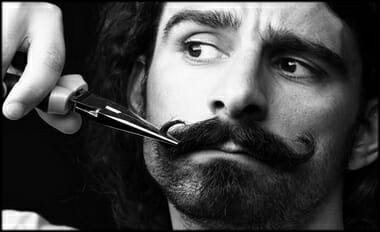
Beard Bib by Beard King
Do you dread the task of cleaning up after grooming your facial hair?
The fact is grooming facial hair can be a very messy task and time consuming task. Fear no more, the Beard Bib by BEARD KING® is the only men’s grooming tool that eliminates manual cleanup and allows for an easy disposal.
This video is a step by step instructional video of how to use the Beard Bib by BEARD KING
Buddhism “Hashed Out” To Its Logical Conclusions
Originally Posted May 24th, 2010
A partial portion from my proposed book and an old post elsewhere:
I wish to illustrate with a conversation (unfinished by the way) between myself and a Zen Buddhist. This conversation can almost happen with any religious Hindu, Buddhist, Taoist, or the like. The conversation takes place after an interesting post by the person on his blog about self-defense, the Dalai Lama, WWII, and the Buddha. I will post my reply to his original thought, and then he responds, followed again by me. (Keep in mind I am using our “blog” names, they are almost like “handles” like in the movie Top Gun):[1]
My initial engagement:
Does the idea of “violence” as a moral good or a moral evil truly exist in the Buddhist mindset? What I mean is that according to a major school of Buddhism, isn’t there a denial that distinctions exist in reality… that separate “selves” is really a false perception? Language is considered something the Buddhist must get beyond because it serves as a tool that creates and makes these apparently illusory distinctions more grounded, or rooted in “our” psyche. For instance, the statement that “all statements are empty of meaning,” would almost be self refuting, because, that statement — then — would be meaningless. So how can one go from that teaching inherent to Buddhistic thought and say that self-defense (and using WWII as an example) is really meaningful. Isn’t the [Dalai] Lama drawing distinction by assuming the reality of Aristotelian logic in his responses to questions? (He used at least three Laws of Logic [thus, drawing distinctions using Western principles]: The Law of Contradiction; the Law of Excluded Middle; and the Law of Identity.) Curious.
They Call Him James Ure, responds:

You’re right that language is just a tool and in the end a useless one at that but It’s important to be able run a blog. That or teach people the particulars of the religion. It’s like a lamp needed to make your way through the dark until you reach the lighthouse (Enlightenment, Nirvana, etc.) Then of course the lamp is no longer useful unless you have taken the vow to teach others. Which in my analogy is returning into the dark to bring your brothers and sisters along (via the lamp-i.e. language) to the lighthouse (enlightenment, Nirvana, etc.)
I respond:
Then… if reality is ultimately characterless and distinctionless, then the distinction between being enlightened and unenlightened is ultimately an illusion and reality is ultimately unreal. Whom is doing the leading? Leading to what? These still are distinctions being made, that is: “between knowing you are enlightened and not knowing you are enlightened.” In the Diamond Sutra, ultimately, the Bodhisattva loves no one, since no one exists and the Bodhisattva knows this:
“All beings must I lead to Nirvana, into the Realm of Nirvana which leaves nothing behind; and yet, after beings have been led to Nirvana, no being at all has been led to Nirvana. And why? If in a Bodhisattva[2] the notion of a “being” should take place, he could not be called a ‘Bodhi-being.’ And likewise if the notion of a soul, or a person should take place in him.” (Comparative Religions – Buddhism)
So even the act of loving others, therefore, is inconsistent with what is taught in the Buddhistic worldview, because there is “no one to love.” This is shown quite well (this self-refuting aspect of Buddhism) in the book, The Lotus and the Cross: Jesus Talks with Buddha. A book I recommend with love, from a worldview that can use the word love well. One writer puts it thusly: “When human existence is blown out, nothing real disappears because life itself is an illusion. Nirvana is neither a re-absorption into an eternal Ultimate Reality, nor the annihilation of a self, because there is no self to annihilate. It is rather an annihilation of the illusion of an existing self. Nirvana is a state of supreme bliss and freedom without any subject left to experience it.”
My Final Response
I haven’t seen a response yet. Which is fitting… because whom would be responding to whom? Put another way, would there be one mind trying to actively convince the other mind that no minds exist at all?
Here’s another way to see the same thing, Dan Story weighs in again:
It may be possible that nothing exists. However, it is impossible to demonstrate that nothing exists because to do so would be to deny our own existence. We must exist in order to affirm that reality doesn’t exist. To claim that reality is an illusion is logically impossible because it also requires claiming that the claim itself is unreal—a self-defeating statement. If reality is an illusion, how do we know that pantheism isn’t an illusion too?[3]
Another author put it thusly, “if pantheism is true (and my individuality an illusion), it is false, since there is no basis by which to explain the illusion.”[4] The challenge then becomes this: “if reality is an illusion, how do we know then that pantheism isn’t an illusion as well?”[5] You see…
…most people assume that something exists. There may be someone, perhaps, who believes that nothing exists, but who would that person be? …. no one ever consciously tries to defend the position that nothing exists. It would be a useless endeavor since there would be no one to convince. Even more significantly, it would be impossible to defend that position since, if it were true, there would be no one to make the defense. So to defend the position that nothing exists seems immediately to be absurd and self-contradictory.[6]
Another problem in pantheism is God’s inability to deal with or solve the problem of evil.[7] Dan Story points out what should be becoming obvious, “He is the cause of it (remember, all is God).” Mr. Story continues:
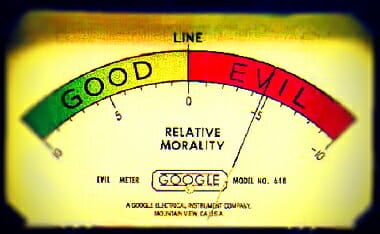
Pantheism and the New Age may try to ignore this problem by claiming that sin and suffering is merely illusion. But let’s bring this philosophy down to the real world. Try to convince a man dying of cancer or a parent who has just lost a child that evil and suffering are illusion. Even if evil is an illusion, the illusion itself is real. In either case, evil exists. As Geisler noted, “If evil is not real, what is the origin of the illusion? Why has it been so persistent and why does it seem so real?… How can evil arise from a ‘God’ who is absolutely and necessarily good?”[8] The answer must be that if pantheism is true, God cannot be good, and He must be the source of evil.[9]
Between karmic destiny and the god[s] of pantheism and its dealing with pain and suffering (and consequently the promotion of it) by claiming everything is an illusion is not an answer at all. Must we not live as if this illusion is reality? In other words, “look both ways:”
As the professor waxed eloquent and expounded on the law of non-contradiction, he eventually drew his conclusion: “This [either/or logic] is a Western way of looking at reality. The real problem is that you are seeing contradictions as a Westerner when you should be approaching it as an Easterner. The both/and is the Eastern way of viewing reality.”
After he belabored these two ideas on either/or and both/and for some time, I finally asked if I could interrupt his unpunctuated train of thought and raise one question.
I said, “Sir, are you telling me that when I am studying Hinduism I either use the both/and system of logic or nothing else?”
There was pin-drop silence for what seemed an eternity. I repeated my question: “Are you telling me that when I am studying Hinduism I either use the both/and logic or nothing else? Have I got that right?”
He threw his head back and said, “The either/or does seem to emerge, doesn’t it?”
“Indeed, it does emerge,” I said. “And as a matter of fact, even in India we look both ways before we cross the street – it is either the bus or me, not both of us.[10]
Pantheists may pawn this inane philosophy on people, but no one can live it out consistently as Ravi pointed out. Moreover, when a large population tries to live it – like in India – one can see the fruits it produces, the destruction of the family a case in point.[11] The promulgation of suffering and the inability of the religious Hindu to stop and help a suffering child or the rampant infestation of disease ridden — crop eating — pests, is all a loud refutation of trying to live an unlivable religious proposition. A lie.
[1] I use quite liberally in this exchange two resources, they are follows: Michael J. Murray, ed., Reason for the Hope Within, 212-214; Ernest Valea, “Possible difficulties in Buddhism,” Many Paths To One Goal? Found at: http://www.comparativereligion.com/Buddhism.html (last accessed 8-11-09), the main site is: http://www.comparativereligion.com/index.html
[2] “One who has taken a vow to become a Buddha.” David Burnett, The Spirit of Buddhism: A Christian Perspective on Buddhist Thought (Grand Rapids, MI: Monarch Books, 2003), 329. “Celestial” Buddha’s and bodhisattvas are said to be able to assist in guiding believers towards salvation as supernatural beings. These bodhisattvas vary in their rolls and offices as the many gods of Hinduism, from which Buddhism comes. See: Michael D. Coogan, Eastern Religions: Hinduism, Buddhism, Toaism, Confucianism, Shinto (New York, NY: Oxford University Press, 2005), 133-139.
[3] Dan Story, Christianity on the Offense, 112-113.
[4] Francis J. Beckwith and Stephen E. Parrish, See the Gods Fall: Four Rivals to Christianity (Joplin, MO: College Press, 1997), 210.
[5] Dan Story, Christianity on the Offense, 112-113.
[6] L. Russ Bush, A Handbook for Christian Philosophy (Grand Rapids, MI: Zondervan, 1991), 70.
[7] Michael J. Murray critiques quickly the Ramanuja and Madhya philosophies:
Stated in terms of Christian terminology, Ramanuja’s view implies that every soul that has ever existed endured an eternity in “hell” (i.e., the cycle of rebirths) before it could enter “heaven” (i.e., union with God). Now unlike Madhya, Ramanuja claims that God freely, and beginninglessly, created the world, and all existing souls, out of his own being. This latter claim, however, presents Ramanuja with a very severe problem of evil: that of reconciling his belief that God is perfectly good and all-loving with God’s ultimate responsibility for the beginningless existence of souls in a state of sin and suffering. The problem of evil faced by Ramanuja here is much more severe than that faced by Western theists. First, unlike Western theists, Ramanuja cannot say that this evil is a necessary consequence of God’s creating creatures with free will. Although the suffering of a soul in any individual life could be blamed on the bad karma resulting from its free choices in previous lives, the fact that the suffering is beginningless — and hence infinite — cannot be blamed on free choice. The reason for this is that, no matter what free choices souls make in this life, or have made in any previous life, they cannot change the fact that they have beginninglessly endured an infinite amount of suffering; but one cannot be responsible for what one was powerless to change. Followers of Ramanuja, therefore, do not seem to have recourse to the traditional free will theodicy invoked in the West to explain evil. Second, the amount of evil that needs to be explained is infinitely larger than that faced by Western versions of theism, since, according to Ramanuja each soul has committed an infinite number of evil acts and endured an infinite period of suffering. Unfortunately, as Julius Lipner points out, neither Ramanuja, nor any other orthodox Hindu theologian, ever attempted to address this particular problem of evil since they took the eternality of the world and souls as an “unquestioned datum for life and thought.” Unlike Ramanuja (and Western theism), however, Madhva’s theology largely avoids the problem of evil. The reason for this is that in his theology God is neither responsible for the beginningless existence of souls in a state of bondage, nor for the fact that they continue to remain in bondage, this being ultimately the result of their inherent, uncreated nature. Nonetheless, his system suffers from two drawbacks when compared to Ramanuja’s view. First, Madhva’s system leaves one with a plurality of ultimates — souls, matter, and God — without accounting for their existence. Although this is not a devastating criticism of Madhya, everything else being equal, views that hypothesize a single, unified source of everything (such as God), are in virtue of their simplicity, philosophically more satisfactory. Second, even though Madhya claimed to base his view on scripture, from the perspective of many orthodox Hindus his theology seems to contradict both those passages of Hindu scripture that appear to imply a deep sort of identity between God and souls and those that appear to imply that the world emerges out of God.
Reason for the Hope Within, 200-202.
[8] Norman Geisler, Christian Apologetics, 189 (emphasis added).
[9] Dan Story, Christianity on the Offense, 113.
[10] Ravi Zacharias, Can Man Live Without God? (Nashville, TN: Thomas Nelson, 1994), 128-129 (emphasis added).
[11] Rabi R. Maharaj, Death of a Guru, 13 and 14:
No matter how fulfilling life becomes, there are always certain regrets when one looks back. My deepest sense of loss involves my father, Chandrabhan Ragbir Sharma Mahabir Maharaj. How I wish he were still alive! Nor does the fact that this extraordinary man died so young and under such mysterious circumstances entirely explain my regret. So much that is even more remarkable has happened since then. I often wonder what it would be like to share it all with him, and what his reaction would be. To share it with him! We never shared anything in our lives. Because of the vows he had taken before I was born, not once did he ever speak to me or pay me the slightest heed. Just two words from him would have made me unspeakably happy. More than anything else in the whole world I wanted to hear him say, “Rabi! Son!” Just once. But he never did. For eight long years he uttered not a word, not even a whispered confidence to my mother…. “Why is Father that way?” I would ask my mother when I was still too young to understand. “He is someone very special—the greatest man you could have for a father,” she would reply, always patient with my persistent questions and puzzled expression. “He is seeking the true Self that lies within us all, the One Being, of which there is no other. And that’s what you are too, Rabi.”
I want to leave the reader with this thought by Robert Hume. In his book, The World’s Living Religions, he comments that there are three features of Christian faith that “cannot be paralleled anywhere among the religions of the world” [I can add here, the cults either]. These include the character of God as a loving Heavenly Father, the character of the founder of Christianity as the Son of God, and the work of the Holy Spirit. Further, he says:
The nine founders among the eleven living religions in the world had characters which attracted many devoted followers during their own lifetime, and still larger numbers during the centuries of subsequent history. They were humble in certain respects, yet they were also confident of a great religious mission. Two of the nine, Mahavira and Buddha, were men so strongminded and self-reliant that, according to the records, they displayed no need of any divine help, though they both taught the inexorable cosmic law of Karma. They are not reported as having possessed any consciousness of a supreme personal deity. Yet they have been strangely deified by their followers. Indeed, they themselves have been worshipped, even with multitudinous idols.
All of the nine founders of religion, with the exception of Jesus Christ, are reported in their respective sacred scriptures as having passed through a preliminary period of uncertainty, or of searching for religious light. Confucius, late in life, confessed his own sense of shortcomings and his desire for further improvement in knowledge and character. All the founders of the non-Christian religions evinced inconsistencies in their personal character; some of them altered their practical policies under change of circumstances.
Jesus Christ alone is reported as having had a consistent God consciousness, a consistent character himself, and a consistent program for his religion. The most remarkable and valuable aspect of the personality of Jesus Christ is the comprehensiveness and universal availability of his character, as well as its own loftiness, consistency, and sinlessness.
Robert Hume, The World’s Living Religions (New York, NY: Charles Scribner’s Sons, 1959), 285-286.
Buddhist/Christian Manuscripts Compared
Dr. Habermas discusses Buddhist and Christian Scriptures compared to original manuscripts:
The Buddha is said to have dies around (using the earliest date) 400 B.C.. The earliest portion of a Buddhist writing is dated at about 179 A.D. S o let us compare this:
...Compare/Contrast
References for the above dating of the Buddhist fragments:
- Richard Salomon, Ancient Buddhist Scrolls from Gandhara: The British Library Kharosthi Fragments (PDF summation, book);
- Ingo Strauch, The Bajaur collection: A new collection of Kharoṣṭhīmanuscripts: A preliminary catalogue and survey (PDF).
Diamond Sutra Compared to Book of John
The most complete copy that dates early is the Gospel of John (Bodmer Papyrus II – 150-200 A.D.). That is 127 years after Christ, for the Gospel of John. The earliest fragment is dated to 120 A.D. And Clement of Rome quoted from it about 95 A.D., and Polycarp quoted from it around 110 A.D. [+]. So we KNOW John is older.
The oldest full book key to Buddhist thought is the Diamond Sutra, dated at about 868AD. That is 1,268-to-1,468 years after Buddha’s death. We KNOW the Diamond Sutra is older… but the fragments and quotes of the Gospel of John match up well with earliest text. The earlier quotes of the Diamond Sutra and it’s fragments show drastic change.
Another example. The earliest copy of Isaiah the church had was dated to about 900AD. They found a copy of Isaiah dated to 1,200 years earlier. Because of how the Jewish scribes copied text… there were only a few letters in the entirety of the text that were different. Most were in a word known to be “light” No meaning or concept was changed in those letters being different. (Sources: here, here, and here.)
The change in meaning in the Diamond Sutra from earlier Buddhist teaching as well as fragments is great:
Since at least the fifth century, generations of Buddhists have memorized and chanted the Diamond Sutra, a short Mahayana Buddhist scripture. The work, which offers meditations on illusion and perception, was originally written in Sanskrit and first translated into Chinese in 402 A.D. Despite the text’s longevity, Stanford religious studies professor Paul Harrison’s latest research suggests that previous translations may have incorrectly interpreted certain words in a way that affects the entire meaning of the text.
For the last seven years Prof. Harrison has been working on re-editing and re-translating the Diamond Sutra. Though he is a professor of religious studies his translation work falls squarely in the field of philology. Harrison is often surrounded by a large semicircle of previous translations and dictionaries that he consults as he combs through the sutra one word at a time.
The Diamond Sutra is one of the most historically important texts in the Buddhist faith, in part because a copy of it is the oldest surviving dated printed book in the world (868 A.D.). Also known by its Sanskrit title Vajracchedika, the Diamond Sutra posits that something is what it is only because of what it is not. The text challenges the common belief that inside each and every one of us is an immovable core, or soul—in favor of a more fluid and relational view of existence. Negative, or seemingly paradoxical statements by the Buddha abound in the text, such as “The very Perfection of Insight which the Buddha has preached is itself perfection-less.”
Professor Harrison elaborated, “I think the Diamond Sutra is undermining our perception that there are essential properties in the objects of our experience….

I write about the early attestation to the New Testament in the first 16-pages of my chapter on Gnosticism and Feminism. But I reworked Kenneth Boa’s graphic on comparing dating of ancient texts with some updated information not only cataloged via the aforementioned chapter from my book, but also from here, and the books:
- Norman L. Geisler, Baker Encyclopedia of Christian Apologetics (Grand Rapids, MI: Baker Books/Academic, 1999);
- Carsten Peter Theide and Matthew d’Ancona, The Jesus Papyrus: The Most Sensational Evidence on the Origins of the Gospels Since the Discovery of the Dead Sea Scrolls (New York, NY: Galilee DoubleDay, 1996).
(I edited the last column under “Date Written” and “Time Span”)

Below is some of the evidence for the early dating of the New Testament.
More on this from Dr. Geisler:
...Earliest Attested Fragments
[DSS stands for Dead Sea Scrolls]
….Light on the New Testament. Some DSS fragments have been identified as the earliest known pieces of the New Testament. Further, the messianic expectations reveal that the New Testament view of a personal messiah-God who would rise from the dead is in line with first-century Jewish thought.
The New Testament fragments? Jose *O’Callahan, a Spanish Jesuit paleographer, made headlines around the world in 1972 when he announced that he had translated a piece of the Gospel of Mark on a DSS fragment. This was the earliest known piece of Mark. Fragments from cave 7 had previously been dated between 50 B.C. and A.D. 50 and listed under “not identified” and classified as “Biblical Texts.” O’Callahan eventually identified nine fragments. The center column in the following chart uses the numbering system established for manuscripts. For example, “7Q5” means fragment 5 from Qumran cave 7.
[RPT’s Note: 7Q5 matches up well with Mark 6:52-53 ~ see below, sources for graphic: here, here, as well as this chapter and the aforementioned books.]
Both friend and critic acknowledged from the beginning that, if valid, O’Callahan’s conclusions would revolutionize current New Testament theories. The New York Times reported: “If Father O’Callahan’s theory is accepted, it would prove that at least one of the gospels—that of St. Mark—was written only a few years after the death of Jesus.” United Press International (UPI) noted that his conclusions meant that “the people closest to the events—Jesus’ original followers—found Mark’s report accurate and trustworthy, not myth but true history” (ibid., 137). Time magazine quoted one scholar who claimed that, if correct, “they can make a bonfire of 70 tons of indigestible German scholarship” (Estrada, 136).
 Of course, O’Callahan’s critics object to his identification and have tried to find other possibilities. The fragmentary nature of the ms. makes it difficult to be dogmatic about identifications. Nonetheless, O’Callahan offers a plausible, albeit revolutionary, possibility. If the identification of even one of these fragments as New Testament is valid, then the implications for Christian apologetics are enormous. It would be shown that the Gospel of Mark was written within the life time of the apostles and contemporaries of the events.
A date before A.D. 50 leaves no time for mythological embellishment of the records. They would have to be accepted as historical. It would also show Mark to be one of the earlier Gospels. Further, since these manuscripts are not originals but copies, it would reveal that the New Testament was “published”—copied and disseminated—during the life time of the writers. It would also reveal the existence of the New Testament canon during this early period, with pieces representing every major section of the New Testament: Gospels, Acts, and both Pauline and General Epistles.
The fragment of 2 Peter would argue for the authenticity of this often disputed epistle. The absence of fragments of John’s writings might indicate that they were written later (A.D. 80-90) in accordance with the traditional dates. With all these revolutionary conclusions it is little wonder that their authenticity is being challenged.
First-Century Jewish Messianic Expectations. The DSS have also yielded text that, while not referring to the Christ of the New Testament, have some interesting parallels, as well as some significant differences. The similarities that confirm the New Testament picture accurately describes Jewish expectation of a personal, individual Messiah who would die and rise from the dead. A fragment called “A Genesis Florilegorium” (4Q252) reflects belief in an individual Messiah who would be a descendant of David. “Column 5 (1) (the) Government shall not pass from the tribe of Judah. During Israel’s dominion, (2) a Davidic descendant on the throne shall [not cease . . until the Messiah of Righteousness, the Branch of (4) David comes” (see Eisenman, 89).
Even the deity of the Messiah is affirmed in the fragment known as “The Son of God” (4Q246), Plate 4, columns one and two: “Oppression will be upon the earth . . . [until] the King of the people of God arises, . . . and he shall become [gre]at upon the earth. [ . . . All w]ill make [peace,] and all will serve [him.] He will be called [son of the Gr]eat [God;] by His name he shall be designated. . . . He will be called the son of God; they will call him son of the Most High” (ibid., 70).
“The Messiah of Heaven and Earth” fragment (4Q521) even speaks of the Messiah raising the dead: “(12) then He will heal the sick, resurrect :he dead, and to the Meek announce glad tidings” (ibid., 23; cf. 63, 95).
The Dead Sea Scrolls also confirm that Qumran was not the source of early Christianity. There are significant differences between their concept of the “Teacher of Righteousness,” apparently an Essene messianic hope, and the Jesus revealed in Scripture and early Christianity. The differences are enough to show that early Christianity was not just an offshoot of the Essenes, as has been theorized (see Billing–ton, 8-10). The Essenes emphasized hating one’s enemies; Jesus stressed love. The Essenes were exclusivistic regarding women, sinners, and outsiders; Jesus was inclusive. The Essenes were legalistic sabbatarians; Jesus was not. The Essenes stressed Jewish purification laws; Jesus attacked them. The Essenes believed two messiahs would come; Christians held that Jesus was the only one (see Charlesworth).
Conclusion. The DSS provide an important apologetic contribution toward establishing the general reliability of the Old Testament Hebrew text, as well as the earliest copies of parts of Old Testament books and even whole books. This is important in showing that the predictive prophecies of the Old Testament were indeed made centuries before they were literally fulfilled. Furthermore, the DSS provide possible support for the New Testament. They may contain the earliest known fragments of the New Testament, and they definitely contain references to messianic beliefs similar to those taught in the New Testament.
Norman L. Geisler, Baker Encyclopedia of Christian Apologetics (Grand Rapids, MI: Baker Books/Academic, 1999), 188-189.
Take note as well that the earliest Church Fathers quoted Scripture… which would need to be completed and widely used by then:
- You write “All four gospels are quoted in patristic writings (a technical term which means writings by the early church “fathers.”) before AD 100 in books such as the Epistle of Barnabus, the book of Clement of Rome and the Didache.” There is nothing said about the four Gospels in the “Clement of Rome”. It is really pathetic that you must base supernatural ideas on false evidence and then you show this false evidence to the masses. I’d really like to get a response as to where I can find the gospels mention in the “Clement of Rome”. I’m curious to know what words you rummaged through to come up with this ridiculous accusation.
Answer:
I sense a lot of anger here. The use of words like “pathetic” and “ridiculous” are really not helpful if you want to engage in honest conversations. I want to encourage you to use a more respectful tone, even with those with whom you do not agree. In any case, I just gave a very quick little read of the Letter of Clement to Rome. I found a few quotations from the gospels as well as ones from the letters. Below is a sampling. Besides these, I found a number of allusions to the gospels and other New Testament Books. After each quote, I will have a very short comment.
1Clem 13:1 Let us therefore be lowly minded, brethren, laying aside all arrogance and conceit and folly and anger, and let us do that which is written. For the Holy Ghost saith, Let not the wise man boast in his wisdom, nor the strong in his strength, neither the rich in his riches; but he that boasteth let him boast in the Lord, that he may seek Him out, and do judgment and righteousness most of all remembering the words of the Lord Jesus which He spake, teaching forbearance and long-suffering.
This is a quote from 1 Corinthians 1:31
1Clem 13:2 for thus He spake Have mercy, that ye may receive mercy: forgive, that it may be forgiven to you. As ye do, so shall it be done to you. As ye give, so shall it be given unto you. As ye judge, so shall ye be judged. As ye show kindness, so shall kindness be showed unto you. With what measure ye mete, it shall be measured withal to you.
This is a quote from Matthew 7:2
1Clem 15:2 For He saith in a certain place This people honoreth Me with their lips, but their heart is far from Me.
This is quoting from either Matthew 15:8 or Mark 7:6
1Clem 16:1 For Christ is with them that are lowly of mind, not with them that exalt themselves over the flock.
This is an allusion to Luke 22:26 or Matthew 23:11
1Clem 34:8 For He saith, Eye hath not seen and ear hath not heard, and it hath not entered into the heart of man what great things He hath prepared for them that patiently await Him.
This is a quote from 1 Cor 2:9
1Clem 36:2 Through Him let us look steadfastly unto the heights of the heavens; through Him we behold as in a mirror His faultless and most excellent visage; through Him the eyes of our hearts were opened; through Him our foolish and darkened mind springeth up unto the light; through Him the Master willed that we should taste of the immortal knowledge Who being the brightness of His majesty is so much greater than angels, as He hath inherited a more excellent name. 1Clem 36:3 For so it is written Who maketh His angels spirits and His ministers aflame of fire 1Clem 36:4 but of His Son the Master said thus, Thou art My Son, I this day have begotten thee. Ask of Me, and I will give Thee the Gentiles for Thine inheritance, and the ends of the earth for Thy possession. 1Clem 36:5 And again He saith unto Him Sit Thou on My right hand, until I make Thine enemies a footstool for Thy feet.
These are quoting from Hebrews Chapter one….
Ignatius of Antioch would be another prime example.
Effectively the above information updates this older Josh McDowell graph here. In other words, we know the early history of Christianity because of the wealth of evidence behind certain events. For instance:
“Pharisaic Judaizers come down to Antioch (Acts 15:1, 5) in the late summer of 49 A.D. and teach that circumcision is necessary before a person can be saved. Paul, Barnabas, Titus and certain others (Galatians 2:1-2) are sent to Jerusalem to confer with other apostles, elders and brethren concerning the relationship between circumcision and salvation. This gathering is commonly referred to as the Jerusalem Conference. This conference occurs in the Fall of 49 A.D. around the time of the Feast of Tabernacles (Acts 15:2).”
We know this because of the evidence… the same evidence to say that two letters describing the eruption of Mount Vesuvius are considered history.

Buddhism lacks this historical attestation and predictive power that the New Testament has in that the original texts are much closer to the events that happened. In fact, the New Testament is superior to ALL ancient documents in this respect.
✞ “…but test all things. Hold on to what is good” (I Thessalonians 5:21);
✞ “Dear friends, do not believe every spirit, but test the spirits to determine if they are from God, because many false prophets have gone out into the world” (1 John 4:1);
✞ “Test yourselves to see if you are in the faith. Examine yourselves. Or do you yourselves not recognize that Jesus Christ is in you?—unless you fail the test[a]” (2 Corinthians 13:5 — [a] “unless you are disqualified” or “you are counterfeit”).

Trump’s “Conversion” and Bank Account (Updated File)
This first audio is just uploaded and it quite long. The other audio/videos below it are shorter, so you may want to skip this first media file to get the gist of the post:

This seems to be a popular rejoinder when people confront Trump supporters about him being a Democrat:
- Yeah, but Reagan was a Democrat before being a Republican.
Brent Bozell responds to this non-sequitur in the National Review special edition on Trump:
A real conservative walks with us. Ronald Reagan read National Review and Human Events for intellectual sustenance; spoke annually to the Conservative Political Action Conference, Young Americans for Freedom, and other organizations to rally the troops; supported Barry Goldwater when the GOP mainstream turned its back on him; raised money for countless conservative groups; wrote hundreds of op-eds; and delivered even more speeches, everywhere championing our cause. Until he decided to run for the GOP nomination a few months ago, Trump had done none of these things, perhaps because he was too distracted publicly raising money for liberals such as the Clintons; championing Planned Parenthood, tax increases, and single-payer health coverage; and demonstrating his allegiance to the Democratic party.
Its called a “moral bank account,” Reagan spent years involved in the conservative movement before running. Trump has just “changed”… but wants single-payer health care (more left than Obama-Care), wanting to put his extremely left wing-sister on the Supreme Court, etc.
Prager explains this to the first caller in this two call upload:
The “A Time for Choosing” speech given by Reagan in 1964 could never be made by Trump:
However, I agree with George Will that this delineation with the common man of what a Republican “is” versus “isn’t” is past it’s time of any fruit:
On this weekend’s broadcast of “Fox News Sunday,” while discussing the National Review’s special edition in opposition to Republican presidential candidate Donald Trump, conservative commentator George Will said it might be too late.
Will said, “General Douglas MacArthur said that in war, every disaster can be explained in two words ‘too late.’ The question is whether the conservative wing of the Republican Party, AKA the Republican wing of the Republican Party, is beginning too late to rally against Mr. Trump.”

Brain-In-A-Vat
The video will start at the 12-minute mark:
An excerpt of pretty much the same topic noted in the video… but a bit more explained.
…We thus have good grounds for believing in the existence of an all-good, uncaused, timeless, changeless, immaterial, personal creator and designer of the universe, which is what most people mean by “God.” But what about people who lack the education, resources, or time to comprehend these sometimes abstruse reasons for the existence of God? Can they know that God exists wholly apart from arguments? I’m persuaded that they can, for God can be known through immediate experience. This was the way people in the Bible knew God, as Professor John Hick explains:
God was known to them as a dynamic will interacting with their own wills, a sheer given reality, as inescapably to be reckoned with as destructive storm and life-giving sunshine…. They did not think of God as an inferred entity but as an experienced reality…. To them God was not a proposition completing a syllogism, or an idea adopted by the mind, but the experiential reality which gave significance to their lives.
For these people, God was not the best explanation of their religious experience and so they believed in him; rather, in their religious experience they came to know God directly.
Philosophers call beliefs such as this “properly basic beliefs.” They aren’t based on some other beliefs; rather, they are part of the foundation of a person’s system of beliefs. Other properly basic beliefs include the belief in the reality of the past, the existence of the external world, and the presence of other minds such as your own. When you think about it, none of these beliefs can be proven. How could you prove that the world was not created five minutes ago with built-in appearances of age, such as food in our stomachs from the breakfasts we never really ate and memory traces in our brains of events we never really experienced? How could you prove that you are not a brain in a vat of chemicals being stimulated with electrodes by some mad scientist to believe that you are here reading this book? How could you prove that other people are not really automata who exhibit all the external behavior of persons with minds, when in reality they are soulless, robot-like entities?
Although these sorts of beliefs are basic for us, that doesn’t mean they’re arbitrary. Rather, they are grounded in the sense that they’re formed in the context of certain experiences. In the experiential context of seeing and feeling and hearing things, I naturally form the belief that there are certain physical objects that I am sensing. Thus, my basic beliefs are not arbitrary but appropriately grounded in experience. There may be no way to prove such beliefs, and yet it is perfectly rational to hold them. You would have to be crazy to think that the world was created five minutes ago or that you are a brain in a vat! Such beliefs are thus not merely basic but properly basic.
In the same way, belief in God is for those who seek him a properly basic belief grounded in our experience of God, as we discern him in nature, conscience, and other means. This has an important lesson. If, through experiencing God, we can know in a properly basic way that God exists, then a real danger exists that proofs for God could actually distract one’s attention from God himself. The Bible promises, “Draw near to God and he will draw near to you” (James 4:8 RSV). We mustn’t so concentrate on the proofs for God that we fail to hear the inner voice of God speaking to our own heart. For those who listen, God becomes an immediate reality in their lives.
Someone might object that an atheist or an adherent to some nonpersonal religious faith such as Taoism could also claim to know their beliefs in a properly basic way. Certainly, they could claim such a thing, but what does that prove? Imagine that you were locked in a room with four color-blind people, all of whom claimed that there is no difference between red and green. Suppose you tried to convince them by showing them colored pictures of red and green objects and asking, “Can’t you see the difference?” Of course, they would see no difference at all and would dismiss your claim to see different colors as delusory. In terms of showing who’s right, there would be a complete standoff. But would their denial of the difference between red and green or your inability to show them that you are right do anything either to render your belief false or to invalidate your experience? Obviously not!
In the same way, the person who has actually come to know God as a living reality in his life can know with assurance that his experience is no delusion, regardless of what the atheist or Taoist tells him. Still, it remains the case that in such a situation, although the believer may know that his belief is true, both parties are at a complete loss to show the truth of his respective belief to the other party. How is one to break this deadlock? We should do whatever is feasible to find common ground, such as logic and empirical facts, by means of which we can show in a noncircular way whose view is correct. For that reason, arguments such as I have given above are important, for even if they are not the primary means by which we know that God exists, they may be the means by which we can show someone else that God exists. We may know that God exists in a properly basic way, and we may try to show that God exists by appeal to the common facts of science, ethics, and philosophy.
In summary, we’ve seen good reasons to believe God exists, but that conclusion is but the first step, albeit a crucial one. The Bible says, “Whoever would draw near to God must believe that he exists and that he rewards those who seek him” (Heb. 11:6 RSV). If we have come to believe that he exists, we must now seek him, with the confidence that if we do so with our whole heart, he will reward us with the personal knowledge of himself.
Norman Geisler and Paul Hoffman ed., Why I Am a Christian: Leading Thinkers Explain Why They Believe (Grand Rapids, MI: Baker Books, 2001), 84-86.

Islam vs. Shambhala
Two files of the SAME VIDEO (MRCTV & LiveLeak):

The 2nd Amendment vs. a Career Criminal (Updated File)
“He couldn’t have picked a worse neighborhood or a worse house.” When career criminal Kevin Wayne Chapman targeted the residence of West Taylor for a home invasion, he chose the wrong house. Ginny’s report includes an exclusive interview with would-be victim West Taylor.
The following is a re-posting of a heartbreaking story, unlike the one above, where a gun could have saved many lives: