A-hole Rick Wilson is wishing for President Trump to die
OLD POST
Originally posted July 15th, 2024
This is gonna be a long post. Sorry. But this is going to be an in-depth “discovery” [reminder] of the violent language/ideas of the Leftist Democrats and the #NeverTrumpers.
Lincoln Project
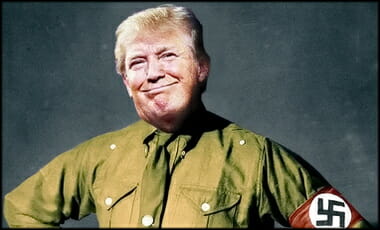
WHAT THEY DO:They malign people like myself (a conservative evangelical) as well as mainstream to conservative Republicans as bigots, racists, rubes, anti-American – when they are merely projecting. They contend that they are for true Democracy, while being committed to electing those who hate it. But they are insistent from their beginning that Trump said there are good Nazi’s and that those who support Trump are likewise by association.
I first wish to start with the Lincoln Project. The Lincoln Project are a bunch of Republicans [that is laughable] who malign Republicans as rubes, bigots, and the like:
Their maligning of me and person’s like Trump need to be dealt with first.
Here is a photo somewhat famous to us “politicos.”
A small group of demonstrators dressed as “Unite the Right” rallygoers with tiki torches outside the bus of Republican gubernatorial candidate Glenn Youngkin in Charlottesville.
Let me explain this photo. It is the Lincoln Project attempting to defeat Republicans and get Leftists into office by smearing us as racists:
The co-founder of the Never-Trumper Lincoln Project has doubled down on the group’s much-decried decision to stage a political stunt involving fake “white supremacists” supposedly backing Virginia’s Republican gubernatorial candidate Glenn Youngkin.
When asked by CNN’s Chris Cuomo Friday if he wanted to apologize, Stuart Stevens said no.
In fact, he told Cuomo, this is why people have donated millions to the Lincoln Project – even though both liberals and conservatives have called him out for trying to smear Youngkin as racist.
“Listen,” said Stevens. “Every day I hear people pleading with the Lincoln Project to help show Democrats how to win, how to play hardball. You know, this is an example.”
In fact, a person I know loves Rick Wilson, whom I have a couple snippets of herein:
As I’ve said before, Trump isn’t Hitler. Hitler had normal-sized hands and the ability to concentrate for more than thirty seconds.
Trump is, however, cut from the same modern authoritarian cloth as the leaders he publicly and slavishly worships: Vladimir Putin, Viktor Orban, Kim Jong-un, Rodrigo Duterte, and others.
Rick Wilson, Running Against the Devil: A Plot to Save America from Trump–and Democrats from Themselves (New York, NY: Forum Books, 2020), 74.
Not only was that call for Trump to be assassinated a horrid position, but, the Lincoln Project also chooses, politically, anti-American socialists… nay, Marxists, over Republican candidates and ideals.
As another co-founder of the anti-Trump group, the Lincoln Project left the Republican party on Thursday, another said the group was anything but a reflection of the GOP.
“At this point, we’re as much as never-Republican as we are anything else,” Reed Galen, one of the co-founders of the project, told Politico.
The Lincoln Project targeted more than half a dozen Republicans up for re-election in 2020, including Lindsey Graham (he won), Mitch McConnell (he won), Dan Sullivan (he won), and Susan Collins (she won).
While Democrats won the White House, the GOP lost only one seat in the Senate, and control of the upper house of Congress will be decided by runoff elections in Georgia on 5 January.
“We spent about $20m on Senate races, which is probably somewhere like 5 to 10 per cent of what other people spent on those things but somehow it was up to us to be determinative. And no one was more surprised by the results of that than I was,” Mr Galen said.
Despite the results, the Lincoln Project is continuing campaigning in the Senate with the Georgia runoffs to oust “Trump enablers” Kelly Loffler and David Perdue.
They have partnered with Democratic groups like Stacey Abrams’ Fair Fight, the NAACP and BlackPac, as well as lesser-known entities like MeidasTouch for more Twitter videos.
They received $700,000 from the Senate Majority Pac, closely linked with Chuck Schumer, who has vowed to first “take Georgia, then we change the world”. Left-wing lobby group Sixteen Thirty Fund has also bankrolled the Lincoln Project’s gambits with a $300,000 influx of cash.
Beyond January’s two Senate seats, the Lincoln Project is dialling in its sights on the 18 attorneys general and 126 House Republicans that publicly supported the Texas Supreme Court challenge to election results in key states.
As the goalposts move for whatever Trumpism looks like in a post-Twitter presidency, the Never Trumper movement becomes ever more Never Republican.
Among the founders, Steven Schmidt has registered full Democrat, while Ms Horn and Mr Galen have left the GOP as independents.
What a disgrace #NeverTrumpers are!
The Media
Not much to say about it other than you gotta watch these examples of the travesty of the mainstream media (MSM):
The MSM Convinces Their Lemmings Trump is Hitler
Here is a recent post of mine to finish out this section:
POWERLINEhas an excellent article regarding the Left’s predictable turn to their canards… or “cards”. The “Race-Card” or the “Fascist-Card” — here is that article, followed by some historical examples:
With the presidential election slipping away from the Democrats, the apparat is cranking up the old playbook. Behold the cover of The New Republic, once a sober and serious journal of liberal opinion:
It’s crap like this that makes Democrats and their media allies responsible for what happened today.
They have demonized Donald Trump to the point where any loon would think he would be a hero for trying to take out such a major “threat to Democracy.”
Democrats and their media allies have become the threats and unless things change immediately it’s going to get even worse.
Well now, that’s not what the Tomaskys of the 1970s and 1980s said. In the days right after Reagan’s first landslide in 1980, the head of the Joint Center for Political Studies, which the Washington Post described as a “respected liberal think tank,” wrote: “When you consider that in the climate we’re in—rising violence, the Ku Klux Klan—it is exceedingly frightening.” This was also the line from Raul Castro (funny how the American left and actual Communists always say the same thing): “We sometimes have the feeling that we are living in the time preceding the election of Adolf Hitler as Chancellor of Germany.” Claremont College professor John Roth wrote: “I could not help remembering how economic turmoil had conspired with Nazi nationalism and militarism—all intensified by Germany’s defeat in World War I—to send the world reeling into catastrophe… It is not entirely mistaken to contemplate our post-election state with fear and trembling.” Esquire writer Harry Stein says that the voters who supported Reagan were like the “good Germans” in “Hitler’s Germany.” Alan Wolfe of Boston College wrote in the New Left Review: “The worst nightmares of the American left appear to have come true.” And he doubled down in The Nation: “[T]he United States has embarked on a course so deeply reactionary, so negative and mean-spirited, so chauvinistic and self-deceptive that our times may soon rival the McCarthy era.”
As I’ve observed here before, this is the oldest cliche of the left, going all the way back to FDR and Truman. Let’s take in the front page of the New York Times, October 25, 1948:
PRESIDENT LIKENS DEWEY TO HITLER AS FASCISTS’ TOOL
Says When Bigots, Profiteers Get Control of Country They Select ‘Front Man’ to Rule DICTATORSHIP STRESSED Truman Tells Chicago Audience a Republican Victory Will Threaten U.S. Liberty
CHICAGO, Oct. 25 — A Republican victory on election day will bring a Fascistic threat to American freedom that is even more dangerous than the perils from communism and extreme right “crackpots,” President Truman asserted here tonight. . . “Before Hitler came to power, control over the German economy passed into the hands of a small group of rich manufacturers, bankers and landowners,” he said.
When Barry Goldwater accepted the 1964 Republican nomination, California’s Democratic Gov. Pat Brown said, “The stench of fascism is in the air.”
Former Rep. William Clay Sr., D-Mo., said President Ronald Reagan was “trying to replace the Bill of Rights with fascist precepts lifted verbatim from ‘Mein Kampf.'”
Coretta Scott King, in 1980, said, “I am scared that if Ronald Reagan gets into office, we are going to see more of the Ku Klux Klan and a resurgence of the Nazi Party.”
After Republicans took control of the House in the mid-’90s, Rep. John Dingell, D-Mich., compared the newly conservative-majority House to “the Duma and the Reichstag,” referring to the legislature set up by Czar Nicholas II of Russia and the parliament of the German Weimar Republic that brought Hitler to power.
About President George Herbert Walker Bush, Rep. Maxine Waters, D-Calif., said: “I believe (Bush) is a racist for many, many reasons. … (He’s) a mean-spirited man who has no care or concern about what happens to the African American community. … I truly believe that.”
About the Republican-controlled House, longtime Harlem Democratic Rep. Charlie Rangel, in 1994, said: “It’s not ‘s—-‘ or ‘n——-‘ anymore. (Republicans) say, ‘Let’s cut taxes.'” A decade later, Rangel said, “George (W.) Bush is our Bull Connor,” referring to the Birmingham, Alabama, Democrat segregationist superintendent of public safety who sicced dogs and turned fire hoses on civil rights workers.
Donna Brazile, Al Gore’s presidential campaign manager, in 1999, said: Republicans have a “white boy attitude, (which means) ‘I must exclude, denigrate and leave behind.’ They don’t see it or think about it. It’s a culture.” The following year, Brazile said: “The Republicans bring out Colin Powell and (Rep.) J.C. Watts, (R-Okla.), because they have no program, no policy. … They’d rather take pictures with Black children than feed them.”
About President George W. Bush, former Vice President Al Gore said: “(Bush’s) executive branch has made it a practice to try and control and intimidate news organizations, from PBS to CBS to Newsweek. … And every day, they unleash squadrons of digital brownshirts to harass and hector any journalist who is critical of the President.” Digital “brownshirts”?
About George W. Bush, George Soros, the billionaire Democratic donor, said: “The Bush administration and the Nazi and communist regimes all engaged in the politics of fear. … Indeed, the Bush administration has been able to improve on the techniques used by the Nazi and communist propaganda machines.”
Former NAACP Chairman Julian Bond, in a 2006 speech at historically Black Fayetteville State University said, “The Republican Party would have the American flag and the swastika flying side by side.”
Former Gov. Howard Dean, chairman of the Democratic National Committee in 2005, described the contest between Democrats and Republicans as “a struggle between good and evil. And we’re the good.” Three years later, Dean referred to the GOP as “the white party.”
After Hurricane Katrina, Democratic Missouri Senate candidate Claire McCaskill said George W. Bush “let people die on rooftops in New Orleans because they were poor and because they were Black.”
Feminist superlawyer Gloria Allred, in 2001, referred to Colin Powell and Condoleezza Rice as “Uncle Tom types.”
Then-Sen. Hillary Clinton, in 2006, said, “The (Republican-controlled) House of Representatives … has been run like a plantation. And you know what I’m talking about.”
Debbie Wasserman Schultz, Democratic National Committee chairwoman in 2011, said “Republicans … want to literally drag us all the way back to Jim Crow laws.”……
I bet almost all of my family believes Trump mocked a disabled man’s handicap; think that when he said “there are fine people on both sides” he was saying there were “fine Nazis or white supremacists;” or think that racists and white supremacists have voted Republican in general; or that the bodies natural defenses in immunity are non-existent and only “vaccines” can bring immunity.
These are dangerous lies to believe.
President Biden and Democrats
President Biden continues to lie about this, saying in a sense that President Trump said there were “fine Nazis”
This may go with the theory by some that the Democrats are actively seeing too replace Biden with someone present, so-to-speak. And these same people want Biden in the debates with Trump so he will fail on a national stage and get the electorate behind the move. Soo the complicit media is getting behind the move. Ergo, Snopes.
Many years agoPowerlineasked a question about Snopes – if it was a satire site. Lol. here is the graphic they used:
But this most recent shift towards truth in this matter has caused a “wailing” and “gnashing of teeth” with those that are consumed with TDS, or, Trump Derangement Syndrome. Here are some examples via Right Scoop and :
I respond to one of the TDS’ers:
Dennis Prager Discusses Trump Being Painted as Hitler @Biden’s Inaugural Speech
Montage Of Democrats Calling For Incitement/Violence (Larry Elder)
Trump continually disavowed white nationalists — but the media rejects:
Corey Booker’s Trump Card Is A Race-Card (ACB/BDP/EPMD Edition)
SOME MORE RESOURCES (USED AND RECOMMENDED)
Key Democratic Vendors Still Doing Business with Lincoln Project After Sex Scandal (Washington Free Beacon)
The green box that follows the original text is GROK modernizing it
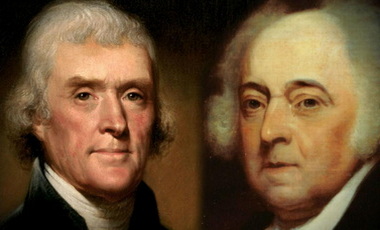
The sight of your well known hand writing in your favour of 25. Feb. last, gave me great pleasure, as it proved your arm to be restored and your pen still manageable—may it continue till you shall become as perfect a calvinist as I am in one particular. Poor Calvins infirmities his rheumatism his gouts and sciatics made him frequently cry out Mon dieu Jusque au quand Lord how long! Prat once Chief Justice of new york always tormented with infirmities dreamt that he was situated on a single rock in the midst of the Atlantick ocean, He heard a voice. “Why mourns the bard Apollo bids thee2 rise, renounce the dust,3 and claim thy native skies.”—
Here’s a modern English update of the excerpt from John Adams’s letter to Thomas Jefferson (dated March 10, 1823), keeping the original meaning, tone, and humor intact while making the language clearer and more contemporary:
Seeing your familiar handwriting in your letter from February 25th gave me great pleasure. It showed that your arm has recovered and you can still write easily—may that continue until you become as much of a Calvinist as I am in one respect. Poor Calvin’s ailments—his rheumatism, gout, and sciatica—often made him cry out, “Mon Dieu, jusqu’à quand?” which means “Lord, how long!” Pratt, who was once Chief Justice of New York and always plagued by health problems, dreamed that he was stranded on a lone rock in the middle of the Atlantic Ocean. Then he heard a voice say:
“Why does the bard mourn? Apollo bids you rise, renounce the dust, and claim your native skies.”
(For context: Adams is playfully teasing Jefferson about enduring old-age infirmities with Calvinist patience, referencing John Calvin’s sufferings and a poetic anecdote about Benjamin Pratt, an 18th-century New York judge known for his poetry and health issues.)
The wishes expressed, in your last favor, that I may continue in life and health until I become a Calvinist, at least in his exclamation of ‘mon Dieu! jusque à quand’! would make me immortal. I can never join Calvin in addressing his god. he was indeed an Atheist, which I can never be; or rather his religion was Dæmonism. if ever man worshipped a false god, he did. the being described in his 5. points is not the God whom you and I acknolege and adore, the Creator and benevolent governor of the world; but a dæmon of malignant spirit. it would be more pardonable to believe in no god at all, than to blaspheme him by the atrocious attributes of Calvin.
[….]
Of the nature of this being we know nothing. Jesus tells us that ‘God is a spirit.’ 4. John 24. but without defining what a spirit is. ‘πνευμα ὁ θεος.’ down to the 3d century we know that it was still deemed material; but of a lighter subtler matter than our gross bodies. so says Origen. ‘Deus igitur, cui anima similis est, juxta Originem, reapse4 corporalis est; sed graviorum tantum ratione corporum incorporeus.’ these are the words of Huet in his commentary on Origen. Origen himself says ‘appellatio ασωματον apud nostros scriptores est inusitata et incognita.’ so also Tertullian ‘quis autem negabit Deum esse corpus, etsi deus spiritus? spiritus etiam corporis sui generis, in suâ effigie.’ Tertullian. these two fathers were of the 3d century. Calvin’s character of this supreme being seems chiefly copied from that of the Jews. but the reformation of these blasphemous attributes, and substitution of those more worthy, pure and sublime, seems to have been the chief object of Jesus in his discources to the Jews: and his doctrine of the Cosmogony of the world is very clearly laid down in the 3 first verses of the 1st chapter of John, in these words, ‘εν αρχη ην ὁ λογος, και ὁ λογος ην προς τον θεον και θεος ην ὁ λογος. οὑτος ην εν αρχη προς τον θεον. παντα δε αυτου εγενετο, και χωρις αυτου εγενετο ουδε ἑν ὁ γεγονεν.’ which truly translated means ‘in the beginning God existed, and reason [or mind] was with God, and that mind was God. this was in the beginning with God. all things were created by it, and without it was made not one thing which was made.’ yet this text, so plainly declaring the doctrine of Jesus that the world was created by the supreme, intelligent being, has been perverted by modern Christians to build up a second person of their tritheism by a mistranslation of the word λογος. one of it’s legitimate meanings indeed is ‘a word.’ but, in that sense, it makes an unmeaning jargon: while the other meaning ‘reason,’ equally legitimate, explains rationally the eternal preexistence of God, and his creation of the world. knowing how incomprehensible it was that ‘a word,’ the mere action or articulation of the voice and organs of speech could create a world, they undertake to make of this articulation a second preexisting being, and ascribe to him, and not to God, the creation of the universe. the Atheist here plumes himself on the uselessness of such a God, and the simpler hypothesis of a self-existent universe. the truth is that the greatest enemies to the doctrines of Jesus are those calling themselves the expositors of them, who have perverted them for the structure of a system of fancy absolutely incomprehensible, and without any foundation in his genuine words. and the day will come when the mystical generation of Jesus, by the supreme being as his father in the womb of a virgin will be classed with the fable of the generation of Minerva in the brain of Jupiter. but we may hope that the dawn of reason and freedom of thought in these United States will do away all this artificial scaffolding, and restore to us the primitive and genuine doctrines of this the most venerated reformer of human errors.
So much for your quotation of Calvin’s ‘mon dieu! jusqu’a quand’ in which, when addressed to the God of Jesus, and our God, I join you cordially, and await his time and will with more readiness than reluctance. may we meet there again, in Congress, with our antient Colleagues, and recieve with them the seal of approbation ‘Well done, good and faithful servants.’
Here’s a modern English update of this excerpt from Thomas Jefferson’s letter to John Adams (dated April 11, 1823), preserving the original meaning, passion, and philosophical tone while making the language clearer and more accessible:
The wishes you expressed in your last letter—that I might live long and healthy until I become a Calvinist, at least in crying out “My God! How long?!”—would make me immortal if they came true. But I can never join Calvin in addressing his god that way. He was essentially an atheist (which I could never be), or rather, his religion was daemonism. If any man ever worshiped a false god, it was him. The being described in his five points is not the God whom you and I acknowledge and adore—the Creator and benevolent governor of the world—but a daemon with a malignant spirit. It would be more forgivable to believe in no god at all than to blaspheme the true God by attributing such atrocious qualities to Him.
[….]
Of the true nature of this Being, we know nothing. Jesus tells us that “God is a spirit” (John 4:24), but without defining what a spirit is—”πνεῦμα ὁ θεός” (pneuma ho theos). Down to the 3rd century, it was still considered material, though of a lighter, subtler substance than our gross bodies. So says Origen: “Therefore God, to whom the soul is similar, according to Origen, is actually corporeal, but incorporeal only in comparison to heavier bodies.” These are the words of Huet in his commentary on Origen. Origen himself says that the term “incorporeal” (ἀσώματον) is unusual and unknown in our [Christian] writers. Tertullian says the same: “Who will deny that God is a body, even though God is a spirit? For spirit is a body of its own kind, in its own form.” Both of these Church Fathers were from the 3rd century.
Calvin’s portrayal of the Supreme Being seems mostly copied from the Jewish conception. But reforming those blasphemous attributes and replacing them with ones more worthy, pure, and sublime appears to have been Jesus’s main goal in his discourses with the Jews. His doctrine of the world’s creation is very clearly stated in the first three verses of the Gospel of John:”Ἐν ἀρχῇ ἦν ὁ λόγος, καὶ ὁ λόγος ἦν πρὸς τὸν θεόν, καὶ θεὸς ἦν ὁ λόγος. Οὗτος ἦν ἐν ἀρχῇ πρὸς τὸν θεόν. Πάντα δι’ αὐτοῦ ἐγένετο, καὶ χωρὶς αὐτοῦ ἐγένετο οὐδὲ ἕν ὃ γέγονεν.”Which, truly translated, means: “In the beginning, God existed, and reason (or mind) was with God, and that mind was God. This was in the beginning with God. All things were created by it, and without it not one thing that was made came into being.” Yet this text—so plainly declaring Jesus’s doctrine that the world was created by the supreme intelligent Being—has been twisted by modern Christians to build up a second person in their tritheism through a mistranslation of the word λόγος (logos). One of its legitimate meanings is indeed “word,” but in that sense it produces meaningless nonsense. The other equally legitimate meaning—”reason”—explains rationally God’s eternal preexistence and His creation of the world. Knowing how incomprehensible it was that a mere “word”—the simple action of voice and speech organs—could create a world, they instead turn this “word” into a second pre-existing being and attribute the creation of the universe to him rather than to God. The atheist here boasts about the uselessness of such a God and prefers the simpler idea of a self-existent universe. The truth is that the greatest enemies of Jesus’s doctrines are those who call themselves their interpreters, who have perverted them to build a system of fantasy that is utterly incomprehensible and has no foundation in his actual words. And the day will come when the mystical story of Jesus being generated by the Supreme Being as His father in the womb of a virgin will be classed with the myth of Minerva springing from the brain of Jupiter. But we may hope that the dawn of reason and freedom of thought in these United States will sweep away all this artificial scaffolding and restore to us the primitive and genuine doctrines of this most venerated reformer of human errors. So much for your quotation of Calvin’s “Mon Dieu! jusqu’à quand!” When addressed to the God of Jesus—and our God—I join you in it wholeheartedly, and I await His time and will with more readiness than reluctance. May we meet again there, in a heavenly Congress with our old colleagues, and receive with them the seal of approval: “Well done, good and faithful servants.”
And here GROK did a redo making it :”more concise”
Here’s a more concise modern English version of Jefferson’s response (April 11, 1823):
Your wish that I live long enough to become a Calvinist—at least in crying “My God! How long?”—would make me immortal. But I can never pray to Calvin’s god. He was essentially an atheist, or his religion was daemonism. If anyone worshiped a false god, it was him. The being in his five points is not the God we both acknowledge—the benevolent Creator and governor of the world—but a malignant daemon. It is more forgivable to believe in no god than to blaspheme the true one with Calvin’s atrocious attributes.
We know nothing of this Being’s nature. Jesus said “God is a spirit” (John 4:24), but did not define it. Until the 3rd century, Christians considered spirit material, though subtler than flesh—as Origen and Tertullian both affirmed.
Calvin’s image of God largely copies the harsh Jewish portrayal. Jesus’s main mission seems to have been correcting those blasphemous attributes and teaching purer, more sublime ones. His cosmology is clearly stated in John 1:1–3:“In the beginning was the Logos, and the Logos was with God, and the Logos was God… All things were made through it.”
Properly translated, Logos means “reason” or “mind”: In the beginning God existed, reason was with God, and reason was God. All things were created by it. Modern Christians, however, mistranslate Logos as “word” to invent a second divine person and build their tritheism. This turns a rational account of creation into incomprehensible jargon—and gives atheists an easy target.
The worst enemies of Jesus’s teachings are the so-called experts who have twisted them into a fanciful, groundless system. One day, the virgin birth of Jesus will be ranked with Minerva springing from Jupiter’s head. But I hope the spread of reason and free thought in America will sweep away this artificial scaffolding and restore Jesus’s original, genuine doctrines—the work of the greatest reformer of human errors.
As for Calvin’s “My God! How long?”—when addressed to the God of Jesus, our God—I join you wholeheartedly. I await His will with more readiness than reluctance. May we meet again in a heavenly Congress with our old colleagues and hear together: “Well done, good and faithful servants.”
GROK offered to explain Jefferson’s “5-Points Critique,” here that is:
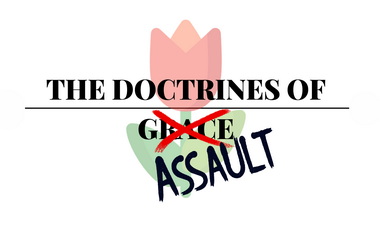
Thomas Jefferson’s critique of Calvinism’s “five points” appears in his April 11, 1823, letter to John Adams. He did not break it down point-by-point but offered a sweeping condemnation, calling the God portrayed in these doctrines a “daemon of malignant spirit” rather than the benevolent Creator he and Adams revered. Jefferson viewed Calvin’s theology as blasphemous, arguing it would be better to believe in no God at all than to attribute such “atrocious” qualities to the divine. The Five Points of Calvinism (TULIP)These points, formalized after John Calvin’s death at the Synod of Dort (1618–1619) in response to Arminianism, summarize key Reformed doctrines on salvation:
Total Depravity: Humanity is utterly corrupted by sin, incapable of choosing God or doing spiritual good without divine intervention.
Unconditional Election: God chooses (elects) certain individuals for salvation based solely on His will, not on any foreseen merit or faith.
Limited Atonement (or Particular Redemption): Christ’s death effectively atones only for the sins of the elect, not for all humanity.
Irresistible Grace: God’s grace effectively calls the elect to faith; they cannot ultimately resist it.
Perseverance of the Saints: The elect will persevere in faith and cannot finally lose salvation.
Jefferson’s Core Objection
Jefferson, influenced by Enlightenment rationalism, Deism, and Unitarian leanings, emphasized a God of benevolence, reason, and moral governance. He saw Calvinism’s emphasis on God’s absolute sovereignty—especially in predestination (including “double predestination,” where God decrees both election to salvation and reprobation to damnation)—as portraying a tyrannical, arbitrary deity. This God predestines most of humanity to eternal punishment without regard to their actions, which Jefferson found cruel and incompatible with divine goodness. He contrasted this with Jesus’s teachings, which he believed focused on moral reform, free will, and a loving God. Jefferson also linked Calvinism to historical intolerance (e.g., Calvin’s role in the execution of Michael Servetus) and saw it as a perversion of true Christianity. In essence, Jefferson rejected the five points not for subtle theological nuances but because they collectively depicted a God he considered morally repugnant—a “malignant” being closer to a demon than the rational, kind Creator revealed (in his view) by nature and Jesus’s ethical teachings. This reflected his broader anti-Trinitarian, anti-orthodox stance, favoring a simplified, moralistic Christianity over doctrinal systems like Calvinism.
Keep in mind GROK is not a theologian. I asked GROK about John Adam’s views of Calvinism, this was the short answer:
John Adams, raised in a Puritan New England Congregationalist family with strong Calvinist roots, ultimately rejected core Calvinist doctrines and evolved into a Unitarian Christian.
Early Rejection of Calvinism
He rejected key Calvinist tenets early in life, including:
Predestination
Total depravity
Limited atonement
Eternal damnation for most
He called Calvinism “frigid,” irrational, and marked by a “domineering and persecuting spirit.” Influenced by liberal Congregationalist preachers and Enlightenment rationalism, Adams viewed strict Calvinism as incompatible with a benevolent God and human free will. He leaned toward Arminianism (emphasizing free choice in salvation) before fully embracing Unitarianism.
Self-Identification as Unitarian
In later years, Adams explicitly identified as a Unitarian, writing to his son John Quincy Adams in 1816: “We Unitarians, one of whom I have had the Honour to be, for more than Sixty Years…” He rejected the Trinity, the divinity of Jesus, original sin, and salvation by arbitrary grace alone, favoring a rational, moral Christianity focused on benevolence, good works, and the Sermon on the Mount.
Playful Teasing in Correspondence
In his famous 1823 correspondence with Thomas Jefferson (the letters you referenced earlier), Adams playfully teased Jefferson about old-age sufferings, joking that Jefferson might yet become “as perfect a Calvinist as I am in one particular”—referring only to enduring infirmities with stoic patience (echoing John Calvin’s own cries of “Mon Dieu! Jusqu’à quand?”). This was ironic humor, not an endorsement of Calvinism. Adams shared Jefferson’s disdain for Calvin’s “atrocious attributes” and predestinarian God, aligning with Jefferson’s view of a benevolent Creator.
Overall Religious Outlook
Adams remained deeply religious—a “church-going animal” who believed in divine providence, prayer, and morality’s role in society—but his faith was liberal, tolerant, and anti-dogmatic. He saw religion as essential for public virtue yet warned against ecclesiastical tyranny. Historians describe him as a blend of Puritan heritage and Enlightenment reason, ultimately a conservative Unitarian who retained belief in Jesus as a moral teacher (though not divine) and an active God.
In short, Adams was emphatically not a Calvinist; he detested its harsher doctrines and spent much of his life moving away from them toward Unitarian rationalism.
Mind you, I am not a Unitarian whatsoever, but needless to say not only would Calvin had burned Christ at the stake in Geneva, he would have done the same to the Founders of America!
BAPTIST MARTYRS
This Baptist History is brought to you by Steve Brady at Fairhaven Baptist Church in Chesterton, Indiana. (Full playlist of 50 Baptists You Should Know here)
Here is what was said in a post that included the above drawing via Facebook:
It has been decreed this day by the Council of the Two Hundred (of Zurich) that the leaders of the Catabaptists shall be cast into the Tower, in which they formerly lay, and allured by bread and water diet until either they give up the ghost or surrender. It is also added that he who after this is dipped shall be submerged permanently (qtti posthac tingatur, prossus mcrgatur); this is not published (Zwingli, Opera, vii. 477).
This is but one of numerous decrees by city councils in Calvinist principalities levied against “Catabaptists”. This word means someone who opposes baptism, but even in their usage of the term the Calvinists reveal themselves to be liars. The Baptists didn’t oppose baptism, they opposed infant baptism, which is nowhere evidenced in Scripture. The Calvinists knew Baptists baptized believing adults – that’s one of the reasons they murdered them – “submerged permanently,” as opposed to submerged briefly, in baptism.
Note that in his final comment, Zwingli writes that this is “not published”. He wanted the homicidal order to remain a secret. So he knew that what he was doing was immoral. He just didn’t want the general population to know about it.
Zwingli and the Calvinists were murderers. They knew they were murderers. They congratulated themselves on being murderers. And history has preserved the evidence of their murders.
I asked GROK to explain the above a little more and then GROK offered up info on Felix Manz
Key Historical Context
In 1525, a group of Zwingli’s former followers (including Conrad Grebel and Felix Manz) broke away because they believed Zwingli and the Zurich authorities were reforming the church too slowly and compromising with civil government. They rejected infant baptism (paedobaptism) as unscriptural, insisting baptism should be for believing adults only—who could consciously confess faith. On January 21, 1525, they performed the first adult baptisms in Zurich, marking the start of the Anabaptist movement (from Greek ana- meaning “again,” implying “re-baptizers” in the eyes of critics, since they viewed infant baptism as invalid).Zwingli strongly defended infant baptism (seeing it as the New Testament equivalent of Old Testament circumcision, a covenant sign for children of believers). After public debates in 1525 failed to resolve the issue, the Zurich Council sided with Zwingli and began cracking down on the Anabaptists, viewing their separatism, refusal of oaths/civic duties, and defiance of authority as threats to social and religious order.
The Decree and Quote Explained
The decree Zwingli describes had two parts:
Leaders of the Anabaptists (called “Catabaptists” here—see below) were to be imprisoned in the tower on bread-and-water rations until they recanted or died.
Anyone who continued to perform adult (“re-“)baptism would be executed by drowning (a grim, ironic punishment: “whoever dips shall be dipped/submerged permanently”).
This was an escalation from earlier penalties (fines, banishment). A similar but formalized mandate followed shortly after, and the first execution under it was Felix Manz, drowned in the Limmat River on January 5, 1527. Several others followed in Zurich before the movement was suppressed there.
Regarding your quote’s final line: “this is not published (Zwingli, Opera, vii. 477).” Most historical sources (including direct translations of the letter) actually read that the decision was published—or at least do not mention secrecy. It’s possible this is a transcription/translation variant in the specific edition you referenced, or a slight misremembering. Zwingli’s letter was private correspondence, not a public statement, and he expresses approval of the council’s action without hinting at shame or secrecy. The drowning penalty was openly enforced later, so it wasn’t kept hidden long-term.
On “Catabaptists”
This was a term Zwingli and some allies (like Oecolampadius) briefly used in Latin writings around 1525–1527 (e.g., in his 1527 book In Catabaptistarum Strophas Elenchus—”Refutation of the Tricks of the Catabaptists”). From Greek kata- (down/against), it carried a double meaning:
“Against baptism” (implying they undermined true [infant] baptism).
Ironically, “down-dipper” or “one who submerges/drowns” (playing on immersion baptism and foreshadowing the drowning punishment).
It was a derogatory label, not what the group called themselves (they preferred “Brethren” or similar). The more common term “Anabaptist” stuck. You’re correct that they didn’t “oppose baptism” outright—they practiced believer’s baptism (often by immersion or pouring)—but critics framed it as rejecting the established sacrament.
Broader Perspective
The Anabaptists were seen as dangerous radicals in the 16th century (both by Catholics and magisterial Protestants like Zwingli/Calvin/Luther) because their ideas challenged the unity of church and state. Persecution was harsh and widespread: drowning in Protestant Zurich, burning/beheading elsewhere. Modern historians view this as a tragic episode where Reformation leaders, fearing anarchy, used state power to enforce orthodoxy—similar to how Catholics persecuted Protestants.
From a Baptist perspective (as your text seems to reflect), Anabaptists are often seen as forerunners of believer’s baptism and church-state separation. Zwingli and the Zurich Reformed tradition defended infant baptism and a closer church-government alliance.
This event highlights the deep divisions within the early Reformation—Zwingli started as a bold reformer against Catholic practices but ended up opposing those he saw as going “too far.”
[….]
Background on Felix Manz
Felix Manz (c. 1498–1527) was a Swiss Anabaptist leader and co-founder of the Swiss Brethren, the earliest Anabaptist congregation. Initially a follower and collaborator of Huldrych Zwingli (helping with Bible translation), Manz broke away over theological differences, particularly the rejection of infant baptism in favor of believer’s baptism (adult baptism upon confession of faith). He participated in the first adult baptisms on January 21, 1525, at his mother’s home in Zurich, marking the birth of the Anabaptist movement.Manz was arrested multiple times between 1525 and 1527 for preaching and performing adult baptisms, seen by Zurich authorities as seditious and threatening to social order.
The Decree Leading to Execution
On March 7, 1526, the Zurich City Council—aligned with Zwingli’s Reformed position—issued an edict making adult “re-baptism” punishable by drowning. This ironic penalty (“a third baptism”) was intended to mock Anabaptist views on immersion baptism.
Details of the Execution: January 5, 1527
Manz was rearrested in December 1526 while baptizing in the Grüningen region and imprisoned in Zurich’s Wellenberg Tower. He refused to recant during interrogation.On January 5, 1527, around 3 p.m., he was sentenced to death for persisting in Anabaptism, separatism, and defiance of authority. Led in procession from prison through the fish market to the Limmat River (flowing through central Zurich), Manz praised God and preached to onlookers.
Contemporary accounts (e.g., from Heinrich Bullinger, Zwingli’s successor) describe:
His hands bound behind his knees with a pole inserted (a common binding for drowning executions).
Placed in a boat and rowed to mid-river (near a fishing hut/platform).
Pushed into the icy water to drown.
A Reformed preacher accompanied him, urging recantation, but Manz remained steadfast. Crowds lined both banks.
Family Presence and Last Words
Manz’s mother (Anna Manz) and brother were present on the shore, encouraging him to stay firm in his faith—her cries reportedly rang out across the water.
As he was thrown in, Manz sang loudly in Latin: “In manus tuas, Domine, commendo spiritum meum” (“Into Thy hands, O Lord, I commend my spirit”—echoing Jesus’ words on the cross, Luke 23:46).His property was confiscated, and he was buried in a common grave.
Zwingli’s Role
Zwingli, once Manz’s mentor, debated against the Anabaptists publicly (e.g., 1525 disputations) and supported the council’s measures. While he did not personally order the execution, sources indicate he approved of the edict and viewed Anabaptism as heretical and anarchic. No record shows him opposing the drowning.
Legacy and Memorial
Manz became the first Anabaptist martyr executed by Protestants (predating radical events like the Münster Rebellion). His death inspired the movement rather than suppressing it.A memorial plaque on the Limmat River wall at Schipfe (opposite No. 43) commemorates Manz and other drowned Anabaptists (1527–1532):The plaque reads (in translation): “Here in the middle of the Limmat from a fishing platform were drowned Felix Manz and five other Anabaptists during the Reformation 1527 to 1532.”This event highlights the tragic intolerance within the early Reformation, where theological disputes led to state-enforced executions.
The Early Church Before Augustine on Free Will and Original Sin ~ Winkie Pratney ~
Let me just say, this was one of the best presentations I have seen. I will follow it with one I like but the early AI voice is tough.
Winkie Pratney lectures on Augustinianism, Pelagianism, and the Early Church regarding free will and original sin. What did early Christianity, or the early Christians, believe on these issues? Is Calvinism really historic Christianity as Calvinists claim?
Did Augustine Corrupt The Church With Gnostic Doctrine? Beyond Augustine Documentary ~ Jesse Morrell ~
Beyond Augustine is a church history and theological documentary that examines the free will debate in light of the Early Church and the Gnostics. Did Augustine corrupt the church with Manichean or Gnostic doctrine? Is Calvinism or Reformed Theology really orthodox and historic Christianity, as Calvinists claim? Or are the Calvinists and Augustinians the spiritual descendants of the Gnostics and Manicheans? Were the Pelagians really the heretics in their free will debate with Augustine? These are the type of controversial questions Jesse Morrell examines in this documentary.
(Originally posted here November 2011) YouTube nixed this a long time ago from my Channel. So I grabbed it from a hard-drive and with new A.I. TECH, I made the audio waaay better.
(ABC 15 News Phoenix) On August 17, 2009 an unidentified black man carried an AR-15 semi-automatic rifle during an ObamaCare protest outside of the Phoenix Convention Center in Arizona. At a safe distance, President Barack Obama was speaking to Veterans of Foreign Wars for a health care reform rally.
On August 18, 2009 on MSNBC Morning Meeting, Contessa Brewer portrayed the man, displayed above, as a gun carrying white man — near the President ( ‘a man of color.’)
Here’s what she brewed up:
“The reason we’re talking about this — a LOT of talk here, Dylan [Ratigan] — cause people feel like — ‘Yes, there are Second Amendment Rights’ for sure, but also there are questions about whether this has a racial overtones (sic) — I mean — here you have a man of color in the presidency and there’s white people showing up with guns strapped to their waist, or onto their legs.” ….
Usually I upload so there are no ads, but this way more people can see it:
Jake Tapper UPDATE
Jake Tapper Let It Slip On CNN. It Was The WORST Mistake He’s Made
Larry O’Connor rips apart Jake Tapper’s spin on the January 6th pipe bomb arrest, exposing how CNN, the FBI and Democrat media allies built a fake “white supremacist MAGA bomber” narrative while ignoring their own evidence. We walk through the clips, the race baiting, and the years of delay to ask the real question: was this incompetence, or weaponized lawfare? Plus, the show breaks down how this arrest undercuts the entire J6 storyline they’ve sold since 2021.
R.C. Sproul and his Augustinian view of Irresistible Grace.
TRANSCRIPT:
Augustine said, I still, in my fallenness, have the ability to choose what I want, but in my heart there’s no desire for God. I have lost any desire for the things of God. If I’m left to myself, the desires of my heart are only wicked continuously. My heart and my soul are dead to the things of God.
I can listen to preaching, I can hear hymns, I can see — I can do all those things and see other people weeping and in ecstasy and all moved by all kinds of religious overtones and consideration.
It leaves me cold.
My heart has calluses on it. It’s recalcitrant.
My neck is stiff.
I’m not moved by anything that has anything to do with God. That’s our natural state. The Bible says that we are dead to the things of God in our fallen condition. Original sin deadens the soul to the things of God.
God so loved the world, He gave His only begotten Son, that whosoever believeth should not perish, but have everlasting life. And I have people quote that to me, to say man is not fallen to such a degree that he’s lost his power to choose Christ, because that verse says that whosoever believeth will not perish, but have everlasting life.
Now, what does that verse teach us about the extent of the fall of man? Absolutely nothing. It doesn’t say who will believe in Christ. All it says is, if you do A, if you believe, you will not perish, and you will have everlasting — you will live forever.
But the question still is left, Why does one person believe and another person not believe?
Augustine said, Now, you’re dead in your sins and trespasses. You don’t have any desire for Christ, and the only way you will ever choose Christ is if God melts your heart, if God softens that stone-cold, recalcitrant heart, if God the Holy Spirit rapes your soul and puts in you a desire for Christ.
So since I reject the “Reformed” definition of God’s sovereignty and hold to more of a Provisionist stance… I am an atheist?
Is Tozer an atheist?
“God sovereignly decreed that man should be free to exercise moral choice, and man from the beginning has fulfilled that decree by making his choice between good and evil. When he chooses to do evil, he does not thereby countervail the sovereign will of God but fulfills it, inasmuch as the eternal decree decided not which choice the man should make but that he should be free to make it. If in His absolute freedom God has willed to give man limited freedom, who is there to stay His hand or say, What doest thou? Mans will is free because God is sovereign. A God less than sovereign could not bestow moral freedom upon His creatures. He would be afraid to do so.”
In an earlier post I highlight Dr. Wayne Grudem, a five-pointer, saying our prayers are even scripted since before time by the [Calvinistic] sovereignty of God. Hear it for yourself:
I re-edited the original video from SOTO 101 because I cannot stand double time playback. Plus, I wanted to isolate this section… see some of Phil Bair’s books HERE.
Updating this old post a bit. Finding media that works, fixing some links. It was originally posted in June of 2015, updated in Oct 2023. I am not updating the list of percentages below, so they are dated a tad — but the practice will never change to Muhammad’s followers. (I added a GROK “query” to the listed percentage Nov 2025)
In fact, cousins are not even considered blood relatives in the Islamic tradition because the Qur’an does not forbid or condemn marriage between cousins. Here is what is said in chapter 4, verse 23 of the religious text:
“Prohibited to you (For marriage) are:- Your mothers, daughters, sisters; father’s sisters, Mother’s sisters; brother’s daughters, sister’s daughters; foster-mothers (Who gave you suck), foster-sisters; your wives’ mothers; your step-daughters under your guardianship, born of your wives to whom ye have gone in,- no prohibition if ye have not gone in;- (Those who have been) wives of your sons proceeding from your loins; and two sisters in wedlock at one and the same time, except for what is past; for Allah is Oft-forgiving, Most Merciful.”
As a result of this long religious tradition, convincing Muslims to stop the practice of inbreeding has proven difficult.
Video Description for the Below:
Do an experiment for yourself, go to your computer and google Islam inbreeding. I think you’ll be stunned at the results. You’ll find that in the Arab world, 40 to 50% of all marriages are inbred. In Egypt, 40% of the marriages are to a first cousin. In Saudi Arabia, 2/3 of the people who marry, marry a close relative. In Britain, the Pakistani refugees, 55% of their marriages are to first cousins.
Now, the result of inbreeding is genetic damage, you get increased diseases, mental retardation, and lower intelligence. I call inbreeding a crime against the next generation. Now why is there so much inbreeding in Islam? Well, if you think about it you know the answer. Because of Mohammed, he married his first cousin, so that makes that process sunnah.
The Koran lays out rules of marriage, but it allows first cousins to marry. Half of Muslims are inbred. Lower intelligence and insanity rates are higher with inbred people, and the closer you are in blood relation, the more schizophrenia there is.
In Denmark, three times as many Muslims fail the military intelligence test as the average Dane. 2/3 of all the Muslims in Denmark are illiterate. And in Denmark, education for slow children, slow learners, accounts for 1/3 of their educational budget. It’s expensive to have such people.
Sharia is evil, since it dictates the suffering of people is Allah’s wish. Now think about this – Islam says it is destined to rule the world, and if it does, inbreeding will be everywhere, and humanity will actually devolve. And this can’t be changed, because the Sharia is Allah’s law. But why are we silent about Sharia, suffering? Why can’t we educate about this harm?
An interesting study showing we may be dealing with — in general — a very unstable [mentally] part of the world:
A Danish psychologist warns that 1,400 years of inbreeding, marrying first cousins, may be wreaking havoc on Muslim intelligence, health and sanity.
A large part of inbred Muslims are born from parents who are themselves inbred, which increase the risks of negative mental and physical consequences greatly, says Nicolai Sennels, author of the book Among Criminal Muslims and articles on the psychology of Islam and Muslims….
Combining his own research and several studies, Sennels says the genetic damage of such intermarriage, which is part of Islamic religion and culture since their prophet, Mohammad, allowed it, is causing lower intelligence (IQs), increased physical defects and greater incident of mental illness.
Almost half of Muslims worldwide are estimated to be inbred, with 70 percent of marriages in Pakistan, 67 percent in Saudi Arabia and 80 percent in Nubia in southern Egypt in consanguineous (blood-related) marriages to first cousins, to name just a few of the countries, he cites….
Dr. Nicolai Sennels original post preserved as a PDF, some links fixed.
Mood Disorders More Common In Children Of First-Cousin Parents, Study Finds(GENETIC LITERACY PROJECT)
Relationship Between Consanguinity And Depression In A South Indian Population (PUBMED)
Consanguinity Effects on Intelligence Quotient and Neonatal Behaviours of nsari Muslim Children(BHALGALPUR UNIVERSITY – PDF)
Effect Of Inbreeding On IQ And Mental Retardation (PUBMED)
And this older story via AMERICAN THINKERon the issue with some figures. Keep in mind these are recent statistics and do not — obviously — include the historical trend:
…. Everywhere in the western world, people look at the savage violence that is a daily occurrence in the Muslim world and shake their heads in stunned disbelief. A pastor of a very small Christian flock in Florida burns a Koran. Weeks later at literally the global antipode, Muslim imams drive through neighborhoods in a vehicle with loudspeakers attached, calling the townsfolk to riot. The townsfolk respond, and before it is all over, at least 22 innocent people are dead at the hands of these townsfolk, with at least two of them beheaded. How is this possible? How can this be? How can human behavior and culture be so monstrously different? Is this difference attributable to nothing more than environmental nurture theory?
No. There is something else. There is a catalyst — absent in every other culture on earth — that has poisoned the cultural soil, thus yielding the fruit of bad harvest for nearly 1,400 years. That catalyst is inbreeding. As a direct result, the Muslim population is mentally developmentally disabled on a mass scale.
All human cultures display strict prohibitions against inbreeding and consanguineous marriage. Incest is a universal taboo. This is a transcendent anthropological fact. As a Roman Catholic, I attribute this to what is called “The Natural Law.” Every human person without exception is created by God with a deep, innate knowledge of good and evil, right and wrong. Stabbing someone in the neck for no reason whatsoever is just as wrong here in Lone Tree, Colorado as it is in the Amazon basin, as it is on the high plateaus of Mongolia.
But there is one culture, one faux “religion,” that expressly condones and encourages consanguineous marriage and breeding. That system is Islam, and the document that explicitly ratifies incest is the Koran, specifically Sura 4 verse 23:
Prohibited for you (in marriage) are your mothers, your daughters, your sisters, the sisters of your fathers, the sisters of your mothers, the daughters of your brother, the daughters of your sister, your nursing mothers, the girls who nursed from the same woman as you, the mothers of your wives, the daughters of your wives with whom you have consummated the marriage — if the marriage has not been consummated, you may marry the daughter. Also prohibited for you are the women who were married to your genetic sons. Also, you shall not be married to two sisters at the same time — but do not break up existing marriages.
Sounds like an exhaustive list — but it is not. It is the most lax incest prohibition in all of human culture. There is a massive omission: cousins only once removed. In the Muslim culture, marriage and breeding between first cousins has existed since day one. Mohammed himself married Zaynab, who was his father’s sister’s daughter. Mohammed and Zaynab were direct first cousins.
Marrying your first cousin is the genetic equivalent of marrying your half-sibling. Think of your own family. Let’s say your dad has a sister, who is “Aunt Linda” to you. Your dad and Aunt Linda, being full siblings, have exactly the same genetic constitution. Their family trees prior to their generation are identical. Therefore, if Aunt Linda has any children, who are your first cousins, they are, in genetic terms, 50% identical to you. You share one of your two genetic constituencies with your cousins, thus making them genetically the same as a half-sibling would be.
First cousin marriage for just one generation is extremely risky in and of itself. This is why virtually every other culture on earth prohibits it, and treats it as a cultural taboo. When two people come together who carry so many similar genetic alleles, the chance of an undesirable recessive trait expressing itself in their offspring soars. Now, understanding that single-generational risk, understand that Muslims have been marrying their first cousins over and over again for 1,400 years. Sit in stillness for a moment with the full, terrifying gravity of this.
The Reproductive Health Journal reports the following rates on consanguinity in Muslim countries. Where a statistical range has been recorded, I have used the lower parameter (A recent GROK query is also just added):
Algeria: 22.6%
Bahrain: 39.4%
Egypt (North): 20.9%
Egypt (Nubia-South): 60.5%
Iraq: 47.0%
Jordan: 28.5%
Kuwait: 22.5%
Lebanon: 12.8%
Libya: 48.4%
Mauritania: 47.2%
Morocco: 19.9%
Oman: 56.3%
Palestine: 17.5%
Qatar: 54.0%
Saudi Arabia: 42.1%
Sudan: 44.2%
Syria: 30.3%
Tunisia: 20.1%
United Arab Emirates: 40.0%
Yemen: 40.0%
Muslim men are never, ever allowed to be around, see, converse with or otherwise interact with any females outside of their families. However, they are permitted to act as chaperones for their female first cousins. If your first cousin is the only person of the opposite sex you ever get to interact with, is it any surprise that Muslims are marrying their first cousins more as the rule than as the exception?
According to the BBC, 55% of Pakistani-Britons are married to a first cousin, and as a corollary to that produce “just under a third” of all children in the UK with genetic illnesses, despite being only 3% of the total births.
As a direct result of inbreeding, the Muslim population is the only population on earth that is mentally and physically devolving. ….
FAITH AND FREEDOM notes this in a post titled, “Inbreeding And The Effects On Islam”
Family marriages and inbreeding has led to mental illness among Muslim communities throughout the world.
A few years ago a pilot with the Lockheed Corporation, an American aircraft manufacturer, was given the task of training Saudi pilots to fly their new fleet of planes.
He was given three assignments and, for a while, became part of the military & civilian community in the region and the report made for interesting reading.
‘During the pilot transition program with the KV-107 and C-130 with Lockheed, we found that most Saudi pilot trainees had very limited night vision, even on the brightest of moonlit nights.
Their training retention rate was minimal including maintenance personnel. Some had dim memories and had to be constantly reminded of things that were told to them the day before. An American, British or any other western instructor is burned out pretty quick.
It actually took Muslim C-130 pilots years before they could fly in the dark safely and then would be reluctant to leave the lights of a city.
Ask any Marine, Air Force or Army guy who has been trying to train Iraqis, and especially Afghans. The phrase they use is, ‘Yep, dumber than homemade dodo.’
Recently the academic journal, Mankind Quarterly, presented research revealing the average IQ score across the Arab world to be 81.
This, of course, is significantly lower than the European average of 100 and possible explanations offered by the journal are ‘hybridization with sub-Saharan Africans, an increase in the more educated Muslims employing birth control and the Muslim religion not fostering critical thinking.’
However, there is a better explanation.
Nikolai Sennels is a Danish psychologist who has carried out extensive research into a little-known problem in the Muslim world, which is the disastrous results of Muslim inbreeding brought about by the marriage of first cousins.
This practice, which has been banned in the Judeo-Christian tradition since the days of Moses, was sanctioned by Muhammad and has been going on now for 50 generations (1,400 years) in the Muslim world.
Systematic inbreeding throughout the Muslim world, encouraging cousin to marry cousin and uncle to impregnate niece, is considered by science to have done irreversible damage to the Muslim gene pool and is affecting the sanity, health and intelligence of recent generations.
Nikolai Sennels estimates that close to half of all Muslims in the world today are inbred. In some countries, such as Pakistan, that figure is closer to 70%. In both the United Kingdom and Denmark the number of immigrants who are married to their cousins is around half. Half of the Muslim population are inbred.
The numbers are equally devastating in other important Muslim countries: 67% in Saudi Arabia, 64% in Jordan, and Kuwait, 63% in Sudan, 60% in Iraq, and 54% in the United Arab Emirates and Qatar.
BBC research has concluded that the Pakistani/Muslim inbreeding is the reason a British Pakistani family is thirteen times more likely to produce children with a genetic disorder. Figure show that whilst Pakistanis are responsible for only 3% of British births they account for 33% of genetic birth defects.
Lowered intellectual capacity is another devastating consequence of Muslim marriage patterns. Sennels believes that children of consanguineous marriages lose 10-16 points off their IQ and that social abilities develop much more slowly in inbred babies.
The risk of having an IQ lower than 70, which is the official score for being classified as retarded, increases by an incredible 400 percent among children of cousin marriages. By the way, similar effects were seen in the British Royal Family, where inbreeding was normal practice for a very long time.
In 1,200 years of Islam only 100,000 books have been translated into Arabic. In contrast Spain, for example, translates 100,000 books into Spanish every year. 70% of Turks have never read any book and only nine Muslims have ever won a Nobel prize. And five of those were for peace and nothing to do with academia, science or literature.
Sennels pointed out, ‘The ability to enjoy and produce knowledge and abstract thinking is simply lower in the Islamic world. A lower IQ, coupled with a religion that prevents critical thinking, surely makes it harder for many Muslims to have any success in our high-tech knowledge societies.’
Muslim children across Europe dominate the numbers who are regarded to have special needs. One third of the entire education budget in Denmark is allocated to special needs and 70% of the children benefiting are Muslim. 64% of Muslim children in the Danish school system remain unable to read or write after ten-years of education.
Mental illness is also a major issue. Research has revealed that the closer the blood relative the higher the chance of producing schizophrenic children. 40% of patients in Denmark’s largest ward for the clinically insane are Muslim.
In America, the land of the brave and the free, the majority of Muslims have lower IQ’s, less education, lower incomes and are in menial jobs. Way below average on every score.
Sennels concludes: There is no doubt that the wide spread tradition of first cousin marriages among Muslims has harmed the gene pool throughout the community…..
The Amish have a similar issue, but they do get outside immediate family and have much less “breeding-time” under their belt (INTERNATIONAL BUSINESS TIMES).
MORE MEDIA
We explore the unique mindsets of Muslim criminals in Denmark, an exploration of the violence prescribed in Islamic texts, immigration policies, and Islamic reform, among other topics. (Correction: At the 46 minute, 44 seconds mark, I misspoke. Mushriqun refers to idolaters and polytheists whereas Munafiqun refers to hypocrites.)
This powerful documentary reveals the tragic health problems suffered by children born within first cousin marriages and explores the controversy surrounding this cultural phenomenon. A disproportionate number of rare recessive genetic disorders occur amongst those of South Asian and especially Pakistani descent and the programme investigates the science, political and social consequences of marrying your first cousin.
Michael Knowles explains the difference between leftist lies and reality, and why Christopher Columbus is the Left’s public enemy #1
An Indigenous Peoples’ Day
Monkey Wrench
On June 23, 1865, in what was the last land battle of the war, Confederate Brigadier General and Cherokee Chief, Stand Watie, finally surrendered his predominantly Cherokee, Oklahoma Indian force to the Union. He was the last Confederate General “standing.”
…That same month, Watie’s command surprised a group of soldiers that included troops from the 79th U.S. Colored Infantry who were cutting hay for livestock at the fort. Instead of accepting the surrender of the African Americans, the Confederates killed 40 of them. Such exploits earned Watie promotion to brigadier general… (HISTORY BUFF)
Mayan and Aztec “Terrorism”
UPDATE!
(ABOVE) A stone Tzompantli (skull rack) found during the excavations of Templo Mayor (Great Temple) in Tenochtitlan. New research has found the ‘skull towers’ which used real human heads were just a small part of a massive display of skulls known as Huey Tzompantli.
The DAILY MAILinforms us of the utter devastation of human sacrifice the Aztecs “enjoyed” — and why the cartels are the way they are. They are really a death cult version (Santa Muerte [watch your volume, video starts playing automatically at link]) of this early history:
…In 2015 archaeologists from Mexico’s National Institute of Anthropology and History (INAH) found a gruesome ‘trophy rack’ near the site of the Templo Mayor, one of the main temples in the Aztec capital Tenochtitlan, which later became Mexico City.
Now, they say the find was just the tip of the iceberg, and that the ‘skull tower’ was just a small part of a massive display of skulls known as Huey Tzompantli that was the size of a basketball court.
The new research is slowly uncovering the vast scale of the human sacrifices, performed to honor the gods.
According to the new research detailed in Science, captives were first taken to the city’s Templo Mayor, or great temple, where priests removed their still-beating hearts.
The bodies were then decapitated and priests removed the skin and muscle from the corpses’ heads.
Large holes were carved into the sides of the skulls, allowing them to be placed onto a large wooden pole.
They were then placed in Tenochtitlan’s tzompantli, an enormous rack of skulls built in front of the Templo Mayor, a pyramid with two temples on top.
[….]
Some Spanish conquistadors wrote about the tzompantli and its towers, estimating that the rack alone contained 130,000 skulls.
The skull edifices were mentioned by Andres de Tapia, a Spanish soldier who accompanied Cortes in the 1521 conquest of Mexico..
In his account of the campaign, de Tapia said he counted tens of thousands of skulls at what became known as the Huey Tzompantli….
(CLICK TO ENLARGE)
(The Below Was Posted Oct, 2017)
This is a combining of three previous posts to make it easier for those looking for refutation to the Left’s understanding of Columbus Day. Another resource is this excellent video.
A multicultural approach to the conquest of Mexico usually does not investigate the tragedy of the collision between 16th-century imperial Spain and the Aztec Empire. More often it renders the conquest as melodrama between a mostly noble indigenous people slaughtered by a mostly toxic European Christian culture, acting true to its imperialistic and colonialist traditions and values.
In other words, there is little attention given to Aztec imperialism, colonialism, slavery, human sacrifice, and cannibalism, but rather a great deal of emphasis on Aztec sophisticated time-reckoning, monumental building skills, and social stratification. To explain the miraculous defeat of the huge Mexican empire by a few rag-tag, greedy conquistadors, discussion would not entail the innate savagery of the Aztecs that drove neighboring indigenous tribes to ally themselves with Cortés.
The following conglomeration of responses to two separate persons in a LONGER VIDEO where some Native-Americans express their “dislike” of Christopher Columbus.
Subjects dealt with are:
Christopher Columbus being the “first terrorist” on the America’s;
That land possession was something brought by Westerners;
or that Columbus “came to America” at all!
Michael Harner, in his 1977 article The Enigma of Aztec Sacrifice, estimates the number of persons sacrificed in central Mexico in the 15th century as high as 250,000 per year. Fernando de Alva Cortés Ixtlilxochitl, a Mexica descendant and the author of Codex Ixtlilxochitl, estimated that one in five children of the Mexica subjects was killed annually. Victor Davis Hanson argues that a claim by Don Carlos Zumárraga of 20,000 per annum is “more plausible.”…. (Hanson, who accepts the 80,000+ estimate, also notes that it exceeded “the daily murder record at either Auschwitz or Dachau.”) (WIKI)
So the above video show that Christopher Columbus, the Spaniards, nor even Hitler reached the amount of terrorism on people quite like the pre-Colombian indigenous people of the Americas. Here is a small portion from a paper I wrote detailing some of this, followed by an excerpt from a site detailing some of this:
Literature from the Mesoamerica is so very rich and full of the traditions of the people there that it is a welcome challenge to add this flavoring into the classroom. From a historical view Latin literature can be very effective in showing how a culture is influenced over time by another. The Spanish influence on Mesoamerica is still to this day incredibly prevalent; much like the English fingerprint is on North America. The terms should almost be B.S., before Spain, and A.S., after Spain. Norton makes the point in fact that “[m]any of the folktales from Mexico, South and Central America, and southwestern part of the United States reflect a blending of cultures” (Norton et al, 2001, p. 146).
Who could not write of the clash of civilizations represented in the men of Cortez and Montezuma? Unfortunately much of this historical fiction is more fictionalized than history. An exemplary text used to illustrate this in the classroom would be Montezuma’s Daughter by Rider Haggard (1980), originally written in 1894. The myth had already started that the Spaniards were merely there for gold, and killed for it exclusively. While there is a place for literature to express cultural mores and values, even going so far as comforting people away from their homeland, it should still apply to history somewhat. Norton mentions that the “choices of materials to be read and discussed may reflect… moral messages” (Norton, p. 3). Some in the teaching profession can use Latino literature to paint history with broad strokes, thus passing moral messages on to the classroom, guiding, influencing them.
Rarely does one hear in the social studies class, literature class, or history class that Cortez’s small band of men (even with horses) couldn’t have defeated Montezuma’s large army, unless that is, there were defectors. Why would people want to defect from the Aztec culture and join with foreigners? Montezuma had this peculiar habit of taking areas over, grabbing the young men from said area, bringing them back to a temple and while still alive cut their hearts out and throw their bodies down the altar steps (rotten.com, used 4-14-06). This caused many to join the forces of Cortez, making him a more formidable force resulting in forcefully bringing to a halt Aztec pagan sacrifice and setting up Christian icons instead. Incan and Mayan cultures sacrificed humans as well, sometimes 200 children at once.
A lot of this history is bypassed with much of the Mesoamerica literature in the search for national pride and identity. Pride and prejudice is a great conversation to have unfolded by Latino literature, or any of the multicultural writings. Tribal conflicts, territorial rights, or wanting to become a “doctor instead of a bullfighter” are all topics that Western children can relate to, learn essential values from, or see history from a different perspective….
The first time I ran into information noting the incredibly evil culture, and how it was ultimately defeated (showing, absolute greed can still have VERY positive aspects to it), was a post on ROTTEN.COM
The funny thing about Montezuma isn’t really that he was a deranged,despotic, cannabilistic, pedophiliac practitioner of human sacrifice with legendary diarrhea.
Well, OK, that is pretty funny. But the really funny thing is how many towns, high schools and rotary clubs are named after the guy. There’s Montezuma, Iowa; Montezuma, Georgia; Montezuma, Kansas; Montezuma, New York; Montezuma Castle National Park in Arizona; Montezuma, Costa Rica; Montezuma, New Mexico… The list goes on and on and on.
What were these people thinking? Do they want you to think their town is full of cannibals? Are they proud of their explosive diarrhea? What was the runner-up name for the town? Hitler, New Mexico? Torquemada? Georgia? De Sade? Kansas?
Montezuma was the emperor of the Aztecs in the 16th century — right about the time that the good times were coming to an end. (Montezuma is the Anglicized version of the Spanish Moctezuma, which is a Spaniardized version of one of those seemingly unpronounceable Aztec names.)
While the coming of the White Man provides a convenient scapegoat for Aztec apologists, the fact is that Montezuma was not a barrel of laughs even before Cortez dropped the Conquistadors in his lap.
Montezuma was a conquering king, who frequently waged war against his neighbors in a pretty successful effort to expand his empire. He kept the gods on his side with a regular regimen of human sacrifice. While the Aztecs had a long history of ritualistic human sacrifice, the art had never known a patron like Montezuma.
At the time, such sacrifices were performed with ritual daggers atop the Aztec pyramids. According to some accounts, Montezuma sacrificed tens of thousands of prisoners at a time, which is a good trick considering each one had to be individually killed.
A 1590 account detailed the procedure: “The usual method of sacrifice was to open the victim’s chest, pull out his heart while he was still alive, and then knock the man down, rolling him down the temple steps, which were awash with blood.” It wasn’t the most efficient procedure. Who knows what Montezuma could have accomplished with a gas chamber, a guillotine, or a submachine gun?
Apparently the gods were appreciative of all this bloodshed, because Montezuma apparently had a pretty good run, annexing several nearby kingdoms and allegedly running a virtual police state with an iron fist….
…let’s move to Columbus and the charge of genocide. The historical Columbus was a Christian explorer. Howard Zinn makes it sound like Columbus came looking for nothing but gold, but Columbus was equally driven by a spirit of exploration and adventure. When we read Columbus’s diaries we see that his motives were complex: he wanted to get rich by discovering new trade routes, but he also wanted to find the Garden of Eden, which he believed was an actual undiscovered place. Of course Columbus didn’t come looking for America; he didn’t know that the American continent existed. Since the Muslims controlled the trade routes of the Arabian Sea, he was looking for a new way to the Far East. Specifically he was looking for India, and that’s why he called the native peoples “Indians.” It is easy to laugh at Columbus’s naïveté, except that he wasn’t entirely wrong. Anthropological research has established that the native people of the Americas did originally come from Asia. Most likely they came across the Bering Strait before the continents drifted apart.
We know that, as a consequence of contact with Columbus and the Europeans who came after him, the native population in the Americas plummeted. By some estimates, more than 80 percent of the Indians perished. This is the basis for the charge of genocide. But there was no genocide. Millions of Indians died as a result of diseases they contracted from their exposure to the white man: smallpox, measles, cholera, and typhus. There is one isolated allegation of Sir Jeffrey Amherst (whose name graces Amherst College) approving a strategy to vanquish a hostile Indian tribe by giving the Indians smallpox-infected blankets. Even here, however, it’s not clear the scheme was actually carried out. As historian William McNeill documents in Plagues and Peoples, the white man generally transmitted his diseases to the Indians without knowing it, and the Indians died in large numbers because they had not developed immunities to those diseases. This is tragedy on a grand scale, but it is not genocide, because genocide implies an intention to wipe out a people. McNeill points out that Europeans themselves had contracted lethal diseases, including the pneumonic and the bubonic plagues, from Mongol invaders from the Asian steppes. The Europeans didn’t have immunities, and during the “Black Death” of the fourteenth century one-third of the population of Europe was wiped out. But no one calls these plagues genocide, because they weren’t.
It’s true that Columbus developed strong prejudices about the native peoples he first encountered—he was prejudiced in favor of them. He praised the intelligence, generosity, and lack of guile among the Tainos, contrasting these qualities with Spanish vices. Subsequent explorers such as Pedro Alvares Cabral, Amerigo Vespucci (from whom we get the name “America”), and Walter Raleigh registered similar positive impressions. So where did Europeans get the idea that Indians were “savages”? Actually, they got it from their experience with the Indians. While the Indians Columbus met on his first voyage were hospitable and friendly, on subsequent voyages Columbus was horrified to discover that a number of sailors he had left behind had been killed and possibly eaten by the cannibalistic Arawaks.
When Bernal Diaz arrived in Mexico with the swashbuckling army of Hernán Cortes, he and his fellow Spaniards saw things they had never seen before. Indeed they witnessed one of the most gruesome spectacles ever seen, something akin to what American soldiers saw after World War II when they entered the Nazi concentration camps. As Diaz describes the Aztecs, in an account generally corroborated by modern scholars, “They strike open the wretched Indian’s chest with flint knives and hastily tear out the palpitating heart which, with the blood, they present to the idols in whose name they have performed the sacrifice. Then they cut off the arms, thighs and head, eating the arms and thighs at their ceremonial banquets.” Huge numbers of Indians—typically captives in war—were sacrificed, sometimes hundreds in a single day. Yet in a comic attempt to diminish the cruelty of the Aztecs, Howard Zinn remarks that their mass murder “did not erase a certain innocence” and he accuses Cortes of nefarious conduct “turning Aztec against Aztec.”
If the Aztecs of Mexico seemed especially bloodthirsty, they were rivaled by the Incas of South America who also erected sacrificial mounds on which they performed elaborate rites of human sacrifice, so that their altars were drenched with blood, bones were strewn everywhere, and priests collapsed from exhaustion from stabbing their victims.
Even while Europeans were startled and appalled at such bloodthirstiness, there was a countercurrent of admiration for what Europeans saw as the Indians’ better qualities. Starting with Columbus and continuing through the next few centuries, native Indians were regarded as “noble savages.” They were admired for their dignity stoicism, and bravery. In reality, the native Indians probably had these qualities in the same proportion as human beings elsewhere on the planet. The idealization of them as “noble savages” seems to be a projection of European fantasies about primitive innocence onto the natives. We too—and especially modern progressives-have the same fantasies. Unlike us, however, the Spanish were forced to confront the reality of Aztec and Inca behavior. Today we have an appreciation for the achievements of Aztec and Inca culture, such as its social organization and temple architecture; but we cannot fault the Spanish for being “distracted” by the mass murder they witnessed. Not all the European hostility to the Indians was the result of irrational prejudice.
While the Spanish conquistadores were surprised to see humans sacrificed in droves, they were not shocked to witness slavery, the subjugation of women, or brutal treatment of war captives—these were familiar enough practices from their own culture. Moreover, in conquering the Indians, and establishing alien rule over them, the Spanish were doing to the Indians nothing more than the Indians had done to each other. So from the point of view of the native Indian people, one empire, that of Spain, replaced another, that of the Aztecs. Did life for the native Indian get worse? It’s very hard to say. The ordinary Indian might now have a higher risk of disease, but he certainly had a lower risk of finding himself under the lurid glare of the obsidian knife.
What, then, distinguished the Spanish from the Indians? The Peruvian writer and Nobel laureate Mario Vargas Llosa offers an arresting answer. The conquistadores who came to the Americas, he concedes, were “semi-literate, implacable and greedy.” They were clearly believers in the conquest ethic—land is yours if you can take it. Yet these semi-literate greedy swordsmen, without knowing it, also brought with them something new to the Americas. They brought with them the ideas of Western civilization, from Athenian rationalism to Judeo-Christian ideas of human brotherhood to more modern conceptions of self-government, human rights, and property rights. Some of these ideas were nascent and newly developing even in the West. Nevertheless, they were there, and without intending to do so, the conquistadors brought them to the Americas.
To appreciate what Vargas Llosa is saying, consider an astonishing series of events that took place in Spain in the early sixteenth century. At the urging of a group of Spanish clergy, the king of Spain called a halt to Spanish expansion in the Americas, pending the resolution of the question of whether American Indians had souls and could be justly enslaved. This seems odd, and even appalling, to us today, but we should not miss its significance. Historian Lewis Hanke writes that never before or since has a powerful emperor “ordered his conquests to cease until it was decided if they were just.” The king’s actions were in response to petitions by a group of Spanish priests, led by Bartolomé de las Casas. Las Casas defended the Indians in a famous debate held at Valladolid in Spain. On the other side was an Aristotelian scholar, Juan Sepulveda, who relied on Aristotle’s concept of the “natural slave” to argue that Indians were inferior and therefore could be subjugated. Las Casas countered that Indians were human beings with the same dignity and spiritual nature as the Spanish. Today Las Casas is portrayed as a heroic eccentric, but his basic position prevailed at Valladolid. It was endorsed by the pope, who declared in his bull Sublimns Deus, “Indians… are by no means to be deprived of their liberty or the possessions of their property… nor should they be in any way enslaved; should the contrary happen it shall be null and of no effect.” Papal bulls and even royal edicts were largely ignored thousands of miles away—there were no effective mechanisms of enforcement. The conquest ethic prevailed. Even so, over time the principles of Valladolid and Sublimus Deus provided the moral foundation for the enfranchisement of Indians. Indians could themselves appeal to Western ideas of equality, dignity, and property rights in order to resist subjugation, enforce treaties, and get some of their land back….
[….]
The white men who settled America didn’t come as foreign invaders; they came as settlers. Unlike the Spanish, who ruled Mexico from afar, the English families who arrived in America left everything behind and staked their lives on the new world. In other words, they came as immigrants. We can say, of course, that immigration doesn’t confer any privileges, and just because you come here to settle doesn’t mean you have a right to the land that is here, but then that logic would also apply to the Indians.
On June 23, 1865, in what was the last land battle of the war, Confederate Brigadier General and Cherokee Chief, Stand Watie, finally surrendered his predominantly Cherokee, Oklahoma Indian force to the Union. He was the last Confederate General “standing.”
…That same month, Watie’s command surprised a group of soldiers that included troops from the 79th U.S. Colored Infantry who were cutting hay for livestock at the fort. Instead of accepting the surrender of the African Americans, the Confederates killed 40 of them. Such exploits earned Watie promotion to brigadier general… (HISTORY BUFF)
One should see my stuff on the topics as well:
THE FEDERALISThas this excellent article that should be read in full:
…..“Long before the white European knew a North American continent existed, Indians of the Northern Plains were massacring entire villages,” says George Franklin Feldman in the book “Cannibalism, Headhunting and Human Sacrifice in North America: A History Forgotten.” “And not just killed, but mutilated. Hands and feet were cut off, each body’s head was scalped, the remains were left scattered around the village, which was burned.”
Less Pocahontas and More Blood Sacrifice
When thinking of pre-Columbian America, forget what you’ve seen in the Disney movies. Think “slavery, cannibalism and mass human sacrifice.” From the Aztecs to the Iroquois, that was life among the indigenous peoples before Columbus arrived.
For all the talk from the angry and indigenous about European slavery, it turns out that pre-Columbian America was virtually one huge slave camp. According to “Slavery and Native Americans in British North America and the United States: 1600 to 1865,” by Tony Seybert, “Most Native American tribal groups practiced some form of slavery before the European introduction of African slavery into North America.”
“Enslaved warriors sometimes endured mutilation or torture that could end in death as part of a grief ritual for relatives slain in battle. Some Indians cut off one foot of their captives to keep them from running away.”
Things changed when the Europeans arrived, however: “Indians found that British settlers… eagerly purchased or captured Indians to use as forced labor. More and more, Indians began selling war captives to whites.”
That’s right: Pocahontas and her pals were slave traders. If you were an Indian lucky enough to be sold to a European slave master, that turned out to be a good thing, relatively speaking. At least you didn’t end up in a scene from “Indiana Jones And The Temple of Doom.”
Ritual human sacrifice was widespread in the Americas. The Incas, for example, practiced ritual human sacrifice to appease their gods, either executing captive warriors or “their own specially raised, perfectly formed children,” according to Kim MacQuarrie, author of “The Last Days of the Incas.”
The Aztecs, on the other hand, were more into the “volume, volume, VOLUME” approach to ritual human slaughter. At the re-consecration of the Great Pyramid of Tenochtitlan in 1487, the Aztecs performed a mass human sacrifice of an estimated 80,000 enslaved captives in four days.
Also Widespread Torture and Cannibalism
According to an eyewitness account of “indigenous peoples” at work—in this case, the Iroquois in 1642, as observed by the Rev. Father Barthelemy Vimont’s “The Jesuit Relations”—captives had their fingers cut off, were forced to set each other on fire, had their skinned stripped off and, in one captured warrior’s case, “the torture continued throughout the night, building to a fervor, finally ending at sunrise by cutting his scalp open, forcing sand into the wound, and dragging his mutilated body around the camp. When they had finished, the Iroquois carved up and ate parts of his body.”
Shocked? Don’t be. Cannibalism was also fairly common in the New World before (and after) Columbus arrived. According to numerous sources, the name “Mohawk” comes from the Algonquin for “flesh eaters.” Anthropologist Marvin Harris, author of “Cannibals and Kings,” reports that the Aztecs viewed their prisoners as “marching meat.”
The native peoples also had an odd obsession with heads. Scalping was a common practice among many tribes, while some like the Jivaro in the Andes were feared for their head-hunting, shrinking their victims’ heads to the size of an orange. Even sports involved severed heads. If you were lucky enough to survive a game of the wildly popular Meso-American ball (losers were often dispatched to paradise), your trophy could include an actual human head.
There Are No Pure Peoples in History
Slavery, torture, and cannibalism—tell me why we’re celebrating “Indigenous People’s Day” again? And we’re getting rid of Columbus Day to protest—what? The fact that one group of slavery-practicing violent people conquered another group of violent, blood-thirsty slavers? That’s a precis of the history of the Americas before Columbus arrived.
This has always been the fatal flaw of the Left’s politics of race guilt: Name the race that’s not “guilty”? Racism, violence, and conquest are part of the human condition, not the European one….
…. As Mary Grabar has pointed out in her scathing critique of Zinn, his chapter on Columbus was plagiarized from Columbus: His Enterprise: Exploding the Myth, a book for high schoolers, first published in 1976 by Hans Koning. As she and others, including Robert Royal and Armando Simon, observe, contemporary accounts contradict the portrait of Columbus painted by the likes of Koning and Zinn. He, like most men, was imperfect but far from the moral monster described by these modern leftist writers.
As noted above, the attack on Columbus mirrors the broader assault on the United States, which portrays America as irredeemably racist and the indigenous peoples of the Americas as innocent victims of Western crimes, in particular, genocide. Indoctrinated by the likes of Zinn, the pushers of “1619 Project,” and their ilk, many young people believe that slavery was invented by the United States. Of course, when the United States declared its independence in 1776, slavery was a world-wide phenomenon. African states, such as the Kingdom of Dahomey and the Ashanti Empire of Western Africa were slaveholders themselves and sold other Africans into the Atlantic slave trade. Although the Declaration of Independence did not end slavery at once, it made the abolition of slavery a moral and political imperative.
The flip side of the denigration of Columbus and the United States is the claim that the native peoples of America were peaceful and innocent victims of white greed and violence. The fact is that the Indians did the same things to other Indians the white man is accused of having done to the Indians.
They fought over land and hunting grounds. They fought over trade with the British and the French. The Iroquois, who allied themselves with the British during the colonial period, fought a war of extermination against the Huron, who allied themselves with the French. For accounts of the interactions of the Europeans, Americans, and the various Indian tribes, read Francis Parkman and James Axtell.
Atrocities by one tribe against another were a matter of course. Many of the tribes practiced ritual torture. An observer provided an account of Iroquois warriors burning Huron captives. As the flames consumed them, the Huron sang a song. “It was a very sad song,” the observer noted.
We rightly condemn the forcible removal of the Cherokee from the American Southeast. But the Cherokee were in the Southeast because they had been driven there earlier by the Sioux. The Black Hills became “sacred” to the Lakota only after they had driven earlier tribes away.
As two fine books, Comanche Empire and Empire of the Summer Moon, illustrate, the Comanche were major geopolitical players in North America, helping to shape the policies of first Spain, then Mexico and the United States. Indeed, the main reason that Spain and Mexico invited Anglo settlers into Texas was to provide a buffer against Comanche raids into Mexico.
To point out the behavior of the Indians is not to excuse any crimes and atrocities committed against them by whites but to place those actions in historical context….
THE BIGGIE!
Did the United States Practice Genocide
Against Native-Americans?
(Originally Posted March of 2015 — Updated Today – July 5th, 2021)
(Editor’s note: A recent federal bill memorializing as a National Historic Trail what has come to be known as the Cherokee Indian Trail of Tears is based on false history, argues William R. Higginbotham. In this article, the Texas-based writer delves into the historic record and concludes that about 840 Indians not the 4,000 figure commonly accepted died in the 1837-38 trek west; that the government-financed march was conducted by the Indians themselves; and that the phrase “Trail of Tears” was a label that was added 70 years later under questionable circumstances.) The problem with some of our accounts of history is that they have been manipulated to fit conclusions not borne out by facts. Nothing could be more intellectually dishonest. This is about a vivid case in point.
As you read this, keep in mind this is not a polemic saying these United States were in the right in all their dealings with the American Indian. What I am saying is that when looking at history, one needs to do so in full, and not in part.
The book mentioned in the above video is PLAGUES AND PEOPLES, by William H. McNeill. Here is the video description of the above:
Here is a quick blurb by Dinesh D’Souza discussing the genocide claim against the American Indian by Settlers. Much like the Black Plague killing an “up-to” estimated 60% of the European population, so to a LARGE percentage (some say 90%) died of contact with traders whom the Native-Populations had no immunities to. Just like when Western traders came into contact with the Asian continent. We don’t say this was an Asian genocide perpetrated on Westerners. Just like we do not say this (well, rational people) of Native-American contact with the West.
“Kill every buffalo you can,” he said; “every buffalo dead is an Indian gone.” ~ Colonel Richard Irving Dodge (1827 – June 16, 1895), United States Army.
I came across the above quote that got me thinking — due to the source… a left leaning website — that the quote was connected to a more complicated history than just simply “genocide” against Native-Americans (N-A from now on). Which the website was implying the quote meant. (BTW, if you are like my wife and can do without all my pomp-and-circumstance and want the bottom line ~ read this quote.) The original hat-tip came from a conservative website Gateway Pundit, referencing a call for Buffalo [New York] to change it’s racist name. (I know, EVERYTHING is racist nowadays.)
See other attempts to remove names from other things:
One of the graphics Gateway used in his story was this one, note the quote by Col. Dodge:
As I continued my search… this quote from Col. Dodge showed up quite a bit. So I did a Google book search, found some promising books that would lead to the origins of the quote. I subsequently ordered used versions (pictured below).
The American West book led me ultimately to two online resources: one a book from 1911 (the original source of the quote by Col. Dodge used in many resources), Sir William Butler: An Autobiography (London, England: Constable And Company Ltd., 1911); the other resource was an article in the official Journal of the Western History Association entitled, “The Frontier Army and the Destruction of the Buffalo: 1865-1883“
In these four resources as well as previous posts, I will unravel a fuller picture of the history/ethos behind such a statement. FIRST, however, here is the fuller quote as remembered by Gen. Butler:
At North Platte we found a distinguished officer of the army in command, Colonel Dodge, one of the foremost frontier men of his time, and the descendant of officers who had prepared the road for the army of settlement in the West. He was a mighty hunter too, and had killed every variety of big game from the Rocky Mountains to the Missouri. We told him of the week’s hunting we had had on the Platte prairies. More than thirty buffalo bulls had been shot by us, and I could not but feel some qualms of conscience at the thought of the destruction of so much animal life ; but Colonel Dodge held different views. “Kill every buffalo you can,” he said; “every buffalo dead is an Indian gone.” It sounded hard then, and it seems hard now ; but seven years after this time I crossed by railway from California to New York, and looking out at this same Platte valley I saw it a-smilin’ plain of farms, waving crops, and neat homesteads. The hungry crowd from overcharged Europe had surged into settlement over the old buffalo pastures of the Platte. ‘ Blessed are the meek, for they shall inherit the earth.’ It was right. These Crows, Cheyennes, Sioux, and Blackfeet Indians were no doubt splendid hunters, and fierce raiders, and crafty foemen, but no man could say they were meek.
[Lieut. General The Rt. Hon, G.G.B.] Sir W. F. Butler, Sir William Butler: An Autobiography (London, England: Constable And Company Ltd., 1911), 97.
When I read this fuller quote something stood out: “splendid hunters,”“fierce raiders,”“crafty foemen” [an enemy in war], and “‘not’ meek.” This brought to mind a previous discussion with a person on Facebook about the same issue. Daniel made a similar point that was one-sided… as if the American Indians were angels. I made the following historical point:
One of the most brutal raids of the American Revolution, a Loyalist-Iroquois coalition massacred more than 200 unsuspecting Patriot militiamen. Having raided and scorched dozens of frontier towns in upstate New York and Pennsylvania, the British arrived in Wyoming Valley, Pennsylvania, on July 3rd. The Patriots, inexperienced and outnumbered, were ambushed and subsequently routed following a forty-five minute close combat battle. As the Patriot line crumbled, the Iroquois began brutally hunting down survivors. Only sixty Americans survived to see another day, and only five were taken prisoner. Fleeing soldiers who had surrendered, were tortured to death by Loyalists and Iroquois. It was reported that 227 Patriot scalps were collected. Dozens of bodies were found on the line of retreat, which were all buried in a common grave. In retaliation, the Sullivan Expedition, commissioned by General George Washington, systematically destroyed at least forty Iroquois villages throughout upstate New York, in 1779. Another gruesome massacre would take place against the Continental Army at Cherry Valley.
This is an important distinction coming up, and is worthy to note. There were massacres from both sides… this is the most basic understanding of this period (“boiling” it down). Now, reports of the massacres of prisoners at Wyoming and atrocities at Cherry Valley enraged the American public.
Did you catch that Daniel? Were the Iroquois ever “enraged” over it’s own actions? Were the French? Understanding history and the ethical foundations of the people involved is key to grasping these very complicated things well.
Another point I pushed with Daniel in this discussion was that after the War of Independence, the Revolutionary War that is, the relationship between the people in this fledgling nation and the American Indian changed dramatically. You see, the Big Five (Five Nation League), the biggest Indian nations, ALLsided with the British.
CHEROKEES and CREEKS (among other TRIBES) in the southern interior and most IROQUOIS nations in the northern interior provided crucial support to the British war effort. With remarkably few exceptions, N-A support for the British was close to universal.
[….]
The MOHAWK chief THAYENDANEGEA (known to Anglo-Americans as JOSEPH BRANT) was the most important Iroquois leader in the Revolutionary Era. He convinced four of the six Iroquois nations to join him in an alliance with the British and was instrumental in leading combined Indian, British, and Loyalist forces on punishing raids in western New York and Pennsylvania in 1778 and 1779. These were countered by a devastating Patriot campaign into Iroquois country that was explicitly directed by General Washington to both engage warriors in battle and to destroy all Indian towns and crops so as to limit the military threat posed by the Indian-British alliance.
When British General John Burgoyne marched from Canada to Albany,
some of the Native American warriors he enlisted began killing settlers.
When the news of Jane McCrea’s murder reached major cities,
many young Americans enlisted to fight.
In spite of significant Native American aid to the British, the European treaty negotiations that concluded the war in 1783 had no native representatives. Although Ohio and Iroquois Indians had not surrendered nor suffered a final military defeat, the United States claimed that its victory over the British meant a victory over Indians as well. Not surprisingly, due to their lack of representation during treaty negotiations, Native Americans received very poor treatment in the diplomatic arrangements. The British retained their North American holdings north and west of the Great Lakes, but granted the new American republic all land between the Appalachian Mountains and the Mississippi River. In fact, this region was largely unsettled by whites and mostly inhabited by Native Americans. As a Wea Indian complained about the failed military alliance with the British, “In endeavoring to assist you it seems we have wrought our own ruin.” Even groups like the ONEIDA, one of the Iroquois nations that allied with the Americans, were forced to give up TRADITIONAL LANDS with other native groups.
This was an interesting dynamic when we beat the British and the Big Five. While the British warriors were sent-a-packin’, the American Indian combatants stayed. This was a tough situation, to say the least. History is tough.
Continuing.
Similarly, the near extinction of the Buffalo had many reasons and participants from both sides. In Settler and the N-A side participated in their demise. These American Indians were NOT angels. When trading routes and goods started to be established, we find that greed and power are a universal trait in all people of the world. The Beaver Wars exemplified just how non-angelic these American Indians were:
When the Mohawks attacked Metacomet instead of supporting him, they were motivated by self-interest. Casting themselves in the role of powerful intermediaries between neighboring Indians and the English colonies, the Mohawks and the other tribes of the Five Nation League of the Iroquois sought to place themselves in a dominant position.
European trade goods first began to reach the peoples of the Five Nations through indirect means as early as the mid-fifteenth century. In many Iroquois graves dating to that period archaeologists find brass, iron, and glass items. Their first direct access to these valuable goods came when Dutch traders established posts along the Hudson River in the 1610s. But the Iroquois had a problem. The best source of beaver pelts came from colder climes to the north. To supply themselves with the means to trade, the Mohawks, Cayugas, Onondagas, Oneidas, and Senecas thus began to raid their northern neighbors, plundering their stores of furs and bringing the pelts south to trade with the Dutch. These raids began a long series of seventeenth-century conflicts known as the Beaver Wars in which warriors of the Five Nations attacked other Indian peoples as far west as the Illinois country, making themselves into the most powerful Indian confederacy on the North American continent.
But the Beaver Wars were spurred by another factor besides economics. Imported European diseases had hit the Iroquois hard. By the 1640s the population of the Five Nations had been cut nearly in half. Warfare against their neighbors not only gave the Iroquois access to the great fur grounds of the northern Great Lakes but offered the opportunity to take captives.
The Iroquois directed their most furious attacks against the Hurons, allies of the French. [The Hurons were one of the more peaceful tribes] … unlike “So far as I can divine,” one Jesuit missionary wrote, “it is the design of the Iroquois to capture all the Hurons, if it is possible; to put the chiefs and great part of the nation to death, and with the rest to form one nation and one country.” In 1647 and 1648 the Mohawks and Senecas massed a brutal attack against the Hurons, destroying both Indian towns and Jesuit missionary stations. The Iroquois suffered enormous losses, but they inflicted even greater ones on the Hurons, and they so demoralized their enemies that those who were not killed or captured dispersed and fled westward. Hundreds of Hurons were marched south to the Seneca and Mohawk towns and were adopted into the villages.
Robert V. Hine and John Mack Faracher, The American West: A New Interpretive History (New Haven, CT, 2000), 67-69.
And in a very recent article (July 4th, 2021), the POST MILLENNIAL counters a bit NPR’s attack on history in this regard:
…The Ojibway were a loose confederation of states which, at their peak, had a massive extension throughout North America. They roughly paralleled the Celts in ancient times, preferring to merge peacefully with neighboring civilizations.
Most historians would agree indeed that they were very different from the Iroquois, who at the time were allied with the British Crown, and were very warlike and absolutely feared for their prowess on the battlefield by Europeans and other Indigenous cultures alike.
Choctaws, Chicasaws, Cherokee, Creeks, Mohawks, Iroquois, and Seminoles to name just a few that were in states of war with each-other in some fashion before-and-after the white-man every step foot on the continent.
Here for instance are the killing, scalping, putting into slavery those captured ~ FIGHT over the Black Hills (via: America: Imagine the World Without Her)
Black Hills, S. Dakota:
1700s – early 1800s Kiowa early
1800s – 1840 Cheyenne/Arapaho
1850s – 1877 Lakota Sioux
1878 – present U.S. government
All of these transitions were violent.
I asked GROK about the war over the Black Hills:
The Lakota (Sioux) acquired the Black Hills, which include the site of Mount Rushmore, through conquest and displacement of other Indigenous tribes during their westward migration in the 18th century. They specifically conquered the Cheyenne in 1776 to take control of the territory. Prior to the Cheyenne, the area had been inhabited by tribes including the Arikara (arriving around AD 1500), as well as the Crow, Kiowa, and Arapaho at various points.
Now, however, as the Beaver Wars exemplified… there was a larger “monetary” benefit to these raids, land grabs, and the like.
To wit, *JUST LIKE* with the buffalo.
Here is what I mean.
While there was a concerted effort to get American Indians to become less nomadic (and thus less liable to be: “fierce raiders,” “crafty foemen” [an enemy in war], and “‘not’ meek”), the Indians THEMSELVES played a large roll in this “de-nomaditisation”! American Indians THEMSELVES sought to make a buck off of these new techniques of leather making (see especially the second large quote below):
Until 1871 the fur buffalo robe was the main marketable item, the leather being a far more limited commodity. Leather was used by the British Army in the Crimean War (1854-1856), but only after 1871 did an English firm provide a mass market for the buffalo hides. Previously, when the robes were the main item of value, commercial hunting was confined mainly to the winter when the fur was thick, but with leather as the mass product, the buffalo hunter could kill with profit all year round (Vestal, 1952, 40). The railroads, too, were glad to have the business. Their progress westward had been stopped by the long depression of the 1870s; with almost no traffic, carrying buffalo meat, hides, and bones to eastern markets was a valued business opportunity. Merchants and freighters welcomed the business that came from buffalo hunting (Vestal, 1952, 38).
Hardly had the market for buffalo hides become widely known than the panic of 1873 began which lasted for five years. During those years most of the buffalo on the southern plains were destroyed [Vestal, 1952, 451]. In 1871 the buffalo were estimated in the millions. Many of the hunters entered the profession expecting it to prove a life work and despaired of killing off more than the annual increase of the herd. Hunters encamped by water holes and rivers where the animals came to drink, built watch fires at night so that the slaughter could go on for twenty-four hours a day [Vestal, 1952, 46].
For maximum efficiency some hunters used the Big Fifty, a gun produced by Sharps to the hunter’s specifications, made to load and fire eight times a minute (Sandoz, 1954, 97; Vestal, 1952, 41). “In a brief two years (1873-1875), where there had been myriads of buffalo, there were only myriads of rotting carcasses. The air was filled with the sickening stench of death. . . .” [Vestal, 1952, 46].
The meat rotted, the bones remained, and then they, too, became a source of commercial profit. They were used in making fertilizer or in making bone china. They brought good prices. A man driving to town to trade would fill his wagon bed with bones and sell them on Front Street, Dodge City (Kansas). There were bones piled up as high as a man’s head, extending all along the track for many yards awaiting shipment. Many of the settlers managed to keep going by selling bones when drought and depression again struck the plains and destroyed their corn crop (Vestal, 1952, 50), before wheat had become a major crop of the area. One bone-buying firm estimated that over seven years (1884-1891) they bought the bones of approximately 5,950,000 buffalo skeletons. This firm was only one of many (Sandoz, 1954, 358).
Eleanor Burke Leacock and Nancy Oestreich Lurie, North American Indians In Historical Perspective (Prospect Heights, IL: Waveland Press, 1971), 219-220.
Supply-and-demand. This doesn’t make the near extinction an ideal goal… but it opened up the Plains for a large movement of settlers. AS WELL AS pointing out that the real push for Buffalo hides was profit during a slow times after the Civil War; not “genocide. Nor was the goal “death” of N-A’s, directly. Indirectly, anything subsidized writ-large is known to cause death in greater numbers.[icon name=”arrow-circle-o-down” class=””] In similar fashion, authors Hine and Faracher make the same historical statement:
Plains Indians had long hunted the buffalo, and the level of their hunting greatly increased with the development of the equestrian Indian tradition in the eighteenth century. From a peak of perhaps thirty million, the number of buffalo had declined to perhaps ten million by the mid-nineteenth century, partly as a result of commercial over-hunting by Indians, but also because of environmental competition from growing herds of wild horses and the spread of bovine diseases introduced by cattle crossing with settlers on the Overland Trail. By overgrazing, cutting timber, and fouling water sources, overland migrants also contributed significantly to the degeneration of habitats crucial for the health and survival of the buffalo. The confluence of these factors created a crisis for buffalo-hunting Indians by the 1860s. Tribal spokesmen protested the practice of hunters who killed for robes, leaving the meat to rot on the plains. “Has the white man become a child,” the Comanche chief Santana complained to an army officer in 1867, “that he should recklessly kill and not eat?” But it was less a case of childish whim than cynical guile. “Kill every buffalo you can!” Colonel Richard Dodge urged a sport hunter in 1867. “Every buffalo dead is an Indian gone.”
The extension of railroad lines onto the Great Plains and the development in 1870 of a technique for converting buffalo hide into commercial leather sealed the buffalo’s fate. Lured by the profits to be made in hides, swarms of hunters invaded western Kansas. Using a high-powered rifle, a skilled hunter could kill dozens of animals in an afternoon. And unlike the hunter of buffalo robes, who was limited to taking his catch in the winter when the coat was thick, hide hunting was a year-round business. General Philip Sheridan applauded their work. “They are destroying the Indians’ commissary,” he declared. “Let them kill, skin, and sell until the buffaloes are ex terminated.” As the buffalo hunters did their work, Indians also accelerated their kills, attempting to capture their share of the market. At the Santa Fe depot in Dodge City mountainous stacks of buffalo hides awaited shipment to eastern tanneries. Historians estimate that in the five years between 1870 and 1875 five or six million buffalo died on the southern plains, wiping out the southern herds. The war on the animals then shifted to the northern plains, following the advancing tracks of the Northern Pacific. “If I could learn that every Buffalo in the northern herd were killed I would be glad,” Sheridan declared in 1881. “Since the destruction of the southern herd . . . the Indians in that section have given us no trouble.” His hopes were soon fulfilled. “It was in the summer of my twentieth year (1883),” the Sioux holy man Black Elk later testified, that “the last of the bison herds was slaughtered by the Wa-sichus,” the Lakota term for white men. With the exception of a small wild herd in northern Alberta and a few remnant individuals preserved by sentimental ranch-men like Charlie Goodnight, the North American buffalo had been destroyed. “The Wasichus did not kill them to eat,” said Black Elk incredulously. “They killed them for the metal that makes them crazy, and they took only the hides to sell. . . . And when there was nothing left but heaps of bones, the Wasichus came and gathered up even the bones and sold them.” This shameful campaign of extinction remains unmatched in the American annals of nature’s conquest.
Robert V. Hine and John Mack Faracher, The American West: A New Interpretive History (New Haven, CT, 2000), 317-318.
One needs to also keep in historical perspective that yes, these buffalo killed were done so primarily for their skin. And a lot of waste was involved. But even the Plains Indians are no angels in “waste.”
For instance, I wrote a response to an in-class assignment to my sons elementary class lesson about HOW the Settlers treated the New World versus how the Indians treated it. Here is a quote from that post:
From James Fenimore Cooper to Dances with Wolves and Disney’s Pocahontas, American Indians have been mythologized as noble beings with a “spiritual, sacred attitude towards land and animals, not a practical utilitarian one.”[16] Small children are taught that the Plains Indians never wasted any part of the buffalo. They grow up certain that the Indians lived as one with nature, and that white European settlers were the rapists who destroyed it.
In The Ecological Indian: Myth and History, Shepard Krech III, an anthropologist at Brown University, strips away the myth to show that American Indians behaved pretty much like everyone else. When times were bad they used the whole buffalo. When times were good, “whole herds” of buffalo might be killed only for their tongues or their fetuses.[17] Although American Indians adapted to their environment and were intimately familiar with it, they had no qualms about shaping it to their needs.
Indians set fires to promote the growth of grasses and make land more productive for the game and plants that they preferred. Sometimes fire was used carefully. Sometimes it was not. Along with the evidence that Indians used fire to improve habitat are abundant descriptions of carelessly started fires that destroyed all plant life and entire buffalo herds.[18]
Nor were American Indians particularly interested in conserving resources for the future. In the East, they practiced slash and burn agriculture. When soils became infertile, wood for fuel was exhausted, and game depleted, whole villages moved.[19] The Cherokee, along with the other Indians who participated in the Southern deerskin trade, helped decimate white-tailed deer populations.[20] Cherokee mythology believed that deer that were killed in a hunt were reanimated.
In all, contemporary accounts suggest that many Indians treated game as an inexhaustible resource. Despite vague hints in the historical records that some Crees may have tried to conserve beaver populations by allocating hunting territories and sparing young animals, Krech concludes that it was “market forces in combination with the Hudchild’s Bay Company policies [which actively promoted conservation]” that “led to the eventual recovery of beaver populations.”[21]
Those who blame European settlers for genocide because they introduced microbes that ravaged native populations might as well call the Mongols genocidal for creating the plague reservoirs that led to the Black Death in Europe.[22] Microbes travel with their hosts. Trade, desired by Indians as well as whites, created the pathways for disease.
[16]Shepard Krech III, The Ecological Indian: Myth and History, W.W. Norton & Company; New York: NY (1999), p. 22.
[17] Ibid., p. 135.
[18] Ibid., p. 119.
[19] Ibid., p. 76.
[20] Ibid., p. 171.
[21] Ibid., p. 188.
[22] For a discussion of the effect of the Mongol invasions and their effect on European epidemiology see, William H. McNeill, Plagues and Peoples, Doubleday; New York, NY (1977)
You see… when history is looked at in total and not in isolation, a theme comes out. Man is fallen. All men. Indians, Aborigines, Africans, Native-Americans, etc, etc. For history to be twisted, it needs to be viewed in isolation from other parts. History is not pretty, and the good things that come from it should be lauded… because they are rare. And this is not a polemic saying these United States were in the right in all their dealings with N-As. Reading through pages 176-184 in The American West book is heartbreaking. Moving whole groups of people by force has awful consequences, period. In this graphic from page 179 of the aforementioned book shows the undertaking started in this respect ~ even keeping in mind most fought against us in the Revolution. It doesn’t mean innocent men, women, and children were affected:
Alternatively, it is tough to argue that genocide or racism was involved as well. For instance, Colonel Dodge could be said to hate the Buffalo more than Indians. An insightful quote is this one, and, can be argued to be “speciesism” more strongly if Indian genocide is argued from his earlier solitary quote, via the official Journal of the Western History Association:
Lieutenant Colonel Dodge, who fancied himself a bona fide sportsman, regarded buffalo as “the most unwieldy, sluggish, and stupid of all plains animals.” To the hunter on foot, buffalo were by no means difficult to kill in large numbers. “If not alarmed at sight or smell of a foe,” wrote Dodge, “he will stand stupidly gazing at his companions in their death throes until the whole herd is shot down.” To be sure, Dodge regarded buffalo hunting on horseback as exciting and dangerous. But though chasing buffalo was thrilling to the novice, Dodge thought that “frequent repetition is like eating quail on toast every day for a month–monotonous.”
The Frontier Army and the Destruction of the Buffalo: 1865-1883 Author(s): David D. Smits Source: The Western Historical Quarterly, Vol. 25, No. 3 (Autumn, 1994), pp. 325-326; Published by: Western Historical Quarterly, Utah State University on behalf of the The Western History Association.
As Christians we look at all history as providential, run by a “higher hand.” In doing research for this subject something stood out to me.
And it is the idea that God works to make Good out of horrible.
Referring back to the quote above with the Iroquois would battle other tribes for dominance and control, those they didn’t kill and scalp, they would “adopt. Makes slaves, but these slaves would become part of their new found tribe. I will pick up where I left off in that quote:
Hundreds of Hurons were marched south to the Seneca and Mohawk towns and were adopted into the villages. Many of these Hurons were Christians, and they were the first to introduce European religion among the Five Nations. So dependent were the Iroquois on keeping their adoptees happy that eventually they were forced to invite Jesuits into their homeland to minister to these Christian Hurons, thus giving the missionaries an opportunity to work among the Five Nations. Experiencing the same disruption and cultural trauma that had made the Hurons vulnerable to the Jesuit appeal, many Iroquois converted to Catholicism. Rates of conversion were especially high among the Mohawks—the people most directly affected by their contact with European traders on the Hudson River. By the 1660s there were strong factions of pro-French Christians in all the Iroquois towns of the Five Nations.
WOW! God is good. I also wish to note an early “Republican” American Indian I came across in that 1911 autobiography of In General Butler where he recalls one Native American being pressured by the Canadian government to go live on a reserve as saying this… and note, this Indian sounds like a Tea Partier!
“Why should I go into one place?” he used to ask the Hudson Bay officer and Mr. Dickens. “Do I not see all the Indians who go into one place die off faster than ever they died by the guns and knives of the Blackfeet! Are they not all starving?” They would tell him then that he was old, and that that was the reason why the Canadian Government wished him to be easy and comfortable on a reserve. To which Big Bear would reply, “It is true that I am old, but I have fed myself for seventy years. I can still hunt and feed myself, and I will stay in the open country till I die; then, when I am dead, you can put me into some one place if you like.”
[Lieut. General The Rt. Hon, G.G.B.] Sir W. F. Butler, Sir William Butler: An Autobiography (London, England: Constable And Company Ltd., 1911), 258. [back]
He understood what many years later C.S. Lewis and then The Gipper stated:
“Of all tyrannies, a tyranny exercised for the good of its victims may be the most oppressive. It may be better to live under robber barons than under omnipotent moral busybodies. The robber baron’s cruelty may sometimes sleep, his cupidity may at some point be satiated; but those who torment us for our own good will torment us without end for they do so with the approval of their own conscience.” ~ C. S. Lewis, God in the Dock, p. 292.
Also, it must be kept in mind that Republicans rejected the bills and legislation leading to the Trail of Tears. The Democrats were the one’s who put forward legislation to remove by force Native Americans from their land and move them to Federal land for subsistence off the State. Here is a smaller excerpt for a great chapter via D’Souza:
…Back to our story. Eventually the Jackson Democrats found a small faction of Cherokee who were willing, in exchange for bribes, to sign a removal agreement. This was called the Treaty of New Echota. The leaders of this group were the true Uncle Toms. They were not the recognized leaders of the Cherokee, and more than fifteen thousand Cherokee—led by Ross—signed a petition of protest. Ignoring their pleas, the U.S. government gave the Cherokee two years to migrate voluntarily.
The deadline of 1838 came and went, and most Cherokee had not moved. The Democrats at this point did not hesitate to use force. Those who refused to move were compelled. “The soldiers cleared out one farm at a time, one valley at a time,” Inskeep writes. “Approaching a house, the troops would surround it so that no one would escape, then order out the occupants with no more than they could carry.”
Native Indians unable to travel were rounded up in internment camps, a policy reminiscent of the Japanese internments that a later Democratic administration would enforce during World War II. Reports differ about how bad conditions in the camps were; what no one disputes is that around four thousand Indians died from malnourishment and disease. The Trail of Tears has gone down in American history as cruel and infamous. It certainly was, although its actual perpetrator was not “America” but rather the Jackson Democrats.
The Trail of Tears occurred after Jackson had left the presidency. He was by this time back at his plantation, the Hermitage. His handpicked successor, Martin Van Buren, was president. Yet Van Buren was only continuing the policies of his mentor. From a safe distance, Jackson approvingly watched his Democratic Party carry out his handiwork.
For Jackson, the Trail of Tears represented the culmination of his lifelong efforts. Far from being a disaster, this ugly chapter in U.S. history was one of the original “achievements” of the newly formed Democratic Party. Moreover, the way the Jackson Democrats treated the Indians was not an aberration. Rather, it was only the beginning of a long subsequent Democratic Party history of dispossession, cruelty, bigotry, and theft.
Dinesh D’Souza, Hillary’s America: The Secret History of the Democratic Party (Washington, D.C.: Regnery Publishing, 2016), 63-64.
One should note that this is a DISTINCTLY Christian Holiday, via COLD CASE CHRISTIANITY:
….Regardless of how people may feel about the Thanksgiving Holiday, one thing should be obvious to even the most casual observer of history: Thanksgiving was (and still is) founded on the Christian notion we have something to be thankful for and someone to be thankful to. These first observers of Thanksgiving understood who it was they were to thank. Over and over again, through the early years of the colonies to the most difficult days of our national history, believers and leaders have affirmed and humbled themselves to the providence and protection of God. Those who initiated this national holiday intended it to be a day of thanksgiving and prayer; a day in which all of us could offer thanks to the God of the Universe.
This wonderful historical tour by professor Cameron G. Thies adds to the beauty of this historical trip down the US of A’s memory lane (this was originally a LIBERTARIAN REPUBLICAN post, but that blog is no more, sadly):
In 1534, Jacques Cartier of France set off to discover a northwest passage to China. Though encouraged by his discovery of the Gulf of St. Lawrence on his first voyage; and, in a subsequent voyage, his discovery of the St. Lawrence River, he eventually accepted that what he had discovered wasn’t a northwest passage, but was a vast territory inhabited by various tribes of Indians, with a harsh and unforgiving climate. In three voyages, he traded with the Indians, possessing as he did useful things made of metal, that the Indians found to be quite valuable since they had not mastered metal-working. But, because of the harsh winters and Indian raids, the place was less than ideal for colonization.
In 1604, an attempt was made by the French to establish a permanent colony at St. Croix, in present day Maine, on the Bay of Fundy. (The bay is located between Nova Scotia on the east and New Brunswick and Maine on the west.) The site was terrible. The change in altitude from inland to the coast acted like a flue, bringing the freezing cold wind from the northwest down upon the settlement. Half the colony died that winter. The next year, the survivors relocated across the bay, at Port Royal. This became the first permanent European settlement in the Americas north of Florida, following the abandonment or other end of the Viking settlements at the onset of the Little Ice Age.
The first permanent English colony in the Americas north of Florida was established at Jamestown, Virginia, two years later, in 1607. This colony would have failed if not for the assistance of the local Indian tribe, the Powhatan Indians. Even so, the colonists and the Powhatan Indians recurrently warred against each other. To cement the peace treaty ending one of these wars, an Indian princess named Pocahontas married one of the leaders of the colony, John Rolfe. She converted to Christianity and returned with her husband to England where she entered society as a lady. In 1619, the colony organized a representative body, the House of Burgesses, to provide local government.
The Virginia colony had been founded as a joint stock company based on the prospect of discovering gold and diamonds and such. But, as an investment, the company proved to be a complete loss. The king dissolved the corporate charter, and reorganized the colony as with a royal charter. But, eventually the colony began turning a profit with the cultivation of tobacco.
Further to the north, a second permanent English colony was organized in Plymouth Bay, Massachusetts, in 1620. It, like the original location of the French in the Bay of Fundy was unfortunately sited in terms of the local climate. Cape Cod, jutting into the Atlantic Ocean, directed the warming currents of the Gulf Stream eastward, leaving the shores of the bay particularly cold. The first winter proved very harsh, and half the settlers perished. An Indian named Squanto of a local tribe arrived on the scene and helped the survivors with fishing, hunting and planting. The local tribe allied with the colony and became something of a conduit for the exchange of metal tools and such for furs acquired from inland tribes.
The Plymouth Bay colony consisted of religious dissidents, known as Puritans, for whom the Church of England, though a Protestant church, was a backsliding church. Their journey to the New World was a search for an isolated place where their rules would be law. It is possible that their celebration of Thanksgiving was in keeping with the Jewish holiday of Sukkot, an eight-day holiday, that is to culminate in a community-wide dinner. During the week, you are to live outdoors, if this is possible, and eat outdoors, under an open canopy. It is a time to remember the wandering in the desert, when Israel was guided by the Shekinah Glory and God was with his people. It is also a time to anticipate when the Shekinah Glory will return, and when God will again be with his people.
Squanto
The Story of Squanto… WHY the Pilgrims saw God’s providential hand on their lives, and gave thanks to God for this Providence over the course of mankind. Here, Eric Metaxas talks about some of this history in his WALL STREETJournal article (as well as an excellent video by Ben Shapiro):
The story of how the Pilgrims arrived at our shores on the Mayflower—and how a friendly Patuxet native named Squanto showed them how to plant corn, using fish as fertilizer—is well-known. But Squanto’s full story is not, as National Geographic’s new Thanksgiving miniseries, “Saints & Strangers,” shows. That might be because some details of Squanto’s life are in dispute. The important ones are not, however. His story is astonishing, even raising profound questions about God’s role in American history.
Every Thanksgiving we remember that, to escape religious persecution, the Pilgrims sailed to the New World, landing at Plymouth Rock in 1620. But numerous trading ships had visited the area earlier. Around 1608 an English ship dropped anchor off the coast of what is today Plymouth, Mass., ostensibly to trade metal goods for the natives’ beads and pelts. The friendly Patuxets received the crew but soon discovered their dark intentions. A number of the braves were brutally captured, taken to Spain and sold into slavery.
One of them, a young man named Tisquantum, or Squanto, was bought by a group of Catholic friars, who evidently treated him well and freed him, even allowing him to dream of somehow returning to the New World, an almost unimaginable thought at the time. Around 1612, Squanto made his way to London, where he stayed with a man named John Slany and learned his ways and language. In 1618, a ship was found, and in return for serving as an interpreter, Squanto would be given one-way passage back to the New World.
After spending a winter in Newfoundland, the ship made its way down the coast of Maine and Cape Cod, where Squanto at last reached his own shore. After 10 years, Squanto returned to the village where he had been born. But when he arrived, to his unfathomable disappointment, there was no one to greet him. What had happened?
It seems that since he had been away, nearly every member of the Patuxets had perished from disease, perhaps smallpox, brought by European ships. Had Squanto not been kidnapped, he would almost surely have died. But perhaps he didn’t feel lucky to have been spared. Surely, he must have wondered how his extraordinary efforts could amount to this. At first he wandered to another Wampanoag tribe, but they weren’t his people. He was a man without a family or tribe, and eventually lived alone in the woods.
But his story didn’t end there. In the bleak November of 1620, the Mayflower passengers, unable to navigate south to the warmer land of Virginia, decided to settle at Plymouth, the very spot where Squanto had grown up. They had come in search of religious freedom, hoping to found a colony based on Christian principles.
Their journey was very difficult, and their celebrated landing on the frigid shores of Plymouth proved even more so. Forced to sleep in miserably wet and cold conditions, many of them fell gravely ill. Half of them died during that terrible winter. One can imagine how they must have wept and wondered how the God they trusted and followed could lead them to this agonizing pass. They seriously considered returning to Europe.
But one day during that spring of 1621, a Wampanoag walked out of the woods to greet them. Somehow he spoke perfect English. In fact, he had lived in London more recently than they had. And if that weren’t strange enough, he had grown up on the exact land where they had settled.
Because of this, he knew everything about how to survive there; not only how to plant corn and squash, but how to find fish and lobsters and eels and much else. The lone Patuxet survivor had nowhere to go, so the Pilgrims adopted him as one of their own and he lived with them on the land of his childhood.
No one disputes that Squanto’s advent among the Pilgrims changed everything, making it possible for them to stay and thrive. Squanto even helped broker a peace with the local tribes, one that lasted 50 years, a staggering accomplishment considering the troubles settlers would face later.
So the question is: Can all of this have been sheer happenstance, as most versions of the story would have us believe? The Pilgrims hardly thought so. To them, Squanto was a living answer to their tearful prayers, an outrageous miracle of God. Plymouth Colony Governor William Bradford declared in his journal that Squanto “became a special instrument sent of God” who didn’t leave them “till he died.”
Indeed, when Squanto died from a mysterious disease in 1622, Bradford wrote that he wanted “the Governor to pray for him, that he might go to the Englishmen’s God in heaven.” And Squanto bequeathed his possessions to the Pilgrims “as remembrances of his love.”
These are historical facts. May we be forgiven for interpreting them as the answered prayers of a suffering people, and a warm touch at the cold dawn of our history of an Almighty Hand?
Story Time:
On August 1, 1620, the Mayflower set sail. It carried a total of 102 passengers, including forty Pilgrims led by William Bradford. On the journey, Bradford set up an agreement, a contract, that established just and equal laws for all members of the new community, irrespective of their religious beliefs.
Where did the revolutionary ideas expressed in the Mayflower Compact come from? From the Bible. The Pilgrims were a people completely steeped in the lessons of the Old and New Testaments. They looked to the ancient Israelites for their example. And, because of the biblical precedents set forth in Scripture, they never doubted that their experiment would work.
“But this was no pleasure cruise, friends. The journey to the New World was a long and arduous one. And when the Pilgrims landed in New England in November, they found, according to Bradford’s detailed journal, a cold, barren, desolate wilderness,” destined to become the home of the Kennedy family. “There were no friends to greet them, he wrote. There were no houses to shelter them. There were no inns where they could refresh themselves. And the sacrifice they had made for freedom was just beginning.
During the first winter, half the Pilgrims – including Bradford’s own wife – died of either starvation, sickness or exposure.
“When spring finally came, Indians taught the settlers how to plant corn, fish for cod and skin beavers for coats.” Yes, it was Indians that taught the white man how to skin beasts. “Life improved for the Pilgrims, but they did not yet prosper! This is important to understand because this is where modern American history lessons often end. “Thanksgiving is actually explained in some textbooks as a holiday for which the Pilgrims gave thanks to the Indians for saving their lives, rather than as a devout expression of gratitude grounded in the tradition of both the Old and New Testaments.
Here is the part [of Thanksgiving] that has been omitted: The original contract the Pilgrims had entered into with their merchant-sponsors in London called for everything they produced to go into a common store, and each member of the community was entitled to one common share.
“All of the land they cleared and the houses they built belong to the community as well. They were going to distribute it equally. All of the land they cleared and the houses they built belonged to the community as well. Nobody owned anything. They just had a share in it. It was a commune, folks. It was the forerunner to the communes we saw in the ’60s and ’70s out in California – and it was complete with organic vegetables, by the way.
Bradford, who had become the new governor of the colony, recognized that this form of collectivism was as costly and destructive to the Pilgrims as that first harsh winter, which had taken so many lives.
He decided to take bold action. Bradford assigned a plot of land to each family to work and manage, thus turning loose the power of the marketplace.
“That’s right. Long before Karl Marx was even born, the Pilgrims had discovered and experimented with what could only be described as socialism. And what happened?
It didn’t work! Surprise, surprise, huh?
What Bradford and his community found was that the most creative and industrious people had no incentive to work any harder than anyone else, unless they could utilize the power of personal motivation!
But while most of the rest of the world has been experimenting with socialism for well over a hundred years – trying to refine it, perfect it, and re-invent it – the Pilgrims decided early on to scrap it permanently.
What Bradford wrote about this social experiment should be in every schoolchild’s history lesson. If it were, we might prevent much needless suffering in the future.
“‘The experience that we had in this common course and condition, tried sundry years…that by taking away property, and bringing community into a common wealth, would make them happy and flourishing – as if they were wiser than God,’ Bradford wrote. ‘For this community [so far as it was] was found to breed much confusion and discontent, and retard much employment that would have been to their benefit and comfort. For young men that were most able and fit for labor and service did repine that they should spend their time and strength to work for other men’s wives and children without any recompense…that was thought injustice.’
Why should you work for other people when you can’t work for yourself? What’s the point?
“Do you hear what he was saying, ladies and gentlemen? The Pilgrims found that people could not be expected to do their best work without incentive. So what did Bradford’s community try next? They unharnessed the power of good old free enterprise by invoking the undergirding capitalistic principle of private property.
Every family was assigned its own plot of land to work and permitted to market its own crops and products. And what was the result?
‘This had very good success,’ wrote Bradford, ‘for it made all hands industrious, so as much more corn was planted than otherwise would have been.’
Bradford doesn’t sound like much of a… liberal Democrat, “does he? Is it possible that supply-side economics could have existed before the 1980s? Yes.
“Read the story of Joseph and Pharaoh in Genesis 41. Following Joseph’s suggestion (Gen 41:34), Pharaoh reduced the tax on Egyptians to 20% during the ‘seven years of plenty’ and the ‘Earth brought forth in heaps.’ (Gen. 41:47)
In no time, the Pilgrims found they had more food than they could eat themselves…. So they set up trading posts and exchanged goods with the Indians. The profits allowed them to pay off their debts to the merchants in London.
And the success and prosperity of the Plymouth settlement attracted more Europeans and began what came to be known as the ‘Great Puritan Migration.'”
Now, other than on this program every year, have you heard this story before? Is this lesson being taught to your kids today — and if it isn’t, why not? Can you think of a more important lesson one could derive from the pilgrim experience?
So in essence there was, thanks to the Indians, because they taught us how to skin beavers and how to plant corn when we arrived, but the real Thanksgiving was thanking the Lord for guidance and plenty — and once they reformed their system and got rid of the communal bottle and started what was essentially free market capitalism, they produced more than they could possibly consume, and they invited the Indians to dinner, and voila, we got Thanksgiving, and that’s what it was: inviting the Indians to dinner and giving thanks for all the plenty is the true story of Thanksgiving.
The last two-thirds of this story simply are not told.
Now, I was just talking about the plenty of this country and how I’m awed by it. You can go to places where there are famines, and we usually get the story, “Well, look it, there are deserts, well, look it, Africa, I mean there’s no water and nothing but sand and so forth.”
It’s not the answer, folks. Those people don’t have a prayer because they have no incentive. They live under tyrannical dictatorships and governments.
The problem with the world is not too few resources. The problem with the world is an insufficient distribution of capitalism. [1]
(Editor’s note: A recent federal bill memorializing as a National Historic Trail what has come to be known as the Cherokee Indian Trail of Tears is based on false history, argues William R. Higginbotham. In this article, the Texas-based writer delves into the historic record and concludes that about 840 Indians not the 4,000 figure commonly accepted died in the 1837-38 trek west; that the government-financed march was conducted by the Indians themselves; and that the phrase “Trail of Tears” was a label that was added 70 years later under questionable circumstances.) The problem with some of our accounts of history is that they have been manipulated to fit conclusions not borne out by facts. Nothing could be more intellectually dishonest. This is about a vivid case in point.
Happens every Thanksgiving, doesn’t? Some bleeding heart liberal you’re “related to” gets on their moral high Crazy Horse and lectures about how horribly rotten the white man was to the Native Americans. Which is why this year we’re throwing in the tomahawk. Time to scalp the facts about the Indians. Feathers not dots….
MYTH: THE NATIVE AMERICANS WERE A PEACEFUL CULTURE TO WHOM THE CONCEPT OF WAR WAS FOREIGN
FACT: MANY WERE BRUTAL, CONQUERING ***HOLES
Native Americans warred with each other since, forever. Sometimes it was over hunting or farming grounds, sometimes revenge, sometimes to steal, sometimes to kill. I don’t say this to demonize them, they were no different than any other regressive, Neolithic cultures on other continents.
But the truth is that the only way settlers were able to conquer this land was through the help of Native Americans who teamed up with them to settle the score with the other, more assholish tribes. You think Cortes was able to conquer with only 500 Conquisadors. Course not, it took 50,000 ANGRY allied Native Americans who’d had it up to here with being enslaved and forced to carry gold for the other, Native Aztecs.
Some of of the Indian tribes were the most brutal in existence.
They practiced enslavement, rape, cannibalism, would sometimes target women and children, tribes like the Commanchees would butcher babies and roast people alive… and by the way, where do you think we LEARNED scalping?
MYTH: NATIVE AMERICANS WERE AN ADVANCED SOCIETY
TRUTH: NOT EVEN CLOSE
Smell that? It’s your sacred cow being torched. After I scalped her, of course. Unlike Rome, Greece, China, or pretty much any great empire which had already existed at that time, the Native Americans didn’t have advanced plumbing, transportation, mathematics or really… anything that led to the iphone on which you’re currently watching this. That whole beautiful “horseback Indian” culture you read about? It’s a lie because they hadn’t even domesticated horses. Not only that, but they didn’t even use the WHEEL. No really. 1400 AD… no wheel.
Even more reason that, when you’re that far behind, the clash of civilizations is going to be THAT much more drastic when the new wheel-using world catches up to you.
MYTH: THE SETTLERS DELIBERATELY INFECTED NATIVES WITH SMALLPOX BLANKETS TO WHIPE THEM OUT
TRUTH: ONLY IDIOTS COULD POSSIBLY BELIEVE THIS
Think about it. You really believe Europeans waged microbial, biological warfare… long before discovery, mass acceptance or even close to an understanding of advanced germ theory?
So it’s not true. You can look forever for historical accounts of mass smallpox blankets being pajamagrammed to the peaceful Indians, but you won’t find them. But there is SOME truth to the myth, which brings us to our final point.
MYTH: EUROPEANS COMMITTED MASS GENOCIDE. KILLING EVERY NATIVE AMERICAN FOR SPORT
TRUTH: NOT EVEN CLOSE
However, it is estimated that at high as 95% of pre-Columbian Native Americans were in fact killed off by disease, WHY? Because Europeans introduced new diseases to which the Native Americans hadn’t developed an immunity not only with THEMSELVES but now contact with animals like again HORSES which Native Americans hadn’t domesticated. Again, because they were such an archaic, unadvanced society.
Sure there were plenty of bloody, horrendous, unimaginable battles that occurred, and generally when it comes to neoloithic tribes and more advances settlers, the guys with the boom-boom sticks win. This isn’t exclusive to America or all that uncommon.
But Europeans were not hellbent on wiping out Native Americans, they were actually encouraged to bring the people into European culture and convert them to Christianity. Plus, inter-marrying was incredibly common. How else do you explain Johnny Depp, Angalina Jolie, Kid Cudi and even imaginary Elizabeth Warren claiming to be 1/16th Cherokee?
Killing people is bad. But so is milking, misleading and guilting all future generations for crimes they didn’t commit. Yep, Europeans conquered the Native Americans, created a Constitutional Republic, and advanced in mere centuries what Natives couldn’t do for thousands of years here on the plot of land that is America. So close this smartphone window, go enjoy your turkey and tell your social justice warrior cousin at the table to shut that mustached, single-origin-coffee drinking-hole. Or just… hand him a smallpox napkin.
SOURCES
Indigenous Americans didn’t invent the wheel: QUORA
Native Americans were introduced to horses by Spaniards: SCIENCE NEWS
Should Americans celebrate Thanksgiving as a day of gratitude? Or should they mourn it as a day of guilt? Michael Medved, author of The American Miracle, shares the fascinating story of the first Thanksgiving. (See also my MAIN THANKSGIVING DAY POST)
SQUANTO
Dennis Prager interviews Eric Metaxas about his article entitled “The Miracle of Squanto’s Path to Plymouth.” In the discussion what becomes clear is that America had a divine hand in its founding and ultimately the reasoning for this was the overwhelming good in influencing other nations in her history. He has written a book on this a while back:
It is undeniable that Native Americans suffered terribly after the arrival of European settlers, but was this the result of malice or tragic inevitability? Jeff Fynn-Paul, professor of economic and social history at Leiden University and author of Not Stolen: The Truth About European Colonialism in the New World, explores what happened when the Old World met the New.
INTREPID EXPLORER OR
GENOCIDAL MANIAC?
“THE COMPLEX CASE
OF CHRISTOPHER COLUMBUS
Columbus was a thief, and invader, an organizer of
rape of Indian women, a slave trader, a reactionary
religious fanatic, and the personal director of a
campaign for mass murder of defenseless peoples.
—John Henrik Clarke, Christopher
Columbus and the Afrikan Holocaust
In an episode of the TV series Yellowstone, Native American history professor Monica Dutton gives a lesson on Christopher Columbus to a class of mostly white students at Montana State University.9 Professor Dutton reads aloud the following phrases from Columbus’s journal:
“[The Natives] willingly traded us everything they owned…. They do not bear arms and do not know them, for I showed them a sword they took it by the edge and cut themselves out of ignorance…. They will make fine slaves…. With fifty men we can subjugate them all and make them do whatever we want.”
Dutton then singles out a white, baseball-cap-wearing “dudebro” named Trent:
“Trent, do you ever feel like making someone do what you want, whether they want to or not? It’s a very European mentality. Stemming from the oppressive political and religious structures of the Renaissance. Kings and priests with absolute power ruling masses who have none. That was the mentality of the man who discovered America. And it’s the mentality our society struggles with today. What you know of history is the dominant culture’s justification of its actions. But I don’t teach you that.”
Professor Dutton has a point about the political uses of history. Most societies do paint a flattering portrait of their past and tend to justify or airbrush their crimes. Historical revisionism is therefore often a necessary corrective.
But it is also possible to go too far in the other direction. Thus, the idea of Christopher Columbus as the carrier of a peculiar European depravity founded on hierarchy, oppression, patriarchy, racism, capitalist exploitation, and a delight in cruelty and torture has become mainstream in the historical profession, and by osmosis among the public at large.
The image of Renaissance Europe as a place of absolutist hierarchy and oppression began with certain radical historians in the 1970s and has mushroomed in recent decades until it has become the mainstream interpretation of European culture. Beginning with books such as Francis Jennings’s 1975 The Invasion of America: Indians, Colonialism, and the Cant of Conquest, this story has since made it into mainstream textbooks such as Peter Charles Hoffer’s The Brave New World: A History of Early America, which we will visit in more detail later. Columbus himself has emerged as a symbol of this cultural invasion—the most destructive force ever to propagate itself across the planet.
In this view, Columbus embodies the European penchant for killing and enslaving nonwhite peoples wherever they are found. Throw in the notion that he was also the founder of modern capitalism, the first imperialist, the first colonizer, the bringer of patriarchy to the New World, and the instigator of mass environmental destruction, and Columbus becomes a nearly perfect embodiment of everything hated by the Left today.
On the surface, this vision of Columbus seems consistent with what most people think they know about New World history:
Europeans created colonies that stole Indian land and pushed the Native peoples nearly to extinction; they were racists who engaged in slavery on a massive scale; they set up exploitative proto-capitalist trading systems, were rapacious and careless exploiters of natural resources, and imported alien technologies that lie at the root of modern environmental disaster.
But it is one thing to recognize that the interlopers who followed Columbus caused a great deal of suffering and quite another to suggest that they were the vanguard of a uniquely evil European “system” of oppression that has lasted from that day to this. A system that moreover remains the root of most suffering endured by minorities and women today. According to this view, if only Indigenous institutions and mentalities had triumphed over European ones, rather than the other way around, the world today would be a veritable utopia, where all races and genders live in harmony with nature and one another. Because that, in their idealized view, is what New World society was like before Columbus arrived.
This modern consensus resembles the portrait presented by the editors of the fringe academic journal Social Justice. In the introduction to their 1992 Columbus-themed issue, the editors had the following to say (italics mine):
Columbus and subsequent invaders set in motion a world‑historic process of European colonization, by which a nascent capitalist system expanded monumentally across the earth—in the Americas, Africa, and Asia. It was a process based on human and environmental exploitation, the legacies of which continue to this day. The merciless assault on indigenous peoples served as the bedrock upon which Western culture and the capitalist economy were built in the Americas.
Human society had seen racism before, but nothing could approach the forms it took on this continent as the capitalist process unfolded….
We can also say that the planet had been mistreated before, but nothing could approach its post-1492 fate…. Simply put, today’s environmental crisis results from 500 years of unbridled capitalist exploitation. “Progress” has not come without a staggering price, if it can be called progress at all.
In this view the wellspring of Western civilization is the oppression of Natives. A more radical statement could hardly be made, and yet this is now what passes for mainstream historical opinion. Notice how this view of history is carefully crafted to lump together the hot button issues of the modern Left. Classical Marxism did not give a fig about racism, or gender issues, or environmentalism, but as communism imploded after the fall of the Soviet Union in 1989, Leftists broadened their definitions of “oppression” in a deliberate move to broaden their appeal to these minority and activist groups. The resulting worldview is so rabidly anti-white, anti-male, and anti-European that it challenges the idea of human progress itself.
WHAT DID COLUMBUS THINK OF THE INDIANS?
How do we untangle the truth about Columbus in the face of so much vitriol? Let us begin by unpacking the supposed quotations from his journal that are cited in Yellowstone. This passage may be found quoted all over the internet and has now become widely accepted as a shocking confession of truth about Columbus’s motives. Yet almost every word is misleading, based on mistranslation and distortion of what Columbus meant to convey.
We may skip over the fact that our modern version of Columbus’s journal is an extract from a lost original, meaning that we will probably never know the navigator’s actual words. Even so, the passage in question—which is also cited in Zinn’s influential People’s History—is actually a pastiche of lines that appear several pages apart in Columbus’s original account. Presented as a single passage, they make the speaker look a lot worse than he was.
Dutton quotes Columbus as saying “they will make fine slaves.” But Columbus did not use the Spanish word for slave (esclavo). In the original Spanish, the line she is quoting goes: “Ellos deben ser buenos servidores y de buen ingenio, que veo que muy presto dicentodo lo que les decia,” which most translators render as: “they will make good servants, as they are very clever, and quickly understood everything which was said to them.” Even in the context of an aristocratic system that seems unjust by modern standards, servants are very different from slaves. Moreover, elsewhere in the Diario, Columbus uses the term “servidores” to mean “subjects of the Crown” rather than personal servants. He uses this context because Columbus was addressing the journal not to himself, as modern readers might assume, but to his patrons Queen Isabella and King Ferdinand of Spain.
Monica’s monologue neglects to mention Columbus’s glowing appraisal of Indigenous intelligence and their capacity to learn, which can be found in the very same sentence. She also leaves out the passage where Columbus observes how fortunate the Spanish would be to welcome such intelligent people as fellow Christians and subjects of the crown.
It is therefore reasonable to suggest that what he meant was nearly the opposite of what Monica (and Howard Zinn) implies. Rather than consigning the Indians to perpetual enslavement on the grounds of irredeemable racial inferiority, Columbus was advocating their admission into European society as spiritual, racial, and social equals, based on his understanding of them as fellow descendants of Adam and Eve. (On which more appears in chapter 3.)
We know in hindsight that things did not turn out very well for the Caribbean Indians, so this may sound far-fetched to modern ears. But it is an indisputable historical fact that many Spaniards, including well-placed figures such as Columbus and Queen Isabella herself, did hope to welcome the Indians as fellow citizens and subjects at many points during the early history of the Spanish Empire.
Monica Dutton’s quotation also contains the line: “They willingly traded us everything they owned.” This quote appears to support the stereotype of Natives as guileless and easy to take advantage of: innocent, childlike, naive, generous, naturally communistic, ignorant of the evils of private property or exploitative labor hierarchies. In reality, Columbus’s impression of Native generosity underwent a rapid series of transformations. When the first Natives willingly traded pieces of gold for a few glass beads, this was because to them, the beads were so rare and unusual that they were worth more than any gold that they could find. Nonetheless, a few encounters later, we find Columbus deliberately sending his secretary and other reliable lieutenants to oversee trade between his men and the Indians, in order to ensure that the Spanish did not take undue advantage of the Natives. Soon, however, the Spanish were complaining that the Natives had already learned to drive a hard bargain and would no longer part with things the Spanish found precious or useful without charging a high price.
In other words, the Natives quickly showed as much cunning as any merchants, anywhere on Earth. These initial encounters should be seen for what they were: the first exchanges in a market that was not yet fully understood by either side. As modern economists know, a major component of any market is information. What we see in this instance—as in others throughout the colonial period—is the ability of Native Americans to rapidly adapt to changing market conditions in order to maximize their own advantage. They did not stay naive, any longer than the Europeans with whom they traded. Let us move away from the cherry-picked quotations favored by anti-Columbus campaigners and turn to what he actually said about the Native Americans as a people or “race.” In his first weeks in the Caribbean, Columbus was astonished by the lushness of the landscape and the variety of the trees and animals, many of which had never been seen by Old World eyes before. About the Taino Indians he encountered, Columbus said:
They are very well made, with very handsome bodies, and very good countenances. Their hair is short and coarse, almost like the hairs of a horse’s tail. They wear the hairs brought down to the eyebrows, except a few locks behind, which they wear long and never cut…. They are all of fair stature and size, with good faces, and well made. I saw some with marks of wounds on their bodies, and I made signs to ask what it was, and they gave me to understand that people from other adjacent islands [Caribs?] came with the intention of seizing them, and that they defended themselves. I believed, and still believe, that they come here from the mainland to take them prisoners. They should be good servants and intelligent, for I observed that they quickly took in what was said to them, and I believe that they would easily be made Christians, as it appeared to me that they had no religion.10
He also reported:
Your Highnesses may believe that there is no better nor gentler people in the world. Your highnesses ought to rejoice that they will soon become Christians, and that they will be taught the good customs of your kingdom. A better race there cannot be, and both the people and the lands are in such quantity that I know not how to write it…. I repeat that the things and the great villages of this island of Espanola, which they call Bohio, are wonderful. All here have a loving manner and gentle speech, unlike the others, who seem to be menacing when they speak. Both men and women are of good stature. It is true that they all paint [themselves], some with black, others with other colours, but most with red. I know that they are tanned by the sun, but this does not affect them much. Their houses and villages are pretty, each with a chief, who acts as their judge, and who is obeyed by them. All these lords use few words, and have excellent manners. Most of their orders are given by a sign with the hand, which is understood with surprising quickness.”11
Columbus’s favorable views about the physical and mental characteristics of the New World peoples were not unique. The Spanish scholar Peter Martyr d’Anghiera collected stories about the Indigenous inhabitants of the Caribbean from a number of men who sailed with Columbus and other early adventurers. In their collective opinion, these Caribbean islanders showed a number of admirable traits, including graceful customs and rhetorical sophistication. After reporting on their skills as weavers of cotton, Martyr writes:
It is in the manufacture of [ceremonial stools] that the islanders devote the best of their native ingenuity. In the island of Ganabara which, if you have a map, you will see lies at the western extremity of Hispaniola and which is subject to Anacauchoa, it is the women who are thus employed; the various pieces are decorated with representations of phantoms which they pretend to see in the nighttime, and serpents and men and everything that they see about them. What would they not be able to manufacture, Most Illustrious Prince, if they knew the use of iron and steel?
Peter Martyr, who was a chief tutor at the Spanish Court with a major influence on elite opinion, was convinced that the Indians of the Caribbean would prove equal to Europeans in skill and productivity, if only they were given the same technology and skills.
In sum, the earliest accounts of Columbus and other Spanish adventurers present a complex picture of both Caribbean society and European intentions. Most conclude that at least some groups of Indians were equal or superior to Europeans in terms of physical beauty, intelligence, and potential for future development. They also believed that some groups of Indians were more fearsome, physically uglier in their opinion, and had less praiseworthy customs. Of one thing we can be sure: this complex picture smashes through easy stereotypes like those proffered by the majority of modern pundits.
WHO WAS THE REAL COLUMBUS?
Christopher Columbus was born in Genoa in 1451, as the Italian Renaissance was reaching a crescendo. Contrary to what Monica Dutton and many of her real-world colleagues might claim, Renaissance Europe was no more hierarchical, patriarchal, or oppressive than any other major civilization. In fact, it was a good deal less so. In Columbus’s day, European society was a chaotic patchwork of jurisdictions and political systems. This included dozens of the world’s only functioning small-scale republics. Many scholars have credited this political fragmentation with creating a fertile ground for entrepreneurialism, a crucible of clashing institutions that eventually gave birth to modern capitalism. It was messy, and it was risky, but it created unequalled opportunities for social mobility, along with technological and scientific advancement.
Just a few decades after Columbus landed in the New World, Spain was rocked by a series of urban revolts led by the comuneros, in which citizens demanded constitutional rights, liberties, and freedoms. One looks in vain for similar occurrences in the contemporary Islamic or Asiatic worlds. Moreover, Western Europe was the only major society that allowed women to hold supreme political power: Queen Isabella of Spain and Queen Elizabeth I of England are only the most famous examples. European society gave administrative and economic power to women at every level of society, from duchesses down to tailors’ widows. The female literacy rate in Renaissance Europe far outstripped anywhere else in the world; Catholicism allowed women to become powerful abbesses; some Protestant sects allowed women to become preachers. Western Europe was—already by Columbus’s day—easily the most “feminist” city-dwelling culture the world had ever known.
It was into this world of chaos and opportunity that Christopher Columbus was born, and he took full advantage of it. His father wanted him to become a cloth weaver like himself, but young Cristoforo abandoned the workshop in favor of an adventurous life at sea. As a traveling merchant and budding entrepreneur, Columbus showed good knowledge of the long-distance cloth trade and experienced some early success. In his twenties, he immigrated to Lisbon, where he spent ten years at the heart of Europe’s growing community of Atlantic explorers and married into a wealthy family of Italian immigrants who had been ennobled by the Portuguese crown. His father-in-law—the lord of one of the newly organized European estates on Porto Santo, a previously uninhabited island off the coast of Morocco—served as an example of local lordship and estate management that loomed large in Columbus’s mind.
After many years spent badgering the Iberian monarchs to let him lead an expedition across the Atlantic in search of a passage to Asia, Columbus set sail from Seville in August 1492. Two months later, he sighted land on the other side of the Atlantic, likely an island in the modern-day Bahamas. Two weeks later he was at Cuba, and a month after that, he landed at Hispaniola, a large island that today hosts the nations of Haiti and the Dominican Republic.
It was in these islands that Columbus encountered the Taino Indians, part of a larger group sometimes known as the Arawaks. The Tainos, in turn, were in the midst of being driven off their islands by the ruthless, cannibalistic Caribs, who were working their way up the Leeward Islands chain from South America. It was his encounters with the Tainos that caused Columbus to write the journal entries that we have already examined above.
After losing his flagship Santa Maria on a sandbar, Columbus had no choice but to leave some of his sailors behind. He christened the castaway settlement La Navidad and told them that he would return the following year. By February he was back at the Portuguese-held Azores. He returned to Spain in March, where he received a hero’s welcome.
On his first voyage, Columbus’s main goal was to produce proof that he had reached the great trading cities of Asia, described so lavishly by the Italian traveler Marco Polo some two hundred years before. Columbus was extremely disappointed to find the Bahaman islanders going about naked and “poor in everything,” as he put it. He asked these people for directions to China, but they kept pointing him to the source of their own legends, a great kingdom of gold that lay to the southeast. When Columbus later reached Cuba, he convinced himself (and tried to convince his men) that he had found the Asian mainland.
Also in Columbus’s mind was the hope that, given proper instruction, the Great Khan (the emperor) of China might prove willing to convert to Christianity. This would make him an invaluable ally against the Muslims whose successes after the fall of Constantinople in 1453 threatened to drive the Christians off the face of the Earth.
The question of just how religious Columbus really was has exercised scholars throughout the modern era. On the one hand he was eminently practical, a crass businessman and self-promoter who recognized that the use of religious rhetoric would have a positive effect on the pious Isabella. On the other hand, he himself became increasingly religious as he got older, though this was tinged with a sense of himself as an agent of providence who united previously disparate people around the world.12
In his journal Columbus advocated restraint when it came to introducing the Indians to Christianity, writing that “they were a people who could be more easily freed and converted to our holy faith by love than by force.” Even in late medieval Spain, voluntary conversion was usually preferred. While academics tend to think of Christian missionaries as agents of repression, the fact is Christianity has caused countless individuals to dedicate their lives to bettering the lot of Native groups in the New World, from Columbus’s day through the present.13 Bartolome de las Casas, whom we will meet later, was only the tip of the charitable iceberg in these early decades, a small army of Christian clergy and others whose selflessness and decency are now completely overlooked. Columbus and many others believed that, if shown good treatment, the Indians would accept Christianity in due time. On a pragmatic note, Columbus also recognized that people who did not have their own scriptures, such as Jews and Muslims, had proven historically more receptive to Christianity. In the end, his perception was correct. Throughout his subsequent governorship of the Caribbean, despite his numerous incompetencies and misdeeds, Columbus was never a consistent advocate for forced conversion, any more than Isabella herself.
Upon his return to Spain, Columbus found the Spanish monarchs in Barcelona, where he misleadingly informed them that the lands he had discovered were “infinitely fertile” and contained ample amounts of gold and valuable Asian spices. As William and Carla Phillips put it, Columbus knew that “his reputation and his future success would depend on the profitability of the lands he had discovered.”14More specifically, he hoped to rule over his island kingdom as a sort of count or duke, whose family would share in his prestige. With all the subtlety of a used car salesman, he described Cuba as an island larger than Great Britain, whose interior possessed “great mines of gold and other metals.” He further suggested that his tiny colony of La Navidad was “in the best position for the mines of gold…and for trade with the mainland… belonging to the Grand Khan, where there will be great trade and gain.”
In order to exploit the connections he created with the New World, the entrepreneurial Columbus proposed the creation of a series of trading posts in the Caribbean. The idea was to trade with Natives for their most valuable products, using a string of permanent coastal forts as bases for trade. This was hardly a novel idea: Columbus simply embraced the trading-fort model that the Italians had been using in the Black Sea for centuries. This trading-fort model had recently been exported to the West Coast of Africa with great success. It would soon be adopted by the Portuguese in India, Malaysia, East Africa, and the Persian Gulf.
Many people fault Columbus for setting up these trading forts, as if he should have known that this would soon prove devastating to New World civilization. But in the Black Sea, in West Africa, and in the Portuguese Indian Ocean Empire, these trading forts had only a very limited effect on local peoples. In all these places, Europeans were confined to their coastal enclaves by local rulers for many centuries, and the major effect of the European presence was to enrich both Europeans and locals via the creation of new trading networks. Given European experience throughout the Old World, in which Indigenous populations continued to thrive after contact with Europeans, neither Columbus nor anyone else could have foreseen the collapse in New World population levels that would result from European presence in the Caribbean.
The Spanish monarchs recognized that Columbus was an opportunist and prone to hyperbole, but they nonetheless granted him the title Admiral of the Ocean Sea as the promised reward for his exploits. Enticed by the potential of this New World, and the prospect of opening a direct trade route to China, they sent him out in 1493 with a much larger fleet of seventeen ships, with the purpose of reinforcing the fledgling colony at La Navidad. Columbus’s brother Diego accompanied him on this voyage, with the idea that he could act as governor and help establish a Columbus family dynasty.
Columbus arrived to find La Navidad in ruins, its people having been murdered by the supposedly peaceful islanders. He therefore founded a second colony, which he called La Isabela. But with ships and intelligence reports now arriving in Spain from the New World every few months or so, the Spanish monarchs soon realized that the Caribbean offered less in the way of quick riches than Columbus had promised.
They also quickly came to understand that Columbus was a terrible estate manager. La Isabela was badly situated and had limited sources of fresh water; there was also a lack of domestic animals after the starving inhabitants had slaughtered them for meat. In the end, many colonists either ran off to live with the Indians or sailed back to Spain in disgust. Meanwhile fights broke out among the settlers, and within a few years a full-scale rebellion was underway. Other colonists picked fights with the Indians, leading to a rapid collapse of any remaining goodwill and war with the Taino as early as 1494.
A few decades of Spanish maladministration and repression were sufficient to drive most of the Taino Indians from the islands altogether. Most accounts assume that the Tainos pitifully gave up and died in droves at the hands of sword-wielding Spanish adventurers, but this theory assumes that the Indians were stupid and lacking in agency—which they most certainly were not. Given their proven ability to canoe from island to island, and also to spread news quickly over long distances, it seems likely that most of the supposed “victims” of the Spanish invasion simply fled as Spanish repression got out of hand.
Many Taino women, meanwhile, settled down as wives of the Spanish newcomers, knowing that this would afford them considerable protection. Enthusiastic miscegenation on both sides led to a rapid increase in the mixed-race “mestizo” population of the islands—not to mention a tolerance for mixed-race people that persists to this day.
Desperate to prove that the New World could be profitable for Spain, Columbus allowed his men to enslave some of the “rebellious” Indians on Hispaniola and sell them in the Seville slave market. He accordingly sent several hundred of these back to Spain, though nearly half of them died (along with their European captors) when their ship was lost in an Atlantic storm.
This single incident was to prove the sum total of Columbus’s slaving activities, though even his admirers such as the chronicler Bartolome de Las Casas would regard it as the darkest stain on his entire career. Whether he would have enslaved more Indians or not given the chance to do so, the practice of selling them in Spain was quickly squelched by order of the queen, who regarded the Taino as subjects and therefore ineligible for enslavement. When she learned that about three hundred Tainos had been sold, she had the Indians tracked down, ransomed from their owners, and sent back to their homes in the New World. In fact, she was furious with Columbus, since she had made it clear that he was not to enslave the Natives; after this, she quickly sought ways to limit his power.
Meanwhile, Columbus made numerous concessions to the disgruntled colonists in a misguided effort to placate them, including a fateful decision to replicate the labor-service practice owed by peasants on Iberian estates. This became the basis of the much-disparaged encomienda system, whereby Natives were subjected to forced labor by their Spanish landlords. Moreover, the labor-service concession, which worked reasonably enough back in Iberia, was roundly abused in the Caribbean. Many colonists interpreted it as a license to round up and forcibly relocate bands of Indians, leading to further strife, atrocities, mass flight, and rapid social disintegration.
No one should be under any illusion as to whether the Spanish sometimes treated the Indians with incredible cruelty. According to various accounts, they devised games to determine whether individual Indians should live or die; they tested the sharpness of their swords by lopping off Indians’ heads at random, and mutilated them in any number of ways. At the same time, this needs to be seen in the light of Indian cruelty toward their own captives, both European and Indian, which as a rule was crueler and more torturous than that inflicted on them by the Spanish. It also needs to be seen in the light of the mixed-race relationships—and children —that were already being produced within a few years of the Spanish arrival.
When Isabella’s inspector Francisco de Bobadilla arrived at the islands in 1500, he found open rebellion among Spanish and Indian factions against Columbus and his brother. As he sailed into the harbor, Bobadilla saw that the admiral was in the process of hanging more than a dozen Europeans who had refused to submit to his authority. He immediately ordered Columbus and his brother removed from power and sent them home in chains.
Though he was later released, Columbus was never given another governorship. After a disastrous fourth voyage in which he discovered the mouth of the Orinoco River in Venezuela, only to be shipwrecked for over a year on the coast of Jamaica, Columbus returned home in a state of extreme mental agitation. In these later years he was given to fits of mystical prophecy and religious extremism that lasted until his death.
WAS COLUMBUS A MASS MURDERER?
According to popularly accepted figures, Columbus and the Spanish administrators of the islands are held responsible for the deaths of up to eight million Indians. We will look in greater detail at the charge of Taino genocide in the next chapter. But this is undoubtedly a wild exaggeration.
The idea that Columbus killed millions of people on Hispaniola is an unfortunate legacy of the writings of the aforementioned friar de las Casas, who saw firsthand the mistreatment of the Natives at the hands of Europeans during those first lawless decades. Las Casas’s most famous work, On the Destruction of the Indies, was a polemical tract designed to create maximum sympathy for the Indians in Spain.
It worked, and his persistence paid off with the passage in 1542 of the New Laws of the Indies for the Good Treatment and Preservation of the Indians, which overhauled the encomienda system and led to a gradual stabilization of Colonist-Indian-mestizo relations. By the end of the sixteenth century, most forced labor in New Spain had been replaced by wage labor, with African slaves remaining a small minority of unpaid workers in many Latin American countries.
Las Casas’s sympathy for the Indian plight did not prevent him from being a great admirer of Columbus. He went out of his way to portray Columbus as a protector of the Indians rather than a scourge. This is another inconvenient truth that has been swept under the rug by modern polemical treatments. Las Casas’s main target was not Columbus himself, but the Spanish adventurers and ne’er-do-wells who came after him in search of an opportunity to get rich quick. It was Las Casas who suggested that Hispaniola might have had up to three million people in 1491, a figure that most serious demographers reject as absurd, while modern activists continue to broadcast it as widely as possible.
The Yale Genocide Studies Program is slightly more cautious than many advocates of the island genocide theory, though it still gives credence to the idea that over a million Tainos might have died at the hands of the Spanish on the island.15 Yet even Howard Zinn, who understood the geography of Hispaniola and the limited ability of the Taino to produce food using their system of mound farming, accepted the far more realistic figure of two hundred and fifty thousand inhabitants on the island before Columbus’s arrival.16
Furthermore, while it is true that thousands of people died as a result of Spanish maladministration and forced labor (perhaps up to twenty-five thousand over the course of fifty years), the number of Indigenous people killed in military engagements or wanton violence probably numbered about two or three thousand. The total number who were enslaved and sent back to Spain likewise appears to have been in the hundreds. Columbus himself was responsible for a tiny fraction of those killed through direct violence and mistreatment; as governor, he proved as likely to kill a European “rebel” as an Indigenous one. The great majority of those who died—easily over 90 percent—were victims of disease rather than cruelty.
Genetic tests have revealed surprisingly large proportions of Taino Indian DNA among modern Caribbean islanders, a finding that has shocked (and disheartened) advocates of Spanish genocide. Genetic evidence provides irrefutable proof that many more Indians survived and intermarried than is popularly believed. According to a report published in Indian Country Today, up to 61 percent of all Puerto Ricans have been found to have Taino Indian blood.17 This is a huge proportion, compared with only a couple of percent of Indian blood found in the US population at large. It suggests that Puerto Ricans have similar levels of Indigenous blood compared to other highly mixed peoples such as Mexicans, Guatemalans, and Bolivians; more will be said on this in the next chapter.
Moreover, research suggests that Taino genes were not at all inbred, confirming that Taino peoples mixed widely with people all around the Caribbean. Flight, intermarriage, and disease therefore are likely to account for over 90 percent of the missing Indians, and all of this points to the fact that charges of mass murder have been greatly exaggerated.
The reason why the real numbers of killed and enslaved were so low is that the Spanish government viewed the inhabitants of Hispaniola and other Caribbean islands as valuable subjects of the crown. Just as Queen Isabella would never send out an army of extermination against one of her own provinces except in extreme circumstances, so she continually admonished her officials to treat the Caribbean Natives with as much care as possible. Human beings were the greatest source of capital in Isabella’s day. Like other feudal lords, Isabella wanted to maximize the population of her territories, not reduce it. In a world recently depopulated by the Black Death, European lords knew that the only way to reap revenue from an estate was to have it worked by numerous hands in longstanding agricultural settlements.18Geographers and travelers often judged the quality of a city and a kingdom based on how populous it was. Population density was equated with power and good administration.
SLAVES…OR SOCIAL SUPERIORS?
The Wikipedia article on the voyages of Columbus is unfortunately typical of modern bias and sloppiness on the topic.19It suggests, for example, that the seven Tainos brought to Spain by Columbus after his first voyage were brought back as slaves, mere samples of human merchandise. To the contrary, all seven Tainos whom Columbus had captured and kept as interpreters were accorded places of honor in the Spanish court. Many solemn processions were held to commemorate their arrival; they were feasted and paraded with pomp across Iberia like visiting dignitaries In the royal hall at Barcelona, the seven Natives were baptized in a high ceremony, with one being given the baptismal name Fernando de Aragon—the same name as the king of Spain—and another Juan de Castilla, after the heir to the Spanish throne. The king and crown prince also acted as godparents.
The Indian christened Fernando was a relative of the chief Guacanagarix; he was therefore treated as a nobleman by the Spanish court. As we will see, this willingness to treat Indian “lords” as analogous to European nobility—hence socially and biologically superior to European commoners—was a standard feature of European-Indian relations for the first two centuries of contact.
Columbus’s accomplishments as a navigator and explorer are irrefutable and justly catapult him into the first rank of historical figures. For hundreds of years after Columbus, the mapmaking and geography he spurred acted as anchors for countless scientific advancements. It is no exaggeration to say that the European voyages of discovery remain foundational to all modern science and technology. Columbus was the first to bring New World peoples back into contact with the major civilizations of the Old World, and he is rightly remembered as a brash, colorful architect of modern globalism. He was also very much a man of his time and of his culture. He marveled at the wonders of the New World and had some of the sensibilities of a Renaissance artist. He appreciated the physical form and intelligence of some of the Caribbean Indians he encountered. He had the capacity for religious fanaticism, but for most of his life he was a religious opportunist who counseled moderation. He was greedy, to be sure, but like all good businessmen, he understood the need to play fair. He was willing to sell war captives as slaves, but only in some cases and only if circumstances allowed. His primary motive was the creation of a family dynasty, though he also wished to be remembered as an oceangoing successor to Marco Polo. As an administrator, however, he was disastrous. He was not particularly cruel by the standards of his day, but nor was he good at maintaining order or restraining his adopted Spanish allies from making life intolerable for the Tainos.
In sum, Columbus was no saint. He was a self-aggrandizing entrepreneur and a bad administrator who allowed anarchy to break out where some other men might have kept order. This ended up causing thousands of deaths and set the stage for more. At the same time, Columbus was an extremely brave and skilled navigator and a visionary who set the stage for modernity by uniting the two halves of planet Earth. The task of governing first contact between the Caribbean and European peoples was never going to be an easy one, and the fact that New World people proved so extremely susceptible to Old World disease could have been predicted by no one.
One thing that does no one any good is to exaggerate the numbers of Natives who died in the Caribbean, and to exaggerate the level of malice, racism, cruelty, greed, and zealotry borne by the Europeans. On all these counts, the slightest brush with the facts about Columbus and his career shows that the ideas articulated by Howard Zinn and his followers—including the writers of Yellowstone—are gross misrepresentations of what was in reality a complex and multifaceted historical encounter.
FOOTNOTES
9Yellowstone stars and is produced by veteran filmmaker Kevin Costner, whose tendencies to mythologize the American West were previously established in Dances with Wolves-a film to which we will return in due course.
10Christopher Columbus, The Journal of Christopher Columbus (During His First Voyage 1492-93), ed. Clements R. Markham (Oxfordshire, UK: Routledge, 2016), entry for October 11, 1492.
11Columbus, journal entry for December 24, 1492.
12 Francis Jennings in his Invasion of America: Indians, Colonialism, and the Cant of Conquest, pp. 5-6, sets up Spain as a “crusading society” that had been shaped by the Reconquista. This view was common in his day, but it has long since been debunked by scholars working on the topic. In the popular mind, this stereotype of Spaniards as religious zealots still has a lot of traction.
13The dominant academic reading of Christian missionizing activity is based on the writings of French theorist Michel Foucault (192684), who is credited with inventing the notion that “all discourse is power.” One implication of this theory is that no missionizing, however well-meaning, is simply “good” or “kind.” It is also an attempt by one group to gain power over another. While cynical, this view contains enough elements of truth to keep a lively debate going.
14William D. Phillips and Carla Rahn Phillips, The Worlds of Christopher Columbus (Cambridge, UK: Cambridge University Press, 1992), 185.