No one died though! That is the line of the left… in other words, they expect government to provide preventative medicine to the public (unConstitutional), but do not expect preventative safety by those foreign entities that wish to do us harm (Constitutional).
Ohio State Attack
The Gateway Pundit reported on November 28, 2016 the attack at the Ohio State campus by 20-year-old Abdul Artan from Somalia. Artan rammed his car into a group of students and then proceeded to attack them with a Machete. In all Artan severely wounded 11 students before being killed by law enforcement.
Abdul Artan was from Somalia.
Minnesota Mall Stabbings
The Gateway Pundit reported on September 19, 2016 the stabbing rampage at Crossroads Mall in St. Cloud, Minnesota. The attack was carried out by Dahir Adan who screamed “Allahu Akbar!” during the attack that injured 9 people.
Dahir Adan was from Somalia.
Attack On Jewish Restaurant In Ohio
The Gateway Pundit reported on February 12, 2016 the attack that an Islamic Terrorist carried out on a Jewish Restaurant in Ohio. Mohamed Barry hacked 4 people with a machete before being shot dead.
Since 9/11, 72 individuals from the seven mostly Muslim countries covered by President Trump‘s “extreme vetting” executive order have been convicted of terrorism, bolstering the administration’s immigration ban.
According to a report out Saturday, at least 17 claimed to be refugees from those nations, three came in as “students,” and 25 eventually became U.S. citizens.
The Center for Immigration Studies calculated the numbers of convicted terrorists from the Trump Seven:
Somalia: 20
Yemen: 19
Iraq: 19
Syria: 7
Iran: 4
Libya: 2
Sudan: 1
The Center’s director of policy studies, Jessica M. Vaughan, based her blockbuster report on a 2016 report from the Senate Judiciary Committee’s Subcommittee on Immigration and the National Interest, then chaired by new Attorney General Jeff Sessions, that report found that 380 out of 580 people convicted in terror cases since 9/11 were foreign-born.
She received further information on many in the report to conclude that 72 of those convicted of terrorism come from the seven nations target by Trump.
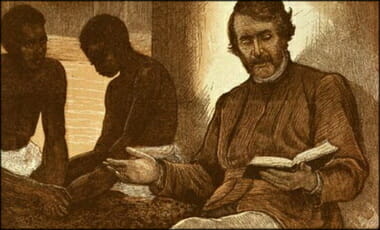
Join us on David Livingstone’s remarkable life & world changing journey to Africa to share his life in service to others. His humble beginnings exploded with adventure when in 1840 he sailed to Africa. Dr Livingstone’s relentless pursuits in medical missionary service and his love for people left a legacy which destroyed slavery’s hold and brought the Gospel to countless people. Today his story inspires people to make their world a better place.
As the Left gets more progressive, womanhood [and manhood] is being replaced with genderlessness — so claiming “feminity” and special protections for women is old-hat. The National Organization for Women (NOW) in 1988 in their official paper, National NOW Times, wrote: “The simple fact is that every woman must be willing to be identified as a lesbian to be fully feminist.” But now “lesbian” excludes others who do not identifiy using such gender oppresive language. Lol…
David Menzies reports the British Medical Association has issued a “communication” guide instructing members to avoid the term “expectant mother” to avoid offending transgender people. MORE
John and Ken discuss the legal attacks against Trumps temporary travel ban with Professor John Eastman, who is the Henry Salvatori Professor of Law & Community Service at Chapman University Fowler School of Law. Dr. Eastman makes note that the provision allowing for the President to do this is clear. It is also clear the Courts (specifically the 9th Circuit) has overstepped its bounds… yet again. Stefan Molyneux points out that in 2012, The U.S Supreme Court reversed 86% of the 9th Circuit Court of Appeals rulings that it reviewed. WOW. That is a clear sign of something going on — like Judicial activism. Since the argument Trump used is essentially the same as Obama’s, it is hard to see why all the Justices via SCOTUS wouldn’t agree with Trumps Constitutional right in this matter.
A recent conversation made some connections to the final statement made in this clip about the very small gender wage gap left — after all things being equal are considered — may in fact be innocent. Not, in-other-words, the evil patriarchy keeping women down.
During the conversation some points were made that made clear some of these “innocent” aspects of the wage gap or even a disparity in women superintends in education. The two points made were that women wait too long to jump on a promotion, and, they do not negotiate for the pay they feel they are worth. While we all could use help in negotiating skills, this may be a natural aspect to womanhood and not one attributed to a patriarchal activity.
Having read through a couple studies years ago to help formulate thinking on a response to Matt Damon’s claim that teachers are not payed well. After this recent conversation however, I revisited a larger swath of reading on the topic. It took me a couple days, but I read through the following:
Few Women Run the Nation’s School Districts. Why? (Education Week);
While many of these articles/studies mention gender bias… in them are more than enough reasons to suppose the differences that occur naturally between men and women account for the totality of the disparity. This doesn’t mean that there is not patriarchal biases, JUST LIKE there doesn’t mean there are matriarchal one’s as well. The point is that the rule we see is better explained by choice made by women in the West that is freer than anywhere else in the world.
This post deals less with the wage gap and more with a gap of female school superintendents as compared to male superintendent. HOWEVER, the same gross negligence of not comparing “apples-to-apples” stains any credibility in this regard… here are two quick examples:
Similarly, when you hear:
Of our nation’s 13,728 superintendents, 1,984 today are women. Yet 72 percent of all K-12 educators in this country are women, according to the U.S. Department of Education.
…something is not adding up. Here are five quick examples of divergences that go towards explaining this divergence noted above:
Of the 297 women superintendents in the AASA study, 130 were former elementary teachers. Thus more than half came from a secondary background where men teachers are a considerable majority.
Coaching activities traditionally have provided secondary and junior high teachers with an initial step toward administration.
Women also are achieving the doctorate at comparable rates to male candidates. However, about only 10 percent of women in doctoral programs are opting to earn the superintendency credential along with their educational specialist or doctoral degree.
Women are not as experienced nor as interested in districtwide fiscal management as men (and school boards prefer this).
The role of a mother probably restrains many women teachers from pursuing the principalship.
So yes, if you compare ALL women and men and ignore differences, it looks bad. If you start to do what an economist does and ask questions about WHY or WHAT possible factors may contribute to the disparity we see, then the gap starts to be explained. Everyone should ask the minimal questions:
Compared to what?
At what cost?
What hard-evidence do you have?
The rest of this post is basically commentary on the above linked studies or quoting from them. The two most used are:
Few Women Run the Nation’s School Districts. Why? (Education Week);
“I don’t want to be offered a position because I am a woman; likewise, I don’t want to lose a position because I am a woman…”
In the very next paragraph she added,
“I think it would be naïve to think there are not some stereotypes that exist.”
Like, mmm, I don’t know… being hired because you are a woman and a “number” to fulfill a quota? In this same article qualifications like a degree in superintendent studies or a financial background while statements like these are made:
which also plagues other sectors trying to address underrepresentation of women, African-Americans, Latinos, and other groups.
They can say we value diversity, we want women applicants, we want minority applicants…
This particular article had a myriad of unsubstantiated claims that were really non-quantifiable and wholly anecdotal. The worry of that woman quoted above in being chosen merely for gender (or ethnicity) is realized when standards for a job are the modern understanding of diversity as is presented in works like Race, Class & Gender: An Anthology, by Margaret Andersen and Patricia Collins.
Thomas Sowell rightly asked in a speech he gave that “given our limitations, what can we do to make this a better world — and what can we not do?” He responds:
One thing we can do is to try to make better rules — in the law and in schools, for example, — and to see that everybody plays by those rules. What we cannot do, that is, what is not within our intellectual or moral power, is to decide directly who deserves to win or lose, who deserves more income and who deserves less, what groups should be “represented” where and in what proportions.
So here are some bullet points I adapted and commented on:
approximately 75 percent of elementary classroom teachers are women. Nearly 75 percent of superintendents did not teach at the elementary level prior to working as a central-office administrator or superintendent. [women, when given a choice, would rather teach their passion… younger children. NOT ALL, but most.]
Nearly all superintendents previously worked as building principals and a majority are former assistant principals. Therefore the ladder from the classroom to the superintendency often begins as an assistant principalship or as a high school department chair. Even though about two-thirds of the nation’s schools are elementary, a small percentage have assistant principals and almost none have department chair positions. Elementary classroom teachers have to jump straight from the classroom to the principalship… [Most women prefer to stay longer in these positions because of more flexibility of hours and family/work life balance.]
Coaching activities traditionally have provided secondary and junior high teachers with an initial step toward administration. Athletic coaching and assignments such as band directorships often provide teachers an opportunity to demonstrate skills in leadership, management and an ability to work with community members. Today, most secondary schools sponsor at least six interscholastic sports for both boys and girls, which provides at least 12 head coaching jobs. A sizable majority of AASA study superintendents indicated they had a coaching assignment while working as a teacher or building administrator. [Men typically are – again, by their nature – drawn to these activities.]
Nationwide data indicate that women constitute more than 50 percent of the graduate students enrolled in educational administration programs. Women also are achieving the doctorate at comparable rates to male candidates. However, about only 10 percent of women in doctoral programs are opting to earn the superintendency credential along with their educational specialist or doctoral degree. [These are factors of choice typically.]
Most data indicate that school boards, while claiming keen interest in the instructional program, see the management of fiscal resources to be a critical component of the superintendency. The AASA study showed that boards place a high degree of emphasis on budget and financial decisions by using skills and experiences in these areas as key hiring criteria. [So some sort of business degree or time in a position that deals with fiscal issues is often times preferred. These opportunities are attained more so in the high school arena.]
About half of the 297 women superintendents in the study had experience in the central office but very few had responsibilities in personnel and finance. [see above]
[in the past] [b]oards of education while saying that the instructional program is important do not want an inexperienced superintendent in fiscal management. [This is changing because standardizing tests are requiring differing focuses on outcomes — leading to more women being considered for superintendency.]
The average superintendent spends more than 50 hours a week at work, including night meetings and sporting events. This type of work week often is not appealing to younger women (or men) accustomed to child-centered teaching in elementary classrooms and to people who prefer a better balance between work and family life. [in modern, rich, Western countries, women are afforded the choice to place family first, and more-often-than-not, do.]
The role of a mother probably restrains many women teachers from pursuing the principalship–a position they are well acquainted with. Women principals and central-office administrators recognize the time and pressure of the superintendency frequently interfere with family life and choose to spend non-working time with family rather than school board members and citizens. [By the way, Glass follows the above with “socialization” as the root of this difference… not nature. “Scholastics,” when fighting nature (whether God imbued, or millions of years of evolutionary honing, or any combination thereof), will lose every time.]
Women who do become superintendents spend more years as classroom teachers before moving into the administrative ranks. Women administrators typically spend 7 to 10 years as a teacher while men spend about 5 to 6 years in the classroom. [Again, this may be based mostly on family/child choices, and may make them better at what they do with more experience… however, as my friend stated, women tend to not jump on promotions as quick as men. THIS DOES NOT MEAN anything nefarious is taking place… these choices are more likely to do familial activity as well as the general nature of women not to compete or jump on opportunity as much as men. I would posit this has more to do with the nature of women than the socialization of them.]
Superintendents are not usually hired from within and have three superintendencies during their career of some 15 to 17 years as the school district CEO. This means the superintendent’s family will be making perhaps four moves after she or he leaves classroom teaching. [The conclusion Glass draws is covered up by gender equity. Women, more than men, wish to stay rooted in their community, placing a higher value on their children not having to “start all over” at another school making new friends versus having life-long ones. So this fact is a major inhibitor for why women CHOOSE to stay in the elementary level versus chasing a career.]
Nearly 82 percent of women superintendents in the AASA study indicated school board members do not see them as strong managers and 76 percent felt school boards did not view them as capable of handling district finances. [This has little to do with glass ceilings, rather, much of this was already discussed above. While many felt a “glass ceiling” was inhibiting them… I think more-so nature and choices have ~ speaking quantifiably and not anecdotally. Everybody thinks they are on the side of angels… who deserves more pay, a better position, and the like. I think I am worth waaay more than I have ever been paid — hubris to segue way into Sowell…]
Glass made mention of men having more mentors… I agree, for a couple reasons. First, something my wife mentioned that she was told by more than a few professors… if you want to break into the “good ol’ boy club,” play golf. Yep, men bond over sports and friendly competition. This comes more natural for men for a few reasons. One is that they tend more naturally towards this activity of meeting for a couple drinks or on the golf course. During these times they are not complaining as much as trying to solve issues (my wife has pointed out there is more negativity focused on when women meet). Men love more-so friendly competition to destress them and to build bridges of trust and openness.
Men tend to have ways to help each other through relationships that differ somewhat from their female counterparts. For instance, Nora Vincent dressed as a man for 18-months and later wrote a book on the experience. One reviewer at Amazon notes the following:
As an old-school feminist, I began the book with all the pre-conceived notions about men that we’ve gathered over the years and hugged to our chests. Bam! Norah Vincent dispels all of those and more in this can’t-put-down book. A woman posing as a man. Sensational? Perhaps. However, Ms. Vincent has managed to write an unbiased, often touching and frequently very funny book about the lives men lead. A lasting moment from the book, in my mind: Vincent’s description of a male handshake with another man, warm and welcoming, v. a woman-to-woman hug and air-kiss, superficial and fleeting.(See the 20/20 special on Nora Vincent)
In another article, there was mention of a superintendent referring to a candidate as a bitch.
Unprofessional?
Of course!
But am I being told women have never called a man a dick?
Please.
Glass continues at one point, saying:
Along with nursing, teaching long represented one of the two most accessible professions for women, who until the recent past were largely excluded from such professions as accounting, dentistry, medicine, engineering and law.
I reject this. As already pointed out, as societies get richer and likes in life/work balance are realized… women CHOOSE these professions (nursing and education) more than men.
Continuing…
As already mentioned, many women teach in the classroom for more years than men. Other women take several years out for child-rearing. The result is that many women enter the process of moving through the “chairs” to the superintendency too late. AASA’s 10-year studies always have shown that women superintendents are older than their male counterparts with comparable years in the superintendency.
AND THIS IS NOT A BAD THING (*big booming megaphone w/echoing reverb*… FX) As many women who swallowed the lie from feminists via the 60’s mention… they have regrets:
…I never expected to find myself in agreement with Ann Widdecombe on anything, yet I realized when she said last week that her most profound regret is never having had children, that we have something very important in common.
Like her, I didn’t plan it this way; I made no choice to be childless. Like so many other women of my generation, born in the Sixties when the fashionable wisdom was that women should postpone marriage and motherhood to forge careers, I left it [“it” ~ the bad thinking of the sixties and what “feminism” was telling women] too late to have a family. I always assumed it would happen at some stage, but I never gave it the focus it needed.
As a 20-something woman with the world at her feet, I chose to interpret feminism’s gift as the right to education and a career. Were I offering advice now to the young woman I was then, I would say: ‘If you want to marry and have children in your 20s, that is just as valid a choice as building a career. Don’t be afraid to make up your own mind.’…
What can be done? As education changes so too will the roles and natural talents needed in positions withing education. However, to force a change onto education that rejects qualifications for merely seeing gender and ethnicity will in the long run harm educations quality. Like the medical establishment (listen below). Another factor in this equation is that often times the school board members lack specialized knowledge about education and what is needed for their district. I fully acknowledge this. But to say that this gap in gender in superintendents is based on a patriarchy of some sort, is misleading at best.
Concluding Thoughts
What struck me the most about my conversation with this lovely lady? Well, when I brought up a couple studies that undermine the belief about the gender-pay-gap, she mentioned studies as well. I said “great, send them to me.” (We have each-others emails for the readers information.) I was excited that maybe something less anecdotal was going to be presented. I mentioned that after her busy schedule she may want to consider reading my short post on the issue or consider reading Thomas Sowell’s book, Economic Facts and Fallacies, 2nd edition. She quickly responded she would never read anything on the topic.
I was inwardly taken aback, but also had yet another confirmation about how the left approaches issues that marches, policy and deer beliefs are held closely to the vest as true. I doubt this academic woman had ever read anything outside the curricula given to her by her educators. Learning to think in a box incorporating a Marxian view of history and economics based on race, class, and gender is the norm.
You see, she had just mentioned to me how she hates the volatility of the political climate. Shortly thereafter she intimated that she would not budge an iota in her beliefs by blocking out new streams of information into her matrix, possibly changing her mind just a tad considering said new information that previously she may not have been aware of.
— BTW, thisIS the definition of ensuring oneself and culture remain volatile —
— by not allowing educational opportunities —
And when women march, people vandalize businesses and set fires (Berkeley for instance sustained over $100,000 in damage) as well as almost kill or permanently maim persons… all based on myths believed to be true (hands up don’t shoot, gender wage gaps, police more likely to shoot a black person, white privilege, war on women, white supremacy, my body my choice, etc., etc.), our climate will continue to become more volatile when even evidence from an opposing viewpoint is ignored out-of-hand.
A friend sent this article to me: SEXISM AND ZOMBIE ECONOMICS. I wish to take two examples from it to make the point that these two examples are equal in their showing “sexism.” In other words, they don’t. The first example comes from Emma Watson,
I have experienced sexism in that I have been directed by male directors 17 times and only twice by women. Of the producers I’ve worked with 13 have been male and one has been a woman. I am lucky: I have always insisted on being treated equally and have generally won that equality…. I think my work with the UN has probably made me even more aware of the problems. I went out for a work dinner recently. It was seven men…and me.
This other example comes from the articles author,
Consider the following, real-life scenario. Prior to going to graduate school, I worked at a dance studio for eight years. I can count the number of male dancers I had during that entire period on one hand (our studio had a few hundred students a year). Care to guess how many male instructors there were? None. That’s right, every single student in our studio was “directed” exclusively by females! When we went out to lunch with others, there may be twelve or thirteen women, but no men! Most other studios have similar dynamics. If I said to you, “This proves that the dance industry is sexist!”, you’d look at me like I was insane.
What do these examples prove? Nada, Zilch, Zero.
If the dance had owners that were a substantially higher degree of males than females, as an economist I would look at what is separating (asking questions) WHY this is. If I noticed a larger percentage of them had differing backgrounds, say teaching varsity dance teams versus elementary plays. If they had business or accounting degrees, on-and-on.
What feminism (Leftism) has done is make women weak, in fact, all society. To wit the author of the article, near the end, notes as much:
The author concluded the article by quoting an academic report saying that “longer-term solutions and further monitoring are required,” but he fails to mention what these would be. Allow me to make a suggestion—none. As I have said elsewhere, the idea of legislating “protections” for women in the labor force is downright offensive and counterproductive to gender equality. Think about what message the author of the article is sending by suggesting monitoring. Essentially, “Women are incapable of letting our skills, ambition, and output do the talking for us. We need Big Brother to come and make those mean old men employ us/give us more money/additional benefits.”
Seemingly they always need a knight in shining armor. In this case[s], Big, Obtrusive, Government (BOG).
One of the new Merriam Webster words is “safe-space” – I will comment quickly after this Free Beacon excerpt:
One term added was “safe space.” The term has been used widely across college campuses when describing how students dealt with the aftermath of Donald Trump’s victory on Election Day—safe spaces included coloring stations, therapy with puppies, and cry-ins.
The dictionary uses examples of “safe space” from two liberal columnists, Judith Shulevits and Catherine Rampell.
The new definition reads: “a place (as on a college campus) intended to be free of bias, conflict, criticism, or potentially threatening actions, ideas, or conversations
✦…student volunteers put up posters advertising that a ‘safe space’ would be available for anyone who found the debate too upsetting. — Judith Shulevitz
✦ Women, sexual assault victims, people of color, transgender students. College campuses have created ‘safe spaces’ for all sorts of marginalized groups. — Catherine Rampell
You see, our country was firmly steeped in “Reformational thinking,” for most of it’s life. Our Founders and many since (including the general public) knew that if there was two people gathered, a safe space is an impossibility.
Why?
B-e-c-a-u-s-e of mankind’s fallen nature. Having a space that is “free of bias, conflict, criticism, or potentially threatening actions, ideas, or conversations” is impossible.
Martin knew his patience was hard to find at times. He once said, “All my life is patience. I have to have patience with the pope, the heretics, my family, and Katie.” [Katie was Luther’s wife.] But as Bainton rightly observes, Martin “recognized that it was good for him.” Again, marriage and family was a school of character. (Martin Luther on Marriage)
I bring all my nature that I have to allow Christ to concur daily into the place where the people I love the most are. This realization and having the “unsafe” conversations between spouses and learning to control all sorts of emotions and how one should express them in healthy ways by losing control of them when dealing with children and a spouse. All of this maturation, growth, and the like come by seeing my reflection through the mirror known as my wife.
Safe-spaces do not compensate growth. They do not maturate the human. In short, they end up being the most dangerous place for the future dealings of young persons.
Remember, where two-or-more believers are gathered, Christ is present. Where two-or-more people are gathered, marginalization occurs, naturally. The difference is we are convicted of our nature when Christ is present. When he is not present, people try to hide from their nature, and thus hide from God, trivializing “themselves into silliness and confusion so that there was neither sense nor direction left in their lives. They pretended to know it all, but were illiterate regarding life” (The Message, Romans 1:21c-23a).
I look forward to the day when my Creator glorifies FULLY the work He has evidenced in my new birth. Why do I look forward to this? Because I ache like all of creation (Romans 8:22). However, I especially groan when I see the potential God has for people, unrealized. You see, God “desires all men to be saved and to come to the knowledge of the truth” (1 Timothy 2:4).
I hear this depth of agony in fallen creation and the hope of what is promised in one of the greatest of examples for Christ to come quickly — really, it is a plea of sorts:
He who testifies to these things says, “Surely I am coming soon.” Amen. Even so, come Lord Jesus! (Revelation 22:20).
Jay Fayza reports his experiences at an event hosted by Students For Free Speech and Generation Screwed at the University of Toronto which drew violent anti-fa protesters. MORE
At least 4 bad-guys killed, one little girl and a pregnant woman were also killed during this gunfight In the past 5 days, there have been a lot of shootings in Culiacan and his surroundings. The “Sons of El Chapo” are fighting against “Damaso Lopez,” they are fighting for the “plaza” of Culiacan and Navolato. The war begins for narcomenudeo in Sinaloa between Ivan and Alfredo Guzmán against Damaso and his son the “Mini Lic” Lopez. It all started in Navolato, Sinaloa, where after the arrest of “El Chapo” Guzman in Mazatlan. Damaso made alliance with César Carrillo, brother of “Lord of the Skies” and enemy of the “Chapo” Guzmán.
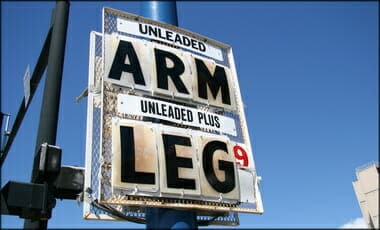
There are differing prices per gallon depending what vehicle it is used for… but as I can tell, in 2013 the price of a regular gallon of gas for an Air Force jet was under $4, and a gallon of “Green” fuel was $59.
CBS News admitted they did not cover 24% of the terrorist attacks – at all. CBS inadvertently just proved the Trump administration’s accusations of media bias. (GATEWAY PUNDIT)
TIMELINE: September, 2014 – December, 2016 NUMBER OF ATTACKS: 78
MELBOURNE, AUSTRALIA September, 2014 TARGET: Two police officers wounded in knife attack ATTACKER: Abdul Numan Haider
TIZI OUZOU, ALGERIA September, 2014 TARGET: One French citizen beheaded ATTACKER: Jund al-Khilafah in Algeria
QUEBEC, CANADA October, 2014 TARGET: One soldier killed and one wounded in vehicle attack ATTACKER: Martin Couture-Rouleau
OTTAWA, CANADA October, 2014 TARGET: One soldier killed at war memorial; two wounded in shootings at Parliament building ATTACKER: Michael Zehaf-Bibeau
NEW YORK CITY, NY, USA October, 2014 TARGET: Two police officers wounded in knife attack ATTACKER: US person
RIYADH, SAUDI ARABIA November, 2014 TARGET: One Danish citizen wounded in shooting ATTACKERS: Three Saudi Arabia-based ISIL members
ABU DHABI, UAE DATE: December 2014 TARGET: One American killed in knife attack ATTACKER: Dalal al-Hashimi
SYDNEY, AUSTRALIA December, 2014 TARGET: Two Australians killed in hostage taking and shooting ATTACKER: Man Haron Monis
TOURS, FRANCE December, 2014 TARGET: Three police officers wounded in knife attack ATTACKER: Bertrand Nzohabonayo
PARIS, FRANCE January, 2015 TARGET: One police officer and four hostages killed in shooting at a kosher supermarket ATTACKER: Amedy Coulibaly
TRIPOLI, LIBYA January, 2015 TARGET: Ten killed, including one US citizen, and five wounded in bombing and shooting at a hotel frequented by westerners ATTACKERS: As many as five ISIL-Libya members
RIYADH, SAUDI ARABIA January, 2015 TARGET: Two US citizens wounded in shooting ATTACKER: Saudi Arabia-based ISIL supporter
NICE, FRANCE February, 2015 TARGET: Two French soldiers wounded in knife attack outside a Jewish community center ATTACKER: Moussa Coulibaly
COPENHAGEN, DENMARK February, 2015 TARGET: One civilian killed in shooting at a free-speech rally and one security guard killed outside the city’s main synagogue ATTACKER: Omar Abdel Hamid el-Hussein
TUNIS, TUNISIA March, 2015 TARGET: 21 tourists killed, including 16 westerners, and 55 wounded in shooting at the Bardo Museum ATTACKERS: Two ISIL-aligned extremists
KARACHI, PAKISTAN April, 2015 TARGET: One US citizen wounded in knife attack ATTACKERS: Pakistan-based ISIL supporters
PARIS, FRANCE April, 2015 TARGET: Catholic churches targeted; one civilian killed in shooting, possibly during an attempted carjacking ATTACKER: Sid Ahmed Ghlam
ZVORNIK, BOSNIA April, 2015 TARGET: One police officer killed and two wounded in shooting ATTACKER: Nerdin Ibric
GARLAND, TX, USA May, 2015 TARGET: One security guard wounded in shooting at the Prophet Muhammad cartoon event ATTACKERS: Two US persons
BOSTON, MA, USA June, 2015 TARGET: No casualties; one police officer attacked with knife ATTACKER: US person
EL GORA (AL JURAH), EGYPT June, 2015 TARGET: No casualties; camp used by Multinational Force and Observers (MFO) troops attacked in shooting and bombing attack ATTACKERS: Unknown number of ISIL-Sinai members
LUXOR, EGYPT June, 2015 TARGET: One police officer killed by suicide bomb near the Temple of Karnak ATTACKER: Unidentified
SOUSSE, TUNISIA June, 2015 TARGET: 38 killed and 39 wounded in shooting at a beach frequented by westerners ATTACKERS: Seifeddine Rezgui and another unidentified attacker
LYON, FRANCE June, 2015 TARGET: One civilian killed in beheading and explosion at a chemical plant ATTACKER: Yasin Salhi
CAIRO, EGYPT July, 2015 TARGET: One killed and nine wounded in VBIED attack at Italian Consulate ATTACKER: Unidentified ISIL operatives
CAIRO, EGYPT July, 2015 TARGET: One Croatian national kidnapped; beheaded on August 12 at an unknown location ATTACKER: Unidentified ISIL-Sinai operative
PARIS, FRANCE August, 2015 TARGET: Two civilians and one US soldier wounded with firearms and knife on a passenger train ATTACKER: Ayoub el-Khazzani
EL GORA, EGYPT September, 2015 TARGET: Four US and two MFO troops wounded in IED attack ATTACKER: Unidentified
DHAKA, BANGLADESH September, 2015 TARGET: One Italian civilian killed in shooting ATTACKER: Unidentified
COPENHAGEN, DENMARK September, 2015 TARGET: One police officer wounded in knife attack ATTAKER: Palestinian national
EL GORA, EGYPT October, 2015 TARGET: No casualties; airfield used by MFO attacked with rockets ATTAKER: Unidentified ISIL-Sinai operatives
PARRAMATTA, AUSTRALIA October, 2015 TARGET: One police officer killed in shooting ATTAKER: Farhad Jabar
RANGPUR, BANGLADESH October, 2015 TARGET: One Japanese civilian killed in shooting ATTAKER: Unidentified
HASANAH, EGYPT October, 2015 TARGET: 224 killed in downing of a Russian airliner ATTAKER: Unidentified ISIL-Sinai operatives
MERCED, CA, US November, 2015 TARGET: Four wounded in knife attack on a college campus ATTAKER: US person
PARIS, FRANCE November, 2015 TARGET: At least 129 killed and approximately 400 wounded in series of shootings and IED attacks ATTAKERS: Brahim Abdelslam, Saleh Abdeslam, Ismail Mostefai, Bilal Hadfi, Samy Amimour, Chakib Ahrouh, Foued Mohamed Aggad, and Abdelhamid Abaaoud
DINAJPUR, BANGLADESH November, 2015 TARGET: One Italian citizen wounded in shooting ATTAKER: Unidentified
RAJLOVAC, BOSNIA December, 2015 TARGET: Two Bosnian soldiers killed in shooting ATTAKER: Enes Omeragic
SAN BERNADINO, CA, US December, 2015 TARGET: 14 killed and 21 wounded in coordinated firearms attack ATTAKERS: Two US persons
LONDON, ENGLAND, UK December, 2015 TARGET: Three wounded in knife attack at an underground rail station ATTAKER: Muhyadin Mire
DERBENT, RUSSIA December, 2015 TARGET: One killed and 11 wounded in shooting at UN World Heritage site ATTAKER: Unidentified ISIL-Caucasus operative
CAIRO, EGYPT January, 2016 TARGET: Two wounded in drive-by shooting outside a hotel frequented by tourists ATTAKERS: Unidentified ISIL operatives
PARIS, FRANCE January, 2016 TARGET: No casualties; attacker killed after attempted knife attack on Paris police station ATTAKER: Tarek Belgacem
HURGHADA, EGYPT January, 2016 TARGET: One German and one Danish national wounded in knife attack at a tourist resort ATTAKER: Unidentified
MARSEILLES, FRANCE January, 2016 TARGET: One Jewish teacher wounded in machete attack ATTAKER: 15 year-old Ethnic Kurd from Turkey
ISTANBUL, TURKEY January, 2016 TARGET: 12 German tourists killed and 15 wounded in suicide bombing ATTAKER: Nabil Fadli
JAKARTA, INDONESIA January, 2016 TARGET: Four civilians killed and more than 20 wounded in coordinated bombing and firearms attacks near a police station and a Starbucks ATTAKERS: Dian Joni Kurnaiadi, Muhammad Ali, Arif Sunakim, and Ahmad Muhazan bin Saron
COLUMBUS, OH, US February, 2016 TARGET: Four civilians wounded in machete attack at a restaurant ATTAKER: US person
HANOVER, GERMANY February, 2016 TARGET: One police officer wounded in knife attack ATTAKER: Safia Schmitter
ISTANBUL, TURKEY March, 2016 TARGET: Four killed and 36 wounded in suicide bombing in the tourist district ATTAKER: Mehmet Ozturk
BRUSSELS, BELGIUM March, 2016 TARGET: At least 31 killed and 270 wounded in coordinated bombings at Zaventem Airport and on a subway train ATTAKERS: Khalid el-Bakraoui, Ibrahim el-Bakraoui, Najim Laachraoui, Mohammed Abrini, and Osama Krayem
ESSEN, GERMANY April, 2016 TARGET: Three wounded in bombing at Sikh temple ATTAKERS: Three identified minors
ORLANDO, FL, US June, 2016 TARGET: 49 killed and 53 wounded in shooting at a nightclub ATTAKER: US person
MAGNANVILLE, FRANCE June, 2016 TARGET: One police officer and one civilian killed in knife attack ATTAKER: Larossi Abballa
KABUL, AFGHANISTAN June, 2016 TARGET: 14 killed in suicide attack on a bus carrying Canadian Embassy guards ATTAKER: ISIL-Khorasan operative
ISTANBUL, TURKEY June, 2016 TARGET: 45 killed and approximately 240 wounded at Ataturk International Airport ATTACKERS: Rakhim Bulgarov, Vadim Osmanov, and an unidentified ISIL operative
DHAKA, BANGLADESH July, 2016 TARGET: 22 killed, including one American and 50 wounded after hours-long siege using machetes and firearms at holy Artisan Bakery ATTACKERS: Nibras Islam, Rohan Imtiaz, Meer Saameh Mubasheer, Khairul Islam Paye, and Shafiqul Islam Uzzal
NICE, FRANCE July, 2016 TARGET: 84 civilians killed and 308 wounded by an individual who drove a truck into a crowd ATTACKER: Mohamed Bouhlel
WURZBURG, GERMANY July, 2016 TARGET: Four civilians wounded in axe attack on a train ATTACKER: Riaz Khan Ahmadzai
ANSBACH, GERMANY July, 2016 TARGET: At least 15 wounded in suicide bombing at a music festival ATTACKER: Mohammad Daleel
NORMANDY, FRANCE July, 2016 TARGET: One priest killed in knife attack ATTACKERS: Adel Kermiche and Abdel Malik Nabil Petitjean
CHALEROI, BELGIUM August, 2016 TARGET: Two police officers wounded in machete attack ATTACKER: Khaled Babouri
QUEENSLAND, AUSTRALIA August, 2016 TARGET: Two killed and one wounded in knife attack at a hostel frequented by Westerners ATTACKER: Smail Ayad
COPENHAGEN, DENMAKR September, 2016 TARGET: Two police officers and a civilian wounded in shooting ATTACKER: Mesa Hodzic
PARIS, FRANCE September, 2016 TARGET: One police officer wounded in raid after VBIED failed to detonate at Notre Dame Cathedral ATTACKERS: Sarah Hervouet, Ines Madani, and Amel Sakaou
SYDNEY, AUSTRALIA September, 2016 TARGET: One civilian wounded in knife attack ATTACKER: Ihsas Khan
ST. CLOUD, MN, US September, 2016 TARGET: 10 wounded in knife attack in a mall ATTACKER: Dahir Ahmed Adan
NEW YORK, NY; SEASIDE PARK AND ELIZABETH, NJ, US September, 2016 TARGET: 31 wounded in bombing in New York City; several explosive devices found in New York and New Jersey; one exploded without casualty at race in New Jersey; one police officer wounded in shootout ATTACKER: Ahmad Khan Rahami
BRUSSELS, BELGIUM October, 2016 TARGET: Two police officers wounded in stabbing ATTACKER: Belgian national
KUWAIT CITY, KUWAIT TARGET: No casualties; vehicle carrying three US soldiers hit by a truck ATTACKER: Ibrahim Sulayman
MALMO, SWEDEN October, 2016 TARGET: No casualties; mosque and community center attacked with Molotov cocktail ATTACKER: Syrian national
HAMBURG, GERMANY October, 2016 TARGET: One killed in knife attack ATTACKER: Unknown
MANILA, PHILIPPINES November, 2016 TARGET: No casualties; failed IED attempt near US Embassy ATTACKERS: Philippine nationals aligned with the Maute group
COLUMBUS, OH, US November, 2016 TARGET: 14 wounded by individuals who drove a vehicle into a group of pedestrians and attacked them with a knife ATTACKER: US person
N’DJAMENA, CHAD November, 2016 TARGET: No casualties; attacker arrested after opening fire at entrance of US Embassy ATTACKER: Chadian national
KARAK, JORDAN December, 2016 TARGET: 10 killed and 28 wounded in shooting at a tourist site ATTACKERS: Several gunmen
BERLIN, GERMANY December, 2016 TARGET: 12 killed and 48 wounded by individual who drove truck into a crowded market ATTACKER: Anis Amri