The full list of Obama Pardons is HERE.
Author: Papa Giorgio
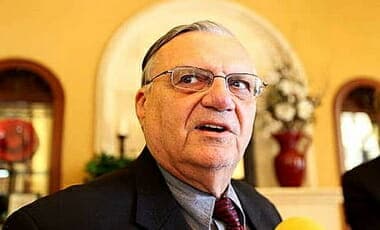
“She’s Crying Wolf” ~ Dershowitz on Maxine Waters
“Waters Throws the term racist around so loosely and so inappropriately that it weakens her credibility.” ~ Dershowitz
…But Dershowitz on Monday strongly disagreed.
“Look, every criminal lawyer I know, prosecutor, defense attorney, would agree with me that when you take a case from Virginia and put it in the District of Columbia, you are gaining a tactical advantage for the prosecution in a case in which the defendants are likely to come from the Trump administration,” he said.
“Politics matters. Race matters. Ethnicity matters. Every lawyer know that. I learned it from Johnnie Cochran who Maxine Waters praised to the hilt when he died and wanted to have Congress pass a resolution recognizing his greatness. Would she have called Johnnie Cochran a racist?
“Or does she revere it only for people that are not of her race? It absurdly throws around a word that should be reserved for true racists. When she calls a real racist a racist, nobody is going to believe her. She’s crying wolf and it dilutes the meaning of the word ‘racism.’ So shame on Maxine Waters.”
The renowned Harvard Law professor emeritus also called out Richard Painter, an ethics lawyer in the George W. Bush administration, who demanded in a tweet that Dershowitz “stop the racist B.S.”
“He’s just dead wrong. And he’s been wrong about so many things. He is so determined to find criminal conduct on the part of Trump that he’s prepared to make up crimes that don’t exist. How he served as an ethics lawyer for any administration is unclear to me,” Dershowitz told Cosby.
“I think he has to look in the mirror and question his own ethics using the word ‘racism’ to describe what he understands because he’s a lawyer. He understands that what I’m saying is factually, absolutely correct.

SPLC Labels Christian Ministry Hate Group… Again
GAY PATRIOT notes the radical attacks from Leftist organizations:
The Southern Poverty Law Center was, perhaps, once a civil rights organization. Then extremists spent its core assets – in this case, SPLC’s good word and reputation – until they were gone. SPLC now routinely mislabels conservative and/or Christian groups as so-called “hate groups”, emptying the term of meaning and making the SPLC a bad joke.
Most famously, SPLC mislabelled the Family Research Council a “hate group” for its stance against gay marriage, and in 2013 that prompted an attempted mass-murder by a gay activist, Floyd Lee Corkins II.
SPLC is still going. Most recently, they mislabelled the D. James Kennedy Ministries:
[…..]
The DJKM plan to fight back with a defamation suit. It will be interesting to see how it goes. I expect it to fail; “that’s our opinion” is a workable defense in many instances, and many in the law profession have a blind spot for the SPLC.
But I didn’t think Trump would win, either…..
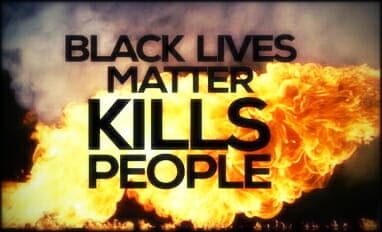
Professor Suspended For BLM Comments
Liberal Fascism — Via SOOPERMEXICAN:
A black theology professor was suspended for the rest of the year over comments he made about “Black Lives Matter” and how *some* of their members are too extreme.
Here’s what he said:
Sorry, the professor has it right:
Larry Elder Debates Geraldo Rivera on Racism/Charlottesville
Actually, there is A LOT of information in this presentation. I found video for the audio played of Tim Russert challenging Claire McCaskill on intimating that George “Dubya” was racist via Hurricane Katrina (transcript below). The C-SPAN video/audio was not lined up well, so I fixed this for this upload. I include video of Biden’s “they’re-gonna putchya’ll back in chains.” And I include video of the Larry Elder v. Geraldo Rivera exchange.
Read it all at NEWSBUSTERS (2006):
Forgive the slowness of getting to this amazing exchange on Meet the Press, but with all the fuss that Chris Matthews and other national pundits have made over George Allen’s “Macaca” salutation, it’s amazing (and a testament to media Bush-loathing) that Missouri Democrat Senate challenger Claire McCaskill could completely copy rapper Kanye West and insist President Bush let people die in New Orleans because they were black, and nobody blinked. (Coverage on ABC, CBS, NBC? Zero.) At least Tim Russert brought it up last Sunday, late in the Missouri Senate debate on Meet the Press. But McCaskill wouldn’t retract it. She was “acknowledging the feelings” of professional race-baiters and certain rappers who wear pink:
Russert: Let me turn to George W. Bush, because he’s become an issue in the campaign. Ms. McCaskill, you were quoted in the pubdef.net giving a speech which was blogged, saying, “She reminded people that ‘George Bush let people die on rooftops in New Orleans because they were poor and because they were black.’” One, why would you say that, and do you believe it?
McCaskill: Well, first, I was acknowledging how thousands and millions of Americans felt. The visual that we all saw in Hurricane Katrina was frankly, something none of us will ever forget. Incompetence turned tragic because the people there were unable to help themselves. This administration…
Russert: But do you think the president let people die because they were poor and black?
McCaskill: I do not, I do not believe the president is a racist. I was acknowledging the feelings of many, many Americans that this administration has left the most vulnerable, helpless—this administration has been about Wall Street and not about average Americans.
Russert: But do you apologize for this statement?
McCaskill: I, I think if it is misinterpreted that I was calling the president a racist…
Russert: Misinterpreted? “George Bush let people die on rooftops because they were poor and because they were black.”
McCaskill: That was—I was acknowledging what Americans believed at the time.
Russert: So you stand by it?
McCaskill: Absolutely, that’s what Americans believed. Now, I don’t believe he’s a racist, and if that—if people think—and maybe I shouldn’t have said it that way, Tim. Maybe I should have said it another way. I probably should have said it another way. But the feelings are real……
Bait-n-Switch: The War On Statues
RebelPundit Filmmakers Jeremy Segal and Andrew Marcus follow Chicago community organizer, Paul McKinley, on a tour of the south side neighborhood, Washington Park, where they find local residents opposed to a pastor’s calls to remove George Washington’s name and statue from the park.
More bait-n-switch via TOWNHALL:
…..Now, we begin a fight over taking down the hundreds and hundreds of Confederate monuments across the country. After that (and, yes, this part has already started) the battle will be over renaming buildings and streets. Liberals in Memphis literally dug up the graves of Nathan Forrest and his wife; so even removing the corpses of Confederate soldiers isn’t off the table. But that’s it, right?
Wrong.
On my new Twitter account What Liberals Say: Liberals in their own words, you’ll see that New York is discussing tearing down a statue of Columbus and even Grant’s Tomb. Meanwhile, liberals in Baltimore took a sledgehammer to a Christopher Columbus monument and even Al Sharpton came out againstthe Thomas Jefferson memorial.
So, you may think you’re arguing about the Confederate flag or the statue of Robert E. Lee, but liberals are also really arguing about memorials to Columbus, Grant, Jefferson, Washington, Lincoln, you name it.
Furthermore, not only are you never really arguing about what you think you’re arguing about with a liberal, liberals will paint you as evil for continuing to support something they were backing five minutes ago. How many liberals did you hear demanding gay marriage 20 years ago? Almost none. Then, the second Barack Obama changed his mind about it, everyone who disagreed with gay marriage became a gay-hating homophobe. Did you notice the shocking speed with which we moved from “Liberals would never demand that women share bathrooms with men. That’s crazy….” to, “Anyone who doesn’t support men and women in the same bathroom is transphobic”? …..
The “Office” of Marriage and Love in the Reformation
The reformers’ early preoccupation with marriage was driven, in part, by their jurisprudence. The starting assumption of the budding Lutheran theories of law, society, and politics was that the earthly kingdom was governed by the three natural estates of household, Church, and state. Hausvater, Gottesvater, and Landesvater; paterfamilias, patertheologicus, and patapofiticus— these were the three natural offices through which God revealed Himself and reflected His authority in the world. These three offices and orders stood equal before God and before each other. Each was called to discharge essential tasks in the earthly kingdom without impediment or interference from the other. The reform of marriage, therefore, was as important as the reform of the Church and the state. Indeed, marital reform was even more urgent, for the marital household was, in the reformers’ view, the “oldest,” “most primal,” and “most essential” of the three estates, yet the most deprecated and subordinated of the three. Marriage is the “mother of all earthly laws,” Luther wrote, and the source from which the Church, the state, and other earthly institutions flowed. “God has most richly blessed this estate above all others, and in addition, has bestowed on it and wrapped up in it everything in the world, to the end that this estate might be well and richly provided for. Married life therefore is no jest or presumption; it is an excellent thing and a matter of divine seriousness.”
The reformers’ early preoccupation with marriage was driven, in part, by their politics. A number of early leaders of the Reformation faced aggressive prosecution by the Catholic Church and its political allies for violation of the canon law of marriage and celibacy. Among the earliest Protestant leaders were ex-priests and ex-monastics who had forsaken their orders and vows, and often married shortly thereafter. Indeed, one of the acts of solidarity with the new Protestant cause was to marry or divorce in open violation of the canon law and in defiance of a bishop’s instructions. This was not just an instance of crime and disobedience. It was an outright scandal, particularly when an ex-monk such as Brother Martin Luther married an ex-nun such as Sister Katherine von Bora —a prima facie case of spiritual incest As Catholic Church courts began to prosecute these canon law offenses, Protestant theologians and jurists rose to the defense of their co-religionists, producing a welter of briefs, letters, sermons, and pamphlets that denounced traditional norms and pronounced a new theology of marriage.
Evangelical theologians treated marriage not as a sacramental institution of the heavenly kingdom, but as a social estate of the earthly kingdom. Marriage was a natural institution that served the goods and goals of mutual love and support of husband and wife, procreation and nurture of children, and mutual protection of spouses from sexual sin. All adults, preachers and others alike, should pursue the calling of marriage, for all were in need of the comforts of marital love and of protection from sexual sin. When properly structured and governed, the marital household served as a model of authority charity, and pedagogy in the earthly kingdom and as a vital instrument for the reform of Church, state, and society. Parents served as “bishops” to their children. Siblings served as priests to each other. The household altogether — particularly the Christian household of the married minister — was a source of “evangelical impulses” in society.
Though divinely created and spiritually edifying, however, marriage and the family remained a social estate of the earthly kingdom. All parties could partake of this institution, regardless of their faith. Though subject to divine law and clerical counseling, marriage and family life came within the ,jurisdiction of the magistrate, not the cleric; of the civil law, not the canon law. The magistrate, as God’s vice-regent of the earthly kingdom, was to set the laws for marriage formation, maintenance, and dissolution; child custody, care, and control; family property, inheritance, and commerce.
Political leaders rapidly translated this new Protestant gospel into civil law. Just as the civil act of marriage often came to signal a person’s conversion to Protestantism, so the Civil Marriage Act came to symbolize a political community’s acceptance of the new Evangelical theology. Political leaders were quick to establish comprehensive new marriage laws for their polities, sometimes building on late medieval civil laws that had already controlled some aspects of this institution. The first reformation ordinances on marriage and family life were promulgated in 1522. More than sixty such laws were on the books by the time of Luther’s death in 1546. The number of new marriage laws more than doubled again in the second half of the sixteenth century in Evangelical portions of Germany. Collectively, these new Evangelical marriage laws: (1) shifted primary marital jurisdiction from the Church to the state; (2) strongly encouraged the marriage of clergy; (3) denied that celibacy, virginity, and monasticism were superior callings to marriage; (4) denied the sacramentality of marriage and the religious tests and impediments traditionally imposed on its participants; (5) modified the doctrine of consent to betrothal and marriage, and required the participation of parents, peers, priests, and political officials in the process of marriage formation; (6) sharply curtailed the number of impediments to betrothal and putative marriages; and (7) introduced divorce, in the modern sense, on proof of adultery, malicious desertion, and other faults, with a subsequent right to remarriage at least for the innocent party. These changes eventually brought profound and permanent change to the life, lore, and law of marriage in Evangelical Germany.
John Witte, Jr., Law and Protestantism: The Legal Teachings of the Lutheran Reformation (Cambridge, United Kingdom: Cambridge University Press, 2002), 200-202.
God’s Ideal Should Be Mine
Persons should accept marriage not only as a duty that served society, but also as a remedy against sexual sin. Since the fall into sin, lust has pervaded the conscience of every person, the Lutheran reformers insisted. Marriage has become an absolute necessity of sinful humanity, for without it, the person’s distorted sexuality becomes a force capable of overthrowing the most devout conscience. A person is enticed by his or her own nature to prostitution, masturbation, voyeurism, homosexuality, and sundry other sinful acts. The gift of marriage, Luther wrote, should be declined only by those who have received God’s gift of continence. “Such persons are rare, not one in a thousand, for they are a special miracle of God.” The Apostle Paul has identified this group as the permanently impotent and the eunuchs; few others can claim such a unique gift.
This understanding of the created origin and purpose of marriage un-dergirded the reformers’ bitter attack on celibacy and monasticism. To require celibacy of clerics, monks, and nuns was beyond the authority of the church and ultimately a source of great sin. Celibacy was for God to give, not for the church to require. It was for each individual, not for the church, to decide whether he or she had received this gift. By demanding monastic vows of chastity and clerical vows of celibacy, the church was seen to be intruding on Christian freedom and violating scripture, nature, and common sense. By institutionalizing and encouraging celibacy the church was seen to prey on the immature and the uncertain. By holding out food, shelter, security, and opportunity, the monasteries enticed poor and needy parents to condemn their children to celibate monasticism. Mandatory celibacy, Luther taught, was hardly a prerequisite to true service of God. Instead, it led to “great whoredom and all manner of fleshly impurity and… hearts filled with thoughts of women day and night.” For the consciences of Christians and non-Christians alike are infused with lust, and a life of celibacy and monasticism only heightens the temptation.
John Witte, Jr., From Sacrament to Contract: Marriage, Religion, and Law in the Western Tradition (Louisville, KY: Westminster John Knox Press, 1997), 50.

Is the Death Penalty Ever Moral?
Are there circumstances under which a murderer deserves the death penalty? In other words, should capital punishment be abolished or not? Dennis Prager explains.
Income Equality – Viva La Venezuela!
POWERLINE sets the idea of “what socialism really is” when they note…
My one quibble is the assumption that Venezuela exemplifies income equality along with socialism. In fact, relatives and friends of the Chavez/Maduro regime have made off with billions while the majority went hungry. Socialism always leads to this kind of stark inequality. As I wrote at the link:
- [T]hat is what socialism is all about: great wealth and power for a handful, poverty and humiliation for the vast majority.
Venezuela is in the midst of economic and social collapse. Which country do you think liberals would love to model our country after?
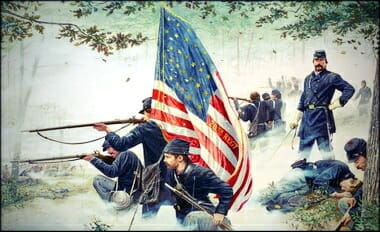
ESPN’s Gettysburg
TWITCHY has fun with General Lee’s doppelganger:
On Tuesday night, ESPN confirmed what people had been assured was not a satirical piece from The Onion, though it would have been a great one — announcer Robert Lee had been pulled from calling a college football game because it just “felt right” at the time, so soon after a woman had been killed while protesting white supremacists in Charlottesville.
In an email to reporters, ESPN said it all came down the simple coincidence of Lee’s name. We know that Merriam-Webster is quick to correct President Trump on Twitter whenever he goofs up, so we hope someone there is paying attention to Reuters’ feed today………

Coddling Antifa – Meet the Press
TWITTER: Matt Christiansen
Alan Dershowitz – The Only Sane Democrat Left?
Mind you, he is a Democrat, through-n-through… and I love that most other Democrats embrace the “Alt-Left” and ignore Dershowitz’ views:
- Let’s acknowledge Alan Dershowitz. Here he is, asking Democrats to repudiate the Alt Left for their violent opposition to free speech. (GAY PATRIOT).