As a conservative citizen activist residing in San Diego, I have always been impressed with the news coverage of KUSI’s wonderful team. Its reporters always gave us a fair hearing and covered our stories honestly.
So, it was with great interest that I read the story, which went viral, KUSI had offered CNN a reporter to give the cable news network perspective on the area’s functional and effective border wall…but was rejected.
A San Diego television station accused CNN of dropping an appearance by one of its reporters after learning that person’s reporting does not fit an anti-border-wall narrative — an allegation the cable news network denies.
KUSI this week that CNN had asked whether one of its reporters could appear on the network and talk about the local debate surrounding the border wall and government shutdown…..
Thursday morning, @CNN called the KUSI Newsroom asking if a reporter could give them a local view of the debate surrounding the border wall and government shutdown. After we informed them about our past reports, they declined to hear from us.
While I like their rants (Paul Watson, Mark Dice, and others) and these commentaries hold much truth in them, I do wish to caution you… he is part of Info Wars/Prison Planet network of yahoos, a crazy conspiracy arm of Alex Jones shite. Also, I bet if I talked to him he would reveal some pretty-crazy conspiratorial beliefs that would naturally undermine and be at-odds-with some of his rants. Just to be clear, I do not endorse these people or orgs.
(Here is his other video Paul mentions in the video.)
Hypocrisy seems to be the main Democratic platform these days. On issues like immigration and border security, it would be one thing if the left had a consistent message. They still might be wrong, but at least you could give them credit for steadfastly believing in their principles.
Instead, the opposite is true. Far from having a consistent stance on immigration, the very same Democrats who are now cheering for open borders and pretending that illegal immigration isn’t a crisis had a very, very different message not so long ago.
Here’s a perfect example. In a video that goes back to 1994, none other than Dianne Feinstein — yes, the Democratic senator who is now implying that enforcing the border is racist — spoke out about the issue, and sounded downright Trump-like.
“We can enforce our borders. I think we should enforce our borders,” the outspoken liberal declared on video 25 years ago.
Amazingly, Feinstein even brought up the issue of “anchor babies,” more accurately called birthright citizenship, which she admitted was wreaking havoc on California already over two decades ago.
“To have a situation where 40 percent of the babies born on Medicaid in California today are born of illegal immigrants, creates a very real problem for the state,” Feinstein strongly stated. “Which is in deficit.”
Guess what? California is now the state with the highest rate of poverty in the country, thanks in part of illegal immigration and “sanctuary city” policies that attract them…….
NPR’s “fact check” — like countless others — dismissed Trump’s claim as false because “illegal border crossings in the most recent fiscal year (ending in September 2018) were actually lower than in either 2016 or 2014.”
What they aren’t telling you is border patrol agents apprehended more than 100,000 people trying to enter the country illegally in just October and November of last year. Or that that number is way up from the same two months the year before.
Nor do they mention that last year, the border patrol apprehended more than half a million people trying to get into the country illegally. And that number, too, is up from the year before.
Downplaying Number Of Illegals
Trump’s critics certainly don’t bother to mention that those figures only count illegals the border patrol caught. It does not count the ones who eluded border patrol agents and got into the country.
The Department of Homeland Security claims that about 20% of illegal border crossers make it into the country. Other studies, however, say border agents fail to apprehend as much as 50% of illegal crossers.
Even at the lower percentage, that means that 104,000 illegals made it into the country in 2018 alone.
Is that not a crisis at the border?
Massive Illegal Population
Pelosi and company also don’t bother to mention the fact that there are already between 12 million and 22 million illegals — depending on which study you use — in the country today.
Let’s put that number in perspective.
At the high end, it means that the illegal population in the U.S. is larger than the entire population of countries like Syria, Chile, the Netherlands and Ecuador. Even if the number is just 12 million, that’s still more than the entire population of Sweden, Switzerland, Hong Kong, Denmark, Finland, Norway, Ireland and New Zealand.
It is, in short, a massive number.
[….]
Illegals and Crime
Critics also complain that Trump overstated the risk of illegal immigrants committing crimes. They all point to a report from the Cato Institute, a pro-immigration libertarian think tank. Cato did a statistical analysis of census data and concluded that incarceration rates for Hispanic illegals were slightly lower than those of the native-born.
But the Center for Immigration Studies looked at federal crime statistics. It found that noncitizens accounted for more than 20% of federal convictions, even though they make up just 8.4% of the population.
“It is almost certain that a majority of noncitizens convicted of federal crimes are illegal immigrants,” said Steven Camarota of the CIS.
Texas also has been monitoring crimes committed by illegals. It reports that from 2011 to 2018, it booked 186,000 illegal aliens. Police charged them with a total of 292,000 crimes. Those included 539 murders, 32,000 assaults, 3,426 sexual assaults, and almost 3,000 weapons charges.
Even if Cato is right that the crime rate among Hispanic illegals is a bit lower than for natives, that’s cold comfort to victims of these crimes, which would not have happened had the border been more secure. They would likely agree with Trump about their being a crisis at the border…..
An Angel Mom offered to give Democrat leaders a grim “show and tell” reminder of the consequences of not securing the southern U.S. border.
Sabine Durden carries with her the ashes of her son, who was killed at 30 years old when an illegal immigrant slammed into his motorcycle, and wants House Speaker Nancy Pelosi and Sen. Chuck Schumer to understand what the fight for a border wall means…..
Take note that the FOX video exemplifies what almost all the news pieces do (not speaking about commentary shows like Sean Hannity), they invite both sides on. Other cable news outlets and sources of news rarely if ever practice this.
Democrat Adam Smith (D-WA), chair of the House Armed Services Committee, admitted this morning that President Trump has the authority to declare a national emergency and have the military build a wall along the US-Mexico border.
(MOONBATTERY h-t) The Democrat talking points that the urgently needed wall would be ineffective, immoral, unnecessary, and excessively expensive do not pass the laugh test.
(Ann Coulter) …The Democrats’ latest idea is to call a wall “immoral, ineffective and expensive.”
If they think a wall is “immoral,” then they’re admitting it’s effective. An ineffective wall would merely be a place for illegals to stop and get a little shade before continuing their march into the United States….
BTW, just so Jim Acosta knows… an hour away from the video Acosta made, in an unwalled border town in the rio grande valley, a pile of dead bodies was found (BIG LEAGUE POLITICS)
Imported from my old blog, which was itself imported from a 1999 forum debate. 20-years ago. It is a little rudimentary, but the format then was limited. I link many names of the people referenced for those curious. Almost all are evolutionists.
Enjoy.
Question Posed To Me In A Previous Debate:
(Gene90 asked) “Do you deny that some mutations are beneficial? (Such as, antibiotic resistance in a bacterium).”
MY RESPONSE
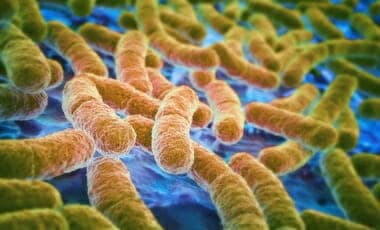
What about this example of bacteria resisting antibiotics? Actually, some bacteria possess a natural genetic capacity to resist certain antibiotics; mutations are not involved in these. Mutations cause a structural defect in ribosomes – the cellular constituents that antibiotics like streptomycin attach to. Since the antibiotic doesn’t connect with the misshapen ribosome, the bacterium is resistant.
Spetner: “We see then that the mutation reduces the specificity of the ribosome protein, and that means losing genetic information… Rather than say the bacterium gained resistance to the antibiotic, we would be more correct to say it lost its sensitivity to it. It lost information. The NDT [neo-Darwinian theory] is suppose to explain how the information of life has been built up by evolution… Information cannot be built up by mutations that lose it. A business can’t make money by losing it a little at a time.” (Dr. Spetner’s book was one of the first intelligent design oriented books I read [1997])
In other cases, some mutant bacteria, because they have defective membranes, don’t absorb nutrients well. Fortuitously for them, that inefficiency also prevents their absorbing antibiotics. And so, in this instance also, they survive better than their normal cousins. But the mutation did not make them stronger or create new information, or “evolve” to a higher state. Likewise, if the world’s light suddenly disappeared, blind people might have an advantage over others, since they were already accustomed to operating in darkness. Nevertheless, we cannot then interpret blindness as positive, or representing new information or evolutionary advance.
C.P. Martin, writing in American Scientist, made a similar point when he compared x-rays’ effects on the body to being kicked and beaten [nice family publication]:
“It is quite possible that violent knocking about might dislocate a man’s shoulder, and that continued knocking about might actually reduce the previous dislocation… no sane person would cite such a case as this to prove that the results of knocking a man about are not injuries; nor would anyone refer to the result as evidence that knocking a man about can produce an improvement over the normal man. For a truly progressive or evolutionary-apt mutation must result in an improvement over the normal condition. The truth is that there is no clear evidence of the existence of such helpful mutations. In natural populations endless millions of small and great genic differences exist, but there is no evidence that any arose by mutation.”
(Gene90 asked) “Do you deny that parents pass traits to their offspring?”
SECOND RESPONSE
This statement and the evolutionary implications get into what Darwin himself believed while writing his original manifesto, that is – Lamarckism. Lets see what some evolutionary scientists had to say (excerpted from my vestigial organs post).
“…Two of the most powerful causes of mutation are mustard gas and x-rays. A moments reflection on the horror of Hiroshima children born with deformed limbs and bodies, or blood disorders condemning them to premature deaths, is enough to show that they were unlikely candidates, to say the least, to win the struggle for existence in a life-game where survival of the fittest is the governing rule.” (British science writer Francis Hitching)
“…To postulate, as the positivists of the end of the last century and their followers here have done, that the development and survival of the fittest is entirely a consequence of chance mutations, or even that nature carries out experiments by trial and error through mutations in order to create living systems better fitted to survive, seems to me a hypothesis based on no evidence and irreconcilable with the facts…These classical evolutionary theories are a gross oversimplification of an immensely complex and intricate mass of facts, and it amazes me that they were swallowed so uncritically and readily, and for such a long time, by so many scientists without a murmur of protest.” (Biochemist Ernst Chain, who shared a Nobel Prize for his work on penicillin)
“…Simultaneous appearance of several gene mutations in one individual has never been observed, so far as I know, and any theoretical assertion that this is an important factor in evolution can be dismissed… the probability that five simultaneous mutations would occur in any one individual would be about .0000000000000000000001. This means that if the population averaged 100,000,000 individuals with the average length of generations of only one day, such an event could be expected only once in about 274,000,000,000 years – a period about one hundred times as long as the age of the earth.” (George Gaylord Simpson [R.I.P.], Professor of vertebrate paleontology at Harvard, and, perhaps, the twentieth century’s foremost paleontologist)
I could equally say that an alien race came to earth and “tinkered” with rat till they got a Panda. I would have just as much proof as do evolutionists for the Panda evolving from a lower species, or higher (i.e. fish left the water to eventually become a cow, who, eventually went back to the water to become a whale – this is what evolutionary textbooks teach). I see all this as crazy! I say that I came from a cause greater than the universe and myself. Evolutionists say I came from a rock.
“…It is easy to make up stories of how one form gave rise to another, and to find reasons why the stages should be favored by natural selection. But such stories are not part of science, for there is no way of putting them to the test.” (Colin Patterson of the British NaturalHistory Museum)
“…Paleontologists (and evolutionary biologists in general) are famous for their facility in devising plausible stories; but they often forget that plausible stories need not be true.” (Stephen Jay Gould, Harvard’s famed paleontologist and probably evolution’s leading spokesperson today)
Take the human body, as a total system, is irreducibly complex. It is difficult to change one part without influencing others. The liver for example: it manufactures bile; detoxifies poisons and wastes; regulates storage and use of glucose, proteins, fats and vitamins; synthesizes blood clotting and immune system factors; and processes breakdown products of old blood cells. Or take the kidneys: they remove wastes through urine production; regulate the body’s water content and electrolytes (sodium, calcium, etc.); and support the adrenal glands, which secrete hormones such as adrenaline. Or the human heart: blood is pumped to from the right side of the heart to the lungs, where it receives oxygen; then back to the heart’s left side, which propels it to the rest of the body through more than 60,000 miles of vessels. The heart has four chambers; a system of valves prevents backflow into any of these; electrical impulses from a pacemaker control the hearts rhythm.
Rarely, babies are born with congenital heart disorders, making blood shunt to the wrong place. There is no known case of mutations improving circulation!Hemoglobin – the blood’s oxygen-carrying component – has over 40 mutant variants. NOT ONE transports oxygen as well as normal hemoglobin! Theodosius Dobzhansky, one of the twentieth centuries leading Darwinists, acknowledged this:
“And yet, a majority of mutations, both those arising in laboratories and those stored in natural populations, produce deteriorations of viability, hereditary diseases, and monstrosities. Such changes, it would seem, can hardly serve as evolutionary building blocks.”
British science writer Frances Hitching says this: “On the face of it, then, the prime function of the genetic system would seem to be to resist change: to perpetuate the species in a minimally adapted form of response to altered conditions, and if at all possible to get things back to normal. The role of natural selection is usually a negative one; to destroy the few mutant individuals that threaten the stability of the species.”
Richard Goldschmidt, well known American geneticist said this: “It is true that nobody thus far has produced a new species or genus, etc., by macromutation. It is equally true that nobody has ever produced even a species by selection of micromutaions.”
Dr. Goldschmidt would have known – he bread gypsy moths for twenty years and a million generations in various environments. All he ever got was more gypsy moths. Anyone who thinks that an accumulation of mutations (information-losing processes) can lead to Macroevolution (a massive net gain of information) “is like the merchant who lost a little money on every sale but thought he could make it up on volume.” (Spetner, 1997)
Heather Mac (Heather Mac Donald) was on the Dennis Prager Show discussing her new addition to Prager University: “What Does Diversity Have to Do with Science?” (Video after interview, below). Some deeper discussion happens in this interview that compliment the video. BTW, her book, “The Diversity Delusion: How Race and Gender Pandering Corrupt the University and Undermine Our Culture,” was the best book I read in 2018.
Do you care about the race of your doctor, or the gender of the person who built the bridge you drive across? The latest trend across STEM fields claims you should. Heather Mac Donald, Fellow at the Manhattan Institute and author of The Diversity Delusion, explains where these destructive ideas are coming from.
It’s so widely accepted that Democrat leadership had a terrible response to President Donald Trump’s Oval Office address Tuesday night that even left-wing political commentators are making fun of it.
After Trump’s impassioned, articulate speech on border security, House Speaker Nancy Pelosi and Senate Minority Leader Chuck Schumer responded with their own address.
However, virtually nobody is talking about what Pelosi and Schumer said in their response — which was standard Democratic pablum. Everybody is focused on their ridiculous appearance……
Axios’ Jonathan Swan reports on the increasing leftward shift of Democrats, calling it “striking,” while noting that many formerly liberal fringe ideas are now mainstream in the Democrat Party. Be sure to like, subscribe, and comment below to share your thoughts on the video.
What’s happening: You see it in many of the major domestic debates of our times.
Show less
Support for a big government “Green New Deal” to fight climate change. Watch the 2020 candidates jump on this bandwagon.
Support for Medicare for All, calling for a much bigger government role in health care, beyond the Affordable Care Act.
A rush away from tough-on-security as crucial to immigration reform, which until recently was seen by most Democrats as essential to not looking soft on crime or terrorism.
In all three cases, these topics are shaping up as the new litmus tests for liberal activists heading into 2020.
Why it matters: These ideas and their champions are coming to the fore at a moment when there are real opportunities to begin to realize them.
You can see this shift in one important number: the number of Democrats proudly calling themselves liberal.
Gallup said yesterday that 51% of Democrats self-describe as liberal, a new high “following gradual increases since the 1990s.”
In 1992, when Clinton first won, 25% self-identified as liberal, 25% as conservative and the rest as moderate.
And across the spectrum, the country’s traditional lean in favor of conservatives has narrowed: 35% of Americans told Gallup they’re conservative, 35% moderate and 26% liberal………