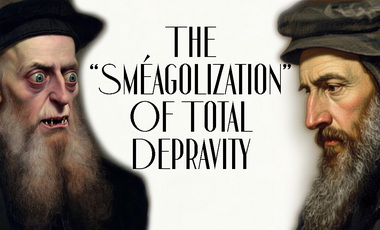
Calvinism: God Meticulously Controls Everything | even this post

  • God from all eternity did, by the most wise and holy counsel of his own will, freely and unchangeably ordain whatsoever comes to pass; yet so as thereby neither is God the author of sin, nor is violence offered to the will of the creatures, nor is the liberty or contingency of second causes taken away, but rather established. – Westminster Confession, III.I. 
  • Although in relation to the foreknowledge and decree of God, the first cause, all things come to pass immutably and infallibly, yet by the same providence he ordereth them to fall out, according to the nature of second causes, either necessarily, freely, or contingently. – Westminster Confession, V.II. 

  • “So here I see that God’s command is that the sons of Eli ought to listen to and obey their father, yet the will of God was that they would not listen so that He would put them to death.” – Peter Pike
  • “Nothing has ever come to pass, or ever will, merely because God knew it. The cause of all things is the will of God.” – Arthur Pink
  • “The question, though, is whether God merely permits evil, or whether in addition he actually brings evil about in some sense. I think the latter is true. Scripture often says that God brings about sinful decisions of human beings If evil comes from some source other than God, that would be pretty scary.” – John Frame
  • “That men do nothing save at the secret instigation of God, and do not discuss or deliberate on anything but what he has previously decreed with himself, and brings to pass by his secret direction, is proved by numberless passages of Scripture.” – John Calvin
  • “But where it is a matter of men’s counsels, wills, endeavours, and exertions, there is greater difficulty in seeing how the providence of God rules here too, so that nothing happens but by His assent and that men can deliberately do nothing unless He inspire it.” – John Calvin

John MacArthur Tells Us There Is No Free Will

God controls first as well as secondary causes… in the determinism that has infected the Christian church. This idea is extra Biblical, brought in by Augustinian gnosis and ramped up by Calvin.

Neoplatonism (ca. AD 250) had invented this crucial theodicy by appealing to the inscrutable secret counsels of God, who is fair by definition, regardless of whatever apparent evils he desires and ordains. Prior Christians had never required this implausible and disingenuous attempt at a defense for their God.

Page 235 of “Calvinism: A Biblical and Theological Critique” (excerpt here)

I asked GROK the following:

Can you dumb this down like we are discussion this over coffee

  • how foolish and frail is the support of divine justice afforded by the suggestion that evils come to be, not by His will but by His permission. . . . It is a quite frivolous refuge to say that God otiosely permits them, when Scripture shows Him not only willing, but the author of them. . . . Who does not tremble at these judgments with which God works in the hearts of even the wicked whatever He will, rewarding them nonetheless according to desert? Again it is quite clear from the evidence of Scripture that God works in the hearts of men to incline their wills just as he will, whether to good for His mercy’s sake, or to evil according to their merits.

John Calvin, The Eternal Predestination of God, 10:11

Here is GROK’s input:

Alright, let’s grab that coffee and talk this through like normal people—no big theology words unless we have to, and I’ll explain them right away.

So John Calvin (the 1500s guy who shaped a lot of Protestant thinking) is basically saying: “Look, some people try to defend God by saying He doesn’t want evil stuff to happen—He just kinda allows it or ‘permits’ it, like He’s hands-off. But that’s weak sauce, in Calvin’s view. He thinks the Bible shows God is way more involved: God actually wills (decides and makes happen) even the bad things, and in some sense He’s behind them as their ultimate ‘author’ or source.”

He calls the “God just permits it” idea a flimsy excuse (“frivolous refuge”) because Scripture (in his reading) pictures God actively steering everything—including hardening hearts, inclining people’s wills toward evil when they deserve it, and using wicked people to carry out His judgments.

The key bits:

  • God doesn’t just sit back and go “Eh, okay, let that sin happen if you want.” Nope—He actively works in people’s hearts to turn their desires one way or another.
  • For good people/actions: God does this out of mercy (He chooses to make someone want good).
  • For bad people/actions: He does it “according to their merits” (they deserve judgment, so He inclines them toward evil as part of punishing them fairly).
  • Even so, God still judges and punishes them for what they did—He rewards “according to desert” (what they deserve).

In coffee terms: Imagine you’re watching a movie where the director not only lets the villain do villainous things but actually scripts and directs every move the villain makes—down to the thoughts in their head. The villain is still 100% guilty and evil for choosing/doing it, but nothing happened outside the director’s plan. Calvin’s saying God is that ultimate Director over everything, including the evil plot twists. The “He just permitted it” line feels like downplaying how in control the Director really is.

This ties into his bigger idea of predestination: God has already decided from eternity who gets saved (by His mercy) and who doesn’t (left to their deserved fate), and He sovereignly shapes everything—including sins—to bring that about.

A lot of people (then and now) hear this and go “Whoa, that makes God sound like the author of evil!” Calvin would push back hard: No, because the evil comes from the person’s wicked heart and desires (they really want it, they’re not robots forced against their will). God just sovereignly uses and directs it for His purposes, without being tainted by it Himself. But yeah—he’s not shy about saying God is behind it all, not merely watching from the sidelines.

Modern Calvinists sometimes soften this a bit (they talk more about “permission” but insist it’s not “bare” or passive permission—God ordains what He permits). But Calvin himself? In this passage, he’s pretty blunt:

  • the permission idea is foolish if it pretends God isn’t willing and authoring these things in some real sense.

Heavy stuff over coffee, right? Makes you wonder about free will, justice, and how a good God runs a world with so much darkness. What’s your take—does that framing help, or does it still feel off?

In a wonderful article, I excerpt a long clip from the end of it:

  • Chapter 3 – The Calvinist Theological and Soteriological Doctrines

(from GOOD NEWS APOLOGETICS)

…. Predestination refers to what God will surely do for the believer once that choice is made. Believers are predestined to adoption, sanctification, salvation, and eternal life. Unbelievers are predestined to alienation from God, eternal death, and hell. God has not predestined or predetermined the “obedience of faith” for certain unconditionally elected individuals and the “love of darkness,” “rebellion,” “spiritual alienation,” and “eternal death” for all others.  No doubt, the Bible teaches that there are special divine predeterminations regarding God’s plans and purposes for the world, especially concerning salvation history.  God is personal.  Therefore, we would expect God to act personally in his world with creatures made in his image.  These divine predeterminations apply in special ways to certain individuals and groups.  These individuals are divinely appointed to certain tasks, as in the case of Jesus himself, to be the Christ, our Savior.  The nation of Israel was established by God through the revelation of Himself to Abraham, Isaac, and Jacob (i.e., Israel) and therefore “chosen” by God to fulfill a certain role in salvation history.  Israel is spoken of as God’s “chosen people,” and yet the group was obviously comprised of individuals with free moral agency.  The church also is comprised of individuals designated as “a chosen race, a royal priesthood, a holy nation, a people for his own possession” (1 Pet. 2:9) because they believe in God and Christ as the way of salvation.  These believers are referred to in terminology corresponding to the descriptions used of Israel in the Old Testament. The relationship God had with Israel, of which Abraham’s faith is paradigmatic, is now applied to Gentiles who are of the faith of Abraham.  Only now Christ has come, and New Testament believers live on this side of an unfolding salvation history.  Therefore, these New Testament believers – both Jew and Gentile – are now among “the elect” by virtue of being “in Christ” by faith; a faith like that of Abraham, exercised freely upon hearing from God (OT) or the gospel message (NT).  These believers, spoken of in language reminiscent of Israel’s status in the Old Testament, were once “not a people, but now you are God’s people; once you had not received mercy, but now you have received mercy.” (I Pet. 2:10)  Sinners are among “the elect” because they believe in Christ who is the Chosen One, that is, as they “come to him, a living stone rejected by men but in the sight of God chosen and precious” (1 Pet. 2:4).

The point is that Scripture testifies to the fact that divine sovereignty cannot mean that God predetermined the minutest details of all human thought and action, along with each person’s eternal destiny, which lands us in an inevitable and nonsensical theistic determinism.  This is not the biblical meaning of “election” or “predestination.”  We know this by virtue of the logical and moral incoherence of the Calvinist interpretations.  An objective, rational, moral assessment of Scripture and human history, from the past to the present, makes evident that theistic determinism is false.  Rather than looking through the lens of theistic determinism, we can see that God’s purposes are realized through his divine actions in relation to submissive and cooperative persons as well as through indifferent or hostile persons.  All that occurs is not decreed to happen as it does by the will of God and therefore caused by God, for this would logically indict God as the author and doer of evil.  Rather, certain actions and events occur by the free decisions of human beings, especially evil doings.  But God is still sovereign.  He can incorporate what he sees fit into his ultimate plans and purposes for the world and mankind by either his direct intervention and spiritual activity and influence, or his final judgment. But the believer has this promise – “And we know that in all things God works for the good of those who love him, who have been called according to his purpose.” (Rom. 8:28, NIV). Those who love him are those who put their faith in God and Christ as savior when they heard the call of the message of “good news.”  Those “called according to his purpose” refer to all those who, having heard the “good news” of Jesus Christ, believed it, and have received eternal life. All this was the result of God’s purpose to save mankind in Christ.  It has been God’s purpose to save sinners by sending Christ to die and bring this good news to all from the very beginning (Gen. 3:15).  And this salvation is for everyone. “For God has bound everyone over to disobedience so that he may have mercy on them all.” (Rom. 11:32, NIV)

In addition, God will also bring about a final conquering of all his enemies.  Not all things are good, and God is not responsible for evil acts.  Therefore, God has not ordained “whatsoever comes to pass” as stated in the Westminster Confession of Faith.  This is evident in that at Christ’s second coming, he will judge, punish, and rectify evil and injustice.  Again, to believe that God predetermined and is the ultimate cause of the evil he will one day judge and punish would be nonsense.  Furthermore, it impugns the character of God.

The point to note is that divine sovereignty, election, predestination, and foreknowledge do not require theistic determinism.  The scriptures everywhere affirm both God’s sovereignty and substantial, meaningful human freedom and responsibility.  Therefore, God’s sovereignty, biblically defined, cannot be understood as divine determinism but rather should be understood as God’s personal and authoritative involvement in human affairs and his creation.  The scope of divine providence certainly extends to the minutest details regarding his care and concern for his creatures, especially believers.  But divine providence is not divine determinism.  Providence includes God’s ability to intervene in the affairs of this world and on behalf of believers as he wills.  It includes his ability to employ actions that are evil and wrong to serve his purposes (Gen. 50:15-31). This certainly is the biblical testimony regarding divine sovereignty and providence.  If there is “mystery” to be had, it lies here. It does not lie in accepting what we know to be incoherent, inconsistent, and contradictory interpretations of the Bible. That is just to ignore the God-given rules of logic and our moral intuitions in one’s hermeneutic. Hence, biblical sovereignty and providence cannot be defined as the universal divine causal determinism of Calvinism.  Therefore, Calvinism is untenable and a misinterpretation of Scripture. It is to be rejected.

Conclusions

We have seen that the Calvinists’ interpretation of the eternal divine decree and God’s sovereignty amounts to a universal divine causal determinism.  Hopefully, you may have begun to grasp the negative logical and moral implications of this theistic determinism.  In a world that is predetermined by God down to the minutest details, which includes everyone’s thoughts, beliefs, desires, and actions, what happens to human freedom, decision-making, and choices?  What happens to personal moral responsibility, culpability, judgment, and justice?  And what do we do with the fact that everyone’s eternal destiny is already decided unilaterally by God himself and has absolutely nothing to do with you, me, or anyone else?  What do human beings become in a world in which God predetermined every detail? Robots? Puppets? These analogies are appropriate. Furthermore, who is among the elect, and who is among the non-elect, remains unknown to us.  The Calvinist will respond that, regardless of these problematic implications, we need to accept these Calvinist tenets because the Bible teaches them.

But how do we know the Bible teaches them, especially when they do not square with the fact that the Bible overwhelmingly testifies to a contingent reality and human responsibility?  How do we know this is what the Bible teaches when theistic determinism wreaks logical and moral havoc with other things that this same Bible clearly teaches, especially regarding the definition of the gospel as “good news,” the nature of faith, and God’s character as loving and just? Where has the gospel gone? You may also be asking, if God is the sole agent and cause of everything that occurs, doesn’t that make him the source and doer of all evil?  If not, why not? Moreover, if you cannot know that God loves you, desires that you be saved, and has provided for your salvation, how does that influence your relationship to God and the meaning and purpose of life?  These questions are profound and therefore need answers. Calvinists need to answer them. We will deal with them in due course.

Having reviewed the Reformed Calvinist doctrines, we can conclude that Calvinism amounts to a theistic determinism.  That theistic determinism, by virtue of being a determinism, is contrary to Scripture. As such, Calvinism is unbiblical.

How Calvinists Get God’s Sovereignty Wrong
Leighton Flowers | Calvinism | Soteriology 101

Calvinists love to talk about God’s sovereignty, but do they define sovereignty correctly? Calvinists typically choose to define sovereignty as meticulous determinism, i.e. that God controls and/or brings about everything that happens…including all evil. Check out the full video here:    Calvinism is Determinism  

Of course there is a fatal flaw involved in this thinking, one “I” point out here in this post on Al Mohler… however, the flaw, in short, is this:

  • Thus in a world governed by meticulous, divine determinism, beliefs are not the product of examination, analysis, reason and contemplation whereby we search for truth and weigh various options and make informed decisions. Rather they are just the spin-offs of God’s universal, exhaustive, meticulous divine decrees. White would have to concede that a person who believes in meticulous, divine determinism does so for the same reason that another person disbelieves meticulous, divine determinism. It has nothing to do with evaluation, truth and reason—and everything to do with what has been determined for them to believe! — A Theology in Tension (hat-tip to SOTO 101, “Calvinism’s Greatest Fallacy“)

The following is with a Hat-Tip to Brian H.W. — adding to a thought I had:

Religio-Political Talk (RPT), Here’s enough that should get Calvinists to rethink! Unfortunately too many are now too heavily invested in defending it, their pride keeps them from rejecting it.

Those who call themselves “Calvinist” – On which of the following do you DISAGREE with Calvin and why label yourself after the name of a fallible man? Would Jesus want you to?

  1. Evanescent Grace: God making some reprobates think they are elect to better convict them
  2. Impassibility: God did not grieve in his heart for the lost in Noah’s day
  3. Capital Punishment for heretics: Including those who write against his doctrine of predestination
  4. Born to Burn: Some are damned by God from birth, to be tormented in hell for God’s glory and pleasure.
  5. Scripture’s Description of God can not be known from His perspective: but only as a false one, not as He really is.
  6. Disproving Calvin’s predestination doctrine: according to Calvin is only attempted by those who think they are wiser than the Holy Spirit.

1)experience shows that the reprobate are sometimes affected in a way so similar to the elect, that even in their own judgment there is no difference between them. a taste of heavenly gifts, a temporary faith, is ascribed to them. Not that they truly perceive the power of spiritual grace and the sure light of faith; but the Lord, the better to convict them, and leave them without excuse, instills into their minds such a sense of his goodness as can be felt without the Spirit of adoption.” (Institutes – 3.2.11)

2) “The repentance which is here ascribed to God does not properly belong to him…. The same reasoning, and remark, applies to what follows, that God was affected with grief. Certainly God is not sorrowful or sad; but remains forever like himself in his celestial and happy repose….” (Comm. Gen 6:6)

3) In his letter to the church in Poitiers, #389 SLW6 – “papers and books of his Castalion [former reformer in Geneva with Calvin], in which an attempt was made to impugn our doctrine touching predestination, have been condemned with a prohibition to publish them 👉on pain of death👈…. that indeed the least we can expect is that the Seigneurs, to whom have been entrusted the sword and authority, should not permit the faith in which they are instructed to be lightly spoken of in their own city. “

4)he arranges all things by his sovereign counsel, in such a way that individuals are born, who are 👉doomed from the womb👈 to certain death and are to glorify him by their destruction.” (Institutes – 3.23.6) And – “We say, then, that Scripture clearly proves this much, that God by his eternal and immutable counsel determined once for all those whom it was his pleasure one day to admit to salvation, and those whom, on the other hand, it was 👉his pleasure to doom👈 to destruction.” Calvin, ICR, 3.21.7

5)any description which we receive of him must be lowered to our capacity in order to be intelligible. And the mode of lowering is 👉to represent him not as he really is👈, but as we conceive of him.” (Institutes – 1.17.13)

6) “The observation with which I opened this discussion, I now repeat at its close: that no one will ever attempt to disprove the doctrine which I have set forth herein, but he who may imagine himself to be 👉wiser than the Spirit of God👈.” (Eternal Predestination of God, trans. Cole, p. 170, the translation by Reid says – “no one can disprove”, p.162)

Total Depravity Defined (Soteriology 101)

What you will find below:

The long debate [which I won’t replicate here] from Soteriology 101 Discussion’s Facebook Page, is over — essentially — this portion of Leighton Flower’s’ book, “Drawn by Jesus.” BUT FIRST, what I will reproduce is the extent of the debate summed up in these two back-n-forths:

ROGER H. responds to Jason R.

[Jason R said] “This is a clear logical impasse you are confronted with

What is the logical impasse? A person is born with no ability to choose God. This requires that the person be regenerated. Once regenerated, a person can desire God and can choose God.

[Jason R said] “and there is no compatibilism that can harmonize this faulty logic.”

Once a person is regenerated, he has new desires. He can choose according to his greatest desire.

I don’t see a problem.

JASON R. responds to ROGER H.

it is fascinating to observe how you see no problem with the fact that God ultimately judges the majority of humanity for not receiving Christ when He determined that they never could do so in the first place. You seem content to accept that God can judge someone for their sin of non-repentance even though they have no way of repenting. This is blatantly unjust. You admit that God necessarily has to regenerate someone so that they can believe which equates to conceding that man cannot choose God unless God first chooses and changes them. Man is born into a hopeless state of inability and you cannot see a problem with God judging and condemning man for this inability when he has no way of escaping its pre-determined inevitabilities. I have never heard a sound defense against this Achilles heel of Calvinism only concessions such as yours.

The entire discussion is enlightening, as it is a real working out of the issue. But this is the portion that Roger H. started out with, mistakenly saying it was from chapter 3:

Chapter 5

The Calvinistic Presupposition of Total Inability

A presupposition is “a thing tacitly assumed beforehand at the beginning of a line of argument.”23 We all have presuppositions. Some of them are right, but others are wrong. Wrong presuppos­itions brought to a passage can influence people to draw erroneous conclusions about the meaning of the text in question. This is why objectively evaluating our presuppositions is so important when any passage is in dispute between well-intending brethren.

Your theological opponents have every right to challenge your presuppositions. After all, wrong presuppositions lead to bad exe­gesis. And assuming your presuppositions are correct is just a falla­cious game of question-begging. Unfortunately, this has been James White’s bread and butter. When non-Calvinists have challenged one of his presuppositions in the past, he accuses us of either “changing the topic,” “running off to other scriptures,” or “doing improper exe­gesis.” This is ironic, given that proper exegesis requires biblically correct presuppositions.

Calvinism’s underlying premise is that God decreed for all people since the Fall to be born morally unable to believe what He Himself teaches, so unless you were unconditionally chosen before you were born and irresistibly regenerated into a new creation by a supernat­ural intervening work of God, you will never be morally capable of believing in Him.24 Needless to say, that premise will greatly influence how you understand the Bible regardless of the hermeneutical methodologies, grammatical nuances, contextual considerations, or semantic word studies. A wrong premise skews everything and, therefore, must be evaluated objectively prior to getting into the other pertinent matters. So, let’s start by looking at these three major presuppositions White brings into John 6 based primarily upon his Calvinistic interpretation of Paul.25

Total Inability26

The entire sixth chapter in White’s book on the topic, titled “Human Inability,” sets out to establish this doctrine. Based on his in­terpretation of other scripture, White presupposes that God decreed for all people (since the Fall) to be born unable to believe His own teachings, but God still punishes all who do not believe. Therefore, when White reads John 6 through those presuppositional lenses, he understands the phrase “no one can come” to mean that the natural condition of everyone from birth is such that they cannot under­stand and believe what God teaches.27 For instance, White wrote,

In response to the crowd’s disbelief, Jesus also gives forth a clear explanation of their inability to understand and their inability to come to Him as the one and only source of spiritual life.

Notice that White assumes that the reason the crowds cannot come to Christ is due to a universal inherent condition in which they were born, something God Himself decreed and the individuals had absolutely no control over. In other words, in White’s view, the crowd remains in unbelief because they were born inherently blinded to divinely revealed truth, and God has not intervened to irresistibly change their inherent “default” condition. This is the root of what is known as theistic determinism, a primarily philosophical commitment to the idea that God unchangeably brings to pass (or deter­mines) every meticulous detail, including all moral evil.28

NOTES

23 Oxford Languages Online Dictionary (Oxford University Press)

24 This represents the T,U and I of the Calvinistic TULIP, which will be ex­plored further in the following pages.

25 White wrote, “When the doctrine of election is discussed, most people think immediately of the discussions provided by the Apostle Paul in such great passages as Romans 8-9 and Ephesians 1.” James R. White, The Sovereign Grace of God (New York: Great Christian Books, 2003), 68.

26 White wrote, “Some Reformed writers like others names for this doctrine. One of the best alternatives is `total inability.” Ibid., 48.

27 White wrote, “[Man] is utterly incapable of coming to Christ, incapable of accepting and understanding spiritual things” Ibid., 59. Given that White also affirms the 1689 London Baptist Confession of Faith, we know that he affirms God’s universal exhaustive decree of whatsoever comes to pass, which must necessarily include mankind’s innate “default” inability to believe.

28 White wrote, “God’s knowledge of the future is related to His role as Creator —He knows the future because He ordained the future! The course of the future is certain because God created it.” Ibid., 68. Vicens wrote, “We might, for instance, take Feinberg’s definition of an `unconditional’ decree as one `based on nothing out­side of God that move[s] Him to choose one thing or another’ (2001, p. 527) and then characterize theological determinism as the view that God unconditionally decrees every event that occurs in the history of the world. Such a view would ex­clude the possibility that God merely permits some events which He foresees will happen in some circumstances but which He does not Himself determine.” Leigh Vicens, Theological Determinism (Internet Encyclopedia of Philosophy: A Peer-Reviewed Academic Resource) accessed online on 12/19/2023. [RPT: 1/29/2026]

Leighton [Charles] Flowers, Drawn By Jesus (Trinity Academic Press, 2024), 47-49.

ROMANS 3:11

A common verse I hear from my fellow believers is “…there is no one who understands; there is no one who seeks God.” – Romans 3:11

SOTERIOLOGY 101 posts combined are from:

In an effort to demonstrate that all people have fallen short of the glory of God and broken His law, Paul quotes from Psalm 14:2-3, which says:

“The Lord looks down from heaven on all mankind to see if there are any who understand, any who seek God. All have turned away, all have become corrupt; there is no one who does good, not even one.”

There are basically two theological approaches for interpreting this passage:

(1) Calvinistic Approach: Apart from a Divine irresistible work of regeneration (by which God changes a chosen individual’s nature and desires), mankind cannot willingly seek to know, understand, or follow God.
(2) Non-Calvinistic (Traditionalist) Approach: Apart from God’s gracious initiative in bringing His Son, the Holy Spirit, and the inspired gospel appeal, no one can merit salvation or consistently seek to obey God in a way that will attain his own righteousness.

The contrast between these two perspectives can be illustrated by this simple question: Does proof that I am incapable of calling the president on the telephone also prove that I am incapable of answering the telephone if the president were to call me? Of course not, yet that is essentially the principle a Calvinist is assuming in their theological approach to this text.

Calvinists read this text to mean that our lack of initiative somehow proves our inability to respond positively to His initiative. They presume that God’s work in sending His Son, the Holy Spirit, and the inspired gospel, calling for all to be reconciled through faith in Christ, is insufficient to enable the lost to respond in faith. But the text simply never says this.

In Romans chapter 3:10-20 the apostle is seeking to prove that no one can attain righteousness by means of the law. But in verse 21 he shifts to reveal a righteousness that can be obtained by means of grace through faith in Christ.

Calvinists seem to think that because mankind is unable to attain righteousness by means of the law that they must equally be unable to obtain righteousness by means of grace through faith in Christ. This, however, is never established anywhere in the pages of Scripture.

Of course, we all can affirm that no one is righteous with regard to the demands of the law. But there have been many throughout the pages of Scripture who have been declared righteous by means of grace through faith.

Calvinists wrongly assume that because mankind is unable to fully keep the demands of the law that they are equally unable to admit their inability to keep those demands and trust in the One who has. Again, this is simply never established in the Bible. HERE>

THE “HERE>” EXCERPT

If I told my son to clean up his room it would strongly imply that I believed it was within his abilities to do so, especially if I punished him for failure to do so. No decent parent would tell their two day old infant to clean up a mess and then punish them for not doing so. Such an action would expose the parent as insane or completely immoral.

This is basic common sense, but is it applicable to how God deals with humanity? Is the implication in scripture of “you should” mean that “you could?” I think we can all agree that “ought” strongly implies moral ability for all practical purposes, but is that a biblical reality? Sometimes the Bible defies our practical sensibilities and turns our reality up on its ear. Is that the case here? Do God’s expressions of what we SHOULD do imply that we actually COULD do it.[1]

Could the “Rich Young Ruler” have willingly given up his wealth to follow Christ as Zacchaeus does in the very next chapter? Or was Zacchaeus granted an ability that was withheld from the Rich Young Ruler? (Note: I’m speaking of man’s moral/spiritual abilities to repent in faith, not their physical ability or mental assent, so please don’t try to rebut this article with the all too often “catch all” phrase of, “He is able but not willing.”)

Calvinists would agree with the Traditionalists that both Zacchaeus and Rich Young Ruler SHOULD have given up everything to follow Christ, but only the Traditionalist maintains that both of them COULD have willingly done so.

Why do Calvinists insist that COULD doesn’t imply SHOULD when it comes to the Biblical revelation?

Dr. Wayne Grudem, a Calvinistic scholar, explains the issue in this manner:

“Advocates of the Arminian position draw attention to the frequency of the free offer of the gospel in the New Testament. They would say that these invitations to people to repent and come to Christ for salvation, if bona fide, must imply the ability to respond to them. Thus, all people without exception have the ability to respond, not just those who have been sovereignly given that ability by God in a special way.” [2]

Grudem, like John Hendryx of mongerism.com, rebuts this perspective by making arguments such as:

“What the Scriptures say we ‘ought’ to do does not necessarily imply what we ‘can’ do. The Ten Commandments, likewise, speak of what we ought to do but they do not imply that we have the moral ability to carry them out. The law of God was given so that we would be stripped of having any hope from ourselves. Even faith itself is a divine command that we cannot fulfill without the application of God’s regenerative grace by the Holy Spirit.”[3]

Are you following the Calvinistic argument? Here it is put very simply:

  1. God tells man they SHOULD keep all the commandments.
  2. Man CANNOT keep all the commandments.
  3. God also tells man they SHOULD believe and repent for breaking commandments.
  4. Therefore man also CANNOT believe and repent for breaking commandments.[4]

If the fallacy in this argument is not obvious to you, please allow me to explain in this way:

Back when my kids were younger we did a family activity that our church had suggested. I stood at the top of the stairs with my four children at the bottom.

I said to them, “Here are the rules. You must get from the bottom of the stairs to the top of the stairs without touching any of the railing, the wall or even the stairs. Ready, go!”

My kids looked at me and then each other and then back at their mother. With bewilderment in their eyes, they immediately began to whine and complain saying, “Dad, that is impossible!”

I told them to stop whining and figure it out.

The youngest stood at the bottom and started trying to jump, slamming himself into the steps over and over. The more creative one of the bunch began looking for tools to help build some kind of contraption. Another set down on the floor while loudly declaring, “This is just stupid, no one can do that!”

Finally, in exasperation one of the kids yelled out, “Dad, why don’t you just help us?” I raised my eyebrows as if to give them a clue that they may be on the right track. The eldest caught on quickly.

“Can you help us dad?” he shouted.

I replied quietly, “No one even asked me.”

“Can you carry us up the stairs?” he asked.

“I will if you ask me,” I said.

And one by one, I carried each child to the top after they simply asked.

Then, we sat down and talked about salvation. We talked about how it is impossible for us to get to heaven by our own efforts, but if we ask Christ for help then He will carry us. It was a great visual lesson of God’s grace in contrast with man’s works.

But suppose that my children’s inability to get to the top the stairs also meant they were incapable of asking me for help. Imagine how this story would’ve played out if it was impossible for my children not only to get to the top of the stairs but equally impossible for them to recognize that inability and request help when it was offered.

This illustrates the mistake of Calvinism. Let’s go back to their fallacy above as it relates to my story:

  1. Dad tells his kids they SHOULD get to the top of stairs.
  2. Kids CANNOT complete this task as requested.
  3. Dad also tells the kids they SHOULD ask for help.
  4. Therefore the kids CANNOT ask for help.

Do you see the problem now? The whole purpose of presenting my kids with that dilemma was to help them to discover their need for help. To suggest that they cannot realize their need and ask for help on the basis that they cannot get to the top of stairs completely undermines the very purpose of the giving them that dilemma. ….

George C. Scott Explains Calvinism

A scene from the 1979 movie Hardcore, in which an old Calvinist elder goes to find his runaway daughter in the porn underbelly of Los Angeles. This scene with George C. Scott inspired Richard Mouw’s book “Calvinism in the Las Vegas Airport.” HEADS UP: there’s some saucy language. And the rest of the film is what you’d expect from a movie about the porn industry in the 70’s.

And here is that promised chapter:


DISHENCHANTED CALVINIST


Chapter 9, GRACE (PDF)

  1. I affirm that the grace of God can be and is at times resisted, and this includes but is not limited to the genuine offer of salvation and resisting the Holy Spirit. The Bible says in 2 Thessalonians 2:10 that reprobates “perish because they refused to love the truth and so be saved.” (italics added) Of course, I am rejecting the Calvinist and compatibilist answer that a person refuses because, as a sinner, that is all that he can do. It seems crystal clear in reading the passage without Calvinist spectacles on that the context and language clearly imply that they “should not have refused” and therefore could have believed which entails the idea of otherwise choice, exactly what Calvinism denies.

Further, I affirm that the ability of man to accept or to resist God’s genuine offer of salvation is a part of God’s plan and redounds to His glory; moreover, this genuine offer of the gospel is more than “a good faith offer” as taught by the Calvinist. It is an actual offer from God through His chosen medium, which can be accepted by faith or rejected unto damnation. Finally, this includes the reality that God has given the gift of repentance, and that the clear call of Scripture is for everyone everywhere (Acts 17:30) to repent and be saved, which implies that those called upon to repent can, by the grace of God, repent (Matthew 3:2, 4:17, 11:20; Mark 6:12; Luke 5:32, 13:3, 13:5, 24:47; Acts 2:38, 3:19, 5:31, 11:18, 20:21, 26:20; Romans 2:4; 2 Peter 3:9).

Jesus pronounced woe upon all the people of Chorazin and Bethsaida because they did not repent, obviously indicating He believed they had the capacity to repent (see Matthew 11:21). The book of Revelation leaves believers stunned that unregenerate people refuse to repent even when they are suffering from the wrath of God (see Revelation 9:20-21, 16:9, 11). Acts 17:30 reminds us that the call of God to repent is for everyone. Paul said, “and with all the deception of wickedness for those who perish, because they did not receive the love of the truth so as to be saved” (2 Thessalonians 2:10). The implication obviously means that they could have received the love of the truth and been saved.

In like manner, Stephen preached, “You men who are stiff-necked and uncircumcised in heart and ears are always resisting the Holy Spirit; you are doing just as your fathers did”(Acts 7:51). The writer of Hebrews said of those who draw back unto destruction, “How much severer punishment do you think he will deserve who has trampled underfoot the Son of God, and has regarded as unclean the blood of the covenant by which he was sanctified, and has insulted the Spirit of grace”? (Hebrews 10:29, italics added). In Noah’s day, God said, “My Spirit shall not strive with man forever” (Genesis 6:3), clearly implying that He was then. Also why did God bring judgment upon leaders and Jews so they could not hear and see and return if that in fact was their state already? (Isaiah 6:9-10 and Matthew 13:10-17).

Lastly, I affirm the biblical doctrines of grace. Calvinists refer to their beliefs as “The Doctrines of Grace,” which is fine, but it actually does not tell us much. That is to say, the doctrines of any Biblicist are all “doctrines of Grace.” There simply are no other kinds. It is similar to the Calvinist’s continual reference to the sovereignty of God. It tells us nothing since all believers with any biblical fidelity and understanding of God believe in His sovereignty. Further, disavowal of the Calvinist’s definition of the doctrines of grace and sovereignty is not a denial or undermining of the doctrines of grace or the sovereignty of God, but it is what it is, a denial of Calvinism’s definition.

  1. I disaffirm that the Bible teaches that God carries out His salvation plan through selective “irresistible grace.” John Piper describes irresistible grace thusly, “When a person hears a preacher call for repentance he can resist that call. But if God gives him repentance he cannot resist because the gift is the removal of the resistance. Not being willing to repent is the same as resisting the Holy Spirit. So if God gives repentance it is the same as taking away the resistance. This is why we call this work of God “irresistible grace.”63 Note that those who receive this act of grace against their will can only believe and those who don’t receive this cannot be saved; therefore, any talk from a Calvinist that God loves people, the lost, hurting, etc., is double-talk because He, according to Calvinism, actually only loves some lost and hurting people enough to offer help. This is a disquieting reality.

Piper says also, “The doctrine of irresistible grace means that God is sovereign and can overcome all resistance when he wills.”” I would note that the Calvinist, as well as Piper’s position, is actually stronger than this in that, not only does the doctrine of irresistible grace mean that God can overcome, but it actually means He will or must. Further, I disaffirm that all verses that say, teach, or imply that man can resist are merely reiterating the position of compatibilism—sure they resist salvation because that is all, according to their nature, that they can do. Moreover, I disaffirm that an offer of salvation through proclamation of the gospel by anyone who views salvation through the grid of Calvinism constitutes a real offer of salvation from God if it can be resisted; because according to Calvinism and compatibilism the real offer of salvation, in any meaningful sense to the person, cannot be resisted because the real offer of salvation from God always results in regeneration. This is a disquieting reality. An example of my point is, in what sense can a person be said to be offered a job if it is impossible for him to accept it, and not only is there no intent to actually give it to him, but in reality there was a predetermined unalterable decision by the CEO not to give it to him; this is in spite of the personnel manager’s sincerity in offering the job. The answer seems obvious, NONE!

Let me elucidate this further. Calvinists seek to emphasize the positive of irresistible grace, e.g., God saves some unworthy sinners who otherwise would perish in hell. But the dark side of irresistible grace is that although the “good faith offer” of a Calvinist seems to exonerate him from being guilty of making an artificial offer of salvation (as long as he is careful not to say specifically to someone things like “God loves you or God cares about you or God wants you to go to heaven”) to sinners who cannot, according to Calvinism, really repent, believe, and be saved, because the Calvinist can never be sure who God has selected to regenerate. However, even if the Calvinist is vindicated, it does not exonerate God from using language, commands, parables, etc., which clearly picture God as wanting all to be saved even though, according to Calvinism, He is the sole determiner and only reason they cannot be saved. Therefore, Calvinism’s irresistible grace makes God the sole determiner of who goes to heaven and who goes to hell because He could have saved everyone. This truth is dramatically contrary to the picture of God and His offer of salvation as drawn in Scripture, a disquieting reality.

We all seek to emphasize what we deem to be the positives of our message or position. However, it is morally incumbent upon every messenger to quest for full disclosure and to shun any appearance of obscuring the negative or harsher teachings of our position. The Calvinist emphasis that irresistible grace assures salvation for some, while minimizing the truth that irresistible grace just as assuredly and irrevocably destines some to eternal torment in hell, reminds me of the Darwinist obsession with the beauty of natural selection’s determination that the strong and healthy survive, while they seldom with the same clarity and enthusiasm speak of the dark side of natural selection that requires the brutal and merciless elimination of the weak.

Consequently, the insurmountable obstacle to irresistible grace determining who receives eternal salvation—besides the fact that it is not taught in Scripture—is that it puts God the Father, the Lord Jesus, and the Holy Spirit in the position of appearing to offer deliverance from the wrath to come to all who cry for mercy while, actually, God has no intention of doing so. For, according to Calvinism, He predetermined, contrary to what the gospel and the Scriptures say, to offer salvation to only a few. In other words, it makes God the CEO who allows, yea commands, and says He wants all to be hired, but He has in reality predetermined long ago that they cannot ever be hired even though his personnel managers continue to offer jobs to them. This is a disquieting reality. In order to sustain the idea of irresistible grace, it appears that we must turn common language upon its head, take the obvious and simple meaning of language as seen in Scripture and used in everyday life, and subject it to biblically unnecessary restrictions and meanings, which is one of the pervasive problems in Calvinism. This is a disquieting reality.

For example, Christ felt love for the rich young ruler and out of that love told him how to receive salvation, but the young man refused; after which Jesus noted how difficult it was for a rich person to “enter the kingdom of heaven.” The passage clearly indicates that the young man could have been saved if he had chosen to follow Christ, and part of the reason that he chose not to follow Christ was that he was rich (Mark 10:21-23). From the standpoint of Calvinism, whether he was rich or poor had no bearing on whether he would come or not because the draw is irresistible. Christ’s encounter with this young man also demonstrates that Christ loves the lost and loves them enough to tell them how to have eternal life. By every normal meaning, those words meant he could have received salvation at that time had he chosen to believe. The idea of a “good faith offer” may relieve the human Calvinist of malicious deception, but it cannot be so of Jesus or the Trinity. The statement that “all things are possible with God” is exactly my point and in no way proves Calvinism true, but is actually contrary to their system. This is a disquieting reality. Therefore, I absolutely disaffirm that the Scripture teaches or logic demands that God’s sovereignty is undermined or minimized when He grants the opportunity to resist His genuine offer of salvation because He sovereignly chose to grant that choice.

Finally, I disaffirm that the doctrine of irresistible grace applied to some in salvation is what the Scriptures teach, or that it is consistent with what God reveals about Himself. The truth is that God revealed Himself in Scripture as actually loving the world—human race—so much that He sent His own Son to die for them (John 3:16), thereby providing for their salvation. And any human can receive this salvation if he will obey God’s command and repent and believe, which he can do by God’s grace. I do not believe that God offers what cannot be accepted or what He has no intention of providing. Nor do I believe that God condemns people for rejecting what He predetermined that they could not accept.

NOTES

  1. John Piper, “Irresistible Grace” in What We Believe About the Five Points of Calvinism, copyright Desiring God.org, revised March 1998.
  2. J. Piper and the Bethlehem Baptist Church staff, “What We Believe About the
    Five Points of Calvinism,” #Grace

A Recent Sermon Maligning God’s Character/Holiness

My visual video response:

Yes, this is from the church I attend. A wonderful place to attend, but definitely Calvinistic. This is a newer pastor, and I must say, even though I vehemently disagree, at least he is preaching honestly. Another pastor months before preached a sermon where he quoted Joshua 24:15 and said:

  • “Make a choice. Choose this day. In fact, you can choose one of the… He’s not saying that he’s happy if you choose the pagan gods, but he says, in fact, pick one of the pagan gods. Do you know that something that God is extremely kind and gracious to us and that he gave us free will? Did you know that? He didn’t force a relationship on us. He gave us free will. Do you remember what he gave Adam and Eve? Free will. You can make a choice. I’m not gonna force it. Hey, you choose, yeah, you, make the choice.”

When I asked an elder if this pastor really believed this statement he made regarding free will from the pulpit, I got an honest answer of “No.”

So I love the almost Provisionist preaching and call to come to God in faith — but this is not what is REALLY believed as these pastors overlay TULIP on to their understanding of Biblical text. I struggle with the good that can come from the “alter call” type preaching of the “Armininian style” while they sleep as a Calvinist. That being said, it is a duplicitous preaching like they make God out to be by overlaying a 16th century philosophy onto God. A Jaundiced view at best. AND, I can truly appreciate the rawness of the logical outcomes being honestly preached from the pulpit. Although even this pastor does not follow his own thinking to their ends without hemming and hawing with a myriad of qualifiers and nuances.

Here is my FACEBOOK comments on this sermon:

So, in the past I have praised good sermons from my church… if I do that, should I at times not critique [as publicly] a bad one? I will be clipping the main idea of it from the video for my site [like I have uploaded some clips from the good ones], but that is in the future tense. I am thankful, however, that this pastor was so forthright, and didn’t hide behind the “preaching as an Arminian, sleep as a Calvinist” idea.

Honest preaching is laudable. This was essentially the sermon:

(a) God decrees and ordains all evil for His glory
(b) God saves us from the evil He decreed and ordained…. for His glory.

In other words, while this pastor didn’t follow his sermon to its logical conclusion, it is essentially God saving us from Himself. So, all the pain and suffering mentioned in stories and text are all God caused. Remember, this pastor chose AW Pink’s book for the last Monday men’s service series. [It could have been more in the pastorate choosing Pink’s book, as far as I know — because I do not actually know how these books are approved.] Pink is a hyper Calvinist, like this Pastor publicly is.

All I was thinking was,

  • “well, people who don’t get the raw [5-point, Calvinist] truth from other pastors are hearing it now.”

On the flip side of that “positive”, the new people on the “faith fence” — which only makes sense to those of the non-Calvinist soteriological bent — may have wrote off Crossroads as their home. Or worse yet, wrote off God.

Which in this pastor’s view, was also ordained.

The same pastor here eisegetes into Scripture a 16th century doctrine not understood as being the Bible before Calvin popularized it via his doctrinal hero:

  • The reason I added the SNL skit was to note that right when the sermon was starting to state some good position or truth, it was dashed shortly after by the “doctrines of grace.”

Is Divine Determinism a Different Gospel?

See my related post: “Why Both Atheists and Christians Need to Believe in Free Will

Dr. Tim Stratton and Phil Kallberg present their paper at the Evangelical Philosophy Society on whether or not Divine Determinism (or EDD) is a different gospel, and if so, is it a heresy?

There is a rough patch around the 16:45 mark, here is that text:

  • including the passages of scripture appealed to supporting ed. The entire project crumbles. This is epistemic meltdown. We can build on this with an adapted version of CS Lewis’s argument from reason. Premise one, no theological belief is justified if it can be fully explained as the result of untrustworthy antecedent conditions. Two, if that is true, then all theological beliefs can be fully explained as the result of untrustworthy anticedent conditions. Three, therefore, if Ed is true, then no theological belief is justified.

The paper that kicked off the topic in the video above is here: An Explanation and Defense of the Free-Thinking Argument, by Timothy A. Stratton and J. P. Moreland (PDF download here). Here is the Abstract:

This paper is a defense of the big ideas behind the free-thinking argument. This argument aims to demonstrate that determinism is incompatible with epistemic responsibility in a desert sense (being praised or blamed for any thought, idea, judgment, or belief). This lack of epistemic responsibility is problematic for the naturalist. It seems to be an even worse problem, however, for the exhaustive divine determinist because not only would humanity not stand in a position to be blamed for any of our thoughts and beliefs, but it also surfaces a “problem of epistemic evil”, which can be raised against the knowledge of God, the rationality of humans, and the trustworthiness of Scripture.

A couple syllogisms from a questioner via: “Is the God of EDD Deceptive?“:

  1. E1- If EDD is true, then God determines all Christians to affirm some false theological beliefs.
  2. E2- If God determines all Christians to affirm some false theological beliefs, then God is deceptive and His Word (the Bible) cannot be trusted.
  3. E3- God is not deceptive and His Word can be trusted.
  4. E4- Therefore, God does not determine all Christians to affirm some false theological beliefs.
  5. E5- Therefore, EDD is false.

Here is another (Ibid.):

  1. If God determines all things about humanity, then God determines all Christians to have some false theological intuitions and to hold some false theological beliefs.
  2. If God determines all Christians to have some false theological intuitions and to hold some false theological beliefs, then God is [an untrustworthy source of theological beliefs].
  3. If God is [an untrustworthy source of theological beliefs], then, there is reason to doubt God’s inspired word.
  4. There is never reason to doubt God’s inspired word.
  5. Therefore, God is not [an untrustworthy source of theological beliefs].
  6. Therefore, God does not determine all Christians to have some false theological intuitions and to hold some false theological beliefs.
  7. Therefore, God does not determine all things about humanity.

In another challenge proffered to Tim, here is a question/challenge after the person watched this video, found here: “Epistemic Meltdown“:

The key premise of the Deity of Deception Argument reads like this: “If God determines all Christians to affirm some false theological beliefs, then God is deceptive, and His Word cannot be trusted.” The committed determinist will try to provide some counter-examples to try to defeat the argument. The examples involve some sort of machine or process that are generally reliable but can fail on a handful of occasions. Listen to Tim while he examines this response to the argument! Hint: It misses the point!

A few more challenges/questions, and even a “chat” with ChatGPT”:

I will end with the opening by Doc Stratton from a debate. The full debate is linked at the videos YouTube