Why Both Atheists and Christians Need to Believe in Free Will

The audio at the start from Jeff Durbin is bad… so one has to put up with it a little when the initial audio is played. But the same arguments against atheistic determinism can be used against Augustinian/Calvinistic [theistic] determinism:

Dr. Braxton Hunter, President of Trinity Seminary and host of Trinity Radio, joins Dr. Flowers to talk about how the main arguments against naturalistic determinism can apply against theistic determinism, as held by Compatibilistic Calvinists. They demonstrate this by engaging a clip from Apologia Studios with Jeff Durbin which references a quote from Calvinistic apologist, Greg Bahnsen.

 Justin Brierley drives this point home in his article:

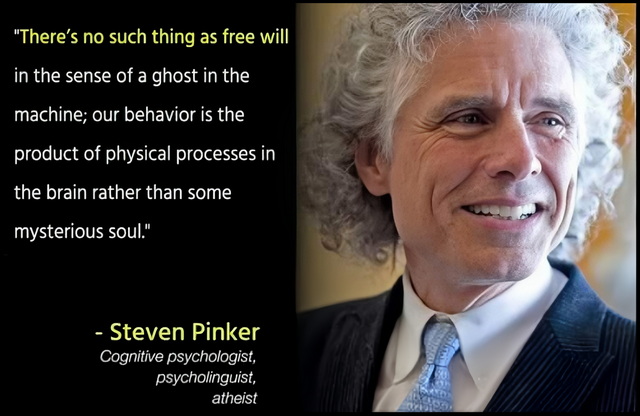
Atheist Determinism 

Calvinistic Christians have more in common with many atheists than they may realize. Determinism has also become a very popular philosophy among their godless counterparts. For some time, prominent voices in atheist circles have also been announcing that the notion of free will is past its sellby date.

Popular atheist author Sam Harris wrote a book titled Free will (Free Press) which, drawing on research in neuroscience, argued that our innate sense of freedom is merely an illusion foisted on us by nature. None of us is actually in control of what we do. So far so Calvinist. But rather than believing God has predestined us, atheists like Harris say the universe is responsible.

Atheist determinism springs from a ‘materialist’ worldview. All that exists is the ‘material’ stuff of the universe. Everything about us and the world we live in can ultimately be explained by the physics of atoms, electrons, quarks and neutrons, interacting according to the predictable regularity of natural laws.

Think of it like this: the skill of the snooker player is in predicting as accurately as possible how the balls will ricochet off each other in order to find the pockets on the table. But, theoretically, if a snooker player lined up their very first shot with perfect precision and perfect force, they could clear the table in one shot. The universe is like that, but on a much bigger scale.

Every single physical event, from the movements of electrons to the orbits of the planets, follows predictable laws of cause and effect. Therefore, the way the universe is now is a direct result of the way it was when it first began. If you rewound the clock by 13 billion years to the exact same physical state of affairs, things would roll out in exactly the same way they already have.

But, in such a universe, the idea that we have any measure of free will evaporates. Every aspect of our existence was predestined by a cosmos blindly following the laws of cause and effect.

READ IT ALL: “Why Both Atheists and Christians Need to Believe in Free Will

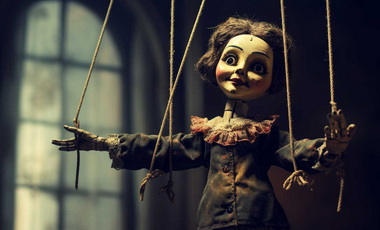
You cannot have LOVE with people made into dolls with a pull string that say, “I love you.” This is evidence that Calvinists/”Reformed” make Calvary useless.

Here is a favored adapted combination of mine:

One of the most intriguing aspects mentioned by Ravi Zacharias of a lecture he attended entitled “Determinism – Is Man a Slave or the Master of His Fate,” given by Stephen Hawking, who is the Lucasian Professor of Mathematics at Cambridge, Isaac Newton’s chair, was this admission by Dr. Hawking’s, was Hawking’s admission that if “we are the random products of chance, and hence, not free, or whether God had designed these laws within which we are free.”[1] In other words, do we have the ability to make choices, or do we simply follow a chemical reaction induced by millions of mutational collisions of free atoms? Michael Polyni mentions that this “reduction of the world to its atomic elements acting blindly in terms of equilibrations of forces,” a belief that has prevailed “since the birth of modern science, has made any sort of teleological view of the cosmos seem unscientific…. [to] the contemporary mind.”[2]

[1] Ravi Zacharias, The Real Face of Atheism (Grand Rapids, MI: Baker Books, 2004), 118, 119.

[2] Michael Polanyi and Harry Prosch, Meaning (Chicago, IL: Chicago university Press, 1977), 162.

This is one of the biggest reasons I [about half-a-year-ago] have rejected the 5-Points of Calvinism. Which is, determinism. I have written, posted, and debated this with atheists for years on the WWW., and when I saw that people like Al Mohler refute the atheist versions of this but does not apply the same thinking to his position — my apologetic bug was brought alive. Here is the video that started this rabbit trail:

Here is the full Al Mohler article: “So . . . Why Did I Write This? The Delusion of Determinism

The subversion of moral responsibility is one of the most significant developments of recent decades. Though this subversion was originally philosophical, more recent efforts have been based in biology and psychology. Various theorists have argued that our decisions and actions are determined by genetics, environmental factors, or other forces. Now, Scientific American is out with a report on a study linking determinism and moral responsibility.

The diverse theories of determinism propose that our choices and decisions are not an exercise of the will, but simply the inevitable outcome of factors outside our control. As Scientific American explains, determinists argue that “everything that happens is determined by what happened before — our actions are inevitable consequences of the events leading up to the action.”

In other words, free will doesn’t exist. Used in this sense, free will means the exercise of authentic moral choice and agency. We choose to take one action rather than the other, and must then take responsibility for that choice.

This link between moral choice and moral responsibility is virtually instinctive to humans. As a matter of fact, it is basic to our understanding of what it means to be human. We hold each other responsible for actions and choices. But if all of our choices are illusory — and everything is merely the “inevitable consequence” of something beyond our control, moral responsibility is an exercise in delusion.

Scientific American reports on a study performed by psychologists Kathleen Vohs and Jonathan Schooler. The psychologists found that individuals who were told that their moral choices were determined, rather than free, were also more likely to cheat on an experimental examination.

As Shaun Nichols reports:

The Western conception idea of free will seems bound up with our sense of moral responsibility, guilt for misdeads and pride in accomplishment. We hold ourselves responsible precisely when we think that our actions come from free will. In this light, it’s not surprising that people behave less morally as they become skeptical of free will. Further, the Vohs and Schooler result fits with the idea that people will behave less responsibly if they regard their actions as beyond their control. If I think that there’s no point in trying to be good, then I’m less likely to try.

Even if giving up on free will does have these deleterious effects, one might wonder how far they go. One question is whether the effects extend across the moral domain. Cheating in a psychology experiment doesn’t seem too terrible. Presumably the experiment didn’t also lead to a rash of criminal activity among those who read the anti-free will passage. Our moral revulsion at killing and hurting others is likely too strong to be dismantled by reflections about determinism. It might well turn out that other kinds of immoral behavior, like cheating in school, would be affected by the rejection of free will, however.

There are limitations to this kind of research, of course, but the report is both revealing and unsurprising. If we are not responsible for our actions, they why would people do the right thing? The most immediate result of such thinking is the subversion of moral accountability.

Of course, this pattern of thought also renders human existence irrational. How can we understand ourselves, our children, our spouses, our friends, or our neighbors if moral responsibility is undermined by determinism. Our legal system would completely collapse, as would the entire experience of relating to other human beings.

Shaun Nichols explains that “the Western conception of free will seems bound up with our sense of moral responsibility.” That “Western conception” is a product of the Christian inheritance and the biblical worldview. The Bible clearly presents human beings as morally responsible. Christians of virtually all theological traditions — including Reformed theology, Arminianism, and Catholicism — affirm moral and spiritual responsibility and the authenticity of the experience of choice.

As a matter of fact, this capacity and accountability is rooted in the biblical concept of the imago Dei — the image of God. Our Creator made us as moral creatures and planted within us the capacity of conscience. All this refutes the concept of moral determinism.

In its most modern forms, determinism is a product of naturalism — the belief that everything must be explained in purely natural terms. Naturalism explains the human mind (including the experience of moral choice) as a matter of chemical reactions in the brain, and nothing more.

Determinism is implied by naturalism and relieves human beings of moral responsibility. There is no moral revolt against the Creator, no Fall, and no need for the Gospel. This subversion of moral responsibility is both a delusion and a trap. And, as the Scientific American report indicates, even those who say they believe in moral determinism are unable to live consistently with this assumption. We know we are responsible.

SOME QUOTES CONNECTING THIS IDEA MORE

ATHEISTS:

THEISTS:

If Mohler applies that to his own theological determinism, he would have to reject it.

THERE IS NO GOSPEL IN TULIP

In other words, a person accepts Christ’s death and Resurrection as secondary to being ELECTED.

Here is more on this via this excerpt of an article and short video:

ARMINIAN PERSPECTIVE:

Calvinist: “That is why Christ said that you must be born again in order to even see the kingdom of God. The new nature must come before faith. God making us willing is not mind control in the sense that you describe it but giving us a new nature and a new mind. Of course the analogy isn’t perfect but it does illustrate the fact that we can be made to love without it being against our will.”

Me: “No it doesn’t. If we were God haters that wanted nothing to do with Christ prior to His irresistible act of “giving us a new heart” that “makes us willing”, then it was certainly “against our will” because our will was to hate and reject God prior to His irresistible working in us. It would be like a man meeting a girl at a bar and the girl doesn’t like him and wants nothing to do with him. In fact, she finds him repulsive. So the man slips a pill in her drink that removes her inhibitions and causes her to begin to find him attractive, even to the point of “making her willing” to sleep with him. Now if this incident was brought before the court, would the court say that the man is not liable for violating the woman against her will, since the pill he put in her drink “made her willing”? Of course not. Nobody would say that she freely chose to be with the man under such circumstances, and no one would say that her will was not violated.”

“As distasteful as this illustration might be, it illustrates the exact same principle behind your claims that while God “makes us willing” this making us willing by “giving us a new heart” is not a violation of the person’s will. Instead of dropping a pill into our drink, God drops a “new heart” into our God hating chest. The only difference would be that in your view of how God works, the “effects” of the “drug” would never wear off. But that doesn’t change the fact that a person’s will has been obviously violated in the process.”

“It really is pretty simple. If God’s working faith into us is not resistible, but irresistible, then it certainly violates freedom and the will. That is so obvious, it shouldn’t even need to be pointed out. If you want to say that God irresistibly brings sinners to faith and love and devotion to Him (by irresistibly removing their “hate God heart” and putting in a “love God heart”) because you think the Bible teaches that, then fine. But trying to then claim that God does this in such a way that we freely come to him in such a way that our wills are not violated is clearly incoherent. You can’t have it both ways. Sorry.”

Dr. Leighton Flowers talk about martyrs who stood against the Calvinists of their day and what happened to them.
Atheist View of Christianity Dismantled by [Christian] Michael Jones

This was a debate between theoretical physicist and cosmologist, Lawrence Krauss, and Christian thinker, Michael Jones (his YouTube Channel) discussing what’s better: Christianity or secularism. (The full debate is HERE). I will follow the short video with the quote and link to the chapter (eight) of [atheist] Nathan Johnstone’s book.

The history of torture has much to tell us about the naive faith [atheist, Sam] Harris places in rationalism as a force for its limitation. A truly objective ethics of torture will want to take account of precedent, and precedent does not favour Harris.

Between the end of the Roman Empire and the late-twelfth century torture had fallen into disuse in Europe. Harris might be surprised to learn that Christendom owed its reintroduction not to bloodthirsty cler­ics, but to scientific jurists concerned to free justice from the reliance on God’s intervention and to champion human judicial competence. In both medieval Europe and modern-day America, then, societies that had abandoned torture contemplated its reintroduction as a rational neces­sity, but the medieval story—the one for which we know the ending— recounts the failure of rationalism to control its own offspring.


Nathan Johnstone, The New Atheism, Myth, and History: The Black Legends of Contemporary Anti-Religion (North Shields, UK: Palgrave Macmillan, 2018), 224 (page 229 at ARCHIVE)

AMAZON DESCRIPTION: This book examines the misuse of history in New Atheism and militant anti-religion. It looks at how episodes such as the Witch-hunt, the Inquisition, and the Holocaust are mythologized to present religion as inescapably prone to violence and discrimination, whilst the darker side of atheist history, such as its involvement in Stalinism, is denied. At the same time, another constructed history—that of a perpetual and one-sided conflict between religion and science/rationalism—is commonly used by militant atheists to suggest the innate superiority of the non-religious mind. In a number of detailed case studies, the book traces how these myths have long been overturned by historians, and argues that the New Atheism’s cavalier use of history is indicative of a troubling approach to the humanities in general.  Nathan Johnstone engages directly with the God debate at an academic level and contributes to the emerging study of non-religion as a culture and an identity.

Dr. Lawrence Krauss Is Clotheslined by Self-Refuting Statement

This is via a long interview of N.M. McCarthy by Lawrence Krauss.

  • ….there’s no direction to evolution, and, and people think , ‘oh yes things evolve to always get better,’ but it, they just evolve to circumstances – there’s no foresight, there’s no-we have foresight, but, but, but evolution doesn’t…..– Lawrence Krauss

C.S. Lewis makes the relevant point/critique:

“If the solar system was brought about by an accidental collision, then the appearance of organic life on this planet was also an accident, and the whole evolution of Man was an accident too. If so, then all our thought processes are mere accidents – the accidental by-product of the movement of atoms. And this holds for the materialists and astronomers as well as for anyone else’s. But if their thoughts — i.e. of Materialism and — are merely accidental by-products, why should we believe them to be true? I see no reason for believing that one accident should be able to give a correct account of all the other accidents. It’s like expecting that the accidental shape taken by the splash when you upset a milk-jug should give you a correct account of how the jug was made and why it was upset.”

C. S. Lewis, God In the Dock (Grand Rapids: Eerdmans Publishing Co., 1970), pp. 52–53.

A quick back-n-forth:

Multiverse ~ RIP Science (Updated)

(Originally posted in 2016 — UPDATED) What’s a greater leap of faith: God or the Multiverse? What’s the multiverse? Brian Keating, Professor of Physics at the University of California, San Diego, explains in this video.

Here are a couple of great articles to read on the “Multiverse” and the war on science, ala cultural atheism — I love Denyse O’Leary’s title of the first article excerpted:

THE MULTIVERSE: WHERE EVERYTHING TURNS OUT TO BE TRUE, EXCEPT PHILOSOPHY AND RELIGION

Perhaps we shouldn’t be surprised by the multiverse’s ready acceptance. David Berlinski observes, “The idea that everything is really true somewhere has been current in every college classroom for at least fifty years.”

But as orthodoxy? New Scientist told us in 2009:

Until recently, many were reluctant to accept this idea of the “multiverse”, or were even belligerent towards it. However, recent progress in both cosmology and string theory is bringing about a major shift in thinking. Gone is the grudging acceptance or outright loathing of the multiverse. Instead, physicists are starting to look at ways of working with it, and maybe even trying to prove its existence.

Maybe even trying to prove its existence? Yes because, remember, evidence is now superfluous. Methodological naturalism produced the Copernican Principle, which is an axiom. It axiomatically accounts for our universe’s apparent fine tuning by postulating — without the need for evidence — an infinity of flops. And cosmologists’ acceptance makes the multiverse orthodoxy.

[….]

…Ian Sample, science writer for Britain’s Guardian, asked Hawking in 2011, “What is the value in knowing ‘Why are we here?'” Hawking replied:

The universe is governed by science. But science tells us that we can’t solve the equations, directly in the abstract. We need to use the effective theory of Darwinian natural selection of those Societies most likely to survive. We assign them a higher value.

Sample had no idea what Hawking meant. But we can discern this much: Philosophy and religion may not matter, but Darwin does.

How far has the multiverse penetrated our culture? Tegmark observes, “Parallel universes are now all the rage, cropping up in books, movies and even jokes.” Indeed, multiverse models can hardly be invented fast enough, with or without science. Cosmologist Andrei Linde has commented that a scenario that is “very popular among journalists” has remained rather unpopular among scientists. In short, popular science culture needs that scenario.

Multiverse cosmologists look out on a bright future, freed from the demands of evidence. Leonard Susskind writes, “I would bet that at the turn of the 22nd century philosophers and physicists will look nostalgically at the present and recall a golden age in which the narrow provincial 20th century concept of the universe gave way to a bigger better [multiverse] … of mind-boggling proportions.” Physicists Alejandro Jenkins and Gilad Perez say their computer program shows that “universes with different physical laws might still be habitable.” And reviewing theoretical physicist Lawrence Krauss’s Universe From Nothing (2012), science writer Michael Brooks notes that the multiverse puts laws of physics “beyond science — for now, at least.” Before methodological naturalism really sank in, undemonstrable universes, not the laws of physics, were beyond science….

John Lennox, William Lane Craig, JP Moreland

THE WAR ON FALSIFIABILITY IN SCIENCE CONTINUES

War on science? Well, we hear about it more often than we see it. People—particularly naturalist atheists involved with progressive causes, who are flogging up some unverifiable thesis—are prone to claiming that their opponents are creationists (whether they are or not, in any meaningful sense), or else some other type of warriors against science.

There is, as it happens, an assault on the science concept of falsifiability as explained at PBS:

Does Science Need Falsifiablity?

Meanwhile, cosmologists have found themselves at a similar impasse. We live in a universe that is, by some estimations, too good to be true. The fundamental constants of nature and the cosmological constant, which drives the accelerating expansion of the universe, seem “fine-tuned” to allow galaxies and stars to form. As Anil Ananthaswamy wrote elsewhere on this blog, “Tweak the charge on an electron, for instance, or change the strength of the gravitational force or the strong nuclear force just a smidgen, and the universe would look very different, and likely be lifeless.”

Why do these numbers, which are essential features of the universe and cannot be derived from more fundamental quantities, appear to conspire for our comfort?

In fact, you can reason your way to the “multiverse” in at least four different ways, according to MIT physicist Max Tegmark’s accounting. The tricky part is testing the idea. You can’t send or receive messages from neighboring universes, and most formulations of multiverse theory don’t make any testable predictions. Yet the theory provides a neat solution to the fine-tuning problem. Must we throw it out because it fails the falsifiability test?

“It would be completely non-scientific to ignore that possibility just because it doesn’t conform with some preexisting philosophical prejudices,” says Sean Carroll, a physicist at Caltech, who called for the “retirement” of the falsifiability principle in a controversial essay for Edge last year. Falsifiability is “just a simple motto that non-philosophically-trained scientists have latched onto,” argues Carroll. He also bristles at the notion that this viewpoint can be summed up as “elegance will suffice,” as Ellis put it in a stinging Nature comment written with cosmologist Joe Silk.

[….]

“I think falsifiability is not a perfect criterion, but it’s much less pernicious than what’s being served up by the ‘post-empirical’ faction,” says Frank Wilczek, a physicist at MIT. “Falsifiability is too impatient, in some sense,” putting immediate demands on theories that are not yet mature enough to meet them. “It’s an important discipline, but if it is applied too rigorously and too early, it can be stifling.”

BLUEPRINT FOR SCIENCE WITHOUT EVIDENCE

Sarah Scoles at the Smithsonian Magazine on the multiverse:

Astronomers are arguing about whether they can trust this untested—and potentially untestable—idea

Detailing the objections of those who want evidence, she then explains,

Other scientists say that the definitions of “evidence” and “proof” need an upgrade. Richard Dawid of the Munich Center for Mathematical Philosophy believes scientists could support their hypotheses, like the multiverse—without actually finding physical support. He laid out his ideas in a book called String Theory and the Scientific Method. Inside is a kind of rubric, called “Non-Empirical Theory Assessment,” that is like a science-fair judging sheet for professional physicists. If a theory fulfills three criteria, it is probably true.

First, if scientists have tried, and failed, to come up with an alternative theory that explains a phenomenon well, that counts as evidence in favor of the original theory. Second, if a theory keeps seeming like a better idea the more you study it, that’s another plus-one. And if a line of thought produced a theory that evidence later supported, chances are it will again.

Radin Dardashti, also of the Munich Center for Mathematical Philosophy, thinks Dawid is straddling the right track. “The most basic idea undergirding all of this is that if we have a theory that seems like it works, and we have come up with nothing that works better, chances are our idea is right,” he says.

But, historically, that undergirding has often collapsed, and scientists haven’t been able to see the obvious alternatives to dogmatic ideas. For example, the Sun, in its rising and setting, seems to go around Earth. People, therefore, long thought that our star orbited the Earth. More.

With so many people rethinking evolution, the Darwinians could use a theory that doesn’t require physical support too.

Smug Lawrence Krauss taken back to school by physicist David Gross.


Dr. Lawrence Kruass Caught Lying (+Krauthammer)

Originally Posted November 2013

The second part is the ongoing debate between Dr. William Lane Craig and Dr. Lawrence Krauss. This ends the debate — effectively — any discussion of Craig’s use of the BGV Theorum. Two places to go to read the dialogue of this debate ending in full — which shows Dr. Krauss to be intentionally misrepresenting Dr. Vilenkin’s work. The first place to go is of course one of the principle players site, Dr. Craig (above and below):

The second place to go has a good summary and bullet point addition to the above, and where I found this nugget… which shows Dr. Kruass apparently wanted to hide what he knew was, a) a trouncing of himself in a public debate (yes, Dr. Craig is that good), b) willfully trying to hide his willful miss-characterization of Dr. Vilenkin’s work, or c), both.

  • (Via Wintery Knight) ~ “UPDATE: Dr. Craig reports that Dr. Krauss refused to let the organizers live-stream the three Australia debates, as well as refusing to let the Australian Broadcasting Corporation live-broadcast the three debates.”

Wow. As an ex-con, and someone who has raised boys that are actively wanting to be in law enforcement ~ (the oldest is part way done getting into the Sheriff’s … although he may be going active duty soon if they accept him into EOD, versus if he is going to stay in the airwing of the Corp as a reservist) ~ I know intimately what covering up a lie looks like. Dr. Krauss fits the criteria — fidgeting with which drink he is going to choose while Dr. Craig responds, to his mannerisms setting up the email, to his trying not to have the debate go public — he is truly “busted”!

(The description for the video below) In a mention of his interview with Charles Krauthammer, Dennis Prager revisits the insanity of recent positions within atheistic cosmology. The astrophysicist Dennis Prager refers to, Lawrence Krauss, who was recently shown to be dishonest in a public forum on this very issue

What’s Behind it all? God, Science and the Universe

A post appeared on an I.D. Facebook group with this introduction:

Given the fact that he is a staunch Darwinist who fully accepts the basic tenets of the mainstream theory of evolution, you might expect Larry Moran (who, after all, did coin the derisive term “IDiots” in reference to Intelligent Design proponents) to have nothing but sneering contempt for Stephen Meyer.

Turns out, however, he met Stephen Meyer and the two got along surprisingly well, despite their deep ideological divide.

I went to the Moran’s blog and wanted to post his thoughts on Lawrence Krauss:

  • Krauss tried to hammer Meyer on the “ID is not science” issue using quotes from a judge based on things said by lawyers in the Dover trial….. Lawrence Krauss is an expert on cosmology but he’s very weak on biology. I know it’s common for physicists to think they are experts in everything but that’s just not true. It was demonstrated in last night’s debate.

Are Atheists “Free Thinkers”? Atheists AND Theists Say No

Ever hear an atheist say he’s a freethinker? Well, if atheism is true, an atheist, cannot be free nor would his thinking make any real sense. Frank Turek explains.

Missing Science in the IPCC Report (+Dr. Krauss Caught Lying)

I will post a normal topic first, in this case it is a discussion on “Climate Change” (Global Warming), and it comes via The Heritage Foundation — a conservative/libertarian think tank. Great information prepping for the recent release of the latest climate report from the U.N. (Again, I cannot recommend enough a documentary entitled, “U.N.Me.” A great and actually funny look at the uselessness of that body.) Here is the discussion entitled, “Climate Change Reconsidered: Science the U.N. Will Exclude from Its Next Climate Report.”

IPCC REPORT

LYING

The second part is the ongoing debate between Dr. William Lane Craig and Dr. Lawrence Krauss. This ends the debate — effectively — any discussion of Craig’s use of the BGV Theorum. Two places to go to read the dialogue of this debate ending in full — which shows Dr. Krauss to be intentionally misrepresenting Dr. Vilenkin’s work. The first place to go is of course one of the principle players site, Dr. Craig:

The second place to go has a good summary and bullet point addition to the above, and where I found this nugget… which shows Dr. Kruass apparently wanted to hide what he knew was, a) a trouncing of himself in a public debate (yes, Dr. Craig is that good), b) willfully trying to hide his willful miss-characterization of Dr. Vilenkin’s work, or c), both.

  • (Via Wintery Knight) ~ “UPDATE: Dr. Craig reports that Dr. Krauss refused to let the organizers live-stream the three Australia debates, as well as refusing to let the Australian Broadcasting Corporation live-broadcast the three debates.”

Wow. As an ex-con, and someone who has raised boys that are actively wanting to be in law enforcement ~ (the oldest is part way done getting into the Sheriff’s … although he may be going active duty soon if they accept him into EOD, versus if he is going to stay in the airwing of the Corp as a reservist) ~ I know intimately what covering up a lie looks like. Dr. Krauss fits the criteria — fidgeting with which drink he is going to choose while Dr. Craig responds, to his mannerisms setting up the email, to his trying not to have the debate go public — he is truly “busted”!

Does God Exist ~ William Lane Craig Debates Lawrence Krauss

Description:

North Carolina State University, March 20, 2011 – William Lane Craig (author of Theism, Atheism, and Big Bang Cosmology) and Lawrence Krauss (author of A Universe from Nothing: Why There Is Something Rather than Nothing) debate the existence of God. This is the debate where Krauss famously unbuttoned his shirt and boldly told his audience that 2+2=5! Is this what it takes to be an atheist? In fact, Krauss did so embarrassingly bad he was voted as the loser* of the debate. Craig does a masterful job of exposing Krauss’ unscientific and wacky view of physics and science. Unfortunately, many atheists are parroting his arguments and thoughts. Transcript: http://www.reasonablefaith.org/the-craig-krauss-debate-at-north-carolina-stat…

* – The voting results at NCSU on who won the debate:

-516 cards turned in
-286 Dr. Craig made the clearer/better presentation
-130 Dr. Krauss made the clearer/better presentation
-100 stated it was a draw