Author: Papa Giorgio

Best GIF Yet of CNN

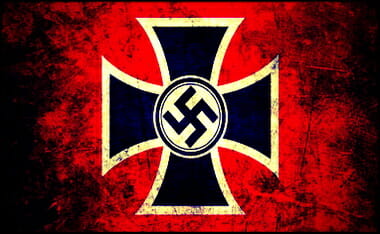
God vs. Hitler
The reason for this post is to respond to the idea that the NAZIs were in any way Christian or were supported by the Church or that Hitler was friends with the church. OR, for that matter, were anything but socialists. This post should be connected with my updated post, “NAZI OCCULTISM.” As well as a post discussing Luther’s anti-Semitism and the distinction between [conservative] Confessing Lutheran’s in Germany at the time and the more socially liberal socialist [state-run] Lutherans: Defending “Lutheranism” from Martin Luther’s Fall from Grace
Between these three posts one should be equipped to respond to this lack of knowledge in regards to history.
“Every powerful movement has had its philosophy which has gripped the mind, fired the imagination and captured the devotion of its adherents. One has only to think of the Fascist and the Communist manifestos of this century, of Hitler’s Mein Kampf on the one hand and Marx’s Das Kapital and The Thoughts of Chairman Mao on the other.”
~ John Stott
Here, for instance, are some verses from a Hitler Youth anthem:
We are the happy Hitler Youth;
We have no need of Christian virtue;
For Adolf Hitler is our intercessor
And our redeemer.
No priest, no evil one
Can keep us
From feeling like Hitler’s children.
Not Christ do we follow, but Horst Wessel!
Away with incense and holy water pots.
Singing we follow Hitler’s banners;
Only then are we worthy of our ancestors.
I am no Christian and no Catholic.
I go with the SA through thick and thin.
The Church can be stolen from me for all I care.
The swastika makes me happy here on earth.
Him will I follow in marching step;
Baldur Von Schirach, take me along.
~ Hitler Youth Song
(The two books in bold I own)
- Gene Edward Veith, Modern Fascism: Liquidating the Judeo-Christian Worldview (Saint Louis, MO: Concordia Publishing House, 1993), 67;
- See Ernst Christian Helmreich, The German Churches Under Hitler: Background, Struggle, and Epilogue (Detroit, MI: Wayne State Univ. Press, 1979), 267.
- Horst Wessel was the composer of the party anthem. Baldur von Schirach was the Reich Youth Leader. See Hermann Glaser, The Cultural Roots of National Socialism (Austin, TX: Univ. Texas Press, 1978), 43, 56n.
In Mein Kampf, he presented a social Darwinist view of life, life as a struggle, and presented national socialism as an antidote to both Judaism and communism. His party attempted to develope a new form of religion with elements of de-Judaised Christianity infused with German and Nordic pagan myths, but this was resisted by the Christians. ~ Professor Thies
- “I freed Germany from the stupid and degrading fallacies of conscience and morality…. We will train young people before whom the world will tremble. I want young people capable of violence — imperious, relentless and cruel.” ~ Hitler
On a plaque hung on the wall at Auschwitz; found in, Ravi Zacharias, Can Man Live Without God (Nashville, TN: W Publising Group, 1994), 23.
- “The stronger must dominate and not mate with the weaker, which would signify the sacrifice of its own higher nature. Only the born weakling can look upon this principle as cruel, and if he does so it is merely because he is of a feebler nature and narrower mind; for if such a law [natural selection] did not direct the process of evolution then the higher development of organic life would not be conceivable at all…. If Nature does not wish that weaker individuals should mate with the stronger, she wishes even less that a superior race should intermingle with an inferior one; because in such a case all her efforts, throughout hundreds of thousands of years, to establish an evolutionary higher stage of being, may thus be rendered futile.” ~ Hitler
Adolf Hitler, Mein Kampf, translator/annotator, James Murphy (New York: Hurst and Blackett, 1942), pp. 161-162.
- “Everything I have said and done in these last years is relativism by intuition…. If relativism signifies contempt for fixed categories and men who claim to be bearers of an objective, immortal truth… then there is nothing more relativistic than fascistic attitudes and activity…. From the fact that all ideologies are of equal value, that all ideologies are mere fictions, the modern relativist infers that everybody has the right to create for himself his own ideology and to attempt to enforce it with all the energy of which he is capable.” ~ Mussolini
Mussolini, Diuturna (1924) pp. 374-77, quoted in A Refutation of Moral Relativism: Interviews with an Absolutist (Ignatius Press; 1999), by Peter Kreeft, p. 18.
The Above Video Description:
Nuremberg Day 28 Church Suppression
Colonel Leonard Wheeler, Assistant American Trial Counsel, on Jan. 7, 1946, submitted the case regarding the Oppression of the Christian Churches and other Religious Groups in Germany and the Occupied Countries. He stated that the Nazi conspirators found the Christian churches to be an “obstacle to their complete domination of the German people and contrary to their master race dogma”.
The Indictment charged that “the Nazi conspirators, by promoting beliefs and practices incompatible with Christian teaching, sought to subvert the influence of the churches over the people and in particular the youth of Germany”.
For further information, see www.roberthjackson.org
- The Persecution of the Christian Churches
- The Nazi conspirators sought to subvert the influnce of the churches over the people of Germany
- Thesis XV of that Nazi publication states: “The Ethic of the German Religion condemns all belief in inherited sin, as well as the Jewish-Christian teaching of a fallen world
- In private, Hitler scorned traditional Christianity, considering it a religion fit only for slaves; he admired the power of Rome but maintained a severe hostility towards its teaching
- Historian John S. Conway states that Hitler held a “fundamental antagonism” towards the Christian churches
- According to a US Office of Strategic Services report, Hitler had a general plan, even before his rise to power, to destroy the influence of Christian churches within the Reich.
- The report titled “The Nazi Master Plan” stated that the destruction of the church was a goal of the movement right from the start, but that it was inexpedient to express this extreme position publicly.
- His intention, according to Bullock, was to wait until the war was over to destroy the influence of Christianity. He articulated his view on the relationship between religion and national identity as “We do not want any other god than Germany itself. It is essential to have fanatical faith and hope and love in and for Germany”
- THE NAZI MASTER PLAN ~ ANNEX 4: THE PERSECUTION OF THE CHRISTIAN CHURCHES
- Scholarly opinion on Hitler’s religious views
Here as well is a quote from a much lauded biography of Hitler and his time in power. Note that he wanted to ultimately destroy the Christian churches with a materialist faith (Any of the large quotes below come from books I own and have read in full or in-part):
- Alan Bullock, Hitler: A Study in Tyranny (New York, NY: Penguin Books, 1952/1962), 388-390.
Hitler had been brought up as a Catholic and was impressed by the organization and power of the Church. Its hierarchical structure, its skill in dealing with human nature and the unalterable character of its Creed, were all features from which he claimed to have learned. For the Protestant clergy he felt only contempt: ‘They are insignificant little people, submissive as dogs, and they sweat with embarrassment when you talk to them.
They have neither a religion they can take seriously nor a great position to defend like Rome.’ It was `the great position’ of the Church that he respected, the fact that it had lasted for so many centuries; towards its teaching he showed the sharpest hostility. In Hitler’s eyes Christianity was a religion fit only for slaves; he detested its ethics in particular. Its teaching, he declared, was a rebellion against the natural law of selection by struggle and the survival of the fittest. “Taken to its logical extreme, Christianity would mean the systematic cultivation of the human failure.” From political considerations he restrained his anti-clericalism, seeing clearly the dangers of strengthening the Church by persecution. For this reason he was more circumspect than some of his followers, like Rosenberg and Bormann, in attacking the Church publicly. But, once the war was over, he promised himself, he would root out and destroy the influence of the Christian Churches. “The evil that is gnawing our vitals,” he remarked in February 1942, “is our priests, of both creeds. I can’t at present give them the answer they’ve been asking for but… it’s all written down in my big book. The time will come when I’ll settle my account with them…. They’ll hear from me all right. I shan’t let myself be hampered with judicial samples.”
Earnest efforts to establish self-conscious pagan rites roused Hitler’s scorn: “Nothing would be more foolish”, he declared, “than to reestablish the worship of Wotan. Our old mythology had ceased to be viable when Christianity implanted itself…. I especially wouldn’t want our movement to acquire a religious character and institute a form of worship. It would be appalling for me, if I were to end up in the skin of a Buddha.”
Nor is there any evidence to substantiate the once popular belief that he resorted to astrology. His secretary says categorically that he had nothing but contempt for such practices, although faith in the stars was certainly common among some of his followers like Himmler.
The truth is that, in matters of religion at least, Hitler was a rationalist and a materialist. “The dogma of Christianity,” he declared in one of his wartime conversations, gets worn away before the advances of science…. Gradually the myths crumble. All that is left is to prove that in nature there is no frontier between the organic and the inorganic. When understanding of the universe has become widespread, when the majority of men know that the stars are not sources of light, but worlds, perhaps inhabited worlds like ours, then the Christian doctrine will be convicted of absurdity…. The man who lives in communion with nature necessarily finds himself in opposition to the Churches, and that’s why they’re heading for ruin for science is bound to win.
It was in keeping with this nineteenth-century faith in science replacing the superstitions of religion that Hitler’s plans for the rebuilding of Linz included a great observatory and planetarium as its centrepiece.
Thousands of excursionists will make a pilgrimage there every Sunday. They’ll have access to the greatness of our universe. The pediment will bear this motto: “The heavens proclaim the glory of the everlasting.” It will be our way of giving men a religious spirit, of teaching them humility – but without the priests. For Ptolemy the earth was the centre of the world. That changed with Copernicus. Today we know that our solar system is merely a solar system amongst many others. What could we do better than allow the greatest possible number of people like us to become aware of these marvels?… Put a small telescope in a village and you destroy a world of superstitions.
Here as well is a respected biography on Hitler by Ian Kershaw. He notes that Hitler was trying to get his followers to “lay off” the Church till after the war was won — the main point being that there was nor room for Christianity in this future Utopia:
- Ian Kershaw, Hitler: A Biography (New York, NY: W.W. Norton, 2008), 382, 661, 785, 969.
In February 1937 Hitler made it plain to his inner circle that he did not want a “Church struggle” at this juncture. The time was not ripe for it. He expected “the great world struggle in a few years’ time”. If Germany lost one more war, it would mean the end. The implication was clear: calm should be restored for the time being in relations with the Churches. Instead, the conflict with the Christian Churches intensified. The anticlericalism and anti-Church sentiments of the grass-roots party activists simply could not be eradicated. The activists could draw on the verbal violence of party leaders towards the Churches for their encouragement. Goebbels’s orchestrated attacks on the clergy through the staged “immorality trials” of Franciscans in 1937 — following usually trumped-up or grossly exaggerated allegations of sexual impropriety in the religious orders — provided further ammunition. And, in turn, however much Hitler on some occasions claimed to want a respite in the conflict, his own inflammatory comments gave his immediate underlings all the license they needed to turn up the heat in the “Church struggle”, confident that they were “working towards the Führer.”
Hitler’s impatience with the Churches prompted frequent outbursts of hostility. In early 1937, he was declaring that “Christianity was ripe for destruction”, and that the Churches must yield to the “primacy of the state”, railing against any compromise with “the most horrible institution imaginable”. In April, Goebbels reported with satisfaction that the Führer was becoming more radical in the “Church Question”, and had approved the start of the “immorality trials” against clergy. Goebbels noted Hitler’s verbal attacks on the clergy and his satisfaction with the propaganda campaign on several subsequent occasions over the following few weeks. But Hitler was happy to leave the Propaganda Minister and others to make the running. If Goebbels’s diary entries are a guide, Hitler’s interest and direct involvement in the ‘Church struggle’ declined during the second half of the year. Other matters were by now occupying his attention.
[….]
Hitler put forward once more his vision of the East as Germany’s “future India”, which would become within three or four generations “absolutely German”. There would, he made clear, be no place in this utopia for the Christian Churches. For the time being, he ordered slow progression in the “Church Question”. “But it is clear,” noted Goebbels, himself among the most aggressive anti-Church radicals, “that after the war it has to be generally solved… There is, namely, an insoluble opposition between the Christian and a Germanic-heroic world-view.”
[….]
…and in line with his undiluted social-Darwinistic beliefs, to take his people down in flames with him if it proved incapable of producing the victory he had demanded.
[….]
…in its maelstrom of destruction Hitler’s rule had also conclusively demonstrated the utter bankruptcy of the hyper-nationalistic and racist world-power ambitions (and the social and political structures that upheld them) that had prevailed in Germany over the previous half a century and twice taken Europe and the wider world into calamitous war.
I also wanted to add this comparison of ideals/ethos that drove some of the worst socialists of the day. Here Andy Bannister notes Stalin’s admission that “socialism proper” is at war with Christianity:
Stalin once stated: “You know, they are fooling us, there is no God … all this talk about God is sheer nonsense.” But Stalin was not content with mere words; he also acted on them. In 1925, he actively encouraged the founding of the League of Militant Atheists, which for over twenty years acted out its slogan, “The Struggle Against Religion is a Struggle for Socialism.” It began with popular campaigns in the media against religion, aiming to persuade citizens that religion was irrational and toxic. But soon things became considerably more violent:
- Churches were closed or destroyed, often by dynamiting; priests were imprisoned, exiled or executed. On the eve of the Second World War there were only 6,376 clergy remaining in the Russian Orthodox Church, compared with the pre-revolutionary figure of 66,140. One dreadful day, 17 February 1938, saw the execution of 55 priests. In 1917 there were 39,530 churches in Russia; by 1940, only 950 remained functional.
Andy Banister, The Atheist Who Didn’t Exist: Or, The Dreadful Consequences of Bad Arguments (Oxford, England: Monarch Books, 2015), 23.
Here we see a stark admission of the ideals/ethos driving Hitler:
“We are socialists, we are enemies of today’s capitalistic economic system for the exploitation of the economically weak, with its unfair salaries, with its unseemly evaluation of a human being according to wealth and property instead of responsibility and performance, and we are determined to destroy this system under all conditions.” ~ Hitler
John Toland, Adolph Hitler: The Definitive Biography (New York, NY: Anchor Books, 1976), 223-225.
Did Hitler, like Stalin, kill the religious? At least 3-million Polish Catholics were holocaust victims. Note especially the systematic massacre of the clergy and religious orders:
Repression of the Church was at its most severe in Polish areas annexed by Nazi Germany, where churches were systematically closed and most priests were either killed, imprisoned, or deported. From across Poland, thousands of priests died in prisons and concentration camps; thousands of churches and monasteries were confiscated, closed or destroyed; and priceless works of religious art and sacred objects were lost forever. Church leaders were targeted as part of an overall effort to destroy Polish culture. At least 1811 Polish clergy died in Nazi Concentration Camps. An estimated 3000 clergy were killed in all. Hitler’s plans for the Germanization of the East saw no place for the Christian Churches.
[….]
[In the Diocese of Chełmno] It is stated that a large number of priests have been shot, but neither the number nor the details are as yet known, as the occupation authorities maintain an obstinate silence on the subject… The Churches have almost all been closed and confiscated by the Gestapo… all the crosses and sacred emblems by the roadside have been destroyed… 95% of the priests have been imprisoned, expelled, or humiliated before the eyes of the faithful… and the most eminent Catholics executed.
— Excerpts from Cardinal August Hlond‘s report to the Vatican.
Hlond reported similar outrages and terror in the Dioceses of Katowice, Łódź and Włocławek which had also been incorporated into the Reich. In his final observations for Pope Pius XII, Hllond wrote:
Hitlerism aims at the systematic and total destruction of the Catholic Church in the rich and fertile territories of Poland which have been incorporated into the Reich… It is known for certain that 35 priests have been shot, but the real number of victims… undoubtedly amounts to more than a hundred… In many districts the life of the Church has been completely crushed, the clergy have been almost all expelled; the Catholic churches and cemeteries are in the hands of the invaders… Catholic worship hardly exists any more… Monasteries and convents have been methodically suppressed… [Church properties] all have been pillaged by the invaders.
— Excerpts from Cardinal Hlond’s report to the Vatican
(WIKI)
It would seem that Hitler’s socialism had the same outcome in every way as Stalin’s.
Here is my final update for a while, and it regards how the NAZI Party was taking away church property and replacing church programs with socialist ones:
- J.S. Conway, The Nazi Persecution of the Churches 1933-45 (New York, NY: Basic Books, 1968), 255-259.
From the beginning of 1941 such new and stringent measures were taken against the churches by the Nazi authorities that more damage, it was said, was done ‘physically and morally by the land raids of the Gestapo than by the air raids of the RAF’.
The number of expropriated church properties rose rapidly. In a secret circular addressed to the Gauleiters on 20 March, Bormann wrote:
Many valuable church properties have had to be sequestred lately, especially in Austria; according to reports from the Gauleiters to the Führer, these sequestrations were frequently caused by offences against ordinances relating to the war economy (e.g. hoarding of food-stuffs of various kinds, textiles, leather goods, etc.). In other cases they were caused by offences against the law relating to malicious attacks against the State [Heimtϋckegesetz], and in others because of prohibited possession of firearms. Obviously, no compensation is to be paid to the Churches for sequestrations made because of the above-mentioned reasons. . . .
The reasons given for the seizures were the need for auxiliary hospitals or resettlement centres for refugees and evacuated children, or, alternatively, acts of hostility to the State perpetrated by members of the religious orders, particularly the Jesuits. If an individual member of a monastic community was adjudged guilty of an offence, it was seized upon as a pretext for the closure of the whole institution. In actual fact, the Churches’ properties were expropriated solely for the Nazis’ own ends, each of the Nazi leaders making a bid for what he considered their most appropriate use. Dr Ley in June 1940 argued in favour of using monasteries as homes for the Aged or for the Kraft durch Freude. In April 1941 Bormann suggested that Church orphanages should be taken over for the housing of evacuees, a move to which Hitler agreed. In a circular issued from Hitler’s headquarters in May 1941, Bormann decreed that
the Nazi State and movement cannot permit children to be brought up in denominational kindergartens according to Church principles, or along the lines of denominational divisions. Today this question can be finally cleaned up by withdrawing permission from the organizers of Church-sponsored institutions for children. In justification, the special role of the Party in this area should be stressed.
The requisite orders were accordingly issued, and by 31 July all Church kindergartens had been seized by the Gestapo and transferred to the sponsorship of the Nazi Welfare organization.
The requisitioning of monastic properties had first been adumbrated by Himmler, in December 1939, when, in his capacity as Reich Commissar for the Strengthening of the German People’s Community (Reichskommissar far die Festigung deutschen Volkstums), he had ordered the Volksdeutsche Mittelstelle in Berlin to take over `suitable accommodation which could be used for the housing of returning Volksdeutsche’. When, eleven months later, Cardinal Bertram protested that the decree had been used to requisition entire monasteries and convents and to evacuate their inhabitants, his protest was ignored. In January 1941 Himmler ordered the complete evacuation of all such Church properties without compensation. War-time necessity, the Cardinal was informed, was a sufficient justification for the measure, and the question of compensation, could be settled after the end of the war. In December 1940 the Gauleiter of Alsace ordered all Church organizations to be dissolved and their property confiscated. In Innsbruck, Gauleiter Hofer coerced the Premonstratensian Order into ‘selling’ their monastery at Wilten to the provincial government of Tyrol. In Silesia no less than 60 monasteries and church institutions were seized. In Luxembourg, 400 priests were expelled on Hitler’s personal orders; all the institutions run by members of Catholic Orders were confiscated and their inhabitants were transported across the border into the diocese of Trier; all hospitals in the territory were declared secular institutions. In Lorraine, the Warthegau, Lower Austria and South Germany where the measures were particularly severe, the Church authorities estimated that by the beginning of May no less than 13o monasteries and Church institutions had been confiscated.
This was only the beginning. A letter from the Party headquarters for Mainfranken on 24 April 1941 informed the local Party organizers that :
By order of the Gauleiter, I request from you an immediate report on the situation of all monasteries and convents in your area. A short description of each building should include its size, its place in the countryside, and its activities or participation in agricultural work. Very important is an account of the transportation facilties, since the rural setting of many monasteries makes them very suitable for the needs of the Kraft .lurch Freude (Hotels, Rest houses, holiday and sports resorts). Furthermore your report should include the view of the County Party leader on the future use of these buildings. Since the matter is being treated as very urgent on the national level, I am asking for an immediate reply by return of post, in an express and registered letter.
The German bishops and the Roman Curia itself immediately launched a protest. For some time past the Papal Nuncio had almost monthly complained either verbally, by letter, or with a Verbal Note to State Secretary Weizsäcker about similar sequestrations, some of them involving considerable properties. In May 1941 he again protested against the abruptness with which the confiscations had been carried out without prior warning either to himself or to the Church authorities. Weizsäcker’s reply was a curt statement to the effect that the war-time need for housing was so great that further requisitions could be expected. Rome could draw only one conclusion. In a letter to the German Embassy dated January 1942, the Curia protested that because of
the increasing difficulties put in the way of the religious Orders and Congregations in the spiritual, cultural and social field, and above all the suppression of abbeys, monasteries, convents, and religious houses in such great numbers, one is led to infer a deliberate intention of rendering impossible the very existence of the Orders and Congregations in Germany.
In June 1941 Cardinal Bertram again bitterly complained that, ‘at a time when the whole German people were united in a decisive struggle for the future of our country’, the rights of Catholics were disregarded and overridden throughout the land. In the regions of Trier, Kassel, Saxony, Thuringia, Cologne, Aachen, and Silesia, he stated, church kindergartens had been expropriated, such Catholic insignia as crucifixes and religious paintings had been removed, and teachers and nuns had been expelled. Catholic parents, he averred, were alarmed by these events, which contravened the provisions of the Concordat and served to strengthen the impression ‘that a systematic campaign for the destruction of all that was Christian was now in process’.
Despite the Nazis’ oft-repeated desire not to exacerbate tension between Church and State, restrictions on Church work continued to multiply. On I June 1941, the Church press was totally suppressed for the duration of the war in contrast to the press of the German Faith Movement and the anti-clerical pamphlets of the Ludendorff Publishing House, which continued to be published though on a reduced scale. In April, new regulations for the pastoral care of patients in hospitals were promulgated, whereby priests were prohibited from entering the hospitals unless specifically requested by patients and with the approval of the medical authorities, and Church welfare agencies were replaced by the National Socialist Welfare organization and the Winter Aid Programme. In the same month religious education in Saxony was abolished altogether; the Ministry of Education in Berlin prohibited the use of prayers at school assemblies; and the gradual removal of crucifixes and religious paintings from every school was ordered by the Bavarian Ministry of Education.
On Bormann’s instructions, every pastor who resigned his office and, preferably withdrew from the Church, was to be offered a government job; and Hitler himself ordered that any Jesuits serving in the Army were to be declared unfit for service and released. Anti-clerical propaganda was stepped up in an attempt to alienate the sympathy of the laity from their clerical leaders, and anti-church literature denigrating the sacraments was handed out free of charge. On 12 June the Gauleiter of Baden, Robert Wagner, announced to an enthusiastic audience of Party followers in the Festival Hall in Karlsruhe that
when our foreign foes lie at our feet, then we will tackle the foes at home; there are still some running around the country in purple and ermine.

Chevy Chase Admits SNL’s Bias
Larry Elder brought to my attention an interview I missed, here is that interview with an introduction and outro by “The Sage.” One should watch MARK DICE’s video on this as well (just note I endorse in no way Mark’s view of conspiracies [in general – like the New World Order stuff] or the commentary on Jimmy “crying on air”):

The Occult Power Behind The “Word Faith” Movement (Richard Howe)
Here is a good video on the occult aspect of the word-faith movement via THE WORD on The Word of Faith (a GroupBlog). One can listen to some of the offending audio here: WOF AUDIO
Cornterstone Church – Dr. Richard Howe teaches at the Apologetics Summit on November 16, 2013. Howe speaks on alleged Christians (Benny Hinn, Kenneth Copeland, Marilyn Hickey, Creflo Dollar, Kenneth Hagin, Kenneth Copeland, Paul Crouch, Rod Parsley, Joyce Meyer, etc.) who may be practicing the occult in the pulpit.

The General Welfare | Righting Constitutional Misconceptions
From My “Concepts” Series
It was the author of the U.S. Constitution James Madison, who proclaimed:
- “The government of the United States is a definite government, confined to specified objects. It is not like the state governments, whose powers are more general. Charity is no part of the legislative duty of the government.”

(click to enlarge)
In this latest example (originally posted Sept of 2012) of John Van Huzuim’s conflating terms and ideas, we see a prime example of how liberals will argue. First, let us deal with how the framers of the Constitution understood “General Welfare,” and not what John says it means or how he thinks conservative Republicans understand it. Here is some input from two of the authors of the Constitution, professor Williams explains:
On September 17, 1787, thirty-nine men signed the U.S. Constitution. Each year since 2004, we have celebrated Constitution Day as a result of legislation fathered by Senator Robert Byrd that requires federal agencies, and every school that receives federal funds, including universities, to have some kind of program on the Constitution. I cannot think of a more deceitful piece of legislation or a more constitutionally odious person to father it – a person who is known as, and proudly wears the label, “King of Pork.” The only reason that Constitution Day is not greeted with contempt is because most Americans are totally ignorant about the framer’s vision in writing our constitution. Let’s examine that vision to see how much faith and allegiance today’s Americans give to the U.S. Constitution.
James Madison is the acknowledged father of the constitution. In 1794, when Congress appropriated $15,000 for relief of French refugees who fled from insurrection in San Domingo to Baltimore and Philadelphia. James Madison wrote disapprovingly, “I cannot undertake to lay my finger on that article of the Constitution which granted a right to Congress of expending, on objects of benevolence, the money of their constituents.” Today, at least two-thirds of a $2.5 trillion federal budget is spent on the “objects of benevolence.” That includes Medicare, Medicaid, Social Security, aid to higher education, farm and business subsidies, welfare, ad nauseam.
A few years later, James Madison’s vision was expressed by Representative William Giles of Virginia, who condemned a relief measure for fire victims. Giles insisted that it was neither the purpose nor a right of Congress to “attend to what generosity and humanity require, but to what the Constitution and their duty require.”
In 1827, Davy Crockett was elected to the House of Representatives. During his term of office a $10,000 relief measure was proposed to assist the widow of a naval officer. Davy Crockett eloquently opposed the measure saying, “Mr. Speaker: I have as much respect for the memory of the deceased, and as much sympathy for the suffering of the living, if there be, as any man in this House, but we must not permit our respect for the dead or our sympathy for part of the living to lead us into an act of injustice to the balance of the living. I will not go into an argument to prove that Congress has not the power to appropriate this money as an act of charity. Every member on this floor knows it. We have the right as individuals, to give away as much of our own money as we please in charity; but as members of Congress we have no right to appropriate a dollar of the public money.”
In 1854, President Franklin Pierce vetoed a popular measure to help the mentally ill saying, “I cannot find any authority in the Constitution for public charity.” To approve the measure “would be contrary to the letter and the spirit of the Constitution and subversive to the whole theory upon which the Union of these States is founded.” During President Grover Cleveland’s two terms in office, he vetoed many congressional appropriations, often saying there was no constitutional authority for such an appropriation. Vetoing a bill for relief charity, President Cleveland said, “I can find no warrant for such an appropriation in the Constitution, and I do not believe that the power and duty of the General Government ought to be extended to the relief of individual suffering which is in no manner properly related to the public service or benefit.”
Compared to today, yesteryear’s vision vastly differs in what congressional actions are constitutionally permissible. How might today’s congress, president and courts square their behavior with that of their predecessors? The most generous interpretation of their behavior I can give is their misunderstanding of Article I, Section 8 of the Constitution that reads, “The Congress shall have power to lay and collect taxes, duties, imposts and excises, to pay the debts and provide for the common defense and general welfare of the United States.” Misuse of the “general welfare” clause serves as warrant for Congress to do just about anything upon which it can secure a majority vote.
The framers addressed the misinterpretation of the “general welfare clause. James Madison said, in a letter to James Robertson, “With respect to the two words ‘general welfare’, I have always regarded them as qualified by the detail of powers connected with them. To take them in a literal and unlimited sense would be a metamorphosis of the Constitution into a character which there is a host of proofs was not contemplated by its creators.” James Madison also said, “If Congress can do whatever in their discretion can be done by money, and will promote the General Welfare, the Government is no longer a limited one, possessing enumerated powers, but an indefinite one, subject to particular exceptions.” James Madison laid out what he saw as constitutional limits on federal power in Federalist Paper Number 45 where he explained, “The powers delegated by the proposed Constitution to the federal government are few and defined . . . to be exercised principally on external objects, as war, peace, negotiation, and foreign commerce.”
Thomas Jefferson explained in a letter to Albert Gallatin, “Congress has not unlimited powers to provide for the general welfare, but only those specifically enumerated.”
What accounts for today’s acceptance of a massive departure from the framer’s clear vision of what federal activities were constitutionally permissible? It is tempting to blame politicians and yes we can blame them some but most of the blame lies with the American people who are either ignorant of the constitutional limits the framers imposed on the federal government or they have contempt for those limits….
POLITISTICK notes the difference when they write: “Progressives and their communist cousins — even RINOs (Republicans in name only) will argue the ‘General Welfare’ clause is somehow being authorization for the federal government to spend on anything members of Congress dreams up.” Continuing Madison is again quoted from:
James Madison, in his brilliance, anticipated this argument, of course, and shot it down on several different occasions:
“If Congress can do whatever in their discretion can be done by money, and will promote the general welfare, the Government is no longer a limited one possessing enumerated powers, but an indefinite one subject to particular exceptions.”
In other words, if the words “general welfare” meant going outside of the enumerated powers, there would have been no reason to even write the enumerated powers in the first place!
Madison further imagined where Congress might stretch the General Welfare clause if it were misinterpreted to be open-ended:
If Congress can apply money indefinitely to the general welfare, and are the sole and supreme judges of the general welfare, they may take the care of religion into their own hands; they may establish teachers in every State, county, and parish, and pay them out of the public Treasury; they may take into their own hands the education of children, establishing in like manner schools throughout the Union; they may undertake the regulation of all roads other than post-roads.
In short, everything, from the highest object of State legislation, down to the most minute object of police, would be thrown under the power of Congress; for every object I have mentioned would admit the application of money, and might be called, if Congress pleased, provisions for the general welfare.
[….]
For all of the reasons above, with the Democrat Party all but merging with the Communist Party USA and the Republicans, led by big government RINO’s Paul Ryan and Mitch McConnell, only wanting slightly smaller and just barely less unconstitutional than the Democrats, I strongly support both the Convention of States and the Federalist Party. Both parties are arguing which can bastardize the U.S. Constitution the most. We know that the Democrats will always be the most aggressive in this venture but the Republicans are not far behind.
Larry Elder on his radio program takes a call in regards to this exact same understanding of the General Welfare Clause.
Ben Franklin Money Quote
- I am for doing good to the poor, but I differ in opinion of the means. I think the best way of doing good to the poor, is not making them easy in poverty, but leading or driving them out of it. In my youth I travelled much, and I observed in different countries, that the more public provisions were made for the poor, the less they provided for themselves, and of course became poorer. And, on the contrary, the less was done for them, the more they did for themselves, and became richer. (Ben Franklin)

In another ARTICLE Professor Williams ends with this, and I think it is suitable for this discussion:
You might say, “If our Constitution provides no authority for programs near and dear to the hearts of so many Americans, the heck with the Constitution.” If that’s your perspective, you’re in good company. The Courts, Congress and the White House beat you to it. Long ago they said, “The heck with the Constitution.”
This is what John is saying, the heck with the constitution! Take note as well that not only does he miss-defines what conservative think, he also argues for police and fire personnel, and then from there jumps to welfare programs (the war on poverty, so-called). (Remember what I always point out with John? Non-sequiturs… he is full of them.) Now, Obama-Care is placed under this umbrella the writers of the clause rejected. I will end here with Professor Williams in regards to Obama-Care:
Here is the second part to POLITISTICK’s post on the matter… love me some Madison!
…Only certain, specifically identified powers, called “enumerated powers,” were delegated to the federal government from the states — powers that the Founding Fathers believed were best performed on a national basis, duties like “provide for the common defense,” to coin money, establish uniform immigration laws, “Post Offices,” treaties with foreign nations, to regulate (which does not mean restrict) interstate commerce, and a few others. These powers were clearly listed in Article I, Section 8, of the U.S. Constitution.
James Madison, considered the main author and father of the Constitution, wrote in Federalist #45, regarding the Alleged Danger from the Powers of the Union to the State Governments Considered, the following two sentences that summarize this principle of state sovereignty and a limited federal government:
“The powers delegated by the proposed Constitution to the federal government, are few and defined. Those which are to remain in the State governments are numerous and indefinite.”
Madison further described the proper role for the soon-to-be federal government versus the unique roles of the individual states:
“The former will be exercised principally on external objects, as war, peace, negotiation, and foreign commerce; with which last the power of taxation will, for the most part, be connected. The powers reserved to the several States will extend to all the objects which, in the ordinary course of affairs, concern the lives, liberties, and properties of the people, and the internal order, improvement, and prosperity of the State.”
So (let’s forget the politicized decision by the tyrants in black robes who declared Obamacare constitutional — it is not) what does this mean? Would a full single-payer healthcare system like the one proposed in California (which would have more than doubled the entire state budget) be allowed by the U.S. Constitution?
You bet it would — on the state level — but NOT on the national level. If people in California want to more than double their already exorbitant taxes in order to pay for such a system, they are allowed to under the Tenth Amendment, which states, referring to Article I, Section 8:
“The powers not delegated to the United States by the Constitution, nor prohibited by it to the States, are reserved to the States respectively, or to the people.”
Nowhere in Article I, Section 8 of the Constitution among the enumerated powers are the words, medicine, health care, doctor visits, surgery, healthcare insurance (yes, people got sick in the late 1700’s and there were doctors and medicine), or anything like this even remotely mentioned as a power being transferred by the states to the federal government…..
America’s Original Sin (Michael Medved)
Medved starts out the show by talking about Alex Rosenberg New York Times article dated July 3rd, called, “The Making of a Non-Patriot.” This is merely a call which is primarily about that article… here is a good, short-n-concise comment from my YouTube:
- The great sin was Jim Crow not Slavery [to which I add — via Democrats]
- The other guy bringing up Gay Rights….Oy Veyyyy!
- Medved is correct Slavery was around long before….We got rid of it.
- Brazil was the last country in the Americas to outlaw the practice.
- Muslims castrated their male slaves.

Israel’s Next War (Mark Levin)
Mark Levin reads from Mark Dubowitz’s article entitle, “Confront Iran the Reagan Way.” Mark pauses and expresses his thoughts on Israel’s next war… and his point which I find fascinating is that this won’t be a small war — speaking of the weaponry used.

Are Testicles Proof Against God? (PLUS: Vestigial Organs)
Religio-Political Talk (RPT) is proud to be a part of defending
“manhood” from the wiles of the secular/evolutionary worldview.
Jerry Bergman is one of the most accomplished creationists around. His passion for his Lord and for sharpening his mind are, well, legend in the ID and creationist sub-culture. The few times I have written to him he has responded with humbleness — which is saying a lot considering his learning curve noted below. In the past I have responded to persons and articles based on his book he co-authored with Dr. Howe, “Vestigial Organs Are Fully Functional: A History and Evaluation of the Vestigial Organ Origins Concept.” This book could use an update and republishing… which the article does in the micro.
The article in the Journal of Creation, vol. 31(2) 2017, entitled, “The Not-So-Intelligent Professor,” is a review Abby Hafer’s book, “The Not-So-Intelligent Designer: Why Evolution Explains the Human Body and Intelligent Design Does Not.” However, BEFORE going to her favorite example, let’s review Jerry Bergman’s academic background, which is useful for the article:
JERRY BERGMAN
- M.P.H., Northwest Ohio Consortium for Public Health (Medical College of Ohio, Toledo, Ohio; University of Toledo, Toledo, Ohio; Bowling Green State University, Bowling Green, Ohio), 2001.
- M.S. in biomedical science, Medical College of Ohio, Toledo, Ohio, 1999.
- Ph.D. in human biology, Columbia Pacific University, San Rafael, California, 1992.
- M.A. in social psychology, Bowling Green State University, Bowling Green, Ohio, 1986.
- Ph.D. in measurement and evaluation, minor in psychology, Wayne State University, Detroit, Michigan, 1976.
- M.Ed. in counseling and psychology, Wayne State University, Detroit, Michigan, 1971.
- B.S., Wayne State University, Detroit, Michigan, 1970. Major area of study was sociology, biology, and psychology.
(A fuller bio on Doc Bergman is at CREATION.COM)
Okay, here is the excerpt:
Abigail (Abby’) Hafer has a doctorate in zoology from Oxford University and teaches human anatomy and physiology in the nursing programme at Curry College, a small private college of 2,100 students. Her goal for this book was to document what she argues are the many examples of poor design in the human body. From this evidence, she concludes that the body was not designed, but rather it evolved.
All of her examples have been carefully refuted in both the secular and creationist literature. Having taught anatomy for 30 years, I have reviewed many anatomy textbooks in preparation for my classes and am not aware of a single one that makes the claims she does. Rather, they consistently show most of her claims to be erroneous.
She also shows little evidence of reading the Intelligent Design (ID) or creationist literature, as indicated by her false claim that those “who are likely to be persuaded by ID arguments don’t read scientific journals, or lengthy books about evolution, and they never will [emphasis in original]” (p. 1). The irony here is unmissable.
She speaks widely to colleges, universities, and sadly even churches (although she’s a rabid atheist, listed as an American Humanist Association speaker). Her focus is consistently on mocking creationists and ID supporters, as is obvious from the titles of her talks, such as “Who does the Creator like better—us, or squid?” and “Why do men’s testicles hang outside the body, but elephants have their testes inside the body?” As usual, these are really pseudo-theological arguments rather than scientific ones. She spends much time on the mudskipper, which she claims ID advocates say could not exist. Her major poor design claims are reviewed below.
I wish to take a quick break in the text here and note that the best book I have read on Dr. Berman’s notation that Dr. Hafer’s arguments “are really pseudo-theological arguments rather than scientific ones,” is Cornelius Hunter’s book, “Darwin’s God: Evolution and the Problem of Evil.”
Human Testicles
Her claim for human testicles is that
- “…if testicles were designed, …why God didn’t protect them better. Couldn’t the Designer have put them inside the body, or encased them in bone, or at least put some bubble wrap around them? Is this the best that the Designer can do?” (p. 5).
Concluding that a structure is poorly designed instead of asking why the existing design exists is a science stopper. The ‘why’ question motivates research into the reasons for the design. When this approach was applied to the human appendix, the tonsils, the backward retina and other examples, good design reasons for the existing design were found in all cases.
She explained that when she was looking for new approaches to refute ID she knew she “had a winner when inspiration hit me in the middle of an Anatomy and Physiology lecture…. The male testicle is a great first argument against ID” (p. 2). She then stated that when she got what she needed for a “political-style argument”, she did “what any sensible woman would do”, email her minister (p. 2). As chance had it, her (Unitarian Universalist) `church’s’ Darwin Day celebration was that Sunday, and her minister used the testicles example to introduce his sermon in honour of Darwin (p. 2). Her main argument is that male testicles are outside of the body, thus are prone to injury, noting that for many animals, including reptiles, the testicles are inside of the body.
If the author were to apply just a modicum of logic, though, she (and her cohort) would realise that male testicles are outside of the body for several important reasons, such as to regulate scrotal temperature for optimal spermatogenesis development.1 When testicle temperature drops, a complex system causes the cremaster muscle to contract, which moves them closer to the warm body. When their temperature rises, the cremaster muscle relaxes, allowing them to move away from the body, insuring that their temperature is kept within a very narrow tolerance. Their temperature is also regulated by increasing or decreasing the surface area of the tissue surrounding the testicles, allowing faster or slower dissipation of their heat.2
A major reason for their close temperature regulation is because humans are fertile year round, and most animals with internal testicles are not. Most animals need to be fertile only for short times, often when outdoor temperature allows maintenance of their proper temperature.
She also ignores the fact that testicles are a secondary sexual trait, similar to female breasts, which are also prone to injury. A parallel argument is the claim that, for this reason, the female breast is poorly designed. Therefore, because its size does not affect either milk production or breast feeding ability, it would be advantageous not to protrude from the body. However, because the baby’s face is quite flat, it’s advantageous that the breast protrude somewhat so the baby can get good suction. Baby mammals with snouts can suckle on flat breasts with teats. That the breast is a major female secondary sexual trait is documented by the fact that mastectomy is a very traumatic operation for most women, and reconstructive surgery is often used to normalize the breasts’ appearance.
[1] Werdelin, J. and Nilsonne, A., The evolution of the scrotum and testicular descent in mammals, J. Theoretical Biology 196(1):61-72, 7 January 1999.
[2] Van Niekerk, E., Vas deferens—refuting `bad design’ arguments, J. Creation 26(3):60-67, 2012; creation.com/vas-deferens.
The article goes on to respond to Abby’s discussion of: the backward retina, the female birth canal, the human pharynx, blood clotting mechanisms, teeth, the appendix, and the like. Here is a good video mentioned on my Facebook by a friend (R. Ingles-Barrett) that deals with some of these supposed “bad designs”
VESTIGIAL BONUS
Shun the Non-Believer…
A CLIP FROM CHARLIE THE UNICORN
Before posting what I did on Facebook as part of a response to a conversation regarding the below graphic… I want to say that by showing vestiges…
- a rudimentary structure in humans corresponding to a functional structureor organ in ancestral animals
…in no way undermines Intelligent Design, or somehow PROVES evolution. Let me explain.
Darwin said he didn’t see an issue with whales evolving from bears, or some bear like creature. In his first edition of Origin of Species, Darwin said this:
- “I can see no difficulty in a race of bears being rendered, by natural selection, more and more aquatic in their structure and habits, with larger and larger mouths,” Darwin concluded, “till a creature was produced as monstrous as a whale.”
ARCHAEOPTERYX
This does not involve “devolution,” a loss of specificity which the below picture captures… but rather, evolution demands an increase in specificity in gene and DNA specificity in the creation of whole new organs and how they act. Similarly, the Archaeopteryx is proffered as an example of evolution, but evolutionists themselves would say that this is only an example of “devolution,” and not an increase of specificity in a species (a clipping from my post: “Was Archaeopteryx Devolving? Thus Losing It’s Ability to Fly?“):
Since other feathered “birds” have been found around the same time or earlier than Archaeopteryx, causing Alan Feduccia to quip, “You can’t be older than your grandfather” (Creation.com)… NATURE has published an article pointing out that Archaeopteryx is JUST LIKE modern flightless birds. And so it could have been losing its ability for flight (like modern birds have).
“We know Archaeopteryx was living on an archipelago during the Jurassic. And with its feathers and bones looking so much like modern flightless island birds, it just makes me wonder,” says…. Michael Habib, a biologist at the University of Southern California….
[….]
“Just because Archaeopteryx was the first feathered dinosaur found, doesn’t mean it has to play a central role in the actual history of the origins of birds,” says palaeontologist Thomas Holtz of the University of Maryland in College Park. “We have to remember it appears 10 million years or so after the oldest known bird-like dinosaurs and so our famous ‘first bird’ may really be a secondarily flightless one.”…
There is just as much [at best] evidence for this proposition as the next. “Devolution” — a loss of specificity/use, may be a more reasonable position to take via observed evidence. We see this all the time (directly below is an example from Lee Spetner’s new book), and EVOLUTION NEWS says that “looks like Archaeopteryx may have to be reclassified as a different sort of icon — symbolizing evolution by loss of function.” Oops.
So these types of examples ACTUALLY COUNT AGAINST the main idea that neo-Darwinism proposed… that I came from a rock.

I find it interesting that people think this whale bone pictured above is a vestigial organ. Very similar to the list of a 180 vestigial structures said to be in the human body in the late 1800’s dwindling to effectively zero, and the damage and laziness such thinking cost lives and sciences advancement (see more here):
TONSILS
In the 1930’s over half of all children had their tonsils and adenoids removed. In 1969, 19.5 out of every 1,000 children under the age of nine had undergone a tonsillectomy. By 1971 the frequency had dropped to only 14.8 per 1,000, with the percentage continuing to decrease in subsequent years. Most medical authorities now actively discourage tonsillectomies.[1] Many agree with Wooley, chairman of the department of pediatrics at Wayne State University, who was quoted in Katz: “If there are one million tonsillectomies done in the United States, there are 999,000 that don’t need doing.”
Among the first medical doctors seriously to question the wisdom of tonsillectomies was Albert Kaiser. For ten years he kept complete records of the illnesses of 5,000 children. They were divided into two groups – those who had tonsils removed and those who did not. Kaiser found: “…no significant difference between the two groups in the number of colds, sore throats and other upper respiratory infections.”[2]
Tonsils are important to young people in helping to establish the body’s defense mechanism which produces disease-fighting antibodies. Once these mechanisms are developed, the tonsils shrink to almost nothing in adults, and other organs take over this function.[3] In the Medical World News,[4] a story stated that although removal of tonsils at a young age obviously eliminates tonsillitis (the inflammation of the tonsils) it may significantly increase the incidence of strep-throat and even Hodgkin’s disease. In fact, according to the New York Department of Cancer Control: “…people who have had tonsillectomies are nearly three times as likely to develop Hodgkin’s Disease, a form of cancer that attacks the lymphoid tissue.”[5]
THE POINT
My point is this, the Tonsils were once included in a list of 180 vestigial (“useless, or nearly useless”) organs.[6] And because the assumption was first made that these were organs left over from a previous genetic ancestor (ape, dog, early-man, whatever), that they were deemed useless – ad hoc – because science did not know at that time what their functions were.
So for many years, doctors and scientists that accepted the evolutionary paradigm did not investigate the possible functionality of these organs. Many people suffered and died needlessly due to this philosophical assumption that evolution is true. You will see this assumption play out again and again where medical science and the evolutionary issue intersect. You see, if you come to the table with an understanding that we were created, then these structures serve a purpose, or are a neutral combination of the possible male/female outcome of the fertilized egg (for instance, male nipples[7]). If the assumption is made that these structures are designed, then the medical world would strive to investigate and understand the organ in question, not simply state that it is useless.
[1] Robert P Bolande, “Ritualistic Surgery – circumcision and tonsillectomy,” New England Journal of Medicine, March 13 (1969) pp. 591-595; Alvin Eden, “When Should Tonsils and Adenoids be Removed?” Family Weekly, September 25 (1977), p. 24; Lawrence Galton, “All Those Tonsil Operations: Useless? Dangerous?” Parade, May 2 (1976), pp. 26ff; Dolras Katz, “Tonsillectomy: Boom or Boondoggle?” The Detroit Free Press, April 13 (1972), p. 1-C; Samuel Lipton, “On the Psychology of Childhood Tonsillectomy,” found in: The Psychoanalysis Study of the Child (International Universities Press, New York: 1962).
[2] Galton, p. 26.
[3] Martin L. Gross, The Doctors (Random House, New York: 1966); Simpson Hall, Diseases of the Nose, Throat and Ear (E. and S. Livingston, New York: 1941).
[4] N. J. Vianna, Peter Greenwald, and U. N. Davies, September 10, 1973, p.10
[5] Galton, p. 26-27.
[6] This is an important issue, for instance, during the famous Scopes trial in 1925 – which allowed evolution to be taught alongside creation – zoologist Horatio Hacket Newman, a defense witness, stated: “There are, according to Wiedersheim, no less than 180 vestigial structures in the human body, sufficient to make of a man a veritable walking museum of antiquities.”
[7] Also, if created by a personal God who has created sex to be pleasurable, then the nipples have a purpose other than the neutral canvas of the fertilized egg.
- Jerry Bergman and George F. Howe, Vestigial Organs Are Fully Functional (Creation Research Society Books, Kansas City: MO: 1990).
WHALE TALES
SIMILARLY, the laziness in neo-Darwinian evolutionary propositions in this “example” of a vestigial organ shows the laziness in thought, and, the stalling of advancing science in understanding nature. Now, we know, and even the secular world acknowledges this fact in “discovering” [yet again] that pronouncements made by the evolutionary community of scientists is woefully wrong. Here is an example via THE DAILY MAIL – take note how I and the researches end the article:
Whale Sex Revealed: ‘Useless’ Hips Bones Are Crucial To Reproduction – And Size Really Matters, Study Finds
- Whales and dolphins have pelvic bones, which are evolutionary remnants from when their ancestors walked on land more than 40 million years ago
- Scientists from the University of Southern California and the Natural History Museum of Los Angeles County, analysed pelvic bones for four years
- Muscles that control a cetacean’s penis attach directly to its pelvic bones
- They found the bigger the animals’ testis, the bigger their pelvic bone
- Males from more promiscuous species evolve larger penises, so larger pelvic bones are necessary to attach bigger muscles for penis control, they said
- Study changes the way we think about vestigial structures
[…..]
They wrote in the journal Evolution, the muscles that control a cetacean’s highly flexible penis, attach directly to its pelvic bones.
The scientist theorised that the pelvic bones could affect the level of control over the penis that an individual cetacean has, perhaps offering an evolutionary advantage.
To test their idea, they examined hundreds of pelvic bones and used a 3D scanner to make digital models of the curved bones in order to gain an unprecedented level of detail about their shape and size, as well as to compare them.
They then gathered data about testis size relative to the mass of whales. In the natural world, more ‘promiscuous’ species where females mate with many males, create a more competitive mating environment and the males develop larger testes as a way of attracting females.
[…..]
The experts compared the size of pelvic bones to the size of an animal’s testes, relative its body size, and found that the bigger the testes, the bigger the cetacean’s pelvic bone.
Males from more promiscuous species also evolve larger penises, so larger pelvic bones appear necessary to attach larger muscles for penis control, they said.
‘Our research really changes the way we think about the evolution of whale pelvic bones in particular, but more generally about structures we call vestigial,’ Professor Dean said.
‘AS A PARALLEL, WE ARE NOW LEARNING THAT OUR APPENDIX IS ACTUALLY QUITE IMPORTANT IN SEVERAL IMMUNE PROCESSES, NOT A FUNCTIONALLY USELESS STRUCTURE,’ he added….
(emphasis added)
AMBULOCETUS NATANS
In conversation about the above, the person I was speaking with posted a series of evolution from creature-to-creature proving the evolution of the whale.

I have already refuted this clean progression, HERE, but I noted something that this person was not aware of. As most people are not. You see, when you bring your kid to the Natural History Museum, you see this picture of the RED OUTLINED creature in the evidence for whales evolving:

The problem with this evidence is that it is based primarily on an artists rendition. Here is the actual bones all this Ambulocetus Natans is based on — see #3:

I merely commented that his believing and passing along graphics showing full skulls by artists, or the above “skeletal” sequence, reminds me of the movie scene from the Matrix:
In similar fashion, this artistic rendition used in the Scopes “Monkey” Trial was used as evidence proving evolution:

However, this was based off a single tooth. NOT ONLY THAT, but the tooth put forward as hominid, ended up being an extinct pig’s tooth.
APPENDIX
In similar form, many people still think the APPENDIX is a vestigial organ. Here is my response (since updated) to one of my son’s teachers in high school dealing with what was being taught as FACT… that is, that the appendix had no known use:
FULL UPDATED PAPER
Context this short paper was written:
This paper evolved over many years. It was one of the first subjects I debated at a science discussion board on the Internet many years ago prior to the NetZero days. Then I updated it to respond in writing to a Discover magazine article (a much larger paper, of which this takes up two pages).
Finally, as my son has been studying science in seventh grade, his science textbook states many “facts” wrongly, this being only one of the many I have since written about (peppered moths, embryos going through stages of a fish, homology, and the like).
I like to think that the teacher’s role is to not just teach what the “state” requires – this reminds me of the novels 1984, or Animal Farm – but to allow updated information into the classroom that will best challenge these students to become that medical doctor, chemist, or physicist. In other words, I want my son to have the best information that may spark the interest to become, say, a medical doctor. This is all that I argue for.
As it so happened, the teacher merely regurgitated what the “state” wanted her to (even after reading such a cogent and well laid response to her saying “there is no use for the appendix in the human body”). Much like when the dog cubs were taken and “educated” in the novel Animal Farm.
Much thought – and enjoy the read – SeanG!
THE APPENDIX
Dr. Kawanishi,[1] showed that human lymphoid cells in the appendix are immunologically functional as T helper cells and antibody-producing B cells, making IgA molecules in response to immunological challenges. He noted that:
“The human appendix, long considered only an accessory rudimentary organ, could posses a similar antigen uptake role prior to replacement by fibrosed tissue after repeated subclinical infections, or at least in early childhood when it is most prominent.”[2]
The appendix is also rich in argentaffin cells, which can be identified with the use of silver salt staining. The function of these cells has long been obscure, but the evidence suggests that they may be involved with endocrine gland function.[3] Many sources (encyclopedias, textbooks, etc.) still erroneously state that the appendix is useless. Interestingly, the Grolier Multimedia Encyclopedia states in one place: that “In humans the cecum and appendix have no important function,” and in another place that “the appendix is now thought to be one of the sites where immune responses are initiated.”
Dr. Howard R. Bierman… studied several hundred patients with leukemia, Hodgkin’s disease, cancer of the colon and cancer of the ovaries. He found that 84% [of his sample] had [their] appendix removed…. In a control group without cancer, only 25% had it removed.[4]
Bierman himself had concluded that the appendix may be an immunological organ whose premature removal during its functional period permits leukemia and other related forms of cancer to begin their development.[5] Bierman and his associates realized that the lymphoid tissue located on the walls of the appendix may secrete antibodies which protect the body against various viral agents.
While high school and college textbooks today will mention the appendix as vestigial, specialists in their field have for many years stated the necessity of the appendix as useful.
- “There is no longer any justification for regarding the vermiform appendix as a vestigial structure.”[6]
- “For at least 2,000 years, doctors have puzzled over the function of… the thymus gland…. Modern physicians came to regard it, like the appendix, as a useless vestigial organ which had lost its original purpose, if indeed it ever had one. In the last few years, however,… men have proved that, far from being useless, the thymus is really the master gland that regulates the intricate immunity system which protects us against infectious diseases…. Recent experiments have led researchers to believe that the appendix, tonsils, and adenoids may also figure in the antibody responses.”[7]
- “The appendix is not generally credited with significant function; however, current evidence tends to involve it in the immunologic mechanism.”[8]
- “The mucosa and submucosa of the appendix are dominated by lymphoid nodules, and its primary function is as an organ of the lymphatic system.”[9]
The appendix is in fact part of the G.A.L.T. (Gut Associated Lymphoid Tissue) system. The lymphoid follicles develop in the appendix at around two weeks after birth, which is the time when the large bowel begins to be colonized with the necessary bacteria. It is likely that its major function peaks in this neonatal period. Making it anything other than vestigial!
As Dr. Peter Faletra (Ph.D.), who is Senior Science Advisor Office of Science Department of Energy, says in response to a question on an online question-and-answer service for K-12 teachers run by the Argonne National Laboratories:
“As a histologist I see no reason to consider the v. appendix as having no function since it contains numerous lymphoid follicles that produce functional lymphocytes and a rich blood supply to communicate them. The general idea of vestigial organs is to me a measure of ignorance, arrogance and lack of imagination. Ignorance in that we label it as such because we do not know its function; arrogance in that we declare it of no value since we can see none; and lacking in imagination in so far as when we cannot see its function cannot imagine one. I call your attention to that other ‘vestigial organ’ the thymus without which, in early life, we would produce a severely compromised cell-mediated immune system as the ‘nude’ mouse and numerous thymectomized mammalian studies have shown. Although some general reference books still list the v. appendix as ‘vestigial’ most immunologists (I included) would strongly disagree!”[10] (emphises added)
UPDATE
Since the above was removed, I want to embolden the thinking by excerpting a SCIENTIFIC AMERICAN article:[11]
A study in the Journal of Evolutionary Biology finds that many more animals have appendixes than was thought, and that the appendix is not merely a remnant of a digestive organ called the cecum. All of which means that the appendix might not be so useless. Steve Mirsky reports.
Two years ago, Duke University Medical Center researchers said that the supposedly useless appendix is actually where good gut bacteria safely hide out during some unpleasant intestinal conditions.
Now the research team has looked at the appendix over evolutionary history. They found that animals have had appendixes for about 80 million years. And the organ has evolved separately at least twice, once among the weird Australian marsupials and another time in the regular old mammal lineage that we belong to.
Darwin thought that only a few animals have an appendix and that the human version was what was left of a digestive organ called the cecum. But the new study found that 70 percent of rodent and primate groups have species with an appendix….
While Scientific American still tries to relegate it to evolution, they do so by supposition. Almost by metaphysical statements. William Parker, Ph.D., assistant professor of experimental surgery, who conducted the analysis in collaboration with R. Randal Bollinger, M.D., Ph.D., Duke professor emeritus in general surgery – said this:
- “While there is no smoking gun, the abundance of circumstantial evidence makes a strong case for the role of the appendix as a place where the good bacteria can live safe and undisturbed until they are needed”[12]
WIKIPEDIA has a decent section on the appendix’s function as well.[13]
PS – (from the original letter)
This P.S. was to the teacher after she responded to my e-mail, I corrected her on something that any science teacher who isn’t guided by a presupposed philosophy – namely Naturalism – would have correctly defined.
Oh, I forgot, as I was falling asleep last night and running through the day in my head, something occurred to me. You mentioned that theories are, quote:
- “Theories are well tested concepts scientists use to help explain something based on repeated findings.”
Yes, a great quick explanation of a proper theory. However, when the appendix was placed on the vestigial organ list along with 180 other organs by Ernst Haekel in the late 1800‘s – where it has stayed since – no repeatable tests were ever done to confirm the hypothesis that it was useless. In fact, every medical test done of the type of tissue found (argentaffin cells, and lymphoid cells) in the appendix shows that it has a use.
So I would say that the theory that it is useful is quite sound, where as the hypothesis that it is useless is waning and ill founded ~ un-scientific in other words.
FOOTNOTES
[1] H. Kawanishi, “Immunocompetence of Normal Appendiceal Lymphoid cells: in vitro studies,” Immunology, 60(1) (1987), 19-28.
[2] Ibid., 19.
[3] Marti-Ibanez (editor), “Tuber of Life,” M. D. Magazine (1970) #14, p. 240; William J. Banks, Applied Veterinary Histology (Williams and Wilkins, Baltimore: 1981), 390.
[4] Richard G. Culp, Remember thy Creator (Baker Book House, Grand Rapids,; MI: 1975).
[5] Howard R. Bierman, “Human Appendix and Neoplasia,” Cancer 21 (1) (1968), 109-118.
[6] William Straus, Quarterly Review of Biology (1947), 149.
[7] “The Useless Gland that Guards Our Health,” in Reader’s Digest, November (1966), 229, 235.
[8] Henry L. Bockus, Gastroenterology, 2:1134-1148 [chapter The Appendix, by Gordon McHardy], (W.B. Saunders Company, Philadelphia, Pennslyvania: 1976).
[9] Frederic H. Martini, Ph.D., Fundamentals of Anatomy and Physiology, (Prentice Hall, Englewood Cliffs, New Jersey: 1995), 916
[10] (Since removed) From the site Newton, which is an electronic community for Science, Math, and Computer Science K-12 Educators. Argonne National Laboratory, Division of Educational Programs, Harold Myron, Ph.D., Division Director. Quote: http://www.newton.dep.anl.gov/askasci/mole00/mole00225.htm Home page: http://www.newton.dep.anl.gov/
[11] “That’s No Vestigial Organ, That’s My Appendix,” Scientific American (8-24-2009), found at: http://tinyurl.com/ycb9dcnv
[12] Duke University Medical Center, “Appendix isn’t useless at all: It’s a safe house for bacteria,” EurekaAlert! (AAAS | 10-08-2008); found at: http://tinyurl.com/yadgop2l
[13] Appendix, Functions – found at: http://tinyurl.com/k245vmb

Two “Self-Lacerating” Stories of Western Suicide
FOX NEWS has a story to catch the listener up on the issue, and one must take not that I stuffed the CNN bit in-between Prager’s commentary.
NEWSBUSTERS discusses the upcoming D.C. policy regarding gender and I.D.
If you like your pronouns, you can keep your pronouns.
Well, you could. But not any longer. Now, you must use whatever pronoun somebody else wants. We are now all supposed to guess who might want to be thought of as another gender. Or, act like idiots and ask gender pronouns of everyone we meet.
Perhaps we need a database, readily accessible from our phones, that lists all the new gender possibilities (a large database) and then you can run down the list every time you meet someone new. “Hello, possibly human person, do you consider yourself a he, she, it, ze, zir, they or some other made up word to express your inner issues?”
Gosh, I wish I was joking. But new pronouns are all the rage. D.C. (which stands for District of Columbia, not the opposite of AC) is now issuing genderless driver’s licenses. CNN reported June 28: “They would become the first people in the United States to choose X as their gender marker instead of male or female on driver’s licenses and identification cards.” X, as we all learned in movies, marks the spot. In this case, the spot that is the most gender insane in the U.S.
Lefty media love this craziness. “On May 31, AP released its 2017 Stylebook. The new Stylebook contains changes on the language used around gender, LGBTQ people and ‘they,’ as a ‘singular, gender-neutral pronoun,’” wrote the Washington Blade.
Citylab gave readers “A Guide to Using Gender-Neutral Pronouns” way back in 2015. “Rule No. 1: Don’t assume you know someone’s gender just by looking at them,” readers were told.
For timeliness, there’s an 8-month-old Canadian baby that has no official gender. Let’s look at the loons from Jezebel to explain how insane this is: “The baby, named Searyl Atli Doty, was born in November in a house rather than a hospital and did not have a medical official inspect their genitals to determine their biological gender. One of the baby’s parents, Kori Doty, a non-binary trans person, wants Searyl to discover their own gender—and not having a specific gender on any of the baby’s records is integral to that discovery.”
“Discover their own gender.” Boy, that’s going to be one well-adjusted kid later in life.
And now, the lefty women’s site Refinery 29 explained, “THE EASIEST WAY TO KNOW IF SOMEONE PREFERS TO BE CALLED ‘HE,’ ‘SHE,’ OR ‘THEY.’” That’ was part of the video feature, “TRANS 102.”
The video is important to watch because governments in New York and Canada are working on making mis-gendering someone a crime. Yep, lefty governments are that demented. And the alt-left can’t even agree on how many genders there are — New York’s 31 or Facebook’s 58? Or some other number bigger than a bread box…..
Dennis Prager reads from GATESTONE’S article, entitled: “Australia: The Madness Continues.” The whole hour was on the West’s suicide, but this section is for all my fellow patriots to the Western ideals down-under. We are at war with trying to conserve simple common sense designations.

To Raise Your Hands In Church, Or Not
This comes by way of MOD-BLOG and imported from my old BLOGSPOT blog (December 07, 2009). After a discussion about the act of raising one’s hand’s I was preparing to blog on it… however, after reading Nomads post I am merely going to tout this post as something I cannot top or I would at the most equal. So if it has already been done, why not give props where props are due. Plus, I may be a bit lazy right now.
I come from a conservative background of the Protestant church tradition. My friends and family tend to be non-demonstrative lot at church, with little more than the occasional “A-men!” when we are REALLY moved. So, it has bothered me to see a particular phenomenon from the charismatic/pentecostal tradition starting to appear in church – the raising of hands. This action, usually done during singing, always seemed showy to me and distracting. But, it is important to separate “it bothers me” from “it is wrong.” So, I decided to do some research into the phenomenon, and see what the Bible had to say.
First, I found an amazing number of defenses of the practice online. The best explanation of why people lift their hands in worship came from HERE.
- Lifting the hands is a symbol of surrender.
- Lifting the hands is a symbol of trust.
- Lifting the hands is a symbol of openness.
- Lifting the hands is a symbol of affection.
The “surrender” symbolism is especially significant, it seems to me. In my own observation, I have noticed that the lifting of hands is especially common among women in the churches I have visited. Surrender is something that is culturally-appropriate for women in America – giving oneself to your husband, to your children, to your church, to your friends – but is less culturally-appropriate to the rugged individualism which governs men in our culture.
In looking through scripture, there appears to be three classifications for the raising of hands:
- Prayer (5 references): 1 Timothey 2:8, Lamentations 3:40-42, Psalm 28:1-2, Psalm 141:1-2, Nehemiah 8:5-6;
- Worship (2 references): Psalms 63:3-4, Psalm 134:1-3;
- Study (1 reference): Psalm 119:48.
Going by the pure number of references, it is clear scripture favors the raising of hands as a posture of PRAYER over worship. However, it is equally clear that scripture does call for the lifting of hands in worship. One interesting note from the same article listed above may be significant in this.
The Hebrew word for hand is the word yad; yadah means to “throw out the hand” or to worship with extended hands.
Which may indicate that the extension of hands to an object of adoration is simply an assumption of Hebrew culture.
Another article noted one other aspect of the raising of hands – which C.S. Lewis also applies to kneeling in The Screwtape Letters – is that movements and positions of the body influence the attitude of the mind and heart.
[Another] article which makes the claim that all raising-of-hands references in the old testament are related to the sacrificial system, and thus are inappropriate to a Christian world where sacrifices have been fulfilled by the death and resurrection of Christ. The author dismisses the 1 Timothy 2:8 scripture as a figurative passage asking for “clean hands” of Christians.

Overall, the middle road here appears to be that the raising of hands is a Biblical practice. It is permitted and encouraged by Scripture, but is not commanded or required. This article does a good job of summarizing what I have come to: worshiping with lifted hands is appropriate and scriptural, but should be done with an eye toward its potential impact on others around you. If you are in a service with people who will find it distracting, or who will be tempted toward showing off, then keep your hands down. If you are in a service where people are comfortable or ambivalent to the practice, go right ahead.
For me, this study has been a comfort. It reminds me that my own prejudices should not rule how I view others, or their relationship with God. Surely, some raise their hands to be showy. But others do so with sincere hearts, looking to praise God and obey scripture.

Mark Steyn Wallops CNN’s “Oppo Research”
(BREITBART) Wednesday on Fox News Channel’s “Tucker Carlson Tonight,” host Tucker Carlson attacked CNN for its motivations in finding the maker of a GIF image file tweeted by President Donald Trump over the weekend showing Trump pummeling a WWE CEO Vince McMahon’s body with a CNN logo superimposed over it in his opening monologue.
According to Carlson, it was CNN’s view that “all dissent in politics warrants a response,” even if it was a joke, he added. He went on to say what CNN was doing could not be deemed journalism, but instead “oppo research.”