THE CHICKS discuss the conflict and confusion that has risen with transgender people.
BONUS! Misandry on display…. oh, NEVER-MIND.
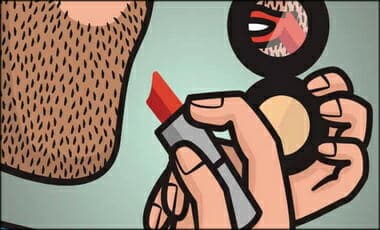
THE CHICKS discuss the conflict and confusion that has risen with transgender people.
BONUS! Misandry on display…. oh, NEVER-MIND.
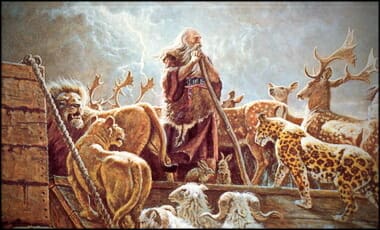
Just a little Judaeo history and information regarding the 7 Laws of Noah (like the colors in the rainbow). For a further break-down of these laws found in the Jewish understanding of the Noahic Covenant, see Judaism Online’s article, “The Seven Laws of Noah“… needless to say, Jesus came to fulfill the law in it’s entirety.

The south used to vote Democrat. Now it votes Republican. Why the switch? Was it, as some people say, because the GOP decided to appeal to racist whites? Carol Swain, Professor of Political Science at Vanderbilt University, explains.
It was not until the Republican Revolution of 1994 that for the first time in modern American History the Republicans held a majority of Southern congressional seats, a full three decades after the passage of the Civil Rights Act of 1964. As the South became less racist, it became more Republican (NATIONAL REVIEW).



During an interview with NPR’s Lulu Garcia-Navarro on June 25th, 2017, tennis great John McEnroe said that tennis great Serena Williams would rank about “700 in the world” if she played against men. The outcry on social media and in the press was swift, harsh, and omnipresent. But was it deserved? Christina Hoff Sommers, AEI Resident Scholar and Factual Feminist, serves up her analysis. (McEnroe’s comments)
What do you get when you cross sports with hyper-genderism? You get the usual outrage machine train wreck of course. Like when tennis great John McEnroe said that if Serena Williams played in men’s professional tennis she’d rank around 700th. The media erupted as if to say, “You cannot be serious!” Yes, he can—as even Williams herself agreed. (POWERLINE)

Did you know that U.S. businesses are taxed at one of the highest rates in the developed world? How bad is it? And why should you care? Watch this short video to find out.
This video is part of a collaborative business and economics project with Job Creators Network. To learn more visit about JCN.
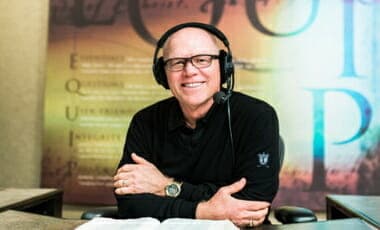
(A good quick summation of Orthodoxy can be found here at GOT QUESTIONS) Here is WRETCHED’s take:
(Below) A two hour program today playing nearly 50 minutes worth of comments (ok, at 1.2x speed!) by Hank Hanegraaff relating to his conversion to Eastern Orthodoxy and asking the simple question: can an Eastern Orthodox believer function as the Bible Answer Man? Important issues to be sure!
I have to include this discussion by William Lane Craig on the matter:

(I change the links to the Scripture references from their original source.) While there are many reasons to reject the Apocrypha as on par with Scripture, the main reason is the testimony of Christ. Here for instance is an article from the BLUE LETTER BIBLE by Don Stewart (a co-author on many works with Josh McDowell) giving 27-reasons to reject the Apocrypha as equal to Scripture… the most important point being his #27:
27. JESUS’ TESTIMONY IS DEFINITIVE
It is clear that in the first century the Old Testament was complete. Jesus put His stamp of approval on the books of the Hebrew Old Testament but said nothing concerning the Apocrypha. However, He did say that the Scriptures were the authoritative Word of God and they could not be broken. Any adding to that which God has revealed is denounced in the strongest of terms. Jesus asked the religious leaders a penetrating question.
Why do you break the command of God for the sake of your tradition? (Matthew 15:3).
Jesus’ And The Extent Of The Old Testament
A statement by Jesus seemingly gives His belief in the extent of the Old Testament.
Therefore I send you prophets, sages, and scribes, some of whom you will kill and crucify, and some you will flog in your synagogues and pursue from town to town, so that upon you may come all the righteous blood shed on earth, from the blood of righteous Abel to the blood of Zechariah son of Barachiah, whom you murdered between the sanctuary and the altar. Truly I tell you, all this will come upon this generation (Matthew 23:34-36).
He mentions Abel and Zechariah as the first and last murder messengers of God that were murdered. Abel’s murder is mentioned in Genesis while Zechariah’s was in 2 Chronicles – the last Old Testament book in the Hebrew canonical order. The fact that these two are specifically mentioned is particularly significant. There other murders of God’s messengers recorded in the Apocrypha. Jesus does not mention them. This strongly suggests He did not consider the books of the Apocrypha as part of Old Testament Scripture as with the books from Genesis to 2 Chronicles.
THERE WAS MORE TESTIMONY FROM JESUS
Jesus gave further testimony of the extent of the Old Testament canon in the day of His resurrection. He said.
How foolish you are, and how slow of heart to believe all that the prophets have spoken! . . . And beginning with Moses and all the Prophets, he explained to them what was said in all the Scriptures concerning himself (Luke 24:25,27).
Note Jesus’ emphasis on “all that the prophets had spoken.” Later He explained the extent of “all that the prophets had said.”
He said to them, “This is what I told you while I was still with you: Everything must be fulfilled that is written about me in the Law of Moses, the Prophets and the Psalms” (Luke 24:44).
This is a reference to the threefold division of the Hebrew Scripture. They constitute “all that the prophets said.” There is no reference to the Apocrypha. It would not have been part of the threefold division of the Old Testament.
So, even if an early church father thought the Apocrypha should be included as Holy Scripture, he would be wrong (see also CARM). STAND TO REASON basis their article on the matter on this point by Jesus:
Should the Bible include the Apocrypha? Here is where I think Jesus can help. Specifically, I believe Jesus’ words lead us to the conclusion that the Apocrypha is not Scripture.
During one of His heated discussions with the Pharisees and the lawyers, Jesus says,
Therefore also the Wisdom of God said, “I will send them prophets and apostles, some of whom they will kill and persecute,’ so that the blood of all the prophets, shed from the foundation of the world, may be charged against this generation, from the blood of Abel to the blood of Zechariah, who perished between the altar and the sanctuary. Yes, I tell you, it will be required of this generation.” Woe to you lawyers! For you have taken away the key of knowledge. You did not enter yourselves, and you hindered those who were entering. (Luke 11:49–51)
First, notice that Jesus mentions the blood of all the prophets. He’s not talking about some of the prophets. He’s talking about the blood of all the prophets since that foundation of the world. Next, Jesus limits who He includes with “all the prophets.” He gives us some bookends for identifying these prophets. In verse 50, Jesus says, “…from the blood of Abel to the blood of Zechariah.”
Abel is the very first prophet to die for his faith. The death of Abel is recorded in Genesis—the first book of the Jewish Scriptures. Jesus also cites the death of Zechariah as the last prophet to die. However, this isn’t right. Zechariah isn’t the last prophet to die. Chronologically speaking, Uriah—the son of Shemaiah—is the last prophet killed. You can read about his death in Jeremiah 26:20–23.
So why does Jesus list Zechariah as the last prophet to die? The reason is crucial to why we shouldn’t accept the Apocrypha as Scripture. Jesus chose Abel first and Zachariah last because they were the first and last prophets martyred in the Jewish Scriptures. The Jews of Jesus’ day would have known that Zechariah’s death is recorded in Chronicles—the last book of the Jewish Scriptures. It reads,
Then the Spirit of God clothed Zechariah the son of Jehoiada the priest, and he stood above the people, and said to them, “Thus says God, ‘Why do you break the commandments of the Lord, so that you cannot prosper? Because you have forsaken the Lord, he has forsaken you.’” But they conspired against him, and by command of the king they stoned him with stones in the court of the house of the Lord. (2 Chronicles 24:20–21)
Therefore, Jesus limits “all the prophets” to the Jewish Scriptures—from Genesis to Chronicles. It was the prophets contained in the Jewish Scriptures, and no others, who were responsible for communicating God’s word until the time of Christ. The author of Hebrews writes, “Long ago, at many times and in many ways, God spoke to our fathers by the prophets, but in these last days He has spoken to us by his Son, whom He appointed the heir of all things, through whom also He created the world” (Hebrews 1:1–2)….
Oh, BTW, I am a big fan of that guy, Jesus.

Gregg Allison and Chris Castaldo, The Unfinished Reformation: What Unites and Divides Catholics and Protestants After 500 Years (Grand Rapids, MI: Zondervan, 2016), 68-72.
…. How does God speak to the world through such revelation? A major difference between Catholics and Protestants is found in the answer to this question.
Catholics affirm that God speaks to the world through Tradition and Scripture. Similar to the twofold way that Jesus’ apostles communicated the gospel—orally, through preaching, and in writing, through the biblical text—so God communicates to his people today in a twofold pattern: the teaching, or Tradition, of the Church’s bishops, who are the successors of the apostles, and Scripture. “Sacred Tradition and Sacred Scripture are bound closely together and communicate one with the other. For both of them, flowing out of the same divine well-spring, come together in some fashion to form one thing and move toward the same goal” (CCC 80). Thus, these two modes are two streams of one source of divine authority.
Tradition is “the Word of God which has been entrusted to the apostles by Christ the Lord and the Holy Spirit” (CCC 81). This oral communication was in turn handed over by the apostles to their successors, the bishops of the Church, who maintain this Tradition and, on occasion, proclaim it as Church doctrine. For example, the Church declares the immaculate conception of Mary and her bodily assumption (to be treated later) as part of Tradition. The other mode of divine revelation is Scripture. Though Catholics and Protestants stand together in their belief that the Bible is the God-breathed, written revelation of God, they part company on many other points in their understanding of Scripture. Significantly, the Catholic Church “does not derive her certainty about all revealed truths from the holy Scriptures alone. Both Scripture and Tradition must be accepted and honored with equal sentiments of devotion and reverence” (CCC 82).
Against the Catholic affirmation of Scripture and Tradition as authoritative divine revelation, Protestants assert the principle of sola Scriptura: Scripture, and Scripture alone, is authoritative divine revelation. God speaks to the world through his Word, which is written Scripture only, not Scripture plus Tradition. This Protestant critique of Tradition is grounded on several points.
First, Protestants believe that the Catholic position has thin biblical support. For example, to buttress their position, Catholics appeal to Jesus’ explanation to his disciples: “I still have many things to say to you, but you cannot bear them now” (John 16:12). They claim this passage as an example of Jesus underscoring the necessity of both Scripture and Tradition—what he could reveal to them as he was speaking with them, and what he would need to reveal to them later, when they were able to absorb it.
The Protestant response insists that this interpretation misses the point of that interaction. It is simply telling us that as Jesus was speaking with his disciples, they could not grasp his revelation—what he was saying to them at that moment. Indeed, in short order, they would express utter confusion about his impending death (John 16:16-24). Even when they thought they could understand the unfolding calamity, Jesus informed them that they would all abandon him (John 16:25-33), and soon afterward devil-prompted Judas was poised to betray him (John 13:2; 18:1-8), and Peter denied ever knowing Jesus (John 18:15-18, 25-27).
Following Jesus’ crucifixion and resurrection, however, the disciples received the Holy Spirit. As Jesus had promised, the Spirit taught the disciples all things, brought to their remembrance all that Jesus had said to them, and guided them into all the truth (John 14:26; 16:13). Having removed the prior dullness and ignorance that had characterized the disciples, the Holy Spirit moved those who wrote Scripture to communicate the whole of divine revelation (our New Testament). This work was exactly what Jesus taught about his sending the Holy Spirit to inspire them to write Scripture. Protestants believe that, understood in context, there was no need for supplemental communication—Tradition—alongside of Scripture.1
Second, Protestants believe that the Catholic view has thin historical support as well. It is true that the apostles communicated the gospel both orally, through their preaching, and eventually in writing, through the New Testament. But when Paul points out “so then, brothers, stand firm and hold to the traditions that you were taught by us, either by our spoken word or by our letter” (2 Thess. 2:15), he is not saying that his oral teaching and his written communication consisted of different revelations which supplement each other. On the contrary, these two delivery systems presented the same divine revelation. The difference was in the form, not the content.
The early church did have a type of tradition: the doctrine that the apostles transmitted provided a proper understanding of Scripture and underscored sound doctrine. It stood in opposition to the wrong biblical interpretations of the time and the misguided beliefs of heretics. The early church’s “rule of faith” or “canon (standard) of truth” was a summary of its essential doctrines based on Scripture. The early creeds—for example, the Apostles’ Creed and the Chalcedonian Creed—affirmed the doctrines of the Trinity and of Christ derived very carefully from Scripture. Protestants embrace this type of tradition, finding it to be a fine source of wisdom from the past. But this is far from the Catholic notion of Tradition.
In fact, it was not until the fourteenth century that the Catholic Church began to make novel claims about Tradition, granting unwritten communication by Church leaders authoritative status as doctrine outside of, and in addition to, Scripture. Such an idea of Tradition is a relatively late development and is quite different from the notion as found in Scripture and in the early church.2
Standing opposed to the Catholic view of Scripture and Tradition as two modes of divine revelation, Protestants hold to the sufficiency and necessity of Scripture. Scripture is sufficient in that it provides everything that people need to be saved from sin and death, and everything that Christians need to please God fully. Specifically, God-breathed Scripture equips believers “for every good work” (2 Tim. 3:16-17). Protestants see doctrines like the immaculate conception and bodily assumption of Mary as unnecessary and unbiblical. Protestants don’t need these doctrines to possess and believe the fullness of divine revelation. They don’t need practices like the sacrament of penance and praying for the dead in order to know and do all that God requires of them. They don’t need to believe that when they take the Lord’s Supper, the bread and the wine are transubstantiated into the body and blood of Christ. These doctrines, practices, and beliefs are extra-biblical, not from Scripture alone. Thus, Scripture’s sufficiency and the principle of sola Scriptura—”Scripture alone”—are closely connected and contradict the need for Catholic Tradition.3
Scripture is necessary in that it is essential for knowing the way of salvation, for progressing in godliness, and for understanding God’s will. To put it another way, apart from Scripture there can be no awareness of salvation, growth in holiness, and knowledge of God’s will.4 Catholics, on the other hand, would maintain that Scripture is necessary for the well-being of the Church: for the Church to be robustly all that God intends it to be, Scripture is necessary. But Catholics would not hold that Scripture is necessary for the being of the Church: if Scripture were to be lost, the Church could still exist because it would still have Tradition, part of divine revelation. Protestants insist that the Church would lose its way without Scripture: if Scripture were to be lost, the Church would cease to exist because all of divine revelation would have disappeared.
How does God speak to the world? Catholics respond to this question by saying “through Scripture and Tradition.” Protestants reply, “through Scripture alone.”
FOOTNOTES 1. This affirmation does not mean that Protestantism ignores or rejects the theological wisdom that it has inherited from the church throughout the ages (a point to be made shortly). 2. Factors that contributed to this development included: (1) exaggerated and indefensible claims for papal authority not only over the Catholic Church but the entire world as well; (2) theoretical debates over which of the two options—the authority of Scripture and the authority of the Church—is supreme; (3) the introduction of the idea of apostolic succession; and (4) the novel claim that, because the Church had determined the canon of Scripture, the Church therefore possesses special revelation that is not found in Scripture. See Gregg R. Allison, Historical Theology: An Introduction to Christian Doctrine (Grand Rapids: Zondervan, 2011), especially chapters 4 and 3. In more detail, Protestants gratefully use tradition (not Tradition, as in the Catholic sense), or wisdom from the past, as a servant to help their churches engage in the proper understanding and application of Scripture and the formulation of sound doctrine. 4. This attribute does not mean that people have to possess a written copy of Scripture and be able to read it. Rather, in the case of the majority of people today in whose language Scripture has yet to be translated and/or if those people are illiterate, they only need to be able to understand oral communication. Scripture read and heard is God’s necessary Word for them.

IT IS A HUMAN LIFE ~ THE ONLY QUESTION IN THIS DEBATE
➡ Again, aside from religious arguments – biology and medical expertise put the conception of human life at conception (WHEN DOES LIFE BEGIN)
NOT A RELIGIOUS CAUSE
➡ I showed some well-known atheists who get the importance of this idea as well (they are students of history… and one of these people in the video is my favorite atheist polemicist ~ Christopher Hitchens):
BIBLE
➡ The Bible clearly view the baby in the womb as human:
WOMEN’S RIGHT
➡ I posted a video of one of a few women who are survivors of abortion:
…it should be noted when Obama was Senator he voted to pass legislation that would allow doctors to take such babies and place them on a table to die from lack of care and food…
DEVALUED LIFE
➡ …In 1997, Obama voted in the Illinois Senate against SB 230, a bill designed to prevent partial-birth abortions. In the US Senate, Obama has consistently voted to expand embryonic stem cell research. He has voted against requiring minors who get out-of-state abortions to notify their parents. The National Abortion Rights Action League (NARAL) gives Obama a 100% score on his pro-choice voting record in the Senate for 2005, 2006, and 2007. (for more info see: THIS DAY CHOOSE LIFE <<< CAUTION-GRAPHIC)
BABY PARTS FOR SALE
➡ When you devalue life I have shown clearly that they are used to power cities (BABIES: A RENEWABLE [GREEN] ENERGY SOURCE) as well as cutting up the babies and selling them on the open market ~ this next link details the many years old 20/20 investigation as well as the new info: BABY PARTS [STILL] FOR SALE ~ DEMOCRATS DEHUMANIZING HUMAN LIFE
THE FOUNDER OF PLANNED PARENTHOOD
➡ Margaret Sanger was a racist eugenicist that had NAZI doctors from Germany write op-eds in her newsletter for the foundation (MARGARET SANGER AND THE RACIST HISTORY OF PLANNED PARENTHOOD). This hatred of minorities still exists in the continued opening of PP in poor Black and Hispanic neighborhoods and the past disgrace of America is still alive today (EUGENICS: AMERICA’S PAST GENOCIDE OF POOR MINORITIES).
“We do not want word to get out that we want to exterminate the Negro population.” ~ Sanger’s letter to Dr. Clarence Gamble, Dec. 19, 1939
DEMOCRATS AWARD RACISTS
➡ Obama and Hillary Clinton both support this dreadful past of these eugenicists ~
ADOPTION
➡ A 2008 study by National Center for Health Statistics found that 33.1% of women have at some point considered adoption. Of that number 4.9% were currently seeking adoptions. That’s 901,000 women looking for babies. By most recent statistics, there are approximately 129,000 children seeking adoption. Now I’m no mathematician, but that’s 772,000 women who want to adopt a child, but will not. It seems that if we killed less of our children, this would not be a problem. Shoot, even if we take the women who were currently seeking adoptions AND had already begun taking steps – 560,000 – there aren’t enough children to go around.
(An aside: someone does not have to adopt in order to speak to all these issues)
RAPE
➡ In a very powerful DVD 22 people are interviewed that either were given birth to by a mother who was raped and chose life over the horrible crime as well as some in the presentation who are mothers talking about why they chose life (here are descriptions of a couple DVDs. I noted on my site as well Rebecca Kiessling’s story of being conceived from a rape:
PUSHING MORALITY
➡ “Do you believe the government should be able to force someone to become a parent?” Well? This is precisely what is being done by the government à as I speak! You would argue that the government should stay out of your affairs when choosing whether to become a parent (i.e., to abort or not), however, you wish the government to be involved in telling the father that he has to become a parent and supply all the necessary needs for that child. Thus, you are forcing your morality on me Susan (as a defined group) and using the power of the Federal Government to boot!!! You cannot say any differently with what I just have shown above. This belief is self-refuting and shows you to-be-the hypocrite, and not me. You see… I am for equal rights under the Constitution. A “right” has no “moderation (see below). You, on the other-hand, are for special rights inferred upon groups of people. ~ See the rest of this conversation HERE.
Discussions and Afterthoughts
I wish to start the conversation off with a quote from our Founding Documents:
The Declaration of Independence: The Declaration of Independence states that our unalienable rights are, “Life, Liberty, and the Pursuit of Happiness.” The U.S. Constitution, which is the supreme law of our magnificent nation, reinforces this American creed by the fourteenth amendment; “Nor shall any State deprive any person of life, liberty, or property, without due process of law.”
The first unalienable right is life. As a result, the unborn have the right to life. To deny it to them is not only morally wrong, but also anti-American. It is anti-American in the sense that by supporting abortion, one is also going against the Declaration of Independence. Prenatal humans are still human beings since the moment of conception, and so they have the same right to life as the humans that are already born. It is hypocritical that human beings after birth deny the right to prenatal human beings, since the humans after birth get to exercise their right to life. The prenatal human beings have the same right, and so, they should be allowed to exercise their right to life.
The second unalienable right is liberty. Many people that are pro-choice states that it is the freedom of the woman that is pregnant to decide whether to abort the child or not. They arguethat since it is her body, she should have the right to choose. It is contradictory to this idea of liberty, for the unborn child does not have a say in the matter, and as a result, it is against the liberty of the unborn child. The moment a woman becomes pregnant is the moment that the body of the woman is no longer only hers, for there is life in her womb. Another aspect of abortion as a threat to liberty is that the government classifies prenatal humans as not human, just like in the case of slavery, in which slaves were not considered humans, and so the slaver masters that were considered humans were given the right by the government to treat the slaves however they wished. To permit abortion is equivalent to permit slavery, for prenatal humans are still humans. If one understands that slavery was wrong, one must also understand that abortion is wrong.
The third unalienable right is the Pursuit of Happiness. Abortion is against this right as well, for the unborn child was denied the right to pursue his or her happiness. How will he or she be able to pursue happiness if he or she was already murdered by the process of abortion? Prenatal human beings have the right to happiness, just as human beings that are already born do.Another aspect of abortion that threatens this right is that many of women that chose abortion start regretting their decision and as a result, start feeling depressed. These women thought that abortion would help them solve their problem, but instead, it hurts them internally in the long run. In short, abortion is a threat to happiness, and if Americans want to pursue happiness, they must abolish abortion.
The purpose of our government is to secure these three unalienable rights. However, when the government allows for abortion, they are not securing these rights. Roe v. Wade, which was a 1973 Supreme Decision holding that that a state ban on all abortions was unconstitutional, is a decision that is going against these three rights. If one truly understands the Declaration of Independence and the foundation of this country, one will be against abortion, for it threatens the country’s basis. Therefore, the Declaration of Independence is a pro-life document since the moment it became ratified.
(Profile Youth ~ see more at Renew America)
This leads into a conversation with someone from Australia that apparently does not get the idea that the only reason the law need step in in this issue is to protect life… and this is the main point of the above points in the post. Our Constitution says we cannot own another person. So the topic is is the baby in the mother’s womb, human. This is what was said immediately after the post:
“is it a human life” is absolutely NOT the only question in this debate- and this is what I mean about people wanting to make this a black and white issue when it clearly isn’t.
I responded:
(Question after explaining Being)
Besides all the well argued points in the links about medical textbooks, biology, atheists, etc. ….
Another argument I personally like is the argument from “being.” This is a complex issue and is intimately tied up in some forms of the cosmological argument (example: Kalam Cosmological Argument ~ History and Argument).
Can you refer to yourself in your mother’s womb without using personal pronouns? Were you less of a person (having “being”) in the
Right out of the box I get this:
So are you also anti-war and anti-death penalty Sean?
The death penalty and war are based on persons who are not innocent. The baby in the womb has not killed anyone.
Clear enough… a thinking person would have connected the idea that the analogy breaks down, and maybe they would get into another topic? Nope.
You don’t think innocent people ever die in wars? You don’t believe innocent people have ever been put to death for crimes they didn’t commit?
I’ll take that as a “no, I am not anti those things”. Ok. So the issue is not whether or not it is a “person” then, you can NOT say that is the only issue.
There were over 20,000 innocent people that were said to die in the days and weeks of D-Day. Are these deaths due to the allies, or Hitler, Mussolini, Hirohito, and the like?
My point has been made.
Someone else chimes in:
No it has not
You can NOT say the issue is ONLY if they are people or not because you are ok with SOME people dying, even some innocent people. You just said it!
The person is missing the idea that the only time our founding documents would [read here, should] kill the innocent fetus is if the mother is going to die, like in a tubal pregnancy where in which the fetus develops in a fallopian tube. LIFE is the only issue in this… in this case the life of the mother is more important than the life of the baby in the womb… LIKE collateral damage in war. Wanting to pursue educational goals without the encumbrance of pregnancy is NOT a LIFE question. Continuing to comment on the previous response: “My point has been made.”
You haven’t made one… if you think you have — well — I don’t know whether to laugh or wag-my-head.
REMEMBER THIS NEXT SENTENCE!
Perhaps I should find more intelligent people to discuss this with.
I am willing to have an open discussion- you just want to declare you are always right and proselytize. Pointless.
Going to continue on the point the person thought they made and was done with…
So the allies are to blame for innocent deaths stemming from D-Day?
The person notes they are from Australia:
I don’t know. I have not studies American history, I am not American.
Dodge One
Please answer these 2 questions directly.
The normal person would know that I already have, but I will try and re-word it, re-explain it for her:
Australia was an Allie. Do you think the innocent people Aussies killed in WWII were their fault or Germany’s, Italy’s, and Japan’s?
Probably Australians, if they fired the guns.
Now please answer my questions.
Sorry, The onus is on the evil guys.
By “onus” I mean the loss of innocent life in a war is the blame of the tyrants, dictators, and persons who think themselves deity.
Should we stop all court proceedings because once-in-a-while cases are decided wrong?
I am just following your logic to its conclusion.
I did not claim that did I? Why can you not answer a direct question? It’s so bloody annoying.
I have.
The analogies you are attempting is a non-sequitur.
Keep in mind as the conversation progresses there are multiple points being responded to. So I talked about following ideas to their logical conclusions, which is the first response. The second was my repeating the same thing in a different way which finally clicked as a response to her question.
So we should just lock up all women who try to have abortions, I’m just following your logic to its conclusions” See how that shit gets us nowhere? Do you want a discussion or do you just want to be able to prance around in front of your son and tell him how right you always are?
No, you had not answered it, thank you for finally doing so.
I make the point that her contention about jailing mothers is not the position of ANY pro-lifer:
No, if abortion is made illegal (which will not happen), doctors would lose their license and/or be fined.
I did not deal with this myth, or, how abortion clinics are not run safely “above ground.” Women die in these clinics all the time because of lack of regulation. But the “coat hanger/back-alley” abortion thing is a myth. But here I will post a quick response:
…While preparing the League’s handbook, Sharing the Pro-Life Message, my staff and I searched high and low for evidence of an abortion ever having been performed with a coat hanger. We found none.
That isn’t to say it never happened. We know that women did attempt to do abortions on themselves, using all manner of objects. But I never found any specific evidence of a coat hanger abortion—until now.
Who Gave Her the Idea of Aborting Herself with an Coat Hanger?
What’s unusual about this case of a confirmed coat hanger abortion is that it isn’t one from the archives. It happened in 2009.
I came across the story in an article in Slate on women who decide to perform their own (illegal) abortions, despite the ready availability of legal abortion.
An account of the case says a 19-year-old woman pregnant with twins attempted to abort herself with a coat hanger and ended up in the emergency room. The babies died and the woman required a hysterectomy; she will never bear children….
…Continuing with the Convo…
What the left here in the states want to do is not allow the states (per the Constitutional rights states have) to put limits on abortions. For instance:
Seriously, my ONLY point was that you need to stop claiming that the only issue in the debate is “are they human”, because that’s a bullshit argument and it is patently false. There are multiple other issues at hand.
No, are we taking an innocent person’s life, that is the only question.
You have — really — no idea of our political process, the Constitutional protections on life, the debate between left and right, etc… How confident are you in debating these issues?
I don’t need to know your countries specific political process to know my own opinions on the matter, How fucking arrogant are you?!
…Um, yes, our Constitution protects life…
There was some cross-talk, I again get back to the starting exchange:
Can you refer to yourself in your mothers womb without using personal pronouns?
Dodge Two
No. Because like I have already stated I accept that a fetus us a human life. Why can’t you get that?
Is the reader getting that? I am not.
(Oh boy) Can someone who doesn’t accept it as life refer to themselves in their mother’s womb without using personal pronouns?
Dodge Three
I don’t know, you’d have to ask them. Why would I care?
Perhaps I should find more intelligent people to discuss this with.
BAM!
The conversation continues. What amazes me is this statement later in the convo, in part. To my son this was said:
…if you would like to pull back the ego for just a moment and go back to re-read our conversations you would see that it not facts and references I am interested in, because I am not trying to convince you of anything…
Later she said this to me:
Once again Sean, you are arguing against a position you assume I hold rather than one I actually hold- because you have placed all atheists and skeptics in a box and can’t fathom any of them being anywhere outside of that box. Bravo. Try listening to people for a change, it could really take you places in future conversations. Not with me though, I’m done….
To which I responded:
You are arguing -as if- you hold the position you don’t hold… bravo. You brought up positions that mirror the pro-choice challenges. You brought up the death penalty, war… not me. You used bad analogies to try and make a point — I was just fleshing that out.
So why discuss a topic (see the original post) you say you ALREADY hold in order to not convince someone of anything by making arguments that mirror the position you do not hold to find mutual beliefs on something you say we have mutual beliefs on? The post at the top of this strain is the issue, as your death penalty and war analogies made clear.
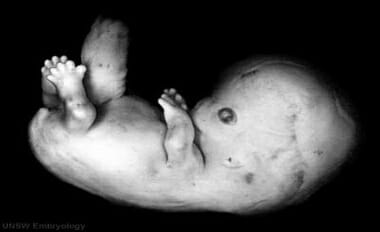
Bill Maher: Kathy, why do you oppose a women’s right to choose
Kathy Ireland: Bill, when my husband was going to medical school I underwent a transformation. Because I used to be in favor of abortion. But I noticed when I was reading through some of his medical teaching books, that according to a law in science known as the law of biogenesis, every living thing reproduces after it own kind. That means dog produce dogs, cats produce cats, humans produce humans. If we want to know what something is we simply ask what are its parents. If we know what the parents are, we know what the thing in question is. And I reasoned from that because human parents can only produce human offspring, unborn human fetuses could be nothing but human beings, because the law of biogenesis rules out every other alternative. And I concluded therefore that because human fetuses were part of our family, we should not harm them without justification.
This is an excerpt from Randy Alcorn’s book (older edition), “Pro-Life Answers to Pro-Choice Arguments Expanded & Updated“
It is uncertain when human life begins; that’s a religious question that cannot be answered by science.
An article printed and distributed by the National Abortion Rights Action League (NARAL [the original, and still largest pro-choice organization]) describes as anti-choice the position that human life begins at conception. It says the pro-choice position is, Personhood at conception is a religious belief, not a provable biological fact.
Bill O’Reilly of Fox News said on July 3, 2000, “No one knows when human life begins.” He made no distinction between biological life and any other kind of life. Mr. OReilly then went on to ask a guest if “is an embryo in a [petri] dish a human life”? Sen. Hatch’s claim that “an embryo in a petri dish is not a human life”?
1a. If there is uncertainty about when human life begins, the benefit of the doubt should go to preserving life.
[One of the reasons the Supreme Court allowed the legalization of abortion is that they werent sure of when life began.] Suppose there is uncertainty about when human life begins. If a hunter is uncertain whether a movement in the brush is caused by a person, does his uncertainty lead him to fire or not to fire? If youre driving at night and you think the dark figure ahead on the road may be a child, but it may be just a shadow of a tree, do you drive into it or do you put on the brakes? If we find someone who may be dead or alive, but were not sure, what is the best policy? To assume he is alive and try to save him, or to assume he is dead and walk away?
Shouldn’t we give the benefit of the doubt to life? Otherwise we are saying, This may or may not be a child, therefore it’s all right to destroy it.
1b. Medical Textbooks and scientific reference works constantly agree that human life begins at conception.
Many people have been told that there is no medical or scientific consensus as to when human life begins. This is simply untrue. Among those scientists who have no vested (monetary) in the abortion issue, there is an overwhelming consensus that human life begins at conception. (Conception is the moment when the egg is fertilized by the sperm, bringing into existence the zygote, which is a genetically distinct individual.)
Dr. Bradley M. Pattens textbook, Human Embryology, states:
Dr. Keith L. Moores text on embryology, referring to the single cell zygote, says:
Doctors J. P. Greenhill and E. A. Friedman, in their work on biology and obstetrics, state:
Dr. Louis Fridhandler, in the medical textbook Biology of Gestation, refers to fertilization as:
Doctors E. L. Potter and J. M. Craig write in Pathology of the Fetus and the Infant:
Popular scientific reference works reflect this same understanding of when human life begins. Time and Rand McNallys Atlas of the Human Body states:
In an article on pregnancy, the Encyclopedia Britannica says:
These sources confidently affirm, with no hint of uncertainty that life begins at conception. They state not a theory or hypothesis and certainly not a religious belief every one is a secular source. Their conclusion is squarely based on the scientific and medical facts.
1c. Some of the worlds most prominent scientist and physicians testified to a U. S. Senate committee that human life begins at conception.
In 1981, a United States Senate Judiciary Subcommittee invited experts to testify on the question of when life begins. Al of the quotes from the following experts come directly from the official government record of their testimony.
Dr. Alfred M. Bongioanni, professor of pediatrics and obstetrics at the University of Pennsylvania, stated:
I am no more prepared to say that these early stages [of development in the womb] represent an incomplete human being than I would be to say that the child prior to the dramatic effects of puberty is not a human being. This is human life at every stage.
Dr. Jerome LeJeune, professor of genetics at the University of Descartes in Paris, was the discoverer of the chromosome pattern of Downs syndrome. Dr. LeJeune testified to the Judiciary Subcommittee that:
Professor Hymie Gordon, Mayo Clinic:
Professor Micheline Matthews-Roth, Harvard University Medical School:
Dr. Watson A. Bowes, University of Colorado Medical School:
A prominent physician points out that at these Senate hearings, Pro-abortionists, though invited to do so, failed to produce even a single expert witness who could specifically testify that life begins at any other point other than conception or implantation.
1d. Many other prominent scientists and physicians have likewise affirmed with certainty that human life begins at conception.
Ashley Montague, a geneticist and professor at Harvard and Rutgers, is unsympathetic to the pro-life cause. Nevertheless, he affirms unequivocally, The basic fact is simple: Life begins not at birth, but conception.
Dr. Bernard Nathanson, internationally known obstetrician and gynecologist, was co-founder of what is now the National Abortion Rights Action League (NARAL [Dr. Nathanson help start the entire pro-choice movement]). He owned and operated what was at the time the largest abortion clinic in the Western hemisphere. He was directly involved in over sixty thousand abortions.
Dr. Nathansons study of developments in the science of fetology and his use of ultrasound to observe the unborn child in the womb led him to the conclusion that he had made a horrible mistake. Resigning from his lucrative position, Nathanson wrote in the New England Journal of Medicine that he was deeply troubled by his increasing certainty that I had in fact presided over 60, 000 deaths.
In his film, The Silent Scream, Dr. Nathanson later stated, Modern technologies have convinced us that beyond question the unborn child is simply another human being, another member of the human community, indistinguishable in every way from us. Dr. Nathanson wrote Aborting America to inform the public of the realities behind the abortion rights movement of which he had been a primary leader. At the time Dr. Nathanson was an atheist. His conclusions were not even remotely religious, but squarely based on the biological facts.
Dr. Lundrum Shettles was for twenty-seven years attending obstetrician-gynecologist at Columbia-Presbyterian Medical Center in New York. Shettles was a pioneer in sperm biology, fertility, and sterility. He is internationally famous for being the discoverer of male- and female- producing sperm. His intrauterine photographs of preborn children appear in over fifty medical textbooks. Dr. Shettles staes:
The official Senate report on Senate Bill 158, the Human Life Bill, summarized the issue this way:
Does It Matter?
In a statement form the The Center for Bioethics and Human Dignity, Director of Media and Policy Daniel McConchie said:
Jews and Blacks were once said by the courts to be less than human, I wonder if we are headed down that path again?
Potential Life?
The Fetus Is Only A Potential Human Life.
Only through mind-numbing stupidity could someone suggest that when human sperm and human eggs unite they produce something that is only “potential human life.”
If the word “potential” is suggesting that the unborn is only potentially alive, that is easily disproved. Even in the earliest stages of pregnancy, sonograms show movements and heartbeats that do not belong to the woman. Whatever else the fetus is, it is impossible to logically argue that it is not, at least, alive.
On the other hand, for “potential” to be referring to the word human, a fetus would have to have the potential of becoming either a human being or some other form of life. Perhaps a parrot or a spider. Of course, the problem is that there is no record of such a thing having ever occurred.
So while it may be reasonable to say that a fetus is a potential major league baseball star or a potential school teacher, it is idiotic to say that a fetus is a potential human being. If for no other reason, the fetus is a living human being because that is the only thing it can be.
Also, if the issue is “development,” let’s not forget that human beings develop for their entire lives. A fetus is less developed than a newborn just as a child is less developed than an adult. But being less developed than an adult does not mean that a child is any less a human being. That’s also true of the unborn.
Pro-lifers aren’t the only ones who know that it is a baby who is killed in an abortion. At a National Abortion Federation conference in Philadelphia during September of 1994, Texas abortion clinic director, Charlotte Taft, said, “When [a pro-choice activist in the Dallas community] came into our clinic – we were inviting her to learn more about abortions – this is a quote from this woman – she said, ‘If I believed that abortion was the deliberate ending of a potential human life, I could not be pro-choice.’ I said, ‘It would be best for you not to see a sonogram.’”
Less than two years later, at another National Abortion Federation conference in San Francisco, a New York abortion clinic director, Merle Hoffman, stated “…I mean, we are talking about an abortion here. And uh, also that the staff is uncomfortable when a patient said, ‘I think I’m killing my baby.’ So I’m comfortable with saying, ‘Yes, you are, and how do you feel about that?’”
The Unborn is Only a Potential Human Being
This objection is related to the first one above and so often the two objections must be dealt with together. Refer to the quotes above, along with these additional quotes by embryologists (who should be considered experts in the subject matter) relating to the actual (not potential) humanness of the unborn:
It is the penetration of the ovum by a spermatozoan and the resultant mingling of the nuclear material each brings to the union that constitutes the culmination of the process of fertilization and marks the initiation of the life of a new individual. (Dr. Bradley M. Patten, Human Embryology, 43)
The cell results from fertilization of an oocyte by a sperm and is the beginning of a human being…Each of us starts life as a cell called a zygote. (Dr. Keith L. Moore, The Developing Human: Clinically Oriented Embryology, 1, 12).
The science and logic behind this is simple and straightforward. The unborn has human parents and human DNA. The unborn has a human genetic fingerprint. In other words, human beings make human beings. If the unborn is not a human, one needs to explain how it is possible for two human beings to produce something that isn’t human (in spite of the scientific evidence) but somehow later becomes human.
To put it another way, life is a continuum. Embryologists agree that from the moment of conception the unborn is a distinct, living, and whole human being. Scott Klusendorf sums it up this way:
You didn’t come from an embryo. You once were an embryo. At no point in your prenatal development did you undergo a substantial change or change of nature. You began as a human being and will remain so until death. Sure, you lacked maturity at that early stage of your life (as does an infant), but you were human nonetheless.
In other words, “embryos are human individuals at a particular stage of their development.” This is an important point to grasp. No one is arguing that embryos are fully mature and developed human beings. Neither are newborns or toddlers for that matter. Rather, embryos, like newborns and toddlers, are human beings at a particular stage of development.
To summarize, the unborn are distinct from their parents possessing their own unique chromosomal structure and directing their own internal development. They are living because dead things do not grow, metabolize, or react to stimuli. And they are human because they come from human parents and have a human genetic signature. All the unborn needs are time and nourishment, just like the newborn.
Therefore, the unborn is not a potential human being anymore than a newborn is a potential human being. They are both human beings at particular stages of development. An embryo is a potential fetus, which is a potential newborn, which is a potential toddler, which is a potential adolescent, which is a potential adult. But all are human beings.
On a more abstract philosophical note, a potential X must be an actual Y. It is not enough for the defender of abortion to say the unborn is a potential human being. They must define what it is actually. So if they are going to deny that the unborn is actually human, what is it? What kind of being is it? A fish being? An ape being? A cat being? Again, science makes it clear that the unborn from conception belongs to the species Homo-sapiens, in other words, the unborn is a human being.
Tiny Babies Are Like Acorns
Objection: “This is wrong. The unborn—especially at their earliest stages—are potential humans, but they’re not yet humans. An acorn can one day grow into an oak tree, but that doesn’t mean you would call an acorn an oak tree, does it?”
Response: This objection evinces a fundamental misunderstanding of human biological development. There is no such thing as a “potential” human; there are human haploid gametes, male and female, and when they meet, they create a fully actual human being, no “potential” necessary.
After being created, a human being surely has a lot more growing to do, but the creation—the dividing line between nonexistence and actualized existence—has already happened. Full and complete humanity does not depend upon growth but rather origination—that is to say, fertilization.
The acorn-to-oak tree argument is a clever explanation of a flawed hypothesis. For the purposes of this analogy, the relevant feature of both acorns and oak trees is not their various stages of development but the fact that they both belong to the tree family Fagaceae.
No serious person would claim that an acorn, simply by dint of being smaller and less-developed than an oak tree, is somehow less a part of Fagaceae than a fully-grown oak is. They are both part of the same family no matter what stage of their development. Of course, we don’t give basic rights to members of Fagaceae, but if we did, we would be logically obliged to extend those rights to all members of Fagaceae, acorn and oak alike.
We do, however, recognize the rights of members of the species Homo sapiens, and thus we should extend those rights to all members of this species—born and unborn, big and small, strong and weak, vocal and silent.

BTW, as a man, I think of “Barbarella” when I hear “feminist science.” Why do I say that? To note my natural side as a man [Romans 7:14-24] AS WELL AS TO cause deep despair in any feminist who happens along this blog-post.
There were a lot of feminist scientists in “Blame it on Rio” as well — cue smiley wink.
Feminists now claim the biggest problem with science today is that there are too many white straight males. Bill Whittle, Stephen Green, and Scott Ott tackle this outrageous claim.