Calvinism: God Meticulously Controls Everything | even this post

  • God from all eternity did, by the most wise and holy counsel of his own will, freely and unchangeably ordain whatsoever comes to pass; yet so as thereby neither is God the author of sin, nor is violence offered to the will of the creatures, nor is the liberty or contingency of second causes taken away, but rather established. – Westminster Confession, III.I. 
  • Although in relation to the foreknowledge and decree of God, the first cause, all things come to pass immutably and infallibly, yet by the same providence he ordereth them to fall out, according to the nature of second causes, either necessarily, freely, or contingently. – Westminster Confession, V.II. 

  • “So here I see that God’s command is that the sons of Eli ought to listen to and obey their father, yet the will of God was that they would not listen so that He would put them to death.” – Peter Pike
  • “Nothing has ever come to pass, or ever will, merely because God knew it. The cause of all things is the will of God.” – Arthur Pink
  • “The question, though, is whether God merely permits evil, or whether in addition he actually brings evil about in some sense. I think the latter is true. Scripture often says that God brings about sinful decisions of human beings If evil comes from some source other than God, that would be pretty scary.” – John Frame
  • “That men do nothing save at the secret instigation of God, and do not discuss or deliberate on anything but what he has previously decreed with himself, and brings to pass by his secret direction, is proved by numberless passages of Scripture.” – John Calvin
  • “But where it is a matter of men’s counsels, wills, endeavours, and exertions, there is greater difficulty in seeing how the providence of God rules here too, so that nothing happens but by His assent and that men can deliberately do nothing unless He inspire it.” – John Calvin

John MacArthur Tells Us There Is No Free Will

God controls first as well as secondary causes… in the determinism that has infected the Christian church. This idea is extra Biblical, brought in by Augustinian gnosis and ramped up by Calvin.

Neoplatonism (ca. AD 250) had invented this crucial theodicy by appealing to the inscrutable secret counsels of God, who is fair by definition, regardless of whatever apparent evils he desires and ordains. Prior Christians had never required this implausible and disingenuous attempt at a defense for their God.

Page 235 of “Calvinism: A Biblical and Theological Critique” (excerpt here)

I asked GROK the following:

Can you dumb this down like we are discussion this over coffee

  • how foolish and frail is the support of divine justice afforded by the suggestion that evils come to be, not by His will but by His permission. . . . It is a quite frivolous refuge to say that God otiosely permits them, when Scripture shows Him not only willing, but the author of them. . . . Who does not tremble at these judgments with which God works in the hearts of even the wicked whatever He will, rewarding them nonetheless according to desert? Again it is quite clear from the evidence of Scripture that God works in the hearts of men to incline their wills just as he will, whether to good for His mercy’s sake, or to evil according to their merits.

John Calvin, The Eternal Predestination of God, 10:11

Here is GROK’s input:

Alright, let’s grab that coffee and talk this through like normal people—no big theology words unless we have to, and I’ll explain them right away.

So John Calvin (the 1500s guy who shaped a lot of Protestant thinking) is basically saying: “Look, some people try to defend God by saying He doesn’t want evil stuff to happen—He just kinda allows it or ‘permits’ it, like He’s hands-off. But that’s weak sauce, in Calvin’s view. He thinks the Bible shows God is way more involved: God actually wills (decides and makes happen) even the bad things, and in some sense He’s behind them as their ultimate ‘author’ or source.”

He calls the “God just permits it” idea a flimsy excuse (“frivolous refuge”) because Scripture (in his reading) pictures God actively steering everything—including hardening hearts, inclining people’s wills toward evil when they deserve it, and using wicked people to carry out His judgments.

The key bits:

  • God doesn’t just sit back and go “Eh, okay, let that sin happen if you want.” Nope—He actively works in people’s hearts to turn their desires one way or another.
  • For good people/actions: God does this out of mercy (He chooses to make someone want good).
  • For bad people/actions: He does it “according to their merits” (they deserve judgment, so He inclines them toward evil as part of punishing them fairly).
  • Even so, God still judges and punishes them for what they did—He rewards “according to desert” (what they deserve).

In coffee terms: Imagine you’re watching a movie where the director not only lets the villain do villainous things but actually scripts and directs every move the villain makes—down to the thoughts in their head. The villain is still 100% guilty and evil for choosing/doing it, but nothing happened outside the director’s plan. Calvin’s saying God is that ultimate Director over everything, including the evil plot twists. The “He just permitted it” line feels like downplaying how in control the Director really is.

This ties into his bigger idea of predestination: God has already decided from eternity who gets saved (by His mercy) and who doesn’t (left to their deserved fate), and He sovereignly shapes everything—including sins—to bring that about.

A lot of people (then and now) hear this and go “Whoa, that makes God sound like the author of evil!” Calvin would push back hard: No, because the evil comes from the person’s wicked heart and desires (they really want it, they’re not robots forced against their will). God just sovereignly uses and directs it for His purposes, without being tainted by it Himself. But yeah—he’s not shy about saying God is behind it all, not merely watching from the sidelines.

Modern Calvinists sometimes soften this a bit (they talk more about “permission” but insist it’s not “bare” or passive permission—God ordains what He permits). But Calvin himself? In this passage, he’s pretty blunt:

  • the permission idea is foolish if it pretends God isn’t willing and authoring these things in some real sense.

Heavy stuff over coffee, right? Makes you wonder about free will, justice, and how a good God runs a world with so much darkness. What’s your take—does that framing help, or does it still feel off?

In a wonderful article, I excerpt a long clip from the end of it:

  • Chapter 3 – The Calvinist Theological and Soteriological Doctrines

(from GOOD NEWS APOLOGETICS)

…. Predestination refers to what God will surely do for the believer once that choice is made. Believers are predestined to adoption, sanctification, salvation, and eternal life. Unbelievers are predestined to alienation from God, eternal death, and hell. God has not predestined or predetermined the “obedience of faith” for certain unconditionally elected individuals and the “love of darkness,” “rebellion,” “spiritual alienation,” and “eternal death” for all others.  No doubt, the Bible teaches that there are special divine predeterminations regarding God’s plans and purposes for the world, especially concerning salvation history.  God is personal.  Therefore, we would expect God to act personally in his world with creatures made in his image.  These divine predeterminations apply in special ways to certain individuals and groups.  These individuals are divinely appointed to certain tasks, as in the case of Jesus himself, to be the Christ, our Savior.  The nation of Israel was established by God through the revelation of Himself to Abraham, Isaac, and Jacob (i.e., Israel) and therefore “chosen” by God to fulfill a certain role in salvation history.  Israel is spoken of as God’s “chosen people,” and yet the group was obviously comprised of individuals with free moral agency.  The church also is comprised of individuals designated as “a chosen race, a royal priesthood, a holy nation, a people for his own possession” (1 Pet. 2:9) because they believe in God and Christ as the way of salvation.  These believers are referred to in terminology corresponding to the descriptions used of Israel in the Old Testament. The relationship God had with Israel, of which Abraham’s faith is paradigmatic, is now applied to Gentiles who are of the faith of Abraham.  Only now Christ has come, and New Testament believers live on this side of an unfolding salvation history.  Therefore, these New Testament believers – both Jew and Gentile – are now among “the elect” by virtue of being “in Christ” by faith; a faith like that of Abraham, exercised freely upon hearing from God (OT) or the gospel message (NT).  These believers, spoken of in language reminiscent of Israel’s status in the Old Testament, were once “not a people, but now you are God’s people; once you had not received mercy, but now you have received mercy.” (I Pet. 2:10)  Sinners are among “the elect” because they believe in Christ who is the Chosen One, that is, as they “come to him, a living stone rejected by men but in the sight of God chosen and precious” (1 Pet. 2:4).

The point is that Scripture testifies to the fact that divine sovereignty cannot mean that God predetermined the minutest details of all human thought and action, along with each person’s eternal destiny, which lands us in an inevitable and nonsensical theistic determinism.  This is not the biblical meaning of “election” or “predestination.”  We know this by virtue of the logical and moral incoherence of the Calvinist interpretations.  An objective, rational, moral assessment of Scripture and human history, from the past to the present, makes evident that theistic determinism is false.  Rather than looking through the lens of theistic determinism, we can see that God’s purposes are realized through his divine actions in relation to submissive and cooperative persons as well as through indifferent or hostile persons.  All that occurs is not decreed to happen as it does by the will of God and therefore caused by God, for this would logically indict God as the author and doer of evil.  Rather, certain actions and events occur by the free decisions of human beings, especially evil doings.  But God is still sovereign.  He can incorporate what he sees fit into his ultimate plans and purposes for the world and mankind by either his direct intervention and spiritual activity and influence, or his final judgment. But the believer has this promise – “And we know that in all things God works for the good of those who love him, who have been called according to his purpose.” (Rom. 8:28, NIV). Those who love him are those who put their faith in God and Christ as savior when they heard the call of the message of “good news.”  Those “called according to his purpose” refer to all those who, having heard the “good news” of Jesus Christ, believed it, and have received eternal life. All this was the result of God’s purpose to save mankind in Christ.  It has been God’s purpose to save sinners by sending Christ to die and bring this good news to all from the very beginning (Gen. 3:15).  And this salvation is for everyone. “For God has bound everyone over to disobedience so that he may have mercy on them all.” (Rom. 11:32, NIV)

In addition, God will also bring about a final conquering of all his enemies.  Not all things are good, and God is not responsible for evil acts.  Therefore, God has not ordained “whatsoever comes to pass” as stated in the Westminster Confession of Faith.  This is evident in that at Christ’s second coming, he will judge, punish, and rectify evil and injustice.  Again, to believe that God predetermined and is the ultimate cause of the evil he will one day judge and punish would be nonsense.  Furthermore, it impugns the character of God.

The point to note is that divine sovereignty, election, predestination, and foreknowledge do not require theistic determinism.  The scriptures everywhere affirm both God’s sovereignty and substantial, meaningful human freedom and responsibility.  Therefore, God’s sovereignty, biblically defined, cannot be understood as divine determinism but rather should be understood as God’s personal and authoritative involvement in human affairs and his creation.  The scope of divine providence certainly extends to the minutest details regarding his care and concern for his creatures, especially believers.  But divine providence is not divine determinism.  Providence includes God’s ability to intervene in the affairs of this world and on behalf of believers as he wills.  It includes his ability to employ actions that are evil and wrong to serve his purposes (Gen. 50:15-31). This certainly is the biblical testimony regarding divine sovereignty and providence.  If there is “mystery” to be had, it lies here. It does not lie in accepting what we know to be incoherent, inconsistent, and contradictory interpretations of the Bible. That is just to ignore the God-given rules of logic and our moral intuitions in one’s hermeneutic. Hence, biblical sovereignty and providence cannot be defined as the universal divine causal determinism of Calvinism.  Therefore, Calvinism is untenable and a misinterpretation of Scripture. It is to be rejected.

Conclusions

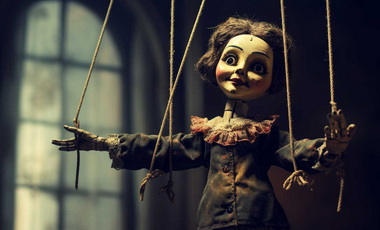
We have seen that the Calvinists’ interpretation of the eternal divine decree and God’s sovereignty amounts to a universal divine causal determinism.  Hopefully, you may have begun to grasp the negative logical and moral implications of this theistic determinism.  In a world that is predetermined by God down to the minutest details, which includes everyone’s thoughts, beliefs, desires, and actions, what happens to human freedom, decision-making, and choices?  What happens to personal moral responsibility, culpability, judgment, and justice?  And what do we do with the fact that everyone’s eternal destiny is already decided unilaterally by God himself and has absolutely nothing to do with you, me, or anyone else?  What do human beings become in a world in which God predetermined every detail? Robots? Puppets? These analogies are appropriate. Furthermore, who is among the elect, and who is among the non-elect, remains unknown to us.  The Calvinist will respond that, regardless of these problematic implications, we need to accept these Calvinist tenets because the Bible teaches them.

But how do we know the Bible teaches them, especially when they do not square with the fact that the Bible overwhelmingly testifies to a contingent reality and human responsibility?  How do we know this is what the Bible teaches when theistic determinism wreaks logical and moral havoc with other things that this same Bible clearly teaches, especially regarding the definition of the gospel as “good news,” the nature of faith, and God’s character as loving and just? Where has the gospel gone? You may also be asking, if God is the sole agent and cause of everything that occurs, doesn’t that make him the source and doer of all evil?  If not, why not? Moreover, if you cannot know that God loves you, desires that you be saved, and has provided for your salvation, how does that influence your relationship to God and the meaning and purpose of life?  These questions are profound and therefore need answers. Calvinists need to answer them. We will deal with them in due course.

Having reviewed the Reformed Calvinist doctrines, we can conclude that Calvinism amounts to a theistic determinism.  That theistic determinism, by virtue of being a determinism, is contrary to Scripture. As such, Calvinism is unbiblical.

How Calvinists Get God’s Sovereignty Wrong
Leighton Flowers | Calvinism | Soteriology 101

Calvinists love to talk about God’s sovereignty, but do they define sovereignty correctly? Calvinists typically choose to define sovereignty as meticulous determinism, i.e. that God controls and/or brings about everything that happens…including all evil. Check out the full video here:    Calvinism is Determinism  

Of course there is a fatal flaw involved in this thinking, one “I” point out here in this post on Al Mohler… however, the flaw, in short, is this:

  • Thus in a world governed by meticulous, divine determinism, beliefs are not the product of examination, analysis, reason and contemplation whereby we search for truth and weigh various options and make informed decisions. Rather they are just the spin-offs of God’s universal, exhaustive, meticulous divine decrees. White would have to concede that a person who believes in meticulous, divine determinism does so for the same reason that another person disbelieves meticulous, divine determinism. It has nothing to do with evaluation, truth and reason—and everything to do with what has been determined for them to believe! — A Theology in Tension (hat-tip to SOTO 101, “Calvinism’s Greatest Fallacy“)

The following is with a Hat-Tip to Brian H.W. — adding to a thought I had:

Religio-Political Talk (RPT), Here’s enough that should get Calvinists to rethink! Unfortunately too many are now too heavily invested in defending it, their pride keeps them from rejecting it.

Those who call themselves “Calvinist” – On which of the following do you DISAGREE with Calvin and why label yourself after the name of a fallible man? Would Jesus want you to?

  1. Evanescent Grace: God making some reprobates think they are elect to better convict them
  2. Impassibility: God did not grieve in his heart for the lost in Noah’s day
  3. Capital Punishment for heretics: Including those who write against his doctrine of predestination
  4. Born to Burn: Some are damned by God from birth, to be tormented in hell for God’s glory and pleasure.
  5. Scripture’s Description of God can not be known from His perspective: but only as a false one, not as He really is.
  6. Disproving Calvin’s predestination doctrine: according to Calvin is only attempted by those who think they are wiser than the Holy Spirit.

1)experience shows that the reprobate are sometimes affected in a way so similar to the elect, that even in their own judgment there is no difference between them. a taste of heavenly gifts, a temporary faith, is ascribed to them. Not that they truly perceive the power of spiritual grace and the sure light of faith; but the Lord, the better to convict them, and leave them without excuse, instills into their minds such a sense of his goodness as can be felt without the Spirit of adoption.” (Institutes – 3.2.11)

2) “The repentance which is here ascribed to God does not properly belong to him…. The same reasoning, and remark, applies to what follows, that God was affected with grief. Certainly God is not sorrowful or sad; but remains forever like himself in his celestial and happy repose….” (Comm. Gen 6:6)

3) In his letter to the church in Poitiers, #389 SLW6 – “papers and books of his Castalion [former reformer in Geneva with Calvin], in which an attempt was made to impugn our doctrine touching predestination, have been condemned with a prohibition to publish them 👉on pain of death👈…. that indeed the least we can expect is that the Seigneurs, to whom have been entrusted the sword and authority, should not permit the faith in which they are instructed to be lightly spoken of in their own city. “

4)he arranges all things by his sovereign counsel, in such a way that individuals are born, who are 👉doomed from the womb👈 to certain death and are to glorify him by their destruction.” (Institutes – 3.23.6) And – “We say, then, that Scripture clearly proves this much, that God by his eternal and immutable counsel determined once for all those whom it was his pleasure one day to admit to salvation, and those whom, on the other hand, it was 👉his pleasure to doom👈 to destruction.” Calvin, ICR, 3.21.7

5)any description which we receive of him must be lowered to our capacity in order to be intelligible. And the mode of lowering is 👉to represent him not as he really is👈, but as we conceive of him.” (Institutes – 1.17.13)

6) “The observation with which I opened this discussion, I now repeat at its close: that no one will ever attempt to disprove the doctrine which I have set forth herein, but he who may imagine himself to be 👉wiser than the Spirit of God👈.” (Eternal Predestination of God, trans. Cole, p. 170, the translation by Reid says – “no one can disprove”, p.162)

Why Both Atheists and Christians Need to Believe in Free Will

The audio at the start from Jeff Durbin is bad… so one has to put up with it a little when the initial audio is played. But the same arguments against atheistic determinism can be used against Augustinian/Calvinistic [theistic] determinism:

Dr. Braxton Hunter, President of Trinity Seminary and host of Trinity Radio, joins Dr. Flowers to talk about how the main arguments against naturalistic determinism can apply against theistic determinism, as held by Compatibilistic Calvinists. They demonstrate this by engaging a clip from Apologia Studios with Jeff Durbin which references a quote from Calvinistic apologist, Greg Bahnsen.

 Justin Brierley drives this point home in his article:

Atheist Determinism 

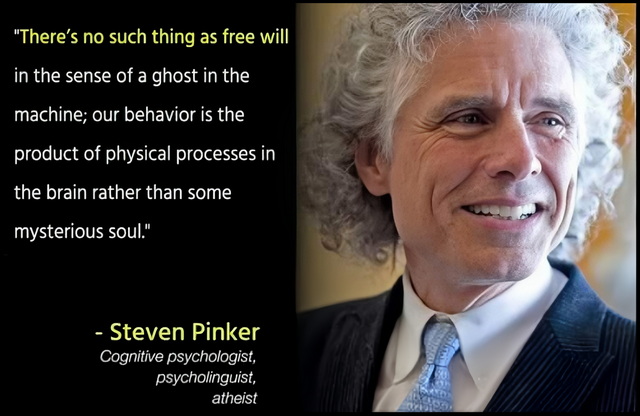
Calvinistic Christians have more in common with many atheists than they may realize. Determinism has also become a very popular philosophy among their godless counterparts. For some time, prominent voices in atheist circles have also been announcing that the notion of free will is past its sellby date.

Popular atheist author Sam Harris wrote a book titled Free will (Free Press) which, drawing on research in neuroscience, argued that our innate sense of freedom is merely an illusion foisted on us by nature. None of us is actually in control of what we do. So far so Calvinist. But rather than believing God has predestined us, atheists like Harris say the universe is responsible.

Atheist determinism springs from a ‘materialist’ worldview. All that exists is the ‘material’ stuff of the universe. Everything about us and the world we live in can ultimately be explained by the physics of atoms, electrons, quarks and neutrons, interacting according to the predictable regularity of natural laws.

Think of it like this: the skill of the snooker player is in predicting as accurately as possible how the balls will ricochet off each other in order to find the pockets on the table. But, theoretically, if a snooker player lined up their very first shot with perfect precision and perfect force, they could clear the table in one shot. The universe is like that, but on a much bigger scale.

Every single physical event, from the movements of electrons to the orbits of the planets, follows predictable laws of cause and effect. Therefore, the way the universe is now is a direct result of the way it was when it first began. If you rewound the clock by 13 billion years to the exact same physical state of affairs, things would roll out in exactly the same way they already have.

But, in such a universe, the idea that we have any measure of free will evaporates. Every aspect of our existence was predestined by a cosmos blindly following the laws of cause and effect.

READ IT ALL: “Why Both Atheists and Christians Need to Believe in Free Will

You cannot have LOVE with people made into dolls with a pull string that say, “I love you.” This is evidence that Calvinists/”Reformed” make Calvary useless.

Here is a favored adapted combination of mine:

One of the most intriguing aspects mentioned by Ravi Zacharias of a lecture he attended entitled “Determinism – Is Man a Slave or the Master of His Fate,” given by Stephen Hawking, who is the Lucasian Professor of Mathematics at Cambridge, Isaac Newton’s chair, was this admission by Dr. Hawking’s, was Hawking’s admission that if “we are the random products of chance, and hence, not free, or whether God had designed these laws within which we are free.”[1] In other words, do we have the ability to make choices, or do we simply follow a chemical reaction induced by millions of mutational collisions of free atoms? Michael Polyni mentions that this “reduction of the world to its atomic elements acting blindly in terms of equilibrations of forces,” a belief that has prevailed “since the birth of modern science, has made any sort of teleological view of the cosmos seem unscientific…. [to] the contemporary mind.”[2]

[1] Ravi Zacharias, The Real Face of Atheism (Grand Rapids, MI: Baker Books, 2004), 118, 119.

[2] Michael Polanyi and Harry Prosch, Meaning (Chicago, IL: Chicago university Press, 1977), 162.

This is one of the biggest reasons I [about half-a-year-ago] have rejected the 5-Points of Calvinism. Which is, determinism. I have written, posted, and debated this with atheists for years on the WWW., and when I saw that people like Al Mohler refute the atheist versions of this but does not apply the same thinking to his position — my apologetic bug was brought alive. Here is the video that started this rabbit trail:

Here is the full Al Mohler article: “So . . . Why Did I Write This? The Delusion of Determinism

The subversion of moral responsibility is one of the most significant developments of recent decades. Though this subversion was originally philosophical, more recent efforts have been based in biology and psychology. Various theorists have argued that our decisions and actions are determined by genetics, environmental factors, or other forces. Now, Scientific American is out with a report on a study linking determinism and moral responsibility.

The diverse theories of determinism propose that our choices and decisions are not an exercise of the will, but simply the inevitable outcome of factors outside our control. As Scientific American explains, determinists argue that “everything that happens is determined by what happened before — our actions are inevitable consequences of the events leading up to the action.”

In other words, free will doesn’t exist. Used in this sense, free will means the exercise of authentic moral choice and agency. We choose to take one action rather than the other, and must then take responsibility for that choice.

This link between moral choice and moral responsibility is virtually instinctive to humans. As a matter of fact, it is basic to our understanding of what it means to be human. We hold each other responsible for actions and choices. But if all of our choices are illusory — and everything is merely the “inevitable consequence” of something beyond our control, moral responsibility is an exercise in delusion.

Scientific American reports on a study performed by psychologists Kathleen Vohs and Jonathan Schooler. The psychologists found that individuals who were told that their moral choices were determined, rather than free, were also more likely to cheat on an experimental examination.

As Shaun Nichols reports:

The Western conception idea of free will seems bound up with our sense of moral responsibility, guilt for misdeads and pride in accomplishment. We hold ourselves responsible precisely when we think that our actions come from free will. In this light, it’s not surprising that people behave less morally as they become skeptical of free will. Further, the Vohs and Schooler result fits with the idea that people will behave less responsibly if they regard their actions as beyond their control. If I think that there’s no point in trying to be good, then I’m less likely to try.

Even if giving up on free will does have these deleterious effects, one might wonder how far they go. One question is whether the effects extend across the moral domain. Cheating in a psychology experiment doesn’t seem too terrible. Presumably the experiment didn’t also lead to a rash of criminal activity among those who read the anti-free will passage. Our moral revulsion at killing and hurting others is likely too strong to be dismantled by reflections about determinism. It might well turn out that other kinds of immoral behavior, like cheating in school, would be affected by the rejection of free will, however.

There are limitations to this kind of research, of course, but the report is both revealing and unsurprising. If we are not responsible for our actions, they why would people do the right thing? The most immediate result of such thinking is the subversion of moral accountability.

Of course, this pattern of thought also renders human existence irrational. How can we understand ourselves, our children, our spouses, our friends, or our neighbors if moral responsibility is undermined by determinism. Our legal system would completely collapse, as would the entire experience of relating to other human beings.

Shaun Nichols explains that “the Western conception of free will seems bound up with our sense of moral responsibility.” That “Western conception” is a product of the Christian inheritance and the biblical worldview. The Bible clearly presents human beings as morally responsible. Christians of virtually all theological traditions — including Reformed theology, Arminianism, and Catholicism — affirm moral and spiritual responsibility and the authenticity of the experience of choice.

As a matter of fact, this capacity and accountability is rooted in the biblical concept of the imago Dei — the image of God. Our Creator made us as moral creatures and planted within us the capacity of conscience. All this refutes the concept of moral determinism.

In its most modern forms, determinism is a product of naturalism — the belief that everything must be explained in purely natural terms. Naturalism explains the human mind (including the experience of moral choice) as a matter of chemical reactions in the brain, and nothing more.

Determinism is implied by naturalism and relieves human beings of moral responsibility. There is no moral revolt against the Creator, no Fall, and no need for the Gospel. This subversion of moral responsibility is both a delusion and a trap. And, as the Scientific American report indicates, even those who say they believe in moral determinism are unable to live consistently with this assumption. We know we are responsible.

SOME QUOTES CONNECTING THIS IDEA MORE

ATHEISTS:

THEISTS:

If Mohler applies that to his own theological determinism, he would have to reject it.

THERE IS NO GOSPEL IN TULIP

In other words, a person accepts Christ’s death and Resurrection as secondary to being ELECTED.

Here is more on this via this excerpt of an article and short video:

ARMINIAN PERSPECTIVE:

Calvinist: “That is why Christ said that you must be born again in order to even see the kingdom of God. The new nature must come before faith. God making us willing is not mind control in the sense that you describe it but giving us a new nature and a new mind. Of course the analogy isn’t perfect but it does illustrate the fact that we can be made to love without it being against our will.”

Me: “No it doesn’t. If we were God haters that wanted nothing to do with Christ prior to His irresistible act of “giving us a new heart” that “makes us willing”, then it was certainly “against our will” because our will was to hate and reject God prior to His irresistible working in us. It would be like a man meeting a girl at a bar and the girl doesn’t like him and wants nothing to do with him. In fact, she finds him repulsive. So the man slips a pill in her drink that removes her inhibitions and causes her to begin to find him attractive, even to the point of “making her willing” to sleep with him. Now if this incident was brought before the court, would the court say that the man is not liable for violating the woman against her will, since the pill he put in her drink “made her willing”? Of course not. Nobody would say that she freely chose to be with the man under such circumstances, and no one would say that her will was not violated.”

“As distasteful as this illustration might be, it illustrates the exact same principle behind your claims that while God “makes us willing” this making us willing by “giving us a new heart” is not a violation of the person’s will. Instead of dropping a pill into our drink, God drops a “new heart” into our God hating chest. The only difference would be that in your view of how God works, the “effects” of the “drug” would never wear off. But that doesn’t change the fact that a person’s will has been obviously violated in the process.”

“It really is pretty simple. If God’s working faith into us is not resistible, but irresistible, then it certainly violates freedom and the will. That is so obvious, it shouldn’t even need to be pointed out. If you want to say that God irresistibly brings sinners to faith and love and devotion to Him (by irresistibly removing their “hate God heart” and putting in a “love God heart”) because you think the Bible teaches that, then fine. But trying to then claim that God does this in such a way that we freely come to him in such a way that our wills are not violated is clearly incoherent. You can’t have it both ways. Sorry.”

Dr. Leighton Flowers talk about martyrs who stood against the Calvinists of their day and what happened to them.

Logical Ends of TULIP (No Rebellious Creatures)

If determinism is true then either God is evil and the author of evil or all talk of good and evil, of praise and blame, of moral responsibility, and of justice is meaningless and incomprehensible with reference to God. That is, if God can cause or determine evil and yet remain good, and if God can punish those who do exactly and only what He has meticulously caused and determined them to do and yet remain just, then we have no idea who God is or what He might or might not do or what Scripture could possibly mean when it calls Him “good” and “just.” (Günther H. Juncker, “The Dilemma of Theistic Determinism”)

JUMP TO:

So, on my Facebook, I posted the following statement:

This actually garnered some attention, some of which I will note below, as, it led to me unfriending someone [PETER DH] because he refused to engage in conversation. Part of the reason he refused was surely a pride issue. Showing that there was no self reflection on his own narcissistic tendencies. [I am using specific language here that will become apparent as you read along.]

However, first I feel I must explain the above. Here is an adapted response to a friend, TODD, whom I would wish to emulate in conversation, unlike PETER.

I do not think people understand, or should I say, follow TULIP to it’s logical end. Calvin did, and Piper and many others have. While they use [warp] language to try and skirt the issue, they would rather bring God’s nature low and introduce not mysteries into theology, but philosophical contradictions. So, God ends up being the author of evil and man has no accountability. He can do no other. Why… not because of mother nature – that would be GAIA paganism. Our nature is because of God [in Calvinism/TULIP]. Romans says we have no excuse… this seems like the perfect one to me.

Again, I honestly do not think ppl understand TULIP. Nor do I think they understand my quoting of Calvin and others. They all think salvation [and damnation] are 100% God’s choice, and 0% mans [as in humankind]. Calvin even taught that Adam and Eve did not have free will. So, Piper, White, Calvin, etc., etc. say that. Not me. I am merely passing on how founders and theologians define it. Again, Wayne Grudem doesn’t even think we pray real – free – prayers.

💥Total Depravity: Sin controls every part of man. He is spiritually dead and blind, and unable to obey, believe, or repent. He continually sins, for his nature is completely evil. We do not believe in mother nature. [adapted from MacArthur] This condition of man is by God’s design.
💥Unconditional Election: God chose the elect solely on the basis of his free grace, not anything in them. He has a special love for the elect. God left the rest to be damned for their sins. [ALSO TRUE: Unconditional Reprobation – which is counter to God’s holiness.]
💥Irresistible Grace: Saving grace is irresistible, for the Holy Spirit is invincible and intervenes in man’s heart. He sovereignly gives the new birth, faith, and repentance to the elect. PPL have to be ontologically changed [given a new heart] first in order to say, “I had a bad heart” [They cannot -on Calvinism’s account- ask for one.]

This is why Calvinism has created second category of many ideas that muddy the water of the simple Gospel: Calvinism requires..

  • 2 types of love expressed by God
  • 2 types of grace via God
  • 2 callings from God
  • 2 wills of God
  • ETC

“Not one drop of rain falls without God’s sure command.”  (Calvin)

“God by his secret bridle so holds and governs (persons) that they cannot move even one of their fingers without it accomplishing the work of God much more than their own.” (Calvin)

In order to understand this better, theologians have come up with the term “compatibilism” to describe the concurrence of God’s sovereignty and man’s responsibility. Compatibilism is a form of determinism and it should be noted that this position is no less deterministic than hard determinism. — John Hendryx

John Hendryx is the creator and editor of Monergism . com). This quote from an article at Hendryx’s site was sent from Phil Johnson to Leighton Flowers during a back n forth on Twitter.

Viewing man from a compatibilist perspective means that while fallen man freely chooses to sin, he cannot freely choose to believe in the Gospel unless God gives him a new nature and past that assures he will “freely choose” to exercise faith in Christ; however, in either state, man cannot choose to do other than he did choose because while freely choosing, he has no salvific choice.

It is God’s choice, call, and changing a person to say yes, irresistibly. So, there is no “offer,” there is only force – for the believer and for the damned.

Now, the person I responded to regarding this, someone different that PETER DH, is someone who can feel obliged to disagree, respond, challenge, and the like. Knowing we are still both lovers of Christ — we just disagree with each others theology [and philosophy] of soteriology…. and the working out of God’s character via TULIP.

I myself believe like article three of the Baptist Faith and Message creed says (pic to the right).

Unlike PETER DH, who came in accusing me of anti-Christian, Marxist, Narcissism and the persecution of the saints… Todd is much better at exchanges, and honestly, I wish to be more like him in such conversations. Todd is gracious and honest, and I am proud to know him — even if only what I term as a “cyber friend” — and battle crazy Leftists with him.

As an example of the crazy shit PETER DH said:

  • Stop persecuting Christians for faith in Jesus Christ alone. And be honest about yourself; you are no Christian but a narcissist who believes himself superior to everyone else.

And to some extent, the Bible calls everyone, especially those born again, to battle one’s pride. So he is partially right about that. But as you will see, PETER’s broad claims show how many in the “Reformed” tradition think they are elect-elect. Saying they are “humbled by the Doctrines of Grace, but are in fact scared to death [not all] to look down the “corridors of time” and bring statements to their logical conclusions.

Because, if theistic determinism is true, then thought and choice are mere illusions. Al Mohler speaks to this a bit in this article that I excerpt:

The diverse theories of determinism propose that our choices and decisions are not an exercise of the will, but simply the inevitable outcome of factors outside our control. As Scientific American explains, determinists argue that “everything that happens is determined by what happened before — our actions are inevitable consequences of the events leading up to the action.”

In other words, free will doesn’t exist. Used in this sense, free will means the exercise of authentic moral choice and agency. We choose to take one action rather than the other, and must then take responsibility for that choice.

This link between moral choice and moral responsibility is virtually instinctive to humans. As a matter of fact, it is basic to our understanding of what it means to be human. We hold each other responsible for actions and choices. But if all of our choices are illusory — and everything is merely the “inevitable consequence” of something beyond our control, moral responsibility is an exercise in delusion.

(I found this article via a SOTERIOLOGY 101 video)

This is why books like “Anyone Can Be Saved” are written, to protect the Gospel message of Good News! I agree with the back cover description that says: “that any person who hears the gospel can be saved” – Amen and Amen! [a scan of my copy is to the right]:

  • Anyone Can Be Saved articulates a biblical-theological explanation of the doctrine of salvation in light of the rise of Calvinistic theology among Southern Baptist churches in the United States. Ten scholars, pastors, and leaders advocate for the ten articles of the Traditional Statement by appealing to Scripture, the Baptist Faith and Message, and a variety of biblical, theological, and philosophical writings. Although many books address the doctrine of salvation, these authors consciously set aside the Calvinist-Arminian presuppositions that have framed this discussion in western theol­ogy for centuries. The contributors are unified in their conviction that any person who hears the gospel can be saved, a view that was found among earlier Baptists as well as other Christian groups today. This book is not meant to be the final word on Southern Baptist soteriology, but is offered as a peaceable contribution to the wider conversation on the doctrine of salvation.

In a post on the issue of “theistic determinism” and freedom to choose Why Both Atheists and Christians Need to Believe in Free Will and a post years before the realization of the same deterministic contradictions within TULIP, I posted this long refutation of quotes and media of atheistic determinism: Evolution Cannot Account for: Logic, Reasoning, Love, Truth, or Justice

Here are some quotes that apply as well to Calvinism and “Reformed” thinking as well as the atheist, all of these are challenges “godly determined outcomes” in Calvinism:

Atheism—pure, unadulterated atheism…. The universe was matter only, and eternal Spirit was a word without a meaning. Liberty was a word without a meaning. There was no liberty in the universe; liberty was a word void of sense. Every thought, word, passion, sentiment, feeling, all motion and action was necessary [determinism]. All beings and attributes were of eternal necessity; conscience, morality, were all nothing but fate. This was their creed, and this was to perfect human nature, and convert the earth into a paradise of pleasure… Why, then, should we abhor the word “God,” and fall in love with the word “fate”? We know there exists energy and intellect enough to produce such a world as this, which is a sublime and beautiful one, and a very benevolent one, notwithstanding all our snarling; and a happy one, if it is not made otherwise by our own fault.

(See more context)

Here is Frank Turek in his book “Stealing from God: Why Atheists Need God to Make Their Case” showing how determinism collapses:

If what he says is true, he says it merely as the result of his heredity and environment, and nothing else. He does not hold his determinist views because they are true, but because he has such-and-such stimuli; that is, not because the structure of the structure of the universe is such-and-such but only because the configuration of only part of the universe, together with the structure of the determinist’s brain, is such as to produce that result…. They [determinists – I would posit any philosophical naturalist] want to be considered as rational agents arguing with other rational agents; they want their beliefs to be construed as beliefs, and subjected to rational assessment; and they want to secure the rational assent of those they argue with, not a brainwashed repetition of acquiescent pattern. Consistent determinists should regard it as all one whether they induce conformity to their doctrines by auditory stimuli or a suitable injection of hallucinogens: but in practice they show a welcome reluctance to get out their syringes, which does equal credit to their humanity and discredit to their views. Determinism, therefore, cannot be true, because if it was, we should not take the determinists’ arguments as being really arguments, but as being only conditioned reflexes. Their statements should not be regarded as really claiming to be true, but only as seeking to cause us to respond in some way desired by them.

J. R. Lucas, The Freedom of the Will (New York: NY: Oxford University Press, 1970), 114, 115.

One of the most intriguing aspects mentioned by Ravi Zacharias of a lecture he attended entitled Determinism – Is Man a Slave or the Master of His Fate, given by Stephen Hawking, who is the Lucasian Professor of Mathematics at Cambridge, Isaac Newton’s chair, was this admission by Dr. Hawking’s, was Hawking’s admission that if “we are the random products of chance, and hence, not free, or whether God had designed these laws within which we are free.”[1]In other words, do we have the ability to make choices, or do we simply follow a chemical reaction induced by millions of mutational collisions of free atoms?[2] Michael Polyni mentions that this “reduction of the world to its atomic elements acting blindly in terms of equilibrations of forces,” a belief that has prevailed “since the birth of modern science, has made any sort of teleological view of the cosmos seem unscientific…. [to] the contemporary mind.”[3]

[1] Ravi Zacharias, The Real Face of Atheism (Grand Rapids, MI: Baker Books, 2004), 118, 119.
[2] My own summation.
[3] Michael Polanyi and Harry Prosch, Meaning (Chicago, IL: Chicago university Press, 1977), 162.

What merit would attach to moral virtue if the acts that form such habitual tendencies and dispositions were not acts of free choice on the part of the individual who was in the process of acquiring moral virtue? Persons of vicious moral character would have their characters formed in a manner no different from the way in which the character of a morally virtuous person was formed—by acts entirely determined, and that could not have been otherwise by freedom of choice.

Mortimer J. Adler, Ten Philosophical Mistakes (New York, NY: Touchstone, 1985), 154.

If we were free persons, with faculties which we might carelessly use or willfully misuse, the fact might be explained; but the pre-established harmony excludes this supposition. And since our faculties lead us into error, when shall we trust them? Which of the many opinions they have produced is really true? By hypothesis, they all ought to be true, but, as they contradict one another, all cannot be true. How, then, distinguish between the true and the false? By taking a vote? That cannot be, for, as determined, we have not the power to take a vote. Shall we reach the truth by reasoning? This we might do, if reasoning were a self-poised, self verifying process; but this it cannot be in a deterministic system. Reasoning implies the power to control one’s thoughts, to resist the processes of association, to suspend judgment until the transparent order of reason has been readied. It implies freedom, therefore. In a mind which is controlled by its states, instead of controlling them, there is no reasoning, but only a succession of one state upon another. There is no deduction from grounds, but only production by causes. No belief has any logical advantage over any other, for logic is no longer possible.

Borden P Bowne, Metaphysics: A Study In First Principles (originally published in 1882; London: Sampson Low, Searle & Rivington, 2005), 105.

How do leaders like Piper see God’s determining power that controls mankind? Here is a snippet from a book he was co-editor on:

Ephesians 1:11 goes even further by declaring that God in Christ

“works all things according to the counsel of his will.” Here the Greek word for “works” is energeø, which indicates that God not merely carries all of the universe’s objects and events to their appointed ends but that he actually brings about all things in accordance with his will. In other words, it isn’t just that God manages to turn the evil aspects of our world to good for those who love him; it is rather that he himself brings about these evil aspects for his glory (see Ex. 9:13-16; John 9:3) and his people’s good (see Heb. 12:3-11; James 1:2-4). This includes—as incredible and as unacceptable as it may currently seem—God’s having even brought about the Nazis’ brutality at Birkenau and Auschwitz as well as the terrible killings of Dennis Rader and even the sexual abuse of a young child: “The LORD has made everything for its own purpose, even the wicked for the day of evil” (Prov. 16:4, NASB ).14 “When times are good, be happy; but when times are bad, consider: God has made the one as well as the other” (Eccl. 7:14, NIV).

John Piper and Justin Taylor, eds., Suffering and the Sovereignty of God (Wheaton, IL: Crossway Books, 2006), 42.

And in an article and debate found at Premier Christianity, we read:

Losing love and justice 

Reflection on the subject has led me to agree with Ward. The compatibilist view seems (to quote Kant) a “wretched subterfuge”. Our free will is not truly free if determinism is still the bottom line.

There are major problems created by both Christian and atheist determinism. Firstly, there are two major casualties when we dispense with free will in the Calvinist framework. Love and justice.

Love is only truly love when freely given and freely received.

We are familiar with the fairy tale of the enchantress who puts the prince under a spell to make him ‘love’ her. But we know it’s not really love – it’s a delusion. Being manipulated in such a way is the opposite of love. By the same token, if God has pre-contrived our every desire so that we had no other option but to love our wife, love our children and to love him, then we are acting as little more than robots.

Likewise, any meaningful sense of justice is also lost under the deterministic view of God.

Can the person who commits a heinous offence be judged guilty of a crime if they were bound to act in such a way by the divine decree of God? Indeed, it could be argued that God himself is more culpable than they are. Equally, how can those God has predestined to hell be considered guilty of rejecting him, if they had no option to choose him?

Atheist determinists must face exactly the same problems and questions as their Calvinist counterparts. The truth is, it’s difficult to ground love, justice or any of the values that make life meaningful in a purely material universe. As Bertrand Russell, one of the 20th Century’s most renowned atheists, wrote: “Man is the product of causes which had no prevision of the end they were achieving…his origin, his growth, his hopes and fears, his loves and his beliefs, are but the outcome of accidental collocations of atoms.”

Cheery stuff. But the problem is even worse for atheist determinists than they realise. For, in such an accidental universe, how can they even trust in their own choice to be an atheist?

Losing reason

Most atheists I know pride themselves on the use of reason and evidence in their arguments against God. But, in a purely naturalistic worldview, all that’s really happening at a fundamental level is a variety of atoms bumping into other atoms, triggering electrochemical responses in the brain. What’s more, because the universe runs on the deterministic principle of cause and effect, all of those collisions were predetermined in the distant past. You and your beliefs are the product of a long chain of inevitable physical events.

So when you come to the conclusion that there is no God, that’s just the way your brain happens to end up fizzing. And when I claim that there is a God, that’s just the way my brain fizzes. But the atoms aren’t doing any reasoning. It’s all just a series of physical events – snooker balls bouncing off each other. They aren’t the least bit interested in the truth or falsity of the thoughts they are producing.

As CS Lewis wrote: “If minds are wholly dependent on brains, and brains on biochemistry, and biochemistry (in the long run) on the meaningless flux of the atoms, I cannot understand how the thought of those minds should have any more significance than the sound of the wind in the trees.”

(READ IT ALL)

I have more in another post, but this excerpt of CS LEWIS is needed here, and it deals with the opening quote at the “tippy-top” of the post from Günther H. Juncker:

“Divine Goodness”

Any consideration of the goodness of God at once threat­ens us with the following dilemma.

On the one hand, if God is wiser than we His judge­ment must differ from ours on many things, and not least on good and evil. What seems to us good may therefore not be good in His eyes, and what seems to us evil may not be evil.

On the other hand, if God’s moral judgement differs from ours so that our ‘black’ may be His ‘white’, we can mean nothing by calling Him good; for to say ‘God is good’, while asserting that His goodness is wholly other than ours, is really only to say ‘God is we know not what’. And an utterly unknown quality in God cannot give us moral grounds for loving or obeying Him. If He is not (in our sense) ‘good’ we shall obey, if at all, only through fear—and should be equally ready to obey an omnipotent Fiend. The doctrine of Total Depravity— when the consequence is drawn that, since we are totally depraved, our idea of good is worth simply nothing— may thus turn Christianity into a form of devil-worship.

The escape from this dilemma depends on observing what happens, in human relations, when the man of infe­rior moral standards enters the society of those who are better and wiser than he and gradually learns to accept their standards—a process which, as it happens, I can describe fairly accurately, since I have undergone it. When I came first to the University I was as nearly with­out a moral conscience as a boy could be. Some faint dis­taste for cruelty and for meanness about money was my utmost reach—of chastity, truthfulness, and self-sacrifice I thought as a baboon thinks of classical music. By the mercy of God I fell among a set of young men (none of them, by the way, Christians) who were sufficiently close to me in intellect and imagination to secure immediate intimacy, but who knew, and tried to obey, the moral law. Thus their judgement of good and evil was very different from mine. Now what happens in such a case is not in the least like being asked to treat as ‘white’ what was hitherto called black. The new moral judgements never enter the mind as mere reversals (though they do reverse them) of previous judgements but ‘as lords that are certainly expected’. You can have no doubt in which direction you are moving: they are more like good than the little shreds of good you already had, but are, in a sense, continuous with them. But the great test is that the recognition of the new standards is accompanied with the sense of shame and guilt: one is conscious of having blundered into soci­ety that one is unfit for. It is in the light of such experi­ences that we must consider the goodness of God. Beyond all doubt, His idea of ‘goodness’ differs from ours; but you need have no fear that, as you approach it, you will be asked simply to reverse your moral standards. When the relevant difference between the Divine ethics and your own appears to you, you will not, in fact, be in any doubt that the change demanded of you is in the direction you already call ‘better’. The Divine ‘goodness’ differs from ours, but it is not sheerly different: it differs from ours not as white from black but as a perfect circle from a child’s first attempt to draw a wheel. But when the child has learned to draw, it will know that the circle it then makes is what it was trying to make from the very beginning.

This doctrine is presupposed in Scripture. Christ calls men to repent—a call which would be meaningless if God’s standards were sheerly different from that which they already knew and failed to practise. He appeals to our existing moral judgement—‘Why even of yourselves judge ye not what is right?’ (Luke 12:57) God in the Old Testament expostulates with men on the basis of their own concep­tions of gratitude, fidelity, and fair play: and puts Himself, as it were, at the bar before His own creatures—‘What iniquity have your fathers found in me, that they are gone far from me?’ (Jeremiah 2:5.)


CS Lewis | The Problem of Pain (Chapter 3)

What a horrible view of God if Calvinism is true. And it is this “if God’s moral judgement differs from ours so that our ‘black’ may be His ‘white’, we can mean nothing by calling Him good”, and this is the bottom line. It is not an antinomy to be accepted and inserted into Biblical truth. It is a lie from the pit of hell. AGAIN!

  • If determinism is true then either God is evil and the author of evil or all talk of good and evil, of praise and blame, of moral responsibility, and of justice is meaningless and incomprehensible with reference to God. That is, if God can cause or determine evil and yet remain good, and if God can punish those who do exactly and only what He has meticulously caused and determined them to do and yet remain just, then we have no idea who God is or what He might or might not do or what Scripture could possibly mean when it calls Him “good” and “just.” (Günther H. Juncker, “The Dilemma of Theistic Determinism”)

Okay, back to this:

Here is how the conversation started with a friend (click to enlarge), I removed last names for privacy:

Now let’s shift gears to PETER and his train wreck of a response[s]. I am going to be lazy and just have picture of the discussion:

In the matter of a few minutes, PETER managed to post many comments on on other parts of my Facebook wall. This one almost every Christian could say “amen” to, but PETER has the rose colored glasses of Augustinian semi-Gnosticism in view here, so it is tainted to say the least:

However, I wanted to start with the comment I have the red arrow pointing to, because this was a test [in my mind] to see what kind of man I was dealing with. Someone who was honest and humble enough to admit when he was wrong – and so someone worth engaging with? Or was he like the prideful, not willing to admit when in error and correct it. I found out:

At this point PETER [I can only assume] saw the date of the publication of the above and the below source I quoted from. Why? because this was the next “timeline” out of his keyboard — at the bottom of this run:

This is when I knew I was dealing with someone note willing to pause and reassess his plain statement of the origin of the word. So I pressed a bit more…

So I made the point stronger, called out PETER to once again retract his statement, whether he was ignorant of the facts, or so blinded by his worldview (semi-Gnosticism) that his pride was narcissistically holding his tongue hostage. right after the above I posted this as well as part of the above:

He never showed any form of humility and acquiesced to the evidence. His election via Unconditional Election and Irresistible Grace seemingly didn’t move the pendulum on the “T” in TULIP… at all. So I opted to unfriend him rather than he continuing to lie on my FB wall. What was/is the final outcome of the whole “debacle”? I will let PETER DH take us out:

  • Sean, You are not a Christian. Quit bothering people with anti-social behavior. This is bizarre.

There you have it, the elect-of-the-elect — able to sit in for God and read the heart of man.


APPENDIX


Todd (BTW, a rejection of TULIP is not a rejection of the 5-SOLAS. Just to be clear… it is in fact freeing faith [by faith alone] from deterministic principles. Piper says he literally cried for three days after realizing the implication of this idea. Sproul says it is a dreadful doctrine and was brough kicking into its paradigm. Calvin himself says “The decree is dreadful indeed, I confess.” – as a reminder, the GOSPEL is Good News)

This is a better explanation. God created us to respond to His calling – through nature [natural revelation], and special revelation [the Gospel call from Scripture, preachers, reading it, hearing it, etc.].

  • How then shall they call on him in whom they have not believed? and how shall they believe in him whom they have not heard? and how shall they hear without a preacher? (Romans 10:14)

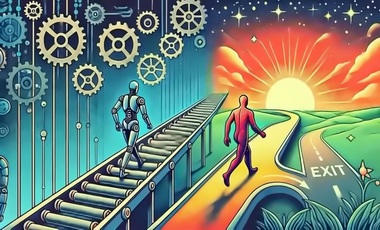
The story [not mine] of a person climbing an infinite rope to salvation, after tiring and saying “I cannot go on any longer” he is told to “let go and trust Jesus.” In reformed and Calvinistic presuppositions, even letting go is a work towards salvation. It is as if a guy in shark infested waters, almost drowning with said sharks nipping at his heels is thrown a life preserver that happens to catch him perfectly and he is drug to a boat. That person would never say “look how I saved myself.”

So salvation is 100% a work of God, but we are created to respond. TULIP says we cannot even do that. That makes God’s freedom/sovereignty a slave to gnosis as introduced [church history] by Augustine, a 10-year treasurer and member of Manny’s branch of Gnosticism. The Manichaeans represent the Persian branch of Gnosticism, and they taught both determinism and total depravity. However, their determinism was based upon dualistic mythology. (Hans Jonas, The Gnostic Religion [Beacon Press, 1958], 227.)

✂️ John Calvin admits that his theology was first clearly seen in Augustine. How did Augustine arrive at his views on election and predestination, which were not consistent with the churches teaching for the first 300 years? It should be noted that Augustine was himself a Gnostic Manichaean for nearly a decade before converting to Catholicism. Calvin wrote, “Augustine is so wholly with me, that if I wished to write a confession of my faith, I could do so with all fullness and satisfaction to myself out of his writings.” John Calvin, “A Treatise on the Eternal Predestination of God.”

✂️ Loraine Boettner, writes: “It may occasion some surprise to discover that the doctrine of Predestination was not made a matter of special study until near the end of the fourth century. The earlier church fathers placed chief emphasis on good works such as faith, repentance, almsgiving, prayers, submission to baptism, etc., as the basis of salvation. They of course taught that salvation was through Christ; yet they assumed that man had full power to accept or reject the Gospel. Some of their writings contain passages in which the sovereignty of God is recognized; yet along side of those are others which teach the absolute freedom of the human will. Since they could not reconcile the two they would have denied the doctrine of Predestination and perhaps also that of God’s absolute Foreknowledge. They taught a kind of synergism in which there was a co-operation between grace and free will. It was hard for man to give up the idea that he could work out his own salvation. But at last, as a result of a long, slow process, he came to the great truth that salvation is a sovereign gift which has been bestowed irrespective of merit; that it was fixed in eternity; and that God is the author in all of its stages. This cardinal truth of Christianity was first clearly seen by Augustine, the great Spirit-filled theologian of the West. In his doctrines of sin and grace, he went far beyond the earlier theologians, taught an unconditional election of grace, and restricted the purposes of redemption to the definite circle of the elect.”

I [as do all non-Calvinist Christians] believe in predestination, but not unto salvation. Once saved by the living message of the word that can cut between soul and body, we look forward to the predestined/fulfilled promise of our Savior: “Not only that, but we ourselves who have the Spirit [born again already] as the firstfruits—we also groan within ourselves, eagerly waiting for adoption, the redemption of our bodies.” (Romans 8 ) “In him you also were sealed with the promised Holy Spirit when you heard the word of truth, the gospel of your salvation, and when you believed. The Holy Spirit is the down payment of our inheritance, until the redemption of the possession, to the praise of his glory.” (Ephesians 1:13). Think of all the analogies of Paul and a race:

1 Corinthians 9:24-27:

The Apostle Paul uses the metaphor of a race to emphasize the need for self-discipline and purpose in the Christian life. He writes, “Do you not know that in a race all the runners run, but only one receives the prize? Run in such a way as to take the prize. Everyone who competes in the games trains with strict discipline. They do it for a crown that is perishable, but we do it for a crown that is imperishable. Therefore, I do not run aimlessly; I do not fight like I am beating the air. No, I discipline my body and make it my slave, so that after I have preached to others, I myself will not be disqualified.”

Hebrews 12:1-2:

The author of Hebrews encourages believers to persevere in their spiritual race by looking to Jesus as the ultimate example. “Therefore, since we are surrounded by such a great cloud of witnesses, let us throw off every encumbrance and the sin that so easily entangles, and let us run with endurance the race set out for us. Let us fix our eyes on Jesus, the author and perfecter of our faith, who for the joy set before Him endured the cross, scorning its shame, and sat down at the right hand of the throne of God.”

Philippians 3:12-14:

Paul expresses his personal commitment to pressing on toward the goal of knowing Christ fully. “Not that I have already obtained all this, or have already been perfected, but I press on to take hold of that for which Christ Jesus took hold of me. Brothers, I do not consider myself yet to have taken hold of it. But one thing I do: Forgetting what is behind and straining toward what is ahead, I press on toward the goal to win the prize of God’s heavenly calling in Christ Jesus.”

All races have a finish line, an end goal. That is what is predestined. Believers “wait eagerly for our adoption as sons, the redemption of our bodies” (Romans 8:23). The full revelation of the believer’s adoption is freedom from the corruption present in the world. Being a member of God’s family includes the ultimate privilege of being like him (1 John 3:2) and being conformed to the glorious body of Christ (Philippians 3:21). This is part of the promised inheritance for all God’s children (Romans 8:16-17; Ephesians 1:13).

Is God the “devil” Behind Satan? | Sovereign Puppeteer (Updated)

I sent a friend the video of Dr. Theodore Zachariades stating that God wills [causes, not just permits] a man to be unfaithful to his wife.

  • God works all things after the Council of His will. Even keeping those kings who want to commit adultery from committing so! And when He wants to, he orders those to commit adultery when he wants to! (Video)

My friend dismissed this person as a hyper-Calvinist. But as the video below notes, using his definition of a “hyper Calvinist,” A.W. Pink, John Piper, Jeff Durbin, James White, and many-many more, would thus be considered the same. Because of the age restriction, the video must be watch on YouTube, link in pic.

When I asked him: “Question RW, is Piper, Calvin, White and Durbin hyper-Calvinists?” He simply replied “Fishing Bait.” But this is an interesting phenomena… and after decades of encountering Mormons and J-Dubs, the disconnect is the same. I get links and not actualizing on statements made when challenged. When shown a person who follows to the end the logical conclusion of theistic determinism found in Calvinism, the person who is the Calvinist is dismissed as a “hyper-Calvinist” by their fellow Calvinist’s if they are challenged. When that label is then applied rightly to others for the same reason — meaning, using RW’s definition of what a hyper-Calvinist is — then all these others have said worse; and would be by definition, hyper-Calvinists.

Two quick examples. 1st John Calvin, then, John Piper:

John CALVIN:

how foolish and frail is the support of divine justice afforded by the suggestion that evils come to be, not by His will but by His permission. . . . It is a quite frivolous refuge to say that God otiosely permits them, when Scripture shows Him not only willing, but the author of them. . . . Who does not tremble at these judgments with which God works in the hearts of even the wicked whatever He will, rewarding them nonetheless according to desert? Again it is quite clear from the evidence of Scripture that God works in the hearts of men to incline their wills just as he will, whether to good for His mercy’s sake, or to evil according to their merits.

John Calvin, “The Eternal Predestination of God,” 10:11

John Piper:

Ephesians 1:11 goes even further by declaring that God in Christ

“works all things according to the counsel of his will.” Here the Greek word for “works” is energeø, which indicates that God not merely carries all of the universe’s objects and events to their appointed ends but that he actually brings about all things in accordance with his will. In other words, it isn’t just that God manages to turn the evil aspects of our world to good for those who love him; it is rather that he himself brings about these evil aspects for his glory (see Ex. 9:13-16; John 9:3) and his people’s good (see Heb. 12:3-11; James 1:2-4). This includes—as incredible and as unacceptable as it may currently seem—God’s having even brought about the Nazis’ brutality at Birkenau and Auschwitz as well as the terrible killings of Dennis Rader and even the sexual abuse of a young child: “The LORD has made everything for its own purpose, even the wicked for the day of evil” (Prov. 16:4, NASB ).14 “When times are good, be happy; but when times are bad, consider: God has made the one as well as the other” (Eccl. 7:14, NIV).

John Piper and Justin Taylor, eds., Suffering and the Sovereignty of God (Wheaton, IL: Crossway Books, 2006), 42. (FULLER QUOTE VIA THIS PDF)

John Lennox notes in his wonderful book,  Determined to Believe? The Sovereignty of God, Freedom, Faith, and Human Responsibility,” that Martin Luther struggled with the consequences of this form of thought:

Martin Luther at the time of the Reformation. In his book The Bondage of the Will, written in response to Erasmus’ essay On Free Will, Luther said:

[The] omnipotence and foreknowledge of God, I repeat, utterly destroy the doctrine of “free-will” Doubtless it gives the greatest possible offence to common sense or natural reason, that God, Who is proclaimed as being full of mercy and goodness, and so on, should of His own mere will abandon, harden and damn men, as though He delighted in the sins and great eternal torments of such poor wretches. It seems an iniquitous, cruel, intolerable thought to think of God; and it is this that has been such a stumbling block to so many great men down through the ages. And who would not stumble at it? I have stumbled at it myself more than once, down to the deepest pit of despair, so that I wished I had never been made a man. (That was before I knew how health-giving that despair was, and how close to grace.)

In this passage Luther seems to be aware that there is a deep moral problem with aspects of his view [RPT: before redefining “grace” that is – almost like what is, is.]

Calvinism’s [T.U.L.I.P.] Logical Conclusion Displayed

In a reference in that above book is this paper:I Believe In Divine Sovereignty,” by Thomas H. McCall in Trinity Journal (TRINJ 29:2 [Fall 2008]), 209-210. Of which I excerpt:

He [John Piper] works long and hard to illustrate this [theistic determinism] from Rom 9:1-23, which he concludes is about the purposes of God being preserved “by means of the predestination of individuals to their respective eternal destines.”11 And we are not to think that God is righteous in spite of such action—instead we are to see that God is righteous because of this action, for the “heart of Paul’s defense” is this: “in choosing unconditionally those on whom he will have mercy and those whom he will harden God is not unrighteous, for in this ‘electing purpose’ he is acting out of a full allegiance to his name and esteem of his glory.12

This all-determining action of God notably includes predestination and election, but it extends far beyond—it extends to everything. God determines all events that occur in the universe, including all demonic and satanic action.13 As Mark R. Talbot puts it, God creates, sends, instigates, and moves others to do evil, because “nothing that exists or occurs falls outside God’s ordaining will.”14 Talbot makes the point with relentless and unmistakable clarity:

Nothing, including no evil person or thing or event or deed. God’s foreordination is the ultimate reason why everything comes about, including the existence of all evil persons and things and the occurrence of any evil acts or events.15

Make no mistake: “when even the worst of evils befall us, they do not ultimately come from anywhere other than God’s hand.”16

NOTES:

11. John Piper, The Justification of God: An Exegetical and Theological Study of Romans 9:1-23 (Grand Rapids: Baker, 1993), 218, cf. 56-73.

12. Ibid., 219.

13. On this see John Piper, “Suffering and the Sovereignty of God: Ten Aspects of God’s Sovereignty Over Satan and Satan’s Hand in It,” in Suffering and the Sovereignty of God, 19-30. Piper here uses the rather confusing (given his determinism) language of “permission.” By my lights, what he means when he says that God “permits” something is this (a) God determines it to occur and then (b) does not act so as to override his previous ordination. Regarding talk of “permission,” I think that John Calvin’s approach is more consistent, [….]  see John Calvin, Institutes of the Christian Religion I.xviii.1, and John S. Feinberg, No One Like Him: The Doctrine of God (Wheaton: Crossway, 2001), 696.

14. Mark R. Talbot, “‘All the Good That Is Ours in Christ: Seeing God’s Gracious Hand in the Hurts Others Do to Us,” in Suffering and the Sovereignty of God, 43 (41-43), emphasis original.

15. Ibid., 43-44.

16. lbid., 47.

Dave Hunt is right to say that Calvin uses unbiblical positions in dealing with this Augustinian determinism:

There is yet another question that troubles many: If man is free to choose between options, would that not in itself deny both God’s sovereignty and His foreknowledge? Luther claimed that this question was the very heart of the Reformation and of the gospel itself. In fact, Luther dogmatically insisted that it was impossible for God to foreknow the future and for man at the same time to be a free agent to act as he wills.

Believing firmly in God’s foreknowledge, Luther wrote an entire book titled The Bondage of the Will, to prove that the very idea of man’s free will is a fallacy and an illusion. Several reasons have already been given as to why Luther was wrong on this point, and that issue will be dealt with further in the next chapter.

Though Calvin took so much from Augustine, like Luther he also rejected the Augustinian belief that God could foreknow the future, while at the same time man could have a free will. According to Calvin, foreknowledge leaves no room whatsoever for free will, because foreknowledge is the same as predestination:

If God merely foresaw human events, and did not also arrange and dispose of them at his pleasure, there might be room for agitating the question [of free will] but since he foresees the things which are to happen, simply because he has decreed them, they are so to happen, it is vain to debate about prescience. …

If this frigid fiction [of free will] is received, where will be the omnipotence of God, by which, according to his secret counsel on which everything depends, he rules over all? (Calvin, Institutes, III: xxiii, 6–7.)

Calvin repeatedly uses such unbiblical and utterly fallacious reasoning.

The Calvinist assumes a contradiction between sovereignty and free will that doesn’t exist. The fact that God is able to allow man freedom of choice, while still effecting His purposes unhindered, is all the more glorifying to His sovereign wisdom, power, and foreknowledge.

And one last point on this via MONERGISM.COM:

  • In order to understand this better theologians have come up with the term “compatibilism” to describe the concurrence of God’s sovereignty and man’s responsibility. Compatibilism is a form of determinism and it should be noted that this position is no less deterministic than hard determinism. — John Hendryx (John Hendryx is the creator and editor of Monergism.com | SEE: “We are not Determinists!” for more)

Here is A.W. Tozer’s take of the above:

  • Here is my view: God sovereignly decreed that man should be free to exercise moral choice, and man from the beginning has fulfilled that decree by making his choice between good and evil. When he chooses to do evil, he does not thereby countervail the sovereign will of God but fulfills it, inasmuch as the eternal decree decided not which choice the man should make but that he should be free to make it. If in His absolute freedom God has willed to give man limited freedom, who is there to stay His hand or say, What doest thou? Mans will is free because God is sovereign. A God less than sovereign could not bestow moral freedom upon His creatures. He would be afraid to do so.

Tozer is saying that the Calvinist God is too small. Something I run through with Mormon Elders if they decide to come into my home to discuss further their “mission.” In a similar vein, philosophical determinism (atheism/evolutionary paradigms). In what follows — quote’wise — if this is true fore secular forms of determinism, then so to it applies to THEISTIC DETERMINISM:

Atheists reject evidence as illusory…

Why?

Because they “have to.”

Donald C. Abel in his book, Fifty Readings in Philosophy, asks us to imagine for a moment that you walking along and come to a fork in the road. One street is called Divinity Avenue, the other Oxford Street. Assuming you have to walk down one of them, there is a confrontation of choice.  Continuing he says,

  • Now, I ask you seriously to suppose that this ambiguity of my choice is real; and then to make the impossible hypothesis that the choice is made twice over, and each time falls on a different street. In other words, imagine that I first walk through Divinity Avenue, and then imagine that the powers governing the universe annihilate ten minutes of time with all that it contained, and set me back at the door of this hall just as I was before the choice was made. Imagine then that, everything else being the same, I now make a different choice and traverse Oxford Street. You, as passive spectators, look on and see the two alternative universes; one of them with me walking through Divinity Avenue in it, the other with the same me walking through Oxford Street. Now, if you are determinists, you believe one of these universes eternally impossible, because of the intrinsic irrationality or accidentality somewhere involved in it. However, looking outwardly at these universes, can you say which is the impossible and accidental one, and which the rational and necessary one?

Donald C. Abel, Fifty Readings in Philosophy (New York, NY: McGraw-Hill, 1994), 296.

  • “He thus acknowledged the need for any theory to allow that humans have genuine freedom to recognize the truth. He (again, correctly) saw that if all thought, belief, feeling, and choice are determined (i.e., forced on humans by outside conditions) then so is the determinists’ acceptance of the theory of determinism forced on them by those same conditions. In that case they could never claim to know their theory is true since the theory making that claim would be self-referentially incoherent. In other words, the theory requires that no belief is ever a free judgment made on the basis of experience or reason, but is always a compulsion over which the believer has no control.”

Roy A. Clouser, The Myth of Religious Neutrality: An Essay on the Hidden Role of Religious Belief in Theories (Notre Dame, IN: Notre Dame University Press, 2005), 174.

The implications of strict naturalism are grim or even counterintuitive. For example, Bertrand Russell affirmed that any philosophy hoping to stand must ultimately take for granted the (naturalistic) picture of unguided causes and accidental collocations of atoms and must be built on the “firm foundation of unyielding despair.” When it comes to naturalism’s implications for morality, naturalist Kai Nielsen contends that reason can’t bring us to morality; this picture ”is not a pleasant one,” and that reflecting on it ”depresses me.” When it comes to consciousness, naturalist Daniel Dennett considers it an illusion- -something fellow-atheist Thomas Nagel finds utterly confused:

  • You may well ask how consciousness can be an illusion, since every illusion is itself a conscious experience …. So it cannot appear to me that I am conscious though I am not the reality of my own consciousness is the one thing I cannot be deluded about …. The view [of Dennett] is so unnatural that it is hard to convey …. Dennett asks us to turn our backs on what is glaringly obvious. … And he asks us to do this because the reality of such phenomena is incompatible with the scientific materialism that in his view sets the outer bounds of reality. He is, in Aristotle’s words, ”maintaining a thesis at all costs.”

Jaegwon Kim acknowledges the stark picture painted by the naturalistic brush. Naturalism is ”imperialistic; it demands ‘full coverage’ … and exacts a terribly high ontological price.”

Paul Copan and Charles Taliaferro (editors), The Naturalness of Belief: New Essays on Theism’s Rationality (New York, NY: Lexington Books, 2019), viii

I could go on, but you get the point. To fashion the issue for you to see, Jaegwon Kim could have said:

  • Theistic determinism is ”imperialistic; it demands ‘full coverage’ and exacts a terribly high ontological price.” (added for emphasis) 

What is this price? Here is just one example… God vs. God:

Here is a Facebook post I recently posted:

  • “What is there for God to harden, provoke, or restrain if not the autonomous will of creatures?”

If God knows the future because He planned the future [Sproul, Piper, MacArthur, etc.], when God hardens, provokes, or restraines…. is He working against Himself?

If the “T” of TULIP [total depravity] is a reality, wouldn’t hardening, provoking, or restraining someone be the same thing as digging up bodies in a cemetery and putting blindfolds on the rotting cadavers?

In other words, does He plan the abuse of a child just to redeem that act in some way to bring glory to Himself? Is Satan superfluous?

Are all the prescriptions in the Bible making God out to be duplicitous – since he has planned our actions thru determinitive means?

You could not argue that “evil” is really “evil.” Eastern philosophies run into the same problems as the atheist’s/evolutionist’s I just noted above. The Calvinist runs into the same issue. And it is a distortion of Christianity (T.U.L.I.P.):

(Eph 1:11) “works all things according to the counsel of his will.” Here the Greek word for “works” is 𝑒𝑛𝑒𝑟𝑔𝑒ø, which indicates that God not merely carries all of the universe’s objects and events to their appointed ends but that he actually 𝑏𝑟𝑖𝑛𝑔𝑠 𝑎𝑏𝑜𝑢𝑡 all things in accordance with his will. In other words, it isn’t just that God manages to turn the evil aspects of our world to good for those who love him; it is rather that he himself brings about these evil aspects for his glory (see Ex. 9:13-16; John 9:3) and his people’s good (see Heb. 12:3-11; James 1:2-4). This includes—as incredible and as unacceptable as it may currently seem—God’s having even brought about the Nazis’ brutality at Birkenau and Auschwitz as well as the terrible killings of Dennis Rader and even the sexual abuse of a young child: “The LORD has made everything for its own purpose, even the wicked for the day of evil” (Prov. 16:4, NASB ).14 “When times are good, be happy; but when times are bad, consider: God has made the one as well as the other” (Eccl. 7:14, NIV).

John Piper and Justin Taylor, eds., Suffering and the Sovereignty of God (Wheaton, IL: Crossway Books, 2006), 42.

Or…

Is it more like Tozer notes — which lowers man’s position by making him/her responsible to God’s law; and keeps God’s holiness and glory intact as He truly redeems or judges such actions (is He judging Himself in Calvinism? Working against His own will? Secretly?)

TOZER:

God sovereignly decreed that man should be free to exercise moral choice, and man from the beginning has fulfilled that decree by making his choice between good and evil. When he chooses to do evil, he does not thereby countervail the sovereign will of God but fulfills it, inasmuch as the eternal decree decided not which choice the man should make but that he should be free to make it. If in His absolute freedom God has willed to give man limited freedom, who is there to stay His hand or say, ‘What doest thou?’ Man’s will is free because God is sovereign. A God less than sovereign could not bestow moral freedom upon His creatures. He would be afraid to do so.

There is an analogy of two chess players. As you walk up on one professional chess player, he is sitting on one side of the bench, and at the end of his move he gets up walks to the other side, sits down, thinks a moment and makes his move. This process is repeated until the game is over and the chess player wins.

Guaranteed.

When you ask him why he is playing chess alone, he says to ensure his victory. Or as Piper notes in his book astonished by God: “…the reason God knows the future is because he plans the future and accomplishes it.”

You wouldn’t think too highly of his skills, would you? As you walk down the road a bit further, you come across another chess master. This time however, there is a line of players, world famous chess players, lined up as far as the eye could see. As you watched, the one chess player was handily beating every player that sat before him. Player after player.

With whom would you be more impressed with?

And it is this perceived contradiction that leads Calvinists to a polluting of God’s character, which A.W. Tozer tackles in his book, Knowledge of the Holy. Here is a excerpt…. I changed a couple words to read better:

While a complete explanation of the origin of sin eludes us, there are a few things we do know. In His sovereign wisdom God has permitted evil to exist in carefully restricted areas of His creation, a kind of fugitive outlaw whose activities are temporary and limited in scope. In doing this God has acted according to His infinite wisdom and goodness. More than that no one knows at present; and more than that no one needs to know. The name of God is sufficient guarantee of the perfection of His works.

Another real problem created by the doctrine of the divine sovereignty has to do with the will of man. If God rules His universe by His sovereign decrees, how is it possible for man to exercise free choice? And if he cannot exercise freedom of choice, how can he be held responsible for his conduct? Is he not a mere puppet whose actions are determined by a behind-the-scenes God who pulls the strings as it pleases Him?

The attempt to answer these questions has divided the Christian church neatly into two camps which have borne the names of two distinguished theologians, Jacobus Arminius and John Calvin. Most Christians are content to get into one camp or the other and deny either sovereignty to God or free will to man. It appears possible, however, to reconcile these two positions without doing violence to either, although the effort that follows may prove deficient to partisans of one camp or the other.

Here is my view: God sovereignly decreed that man should be free to exercise moral choice, and man from the beginning has fulfilled that decree by making his choice between good and evil. When he chooses to do evil, he does not thereby countervail the sovereign will of God but fulfills it, inasmuch as the eternal decree decided not which choice the man should make but that he should be free to make it. If in His absolute freedom God has willed to give man limited freedom, who is there to stay His hand or say, What doest thou? Mans will is free because God is sovereign. A God less than sovereign could not bestow moral freedom upon His creatures. He would be afraid to do so.

Perhaps a homely illustration might help us to understand. An ocean liner leaves New York bound for Liverpool. Its destination has been determined by proper authorities. Nothing can change it. This is at least a faint picture of sovereignty.

On board the liner are several scores of passengers. These are not in chains, neither are their activities determined for them by decree. They are completely free to move about as they will. They eat, sleep, play, lounge about on the deck, read, talk, altogether as they please; but all the while the great liner is carrying them steadily onward toward a predetermined port.

Both freedom and sovereignty are present here and they do not contradict each other. So it is, I believe, with mans freedom and the sovereignty of God. The mighty liner of Gods sovereign design keeps its steady course over the sea of history. God moves undisturbed and unhindered toward the fulfilment of those eternal purposes which He purposed in Christ Jesus before the world began. We do not know all that is included in those purposes, but enough has been disclosed to furnish us with a broad outline of things to come and to give us good hope and firm assurance of future well-being.

We know that God will fulfil every promise made to the prophets; we know that sinners will some day be cleansed out of the earth; we know that a ransomed company will enter into the joy of God and that the righteous will shine forth in the kingdom of their Father; we know that Gods perfections will yet receive universal acclamation, that all created intelligences will own Jesus Christ Lord to the glory of God the Father, that the present imperfect order will be done away, and a new heaven and a new earth be established forever.

Toward all this God is moving with infinite wisdom and perfect precision of action. No one can dissuade Him from His purposes; nothing turn Him aside from His plans. Since He is omniscient, there can be no unforeseen circumstances, no accidents. As He is sovereign, there can be no countermanded orders, no breakdown in authority; and as He is omninpotent, there can be no want of power to achieve His chosen ends. God is sufficient unto Himself for all these things.

In the meanwhile things are not as smooth as this quick outline might suggest. The mystery of iniquity doth already work. Within the broad field of Gods sovereign, permissive will the deadly conflict of good with evil continues with increasing fury. God will yet have His way in the whirlwind and the storm, but the storm and the whirlwind are here, and as responsible beings we must make our choice in the present moral situation.

Certain things have been decreed by the free determination of God, and one of these is the law of choice and consequences. God has decreed that all who willingly commit themselves to His Son Jesus Christ in the obedience of faith shall receive eternal life and become sons of God. He has also decreed that all who love darkness and continue in rebellion against the high authority of heaven shall remain in a state of spiritual alienation and suffer eternal death at last.

Reducing the whole matter to individual terms, we arrive at some vital and highly personal conclusions. In the moral conflict now raging around us whoever is on Gods side is on the winning side and cannot lose; whoever is on the other side is on the losing side and cannot win. Here there is no chance, no gamble. There is freedom to choose which side we shall be on but no freedom to negotiate the results of the choice once it is made. By the mercy of God we may repent a wrong choice and alter the consequences by making a new and right choice. Beyond that we cannot go.

The whole matter of moral choice centers around Jesus Christ. Christ stated it plainly: He that is not with me is against me, and No man cometh unto the Father, but by me. The gospel message embodies three distinct elements: an announcement, a command, and a call. It announces the good news of redemption accomplished in mercy; it commands all men everywhere to repent and it calls all men to surrender to the terms of grace by believing on Jesus Christ as Lord and Saviour.

We must all choose whether we will obey the gospel or turn away in unbelief and reject its authority. Our choice is our own, but the consequences of the choice have already been determined by the sovereign will of God, and from this there is no appeal.