Okay, here’s a super simple, dumbed-down explanation of the two articles from Soteriology101 (written by Leighton Flowers, who strongly disagrees with Calvinism). I’ll explain them like I’m talking to a friend who knows nothing about theology debates.
What the articles are basically about
These two posts are part of a series called “The Hunt for a Hyper-Calvinist.” The author is on a mission to find a real “hyper-Calvinist” — someone who believes in Calvinism (a view that says God controls everything about who gets saved, and humans can’t choose it on their own) but takes it to an extreme level. The author says he’s hunting because Calvinists keep blaming problems in their theology on these mysterious “hyper” people, but he thinks they don’t actually exist.
In plain terms: The author is saying, “Calvinists say ‘That’s not real Calvinism — that’s hyper-Calvinism!’ whenever someone points out weird or tough parts of their beliefs. But where are these hyper people? Show me one!”
Part 1: The Hunt Begins (April 9, 2020)
The author looks at popular Calvinist writers (like Tim Challies and Phil Johnson) who list what “hyper-Calvinism” supposedly means. Things like:
Not telling everyone the gospel is for them.
Saying it’s not everyone’s duty to believe and repent.
Denying that God really loves or offers grace to people who aren’t chosen for salvation.
These writers say hyper-Calvinists go too far and hurt evangelism (spreading the gospel) because they think only the “chosen” ones can believe anyway.
But the author points out: No one calls themselves a hyper-Calvinist. There are no churches, books, or famous people proudly saying “I’m hyper!” When critics name possible examples (like some old theologians or small groups like Primitive Baptists), those people usually say “We’re just being true Calvinists.”
His big takeaway: “Hyper-Calvinism” seems like a made-up boogeyman. Calvinists use the label to push away criticism and avoid talking about the hard logical problems in their own normal beliefs (like: If God already decided everything, why bother preaching to everyone?).
He ends by saying the hunt continues — he’s still looking for a real one.
Part 2: Still Hunting (April 16, 2020)
This one keeps going and looks at another big Calvinist teacher (Michael Horton from Ligonier Ministries).
Horton writes an article defending Calvinism against critics who say it makes God the author (cause) of sin/evil or makes the gospel call fake/insincere.
Horton says: “No, that’s not us — that’s a misunderstanding or maybe those hyper-Calvinists over there.”
But again, he doesn’t name any actual hyper-Calvinists or give examples. He just quotes official Calvinist documents (like the Canons of Dort or Westminster Confession) and says “We already answered this.”
The author calls this out as more dodging:
Calvinists invent fancy word categories (like “outward call” vs. “inward call”) to explain why it’s okay to invite everyone to believe even though only some are chosen to respond.
They say tough questions are just “mysteries” we can’t figure out.
But the author says these are tricks to avoid admitting the logic leads to problems (e.g., if God controls everything, how is the gospel offer genuine? How isn’t God behind evil?).
He points to popular Calvinists like John Piper who say God really does control everything (including bad stuff), which sounds a lot like what critics call “hyper.”
Bottom line from both parts: The author thinks “hyper-Calvinism” is mostly a fake target Calvinists point to so they don’t have to defend the full, consistent version of their own theology. No real hyper-Calvinists show up when you actually look — it’s just a way to say “That’s not us!” without fixing the issues critics raise.
In super short: These articles are the author saying, “Calvinists, stop blaming imaginary extremists. Face the hard questions about your beliefs head-on.” He’s basically trolling the idea that there’s some wild fringe group causing all the problems.
The two articles from Soteriology101.com (a site that critiques Calvinism from a non-Calvinist perspective) are basically one long argument split into two parts. The author is saying that the label “Hyper-Calvinist” is mostly a made-up boogeyman that Calvinists use to dodge real criticisms of their own theology.
Here’s a super simple, dumbed-down breakdown of what each part is saying:
Part 1: “The Hunt for a Hyper-Calvinist – Part 1”
The author claims nobody actually is a “Hyper-Calvinist” in real life — there are no churches, no famous leaders, no confessions of faith, and nobody calls themselves that. It’s like hunting for a unicorn.
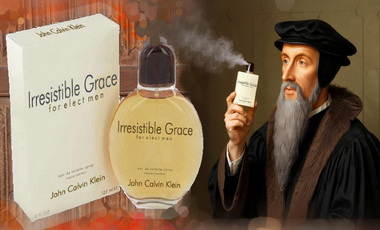
Calvinists (people who believe in TULIP — Total depravity, Unconditional election, Limited atonement, Irresistible grace, Perseverance of the saints) sometimes get accused of making evangelism (sharing the gospel) pointless. Why bother telling everyone to believe if God already decided who gets saved?
When critics point that out, many Calvinists say, “Oh, that’s not real Calvinism — that’s Hyper-Calvinism!” Then they define Hyper-Calvinism as going “too far” — things like:
Saying God doesn’t really love everyone or offer salvation to everyone.
Refusing to tell non-believers they should repent and believe (because only the “elect” can).
Denying “common grace” (God’s general kindness to all people).
Not bothering to evangelize at all.
The author says: Those extreme ideas are actually just the logical end of regular Calvinism. If God sovereignly decides everything (including who believes), then the “normal” Calvinist position already weakens the reason to plead with everyone to believe. But instead of admitting the doctrine has that problem, Calvinists blame a fictional “hyper” version and say “we’re not like those guys.”
In short: The “hyper-Calvinist” label is a way for Calvinists to avoid dealing with the tough implications of their own beliefs.
Part 2: “The Hunt for a Hyper-Calvinist – Part 2”
This part looks at a specific article by a well-known Calvinist theologian (Michael Horton) that tries to explain the difference between regular Calvinism and Hyper-Calvinism.
Horton lists some “bad” ideas (like God being the author of sin, or the gospel offer being fake/insincere to the non-elect) and blames them on Hyper-Calvinists.
The author says: Horton never names any actual Hyper-Calvinists. He just attributes the problematic conclusions to this invisible group, then defends “real” Calvinism with complicated explanations like “mystery,” “compatibilism,” or special categories (e.g., the gospel is “sufficient for all, efficient for the elect”).
The author argues these are just word games and dodges. They don’t really solve the logical problems — they just hide them behind “it’s a mystery” or redefine terms.
Again: The real issue is with Calvinism itself (e.g., if God controls everything meticulously, how is the gospel offer genuine to people He never planned to save?). Instead of facing that head-on, Calvinists keep pointing at an imaginary extreme version.
Overall message of both parts combined: The author is basically saying: “Stop blaming ‘Hyper-Calvinists’ for the weird or hard-to-defend parts of Calvinism. Those aren’t separate people — they’re just what happens when you take Calvinist ideas all the way without adding extra explanations or ‘mysteries’ to soften them. The hunt for a real Hyper-Calvinist is endless because they don’t exist; it’s a distraction from the actual debate.”
Denies that the gospel call applies to all who hear OR
Denies that faith is the duty of every sinner OR
Denies that the gospel makes any “offer” of Christ, salvation or mercy to the non-elect (or denies that the offer of divine mercy is free and universal) OR
Denies that there is such a thing as “common grace” OR
Denies that God has any sort of love for the non-elect
#4 I think is a obfuscation of language. All mankind receives “common grace,” AND, all mankind is offered a real choice of “salvific grace.” These people who see God’s attributes in nature prior to the Cross, or even after the cross but where the Gospel had not reached yet. But TULIP denies the ability of man has any option to respond positively to the evidences of God. In other words, God wholly chooses who will be saved. Others like Piper apply that singularity to all aspects of man’s abilities.
The long debate [which I won’t replicate here] from Soteriology 101 Discussion’s Facebook Page, is over — essentially — this portion of Leighton Flower’s’ book, “Drawn by Jesus.” BUT FIRST, what I will reproduce is the extent of the debate summed up in these two back-n-forths:
ROGER H. responds to Jason R.
[Jason R said] “This is a clear logical impasse you are confronted with…“
What is the logical impasse? A person is born with no ability to choose God. This requires that the person be regenerated. Once regenerated, a person can desire God and can choose God.
[Jason R said] “and there is no compatibilism that can harmonize this faulty logic.”
Once a person is regenerated, he has new desires. He can choose according to his greatest desire.
I don’t see a problem.
JASON R. responds to ROGER H.
it is fascinating to observe how you see no problem with the fact that God ultimately judges the majority of humanity for not receiving Christ when He determined that they never could do so in the first place. You seem content to accept that God can judge someone for their sin of non-repentance even though they have no way of repenting. This is blatantly unjust. You admit that God necessarily has to regenerate someone so that they can believe which equates to conceding that man cannot choose God unless God first chooses and changes them. Man is born into a hopeless state of inability and you cannot see a problem with God judging and condemning man for this inability when he has no way of escaping its pre-determined inevitabilities. I have never heard a sound defense against this Achilles heel of Calvinism… only concessions such as yours.
The entire discussion is enlightening, as it is a real working out of the issue. But this is the portion that Roger H. started out with, mistakenly saying it was from chapter 3:
Chapter 5
The Calvinistic Presupposition of Total Inability
A presupposition is “a thing tacitly assumed beforehand at the beginning of a line of argument.”23 We all have presuppositions. Some of them are right, but others are wrong. Wrong presuppositions brought to a passage can influence people to draw erroneous conclusions about the meaning of the text in question. This is why objectively evaluating our presuppositions is so important when any passage is in dispute between well-intending brethren.
Your theological opponents have every right to challenge your presuppositions. After all, wrong presuppositions lead to bad exegesis. And assuming your presuppositions are correct is just a fallacious game of question-begging. Unfortunately, this has been James White’s bread and butter. When non-Calvinists have challenged one of his presuppositions in the past, he accuses us of either “changing the topic,” “running off to other scriptures,” or “doing improper exegesis.” This is ironic, given that proper exegesis requires biblically correct presuppositions.
Calvinism’s underlying premise is that God decreed for all people since the Fall to be born morally unable to believe what He Himself teaches, so unless you were unconditionally chosen before you were born and irresistibly regenerated into a new creation by a supernatural intervening work of God, you will never be morally capable of believing in Him.24 Needless to say, that premise will greatly influence how you understand the Bible regardless of the hermeneutical methodologies, grammatical nuances, contextual considerations, or semantic word studies. A wrong premise skews everything and, therefore, must be evaluated objectively prior to getting into the other pertinent matters. So, let’s start by looking at these three major presuppositions White brings into John 6 based primarily upon his Calvinistic interpretation of Paul.25
Total Inability26
The entire sixth chapter in White’s book on the topic, titled “Human Inability,” sets out to establish this doctrine. Based on his interpretation of other scripture, White presupposes that God decreed for all people (since the Fall) to be born unable to believe His own teachings, but God still punishes all who do not believe. Therefore, when White reads John 6 through those presuppositional lenses, he understands the phrase “no one can come” to mean that the natural condition of everyone from birth is such that they cannot understand and believe what God teaches.27 For instance, White wrote,
In response to the crowd’s disbelief, Jesus also gives forth a clear explanation of their inability to understand and their inability to come to Him as the one and only source of spiritual life.
Notice that White assumes that the reason the crowds cannot come to Christ is due to a universal inherent condition in which they were born, something God Himself decreed and the individuals had absolutely no control over. In other words, in White’s view, the crowd remains in unbelief because they were born inherently blinded to divinely revealed truth, and God has not intervened to irresistibly change their inherent “default” condition. This is the root of what is known as theistic determinism, a primarily philosophical commitment to the idea that God unchangeably brings to pass (or determines) every meticulous detail, including all moral evil.28
NOTES
23 Oxford Languages Online Dictionary (Oxford University Press)
24 This represents the T,U and I of the Calvinistic TULIP, which will be explored further in the following pages.
25 White wrote, “When the doctrine of election is discussed, most people think immediately of the discussions provided by the Apostle Paul in such great passages as Romans 8-9 and Ephesians 1.” James R. White, The Sovereign Grace of God (New York: Great Christian Books, 2003), 68.
26 White wrote, “Some Reformed writers like others names for this doctrine. One of the best alternatives is `total inability.” Ibid., 48.
27 White wrote, “[Man] is utterly… incapable of coming to Christ, incapable of accepting and understanding spiritual things…” Ibid., 59. Given that White also affirms the 1689 London Baptist Confession of Faith, we know that he affirms God’s universal exhaustive decree of whatsoever comes to pass, which must necessarily include mankind’s innate “default” inability to believe.
28White wrote, “God’s knowledge of the future is related to His role as Creator —He knows the future because He ordained the future! The course of the future is certain because God created it.” Ibid., 68. Vicens wrote, “We might, for instance, take Feinberg’s definition of an `unconditional’ decree as one `based on nothing outside of God that move[s] Him to choose one thing or another’ (2001, p. 527) and then characterize theological determinism as the view that God unconditionally decrees every event that occurs in the history of the world. Such a view would exclude the possibility that God merely permits some events which He foresees will happen in some circumstances but which He does not Himself determine.” Leigh Vicens, Theological Determinism (Internet Encyclopedia of Philosophy: A Peer-Reviewed Academic Resource) accessed online on 12/19/2023. [RPT: 1/29/2026]
Leighton [Charles] Flowers, Drawn By Jesus (Trinity Academic Press, 2024), 47-49.
ROMANS 3:11
A common verse I hear from my fellow believers is “…there is no one who understands; there is no one who seeks God.” – Romans 3:11
In an effort to demonstrate that all people have fallen short of the glory of God and broken His law, Paul quotes from Psalm 14:2-3, which says:
“The Lord looks down from heaven on all mankind to see if there are any who understand, any who seek God. All have turned away, all have become corrupt; there is no one who does good, not even one.”
There are basically two theological approaches for interpreting this passage:
(1) Calvinistic Approach: Apart from a Divine irresistible work of regeneration (by which God changes a chosen individual’s nature and desires), mankind cannot willingly seek to know, understand, or follow God. (2) Non-Calvinistic (Traditionalist) Approach: Apart from God’s gracious initiative in bringing His Son, the Holy Spirit, and the inspired gospel appeal, no one can merit salvation or consistently seek to obey God in a way that will attain his own righteousness.
The contrast between these two perspectives can be illustrated by this simple question: Does proof that I am incapable of calling the president on the telephone also prove that I am incapable of answering the telephone if the president were to call me? Of course not, yet that is essentially the principle a Calvinist is assuming in their theological approach to this text.
Calvinists read this text to mean that our lack of initiative somehow proves our inability to respond positively to His initiative. They presume that God’s work in sending His Son, the Holy Spirit, and the inspired gospel, calling for all to be reconciled through faith in Christ, is insufficient to enable the lost to respond in faith. But the text simply never says this.
In Romans chapter 3:10-20 the apostle is seeking to prove that no one can attain righteousness by means of the law. But in verse 21 he shifts to reveal a righteousness that can be obtained by means of grace through faith in Christ.
Calvinists seem to think that because mankind is unable to attain righteousness by means of the law that they must equally be unable to obtain righteousness by means of grace through faith in Christ. This, however, is never established anywhere in the pages of Scripture.
Of course, we all can affirm that no one is righteous with regard to the demands of the law. But there have been many throughout the pages of Scripture who have been declared righteous by means of grace through faith.
Calvinists wrongly assume that because mankind is unable to fully keep the demands of the law that they are equally unable to admit their inability to keep those demands and trust in the One who has. Again, this is simply never established in the Bible. HERE>
THE “HERE>” EXCERPT
… If I told my son to clean up his room it would strongly imply that I believed it was within his abilities to do so, especially if I punished him for failure to do so. No decent parent would tell their two day old infant to clean up a mess and then punish them for not doing so. Such an action would expose the parent as insane or completely immoral.
This is basic common sense, but is it applicable to how God deals with humanity? Is the implication in scripture of “you should” mean that “you could?” I think we can all agree that “ought” strongly implies moral ability for all practical purposes, but is that a biblical reality? Sometimes the Bible defies our practical sensibilities and turns our reality up on its ear. Is that the case here? Do God’s expressions of what we SHOULD do imply that we actually COULD do it.[1]
Could the “Rich Young Ruler” have willingly given up his wealth to follow Christ as Zacchaeus does in the very next chapter? Or was Zacchaeus granted an ability that was withheld from the Rich Young Ruler? (Note: I’m speaking of man’s moral/spiritual abilities to repent in faith, not their physical ability or mental assent, so please don’t try to rebut this article with the all too often “catch all” phrase of, “He is able but not willing.”)
Calvinists would agree with the Traditionalists that both Zacchaeus and Rich Young Ruler SHOULD have given up everything to follow Christ, but only the Traditionalist maintains that both of them COULD have willingly done so.
Why do Calvinists insist that COULD doesn’t imply SHOULD when it comes to the Biblical revelation?
Dr. Wayne Grudem, a Calvinistic scholar, explains the issue in this manner:
“Advocates of the Arminian position draw attention to the frequency of the free offer of the gospel in the New Testament. They would say that these invitations to people to repent and come to Christ for salvation, if bona fide, must imply the ability to respond to them. Thus, all people without exception have the ability to respond, not just those who have been sovereignly given that ability by God in a special way.” [2]
Grudem, like John Hendryx of mongerism.com, rebuts this perspective by making arguments such as:
“What the Scriptures say we ‘ought’ to do does not necessarily imply what we ‘can’ do. The Ten Commandments, likewise, speak of what we ought to do but they do not imply that we have the moral ability to carry them out. The law of God was given so that we would be stripped of having any hope from ourselves. Even faith itself is a divine command that we cannot fulfill without the application of God’s regenerative grace by the Holy Spirit.”[3]
Are you following the Calvinistic argument? Here it is put very simply:
God tells man they SHOULD keep all the commandments.
Man CANNOT keep all the commandments.
God also tells man they SHOULD believe and repent for breaking commandments.
Therefore man also CANNOT believe and repent for breaking commandments.[4]
If the fallacy in this argument is not obvious to you, please allow me to explain in this way:
Back when my kids were younger we did a family activity that our church had suggested. I stood at the top of the stairs with my four children at the bottom.
I said to them, “Here are the rules. You must get from the bottom of the stairs to the top of the stairs without touching any of the railing, the wall or even the stairs. Ready, go!”
My kids looked at me and then each other and then back at their mother. With bewilderment in their eyes, they immediately began to whine and complain saying, “Dad, that is impossible!”
I told them to stop whining and figure it out.
The youngest stood at the bottom and started trying to jump, slamming himself into the steps over and over. The more creative one of the bunch began looking for tools to help build some kind of contraption. Another set down on the floor while loudly declaring, “This is just stupid, no one can do that!”
Finally, in exasperation one of the kids yelled out, “Dad, why don’t you just help us?” I raised my eyebrows as if to give them a clue that they may be on the right track. The eldest caught on quickly.
“Can you help us dad?” he shouted.
I replied quietly, “No one even asked me.”
“Can you carry us up the stairs?” he asked.
“I will if you ask me,” I said.
And one by one, I carried each child to the top after they simply asked.
Then, we sat down and talked about salvation. We talked about how it is impossible for us to get to heaven by our own efforts, but if we ask Christ for help then He will carry us. It was a great visual lesson of God’s grace in contrast with man’s works.
But suppose that my children’s inability to get to the top the stairs also meant they were incapable of asking me for help. Imagine how this story would’ve played out if it was impossible for my children not only to get to the top of the stairs but equally impossible for them to recognize that inability and request help when it was offered.
This illustrates the mistake of Calvinism. Let’s go back to their fallacy above as it relates to my story:
Dad tells his kids they SHOULD get to the top of stairs.
Kids CANNOT complete this task as requested.
Dad also tells the kids they SHOULD ask for help.
Therefore the kids CANNOT ask for help.
Do you see the problem now? The whole purpose of presenting my kids with that dilemma was to help them to discover their need for help. To suggest that they cannot realize their need and ask for help on the basis that they cannot get to the top of stairs completely undermines the very purpose of the giving them that dilemma. ….
George C. Scott Explains Calvinism
A scene from the 1979 movie Hardcore, in which an old Calvinist elder goes to find his runaway daughter in the porn underbelly of Los Angeles. This scene with George C. Scott inspired Richard Mouw’s book “Calvinism in the Las Vegas Airport.” HEADS UP: there’s some saucy language. And the rest of the film is what you’d expect from a movie about the porn industry in the 70’s.
I affirm that the grace of God can be and is at times resisted, and this includes but is not limited to the genuine offer of salvation and resisting the Holy Spirit. The Bible says in 2 Thessalonians 2:10 that reprobates “perish because they refused to love the truth and so be saved.” (italics added) Of course, I am rejecting the Calvinist and compatibilist answer that a person refuses because, as a sinner, that is all that he can do. It seems crystal clear in reading the passage without Calvinist spectacles on that the context and language clearly imply that they “should not have refused” and therefore could have believed which entails the idea of otherwise choice, exactly what Calvinism denies.
Further, I affirm that the ability of man to accept or to resist God’s genuine offer of salvation is a part of God’s plan and redounds to His glory; moreover, this genuine offer of the gospel is more than “a good faith offer” as taught by the Calvinist. It is an actual offer from God through His chosen medium, which can be accepted by faith or rejected unto damnation. Finally, this includes the reality that God has given the gift of repentance, and that the clear call of Scripture is for everyone everywhere (Acts 17:30) to repent and be saved, which implies that those called upon to repent can, by the grace of God, repent (Matthew 3:2, 4:17, 11:20; Mark 6:12; Luke 5:32, 13:3, 13:5, 24:47; Acts 2:38, 3:19, 5:31, 11:18, 20:21, 26:20; Romans 2:4; 2 Peter 3:9).
Jesus pronounced woe upon all the people of Chorazin and Bethsaida because they did not repent, obviously indicating He believed they had the capacity to repent (see Matthew 11:21). The book of Revelation leaves believers stunned that unregenerate people refuse to repent even when they are suffering from the wrath of God (see Revelation 9:20-21, 16:9, 11). Acts 17:30 reminds us that the call of God to repent is for everyone. Paul said, “and with all the deception of wickedness for those who perish, because they did not receive the love of the truth so as to be saved” (2 Thessalonians 2:10). The implication obviously means that they could have received the love of the truth and been saved.
In like manner, Stephen preached, “You men who are stiff-necked and uncircumcised in heart and ears are always resisting the Holy Spirit; you are doing just as your fathers did”(Acts 7:51). The writer of Hebrews said of those who draw back unto destruction, “How much severer punishment do you think he will deserve who has trampled underfoot the Son of God, and has regarded as unclean the blood of the covenant by which he was sanctified, and has insulted the Spirit of grace”? (Hebrews 10:29, italics added). In Noah’s day, God said, “My Spirit shall not strive with man forever” (Genesis 6:3), clearly implying that He was then. Also why did God bring judgment upon leaders and Jews so they could not hear and see and return if that in fact was their state already? (Isaiah 6:9-10 and Matthew 13:10-17).
Lastly, I affirm the biblical doctrines of grace. Calvinists refer to their beliefs as “The Doctrines of Grace,” which is fine, but it actually does not tell us much. That is to say, the doctrines of any Biblicist are all “doctrines of Grace.” There simply are no other kinds. It is similar to the Calvinist’s continual reference to the sovereignty of God. It tells us nothing since all believers with any biblical fidelity and understanding of God believe in His sovereignty. Further, disavowal of the Calvinist’s definition of the doctrines of grace and sovereignty is not a denial or undermining of the doctrines of grace or the sovereignty of God, but it is what it is, a denial of Calvinism’s definition.
I disaffirm that the Bible teaches that God carries out His salvation plan through selective “irresistible grace.” John Piper describes irresistible grace thusly, “When a person hears a preacher call for repentance he can resist that call. But if God gives him repentance he cannot resist because the gift is the removal of the resistance. Not being willing to repent is the same as resisting the Holy Spirit. So if God gives repentance it is the same as taking away the resistance. This is why we call this work of God “irresistible grace.”63 Note that those who receive this act of grace against their will can only believe and those who don’t receive this cannot be saved; therefore, any talk from a Calvinist that God loves people, the lost, hurting, etc., is double-talk because He, according to Calvinism, actually only loves some lost and hurting people enough to offer help. This is a disquieting reality.
Piper says also, “The doctrine of irresistible grace means that God is sovereign and can overcome all resistance when he wills.”” I would note that the Calvinist, as well as Piper’s position, is actually stronger than this in that, not only does the doctrine of irresistible grace mean that God can overcome, but it actually means He will or must. Further, I disaffirm that all verses that say, teach, or imply that man can resist are merely reiterating the position of compatibilism—sure they resist salvation because that is all, according to their nature, that they can do. Moreover, I disaffirm that an offer of salvation through proclamation of the gospel by anyone who views salvation through the grid of Calvinism constitutes a real offer of salvation from God if it can be resisted; because according to Calvinism and compatibilism the real offer of salvation, in any meaningful sense to the person, cannot be resisted because the real offer of salvation from God always results in regeneration. This is a disquieting reality. An example of my point is, in what sense can a person be said to be offered a job if it is impossible for him to accept it, and not only is there no intent to actually give it to him, but in reality there was a predetermined unalterable decision by the CEO not to give it to him; this is in spite of the personnel manager’s sincerity in offering the job. The answer seems obvious, NONE!
Let me elucidate this further. Calvinists seek to emphasize the positive of irresistible grace, e.g., God saves some unworthy sinners who otherwise would perish in hell. But the dark side of irresistible grace is that although the “good faith offer” of a Calvinist seems to exonerate him from being guilty of making an artificial offer of salvation (as long as he is careful not to say specifically to someone things like “God loves you or God cares about you or God wants you to go to heaven”) to sinners who cannot, according to Calvinism, really repent, believe, and be saved, because the Calvinist can never be sure who God has selected to regenerate. However, even if the Calvinist is vindicated, it does not exonerate God from using language, commands, parables, etc., which clearly picture God as wanting all to be saved even though, according to Calvinism, He is the sole determiner and only reason they cannot be saved. Therefore, Calvinism’s irresistible grace makes God the sole determiner of who goes to heaven and who goes to hell because He could have saved everyone. This truth is dramatically contrary to the picture of God and His offer of salvation as drawn in Scripture, a disquieting reality.
We all seek to emphasize what we deem to be the positives of our message or position. However, it is morally incumbent upon every messenger to quest for full disclosure and to shun any appearance of obscuring the negative or harsher teachings of our position. The Calvinist emphasis that irresistible grace assures salvation for some, while minimizing the truth that irresistible grace just as assuredly and irrevocably destines some to eternal torment in hell, reminds me of the Darwinist obsession with the beauty of natural selection’s determination that the strong and healthy survive, while they seldom with the same clarity and enthusiasm speak of the dark side of natural selection that requires the brutal and merciless elimination of the weak.
Consequently, the insurmountable obstacle to irresistible grace determining who receives eternal salvation—besides the fact that it is not taught in Scripture—is that it puts God the Father, the Lord Jesus, and the Holy Spirit in the position of appearing to offer deliverance from the wrath to come to all who cry for mercy while, actually, God has no intention of doing so. For, according to Calvinism, He predetermined, contrary to what the gospel and the Scriptures say, to offer salvation to only a few. In other words, it makes God the CEO who allows, yea commands, and says He wants all to be hired, but He has in reality predetermined long ago that they cannot ever be hired even though his personnel managers continue to offer jobs to them. This is a disquieting reality. In order to sustain the idea of irresistible grace, it appears that we must turn common language upon its head, take the obvious and simple meaning of language as seen in Scripture and used in everyday life, and subject it to biblically unnecessary restrictions and meanings, which is one of the pervasive problems in Calvinism. This is a disquieting reality.
For example, Christ felt love for the rich young ruler and out of that love told him how to receive salvation, but the young man refused; after which Jesus noted how difficult it was for a rich person to “enter the kingdom of heaven.” The passage clearly indicates that the young man could have been saved if he had chosen to follow Christ, and part of the reason that he chose not to follow Christ was that he was rich (Mark 10:21-23). From the standpoint of Calvinism, whether he was rich or poor had no bearing on whether he would come or not because the draw is irresistible. Christ’s encounter with this young man also demonstrates that Christ loves the lost and loves them enough to tell them how to have eternal life. By every normal meaning, those words meant he could have received salvation at that time had he chosen to believe. The idea of a “good faith offer” may relieve the human Calvinist of malicious deception, but it cannot be so of Jesus or the Trinity. The statement that “all things are possible with God” is exactly my point and in no way proves Calvinism true, but is actually contrary to their system. This is a disquieting reality. Therefore, I absolutely disaffirm that the Scripture teaches or logic demands that God’s sovereignty is undermined or minimized when He grants the opportunity to resist His genuine offer of salvation because He sovereignly chose to grant that choice.
Finally, I disaffirm that the doctrine of irresistible grace applied to some in salvation is what the Scriptures teach, or that it is consistent with what God reveals about Himself. The truth is that God revealed Himself in Scripture as actually loving the world—human race—so much that He sent His own Son to die for them (John 3:16), thereby providing for their salvation. And any human can receive this salvation if he will obey God’s command and repent and believe, which he can do by God’s grace. I do not believe that God offers what cannot be accepted or what He has no intention of providing. Nor do I believe that God condemns people for rejecting what He predetermined that they could not accept.
(There are only two types of Calvinists/”Reformed” models: consistent and inconsistent. Double predestination is consistent.) In the video that follows these two quotes, you will see the quote by John Calvin… but I wanted to put an old quote by RC Sproul — who — apparently hasn’t read John Calvin:
DO YOU SCHOLAR MUCH RC?
Herein lies the problem. Before a person can commit an act of sin he must first have a desire to perform that act. The Bible tells us that evil actions flow from evil desires. But the presence of an evil desire is already sin. We sin because we are sinners. We were born with a sin nature. We are fallen creatures. But Adam and Eve were not created fallen. They had no sin nature. They were good creatures with a free will. Yet they chose to sin. Why ? I don’t know. Nor have I found anyone yet who does know.
RC Sproul, Chosen By God (Wheaton, IL: Thomas Nelson Inc., Publishers, 1986), 30-31
“God not only foresaw the fall of the first man, and in him the ruin of his posterity; but also at His own pleasure arranged it … Though their perdition depends on the predestination of God, the cause and matter of it is in themselves … Man therefore falls, divine providence so ordaining, but he falls by his own fault.”
John Calvin, Institutes of the Christian Religion, 3.23.7; 3.23.8
What if Calvin was more extreme than most Calvinists today? In this clip, Austin Fischer and Leighton Flowers unpack the forgotten (or ignored) parts of Calvin’s own words—especially around God ordaining the Fall and reprobation. If you’ve ever been told Calvinism is misrepresented, this is the clip you need to see.
MORE:
“Even the fall of Adam, and through him the fall of the race, was not by chance or accident, but was so ordained in the secret counsels of God.”1
“Surely, if God had not willed the fall, He could, and no doubt would, have prevented it; but He did not prevent it: ergo He willed it. And if He willed it, He certainly decreed it”2
“Plainly it was God’s will that sin should enter this world, otherwise it would not have entered, for nothing happens except what God has eternally decreed. Moreover, there was more than a simple permission, for God only permits things that fulfill His purpose.”3
“Not only did God have a perfect foreknowledge of the outcome of Adam’s trial; not only did His omniscient eye see Adam eating of the forbidden fruit, but He decreed beforehand that he should do so.”4
“Also, Calvinists often affirm that Adam was free before the Fall. But again, I always speak of freedom relative to God, and from this perspective, I would say that Adam had no freedom whatsoever even before the Fall. To be “free” from sin is irrelevant. The issue is whether Adam was free from God to choose to remain free from sin – he was not. In addition, I would not say that God permitted Adam to fall, but that God caused it.”5
1 Loraine Boettner, The Reformed Doctrine of Predestination, p. 234
2 Jerome Zanchius, The Doctrine of Absolute Predestination, Ch. II, Sec. II, Par. 4 (Link)
3 A.W. Pink, The Sovereignty of God, p. 162
4A.W. Pink, The Sovereignty of God, Appendix II, The Case of Adam, p. 283
5Vicent Cheung, The Author of Sin (WEBSITE), last accessed 7/29/2025.
GENESIS 1:31
God saw all that he had made, and it was very good indeed. (Genesis 1:31, CSB)
I just added the below quote from Calvin to Genesis 1:31 in my Bible…. if Calvinism is correct, and the theistic determinism that is its baggage, then God called “good” His creation [man] by nature destined by decree to sin.
“God not only foresaw the fall of the first man, and in him the ruin of his posterity; but also at His own pleasure arranged it … Though their perdition depends on the predestination of God, the cause and matter of it is in themselves … Man therefore falls, divine providence so ordaining, but he falls by his own fault.” (John Calvin, Institutes of the Christian Religion, 3.23.7; 3.23.8)
Gordon H. Clark: “I wish very Frankly and pointedly to assert that if a man gets drunk and shoots his family, it was the will of God that he should do so …In Ephesians 1:11, Paul tells us that God works all things, not some things only, after the counsel of his own will.”
They have built high places to Baal on which to burn their children in the fire as burnt offerings to Baal, something I have never commanded or mentioned; I never entertained the thought (Jeremiah 19:5, CSB)
James 1 says every good gift that we get is from God. He doesn’t cause our sin thru 1st or secondary causes.
No one undergoing a trial should say, “I am being tempted by God,” since God is not tempted by evil, and he himself doesn’t tempt anyone. But each person is tempted when he is drawn away and enticed by his own evil desire. Then after desire has conceived, it gives birth to sin, and when sin is fully grown, it gives birth to death. Don’t be deceived, my dear brothers and sisters. Every good and perfect gift is from above, coming down from the Father of lights, who does not change like shifting shadows. (James 1:13-17, CSB)
Otherwise, He would be redeeming His own decree, a dualistic God of Eastern metaphysics. Even our prayers are rendered useless, “Your will be done on earth as it is in heaven” ~ His will is being done, to the “T”. Which is why when challenged in a lecture about prayer and Reformed ideas, Wayne Grudem said our prayers were even decreed [scripted] before the creation of the time-space-continuum.
Ronnie Rogers zeroes in on the main issue that I will note C.S. Lewis hits first:
LEWIS
Any consideration of the goodness of God at once threatens us with the following dilemma.
On the one hand, if God is wiser than we His judgement must differ from ours on many things, and not least on good and evil. What seems to us good may therefore not be good in His eyes, and what seems to us evil may not be evil.
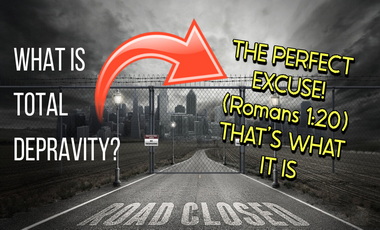
On the other hand, if God’s moral judgement differs from ours so that our ‘black’ may be His ‘white’, we can mean nothing by calling Him good; for to say ‘God is good’, while asserting that His goodness is wholly other than ours, is really only to say ‘God is we know not what’. And an utterly unknown quality in God cannot give us moral grounds for loving or obeying Him. If He is not (in our sense) ‘good’ we shall obey, if at all, only through fear—and should be equally ready to obey an omnipotent Fiend. The doctrine of Total Depravity— when the consequence is drawn that, since we are totally depraved, our idea of good is worth simply nothing— may thus turn Christianity into a form of devil-worship.
The escape from this dilemma depends on observing what happens, in human relations, when the man of inferior moral standards enters the society of those who are better and wiser than he and gradually learns to accept their standards—a process which, as it happens, I can describe fairly accurately, since I have undergone it. When I came first to the University I was as nearly without a moral conscience as a boy could be. Some faint distaste for cruelty and for meanness about money was my utmost reach—of chastity, truthfulness, and self-sacrifice I thought as a baboon thinks of classical music. By the mercy of God I fell among a set of young men (none of them, by the way, Christians) who were sufficiently close to me in intellect and imagination to secure immediate intimacy, but who knew, and tried to obey, the moral law. Thus their judgement of good and evil was very different from mine. Now what happens in such a case is not in the least like being asked to treat as ‘white’ what was hitherto called black. The new moral judgements never enter the mind as mere reversals (though they do reverse them) of previous judgements but ‘as lords that are certainly expected’. You can have no doubt in which direction you are moving: they are more like good than the little shreds of good you already had, but are, in a sense, continuous with them. But the great test is that the recognition of the new standards is accompanied with the sense of shame and guilt: one is conscious of having blundered into society that one is unfit for. It is in the light of such experiences that we must consider the goodness of God. Beyond all doubt, His idea of ‘goodness’ differs from ours; but you need have no fear that, as you approach it, you will be asked simply to reverse your moral standards. When the relevant difference between the Divine ethics and your own appears to you, you will not, in fact, be in any doubt that the change demanded of you is in the direction you already call ‘better’. The Divine ‘goodness’ differs from ours, but it is not sheerly different: it differs from ours not as white from black but as a perfect circle from a child’s first attempt to draw a wheel. But when the child has learned to draw, it will know that the circle it then makes is what it was trying to make from the very beginning. …
I affirm that sin and evil are the corruption of God’s good creation; further, this corruption is due to the act of free moral agents making free choices to choose contrary to what is righteous and good when they could have chosen to do otherwise. Libertarian freedom entails the ability to act or refrain. Moreover, I affirm that Lucifer, Adam, and Eve possessed the ability to have exercised their free choice of either obeying God or disobeying Him. ‘Therefore, sin is the result of God’s creatures, as free moral agencies, making choices by exercising free will in the libertarian sense of free will, thereby revealing sin to be deprivation rather than a part of creation. By libertarian, I am not implying that man after the fall is fully free, but rather that before the fall, Lucifer, Adam, and Eve had “otherwise choice.”
As Norman Geisler distinguishes, “Technically, free will is not the efficient cause of a free act …. The efficient cause of a free act is really the free agent, not the free choice. Free choice is simply the power by which the free agent acts …. And once we have arrived at the free agent, it is meaningless to ask what caused its free acts. For if something else caused its actions, then the agent is not the cause of them and thus is not responsible for them. The free moral agent is the cause of free moral actions.”31
I disaffirm that the origin of sin is due to God creating creatures to inevitably sin, withholding grace or ordering circumstances so that man had to sin, or that sin was in any way caused by God.32 Further, I disaffirm that sovereignty precludes Lucifer or man before the first sin from being truly free to sin or not to sin. Moreover, I disaffirm that compatibilism, wherein man is free to act according to his nature or desires, sufficiently answers the origin of the first sin question because Lucifer had no external or internal stimuli to precipitate sin.33 See Chapter 18 for a fuller discussion of this dilemma for Calvinism.
Here again, the distinction between the compatibilist view of free will and the libertarian view is a critical one. See Chapter 17 for a fuller comparison. Compatibilism is the view that moral freedom and determinism are compatible. However, compatibilism does not satisfactorily answer the question of what caused the first sin. In other words, if it is not the product of free choice in the libertarian sense, but only in the compatibilist sense, then did it arise out of the nature of Lucifer, which God directly created, or from overpowering stimuli from Lucifer’s environment, which God also directly created? Furthermore, although the serpent tempted Adam and Eve, there could have been no reason that man would have had to choose sin freely (compatibilism) lest we have what God called “good” being by nature destined to sin, a disquieting reality.
The compatibilist perspective seems to be exactly what Jonathan Edwards meant when he said, “If a person is able to do what he wills or chooses, he is free, no matter how he came to make this choice.”34 This understanding seems further confirmed by his statement regarding the nature of free choice when he says, “the ability to do what we will, or according to our pleasure.”35 Consequently, for the compatibilist, free choice is merely the freedom to choose to do what a person desires to do, even if the range of desires are limited by some preceding event like creation or the fall of man in the garden. As far as original sin, it seems as though he is arguing that man freely chose to eat of the fruit, but then God is the only one who could have given Adam that desire. Thus, Edwards’ compatibilism seems to imply God calling the desire that would ensure the fall and sin “very good” (Genesis 1:31).
I also disaffirm similar contemporary sentiments regarding God’s relation to sin such as R.C. Sproul Jr.’s comment that “Every Bible-believing Christian must conclude at least that God in some sense desired that man would fall into sin… I am not accusing God of sinning; I am suggesting that he created sin.”36 He “describes God as ‘the Culprit’ that caused Eve to sin in the garden.”37 Then there is Gordon Clark’s assessment, “As God cannot sin, so in the next place, God is not responsible for sin, even though he decrees it.”38 Again, Clark in response to Arminians asseverates, “I wish very frankly and pointedly to assert that if a man gets drunk and shoots his family, it was the will of God that he should do so … In Ephesians 1:11. Paul tells us that God works all things, not some things only, after the counsel of his own will.”39 Contrary to Clark, Ephesians does not say that God wills—directly causes—everything, but rather that “he works all things after the counsel of His will” (Ephesians 1:11).
God never has desired sin, nor will He ever. God always desires holiness. In creating man to freely love and walk with God without internal or external coercion, God accomplished the impossible. God desired a holy, loving, personal and eternal relationship with man that would glorify Him and be eternal, joyful bliss for man. That type of relationship would require God creating a being in His own image. Therefore, God chose to create man in His image (Genesis 1:26-28.), which necessitated man being created with true ability to choose to follow God or not follow God. God’s unwavering desire and will was and is for man to experience God’s love for eternity and for man to walk in holiness and love for God without ever using his free will to choose sin. God knew that it was an actual impossibility to guarantee that a truly free created person would never freely choose to misuse his freedom. God knew with absolute certainty that man would use his freedom to sin.40
For that reason, God coextensively determined to allow man to sin, provide His Son as the payment for the sins of the first man and woman and their offspring (1 John 2:2), and unconditionally offer salvation to every sinner, conditioning the reception of the offer upon grace-enabled faith (John 3:16; Ephesians 2:8-10). Although God’s desire for holiness never included a desire for man to sin, this plan allowed man to use his freedom to sin, and his grace-enabled freedom to repent and believe, which results in man being born again with a new nature that is created in righteousness and holiness (Colossians 3:10; Ephesians 4:20-22), but now with the experiential knowledge of sin and redemption.
God also coextensively knew that this transformed man, once salvation is completed in glorification (Romans 8:28-30), who now knows sin experientially and its consequences more fully, as well as redemptive love, will freely choose to live eternally in holiness and love with God and never use his freedom to sin again. God knows this because He knows everything (John 21:17). Thus, what mere creation could not accomplish, creation and redemption could. ‘Therefore, redemption was not a plan subsequent to creation, but rather an essential part of the plan of creation.41
When Satan tempted Eve, he said, “For God knows that in the day you eat from it your eyes will be opened, and you will be like God, knowing good and evil” (Genesis 3:5, italics added). This statement was true. Adam and Eve only knew sin as something forbidden by God, with claimed dire consequences. They did not know sin like God. They did not know it experientially, with all of its heartache, loss, damage, dishonor, depression, separation, and death, and its eternal consequences and corollaries. Satan told them the truth. They would know more about sin, and in that sense they would be more like God; however, he intentionally deceived them by not telling them that in every other way, they would become less like God, and irrevocably so if it were not for the predetermined gracious plan of redemption by God. God knows everything and always has. God has never had a new thought and nothing has ever occurred to God. Therefore, God knows sin experientially, without having ever experienced sin. This is something that cannot be true of a created being like man.
Some things are actual impossibilities, like God ceasing to exist, God sinning, forgiveness without sin’s penalty being borne, and creating a truly free moral being with libertarian free will and guaranteeing that he will not sin. God knew with infinite and invincible certitude that man would use his freedom to sin. He also knew that while it is impossible to create a truly free person without the possibility of him using his freedom to sin, it is not impossible for a completely redeemed and glorified created free being to choose always to walk in holiness. Therefore, what is impossible for man is not impossible for God; albeit, infinitely costly (John 3:16). Further, this is how God could create man while never desiring sin, but only righteousness, and still maintain certitude without Calvinism’s causality. This is the epitome of “God working all things together for good” (Romans 8:28).
Although all earthly analogies are inadequate to illustrate the full orb of eternal truths, they can provide a simple illustration of the eternal truth. A simple analogy of the difference between unfallen man and fallen, redeemed man would be a child having been told not to touch the hot stove. Even with the sternest warnings, cautions and lectures from mom, children are still often drawn to touch the stove; however, if they do touch the burner, and their hands are burned; they are rushed to the hospital and painful treatments, and recuperation are endured over a period of weeks. Once healing is complete, they will not intentionally touch the hot stove again. At this point, they are no longer naive children merely trusting their mother’s caution, but they have experienced the pain of wrong choices and restorative healing.
An illustration of how God could allow sin and yet never desire sin can be found in parents’ desires to have children. When Gina and I decided to have children, our passionate desire was that they would always choose righteousness, and never have to suffer the consequences of their own or someone else’s sin. We desired that they would live the fullest life in fellowship with God that is possible. We desired that they would never choose to act contrary to God’s Word. During the over thirty-four years that our two daughters have been alive, we have remained unequivocally true to those desires. There never has been, nor is there today, a desire to see them sin or be hurt by sin. Yet, we knew enough about the Scripture to know that it would be impossible for them to live the life we desired for them in this life, but that knowledge never altered our desire for righteousness. Furthermore, because God has graciously saved both of our daughters, our desire for them to walk in eternal fellowship with God will be realized.
《《《《 FOOTNOTES 》》》》
Norman Geisler, Chosen But Free, (Minneapolis: Bethany House Publishers, 1999), 176.
Jonathan Edwards, Freedom of the Will, (New Haven: Yale University Press, 1957), 413.
Edwards, Freedom, 15.
Edwards, Freedom, 15.
Edwards, Freedom, 11.
David L. Allen and Steve W. Lemke, eds., Whosoever Will: A Biblical-Theological Critique of Five-Point Calvinism, (Nashville, B&H Academic, 2010), 148.
Ibid.
Ibid., 292.
Ibid
The same is true of Lucifer and the fallen angels. However, their creation was different and therefore redemption is not a part of the plan concerning them.
Additionally, the range of options changes without dispossessing one of libertarian freedom. For example, Adam and Eve had a range of options that man presently does not, and heaven will change the range of options from either state of affairs. In this life, the range of options is very different for a toddler, teenager, adult, and an elderly person, but each has libertarian freedom.
…. As already mentioned, this theory says that God hates evil so much that He must ensure its eternal perpetuation, for if in a trillion years from now there was even a millisecond of time in which God didn’t have a group of sinners to be angry at, then this would be tragic as one whole part of His character (justice) would be unable to be expressed.
As Douglas Wilson once put it on his blog,
In a world without sin, two of God’s most glorious attributes—His justice and His mercy—would go undisplayed. This, obviously, would be horrible … In a world without sin and evil, at least two attributes of God would have gone unrevealed and unmanifested, those attributes being wrath and mercy. Since this is obviously intolerable, God determined to direct our affairs the way that He did.
Jonathan Edwards expressed a similar idea when he wrote:
It is a proper and excellent thing for infinite glory to shine forth; and for the same reason, it is proper that the shining forth of God’s glory should be complete; that is, that all parts of his glory should shine forth, that every beauty should be proportionably effulgent, that the beholder may have a proper notion of God. It is not proper that one glory should be exceedingly manifested, and another not at all … Thus it is necessary, that God’s awful majesty, his authority and dreadful greatness, justice, and holiness, should be manifested. But this could not be, unless sin and punishment had been decreed; so that the shining forth of God’s glory would be very imperfect, both because these parts of divine glory would not shine forth as the others do, and also the glory of his goodness, love, and holiness would be faint without them; nay, they could scarcely shine forth at all. If it were not right that God should decree and permit and punish sin, there could be no manifestation of God’s holiness in hatred of sin, or in showing any preference, in his providence, of godliness before it. There would be no manifestation of God’s grace or true goodness, if there was no sin to be pardoned, no misery to be saved from. How much happiness soever he bestowed, his goodness would not be so much prized and admired … So evil is necessary, in order to the highest happiness of the creature, and the completeness of that communication of God, for which he made the world; because the creature’s happiness consists in the knowledge of God, and the sense of his love. And if the knowledge of him be imperfect, the happiness of the creature must be proportionably imperfect.
The same notion is present in the works of Saint Augustine:
…if all had remained condemned to the punishment entailed by just condemnation, then God’s merciful grace would not have been seen at work in anyone, on the other hand, if all had been transferred from darkness to light, the truth of God’s vengeance would not have been made evident. —City of God 21.11
[….]
The problem with Calvinism is that its quest for rationalistic clarity does away with this necessary mystery. Calvinism asserts that evil exists because God wants it to be there—end of story. As Calvin put it in his Institutes of the Christian Religion, “I say with Augustine that the Lord has created those who, as He certainly foreknew, were to go to destruction, and He did so because He so willed,” while later Calvin extends this idea to its consistent corollary, which is that “man by the righteous impulsion of God does that which is unlawful.” In other words, according to Calvin, the sinner sins because God impels him to do so.
Calvin picked up on this same theme later when he wrote that:
[M]an falls, the Providence of God so ordaining …that by the will of God all the sons of Adam fell into the state of wretchedness in which they are now involved … Nor ought it to seem absurd when I say, that God not only foresaw the fall of the first man, and in him the ruin of his posterity; but also at his own pleasure arranged it.
God, in His own pleasure, arranged evil?
These are difficult words, especially since they appear to directly implicate God in all the wickedness of the world. It easily solves the problem of evil, but does so at the expense of other scriptural teaching. For example, Psalm 5:5. In the Septuagint—the Old Testament text quoted by the New Testament writers and the canonical text of the ancient Church—Psalms 5:4 reads “For You are not a God who wills (thelon) lawlessness (anomian).”
In fairness to Calvin, he was able to maintain some degree of dialectical balance that would be lacking in his followers. That is why my critique of Calvinism recognizes that Calvinism is larger than simply the teachings of John Calvin. This was impressed upon me when our former church put on a family camp and invited R.C. Sproul, Jr. to speak. The younger Sproul has taken Calvin’s teachings to such an extreme, going even further than his father—let alone Calvin himself. For example, Sproul took particular delight in describing to us in detail how God desired sin to come about, and how God forced the devil to sin like a man operating a remote control. In his book Almighty Over All, Sproul expands on this point, writing, “I am suggesting that he [God] created sin … Where, I must ask, does the law of God forbid the creation of evil? I would suggest that it just isn’t there.”
This leads to what I consider to be a trivialization of evil.
R.C. Sproul, Jr. posted a Facebook status saying that since God is sovereign, even those things which are not as they ought to be really are just as things ought to be. He went on to say that there are ultimately no “bad” things, since God is completely sovereign. Now if all he means is that even bad things work out ultimately for good, then I have no problem. But there is a great difference between saying, on the one hand, that God works good out of evil, and on the other hand, saying that that since God is the author of all things, evil isn’t really bad (or that everything which happens ought to be).
If, as Sproul maintains, God is the author of evil, then we would have to say that He fosters wickedness in people’s hearts. But if so, then God is sinful by the Biblical definitions of sin and evil. Consider that in the Proverbs, the ones who incite and tempt to evil (like the fool’s friends or the prostitute) are as morally guilty as the simple man who falls prey to those temptations. James says that God does not tempt us, but if God is the author of evil then He is doing a lot more than merely tempting us: He is fostering the evil in our hearts and inciting us to sin.
Under this scheme, the words “God is good” are no longer intelligible, as God is violating His own self-revelation of what constitutes “goodness.” Consequently, if God really is the energizing principle behind both the seed of the woman and the seed of the serpent, then we would have to conclude that the Biblical categories used to describe God are ultimately non-descriptive. Moreover, it would make a mockery of the antithesis that we find throughout the war-Psalms, if God is the causal force behind both sides.
Moreover, if God is the author of evil, then we would have to conclude that evil is just as much an intrinsic part of God’s character as His goodness. But in that case, we are left without a standard for distinguishing between good and evil. Using God’s character as the standard would then be akin to using a tape measure on which inches and centimeters are all mixed up. God can only be the standard for distinguishing between good and evil if the former and not the latter is fundamental to His character. …
I will finish the thought I have…
GOD NEEDED TO CREATE MAN TO BE WHOLE
… according to Calvinism. A theological “heresy” in my mind at least.
Click any graphic to enlarge I will add to these over time
These next two were while I was waiting for gas in the Costco gas line. I have a buddy who is a Calvinist, and he and I “rib” each other here-n-there. We have fun with it. So I made a “Cage-Stage” toy of him, and a “Cage-Stage” toy of me. Enjoy.
This next one is not mine but inspired the three that follow it:
Dr. Leighton Flowers responds to a book recently published by Matthew Cserhati titled, “A Critique of Provisionism: A Response to Leighton Flowers’s ‘The Potter’s Promise.'” Join us LIVE as we demonstrate how Matthew’s arguments never get off the ground by surviving even the most basic level of unbiased scrutiny. To get your copy of Dr. Flowers book, Drawn By Jesus.
To assist in this video above, I will also excerpt a large portion of a must read book pictured below… it is a long read but well worth the time. Under that book quote I will put a very recent interview with Ken Wilson [Jump To] regarding Augustine… also worth your while IMHO.
Chapter IV titled: “Is God’s Grace Irresistible? A Critique of Irresistible Grace
[….]
The Bible and Irresistible Grace
What does the Bible say about irresistible grace? The easy answer is the Bible does not specifically address it. The phrase “irresistible grace” does not appear anywhere in Scripture. Neither can one find such important Calvinist words as “monergism,” “compatibilism,” or ordo salutis. This absence alone does not mean irresistible grace might not be a reality. Other doctrines such as the Trinity are described in Scripture but not with the theological name that we now give them. So let us examine Old Testament texts, New Testament texts, and the ministry and teachings of Jesus to see if they support irresistible grace. We will also see how the repeated all-inclusive invitations to salvation throughout Scripture and the descriptions of how to be saved argue against irresistible grace.
Key Texts Affirming Resistible Grace
Old Testament Texts—Some Scripture texts appear to deny irresistible grace and to affirm resistible grace explicitly. For example, in Proverbs 1, the wisdom of God personified speaks to those whom “I called” (Prov 1:24 NASB), to whom “I will pour out my spirit on you” (v. 23b), and to whom wisdom has made “my words known to you” (v. 23c). Nevertheless, no one regarded God’s truth, for the hearers refused God’s message and disdained wisdom’s counsel (vv. 22–26). Some might claim this message merely exemplifies the resistible outward call. The problem becomes complicated because these are God’s elect people, the Jews, with whom God had entered into covenant: “I called and you refused” (v. 24a). God makes them the offer: “I will pour out my spirit on you” (v. 23b), but they would not turn and instead refused to accept the message (v. 24). The grace that was so graciously offered was ungraciously refused. The proffered grace was conditional on their response. Acceptance of God’s Word would have brought blessing, but their rejection of it brought calamity upon themselves.
In the Prophets and the Psalms, God responds to the Israelites’ refusal to repent and their rejection of his Word:
“When Israel was a child, I loved him, and out of Egypt I called My son. As they called them, so they went from them; they sacrificed to the Baals, and burned incense to carved images. I taught Ephraim to walk, taking them by their arms; but they did not know that I healed them. I drew them with gentle cords, with bands of love, and I was to them as those who take the yoke from their neck. I stooped and fed them. He shall not return to the land of Egypt; but the Assyrian shall be his king, because they refused to repent. And the sword shall slash in his cities, devour his districts, and consume them, because of their own counsels. My people are bent on backsliding from Me. Though they call to the Most High, none at all exalt Him. How can I give you up, Ephraim? How can I hand you over, Israel? How can I make you like Admah? How can I set you like Zeboiim? My heart churns within Me; My sympathy is stirred. I will not execute the fierceness of My anger; I will not again destroy Ephraim. For I am God, and not man, the Holy One in your midst; and I will not come with terror.” (Hos 11:1–9 NKJV)
They did not keep the covenant of God; they refused to walk in His law. (Ps 78:10 NKJV)
“But My people would not heed My voice, and Israel would have none of Me. So I gave them over to their own stubborn heart, to walk in their own counsels. Oh, that My people would listen to Me, that Israel would walk in My ways!” (Ps 81:11–13 NKJV)
They have turned their backs to Me and not their faces. Though I taught them time and time again, they do not listen and receive discipline. (Jer 32:33 HCSB)
New Testament Texts—One of the most direct references to the resistibility of grace in the New Testament is in Stephen’s sermon in Acts 7:2–53, just before his martyrdom in vv. 54–60. In confronting the Jews who had rejected Jesus as Messiah, Stephen said, “You men who are stiff-necked and uncircumcised in heart and ears are always resisting the Holy Spirit; you are doing just as your fathers did” (v. 51 NASB). The Remonstrants referenced this specific Scripture, as do most scholars who reject the notion of irresistible grace. Stephen is not speaking to believers but to Jews who have rejected Christ. He not only accuses them of “resisting the Holy Spirit” but observes that many of their Jewish ancestors resisted God as well. The word translated as “resist” (antipiptō) means not “to fall down and worship,” but to “oppose, ” “strive against,” or “resist.”21 Clearly this Scripture teaches that the influence of the Holy Spirit is resistible. A similar account in Luke describes the Pharisees’ response to the preaching of John the Baptist: “But the Pharisees and lawyers rejected the counsel of God against themselves, being not baptized of him” (Luke 7:30 KJV).
Another example of resistance occurs in Paul’s salvation experience in Acts 26. As Saul was on the road to Damascus to persecute Christians, a blinding light hit him, and a voice out of heaven said, “Saul, Saul, why are you persecuting Me? It is hard for you to kick against the goads” (Acts 26:14 HCSB). Saul had resisted the conviction of the Holy Spirit in events such as the stoning of Stephen, but after his dramatic experience with the risen Christ, Saul did believe. Even so, some time lapsed before Ananias arrived and Paul received the Holy Spirit (Acts 9:17). However, in both the Old and New Testaments, other people saw miracles yet continued to resist God’s grace.22
What do Calvinists say about these texts? First, Calvinists do not deny that people can resist the Holy Spirit in some situations. Unbelievers can resist the “ outward call” of the gospel, but the elect cannot resist the “effectual call.” John Piper has said, “What is irresistible is when the Spirit is issuing the effectual call.”23 However, Calvinistic explanations do not appear to help in this instance. The Jews, after all, were God’s chosen people, and the entirety of the Jewish people were covered under the covenant, not just individual Jews. Calvinist covenantal theology sees the entire nation of Israel as being God’s chosen people. The elect, after all, are supposed to receive the effectual call. Calvinists often quote, “Jacob I have loved, but Esau I have hated” (Rom 9:13 NKJV) as strong evidence for election.24 But these divinely elected people have not only rejected Jesus as Messiah but resisted the Holy Spirit through many generations in history. Therefore, it would seem God’s grace is resistible, even among the elect who are eligible to receive the effectual call.
Resistible Grace in the Ministry and Teachings of Jesus
Throughout his teaching ministry, Jesus taught and ministered in ways that seem to be inconsistent with the notion of irresistible grace. In each of these occasions, he appears to advocate the idea that God’s grace is resistible. For example, hear again Jesus’s lament over Jerusalem: “Jerusalem, Jerusalem! [The city] who kills the prophets and stones those who are sent to her. How often I wanted to gather your children together, as a hen gathers her chicks under her wings, yet you were not willing!” (Matt 23:37 HCSB, emphasis added; cf. Luke 13:34). What was Jesus lamenting? He was lamenting that despite God’s gracious love for “Jerusalem” (by metonymy including all Jews, not merely the leaders) and his desire to gather them to eternal security under his protection, and the many prophets and messengers he sent them with his message, they rejected the message that was sent them and “were not willing” to respond to God. In fact, the Greek sets the contrast off even more sharply than the English does because forms of the same Greek verb thelō (to will) are used twice in this verse: “I willed . . . but you were not willing.”25 Gottlob Schrenk described this statement as expressing “the frustration of His gracious purpose to save by the refusal of men.”26 Note also that his lament concerned the entire city of Jerusalem, not just a small number of the elect within Jerusalem. Indeed, Jesus’s “how often” signified even his preincarnate salvific concern about not only the persons living in Jerusalem at that time but for many previous generations of Jerusalemites.
Again, one might suggest that the prophets were merely the vehicles for proclaiming the general call, and thus these Jerusalemites never received the efficacious call. However, this argument will not do. First, the Jerusalemites were God’s chosen people. As the elect, they should have received the efficacious call, but in fact, they were still unwilling to respond. Some Calvinists might make this argument: the election of Israel included individuals within Israel, not all of Israel as a people. Only a remnant of physical Israel, not all of it, will be saved. But the proposal that God sent the efficacious call to just a portion of Israel nevertheless does not match up well with this text or numerous other texts.
Even so, the greater issue is that if Jesus believed in irresistible grace, with both the outward and inward calls, his apparent lament over Jerusalem would have been just a disingenuous act, a cynical show because he knew that God had not and would not give these lost persons the necessary conditions for their salvation. His lament would have been over God’s hardness of heart, but that is not what the Scripture says. Scripture attributes the people’s not coming to God to their own unwillingness, that is, the hardness of their own hearts.
What is generalized in Jesus’s lament over Jerusalem is personalized in the incident with the rich young ruler (Luke 18:18–23). The ruler asked, “What must I do to inherit eternal life?” (v. 18 HCSB). If Jesus were a Calvinist, one might have expected him to answer, “Nothing!” and admonish the young ruler for the impertinence of his question, particularly the idea that he could do anything to inherit eternal life, as if to steal glory from God’s monergistic salvation. Instead, Jesus told him what he could do: he could go and sell all his possessions and give them to the poor. This instruction was not just about the young ruler’s money; it was about his heart. He loved his money and the privileges it gave him, and he just could not live without it. In other words, Jesus would not grant him eternal life unless he was willing to make a total commitment of his life to God, but the young ruler was unwilling to do so. Jesus let him walk away and face the solemn consequences of his decision.
Noting the rich young ruler’s unwillingness, Jesus then commented about how hard it is for a rich person to enter heaven—indeed, as hard as a camel going through the eye of a needle (Luke 13:24–28). Of course, if Jesus were a Calvinist, he never would have suggested that it was harder for rich people to be saved by God’s irresistible grace than for poor people. Their wills would be changed immediately and invincibly upon hearing God’s effectual call. It would be no harder for a rich person to be saved by God’s monergistic and irresistible calling than it would be for any other sinner. But the real Jesus was suggesting that their salvation was tied in some measure to their response and commitment to his calling.
The same idea of resistible grace arises frequently in the parables of Jesus’s teaching ministry. In the parable of the two sons (Matt 21:28–32), Jesus described their differing responses. One son initially refused to do the work he was told to do, saying “I don’t want to!” but later “changed his mind” and did it (v. 29 HCSB). Meanwhile, the other son said he would do the work, but later he did not do the work. What was the main point of this parable? The point was that tax collectors and prostitutes were going to enter the kingdom of heaven before the chief priests and elders who resisted Jesus’s teaching (vv. 31–32). The distinction between the two was not that one was a son and one was not, for they both were sons from whom the father desired obedience. The distinction between them is the response of each son— resistance from one, repentance and obedience from the other. Evidently Jesus thought that a personal response to the Father’s will is important!
A similar teaching follows in the parable of the vineyard (Matt 21:33–44). Using the familiar Old Testament symbol of a vineyard to represent Israel, Jesus told of the owner of the vineyard going away and leaving it in the hands of the tenants. He sent back a series of messengers and finally sent his own son to instruct the tenants about running the vineyard, but they rejected each messenger and killed his son in the hope of seizing the vineyard for themselves. The owner then returned and exacted a solemn punishment on the rebellious tenants. Jesus then spoke of the cornerstone, the rock that was rejected by the builders but became the chief cornerstone, obviously speaking of himself (vv. 42–44). Jesus then told the Pharisees that the kingdom of God would be taken from them and “given to a nation producing its fruit” (v. 43 HCSB). Again, the key differential was whether persons were willing to be responsive to the Word of God.
The parable of the sower (or of the soils) in Matt 13:1–23; Mark 4:1–20; and Luke 8:1–15 highlights the issue of personal responsiveness to the Word of God. The invariable element is the seed, which represents the Word. The variable factor is the receptiveness of the soil on which the sower sowed the seed. The seed on the path, on the rocky ground, and among the thorns never became rooted enough in the soil to flourish. The seed on the path was snatched away by the evil one. The rocky ground represents the person who “hears the word” and “receives it with joy” (Matt 13:20 HCSB) but does not flourish because “he has no root in himself” (v. 21). The seed that fell among thorns represents the person who also hears the Word of God, but the message becomes garbled by worldly interests. Only the seed that fell on good, receptive ground flourished. Again, the variable is not the proclamation of the Word but the response of the individual.
Resistible Grace in the All-Inclusive Invitations in Scripture
One of the most off-repeated themes throughout many genres of Scripture is the broad invitation of God to “all” people. This invitation parallels in many ways David L. Allen’s discussion on the issue of a limited atonement in this volume and in other works.27 However, the question relating to irresistible grace is why, when receiving irresistible grace is the only way persons can be saved, would God choose only a small number of people to be saved? In essence, Calvinists blame God for those who do not come. These lost souls cannot come because God did not give them irresistible grace, the only way they can be saved. Roger Olson compared the roles of Satan and God in Calvinism: “Satan wants all people damned to hell and God wants only a certain number damned to hell.”28 While Calvinists would insist that the sinners who reject the message of salvation merely receive their just deserts, there is really more to it than that. Calvinists affirm that God elected some for his own reasons from before the world began, and he gave them irresistible grace through his Spirit so they inevitably would be saved. Obviously, those whom he did not choose to give the irresistible effectual call but merely the resistible outer ineffectual call can never be saved. These are no more or less sinners than others, but God for no obvious reason does not love this group (Calvinists call this “preterition,” or intentionally overlooking some persons), while he loves the other group through election. God chose not to give them the means of salvation, and thus they have zero chance of being saved. The alternative perspective that I affirm is that God does extend the general call to all persons and unleashes the Holy Spirit to persuade and convict them of their need for repentance and faith. The Holy Spirit, however, does not impose his will irresistibly. At the end of the day, response to the grace of God determines whether the call is effectual.
The key issue, then, is whether salvation is genuinely open to all people or just to a few who receive irresistible grace. What does the Scripture say concerning this issue? First, Scripture clearly teaches that God desires the salvation of all people. The Bible teaches that:
He Himself is the propitiation for our sins, and not only for ours, but also for those of the whole world. (1 John 2:2 HCSB)
“It is not the will of your Father who is in heaven for one of these little ones to perish.” (Matt 18:14 NASB)
“The Lord is . . . not willing that any should perish, but that all should come to repentance.” (2 Pet 3:9 KJV)
“[God] wants everyone to be saved and to come to the knowledge of the truth.” (1 Tim 2:4 HCSB)
The Greek word pas (πᾶς) and its similar cognate synonym words (pantes, panta, and hos an), meaning “all” or “everyone,” such as in 1 Tim 2:4 and 2 Pet 3:9, in all the standard Greek dictionaries means “all” without exception!29
Those who would like to translate the word pas as something other than a synonym for “all” should ponder the theological cost of such a move merely because it disagrees with their theological system. For example, Paul used the same term in 2 Tim 3:16, when he declared that “all Scripture is given by inspiration of God”(2 Tim 3:16 KJV, emphasis added). He did not mean that God inspires merely some selected portions of Scripture but that God inspires all Scripture. Likewise, the Greek word pas (“all”), used in the prologue to John, makes the enormous claim about creation that “all things were made by him; and without him was not any thing made that was made” (John 1:3 KJV, emphasis added). Jesus was not involved in merely creating a few trees and hills here and there, but all things were created by him. We see the word again in Ephesians when Paul looked toward the eschaton and claimed that in the fullness of time will be gathered “all things in Christ, both which are in heaven, and which are on earth” (Eph 1:10 KJV, emphasis added). Thus, an accurate doctrine of the creation of the world, the inspiration of Scripture, and the consummation of the world hinges on an accurate rendering of the Greek word pas as “all.” So does the doctrine of salvation—that God desires the salvation of all people and has made an atonement through Christ that is sufficient for all people.
This same all-inclusive Greek word pas (translated as “everyone,” “all,” or “whosoever”) is used repeatedly in the New Testament to offer an invitation to all people who will respond to God’s gracious initiative with faith and obedience (italics in the following Scripture passages are mine):
“Therefore whoever [pas hostis] hears these sayings of Mine, and does them, I will liken him to a wise man who built his house on the rock.” (Matt 7:24 NKJV; see Luke 6:47–48)
“Whosoever [pas hostis] therefore shall confess me before men, him will I confess also before my Father which is in heaven. But whosoever [hostis an] shall deny me before men, him will I also deny before my Father which is in heaven.” (Matt 10:32–33 KJV; see Luke 12:8)
“Come to Me, all [pantes] who are weary and heavy-laden, and I will give you rest.” (Matt 11:28 NASB1995)
John the Baptist “came as a witness, / to testify about the light, / so that all [pantes] might believe through him.” (John 1:7 HCSB)
Jesus is “the true light, who gives light to everyone” [panta]. (John 1:9 HCSB)
Whoever [pas] believes in Him should not perish but have eternal life. For God so loved the world that He gave His only begotten Son, that whoever [pas] believes in Him should not perish but have everlasting life. (John 3:15–16 NKJV)
“Everyone [pas] who drinks of this water will thirst again; but whoever [hos an] drinks of the water that I will give him shall never thirst; but the water that I will give him will become in him a well of water springing up to eternal life.” (John 4:13–14 NASB1995)
“For this is the will of My Father, that everyone [pas] who beholds the Son and believes in Him will have eternal life, and I Myself will raise him up on the last day.” (John 6:40 NASB1995)
“Everyone [pas] who lives and believes in Me will never die. Do you believe this?” (John 11:26 NASB)
“I have come as Light into the world, so that everyone [pas] who believes in Me will not remain in darkness.” (John 12:46 NASB1995)
And it shall be that everyone [pas, hos an] who calls on the name of the Lord will be saved. (Acts 2:21 NASB)30
“Of Him [Jesus] all [pantes] the prophets bear witness that through His name everyone [panta] who believes in Him receives forgiveness of sins.” (Acts 10:43 NASB1995)
As it is written: “Behold, I lay in Zion a stumbling stone and rock of offense, and whoever [pas] believes on Him will not be put to shame.” (Rom 9:33 NKJV)
For the Scripture says, “Whoever [pas] believes in Him will not be disappointed.” (Rom 10:11 NASB1995)
Whoever [pas] denies the Son does not have the Father; the one who confesses the Son has the Father also. (1 John 2:23 NASB)
Whoever [pas] believes that Jesus is the Christ is born of God, and whoever loves the Father loves the child born of Him. (1 John 5:1 NASB1995)
Many more of these broad invitations are found throughout Scripture than space permits to list here. In addition, the New Testament often uses a form of hostis, which when combined with an or ean is an indefinite relative pronoun best translated as “anyone,” “whosoever,” or “everyone” and refers to the group as a whole, with a focus on each individual member of the group.31
An All-Inclusive Invitation in the Prophets
In the famous prophecy of Joel, the prophet commented on whom God delivers:
And it shall come to pass, that whosoever shall call on the name of the LORD shall be delivered: for in mount Zion and in Jerusalem shall be deliverance, as the LORD hath said, and in the remnant whom the LORD shall call. (Joel 2:32 KJV)
Note that the “whosoever” (translated “everyone” in NASB and HCSB) refers to “the remnant whom the Lord shall call.” These are not two distinct groups but are one and the same.
All-Inclusive Invitations Offered by Jesus
Jesus offered an all-inclusive invitation in the Sermon on the Mount and throughout his teaching ministry. Note that Jesus did not say “whoso-elect” in these invitations; the invitation is always addressed to “whosoever.”32
“And blessed is he, whosoever [hos ean] shall not be offended in me.” (Matt 11:6 KJV; see Luke 7:23)
“For whosoever [hostis an] shall do the will of my Father which is in heaven, the same is my brother, and sister, and mother.” (Matt 12:50 KJV; cf. Mark 3:35)
“If any man [tis] will come after me, let him deny himself, and take up his cross, and follow me. For whosoever [hos an] will save his life shall lose it: and whosoever will lose his life for my sake shall find it.” (Matt 16:24– 25 KJV; cf. Mark 8:34–35; Luke 9:23–24)
“I am the living bread that came down out of heaven; if anyone [ean tis] eats of this bread, he will live forever; and the bread also which I will give for the life of the world is My flesh.” (John 6:51 NASB1995)
“If anyone [ean tis] is willing to do His will, he will know of the teaching, whether it is of God or whether I speak from Myself.” (John 7:17 NASB1995)
Now on the last day, the great day of the feast, Jesus stood and cried out, saying, “If anyone [ean tis] is thirsty, let him come to Me and drink.” (John 7:37 NASB)
“Truly, truly, I say to you, if anyone [ean tis] keeps My word he will never see death.” (John 8:51 NASB1995)
All-Inclusive Invitations in the Proclamation and Epistles of the Early Church
“And it shall be that everyone [pas, hos an] who calls on the name of the Lord will be saved.” (Acts 2:21 NASB)
“Of Him [Jesus] all [pantes] the prophets bear witness that through His name everyone [panta] who believes in Him receives forgiveness of sins.” (Acts 10:43 NASB1995)
For everyone [pas, hos an] who calls on the name of the Lord will be saved. (Rom 10:13 HCSB)
Whoever [hos an] confesses that Jesus is the Son of God, God abides in him, and he in God. (1 John 4:15 NASB1995)
All-Inclusive Invitations in John’s Revelation
“Behold, I stand at the door and knock; if anyone [ean tis] hears My voice and opens the door, I will come in to him and will dine with him, and he with Me.” (Rev 3:20 NASB)
And the Spirit and the bride say, Come. And let him that heareth say, Come. And let him that is athirst come. And whosoever will, let him take the water of life freely. (Rev 22:17 KJV)
To be sure, Calvinists attribute all these verses to the “general call” or “universal call” that God gives to all people although he has no intention of actually saving many of them. But in so doing they impose their own theological beliefs on the text. These verses mention no difference between a “ general call” and “specific call,” or between “common grace” and “enabling irresistible grace.” Therefore, when we see the same all-inclusive invitation over and over again in the various genres of Scripture, the question must be asked if the Calvinist theological system is doing justice to the biblical text. Calvinists should take seriously Paul’s admonition in Rom 9:20 (NIV): “But who are you, a human being, to talk back to God?” In Romans 9 Paul was addressing believers from a Jewish background who believed they were among the elect people, the “frozen chosen.” But much to their surprise, God in his sovereignty extended salvation to others—the Gentiles whom they hated. If God has chosen to save those who come to him by faith in Christ, as Romans 9–11 repeatedly assert, who are we to disagree with his sovereign choice? Just so, if God says he desires the salvation of all people, I believe he means it, not just in his revealed (for Calvinists, evidently deceptive) will, but also in his secret (real) will. The call is indeed universal or general for everyone to be saved. But the elect are not limited to a select group that God has chosen because he especially and savingly loves them and rejects by preterition all others, but are coterminous with those who have trusted Christ as Savior and Lord.
Resistible Grace in Descriptions of How to Be Saved
Another line of evidence in Scripture that supports the idea that grace is resistible is in biblical descriptions of how to be saved. Whenever anyone in the New Testament asks a direct question about how to be saved, the answer never refers to election. The answer always calls for an action on the part of the person to receive the salvation that God has provided and offers to each person. In Scripture, eternal life is proffered to all those who hear the gospel, not just to a few select persons who receive effectual grace irresistibly. What do the New Testament salvific formulas say is required to be saved?
The Teachings of Jesus
Jesus directly tied salvation to faith in him realized through human response to the proclamation of the gospel:
“And as Moses lifted up the serpent in the wilderness, even so must the Son of Man be lifted up, that whoever believes in Him should not perish but have eternal life. For God so loved the world that He gave His only begotten Son, that whoever believes in Him should not perish but have everlasting life. For God did not send His Son into the world to condemn the world, but that the world through Him might be saved.
“He who believes in Him is not condemned; but he who does not believe is condemned already, because he has not believed in the name of the only begotten Son of God.” (John 3:14–18 NKJV).
The Need for Persuasion
At the end of the sermon at Pentecost, some of the hearers “were pierced to the heart and said to Peter and the rest of the apostles, ‘Brethren, what shall we do?’” (Acts 2:37 NASB1995). Peter’s answer was not, “Are you elect or not?” His answer was, “Repent, and each of you be baptized in the name of Jesus Christ for the forgiveness of your sins; and you will receive the gift of the Holy Spirit” (v. 38). Even after this, “with many other words he [Peter] solemnly testified and kept on exhorting them, saying, ‘Be saved from this perverse generation!’” (v. 40, emphasis added). The word translated “exhorting” in the NASB1995 is variously translated in other Bible versions as “strongly urged” (HCSB), “entreated” (Weymouth), “pleaded” (NIV), or “begged” (NCV). The word that is translated “exhort” is parekalei, meaning to invite or summon someone to a decision, to beseech or implore someone, or to plead with or call someone to a decision.33 The same meaning applies to all six other usages of parekalei in the New Testament. Of course, had Peter known that grace was irresistible, he wouldn’t have wasted his time with such a solemn exhortation, knowing that God had already regenerated them by irresistible grace. What persuasion is necessary for one who is already convinced?
Likewise, Paul wrote that his preaching was an effort intended to “ persuade” people (2 Cor 5:11 NIV). The word Paul used here is peithō, meaning to persuade or convince someone, to try to win someone over to your point of view.34 Why would there be a need to persuade someone who had already been regenerated by irresistible enabling grace?
The Appeal to the Philippian Jailer.When the Philippian jailer saw the miraculous intervention of God in releasing Paul and Silas from his jail, he fell at their feet and asked the salvation question in the most direct way possible: “Sirs, what must I do to be saved?” (Acts 16:30 NASB). Peter did not respond by talking about election. Instead, he answered, “Believe in the Lord Jesus, and you will be saved, you and your household” (v. 31; emphasis added). Being saved was conditional on his belief.
The Appeal to the Ethiopian Eunuch.After Philip had witnessed to the Ethiopian eunuch from the Old Testament prophecies, the eunuch exclaimed, “‘Look! Water! What prevents me from being baptized?’ And Philip said, ‘If you believe with all your heart, you may.’ And he answered and said, ‘I believe that Jesus Christ is the Son of God’” (Acts 8:36–37 NASB1995). And so he was baptized. Note that his being baptized was conditional upon his trust in Christ.
The Teaching of Paul. “If you confess with your mouth, ‘Jesus is Lord,’ and believe in your heart that God raised Him from the dead, you will be saved. One believes with the heart, resulting in righteousness, and one confesses with the mouth, resulting in salvation” (Rom 10:9–10 HCSB). Again, salvation is conditional on trusting in Christ.
To summarize, the Scriptures contain significant evidence against irresistible grace. The Bible specifically teaches that the Holy Spirit can be resisted. It repeatedly calls upon all people to respond to God’s gracious invitation. The descriptions of how to be saved focus on the requirement for a positive human response to God’s initiative. The texts do not seem to support irresistible grace, but they call upon persons to respond to the grace of God in specific ways. The plain reading of these texts tends to support the belief that God’s grace, by his own intent and design, is resistible, and choosing Christ is voluntary (guided by the conviction and convincing of the Holy Spirit).
Assessing Calvinist Arguments and Proof Texts for Irresistible Grace
In the previous version of this article in Whosoever Will, I explored seven theological concerns about irresistible grace.35 While I still affirm those concerns, in this article I have chosen to address some arguments and proof texts proffered by Calvinists to defend the notion of irresistible grace. Specifically, we will examine Calvinist proof texts in John 6 and 12; Rom 8:29–30; and Eph 2:1 in the light of the best hermeneutics.36 Then we will examine two theological arguments made by Calvinists—that irresistible grace is required for God to be sovereign, and it is necessary for God to receive glory.
Calvinist Argument #1: John 6:37–44, 65 and 12:32
Probably the Scripture most frequently cited by Calvinists regarding
irresistible grace is John 6:44, along with related verses in John 6 and 12:
“All that the Father gives Me will come to Me, and the one who comes to Me I will certainly not cast out. For I have come down from heaven, not to do My own will, but the will of Him who sent Me. This is the will of Him who sent Me, that of all that He has given Me I lose nothing, but raise it up on the last day. For this is the will of My Father, that everyone who beholds the Son and believes in Him will have eternal life, and I Myself will raise him up on the last day. . . . No one can come to Me unless the Father who sent Me draws him; and I will raise him up on the last day. ” . . . And He was saying, “For this reason I have said to you, that no one can come to Me unless it has been granted him from the Father.” (John 6:37–40, 44, 65 NASB1995)
“And I, if I am lifted up from the earth, will draw all men to Myself” (John 12:32 NASB1995).
John Frame,37 R. C. Sproul,38 Matthew Barrett,39 Loraine Boettner,40 William Hendrikson and Simon J. Kistemaker,41 and Robert Yarbrough42 (among others) list these verses as among the primary proof texts for irresistible grace. To make their case, several of them referred specifically to a citation in Kittel’s ten-volume Theological Dictionary of the New Testament.43 As Sproul noted, one translation for the word “draws” (helkuō) is “to compel by irresistible superiority.”44 Barrett waxed eloquent to infer from that one definition that John 6:44 teaches God’s drawing is “indefectible, invincible, unconquerable, indomitable, insuperable, and unassailable summons,”45 words which appear neither in this text or any other biblical text regarding God’s grace, but appear only when Calvinistic presuppositions color the reading of Scripture. Calvinists like to appeal to other New Testament references in which the word “draw” is used literally, such as Acts 16:19 and Jas 2:6, in which prisoners are being physically dragged against their wills by authorities.
The Calvinist use of helkuō in Jas 2:6, Acts 16:19, and other places as justification for understanding helkuō in John 6:44 as meaning “to compel by irresistible superiority,” or a “forceful [irresistible] attraction,” commits a word-study fallacy known as “word loading” or “illegitimate totality transfer.”46 Word loading occurs when an interpreter takes a meaning of a word in one context (physical) and then seeks to apply that same meaning into a different context (spiritual). A simple example of this fallacy is to overlook the fact that the same word “spirit” (pneuma) that refers to the human spirit can also refer to the divine Holy Spirit. It is the same Greek word with two very different meanings, depending on the context. “The immediate context always determines the meaning for any word—no matter how many times a word carries such a meaning in another context.”47
Perhaps more embarrassingly for the Calvinists’ exegesis of John 6:44, the article on elkō in the abridged one-volume TDNT, which focuses more on biblical interpretation than general usage, was authored by the same Albrecht Oepke who authored the article in the ten-volume edition. Oepke noted that helkein in the Old Testament “denotes a powerful impulse . . . [that] expresses the force of love.” Oepke’s specific interpretation of John 6:44 deals a stunning blow to the Calvinist interpretation of that would-be proof text:
This is the point in the two important passages in Jn. 6:44; 12:32. There is no thought here of force or magic. The term figuratively expresses the supernatural power of the love of God or Christ which goes out to all (12:32) but without which no one can come (6:44). The apparent contradiction shows that both the election and the universality of grace must be taken seriously; the compulsion is not automatic.48
By no means is the abridged version of Kittel the only lexigraphical reference favoring a non-Calvinist reading of John 6:44. Note how the following well-respected lexicons address “draw” in John 6:44 to be interpreted metaphorically or figuratively rather than literally:
A Greek-English Lexicon of the New Testament and Other Early Christian Literature, 3rd ed., by Bauer and Danker: “to draw a pers. in the direction of values for inner life, draw, attract, an extended fg. [figurative] mng. [meaning] . . . J[ohn] 6:44 . . . J[ohn] 12:32.”49
The Analytical Lexicon to the Greek New Testament by Mounce: “met. [metaphorically] to draw mentally and morally, John 6:44; 12:32.”50
Greek-English Lexicon to the New Testament by Hickie: “met., to draw, i.e. to attract, Joh. 12:32. Cf. Joh. 6:44.”51
Analytical Lexicon of the Greek New Testament by Friberg, Friberg, and Miller: “figuratively, of a strong pull in the mental or moral life draw, attract (JN 6.44).”52
Greek and English Lexicon to the New Testament by Robinson: “to draw, by a moral influence, John 6:44. 12:32.”53
The New Analytical Greek Lexicon by Perschbacher: “met. to draw mentally and morally, John 6:44; 12:32.”54
Note that these respected lexicons all take “draw” in John 6:44 to be a figurative or metaphorical usage when applied to spiritual issues within persons. In short, these standard lexicons provide no support for the Calvinist reading of John 6:44.55
Other exegetical points can be raised to show the error of the Calvinist interpretation of John 6:44,56 but one more must be mentioned here. Who is it that the Father draws? Is it some arbitrary choice he makes in his “secret will”? Schreiner and Ware asserted that the “drawing” in John 6:44 is only for the elect:
Is [this an] unlimited or common grace, given to all? Or is it a particular grace, an efficacious grace given only to some? The second half of verse 44 answers our question, for there we find that . . . the one who is given grace (who is drawn by the Father) is actually saved (raised up). The drawing of the Father, then, is not general, but particular, for it accomplishes the final salvation of those who are drawn. God’s grace, without which no one can be saved, is therefore an efficacious [irresistible] grace, resulting in the sure salvation of those to whom it is given.57
Who are “all that” the Father will draw (John 6:37 NASB1995)? Woven throughout John 6 (and prior chapters) are repeated references to the necessity of believing in Jesus as Savior and Lord to receive eternal life (John 3:16, 18, 36; 6:27–29, 40, 54). Schreiner and Ware also acknowledged that those who are “coming” to Christ (John 6:35, 37, 44, 45) are essentially synonymous with those “believing” in Christ. John 6:39–40 are verses woven together with the preposition “for,” and these verses mirror the structure of each other in an ABCCBA pattern (“A” being the repeated phrase “raise them up,” for example).58 What this makes clear is that the identity of those whom the Father gives to Jesus are precisely identical with those who believe. Calvinist F. F. Bruce supported this reading of John 6:37–40: “In the first part of verse 37 the pronoun ‘all’ is neuter singular (Gk. pan), denoting the sum-total of believers. In the second part (‘the one who comes’) each individual of the sum-total is in view. This oscillation between the [believing] community and its individual members reappears in verses 39 and 40.”59
Likewise, Lenski noted that those who are given by the Father to the Son sum up “the whole mass of believers of all ages and speaks of them as a unit.”60 Vincent described it as “all believers regarded as one complete whole.”61 Jesus stated God’s will clearly and unequivocally: “For this is the will of My Father, that everyone who sees the Son and believes in Him will have eternal life, and I Myself will raise him up on the last day” (John 6:40 NASB). To be sure, because of human depravity, it is essential that the Father must draw humans unto himself through the convicting and convincing of the Holy Spirit. God’s grace is a necessary condition of our salvation, but God’s saving grace does not become operational in our own lives until we place our faith in Jesus Christ.
Ben Witherington pointed out the necessity of both God’s grace and human response by faith in addressing this passage:
Both God’s sovereign grace and human response play a role in human salvation, but even one’s human response is enabled by God’s grace. God’s role in the relationship is incomparably greater than the human one, but the fact remains that God does not and will not save a person without the positive human response, called faith, to the divine leading and drawing.62
Richard Lenski affirmed that both God’s grace and human response are voiced in John 6:37 and 6:44:
But in these expressions, “all that the Father gives,” and, “all that he has given,” Jesus speaks of all believers of all ages as already being present to the eyes of God, he also thus is giving them to Jesus. . . . God’s grace is universal. He would give all men to Jesus. The only reason he does not do so is because so many men obdurately refuse to be part of that gift. . . . “Him that comes to me” makes the matter individual, personal, and a voluntary act. The Father’s drawing (v. 44) is one of grace alone, thus it is efficacious, wholly sufficient, able to change the unwilling into the willing, but not by coercion, not irresistibly. Man can obdurately refuse to come. . . .63
Here [in John 6:44] Jesus explains the Father’s “giving” mentioned in v. 37 and 39: he gives men to Jesus by drawing them to him. This drawing [helkuō] is accomplished by a specific power, one especially designed for the purpose, one that takes hold of the sinner’s soul and moves it away from darkness, sin, and death, to Jesus, light, and life. No man can possibly thus draw himself to Jesus. The Father, God himself, must come with his divine power and must do this drawing; else it will never be effected. . . . The drawing is here predicated of the Father; in 12:32 it is predicated of Jesus, “And I will draw all men unto myself.” . . . The power by which these Jews are at this very moment being drawn is the power of divine grace, operative in and through the Word these Jews now hear from the lips of Jesus. While it is power (Rom. 1:16), efficacious to save, it is never irresistible (Matt. 23:37, “and ye would not”). Nor is this power extended only to a select few, for in 12:32 Jesus says, “I will draw all men.” The power of the gospel is for the world, and no sinner has fallen so low but what this power is able to reach him effectually.64
Therefore, we need not speculate about what God’s “secret will” might be, because Jesus clearly revealed what his will actually is: “For this is the will of My Father, that everyone who sees the Son and believes in Him will have eternal life, and I Myself will raise him up on the last day.” (John 6:40 NASB; emphasis added). The Father draws those whom he has foreseen will believe in his Son as Savior and Lord! God’s grace is necessary for salvation, but God’s grace does not become operational in our own lives until we respond by placing our faith in Jesus Christ.
Calvinist Argument #2: Romans 8:29–30
Another proof text cited by many Calvinists is Rom 8:29–30, sometimes called the “Golden Chain of Redemption”:
For those He foreknew He also predestined to be conformed to the image of His Son, so that He would be the firstborn among many brothers. And those He predestined, He also called; and those He called, He also justified; and those He justified, He also glorified. (Rom 8:29– 30 HCSB)
For example, Matthew Barrett argued that Rom 8:29–30 is an ideal example of the “effectual calling.”65 He cited Doug Moo in arguing that the links in the chain are all connected by the demonstrative pronoun “these” (toutous): “This leaves little room for the suggestion that the links in this chain are not firmly attached to one another, as if some who were ‘foreknown’ and ‘predestined’ would not be ‘called,’ ‘justified,’ and ‘glorified.’”66
The Priority of Divine Foreknowledge
I absolutely agree with Moo’s assertion. But it is ironic to me that Calvinists consider Rom 8:29–30 to favor their position. I cite it as a text favoring a non-Calvinist interpretation, so it obviously depends on the proper interpretation of the text. Note that the first link in that chain of redemption is not predestination, but foreknowledge. God does not first predestine the elect and then foreknow them. Rather, God’s foreknowledge of human responses comes first, with God’s election, calling, and justification flowing from his foreknowledge. The entire discussion of election in Romans 9–11 is framed by references to foreknowledge, both as a prologue to the discussion in Rom 8:29–30 and near its conclusion in Rom 11:1–2: “I say then, God has not rejected His people, has He? May it never be! For I too am an Israelite, a descendant of Abraham, of the tribe of Benjamin. God has not rejected His people whom He foreknew” (Rom 11:1–2 NASB1995; emphasis added).
Who are these people whom God foreknew? The apostle Paul made it very clear in Romans 9–11 that God will save whosoever will come to Him by faith:
What shall we say then? That Gentiles, who did not pursue righteousness, attained righteousness, even the righteousness which is by faith; but Israel, pursuing a law of righteousness, did not arrive at that law. Why? Because they did not pursue it by faith, but as though it were by works. They stumbled over the stumbling stone, just as it is written, “Behold, I lay in Zion a stone of stumbling and a rock of offense, and he who believes in Him will not be disappointed.” (Rom 9:30–33 NASB1995; emphasis added)
But what does it say? “The word is near you, in your mouth and in your heart”—that is, the word of faith which we are preaching, that if you confess with your mouth Jesus as Lord, and believe in your heart that God raised Him from the dead, you will be saved; for with the heart a person believes, resulting in righteousness, and with the mouth he confesses, resulting in salvation. For the Scripture says, “Whoever believes in Him will not be disappointed.” For there is no distinction between Jew and Greek; for the same Lord is Lord of all, abounding in riches for all who call on Him; for “Whoever will call on the name of the Lord will be saved.” (Rom 10:8–13 NASB1995; emphasis added)
Exegetical Evidence
God’s foreknowledge is consistently affirmed in the Bible (Ps 139:1–10; Acts 2:23; Rom 8:29; 11:2; 16:27; 1 Pet 1:2). The Greek word translated “foreknew” is the verb proginoskō. In any standard lexicon, the root Greek word for “foreknew” (proginoskō) simply means knowing something before it happens.67 In his classic commentary on the letter to the Romans, Frederic Godet noted that “knowledge” is the “first and fundamental meaning” of prognosis.68 In his commentary on Romans, R. C. H. Lenski likewise affirmed that “both linguistically and doctrinally the knowing cannot be eliminated and an act of willing, a decree, be substituted. . . . ‘Foreknew’ ever remains eternal advance knowledge, a divine knowledge that includes all that God’s grace would succeed in working in us.”69 Ben Witherington also distinguished God’s foreknowledge from predestination:
Paul distinguishes between what God knows and what God wills or destines in advance. Knowing and willing are not one and the same. The proof of this is of course that God knows very well about human sin but does not will it or destine it to happen.70
The belief that divine election is based upon his foreknowledge of a believer’s faith is not a new idea. This understanding of Scripture goes back to the earliest days of Christianity. Lenski noted of the earlier church fathers, “The older dogmaticians interpreted: quos credituros praevidit, ‘whom he foresaw as believers.’”71 Gerald Bray and Ben Witherington also have documented that the belief in divine foreknowledge is seen in both Judaism and in the early church fathers, including Diodore of Tarsus, Theodoret of Cyrrhus, Ambrosiaster, Cyril of Alexandria, and John Chrysostom.72 Election based on divine foreknowledge is also affirmed by Molinism, in which God’s foreknowledge is described as “middle knowledge.”
The Requirements for Salvation
What requirements has God sovereignly established for salvation? The Bible makes it abundantly clear that God requires repentance and faith for salvation. As noted earlier, every formulaic statement of what is required for salvation makes the necessity of repentance and faith crystal clear (Matt 10:32–33; Mark 16:15–16; John 3:14–17; 6:40; 11:26; 12:46; Acts 2:21, 27–30; 10:43; 16:30–31; Rom 9:33; 10:9–11; 1 John 5:1). The question is not what God could or might have done, but what he has done. God does foreknow, elect, and predestine a particular type of person from before the foundation of the world—and that is believers! Based on his foreknowledge of those who will (under the conviction of the Holy Spirit) repent of their sins and trust Christ as their personal Lord and Savior, God elects, predestines, justifies, and glorifies (Rom 8:29–30).
Since the traditional interpretation of Rom 8:29–30 as God electing based on his foreknowledge of the future faith of believers does not square with Calvinist theology, they reinterpret Rom 8:29–30 in various ways. Calvinist scholars have raised at least three challenges to the traditional interpretation of Rom 8:29–30: that “foreknew” really means “foreloved,” that God’s foreknowledge is not chronologically and logically before God’s predestination, and that genuine human freedom would violate God’s foreknowledge and sovereignty. What is wrong with each of these alternative explanations?
Does foreknew mean foreloved? No. As noted earlier, standard lexicons make it clear that the primary meaning of “foreknew” is “foreknew,” not “foreloved.” Witherington pointed out that the next reference to foreknowledge in Romans, Rom 11:2, makes this distinction between God foreknowing believers and election even clearer:
Love for God can be commanded, but it cannot be coerced, compelled, or engineered in advance, or else it loses its character as love. The proof that this line of thinking, and not that of Augustine, Luther, or Calvin, is on the right track is seen clearly in 11:2, where Paul says plainly that God foreknew his Jewish people, and yet not all of them responded positively to his call. Indeed, only a minority have as he writes this letter. God’s foreknowledge, and even God’s plan of destiny for Israel, did not in the end predetermine which particular individual Israelite would respond positively to the gospel call and which would not. In 10:8–15 Paul will make clear that the basis of that response is faith and confession.73
Does God’s predestination precede his foreknowledge? Some Calvinists suggest that foreknowledge is an overarching summary, so that the first link in the “Golden Chain of Redemption” is really predestination. However, although this view squares with Calvinist theology, it does not square with Rom 8:29–30. As noted earlier, the “Golden Chain of Redemption” is intended as a series of events, one following after the other, linked in each case by the Greek word hous, translated, “whom.” God foreknowing believers is clearly the first link in that chain.74 Witherington commented, “Hous, ‘whom,’ at the beginning of v. 29 must refer back to ‘those who love God,’ that is, Christians, in v. 28. The discussion that follows is about the future of believers.”75 Witherington lamented that what some commentators “seem to have clearly missed is that we continue to have reference to the same hous: once in v. 29, and three times in v. 30. . . .” One implication of this series of connected statements is that
since vv. 29–30 must be linked to v. 28, the “those who” in question are those about whom Paul has already said that they “love God”—i.e., Paul makes perfectly clear that he is talking about Christians here. The statement about them loving God precedes and determines how we should read both hous in these verses and the chain of verbs. God knew something in advance about these persons, namely that they would respond to the call of God in love. For such people, God goes all out to make sure that in the end they are fully conformed to the image of Christ.76
Does human freedom obviate God’s sovereignty? Calvinists question how God could foreknow all things before the foundation of the world and yet allow us genuine libertarian free will. If he knows for sure what we are going to choose to do before we do it, do we really have a choice? How could God foreknow that we are going to change our minds? Once God knows what we are going to do, does it not become fixed and determined so that we have no real free choice—we can choose nothing else?
The fundamental problem with these objections is that they put nonlogical limitations on God’s omniscience and foreknowledge. Human choices reflect our God-given creaturely freedom, and God foreknows the future free choices of individuals. As an omniscient being, God timelessly knows all future human choices (not only the actual choices, but also the possible choices in any conceivable circumstance). To deny the complete foreknowledge of God is to deny the omniscience of God.
Second, from a logical perspective, the claim that God’s foreknowledge takes away any real human choices fundamentally confuses the difference between knowledge and causation. Two plus two is not four because I know it; it is true because it is true in reality. In fact, two plus two equals four whether or not I believe it. Knowing something does not cause it to happen, even for God. Knowledge, no matter who holds it, is causally indeterminative. Therefore, it is a misconception to think that God’s foreknowledge of future human choices causes a person’s acceptance or rejection of faith in Christ.
Third, the claim that God’s foreknowledge takes away any real human choices fundamentally confuses the important distinction between necessity (what must happen) and certainty (what will happen). Since God’s omniscient knowledge does not cause future events, his (fore)knowledge does not make these events necessary. God knows future events with certainty, but that does not mean that those events had to happen by logical necessity. Future events are contingent on the future decisions of his free creatures.77 As explained earlier, God simply knows before we make those choices what our choices are going to be.
Ponder this analogy, although human analogies about God are inherently limited because he is not bound to our limitations of time and imperfect knowledge. Jim and Rusty were fans of a basketball team playing a game that would determine the league championship, but their schedules did not permit them to watch the game. So they taped it to watch later. Jim got out of the meeting early and witnessed the team making a remarkable comeback to win in the last seconds of the game. When Rusty came in, he did not know the outcome of the game (or that Jim had seen it). As their team trailed the opponent for most of the game, Rusty kept lamenting that their team was going to lose, but Jim told Rusty that he is confident that they could come back and win. Jim encouraged Rusty to have faith in their team. Sure enough, as Jim foreknew, the team came back in the last seconds of the game and won a dramatic victory. Rusty was amazed that Jim seemed so sure that their team would rally and win the game. In truth, of course, Jim did not really have “faith”—he had knowledge of what would actually happen that was inaccessible to Rusty.
The point is this: Jim’s certain knowledge of what would happen at the end of the game had exactly nothing to do with his team winning the game. His knowledge did not predetermine the fouls, the plays, or the last-second shot that won the game. Jim knew the result with certainty, but not of logical necessity. He simply knew ahead of time what would actually happen without causing what happened. Likewise, God knows our future choices with certainty without making them logically necessary. So the compatibility of divine foreknowledge and human freedom is coherent, and more importantly, it aligns with the description of God’s foreknowledge of human choices in the pages of Scripture.
[….]
FOOTNOTES
21 William E. Vine, An Expository Dictionary of New Testament Words (Old Tappan, NJ: Revell, 1966), 286; Joseph H. Thayer, A Greek-English Lexicon of the New Testament (Nashville: Broadman, 1977), 51; BDAG, 90.
22 John Chrysostom said in a sermon on 1 Cor 1:4–5, “But some man will say, ‘He ought to bring men in, even against their will.’ Away with this. He doth not use violence, nor compel; for who that bids to honours, and crowns, and banquets, and festivals, drags people unwilling and bound? No one. For this is the part of one inflicting an insult. Unto hell He sends men against their will, but unto the kingdom He calls willing minds.” John Chrysostom, The Homilies of St. John Chrysostom on the First Epistle of St. Paul the Apostle to the Corinthians, homily 2, point 9 (Oxford: John Henry Parker, 1854), 17.
23 Piper and staff, “Five Points of Calvinism.”
24 Israel’s election to service as a chosen people and individual election to salvation for Christians are interwoven in Romans 9–11. Calvinists often do not give adequate attention to the former. See the article by William Klein in this volume.
25 Gottlob Schrenk, s.v. “theō, theleōma, theleōsis,” in TDNT, 3:48–49.
26 TDNT, 3:48–49.
27 Allen, The Atonement (see intro., n. 20); Allen, Extent of the Atonement (see intro., n. 10); David L. Allen, “Commentary on Article 3: The Atonement of Christ,” in Allen, Hankins, and Harwood, Anyone Can Be Saved, 55–64 (see intro., n. 20).
28 Roger Olson, Against Calvinism (Grand Rapids: Zondervan, 2011), 159.
29 Bo Reicke, s.v. “pas,” TDNT, 5:886–96; Thayer, “pas,” Greek-English Lexicon, 491–93; BDAG, 782–84. Danker noted that pas pertains “to totality” with a “focus on its individual components.” BDAG, 782. Johannes P. Louw and Eugene A. Nida similarly observe that pas denotes “the totality of any object, mass, collective, or extension” (L&N 1:597).
30 Note the commentary on Acts 2:21 by John Calvin himself: “He [God] says, all things are in turmoil and possessed by the fear of death, only call upon Me and you shall be saved. So however much a man may be overwhelmed in the gulf of misery there is yet set before him a way of escape. We must also observe the universal word, ‘whosoever’. For God himself admits all men to Himself without exception and by this means invites them to salvation, even as Paul deduces in Rom. 10, and as the prophet had earlier recorded. ‘Thou Lord who hearest prayer, unto Thee shall all flesh come’ (Ps. 65.2). Therefore since no man is excluded from calling upon God the gate of salvation is set open to all. There is nothing else to hinder us from entering, but our own unbelief.” Calvin, “The Acts of the Apostles 1–13,” in Calvin’s New Testament Commentaries, 12 vols., trans. J. W. Fraser and W. J. G. McDonald, ed. David W. Torrance and Thomas F. Torrance (Grand Rapids: Eerdmans, 1995), 6:61–62, emphasis added. Evidently Calvin does not always agree with Calvinists.
31 Thayer, “hostis,” Greek-English Lexicon, 33–34, 454–57; BDAG, “hostis,” 56–57, 725–27, 729–30. Danker noted that hostis means “whoever, everyone, who, in a generalizing sense,” and when combined with an “the indefiniteness of the expression is heightened.” BDAG, 729.
32 See also Mark 8:38/Luke 9:26; Mark 9:37/Luke 9:48; Mark 10:15; and Luke 14:27.
33 Otto Schmitz, s.v. “parakaleō,” TDNT, 5:773–79, 793–94.
34 Rudolf Bultmann, s.v. “peithō,” TDNT, 6:8–9.
35 Lemke, “Critique of Irresistible Grace,” in Whosoever Will, 109–62.
36 For more on sound hermeneutics, see Steve Lemke, Grant Lovejoy, and Bruce Corley, eds., Biblical Hermeneutics: A Comprehensive Introduction to Interpreting Scripture, 2nd ed. (Nashville: B&H Academic, 2002).
37 John Frame, Salvation Belongs to the Lord (Phillipsburg, PA: P&R, 2006), 184.
38 Sproul, Chosen by God, 69; Grace Unknown: The Heart of Reformed Theology (Grand Rapids: Baker, 1997), 153–54.
39 Barrett, “Monergism,” 141.
40 Loraine Boettner, The Reformed Faith (Philadelphia: P&R, 1984), 11.
41 William Hendriksen and Simon J. Kistemaker, Exposition of the Gospel according to John, 2 vols., New Testament Commentary (Grand Rapids: Baker, 2002), 1:238.
42 Robert Yarbrough, “Divine Election in the Gospel of John,” in Still Sovereign: Perspectives on Election, Foreknowledge, and Grace, ed. Thomas R. Schreiner and Bruce A. Ware (Grand Rapids: Baker, 2000), 50n10.
43 Albrecht Oepke, s.v. “Elkō,” TDNT, 2:503.
44 Sproul, Chosen by God, 69; Grace Unknown, 153.
45 Barrett, “Monergism,” 141.
46 See Carson, Exegetical Fallacies, 53 (see chap. 3, n. 21); and Moisés Silva, Biblical Words and Their Meaning (Grand Rapids: Zondervan, 1995), 25–27.
47 Steve Witzki, “Free Grace or Forced Grace?” The Arminian 19, no.1 (Spring 2001): 2.
48 Albrecht Oepke, s.v. “elkō,” TDNTa, 227; emphasis added.
49 BDAG, 251.
50 William Mounce, The Analytical Lexicon to the Greek New Testament, Zondervan Greek Reference Series (Grand Rapids: Zondervan Academic, 1993), 180.
51 William J. Hickie, Greek-English Lexicon to the New Testament (New York: Cosimo, 2007), 13.
52 Timothy Friberg, Barbara Friberg, and Neva Miller, Analytical Lexicon of the Greek New Testament (Bloomington, IN: Trafford, 2006), 144.
53 Edward Robinson, A Greek and English Lexicon to the New Testament (Charleston, SC: Bibliolife, 2009), 240.
54 Wesley J. Perchbacher, ed., The New Analytical Greek Lexicon (Peabody, MA: Hendrickson, 2009), 135.
55 Furthermore, if “draws” meant irresistible drawing, John 12:32 would affirm universal salvation.
57 Thomas Schreiner and Bruce Ware, introduction to Still Sovereign, 15. Schreiner and Ware thus interpret John 6:44 to mean, “No one can come to me unless the Father who sent me draws him, and I will raise the one whom the Father draws up on the last day.” However, John 6:44 must be read in light of a preceding verse with a parallel construction, John 6:40: “For this is the will of My Father, that everyone who sees the Son and believes in Him will have eternal life, and I Myself will raise him up on the last day” (NASB). Therefore, the proper interpretation of John 6:44 should be, “No one can come to me unless the Father who sent me draws him, and I will raise up on the last day the one who comes to me (through faith).” As noted above, the lexical definition of “draw” does not mean the irresistible drawing that Calvinists try to make it mean to suit their theology. This promise of the resurrection is given to believers who respond to the gracious invitation of God.
58 Witzki, “Calvinism and John 6, Part One,” 4–5.
59 F. F. Bruce, The Gospel of John (Grand Rapids: Eerdmans, 1983), 154.
60 Richard C. H. Lenski, The Interpretation of St. John’s Gospel (Minneapolis: Augsburg, 1961), 463.
61 Marvin Vincent, Vincent’s Word Studies in the New Testament, 4 vols. (Peabody, MA: Hendrickson, 1886), 2:150.
62 Ben Witherington III, John’s Wisdom: A Commentary on the Fourth Gospel (Louisville: Westminster John Knox, 1995), 158, emphasis added.
63 Lenski, Interpretation of St. John’s Gospel, 464–65; emphasis added.
64 Lenski, 475–76; emphasis added.
65 Barrett, “Monergism,” 128–30.
66 Douglas J. Moo, The Epistle to the Romans, NICNT (Grand Rapids: Eerdmans, 1996), 535; cited in Barrett, “Monergism,” 129.
67 Rudolf Bultmann, s.v. “proginoskō, prognosis,” TDNT, 1:715–16.
68 Frederic L. Godet, Commentary on Romans (Grand Rapids: Kregel, 1977), 325. Godet notes that “the act of knowing, exactly like that of seeing, supposes an object perceived by the person who knows or sees. It is not the act of seeing or knowing which produces this object; it is the object, on the contrary, which determines this act of knowing or seeing. And the same is the case with divine provision of foreknowledge; for in the case of God who lives above time, foreseeing is seeing; knowing what shall be is knowing what to Him already is. And therefore it is the believer’s faith which, as a future fact, but in His sight already existing, which determines His foreknowledge” (emphasis added).
69 Richard C. H. Lenski, The Interpretation of St. Paul’s Epistle to the Romans (Columbus, OH: Lutheran Book Concern, 1936), 558–59.
70 Ben Witherington III, with Darlene Hyatt, Paul’s Letter to the Romans: A Socio-Rhetorical Commentary (Grand Rapids: Eerdmans, 2004), 230.
71 Lenski, Romans, 559.
72 Gerald Bray and Thomas Bray, eds., New Testament VI: Romans (Revised), Ancient Christian Commentary on Scripture (Downers Grove, IL: InterVarsity, 1998), 233–44; Witherington, Romans, 227–28. Additional early church fathers who endorsed this perspective on human freedom and foreknowledge include Origen, Irenaeus, Tertullian, and Jerome.
73 Witherington, Romans, 229–30.
74 F. F. Bruce noted that these phrases are also connected in what is called a sorites construction, in which the predicate of one clause becomes the subject of the next clause. Bruce, The Epistle of Paul to the Romans, Tyndale New Testament Commentary (Grand Rapids: Tyndale, 1963), 176.
75 Witherington, Romans, 227.
76 Witherington, 229, n. 28.
77 For more on the confusion of contingency and necessity, see Kenneth D. Keathley, Salvation and Sovereignty: A Molinist Approach (Nashville: B&H Academic, 2010), 8–9, 31–38; and Robert E. Picirilli, Grace, Faith, Free Will—Contrasting Views of Salvation: Calvinism and Arminianism (Nashville: Randall House, 2002), 36–63.
Whether you are familiar with Augustine or not, chances are you have encountered Calvinism and its core doctrines—especially the idea of unconditional election. Perhaps you have Reformed friends who hold to the belief that God has sovereignly chosen some individuals for salvation and others for damnation, entirely apart from their free will. This deterministic view of salvation has become deeply embedded in much of Western Christianity. But what if we could trace this theological development to a specific moment in church history? What if we could say, with confidence, when and how this view was introduced—and argue that it was not part of the original Christian faith?
On today’s show, we take a critical look at one of the most influential figures in Christian history: Augustine of Hippo. We’re joined by Dr. Ken Wilson, Oxford-trained scholar and author of The Foundations of Augustinian Calvinism. In his historical research, Dr. Wilson demonstrates how Augustine’s later theology—particularly his embrace of determinism and unilateral grace—marked a significant departure from the teachings of earlier Church Fathers and laid the foundation for what would become Calvinistic theology.
The Foundation of Augustinian-Calvinism with Dr. Ken Wilson
The Below is an excerpt from Chapter 5 (“A Biblical and Theological Critique of Irresistible Grace”) of Whosoever Will: A Biblical-Theological Critique of Five-Point Calvinism (out of print). Chapter by Steve W. Lemke.
Full PDF of the chapter with as many updated links as I could find, is HERE.
… The Synod of Dort, however, strenuously objected to the Remonstrants’ denial of irresistible grace:
Who teach that the grace by which we are converted to God is nothing but a gentle persuasion, or (as others explain it) that the way of God’s acting in man’s conversion that is most noble and suited to human nature is that which happens by persuasion, and that nothing prevents this grace of moral suasion even by itself from making natural men spiritual; indeed, that God does not produce the assent of the will except in this manner of moral suasion, and that the effectiveness of God’s work by which it surpasses the work of Satan consists in the fact that God promises eternal benefits while Satan promises temporal ones.
[….]
Who teach that God in regenerating man does not bring to bear that power of his omnipotence whereby he may powerfully and unfailingly bend man’s will to faith and conversion, but that even when God has accomplished all the works of grace which he uses for man’s conversion, man nevertheless can, and in actual fact often does, so resist God and the Spirit in their intent and will to regenerate him, that man completely thwarts his own rebirth; and, indeed, that it remains in his own power whether or not to be reborn.4
The Problem of Defining Irresistible Grace
The term “irresistible grace,” then, came initially as a view denied by the Remonstrants and defended by the Dortian Calvinists. The Synod of Dort rejected the notion that God’s grace was limited to His exerting strong moral persuasion on sinners by the Holy Spirit to lead them to salvation. They also rejected the notion that a person can “resist God and the Spirit in their intent and will to regenerate him.”5 Instead, the Dort statement asserted that God brings to bear the “power of his omnipotence whereby he may powerfully and unfailingly bend man’s will to faith and conversion.”6
In order to understand how Calvinists say that God effects irresistible grace, one must understand the important distinction they draw between what is variously known as the “general” or “outward” call from the “special,” “inward,” “effectual,” or “serious” call. Steele, Thomas, and Quinn virtually equate the “efficacious call” with irresistible grace, based on this distinction between these proposed two different callings from God:
The gospel invitation extends a call to salvation to every one who hears its message. . . . But this outward general call, extended to the elect and the non-elect alike, will not bring sinners to Christ. . . . Therefore, the Holy Spirit, in order to bring God’s elect to salvation, extends to them a special inward call in addition to the outward call contained in the gospel message. Through this special call the Holy Spirit performs a work of grace within the sinner which inevitably brings him to faith in Christ. . . .
Although the general outward call of the gospel can be, and often is, rejected, the special inward call of the Spirit never fails to result in the conversion of those to whom it is made. This special call is not made to all sinners but is issued to the elect only! The Spirit is in no way dependent upon their help or cooperation for success in His work of bringing them to Christ. It is for this reason that Calvinists speak of the Spirit’s call and of God’s grace in saving sinners as being “efficacious,” “invincible,” or “irresistible.” For the grace which the Holy Spirit extends to the elect cannot be thwarted or refused, it never fails to bring them to true faith in Christ!7
As this statement indicates, some contemporary Calvinists seem to be a little embarrassed by the term “irresistible grace” and have sought to soften it or to replace it with a term like “effectual calling.” They also object when others criticize that “irresistible grace” suggests that God forces persons to do things against their wills. Instead, they insist, God merely woos and persuades. Calvinists thus sometimes sound disingenuous in affirming a strong view of irresistible grace while simultaneously softening the language about it to make it more palatable. For example, John Piper and the Bethlehem Baptist Church staff affirm that irresistible grace “means the Holy Spirit can overcome all resistance and make his influence irresistible. . . . The doctrine of irresistible grace means that God is sovereign and can overcome all resistance when he wills.”8Yet, just a few paragraphs later, they affirm that “irresistible grace never implies that God forces us to believe against our will. . . . On the contrary, irresistible grace is compatible with preaching and witnessing that tries to persuade people to do what is reasonable and what will accord with their own best interests.”9 No attempt is made in the article to reconcile these apparently contradictory assertions.
Likewise, R. C. Sproul argues at great length that John 6:44 (“No one can come to Me unless the Father who sent Me draws him” HCSB) does not refer merely to the necessity that God “woo or entice men to Christ,” and humans can “resist this wooing” and “refuse the enticement.”10 In philosophical language, Sproul says, this wooing is a necessary but not sufficient condition for salvation “because the wooing does not, in fact, guarantee that we will come to Christ.”11 Sproul states that such an interpretation is “incorrect” and “does violence to the text of Scripture.”12 Instead, Sproul insists, the term “draw” is “a much more forceful concept than to woo,” and means “to compel by irresistible superiority.”13
However, in discussing irresistible grace, Sproul tells of a student who, hearing a lecture on predestination by John Gerstner, rejected it. When Gerstner asked the student how he defined Calvinism, the student described it as the perspective that “God forces some people to choose Christ and prevents other people from choosing Christ.” Gerstner then said, “If that is what a Calvinist is, then you can be sure that I am not a Calvinist either.”14 Sproul likewise chastised a Presbyterian seminary president for rejecting the Calvinist doctrine that “God brings some people, kicking and screaming against their wills, into the kingdom.” Sproul describes this Presbyterian theologian’s view as “a gross misconception of his own church’s theology,” as a “caricature,” and “as far away from Calvinism as one could possibly get.”15 So which way is it? If God compels persons with “irresistible superiority,” in what way is it inaccurate to say that God is forcing people to choose Christ?
The Synod of Dort insisted that such attempts at moral persuasion of unsaved persons was wasted time. That God’s grace was resistible and not merely the use of strong moral persuasion was precisely what the Synod of Dort rejected and the Remonstrants affirmed. The Remonstrants insisted that the compelling grace of God persuaded the lost to receive Christ as Lord and Savior. The Synod of Dort insisted that this was not going far enough. Note their explicit denial that a person can “resist” God. Note the use in the Synod of Dort language of divine omnipotence, which can “powerfully and unfailingly bend man’s will to faith and conversion.”16 Bending the will of a fallible being by an omnipotent Being powerfully and unfailingly is not merely sweet persuasion. It is forcing one to change one’s mind against one’s will.
Calvinists often describe their position as monergism as opposed to synergism. In monergism, God works entirely alone, apart from any human role. In synergism, on the other hand, humans cooperate with God in some way in actualizing their own conversion. None of us non-Pelagians would affirm for a minute that we can achieve salvation apart from God. The question is whether humans have any role at all in accepting or receiving their own salvation. On the one hand, the Calvinists say, “No! Your salvation is monergistic, provided only by the grace of God.” When a critic says this response means that God imposes irresistible grace against a person’s will or that humans do not have a choice in the matter, the Calvinists protest that they are being misunderstood and caricatured.
When challenged that irresistible grace goes against someone’s will, most Calvinists reply that it is not against a person’s will at all. God changes their will through regeneration invincibly, such that the person is irresistibly drawn to Christ. Calvinists call this willing, which is externally driven, compatibilist volition, as opposed to the more common view, libertarian freedom. In libertarian freedom a person does not have absolute freedom (a frequent Calvinist stereotype), but the person chooses between at least two alternatives. In every case a person could have, at least hypothetically, chosen something else. But in compatibilism, people always choose their greatest desire. They have no alternative choice but to will to do what they want to do. So when God changes their will through irresistible grace or enabling grace, they really have no choice. They will what God has programmed them to will. So the Calvinist system advocates both monergism (God is the only actor) and compatibilism (they go along with what God wants them to do after He changes their will through preconversion regeneration).
The problem is that Calvinists cannot have their cake and eat it, too. They cannot insist that an omnipotent God overwhelms and bends human will powerfully and unfailingly, and then transform this doctrine into something other than it is by softening it with more palatable language such as “effectual calling” and “compatibilism.” The effectual calling means precisely the same thing as irresistible grace. Effectual calling just sounds nicer. At the end of the day, people have no choice but to do what God has programmed them to do. Nonetheless, Calvinists often attempt to sidestep criticism by asserting that the doctrine has been misunderstood, even when non-Calvinists have quoted or paraphrased what Calvinists themselves have said in describing their own doctrine.
For example, at the “Building Bridges” conference, Nathan Finn chastised Southwestern Baptist Theological Seminary professor Roy Fish for the following description of irresistible grace, which Finn described as a “stereotype” and a “misunderstanding” of the doctrine:
The “I” in the TULIP is what is called irresistible grace. That means that people who are going to be saved have no other option. They really don’t have a choice. The grace of God cannot be resisted. They cannot resist this special saving grace.17
A line-by-line study of Fish’s description reveals that Calvinists define irresistible grace in virtually the same words:
Roy Fish: (Irresistible grace) “means that people who are going to be saved have no other option. They really don’t have a choice.”
The Synod of Dort: “And this is the regeneration, the new creation, the raising from the dead, and the making alive so clearly proclaimed in the Scriptures, which God works in us without our help. But this certainly does not happen only by outward teaching, by moral persuasion, or by such a way of working that, after God has done his work, it remains in man’s power whether or not to be reborn or converted. Rather, it is an entirely supernatural work. . . . As a result, all those in whose hearts God works in this marvelous way are certainly, unfailingly, and effectively reborn and do actually believe. . . .”18
James White: “The doctrine of ‘irresistible grace’ . . . is simply the belief that when God chooses to move in the lives of His elect and bring them from spiritual death to spiritual life, no power in heaven or on earth can stop Him from so doing. . . . It is simply the confession that when God chooses to raise His people to spiritual life, He does so without the fulfillment of any conditions on the part of the sinner. Just as Christ had the power and authority to raise Lazarus to life without obtaining his ‘permission’ to do so, He is able to raise His elect to spiritual life with just as certain a result.”19
David Steele, Curtis Thomas, and S. Lance Quinn: “The Holy Spirit extends a special inward call that inevitably brings them to salvation. . . . [T]he internal call (which is made only to the elect) cannot be rejected. It always results in conversion. By means of this special call the Spirit irresistibly draws sinners to Christ. He is not limited in His work of applying salvation by man’s will, nor is He dependent upon man’s cooperation for success. . . . God’s grace, therefore, is invincible; it never fails to result in the salvation of those to whom it is extended.”20
Roy Fish: “The grace of God cannot be resisted. They cannot resist this special saving grace.”
The Synod of Dort: The Synod rejects that . . . “God in regenerating man does not bring to bear that power of his omnipotence whereby he may powerfully and unfailingly bend man’s will to faith and conversion. . . .” (The Synod rejects that someone) “can, and in actual fact often does, so resist God and the Spirit in their intent and will to regenerate him.”21
John Piper: Irresistible grace “means the Holy Spirit can overcome all resistance and make his influence irresistible. . . . The doctrine of irresistible grace means that God is sovereign and can overcome all resistance he wills. . . . When God undertakes to fulfill his sovereign purpose, no one can successfully resist him. . . . When a person hears a preacher call for repentance he can resist that call. But if God gives him repentance he cannot resist because the gift is the removal of resistance. . . . So if God gives repentance it is the same as taking away the resistance. This is why we call this work of God ‘irresistible grace.’ ”22
Was Fish reflecting the statements of some Calvinists in his definition? Distinguishing Fish’s from Finn’s is so difficult that one must ask, What exactly is it in Fish’s description that Finn objects to so strenuously? Fish has echoed Calvinist descriptions of irresistible grace, and yet Finn takes him to task for doing so. No matter how modern-day Calvinists may attempt to gloss over the hardness of irresistible grace and project it in a softer, gentler light, the doctrine remains what it is. When pressed by their own words, Calvinists sometimes seem to play word games or equivocate their words in order to make their beliefs more palatable. However, this study will examine irresistible grace as it is described and defined in standard Calvinist doctrinal teachings.
NOTES
“The Canons of the Synod of Dort,” Heads III and IV, Rejection of Errors, Articles VII and VIII, in Schaff, 3:570 (in Latin). For an English translation, see L. M. Vance, The Other Side of Calvinism (rev. ed.; Pensacola: Vance, 1999), Appendix 4, 621–22, which is also available online at RELIGIO-POLITICAL TALK; added and accessed October 3, 2025.
Ibid.
Ibid.
D. N. Steele, C. C. Thomas, and S. L. Quinn, The Five Points of Calvinism: Defined, Defended, Documented (expanded ed.; Philadelphia: Presbyterian and Reformed, 2004), 52–54.
R. C. Sproul, Chosen by God (Carol Stream, IL: Tyndale House, 1994), 69–70.
Ibid.
Ibid.
Ibid.
Ibid., 122.
Ibid.
“The Canons of the Synod of Dort,” Heads III and IV, Rejection of Errors, Articles VII and VIII, in Schaff, 3:570 (in Latin). For an English translation, see L. M. Vance, The Other Side of Calvinism, Appendix 4, 621–22, which is also available online at Historic Faith accessed November 1, 2008.
Nathan Finn, “Southern Baptist Calvinism: Setting the Record Straight,” in Calvinism: A Southern Baptist Dialogue (ed. E. R. Clendenen and B. J. Waggoner; Nashville: B&H Academic, 2008), 171–92, esp. 184; citing “The C-Word,” a sermon preached at Cottage Hill Baptist Church in Mobile, AL, on August 11, 1997, posted online at (reproduced at Religio-Political Talk, download the PDF here)
“The Canons of the Synod of Dort,” Heads III and IV, Articles 10 and 12, in Schaff, 3:589–90.
J. White, “Irresistible Grace: God Saves Without Fail,” in Debating Calvinism: Five Points, Two Views, by Dave Hunt and James White (Sisters, OR: Multnomah, 2004), 197 (italics mine).
Steele, Thomas, and Quinn, Five Points of Calvinism, 7 (italics mine).
“The Canons of the Synod of Dort,” Heads III and IV, Rejection of Errors, Articles VII and VIII, in Schaff, 3:570 (in Latin); for an English translation, see Vance, The Other Side of Calvinism, Appendix 4, 621–22 (italics mine).
Piper and the Bethlehem Baptist Church staff, “What We Believe About the Five Points of Calvinism,” 10, 12 (italics mine).
One of the many issues I saw in a study on sovereignty at church was this side-by-side statement in our handout:
God chooses some people for salvation, this is one of His decrees
Man is responsible for rejecting God
This is the furthest thing from the truth if one understands the “T” in TULIP. We will also visit the “U” and the “I.” Let us start in order of the acronym however.
Calvinists believe that a totally depraved person is spiritually dead. By ‘spiritual death’ they mean the elimination of all human ability to understand or respond to God, not just a separation from God. Further, the effects of sin are intensive (destroying the ability to receive salvation) ~ Geisler, Chosen but Free (Minneapolis: Bethany House Publishers, 1999), 56.
Pastor Rogers helps us define it as well:
Total Depravity: The whole of man’s being is corrupted by sin and he is, therefore, incapable of doing any eternal spiritual good.
Calvinism’s understanding of total depravity includes a compatibilist view of human nature, unconditional election, and limited and selective regeneration. This means the only interpretive option Calvinism permits for God to be able to redeem such a compatibly defined totally depraved person is that God must give him a new nature (variously called quickening, regeneration, or restoration), which he is pleased to do only for the limited unconditionally elect; thereby, guarantying their subsequent free exercise of faith.
Viewing man from a compatibilist perspective means that while fallen man freely chooses to sin, he cannot freely choose to believe in the gospel unless God gives him a new nature and past that assures he will freely choose to exercise faith in Christ; however, in either state, man cannot choose to do other than he did choose because while freely choosing, he has no salvific choice.
Although it seems most Calvinists in the SBC do believe in regeneration prior to faith, it is true not all Calvinists depend upon regeneration preceding faith. Nevertheless, they all do depend upon on a preceding determinative work of God that changes the elect’s past. This work of God changes their nature from what it was before to something different after the work. This is due to their commitment to compatibilism. Technically, compatibilism requires that given the same past, man cannot choose, in the moral moment of decision, other than he did in fact choose.
Consequently, while some may seek to avoid reliance upon a new nature preceding faith, if they are going to be consistent compatibilists, they must believe God works determinatively in the unconditionally elect so as to change man’s past in order that he can transition from only being able to reject Christ to only being able to accept Christ. Therefore, regardless of what term they choose to employ, it never changes the deterministic nature of salvation nor its limited accessibility. This pre-faith work necessary to exercising faith is intentionally withheld by God from the non-elect.
Ronnie W. Rogers, Does God Love All or Some? Comparing Biblical Extensivism and Calvinism’s Exclusivism (Eugene, OR: Wipf and Stock, 2019), 30-31.
Calvinistic Election says to the unregenerate elect, “Don’t Worry, your Depravity is no obstacle to salvation,” and to the unelect, “Too bad, you have not been predestined for salvation but damnation” (George L Bryson, The Five Points of Calvinism: Weighed and Found Wanting). Here is a definition of Total Depravity’s “inability” (more… longer PDF):
… The doctrine of total depravity is explained as total inability in the writings of some theologians. James Boice and Philip Ryken explained, “In this sad and pervasively sinful state we have no inclination to seek God, and therefore cannot seek him or even respond to the gospel when it is presented to us. In our unregenerate state, we do not have free will so far as ‘believing on’ or ‘receiving’ Jesus Christ as Savior is concerned.”130 They clarified that unbelievers “cannot” respond to the gospel by repenting and believing in Jesus when it is presented. Consistent with article 3 in the Canons of Dort, they taught that a person believes in Jesus after they are born again. Mark DeVine wrote, “Humanity’s fall into sin results in a condition that must be described in terms of spiritual blindness and deadness and in which the will is enslaved, not free.” DeVine continued, “We need to ask whether the Arminian insistence that the work of the Holy Spirit frees the will to either repent and believe or refuse to do so does not evidence a deeper misunderstanding of the nature of depravity itself.”131 John Piper wrote, “Faith is the evidence of new birth, not the cause of it.”132 “Regeneration precedes faith,” R. C. Sproul explained. He added, “We do not believe in order to be born again; we are born again in order to believe.”133 R. Albert Mohler Jr. also affirmed that regeneration precedes faith:
In the mystery of the sovereign purposes of God and by his sheer grace and mercy alone, the Word was brought near to us. As a result, we were called, made alive, and regenerated. We then believed what we otherwise would never have been able to believe, and we grasped hold of it, knowing that it is the sole provision of our need. We came to know of our need and of God’s response and provision for us in Christ, and then we came to know of our necessary response of faith, repentance, confession, and belief.134
According to these views of total depravity, spiritual blindness and deadness results in the enslavement of the human will so that people do not have the ability to repent and believe the message of the gospel unless they are first regenerated, or born again.
[130] James Montgomery Boice and Philip Graham Ryken, The Doctrines of Grace: Rediscovering the Evangelical Gospel (Wheaton, IL: Crossway, 2009), 30; italics in the original.
[131] Mark DeVine, “Total Depravity,” in Barrett and Nettles, Whomever He Wills, 35 (see intro., n. 22).
[132] John Piper, Desiring God: Meditations of a Christian Hedonist (Sisters, OR: Multnomah, 1986), 50.
[133] Robert C. Sproul, Chosen by God (Wheaton, IL: Tyndale, 1986), 72.
[134] R. Albert Mohler Jr., “The Power of the Articulated Gospel,” in The Underestimated Gospel, ed. Jonathan Leeman (Nashville: B&H, 2014), 19.
Now, any discussion of the doctrine of predestination or the doctrine of divine sovereign election, or, if you will, sovereign salvation as a work of God is based on another doctrine, on another doctrine. God must save us. He must choose us, call us, regenerate us, justify us by his divine power, because we are neither willing nor able to do it for ourselves. And this takes us to what I’m going to call the “doctrine of absolute inability.”
[….]
Especially would I never say to a dead man, “Bill, come forth.” I mean, you wouldn’t waste words. You’d look foolish. Dead men can’t hear. Dead men can’t think. Dead men can’t respond cause they’re dead and dead means the absolute inability to do anything in response to any stimulus. There’s no will. There’s no power to think or act.
[….]
Those who deny the doctrine of divine election, those who deny the doctrine of divine salvation as an act of God have to believe that there’s something in man left to himself that enables him to become willing and to come to life. Is that what the Bible teaches? The Bible doesn’t describe our condition as a disability. It describes it as death. And everybody knows that death means an inability to respond.
[….]
That is not what is meant when theologians refer to total depravity because not everybody is as bad as they could be, and not everybody is as bad as everybody else. What we’re talking about here is what I’ve chosen to call “absolute inability.” What is true of everybody is we have no ability to respond to the gospel. We are completely unable to raise ourselves out of a state of death. We are completely unable to give our blind hearts sight. We are completely unable to free ourselves from slavery to sin. We are completely unable to turn from ignorance to truth. We are completely unable to stop rebelling against God, stop being hostile to His Word.
So far the point about “Man is responsible for rejecting God” is not in the cards. Romans 1:19-20:
since what can be known about God is evident among them, because God has shown it to them. For his invisible attributes, that is, his eternal power and divine nature, have been clearly seen since the creation of the world, being understood through what he has made.al As a result, people are without excuse. (CSB).
God punishes them, because what can be known about God is plain to them, for God himself made it plain. Ever since God created the world, his invisible qualities, both his eternal power and his divine nature, have been clearly seen; they are perceived in the things that God has made. So those people have no excuse at all! (GNB)
because that which is known about God is evident within them; for God made it evident to them. For since the creation of the world His invisible attributes, His eternal power and divine nature, have been clearly seen, being understood through what has been made, so that they are without excuse. (NASB95)
For what can be known about God is plain to them, because God himself has made it plain to them. For since the creation of the world God’s invisible attributes—his eternal power and divine nature—have been understood and observed by what he made, so that people are without excuse. (ISV)
since what may be known about God is plain to them, because God has made it plain to them. For since the creation of the world God’s invisible qualities—his eternal power and divine nature—have been clearly seen, being understood from what has been made, so that people are without excuse. (NIV)
For what can be known about God is plain to them, because God has shown it to them. For his invisible attributes, namely, his eternal power and divine nature, have been clearly perceived, ever since the creation of the world, in the things that have been made. So they are without excuse. (ESV)
Romans continues to say (CSB): “For though they knew God, …. They exchanged the truth of God for a lie.” So, they knew God, and had the truth, but with the hardening of their hearts and chasing after worldly pleasure and letting their emotions trample on the Imago Dei, they handed over that plain truth to lies and sensuality.
MacArthur and the others contradict the plain reading of Scripture, and they have to throw in Lazarus to try and prove their point by Eisogesis rather that exegesis. Because Christ Himself told us what that story meant.
Jesus, however, was speaking about his death, but they thought he was speaking about natural sleep. So Jesus then told them plainly, “Lazarus has died. I’m glad for you that I wasn’t there so that you may believe…” (John 11:13-15, CSB)
Notice what Jesus didn’t say, via the HCBV (Honest Calvinist Bible Version):
Jesus, however, was speaking about his death, but they thought he was speaking about natural sleep. So Jesus then told them “plainly,”
Lazarus serves as an example that everyone on earth is born spiritually dead. Not everybody is as bad as they could be with their hands, but spiritually they are bad as they could be. Completely blind, unable to respond to any grace enablements, so the words I speak and the truth I present are 100% impossible to be responded to, the 115 passages which condition salvation on believing alone, and about 35 simply on faith… all that is poppycock I tell you, truly!
There is a narrow way in which I effectually call you from before time was created, and nothing you have or will do made God choose you. You were arbitrarily and unconditionally chosen, and the vast majority of people made in my image I [God] chose for perdition, hell. They cannot respond because they are totally unable, not effectually called and drawn irresistibly to truth.
So my death to come soon on Calvary is secondary to that unconditional, arbitrary choice. Sorry, many here I have chosen, irresistibly, to end up in eternal torment — not based on them rejecting anything; because, if you are unconditionally chosen, likewise, you are unconditionally ‘unchosen.’ Too bad, soo ‘sad’ that you have not been predestined for salvation but damnation.
Truly, truly I tell you, that when you’re in heaven, the very few listening to my words I have chosen since before time will be so sanctified that you will be able to see your own mother, brother, sister, best friend standing next to you now — in hell — and rejoice in that, knowing that God’s perfect justice is being carried out. Again I tell you, You will be so sanctified in heaven that you can look into the pit of hell, see your mother there, and be glad.
Remember when I said to Matthew:
Look at the birds of the air, for they neither sow nor reap nor gather into barns; yet your heavenly Father feeds them. Are you not of more value than they?
Or what Peter clearly heard, that
the Lord is not slow about his promise, as some people understand slowness, but is being patient with you. He does not want anyone to perish, but wants everyone to come to repentance.
Those are merely my public statements. Secretly I care for birds more than you and wish most to be damned. I will only allow a very select few to understand this gnosis [secret] of the material flesh being bad and the ‘secret will of my counsel,’ so that much the Gnostics got right — So toughen up buttercup, eternal torture is in store for most hearing and reading my words… not because of anything you didn’t do, but because of what I didn’t do.
I wish to be clear, I realize I told an audience in front of my beloved disciple, John,
You study the Scriptures, because you think that in them you will find eternal life. And these very Scriptures speak about me! Yet you are not willing to come to me in order to have life.
What I was REALLY SAYING was this:
You pore over the Scriptures because you think you have eternal life in them, but there is no salvation in the book called the Bible unless I irresistible and effectually called you to believe… the Gospel is powerless to effectually save you, and yet they testify about me. But I have not elected you for effectual salvation before the foundation of the world so that you can not irresistibly come to me so that you may have life.
So that you may believe. HOW?
By God forcing you to believe — against your will.
If God merely foresaw human events, and did not also arrange and dispose of them at his pleasure, there might be room for agitating the question [of free will] …but since he foresees the things which are to happen, simply because he has decreed them, they are so to happen, it is vain to debate about prescience. … If this frigid fiction [of free will] is received, where will be the omnipotence of God, by which, according to his secret counsel on which everything depends, he rules over all? (Calvin, Institutes, III: xxiii, 6–7.)
VERSUS TOZER:
Here is my view: God sovereignly decreed that man should be free to exercise moral choice, and man from the beginning has fulfilled that decree by making his choice between good and evil. When he chooses to do evil, he does not thereby countervail the sovereign will of God but fulfills it, inasmuch as the eternal decree decided not which choice the man should make but that he should be free to make it. If in His absolute freedom God has willed to give man limited freedom, who is there to stay His hand or say, What doest thou? Mans will is free because God is sovereign. A God less than sovereign could not bestow moral freedom upon His creatures. He would be afraid to do so.
Tozer is saying that the Calvinist God is too small. Can I return quickly to Johnny Mac?
He said this of the Lazarus story:
Especially would I never say to a dead man, “Bill, come forth.” I mean, you wouldn’t waste words. You’d look foolish. Dead men can’t hear. Dead men can’t think. Dead men can’t respond cause they’re dead and dead means the absolute inability to do anything in response to any stimulus. There’s no will. There’s no power to think or act.
God saw all that he had made, and it was very good indeed. (Genesis 1:31, CSB)
I just added the below quote from Calvin to Genesis 1:31 in my Bible…. if Calvinism is correct, and the theistic determinism that is its baggage, then God called “good” His creation [man] by nature destined by decree to sin.
“God not only foresaw the fall of the first man, and in him the ruin of his posterity; but also at His own pleasure arranged it … Though their perdition depends on the predestination of God, the cause and matter of it is in themselves … Man therefore falls, divine providence so ordaining, but he falls by his own fault.” (John Calvin, Institutes of the Christian Religion, 3.23.7; 3.23.8)
Gordon H. Clark: “I wish very Frankly and pointedly to assert that if a man gets drunk and shoots his family, it was the will of God that he should do so …In Ephesians 1:11, Paul tells us that God works all things, not some things only, after the counsel of his own will.”
They have built high places to Baal on which to burn their children in the fire as burnt offerings to Baal, something I have never commanded or mentioned; I never entertained the thought (Jeremiah 19:5, CSB)
James 1 says every good gift that we get is from God. He doesn’t cause our sin thru 1st or secondary causes.
No one undergoing a trial should say, “I am being tempted by God,” since God is not tempted by evil, and he himself doesn’t tempt anyone. But each person is tempted when he is drawn away and enticed by his own evil desire. Then after desire has conceived, it gives birth to sin, and when sin is fully grown, it gives birth to death. Don’t be deceived, my dear brothers and sisters. Every good and perfect gift is from above, coming down from the Father of lights, who does not change like shifting shadows. (James 1:13-17, CSB)
Otherwise, He would be redeeming His own decree, a dualistic God of Eastern metaphysics. Even our prayers are rendered useless, “Your will be done on earth as it is in heaven” ~ His will is being done, to the “T”. Which is why when challenged in a lecture about prayer and Reformed ideas, Wayne Grudem said our prayers were even decreed [scripted] before the creation of the time-space-continuum.
To be clear, I do not worship a God restricted by a Calvinistic theological systematic.
“…how foolish and frail is the support of divine justice afforded by the suggestion that evils come to be, not by His will but by His permission…It is a quite frivolous refuge to say that God otiosely permits them, when Scripture shows Him not only willing, but the author of them…Who does not tremble at these judgments with which God works in the hearts of even the wicked whatever He will, rewarding them nonetheless according to desert? Again it is quite clear from the evidence of Scripture that God works in the hearts of men to incline their wills just as he will, whether to good for His mercy’s sake, or to evil according to their merits. ” — John Calvin, “The Eternal Predestination of God,” 10:11)
“Hence we maintain that, by his providence, not heaven and earth and inanimate creatures only, but also the counsels and wills of men are so governed as to move exactly in the course which he has destined.” — John Calvin, Inst. I.xvi.8. 1539 edition. Quoted in A.N.S. Lane, “Did Calvin Believe in Freewill?” Vox Evangelica 12 (1981): 73
“Men do nothing save at the secret instigation of God, and do not discuss and deliberate on anything but what he has previously decreed with himself, and brings to pass by his secret direction.” — John Calvin, Concerning the Eternal Predestination of God 177 (OC 8.360) (‘summam et praecipuam rerum omnium causam’). Cf. Inst. I.xviii.2 (1559). See A.N.S. Lane, “Did Calvin Believe in Freewill?” Vox Evangelica 12 (1981): 73
“Plainly it was God’s will that sin should enter this world, otherwise it would not have entered, for nothing happens except what God has eternally decreed. Moreover, there was more than a simple permission, for God only permits things that fulfill his purpose.” — A.W Pink, The Sovereignty of God, 2009, 162.
(Eph 1:11) “works all things according to the counsel of his will.” Here the Greek word for “works” is 𝑒𝑛𝑒𝑟𝑔𝑒ø, which indicates that God not merely carries all of the universe’s objects and events to their appointed ends but that he actually 𝑏𝑟𝑖𝑛𝑔𝑠 𝑎𝑏𝑜𝑢𝑡 all things in accordance with his will. In other words, it isn’t just that God manages to turn the evil aspects of our world to good for those who love him; it is rather that he himself brings about these evil aspects for his glory (see Ex. 9:13-16; John 9:3) and his people’s good (see Heb. 12:3-11; James 1:2-4). This includes—as incredible and as unacceptable as it may currently seem—God’s having even brought about the Nazis’ brutality at Birkenau and Auschwitz as well as the terrible killings of Dennis Rader and even the sexual abuse of a young child: “The LORD has made everything for its own purpose, even the wicked for the day of evil” (Prov. 16:4, NASB ).14 “When times are good, be happy; but when times are bad, consider: God has made the one as well as the other” (Eccl. 7:14, NIV). — John Piper and Justin Taylor, eds., Suffering and the Sovereignty of God (Wheaton, IL: Crossway Books, 2006), 42.
This is unbiblical. And as C.S. Lewis cogently noted:
“On the one hand, if God is wiser than we His judgement must differ from ours on many things, and not least on good and evil. What seems to us good may therefore not be good in His eyes, and what seems to us evil may not be evil.
On the other hand, if God’s moral judgement differs from ours so that our ‘black’ may be His ‘white’, we can mean nothing by calling Him good; for to say ‘God is good’, while asserting that His goodness is wholly other than ours, is really only to say ‘God is we know not what’. And an utterly unknown quality in God cannot give us moral grounds for loving or obeying Him. If He is not (in our sense) ‘good’ we shall obey, if at all, only through fear—and should be equally ready to obey an omnipotent Fiend. The doctrine of Total Depravity— when the consequence is drawn that, since we are totally depraved, our idea of good is worth simply nothing— may thus turn Christianity into a form of devil-worship.”
God has never desired sin, nor will He ever. God always desires holiness.
TO SUMMARIZE:
If the “T” is correct, there is no rebellion against God’s will. Add the “U” and the “I,” the Gospel is rendered meaningless. It is sad, but it is a logical outgrowth of those. The Word of God, the Gospel message sent to a dying and sick world is secondary, Calvary becomes moot. Your hope can only be in if you won the cosmic lottery.
So when the unbeliever stands before God and Romans 1:19-20 is in the thought of our Holy God, when the words come out of said unbelievers mouth,
“I could not believe in your salvific offer because of my nature which you ensured. I suspect you won’t torture a cow [cows are biologically designed to eat grass] for eternity because your command was to eat meat, but ensured their nature was vegetarian.
If determinism is true then either God is evil and the author of evil or all talk of good and evil, of praise and blame, of moral responsibility, and of justice is meaningless and incomprehensible with reference to God. That is, if God can cause or determine evil and yet remain good, and if God can punish those who do exactly and only what He has meticulously caused and determined them to do and yet remain just, then we have no idea who God is or what He might or might not do or what Scripture could possibly mean when it calls Him “good” and “just.” (Günther H. Juncker, “The Dilemma of Theistic Determinism”)
So, on my Facebook, I posted the following statement:
This actually garnered some attention, some of which I will note below, as, it led to me unfriending someone [PETER DH] because he refused to engage in conversation. Part of the reason he refused was surely a pride issue. Showing that there was no self reflection on his own narcissistic tendencies. [I am using specific language here that will become apparent as you read along.]
However, first I feel I must explain the above. Here is an adapted response to a friend, TODD, whom I would wish to emulate in conversation, unlike PETER.
I do not think people understand, or should I say, follow TULIP to it’s logical end. Calvin did, and Piper and many others have. While they use [warp] language to try and skirt the issue, they would rather bring God’s nature low and introduce not mysteries into theology, but philosophical contradictions. So, God ends up being the author of evil and man has no accountability. He can do no other. Why… not because of mother nature – that would be GAIA paganism. Our nature is because of God [in Calvinism/TULIP]. Romans says we have no excuse… this seems like the perfect one to me.
Again, I honestly do not think ppl understand TULIP. Nor do I think they understand my quoting of Calvin and others. They all think salvation [and damnation] are 100% God’s choice, and 0% mans [as in humankind]. Calvin even taught that Adam and Eve did not have free will. So, Piper, White, Calvin, etc., etc. say that. Not me. I am merely passing on how founders and theologians define it. Again, Wayne Grudem doesn’t even think we pray real – free – prayers.
💥Total Depravity: Sin controls every part of man. He is spiritually dead and blind, and unable to obey, believe, or repent. He continually sins, for his nature is completely evil. We do not believe in mother nature. [adapted from MacArthur] This condition of man is by God’s design. 💥Unconditional Election: God chose the elect solely on the basis of his free grace, not anything in them. He has a special love for the elect. God left the rest to be damned for their sins. [ALSO TRUE: Unconditional Reprobation – which is counter to God’s holiness.] 💥Irresistible Grace: Saving grace is irresistible, for the Holy Spirit is invincible and intervenes in man’s heart. He sovereignly gives the new birth, faith, and repentance to the elect. PPL have to be ontologically changed [given a new heart] first in order to say, “I had a bad heart” [They cannot -on Calvinism’s account- ask for one.]
This is why Calvinism has created second category of many ideas that muddy the water of the simple Gospel: Calvinism requires..
2 types of love expressed by God
2 types of grace via God
2 callings from God
2 wills of God
ETC
“Not one drop of rain falls without God’s sure command.” (Calvin)
“God by his secret bridle so holds and governs (persons) that they cannot move even one of their fingers without it accomplishing the work of God much more than their own.” (Calvin)
In order to understand this better, theologians have come up with the term “compatibilism” to describe the concurrence of God’s sovereignty and man’s responsibility. Compatibilism is a form of determinism and it should be noted that this position is no less deterministic than hard determinism. — John Hendryx
John Hendryx is the creator and editor of Monergism . com). This quote from an article at Hendryx’s site was sent from Phil Johnson to Leighton Flowers during a back n forth on Twitter.
Viewing man from a compatibilist perspective means that while fallen man freely chooses to sin, he cannot freely choose to believe in the Gospel unless God gives him a new nature and past that assures he will “freely choose” to exercise faith in Christ; however, in either state, man cannot choose to do other than he did choose because while freely choosing, he has no salvific choice.
It is God’s choice, call, and changing a person to say yes, irresistibly. So, there is no “offer,” there is only force – for the believer and for the damned.
Now, the person I responded to regarding this, someone different that PETER DH, is someone who can feel obliged to disagree, respond, challenge, and the like. Knowing we are still both lovers of Christ — we just disagree with each others theology [and philosophy] of soteriology…. and the working out of God’s character via TULIP.
I myself believe like article three of the Baptist Faith and Message creed says (pic to the right).
Unlike PETER DH, who came in accusing me of anti-Christian, Marxist, Narcissism and the persecution of the saints… Todd is much better at exchanges, and honestly, I wish to be more like him in such conversations. Todd is gracious and honest, and I am proud to know him — even if only what I term as a “cyber friend” — and battle crazy Leftists with him.
As an example of the crazy shit PETER DH said:
Stop persecuting Christians for faith in Jesus Christ alone. And be honest about yourself; you are no Christian but a narcissist who believes himself superior to everyone else.
And to some extent, the Bible calls everyone, especially those born again, to battle one’s pride. So he is partially right about that. But as you will see, PETER’s broad claims show how many in the “Reformed” tradition think they are elect-elect. Saying they are “humbled by the Doctrines of Grace, but are in fact scared to death [not all] to look down the “corridors of time” and bring statements to their logical conclusions.
Because, if theistic determinism is true, then thought and choice are mere illusions. Al Mohler speaks to this a bit in this article that I excerpt:
The diverse theories of determinism propose that our choices and decisions are not an exercise of the will, but simply the inevitable outcome of factors outside our control. As Scientific American explains, determinists argue that “everything that happens is determined by what happened before — our actions are inevitable consequences of the events leading up to the action.”
In other words, free will doesn’t exist. Used in this sense, free will means the exercise of authentic moral choice and agency. We choose to take one action rather than the other, and must then take responsibility for that choice.
This link between moral choice and moral responsibility is virtually instinctive to humans. As a matter of fact, it is basic to our understanding of what it means to be human. We hold each other responsible for actions and choices. But if all of our choices are illusory — and everything is merely the “inevitable consequence” of something beyond our control, moral responsibility is an exercise in delusion.
This is why books like “Anyone Can Be Saved” are written, to protect the Gospel message of Good News! I agree with the back cover description that says: “that any person who hears the gospel can be saved” – Amen and Amen! [a scan of my copy is to the right]:
Anyone Can Be Saved articulates a biblical-theological explanation of the doctrine of salvation in light of the rise of Calvinistic theology among Southern Baptist churches in the United States. Ten scholars, pastors, and leaders advocate for the ten articles of the Traditional Statement by appealing to Scripture, the Baptist Faith and Message, and a variety of biblical, theological, and philosophical writings. Although many books address the doctrine of salvation, these authors consciously set aside the Calvinist-Arminian presuppositions that have framed this discussion in western theology for centuries. The contributors are unified in their conviction that any person who hears the gospel can be saved, a view that was found among earlier Baptists as well as other Christian groups today.This book is not meant to be the final word on Southern Baptist soteriology, but is offered as a peaceable contribution to the wider conversation on the doctrine of salvation.
Here are some quotes that apply as well to Calvinism and “Reformed” thinking as well as the atheist, all of these are challenges “godly determined outcomes” in Calvinism:
Atheism—pure, unadulterated atheism…. The universe was matter only, and eternal Spirit was a word without a meaning. Liberty was a word without a meaning. There was no liberty in the universe; liberty was a word void of sense. Every thought, word, passion, sentiment, feeling, all motion and action was necessary [determinism]. All beings and attributes were of eternal necessity; conscience, morality, were all nothing but fate. This was their creed, and this was to perfect human nature, and convert the earth into a paradise of pleasure… Why, then, should we abhor the word “God,” and fall in love with the word “fate”? We know there exists energy and intellect enough to produce such a world as this, which is a sublime and beautiful one, and a very benevolent one, notwithstanding all our snarling; and a happy one, if it is not made otherwise by our own fault.
If what he says is true, he says it merely as the result of his heredity and environment, and nothing else. He does not hold his determinist views because they are true, but because he has such-and-such stimuli; that is, not because the structure of the structure of the universe is such-and-such but only because the configuration of only part of the universe, together with the structure of the determinist’s brain, is such as to produce that result…. They [determinists – I would posit any philosophical naturalist] want to be considered as rational agents arguing with other rational agents; they want their beliefs to be construed as beliefs, and subjected to rational assessment; and they want to secure the rational assent of those they argue with, not a brainwashed repetition of acquiescent pattern. Consistent determinists should regard it as all one whether they induce conformity to their doctrines by auditory stimuli or a suitable injection of hallucinogens: but in practice they show a welcome reluctance to get out their syringes, which does equal credit to their humanity and discredit to their views. Determinism, therefore, cannot be true, because if it was, we should not take the determinists’ arguments as being really arguments, but as being only conditioned reflexes. Their statements should not be regarded as really claiming to be true, but only as seeking to cause us to respond in some way desired by them.
J. R. Lucas, The Freedom of the Will (New York: NY: Oxford University Press, 1970), 114, 115.
One of the most intriguing aspects mentioned by Ravi Zacharias of a lecture he attended entitled Determinism – Is Man a Slave or the Master of His Fate, given by Stephen Hawking, who is the Lucasian Professor of Mathematics at Cambridge, Isaac Newton’s chair, was this admission by Dr. Hawking’s, was Hawking’s admission that if “we are the random products of chance, and hence, not free, or whether God had designed these laws within which we are free.”[1]In other words, do we have the ability to make choices, or do we simply follow a chemical reaction induced by millions of mutational collisions of free atoms?[2] Michael Polyni mentions that this “reduction of the world to its atomic elements acting blindly in terms of equilibrations of forces,” a belief that has prevailed “since the birth of modern science, has made any sort of teleological view of the cosmos seem unscientific…. [to] the contemporary mind.”[3]
[1] Ravi Zacharias, The Real Face of Atheism (Grand Rapids, MI: Baker Books, 2004), 118, 119. [2] My own summation. [3] Michael Polanyi and Harry Prosch, Meaning (Chicago, IL: Chicago university Press, 1977), 162.
What merit would attach to moral virtue if the acts that form such habitual tendencies and dispositions were not acts of free choice on the part of the individual who was in the process of acquiring moral virtue? Persons of vicious moral character would have their characters formed in a manner no different from the way in which the character of a morally virtuous person was formed—by acts entirely determined, and that could not have been otherwise by freedom of choice.
Mortimer J. Adler, Ten Philosophical Mistakes (New York, NY: Touchstone, 1985), 154.
If we were free persons, with faculties which we might carelessly use or willfully misuse, the fact might be explained; but the pre-established harmony excludes this supposition. And since our faculties lead us into error, when shall we trust them? Which of the many opinions they have produced is really true? By hypothesis, they all ought to be true, but, as they contradict one another, all cannot be true. How, then, distinguish between the true and the false? By taking a vote? That cannot be, for, as determined, we have not the power to take a vote. Shall we reach the truth by reasoning? This we might do, if reasoning were a self-poised, self verifying process; but this it cannot be in a deterministic system. Reasoning implies the power to control one’s thoughts, to resist the processes of association, to suspend judgment until the transparent order of reason has been readied. It implies freedom, therefore. In a mind which is controlled by its states, instead of controlling them, there is no reasoning, but only a succession of one state upon another. There is no deduction from grounds, but only production by causes. No belief has any logical advantage over any other, for logic is no longer possible.
Borden P Bowne, Metaphysics: A Study In First Principles (originally published in 1882; London: Sampson Low, Searle & Rivington, 2005), 105.
How do leaders like Piper see God’s determining power that controls mankind? Here is a snippet from a book he was co-editor on:
Ephesians 1:11 goes even further by declaring that God in Christ
“works all things according to the counsel of his will.” Here the Greek word for “works” is energeø, which indicates that God not merely carries all of the universe’s objects and events to their appointed ends but that he actually brings about all things in accordance with his will. In other words, it isn’t just that God manages to turn the evil aspects of our world to good for those who love him; it is rather that he himself brings about these evil aspects for his glory (see Ex. 9:13-16; John 9:3) and his people’s good (see Heb. 12:3-11; James 1:2-4). This includes—as incredible and as unacceptable as it may currently seem—God’s having even brought about the Nazis’ brutality at Birkenau and Auschwitz as well as the terrible killings of Dennis Rader and even the sexual abuse of a young child: “The LORD has made everything for its own purpose, even the wicked for the day of evil” (Prov. 16:4, NASB ).14 “When times are good, be happy; but when times are bad, consider: God has made the one as well as the other” (Eccl. 7:14, NIV).
John Piper and Justin Taylor, eds., Suffering and the Sovereignty of God (Wheaton, IL: Crossway Books, 2006), 42.
Reflection on the subject has led me to agree with Ward. The compatibilist view seems (to quote Kant) a “wretched subterfuge”. Our free will is not truly free if determinism is still the bottom line.
There are major problems created by both Christian and atheist determinism. Firstly, there are two major casualties when we dispense with free will in the Calvinist framework. Love and justice.
Love is only truly love when freely given and freely received.
We are familiar with the fairy tale of the enchantress who puts the prince under a spell to make him ‘love’ her. But we know it’s not really love – it’s a delusion. Being manipulated in such a way is the opposite of love. By the same token, if God has pre-contrived our every desire so that we had no other option but to love our wife, love our children and to love him, then we are acting as little more than robots.
Likewise, any meaningful sense of justice is also lost under the deterministic view of God.
Can the person who commits a heinous offence be judged guilty of a crime if they were bound to act in such a way by the divine decree of God? Indeed, it could be argued that God himself is more culpable than they are. Equally, how can those God has predestined to hell be considered guilty of rejecting him, if they had no option to choose him?
Atheist determinists must face exactly the same problems and questions as their Calvinist counterparts. The truth is, it’s difficult to ground love, justice or any of the values that make life meaningful in a purely material universe. As Bertrand Russell, one of the 20th Century’s most renowned atheists, wrote: “Man is the product of causes which had no prevision of the end they were achieving…his origin, his growth, his hopes and fears, his loves and his beliefs, are but the outcome of accidental collocations of atoms.”
Cheery stuff. But the problem is even worse for atheist determinists than they realise. For, in such an accidental universe, how can they even trust in their own choice to be an atheist?
Losing reason
Most atheists I know pride themselves on the use of reason and evidence in their arguments against God. But, in a purely naturalistic worldview, all that’s really happening at a fundamental level is a variety of atoms bumping into other atoms, triggering electrochemical responses in the brain. What’s more, because the universe runs on the deterministic principle of cause and effect, all of those collisions were predetermined in the distant past. You and your beliefs are the product of a long chain of inevitable physical events.
So when you come to the conclusion that there is no God, that’s just the way your brain happens to end up fizzing. And when I claim that there is a God, that’s just the way my brain fizzes. But the atoms aren’t doing any reasoning. It’s all just a series of physical events – snooker balls bouncing off each other. They aren’t the least bit interested in the truth or falsity of the thoughts they are producing.
As CS Lewis wrote: “If minds are wholly dependent on brains, and brains on biochemistry, and biochemistry (in the long run) on the meaningless flux of the atoms, I cannot understand how the thought of those minds should have any more significance than the sound of the wind in the trees.”
I have more in another post, but this excerpt of CS LEWIS is needed here, and it deals with the opening quote at the “tippy-top” of the post from Günther H. Juncker:
“Divine Goodness”
Any consideration of the goodness of God at once threatens us with the following dilemma.
On the one hand, if God is wiser than we His judgement must differ from ours on many things, and not least on good and evil. What seems to us good may therefore not be good in His eyes, and what seems to us evil may not be evil.
On the other hand, if God’s moral judgement differs from ours so that our ‘black’ may be His ‘white’, we can mean nothing by calling Him good; for to say ‘God is good’, while asserting that His goodness is wholly other than ours, is really only to say ‘God is we know not what’. And an utterly unknown quality in God cannot give us moral grounds for loving or obeying Him. If He is not (in our sense) ‘good’ we shall obey, if at all, only through fear—and should be equally ready to obey an omnipotent Fiend. The doctrine of Total Depravity— when the consequence is drawn that, since we are totally depraved, our idea of good is worth simply nothing— may thus turn Christianity into a form of devil-worship.
The escape from this dilemma depends on observing what happens, in human relations, when the man of inferior moral standards enters the society of those who are better and wiser than he and gradually learns to accept their standards—a process which, as it happens, I can describe fairly accurately, since I have undergone it. When I came first to the University I was as nearly without a moral conscience as a boy could be. Some faint distaste for cruelty and for meanness about money was my utmost reach—of chastity, truthfulness, and self-sacrifice I thought as a baboon thinks of classical music. By the mercy of God I fell among a set of young men (none of them, by the way, Christians) who were sufficiently close to me in intellect and imagination to secure immediate intimacy, but who knew, and tried to obey, the moral law. Thus their judgement of good and evil was very different from mine. Now what happens in such a case is not in the least like being asked to treat as ‘white’ what was hitherto called black. The new moral judgements never enter the mind as mere reversals (though they do reverse them) of previous judgements but ‘as lords that are certainly expected’. You can have no doubt in which direction you are moving: they are more like good than the little shreds of good you already had, but are, in a sense, continuous with them. But the great test is that the recognition of the new standards is accompanied with the sense of shame and guilt: one is conscious of having blundered into society that one is unfit for. It is in the light of such experiences that we must consider the goodness of God. Beyond all doubt, His idea of ‘goodness’ differs from ours; but you need have no fear that, as you approach it, you will be asked simply to reverse your moral standards. When the relevant difference between the Divine ethics and your own appears to you, you will not, in fact, be in any doubt that the change demanded of you is in the direction you already call ‘better’. The Divine ‘goodness’ differs from ours, but it is not sheerly different: it differs from ours not as white from black but as a perfect circle from a child’s first attempt to draw a wheel. But when the child has learned to draw, it will know that the circle it then makes is what it was trying to make from the very beginning.
This doctrine is presupposed in Scripture. Christ calls men to repent—a call which would be meaningless if God’s standards were sheerly different from that which they already knew and failed to practise. He appeals to our existing moral judgement—‘Why even of yourselves judge ye not what is right?’ (Luke 12:57) God in the Old Testament expostulates with men on the basis of their own conceptions of gratitude, fidelity, and fair play: and puts Himself, as it were, at the bar before His own creatures—‘What iniquity have your fathers found in me, that they are gone far from me?’ (Jeremiah 2:5.) …
CS Lewis | The Problem of Pain (Chapter 3)
What a horrible view of God if Calvinism is true. And it is this “if God’s moral judgement differs from ours so that our ‘black’ may be His ‘white’, we can mean nothing by calling Him good”, and this is the bottom line. It is not an antinomy to be accepted and inserted into Biblical truth. It is a lie from the pit of hell. AGAIN!
“If determinism is true then either God is evil and the author of evil or all talk of good and evil, of praise and blame, of moral responsibility, and of justice is meaningless and incomprehensible with reference to God. That is, if God can cause or determine evil and yet remain good, and if God can punish those who do exactly and only what He has meticulously caused and determined them to do and yet remain just, then we have no idea who God is or what He might or might not do or what Scripture could possibly mean when it calls Him “good” and “just.” (Günther H. Juncker, “The Dilemma of Theistic Determinism”)
Okay, back to this:
Here is how the conversation started with a friend (click to enlarge), I removed last names for privacy:
Now let’s shift gears to PETER and his train wreck of a response[s]. I am going to be lazy and just have picture of the discussion:
In the matter of a few minutes, PETER managed to post many comments on on other parts of my Facebook wall. This one almost every Christian could say “amen” to, but PETER has the rose colored glasses of Augustinian semi-Gnosticism in view here, so it is tainted to say the least:
However, I wanted to start with the comment I have the red arrow pointing to, because this was a test [in my mind] to see what kind of man I was dealing with. Someone who was honest and humble enough to admit when he was wrong – and so someone worth engaging with? Or was he like the prideful, not willing to admit when in error and correct it. I found out:
At this point PETER [I can only assume] saw the date of the publication of the above and the below source I quoted from. Why? because this was the next “timeline” out of his keyboard — at the bottom of this run:
This is when I knew I was dealing with someone note willing to pause and reassess his plain statement of the origin of the word. So I pressed a bit more…
So I made the point stronger, called out PETER to once again retract his statement, whether he was ignorant of the facts, or so blinded by his worldview (semi-Gnosticism) that his pride was narcissistically holding his tongue hostage. right after the above I posted this as well as part of the above:
He never showed any form of humility and acquiesced to the evidence. His election via Unconditional Election and Irresistible Grace seemingly didn’t move the pendulum on the “T” in TULIP… at all. So I opted to unfriend him rather than he continuing to lie on my FB wall. What was/is the final outcome of the whole “debacle”? I will let PETER DH take us out:
Sean, You are not a Christian. Quit bothering people with anti-social behavior. This is bizarre.
There you have it, the elect-of-the-elect — able to sit in for God and read the heart of man.
APPENDIX
Todd (BTW, a rejection of TULIP is not a rejection of the 5-SOLAS. Just to be clear… it is in fact freeing faith [by faith alone] from deterministic principles. Piper says he literally cried for three days after realizing the implication of this idea. Sproul says it is a dreadful doctrine and was brough kicking into its paradigm. Calvin himself says “The decree is dreadful indeed, I confess.” – as a reminder, the GOSPEL is Good News)
This is a better explanation. God created us to respond to His calling – through nature [natural revelation], and special revelation [the Gospel call from Scripture, preachers, reading it, hearing it, etc.].
How then shall they call on him in whom they have not believed? and how shall they believe in him whom they have not heard? and how shall they hear without a preacher? (Romans 10:14)
The story [not mine] of a person climbing an infinite rope to salvation, after tiring and saying “I cannot go on any longer” he is told to “let go and trust Jesus.” In reformed and Calvinistic presuppositions, even letting go is a work towards salvation. It is as if a guy in shark infested waters, almost drowning with said sharks nipping at his heels is thrown a life preserver that happens to catch him perfectly and he is drug to a boat. That person would never say “look how I saved myself.”
So salvation is 100% a work of God, but we are created to respond. TULIP says we cannot even do that. That makes God’s freedom/sovereignty a slave to gnosis as introduced [church history] by Augustine, a 10-year treasurer and member of Manny’s branch of Gnosticism. The Manichaeans represent the Persian branch of Gnosticism, and they taught both determinism and total depravity. However, their determinism was based upon dualistic mythology. (Hans Jonas, The Gnostic Religion [Beacon Press, 1958], 227.)
✂️ John Calvin admits that his theology was first clearly seen in Augustine. How did Augustine arrive at his views on election and predestination, which were not consistent with the churches teaching for the first 300 years? It should be noted that Augustine was himself a Gnostic Manichaean for nearly a decade before converting to Catholicism. Calvin wrote, “Augustine is so wholly with me, that if I wished to write a confession of my faith, I could do so with all fullness and satisfaction to myself out of his writings.” John Calvin, “A Treatise on the Eternal Predestination of God.”
✂️ Loraine Boettner, writes: “It may occasion some surprise to discover that the doctrine of Predestination was not made a matter of special study until near the end of the fourth century. The earlier church fathers placed chief emphasis on good works such as faith, repentance, almsgiving, prayers, submission to baptism, etc., as the basis of salvation. They of course taught that salvation was through Christ; yet they assumed that man had full power to accept or reject the Gospel. Some of their writings contain passages in which the sovereignty of God is recognized; yet along side of those are others which teach the absolute freedom of the human will. Since they could not reconcile the two they would have denied the doctrine of Predestination and perhaps also that of God’s absolute Foreknowledge. They taught a kind of synergism in which there was a co-operation between grace and free will. It was hard for man to give up the idea that he could work out his own salvation. But at last, as a result of a long, slow process, he came to the great truth that salvation is a sovereign gift which has been bestowed irrespective of merit; that it was fixed in eternity; and that God is the author in all of its stages. This cardinal truth of Christianity was first clearly seen by Augustine, the great Spirit-filled theologian of the West. In his doctrines of sin and grace, he went far beyond the earlier theologians, taught an unconditional election of grace, and restricted the purposes of redemption to the definite circle of the elect.”
I [as do all non-Calvinist Christians] believe in predestination, but not unto salvation. Once saved by the living message of the word that can cut between soul and body, we look forward to the predestined/fulfilled promise of our Savior: “Not only that, but we ourselves who have the Spirit [born again already] as the firstfruits—we also groan within ourselves, eagerly waiting for adoption, the redemption of our bodies.” (Romans 8 ) “In him you also were sealed with the promised Holy Spirit when you heard the word of truth, the gospel of your salvation, and when you believed. The Holy Spirit is the down payment of our inheritance, until the redemption of the possession, to the praise of his glory.” (Ephesians 1:13). Think of all the analogies of Paul and a race:
1 Corinthians 9:24-27:
The Apostle Paul uses the metaphor of a race to emphasize the need for self-discipline and purpose in the Christian life. He writes, “Do you not know that in a race all the runners run, but only one receives the prize? Run in such a way as to take the prize. Everyone who competes in the games trains with strict discipline. They do it for a crown that is perishable, but we do it for a crown that is imperishable. Therefore, I do not run aimlessly; I do not fight like I am beating the air. No, I discipline my body and make it my slave, so that after I have preached to others, I myself will not be disqualified.”
Hebrews 12:1-2:
The author of Hebrews encourages believers to persevere in their spiritual race by looking to Jesus as the ultimate example. “Therefore, since we are surrounded by such a great cloud of witnesses, let us throw off every encumbrance and the sin that so easily entangles, and let us run with endurance the race set out for us. Let us fix our eyes on Jesus, the author and perfecter of our faith, who for the joy set before Him endured the cross, scorning its shame, and sat down at the right hand of the throne of God.”
Philippians 3:12-14:
Paul expresses his personal commitment to pressing on toward the goal of knowing Christ fully. “Not that I have already obtained all this, or have already been perfected, but I press on to take hold of that for which Christ Jesus took hold of me. Brothers, I do not consider myself yet to have taken hold of it. But one thing I do: Forgetting what is behind and straining toward what is ahead, I press on toward the goal to win the prize of God’s heavenly calling in Christ Jesus.”
All races have a finish line, an end goal. That is what is predestined. Believers “wait eagerly for our adoption as sons, the redemption of our bodies” (Romans 8:23). The full revelation of the believer’s adoption is freedom from the corruption present in the world. Being a member of God’s family includes the ultimate privilege of being like him (1 John 3:2) and being conformed to the glorious body of Christ (Philippians 3:21). This is part of the promised inheritance for all God’s children (Romans 8:16-17; Ephesians 1:13).