Some 2012 Election Narratives About Romney Dismantled

Generosity = True Character!

BIDEN (Politico):

When the Obama campaign released past tax returns for Biden in 2008, it was revealed that the Bidens donated just $3,690 to charity over 10 years — an average of $369 a year.

OBAMA (WaPo):

♦ 2005: $77,315 to charity out of income of $1.66 million (4.6 percent)

♦ 2004: $2,500 out of $207,647 (1.2 percent)

♦ 2003: $3,400 out of $238,327 (1.4 percent)

♦ 2002: $1,050 out of $259,394 (0.4 percent)

The slightly longer video/audio of the below can be found here… I cut out the Benghazi commentary for this posting. This was originally uploaded to my MRCTV account in September 26, 2012:

From Video Description:

Larry Elder leads off with small talk about Hollywood’s silence on censorship, he plays SNL’s skit about undecided voters (video included)…. Then “The Sage” settles into his forte… stats. Quoting liberal sources he dissects Jonathan Karl’s ABC report (video included) and the general lunacy of the legacy media in stacking the deck against Romney. Long, but worth listening to.

For stories related to this report from Jonathan, see NewsBusters:

  1. ABC’s Karl Dissembles on Romney’s Tax Rate, But NBC Points Out He Pays Higher Percent Than Middle Class
  2. Nets Use Romney’s Taxes to Advance Obama’s False ‘Fairness’ Narrative

For more clear thinking like this from Larry Elder… I invite you to visit: http://www.larryelder.com/

Legacy Pipe-Dreams for Obama Making Peace with a Death Cult

(Wall Street Journal) While Washington focuses on Iran-U.S. nuclear talks, the Islamic Republic is making a major but little-noticed strategic advance. Iran’s forces are quietly occupying more of Iraq in a way that could soon make its neighbor a de facto Shiite satellite of Tehran.

That’s the larger import of the dominant role Iran and its Shiite militia proxies are playing in the military offensive to take back territory from the Islamic State, or ISIS. The first battle is over the Sunni-majority city of Tikrit, and while the Iraqi army is playing a role, the dominant forces are Shiite militias supplied and coordinated from Iran. This includes the Badr Brigades that U.S. troops fought so hard to put down in Baghdad during the 2007 surge.

The Shiite militias are being organized under a new Iraqi government office led by Abu Mahdi Mohandes, an Iraqi with close ties to Iran. Mr. Mohandes is working closely with the most powerful military official in Iran and Iraq—the Iranian General Qasem Soleimani, the head of the Quds Force of the Revolutionary Guard Corps. Iran’s official news agency last week confirmed Western media reports that Gen. Soleimani is “supervising” the attack against Islamic State.

This is the same general who aided the insurgency against U.S. troops in Iraq. Quds Force operatives supplied the most advanced IEDs, which could penetrate armor and were the deadliest in Iraq. One former U.S. general who served in Iraq estimates that Iran was responsible for about one-third of U.S. casualties during the war, which would mean nearly 1,500 deaths.

Mr. Soleimani recently declared that Islamic State’s days in Iraq are “finished,” adding that Iran will lead the liberation of Tikrit, Mosul and then all of Anbar province. While this is a boast that seeks to diminish the role of other countries, especially the U.S., it reveals Iran’s ambitions and its desire to capitalize when Islamic State is pushed out of Anbar province.

The irony is that critics long complained that the U.S.-led invasion of Iraq in 2003 created a strategic opening for Iran. But the 2007 surge defeated the Shiite militias and helped Sunni tribal sheikhs oust al Qaeda from Anbar. U.S. forces provided a rough balancing while they stayed in Iraq through 2011. But once they departed on President Obama’s orders, the Iraq government tilted again to Iran and against the Sunni minority.

Iran’s military surge is now possible because of the vacuum created by the failure of the U.S. to deploy ground troops or rally a coalition of forces from surrounding Sunni states to fight Islamic State…

[….]

The Sunni states in Turkey, Saudi Arabia, Egypt and the Gulf are watching all of this and may conclude that a new U.S.-Iran condominium threatens their interests. They will assess a U.S.-Iran nuclear deal in this context, making them all the more likely to seek their own nuclear deterrent. They may also be inclined to stoke another anti-Shiite insurgency in Syria and western Iraq.

All of this is one more consequence of America leading from behind. The best way to defeat Islamic State would be for the U.S. to assemble a coalition of Iraqis, Kurds and neighboring Sunni countries led by U.S. special forces that minimized the role of Iran. Such a Sunni force would first roll back ISIS from Iraq and then take on ISIS and the Assad government in Syria. The latter goal in particular would meet Turkey’s test for participating, but the Obama Administration has refused lest it upset Iran.

…read it all…

This from the Clarion Project:

IRAN’S RELATIONSHIP WITH AL-QAEDA

The Clinton, Bush and Obama Administrations all agreed that Iran supports Al-Qaeda terrorists, despite their ideological differences.

In February 2014, the Treasury Department sanctioned three IRGC officers and one IRGC associate for supporting the Taliban and involvement in attacks in Afghanistan. The U.S. government also blacklisted an operative of the Olimzhon Adkhamovich Sadikov, also known as Jafar al-Uzbeki, for assisting Al-Qaeda from Iranian territory.

Sadikov is a member of an Al-Qaeda affiliate named the Islamic Jihad Union and is based in Mashhad, Iran. He assists Al-Qaeda members and other extremists with travel documents to and from Pakistan and Afghanistan. He also collects money for the greater Al-Qaeda network in Iran, where it is distributed to other affiliates such as Jabhat al-Nusra in Syria.

In October 2012, the U.S. Treasury Department sanctioned two Al-Qaeda leaders in Iran that manage its “critically important Iran-based funding and facilitation network.” The two terrorists were:

  • Muhsin al-Fadhil, the leader of the Al-Qaeda pipeline in Iran. He arrived in Iran in 2009 and was detained. After he was released in 2011, he replaced Yasin al-Suri as the pipeline’s manager.
  • Abdel Radi Saqr al-Wahabi al-Harbi joined the Iran-based network in early 2011 and acts as al-Fadhil’s deputy. He oversees the movement of Al-Qaeda members to Iraq and Afghanistan via Iran.

In July 2011, the U.S. Treasury Department sanctioned six Al-Qaeda operatives connected to an Iran-based “core pipeline” for Al-Qaeda’s operations which enables it to move personnel and resources back and forth from the Middle East to South Asia.

The operatives were:

  • Yasin al-Suri, who has served as Al-Qaeda’s representative in Iran since 2005. He oversees the transfer of money and recruits through Iran and negotiates the release of Al-Qaeda detainees held in Iran.
  • Atiyah Abd al-Rahman, Al-Qaeda’s overall commander in the Pakistani tribal areas and previous Al-Qaeda ambassador to Iran.
  • Umid Muhammadi, an Al-Qaeda facilitator and trainer involved with Al-Qaeda in Iraq. He has used his contact with the Iranian regime to request the release of detained Al-Qaeda members.
  • Salim Hasan Khalifa Rashid al-Kuwari, who is based in Qatar and works with the Iran-based Al-Qaeda operatives in arranging travel and money transfers.
  • Abdallah Ghanim Mafuz Muslim al-Khawar, who is based in Qatar and delivers money, material and other items to Al-Qaeda’s leaders in Iran. He also makes travel arrangements for terrorists.
  • ‘Ali Hasan ‘Ali al-Ajmi is based in Kuwait and works with Yasin al-Suri. He provides travel and financial assistance to Al-Qaeda in general, Al-Qaeda in Iraq and the Taliban.

“By exposing Iran’s secret deal with al-Qaeda, allowing it to funnel funds and operatives through its territory, we are illuminating yet another aspect of Iran’s unmatched support for terrorism,” the U.S. Treasury press release stated.

In January 2009, the Treasury Department sanctioned four Al-Qaeda operatives linked to Iran. They were:

  • Mustafa Hamid, who “negotiated a secret relationship between Usama Bin Laden and Iran” in the mid-1990s so Al-Qaeda members could transit the country. He acted as a liaison between the Iranian regime and Al-Qaeda and the Taliban. He was detained in Iran in 2003.
  • Muhammad Rab’a al-Sayid al-Bahtiyti is a trusted aide to current Al-Qaeda chief Ayman al-Zawahiri. After the 9/11 attacks, he arranged for Zawahiri’s daughters to travel to Iran. He was detained in Iran in 2003.
  • Ali Saleh Husein, who oversaw the movement of Al-Qaeda members to Iran after the 9/11 attacks. He was also detained in 2003.
  • Saad Bin Laden, a son of Osama Bin Laden who oversaw the movement of Bin Laden’s family members to Iran after the 9/11 attacks. He also helped manage Al-Qaeda from Iran and was detained in 2003. He was reportedly allowed to leave Iran in September 2008. He was killed in a U.S. drone strike in 2009 in Pakistan.

The Al-Qaeda network in Iran has been tied to plots against the United States. In April 2013, two individuals linked to the network were arrested in Canada as they planned to derail a train going from New York to Toronto. Royal Canadian Mounted Police official James Malizia said, “The individuals were receiving support from Al Qaeda elements located in Iran. There is no information to indicate that these attacks were state-sponsored.”

The relationship between Iran and Al-Qaeda goes back to the early 1990s. According to the 9/11 Commission report, Iran agreed to assist Al-Qaeda in late 1991-1992 in carrying out operations against common enemies, chiefly the U.S. and Israel. Senior members of the group received explosives training inside Iran. Another group of Al-Qaeda members were trained in Lebanon by Iranian operatives in 1993.

“The relationship between al-Qaeda and Iran demonstrated that Sunni-Shi’a divisions did not necessarily pose an insurmountable barrier to cooperation in terrorist operations,” the 9/11 Commission concluded….

…read the PDF…

“Never Before” Mantra about the 47-Republicans Letter…

Via NewsBusters:

…”The idea that this is unprecedented or new is preposterous. The only thing wrong with the letter is it should have come EARLIER and should have included references to IRAN and AL QAEDA.“… (emphasis added)

Vice President Biden said this about the letter to Iran signed by 47 Republican senators:

“In 36 years in the United States Senate, I cannot recall another instance in which senators intervened in the conduct of U.S. foreign policy.” 

Before continuing with The Weekly Standard article, consider this via Forbes:

Picking his way through the Soviet archives that Boris Yeltsin had just thrown open, in 1991 Tim Sebastian, a reporter for the London Times, came across an arresting memorandum. Composed in 1983 by Victor Chebrikov, the top man at the KGB, the memorandum was addressed to Yuri Andropov, the top man in the entire USSR. The subject: Sen. Edward Kennedy.

“On 9-10 May of this year,” the May 14 memorandum explained, “Sen. Edward Kennedy’s close friend and trusted confidant [John] Tunney was in Moscow.” (Tunney was Kennedy’s law school roommate and a former Democratic senator from California.) “The senator charged Tunney to convey the following message, through confidential contacts, to the General Secretary of the Central Committee of the Communist Party of the Soviet Union, Y. Andropov.”

Kennedy’s message was simple. He proposed an unabashed quid pro quo. Kennedy would lend Andropov a hand in dealing with President Reagan. In return, the Soviet leader would lend the Democratic Party a hand in challenging Reagan in the 1984 presidential election. “The only real potential threats to Reagan are problems of war and peace and Soviet-American relations,” the memorandum stated. “These issues, according to the senator, will without a doubt become the most important of the election campaign.”

Kennedy made Andropov a couple of specific offers.

First he offered to visit Moscow. “The main purpose of the meeting, according to the senator, would be to arm Soviet officials with explanations regarding problems of nuclear disarmament so they may be better prepared and more convincing during appearances in the USA.” Kennedy would help the Soviets deal with Reagan by telling them how to brush up their propaganda.

Then he offered to make it possible for Andropov to sit down for a few interviews on American television. “A direct appeal … to the American people will, without a doubt, attract a great deal of attention and interest in the country. … If the proposal is recognized as worthy, then Kennedy and his friends will bring about suitable steps to have representatives of the largest television companies in the USA contact Y.V. Andropov for an invitation to Moscow for the interviews. … The senator underlined the importance that this initiative should be seen as coming from the American side.”

Kennedy would make certain the networks gave Andropov air time–and that they rigged the arrangement to look like honest journalism.

Kennedy’s motives? “Like other rational people,” the memorandum explained, “[Kennedy] is very troubled by the current state of Soviet-American relations.” But that high-minded concern represented only one of Kennedy’s motives.

“Tunney remarked that the senator wants to run for president in 1988,” the memorandum continued. “Kennedy does not discount that during the 1984 campaign, the Democratic Party may officially turn to him to lead the fight against the Republicans and elect their candidate president.”

…read it all…

Now, let’s add some items of interest to the above by continuing with TWS article:

But in fact, a number of U.S. senators, including then-Senator and now Secretary of State John Kerry, have contacted unfriendly governments, in opposition to the policies of the White House at the time.

Senator James Abourezk (D-South Dakota) secretly met with Palestine Liberation Organization chairman Yasser Arafat in 1973, and arranged for Adlai Stevenson III (D-Illinois) to do likewise. This violated both American government policy and U.S. law, which prohibited such contacts because of the PLO’s involvement in terrorism and refusal to recognize Israel’s right to exist.

In December 1979, Sen. Abourezk undertook a secret trip to Tehran, at the behest of his colleague Sen. Ted Kennedy (D-Massachusetts). The Iran hostage crisis was generating public sympathy for President Jimmy Carter, making it difficult for Kennedy to gain traction in his campaign for the Democratic presidential nomination. Kennedy hoped Abourezk, an Arab-American, could negotiate a release of the hostages, and thus deprive Carter of the political advantage.

The episode became public only in 1986, when congressional candidate Joseph (son of RFK) Kennedy rejected a $100 contribution from Abourezk, because of the latter’s extreme animus toward Israel. Abourezk took revenge by writing Kennedy a letter — and making it public — in which he announced, “I risked my life and my career” by going to Tehran in response to a request from Sen. Ted Kennedy. The request was conveyed by Kennedy aide Jan Kalicki, former JFK aide Theodore Sorensen, and Kennedy’s close colleague, Sen. John Culver (D-Iowa). Abourezk explained to the Los Angeles Times that he did not speak directly to Sen. Kennedy, in order “to give him an element of deniability.”

Sen. Kennedy himself was no stranger to the world of friendly contacts with hostile governments. In 1991, a London Times reporter combing through newly released Soviet archives found an internal KGB memorandum reporting a remarkable communication to the Soviet leadership from Kennedy, via his close friend ex-Sen. John Tunney, in May 1984.

According to the memo, Kennedy proposed to visit Moscow in order to help Soviet leaders craft more effective “explanations” to use against the Reagan administration concerning nuclear disarmament issues. He also offered to arrange U.S. television appearances for Soviet Premier Yuri Andropov to make a “direct appeal” to the American people that would undermine the administration. Kennedy evidently hoped these efforts would increase the Democrats’ chances of retaking the White House that year.

Senator Charles Percy (R-Illinois) had a Moscow connection of his own. In November 1980, he traveled to the USSR for private meetings with then-Premier Leonid Brezhnev, Foreign Minister Andrei Gromyko, and Defense Minister Dmitri Ustinov. During the talks, Percy advocated the creation of a Palestinian state headed by Soviet client Arafat — essentially taking the Soviet position, as against the position of both the outgoing Carter administration and the incoming Reagan administration.

Percy’s remarks were reported to Washington by the American ambassador in Moscow, Thomas Watson. What Percy said so alarmed U.S. officials that one of them leaked Watson’s classified cables to the New York Times.

“Arafat has a compelling desire to be a chief of state, no matter how small it is,” Percy said in Moscow, according to the cables. “He is a terrorist, he has done same dastardly things; but he is a fact of life, he exists.” His Soviet interlocutors must have been very pleased.

Each of these contacts was shrouded in secrecy, arguably a far more serious undermining of the executive branch than this week’s Iran letter, which was crafted as an open, public letter, not a private communication to any particular Iranian leader. At least nobody at the White House can accuse of the 47 GOP senators of going behind the president’s back.

And while the 47 Republicans merely issued a public statement, some other senators have gone the extra mile by visiting hostile capitals in opposition to U.S. policy.

In 1985, for example, then-freshman Senator John Kerry traveled to Nicaragua for a friendly get-together with the Sandinista president, Daniel Ortega. The position of the Reagan administration was to support the opposition Contras. Kerry wasn’t much interested in the administration’s position. Upon his return to the United States, Kerry met with President Reagan to convey a message from Ortega. Reagan “wasn’t thrilled,” Kerry later told the New York Times. This week, it’s Kerry’s turn to be less than thrilled.

In late 2006, Democratic senators Kerry, Chris Dodd (Connecticut), and Bill Nelson (Florida), as well as one Republican who later became a Democrat, Arlen Specter (Pennsylvania), traveled to Damascus. That is, at a time when the policy of the Bush administration was to isolate the Bashar Assad regime because of its aggression in Lebanon support for terrorism, the senators decided to show their support for renewed U.S. relations with Syria…

…read both pages (one and two)…

One should take note as well that like Goldberg said, the letter didn’t go far enough, here is National Review on the matter:

Time for a primer on international agreements, thanks to the controversy over Senator Tom Cotton’s letter to Iran.

Joined by almost all Republican senators, the missive warned Tehran that any nuclear deal with President Obama would not last unless it went to Congress for approval:

★ We will consider any agreement regarding your nuclear-weapons program that is not approved by the Congress as nothing more than an executive agreement between President Obama and Ayatollah Khamenei. The next president could revoke such an executive agreement with the stroke of a pen and future Congresses could modify the terms of the agreement at any time.

As a description of American constitutional law, Senator Cotton has it exactly right. It was as if he were just informing Iran about the text of the Constitution. There are three types of international agreements under U.S. law:

a. Treaties: These require two-thirds of the Senate for approval. The U.S. has generally used treaties for the most serious commitments of American sovereignty, such as alliances and arms control.
b. Congressional-Executive agreements: These require approval by the House and the Senate. Although unmentioned in the Constitution, they are nothing more than regular laws passed by Congress. These have been used for deals such as trade agreements.
c. Sole executive agreements: These are made by the president alone. They are constitutional only because they represent promises by the president on how to exercise his constitutional power.

The Cotton letter is right, because if President Obama strikes a nuclear deal with Iran using only instrument (c), he is only committing to refrain from exercising his executive power — i.e., by not attacking Iran or by lifting sanctions under power delegated by Congress. Not only could the next president terminate the agreement; Obama himself could terminate the deal.

In fact, the Cotton letter could have gone farther and pointed out that Obama may make promises that he cannot keep. Since a sole executive agreement is only a commitment for the use of the executive’s authority, it cannot make promises about Congress. Under the Constitution’s Foreign Commerce Clause, only Congress has the authority to impose international economic sanctions….

…read it all…

Dennis Prager Reads Charles Krauthammer’s Article on Servergate

Here is some of Krauthammer’s article Prager read from:

…“I didn’t see any reason to keep them.” After all, they were private and personal, she assured everyone.

How do we know that? She says so. Were, say, Clinton Foundation contributions considered personal? No one asked. It’s unlikely we’ll ever know. We have to trust her.

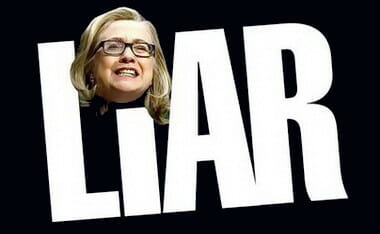
That’s not easy. Not just because of her history — William Safire wrote in 1996 that “Americans of all political persuasions are coming to the sad realization that our first lady . . . is a congenital liar” — but because of what she said in her emergency news conference on Tuesday. Among the things she listed as private were “personal communications from my husband and me.” Except that, as the Wall Street Journal reported the very same day, Bill Clinton’s spokesman said the former president has sent exactly two e-mails in his life, one to John Glenn, the other to U.S. troops in the Adriatic.

Mrs. Clinton’s other major declaration was that the server containing the e-mails — owned, controlled and housed by her — “will remain private.” Meaning: No one will get near them.

This she learned not from Watergate but from Whitewater. Her husband acquiesced to the appointment of a Whitewater special prosecutor. Hillary objected strenuously. Her fear was that once someone is empowered to search, the searcher can roam freely. In the Clintons’ case, it led to impeachment because when the Lewinsky scandal broke, the special prosecutor added that to his portfolio.

Hillary was determined never to permit another open-ended investigation. Which is why she decided even before being confirmed as secretary of state that only she would control her e-mail.

Her pretense for keeping just a single private e-mail account was “convenience.” She doesn’t like to carry around two devices.

But two weeks ago she said she now carries two phones and a total of four devices. Moreover, it takes about a minute to create two accounts on one device. Ray LaHood, while transportation secretary, did exactly that.

Her answers are farcical. Everyone knows she kept the e-mail private for purposes of concealment and, above all, control. For other State Department employees, their e-mails belong to the government. The records officers decide to return to you what’s personal. For Hillary Clinton, she decides….

…read it all…

Gospel Oriented Apologetics Increases Meaning for Life ~ Greg Ganssle

Throughout ones life we need to reorient ourselves to a focal point. Going from the technical to the personal is something I have to remind myself of, again and again. This is a great presentation to refocus us on the interpersonal relationships between people… allowing God to move through these opportunities to impact the heart and mind.

A Study On Ways To Approach Scripture That Create Sound Doctrine

(Just JUMP to the Unicorn section)

(Part 2 is HERE)

Let us open up with some verses that will help guide us into the subject:

2 TIMOTHY 2:15:

Be diligent to present yourself approved to God, a worker who doesn’t need to be ashamed, correctly teaching the word of truth.

2 PETER 1:20:

First of all, you should know this: No prophecy of Scripture comes from one’s own interpretation…

Solomon said in Proverbs 1:5-6 (truncated a bit):

a wise man will listen and increase his learning… for understanding a proverb or a parable… and their riddles.

So there seems to be a way to learn techniques that help us inculcate well, Scripture, and to represent it well to others. In theology, there is a technique called Hermeneutics, and while used quite often in Christian theology, these techniques “pre-date” Christ and should be looked at as truths imbued into nature by its Creator, like reason and logic. So let’s define these ideas a bit before continuing:

HermeneuticsFrom the Greek hermeneutikos, “interpretation.” Hermeneutics is the science of the study and interpretation of Scripture, the branch of theology that prescribes rules by which the Bible should be interpreted. Biblical hermeneutics strives to formulate guidelines for studying Scripture that help recover the meaning a Biblical text had for its original hearers. (The Compact Dictionary of Doctrinal Words, 1988).

Underneath the “hermeneutic umbrella” is the idea of using the document in question to interpret the entire document.

Exegesis(Gk. explanation) Critical exposition or explanation of the meaning of a scriptural passage in the context of the whole Bible. The reader of Scripture studies the word meanings and grammar of the text to discern what… was communicated, drawing the meaning out of the text rather than reading what he wants into the text (eisegesis).

Eisegesisis the process of interpreting a text or portion of text in such a way that it introduces one’s own presuppositions, agendas, and/or biases into and onto the text.

Why do people insert their biases or anachronistic thinking into the Biblical text? We know why the unregenerate person does:

  • the mind set on the flesh is hostile toward God; for it does not subject itself to the law of God, for it is not even able to do so (Romans 8:7)

But even Christian thinkers will undutifully insert ideas into the text that the text itself does not call for. A neat story to further my point comes from a story retold from John Warwick Montgomery in Classical Apologetics

STORY OF A DEAD GUY

Once upon a time — note the mystical cast — there was a man who thought he was dead. His concerned wife and friends sent him to the friendly neighborhood psychiatrist determined to cure him by convincing him of one fact that contradicted his beliefs that he was dead. The fact that the psychiatrist decided to use was the simple truth that dead men do not bleed. He put his patient to work reading medical texts, observing autopsies, etc. After weeks of effort the patient finally said, “All right, all right! You’ve convinced me. Dead men do not bleed.” Whereupon the psychiatrist stuck him in the arm with a needle, and the blood flowed. The man looked down with a contorted, ashen face and cried, “Good Lord! Dead men bleed after all!”

Emotional prejudice IS NOT LIMITED to:

1) the dull-witted,
2) the illiterate,
3) and poorly educated.

Persons like:

4) Scientists,
5) Philosophers,
6) Politicians,
7)and yes, even Theologians

…are not exempt from the vested interests and psychological prejudice that distort logical thinking. One of my favorite examples of this adding to the text that many do to this day can be found in Genesis. James Barr — one of the most trusted scholars on ancient Hebrew — long time Oriel professor at Oxford — and himself a neo-orthodox believer, rightly applied to Scripture a point of view he personally rejects:

probably, so far as I know, there is no professor of Hebrew or Old Testament at any world-class university who does not believe that the writer(s) of Genesis [chapters] 1–11 intended to convey to their readers the ideas that:

1. creation took place in a series of six days which were the same as the days of 24 hours we now experience;
2. the figures contained in the Genesis genealogies provided by simple addition a chronology from the beginning of the world up to later stages in the biblical story;
3. Noah’s flood was understood to be world-wide and extinguished all human and animal life except for those in the ark.

(CREATION.COM)

You see, professor Barr asked some of the following questions that are simple questions one should ask coming to any text, especially ancient texts:

  • Who was the writer?
  • To whom were they writing?
  • Is the choice of words, wording, or word order significant in this particular passage?
  • What is the cultural, historical context?
  • What was the author’s original intended meaning?
  • How did the author’s contemporaries understand him?
  • Why did he say it that way?

Bully for Barr! Who was no friend to this interpretation of Scripture by He was also an outspoken critic of conservative Evangelicalism (WIKI).

Why do we insist on putting our own thoughts and ideas into/onto the Bible, or why we allow the skeptic to think he has mastered God’s Holy word by placing onto Scripture anachronistic thinking and creating straw-man arguments which they then immediately tear down? With the skeptic, the belief in God is VERY personal… e-v-e-n if they don’t admit it. The question of the existence of God evokes deep emotional and psychological prejudice. People understand that the question of the existence of God is not one that is of neutral consequence. We understand intuitively, if not in terms of its full rational implication, that the existence of an eternal Creator before whom we are ultimately accountable and responsible is a matter that touches the very core of life.

How do we try and keep our, yes our, biases out so we “correctly teaching the word of truth”? And not abrogate control of the conversation to the skeptical friend or family member? One way is the old-fashioned way, the eight rules of interpretation. These 8-Rules pre-date Christ, that being said, they matured greatly under Christianity and are used across many disciplines to this day.

Greeks (Aristotle and Cicero) are the genesis of, Irenaeus used them when he wrote Against Heresies, which dealt with Gnosticism and other untruths. Every law court religiously follows them and honest theologians dare not violate them. Much false teaching is the result of violating one or more of these universal rules of interpretation. They were used by the master expositors of the Middle Ages all the way to Luther and the Reformation theologians who disproved Roman fallacies with them. These rules were involved in the great doctrinal debates of the theologians from the Council of Nice (324 A.D.) to the Council of Trent (1545-1563).

WHAT ARE THESE RULES?

1) Rule of Definition: Define the term or words being considered and then adhere to the defined meanings.

  • Any study of Scripture . . . must begin with a study of words. (Protestant Biblical Interpretation, Ramm, Bernard, p. 129. W. A. Wilde Co.. Boston. 1956. )
  • Define your terms and then keep to the terms defined. (The Structural Principles of the Bible, Marsh, F. E., p. 1. Kregel Publications.)
  • In the last analysis, our theology finds its solid foundation only in the grammatical sense of Scripture. The interpreter should . . . conscientiously abide by the plain meaning of the words. (Principles of Biblical Interpretation, Berkhof, pp. 74?75, Baker Book House, 1960.)
  • The Bible writers could not coin new words since they would not be understood, and were therefore forced to use those already in use. The content of meaning in these words is not to be determined by each individual expositor . . . to do so would be a method of interpretation [that is] a most vicious thing. (Studies in the Vocabulary of the Greek New Testament, bluest, Kenneth. pp. 30-37, Eerdmans Pub. Co., 1945.)
  • [The author] confines the definitions strictly to their literal or idiomatic force; which, after all. will be found to form the best. and indeed the only safe and solid basis for theological deductions of any kind. (Young’s Analytical Concordance, Prefatory Note.)

2) Rule of Usage: Don’t add meaning to established words and terms. Ask what was the common usage in the culture at that time period.

  • The whole Bible may be regarded as written for “the Jew first.” and its words and idioms ought to be rendered according to Hebrew usage. (Synonyms of the Old Testament, Girdlestone. R. B., p. 14.)
  • Christ then accepted the usage He found existing. He did not alter it. (Pulpit Commentary, Matthew, V. 1, xxv. old edition.)
  • Jesus of Nazareth was a Jew, spoke to and moved among Jews in Palestine …. He spoke first and directly to the Jews, and His words must have been intelligible to themIt was absolutely necessary to view that Life and Teaching in all its surroundings of place. society. popular life…. This would form not only the frame in which to set the picture of the Christ, but the very background of the picture itself. (The Life and Times of Jesus the Messiah, Edersheim, Alfred. V, 1, xii, Eerdmans Pub. Co., 1953.)
  • In interpreting very many phrases and histories of the New Testament, it is not so much worth what we think of them from notions of our own . . . as in what sense these things were understood by the hearers and lookers on. according to the usual custom and vulgar dialect of the nation. (Bishop Lightfoot, quoted in The Vocabulary of the Greek New Testament, xii. Moulton & Mulligan, Eerdmans Pub. Co., 1959.)

3) Rule of Context: Avoid using words out of context. Context must define terms and how words are used.

  • Many a passage of Scripture will not be understood at all without the help afforded by the context; for many a sentence derives all its point and force from the connection in which it stands. (Biblical Hermeneutics, Terry. M. S.. p. 117. 1896.)
  • [Bible words] must be understood according to the requirements of the context. (Thayer’s Greek English Lexicon of the New Testament, p. 97.)
  • Every word you read must be understood in the light of the words that come before and after it. (How to Make Sense, Flesch, Rudolph, p. 51, Harper & Brothers. 1959.)
  • [Bible words] when used out of context . . . can prove almost anything. [Some interpreters] twist them . . . from a natural to a non?natural sense. (Irenaeus, second century church father, quoted in Inspiration and Interpretation, p. 50, Eerdmans Pub. Co., 1957.)
  • The meaning must be gathered from the context. (Encyclopedia Britannica, Interpretation of Documents. V. 8, p. 912. 1959.)

4) Rule of Historical background: Don’t separate interpretation from historical investigation.

  • Even the general reader must be aware that some knowledge of Jewish life and society at the time is requisite for the understanding of the Gospel history. (The Life and Times of Jesus the Messiah, Edersheim. Alfred. V. 1, xiii, Eerdmans Pub. Co., 1953.)
  • The moment the student has in his mind what was in the mind of the author or authors of the Biblical books when these were written. he has interpreted the thought of Scripture …. If he adds anything of his own. it is not exegesis. (International Standard Bible Encyclopedia. V. 3. p. 1489. 1952.)
  • Theological interpretation and historical investigation can never be separated from each other. . . . The strictest historical . . . scrutiny is an indispensable discipline to all Biblical theology. (A Theological Word Book of the Bible, 30 scholars. Preface, Macmillan Co., 1958.)
  • I have said enough to show the part which the study of history necessarily plays in the intelligent study of the law as it is today …. Our only interest in the past is for the light it throws upon the present. (U.S. Supreme Court Justice Oliver Wendell Holmes, Jr., [sat on the bench from 1902 to 1932] quoted in The World of Law, V. 2. p. 630. Simon & Schuster. 1960.)

5) Rule of Logic: Be certain that words as interpreted agree with the overall premise.

  • Interpretation is merely logical reasoning. (Encyclopedia Americana. V. 15. p. 261. 1953.)
  • The use of reason in the interpretation of Scripture is everywhere to be assumed. The Bible comes to us in the forms of human language, and appeals to our reason . . . it invites investigation. and it is to be interpreted as we interpret any other volume by a rigid application of the same laws of language, and the same grammatical analysis. (Biblical Hermeneutics, Terry, M. S., p. 25. 1895.)
  • What is the control we use to weed out false theological speculation? Certainly the control is logic and evidence . . . interpreters who have not had the sharpening experience of logic . . . may have improper notions of implication and evidence. Too frequently such a person uses a basis of appeal that is a notorious violation of the laws of logic and evidence. (Protestant Biblical Interpretation, Ramm, Bernard. pp. 151153, W. A. Wilde Co., 1956.)
  • It is one of the most firmly established principles of law in England and in America that “a law means exactly what it says, and is to be interpreted and enforced exactly as it reads.” This is just as good a principle for interpreting the Bible as for interpreting law. (The Importance and Value of Proper Bible Study, Torrey. R. A., pp. 67-70, Moody Press, 1921.)
  • Charles G. Finney, lawyer and theologian, is widely considered the greatest theologian and most successful revivalist since apostolic times. He was often in sharp conflict with the theologians of his day because they violated these rules of interpretation. Finney said he interpreted a Bible passage as he “would have understood the same or like passage in a law book” (Autobiography, pp. 42-43 ).
  • Finney stressed the need for definition and logic in theology and said the Bible must be understood on “fair principles of interpretation such as would be admitted in a court of justice” (Systematic Theology. Preface, ix).

6) Rule of Precedent: Use the known and commonly accepted meanings of words, not obscure meanings for which there is no precedent.

  • We must not violate the known usage of a word and invent another for which there is no precedent. (The Greek New Testament for English Readers, Alford, Dean, p. 1098, Moody Press.)
  • The professional ability of lawyers in arguing a question of law, and the judges in deciding it, is thus chiefly occupied with a critical study of previous cases. in order to determine whether the previous cases really support some alleged doctrine. (Introduction to the Study of Law, p. 40, Woodruff, E. H., 1898.)
  • The first thing he [the judge] does is to compare the case before him with precedents …. Back of precedents are the basic judicial conceptions which are postulates of judicial reasoning, and farther back are the habits of life, the institutions of society, in which those conceptions had their origin …. Precedents have so covered the ground that they fix the point of departure from which the labor of the judge begins. Almost invariably, his first step is to examine and compare them. It is a process of search, comparison. and little more. (U.S. Supreme Court Justice Benjamin Cardozo, [sat on the bench from 1902 to 1932], The Nature of the Judicial Process, quoted in The World of Law, V. 2. p. 671. Simon & Schuster, 1960.)

7) Rule of Unity: Even though many documents may be used there must be a general unity among them.

  • [It is] fundamental to a true interpretation of the Scripture. viz.. that the parts of a document. law, or instrument are to be construed with reference to the significance of the whole. (Dean Abbot. Commentary on Matthew, Interpretation, p. 31. )
  • Where a transaction is carried out by mean of several documents so that together they form part of a single whole, these documents are read together as one …. [They are to be so read], that, THAT construction is to be preferred which will render them consistent. (Interpretation of Documents, Sir Roland Burrows. p. 49. Lutterworth & Co., London. 1946.)

8) Rule of Inference: Base conclusions on what is already known and proven or can be reasonably implied from all known facts.

  • In the law of evidence. an inference is a fact reasonably implied from another fact. It is a logical consequence. It is a process of reasoning. It derives a conclusion from a given fact or premise. It is the deduction of one proposition from another proposition. It is a conclusion drawn from evidence. An inferential fact or proposition. although not expressly stated. is sufficient to bind. This principle of interpretation is upheld by law courts. (Jesus proved the resurrection of the dead to the unbelieving Sadducees by this rule [Matt. 22:31. 32]. See Encyclopedia Britannia, V. 6. p. 615 [1952] and Black’s Law Dictionary, p. 436, Fourth Edition. West Pub. Co.. 1951. )
  • A proposition of fact is proved when its truth is established by competent and satisfactory evidence. By competent evidence is meant such evidence as the nature of the thing to be proved admits. By satisfactory evidence is meant that amount of proof which ordinarily satisfies an unprejudiced mind beyond reasonable doubt. Scripture facts are therefore proved when they are established by that. kind and degree of evidence which would in the affairs of ordinary life satisfy the mind and conscience of a common man. When we have this kind and degree of evidence it is unreasonable to require more. (Systematic Theology, Strong. Augustus H.. p. 142. Judson Press. 1899.)

(Sources for the above definitions are as follows: GEORGETOWN CHRISTIAN FELLOWSHIP | APOLOGETIC INDEX | and, OUTFITTERS FOR ADVENTURE)

Is there an ancient example exemplifying a bit of what we are talking about? We find in Aristotle’s Poetics (25) the following:

They [the critics] start with some improbable presumption; and having so decreed it themselves, proceed to draw inferences, and censure the poet as though he had actually said whatever they happen to believe, if, his statement conflicts with their notion of things….

Whenever a word seems to imply some contradiction, it is necessary to reflect how many ways there may be of understanding it in the passage in question…. So it is probably the mistake of the critics that has given rise to the Problem….

So let us deal with four major missteps people make in coming to the Bible which also translate to the believer as a deeper study of God’s Word:

LANGUAGE GAP

…Consider how confused a foreigner must be when he reads in a daily newspaper:

  • “The prospectors made a strike yesterday up in the mountains.”
  • “The union went on strike this morning.”
  • “The batter made his third strike and was called out by the umpire.”
  • Strike up with the Star Spangled Ban­ner.”
  • “The fisherman got a good strike in the middle of the lake.”

Or consider what Dr. Edgar Andrews wrote about in his book, Who Made God:

When I first began visiting the USA regularly on business, I was struck by the huge versatility of one little word — check. Not only could you write a check to pay a bill and check that your airline hadn’t gone bankrupt overnight, but you could request your check at the end of a restaurant meal, check the boxes on your laundry list (or any other form for that matter), check your luggage at the airline desk, check in or check out of a hotel, check out a new product, check your hasty words when you got mad with some officious bureaucrat, and so on. Then, of course, the word lends itself beautifully to portmanteau usage, as in checklist, raincheck and checkup (I never did encounter checkdown but I’m still optimistic). Why, with a few more words like ‘check’ we could halve the weight of our dictionaries!

Another step that will enlighten our study time is

THE CULTURE GAP

If we don’t understand the various cultures of the time in which the Bible was written, we’ll never comprehend its meaning. For example, if we did not know anything about the Jewish culture at the time of Christ, the Gospel of Matthew would be very difficult to grasp. Concepts such as the Sabbath, Jewish rituals, the temple ceremonies, and other customs of the Jews must be understood within cultural context in order to gain the true meaning of the author’s ideas.

THE GEOGRAPHY GAP

A failure to be familiar with geography will hinder learning. For instance, in 1 Thessalonians 1:8 we read, “The Lord’s message rang out from you not only in Macedonia and Achaia—your faith in God has become known everywhere.” What is so remarkable about this text is that the message traveled so quickly. In order to understand how, it is necessary to know the geography.

Paul had just been there, and when he wrote the letter, very little time had passed. Paul had been with them for a couple of weeks, but their testimony had already spread far. How could that happen so fast? If you study the geography of the area you’ll find that the Ignatian Highway runs right through the middle of Thessalonica. It was the main concourse between the East and the West, and whatever happened there was passed all the way down the line.

THE HISTORY GAP

Knowing the history behind a passage will enhance our comprehension of what was written. In the Gospel of John, the whole key to understanding the interplay between Pilate and Jesus is based on the knowledge of history. John MacArthur in “How to Study the Bible” says about Pilate:

When Pilate came into the land with his emperor worship, it literally infuriated the Jews and their priests. So he was off to a bad start from the very beginning. Then he tried to pull something on the Jews, and when they caught him, they reported him to Rome, and he almost lost his job. Pilate was afraid of the Jews, and that’s why he let Christ be crucified. Why was he afraid? Because he already had a rotten track record, and his job was on the line.

Let’s apply, then, what we learned from these literary skills from Aristotle and others, and see where they lead us with supposed difficulties in the Bible. Aristotle’s dictum ~ the benefit of the doubt is afforded to the author of the document, not allowing it to be arrogated by the critic, is standard practice in court rooms to this day. That is, the benefit of the doubt to the document unless there is clear evidence that it is not what it claims to be.  First we will start with a hypothetical, then go to the historical.

(See also: 3 Simple Guidelines You Need to Know for Bible Study)

STORY OF KEN

Let’s say you have a friend—let’s call him Ken—who lives in the Midwest. Ken had three very good friends—let’s call them Jim, John, and Mark—who live on the East Coast. One day Ken received a note from John saying that Jim was in­volved in a terrible car accident and died instantly. The following day, Ken received a letter from Mark saying that Jim was in an car accident and survived but died some time later.

At first glance, these two accounts seem to contradict each other. Either Jim died instantly in the accident or he did not.

Now, Ken knew that John and Mark were reliable sources, and he trusted them to give him an accurate account of the events surrounding their mutual friend’s death. As it turned out, John and Mark were both right, but there was missing information.

Jim was actually involved in two automobile accidents on the same day. In the first accident, Jim was badly injured but survived. A “Good Samaritan” stopped to help him, taking him to the nearest emergency room. However, on the way to the hospital, the driver of that vehicle was involved in a very serious accident, and as a result Jim was instantly killed. Hence, both accounts were correct. John was not aware of the first accident; he only knew about the second one that instantly killed Jim. Mark was only aware of the details of the first accident in which Jim survived, and not the second; he only knew that Jim died later that day. The apparent contradiction was solved when the rest of the truth was discovered.

STORY OF JUDAS

In the Gospel according to Matthew, he records the death Judas as suicide by hanging (Matthew 27:5). However, in Acts 1:18 Luke records the death of Judas as having occurred when he fell down and his body “burst open.” Some scholars have determined that these two divergent accounts are, irreconcilable; they assume that one or even both of these accounts are incor­rect. If Matthew and Luke are trustworthy in giving an accurate accounts of the events, it certainly seems as if at least one of them is in error: Judas either fell down or he hung himself. Or is it another option?

If the branch from which Judas hung himself was dead and dry–and there are many trees that match this description even to this day on the brink of the canyon that tradition identifies the place where Judas died–it would take only one strong gust of wind to yank the heavy corpse and split the branch to which it was attached and plunge both with great force into the bottom of the chasm below. There is indication that a strong wind arose at the hour Christ died and ripped the great curtain inside the temple from top to bottom (Matthew 27:50C.)

These accounts are not contradictory, but mutually complementary.  Judas hung himself exactly as Matthew affirms that he did. The account in Acts simply adds that Judas fell, and his body opened up at the middle and his intestines gushed out. This is the very thing one would expect of someone who hanged himself from a tree over a cliff and fell on sharp rocks below.

So this application and understanding that seemingly divergent tales may in fact be mutually complementary… if giving the benefit of the doubt to this ancient book. And you can see how teaching sound doctrine just is placed in us miraculously, is situ.

  • “But you must say the things that are consistent with sound teaching” (Titus 2:1).

THERE IS ALSO GENRE (IN THE OLD TESTAMENT)

  • Law is “God’s law,” they are the expressions of His sovereign will and character. The writings of Moses contain a lot of Law. God provided the Jews with many laws (619 or so). These laws defined the proper relationship with God to each others and the world (the alien)….
  • History. Almost every OT book contains history. Some books of the Bible are grouped together and commonly referred to as the “History” (Joshua, Kings & Chronicles). These books tell us the history of the Jewish people from the time of the Judges through the Persian Empire…. In the NT, Acts contains some of the history of the early church, and the Gospels also have History as Jesus’ life is told as History….
  • Wisdom Literature is focus on questions about the meaning of life (Job, Ecclesiastes), practical living, and common sense (Proverbs and some Psalms )….
  • Poetry is found mostly in the Old Testament and is similar to modern poetry. Since it is a different language, “Hebrew,” the Bible’s poetry can be very different, because it does not translate into English very well….
  • Prophecy is the type of literature that is often associated with predicting the future; however, it is also God’s words of “get with it” or else. Thus Prophecy also exposes sin and calls for repentance and obedience. It shows how God’s law can be applied to specific problems and situations, such as the repeated warnings to the Jews before their captivity….
  • Apocalyptic Writing is a more specific form of prophecy. Apocalyptic writing is a type of literature that warns us of future events which, full meaning, is hidden to us for the time being….

(Source)

SOME MORE EXAMPLES

UNICORNS

Just the other day an atheist got on my YouTube account and posted this on Prager critiquing seculrism:

  • Secularism makes more sense that some imaginary friend in the sky. They mention unicorns and dragons in the bible. Yes, I will take that seriously… NOT!

So lets apply some of what we learned (#’s 2 and 4 should suffice). Through the study of the word in question, “unicorn,” we come to find is only in the King James Bible, which is known for it’s “Queens language,” having been written in the early 1600’s. So what did the word “unicorn” mean in the 1600’s? We have a clue in Websters first edition (1828) of his dictionary.

(Take note that “bicorn” is defined in the 1828 edition as an animal with two horns) What does the Websters dictionary say today?

  • a mythical animal generally depicted with the body and head of a horse, the hind legs of a stag, the tail of a lion, and a single horn in the middle of the forehead.

They even are so kind as to furnish their readers with a picture (to the right). Let us apply another of the eight rules of interpretation (#’s 7 and 8 should do). Elsewhere in the KJV we read the following:

JOB 39:9-12

9 Will the unicorn be willing to serve thee, or abide by thy crib?

10 Canst thou bind the unicorn with his band in the furrow? or will he harrow the valleys after thee?

11 Wilt thou trust him, because his strength is great? or wilt thou leave thy labour to him?

12 Wilt thou believe him, that he will bring home thy seed, and gather it into thy barn?

This verse mentions 3 main attributes about the unicorn:

1) strength is great,
2) useless for agricultural work,
3) refuses to serve man

PSALM 29:6

  • describes unicorns skipping like calves

ISAIAH 34:7

  • mentions them traveling like bullocks, and bleeding when they die.

Horses have been tamed for agricultural work, so the above descriptions fit something else. Let’s use the term as was used in the day of its writing to define the meaning.

HERE IS A UNICORN:

HERE IS A BICORN:

Definitely not a creature typically see doing agricultural work. You see, what the skeptic has done is taken a word as defined today and ripped it from it’s historical context, placed it onto another culture/time period (built a straw-man), and then attack it. The argument really shouldn’t involve us at all. It is all going on in the head of the skeptic… he is arguing with himself! All you have to call for is lithium for this bi-polar person. Since, however, I am a young earth creationist (YEC), I would even posit that Job was viewing the Elasmotherium (Greek for “plated beast”; pronounced ell-azz-moe-THEE-ree-um):

But whether you posit the ELASMOTHERIUM (pictured above), or a simple rhino… this is using a lane-line guide to look at — not only the Bible (but especially the Bible ~ *smile*), but any ancient text.

GOD KILLS CHILDREN

Okay, let’s move onto another challenge, and this comes from 2 KINGS 2:23-25, see my LONG VERSION as well as my SHORT VERSION of the below:

2 KINGS 2:23-25

He went up from there to Bethel, and while he was going up on the way, some small boys came out of the city and jeered at him, saying, “Go up, you baldhead! Go up, you baldhead!” And he turned around, and when he saw them, he cursed them in the name of the LORD. And two she-bears came out of the woods and tore forty-two of the boys. From there he went on to Mount Carmel, and from there he returned to Samaria.

Here the skeptic posits God’s wrath on 42 children, presumably innocent in that their greatest offense was calling someone a “bald-head.” It would be similar to a guy being called “four-eyes” by a bunch of kids and then whipping out an AK-47 and mowing them down… and then expecting you to view him as a moral agent. In accessing the following books,

  • The New Manners & Customs of Bible Times;
  • Manners and Customs in the Bible: An Illustrated Guide to Daily Life in Bible Times;
  • An Introduction to the Old Testament;
  • The IVP Bible Background Commentary: Old Testament;
  • Old Testament Survey: The Message, Form, and Background of the Old Testament;
  • A Popular Survey of the Old Testament;
  • New International Encyclopedia of Bible Difficulties;
  • Hard Sayings of the Bible;
  • When Critics Ask: A Popular Handbook on Bible Difficulties.

I noticed something was missing. That is, a bit more of what is not said in the text, but we can assume using and accessing what any historical literary critic would with the principles that predate Christ — mentioned in the above “latte” link. Mind you, many of the responses in my home library that I came across were great, and, in fact they made me dig a bit further. (I do not want the reader to think that I place myself on a higher academic level that these fine theologians and professors.) Three big points stuck out from texts I reviewed:

“LITTLE KIDS”

“Little children” is an unfortunate translation. The Hebrew expression neurim qetannim is best rendered “young lads” or “young men.” From numerous examples where ages are specified in the Old Testament, we know that these were boys from twelve to thirty years old. One of these words described Isaac at his sacrifice in Genesis 22:12, when he was easily in his early twenties. It described Joseph in Genesis 37:2 when he was seventeen years old. In fact, the same word described army men in 1 Kings 20:14-15…these are young men ages between twelve and thirty.” (Hard Sayings of the Bible)

HARMLESS TEASING/PUBLIC SAFETY

A careful study of this incident in context shows that it was far more serious than a “mild personal offense.” It was a situation of serious public danger, quite as grave as the large youth gangs that roam the ghetto sections of our modern American cities. If these young hoodlums were ranging about in packs of fifty or more, derisive toward respectable adults and ready to mock even a well-known man of God, there is no telling what violence they might have inflicted on the citizenry of the religious center of the kingdom of Israel (as Bethel was), had they been allowed to continue their riotous course. (Encyclopedia of Bible Difficulties)

The harmless “teasing” was hardly that–they were direct confrontation between the forces of Baal and the prophet of YHWH that had just healed the water supply (casting doubt on the power and beneficence of Baal!). This was a mass demonstration (if 42 were mauled, how many people were in the crowd to begin with? 50? 100? 400?):

“As Elisha was traveling from Jericho to Bethel several dozen youths (young men, not children) confronted him. Perhaps they were young false prophets of Baal. Their jeering, recorded in the slang of their day, implied that if Elisha were a great prophet of the Lord, as Elijah was, he should go on up into heaven as Elijah reportedly had done. The epithet baldhead may allude to lepers who had to shave their heads and were considered detestable outcasts. Or it may simply have been a form of scorn, for baldness was undesirable (cf. Isa. 3:17, 24). Since it was customary for men to cover their heads, the young men probably could not tell if Elisha was bald or not. They regarded God’s prophet with contempt….Elisha then called down a curse on the villains. This cursing stemmed not from Elisha pride but from their disrespect for the Lord as reflected in their treatment of His spokesman (cf. 1:9-14). Again God used wild animals to execute His judgment (cf., e.g., 1 Kings 13:24). That 42 men were mauled by the two bears suggests that a mass demonstration had been organized against God and Elisha.” [Bible Knowledge Commentary]

ELISHA’S MISSION-HELPING NEEDY

The chapter closes with two miracles of Elisha. These immediately established the character of his ministry–his would be a helping ministry to those in need, but one that would brook no disrespect for God and his earthly representatives. In the case of Jericho, though the city had been rebuilt (with difficulty) in the days of Ahab (1 Kings 16:34, q.v.), it had remained unproductive. Apparently the water still lay under Joshua’s curse (cf. Josh 6:26), so that both citizenry and land suffered greatly (v. 19). Elisha’s miracle fully removed the age-old judgment, thus allowing a new era to dawn on this area (vv. 20-22). Interestingly Elisha wrought the cure through means supplied by the people of Jericho so that their faith might be strengthened through submission and active participation in God’s cleansing work. (Encyclopedia of Bible Difficulties)

MORE CAN BE FOUND HERE:

All good stuff, but something is missing. During the course of the debate I pieced together some truths, using culture and history as keys to a “crime scene.” Again, I want to stress what some of the habits were in this small town where this group of people came from:

Molech was a Canaanite underworld deity represented as an upright, bull-headed idol with human body in whose belly a fire was stoked and in whose arms a child was placed that would be burnt to death. It was not just unwanted children who were sacrificed. Plutarch reports that during the Phoenician (Canaanite) sacrifices, “the whole area before the statue was filled with a loud noise of flutes and drums so that the cries and wailing should not reach the ears of the people.”

Sean McDowell and Jonathan Morrow, Is God Just a Human Invention? And Seventeen Other Questions Raised by the New Atheists (Grand Rapids, MI: Kregel Publications, 2010), 177.

This crowd of persons was older than what is typically posited by skeptics. Secondly, this group was a very bad lot. But didn’t explain why bald-head was egregious enough for God to call 42 scurvy bastards to judgement. To be fair, I sympathize with the skeptic here. That being said, there is more to the story. I want us to view some artistic drawings of historical figures from Israels history: priests, prophets, spiritual leaders, and even Flavius Josephus.

What did you notice above in the cover to an A&E documentary? Yup, a turban or covering of some sort as well as a cloak which covers the heads of the priests and prophets. Take note of the below as well.

I posted so many images to drive a point home in our mind. The prophet Elisha would have had a couple of things that changes this story from simple name calling to an assault. Firstly, he wouldn’t have been alone, he would have had some people attached to him that would lay down their lives to protect him. And secondly, he would have had a head covering on, especially since he was returning from a “priestly” intervention.

One last point before we bullet point the complete idea behind the Holy and Rightful judgement from the Judge of all mankind. There were 42 persons killed by two bears. Obviously this would require many more than 42 people. Why? What happens when you have a group of ten people and a bear comes crashing out of the bushes in preparation to attack? Every one will immediately scatter! In the debate I pointed out that freezing 42 people and allowing the bears time to go down the line to kill each one would be even more of a miracle than this skeptic would want to allow. So the common sense position would require a large crowd and some sort of terrain to cut off escape. So the crowd would probably have been at least a few hundred.

Also, this holy man of God was coming back from a “mission,” he would have had an entourage with him, as well as having some sort of head-covering on as pictured above. So, what do these cultural and historical points cause us to rightly assume? That the crowd could not see that the prophet was bald. Which means they would have had to of gotten physical — forcefully removing the head covering. Which means also that the men with the prophet Elisha would have also been overpowered. So lets bullet point the points that undermine the skeptics viewpoint.

✔ The crowd was in their late teens to early twenties;
✔ they were antisemitic (this is known from most of the previous passages and books);
✔ they were from a violently cultic city;
✔ the crowd was large;

And unique to me having shown that there is no way for the crowd to know Elisha was bald unless they had already attacked him and his entourage, is this point:

✔ the crowd had already turned violent.

These points caused God in his foreknowledge to protect the prophet and send in nature to disperse the crowd. Nature is not kind, and the death of these men were done by a just Judge. This explains the actions of a just God better than many of the references I read.

SO IN CONCLUSION,

a  knowledge of history, culture, language, the words being used and their history, and the like… all contribute to the “sound doctrine” we are called to express.

Because otherwise, we will be the time-keepers in the story below, wronger and wronger all the time:

THE BELL TOWER

Have you ever heard the story of a man who used to go to work at a factory and every day would stop outside a clockmaker’s store to synchronize his watch with the clock outside? At the end of several days the clockmaker stopped him and said, “Excuse me, sir, I do have a question for you. I see that every day you stop and adjust your watch with my clock. What kind of work do you do?” The man said, “I’m embarrassed to tell you this; I keep the time at the factory nearby, and I have to ring the bell at four o clock every afternoon when it is time for the people to go home. My watch doesn’t work very well, so I synchronize it with your clock.” The clockmaker says, “I’ve got bad news for you. My clock doesn’t work very well either, so I synchronize it with the bell that I hear from the factory at 4:00 every afternoon.” If you’ll pardon the grammar, what happens when two wrong watches correct themselves by each other? They will get wronger and wronger all the time. Even a clock that doesn’t work may show you the right time twice a day…but it’s not because it’s keeping time!

Ravi Zacharias, “Address to the United Nations’ Prayer Breakfast.”

HERE IS THE PDF of the below

  • (Short description) There is a band called Five Finger Death Punch in this short hand-out I explain how to get the most out of Bible reading. This was [again] a handout for a Sunday school class I filled in for at Grace Baptist. This class I taught was on Hermeneutics and dissecting Scripture through exegesis.

Tips On How To Study – Well – Your Bible by Papa Giorgio


A book used as a guide to some of the above is: Unshakeable Foundations

…follow to PART II

Hillary vs. Hillary

UNITED NATIONS (AP) — Hillary Rodham Clinton says she used a private email account when she served as secretary of state as a way to avoid carrying more than one electronic device.

But she recently said she now uses multiple electronic devices. During an interview at a women’s conference in California’s Silicon Valley last month, Clinton was asked by tech publisher Kara Swisher whether she preferred Apple’s iPhone or Google’s Android.

Clinton said she liked the iPhone but she also used a BlackBerry. She joked to Swisher that she was “two steps short of a hoarder” and has four electronic devices: an iPad, a mini-iPad, an iPhone and a BlackBerry.