Author: Papa Giorgio


Kurdish Peshmerga blows up ISIS VBIED ~ Merry Christmas!
Kurdish Peshmerga blows up an incoming ISIS VBIED with Milan ATGM.
The VBIED, which was a ford pickup had a little more than a thousand Kg of TNT inside. and you can see the first couple of missiles just miss but right before the truck got close enough it was hit with a 3rd missile, 3rd times the charm.

GOP Demise? Yale of Jail?
Michael Medved, as usual, puts this “mantra” to rest… and shows that there is vigorous debate and growth on the right — as compared to the left.

John Stossel Leads Discussion on Minimum Wage
Ben Domenech (The Federalist), Dagen McDowell (Fox Business) and Matt Welch (Reason Magazine) join John to discuss minimum wage, income inequality and the politics around them. http://www.LibertyPen.com

MSNBC Panel Admits Media Bias in “Cruz Cartoon”
(NewsBusters) There was surprising consensus on today’s Morning Joe concerning the Washington Post cartoon that depicted Ted Cruz as an organ grinder and his youngs girls as monkeys. From Mika Brzezinski to Joe Scarborough to Harold Ford, Jr., there was universal condemnation of Ann Telnaes’ foul image.
Willie Geist said it best: “people look for moments of bias in the media. Here’s one right here. You can’t be selectively offended by cartoons. If that had been a Democrat, or God forbid the President of the United States, they would have lit the house on fire. There would have been wall-to-wall coverage on it.”

MSNBC Panel Stunned Silent After Hearing Howard Dean’s Defense
Via THE BLAZE
An MSNBC panel was left momentarily speechless Tuesday after former Vermont Gov. Howard Dean defended Hillary Clinton’s claim that the Islamic State is using videos of Donald Trump to recruit new members.

Naturalism Clouds the Mind

Philosophical Naturalism and the Modern Worldview
The second modern factor that has contributed to the widespread understanding that religious belief is private, practical, and relative, and need not be related to truth and reason is the widespread acceptance of philosophical naturalism as an expression of scientism. Philosophical naturalism is the idea that reality is exhausted by the spatio-temporal world of physical entities that we can investigate in the natural sciences. The natural causal Fabric of physical reality within the boundaries of space and time is all there is, was, or ever will be. The supernatural doesn’t exist except, perhaps, as a belief in people’s minds. On this view, religious beliefs are simply ways of looking at things in our search for meaning and purpose; they are not ideas that correspond to a mind-independent reality.
Philosophical naturalism is an expression of an epistemology (i.e., a theory of knowledge and justified or warranted belief) known as scientism. Scientism is the view that the natural sciences are the very paradigm of truth and rationality. If something does not square with currently well-established beliefs, if it is not within the domain of entities appropriate for scientific investigation, or if it is not amenable to scientific methodology then it is not true or rational. Everything outside of science is a matter of mere belief and subjective opinion, of which rational assessment is impossible. Applied to the question of the historical origins of Christianity, scientism implies that since we live in the modern scientific world where the sun is the center of the solar system, the wireless is available for our use, and the atoms power has been harnessed, we can no longer believe in a biblical worldview with its miracles, demons, and supernatural realities.
Obviously, it is impossible in the brief space of an introduction to critique adequately scientism and naturalism. Still, a few cursory remarks need to be expressed.
(1) Scientism is simply false for three reasons. (a) It is self-refining, i.e., it falsifies itself. Why? Scientism is itself a statement of philosophy about knowledge and science; it is not a statement of science itself. Moreover, it is a statement of philosophy that amounts to the claim that no statements outside scientific ones, including scientism itself (because it is a statement of philosophy), can be true or supported by rational considerations. (b) Science itself rests on a number of assumptions: the existence of a theory-independent external world, the orderly nature of the external world, the existence of truth and the reliability of our senses and rational faculties to gather truth about the world in a trustworthy manner, the laws of logic and the truths of mathematics, the adequacy of language (including mathematical language) to describe the external world, the uniformity of nature, and soon. Now, each one of these assumptions is philosophical in nature. The task of stating, criticizing, and defending the assumptions of science rests in the field of philosophy. Scientism fails to leave room for these philosophical tasks and, thus, shows itself to be a foe and not a friend of science. (c) There are many things we know in religion, ethics, logic, mathematics, history, art, literature, and so on that are simply not matters of science. For example, we all know that two is an even number, that Napoleon lived, that torturing babies for fun is wrong, that if A is larger than B and B is larger than C, then A is larger than C, and so on. None of these items of knowledge are scientific in nature, and scientism is falsified by their reality.
(2) Philosophical naturalism is false as well. For one thing, philosophical naturalism rules out the existence of a number of things that do, in fact, exist. And while we cannot defend their existence here, suffice it to say that, currently, a number of intellectuals have offered convincing arguments for the reality of universals and other abstract objects such as numbers, the laws of logic, values, the soul and its various mental states (including the first person point of view), other minds, libertarian or full-blown freedom of the will, and so on. None of these items can be classified as mere physical objects totally within the causal fabric of the natural spatio-temporal universe. In fact, it is not an exaggeration to say that there is not a single issue of importance to human beings that is solely a matter of scientific investigation or that can be satisfactorily treated by philosophical naturalists.
(3) Philosophical naturalism fails to explain adequately the fact that there are a number of arguments and pieces of evidence that make belief in God more reasonable than disbelief. Some of this evidence actually comes from science: the fact that the universe had a beginning based on the Big Bang theory and the second law of thermodynamics, the existence of biological information in DNA that is closely analogous to intelligent language and that cannot arise from the accidental collisions of physical entities according to laws of nature, the reality of the mental and of free will according to a number of emerging psychological theories of the self, the delicate fine-tuning of the universe, and so on.”
Like it or not, a significant and growing number of scientists, historians of science, and philosophers of science see more scientific evidence now for a personal creator and designer than was available fifty years ago. In light of this evidence, it is false and naive to claim that modern science has made belief in the supernatural unreasonable. Such a view can be called ostrich naturalism—a position that requires its advocate to keep his or her head in the sand and not to acknowledge real advances in science. The plain truth is that science itself makes no statements about all of reality anyway, nor does science itself offer any support for philosophical naturalism. What does support philosophical naturalism are the ideological claims of naturalists themselves regarding what science ought to say if we assume philosophical naturalism to begin with.
In sum, it matters much that our religious beliefs are both true and reasonable. Moreover, there simply are no sufficient reasons for not believing in the supernatural, and there are in fact a number of good reasons (including but going beyond scientific ones) for believing in the supernatural. As we have said, space considerations do not permit us to defend this last claim here. But we will list some sources in the bibliography that adequately justify this claim. If you are an honest inquirer about the truth of religion, moral and intellectual integrity unite in placing a duty on you to read these works as a sincere seeker of the truth. It is well past time to rest content with the politically correct, unjustified assertions of scientism and philosophical naturalism. University libraries are filled with books that show the weaknesses of these views, and the fellows of the Jesus Seminar show virtually no indication that they have so much as interacted with the arguments they contain, much less have they refuted their claims.
Regarding Jesus of Nazareth, all of this means the following: Prior to investigating the historical evidence about his life, deeds, sayings, and significance, there is no good reason to bring to the evidence a prior commitment to naturalism. As later chapters will show, such a commitment is Procrustean in that it often forces the evidence of history to fit an unjustified antisupernatural bias. But when the evidence is evaluated on its own terms, and when such an evaluation is combined with the rigorous case for supernatural theism already available in the literature, then the claims of historic, orthodox Christianity can be reasonably judged to be true.
Michael J. Wilkins, ed., Jesus Under Fire: Modern Scholarship Reinvents the Historical Jesus (Grand Rapids, MI: Zondervan, 1996), 8-10.

“Sand People”
In a galaxy not too far away, social justice wars wage as Kylo Ren checks some privileges…
Corrupted Data-Sets Due to Equipment Failure/Placement
This post is intimately connected with a previous one:
See as well the most recent data-sets showing no warming:

EQUIPMENT FAIL
- Here is the latest example (BELOW)

Here are some examples of fudged data because of sub-standard equipment:
You’d think the answer would be obvious, but here we have a NOAA operated USHCN climate station of record providing a live experiment. It always helps to illustrate with photos. Today I surveyed a sewage treatment plant, one of 4 stations surveyed today (though I tried for 5) and found that for convenience, they had made a nice concrete walkway to allow servicing the Fisher-Porter rain gauge, which needs a paper punch tape replaced one a month.
Here is what you see in visible light:

Here is what the infrared camera sees:

Note that the concrete surface is around 22-24°C, while the grassy areas are between 12-19°C
This station will be rated a CRN5 by this definition from the NOAA Climate Reference Network handbook, section 2.2.1:
Class 5 (error >~= 5C) – Temperature sensor located next to/above an artificial heating source, such a building, roof top, parking lot, or concrete surface.”
 |
 |
 |
 |
 |
 |
More than half of the stations the NOAA use are tainted or wrongly placed equipment.
CHANGING DATA-SETS
Another example of changing averages was noted by Steve Goddard and others — even the NOAA have acknowledge it — have been discussing recently is exemplified in Dr. Judith Carry’s post on the matter (from a larger post of mine):

Even the Wall Street Journal chose the higher temperature reading to say that July of 2012 was July was the “hottest month in the contiguous U.S. since records began in 1895.” WUWT found this on accident and it has led to quite a few other revelations as we will see. Here is description in part of what we looking at:
Glaring inconsistencies found between State of the Climate (SOTC) reports sent to the press and public and the “official” climate database record for the United States. Using NCDC’s own data, July 2012 can no longer be claimed to be the “hottest month on record”.
[….]
I initially thought this was just some simple arithmetic error or reporting error, a one-off event, but then I began to find it in other months when I compared the output from the NCDC climate database plotter. Here is a table of the differences I found for the last two years between claims made in the SOTC report and the NCDC database output.
[….]
In almost every instance dating back to the inception of the CONUS Tavg value being reported in the SOTC report, there’s a difference. Some are quite significant. In most cases, the database value is cooler than the claim made in the SOTC report. Clearly, it is a systemic issue that spans over two years of reporting to the press and to the public.
It suggests that claims made by NCDC when they send out these SOTC reports aren’t credible because there are such differences between the data. Clearly, NCDC means for the plotter output they link to, to be an official representation to the public, so there cannot be a claim of me using some “not fit for purpose” method to get that data….
The Wall Street Journal made a graph showing this record setting month (below-left). The more accurate temperature for July likewise is shown in the same graph (below-right):
 |
 |
This looking at the data sets chosen and what is used and isn’t used to support an idea that fails in every way. Combine this obvious cherry-picking with the bias, collusion, and charges against the report that the President used to route Congress, all show we have a problem Houston! But this is only the tip of the proverbial iceberg. It seems the NOAA has been skewing these temps for some time. Why? Because the left uses this as a way to promote an ever growing government and the scientists get more-and-more funding. This data fudging story is newer, and it is evolving quickley, including this newest post via Real Science where Steve Goddard notes that More Than 40% Of USHCN Station Data Is Fabricated. Here is Dr. Judith carry’s synopsis (excerpted), in which she critiques a bit Goddard’s post… but then bows to the evidence:
OK, acknowledging that Goddard made some analysis errors, I am still left with some uneasiness about the actual data, and why it keeps changing. For example, Jennifer Marohasy has been writing about Corrupting Australian’s temperature record.
In the midst of preparing this blog post, I received an email from Anthony Watts, suggesting that I hold off on my post since there is some breaking news. Watts pointed me to a post by Paul Homewood entitled Massive Temperature Adjustments At Luling, Texas. Excerpt:
So, I thought it might be worth looking in more detail at a few stations, to see what is going on. In Steve’s post, mentioned above, he links to the USHCN Final dataset for monthly temperatures, making the point that approx 40% of these monthly readings are “estimated”, as there is no raw data.
From this dataset, I picked the one at the top of the list, (which appears to be totally random), Station number 415429, which is Luling, Texas.
Taking last year as an example, we can see that ten of the twelve months are tagged as “E”, i.e estimated. It is understandable that a station might be a month, or even two, late in reporting, but it is not conceivable that readings from last year are late. (The other two months, Jan/Feb are marked “a”, indicating missing days).
But, the mystery thickens. Each state produces a monthly and annual State Climatological Report, which among other things includes a list of monthly mean temperatures by station. If we look at the 2013 annual report for Texas, we can see these monthly temperatures for Luling.
Where an “M” appears after the temperature, this indicates some days are missing, i.e Jan, Feb, Oct and Nov. (Detailed daily data shows just one missing day’s minimum temperature for each of these months).
Yet, according to the USHCN dataset, all ten months from March to December are “Estimated”. Why, when there is full data available?
But it gets worse. The table below compares the actual station data with what USHCN describe as “the bias-adjusted temperature”. The results are shocking.
In other words, the adjustments have added an astonishing 1.35C to the annual temperature for 2013. Note also that I have included the same figures for 1934, which show that the adjustment has reduced temperatures that year by 0.91C. So, the net effect of the adjustments between 1934 and 2013 has been to add 2.26C of warming.
Note as well, that the largest adjustments are for the estimated months of March – December. This is something that Steve Goddard has been emphasising.
It is plain that these adjustments made are not justifiable in any way. It is also clear that the number of “Estimated” measurements made are not justified either, as the real data is there, present and correct.
Watts appears in the comments, stating that he has contacted John Nielsen-Gammon (Texas State Climatologist) about this issue. Nick Stokes also appears in the comments, and one commenter finds a similar problem for another Texas station.
Homewood’s post sheds light on Goddard’s original claim regarding the data drop out (not just stations that are no longer reporting, but reporting stations that are ‘estimated’). I infer from this that there seems to be a real problem with the USHCN data set, or at least with some of the stations. Maybe it is a tempest in a teacup, but it looks like something that requires NOAA’s attention. As far as I can tell, NOAA has not responded to Goddard’s allegations. Now, with Homewood’s explanation/clarification, NOAA really needs to respond….
(H/T to Climate Realist ~ See WUWT and Hockey Schtick for more)
So we see in the above, that temperatures can be changed years later as the totality of the data is included. What was considered the hottest falls to just an average month in the heat index.
And this has — within the past few months — turned into a very large debate.
EQUIPMENT FAIL II
Here is another example of older/faulty equipment:
A Quick Note about the Difference between RSS and UAH TLT data
There is a noticeable difference between the RSS and UAH lower troposphere temperature anomaly data. Dr. Roy Spencer discussed this in his July 2011 blog post On the Divergence Between the UAH and RSS Global Temperature Records. In summary, John Christy and Roy Spencer believe the divergence is caused by the use of data from different satellites. UAH has used the NASA Aqua AMSU satellite in recent years, while as Dr. Spencer writes:
…RSS is still using the old NOAA-15 satellite which has a decaying orbit, to which they are then applying a diurnal cycle drift correction based upon a climate model, which does not quite match reality.
I updated the graphs in Roy Spencer’s post in On the Differences and Similarities between Global Surface Temperature and Lower Troposphere Temperature Anomaly Datasets.
While the two lower troposphere temperature datasets are different in recent years, UAH believes their data are correct, and, likewise, RSS believes their TLT data are correct. Does the UAH data have a warming bias in recent years or does the RSS data have cooling bias? Until the two suppliers can account for and agree on the differences, both are available for presentation.



MIT professor Discusses Nuclear Energy, Science and Christianity
New York Times op ed columnist, Ross Douthat, interviews MIT professor of nuclear science and engineering, Ian Hutchinson on the future of nuclear science, and the history of science and Christianity – in general, and in his own life.
“Oh geez, looks like I went through time and space again”
Via The Blaze!
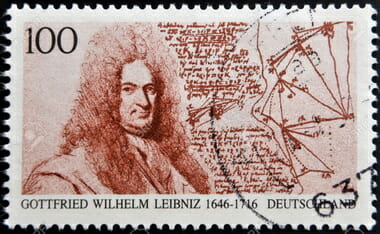
Gottfried Wilhelm Leibniz’s Contingency Argument ~ Reasonable Faith
- See as well the One-Minute Apologist on Gottfried Wilhelm Leibniz
- View the Kalam Cosmological Argument animation video
- Infinite Regress and the Leibnizian Cosmological Argument, Reasonable Faith