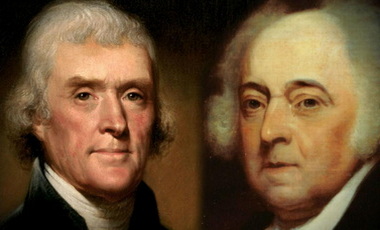
John Adams and Thomas Jefferson Discuss Calvin’s 5-Points

In John Adams letter to Thomas Jefferson he opens with this — and I have GROK put the old English into more modern terms.

The green box that follows the original text is GROK modernizing it

The sight of your well known hand writing in your favour of 25. Feb. last, gave me great pleasure, as it proved your arm to be restored and your pen still manageable—may it continue till you shall become as perfect a calvinist as I am in one particular. Poor Calvins infirmities his rheumatism his gouts and sciatics made him frequently cry out Mon dieu Jusque au quand Lord how long! Prat once Chief Justice of new york always tormented with infirmities dreamt that he was situated on a single rock in the midst of the Atlantick ocean, He heard a voice. “Why mourns the bard Apollo bids thee2 rise, renounce the dust,3 and claim thy native skies.”—

Here’s a modern English update of the excerpt from John Adams’s letter to Thomas Jefferson (dated March 10, 1823), keeping the original meaning, tone, and humor intact while making the language clearer and more contemporary:

Seeing your familiar handwriting in your letter from February 25th gave me great pleasure. It showed that your arm has recovered and you can still write easily—may that continue until you become as much of a Calvinist as I am in one respect. Poor Calvin’s ailments—his rheumatism, gout, and sciatica—often made him cry out, “Mon Dieu, jusqu’à quand?” which means “Lord, how long!” Pratt, who was once Chief Justice of New York and always plagued by health problems, dreamed that he was stranded on a lone rock in the middle of the Atlantic Ocean. Then he heard a voice say:

“Why does the bard mourn? Apollo bids you rise, renounce the dust, and claim your native skies.”

(For context: Adams is playfully teasing Jefferson about enduring old-age infirmities with Calvinist patience, referencing John Calvin’s sufferings and a poetic anecdote about Benjamin Pratt, an 18th-century New York judge known for his poetry and health issues.)

Here is the response to Adams via Jefferson:

The wishes expressed, in your last favor, that I may continue in life and health until I become a Calvinist, at least in his exclamation of ‘mon Dieu! jusque à quand’! would make me immortal. I can never join Calvin in addressing his god. he was indeed an Atheist, which I can never be; or rather his religion was Dæmonism. if ever man worshipped a false god, he did. the being described in his 5. points is not the God whom you and I acknolege and adore, the Creator and benevolent governor of the world; but a dæmon of malignant spirit. it would be more pardonable to believe in no god at all, than to blaspheme him by the atrocious attributes of Calvin. 

[….]

Of the nature of this being we know nothing. Jesus tells us that ‘God is a spirit.’ 4. John 24. but without defining what a spirit is. ‘πνευμα ὁ θεος.’ down to the 3d century we know that it was still deemed material; but of a lighter subtler matter than our gross bodies. so says Origen. ‘Deus igitur, cui anima similis est, juxta Originem, reapse4 corporalis est; sed graviorum tantum ratione corporum incorporeus.’ these are the words of Huet in his commentary on Origen. Origen himself says ‘appellatio ασωματον apud nostros scriptores est inusitata et incognita.’ so also Tertullian ‘quis autem negabit Deum esse corpus, etsi deus spiritus? spiritus etiam corporis sui generis, in suâ effigie.’ Tertullian. these two fathers were of the 3d century. Calvin’s character of this supreme being seems chiefly copied from that of the Jews. but the reformation of these blasphemous attributes, and substitution of those more worthy, pure and sublime, seems to have been the chief object of Jesus in his discources to the Jews: and his doctrine of the Cosmogony of the world is very clearly laid down in the 3 first verses of the 1st chapter of John, in these words, ‘εν αρχη ην ὁ λογος, και ὁ λογος ην προς τον θεον και θεος ην ὁ λογος. οὑτος ην εν αρχη προς τον θεον. παντα δε αυτου εγενετο, και χωρις αυτου εγενετο ουδε ἑν ὁ γεγονεν.’ which truly translated means ‘in the beginning God existed, and reason [or mind] was with God, and that mind was God. this was in the beginning with God. all things were created by it, and without it was made not one thing which was made.’ yet this text, so plainly declaring the doctrine of Jesus that the world was created by the supreme, intelligent being, has been perverted by modern Christians to build up a second person of their tritheism by a mistranslation of the word λογος. one of it’s legitimate meanings indeed is ‘a word.’ but, in that sense, it makes an unmeaning jargon: while the other meaning ‘reason,’ equally legitimate, explains rationally the eternal preexistence of God, and his creation of the world. knowing how incomprehensible it was that ‘a word,’ the mere action or articulation of the voice and organs of speech could create a world, they undertake to make of this articulation a second preexisting being, and ascribe to him, and not to God, the creation of the universe. the Atheist here plumes himself on the uselessness of such a God, and the simpler hypothesis of a self-existent universe. the truth is that the greatest enemies to the doctrines of Jesus are those calling themselves the expositors of them, who have perverted them for the structure of a system of fancy absolutely incomprehensible, and without any foundation in his genuine words. and the day will come when the mystical generation of Jesus, by the supreme being as his father in the womb of a virgin will be classed with the fable of the generation of Minerva in the brain of Jupiter. but we may hope that the dawn of reason and freedom of thought in these United States will do away all this artificial scaffolding, and restore to us the primitive and genuine doctrines of this the most venerated reformer of human errors.

So much for your quotation of Calvin’s ‘mon dieu! jusqu’a quand’ in which, when addressed to the God of Jesus, and our God, I join you cordially, and await his time and will with more readiness than reluctance. may we meet there again, in Congress, with our antient Colleagues, and recieve with them the seal of approbation ‘Well done, good and faithful servants.’

Here’s a modern English update of this excerpt from Thomas Jefferson’s letter to John Adams (dated April 11, 1823), preserving the original meaning, passion, and philosophical tone while making the language clearer and more accessible:

The wishes you expressed in your last letter—that I might live long and healthy until I become a Calvinist, at least in crying out “My God! How long?!”—would make me immortal if they came true. But I can never join Calvin in addressing his god that way. He was essentially an atheist (which I could never be), or rather, his religion was daemonism. If any man ever worshiped a false god, it was him. The being described in his five points is not the God whom you and I acknowledge and adore—the Creator and benevolent governor of the world—but a daemon with a malignant spirit. It would be more forgivable to believe in no god at all than to blaspheme the true God by attributing such atrocious qualities to Him.

[….]

Of the true nature of this Being, we know nothing. Jesus tells us that “God is a spirit” (John 4:24), but without defining what a spirit is—”πνεῦμα ὁ θεός” (pneuma ho theos). Down to the 3rd century, it was still considered material, though of a lighter, subtler substance than our gross bodies. So says Origen: “Therefore God, to whom the soul is similar, according to Origen, is actually corporeal, but incorporeal only in comparison to heavier bodies.” These are the words of Huet in his commentary on Origen. Origen himself says that the term “incorporeal” (ἀσώματον) is unusual and unknown in our [Christian] writers. Tertullian says the same: “Who will deny that God is a body, even though God is a spirit? For spirit is a body of its own kind, in its own form.” Both of these Church Fathers were from the 3rd century.

Calvin’s portrayal of the Supreme Being seems mostly copied from the Jewish conception. But reforming those blasphemous attributes and replacing them with ones more worthy, pure, and sublime appears to have been Jesus’s main goal in his discourses with the Jews. His doctrine of the world’s creation is very clearly stated in the first three verses of the Gospel of John:”Ἐν ἀρχῇ ἦν ὁ λόγος, καὶ ὁ λόγος ἦν πρὸς τὸν θεόν, καὶ θεὸς ἦν ὁ λόγος. Οὗτος ἦν ἐν ἀρχῇ πρὸς τὸν θεόν. Πάντα δι’ αὐτοῦ ἐγένετο, καὶ χωρὶς αὐτοῦ ἐγένετο οὐδὲ ἕν ὃ γέγονεν.”Which, truly translated, means: “In the beginning, God existed, and reason (or mind) was with God, and that mind was God. This was in the beginning with God. All things were created by it, and without it not one thing that was made came into being.” Yet this text—so plainly declaring Jesus’s doctrine that the world was created by the supreme intelligent Being—has been twisted by modern Christians to build up a second person in their tritheism through a mistranslation of the word λόγος (logos). One of its legitimate meanings is indeed “word,” but in that sense it produces meaningless nonsense. The other equally legitimate meaning—”reason”—explains rationally God’s eternal preexistence and His creation of the world. Knowing how incomprehensible it was that a mere “word”—the simple action of voice and speech organs—could create a world, they instead turn this “word” into a second pre-existing being and attribute the creation of the universe to him rather than to God. The atheist here boasts about the uselessness of such a God and prefers the simpler idea of a self-existent universe. The truth is that the greatest enemies of Jesus’s doctrines are those who call themselves their interpreters, who have perverted them to build a system of fantasy that is utterly incomprehensible and has no foundation in his actual words. And the day will come when the mystical story of Jesus being generated by the Supreme Being as His father in the womb of a virgin will be classed with the myth of Minerva springing from the brain of Jupiter. But we may hope that the dawn of reason and freedom of thought in these United States will sweep away all this artificial scaffolding and restore to us the primitive and genuine doctrines of this most venerated reformer of human errors. So much for your quotation of Calvin’s “Mon Dieu! jusqu’à quand!” When addressed to the God of Jesus—and our God—I join you in it wholeheartedly, and I await His time and will with more readiness than reluctance. May we meet again there, in a heavenly Congress with our old colleagues, and receive with them the seal of approval: “Well done, good and faithful servants.”

And here GROK did a redo making it :”more concise”

Here’s a more concise modern English version of Jefferson’s response (April 11, 1823):

Your wish that I live long enough to become a Calvinist—at least in crying “My God! How long?”—would make me immortal. But I can never pray to Calvin’s god. He was essentially an atheist, or his religion was daemonism. If anyone worshiped a false god, it was him. The being in his five points is not the God we both acknowledge—the benevolent Creator and governor of the world—but a malignant daemon. It is more forgivable to believe in no god than to blaspheme the true one with Calvin’s atrocious attributes.

We know nothing of this Being’s nature. Jesus said “God is a spirit” (John 4:24), but did not define it. Until the 3rd century, Christians considered spirit material, though subtler than flesh—as Origen and Tertullian both affirmed.

Calvin’s image of God largely copies the harsh Jewish portrayal. Jesus’s main mission seems to have been correcting those blasphemous attributes and teaching purer, more sublime ones. His cosmology is clearly stated in John 1:1–3:“In the beginning was the Logos, and the Logos was with God, and the Logos was God All things were made through it.”

Properly translated, Logos means “reason” or “mind”: In the beginning God existed, reason was with God, and reason was God. All things were created by it. Modern Christians, however, mistranslate Logos as “word” to invent a second divine person and build their tritheism. This turns a rational account of creation into incomprehensible jargon—and gives atheists an easy target.

The worst enemies of Jesus’s teachings are the so-called experts who have twisted them into a fanciful, groundless system. One day, the virgin birth of Jesus will be ranked with Minerva springing from Jupiter’s head. But I hope the spread of reason and free thought in America will sweep away this artificial scaffolding and restore Jesus’s original, genuine doctrines—the work of the greatest reformer of human errors.

As for Calvin’s “My God! How long?”—when addressed to the God of Jesus, our God—I join you wholeheartedly. I await His will with more readiness than reluctance. May we meet again in a heavenly Congress with our old colleagues and hear together: “Well done, good and faithful servants.”

GROK offered to explain Jefferson’s “5-Points Critique,” here that is:

Thomas Jefferson’s critique of Calvinism’s “five points” appears in his April 11, 1823, letter to John Adams. He did not break it down point-by-point but offered a sweeping condemnation, calling the God portrayed in these doctrines a “daemon of malignant spirit” rather than the benevolent Creator he and Adams revered. Jefferson viewed Calvin’s theology as blasphemous, arguing it would be better to believe in no God at all than to attribute such “atrocious” qualities to the divine. The Five Points of Calvinism (TULIP)These points, formalized after John Calvin’s death at the Synod of Dort (1618–1619) in response to Arminianism, summarize key Reformed doctrines on salvation:

  • Total Depravity: Humanity is utterly corrupted by sin, incapable of choosing God or doing spiritual good without divine intervention.
  • Unconditional Election: God chooses (elects) certain individuals for salvation based solely on His will, not on any foreseen merit or faith.
  • Limited Atonement (or Particular Redemption): Christ’s death effectively atones only for the sins of the elect, not for all humanity.
  • Irresistible Grace: God’s grace effectively calls the elect to faith; they cannot ultimately resist it.
  • Perseverance of the Saints: The elect will persevere in faith and cannot finally lose salvation.

Jefferson’s Core Objection

Jefferson, influenced by Enlightenment rationalism, Deism, and Unitarian leanings, emphasized a God of benevolence, reason, and moral governance. He saw Calvinism’s emphasis on God’s absolute sovereignty—especially in predestination (including “double predestination,” where God decrees both election to salvation and reprobation to damnation)—as portraying a tyrannical, arbitrary deity. This God predestines most of humanity to eternal punishment without regard to their actions, which Jefferson found cruel and incompatible with divine goodness. He contrasted this with Jesus’s teachings, which he believed focused on moral reform, free will, and a loving God. Jefferson also linked Calvinism to historical intolerance (e.g., Calvin’s role in the execution of Michael Servetus) and saw it as a perversion of true Christianity. In essence, Jefferson rejected the five points not for subtle theological nuances but because they collectively depicted a God he considered morally repugnant—a “malignant” being closer to a demon than the rational, kind Creator revealed (in his view) by nature and Jesus’s ethical teachings. This reflected his broader anti-Trinitarian, anti-orthodox stance, favoring a simplified, moralistic Christianity over doctrinal systems like Calvinism.

Keep in mind GROK is not a theologian. I asked GROK about John Adam’s views of Calvinism, this was the short answer:

John Adams, raised in a Puritan New England Congregationalist family with strong Calvinist roots, ultimately rejected core Calvinist doctrines and evolved into a Unitarian Christian.

Early Rejection of Calvinism

He rejected key Calvinist tenets early in life, including:

  • Predestination
  • Total depravity
  • Limited atonement
  • Eternal damnation for most

He called Calvinism “frigid,” irrational, and marked by a “domineering and persecuting spirit.” Influenced by liberal Congregationalist preachers and Enlightenment rationalism, Adams viewed strict Calvinism as incompatible with a benevolent God and human free will. He leaned toward Arminianism (emphasizing free choice in salvation) before fully embracing Unitarianism.

Self-Identification as Unitarian

In later years, Adams explicitly identified as a Unitarian, writing to his son John Quincy Adams in 1816: “We Unitarians, one of whom I have had the Honour to be, for more than Sixty Years…” He rejected the Trinity, the divinity of Jesus, original sin, and salvation by arbitrary grace alone, favoring a rational, moral Christianity focused on benevolence, good works, and the Sermon on the Mount.

Playful Teasing in Correspondence

In his famous 1823 correspondence with Thomas Jefferson (the letters you referenced earlier), Adams playfully teased Jefferson about old-age sufferings, joking that Jefferson might yet become “as perfect a Calvinist as I am in one particular”—referring only to enduring infirmities with stoic patience (echoing John Calvin’s own cries of “Mon Dieu! Jusqu’à quand?”). This was ironic humor, not an endorsement of Calvinism. Adams shared Jefferson’s disdain for Calvin’s “atrocious attributes” and predestinarian God, aligning with Jefferson’s view of a benevolent Creator.

Overall Religious Outlook

Adams remained deeply religious—a “church-going animal” who believed in divine providence, prayer, and morality’s role in society—but his faith was liberal, tolerant, and anti-dogmatic. He saw religion as essential for public virtue yet warned against ecclesiastical tyranny. Historians describe him as a blend of Puritan heritage and Enlightenment reason, ultimately a conservative Unitarian who retained belief in Jesus as a moral teacher (though not divine) and an active God.

In short, Adams was emphatically not a Calvinist; he detested its harsher doctrines and spent much of his life moving away from them toward Unitarian rationalism.

Mind you, I am not a Unitarian whatsoever, but needless to say not only would Calvin had burned Christ at the stake in Geneva, he would have done the same to the Founders of America!

BAPTIST MARTYRS

This Baptist History is brought to you by Steve Brady at Fairhaven Baptist Church in Chesterton, Indiana. (Full playlist of 50 Baptists You Should Know here)

Here is what was said in a post that included the above drawing via Facebook:

It has been decreed this day by the Council of the Two Hundred (of Zurich) that the leaders of the Catabaptists shall be cast into the Tower, in which they formerly lay, and allured by bread and water diet until either they give up the ghost or surrender. It is also added that he who after this is dipped shall be submerged permanently (qtti posthac tingatur, prossus mcrgatur); this is not published (Zwingli, Opera, vii. 477).

This is but one of numerous decrees by city councils in Calvinist principalities levied against “Catabaptists”. This word means someone who opposes baptism, but even in their usage of the term the Calvinists reveal themselves to be liars. The Baptists didn’t oppose baptism, they opposed infant baptism, which is nowhere evidenced in Scripture. The Calvinists knew Baptists baptized believing adults – that’s one of the reasons they murdered them – “submerged permanently,” as opposed to submerged briefly, in baptism.

Note that in his final comment, Zwingli writes that this is “not published”. He wanted the homicidal order to remain a secret. So he knew that what he was doing was immoral. He just didn’t want the general population to know about it.

Zwingli and the Calvinists were murderers. They knew they were murderers. They congratulated themselves on being murderers. And history has preserved the evidence of their murders.

I asked GROK to explain the above a little more and then GROK offered up info on Felix Manz

Key Historical Context

In 1525, a group of Zwingli’s former followers (including Conrad Grebel and Felix Manz) broke away because they believed Zwingli and the Zurich authorities were reforming the church too slowly and compromising with civil government. They rejected infant baptism (paedobaptism) as unscriptural, insisting baptism should be for believing adults only—who could consciously confess faith. On January 21, 1525, they performed the first adult baptisms in Zurich, marking the start of the Anabaptist movement (from Greek ana- meaning “again,” implying “re-baptizers” in the eyes of critics, since they viewed infant baptism as invalid).Zwingli strongly defended infant baptism (seeing it as the New Testament equivalent of Old Testament circumcision, a covenant sign for children of believers). After public debates in 1525 failed to resolve the issue, the Zurich Council sided with Zwingli and began cracking down on the Anabaptists, viewing their separatism, refusal of oaths/civic duties, and defiance of authority as threats to social and religious order.

The Decree and Quote Explained

The decree Zwingli describes had two parts:

  • Leaders of the Anabaptists (called “Catabaptists” here—see below) were to be imprisoned in the tower on bread-and-water rations until they recanted or died.
  • Anyone who continued to perform adult (“re-“)baptism would be executed by drowning (a grim, ironic punishment: “whoever dips shall be dipped/submerged permanently”).

This was an escalation from earlier penalties (fines, banishment). A similar but formalized mandate followed shortly after, and the first execution under it was Felix Manz, drowned in the Limmat River on January 5, 1527. Several others followed in Zurich before the movement was suppressed there.

Regarding your quote’s final line: “this is not published (Zwingli, Opera, vii. 477).” Most historical sources (including direct translations of the letter) actually read that the decision was published—or at least do not mention secrecy. It’s possible this is a transcription/translation variant in the specific edition you referenced, or a slight misremembering. Zwingli’s letter was private correspondence, not a public statement, and he expresses approval of the council’s action without hinting at shame or secrecy. The drowning penalty was openly enforced later, so it wasn’t kept hidden long-term.

On “Catabaptists”

This was a term Zwingli and some allies (like Oecolampadius) briefly used in Latin writings around 1525–1527 (e.g., in his 1527 book In Catabaptistarum Strophas Elenchus—”Refutation of the Tricks of the Catabaptists”). From Greek kata- (down/against), it carried a double meaning:

  • “Against baptism” (implying they undermined true [infant] baptism).
  • Ironically, “down-dipper” or “one who submerges/drowns” (playing on immersion baptism and foreshadowing the drowning punishment).

It was a derogatory label, not what the group called themselves (they preferred “Brethren” or similar). The more common term “Anabaptist” stuck. You’re correct that they didn’t “oppose baptism” outright—they practiced believer’s baptism (often by immersion or pouring)—but critics framed it as rejecting the established sacrament.

Broader Perspective

The Anabaptists were seen as dangerous radicals in the 16th century (both by Catholics and magisterial Protestants like Zwingli/Calvin/Luther) because their ideas challenged the unity of church and state. Persecution was harsh and widespread: drowning in Protestant Zurich, burning/beheading elsewhere. Modern historians view this as a tragic episode where Reformation leaders, fearing anarchy, used state power to enforce orthodoxy—similar to how Catholics persecuted Protestants.

From a Baptist perspective (as your text seems to reflect), Anabaptists are often seen as forerunners of believer’s baptism and church-state separation. Zwingli and the Zurich Reformed tradition defended infant baptism and a closer church-government alliance.

This event highlights the deep divisions within the early Reformation—Zwingli started as a bold reformer against Catholic practices but ended up opposing those he saw as going “too far.”

[….]

Background on Felix Manz

Felix Manz (c. 1498–1527) was a Swiss Anabaptist leader and co-founder of the Swiss Brethren, the earliest Anabaptist congregation. Initially a follower and collaborator of Huldrych Zwingli (helping with Bible translation), Manz broke away over theological differences, particularly the rejection of infant baptism in favor of believer’s baptism (adult baptism upon confession of faith). He participated in the first adult baptisms on January 21, 1525, at his mother’s home in Zurich, marking the birth of the Anabaptist movement.Manz was arrested multiple times between 1525 and 1527 for preaching and performing adult baptisms, seen by Zurich authorities as seditious and threatening to social order.

The Decree Leading to Execution

On March 7, 1526, the Zurich City Council—aligned with Zwingli’s Reformed position—issued an edict making adult “re-baptism” punishable by drowning. This ironic penalty (“a third baptism”) was intended to mock Anabaptist views on immersion baptism.

Details of the Execution: January 5, 1527

Manz was rearrested in December 1526 while baptizing in the Grüningen region and imprisoned in Zurich’s Wellenberg Tower. He refused to recant during interrogation.On January 5, 1527, around 3 p.m., he was sentenced to death for persisting in Anabaptism, separatism, and defiance of authority. Led in procession from prison through the fish market to the Limmat River (flowing through central Zurich), Manz praised God and preached to onlookers.

Contemporary accounts (e.g., from Heinrich Bullinger, Zwingli’s successor) describe:

  • His hands bound behind his knees with a pole inserted (a common binding for drowning executions).
  • Placed in a boat and rowed to mid-river (near a fishing hut/platform).
  • Pushed into the icy water to drown.

A Reformed preacher accompanied him, urging recantation, but Manz remained steadfast. Crowds lined both banks.

Family Presence and Last Words

Manz’s mother (Anna Manz) and brother were present on the shore, encouraging him to stay firm in his faith—her cries reportedly rang out across the water.

As he was thrown in, Manz sang loudly in Latin: “In manus tuas, Domine, commendo spiritum meum” (“Into Thy hands, O Lord, I commend my spirit”—echoing Jesus’ words on the cross, Luke 23:46).His property was confiscated, and he was buried in a common grave.

Zwingli’s Role

Zwingli, once Manz’s mentor, debated against the Anabaptists publicly (e.g., 1525 disputations) and supported the council’s measures. While he did not personally order the execution, sources indicate he approved of the edict and viewed Anabaptism as heretical and anarchic. No record shows him opposing the drowning.

Legacy and Memorial

Manz became the first Anabaptist martyr executed by Protestants (predating radical events like the Münster Rebellion). His death inspired the movement rather than suppressing it.A memorial plaque on the Limmat River wall at Schipfe (opposite No. 43) commemorates Manz and other drowned Anabaptists (1527–1532):The plaque reads (in translation): “Here in the middle of the Limmat from a fishing platform were drowned Felix Manz and five other Anabaptists during the Reformation 1527 to 1532.”This event highlights the tragic intolerance within the early Reformation, where theological disputes led to state-enforced executions.
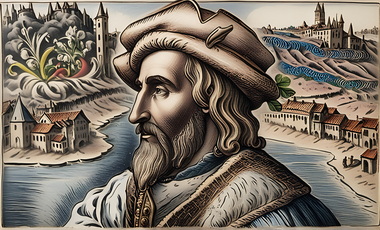
Balthasar Hubmaier: Baptist History in the Reformation (Updated)

Balthasar Hubmaier (1480–1528) was an influential German Anabaptist leader and one of the most well-known and respected Anabaptist theologians of the Reformation.

Balthasar Hubmaier

It is important that we remember, not only those who were martyred for preaching the truth of salvation by faith in Christ alone, but also those within our Baptist heritage who were martyred for their convictions in Scripture as the final authority and believers’ baptism. Balthasar Hubmaier was one of these men. Learn more about his courageous stand for Christ in this short video.

While he was an early martyr by fellow Reformationists… the firsts were:

The Martyrdom of Felix Manz & George Blaurock

In the closing of his work entitled “Freedom of the Will” he laid out a very strong argument against theistic determinism and fatalism which are the undercurrent of Augustinian philosophy and Calvinist “Sovereignty”.

BAPTIST MARTYRS

This Baptist History is brought to you by Steve Brady at Fairhaven Baptist Church in Chesterton, Indiana. (Full playlist of 50 Baptists You Should Know here)

A little more history on Hubmaier…

Here, you can find more information about our online class program, and how you can earn your Associate in Bible degree online. Whether you are a pastor or a layman wanting to increase your Bible knowledge, a teacher desiring to refine your teaching methods, or someone who is curious about a certain course being offered, we encourage you to register today and begin working toward your degree, and more importantly, furthering your knowledge of the Bible. (Full playlist of Baptist History here)

One of Hubmaier’s best works was his “On The Sword,” sort of his “95-thesis” – so to speak. Here is some discussion of the history of his views on violence.

Shawn sits down with Drew from the Provisionist Perspective to discuss Balthasar Hubmaier’s two works on violence: On Heretics and Those Who Burn Them and On the Sword. This discussion covers how we should treat Christians who disagree with us (don’t burn them at the stake) and how we should relate to government (be a part of it if you can!).

Other worthwhile watches:

Many will simply dismiss people like this with labels, especially the modern movement of Provisionists/Baptist traditionalism.

LABELS

Let me say something to ppl who do not take the time to know what something is and dismiss with labels. Stalin called Lenin a fascist

In similar fashion, we find this “labeling” among the Reformers: See Leighton’e Full Interview of Professor Harwood

Which brings me to an excerpt from a book I have a PDF form of… so the pages and the footnotes will not be properly marked.

As I am going thru this book (pictured), I am rejecting more of my compatibilism and drilling down on a more solid foundation.

Note also how Paul wheels the argument of Romans 1—11 to a climactic conclusion: “For God has bound all men over to disobedience so that he may have mercy on them all” (Rom 11:32, emphasis added). Here the scope of God’s intention to have mercy matches the scope of human sinfulness, as indicated by the repeated all. If Paul has already established in Romans 1—3 that all human beings without exception have been consigned to disobedience, then the symmetry of Paul’s expression in Romans 11:32 strongly implies that God intends to have mercy in a similar scope: on all human beings without exception. Even if we allow that Paul may here be referring to Jews and Gentiles as people groups, we must not imagine that God’s desire to show mercy fails to apply to every individual within each group. After all, Paul establishes that all humans are under sin by arguing that both Gentiles (Rom 1:18-32) and Jews (Rom 2:1—3:20) as people groups are under sin. If we accept Paul’s strategy of indicting every individual through indictment of the group, then consistency requires that we allow the same extension to hold with regard to God’s mercy, as Romans 11:32 seems to say.

The Pastoral Epistles abound with passages pointing toward God’s universal saving intentions: “God our Savior, who wants all men to be saved and to come to a knowledge of the truth” (1 Tim 2:3-4); “Christ Jesus, who gave himself as a ransom for all” (1 Tim 2:5-6); “We have put our hope in the living God, who is the Savior of all men, and especially of those who believe” (1 Tim 4:10); “For the grace of God that brings salvation has appeared to all” (Tit 2:11). Given the unqualified use of all in these passages to identify those whom God desires to save, the burden of proving otherwise is on those who hold that biblical writers assumed a limitation on those who would be saved.1

Of course Calvinists have offered their own accountings of these passages. Some argue, for example, that the “world” loved by God in John 3:16 must refer only to “the elect within the world.”2 Similarly, they read the unqualified all in restricted senses (e.g., “all types of people” or “all the elect”). Accordingly, the scriptural claim that Jesus died not only for our sins but also for the sins of the whole world means that Jesus died not only for the sins of (some) Jews but also for the sins of (some) Gentiles. But D. A. Carson, certainly no Arminian sympathizer, considers such moves to be clever but unconvincing exegetical ploys that feebly attempt to overcome “simply too many texts on the other side of the issue.”3 These restrictive interpretations of all require such textual gymnastics that they condemn themselves as invalid.

[….]

 compatibilism is a popular position among Calvinists, particularly among the philosophically informed, we want to stress that not all Calvinists embrace it. Some Reformed theologians have argued for another option. These writers do not agree with Feinberg that a Calvinist must either give up freedom altogether or accept compatibilism. To the contrary, they hold that we are required by Scripture to accept both God’s control of all things and human freedom, but they insist that it is not up to us to find a way to reconcile these truths. Popular evangelical author J. I. Packer is a proponent of this view. He endorses this position in his widely read book Evangelism and the Sovereignty of God.

As he notes, divine sovereignty and human responsibility are both clearly taught in Scripture. And he understands sovereignty in the Calvinistic sense that God unconditionally determines everything that happens. “Man is a responsible moral agent, though he is also divinely controlled; man is divinely controlled, though he is also a responsible moral agent.”4 Packer identifies this pair of claims as an “antinomy” because he believes we cannot dispense with either one of them, nor can we understand how they are compatible. From the standpoint of finite human reason, it may seem contradictory to affirm both of these claims and therefore impossible to do so. Here is Packer’s advice for dealing with such antinomies.

Accept it for what it is, and learn to live with it. Refuse to regard the apparent inconsistency as real; put down the semblance of contradiction to the deficiency of your own understanding; think of the two principles as, not rival alternatives, but, in some way that at present you do not grasp, complementary to each other.5

Apparently Packer means to affirm that both determinism and freedom in the libertarian sense are true. It is the affirmation of both of these that produces antinomy. By contrast, the affirmation of determinism and the compatibilist account of freedom produces no such intellectual tension. The resolution of antinomy will need the perspective of eternity, but it is easy to see here and now how freedom and determinism can be held together if one accepts a compatibilist account of freedom.

[….]

Second, we believe that there are large stretches of Scripture that are hard to make sense of if humans aren’t free in the libertarian sense of the word. In chapter two we examined some of these, but now let us consider another one, namely, Jeremiah 7:1-29. In this passage God calls his people to repentance. God enumerates the sins of his people and reminds them that while they were doing such things, he spoke to them again and again (Jer 7:13). But instead of repenting, they persist in idolatry and other self-destructive behavior. God promises to punish them for their sin, but he again reiterates that he repeatedly sent his prophets to them to urge them to obedience (Jer 7:20-26).

This passage is hardly unusual. The book of Jeremiah contains several other similar passages, as do most of the Prophets as well as some other biblical texts. Now the question we want to raise is, what view of freedom is implied in such texts? Of course, as we have already noted, Scripture does not expressly define the nature of our freedom or draw philosophical distinctions for us. But it is still worth asking what sort of freedom is implied by various texts of Scripture.

  1. For a helpful treatment of such terms as all and every in the Pastoral Epistles, see I. Howard Marshall, “Universal Grace and Atonement in the Pastoral Epistles,” in The Grace of God and the Will of Man: A Case for Arminianism, ed. Clark H. Pinnock (Grand Rapids, Mich.: Zondervan, 1989), pp. 57-63.
  2. See D. A. Carson’s characterization of this point of view in The Difficult Doctrine of the Love of God (Wheaton, Ill.: Crossway, 2000), p. 17.
  3. Ibid., p. 75.
  4. John S. Feinberg, “God, Freedom and Evil in Calvinist Thinking,” in The Grace of God, the Bondage of the Will, ed. Thomas R. Schreiner and Bruce A. Ware (Grand Rapids, Mich.: Baker, 1995), 2:465.
  5. J. I. Packer, Evangelism and the Sovereignty of God (Downers Grove, Ill.: InterVarsity Press, 1961), p. 23. […] 21.

So there is wiggle room in orthodoxy – is my main point. Spurgeon is wrong:

And I have my own private opinion, that there is no such thing as preaching Christ and him crucified, unless you preach what now-a-days is called Calvinism.  I have my own ideas, and those I always state boldly.  It is a nickname to call it Calvinism.  Calvinism is the gospel, and nothing else.

— Charles Spurgeon, Spurgeon’s Sermons, vol. I (Baker Books, reprinted 2007), 88-89.

And, I can disagree with Pink:

  • When we say that God is Sovereign in the exercise of His love, we mean that He loves whom He chooses. God does not love everybody. — A.W. Pink


Challenges To Strict 5-Point Calvinism | Tozer/Winger/Geisler/Lewis

This post will include lengthy excerpts combined with media… so buckle up buttercup!

  • Let him, therefore, who would beware of such unbelief, always bear in mind, that there is no random power, or agency, or motion in the creatures, who are so governed by the secret counsel of God, that nothing happens but what he has knowingly and willingly decreed. – John Calvin

I reject this strict interpretation by Calvin… Tozer reopens this “knowingly and willingly decreed” to a slightly different understanding that I see is a better fit to this mystery God has unveiled.

This first audio is from A.W. Tozer regarding God’s sovereignty. I also include a partial excerpt from his book, The Knowledge of the Holy: The Attributes of God. Their Meaning in the Christian Life, chapter 22 ~ “The Sovereignty of God” ~ of which the entire chapter is here.

Here is that partial chapter excerpt.

I changed a couple words as can not reads better as cannot:

While a complete explanation of the origin of sin eludes us, there are a few things we do know. In His sovereign wisdom God has permitted evil to exist in carefully restricted areas of His creation, a kind of fugitive outlaw whose activities are temporary and limited in scope. In doing this God has acted according to His infinite wisdom and goodness. More than that no one knows at present; and more than that no one needs to know. The name of God is sufficient guarantee of the perfection of His works.

Another real problem created by the doctrine of the divine sovereignty has to do with the will of man. If God rules His universe by His sovereign decrees, how is it possible for man to exercise free choice? And if he cannot exercise freedom of choice, how can he be held responsible for his conduct? Is he not a mere puppet whose actions are determined by a behind-the-scenes God who pulls the strings as it pleases Him?

The attempt to answer these questions has divided the Christian church neatly into two camps which have borne the names of two distinguished theologians, Jacobus Arminius and John Calvin. Most Christians are content to get into one camp or the other and deny either sovereignty to God or free will to man. It appears possible, however, to reconcile these two positions without doing violence to either, although the effort that follows may prove deficient to partisans of one camp or the other.

Here is my view: God sovereignly decreed that man should be free to exercise moral choice, and man from the beginning has fulfilled that decree by making his choice between good and evil. When he chooses to do evil, he does not thereby countervail the sovereign will of God but fulfills it, inasmuch as the eternal decree decided not which choice the man should make but that he should be free to make it. If in His absolute freedom God has willed to give man limited freedom, who is there to stay His hand or say, What doest thou? Mans will is free because God is sovereign. A God less than sovereign could not bestow moral freedom upon His creatures. He would be afraid to do so.

Perhaps a homely illustration might help us to understand. An ocean liner leaves New York bound for Liverpool. Its destination has been determined by proper authorities. Nothing can change it. This is at least a faint picture of sovereignty.

On board the liner are several scores of passengers. These are not in chains, neither are their activities determined for them by decree. They are completely free to move about as they will. They eat, sleep, play, lounge about on the deck, read, talk, altogether as they please; but all the while the great liner is carrying them steadily onward toward a predetermined port.

Both freedom and sovereignty are present here and they do not contradict each other. So it is, I believe, with mans freedom and the sovereignty of God. The mighty liner of Gods sovereign design keeps its steady course over the sea of history. God moves undisturbed and unhindered toward the fulfilment of those eternal purposes which He purposed in Christ Jesus before the world began. We do not know all that is included in those purposes, but enough has been disclosed to furnish us with a broad outline of things to come and to give us good hope and firm assurance of future well-being.

We know that God will fulfil every promise made to the prophets; we know that sinners will some day be cleansed out of the earth; we know that a ransomed company will enter into the joy of God and that the righteous will shine forth in the kingdom of their Father; we know that Gods perfections will yet receive universal acclamation, that all created intelligences will own Jesus Christ Lord to the glory of God the Father, that the present imperfect order will be done away, and a new heaven and a new earth be established forever.

Toward all this God is moving with infinite wisdom and perfect precision of action. No one can dissuade Him from His purposes; nothing turn Him aside from His plans. Since He is omniscient, there can be no unforeseen circumstances, no accidents. As He is sovereign, there can be no countermanded orders, no breakdown in authority; and as He is omninpotent, there can be no want of power to achieve His chosen ends. God is sufficient unto Himself for all these things.

In the meanwhile things are not as smooth as this quick outline might suggest. The mystery of iniquity doth already work. Within the broad field of Gods sovereign, permissive will the deadly conflict of good with evil continues with increasing fury. God will yet have His way in the whirlwind and the storm, but the storm and the whirlwind are here, and as responsible beings we must make our choice in the present moral situation.

Certain things have been decreed by the free determination of God, and one of these is the law of choice and consequences. God has decreed that all who willingly commit themselves to His Son Jesus Christ in the obedience of faith shall receive eternal life and become sons of God. He has also decreed that all who love darkness and continue in rebellion against the high authority of heaven shall remain in a state of spiritual alienation and suffer eternal death at last.

Reducing the whole matter to individual terms, we arrive at some vital and highly personal conclusions. In the moral conflict now raging around us whoever is on Gods side is on the winning side and cannot lose; whoever is on the other side is on the losing side and cannot win. Here there is no chance, no gamble. There is freedom to choose which side we shall be on but no freedom to negotiate the results of the choice once it is made. By the mercy of God we may repent a wrong choice and alter the consequences by making a new and right choice. Beyond that we cannot go.

The whole matter of moral choice centers around Jesus Christ. Christ stated it plainly: He that is not with me is against me, and No man cometh unto the Father, but by me. The gospel message embodies three distinct elements: an announcement, a command, and a call. It announces the good news of redemption accomplished in mercy; it commands all men everywhere to repent and it calls all men to surrender to the terms of grace by believing on Jesus Christ as Lord and Saviour.

We must all choose whether we will obey the gospel or turn away in unbelief and reject its authority. Our choice is our own, but the consequences of the choice have already been determined by the sovereign will of God, and from this there is no appeal.

Here is the excellent first question [of twenty] Mike was attempting to get to get through, which then prompted me to go thru a bunch of his videos. I will include links to those below the video I grabbed the response to that first question from:

Why God Hardens Hearts: Romans 9:17-24 (YouTube) – This topic is what, many years ago led me to come up with the idea that as God [in His perfect justice] and Man [in his freedom to rebel] working in a mystery together led to the eventual hardening of Pharoah’s heart. God’s perfect sovereignty and man’s limited freedom will culminate in God’s will/plan/glory being executed perfectly.

AND THIS IS A MYSTERY

Our freedoms — as such, and God’s sovereignty. Working in tandem. One of many mysteries involving an infinite Being: the Judeo/Christian God, YHWH.

  • “But I will harden Pharaoh’s heart and multiply my signs and wonders in the land of Egypt.”  – Exodus 7:3
  • “But the LORD hardened Pharaoh’s heart and he did not listen to them, as the LORD had told Moses.” – Exodus 9:12
  • “Then the Lord said to Moses, ‘Go to Pharaoh, for I have hardened his heart and the heart of his servants, that I may show these signs of mine among them.’” – Exodus 10:1
  • “I will harden Pharaoh’s heart so that he will pursue them. Then I will receive glory by means of Pharaoh and all his army, and the Egyptians will know that I am the LORD.” So the Israelites did this.” – Exodus 14:4
  • “The LORD hardened the heart of Pharaoh king of Egypt, and he pursued the Israelites, who were going out defiantly.” – Exodus 14:8

— combined with Romans 1:18-25:

For God’s wrath is revealed from heaven against all godlessness and unrighteousness of people who by their unrighteousness suppress the truth, since what can be known about God is evident among them, because God has shown it to them. For his invisible attributes, that is, his eternal power and divine nature, have been clearly seen since the creation of the world, being understood through what he has made. As a result, people are without excuse. For though they knew God, they did not glorify him as God or show gratitude. Instead, their thinking became worthless, and their senseless hearts were darkened. Claiming to be wise, they became fools and exchanged the glory of the immortal God for images resembling mortal man, birds, four-footed animals, and reptiles.

Therefore God delivered them over in the desires of their hearts to sexual impurity, so that their bodies were degraded among themselves. They exchanged the truth of God for a lie, and worshiped and served what has been created instead of the Creator, who is praised forever. Amen.

A good dealing with the order of the verbs in these and other passages of the hardening of Pharoah’s heart is HERE (it is a must read in my opinion, even though it is long). The author is more on the hard-Armenian side of the aisle, but nonetheless his treatment of the issue is one I made years ago. I believe both the strict 5-pointer and the Arminian over-step their bound like we try to relegate the Trinity to water/ice/steam. We all misuse language in trying to describe the God who saved us, and we will continue in this failure/endeavor in our discussions. Thankfully the Holy Spirit is the giver of real Truth by pointing us to Jesus for the Glory of the Father:

fundamentally, the way we know Christianity to be true is by the self-authenticating witness of God’s Holy Spirit. Now what do I mean by that? I mean that the experience of the Holy Spirit is veridical and unmistakable (though not necessarily irresistible or indubitable) for him who has it; that such a person does not need supplementary arguments or evidence in order to know and to know with confidence that he is in fact experiencing the Spirit of God; that such experience does not function in this case as a premise in any argument from religious experience to God, but rather is the immediate experiencing of God himself; that in certain contexts the experience of the Holy Spirit will imply the apprehension of certain truths of the Christian religion, such as “God exists,” “I am condemned by God,” “I am reconciled to God,” “Christ lives in me,” and so forth; that such an experience Provides one not only with a subjective assurance of Christianity’s truth, but with objective knowledge of that truth; and that arguments and evidence incompatible with that truth are overwhelmed by the experience of the Holy Spirit for him who attends fully to it.

William Lane Craig, Reasonable Faith: Christian Truth and Apologetics, 3rd ed. (Wheaton, IL: Crossway Books, 2008), 43

Other Mike Winger YouTube discussions are…

BTW, there are many debates I have watched on this topic by James White. I highly recommend Dr. White and his ministry, they have had a huge apologetic influence on me over the years.

I also use thinking over the years to note this idea of God’s sovereignty and foreknowledge in my life in a two page testimony I use this graphic in:

Another influential apologetics “coach” in my life was Dr. Norman Geisler. Here is a presentation I uploaded for this post:

CS LEWIS was another huge influence on my apologetic life. I noted in his book, The Problem of Pain, this part from chapter 3 and 4,

“Divine Goodness”

Any consideration of the goodness of God at once threat­ens us with the following dilemma.

On the one hand, if God is wiser than we His judge­ment must differ from ours on many things, and not least on good and evil. What seems to us good may therefore not be good in His eyes, and what seems to us evil may not be evil.

On the other hand, if God’s moral judgement differs from ours so that our ‘black’ may be His ‘white’, we can mean nothing by calling Him good; for to say ‘God is good’, while asserting that His goodness is wholly other than ours, is really only to say ‘God is we know not what’. And an utterly unknown quality in God cannot give us moral grounds for loving or obeying Him. If He is not (in our sense) ‘good’ we shall obey, if at all, only through fear—and should be equally ready to obey an omnipotent Fiend. The doctrine of Total Depravity— when the consequence is drawn that, since we are totally depraved, our idea of good is worth simply nothing— may thus turn Christianity into a form of devil-worship.

The escape from this dilemma depends on observing what happens, in human relations, when the man of infe­rior moral standards enters the society of those who are better and wiser than he and gradually learns to accept their standards—a process which, as it happens, I can describe fairly accurately, since I have undergone it. When I came first to the University I was as nearly with­out a moral conscience as a boy could be. Some faint dis­taste for cruelty and for meanness about money was my utmost reach—of chastity, truthfulness, and self-sacrifice I thought as a baboon thinks of classical music. By the mercy of God I fell among a set of young men (none of them, by the way, Christians) who were sufficiently close to me in intellect and imagination to secure immediate intimacy, but who knew, and tried to obey, the moral law. Thus their judgement of good and evil was very different from mine. Now what happens in such a case is not in the least like being asked to treat as ‘white’ what was hitherto called black. The new moral judgements never enter the mind as mere reversals (though they do reverse them) of previous judgements but ‘as lords that are certainly expected’. You can have no doubt in which direction you are moving: they are more like good than the little shreds of good you already had, but are, in a sense, continuous with them. But the great test is that the recognition of the new standards is accompanied with the sense of shame and guilt: one is conscious of having blundered into soci­ety that one is unfit for. It is in the light of such experi­ences that we must consider the goodness of God. Beyond all doubt, His idea of ‘goodness’ differs from ours; but you need have no fear that, as you approach it, you will be asked simply to reverse your moral standards. When the relevant difference between the Divine ethics and your own appears to you, you will not, in fact, be in any doubt that the change demanded of you is in the direction you already call ‘better’. The Divine ‘goodness’ differs from ours, but it is not sheerly different: it differs from ours not as white from black but as a perfect circle from a child’s first attempt to draw a wheel. But when the child has learned to draw, it will know that the circle it then makes is what it was trying to make from the very beginning.

This doctrine is presupposed in Scripture. Christ calls men to repent—a call which would be meaningless if God’s standards were sheerly different from that which they already knew and failed to practise. He appeals to our existing moral judgement—‘Why even of yourselves judge ye not what is right?’ (Luke 12:57) God in the Old Testament expostulates with men on the basis of their own concep­tions of gratitude, fidelity, and fair play: and puts Himself, as it were, at the bar before His own creatures—‘What iniquity have your fathers found in me, that they are gone far from me?’ (Jeremiah 2:5.)


CS Lewis | The Problem of Pain (Chapter 3)

“Human Wickedness”

A recovery of the old sense of sin is essential to Christianity. Christ takes it for granted that men are bad. Until we really feel this assumption of His to be true, though we are part of the world He came to save, we are not part of the audience to whom His words are addressed. We lack the first condition for understanding what He is talking about. And when men attempt to be Christians without this preliminary consciousness of sin, the result is almost bound to be a certain resentment against God as to one always inexplicably angry. Most of us have at times felt a secret sympathy with the dying farmer who replied to the Vicar’s dissertation on repentance by asking ‘What harm have I ever done Him?’ There is the real rub. The worst we have done to God is to leave Him alone—why can’t He return the compliment? Why not live and let live? What call has He, of all beings, to be ‘angry’? It’s easy for Him to be good!

Now at the moment when a man feels real guilt— moments too rare in our lives—all these blasphemies vanish away. Much, we may feel, can be excused to human infirmities: but not this—this incredibly mean and ugly action which none of our friends would have done, which even such a thorough-going little rotter as X would have been ashamed of, which we would not for the world allow to be published. At such a moment we really do know that our character, as revealed in this action, is, and ought to be, hateful to all good men, and, if there are powers above man, to them. A God who did not regard this with unappeasable distaste would not be a good being. We cannot even wish for such a God—it is like wishing that every nose in the universe were abol­ished, that smell of hay or roses or the sea should never again delight any creature, because our own breath hap­pens to stink.

When we merely say that we are bad, the ‘wrath’ of God seems a barbarous doctrine; as soon as we perceive our badness, it appears inevitable, a mere corollary from God’s goodness. To keep ever before us the insight derived from such a moment as I have been describing, to learn to detect the same real inexcusable corruption under more and more of its complex disguises, is therefore indis­pensable to a real understanding of the Christian faith. This is not, of course, a new doctrine. I am attempting nothing very splendid in this chapter. I am merely trying to get my reader (and, still more, myself) over a pons asi-norum—to take the first step out of fools’ paradise and utter illusion. But the illusion has grown, in modern times, so strong, that I must add a few considerations tending to make the reality less incredible.

  1. We are deceived by looking on the outside of things. We suppose ourselves to be roughly not much worse than Y, whom all acknowledge for a decent sort of person, and certainly (though we should not claim it out loud) better than the abominable X. Even on the superficial level we are probably deceived about this. Don’t be too sure that your friends think you as good as Y. The very fact that you selected him for the comparison is suspicious: he is prob­ably head and shoulders above you and your circle. But let us suppose that Y and yourself both appear ‘not bad’. How far Y’s appearance is deceptive, is between Y and God. His may not be deceptive: you know that yours is.

Does this seem to you a mere trick, because I could say the same to Y and so to every man in turn? But that is just the point. Every man, not very holy or very arrogant, has to ‘live up to’ the outward appearance of other men: he knows there is that within him which falls far below even his most careless public behaviour, even his loosest talk. In an instant of time—while your friend hesitates for a word—what things pass through your mind? We have never told the whole truth. We may confess ugly facts— the meanest cowardice or the shabbiest and most prosaic impurity—but the tone is false. The very act of confess-ing—an infinitesimally hypocritical glance—a dash of humour—all this contrives to dissociate the facts from your very self. No one could guess how familiar and, in a sense, congenial to your soul these things were, how much of a piece with all the rest: down there, in the dreaming inner warmth, they struck no such discordant note, were not nearly so odd and detachable from the rest of you, as they seem when they are turned into words. We imply, and often believe, that habitual vices are excep­tional single acts, and make the opposite mistake about our virtues—like the bad tennis player who calls his nor­mal form his ‘bad days’ and mistakes his rare successes for his normal. I do not think it is our fault that we cannot tell the real truth about ourselves; the persistent, life-long, inner murmur of spite, jealousy, prurience, greed and self-complacence, simply will not go into words. But the  important thing is that we should not mistake our inevitably limited utterances for a full account of the worst that is inside.

  1. A reaction—in itself wholesome—is now going on against purely private or domestic conceptions of moral­ity, a reawakening of the social We feel our­selves to be involved in an iniquitous social system and to share a corporate guilt. This is very true: but the enemy can exploit even truths to our deception. Beware lest you are making use of the idea of corporate guilt to distract your attention from those humdrum, old-fashioned guilts of your own which have nothing to do with ‘the system’ and which can be dealt with without waiting for the mil­lennium. For corporate guilt perhaps cannot be, and cer­tainly is not, felt with the same force as personal guilt. For most of us, as we now are, this conception is a mere excuse for evading the real issue. When we have really learned to know our individual corruption, then indeed we can go on to think of the corporate guilt and can hardly think of it too much. But we must learn to walk before we run.
  2. We have a strange illusion that mere time cancels sin. I have heard others, and I have heard myself, recounting cruelties and falsehoods committed in boyhood as if they were no concern of the present speaker’s, and even with laughter. But mere time does nothing either to the fact or to the guilt of a sin. The guilt is washed out not by time but by repentance and the blood of Christ: if we have repented these early sins we should remember the price of our forgiveness and be humble. As for the fact of a sin, is it probable that anything cancels it? All times are eternally present to God. Is it not at least possible that along some one line of His multi-dimensional eternity He sees you forever in the nursery pulling the wings off a fly, forever toadying, lying, and lusting as a schoolboy, forever in that moment of cowardice or insolence as a subaltern? It may be that salvation consists not in the cancelling of these eternal moments but in the perfected humanity that bears the shame forever, rejoicing in the occasion which it fur­nished to God’s compassion and glad that it should be common knowledge to the universe. Perhaps in that eter­nal moment St Peter—he will forgive me if I am wrong— forever denies his Master. If so, it would indeed be true that the joys of Heaven are for most of us, in our present condition, ‘an acquired taste’—and certain ways of life may render the taste impossible of acquisition. Perhaps the lost are those who dare not go to such a public Of course I do not know that this is true; but I think the possibility is worth keeping in mind.
  3. We must guard against the feeling that there is ‘safety in numbers’. It is natural to feel that if all men are as bad as the Christians say, then badness must be very excus­able. If all the boys plough in the examination, surely the papers must have been too hard? And so the masters at that school feel till they learn that there are other schools where ninety per cent of the boys passed on the same papers. Then they begin to suspect that the fault did not lie with the examiners. Again, many of us have had the experience of living in some local pocket of human soci-ety—some particular school, college, regiment or profes­sion where the tone was bad. And inside that pocket certain actions were regarded as merely normal (‘Every­one does it’) and certain others as impracticably virtuous and Quixotic. But when we emerged from that bad soci­ety we made the horrible discovery that in the outer world our ‘normal’ was the kind of thing that no decent person ever dreamed of doing, and our ‘Quixotic’ was taken for granted as the minimum standard of decency. What had seemed to us morbid and fantastic scruples so long as we were in the ‘pocket’ now turned out to be the only moments of sanity we there enjoyed. It is wise to face the possibility that the whole human race (being a small thing in the universe) is, in fact, just such a local pocket of evil—an isolated bad school or regiment inside which minimum decency passes for heroic virtue and utter corruption for pardonable imperfection. But is there any evidence—except Christian doctrine itself—that this is so? I am afraid there is. In the first place, there are those odd people among us who do not accept the local stan­dard, who demonstrate the alarming truth that a quite dif­ferent behaviour is, in fact, possible. Worse still, there is the fact that these people, even when separated widely in space and time, have a suspicious knack of agreeing with one another in the main—almost as if they were in touch with some larger public opinion outside the pocket. What is common to Zarathustra, Jeremiah, Socrates, Gautama, Christ1 and Marcus Aurelius, is something pretty sub­stantial. Thirdly, we find in ourselves even now a theoret­ical approval of this behaviour which no one practises. Even inside the pocket we do not say that justice, mercy, fortitude, and temperance are of no value, but only that the local custom is as just, brave, temperate and merciful as can reasonably be expected. It begins to look as if the neglected school rules even inside this bad school were connected with some larger world—and that when the term ends we might find ourselves facing the public opin­ion of that larger world. But the worst of all is this: we cannot help seeing that only the degree of virtue which we now regard as impracticable can possibly save our race from disaster even on this planet. The standard which seems to have come into the ‘pocket’ from outside, turns out to be terribly relevant to conditions inside the pocket—so relevant that a consistent practice of virtue by the human race even for ten years would fill the earth from pole to pole with peace, plenty, health, merriment, and heartsease, and that nothing else will. It may be the custom, down here, to treat the regimental rules as a dead letter or a counsel of perfection: but even now, everyone who stops to think can see that when we meet the enemy this neglect is going to cost every man of us his life. It is then that we shall envy the ‘morbid’ person, the ‘pedant’ or ‘enthusiast’ who really has taught his company to shoot and dig in and spare their water bottles.

[….]

This chapter will have been misunderstood if anyone describes it as a reinstatement of the doctrine of Total Depravity. I disbelieve that doctrine, partly on the logical ground that if our depravity were total we should not know ourselves to be depraved, and partly because experience shows us much goodness in human nature. Nor am I recommending universal gloom. The emotion of shame has been valued not as an emotion but because of the insight to which it leads. I think that insight should be permanent in each man’s mind: but whether the painful emotions that attend it should also be encouraged, is a technical problem of spiritual direction on which, as a layman, I have little call to speak. My own idea, for what it is worth, is that all sadness which is not either arising from the repentance of a concrete sin and hastening towards concrete amendment or restitution, or else arising from pity and hastening to active assistance, is simply bad; and I think we all sin by needlessly disobeying the apostolic injunction to ‘rejoice’ as much as by anything else. Humility, after the first shock, is a cheerful virtue: it is the high-minded unbeliever, desperately trying in the teeth of repeated disillusions to retain his ‘faith in human nature’, who is really sad. I have been aiming at an intellectual, not an emotional, effect: I have been trying to make the reader believe that we actually are, at present, creatures whose character must be, in some respects, a horror to God, as it is, when we really see it, a horror to ourselves. This I believe to be a fact: and I notice that the holier a man is, the more fully he is aware of that fact. Perhaps you have imagined that this humility in the saints is a pious illusion at which God smiles. That is a most dangerous error. It is theoretically dangerous, because it makes you identify a virtue (i.e., a perfection) with an illusion (i.e., an imperfection), which must be nonsense. It is practically dangerous because it encourages a man to mistake his first insights into his own corruption for the first beginnings of a halo round his own silly head. No, depend upon it; when the saints say that they—even they—are vile, they are recording truth with scientific accuracy.


CS Lewis | The Problem of Pain (Chapter 4)

Needless to say I have been privy to this debate since the 80’s.

I like to say I am a Baptist except for dress and drink… but a Baptist nonetheless. I am not a 1689 Confession type Baptist. I have always joked that I am a 3.5 Calvinist when I read Norman Geisler, and a 4.5 Calvinist when I read James White.

No more.

This next part comes from a post about preaching the Gospel to ourselves. And in the middle of this post I have the following. And THE REASON I put that there was to note that a majority of Calvinists give lip play to a distinction between “total” and “utter” depravity, but many use language and ideas to the “utter” end of the spectrum.

A TEACHING BREAK

A spiritually dead person, then, is in need of spiritual life from God. But he does exist, and he can know and choose. His faculties that make up the image of God are not absent; they are simply incapable of initiating or attaining their own salvation. Like a drowning person, a fallen person can reach out and accept the lifeline even though he cannot make it to safety on his own.

The below is from Geisler’s book, Chosen but Free:

Sproul has a wonderful ministry, and he [Sproul] has asked ~ rhetorically ~ how: anyone could be involved in believing in the value of human worth and at the same time believing in TOTAL depravity? He responds:

The very fact that Calvinists take sin so seriously is because they take the value of human beings so seriously. It is because man was made in the image of God, called to mirror and reflect God’s holiness, that we have the distinction of being the image-bearers of God.

But what does ‘total depravity’ mean? Total depravity means simply this: that sin affects every aspect of our human existence: our minds, our wills and our bodies are affected by sin. Every dimension of our personality suffers at some point from the weight of sin that has infected the human race.

So the argument is nuanced and deep.

Thus I split the horns and end up tweaking some of the 5-points, and getting rid of others.

Again:

  • Let him, therefore, who would beware of such unbelief, always bear in mind, that there is no random power, or agency, or motion in the creatures, who are so governed by the secret counsel of God, that nothing happens but what he has knowingly and willingly decreed. – John Calvin

I do not take that as Gospel Truth, in other words. The following graph serves as a good comparison between the two (larger here):