Evanescent or Temporal Grace | Deity of Deception

Here is the Calvinist doctrine Temporal Grace, as taught by John Calvin:

temporal faith

“Let no one think that those [who] fall awaywere of the predestined, called according to the purpose and truly sons of the promise. For those who appear to live piously may be called sons of God; but since they will eventually live impiously and die in that impiety, God does not call them sons in His foreknowledge. There are sons of God who do not yet appear so to us, but now do so to God; and there are those who, on account of some arrogated or temporal grace, are called so by us, but are not so to God.” (Concerning the Eternal Predestination of God, p.66, emphasis mine)

And,

“Experience shows that the reprobate are sometimes affected in a way so similar to the elect that even in their own judgment there is no difference between them. Hence, it is not strange, that by the Apostle a taste of heavenly gifts, and by Christ himself a temporary faith is ascribed to them. Not that they truly perceive the power of spiritual grace and the sure light of faith; but the Lord, the better to convict them, and leave them without excuse, instills into their minds such a sense of goodness as can be felt without the Spirit of adoption …. there is a great resemblance and affinity between the elect of God and those who are impressed for a time with a fading faith …. Still it is correctly said, that the reprobate believe God to be propitious to them, inasmuch as they accept the gift of reconciliation, though confusedly and without due discernment; not that they are partakers of the same faith or regeneration with the children of God; but because, under a covering of hypocrisy they seem to have a principle of faith in common with them. Nor do I even deny that God illumines their mind to this extent …. there is nothing inconsistent in this with the fact of his enlightening some with a present sense of grace, which afterwards proves evanescent.” (3.2.11, Institutes, emphasis mine)

Calvin adds: 

“Yet sometimes He also causes those whom he illumines only for a time to partake of it; then He justly forsakes them on account of their ungratefulness and strikes them with even greater blindness.” (Institutes of Christian Religion, 3.24.8, emphasis mine)

Therefore, by “some arrogated or temporal grace,” God “illumines only for a time” the alleged non-elect in order to overcome his Total Inability and thus temporarily think that he was “of the predestined.” Realize that Calvin taught the doctrine of Temporal Grace because he needed to plug a hole in his theology, such as how to explain passages such as Matthew 7:21-23, where the perishing, that is, those who are being condemned to Hell, had performed miraculous things that spiritually dead people are not supposed to be able to do, according to the Calvinistic doctrine of Total Inability. Calvin’s answer for such instances was a temporary grace. 

John Calvin again:

“Whoever has sinned, I shall delete him from the book of life. … But the meaning is simple: those are deleted from the book of life who, considered for a time to be children of God, afterwards depart to their own place, as Peter truly says about Judas (Acts 1:16). But John testifies that these never were of us (1 Jn 2:19), for if they had been, they would not have gone out from us. What John expresses briefly is set forth in more detail by Ezekiel (13:9): They will not be in the secret of My people, nor written in the catalogue of Israel. The same solution applies to Moses and Paul, desiring to be deleted from the book of life (Ex 32:32; Rom 9:3): carried away with the vehemence of their grief, they prefer to perish, if possible, rather than that the Church of God, numerous as it then was, should perish. When Christ bids His disciples rejoice because their names are written in heaven (Lk 10:20), He signifies a perpetual blessing of which they will never be deprived. In a word, Christ clearly and briefly reconciles both meanings, when He says: Every tree which My Father has not planted will be rooted up (Mt 15:13). For even the reprobate take root in appearance, and yet they are not planted by the hand of God.” (Concerning the Eternal Predestination of God, pp.151-152, emphasis mine) 

John Calvin comments on Hebrews 6:4-6: 

God certainly bestows His Spirit of regeneration only on the elect, and that they are distinguished from the reprobate in the fact that they are re-made in His image, and they receive the earnest of the Spirit in the hope of an inheritance to come, and by the same Spirit the Gospel is sealed in their hearts. But I do not see that this is any reason why He should not touch the reprobate with a taste of His grace, or illumine their minds with some glimmerings of His light, or affect them with some sense of His goodness, or to some extent engrave His Word in their hearts. Otherwise where would be that passing faith which Marks mentions (4.17)? Therefore there is some knowledge in the reprobate, which later vanishes away either because it drives its roots less deep than it ought to, or because it is choked and withers away.” (Calvin’s New Testament Commentaries: Hebrews and I and II Peter, p.76, emphasis mine) 

Calvinist, Mark Talbot: 

“Now of course, nothing, that I, nor anyone else, can say can guarantee that anyone will continue to believe. Faith is a gift of God that we cannot produce.”  (Sin and Suffering in Calvin’s World, emphasis mine)

In other words, the fact that you believe today is no guarantee that you will still believe tomorrow, or the next day, or the day after. You can only hope for the best, that your ordained fate is better than others, and that your grace is not a temporary grace, here today and gone tomorrow. Mark Talbot explicitly offers no illusion for your hope of tomorrow. There is nothing that you can do, but hope for the best. It’s completely out of your hands and completely in God’s hands. If you should find yourself an unbeliever tomorrow, your gift has run out.

One member of The Society of Evangelical Arminians: 

“The Calvinist’s assurance is obliterated by the fact that God ordains the illusory salvation of the seemingly-saved folks. This makes them a special sub-set of the damned. In Calvinism, God glorifies Himself by damning the ‘eternally reprobate.’ But the seemingly-saved folks have the unique privilege of ‘glorifying’ God in their earthly lives, by appearing to be saved on their way to Hell. Because God has pre-ordained this, there is nothing any apparently saved person can do. God has ordained the illusion! Of course, this brings up another question: Why is the God (who is Himself truth) ordaining such an illusion? How can God be truthful if He unconditionally pre-ordains illusions? And what kind of God could or would ordain such an illusion for the sake of His glory?” (SEA, emphasis mine)

One member of The Society of Evangelical Arminians: 

“For every person who has ever followed Jesus and then forsaken his name, we have to conclude that God ordained that said person would be eternally damned, but on their way to being damned, God ordains the illusion of redemption in Christ, in that they would come to know Jesusexhibit kingdom fruit, and then apostatize, all for the sake of divine glory.” (emphasis mine)

​QUESTION: If there is a Temporal Grace, then how do Calvinists know whether this will some day apply to them?

ANSWER: If they stop persevering, then that is how they know, according to Calvinist, Erwin Lutzer. 

Calvinist, Erwin Lutzer: 

“Historic Calvinism stresses the ‘perseverance of the saints,’ namely that true believers never fall away, and if they do, it is not for long. If a person fails to continue in the faith, he is giving proof that he was never saved.” (The Doctrines That Divide, p.231, emphasis mine)

Arminian, Robert Shank: 

“In other words, the only real evidence of election is perseverance, and our only assurance of the certainty of persevering is—to persevere!” (Elect in the Son, p.214, emphasis mine)

Dave Hunt: 

“It is Calvinism that in effect offers salvation by works because it looks to works for assurance of salvation. Biblically, assurance comes by faith in the promise of eternal life in Christ made by ‘God, who cannot lie…before the world began’ (Titus 1:2).” (Debating Calvinism, p.416, emphasis mine)

QUESTION: How do Calvinists know if they are of the Calvinistically elect?

ANSWER: They presume it. …..

Read the rest at:

What is Evanescent Grace? 

| and |

Calvinist Complaints: Arminianism teaches “Conditional Security”)

The Puritan’s Died Fearful

This is why the Puritan’s never slept well in the security of their salvation. Pastor Andy Woods notes this in a truncated presentation:

Although there can be some abuse from Free Grace types, I thought this quick post illuminates Pastor Woods comments:

You may remember that the Puritans were English Protestants in the 16th and 17th centuries who believed the English Reformation hadn’t gone far enough. They objected to Roman Catholic influences in the Church of England and wanted a purer church with purer doctrine (hence the name “Puritan”). Thus, they separated to form independent or dissenting congregations, with many fleeing to Holland and then to New England looking for religious freedom (at least for themselves, if not for others).

As Grenz explains, the Puritans were concerned with “the quest for certainty of personal election” (Grenz, Revisioning Evangelical Theology, p. 23). They wanted to be sure that they were saved. Why was that? Why did that become an area of particular doubt for them?

Simply put, it was due to the doubts created by their Calvinism:

“This movement developed a new kind of piety in response to anxieties produced by the Calvinist doctrine of election, which in Puritanism made the problem of assurance of salvation existentially central. In contrast to medieval paradigms, Calvinism couched the question of personal salvation in terms of God’s mysterious election. While this theology protected divine sovereignty, it offered no clear criteria whereby a believer could be assured of elect status” (Revisioning, p. 39).

As Grenz explains, many tried to ground their certainty of being elect in outward behavior, which had the opposite effect:

“As helpful as they may be, in the end no sincerity of profession of faith, no degree of faithful attendance at the sacraments, no accumulation of outward evidences of sanctified living could suffice as marks of election” (Grenz, Revisioning, p. 39).

Since looking at outward behavior didn’t give them the assurance they sought, the Puritans looked for inward evidence. Grenz continues:

“the Puritans did devise one definitive mark of election: the inward experience of God’s saving grace. The attendant emphasis on conversion that this move engendered led eventually—at least in devotional literature—to an emphasis on a subjective mark of salvation, the inner, conscious experience of the new birth. Assurance of elect status, therefore, became the product of a believer’s ability to narrate a testimony to a personal conversion experience” (Grenz, Revisioning, p. 39).

This emphasis on having a “new birth” conversion experience became one of the central features of preaching during the Great Awakenings in America. Men like John Wesley (representing Arminians) and George Whitfield (representing Calvinists) emphasized the necessity of conversion and having “the New Birth.” People who had that experience during the revival meetings began to distinguish themselves from people who hadn’t, leading to the question, “Are you really saved?” ….

How Did Assurance Become a Debate?

In discussing this with Grok and Chat-GPT, I got a hybrid breakdown of two sources:

The “P” of TULIP

Calvinism’s doctrine of the Perseverance of the Saints does not ultimately provide the confident assurance of salvation that many assume it does. While Calvinism teaches that all of God’s elect will persevere to the end, assurance is often grounded not merely in faith in Christ but in the believer’s ability to demonstrate a lifetime of continuing faith, obedience, and holiness. Since only those who endure to the end are proven to be truly elect, the believer is left asking not simply, “Do I believe in Christ?” but also, “Will my faith ultimately prove genuine?”

According to these critics, this creates a built-in tension within the Calvinist system. If those who fall away are explained as never having been truly saved, then every professing Christian must consider whether his own faith might eventually prove to be temporary or spurious. Rather than resting entirely upon Christ’s finished work and His promises, assurance becomes linked to future perseverance that has not yet occurred.

The concern is reflected in several recurring themes:

  • Assurance is tied to visible perseverance, holiness, and good works rather than resting solely on God’s promises to believers.
  • Numerous Calvinist theologians, including John Calvin, John Murray, A.W. Pink, and others, stress that present faith is not sufficient unless one continues faithfully to the end.
  • Calvin’s doctrine of “temporary faith” or “evanescent grace” introduces the possibility that someone may appear converted for years and still not be among the elect.
  • Apostasy is interpreted as evidence that a person was never truly saved, causing believers to question whether their own faith is genuine.
  • Personal testimonies such as R.C. Sproul’s famous struggle with the question, “What if you are not one of the redeemed?” are cited as examples of the doubt this system can produce.
  • Biblical examples such as David, Peter, Solomon, and the carnal Corinthians are presented as evidence that true believers can fail seriously without proving themselves lost.

For these reasons, critics argue that Calvinism’s doctrine of perseverance functions less as a doctrine of assurance and more as a doctrine of ongoing self-examination. The believer’s focus can shift from Christ’s completed work to the search for evidences of election within his own life. In their view, the result is a form of assurance mixed with uncertainty, because the final proof of genuine salvation is not known until life’s race has been completed.

Thus, both sources conclude that Calvinism’s “P” in TULIP, though intended to safeguard eternal security, ultimately undermines it. Instead of offering believers settled confidence in Christ’s promise of eternal life, it replaces assurance with an ongoing test of endurance, leaving many to wonder whether they possess saving faith at all. True assurance, they contend, is found not in examining whether one has persevered enough, but in trusting Christ’s promise that all who believe in Him have eternal life here and now.

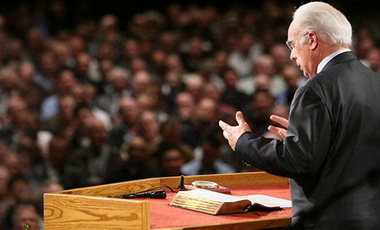
Dr. Leighton Flowers walks through a recent sermon entitled, “The Most Hated Christian Doctrine” by Dr. John MacArthur.

Faith Alone Thru Christ Alone

  • Flowers agrees with MacArthur that humanity is sinful and in need of grace, but argues that Calvinism wrongly transforms human rebellion into God-decreed inability, thereby undermining genuine responsibility, the universal offer of the gospel, and the biblical teaching that people receive life by believing rather than believe because they have already been given life.

The below video is Dr. Leighton Flowers’ response to John MacArthur’s sermon “The Most Hated Christian Doctrine.” While Flowers agrees with MacArthur that humanity is deeply sinful and incapable of saving itself, he argues that MacArthur goes beyond biblical depravity and imports the Calvinistic doctrine of Total Inability—the belief that people are born unable to respond positively to God’s revelation unless first regenerated by irresistible grace. Throughout the discussion, Flowers repeatedly distinguishes between people being unwilling because of rebellion and people being unable because of an innate condition decreed by God. He contends that passages such as John 5, John 6, John 8, Acts 28, and John 12 are addressing hardened, rebellious Israelites who became calloused through persistent rejection of God’s revelation, not describing the universal condition of every person from birth. According to Flowers, Calvinists mistakenly turn judicial hardening passages into proof texts for a doctrine of universal moral inability.

The larger theme of the video is the defense of human responsibility and the sufficiency of God’s revelation. Flowers argues that Calvinism ultimately makes unbelief trace back to God’s decree rather than to the sinner’s own rejection of truth. He repeatedly challenges MacArthur’s claim that unbelievers “cannot believe” by asking whether such inability is self-inflicted through rebellion or divinely determined from birth. Flowers maintains that God’s grace genuinely enables all people to respond to the gospel, that faith is not a meritorious work but a response to God’s gracious initiative, and that salvation remains entirely by grace even though individuals are responsible for whether they trust Christ. The video therefore centers on a fundamental disagreement: Calvinism teaches that people need new life in order to come to Christ, whereas Flowers argues that Scripture consistently presents people as coming to Christ in order to receive life.

Ultimately, as I see it, God is a deceiver in Calvinistic theology.

God the Cause

To bolster my point and not just make blanket statements, Dr. Theodore Zachariades shows that God wills [causes, not just permits] a man to be unfaithful to his wife.

  • God works all things after the Council of His will. Even keeping those kings who want to commit adultery from committing so! And when He wants to, he orders those to commit adultery when he wants to! (Video)

He gets that from John Calvin:

… how foolish and frail is the support of divine justice afforded by the suggestion that evils come to be, not by His will but by His permission. . . . It is a quite frivolous refuge to say that God otiosely permits them, when Scripture shows Him not only willing, but the author of them. . . . Who does not tremble at these judgments with which God works in the hearts of even the wicked whatever He will, rewarding them nonetheless according to desert? Again it is quite clear from the evidence of Scripture that God works in the hearts of men to incline their wills just as he will, whether to good for His mercy’s sake, or to evil according to their merits.

John Calvin, “The Eternal Predestination of God,” 10:11

John Piper:

Ephesians 1:11 goes even further by declaring that God in Christ

“works all things according to the counsel of his will.” Here the Greek word for “works” is energeø, which indicates that God not merely carries all of the universe’s objects and events to their appointed ends but that he actually brings about all things in accordance with his will. In other words, it isn’t just that God manages to turn the evil aspects of our world to good for those who love him; it is rather that he himself brings about these evil aspects for his glory (see Ex. 9:13-16; John 9:3) and his people’s good (see Heb. 12:3-11; James 1:2-4). This includes—as incredible and as unacceptable as it may currently seem—God’s having even brought about the Nazis’ brutality at Birkenau and Auschwitz as well as the terrible killings of Dennis Rader and even the sexual abuse of a young child: “The LORD has made everything for its own purpose, even the wicked for the day of evil” (Prov. 16:4, NASB ).14 “When times are good, be happy; but when times are bad, consider: God has made the one as well as the other” (Eccl. 7:14, NIV).

John Piper and Justin Taylor, eds., Suffering and the Sovereignty of God (Wheaton, IL: Crossway Books, 2006), 42. (FULLER QUOTE VIA THIS PDF)

More at my: Is God the “devil” Behind Satan? | Sovereign Puppeteer | and | Is Divine Determinism a Different Gospel?

Lordship Salvation | Heresy

As a point of order, I wish to note that while Lordship Salvation is called heresy by some (myself included), this does not mean that teaching a false doctrine mean one is unsaved. It just means they are gravely mistaken on said doctrine.

In an excellent start to an article, we see 12 quotes by leading pastors and teachers on the topic:

A. The problem:

On the one hand there are those who insist that salvation is God’s gift and that trust in Christ is the only requirement for salvation. On the other hand, there are respected pastors and theologians who teach that unless an individual submits also to the Lordship of Christ at the moment of salvation, he is not really saved.

B. The positions:

  1. Salvation by grace through faith alone:
  2. Curtis Hutson in his book, Salvation Crystal Clear, has a chapter entitled “Lordship Salvation, A Perversion of the Gospel.” He begins with the following warning: “Lordship salvation is an unscriptural teaching regarding the doctrine of salvation and is confusing to Christians.” Hutson calls Lordship salvation another gospel which contradicts the teaching of salvation by grace through faith” (p. 302).
  3. Charles Ryrie cautions that “To teach that Christ must be Lord of life in order to be Savior is to confuse certain aspects of discipleship and confuses the gospel of the Grace of God with the works of men.” (Balancing the Christian Life, p. 178).
  4. Lewis Chafer writes that Lordship salvation is a seemingly pious but subtle error that in addition to believing in Christ “the unsaved must dedicate themselves to the will of God” (Systematic Theology, III, 384).
  5. Zane Hodges clearly distinguishes between salvation and discipleship. Eternal life is free. Discipleship is immeasurably hard. The former is attained by faith alone; the latter by a faith that works (The Hungry Inherit. p. 114, underscore in the original).
  6. Lordship Salvation:
  7. J. I. Packer rejects the idea that all men “have to do is to trust Christ as sin bearer . . . they must also deny themselves and enthrone him as their Lord.” (Evangelism and the Sovereignty of God, p. 89).
  8. Walter J. Chantry says that salvation without Lordship is impossible: “Practical acknowledgment of Jesus’ Lordship, yielding to His rule by following, is the very fibre of saving faith. It is only those who ‘confess with the mouth the Lord Jesus’ (Romans 10:9) that shall be saved . . . Without obedience, you shall not see life! Unless you bow to Christ’s sceptre, you will not receive the benefits of Christ’s sacrifice.” (Today’s Gospel Authentic or Synthetic? p. 60, underscore in the original). His words concerning those who preach simple faith in Christ are very strong: “This heretical and soul-destroying practice is the logical conclusion of a system that thinks little of God, preaches no law, calls for no repentance, waters down faith to ‘accepting a gift,’ and never mentions bowing to Christ’s rule or bearing a cross.” (p. 68).
  9. John R. Stott suggests “that it is as unbiblical as it is unrealistic to divorce the Lordship from the Saviorhood of Jesus Christ” (Eternity, Sept. 1959, p. 37).
  10. A. W. Tozer labels the view of salvation by grace alone a notable heresy and a false teaching (I Call It Heresy! p. 9,19).
  11. James Montgomery Boice calls the concept of salvation through faith alone A defective theology. This kind of faith is directed to one who is a false Christ (“The Meaning of Discipleship”, Moody Monthly, Feb. 1986, p. 34, 36).
  12. John MacArthur champions Lordship salvation in his recent book, The Gospel According to Jesus. He attacks dispensationalists in general and Chafer, Hodges, and Ryrie in particular for “wrongly dividing the Word of Truth” (p. 197). “No one can come to Christ on any other term” than full commitment (p. 197). In his book, The Parables of the Kingdom, MacArthur writes that “there is a transaction made to purchase salvation, but it’s not with money or good works. The transaction is this: You give up all you have for all He has” (p. 108). How does one receive salvation? “You give up all that you are and receive all that He is . . . A person becomes saved when he is willing to abandon everything he has to affirm, that Christ is the Lord of his life” (p. 109). Even in our Regular Baptist circles, Lordship salvation has become an issue.
  13. John Baylo equates the saviorhood of Christ with His Lordship. He holds that “saving faith properly understood always involves trusting Christ with one’s life. . . confidence in Christ to both save and manage one’s life . . . superficial faith never saved anyone” (Baptist Bulletin, February, 1987, p. 7).

This is the key paragraph in that article:

  • Being a Christian means following an invitation. Being a disciple means forsaking all. To confuse these two aspects of the Christian life is to confound the grace of God and the works of man, to ignore the difference between salvation and sanctification. The gospel of grace is Scriptural. The Gospel that adds the works of man to salvation is a counterfeit Gospel.

I just wish to note that the same people that talk to me about the “Reformation” [read here: new Calvinists] upholding the SOLAS is full of it. And is why I say TULIP rejects the SOLAS…. all of TULIP.

Lordship Salvation (“perseverance”) inserts a myriad of works related issues into the mix. So much so, J.VERN called it a heresy!

BTW, I became aware of the J. Vern video because of this presentation over at the BIBLE PLACE. However, this presentation by the Bible Place is the one that showed me how people get the kingdom age mixed up. It is longer, s be prepared to settle in:

Another quote to make the point is this one:

  • It may even be said that Lordship Salvation throws a veil of obscurity over the entire New Testament revelation. In the process, the marvelous truth of justification by faith, apart from works, recedes into shadows not unlike those which darkened the days before the Reformation. What replaces this doctrine is a kind of faith/works synthesis which differs only insignificantly from official Roman Catholic dogma.

Zane C. Hodges, Absolutely Free: A Biblical Reply to Lordship Salvation (Corinth, TX: Grace Evangelical Society, 2014)

Pastor Andy Woods brought up a paper my Dr. Minirth? Here it is for the reader.

From what I hear through the grapevine (I live a stones throw away from Masters College and live in a town where everyone knows or went to at some point [church goers at least] to Grace Community) John MacArthur became frustrated with his congregation early in his career. He went on a sabbatical and got into the writings of the Puritans. This is where he started to align with the 5-points and his Lordship Salvation idea. And he obfuscated the Christians birthright.

And so, Johnny Mac brought that uncertainty of the Puritan’s salvation into his fold. More on the Puritans here:

Righteousness Laundering: In Their Own Words:

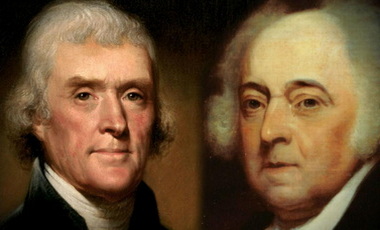
John Adams and Thomas Jefferson Discuss Calvin’s 5-Points

In John Adams letter to Thomas Jefferson he opens with this — and I have GROK put the old English into more modern terms.

The green box that follows the original text is GROK modernizing it

The sight of your well known hand writing in your favour of 25. Feb. last, gave me great pleasure, as it proved your arm to be restored and your pen still manageable—may it continue till you shall become as perfect a calvinist as I am in one particular. Poor Calvins infirmities his rheumatism his gouts and sciatics made him frequently cry out Mon dieu Jusque au quand Lord how long! Prat once Chief Justice of new york always tormented with infirmities dreamt that he was situated on a single rock in the midst of the Atlantick ocean, He heard a voice. “Why mourns the bard Apollo bids thee2 rise, renounce the dust,3 and claim thy native skies.”—

Here’s a modern English update of the excerpt from John Adams’s letter to Thomas Jefferson (dated March 10, 1823), keeping the original meaning, tone, and humor intact while making the language clearer and more contemporary:

Seeing your familiar handwriting in your letter from February 25th gave me great pleasure. It showed that your arm has recovered and you can still write easily—may that continue until you become as much of a Calvinist as I am in one respect. Poor Calvin’s ailments—his rheumatism, gout, and sciatica—often made him cry out, “Mon Dieu, jusqu’à quand?” which means “Lord, how long!” Pratt, who was once Chief Justice of New York and always plagued by health problems, dreamed that he was stranded on a lone rock in the middle of the Atlantic Ocean. Then he heard a voice say:

“Why does the bard mourn? Apollo bids you rise, renounce the dust, and claim your native skies.”

(For context: Adams is playfully teasing Jefferson about enduring old-age infirmities with Calvinist patience, referencing John Calvin’s sufferings and a poetic anecdote about Benjamin Pratt, an 18th-century New York judge known for his poetry and health issues.)

Here is the response to Adams via Jefferson:

The wishes expressed, in your last favor, that I may continue in life and health until I become a Calvinist, at least in his exclamation of ‘mon Dieu! jusque à quand’! would make me immortal. I can never join Calvin in addressing his god. he was indeed an Atheist, which I can never be; or rather his religion was Dæmonism. if ever man worshipped a false god, he did. the being described in his 5. points is not the God whom you and I acknolege and adore, the Creator and benevolent governor of the world; but a dæmon of malignant spirit. it would be more pardonable to believe in no god at all, than to blaspheme him by the atrocious attributes of Calvin. 

[….]

Of the nature of this being we know nothing. Jesus tells us that ‘God is a spirit.’ 4. John 24. but without defining what a spirit is. ‘πνευμα ὁ θεος.’ down to the 3d century we know that it was still deemed material; but of a lighter subtler matter than our gross bodies. so says Origen. ‘Deus igitur, cui anima similis est, juxta Originem, reapse4 corporalis est; sed graviorum tantum ratione corporum incorporeus.’ these are the words of Huet in his commentary on Origen. Origen himself says ‘appellatio ασωματον apud nostros scriptores est inusitata et incognita.’ so also Tertullian ‘quis autem negabit Deum esse corpus, etsi deus spiritus? spiritus etiam corporis sui generis, in suâ effigie.’ Tertullian. these two fathers were of the 3d century. Calvin’s character of this supreme being seems chiefly copied from that of the Jews. but the reformation of these blasphemous attributes, and substitution of those more worthy, pure and sublime, seems to have been the chief object of Jesus in his discources to the Jews: and his doctrine of the Cosmogony of the world is very clearly laid down in the 3 first verses of the 1st chapter of John, in these words, ‘εν αρχη ην ὁ λογος, και ὁ λογος ην προς τον θεον και θεος ην ὁ λογος. οὑτος ην εν αρχη προς τον θεον. παντα δε αυτου εγενετο, και χωρις αυτου εγενετο ουδε ἑν ὁ γεγονεν.’ which truly translated means ‘in the beginning God existed, and reason [or mind] was with God, and that mind was God. this was in the beginning with God. all things were created by it, and without it was made not one thing which was made.’ yet this text, so plainly declaring the doctrine of Jesus that the world was created by the supreme, intelligent being, has been perverted by modern Christians to build up a second person of their tritheism by a mistranslation of the word λογος. one of it’s legitimate meanings indeed is ‘a word.’ but, in that sense, it makes an unmeaning jargon: while the other meaning ‘reason,’ equally legitimate, explains rationally the eternal preexistence of God, and his creation of the world. knowing how incomprehensible it was that ‘a word,’ the mere action or articulation of the voice and organs of speech could create a world, they undertake to make of this articulation a second preexisting being, and ascribe to him, and not to God, the creation of the universe. the Atheist here plumes himself on the uselessness of such a God, and the simpler hypothesis of a self-existent universe. the truth is that the greatest enemies to the doctrines of Jesus are those calling themselves the expositors of them, who have perverted them for the structure of a system of fancy absolutely incomprehensible, and without any foundation in his genuine words. and the day will come when the mystical generation of Jesus, by the supreme being as his father in the womb of a virgin will be classed with the fable of the generation of Minerva in the brain of Jupiter. but we may hope that the dawn of reason and freedom of thought in these United States will do away all this artificial scaffolding, and restore to us the primitive and genuine doctrines of this the most venerated reformer of human errors.

So much for your quotation of Calvin’s ‘mon dieu! jusqu’a quand’ in which, when addressed to the God of Jesus, and our God, I join you cordially, and await his time and will with more readiness than reluctance. may we meet there again, in Congress, with our antient Colleagues, and recieve with them the seal of approbation ‘Well done, good and faithful servants.’

Here’s a modern English update of this excerpt from Thomas Jefferson’s letter to John Adams (dated April 11, 1823), preserving the original meaning, passion, and philosophical tone while making the language clearer and more accessible:

The wishes you expressed in your last letter—that I might live long and healthy until I become a Calvinist, at least in crying out “My God! How long?!”—would make me immortal if they came true. But I can never join Calvin in addressing his god that way. He was essentially an atheist (which I could never be), or rather, his religion was daemonism. If any man ever worshiped a false god, it was him. The being described in his five points is not the God whom you and I acknowledge and adore—the Creator and benevolent governor of the world—but a daemon with a malignant spirit. It would be more forgivable to believe in no god at all than to blaspheme the true God by attributing such atrocious qualities to Him.

[….]

Of the true nature of this Being, we know nothing. Jesus tells us that “God is a spirit” (John 4:24), but without defining what a spirit is—”πνεῦμα ὁ θεός” (pneuma ho theos). Down to the 3rd century, it was still considered material, though of a lighter, subtler substance than our gross bodies. So says Origen: “Therefore God, to whom the soul is similar, according to Origen, is actually corporeal, but incorporeal only in comparison to heavier bodies.” These are the words of Huet in his commentary on Origen. Origen himself says that the term “incorporeal” (ἀσώματον) is unusual and unknown in our [Christian] writers. Tertullian says the same: “Who will deny that God is a body, even though God is a spirit? For spirit is a body of its own kind, in its own form.” Both of these Church Fathers were from the 3rd century.

Calvin’s portrayal of the Supreme Being seems mostly copied from the Jewish conception. But reforming those blasphemous attributes and replacing them with ones more worthy, pure, and sublime appears to have been Jesus’s main goal in his discourses with the Jews. His doctrine of the world’s creation is very clearly stated in the first three verses of the Gospel of John:”Ἐν ἀρχῇ ἦν ὁ λόγος, καὶ ὁ λόγος ἦν πρὸς τὸν θεόν, καὶ θεὸς ἦν ὁ λόγος. Οὗτος ἦν ἐν ἀρχῇ πρὸς τὸν θεόν. Πάντα δι’ αὐτοῦ ἐγένετο, καὶ χωρὶς αὐτοῦ ἐγένετο οὐδὲ ἕν ὃ γέγονεν.”Which, truly translated, means: “In the beginning, God existed, and reason (or mind) was with God, and that mind was God. This was in the beginning with God. All things were created by it, and without it not one thing that was made came into being.” Yet this text—so plainly declaring Jesus’s doctrine that the world was created by the supreme intelligent Being—has been twisted by modern Christians to build up a second person in their tritheism through a mistranslation of the word λόγος (logos). One of its legitimate meanings is indeed “word,” but in that sense it produces meaningless nonsense. The other equally legitimate meaning—”reason”—explains rationally God’s eternal preexistence and His creation of the world. Knowing how incomprehensible it was that a mere “word”—the simple action of voice and speech organs—could create a world, they instead turn this “word” into a second pre-existing being and attribute the creation of the universe to him rather than to God. The atheist here boasts about the uselessness of such a God and prefers the simpler idea of a self-existent universe. The truth is that the greatest enemies of Jesus’s doctrines are those who call themselves their interpreters, who have perverted them to build a system of fantasy that is utterly incomprehensible and has no foundation in his actual words. And the day will come when the mystical story of Jesus being generated by the Supreme Being as His father in the womb of a virgin will be classed with the myth of Minerva springing from the brain of Jupiter. But we may hope that the dawn of reason and freedom of thought in these United States will sweep away all this artificial scaffolding and restore to us the primitive and genuine doctrines of this most venerated reformer of human errors. So much for your quotation of Calvin’s “Mon Dieu! jusqu’à quand!” When addressed to the God of Jesus—and our God—I join you in it wholeheartedly, and I await His time and will with more readiness than reluctance. May we meet again there, in a heavenly Congress with our old colleagues, and receive with them the seal of approval: “Well done, good and faithful servants.”

And here GROK did a redo making it :”more concise”

Here’s a more concise modern English version of Jefferson’s response (April 11, 1823):

Your wish that I live long enough to become a Calvinist—at least in crying “My God! How long?”—would make me immortal. But I can never pray to Calvin’s god. He was essentially an atheist, or his religion was daemonism. If anyone worshiped a false god, it was him. The being in his five points is not the God we both acknowledge—the benevolent Creator and governor of the world—but a malignant daemon. It is more forgivable to believe in no god than to blaspheme the true one with Calvin’s atrocious attributes.

We know nothing of this Being’s nature. Jesus said “God is a spirit” (John 4:24), but did not define it. Until the 3rd century, Christians considered spirit material, though subtler than flesh—as Origen and Tertullian both affirmed.

Calvin’s image of God largely copies the harsh Jewish portrayal. Jesus’s main mission seems to have been correcting those blasphemous attributes and teaching purer, more sublime ones. His cosmology is clearly stated in John 1:1–3:“In the beginning was the Logos, and the Logos was with God, and the Logos was God All things were made through it.”

Properly translated, Logos means “reason” or “mind”: In the beginning God existed, reason was with God, and reason was God. All things were created by it. Modern Christians, however, mistranslate Logos as “word” to invent a second divine person and build their tritheism. This turns a rational account of creation into incomprehensible jargon—and gives atheists an easy target.

The worst enemies of Jesus’s teachings are the so-called experts who have twisted them into a fanciful, groundless system. One day, the virgin birth of Jesus will be ranked with Minerva springing from Jupiter’s head. But I hope the spread of reason and free thought in America will sweep away this artificial scaffolding and restore Jesus’s original, genuine doctrines—the work of the greatest reformer of human errors.

As for Calvin’s “My God! How long?”—when addressed to the God of Jesus, our God—I join you wholeheartedly. I await His will with more readiness than reluctance. May we meet again in a heavenly Congress with our old colleagues and hear together: “Well done, good and faithful servants.”

GROK offered to explain Jefferson’s “5-Points Critique,” here that is:

Thomas Jefferson’s critique of Calvinism’s “five points” appears in his April 11, 1823, letter to John Adams. He did not break it down point-by-point but offered a sweeping condemnation, calling the God portrayed in these doctrines a “daemon of malignant spirit” rather than the benevolent Creator he and Adams revered. Jefferson viewed Calvin’s theology as blasphemous, arguing it would be better to believe in no God at all than to attribute such “atrocious” qualities to the divine. The Five Points of Calvinism (TULIP)These points, formalized after John Calvin’s death at the Synod of Dort (1618–1619) in response to Arminianism, summarize key Reformed doctrines on salvation:

  • Total Depravity: Humanity is utterly corrupted by sin, incapable of choosing God or doing spiritual good without divine intervention.
  • Unconditional Election: God chooses (elects) certain individuals for salvation based solely on His will, not on any foreseen merit or faith.
  • Limited Atonement (or Particular Redemption): Christ’s death effectively atones only for the sins of the elect, not for all humanity.
  • Irresistible Grace: God’s grace effectively calls the elect to faith; they cannot ultimately resist it.
  • Perseverance of the Saints: The elect will persevere in faith and cannot finally lose salvation.

Jefferson’s Core Objection

Jefferson, influenced by Enlightenment rationalism, Deism, and Unitarian leanings, emphasized a God of benevolence, reason, and moral governance. He saw Calvinism’s emphasis on God’s absolute sovereignty—especially in predestination (including “double predestination,” where God decrees both election to salvation and reprobation to damnation)—as portraying a tyrannical, arbitrary deity. This God predestines most of humanity to eternal punishment without regard to their actions, which Jefferson found cruel and incompatible with divine goodness. He contrasted this with Jesus’s teachings, which he believed focused on moral reform, free will, and a loving God. Jefferson also linked Calvinism to historical intolerance (e.g., Calvin’s role in the execution of Michael Servetus) and saw it as a perversion of true Christianity. In essence, Jefferson rejected the five points not for subtle theological nuances but because they collectively depicted a God he considered morally repugnant—a “malignant” being closer to a demon than the rational, kind Creator revealed (in his view) by nature and Jesus’s ethical teachings. This reflected his broader anti-Trinitarian, anti-orthodox stance, favoring a simplified, moralistic Christianity over doctrinal systems like Calvinism.

Keep in mind GROK is not a theologian. I asked GROK about John Adam’s views of Calvinism, this was the short answer:

John Adams, raised in a Puritan New England Congregationalist family with strong Calvinist roots, ultimately rejected core Calvinist doctrines and evolved into a Unitarian Christian.

Early Rejection of Calvinism

He rejected key Calvinist tenets early in life, including:

  • Predestination
  • Total depravity
  • Limited atonement
  • Eternal damnation for most

He called Calvinism “frigid,” irrational, and marked by a “domineering and persecuting spirit.” Influenced by liberal Congregationalist preachers and Enlightenment rationalism, Adams viewed strict Calvinism as incompatible with a benevolent God and human free will. He leaned toward Arminianism (emphasizing free choice in salvation) before fully embracing Unitarianism.

Self-Identification as Unitarian

In later years, Adams explicitly identified as a Unitarian, writing to his son John Quincy Adams in 1816: “We Unitarians, one of whom I have had the Honour to be, for more than Sixty Years…” He rejected the Trinity, the divinity of Jesus, original sin, and salvation by arbitrary grace alone, favoring a rational, moral Christianity focused on benevolence, good works, and the Sermon on the Mount.

Playful Teasing in Correspondence

In his famous 1823 correspondence with Thomas Jefferson (the letters you referenced earlier), Adams playfully teased Jefferson about old-age sufferings, joking that Jefferson might yet become “as perfect a Calvinist as I am in one particular”—referring only to enduring infirmities with stoic patience (echoing John Calvin’s own cries of “Mon Dieu! Jusqu’à quand?”). This was ironic humor, not an endorsement of Calvinism. Adams shared Jefferson’s disdain for Calvin’s “atrocious attributes” and predestinarian God, aligning with Jefferson’s view of a benevolent Creator.

Overall Religious Outlook

Adams remained deeply religious—a “church-going animal” who believed in divine providence, prayer, and morality’s role in society—but his faith was liberal, tolerant, and anti-dogmatic. He saw religion as essential for public virtue yet warned against ecclesiastical tyranny. Historians describe him as a blend of Puritan heritage and Enlightenment reason, ultimately a conservative Unitarian who retained belief in Jesus as a moral teacher (though not divine) and an active God.

In short, Adams was emphatically not a Calvinist; he detested its harsher doctrines and spent much of his life moving away from them toward Unitarian rationalism.

Mind you, I am not a Unitarian whatsoever, but needless to say not only would Calvin had burned Christ at the stake in Geneva, he would have done the same to the Founders of America!

BAPTIST MARTYRS

This Baptist History is brought to you by Steve Brady at Fairhaven Baptist Church in Chesterton, Indiana. (Full playlist of 50 Baptists You Should Know here)

Here is what was said in a post that included the above drawing via Facebook:

It has been decreed this day by the Council of the Two Hundred (of Zurich) that the leaders of the Catabaptists shall be cast into the Tower, in which they formerly lay, and allured by bread and water diet until either they give up the ghost or surrender. It is also added that he who after this is dipped shall be submerged permanently (qtti posthac tingatur, prossus mcrgatur); this is not published (Zwingli, Opera, vii. 477).

This is but one of numerous decrees by city councils in Calvinist principalities levied against “Catabaptists”. This word means someone who opposes baptism, but even in their usage of the term the Calvinists reveal themselves to be liars. The Baptists didn’t oppose baptism, they opposed infant baptism, which is nowhere evidenced in Scripture. The Calvinists knew Baptists baptized believing adults – that’s one of the reasons they murdered them – “submerged permanently,” as opposed to submerged briefly, in baptism.

Note that in his final comment, Zwingli writes that this is “not published”. He wanted the homicidal order to remain a secret. So he knew that what he was doing was immoral. He just didn’t want the general population to know about it.

Zwingli and the Calvinists were murderers. They knew they were murderers. They congratulated themselves on being murderers. And history has preserved the evidence of their murders.

I asked GROK to explain the above a little more and then GROK offered up info on Felix Manz

Key Historical Context

In 1525, a group of Zwingli’s former followers (including Conrad Grebel and Felix Manz) broke away because they believed Zwingli and the Zurich authorities were reforming the church too slowly and compromising with civil government. They rejected infant baptism (paedobaptism) as unscriptural, insisting baptism should be for believing adults only—who could consciously confess faith. On January 21, 1525, they performed the first adult baptisms in Zurich, marking the start of the Anabaptist movement (from Greek ana- meaning “again,” implying “re-baptizers” in the eyes of critics, since they viewed infant baptism as invalid).Zwingli strongly defended infant baptism (seeing it as the New Testament equivalent of Old Testament circumcision, a covenant sign for children of believers). After public debates in 1525 failed to resolve the issue, the Zurich Council sided with Zwingli and began cracking down on the Anabaptists, viewing their separatism, refusal of oaths/civic duties, and defiance of authority as threats to social and religious order.

The Decree and Quote Explained

The decree Zwingli describes had two parts:

  • Leaders of the Anabaptists (called “Catabaptists” here—see below) were to be imprisoned in the tower on bread-and-water rations until they recanted or died.
  • Anyone who continued to perform adult (“re-“)baptism would be executed by drowning (a grim, ironic punishment: “whoever dips shall be dipped/submerged permanently”).

This was an escalation from earlier penalties (fines, banishment). A similar but formalized mandate followed shortly after, and the first execution under it was Felix Manz, drowned in the Limmat River on January 5, 1527. Several others followed in Zurich before the movement was suppressed there.

Regarding your quote’s final line: “this is not published (Zwingli, Opera, vii. 477).” Most historical sources (including direct translations of the letter) actually read that the decision was published—or at least do not mention secrecy. It’s possible this is a transcription/translation variant in the specific edition you referenced, or a slight misremembering. Zwingli’s letter was private correspondence, not a public statement, and he expresses approval of the council’s action without hinting at shame or secrecy. The drowning penalty was openly enforced later, so it wasn’t kept hidden long-term.

On “Catabaptists”

This was a term Zwingli and some allies (like Oecolampadius) briefly used in Latin writings around 1525–1527 (e.g., in his 1527 book In Catabaptistarum Strophas Elenchus—”Refutation of the Tricks of the Catabaptists”). From Greek kata- (down/against), it carried a double meaning:

  • “Against baptism” (implying they undermined true [infant] baptism).
  • Ironically, “down-dipper” or “one who submerges/drowns” (playing on immersion baptism and foreshadowing the drowning punishment).

It was a derogatory label, not what the group called themselves (they preferred “Brethren” or similar). The more common term “Anabaptist” stuck. You’re correct that they didn’t “oppose baptism” outright—they practiced believer’s baptism (often by immersion or pouring)—but critics framed it as rejecting the established sacrament.

Broader Perspective

The Anabaptists were seen as dangerous radicals in the 16th century (both by Catholics and magisterial Protestants like Zwingli/Calvin/Luther) because their ideas challenged the unity of church and state. Persecution was harsh and widespread: drowning in Protestant Zurich, burning/beheading elsewhere. Modern historians view this as a tragic episode where Reformation leaders, fearing anarchy, used state power to enforce orthodoxy—similar to how Catholics persecuted Protestants.

From a Baptist perspective (as your text seems to reflect), Anabaptists are often seen as forerunners of believer’s baptism and church-state separation. Zwingli and the Zurich Reformed tradition defended infant baptism and a closer church-government alliance.

This event highlights the deep divisions within the early Reformation—Zwingli started as a bold reformer against Catholic practices but ended up opposing those he saw as going “too far.”

[….]

Background on Felix Manz

Felix Manz (c. 1498–1527) was a Swiss Anabaptist leader and co-founder of the Swiss Brethren, the earliest Anabaptist congregation. Initially a follower and collaborator of Huldrych Zwingli (helping with Bible translation), Manz broke away over theological differences, particularly the rejection of infant baptism in favor of believer’s baptism (adult baptism upon confession of faith). He participated in the first adult baptisms on January 21, 1525, at his mother’s home in Zurich, marking the birth of the Anabaptist movement.Manz was arrested multiple times between 1525 and 1527 for preaching and performing adult baptisms, seen by Zurich authorities as seditious and threatening to social order.

The Decree Leading to Execution

On March 7, 1526, the Zurich City Council—aligned with Zwingli’s Reformed position—issued an edict making adult “re-baptism” punishable by drowning. This ironic penalty (“a third baptism”) was intended to mock Anabaptist views on immersion baptism.

Details of the Execution: January 5, 1527

Manz was rearrested in December 1526 while baptizing in the Grüningen region and imprisoned in Zurich’s Wellenberg Tower. He refused to recant during interrogation.On January 5, 1527, around 3 p.m., he was sentenced to death for persisting in Anabaptism, separatism, and defiance of authority. Led in procession from prison through the fish market to the Limmat River (flowing through central Zurich), Manz praised God and preached to onlookers.

Contemporary accounts (e.g., from Heinrich Bullinger, Zwingli’s successor) describe:

  • His hands bound behind his knees with a pole inserted (a common binding for drowning executions).
  • Placed in a boat and rowed to mid-river (near a fishing hut/platform).
  • Pushed into the icy water to drown.

A Reformed preacher accompanied him, urging recantation, but Manz remained steadfast. Crowds lined both banks.

Family Presence and Last Words

Manz’s mother (Anna Manz) and brother were present on the shore, encouraging him to stay firm in his faith—her cries reportedly rang out across the water.

As he was thrown in, Manz sang loudly in Latin: “In manus tuas, Domine, commendo spiritum meum” (“Into Thy hands, O Lord, I commend my spirit”—echoing Jesus’ words on the cross, Luke 23:46).His property was confiscated, and he was buried in a common grave.

Zwingli’s Role

Zwingli, once Manz’s mentor, debated against the Anabaptists publicly (e.g., 1525 disputations) and supported the council’s measures. While he did not personally order the execution, sources indicate he approved of the edict and viewed Anabaptism as heretical and anarchic. No record shows him opposing the drowning.

Legacy and Memorial

Manz became the first Anabaptist martyr executed by Protestants (predating radical events like the Münster Rebellion). His death inspired the movement rather than suppressing it.A memorial plaque on the Limmat River wall at Schipfe (opposite No. 43) commemorates Manz and other drowned Anabaptists (1527–1532):The plaque reads (in translation): “Here in the middle of the Limmat from a fishing platform were drowned Felix Manz and five other Anabaptists during the Reformation 1527 to 1532.”This event highlights the tragic intolerance within the early Reformation, where theological disputes led to state-enforced executions.

John MacArthur Practicing Eisegesis in Matthew 24:13

  • Matthew 24:13 reads – “But the one who endures to the end, he will be saved” (NASB 1995)

Before and after this verse, MacArthur is rightly discussing the topic presented to the Jews. Their survival during the 7-year tribulation and the hunting of them by the anti-Christ. But in this verse he leaves the exegetical study of the Word of God and inserts a 16th century systematic reintroduced by John Calvin of Perseverance of the Saints. The “P” of the acronym, TULIP.

Here are the notes from his study Bible:

24:13 endures to the end be saved. Cf. 10:22. The ones who persevere are the same ones who are saved—not the ones whose love grows cold (v. 12). This does not suggest that our perseverance secures our salvation. Scripture everywhere teaches precisely the opposite: God, as part of His saving work, secures our perseverance. True believers “are protected by the power of God through faith for … salvation” (1Pe 1:5). The guarantee of our perseverance is built into the New Covenant promise. God says: “I will put the fear of Me in their hearts so that they will not turn away from Me” (Jer 32:40). Those who do fall away from Christ give conclusive proof that they were never truly believers to begin with (1Jn 2:19). To say that God secures our perseverance is not to say that we are passive in the process, however. He keeps us “through faith” (1Pe 1:5)—our faith. Scripture sometimes calls us to hold fast to our faith (Heb 10:23; Rev 3:11) or warns us against falling away (Heb 10:26–29). Such admonitions do not negate the many promises that true believers will persevere (Jn 10:28, 29; Ro 8:38, 39; 1Co 1:8, 9; Php 1:6). Rather, the warnings and pleas are among the means God uses to secure our perseverance in the faith. Notice that the warnings and the promises often appear side by side. For example, when Jude urges believers, “keep yourselves in the love of God” (Jude 21), he immediately points them to God, “who is able to keep you from stumbling” (Jude 24).

John F. MacArthur Jr., The MacArthur Study Bible: New American Standard Bible. (Nashville, TN: Thomas Nelson Publishers, 2006), Mt 24:13.

This is not exegesis – but eisegesis. In fact, that idea of the Perseverance of the Saints is foreign to the Bible but not even hinted at in this eschatological warning to the Jews. The church will be gone, so it is the Jewish nation and other new Christians during this time that are trying to “persevere” to the end.

Matthew 24 has ZERO to do with this much later dogma. Making it to the end is the end of the 7-years.

This is a must listen presentation:

Neo-Calvinism vs. The Bible 042. Mathew 24:13
Dr. Andy Woods. 9-14-2025