See more at NewsBusters!
Author: Papa Giorgio


The World’s Most Moral Army ~ Colonel Richard Kemp
Is the Israeli military a paragon of morality and wartime ethics? Or is it an oppressive force that targets innocent Palestinian civilians and commits war crimes as a matter of policy? Colonel Richard Kemp, who was the commander of British Forces in Afghanistan, was in Israel during its war against Hamas in 2014, and analyzes whether Israel’s military is ethical, evil, or somewhere in between.

Lt. Col. Peters Calls Obama “A Total P**sy” On Live Television!
(HotAir): Barack Obama’s speech on ISIS and gun control from the Oval Office didn’t get a very good reception on CNN, especially not from The Daily Beast’s Michael Weiss. When asked about his prediction of ISIS’ reaction to the speech, Weiss started off by saying that they would “laugh, frankly.” That started a nearly three-minute analysis that excoriated Obama for self-indulgence and fantastical thinking:

44 Boys Is Too Many!
In this heartwarming video, see what a few little girl supporters wanted to tell Hillary Clinton. Their inspiring words remind us there is still much to do to break the highest hardest glass ceiling for every girl out there. We, too, can be corrupt politicians.
Sources:
- From Whitewater to Benghazi: A Clinton Scandal Primer:
- Why won’t Democrats attack Hillary Clinton for her hawkish foreign policy?
- What Hillary Clinton wants you to forget: Her disastrous record as a war hawk
- On Foreign Policy and Civil Liberties, Hillary Clinton Is Not a Progressive
- ‘Hillary 2016’ Has Never Made Sense for Democrats
- Hillary Clinton Is Wrong About Edward Snowden

Empiricism ~ Or, Falling On Swords (e.g., Self-Refuting)
~ Bahnsen is at the end [bottom] ~
This video is with thanks to Wintery Knight! (See: Apologetics 315):
Topics:
- Atheists misunderstand the nature of faith.
- Atheistic view of epistemology is self-refuting.
- Atheistic view of morality is self-contradictory.
- Atheistic view of free will is self-contradictory.
- Atheists don’t understand theistic arguments.
This is a short presentation of the material presented in this paper. If you want to hear more from Peter, this debate with an academic postmodern relativist is just awesome.
Just a quick aside… while I enjoyed the article, I disagree with some of the positions taken by Mr. Warren. In other words, he reads a bit too much between the lines. That being said, I thoroughly enjoyed the following (you may also note these many excerpts refuting this idea of philosophical naturalism and empiricism here):
The bankrupt epistemology of secular empiricism
The failure of the demarcation criterion between science and religion is part of the general failure of secular epistemology. We have seen that the ID leaders appeal to both (at least when it is convenient), so unless they are going to offer something better than what the best secular philosophers have attempted, which they have not, their view of scientific epistemology must be considered a failure as well. The ID leaders are standing on sinking sand to rely on bankrupt, secular epistemology to defend ID. By keeping the sovereign God of Scripture out of science, ID leaders put themselves in the position of denying a source of rational unity that extends to all the particular facts of experience, which puts them in the indefensible epistemological position of explaining how particular facts without unity between them can be intelligible. A brief review of why secular empiricism fails to provide a basis for science will highlight the problem that the ID leaders face in their opposition to bringing God and the Bible into science. The current status of secular epistemology, particularly secular empiricism, is captured by twentieth-century philosopher Bertrand Russell’s denial that we can know anything whatsoever:
“That scientific inference requires, for its validity, principles which experience cannot even render probable is, I believe, an inescapable conclusion from the logic of probability…. To ask, therefore, whether we ‘know’ the postulates of scientific inference is not so definite as it seems…. In the sense in which ‘no’ is the right answer we know nothing whatsoever, and `knowledge’ in this sense is a delusive vision. The perplexities of philosophers are due, in a large measure, to their unwillingness to awaken from this blissful dream.”
Russell came to recognize that naturalistic empiricism provides no basis for saying that there is a world at all:
“Academic philosophers, ever since the time of Parmenides, have believed that the world is a unity. The most fundamental of my intellectual beliefs is that this is rubbish. I think the universe is all spots and jumps, without any unity, without continuity, without coherence or orderliness or any of the other properties that governesses love. Indeed, there is little but prejudice and habit to be said for the view that there is a world at all.”
We can go back to David Hume to understand the reductio ad absurdum of attempts to justify causation and scientific knowledge on the basis of naturalistic empiricism. Hume saw that with sense impressions as the basis of all knowledge, there is no unity to the world. Nothing can be said to exist but the discrete moment. That a sequence of perceptions reflects a cause-and-effect relationship between external objects cannot be known from experience. Any necessity that might connect external objects that are perceived is not itself a perception, so the assumption of cause-and-effect necessity in the interaction of external objects is unwarranted. Abstract concepts like laws and logic are applied by the human mind to perceptions but they themselves are not perceptions. They all involve continuity over time but bare experience gives us nothing but the discrete moment. Since we have no experience of the future, experience itself provides no basis for believing that the future will be anything like the past. When “we form any conclusion beyond those past instances, of which we have had experience”, Hume says, using his theory of strict empiricism, our reasoning has “no just foundation”.
Even the concept of the self is undermined by strict empiricism since there is no one perception that lasts as long as the self allegedly does. When he sleeps, Hume says that he “may truly be said not to exist”. With no permanence to the self, knowledge and memory of the past, including one’s own past existence, is inconsistent with the claim that all knowledge is through sense experience. Hume was logically rigorous in reasoning from his assumptions, but this led him to an absurd conclusion. On the basis of Hume’s empiricism, we can have knowledge of neither the external world nor our inner selves, neither the past nor the future. Hume’s view of knowledge does not allow for laws of logic, laws of nature, or repeatability of experiments.
Hume resorted to custom and habit as explanations for our belief in the regularity of nature, but custom and habit themselves presuppose continuity over time, and discrete experience can provide no basis for continuity over time.” Hume lamented that the “cold, and strain’d, and ridiculous” conclusions of his philosophical reasoning gave him “philosophical melancholy and delirium”. A history of secular epistemology since Hume would be instructive, although space does not allow it. Nevertheless, Bertrand Russell’s statements from the mid-twentieth century quoted above, that there is no basis for saying that the world has unity or even that the world exists at all, indicate that the problems with secular empiricism that Hume uncovered have not been overcome since then.
[….]
The solution to the modern crises of justifying knowledge and rationality is the Transcendental Argument for the existence of God (or TAG) formulated by Cornelius Van Til.
TAG is an explicitly theistic theory of knowledge, or you might call it theory of fact; therefore it applies to all facts in the world, whether stones or watches. The argument is that the existence of God, an absolute God who is the source of all that exists, necessarily exists in order for knowledge to be possible. Van Til defines an absolute God, which he also calls a “concrete universal” God, as one who is the source of both the diversity of all the particular facts of the world and the unity of the concepts that apply to them. Unity and diversity must be eternally related to each other in the mind of God, because:
- “An abstract diversity is chaos, which is irrational.
- An abstract unity is a pure emptiness, which cannot be an object of thought either.
- The two irrational principles cannot be combined to produce a rational world, where human knowledge, intelligible experience, etc. are possible.”
Compare Van Til’s approach to Dembski’s description of Complex Specified Information (CSI):
“(1) Chance generates contingency, but not complex specified information. (2) Laws… generate neither contingency nor information, much less complex specified information. (3)… no chance-law combination is going to generate information either. After all, laws can transmit only the CSI they are given, and whatever chance gives to a law is not CSI. Ergo, chance and laws working in tandem cannot generate information.”
They both recognize that information cannot be the product of combining chance and law. Just as Van Til affirms that knowledge must be eternal because knowledge can only come from knowledge, Dembski affirms: “Information is sui generis. Only information begets information.” Therefore information must be eternal according to Dembski’s reasoning. Information requires both order and diversity, or “specified complexity” as Dembski calls it, and he recognizes that merely adding chance and law cannot produce specified complexity.
Van Til’s phrase that closely parallels Dembski’s specified complexity is “concrete universal” (see table 1 [below/right]). Van Til argues that a concrete universal God is necessary for the possibility of intelligible experience. This means that the unity of experience (i.e. the `universal’) and the diversity of experience (i.e. the ‘concrete’) must be eternally related to each other. He notes: “Every intellectual effort deals with facts in relations and with relations in facts.” As postmodernists have put it, all facts are interpreted facts.” Facts unrelated to concepts and concepts without content (unrelated to particular facts) are both meaningless, and the two meaningless notions cannot combine to create knowledge. Every particular fact and every universal that applies to every fact are eternally related to each other in the mind of God. Knowledge can only come from knowledge. Human knowledge must be “receptively reconstructive” of God’s original knowledge; humans are not originally constructive of knowledge as the atheists contend. Humans are made in the image of God, thus our knowledge is a reflection of God’s knowledge, meaning that human knowledge can be true but not exhaustive like God’s.”
The difference between Dembski and Van LI here is that Dembski is addressing the narrower topic of information, which applies to a watch but not a stone. Van Til is addressing the broader topic of intelligibility, which applies to any fact, whether a watch or a stone. However, Dembski touches on the issue of intelligibility in his aforementioned chapter where he drops his idolatrous praises of finite gods and sees something of the necessity of the biblical view of God for the possibility of science. He makes this observation that is in harmony with Van Til’s philosophy:
“God, in speaking the divine Logos, not only creates the world but also renders it intelligible…. Einstein claimed: ‘The most incomprehensible thing about the world is that it is comprehensible.’ This statement, so widely regarded as a profound insight, is actually a sad commentary on naturalism. Within naturalism the intelligibility of the world must always remain a mystery. Within theism, on the other hand, anything other than an intelligible world would constitute a mystery?”
[….]
Michael H. Warren, “Intelligent Design Leaders Promote a Naturalistic Epistemology,” Journal of Creation, vol. 29[3] (2015), 115-118
The following is with thanks to Mike Robinson via: God Does Exist:
Empiricism Flops
Empiricism fails as a worldview every time you stub your toe or trip over a rock since this helps demonstrate the sometimes unreliability of our sight; our senses are normally reliable, but we cannot build a worldview on their untrustworthiness. God alone is the necessary truth condition for an intelligible worldview which includes the basic trustworthiness of our five senses.
Atheists can be rational because they borrow rational essentials from the Christian Worldview (CWV); the atheistic WV fails to account for the laws of logic that the CWV underwrites all the while borrowing them out of necessity.
Analysis of anti-theistic materialism demonstrates that it is self-nullifying inasmuch as it fails to give what it does not possess. The material cosmos, as a particular thing, is devoid of a foundation for eternal invariant universals; one cannot hang one’s house on one’s paintings, but one hangs one’s paintings on one’s house. God is the immovable truth required to hang knowledge claims, including atheistic claims.
The Rational Pre-essentials for Knowledge
I will employ a transcendental analysis by determining what the rational pre-essentials are for knowledge and understanding human experience; what must be true to be able to account for intelligibility. The triune God is the transcendental necessity who provides the preconditions for knowledge of reality. Mere men, devoid of immutability and universal rational attainment, cannot supply the transcendental conditions that are needed for the Law of Non-contradiction (LNC), love, and knowledge.
To rightly understand reality one must have universals to generalize the particulars. This implies that the sheer anthropology of atheism cannot supply the general and universal realities that must be present for the necessary and unavoidable transcendental conditions listed beforehand.
Some people claim that knowledge is impossible. Nonetheless if knowledge is impossible, one could not know that knowledge is impossible because that is a knowledge claim. The intelligibility of human experience requires God. Christianity is a WV that provides human reason an unchanging foundation for knowledge. Atheism, naturalism, and skepticism all fail to furnish a foundation for the LNC; thus they cannot provide the permanent footing for knowledge. They can only offer an irrational and incongruous WV.
Unless one believes in God, one cannot account for anything in the universe. God is the underlying and infinite ground for all knowledge, proof, evidence, and logic. It is impossible for God not to exist. He is the truth condition for all knowledge because all human knowledge requires the use of unchanging universals. The omniscient, immaterial, and unchanging God alone provides the a priori essentials for the use of nonphysical, universal, and unchanging universals. Non-believing thought cannot supply the necessary pre-environment for knowledge, thus they fall into futility.
“Of all the offspring of time, Error is the most ancient, and is so old and familiar an acquaintance, that Truth, when discovered, comes upon most of us like an intruder, and meets the intruder’s welcome” (Charles Mackay).
The Christian worldview is true because of the impossibility of the contrary. The contrary of the CWV implies a contradiction inasmuch as the denial of the CWV leaves one without the ontic (ontic: relating to ontology; relating to existence, being) foundation to ground immutable universals such as the laws of thought and moral laws, which are required for knowledge. The denial of knowledge (or its ground) is a self-contradicting endeavor.
One Nation Under Darwin ~ Dr. Phillip Johnson
Are we One Nation under God or One Nation under Darwin? Phillip Johnson says this is the most important public debate to face our nation in the past 150 years. Either we are under God or we are not under God. Either God is real or God is imaginary. What we decide we are under as a nation will determine our moral authority for the future of our people and our country.
The inspiration for this lecture was the Pledge of Allegiance Case heard by the U.S. Supreme Court in 2004. In this case an atheist father was requesting that the words “under God” be removed from the Pledge of Allegiance his daughter was required to recite at her public school. There were several interesting twists to the case including the fact that he was an absent father who never married the mother, and both the mother and daughter were Christians and did not object to the “under God” phrase in the pledge. The father was a medical doctor, had also attended law school, and did an admirable job in arguing his own case before the California Court of Appeals for the 9th Circuit that ruled in his favor.
After the California court decision there was a public outcry from citizens across the nation and all 100 Senators in Congress registered disapproval of the decision. And yet Phillip Johnson argues, this decision was a logical progression of court rulings since the 1962 decision by the U.S. Supreme Court to prohibit prayer in our public schools. It was just one more step in the intentional secularization of America by our courts by removing any form of recognized religion from the public square, and leaving in its place only the hidden secular religion of naturalism.
Likewise the institution of marriage is under attack by the courts and the legal profession is already laying the ground work to redefine marriage from the union of a man and a woman, to the union of two people of the same sex, or a group of people, or possibly even between people and animals.
Ideas have consequences and the moral authority that “we the people” decide to put ourselves under in the future will have far reaching consequences for our nation.
What is the best way to discuss these issues in a pluralistic society? Phillip Johnson advocates the “Teach the Controversy” approach which has been endorsed by Congress in the Santorum language that was part of the “No Child Left Behind” Education Act of 2002.
The U.S. Senate voted 91-8 in favor of the Santorum Amendment to the “No Child Left Behind” Act. While the House of Representatives version of the bill did not include the amendment, a joint House-Senate committee included the following language from the original Santorum Amendment in its explanatory Conference Report: “The conferees recognize that a quality science education should prepare students to distinguish the data and testable theories of science from religious or philosophical claims that are made in the name of science. Where topics are taught that may generate controversy (such as biological evolution),

Is God Just a Psychological Crutch for the Weak?
Via Thinking Matters:
 1. Freud himself acknowledged that his “psychoanalysis” of religion had no supporting clinical evidence.
2. The argument commits the genetic fallacy, which is the error of attributing truth or falsehood to a belief based on its origin or genesis.
3. We need to distinguish between the rationality of belief and the psychology of belief.
4. It is odd and arbitrary to claim that whatever brings comfort and solace is false.
5. The incurably religious nature of human beings could just as likely indicate a divinely placed void that only God can fill.
6. A comforting father figure, while unique to the biblical faith, is not at the heart of the other world religions.
7. The attempt to psychologize believers applies more readily to the hardened atheist.
Read the whole article and Copan’s explanation of each point here. The following video presentation is by Professor Paul Vitz (I believe he is now retired)… here is a short bio on him via Conservapedia:
Paul Vitz is a Psychology professor at New York University. He graduated with a B.A. in Psychology from the University of Michigan in 1957 and with a Ph.D in Psychology from Stanford University in 1962. An atheist until he was in his late 30s, he is now a practicing Roman Catholic. His focus is on the connection between Christianity and Psychology. He is a member of the fellowship of Catholic Scholars, but also has strong contact to Evangelical Protestantorganizations and deeply religious Jews.
Vitz criticizes liberalism and believes there is a link between fatherlessness and atheism, as he demonstrates in his book Faith of the Fatherless, the Psychology of Atheism (1999). The thesis of Faith of the Fatherless holds that famous believers—e.g., Blaise Pascal, Edmund Burke, Friedrich Schleiermacher, Karl Barth, and Dietrich Bonhoeffer—had strong and loving fathers, whereas their atheistic counterparts—e.g., Thomas Hobbes, Voltaire, Sigmund Freud, Mao Zedong and Adolf Hitler—all had fathers who were weak, unloving, or absent. Thus, philosophers, professors, and political tyrants who denounce God do so in order to relive traumatic childhood experiences and to subconsciously seek out help rather than to explore any sort of valid or respectable reasoning process.
His books are as follows (his Amazon page is here):
- Psychology As Religion: The Cult of Self-Worship;
- Modern Art and Modern Science: The Parallel Analysis of Vision, authored with Arnold B. Glimcher;
- Sigmund Freud’s Christian Unconscious;
- Censorship: Evidence of Bias in Our Children’s Textbooks;
- The Course of True Love: Marriage in High School Textbooks, a Report to the Nation from the Council on Families;
- Defending the Family: A Sourcebook, edited with Stephen M. Krason;
- Faith of the Fatherless: The Psychology of Atheism;
- The Self: Beyond the Postmodern Crisis, edited with Susan M. Felch.
Here is another example of a crutch allowing people to feel like they can act-out as they please:
Heaven or Hell? The Sinners Crutch!
From video description
In this “Ultimate Issues Hour,” Dennis Prager discusses “Ultimate Justice” (God’s justice and otherwise) and justice’s involvement/affect in/on behavior. A new study reveals that belief in hell [and heaven] predicted a lower crime rate; belief in heaven predicted more crimes. Dennis tackles this hard to explain — or is it — issue.
This is uploaded because of an article by a detective and Christian apologist that likewise deals head-on with these questions as well (See, “Does Belief In God Encourage Criminal Behavior?“). Detective Wallace says, “Criminals who justify their actions with religious doctrines are typically woefully ignorant of (or purposefully distorting) these doctrines,” I concur. Having been in jail for almost a full year-and-a-half with three felonies, I know first hand the psychological crutch religion can play, rather than the Refiner’s Fire Christianity is meant to be (Zechariah 13:9, 1 Peter 1:7, Job 23:10, Isaiah 48:10).
I will add that “Liberalism,” wherever it is applied (politics, economics, faith, ethics, and the like), harms immeasurably the actions of those involved in it. Theology is no less hurt by this progressive matrix.
Just the latest example of this are those that are opposed to pro-lifers support of a bill that will stop late-term abortions. They can be heard chanting “hail Satan” in response to others singing “Amazing Grace.” As well as “fu*k the church!” The Democrats that once supported and made up John F. Kennedy’s base would not recognize the liberal Democratic party of today. Which is why Dennis says (as well as Reagan) that the Democratic Party left them, not the other way around.
- See Detective Warner’s ministry: http://pleaseconvinceme.com/

Reasonable Faith In An Uncertain World ~ Dr. Clay Jones
Woodcrest Worldwide Church (2015) – We are honored to have a few of the top philosophers and apologists of our time with us this weekend. We have a different speaker from Biola University at each service on the Columbia South campus!
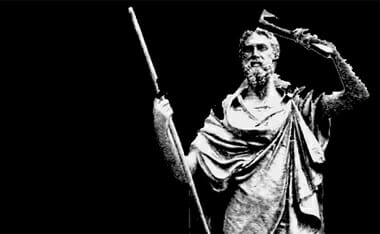
The Battle of Thermopylae (The Histories of Herodotus Excerpt)
The Battle of Thermopylae was the initial engagement between the Persian Empire and the confederation of Greek city-states led by Sparta during the Second Persian Invasion of Greece in 480 BC.
The vast Persian army first encounters significant Greek resistance at the narrow pass of Thermopylae (the Hot Gates), where he found an advance force of approximately 4,000 troops from various Greek city-states.
Unable to break through the Greek line, Persian King-of-Kings Xerxes was confounded until a local man named Ephialtes betrayed the Greek confederacy by informing him of a hidden trail over the mountains.
Xerxes sent a force around to the back of the Greek army holding the narrow pass of Thermopylae, outflanking and eventually overwhelming them.
Although this battle was not especially significant other than a delaying action against the Persian invasion, the story of the events is so compelling, combined with the sheer heroism displayed by the hugely-outnumbered Greek troops, that it has become the most famous last stand in history.
(Source)
JFK’s “Secret Societies” Speech
See more here in a forum discussion.
Video Description:
(Cue Evil Laughter) The original video can be found here. But the video file at LiveLeak is bad.
Here is his description from LiveLeak:
There is a popular video that pops up every now and then that has John F. Kennedy making allusions to a secret society and other kinds of woo woo.
That speech has nothing to do with the NWO people. He means communism and he was addressing the American Newspaper Publishers Association and their responsibility to consider national security when publishing articles about government activity during the cold war.
Here is a link to the full transcript, where you can also listen to the fill 19 minute recording.

“…Sharon, You Are A Bigot” ~ A South Park Break
[fbvideo link=”https://www.facebook.com/markeece.young/videos/1196681993679743/” width=”685″ height=”400″ onlyvideo=”1″]

Democrats Clueless to Threat, Visit Terror Mosque
Breitbart notes the network set up by Obama’s heroes, the Muslim Brotherhood:
On Friday’s Breitbart News Daily (6AM-9AM EST) on Sirius XM Patriot channel 125, former FBI counter-terrorism Special Agent John Guandolo argued that the “vast majority” of the 2,200 Islamic organizations, centers, and mosques in the United States are a part of a broader “Jihadi network” intent on imposing Sharia Law in America.
Guandolo told host and Breitbart News Executive Chairman Stephen K. Bannon that the San Bernardino terrorist, the UC Merced stabber, the Chattanooga shooter, and the Boston Bombers can all be traced back to such Islamic Centers where “they were supported and trained.”
Guandolo said that the San Bernardino terrorists attended the Islamic Center of Riverside, which he said was a “a Muslim Brotherhood Center.” He noted that the Boston Bombers attended the Islamic Society of Boston, which he said was a subsidiary of the Islamic Society of North America that was founded by an al-Qaeda guy who used to advise former President Bill Clinton and former Vice President Al Gore and is now in prison.
He said there are over 2,200 Islamic Centers and mosques in America and the “vast majority of them are a part of this network — they’re hostile.”
He said “over 75%” of these centers, based on their property records, are a part of the “Muslim Brotherhood network” since they are “owned by the North American Islamic Trust, which is the bank for the Muslim Brotherhood here.”…
(Via Weasel Zippers)
And as usual Democrats act-out in ways that do not help the matter AT-ALL… here is one example via Breitbart:
…Democratic Representatives Rep. Donald Beyer (D-VA), Rep. Keith Ellison (D-MN), and Rep. Joseph Crowley (D-NY) announced in a letter: “We must show that we will not tolerate islamophobia and that those who propagate it do not represent the melting-pot America that we celebrate.”
“We invite you to join in this Friday to stand in solidarity with Dar Al-Hijrah Mosque — the mosque that received the hoax bomb — and with all our American Muslim communities, by attending Friday prayers and joining us for a short press conference against bigotry,” the Democratic House members said.
“Help us show solidarity with the American Muslim community be joining us on Friday,” they asked.
The Dar Al-Hijrah mosque was founded thanks to a $5 million dollar grant from Saudi Arabia’s Embassy in the United States, which allowed for the large facility to accommodate some 5,000 Muslims.
The mosque’s outreach director, Imam Johari Abdul-Malik, who will speak to the public on Friday, has on several occasions announced his public support for convicted terrorists.In 2005, when a Virginia Muslim was found guilty of inciting jihad against the United States, Imam Malik said, “There is a view many Muslims have when they come to America that you could not be arrested for something you say. But now they have discovered they are not free to speak their minds.”
When in 2005, a fellow Muslim was convicted for plotting to assassinate former President George W. Bush, Malik commented, “our whole community is under siege.”
The mosque’s current Imam, Shaker Elsayed, has said in the past that the killing of a Jewish man was justified because he “adopted a position against all Arabs and Muslims.” Elsayed has also defended a member of Palestinian Islamic Jihad, saying that the FBI was involved in a “war on Muslim institutions.” In 2013, he called for armed jihad against the United States.
Major Nidal Hassan, who was responsible for the Islamic terrorist attack on Fort Hood, Texas in 2009, was a member of Dar al-Hijrah, praying under the guidance of Awlaki, who became Imam in January 2001.
Moreover, two September 11 hijackers, Nawaf al-Hazmi and Hani Hanjour, were regularsat the mosque prior to carrying out the worst terrorist attack in American history….