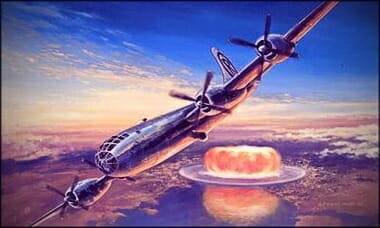
I wasn’t gonna upload this, but this is an important [and fair] critique of Obama’s “Hiroshima Speech” by Michael Medved.
I usually include phone calls because Medved almost always takes disagreeing calls. But the two that came in were not that coherent. So it will be his commentary and portions of the speech. Barry Soetoro didn’t come out and apologize… like many (including myself) said he was going to. Instead, he morally equated the actions by the Allies (esp. America) to those of Japan. Still VERY disgraceful.
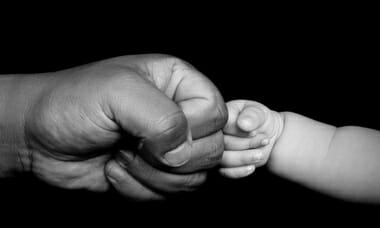
A listener to Dennis Prager calls in to ask for clarification about a topic from earlier in the week. I had to do with the roles in a family unit of a father and mother in relation to their children. As we creep towards Father Day I thought this would be an uplifting video for all the dads out there.
Free will and God… Dr. Lennox give a great anecdote between the “how” and the “that.” We do not have to explain “how” something works in order to know the comparability with the best explanation.
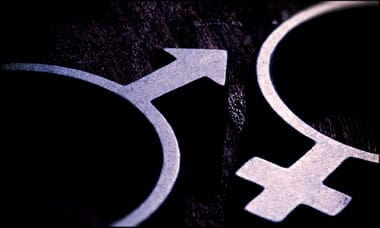
High school girls in Alaska are crying foul after a male sprinter took home all-state honors in girls’ track and field. According to local reports, it was the first time in Alaskan history that a male athlete competed in the girls’ state championships.
Haines senior Nattaphon Wangyot –who self-identifies as a girl– advanced to the state finals in the 100-meter and 200-meter events. He won fifth place in the 100-meter dash and third place in the 200-meter. In both events, he competed against girls as young as ninth grade.
One of the girls Wangyot beat out for a slot at the state meet, Hutchison runner Emma Daniels, took issue with allowing a male athlete to compete in girls events….
[….]
…Another runner, Peyton Young (who competed in a different event) took a similar position. “I don’t know what’s politically correct to say, but in my opinion your gender is what you’re born with,” she told the Alaska Dispatch News.
“It’s the DNA. Genetically a guy has more muscle mass than a girl, and if he’s racing against a girl, he may have an advantage.”
Alaska allows each school to decide whether to let boys compete in individual girls’ events. According to the Alaska Dispatch News, Wangyot’s district doesn’t even require boys to undergo hormone therapy before competing in girls’ events…
[….]
Minnery argued that “Allowing students to play on teams of the opposite sex disproportionately impacts female students, who will lose spots on a track, soccer and volleyball teams to male students who identify as female.”
Mind you… this will be the “norm”
“I’ve never felt so overpowered in my life,” said female mixed martial arts fighterTamikka Brents. “I’ve fought a lot of women and have never felt the strength that I felt in a fight as I did that night. I can’t answer whether it’s because she was born a man or not, because I’m not a doctor. I can only say I’ve never felt so overpowered ever in my life, and I am an abnormally strong female.”
The woman Brents was referring to isn’t a woman at all, but transgender MMA fighter Fallon Fox, who fights as a woman against women. Brent felt the full weight of what it was like to fight a man, and even with all her training and strength, she quickly fell to Fox….
In Episode 27 Professor (Department of English, University of Ottawa) Janice Fiamengo discusses the fifth of five pernicious feminist terms: Microaggression. Fiamengo also explains how feminists use the theory of microaggression, and the misandric claim that masculinity is toxic, in their strategy for power through the dehumanization of males.
1. How many other times has this State Department or the administration, more broadly, deleted video that was perhaps inconvenient for them politically?
(For a great introduction to the below video of which the following is a clip from, see Evolution News & Views)
More About the Male (Whale’s) Refrigeration System ~ The system actually works better when the whale swims hard. How can that be, when the testes are located right between the abdominal swimming muscles? It’s like trying to keep a refrigerator cold between two furnaces.
It works because the blood pumps harder during exercise, allowing more heat to escape into the water through the dorsal fin and tail. The higher volume of cool venous blood then enters the “miraculous web” (Latin rete mirabile, read more here) between the abdominal muscles, where the heat from the arteries is transferred to the cooler veins before entering the testes. It’s a marvelous solution: a “counter-current heat exchanger” (CCHE) mechanism.
As Richard Sternberg and Paul Nelson explain in the film, without both internal testes and the refrigeration mechanism existing simultaneously, natural selection would halt, and whales would have gone extinct. Females, too, have a CCHE to protect the young during pregnancy. Similar CCHE systems are found in other marine mammals such as manatees and seals, providing more unlikely examples of “convergent evolution.”
One of the key (most complete) missing link in this WILD scenario is Rodhocetus. Rodhocetus’ discoverer, Dr. Phil Gingerich, one of the leading experts on whale evolution, promoted the idea that Rodhocetus had a whale’s fluke (tail) and flippers. Later Dr. Gingerich admitted,
“Since then, we have found the forelimbs, the hands, and the front arms of Rodhocetus, and we understand that it doesn’t have the kind of arms that can be spread out like flippers on a whale.”
When asked about the missing fluke, Dr. Gingerich replied,
“I speculated that it might have had a fluke… I now doubt that Rodhocetus would have had a fluked tail.”
Without this fossil, there is no evolutionary story telling like we see in this WHALE OF A TALE:
Will museums and textbooks change their displays or portraits Rodhocetus as a transitional fossil? Don’t hold your breath.
(Philip Cunningham Intro) In the following video, Philip Gingerich, the paleontologist who discovered and reconstructed Rhohocetus, which has been called by evolutionists, ‘the most spectacular intermediary fossil in whale evolution’, states this about that, “most spectacular intermediary fossil”….
“Well, I told you we don’t have the tail in Rodhocetus. We don’t know for sure whether it had a ball vertebrate indicating a (tail) fluke or not. So I speculated (that) it might have had a (tail) fluke…. Since then we found the forelimbs, the hands, and the front arms, the arms in other words of Rodhocetus, and we understand that it doesn’t have the kind of arms that can be spread out like flippers are on a whale.,, If you don’t have flippers, I don’t think you can have a fluke tail and really powered swimming. And so I now doubt that Rodhocetus would have had a fluke tail.”
Philip Gingerich paleontologist – Whale Evolution vs. The Actual Evidence – video – fraudulent fossils revealed (Starts at the 11:40 minute mark – see another clip of this here):
Here we get into the weeds with these fraudulent Plaster of Paris replicas for the myriad of students visiting natural history museum. The excerpt here comes from Uncommon Descent:
If you can’t find a missing link, just make one up with plaster and body parts and put it in museums. I don’t think the deception was deliberate in as much as it was self-deception and they just added plaster to conform a land fossil to look like a whale.
The two scientists who found the lion’s share of walking whale fossils essentially created the best fossil proof of evolution using plaster models and drawings and supplied these to museums and science magazines. In each case, they started with incomplete fossils of a land mammal. Whenever a fossil part was missing, they substituted a whale body part (blowholes, fins and flukes) on the skeletal model or skull that they distributed to museums. When these same scientists later found fossils negating their original interpretations, they did not recall the plaster models or drawings. Now museums are full of skulls and skeletons of ‘walking whales’ that are simply false.” Dr. Werner went on to say, “I suspect some curators are not aware of the significance of these substitutions nor are they aware of the updated fossils. Museums should now remove all of the altered skeletons, skulls and drawings since the most important parts of these ‘walking whales’ are admittedly made up. Museums will also have to delete these images from their websites as they are misleading the public.” –
Here is an example of my child’s biology textbook from grade school (enlargeable by just clicking the image ~ for maximum enlargement, right click with the mouse and choose, “open link in new tab“):
George B. Johnson and Peter H. Raven, Biology: Principles & Explorations, Annotated Teacher’s Edition (Austin, TX: Holt, Rinehart and Winston, 2001), 284-285.
On page 288 of the same text we read:
The pelvic bones found in modern whales are homologous to the pelvises that are found in land vertebrates. Although the whale pelvis bones are located near their reproductive organs, these bones do not function like a pelvis in a land vertebrate. The whale pelvis is located far from the vertebrae and has no apparent function. Thus, the whale pelvis is a vestigial structure.
The “pelvic bones” in whales are said to be vestigial. Here is another example from my son’s public schooling:
Vestigial Structures
Many organisms have features that seem to serve no useful function. For example, humans have a tailbone at the end of the spine that is of no apparent use. The human appendix, a small, fingerlike projection from the intestine, also has no known function. Some snakes have tiny pelvic bones and limb bones. Whales also have pelvic bones, along with a four-chambered stomach like that of a cow.
These apparently useless features are said to be vestigial. Vestigial (ves-TIJ-ee-uhl) features were useful to an ancestor, but they are not useful to the modern organism that has them. The vestigial tailbone in humans is homologous to the functional tails of other vertebrate species. A vestigial feature in a modern organism is evidence that the structure was functional in some ancestor of the modern organism. Moreover, an organism with a vestigial feature probably shares common ancestry with an organism that has a functional version of the same feature.
So what sort of evolutionary clues can vestigial features provide? Consider that normal sperm whales, like all whales, have small pelvic bones but no hind legs. A very small percentage of sperm whales, however, have vestigial leg bones, and some sperm whales even have bone-supported bumps protruding from their body.
Whales probably are descended from an ancestor that lived on land. In the whales’ genome, many of the genes needed to make hind legs have been conserved, or have remained unchanged. In normal whales, the genes for hind legs are turned off. In rare cases, however. the genes are partially turned on, and vestigial hind legs form. Thus. whales and other living things may display their evolutionary history in the usually unexpressed genes they carry.
Susan Feldkamp and Maureen Kilpatrick, editors, Modern Biology (Austin, TX: Holt, Rinehart and Winston, 2002), 290.
Here, Philip Cunningham fills in what these “vestigial” bones are used for via a couple examples, the first being an Email Exchange regarding “vestigial legs” pelvic bones in whales:
The pelvic bones (supposed Vestigial Legs) of whales serve as attachments for the musculature associated with the penis in males and its homologue, the clitoris, in females. The muscle involved is known as the ischiocavernosus and is quite a powerful muscle in males. It serves as a retractor muscle for the penis in copulation and probably provides the base for lateral movements of the penis. The mechanisms of penile motion are not well understood in whales. The penis seems to be capable of a lot of independent motion, much like the trunk of an elephant. How much of this is mediated by the ischiocavernosus is not known.
In females the anatomical parts are smaller and more diffuse. I would imagine that there is something homologous to the perineal muscles in man and tetrapods, which affect the entire pelvic area – the clitoris, vagina and anus.
The pelvic rudiments also serve as origins for the ischiocaudalis muscle, which is a ventral muscle that inserts on the tips of the chevron bones of the spinal column and acts to flex the tail in normal locomotion.
James G. Mead, Ph.D. – Curator of Marine Mammals – National Museum of Natural History – Smithsonian Institution
This second example comes by way of PHYS.ORGand like all other vestigial organs, the “Darwinism-of-the-gaps” is proven to be vacuous:
Both whales and dolphins have pelvic (hip) bones, (supposed) evolutionary remnants from when their ancestors walked on land more than 40 million years ago. Common wisdom has long held that those bones are simply vestigial, slowly withering away…
New research from USC and the Natural History Museum of Los Angeles County (NHM) flies directly in the face of that assumption, finding that,, pelvic bones serve a purpose…
“Everyone’s always assumed that if you gave whales and dolphins a few more million years of evolution, the pelvic bones would disappear. But it appears that’s not the case,”….
Dean collaborated with fellow co-corresponding author Jim Dines,,, on a painstaking four-year project to analyze cetacean (whale and dolphin) pelvic bones.
The muscles that control a cetacean’s penis – which has a high degree of mobility – attach directly to its pelvic bones….
The Smithsonian Institutehas and article on this as well… the title is illuminating:
I thought this was a telling commentary in the article:
Testing any of this in the field is near impossible—for now, there’s no way to x-ray whales having sex underwater to reveal the inner workings of their anatomy. All the researchers can do at this point is speculate.
My only question would be…
…why this “speculation” wasn’t applied to the previously held position that these bones are vestigial.
“They look like a bunch of yahoos,” Gralinski said. “Like in the paper, like ISIS in Syria going to take over a city. I don’t think they need that big flag on the back of the truck. That’s not America to me. Those are a bunch of terrorists. So, I’m going to ask you to take the flag off that truck.” (Daily Caller)
An American flag on the back of a fire truck and decals on the truck windows is leading to a new dispute at the Central Coventry Fire District. The firefighters union said they’re being asked to take them off. “The members are very upset,” Firefighters Union President David Gorman told NBC 10 News. “I have a couple members, armed service retired, retired from the guard.”