Wonder What Fake News Is? Benjamin Netanyahu Tells Us (Updated)

(NEWSBUSTERS) Better not show the latest video of Israeli Prime Minister Benjamin Netanyahu to Washington Post media columnist Margaret Sullivan. She has already revealed that she is triggered just by the term “fake news” and the video of Netanyahu accusing CNN and the New York Times of reporting fake news about Hamas would probably cause her to wilt from such a macroaggression. Netanyahu not only clearly explains why CNN and the Times were reporting fake news but provides a nice finishing touch by tossing the Hamas report into a trash bucket.

GATESTONE INSTITUTE has an excellent piece about the renewed vigor against Israel and America:

As U.S. President Donald Trump prepares to hold his second meeting with Palestinian Authority (PA) President Mahmoud Abbas in Bethlehem next week, two Palestinian terror groups have announced that the new U.S. administration is planning to “liquidate the Palestinian cause.” The warning by Hamas and Islamic Jihad is directed not only against Trump and his new administration, but also against Abbas and any Arab leader who dares to “collude” with the U.S.

The two Palestinian terror groups, which control the Gaza Strip and its two million residents, also renewed their pledge to pursue the armed fight against Israel; they said they would not give up one inch of Palestine, from the (Mediterranean) sea to the (Jordan) river.

Trump and his administration would do well to heed the warning issued by Hamas and Islamic Jihad, especially in the wake of Abbas’s recent statements concerning a two-state solution and peace with Israel. Abbas controls only parts of the West Bank, and how he intends to establish a Palestinian state when he cannot even set foot in the Gaza Strip is anyone’s guess. Recently, Hamas announced that if and when the 82-year-old Abbas shows up in the Gaza Strip, he will be hanged in a public square on charges of “high treason.”

The warning by the Palestinian terror groups was made during a joint rally in the Gaza Strip on May 14. Leaders of Hamas and Islamic Jihad vowed to “preserve the Palestinian rifle and Palestinian rights in the face of any schemes and attempts to liquidate the Palestinian cause.”

Hamas leader Mahmoud Zahar stated that Palestinian “principles are part of our [Islamic] religion, and we cannot make any concessions on them. We will not give up one inch of our land and holy sites. We will continue to work until the liberation of each inch of Palestine.”

Zahar also warned Abbas against signing any agreement with Israel that includes relinquishing Palestinian rights. “Anyone who gives up our rights and holy sites will betray Allah and his Prophet Mohammed,” Zahar cautioned.

Notably, Zahar’s statement to “liberate every inch of Palestine” comes amid false claims in the Western media to the effect that Hamas has abandoned its dream of eliminating Israel.

The claims are based on a new policy document recently published by Hamas; it says that the Islamic terror movement accepts a Palestinian state in the West Bank, Gaza Strip and East Jerusalem, but without recognizing Israel’s right to exist. Translation: Hamas seeks a Palestinian state that would be used as a launching pad to destroy Israel.

Zahar and other Hamas leaders have taken advantage of every available platform to clarify that their acceptance of a Palestinian state on the pre-1967 lines does not mean abandoning their plan to eliminate Israel.

They have also explained, at length, that the new policy document does not replace Hamas’s original charter, which explicitly calls for the destruction of Israel.

Hamas’s honesty with respect to its true intentions stands in utter contrast to the deceit with which the policy document is being treated by others.

For instance, some Western media outlets and Palestinian affairs “experts” and “analysts” deceptively describe the document as a sign of moderation and pragmatism on the part of Hamas.

While Hamas leaders proudly proclaim that there is no real change in their ideology and charter, some Westerners seem to have a sort of hearing disability when it comes to the truth of the terror movement.

Another Hamas leader, Ahmed Bahr, said at the rally that his movement remains strongly opposed to security coordination between Abbas’s Palestinian Authority and Israel in the West Bank.

Bahr described the security coordination and the crackdown on Hamas supporters in the West Bank as a new Palestinian “Nakba” (Catastrophe) — the term used by Palestinians and Arabs to describe the establishment of Israel in 1948…..

(Read It All)

The Venezuelan Diet!

See: Bernie Sanders Socialist Paradise!

Using an ancient Soviet method, 75% of Venezuelans have lost an average of 19 pounds and so can you! Who needs human rights and free press when you can get back to your old college weight? Watch the video and let Remy show you how it all works.

Muslim Student Honestly Notes Islamic Law and “Compulsion”

MUHAMMAD SAID: “Whoever changed his Islamic religion, then kill him” (Bukhari 9.84.57). The death penalty for apostasy is part of Islamic law according to all the schools of Islamic jurisprudence.

TEXT of the above:

And some, this, that you’re referring to, killing non-Muslims, that [to be a non-believer] is only considered a crime when the country’s law, the country is based on Koranic law — that means there is no other law than the Koran. In that case, you’re given the liberty to leave the country, you can go in a different country, I’m not gonna sugarcoat it. So you can go in a different country, but in a Muslim country, in a country based on the Koranic laws, disbelieving, or being an infidel, is not allowed so you will be given the choice [to leave].

JIHAD WATCH notes correctly about the above:

The Muslim student is right, and unusually honest. The death penalty for apostasy is part of Islamic law. It’s based on the Qur’an: “They wish you would disbelieve as they disbelieved so you would be alike. So do not take from among them allies until they emigrate for the cause of Allah. But if they turn away, then seize them and kill them wherever you find them and take not from among them any ally or helper.” (Qur’an 4:89)

A hadith depicts Muhammad saying: “Whoever changed his Islamic religion, then kill him” (Bukhari 9.84.57). The death penalty for apostasy is part of Islamic law according to all the schools of Islamic jurisprudence.

This is still the position of all the schools of Islamic jurisprudence, both Sunni and Shi’ite. Sheikh Yusuf al-Qaradawi, the most renowned and prominent Muslim cleric in the world, has stated: “The Muslim jurists are unanimous that apostates must be punished, yet they differ as to determining the kind of punishment to be inflicted upon them. The majority of them, including the four main schools of jurisprudence (Hanafi, Maliki, Shafi’i, and Hanbali) as well as the other four schools of jurisprudence (the four Shiite schools of Az-Zaidiyyah, Al-Ithna-‘ashriyyah, Al-Ja’fariyyah, and Az-Zaheriyyah) agree that apostates must be executed.”

Qaradawi also once famously said: “If they had gotten rid of the apostasy punishment, Islam wouldn’t exist today.”

After the above response, a Portland State paper reporter Tweeted video of the above… and was fired for this. NATIONAL REVIEW has the story.

A Satanic Church Leader (and his family) Saved and Baptized!

In the video, you see this Church of Satan founder (Texas), baptize his wife in the name of the “Father, Son, and Holy Spirit,” and then is baptized in front of his young sister and daughter. God Is Good! The video is a bit drawn out, but a wonder call to those involved in the occult to come to a Savior that IS Love and first loved us. Here is CBN’S article on this:

The founder of a satanic church in Texas has converted to Christianity.

We love Him because He first loved us. The only reason we love at all is because He first loved us. The Ten Commandments require that a man should love his God and neighbor, but the law could not produce this love. How then could God obtain this love which His righteousness required? He solved the problem by sending His Son to die for us. Such wonderful love draws out our hearts to Him in return. We say, “You have bled and died for me; from now on I will live for You.”

  • William MacDonald, Believer’s Bible Commentary: Old and New Testaments, ed. Arthur Farstad (Nashville: Thomas Nelson, 1995).

Jacob McKelvy, formerly known as Jacob No, was instrumental in bringing together a group of “Luciferians” to form a Luciferian church.

But on February 5, 2017, McKelvy and his wife renounced their ties with the Luciferian church, after becoming born-again Christians.

[….]

McKelvy now speaks in churches to prove the power of prayer and the love of God.

“The power and peace and wholeness I feel today is far greater than anything that I’ve ever felt before,” he said.

“I created a church to destroy dogmatic religion and he still loved me. So if he could still love me for me to be here today talking to you than there are no excuses anymore.”

Pastor Hogan said he is working very closely with McKelvy to make sure that he has a solid foundation and that he becomes rooted and grounded in the word of God.

Meanwhile, the Greater Church of Lucifer has closed its doors.

LOVE did this… and only a Holy Love! (1 JOHN 4:7-21)

Dear friends, let us love one another, for love comes from God. Everyone who loves has been born of God and knows God. Whoever does not love does not know God, because God is love. This is how God showed his love among us: He sent his one and only Son into the world that we might live through him. 10 This is love: not that we loved God, but that he loved us and sent his Son as an atoning sacrifice for our sins. 11 Dear friends, since God so loved us, we also ought to love one another. 12 No one has ever seen God; but if we love one another, God lives in us and his love is made complete in us.

13 This is how we know that we live in him and he in us: He has given us of his Spirit. 14 And we have seen and testify that the Father has sent his Son to be the Savior of the world. 15 If anyone acknowledges that Jesus is the Son of God, God lives in them and they in God. 16 And so we know and rely on the love God has for us.

God is love. Whoever lives in love lives in God, and God in them.17 This is how love is made complete among us so that we will have confidence on the day of judgment: In this world we are like Jesus.18 There is no fear in love. But perfect love drives out fear, because fear has to do with punishment. The one who fears is not made perfect in love.

19 We love because he first loved us. 20 Whoever claims to love God yet hates a brother or sister is a liar. For whoever does not love their brother and sister, whom they have seen, cannot love God, whom they have not seen. 21 And he has given us this command: Anyone who loves God must also love their brother and sister.

Food Tyranny – Michelle Obama’s Elitism (Updated)

Can you hear the disdain and elitist mentality in the Left’s “ideal” of perfection. My favorite line via Michelle (below) is that “we need to demand everyone to care deeply about our kids.” Wow… government can demand the populace to care deeply about our (my) kids? What can’t government do? Let me get this right… I can — through my government (legislatively): change and control gender; change and control weather; change and control my neighbors feelings about my kids… etc. Man-o-live! (Via HOTAIR)

“Suspect” Is Now “Community Member” |Law Enforcement|

(BTW, I was on the other end at one point in my life… I was a suspect)

This is for all my law enforcement readers… this stuff is just crazy! Via LAW OFFICER:

When Seattle police officers write use of force reports they no longer call a suspect a suspect.

“Community member” is the new term. Several officers say the term is offensive, explaining their work with violent suspects.

Sources point to the suspect who shot three officers last month after a downtown Seattle armed robbery. When officers involved in that incident were writing their use of force reports they were required to refer to the shooter, Damarius Butts, as a “community member,” not a suspect, police sources said.

Police fatally shot Butts after they said he shot the officers.

[….]

The online use of force reporting system, called Blue Team, is used for more than just use of force reports and while the terminology changed for multiple forms, it’s only in the use of force reports that officers find offensive.

One commenter said this:

  • As a former Chief there is no way I would ask, order, demand, expect, or permit my officers to use the term “community member” when writing any report. I would also refuse any such request from any civilian who happened to be an elected official and then try to educate them that using such terminology is an insult to all members of the community since using the term in the manner requested suggests every citizen has committed a criminal act or is a criminal. Besides, what if this “suspect” was from out of town? Since they were not a “Community Member” would they then be labeled a “suspect” which would then indicate discriminatory bias on the part of the city?

MOOBATTERY says this:

….They were going to use the word “citizen” to describe suspected criminals, but that would discriminate against illegal aliens, who comprise a high percentage of criminals I mean “community members” in most cities. Says Seattle Police Chief Operating Officer Brian Maxey, “we don’t know or inquire about citizenship status, so labeling someone a citizen is arbitrary.”

After the community members have found their way to prison, they continue to be referred to with euphemisms:

Last fall, the Washington Department of Corrections stopped calling inmates “offenders” and instead use the term “student.”

“The term ‘offender’ does have a negative connotation and significantly impacts a broad group of people and communities,” Acting DOC Secretary Dick Morgan wrote in an internal department memo, obtained by KIRO 7.

When the terms “community member” and “student” are no longer regarded as sufficiently obsequious toward criminals, the Newspeak Dictionary will need to be updated again. Maybe they will be called SPORSes, or Special Persons Oppressed by the Racist System.

Another example of Newspeak.

UC Santa Cruz Caves To Snowflakes

BTW, Tucker Carlson predicted the university would cave. Here is the short article Dennis Prager was reading from via CAMPUS REFORM:

University of California, Santa Cruz Chancellor George Blumenthal caved to a list of demands created by students in the African/Black Student Alliance on Thursday.

The students had locked themselves in for three days in an administrative building on campus, Kerr Hall, covering the windows with protest posters, locking the doors, and threatening not to leave until their demands were met, according to KSBW….

3-Stories Not Fit for Mainstream Media (MSM)

Dennis Prager discusses a few news worthy stories that would warn the us of a cultural change toward totalitarianism… a cultural Marxist ideology. The previous hour of this day had this story as well:  — as well as playing this audio.

You see, “fake news” is often merely a bias working its way out in “what” gets reported. IN this case, we know nothing about cultural “red-flags” but know a lot about a nonexistent Russian collusion.

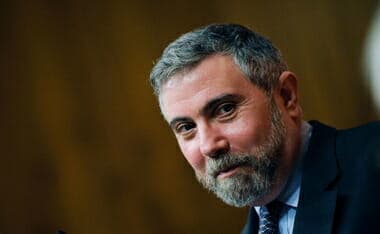
Paul Krugman Gets Rude Awakening

(Originally posted in July of 2012, re-posted as a response to Dennis Prager asking if Paul Krugman has ever debated anyone. RARELY, but here is one of the few examples)

Just so many know, Krugman never debates, and this is one of the only times I am aware of he has. From Video Description:

Tyler Durden submitted this much longer presentation (which I shortened) over at Zero Hedge, and points out the emotional clash between the two economists that is sure to be watched by the many free-marketers out there. Tyler entitled this posting, “The Ultimate Krugman Take-Down,” …he continues:

Forget Ali – Frazier; ignore Santelli – Liesman; dismiss Yankees – Red Sox; never mind Silva – Sonnen; the new undisputed standard by which all showdowns will be judged happened in Spain over the weekend. During a debate on Europe’s crisis, Pedro Schwartz (a mild-mannered Spanish ‘Austrian’ economics professor) took on the heavyweight Paul ‘I coulda been a Fed Chair contender’ Krugman, and – in our humble opinion – wiped the floor with his Keynesian philosophy. From the medicinal use of more debt to fix too much debt, to the Japanization of world economies and the demand-side bias of every- and any-thing – interested only in the short-term economic growth; the gentlemanly Spaniard notes, with regard to the European crisis, the fact that “Keynesians got us into this mess and now we have to sacrifice our principals so that they can get us out of this mess”. Humble and generous in his praise – though definitively serious with his criticism – Schwartz opines: “Often Nobel prize winners are tempted to pontificate on matters that are outside the specialty in which they have excelled,” noting “the mantle of authority whereby what ever they say – whether sensible or not – is accepted with resignation from some and enthusiasm by others.” Krugman’s red-faced anger is evident at the conclusion as he even refused to shake Schwartz’s hand after the debate.

You Do Not Know God Without Suffering

This extended quote picks up a few points into Luther’s Heidelberg Disputation, enjoy the suffering…

In case one is wondering, I highly recommend this book as well as Reeves other book, The Unquenchable Flame: Discovering the Heart of the Reformation. It is the 500th year anniversary of the Reformation… for God’s sake learn about it.


21. The theologian of glory says bad is good and good is bad. The theologian of the cross calls them by their proper name.

This is really quite clear, for as long as a man does not know Christ he does not know God as hidden in sufferings. Such a man, therefore, prefers works to sufferings, and glory to a cross: he prefers powers to weakness, wisdom to foolishness…. These are they the Apostle calls enemies of the cross of Christ. Quite clearly, because they hate the cross and sufferings and certainly love works and the glory that goes with them. And thus they say that the good of the cross is evil, and call the evil of works good. But God is not to be found except in sufferings and in the cross as has been stated already…. It is impossible for a man not to be inflated by his own good works unless the experience of suffering and evil, having previously taken all the spirit out of him and broken him, has taught him that he is nothing and his works are not his own but God’s.

22. The sort of wisdom which sees the invisible things of God in known good works simply inflates a man, and ren­ders him both blind and hard.

This has been said already. For since it is clear that they know nothing about the cross and even hate it, then of ne­cessity they love the opposite, that is wisdom, glory, power and the like….

He who wishes to become wise should not go forward and seek wisdom but should become a fool, go back and seek foolishness. Thus, he who wants to become powerful and famous, to have a good time and enjoy all the good things of life, let him flee from power, fame, enjoyment and a sufficiency of everything and not seek after them. This is the wisdom we are talking about, the wisdom which is foolishness to the world.

The question Luther is addressing is this: How can we know God? There are some visible things humanity could look at: cre­ation, spiritual experiences, miracles. But Luther says that they do not reveal God. Or, rather, they reveal something of God, but it is the kind of knowledge that puffs people up. As a result, people never get beyond their pride to know the real God. This knowledge could “never be enough for a man, nor could it benefit him” (20). People like this think they have knowledge, but they do not—they are fools.

Is God then unknowable? If we cannot know him through what is visible, then can we know him at all? Are we left trying to know God through what is invisible? That is not very prom­ising, because we cannot see it! Luther’s answer is this: God is known through what is contrary. He is known in a hidden way. God’s invisible attributes are revealed in suffering and the cross: glory in shame, wisdom in folly, power in weakness, victory in defeat. God is known through the message of the cross.

So what Luther calls theologia crucis, “the theology of the cross,” is not so much an understanding of how the cross saves us (though, of course, that mattered to Luther). Even more, it is an approach to knowing God. It claims that knowing him starts with the cross. And this starting point turns all our notions of God and how he can be known upside down.

The theology of the cross stems from Luther’s understanding of righteousness and justification. Luther’s great realization was that God justified sinners. God declares to be just those who are unjust. Luther realized that if that is so, human notions of justice can never lead us to understand God’s justice. God’s justice is revealed in the opposite of justice: in the justification of the unjust. Alister McGrath says:

Luther’s discovery of the “wonderful new definition of righteousness” is essentially programmatic, and capable of being applied to other divine attributes… leading ultimately to the theologia crucis, the “theology of the cross”….

…For Luther, the “righteousness of God” is revealed exclusively in the cross, contradicting human preconcep­tions and expectations of the form that revelation should take.

If knowledge of God could be obtained from what is vis­ible (creation, spiritual experiences, miracles), it would lead to pride. Imagine if we knew God through creation. The people who knew him best would be those with the brains to under­stand the science of the universe. Or imagine we knew God through spiritual experience. The people who knew God would be those wealthy enough to spend time in contemplation. Peo­ple would be able to say, “I know God through my intelligence or my spirituality or my morality or my power.” It would lead to pride, and this pride would then obscure the glory and grace of God.

But God determined that he would be known through suf­fering so that he would be hidden from all those who exalt themselves. Here Luther is echoing the words of Jesus in Mat­thew 11:25-26: “I thank you, Father, Lord of heaven and earth, that you have hidden these things from the wise and understanding and revealed them to little children; yes, Father, for such was your gracious will.”

The opposite of the theology of the cross are theologies of glory. The theologians of glory pursue wisdom, experience, and miracles and say that suffering is bad. But the theologian of the cross values suffering as that through which God is re­vealed. Knowledge of God is not found through human wis­dom, human powers, or human achievements. It is found in the foolishness of the cross.

The religious leaders at the cross are like theologians of glory. They think God will reveal himself in a powerful act in which Jesus comes down from the cross (Mark 15:29-32). But by faith the centurion sees God revealed in the suffering and abandonment of Jesus (Mark 15:39).

Luther talks about God’s “alien work,” opus alienum, his actions which are alien to his nature, but by which he achieves his “proper work,” opus proprium. Sometimes God assaults us in order to break us. In this light, suffering can be seen as a gracious divine gift.

Only someone who has had “all the spirit [taken] out of him and [been] broken” can know God. Often Luther is translated as saying that “humility” is the precondition for knowing God. But the word is really “humiliation.” Only someone who is humiliated before God can truly know him. In other words, Luther is not commending a certain type of piety that paves the way to a better understanding of God. He is saying that we have to come to the end of ourselves before we accept God’s gracious revelation. In another context Luther gave this advice to those who aspired to study theology:

I want you to know how to study theology in the right way. I have practiced this method myself. . . . The method of which I am speaking is the one which the holy king David teaches in Psalm 119. . . . Here you will find three rules. They are frequently proposed throughout the psalm and run thus: oratio, meditatio, tentatio [prayer, meditation, trials].

Trials are a key way in which we learn the truth about God. Luther had in mind verses like these:

Before I was afflicted I went astray,

but now I keep your word. (Ps. 119:67)

It is good for me that I was afflicted,

that I might learn your statutes. (Ps. 119:71)

I know, 0 LORD, that your rules are righteous, and that in faithfulness you have afflicted me. (Ps. 119:75)

It is often trials that move knowledge from our heads and embed it in our hearts.

Luther was skeptical about the value of philosophy in the­ology. “Theology is heaven, yes even the kingdom of heaven; man however is earth and his speculations are smoke.” Luther, never knowingly understated, described “reason” as the Devil’s whore, a beast and the enemy of God. In fact Luther valued reason in matters of human society. He also valued reason as a tool to order biblical material. But we cannot discover the truth about God through human reason. Quite the opposite—reason leads us astray because the God revealed in the cross is contrary to human expectations.

Instead, to recognize God in the absence of God, to recog­nize victory in defeat, to recognize glory in shame requires faith. God is known only by faith. And because knowing him requires faith, this is an act of grace.

So God can be known only by those to whom he gives faith. Salvation is by grace alone. We are used to that idea. But it is the same for our knowledge of God. It is not just our salvation that is by faith alone and grace alone. We do not contribute to our knowledge of God. It is all God’s doing. Our knowledge of God is by grace alone. You do not know God because you were cleverer than other people or have greater spiritual insight or spend more time in contemplation. You know God because he has graciously revealed himself to you in the message of the cross. It is an act of grace. God reveals himself in a hidden way in order to safeguard the graciousness of revelation.

So the cross subverts all human notions of glory. The mes­sage we proclaim—the message of Christ crucified—is foolish­ness and weakness in the sight of the world. This is Paul’s point in 1 Corinthians. Indeed, in many ways Luther’s theology of the cross often feels like an extended meditation of 1 Corinthians 1. In 1:23-25 we read:

We preach Christ crucified, a stumbling block to Jews and folly to Gentiles, but to those who are called, both Jews and Greeks, Christ the power of God and the wisdom of God. For the foolishness of God is wiser than men, and the weakness of God is stronger than men.

And with this foolish, weak message of the cross goes a foolish, weak community of the cross.

But God chose what is foolish in the world to shame the wise; God chose what is weak in the world to shame the strong; God chose what is low and despised in the world, even things that are not, to bring to nothing things that are, so that no human being might boast in the pres­ence of God. (1:27-29)

So the cross leaves no scope for human boasting. Instead our one boast is in Christ Jesus, “who became to us wisdom from God, righteousness and sanctification and redemption.” Therefore, “Let the one who boasts, boast in the Lord” (1:30-31).

Let us summarize the key features of Luther’s theology of the cross [McGrath again]:

[…..]

5. God is particularly known through suffering. It is not just that God can be known through suffering, but that he uses suffering to make himself known. And for Luther this encompasses both the sufferings of Christ and the suffer­ings of the individual. God humiliates us so that we may know him.