“When men get in a fight, and hit a pregnant woman so that her children are born [prematurely], but there is no injury, the one who hit her must be fined as the woman’s husband demands from him, and he must pay according to judicial assessment. If there is an injury, then you must give life for life, eye for eye, tooth for tooth, hand for hand, foot for foot….”
What does this verse mean for the Judeo-Christian person in the real world — if we rightly shape our worldview according to God’s Revelation? Wayne Grudem explains with an excerpt from from his book, POLITICS ACCORDING TO THE BIBLE:
For the question of abortion, perhaps the most significant passage of all is found in the specific laws God gave Moses for the people of Israel during the time of the Mosaic covenant. One particular law spoke of the penalties to be imposed in case the life or health of a pregnant woman or her preborn child was endangered or harmed:
When men strive together and hit a pregnant woman, so that her children come out, but there is no harm, the one who hit her shall surely be fined, as the woman’s husband shall impose on him, and he shall pay as the judges determine. But if there is harm, then you shall pay life for life, eye for eye, tooth for tooth, hand for hand, foot for foot, burn for burn, wound for wound, stripe for stripe (Exod. 21:22-25). [footnote A]
This law concerns a situation when men are fighting and one of them accidentally hits a pregnant woman. Neither one of them intended to do this, but as they fought they were not careful enough to avoid hitting her. If that happens, there are two possibilities:
1. If this causes a premature birth but there is no harm to the pregnant woman or her preborn child, there is still a penalty: “The one who hit her shall surely be fined” (v. 22). The penalty was for carelessly endangering the life or health of the pregnant woman and her child. We have similar laws in modern society, such as when a person is fined for drunken driving, even though he has hit no one with his car. He recklessly endangered human life and health, and he deserved a fine or other penalty.
2. But “if there is harm” to either the pregnant woman or her child, then the penalties are quite severe: “Life for life, eye for eye, tooth for tooth …” (vv. 23-24). This means that both the mother and the preborn child are given equal legal protection. The penalty for harming the preborn child is just as great as for harming the mother. Both are treated as persons, and both deserve the full protection of the law. [footnote B]
This law is even more significant when we put it in the context of other laws in the Mosaic covenant. In other cases in the Mosaic law where someone accidentally caused the death of another person, there was no requirement to give “life for life,” no capital punishment. Rather, the person who accidentally caused someone else’s death was required to flee to one of the “cities of refuge” until the death of the high priest (see Num. 35:9-15, 22-29). This was a kind of “house arrest,” although the person had to stay within a city rather than within a house for a limited period of time. It was a far lesser punishment than “life for life.”
This means that God established for Israel a law code that placed a higher value on protecting the life of a pregnant woman and her preborn child than the life of anyone else in Israelite society. Far from treating the death of a preborn child as less significant than the death of others in society, this law treats the death of a preborn child or its mother as more significant and worthy of more severe punishment. And the law does not place any restriction on the number of months the woman was pregnant. Presumably it would apply from a very early stage in pregnancy, whenever it could be known that a miscarriage had occurred and her child or children had died as a result.
Moreover, this law applies to a case of accidental killing of a preborn child. But if accidental killing of a preborn child is so serious in God’s eyes, then surely intentional killing of a preborn child must be an even worse crime.
The conclusion from all of these verses [many are discussed in Grudem’s book] is that the Bible teaches that we should think of the preborn child as a person from the moment of conception, and we should give to the preborn child legal protection at least equal to that of others in the society.
Footnotes:
A. The phrase “so that her children come out” is a literal translation of the Hebrew text, which uses the plural of the common Hebrew word yeled, “child,” and another very common word, yātsā’, which means “go out, come out.” The plural “children” is probably the plural of indefiniteness, allowing for the possibility of more than one child. Other translations render this as “so that she gives birth prematurely,” which is very similar in meaning (so NASB, from 1999 editions onward; similarly: NN, TNIV, NET, HCSV, NLT, NKJV).
B. Some translations have adopted an alternative sense of this passage. The NRSV translates it, “When people who are fighting injure a pregnant woman so that there is a miscarriage, and yet no further harm follows …” (RSV is similar, as was NASB before 1999). In this case, causing a miscarriage and the death of a preborn child results only in a fine. Therefore, some have argued, this passage treats the preborn child as less worthy of protection than others in society, for the penalty is less. But the arguments for this translation are not persuasive. The primary argument is that this would make the law similar to a provision in the law code of Hammurabi (about 1760 BC in ancient Babylon). But such a supposed parallel should not override the meanings of the actual words in the Hebrew text of Exodus. The moral and civil laws in the Bible often differed from those of the ancient cultures around Israel. In addition, there is a Hebrew word for a miscarriage (shakal, Gen. 31:38; see also Exod. 23:26; Job 21:20; Hosea 9:14), but that word is not used here, nor is nēphel, another term for “miscarriage” (see Job 3:16; Ps. 58:8; Eccl. 6:3). However, the word that is used, yātsā’, is ordinarily used to refer to the live birth of a child (see Gen. 25:26; 38:29; Jer. 1:5). Finally, even on this (incorrect) translation, a fine is imposed on the person who accidentally caused the death of the preborn child. This implies that accidentally causing such a death is still considered morally wrong. Therefore, intentionally causing the death of a prebom child would be much more wrong, even on this translation.
Wayne Grudem, Politics According to the Bible (Grand Rapids, MI: Zondervan, 2010), 159-160.
Here is the Dennis Prager interview on this topic:
Certain words can mean very different things to different people. For instance, if I say to an atheist, “I have faith in God,” the atheist assumes I mean that my belief in God has nothing to do with evidence. But this isn’t what I mean by faith at all. When I say that I have faith in God, I mean that I place my trust in God based on what I know about him.
“Christianity, and many other religions, put forth the concept of Heaven and Hell. Obviously, there is no basis in REALITY for these two locations. You cannot look on a map and pinpoint the physical location of heaven and hell. However the religion gives you the TOOLS NECESSARY to reach this goal. And using these tools requires a large amount of faith, because you are NEVER certain that you will reach your goal.”
You show a very tainted view of what Christianity actually teaches. You seem to clump many beliefs (not just Christianity) into one set or way of thinking. This is not only disrespectful to me (although it really doesn’t bother me), it is disrespectful to others of various faiths. I make it a goal to, at the least, when I deal with other faiths, to really delve into what they actually teach and believe. I will post some stuff here to assist in showing you where you are off the mark in just one area of the Christian faith.
Obviously, if the God of the universe [the Judeo-Christian God] has revealed Himself truly, and if Christ is the only true way of salvation, then we would expect convincing evidence to substantiate this. Not just some evidence, or inferior evidence offering a dozen equally valid options in the choice of their religion; but superior evidence, offering the thinking man only the most logical choice. Dr. John Warwick Montgomery asks:
…I want to insist that there is not a single item in Christianity, upon which our souls’ salvation depends, that is only “probably” true. In each case, the evidence supplied is sufficient to establish conclusive proof regarding the truth of the Christian faith. This is not to say, however, that such a case is psychologically compelling, so that one could not reject the evidence. That would be an abuse of free will. I do argue, however, that one can be absolutely certain (intellectually) of such matters as the existence of God, the deity of Christ, the inspiration of the Bible, etc.
“What if a revelational truth-claim did not turn on questions of theology and religious philosophy-on any kind of esoteric, fideistic method available only to those who are already “true believers” – but on the very reasoning employed in the law to determine questions of fact?… Eastern faiths and Islam, to take familiar examples, ask the uncommitted seeker to discover their truth experientially: the faith-experience will be self-validating…. Christianity, on the other hand, declares that the truth of its absolute claims rests squarely on certain historical facts, open to ordinary investigation…. The advantage of a jurisprudential approach lies in the difficulty of jettisoning it: legal standards of evidence developed as essential means of resolving the most intractable disputes in society … Thus one cannot very well throw out legal reasoning merely because its application to Christianity results in a verdict for the Christian faith.”
Dr. John Warwick Montgomery makes the point again that “the historic Christian claim differs qualitatively from the claims of all other world religions at the epistemological point: on the issue of testability” (“The Jury Returns: A Juridical Defense of Christianity,” in Evidence for Faith: Deciding the God Question, p. 319). A good example of someone taking the faith up on its claims were Viggo Olsen, M.D., author of Daktar: Diplomat in Bangladesh, and his wife, who were both skeptics who…
“decided to embark on a detailed study of Christianity with the intention of rejecting it on intellectual grounds. Little by little, as they studied works that deal with data common to apologetics and evidences… they were led step by step to see the truthfulness of Christianity. Their study was no minor investigation or causal perusal. It was an exhaustive search…” (Frederick R. Howe, The Role of Apologetics and Evangelism).
And this claim to truth includes the possibility of self-defeating constructs within the framework of Christian philosophy, which I have shown to be in the atheists philosophy. Mortimer J. Adler is one of the world’s leading philosophers, chairman of the board of editors for the Encyclopedia Britannica, architect of the Great Books of the Western World series and its remarkable Syntopicon, he is also the director of the prestigious Institute for Philosophical Research in Chicago. Adler says, “I believe Christianity is the only logical, consistent faith in the world” (Christianity Today, Nov. 19, 1990). Did you get that? One of the greatest philosophers of our time said that unlike Christianity, every religion that claims to have an epistemology is self-defeating.
Dr. Drew Trotter, a Cambridge University graduate, argues convincingly that “logic and the evidence both point to the reality of absolute truth….” George F. Gilder, one of our century’s “greatest minds,” and author of Wealth and Poverty and Telecosm, says “Christianity is true, and its truth will be discovered anywhere you look very far”] (David A. Noebel, Understanding the Times: The Religious Worldviews of Our Day and the Search for Truth, p. 13). Principle at Wycliff Hall, Alister McGrath, author of Intellectual Don’t Need God and Other Myths, says the evidence for Christianity is akin to that found in doing good scientific research:
“When I was undertaking my doctoral research in molecular biology at Oxford University, I was frequently confronted with a number of theories offering to explain a given observation. In the end, I had to make a judgment concerning which of them possessed the greatest internal consistency, the greatest degree of predictive ability. Unless I was to abandon any possibility of advance in understanding, I was obliged to make such a judgment… I would claim the right to speak of the ‘superiority’ of Christianity in this explicative sense” (“Response to John Hick,” in More Than One Way? Four Views on Salvation in a Pluralistic World, p. 68).
Noted Christian scholar Dr. Carl F. H. Henry wrote a three thousand page, six volume work on the topic of God, Revelation, and Authority. After his exhaustive [to say the least] analysis, Henry declared that “Truth is Christianity’s most enduring asset…” (Ajith Fernando, The Supremacy of Christ, p. 109).
Dr. Robert A. Morey writes,
“There is more than enough evidence on every hand from every department of human experience and knowledge to demonstrate that Christianity is true… [It is the faith of the non-Christian [that] is externally and internally groundless. They are the ones who leap in the dark. Some, like Kierkegaard, have admitted this”
Robert Morey, Introduction to Defending the Faith (Orange, CA: Christian Scholars Press, 2002), 38.
James Sire points out in his book, Why Should Anyone Believe Anything At All?, that an argument for belief, religious or otherwise, must be secured on the best evidence, validly argued, and able to refute the strongest objections that can be mustered against it (p. 10). Dr. Norman Geisler adds that “In the face of overwhelming apologetic evidence, unbelief becomes perverse” (Baker Encyclopedia of Apologetics, p. 529). Take note, faith is active throughout the believers life and grows and matures as the believer does. It includes some aspects that are well worth mentioning:
Although suffering as a prisoner for proclaiming the gospel, Paul was not disillusioned or in despair. Why? Because of his faith. As he testifies to his faith, its essential elements become clear. “And of this gospel I was appointed a herald and an apostle and a teacher. That is why I am suffering as I am. Yet I am not ashamed, because I know whom I have believed, and am convinced that he is able to guard what I have entrusted to him for that day” (2 Tim. 1:11-12). Truth about God can be known. Zeal for God without knowledge (of the Redeemer) did not suffice for monotheistic and moral Jews (Rom. 10:1-2). Neither did worship of an “unknown God” atone for the cultured Athenians (Acts 17:23-31). In contrast, Abraham was “fully persuaded that God had power to do what he had promised” (Rom. 4:21).”
The faith that saves is directed away from human educational, cultural, and religious achievements to the Creator, whose redemptive plan has been preserved and publicized in Scripture. Faith comes by hearing the message of special revelation now affirmed by the written Word of God, the hearer being convinced that “Jesus is Lord” and trusting in him (Rom. 10:4, 8-11, 14). Faith involves knowledge (notitia), persuasion (assensus), and commitment (fiducia). These three elements of faith are operative, not only when one first believes the gospel and trusts the Savior, but also in a growing faith throughout the Christian life.
Gordon R. Lewis and Bruce A. Demerest, Integrative Theology, vol. 1 (Grand Rapids, MI: Zondervan, 1994), 168-169.
But faith is not just about reason, it involves a “moral element of personal trust,” and often times people are so hurt throughout life that this “leap of faith” is a tough choice because the people they trusted have failed them and they tend to apply this knowledge to their heavenly Father. It is Freud reversed. So what is a well-balanced understanding of faith, or, personal trust? Here, Wayne Grudem deals with this on a seminary level for the student:
Personal saving faith, in the way Scripture understands it, involves more than mere knowledge. Of course it is necessary that we have some knowledge of who Christ is and what he has done, for “how are they to believe in him of whom they have never heard?” (Rom. 10:14). But knowledge about the facts of Jesus’ life, death, and resurrection for us is not enough, for people can know facts but rebel against them or dislike them. (Rom. 1:32; James 2:19)….
In addition to knowledge of the facts of the gospel and approval of those facts, in order to be saved, I must decide to depend on Jesus to save me. In doing this I move from being an interested observer of the facts of salvation and the teachings of the Bible to being someone who enters into a new relationship with Jesus Christ as a living person. We may therefore define saving faith in the following way: Saving faith is trust in Jesus Christ as a living person for forgiveness of sins and for eternal lift with God.
This definition emphasizes that saving faith is not just a belief in facts but personal trust in Jesus to save me…. The unbeliever comes to Christ seeking to have sin and guilt removed and to enter into a genuine relationship with God that will last forever.
The definition emphasizes personal trust in Christ, not just belief in facts about Christ. Because saving faith in Scripture involves this personal trust, the word “trust” is a better word to use in contemporary culture than the word “faith” or “belief.” The reason is that we can “believe” something to be true with no personal commitment or dependence involved in it. I can believe that Canberra is the capital of Australia, or that 7 times 6 is 42, but have no personal commitment or dependence on anyone when I simply believe those facts. The word faith, on the other hand, is sometimes used today to refer to an almost irrational commitment to something in spite of strong evidence to the contrary, a sort of irrational decision to believe something that we are quite sure is not true! (If your favorite football team continues to lose games, someone might encourage you to “have faith” even though all the facts point the opposite direction.) In these two popular senses, the word “belief” and the word “faith” have a meaning contrary to the biblical sense.
The word trust is closer to the biblical idea, since we are familiar with trusting persons in everyday life. The more we come to know a person, and the more we see in that person a pattern of life that warrants trust, the more we find ourselves able to place trust in that person to do what he or she promises, or to act in ways that we can rely on. This fuller sense of personal trust is indicated in several passages of Scripture in which initial saving faith is spoken of in very personal terms, often using analogies drawn from personal relationships. John says, “To all who received him, who believed in his name, he gave power to become children of God” (John 1:12). Much as we would receive a guest into our homes, John speaks of receiving Christ.
John 3:16 tells us that “whoever believes in him should not perish but have eternal life.” Here John uses a surprising phrase when he does not simply say, “whoever believes him” (that is, believes that what he says is true and able to be trusted), but rather, “whoever believes in him.” The Greek phrase pisteuo eis auton could also be translated “believe into him” with the sense of trust or confidence that goes into and rests in Jesus as a person. Leon Morris can say, “Faith, for John, is an activity which takes men right out of themselves and makes them one with Christ.” He understands the Greek phrase pisteuo eis to be a significant indication that New Testament faith is not just intellectual assent but includes a “moral element of personal trust.” Such an expression was rare or perhaps nonexistent in the secular Greek found outside the New Testament, but it was well suited to express the personal trust in Christ that is involved in saving faith.
Wayne Grudem, Systematic Theology: An Introduction To Biblical Doctrine (Grand Rapids, MI: Zondervan, 2000), 709-711.
Here is an in-depth — apologetic dealing with faith and reason by Dr. Geisler:
Evolution vs. Reason, Logic, Love, justice, + more
One of the most deep thinkers of the Founding Fathers, John Adams, noted that even “liberty” ~you know, one of the ideals impregnating our Founding Documents~ would be groundless if naturalism were true [among other things]:
Atheism—pure, unadulterated atheism…. The universe was matter only, and eternal Spirit was a word without a meaning. Liberty was a word without a meaning. There was no liberty in the universe; liberty was a word void of sense. Every thought, word, passion, sentiment, feeling, all motion and action was necessary [determinism]. All beings and attributes were of eternal necessity; conscience, morality, were all nothing but fate. This was their creed, and this was to perfect human nature, and convert the earth into a paradise of pleasure… Why, then, should we abhor the word “God,” and fall in love with the word “fate”? We know there exists energy and intellect enough to produce such a world as this, which is a sublime and beautiful one, and a very benevolent one, notwithstanding all our snarling; and a happy one, if it is not made otherwise by our own fault.
Ever hear an atheist say he’s a freethinker? Well, if atheism is true, an atheist, cannot be free nor would his thinking make any real sense. Frank Turek explains.
If my mental processes are determined wholly by the motions of atoms in my brain, I have no reason to suppose that my beliefs are true…and hence I have no reason for supposing my brain to be composed of atoms. (J.B.S. Haldane)
These are some of my favorite quotes and dealing with “naturalism” and their logical end-result, consequences, or logical conclusions. Merely a combining of MANY quotes and a “not-so-few” videos.
If you read the threads of several of the blog entries on this site, you will see both atheists and Christians charging one another with committing “logical fallacies.” The assumption both sides are making is that there is this objective realm of reason out there that: 1) we all have access to; 2) tells us the truth about the real world; and 3) is something we ought to use correctly if we want to know the truth. I think those are good assumptions. My question for the atheists is how do you justify these assumptions if there is no God?
If atheistic materialism is true, it seems to me that reason itself is impossible. For if mental processes are nothing but chemical reactions in the brain, then there is no reason to believe that anything is true (including the theory of materialism). Chemicals can’t evaluate whether or not a theory is true. Chemicals don’t reason, they react.
This is ironic because atheists– who often claim to be champions of truth and reason– have made truth and reason impossible by their theory of materialism. So even when atheists are right about something, their worldview gives us no reason to believe them because reason itself is impossible in a world governed only by chemical and physical forces.
Not only is reason impossible in an atheistic world, but the typical atheist assertion that we should rely on reason alone cannot be justified. Why not? Because reason actually requires faith. As J. Budziszewski points out in his book What We Can’t Not Know, “The motto ‘Reason Alone!’ is nonsense anyway. Reason itself presupposes faith. Why? Because a defense of reason by reason is circular, therefore worthless. Our only guarantee that human reason works is God who made it.“
Let’s unpack Budziszewski‘s point by considering the source of reason. Our ability to reason can come from one of only two sources: either our ability to reason arose from preexisting intelligence or it did not, in which case it arose from mindless matter. The atheists/Darwinists/materialists believe, by faith, that our minds arose from mindless matter without intelligent intervention. I say “by faith” because it contradicts all scientific observation, which demonstrates that an effect cannot be greater than its cause. You can’t give what you haven’t got, yet atheists believe that dead, unintelligent matter has produced itself into intelligent life. This is like believing that the Library of Congress resulted from an explosion in a printing shop.
I think it makes much more sense to believe that the human mind is made in the image of the Great Mind– God. In other words, our minds can apprehend truth and can reason about reality because they were built by the Architect of truth, reality, and reason itself.
So I have two questions for atheists: 1) What is the source of this immaterial reality known as reason that we are all presupposing, utilizing in our discussions, and accusing one other of violating on occasion?; and 2) If there is no God and we are nothing but chemicals, why should we trust anything we think, including the thought that there is no God?
Let’s consider a basic question: Why does the natural world make any sense to begin with? Albert Einstein once remarked that the most incomprehensible thing about the universe is that it is comprehensible. Why should we be able to grasp the beauty, elegance, and complexity of our universe?
Einstein understood a basic truth about science, namely, that it relies upon certain philosophical assumptions about the natural world. These assumptions include the existence of an external world that is orderly and rational, and the trustworthiness of our minds to grasp that world. Science cannot proceed apart from these assumptions, even though they cannot be independently proven. Oxford professor John C. Lennox asks a penetrating question, “At the heart of all science lies the conviction that the universe is orderly. Without this deep conviction science would not be possible. So we are entitled to ask: Where does the conviction come from?”” Why is the world orderly? And why do our minds comprehend this order?
Toward the end of The God Delusion, Dawkins admits that since we are the product of natural selection, our senses cannot be fully trusted. After all, according to Darwinian evolution, our senses have been formed to aid survival, not necessarily to deliver true belief. Since a human being has been cobbled together through the blind process of natural selection acting on random mutation, says Dawkins, it’s unlikely that our views of the world are completely true. Outspoken philosopher of neuro-science Patricia Churchland agrees:
The principle chore of brains is to get the body parts where they should be in order that the organism may survive. Improvements in sensorimotor control confer an evolutionary advantage: a fancier style of representing [the world] is advantageous so long as it… enhances the organism’s chances for survival. Truth, whatever that is, takes the hindmost.
Dawkins is on the right track to suggest that naturalism should lead people to be skeptical about trusting their senses. Dawkins just doesn’t take his skepticism far enough. In Miracles, C. S. Lewis points out that knowledge depends upon the reliability of our mental faculties. If human reasoning is not trustworthy, then no scientific conclusions can be considered true or false. In fact, we couldn’t have any knowledge about the world, period. Our senses must be reliable to acquire knowledge of the world, and our reasoning faculties must be reliable to process the acquired knowledge. But this raises a particularly thorny dilemma for atheism. If the mind has developed through the blind, irrational, and material process of Darwinian evolution, then why should we trust it at all? Why should we believe that the human brain—the outcome of an accidental process—actually puts us in touch with reality? Science cannot be used as an answer to this question, because science itself relies upon these very assumptions.
Even Charles Darwin was aware of this problem: “The horrid doubt always arises whether the convictions of man’s mind, which has developed from the mind of the lower animals, are of any value or at all trustworthy. Would anyone trust the conviction of a monkey’s mind, if there are any convictions in such a mind?” If Darwinian evolution is true, we should distrust the cognitive faculties that make science possible.
….Darwin thought that, had the circumstances for reproductive fitness been different, then the deliverances of conscience might have been radically different. “If… men were reared under precisely the same conditions as hive-bees, there can hardly be a doubt that our unmarried females would, like the worker-bees, think it a sacred duty to kill their brothers, and mothers would strive to kill their fertile daughters, and no one would think of interfering” (Darwin, Descent, 82). As it happens, we weren’t “reared” after the manner of hive bees, and so we have widespread and strong beliefs about the sanctity of human life and its implications for how we should treat our siblings and our offspring.
But this strongly suggests that we would have had whatever beliefs were ultimately fitness producing given the circumstances of survival. Given the background belief of naturalism, there appears to be no plausible Darwinian reason for thinking that the fitness-producing predispositions that set the parameters for moral reflection have anything whatsoever to do with the truth of the resulting moral beliefs. One might be able to make a case for thinking that having true beliefs about, say, the predatory behaviors of tigers would, when combined with the understandable desire not to be eaten, be fitness producing. But the account would be far from straightforward in the case of moral beliefs.” And so the Darwinian explanation undercuts whatever reason the naturalist might have had for thinking that any of our moral beliefs is true. The result is moral skepticism.
If our pretheoretical moral convictions are largely the product of natural selection, as Darwin’s theory implies, then the moral theories we find plausible are an indirect result of that same evolutionary process. How, after all, do we come to settle upon a proposed moral theory and its principles as being true? What methodology is available to us?
See also my post on logical conclusions in meta-ethics and evil (like rape), HERE:
…if evolution were true, then there would be selection only for survival advantage; and there would be no reason to suppose that this would necessarily include rationality. After a talk on the Christian roots of science in Canada, 2010, one atheopathic* philosophy professor argued that natural selection really would select for logic and rationality. I responded by pointing out that under his worldview, theistic religion is another thing that ‘evolved’, and this is something he regards as irrational. So under his own worldview he believes that natural selection can select powerfully for irrationality, after all. English doctor and insightful social commentator Theodore Dalrymple (who is a non-theist himself) shows up the problem in a refutation of New Atheist Daniel Dennett:
Dennett argues that religion is explicable in evolutionary terms—for example, by our inborn human propensity, at one time valuable for our survival on the African savannahs, to attribute animate agency to threatening events.
For Dennett, to prove the biological origin of belief in God is to show its irrationality, to break its spell. But of course it is a necessary part of the argument that all possible human beliefs, including belief in evolution, must be explicable in precisely the same way; or else why single out religion for this treatment? Either we test ideas according to arguments in their favour, independent of their origins, thus making the argument from evolution irrelevant, or all possible beliefs come under the same suspicion of being only evolutionary adaptations—and thus biologically contingent rather than true or false. We find ourselves facing a version of the paradox of the Cretan liar: all beliefs, including this one, are the products of evolution, and all beliefs that are products of evolution cannot be known to be true.
* Atheopath or Atheopathy: “Leading misotheist [“hatred of God” or “hatred of the gods”] Richard Dawkins [one can insert many names here] often calls theistic religion a ‘virus of the mind’, which would make it a kind of disease or pathology, and parents who teach it to their kids are, in Dawkins’ view, supposedly practising mental child abuse. But the sorts of criteria Dawkins applies makes one wonder whether his own fanatical antitheism itself could be a mental pathology—hence, ‘atheopath’.” (Taken from the Creation.com article, “The biblical roots of modern science,” by Jonathan Sarfati [published: 19 May 2012] ~ comments in the “[ ]” are mine.)
Even Darwin had some misgivings about the reliability of human beliefs. He wrote, “With me the horrid doubt always arises whether the convictions of man’s mind, which has been developed from the mind of lower animals, are of any value or at all trustworthy. Would any one trust in the convictions of a monkey’s mind, if there are any convictions in such a mind?”
Given unguided evolution, “Darwin’s Doubt” is a reasonable one. Even given unguided or blind evolution, it’s difficult to say how probable it is that creatures—even creatures like us—would ever develop true beliefs. In other words, given the blindness of evolution, and that its ultimate “goal” is merely the survival of the organism (or simply the propagation of its genetic code), a good case can be made that atheists find themselves in a situation very similar to Hume’s.
The Nobel Laureate and physicist Eugene Wigner echoed this sentiment: “Certainly it is hard to believe that our reasoning power was brought, by Darwin’s process of natural selection, to the perfection which it seems to possess.” That is, atheists have a reason to doubt whether evolution would result in cognitive faculties that produce mostly true beliefs. And if so, then they have reason to withhold judgment on the reliability of their cognitive faculties. Like before, as in the case of Humean agnostics, this ignorance would, if atheists are consistent, spread to all of their other beliefs, including atheism and evolution. That is, because there’s no telling whether unguided evolution would fashion our cognitive faculties to produce mostly true beliefs, atheists who believe the standard evolutionary story must reserve judgment about whether any of their beliefs produced by these faculties are true. This includes the belief in the evolutionary story. Believing in unguided evolution comes built in with its very own reason not to believe it.
This will be an unwelcome surprise for atheists. To make things worse, this news comes after the heady intellectual satisfaction that Dawkins claims evolution provided for thoughtful unbelievers. The very story that promised to save atheists from Hume’s agnostic predicament has the same depressing ending.
It’s obviously difficult for us to imagine what the world would be like in such a case where we have the beliefs that we do and yet very few of them are true. This is, in part, because we strongly believe that our beliefs are true (presumably not all of them are, since to err is human—if we knew which of our beliefs were false, they would no longer be our beliefs).
Suppose you’re not convinced that we could survive without reliable belief-forming capabilities, without mostly true beliefs. Then, according to Plantinga, you have all the fixins for a nice argument in favor of God’s existence For perhaps you also think that—given evolution plus atheism—the probability is pretty low that we’d have faculties that produced mostly true beliefs. In other words, your view isn’t “who knows?” On the contrary, you think it’s unlikely that blind evolution has the skill set for manufacturing reliable cognitive mechanisms. And perhaps, like most of us, you think that we actually have reliable cognitive faculties and so actually have mostly true beliefs. If so, then you would be reasonable to conclude that atheism is pretty unlikely. Your argument, then, would go something like this: if atheism is true, then it’s unlikely that most of our beliefs are true; but most of our beliefs are true, therefore atheism is probably false.
Notice something else. The atheist naturally thinks that our belief in God is false. That’s just what atheists do. Nevertheless, most human beings have believed in a god of some sort, or at least in a supernatural realm. But suppose, for argument’s sake, that this widespread belief really is false, and that it merely provides survival benefits for humans, a coping mechanism of sorts. If so, then we would have additional evidence—on the atheist’s own terms—that evolution is more interested in useful beliefs than in true ones. Or, alternatively, if evolution really is concerned with true beliefs, then maybe the widespread belief in God would be a kind of “evolutionary” evidence for his existence.
“Relativists aren’t interested in finding truth but in preserving their own autonomy. This isn’t a logical argument against relativism, of course. I’m just trying to point out that the true(!) basis for relativism is ultimately rooted in its motivation rather than in any good reasons or persuasive arguments.” — Paul Copan
This childish rejection of God in light of the evidence provided through the Book of Nature comes way of True Free Thinker, and shows the juvenile manner in which evidence is rejected in lieu of the ego:
…Lewis Wolpert simplistic dismissal of any and all intelligent design and creationism discoveries as “There is no evidence for them at all” is no less than an intellectual embarrassment and that he insists that “They must be kept out of science lessons” shows why he is the vice-president of an Atheist activism group.
And his dismissal of God is just as unimpressive, “There is absolutely no evidence for the existence of God.”
But what scientific, evidence based, academic, scholarly reasons does Wolpert himself offer for having become an Atheist?:
I stopped believing in God when I was 15 or 16 because he didn’t give me what I asked for. [1]
Keith Ward asked Wolpert, “What sort of evidence would count for you? Would it have to be scientific evidence of some sort?” to which the reply was, “Well, no… I think I read somewhere: If he turned the pond on Hamstead Heath into good champagne, it would be quite impressive”[2]. And yet, the historical record is that Jesus turned water into wine and that is still not good enough, is it?
[My addition: no it isn’t, some people like champaigne and not wine]
Lewis Wolpert also stated, “I used to pray but I gave it up because when I asked God to help me find my cricket bat, he didn’t help.” Thus, Justin Brieley stated, “Right, and that was enough for you to prove that God did not exist” to which Wolpert replied, “Well, yes. I just gave it up completely.”[3]…
[1]Lewis Wolpert, “The Hard Cell,” Third Way, March 2007 AD, p. 17
(For the above audio) Well respected [in evolutionary circles] University College London Professor (Emeritus) of Cell and Developmental Biology answers this, and explains that most people want more. And indeed, the Judeo-Christian God is the only answer to this conundrum. You can see how the answer to the problem actually resonates and responds to the truth of human need.
In other words, if naturalistic evolution is true, reductionism is also in play. Then we are determined by the chemical make-up, firing of synapses, and whole of historical events leading up to us controlling our actions. So one could ask in all seriousness, “how much does love weigh?”
It is a cold world, unbelief.
What is love? Here are two possibilities:
1) chemical reactions in your brain perceived as feelings of loyalty toward a single co-parent for the purpose of rearing a child together, at least until it’s weaned 2) the ultimate good, a reflection of the image of God upon humanity
Arguments often arise by using the same words to mean different things. One worldview (Christianity) views love as the ultimate good in the material world and beyond.
Let’s look at how love is viewed by two different worldviews: Christianity and naturalism.
On Christianity, love is ultimately:
a) the state of affairs existing prior to the creation of the universe, flowing between the Father and the Son via the Holy Spirit, the vehicle of love b) the highest good c) the ultimate goal, an act of worship.
On naturalism, love is ultimately:
a) the evolutionary mechanism to ensure the survival of children and the propagation of our species b) a nice concept, something to distract you from the depressing thought of a meaningless existence c) an amusing illusion
Your worldview will shape how you understand the concept of love…
I wish to start out with an excerpt from a chapter in my book where I use two scholarly works that use Darwinian naturalism as a guide to their ethic:
Dale Peterson and Richard Wrangham, Demonic Males: Apes and the Origins of Human Violence (New York, NY: Houghton Mifflin Harcourt Publishing, 1997).
Randy Thornhill and Craig T. Palmer, A Natural History of Rape: Biological Bases of Sexual Coercion (Cambridge: MIT Press, 2000).
My incorporation of these works into my book (quote):
“Lest one think this line of thinking is insane, that is: sexual acts are something from our evolutionary past and advantageous; rape is said to not be a pathology but an evolutionary adaptation – a strategy for maximizing reproductive success….. The first concept that one must understand is that these authors do not view nature alone as imposing a moral “oughtness” into the situation of survival of the fittest. They view rape, for instance, in its historical evolutionary context as neither right nor wrong ethically. Rape, is neither moral nor immoral vis-à-vis evolutionary lines of thought, even if ingrained in us from our evolutionary paths of survival. Did you catch that? Even if a rape occurs today, it is neither moral nor immoral, it is merely currently taboo. The biological, amoral, justification of rape is made often times as a survival mechanism bringing up the net “survival status” of a species, usually fraught with examples of homosexual worms, lesbian seagulls, and the like.”
Now, hear from other atheist and evolutionary apologists themselves in regard to the matter:
Richard Dawkins
(h/t: Atheism Analyzed) – A Statement Made by an atheist at the Atheist and Agnostic Society:
Some atheists do believe in ethical absolutes, some don’t. My answer is a bit more complicated — I don’t believe that there are any axiological claims which are absolutely true, except within the context of one person’s opinion.
That is, beauty is in the eye of the beholder, and so are ethics. So, why is Adolf Hitler wrong? Because he murdered millions, and his only justification, even if it were valid, was based on things which he should have known were factually wrong. Why is it wrong to do that? Because I said so. Unless you actually disagree with me — unless you want to say that Adolf Hitler was right — I’m not sure I have more to say.
[side note] You may also be aware that Richard Dawkins stated,
“What’s to prevent us from saying Hitler wasn’t right? I mean, that is a genuinely difficult question.”
Stated during an interview with Larry Taunton, “Richard Dawkins: The Atheist Evangelist,” by Faith Magazine, Issue Number 18, December 2007 (copyright; 2007-2008)
Lewis Wolpert
From the video description:
Atheists Trying to Have Their Cake and Eat It Too on Morality. This video shows that when an atheist denies objective morality they also affirm moral good and evil without the thought of any contradiction or inconsistency on their part.
This is from the video Description for the Dan Barker video below:
The atheist’s animal-level view of “morality” is completely skewed by dint of its lack of objectivity. In fact, the atheist makes up his own personal version of “morals” as he goes along, and this video provides an eye-opening example of this bizarre phenomenon of the atheist’s crippled psyche:
During this debate, the atheist stated that he believed rape was morally acceptable, then he actually stated that he would rape a little girl and then kill himself — you have just got to hear his psychotic words with your own ears to believe it!
He then stammered and stumbled through a series of ridiculously lame excuses for his shameful lack of any type of moral compass.
To the utter amazement of his opponent and all present in the audience, the gruesomely amoral atheist even goes so far as to actually crack a sick little joke on the subject of SERIAL CHILD-RAPE!
:::shudders:::
Meanwhile, the Christian in the video gracefully and heroically realizes the clearly objective moral values that unquestionably come to humanity by God’s grace, and yet are far beyond the lower animal’s and the atheist’s tenuous mental grasp. Be sure to keep watching until the very end so that you can hear the Christian’s final word — it’s a real knuckle-duster!
Atheist dogma not only fails to provide a stable platform for objective human morality for its adherent — it precludes him even the possibility. It’s this very intellectual inability to apprehend any objective moral values that leads such believers in atheist dogma as Hitler, Stalin, Mao, and Dahmer to commit their horrific atheistic atrocities.
Any believer in atheist dogma, given sufficient power, would take the exact same course of action that Hitler did, without a moment’s hesitation.
Note as well that evolutionary naturalism has very dogmatic implication, IF — that is — the honest atheist/evolutionist follow the matter to their logical conclusions, via the ineffable Dr. Provine:
William Provine
Atheist and staunch evolutionist Dr. William Provine (who is often quoted by Richard Dawkins) admits what life has in stored if Darwinism is true. The quote comes from his debate here with Dr. Phillip E. Johnson at Stanford University, April 30, 1994.
“We must ask first whether the theory of evolution by natural selection is scientific or pseudoscientific …. Taking the first part of the theory, that evolution has occurred, it says that the history of life is a single process of species-splitting and progression. This process must be unique and unrepeatable, like the history of England. This part of the theory is therefore a historical theory, about unique events, and unique events are, by definition, not part of science, for they are unrepeatable and so not subject to test.”
Colin Patterson [1978] (Dr. Patterson was Senior Principal Scientific Officer of the Paleontology Department of the British Museum of Natural History in London.)
People think evolution is “science proper.” It is not, it is both a historical science and a [philosophical] presupposition in its “neo-Darwinian” form. The presupposition that removes it from “science proper and moves it into “scientism” is explained by an atheist philosopher:
If science really is permanently committed to methodological naturalism – the philosophical position that restricts all explanations in science to naturalistic explanations – it follows that the aim of science is not generating true theories. Instead, the aim of science would be something like: generating the best theories that can be formulated subject to the restriction that the theories are naturalistic. More and more evidence could come in suggesting that a supernatural being exists, but scientific theories wouldn’t be allowed to acknowledge that possibility.
In other words, the guy most credited in getting us to the moon used science to get us there, but was a young earth creationist. His view on “origins” (origin science) is separate from his working science. Two categories.
Likewise one of the most celebrated pediatric surgeons in the world, whom a movie was made after, “Gifted Hands,” is a young earth creationist. And the inventor of the MRI, a machine that diagnosed my M.S., is also a young earth creationist.
Evolutionary Darwinism is first and foremost an “historical science” that has many presuppositions that precede it, making it a metaphysical belief, a philosophy, as virulent anti-creationist philosopher of science, Michael Ruse explains:
Evolution is promoted by its practitioners as more than mere science. Evolution is promulgated as an ideology, a secular religion—a full-fledged alternative to Christianity, with meaning and morality. . . . Evolution is a religion. This was true of evolution in the beginning, and it is true of evolution still today.
Michael Ruse, “Saving Darwinism from the Darwinians,” National Post (May 13, 2000), p. B-3. (Via ICR)
The stronger must dominate and not mate with the weaker, which would signify the sacrifice of its own higher nature. Only the born weakling can look upon this principle as cruel, and if he does so it is merely because he is of a feebler nature and narrower mind; for if such a law [natural selection] did not direct the process of evolution then the higher development of organic life would not be conceivable at all…. If Nature does not wish that weaker individuals should mate with the stronger, she wishes even less that a superior race should intermingle with an inferior one; because in such a case all her efforts, throughout hundreds of thousands of years, to establish an evolutionary higher stage of being, may thus be rendered futile.
He thus acknowledged the need for any theory to allow that humans have genuine freedom to recognize the truth. He (again, correctly) saw that if all thought, belief, feeling, and choice are determined (i.e., forced on humans by outside conditions) then so is the determinists’ acceptance of the theory of determinism forced on them by those same conditions. In that case they could never claim to know their theory is true since the theory making that claim would be self-referentially incoherent. In other words, the theory requires that no belief is ever a free judgment made on the basis of experience or reason, but is always a compulsion over which the believer has no control.
If what he says is true, he says it merely as the result of his heredity and environment, and nothing else. He does not hold his determinist views because they are true, but because he has such-and-such stimuli; that is, not because the structure of the structure of the universe is such-and-such but only because the configuration of only part of the universe, together with the structure of the determinist’s brain, is such as to produce that result…. They [determinists – I would posit any philosophical naturalist] want to be considered as rational agents arguing with other rational agents; they want their beliefs to be construed as beliefs, and subjected to rational assessment; and they want to secure the rational assent of those they argue with, not a brainwashed repetition of acquiescent pattern. Consistent determinists should regard it as all one whether they induce conformity to their doctrines by auditory stimuli or a suitable injection of hallucinogens: but in practice they show a welcome reluctance to get out their syringes, which does equal credit to their humanity and discredit to their views. Determinism, therefore, cannot be true, because if it was, we should not take the determinists’ arguments as being really arguments, but as being only conditioned reflexes. Their statements should not be regarded as really claiming to be true, but only as seeking to cause us to respond in some way desired by them.
J. R. Lucas, The Freedom of the Will (New York: NY: Oxford University Press, 1970), 114, 115.
One of the most intriguing aspects mentioned by Ravi Zacharias of a lecture he attended entitled Determinism – Is Man a Slave or the Master of His Fate, given by Stephen Hawking, who is the Lucasian Professor of Mathematics at Cambridge, Isaac Newton’s chair, was this admission by Dr. Hawking’s, was Hawking’s admission that if “we are the random products of chance, and hence, not free, or whether God had designed these laws within which we are free.”[1]In other words, do we have the ability to make choices, or do we simply follow a chemical reaction induced by millions of mutational collisions of free atoms?[2] Michael Polyni mentions that this “reduction of the world to its atomic elements acting blindly in terms of equilibrations of forces,” a belief that has prevailed “since the birth of modern science, has made any sort of teleological view of the cosmos seem unscientific…. [to] the contemporary mind.”[3]
[1] Ravi Zacharias, The Real Face of Atheism (Grand Rapids, MI: Baker Books, 2004), 118, 119. [2]My own summation. [3]Michael Polanyi and Harry Prosch, Meaning (Chicago, IL: Chicago university Press, 1977), 162.
What merit would attach to moral virtue if the acts that form such habitual tendencies and dispositions were not acts of free choice on the part of the individual who was in the process of acquiring moral virtue? Persons of vicious moral character would have their characters formed in a manner no different from the way in which the character of a morally virtuous person was formed—by acts entirely determined, and that could not have been otherwise by freedom of choice.
If we were free persons, with faculties which we might carelessly use or wilfully misuse, the fact might be explained; but the pre-established harmony excludes this supposition. And since our faculties lead us into error, when shall we trust them? Which of the many opinions they have produced is really true? By hypothesis, they all ought to be true, but, as they contradict one another, all cannot be true. How, then, distinguish between the true and the false? By taking a vote? That cannot be, for, as determined, we have not the power to take a vote. Shall we reach the truth by reasoning? This we might do, if reasoning were a self-poised, self verifying process; but this it cannot be in a deterministic system. Reasoning implies the power to control one’s thoughts, to resist the processes of association, to suspend judgment until the transparent order of reason has been readied. It implies freedom, therefore. In a mind which is controlled by its states, instead of controlling them, there is no reasoning, but only a succession of one state upon another. There is no deduction from grounds, but only production by causes. No belief has any logical advantage over any other, for logic is no longer possible.
“Everything I have said and done in these last years is relativism by intuition…. If relativism signifies contempt for fixed categories and men who claim to be bearers of an objective, immortal truth… then there is nothing more relativistic than fascistic attitudes and activity…. From the fact that all ideologies are of equal value, that all ideologies are mere fictions, the modern relativist infers that everybody has the right to create for himself his own ideology and to attempt to enforce it with all the energy of which he is capable.”
Mussolini, Diuturna (1924) pp. 374-77, quoted in A Refutation of Moral Relativism: Interviews with an Absolutist (Ignatius Press; 1999), by Peter Kreeft, p. 18
Lee Strobel does a great job in relaying the evidence that we live in a finite cosmos and not an infinite one in his discussion with Dr. William Lane Craig [I added J. Warner Wallace as well to this presentation]:
When Albert Einstein developed his general theory of relativity in 1915 and started applying it to the universe as a whole, he was shocked to discover it didn’t allow for a static universe. According to his equations, the universe should either be exploding or imploding. In order to make the universe static, he had to fudge his equations by putting in a facto that would hold the universe steady.
In the 1920’s, the Russian mathematician Alexander Friedman and the Belgium astronomer George Lemaitre were able to develop models based on Einstein’s theory. They predicted the universe was expanding. Of course, this meant that if you went backward in time, the universe would go back to a single origin before which it didn’t exist. Astronomer Fred Hoyle derisively called this the Big Bang — and the name stuck! [Later in his career, Fred Hoyle confirmed the expansion through work on the second most plentiful element in the universe, helium.]
Starting in the 1920’s, scientists began to find empirical evidence that supported these purely mathematical models.
LET US TAKE A QUICK BREAK from this excerpt to fill in some information from another excerpt, and then we will continue:
As mathematicians explored the theoretical evidence, astronomers began to make observations confirming the expansion of the universe. Vesto Slipher, an American astronomer working at the Lowell Observatory. in Flagstaff, Arizona, spent nearly ten years perfecting his understanding of spectrograph readings. His observations revealed something remarkable. If a distant object was moving toward Earth, its observable spectrograph colors shifted toward the blue end of the spectrum. If a distant object was moving away from Earth, its colors shifted toward the red end of the spectrum.
Slipher identified several nebulae and observed a redshift in their spectrographic colors. If these nebulae were moving away from our galaxy (and one another), as Slipher observed, they must have once been tightly clustered together. In 1914, he offered these findings at a meeting of the American Astronomical Society, proposing them as evidence the universe was expanding.
A graduate student named Edwin Hubble seas in attendance and realized the implications of Slipher’s work. Hubble later began working at the Mount Wilson Observatory in Los Angeles. Using the Hooker telescope, he eventually proved Slipher’s nebulae were actually galaxies beyond the Milky Way composed of billions of stars. By 1929, Hubble published findings of his own, verifying Slipher’s observations and demonstrating the speed at which a star or galaxy moves away from us increases with its distance from Earth. This once again confirmed the expansion of the universe.
…CONTINUING…
For instance, in 1929, the American astronomer Edwin Hubble discovered that the light coming to us from distant galaxies appears redder than it should be, and this is a universal feature of galaxies in all parts of the sky. Hubble explained this red shift as being due to the fact that the galaxies are moving away from us. He concluded that the universe is literally flying apart at enormous velocities. Hubble’s astronomical observations were the first empirical confirmation of the predictions by Friedman and Lemaitre.
Then in the 1940’s, George Gamow predicted that if the Big Bang really happened, then the background temperature of the universe should be just a few degrees above absolute zero. He said this would be a relic from a very early stage of the universe. Sure enough, in 1965, two scientists accidentally discovered the universe’s background radiation — and it was only about 3.7 degrees above absolute zero. There’s no explanation for this apart from the fact that it is a vestige of a very early and a very dense state of the universe, which was predicted by the Big Bang model.
The third main piece of the evidence for the Big Bang is the origin of light elements. Heavy elements, like carbon and iron, are synthesized in the interior of stars and then exploded through supernova into space. But the very, very light elements, like deuterium and helium, cannot have been synthesized in the interior of the stars, because you would need an even more powerful furnace to create them. These elements must have been forged in the furnace of the Big Bang itself at temperatures that were billions of degrees. There’s no other explanation.
So predictions about the Big Bang have been consistently verified by the scientific data. Moreover, they have been corroborated by the failure of every attempt to falsify them by alternative models. Unquestionably, the Big Bang model has impressive scientific credentials… Up to this time, it was taken for granted that the universe as a whole was a static, eternally existing object…. At the time an agnostic, American astronomer Robert Jastrow was forced to concede that although details may differ, “the essential element in the astronomical and Biblical accounts of Genesis is the same; the chain of events leading to man commenced suddenly and sharply, at a definite moment in time, in a flash of light and energy”…. Einstein admitted the idea of the expanding universe “irritates me” (presumably, said one prominent scientist, “because of its theological implications”)
Lee Strobel, The Case for a Creator: A Journalist Investigates Scientific Evidence that Points Towards God (Grand Rapids, MI: Zondervan, 2004), 105-106, 112;
J. Warner Wallace, God’s Crime Scene: A Cold-Case Detective Examines the Evidence for a Divinely Created Universe (Colorado Springs, CO: David C. Cook, 2015), 32-33.
This should be put in bullet points for easy memorization:
Albert Einstein developed his general theory of relativity in 1915;
Around the same time evidence of an expanding universe was being presented to the American Astronomical Society by Vesto Slipher;
In the 1920s using Einstein’s theory, a Russian mathematician (Alexander Friedman) and the Belgium astronomer (George Lemaitre) predicted the universe was expanding;
In 1929, Hubble discovered evidence confirming earlier work on the Red-Light shift showing that galaxies are moving away from us;
In the 1940’s, George Gamow predicted a particular temperature to the universe if the Big Bang happened;
In 1965, two scientists (Arno Penzias and Robert Woodrow Wilson) discovered the universe’s background radiation — and it was only about 3.7 degrees above absolute zero.
Here I will post a portion of a response to a local author on the issue that part of the above was likewise used:
(You can click top enlarge)
Here are just two (of the many examples I can provide) of an atheist and an agnostic commenting on the above evidence:
✪ “The essential element in the astronomical and biblical accounts of Genesis is the same; the chain of events leading to man commenced suddenly and sharply, at a definite moment in time, in a flash of light and energy…. The Hubble Law is one of the great discoveries in science; it is one of the main supports of the scientific story of Genesis.”
~ Robert Jastrow: American astronomer and physicist. Founding director of NASA’s Goddard Institute for Space Studies, he is the director of the Mount Wilson Institute and Hale Solar Laboratory. He is also the author of Red Giants and White Dwarfs (1967) and God and the Astronomers (2nd ed., 2000).
✪ “Certainly there was something that set it all off. Certainly, if you are religious, I can’t think of a better theory of the origin of the universe to match with Genesis.”
~ Robert Wilson: is an American astronomer, 1978 Nobel laureate in physics, who with Arno Allan Penzias discovered in 1964 the cosmic microwave background radiation (CMB)…. While working on a new type of antenna at Bell Labs in Holmdel Township, New Jersey, they found a source of noise in the atmosphere that they could not explain. After removing all potential sources of noise, including pigeon droppings on the antenna, the noise was finally identified as CMB, which served as important corroboration of the Big Bang theory.
Stephen Joseph Willams, What Your Atheist Professor Doesn’t Know (But Should) — CreateSpace Independent Publishing Platform (May 23, 2013)
Dr. George Smoot, Particle Physicist, Nobel Prize winner, and team leader from the Lawrence-Berkeley Laboratory, regarding the 1992 observations from COBE (the NASA satellite Cosmic Background Explorer): “It’s like looking at God.”(8)
A somewhat more “sober” assessment of the findings was given by Frederick Burnham, a science-historian. He said, “These findings, now available, make the idea that God created the universe a more respectable hypothesis today than at any time in the last 100 years.”(9)
Dr. Stephen Hawking (Theoretical Physicist) described the big bang ripples observations as “the scientific discovery of the century, if not all time.”(10)
Dr. George Greenstein (Professor of Astronomy at Amherst.): “As we survey all the evidence, the thought insistently arises that some supernatural agency – or, rather, Agency – must be involved. Is it possible that suddenly, without intending to, we have stumbled upon scientific proof of the existence of a Supreme Being? Was it God who stepped in and so providentially crafted the cosmos for our benefit?”(11)
Sir Arthur Eddington (British Astrophysicist): “The idea of a universal mind or Logos would be, I think, a fairly plausible inference from the present state of scientific theory.”(12)
Dr. Arno Penzias (Nobel Prize winner in physics, co-discoverer of the microwave background radiation from the Big Bang): “Astronomy leads us to a unique event, a universe which was created out of nothing, one with the very delicate balance needed to provide exactly the conditions required to permit life, and one which has an underlying (one might say ‘supernatural’) plan.”(13)
Sir Roger Penrose (Physicist, Emeritus Rouse Ball Professor of Mathematics at the Mathematical Institute, University of Oxford, and joint developer of the Hawking-Penrose Theorems): “I would say the universe has a purpose. It’s not there just somehow by chance.”(14)
Dr. Robert Jastrow (Founding director of NASA’s Goddard Institute for Space Studies): “For the scientist who has lived by his faith in the power of reason, the story ends like a bad dream. He has scaled the mountains of ignorance; he is about to conquer the highest peak; as he pulls himself over the final rock, he is greeted by a band of theologians who have been sitting there for centuries.”(15)
Dr. Frank Tipler (Professor of Math and Physics at Tulane University): “When I began my career as a cosmologist some twenty years ago, I was a convinced atheist. I never in my wildest dreams imagined that one day I would be writing a book purporting to show that the central claims of Judeo-Christian theology are in fact true, that these claims are straightforward deductions of the laws of physics as we now understand them. I have been forced into these conclusions by the inexorable logic of my own special branch of physics.”(16) Tipler since has actually converted to Christianity, resulting in his latest book, The Physics Of Christianity.
Dr. Alexander Polyakov (String Theorist, Princeton): “We know that nature is described by the best of all possible mathematics because God created it.”(17)
Dr. Edward Milne (British Astrophysicist, former Rouse Ball Professor of Mathematics, Oxford): “As to the cause of the Universe, in context of expansion, that is left for the reader to insert, but our picture is incomplete without Him [God].”(18)
Dr. Arthur L. Schawlow (Professor of Physics at Stanford University, 1981 Nobel Prize in physics): “It seems to me that when confronted with the marvels of life and the universe, one must ask why and not just how. The only possible answers are religious…. I find a need for God in the universe and in my own life.”(19)
Dr. Wernher von Braun (German-American Pioneer Rocket Scientist) “I find it as difficult to understand a scientist who does not acknowledge the presence of a superior rationality behind the existence of the universe as it is to comprehend a theologian who would deny the advances of science.”(20)
Dr. Frank Tipler (Professor of Math and Physics at Tulane University): “From the perspective of the latest physical theories, Christianity is not a mere religion, but an experimentally testable science.”(21)
Footnotes for these quotes
8) Thomas H. Maugh, II (April 24, 1992). “Relics of Big Bang, Seen for First Time”. Los Angeles Times: pp. Al, A30.
9)The Los Angeles Times, Saturday 2nd May 1992.
10) Smoot, George, Wrinkles in Time, 2007 edition , cover.
11)Greenstein, G. 1988. The Symbiotic Universe. New York: William Morrow, p.27.
12)Heeren, F. 1995. Show Me God. Wheeling, IL, Searchlight Publications, p. 233.
13)Margenau, H and R.A. Varghese, ed. 1992. Cosmos, Bios, and Theos. La Salle, IL, Open Court, p. 83.
14) Penrose, R. 1992. A Brief History of Time (movie). Burbank, CA, Paramount Pictures, Inc.
15)Jastrow, R. 1978. God and the Astronomers. New York, W.W. Norton, p. 116.
16)Tipler, F.J. 1994. The Physics Of Immortality. New York, Doubleday, Preface.
17)Gannes, S. October 13, 1986. Fortune. p. 57
18) Heeren, F. 1995. Show Me God. Wheeling, IL, Searchlight Publications, p. 166-167.
19) Margenau, H. and R. A. Varghese, eds. Cosmos, Bios, Theos: Scientists Reflect on Science, God, and the Origins of the Universe, Life, and Homo Sapiens (Open Court Pub. Co., La Salle, IL, 1992).
20)McIver, T. 1986. Ancient Tales and Space-Age Myths of Creationist Evangelism. The Skeptical Inquirer 10:258-276.
21)McIver, T. 1986. Ancient Tales and Space-Age Myths of Creationist Evangelism. The Skeptical Inquirer 10:258-276.
So, far from atheism being supported by science, the theistic worldview has been exemplified above all other models of interpretation (perceptions) of reality. Mind you this isn’t “proof” how the naturalist wrongly interprets the empirical method (scientific positivism), but it is a probability that exceeds others. (I suggest taking time, about an hour, and listen to this presentation by William Lane Craig on the evidences for theism over other worldviews.) Here John makes one of his signature jumps from one topic to a completely different one. I sometimes feel — shot in the dark again — he does this with the idea that he is saying something “scientific” and that everyone should credit his knowledge in on this particular topic (which is not the case), and then he brings that “trust” into a completely different topic.
I hope this helps a little bit to those searching for answers.
In conversations since the decision I get the, “you are defending your religious point of view… what about others religious or non-religious viewpoints?” Firstly, I use — typically — non-Biblical responses. My Same-Sex Marriage Page makes one point using the Bible, the other five and secular worries that should make one consider the issue. I have written an entire chapter in my book dealing with the natural law response to the issue. I also note that at no time in history has this idea of same-sex marriage ever been even contemplated to be of equal value to society. No religious leader or major moral thinker that helped shape sour society or others ever thought different.
So, while I try to stay away from either expressly or even using my faith in the majority of the argument… lets say I were to do so? So What! Here is [lesbian] Tammy Bruce:
Even if one does not necessarily accept the institutional structure of “organized religion,” the “Judeo-Christian ethic and the personal standards it encourages do not impinge on the quality of life, but enhance it. They also give one a basic moral template that is not relative,” which is why the legal positivists of the Left are so threatened by the Natural Law aspect of the Judeo-Christian ethic…
…these problems don’t remain personal and private. The drive, especially since this issue is associated with the word “gay rights,” is to make sure your worldview reflects theirs. To counter this effort, we must demand that the medical and psychiatric community take off their PC blinders and treat these people responsibly. If we don’t, the next thing you know, your child will be taking a “tolerance” class explaining how “transexuality” is just another “lifestyle choice”…. After all, it is the only way malignant narcissists will ever feel normal, healthy, and acceptable: by remaking society – children – in their image.
Tammy Bruce, The Death of Right and Wrong: Exposing the Left’s Assault on Our Culture and Values (Roseville: Prima, 2003), 35; 92, 206.
Justice Without Absolutes?
The French Revolution was fueled by rhetoric about the “rights of man.” Yet without a foundation in the Judeo-Christian teaching of creation, there is no way to say what human nature is. Who defines it? Who says how it ought to be treated? As a result, life is valued only as much as those in power choose to value it. Small wonder that the French Revolution – with its slogan, “Neither God Nor Master,” quickly led to tyranny accompanied by the guillotine. The American Revolution had its slogan as well, and it goes to show how different the understanding of human nature was in these two revolutions. The end result of our freedom also goes to show the validity in “the eternal foundation of righteousness” in which they were set. (Tellingly, the Revolutionary slogan of the U. S. was, “No King But King Jesus!”)
According to C. S. Lewis (professor of medieval and Renaissance literature at Oxford and Cambridge universities, and a philosopher in his own right) one source of the “poison of subjectivism,” as he called it, is the belief that man is the product of blind evolutionary process:
“After studying his environment man has begun to study himself. Up to that point, he had assumed his own reason and through it seen all other things. Now, his own reason has become the object: it is as if we took out our eyes to look at them. Thus studied, his own reason appears to him as the epiphenomenon which accompanies chemical or electrical events in a cortex which is itself the by-product of a blind evolutionary process. His own logic, hitherto the king whom events in all possible worlds must obey, becomes merely subjective. There is no reason for supposing that it yields truth.”
First mock Conversation
First Person: “You shouldn’t force your morality on me.”
Second Person: “Why not?”
First Person: “Because I don’t believe in forcing morality.”
Second Person: “If you don’t believe in it, then by all means, don’t do it. Especially don’t force that moral view of yours on me.”
Second Mock Conversation
First Person: “You shouldn’t push your morality on me.”
Second Person: “I’m not entirely sure what you mean by that statement. Do you mean I have no right to an opinion?”
First Person: “You have a right to you’re opinion, but you have no right to force it on anyone.”
Second Person: “Is that your opinion?”
First Person: “Yes.”
Second Person: “Then why are you forcing it on me?”
First Person: “But your saying your view is right.”
Second Person: “Am I wrong?”
First Person: “Yes.”
Second Person: “Then your saying only your view is right, which is the very thing you objected to me saying.”
Third Mock Conversation
First Person: “You shouldn’t push your morality on me.”
Second Person: “Correct me if I’m misunderstanding you here, but it sounds to me like your telling me I’m wrong.”
First Person: “You are.”
Second Person: “Well, you seem to be saying my personal moral view shouldn’t apply to other people, but that sounds suspiciously like you are applying your moral view to me. Why are you forcing your morality on me?”
(Francis Beckwith & Gregory Koukl, Relativism: Feet Planted in Mid-Air (Baker Books; 1998), p. 144-146.)
SELF-DEFEATING
“Most of the problems with our culture can be summed up in one phrase: ‘Who are you to say?’” ~ Dennis Prager
So lets unpack this phrase and see how it is self-refuting, or as Tom Morris[1] put it, self-deleting.
➤ When someone says, “Who are you to say?” answer with, “Who are you to say ‘Who are you to say’?”
This person is challenging your right to correct another, yet she is correcting you. Your response to her amounts to “Who are you to correct my correction, if correcting in itself is wrong?” or “If I don’t have the right to challenge your view, then why do you have the right to challenge mine?” Her objection is self-refuting; you’re just pointing it out.
…Such “exclude religion” arguments are wrong because marriage is not a religion! When voters define marriage, they are not establishing a religion. In the First Amendment, “Congress shall make no law respecting an establishment of religion, or prohibiting the free exercise thereof,” the word “religion” refers to the church that people attend and support. “Religion” means being a Baptist or Catholic or Presbyterian or Jew. It does not mean being married. These arguments try to make the word “religion” in the Constitution mean something different from what it has always meant.
These arguments also make the logical mistake of failing to distinguish the reasons for a law from the content of the law. There were religious reasons behind many of our laws, but these laws do not “establish” a religion. All major religions have teachings against stealing, but laws against stealing do not “establish a religion.” All religions have laws against murder, but laws against murder do not “establish a religion.” The campaign to abolish slavery in the United States and England was led by many Christians, based on their religious convictions, but laws abolishing slavery do not “establish a religion.” The campaign to end racial discrimination and segregation was led by Dr. Martin Luther King Jr., a Baptist pastor, who preached against racial injustice from the Bible. But laws against discrimination and segregation do not “establish a religion.”
If these “exclude religion” arguments succeed in court, they could soon be applied against evangelicals and Catholics who make “religious” arguments against abortion. Majority votes to protect unborn children could then be invalidated by saying these voters are “establishing a religion.” And, by such reasoning, all the votes of religious citizens for almost any issue could be found invalid by court decree! This would be the direct opposite of the kind of country the Founding Fathers established, and the direct opposite of what they meant by “free exercise” of religion in the First Amendment.
Wayne Grudem, Politics According to the Bible (Grand Rapids, MI: Zondervan, 2010), 31.
Historian Alvin Schmidt points out how the spread of Christianity and Christian influence on government was primarily responsible for outlawing infanticide, child abandonment, and abortion in the Roman Empire (in AD 374); outlawing the brutal battles-to-the-death in which thousands of gladiators had died (in 404); outlawing the cruel punishment of branding the faces of criminals (in 315); instituting prison reforms such as the segregating of male and female prisoners (by 361); stopping the practice of human sacrifice among the Irish, the Prussians, and the Lithuanians as well as among other nations; outlawing pedophilia; granting of property rights and other protections to women; banning polygamy (which is still practiced in some Muslim nations today); prohibiting the burning alive of widows in India (in 1829); outlawing the painful and crippling practice of binding young women’s feet in China (in 1912); persuading government officials to begin a system of public schools in Germany (in the sixteenth century); and advancing the idea of compulsory education of all children in a number of European countries.
During the history of the church, Christians have had a decisive influence in opposing and often abolishing slavery in the Roman Empire, in Ireland, and in most of Europe (though Schmidt frankly notes that a minority of “erring” Christian teachers have supported slavery in various centuries). In England, William Wilberforce, a devout Christian, led the successful effort to abolish the slave trade and then slavery itself throughout the British Empire by 1840.
In the United States, though there were vocal defenders of slavery among Christians in the South, they were vastly outnumbered by the many Christians who were ardent abolitionists, speaking, writing, and agitating constantly for the abolition of slavery in the United States. Schmidt notes that two-thirds of the American abolitionists in the mid-1830s were Christian clergymen, and he gives numerous examples of the strong Christian commitment of several of the most influential of the antislavery crusaders, including Elijah Lovejoy (the first abolitionist martyr), Lyman Beecher, Edward Beecher, Harriet Beecher Stowe (author of Uncle Tom’s Cabin), Charles Finney, Charles T. Torrey, Theodore Weld, William Lloyd Garrison, “and others too numerous to mention.” The American civil rights movement that resulted in the outlawing of racial segregation and discrimination was led by Martin Luther King Jr., a Christian pastor, and supported by many Christian churches and groups.
There was also strong influence from Christian ideas and influential Christians in the formulation of the Magna Carta in England (1215) and of the Declaration of Independence (1776) and the Constitution (1787) in the United States. These are three of the most significant documents in the history of governments on the earth, and all three show the marks of significant Christian influence in the foundational ideas of how governments should function.
Wayne Grudem, Politics According to the Bible (Grand Rapids, MI: Zondervan, 2010), 49-50.
This post is connected with another that is similar in it’s point.
“Of all tyrannies, a tyranny exercised for the good of its victims may be the most oppressive. It may be better to live under robber barons than under omnipotent moral busybodies. The robber baron’s cruelty may sometimes sleep, his cupidity may at some point be satiated; but those who torment us for our own good will torment us without end for they do so with the approval of their own conscience. They may be more likely to go to Heaven yet at the same time likelier to make a Hell of earth. Their very kindness stings with intolerable insult. To be ‘cured’ against one’s will and cured of states which we may not regard as disease is to be put on a level of those who have not yet reached the age of reason or those who never will; to be classed with infants, imbeciles, and domestic animals.” ~ C.S. Lewis
…Conservatives are fighting a losing battle of moral arithmetic. They hand an argument with virtually 100% public support—care for the vulnerable—to progressives, and focus instead on materialistic concerns and minority moral viewpoints.
The irony is maddening. America’s poor people have been saddled with generations of disastrous progressive policy results, from welfare-induced dependency to failing schools that continue to trap millions of children.
Meanwhile, the record of free enterprise in improving the lives of the poor both here and abroad is spectacular. According to Columbia University economist Xavier Sala-i-Martin, the percentage of people in the world living on a dollar a day or less—a traditional poverty measure—has fallen by 80% since 1970. This is the greatest antipoverty achievement in world history. That achievement is not the result of philanthropy or foreign aid. It occurred because billions of souls have been able to pull themselves out of poverty thanks to global free trade, property rights, the rule of law and entrepreneurship.
The left talks a big game about helping the bottom half, but its policies are gradually ruining the economy, which will have catastrophic results once the safety net is no longer affordable. Labyrinthine regulations, punitive taxation and wage distortions destroy the ability to create private-sector jobs. Opportunities for Americans on the bottom to better their station in life are being erased.
Some say the solution for conservatives is either to redouble the attacks on big government per se, or give up and try to build a better welfare state. Neither path is correct. Raging against government debt and tax rates that most Americans don’t pay gets conservatives nowhere, and it will always be an exercise in futility to compete with liberals on government spending and transfers.
Instead, the answer is to make improving the lives of vulnerable people the primary focus of authentically conservative policies. For example, the core problem with out-of-control entitlements is not that they are costly—it is that the impending insolvency of Social Security and Medicare imperils the social safety net for the neediest citizens. Education innovation and school choice are not needed to fight rapacious unions and bureaucrats—too often the most prominent focus of conservative education concerns—but because poor children and their parents deserve better schools.
Defending a healthy culture of family, community and work does not mean imposing an alien “bourgeois” morality on others. It is to recognize what people need to be happy and successful—and what is most missing today in the lives of too many poor people.
Listen to an insightful presentation by Jay Richards at the family Research Council (starts at the 20-second mark): “God, Capitalism, and You.” I also uploaded an interview of Wayne Grudem by Dennis Prager about his book, The Poverty of Nations.
Economics is a moral issue. It is critical for Christians to understand that when it comes to economics, good intentions don’t necessarily translate into good outcomes. This means that it is actually possible to do harm to people while intending good if we adopt bad economic policy. See more here.
What’s the best way to help people stuck in poverty get out of poverty? Arthur Brooks, president of the American Enterprise Institute, shows where conservatives and progressives differ.
Dennis talks Arthur Brooks, professor of public administration at Syracuse University, Who Really Cares: The Surprising Truth about Compassionate Conservatism. (Originally broadcast December 28, 2006)
The above comes from the April 2013 (vol 31) Transworld Skateboarding magazine. They are effectively telling its readers to steal from someone they love, thus breaking a commandment they picture in the magazine. Many in this generation do not know the full impact of these commandments and the entirety of a life lived… a life lived well that is. As an ex-three-time felon, I know how hard it is to live a life well in God’s eyes… and I couldn’t do it at all without His daily help.
Let us just peruse some commentary on Commandment number eight from a few different sources:
There is only one solution to the world’s problems, only one prescription for producing a near-heaven on earth. It is 3,000 years old. And it is known as the Ten Commandments.
Properly understood and applied, the Ten Commandments are really all humanity needs to make a beautiful world. While modern men and women, in their hubris, believe that they can and must come up with new ideas in order to make a good world, the truth is there is almost nothing new to say.
If people and countries lived by the Ten Commandments, all the great moral problems would disappear.
Or, to put it another way, all the great evils involve the violation of one or more of the Ten Commandments.
8. Do not steal.
This commandment prohibits the stealing of people, the stealing of property, and the stealing of anything that belongs to another. The first prohibition alone, if obeyed, would have rendered the slave trade impossible.
Protecting the sanctity of private property makes moral civilization possible. That is why the recent riots in London should frighten every citizen of the U.K. and the West generally. Just as the burning of books leads to the burning of people, so, too, the smashing of windows and the looting of property leads eventually to the smashing of heads.
The rampant violation of this commandment by the governments of Africa is the primary reason for African poverty. Corruption, not Western imperialism, is the root of Africa’s backwardness.
There are also economic systems in mind all-thru-out the Bible, and they do not — even the eighth commandment — support socialism as an economic system.
While Grudem’s thinking is key to the show (the Judeo-Christian ethic) via his “Politics According to the Bible,” here is another book by Grudem that is key for the active Christian in politics, “The Poverty of Nations: A Sustainable Solution” (http://tinyurl.com/km8wjr8).
Grudem holds a B.A. in Economics from Harvard University, a M.Div from Westminster Theological Seminary, and a Ph.D in New Testament studies from the University of Cambridge. In 2001, Grudem became Research Professor of Theology and Biblical Studies at Phoenix Seminary. Prior to that, he had taught for 20 years at Trinity Evangelical Divinity School, where he was chairman of the department of Biblical and Systematic Theology.
Grudem served on the committee overseeing the English Standard Version translation of the Bible, and from 2005 to 2008 he served as General Editor for the 2.1 million-word ESV Study Bible (which was named “2009 Christian Book of the Year” by the Evangelical Christian Publishers Association). In 1999 he was the president of the Evangelical Theological Society.
a friends mom’s on Facebook posted this “meme/quote” and tagged me in it. So, I responded to it with what lies below. I wish to note a few things about the “interaction” that followed. Firstly, this action taken by D.N. (friend’s mom) proves yet again that conservatives are much more tolerant than liberals. A study shows that “liberals more likely to block social-media friends over political differences,” here is DAILY CALLER’S take:
According to a new poll from the Pew Research Center’s Internet & American Life Project, self-described liberals are twice as likely than self-described conservatives to block material on social networking websites that they find politically disagreeable.
Thirty-six percent of social media users said they have blocked, “unfriended” or hidden someone because of politics, but left-leaning participants were far more likely to have taken that action to express disagreement about a friend’s political views.
“Liberals are the most likely to have taken … steps to block, unfriend, or hide” disagreeable political messages, Pew concluded. “In all, 28% of liberals have blocked, unfriended, or hidden someone on SNS [social networking sites] because of one of these reasons, compared with 16% of conservatives and 14% of moderates.”
Sixteen percent of liberal users said they blocked someone who posted something specific that they disagreed with, compared to eight percent of conservative users.
Liberals are also far more likely than conservatives — 11 percent compared with 4 percent — to completely delete friends from social networking sites because they disagree with their politics.
There has been no word — nor will there likely be any — about whether liberals will enjoy reading this story. Many, if the Pew study is to be believed, will just block it from their news feeds.
Which happened, I was “unfriended.” But here is the kicker, the week prior D.N. got onto my FaceBook and essentially called me a small minded racist bigot! And I quote our conversation:
(She said) “Black people and white people weren’t allowed get married years ago either… if small minded, bigoted people had their way it would still be that way. Gay marriage Is NO different…. religious folks who believe and support same sex marriage ?? They must not be real religious people.”
(I Responded) In other words, a discussion to you is calling me and other readers here “bigots,” and impugning the character of religious gays by creating straw-man arguments of what I (we) say/mean? And when I politely point this out by not pointing out how you name call and use “cards” (sexist, intolerant, xenophobic, homophobic, Islamophobic, racist, bigoted ~ S.I.X.H.I.R.B.)….
An interesting thought just came to mind as well. In our previous conversation she mentioned that there are religiously left-leaning people, and that I shouldn’t hold back or discount their thinking, but take into account their thinking BECAUSE they are religious. This was not clearly stated by her, but it was implied. Yet, she apparently does not see the self-refuting aspect of the graphic she posted on her own FaceBook and her previous statement to me. How convenient that she doesn’t practice what she expects others to hold to. If you are conservative and religious, you have no right to force your feelings on people. If you are liberal and religious, game-on!
I didn’t unfriend her? She got onto my FaceBook and called me a racist bigot. Yet, I pointed out the flaws in Judge Judy’s quote and for this, I was ex-communicated. Why? Because leftism is the dominant religion of her being. Here is what I wrote, and what I was doing is making two points that the Judge characterized wrongly the debate with:
that this is a solely religious argument, and;
she herself is pushing her morality on others.
Here we go:
This isn’t a religious argument? For instance, here is an atheist gay man explaining why he is against same-sex marriage:
One of the most respected Canadian sociologist/scholar/homosexual, Paul Nathanson, writes that there are at least five functions that marriage serves–things that every culture must do in order to survive and thrive. They are:
✫ Foster the bonding between men and women ✫ Foster the birth and rearing of children ✫Foster the bonding between men and children ✫Foster some form of healthy masculine identity ✫ Foster the transformation of adolescents into sexually responsible adults
Note that Nathanson considers these points critical to the continued survival of any culture. He continues “Because heterosexuality is directly related to both reproduction and survival, … every human societ[y] has had to promote it actively . … Heterosexuality is always fostered by a cultural norm” that limits marriage to unions of men and women. He adds that people “are wrong in assuming that any society can do without it.”
Going further he stated that “same sex marriage is a bad idea” …[he] only opposed “gay marriage, not gay relationships.”
And then I posted this short video of another gay man explaining the importance of marriage and how same-sex marriage will undefine it:
Then I zeroed in on the statement that religious people are “forcing their morality on other.” I quoted the following mock-conversation to make the point clear via an old philosophy paper of mine:
You Shouldn’t Force Your Morality On Me![1]
First Person: “You shouldn’t force your morality on me.”
Second Person: “Why not?”
First Person: “Because I don’t believe in forcing morality.”
Second Person: “If you don’t believe in it, then by all means, don’t do it. Especially don’t force that moral view of yours on me.”
First Person: “You shouldn’t push your morality on me.”
Second Person: “I’m not entirely sure what you mean by that statement. Do you mean I have no right to an opinion?”
First Person: “You have a right to you’re opinion, but you have no right to force it on anyone.”
Second Person: “Is that your opinion?”
First Person: “Yes.”
Second Person: “Then why are you forcing it on me?”
First Person: “But your saying your view is right.”
Second Person: “Am I wrong?”
First Person: “Yes.”
Second Person: “Then your saying only your view is right, which is the very thing you objected to me saying.”
First Person: “You shouldn’t push your morality on me.”
Second Person: “Correct me if I’m misunderstanding you here, but it sounds to me like your telling me I’m wrong.”
First Person: “You are.”
Second Person: “Well, you seem to be saying my personal moral view shouldn’t apply to other people, but that sounds suspiciously like you are applying your moral view to me. Why are you forcing your morality on me?”
SELF-DEFEATING
“Most of the problems with our culture can be summed up in one phrase: ‘Who are you to say?’” – Dennis Prager. So lets unpack this phrase and see how it is self-refuting, or as Tom Morris[2] put it, self-deleting.
When someone says, “Who are you to say?” answer with, “Who are you to say ‘Who are you to say’?”[3]
This person is challenging your right to correct another, yet she is correcting you. Your response to her amounts to “Who are you to correct my correction, if correcting in itself is wrong?” or “If I don’t have the right to challenge your view, then why do you have the right to challenge mine?” Her objection is self-refuting; you’re just pointing it out.
The “Who are you to say?” challenge fails on another account. Taken at face value, the question challenges one’s authority to judge another’s conduct. It says, in effect, “What authorizes you to make a rule for others? Are you in charge?” This challenge miscasts my position. I don’t expect others to obey me simply because I say so. I’m appealing to reason, not asserting my authority. It’s one thing to force beliefs; it’s quite another to state those beliefs and make an appeal for them.
The “Who are you to say?” complaint is a cheap shot. At best it’s self-defeating. It’s an attempt to challenge the legitimacy of your moral judgments, but the statement itself implies a moral judgment. At worst, it legitimizes anarchy!
[1]Francis Beckwith & Gregory Koukl, Relativism: Feet Planted in Mid-Air (Baker Books; 1998), p. 144-146.
[2]Tom Morris, Philosophy for Dummies (IDG Books; 1999), p. 46
[3]Francis Beckwith & Gregory Koukl, Relativism: Feet Planted in Mid-Air (Baker Books; 1998), p. 144-146.”
I ended with the “you aren’t doing this debate/discussion/national dialogue and good by posting un-truths like the above Judge Judy quote” type finisher. As she unfriended me she said I was saying wacko things? Personally, the above is astute, full of knowledge and close to the heart information by gay men.
In a final word to me, D.N. mentioned that one of her sons said this would happen.
I asked “what would happen?”
Did her son say that I WOULD NOT unfriended her for calling me a small minded racist bigot on my own FaceBook?
Did he say to her that SHE WOULD unfriend me after I pointed to gay men themselves speaking the truth about the immutability of the heterosexual union?
Her son said that would happen?
I don’t think so.
And she is one who would say that the right is creating an air of divisiveness. What a crazy, unthinking, low-voter information world we live in.
One last point not included in the original conversation, but that I believe to be salient to the tactic used by Judge Judy and the myriad of other who think such statements make sense.
Use Judge Judy’s own words against them in regards to these other examples where Christianity led the way,
“They have no right to impose their feelings on the rest of us.”
…Such “exclude religion” arguments are wrong because marriage is not a religion! When voters define marriage, they are not establishing a religion. In the First Amendment, “Congress shall make no law respecting an establishment of religion, or prohibiting the free exercise thereof,” the word “religion” refers to the church that people attend and support. “Religion” means being a Baptist or Catholic or Presbyterian or Jew. It does not mean being married. These arguments try to make the word “religion” in the Constitution mean something different from what it has always meant.
These arguments also make the logical mistake of failing to distinguish the reasons for a law from the content of the law. There were religious reasons behind many of our laws, but these laws do not “establish” a religion. All major religions have teachings against stealing, but laws against stealing do not “establish a religion.” All religions have laws against murder, but laws against murder do not “establish a religion.” The campaign to abolish slavery in the United States and England was led by many Christians, based on their religious convictions, but laws abolishing slavery do not “establish a religion.” The campaign to end racial discrimination and segregation was led by Dr. Martin Luther King Jr., a Baptist pastor, who preached against racial injustice from the Bible. But laws against discrimination and segregation do not “establish a religion.”
If these “exclude religion” arguments succeed in court, they could soon be applied against evangelicals and Catholics who make “religious” arguments against abortion. Majority votes to protect unborn children could then be invalidated by saying these voters are “establishing a religion.” And, by such reasoning, all the votes of religious citizens for almost any issue could be found invalid by court decree! This would be the direct opposite of the kind of country the Founding Fathers established, and the direct opposite of what they meant by “free exercise” of religion in the First Amendment.
[….]
Historian Alvin Schmidt points out how the spread of Christianity and Christian influence on government was primarily responsible for outlawing infanticide, child abandonment, and abortion in the Roman Empire (in AD 374); outlawing the brutal battles-to-the-death in which thousands of gladiators had died (in 404); outlawing the cruel punishment of branding the faces of criminals (in 315); instituting prison reforms such as the segregating of male and female prisoners (by 361); stopping the practice of human sacrifice among the Irish, the Prussians, and the Lithuanians as well as among other nations; outlawing pedophilia; granting of property rights and other protections to women; banning polygamy (which is still practiced in some Muslim nations today); prohibiting the burning alive of widows in India (in 1829); outlawing the painful and crippling practice of binding young women’s feet in China (in 1912); persuading government officials to begin a system of public schools in Germany (in the sixteenth century); and advancing the idea of compulsory education of all children in a number of European countries.
During the history of the church, Christians have had a decisive influence in opposing and often abolishing slavery in the Roman Empire, in Ireland, and in most of Europe (though Schmidt frankly notes that a minority of “erring” Christian teachers have supported slavery in various centuries). In England, William Wilberforce, a devout Christian, led the successful effort to abolish the slave trade and then slavery itself throughout the British Empire by 1840.
In the United States, though there were vocal defenders of slavery among Christians in the South, they were vastly outnumbered by the many Christians who were ardent abolitionists, speaking, writing, and agitating constantly for the abolition of slavery in the United States. Schmidt notes that two-thirds of the American abolitionists in the mid-1830s were Christian clergymen, and he gives numerous examples of the strong Christian commitment of several of the most influential of the antislavery crusaders, including Elijah Lovejoy (the first abolitionist martyr), Lyman Beecher, Edward Beecher, Harriet Beecher Stowe (author of Uncle Tom’s Cabin), Charles Finney, Charles T. Torrey, Theodore Weld, William Lloyd Garrison, “and others too numerous to mention.” The American civil rights movement that resulted in the outlawing of racial segregation and discrimination was led by Martin Luther King Jr., a Christian pastor, and supported by many Christian churches and groups.
There was also strong influence from Christian ideas and influential Christians in the formulation of the Magna Carta in England (1215) and of the Declaration of Independence (1776) and the Constitution (1787) in the United States. These are three of the most significant documents in the history of governments on the earth, and all three show the marks of significant Christian influence in the foundational ideas of how governments should function.
Wayne Grudem, Politics According to the Bible [Grand Rapids, MI: Zondervan, 2010], 31, 49-50.
BONUS
This WALL STREET JOURNAL article is a related (to the video/audio) herein. This audio was uploaded March 28, 2013:
NELSON LUND: A SOCIAL EXPERIMENT WITHOUT SCIENCE BEHIND IT
Advocates of same-sex marriages can’t back up claims about positive long-term effects.
By Nelson Lund (March 26, 2013)
The Supreme Court is hearing two cases this week that represent a challenge to one of the oldest and most fundamental institutions of our civilization. In Hollingsworth v. Perry and United States v. Windsor, the court is being asked to rule that constitutional equal protection requires the government to open marriage to same-sex couples.
The claimed right to same-sex marriage is not in the Constitution or in the court’s precedents, so the court must decide whether to impose a new law making marriage into a new and different institution. The justices are unlikely to take so momentous a step unless they are persuaded that granting this new right to same-sex couples will not harm children or ultimately undermine the health of our society.
A significant number of organizations representing social and behavioral scientists have filed briefs promising the court that there is nothing to worry about. These assurances have no scientific foundation. Same-sex marriage is brand new, and child rearing by same-sex couples remains rare. Even if both phenomena were far more common, large amounts of data collected over decades would be required before any responsible researcher could make meaningful scientific estimates of the long-term effects of redefining marriage.
The conclusions in the research literature typically amount at best to claims that a particular study found “no evidence” of bad effects from child rearing by same-sex couples. One could just as easily say that there is no reliable evidence that such child-rearing practices are beneficial or harmless. And that is the conclusion that should be relevant to the court.
Social-science advocacy organizations, however, have promoted the myth that a lack of evidence, so far, of bad effects implies the nonexistence of such effects. This myth is based on conjecture or faith, not science.
Nor is the leap of faith from “no evidence” to “don’t worry” an accident. The late Sen. Daniel Patrick Moynihan, himself a distinguished social scientist at Harvard, once observed: “Social science is rarely dispassionate, and social scientists are frequently caught up in the politics which their work necessarily involves . . . [T]he pronounced ‘liberal’ orientation of sociology, psychology, political science, and similar fields is well established.”
This orientation has been on rich display in the research on same-sex parenting, which is scientific primarily in the sense that it is typically conducted by people with postgraduate degrees. There are no scientifically reliable studies at all, nor could there be, given the available data. Yet the Supreme Court has been solemnly assured by many scientific organizations, such as the American Psychological Association and the American Academy of Pediatrics, that the overwhelming weight of evidence indicates that same-sex couples are every bit the equal of opposite-sex parents in every relevant respect. The number of studies may be overwhelming but the evidence assuredly is not.
The prominent National Longitudinal Lesbian Family Study, for instance, relied on a sample recruited entirely at lesbian events, in women’s bookstores and through lesbian newspapers. Other studies relied on samples as small as 18 or 33 or 44 cases. The effect of parenting by male homosexual couples remains in the realm of anecdotes. Most research has relied on reports by parents about their children’s well-being while the children were still under the care of those parents. Even a social scientist should be able to recognize that parents’ evaluations of their own success as parents might be a little skewed.
In 2012, sociologist Loren Marks conducted a detailed re-analysis of 59 studies of parenting by gays and lesbians that were cited by the American Psychological Association in a 2005 publication. Mr. Marks, who teaches at Louisiana State University, concluded that the association drew inferences that were not empirically warranted.
There has been only one study using a large randomized sample, objective measures of well-being, and reports of grown children rather than their parents. This research, by Mark Regnerus, a sociologist at the University of Texas Austin, found that children raised in a household where a parent was involved in a same-sex romantic relationship were at a significant disadvantage with respect to a number of indicators of well being—such as depression, educational attainment and criminal behavior—compared with children of intact biological families.
One might expect this work at least to raise a caution flag, but it has been vociferously attacked on methodological grounds by the same organizations that tout the value of politically congenial research that suffers from more severe methodological shortcomings. This is what one expects from activists, not scientists.
As everyone knows, some states have begun to experiment with legalizing same-sex marriage, and public opinion seems to be shifting in favor of the change. Perhaps this will work out well, and the overwhelming majority of states that have been more cautious will eventually catch up. But experiments are never guaranteed to succeed, and one advantage of democracy is that it allows failed experiments to be abandoned. If the Supreme Court constitutionalizes a right to same-sex marriage, however, there will be no going back. The court cannot possibly know that it is safe to take this irrevocable step.
Mr. Lund is a professor at George Mason University School of Law in Arlington, Va. This article is based on an amicus curiae brief in support of the petitioners in Hollingsworth v. Perry, filed on behalf of Leon R. Kass (University of Chicago), Harvey C. Mansfield (Harvard University), and the Institute for Marriage and Public Policy.
People who support abortion sometimes argue that there is no reference to abortion in the Bible. Zo refutes these arguments. Hear how on this ZoNation.
This is footnote #18 from a chapter in my book. I reference it a lot in conversation, so I am posting it here for ease of reference without having people — nor myself — having to search through pages or programs to see it. Enjoy:
I like to say, “I am a Baptist at heart, just not in dress or drink.” Which is a humorous way of saying I am a product of the hippie/boomer generation while at the same time I very much enjoy doctrinal orthodoxy. Being at a church that defends the major aspects of the faith and allows at the same time the grace and space needed to grow and learn — which often times is a lifetime — has been a blessing. So what we defend is God the Father and the Revelation He gave us (the Bible), Jesus Christ the Son and the work he wrought on the Cross for us, and the Holy Spirit and the daily regeneration He works in us. Let me, if you will, share a response to a young man whom contacted me via email. He seemed a bit confused and almost demanded that people know and accept inerrancy before taking them as believers. Here is my response to him, it is long but still in abridged form:
I myself am still learning about theology, God, relationships in the Body, etc. What I believed about God, His Son, and the Holy Spirit 10-years ago I have matured in. Would you have run me through a list of doctrinal beliefs (10-years ago) and if we didn’t agree on this list would I be your friend? Would I be allowed a place in your church to be able to hash out life issues, theology, and the like; a place where relationships can grow and spurn understanding and deeper knowledge about God, His Son, and the Holy Spirit as well as all the dynamics (or egos) between the body of Christ? I suspect, because I am a finite being, that in 10-years from now I will have matured and reformulated peripheral beliefs about my faith as well as growing in understanding of the shared Christian’s doctrinal foundations. In fact, Paul says that we look through a clouded mirror and that one day we will see as we are seen. I will not fully comprehend everything I need to until I stand before my Creator. On that day I suspect that even the knowledge of this perfect theology will give way to that relationship I was originally intended for. Dennis Prager has a neat saying, he says often to “not let the perfect get in the way of the good.” That small sentence has a big meaning. When I first started going to this church 12-years ago [from the date of this writing], I tested my pastor. One of my tests I gave was this question during general conversation (thinking all-the-while that it would reveal an all-important issue that would tell me if he was orthodox or not): “do you believe that Noah’s flood was universal.” He responded back that he “didn’t see an issue with the Flood being local.” For years that bugged me and I thought that while I enjoyed his preaching I didn’t agree with his stance on a Biblical issue that was crucial in my mind’s eye. During this time my wife and I were reunited after three-years of separation, this three-time felon went to seminary — in other words, God was working on me. I finally was in a deep conversation with him and others in a membership class and it hit me like a ton of bricks. He mentioned that separating on issues like the age of the earth is not important in the grand scheme of things (salvation), although they are fun and interesting topics to discuss, and he enjoys doing such with members who are mature enough not to find a church that they think is “perfect.” (Don’t ruin the good with the perfect, in other words.) What is important is what God the Father provided us with, what Jesus accomplished on the cross (and thusly who He is), and how the Holy Spirit is regenerating our lives through Him and the body of Christ, the kinesthetics of God touching our lives, so-to-speak. God won’t deny a person into heaven if he or she believes the earth to be 4.5 billion years old… they nor I will not really care how old the earth is at that point anyhow — he or she gets in because they know Jesus, not doctrine. Jesus is preeminent, doctrine is secondary. Secondary in that it may take a life-time in a healthy-well-balanced church to really know and understand doctrine. My pastor, I found out later, is a committed young-earth creationist like myself, after finding this out I felt embarrassed about my list of questions I asked 12-years ago. There are people that I rub shoulders with at church that do not believe the following like my or I believe. In fact, they may never learn how to express this truth as well as Norman Geisler until the day they die:
Holy Scripture, as the inspired Word of God witnessing authoritatively to Jesus Christ, may properly be called infallible and inerrant. These negative terms have a special value, for they explicitly safeguard crucial positive truths. Infallible signifies the quality of neither misleading nor being misled and so safeguards in categorical terms the truth that Holy Scripture is a sure, safe, and [a]reliable rule and guide in all matters. Similarly, inerrant signifies the quality of being free from all falsehood or mistake and so safeguards the truth that Holy Scripture is entirely true and trustworthy in all its assertions. We affirm that canonical Scripture should always be interpreted on the basis that it is infallible and inerrant. However, in determining what the God-taught writer is asserting in each passage, we must pay the most careful attention to its claims and character as a human production. In inspiration, God utilized the culture and conventions of his penman’s milieu, a milieu that God controls in His sovereign providence; it is misinterpretation to imagine otherwise. (Geisler)
However, if conversation comes up with a person or family of our church who doesn’t know all the aspects of the doctrine of inerrancy/infallibility, they may know at least this much after a discussion with myself or another person whom loves theology: “that inerrancy means that Scripture in the original manuscripts does not affirm anything that is contrary to fact” (Grudem). In case you didn’t catch what that sentence meant, it means that the Bible always tells the truth, and that it always tells the truth concerning everything it talks about (Grudem). However, to run down a list with a family that has gone to the church for 2-years, or for 10-years about where they stand on inerrancy would cause more harm than good in my mind’s eye. These persons need a safe environment where they can grow, disagree, hash things out, learn, inculcate… all the while learning about the essentials in unity, in the non-essentials have liberty, but in all things they do, try to do in love (Rupertus Meldenius/Augustine).
While there is a lot of truth in the movie… there is quite a bit of personal opinion that is just that — opinion.
I watched — over the weekend — a movie called Agenda: Grinding America Down. While this would be one of the better documentaries I have seen (for instance, The Red Line: The Elites New World Order Agenda, is one of those documentaries that is horrible as well as anything from Alex Jones and Prison Planet). There may be some connecting merit in all these documentaries unveiling a supposed secret plan of one-worldism (OW) by quoting people who are against nation states, these documentaries also sully up any credibility by including people who think most major wars and milestones have been engineered by a secret cabal. Agenda is one of these films, sullied by extremists.
Again, there are many truths in this film, but some untruths as well.
Often times the response to this “Agenda” is rooted in a false idea of what government is and isn’t. One person that deals with the view that I wish to ferret out here is theologian Wayne Grudem. He makes an excellent point that I think we — as Christians — should inculcate into our lives rather than merely placate as a term uttered once in a while. Considering our dictate “the Bible interprets the Bible,” let us read Doc Grudem’s input on a verse where he explains it by the rest of the Bible. Obviously the persons this may be directed to do not hold the viewpoint Gregory Boyd does, but the point being made fits well:
Satan’s Authority
1. Support from Luke 4:6
This viewpoint has been strongly promoted by Minnesota pastor Greg Boyd in his influential book The Myth of a Christian Nation (Grand Rapids: Zondervan, 2005). Boyd’s views in this book have had a large impact in the United States, especially on younger evangelical voters.
Boyd says that all civil government is “demonic” (p. 21). Boyd’s primary evidence is Satan’s statement to Jesus in Luke 4:
And the devil took him up and showed him all the kingdoms of the world in a moment of time, and said to him, “To you I will give all this authority and their glory, for it has been delivered to me, and I give it to whom I will. If you, then, will worship me, it will all be yours” (Luke 4:5-7).
Boyd emphasizes Satan’s claim that all the authority of all the kingdoms of the world “has been delivered to me” and then says that Jesus “doesn’t dispute the Devil’s claim to own them. Apparently, the authority of all the kingdoms of the world has been given to Satan.”
Boyd goes on to say, “Functionally, Satan is the acting CEO of all earthly governments.” This is indeed a thoroughgoing claim!
2. The mistake of depending on Luke 4:6
Greg Boyd is clearly wrong at this point. Jesus tells us how to evaluate Satan’s claims, for he says that Satan “has nothing to do with the truth” because
“there is no truth in him. When he lies, he speaks out of his own character, for he is a liar and the father of lies” (John 8:44).
Jesus didn’t need to respond to every false word Satan said, for his purpose was to resist the temptation itself, and this he did with the decisive words, “It is written, ‘You shall worship the Lord your God, and him only shall you serve”‘ (Luke 4:8).
In evaluating Boyd’s claim that “the authority of all the kingdoms of the world has been given to Satan,” we have a choice: Do we believe Satan’s words that he has the authority of all earthly kingdoms, or do we believe Jesus’ words that Satan is a liar and the father of lies? The answer is easy: Satan wanted Jesus to believe a lie, and he wants us to believe that same lie, that he is the ruler of earthly governments.
By contrast, there are some very specific verses in the Bible that tell us how we should think of civil governments. These verses do not agree with Satan’s claim in Luke 4:6 or with Boyd’s claim about Satan’s authority over all earthly governments. Rather, these verses where God (not Satan) is speaking portray civil government as a gift from God, something that is subject to God’s rule (not Satan) and used by God for his purposes. Here are some of those passages:
“The Most High rules the kingdom of men and gives it to whom he will and sets over it the lowliest of men” (Dan. 4:17).
Let every person be subject to the governing authorities. For there is no authority except from God, and those that exist have been instituted by God. Therefore whoever resists the authorities resists what God has appointed, and those who resist will incur judgment. For rulers are not a terror to good conduct, but to bad. Would you have no fear of the one who is in authority? Then do what is good, and you will receive his approval, for he is God’s servant for your good. But if you do wrong, be afraid, for he does not bear the sword in vain. For he is the servant of God, an avenger who carries out God’s wrath on the wrongdoer. Therefore one must be in subjection, not only to avoid God’s wrath but also for the sake of conscience. For the same reason you also pay taxes, for the authorities are the ministers of God, attending to this very thing (Rom. 13:1-6).
Be subject for the Lord’s sake to every human institution, whether it be to the emperor as supreme, or to governors as sent by him to punish those who do evil and to praise those who do good (1 Peter 2:13-14).
At this point it is interesting that both Paul (in Romans) and Peter see civil government as doing the opposite of what Satan does: civil governments are established by God “to punish those who do evil,” but Satan encourages those who do evil! Civil governments are established by God “to praise those who do good,” but Satan discourages and attacks those who do good. In addition, it would not make sense for Peter to say, “Be subject for the Lord’s sake to every institution in which Satan is the CEO.” Peter would not want Christian citizens to be subject to Satan’s control and direction.
The point is that Satan wants us to believe that all civil government is under his control, but that is not taught anywhere in the Bible. (Of course, Satan can influence some individuals in government, but he is not in control.) The only verse in the whole Bible that says Satan has authority over all governments is spoken by the father of lies, and we should not believe it. Greg Boyd is simply wrong in his defense of the view that “all government is demonic.”
So, what is my point here? That all governments and plots to overthrow them, in the end, are under God’s control. This is something that is missed from documentaries like this. That is: God is Sovereign over everything.
Birchers
An interesting aspect that I have noticed when I was attending the local John Birch Society meetings and was an avid visitor of the American Opinion Book Store in North Hollywood, the joining idea of most of the Christians that I met in this movement were those of amillennialism. (Please read my “Learning Curves” section ~ pages 7-10 ~ of a chapter from my book for some more info on this subject.) They saw it (at least what I could surmise during the ending prayers) that they were bringing God’s Kingdom fully into the world by opposing Satan’s. What does this have to do, if anything, with the conservative documentary Agenda? One joining aspect in this unhealthy view is based around the book, The Naked Communist. The author (who also penned The Naked Capitalist) was written by W. Cleon Skousen, who’s career is often over-sold, in the end is a Mormon. This may not be important to many but his view of the universe, man, and “god’s”place in it are ultimately driven by a polytheistic worldview. This conspiratorial/polytheistic view has deeply infected Glenn Beck (see also) and Mitt Romney. There is an understanding by Skousen — unstated in the Agenda documentary, that god is in fact finite in many ways. So knowing Skousen’s worldview goes a long way in explaining the immediacy that others may not see regarding this problem. A problem, I might add, that has existed for some time.
The introduction of a novel term like “liberal fascism” obviously requires an explanation. Many critics will undoubtedly regard it as a crass oxymoron. Actually, however, I am not the first to use the term. That honor falls to H. G. Wells, one of the greatest influences on the progressive mind in the twentieth century (and, it turns out, the inspiration for Huxley’s Brave New World). Nor did Wells coin the phrase as an indictment, but as a badge of honor. Progressives must become “liberal fascists” and “enlightened Nazis,” he told the Young Liberals at Oxford in a speech in July 1932. Wells was a leading voice in what I have called the fascist moment, when many Western elites were eager to replace Church and Crown with slide rules and industrial armies.
From the feminist movement in the 20’s to the support by American progressives of the Nazi regime and then the Communist dictatorships afterward. Nothing is new. Useful Idiots abound, from Eden to Kentucky. In fact, the church in the early 1900s dealt with this liberal intrusion extensively. One of the greatest books written on dealing with this liberalism that has infected the church since its founding is a book by Professor Machen. This was in fact the birth of modern conservative Christianity, which was born out of a systematic refutation of this liberal view of God, man, doctrine, and the like. One church historian makes the point that “heresy can claim greater antiquity than orthodoxy can” (Jaroslav Pelikan, The Emergence of the Catholic Tradition, p. 70). In other words, orthodoxy was a response to what was obviously heresy.
Skousen also twists facts to make a conspiracy seem plausible when in reality these goals are plain as day. As an example, one theme pushed in all my reading of Skousen and by authors like him is the danger of the Council on Foreign Relations (CFR) and their goals for a one-world government. A myriad of quotes taken from many of these anti-nation states members, some well-known, are displayed across the pages of these books. What you never-everhear about is that the CFR has many lovers of nation states in its ranks. These members write and debate and influence the CFR as well. It is similar to when the major prime-time and morning news shows have 157 segments exclusively wanting stricter gun control laws and only 10 with a pro-2nd amendment segments. Something is lost in translation.
Another aspect of this documentary that is puzzling is in regards to liberals not liking the term “liberal” and wishing to be called “progressives” instead is just not true. In fact, they wanted to get away from the term progressive and self-applied “liberal” as part of the idea that they are classical liberals. Which of course is false, but they tried to hijack an understanding of being connected to the Founders in this way. So I prefer calling them “progressives” when I am making a deeper point, “liberal” if I am feeling nice. (Lawrence O’Donnell simply prefers socialist, and Rachel Maddow prefers to be thought of as “to the left of Moa.” [scary])
Connections
I can see why many may like this movie. Maybe this is the first time they are seeing some of this information and assume if one part is sound then all of this presentation is sound. A site that has made these connections for years is Discover the Networks, with whom David Horowitz is intimately involved.
Let me say that I agree that this radical arm of the Democratic Party has substantial control now of the public’s trust. And one of the richest OW’ers is George Soros. Money talks, and Soros gives a lot of it to anti-nation state organizations. Marvin Olasky, senior editor at World Magazine, was key in showing Soros’ influence on a major liberal Christian organization, the Sojourners. However, taking this important information and connecting it to people that believe in massive secret conspiracies and societies in starting WWI, WWII, and the like; pushing authors who believe that all political parties are controlled by this One World cabal makes me stand vehemently against this “documentary.”
I must point out from a post a long-time back that these conspiracy theories that some of the authors and speakers highlighted in Agenda believe in ultimately explains nothing:
I was once the biggest New World Order (NWO) guy there was. Ralph Epperson was a god of conspiracy theories in my view of history. But when I started to draw these conclusions out to their logical ends and started tracking down references used by these writers, I found that this belief is just that, a belief.
Listen, I will give a parallel to one (of the many) reasons I reject Darwinism as a reason that includes the rejection of the conspiratorial view of history.
“The underlying problem is that a key Darwinian term is not defined. Darwinism supposedly explains how organisms become more ‘fit,’ or better adapted to their environment. But fitness is not and cannot be defined except in terms of existence. If an animal exists, it is ‘fit’ (otherwise it wouldn’t exist). It is not possible to specify all the useful parts of that animal in order to give an exhaustive causal account of fitness. [I will add here that there is no way to quantify those unknowable animal parts in regards to the many aspects that nature could or would impose on all those parts.] If an organism possesses features that appears on the surface to be an inconvenient – such as the peacock’s tail or the top-heavy antlers of a stag – the existence of stags and peacocks proves that these animals are in fact fit. So the Darwinian theory is not falsifiable by any observation. It ‘explains’ everything, and therefore nothing. It barely qualifies as a scientific theory for that reason…. The truth is that Darwinism is so shapeless that it can be enlisted is support of any cause whatsoever…. Darwinism has over the years been championed by eugenicists, social Darwinists, racialists, free-market economists, liberals galore, Wilsonian progressives, and National Socialists, to give only a partial list. Karl Marx and Herbert Spencer, Communists and libertarians, and almost anyone in between, have at times found Darwinism to their liking.”
From an article by Tom Bethell in The American Spectator (magazine), July/August 2007, pp. 44-46.
So to is the conspiratorial view of history (Bilderbergers, Council of Foreign Relations, Banking Institutions, Rosicrucians, The Knights Templars, on-and-on). It is used by Marxists to libertarians and anarchists, liberal and conservatives. If someone or something disproves an aspect of this theory that person is a “shill” or the fact has been planted. It explains everything and therefore nothing.
Dedications
Many a conspiracy folk have inane explanations of the symbols found on the dollar bill. I know because I did it. However, after reading David Barton’s book, The Question of Freemasonry and the Founding Fathers. I highly recommend this book. There are people who dedicate their writings to Lucifer, such as was truthfully pointed out in the first pages of Saul Alinsky’s book which heavily influenced our president and people around him. In the dedication portion of Saul’s book we find this:
Lest we forget at least an over-the-shoulder acknowledgment to the very first radical: from all our legends, mythology, and history (and who is to know where mythology leaves off and history begins — or which is which), the first radical known to man who rebelled against the establishment and did it so effectively that he at least won his own kingdom — Lucifer
Many in the media love Saul Alinsky. Chris Matthews for one (see video to the right), the founder of The Daily Kos (a well-known liberal website) wrote the following dedication in his book, Taking on the System: Rules for Radical Change in a Digital Era: “For…. Saul Alinsky.” Then Markos Zuniga continues in his dedication to this radical a quote from the same, “The tactics may change, but the soul of the radical endures.” The Agenda doesn’t respond to answering these tactics because it corrupts any response it tries with crazy conspiracy nuts (like Skousen) who have said George Bush invaded Iraq because of world bankers wanting him to do so. For instance this from one of Skousen’s classes as recalled by a Mormon student:
There is no denying that the Secret Combination spoken of in Ether Chapter 8 of the Book of Mormon exists today. Dr. Skousen spoke about the “War in Iraq,” informing us that it is unconstitutional and a war the Founding Fathers would have never gotten involved in. He said President Bush is taking orders from a higher power. One lady in the room asked, “who, Heavenly Father?” At that moment I began laughing in my mind, because I knew the truth was completely opposite. Dr. Skousen responded by saying it is the World Banks, the Rothchild’s, Rockefeller’s – the money powers, etc. They are the ones who are really in power. They are the ones who ordered the war.
Skousen believes that we have already lost:
“… the New World Order which is in control right now…. You don’t know it, but you’ve lost your country.”
While I disagree with this last statement (see audio to the right), so what? I don’t say this in a way that means I will not fight for one of the greatest nations to grace this earth. I say this only because America is not the Church. There was a promise made and it included the Body of Christ, not a particular nation:
And Jesus responded, “Simon son of Jonah, you are blessed because flesh and blood did not reveal this to you, but My Father in heaven. And I also say to you that you are Peter, and on this rock I will build My church, and the forces of Hades will not overpower it. (Matthew 16:17-18)
As Reformational Protestants, we know that the Rock is Jesus. We also know that the Church is not America. Some say that there are 150-million Christians in China. I wonder if they pray for their government to be more like America, or if they pray like the prayee in the ending verses of the Bible, “He who testifies about these things says, ‘Yes, I am coming quickly.’ Amen! Come, Lord Jesus!” I live in America and I often find myself praying for this!
Optimism
So what can we do to subvert this inevitable slide? God, family, community. You see it isn’t only communists that want the family to disintegrate and thus rely on government more. It is anarchists, liberals, progressives, Republicans, even anti-communists. It is the negation of one of the first edicts of God to man to leave your mother and father and become one with your wife. You see, there are Christians — people who have become new creatures through the miraculous work of Christ. Then there are pagans. Both are working towards God’s goal. He is sovereign and His will will be done. Whether America is weakened in order for this to be done, or for America to be made more Godly. I will fight for truth and justice as much as I can, and as helpful as some of the information was in Agenda and the excellence of some of those interviewed for the documentary (M. Stanton Evans for instance).
Many of these documentaries make us feel like we are in an irreversible state, morally & spiritually. While I do not necessarily agree with everything in the chapter, I recommend Michael Medved’s last chapter of his book, The 10 Big Lies About America: Combating Destructive Distortions About Our Nation. This chapter is entitled “America is in the Middle of an Irreversible Moral Decline.” In an interview about this book, Medved mentioned this after the initial question:
There are a lot of conservatives out there, probably most of them even, who believe that “America is in the midst of an irreversible moral decline.” Would you disagree with that?
I do. In my book, The 10 Big Lies About America: Combating Destructive Distortions About Our Nation, that’s the 10th big lie and in many ways, it’s the most pernicious — because if our moral decline is irreversible, then America’s weakening and decline is irreversible. That goes against our national ethos. Part of what it means to be an American is that nothing is irreversible for this country. No challenge is too great.
Now, I would have to be deaf, dumb, and blind — particularly dumb — to suggest that everything about American culture is healthy, vital, vibrant, and wholesome. It isn’t. There are a lot of cultural problems in this country and I have written about them very extensively in the past in books like Hollywood vs. America.
The problem with the premise that our moral decline is irreversible is that people have been saying this since the 1640s (laughs)…it simply cannot be true that every single generation of Americans is the worst generation in American history.
In history, remember, there was a time when almost every Democrat wanted to secede, and those who didn’t were segregationists. Yet we overcame slavery against such odds. The 2010 elections were a great leap forwards in regards to correcting what many see having gone wrong in this greatest nation on God’s green earth. Not only this big gain, but since November second we have had 17 Democratic state legislators change their party affiliation to that of Republican. In order to keep this momentum, we need to stay away from complicated themes and zero in on the basics. Do you want big government or small. Its as simple as that. The larger the government, the smaller the individual. Not only is a smaller government a preferable economic position we are in need of desperately, but smaller government is a moral position.



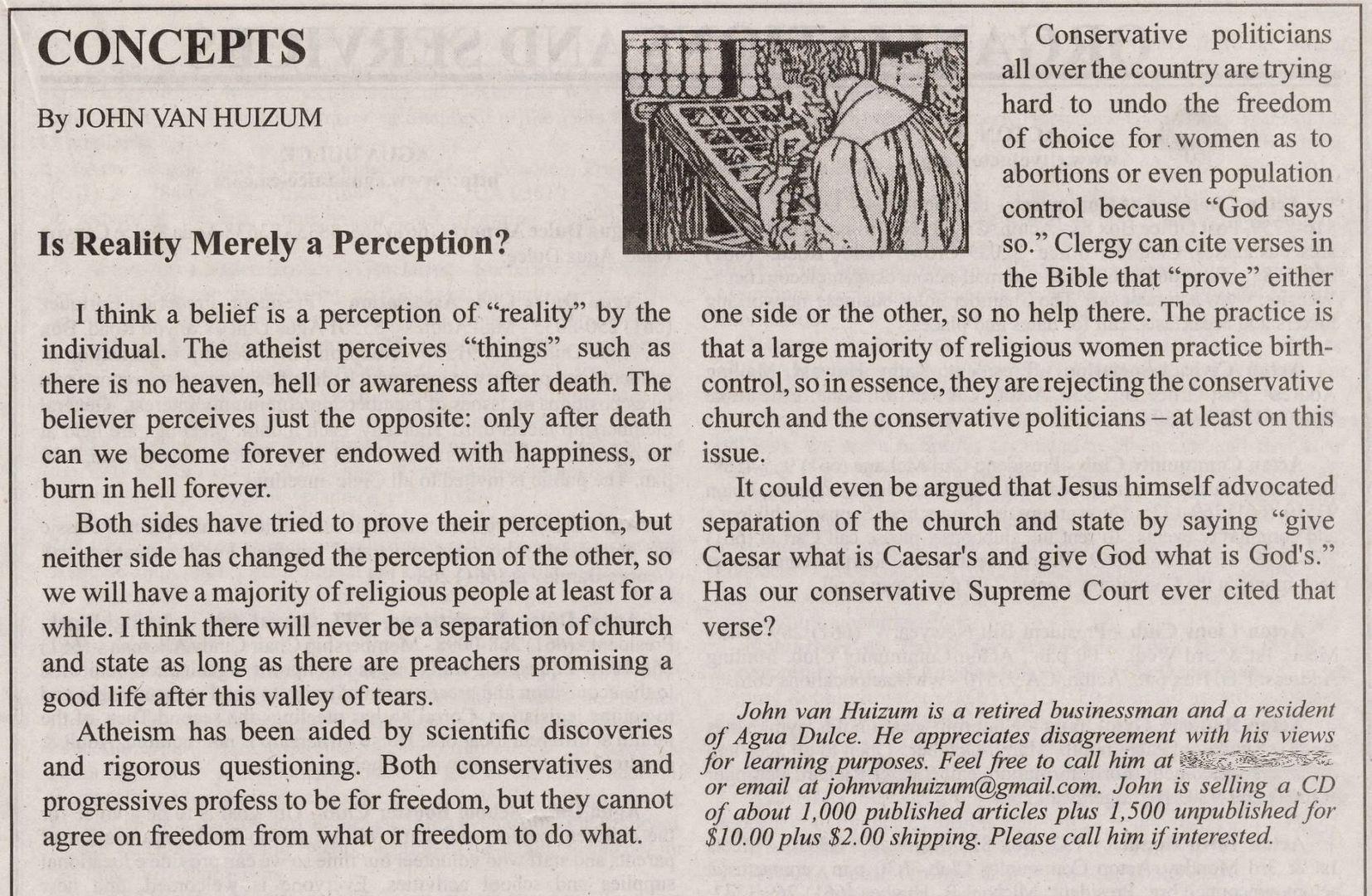







 Machen


