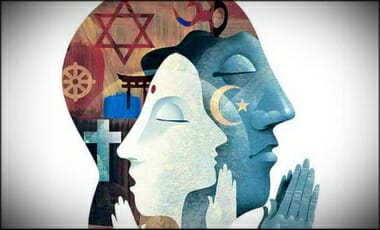
Debating God via Infoceptor Forums circa 2003 | Raw Debate

This is an old debate I was involved in at Infoceptor Forums (a defunct site for early gamers via: StarCraft / Warcraft / Diablo — in the Serious Discussions/Religion part of the forum. Similar to SPACE BATTLES)… the reason I do not do this format of debating any longer is because there would be too many people coming in to comment and challenge me… and not enough “Me’s” to respond back.  Keep in mind that many here are not Christians, so some foul language is in the mix. 

Enjoy… but I warn you… it is long! The debate happened between 05-27-2003 & 06-05-2003 and their are many commentators… it is raw.

[I will add some commentary in these brackets]

METHSNAX SAID:

I am an athiest, but I am always open to learning about new religions and such, so I was wondering if those who have a religion would please explain their religion so that we could better understand that of which we do not partake in.


HERESY RESPONDS:

I am also an atheist… but I have some suggested reading for you.

Will to Power – Nietzsche

Koran (well not all of it)

Inferno – Dante

Genesis

PREATOR ANTRAX RESPONDS:

I’m sort of an Agnostic. Although I tend to think God does exist. But as a man of science, I am not prepared to claim for certain until there is reasoning to do it.

But that’s not where it stops, I basically believe that God exists and that I must stand opposed to him. I do what I can to ridicule his religions and find fallacies and contradictions in his teachings. In fact, I have a score board, currently 3:2 (I’m winning), of successful direct stands against one another. It makes for an interesting life. Oh, and I’m not a Satanist, if he was so prevalent then I’d oppose that bastard too.

PAPA GIORGIO [ME]

[QUOTING PREATOR ANTRAX] “But as a man of science I am not prepared to claim for certain until there is reasoning to do it.”

Nor is he prepared to go out and spend a little cash to see if science does indeed point to a Divine Intelligence behind it all.

For any wishing to get the best answers to tough questions, I will take a quote from my “Replying to Human / Ape Proof of Evolution?” strain, for those interested in being unbiased (scientific).

Quote:

I have a few suggestions for your viewing and reading pleasure:

  • The first is by an atheist, Richard Milton.  He wrote a book called Shattering the Myths of Darwinism, and that’s exactly what it does.  The author is not opposed to evolution, per se, but he is opposed to how it is currently taught, being that it is more pseudo-science than actual science.  Plus, he is not a creationist trying to bury the proverbial axe.

Now, keep in mind that these books I am mentioning are for the introductory reader on this subject however, if you are a college student taking courses in a particular scientific field, let me know and I will offer a more technical manual.

  • The next book I recommend is by Ralph Muncaster, and is called, Dismantling Evolution: Building the Case for Intelligent Design.  He is a Christian, but the book is written for the irreligious, for the most part.  

These two books, one by an atheist, the other by a Christian-theist, would be great – positive – places to start from.  I also realize that documentaries of the quality close to, say, The Learning Channel, or the Discovery Channel, would help bring what these books mention to a three-dimensional life.  The two DVD’s I will offer for your investigation into this matter are:

  • The first is a short (30 min) film, but is packed with a large punch.  It is called, From a Frog to a Prince, and is well worth the money.  The other DVD documentary is called, Unlocking the Mystery of Life: The Scientific Case for Intelligent Design.  Both are well done and deserve an honest hearing in front of your viewing pleasure.

These four suggestions will allow you to, over the course of, say a year, if you took your time, to get some of the positive input by doctorate holding scientists and professors in their special fields of science on this matter.  This is not me changing someone’s mind, but allowing said person to make up his or her own mind in light of all the evidence.  This is all I wish for people. 

PREATOR ANTRAX RESPONDS TO ME:

[QUOTING PAPA GIORGIO] “But as a man of science I am not prepared to claim for certain until there is reasoning to do it.”  Nor is he prepared to go out and spend a little cash to see if science does indeed point to a Divine Intelligence behind it all.

Oh so you know what I spend my money on, do you? And I know for a fact that there is no reputable scientific theory that proves the existence of a “Divine Intelligence”, there are certainly philosophers that have thought to have proved it, such as Berkeley but they have been met with equally strong opposition. Everytime someone thinks they’ve got proof, someone think about it and provides a reason to reject this proof. And as such I am not going to say for sure that either side is correct. I allow for the existence of God, I think I would be disappointed if he didn’t exist. God is quite and adversary to have. But I’m sorry Papa Giorgio, you don’t get to claim that science has conclusively proved God exists, I know it hasn’t. Anyway it would destroy the religion if it had, because religion is meant to be a question of faith…if you prove it you remove the concept of faith and in effect destroy the religion. Prove that God exists and then believing in him means nothing.

PAPA GIORGIO [ME]

[QUOTING PREATOR ANTRAX] “And I know for a fact that there is no reputable scientific theory that proves the existence of a “Divine Intelligence”

Have you viewed and read the above books/DVD’s? How about reading Darwin’s Black Box: The Biochemical Challenge to Evolution, by Dr. Michael Behe? Or The Natural Limits to Biological Change? How about the two seminal works, The Creation Hypothesis: Scientific Evidence for an Intelligent Designer, and Mere Creation: Science, Faith & Intelligent Design.

Please tell me, Antrax, which creation or intelligent design books or articles HAVE you read? I would love to know  — so I wouldn’t have to go around guessing where you spend your money. I would like to know, since you so forcefully claim there is no scientific evidence for design. What made you come to that conclusion? Bias? Or actually looking at the best available evidence?

  • Do you say, “God doesn’t exist, therefore
  • Or do you say, “I have looked at the best evidence available to me now, and I do not see

[….]

Please, again, let me know what books, articles, or media you have taken the time to thoroughly read and meditate on to come to your brazen conclusions that 90% of the world’s population throughout history hasn’t.

CRAZY MOFO JOINS IN:

It’s not that we haven’t looked for the evidence that intelligent design actually took place, it’s that there isn’t any. Seriously I haven’t ever read or heard anything feasible that supports intelligent design. It’s hog wash I tell you :)

And I noticed you referred to “god” as a he. Why does everyone do this? If something created humans and everything why would it be logical to assume he is a human male?

Anyways Papa Giorgio can you please just tell me a few of the best points of why intelligent design is feasible?

PAPA GIORGIO [ME]

[QUOTING MOFO] “I haven’t ever read or heard anything feasible that supports intelligent design.”

This is the point MoFo, when people say, “well, you don’t know what I have read or studied but I know there is no evidence in this or that,” when pressed about what they have read, silence usually follows. It did with you MoFo [a previous debate], and it did with Antrax. I could sit here and argue your ignorance to the issue of Intelligent Design theory, but I would be hitting up against a brick wall. Because you refuse to even look, let me repeat you again

[QUOTING MOFO] “I haven’t ever read or heard anything feasible that supports intelligent design.”

The point is you haven’t even looked yet, you just assume it not to be so. I don’t reject Mormonism, or Jehovah Witness’, or Islam because I know them to be false based on already assuming Christianity to be true. I have gone out and put the same test I put to the Christian faith. The same goes for science. I go out and put a test to what science currently knows, and what we can see in nature.

I don’t know if you realized yet (I’m sure you do), MoFo, but I quoted you at the beginning of the “Human Evolution” [another debate] post, and I must say (and I do not say this in meanness, or a prideful manner), you ended up looking silly. Why? Because you state something so emphatically, and then cannot back up what you are saying. And then after reading it all, you just shrug it off and say, “Well! I still believe in it!”

I haven’t heard such a haughty tone from Dr. Pangloss [FYI, that is a fictional character in Voltaire’s book Candide], or the others who ask constructive questions? Or maybe some have seen the weakness in what they use to believe were good arguments (basing their beliefs on them), and are now – maybe for the first time in their life (and rightly so) – going to go out and “dig a little deeper.” They, however, haven’t dug quite the deep hole you and Antrax seem to dig.

Again, I just think you should consider I know, it sounds out-of-this-world — just maybe possibly, going out of your way and check out just one of the resources I mentioned. Start with the atheist’s book about evolution I recommended.

Don’t say there isn’t, and then go look with that attitude. Say, there’s a possibility (just a shred of one, but a shred nonetheless), but I should look into it to see, for myself.

Are you a

  • “God doesn’t exist [presupposed], therefore

Or,

  • “I have looked at the best evidence available to me now [open-minded], so I haven’t seen yet

One is scientific in nature, the other isn’t.

P.S., I will get to a few examples later, I want to let the other posts [debates] die down first.

GIADDON ALSO JOINS:

One reason I don’t believe in god is the lack of proof of his existence. I used to be a Christian, but left in disgust when I saw that there was just Nothing there. A bunch of hypocritical and contradictory pish-tosh that doesn’t stand up to scrutiny.

For example, on Origins.org [I recommended this article to MethSnax, but it is a dead site now] I found a fascinating article on how the burden of proof lies on the atheists. From the beginning, this is illogical. It is impossible to prove that something does not exist, especially when it is as amorphous as god. The whole article seems to say:

“We’re tired of trying to prove that god exists: your turn.”

Furthermore, back in ye olde tymes, God was quite an active fellow. Starting floods, talking to people, sending plagues, burning bushes. Yet all of a sudden he went quiet. Why did he suddenly stop doing things? Did he get bored and wander away? Did he go on a snack run? What? Or maybe he can’t contact us and we can’t contact him for a very simple reason:

He doesn’t exist.

METHSNAX:

Wow, thank you very much. I have read much of the material suggested, except for the books, although I believe they will contain a great deal that I should know to. I have read Genesis, and part of the Koran. I have come to the conclusion that perhaps I should form my own religion. It would be a varied form of atheism that merely questions God existence in a more scientific manner, not completely deny it. This way, people can not believe in God, but still maintain an understanding of other religions. I hope that wasn’t a stupid idea. The only true problem I see with religion is that if you total the deaths caused in the name of God/god(s) compared to all other deaths in the world, you will see that most are in the name of God/god(s) or religions that promote non violence.

CRAZY MOFO:

Right you are, MethSnax. The terrorists behind the nightmares of 9/11 believed they are going to a type of “heaven” for their brave acts.

Bush thinks he is going to a type of “heaven” for protecting america, the “good side”, and destroying “evil” (terrorists and terrorist harboring countries).

It’s the same damn idea on both sides, however each side thinks they are the “good side”! Good going religion :(

KAIGUN NOW JOINS:

So lemme get this straight, because religion is used as an excuse for killing someone, it is the religion’s fault?

Let me pose a question to you. A criminal goes on a shooting spree and attributes his mass murder to video game violence. Do you therefore draw the conclusion that it is video games that are responsible for these murders?

PREATOR ANTRAX:

I actually do read alot of books and articles pertaining to scientific and philosophical evaluations of religion and religious claims. And I have regular conversation with the father of my best friendwho has spent the last 3-4 years of his life evaluating religion, and has spent huge amounts of money on books. So far I have not found anything that works as a sound confirmation of the existence of a divine intelligence. Stop being so pig-headed by assuming because you’ve found something that you see as evidence, that everyone will take it as evidence. Some people take more to convince.

PAPA GIORGIO [ME]

Wasn’t it you, GIADDON, who said there was no logical proof for His existence? Then I posted a response:

Based on Sufficient Reason

(See an excellent article at The Stanford Encyclopedia of Philosophy)

P1) A contingent being exists.

  1. This contingent being is caused either (1) by itself, or (2) by another.
  2. If it were caused by itself, it would have to precede itself in existence, which is impossible.

P2) Therefore, this contingent being (2) is caused by another, i.e., depends on something else for its existence.

P3) That which causes (provides the sufficient reason for) the existence of any contingent being must be either (3) another contingent being, or (4) a non-contingent being (necessary) being.

  1. If 3, then this contingent cause must itself be caused by another, and so onto infinity.

P4) Therefore, that which causes (provides the sufficient reason for) the existence of any contingent being must be either (5) an infinite series of contingent beings, or (4) a necessary being.

P5) An infinite series of contingent beings (5) is incapable of yielding a sufficient reason for the existence of any being.

P6) Therefore, a necessary being (4) exists!

Based on the Principle of Existential Causality

  1. Some limited, changing being[s] exist.
  2. The present existence of every limited, changing being is caused by another.
  3. There cannot be an infinite regress of causes of being.
  4. Therefore, there is a first Cause of the present existence of these beings.
  5. This first Cause must be infinite, necessary, eternal, simple, unchangeable and one.
  6. This first uncaused Cause is identical with the God of the Judeo-Christian tradition

A mix of both

  1. Something exists (e.g., I do);
  2. I am a contingent being;
  3. Nothing cannot cause something;
  4. Only a Necessary Being can cause a contingent being;
  5. Therefore, I am caused to exist by a Necessary Being;
  6. But I am personal, rational, and moral kind of being (since I engage in these kinds of activities);
  7. Therefore this Necessary Being must be a personal, rational, and moral kind of being, since I am similar to him by the Principle of Analogy;
  8. But a Necessary Being cannot be contingent (i.e., not necessary) in its being which would be a contradiction;
  9. Therefore, this Necessary Being is personal, rational, and moral in a necessary way, not in a contingent way;
  10. This Necessary Being is also eternal, uncaused, unchanging, unlimited, and one, since a Necessary Being cannot come to be, be caused by another, undergo change, be limited by any possibility of what it could be (a Necessary Being has no possibility to be other than it is), or to be more than one Being (since there cannot be two infinite beings);
  11. Therefore, one necessary, eternal, uncaused, unlimited (=infinite), rational, personal, and moral being exists;
  12. Such a Being is appropriately called “God” in the theistic sense, because he possesses all the essential characteristics of a theistic God;
  13. Therefore, the theistic God exists.

Giaddon, you said:

“It is impossible to prove that something does not exist, especially when it is as amorphous as God”

Amorphous means:

  1. lacking definite form; having no specific shape; formless: the amorphous clouds.
  2. of no particular kind or character; indeterminate; having no pattern or structure; unorganized: an amorphous style; an amorphous personality.

Now, I want either Giaddon to answer this, or anyone else fo that matterwhat did Giaddon just do to contradict her/him self??

I will give a hint below with a small portion of a paper I have already posted and you would think these types of mistakes would be stopped once shown – going to show how much bad-thinking is incorporated into our minds when not honed. My favorite quote is,

  • “Raising one’s self-consciousness [awareness] about worldviews is an essential part of intellectual maturity” (From the book, World-Views In Conflict: Choosing Christianity In a World of Ideas, by Ronald Nash).

Quote:

What about agnosticism, does the belief that one cannot ultimately know anything about God hold up to rational and logical thought? *Before going any further, I should define the two different types of agnostics:

  • Agnosticism: The state of not-knowing whether there is a God or not. *The humble [soft] agnostic says that he doesn’t know whether there is a God. *The less humble [hard] agnostic says that you don’t either… [and] thinks that we can’t ever really know (Tom Morris, Philosophy for Dummies. Chicago, Illinois: IDG Books Worldwide (1999), p. 238.)

I am mainly dealing here with the “hard” agnostic. *The “soft” agnostic is open to receiving information about God from others and then tests these claims by the rules and science of logic, history, and experience. *An example that bears striking similarities to the “hard” agnostic is that of a conversation between a teacher and her student:

Teacher: “Welcome, students. This is the first day of class, and so I want to lay down some ground rules. First, since no one person has the truth, you should be open-minded to the opinions of your fellow students. Second… Elizabeth, do you have a question?”

Elizabeth: “Yes I do. If nobody has the truth, isn’t that a good reason for me not to listen to my fellow students? After all, if nobody has the truth, why should I waste my time listening to other people and their opinions? What’s the point? Only if somebody has the truth does it make sense to be open-minded. Don’t you agree?”

Teacher: “No, I don’t. Are you claiming to know the truth? Isn’t that a bit arrogant and dogmatic?”

Elizabeth: “Not at all. Rather I think it’s dogmatic, as well as arrogant, to assert that no single person on earth knows the truth. After all, have you met every single person in the world and quizzed them exhaustively? If not, how can you make such a claim? Also, I believe it is actually the opposite of arrogance to say that I will alter my opinions to fit the truth whenever and wherever I find it. And if I happen to think that I have good reason to believe I do know truth and would like to share it with you, why wouldn’t you listen to me? Why would you automatically discredit my opinion before it is even uttered? I thought we were supposed to listen to everyone’s opinion.”

Teacher: “This should prove to be an interesting semester.”

Another Student: “(blurts out) Ain’t that the truth.” (Students laugh)

(Francis J. Beckwith & Gregory Koukl, Relativism: Feet Planted Firmly In Mid-Air. Grand Rapids, Michigan: Baker Books (1998), p. 74.)

The hard agnostic dismisses the argument even before hearing it. *This type of agnosticism is refuted by the associate professor of philosophy and government at the University of Texas at Austin, J. Budziszewski (Ph.D., Yale University):

  • “To say that we cannot know anything about God is to say something about God; it is to say that if there is a God, he is unknowable. *But in that case, he is not entirely unknowable, for the agnostic certainly thinks that we can know one thing about him: *That nothing else can be known about him. *Unfortunately, the position that we can know exactly one thing about God – his unknowability in all respects except this – is equally unsupportable, for why should this one thing be an exception? How could we know that any possible God would be of such a nature that nothing else could be known about him? *On what basis could we rule out his knowability in all other respects but this one? The very attempt to justify the claim confutes it, for the agnostic would have to know a great many things about God in order to know he that couldn’t know anything else about him” (Norman Geisler & Paul Hoffman, editors, Why I Am a Christian: Leading Thinkers Explain Why They Believe. Grand Rapids, Michigan: Baker Books (2001), p. 54.)

Agnostics basically claim that nothing can be known about reality (or, Reality). *Norman Geisler points out that “in its ultimate form [agnosticism] claims that all knowledge about reality (i.e., truth) is impossible. *But this itself is offered as a truth about reality” (Josh McDowell, The New Evidence That Demands a Verdict. Nashville: Thomas Nelson (1999), p. 637).

He did contact us, and proved His existence.

KAIGUN, great point, and you clearly show a use of a part of the brain that others seem to not, common sense! Not only do MethSnax and MoFo “blame the video game,” but they would then say the video game does not exist. I know I just simplified it too much, but the premise remains.

METHSNAX, I would entreat you to read an article found at: The Real Murderers: Atheism or Christianity? Please, read the whole article.

[A recent comprehensive compilation of the history of human warfare, Encyclopedia of Wars by Charles Phillips and Alan Axelrod documents 1763 wars, of which 123 have been classified to involve a religious conflict. So, what atheists have considered to be ‘most’ really amounts to less than 7% of all wars. It is interesting to note that 66 of these wars (more than 50%) involved Islam, which did not even exist as a religion for the first 7,000 years of recorded human warfare. COMPARED TO just 100-years where atheistic/dialectical materialistic government were founded and killed more people than all of religion before the 20th century — if you exclude Islam. So atheism in 100-years killed more people than all of the history of Buddhism, Hinduism, Christianity, Jainism, Taoism, etc., combined. So, it seems, you would WANT people to be religious to curtail out nature. I also expanded on this a tad HERE]

Again ANTRAX: What have you read? Give me the articles, names of the books, etc. I want to knowplease inform me, as, I may have read it as well. if putting you on the spot is pigheaded, then so be it.

PAPA GIORGIO [ME]

MOFO, you are very apt at showing your youthful “ire.” My hope is you actually make it from the abyss of necessitous thought patterns and join the world of reflective thinking. To pigeonhole the geopolitical landscape into such a neanderthalish comparison of, “good religion vs. bad religion,” is just too much for me to bear. Again, I entreat you to stop focusing on your very-apparent psychological fear of anything Christian – because you apparently cannot even comment on a simple political choice made by a United States president without throwing religion in the mix.

Are you so tainted about the Christian faith (or, religion in general) that you would simply brush it aside by making such child-like comparisons of a complex issue?

I wish to leave the world of religio-political thought (or so inferred by you) for a moment and share an incite with you that I hope (and can only pray), hits home.

Quote:

Instead of thinking of Christianity as a collection of theological bits and pieces to be believed or debated, we should approach our faith as a conceptual system, as a total world-and-life view. Once people understand that both Christianity and its adversaries in the world of ideas are worldviews, they will be in a better position to judge the relative merits of the total Christian system. William Abraham has written:

“Religious belief should be assessed as a rounded whole rather than taken in stark isolation, Christianity, for example, like other world faiths, is a complex, large-scale system of belief which must be seen as a whole before it is assessed. To break it up into disconnected parts is to mutilate and distort its true character. We can, of course, distinguish certain elements in the Christian faith, but we must still stand back and see it as a complex interaction of these elements. We need to see it as a metaphysical system, as a worldview, that is total in its scope and range” (An Introduction to the Philosophy of Religion, p. 104).

The case for or against Christian theism should be made and evaluated in terms of total systems. Christianity is not simply a religion that tells human beings how they may be forgiven, however important this information is. Christianity is also a total world-and-life view. Our faith has important things to say about the whole of human life. Once Christians understand in a systematic way how the options to Christianity are also worldviews, they will be in a better position to justify their choice of Christianity rationally. The reason many people reject our faith is not due to their problems with one or two isolated issues; it is the result of their anti-Christian conceptual scheme, which leads them to reject information and arguments that for believers provide support for the Christian worldview.

Ronald H. Nash, Worldviews in Conflict: Choosing Christianity in a World of Ideas (Grand Rapids, MI: Zondervan, 1992)

  • “The problem with Christianity is not that it has been tried and found wanting, but that it has been found difficult, and left untried” — G. K. Chesterton (Quote taken from, A Shattered Visage: The Real Face of Atheism)

A book that helps to compare three major worldviews is entitled Understanding the Times: The Religious Worldviews of Our Day and the Search for Truth, by David A. Noebel. It compares Secular Humanism, Marxism/Leninism, and Christianity in the realm of:

1) Theology
2) Philosophy
3) Ethics
4) Biology
5) Psychology
6) Sociology
7) Law
8) Politics
9) Economics
10) History

Until you look at Christianity in a way that includes the whole sum, you are merely making a mockery of my faith, and yourself, when saying such puerile statement about George W’s belief.

SIRZAP: 

[SIR ZIP QUOTES GIADDON]

Furthermore, back in ye olde tymes, God was quite an active fellow. Starting floods, talking to people, sending plagues, burning bushes. Yet all of a sudden he went quiet. Why did he suddenly stop doing things? Did he get bored and wander away? Did he go on a snack run? What? Or maybe he can’t contact us and we can’t contact him for a very simple reason:

He doesn’t exist.

Jesus founded a churchwith the guidance of the Holy Spirit…

GOD did actively intervened in history

but of courseJesus told HE will come again but there will be turbulent times ahead

Knowledge will increase and People will travel to and froas prophesied by Daniel…

[SIR ZIP QUOTES PREATOR ANTRAX]

I actually do read a lot of books and articles pertaining to scientific and philosophical evaluations of religion and religious claims. And I have regular conversation with the father of my best friend…who has spent the last 3-4 years of his life evaluating religion, and has spent huge amounts of money on books. So far I have not found anything that works as a sound confirmation of the existence of a divine intelligence. Stop being so pig-headed by assuming because you’ve found something that you see as evidence, that everyone will take it as evidence. Some people take more to convince.

Me tooI spent books on other people’s religion and beliefs….

Divine Intelligence…. well let me put it this waya Storya true story and was published in Reader’s Digests

One time, an atheist visited his friend, a Christian, both are Astronomers

The atheist was fascinated with the Solar system Model and asked who made it….

the Christian answered “nobody!!!” jokingly with a smile,

but the atheist persisted, knowing, his Christian friend had to be joking.

The Atheist continued, praising and really admiring the model….

then the Christian said, if somebody made the model, how could the real thing not exist???

end of story….

I looked for the original story as even with my minor edits to smooth out SIR ZIPS telling of it, I did find it in John MacArthur’s book, “The Battle for the Beginning: The Bible on Creation and the Fall of Adam” (p.84). 

  • The story is told of Charles Boyle, the fourth Earl of Orrery, a devoted Christian and brilliant thinker who was fascinated with Kepler’s and Newton’s discoveries about planetary motion and the intricate design of the universe. Boyle hired a watchmaker to design a working mechanical model of the solar system that demonstrated the motion of the planets around the sun. (Such a model is called an orrery, after its designer.) Boyle was showing the model to an atheistic scientist, who was very impressed with the clock¬work model. The atheist said, “That’s a very impressive model. Who made it for you?” “No one made it,” Boyle wryly replied. “It just happened.”

I am assuming the Reader’s Digest retelling of it included the idea tat one could not make a model of something if that “something” didn’t exist.

[SIR ZIP QUOTES METHSNAX]

Wow, thank you very much. I have read much of the material suggested, except for the books, although I believe they will contain a great deal that I should know to. I have read Genisis, and part of the Koran. I have come to the conclusion that perhaps I should form my own religion. It would be a varied form of atheism that mearly questions God existance in a more scientific manner, not completely deny it. This way, people can not believe in God, but still maintain an understanding of other religions. I hope that wasn’t a stupid idea. The only true problem I see with religion is that if you total the deaths caused in the name of God/god(s) compared to all other deaths in the world, you will see that most are in the name of God/god(s) or religions that promote non violence.

Science has limitations…. it depends on sensesbut GOD transcends beyond our senses

You can not just gain religion by intellectual means Religion is a way of life….

CRAZY MOFO:

First off I didn’t’ blame the video game, of course the person that commits the act is always to blame, but religion helps in fogging their choices.

Secondly I just wanna know why/how people can believe there is a “supernatural” being behind everything we see and do when there is:

Zero evidence,

Zero reason, and finally,

Zero logic for something like this to exist

If a being created the universe who created that being? It is much more logical to assume that the universe is a sea of energy and matter forming stars and planets and sometimes planets that can suit life (earth).

Religion has been wrong time and time again, after all, the churches thought the earth was flat and it was at the center of the universe. We can thank courageous astronomers for discovering the TRUTH and risking torture and ridicule.

HERESY:

Quote:

Zero evidence,

Zero reason, and finally,

Zero logic for something like this to exist

There is also ZERO evidence that there is not a creator.

Seriouslyhow can so many atheists be blindly one sided?

I’m an atheist, but I still see the argument.

Excuse me while I go vomit.

EL_CHUPACABRA STEPS IN THE RING:

Heretic ur logic is extremely flawed, if there is no divine being how could there be evidence that there is no divine being? Has anyone ever heard of the Schrödinger Cat experiment?

Basically if you put a live cat in a lead box and then you throw in a poisoned cat treat and then you seal the box, you have no way of knowing whether the cat is alive or dead therefore the cat exists in two states alive and dead.

We cannot know whether or not God exists so therefore God both exists and doesn’t exist. Furthermore because the cat is sealed in a box it makes no difference to us whether the cat is alive or dead

oh and one other thing for those of you who say that there cannot be an infinite cause for the creation of the universe you are quite wrong. There is a relatively new theory concerning time travel and the creation of the universe though I cannot recall the exact details, I think the book I read it in was called Time Travel in Einstein’s Universe. Something about at some point in time the universe creates itself in the past and ur left with the eternal question of which came first the chicken or the eggI dunno I can’t remember ill try and dig up the book and get back to you

HERESY:

Quote:

  • if there is no divine being how could there be evidence that there is no divine being?

um great argument….

I’ll just say this.

If there is a divine being, how could there be evidence that there is a divine being?

On both sides, there is a fair amount of theory and such, and although the creation theory has been losing some ground, is it really all that less relevant?

Some may say yes, while many say no. But because there is not sufficient evidence on either side, I choose to accept both as legitimate, although I lean towards atheism.

Is my logic flawed? Hardly. After all, there is no PROOF that there is no god – and that is all I say.

The cat cannot exist in two states. Regardless of what you knowit is in only one. Its like saying. “You don’t know if I am male or female.” I only exist in one state regardless of how much you know.

Is my logic flawed? No. Are most atheists horribly one sided? Yes. Is yours? Not looking promising.

EL_CHUPACABRA:

To you the cat does exist in two states. The cat is encased in solid lead you can’t see it, it can’t see you. How can you possibly know if the cat is alive or dead? Its all about perspective. And again how can there be proof that something doesn’t exist if it doesn’t exist? I want a 10 legged dog, try and prove to me it doesn’t exist.

HERESY:

No. It doesn’t. The cat exists in one state…. you simply cannot know which. This DOES NOT mean that it exists in two.

Of course, the fact that a dog will have ten legs is scientifically disproven. Or at least highly unlikely. it could happen but it probably wont.

God has not been disproven.

Try again

EL_CHUPACABRA:

OK I am not attempting to disprove God I’m attempting to prove that it’s impossible to prove or disprove God and yes, the cat does exist in two states, if you don’t believe so then tell me if the cat is alive or dead. 

Oh, and please show me scientific evidence that disproves the existence of a 10-legged dog.

HERESY:

It’s called DNA…. the genetic structure of a dog does not allow for the additional legs to be grown without mutation. Although additional legs have been formed before, iirc.

And basically, what I’m saying is that your 2 existences thing is bullshit. If you know what the existence is or not, there is still only ONE true way that it is. KNOWING has nothing to do with it. Your idea is RETARDED. There. I said it.

Anyway I’m basically just humoring you now In my mind I’ve decided that I’ve pretty much pwned youso I’m gonna go study for a math test….

EL_CHUPACABRA:

I would let you win this one because I am truly just as tired of arguing this point as you are, but I just don’t have it in me to bow to someone who does not even realize that the whole cat thing was not my idea in the first place. I’m in fact citing a well-known and accepted idea that was created by Schrodinger and is used in such fields as quantum mechanics. Also, unless you can show me a complete map of a dog’s genome and show me where the dog is constrained to 4 legs then you had better find some more concrete proof. Anyways study for your math test I’m sure you need to.

HERESY:

I realize that you are citing a few sources I’m simply saying that I don’t agree with them. Anyway, I was arguing a side which I don’t really support and I have massive finals tomorrow.

CRAZY MOFO:

I like the cat example, it produces the same problem we have here. We can’t prove there is or isn’t a creator. SO we must choose the most logical choice, and that is that there isn’t one.

And don’t say but why is that the most logical choice? Because I’m not gonna repeat myself as I am forced to in almost every thread I’m sick of it, you know how I feel on this

GIADDON:

Papa Giorgio: Obviously my “contradiction” was that I referred to God as a “he”, then called “him” amorphous. I was simply trying to use the conventional term regarding God, to avoid confusion. It’s mere semantics, and shouldn’t even be up for debate. If you prefer, I can call God “bullshit.”

And as for your “God was required to make humans” argument, my response stands: what made God? And if he just “is” why can’t the whole universe just “be?” That argument falls apart if you spend even a second of time thinking about it.

SirZap: What? I don’t understand what you are saying.

Heretic: Good attitude, and one I wish more people would share, both atheists and believers. As I said, there is no way to prove that there is no God, I just don’t believe in him, and I have presented my reasons.

El_Chupacabra: The cat occupies one stage only. Our observation is irrelevant to the truth.

PAPA GIORGIO [ME]:

MOFO (and others), you essentially said there is

  • “zero reason, and finally, zero logic for something like this to exist”

May I refer you again to my already post reasonably logical argument above:


JUMP


MOFO, you said:

  • “If a being created the universe who created that being?”

Quote:

The most prominent objection that is ever raised against a form of cosmological argument like this consists in asking, “Then what is the explanation for God’s existence?” This is most effective when done with a smugness of tone and deliberate emphasis of the word “God.”

The objection usually means to imply here that the cosmological argument will generate an infinite regress of explanations. To explain the existence of God, by the reasoning just used, it would seem that we need to postulate the existence of a Super-God. But then that being’s existence would need explaining by the activities of a Super-Duper-God, and so on, ad infinitum and absurdum (to infinity and absurdity).

This objection seems to just assume that God’s existence does not have a scientific or personal explanation, then it is unintelligible. But it should be by now what a defender of the argument will say to this.

The existence of God is intelligible not because it was caused by anything or anyone, but because it flows from his essence. This was the claim that the ontological argument made about God. God cannot fail to exist. God exists necessarily. It is God’s essential nature to exist. And in this regard, God is very different from anything in the universe. God’s existence logically follows from God’s essence. No other explanation for God is either necessary or possible. Thus, we don’t have to worry about postulating (theoretically supposing the existence of) other deities in an infinite regress (or infinite mess) of explanatory postulations.

God, as the ontological argument told us, is fundamentally different from the universe. The very concept of God, it contends, precludes God’s not existing. So we cannot even imagine God’s not existing and know with full detail what we are imagining, without contradiction. But we can with the universe. It does not seem to be at all the sort of thing whose essence is to exist. Its concept does not logically imply its reality in all sets of possible circumstances. And that is different from the concept of God as a greatest possible being.

Notice that the conclusion of this version of the cosmological argument is not “Therefore there is a God.” it is just that, if we are rational, we should believe that there is a God. But this in itself is a surprise to many people who associate religious belief not with rationality but instead with the irrational side of life. This argument contends not just that it is rational to believe, but that it is irrational not to believe.

Excerpted from Philosophy for Dummies, by Tom Morris, p.253.

MOFO, you said:

  • “Religion has been wrong time and time again, after all the churches thought the earth was flat and it was at the center of the universe.”

All not true Mofo?! In fact, the flat-earth theory is a myth, but you wouldn’t want to actually investigate that, because that would require putting your bias aside and looking into the matter yourselfI mean, you have already presupposed what your saying is true, right? The answer is yes, because you have emphatically stated these things to be true, thus proving the church to be false.

Before I go about taking more of your examples and showing you – and the others here – how you are wrong yet again, I want to make an analogy. Just for a moment, lets say you are right, lets say that the church thought the earth was flat, and also believed a geocentric universe (actually they did, but there is more to this story than simply this, I will shortly explain). What does this have to do with the truth of a matter, like, say, God’s existence? If the Son of Sam killed his victims merely for the fact that 2 + 2 = 4, would that make the equation 2 + 2 = 4 wrong? No it wouldn’t, neither would the hypothetical that the church taught a flat earth. This has nothing to do with whether God exists or not. Even if there were no Christians on earth, this would not falsify the truth claims of Christianity.

Okay, back to business. A very fun read is a book by Jeffrey Russell called, Inventing the Flat Earth: Columbus and Modern History. Two other books worth mentioning are: Not So!: Popular Myths About America from Columbus to Clinton, by Paul Boller; and, 6 Modern Myths About Christianity and Western Civilization, by Philip Sampson.

The Bible clearly states the earth is round (Isaiah 40:22), the Hebrew root word used in this verse literally means sphericity, with the 3-D in mind.

  • Roundness of the earth (Isaiah 40:22)
  • Almost infinite extent of the sidereal universe (Isaiah 55:9)
  • Law of conservation of mass and energy (II Peter 3:7)
  • Hydrologic cycle (Ecclesiastes 1:7)
  • Vast number of stars (Jeremiah 33:22)
  • Law of increasing entropy (Psalm 102:25-27)
  • Paramount importance of blood in life processes (Leviticus 17:11)
  • Atmospheric circulation (Ecclesiastes 1:6)
  • Gravitational field (Job 26:7)

Etc.

As for geocentricism, the church rejected the interpretation of misused Scripture for geocentricism that the secular universities taught. The analogy would be if the church today accepted Darwinism.

Quote:

Creationists are often accused of trying to oppose science on purely theological terms. The argument usually contains a strong warning to remember the persecution of Galileo by the theologians of his own time. It continues, “History has proven that Galileo was correct and that the dogmatic religious authorities who opposed him were wrong.” With one simple illustration, scientists warn that any interference in scientific ideas by religious people is tantamount to religious persecution.

The historical account of Galileo’s struggle for acceptance is not, however, a black and white issue. In fact, it is one of the most interesting and complex historical events recorded. Galileo’s trial was not the simple conflict between science and religion so commonly pictured. It was a complex power struggle, fought upon the foundations of personal and professional pride, envy, and ambition.

The stage for this tragedy had been set a few years earlier during what is commonly referred to as the Protestant reformation. During the reformation, the Catholic Church’s authority had been called into question. Priests and laypeople had judged Rome as having forsaken true Christian beliefs. The reformation shook the Church at its very foundation of authority, causing it to lose much of its world power and influence. Eventually, at the council of Trent, the Catholic Church formed an index of literature which was forbidden to Catholics throughout the world. Included in this censor were any books that challenged traditional interpretations of the scripture.

Ironically, the traditional beliefs that Galileo opposed ultimately belonged to Aristotle, not to biblical exegesis. Pagan philosophy had become interwoven with traditional Catholic teachings during the time of Augustine. Therefore, the Church’s dogmatic retention of tradition was the major seat of controversy, not the Bible. It may also be noted that Pope Urban VIII was himself sympathetic to Galileo but was not willing to stand against the tide of controversy. In reality, the majority of persecution seemed to come from intellectual scientists whose monopoly of educational authority had been threatened. During Galileo’s time, education was primarily dominated by Jesuit and Dominican priests.

One of the most important aspects of Galileo’s “threat” to education is that he published his writings in Italian, rather than Latin, which was the official language of scholarship. Galileo was attempting to have his ideas accepted by common people, hoping that they would eventually filter into the educational institutions. Thus, Galileo was regarded as an enemy of the established scientific authorities and experienced the full weight of their influence and persecution.

In many ways, the historic controversy of creation vs. evolution has been similar to Galileo’s conflict, only with a reversal of roles. In the sixteenth century, Christian theism was the prevailing philosophy and the Catholic Church dominated the educational system. Those, like Galileo, who dedicated themselves to diligently search for truth found themselves at the unmerciful hands of the authorities whose theories they threatened. In the twentieth century, however, the philosophy of naturalism has become dominant, and science occupies the position of influence. Again, we note that the majority (regardless of whether it is right or wrong) will persecute those who dare to dispute their “traditional” theories; today the questionable theory of evolution is being challenged.

The lesson to be learned from Galileo, it appears, is not that the Church held too tightly to biblical truths; but rather that it did not hold tightly enough. It allowed Greek philosophy to influence its theology and held to tradition rather than to the teachings of the Bible. We must hold strongly to Biblical doctrine which has been achieved through sure methods of exegesis. We must never be satisfied with dogmas built upon philosophic traditions.

Ref: What is the lesson that Christians should learn from Galileo? | See also: Geocentrism: History and Background

[Atheist Daniel Dennet likened flat-earthers to creations, however, the president of the Flat Earth Society is a Virginian man named Daniel Shenton. He believes in Evolution as well as Climate Change. See CROSS EXAMINED]

Mofo, again, knowledge is good, your hasty assumptions are not.

SIRZAP:

GIADDON: Of course, you are a non-believer. If you are intelligent enough, or at least knowledgeable about what I said, then you will understand what I’m saying. Nothing personal, just my opinion about you.

GOD is GOD, believe it or not. simple as that.

PAPA GIORGIO [ME]:

GIADDON, you said:

  • “It is impossible to prove that something does not exist, especially when it is as amorphous as God”

Amorphous means:

  1. lacking definite form; having no specific shape; formless: the amorphous clouds.
  2. of no particular kind or character; indeterminate; having no pattern or structure; unorganized: an amorphous style; an amorphous personality.

Don’t you see?

“To say that we cannot know anything about God is to say something about God; it is to say that if there is a God, he is unknowable. But in that case, he is not entirely unknowable, for the agnostic certainly thinks that we can know one thing about him: That nothing else can be known about him. Unfortunately, the position that we can know exactly one thing about God – his unknowability in all respects except this – is equally unsupportable, for why should this one thing be an exception? How could we know that any possible God would be of such a nature that nothing else could be known about him? On what basis could we rule out his knowability in all other respects but this one? The very attempt to justify the claim confutes it, for the agnostic would have to know a great many things about God in order to know he that couldn’t know anything else about him”

Norman Geisler & Paul Hoffman, editors, Why I Am a Christian: Leading Thinkers Explain Why They Believe (Grand Rapids, MI: Baker Books, 2001), p. 54.

I’m surprised I had to point that out again.

EL_CHUPACABRA:

GIADDON, I will pose to you the same question that I did to Heretic: Is the cat alive or dead? And please note that the box is sealed and there is no way to see in or hear anything or have any sort of interaction with the box. There is also enough oxygen to last for several days. So after say 30 mins is the cat alive or dead?

CRAZY MOFO:

PAPA GIORGIO, the reason you and I cannot communicate is because you already accept that there is a god where I do not.

It just does not make any sense to me. Humans are animals, no other animal on the earth assembles and contemplates this like we do. God is just a term made up by humans. And if there is some sort of creator, wtf would it be? Certainly it would not be a human form right if you say it created humans.

I will tell you what god is, it is energy. Energy and matter in the universe. You go on and on talking about god this god that. Can you define god? Why would a being just create all this **** we have in the universe.

I know my method of arguing is weaker than yours, but that is because I’m just getting frustrated. You keep attacking my intelligence, when you are the high school dropout. I’m currently in college and I talk with my professors regularly about astronomy and philosophy. I also attend free night classes on astronomical events and up comings. Such as the alignment of Mars, which is coming up soon. But anyways I’m getting off track, so I’ll let you respond to what I presented you with.

ANDWARF CHIMES IN:

[ANDWARF QUOTES EL_CHUPACABRA] Giaddon I will pose to you the same question that I did to Heretic: Is the cat alive or dead? And please note that the box is sealed and there is no way to see in or hear anything or have any sort of interaction with the box. There is also enough oxygen to last for several days. So after say 30 mins is the cat alive or dead?

The act of not knowing does not affect the state of the cat!

I don’t know how many people there are in China, but that does not affect the amount that are actually there!

PREATOR ANTRAX:

[PREATOR ANTRAX QUOTES EL_CHUPACABRA] oh and one other thing for those of you who say that there cannot be an infinite cause for the creation of the universe you are quite wrong.  There is a relatively new theory concerning time travel and the creation of the universe though i cannot recall the exact details, i think the book i read it in was called Time Travel in Einstein’s Universe.  Something about at some point in time the universe creates itself in the past and ur left with the eternal question of which came first the chicken or the egg…i dunno i can’t remember ill try and dig up the book and get back to you

I think what you are referring to is Causal Time Loops. I’ve heard that they have been logically applied to the origin of the universe. Basically it goes like this; the cause of the universe is the effect in an infinite loop. Whilst this is difficult to comprehend it involves no logical fallacies. It is merely experience which brings us to believe that the effect is always caused, and never it’s own cause. It’s an interesting explanation, I really enjoy time-based philosophy, hence why I took a class in it. Causal Time Loops are an incredibly interesting concept. I’d encourage you all to read up on them, since they explore many concepts that are shown in sci-fi movies of today.

[PREATOR ANTRAX QUOTES PAPA GIORGIO] (he quotes my first “Contingent Being” example and then says….)  

This argument only works if all premises are correct, and I can’t see any reason why you can’t deny these premises. Both ‘a’ and ‘b’ of P1 can be denied, although ‘b’ requires the introduction of causal time loops as I stated above. You can’t just post an argument and assume that it is correct, the logic is perfect, but the premises aren’t necessary and whilst that makes this argument cogent it doesn’t assure its validity.

KAIGUN:

[KAIGUN QUOTES CRAZY MOFO] I like the cat example, it produces the same problem we have here.  We can’t prove there is or isn’t a creator.  SO we must choose the most logical choice, and that is that there isn’t one. And don’t say but why is that the most logical choice?  Because i’m not gonna repeat myself as I am forced to in almost every thread i’m sick of it, you know how I feel on this

Ok, I won’t ask you why you think its the most logical choice. I will tell you that you blantantly wrong. It is not the most logical choice. To paraphrase Heretic, if neither side can adequately prove their case, then the most logical choice would not be to side with either.

I used to think I was an atheist, until I discovered the vast majority of atheists were atheists simply because it supposedly gave them justification for their prejudice against Christianity. I didn’t want to be associated with such hatred and ignorance. I don’t see how anyone who values logic and knowledge could blindly believe in anything, be it the existence of God, non-existence of God, love or anything else for that matter.

PAPA GIORGIO [ME]:

No MOFO, the reason you and I cannot communicate is because you state things – over-and-over-again – that just aren’t true. I just showed you in my last post the many examples and misuses you make of the limited information you have. Another reason we cannot communicate is that you refuse to suspend your belief for a little while and look into the matter for yourself (I suggest the book by the atheist). I wasn’t born into a Christian family? I was an atheist (or thought I was) for many years. I didn’t want to stop or suspend my beliefs because this would mean changing my life style – or altering it. I grew up indoctrinated with evolution, all my parents watched were PBS shows and Carl Sagan by-lines.

However, when I started to actually look into the matter myself, I was told that the evidence was so massive that any “intellectual” person would be a fool not to accept it. Naturally I didn’t want to be a fool. So when I finally started to dig for this evidence, all I turned up were a lot of “soft” theories about how things “might have happened.” There was no solid empirical evidence for evolution. And after many years of reading, and looking into the matter, I found more evidence for the creation model and evidence for God’s existence than rock turning into man (the atheists Bible).

As far as God being energy, energy is not eternal; it was made at the Big Bang. Since matter and energy didn’t exist at one point, and everything that comes to exist has a cause, what caused the Big Bang?

MOFO, I am a high school drop out. And all I am pointing out is that you say stuff like, “the church taught a flat-earth/geocentric universe and this is one of the many reasons I don’t believe in God, which is what you imply implicitly and explicitly, you are basing your beliefs on something that isn’t true. And I have shown many of these you have brought up in your repertoire of “evidences” you use for, a) evolution; and b) evidences you use against God. I am not attacking you as much as I am challenging you to see that you have accepted a worldview not based on evidence, logic, or rational/evidential prodding, but only on bias against anything metaphysical. You, are a philosophical materialist, a naturalist by choice, not by evidence.

Once you realize this, you may wish to look into the matter more deeply, for yourself, not because Papa GiorgioG says so. What college do you go to (what area), I bet there may be a creationist professor that teaches there that I can find for you (PM me).

PAPA GIORGIO [ME]:

ANTRAX, are you a contingent being? How could this be denied?

PAPA GIORGIO [ME]:

ANTRAX, are you a contingent being? How could this be denied?



Atheism as Religion: Some Humanist Manifesto Musings | RPT

This first of two older papers/posts was written back in 2010. I used part of it for a few posts over the years (as there is a 2012 connection in it), but have it in a neat package here. BTW, footnote #9 is a great quote, enjoy:


Stemming the Tide


The third article in the Humanist Manifesto II begins:

“We affirm that moral values derive their source from human experience. Ethics is autonomous and situational, needing no theological or ideological sanction. Ethics stems from human need and interest.”[1]

For the secular person, man himself is the only standard by which his own behavior is to be assessed, man is the measure of all things. Man is to be the sole arbiter in all matters of justice and law, right and wrong. In the words of the Encyclopedia Americana, “Since there is no God, man is the creator of his own values.”[2] 

The British author John Hick bluntly asserts, “There is no God; therefore no absolute values and no absolute laws.”[3] Friedrich Nietzsche agreed:  “…the advantage of our times, nothing is true, everything is permitted.”[4] The American scholar David F. Wells says of our nation that “[t]his is the first time that civilization has existed that, to a significant extent, does not believe in objective right and wrong. We are traveling blind, stripped of our own moral compass.”[5] Secular Humanist Paul Kurtz believes that, “The moral principles that govern our behavior are rooted in habit and custom, feeling and fashion,”[6]

How can anything be commended as being right, or condemned as being wrong?

Outside of these philosophers and professors, is there any precedence for this in law here in the United States to support such an insertion of cultural relativism? (Of course there is, otherwise I wouldn’t ask it.) In Planned Parenthood v. Casey (1996), the 9th District Appeals Court wrote:

At the heart of liberty is the right to define one’s own concept of existence, of meaning, of the universe and of the mystery of human life. Beliefs about these matters could not define the attributes of personhood were they formed under compulsion of the State.[7]

In other words: whatever you believe is your origin legally allows you to designate meaning on both your life and body. If you believe that the child growing in you isn’t a child unless you designate it so, you may seek an abortion at any time during the pregnancy. Thus reinforcing Roe v. Wade and Doe v. Bolton to the outer reaches of insanity. The woman alone can choose to or not choose to designate life to that “fetus.” It isn’t a “potential person” until the mother says it is. She becomes the potential for that person in other words.

Understand? That clarified and said, what commonality does this thinking have to the following historical quote:

If relativism signifies contempt for fixed categories and men who claim to be bearers of an objective, immortal truth From the fact that all ideologies are of equal value, that all ideologies are mere fictions, the modern relativist infers that everybody has the right to create for himself his own reality

Sounds really close to the 9th Circuit’s majority view and many of the secular humanists quoted, doesn’t it? The above is basically saying in a nutshell that your opinion is just as valid as another persons opinion because both your’s and the other person’s perspective on something is formed from influences from your culture and experiences. So someone from New Guinea for instance may have a differing view or opinion on eating dogs than an American.

Let’s compare a portion from both the 9th Circuit and the so far mysterious historical quote before revealing the source of said quote:

  1. “At the heart of liberty is the right to define one’s own concept of existence, of meaning, of the universe and of the mystery of human life
  2. the modern relativist infers that everybody has the right to create for himself his own reality

Whether you’re an atheist, Buddhist, Hindu, Christian or Muslim, it doesn’t matter. Your reality is internal rather than a reaction to truth outside yourself. Obviously I am up to something, so I will let the cat out of the bag — much to PETA’s surprise. Ready?

Everything I have said and done in these last years is relativism by intuition…. If relativism signifies contempt for fixed categories and men who claim to be bearers of an objective, immortal truth then there is nothing more relativistic than fascistic attitudes and activity…. From the fact that all ideologies are of equal value, that all ideologies are mere fictions, the modern relativist infers that everybody has the right to create for himself his own ideology and to attempt to enforce it with all the energy of which he is capable.[8]

This is how Mussolini defined Fascism. I would argue that the only place real fascism dwelt for any time was in Italy… whereas in Germany you had a strange mix of Germanic occultic pantheism and angst.[9] So how does one define this new tyranny? Isn’t tyranny caused by religions?

Is there a growing sentiment on the Progressive Left in their philosophical materialism [absolute metaphysics] coupled with their historical memories some resentments [Utopia failed again] and some derangement in their fanaticism [violence] that are driving a decade long violent trend toward conservatism and the values we posit are closer to the mores of this country’s founding?

Is there a tyranny brewing?

Maybe not like we expect, but there definitely is a culture war going on, and in November the other side is set to lose some ground in it. So be prepared for more ad hominem attacks and straw-men being torn down viciously. I likewise think the culmination of this angst via a particular world view and an absolute metanarrative* may soon be realized in more loony left activity that may be violent. Melanie Phillips speaks to its historical roots and its current hold:

the French Revolution and the Terror unleashed by it presented the inescapable evidence that the Enlightenment, far from consigning murderous obscurantism to the dustbin of history, contained powerful strands from the start that would merely secularize tyranny. In the twentieth century, the political totalitarianism of communism and fascism, although overtly antireligious, echoed the premodern despotism of the church by declaring themselves the arbiters of a totalizing world-view in which all dissent would be crushed. Now, with both communism and fascism defeated, the West has fallen victim to a third variation on the theme of totalitarianism: not religious or political this time, but cultural. It is what J. L. Talmon identified back in 1952 as “totalitarian democracy,” which he characterized as “a dictatorship based on ideology and the enthusiasm of the masses.”‘

If religious totalitarianism was rule by the church and political totalitarianism was rule by the “general will;’ cultural totalitarianism is rule by the subjective individual, freed from all external authority and constraints. Morality is privatized so that everyone becomes his or her own moral authority, while the laws and traditions rooted in Christianity and the Hebrew Bible have come under explicit attack. The old order of Western civilization, resting on the external authorities of religion and culture, has to be destroyed. With no order or purpose in the world, moral and cultural relativism are the rule; any attempt to prioritize any culture or lifestyle over any other is illegitimate. The paradox–and it is acute–is that this relativist doctrine itself assumes the form of a dogmatic moralizing agenda that takes an absolutist position against all who challenge it and seeks to stamp out all deviations.[10]

The question must be asked then: is this secularizing of society and personalizing of moral truths building a healthy society or not? That is for you to decide ultimately. However, tell me if you want your kids going through what John Dewey — who some say is the father of the modern public school system — many years ago alluded to:

There is no God and no soul. Hence, there are no needs for props of traditional religion. With dogma and creed excluded, then immutable [i.e. unchangeable] truth is also dead and buried. There is no room for fixed, natural law or permanent moral absolutes.[11]

This obfuscation and rejection of an absolute moral model (actually, a replacing of one for the other) blurs that center point society tries, or should be trying, to aim for. This rejection can have — as history has shown — a “relentless and cruel”[12] outcome. Tammy Bruce, herself a homosexual/pro-choice author, points to the importance of fighting this tide of secularism with that ethic that is close to the conservatives heart, as it was close to the Founders heart:

Even if one does not necessarily accept the institutional structure of “organized religion,” the Judeo-Christian ethic and the personal standards it encourages do not impinge on the quality of life, but enhance it. They also give one a basic moral template that is not relative,” which is why the legal positivists of the Left are so threatened by the Natural Law aspect of the Judeo-Christian ethic.[13]

Professor Alister McGrath (Ph.D in molecular biophysics and a Doctor of Divinity) makes no qualms that this is no less than a Nihilistic grab for power, “as The illiberal imposition of this pluralistic metanarrative on religions is ultimately a claim to mastery – both in the sense of having a Nietzschean authority and power to mold material according to one’s will, and in the sense of being able to relativize all the religions by having access to a privileged standpoint.”[14] In other words, elitism pouring in from the Progressive Left, as usual. 

Here is a mock conversation to illustrate [and end] my point in regards to the absolute value in cultural and moral relativism. Enjoy:

Teacher: “Welcome, students. This is the first day of class, and so I want to lay down some ground rules. First, since no one person has the truth, you should be open-minded to the opinions of your fellow students. Second… Elizabeth, do you have a question?”

Elizabeth: “Yes I do. If nobody has the truth, isn’t that a good reason for me not to listen to my fellow students? After all, if nobody has the truth, why should I waste my time listening to other people and their opinions? What’s the point? Only if somebody has the truth does it make sense to be open-minded. Don’t you agree?”

Teacher: “No, I don’t. Are you claiming to know the truth? Isn’t that a bit arrogant and dogmatic?”

Elizabeth: “Not at all. Rather I think it’s dogmatic, as well as arrogant, to assert that no single person on earth knows the truth. After all, have you met every single person in the world and quizzed him or her exhaustively? If not, how can you make such a claim? Also, I believe it is actually the opposite of arrogance to say that I will alter my opinions to fit the truth whenever and wherever I find it. Moreover, if I happen to think that I have good reason to believe I do know truth and would like to share it with you, why wouldn’t you listen to me? Why would you automatically discredit my opinion before it is even uttered? I thought we were supposed to listen to everyone’s opinion.”

Another student blurts out: “Ain’t that the truth.”[14]

FOOTNOTES

[1] James Sire, The Universe Next Door: A Basic Worldview Catalog, 3rd. edition (Downers Grove, IL: InterVasity Press, 1997), 62.

[2] Robert Morey, The New Atheism and the Erosion of Freedom (Phillipsburg, NJ: P&R Publishing, 1986), 63.

[3] Ibid.

[4] Albert Camus, The Rebel (trans. Anthony Bower. Harmondsworth, London: Penguin Books, 1962), 58.

[5] David F. Wells, Losing Our Virtue: Why the Church Must Recover Its Moral Vision (Grand Rapids, MI: Wm. B. Eerdmans Publishing Company, 1999), 17.

[6] William Lane Craig, Reasonable Faith: Christian Truth and Apologetics, 3rd edition (Wheaton, IL: Crossway Books, 2008), 175.

[7] Planned Parenthood of Southeastern Pennsylvania v. Casey, 505 U.S. 833 (1992), section II. Available in electronic format at www.caselaw.lp.com/scripts, [cited 11 June 2003].

[8] Mussolini, Diuturna pp. 374-77, quoted in Peter Kreeft, A Refutation of Moral Relativism: Interviews with an Absolutist (San Francisco, CA: Ignatius Press, 1999) 18.

[9] Melanie Phillips points this out in her newest book:

As Isaiah Berlin noted, the terrible consequences of this thinking were foreseen as early as 1832 by the German poet Heinrich Heine. He warned that one day the Germans, fired by a combination of absolutist metaphysics, historical memories and resentments, fanaticism and savage fury, would destroy Western civilization. Berlin recorded Heine as predicting that

“Implacable Kantians … with axe and sword will uproot the soil of our European life in order to tear out the roots of the past. Armed Fichteans will appear… restrained neither by fear nor greed… like those early Christians whom neither physical torture nor physical pleasure could break.” And most terrible of all would be Schelling’s disciples, the Philosophers of Nature who, isolated and unapproachable beyond the barriers of their own obsessive ideas, will identify themselves with the elemental forces of “the demonic powers of ancient German pantheism”

The World Turned Upside Down: The Global Battle Over God, Truth, and Power (New York, NY: Encounter Books, 2010), 269.

[10] Ibid., 98-99

[11] Dustin Guidry, Turning the Ship (Xulon Press [self-publishing], 2009), 38.

[12] “I freed Germany from the stupid and degrading fallacies of conscience and morality…. We will train young people before whom the world will tremble. I want young people capable of violence — imperious, relentless and cruel” ~ Hitler, from a plaque hung on the wall at Auschwitz; in Ravi Zacharias, Can Man Live Without God (Nashville, TN: W Publising Group, 1994), 23.

[13] Tammy Bruce, The Death of Right and Wrong: Exposing the Left’s Assault on Our Culture and Values (Roseville, CA: Prima, 2003), 35.

[14] Francis Beckwith & Gregory Koukl, Relativism: Feet Planted in Mid-Air (Grand Rapids, MI: Baker Books, 1998), 74.

*Metanarratives, or, Grand Narratives – “big stories, stories of mythic proportions – that claim to be able to account for, explain and subordinate all lesser, little, local, narratives.” Jim Powell, Postmodernism for Beginners (New York, NY: Writers and Readers, 1998), 29.

And here is a post I did on my free BLOGSPOT BLOG May 18, 2007. My Microsoft Word document dates from 2002, so this was a debate I had at Space Battle’s forums many years ago. Which is why there are no footnotes.


Atheism a Religion?… Say What!


The United States does not have an established church, but it does have (and always has had) an established religion, or at least a dominant religious philosophy, an established way of thinking.

What is religion and can it be defined? I will attempt to do so for the purpose of “clarifying terms.” The best term I feel is applicable to religion is this:

Religion may be defined as a way of thinking about ultimate questions. A persons religion answers questions such as how and why (and everything else) came into existence, whether the purpose of life has been established by a Creator or is up to us to decide, and how we can have reliable knowledge (revealed by God or revealed by Nature) about the world and about ourselves.

The officially recognized answers to these questions make up a society’s established religious philosophy, its culturally dominant way of thinking about origins.  But let us look at what some dictionaries say about faith and religion.

  • Webster’s New World Dictionary: defines religion as “a specific system of belief, worship, often involving a code of ethics.” Faith is defined as “unquestioning beliefcomplete trust or confidence… loyalty.”
  • Funk and Wagnalls Standard Desk Dictionary: has this to say about religion, “The beliefs, attitudes, emotions, behavior, etc., constituting man’s relationship with the powers and principles of the universe.” On the matter of faith it says, “Confidence in or dependence on a person, statement, or thing as trustworthyBelief without need of certain proof.”

There is nothing sinister or inherently unconstitutional about the existing of a de facto established public philosophy on religious questions (such as origins and mans purpose). The philosophy is established not in the sense that it is formally enacted or that dissenters are subject to legal punishment (although in recent years this has started to happen), but in the sense that it provides a philosophical basis for lawmaking and public education, in law school this is taught as “public policy.” For example, one culture may endeavor to encourage its schoolgirls to look forward to lives as mothers and homemakers, while another may encourage them to reject traditional gender stereotypes and pursue formally masculine careers. To encourage either choice reflects a dominant public philosophy about human nature and gender roles. Similarly, any community that operates a public school system must have a policy of some kind concerning, say, sexual morality, even if the policy is merely to encourage adolescents to choose for themselves. Relativism itself is a policy choice, it rests on assumptions about reality, and “man’s relationship with the powers and principles of the universe” as Funk and Wagnalls says.

Soldiers use to march to the “Battle Hymn of the Republic” – a song that is banned from most public schools today. Some people would say we, as a Nation, have become neutral about religion. The evidence, however, points to one philosophy replacing another. Lets see if we can glean what this new religious belief is that so dominates the Western hemisphere now.

For instance, the public schools have become a battleground for religion. John Dunphy, a secular humanist, wrote in the HUMANIST magazine:

“I am convinced that the battleground for humankind’s future must be waged and won in the public school classroom by teachers who correctly perceive their role as the proselytizers of a new faith; a religion of humanity that recognizes and respects the spark of what theologians call divinity in every human being. These teachers must embody the same selfless dedication as the most rabid fundamentalist preacher, for they will be ministers of another sort, utilizing a classroom instead of a pulpit to convey humanist values in whatever subjects they teach regardless of the educational level – preschool daycare or large state university. The classroom must and will become an arena of conflict between the old and the new – the rotting corpse of Christianity together with all its adjacent evils and misery

John Dewey, the father of modern education, hoped to replace sectarian religion with “a religious faith that shall not be confined to sect, class, or race.” The religion envisioned by Dewey is that of secular humanism. The Supreme Court has even recognized it as a religion (Torcaso v. Watkins). This is why there are tax free atheist churches with “pastors” and “counselors.”

The HUMANIST MANIFESTO was signed by many of the prominent atheistic and evolutionary educators of the day. Among its signers were John Dewey, Harry Elmer Barnes, C. F. Potter and John Herman Randall. The manifesto called for a radical change in religious perspectives. A religion adequate to the twentieth century regards the universe as self-existing, not created, and regards man as part of nature evolved in its processes. Mind-body dualism, supernaturalism, theism, and even deism are rejected. The goal of life is the realization of human personality.

Social and mental hygiene are priority items. Social control is a means to the abundant life for all. That statement was updated in 1973 by a HUMANIST MANIFESTO II, which adds an additional emphases on human responsibility toward humanity as a whole, “a specific system of belief, worship [of man], often involving a code of ethics” as Webster puts it.

This is one of the catalysts that brought Judge Pendergerst of the Baltimore Superior Court to say:

“It is abundantly clear that the petitioner’s real objective is to drive every concept of religion out of the public school system. If God were removed from the classroom, there would remain only atheism [secular humanism: a religion]. The word is derived from the Greek atheos, meaning ‘without a God.’ Thus the beliefs of virtually all pupils would be subordinated to those of Madalyn Murray.”

Forcing Morality (Updated)

Originally Posted August 2010 (Conversation was from 2001 via SPACEBATTLES)
Updated in January of 2017, and again today (July 2023)

Susan said:

“No SeanG, unlike you, we are not forcing morality on anybody. We are for allowing a choice.  NOWHERE in the pro-choice agenda is there anything about making abortion mandatory.” (Emphasis in the original)

Answer: For women, Roe means more than having control over their bodies; it allows them to plan her life. If there’s a contraceptive failure, the law protects her, permits her to decide whether-or-not to become a parent.

Once contraception has failed, the women have ALL the rights. She can get an abortion. If she decides to have the child, she can make the father pay support, whether or not he wanted it. According to Roe, the man’s obligation begins and ends with his wallet. This is true, but money facilitates existence (one of the reasons an abortion is allowed… monetary standard of living). The quality of life is measured in dollars and cents.

Inarguably, the man is required to pay support for eighteen years and will have his standard of living diminished (severely so, if his circumstances are modest). Certain career, education, and family options will be foreclosed – for the man at least. >> UPDATE TO THIS PART BELOW | JUMP

(Sound familiar? These are excuses for the women to get “off the hook” – e.g., abort a life – but men don’t have that choice.)

If maximizing personal freedom is the primary goal of our legal system, why should men be held to their traditional obligations (supporting the children they’ve fathered) while women are liberated from theirs?

Question:

  • “Do you believe the government should be able to force someone to become a parent?”

Well? This is precisely what is being done by the government à as I speak! You would argue that the government should stay out of your affairs when choosing whether to become a parent (i.e., to abort or not), however, you wish the government to be involved in telling the father that he has to become a parent and supply all the necessary needs for that child. Thus, you are forcing your morality on me Susan (as a defined group) and using the power of the Federal Government to boot!!! You cannot say any differently with what I just have shown above. This belief is self-refuting and shows you to-be-the hypocrite, and not me. You see… I am for equal rights under the Constitution. A “right” has no “moderation (see below). You, on the other-hand, are for special rights inferred upon groups of people.

An aside: in the Laws of Logic, the Law of Non-Contradiction is the most important and can thus be stated like this – “A” cannot both be “A” and “non-A” at the same time. This law is valid in science, law, politics, philosophy, etc. Any theory which purports something, cannot also deny that purport’ion. As in this case, the pro-choice movement is purported to be about liberating – “civil” rights – etc., however, in doing this they deny to some what they want for others… it is self-refuting, a non-logical theory that is really about special rights rather than equal protection under the law.

An Update via Gay Patriot:

Good point: If women can’t be “forced” to become mothers, why should men be “forced” to become fathers?

Expectant fathers in Sweden should have the right to ‘legally abort’ their unborn child up until the 18th week of pregnancy, the youth wing of the country’s Liberal Party has proposed.

Swedish Liberal Youth argues that men should be given an equal say in whether or not they wish to become a parent, and be granted the option to cut any lawful responsibilities.

The suggested ‘legal abortion’ would be irreversible and would see the man renounce all parental duties and rights to see the child once it has been born.

This completely at odds with the position of the American Feminist Left which is that men should be forced to provide child support even for children that are proven to be someone else’s…

(read the rest)

Via Life Training Institute:

  • Student: You made some good points in your talk, but you shouldn’t force your morality on me or anyone else who wants an abortion.  It’s our choice, isn’t it?
  • Me: Are you saying I’m wrong?
  • Student: I’m not sure.  What do you mean?
  • Me: Well, you think I’m wrong, don’t you?  If not, why are you correcting me?  And if so, then you’re forcing your morality on me, aren’t you?
  • Student: No, I just want to know why you are telling people what they can and cannot do with their lives.
  • Me: Are you saying I shouldn’t do that?  That it’s wrong?  If so, then why are you telling me what I can and cannot do?  Why are you forcing your morality on me?
  • Student (regrouping): I’m confused.  Look, the simple fact is that pro-choicers are not forcing women to have abortions, but you want to force women to be mothers.  If you don’t like abortion, don’t have one.  But you shouldn’t force your beliefs on others.  All I am saying is that pro-life people should be tolerant of other views.
  • Me: Is that your view?
  • Student: Yes.
  • Me: Why are you forcing it on me?  That’s not very tolerant, is it?
  • Student: What do you mean?  I think women should have a choice and you don’t.  It’s your view that’s intolerant, wouldn’t you say?
  • Me: Okay, so you think I’m wrong.  What is it you want pro-lifers like me to do?
  • Student: You should let women decide for themselves and tolerate other views.
  • Me: Tell me, what exactly do pro-choicers believe?
  • Student: We believe everyone should decide for themselves and tolerate other views.
  • Me: So you are demanding that pro-lifers become pro-choicers?
  • Student: What? No way.
  • Me: With all due respect, here’s what I hear you saying.  Unless I agree with you, you will not tolerate my view.  Privately, you’ll let me think whatever I want, but you don’t want me to act as if my view is true.  It seems you think tolerance is a virtue if and only if people agree with you.

(More Media)

UPDATED VIDEO ADDITION:

Pro-Life Man Hilariously Trolls Women’s March

See more on this at LIFE NEWS.


Tough Conversations vs The Easy Way Out (+ Atheist Morality)

A friend texted me the Jeff Daniel’s Newsroom video… and this was essentially my response. (Here it has links and videos as well as larger quotes, the real response was just in text form)

In my years of experience of talking about religion and politics (since 1999 on the WWW, Space Battles Forum), I have noticed the main impediment to people progressing in thinking on a matter. Not speaking of you, but a wider point I am making (Yoda). People will watch that clip and be convinced (This is referring to the Jeff Daniels “Newsroom” clip that occasionally makes it’s rounds).

There were a lot of things just spewed out as fact that many just accept as fact. But to dissect this clip even more work needs to be done than I did – linking articles, media, etc. (As I did: Newsroom’s Anti-America Scene Bitch Slapped!)

People would rather “just accept/believe” than do the hard work to challenge, properly their own beliefs by rightly contrasting two views. Well.

People want the easy way out.

Take for instance an oft used “evidence” against God. People will merely say, “well, what about this evil [insert any one you wish], doesn’t this disprove your God? This person to challenge their own position will have to respond to their own “bumper sticker position” by asking themselves what are the competing worldviews? What do they offer as explanations to said evils? Does theism offer a reasonable response?

These questions take more time than one sentence responses like the one sentence challenge.

But as before, people like the easy route versus thinking well.

Here is a truncated example, how the three big worldviews would respond to rape:

THEISM: evil, wrong at all times and places in the universe — absolutely.

ATHEISM: taboo, it was used in our species in the past for the survival of the fittest and is thus a vestige of evolutionary progressand so may once again become a tool for survival — it is in every corner of nature.  

  • TWO BOOKS I read years ago that would undergird the evolutionary/atheistic [naturalism] foundation for explaining rape: Dale Peterson and Richard Wrangham, Demonic Males: Apes and the Origins of Human Violence | Randy Thornhill and Craig T. Palmer, A Natural History of Rape: Biological Bases of Sexual Coercion.

PANTHEISM: illusion, all morals and ethical actions and positions are an illusion (Hinduism – maya; Buddhism – sunyata). To reach some state of Nirvana one must retract from this world in their thinking on moral matters, such as love and hate, good and bad. Not only that, but often the person being raped has built up bad karma and thus is the main driver for his or her state of affairs (thus, in one sense it is “right” that rape happens).

— Atheist Morals Noted Below —

.Darwin thought that, had the circumstances for reproductive fitness been different, then the deliverances of conscience might have been radically different. “If men were reared under precisely the same conditions as hive-bees, there can hardly be a doubt that our unmarried females would, like the worker-bees, think it a sacred duty to kill their brothers, and mothers would strive to kill their fertile daughters, and no one would think of interfering” (Darwin, Descent, 82). As it happens, we weren’t “reared” after the manner of hive bees, and so we have widespread and strong beliefs about the sanctity of human life and its implications for how we should treat our siblings and our offspring.

But this strongly suggests that we would have had whatever beliefs were ultimately fitness producing given the circumstances of survival. Given the background belief of naturalism, there appears to be no plausible Darwinian reason for thinking that the fitness-producing predispositions that set the parameters for moral reflection have anything whatsoever to do with the truth of the resulting moral beliefs. One might be able to make a case for thinking that having true beliefs about, say, the predatory behaviors of tigers would, when combined with the understandable desire not to be eaten, be fitness producing. But the account would be far from straightforward in the case of moral beliefs.” And so the Darwinian explanation undercuts whatever reason the naturalist might have had for thinking that any of our moral beliefs is true. The result is moral skepticism.

If our pretheoretical moral convictions are largely the product of natural selection, as Darwin’s theory implies, then the moral theories we find plausible are an indirect result of that same evolutionary process. How, after all, do we come to settle upon a proposed moral theory and its principles as being true? What methodology is available to us?

Paul Copan and William Lane Craig, eds., Contending With Christianity’s Critics: Answering the New Atheists & Other Objections (Nashville, TN: B&H Publishing, 2009), 70.

(SEE ALSO: Richard Dawkins Rejects Darwinism As It Relates to Ethics)

This is why I have this “legal statement” — for lack of a better descriptor when people hit me up online or through emmail to discuss issues:

“By-the-by, for those reading this I will explain what is missing in this type of discussion due to the media used. Genuflecting, care, concern, one being upset (does not entail being “mad”), etc… are all not viewable because we are missing each other’s tone, facial expressions, and the like. I afford[a] the other person I am dialoguing with the best of intentions and read his/her comments as if we were out having a talk over a beer at a bar or meeting a friend at Starbucks. Or even striking up a conversation in a line at a grocery store. In other words, in public. (I say this because there seems to be a phenomenon of etiquette thrown out when talking through email or social media sites. There seems to be more vulgarity and gratuitous responses than if you were to strike up conversation in line at a check stand in a grocery market.) You will see that often I USE CAPS — which in www lingo for YELLING. I am not using it this way, I use it to merely emphasize a point (even at times noting this): *not said in yelling tone, but merely to emphasize*. So, in all my discussions I afford[a] the best of thought to the other person as I expect he or she would to me… even if dealing with tough subjects like the ones being discussed herein. I have had more practice at this than most, and with half-hour pizza, one hour photo and email vs. ‘snail mail,’ know that important discussions take time to meditate on, inculcate, and to process. I will not expect agreement, rather, clarity. So be prepared for a good thought-provoking discussion if you choose one with me.”


[a] DICTIONARY: 2. provide or supply (an opportunity or facility): “the rooftop terrace affords beautiful views”

SYNONYMS: provide, supply, present, purvey, make available, offer, give, impart, bestow, furnish, render, grant, yield, produce, bear

ORIGIN: late Old English geforthian, from ge- (prefix implying completeness) + forthian ‘to further’, from forth. The original sense was ‘promote, perform, accomplish’, later ‘manage, be in a position to do’.

The Cults, Language, Revelation, and Secularism (1999)

I dug this gem out of my Microsoft Word due to a conversation on my Facebook. I was planning on going a different direction but after I found this from about 1999 via a debate in a forum on what is still SPACE BATTLES… it was late 99 or early 2000 that I cut my teeth on the Internet via Space Battles. I kept most of my debates from the 4 or so years I was on the forums there… at least my responses. This is one of those early debates — the main point here is that secularism is a religion. (I may add some media when I see fit):


SKEPTIC, YOU SAID:

  • I don’t know how you can say Jimmy Jones and the Branch Davidians weren’t believers in absolutism and God.

This is easy to say.  Both rejected the God of the Bible, period.  They were not Christians, period.  They were cults who had sex with multiple partners and were power hungry and changed meanings of plain and clear scripture to get their way.  This is important, because when anyone deals with a cult member, they need to realize that there is a language barrier.  For instance, when a Mormon says he or she believes in Jesus, is this the same Jesus Christianity has preached for 2,000 years?  How a bout the Jehovah’s Witness when they say they believe in Jesus?

JESUS

Mormons believe that Jesus is not God, but a god, they are polytheists.  They believe that Jesus was born first in heaven in a spiritual body via sexual relations between “Heavenly Father” (God in Mormon terms) and one of his many wives.  Lucifer also was a son born by “God” sticking his dingy in one of his wives.  By the way, God was once a man like us, and now resides on the planet Kolob (according to the Pearle of Great Price – one of many added Mormon scripture).  And be sure that all mentioned here have to take away, change, or add scripture to get their theology to work – just like Hitler and his cronies.

(SEE ALSO: “MORMON GLOSSARY: WORDS HAVE MEANING“)

Jehovah’s Witness’s believe that Jesus was the first created being, that is, Michael the Archangel.  Jehovah (God) then created all things THROUGH Michael the Archangel.  When Michael came to earth in bodily form he was known as Jesus.  And now is not Jesus any longer, but once again under the name and title Michael the Archangel, the first-born.

Jesus, according to the historic Christian faith is God, the creator of everything in heaven and on earth.  He is not bound by time-space; for unlike the two before mentioned perversions of plain scripture, Jesus is the Creator of the space-time continuum.  He is God Almighty.

SALVATION

Both Jehovah’s Witness’ and Mormons believe that the sacrifices given on the cross by “Jesus” was only in remission of Adam’s original sin, opening the way for these sincere persons to “work” their way into heaven or “salvation.”  Jehovah’s Witness’s believe that 100 hundred hours a week of going door-to-door or standing in front of donut shops handing out booklets will one of the many rules sufficient enough to allow them to be resurrected here on earth to live forever more (only 144,000 get to go to heaven).  Mormons don’t drink caffeine, cuss, marry in the temple, wear special undergarments, tithe, all in the hopes of making to the “best” heaven.

Christianity teaches that we can do nothing to please God, all our good works are like leaves in the wind, they blow away.  Salvation is a gift that only can be fulfilled by an immutable, perfect, gift… man can never attain this in his finite state.  Salvation is through Christ alone. This is one of the many proofs that Christianity is divine, that is, if this were a man-made religion, man would have made it conquerable.  So like Mormonism and Jehovah’s Witness’ religious construct of lists of items to do for salvation to be attainable, Christianity has no such list.  If man had made Christianity, there would be something we could do to please God for our salvation, in fact, we cannot.  Christianity is unconquerable by man.  (sorry, back to the point).

So when a Jehovah’s Witness or Mormon come to your door and say, “we believe in Jesus,” or, “we believe in salvation,” and, “we are followers of Christ, therefore we are the true Christians,” you can break through the fog by understanding what is meant by terms used.

(From a debate with a J-Dub):

The main problem is that the Watchtower gives ALL truth that is to be believed by the Jehovah’s Witness. I will show an example, and I quote the founder, Charles Taze Russell:

If the six volumes of SCRIPTURE STUDIES are practically the Bible, topically arranged with Bible proof texts given, we might not improperly name the volumes THE BIBLE IN AN ARRANGED FORM. That is to say, they are not mere comments on the Bible, but they are practically the Bible itself….

Furthermore, not only do we find that people cannot see the divine plan in studying the Bible by itself, but we see, also, that if anyone lays the SCRIPTURE STUDIES aside, even after he has used them, after he has become familiar with them, after he has read them for ten years – if he then lays them aside and ignores them and goes to the Bible alone, though he has understood the Bible for ten years, our experience shows that within two years he goes into darkness. on the other hand, if he had merely read the SCRIPTURE STUDIES with their references, and not read a page of the Bible, as such, he would be in the light at the end of two years, because he would have the light of the Scriptures.

Even if you’ve read the Scripture Studies for ten years, and you lay them aside and read the Bible for two years alone, you enter into darkness?!

This is a revealing quote.

It shows how brainwashed Jehovah’s Witnesses are to the fact that the ruling council and president of the Watchtower Society dispense nothing but truth and reality while the rest of humanity who points out the misquotes and misrepresentations are shunned as devils (almost literally).

I will go out on a limb here and say, “if the devil were to create a religious group that undermines the true message in the Bible, would the devil require someone to read the Bible by itselfor would the devil want to add something to it that would interpret everything within?”

Same goes for our current discussion.

When Hitler uses the words Christians, Jesus, church, and the like, you know he had changed the Biblical absolutes to fits his relativistic pantheism/paganism that we know he believed.  If Hitler came to our door today passing out tracts talking of Jesus’ non-Jewish heritage and that he was going to finish what Jesus couldn’t, namely the extermination of the Jews, then we would know that this is not Christianity, not absolutes, but fascism at it most perverted.  Remember what a philosophy major once said:

  • “Everything I have said and done in these last years is relativism by intuition….  If relativism signifies contempt for fixed categories and men who claim to be bearers of an objective, immortal truth then there is nothing more relativistic than fascistic attitudes and activity….  From the fact that all ideologies are of equal value, that all ideologies are mere fictions, the modern relativist infers that everybody has the right to create for himself his own ideology and to attempt to enforce it with all the energy of which he is capable” — Mussolini

Mussolini, Diuturna (1924) pp. 374-77, quoted in A Refutation of Moral Relativism: Interviews with an Absolutist (Ignatius Press; 1999), by Peter Kreeft, p. 18.

This is what Hitler did, Mussolini, Joseph Smith, Charles Taze Russell, Jim Jones, David Koresh, and all others who relativize God’s plainly stated truth to fit their particular needs or situation.  And in doing so, they must change, reject, or add to the Bible or the historic Christian faith in order to do so.

SKEPTIC, WHEN YOU SAID:

  • That I agree with! Claiming a personal revelation can hid a host of evils. But it seems like the religious are more likely to do that then a humanist….  I am also arguing that a humanist who believes he contains within himself the ultimate determination of what is moral, would not do the things that these people did without, at least, the recognition that he is being evil. These nazis, Branch Davidians, terrorists, and kool aid killers are all more dangerous because they believe they are doing good.

I almost fell out of my chair.  The Communists killed many, many millions believing they were doing good?  God revealing this is not mandated by Mao is it?  Special revelation isn’t only from God.  One needs only to read the Humanist Manifesto’s or the Communist Manifesto to see revelation without God.  Huxley called evolution a religion without revelation.  However, there can be revelation in non-belief.  For instance, consider the following excerpt from a letter written by Charles Darwin in 1881:

“I could show fight on natural selection having done and doing more for the progress of civilization than you seem inclined to admit…. The more civilized so-called Caucasian races have beaten the Turkish hollow in the struggle for existence. Looking to the world at no very distant date, what an endless number of the lower races will have been eliminated by the higher civilized races throughout the world.”

Charles Darwin, Life and Letters, I, Letter to W. Graham, July 3, 1881, p. 316; cited in Darwin and the Darwinian Revolution, by Gertrude Himmelfarb (London: Chatto & Windus, 1959), p. 343.

Or:

“At some future period, not very distant as measured by centuries, the civilized races of man will almost certainly exterminate and replace the savage races throughout the world. At the same time the anthropomorphous apes will no doubt be exterminated. The break between man and his nearest allies will then be wider, for it will intervene between man in a more civilized state, as we may hope, even than the Caucasian, and some ape as low as a baboon, instead of as now between the negro or Australian and the gorilla.”

Charles Darwin, The Descent of Man, 2nd ed. (New York: A. L. Burt Co., 1874), p.178.

How a bout this:

“No rational man, cognizant of the facts, believes that the average negro is the equal, still less the superior, of the white man. And if this be true, it is simply incredible that, when all his disabilities are removed, and our prognathous relative has a fair field and no favour, as well as no oppressor, he will be able to compete successfully with his bigger-brained and smaller-jawed rival, in a contest which is to be carried on by thoughts and not by bites. The highest places in the hierarchy of civilization will assuredly not be within the reach of our dusky cousins, though it is by no means necessary that they should be restricted to the lowest. But whatever the position of stable equilibrium into which the laws of social gravitation may bring the negro, all responsibility for the result will henceforward lie between Nature and him. The white man may wash his hands of it, and the Caucasian conscience be void of reproach for evermore. And this, if we look to the bottom of the matter, is the real justification for the abolition policy.”

Thomas Huxley, Lay Sermons, Addresses and Reviews (New York: Appleton, 1871), pp 20-1.

One more before I head to humanism:

“The stronger must dominate and not mate with the weaker, which would signify the sacrifice of its own higher nature.  Only the born weakling can look upon this principle as cruel, and if he does so it is merely because he is of a feebler nature and narrower mind; for if such a law [natural selection] did not direct the process of evolution then the higher development of organic life would not be conceivable at all….  If Nature does not wish that weaker individuals should mate with the stronger, she wishes even less that a superior race should intermingle with an inferior one; because in such a case all her efforts, throughout hundreds of thousands of years, to establish an evolutionary higher stage of being, may thus be rendered futile.”

Adolf Hitler, Mein Kampf, translator/annotator, James Murphy (New York: Hurst and Blackett, 1942), pp. 161-162.

These seem very revelational, just revelations from nature.

John Dewey, signer of the Humanist Manifesto I, says this regarding education:

education is the fundamental method of social progress and reform….  In this way the teacher always is the prophet of the true God and the usherer in of the true kingdom of God.

John Dewey, Education Today, “My Pedagogic Creed,” (New York: G. P. Putnam’s Sons, 1897), p. 15, 17.

You see, John Dewey argues that “scientific” education has made the notion of the supernatural “incredible,” and anticipates “the coming of a fuller and deeper religion” – Humanism.  Dewey viewed public education as the vehicle to promote this “deeper religions.”

We certainly cannot teach religion as an abstract essence.  We have got to teach something as religion, and that means practically some religion….  It is their business to do what they can to prevent all public educational agencies from being employed in ways which inevitably impede the recognition of the spiritual import of science ands  of democracy, and hence of that type of religion which will be the fine flower of the modern spirit’s achievement.

Ibid – 1940 edition.

My point as I continue on here is that men are made for revelation, if God’s is thrown to the wayside, some other revelation will take its place.  Roy Wood Sellers is also a signer of the Humanist Manifesto I, he says:

The center of gravity of religion has been openly changing for some time now from supernaturalism to what may best be called a humanistic naturalism….  There have been many steps forward in the past, for every age must process its own religion, a religion concordant with its knowledge and expressed of its problems and aims….  The coming phase of religion will reflect man’s power over nature and his moral courage in the face of the facts and possibilities of life.  It will be a religion of action and passion, a social religon, a religion of goals and prospects.  It will be a free man’s religion, a religion for an adult and aspiring democracy.

Roy Wood Sellers, The Next Step In Religion (New York: The Macmillan Company, 1918), foreword.

Here Sellers makes the case for atheistic, naturalistic Humanism as the next world religion, or revelation.  Again:

But the humanist’s religion is the religion of one who says yea to life here and now, of one who is self-reliant and fearless, intelligent and creative.  It is the religion of the will to power, of one who is hard on himself and yet joyous in himself.  It is the religion of courage and purpose and transforming energy.  Its motto is, “What hath man not wrought?”  Its goal is the mastery of all things that they may become servants and instrumentalities to man’s spiritual comradeship.  Whatever mixture of magic, fear, ritual and adoration religion may have been in man’s early days, it is now, and henceforth must be, that which concerns man’s nobilities, his discovery of, and loyalty to, the pervasive values of life.  The religious man will now be he who seeks out causes to be loyal to, social mistakes to correct, wounds to heal, achievements to further.  He will be constructive, fearless, loyal, sensitive to the good wherever found, a believer in mankind, a fighter for things worth while….  The religion of human possibilities needs prophets who will grip men’s souls with their description of a society in which the righteousness, wisdom and beauty will reign together….  Loyalty to such an ideal will surely constitute the heart of the humanist’s religion….  If religion is to survive, it must be human and social.  It is they who insists upon a supernatural foundation and object who are its enemies.  Man’s life is spiritual in its own right.  So long as he shall dream of beauty and goodness and truth his life will not lack religion.

Ibid., p. 212, 215-216, 225.

Curtis W. Reese likewise signed the Humanist Manifesto I, he says quite plainly:

Within the liberal churches of America there is a religious movement which has come to be known as Humanism….  There is a large element of faith in all religion.  Christianity has faith in the love of God; and Humanism in man as the measure of values….  Hypotheses, postulates, and assumptions in their proper realm are comparable to faith in the realm of religion.  In this way I speak of the faith of Humanism.

Edited by Curtis W. Reese, Humanist Sermons, preface and “The Faith of Humanism,” (Chicago: Open Court Publishing Company, 1927), p. v, 39, 40

One last quote, as I could go on ad infinitum, another signer was Charles Francis Potter, he plainly states:

[Humanism] is a new type of religion altogether….  Is Humanism a religion?  It is both a religion and a philosophy of culture….  Education is the most powerful ally of humanism, and every American public school is a school of humanism.  What can the theistic Sunday-schools, meeting for an hour once a week, and teaching only a fraction of the children, do to stem the tide of a five-day program of humanistic teaching.

Charles Potter, HUMANISM: A New Religion (New York: Simon and Schuster, 1930), p. 3, 114, 128

You can see that one revelation, say, “God exists,” is replaced with another that says, “God does not exist.”

Here is a quote from the famous 1961 court case, Torcaso v. Watkins:

  • Among religions in this country which do not teach what would generally be considered a belief in the existence of God are Buddhism, Taoism, Ethical Culture, Secular Humanism and others.

See: Washington Ethical Society v. District of Columbia, 101 U.S.App.D.C. 371, 249 F.2d 127; Fellowship of Humanity v. County of Alameda, 153 Cal.App.2d 673, 315 P.2d 394; II Encyclopedia of the Social Sciences 293; 4 Encyclopedia Britannica (1957 ed.) 325-327; 21 id. at 797; Archer, Faiths Men Live By (2d ed. revised by Purinton), 120-138, 254-313; 1961 World Almanac 695, 712; Year Book of American Churches for 1961, at 29, 47.

“Secular Humanism” is official atheism… BTW. It is a religion according to law, and why there are atheist (secular humanist) chaplains in the military.

Humanism is revelation, and just as “absolute” as the other.

  • Paul Kurtz says, “Humanism is a philosophical, religious, and moral point of view.” 
  • Dewey states, “Here are all the elements for a religious faith that shall not be confined to sect, class or race….  It remains to make it explicit and militant.”

Chesterton said,

  • “When a man ceases to believe in God he does not believe in nothing, he believes almost in anything.” 

And so it is.


2021 EXCERPT


This is from APOLOGETIC PRESS:

Humanism is a religion, and the Supreme Court defined it as such in 1961 (Torcaso v. Watkins, 1961; the word “religion” or “religious” occurs 28 times in the first Manifesto, 1933). While the initial Manifesto is specifically religious, the subsequent humanist documents are not. However, the democratic humanism of the Secular Humanist Declaration (1980), and the “planetary” humanism of Kurtz’s Humanist Manifesto 2000, do not contradict the major premises of the first Manifesto.

The initial Manifesto most plainly declares humanism to be a religious enterprise. The very first section (or article) states: “Religious humanists regard the universe as self-existing and not created” (1933, emp. added). Religionists familiar with the goals and practices of secular humanism may be surprised at the high praise of traditional religion in this seminal treatise:

Religions have always been means for realizing the highest values of life. Their end has been accomplished through the interpretation of the total environing situation (theology or world view), the sense of values resulting therefrom (goal or ideal), and the technique (cult) established for realizing the satisfactory life…. [T]hrough all changes religion itself remains constant in its quest for abiding values, an inseparable feature of human life (Humanist, 1933, Preface, parenthetical items in orig.).

So the secularist’s problem is not with religion per se, but with religious beliefs and practices that are antithetical to certain humanist norms and objectives. Secularists reject “salvationism,” which they regard as based on mere “affirmation” (Humanist, 1973). Practically all religion other than humanism falls into the category of religion that humanism would oppose. So, religion must be restructured into a humanist “faith” or belief system.

The first Manifesto unveils the humanists’ desire to reshape modern religion. “The time has come for widespread recognition of the radical changes in religious beliefs throughout the modern world. The time is past for mere revision of traditional values…. Religions the world over are under the necessity of coming to terms with new conditions created by a vastly increased knowledge and experience” (1933, Preface). In a sense, humanists see themselves as saving people from theistic religion: “There is a great danger of a final, and we believe fatal, identification of the word religion with doctrines and methods which have lost their significance and which are powerless to solve the problem of human living in the Twentieth Century…. Religious humanists regard the universe as self-existing and not created” (Preface-Section 1).

Because theistic religion is so “out of date” according to secularists, a mammoth adjustment is in order. Religion of practically every kind must be eliminated or restructured.

Today man’s larger understanding of the universe, his scientific achievements, and deeper appreciation of brotherhood, have created a situation which requires a new statement of the means and purposes of religion. Such a vital, fearless, and frank religion capable of furnishing adequate social goals and personal satisfactions may appear to many people as a complete break with the past. While this age does owe a vast debt to the traditional religions, it is none the less obvious that any religion that can hope to be a synthesizing and dynamic force for today must be shaped for the needs of this age. To establish such a religion is a major necessity of the present. It is a responsibility which rests upon this generation (Humanist, 1933, Preface).

Humanists seem to have as their primary religious activity expunging God from society and the minds of people (see “Humanists Praise,” 2007; “‘Church Polling Place’,” 2006). Only when God is out of the picture may humanists convert all humans to the religion of humanism (and this is precisely what they intend to do; see Ericson, 2006; Lyons and Butt, 2007).

(READ THE REST)

Some Barbary Pirates History and the Creation of Our Military

This was to be the first of many times that an American president would plot to overthrow a foreign government–a dangerous game but one that the Jefferson administration found as hard to pass up as many of its successors would. Wrote Madison:

“Although it does not accord with the general sentiments or views of the United States to intermiddle in the domestic contests of other countries, it cannot be unfair, in the prosecution of a just war, or the accomplishment of a reasonable peace, to turn to their advantage, the enmity and pretensions of others against a common foe.”

Max Boot, The Savage Wars of Peace: Small Wars and the Rise of American Power (New York, NY: Basic Books, 2002), 23-24.

This audio is with a h/t to The Religion of Conquest:

America’s first foreign war: lessons learned from fighting muslim pirates, by Michael Medved:

Most Americans remain utterly ignorant of this nation’s first foreign war but that exotic, long-ago struggle set the pattern for nearly all the many distant conflicts that followed. Refusal to confront the lessons of the First Barbary War (1801-1805) has led to some of the silliest arguments concerning Iraq and Afghanistan, and any effort to apply traditional American values to our future foreign policy requires an understanding of this all-but-forgotten episode from our past.

The war against the Barbary States of North Africa (Algiers, Tunis and Tripoli—today’s Libya) involved commitment and sacrifice far from home and in no way involved a defense of our native soil. For centuries, the Islamic states at the southern rim of the Mediterranean relied upon piracy to feed the coffers of their corrupt rulers. The state sponsored terrorists of that era (who claimed the romantic designation, “corsairs”) seized western shipping and sold their crews into unimaginably brutal slavery.

By the mid-eighteenth century, European powers learned to save themselves a great deal of trouble and wealth by bribing the local authorities with “tribute,” in return for which the pirates left their shipping alone. Until independence, British bribes protected American merchant ships in the Mediterranean since they traveled under His Majesty’s flag; after 1783, the new government faced a series of crises as Barbary pirates seized scores of civilian craft (with eleven captured in 1793 alone). Intermittently, the United States government paid tribute to escape these depredations: eventually providing a bribe worth more than $1,000,000—a staggering one-sixth of the total federal budget of the time – to the Dey of Algiers alone.

When Jefferson became president in 1801, he resolved to take a hard line against the terrorists and their sponsors. “I know that nothing will stop the eternal increase of demands from these pirates but the presence of an armed force, and it will be more economical & more honorable to use the same means at once for suppressing their insolencies,” he wrote.

The president dispatched nearly all ships of the fledgling American navy to sail thousands of miles across the Atlantic and through the straits of Gibraltar to do battle with the North African thugs. After a few initial reverses, daring raids on sea and land (by the new Marine Corps, earning the phrase in their hymn “….to the shores of Tripoli”) won sweeping victory. A decade later, with the U.S. distracted by the frustrating and inconclusive War of 1812 against Great Britain, the Barbary states again challenged American power, and President Madison sent ten new ships to restore order with another decisive campaign (known as “The Second Barbary War, 1815).

Continuing with the article:

The records of these dramatic, all-but-forgotten conflicts convey several important messages for the present day:

  1. The U.S. often goes to war when it is not directly attacked. One of the dumbest lines about the Iraq War claims that “this was the first time we ever attacked a nation that hadn’t attacked us.” Obviously, Barbary raids against private shipping hardly constituted a direct invasion of the American homeland, but founding fathers Jefferson and Madison nonetheless felt the need to strike back. Of more than 140 conflicts in which American troops have fought on foreign soil, only one (World War II, obviously) represented a response to an unambiguous attack on America itself. Iraq and Afghanistan are part of a long-standing tradition of fighting for U.S. interests, and not just to defend the homeland.
  2. Most conflicts unfold without a Declaration of War. Jefferson informed Congress of his determination to hit back against the North African sponsors of terrorism (piracy), but during four years of fighting never sought a declaration of war. In fact, only five times in American history did Congress actually declare war – the War of 1812, the Mexican War, The Spanish American War, World War I and World War II. None of the 135 other struggles in which U.S. troops fought in the far corners of the earth saw Congress formally declare war—and these undeclared conflicts (including Korea, Vietnam, the First Gulf War, and many more) involved a total of millions of troops and more than a hundred thousand total battlefield deaths.
  3. Islamic enmity toward the US is rooted in the Muslim religion, not recent American policy. In 1786, America’s Ambassador to France, Thomas Jefferson, joined our Ambassador in London, John Adams, to negotiate with the Ambassador from Tripoli, Sidi Haji Abdrahaman. The Americans asked their counterpart why the North African nations made war against the United States, a power “who had done them no injury”, and according the report filed by Jefferson and Adams the Tripolitan diplomat replied: “It was written in their Koran, that all nations which had not acknowledged the Prophet were sinners, whom it was the right and duty of the faithful to plunder and enslave; and that every mussulman who was slain in this warfare was sure to go to paradise.”
  4. Cruel Treatment of enemies by Muslim extremists is a long-standing tradition. In 1793, Algerian pirates captured the merchant brig Polly and paraded the enslaved crewmen through jeering crowds in the streets of Algiers. Dey Hassan Pasha, the local ruler, bellowed triumphantly: “Now I have got you, you Christian dogs, you shall eat stones.” American slaves indeed spent their years of captivity breaking rocks. According to Max Boot in his fine book The Savage Wars of Peace: “A slave who spoke disrespectfully to a Muslim could be roasted alive, crucified, or impaled (a stake was driven through the arms until it came out at the back of the neck). A special agony was reserved for a slave who killed a Muslim – he would be cast over the city walls and left to dangle on giant iron hooks for days before expiring of his wounds.”
  5. There’s nothing new in far-flung American wars to defend U.S. economic interests. Every war in American history involved an economic motivation – at least in part, and nearly all of our great leaders saw nothing disgraceful in going to battle to defend the commercial vitality of the country. Jefferson and Madison felt no shame in mobilizing – and sacrificing – ships and ground forces to protect the integrity of commercial shipping interests in the distant Mediterranean.  Fortunately for them, they never had to contend with demonstrators who shouted “No blood for shipping!”
  6. Even leaders who have worried about the growth of the U.S. military establishment came to see the necessity of robust and formidable armed forces. Jefferson and Madison both wanted to shrink and restrain the standing army and initially opposed the determination by President Adams to build an expensive new American Navy. When Jefferson succeeded Adams as president, however, he quickly and gratefully used the ships his predecessor built. The Barbary Wars taught the nation that there is no real substitute for military power, and professional forces that stand ready for anything.
  7. America has always played “the cop of the world.” In part, Jefferson and Madison justified the sacrifices of the Barbary Wars as a defense of civilization, not just the protection of U.S. interests – and the European powers granted new respect to the upstart nation that finally tamed the North African pirates. Jefferson and Madison may not have fought for a New World Order but they most certainly sought a more orderly world. Many American conflicts over the last 200 years have involved an effort to enfort to enforce international rules and norms as much as to advance national interests. Wide-ranging and occasionally bloody expeditions throughout Central America, China, the Philippines, Africa and even Russia after the Revolution used American forces to prevent internal and international chaos.

The Barbary Wars cost limited casualties for the United States (only 35 sailors and marines killed in action) but required the expenditure of many millions of dollars – a significant burden for the young and struggling Republic. Most importantly, these difficult battles established a long, honorable tradition of American power projected many thousands of miles beyond our shores. Those who claim that our engagements in Iraq and Afghanistan represent some shameful, radical departure from an old tradition of pacifism and isolation should look closely at the reality of our very first foreign war—and all the other conflicts in the intervening 200 years.

Religious Implications of the Treaty of Tripoli

A friend recently quoted this:

“As the government of the United States is not, in any sense, founded on the Christian religion; as it has in itself no character of enmity against the laws, religion or tranquility of Musselmen [Muslims]… it is declared… that no pretext arising from religious opinion shall ever produce an interruption of the harmony existing between the two countries” …. “The United States is not a Christian nation any more than it is a Jewish or a Mohammedan nation.” 

Firstly, those who cite the Treaty of Tripoli as evidence that this nation was not founded on the Christian religion, usually ignore the Treaty of Paris of 1783. This Treaty, negotiated by Ben Franklin and John Adams among others, is truly a foundational document for the United States, because by this Treaty Britian recognized the independence of the United States. The Treaty begins with the words, “In the Name of the most holy and undivided Trinity… ,” and there is no dispute about its validity or its wording. This “disputed validity” can be seen in the article by Tekton. A fuller dealing with the treaty can also be found at the Wall Builder’s site.

The United States Constitution and the American political system were based on Christian principles.  Included in those Christian principles are the following theological and moral imperatives:

  • Government power and sovereignty should be limited to the specific theological and moral commands of the Christian God.
  • There should be a balance and separation of powers within the government so that a small group of evil people will be unable to tyrannize others.
  • All citizens should have the right to own property and to buy and sell freely, according to the moral law of the Christian God.
  • The right to life and property cannot be abridged without due process.
  • The ultimate source of all authority lies with the God of the Bible.
  • The American Government was designed to be a sacred covenant between the people, the state, and God.  If the state breaks this covenant, then the people have the right, and the duty, to oppose the state but to use violence only as a last resort.
  • As the Constitution clearly states, Jesus Christ is our Lord because He is the second member of the “most Holy and undivided Trinity.”
  • Although the Constitution affirms a belief in the deity of Christ and in the Holy Trinity, neither the church nor the state is allowed to physically force people to believe these biblical teachings.  The state should, however, do everything it can to facilitate the spread of the Christian Gospel and to place moral limits on the behavior of people.

For instance, one of many examples the Left gives for a secular founding of our nation is Benjamin Franklin. However, we can see his advice to his own kin in these quotes, he wrote to his daughter in 1764,

“Go constantly to church, whoever preaches. The act of devotion to the common prayer book is your principle business there, and if properly attended to, will do more towards amending the heart than sermons generally can do. For they were composed by men of much greater piety and wisdom, than our common composers of sermons can pretend to be; and therefore I wish you would never miss the prayer days; yet I do not mean you should despise sermons, even of the preachers you dislike, for the discourse is often much better than the man, as sweet and clear waters come through very dirty earth. I am the pore particular on this head, as you learned to express a little before I came away, some inclination to leave our church, which I would not have you do.”

And at age 84, when the President of Yale asked his opinion of Jesus of Nazareth, he replied that “I think his system of morals and his religion, as he left them to us, the best the world ever saw or is likely to see.” Something in all the quotes on the atheist monument that are assumed to be “set in stone” (answered here in part 1):

Other posts in this series:

Below, however, is my dealing with a signature (every time someone posts a response in a forum, you/they can choose to have the same “signature” display at the end of their comment — similar to email) of a person in a forum I was in a decade[+] ago. Enjoy, but again, I recommend the above linked articles as well as the one by Apologetic Press. You may ask why many apologetic sites deal with this? It is because atheists primarily latch on to this as an argument against the religious history of this nation. See also my paper on the Separation of Church and State.

Blancho’s signature states:

“‘As the government of the United States of America is not in any sense founded on the Christian Religion…’ – Article XI of the English text of the Treaty of Tripoli, approved by the U.S. Senate on June 7, 1797 and ratified by President John Adams on June 10, 1797.”

(I have been wanting to address this quote for some time now, just haven’t had the time, sorry.)

How does this quote that Blancho uses fly in the face of other quotes by John Adams? What is the background to this treaty that caused such a signing to enter the record books of our hallowed halls. Let us first see a few quotes by Adams before we enter into the proper context of this treaty.

[speaking on why Christmas and the Fourth of July were out two top holidays] “Is it not that, in the chain of human events, the birthday of the nation is indissolubly linked with the birthday of the Saviour? That it forms a leading event in the progress of the gospel dispensation? Is it not that the Declaration of Independence first organized the social compact on the foundation of the Redeemer’s mission upon earth? That it laid the cornerstone of human government upon the first precepts of Christianity?”

“Religion and virtue are the only foundations… of republicanism and of all free governments.”

Okay, the Treaty of Tripoli, one of several with Tripoli, was negotiated during the “Barbary Powers Conflict,” which began shortly after the Revolutionary War and continued through the Presidencies of Washington, Adams, Jefferson, and Madison. The Muslim Barbary Powers (Tunis, Morocco, Algiers, Tripoli, and Turkey) were warring against what they claimed to be the “Christian” nations (England, France, Spain, Denmark, and the United States). In 1801, Tripoli even declared war against the United States, thus constituting America’s first official war as an established independent nation.

Throughout this long conflict, the five Barbary Powers regularly attacked undefended American merchant ships. Not only were their cargoes easy prey but the Barbary Powers were also capturing and enslaving “Christian” seamen in retaliation for what had been done to them by the “Christians” of previous centuries (e.g., the Crusades and Ferdinand and Isabella’s expulsion of Muslims from Grenada).

In an attempt to secure a release of captured seamen and a guarantee of unmolested shipping in the Mediterranean, President Washington dispatched envoys to negotiate treaties with the Barbary nations. (Concurrently, he encouraged the construction of American naval warships to defend the shipping and confront the Barbary “pirates” – a plan not seriously pursued until President John Adams created a separate Department of the Navy in 1798.)

The American envoys negotiated numerous treaties of “Peace and Amity” with the Muslim Barbary nations to ensure “protection” of American commercial ships sailing in the Mediterranean. However, the terms of the treaty frequently were unfavorable to America, either requiring her to pay hundreds of thousands of dollars of “tribute” (i.e., official extortion) to each country to receive a guarantee” of safety or to offer other “considerations” (e.g., providing a warship as a gift to Tripoli, a gift frigate to Algiers, paying 525,000 to ransom captured American seamen from Algiers, etc.)

The 1797 treaty with Tripoli was one of the many treaties in which each country officially recognized the religion of the other in an attempt to prevent further escalation of a “Holy War” between Christians and Muslims. Consequently, Article XI of that treaty stated:

“As the government of the United States of America is not in any sense founded on the Christian religion AS it has in itself no character of enmity [hatred] against the laws, religion or tranquility of Musselmen [Muslims] and as the said States [America] have never entered into any war or act of hostility against any Mahometan [Mohammedan] nation, it is declared by the parties that no pretext arising from religious opinions shall ever produce an interruption of the harmony existing between the two countries.”

This article may be read in two manners. It may, as its critics do, be concluded after the clause “Christian religion”; or it may be read in its entirety and concluded when the punctuation so indicates. But even if shortened and cut abruptly (“the government of the united states is not in any sense founded on the Christian religion”), this is not an untrue statement since it is referring to the Federal government.

Recall that while the Founders themselves openly described America as a Christian nation, they did include a constitutional prohibition against a federal establishment; religion was a matter left solely to the individual states. Therefore, if the article is read as a declaration that the federal government of the United States was not in any sense founded on the Christian religion, such a statement is not a repudiation of the fact that America was considered a Christian nation.

Reading the clause of the treaty in its entirety also fails to weaken this fact. Article XI simply distinguished America from those historical strains of European Christianity which held an inherent hatred of Muslims; it simply assured the Muslims that the United States was not a Christian nation like those of previous centuries (with whose practices the Muslims were very familiar) and thus would not undertake a religious holy war against them.

This latter reading is, in fact, supported by the attitude prevalent among numerous American leaders. The Christianity practiced in America was described by John Jay as “enlightened,” by John Quincy Adams as “civilized,” and by John Adams as “rational.” A clear distinction was drawn between American Christianity and that of European in earlier centuries.

As Noah Webster explained:

“The ecclesiastical establishments of Europe which serve to support tyrannical governments are not the Christian religion but abuses and corruption’s of it.”

Daniel Webster similarly explained that American Christianity was:

“Christianity to which the sword and the fagot [burning stake or hot branding iron] are unknown – general tolerant Christianity is the law of the land!”

While discussing the Barbary conflict with Jefferson, Adams declared:

“The policy of Christendom has made cowards of all their sailors before the standard of Mahomet. It would be heroical and glorious in us to restore courage to ours.”

Furthermore, it was Adams who declared:

“The general principles on which the fathers achieved independence were… the general principles of Christianity…. I will avow that I then believed, and now believe, that those general principles of Christianity are as eternal and immutable as the existence and attributes of God; and that those principles of liberty are as unalterable as human nature.”

Adams’ own words confirm that he rejected any notion that America was less than a Christian nation. Additionally, the writing’s of General William Eaton, a major figure in the Barbary Powers conflict, provide even more irrefutable testimony of how the conflict was viewed at that time. Eaton was first appointed by President John Adams a “Consul to Tunis,” and President Thomas Jefferson later advanced him to the position of “U. S. Naval Agent to the Barbary States,” authorizing him to lead a military expedition against Tripoli. Eaton’s official correspondence during his service confirms that the conflict was a Muslim war against a Christian America.

For example, when writing to Secretary of State Timothy Pickering, Eaton apprised him of why the Muslims would be such dedicated foes:

“Taught by revelation [the Koran] that war with the Christians will guarantee the salvation of their souls, and finding so great secular advantages in the observance of this religious duty [the secular advantage of keeping captured cargo], their [the Muslims’] inducements to desperate fighting are very powerful.”

Eaton later complained that after Jefferson had approved his plan for military action, he sent him the obsolete warship “Hero.” Eaton reported the impression of America made upon the Tunis Muslims when they saw the old warship and its few cannons:

“[T]he weak, the crazy situation of the vessel and equipage [armaments] tended to confirm an opinion long since conceived and never fairly controverted among the Tunisians, that the Americans are a feeble sect of Christianity.”

In a letter to Pickering, Eaton reported how pleased one Barbary ruler had been when he received the extortion compensations from America which had been promised him in one of the treaties, he said:

“To speak truly and candidly…. we must acknowledge to you that we have never received articles of the kind of so excellent a quality from any Christian nation.”

When John Marshall became the new Secretary of State, Eaton informed him:

“It is a maxim of the Barbary States, that ‘The Christians who would be on good terms with them must fight well or pay well.”

And when General Eaton finally commenced his military action against Tripoli, his personal journal noted:

“April 8th. We find it almost impossible to inspire these wild bigots with confidence in us or to persuade then that, being Christians, we can be otherwise than enemies to Musselmen. We have a difficult undertaking!”

May 23rd. Hassien Bey, the commander in chief of the enemy’s forces, has offered by private insinuation for my head six thousand dollars and double the sum for me as prisoner; and $30 per head for Christians. Why don’t he come and take it?”[/i][/list]Shortly after the military excursion against Tripoli was successfully terminated, its account was written and published. What was the title?

  • The Life of the Late Gen. William Eaton… commander of the Christian and other forces… which Led to the Treaty of Peace Between The United States and The Regency of Tripoli

Context Blancho… context.

Here is the appendix from John Eidsmoe, Christianity and the Constitution: The Faith of Our Founding Fathers (Grand Rapids: Baker Books, 1987), 413-415, that will shed more light on this: