A definition from that fits Calvinism via the Stanford Encyclopedia of Philosophy and the current understanding of reformed theologies …. “Reformed” theologies:
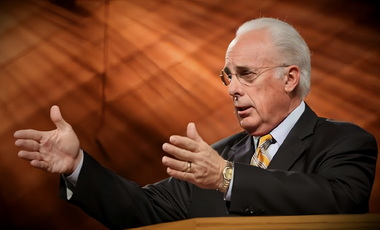
I hate using “Reformed” because many Reformers (like Philip Melanchthon and Balthasar Hubmaier as some examples) thought differently than the “Pipers,” MacArthur’s,” and “Calvins” of their time and today. So Calvinism is a better term: John MacArthur was a “Calvinist Baptist,” not a “Reformed Baptist.” Understand the difference with a distinction? — RPT
Fatalism is the thesis that human acts occur by necessity and hence are unfree. Theological fatalism is the thesis that infallible foreknowledge of a human act makes the act necessary and hence unfree. If there is a being who knows the entire future infallibly, then no human act is free.
Fatalism seems to be entailed by infallible foreknowledge by the following informal line of reasoning:
For any future act you will perform, if some being infallibly believed in the past that the act would occur, there is nothing you can do now about the fact that he believed what he believed since nobody has any control over past events; nor can you make him mistaken in his belief, given that he is infallible. Therefore, there is nothing you can do now about the fact that he believed in a way that cannot be mistaken that you would do what you will do. But if so, you cannot do otherwise than what he believed you would do. And if you cannot do otherwise, you will not perform the act freely.
The same argument can be applied to any infallibly foreknown act of any human being. If there is a being who infallibly knows everything that will happen in the future, no human being has any control over the future.
This theological fatalist argument creates a dilemma for anyone who thinks it important to maintain both (1) there is a deity who infallibly knows the entire future, and (2) human beings have free will in the strong sense usually called libertarian. But it has also fascinated many who have not shared either of these commitments, because taking the argument’s full measure requires rethinking some of the most fundamental questions in philosophy, especially ones concerning time, truth, and modality. Those philosophers who think there is a way to consistently maintain both (1) and (2) are called compatibilists about infallible foreknowledge and human free will. Compatibilists must either identify a false premise in the argument for theological fatalism or show that the conclusion does not follow from the premises.
Another recent example that came across my desk (earbuds at work). Dr. Theodore Zachariades stating that God wills [causes, not just permits] a man to be unfaithful to his wife in his comment on becoming a Calvinist via Ephesians 1.
God works all things after the Council of His will. Even keeping those kings who want to commit adultery from committing so! And when He wants to, he orders those to commit adultery when he wants to! (Video)
Now that that is out of the way, on to the videos… I isolated the Piper quote from the video that follows it:
QUESTION: Has God predetermined every tiny detail in the universe, such as dust particles in the air? And then I should add here, including all our besetting sins.
PIPER RESPONDS: Yes, which means yes, every horrible thing and every sinful thing is ultimately governed by God and. That’s a problem, but the center of the solution to the problem is a choice. You have to make about the cross
(BTW, more on Piper can be found in this excellent journal article title (PDF), “I Believe In Divine Sovereignty,” by Thomas H. McCall)
Here are some of the comments on the original SOTERIOLOGY 101 video on their YouTube Channel [below]:
God determines every single thing even dust but you have to make the decision about the cross What????
So Calvinism teaches , “God commands you to obey, but has SECRETLY predestined you to DISOBEY, so He can burn you forever because you were a reprobate ‘before you were born, or had done anything either good or bad’.”
Piper who doesn’t believe in free will choice says “the solution to the problem is a CHOICE you have to make about a cross” 😂😂 how anyone can listen to this incoherent nonsense I’ll never know.
Piper: ” the center of the solution is a choice YOU have to make about the cross”? Does he mean I make a choice? Or God determines what choice I make??
If God is determining what man wants to do then also blinding and hardening doesn’t Jesus refute that reasoning when talking about how a kingdom divided against itself cannot stand? Matt. 12:25,26
Piper didn’t look like he wholeheartedly believed what he was saying.
Dr. Leighton Flowers, Director of Evangelism and Apologetics for Texas Baptists, confronts the Calvinist’s appeal to the Crucifixion as their proof that God predetermines all moral evil, specifically playing off John Piper’s use of Acts 4:27-28 as justification for his deterministic interpretation of the Bible.
…When we object to the concept of divine determinism (God’s sovereign work to bring about all things whatsoever that come to pass) and you appeal to the crucifixion as your proof that God brings about all moral evil, are you saying that God is sovereignly working so as to redeem the very sins He sovereignly worked to bring about? Is Calvary just about God cleaning up His own mess — redeeming His own determinations?
Appealing to God’s sovereign work to ensure the redemption of sin so as to prove that God sovereignly works to bring about all the sin that was redeemed is a self-defeating argument. It would be tantamount to arguing that because a police department set up a sting operation to catch a notorious drug dealer, that the police department is responsible for every single intention and action of all drug dealers at all times. Proof that the police department worked in secretive ways to hide their identities, use evil intentions, and work out the circumstances in such a way that the drug dealer would do what they wanted him to do (sell drugs) at that particular moment in time does not suggest that the police are in anyway responsible for all that drug dealer has done or ever will do. We celebrate and reward the actions of this police department because they are working to stop the drug activity, not because they are secretly causing all of it so as to stop some of it. Teaching that God brings about all sin based on how He brought about Calvary is like teaching that the police officer brings about every drug deal based on how he brought about one sting operation.
Yes, at times the scriptures do speak of God “hardening” men’s hearts (Ex. 7; Rm. 9), blinding them with a “spirit of stupor” (Rm. 11:8) and delaying their healing by use of parabolic language (Mk. 4:11-12, 34; Matt. 16:20), and He always does so for a redemptive good. But the reason such passages stand out so distinctly from the rest of scripture is because of their uniqueness. If God worked this way in every instance these texts would make no sense. After all, what is there for God to harden, provoke, or restrain if not the autonomous will of creatures?
If everything is under the meticulous control of God’s sovereign work what is left to permit and/or restrain except that which He is already controlling? Is God merely restraining something that He previously determined? Why blind eyes from seeing something the were “naturally” predetermined not to see? Why put a parabolic blind fold on a corpse-like dead sinner incapable of seeing spiritual truth? These are questions many Calvinists seem unwilling to entertain at any depth.
(I wish to caveat/note… I am not a fan of the “Faith on Fire” guy in the 1st video, but I clip his video here to make the point that MacArthur was more of a traditional Baptist back in the day regarding his soteriology, and even today he struggles with his compatibilism regarding choosing and determined.)
Just came across this video[s], and thought it worthwhile to combine them to make the point that this seems a bit like MacArthur tricked an entire congregation. I believe MacArthur has contributed a greatly to the faith… but his books and teachings that incorporate TULIP are far from okay… IMO.
See a previous post highlighting this struggle session Pastor John has:
Is Dr. John MacArthur’s teaching on man’s responsibility in light of Divine Revelation consistent with the claims of Calvinism? Dr. Leighton Flowers explores this question by playing two sermon clips by Dr. MacArthur and contrasting them with the claims of Calvinistic doctrine.
James White and Jeff Durbin exemplify just how 5-point Calvinism can destroy a good apologetic. It allows for an easy refutation of a Mormon apologist to show the God of Christianity is an evil god.
This defining sovereignty as some “determinism” creates a god more in line with a Muslim view of god than a Judeo-Christian view. 5-Pointers admit infants are created for destruction in Calvinism:
“We may rest assured that God would never have suffered any infants to be slain except those who were already damned and predestined for eternal death.” — John Calvin
In other words, the god of Calvinism is, as Lewis aptly notes, this thinking “may thus turn Christianity into a form of devil-worship.” Yup:
Any consideration of the goodness of God at once threatens us with the following dilemma.
On the one hand, if God is wiser than we His judgement must differ from ours on many things, and not least on good and evil. What seems to us good may therefore not be good in His eyes, and what seems to us evil may not be evil.
On the other hand, if God’s moral judgement differs from ours so that our ‘black’ may be His ‘white’, we can mean nothing by calling Him good; for to say ‘God is good’, while asserting that His goodness is wholly other than ours, is really only to say ‘God is we know not what’. And an utterly unknown quality in God cannot give us moral grounds for loving or obeying Him. If He is not (in our sense) ‘good’ we shall obey, if at all, only through fear—and should be equally ready to obey an omnipotent Fiend. The doctrine of Total Depravity— when the consequence is drawn that, since we are totally depraved, our idea of good is worth simply nothing— may thus turn Christianity into a form of devil-worship.
The escape from this dilemma depends on observing what happens, in human relations, when the man of inferior moral standards enters the society of those who are better and wiser than he and gradually learns to accept their standards—a process which, as it happens, I can describe fairly accurately, since I have undergone it. When I came first to the University I was as nearly without a moral conscience as a boy could be. Some faint distaste for cruelty and for meanness about money was my utmost reach—of chastity, truthfulness, and self-sacrifice I thought as a baboon thinks of classical music. By the mercy of God I fell among a set of young men (none of them, by the way, Christians) who were sufficiently close to me in intellect and imagination to secure immediate intimacy, but who knew, and tried to obey, the moral law. Thus their judgement of good and evil was very different from mine. Now what happens in such a case is not in the least like being asked to treat as ‘white’ what was hitherto called black. The new moral judgements never enter the mind as mere reversals (though they do reverse them) of previous judgements but ‘as lords that are certainly expected’. You can have no doubt in which direction you are moving: they are more like good than the little shreds of good you already had, but are, in a sense, continuous with them. But the great test is that the recognition of the new standards is accompanied with the sense of shame and guilt: one is conscious of having blundered into society that one is unfit for. It is in the light of such experiences that we must consider the goodness of God. Beyond all doubt, His idea of ‘goodness’ differs from ours; but you need have no fear that, as you approach it, you will be asked simply to reverse your moral standards. When the relevant difference between the Divine ethics and your own appears to you, you will not, in fact, be in any doubt that the change demanded of you is in the direction you already call ‘better’. The Divine ‘goodness’ differs from ours, but it is not sheerly different: it differs from ours not as white from black but as a perfect circle from a child’s first attempt to draw a wheel. But when the child has learned to draw, it will know that the circle it then makes is what it was trying to make from the very beginning.
(Left video) 5-minutes plus; (Right video) 15-minutes plus
(See more about who introduced such “determinism into the church in a previous post, HERE)
As I am studying this, I wonder if a few of the Reformers borrowed the fatalism of Allah. At any rate, you can watch James and Jeff (and other Calvinistic theologians/pastors, but not always stated as clearly) say that the god of the Bible authored sex trafficking and the Holocaust. Bravo to the Mormon in slapping these two down. Mormons are easy to discuss issues with… unless you posit a god thru the rose colored lenses of the Calvinistic systematic. [See my using lower case for “god” — the Calvinistic god is too small. Like the Mormon god… not the God of the Bible] BTW, these are all arguments a healthy view of a theistic God used against philosophical naturalism – atheism.
Observe How Calvinistic Determinism Undermines Christian Apologetics
Dr. Leighton Flowers interacts with a recent video where a young Mormon picks apart the Calvinistic determinism of James White and Jeff Durbin making their perspective seem completely irrational and untenable. Theistic determinism is an unnecessary burden that some Christians have adopted making it virtually impossible to rationally defend scriptural truths against the false teaching of groups like Mormons. Theology will drive your methodology and one’s apologetic suffers when they adopt a deterministic theology, as witnessed in this video. (Full Video Here)
If you do not already know what Calvinism is all about, I recommend that you study the teachings of Calvinists themselves and keep in mind that not all Calvinists are the same.[2] Learn from my mistake, you should always study the opposition’s viewpoint for yourself.
Back when I was a Calvinist, I had so saturated myself with Calvinistic preachers and authors that the only thing I knew of the opposing views was what they told me. Thus, I had been led to believe the only real alternative to Calvinism was this strange concept of God “looking through the corridors of time to elect those He foresees would choose Him.” Notable Calvinistic teachers almost always paint non-Calvinistic scholars as holding to this perspective. Once I realized I had been misled on this point, I was more open to consider other interpretations objectively. So, just as it is only fair to learn Calvinism from actual Calvinists, it is also only fair to learn Traditionalism from a Southern Baptist Traditionalist.[3]
With this in mind, here is a direct quote from John Calvin which most clearly reveals the Traditionalist’s major point of contention with our Calvinistic brethren:
“By predestination we mean the eternal decree of God, by which He determined with Himself whatever He wished to happen with regard to every man. All are not created on equal terms, but some are preordained to eternal life, others to eternal damnation; and, accordingly, as each has been created for one or other of those ends, we say that he has been predestined to life or death…[4] Some are predestined to salvation, others to damnation… Regarding the lost: it was His good pleasure to doom to destruction… Since the disposition of all things is in the hands of God and He can give life or death at His pleasure, He dispenses and ordains by His judgment that some, from their mother’s womb, are destined irrevocably to eternal death in order to glorify His name in their perdition… All are not created on equal terms, but some are predestined to eternal life, others to eternal damnation…”[5]
The very thought of a creator making human beings, with real conscious feelings and emotions, for the sole purpose of pouring out His everlasting wrath so as to manifest His glory leaves even Calvinists pondering.[6]
The “dreadfulness” of such a decree may accomplish some measure of terror filled “thankfulness” in the hearts of those who happen to be rescued from this unthinkable fate, but no one can objectively claim that they are not on some level troubled by such a doctrine.[7] If the Scripture clearly teaches us to adopt these doctrines and the emotional abhorrence that typically follows, then we certainly must submit ourselves to it. However, suppose that was not the intention of the biblical authors at all? Think of what damage such interpretations impose upon the church and the believer’s view of God if the “dreadfulness” of these doctrines are simply untrue.
[….]
John Calvin forthrightly reveals where his own systematic leads:
“A distinction has been invented between doing and permitting, because to many it seemed altogether inexplicable how Satan and all the wicked are so under the hand and authority of God, that He directs their malice to whatever end He pleases, and employs their iniquities to execute His judgments…
How foolish and frail is the support of divine justice afforded by the suggestion that evils come to be, not by His will but by His permission… It is a quite frivolous refuge to say that God otiosely permits them, when Scripture shows Him not only willing, but the author of them… Who does not tremble at these judgments with which God works in the hearts of even the wicked whatever He will, rewarding them nonetheless according to desert? Again it is quite clear from the evidence of Scripture that God works in the hearts of men to incline their wills just as He will, whether to good for His mercy’s sake, or to evil according to their merits.”[32]
Many modern day Calvinists would not go so far as to candidly admit what John Calvin does in the quote above. Yet, can the Calvinistic systematic avoid the necessity of this logical end? Their namesake does not think so.
FOOTNOTES:
[2]Examples of other points where Calvinists simply do not agree among themselves: (1) Atonement: Phil Johnson, President of Grace to You ministries, writes, “But second, don’t imagine that there is just one view for the Limited Atonement position and another view for the Unlimited Atonement position. As if there are two polar opposites here and they compete against each other. This is not really an either/or position even among Calvinists. And in fact, historically, the most intense debates about Limited Atonement have come over the past 400 years, they’ve all been intramural debates between Calvinists, among Calvinists… There are at least six possible Calvinists’ interpretations of it [Scripture]…” Phil Johnson, The Nature of the Atonement: Why and for Whom did Christ die? Quote taken from: http://www.bible-bb.com/files/MAC/SC03-1027.htm; [date accessed: 4/2/15] (2) God’s Love for All, see John MacArthur, Does God Love the World? (3) Lapsarian Controversy (4) God’s genuine desire for all to be saved (5) The “order salutis” (the temporal vs. logical order).
[3]Non-Calvinistic Southern Baptists have been using the term “Traditionalist” to describe the most commonly held Southern Baptist view of salvation taught by leaders over the last one hundred years or so. In 2012, a document was produced to better articulate the scholarly non-Calvinistic soteriology of Southern Baptists, whose primary author was Eric Hankins, and was entitled A Statement of the Traditional Southern Baptist Understanding of God’s Plan of Salvation. The word “traditional” was again used for the basic Baptist view of non-Calvinists. This term has never been meant to suggest that all Southern Baptists have been non-Calvinistic because it is clear there have been two clear streams of soteriology throughout Baptist history. […]
[4] John Calvin, Institutes of the Christian Religion, trans. Henry Beveridge (Grand Rapids: Christian Classics Ethereal Library, 2002), sec. 5, 1030–1031.
[5] Gilbert VanOrder, Jr. Calvinism’s Conflicts: An Examination of the Problems in Reformed Theology (Lulu Publishers, 2013), 99.
[6]John Calvin, pg. 124: “How it was ordained by the foreknowledge and decree of God what man’s future was without God being implicated as associate in the fault as the author or approver of transgression, is clearly a secret so much excelling the insight of the human mind, that I am not ashamed to confess ignorance…. I daily so meditate on these mysteries of his judgments that curiosity to know anything more does not attract me.”
[7] John Calvin himself admitted the dreadfulness of this teaching: “Again I ask: whence does it happen that Adam’s fall irremediably involved so many peoples, together with their infant offspring, in eternal death unless because it so pleased God? Here their tongues, otherwise so loquacious, must become mute. The decree is dreadful indeed, I confess. Yet no one can deny that God foreknew what end man was to have before he created him, and consequently foreknew because he so ordained by His decree.” Quote taken from: http://postbarthian.com/2014/05/31/john-calvin-confessed-double-prede-stination-horrible-dreadful-decree/; [date accessed: 3/25/15]
[….]
[32] John Calvin, The Eternal Predestination of God; 10:11, [emphasis added.]
I have argued against philosophical naturalism for decades because of deterministic values. How could the determinist know he is correct. Example:
“He thus acknowledged the need for any theory to allow that humans have genuine freedom to recognize the truth. He (again, correctly) saw that if all thought, belief, feeling, and choice are determined (i.e., forced on humans by outside conditions) then so is the determinists’ acceptance of the theory of determinism forced on them by those same conditions. In that case they could never claim to know their theory is true since the theory making that claim would be self-referentially incoherent. In other words, the theory requires that no belief is ever a free judgment made on the basis of experience or reason, but is always a compulsion over which the believer has no control.”
Roy A. Clouser, The Myth of Religious Neutrality: An Essay on the Hidden Role of Religious Belief in Theories (Notre Dame, IN: Notre Dame University Press, 2005), 174.
You could not argue that “evil” is really “evil.” Eastern philosophies run into the same problems as the atheist’s/evolutionist’s issue I just noted above. SEE:
The Calvinist runs into the same issue. And it is a distortion of Christianity (T.U.L.I.P.):
Ephesians 1:11 goes even further by declaring that God in Christ
“works all things according to the counsel of his will.” Here the Greek word for “works” is energeø, which indicates that God not merely carries all of the universe’s objects and events to their appointed ends but that he actually brings about all things in accordance with his will. In other words, it isn’t just that God manages to turn the evil aspects of our world to good for those who love him; it is rather that he himself brings about these evil aspects for his glory (see Ex. 9:13-16; John 9:3) and his people’s good (see Heb. 12:3-11; James 1:2-4). This includes—as incredible and as unacceptable as it may currently seem—God’s having even brought about the Nazis’ brutality at Birkenau and Auschwitz as well as the terrible killings of Dennis Rader and even the sexual abuse of a young child: “The LORD has made everything for its own purpose, even the wicked for the day of evil” (Prov. 16:4, NASB ).14 “When times are good, be happy; but when times are bad, consider: God has made the one as well as the other” (Eccl. 7:14, NIV).
John Piper and Justin Taylor, eds., Suffering and the Sovereignty of God (Wheaton, IL: Crossway Books, 2006), 42.
And God’s love is limited greatly.
When we say that God is Sovereign in the exercise of His love, we mean that He loves whom He chooses. God does not love everybody. — A.W. Pink
Dr. Flowers plays a recent teaching released by Dr. John Piper on Ephesians 1:11-14 in order to demonstrate the error of the Calvinistic interpretation.
Eph. 1:11 is one of the most used proof texts to support the Calvinistic doctrine of theistic determinism, the concept that God has sovereignly and unchangeably decreed whatsoever comes to pass, including every sinful inclination and action.
And I have my own private opinion, that there is no such thing as preaching Christ and him crucified, unless you preach what now-a-days is called Calvinism. I have my own ideas, and those I always state boldly. It is a nickname to call it Calvinism. Calvinism is the gospel, and nothing else.
— Charles Spurgeon, Spurgeon’s Sermons, vol. I (Baker Books, reprinted 2007), 88-89.
Calvinism IS NOT the Gospel. A theological paradigm is not that.
In my apologetic dealings with atheists, I note that even the language a person uses in life (moral categories, laws of thought, meaning of life, etc.) is in distinction to their started worldview. In other words, the Judeo-Christian God/worldview is the only paradigm where this language coherently works. Similarly, our being drawn to God is described best in the view of a sovereign God sovereignly giving his creatures agency. Here we see this at work with John MacArthur.
Free Will and Human Responsibility
Calvinism’s doctrine of Unconditional Election posits that God’s choice is independent of human action, implying humans lack agency in their salvation. However, the Bible repeatedly emphasizes human responsibility in responding to God’s grace.
John 3:16: “For God so loved the world that He gave His only begotten Son, that whoever believes in Him should not perish but have everlasting life.” This verse clearly conditions eternal life on individual belief.
Acts 16:31: “Believe on the Lord Jesus Christ, and you will be saved.” This directive underscores the necessity of human choice in salvation.
God’s Desire for All to Be Saved
Calvinism asserts that God decrees some to salvation and others to reprobation. This is problematic when measured against verses that show God’s universal salvific will:
1 Timothy 2:4: “[God] desires all men to be saved and to come to the knowledge of the truth.”
2 Peter 3:9: “[God is] not willing that any should perish but that all should come to repentance.”
Foreknowledge vs. Predestination
Calvinists often argue that God’s foreknowledge necessitates predestination, but the Bible presents foreknowledge as God’s knowing in advance who will choose Him, not causing them to believe:
Romans 8:29: “For whom He foreknew, He also predestined to be conformed to the image of His Son.” The sequence suggests that predestination follows foreknowledge.
1 Peter 1:2: “…elect according to the foreknowledge of God the Father.” Election is grounded in foreknowledge, not arbitrary decree.
Universal Offer of Salvation
The New Testament teaches that the gospel is offered to all, not only to a predetermined group of elect individuals:
Matthew 11:28: “Come to Me, all you who labor and are heavy laden, and I will give you rest.”
Revelation 22:17: “Whoever desires, let him take the water of life freely.”
God’s Justice and Impartiality
Calvinism’s concept of unconditional election raises questions about God’s justice and impartiality:
Acts 10:34-35: “God shows no partiality. But in every nation whoever fears Him and works righteousness is accepted by Him.”
Ezekiel 18:23: “Do I have any pleasure at all that the wicked should die? … and not that he should turn from his ways and live?”
The Role of Grace
While Calvinism emphasizes irresistible grace (that God’s grace cannot be resisted by the elect), Scripture illustrates that grace can be resisted:
Acts 7:51: “You stiff-necked and uncircumcised in heart and ears! You always resist the Holy Spirit.”
Matthew 23:37: “O Jerusalem, Jerusalem… How often I wanted to gather your children together… but you were not willing!”
The scriptural problems with Calvinism’s interpretation of salvation center on the denial of human agency and the misrepresentation of God’s character as impartial and loving. The biblical narrative consistently portrays salvation as a cooperative process: God initiates through grace, and humans respond through faith. This balance ensures that God’s sovereignty and human responsibility are harmonized, honoring the scriptural testimony that God foreknows who will choose Him, and based on this knowledge, He elects them for eternal life.
Dr. Flowers responds to another John Piper Podcast in which he answers the question of one who is struggling to keep his faith…
While this post is about mainly Beth Moore, it will be a natural critique of other women preacher like Joyce Meyer, Priscilla Shirer, and others. But Revelation…
… expands even further that when persons prophecy non-Biblical ideas or additions to the clear enumeration of God’s Word, they are anathema. We use this warning when dealing with various cults and movements, like: J-Dubs, Mormons, New Agers, Word Faith/name it and claim it, and the like.
I can speak to this somewhat as the Word Faith theology was the root of havoc my parent adhered to. In the case of my father, to his death. And I came to a conclusion years ago, this understanding is very legalistic:
An additional point.This type of thinking is VERY legalistic. You will often hear about some Baptists practicing strict legalism over behavior. However, in the “Health and Wealth Gospel,” often time you HAVE to show the evidence of tongues in order to to show that you have the indwelling of the Holy Spirit. If you do not speak in tongues, you do not have the Spirit in you. This is legalism that changes even Jesus’ promise to us (John 14:15-31).
In this set of verses He [the Holy Spirit] is called Truth v. 16-17):
“And I will ask the Father, and he will give you another advocate to help you and be with you forever—the Spirit of truth. The world cannot accept him, because it neither sees him nor knows him. But you know him, for he lives with you and will be in you.”
This is important because for all the evidences we give for the faith, we KNOW it to be true because of the inner witness of the Spirit. And “knowing” truth [Truth] is important when confronting a culture with God’s attributes that not only include love, but equally: justice, hatred of sin, and even judgement. Without truth [Truth], a Christian does not KNOW God, cannot express the Truth in love or in standing against evil. True evil.
It interferes with what Scripture is meant for as well:
All Scripture is inspired by Godand is profitable for teaching, for rebuking, for correcting, for training in righteousness, so that the man of God may be complete, equipped for every good work. (2 Timothy 3:16-17)
What a daunting rejection of God’s grace and plan for His church/people. Pride comes before a fall, and this is hubris on steroids!
What does the Bible say about women pastors? John F. MacArthur and Paul Washer
And not only are these women pastors adding to Scripture and it’s meaning, as will be elucidated below, others do as well. Here is a snippet from my eulogy to my father:
… The charismatic and Pentecostal tradition has a lot to answer for in the proverbial “By-and-By.” Mind you, while I truly believe some of these people at my dad’s church are saved and are going to heaven, they are destroying lives of people around them. They just don’t see it.
Here I am adding a caveat.
If people follow the Word-Faith theology to its logical conclusion, then the person may not in fact be saved at all. My father rejected much of the following… I know because we argued this stuff for years. Some dangerous views that could lead some to eternal separation from their Creator are:
Just like the early movement in the Corinthian church that had a similar emotional outburst and rejected a healthy-well-balanced theology that Paul spoke to in 1 Corinthian 14:23. Thus, Paul would have rebuked gracefully and doctrinally my dad’s church. …
BTW, the above was added to this post just this morning after the sermon from my church. This post, again is mainly focused on Beth Moore to add additional context to my previous posts, found here:
There will be some meaty videos below that will tend to be longer at times. I will also quote from some more theologically minded books on the topic that elucidate Scripture.
This is meant to embolden one with some Scripture and understanding as well as some resources for the serious layman. Also, it is updating my understanding of who Beth Moore has become since I last looked into her many years ago. She falsely follows the narrative of Christian nationalism), she has accepted the ideas of Critical Race Theory (CRT), and is self involved (a narcissist) as one of her past fans writes in an excellent thread. Not only have I in the past rejected her positions, after going thru her more recent issues and positions since that earlier time, I can more boldly say she is a false teacher and heretic. Many good links to critiques of her can be found HERE.
See my previous posts here and here; also Front Page’s articles here and here for more; PJ-Media’s post / post will help
First up is Justin Peters, someone I have come to respect as a teacher due to my closeness to just how detrimental bad theology (Word of Faith) can be in one’s life.
Beth Moore has finally eschewed biblical complementarianism and come out of the egalitarian closet. In this program, I interview Susan Heck (who has every book in the New Testament memorized and several in the Old) about her concerns with Beth Moore. I also ask Susan about the egalitarian arguments of Priscilla, the women at the tomb, and Deborah.
(2) What do you mean (in question 1) by “unbiblical female leadership in the church”?
We are persuaded that the Bible teaches that only men should be pastors and elders. That is, men should bear primary responsibility for Christlike leadership and teaching in the church. So it is unbiblical, we believe, and therefore detrimental, for women to assume this role. (See question 13.)
(3) Where in the Bible do you get the idea that only men should be the pastors and elders of the church?
The most explicit texts relating directly to the leadership of men in the church are 1 Timothy 2:11-15; 1 Corinthians 14:34-36; 11:2-16. The chapters in this book on these texts will give the detailed exegetical support for why we believe these texts give abiding sanction to an eldership of spiritual men. Moreover, the biblical connection between family and church strongly suggests that the headship of the husband at home leads naturally to the primary leadership of spiritual men in the church. (See chapter 13.)
[….]
(16) Aren’t the arguments made to defend the exclusion of women from the pastorate today parallel to the arguments Christians made to defend slavery in the nineteenth century?
See the beginning of our answer to this problem in question 15. The preservation of marriage is not parallel with the preservation of slavery. The existence of slavery is not rooted in any creation ordinance, but the existence of marriage is. Paul’s regulations for how slaves and masters related to each other do not assume the goodness of the institution of slavery. Rather, seeds for slavery’s dissolution were sown in Philemon 16 (“no longer as a slave, but better than a slave, as a dear brother”), Ephesians 6:9 (“Masters . . . do not threaten [your slaves]”), Colossians 4:1 (“Masters, provide your slaves what is right and fair”), and 1 Timothy 6:1-2 (masters are “brothers”). Where these seeds of equality came to full flower, the very institution of slavery would no longer be slavery.
But Paul’s regulations for how husbands and wives relate to each other in marriage do assume the goodness of the institution of marriage-and not only its goodness but also its foundation in the will of the Creator from the beginning of time (Ephesians 5:31-32). Moreover, in locating the foundation of marriage in the will of God at creation, Paul does so in a way that shows that his regulations for marriage also flow from this order of creation. He quotes Genesis 2:24, “they will become one flesh,” and says, “I am talking about Christ and the church.” From this “mystery” he draws out the pattern of the relationship between the husband as head (on the analogy of Christ) and the wife as his body or flesh (on the analogy of the church) and derives the appropriateness of the husband’s leadership and the wife’s submission. Thus Paul’s regulations concerning marriage are just as rooted in the created order as is the institution itself. This is not true of slavery. Therefore, while it is true that some slave owners in the nineteenth century argued in ways parallel with our defense of distinct roles in marriage, the parallel was superficial and misguided.
Mary Stewart Van Leeuwen points out, from 1 Timothy 6:1-6, that, according to the nineteenth-century Christian supporters of slavery, “even though the institution of slavery did not go back to creation . . . the fact that Paul based its maintenance on a revelation from Jesus himself meant that anyone wishing to abolish slavery (or even improve the slaves’ working conditions) was defying timeless biblical norms for society.”3 The problem with this argument is that Paul does not use the teachings of Jesus to “maintain” the institution of slavery, but to regulate the behavior of Christian slaves and masters in an institution that already existed in part because of sin. What Jesus endorses is the kind of inner freedom and love that is willing to go the extra mile in service, even when the demand is unjust (Matthew 5:41). Therefore, it is wrong to say that the words of Jesus give a foundation for slavery in the same way that creation gives a foundation for marriage. Jesus does not give any foundation for slavery, but creation gives an unshakeable foundation for marriage and its complementary roles for husband and wife.
Finally, if those who ask this question are concerned to avoid the mistakes of Christians who defended slavery, we must remember the real possibility that it is not we but evangelical feminists today who resemble nineteenth century defenders of slavery in the most significant way: using arguments from the Bible to justify conformity to some very strong pressures in contemporary society (in favor of slavery then, and feminism now).
And this next part is from Norman Geisler’s Systematic Theology
The Gender of an Elder
All elders were males, for they needed to be “the husband” of one wife (1 Tim. 3:2). Elder was a position of authority, and women were not “to usurp authority over the man” (1 Tim. 2:12). The reasons given, which clarify that this is not merely cultural, are based here on the order of creation and elsewhere (1 Cor. 11:3) on the nature of the Godhead. However, women are not inferior in nature, redemptive status, or spiritual gifting; they differ only in function.
Women Are Equal to Men in Nature
If women were naturally unequal to men because of their God-appointed role as submissive to their head, then Christ would be naturally inferior to God, since He is submissive to the Father (1 Cor. 11:3; 15:28). For instance, Jesus said, “I can of my own self do nothing: as I hear, I judge: and my judgment is just; because I seek not mine own will, but the will of the Father which hath sent me” (John 5:30; cf. 8:28). Both women and men were created in God’s image (cf. Gen. 1:27).
Women Are Equal to Men in Redemptive Status
Neither are women inferior as to redemptive status; soteriologically (salvifically), “there is neither Jew nor Greek, slave nor free, male nor female, for you are all one in Christ Jesus” (Gal. 3:28 niv).
Women Are Equal to Men in Spiritual Gifting
Nor are women inferior to men in the area of spiritual gifts, there being no sex indicators on the gifts. There were prophetesses in the New Testament (Acts 21:29); the woman Priscilla taught the man Apollos (Acts 18:26); and women prophesied in the church service, since Paul told them how to do it (1 Cor. 11:13).
Women Are Different in Function From Men
That women are different in function in no way makes them inferior; if anything, they have an unparalleled function—childbearing—which Paul singles out in 1 Timothy 2:15. Functions (or lack thereof) do not make one naturally inferior or superior to members of the opposite sex; they merely make one different. Everyone, male or female, functions best in his/her God-given role. For example, men are neither inferior because they cannot bear children nor superior
Apple doesn’t fall far from the tree:
Some more zeroed in issues… under the covering of a pastor, via Dr. Wayne Grudem:
DOES A PASTOR’S AUTHORITY
TRUMP SCRIPTURE?
Some evangelical feminists
say that women can teach if they are “under the authority”
of the pastors or elders
Another liberal tendency among evangelical egalitarians is the claim that a woman may teach Scripture to men if she does so “under the authority of the pastor or elders.” I say this is indicative of a liberal tendency because on no other area of conduct would we be willing to say that someone can do what the Bible says not to do as long as the pastor and elders give their approval.
This position is found fairly often in evangelical churches. What makes this position different from others we have treated up to this point in the book is that many who take this view say they genuinely want to uphold male leadership in the church, and they say they are upholding male leadership when a woman teaches “under the authority of the elders” who are men (or of the pastor, who is a man).
On the other hand, this is not a commonly held view among the main egalitarian authors or those who support Christians for Biblical Equality, for example.[1] These writers do not think only men should be elders, so they surely don’t think that women need any approval from male elders to teach the Bible!
But this view comes up fairly often in phone calls or e-mails to the Council on Biblical Manhood and Womanhood (CBMW) office, and I often hear it in personal conversations and discussions of church policies.
Is it really true that a woman is obeying the Bible if she preaches a sermon “under the authority of the pastor and elders”?
The question here is, what does the Bible say? It does not merely say, “Preserve some kind of male authority in the congregation.” It does not say, “A woman may not teach men unless she is under the authority of the elders.” Rather, it says, “I do not permit a woman to teach or to exercise authority over a man” (1 Tim. 2:12).
Can a pastor or the elders of a church give a woman permission to disobey this statement of Scripture? Certainly not! Can a woman do what the Bible says not to do and excuse it by saying, “I’m under the authority of the elders”? Would we say that the elders of a church could tell people “under their authority” that they have permission to disobey other passages of Scripture?
What would we think of someone who said, “I’m going to rob a bank today because I need money and my pastor has given me permission, and I’m under his authority”? Or of a person who said, “I’m committing adultery because I’m unhappy in my marriage and my elders have given me permission, so I’m still under the authority of my elders”? Or of someone who said, “I’m committing perjury because I don’t want to go to jail and my pastor has given me permission, and I’m under his authority”? We would dismiss those statements as ridiculous, but they highlight the general principle that no pastor or church elder or bishop or any other church officer has the authority to give people permission to disobey God’s Word.
Someone may answer, “But we are respecting the Bible’s general principle of male headship in the church.” But Paul did not say, “Respect the general principle of male headship in your church.” He said, “I do not permit a woman to teach or to exercise authority over a man” (1 Tim. 2:12). We do not have the right to change what the Bible says and then obey some new “general principle of the Bible” that we have made up.
Nor do we have the right to take a specific teaching of Scripture and abstract some general principle from it (such as a principle of “male headship”) and then say that principle gives us the right to disobey the specific commands of Scripture that fall under that principle. We are not free to abstract general principles from the Bible however we wish, and then invent opinions about how those principles will apply in our situations. Such a procedure would allow people to evade any command of Scripture they were uncomfortable with. We would become a law unto ourselves, no longer subject to the authority of God’s Word.
We could try this same procedure with some other passages. Would we think it right to say that the Bible teaches that men should pray “without anger or quarreling, unless they quarrel under the authority of the elders” (see 1 Tim. 2:8)? Or that women should adorn themselves “with modesty and self-control, unless the elders give them permission to dress immodestly” (see 1 Tim. 2:9)? Or would we say that those who are “rich in this present age” should “be generous and ready to share, unless the elders give them permission to be stingy and miserly” (see 1 Tim. 6:1719)? But if we would not add “unless the elders give permission to do otherwise under their authority” to any of the other commands in Scripture, neither should we add that evasion to 1 Timothy 2:12.
If a woman says, “I will teach the Bible to men only when I am under the authority of the elders,” she has become no different from men who teach the Bible. No man in any church should teach the Bible publicly unless he also is under the authority of the elders (or pastor, or other church officers) in that church. The general principle is that anyone who does Bible teaching in a church should be subject to the established governing authority in that church, whether it is a board of elders, a board of deacons, a church governing council, or the church board. Both men and women alike are subject to that requirement. Therefore, upon reflection, it turns out that this “under the authority of the elders” position essentially says there is no difference between what men can do and what women can do in teaching the Bible to men.
Do we really think that is what Paul meant? Do we really think that Paul did not mean to say anything that applied only to women when he said, “I do not permit a woman to teach or to exercise authority over a man” (1 Tim. 2:12)?
Allowing a woman to disobey 1 Timothy 2:12 by saying she is doing so “under the authority of the elders” is setting a dangerous precedent by saying, in effect, that church leaders can give people permission to disobey Scripture. It is thus another step on the path toward liberalism.
[1] In fact, egalitarian author J. Lee Grady rejects this idea. He writes, in the context of talking about women who have public preaching ministries: “And in many cases, leaders have innocently twisted various Bible verses to suggest that a woman’s public ministry can be valid only if she is properly ‘covered’ by a male who is present” (J. Lee Grady, Ten Lies the Church Tells Women [Lake Mary, Fla.: Creation House, 2000], 89).
10 Questions are asked in the RENEW.ORG article worth considering:
Why are Women’s Bible Studies filled with False Teachers?
Why did God create from scratch—not based on culture—male leadership roles in the Old Testament, in the ministry of Jesus, and in the New Testament church?
Why make giftedness and not the created order the starting point?
Why reject the priest/rabbi/synagogue role as a historical background for key texts in 1 Corinthians 11:3-5, 1 Corinthians 14:29-34, and 1 Timothy 2:11-13?
How do Jesus and the Church mutually submit to each other?
Does it bother you that you must redefine the understanding of so many passages and key words?
What can you teach from Scripture on what makes a man distinct from a woman?
How will you use Scripture as a basis for appointing female elders?
Why do churches not grounded in secular Western egalitarianism tend to read these passages so differently?
How will you stop the drift to gay, lesbian, and transgender affirmation and other forms of progressivism in your church?
A great read BTW!
Why are Women’s Bible Studies filled with False Teachers?
Why do so many women’s Bible studies have false word of faith teachings, and me-centered emotionalism from Beth Moore, Joyce Meyer, Priscilla Shirer, and similar false teachers? Noted women’s Bible study author, Susan Heck, discusses why women need sound theological teaching and the importance of memorizing Scripture. Susan describes how she memorized the entire New Testament, and she’s now in the process of memorizing the Old Testament.
GOT QUESTIONS ends with these two paragraphs to a wonderful read.
Many women excel in gifts of hospitality, mercy, teaching, evangelism, and helping/serving. Much of the ministry of the local church depends on women. Women in the church are not restricted from public praying or prophesying (1 Corinthians 11:5), only from having spiritual teaching authority over men. The Bible nowhere restricts women from exercising the gifts of the Holy Spirit (1 Corinthians 12). Women, just as much as men, are called to minister to others, to demonstrate the fruit of the Spirit (Galatians 5:22–23), and to proclaim the gospel to the lost (Matthew 28:18–20; Acts 1:8; 1 Peter 3:15).
God has ordained that only men are to serve in positions of spiritual teaching authority in the church. This does not imply men are better teachers or that women are inferior or less intelligent. It is simply the way God designed the church to function. Men are to set the example in spiritual leadership—in their lives and through their words. Women are also to set an example in their lives, but in a different way (1 Peter 3:1-6). Women are encouraged to teach other women (Titus 2:3–5). The Bible also does not restrict women from teaching children. The only activity women are restricted from is teaching or having spiritual authority over men. This bars women from serving as pastors to men. This does not make women less important, by any means; rather, it gives them a ministry focus more in agreement with God’s design.
I will end with CHRISTIAN PIRATE MEDIA dealing with some prophecy by Beth Moore that is essentially adding to Scripture.
Beth Moore’s “Outpouring ‘Prophecy'” | Pirate Christian Radio Flashback
Crossway – A documentary featuring Pastor John Piper as he walks through his personal story of growing up in the segregated South. His personal story boldly champions the transforming power of the gospel and the beauty of racial diversity and harmony in Christ.