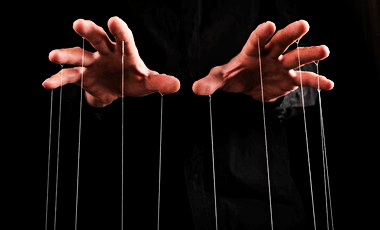
If determinism is true then either God is evil and the author of evil or all talk of good and evil, of praise and blame, of moral responsibility, and of justice is meaningless and incomprehensible with reference to God. That is, if God can cause or determine evil and yet remain good, and if God can punish those who do exactly and only what He has meticulously caused and determined them to do and yet remain just, then we have no idea who God is or what He might or might not do or what Scripture could possibly mean when it calls Him “good” and “just.” (Günther H. Juncker, “The Dilemma of Theistic Determinism”)
JUMP TO:
- Response One: defining the “T” “U” and “I” so that “choice” is seen as impossible, per Calvinism
- Choosing the Gospel’s Message is a real volitional choice
- Atheistic Determinism is just like Theistic Determinism
- CS Lewis and “Divine Goodness”
- The conversation that led to an unfriending
- Response Two: the origins of theistic determinism and some countering verses to the idea
So, on my Facebook, I posted the following statement:

This actually garnered some attention, some of which I will note below, as, it led to me unfriending someone [PETER DH] because he refused to engage in conversation. Part of the reason he refused was surely a pride issue. Showing that there was no self reflection on his own narcissistic tendencies. [I am using specific language here that will become apparent as you read along.]
However, first I feel I must explain the above. Here is an adapted response to a friend, TODD, whom I would wish to emulate in conversation, unlike PETER.
I do not think people understand, or should I say, follow TULIP to it’s logical end. Calvin did, and Piper and many others have. While they use [warp] language to try and skirt the issue, they would rather bring God’s nature low and introduce not mysteries into theology, but philosophical contradictions. So, God ends up being the author of evil and man has no accountability. He can do no other. Why… not because of mother nature – that would be GAIA paganism. Our nature is because of God [in Calvinism/TULIP]. Romans says we have no excuse… this seems like the perfect one to me.
Again, I honestly do not think ppl understand TULIP. Nor do I think they understand my quoting of Calvin and others. They all think salvation [and damnation] are 100% God’s choice, and 0% mans [as in humankind]. Calvin even taught that Adam and Eve did not have free will. So, Piper, White, Calvin, etc., etc. say that. Not me. I am merely passing on how founders and theologians define it. Again, Wayne Grudem doesn’t even think we pray real – free – prayers.
💥Total Depravity: Sin controls every part of man. He is spiritually dead and blind, and unable to obey, believe, or repent. He continually sins, for his nature is completely evil. We do not believe in mother nature. [adapted from MacArthur] This condition of man is by God’s design.
💥Unconditional Election: God chose the elect solely on the basis of his free grace, not anything in them. He has a special love for the elect. God left the rest to be damned for their sins. [ALSO TRUE: Unconditional Reprobation – which is counter to God’s holiness.]
💥Irresistible Grace: Saving grace is irresistible, for the Holy Spirit is invincible and intervenes in man’s heart. He sovereignly gives the new birth, faith, and repentance to the elect. PPL have to be ontologically changed [given a new heart] first in order to say, “I had a bad heart” [They cannot -on Calvinism’s account- ask for one.]
This is why Calvinism has created second category of many ideas that muddy the water of the simple Gospel: Calvinism requires..
- 2 types of love expressed by God
- 2 types of grace via God
- 2 callings from God
- 2 wills of God
- ETC
“Not one drop of rain falls without God’s sure command.” (Calvin) 
“God by his secret bridle so holds and governs (persons) that they cannot move even one of their fingers without it accomplishing the work of God much more than their own.” (Calvin)
In order to understand this better, theologians have come up with the term “compatibilism” to describe the concurrence of God’s sovereignty and man’s responsibility. Compatibilism is a form of determinism and it should be noted that this position is no less deterministic than hard determinism. — John Hendryx
John Hendryx is the creator and editor of Monergism . com). This quote from an article at Hendryx’s site was sent from Phil Johnson to Leighton Flowers during a back n forth on Twitter.
Viewing man from a compatibilist perspective means that while fallen man freely chooses to sin, he cannot freely choose to believe in the Gospel unless God gives him a new nature and past that assures he will “freely choose” to exercise faith in Christ; however, in either state, man cannot choose to do other than he did choose because while freely choosing, he has no salvific choice.
It is God’s choice, call, and changing a person to say yes, irresistibly. So, there is no “offer,” there is only force – for the believer and for the damned.
Now, the person I responded to regarding this, someone different that PETER DH, is someone who can feel obliged to disagree, respond, challenge, and the like. Knowing we are still both lovers of Christ — we just disagree with each others theology [and philosophy] of soteriology…. and the working out of God’s character via TULIP.
I myself believe like article three of the Baptist Faith and Message creed says (pic to the right).
Unlike PETER DH, who came in accusing me of anti-Christian, Marxist, Narcissism and the persecution of the saints… Todd is much better at exchanges, and honestly, I wish to be more like him in such conversations. Todd is gracious and honest, and I am proud to know him — even if only what I term as a “cyber friend” — and battle crazy Leftists with him.
As an example of the crazy shit PETER DH said:
- Stop persecuting Christians for faith in Jesus Christ alone. And be honest about yourself; you are no Christian but a narcissist who believes himself superior to everyone else.
And to some extent, the Bible calls everyone, especially those born again, to battle one’s pride. So he is partially right about that. But as you will see, PETER’s broad claims show how many in the “Reformed” tradition think they are elect-elect. Saying they are “humbled by the Doctrines of Grace, but are in fact scared to death [not all] to look down the “corridors of time” and bring statements to their logical conclusions.
Because, if theistic determinism is true, then thought and choice are mere illusions. Al Mohler speaks to this a bit in this article that I excerpt:
The diverse theories of determinism propose that our choices and decisions are not an exercise of the will, but simply the inevitable outcome of factors outside our control. As Scientific American explains, determinists argue that “everything that happens is determined by what happened before — our actions are inevitable consequences of the events leading up to the action.”
In other words, free will doesn’t exist. Used in this sense, free will means the exercise of authentic moral choice and agency. We choose to take one action rather than the other, and must then take responsibility for that choice.
This link between moral choice and moral responsibility is virtually instinctive to humans. As a matter of fact, it is basic to our understanding of what it means to be human. We hold each other responsible for actions and choices. But if all of our choices are illusory — and everything is merely the “inevitable consequence” of something beyond our control, moral responsibility is an exercise in delusion.
(I found this article via a SOTERIOLOGY 101 video)

This is why books like “Anyone Can Be Saved” are written, to protect the Gospel message of Good News! I agree with the back cover description that says: “that any person who hears the gospel can be saved” – Amen and Amen! [a scan of my copy is to the right]:
- Anyone Can Be Saved articulates a biblical-theological explanation of the doctrine of salvation in light of the rise of Calvinistic theology among Southern Baptist churches in the United States. Ten scholars, pastors, and leaders advocate for the ten articles of the Traditional Statement by appealing to Scripture, the Baptist Faith and Message, and a variety of biblical, theological, and philosophical writings. Although many books address the doctrine of salvation, these authors consciously set aside the Calvinist-Arminian presuppositions that have framed this discussion in western theology for centuries. The contributors are unified in their conviction that any person who hears the gospel can be saved, a view that was found among earlier Baptists as well as other Christian groups today. This book is not meant to be the final word on Southern Baptist soteriology, but is offered as a peaceable contribution to the wider conversation on the doctrine of salvation.
In a post on the issue of “theistic determinism” and freedom to choose Why Both Atheists and Christians Need to Believe in Free Will and a post years before the realization of the same deterministic contradictions within TULIP, I posted this long refutation of quotes and media of atheistic determinism: Evolution Cannot Account for: Logic, Reasoning, Love, Truth, or Justice
Here are some quotes that apply as well to Calvinism and “Reformed” thinking as well as the atheist, all of these are challenges “godly determined outcomes” in Calvinism:
Atheism—pure, unadulterated atheism…. The universe was matter only, and eternal Spirit was a word without a meaning. Liberty was a word without a meaning. There was no liberty in the universe; liberty was a word void of sense. Every thought, word, passion, sentiment, feeling, all motion and action was necessary [determinism]. All beings and attributes were of eternal necessity; conscience, morality, were all nothing but fate. This was their creed, and this was to perfect human nature, and convert the earth into a paradise of pleasure… Why, then, should we abhor the word “God,” and fall in love with the word “fate”? We know there exists energy and intellect enough to produce such a world as this, which is a sublime and beautiful one, and a very benevolent one, notwithstanding all our snarling; and a happy one, if it is not made otherwise by our own fault.
Here is Frank Turek in his book “Stealing from God: Why Atheists Need God to Make Their Case” showing how determinism collapses:
If what he says is true, he says it merely as the result of his heredity and environment, and nothing else. He does not hold his determinist views because they are true, but because he has such-and-such stimuli; that is, not because the structure of the structure of the universe is such-and-such but only because the configuration of only part of the universe, together with the structure of the determinist’s brain, is such as to produce that result…. They [determinists – I would posit any philosophical naturalist] want to be considered as rational agents arguing with other rational agents; they want their beliefs to be construed as beliefs, and subjected to rational assessment; and they want to secure the rational assent of those they argue with, not a brainwashed repetition of acquiescent pattern. Consistent determinists should regard it as all one whether they induce conformity to their doctrines by auditory stimuli or a suitable injection of hallucinogens: but in practice they show a welcome reluctance to get out their syringes, which does equal credit to their humanity and discredit to their views. Determinism, therefore, cannot be true, because if it was, we should not take the determinists’ arguments as being really arguments, but as being only conditioned reflexes. Their statements should not be regarded as really claiming to be true, but only as seeking to cause us to respond in some way desired by them. J. R. Lucas, The Freedom of the Will (New York: NY: Oxford University Press, 1970), 114, 115.
One of the most intriguing aspects mentioned by Ravi Zacharias of a lecture he attended entitled Determinism – Is Man a Slave or the Master of His Fate, given by Stephen Hawking, who is the Lucasian Professor of Mathematics at Cambridge, Isaac Newton’s chair, was this admission by Dr. Hawking’s, was Hawking’s admission that if “we are the random products of chance, and hence, not free, or whether God had designed these laws within which we are free.”[1]In other words, do we have the ability to make choices, or do we simply follow a chemical reaction induced by millions of mutational collisions of free atoms?[2] Michael Polyni mentions that this “reduction of the world to its atomic elements acting blindly in terms of equilibrations of forces,” a belief that has prevailed “since the birth of modern science, has made any sort of teleological view of the cosmos seem unscientific…. [to] the contemporary mind.”[3] [1] Ravi Zacharias, The Real Face of Atheism (Grand Rapids, MI: Baker Books, 2004), 118, 119.
[2] My own summation.
[3] Michael Polanyi and Harry Prosch, Meaning (Chicago, IL: Chicago university Press, 1977), 162.
What merit would attach to moral virtue if the acts that form such habitual tendencies and dispositions were not acts of free choice on the part of the individual who was in the process of acquiring moral virtue? Persons of vicious moral character would have their characters formed in a manner no different from the way in which the character of a morally virtuous person was formed—by acts entirely determined, and that could not have been otherwise by freedom of choice. Mortimer J. Adler, Ten Philosophical Mistakes (New York, NY: Touchstone, 1985), 154.
If we were free persons, with faculties which we might carelessly use or willfully misuse, the fact might be explained; but the pre-established harmony excludes this supposition. And since our faculties lead us into error, when shall we trust them? Which of the many opinions they have produced is really true? By hypothesis, they all ought to be true, but, as they contradict one another, all cannot be true. How, then, distinguish between the true and the false? By taking a vote? That cannot be, for, as determined, we have not the power to take a vote. Shall we reach the truth by reasoning? This we might do, if reasoning were a self-poised, self verifying process; but this it cannot be in a deterministic system. Reasoning implies the power to control one’s thoughts, to resist the processes of association, to suspend judgment until the transparent order of reason has been readied. It implies freedom, therefore. In a mind which is controlled by its states, instead of controlling them, there is no reasoning, but only a succession of one state upon another. There is no deduction from grounds, but only production by causes. No belief has any logical advantage over any other, for logic is no longer possible. Borden P Bowne, Metaphysics: A Study In First Principles (originally published in 1882; London: Sampson Low, Searle & Rivington, 2005), 105.
How do leaders like Piper see God’s determining power that controls mankind? Here is a snippet from a book he was co-editor on:
Ephesians 1:11 goes even further by declaring that God in Christ
“works all things according to the counsel of his will.” Here the Greek word for “works” is energeø, which indicates that God not merely carries all of the universe’s objects and events to their appointed ends but that he actually brings about all things in accordance with his will. In other words, it isn’t just that God manages to turn the evil aspects of our world to good for those who love him; it is rather that he himself brings about these evil aspects for his glory (see Ex. 9:13-16; John 9:3) and his people’s good (see Heb. 12:3-11; James 1:2-4). This includes—as incredible and as unacceptable as it may currently seem—God’s having even brought about the Nazis’ brutality at Birkenau and Auschwitz as well as the terrible killings of Dennis Rader and even the sexual abuse of a young child: “The LORD has made everything for its own purpose, even the wicked for the day of evil” (Prov. 16:4, NASB ).14 “When times are good, be happy; but when times are bad, consider: God has made the one as well as the other” (Eccl. 7:14, NIV).
John Piper and Justin Taylor, eds., Suffering and the Sovereignty of God (Wheaton, IL: Crossway Books, 2006), 42.
And in an article and debate found at Premier Christianity, we read:
Losing love and justice
Reflection on the subject has led me to agree with Ward. The compatibilist view seems (to quote Kant) a “wretched subterfuge”. Our free will is not truly free if determinism is still the bottom line.
There are major problems created by both Christian and atheist determinism. Firstly, there are two major casualties when we dispense with free will in the Calvinist framework. Love and justice.
Love is only truly love when freely given and freely received.
We are familiar with the fairy tale of the enchantress who puts the prince under a spell to make him ‘love’ her. But we know it’s not really love – it’s a delusion. Being manipulated in such a way is the opposite of love. By the same token, if God has pre-contrived our every desire so that we had no other option but to love our wife, love our children and to love him, then we are acting as little more than robots.
Likewise, any meaningful sense of justice is also lost under the deterministic view of God.
Can the person who commits a heinous offence be judged guilty of a crime if they were bound to act in such a way by the divine decree of God? Indeed, it could be argued that God himself is more culpable than they are. Equally, how can those God has predestined to hell be considered guilty of rejecting him, if they had no option to choose him?
Atheist determinists must face exactly the same problems and questions as their Calvinist counterparts. The truth is, it’s difficult to ground love, justice or any of the values that make life meaningful in a purely material universe. As Bertrand Russell, one of the 20th Century’s most renowned atheists, wrote: “Man is the product of causes which had no prevision of the end they were achieving…his origin, his growth, his hopes and fears, his loves and his beliefs, are but the outcome of accidental collocations of atoms.”
Cheery stuff. But the problem is even worse for atheist determinists than they realise. For, in such an accidental universe, how can they even trust in their own choice to be an atheist?
Losing reason
Most atheists I know pride themselves on the use of reason and evidence in their arguments against God. But, in a purely naturalistic worldview, all that’s really happening at a fundamental level is a variety of atoms bumping into other atoms, triggering electrochemical responses in the brain. What’s more, because the universe runs on the deterministic principle of cause and effect, all of those collisions were predetermined in the distant past. You and your beliefs are the product of a long chain of inevitable physical events.
So when you come to the conclusion that there is no God, that’s just the way your brain happens to end up fizzing. And when I claim that there is a God, that’s just the way my brain fizzes. But the atoms aren’t doing any reasoning. It’s all just a series of physical events – snooker balls bouncing off each other. They aren’t the least bit interested in the truth or falsity of the thoughts they are producing.
As CS Lewis wrote: “If minds are wholly dependent on brains, and brains on biochemistry, and biochemistry (in the long run) on the meaningless flux of the atoms, I cannot understand how the thought of those minds should have any more significance than the sound of the wind in the trees.”
I have more in another post, but this excerpt of CS LEWIS is needed here, and it deals with the opening quote at the “tippy-top” of the post from Günther H. Juncker:
“Divine Goodness”
Any consideration of the goodness of God at once threatens us with the following dilemma.
On the one hand, if God is wiser than we His judgement must differ from ours on many things, and not least on good and evil. What seems to us good may therefore not be good in His eyes, and what seems to us evil may not be evil.
On the other hand, if God’s moral judgement differs from ours so that our ‘black’ may be His ‘white’, we can mean nothing by calling Him good; for to say ‘God is good’, while asserting that His goodness is wholly other than ours, is really only to say ‘God is we know not what’. And an utterly unknown quality in God cannot give us moral grounds for loving or obeying Him. If He is not (in our sense) ‘good’ we shall obey, if at all, only through fear—and should be equally ready to obey an omnipotent Fiend. The doctrine of Total Depravity— when the consequence is drawn that, since we are totally depraved, our idea of good is worth simply nothing— may thus turn Christianity into a form of devil-worship.
The escape from this dilemma depends on observing what happens, in human relations, when the man of inferior moral standards enters the society of those who are better and wiser than he and gradually learns to accept their standards—a process which, as it happens, I can describe fairly accurately, since I have undergone it. When I came first to the University I was as nearly without a moral conscience as a boy could be. Some faint distaste for cruelty and for meanness about money was my utmost reach—of chastity, truthfulness, and self-sacrifice I thought as a baboon thinks of classical music. By the mercy of God I fell among a set of young men (none of them, by the way, Christians) who were sufficiently close to me in intellect and imagination to secure immediate intimacy, but who knew, and tried to obey, the moral law. Thus their judgement of good and evil was very different from mine. Now what happens in such a case is not in the least like being asked to treat as ‘white’ what was hitherto called black. The new moral judgements never enter the mind as mere reversals (though they do reverse them) of previous judgements but ‘as lords that are certainly expected’. You can have no doubt in which direction you are moving: they are more like good than the little shreds of good you already had, but are, in a sense, continuous with them. But the great test is that the recognition of the new standards is accompanied with the sense of shame and guilt: one is conscious of having blundered into society that one is unfit for. It is in the light of such experiences that we must consider the goodness of God. Beyond all doubt, His idea of ‘goodness’ differs from ours; but you need have no fear that, as you approach it, you will be asked simply to reverse your moral standards. When the relevant difference between the Divine ethics and your own appears to you, you will not, in fact, be in any doubt that the change demanded of you is in the direction you already call ‘better’. The Divine ‘goodness’ differs from ours, but it is not sheerly different: it differs from ours not as white from black but as a perfect circle from a child’s first attempt to draw a wheel. But when the child has learned to draw, it will know that the circle it then makes is what it was trying to make from the very beginning.
This doctrine is presupposed in Scripture. Christ calls men to repent—a call which would be meaningless if God’s standards were sheerly different from that which they already knew and failed to practise. He appeals to our existing moral judgement—‘Why even of yourselves judge ye not what is right?’ (Luke 12:57) God in the Old Testament expostulates with men on the basis of their own conceptions of gratitude, fidelity, and fair play: and puts Himself, as it were, at the bar before His own creatures—‘What iniquity have your fathers found in me, that they are gone far from me?’ (Jeremiah 2:5.) …
CS Lewis | The Problem of Pain (Chapter 3)
What a horrible view of God if Calvinism is true. And it is this “if God’s moral judgement differs from ours so that our ‘black’ may be His ‘white’, we can mean nothing by calling Him good”, and this is the bottom line. It is not an antinomy to be accepted and inserted into Biblical truth. It is a lie from the pit of hell. AGAIN!
- “If determinism is true then either God is evil and the author of evil or all talk of good and evil, of praise and blame, of moral responsibility, and of justice is meaningless and incomprehensible with reference to God. That is, if God can cause or determine evil and yet remain good, and if God can punish those who do exactly and only what He has meticulously caused and determined them to do and yet remain just, then we have no idea who God is or what He might or might not do or what Scripture could possibly mean when it calls Him “good” and “just.” (Günther H. Juncker, “The Dilemma of Theistic Determinism”)
Okay, back to this:
Here is how the conversation started with a friend (click to enlarge), I removed last names for privacy:


Now let’s shift gears to PETER and his train wreck of a response[s]. I am going to be lazy and just have picture of the discussion:

In the matter of a few minutes, PETER managed to post many comments on on other parts of my Facebook wall. This one almost every Christian could say “amen” to, but PETER has the rose colored glasses of Augustinian semi-Gnosticism in view here, so it is tainted to say the least:

However, I wanted to start with the comment I have the red arrow pointing to, because this was a test [in my mind] to see what kind of man I was dealing with. Someone who was honest and humble enough to admit when he was wrong – and so someone worth engaging with? Or was he like the prideful, not willing to admit when in error and correct it. I found out:

At this point PETER [I can only assume] saw the date of the publication of the above and the below source I quoted from. Why? because this was the next “timeline” out of his keyboard — at the bottom of this run:

This is when I knew I was dealing with someone note willing to pause and reassess his plain statement of the origin of the word. So I pressed a bit more…


So I made the point stronger, called out PETER to once again retract his statement, whether he was ignorant of the facts, or so blinded by his worldview (semi-Gnosticism) that his pride was narcissistically holding his tongue hostage. right after the above I posted this as well as part of the above:

He never showed any form of humility and acquiesced to the evidence. His election via Unconditional Election and Irresistible Grace seemingly didn’t move the pendulum on the “T” in TULIP… at all. So I opted to unfriend him rather than he continuing to lie on my FB wall. What was/is the final outcome of the whole “debacle”? I will let PETER DH take us out:
There you have it, the elect-of-the-elect — able to sit in for God and read the heart of man.
APPENDIX
Todd (BTW, a rejection of TULIP is not a rejection of the 5-SOLAS. Just to be clear… it is in fact freeing faith [by faith alone] from deterministic principles. Piper says he literally cried for three days after realizing the implication of this idea. Sproul says it is a dreadful doctrine and was brough kicking into its paradigm. Calvin himself says “The decree is dreadful indeed, I confess.” – as a reminder, the GOSPEL is Good News)
This is a better explanation. God created us to respond to His calling – through nature [natural revelation], and special revelation [the Gospel call from Scripture, preachers, reading it, hearing it, etc.].
- How then shall they call on him in whom they have not believed? and how shall they believe in him whom they have not heard? and how shall they hear without a preacher? (Romans 10:14)
The story [not mine] of a person climbing an infinite rope to salvation, after tiring and saying “I cannot go on any longer” he is told to “let go and trust Jesus.” In reformed and Calvinistic presuppositions, even letting go is a work towards salvation. It is as if a guy in shark infested waters, almost drowning with said sharks nipping at his heels is thrown a life preserver that happens to catch him perfectly and he is drug to a boat. That person would never say “look how I saved myself.”
So salvation is 100% a work of God, but we are created to respond. TULIP says we cannot even do that. That makes God’s freedom/sovereignty a slave to gnosis as introduced [church history] by Augustine, a 10-year treasurer and member of Manny’s branch of Gnosticism. The Manichaeans represent the Persian branch of Gnosticism, and they taught both determinism and total depravity. However, their determinism was based upon dualistic mythology. (Hans Jonas, The Gnostic Religion [Beacon Press, 1958], 227.)
✂️ John Calvin admits that his theology was first clearly seen in Augustine. How did Augustine arrive at his views on election and predestination, which were not consistent with the churches teaching for the first 300 years? It should be noted that Augustine was himself a Gnostic Manichaean for nearly a decade before converting to Catholicism. Calvin wrote, “Augustine is so wholly with me, that if I wished to write a confession of my faith, I could do so with all fullness and satisfaction to myself out of his writings.” John Calvin, “A Treatise on the Eternal Predestination of God.”
✂️ Loraine Boettner, writes: “It may occasion some surprise to discover that the doctrine of Predestination was not made a matter of special study until near the end of the fourth century. The earlier church fathers placed chief emphasis on good works such as faith, repentance, almsgiving, prayers, submission to baptism, etc., as the basis of salvation. They of course taught that salvation was through Christ; yet they assumed that man had full power to accept or reject the Gospel. Some of their writings contain passages in which the sovereignty of God is recognized; yet along side of those are others which teach the absolute freedom of the human will. Since they could not reconcile the two they would have denied the doctrine of Predestination and perhaps also that of God’s absolute Foreknowledge. They taught a kind of synergism in which there was a co-operation between grace and free will. It was hard for man to give up the idea that he could work out his own salvation. But at last, as a result of a long, slow process, he came to the great truth that salvation is a sovereign gift which has been bestowed irrespective of merit; that it was fixed in eternity; and that God is the author in all of its stages. This cardinal truth of Christianity was first clearly seen by Augustine, the great Spirit-filled theologian of the West. In his doctrines of sin and grace, he went far beyond the earlier theologians, taught an unconditional election of grace, and restricted the purposes of redemption to the definite circle of the elect.”
I [as do all non-Calvinist Christians] believe in predestination, but not unto salvation. Once saved by the living message of the word that can cut between soul and body, we look forward to the predestined/fulfilled promise of our Savior: “Not only that, but we ourselves who have the Spirit [born again already] as the firstfruits—we also groan within ourselves, eagerly waiting for adoption, the redemption of our bodies.” (Romans 8 ) “In him you also were sealed with the promised Holy Spirit when you heard the word of truth, the gospel of your salvation, and when you believed. The Holy Spirit is the down payment of our inheritance, until the redemption of the possession, to the praise of his glory.” (Ephesians 1:13). Think of all the analogies of Paul and a race:
1 Corinthians 9:24-27:
The Apostle Paul uses the metaphor of a race to emphasize the need for self-discipline and purpose in the Christian life. He writes, “Do you not know that in a race all the runners run, but only one receives the prize? Run in such a way as to take the prize. Everyone who competes in the games trains with strict discipline. They do it for a crown that is perishable, but we do it for a crown that is imperishable. Therefore, I do not run aimlessly; I do not fight like I am beating the air. No, I discipline my body and make it my slave, so that after I have preached to others, I myself will not be disqualified.”
Hebrews 12:1-2:
The author of Hebrews encourages believers to persevere in their spiritual race by looking to Jesus as the ultimate example. “Therefore, since we are surrounded by such a great cloud of witnesses, let us throw off every encumbrance and the sin that so easily entangles, and let us run with endurance the race set out for us. Let us fix our eyes on Jesus, the author and perfecter of our faith, who for the joy set before Him endured the cross, scorning its shame, and sat down at the right hand of the throne of God.”
Philippians 3:12-14:
Paul expresses his personal commitment to pressing on toward the goal of knowing Christ fully. “Not that I have already obtained all this, or have already been perfected, but I press on to take hold of that for which Christ Jesus took hold of me. Brothers, I do not consider myself yet to have taken hold of it. But one thing I do: Forgetting what is behind and straining toward what is ahead, I press on toward the goal to win the prize of God’s heavenly calling in Christ Jesus.”
All races have a finish line, an end goal. That is what is predestined. Believers “wait eagerly for our adoption as sons, the redemption of our bodies” (Romans 8:23). The full revelation of the believer’s adoption is freedom from the corruption present in the world. Being a member of God’s family includes the ultimate privilege of being like him (1 John 3:2) and being conformed to the glorious body of Christ (Philippians 3:21). This is part of the promised inheritance for all God’s children (Romans 8:16-17; Ephesians 1:13).