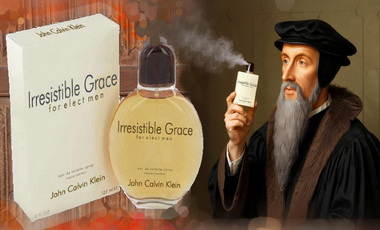
The Problem of Defining “Irresistible Grace” | Steve Lemke

The Below is an excerpt from Chapter 5 (“A Biblical and Theological Critique of Irresistible Grace”) of Whosoever Will: A Biblical-Theological Critique of Five-Point Calvinism (out of print). Chapter by Steve W. Lemke.

Full PDF of the chapter with as many updated links as I could find, is HERE.

The Synod of Dort, however, strenuously objected to the Remonstrants’ denial of irresistible grace:

Who teach that the grace by which we are converted to God is nothing but a gentle persuasion, or (as others explain it) that the way of God’s acting in man’s conversion that is most noble and suited to human nature is that which happens by persuasion, and that nothing prevents this grace of moral suasion even by itself from making natural men spiritual; indeed, that God does not produce the assent of the will except in this manner of moral suasion, and that the effectiveness of God’s work by which it surpasses the work of Satan consists in the fact that God promises eternal benefits while Satan promises temporal ones.

[….]

Who teach that God in regenerating man does not bring to bear that power of his omnipotence whereby he may powerfully and unfailingly bend man’s will to faith and conversion, but that even when God has accomplished all the works of grace which he uses for man’s conversion, man nevertheless can, and in actual fact often does, so resist God and the Spirit in their intent and will to regenerate him, that man completely thwarts his own rebirth; and, indeed, that it remains in his own power whether or not to be reborn.4

The Problem of Defining Irresistible Grace

The term “irresistible grace,” then, came initially as a view denied by the Remonstrants and defended by the Dortian Calvinists. The Synod of Dort rejected the notion that God’s grace was limited to His exerting strong moral persuasion on sinners by the Holy Spirit to lead them to salvation. They also rejected the notion that a person can “resist God and the Spirit in their intent and will to regenerate him.”5 Instead, the Dort statement asserted that God brings to bear the “power of his omnipotence whereby he may powerfully and unfailingly bend man’s will to faith and conversion.”6

In order to understand how Calvinists say that God effects irresistible grace, one must understand the important distinction they draw between what is variously known as the “general” or “outward” call from the “special,” “inward,” “effectual,” or “serious” call. Steele, Thomas, and Quinn virtually equate the “efficacious call” with irresistible grace, based on this distinction between these proposed two different callings from God:

The gospel invitation extends a call to salvation to every one who hears its message. . . . But this outward general call, extended to the elect and the non-elect alike, will not bring sinners to Christ. . . . Therefore, the Holy Spirit, in order to bring God’s elect to salvation, extends to them a special inward call in addition to the outward call contained in the gospel message. Through this special call the Holy Spirit performs a work of grace within the sinner which inevitably brings him to faith in Christ. . . .

Although the general outward call of the gospel can be, and often is, rejected, the special inward call of the Spirit never fails to result in the conversion of those to whom it is made. This special call is not made to all sinners but is issued to the elect only! The Spirit is in no way dependent upon their help or cooperation for success in His work of bringing them to Christ. It is for this reason that Calvinists speak of the Spirit’s call and of God’s grace in saving sinners as being “efficacious,” “invincible,” or “irresistible.” For the grace which the Holy Spirit extends to the elect cannot be thwarted or refused, it never fails to bring them to true faith in Christ!7

As this statement indicates, some contemporary Calvinists seem to be a little embarrassed by the term “irresistible grace” and have sought to soften it or to replace it with a term like “effectual calling.” They also object when others criticize that “irresistible grace” suggests that God forces persons to do things against their wills. Instead, they insist, God merely woos and persuades. Calvinists thus sometimes sound disingenuous in affirming a strong view of irresistible grace while simultaneously softening the language about it to make it more palatable. For example, John Piper and the Bethlehem Baptist Church staff affirm that irresistible grace “means the Holy Spirit can overcome all resistance and make his influence irresistible. . . . The doctrine of irresistible grace means that God is sovereign and can overcome all resistance when he wills.”8Yet, just a few paragraphs later, they affirm that “irresistible grace never implies that God forces us to believe against our will. . . . On the contrary, irresistible grace is compatible with preaching and witnessing that tries to persuade people to do what is reasonable and what will accord with their own best interests.”9 No attempt is made in the article to reconcile these apparently contradictory assertions.

Likewise, R. C. Sproul argues at great length that John 6:44 (“No one can come to Me unless the Father who sent Me draws him” HCSB) does not refer merely to the necessity that God “woo or entice men to Christ,” and humans can “resist this wooing” and “refuse the enticement.”10 In philosophical language, Sproul says, this wooing is a necessary but not sufficient condition for salvation “because the wooing does not, in fact, guarantee that we will come to Christ.”11 Sproul states that such an interpretation is “incorrect” and “does violence to the text of Scripture.”12 Instead, Sproul insists, the term “draw” is “a much more forceful concept than to woo,” and means “to compel by irresistible superiority.”13

However, in discussing irresistible grace, Sproul tells of a student who, hearing a lecture on predestination by John Gerstner, rejected it. When Gerstner asked the student how he defined Calvinism, the student described it as the perspective that “God forces some people to choose Christ and prevents other people from choosing Christ.” Gerstner then said, “If that is what a Calvinist is, then you can be sure that I am not a Calvinist either.”14 Sproul likewise chastised a Presbyterian seminary president for rejecting the Calvinist doctrine that “God brings some people, kicking and screaming against their wills, into the kingdom.” Sproul describes this Presbyterian theologian’s view as “a gross misconception of his own church’s theology,” as a “caricature,” and “as far away from Calvinism as one could possibly get.”15 So which way is it? If God compels persons with “irresistible superiority,” in what way is it inaccurate to say that God is forcing people to choose Christ?

The Synod of Dort insisted that such attempts at moral persuasion of unsaved persons was wasted time. That God’s grace was resistible and not merely the use of strong moral persuasion was precisely what the Synod of Dort rejected and the Remonstrants affirmed. The Remonstrants insisted that the compelling grace of God persuaded the lost to receive Christ as Lord and Savior. The Synod of Dort insisted that this was not going far enough. Note their explicit denial that a person can “resist” God. Note the use in the Synod of Dort language of divine omnipotence, which can “powerfully and unfailingly bend man’s will to faith and conversion.”16 Bending the will of a fallible being by an omnipotent Being powerfully and unfailingly is not merely sweet persuasion. It is forcing one to change one’s mind against one’s will.

Calvinists often describe their position as monergism as opposed to synergism. In monergism, God works entirely alone, apart from any human role. In synergism, on the other hand, humans cooperate with God in some way in actualizing their own conversion. None of us non-Pelagians would affirm for a minute that we can achieve salvation apart from God. The question is whether humans have any role at all in accepting or receiving their own salvation. On the one hand, the Calvinists say, “No! Your salvation is monergistic, provided only by the grace of God.” When a critic says this response means that God imposes irresistible grace against a person’s will or that humans do not have a choice in the matter, the Calvinists protest that they are being misunderstood and caricatured.

When challenged that irresistible grace goes against someone’s will, most Calvinists reply that it is not against a person’s will at all. God changes their will through regeneration invincibly, such that the person is irresistibly drawn to Christ. Calvinists call this willing, which is externally driven, compatibilist volition, as opposed to the more common view, libertarian freedom. In libertarian freedom a person does not have absolute freedom (a frequent Calvinist stereotype), but the person chooses between at least two alternatives. In every case a person could have, at least hypothetically, chosen something else. But in compatibilism, people always choose their greatest desire. They have no alternative choice but to will to do what they want to do. So when God changes their will through irresistible grace or enabling grace, they really have no choice. They will what God has programmed them to will. So the Calvinist system advocates both monergism (God is the only actor) and compatibilism (they go along with what God wants them to do after He changes their will through preconversion regeneration).

The problem is that Calvinists cannot have their cake and eat it, too. They cannot insist that an omnipotent God overwhelms and bends human will powerfully and unfailingly, and then transform this doctrine into something other than it is by softening it with more palatable language such as “effectual calling” and “compatibilism.” The effectual calling means precisely the same thing as irresistible grace. Effectual calling just sounds nicer. At the end of the day, people have no choice but to do what God has programmed them to do. Nonetheless, Calvinists often attempt to sidestep criticism by asserting that the doctrine has been misunderstood, even when non-Calvinists have quoted or paraphrased what Calvinists themselves have said in describing their own doctrine.

For example, at the “Building Bridges” conference, Nathan Finn chastised Southwestern Baptist Theological Seminary professor Roy Fish for the following description of irresistible grace, which Finn described as a “stereotype” and a “misunderstanding” of the doctrine:

The “I” in the TULIP is what is called irresistible grace. That means that people who are going to be saved have no other option. They really don’t have a choice. The grace of God cannot be resisted. They cannot resist this special saving grace.17

A line-by-line study of Fish’s description reveals that Calvinists define irresistible grace in virtually the same words:

Roy Fish: (Irresistible grace) “means that people who are going to be saved have no other option. They really don’t have a choice.”

  • The Synod of Dort: “And this is the regeneration, the new creation, the raising from the dead, and the making alive so clearly proclaimed in the Scriptures, which God works in us without our help. But this certainly does not happen only by outward teaching, by moral persuasion, or by such a way of working that, after God has done his work, it remains in man’s power whether or not to be reborn or converted. Rather, it is an entirely supernatural work. . . . As a result, all those in whose hearts God works in this marvelous way are certainly, unfailingly, and effectively reborn and do actually believe. . . .18
  • James White: “The doctrine of ‘irresistible grace’ . . . is simply the belief that when God chooses to move in the lives of His elect and bring them from spiritual death to spiritual life, no power in heaven or on earth can stop Him from so doing. . . . It is simply the confession that when God chooses to raise His people to spiritual life, He does so without the fulfillment of any conditions on the part of the sinner. Just as Christ had the power and authority to raise Lazarus to life without obtaining his ‘permission’ to do so, He is able to raise His elect to spiritual life with just as certain a result.”19
  • David Steele, Curtis Thomas, and S. Lance Quinn: “The Holy Spirit extends a special inward call that inevitably brings them to salvation. . . . [T]he internal call (which is made only to the elect) cannot be rejected. It always results in conversion. By means of this special call the Spirit irresistibly draws sinners to Christ. He is not limited in His work of applying salvation by man’s will, nor is He dependent upon man’s cooperation for success. . . . God’s grace, therefore, is invincible; it never fails to result in the salvation of those to whom it is extended.”20

Roy Fish: “The grace of God cannot be resisted. They cannot resist this special saving grace.”

  • The Synod of Dort: The Synod rejects that . . . “God in regenerating man does not bring to bear that power of his omnipotence whereby he may powerfully and unfailingly bend man’s will to faith and conversion. . . .” (The Synod rejects that someone) “can, and in actual fact often does, so resist God and the Spirit in their intent and will to regenerate him.”21
  • John Piper: Irresistible grace “means the Holy Spirit can overcome all resistance and make his influence irresistible. . . . The doctrine of irresistible grace means that God is sovereign and can overcome all resistance he wills. . . . When God undertakes to fulfill his sovereign purpose, no one can successfully resist him. . . . When a person hears a preacher call for repentance he can resist that call. But if God gives him repentance he cannot resist because the gift is the removal of resistance. . . . So if God gives repentance it is the same as taking away the resistance. This is why we call this work of God ‘irresistible grace.’ ”22

Was Fish reflecting the statements of some Calvinists in his definition? Distinguishing Fish’s from Finn’s is so difficult that one must ask, What exactly is it in Fish’s description that Finn objects to so strenuously? Fish has echoed Calvinist descriptions of irresistible grace, and yet Finn takes him to task for doing so. No matter how modern-day Calvinists may attempt to gloss over the hardness of irresistible grace and project it in a softer, gentler light, the doctrine remains what it is. When pressed by their own words, Calvinists sometimes seem to play word games or equivocate their words in order to make their beliefs more palatable. However, this study will examine irresistible grace as it is described and defined in standard Calvinist doctrinal teachings.

NOTES

  1. “The Canons of the Synod of Dort,” Heads III and IV, Rejection of Errors, Articles VII and VIII, in Schaff, 3:570 (in Latin). For an English translation, see L. M. Vance, The Other Side of Calvinism (rev. ed.; Pensacola: Vance, 1999), Appendix 4, 621–22, which is also available online at RELIGIO-POLITICAL TALK; added and accessed October 3, 2025.
  2. Ibid.
  3. Ibid.
  4. D. N. Steele, C. C. Thomas, and S. L. Quinn, The Five Points of Calvinism: Defined, Defended, Documented (expanded ed.; Philadelphia: Presbyterian and Reformed, 2004), 52–54.
  5. J. Piper and the Bethlehem Baptist Church staff, “What We Believe About the Five Points of Calvinism,” p. 10, 
  6. Piper and the Bethlehem Baptist Church staff, “What We Believe About the Five Points of Calvinism,” 12.
  7. R. C. Sproul, Chosen by God (Carol Stream, IL: Tyndale House, 1994), 69–70.
  8. Ibid.
  9. Ibid.
  10. Ibid.
  11. Ibid., 122.
  12. Ibid.
  13. “The Canons of the Synod of Dort,” Heads III and IV, Rejection of Errors, Articles VII and VIII, in Schaff, 3:570 (in Latin). For an English translation, see L. M. Vance, The Other Side of Calvinism, Appendix 4, 621–22, which is also available online at
    Historic Faith accessed November 1, 2008.
  14. Nathan Finn, “Southern Baptist Calvinism: Setting the Record Straight,” in Calvinism: A Southern Baptist Dialogue (ed. E. R. Clendenen and B. J. Waggoner; Nashville: B&H Academic, 2008), 171–92, esp. 184; citing “The C-Word,” a sermon preached at Cottage Hill Baptist Church in Mobile, AL, on August 11, 1997, posted online at (reproduced at Religio-Political Talk, download the PDF here)
  15. “The Canons of the Synod of Dort,” Heads III and IV, Articles 10 and 12, in Schaff, 3:589–90.
  16. J. White, “Irresistible Grace: God Saves Without Fail,” in Debating Calvinism: Five Points, Two Views, by Dave Hunt and James White (Sisters, OR: Multnomah, 2004), 197 (italics mine).
  17. Steele, Thomas, and Quinn, Five Points of Calvinism, 7 (italics mine).
  18. “The Canons of the Synod of Dort,” Heads III and IV, Rejection of Errors, Articles VII and VIII, in Schaff, 3:570 (in Latin); for an English translation, see Vance, The Other Side of Calvinism, Appendix 4, 621–22 (italics mine).
  19. Piper and the Bethlehem Baptist Church staff, “What We Believe About the Five Points of Calvinism,” 10, 12 (italics mine).

Calvinism’s “Reading Rainbow” | John 11

One of the many issues I saw in a study on sovereignty at church was this side-by-side statement in our handout:

  • God chooses some people for salvation, this is one of His decrees
  • Man is responsible for rejecting God

This is the furthest thing from the truth if one understands the “T” in TULIP. We will also visit the “U” and the “I.” Let us start in order of the acronym however.

Man cannot react to, freely, an offer of salvation through enablement’s or grace offered evidence the work at Calvary. Other grace enablement’s that are soaked with the Holy Spirit are the Gospel, preachers teaching from the Word, other Christians witnessing, etc. I do not accept selective regeneration of the elect which precedes faith and necessarily results in faith in Christ “IS” how one is saved (Acts 16:31-32; Romans 1:16).

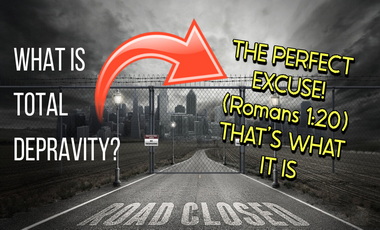
Calvinists believe that a totally depraved person is spiritually dead. By ‘spiritual death’ they mean the elimination of all human ability to understand or respond to God, not just a separation from God. Further, the effects of sin are intensive (destroying the ability to receive salvation) ~ Geisler, Chosen but Free (Minneapolis: Bethany House Publishers, 1999), 56.

Pastor Rogers helps us define it as well:

Total Depravity: The whole of man’s being is corrupted by sin and he is, therefore, incapable of doing any eternal spiritual good.

Calvinism’s understanding of total depravity includes a compatibilist view of human nature, unconditional election, and limited and selective regeneration. This means the only interpretive option Calvinism permits for God to be able to redeem such a compatibly defined totally depraved person is that God must give him a new nature (variously called quickening, regeneration, or restoration), which he is pleased to do only for the limited unconditionally elect; thereby, guarantying their subsequent free exercise of faith.

Viewing man from a compatibilist perspective means that while fallen man freely chooses to sin, he cannot freely choose to believe in the gospel unless God gives him a new nature and past that assures he will freely choose to exercise faith in Christ; however, in either state, man cannot choose to do other than he did choose because while freely choosing, he has no salvific choice.

Although it seems most Calvinists in the SBC do believe in regeneration prior to faith, it is true not all Calvinists depend upon regeneration preceding faith. Nevertheless, they all do depend upon on a preceding determinative work of God that changes the elect’s past. This work of God changes their nature from what it was before to something different after the work. This is due to their commitment to compatibilism. Technically, compatibilism requires that given the same past, man cannot choose, in the moral moment of decision, other than he did in fact choose.

Consequently, while some may seek to avoid reliance upon a new nature preceding faith, if they are going to be consistent compatibilists, they must believe God works determinatively in the unconditionally elect so as to change man’s past in order that he can transition from only being able to reject Christ to only being able to accept Christ. Therefore, regardless of what term they choose to employ, it never changes the deterministic nature of salvation nor its limited accessibility. This pre-faith work necessary to exercising faith is intentionally withheld by God from the non-elect.

Ronnie W. Rogers, Does God Love All or Some? Comparing Biblical Extensivism and Calvinism’s Exclusivism (Eugene, OR: Wipf and Stock, 2019), 30-31.

Calvinistic Election says to the unregenerate elect, “Don’t Worry, your Depravity is no obstacle to salvation,” and to the unelect, “Too bad, you have not been predestined for salvation but damnation” (George L Bryson, The Five Points of Calvinism: Weighed and Found Wanting). Here is a definition of Total Depravity’s “inability” (more… longer PDF):

The doctrine of total depravity is explained as total inability in the writings of some theologians. James Boice and Philip Ryken explained, “In this sad and pervasively sinful state we have no inclination to seek God, and therefore cannot seek him or even respond to the gospel when it is presented to us. In our unregenerate state, we do not have free will so far as ‘believing on’ or ‘receiving’ Jesus Christ as Savior is concerned.”130 They clarified that unbelievers “cannot” respond to the gospel by repenting and believing in Jesus when it is presented. Consistent with article 3 in the Canons of Dort, they taught that a person believes in Jesus after they are born again. Mark DeVine wrote, “Humanity’s fall into sin results in a condition that must be described in terms of spiritual blindness and deadness and in which the will is enslaved, not free.” DeVine continued, “We need to ask whether the Arminian insistence that the work of the Holy Spirit frees the will to either repent and believe or refuse to do so does not evidence a deeper misunderstanding of the nature of depravity itself.”131 John Piper wrote, “Faith is the evidence of new birth, not the cause of it.”132 “Regeneration precedes faith,” R. C. Sproul explained. He added, “We do not believe in order to be born again; we are born again in order to believe.”133 R. Albert Mohler Jr. also affirmed that regeneration precedes faith:

In the mystery of the sovereign purposes of God and by his sheer grace and mercy alone, the Word was brought near to us. As a result, we were called, made alive, and regenerated. We then believed what we otherwise would never have been able to believe, and we grasped hold of it, knowing that it is the sole provision of our need. We came to know of our need and of God’s response and provision for us in Christ, and then we came to know of our necessary response of faith, repentance, confession, and belief.134

According to these views of total depravity, spiritual blindness and deadness results in the enslavement of the human will so that people do not have the ability to repent and believe the message of the gospel unless they are first regenerated, or born again.

[130] James Montgomery Boice and Philip Graham Ryken, The Doctrines of Grace: Rediscovering the Evangelical Gospel (Wheaton, IL: Crossway, 2009), 30; italics in the original.

[131] Mark DeVine, “Total Depravity,” in Barrett and Nettles, Whomever He Wills, 35 (see intro., n. 22).

[132] John Piper, Desiring God: Meditations of a Christian Hedonist (Sisters, OR: Multnomah, 1986), 50.

[133] Robert C. Sproul, Chosen by God (Wheaton, IL: Tyndale, 1986), 72.

[134] R. Albert Mohler Jr., “The Power of the Articulated Gospel,” in The Underestimated Gospel, ed. Jonathan Leeman (Nashville: B&H, 2014), 19.

To further the point, here is John MacArthur explaining it:

Now, any discussion of the doctrine of predestination or the doctrine of divine sovereign election, or, if you will, sovereign salvation as a work of God is based on another doctrine, on another doctrine.  God must save us.  He must choose us, call us, regenerate us, justify us by his divine power, because we are neither willing nor able to do it for ourselves.  And this takes us to what I’m going to call the “doctrine of absolute inability.” 

[….]

Especially would I never say to a dead man, “Bill, come forth.”  I mean, you wouldn’t waste words.  You’d look foolish.  Dead men can’t hear.  Dead men can’t think.  Dead men can’t respond cause they’re dead and dead means the absolute inability to do anything in response to any stimulus.  There’s no will.  There’s no power to think or act. 

[….]

Those who deny the doctrine of divine election, those who deny the doctrine of divine salvation as an act of God have to believe that there’s something in man left to himself that enables him to become willing and to come to life.  Is that what the Bible teaches?  The Bible doesn’t describe our condition as a disability.  It describes it as death.  And everybody knows that death means an inability to respond.

[….]

That is not what is meant when theologians refer to total depravity because not everybody is as bad as they could be, and not everybody is as bad as everybody else.  What we’re talking about here is what I’ve chosen to call “absolute inability.”  What is true of everybody is we have no ability to respond to the gospel.  We are completely unable to raise ourselves out of a state of death.  We are completely unable to give our blind hearts sight.  We are completely unable to free ourselves from slavery to sin.  We are completely unable to turn from ignorance to truth.  We are completely unable to stop rebelling against God, stop being hostile to His Word.

So far the point about “Man is responsible for rejecting God” is not in the cards. Romans 1:19-20:

  • since what can be known about God is evident among them, because God has shown it to them. For his invisible attributes, that is, his eternal power and divine nature, have been clearly seen since the creation of the world, being understood through what he has made.al As a result, people are without excuse. (CSB).
  • God punishes them, because what can be known about God is plain to them, for God himself made it plain. Ever since God created the world, his invisible qualities, both his eternal power and his divine nature, have been clearly seen; they are perceived in the things that God has made. So those people have no excuse at all! (GNB)
  • because that which is known about God is evident within them; for God made it evident to them. For since the creation of the world His invisible attributes, His eternal power and divine nature, have been clearly seen, being understood through what has been made, so that they are without excuse. (NASB95)
  • For what can be known about God is plain to them, because God himself has made it plain to them. For since the creation of the world God’s invisible attributes—his eternal power and divine nature—have been understood and observed by what he made, so that people are without excuse. (ISV)
  • since what may be known about God is plain to them, because God has made it plain to them. For since the creation of the world God’s invisible qualities—his eternal power and divine nature—have been clearly seen, being understood from what has been made, so that people are without excuse. (NIV)
  • For what can be known about God is plain to them, because God has shown it to them. For his invisible attributes, namely, his eternal power and divine nature, have been clearly perceived, ever since the creation of the world, in the things that have been made. So they are without excuse. (ESV)

Romans continues to say (CSB): “For though they knew God, …. They exchanged the truth of God for a lie.” So, they knew God, and had the truth, but with the hardening of their hearts and chasing after worldly pleasure and letting their emotions trample on the Imago Dei, they handed over that plain truth to lies and sensuality.

MacArthur and the others contradict the plain reading of Scripture, and they have to throw in Lazarus to try and prove their point by Eisogesis rather that exegesis. Because Christ Himself told us what that story meant.

  • Jesus, however, was speaking about his death, but they thought he was speaking about natural sleep. So Jesus then told them plainly, “Lazarus has died. I’m glad for you that I wasn’t there so that you may believe” (John 11:13-15, CSB)

Notice what Jesus didn’t say, via the HCBV (Honest Calvinist Bible Version):

Jesus, however, was speaking about his death, but they thought he was speaking about natural sleep. So Jesus then told them “plainly,”

Lazarus serves as an example that everyone on earth is born spiritually dead. Not everybody is as bad as they could be with their hands, but spiritually they are bad as they could be. Completely blind, unable to respond to any grace enablements, so the words I speak and the truth I present are 100% impossible to be responded to, the 115 passages which condition salvation on believing alone, and about 35 simply on faith all that is poppycock I tell you, truly!

There is a narrow way in which I effectually call you from before time was created, and nothing you have or will do made God choose you. You were arbitrarily and unconditionally chosen, and the vast majority of people made in my image I [God] chose for perdition, hell. They cannot respond because they are totally unable, not effectually called and drawn irresistibly to truth.

So my death to come soon on Calvary is secondary to that unconditional, arbitrary choice. Sorry, many here I have chosen, irresistibly, to end up in eternal torment — not based on them rejecting anything; because, if you are unconditionally chosen, likewise, you are unconditionally ‘unchosen.’ Too bad, soo ‘sad’ that you have not been predestined for salvation but damnation.

Truly, truly I tell you, that when you’re in heaven, the very few listening to my words I have chosen since before time will be so sanctified that you will be able to see your own mother, brother, sister, best friend standing next to you now — in hell — and rejoice in that, knowing that God’s perfect justice is being carried out. Again I tell you, You will be so sanctified in heaven that you can look into the pit of hell, see your mother there, and be glad.

Remember when I said to Matthew:

  • Look at the birds of the air, for they neither sow nor reap nor gather into barns; yet your heavenly Father feeds them. Are you not of more value than they? 

Or what Peter clearly heard, that

  • the Lord is not slow about his promise, as some people understand slowness, but is being patient with you. He does not want anyone to perish, but wants everyone to come to repentance.

Those are merely my public statements. Secretly I care for birds more than you and wish most to be damned. I will only allow a very select few to understand this gnosis [secret] of the material flesh being bad and the ‘secret will of my counsel,’ so that much the Gnostics got right — So toughen up buttercup, eternal torture is in store for most hearing and reading my words not because of anything you didn’t do, but because of what I didn’t do.

I wish to be clear, I realize I told an audience in front of my beloved disciple, John, 

  • You study the Scriptures, because you think that in them you will find eternal life. And these very Scriptures speak about me! Yet you are not willing to come to me in order to have life.

What I was REALLY SAYING was this:

  • You pore over the Scriptures because you think you have eternal life in them, but there is no salvation in the book called the Bible unless I irresistible and effectually called you to believethe Gospel is powerless to effectually save you, and yet they testify about me. But I have not elected you for effectual salvation before the foundation of the world so that you can not irresistibly come to me so that you may have life. 

So that you may believe. HOW?

By God forcing you to believe — against your will.

Got it? Good. Selah.

[See: Born Dead? and The Walking Dead]

In other words, Jesus didn’t teach Calvinism. The Calvinist repeatedly uses such unbiblical and utterly fallacious reasoning. The Calvinist also assumes a contradiction between sovereignty and free will that doesn’t exist.

  • If God merely foresaw human events, and did not also arrange and dispose of them at his pleasure, there might be room for agitating the question [of free will] …but since he foresees the things which are to happen, simply because he has decreed them, they are so to happen, it is vain to debate about prescience. … If this frigid fiction [of free will] is received, where will be the omnipotence of God, by which, according to his secret counsel on which everything depends, he rules over all? (Calvin, Institutes, III: xxiii, 6–7.)

VERSUS TOZER:

  • Here is my view: God sovereignly decreed that man should be free to exercise moral choice, and man from the beginning has fulfilled that decree by making his choice between good and evil. When he chooses to do evil, he does not thereby countervail the sovereign will of God but fulfills it, inasmuch as the eternal decree decided not which choice the man should make but that he should be free to make it. If in His absolute freedom God has willed to give man limited freedom, who is there to stay His hand or say, What doest thou? Mans will is free because God is sovereign. A God less than sovereign could not bestow moral freedom upon His creatures. He would be afraid to do so.

Tozer is saying that the Calvinist God is too small. Can I return quickly to Johnny Mac?

He said this of the Lazarus story:

Especially would I never say to a dead man, “Bill, come forth.”  I mean, you wouldn’t waste words.  You’d look foolish.  Dead men can’t hear.  Dead men can’t think.  Dead men can’t respond cause they’re dead and dead means the absolute inability to do anything in response to any stimulus.  There’s no will.  There’s no power to think or act. 

What I personally view as foolish is that God is made to look like a fool with that non-Biblical retelling through the lens of a systematic invented in the 16th century. If [BIG IF] the “T” from TULIP is correct, why restrain? Why harden? Why provoke? Why mention to resist the Devil or veil things? That would be like going around a graveyard and digging up bodies and putting blindfolds on them and ear plugs in their ear — or what is left of the cadavers.

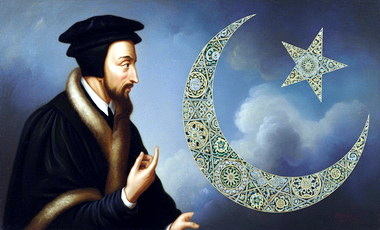
It also changes the nature of God in a dangerous way. Making the God of the Bible more like Allah of the Qur’an.

  • God saw all that he had made, and it was very good indeed. (Genesis 1:31, CSB)

I just added the below quote from Calvin to Genesis 1:31 in my Bible…. if Calvinism is correct, and the theistic determinism that is its baggage, then God called “good” His creation [man] by nature destined by decree to sin.

  • “God not only foresaw the fall of the first man, and in him the ruin of his posterity; but also at His own pleasure arranged it … Though their perdition depends on the predestination of God, the cause and matter of it is in themselves Man therefore falls, divine providence so ordaining, but he falls by his own fault.” (John Calvin, Institutes of the Christian Religion, 3.23.7; 3.23.8)

Gordon H. Clark: “I wish very Frankly and pointedly to assert that if a man gets drunk and shoots his family, it was the will of God that he should do so …In Ephesians 1:11, Paul tells us that God works all things, not some things only, after the counsel of his own will.”

  • They have built high places to Baal on which to burn their children in the fire as burnt offerings to Baal, something I have never commanded or mentioned; I never entertained the thought (Jeremiah 19:5, CSB)

James 1 says every good gift that we get is from God. He doesn’t cause our sin thru 1st or secondary causes.

  • No one undergoing a trial should say, “I am being tempted by God,” since God is not tempted by evil, and he himself doesn’t tempt anyone. But each person is tempted when he is drawn away and enticed by his own evil desire. Then after desire has conceived, it gives birth to sin, and when sin is fully grown, it gives birth to death. Don’t be deceived, my dear brothers and sisters. Every good and perfect gift is from above, coming down from the Father of lights, who does not change like shifting shadows. (James 1:13-17, CSB)

Otherwise, He would be redeeming His own decree, a dualistic God of Eastern metaphysics. Even our prayers are rendered useless, “Your will be done on earth as it is in heaven” ~ His will is being done, to the “T”. Which is why when challenged in a lecture about prayer and Reformed ideas, Wayne Grudem said our prayers were even decreed [scripted] before the creation of the time-space-continuum.

To be clear, I do not worship a God restricted by a Calvinistic theological systematic.

  • how foolish and frail is the support of divine justice afforded by the suggestion that evils come to be, not by His will but by His permission…It is a quite frivolous refuge to say that God otiosely permits them, when Scripture shows Him not only willing, but the author of them…Who does not tremble at these judgments with which God works in the hearts of even the wicked whatever He will, rewarding them nonetheless according to desert? Again it is quite clear from the evidence of Scripture that God works in the hearts of men to incline their wills just as he will, whether to good for His mercy’s sake, or to evil according to their merits. ” — John Calvin, “The Eternal Predestination of God,” 10:11)
  • “Hence we maintain that, by his providence, not heaven and earth and inanimate creatures only, but also the counsels and wills of men are so governed as to move exactly in the course which he has destined.” — John Calvin, Inst. I.xvi.8. 1539 edition. Quoted in A.N.S. Lane, “Did Calvin Believe in Freewill?” Vox Evangelica 12 (1981): 73
  • “Men do nothing save at the secret instigation of God, and do not discuss and deliberate on anything but what he has previously decreed with himself, and brings to pass by his secret direction.” — John Calvin, Concerning the Eternal Predestination of God 177 (OC 8.360) (‘summam et praecipuam rerum omnium causam’). Cf. Inst. I.xviii.2 (1559). See A.N.S. Lane, “Did Calvin Believe in Freewill?” Vox Evangelica 12 (1981): 73
  • “Plainly it was God’s will that sin should enter this world, otherwise it would not have entered, for nothing happens except what God has eternally decreed. Moreover, there was more than a simple permission, for God only permits things that fulfill his purpose.” — A.W Pink, The Sovereignty of God, 2009, 162.
  • (Eph 1:11) “works all things according to the counsel of his will.” Here the Greek word for “works” is 𝑒𝑛𝑒𝑟𝑔𝑒ø, which indicates that God not merely carries all of the universe’s objects and events to their appointed ends but that he actually 𝑏𝑟𝑖𝑛𝑔𝑠 𝑎𝑏𝑜𝑢𝑡 all things in accordance with his will. In other words, it isn’t just that God manages to turn the evil aspects of our world to good for those who love him; it is rather that he himself brings about these evil aspects for his glory (see Ex. 9:13-16; John 9:3) and his people’s good (see Heb. 12:3-11; James 1:2-4). This includes—as incredible and as unacceptable as it may currently seem—God’s having even brought about the Nazis’ brutality at Birkenau and Auschwitz as well as the terrible killings of Dennis Rader and even the sexual abuse of a young child: “The LORD has made everything for its own purpose, even the wicked for the day of evil” (Prov. 16:4, NASB ).14 “When times are good, be happy; but when times are bad, consider: God has made the one as well as the other” (Eccl. 7:14, NIV). — John Piper and Justin Taylor, eds., Suffering and the Sovereignty of God (Wheaton, IL: Crossway Books, 2006), 42.

This is unbiblical. And as C.S. Lewis cogently noted:

“On the one hand, if God is wiser than we His judge­ment must differ from ours on many things, and not least on good and evil. What seems to us good may therefore not be good in His eyes, and what seems to us evil may not be evil.

On the other hand, if God’s moral judgement differs from ours so that our ‘black’ may be His ‘white’, we can mean nothing by calling Him good; for to say ‘God is good’, while asserting that His goodness is wholly other than ours, is really only to say ‘God is we know not what’. And an utterly unknown quality in God cannot give us moral grounds for loving or obeying Him. If He is not (in our sense) ‘good’ we shall obey, if at all, only through fear—and should be equally ready to obey an omnipotent Fiend. The doctrine of Total Depravity— when the consequence is drawn that, since we are totally depraved, our idea of good is worth simply nothing— may thus turn Christianity into a form of devil-worship.”

CS LEWIS, from chapter 3 of The Problem of Pain.

Yep, I refuse to worship “a god” that is the “devil behind Satan.”

God has never desired sin, nor will He ever. God always desires holiness.

TO SUMMARIZE:

  • If the “T” is correct, there is no rebellion against God’s will. Add the “U” and the “I,” the Gospel is rendered meaningless. It is sad, but it is a logical outgrowth of those. The Word of God, the Gospel message sent to a dying and sick world is secondary, Calvary becomes moot. Your hope can only be in if you won the cosmic lottery.

So when the unbeliever stands before God and Romans 1:19-20 is in the thought of our Holy God, when the words come out of said unbelievers mouth,

“I could not believe in your salvific offer because of my nature which you ensured. I suspect you won’t torture a cow [cows are biologically designed to eat grass] for eternity because your command was to eat meat, but ensured their nature was vegetarian.

What should God’s response be?

Discussing Pharoah’s Heart | by His Will, Or God’s? Split the Horns

Here’s the full study on this topic from my verse by verse teaching through Romans: Why God Hardens Hearts: Romans 9:17-24 This is my best understanding of this topic and I think that it fits really well with a wide variety of Scripture that speaks to the issue. For a fuller defense of my own view please see the video I have linked above. My website https://BibleThinker.org

In a good conversation about Pharoah’s hardened heart, although not in alignment with what I was asking at “SOTO 101” Discussion thread, I got a response to this by MARK H. Here is the convo thus far:

MARK H. Pharaoh stiffened his heart first?

Nope, God hardened Pharaoh’s heart first…Exodus 7:3.

Pharaoh only ‘repented’ because of the plagues God sent upon him and Egypt, God raised Pharaoh up for one reason and one reason only, to show His power and to make His name to be declared throughout the world.

RELIGIO-POLITICAL TALK (RPT): “But I will harden Pharaoh’s heart” Future tense A strict Calvinist would say God was looking down the corridors of time [a bit of sarcasm there] and seeing the after FX of Pharaohs choices and God allowing and hardening that resolve.

MARK H. Religio-Political Talk (RPT) I believe God hardened Pharaohs heart first. This is what Paul’s argument is in Romans. God could have shown him mercy by softening his heart but He sovereignly chose to harden him so He could display His power and wrath by destroying Egypt. Potter and the clay.

RELIGIO-POLITICAL TALK (RPT):  LONG COMMENT

POTTER & CLAY

Also, don’t forget what was said of Israel a few verses later to be able to choose 𝐼𝑁 𝑂𝑇𝐻𝐸𝑅 𝑊𝑂𝑅𝐷𝑆, keep reading for Scripture to explain Scripture:

“This is the word that came to Jeremiah from the Lord: “Go down to the potter’s house, and there I will give you my message.” So I went down to the potter’s house, and I saw him working at the wheel. But the pot he was shaping from the clay was marred in his hands; so the potter formed it into another pot, shaping it as seemed best to him. Then the word of the Lord came to me. He said, “Can I not do with you, Israel, as this potter does?” declares the Lord. “Like clay in the hand of the potter, so are you in my hand, Israel” (Jer. 18:1–6).

[CALVINISTS STOP AT VERSE 6]

“If at any time I announce that a nation or kingdom is to be uprooted, torn down and destroyed, and if that nation I warned repents of its evil, then I will relent and not inflict on it the disaster I had planned. And if at another time I announce that a nation or kingdom is to be built up and planted, and if it does evil in my sight and does not obey me, then I will reconsider the good I had intended to do for it. “Now therefore say to the people of Judah and those living in Jerusalem, ‘This is what the Lord says: Look! I am preparing a disaster for you and devising a plan against you. So turn from your evil ways, each one of you, and reform your ways and your actions.’ But they will reply, ‘It’s no use. We will continue with our own plans; we will all follow the stubbornness of our evil hearts’” (Jer. 18:7–12).

To Wit, SOTO 101: Who are you, O man?

[….]

Some Calvinistic scholars attempt to disassociate this text with Paul’s use of the analogy in Romans. For instance, James White writes, “Where is there a discussion of vessels of honor and dishonor in Jeremiah 18? Where is there a discussion of vessels of wrath and vessels of mercy? There is none.”[1] Only someone set on dismissing human responsibility would be unwilling to acknowledge the clear connection. Richard Coords explains:

The vessels of honor can be seen in God’s fashioning to “bless” (v. 10), “build,” and “plant” (v. 9), while the vessels of dishonor can be seen in the fashioning to “uproot,” “pull down” and “destroy” (v.7) including “fashioning calamity” and “devising a plan against” (v. 11), which is also consistent with the Jewish hardening described in Romans chapter 9 and at Romans 11:25.[2]

Paul is not oblivious to the need of the clay to respond to the expressed will of the Potter, as Paul draws upon this analogy again in his letter to Timothy:

“Now in a large house there are not only gold and silver vessels, but also vessels of wood and of earthenware, and some to honor and some to dishonor.  Therefore, if anyone cleanses himself from these things, he will be a vessel for honor, sanctified, useful to the Master, prepared for every good work” (2 Tim. 2:20–21).

Clearly, the biblical authors speak of the clay as if it is able to respond (and thus be held responsible) to the will of the Potter. The vessel must “cleanse himself” so as to be “useful to the Master,” which clearly illustrates that Paul does not necessarily intend to remove man’s part in the process by way of this kind of analogy.

God, a patient and trustworthy Potter who genuinely loves the hardened clay (Rom. 9:1–2; 10:1, 21), has remade some of it to be used for “noble purposes,” such as proclaiming the inspired truth to the lost world. The rest of the lump, still genuinely loved by the Potter despite their turning to other gods (Hos. 3:1), is used to bring about the ignoble purpose of crucifixion and the grafting in of other vessels for redemption (Rom. 11:25). All the while, the Potter is holding out hope for the spoiled lump to turn from its evil and be cleansed through repentance and faith (Rom. 11:11–23).


[1] James White, The Potter’s Freedom (Amityville, NY: Calvary Press, 2000), 225.

[2] Richard Coords, “Jeremiah 18:6,” Examining Calvinism, web page; accessed 08 June 2015.

Take note that PAUL would have been familiar with Isaiah 29:16-19, which as I see it, was a “Messianic prophecy” fulfilled in Jesus and Paul’s discussion of Israel’s true believing remnant:

You have turned things around, as if the potter were the same as the clay. How can what is made say about its maker, “He didn’t make me”? How can what is formed say about the one who formed it, “He doesn’t understand what he’s doing”? Isn’t it true that in just a little while Lebanon will become an orchard, and the orchard will seem like a forest? On that day the deaf will hear the words of a document, and out of a deep darkness the eyes of the blind will see. The humble will have joy after joy in the LORD, and the poor people will rejoice in the Holy One of Israel. (Isaiah 29:16–19, CSB)

THAT BEING SAID, if you come at Scripture with a systematic, I can understand your viewpoint if you believe in the T, the U, and the I… then every one’s “hard heart” is ultimately by God’s design. Unless He unconditionally through irresistible grace changed your heart by a miracle — against your will. [I add that last part is because of Ronnie W. Rogers. Because of “total depravity “, any good response to God is impossible our will would not allow for it, so it must be “disallowed” to be saved. Not by the Gospel message, but through the work of God long before you were born nothing you “responded to.”]

IN OTHER WORDS, if you believe all that…. then yes, each time his heart was hardened, by God or himself, it was God anyways.

However, I enjoyed this Jewish commentary, and, my favorite part is this: “However, as Luzzatto implies, the situation is never permanent” (excerpted below). As Romans agrees and emphasizes which Calvinism struggles with acknowledging – without breaking apart the smooth flow of 9-11.

… a resource break

… continuing

EXCERPT

A number of classical sources deal with this question, including the Rabbinic commentary Exodus Rabbah, which observes a critical detail: Exodus 9:12 is the first time that the Torah tells us that God hardened Pharaoh’s heart, but we see evidence of Pharaoh impacting his own heart five times earlier in this portion. Twice (Exodus 7:13 and Exodus 22) in response to Moses’ challenges and requests, the Torah tells us, his heart “hardened.” And three times after that (Exodus 8:11, Exodus 15 and Exodus 28), we’re told that Pharaoh “made his heart heavy.”

Five times Pharaoh turned away from Moses’ call and the suffering of the Israelites. Five times he made his own heart less and less supple and soft. As such, Rabbi Simon ben Lakish claims in Exodus Rabbah, a collection of Midrash compiled in the 10th or 11th century (scholars are unsure of the exact date), “Since God sent [the opportunity for repentance and doing the right thing] five times to him and he sent no notice, God then said, ‘You have stiffened your neck and hardened your heart on your own…. So it was that the heart of Pharaoh did not receive the words of God.’”

In other words, Pharaoh sealed his own fate, for himself and his relationship with God.

As the 18th-century Italian philosopher Rabbi Moshe Chaim Luzzatto wrote, “Our external actions have an effect on our inner feelings. We have more control over our actions than our emotions, and if we utilize what is in our power, we will eventually acquire what is not as much in our power.”

This is true in both directions. When we make the choice to turn away from suffering, when we engage in the action of walking away from others’ pain, we impact our inner life — our own heart is hardened, we become estranged from the divine and from our own holiest self. True, it’s scary to look that pain in the eyes, and then to grapple with the feelings of responsibility it might engender in us. But there’s a cost to that turning away.

However, as Luzzatto implies, the situation is never permanent. Even when you’ve turned away from others and toward your own self-interest to the point that you can no longer hear the still small voice whispering in your direction. Even then, the gates to the divine — and to ourselves — are always open. As the Talmud (Brachot 32b) teaches in the name of Rabbi Elezar, “From the day on which the Temple was destroyed, the gates of prayer have been closedBut though the gates of prayer are closed, the gates of weeping are not closed.”

We can do the work of goodness in the world. It will change us. And when we’re finally ready to let our heart break open, the gates will be there, ready to receive us.

(MY JEWISH LEARNING)

Dr. Brown opens up the Hebrew Bible in order to understand what really happened with the hardening of Pharaoh’s heart in Exodus.


Predestination and Foreknowledge

The REAL Difference Between Calvinistic &
Non-Calvinistic Predestination w/ 
‪@BraxtonHunter‬

Ronnie W. Rogers, Reflections of a Disenchanted Calvinist,

CPHT 2, Predestination and Foreknowledge (PDF)

Predestination and Foreknowledge

  1. I affirm that God’s predetermination and foreknowledge are coextensive, which is to say that God is essentially omniscient rather than knowing things perceptively. God has always known all contingencies (decisions yet to be actualized) because even though they do not exist external to the mind of God, they have eternally existed in the mind of God by virtue of the nature of His being. Moreover, I affirm that the distinction between predestining something to happen a certain way and predestining to allow some human freedom to determine outcomes are both within the scope of the biblical meaning of predestination and foreknowledge. I further affirm that both understandings of predestination are compatible with and demonstrative of sovereignty so long as He made the decision freely, which He did in fact do, thereby being part of His plan rather than contrary to His plan.

The Calvinist position that God elects to regenerate some, the elect, and all that He regenerates will necessarily believe inescapably leaves God determining to send some to hell who could have been spared that torment if He had chosen for them to be spared because all that He elects to regenerate must believe and all that He chooses not to regenerate cannot believe. This position is in contrast to the position I am advocating, whereby God enables all to have a real choice of whether to believe or not, and those who go to hell are there because they rejected a real chance to not be there.

I further affirm God’s omniscience, which includes perfect, exhaustive knowledge of every actuality, potentiality, contingency, and conditional reality. Thus, God knows everything about the future including every potential and actual choice of every person. He also knows the consequence of every potential and actual choice. God’s foreknowledge is in reality just knowledge for God. He has known every future event in an eternal present. W. T. Shedd notes, “Omniscience excludes both foreknowledge and subsequent knowledge.”14 Augustine said, “What is foreknowledge but the knowledge of the future. But what is future to God? For, if the divine knowledge includes all things at one instant, all things are present to him, and there is nothing future; and his knowledge is knowledge, and not foreknowledge.”15

Thus, the future, or tomorrow for us, has always been known to God. In this sense, there is no future with God, although He differentiates between what is past, present, and yet to sequentially happen. As far as knowledge, He knows the future as well and certain as He knows the past. Charnocke says, “the knowledge of one thing is not, in God, before another; one act of knowledge doth not beget another. In regard of the objects themselves, one thing is before another; one year before another; one generation of men before another; one is the cause, and the other is the effect; in the creature’s mind there is such a succession, and God knows there will be such a succession; but there is no such order in God’s knowledge; for he knows all those successions by one glance, without any successions of knowledge in himself.”16 This is what I mean by saying God’s predestination and God’s foreknowledge are coextensive. God does see the sequence of events, but he does not learn from looking at sequential actions or choices and then choose to act because He sees them all simultaneously.

Shedd says, “God has a knowledge of all things that are possible ….He knows all that he can do ….It is knowledge that… never causes an act of the will….God has knowledge of what is conditionally possible, that is, of those events which have never come to pass, but which might have occurred under certain possible conditions ….For example, God knows that if a certain person should live to middle life, he would become exceedingly vicious and wicked. He prevents this by an early death of the person. Biblical instances are Matthew 11:21-23 (the repentance of Tyre and Sidon; of Sodom and Gomorrah); 1 Samuel 23:5-14; Jeremiah 38:17-20.”17

So when we speak of God’s foreknowledge, it does not convey the idea of learning, or becoming aware, but rather as Shedd notes, “Foreknowledge, strictly taken, implies an interval between the knowledge and the event.”18 Lewis Sperry Chafer says, “Omniscience brings everything—past, present, and future—with equal reality before the mind of God.”19 Again, he notes “The omniscience of God comprehends all things—things past, things present, and things future, and the possible as well as the actual.”20

Therefore, “by divine arrangement, events do follow in sequence or chronological order. Yet, to God, the things of the past are as real as though now present and the things of the future are as real as though past. (Isaiah 46:10; Romans 4:17)”21 Creation was the omnipotent act of bringing knowledge or the conceptual that had existed eternally in the mind of God into experiential knowledge or reality. God was not surprised or in any sense unaware of the choices of Lucifer or Adam and Eve. Although He abhors sin and is perfectly holy in all of His thoughts and actions, He chose to create man as a free moral agent, with real free choice. God never desires sin, but rather He always unwaveringly desires holiness. When time is no more, we will understand more fully how even the evil of man and Lucifer fit into God’s plan, which ultimately assures that man created in His image with libertarian freedom will live eternally, freely choosing only righteousness. Chafer notes, “The perfect foreknowledge of God was aware of the fact that sin would call for the greatest sacrifice even God could make—the death of His Son …. God was not overtaken by unforeseen calamity and failure. His purposes are being executed and will be seen in the end to have been holy, just, and good.”22

  1. I disaffirm that God’s infallible foreknowledge or predetermination caused man to sin or spend eternity in hell, and further, that foreknowledge or predetermination eliminates real free choices of man in salvation and the first sin. I also disaffirm that God’s foreknowledge of events, which makes certain their coming to pass, means that He was the efficient cause or in any way the direct cause of every event that comes to pass. He is the ultimate cause of all good, the direct (efficient) cause of many things, but other events (sin) happen because He sovereignly and freely created efficient causes, e.g., man and his ability to choose.

Further, I disaffirm that foreknowledge is the same as causation because epistemology (study of knowledge) deals with foreknowledge and etiology (study of cause) deals with causation, and to conflate the two is a fallacious confusion of categories. I am not saying that all knowledgeable Calvinists do this, but it is a common mistake among young Calvinists, as well as many others who label themselves as Calvinist. In fact, the Scripture ties salvation to God’s foreknowledge on more than one occasion (Romans 8:29; 1 Peter 1:2). Foreknowledge is not the same as predestination; the very sentence before us distinguishes the two. “His foreknowledge marks out the persons; His predestination determines His purposes and acts on their behalf.”23

Moreover, I disaffirm that God’s absolute foreknowledge of future events or choices necessitates or often even includes, in any sense, that God determined those events or choices in such a way that man did not make an actual free choice, although at times, God certainly does intervene, and has every right to do so. In particular, God’s foreknowledge of a person’s choice regarding the gospel does not cause the choice. Many often conclude that foreknowledge is causal and therefore there is not a real choice between two actual alternatives, e.g. to accept or reject the gospel. Chafer notes, “Divine prescience of itself implies no element of necessity or determination, though it does imply certainty.”24

What God knows will certainly come to pass, but that certainty is not causality. God’s foreknowledge and man’s ability to choose are both presented in the Scripture with clarity and frequency. Chafer says of this, “On the one hand, revelation presents God as foreknowing all things including the actions of human agents, and apart from such knowledge God would be ignorant and to that degree imperfect. On the other hand, revelation appeals to the wills of men with the evident assumption that man is capable of a free choice—’whosoever will may come.'”25 Needless to say, I am disaffirming that the plea of Scripture “whosoever will may come” cannot be answered by grace enabled faith. According to Calvinism, this plea is true, but equally true is that no one will come until God selectively regenerates him, and then he will most certainly come. This belief transforms this beautiful plea of the Savior into a recitation of brute facts. Of course, consistent Calvinism asserts, “whosoever can come”, but the unspoken counterpart of Calvinism is that whosoever really does not mean anyone because only some of the whosoevers” will be selected to come; the unselected cannot come. This is a disquieting reality.

Some ask, would God be wrong, and therefore not perfect, if He knew Adam would sin, and Adam chose at the last moment to not sin? The answer is no. Because if Adam’s real free choice would have resulted in Adam choosing not to sin, God would have eternally known that. Chafer says concerning this, “If the question be asked whether the moral agent has freedom to act otherwise than as God foresees he will act, it may be replied that the human will because of its inherent freedom of choice is capable of electing the opposite course to that divinely foreknown; but he will not do so. If he did so, that would be the thing which God foreknew. The divine foreknowledge does not coerce; it merely knows what the human choice will be.”26 Therefore, contrary to Calvinism, foreknowledge establishes certainty but not causation.

Although all human examples of God’s foreknowledge seem to break down at some point, e.g. humans never can know the future perfectly; the following illustrates the difference between foreknowing and causing even though the foreknowledge is not absolute. I tell people that I know whom Gina (my wife for over 41 years) will vote for when she goes into the voting booth. I know this with mathematical certainty. I can tell you whom she voted for before I ever see her or talk with her after casting her vote. Why? Is it because I forced her, I coerced her, or that I somehow rigged the booth to cause her to vote a certain way? Absolutely not! I know how she will vote because I know her intimately. My knowledge of how she would vote actually has no bearing on her choice of whom to vote for, but rather I know because I know her. Therefore, knowledge and causation of certain actions are not synonymous.

《《 《《  FOOTNOTES  》》》》

14 William G. T. Shedd, Dogmatic Theology, 2nd ed., vol. 1 (n.d., reprint with introduction by Edward E. Hindson, Nashville: Thomas Nelson Publishers, 1980), 355.

15 Ibid.

16 Ibid.

17 Ibid., 355-356.

18 Ibid., 355.

19 Chafer, Systematic Theology. vol. I, 192.

20 Ibid.

21 Ibid.

22 Ibid., 197.

23 Collected Writings of W.E. Vine, (Thomas Nelson, 1997, c1996 Logos electronic version), Romans 8:29.

24 Chafer, Systematic Theology. vol. I, 194.

25 Ibid., 194-195.

26. Ibid., 196.

Reviewing John MacArthur’s view on Foreknowledge in Romans 8:29

Dr. Leighton Flowers critiques MacArthur’s rather simplistic explanation of Divine Foreknowledge from the non-Calvinistic worldview. For Dr. Flowers commentary over Romans 8:28 and following you can go here:

Did God Decree Charlie Kirk’s Death? (Idol Killer)

Okay, this 1st video was a homerun. The second video was close as well. I just want to note up front that I disagree with IDOL KILLER over some issues, one being penal substitution. I side with Mike Winger and Michael Brown on the issue — believing it to be Biblical. But the issue comes up only in the 2nd video, and I understand why Idol Killer dislikes it is God decrees our sin. Here are the videos:

God Decreed Evil? Responding to Todd Friel

Recently Todd Friel of ‪@WretchedNetwork‬ released a video in which he argued God eternally and meticulously decreed all evil. He quoted Calvinist authors and Confessions like the Westminster, provided a couple passages of Scripture removed from their context and contradicted himself several times. In this video Idol Killer responds to the claims Todd made, pushing back and offering a Biblically based Theodicy instead.

  • “Woe to those who call evil good, and good evil; Who substitute darkness for light and light for darkness; Who substitute bitter for sweet and sweet for bitter!” Isaiah 5:20

An excellent video on Calvinistic apologetics. BTW, Leighton Flowers will be on

Why Calvinist Apologetics FAIL

In this video we address Calvinist Apologists ‪@3of7Project‬ ‪@AllieBethStuckey‬ ‪@AominOrg‬ ‪@ApologiaStudios‬ ‪@desiringGod‬ ‪@CanonPress‬ ‪@blogmablog4870‬ ‪@ligonier‬ ‪@gracetoyou‬ ‪@Heartcrymissionary‬ ‪@AMessengerofTruth‬ and several others. We note how what they present is anti-Gospel, anti-reason, anti-Scripture, anti-Christ and ahistoric as they intend to defend Calvinism rather than Christianity.

Calvinism’s “Reading Rainbow” | John 5:39–40

I will clip 1st the actual Scripture, then rewrite it as a Calvinist must see it (if they follow their systematic logically):

  1. You pore over the Scriptures because you think you have eternal life in them, and yet they testify about me. But you are not willing to come to me so that you may have life.  (John 5:39–40, CSB)
  2. You pore over the Scriptures because you think you have eternal life in them, but there is no salvation in the book called the Bible unless I irresistible and effectually called you to believe… the Gospel is powerless to effectually save you, and yet they testify about me. But I have not elected you for effectual salvation before the foundation of the world so that you can not irresistibly come to me so that you may have life.  (John 5:39–40, Augustinian/Calvinistic determinism – RCSB or HCBV – you choose)

To be clear, Jesus did not say, “I refused to give you life so that you would come to me.” Again, Jesus was not saying, “you refuse to believe because I and the Father rejected you before the foundation of the world and are withholding the grace you need to believe,” which is the necessary implication of the Calvinistic doctrine.

I think I should write a Bible version. 😆 The Revised Calvinistic Standard Bible. The RCSB! Or the HCBV: The Honest Calvinist Bible Version.

Charlie Kirk’s Death 100% MSM and Democrats Fault

  • Any Rep. or Senator who says Trump, his supporters, or other Republicans is Hitler or a Nazi doesn’t care about minimizing the horrors of the Holocaust. Any reporter who doesn’t challenge that disgusting statement is just as bad. (THE LID, May 2025 | See also NYP, July 2024 | )
  • Rep. Chris Deluzio (D-PA) is under fire after widespread airing of four-year-old remarks in which he called former President Donald Trump’s voters a “horde of budding blood-and-soil fascists.” (Washington Examiner, June 2024)

Clay Travis has a blunt response to Barack Obama’s claim that he “doesn’t know” what motivated Charlie Kirk’s murder. In just two minutes, Travis summed up what every angry American is feeling right now.

“YOU CAUSED THIS!”

“You can’t call the president of the United States Adolf Hitler for 10 years… you cannot say that anyone who voted for Trump or advocated for him like you, me, Riley, and Charlie Kirk are Nazis, and then when someone tries to kill us, suddenly say, ‘We condemn this violence.’ You caused it!”

“Look at me right now! You caused this! When you tell people that someone is Hitler, you are telling crazy people: go kill them. And I’m sick of pretending that is anything other than what they are doing. … Charlie Kirk bore the brunt of that left-wing violence.”

Also see,

How We Got Here

And yes, Lefties [similar to Islamo-Fascists], Thinks Lawns Are Racist. Add to that Math. Even showing up to work on time is “systematic white supremacy.” When everything is racist there’s no room for reason. And this is what we are seeing, when horticulture is considered racist, you have a whole generation that is ill prepared for real life:

It is this generation of young adults, with safe rooms with videos of kittens when a disagreeing speaker comes to their campus… “what are these kids to do when something bad happens?”

Reason is gone, not offending someone is the new gospel: “…demanding the campus be made more of a “sanctuary” as they protested classism, sexism, discrimination and ethnic intimidation.” (Detroit News) | Milk and cookies, crayons and coloring books, therapy dogs and ducks (Campus Reform). When the real world and these people collide, escape goats are the outcome:

  • So, in the West as these “well-meaning” ideals works themselves out, expect more legal, cultural, and violent expression against those who hold to a historical, conserving theology and expressing this in public life. (ME/RPT in 2015)

Need more examples to support the Left’s [read here Democrats and the MSMS] push to label Republicans such horrible things that people want to kill us?

Which brings me to Nick Freitas’ response to the Left…

There is a civil war that Prager said was not bloody, that became bloody with the attempted assassinations of Trump, and the successful assassination of Charlie Kirk.

America’s Second Civil War

It is time for our society to acknowledge a sad truth: America is currently fighting its second Civil War.

In fact, with the obvious and enormous exception of attitudes toward slavery, Americans are more divided morally, ideologically and politically today than they were during the Civil War. For that reason, just as the Great War came to be known as World War I once there was World War II, the Civil War will become known as the First Civil War when more Americans come to regard the current battle as the Second Civil War.

This Second Civil War, fortunately, differs in another critically important way: It has thus far been largely nonviolent. But given increasing left-wing violence, such as riots, the taking over of college presidents’ offices and the illegal occupation of state capitols, nonviolence is not guaranteed to be a permanent characteristic of the Second Civil War.

There are those on both the left and right who call for American unity. But these calls are either naive or disingenuous. Unity was possible between the right and liberals, but not between the right and the left.

Liberalism — which was anti-left, pro-American and deeply committed to the Judeo-Christian foundations of America; and which regarded the melting pot as the American ideal, fought for free speech for its opponents, regarded Western civilization as the greatest moral and artistic human achievement and viewed the celebration of racial identity as racism — is now affirmed almost exclusively on the right and among a handful of people who don’t call themselves conservative.

The left, however, is opposed to every one of those core principles of liberalism.

Like the left in every other country, the left in America essentially sees America as a racist, xenophobic, colonialist, imperialist, warmongering, money-worshipping, moronically religious nation.

Just as in Western Europe, the left in America seeks to erase America’s Judeo-Christian foundations. The melting pot is regarded as nothing more than an anti-black, anti-Muslim, anti-Hispanic meme. The left suppresses free speech wherever possible for those who oppose it, labeling all non-left speech “hate speech.” To cite only one example, if you think Shakespeare is the greatest playwright or Bach is the greatest composer, you are a proponent of dead white European males and therefore racist.

Without any important value held in common, how can there be unity between left and non-left? Obviously, there cannot.

There will be unity only when the left vanquishes the right or the right vanquishes the left. Using the First Civil War analogy, American unity was achieved only after the South was vanquished and slavery was abolished.

How are those of us who oppose left-wing nihilism — there is no other word for an ideology that holds Western civilization and America’s core values in contempt — supposed to unite with “educators” who instruct elementary school teachers to cease calling their students “boys” and “girls” because that implies gender identity? With English departments that don’t require reading Shakespeare in order to receive a degree in English? With those who regard virtually every war America has fought as imperialist and immoral? With those who regard the free market as a form of oppression? With those who want the state to control as much of American life as possible? With those who repeatedly tell America and its black minority that the greatest problems afflicting black Americans are caused by white racism, “white privilege” and “systemic racism”? With those who think that the nuclear family ideal is inherently misogynistic and homophobic? With those who hold that Israel is the villain in the Middle East? With those who claim that the term “Islamic terrorist” is an expression of religious bigotry?

The third significant difference between the First and Second Civil Wars is that in the Second Civil war, one side has been doing nearly all the fighting. That is how it has been able to take over schools — from elementary schools, to high schools, to universities — and indoctrinate America’s young people; how it has taken over nearly all the news media; and how it has taken over entertainment media.

The conservative side has lost on every one of these fronts because it has rarely fought back with anything near the ferocity with which the left fights. Name a Republican politician who has run against the left as opposed to running solely against his or her Democratic opponent. And nearly all American conservatives, people who are proud of America and affirm its basic tenets, readily send their children to schools that indoctrinate their children against everything the parents hold precious. A mere handful protest when their child’s teacher ceases calling their son a boy or their daughter a girl, or makes “slave owner” the defining characteristic of the Founding Fathers.

With the defeat of the left in the last presidential election, the defeat of the left in two-thirds of the gubernatorial elections and the defeat of the left in a majority of House and Senate elections, this is likely the last chance liberals, conservatives and the right have to defeat the American left. But it will not happen until these groups understand that we are fighting for the survival of America no less than the Union troops were in the First Civil War.

FLASHBACK!

JOE ROGAN learns live:

TMZ Caught Celebrating Charlie’s Death

9/11 | NEVER FORGET

A Tradition/Tribute since 2007

911 - LIGHTS

“There will even come a time when anyone who kills you
will think he’s doing God a favor”
(John 16:2 – The Message)

a911-12

Remember … Meditate … Pray

911 - 2

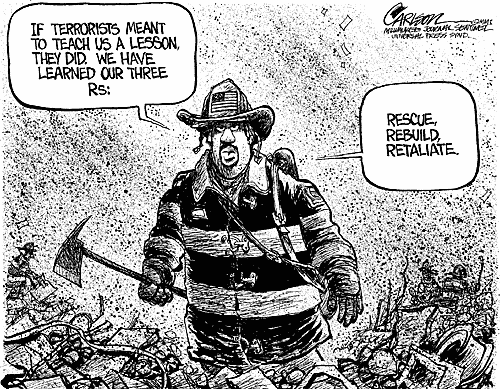
Throughout the day on 911, but typically the following Sunday, I will add political cartoons as they are released.

I am splitting the post into sections:

I am a BIG fan of editorial cartoons/cartoonists and will let these talented people memorialize this solemn day ~ their talent to catch a big-idea in one image is unrivaled. New frames will be added under the GOLD moniker just below. The newer cartoons will be larger than the older ones. The parameters of the old blog did not allow for bigger. [Note: this does not mean the newer cartoons directly below are themselves “new,” it just means that I recently found them… they in fact may be old.]

~ with love and remembrance, PapaGiorgio

911 - 3

~~~~~~~~~~~~~~~~~
Newer Tributes Below
~~~~~~~~~~~~~~~~~

Click to ENLARGE the Below (see original on FB)


Missing 1

Missing 2

Twin-towers

9-11 2016 Ramirez

Bridge 9-11 2

Never Again

Towers

ppdn-091116-edtoon-number-2

9-11-memory-c-patriot-post

9-11 6

9-11 4

Lights Clouds

Ramirez AIR-Force One Gitmo

ISIL NY

isis-911

Never Forget a Poll

911-Breen 1

Never-Forget

Varv 911 new

Breen 911 2014

POWNED OSAMA

9-11_in_memoriam

Family Circus 9-11 cartoon

osamabeeler2

scars-of-9-11

9-11 Anniversary

91112

carlsonr

911_color

orl-dana-summers

Draw

Images-Oklahoma NY

stahler.smoke.has.cleared

Silence911

9-11hug

PeaceNick

911c11

brookins

God

Big Shoes 2

Joint Effort

Stripe Smoke

varvel 911 salute

a911 - 201

911 -w4

911 -w3

911 -w2

911 -w1

911 - 4
a911 - 5
a911 - 6
911 - 7
911 - 8
911 - 9
911 - 10
911 - 11
a911 - 12
911 - 13
911 - 14

911 - 15

911 - 16

911 - 17

911 - 18

911 - 19

911 - 20

911 - 21

911 - 22

911 - 23

911 - 24

911 - 25

911 - 26

911 - 27

911 - 28

911 - 29

911 - 30

PWNED

911 - 31

911 - 32

911 - 33

911 - 34

911 - 35

911 - 36

911 - 37

911 - 38

911 - 39

911 - 40

911 - 41

911 - 42

911 - 43

911 - 44

911 - 45

911 - 46

911 - 47

911 - 48

911 - 49

911 - 50

911 - 51

911 - 52

911 - 53

911 - 54

911 - 55

911 - 56

911 - 57

911 - 58

911 - 59

911 - 60

911 - 61

911 - 62

911 - 63

911 - 64

911 - 65

911 - 66

911 - 67

a911 - 68

911 - 69

911 - 70

911 - 71


911 - 72

911 - 73

911 - 74

911 - 75

911 - 76

The Hour of Islam 9-11-01

911 - 78

911 - 79

911 - 80

911 - 81

911 - 83

911 - 84

911 - 85

911 - 86

911 - 87

911 - 89

911 - 90

911 - 91

911 - 92

911 - 93

911 - 94

911 - 95

911 - 96

911 - 97

911 - 98

911 - 99

911 - 100

a911 - 104

911 - 106

911 - 107

911 - 108

911 - 109

911 - 110

911 - 111

911 - 112

911 - 113

911 - 114

911 - 115

911 - 116

911 - 117

911 - 118

911 - 119

911 - 120

911 - 121

911 - 122

911 - 123

911 - 124

911 - 125

911 - 126

911 - 127

911 - 128

911 - 129

911 - 130

911 - 131

911 - 132

911 - 133

911 - 134

911 - 135

Varvel Carry

911 - 137

COLORdayFLAG

911 - 139

If there is indeed a social revolution under way, it shouldn’t stop with women’s choice to honor their [own] nature. It must also include a newfound respect for men. It was New York City’s firemen who dared to charge up the stairs of the burning Twin Towers on September 11, 2001. The death tally of New York City’s firefighters was: men 343, women 0. Can anyone honestly say you would have wanted a woman coming to your rescue on that fateful day?

Suzanne Venker & Phyllis Schlafly, The Flipside of Feminism: What Conservative Women Know — and Men Can’t Say (Washington, D.C.: WND Books, 2011), 181-182.


TATTOOS

These are mainly by fireman/port authority guys in remembrance of those lost


911 - 101

911 - 102

911 - 103

911 - 105

911 - 140

911 - 141

911 - 142

911 - 143

911 - 144

911 - 145

911 - 146

911 - 147

911 - 148

911 - 149

911 - 150


BEAMS

Just a few pictures of steel beams and info


911 - 151

You are looking at what some people believe is a miracle.

Two days after the disaster, a construction worker found several perfectly formed crosses planted upright in a pit in the rubble of the heavily damaged 6 World Trade Center.

The large, cross-shaped metal beams just happened to fall that way when one of the towers collapsed. An FBI chaplain who has spent days at ground zero says he has not seen anything like it on the vast site.

As word of the find has spread at ground zero, exhausted and emotionally overwhelmed rescue workers have been flocking to the site to pray and meditate.

“People have a very emotional reaction when they see it,” says the Rev. Carl Bassett, an FBI chaplain. “They are amazed to see something like that in all the disarray. There’s no symmetry to anything down there, except those crosses.”

This is the Ground Zero cross seen Friday, October 4, 2002, in New York. Father Brian Jordan and a group representing construction workers and victims of the World Trade Center are asking the governor to preserve the ground zero cross and use it as part of the eventual memorial that will be erected at Ground Zero.

911 - 153

911 - 154

911 - 155


VIDEOS


From Cox & Forkum’s Site (cartoonists):

In the excellent book Never Forget: An Oral History of September 11, 2001, authors Mitchell Fink and Lois Mathias collected stories from eyewitnesses. Here’s an excerpt from what David Kravette, a Cantor Fitzgerald broker, told the authors about his experience at the World Trade Center:

On the morning of September 11, I was on floor 105, tower 1. I had an 8 a.m. meeting set up with a client. He was bringing by some tech people to do some due diligence on our technology company called E-Speed. I get to work usually around seven, seven-fifteen. At eight, the client called to tell me they were running late. And I said fine. But I reminded him to bring photo ID downstairs. Ever since the last terrorist attack in ’93, the building requires photo ID downstairs. He’s been there before, so he knew the drill. He said, “Fine. No problem.”

At 8:40, I get a phone call from the security desk downstairs, asking me if I’m expecting visitors. I said yes. “Well, they’re here,” they said. “But one of them forgot their ID.”

I’m 105 flights up. The commute to get downstairs takes about five minutes, especially around that time. So I’m annoyed, obviously, because I have to go down now to sign these people in after I just told them to bring ID. I look at this desk assistant across from me, thinking maybe she’ll help out and go down, but she’s on the phone. She’s also about eight months pregnant. She’s a few weeks from maternity leave and she’s on the phone talking to a friend and she’s on a website looking at bassinets and cribs. A very nice girl expecting her first child. So how lazy am I? I decide to go myself. …

… I take these two elevator rides down. I take the elevator from 105 to 78, change, and take the express down to the ground. I got down to the lobby. Our elevator banks actually face the visitors’ gallery. And I started walking over to the visitors’ gallery, I’d say it’s about thirty yards, and they’re standing there waiting for me. And I remember yelling, “Which one of you knuckleheads forgot your ID?”

And as I say this, you hear this really loud screeching sound. I turn around and it’s kind of coming from the elevators. So I run away from it, like ten steps, and look back. And the elevators are free-falling. Then, from the middle elevator bank, not the one I came down on, but from the middle one, a huge fireball explodes in the lobby. This huge fireball is coming right toward me. People got incinerated. And I remember just looking at this thing, not feeling scared, but just sad because I knew I was going to die. But as quickly as it came toward me, it actually sucked back in on itself, and it was gone. It left a lot of smoke and everything was blown out, all the glass and revolving doors leading into the shopping area. All I felt was a big wave of heat come over me, like when you put your face too close to a fireplace. My customer and my general counsel and I just ran out. The three of us ran over the overpass to where the Financial Center is. We went down to where the marina is, where the yachts are. And that’s when we found out what happened, that a plane had hit the building.

I looked up and saw this big gaping hole. I said, “What’s that falling out of the window?”

My general counsel looks at me like I’m nuts. And he says, “That’s people jumping out.” …

Cantor Fitzgerald had four floors in the North Tower — 101, 103, 104, and 105. Nobody got out on those floors. Everyone who was upstairs perished. There were a lot of phone calls to wives and husbands at around nine o’clock saying good-bye, as though they knew they were going to die.


Remembering The Jumpers


On another note, there is an old SNL skit where, coincidentally, John Belushi explains how the Twin Towers will come down via SkyLab:


WHERE WAS GOD?


Where was God at 9/11? Columbia asks the tough questions to an Oxford scholar on 9/11 at a Veritas event:


GROUND ZERO MOSQUE


.

tattoo ground zero

911 - 156

911 - 157

911 - 158

a911 - 11111

911 - 160

911 - 161

911 - 162

911 - 163

911 - 164

911 - 165

911 - 166

911 - 167

911 - 168

911 - 169

911 - 170

911 - 171

911 - 172

911 - 173

911 - 174

911 - 175

911 - 176

911 - 177

911 - 178

911 - 179

911 - 180

911 - 181

MFT20100830

911 - 183

The “Connective Tissue” Between Islam and Calvinism

In my [I guess now, 4-month study of the Augustinian influenced [Gnostic] Calvinism, I kept coming back to the connections with Islam’s “god” as a close comparison to Calvin’s “god”.

So I have found a couple videos I liked on the matter that expanded this connection that came to my mind. Enjoy

(Video Description) Is God the author and the cause of sin? Does God ordain and decree evil and wickedness? Is infant damnation real? We will look at several of these claims from Calvinists and show their similarities to statements made from Mohammed and Islam. John Edwards, Augustus Toplady, James White, John Piper, Justin Peters, RC Sproul, Theodore Zachariades, Gordon Clark, Edwin Palmer, G3, Scott Aniol, Ephesians 1:11, Proverbs 16:4, God’s sovereignty, Satan’s influence, biblical responsibility, Westminster confessions, Council of Dort.

There are other videos out there as well, many make some good points — but I wouldn’t recommend them as a whole. Consistent Calvinist has a decent video however. But I liked this video as it sent me searching for PDFs and text type sources… which will follow. (BTW, I assume the voices in this video are A.I. voices):

(Video Description) John Calvin’s theology exhibits a significant alignment with Islamic doctrine. The analysis focuses on shared tenets such as the denial of free will, the doctrine of double predestination, and the assertion that God ordains sin. By comparing Calvin’s Institutes of the Christian Religion with the Quran and the writings of Islamic scholars, both theological systems emphasise God’s absolute sovereignty to the extent that it overrides human agency and traditional notions of divine justice. This Islamic basis undermines core biblical teachings regarding God’s nature and human responsibility.

A recommended read is what follows:

Islam and Calvinism: An Uncomfortable Comparison

Determinism

The sovereignty of Allah in Islam and God in Calvinism is absolutely deterministic. They are the author of every action, word, and thought, including sin and evil. Moreover, they predetermined before time everything that shall occur in time including who will be given the gift of faith and eternal life, and who will not and be condemned to eternal death.

Calvinist church historian Phillip Schaff writes:

Calvinismstarts with a double decree of predestination, which antedates and is the divine program of human history. This program includes the successive stages of the creation of man, a universal fall and condemnation of the human race, a partial redemption and salvation: all for the glory of God and the display of His attributes of mercy and justice. History is only the execution of the original design(History of the Christian Church 8.4.114).

Note that Schaff does not shy away from affirming that God Himself decreed the fall of man, and is therefore the author of sin!

The same view was affirmed by Calvin:

By predestination we mean the eternal decree of God, by which he determined with himself whatever he wished to happen with regard to every man. All are not created on equal terms, but some are preordained to eternal life, others to eternal damnation; and, accordingly, as each has been created for one or other of those ends, we say that he has been predestined to life or death (Institutes, 3.21.5).

Islam teaches the same doctrine as Calvinism. According to Islam, Allah is absolutely deterministic. As Caner and Caner write:

One of the foundational doctrines of Islam is the absolute sovereignty, to the point of determinism, of Allah. Allah knows everything, determines everything, decrees everything, and orders everything. Allah is even the cause of evil (Unveiling Islam, p. 109).

It follows that Allah predestines all who will be saved and all who will be eternally damned. Of those who cannot be saved, Surah 2:6-7 states:

It is the same to them whether you warn them or do not warn them; they will not believe. Allah has set a seal on their hearts and on their hearing. And on their eyes is a veil; Great is the chastisement they [incur].

Fatalism

It follows that Calvinism and Islam are both inherently fatalistic. In Calvinism, the sovereign God elects those who will be saved and rejects all others, as seen repeatedly in Calvin’s writings:

some are preordained to eternal life, others to eternal damnation; and, accordingly, as each has been created for one or other of those ends, we say that he has been predestined to life or death (Institutes, 3.21.5).

[God] arranges all things by his sovereign counsel, in such a way that individuals are born, who are doomed from the womb to certain death(Institutes, 3.23.6).

In the same way, Allah leads astray whom he wills, and saves whom he wills (Surah 14:4):

Allah is exalted and pleased as he sends people to hell: this is the fatalistic claim of Islam. Fatalism is a belief that events are fixed in advance for all time in such a manner that human beings are powerless to change them. In this case, Allah will send to heaven whomever he pleases, and send to hell whomever he pleases (Unveiling Islampp. 31-32).

An old joke tells of a Calvinist who fell down the stairs, got up, and said, “Thank God that’s over!” Interestingly, Caner and Caner recount from their Islamic childhood:

Our father used to say, “If you fall and break your leg, say, ‘Allah wills it,’ because he caused it to happen” (Unveiling Islam, p. 109).

The Love of God

Perhaps the most fundamental of all aspects of God’s character is love. “He who does not love does not know God, for God is love” (1 John 4:8). “For God so loved the world” (John 3:16) “God demonstrates His own love toward us” (Rom 5:8). These are just a few of the numerous Biblical texts which affirm the universal, sacrificial, eternal, personal, and unconditional love of God for all mankind. No character of God is more central to the message of the gospel. The incarnation and substitutionary atonement shout it. Everything in God’s saving action toward mankind declares it. But what do we see in Islam and Calvinism?

Love De-Emphasized

In Islam, Allah is virtually devoid of love. Caner and Caner list 99 names of Allah, and only one includes a reference to love (and this only to those who are “his own”). They write:

When Allah is discussed within the Islamic community, the absence of intimacy, atonement, and omnibenevolence becomes apparent. In all the terms and titles of Allah, one does not encounter terms of intimacy. . . Even the most faithful and devout Muslim refers to Allah only as servant to master; Allah is a distant sovereign (Unveiling Islam, p. 117).

But what do we find in Calvinism? God’s sovereignty—His power and holiness—are emphasized at the expense of His love. Dave Hunt observes:

But where is God’s love? Not once in the nearly thirteen hundred pages of his Institutes does Calvin extol God’s love for mankind. This one-sided emphasis reveals Calvinism’s primary defect: the unbiblical limitations it places upon God’s most glorious attribute. . . Something is radically amiss at the very foundation of this unbiblical doctrine (Debating Calvinism, p. 47).

Limited Love

As we look closer, we find reasons for this muting of God’s love in Islam and Calvinism. For example, Calvin’s God and Islam’s Allah are both bereft of unconditional love for everyone.

Allah’s heart is set against the infidel (kafir). He has no love for the unbeliever, nor is it the task of the Muslim to “evangelize” the unbelieving world (Unveiling Islam, p. 118).

Caner and Caner note, “This is why so many Muslims quickly disown children who have converted to another religion, especially Christianity. Why love them when almighty Allah will never love them?” (Unveiling Islam, p. 33).

But is this any different than Calvinism? Dave Hunt puts it bluntly:

Never forget that the ultimate aim of Calvinism…is to prove that God does not love everyone, is not merciful to all, and is pleased to damn billions. If that is the God of the Bible, Calvinism is true. If that is not the God of the Bible, who “is love” (1 John 4:8), Calvinism is false. The central issue is God’s love and character in relation to mankind, as presented in Scripture (Debating Calvinism, p. 21).

Conditional Love

While Calvinists (but not Muslims) would object to the idea their God has a conditional love, that is the effect of their doctrine.

This doctrine is openly announced in Islam: “Allah loves not transgressors” (Qur’an 2:190). “For [Allah] loves not any ungrateful sinner” (Qur’an 2:276). “For Allah loves not those who do wrong” (Qur’an 3:57). “For Allah loves not the arrogant, the vainglorious” (Qur’an 4:36).

Within Calvinism, God’s love is declared to be unconditional because He has given it “unconditionally”—i.e., not in response to anything we do. But whether or not one is actually loved in this “salvific” way is ultimately determined by what we do. This fact is enshrined by the last of the Five Points of Calvinism, i.e., the Perseverance of the Saints. Since all who are saved will inevitably persevere in living a faithful life, God’s saving love, in the end, is determined by our works.

Notably, as is always the result with synergism (i.e., salvation by faith and works), no amount of good works can give you assurance of salvation.

Insecure Love

It is impossible in Calvinism and Islam to know that you are loved by God. While Calvinists proclaim their belief in eternal security, what they mean is if you are really saved (which you cannot know with absolute certainty until you die), then you will never lose your salvation. But how can you know that? Based on your works. However, the threat of falling into some sin, and thus finding out that you were never really saved in the first place, is a possibility hanging over the head of every Calvinist.

Similarly, and blatantly, Islam teaches this same doctrine:

The Qur’an hints that the believer in Allah can be confident of his or her eternal destiny, but there is no guarantee, even for the most righteous. . . In Islam, the answer to the question, “What must I do to go to heaven?” is “mysterious and complex. . . Islamic tradition argues that the guarantee ofheaven is as impossible to find as a chaste virgin and pure speech. Consequently, the devoutMuslim makes every effort to please Allah and thereby obtain heaven. But fate (kismet) in the hands of the all-powerful Allah will decide the outcome (Unveiling Islam, p. 144).

Clearly, the love of God is at best compromised in both Islam and Calvinism.

READ IT ALL


This next piece is a clip from a Facebook Post… Here is the title of this post

“Calvinism Is Just Islam Repackaged”

Comparing the Calvinist God and the God of Islam

At first glance, Calvinism and Islam may seem vastly different due to their theological and cultural contexts. However, when examining the portrayal of God in Calvinist theology and Islamic theology, striking similarities emerge. Both traditions emphasize God’s absolute sovereignty, but in ways that challenge concepts of divine love, justice, and human freedom as revealed in the Bible. Here is a comparison of the Calvinist God and the God of Islam:

  1. Absolute Sovereignty and Determinism

Calvinist God:

  • Calvinism teaches that God’s sovereignty means He unconditionally decrees all events, including human actions, sin, and salvation. This leads to the doctrine of double predestination, where some are chosen for salvation and others are predestined for damnation, entirely apart from human free will.

Islamic God (Allah):

  • In Islam, Allah’s sovereignty is also absolute and deterministic. The Quran states that Allah guides whom He wills and leads astray whom He wills (Surah 14:4, Surah 16:93). Human actions, both good and evil, are believed to occur because Allah has willed them.

Comparison:

Both the Calvinist God and Allah are depicted as sovereign in ways that minimize or negate genuine human free will. This deterministic framework portrays God as the ultimate cause of sin and unbelief, raising serious questions about divine justice and human accountability.

  1. Justice and Predestination

Calvinist God:

  • According to Calvinism, God’s justice allows Him to predestine some to eternal damnation without any consideration of their actions or choices. This is often defended as a “mystery” of God’s will, though it conflicts with the notion of a just and impartial God.

Islamic God (Allah):

  • In Islam, Allah is described as just but is not bound by human notions of justice. Allah may forgive or punish as He pleases, and there is no guarantee of salvation even for the most devout believer. Salvation depends entirely on Allah’s arbitrary will.

Comparison:

In both systems, God’s justice is portrayed as inscrutable or arbitrary, leading to a sense of fear and uncertainty. The Calvinist doctrine of reprobation and the Islamic belief in Allah’s arbitrary judgment both suggest a God whose actions are beyond moral comprehension.

  1. Love and Mercy

Calvinist God:

  • Calvinism teaches that God’s love is limited to the elect. Christ’s atonement is “limited” and applies only to those predestined for salvation. The reprobate, by contrast, are excluded from God’s saving love and are created solely to demonstrate His wrath.

Islamic God (Allah):

  • In Islam, Allah is described as merciful (Ar-Rahman, Ar-Rahim), but His mercy is conditional. Allah does not love sinners or unbelievers (Surah 3:31-32). His mercy is reserved for those who obey Him and follow His commands.

Comparison:

Both the Calvinist God and Allah show love and mercy only to a select group—either the elect in Calvinism or the obedient in Islam. This stands in stark contrast to the biblical God, who loves all people and desires the salvation of everyone (1 Timothy 2:4, John 3:16).

  1. Human Freedom and Responsibility

Calvinist God:

  • Human free will is effectively denied in Calvinism. People are bound by their sinful nature and cannot choose God unless they are regenerated first. Even their “choices” are ultimately determined by God’s eternal decree.

Islamic God (Allah):

  • In Islam, humans have limited free will, but their actions are ultimately determined by Allah’s will. The Quran repeatedly emphasizes that Allah guides or leads astray whomever He wills (Surah 6:125).

Comparison:

In both systems, human freedom is subordinated to divine sovereignty, resulting in a deterministic worldview. This undermines the biblical teaching that humans are created in the image of God with the capacity to freely love and respond to Him (Genesis 1:27, Deuteronomy 30:19).

[….]

Conclusion: The Biblical God Is Distinct

While the Calvinist God and the God of Islam share similarities in their emphasis on sovereignty and determinism, they both fall short of the biblical portrayal of God. The God of the Bible is sovereign, but His sovereignty is expressed through love, justice, and respect for human freedom. He desires the salvation of all, offers grace universally, and seeks a personal relationship with every human being.

The biblical God is not arbitrary or partial but perfectly just, merciful, and relational. His love is unconditional, and His gospel is genuinely good news for all people. This is the God revealed in Jesus Christ, who came to save the world, not just a select few (John 3:17).

Just an additional thought on Calvinism by this wonderful sermon that includes an excellent analogous story showing how absurd Calvinistic Reformed thinking is.

The Absurdity of Reformed Theology

Nov. 6, 2022, Adult Sunday School at Truth Baptist Church. 2 Peter 3:9 “The Lord is not slack concerning his promise, as some men count slackness; but is longsuffering to us-ward, not willing that any should perish, but that all should come to repentance.”

Another Gospel Drenched [1981] Sermon by Johnny Mac

(Video Description from YouTube) Dr. Leighton Flowers, Director of Personal Evangelism and Apologetics for Texas Baptists, responds to some critics of Billy Graham’s views on Inclusivism and some unfounded accusations leveled against his own perspective as it is very similar to that of John MacArthur in a 1981 sermon, in which he said,

  • ““Creation, conduct, conscience, contemplation, what they do, how they deal with the good and bad in their own life and how they deal with it in the lives of others indicates that they know the law of God as written in them. Now, here is the most important thing I’ve said yet. The sum of it is this: If they live up to that much light, and they accept that much light, God will reveal to them the full light of Jesus Christ. I believe that with all my heart. You see, that’s what it says in Acts 17, ‘He is not far from us if we would feel after Him.’ You see? If they would just take what they have and accept that. John 7:17 – mark it down. ‘If any man wills to do My Father’s Will, he shall know of the teaching.’ If the willing heart is there, he’ll know. ” – John MacArthur

SOTERIOLOGY 101 has an excellent post encapsulating this presentation as well.

Matt Slick’s Boastful Calvinism

Here is the original short clip of Matt Slick saying God saw what his “good works” were and chose him based on his study habits, I guess? Apparently through the corridor of time?

On a SOTERIOLOGY 101 discussion board, TROY M. said this:

  • It is really important that we correctly represent Calvinists when we are arguing with them. You have incorrectly represented Matt Slick. He is NOT talking about God saving him because of his good works. He is talking about God giving him specific skills and tasks because he knew what his plan for Matt Slick was. This much of the problem with using short snippets to refute people. Use their entire context to be sure that you are actually on topic. Slick is not speaking soteriologically here, and so this is a fallacy called a strawman.

I responded with this extended clip of the debate between Matt Slick and Leighton Flowers, as well as a transcript:

The “I freely chose…” is immediately mitigated with his Calvinist doctrine of election, BTW.

TROY M. Thank you. I wasn’t tracking with that. I will give it a listen again [….] Okay, the best route is to say maybe Matt Slick, upon further reflection would say he misspoke. But here is what I am hearing, and it was all about soteriology — but please, give me a time-stamp and I will revisit (emphasis added – time stamped to my clip):

MATT SLICK

(00:00:00) Responsibility. OK, you said give us the ability to relate via faith, not signs and wonders. The signs and wonders were done to demonstrate who Jesus was, but you’re basically implying he wants relationship over salvation. The question is if God wants every individual to be saved, all he has to do, you would agree all he’s got to do is just let his kind of presence shine.

(00:00:20) I know this now. (00:00:21) I’m not trying to be unfair. You can’t execute my experience and I’m not trying to use in that way. Now. See, you prove me wrong. It’s not fair thing for me to do it. I’m not trying to be unfair in that. (00:00:31) I’m just saying that I know of this and it reflects in, excuse me, Act 9:15 when Paul was riding along, this is what happened to Paul the Apostle, the whole Jesus himself, bam, knocked him off his horse knocked, knocked him down. I understand what that means. Not to the extent I’m sure that it happened there because you heard an audible voice.

(00:00:51) I didn’t, but I’m telling you, I know what it means to be in the presence of incredible holiness, and the only thing you can do is put your face to the ground and weep because you are in the presence of, of, of, of purity, and you’re a Sinner. I freely chose to believe in him right there at that moment when I was 17.

(00:01:10) Why doesn’t God do that? Calvinist would say, because God Sovereignly chooses not to do that.  I believe the reason he gave that to me was because he knew what I’d be doing for a living. [Thru the corridors of time?] He had to have something very powerful, very strong, to keep me strong through all the cult crap I gotta study – and everything for hours and years and years. That’s what, that’s what my opinion [is], but whatever. (00:01:22) The thing is, all he’s got to do. (00:01:30) Is do the same kind of (00:01:31) thing he did to Paul the (00:01:32) Apostle, he can just sit there and go Wham! (00:01:37) He’s a chosen vessel of mine. Why is it good to everybody? I have an answer cause God chooses not to. You don’t.

[….]

LEIGHTON FLOWERS

(00:01:37) So your answer… (00:01:42) OK, so your your answer is God’s decree. Did you know? That’s my answer to. Yeah. (00:01:47) I believe that God sovereignly decrees not which choice will make, but that will be free to make a choice that is his choice, which he chooses to grant you responsibility and the choice. Yeah. And acts. Paul actually says that he could resist it. The, the the call upon his heart. And so….